EP1189434A2 - Correction curve generating method, image processing method, image display unit and storage medium - Google Patents
Correction curve generating method, image processing method, image display unit and storage medium Download PDFInfo
- Publication number
- EP1189434A2 EP1189434A2 EP01121646A EP01121646A EP1189434A2 EP 1189434 A2 EP1189434 A2 EP 1189434A2 EP 01121646 A EP01121646 A EP 01121646A EP 01121646 A EP01121646 A EP 01121646A EP 1189434 A2 EP1189434 A2 EP 1189434A2
- Authority
- EP
- European Patent Office
- Prior art keywords
- reproduction characteristic
- display unit
- surround
- tone reproduction
- image display
- Prior art date
- Legal status (The legal status is an assumption and is not a legal conclusion. Google has not performed a legal analysis and makes no representation as to the accuracy of the status listed.)
- Withdrawn
Links
- 238000012937 correction Methods 0.000 title claims abstract description 202
- 238000000034 method Methods 0.000 title claims description 38
- 238000003672 processing method Methods 0.000 title abstract description 4
- 238000012545 processing Methods 0.000 claims abstract description 81
- 238000005286 illumination Methods 0.000 claims abstract description 72
- 235000019557 luminance Nutrition 0.000 description 61
- 238000004364 calculation method Methods 0.000 description 10
- 238000010586 diagram Methods 0.000 description 9
- 230000003287 optical effect Effects 0.000 description 7
- 239000004973 liquid crystal related substance Substances 0.000 description 6
- 230000007423 decrease Effects 0.000 description 3
- 230000003247 decreasing effect Effects 0.000 description 3
- 241001270131 Agaricus moelleri Species 0.000 description 2
- 238000012935 Averaging Methods 0.000 description 1
- 239000003086 colorant Substances 0.000 description 1
- 230000003292 diminished effect Effects 0.000 description 1
- 230000000694 effects Effects 0.000 description 1
- 238000011156 evaluation Methods 0.000 description 1
- 238000005259 measurement Methods 0.000 description 1
- 238000006467 substitution reaction Methods 0.000 description 1
- 230000009466 transformation Effects 0.000 description 1
Images




Classifications
-
- H—ELECTRICITY
- H04—ELECTRIC COMMUNICATION TECHNIQUE
- H04N—PICTORIAL COMMUNICATION, e.g. TELEVISION
- H04N5/00—Details of television systems
- H04N5/44—Receiver circuitry for the reception of television signals according to analogue transmission standards
- H04N5/57—Control of contrast or brightness
- H04N5/58—Control of contrast or brightness in dependence upon ambient light
-
- H—ELECTRICITY
- H04—ELECTRIC COMMUNICATION TECHNIQUE
- H04N—PICTORIAL COMMUNICATION, e.g. TELEVISION
- H04N9/00—Details of colour television systems
- H04N9/12—Picture reproducers
- H04N9/31—Projection devices for colour picture display, e.g. using electronic spatial light modulators [ESLM]
- H04N9/3179—Video signal processing therefor
- H04N9/3182—Colour adjustment, e.g. white balance, shading or gamut
-
- H—ELECTRICITY
- H04—ELECTRIC COMMUNICATION TECHNIQUE
- H04N—PICTORIAL COMMUNICATION, e.g. TELEVISION
- H04N9/00—Details of colour television systems
- H04N9/12—Picture reproducers
- H04N9/31—Projection devices for colour picture display, e.g. using electronic spatial light modulators [ESLM]
- H04N9/3191—Testing thereof
- H04N9/3194—Testing thereof including sensor feedback
-
- H—ELECTRICITY
- H04—ELECTRIC COMMUNICATION TECHNIQUE
- H04N—PICTORIAL COMMUNICATION, e.g. TELEVISION
- H04N9/00—Details of colour television systems
- H04N9/64—Circuits for processing colour signals
- H04N9/68—Circuits for processing colour signals for controlling the amplitude of colour signals, e.g. automatic chroma control circuits
Definitions
- the present invention relates to a method for generating a correction curve, an image display unit, an image processing method, and a storage medium, in which a change of a working environment is corrected to adjust the visibility of an output image.
- the present invention has been accomplished for solving the abovementioned problem and it is an object of the invention to provide a method for generating a correction curve, an image processing method, an image display unit, and a storage medium, capable of making an appropriate color reproduction even under a change in brightness of external illumination.
- a method for generating a correction curve for correcting image data inputted to an image display unit includes: a measuring step of measuring an intra-dark surround output characteristic of the image display unit and an tone reproduction characteristic in an illuminated surround of the image display unit under illumination of a predetermined luminance value; a characteristic approximating step of approximating the tone reproduction characteristic in an illuminated surround to the intra-dark surround output characteristic in a desired input tone range of input image data; and a correction curve generating step of generating a correction curve on the basis of the approximated tone reproduction characteristic in an illuminated surround.
- an tone reproduction characteristic in a dark surround of the image display unit and an tone reproduction characteristic in an illuminated surround of the image display unit under illumination of a predetermined luminance value are measured by a measuring step.
- the tone reproduction characteristic in an illuminated surround is approximated to the tone reproduction characteristic in a dark surround in a desired input tone range of input image data by a characteristic approximating step, and therefore, a correction curve is generated on the basis of the approximated tone reproduction characteristic in an illuminated surround.
- a method for performing an image processing for image data inputted to an image display unit uses a correction curve based on an tone reproduction characteristic in an illuminated surround of the image display unit under illumination of a predetermined luminance value, the tone reproduction characteristic in an illuminated surround having been approximated to an tone reproduction characteristic in a dark surround of the image display unit.
- the present invention as described in claim 3, is the method according to claim 2, having a plurality of correction curves obtained using different the predetermined luminance values.
- the present invention as described in claim 4 is the method according to claim 2 or 3, wherein the desired input tone range includes a middle tone range and the vicinity thereof.
- the present invention as described in claim 5, is the method according to any one of claims 2 to 4, wherein the tone reproduction characteristic in a dark surround and the tone reproduction characteristic in an illuminated surround are normalized to a predetermined luminance range, and in the desired input tone range of input image data the normalized tone reproduction characteristic in an illuminated surround is approximated to the normalized tone reproduction characteristic in a dark surround.
- the present invention as described in claim 6, is the method according to any one of claims 2 to 5, wherein a correction curve is subjected to a rounding processing in a low or high tone region.
- the present invention as described in claim 7, is the method according to claim 6, wherein the degree of the rounding processing is adjustable.
- the present invention as described in claim 8, is the method according to any one of claims 2 to 7, wherein the degree of approximation is adjustable.
- the method according to claim 9 further includes a step of inputting the luminance value of external illumination used in the selection step.
- the method according to claim 9 further includes a step of measuring the luminance value of external illumination used in the selection step.
- an image display unit for performing an image processing for an inputted image data uses a correction curve based on an tone reproduction characteristic in an illuminated surround of the image display unit under illumination of a predetermined luminance value, the tone reproduction characteristic in an illuminated surround having been approximated to an tone reproduction characteristic in a dark surround of the image display unit.
- the present invention as described in claim 13, is an image display unit for performing an image processing for an inputted image data, wherein the image display unit performs the image processing for the inputted data based on a correction curve, which is sequentially generated by sequentially repeating a method for generating the correction curve including: a measuring step of measuring an tone reproduction characteristic in a dark surround of the image display unit and an tone reproduction characteristic in an illuminated surround of the image display unit under illumination of a predetermined luminance value; a characteristic approximating step of approximating the tone reproduction characteristic in an illuminated surround to the tone reproduction characteristic in a dark surround in a desired input tone range of input image data; and a correction curve generating step of generating a correction curve on the basis of the approximated tone reproduction characteristic in an illuminated surround.
- the image display unit according to claim 12 has a plurality of correction curves obtained using different the predetermined luminance values.
- the present invention as described in claim 15, is an image display unit for performing an image processing for an inputted image data, including a storage unit for storing a plurality of correction curves, which are generated by repeating a method for generating the correction curve, wherein a predetermined luminance value is changed each time, including: a measuring step of measuring an tone reproduction characteristic in a dark surround of the image display unit and an tone reproduction characteristic in an illuminated surround of the image display unit under illumination of the predetermined luminance value; a characteristic approximating step of approximating the tone reproduction characteristic in an illuminated surround to the tone reproduction characteristic in a dark surround in a desired input tone range of input image data; and a correction curve generating step of generating a correction curve on the basis of the approximated tone reproduction characteristic in an illuminated surround.
- the present invention as described in claim 16, is the image display unit according to any one of claims 12 to 15, wherein the desired input tone range includes a middle tone range and the vicinity thereof.
- the present invention as described in claim 17, is the image display unit according to any one of claims 12 to 16, wherein the tone reproduction characteristic in a dark surround and the tone reproduction characteristic in an illuminated surround are normalized to a predetermined luminance range, and in the desired input tone range of input image data the normalized tone reproduction characteristic in an illuminated surround is approximated to the normalized tone reproduction characteristic in a dark surround.
- the present invention as described in claim 19, is the image display unit according to claim 18, wherein the degree of the rounding processing is adjustable.
- the present invention as described in claim 20, is the image display unit according to any one of claims 12 to 19, wherein the degree of approximation is adjustable.
- the image display unit includes a selection unit for selecting one of plural correction curves on the basis of a luminance value of external illumination, and the input image data is subjected to an image processing on the basis of the selected correction curve.
- the image display unit further includes a unit for inputting the luminance value of external illumination used in the selection unit.
- the image display unit according to claim 21, further includes a unit for measuring the luminance value of external illumination used in the selection unit.
- a computer-readable medium having a program of instructions for execution by the computer to perform an image processing for image data inputted to an image display unit, using a correction curve based on an tone reproduction characteristic in an illuminated surround of the image display unit under illumination of a predetermined luminance value, the tone reproduction characteristic in an illuminated surround having been approximated to an tone reproduction characteristic in a dark surround of the image display unit.
- the present invention as described in claim 25, is the computer-readable medium according to claim 24, having a plurality of correction curves obtained using different the predetermined luminance values.
- the present invention as described in claim 26, is the computer-readable medium according to claim 24 or 25, wherein the desired input tone range includes a middle tone range and the vicinity thereof.
- the present invention as described in claim 27, is the computer-readable medium according to any one of claims 24 to 26, wherein the tone reproduction characteristic in a dark surround and the tone reproduction characteristic in an illuminated surround are normalized to a predetermined luminance range, and in the desired input tone range of input image data the normalized tone reproduction characteristic in an illuminated surround is approximated to the normalized tone reproduction characteristic in a dark surround.
- the present invention as described in claim 28, is the computer-readable medium according to any one of claims 24 to 27, wherein a correction curve is subjected to a rounding processing in a low or high tone region.
- the present invention as described in claim 29, is the computer-readable medium according to claim 28, wherein the degree of the rounding processing is adjustable.
- the present invention as described in claim 30, is the computer-readable medium according to any one of claims 24 to 29, wherein the degree of approximation is adjustable.
- the present invention as described in claim 31, is the computer-readable medium according to any one of claims 25 to 30, including a selection processing of selecting one of plural correction curves on the basis of a luminance value of external illumination, and wherein the input image data is subjected to an image processing on the basis of the selected correction curve.
- the present invention as described in claim 32 is the computer-readable medium according to claim 31, further including a processing of inputting the luminance value of external illumination used in the selection processing.
- the present invention as described in claim 33 is the computer-readable medium according to claim 31, further including a processing of measuring the luminance value of external illumination used in the selection processing.
- the present invention as described in claim 34 is a computer-readable medium storing a correction curve for performing an image processing for image data inputted to an image display unit, wherein the correction curve is based on an tone reproduction characteristic in an illuminated surround of the image display unit under illumination of a predetermined luminance value, the tone reproduction characteristic in an illuminated surround having been approximated to an tone reproduction characteristic in a dark surround of the image display unit.
- the present invention as described in claim 35 is the computer-readable medium according to claim 34, having a plurality of correction curves obtained using different the predetermined luminance values.
- the present invention as described in claim 36 is the computer-readable medium according to claim 34 or 35, wherein the desired input tone range includes a middle tone range and the vicinity thereof.
- the present invention as described in claim 37 is the computer-readable medium according to any one of claims 34 to 36, wherein the tone reproduction characteristic in a dark surround and the tone reproduction characteristic in an illuminated surround are normalized to a predetermined luminance range, and in the desired input tone range of input image data the normalized tone reproduction characteristic in an illuminated surround is approximated to the normalized tone reproduction characteristic in a dark surround.
- the present invention as described in claim 39 is the computer-readable medium according to claim 38, wherein the degree of the rounding processing is adjustable.
- the present invention as described in claim 40 is the computer-readable medium according to any one of claims 34 to 39, wherein the degree of approximation is adjustable.
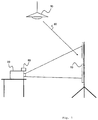
- Fig. 1 is a schematic explanatory diagram of a system which used a projector 20 as an image display unit according to an embodiment of the present invention.
- a projector 20 As examples of the image display unit according to the present invention are also included CRT and liquid crystal display in addition to the projector.
- a predetermined image is projected from a projector 20 disposed approximately in front of a screen 10.
- the visibility of an image projected on the screen 10 differs greatly depending on an external illumination 80 produced from a lighting device 50.
- the white looks like a light white or a dark white, depending on the intensity of the external illumination 80.
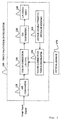
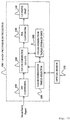
- Fig. 2 is a functional block diagram of an image processor 100 installed in the projector 20 according to the first embodiment of the present invention.
- the image processor 100 in the projector of this first embodiment is provided with an A/D converter 110 for converting an analog image input signal into a digital signal, a color corrector 120 which applies a one-dimensional color correction table to RGB image input signals to effect a desired color correction, an D/A converter 130 for converting a digital signal into an analog signal, a L/V (light valve) drive unit 140 for actuating a liquid crystal light valve to make a projection display of image, a device characteristic storage memory 160 for the storage of device (projector) characteristic, an optical sensor 170 for measuring the luminance of light emitted from the projector and reflected by the screen and light from the external illumination reflected by the screen, and a color correction table generator 150 for generating a color correction table taking the influence of external illumination into account and on the basis of the device characteristics stored in the device characteristics storage memory 160 and a colorimetric value provided from the optical sensor 170.
- A/D converter 110 for converting an analog image input signal into a digital signal
- a color corrector 120 which applies
- an analog image input signal fed from a personal computer for example is converted to a digital image signal by the A/D converter 110.
- the digital image signal thus converted from the analog signal is subjected to a desired color correction by the color corrector 120 taking the influence of external illumination into account and with reference to the color correction table generated by the color correction table generator 150.
- the digital image signal thus color-corrected is converted to an analog signal by the D/A converter 130.
- the L/V drive unit 140 actuates the liquid crystal light valve to make a projection display of image.
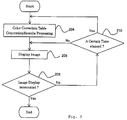
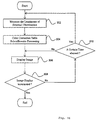
- step 204 when the use of the projector 20 according to the present invention is started, there is performed a color correction table generation/rewrite processing by the color correction table generator 150 (step 204).
- the color correction table generation/rewrite processing it will be described below in detail with reference to Fig. 4.
- step 206 After the color correction table generation/rewrite processing, there is made image display on the basis of the image signal color-corrected by the color corrector 120 and with reference to the rewritten color correction table (step 206). If the image display is not terminated (step 208, No) and if a certain time has not elapsed from the end of the last-time color correction table generation/rewrite processing (step 210, No), the state of image display in step 206 continues.
- step 208, No if the display of image is not terminated (step 208, No) and a certain time has elapsed from the termination of the last-time color correction table generation/rewrite processing (step 210, Yes), the color correction table generation/rewrite processing is again performed taking into account the case where the brightness of external illumination changes with the lapse of time (step 204) and there is made image display (step 206).
- the color correction table is rewritten at every certain time taking the brightness of external illumination also into account, an appropriate color reproduction is ensured even if the brightness of external illumination changes.
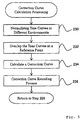
- the luminance of external illumination light reflected from the screen 10 is measured (step 222).
- step 226 a correction curve calculation processing
- the correction curve calculation processing a detailed description will be given below with reference to Fig. 5.
- the one-dimensional color correction table which is referred to in the color corrector 120, is rewritten by the newly generated one-dimensional color correction table (step 228).
- a correction curve is determined in the following manner on the basis of both the luminance of the white output light from the projector stored in the device characteristic storage memory 160 and reflected by the screen and the value measured in step 222.
- first tone curves are normalized in different environments (step 230). Correction curves in all of W (white), R (red), G (green), and B (blue) are the same curves, and therefore, in this embodiment a correction curve is calculated with respect to W as an example.
- tone curves in different environments are assumed as follows.
- the " ⁇ " represents a tone curve characteristic of the projector concerned.
- the value of ⁇ is obtained by actually measuring the tone curve characteristic of the projector concerned and it is suitable to use a mean value as the value of ⁇ .
- ⁇ is set equal to 2.2 as an example.
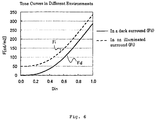
- Fi(Din) Yw ⁇ Din ⁇ + Yi tone curves in different environments are shown in Fig. 6.
- F represents a total luminance of lights reflected from the screen
- Din represents normalized values 0 - 1 by standardizing digital input values (0 - 255 gray scales) of RGB
- Yw represents the luminance of white in the projection
- Yi represents the luminance of illumination.
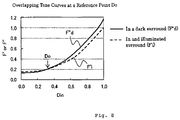
- the equations (1) and (2) are normalized under the assumption that the eyes adapt themselves to luminances (Yw in a dark surround, Yw + Yi in an illuminated surround) detected when the projector outputs white in different environments. That is, the equations (1) and (2) are normalized so that the luminance (Yw in a dark surround, Yw + Yi in an illuminated surround) detected when the projector outputs white in each of different environments becomes 1. More specifically:
- the tone curves are overlapped each other at a reference point Do (step 232).
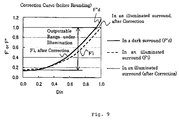
- a correction curve is formed so that an output characteristic in an illuminated surround coincides with the tone curve in a dark surround in the vicinity of the reference point Do.
- the change in color of output image which depends on whether an external illumination is present or not, is diminished by correcting input tone values so that a relative contrast (gradient of tone curve) in the vicinity of the reference point Do does not change depending on whether an external illumination is present or not.
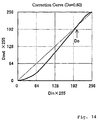
- a correction curve changes variously by changing the gradation Do which serves as a main gradation in correcting a lowering of contrast caused by illumination.
- the value of Do is small, there is obtained such a correction curve as shown in Fig. 13, and although the gradation in a low gray scale region is improved, the projection screen looks whitish, affording a light tone.
- the value of Do is made large, there is obtained such a correction curve as shown in Fig. 14, in which the projection screen is blackish as a whole and the gradation change in the low gray scale region further decreases (what is called collapse of the low gray scale region becomes conspicuous).
- the amount of correction can be adjusted by multiplying the amount of correction ⁇ F by ⁇ (0 ⁇ ⁇ ⁇ 1). This is for preventing an unnatural image reproduction caused by an excessive correction.
- ⁇ be within the range of 0.8 ⁇ ⁇ ⁇ 1.
- Fig. 11 there is illustrated a relation between Dout and Din represented by the equation (7) or (7').
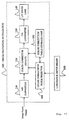
- Fig. 15 is a functional block diagram of an image processor 100 installed in a projector 20 according to the second embodiment of the present invention, in which the same components as in the first embodiment are identified by the same reference numerals as in the first embodiment.
- the image processor 100 in the projector of this second embodiment is also provided with an A/D converter 110 for converting an analog image input signal into a digital signal, a color corrector 120 which applies a one-dimensional color correction table to RGB image input signals to make a desired color correction, a D/A converter 130 for converting a digital signal into an analog signal, and a L/V (light valve) drive unit 140 for actuating a liquid crystal light valve to make a projection display of image.
- A/D converter 110 for converting an analog image input signal into a digital signal
- a color corrector 120 which applies a one-dimensional color correction table to RGB image input signals to make a desired color correction
- a D/A converter 130 for converting a digital signal into an analog signal
- L/V (light valve) drive unit 140 for actuating a liquid crystal light valve to make a projection display of image.
- the image processor 100 in the projector of this second embodiment is further provided with a color correction table storage unit 190 for the storage of color correction tables generated for external illuminations having plural types of luminance values and a color correction table selector 180 for selecting a suitable color correction table from among the color correction tables stored in the color correction table storage unit 190.
- color correction tables generated are stored beforehand in the color correction table storage unit 190, and at the time of displaying an image actually, the color correction table selector 180 selects an appropriate color correction table in accordance with a colorimetric value provided from the optical sensor.
- the color corrector 120 applies a desired color correction which takes the influence of external illumination into account to a digital image input signal.
- the thus color-corrected digital image input signal is converted to an analog signal by the D/A converter 130, and in accordance with the analog signal thus obtained, the L/V drive unit 140 actuates a liquid crystal light valve to make a projection display of image.
- the projector 20 of this second embodiment there is performed a correction curve calculation processing beforehand for external illuminations having plural types of luminance values in the same way as in the first embodiment and a one-dimensional color correction table is generated on the basis of the thus-calculated correction curves.
- the one-dimensional color correction table thus generated and the luminance values of external illuminations are stored beforehand in the color correction table storage unit 190.
- the processing by the image processor 100 is carried out by executing an image processing program stored in a program storage unit (not shown) of the projector 20 as in the first embodiment.
- the program storage unit constitutes a medium which stores the image processing program. Further, the image processing program itself is also included in the scope of the present invention.
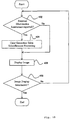
- the luminance of external illumination is measured by the optical sensor 170 (step 302).
- the color correction table selector 180 refers to the luminance values of external illumination stored in the color correction table storage unit 190, then selects from the color correction table storage unit 190 a corresponding color correction table generated for a luminance value closest to the luminance value of external illumination which was measured by the optical sensor 170, and informs the color corrector 120 of the corresponding color correction table.
- the color corrector 120 reads out the corresponding color correction table from the color correction table storage unit 190 and makes rewrite into the corresponding color correction table (step 304).
- step 306 After the color correction table select/rewrite processing, there is made image display with reference to the rewritten color correction table and in accordance with the image signal color-corrected by the color corrector 120 (step 306). In this case, if the image display is not terminated (step 308, No) and if a certain time has not elapsed from the end of the last-time color correction table select/rewrite processing (step 310, No), the state of image display in step 306 continues.
- step 308 if the image display is not terminated (step 308, No) and if a certain time has elapsed from the end of the last-time color correction table select/rewrite processing (step 310, Yes), the luminance measurement for external illumination (step 302) and the color correction table select/rewrite processing (step 304) are performed taking into account the case where the brightness of external illumination changes with the lapse of time, and 'there is made image display (step 306).
- the color correction table is rewritten at every certain time while taking the change in brightness of external illumination into account, an appropriate color reproduction is ensured even if the brightness of external illumination changes.
- step 308, Yes the processing is ended.
- Fig. 17 is a functional block diagram of an image processor 100 installed in a projector 20 according to the third embodiment of the present invention, in which the same components as in the first and second embodiments are identified by the same reference numerals as in those previous embodiments.
- the image processor 100 in the projector of this third embodiment is also provided with an A/D converter 110 for converting an analog image input signal to a digital signal, a color corrector 120 for applying a one-dimensional color correction table to RGB image input signals to make a desired color correction, a D/A converter 130 for converting a digital signal to an analog signal, and a L/V (light valve) drive unit 140 for actuating a liquid crystal light valve to make a projection display of image.
- A/D converter 110 for converting an analog image input signal to a digital signal
- a color corrector 120 for applying a one-dimensional color correction table to RGB image input signals to make a desired color correction
- a D/A converter 130 for converting a digital signal to an analog signal
- a L/V (light valve) drive unit 140 for actuating a liquid crystal light valve to make a projection display of image.
- the image processor 100 in the projector of this third embodiment is further provided with a color correction table storage unit 190 for the storage of color correction tables generated for external illuminations having plural types of luminance values and a color correction table selector 180 for selecting a suitable color correction table from among the color correction tables stored in the color correction table storage unit 190.
- the image processor 100 in the projector of this third embodiment is different from the image processor used in the second embodiment in that (1) it is further provided with a luminance input means 200 for inputting a luminance value of external illumination and in that (2) the color correction table selector 180 selects a suitable color correction table from among the color correction tables stored in the color correction table storage unit 190 on the basis of the luminance value inputted from the luminance input means 200.
- the following processing by the image processor 100 is carried out by executing an image processing program stored in a program storage unit (not shown) in the projector 20 as in the first and second embodiments.
- the program storage unit constitutes a medium which stores the image processing program.
- the image processing program itself is included in the scope of the present invention.
- the operation of the image processor 100 in the projector 20 of this third embodiment is basically the same as in the second embodiment.
- step 302 the luminance of external illumination is measured at every certain time by the optical sensor 170 and the color correction table selector 180 selects from the color correction table storage unit 190 a corresponding color correction table generated for a luminance value closest to the measured luminance value of external illumination.
- This third embodiment is different from such second embodiment in that, in step 402, a luminance value of external illumination is inputted by the luminance input means 200 and the color correction table selector 180 refers to the external illumination luminance values stored in the color correction table storage unit 190 and selects from the color correction table storage unit 190 a corresponding color correction table generated for a luminance value closest to the inputted luminance value of external illumination.
- the color correction table selector 180 informs the color corrector 120 of a corresponding color correction table.
- the color corrector 120 reads out the corresponding color correction table from the color correction table storage unit 190 and makes rewrite into the corresponding color correction table (step 404). Then, the display of image is performed with reference to the rewritten color correction table and on the basis of an image signal color-corrected by the color corrector 120 (step 406).
- step 406 the display of image is performed without rewrite of the color correction table.
- steps 402 - 406 are repeated until the image display is terminated, for example by turning OFF a power supply of the projector (step 408).
Landscapes
- Engineering & Computer Science (AREA)
- Multimedia (AREA)
- Signal Processing (AREA)
- Image Processing (AREA)
- Controls And Circuits For Display Device (AREA)
- Facsimile Image Signal Circuits (AREA)
- Video Image Reproduction Devices For Color Tv Systems (AREA)
- Processing Of Color Television Signals (AREA)
- Color Image Communication Systems (AREA)
- Digital Computer Display Output (AREA)
- Control Of Indicators Other Than Cathode Ray Tubes (AREA)
Abstract
Description

In (1) of Fig. 12 there is shown a relation between Dout and Din in case of performing the rounding process for decreasing the amount of correction.
On the basis of the color correction table thus selected, the
Claims (40)
- A method for generating a correction curve for correcting image data inputted to an image display unit, comprising:a measuring step of measuring an tone reproduction characteristic in a dark surround of said image display unit and an tone reproduction characteristic in an illuminated surround of the image display unit under illumination of a predetermined luminance value;a characteristic approximating step of approximating said tone reproduction characteristic in an illuminated surround to said tone reproduction characteristic in a dark surround in a desired input tone range of input image data; anda correction curve generating step of generating a correction curve on the basis of the approximated tone reproduction characteristic in an illuminated surround.
- A method for performing an image processing for image data inputted to an image display unit, using a correction curve based on an tone reproduction characteristic in an illuminated surround of said image display unit under illumination of a predetermined luminance value, said tone reproduction characteristic in an illuminated surround having been approximated to an tone reproduction characteristic in a dark surround of the image display unit.
- The method according to claim 2, having a plurality of correction curves obtained using different said predetermined luminance values.
- The method according to claim 2 or 3, wherein said desired input tone range comprises a middle tone range and the vicinity thereof.
- The method according to any one of claims 2 to 4, wherein said tone reproduction characteristic in a dark surround and said tone reproduction characteristic in an illuminated surround are normalized to a predetermined luminance range, and in the desired input tone range of input image data the normalized tone reproduction characteristic in an illuminated surround is approximated to the normalized tone reproduction characteristic in a dark surround.
- The method according to any one of claims 2 to 5, wherein a correction curve is subjected to a rounding processing in a low or high tone region.
- The method according to claim 6, wherein the degree of said rounding processing is adjustable.
- The method according to any one of claims 2 to 7, wherein the degree of approximation is adjustable.
- The method according to any one of claims 3 to 8, including a selection step of selecting one of plural correction curves on the basis of a luminance value of external illumination, and wherein the input image data is subjected to an image processing on the basis of the selected correction curve.
- The method according to claim 9, further including a step of inputting the luminance value of external illumination used in said selection step.
- The method according to claim 9, further including a step of measuring the luminance value of external illumination used in said selection step.
- An image display unit for performing an image processing for an inputted image data, using a correction curve based on an tone reproduction characteristic in an illuminated surround of said image display unit under illumination of a predetermined luminance value, said tone reproduction characteristic in an illuminated surround having been approximated to an tone reproduction characteristic in a dark surround of the image display unit.
- An image display unit for performing an image processing for an inputted image data, wherein the image display unit performs the image processing for the inputted data based on a correction curve, which is sequentially generated by sequentially repeating a method for generating the correction curve comprising:a measuring step of measuring an tone reproduction characteristic in a dark surround of said image display unit and an tone reproduction characteristic in an illuminated surround of the image display unit under illumination of a predetermined luminance value;a characteristic approximating step of approximating said tone reproduction characteristic in an illuminated surround to said tone reproduction characteristic in a dark surround in a desired input tone range of input image data; anda correction curve generating step of generating a correction curve on the basis of the approximated tone reproduction characteristic in an illuminated surround.
- The image display unit according to claim 12, having a plurality of correction curves obtained using different said predetermined luminance values.
- An image display unit for performing an image processing for an inputted image data, comprising a storage means for storing a plurality of correction curves, which are generated by repeating a method for generating the correction curve, wherein a predetermined luminance value is changed each time, comprising:a measuring step of measuring an tone reproduction characteristic in a dark surround of said image display unit and an tone reproduction characteristic in an illuminated surround of the image display unit under illumination of the predetermined luminance value;a characteristic approximating step of approximating said tone reproduction characteristic in an illuminated surround to said tone reproduction characteristic in a dark surround in a desired input tone range of input image data; anda correction curve generating step of generating a correction curve on the basis of the approximated tone reproduction characteristic in an illuminated surround.
- The image display unit according to any one of claims 12 to 15, wherein said desired input tone range comprises a middle tone range and the vicinity thereof.
- The image display unit according to any one of claims 12 to 16, wherein said tone reproduction characteristic in a dark surround and said tone reproduction characteristic in an illuminated surround are normalized to a predetermined luminance range, and in the desired input tone range of input image data the normalized tone reproduction characteristic in an illuminated surround is approximated to the normalized tone reproduction characteristic in a dark surround.
- The image display unit according to any one of claims 12 to 17, wherein a correction curve is subjected to a rounding processing in a low or high tone region.
- The image display unit according to claim 18, wherein the degree of said rounding processing is adjustable.
- The image display unit according to any one of claims 12 to 19, wherein the degree of approximation is adjustable.
- The image display unit according to any one of claims 14 to 20, including a selection means for selecting one of plural correction curves on the basis of a luminance value of external illumination, and wherein the input image data is subjected to an image processing on the basis of the selected correction curve.
- The image display unit according to claim 21, further including a means for inputting the luminance value of external illumination used in said selection means.
- The image display unit according to claim 21, further including a means for measuring the luminance value of external illumination used in said selection means.
- A computer-readable medium having a program of instructions for execution by the computer to perform an image processing for image data inputted to an image display unit, using a correction curve based on an tone reproduction characteristic in an illuminated surround of said image display unit under illumination of a predetermined luminance value, said tone reproduction characteristic in an illuminated surround having been approximated to an tone reproduction characteristic in a dark surround of the image display unit.
- The computer-readable medium according to claim 24, having a plurality of correction curves obtained using different said predetermined luminance values.
- The computer-readable medium according to claim 24 or 25, wherein said desired input tone range comprises a middle tone range and the vicinity thereof.
- The computer-readable medium according to any one of claims 24 to 26, wherein said tone reproduction characteristic in a dark surround and said tone reproduction characteristic in an illuminated surround are normalized to a predetermined luminance range, and in the desired input tone range of input image data the normalized tone reproduction characteristic in an illuminated surround is approximated to the normalized tone reproduction characteristic in a dark surround.
- The computer-readable medium according to any one of claims 24 to 27, wherein a correction curve is subjected to a rounding processing in a low or high tone region.
- The computer-readable medium according to claim 28, wherein the degree of said rounding processing is adjustable.
- The computer-readable medium according to any one of claims 24 to 29, wherein the degree of approximation is adjustable.
- The computer-readable medium according to any one of claims 25 to 30, including a selection processing of selecting one of plural correction curves on the basis of a luminance value of external illumination, and wherein the input image data is subjected to an image processing on the basis of the selected correction curve.
- The computer-readable medium according to claim 31, further including a processing of inputting the luminance value of external illumination used in said selection processing.
- The computer-readable medium according to claim 31, further including a processing of measuring the luminance value of external illumination used in said selection processing.
- A computer-readable medium storing a correction curve for performing an image processing for image data inputted to an image display unit, wherein the correction curve is based on an tone reproduction characteristic in an illuminated surround of said image display unit under illumination of a predetermined luminance value, said tone reproduction characteristic in an illuminated surround having been approximated to an tone reproduction characteristic in a dark surround of the image display unit.
- The computer-readable medium according to claim 34, having a plurality of correction curves obtained using different said predetermined luminance values.
- The computer-readable medium according to claim 34 or 35, wherein said desired input tone range comprises a middle tone range and the vicinity thereof.
- The computer-readable medium according to any one of claims 34 to 36, wherein said tone reproduction characteristic in a dark surround and said tone reproduction characteristic in an illuminated surround are normalized to a predetermined luminance range, and in the desired input tone range of input image data the normalized tone reproduction characteristic in an illuminated surround is approximated to the normalized tone reproduction characteristic in a dark surround.
- The computer-readable medium according to any one of claims 34 to 37, wherein a correction curve is subjected to a rounding processing in a low or high tone region.
- The computer-readable medium according to claim 38, wherein the degree of said rounding processing is adjustable.
- The computer-readable medium according to any one of claims 34 to 39, wherein the degree of approximation is adjustable.
Applications Claiming Priority (2)
| Application Number | Priority Date | Filing Date | Title |
|---|---|---|---|
| JP2000278067 | 2000-09-13 | ||
| JP2000278067A JP3719498B2 (en) | 2000-09-13 | 2000-09-13 | Correction curve generation method, image processing method, image display apparatus, and recording medium |
Publications (2)
| Publication Number | Publication Date |
|---|---|
| EP1189434A2 true EP1189434A2 (en) | 2002-03-20 |
| EP1189434A3 EP1189434A3 (en) | 2003-05-02 |
Family
ID=18763288
Family Applications (1)
| Application Number | Title | Priority Date | Filing Date |
|---|---|---|---|
| EP01121646A Withdrawn EP1189434A3 (en) | 2000-09-13 | 2001-09-13 | Correction curve generating method, image processing method, image display unit and storage medium |
Country Status (3)
| Country | Link |
|---|---|
| US (1) | US6940522B2 (en) |
| EP (1) | EP1189434A3 (en) |
| JP (1) | JP3719498B2 (en) |
Cited By (3)
| Publication number | Priority date | Publication date | Assignee | Title |
|---|---|---|---|---|
| WO2002097784A1 (en) * | 2001-05-31 | 2002-12-05 | Seiko Epson Corporation | Image display system, projector, information storage medium and image processing method |
| US7011413B2 (en) | 2002-05-09 | 2006-03-14 | Seiko Epson Corporation | Image processing system, projector, program, information storage medium, and image processing method |
| WO2006103862A1 (en) | 2005-03-29 | 2006-10-05 | Matsushita Electric Industrial Co., Ltd. | Image display and image displaying method |
Families Citing this family (14)
| Publication number | Priority date | Publication date | Assignee | Title |
|---|---|---|---|---|
| JP3793987B2 (en) * | 2000-09-13 | 2006-07-05 | セイコーエプソン株式会社 | Correction curve generation method, image processing method, image display apparatus, and recording medium |
| JP2003345315A (en) * | 2002-05-30 | 2003-12-03 | Fujitsu Ltd | Signal processing unit and liquid crystal display device |
| JP3968584B2 (en) * | 2003-10-02 | 2007-08-29 | 船井電機株式会社 | Panel display television |
| KR101001921B1 (en) | 2004-07-24 | 2010-12-17 | 주식회사 대우일렉트로닉스 | Adaptive Adaptive Contrast Ratio and Color Temperature Correction for Plasma Display Panel |
| KR100765267B1 (en) * | 2005-06-29 | 2007-10-09 | 삼성전자주식회사 | Electronic device and its control method and electronic control system including the same |
| KR101101328B1 (en) * | 2005-11-07 | 2012-01-02 | 삼성전자주식회사 | Apparatus and method for color correction of video equipment according to ambient brightness |
| TWI338515B (en) * | 2006-02-20 | 2011-03-01 | Mstar Semiconductor Inc | Color calibration device and system and method for use therewith |
| CN101512630B (en) * | 2006-08-29 | 2011-06-22 | 松下电器产业株式会社 | Image display method and image display device |
| KR100866486B1 (en) | 2007-01-04 | 2008-11-03 | 삼성전자주식회사 | Ambient light adaptive color correction device and method |
| JP5565139B2 (en) * | 2010-06-28 | 2014-08-06 | セイコーエプソン株式会社 | Image processing apparatus, projection display apparatus, and image processing method |
| US20150371581A1 (en) * | 2013-02-28 | 2015-12-24 | Satoru CHUMAN | Video analysis device, display device, measurement method for display device, video correction method for display device |
| CN104253280B (en) * | 2014-09-04 | 2017-01-25 | 华中科技大学 | Solid-oxide-fuel-cell cathode gas flow field plate and preparation method thereof |
| EP4312426A1 (en) * | 2022-07-29 | 2024-01-31 | Coretronic Corporation | Projection system and calibration method thereof |
| KR102769550B1 (en) * | 2023-05-30 | 2025-02-19 | 동국대학교 산학협력단 | Color calibration system for display device |
Citations (2)
| Publication number | Priority date | Publication date | Assignee | Title |
|---|---|---|---|---|
| JPH09149337A (en) | 1995-10-24 | 1997-06-06 | Chishu Denno Kofun Yugenkoshi | System and method for automatically controlling brightness and contrast on a display |
| GB2335326A (en) | 1997-10-31 | 1999-09-15 | Sony Corp | Image processing device and method, image transmission/reception system and method, and providing medium |
Family Cites Families (8)
| Publication number | Priority date | Publication date | Assignee | Title |
|---|---|---|---|---|
| US4386345A (en) * | 1981-09-22 | 1983-05-31 | Sperry Corporation | Color and brightness tracking in a cathode ray tube display system |
| US4511921A (en) * | 1982-06-16 | 1985-04-16 | Rca Corporation | Television receiver with manual and selectively disabled automatic picture control |
| JPS59202779A (en) | 1983-05-02 | 1984-11-16 | Matsushita Electric Ind Co Ltd | Light control device for self-luminous image display |
| JPS63177193A (en) * | 1987-01-19 | 1988-07-21 | 株式会社日立製作所 | display device |
| US5760843A (en) * | 1993-01-19 | 1998-06-02 | Matsushita Electric Industrial Co., Ltd. | Method and apparatus for contrast processing a video signal including brightness level compensation |
| US6094185A (en) * | 1995-07-05 | 2000-07-25 | Sun Microsystems, Inc. | Apparatus and method for automatically adjusting computer display parameters in response to ambient light and user preferences |
| US6459425B1 (en) * | 1997-08-25 | 2002-10-01 | Richard A. Holub | System for automatic color calibration |
| US6411306B1 (en) * | 1997-11-14 | 2002-06-25 | Eastman Kodak Company | Automatic luminance and contrast adustment for display device |
-
2000
- 2000-09-13 JP JP2000278067A patent/JP3719498B2/en not_active Expired - Fee Related
-
2001
- 2001-09-12 US US09/949,999 patent/US6940522B2/en not_active Expired - Fee Related
- 2001-09-13 EP EP01121646A patent/EP1189434A3/en not_active Withdrawn
Patent Citations (2)
| Publication number | Priority date | Publication date | Assignee | Title |
|---|---|---|---|---|
| JPH09149337A (en) | 1995-10-24 | 1997-06-06 | Chishu Denno Kofun Yugenkoshi | System and method for automatically controlling brightness and contrast on a display |
| GB2335326A (en) | 1997-10-31 | 1999-09-15 | Sony Corp | Image processing device and method, image transmission/reception system and method, and providing medium |
Cited By (7)
| Publication number | Priority date | Publication date | Assignee | Title |
|---|---|---|---|---|
| WO2002097784A1 (en) * | 2001-05-31 | 2002-12-05 | Seiko Epson Corporation | Image display system, projector, information storage medium and image processing method |
| US7542055B2 (en) | 2001-05-31 | 2009-06-02 | Seiko Epson Corporation | Image display system, projector, information storage medium, and image processing method |
| US7011413B2 (en) | 2002-05-09 | 2006-03-14 | Seiko Epson Corporation | Image processing system, projector, program, information storage medium, and image processing method |
| EP1363462A3 (en) * | 2002-05-09 | 2008-04-23 | Seiko Epson Corporation | Image processing system, projector, information storage medium, and image processing method |
| WO2006103862A1 (en) | 2005-03-29 | 2006-10-05 | Matsushita Electric Industrial Co., Ltd. | Image display and image displaying method |
| EP1865709A4 (en) * | 2005-03-29 | 2010-07-07 | Panasonic Corp | PROJECTOR AND IMAGE DISPLAY METHOD |
| US7907135B2 (en) | 2005-03-29 | 2011-03-15 | Panasonic Corporation | Image display and image displaying method for gradation correction |
Also Published As
| Publication number | Publication date |
|---|---|
| EP1189434A3 (en) | 2003-05-02 |
| US6940522B2 (en) | 2005-09-06 |
| US20020122048A1 (en) | 2002-09-05 |
| JP2002094791A (en) | 2002-03-29 |
| JP3719498B2 (en) | 2005-11-24 |
Similar Documents
| Publication | Publication Date | Title |
|---|---|---|
| EP1189457A2 (en) | Correction curve generating method, image processing method, image display unit and storage medium | |
| US7079155B2 (en) | Image display device, image processing method, program, and storage medium | |
| US6791565B2 (en) | Correction curve generating method, image processing method, image display unit, and storage medium | |
| US6940522B2 (en) | Correction curve generating method, image processing method, image display unit, and storage medium | |
| US6954213B1 (en) | Objective automated color matching between input and output devices | |
| JP3719411B2 (en) | Image display system, projector, program, information storage medium, and image processing method | |
| US7317439B2 (en) | Electronic apparatus and recording medium therefor | |
| JP3514257B2 (en) | Image processing system, projector, image processing method, program, and information storage medium | |
| US7170634B2 (en) | Picture display system, picture data processing method, and program for performing color correction of output pictures | |
| JP4445693B2 (en) | Projector projection surface color correction method, projector projection surface color correction system, and projector projection surface color correction program | |
| US6097836A (en) | Image processing system and its smoothing method for correcting color fog and backlight of a digital image | |
| US20110018897A1 (en) | Projector | |
| JP2003280629A (en) | Image display system, image processing method, program, and information storage medium | |
| JP2001320725A (en) | Environment-adaptive image display system, presentation system, image processing method, and information storage medium | |
| JP2003333614A (en) | Image processing system, projector, image processing method, program, and information storage medium | |
| JPH0756545A (en) | Projection-type liquid crystal display gradation correction method and gradation correction device | |
| US6990234B2 (en) | Correction curve generating method, image processing method, image display unit, and storage medium | |
| JP7462458B2 (en) | Image processing device and image processing method | |
| JP3657497B2 (en) | Image display method | |
| JP4145888B2 (en) | Display device and display method | |
| JP4743424B2 (en) | Image display system, projector, program, and information storage medium | |
| JP2605011B2 (en) | Color image processing method | |
| JP2006109498A (en) | Image processing method, image processing apparatus, and recording medium |
Legal Events
| Date | Code | Title | Description |
|---|---|---|---|
| PUAI | Public reference made under article 153(3) epc to a published international application that has entered the european phase |
Free format text: ORIGINAL CODE: 0009012 |
|
| AK | Designated contracting states |
Kind code of ref document: A2 Designated state(s): AT BE CH CY DE DK ES FI FR GB GR IE IT LI LU MC NL PT SE TR |
|
| AX | Request for extension of the european patent |
Free format text: AL;LT;LV;MK;RO;SI |
|
| PUAL | Search report despatched |
Free format text: ORIGINAL CODE: 0009013 |
|
| AK | Designated contracting states |
Designated state(s): AT BE CH CY DE DK ES FI FR GB GR IE IT LI LU MC NL PT SE TR |
|
| AX | Request for extension of the european patent |
Extension state: AL LT LV MK RO SI |
|
| 17P | Request for examination filed |
Effective date: 20031021 |
|
| AKX | Designation fees paid |
Designated state(s): AT BE CH CY DE DK ES FI FR GB GR IE IT LI LU MC NL PT SE TR |
|
| 17Q | First examination report despatched |
Effective date: 20090527 |
|
| STAA | Information on the status of an ep patent application or granted ep patent |
Free format text: STATUS: THE APPLICATION IS DEEMED TO BE WITHDRAWN |
|
| 18D | Application deemed to be withdrawn |
Effective date: 20130820 |