The present invention relates to a cell search method
in a mobile communication system and a mobile station, and
more specifically, to a cell search method for a mobile
station in a CDMA (Code Division Multiple Access) mobile
communication system and a mobile station, the method
comprising a three-step cell search method of continuing
to execute a first step during a second or third step
concurrently therewith.
In a mobile communication system based on the CDMA
method, if a mobile station communicates with a base
station or measures power received from a base station,
it must detect frame boundaries and a scramble code in a
down signal from the base station. This is called "cell
search".
The cell search method essentially comprises
descrambling the signal at all possible scramble codes with
all possible timings. Then, a timing and a scramble code
is selected with which a correlation coefficient obtained
as a result of despreading with spreading codes used is
largest, thereby making it possible to detect frame
boundaries and the scramble code for the base station.
This method, however, requires a large amount of time for
the cell search. Thus, to increase the speed of the cell
search, a method is used in which the base station transmits
each slot through two synchronization channels: a PSCH
(Primary Synchronization CHannel) and an SSCH (Secondary
Synchronization CHannel) (refer to 3GPP Technical
Specification 25.211).
Fig. 1 shows a configuration of a down channel relating
to the cell search. This down channel relates to the cell
search in the W-CDMA method (refer to 3GPP Technical
Specification 25.211), which is representative of the CDMA
mobile communication method. On a primary
synchronization channel, a spreading code PSC (Primary
Synchronization Code) is used which is common to all cells
and slots, and the signal is transmitted in accordance with
slot cycles. On a secondary synchronization channel,
different spreading codes SSC0 to SSCn-1 (Secondary
Synchronization Codes) are used for the respective slots,
and one frame constitutes a spreading code sequence and
is repeatedly and cyclically transmitted. Different
spreading code sequences are used for respective cells and
are correlated with scramble code groups to which scramble
codes used by the base station belong.
Fig. 2 shows a conventional three-step cell search
method.
A mobile station first detects slot boundaries (step
S201). On the primary synchronization channel, the
spreading code PSC, which is common to all the cell and
slots, is used. The mobile station inputs a received
signal to a matched filter corresponding to this spreading
code PSC, and executes averaging over a plurality of slots
in order to reduce the adverse effects of noise and
interference. Then, a timing with which an average
correlation coefficient is largest is selected to detect
slot boundaries. This operation will be hereinafter
called a "first step".
Next, frame boundaries and a scramble code group are
detected (step S203). On the secondary synchronization
channel, the different spreading codes are used for the
respective slots, and a spreading code sequence of these
codes constitutes one frame. The spreading code sequence
is repeated in accordance with frame cycles, and different
spreading code sequences are used for the respective cells .
These spreading code sequences are correlated with
respective groups of scramble codes so as to allow the
scramble codes to be subsequently detected easily. Since
the slot boundaries have been detected at the first step,
the mobile station can calculate a transmission timing on
the secondary synchronization channel.
The mobile station then despreads the received signal
using the calculated timing and the spreading codes SSC.
It then averages correlation output coefficients
corresponding to all possible frame boundaries and SSC
sequences, and selects a timing and an SSC spreading code
sequence with which the average correlation coefficient
is largest. The mobile station thus detects the frame
boundaries and a scramble code group. This operation will
be hereinafter called a "second step".
The mobile station further detects a scramble code
(step S205). The mobile station, which has detected the
frame boundaries and the scramble code group during the
second step, finally receives the signal, in which the
respective cells are subjected to different scramble code,
through a common pilot channel and determines which of the
scramble codes of the scramble code group equals that of
the signal. Since the frame boundaries have already been
detected, the phase of the scramble code can be calculated.
Since the spreading code for the common pilot channel
is common to all the cells, essentially all the scramble
codes within the group is used to descramble the signal,
and the spreading code for the common primary channel is
used to despread the signal. Then, these operations are
performed over a plurality of symbols with the results
averaged, and a scramble code is selected with which the
average correlation coefficient is largest. This
operation will be hereinafter called a "third step".
The mobile station determines whether or not the
detected frame boundaries and scramble code are correct
(step S207). If it is determined that they are correct,
then the cell search is ended. Otherwise, the cell search
is restarted from the first step. Whether or not the frame
boundaries and scramble code are correct is determined by
comparing these values with referential values.
In the conventional three-step cell search method,
the process of the above described first, second, and third
steps are serially executed to determine whether or not
the detection results, that is, the frame boundaries and
the scramble code are correct. If it is not determined
that the detection results are correct, then memories for
the respective steps are initialized, and the cell search
is restarted from the first step. The above operation is
repeated until the correct frame boundaries and scramble
code are detected.
The power consumption of the mobile station can be
reduced by shortening the time required for the mobile
station to execute the cell search. Further, if the time
required for the mobile station to execute the cell search
is shortened, then the handover speed is increased to
achieve more smooth and stable communications. Moreover,
prompt and accurate selection of proper cells enables
communications to be executed with a minimum required
transmission power, thereby reducing the power
consumption during the communication of the mobile station,
while increasing the system capacity.
In the conventional three-step cell search method,
however, the operations at the first to third steps are
serially performed to determine that the cell search must
be reexecuted, on the basis of only the determination for
the detection results. Thus, the timing with which the
need to reexecute the cell search is determined tends to
be delayed.
In particular, with much noise or interference, there
is a strong probability of a failure to detect the correct
slot boundaries at the first step. If the detection fails
at the first step, the operations at the second and third
steps will be based on the incorrect slot boundaries and
will thus be useless. Thus, the duration of the cell search
disadvantageously increases.
The present invention is provided in view of the above
problems, and it is an object thereof to provide a cell
search method for a mobile station in a mobile
communication system, the method comprising a three-step
cell search method of continuing to execute a first step,
that is, reception through the primary synchronization
channel and a primary averaging process, during a second
and a third steps, and further executing secondary
averaging also using the results of a previous first step,
thereby increasing the detection accuracy, reducing the
power consumption of the mobile station, providing smooth
and stable communications, and increasing the system
capacity.
To attain this object, a first aspect of the present
invention provides a cell search method for a mobile
station in a mobile communication system, the method
comprising a step of despreading a received signal with
a spreading code common to all slots and detecting first
slot boundaries on the basis of a first average correlation
value calculated at intervals of first averaging time, a
step of despreading the received signal with different
spreading codes for the respective slots on the basis of
the detected first slot boundaries and detecting frame
boundaries and a scramble code group on the basis of a
second average correlation value, a step of descrambling
a common pilot signal on the basis of the detected frame
boundaries and scramble code group, and detecting a
scramble code on the basis of a third average correlation
value, a step of detecting, concurrently with the step of
detecting the frame boundaries and the scramble code group
or the step of detecting the scramble code, second slot
boundaries on the basis of a fourth average correlation
value calculated through primary averaging executed at
intervals of second averaging time, a step of determining
whether or not the detected frame boundaries and scramble
code are correct, and a step of repeating the process
starting from the step of detecting the frame boundaries
and the scramble code group on the basis of the detected
second slot boundaries, if the incorrectness of the frame
boundaries or the scramble code is determined.
A second aspect of the present invention provides a
cell search method for a mobile station in a mobile
communication system, the method comprising a step of
despreading a received signal with a spreading code common
to all slots and detecting first slot boundaries on the
basis of a first average correlation value calculated at
intervals of first averaging time, a step of despreading
the received signal with different spreading codes for the
respective slots on the basis of the detected first slot
boundaries and detecting frame boundaries and a scramble
code group on the basis of a second average correlation
value, a step of descrambling a common pilot signal on the
basis of the detected frame boundaries and scramble code
group, and detecting a scramble code on the basis of a third
average correlation value, a step of detecting,
concurrently with the step of detecting the frame
boundaries and the scramble code group or the step of
detecting the scramble code, second slot boundaries on the
basis of a fourth average correlation value calculated
through primary averaging executed at intervals of second
averaging time, and a step of suspending the step of
detecting the frame boundaries and the scramble code group
or the step of detecting the scramble code and repeating
the process starting from the step of detecting the frame
boundaries and the scramble code group on the basis of the
second slot boundaries detected during a present search,
if the detected second slot boundaries are different from
the second slot boundaries detected during a last cell
search.
Here, the second averaging time is different from the
first averaging time.
Here, the first averaging time is longer than the
second averaging time.
The repeating step can further include a step of
comparing the time elapsed since the start of the step of
detecting the first slot boundaries with a predetermined
upper limit value and ending the repetition if it is
determined as a result of the comparison that the elapsed
time exceeds the upper limit value.
Alternatively, the repeating step can further include
a step of comparing the number of times that the frame
boundaries and the scramble code have been detected with
a predetermined upper limit value and ending the repetition
if it is determined as a result of the comparison that the
number of times exceeds the upper limit value.
Moreover, the step of detecting the second slot
boundaries can calculate a fifth average correlation value
by executing secondary averaging on the basis of the first
average correlation value and the already calculated
fourth average correlation value, and can detect second
slot boundaries on the basis of the calculated fifth
average correlation value.
Here, the secondary averaging can be a process of
carrying out averaging after weighting the first average
correlation value and the already calculated fourth
average correlation value.
Here, the weighting values are adaptively different
from each other.
The correspondence between the weighting value and
the first average correlation value may be such that the
more previously the first average correlation value is
calculated relative to the time of the secondary averaging,
the smaller the weighting value is.
Here, a rate at which the weighting value decreases
can increase consistently with a movement speed of the
mobile station.
Further, the secondary averaging is a process of
carrying out averaging after multiplying the first average
correlation value and the already calculated fourth
average correlation value by respective forgetting
factors.
Here, values of the forgetting factors are adaptively
different from each other.
Here, the value of the forgetting factor decreases
consistently with the movement speed of the mobile station.
The method further comprises a step of determining
a state of the mobile station, and the repeating step is
executed if at the step of determining the state, it is
determined that the mobile station is communicating.
A third aspect of the present invention provides a
mobile station in a mobile communication system, the
station comprising means for despreading a received signal
with a spreading code common to all slots and detecting
first slot boundaries on the basis of a first average
correlation value calculated at intervals of first
averaging time, means for despreading the received signal
with different spreading codes for the respective slots
on the basis of the detected first slot boundaries and
detecting frame boundaries and a scramble code group on
the basis of a second average correlation value, means for
descrambling a common pilot signal on the basis of the
detected frame boundaries and scramble code group, and
detecting a scramble code on the basis of a third average
correlation value, means for detecting second slot
boundaries on the basis of a fourth average correlation
value calculated by subjecting the received signal to
primary averaging at intervals of second averaging time,
and means for determining whether or not the detected frame
boundaries and scramble code are correct, wherein if the
determining means determines the incorrectness of the
frame boundaries or the scramble code, the means for
detecting the frame boundaries and the scramble code group
detects the frame boundaries and the scramble code group
on the basis of the detected second slot boundaries.
A fourth aspect of the present invention provides a
mobile station in a mobile communication system, the
station comprising means for despreading a received signal
with a spreading code common to all slots and detecting
first slot boundaries on the basis of a first average
correlation value calculated at intervals of first
averaging time, means for despreading the received signal
with different spreading codes for the respective slots
on the basis of the detected first slot boundaries and
detecting frame boundaries and a scramble code group on
the basis of a second average correlation value, means for
descrambling a common pilot signal on the basis of the
detected frame boundaries and scramble code group, and
detecting a scramble code on the basis of a third average
correlation value, means for detecting second slot
boundaries on the basis of a fourth average correlation
value calculated through primary averaging executed at
intervals of second averaging time, and means for
suspending the detection by the means for detecting the
frame boundaries and the scramble code group or the means
for detecting the scramble code, and detecting the frame
boundaries and the scramble code group on the basis of the
detected second slot boundaries, if the detected second
boundaries are different from the first slot boundaries
or the second slot boundaries detected during a last cell
search.
Here, the second averaging time is different from the
first averaging time.
Here, the first averaging time is longer than the
second averaging time.
The mobile station can further include means for
comparing the time elapsed since the start of the step of
detecting the first slot boundaries with a predetermined
upper limit value and ending the detection of the frame
boundaries and the scramble code if it is determined as
a result of the comparison that the elapsed time exceeds
the upper limit value.
Alternatively, the mobile station can further include
means for comparing the number of times that the frame
boundaries and the scramble code have been detected with
a predetermined upper limit value and ending the detection
of the frame boundaries and the scramble code if it is
determined as a result of the comparison that the number
of times exceeds the upper limit value.
Moreover, the means for detecting the second slot
boundaries can calculate a fifth average correlation value
by executing secondary averaging on the basis of the first
average correlation value and the already calculated
fourth average correlation value, and can detect second
slot boundaries on the basis of the calculated fifth
average correlation value.
Here, the secondary averaging can be a process of
carrying out averaging after weighting the first average
correlation value and the already calculated fourth
average correlation value.
Here, the weighting values are adaptively different
from each other.
The correspondence between the weighting value and
the first average correlation value may be such that the
more previously the first average correlation value is
calculated relative to the time of the secondary averaging,
the smaller the weighting value is.
Here, a rate at which the weighting value decreases
can increase consistently with a movement speed of the
mobile station.
Further, the secondary averaging is a process of
carrying out averaging after multiplying the first average
correlation value and the already calculated fourth
average correlation value by respective forgetting
factors.
Here, values of the forgetting factors are adaptively
different from each other.
Here, the value of the forgetting factor decreases
consistently with the movement speed of the mobile station.
Further, the determining means can execute the
determination if the mobile station is communicating.
According to the present invention, in the three-step
cell search method, the first step continues to be
executed during the second or third step concurrently
therewith, so that if it is determined in connection with
the detection results that the cell search must be executed
again, the cell search must be started from the second step
instead of the first step. Further, the continuation of
the execution of the first step makes the averaging at the
first step more effective. As a result, the present
invention can achieve more accurate cell search in a
shorter cell search time than the conventional cell search
method.
Furthermore, if the slot boundaries detected at the
first step, which continues to be executed during the
second or third step, change, the cell search can be
immediately restarted from the second step on the basis
of the latest slot boundaries detected, which are more
reliable, thereby achieving a more accurate cell search
operation in a shorter cell search time.
Moreover, by setting an upper limit value for the
number of times that the cell search is repeated or the
cell search time, the unwanted repetition of the cell
search can be prevented in a situation where proper cells
are not found. As a result, the cell search time can be
reduced to lessen the power consumption of the mobile
station.
Further, by carrying out the weighting or using the
forgetting factors during the averaging at the first step,
the averaging is made more effective while restraining the
adverse effects of the variation of received power caused
by fading or the like. Furthermore, by adaptively varying
these weighting values or forgetting factors depending on
the movement speed of the mobile station or the like,
optimal averaging can be executed according to the
instantaneous situation of a propagation path or the like,
thereby enabling an effective cell search.
Moreover, according to the present invention, an
algorithm for continuing to execute the first step during
the second or third step only if the mobile station is
communicating, thereby restraining the power consumption
upon the turn-on of the power supply to the mobile station
or during standby and enabling smooth and stable handover
during communication.
The above and other objects, effects, features and
advantages of the present invention will become more
apparent from the following description of embodiments
thereof taken in conjunction with the accompanying
drawings.
An embodiment of the present invention will be
described below in detail with reference to the drawings.
Fig. 3 is a flow chart showing a cell search method
according to this embodiment; it shows an algorithm for
a cell search method of continuing to execute a first step
during a second or third step.
At the first step, averaging is executed over an
averaging time (first averaging time) T1, and slot
boundaries are then detected (step S301). Next, as in the
conventional example, the second and third steps are
serially executed (steps 303 and 305), but the averaging
at the first step continues to be executed concurrently
with the operation of the second and third steps (step S309).
Subsequently, the first-step averaging time (second
averaging time) at step S309 is defined as T1'. In the
first-step averaging at step S309, correlation values for
slots over the averaging time T1' are averaged (primary
averaging), and the averaging is further executed using
an already calculated first-step average correlation
value (secondary averaging), thereby calculating an
average correlation value.
The already calculated first-step average
correlation value, which is used for the secondary
averaging, contains the average correlation value
calculated at step S301 and the average correlation value
already calculated at step S309, which is repeated. The
secondary averaging makes the averaging more effective to
allow slot boundaries to be detected more accurately at
the first step.
Once the primary averaging over the time T1 and the
secondary averaging over the time T1' has been completed,
the maximum average correlation value is selected to detect
slot boundaries. When the third step is completed, the
result of the detection is judged (step S307). Here, it
is determined whether or not frame boundaries detected at
the second step and a scramble code detected at the third
step are correct. If it is determined that the cell search
must be reexecuted, then instead of returning to the first
step, the slot boundaries are updated to the latest
detection result (step S313), and the cell search is
started from the second step using this result.
On the other hand, the concurrent first-step averaging
is repeated until it is determined in connection with the
detection results at step S307 that the correct frame
boundaries and scramble code have been detected (step S311).
The above operation is repeated until the cell search is
repeated.
This operation eliminates the need to return to the
first step when the cell search must be reexecuted.
Further, the secondary averaging makes the averaging at
the first step more effective. Consequently, a more
accurate cell search can be achieved in a shorter time than
in the conventional system.
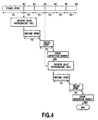
Fig. 4 is a diagram showing an example of an
operational flow followed if the cell search is executed
using the algorithm shown in Fig. 3. At the first step,
the averaging is executed over the averaging time T1. When
slot boundaries B1 are detected, the operation of the
second step is started, but the averaging at the first step
continues to be executed during the averaging time T1'.
Once the second step has been completed, the process shifts
to the third step to subsequently judge the detection
result.
In the example shown in Fig. 4, since it is determined
in connection with the detection result that the cell
search must be reexecuted, the cell search is restarted
from the second step. At this time, as the slot boundaries
change from B1 to B2 during the execution of the third step,
the cell search is reexecuted with the slot boundaries
changed to the latest detection result B2. Then, after
the third step, the result of the detection is judged again.
Since it is determined that the correct frame boundaries
and scramble code have been detected, the cell search is
completed.
Fig. 5 is a flow chart showing another example of a
cell search method according to this embodiment.
Specifically, this figure shows an algorithm for a cell
search method of executing the first step concurrently with
the second or third step and immediately restart the cell
search from the second step if the slot boundaries detected
at the first step change. As in the last example, after
the first step has been completed, the process proceeds
to the second step, while the first step continues to be
executed concurrently with the second step (steps S501,
S503, and S509). At the concurrent first step, the result
of the detection of the slot boundaries is updated at time
intervals T1' (step S513). If the updated result is
different from the result detected the time T1' ago (that
is, the result of the detection during the last cell search),
then the operation of the second or third step is suspended
(step S515). The process then returns to the second step
to reexecute the cell search on the basis of the value for
the updated boundaries.
If the result of the detection at the first step is
the same as that obtained the time T1' ago, then after the
second step has been completed, the process shifts to the
third step to detect a scramble code and then judge the
detection result (step S507). If it is determined in
connection with the detection result that the cell search
must be reexecuted, the cell search is restarted from the
second step. In this case, the slot boundaries have the
same value as used in the last cell search. The averaging
at the concurrent first step is repeated until it is
determined at step S507 in connection with the detection
result that the correct scramble code has been detected
(step S517).
Thus, if the slot boundaries detected at the first
step are different from that detected previously, the cell
search is immediately reexecuted, thereby reducing the
cell search time.
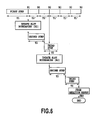
Fig. 6 is a diagram showing an example of an
operational flow followed if the cell search is executed
using the algorithm in Fig. 5. At the first period, the
averaging is executed over the averaging time T1. When
slot boundaries are detected, the operation of the second
step is started, while the averaging at the first step
continues to be executed over the averaging time T1'. In
the middle of the third step, the slot boundaries detected
at the first step change from B1, a previous value, to B2,
so that the third step is immediately suspended. The slot
boundaries are updated to B2, the latest value, and the
process returns to the second step to reexecute the cell
search. Here, the operation of the suspended third step
is shown by a broken line.
Subsequently, the cell search passes through the
second step to the third step, and then continues to be
executed because the result of the detection at the first
step, which is being executed concurrently with the second
or third step, remains unchanged (B2). Then, it is
determined in connection with the detection result that
the correct frame boundaries and scramble code have been
detected, so that the cell search is completed. In this
case, by setting the first averaging time T1 at the step
S501 in Fig. 5 longer than the second averaging time T1'
at step S509, the process can proceed to the second step
after an output from the initial first step has been
stabilized. Further, by setting the second averaging time
T1' shorter than the first averaging time T1, the change
in the detected slot boundaries can be promptly dealt with.
Fig. 7 is a graph showing the result of simulation;
it shows a cell search time characteristic obtained if the
cell search is executed using the algorithm in Fig. 5. The
axis of abscissas indicates the search time, whereas the
axis of ordinates indicates the rate at which the mobile
station has correctly completed the search by the
corresponding search time. It is assumed that fading has
a maximum Doppler frequency (fD) of 80 [Hz] and that the
ratio Stotal/N of the total received power from the base
station to the sum of interference from other cells and
thermal noise power is -9 [dB]. The figure shows that
compared to the conventional method, shown by a solid line
701, the cell search method based on the algorithm of this
embodiment, shown by a broken line 702, can sharply reduce
the cell search time.
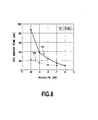
Fig. 8 is a graph showing a 95% search time
characteristic obtained if the cell search is executed
using the algorithm in Fig. 5. This graph shows the ratio
Stotal/N on the axis of abscissas and shows the time
required for 95% of the users to correctly complete the
cell search, on the axis of ordinates. This graph shows
that the smaller the ratio Stotal/N is, the more
significantly the cell search time based on the algorithm
of this embodiment, shown by a broken line 802, is improved
compared to the conventional method, shown by a solid line
801.
Fig. 9 is a flow chart showing an example of a cell
search method of setting an upper limit on the number of
times that the cell search is tried, for the algorithm in
Fig. 3 according to this embodiment. The basic algorithm
is the same as that shown in Fig. 3, but if it is determined
at step S907 in connection with the detection result that
the cell search must be reexecuted, after one cell search
has been completed, the number Nsearch of times that the
cell search is tried is incremented (step S909). Then,
the number Nsearch is compared with a predetermined upper
limit value Nsearch_max (step S911).
If the number Nsearch is larger than the value
Nsearch_max, then the cell search is ended. At this time,
however, the mobile station determines that no proper cells
have been found, and reexecutes the cell search by changing
conditions such as the frequency or determines that it is
located out of service areas. This operation avoids
repeating useless cell searches in spite of the absence
of proper cells to thereby increase the cell search time
or increasing the power consumption of the mobile station
due to the extended cell search time.
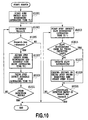
Fig. 10 is a flow chart showing an example of a method
of setting an upper limit on the number of cell searches
in the case where the cell search is executed using the
algorithm shown in Fig. 5. After the first step has been
completed, the process proceeds to the second step, while
the first step continues to be executed concurrently with
the second step (steps S1001, S1007, and S1013). At the
concurrent first step, the result of the detection of the
slot boundaries is updated at time intervals T1' (step
S1017). If the updated result is different from the result
detected the time T1' ago, the slot boundaries are updated
to the latest value, and the operation of the second or
third step is then suspended (step S1019). The process
then returns to the second step to reexecute the cell search
on the basis of the updated slot boundaries.
If the result of the first-step detection at step S1013
is the same as that obtained the time T1' ago, then after
the second step has been completed, the process shifts to
the third step to detect a scramble code and then judge
the detection result (step S1011). If it is determined
in connection with the detection result that the cell
search must be reexecuted, the cell search is restarted
from the second step. In this case, the slot boundaries
have the same value as used in the last cell search.
With this algorithm, the cell search may be suspended
in the middle of the second or third step, and the cell
search may be restarted from the second step. Accordingly,
before the operation of the second step, the number Nsearch
of search tries is incremented (step S1003), and the
resulting number is compared with the predetermined upper
limit Nsearch_max (step S1005). During this process, if
the number Nsearch of tries is determined to exceed the
upper limit Nsearch_max, the cell search is ended. The
averaging at the first step, which is being executed
concurrently at step S1013, is repeated until it is
determined at step S1011 in connection with the detection
result that the correct scramble code has been detected
or that the number Nsearch exceeds the value Nsearch_max
(step S1021).
Fig. 11 is a flow chart showing an example of a method
of setting an upper limit on the cell search time in the
case where the cell search is executed using the algorithm
in Fig. 5. In this case, a predetermined upper limit is
set on the cell search time but not on the number of cell
searches. With the algorithm in Fig. 5, the cell search
may be suspended in the middle of the second or third step,
and the cell search may be restarted from the second step
(step S515 in Fig. 5). Consequently, the number of cell
searches is not always proportional to the cell search time.
Thus, a predetermined upper limit Tsearch_max is set in
advance. Then, the cell search time t is measured and
compared with the value Tsearch_max (step S1103). During
this process, if it is determined that the time t is equal
to or larger than the upper limit value Tsearch_max, the
cell search is ended. This enables the setting of a
temporally fixed upper limit.
Fig. 12A is a flow chart showing a method of carrying
out weighting for the secondary averaging at the first step.
As shown in Fig. 12A, at the first step, the averaging is
executed with the averaging time T1 for the first time and
with the averaging time T1' for the second and subsequent
times (steps S1201 and S1209). Here, an operation
performed at step S1209 is shown in Fig. 12B.
Average correlation values Ci0 to Ci3 calculated by the
primary averaging at the first step, which is repeated at
intervals of the averaging time T1', are each stored in
a memory D. Then, the average correlation values Ci0 to
Ci3 are weighted using weighting factors W0 to W3, and the
weighted values are subjected to secondary averaging by
an averaging device 125. Then, in the result of the
secondary averaging, slot boundaries corresponding to a
maximum average correlation value are detected (step S123).
This makes the averaging more effective. In this case,
the adverse effects of the variation of received power
caused by fading or the like can be lessened by consistently
reducing the weighting values corresponding to average
correlation values calculated more previously relative to
the time of the secondary averaging (for example, the time
corresponding to the terminal of the slot used for the final
primary averaging).
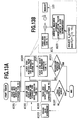
Fig. 13A is a flow chart showing a method of using
forgetting factors for the averaging at the first step.
As shown in Fig. 13A, the averaging is executed with the
averaging time T1 for the first time and with the averaging
time T1' for the second and subsequent times (steps S1301
and S1309). Here, an operation performed at step S1309
is shown in Fig. 13B. In the first-step primary averaging
(step 131) at step S1309, the average correlation value
is obtained at intervals of the time T1'. Each time the
average correlation value is obtained, and a past average
correlation value multiplied by a forgetting factor λ (0
≦ λ ≦ 1) is added to the present averaging result for the
secondary averaging. As a result, slot boundaries
corresponding to the maximum average correlation value are
selected (step S135).
Further, this average correlation value is stored in
a memory 133 and is used for the next detection of slot
boundaries. The larger the factor λ is, the more
effective the averaging is because more previous averaging
results are utilized. A too large forgetting factor,
however, causes the mobile station to be easily affected
by the variation of received power induced by fading or
the like. Thus, by selecting the factor λ considering the
applicable area of the mobile communication system, slot
boundaries can be detected after effective averaging.
The optimal value of the weighting or forgetting
factor for the averaging varies depending on the movement
speed of the mobile station or the like. Thus, for example,
the movement speed of the mobile station is detected, and
with a lower movement speed, a larger number of past
averaging results are used, whereas with a higher movement
speed, a smaller number of averaging results are used.
That is, the rate at which the weighting factor is reduced
is relatively increased consistently with the movement
speed of the mobile station. By thus adaptively changing
the weighting factor or the forgetting factor, optimal
averaging can be achieved which is suitable for the present
conditions.
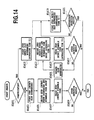
Fig. 14 is a flow chart showing a method of changing
the cell search method according to the state of the mobile
station.
The state of the mobile station in connection with
the cell search is roughly classified into three
categories: power-on, standby, and communicating. The
power-on and standby states require the power consumption
to be minimized in order to increase the duration of
batteries of the mobile station. For a mobile station that
consumes a relatively large amount of power at the first
step, the method of continuing to execute the first step
throughout the cell search may impact the duration of the
batteries. During communication, however, even such a
mobile station transmits electric waves, so that a
relatively small amount of power is used for the cell search.
Therefore, during communication, the duration of the
batteries is not impacted even if the first step continues
to be executed during the second or third step.
Further, during communication, a fast and accurate
cell search is required for achieving smooth handover.
Furthermore, to subject a handover target cell to the cell
search, this operation must be performed in an environment
with a very high interference power because a signal from
the communicating cell is viewed as interference. Thus,
it is very effective to continue to execute the first step
during the second or third step to thereby increase the
speed and accuracy of the cell search.
Thus, it is determined whether or not the mobile
station is communicating (step S1401). Then, the first
step continues to be executed during the second or third
step only if the mobile station is determined to be
communicating (steps S1411 and S1419), thereby
restraining an increase in the total power consumption of
the mobile station, while increasing the speed and accuracy
of the cell search during communication.
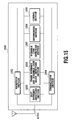
Fig. 15 shows an example of the functional
configuration of a mobile station to which the present
invention has been applied. A mobile station 1501 is
composed of at least an antenna 1503, a reception section
1502, a transmission section 1504, a slot boundary
detecting section 1505, a frame boundary and scramble code
group detecting section 1506, a scramble code detecting
section 1507, a determining section 108, and a control
section 1509.
The reception section 1502 receives a radio signal
from an exterior via the antenna 1503. The slot boundary
detecting section 1505 averages the received signal over
a plurality of slots, and then selects a timing with which
the average correlation value is largest, to detect slot
boundaries. The frame boundary and scramble code group
detecting section 1506 averages correlation values, and
selects a timing and an SSC spreading code sequence with
which the average correlation value is largest, to detect
frame boundaries and a scramble code group in the received
signal.
The scramble code detecting section 1507 detects which
scramble code of the detected scramble code group is used
in the signal. The determining section 1508 determines
whether or not the detected frame boundaries and scramble
code are correct. The transmission section 1504 transmits
a radio signal via the antenna 1503.
The control section 1509 controls each block to
execute processing relating to the present invention. For
example, while the frame boundary and scramble code group
detecting section 1506 or the scramble code detecting
section 1507 is executing a process using the slot
boundaries (first slot boundaries) detected by the slot
boundary detecting section 1505, the control section 1509
causes the slot boundary detecting section 1505 to detect
new slot boundaries (second slot boundaries) concurrently
with the above process. Then, if the determining section
1508 determines the incorrectness of the frame boundaries
or the scramble code, the control section 1509 causes the
frame boundary and scramble code group detecting section
1506 to detect frame boundaries and a scramble code group
on the basis of the second slot boundaries.
Further, if the detected second slot boundaries are
different from the first slot boundaries or past second
slot boundaries detected during the last cell search, then
the control section 1509 suspends the detecting process
executed by the frame boundary and scramble code group
detecting section 1506 or the scramble code detecting
section 1507, and detects the frame boundaries and the
scramble code group on the basis of new detected second
slot boundaries.
The present invention has been described in detail
with respect to preferred embodiments, and it will now be
apparent from the foregoing to those skilled in the art
that changes and modifications may be made without
departing from the invention in its broader aspect, and
it is the intention, therefore, in the apparent claims to
cover all such changes and modifications as fall within
the true spirit of the invention.