EP1189138A2 - Method and system for logging event data - Google Patents
Method and system for logging event data Download PDFInfo
- Publication number
- EP1189138A2 EP1189138A2 EP01122130A EP01122130A EP1189138A2 EP 1189138 A2 EP1189138 A2 EP 1189138A2 EP 01122130 A EP01122130 A EP 01122130A EP 01122130 A EP01122130 A EP 01122130A EP 1189138 A2 EP1189138 A2 EP 1189138A2
- Authority
- EP
- European Patent Office
- Prior art keywords
- event data
- log manager
- server
- device driver
- requesting computer
- Prior art date
- Legal status (The legal status is an assumption and is not a legal conclusion. Google has not performed a legal analysis and makes no representation as to the accuracy of the status listed.)
- Withdrawn
Links
Images


Classifications
-
- G—PHYSICS
- G06—COMPUTING OR CALCULATING; COUNTING
- G06F—ELECTRIC DIGITAL DATA PROCESSING
- G06F11/00—Error detection; Error correction; Monitoring
- G06F11/30—Monitoring
- G06F11/34—Recording or statistical evaluation of computer activity, e.g. of down time, of input/output operation ; Recording or statistical evaluation of user activity, e.g. usability assessment
- G06F11/3466—Performance evaluation by tracing or monitoring
- G06F11/3476—Data logging
Definitions
- the present invention generally relates to a method and system for logging event data from at least one operable application program or at least one peripheral device operably connected to a server. More particularly, it relates to a method and system for logging event data that retrieves all the event data for the server, and can maintain a persistent connection when the event data are being downloaded to allow the server to attend to multiple requests resulting in the downloading of event data as they come in.
- a computer server commonly uses a vast array of application programs and peripheral devices.
- Each of the application programs and the peripheral devices generally generates event data for events that occur during the operation of the computer server.
- Events are significant occurrences of a task or program and may relate to matters such as completions, connections, processes, terminations, status changes, errors and warnings.
- the event data are essential for network diagnostic and troubleshooting.
- the event data are often used by other application programs and peripheral devices as well.
- One prior method is to buffer the event data on the server, with periodic requests being made to download the event data.
- all the event data are stored on the server's memory, which remain until a request to download is made.
- one problem is that some of the event data may have to be discarded. As a result, valuable event data may be lost using this method.
- that implementation requires servers with significant resources in order to handle busier networks, which may be impracticable for the use of an appliance with an embedded smaller scale server, such as a Hewlett-Packard JetDirect product.
- Java applets which establish their own TCP/IP connection to the server and continuously receive the event data.
- a problem with this method is its inflexibility, because it limits the connections to computers that support Java applets. As a result, it is limited to the use of a web connection, and cannot be used with an intranet connection or a direct cable connection.
- a security certificate is required for a Java applet to establish a network connection, which may not be practical depending on the implementation.
- a primary object of the present invention is to provide an improved method and system for logging event data that provides a persistent connection for downloading event data.
- Still another object of the present invention is to provide an improved method and system for logging event data that maintains a log of event data ready for downloading.
- Yet another object of the present invention is to provide an improved method and system for logging event data that is more flexible and less restrictive.
- a further object of the present invention is to provide an improved method and system for logging event data that can maintain a persistent connection for downloading while allowing the server to attend to multiple requests and continue logging the event data.
- the present invention generally relates to a method and system for logging event data from at least one operable application program or at least one peripheral device operably connected to a server. More particularly, it relates to a method and system for logging event data that keeps all the event data for the server and maintains a persistent connection when the event data are being downloaded while allowing the server to attend to multiple requests.
- a method and system for logging event data from at least one operable application program or at least one peripheral device operably connected to a server using a log manager device driver includes the steps of registering the log manager device driver with the server to receive all incoming event data, registering the log manager device driver with the server as a log manager file, the log manager device driver receiving the event data, and the log manager device driver responding to a download request for the log manager file from a requesting computer.
- the present invention is directed to an improved method and system for logging event data in a server that receives all event data ready for downloading to another computer using a persistent connection.
- a log manager device driver first registers with the server to receive all incoming event data and as the device driver for a log manager file. After the registration with the server, the log manager device driver starts receiving the event data and responding to a download request for the log manager file from a requesting computer.
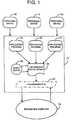
- FIG. 1 a schematic diagram of an exemplary network architecture is shown, which illustrates one way that the network can be connected for the implementation of the present invention.
- a server 10 is installed with at least one application program 12 (three shown) and connected at least one peripheral device 14 (three shown).
- a log manager device driver 16 is preferably placed in the server along with the application program 12.
- a requesting computer 18 seeking to download event data from the server 10 would make a request to download a log manager file 20, which is represented as a regular file and not a device driver file. Since the log manager device driver 16 had registers itself as the log manager file 20 at the startup, the log manager device driver would, in reality, be opened by the requesting computer 18. In practice, the server 10 and requesting computer 18 treat the connection as a download of a very large file. However, the log manager file 20 does not really exist Rather the request of the file prompts the log manager device driver to return event data to the server, which is sent to the requesting computer as data of the log manager file.
- an event queue 22 is preferably implemented with the log manager device driver 16 for storing event data that has not yet been downloaded.
- the permanent storage of the event data is not necessary.
- the present invention can be implemented to display the data as it is downloaded from the temporary memory of the server 10.
- the connection arrangements can be altered.
- a peripheral device 14 need not be connected to the server 10, and the same is true for the application program 12.
- Device drivers comprise software that control hardware components or peripheral devices, such as a magnetic disk, magnetic tape or printer.
- the device driver At the startup of the computer, the device driver generally registers with the operating system as a device driver for a particular hardware component or peripheral device.
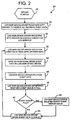
- the log manager device driver 16 At the startup of the server (block 26), the log manager device driver 16 first registers with the server to receive all event data (block 28). More specifically, the operating system of the server 10 is instructed that any time an application program 12 or a peripheral device 14 requests to log an event, the event data should be sent to the log manager device driver 16. Generally, the application programs and the peripheral devices control when and what event data are sent, and the log manager device driver 16 just simply receives the event data. Next, the log manager device driver 16 registers with the server again, except this time as a device driver for the log manager file 20 (block 30).
- the log manager device driver 16 After all the registrations are made with the server, the log manager device driver 16 then sits idle waiting for event data from the application programs 12 or the peripheral devices 14 (block 32). Once an application program 12 or a peripheral device 14 sends the event data to the log manager device driver (block 34) and the log manager device driver 16 receives the event data (block 36), the log manager device driver then determines whether the event queue is full for the newly arrived event data (block 38). If the event queue is full (block 40), the log manager device driver 18 deletes the oldest event data in the queue in order to make room (block 42) to save the newly arrived event data in the event queue (block 44). After saving the event data in the queue (block 44, the process loops back to the log manager device driver waiting for more incoming event data (block 32).
- the receiving event data process is done by the log manager device driver regardless of whether there is a download request initiating the downloading process.
- the log manager device driver receives and saves all the event data in the event queue waiting for the requesting computer 18 to download the log manager file 20 from the server 10.
- a requesting computer 18 To initiate this process, a requesting computer 18 must first request a log manager file from the server 10 (block 48). The requesting computer 18 then determines whether the server 10 received the request to ensure a valid connection between the requesting computer and the server (block 50). If it is determined that the server 10 did not receive the request (block 50), the requesting computer 18 will return an error message (block 52), which is preferably displayed to the user (block 54). On the other hand, if the server 10 did receive the request (block 50), the server will open the log manager file 20 from the log manager device driver 16 (block 56).
- the server next determines whether the log manager file 20 is successfully opened from the log manager device driver (block 58). If the opening of the file proves to be unsuccessful (block 58), the server 10 will return an error message to the requesting computer 18 (block 60), which is again preferably displayed to the user (block 62). If, however, the file is opened successfully, the server reads the event data from the event queue (block 64), and determines whether there are any event data available (block 66).
- the server blocks, meaning it stays idle and waits, until event data are available in the event queue (block 68). Similarly, the log manager device driver also stays idle and waits for the event data (block 70).
- event data are sent from the application program 12 or the peripheral device 14 (block 72)
- the log manager device driver 16 receives the event data (block 74) and determines whether the event queue is full (block 76). If the queue is full (block 78), the oldest event data in the queue will be deleted to make available space for the newly arrived event data (block 80). Once the event queue 22 has the available space in the event queue (block 78), the log manager device driver 16 saves the event data in the queue (block 82).
- FIG. 4 shows the remaining steps the subroutine from FIG. 3.
- the log manager device driver since event data is available in the queue, the log manager device driver returns the event data in the queue to the server (block 84).
- the server receives the event data (block 86), and sends it to the requesting computer (block 88).
- the requesting computer receives the event data from the server (block 90), and preferably displays it to the user immediately or at some point (block 92).
- the requesting computer wishes to continue downloading the log manager file (block 94). Since the log manager file 20 does not technically exit, in practice the log manager file is a way to maintain the connection between the server 10 and the requesting computer 18. As long as the requesting computer 18 thinks that the downloading of the log manager file 20 is not complete, the connection remains. As a result, a persistent connection is maintained between the server 10 and the requesting computer 18.
- the requesting computer 18 waits for more event data from the server 10 (block 96), and loops the process when the server sends more event data to the requesting computer (block 88). Because the requesting computer thinks that the log manager file is a very large file and the download is incomplete, the connection terminates only when the users choose to end the connection, meaning the computers themselves cannot automatically end the download process. If a user does choose to discontinue downloading the log manager file (block 94), the requesting computer 18 will terminate the connection to the server 10 (block 98). The server will then close the log manager file (block 100), and disconnect from the requesting computer as well (block 102).
Landscapes
- Engineering & Computer Science (AREA)
- General Engineering & Computer Science (AREA)
- Theoretical Computer Science (AREA)
- Computer Hardware Design (AREA)
- Quality & Reliability (AREA)
- Physics & Mathematics (AREA)
- General Physics & Mathematics (AREA)
- Debugging And Monitoring (AREA)
Abstract
A method and system for logging event data from at least one
operable application program (12) or at least one peripheral device (14)
operably connected to a server (10) using a log manager device driver (16).
The method includes the steps of registering the log manager device driver with
the server to receive all the event data from the server (28), registering the log
manager device driver with the server as a log manager file (30), the log
manager device driver receiving the event data (36, 74), and the log manager
device driver responding to a download request for said log manager file from
a requesting computer (38).
Description
- The present invention generally relates to a method and system for logging event data from at least one operable application program or at least one peripheral device operably connected to a server. More particularly, it relates to a method and system for logging event data that retrieves all the event data for the server, and can maintain a persistent connection when the event data are being downloaded to allow the server to attend to multiple requests resulting in the downloading of event data as they come in.
- A computer server commonly uses a vast array of application programs and peripheral devices. Each of the application programs and the peripheral devices generally generates event data for events that occur during the operation of the computer server. Events are significant occurrences of a task or program and may relate to matters such as completions, connections, processes, terminations, status changes, errors and warnings. The event data are essential for network diagnostic and troubleshooting. The event data are often used by other application programs and peripheral devices as well.
- Because of all the different connections and communications between computers that are easily available today, computer troubleshooting is no longer limited to the site of the computer. As a result, there is a need to keep a log of these event data over an extended period of time that can be easily downloaded by users of other computers. However, a typical transfer of a file involves a single request and a single response methodology. In other words, when a file is requested, the two connecting computers will generally terminate their connection once the transfer of the file is complete, which is especially true for a connection over the Internet. Since these event data change rapidly, it would be very useful to be able to keep a persistent connection for downloading the event data file. A persistent connection allows for multiple requests to be served by the server while at the same time permitting the requesting computer to continue downloading the event data as the server continues its operation and new event data comes in.
- One prior method is to buffer the event data on the server, with periodic requests being made to download the event data. In this method, all the event data are stored on the server's memory, which remain until a request to download is made. Depending on the capacity of the server and the frequency of the downloading, one problem is that some of the event data may have to be discarded. As a result, valuable event data may be lost using this method. Furthermore, that implementation requires servers with significant resources in order to handle busier networks, which may be impracticable for the use of an appliance with an embedded smaller scale server, such as a Hewlett-Packard JetDirect product.
- Another prior method that establishes a persistent connection through the web is uses Java applets, which establish their own TCP/IP connection to the server and continuously receive the event data. However, a problem with this method is its inflexibility, because it limits the connections to computers that support Java applets. As a result, it is limited to the use of a web connection, and cannot be used with an intranet connection or a direct cable connection. Furthermore, a security certificate is required for a Java applet to establish a network connection, which may not be practical depending on the implementation.
- Accordingly, a primary object of the present invention is to provide an improved method and system for logging event data that provides a persistent connection for downloading event data.
- Still another object of the present invention is to provide an improved method and system for logging event data that maintains a log of event data ready for downloading.
- Yet another object of the present invention is to provide an improved method and system for logging event data that is more flexible and less restrictive.
- A further object of the present invention is to provide an improved method and system for logging event data that can maintain a persistent connection for downloading while allowing the server to attend to multiple requests and continue logging the event data.
- The present invention generally relates to a method and system for logging event data from at least one operable application program or at least one peripheral device operably connected to a server. More particularly, it relates to a method and system for logging event data that keeps all the event data for the server and maintains a persistent connection when the event data are being downloaded while allowing the server to attend to multiple requests.
- In accordance with the present invention, there is provided a method and system for logging event data from at least one operable application program or at least one peripheral device operably connected to a server using a log manager device driver. The method includes the steps of registering the log manager device driver with the server to receive all incoming event data, registering the log manager device driver with the server as a log manager file, the log manager device driver receiving the event data, and the log manager device driver responding to a download request for the log manager file from a requesting computer.
- Other objects, features and advantages will become apparent upon reading the following detailed description, in conjunction with the attached drawings, in which:
- FIGURE 1 is a schematic exemplary diagram of a network architecture in which the present method can be implemented;
- FIG. 2 is a flowchart illustrating a subroutine of the log manager device driver initializing and receiving the event data;
- FIG. 3 is a flowchart illustrating a subroutine of the log manager responding to a download request for the event data; and,
- FIG. 4 is a flowchart illustrating a part of the subroutine shown in FIG. 3.
-
- Broadly stated, the present invention is directed to an improved method and system for logging event data in a server that receives all event data ready for downloading to another computer using a persistent connection. A log manager device driver first registers with the server to receive all incoming event data and as the device driver for a log manager file. After the registration with the server, the log manager device driver starts receiving the event data and responding to a download request for the log manager file from a requesting computer.
- Turning now to FIG. 1, a schematic diagram of an exemplary network architecture is shown, which illustrates one way that the network can be connected for the implementation of the present invention. As shown in FIG. 1, a
server 10 is installed with at least one application program 12 (three shown) and connected at least one peripheral device 14 (three shown). A logmanager device driver 16 is preferably placed in the server along with theapplication program 12. - In the present invention, a requesting
computer 18 seeking to download event data from theserver 10 would make a request to download alog manager file 20, which is represented as a regular file and not a device driver file. Since the logmanager device driver 16 had registers itself as thelog manager file 20 at the startup, the log manager device driver would, in reality, be opened by the requestingcomputer 18. In practice, theserver 10 and requestingcomputer 18 treat the connection as a download of a very large file. However, thelog manager file 20 does not really exist Rather the request of the file prompts the log manager device driver to return event data to the server, which is sent to the requesting computer as data of the log manager file. - As shown in FIG. 1, an
event queue 22 is preferably implemented with the logmanager device driver 16 for storing event data that has not yet been downloaded. However, the permanent storage of the event data is not necessary. For example, the present invention can be implemented to display the data as it is downloaded from the temporary memory of theserver 10. In addition, the connection arrangements can be altered. As an example, aperipheral device 14 need not be connected to theserver 10, and the same is true for theapplication program 12. These other arrangements and implementations are within the scope of the present invention. - Turning now to FIG. 2, a flowchart showing the steps of the log
manager device driver 16 initializing and receiving event data from theapplication program 12 or theperipheral device 14 is shown and generally indicated at 24. Device drivers comprise software that control hardware components or peripheral devices, such as a magnetic disk, magnetic tape or printer. At the startup of the computer, the device driver generally registers with the operating system as a device driver for a particular hardware component or peripheral device. - For the present invention, at the startup of the server (block 26), the log
manager device driver 16 first registers with the server to receive all event data (block 28). More specifically, the operating system of theserver 10 is instructed that any time anapplication program 12 or aperipheral device 14 requests to log an event, the event data should be sent to the logmanager device driver 16. Generally, the application programs and the peripheral devices control when and what event data are sent, and the logmanager device driver 16 just simply receives the event data. Next, the logmanager device driver 16 registers with the server again, except this time as a device driver for the log manager file 20 (block 30). - After all the registrations are made with the server, the log
manager device driver 16 then sits idle waiting for event data from theapplication programs 12 or the peripheral devices 14 (block 32). Once anapplication program 12 or aperipheral device 14 sends the event data to the log manager device driver (block 34) and the logmanager device driver 16 receives the event data (block 36), the log manager device driver then determines whether the event queue is full for the newly arrived event data (block 38). If the event queue is full (block 40), the logmanager device driver 18 deletes the oldest event data in the queue in order to make room (block 42) to save the newly arrived event data in the event queue (block 44). After saving the event data in the queue (block 44, the process loops back to the log manager device driver waiting for more incoming event data (block 32). The receiving event data process is done by the log manager device driver regardless of whether there is a download request initiating the downloading process. In other words, the log manager device driver receives and saves all the event data in the event queue waiting for the requestingcomputer 18 to download thelog manager file 20 from theserver 10. - Turning now to FIGS. 3 and 4, a flowchart of the subroutine of the log manager device driver responding to a download request of the event data is shown and generally indicated at 46. To initiate this process, a requesting
computer 18 must first request a log manager file from the server 10 (block 48). The requestingcomputer 18 then determines whether theserver 10 received the request to ensure a valid connection between the requesting computer and the server (block 50). If it is determined that theserver 10 did not receive the request (block 50), the requestingcomputer 18 will return an error message (block 52), which is preferably displayed to the user (block 54). On the other hand, if theserver 10 did receive the request (block 50), the server will open thelog manager file 20 from the log manager device driver 16 (block 56). - The server next determines whether the
log manager file 20 is successfully opened from the log manager device driver (block 58). If the opening of the file proves to be unsuccessful (block 58), theserver 10 will return an error message to the requesting computer 18 (block 60), which is again preferably displayed to the user (block 62). If, however, the file is opened successfully, the server reads the event data from the event queue (block 64), and determines whether there are any event data available (block 66). - If the event queue does not have any event data available (block 66), the server blocks, meaning it stays idle and waits, until event data are available in the event queue (block 68). Similarly, the log manager device driver also stays idle and waits for the event data (block 70). When event data are sent from the
application program 12 or the peripheral device 14 (block 72), the logmanager device driver 16 receives the event data (block 74) and determines whether the event queue is full (block 76). If the queue is full (block 78), the oldest event data in the queue will be deleted to make available space for the newly arrived event data (block 80). Once theevent queue 22 has the available space in the event queue (block 78), the logmanager device driver 16 saves the event data in the queue (block 82). - Now that event data is available (block 66), FIG. 4 shows the remaining steps the subroutine from FIG. 3. Referring now to FIG. 4, since event data is available in the queue, the log manager device driver returns the event data in the queue to the server (block 84). The server receives the event data (block 86), and sends it to the requesting computer (block 88). The requesting computer receives the event data from the server (block 90), and preferably displays it to the user immediately or at some point (block 92).
- It is next determined if the requesting computer wishes to continue downloading the log manager file (block 94). Since the
log manager file 20 does not technically exit, in practice the log manager file is a way to maintain the connection between theserver 10 and the requestingcomputer 18. As long as the requestingcomputer 18 thinks that the downloading of thelog manager file 20 is not complete, the connection remains. As a result, a persistent connection is maintained between theserver 10 and the requestingcomputer 18. - If the requesting
computer 18 wishes to continue downloading the log manager file 20 (block 94), the requesting computer waits for more event data from the server 10 (block 96), and loops the process when the server sends more event data to the requesting computer (block 88). Because the requesting computer thinks that the log manager file is a very large file and the download is incomplete, the connection terminates only when the users choose to end the connection, meaning the computers themselves cannot automatically end the download process. If a user does choose to discontinue downloading the log manager file (block 94), the requestingcomputer 18 will terminate the connection to the server 10 (block 98). The server will then close the log manager file (block 100), and disconnect from the requesting computer as well (block 102). - From the foregoing description, it should be understood that an improved method and system for logging event data has been shown and described which have many desirable attributes and advantages. The method and system allow logging all the event data for a server, which is ready for downloading using a persistent connection. As a result, a more flexible and less restrictive method and system is provided, since the server is able to attend to multiple requests and continue logging the event data during the download process. A user will be able to view the event data as they are created.
- While various embodiments of the present invention have been shown and described, it should be understood that other modifications, substitutions and alternatives are apparent to one of ordinary skill in the art. Such modifications, substitutions and alternatives can be made without departing from the spirit and scope of the invention, which should be determined from the appended claims.
- Various features of the invention are set forth in the appended claims.
Claims (17)
- A method for logging event data from at least one operable application program (12) or at least one peripheral device (14) operably connected to a server (10) using a log manager device driver (16), said method comprising the steps of:registering said log manager device driver with said server to receive all incoming event data (28);registering said log manager device driver with said server as a device driver for said log manager file (30);receiving said event data by said log manager device driver (36, 74); and,responding to a download request for said log manager file from a requesting computer by said log manager device driver (38).
- The method according to claim 1 wherein prior to said receiving step further comprising the steps of:waiting for event data from said at least one application program or said at least one peripheral device by said log manager device driver (32); and,sending event data to said log manager device driver by said at least one application program or said at least one peripheral device (34).
- The method according to claim 1 wherein prior to said receiving step, said method further comprising the step of saving said event data in an event queue by said log manager device driver (44).
- The method according to claim 3 wherein prior to said saving step further comprising the steps of:determining whether said event queue is full by said log manager device driver (38, 42); and,deleting an oldest event data from said event queue to make available space for new event data when said event queue is full by said log manager device driver (42).
- The method according to claim 1 wherein said responding step, said method further comprising the step of:sending a download request for said log manager file to said server by said requesting computer (48);determining whether said server received said download request by said requesting computer (50);returning an error message if said server did not receive said download request by said requesting computer (52); and,opening said log manager file from said log manager device driver if said server received said download request by said server (56).
- The method according to claim 5 wherein said returning step further comprising the step of displaying said error message to the user of said requesting computer by said requesting computer (54).
- The method according to claim 5 wherein said opening step further comprising the steps of:determining, by said server, whether said log manager file was successfully opened from said log manager device driver (58);returning an error message to said requesting computer when said log manager file was not successfully opened by said server (60); and,reading said event data stored in said event queue when said log manager file was successfully opened by said server (64).
- The method according to claim 7 wherein said returning an error message step further comprising the step of displaying said error message to the user of said requesting computer by said requesting computer (62).
- The method according to claim 7 wherein said reading step further comprising the steps of:determining whether said event data are available from said event queue by said server (66);blocking until said event data are available when said event data are not available by said server (68);returning said event data to server when said event data is available by said log manager device driver (84).
- The method according to claim 9 wherein said blocking step further comprising the steps of:waiting for said event data from said at least one application program or said at least one peripheral device by said log manager device driver (70);sending said event data to said log manager device driver by said application program or said peripheral device (72);receiving said event data by said log manager device driver (74); and,saving said event data in said event queue by said log manager device driver (82).
- The method according to claim 10 wherein prior to said saving step, said method further comprising the steps of:determining whether said event queue is full by said log manager device driver (76, 78); and,deleting an oldest event data from said event queue to make available space for a new event data when said queue is full by said log manager device driver (80).
- The method according to claim 9 wherein said returning event data step further comprising the steps of:receiving said event data from log manager device driver by said server (86);sending said event data to requesting computer by said server (88); and,receiving said event data from server by said requesting computer (90).
- The method according to claim 12 further comprising the steps of displaying said event data to an user by said requesting computer (92).
- The method according to claim 12 further comprising the steps of:determining whether said requesting computer wants to continue downloading said log manager file by said server (94);waiting for more event data from said server when said requesting computer wants to continue downloading said log manager file by said requesting computer (96); and,terminating the connection to said server when said requesting computer does not want to continue downloading said log manager file by said requesting computer (98).
- The method according to claim 14 wherein said terminating step further comprising the steps of:closing said log manager file by said server (100); and,terminating the connection to said requesting computer by said server (102).
- A system for logging event data from at least one operable application program (12) or at least one peripheral device (14) operably connected to a server (10) using a log manager device driver (16), comprising:means for registering with said server to receive all incoming event data (28);means for registering said with said server as a device driver for said log manager file (30);means for receiving said event data (36,74); and,means for responding to a download request for said log manager file from a requesting computer (38).
- A log manager device driver (22) for logging event data from at least one operable application program (12) or at least one peripheral device (14) operably connected to a server (10), comprising:means for registering with said server to receive all incoming event data (28);means for registering with said server as a device driver for said log manager file (30);means for receiving event data (36, 74); and,means for responding to a download request for said log manager file from a requesting computer (38).
Applications Claiming Priority (2)
| Application Number | Priority Date | Filing Date | Title |
|---|---|---|---|
| US661360 | 1991-02-26 | ||
| US09/661,360 US7065556B1 (en) | 2000-09-14 | 2000-09-14 | Method and system for logging event data and persistently downloading the same |
Publications (1)
| Publication Number | Publication Date |
|---|---|
| EP1189138A2 true EP1189138A2 (en) | 2002-03-20 |
Family
ID=24653265
Family Applications (1)
| Application Number | Title | Priority Date | Filing Date |
|---|---|---|---|
| EP01122130A Withdrawn EP1189138A2 (en) | 2000-09-14 | 2001-09-14 | Method and system for logging event data |
Country Status (2)
| Country | Link |
|---|---|
| US (1) | US7065556B1 (en) |
| EP (1) | EP1189138A2 (en) |
Cited By (9)
| Publication number | Priority date | Publication date | Assignee | Title |
|---|---|---|---|---|
| EP1677196A3 (en) * | 2004-12-30 | 2008-07-09 | Landis+Gyr GmbH | Event storing device and method |
| TWI548985B (en) * | 2015-05-18 | 2016-09-11 | Chunghwa Telecom Co Ltd | Identification system of network log format and its method |
| US12182264B2 (en) | 2022-03-11 | 2024-12-31 | Nutanix, Inc. | Malicious activity detection, validation, and remediation in virtualized file servers |
| US12197398B2 (en) | 2021-03-31 | 2025-01-14 | Nutanix, Inc. | Virtualized file servers and methods to persistently store file system event data |
| US12242455B2 (en) | 2021-03-31 | 2025-03-04 | Nutanix, Inc. | File analytics systems and methods including receiving and processing file system event data in order |
| US12248435B2 (en) | 2021-03-31 | 2025-03-11 | Nutanix, Inc. | File analytics systems and methods |
| US12248434B2 (en) | 2021-03-31 | 2025-03-11 | Nutanix, Inc. | File analytics systems including examples providing metrics adjusted for application operation |
| US12367108B2 (en) | 2021-03-31 | 2025-07-22 | Nutanix, Inc. | File analytics systems and methods including retrieving metadata from file system snapshots |
| US12517874B2 (en) | 2022-09-30 | 2026-01-06 | Nutanix, Inc. | Data analytics systems for file systems including tiering |
Families Citing this family (15)
| Publication number | Priority date | Publication date | Assignee | Title |
|---|---|---|---|---|
| US7448039B2 (en) * | 2003-08-02 | 2008-11-04 | Microsoft Corporation | Method and system for logging test data |
| US7788289B2 (en) * | 2005-12-12 | 2010-08-31 | Verizon Business Global Llc | Tracking user access of a network management system |
| US9081981B2 (en) | 2005-12-29 | 2015-07-14 | Nextlabs, Inc. | Techniques and system to manage access of information using policies |
| US8321437B2 (en) | 2005-12-29 | 2012-11-27 | Nextlabs, Inc. | Detecting behavioral patterns and anomalies using activity profiles |
| JP5205695B2 (en) * | 2006-02-15 | 2013-06-05 | 富士通株式会社 | Display control program, display control method, client device, and system |
| US7577712B1 (en) * | 2006-03-31 | 2009-08-18 | Sun Microsystems, Inc. | Efficient event completion in UDAPL |
| US8127306B2 (en) * | 2006-12-18 | 2012-02-28 | Ricoh Company, Ltd. | Integrating eventing in a web service application of a multi-functional peripheral |
| US8321546B2 (en) * | 2007-01-10 | 2012-11-27 | Ricoh Company, Ltd. | Integrating discovery functionality within a device and facility manager |
| US8239876B2 (en) * | 2007-06-12 | 2012-08-07 | Ricoh Company, Ltd. | Efficient web services application status self-control system on image-forming device |
| US8453164B2 (en) * | 2007-09-27 | 2013-05-28 | Ricoh Company, Ltd. | Method and apparatus for reduction of event notification within a web service application of a multi-functional peripheral |
| US9152484B2 (en) * | 2010-02-26 | 2015-10-06 | Red Hat, Inc. | Generating predictive diagnostics via package update manager |
| US10057726B2 (en) * | 2012-10-02 | 2018-08-21 | Razer (Asia-Pacific) Pte. Ltd. | Managing user data on an electronic device |
| US9628445B2 (en) * | 2014-10-31 | 2017-04-18 | Ncr Corporation | Trusted device control messages |
| US11301316B2 (en) | 2019-07-12 | 2022-04-12 | Ebay Inc. | Corrective database connection management |
| US11038952B2 (en) | 2019-07-12 | 2021-06-15 | Ebay Inc. | Connection service discovery and load rebalancing |
Family Cites Families (15)
| Publication number | Priority date | Publication date | Assignee | Title |
|---|---|---|---|---|
| US5251152A (en) * | 1991-01-17 | 1993-10-05 | Hewlett-Packard Company | Storage and display of historical LAN traffic statistics |
| DE69317982T2 (en) * | 1992-10-09 | 1998-11-19 | Sun Microsystems, Inc., Mountain View, Calif. 94043-1100 | Method and system for real-time data collection and display device |
| US5969705A (en) * | 1993-06-28 | 1999-10-19 | Apple Computer, Inc. | Message protocol for controlling a user interface from an inactive application program |
| US5642478A (en) * | 1994-12-29 | 1997-06-24 | International Business Machines Corporation | Distributed trace data acquisition system |
| US5802291A (en) * | 1995-03-30 | 1998-09-01 | Sun Microsystems, Inc. | System and method to control and administer distributed object servers using first class distributed objects |
| TW292365B (en) * | 1995-05-31 | 1996-12-01 | Hitachi Ltd | Computer management system |
| US5935262A (en) * | 1995-06-09 | 1999-08-10 | Canon Information Systems, Inc. | Outputting a network device log file |
| JPH1076357A (en) * | 1996-09-04 | 1998-03-24 | Toyota Motor Corp | Method and apparatus for cast-in cylindrical body |
| US5958049A (en) * | 1997-03-17 | 1999-09-28 | International Business Machines Corporation | Operating system debugger using kernel and dynamic extension with debugger drivers to support different output devices |
| US5958010A (en) * | 1997-03-20 | 1999-09-28 | Firstsense Software, Inc. | Systems and methods for monitoring distributed applications including an interface running in an operating system kernel |
| US6260062B1 (en) * | 1999-02-23 | 2001-07-10 | Pathnet, Inc. | Element management system for heterogeneous telecommunications network |
| US6470388B1 (en) * | 1999-06-10 | 2002-10-22 | Cisco Technology, Inc. | Coordinated extendable system for logging information from distributed applications |
| US6915342B1 (en) * | 2000-02-04 | 2005-07-05 | Ricoh Company Limited | Method and system for maintaining the business office appliance through log files |
| US6505245B1 (en) * | 2000-04-13 | 2003-01-07 | Tecsys Development, Inc. | System and method for managing computing devices within a data communications network from a remotely located console |
| US6715097B1 (en) * | 2000-05-20 | 2004-03-30 | Equipe Communications Corporation | Hierarchical fault management in computer systems |
-
2000
- 2000-09-14 US US09/661,360 patent/US7065556B1/en not_active Expired - Lifetime
-
2001
- 2001-09-14 EP EP01122130A patent/EP1189138A2/en not_active Withdrawn
Cited By (9)
| Publication number | Priority date | Publication date | Assignee | Title |
|---|---|---|---|---|
| EP1677196A3 (en) * | 2004-12-30 | 2008-07-09 | Landis+Gyr GmbH | Event storing device and method |
| TWI548985B (en) * | 2015-05-18 | 2016-09-11 | Chunghwa Telecom Co Ltd | Identification system of network log format and its method |
| US12197398B2 (en) | 2021-03-31 | 2025-01-14 | Nutanix, Inc. | Virtualized file servers and methods to persistently store file system event data |
| US12242455B2 (en) | 2021-03-31 | 2025-03-04 | Nutanix, Inc. | File analytics systems and methods including receiving and processing file system event data in order |
| US12248435B2 (en) | 2021-03-31 | 2025-03-11 | Nutanix, Inc. | File analytics systems and methods |
| US12248434B2 (en) | 2021-03-31 | 2025-03-11 | Nutanix, Inc. | File analytics systems including examples providing metrics adjusted for application operation |
| US12367108B2 (en) | 2021-03-31 | 2025-07-22 | Nutanix, Inc. | File analytics systems and methods including retrieving metadata from file system snapshots |
| US12182264B2 (en) | 2022-03-11 | 2024-12-31 | Nutanix, Inc. | Malicious activity detection, validation, and remediation in virtualized file servers |
| US12517874B2 (en) | 2022-09-30 | 2026-01-06 | Nutanix, Inc. | Data analytics systems for file systems including tiering |
Also Published As
| Publication number | Publication date |
|---|---|
| US7065556B1 (en) | 2006-06-20 |
Similar Documents
| Publication | Publication Date | Title |
|---|---|---|
| US7065556B1 (en) | Method and system for logging event data and persistently downloading the same | |
| US7293115B2 (en) | Internet-aware agent for automatically updating applications without executing the application | |
| US6473783B2 (en) | Method and apparatus for sharing peripheral devices over a network | |
| US8762540B2 (en) | Managing multiple remote computing sessions displayed on a client device | |
| CA2257692C (en) | Use of polymorphic package files to update software components | |
| US20060089992A1 (en) | Remote computing systems and methods for supporting multiple sessions | |
| US5832191A (en) | Method and apparatus for automatically enabling communication with a network printer | |
| US6119162A (en) | Methods and apparatus for dynamic internet server selection | |
| US7092987B2 (en) | Remote computer capabilities querying and certification | |
| US6910064B1 (en) | System of delivering content on-line | |
| US20050060367A1 (en) | Client side caching of printer configuration | |
| US20100057865A1 (en) | Transferable Debug Session in a Team Environment | |
| JP2002533838A (en) | System and method for dynamic file access on client server | |
| US20020109717A1 (en) | Customizing a graphical user interface of a host application | |
| JP2004535609A (en) | Method and system for remote software distribution and installation | |
| WO2002006970A1 (en) | Agent system for a secure remote access system | |
| US6959392B1 (en) | Information providing system and method for providing information | |
| EP0954138A2 (en) | A method, apparatus & computer program product for dynamic administration, management and monitoring of daemon processes | |
| US6212160B1 (en) | Automated selection of a protocol by a communicating entity to match the protocol of a communications network | |
| EP0991240B1 (en) | Multiple access prevention for datagram-based control protocols method | |
| US6775688B1 (en) | Data processing apparatus and data processing method | |
| US7584296B2 (en) | Asynchronous network stack operation in an operating system independent environment | |
| US7680896B2 (en) | Obtaining or sending information to a device on a network by a client apparatus | |
| JP2002032284A (en) | Download method in data distribution system and storage medium storing the program | |
| JP4386558B2 (en) | Computer, connection control server, and recording medium |
Legal Events
| Date | Code | Title | Description |
|---|---|---|---|
| PUAI | Public reference made under article 153(3) epc to a published international application that has entered the european phase |
Free format text: ORIGINAL CODE: 0009012 |
|
| AK | Designated contracting states |
Kind code of ref document: A2 Designated state(s): AT BE CH CY DE DK ES FI FR GB GR IE IT LI LU MC NL PT SE TR |
|
| AX | Request for extension of the european patent |
Free format text: AL;LT;LV;MK;RO;SI |
|
| STAA | Information on the status of an ep patent application or granted ep patent |
Free format text: STATUS: THE APPLICATION HAS BEEN WITHDRAWN |
|
| 18W | Application withdrawn |
Effective date: 20060119 |