EP1188860A2 - Method and system for optimizing mill operation - Google Patents
Method and system for optimizing mill operation Download PDFInfo
- Publication number
- EP1188860A2 EP1188860A2 EP01307860A EP01307860A EP1188860A2 EP 1188860 A2 EP1188860 A2 EP 1188860A2 EP 01307860 A EP01307860 A EP 01307860A EP 01307860 A EP01307860 A EP 01307860A EP 1188860 A2 EP1188860 A2 EP 1188860A2
- Authority
- EP
- European Patent Office
- Prior art keywords
- user
- mill
- data
- server
- interfaces
- Prior art date
- Legal status (The legal status is an assumption and is not a legal conclusion. Google has not performed a legal analysis and makes no representation as to the accuracy of the status listed.)
- Withdrawn
Links
- 238000000034 method Methods 0.000 title abstract description 38
- 238000004088 simulation Methods 0.000 abstract description 42
- 230000002452 interceptive effect Effects 0.000 abstract description 23
- 238000004148 unit process Methods 0.000 abstract description 17
- 238000004891 communication Methods 0.000 abstract description 14
- 238000005457 optimization Methods 0.000 abstract description 7
- 238000013479 data entry Methods 0.000 description 12
- 230000006872 improvement Effects 0.000 description 9
- 230000000007 visual effect Effects 0.000 description 8
- 238000005406 washing Methods 0.000 description 8
- 238000012545 processing Methods 0.000 description 7
- 235000008733 Citrus aurantifolia Nutrition 0.000 description 6
- 235000011941 Tilia x europaea Nutrition 0.000 description 6
- 239000004571 lime Substances 0.000 description 6
- 238000010586 diagram Methods 0.000 description 3
- 238000003860 storage Methods 0.000 description 3
- 230000001413 cellular effect Effects 0.000 description 2
- 239000000835 fiber Substances 0.000 description 2
- 238000004519 manufacturing process Methods 0.000 description 2
- 230000008569 process Effects 0.000 description 2
- 230000004044 response Effects 0.000 description 2
- 238000012546 transfer Methods 0.000 description 2
- RYGMFSIKBFXOCR-UHFFFAOYSA-N Copper Chemical compound [Cu] RYGMFSIKBFXOCR-UHFFFAOYSA-N 0.000 description 1
- 230000009471 action Effects 0.000 description 1
- 230000003213 activating effect Effects 0.000 description 1
- 238000004061 bleaching Methods 0.000 description 1
- 230000008859 change Effects 0.000 description 1
- 239000003086 colorant Substances 0.000 description 1
- 229910052802 copper Inorganic materials 0.000 description 1
- 239000010949 copper Substances 0.000 description 1
- 238000012937 correction Methods 0.000 description 1
- 238000013500 data storage Methods 0.000 description 1
- 230000007812 deficiency Effects 0.000 description 1
- 238000013461 design Methods 0.000 description 1
- 238000009826 distribution Methods 0.000 description 1
- 238000001035 drying Methods 0.000 description 1
- 230000000694 effects Effects 0.000 description 1
- 238000012423 maintenance Methods 0.000 description 1
- 238000005259 measurement Methods 0.000 description 1
- 238000010295 mobile communication Methods 0.000 description 1
- 230000003287 optical effect Effects 0.000 description 1
- 238000003825 pressing Methods 0.000 description 1
- 238000003908 quality control method Methods 0.000 description 1
- 238000011084 recovery Methods 0.000 description 1
- 238000011160 research Methods 0.000 description 1
- 230000001360 synchronised effect Effects 0.000 description 1
- 239000002023 wood Substances 0.000 description 1
Images






Classifications
-
- D—TEXTILES; PAPER
- D21—PAPER-MAKING; PRODUCTION OF CELLULOSE
- D21G—CALENDERS; ACCESSORIES FOR PAPER-MAKING MACHINES
- D21G9/00—Other accessories for paper-making machines
- D21G9/0009—Paper-making control systems
Definitions
- Mill equipment suppliers are also a source of services for a mill. Although equipment suppliers may provide benchmarking and improvement planning services at a relatively low cost, equipment suppliers typically have a vested interest in identifying projects that include opportunities to sell their equipment, and for this and other reasons the results may not identify the best opportunities for mill improvement.
- myplant.com An Internet website known as "myplant.com” which connects service providers (including consultants, software vendors, equipment providers, and engineering firms) with customers (including plant managers, engineers, operators, technicians, planners, purchasers, etc.). Unfortunately, myplant.com does not provide adequate benchmarking, nor equipment, unit process, department, or mill optimization capabilities.
- U.S. Patent 6,024,835 discloses a quality control apparatus and method for a paper mill.
- the apparatus includes at least one lab entry station which communicates directly with each laboratory in a paper mill.
- the lab entry station validates information from each laboratory.
- the apparatus also includes a gateway entry station which receives information from on-line systems in the paper mill and reformats the received information into a single useable format.
- a global data base manager communicates with the lab entry station and the gateway entry station identifies each bit of information received and assigns addresses for the identified information.
- a communication manager transmits the received information from the global data base manager to operator stations. Operator stations provide user interfaces throughout the paper mill at which data can be displayed and analyzed. According to the disclosure, various locations throughout a paper mill can assess their own ability to conform to specifications and operational standards. Additionally, at least selected locations in the paper mill can purportedly assess the impact of performance at one location in the paper mill on performance at other locations.
- a pulp or paper mill service application it would be desirable for a pulp or paper mill service application to provide accurate simulations. It would also be desirable for such an application to be easy to use and configurable. It would further be desirable for such an application to ensure secure access over a communication network, whether a local mill network, Internet or Extranet. In addition, it would be desirable for such an application to offer substantial neutrality (i.e., substantially vendor-independent) and confidentiality to its users. It would still further be desirable for such an application to provide benchmarking, modeling, simulation and mill optimization tools and solution capabilities for performance indicators, and to identify opportunities for improvement in the mill process. Furthermore, it would be desirable to provide easy access to expertise to facilitate mill process improvement.
- the present invention overcomes the above-noted deficiencies of existing solutions, and achieves additional advantages, by providing for a virtual mill which, in the exemplary embodiments presented below, can be implemented as a client server system, installed locally at the mill site, or as a web-based, cost-effective solution to convert available equipment, plant, production, product and cost data into performance information for one or more mills.
- This information can be benchmarked against design expectations, similar mills, industry averages, best in class mills, or other relevant benchmarking data.
- the user can choose to customize one or more simulation models to further refine the data, and then use the customized model to initiate such improvements as de-bottlenecking, condition-based maintenance, and performance improvements.
- a "server” may be or include, for instance, a workstation running the Microsoft WindowsTM NTTM, WindowsTM 2000, Unix, Linux, Xenix, IBM AIXTM, Hewlett-Packard UXTM, Novell NetwareTM, Sun Microsystems SolarisTM, OS/2TM, BeOSTM, Mach, Apache, OpenStepTM or other operating system or platform.
- a "communications link” may be, include or interface to any one or more of, for instance, a local client-server mill network, the Internet, an Extranet, a PAN (Personal Area Network), a LAN (Local Area Network), a WAN (Wide Area Network) or a MAN (Metropolitan Area Network), a storage area network (SAN), a frame relay connection, an Advanced Intelligent Network (AIN) connection, a synchronous optical network (SONET) connection, a digital T1, T3, E1 or E3 line, Digital Data Service (DDS) connection, DSL (Digital Subscriber Line) connection, an Ethernet connection, an ISDN (Integrated Services Digital Network) line, a dial-up port such as a V.90, V.34 or V.34bis analog modem connection, a cable modem, an ATM (Asynchronous Transfer Mode) connection, or an FDDI (Fiber Distributed Data Interface) or CDDI (Copper Distributed Data Interface) connection.
- PAN Personal Area Network
- LAN Local Area Network
- Communication link may furthermore be, include or interface to any one or more of a WAP (Wireless Application Protocol) link, a GPRS (General Packet Radio Service) link, a GSM (Global System for Mobile Communication) link, a CDMA (Code Division Multiple Access) or TDMA (Time Division Multiple Access) link such as a cellular phone channel, a GPS (Global Positioning System) link, CDPD (cellular digital packet data), a RIM (Research in Motion, Limited) duplex paging type device, a Bluetooth radio link, or an IEEE 802.11-based radio frequency link.
- WAP Wireless Application Protocol
- GPRS General Packet Radio Service
- GSM Global System for Mobile Communication
- CDMA Code Division Multiple Access
- TDMA Time Division Multiple Access
- GPS Global Positioning System
- CDPD cellular digital packet data
- RIM Research in Motion, Limited
- Bluetooth radio link or an IEEE 802.11-based radio frequency link.
- Communication link may yet further be, include or interface to any one or more of an RS-232 serial connection, an IEEE-1394 (Firewire) connection, a Fibre Channel connection, an IrDA (infrared) port, a SCSI (Small Computer Systems Interface) connection, a USB (Universal Serial Bus) connection or other wired or wireless, digital or analog interface or connection.
- IEEE-1394 Firewire
- Fibre Channel Fibre Channel
- IrDA infrared
- SCSI Small Computer Systems Interface
- USB Universal Serial Bus
- a “database” may be, include or interface to, for example, the PI data base sold commercially by OSI Software Inc.
- Other databases such as OracleTM, InformixTM, DB2 (Database 2), Sybase or other data storage or query formats, platforms or resources such as OLAP (On Line Analytical Processing), SQL (Standard Query Language), a storage area network (SAN), Microsoft AccessTM or others may also be used, incorporated or accessed in the invention.
- a computer system 100 connected to a computer network such as the Internet is generally illustrated in FIG. 1.
- a conventional client computer system 102 (hereinafter “client") owner by a customer, executes a client browser application that supports the HTTP protocol, (e.g., Internet ExplorerTM, available from Microsoft Corporation).
- the client 102 is typically connected through an Internet Service Provider (ISP) to the Internet 104.
- ISP Internet Service Provider
- a supplier owned server computer system 106 (hereinafter “server”) is also coupled typically through an Internet Service Provider to the Internet 104.
- the server 106 controlled by a local console 108, executes a web server application and also hosts at least one web page for distribution over the Internet.
- a URL consistent with the present invention may be a simple URL of the form: ⁇ protocol_identifier>:// ⁇ server_path>/ ⁇ web_page_path>
- a " protocol_identifier" of "http” specifies the conventional hyper-text transfer protocol.
- a URL request for a secure Internet transaction typically utilizes the secure protocol identifier "https,” assuming that the client browser and web server are presumed to support and implement the secure sockets layer (SSL).
- SSL secure sockets layer
- the "server_path” is typically of the form “prefix.domain,” where the prefix is typically “www” to designate a web server and the "domain” is the standard Internet sub-domain.top-level-domain of the server 16.
- the optional "web_page_path” is provided to specifically identify a particular hyper-text page maintained by the web server.
- the server 106 In response to a received URL identifying an existing web page, the server 106 returns the web page, subject to the HTTP protocol, to the client 102.
- This web page typically incorporates both textural and graphical information including embedded hyper-text links (hereinafter "hyperlink”) that permit the client user to readily select a next URL for issuance to the Internet 104.
- hyperlink embedded hyper-text links
- the URL issued from the client 102 may also be of a complex form that identifies a common gateway interface (CGI) program on server 106.
- CGI common gateway interface
- a hyperlink of this form directs the execution of the logon.cgi program on an HTTP server in response to a client side selection of a hyperlink.
- a logon form supported by a logon CGI program is typically used to obtain a client user login name and password to initiate an authenticated session between the client browser and Web server for purposes of supporting, for example, a secure purchase transaction.
- FIG. 2 a block diagram describing a method according to one embodiment of the present invention is shown. Such a method can be implemented by an appropriate software program executed by the server in the configuration of FIG. 1. It will of course be appreciated that a corresponding method can be performed by a user connected to the server by an appropriate communication link such as that shown in FIG. 1. The user may be located remotely or may be a local system user.
- a user accesses a server over a communications link and the server responds by causing one or more user interfaces to be displayed to the user.
- a first user interface can include a credential request interface which provides appropriate interactive fields for the user to identify his or her credentials (e.g., a user identity and password).
- Alternative or additional interfaces can include other types of a data input interfaces such as will be described in more detail below.
- the server receives data input by the user via the one or more user interfaces.
- the data input will typically include mill operational data for one or more user machines, unit processes, departments or mills of which the user has knowledge.
- Such mill operational data can include, but is not limited to, various control settings or performance measurements for one or more mill components.
- the server or associated processing resources generates one or more of mill simulation models or benchmarking comparisons based on the data input in step 202.
- the server can transmit, or otherwise cause to be displayed to the user, the one or more simulation models and/or benchmarking comparisons.
- step 204 can be performed by querying a database to identify similar mills and to retrieve corresponding mill operational data for the similar mills.
- a benchmarking comparison can be of any suitable format which provides a visual comparison of mill performance data based on the data supplied by the user with mill performance data of one or more similar mills based on the database query.
- a benchmarking comparison can be provided as a visual display (e.g., as an Internet web page) to the user via the network, as a text message (or attachment) sent to the user by the server using electronic mail, wireless paging, or some other suitable technique.
- step 204 can be performed by consulting a database or other program to generate an appropriate visual model for display to the user.
- the user may optionally be provided the opportunity to verify that the simulation model generated in step 204 correctly reflects the information supplied by the user, and the opportunity to request correction of the simulation model (e.g., to add, delete, or modify components represented in the visual model) if necessary.
- the simulation models which will be described in more detail below, are preferably dynamic and interactive, such that a user can modify settings on one or more mill components (or the components themselves, or other suitable aspects of the simulation model) to change the simulation model or otherwise effectively generate a new simulation model.
- a first mill data input interface 300 is shown.
- the first mill data input interface shows a typical integrated pulp and paper mill environment which includes illustrations or other appropriate representations of a wood yard 302, a digester 304, a brown stock washing unit process 306, a bleaching unit process 308, a power and steam unit process 309, evaporators 310, recovery boiler 312, a recaust unit process 314, a lime kiln unit process 316, a stock prep unit process 318, a wet end section 320, a pressing section 322, a drying section 324, a finishing department 326, and a shipping department 328.
- FIG. 4 a similar user interface is shown in which certain of the mill components (namely, the digester 304, brown stock washing unit process 306, power and steam unit process 309, and lime kiln unit process 316) are highlighted and circled to indicate that these components, and their associated data input screens, will now be discussed with reference to FIGs. 5-10.
- the mill components namely, the digester 304, brown stock washing unit process 306, power and steam unit process 309, and lime kiln unit process 316
- a mill data input user interface 500 is shown such as might be generated by the server and displayed to the user in accordance with the method described with respect to FIG. 2.
- the interface 500 in this example is generated by the user selection (e.g., via mouse click or other suitable technique) of the digester 304 on the user interface 300 of FIG. 3.
- the interface 500 in this embodiment can be referred to as a pictogram selection screen which contains various interactive pictograms 502 indicative of various types of digesters.
- the interactive pictograms 502 in this embodiment include interactive fields 504 associated with each pictogram.
- the user can select a particular type of digester illustrated in the pictogram by activating (e.g., performing a mouse click) the corresponding interactive field 504. It will be appreciated that instead of providing interactive fields 504, each entire pictogram 502 can be presented as an interactive field.
- a mill data input user interface 600 is shown such as might be generated by the server and displayed to the user based on the user's selection of a particular digester type from the interface 500.
- the interface 600 includes, in this embodiment, an interactive "data fill screen” field 602 which provides an interactive list of various control settings, performance indicators, parameter limitations, and other relevant information corresponding to the selected digester type.
- the interactive list is presented to, or caused to be presented to, the user by the server and allows the user to select any of a plurality of parameter fields to input, delete, or modify the selected parameter, setting, indicator, limitation, etc.
- the interface 600 further includes an interactive "data entry complete" field 604 which the user can activate to inform the server that the user has finished entering or modifying all relevant information.
- FIG. 7 another mill data input user interface 700 is shown such as might be generated by the server and displayed to the user based on the user's selection of the brown stock washing unit process from the interface 300 in FIG. 3. Similar to interface 500 in FIG. 5, the interface 700 in FIG. 7 displays numerous pictograms 702 representing different types of stock washing arrangements or techniques. Associated with each pictogram 702 is an interactive field 704 which can be activated by the user to identify the washing type of interest to the user.
- FIG. 8 another mill data input user interface 800 is shown such as might be generated by the server and displayed to the user based on the user's selection of a particular washing type in the interface 700.
- the interface 800 includes a data fill screen 802 which presents an interactive list of various brown stock washing parameters corresponding to the selected washing type. The interactive list can be completed and edited by the user to reflect the conditions and settings at a mill known to the user.
- the interface 800 further includes a data entry complete field 804 which the user can select to indicate that the user has finished entering or modifying all relevant information.
- a mill data input user interface 900 is shown such as might be generated by the server and displayed to the user based on the user's selection of the lime kiln unit process 316.
- the interface 900 is a data input screen for a lime kiln unit process, and includes an interactive list of lime kiln parameters or conditions to be entered and/or modified by the user. Similar to the other interfaces discussed above, the interface 900 includes an interactive "data entry complete" field 904.
- FIG. 10 yet another mill data input user interface 1000 is shown, such as might be generated by the server and displayed to the user based on the user's selection of the power and steam unit process 309 from the interface 300.
- the user interface 1000 includes numerous interactive data fields allowing the user to input or modify data regarding a particular mills power and steam generation components.
- the user interface 1000 further includes an interactive "data entry complete" field 1004 which is similar to the other interfaces discussed above.
- server can query, execute, or consult one or more databases, software programs, or other suitable resources to generate one or more simulation models for one or more user mills.
- FIG. 11 a portion of a simulation model according to one embodiment of the present invention is shown.
- a product known as "Flow-Mac”, available from PaperMac AB is used to generate the model of FIG. 11, but numerous other suitable programs exist and can be used.
- Such a simulation model can be displayed to the user under the control of the server, based on the data input by the user in the manner described above.
- Multiple simulation models can be generated and displayed for individual components (e.g., paper machine simulation, lime kiln simulation, batch digester simulation, etc.).
- the simulation model of FIG. 11 identifies numerous components, including connections to other components and various component parameters.
- animation effects such as tracers, colors, or flashing components can be provided to indicate certain areas of the simulation mill where conditions fall below or exceed a relevant threshold.
- the simulation model includes one or more interactive components such that the component can be selected by the user, an interactive data screen can be produced by the server, the user can modify data via the interactive data screen, and the server can modify (or generate anew) a simulation model based on the modified data.
- the server is configured to automatically generate and provide (e.g., display or transmit by message) consulting information such as tips, advice, or suggestions for improving the performance of the user's mill.
- the server and/or its associated software programs can generate, or cause to be generated, a document or listing of de-bottlenecking solutions.
- Such information can be stored in a database associated with the server, and may be based on de-bottlenecking solutions used by other mill operators using similar mill components.
Landscapes
- Management, Administration, Business Operations System, And Electronic Commerce (AREA)
- General Factory Administration (AREA)
- Feedback Control In General (AREA)
Abstract
Description
- As the pulp and paper industries continue to consolidate operations and capacity rationalization, internal engineering staffs appear to be getting smaller and redirected toward operations. There also appears to be an increased reliance on third party consultants and engineering firms to accomplish mill upgrades and improvement planning. Without adding additional capacity, existing machines have heavy demands for efficiency and productivity. Mills frequently seek improvement strategies that require minimal production outages, low risk, and high returns.
- Traditional engineering or consulting firms are used by mills, where consultant hours are sold to work directly with mills to formulate and apply improvement projects, perform feasibility studies and benchmarking, and/or related services. Such services are relatively expensive and require substantial participation by mill personnel.
- Mill equipment suppliers are also a source of services for a mill. Although equipment suppliers may provide benchmarking and improvement planning services at a relatively low cost, equipment suppliers typically have a vested interest in identifying projects that include opportunities to sell their equipment, and for this and other reasons the results may not identify the best opportunities for mill improvement.
- Recently, the Internet has been used to enhance mill services. An Internet website known as "myplant.com" which connects service providers (including consultants, software vendors, equipment providers, and engineering firms) with customers (including plant managers, engineers, operators, technicians, planners, purchasers, etc.). Unfortunately, myplant.com does not provide adequate benchmarking, nor equipment, unit process, department, or mill optimization capabilities.
- U.S. Patent 6,024,835 discloses a quality control apparatus and method for a paper mill. The apparatus includes at least one lab entry station which communicates directly with each laboratory in a paper mill. The lab entry station validates information from each laboratory. The apparatus also includes a gateway entry station which receives information from on-line systems in the paper mill and reformats the received information into a single useable format. A global data base manager communicates with the lab entry station and the gateway entry station identifies each bit of information received and assigns addresses for the identified information. A communication manager transmits the received information from the global data base manager to operator stations. Operator stations provide user interfaces throughout the paper mill at which data can be displayed and analyzed. According to the disclosure, various locations throughout a paper mill can assess their own ability to conform to specifications and operational standards. Additionally, at least selected locations in the paper mill can purportedly assess the impact of performance at one location in the paper mill on performance at other locations.
- It would be desirable for a pulp or paper mill service application to provide accurate simulations. It would also be desirable for such an application to be easy to use and configurable. It would further be desirable for such an application to ensure secure access over a communication network, whether a local mill network, Internet or Extranet. In addition, it would be desirable for such an application to offer substantial neutrality (i.e., substantially vendor-independent) and confidentiality to its users. It would still further be desirable for such an application to provide benchmarking, modeling, simulation and mill optimization tools and solution capabilities for performance indicators, and to identify opportunities for improvement in the mill process. Furthermore, it would be desirable to provide easy access to expertise to facilitate mill process improvement.
- The present invention overcomes the above-noted deficiencies of existing solutions, and achieves additional advantages, by providing for a virtual mill which, in the exemplary embodiments presented below, can be implemented as a client server system, installed locally at the mill site, or as a web-based, cost-effective solution to convert available equipment, plant, production, product and cost data into performance information for one or more mills. This information can be benchmarked against design expectations, similar mills, industry averages, best in class mills, or other relevant benchmarking data. The user can choose to customize one or more simulation models to further refine the data, and then use the customized model to initiate such improvements as de-bottlenecking, condition-based maintenance, and performance improvements.
- The present invention and its features and advantages can be understood more fully by reading the following Detailed Description of presently-preferred embodiments of the invention together with the accompanying drawings in which:
- FIG. 1 is a block diagram of a computer network suitable for implementing a method according to the present invention;
- FIG. 2 is a block diagram describing the steps of a method according to one embodiment of the present invention;
- FIGs. 3-10 are sample data input interfaces displayed to a user in one embodiment of the present invention; and
- FIG. 11 is a sample simulation model interface displayed to a user in one embodiment of the present invention.
-
- It will be appreciated that for purposes of the following description, a "server" may be or include, for instance, a workstation running the Microsoft Windows™ NT™, Windows™ 2000, Unix, Linux, Xenix, IBM AIX™, Hewlett-Packard UX™, Novell Netware™, Sun Microsystems Solaris™, OS/2™, BeOS™, Mach, Apache, OpenStep™ or other operating system or platform.
- Further a "communications link" may be, include or interface to any one or more of, for instance, a local client-server mill network, the Internet, an Extranet, a PAN (Personal Area Network), a LAN (Local Area Network), a WAN (Wide Area Network) or a MAN (Metropolitan Area Network), a storage area network (SAN), a frame relay connection, an Advanced Intelligent Network (AIN) connection, a synchronous optical network (SONET) connection, a digital T1, T3, E1 or E3 line, Digital Data Service (DDS) connection, DSL (Digital Subscriber Line) connection, an Ethernet connection, an ISDN (Integrated Services Digital Network) line, a dial-up port such as a V.90, V.34 or V.34bis analog modem connection, a cable modem, an ATM (Asynchronous Transfer Mode) connection, or an FDDI (Fiber Distributed Data Interface) or CDDI (Copper Distributed Data Interface) connection. "Communications link" may furthermore be, include or interface to any one or more of a WAP (Wireless Application Protocol) link, a GPRS (General Packet Radio Service) link, a GSM (Global System for Mobile Communication) link, a CDMA (Code Division Multiple Access) or TDMA (Time Division Multiple Access) link such as a cellular phone channel, a GPS (Global Positioning System) link, CDPD (cellular digital packet data), a RIM (Research in Motion, Limited) duplex paging type device, a Bluetooth radio link, or an IEEE 802.11-based radio frequency link. "Communications link" may yet further be, include or interface to any one or more of an RS-232 serial connection, an IEEE-1394 (Firewire) connection, a Fibre Channel connection, an IrDA (infrared) port, a SCSI (Small Computer Systems Interface) connection, a USB (Universal Serial Bus) connection or other wired or wireless, digital or analog interface or connection.
- Further, a "database" may be, include or interface to, for example, the PI data base sold commercially by OSI Software Inc. Other databases, such as Oracle™, Informix™, DB2 (Database 2), Sybase or other data storage or query formats, platforms or resources such as OLAP (On Line Analytical Processing), SQL (Standard Query Language), a storage area network (SAN), Microsoft Access™ or others may also be used, incorporated or accessed in the invention.
- A
computer system 100 connected to a computer network such as the Internet is generally illustrated in FIG. 1. A conventional client computer system 102 (hereinafter "client") owner by a customer, executes a client browser application that supports the HTTP protocol, (e.g., Internet Explorer™, available from Microsoft Corporation). Theclient 102 is typically connected through an Internet Service Provider (ISP) to the Internet 104. A supplier owned server computer system 106 (hereinafter "server") is also coupled typically through an Internet Service Provider to the Internet 104. Theserver 106, controlled by alocal console 108, executes a web server application and also hosts at least one web page for distribution over the Internet. - The
client 102 requests a web page by issuing a URL request through the Internet 104 to theserver system 106. A URL consistent with the present invention may be a simple URL of the form:
<protocol_identifier>://<server_path>/<web_page_path> - A " protocol_identifier" of "http" specifies the conventional hyper-text transfer protocol. A URL request for a secure Internet transaction typically utilizes the secure protocol identifier "https," assuming that the client browser and web server are presumed to support and implement the secure sockets layer (SSL). The "server_path" is typically of the form "prefix.domain," where the prefix is typically "www" to designate a web server and the "domain" is the standard Internet sub-domain.top-level-domain of the server 16. The optional "web_page_path" is provided to specifically identify a particular hyper-text page maintained by the web server.
- In response to a received URL identifying an existing web page, the
server 106 returns the web page, subject to the HTTP protocol, to theclient 102. This web page typically incorporates both textural and graphical information including embedded hyper-text links (hereinafter "hyperlink") that permit the client user to readily select a next URL for issuance to the Internet 104. - The URL issued from the
client 102 may also be of a complex form that identifies a common gateway interface (CGI) program onserver 106. Such a HTML hyperlink reference is typically of the form:
<form action="http://www.vendor.com/cgi-bin/logon.cgi" method=post> - A hyperlink of this form directs the execution of the logon.cgi program on an HTTP server in response to a client side selection of a hyperlink. A logon form supported by a logon CGI program is typically used to obtain a client user login name and password to initiate an authenticated session between the client browser and Web server for purposes of supporting, for example, a secure purchase transaction.
- Referring now to FIG. 2, a block diagram describing a method according to one embodiment of the present invention is shown. Such a method can be implemented by an appropriate software program executed by the server in the configuration of FIG. 1. It will of course be appreciated that a corresponding method can be performed by a user connected to the server by an appropriate communication link such as that shown in FIG. 1. The user may be located remotely or may be a local system user.
- The method of FIG. 2 begins in
step 200, where a user accesses a server over a communications link and the server responds by causing one or more user interfaces to be displayed to the user. For security purposes, a first user interface can include a credential request interface which provides appropriate interactive fields for the user to identify his or her credentials (e.g., a user identity and password). Alternative or additional interfaces can include other types of a data input interfaces such as will be described in more detail below. Instep 202, the server receives data input by the user via the one or more user interfaces. The data input will typically include mill operational data for one or more user machines, unit processes, departments or mills of which the user has knowledge. Such mill operational data can include, but is not limited to, various control settings or performance measurements for one or more mill components. Instep 204, the server or associated processing resources generates one or more of mill simulation models or benchmarking comparisons based on the data input instep 202. Instep 206, the server can transmit, or otherwise cause to be displayed to the user, the one or more simulation models and/or benchmarking comparisons. - In the case of benchmarking comparison, step 204 can be performed by querying a database to identify similar mills and to retrieve corresponding mill operational data for the similar mills. A benchmarking comparison can be of any suitable format which provides a visual comparison of mill performance data based on the data supplied by the user with mill performance data of one or more similar mills based on the database query. A benchmarking comparison can be provided as a visual display (e.g., as an Internet web page) to the user via the network, as a text message (or attachment) sent to the user by the server using electronic mail, wireless paging, or some other suitable technique.
- In the case of mill simulation models, step 204 can be performed by consulting a database or other program to generate an appropriate visual model for display to the user. The user may optionally be provided the opportunity to verify that the simulation model generated in
step 204 correctly reflects the information supplied by the user, and the opportunity to request correction of the simulation model (e.g., to add, delete, or modify components represented in the visual model) if necessary. The simulation models, which will be described in more detail below, are preferably dynamic and interactive, such that a user can modify settings on one or more mill components (or the components themselves, or other suitable aspects of the simulation model) to change the simulation model or otherwise effectively generate a new simulation model. - Referring now to FIGs. 3-10, various exemplary user interfaces according to one embodiment of the present invention are shown. All interfaces are
Copyright 2000, Conmark Systems Inc. and General Electric Company. In FIG. 3, a first mill data input interface 300 is shown. The first mill data input interface shows a typical integrated pulp and paper mill environment which includes illustrations or other appropriate representations of a wood yard 302, a digester 304, a brown stock washing unit process 306, a bleaching unit process 308, a power and steam unit process 309, evaporators 310, recovery boiler 312, a recaust unit process 314, a lime kiln unit process 316, a stock prep unit process 318, a wet end section 320, a pressing section 322, a drying section 324, a finishing department 326, and a shipping department 328. - Referring now to FIG. 4, a similar user interface is shown in which certain of the mill components (namely, the digester 304, brown stock washing unit process 306, power and steam unit process 309, and lime kiln unit process 316) are highlighted and circled to indicate that these components, and their associated data input screens, will now be discussed with reference to FIGs. 5-10.
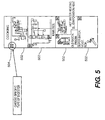
- Referring now to FIG. 5, a mill data input user interface 500 is shown such as might be generated by the server and displayed to the user in accordance with the method described with respect to FIG. 2. The interface 500 in this example is generated by the user selection (e.g., via mouse click or other suitable technique) of the digester 304 on the user interface 300 of FIG. 3. The interface 500 in this embodiment can be referred to as a pictogram selection screen which contains various
interactive pictograms 502 indicative of various types of digesters. Theinteractive pictograms 502 in this embodiment includeinteractive fields 504 associated with each pictogram. The user can select a particular type of digester illustrated in the pictogram by activating (e.g., performing a mouse click) the correspondinginteractive field 504. It will be appreciated that instead of providinginteractive fields 504, eachentire pictogram 502 can be presented as an interactive field. - Numerous other alternative means for selecting components can also be provided.
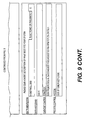
- Referring now to FIG. 6, a mill data input user interface 600 is shown such as might be generated by the server and displayed to the user based on the user's selection of a particular digester type from the interface 500. The interface 600 includes, in this embodiment, an interactive "data fill screen"
field 602 which provides an interactive list of various control settings, performance indicators, parameter limitations, and other relevant information corresponding to the selected digester type. The interactive list is presented to, or caused to be presented to, the user by the server and allows the user to select any of a plurality of parameter fields to input, delete, or modify the selected parameter, setting, indicator, limitation, etc. The interface 600 further includes an interactive "data entry complete"field 604 which the user can activate to inform the server that the user has finished entering or modifying all relevant information. - At this point the server can return the user to the main mill data interface 300, where the user can select an additional mill component and enter appropriate mill data. Referring now to FIG. 7, another mill data input user interface 700 is shown such as might be generated by the server and displayed to the user based on the user's selection of the brown stock washing unit process from the interface 300 in FIG. 3. Similar to interface 500 in FIG. 5, the interface 700 in FIG. 7 displays
numerous pictograms 702 representing different types of stock washing arrangements or techniques. Associated with eachpictogram 702 is aninteractive field 704 which can be activated by the user to identify the washing type of interest to the user. - Referring now to FIG. 8, another mill data input user interface 800 is shown such as might be generated by the server and displayed to the user based on the user's selection of a particular washing type in the interface 700. The interface 800 includes a
data fill screen 802 which presents an interactive list of various brown stock washing parameters corresponding to the selected washing type. The interactive list can be completed and edited by the user to reflect the conditions and settings at a mill known to the user. The interface 800 further includes a data entrycomplete field 804 which the user can select to indicate that the user has finished entering or modifying all relevant information. - It will be appreciated that the step of providing a pictogram selection screen may be avoided for certain components of the mill displayed in interface 300. Referring now to FIG. 9, a mill data input user interface 900 is shown such as might be generated by the server and displayed to the user based on the user's selection of the lime kiln unit process 316. The interface 900 is a data input screen for a lime kiln unit process, and includes an interactive list of lime kiln parameters or conditions to be entered and/or modified by the user. Similar to the other interfaces discussed above, the interface 900 includes an interactive "data entry complete" field 904.
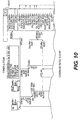
- Referring now to FIG. 10, yet another mill data
input user interface 1000 is shown, such as might be generated by the server and displayed to the user based on the user's selection of the power and steam unit process 309 from the interface 300. Theuser interface 1000 includes numerous interactive data fields allowing the user to input or modify data regarding a particular mills power and steam generation components. Theuser interface 1000 further includes an interactive "data entry complete"field 1004 which is similar to the other interfaces discussed above. - It will be appreciated that additional or alternative data interfaces can be provided by the server to the user to obtain mill data descriptive of a user mill. Based on the data input through such interfaces (or supplied by other means), the server or associated processing circuitry can query, execute, or consult one or more databases, software programs, or other suitable resources to generate one or more simulation models for one or more user mills.
- Referring now to FIG. 11, a portion of a simulation model according to one embodiment of the present invention is shown. In one embodiment of the present invention, a product known as "Flow-Mac", available from PaperMac AB, is used to generate the model of FIG. 11, but numerous other suitable programs exist and can be used. Such a simulation model can be displayed to the user under the control of the server, based on the data input by the user in the manner described above. Multiple simulation models can be generated and displayed for individual components (e.g., paper machine simulation, lime kiln simulation, batch digester simulation, etc.). As shown, the simulation model of FIG. 11 identifies numerous components, including connections to other components and various component parameters. In one embodiment animation effects such as tracers, colors, or flashing components can be provided to indicate certain areas of the simulation mill where conditions fall below or exceed a relevant threshold. In another embodiment, the simulation model includes one or more interactive components such that the component can be selected by the user, an interactive data screen can be produced by the server, the user can modify data via the interactive data screen, and the server can modify (or generate anew) a simulation model based on the modified data. In yet another embodiment, the server is configured to automatically generate and provide (e.g., display or transmit by message) consulting information such as tips, advice, or suggestions for improving the performance of the user's mill. As one example of this embodiment, if the server and/or its associated software programs identifies one or more bottlenecks in the user's mill (based on the mill data provided by the user), the server can generate, or cause to be generated, a document or listing of de-bottlenecking solutions. Such information can be stored in a database associated with the server, and may be based on de-bottlenecking solutions used by other mill operators using similar mill components.
- It will be appreciated that the embodiments described above enable a user to identify and resolve mill problems, and explore ways to optimize mill performance. The system provides accurate simulations and benchmarking information, ease of use, configurability, secure access, and numerous other advantages without the time- (and mill human resource-) consuming and expensive techniques of traditional engineering consultants.
- For completeness, various aspects of the invention are set out in the following numbered clauses:
- 1. A method for providing mill-related services to a user over a
communications link, comprising the steps of:
- causing one or more user interfaces to be displayed to the user (200);
- receiving input data (202) from a user over a communications link descriptive of one or more user mills;
- generating (204), from the user input, one or more of simulation models or benchmarking comparisons for the one or more user mills; and
- transmitting (206) the one or more simulation models or benchmarking comparisons to the user for display.
- 2. The method of
clause 1, wherein the one or more user interfaces include a credential request interface, and wherein the method further comprising the steps of receiving and processing credential information supplied by the user. - 3. The method of
clause 2, wherein the credential information includes a user name and a password. - 4. The method of
clause 2, wherein the step of processing is performed by the steps of: - comparing the credential information with information stored in a database;
- determining whether the credential information matches a first set of stored information, matches a second set of stored information, or does not match any stored information; and
- returning a result to the user based on the step of determining.
- 5. The method of
clause 4, wherein the first set of stored information defines authorized users, the second set of stored information defines expressly unauthorized users, and wherein credential information not matching the stored information corresponds to unregistered users. - 6. The method of
clause 1, wherein the one or more interfaces include mill data entry interfaces, and wherein the input data includes operational data for a mill. - 7. The method of clause 6, wherein the mill data entry interfaces are selectable by the user.
- 8. The method of
clause 1, wherein the simulation models are dynamic, such that one or more component settings can be varied by the user to generate one or more alternative simulation models. - 9. The method of
clause 1, wherein the benchmarking comparisons are provided as a visual display to the user. - 10. The method of
clause 1, wherein the benchmarking comparisons are provided as a text message to the user. - 11. A system for providing optimization services for a mill, comprising: a
database (108) storing operational data for one or more mills; and
a server (106) operatively associated with the database and a communications network, the server configured to receive mill data input from a user and to generate one or more of mill simulation models or benchmarking comparison based on the mill data input from the user and the operational data stored in the database. - 12. The system of clause 11, wherein the server is configured to receive the mill data input via one or more user interfaces generated by the server for display to the user.
- 13. The system of
clause 12, wherein the one or more user interfaces include a credential request interface for receiving and processing credential information supplied by the user. - 14. The system of
clause 13, wherein the credential information includes a user name and a password. - 15. The system of
clause 13, wherein the server is further configured to compare the credential information with information stored in a database; determine whether the credential information matches a first set of stored information, matches a second set of stored information, or does not match any stored information; and return a result to the user based on the comparison. - 16. The system of clause 15, wherein the first set of stored information defines authorized users, the second set of stored information defines expressly unauthorized users, and wherein credential information not matching the stored information corresponds to unregistered users.
- 17. The system of
clause 12, wherein the one or more interfaces include mill data entry interfaces, and wherein the input data includes operational data for a mill. - 18. The system of clause 17, wherein the mill data entry interfaces are selectable by the user.
- 19. The system of clause 11, wherein the simulation models are dynamic, such that one or more component settings can be varied by the user to generate one or more alternative simulation models.
- 20. The system of clause 11, wherein the server is further configured to provide benchmarking comparisons as a visual display to the user.
- 21. The system of clause 11, wherein the server is further configured to provide benchmarking comparisons as a text message to the user.
- 22. A method for determining mill-related conditions over a
communications link, comprising the steps of:
- receiving one or more user interfaces (200);
- providing data (202) to a server (106) by interacting with the one or more user interfaces by providing requested input data descriptive of one or more mills; and
- receiving (206) from the server one or more of simulation models or benchmarking comparisons for the one or more user mills based on the input data.
- 23. The method of clause 22, wherein the one or more user interfaces include a credential request interface, and wherein the method further comprising the steps of providing credential information to the server.
- 24. The method of clause 23, wherein the credential information includes a user name and a password.
- 25. The method of clause 22, wherein the one or more interfaces include mill data entry interfaces, and wherein the input data includes operational data for a mill.
- 26. The method of
clause 25, further comprising the step of selecting the mill data entry interfaces from among a plurality of interfaces. - 27. The method of clause 22, further comprising the steps of selecting one or more components in the simulation model, varying the component settings of the selected component, and receiving a modified simulation model based on the varied component settings.
- 28. The method of clause 22, wherein the benchmarking comparisons are received as a visual display.
- 29. The method of clause 22, wherein the benchmarking comparisons are received as a text message.
- 30. A system for providing optimization services for a mill, comprising:
- a database (108) storing operational data and one or more executable mill optimization programs for one or more mills; and
- a server (106) operatively associated with the database and a communications network, the server configured to receive mill data input from a user and to generate at least one mill simulation model and at least one benchmarking comparison based on the mill data input from the user and the operational data and one or more executable mill optimization programs stored in the database.
- 31. The system of
clause 30, wherein the server is configured to receive the mill data input via one or more user interfaces generated by the server for display to the user. - 32. The system of clause 31, wherein the one or more user interfaces include a credential request interface for receiving and processing credential information supplied by the user.
- 33. The system of clause 32, wherein the credential information includes a user name and a password.
- 34. The system of clause 32, wherein the server is further configured to compare the credential information with information stored in a database; determine whether the credential information matches a first set of stored information, matches a second set of stored information, or does not match any stored information; and return a result to the user based on the comparison.
- 35. The system of clause 34, wherein the first set of stored information defines authorized users, the second set of stored information defines expressly unauthorized users, and wherein credential information not matching the stored information corresponds to unregistered users.
- 36. The system of clause 31, wherein the one or more interfaces include mill data entry interfaces, and wherein the input data includes operational data for a mill.
- 37. The system of clause 36, wherein the mill data entry interfaces are selectable by the user.
- 38. The system of
clause 30, wherein the simulation models are dynamic, such that one or more component settings can be varied by the user to generate one or more alternative simulation models. - 39. The system of
clause 30, wherein the server is further configured to provide benchmarking comparisons as a visual display to the user. - 40. The system of
clause 30, wherein the server is further configured to provide benchmarking comparisons as a text message to the user. - 41. A storage medium encoded with computer-readable code, comprising:
- one or more instructions for causing one or more user interfaces to be displayed to the user;
- one or more instructions for receiving input data from a user over a communications link descriptive of one or more user mills;
- one or more instructions for generating, from the user input, one or more of simulation models or benchmarking comparisons for the one or more
-
Claims (10)
- A method for providing mill-related services to a user over a communications link, comprising the steps of:causing one or more user interfaces to be displayed to the user (200);receiving input data (202) from a user over a communications link descriptive of one or more user mills;generating (204), from the user input, one or more of simulation models or benchmarking comparisons for the one or more user mills; andtransmitting (206) the one or more simulation models or benchmarking comparisons to the user for display.
- A method for determining mill-related conditions over a communications link, comprising the steps of:receiving one or more user interfaces (200);providing data (202) to a server (106) by interacting with the one or more user interfaces by providing requested input data descriptive of one or more mills; andreceiving (206) from the server one or more of simulation models or benchmarking comparisons for the one or more user mills based on the input data.
- The method of claim 1 or claim 2, wherein the one or more user interfaces include a credential request interface, and wherein the method further comprising the steps of receiving and processing credential information supplied by the user.
- The method of claim 1 or claim 2, wherein the one or more interfaces include mill data entry interfaces, and wherein the input data includes operational data for a mill.
- A system for providing optimization services for a mill, comprising: a database (108) storing operational data for one or more mills; and
a server (106) operatively associated with the database and a communications network, the server configured to receive mill data input from a user and to generate one or more of mill simulation models or benchmarking comparison based on the mill data input from the user and the operational data stored in the database. - A system for providing optimization services for a mill, comprising:a database (108) storing operational data and one or more executable mill optimization programs for one or more mills; anda server (106) operatively associated with the database and a communications network, the server configured to receive mill data input from a user and to generate at least one mill simulation model and at least one benchmarking comparison based on the mill data input from the user and the operational data and one or more executable mill optimization programs stored in the database.
- The system of claim 5 or claim 6, wherein the server is configured to receive the mill data input via one or more user interfaces generated by the server for display to the user.
- The system of claim 7, wherein the one or more user interfaces include a credential request interface for receiving and processing credential information supplied by the user.
- The system of claim 7, wherein the one or more interfaces include mill data entry interfaces, and wherein the input data includes operational data for a mill.
- A storage medium encoded with computer-readable code, comprising:one or more instructions for causing one or more user interfaces to be displayed to the user;one or more instructions for receiving input data from a user over a communications link descriptive of one or more user mills;one or more instructions for generating, from the user input, one or more of simulation models or benchmarking comparisons for the one or more user mills; andone or more instructions for transmitting the one or more simulation models or benchmarking comparisons to the user for display.
Applications Claiming Priority (2)
| Application Number | Priority Date | Filing Date | Title |
|---|---|---|---|
| US663249 | 1991-03-01 | ||
| US66324900A | 2000-09-15 | 2000-09-15 |
Publications (2)
| Publication Number | Publication Date |
|---|---|
| EP1188860A2 true EP1188860A2 (en) | 2002-03-20 |
| EP1188860A3 EP1188860A3 (en) | 2002-06-19 |
Family
ID=24661026
Family Applications (1)
| Application Number | Title | Priority Date | Filing Date |
|---|---|---|---|
| EP01307860A Withdrawn EP1188860A3 (en) | 2000-09-15 | 2001-09-14 | Method and system for optimizing mill operation |
Country Status (4)
| Country | Link |
|---|---|
| EP (1) | EP1188860A3 (en) |
| JP (1) | JP2002244719A (en) |
| CA (1) | CA2356470A1 (en) |
| NO (1) | NO20014470L (en) |
Cited By (4)
| Publication number | Priority date | Publication date | Assignee | Title |
|---|---|---|---|---|
| WO2003107103A1 (en) * | 2002-06-12 | 2003-12-24 | Abb Ab | Dynamic on-line optimization of production processes |
| US6950777B1 (en) | 2003-07-29 | 2005-09-27 | Voith Paper Inc. | Method and system for assessing pulp and paper mill performance |
| US7136719B2 (en) * | 2003-03-31 | 2006-11-14 | Henkel Kommanditgesellschaft Auf Aktien | Method for the computer-assisted regulating of a plurality of serially coupled machines, regulating device and machine arrangement |
| EP2157236A2 (en) | 2008-08-18 | 2010-02-24 | Voith Patent GmbH | Guidance system for assemblies for paper and/or tissue and/or cardboard and/or packaging production |
Families Citing this family (2)
| Publication number | Priority date | Publication date | Assignee | Title |
|---|---|---|---|---|
| US10180680B2 (en) * | 2015-03-30 | 2019-01-15 | Uop Llc | Tuning system and method for improving operation of a chemical plant with a furnace |
| US10095200B2 (en) | 2015-03-30 | 2018-10-09 | Uop Llc | System and method for improving performance of a chemical plant with a furnace |
-
2001
- 2001-08-31 CA CA002356470A patent/CA2356470A1/en not_active Abandoned
- 2001-09-14 NO NO20014470A patent/NO20014470L/en not_active Application Discontinuation
- 2001-09-14 EP EP01307860A patent/EP1188860A3/en not_active Withdrawn
- 2001-09-17 JP JP2001281025A patent/JP2002244719A/en not_active Withdrawn
Non-Patent Citations (1)
| Title |
|---|
| JONES G L: "INTEGRATION OF PROCESS SIMULATION WITH MILLWIDE INFORMATION AND CONTROL" TAPPI JOURNAL, TECHNICAL ASSOCIATION OF THE PULP & PAPER INDUSTRY. ATLANTA, US, vol. 73, no. 11, 1 November 1990 (1990-11-01), pages 113-118, XP000163302 ISSN: 0734-1415 * |
Cited By (6)
| Publication number | Priority date | Publication date | Assignee | Title |
|---|---|---|---|---|
| WO2003107103A1 (en) * | 2002-06-12 | 2003-12-24 | Abb Ab | Dynamic on-line optimization of production processes |
| US7085615B2 (en) | 2002-06-12 | 2006-08-01 | Abb Ab | Dynamic on-line optimization of production processes |
| US7136719B2 (en) * | 2003-03-31 | 2006-11-14 | Henkel Kommanditgesellschaft Auf Aktien | Method for the computer-assisted regulating of a plurality of serially coupled machines, regulating device and machine arrangement |
| US6950777B1 (en) | 2003-07-29 | 2005-09-27 | Voith Paper Inc. | Method and system for assessing pulp and paper mill performance |
| EP2157236A2 (en) | 2008-08-18 | 2010-02-24 | Voith Patent GmbH | Guidance system for assemblies for paper and/or tissue and/or cardboard and/or packaging production |
| EP2157236A3 (en) * | 2008-08-18 | 2013-01-02 | Voith Patent GmbH | Control system for plants for producing paper and/or tissue and/or cardboard and/or packaging |
Also Published As
| Publication number | Publication date |
|---|---|
| NO20014470D0 (en) | 2001-09-14 |
| JP2002244719A (en) | 2002-08-30 |
| EP1188860A3 (en) | 2002-06-19 |
| CA2356470A1 (en) | 2002-03-15 |
| NO20014470L (en) | 2002-03-18 |
Similar Documents
| Publication | Publication Date | Title |
|---|---|---|
| US7444256B2 (en) | System and method for testing hardware or software modules via a computer network | |
| US8195525B2 (en) | Method and apparatus upgrade assistance using critical historical product information | |
| EP1442419A1 (en) | Method and apparatus for work management for facility maintenance | |
| KR100970851B1 (en) | System building guide system | |
| JP2002247033A (en) | Security management system | |
| CN101789967A (en) | Remote test service system based on electronic commerce and use method thereof | |
| JP2002063240A (en) | production management system | |
| US20020194192A1 (en) | Method of doing business by indentifying customers of competitors through world wide web searches of job listing databases | |
| JP4501436B2 (en) | Information collection system, information collection method, and information collection program | |
| EP1188860A2 (en) | Method and system for optimizing mill operation | |
| CN114254909A (en) | Risk management method and platform based on decision engine | |
| KR20000036963A (en) | System and method for providing contents in network | |
| CN1316410C (en) | Server computer and client computer of the device planning support system | |
| JP2000207254A (en) | Server management device, method therefor and recording medium recorded with server managing program | |
| JP2009104588A (en) | System construction guide system | |
| KR100428070B1 (en) | System and method for checking operation state of information system and media for storing program source thereof | |
| KR20010037031A (en) | The composition and method of operation for construction information website | |
| US7146423B2 (en) | Method for integrating multiple web servers based on individual client authorization | |
| CN116300746B (en) | A terminal structure for a distributed detection platform | |
| JP4392266B2 (en) | Sales strategy support system | |
| KR20020058167A (en) | Method and system for managing taxation business on the internet | |
| KR100952415B1 (en) | Standardized method and system for software research verification | |
| JP2021018451A (en) | Maintenance operation support system, maintenance operation support method, maintenance operation support device, and program | |
| JPWO2013005246A1 (en) | Mobile terminal management server and mobile terminal management program | |
| KR20030029431A (en) | Collaboration in production service by internet |
Legal Events
| Date | Code | Title | Description |
|---|---|---|---|
| PUAI | Public reference made under article 153(3) epc to a published international application that has entered the european phase |
Free format text: ORIGINAL CODE: 0009012 |
|
| AK | Designated contracting states |
Kind code of ref document: A2 Designated state(s): AT BE CH CY DE DK ES FI FR GB GR IE IT LI LU MC NL PT SE TR |
|
| AX | Request for extension of the european patent |
Free format text: AL;LT;LV;MK;RO;SI |
|
| PUAL | Search report despatched |
Free format text: ORIGINAL CODE: 0009013 |
|
| AK | Designated contracting states |
Kind code of ref document: A3 Designated state(s): AT BE CH CY DE DK ES FI FR GB GR IE IT LI LU MC NL PT SE TR |
|
| AX | Request for extension of the european patent |
Free format text: AL;LT;LV;MK;RO;SI |
|
| 17P | Request for examination filed |
Effective date: 20021219 |
|
| AKX | Designation fees paid |
Designated state(s): FI SE |
|
| REG | Reference to a national code |
Ref country code: DE Ref legal event code: 8566 |
|
| 17Q | First examination report despatched |
Effective date: 20060725 |
|
| STAA | Information on the status of an ep patent application or granted ep patent |
Free format text: STATUS: THE APPLICATION IS DEEMED TO BE WITHDRAWN |
|
| 18D | Application deemed to be withdrawn |
Effective date: 20080401 |