EP1188836A2 - Production method of polyester containing epoxy group in side chain and production method of crosslinked polymer - Google Patents
Production method of polyester containing epoxy group in side chain and production method of crosslinked polymer Download PDFInfo
- Publication number
- EP1188836A2 EP1188836A2 EP01120988A EP01120988A EP1188836A2 EP 1188836 A2 EP1188836 A2 EP 1188836A2 EP 01120988 A EP01120988 A EP 01120988A EP 01120988 A EP01120988 A EP 01120988A EP 1188836 A2 EP1188836 A2 EP 1188836A2
- Authority
- EP
- European Patent Office
- Prior art keywords
- polyester
- alkene
- microorganism
- side chain
- convert
- Prior art date
- Legal status (The legal status is an assumption and is not a legal conclusion. Google has not performed a legal analysis and makes no representation as to the accuracy of the status listed.)
- Granted
Links
- 0 CC(C)(*)[N+](*)[O-] Chemical compound CC(C)(*)[N+](*)[O-] 0.000 description 1
Images



Classifications
-
- C—CHEMISTRY; METALLURGY
- C12—BIOCHEMISTRY; BEER; SPIRITS; WINE; VINEGAR; MICROBIOLOGY; ENZYMOLOGY; MUTATION OR GENETIC ENGINEERING
- C12P—FERMENTATION OR ENZYME-USING PROCESSES TO SYNTHESISE A DESIRED CHEMICAL COMPOUND OR COMPOSITION OR TO SEPARATE OPTICAL ISOMERS FROM A RACEMIC MIXTURE
- C12P7/00—Preparation of oxygen-containing organic compounds
- C12P7/62—Carboxylic acid esters
-
- C—CHEMISTRY; METALLURGY
- C12—BIOCHEMISTRY; BEER; SPIRITS; WINE; VINEGAR; MICROBIOLOGY; ENZYMOLOGY; MUTATION OR GENETIC ENGINEERING
- C12P—FERMENTATION OR ENZYME-USING PROCESSES TO SYNTHESISE A DESIRED CHEMICAL COMPOUND OR COMPOSITION OR TO SEPARATE OPTICAL ISOMERS FROM A RACEMIC MIXTURE
- C12P7/00—Preparation of oxygen-containing organic compounds
- C12P7/62—Carboxylic acid esters
- C12P7/625—Polyesters of hydroxy carboxylic acids
-
- C—CHEMISTRY; METALLURGY
- C12—BIOCHEMISTRY; BEER; SPIRITS; WINE; VINEGAR; MICROBIOLOGY; ENZYMOLOGY; MUTATION OR GENETIC ENGINEERING
- C12N—MICROORGANISMS OR ENZYMES; COMPOSITIONS THEREOF; PROPAGATING, PRESERVING, OR MAINTAINING MICROORGANISMS; MUTATION OR GENETIC ENGINEERING; CULTURE MEDIA
- C12N1/00—Microorganisms; Compositions thereof; Processes of propagating, maintaining or preserving microorganisms or compositions thereof; Processes of preparing or isolating a composition containing a microorganism; Culture media therefor
- C12N1/26—Processes using, or culture media containing, hydrocarbons
- C12N1/28—Processes using, or culture media containing, hydrocarbons aliphatic
Definitions
- the present invention relates to a method of producing a polyester using a microorganism.
- PHB poly(3-hydroxybutyrate)
- PHA polyhydroxyalkanoates
- biodegradable and therefore have an advantage that they can completely be decomposed by microorganisms in nature, and unlike conventional many synthetic polymeric compounds, they do not remain in natural environments to cause environmental pollution and may not generate harmful substances such as dioxins, endocrine disrupting chemical substances, etc. since they are not required to be incinerated. Furthermore, they are excellent in biocompatibility and highly expected to be applied to the use as soft members for medical care (Japanese Patent Application Laid-Open No. 5-000159).
- epoxy groups of the side chain terminals are very useful, however, there is no synthesis method other than the chemical epoxidation of the unsaturated sites in the side chain terminals, and such chemical epoxidation requires very complicated operations and has therefore a practical disadvantage in terms of cost.
- a method of producing a polyester that contains an epoxy group in a side chain thereof using 1-alkene as a raw material comprising the steps of bringing 1-alkene into contact with a microorganism having an ability to uptake 1-alkene and convert it to a polyester and allowing the microorganism to convert the 1-alkene into a polyester containing an epoxy group in a side chain thereof.
- the method comprises the step of culturing the microorganism in a culture medium containing the 1-alkene.
- the method further comprises the step of isolating the polyester produced by the microorganism.
- the isolation step comprises recovering the polyester from the cell of the microorganism.
- a method of producing a crosslinked polymer comprising reacting the polyester obtained by the above mentioned method with a diamine compound.
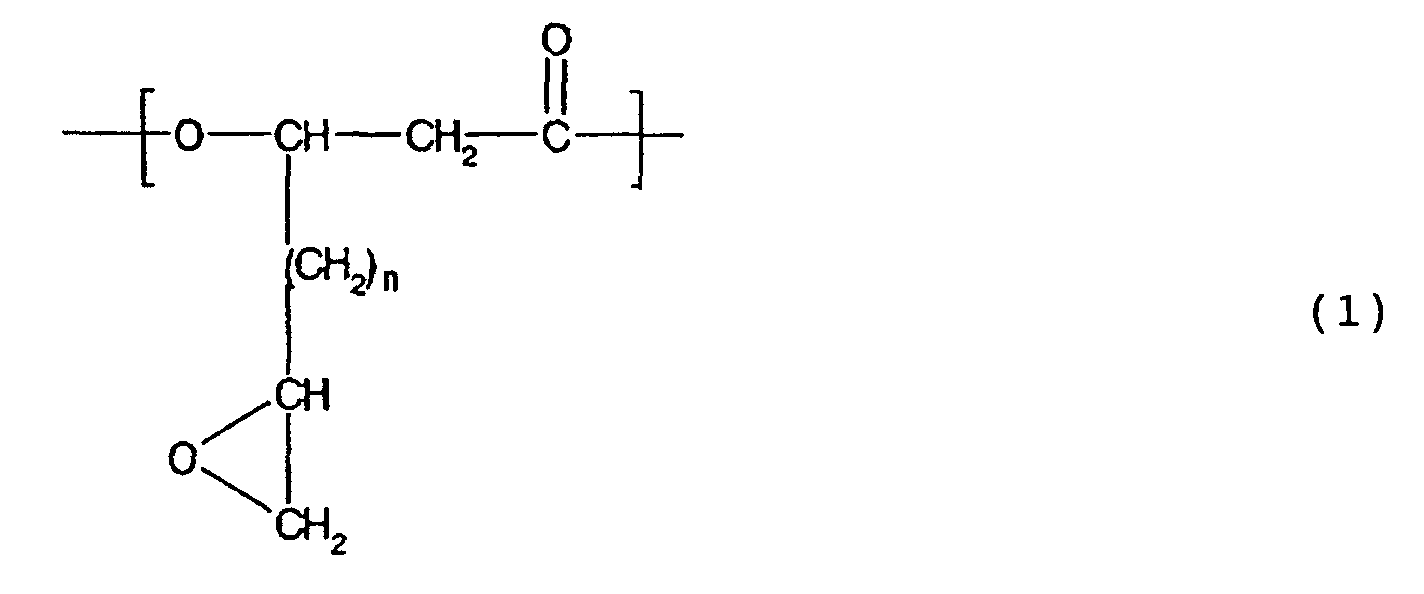
- the polyester obtained according to the method of the present invention contains at least 1 mol % of a unit represented by the chemical formula (1): (wherein n is an integer of 1 to 7) in monomer units thereof.
- the polyester obtained according to the method of the present invention may further contain at least 1 mol % of a unit represented by the chemical formula (2): (wherein m is an integer of 1 to 7) in monomer units thereof.
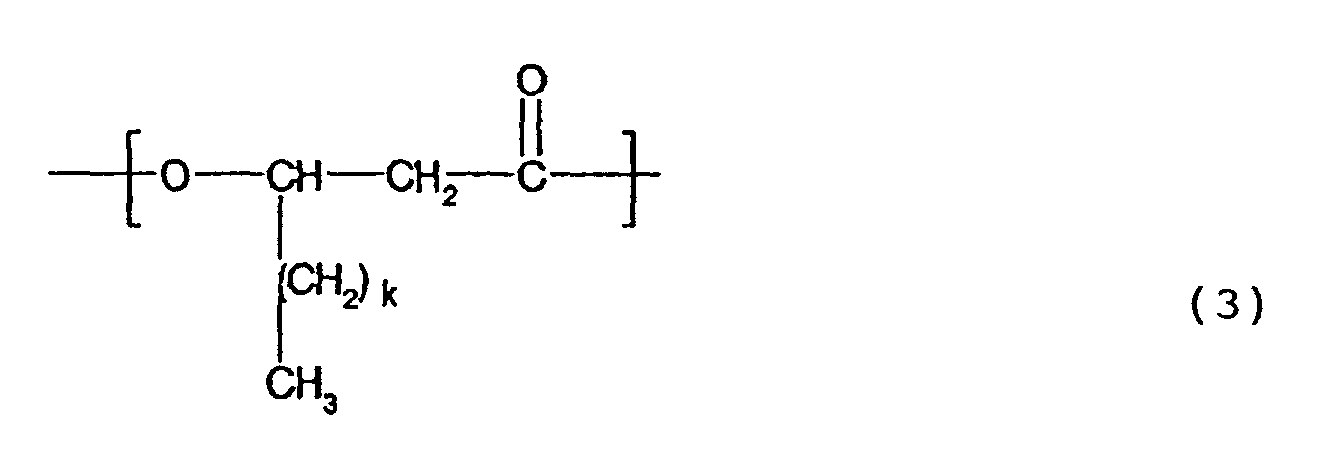
- the polyester obtained according to the method of the present invention may further contain at least 1 mol % of a unit represented by the chemical formula (3): (wherein k is an integer of 0 to 8) in monomer units thereof.
- the 1-alkene to be used as a raw material in the method of the present invention is preferably an 1-alkene with 7 to 12 carbons, namely 1-heptene, 1-octene, 1-nonene, 1-decene, 1-undecene, and 1-dodecene.
- the number-average molecular weight of the polyester obtained by the present invention is 10,000 to 1,000,000 and more particularly 10,000 to 500,000.
- the microorganism to be used for the method of the present invention is a microorganism having an ability to epoxidize the 1-alkene and convert it to an corresponding epoxyalkane compound; an ability to convert a terminal of the epoxyalkane compound to form an epoxidized carboxylic acid; and an ability to convert the epoxidized carboxylic acid to a polyester and includes microorganisms belonging to Pseudomonas species and more particularly includes Pseudomonas cichorii YN2 strain; FERM BP-7375 used in the examples of the present invention as described below.
- Pseudomonas cichorii YN2; FERM BP-7375 as a microorganism used for the present invention is a microorganism having the following properties and deposited to International Patent Organism Depositary in National Institute of Advanced Industrial Science and Technology, AIST (deposition number: FERM BP-7375).
- the mycological properties of the YN2 strain are as follows.
- This bacterial strain is also a microorganism disclosed in Japanese Patent Application No. 11-371863.
- This bacterial strain has a capability of epoxidizing 1-alkene to an corresponding epoxyalkane as will be described in the examples below.
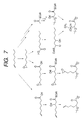
- the enzyme for exhibiting such a capability is an alkene-monooxygenase. It is highly probable that this bacterial stain also has the alkene-monooxygenase. Further, this bacterial strain has not been found to produce an epoxyalkanoic acid from a corresponding alkenoic acid. Based on the results deduced from the above described matter, it is implied that the route of the polyester production of the present invention by this bacterial stain is those shown in FIG. 7.
- Any culture may be usable as a culture to be employed for the present invention as long as it is an inorganic salt culture containing phosphorate and a nitrogen source such as an ammonium salt or a nitrate and it is possible to improve the productivity of PHA by adjusting the concentration of the nitrogen source. Since a 1-alkene to be added has a low solubility in water and is highly volatile, it is required to supply the 1-alkene in a gas state during the culture and to put it in sealed state while ensuring oxygen which the microorganism requires.
- composition of a culture employed for one embodiment of the method of the present invention as an example of an inorganic salt culture is shown below.
- (M9 culture) Na 2 HPO 4 : 6.3 KH 2 PO 4 : 3.0 NH 4 Cl: 1.0 NaCl: 0.5 g/L, pH 7.0
- (1/10N-M9 culture) Na 2 HPO 4 : 6.3 KH 2 PO 4 : 3.0 NH 4 Cl: 0.1 NaCl: 0.5 g/L, pH 7.0
- the culture temperature may be any temperature at which good prolification of the above described bacterial strain can be assured and it is preferably about 20° C to 30° C.
- any culture method including a liquid culture method, a solid culture method, etc. can be employed as long as it is suitable for prolification of the microorganism and production of PHA.
- the type of the culture includes, but are not limited to, a batch culture, a fed-batch culture, a semi-continuous culture, and a continuous culture.
- a commonly employed method can be employed for obtaining PHA from the culture substances containing cultured cells of the present invention and the culture liquid.
- a method for extraction and purification from the culture liquid is employed and in the case where PHA is accumulated in the cells, a method for extraction and purification from the cells is employed.
- chloroform extraction which is commonly employed, is most convenient, however in the environments where an organic solvent is troublesome to be used, there can be employed a method of recovering only PHA by removing other components in cells other than PHA by treatment with a surfactant such as SDS, etc., treatment with an enzyme such as lysozyme, etc., treatment by chemicals such as EDTA, sodium hypochlorite, ammonia, etc.
- the polymer obtained according to the method of the present invention can be subjected to chemical conversion, as with common polymers having epoxy groups. More particularly, the chemical conversion includes a crosslinking reaction with hexamethylenediamine, succinic anhydride, or 2-ethyl-4-methylimidazole, or electron beam irradiation. Further, it is also possible to convert it into hydroxyl groups or to introduce sulfone groups thereinto. Furthermore, it is also possible to add a compound having thiol or amine thereto.
- the present invention further provides a method of producing a crosslinked polymer by reacting the above mentioned polyester with a diamine compound. More particularly, the present invention provides a method of producing a crosslinked polymer by reacting the above mentioned polyester with hexamethylenediamine. Such a reaction proceeds along a reaction route as shown in the following scheme to produce a crosslinked polymer.
- the reaction temperature is preferably 50°C to 120°C and the reaction time is preferably within the range of 10 minutes to 120 minutes.
- the resulting suspension was applied to 20 plates of 1/10N-M9 agar cultures free from C sources and static cultivation was carried out at 30°C in a 1-heptene atmosphere.
- YN2 strain was cultured at 30°C for 24 hours in a culture medium containing 0.5% polypeptone, and the cells were collected by centrifugal separation and again suspended in an inorganic salt culture medium. 10 mL of the resulting cell suspension was put in a vial of 27 mL capacity and sealed with a butyl rubber plug and an aluminum seal, and air containing 1-hexene gas was added thereto with a syringe.
- a sample only of an inorganic salt culture medium containing no YN2 strain was prepared in the same manner and the respective vials were shaken at 30°C for 1 hour. After the shaking, 0.1 mL of a vapor phase in each vial was withdrawn by a syringe and subjected to a gas chromatographic (GC) analysis.
- GC gas chromatographic
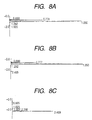
- FIGS. 8A to 8C show the results of the sample only of the inorganic salt culture medium containing no YN2 strain. A peak of 1-hexene is observed near 1.05.
- FIG. 8B shows the results of the sample of the cell suspension of YN2 strain. A peak, which is not observed in FIG. 8A, is observed near 2.47.
- FIG. 8C shows the results of a sample of a standard sample of 1,2-epoxyhexane. A peak corresponding to the above mentioned peak is observed near 2.47. According to the results, it was made clear that the YN2 strain converted 1-hexene to 1,2-epoxyhexane.
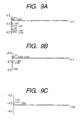
- FIGS. 9A to 9C show the conversion activity of YN2 strain to 1-octene in the same manner as in Example 7 (GC column temperature: 150°C). The results are shown in FIGS. 9A to 9C.
- FIG. 9A shows the results of the sample only of the inorganic salt culture medium containing no YN2 strain. A peak of 1-octene is observed near 1.21.
- FIG. 9B shows the results of the sample of the cell suspension of YN2 strain. A peak, which is not observed in FIG. 9A, is observed near 2.38.
- FIG. 9C shows the results of a sample of a standard sample of 1,2-epoxyoctane. A peak corresponding to the above mentioned peak is observed near 2.38. According to the results, it was made clear that the YN2 strain converted 1-octene to 1,2-epoxyoctane.
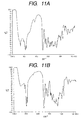
- Example 4 20 mg of the polymer obtained in Example 4 was dissolved in 0.2 mL of chloroform, and 10 mg of hexamethylenediamine was added thereto with cooling by ice to dissolve it. After completion of the dissolution was confirmed, chloroform was removed and then the resulting solution was subjected to a measurement with a differential scanning calorimeter (DSC; Pyris 1 mfd. by Perkin Elmer Co.; Temperature rise rate: 10°C/min). Further, another sample subjected to a reaction at 90°C for 1 hour was similarly subjected to the DSC measurement.
- DSC differential scanning calorimeter
- FIGS. 11A and 11B The results are shown in FIGS. 11A and 11B.
- a crosslinked polymer could be obtained by reacting, with hexamethylenediamine, a polyester having epoxy units in the side chains which was obtained by the method comprising the steps of bringing 1-alkene into contact with a microorganism having an ability to uptake and convert 1-alkene to a polyester and allowing the microorganism to convert the 1-alkene into a polyester.
Landscapes
- Chemical & Material Sciences (AREA)
- Organic Chemistry (AREA)
- Life Sciences & Earth Sciences (AREA)
- Engineering & Computer Science (AREA)
- Zoology (AREA)
- Wood Science & Technology (AREA)
- Health & Medical Sciences (AREA)
- Genetics & Genomics (AREA)
- Biotechnology (AREA)
- Bioinformatics & Cheminformatics (AREA)
- Microbiology (AREA)
- Biochemistry (AREA)
- General Health & Medical Sciences (AREA)
- General Engineering & Computer Science (AREA)
- General Chemical & Material Sciences (AREA)
- Chemical Kinetics & Catalysis (AREA)
- Medicinal Chemistry (AREA)
- Tropical Medicine & Parasitology (AREA)
- Virology (AREA)
- Oil, Petroleum & Natural Gas (AREA)
- Biomedical Technology (AREA)
- Preparation Of Compounds By Using Micro-Organisms (AREA)
- Polyesters Or Polycarbonates (AREA)
- Processes Of Treating Macromolecular Substances (AREA)
- Micro-Organisms Or Cultivation Processes Thereof (AREA)
Abstract
Description

culture temperature: 30°C
cell shape: rod, 0.8 µm × 1.5 to 2.0 µm
Gram staining: negative
sporulation: negative
motility: positive
colony shape: circular; entire, smooth margin; low convex; smooth surface; glossy; translucent
catalase: positive
oxidase: positive
O/F test: non-fermentative
nitrate reduction: negative
indole production: positive
glucose oxidation: negative
arginine dihydrolase: negative
urease: negative
esculin hydrolysis: negative
gelatin hydrolysis: negative
β-galactosidase: negative
fluorescent pigment production on King's B agar: positive
growth under 4% NaCl: positive (weak growth) poly-p-hydroxybutyrate accumulation: negative(*) Tween 80 hydrolysis: positive
* determined by staining colonies cultured on nutrient agar with Sudan Black
glucose: positive
L-arabinose: positive
D-mannose: negative
D-mannitol: negative
N-acetyl-D-glucosamine: negative
maltose: negative
potassium gluconate: positive
n-caprate: positive
adipate: negative
dl-malate: positive
sodium citrate: positive
phenyl acetate: positive
Na2HPO4: 6.3
KH2PO4: 3.0
NH4Cl: 1.0
NaCl: 0.5 g/L, pH = 7.0
(1/10N-M9 culture)
Na2HPO4: 6.3
KH2PO4: 3.0
NH4Cl: 0.1
NaCl: 0.5 g/L, pH = 7.0
(Trace amount component solution)
nitrilo triacetate: 1.5; MgSO4: 3.0;
MnSO4: 0.5; NaCl: 1.0;
FeSO4: 0.1; CaCl2: 0.1;
COCl2: 0.1; ZnSO4: 0.1;
CuSO4: 0.1; AlK(SO4)2: 0.1;
H3BO3: 0.1; Na2MoO4: 0.1; and
NiCl2: 0.1 (unit: g/L)


| Example No. | Dry weight of cells (mg) | Dry weight of polymer (mg) |
| 1 | 160 | 48 |
| 2 | 170 | 52 |
| 3 | 160 | 55 |
| 4 | 180 | 58 |
| 5 | 170 | 55 |
| 6 | 160 | 48 |

C4: 3-hydroxybutyric acid; C5: 3-hydroxyvaleric acid; C6: 3-hydroxyhexanoic acid; C6=: 3-hydroxy-5-hexenoic acid; C7: 3-hydroxyheptanoic acid; C7=: 3-hydroxy-6-heptenoic acid; C8: 3-hydroxyoctanoic acid; C8=: 3-hydroxy-7-octenoic acid; C9: 3-hydroxynonanoic acid; C9=: 3-hydroxy-8-nonenoic acid; C10: 3-hydroxydecanoic acid; C10=: 3-hydroxy-9-decenoic acid; C11: 3-hydroxyundecanoic acid; C11=: 3-hydroxy-10-undecenoic acid; C12: 3-hydroxydodecanoic acid; and C12=: 3-hydroxy-11-dodecenoic acid.
| Carbon source | Monomer units (mol %) | |||
| Saturated groups | Terminal unsaturated groups | Other epoxidized groups | Unsaturated groups | |
| Hexene | 70.0 | 20.0 | ND | 10.0 |
| Heptene | 12.5 | 83.3 | 4.2 | ND |
| Octene | 55.9 | 29.4 | 14.7 | ND |
| Nonene | 44.0 | 40.0 | 16.0 | ND |
| Decene | 31.6 | 52.6 | 15.8 | ND |
| Undecene | 30.0 | 50.0 | 20.0 | ND |
| Dodecene | 39.1 | 43.5 | 17.4 | ND |
| Example | Number-average molecular weight (Mn) × 105 | Weight-average molecular weight (Mw) × 105 |
| 1 | 1.9 | 5.2 |
| 2 | 2.5 | 5.5 |
| 3 | 2.6 | 5.3 |
| 4 | 1.9 | 5.4 |
| 5 | 1.9 | 5.4 |
| 6 | 2.0 | 4.9 |
Claims (16)
- A method of producing a polyester containing an epoxy group in a side chain thereof using 1-alkene as a raw material, comprising the steps of bringing 1-alkene into contact with a microorganism having an ability to uptake 1-alkene and convert it to a polyester and converting the 1-alkene into a polyester containing an epoxy group in a side chain thereof by the microorganism.
- The method according to claim 1, wherein the microorganism has (a) an ability to epoxidize and convert the 1-alkene to an epoxyalkane compound; (b) an ability to convert the epoxyalkane compound to an epoxidized carboxylic acid; and (c) an ability to convert the epoxidized carboxylic acid to the polyester.
- The method according to claim 1, further comprising the step of culturing the microorganism in a culture medium containing the 1-alkene.
- The method according to claim 3, further comprising the step of isolating the polyester produced by the microorganism.
- The method according to claim 4, wherein the isolation step comprises recovering the polyester from the cell of the microorganism.
- The method according to claim 1, wherein the 1-alkene has 7 to 12 carbon atoms.
- The method according to claim 1, wherein the polyester contains at least 1 mol % of a unit represented by the chemical formula (1):(wherein n is an integer of 1 to 7) in monomer units thereof.

- The method according to claim 7, wherein the polyester contains at least 1 mol % of a unit represented by the chemical formula (2):(wherein m is an integer of 1 to 7) in monomer units thereof.

- The method according to claim 7, wherein the polyester contains at least 1 mol % of a unit represented by the chemical formula (3):(wherein k is an integer of 0 to 8) in monomer units thereof.

- The method according to claim 1, wherein the polyester has a number-average molecular weight of 10,000 to 1,000,000.
- The method according to claim 1, wherein the microorganism belongs to Pseudomonas species.
- The method according to claim 11, wherein the microorganism is Pseudomonas cichorii YN2; FERM BP-7375.
- A method of producing a crosslinked polymer comprising reacting the polyester obtained by the method as set forth in claim 1 with a diamine compound.
- The method according to claim 13, wherein the diamine compound is hexamethylenediamine.
- The method according to claim 13, wherein the reaction is carried out at a temperature within the range of 50°C to 120°C.
- The method according to claim 13, wherein the reaction is carried out for 10 minutes to 120 minutes.
Applications Claiming Priority (4)
| Application Number | Priority Date | Filing Date | Title |
|---|---|---|---|
| JP2000263508 | 2000-08-31 | ||
| JP2000263508 | 2000-08-31 | ||
| JP2000294635 | 2000-09-27 | ||
| JP2000294635A JP3740358B2 (en) | 2000-08-31 | 2000-09-27 | Method for producing polyester having epoxy group in side chain and method for producing crosslinked polymer |
Publications (3)
| Publication Number | Publication Date |
|---|---|
| EP1188836A2 true EP1188836A2 (en) | 2002-03-20 |
| EP1188836A3 EP1188836A3 (en) | 2002-04-10 |
| EP1188836B1 EP1188836B1 (en) | 2008-06-04 |
Family
ID=26598961
Family Applications (1)
| Application Number | Title | Priority Date | Filing Date |
|---|---|---|---|
| EP01120988A Expired - Lifetime EP1188836B1 (en) | 2000-08-31 | 2001-08-31 | Production method of polyester containing epoxy group in side chain and production method of crosslinked polymer |
Country Status (5)
| Country | Link |
|---|---|
| US (1) | US20020052444A1 (en) |
| EP (1) | EP1188836B1 (en) |
| JP (1) | JP3740358B2 (en) |
| KR (1) | KR100449474B1 (en) |
| DE (1) | DE60134298D1 (en) |
Cited By (1)
| Publication number | Priority date | Publication date | Assignee | Title |
|---|---|---|---|---|
| WO2004044213A1 (en) * | 2002-10-24 | 2004-05-27 | Canon Kabushiki Kaisha | Novel polyhydroxy alkanoate copolymer including within molecule unit having vinyl group or carboxyl group in side chain, and producing method therefor |
Families Citing this family (9)
| Publication number | Priority date | Publication date | Assignee | Title |
|---|---|---|---|---|
| US6872788B2 (en) * | 2000-08-31 | 2005-03-29 | Canon Kabushiki Kaisha | Production method of polyester containing epoxy group in side chain and production method of crosslinked polymer |
| KR100462543B1 (en) | 2000-09-14 | 2004-12-17 | 캐논 가부시끼가이샤 | Polyhydroxyalkanoate and manufacturing method thereof |
| US6911521B2 (en) * | 2001-05-31 | 2005-06-28 | Canon Kabushiki Kaisha | Polyhydroxyalkanoate that comprises unit having substituted or unsubstituted (phenylmethyl) sulfanyl structure in side chain thereof and process for producing the same |
| JP3990880B2 (en) | 2001-07-10 | 2007-10-17 | キヤノン株式会社 | Method for producing polyhydroxyalkanoate-coated liposome |
| JP3754956B2 (en) * | 2002-02-15 | 2006-03-15 | キヤノン株式会社 | NOVEL POLYHYDROXYALKANOATE COPOLYMER CONTAINING UNIT HAVING BROMO GROUP IN SIDE CHAIN AND METHOD FOR PRODUCING THE SAME |
| JP2003319792A (en) | 2002-02-28 | 2003-11-11 | Canon Inc | Method for controlling molecular weight of polyhydroxyalkanoate in which units containing phenyl, thienyl or cyclohexyl structure-having residues in side chains are contained, and polyhydroxyalkanoate |
| JP3689700B2 (en) | 2002-02-28 | 2005-08-31 | キヤノン株式会社 | NOVEL POLYHYDROXYALKANOATE COPOLYMER CONTAINING UNIT COMPRISING VINYLPHENYL STRUCTURE IN SIDE CHAIN AND METHOD FOR PRODUCING THE SAME |
| JP2003310292A (en) * | 2002-04-26 | 2003-11-05 | Canon Inc | Method for producing polyhydroxyalkanoate from alkane having residue containing aromatic ring in molecule |
| JP4579502B2 (en) * | 2003-05-02 | 2010-11-10 | キヤノン株式会社 | Structure and manufacturing method thereof, toner containing the structure, and image forming method and apparatus using the same |
Family Cites Families (9)
| Publication number | Priority date | Publication date | Assignee | Title |
|---|---|---|---|---|
| NL8603073A (en) * | 1986-12-02 | 1988-07-01 | Rijksuniversiteit | METHOD FOR PREPARING POLYESTERS BY FERMENTATION; METHOD FOR PREPARING OPTICALLY ACTIVE CARBONIC ACIDS AND ESTERS; POLYESTER INCLUDING PRODUCTS. |
| US6156852A (en) * | 1997-04-21 | 2000-12-05 | Monsanto Company | Hydroxy-terminated polyhydroxyalkanoates |
| JP3673711B2 (en) * | 1999-12-27 | 2005-07-20 | キヤノン株式会社 | Polyhydroxyalkanoate and its production method using microorganism |
| JP2001178487A (en) * | 1999-12-27 | 2001-07-03 | Canon Inc | Method for producing microbial polyester |
| JP3848047B2 (en) * | 2000-03-30 | 2006-11-22 | キヤノン株式会社 | Polyhydroxyalkanoate synthase and gene encoding the enzyme |
| JP3848046B2 (en) * | 2000-03-30 | 2006-11-22 | キヤノン株式会社 | Polyhydroxyalkanoate synthase and gene encoding the enzyme |
| JP3848048B2 (en) * | 2000-03-30 | 2006-11-22 | キヤノン株式会社 | Polyhydroxyalkanoate synthase and gene encoding the enzyme |
| JP3848045B2 (en) * | 2000-03-30 | 2006-11-22 | キヤノン株式会社 | Polyhydroxyalkanoate synthase and gene encoding the enzyme |
| KR100462543B1 (en) * | 2000-09-14 | 2004-12-17 | 캐논 가부시끼가이샤 | Polyhydroxyalkanoate and manufacturing method thereof |
-
2000
- 2000-09-27 JP JP2000294635A patent/JP3740358B2/en not_active Expired - Fee Related
-
2001
- 2001-08-28 US US09/939,597 patent/US20020052444A1/en not_active Abandoned
- 2001-08-30 KR KR10-2001-0052677A patent/KR100449474B1/en not_active Expired - Fee Related
- 2001-08-31 EP EP01120988A patent/EP1188836B1/en not_active Expired - Lifetime
- 2001-08-31 DE DE60134298T patent/DE60134298D1/en not_active Expired - Lifetime
Cited By (1)
| Publication number | Priority date | Publication date | Assignee | Title |
|---|---|---|---|---|
| WO2004044213A1 (en) * | 2002-10-24 | 2004-05-27 | Canon Kabushiki Kaisha | Novel polyhydroxy alkanoate copolymer including within molecule unit having vinyl group or carboxyl group in side chain, and producing method therefor |
Also Published As
| Publication number | Publication date |
|---|---|
| KR20020018124A (en) | 2002-03-07 |
| KR100449474B1 (en) | 2004-09-21 |
| DE60134298D1 (en) | 2008-07-17 |
| US20020052444A1 (en) | 2002-05-02 |
| JP3740358B2 (en) | 2006-02-01 |
| JP2002142791A (en) | 2002-05-21 |
| EP1188836B1 (en) | 2008-06-04 |
| EP1188836A3 (en) | 2002-04-10 |
Similar Documents
| Publication | Publication Date | Title |
|---|---|---|
| US6803444B2 (en) | Polyhydroxyalkanoate polyester having vinyl phenyl structure in the side chain and its production method | |
| JP3684150B2 (en) | Polyhydroxyalkanoate | |
| KR100487553B1 (en) | Method of producing polyhydroxyalkanoates by utilizing microorganisms | |
| EP1130042B1 (en) | Polyhydroxyalkanoate containing 3-hydroxybenzoylalkanoic acid as monomer unit, and method for producing the same | |
| US6479621B2 (en) | Polyhydroxyalkanoate containing 3-hydroxythienylalkanoic acid as monomer unit and method for producing the same | |
| KR100498221B1 (en) | Novel polyhydroxyalkanoate that comprises unit having (methylsulfanyl)phenoxy structure in side chain thereof and process for producing the same | |
| US6867023B2 (en) | Production method of polyhydroxyalkanoate from substituted fatty acid ester as raw material | |
| EP1113076B1 (en) | Method for producing microbial polyester | |
| EP1367078B1 (en) | Method of producing polyhydroxyalkanoate from alkane having residue containing aromatic ring in its molecule | |
| KR100543993B1 (en) | Method for controlling molecular weight of polyhydroxyalkanoate comprising units containing residues of phenyl structure, thienyl structure or cyclohexyl structure in the side chain of the molecule | |
| EP1188836B1 (en) | Production method of polyester containing epoxy group in side chain and production method of crosslinked polymer | |
| KR100491307B1 (en) | Novel polyhydroxyalkanoate that comprises unit having substituted or unsubstituted (phenylmethyl)sulfanyl structure in side chain thereof and process for producing the same | |
| US6872788B2 (en) | Production method of polyester containing epoxy group in side chain and production method of crosslinked polymer | |
| KR100562126B1 (en) | Novel polyhydroxyalkanoate copolymer comprising a unit having a bromo group in the side chain and a preparation method thereof | |
| WO2004044031A1 (en) | New polyhydroxyalkanoate comprising unit having (phenylmethyl)oxy structure on side chain thereof, and method for producing the same | |
| JP2001316462A (en) | Polyhydroxyalkanoate containing 3-hydroxythienylalkanoic acid as a monomer unit and method for producing the same | |
| JP2003047494A (en) | Method for producing polyhydroxyalkanoate from alkane having residue containing aromatic ring in molecule | |
| JP2005097633A (en) | Polyhydroxyalkanoate, method for producing the same, and microorganism used therefor | |
| JP2001178485A (en) | Method for producing polyhydroxyalkanoate |
Legal Events
| Date | Code | Title | Description |
|---|---|---|---|
| PUAI | Public reference made under article 153(3) epc to a published international application that has entered the european phase |
Free format text: ORIGINAL CODE: 0009012 |
|
| PUAL | Search report despatched |
Free format text: ORIGINAL CODE: 0009013 |
|
| AK | Designated contracting states |
Kind code of ref document: A2 Designated state(s): AT BE CH CY DE DK ES FI FR GB GR IE IT LI LU MC NL PT SE TR Kind code of ref document: A2 Designated state(s): DE FR GB |
|
| AX | Request for extension of the european patent |
Free format text: AL;LT;LV;MK;RO;SI |
|
| AK | Designated contracting states |
Kind code of ref document: A3 Designated state(s): AT BE CH CY DE DK ES FI FR GB GR IE IT LI LU MC NL PT SE TR |
|
| AX | Request for extension of the european patent |
Free format text: AL;LT;LV;MK;RO;SI |
|
| 17P | Request for examination filed |
Effective date: 20020906 |
|
| AKX | Designation fees paid |
Free format text: DE FR GB |
|
| 17Q | First examination report despatched |
Effective date: 20050503 |
|
| GRAP | Despatch of communication of intention to grant a patent |
Free format text: ORIGINAL CODE: EPIDOSNIGR1 |
|
| RIC1 | Information provided on ipc code assigned before grant |
Ipc: C12N 1/28 20060101ALI20070924BHEP Ipc: C12P 7/62 20060101AFI20070924BHEP |
|
| GRAS | Grant fee paid |
Free format text: ORIGINAL CODE: EPIDOSNIGR3 |
|
| GRAA | (expected) grant |
Free format text: ORIGINAL CODE: 0009210 |
|
| AK | Designated contracting states |
Kind code of ref document: B1 Designated state(s): DE FR GB |
|
| REG | Reference to a national code |
Ref country code: GB Ref legal event code: FG4D |
|
| REF | Corresponds to: |
Ref document number: 60134298 Country of ref document: DE Date of ref document: 20080717 Kind code of ref document: P |
|
| PLBE | No opposition filed within time limit |
Free format text: ORIGINAL CODE: 0009261 |
|
| STAA | Information on the status of an ep patent application or granted ep patent |
Free format text: STATUS: NO OPPOSITION FILED WITHIN TIME LIMIT |
|
| 26N | No opposition filed |
Effective date: 20090305 |
|
| GBPC | Gb: european patent ceased through non-payment of renewal fee |
Effective date: 20080904 |
|
| PG25 | Lapsed in a contracting state [announced via postgrant information from national office to epo] |
Ref country code: GB Free format text: LAPSE BECAUSE OF NON-PAYMENT OF DUE FEES Effective date: 20080904 |
|
| REG | Reference to a national code |
Ref country code: FR Ref legal event code: ST Effective date: 20110708 |
|
| PG25 | Lapsed in a contracting state [announced via postgrant information from national office to epo] |
Ref country code: FR Free format text: LAPSE BECAUSE OF NON-PAYMENT OF DUE FEES Effective date: 20080901 |
|
| PGFP | Annual fee paid to national office [announced via postgrant information from national office to epo] |
Ref country code: DE Payment date: 20120831 Year of fee payment: 12 |
|
| PG25 | Lapsed in a contracting state [announced via postgrant information from national office to epo] |
Ref country code: DE Free format text: LAPSE BECAUSE OF NON-PAYMENT OF DUE FEES Effective date: 20140301 |
|
| REG | Reference to a national code |
Ref country code: DE Ref legal event code: R119 Ref document number: 60134298 Country of ref document: DE Effective date: 20140301 |