EP1188446B1 - Proteinaceous vectors for molecule delivery to CD11b expressing cells - Google Patents
Proteinaceous vectors for molecule delivery to CD11b expressing cells Download PDFInfo
- Publication number
- EP1188446B1 EP1188446B1 EP00402562A EP00402562A EP1188446B1 EP 1188446 B1 EP1188446 B1 EP 1188446B1 EP 00402562 A EP00402562 A EP 00402562A EP 00402562 A EP00402562 A EP 00402562A EP 1188446 B1 EP1188446 B1 EP 1188446B1
- Authority
- EP
- European Patent Office
- Prior art keywords
- cells
- antigen
- cyaa
- cd11b
- cell
- Prior art date
- Legal status (The legal status is an assumption and is not a legal conclusion. Google has not performed a legal analysis and makes no representation as to the accuracy of the status listed.)
- Expired - Lifetime
Links
- 101001046686 Homo sapiens Integrin alpha-M Proteins 0.000 title claims abstract description 119
- 102100022338 Integrin alpha-M Human genes 0.000 title claims abstract description 119
- 239000013598 vector Substances 0.000 title claims abstract description 55
- 108060000200 adenylate cyclase Proteins 0.000 claims abstract description 73
- 102000030621 adenylate cyclase Human genes 0.000 claims abstract description 73
- 239000003053 toxin Substances 0.000 claims abstract description 50
- 231100000765 toxin Toxicity 0.000 claims abstract description 50
- 241000588807 Bordetella Species 0.000 claims abstract description 29
- 230000008685 targeting Effects 0.000 claims abstract description 23
- 239000000203 mixture Substances 0.000 claims abstract description 20
- 230000028993 immune response Effects 0.000 claims abstract description 12
- 239000008194 pharmaceutical composition Substances 0.000 claims abstract description 7
- 210000004027 cell Anatomy 0.000 claims description 213
- 239000000427 antigen Substances 0.000 claims description 70
- 108091007433 antigens Proteins 0.000 claims description 70
- 102000036639 antigens Human genes 0.000 claims description 70
- 230000027455 binding Effects 0.000 claims description 70
- 210000004443 dendritic cell Anatomy 0.000 claims description 31
- 210000000440 neutrophil Anatomy 0.000 claims description 21
- 230000003197 catalytic effect Effects 0.000 claims description 19
- 102000005962 receptors Human genes 0.000 claims description 19
- 108020003175 receptors Proteins 0.000 claims description 19
- 241000588832 Bordetella pertussis Species 0.000 claims description 18
- 210000002540 macrophage Anatomy 0.000 claims description 17
- 230000003834 intracellular effect Effects 0.000 claims description 16
- 210000000172 cytosol Anatomy 0.000 claims description 15
- 241001465754 Metazoa Species 0.000 claims description 14
- 230000037452 priming Effects 0.000 claims description 13
- 231100000252 nontoxic Toxicity 0.000 claims description 7
- 230000003000 nontoxic effect Effects 0.000 claims description 7
- 230000037361 pathway Effects 0.000 claims description 7
- 239000012634 fragment Substances 0.000 claims description 6
- 230000005867 T cell response Effects 0.000 claims description 5
- 230000037431 insertion Effects 0.000 claims description 5
- 238000003780 insertion Methods 0.000 claims description 5
- 230000035772 mutation Effects 0.000 claims description 5
- 238000002360 preparation method Methods 0.000 claims description 5
- 238000011282 treatment Methods 0.000 claims description 5
- 206010028980 Neoplasm Diseases 0.000 claims description 4
- 230000001580 bacterial effect Effects 0.000 claims description 4
- 125000000151 cysteine group Chemical group N[C@@H](CS)C(=O)* 0.000 claims description 4
- 230000037430 deletion Effects 0.000 claims description 4
- 238000012217 deletion Methods 0.000 claims description 4
- 230000002121 endocytic effect Effects 0.000 claims description 4
- 230000001024 immunotherapeutic effect Effects 0.000 claims description 4
- 244000045947 parasite Species 0.000 claims description 4
- 230000001173 tumoral effect Effects 0.000 claims description 4
- 208000035143 Bacterial infection Diseases 0.000 claims description 3
- 241000991587 Enterovirus C Species 0.000 claims description 3
- 241000233866 Fungi Species 0.000 claims description 3
- 241000725303 Human immunodeficiency virus Species 0.000 claims description 3
- 208000036142 Viral infection Diseases 0.000 claims description 3
- 241000700605 Viruses Species 0.000 claims description 3
- 208000022362 bacterial infectious disease Diseases 0.000 claims description 3
- 210000000822 natural killer cell Anatomy 0.000 claims description 3
- 241000712461 unidentified influenza virus Species 0.000 claims description 3
- 230000009385 viral infection Effects 0.000 claims description 3
- 230000003612 virological effect Effects 0.000 claims description 3
- 210000001151 cytotoxic T lymphocyte Anatomy 0.000 claims description 2
- 208000030852 Parasitic disease Diseases 0.000 claims 2
- 201000011510 cancer Diseases 0.000 claims 2
- 230000036281 parasite infection Effects 0.000 claims 2
- 230000036755 cellular response Effects 0.000 claims 1
- 238000001727 in vivo Methods 0.000 abstract description 25
- 238000004519 manufacturing process Methods 0.000 abstract description 10
- 230000002163 immunogen Effects 0.000 abstract description 8
- 108700012359 toxins Proteins 0.000 description 48
- 102100022297 Integrin alpha-X Human genes 0.000 description 45
- 241000699670 Mus sp. Species 0.000 description 26
- 210000001744 T-lymphocyte Anatomy 0.000 description 25
- 238000000338 in vitro Methods 0.000 description 25
- 210000003719 b-lymphocyte Anatomy 0.000 description 24
- 210000004988 splenocyte Anatomy 0.000 description 22
- 238000003556 assay Methods 0.000 description 20
- 230000004044 response Effects 0.000 description 20
- 102000006495 integrins Human genes 0.000 description 19
- 108010044426 integrins Proteins 0.000 description 19
- 238000000034 method Methods 0.000 description 19
- 108090000765 processed proteins & peptides Proteins 0.000 description 18
- 230000003053 immunization Effects 0.000 description 17
- 238000002649 immunization Methods 0.000 description 17
- 230000000694 effects Effects 0.000 description 16
- 210000004978 chinese hamster ovary cell Anatomy 0.000 description 15
- 230000001419 dependent effect Effects 0.000 description 14
- 102100020873 Interleukin-2 Human genes 0.000 description 13
- 108010002350 Interleukin-2 Proteins 0.000 description 13
- 230000003993 interaction Effects 0.000 description 13
- 108090000623 proteins and genes Proteins 0.000 description 12
- 241001529936 Murinae Species 0.000 description 11
- 230000030833 cell death Effects 0.000 description 11
- 238000000684 flow cytometry Methods 0.000 description 11
- 210000000265 leukocyte Anatomy 0.000 description 11
- 230000001404 mediated effect Effects 0.000 description 11
- 239000002609 medium Substances 0.000 description 11
- 239000011665 D-biotin Substances 0.000 description 10
- 239000002671 adjuvant Substances 0.000 description 10
- 238000002474 experimental method Methods 0.000 description 10
- 238000000099 in vitro assay Methods 0.000 description 10
- 230000000638 stimulation Effects 0.000 description 10
- 108010004729 Phycoerythrin Proteins 0.000 description 9
- 238000010228 ex vivo assay Methods 0.000 description 9
- 238000011740 C57BL/6 mouse Methods 0.000 description 8
- 230000001086 cytosolic effect Effects 0.000 description 8
- 208000015181 infectious disease Diseases 0.000 description 8
- 230000005764 inhibitory process Effects 0.000 description 8
- 238000011533 pre-incubation Methods 0.000 description 8
- 239000006228 supernatant Substances 0.000 description 8
- 230000001413 cellular effect Effects 0.000 description 7
- 230000002950 deficient Effects 0.000 description 7
- 238000011534 incubation Methods 0.000 description 7
- 239000000463 material Substances 0.000 description 7
- 238000010186 staining Methods 0.000 description 7
- 230000005945 translocation Effects 0.000 description 7
- 210000001266 CD8-positive T-lymphocyte Anatomy 0.000 description 6
- 241000588724 Escherichia coli Species 0.000 description 6
- 241000699666 Mus <mouse, genus> Species 0.000 description 6
- 230000030741 antigen processing and presentation Effects 0.000 description 6
- 210000004408 hybridoma Anatomy 0.000 description 6
- 238000002347 injection Methods 0.000 description 6
- 239000007924 injection Substances 0.000 description 6
- 238000001990 intravenous administration Methods 0.000 description 6
- 230000009870 specific binding Effects 0.000 description 6
- 210000000952 spleen Anatomy 0.000 description 6
- JVJGCCBAOOWGEO-RUTPOYCXSA-N (2s)-2-[[(2s)-2-[[(2s)-2-[[(2s)-2-[[(2s)-4-amino-2-[[(2s,3s)-2-[[(2s,3s)-2-[[(2s)-2-azaniumyl-3-hydroxypropanoyl]amino]-3-methylpentanoyl]amino]-3-methylpentanoyl]amino]-4-oxobutanoyl]amino]-3-phenylpropanoyl]amino]-4-carboxylatobutanoyl]amino]-6-azaniumy Chemical compound OC[C@H](N)C(=O)N[C@@H]([C@@H](C)CC)C(=O)N[C@@H]([C@@H](C)CC)C(=O)N[C@@H](CC(N)=O)C(=O)N[C@H](C(=O)N[C@@H](CCC(O)=O)C(=O)N[C@@H](CCCCN)C(=O)N[C@@H](CC(C)C)C(O)=O)CC1=CC=CC=C1 JVJGCCBAOOWGEO-RUTPOYCXSA-N 0.000 description 5
- 241000283973 Oryctolagus cuniculus Species 0.000 description 5
- 230000014102 antigen processing and presentation of exogenous peptide antigen via MHC class I Effects 0.000 description 5
- 210000000612 antigen-presenting cell Anatomy 0.000 description 5
- 101150101102 cyaA gene Proteins 0.000 description 5
- 210000003714 granulocyte Anatomy 0.000 description 5
- 239000012528 membrane Substances 0.000 description 5
- 102000004196 processed proteins & peptides Human genes 0.000 description 5
- 230000001988 toxicity Effects 0.000 description 5
- 231100000419 toxicity Toxicity 0.000 description 5
- 108010083528 Adenylate Cyclase Toxin Proteins 0.000 description 4
- 101150013553 CD40 gene Proteins 0.000 description 4
- 102000000584 Calmodulin Human genes 0.000 description 4
- 108010041952 Calmodulin Proteins 0.000 description 4
- 102000003855 L-lactate dehydrogenase Human genes 0.000 description 4
- 108700023483 L-lactate dehydrogenases Proteins 0.000 description 4
- 230000037453 T cell priming Effects 0.000 description 4
- 102100040245 Tumor necrosis factor receptor superfamily member 5 Human genes 0.000 description 4
- 150000001413 amino acids Chemical class 0.000 description 4
- 230000001593 cAMP accumulation Effects 0.000 description 4
- 230000006037 cell lysis Effects 0.000 description 4
- 210000000170 cell membrane Anatomy 0.000 description 4
- 101150096136 cyaC gene Proteins 0.000 description 4
- 229940079593 drug Drugs 0.000 description 4
- 239000003814 drug Substances 0.000 description 4
- 230000002068 genetic effect Effects 0.000 description 4
- 231100000566 intoxication Toxicity 0.000 description 4
- 230000035987 intoxication Effects 0.000 description 4
- 210000004072 lung Anatomy 0.000 description 4
- 229920001184 polypeptide Polymers 0.000 description 4
- 235000018102 proteins Nutrition 0.000 description 4
- 102000004169 proteins and genes Human genes 0.000 description 4
- 210000002966 serum Anatomy 0.000 description 4
- 230000003393 splenic effect Effects 0.000 description 4
- UCSJYZPVAKXKNQ-HZYVHMACSA-N streptomycin Chemical compound CN[C@H]1[C@H](O)[C@@H](O)[C@H](CO)O[C@H]1O[C@@H]1[C@](C=O)(O)[C@H](C)O[C@H]1O[C@@H]1[C@@H](NC(N)=N)[C@H](O)[C@@H](NC(N)=N)[C@H](O)[C@H]1O UCSJYZPVAKXKNQ-HZYVHMACSA-N 0.000 description 4
- 239000000725 suspension Substances 0.000 description 4
- DGVVWUTYPXICAM-UHFFFAOYSA-N β‐Mercaptoethanol Chemical compound OCCS DGVVWUTYPXICAM-UHFFFAOYSA-N 0.000 description 4
- YBJHBAHKTGYVGT-ZKWXMUAHSA-N (+)-Biotin Chemical compound N1C(=O)N[C@@H]2[C@H](CCCCC(=O)O)SC[C@@H]21 YBJHBAHKTGYVGT-ZKWXMUAHSA-N 0.000 description 3
- 231100000699 Bacterial toxin Toxicity 0.000 description 3
- 108091003079 Bovine Serum Albumin Proteins 0.000 description 3
- 229920002271 DEAE-Sepharose Polymers 0.000 description 3
- 239000006144 Dulbecco’s modified Eagle's medium Substances 0.000 description 3
- WQZGKKKJIJFFOK-GASJEMHNSA-N Glucose Natural products OC[C@H]1OC(O)[C@H](O)[C@@H](O)[C@@H]1O WQZGKKKJIJFFOK-GASJEMHNSA-N 0.000 description 3
- 108010081690 Pertussis Toxin Proteins 0.000 description 3
- 235000001014 amino acid Nutrition 0.000 description 3
- 229940024606 amino acid Drugs 0.000 description 3
- 239000000688 bacterial toxin Substances 0.000 description 3
- 230000000903 blocking effect Effects 0.000 description 3
- 239000000872 buffer Substances 0.000 description 3
- 231100000433 cytotoxic Toxicity 0.000 description 3
- 230000001472 cytotoxic effect Effects 0.000 description 3
- 238000010790 dilution Methods 0.000 description 3
- 239000012895 dilution Substances 0.000 description 3
- 238000009826 distribution Methods 0.000 description 3
- 231100000673 dose–response relationship Toxicity 0.000 description 3
- 210000003743 erythrocyte Anatomy 0.000 description 3
- 239000012894 fetal calf serum Substances 0.000 description 3
- 230000006870 function Effects 0.000 description 3
- 239000008103 glucose Substances 0.000 description 3
- 150000002632 lipids Chemical class 0.000 description 3
- 230000013227 macrophage apoptotic process Effects 0.000 description 3
- 230000035800 maturation Effects 0.000 description 3
- 230000007246 mechanism Effects 0.000 description 3
- 210000000066 myeloid cell Anatomy 0.000 description 3
- 229920000136 polysorbate Polymers 0.000 description 3
- 239000000047 product Substances 0.000 description 3
- 238000000159 protein binding assay Methods 0.000 description 3
- 230000028327 secretion Effects 0.000 description 3
- 230000035945 sensitivity Effects 0.000 description 3
- 210000004989 spleen cell Anatomy 0.000 description 3
- 229960005486 vaccine Drugs 0.000 description 3
- HZAXFHJVJLSVMW-UHFFFAOYSA-N 2-Aminoethan-1-ol Chemical compound NCCO HZAXFHJVJLSVMW-UHFFFAOYSA-N 0.000 description 2
- QLPHBNRMJLFRGO-YDHSSHFGSA-N 5-[(3as,4s,6ar)-2-oxo-1,3,3a,4,6,6a-hexahydrothieno[3,4-d]imidazol-4-yl]-n-[6-[3-(pyridin-2-yldisulfanyl)propanoylamino]hexyl]pentanamide Chemical compound C([C@H]1[C@H]2NC(=O)N[C@H]2CS1)CCCC(=O)NCCCCCCNC(=O)CCSSC1=CC=CC=N1 QLPHBNRMJLFRGO-YDHSSHFGSA-N 0.000 description 2
- 241000894006 Bacteria Species 0.000 description 2
- 241000588779 Bordetella bronchiseptica Species 0.000 description 2
- 108010059108 CD18 Antigens Proteins 0.000 description 2
- 102000029816 Collagenase Human genes 0.000 description 2
- 108060005980 Collagenase Proteins 0.000 description 2
- 241000699800 Cricetinae Species 0.000 description 2
- IAZDPXIOMUYVGZ-UHFFFAOYSA-N Dimethylsulphoxide Chemical compound CS(C)=O IAZDPXIOMUYVGZ-UHFFFAOYSA-N 0.000 description 2
- KCXVZYZYPLLWCC-UHFFFAOYSA-N EDTA Chemical compound OC(=O)CN(CC(O)=O)CCN(CC(O)=O)CC(O)=O KCXVZYZYPLLWCC-UHFFFAOYSA-N 0.000 description 2
- 102000005548 Hexokinase Human genes 0.000 description 2
- 108700040460 Hexokinases Proteins 0.000 description 2
- ZDXPYRJPNDTMRX-VKHMYHEASA-N L-glutamine Chemical compound OC(=O)[C@@H](N)CCC(N)=O ZDXPYRJPNDTMRX-VKHMYHEASA-N 0.000 description 2
- 229930182816 L-glutamine Natural products 0.000 description 2
- 108010028921 Lipopeptides Proteins 0.000 description 2
- 108091034117 Oligonucleotide Proteins 0.000 description 2
- 240000007594 Oryza sativa Species 0.000 description 2
- 241001494479 Pecora Species 0.000 description 2
- 229930182555 Penicillin Natural products 0.000 description 2
- JGSARLDLIJGVTE-MBNYWOFBSA-N Penicillin G Chemical compound N([C@H]1[C@H]2SC([C@@H](N2C1=O)C(O)=O)(C)C)C(=O)CC1=CC=CC=C1 JGSARLDLIJGVTE-MBNYWOFBSA-N 0.000 description 2
- 239000012980 RPMI-1640 medium Substances 0.000 description 2
- 101100276209 Rhizobium meliloti (strain 1021) cya1 gene Proteins 0.000 description 2
- 229920002684 Sepharose Polymers 0.000 description 2
- CDBYLPFSWZWCQE-UHFFFAOYSA-L Sodium Carbonate Chemical compound [Na+].[Na+].[O-]C([O-])=O CDBYLPFSWZWCQE-UHFFFAOYSA-L 0.000 description 2
- FAPWRFPIFSIZLT-UHFFFAOYSA-M Sodium chloride Chemical compound [Na+].[Cl-] FAPWRFPIFSIZLT-UHFFFAOYSA-M 0.000 description 2
- 239000007983 Tris buffer Substances 0.000 description 2
- 230000004913 activation Effects 0.000 description 2
- 238000004458 analytical method Methods 0.000 description 2
- 230000015572 biosynthetic process Effects 0.000 description 2
- 210000004899 c-terminal region Anatomy 0.000 description 2
- 238000001516 cell proliferation assay Methods 0.000 description 2
- 238000005119 centrifugation Methods 0.000 description 2
- 238000012512 characterization method Methods 0.000 description 2
- 229960002424 collagenase Drugs 0.000 description 2
- 230000002596 correlated effect Effects 0.000 description 2
- 230000008878 coupling Effects 0.000 description 2
- 238000010168 coupling process Methods 0.000 description 2
- 238000005859 coupling reaction Methods 0.000 description 2
- 101150084863 cya gene Proteins 0.000 description 2
- 235000018417 cysteine Nutrition 0.000 description 2
- XUJNEKJLAYXESH-UHFFFAOYSA-N cysteine Natural products SCC(N)C(O)=O XUJNEKJLAYXESH-UHFFFAOYSA-N 0.000 description 2
- 230000003013 cytotoxicity Effects 0.000 description 2
- 231100000135 cytotoxicity Toxicity 0.000 description 2
- 210000004544 dc2 Anatomy 0.000 description 2
- 230000007423 decrease Effects 0.000 description 2
- 238000005516 engineering process Methods 0.000 description 2
- 210000003527 eukaryotic cell Anatomy 0.000 description 2
- 239000013613 expression plasmid Substances 0.000 description 2
- 239000013604 expression vector Substances 0.000 description 2
- 150000004676 glycans Chemical class 0.000 description 2
- 230000002949 hemolytic effect Effects 0.000 description 2
- 231100000568 intoxicate Toxicity 0.000 description 2
- 235000018977 lysine Nutrition 0.000 description 2
- 150000002669 lysines Chemical class 0.000 description 2
- 230000005012 migration Effects 0.000 description 2
- 238000013508 migration Methods 0.000 description 2
- 108020004707 nucleic acids Proteins 0.000 description 2
- 102000039446 nucleic acids Human genes 0.000 description 2
- 150000007523 nucleic acids Chemical class 0.000 description 2
- 229920001542 oligosaccharide Polymers 0.000 description 2
- 150000002482 oligosaccharides Chemical class 0.000 description 2
- 229940049954 penicillin Drugs 0.000 description 2
- 239000013612 plasmid Substances 0.000 description 2
- 229920001282 polysaccharide Polymers 0.000 description 2
- 239000005017 polysaccharide Substances 0.000 description 2
- XJMOSONTPMZWPB-UHFFFAOYSA-M propidium iodide Chemical compound [I-].[I-].C12=CC(N)=CC=C2C2=CC=C(N)C=C2[N+](CCC[N+](C)(CC)CC)=C1C1=CC=CC=C1 XJMOSONTPMZWPB-UHFFFAOYSA-M 0.000 description 2
- 238000003133 propidium iodide exclusion Methods 0.000 description 2
- 230000002829 reductive effect Effects 0.000 description 2
- 230000000241 respiratory effect Effects 0.000 description 2
- 230000000284 resting effect Effects 0.000 description 2
- 239000012679 serum free medium Substances 0.000 description 2
- 230000011664 signaling Effects 0.000 description 2
- 210000003491 skin Anatomy 0.000 description 2
- 239000000243 solution Substances 0.000 description 2
- 238000001179 sorption measurement Methods 0.000 description 2
- 230000004936 stimulating effect Effects 0.000 description 2
- 229960005322 streptomycin Drugs 0.000 description 2
- 239000000126 substance Substances 0.000 description 2
- 238000003786 synthesis reaction Methods 0.000 description 2
- 230000009885 systemic effect Effects 0.000 description 2
- 238000001890 transfection Methods 0.000 description 2
- LENZDBCJOHFCAS-UHFFFAOYSA-N tris Chemical compound OCC(N)(CO)CO LENZDBCJOHFCAS-UHFFFAOYSA-N 0.000 description 2
- 239000000304 virulence factor Substances 0.000 description 2
- 230000007923 virulence factor Effects 0.000 description 2
- 238000005406 washing Methods 0.000 description 2
- UVGHPGOONBRLCX-NJSLBKSFSA-N (2,5-dioxopyrrolidin-1-yl) 6-[5-[(3as,4s,6ar)-2-oxo-1,3,3a,4,6,6a-hexahydrothieno[3,4-d]imidazol-4-yl]pentanoylamino]hexanoate Chemical compound C([C@H]1[C@H]2NC(=O)N[C@H]2CS1)CCCC(=O)NCCCCCC(=O)ON1C(=O)CCC1=O UVGHPGOONBRLCX-NJSLBKSFSA-N 0.000 description 1
- UYYRDZGZGNYVBA-VPXCCNNISA-N (2s,3r,4s,5r,6r)-2-[2-chloro-4-[3-(3-chloro-4-hydroxyphenyl)-1,1-dioxo-2,1$l^{6}-benzoxathiol-3-yl]phenoxy]-6-(hydroxymethyl)oxane-3,4,5-triol Chemical compound O[C@@H]1[C@@H](O)[C@@H](O)[C@@H](CO)O[C@H]1OC1=CC=C(C2(C3=CC=CC=C3S(=O)(=O)O2)C=2C=C(Cl)C(O)=CC=2)C=C1Cl UYYRDZGZGNYVBA-VPXCCNNISA-N 0.000 description 1
- 241000606749 Aggregatibacter actinomycetemcomitans Species 0.000 description 1
- 102100030346 Antigen peptide transporter 1 Human genes 0.000 description 1
- 208000003950 B-cell lymphoma Diseases 0.000 description 1
- 208000034309 Bacterial disease carrier Diseases 0.000 description 1
- 241000283690 Bos taurus Species 0.000 description 1
- 108010041397 CD4 Antigens Proteins 0.000 description 1
- OYPRJOBELJOOCE-UHFFFAOYSA-N Calcium Chemical compound [Ca] OYPRJOBELJOOCE-UHFFFAOYSA-N 0.000 description 1
- 108010045403 Calcium-Binding Proteins Proteins 0.000 description 1
- 102000005701 Calcium-Binding Proteins Human genes 0.000 description 1
- VYZAMTAEIAYCRO-BJUDXGSMSA-N Chromium-51 Chemical compound [51Cr] VYZAMTAEIAYCRO-BJUDXGSMSA-N 0.000 description 1
- FBUKMFOXMZRGRB-UHFFFAOYSA-N Coronaric acid Natural products CCCCCC=CCC1OC1CCCCCCCC(O)=O FBUKMFOXMZRGRB-UHFFFAOYSA-N 0.000 description 1
- FCKYPQBAHLOOJQ-UHFFFAOYSA-N Cyclohexane-1,2-diaminetetraacetic acid Chemical compound OC(=O)CN(CC(O)=O)C1CCCCC1N(CC(O)=O)CC(O)=O FCKYPQBAHLOOJQ-UHFFFAOYSA-N 0.000 description 1
- CMSMOCZEIVJLDB-UHFFFAOYSA-N Cyclophosphamide Chemical compound ClCCN(CCCl)P1(=O)NCCCO1 CMSMOCZEIVJLDB-UHFFFAOYSA-N 0.000 description 1
- 235000000638 D-biotin Nutrition 0.000 description 1
- BWGNESOTFCXPMA-UHFFFAOYSA-N Dihydrogen disulfide Chemical compound SS BWGNESOTFCXPMA-UHFFFAOYSA-N 0.000 description 1
- 101000609762 Gallus gallus Ovalbumin Proteins 0.000 description 1
- DHMQDGOQFOQNFH-UHFFFAOYSA-N Glycine Natural products NCC(O)=O DHMQDGOQFOQNFH-UHFFFAOYSA-N 0.000 description 1
- 239000004471 Glycine Substances 0.000 description 1
- 108010017213 Granulocyte-Macrophage Colony-Stimulating Factor Proteins 0.000 description 1
- 102100039620 Granulocyte-macrophage colony-stimulating factor Human genes 0.000 description 1
- 108010006464 Hemolysin Proteins Proteins 0.000 description 1
- 108010001336 Horseradish Peroxidase Proteins 0.000 description 1
- CKLJMWTZIZZHCS-REOHCLBHSA-N L-aspartic acid Chemical class OC(=O)[C@@H](N)CC(O)=O CKLJMWTZIZZHCS-REOHCLBHSA-N 0.000 description 1
- 101710170970 Leukotoxin Proteins 0.000 description 1
- 102000043129 MHC class I family Human genes 0.000 description 1
- 108091054437 MHC class I family Proteins 0.000 description 1
- 241001293418 Mannheimia haemolytica Species 0.000 description 1
- 108010023335 Member 2 Subfamily B ATP Binding Cassette Transporter Proteins 0.000 description 1
- 229930193140 Neomycin Natural products 0.000 description 1
- 102000003992 Peroxidases Human genes 0.000 description 1
- 201000005702 Pertussis Diseases 0.000 description 1
- 206010057190 Respiratory tract infections Diseases 0.000 description 1
- 108010090804 Streptavidin Proteins 0.000 description 1
- OUUQCZGPVNCOIJ-UHFFFAOYSA-M Superoxide Chemical compound [O-][O] OUUQCZGPVNCOIJ-UHFFFAOYSA-M 0.000 description 1
- XSQUKJJJFZCRTK-UHFFFAOYSA-N Urea Chemical compound NC(N)=O XSQUKJJJFZCRTK-UHFFFAOYSA-N 0.000 description 1
- JLCPHMBAVCMARE-UHFFFAOYSA-N [3-[[3-[[3-[[3-[[3-[[3-[[3-[[3-[[3-[[3-[[3-[[5-(2-amino-6-oxo-1H-purin-9-yl)-3-[[3-[[3-[[3-[[3-[[3-[[5-(2-amino-6-oxo-1H-purin-9-yl)-3-[[5-(2-amino-6-oxo-1H-purin-9-yl)-3-hydroxyoxolan-2-yl]methoxy-hydroxyphosphoryl]oxyoxolan-2-yl]methoxy-hydroxyphosphoryl]oxy-5-(5-methyl-2,4-dioxopyrimidin-1-yl)oxolan-2-yl]methoxy-hydroxyphosphoryl]oxy-5-(6-aminopurin-9-yl)oxolan-2-yl]methoxy-hydroxyphosphoryl]oxy-5-(6-aminopurin-9-yl)oxolan-2-yl]methoxy-hydroxyphosphoryl]oxy-5-(6-aminopurin-9-yl)oxolan-2-yl]methoxy-hydroxyphosphoryl]oxy-5-(6-aminopurin-9-yl)oxolan-2-yl]methoxy-hydroxyphosphoryl]oxyoxolan-2-yl]methoxy-hydroxyphosphoryl]oxy-5-(5-methyl-2,4-dioxopyrimidin-1-yl)oxolan-2-yl]methoxy-hydroxyphosphoryl]oxy-5-(4-amino-2-oxopyrimidin-1-yl)oxolan-2-yl]methoxy-hydroxyphosphoryl]oxy-5-(5-methyl-2,4-dioxopyrimidin-1-yl)oxolan-2-yl]methoxy-hydroxyphosphoryl]oxy-5-(5-methyl-2,4-dioxopyrimidin-1-yl)oxolan-2-yl]methoxy-hydroxyphosphoryl]oxy-5-(6-aminopurin-9-yl)oxolan-2-yl]methoxy-hydroxyphosphoryl]oxy-5-(6-aminopurin-9-yl)oxolan-2-yl]methoxy-hydroxyphosphoryl]oxy-5-(4-amino-2-oxopyrimidin-1-yl)oxolan-2-yl]methoxy-hydroxyphosphoryl]oxy-5-(4-amino-2-oxopyrimidin-1-yl)oxolan-2-yl]methoxy-hydroxyphosphoryl]oxy-5-(4-amino-2-oxopyrimidin-1-yl)oxolan-2-yl]methoxy-hydroxyphosphoryl]oxy-5-(6-aminopurin-9-yl)oxolan-2-yl]methoxy-hydroxyphosphoryl]oxy-5-(4-amino-2-oxopyrimidin-1-yl)oxolan-2-yl]methyl [5-(6-aminopurin-9-yl)-2-(hydroxymethyl)oxolan-3-yl] hydrogen phosphate Polymers Cc1cn(C2CC(OP(O)(=O)OCC3OC(CC3OP(O)(=O)OCC3OC(CC3O)n3cnc4c3nc(N)[nH]c4=O)n3cnc4c3nc(N)[nH]c4=O)C(COP(O)(=O)OC3CC(OC3COP(O)(=O)OC3CC(OC3COP(O)(=O)OC3CC(OC3COP(O)(=O)OC3CC(OC3COP(O)(=O)OC3CC(OC3COP(O)(=O)OC3CC(OC3COP(O)(=O)OC3CC(OC3COP(O)(=O)OC3CC(OC3COP(O)(=O)OC3CC(OC3COP(O)(=O)OC3CC(OC3COP(O)(=O)OC3CC(OC3COP(O)(=O)OC3CC(OC3COP(O)(=O)OC3CC(OC3COP(O)(=O)OC3CC(OC3COP(O)(=O)OC3CC(OC3COP(O)(=O)OC3CC(OC3COP(O)(=O)OC3CC(OC3CO)n3cnc4c(N)ncnc34)n3ccc(N)nc3=O)n3cnc4c(N)ncnc34)n3ccc(N)nc3=O)n3ccc(N)nc3=O)n3ccc(N)nc3=O)n3cnc4c(N)ncnc34)n3cnc4c(N)ncnc34)n3cc(C)c(=O)[nH]c3=O)n3cc(C)c(=O)[nH]c3=O)n3ccc(N)nc3=O)n3cc(C)c(=O)[nH]c3=O)n3cnc4c3nc(N)[nH]c4=O)n3cnc4c(N)ncnc34)n3cnc4c(N)ncnc34)n3cnc4c(N)ncnc34)n3cnc4c(N)ncnc34)O2)c(=O)[nH]c1=O JLCPHMBAVCMARE-UHFFFAOYSA-N 0.000 description 1
- 238000009825 accumulation Methods 0.000 description 1
- 238000001042 affinity chromatography Methods 0.000 description 1
- WNROFYMDJYEPJX-UHFFFAOYSA-K aluminium hydroxide Chemical compound [OH-].[OH-].[OH-].[Al+3] WNROFYMDJYEPJX-UHFFFAOYSA-K 0.000 description 1
- 229910021502 aluminium hydroxide Inorganic materials 0.000 description 1
- BFNBIHQBYMNNAN-UHFFFAOYSA-N ammonium sulfate Chemical compound N.N.OS(O)(=O)=O BFNBIHQBYMNNAN-UHFFFAOYSA-N 0.000 description 1
- 229910052921 ammonium sulfate Inorganic materials 0.000 description 1
- 235000011130 ammonium sulphate Nutrition 0.000 description 1
- 239000003242 anti bacterial agent Substances 0.000 description 1
- 230000000844 anti-bacterial effect Effects 0.000 description 1
- 230000005875 antibody response Effects 0.000 description 1
- 230000000890 antigenic effect Effects 0.000 description 1
- 229940009098 aspartate Drugs 0.000 description 1
- 230000006399 behavior Effects 0.000 description 1
- 230000001588 bifunctional effect Effects 0.000 description 1
- 230000003115 biocidal effect Effects 0.000 description 1
- 230000008033 biological extinction Effects 0.000 description 1
- 239000011616 biotin Substances 0.000 description 1
- 235000020958 biotin Nutrition 0.000 description 1
- 229960002685 biotin Drugs 0.000 description 1
- 150000001615 biotins Chemical class 0.000 description 1
- 238000013262 cAMP assay Methods 0.000 description 1
- 230000003491 cAMP production Effects 0.000 description 1
- 229910052791 calcium Inorganic materials 0.000 description 1
- 239000011575 calcium Substances 0.000 description 1
- 239000004202 carbamide Substances 0.000 description 1
- 230000015556 catabolic process Effects 0.000 description 1
- 125000002091 cationic group Chemical group 0.000 description 1
- 150000001768 cations Chemical class 0.000 description 1
- 239000013592 cell lysate Substances 0.000 description 1
- 230000006041 cell recruitment Effects 0.000 description 1
- 239000006285 cell suspension Substances 0.000 description 1
- 238000006243 chemical reaction Methods 0.000 description 1
- 239000003153 chemical reaction reagent Substances 0.000 description 1
- 239000003795 chemical substances by application Substances 0.000 description 1
- 210000000349 chromosome Anatomy 0.000 description 1
- 230000000052 comparative effect Effects 0.000 description 1
- 239000000356 contaminant Substances 0.000 description 1
- 230000000139 costimulatory effect Effects 0.000 description 1
- 239000012228 culture supernatant Substances 0.000 description 1
- 229960004397 cyclophosphamide Drugs 0.000 description 1
- 238000007822 cytometric assay Methods 0.000 description 1
- 238000002784 cytotoxicity assay Methods 0.000 description 1
- 231100000263 cytotoxicity test Toxicity 0.000 description 1
- 230000034994 death Effects 0.000 description 1
- 238000006731 degradation reaction Methods 0.000 description 1
- 238000013461 design Methods 0.000 description 1
- 238000001514 detection method Methods 0.000 description 1
- 238000011161 development Methods 0.000 description 1
- 230000018109 developmental process Effects 0.000 description 1
- 239000000539 dimer Substances 0.000 description 1
- 231100000676 disease causative agent Toxicity 0.000 description 1
- 238000012377 drug delivery Methods 0.000 description 1
- 239000002158 endotoxin Substances 0.000 description 1
- 230000002255 enzymatic effect Effects 0.000 description 1
- 210000002919 epithelial cell Anatomy 0.000 description 1
- GNBHRKFJIUUOQI-UHFFFAOYSA-N fluorescein Chemical compound O1C(=O)C2=CC=CC=C2C21C1=CC=C(O)C=C1OC1=CC(O)=CC=C21 GNBHRKFJIUUOQI-UHFFFAOYSA-N 0.000 description 1
- 238000005194 fractionation Methods 0.000 description 1
- 150000002332 glycine derivatives Chemical class 0.000 description 1
- 239000001963 growth medium Substances 0.000 description 1
- 230000003394 haemopoietic effect Effects 0.000 description 1
- 239000003228 hemolysin Substances 0.000 description 1
- 101150079947 hlyB gene Proteins 0.000 description 1
- 101150104052 hlyD gene Proteins 0.000 description 1
- 230000036039 immunity Effects 0.000 description 1
- 238000003018 immunoassay Methods 0.000 description 1
- 230000005847 immunogenicity Effects 0.000 description 1
- 238000011065 in-situ storage Methods 0.000 description 1
- 230000006698 induction Effects 0.000 description 1
- 230000001939 inductive effect Effects 0.000 description 1
- 210000004969 inflammatory cell Anatomy 0.000 description 1
- 230000002757 inflammatory effect Effects 0.000 description 1
- 230000028709 inflammatory response Effects 0.000 description 1
- 230000037041 intracellular level Effects 0.000 description 1
- 238000010253 intravenous injection Methods 0.000 description 1
- 230000002147 killing effect Effects 0.000 description 1
- 101150066555 lacZ gene Proteins 0.000 description 1
- 210000001821 langerhans cell Anatomy 0.000 description 1
- 230000003902 lesion Effects 0.000 description 1
- 229920006008 lipopolysaccharide Polymers 0.000 description 1
- 238000011068 loading method Methods 0.000 description 1
- 210000004698 lymphocyte Anatomy 0.000 description 1
- 238000007898 magnetic cell sorting Methods 0.000 description 1
- 238000002826 magnetic-activated cell sorting Methods 0.000 description 1
- 239000011325 microbead Substances 0.000 description 1
- 230000004048 modification Effects 0.000 description 1
- 238000012986 modification Methods 0.000 description 1
- 230000009456 molecular mechanism Effects 0.000 description 1
- 238000010172 mouse model Methods 0.000 description 1
- 238000011815 naïve C57Bl6 mouse Methods 0.000 description 1
- 230000030505 negative regulation of chemotaxis Effects 0.000 description 1
- 229960004927 neomycin Drugs 0.000 description 1
- 230000031972 neutrophil apoptotic process Effects 0.000 description 1
- 239000002547 new drug Substances 0.000 description 1
- 230000000242 pagocytic effect Effects 0.000 description 1
- 230000026792 palmitoylation Effects 0.000 description 1
- 230000036961 partial effect Effects 0.000 description 1
- 230000001575 pathological effect Effects 0.000 description 1
- 239000008188 pellet Substances 0.000 description 1
- 108040007629 peroxidase activity proteins Proteins 0.000 description 1
- 210000001539 phagocyte Anatomy 0.000 description 1
- 230000026731 phosphorylation Effects 0.000 description 1
- 238000006366 phosphorylation reaction Methods 0.000 description 1
- 239000011148 porous material Substances 0.000 description 1
- 230000003389 potentiating effect Effects 0.000 description 1
- 230000008569 process Effects 0.000 description 1
- QLNJFJADRCOGBJ-UHFFFAOYSA-N propionamide Chemical compound CCC(N)=O QLNJFJADRCOGBJ-UHFFFAOYSA-N 0.000 description 1
- 229940080818 propionamide Drugs 0.000 description 1
- 230000001681 protective effect Effects 0.000 description 1
- 238000002731 protein assay Methods 0.000 description 1
- 238000004445 quantitative analysis Methods 0.000 description 1
- 238000002708 random mutagenesis Methods 0.000 description 1
- 230000001105 regulatory effect Effects 0.000 description 1
- 239000011347 resin Substances 0.000 description 1
- 229920005989 resin Polymers 0.000 description 1
- 230000000717 retained effect Effects 0.000 description 1
- 238000005070 sampling Methods 0.000 description 1
- 229920006395 saturated elastomer Polymers 0.000 description 1
- 238000009738 saturating Methods 0.000 description 1
- 238000002741 site-directed mutagenesis Methods 0.000 description 1
- 231100000051 skin sensitiser Toxicity 0.000 description 1
- 229910000029 sodium carbonate Inorganic materials 0.000 description 1
- 239000011780 sodium chloride Substances 0.000 description 1
- 238000005063 solubilization Methods 0.000 description 1
- 230000007928 solubilization Effects 0.000 description 1
- 241000894007 species Species 0.000 description 1
- 238000007920 subcutaneous administration Methods 0.000 description 1
- 239000000758 substrate Substances 0.000 description 1
- 239000003774 sulfhydryl reagent Substances 0.000 description 1
- 230000008093 supporting effect Effects 0.000 description 1
- 238000012360 testing method Methods 0.000 description 1
- 230000001225 therapeutic effect Effects 0.000 description 1
- 208000008732 thymoma Diseases 0.000 description 1
- 230000003614 tolerogenic effect Effects 0.000 description 1
- 230000002588 toxic effect Effects 0.000 description 1
- 231100000563 toxic property Toxicity 0.000 description 1
- 238000002723 toxicity assay Methods 0.000 description 1
- 230000024033 toxin binding Effects 0.000 description 1
- 230000032258 transport Effects 0.000 description 1
- 108010055094 transporter associated with antigen processing (TAP) Proteins 0.000 description 1
- 230000001960 triggered effect Effects 0.000 description 1
- 238000002255 vaccination Methods 0.000 description 1
- 230000035899 viability Effects 0.000 description 1
- 230000001018 virulence Effects 0.000 description 1
Images



Classifications
-
- A—HUMAN NECESSITIES
- A61—MEDICAL OR VETERINARY SCIENCE; HYGIENE
- A61K—PREPARATIONS FOR MEDICAL, DENTAL OR TOILETRY PURPOSES
- A61K39/00—Medicinal preparations containing antigens or antibodies
- A61K39/02—Bacterial antigens
- A61K39/099—Bordetella
-
- A—HUMAN NECESSITIES
- A61—MEDICAL OR VETERINARY SCIENCE; HYGIENE
- A61K—PREPARATIONS FOR MEDICAL, DENTAL OR TOILETRY PURPOSES
- A61K39/00—Medicinal preparations containing antigens or antibodies
- A61K39/385—Haptens or antigens, bound to carriers
-
- A—HUMAN NECESSITIES
- A61—MEDICAL OR VETERINARY SCIENCE; HYGIENE
- A61K—PREPARATIONS FOR MEDICAL, DENTAL OR TOILETRY PURPOSES
- A61K47/00—Medicinal preparations characterised by the non-active ingredients used, e.g. carriers or inert additives; Targeting or modifying agents chemically bound to the active ingredient
- A61K47/50—Medicinal preparations characterised by the non-active ingredients used, e.g. carriers or inert additives; Targeting or modifying agents chemically bound to the active ingredient the non-active ingredient being chemically bound to the active ingredient, e.g. polymer-drug conjugates
- A61K47/51—Medicinal preparations characterised by the non-active ingredients used, e.g. carriers or inert additives; Targeting or modifying agents chemically bound to the active ingredient the non-active ingredient being chemically bound to the active ingredient, e.g. polymer-drug conjugates the non-active ingredient being a modifying agent
- A61K47/62—Medicinal preparations characterised by the non-active ingredients used, e.g. carriers or inert additives; Targeting or modifying agents chemically bound to the active ingredient the non-active ingredient being chemically bound to the active ingredient, e.g. polymer-drug conjugates the non-active ingredient being a modifying agent the modifying agent being a protein, peptide or polyamino acid
- A61K47/64—Drug-peptide, drug-protein or drug-polyamino acid conjugates, i.e. the modifying agent being a peptide, protein or polyamino acid which is covalently bonded or complexed to a therapeutically active agent
- A61K47/646—Drug-peptide, drug-protein or drug-polyamino acid conjugates, i.e. the modifying agent being a peptide, protein or polyamino acid which is covalently bonded or complexed to a therapeutically active agent the entire peptide or protein drug conjugate elicits an immune response, e.g. conjugate vaccines
-
- A—HUMAN NECESSITIES
- A61—MEDICAL OR VETERINARY SCIENCE; HYGIENE
- A61P—SPECIFIC THERAPEUTIC ACTIVITY OF CHEMICAL COMPOUNDS OR MEDICINAL PREPARATIONS
- A61P29/00—Non-central analgesic, antipyretic or antiinflammatory agents, e.g. antirheumatic agents; Non-steroidal antiinflammatory drugs [NSAID]
-
- A—HUMAN NECESSITIES
- A61—MEDICAL OR VETERINARY SCIENCE; HYGIENE
- A61P—SPECIFIC THERAPEUTIC ACTIVITY OF CHEMICAL COMPOUNDS OR MEDICINAL PREPARATIONS
- A61P31/00—Antiinfectives, i.e. antibiotics, antiseptics, chemotherapeutics
-
- A—HUMAN NECESSITIES
- A61—MEDICAL OR VETERINARY SCIENCE; HYGIENE
- A61P—SPECIFIC THERAPEUTIC ACTIVITY OF CHEMICAL COMPOUNDS OR MEDICINAL PREPARATIONS
- A61P33/00—Antiparasitic agents
-
- A—HUMAN NECESSITIES
- A61—MEDICAL OR VETERINARY SCIENCE; HYGIENE
- A61P—SPECIFIC THERAPEUTIC ACTIVITY OF CHEMICAL COMPOUNDS OR MEDICINAL PREPARATIONS
- A61P35/00—Antineoplastic agents
-
- A—HUMAN NECESSITIES
- A61—MEDICAL OR VETERINARY SCIENCE; HYGIENE
- A61P—SPECIFIC THERAPEUTIC ACTIVITY OF CHEMICAL COMPOUNDS OR MEDICINAL PREPARATIONS
- A61P37/00—Drugs for immunological or allergic disorders
-
- A—HUMAN NECESSITIES
- A61—MEDICAL OR VETERINARY SCIENCE; HYGIENE
- A61P—SPECIFIC THERAPEUTIC ACTIVITY OF CHEMICAL COMPOUNDS OR MEDICINAL PREPARATIONS
- A61P37/00—Drugs for immunological or allergic disorders
- A61P37/02—Immunomodulators
-
- A—HUMAN NECESSITIES
- A61—MEDICAL OR VETERINARY SCIENCE; HYGIENE
- A61P—SPECIFIC THERAPEUTIC ACTIVITY OF CHEMICAL COMPOUNDS OR MEDICINAL PREPARATIONS
- A61P43/00—Drugs for specific purposes, not provided for in groups A61P1/00-A61P41/00
-
- C—CHEMISTRY; METALLURGY
- C12—BIOCHEMISTRY; BEER; SPIRITS; WINE; VINEGAR; MICROBIOLOGY; ENZYMOLOGY; MUTATION OR GENETIC ENGINEERING
- C12N—MICROORGANISMS OR ENZYMES; COMPOSITIONS THEREOF; PROPAGATING, PRESERVING, OR MAINTAINING MICROORGANISMS; MUTATION OR GENETIC ENGINEERING; CULTURE MEDIA
- C12N15/00—Mutation or genetic engineering; DNA or RNA concerning genetic engineering, vectors, e.g. plasmids, or their isolation, preparation or purification; Use of hosts therefor
- C12N15/09—Recombinant DNA-technology
- C12N15/63—Introduction of foreign genetic material using vectors; Vectors; Use of hosts therefor; Regulation of expression
- C12N15/79—Vectors or expression systems specially adapted for eukaryotic hosts
- C12N15/85—Vectors or expression systems specially adapted for eukaryotic hosts for animal cells
-
- C—CHEMISTRY; METALLURGY
- C12—BIOCHEMISTRY; BEER; SPIRITS; WINE; VINEGAR; MICROBIOLOGY; ENZYMOLOGY; MUTATION OR GENETIC ENGINEERING
- C12N—MICROORGANISMS OR ENZYMES; COMPOSITIONS THEREOF; PROPAGATING, PRESERVING, OR MAINTAINING MICROORGANISMS; MUTATION OR GENETIC ENGINEERING; CULTURE MEDIA
- C12N9/00—Enzymes; Proenzymes; Compositions thereof; Processes for preparing, activating, inhibiting, separating or purifying enzymes
- C12N9/88—Lyases (4.)
-
- C—CHEMISTRY; METALLURGY
- C12—BIOCHEMISTRY; BEER; SPIRITS; WINE; VINEGAR; MICROBIOLOGY; ENZYMOLOGY; MUTATION OR GENETIC ENGINEERING
- C12Y—ENZYMES
- C12Y406/00—Phosphorus-oxygen lyases (4.6)
- C12Y406/01—Phosphorus-oxygen lyases (4.6.1)
- C12Y406/01001—Aodenylate cyclase (4.6.1.1)
-
- A—HUMAN NECESSITIES
- A61—MEDICAL OR VETERINARY SCIENCE; HYGIENE
- A61K—PREPARATIONS FOR MEDICAL, DENTAL OR TOILETRY PURPOSES
- A61K39/00—Medicinal preparations containing antigens or antibodies
- A61K39/02—Bacterial antigens
- A61K2039/10—Brucella; Bordetella, e.g. Bordetella pertussis; Not used, see subgroups
-
- A—HUMAN NECESSITIES
- A61—MEDICAL OR VETERINARY SCIENCE; HYGIENE
- A61K—PREPARATIONS FOR MEDICAL, DENTAL OR TOILETRY PURPOSES
- A61K39/00—Medicinal preparations containing antigens or antibodies
- A61K2039/57—Medicinal preparations containing antigens or antibodies characterised by the type of response, e.g. Th1, Th2
-
- A—HUMAN NECESSITIES
- A61—MEDICAL OR VETERINARY SCIENCE; HYGIENE
- A61K—PREPARATIONS FOR MEDICAL, DENTAL OR TOILETRY PURPOSES
- A61K39/00—Medicinal preparations containing antigens or antibodies
- A61K2039/60—Medicinal preparations containing antigens or antibodies characteristics by the carrier linked to the antigen
- A61K2039/6031—Proteins
- A61K2039/6037—Bacterial toxins, e.g. diphteria toxoid [DT], tetanus toxoid [TT]
-
- Y—GENERAL TAGGING OF NEW TECHNOLOGICAL DEVELOPMENTS; GENERAL TAGGING OF CROSS-SECTIONAL TECHNOLOGIES SPANNING OVER SEVERAL SECTIONS OF THE IPC; TECHNICAL SUBJECTS COVERED BY FORMER USPC CROSS-REFERENCE ART COLLECTIONS [XRACs] AND DIGESTS
- Y02—TECHNOLOGIES OR APPLICATIONS FOR MITIGATION OR ADAPTATION AGAINST CLIMATE CHANGE
- Y02A—TECHNOLOGIES FOR ADAPTATION TO CLIMATE CHANGE
- Y02A50/00—TECHNOLOGIES FOR ADAPTATION TO CLIMATE CHANGE in human health protection, e.g. against extreme weather
- Y02A50/30—Against vector-borne diseases, e.g. mosquito-borne, fly-borne, tick-borne or waterborne diseases whose impact is exacerbated by climate change
Definitions
- the invention relates to a novel use of a Bordetella adenylcyclase toxin in the manufacturing of vectors for targeting in vivo a molecule of interest, specifically to CD11b expressing cells.
- the invention also relates to an immunogenic composition that primes immune responses to pharmaceutical compositions and to a new proteinaceous vector for molecule delivery to CD11b expressing cells.
- Bordetella pertussis the causative agent of whooping cough, secretes several toxins including the well-known pertussis toxin (PT) and the adenylate cyclase toxin (CyaA) or also adenylcyclase.
- CyaA is a critical virulence factor of B. pertussis in the murine respiratory model that is required for the early steps of lung colonization. Indeed, genetic deletion of this toxin dramatically decreases the pathological effects of B.
- CyaA is an antigen protective against B. pertussis infection in the murine respiratory model [Guiso et al., 1989; Guiso et al., 1991].
- Adenylate cyclase is encoded by the cyaA gene, and its expression, like that of other virulence genes of B. pertussis, is coordinately regulated by rucal signals.
- the cyaA gene is part of an operon that also contains genes cya B, D and E , that are required for CyaA secretion [Ladant et al., 1999].
- the CyaA toxin is a bifunctional protein of 1706 residues that is made of a N-terminal catalytic domain of 400 amino acids and a C-terminal part of 1306 residues which is responsible for the binding of the toxin to target cell membrane and the subsequent delivery of the catalytic moiety into the cell cytosol [Sakamoto et al., 1992] [Ladant et al., 1999]. This part also exhibits a weak hemolytic activity due to its ability to form cation-selective channels in biological membranes [Benz et al., 1994] [Gray et al., 1998].
- This region is homologous to Escherichia coli hemolysin and other members of the RTX (Repeat in ToXin) family of bacterial toxins. In particular, it contains a series of glycine and aspartate-rich nonapeptide repeats that are involved in calcium binding [Rose et al., 1995] [Coote et al., 1992].
- CyaA polypeptide is synthesized as an inactive protoxin that is converted to an active toxin by posttranslational palmitoylation of two internal lysines (lysines 856 and 963). This modification requires the product of an accessory gene, cyaC, which is located nearby cyaA on B. pertussis chromosome.
- CyaA has been shown to bind to and invade a variety of cell types including cells lacking membrane traffic like mammalian erythrocytes [Rogel et al., 1992]. This suggested that the catalytic domain of CyaA is directly translocated across the plasma membrane of target cells. The internalization of the catalytic domain into the cell cytosol is calcium and temperature-dependent and depends upon the plasma membrane potential [Rogel et al., 1992] [Karimova et al., 1998] [Otero et al., 1995]. However, the molecular mechanisms by which the toxin transports its N-terminus catalytic domain across the membrane remain largely unknown to date. Furthermore no specific receptor has been reported for CyaA binding.
- CyaA has been considered for a long time, as independent of any receptor binding. This is based on the observations that i) CyaA can intoxicate a wide variety of model cell lines from various origin [Ladant et al., 1999] ii) CyaA binds to Jurkat cells and sheep erythrocytes in a non saturable fashion [Gray et al., 1999]. However, some specificity has been found in respect of cells infected by CyaA.
- dendritic cells In line with their surface phenotype APC and more specifically, dendritic cells (high expression of MHCI and II, costimulatory and adhesion molecules) represent the most potent APC in many in vitro assay for the priming of naive T cells [Bell et al., 1999; Viola et al., 1999].
- naive B cells could delete naive CD8+ T cells via a Fas dependent-mechanism [Bennett et al., 1998].
- Ag presentation by dendritic cells correlates in vivo with the induction of T cell responses. This has been established for MHCII- restricted Ag presentation.
- Adjuvant-free Ag injection via the intravenous (iv) route usually does not induce T cell priming [Kyburz et al., 1993; Aichele et al., 1994; Aichele et al., 1995] and leads to Ag presentation by non-specific B cells [Guery et al., 1997] [Zhong et al., 1997; Reis e Sousa et al., 1999] and, eventually dendritic cells [Crowley et al., 1990] [Zhong et al., 1997; Reis e Sousa et al., 1999].
- dendritic cells can be directly transfected at the local site of injection and then migrate to the afferent LN via afferent lymphatics [Condon et al., 1996; Casares et al., 1997; Porgador et al., 1998]. The migration is known a key event of immunity since mechanical disruption of afferent lymphatics abrogates T cell response to skin sensitizers or skin grafts [Zinkernagel et al., 1997].
- targeting to dentritic cells is essential for CD4 + and CD8 + T cell stimulation. Since most antibody responses are dependent upon CD4 + T cell help, targeting antigen to dendritic cells is a major goal in vaccination.
- Applicants have been interested in studying the presentation of adenylcyclase of Bordetella species by T cell, and have identified a specific receptor molecule present on specific cells, that interacts with CyaA and opens new possibilities for the use of CyaA as a proteinaceous vector for molecules of interest.
- the inventors have further shown that other cells, especially neutrophils, could be targeted by the vectors of the present invention.
- the invention provides means that may at least in part, fulfil these needs and proposes new vectors that would specifically target molecules to determined populations of pAPC for example, to enable stimulating immune response.
- molecule targeted to the pAPC and specific leukocytes would enable the manufacturing of new vectors useful to deliver biologically active molecule to the proximal environment of these cells. These molecules, for example, could modulate the functional properties of the targeted cells or those involved in the immune response or in the inflammatory response.
- Bordetella pertussis adenylcyclase toxin binds specifically with a cellular receptor designated (CD11b/CD18) ⁇ M / ⁇ 2 receptor and that this interaction is required for the intracellular delivery of the adenylcyclase domain to the cytosol of cells and subsequent for cell death.
- ⁇ M / ⁇ 2 (CD11b/CD18) integrin is a dimer of the ⁇ 2 integrin family, the expression of these integrins being restricted to leukocytes.
- CD11b/CD18 ⁇ M / ⁇ 2 displays a pattern of expression in mouse and human, which is restricted to neutrophils/granulocytes, macrophages, dendritic cells, NK cells and subsets of B and T CD8+ lymphocytes (Jeyaseelan et al., 2000, Arnaout et al., 1990).
- this receptor would represent an ideal target for new vectors, designed in particular for T epitope immunization.
- Bordetella adenylcyclase can be used to target a molecule in vivo specifically to CD11b expressing cells.
- said response is obtained bypassing adjuvant requirement and CD4 + T-cell help.
- This invention thus provides new efficient immunogenic composition as well as new drug delivery vector to CD11b expressing cells.
- This invention relates to the use of Bordetella adenylcyclase in the manufacturing of a proteinaceous vector for targeting a molecule of interest specifically to CD11b expressing cells.
- the proteinaceous vector of the invention comprises a non toxic form of Bordetella species adenylcyclase and an antigen or epitope chemically coupled to said Bordetella species adenylcyclase, wherein said epitope or antigen is coupled to a genetically inserted unique cysteine residue located within the catalytic domain of said adenylcyclase.
- the application describes the use of a Bordetella adenylcyclase toxin wherein said adenylcyclase is recombined with an antigen of interest or conjugated to a molecule of interest for the preparation of a composition for the targeting of said peptide or molecule specifically to CD11b expressing cells.
- adenylcyclase when used as a vector for a molecule of interest, is preferentially directed to CD11b expressing cells, thereby offering means to target the molecule of interest at the surface of said cells or within said cells in a selective way with respect to other cells.
- the molecule of interest is essentially directed to CD11b expressing cells.
- CD11b expressing cells relates to the cells that express the CD11b/CD18 ⁇ m ⁇ 2 receptor on their surface.
- these cells are granulocytes/neutrophils, macrophages, NK cells, subsets of T CD8+ and B cells and myeloid dendritic cells.
- the invention relates to the manufacturing of a proteinaceous vector or a composition capable of targeting a molecule or a peptide of interest to these CD11b expressing cells.
- the targeting of said molecule or peptide is effective in vivo.
- the invention thereby provides means appropriate for the design of compositions suitable for administration to animal or human hosts requiring targeting of certain leukocytes and in particular myeloid dendritic cells, neutrophils or macrophages.
- the term "Bordetella adenylcyclase” relates to the calmodulin-dependent adenylate cyclase secreted in Bordetella species or fragment thereof, said fragment retaining the function properties of the adenylcyclase, a major virulence factor mandatory for the initial phases of bacterial colonization in the lung.
- the adenylate cyclase is synthesized and secreted in the form of a polypeptide of 1706 amino acids:
- the calmodulin-dependent catalytic activity is localized in the first 400 amino acids.
- said adenylcyclase toxin is rendered invasive and hemolytic when postraductionally modified by the product of the CyaC gene coexpression of the cyaC gene product.
- Bordetella adenylcyclase toxin The following specific features of Bordetella adenylcyclase toxin indicate that this toxin can be used in the manufacturing of a proteinaceous vector for targeting in vivo a molecule of interest to CD11b expressing cells:
- the molecule of interest is specifically targeted at least to the surface of CD11b expressing cells.
- the Bordetella adenylcyclase toxin is used in the manufacturing of a proteinaceous vector to deliver the molecule of interest either in the cytosol of CD11b expressing cells, at the surface or into the endocytic pathway.
- Expression vectors for the preparation of recombinant Bordetella adenylcyclase are described in patent application WO 93/21324 (Institut Pasteur). More specifically, expression vectors may be constructed directing the expression of both the cyaA gene and the cyaC gene (Sebo et al ., 1991). In parallel, a secondary plasmid carrying genes necessary for the secretion of the cytotoxic adenylcyclase in E . coli , such as hlyB and hlyD as described for example in Meckman et al ., 1985 can be constructed. In particular, the expression plasmid pCACT3 described in WO 93/21324 can be used.
- the adenyclyclase may be expressed in E . coli and possibly secreted by this bacterium in large amounts. It is also readily purified for example using affinity chromatography on CaM Affi-Gel resin or other published procedures, as those using DEAE-sepharose and phenyl-sepharose.
- the adenylcyclase is a recombinant genetically modified adenylcyclase.
- mutations such as point mutations, deletions or insertions can be obtained using usual site-directed or random mutagenesis techniques, provided that the domains necessary for binding to CD11b expressing cells and, optionnaly for translocation in the cytosol are still functional.
- Assays to evaluate specific binding of a recombinant toxin to CD11b expressing cells and subsequent translocation of the catalytic domain are described in the following experimental part.
- the recombinant Bordetella species adenylcyclase comprises fragment of the native Bordetella species adenylcyclase, wherein said fragment is capable of binding the CD11B receptor.
- CD11b More specifically, specific binding to CD11b can be assessed in vitro with anti-CD11b monoclonal antibodies as illustrated in the examples.
- the adenylcyclase is preferably non toxic.
- Non toxic mutants of the adenylcyclase toxin are well described in the Art. ( Betsou et al. Infect. Immun. 1993 Sept., 6(9) 3583-3589 ; Betsou et al. Infect. Immun. 1995 Sept., 63(9) 3309-3315 ).
- the adenylcyclase is isolated from Bordetella pertussis.
- the molecule of interest described in the application is selected in the group comprising: lipopeptides, polysaccharides, oligosaccharides, nucleic acids, lipids and chemicals.
- a molecule of interest is a heterologous antigen.
- heterologous refers to an antigen derived from the antigen of a species other than the adenylcyclase which is used in the vector.
- the term "permissive site” relates to a site where the heterologous peptide can be inserted without substantially affecting the desired functional properties of the adenylate cyclase toxin, i.e. without affecting the domains necessary for the specific binding to CD11b/CD18 receptor and advantageously without affecting the process of translocation of the catalytic domain.
- the capacity of the CyaA toxin to promote the synthesis of CAMP in the targeted cells is further maintained.
- a permissive site is selected from the group consisting of residues 137-138, residues 224-225, residues 228-229, residues 235-236 and residues 317-318 of the Bordetella pertussis adenylate cyclase.
- the epitope or antigen chemically coupled to the adenylcyclase of the proteinaceous vector of the invention, or the composition is specifically designed to prime CD8+ cytoxic T-cell response (CTL response) said response follows the targeting of the adenylcyclase chemically coupled ; with antigen or epitope to CD11b expressing cells, followed by the translocation of the of antigen or epitope to the cytosol of said CD11b expressing cells, and in particular to myeloid dendritic cells.
- CTL response CD8+ cytoxic T-cell response
- epitope refers to a heterologous peptide that can induce an immune response.
- the antigen is selected from the group consisting of an intracellular bacterial cell antigen, a tumoral cell antigen, a viral antigen, a fungus antigen or a parasite cell antigen.
- the epitope or antigen chemically coupled to the adenylcyclase of the proteinaceous vector of the invention, or the composition is specifically designed to prime CD4+ cells response (CTL response) said response follows the targeting of the adenylcyclase with an antigen or epitope to CD11b expressing cells, followed by the translocation of the antigen or epitope to the cytosol of said CD11b expressing cells, and in particular to myeloid dendritic cells.
- CTL response CD4+ cells response
- a molecule of interest can be especially an antigen selected from the group consisting of: a poliovirus antigen, an HIV virus antigen, an influenza virus antigen, a choriomeningitis virus epitope.
- the functional properties of the CD11b expressing cells define furthermore a novel use of the Bordetella adenyclase toxin in the manufacturing of a proteinaceous vector for drug targeting to these specific cells.
- the so-called molecule of interest is a drug.
- Said drug may be chemically coupled to the adenylcyclase.
- Method for coupling a drug to a polypeptide are well known in the Art and comprise for example disulfide linkage wng N-pgrd sulfonyl-activated sulfhydryl.
- antigen presentation for selective CD8+ cytotoxic cells priming is mainly performed by myelo ⁇ d dendritic cells.
- CTL specific for the vectorized antigen can be primed in vivo after a single intravenous injection of the recombinant toxin, especially with no need to provide an heterologous adjuvant.
- the invention further relates to a pharmaceutical composition for administration in a human or an animal formulated for targeting a molecule of interest specifically to CD11b expressing cells characterized in that said molecule of interest is chemically coupled to a Bordetella species adenylcyclase.
- the molecule of interest described in the application is selected in the group comprising: lipopeptides, polysaccharides, oligosaccharides, nucleic acids, lipids and chemicals.
- the molecule of interest is an antigen or an epitope.
- the adenylcyclase is from Bordetella pertussis toxin.
- the adenylcyclase toxin is a genetically modified recombinant toxin from Bordetella pertussis.
- the adenylcyclase is a non toxic adenylcyclase, especially a detoxified adenylcyclase.
- the genetically modified adenylcyclase retains the ability to translocate the molecule of interest specifically in the cytosol of CD11b expressing cells.
- the antigen is an intracellular bacterial cell antigen, a tumoral cell antigen, a viral antigen, a fungus antigen or a parasite cell antigen.
- a molecule of interest is an antigen selected from the group consisting of: a poliovirus epitope, an HIV virus, an influenza virus antigen, a choriomeningitis virus antigen.
- the genetically modified toxin retains the ability to deliver the molecule of interest specifically at the surface of CD11b expressing cells or into the endocytic pathway.
- the immunogenic or pharmaceutical composition is advantageously devoid of priming adjuvants commonly used in the Art, such as aluminium hydroxide.
- the invention also relates to the use of the immunogenic composition as defined above for the preparation of a vaccine or an immunotherapeutic composition, for administration to an animal or human host.
- immunotherapeutic composition relates to a composition which leads to an immunological response and which is associated to therapeutic treatments, such as treatment against cancers, viral infections, parasites infections or bacterial infections.
- the application also describes a method to immunize an animal or human host, wherein said method comprises the steps of:
- the invention finally relates to a proteinaceous vector for delivery of an antigen or epitope specifically to CD11b expressing cells, characterized in that said vector comprises a Bordetella species adenylcyclase chemically coupled to said antigen or epitope.
- the proteinaceous vector is able to target an antigen or epitope to CD11b expressing cells via the specific binding of Bordetella adenylcyclase with CD11b/CD18 ⁇ m ⁇ 2 which is present on the surface of specific cells.
- the vector is also able to deliver the antigen or epitope specifically in the cytosol of CD11b expressing cells.
- the proteinaceous vector is able to target an antigen or epitopes to myeloid dendritic cells or to neutrophils.
- the antigen or epitope is chemically coupled to the adenylcyclase toxin.
- Method for coupling a molecule to a polypeptide are well known in the Art .
- the inventors showed that a biotin derivative, biotin HDPD can be selectively coupled on an unique cysteine residue genetically inserted within the catalytic domain. Synthetic peptides have been coupled similarly to the cysteine containing adenylate cyclase toxin.
- the proteinaceous vector comprises a genetically modified adenylcyclase.
- the adenylcyclase is a recombinant non toxic adenylcyclase from Bordetella pertussis.
- part A experimental data are shown that reveal the specific binding of adenylcyclase toxin to CD11b/CD18 receptor, and in particular the specific binding of adenycyclase toxin to CD11b expressing cells in vitro.
- part B the experimental results show the possibility to target an antigen in vitro and in vivo specifically to the cytosol of CD11b expressing cells, and in particular to myeloid dendritic cells.
- the results show that the targeting is mediated by the CD11b receptor and that CTL priming is observed after systemic immunization in the absence of adjuvant.
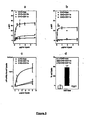
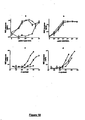
- CyaA binding at the surface of macrophages (J774A.1), B cells (LB27.4), and T cells (EL4) was performed at 37°C for 20 minutes.
- b, c, d, e Surface expression of ⁇ 2 integrins on J774A.1, LB27.4 and EL4 cells.
- Figure 2 CyaA binding to murine cell lines is blocked by anti-CD11b mAb.
- Cells were preincubated at 4°C for 15 minutes with or without 20 ⁇ g/ml of specific mAbs and then incubated at 4°C for 20 minutes with 5 ⁇ g/ml CyaA and with 10 ⁇ g/ml of specific mAbs if present during the preincubation.
- Surface-bound CyaA was detected with a biotinylated anti-CyaA polyclonal, revealed by streptavidin-PE and detected by flow cytometry on living cells, as described in the material and methods section.
- a, b Effect of the M1/70 anti-CD11b mAb on the binding of various doses of CyaA.
- FSDC dendritic cells (a) or J774A.1 macrophages (b) were preincubated with medium alone (O) or with M1/70 anti-CD11b mAb ( ⁇ ) and then incubated with CyaA with or without M1/70 anti-CD11b mAb.
- c,d Effect of specific mAbs on a fixed dose of CyaA binding.
- FSDC (c) or J774A.1 (d) cells were preincubated with or without specific mAbs (anti-CD11a, 2D7, antiCD11b, M1/70 and 5C6, anti-CD11c, HL3, anti-CD18, C17/16, control A95-1) and incubated with CyaA at the fixed concentration of 5 ⁇ g/ml.
- Values of ⁇ MFI obtained for CyaA binding on cells treated with specific mAbs were normalized as ⁇ MFI values obtained for CyaA binding without mAb.
- FIG. 3 CyaA binding to the human neutrophils is blocked by anti-CD11b and anti-CD18 mAbs.
- a, b, c Fluorescence histograms of freshly purified neutrophils were preincubated with medium alone (a), the 44 anti-CD11b mAb (b) or an isotype-matched control mouse mAb (c) and then incubated with (gray) or without (blank) of biotinylated CyaA and revealed by streptavidine-PE. Cell number is ploted against log of PE fluorescence.
- FIG. 4 Intracellular cAMP Increase and cell death mediated by CyaA are specifically blocked by an anti-CD11b mAb in J774A.1 cells.
- J774A.1 cells were preincubated at 4 °C for 1 h with or without 10 ⁇ g/ml of specific mAbs (anti-CD11b, M1/70, anti-CD18, C17/16) and then incubated at 37 °C for 20 min with 5 ⁇ g/ml CyaA and with 10 ug/ml mAbs if present during the preincubation.
- Intracellular cAMP contents were determined as described in the materials and methods section.
- J774A.1 cells were preincubated at 4 °C for 1 h with medium alone or with 10 ⁇ g/ml of specific mAbs (anti-CD11a, 2D7 anti-CD11b, M1/70, anti-CD11c, HL3, anti-CD18, C71/16, control, 2.4G2). Then they were incubated at 37°C for 2 h with 0.5 ⁇ g/ml CyaA and with 10 ⁇ g/ml of specific mAbs when present during the preincubation. Cell lysis was determined by LDH release using the Cytotox 96 TM assay.
- Figure 5 CHO cells bind CyaA and become sensitive to CyaA when transfected with CD11b, but not with CD11c
- a,b CyaA binding at the surface of CHO transfectants.
- CHO cells transfected with human CD11b/CD18 ( ⁇ ), human CD11c/CD18 ( ⁇ ) or mock-transfected were incubated with various doses of CyaA for 20 min at 37°C (a) or 4°C (b).
- Intracellular cAMP accumulation in CHO transfectants CHO cells transfected with human CD11b/CD18 ( ⁇ ), human CD11c/CD18 ( ⁇ ) or mock-transfected were incubated with or without CyaA for 20 min at 37°C. Intracellular cAMP contents were determined as described in the materials and methods section.
- d Cell lysis in CHO transfectants. CHO cells transfected with human CD11b/CD18, human CD11c/CD18 or mock-transfected were incubated with 5 g/ml CyaA for 4 h at 37 °C. Cell lysis was determined by LDH release using the Cytotox 96 TM assay.
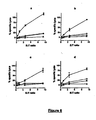
- Figure 6 Intravenous immunization with CyaAOVA primes anti-OVA CTL responses in a B cell, CD4 and CD40- independent way.
- mice C57BL/6 WT +/+ (a), CD4-/- (b), CD40-/- (c) or IgM-/- (d) mice were intravenously immunized with 50 ⁇ g of CyaAOVA, a genetically detoxified form of CyaA carrying the H-2K b restricted SIINFEKL epitope from OVA ( ⁇ , O) or with CyaAE5, a control detoxified toxin without the OVA epitope ( ⁇ , ⁇ ). Seven days after, animals were sacrified and splenocytes were restimulated in vitro for 5 days with 10 ⁇ g/ml of the pOVA synthetic peptide in the presence of irradiated C57BL/6 splenocytes. CTL activity was assessed in a 4 hours chromium 51 release assay against H-2K b+ EL4 cells previously pulsed ( ⁇ , ⁇ ) or not (O, ⁇ ) with pOVA at 10 ⁇ g/ml.
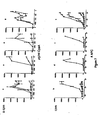
- Figure_7 Identification of splenic antigen presenting cells Involved in CyaAOVA presentation in vitro or In situ, after intravenous immunization.
- the low density fraction of splenocytes presents CyaAOVA to a specific anti-OVA CD8+ T cell hybridoma (a, b):
- In vitro assay ( a ) Low (LDF, ⁇ ) and high density (HDF, ⁇ ) fractions or unfractionated total splenocytes from naive mice (TSC, ⁇ , ⁇ ) were cultured with B3Z, a CD8 + T cell hybridoma specific for the pOVA peptide in the context of H-2K b .
- Ex vivo assay (b) Spleen cells were obtained from mice previously immunized iv (6-12 hours) with 50 ⁇ g of CyaAOVA ( ⁇ , ⁇ , ⁇ ) or CyaALCMV (O) and fractionated in LDF and HDF. Various numbers of cells recovered from TSC ( ⁇ ), LDF ( ⁇ , ⁇ ) or HDF ( ⁇ ) or unfractionated splenocytes ( ⁇ ) were directly put in culture with B3Z without addition of recombinant CyaA. IL-2 release was assessed after 18 hours of culture as described before. Results, expressed in cpm, are ploted against the number of APC present in each well.
- Dendritic cells (CD11c + ) are more efficient APC for CyaAOVA than the CD11b high+ CD11c - cells or B cells (CD45R + ) (c,d):
- Ex vivo assay ( d ) Cells sorted by flow cytometry from C57BU6 mice previously (6-12 hours) immunized with 50 ⁇ g of CyaAOVA were used as APC. CD11c+ ( ⁇ ), CD11b high+ CD11c - ( ⁇ ), CD45R + ( ⁇ ) sorted cells from low density splenocytes were directly put in culture for 18 hours with B3Z at various numbers of cells per well, without addition of CyaAOVA. IL-2 was assessed as above.
- the CD8 ⁇ - myeloid dendritic cell subset is a more efficient APC for CyaA than the CD8 ⁇ + lymphoid dendritic cell subset (e, f):
- CD11c+ low density cells from naive mice (e) or mice previously (6-12 hours) immunized iv with 50 ⁇ g CyaAOVA (f) were fractionated in myeloid dendritic cells (CO11c + CD8 ⁇ - , ⁇ ) and lymphoid dendritic cells (CD11 c + CD8 ⁇ + , ⁇ ) by flow cytometry and used as APC in In vitro (e) and ex vivo (f) assays for B3Z stimulation. IL-2 was assessed as above.
- TSC TSC ( ⁇ , ⁇ ).
- LDF ( ⁇ , O) or HDF ( ⁇ , ⁇ ) from C57BL/6 WT mice ( ⁇ , ⁇ , ⁇ ) or B cell deficient ( ⁇ , O, A) were used as APC in an in vitro assay (g, ⁇ , ⁇ ) or an ex vivo assay (h, ⁇ , ⁇ , ⁇ , ⁇ , ⁇ , ⁇ ) for B3Z stimulation as in a.
- Mice were either from naive (g) or previously (1.5 hours) immunized iv with 50 ⁇ g CyaAOVA (h). IL-2 was assessed as above.
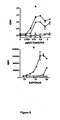
- FIG. 8 The presentation of CyaAOVA by dendritic cells requires the TAP transporters In vitro and in vivo after intravenous immunization.
- In vitro assay (a) : TSC ( ⁇ , ⁇ ) or CD11c + ( ⁇ , O) sorted cells from control C57BL6 TAP+/+ ( ⁇ , ⁇ ) or TAP-/- mice ( ⁇ , ⁇ ) were cultured with B3Z in the presence or not of various doses of CyaAOVA. IL-2 was assessed as described in figure 6a . Results are expressed in cpm ploted against antigen concentration.
- Ex vivo assay (b) TSC ( ⁇ , ⁇ ) or CD11c + ( ⁇ , O) sorted cells from control C57BL6 TAP+/+ ( ⁇ , ⁇ ) or TAP-/- mice ( ⁇ , O) previously iv immunized with 50 ⁇ g of CyaAOVA were cultured with B3Z for 18 hours. IL-2 was assessed as described in figure 6a . Results are expressed in cpm ploted against the number of cocultured cells.
- Figure 9 Role of ⁇ M ⁇ 2 Integrin (CD11b) in CyaAOVA binding to cells.
- Binding of CyaAOVA-biotine to TSC is blocked by anti-CD11b (a) : TSC suspensions were incubated at 4°C with 10 ⁇ g/ml of the anti-CD11b M1/70 mAb or an isotype control mAb or nothing. Then, CyaAOVA-biotine at 2 ⁇ g/ml (left pannels) or various concentrations (right pannel) was added to the cells for 30 mn at 4°C. After a wash, CyaAOVA-biotine was revealed with streptavidine-PE for 30 mn (Strep-PE). Then, after washing, cells were resuspended in PBS containing propidium iodide.
- the size (FSC) of living cells gated by propidium iodide exclusion was ploted against the Strep-PE fluorescence.
- the percentage of leukocytes positive for CyaAOVA-biotine was ploted against CyaAOVA-biotine concentration during the staining.
- Binding of CyaAOVA-biotine to low density cells correlates with the expression of CD11b (b) : LDF were triple stained for CD11c, CD8 a and CyaOVAbiotine (or medium) or, in separate experiments with CD11c, CD8 ⁇ and CD11b (or a control mAb). After a wash, cells were stained for 30 mn with Strep-PE to reveal CyaAOVA-biotine, anti-CD11c-FITC and anti-CD8a-APC.
- In vitro antigen presenting assay with TSC (a, b) : The same experiments than in a, b were performed with TSC from naive C57BL/6 mice as APC. The stimulation of B3Z was assessed by IL-2 release in coculture supernatants measured in a CTLL proliferation assay. Results are ploted in cpm against CyaAOVA or pOVA concentration.
- Ex vivo antigen presenting assay with TSC or CD11b + and CD11b - fractions C57BU6 mice were intravenously immunized with 50 ⁇ g of CyaAOVA (c) or 10 ⁇ g of pOVA ( d ).
- CD11b + ( ⁇ ) and CD11b - (O) cells were sorted by flow cytometry from TSC ( ⁇ ) and put in culture at various cell number per well with B3Z. After 18 hours of coculture, the stimulation of B3Z was assessed by IL-2 release. Results, expressed in cpm, are ploted against the numbers of APC from immunized animals present in each well.
- the bordetella adenylate cyclase toxin interacts specifically with the ⁇ M ⁇ 2 integrin (CD11b/CD18)
- CyaA toxins were produced in E. coli BLR strain harboring an expression plasmid, pCACT3, which carries the cyaA structural gene CyaA under the lacUV5 promoter and the cyaC accessory gene required for activation of the protoxin. After solubilization in 8M urea, Hepes-Na 20mM, pH 7.5, CyaA was purified to more than 95% homogeneity (as judged by SDS-gel analysis, not shown) by sequential DEAE-Sepharose and Phenyl-Sepharose.
- a recombinant detoxified CyaA toxin, CACTE5-Cys-Ova, harboring a unique cysteine inserted within the genetically inactivated catalytic domain was constructed by inserting an appropriate double strand oligonucleotide between the Bsiwl and Kpnl sites of pCACT-Ova-E5 [Guermonprez et al, 2000].
- the amino acid sequence ASCGSIINFEKLGT is inserted between residues 224 and 225 of CyaA.
- the recombinant toxin was expressed and purified as previously described.
- the purified protein was labeled on its unique Cys with the highly specific sulfhydryl reagent N-(6-(Biotinamido)hexyl))-3'-(2'-pyridyldithio) propionamide (Biotin-HPDP, PIERCE) according to the manufacturer's instructions.
- the biotinylated-CyaA was re-purified on DEAE-Sepharose to remove the unreacted Biotin-HPDP reagent.
- Toxin concentrations were determined spectrophotometrically from the adsorption at 280 nm using a molecular extinction coefficient of 142 M -1 x cm -1 (binding studies) or using the Biorad protein assay system (cAMP accumulation and cell death studies).
- the antibodies were then biotinylated by incubation with Biotin-amidocaproate N-Hydroxysuccinimide ester (SIGMA, dissolved in dimethyl sulfoxide) for 130 min at room temperature. Then, 100 mM ethanolamine, pH 9.0 were added and after 30 min of additional incubation, the mixture was extensively dialysed at 4 °C against buffer C. Biotinylated antibodies were stored at - 20°C.
- SIGMA Biotin-amidocaproate N-Hydroxysuccinimide ester
- EL4, J774A.1, LB27.4, THP-1 were obtained from the American Type Culture Collection (ATCC) and were cultured in RPMI 1640 supplemented with 10% fetal calf serum, 100 U/ml penicillin, 100 ⁇ g/ml streptomycin, 2mM L-glutamine, with or without 5x10 -5 M 2-mercaptoethanol (complete medium).
- FSDC [Girolomoni et al, 1995] were cultured in complete medium.
- CHO cells transfected for human CD11b/CD18 or CD11c/CD18 or transfected with the vector only were obtained from D. Golenbock (Boston, USA) and cultured in the presence of neomycin as previously described [Ingalls et al, 1998].
- Human neutrophils were purified as previously described [Rieu et al, 1992].
- All binding assays were performed in DMEM 4.5 mg/ml glucose (Life Technologies) without serum in 96 well culture plates (Costar). 2x10 5 cells/well were incubated for 20 minutes (at 4°C or 37°C depending on the experiments) in a 200 ⁇ l final volume. In some experiments, cells were preincubated for 20 min at 4°C in the presence of blocking mAbs in 100 ⁇ l final volume. The toxin solution was added to the wells in the continuous presence of the mAbs in a total volume of 200 ⁇ l at 4°C. Then, plates were centrifuged at 1500 rpm for 5 min and supernatants were removed.
- cAMP accumulation was measured by an antigen competition immunoassay [Karimova et al, 1998] in which the incubation medium was composed of DMEM without serum but containing 4.5 mg/ml glucose and 20 U/ml hexokinase. Hexokinase, which catalyzes the ATP-dependent phosphorylation of glucose, was added deplete the extracellular medium for any traces of ATP, thus preventing the extracellular synthesis of cAMP. Therefore, the amount of cAMP measured is representative of the accumulation of strictly intracellular cAMP.
- 5x10 5 cells were preincubated in 96 well plates in 100 ⁇ l/well with or without 10 ⁇ g/ml of specific mAbs at 4 °C for 1 h and then incubated at 37°C for 20 min with 0.05, 0.5 or 5 g/ml CyaA and with 10 ug/ml of specific mAbs when present during the preincubation.
- CyaA cells were directly incubated with the toxin for 20 min at 37°C. After intoxication, cells were centrifuged at 2.500 rpm for 5 min.
- Samples were lysed with 100 ⁇ l of HCI 0.1 N, boiled for 5 min at 120 °C, and neutralized with 100 ⁇ l of Tris 0.125 M, NaCI 0.2 M.
- Microtiterplates were coated with cAMP-BSA conjugates diluted at 1/4.000 in Na 2 CO 3 0.1 M pH 9.5. They were washed twice in PBS-Tween 0.1 %, saturated for 1 h in PBS-BSA 2 % and washed five times with PBS-Tween 0.1 %.
- cells were preincubated at 4 °C for 1 h with or without 10 ⁇ g/ml of specific mAbs and then incubated at 37 °C with 0.5 ⁇ g/ml CyaA for 2 h for J774A.1A.1 cells or with 5 ⁇ g/ml for 4 h for CHO cells and with 10 ⁇ g/ml of specific mAbs when present during the preincubation.
- Cell lysis was evaluated using the Cytotox 96 TM assay (Promega) which quantifies the amount of lactate dehydrogenase (LDH) released in the medium by dying cells.
- LDH lactate dehydrogenase
- CyaA cellular specificity toward a population of leukocytes we choose three representative murine cell lines expressing various combination of ⁇ 2 integrins: J774A.1, a tumoral macrophage; EL4, a T cell thymoma, and LB27.4, a B cell lymphoma. After a 20 minutes of incubation with CyaA at 37°C, binding of CyaA to the cell surface of these cells was monitored by flow cytometry using biotinylated anti-CyaA antibodies and streptavidine-PE. Under these conditions, we observed an efficient, dose-dependent and saturable binding of CyaA on J774A.1 cell line.
- a second anti-CD11b mAb (clone 5c6) also inhibited binding of CyaA ( figure 2c,d ). Similar results were obtained with FSDC, an immature dendritic cell line expressing CD11b ( figure 2a, c ), and the J774A.1 macrophage cell line ( figure 2b, d ).
- CyaA binding studies were performed on human neutrophils, whose high expression of CD11b is well established. Since high background fluorescence was obtained following incubation of human myeloid cells with the anti-CyaA rabbit antibodies (data not shown), we set up an alternate binding assay. A detoxified form of CyaA was specifically biotinylated on unique cysteine residues, genetically introduced within its catalytic domain. Using this system, we were able to detect CyaA binding to neutrophils ( Figure 3 ). Preincubation of neutrophils with the 44 or M1/70 anti-CD11b mAbs led to, a respectively complete or partial inhibition of the binding of CyaA ( Figure 3a and b ).
- CyaA-mediated cAMP increase and toxicity are specifically blocked by an anti-CD11b mAb
- CyaA could bind, at 37°C, to these cell lines.
- CyaA binding was efficient and saturable in CHO cells expressing CD11b/CD18 but not in CD11c/CD18 or mock-transfected cells.
- Kd 0.7 ⁇ 0.09 nM
- CD11b was required for CyaA mediated toxicity in J774A.1
- CD11b expression was sufficient to confer a CyaA- sensitive phenotype to CHO transfected cells.
- CyaA induced a notable amount of intracellular cAMP in CHO cells transfected with CD11c/CD18 or in control mock-transfected cells, but only at high concentrations of toxin (5 ⁇ g/ml, figure 5c ).
- CyaA increased intracellular level of cAMP in CD11b/CD18 transfected CHO cells even at the lowest concentration studied (0.05 ⁇ g/ml).
- the cAMP production in response to 5 ⁇ g/ml CyaA was 4 to 5 times more elevated in CD11b/CD18 transfected cells as compared to CD11c/CD18- or mock-tranfected cells.
- CyaA has been considered for a long time, as independent of any receptor binding. This is based on the observations that i ) CyaA can intoxicate in vitro a wide variety of model cell lines from various origin [Ladant et al, 1999] ii ) CyaA binds to Jurkat cells and sheep erythrocytes in a non saturable fashion [Gray, et al 1999]. In fact, these observations established that non-specific adsorption of CyaA to lipid membranes leads to some translocation of the catalytic domain into the cytosol. However, they did not rule out the existence of a specific receptor.
- CD11c/CD18 transfectants or CD11a/CD18 expressing cells such as EL4 or LB27.4 suggest that CD11b/CD18 is the only integrin of the ⁇ 2 family involved in the binding of CyaA to target cells.
- CyaA can bind and translocate to a wide variety of cell lines but efficient and saturable binding, translocation and killing is a hallmark of CD11b expressing cells.
- CyaA Binding of CyaA to a member of the ⁇ 2 integrin family is reminiscent of the behavior of other RTX toxins which were recently found to interact with these molecules [Lally et al, 1997; Li et al, 1999; Ambagala et al, 1999; Jeyaseelan et al, 2000].
- the E. coli HlyA that shares a strong homology with CyaA, forms cationic pores at the plasma membrane. HlyA exhibits a specificity for leukocytes but only at low concentration [Welch et al, 1991]. This relative specificity was shown to be mediated by its interaction with the integrin CD11a/CD18 [Lally et al, 1997]. Similarly, A.
- actinomycetemcomitans and P. haemolytica leukotoxin which are less promiscuous RTX toxins specific for human and bovine leukocytes, respectively, also interact with CD11a/CD18 [Lally et am, 1997; Li et al, 1999; Ambagala et al, 1999; Jeyaseelan et al, 2000].
- CyaA recognizes another ⁇ 2 integrin (CD11b/CD18) whose cellular distribution is different.
- CD11b is expressed mostly on macrophages, neutrophils and dendritic cells, but not on the majority of T and B cells, whereas CD11a is expressed on all leukocytes including T and B lymphocytes.
- CyaA This specific targeting of CyaA to CD11b expressing cells is exploited in the present invention to specifically target this particular subset of cells.
- Detoxified mutants of CyaA remaining invasive could be used for the delivery of pharmacologically active molecules to CD11b positive cells, without noticeably affecting other cell types.
- the pOVA synthetique peptide originated from NEOSYSTEM and was diluted in PBS at 1 mg/ml.
- TAP1 -/- (Van Kaer et al., 1992), CD4-/- (Killeen et al., 1993), CD40-/- (Kawabe et al, 1994) and B cell deficient ⁇ MT (Kitamura et al, 1991) bred onto a C57BL/6 background originated from the CDTA facility (CNRS, Louis, France) and were bred in the Institut Pasteur facilities. Animals were intravenously immunized with Ag in PBS. Seven days post-injection, animals were sacrified and the spleen was removed.
- All antigen presentation assays were performed by coculture of APC with B3Z in 96 well culture microplates (0.2 ml final volume) in RPMI 1640 supplemented with 10 % Fetal Calf Serum, 100 U/ml penicillin, 100 ⁇ g/ml streptomycin, 2 mM L-glutamine, and 5x10 -5 M 2-mercaptoethanol (complete medium, CM).
- the stimulation of B3Z cells (10 5 cells/well) was monitored by IL-2 release in the supernatants of 18-24 hours cultures in the presence of APC. IL-2 was measured in CTLL assay as previously described (Guermonprez et al., 1999).
- B3Z stimulation was assessed using the NF-AT lacZ reporter assay. LacZ activity in cell lysates was assessed with the CPRG substrate as previously described (Karttunen et al., 1992).
- Two antigen presentation assays were performed : i) In vitro assay: APC originated from naive mice were cocultured (10 5 /well) with B3Z in the presence of Ag at various concentrations. In some experiments, APC were preincubated or not with mAbs at 10 ⁇ g/ml for 40 minutes at 4°C, then Ag was added to the cells in a 100 ⁇ l final volume in the continuous presence of the mAbs.
- Total spleen cells (TSC), low density (LDF) and high density (HDF) fractions were prepared according to the protocole of Steinman modified by Vremec et al. (Vremec et al., 1992). Briefly, spleens were digested with collagenase for 40 minutes at 37°C and then dilacerated and prepared in the continuous presence of EDTA 5mM. Cells were centrifugated on a dense BSA solution. Supernatant and pellet cells were collected appart and termed low density and high density fractions.
- CD11c staining was performed at 4°C in PBS supplemented with 5% of Fetal Calf Serum and 2mM EDTA (PBS-FACS) with the hamster HL3 mAb coupled to phycoerythrin (PE), fluoresceine isothyocyanate (FITC) or biotinylated and then revealed by Streptavidine-PE.
- CD8 ⁇ staining was performed with the 53-6.7 mAb coupled to PE.
- CD11b staining was performed with the M1/70 mAbs coupled to PE or FITC.
- CD54R staining was performed with the B220 mAb coupled to PE or biotinylated and revealed by streptavidine-PE.
- the chicken ovalbumin, H-2K b restricted, SIINFEKL epitope was used as an experimental model epitope. It was genetically inserted in the catalytic domain of a detoxified, still invasive mutant CyaA.
- C57BL/6 (H-2 b ) mice were immunized iv once with 50 ⁇ g of the recombinant toxin or control saline solution. Seven days after immunization, CTL activity specific for pOVA was detected within splenocytes of CyaAOVA-immunized C57BL/6 mice but not in mice injected with saline or a control CyaA ( figure 6a ).
- Contaminant LPS possibly acting as adjuvants, are not involved in the stimulation of CTL responses CyaAOVA since C57BL10ScSn and the LPS-hyporesponsive mice C57BL10ScCr displayed similar OVA-specific CTL response after CyaAOVA injection (not shown).
- CyaAOVA binds efficiently to CD11c + CD8 ⁇ - that expresses high levels of CD11b, less efficiently to CD11c + CD8 ⁇ + that expresses low levels of CD11b and very weakly to CD11c - CD8 ⁇ + T cells that do not express CD11b ( figure 9b ). It is noticeable that CyaOVA binds efficiently to a low percentage of CD11c - CD8 ⁇ - cells in correlation with the presence of CD11b high+ into this CD11c- population.
- CyaOVA biotine binding is mediated by CD11b (as for CyaA WT) and predicts the ability of a given cell type to present CyaOVA.
- CD11b as for CyaA WT
- the anti-CD11b mAb M1/70 blocks the CyaAOVA presentation by TSC cells to B3Z ( figure 10a ).
- This blockade is specific since i) a control mAb or mAbs specific for other ⁇ 2 integrin family members (anti-CD11a, CD11c) had little or no effect ( figure 10a and data not shown) ii) the presentation of pOVA was not affected by the anti-CD11b or none of these mAbs ( figure 10b and data not shown).
- Antigen presenting assay to a specific CD8+ T cell hybridoma using in vitro- or in vivo -loaded APC demonstrated that the most efficient APC for CyaAOVA are CD11c+ DC. Indeed, all the Ag presenting ability for CyaAOVA belonged to the low density fraction of splenocytes that retains DC.
- Cell sorting of defined cell types revealed that CD11c + DC cells are much more efficient than CD11c - CD11b high+ cells. The minor contribution observed for B cells (CD45R + ) was confirmed by efficient presentation of CyaAOVA ( in vitro and ex vivo ) and CTL responses in B cell-deficient mice.
- CyaA delivers Ag to the cytosolic pathway for MHC class I presentation in vivo
- Maturation from an immature stage toward a mature stage is characterized by i) a decrease in Ag capture ability, ii) an increase in T cell priming ability, iii) a migration from Ag sampling sites (marginal zone in the spleen) toward T cell area (peri arteriolar sheets in the spleen) were they maximize the probability of encounter with Ag-specific T cells (De smedt et al., 1996).
- the maturation phase is now widely assumed as a prerequisite for T cell priming.
- In vitro studies have highlighted the role of CD4 + T cells in signalling DC maturation, notably via CD40L-CD40 interaction (Bell et al. , 1999).
- CD8+ T cells priming after the crosspriming of cellular Ag
- CD4 + T cells dispensate their help to CD8+ T cells in a CD40-dependent mechanism (Schuurhuis et al., 2000; Bennett et al., 1998; Schoenberger et al., 1998; Ridge et al., 1998). Since CyaAOVA primes CTL in a CD4 and CD40 independent way, it is plausible to speculate that detoxified CyaA could be endowed of intrinsic adjuvanticity.
Landscapes
- Health & Medical Sciences (AREA)
- Life Sciences & Earth Sciences (AREA)
- Chemical & Material Sciences (AREA)
- Engineering & Computer Science (AREA)
- General Health & Medical Sciences (AREA)
- Bioinformatics & Cheminformatics (AREA)
- Organic Chemistry (AREA)
- Medicinal Chemistry (AREA)
- Veterinary Medicine (AREA)
- Pharmacology & Pharmacy (AREA)
- Animal Behavior & Ethology (AREA)
- Public Health (AREA)
- Genetics & Genomics (AREA)
- Immunology (AREA)
- Zoology (AREA)
- Wood Science & Technology (AREA)
- Microbiology (AREA)
- Molecular Biology (AREA)
- Nuclear Medicine, Radiotherapy & Molecular Imaging (AREA)
- General Chemical & Material Sciences (AREA)
- Chemical Kinetics & Catalysis (AREA)
- General Engineering & Computer Science (AREA)
- Epidemiology (AREA)
- Biochemistry (AREA)
- Biotechnology (AREA)
- Biomedical Technology (AREA)
- Mycology (AREA)
- Proteomics, Peptides & Aminoacids (AREA)
- Virology (AREA)
- Biophysics (AREA)
- Plant Pathology (AREA)
- Physics & Mathematics (AREA)
- Tropical Medicine & Parasitology (AREA)
- Communicable Diseases (AREA)
- Oncology (AREA)
- Pain & Pain Management (AREA)
- Rheumatology (AREA)
- Enzymes And Modification Thereof (AREA)
- Micro-Organisms Or Cultivation Processes Thereof (AREA)
- Medicines That Contain Protein Lipid Enzymes And Other Medicines (AREA)
Abstract
Description
- The invention relates to a novel use of a Bordetella adenylcyclase toxin in the manufacturing of vectors for targeting in vivo a molecule of interest, specifically to CD11b expressing cells. The invention also relates to an immunogenic composition that primes immune responses to pharmaceutical compositions and to a new proteinaceous vector for molecule delivery to CD11b expressing cells.
- Bordetella pertussis, the causative agent of whooping cough, secretes several toxins including the well-known pertussis toxin (PT) and the adenylate cyclase toxin (CyaA) or also adenylcyclase. CyaA is a critical virulence factor of B. pertussis in the murine respiratory model that is required for the early steps of lung colonization. Indeed, genetic deletion of this toxin dramatically decreases the pathological effects of B. pertussis infection, reducing the number of bacteria recovered from the lung and almost abolishing the inflammatory cell recruitment and the lung lesions observed after infection [Weiss et al., 1984; Weiss et al., 1989; Gross et al., 1992; Khelef et al., 1992; Khelef et al., 1994; Gueirard et al., 1998]. Moreover, CyaA is an antigen protective against B. pertussis infection in the murine respiratory model [Guiso et al., 1989; Guiso et al., 1991].
- Originally discovered by Hewlett et al in B. pertussis culture supernatants [Hewlett et al., 1976], the adenylate cyclase was later found to be activated by the eukaryotic calmodulin [Wolff et al., 1980]. This striking feature quickly found a rationale when it was shown by Confer and Eaton that the adenylate cyclase could enter into eukaryotic cells where, upon activation by calmodulin, it could trigger a large increase in cAMP within these target cells [Confer et al., 1982].
- Adenylate cyclase is encoded by the cyaA gene, and its expression, like that of other virulence genes of B. pertussis, is coordinately regulated by environnemental signals. The cyaA gene is part of an operon that also contains genes cya B, D and E, that are required for CyaA secretion [Ladant et al., 1999].
- The CyaA toxin is a bifunctional protein of 1706 residues that is made of a N-terminal catalytic domain of 400 amino acids and a C-terminal part of 1306 residues which is responsible for the binding of the toxin to target cell membrane and the subsequent delivery of the catalytic moiety into the cell cytosol [Sakamoto et al., 1992] [Ladant et al., 1999]. This part also exhibits a weak hemolytic activity due to its ability to form cation-selective channels in biological membranes [Benz et al., 1994] [Gray et al., 1998]. This region is homologous to Escherichia coli hemolysin and other members of the RTX (Repeat in ToXin) family of bacterial toxins. In particular, it contains a series of glycine and aspartate-rich nonapeptide repeats that are involved in calcium binding [Rose et al., 1995] [Coote et al., 1992].
- The CyaA polypeptide is synthesized as an inactive protoxin that is converted to an active toxin by posttranslational palmitoylation of two internal lysines (lysines 856 and 963). This modification requires the product of an accessory gene, cyaC, which is located nearby cyaA on B. pertussis chromosome.
- CyaA has been shown to bind to and invade a variety of cell types including cells lacking membrane traffic like mammalian erythrocytes [Rogel et al., 1992]. This suggested that the catalytic domain of CyaA is directly translocated across the plasma membrane of target cells. The internalization of the catalytic domain into the cell cytosol is calcium and temperature-dependent and depends upon the plasma membrane potential [Rogel et al., 1992] [Karimova et al., 1998] [Otero et al., 1995]. However, the molecular mechanisms by which the toxin transports its N-terminus catalytic domain across the membrane remain largely unknown to date.
Furthermore no specific receptor has been reported for CyaA binding. - The physiological consequences of cellular intoxication by CyaA were characterized in vitro in phagocytes. Confer and Eaton first showed that the AC extracted from B. pertussis increases the intracellular cAMP level in neutrophils or macrophages leading to an inhibition of chemotaxis and bactericidal functions such as superoxide generation and phagocytic abilities [Confer et al., 1982]. These activities were later confirmed with purified toxins or with bacterial mutants genetically deleted of CyaA [Pearson et al., 1987; Friedman et al., 1987] [Njamkepo et al., 2000]. On the contrary, and despite significant changes in their cAMP content, the viability of cell lines from non-hematopoietic origin appeared to be unaffected by the CyaA intoxication [Bassinet et al., 2000]. Moreover, the present inventors previously demonstrated that B. pertussis CyaA can trigger macrophage apoptosis in vitro [Khelef et al., 1993; Khelef et al., 1995] and in vivo [Gueirard et al., 1998]. In these models, genetic deletion of CyaA abolished macrophage apoptosis, but not neutrophil death, suggesting that CyaA i) is mainly responsible for macrophage apoptosis, ii) might be responsible for neutrophil apoptosis, but that another factor may also be responsible. Besides that, in vivo studies performed in a murine model of B. bronchiseptica infection (the animal homologue of B. pertussis whose CyaA is closely related) demonstrates that the major target of B. bronchiseptica CyaA toxicity is a GM-CSF-dependent and cyclophosphamide-sensitive population that controls the early steps of infection [Harvill et al., 1999]. These criterions identified neutrophils and possibly other cells including macrophages or dendritic cells. These populations of target cells for CyaA is the same that limits the early phases of infection and favors the development of an adaptative immune response that controls the latter phases of infection [Harvill et al., 1999].
- Unlike other toxins, CyaA has been considered for a long time, as independent of any receptor binding. This is based on the observations that i) CyaA can intoxicate a wide variety of model cell lines from various origin [Ladant et al., 1999] ii) CyaA binds to Jurkat cells and sheep erythrocytes in a non saturable fashion [Gray et al., 1999]. However, some specificity has been found in respect of cells infected by CyaA. Indeed, in vivo studies showed that during murine respiratory infection with Bordetella species, CyaA destroyed specifically leukocytes (especially macrophages) without damaging dramatically epithelial cells [Gueirard et al., 1998; Harvill et al., 1999].
- It has been proposed in patent application
WO 93/21324 - In line with their surface phenotype APC and more specifically, dendritic cells (high expression of MHCI and II, costimulatory and adhesion molecules) represent the most potent APC in many in vitro assay for the priming of naive T cells [Bell et al., 1999; Viola et al., 1999]. Other APC like resting naive B cells, for example, could even be tolerogenic since injection of resting, male B cells into female hosts leads to the specific tolerization of male-specific CD8+ T cells [Fuchs et al., 1992]. In vitro, naive B cells could delete naive CD8+ T cells via a Fas dependent-mechanism [Bennett et al., 1998].
- Moreover, Ag presentation by dendritic cells correlates in vivo with the induction of T cell responses. This has been established for MHCII- restricted Ag presentation. Adjuvant-free Ag injection via the intravenous (iv) route usually does not induce T cell priming [Kyburz et al., 1993; Aichele et al., 1994; Aichele et al., 1995] and leads to Ag presentation by non-specific B cells [Guery et al., 1997] [Zhong et al., 1997; Reis e Sousa et al., 1999] and, eventually dendritic cells [Crowley et al., 1990] [Zhong et al., 1997; Reis e Sousa et al., 1999]. In contrast, local immunization strategies like subcutaneous (sb) immunization in the presence of adjuvant usually, induces T cell priming and target Ag presentation by Langerhans cell migrating from the skin to the LN draining the immunization site. In this case, B cells and macrophages are not involved [Guery et al., 1996]. Similar results were obtained after sc or intradermic (id) DNA immunization for MHCII and MHCI -peptide complexes: dendritic cells can be directly transfected at the local site of injection and then migrate to the afferent LN via afferent lymphatics [Condon et al., 1996; Casares et al., 1997; Porgador et al., 1998]. The migration is known a key event of immunity since mechanical disruption of afferent lymphatics abrogates T cell response to skin sensitizers or skin grafts [Zinkernagel et al., 1997].
- Therefore, targeting to dentritic cells is essential for CD4+ and CD8+ T cell stimulation. Since most antibody responses are dependent upon CD4+ T cell help, targeting antigen to dendritic cells is a major goal in vaccination.
- Applicants have been interested in studying the presentation of adenylcyclase of Bordetella species by T cell, and have identified a specific receptor molecule present on specific cells, that interacts with CyaA and opens new possibilities for the use of CyaA as a proteinaceous vector for molecules of interest.
- Genetically detoxified bacterial toxins represent candidates as vaccine vectors, in particular for T epitope, due to their ability to invade eukaryotic cells (Ladant et al., 1999). However, few proteinaceous vectors were shown to prime CTL responses in vivo (Ballard et al., 1996, Cabonette et al., 1999). Moreover, despite numerous in vitro promising studies, no vector was shown to be exclusively targeted to pAPC and more particularly to myeloid dendritic cells.
- The inventors have further shown that other cells, especially neutrophils, could be targeted by the vectors of the present invention.
- The invention provides means that may at least in part, fulfil these needs and proposes new vectors that would specifically target molecules to determined populations of pAPC for example, to enable stimulating immune response.
- Moreover, molecule targeted to the pAPC and specific leukocytes would enable the manufacturing of new vectors useful to deliver biologically active molecule to the proximal environment of these cells. These molecules, for example, could modulate the functional properties of the targeted cells or those involved in the immune response or in the inflammatory response.
- Indeed, the inventors have found that Bordetella pertussis adenylcyclase toxin binds specifically with a cellular receptor designated (CD11b/CD18) αM/β2 receptor and that this interaction is required for the intracellular delivery of the adenylcyclase domain to the cytosol of cells and subsequent for cell death. αM/β2 (CD11b/CD18) integrin is a dimer of the β2 integrin family, the expression of these integrins being restricted to leukocytes. CD11b/CD18 αM/β2 displays a pattern of expression in mouse and human, which is restricted to neutrophils/granulocytes, macrophages, dendritic cells, NK cells and subsets of B and T CD8+ lymphocytes (Jeyaseelan et al., 2000, Arnaout et al., 1990).
- Therefore, this receptor would represent an ideal target for new vectors, designed in particular for T epitope immunization.
- Applicants have shown in the present invention that the Bordetella adenylcyclase can be used to target a molecule in vivo specifically to CD11b expressing cells.
- In particular; In a specific embodiment, said response is obtained bypassing adjuvant requirement and CD4 + T-cell help.
- This invention thus provides new efficient immunogenic composition as well as new drug delivery vector to CD11b expressing cells.
- This invention relates to the use of Bordetella adenylcyclase in the manufacturing of a proteinaceous vector for targeting a molecule of interest specifically to CD11b expressing cells.
- The proteinaceous vector of the invention comprises a non toxic form of Bordetella species adenylcyclase and an antigen or epitope chemically coupled to said Bordetella species adenylcyclase, wherein said epitope or antigen is coupled to a genetically inserted unique cysteine residue located within the catalytic domain of said adenylcyclase. The application describes the use of a Bordetella adenylcyclase toxin wherein said adenylcyclase is recombined with an antigen of interest or conjugated to a molecule of interest for the preparation of a composition for the targeting of said peptide or molecule specifically to CD11b expressing cells.
- The term "specifically" means within the context of the present invention that the adenylcyclase when used as a vector for a molecule of interest, is preferentially directed to CD11b expressing cells, thereby offering means to target the molecule of interest at the surface of said cells or within said cells in a selective way with respect to other cells.
- In one embodiment of the invention, the molecule of interest is essentially directed to CD11b expressing cells.
- As used herein, the term "CD11b expressing cells" relates to the cells that express the CD11b/CD18 αmβ2 receptor on their surface. In particular, in mouse, these cells are granulocytes/neutrophils, macrophages, NK cells, subsets of T CD8+ and B cells and myeloid dendritic cells.
- Since CD11b expressing cells and more specifically the myeloid dendritic cells, the neutrophils and the macrophages are involved in essential functions of the immune and innate defence system, in particular in inflammatory and specific immune responses, the invention relates to the manufacturing of a proteinaceous vector or a composition capable of targeting a molecule or a peptide of interest to these CD11b expressing cells.
- In particular, in one embodiment, the targeting of said molecule or peptide is effective in vivo.
- The invention thereby provides means appropriate for the design of compositions suitable for administration to animal or human hosts requiring targeting of certain leukocytes and in particular myeloid dendritic cells, neutrophils or macrophages.
- As used herein, the term "Bordetella adenylcyclase" relates to the calmodulin-dependent adenylate cyclase secreted in Bordetella species or fragment thereof, said fragment retaining the function properties of the adenylcyclase, a major virulence factor mandatory for the initial phases of bacterial colonization in the lung. The adenylate cyclase is synthesized and secreted in the form of a polypeptide of 1706 amino acids: The calmodulin-dependent catalytic activity is localized in the first 400 amino acids. In order to be active, said adenylcyclase toxin is rendered invasive and hemolytic when postraductionally modified by the product of the CyaC gene coexpression of the cyaC gene product.
- The following specific features of Bordetella adenylcyclase toxin indicate that this toxin can be used in the manufacturing of a proteinaceous vector for targeting in vivo a molecule of interest to CD11b expressing cells:
- a) this adenylate cyclase binds specifically to CD11b expressing cells
- b) the N-terminal catalytic domain is translocated into the cytosol of those CD11b expressing cells.
- c) the C-terminal domain binds to the membrane of CD11b expressing cells and could internalize by endocytic pathway.
- Due to the specific interaction between Bordetella adenylcyclase toxin and CD11b /CD18 αmβ2 receptor, the molecule of interest is specifically targeted at least to the surface of CD11b expressing cells. In a particular embodiment of the invention, the Bordetella adenylcyclase toxin is used in the manufacturing of a proteinaceous vector to deliver the molecule of interest either in the cytosol of CD11b expressing cells, at the surface or into the endocytic pathway.
- Expression vectors for the preparation of recombinant Bordetella adenylcyclase are described in patent application
WO 93/21324 WO 93/21324 - In one embodiment of the invention, the adenylcyclase is a recombinant genetically modified adenylcyclase. In particular, mutations such as point mutations, deletions or insertions can be obtained using usual site-directed or random mutagenesis techniques, provided that the domains necessary for binding to CD11b expressing cells and, optionnaly for translocation in the cytosol are still functional. Assays to evaluate specific binding of a recombinant toxin to CD11b expressing cells and subsequent translocation of the catalytic domain are described in the following experimental part.
- In another embodiment of the invention, the recombinant Bordetella species adenylcyclase comprises fragment of the native Bordetella species adenylcyclase, wherein said fragment is capable of binding the CD11B receptor.
- More specifically, specific binding to CD11b can be assessed in vitro with anti-CD11b monoclonal antibodies as illustrated in the examples.
- In order to be used in the manufacturing of proteinaceous vector or the preparation of a composition, the adenylcyclase is preferably non toxic. Non toxic mutants of the adenylcyclase toxin are well described in the Art. (Betsou et al. Infect. Immun. 1993 Sept., 6(9) 3583-3589; Betsou et al. Infect. Immun. 1995 Sept., 63(9) 3309-3315).
- In a preferred embodiment of this invention, the adenylcyclase is isolated from Bordetella pertussis.
- The molecule of interest described in the application is selected in the group comprising: lipopeptides, polysaccharides, oligosaccharides, nucleic acids, lipids and chemicals.
- According to a specific embodiment, a molecule of interest is a heterologous antigen. As used herein, the term "heterologous" refers to an antigen derived from the antigen of a species other than the adenylcyclase which is used in the vector.
- As used herein, the term "permissive site" relates to a site where the heterologous peptide can be inserted without substantially affecting the desired functional properties of the adenylate cyclase toxin, i.e. without affecting the domains necessary for the specific binding to CD11b/CD18 receptor and advantageously without affecting the process of translocation of the catalytic domain. In a preferred embodiment, the capacity of the CyaA toxin to promote the synthesis of CAMP in the targeted cells is further maintained.
- Methods to select for permissive sites are presented for example in
WO93/21324 and in Ladant et al., 1992 - In specific embodiments , a permissive site is selected from the group consisting of residues 137-138, residues 224-225, residues 228-229, residues 235-236 and residues 317-318 of the Bordetella pertussis adenylate cyclase.
- However, other permissive sites may be used , that can be identified by use of the methodology indicated above, especially sites between 400 and 1700.
- In a preferred embodiment of the invention, the epitope or antigen chemically coupled to the adenylcyclase of the proteinaceous vector of the invention, or the composition , is specifically designed to prime CD8+ cytoxic T-cell response (CTL response) said response follows the targeting of the adenylcyclase chemically coupled ; with antigen or epitope to CD11b expressing cells, followed by the translocation of the of antigen or epitope to the cytosol of said CD11b expressing cells, and in particular to myeloid dendritic cells.
- As used herein, the term "epitope" refers to a heterologous peptide that can induce an immune response.
- In specific embodiments, the antigen is selected from the group consisting of an intracellular bacterial cell antigen, a tumoral cell antigen, a viral antigen, a fungus antigen or a parasite cell antigen.
- In a preferred embodiment of the invention, the epitope or antigen chemically coupled to the adenylcyclase of the proteinaceous vector of the invention, or the composition, is specifically designed to prime CD4+ cells response (CTL response) said response follows the targeting of the adenylcyclase with an antigen or epitope to CD11b expressing cells, followed by the translocation of the antigen or epitope to the cytosol of said CD11b expressing cells, and in particular to myeloid dendritic cells.
- A molecule of interest can be especially an antigen selected from the group consisting of: a poliovirus antigen, an HIV virus antigen, an influenza virus antigen, a choriomeningitis virus epitope.
- The functional properties of the CD11b expressing cells define furthermore a novel use of the Bordetella adenyclase toxin in the manufacturing of a proteinaceous vector for drug targeting to these specific cells. In this context, in one specific embodiment of the invention, the so-called molecule of interest is a drug. Said drug may be chemically coupled to the adenylcyclase. Method for coupling a drug to a polypeptide are well known in the Art and comprise for example disulfide linkage wng N-pgrd sulfonyl-activated sulfhydryl.
- It is shown for the first time in the experimental part of the present text, that a genetic insertion of an antigen into a detoxified form of Bordetella adenylcyclase toxin allows its in vivo targeting to the cytosol of CD11b+ antigen presenting cells.
- More specifically, antigen presentation for selective CD8+ cytotoxic cells priming is mainly performed by myeloïd dendritic cells.
- Applicant have also shown that CTL specific for the vectorized antigen can be primed in vivo after a single intravenous injection of the recombinant toxin, especially with no need to provide an heterologous adjuvant. These results shown in the experimental part and in particular the specific targeting of the epitope to myeloid dendritic cells enable new immunization strategies that bypass the requirement for adjuvant and CD4+ T cell help.
- The invention further relates to a pharmaceutical composition for administration in a human or an animal formulated for targeting a molecule of interest specifically to CD11b expressing cells characterized in that said molecule of interest is chemically coupled to a Bordetella species adenylcyclase.
- The molecule of interest described in the application is selected in the group comprising: lipopeptides, polysaccharides, oligosaccharides, nucleic acids, lipids and chemicals.
- According to the invention the molecule of interest is an antigen or an epitope.
- In specific embodiments, the adenylcyclase is from Bordetella pertussis toxin.
- In other specific embodiments, the adenylcyclase toxin is a genetically modified recombinant toxin from Bordetella pertussis. In one preferred embodiment, the adenylcyclase is a non toxic adenylcyclase, especially a detoxified adenylcyclase.
- In one preferred embodiment, the genetically modified adenylcyclase retains the ability to translocate the molecule of interest specifically in the cytosol of CD11b expressing cells.
- In a specific embodiment, the antigen is an intracellular bacterial cell antigen, a tumoral cell antigen, a viral antigen, a fungus antigen or a parasite cell antigen.
- In preferred embodiments, a molecule of interest is an antigen selected from the group consisting of: a poliovirus epitope, an HIV virus, an influenza virus antigen, a choriomeningitis virus antigen.
- In another embodiment, the genetically modified toxin retains the ability to deliver the molecule of interest specifically at the surface of CD11b expressing cells or into the endocytic pathway.
- The applicants have shown that in vivo intravenous administration of the immunogenic composition in an animal or human host as defined in the present invention without adjuvants is sufficient to promote efficiently an immune response in said animal or human host.
- As a consequence, in a specific embodiment, the immunogenic or pharmaceutical composition is advantageously devoid of priming adjuvants commonly used in the Art, such as aluminium hydroxide.
- Furthermore, the invention also relates to the use of the immunogenic composition as defined above for the preparation of a vaccine or an immunotherapeutic composition, for administration to an animal or human host.
- As used herein, the term "immunotherapeutic composition" relates to a composition which leads to an immunological response and which is associated to therapeutic treatments, such as treatment against cancers, viral infections, parasites infections or bacterial infections.
- The application also describes a method to immunize an animal or human host, wherein said method comprises the steps of:
- a) providing an immunogenic composition as defined above;
- b) administering said immunogenic composition via intravenous route to said host in order to promote an immune response.
- The invention finally relates to a proteinaceous vector for delivery of an antigen or epitope specifically to CD11b expressing cells, characterized in that said vector comprises a Bordetella species adenylcyclase chemically coupled to said antigen or epitope.
- The proteinaceous vector is able to target an antigen or epitope to CD11b expressing cells via the specific binding of Bordetella adenylcyclase with CD11b/CD18 αmβ2 which is present on the surface of specific cells. In one specific embodiment, the vector is also able to deliver the antigen or epitope specifically in the cytosol of CD11b expressing cells.
- In specific embodiments, the proteinaceous vector is able to target an antigen or epitopes to myeloid dendritic cells or to neutrophils.
- The antigen or epitope is chemically coupled to the adenylcyclase toxin. Method for coupling a molecule to a polypeptide are well known in the Art . As an example, the inventors showed that a biotin derivative, biotin HDPD can be selectively coupled on an unique cysteine residue genetically inserted within the catalytic domain. Synthetic peptides have been coupled similarly to the cysteine containing adenylate cyclase toxin.
- In a specific embodiment, the proteinaceous vector comprises a genetically modified adenylcyclase. In one preferred embodiment, the adenylcyclase is a recombinant non toxic adenylcyclase from Bordetella pertussis.
- The following examples,will illustrate the present invention. More specifically, in part A, experimental data are shown that reveal the specific binding of adenylcyclase toxin to CD11b/CD18 receptor, and in particular the specific binding of adenycyclase toxin to CD11b expressing cells in vitro. In part B, the experimental results show the possibility to target an antigen in vitro and in vivo specifically to the cytosol of CD11b expressing cells, and in particular to myeloid dendritic cells. Moreover, the results show that the targeting is mediated by the CD11b receptor and that CTL priming is observed after systemic immunization in the absence of adjuvant.
- Finally, the results indicate that, unlike many other CTL responses as those raised against cross-priming antigen, CD4+ T cell help was not mandatory for priming of CTL responses.
- a: CyaA binding at the surface of macrophages (J774A.1), B cells (LB27.4), and T cells (EL4) was performed at 37°C for 20 minutes. Surface-bound CyaA was detected with a biotinylated anti-CyaA polyclonal antibody, revealed by streptavidin-PE and detected by flow cytometry on living cells, as described in the material and methods section. Binding is expressed as ΔMFI = (mean fluorescence intensity value of cells incubated with CyaA) - (mean fluorescence intensity of cells without CyaA).
- b, c, d, e: Surface expression of β2 integrins on J774A.1, LB27.4 and EL4 cells. CD11a (b), CD11b (c), CD11c (d), and CD18(e) expression were determined by flow cytometry using specific mAbs coupled to PE. Integrin expression is expressed as ΔMFI = (mean fluorescence intensity value of cells stained with specific mAb) - (mean fluorescence intensity of cells stained with an isotype control mAb).
- Cells were preincubated at 4°C for 15 minutes with or without 20 µg/ml of specific mAbs and then incubated at 4°C for 20 minutes with 5 µg/ml CyaA and with 10 µg/ml of specific mAbs if present during the preincubation. Surface-bound CyaA was detected with a biotinylated anti-CyaA polyclonal, revealed by streptavidin-PE and detected by flow cytometry on living cells, as described in the material and methods section.
- a, b: Effect of the M1/70 anti-CD11b mAb on the binding of various doses of CyaA. FSDC dendritic cells (a) or J774A.1 macrophages (b) were preincubated with medium alone (O) or with M1/70 anti-CD11b mAb (●) and then incubated with CyaA with or without M1/70 anti-CD11b mAb. Bmax was determined by fitting experimental points obtained from experiments performed without mAbs to ΔMFI=Bmax*[CyaA]/(Kd + [CyaA]). Binding of CyaA is plot as a % of Bmax plot against CyaA concentration.
- c,d: Effect of specific mAbs on a fixed dose of CyaA binding. FSDC (c) or J774A.1 (d) cells were preincubated with or without specific mAbs (anti-CD11a, 2D7, antiCD11b, M1/70 and 5C6, anti-CD11c, HL3, anti-CD18, C17/16, control A95-1) and incubated with CyaA at the fixed concentration of 5µg/ml. Values of ΔMFI obtained for CyaA binding on cells treated with specific mAbs were normalized as ΔMFI values obtained for CyaA binding without mAb.
- a, b, c: Fluorescence histograms of freshly purified neutrophils were preincubated with medium alone (a), the 44 anti-CD11b mAb (b) or an isotype-matched control mouse mAb (c) and then incubated with (gray) or without (blank) of biotinylated CyaA and revealed by streptavidine-PE. Cell number is ploted against log of PE fluorescence.
- d: Effect of specific mAbs on CyaA binding to neutrophils (anti-CD11b, 44, M1/70, anti-CD18, TS/18, control mouse IgG2a, control rat IgG2b, A95-1). Freshly purified neutrophils were preincubated with or without specific mAbs and incubated with CyaA. Values of ΔMFI obtained for CyaA binding on cells treated with specific mAbs were normalized as a % of the ΔMFI values obtained for CyaA binding without mAb.
- a Effect of specific mAbs on intracellular cAMP accumulation. J774A.1 cells were preincubated at 4 °C for 1 h with or without 10 µg/ml of specific mAbs (anti-CD11b, M1/70, anti-CD18, C17/16) and then incubated at 37 °C for 20 min with 5 µg/ml CyaA and with 10 ug/ml mAbs if present during the preincubation. Intracellular cAMP contents were determined as described in the materials and methods section.
- b: Effect of specific mAbs on CyaA mediated cell death. J774A.1 cells were preincubated at 4 °C for 1 h with medium alone or with 10 µg/ml of specific mAbs (anti-CD11a, 2D7 anti-CD11b, M1/70, anti-CD11c, HL3, anti-CD18, C71/16, control, 2.4G2). Then they were incubated at 37°C for 2 h with 0.5 µg/ml CyaA and with 10 µg/ml of specific mAbs when present during the preincubation. Cell lysis was determined by LDH release using the Cytotox 96™ assay.
- a,b: CyaA binding at the surface of CHO transfectants. CHO cells transfected with human CD11b/CD18 (●), human CD11c/CD18 (○) or mock-transfectedwere incubated with various doses of CyaA for 20 min at 37°C (a) or 4°C (b). Surface-bound CYAA was detected with a biotinylated anti-CyaA polyclonal antibody, revealed by streptavidin-PE and detected by flow cytometry on living cells, as described in the material and methods section. Binding is expressed as ΔMFI = (mean fluorescence intensity value of cells incubated with CyaA) - (mean fluorescence intensity of cells without CyaA).

- c: Intracellular cAMP accumulation in CHO transfectants. CHO cells transfected with human CD11b/CD18 (●), human CD11c/CD18 (○) or mock-transfectedwere incubated with or without CyaA for 20 min at 37°C. Intracellular cAMP contents were determined as described in the materials and methods section.

- d: Cell lysis in CHO transfectants. CHO cells transfected with human CD11b/CD18, human CD11c/CD18 or mock-transfected were incubated with 5 g/ml CyaA for 4 h at 37 °C. Cell lysis was determined by LDH release using the Cytotox 96™ assay.
- C57BL/6 WT +/+ (a), CD4-/- (b), CD40-/- (c) or IgM-/- (d) mice were intravenously immunized with 50 µg of CyaAOVA, a genetically detoxified form of CyaA carrying the H-2Kb restricted SIINFEKL epitope from OVA (●, O) or with CyaAE5, a control detoxified toxin without the OVA epitope (▲, Δ). Seven days after, animals were sacrified and splenocytes were restimulated in vitro for 5 days with 10 µg/ml of the pOVA synthetic peptide in the presence of irradiated C57BL/6 splenocytes. CTL activity was assessed in a 4 hours chromium51 release assay against H-2Kb+ EL4 cells previously pulsed (●, ▲) or not (O, Δ) with pOVA at 10 µg/ml.
- The low density fraction of splenocytes presents CyaAOVA to a specific anti-OVA CD8+ T cell hybridoma (a, b): In vitro assay (a) : Low (LDF, ●) and high density (HDF, ▲) fractions or unfractionated total splenocytes from naive mice (TSC, ■, □) were cultured with B3Z, a CD8+ T cell hybridoma specific for the pOVA peptide in the context of H-2Kb. After 18 hours of coculture in the presence of the recombinant detoxified CyaA carying the OVA peptide (CyaAOVA, ●, ▲, ■) or a control peptide (CyaALCMV, □) at various concentrations, IL-2 released in supernatants was measured in a CTLL proliferation assay. Results are expressed in Δcpm and ploted against CyaA concentration during the assay Δcpm = [cpm + CyaA] - [cpm - CyaA]).
- Ex vivo assay (b): Spleen cells were obtained from mice previously immunized iv (6-12 hours) with 50 µg of CyaAOVA (●, ▲, ■) or CyaALCMV (O) and fractionated in LDF and HDF. Various numbers of cells recovered from TSC (■), LDF (●,○) or HDF (▲) or unfractionated splenocytes (■) were directly put in culture with B3Z without addition of recombinant CyaA. IL-2 release was assessed after 18 hours of culture as described before. Results, expressed in cpm, are ploted against the number of APC present in each well.
- In vitro assay (c): CD11c+ (●) sorted cells from LDF, CD11bhigh+CD11c- (O) and CD45R+ (■) sorted cells from TSC, were put in culture with B3Z for 18 hours in the presence of various concentrations of CyaAOVA. IL-2 was assessed as above.
- Ex vivo assay (d): Cells sorted by flow cytometry from C57BU6 mice previously (6-12 hours) immunized with 50 µg of CyaAOVA were used as APC. CD11c+ (●), CD11bhigh+CD11c- (○), CD45R+ (■) sorted cells from low density splenocytes were directly put in culture for 18 hours with B3Z at various numbers of cells per well, without addition of CyaAOVA. IL-2 was assessed as above.
- CD11c+ low density cells from naive mice (e) or mice previously (6-12 hours) immunized iv with 50 µg CyaAOVA (f) were fractionated in myeloid dendritic cells (CO11c+ CD8α- ,●) and lymphoid dendritic cells (CD11 c+ CD8 α+ ,○) by flow cytometry and used as APC in In vitro (e) and ex vivo (f) assays for B3Z stimulation. IL-2 was assessed as above.
- TSC (■, □). LDF (●, O) or HDF (▲, Δ) from C57BL/6 WT mice (■, ●, ▲) or B cell deficient (□, O, A) were used as APC in an in vitro assay (g, ■, □) or an ex vivo assay (h, ■, ●, ▲, □, ○, Δ) for B3Z stimulation as in a. Mice were either from naive (g) or previously (1.5 hours) immunized iv with 50 µg CyaAOVA (h). IL-2 was assessed as above.
- In vitro assay (a) : TSC (▲, Δ) or CD11c+ (●, O) sorted cells from control C57BL6 TAP+/+ (▲, ●) or TAP-/- mice (Δ, ○) were cultured with B3Z in the presence or not of various doses of CyaAOVA. IL-2 was assessed as described in
figure 6a . Results are expressed in cpm ploted against antigen concentration. - Ex vivo assay (b) : TSC (▲, Δ) or CD11c+ (●, O) sorted cells from control C57BL6 TAP+/+ (▲, ●) or TAP-/- mice (Δ, O) previously iv immunized with 50 µg of CyaAOVA were cultured with B3Z for 18 hours. IL-2 was assessed as described in
figure 6a . Results are expressed in cpm ploted against the number of cocultured cells. - Binding of CyaAOVA-biotine to TSC is blocked by anti-CD11b (a) : TSC suspensions were incubated at 4°C with 10 µg/ml of the anti-CD11b M1/70 mAb or an isotype control mAb or nothing. Then, CyaAOVA-biotine at 2 µg/ml (left pannels) or various concentrations (right pannel) was added to the cells for 30 mn at 4°C. After a wash, CyaAOVA-biotine was revealed with streptavidine-PE for 30 mn (Strep-PE). Then, after washing, cells were resuspended in PBS containing propidium iodide. The size (FSC) of living cells gated by propidium iodide exclusion was ploted against the Strep-PE fluorescence. The percentage of leukocytes positive for CyaAOVA-biotine was ploted against CyaAOVA-biotine concentration during the staining.
- Binding of CyaAOVA-biotine to low density cells correlates with the expression of CD11b (b) : LDF were triple stained for CD11c, CD8 a and CyaOVAbiotine (or medium) or, in separate experiments with CD11c, CD8α and CD11b (or a control mAb). After a wash, cells were stained for 30 mn with Strep-PE to reveal CyaAOVA-biotine, anti-CD11c-FITC and anti-CD8a-APC. Gates were done on lymphoid DC (CD11 c+CD8 α +), myeloid DC (CD11c+CD8 α -), CD8+ T cells (CD11c-CD8α+) and other cells (CD11 c- CD8 α ). For each gate, CyaAOVA-biotine staining or CD11b staining is ploted against cell number in separate histograms. Left histograms : LDF suspensions were incubated with 0 (histograms filled in grey), 2.5 (narrow, open histograms) or 10 µg/ml (thick, open histograms) of CyaAOVA-biotine for 30 minutes at room temperature. Right histograms : isotype control-PE (histogram filled in grey), CD11b-PE (thin, open histograms).
- In vitro antigen presenting assay with TSC (a, b): The same experiments than in a, b were performed with TSC from naive C57BL/6 mice as APC. The stimulation of B3Z was assessed by IL-2 release in coculture supernatants measured in a CTLL proliferation assay. Results are ploted in cpm against CyaAOVA or pOVA concentration.
- Ex vivo antigen presenting assay with TSC or CD11b+ and CD11b - fractions (c, d): C57BU6 mice were intravenously immunized with 50 µg of CyaAOVA (c) or 10 µg of pOVA (d). CD11b+ (●) and CD11b- (O) cells were sorted by flow cytometry from TSC (Δ) and put in culture at various cell number per well with B3Z. After 18 hours of coculture, the stimulation of B3Z was assessed by IL-2 release. Results, expressed in cpm, are ploted against the numbers of APC from immunized animals present in each well.
- Protocol for CyaA production has already been described elsewhere [Karimova, et al, 1998]. CyaA toxins were produced in E. coli BLR strain harboring an expression plasmid, pCACT3, which carries the cyaA structural gene CyaA under the lacUV5 promoter and the cyaC accessory gene required for activation of the protoxin. After solubilization in 8M urea, Hepes-Na 20mM, pH 7.5, CyaA was purified to more than 95% homogeneity (as judged by SDS-gel analysis, not shown) by sequential DEAE-Sepharose and Phenyl-Sepharose. A recombinant detoxified CyaA toxin, CACTE5-Cys-Ova, harboring a unique cysteine inserted within the genetically inactivated catalytic domain was constructed by inserting an appropriate double strand oligonucleotide between the Bsiwl and Kpnl sites of pCACT-Ova-E5 [Guermonprez et al, 2000]. In the resulting protein CACTE5-Cys-Ova, the amino acid sequence ASCGSIINFEKLGT is inserted between residues 224 and 225 of CyaA. The recombinant toxin was expressed and purified as previously described. The purified protein was labeled on its unique Cys with the highly specific sulfhydryl reagent N-(6-(Biotinamido)hexyl))-3'-(2'-pyridyldithio) propionamide (Biotin-HPDP, PIERCE) according to the manufacturer's instructions. The biotinylated-CyaA was re-purified on DEAE-Sepharose to remove the unreacted Biotin-HPDP reagent. Toxin concentrations were determined spectrophotometrically from the adsorption at 280 nm using a molecular extinction coefficient of 142 M-1 x cm-1 (binding studies) or using the Biorad protein assay system (cAMP accumulation and cell death studies).
- Purified mAbs specific for murine CD11a (2D7, Rat IgG2a, κ), murine and human CD11b (M1/70, Rat IgG2b, κ), murine CD11c (HL3,
Hamster 1, λ), murine CD18 (C71/16, Rat IgG2a, κ), control (A95-1, or anti-CD16/32, 2.4G2, Rat IgG2b, κ) originated from Pharmingen (San Diego, USA). Supernatants from anti-human CD11b (44, Mouse IgG2a, κ), and anti-human CD18 (TS/18, Mouse IgG1, κ) hybridoma were a kind gift and were used at 1/2 dilution in blocking experiments. Supernatants from an anti-murine CD11b (5C6, Rat IgG2b, κ) were a kind gift from G. Milon (Pasteur Institute, Paris) and were used at 1/2 final dilution in binding inhibition assays. Anti-CyaA polyclonal antibodies were obtained from a rabbit immunized subcutaneously with purified CyaA. Sera were precipitated from immune serum by ammonium sulfate (33%). After centrifugation the pelleted proteins were resuspended in 20 mM Hepes-Na, 150 mM NaCI, pH 7.5 (buffer C) and extensively dialysed against the same buffer. The antibodies were then biotinylated by incubation with Biotin-amidocaproate N-Hydroxysuccinimide ester (SIGMA, dissolved in dimethyl sulfoxide) for 130 min at room temperature. Then, 100 mM ethanolamine, pH 9.0 were added and after 30 min of additional incubation, the mixture was extensively dialysed at 4 °C against buffer C. Biotinylated antibodies were stored at - 20°C. - EL4, J774A.1, LB27.4, THP-1 were obtained from the American Type Culture Collection (ATCC) and were cultured in RPMI 1640 supplemented with 10% fetal calf serum, 100 U/ml penicillin, 100 µg/ml streptomycin, 2mM L-glutamine, with or without 5x10⁻⁵ M 2-mercaptoethanol (complete medium). FSDC [Girolomoni et al, 1995] were cultured in complete medium. CHO cells transfected for human CD11b/CD18 or CD11c/CD18 or transfected with the vector only were obtained from D. Golenbock (Boston, USA) and cultured in the presence of neomycin as previously described [Ingalls et al, 1998]. Human neutrophils were purified as previously described [Rieu et al, 1992].
- All binding assays were performed in DMEM 4.5 mg/ml glucose (Life Technologies) without serum in 96 well culture plates (Costar). 2x10⁵ cells/well were incubated for 20 minutes (at 4°C or 37°C depending on the experiments) in a 200 µl final volume. In some experiments, cells were preincubated for 20 min at 4°C in the presence of blocking mAbs in 100 µl final volume. The toxin solution was added to the wells in the continuous presence of the mAbs in a total volume of 200 µl at 4°C. Then, plates were centrifuged at 1500 rpm for 5 min and supernatants were removed. Cells were incubated at 4°C for 25 minutes with biotinylated anti-CyaA rabbit polyclonal antibodies (1/400 in DMEM, 50 µl/well) in the presence of a control (non-immune or pre-immune) rabbit serum as a saturating agent (1/50).
- After centrifugation and supernatant removal, cells were stained with streptavidin-phycoerythrin (PE) (Pharmingen) at 1/300 dilution (50 µl/well). After washing, cells were analyzed by flow cytometry on a FACStar (Becton-Dickinson, Mountain View, USA) in the presence of 5 µg/ml propidium iodide. Gatings were done to exclude cells aggregates and dead cells by propidium iodide exclusion. Experimental points were fitted to a hyperbolic model ΔMFI=Bmax*[CyaA] / (Kd + [CyaA]), with Bmax = % of maximal binding, using the prism software.
- cAMP accumulation was measured by an antigen competition immunoassay [Karimova et al, 1998] in which the incubation medium was composed of DMEM without serum but containing 4.5 mg/ml glucose and 20 U/ml hexokinase. Hexokinase, which catalyzes the ATP-dependent phosphorylation of glucose, was added deplete the extracellular medium for any traces of ATP, thus preventing the extracellular synthesis of cAMP. Therefore, the amount of cAMP measured is representative of the accumulation of strictly intracellular cAMP. 5x10⁵ cells were preincubated in 96 well plates in 100 µl/well with or without 10 µg/ml of specific mAbs at 4 °C for 1 h and then incubated at 37°C for 20 min with 0.05, 0.5 or 5 g/ml CyaA and with 10 ug/ml of specific mAbs when present during the preincubation. For the dose response effect of CyaA, cells were directly incubated with the toxin for 20 min at 37°C. After intoxication, cells were centrifuged at 2.500 rpm for 5 min. Samples were lysed with 100 µl of HCI 0.1 N, boiled for 5 min at 120 °C, and neutralized with 100 µl of Tris 0.125 M, NaCI 0.2 M. Microtiterplates were coated with cAMP-BSA conjugates diluted at 1/4.000 in Na2CO3 0.1 M pH 9.5. They were washed twice in PBS-Tween 0.1 %, saturated for 1 h in PBS-
BSA 2 % and washed five times with PBS-Tween 0.1 %. The samples and the cAMP standard (Sigma) were directly added to the plates coated with cAMP-BSA conjugates and serially diluted with a 1/1 mixture of HCI 0.1 N and Tris 0.125 M- NaCI 0.2 M. Anti-cAMP rabbit antibody was added at 1/2.500 in PBS-BSA 2 % and incubated at 37°C for 3 h. Plates were washed five times with PBS-Tween 0.1 %. Anti-rabbit antibodies coupled to horseradish peroxidase (Amersham) were added at 1/2.500 in PBS-BSA 2 %, incubated at 37°C for 1 h and revealed using the classical peroxidase reaction. Experimental points of the standard curve were fitted to a sigmoid model using the Prism software. - Cell death was evaluated as previously described [Khelef et al, 1993 ; Khelef et al, 1995]. Briefly, 105 cells were incubated for 24 hours in a 96 well plate in complete medium and washed once with serum free medium. All cell incubations were further performed in serum free medium. Dose response effects were evaluated by directly applying various concentrations of CyaA to CHO cells at 37°C for 4 h. For cytotoxicity inhibition, cells were preincubated at 4 °C for 1 h with or without 10 µg/ml of specific mAbs and then incubated at 37 °C with 0.5 µg/ml CyaA for 2 h for J774A.1A.1 cells or with 5 µg/ml for 4 h for CHO cells and with 10 µg/ml of specific mAbs when present during the preincubation. Cell lysis was evaluated using the Cytotox 96™ assay (Promega) which quantifies the amount of lactate dehydrogenase (LDH) released in the medium by dying cells.
- To characterize CyaA cellular specificity toward a population of leukocytes, we choose three representative murine cell lines expressing various combination of β2 integrins: J774A.1, a tumoral macrophage; EL4, a T cell thymoma, and LB27.4, a B cell lymphoma. After a 20 minutes of incubation with CyaA at 37°C, binding of CyaA to the cell surface of these cells was monitored by flow cytometry using biotinylated anti-CyaA antibodies and streptavidine-PE. Under these conditions, we observed an efficient, dose-dependent and saturable binding of CyaA on J774A.1 cell line. The affinity of CyaA for J774A.1 cells was high since the apparent Kd were 9.2 ± 4.5 nM and 3.2 ± 1.9 nM, respectively. A low binding of CyaA to EL4 and LB27.4 cells was observed but it was not saturable at the concentrations tested.
- In order to determine if the binding of CyaA to J774 cell lines was correlated to the expression of one of the members of the β2 integrin family, we performed a phenotypic analysis of these cells by flow cytometry using monoclonal antibodies (mAbs) specific for the three α chains of the well characterized β2 integrins (CD11a, Cd11b and CD11c) and for the common β chain (CD18) (
Figure 1b, c, d, e ). J774A.1 cells expressed mostly CD11b and CD18, but were also positive for CD11a. EL4 cells and LB27.4 cells expressed mostly CD11a and CD18. Taken together, these data show that the efficient and saturable binding of CyaA to J774A.1 was correlated with the presence of the integrin CD11b/CD18. - We next examined if CD11 b/CD18 could be directly involved in the binding of CyaA to the cells expressing this integrin. We performed a quantitative analysis of inhibition obtained with anti-CD11b M1/70 mAb by calculating percentage of mean fluorescence values in the absence of mAbs at a fixed or varying concentrations of CyaA (
figure 2 ). Inhibition of CyaA binding obtained with the M1/70 anti-CD11b mAb was almost total at most CyaA concentrations tested (figure 2a, b ). This inhibition was specific since anti-CD11a, CD11c, CD18 or a control mAb did not inhibit CyaA binding. A second anti-CD11b mAb (clone 5c6) also inhibited binding of CyaA (figure 2c,d ). Similar results were obtained with FSDC, an immature dendritic cell line expressing CD11b (figure 2a, c ), and the J774A.1 macrophage cell line (figure 2b, d ). - To examine whether CyaA could similarly interact with human CD11b, CyaA binding studies were performed on human neutrophils, whose high expression of CD11b is well established. Since high background fluorescence was obtained following incubation of human myeloid cells with the anti-CyaA rabbit antibodies (data not shown), we set up an alternate binding assay. A detoxified form of CyaA was specifically biotinylated on unique cysteine residues, genetically introduced within its catalytic domain. Using this system, we were able to detect CyaA binding to neutrophils (
Figure 3 ). Preincubation of neutrophils with the 44 or M1/70 anti-CD11b mAbs led to, a respectively complete or partial inhibition of the binding of CyaA (Figure 3a and b ). Unlike the C71/16, anti-murine CD18 mAb that did not block CyaA binding to murine cells, preincubation with the human anti-CD18 TS/18 mAb led to a complete inhibition of CyaA binding to human neutrophils (Figure 3b ). Similar results were obtained with the human monocytic THP-1 cell line (data not shown). - In conclusion, CyaA binding to the surface of three myeloid cell lines from both murine and human origin (J774A.1, FSDC, THP-1) as well as freshly purified human neutrophils appears to be mainly mediated through the CD11 b/CD18 integrin.
- To evaluate the physiological relevance of CD11b/CD18-dependent CyaA binding, we studied the effect of blocking mAbs on the cytotoxicity of CyaA. We first measured the amount of cAMP produced in J774A.1 cells exposed to CyaA in the presence of various mAbs. As shown in
Figure 4a , the increase in the intracellular cAMP content induced by CyaA was totally abolished when cells were preincubated with the M1/70 anti-CD11b mAb. The C17/16 anti-murine CD18 mAb had that did not block CyaA cell binding (figure 2 ) had no effect on the intracellular cAMP content of CyaA treated cells. Thus, these data strongly suggest that the increase in intracellular cAMP induced by CyaA is dependent upon the interaction of the toxin with CD11b. To further analyze the requirement of this molecule for the toxicity of CyaA, we evaluated the effect of mAbs specific for the different chains of the β2 integrin family on CyaA mediated cell death.Figure 4b shows that anti-CD11b mAb J774A.1 dramatically reduced the cell death induced by CyaA (88 % inhibition). The cell death induced by CyaA was unaffected when J774A.1 were preincubated with mAbs that did not block toxin binding to cells (anti-CD11a, CD11c or CD18 or a control mAb). - Taken together, these data indicate that CyaA binding through CD11b is strictly required for CyaA mediated toxicity in J774A.1 cells.
- To confirm the role of CD11b in CyaA binding, we used CHO cells transfected with the human integrins CD11b/CD18 or CD11c/CD18 or mock transfected (vector alone). As shown in
Figure 5a , CyaA could bind, at 37°C, to these cell lines. However, CyaA binding was efficient and saturable in CHO cells expressing CD11b/CD18 but not in CD11c/CD18 or mock-transfected cells. The affinity of CyaA for CD11b/CD18 transfected cells was in the nM range (Kd = 0.7 ± 0.09 nM). At 4°C, the efficiency of CyaA binding was reduced as compared with the binding at 37°C (Figure 5b ). At this temperature, the differences between CD11 b/CD18 transfected cells and the two other cell lines were more pronounced. - Since we found that CD11b was required for CyaA mediated toxicity in J774A.1, we then determined if CD11b expression was sufficient to confer a CyaA- sensitive phenotype to CHO transfected cells. In line with previous reports [Gordon et al, 1988], CyaA induced a notable amount of intracellular cAMP in CHO cells transfected with CD11c/CD18 or in control mock-transfected cells, but only at high concentrations of toxin (5 µg/ml,
figure 5c ). In contrast, CyaA increased intracellular level of cAMP in CD11b/CD18 transfected CHO cells even at the lowest concentration studied (0.05 µg/ml). Moreover, the cAMP production in response to 5 µg/ml CyaA was 4 to 5 times more elevated in CD11b/CD18 transfected cells as compared to CD11c/CD18- or mock-tranfected cells. - We also evaluated the role of CD11b/CD18 in CyaA-mediated cell death. As shown in
figure 5d , more than 50% of CHO transfected with CD11b/CD18 were killed after 4 hours incubation with 5 µg/ml of CyaA, whereas CD11c/CD18- or mock-transfected cells were not affected by this treatment. - Altogether, these results thus clearly established that expression of human CD11b/CD18 integrin is sufficient to create a high affinity receptor for CyaA in CHO cells.
- Unlike other toxins, CyaA has been considered for a long time, as independent of any receptor binding. This is based on the observations that i) CyaA can intoxicate in vitro a wide variety of model cell lines from various origin [Ladant et al, 1999] ii) CyaA binds to Jurkat cells and sheep erythrocytes in a non saturable fashion [Gray, et al 1999]. In fact, these observations established that non-specific adsorption of CyaA to lipid membranes leads to some translocation of the catalytic domain into the cytosol. However, they did not rule out the existence of a specific receptor. We showed in this study on myeloid cell lines that the binding and the toxic properties of CyaA are dependent on its interaction with the integrin CD11b/CD18. Efficient and saturable binding correlates with the expression of CD11b and is fully and specifically blocked by anti-CD11b mAbs. Moreover, expression of CD11b/CD18 in CHO cells dramatically enhances the binding of CyaA, resulting in an increased sensitivity to intoxication by this toxin. Our results are the first evidence supporting the interaction of CyaA with a cell-surface molecule specifically expressed on leukocytes. The nearly complete blockade of CyaA binding by anti-CD 11b mAbs suggests that CD11b is the main receptor for CyaA in the cell lines tested. The lack of efficient binding to CD11c/CD18 transfectants, or CD11a/CD18 expressing cells such as EL4 or LB27.4 suggest that CD11b/CD18 is the only integrin of the β2 family involved in the binding of CyaA to target cells.
- In line with previous studies, we observed a detectable binding of CyaA to all cell lines tested. Furthermore, CyaA at high concentrations triggered a small but detectable cAMP increase in mock-transfected CHO cells, that is not associated to cell death. Thus, at high concentration, CyaA can bind and translocate to a wide variety of cell lines but efficient and saturable binding, translocation and killing is a hallmark of CD11b expressing cells.
- Binding of CyaA to a member of the β2 integrin family is reminiscent of the behavior of other RTX toxins which were recently found to interact with these molecules [Lally et al, 1997; Li et al, 1999; Ambagala et al, 1999; Jeyaseelan et al, 2000]. The E. coli HlyA, that shares a strong homology with CyaA, forms cationic pores at the plasma membrane. HlyA exhibits a specificity for leukocytes but only at low concentration [Welch et al, 1991]. This relative specificity was shown to be mediated by its interaction with the integrin CD11a/CD18 [Lally et al, 1997]. Similarly, A. actinomycetemcomitans and P. haemolytica leukotoxin (LtxA and LktA, respectively), which are less promiscuous RTX toxins specific for human and bovine leukocytes, respectively, also interact with CD11a/CD18 [Lally et am, 1997; Li et al, 1999; Ambagala et al, 1999; Jeyaseelan et al, 2000]. Despite its strong homology with HlyA, CyaA recognizes another β2 integrin (CD11b/CD18) whose cellular distribution is different. Indeed, CD11b is expressed mostly on macrophages, neutrophils and dendritic cells, but not on the majority of T and B cells, whereas CD11a is expressed on all leukocytes including T and B lymphocytes.
- This specific targeting of CyaA to CD11b expressing cells is exploited in the present invention to specifically target this particular subset of cells. Detoxified mutants of CyaA remaining invasive could be used for the delivery of pharmacologically active molecules to CD11b positive cells, without noticeably affecting other cell types.
- The pOVA synthetique peptide (SIINFEKL) originated from NEOSYSTEM and was diluted in PBS at 1 mg/ml.
- Female C57BL/6 (H-2b) from Iffa Credo (L'arbresle, France) were used between 6 and 8 weeks of age. TAP1 -/- (Van Kaer et al., 1992), CD4-/- (Killeen et al., 1993), CD40-/- (Kawabe et al, 1994) and B cell deficient µMT (Kitamura et al, 1991) bred onto a C57BL/6 background originated from the CDTA facility (CNRS, Orleans, France) and were bred in the Institut Pasteur facilities. Animals were intravenously immunized with Ag in PBS. Seven days post-injection, animals were sacrified and the spleen was removed. Single cell suspensions of splenocytes (2.5x10⁷ cells) were restimulated in 10 ml CM (see below) with irradiated spleen cells (2.5x10⁷ cells) for 5 days in the presence of 1 µg/ml pOVA. Cytotoxicity assay was performed exactly as previously described (Fayolle, et al., 1999).
- B3Z (Karttunen et al., 1992), a CD8+ T cell hybridoma specific for the OVA 257-264 peptide (SIINFEKL) in the context of H-2Kb was a generous gift from Dr N. Shastri (University of California, Berkeley, USA).
- All antigen presentation assays were performed by coculture of APC with B3Z in 96 well culture microplates (0.2 ml final volume) in RPMI 1640 supplemented with 10 % Fetal Calf Serum, 100 U/ml penicillin, 100 µg/ml streptomycin, 2 mM L-glutamine, and 5x10⁻⁵ M 2-mercaptoethanol (complete medium, CM). The stimulation of B3Z cells (105 cells/well) was monitored by IL-2 release in the supernatants of 18-24 hours cultures in the presence of APC. IL-2 was measured in CTLL assay as previously described (Guermonprez et al., 1999). In some experiments (see figure legends), B3Z stimulation was assessed using the NF-AT lacZ reporter assay. LacZ activity in cell lysates was assessed with the CPRG substrate as previously described (Karttunen et al., 1992). Two antigen presentation assays were performed : i) In vitro assay: APC originated from naive mice were cocultured (105/well) with B3Z in the presence of Ag at various concentrations. In some experiments, APC were preincubated or not with mAbs at 10 µg/ml for 40 minutes at 4°C, then Ag was added to the cells in a 100 µl final volume in the continuous presence of the mAbs. After a 4 hours pulse, APC were washed twice and put in coculture with B3Z. Purified mAbs used were against CD11b (M1/70 ratlgG2b, κ) or isotype-matched control and originated from Pharmingen (San Diego, USA). ii) Ex vivo assay : APC originated from mice previously intravenously immunized with various Ags and were put in culture with B3Z in a 0.2 ml final volume at various numbers of APC per well.
- Total spleen cells (TSC), low density (LDF) and high density (HDF) fractions were prepared according to the protocole of Steinman modified by Vremec et al. (Vremec et al., 1992). Briefly, spleens were digested with collagenase for 40 minutes at 37°C and then dilacerated and prepared in the continuous presence of EDTA 5mM. Cells were centrifugated on a dense BSA solution. Supernatant and pellet cells were collected appart and termed low density and high density fractions. CD11c staining was performed at 4°C in PBS supplemented with 5% of Fetal Calf Serum and 2mM EDTA (PBS-FACS) with the hamster HL3 mAb coupled to phycoerythrin (PE), fluoresceine isothyocyanate (FITC) or biotinylated and then revealed by Streptavidine-PE. CD8α staining was performed with the 53-6.7 mAb coupled to PE. CD11b staining was performed with the M1/70 mAbs coupled to PE or FITC. CD54R staining was performed with the B220 mAb coupled to PE or biotinylated and revealed by streptavidine-PE. All mAbs originated from Pharmingen. After two washes, cells were sorted using a FACStar (Beckton Dickinson, Mountain View, USA). Cells were aseptically recovered in CM. Purity of the sorted cells was checked on an aliquot of the sorted cells analyzed on a FACScan apparatus (Beckton Dickinson, Mountain View, USA). Purity of the sorted cells was typically between 80 and 98%. In other experiments (as mentioned in figure legends), CD11c+ cells were sorted directly from spleen collagenase digests using the CD11c Micro Beads and the Magnetic Cell Sorting technology following the supplier protocole (MACS, MiltenylBiotec, Bergish Gladbach, Germany). Purity of the sorted cells ranged around 80% with this technique.
- The chicken ovalbumin, H-2Kb restricted, SIINFEKL epitope was used as an experimental model epitope. It was genetically inserted in the catalytic domain of a detoxified, still invasive mutant CyaA. C57BL/6 (H-2b) mice were immunized iv once with 50 µg of the recombinant toxin or control saline solution. Seven days after immunization, CTL activity specific for pOVA was detected within splenocytes of CyaAOVA-immunized C57BL/6 mice but not in mice injected with saline or a control CyaA (
figure 6a ). Similar results were obtained with CD4 or CD40 deficient mice indicating that, unlike many other CTL responses (as those raised against cross-priming Ag (Bennett et al, 1997; 1998; Schoenberger et al., 1998, Ridge et al., 1998) CD4+ T cell help was not mandatory for priming of CTL responses by CyaAOVA (figure 6b, c ). Furthermore, B cells were not required since CTL responses were also obtained in B cell deficient mice (IgM-/-,figure 6d ). Contaminant LPS, possibly acting as adjuvants, are not involved in the stimulation of CTL responses CyaAOVA since C57BL10ScSn and the LPS-hyporesponsive mice C57BL10ScCr displayed similar OVA-specific CTL response after CyaAOVA injection (not shown). - In order to better understand the immunogenicity of CyaAOVA, we intended to determine the APC involved in its presentation to CD8+ T cells. Using the IL-2 secretion as a readout for stimulation, we show that B3Z, an H-2Kb-restricted, anti-OVA CD8+ T cell hybridoma, is stimulated in vitro by bulk splenocytes in the presence of CyaAOVA but not CyaALCMV (
figure 7a ). We intended to analyze the APC ability of three well defined splenic APC: DC (CD11c+), B cells (CD45R+) and macrophages/granulocytes (CD11bhigh+CD11c-). Due to the low percentage of CD11c+ in total splenocytes (<1%), we performed density fractionation and sorted the CD11c+ from the DC-enriched (4-10%) low density population by flow cytometry. The high density fraction contained only trace amounts of CD11c+ cells. In contrast, the distribution of CD45R+ and CD11bhigh+CD11c- (composed of granulocytes/macrophages) cells in both fractions allowed sortings on the total population for these markers. As shown infigure 7c , CyaAOVA was presented most efficiently by DC, less efficiently by CD11bhigh+CD11c- and B cells. This correlates with a quasi exclusive distribution of antigen presenting ability within the low density fraction of splenocytes (figure 7a ). In sharp contrast, both high and low density fractions were able to stimulate B3Z in response to pOVA (not shown).
To detect Kb-OVA complexes formed in vivo after immunization, the APC prepared from mice iv immunized 8-15 hrs before with 50 µg CyaAOVA were cocultured with B3Z in vitro without Ag addition (ex vivo assay). As for in vitro assays, APC responsible for CyaAOVA presentation were present exclusively in the DC-enriched low density fraction of splenocytes (figure 7b ). The specificity of the assay was checked with APC from CyaALCMV-immunized mice that did not stimulated B3Z (figure 7b ). In order to further characterize the low density APC involved in CyaAOVA presentation, we performed cell sortings: results shown infigure 7d show that DC (CD11c+) fraction was the more efficient APC. The macrophage/granulocyte (CD11bhigh+CD11c-) and the B cells (CD45R+) sorted from the same fraction were very inefficient for the stimulation of B3Z. To further characterize APC involved in CyaAOVA, we performed subfractionation of the splenic low density CD11c+ DC in CD11c+CD8α- myeloid subset and CD11c+CD8α+ lymphoid subset. In vitro and ex vivo assays (figure 7e and f , respectively) showed that antigen presenting ability for CyaAOVA was retained by the myeloid subset that also expressed CD11b+, unlike the lymphoid subset expressing low levels of this integrin (Pulendran et al., 1997; Vremec et al., 1997). The inability of the CD11c+CD8α+ lymphoid subset to present CyaAOVA was specific for CyaAOVA since CD11c+CD8α+ and CD11c+CD8α- presented equally well the pOVA synthetic peptide to B3Z.
In vitro and ex vivo assays performed with splenocytes from control (C57BL/6) or B cell-deficient mice (IgM-/-) confirmed the poor contribution of B cells to CyaAOVA presentation in vitro and in vivo (figure 7g and h ). In line with these results, CTL responses induced by CyaAOVA were not significantly affected in B cell-deficient mice as compared to control mice (figure 5d ). - To determine whether CyaAOVA presentation depends on the cytosolic delivery of the OVA epitope or extracellular loading, we performed Ag presentation assays with total splenocytes or CD11c+ DC from TAP-/- or control TAP+/+ splenic purified from naive animals (in vitro,
figure 8a ) or from animals immunized iv with CyaAOVA (ex vivo,figure 8b ). Results show that CyaAOVA presentation by dendritic cells is fully dependent on TAP either in vitro or in vivo. Since pOVA presentation is a TAP-independent phenomenon, we checked the functionality of TAP-/- DC sorted from CyaAOVA-immunized mice by stimulating B3Z with these cells loaded in vitro with the pOVA peptide (not shown). These results show that in vivo presentation of CyaAOVA depends on its cytosolic delivery. - We showed on part A that saturable and efficient binding of CyaA WT to CD11b+ cells can be blocked specifically by anti-CD11b mAbs. Moreover, CD11b transfection specifically confered saturable binding and sensitivity to CyaA WT to otherwise CD11b- cells resistant to CyaA WT. Cell binding blockade by anti-CD11b mAbs inhibited subsequent intracellular delivery of the catalytic adenylate cyclase domain, cAMP elevation and cell death induced by CyaA WT. Since this results have been obtained on cell lines, it remained to determine if CyaA binds to splenocytes. We set up a flow cytometric assay to detect the fixation of a biotinylated, detoxified form of CyaA carrying the OVA peptide (CyaAOVAbiotine) to total splenocyte suspensions with streptavidin coupled to phycoerythrin. Using this assay, we observed that CyaAOVA binds to a subset of leukocytes within the total splenocyte suspension (5-7%). Preincubation with the anti-CD11b M1/70 mAb but not a control mAb abrogated this binding (
figure 9a ). Furthermore, there is a correlation between the expression of CD11b and CyaAOVA binding to low density cells: CyaAOVA binds efficiently to CD11c+CD8α- that expresses high levels of CD11b, less efficiently to CD11c+CD8α+ that expresses low levels of CD11b and very weakly to CD11c-CD8α+ T cells that do not express CD11b (figure 9b ). It is noticeable that CyaOVA binds efficiently to a low percentage of CD11c-CD8α- cells in correlation with the presence of CD11bhigh+ into this CD11c- population. Thus, CyaOVA biotine binding is mediated by CD11b (as for CyaA WT) and predicts the ability of a given cell type to present CyaOVA.
In vitro, we showed that the anti-CD11b mAb M1/70 blocks the CyaAOVA presentation by TSC cells to B3Z (figure 10a ). This blockade is specific since i) a control mAb or mAbs specific for other β2 integrin family members (anti-CD11a, CD11c) had little or no effect (figure 10a and data not shown) ii) the presentation of pOVA was not affected by the anti-CD11b or none of these mAbs (figure 10b and data not shown). This confirms that CD11b is the main receptor for CyaAOVA at least in the spleen, and that CyaAOVA-CD11b interaction is mandatory for the presentation of the inserted epitope. Finally, to ascertain the role of CD11b expressing cells in CyaAOVA presentation, we performed sorting experiments on whole splenocyte cells from mice immunized with CyaAOVA or pOVA. Total splenocyte cells were sorted in CD11b+ and CD11b- fractions. Whereas the two subpopulations stimulated B3Z after pOVA iv immunization (figure 10d ), only the CD11b+ subpopulation stimulated B3Z after CyaAOVA iv immunization (figure 10c ).
Taken together, these results clearly establish that the presentation of the OVA peptide from CyaOVA is dependent on cell binding and thus on interaction with CD11b. - In the present study, using the detoxified adenylate cyclase of Bordetella pertussis as an epitope-delivery vector, we established a strategy for immunization that primes CTL responses after a single injection, bypassing the need for adjuvant requirement. We identified mechanisms that contribute to the high efficiency of detoxified CyaA as a vector:
- Antigen presenting assay to a specific CD8+ T cell hybridoma using in vitro- or in vivo-loaded APC (in vitro and ex vivo assay, respectively) demonstrated that the most efficient APC for CyaAOVA are CD11c+ DC. Indeed, all the Ag presenting ability for CyaAOVA belonged to the low density fraction of splenocytes that retains DC. Cell sorting of defined cell types revealed that CD11c+ DC cells are much more efficient than CD11c-CD11bhigh+ cells. The minor contribution observed for B cells (CD45R+) was confirmed by efficient presentation of CyaAOVA (in vitro and ex vivo) and CTL responses in B cell-deficient mice.
- Here we show the dependence of CyaOVA presentation to total splenocytes in vitro. Strikingly, we also show that in vivo presentation of CyaAOVA takes also place according a TAP-dependent pathway. This lead to the conclusion that CyaAOVA presentation in vivo resulted effectively from cytosolic delivery and not from an eventual extracellular degradation.
- Maturation from an immature stage toward a mature stage is characterized by i) a decrease in Ag capture ability, ii) an increase in T cell priming ability, iii) a migration from Ag sampling sites (marginal zone in the spleen) toward T cell area (peri arteriolar sheets in the spleen) were they maximize the probability of encounter with Ag-specific T cells (De smedt et al., 1996). In addition to Ag presentation by DC, the maturation phase is now widely assumed as a prerequisite for T cell priming. In vitro studies have highlighted the role of CD4+ T cells in signalling DC maturation, notably via CD40L-CD40 interaction (Bell et al., 1999). In the case of CD8+ T cells priming after the crosspriming of cellular Ag, CD4+ T cells dispensate their help to CD8+ T cells in a CD40-dependent mechanism (Schuurhuis et al., 2000; Bennett et al., 1998; Schoenberger et al., 1998; Ridge et al., 1998). Since CyaAOVA primes CTL in a CD4 and CD40 independent way, it is tempting to speculate that detoxified CyaA could be endowed of intrinsic adjuvanticity.
- The present study represents the first characterization, to our knowledge, of a proteinaceous vaccine vector that fits both targeting to professional APC, cytosolic delivery of the vectorized Ag and adjuvant-free CTL priming. Moreover, we elucidated the mechanism of cell targeting by demonstrating that Ag presentation is dependent on the interaction between CyaA and CD11b, its receptor. Hence, the cellular specificity of CyaA is serendipituously adapted to the Ag delivery purpose. Finally, the cellular specificity of CyaA or other bacterial toxins may serve the cytosolic delivery of a wide set of pharmaceutically-relevant molecules whose effects should be targeted on a restricted set of cells.
-
- 1. Aichele, P., D. Kyburz, P.S. Ohashi, B. Odermatt, R.M. Zinkernagel, H. Hengartner, and H. Pircher. 1994. Peptide-induced T-cell tolerance to prevent autoimmune diabetes in a transgenic mouse model. Proceedings of the National Academy of Sciences of the United States of America 91, no. 2:444-8.
- 2. Aichele, P., K. Brduscha-Riem, R.M. Zinkernagel, H. Hengartner, and H. Pircher. 1995. T cell priming versus T cell tolerance induced by synthetic peptides. Journal of Experimental Medicine 182, no. 1:261-6.
- 3. Ballard, J.D., R.J. Collier, and M.N. Starnbach. 1996. Anthrax toxin- mediated delivery of a cytotoxic T-cell epitope in vivo. Proceedings of the National Academy of Sciences of the United States of America 93, no. 22:12531-4.
- 4. Bassinet, L., P. Gueirard, B. Maitre, B. Housset, P. Gounon, and N. Guiso. 2000. Role of adhesins and toxins in invasion of human tracheal epithelial cells by Bordetella pertussis. Infect Immun 68, no. 4:1934-41.
- 5. Bell, D., J.W. Young, and J. Banchereau. 1999. Dendritic cells. Advances in Immunology 72:255-324.
- 6. Bennett, S.R., F.R. Carbone, F. Karamalis, J.F. Miller, and W.R. Heath. 1997. Induction of a CD8+ cytotoxic T lymphocyte response by cross-priming requires cognate CD4+ T cell help. Journal of Experimental Medicine 186, no. 1:65-70.
- 7. Bennett, S.R., F.R. Carbone, T. Toy, J.F. Miller, and W.R. Heath. 1998. B cells directly tolerize CD8(+) T cells. Journal of Experimental Medicine 188, no. 11:1977-83.
- 8. Bennett, S.R., F.R. Carbone, F. Karamalis, R.A. Flavell, J.F. Miller, and W.R. Heath. 1998. Help for cytotoxic-T-cell responses is mediated by CD40 signalling [see comments]. Nature 393, no. 6684:478-80.
- 9. Benz, R., E. Maier, D. Ladant, A. Ullmann, and P. Sebo. 1994. Adenylate cyclase toxin (CyaA) of Bordetella pertussis. Evidence for the formation of small ion-permeable channels and comparison with HlyA of Escherichia coli. Journal of Biological Chemistry 269, no. 44:27231-9.
- 10. Carbonetti, N.H., T.J. Irish, C.H. Chen, C.B. O'Connell, G.A. Hadley, U. McNamara, R.G. Tuskan, and G.K. Lewis. 1999. Intracellular delivery of a cytolytic T-lymphocyte epitope peptide by pertussis toxin to major histocompatibility complex class I without involvement of the cytosolic class I antigen processing pathway. Infection & Immunity 67, no. 2:602-7.
- 11. Casares, S., K. Inaba, T.D. Brumeanu, R.M. Steinman, and C.A. Bona. 1997. Antigen presentation by dendritic cells after immunization with DNA encoding a major histocompatibility complex class II-restricted viral epitope. Journal of Experimental Medicine 186, no. 9:1481-6.
- 12. Condon, C., S.C. Watkins, C.M. Celluzzi, K. Thompson, and L.D. Falo, Jr. 1996. DNA-based immunization by in vivo transfection of dendritic cells. .
- 13. Confer, D.L., and J.W. Eaton. 1982. Phagocyte impotence caused by an invasive bacterial adenylate cyclase. Science 217, no. 4563:948-50.
- 14. Coote, J.G. 1992. Structural and functional relationships among the RTX toxin determinants of gram-negative bacteria. .
- 15. Crowley, M., K. Inaba, and R.M. Steinman. 1990. Dendritic cells are the principal cells in mouse spleen bearing immunogenic fragments of foreign proteins. Journal of Experimental Medicine 172, no. 1:383-6.
- 16. De Smedt, T., B. Pajak, E. Muraille, L. Lespagnard, E. Heinen, P. De Baetselier, J. Urbain, O. Leo, and M. Moser. 1996. Regulation of dendritic cell numbers and maturation by lipopolysaccharide in vivo. Journal of Experimental Medicine 184, no. 4:1413-24.
- 17. Fayolle, C., D. Ladant, G. Karimova, A. Ullmann, and C. Leclerc. 1999. Therapy of murine tumors with recombinant Bordetella pertussis adenylate cyclase carrying a cytotoxic T cell epitope. Journal of Immunology 162, no. 7:4157-62.
- 18. Friedman, R.L., R.L. Fiederlein, L. Glasser, and J.N. Galgiani. 1987. Bordetella pertussis adenylate cyclase: effects of affinity-purified adenylate cyclase on human polymorphonuclear leukocyte functions. Infection & Immunity 55, no. 1:135-40.
- 19. Fuchs, E.J., and P. Matzinger. 1992. B cells turn off virgin but not memory T cells. Science 258, no. 5085:1156-9.
- 20. Gray, M., G. Szabo, A.S. Otero, L. Gray, and E. Hewlett. 1998. Distinct mechanisms for K+ efflux, intoxication, and hemolysis by Bordetella pertussis AC toxin. Journal of Biological Chemistry 273, no. 29:18260-7.
- 21. Gross, M.K., D.C. Au, A.L. Smith, and D.R. Storm. 1992. Targeted mutations that ablate either the adenylate cyclase or hemolysin function of the bifunctional cyaA toxin of Bordetella pertussis abolish virulence. Proceedings of the National Academy of Sciences of the United States of America 89, no. 11:4898-902.
- 22. Gueirard, P., A. Druilhe, M. Pretolani, and N. Guiso. 1998. Role of adenylate cyclase-hemolysin in alveolar macrophage apoptosis during Bordetella pertussis infection in vivo. Infection & Immunity 66, no. 4:1718-25.
- 23. Guermonprez, P., D. Ladant, G. Karimova, A. Ullmann, and C. Leclerc. 1999. Direct delivery of the Bordetella pertussis adenylate cyclase toxin to the MHC class I antigen presentation pathway. Journal of Immunology 162, no. 4:1910-6.
- 24. Guery, J.C., F. Ria, and L. Adorini. 1996. Dendritic cells but not B cells present antigenic complexes to class II-restricted T cells after administration of protein in adjuvant. Journal of Experimental Medicine 183, no. 3:751-7.
- 25. Guery, J.C., F. Ria, F. Galbiati, S. Smiroldo, and L. Adorini. 1997. The mode of protein antigen administration determines preferential presentation of peptide-class II complexes by lymph node dendritic or B cells. .
- 26. Guiso, N., M. Rocancourt, M. Szatanik, and J.M. Alonso. 1989. Bordetella adenylate cyclase is a virulence associated factor and an immunoprotective antigen. .
- 27. Guiso, N., M. Szatanik, and M. Rocancourt. 1991. Protective activity of Bordetella adenylate cyclase-hemolysin against bacterial colonization. Microbial Pathogenesis 11, no. 6:423-31.
- 28. Harvill, E.T., P.A. Cotter, M.H. Yuk, and J.F. Miller. 1999. Probing the function of Bordetella bronchiseptica adenylate cyclase toxin by manipulating host immunity. Infection & Immunity 67, no. 3:1493-500.
- 29. Hewlett, E., and J. Wolff. 1976. Soluble adenylate cyclase from the culture medium of Bordetella pertussis: purification and characterization. Journal of Bacteriology 127, no. 2:890-8.
- 30. Jeyaseelan, S., S.L. Hsuan, M.S. Kannan, B. Walcheck, J.F. Wang, M.E. Kehrli, E.T. Lally, G.C. Sieck, and S.K. Maheswaran. 2000. Lymphocyte function-associated .
- 31. Karimova, G., C. Fayolle, S. Gmira, A. Ullmann, C. Leclerc, and D. Ladant. 1998. Charge-dependent translocation of Bordetella pertussis adenylate cyclase toxin into eukaryotic cells: implication for the in vivo delivery of CD8(+) T cell epitopes into antigen-presenting cells. Proceedings of the National Academy of Sciences of the United States of America 95, no. 21:12532-7.
- 32. Karttunen, J., S. Sanderson, and N. Shastri. 1992. Detection of rare antigen-presenting cells by the lacZ T-cell activation assay suggests an expression cloning strategy for T-cell antigens. Proceedings of the National Academy of Sciences of the United States of America 89, no. 13:6020-4.
- 33. Kawabe, T., T. Naka, K. Yoshida, T. Tanaka, H. Fujiwara, S. Suematsu, N. Yoshida, T. Kishimoto, and H. Kikutani. 1994. The immune responses in CD40-deficient mice: impaired immunoglobulin class switching and germinal center formation. .
- 34. Khelef, N., H. Sakamoto, and N. Guiso. 1992. Both adenylate cyclase and hemolytic activities are required by Bordetella pertussis to initiate infection. .
- 35. Khelef, N., A. Zychlinsky, and N. Guiso. 1993. Bordetella pertussis induces apoptosis in macrophages: role of adenylate cyclase-hemolysin. Infection & Immunity 61, no. 10:4064-71.
- 36. Khelef, N., and N. Guiso. 1995. Induction of macrophage apoptosis by Bordetella pertussis adenylate cyclase-hemolysin. FEMS Microbiology Letters 134, no. 1:27-32.
- 37. Khelef, N., C.M. Bachelet, B.B. Vargaftig, and N. Guiso. 1994. Characterization of murine lung inflammation after infection with parental Bordetella pertussis and mutants deficient in adhesins or toxins. Infection & Immunity 62, no. 7:2893-900.
- 38. Killeen, N., S. Sawada, and D.R. Littman. 1993. Regulated expression of human CD4 rescues helper T cell development in mice lacking expression of endogenous CD4. .
- 39. Kitamura, D., J. Roes, R. Kuhn, and K. Rajewsky. 1991. A B cell-deficient mouse by targeted disruption of the membrane exon of the immunoglobulin mu chain gene. Nature 350, no. 6317:423-6.
- 40. Kyburz, D., P. Aichele, D.E. Speiser, H. Hengartner, R.M. Zinkernagel, and H. Pircher. 1993. T cell immunity after a viral infection versus T cell tolerance induced by soluble viral peptides. European Journal of Immunology 23, no. 8:1956-62.
- 41. Ladant D., Glaser P. and A. Ullmann. 1992. Insertional mutagenesis of Bordetella pertussis Adenylate cyclase. Journal of Biological Chemistry (4), no. 267: 2244-2250.
- 42. Ladant, D., and A. Ullmann. 1999. Bordetella pertussis adenylate cyclase: a toxin with multiple talents. Trends in .
- 43. Njamkepo, E., F. Pinot, D. Francois, N. Guiso, B.S. Polla, and M. Bachelet. 2000. Adaptive responses of human monocytes infected by bordetella pertussis: the role of adenylate cyclase hemolysin. J Cell Physiol 183, no. 1:91-9.
- 44. Otero, A.S., X.B. Yi, M.C. Gray, G. Szabo, and E.L. Hewlett. 1995. Membrane depolarization prevents cell invasion by Bordetella pertussis adenylate cyclase toxin. Journal of Biological Chemistry 270, no. 17:9695-9697.
- 44. Porgador, A., K.R. Irvine, A. Iwasaki, B.H. Barber, N.P. Restifo, and R.N. Germain. 1998. Predominant role for directly transfected dendritic cells in antigen presentation to CD8+ T cells after gene gun immunization. Journal of Experimental Medicine 188, no. 6:1075-82.
- 45. Pulendran, B., J. Lingappa, M.K. Kennedy, J. Smith, M. Teepe, A. Rudensky, C.R. Maliszewski, and E. Maraskovsky. 1997. Developmental pathways of dendritic cells in vivo: distinct function, phenotype, and localization of dendritic cell subsets in FLT3 ligand- treated mice. Journal of Immunology 159, no. 5:2222-31.
- 48. Reis e Sousa, C., and R.N. Germain. 1999. Analysis of adjuvant function by direct visualization of antigen presentation in vivo: endotoxin promotes accumulation of antigen-bearing dendritic cells in the T cell areas of lymphoid tissue. Journal of Immunology 162, no. 11:6552-61.1
- 49. Ridge, J.P., F. Di Rosa, and P. Matzinger. 1998. A conditioned dendritic cell can be a temporal bridge between a CD4+ T-helper and a T-killer cell. Nature 393, no. 6684:474-8.
- 50. Rogel, A., and E. Hanski. 1992. Distinct steps in the penetration of adenylate cyclase toxin of Bordetella pertussis into sheep erythrocytes. The Journal of Biological Chemistry 267, no. 31:22599-22605.
- 51. Rose, T., P. Sebo, J. Bellalou, and D. Ladant. 1995. Interaction of calcium with Bordetella pertussis adenylate cyclase toxin. Characterization of multiple calcium-binding sites and calcium- induced conformational changes. Journal of Biological Chemistry 270, no. 44:26370-6.
- 53. Sakamoto, H., J. Bellalou, P. Sebo, and D. Ladant. 1992. Bordetella pertussis adenylate cyclase toxin. Structural and functional independence of the catalytic and hemolytic activities. Journal of Biological Chemistry 267, no. 19:13598-602.
- 54. Schoenberger, S.P., R.E. Toes, E.I. van der Voort, R. Offringa, and C.J. Melief. 1998. T-cell help for cytotoxic T lymphocytes is mediated by CD40-CD40L interactions [see comments]. Nature 393, no. 6684:480-3.
- 55. Schuurhuis, D.H., S. Laban, R.E. Toes, P. Ricciardi-Castagnoli, M.J. Kleijmeer, E.I. van Der Voort, D. Rea, R. Offringa, H.J. Geuze, C.J. Melief, and F. Ossendorp. 2000. Immature dendritic cells acquire CD8(+) cytotoxic T lymphocyte priming capacity upon activation by T helper cell-independent or -dependent stimuli [In Process Citation]. J Exp Med 192, no. 1:145-50.
- 56. Sebo, P., Glaser, P., Sakamoto, H., and Ullmann, A. 1991. .
- 57. Viola, A., G. lezzi, and A. Lanzavecchia. 1999. The role of dendritic cells in T cell priming: the importance of being professional. In Dendritic cells. T.L. Lotze and A.W. Thomson, editors. Academic Press, San Diego. 251-253.
- 58. Vremec, D., and K. Shortman. 1997. Dendritic cell subtypes in mouse lymphoid organs: cross-correlation of surface markers, changes with incubation, and differences among thymus, spleen, and lymph nodes. Journal of Immunology 159, no. 2:565-73.
- 59. Vremec, D., M. Zorbas, R. Scollay, D.J. Saunders, C.F. Ardavin, L. Wu, and K. Shortman. 1992. The surface phenotype of dendritic cells purified from mouse thymus and spleen: investigation of the CD8 expression by a subpopulation of dendritic cells. Journal of Experimental Medicine 176, no. 1:47-58.
- 60. Weiss, A.A., E.L. Hewlett, G.A. Myers, and S. Falkow. 1984. Pertussis toxin and extracytoplasmic adenylate cyclase as virulence factors of Bordetella pertussis. Journal of
- 61. Weiss, A.A., and M.S. Goodwin. 1989. Lethal infection by Bordetella pertussis mutants in the infant mouse model. Infection & Immunity 57, no. 12:3757-64.
- 62. Wolff, J., G.H. Cook, A.R. Goldhammer, and S.A. Berkowitz. 1980. Calmodulin activates prokaryotic adenylate cyclase. Proceedings of the National Academy of Sciences of the United States of America 77, no. 7:3841-4.
- 64. Zhong, G., C.R. Sousa, and R.N. Germain. 1997. Antigen-unspecific B cells and lymphoid dendritic cells both show extensive surface expression of processed antigen-major histocompatibility complex class II complexes after soluble protein exposure in vivo or in vitro. Journal of Experimental Medicine 186, no. 5:673-82.
- 65. Zinkernagel, R.M., S. Ehl, P. Aichele, S. Oehen, T. Kundig, and H. Hengartner. 1997. Antigen localisation regulates immune responses in a dose- and time-dependent fashion: a geographical view of immune reactivity. Immunological Reviews 156:199-209.
- 65.
WO 93/21324 - 66. Betsou et al. Infect. Immun. 1993 Sept., 61(9) 3583-3589.
- 67. Betsou et al. Infect. Immun. 1995 Sept., 63(9) 3309-3315.
Claims (20)
- A proteinaceous vector comprising a non toxic form of Bordetella species adenylcyclase and an antigen or epitope chemically coupled to said Bordetella species adenylcyclase wherein said epitope or antigen is coupled to a genetically inserted unique cysteine residue located within the catalytic domain of said adenylcyclase.
- A proteinaceous vector according to claim 1, wherein said epitope is an epitope priming a CD8+ cytotoxic T-cell response.
- A proteinaceous vector according to claim 1, wherein said epitope is an epitope priming a CD4+ cell response.
- A proteinaceous vector according to claim 1, wherein said antigen is selected from the group consisting of an intracellular bacterial cell antigen, a tumoral cell antigen, a viral antigen, a fungus antigen and a parasite cell antigen.
- A proteinaceous vector according to claim 4, wherein said antigen is selected from the group consisting of a poliovirus antigen, an HIV virus antigen, an influenza virus antigen, a choriomeningitis virus epitope and a tumor antigen.
- A proteinaceous vector according to any one of claims 1 to 5, wherein said Bordetella species adenylcyclase is a recombinant adenylcyclase.
- A proteinaceous vector according to claim 6, wherein said recombinant Bordetella adenylcyclase is further genetically modified by point mutations, deletions or insertions, provided that the domains necessary for binding to CD11b expressing cells are still functional.
- A proteinaceous vector according to claim 7, wherein said genetically modified adenylcyclase is a non toxic or detoxified form.
- A proteinaceous vector according to claim 7, wherein said genetically modified adenylcyclase is a fragment of the native Bordetella adenylcyclase toxin, wherein said fragment is capable of binding the CD11 b receptor.
- A proteinaceous vector according to any one of claims 1 to 9, wherein the adenylcyclase is from Bordetella pertussis.
- A pharmaceutical composition suitable for administration in a human or an animal, which is formulated for targeting a molecule of interest specifically to CD11 b expressing cells characterized in that it comprises a proteinaceous vector according to any one of claims 1 to 10.
- A pharmaceutical composition comprising a proteinaceous vector according to any one of claims 1 to 10, for use in the promotion of an immune response.
- Use of the pharmaceutical composition according to claim 11, for the preparation of an immunotherapeutic composition, for the treatment of cancer, viral infections, parasite infections or bacterial infections.
- An immunotherapeutic composition comprising a proteinaceous vector according to any one of claims 1 to 10, for use in the treatment of cancer, viral infections, parasite infections or bacterial infections.
- A proteinaceous vector according to any one of claims 1 to 10, for use in specifically targeting said epitope or antigen to CD11 b-expressing cells.
- A proteinaceous vector according to claim 15, wherein said epitope or antigen is targeted at least at the surface of CD11 b expression cells.
- A proteinaceous vector according to claim 15, wherein said epitope or antigen is delivered into the cytosol of CD11b expressing cells.
- A proteinaceous vector according to claim 15, wherein said epitope or antigen is delivered in the endocytic pathway of CD11b expressing cells.
- A proteinaceous vector according to any one of claims 15 to 18, wherein said CD11 b expressing cells are neutrophils, macrophages, NK cells or dendritic cells, and more preferably myeloid dendritic cells.
- An isolated CD11b-expressing cell to which a proteinaceous vector according to any of claims 1 to 10 is bound.
Priority Applications (24)
| Application Number | Priority Date | Filing Date | Title |
|---|---|---|---|
| DE60042687T DE60042687D1 (en) | 2000-09-15 | 2000-09-15 | Protein-containing vectors for introducing molecules into CD11b-expressing cells |
| EP00402562A EP1188446B1 (en) | 2000-09-15 | 2000-09-15 | Proteinaceous vectors for molecule delivery to CD11b expressing cells |
| AT00402562T ATE438409T1 (en) | 2000-09-15 | 2000-09-15 | PROTEIN CONTAINING VECTORS FOR INTRODUCING MOLECULES INTO CD11B EXPRESSING CELLS |
| PT00402562T PT1188446E (en) | 2000-09-15 | 2000-09-15 | Proteinaceous vectors for molecule delivery to cd11b expressing cells |
| ES00402562T ES2331348T3 (en) | 2000-09-15 | 2000-09-15 | PROTEINIC VECTORS FOR THE SUPPLY OF MOLECULES TO THE CELLS THAT EXPRESS CD11B. |
| PL365743A PL208864B1 (en) | 2000-09-15 | 2001-09-14 | VECTORS FOR MOLECULE DELIVERY TO CD11b EXPRESSING CELLS |
| KR1020037003818A KR100879151B1 (en) | 2000-09-15 | 2001-09-14 | Molecular delivery vector to CD11 expressing cells |
| HU0303126A HUP0303126A3 (en) | 2000-09-15 | 2001-09-14 | Vectors for molecule delivery to cd11b expressing cells |
| JP2002526418A JP2004508065A (en) | 2000-09-15 | 2001-09-14 | Vector for molecular delivery to CD11b-expressing cells |
| RU2003110574/13A RU2312143C2 (en) | 2000-09-15 | 2001-09-14 | VECTORS FOR DELIVERY OF MOLECULES TO CD11b-EXPRESSING CELLS |
| HK03108857.2A HK1057989B (en) | 2000-09-15 | 2001-09-14 | Vectors for molecule delivery to cd11b expressing cells |
| AU9385501A AU9385501A (en) | 2000-09-15 | 2001-09-14 | Vectors for molecule delivery to cd11b expressing cells |
| KR1020087015164A KR100953364B1 (en) | 2000-09-15 | 2001-09-14 | Molecular delivery vector to CD11 expressing cells |
| BR0113915-0A BR0113915A (en) | 2000-09-15 | 2001-09-14 | Adenyl cyclase use of bordetella species, immunogenic or pharmaceutical composition, use thereof, and proteinaceous vector |
| CA002422603A CA2422603A1 (en) | 2000-09-15 | 2001-09-14 | Vectors for molecule delivery to cd11b expressing cells |
| EP01974315A EP1317282B1 (en) | 2000-09-15 | 2001-09-14 | Vectors for molecule delivery to cd11b expressing cells |
| AU2001293855A AU2001293855B2 (en) | 2000-09-15 | 2001-09-14 | Vectors for molecule delivery to CD11b expressing cells |
| PCT/EP2001/011315 WO2002022169A2 (en) | 2000-09-15 | 2001-09-14 | VECTORS FOR MOLECULE DELIVERY TO CD11b EXPRESSING CELLS |
| CZ2003726A CZ2003726A3 (en) | 2000-09-15 | 2001-09-14 | Vectors for feeding molecules into cells expriming CD11B |
| AT01974315T ATE518880T1 (en) | 2000-09-15 | 2001-09-14 | VECTORS FOR INTRODUCING MOLECULES INTO CD11B EXPRESSING CELLS |
| US10/387,486 US20040001867A1 (en) | 2000-09-15 | 2003-03-14 | Vectors for molecule delivery to CD11b expressing cells |
| US11/098,404 US20050238637A1 (en) | 2000-09-15 | 2005-04-05 | Vectors for molecule delivery to CD11b expressing cells |
| US13/169,605 US9370564B2 (en) | 2000-09-15 | 2011-06-27 | Vectors for molecule delivery to CD11b expressing cells |
| US15/177,029 US10004794B2 (en) | 2000-09-15 | 2016-06-08 | Vectors for molecule delivery to CD11b expressing cells |
Applications Claiming Priority (1)
| Application Number | Priority Date | Filing Date | Title |
|---|---|---|---|
| EP00402562A EP1188446B1 (en) | 2000-09-15 | 2000-09-15 | Proteinaceous vectors for molecule delivery to CD11b expressing cells |
Related Child Applications (1)
| Application Number | Title | Priority Date | Filing Date |
|---|---|---|---|
| EP09151963 Division | 2009-02-03 |
Publications (2)
| Publication Number | Publication Date |
|---|---|
| EP1188446A1 EP1188446A1 (en) | 2002-03-20 |
| EP1188446B1 true EP1188446B1 (en) | 2009-08-05 |
Family
ID=8173866
Family Applications (2)
| Application Number | Title | Priority Date | Filing Date |
|---|---|---|---|
| EP00402562A Expired - Lifetime EP1188446B1 (en) | 2000-09-15 | 2000-09-15 | Proteinaceous vectors for molecule delivery to CD11b expressing cells |
| EP01974315A Expired - Lifetime EP1317282B1 (en) | 2000-09-15 | 2001-09-14 | Vectors for molecule delivery to cd11b expressing cells |
Family Applications After (1)
| Application Number | Title | Priority Date | Filing Date |
|---|---|---|---|
| EP01974315A Expired - Lifetime EP1317282B1 (en) | 2000-09-15 | 2001-09-14 | Vectors for molecule delivery to cd11b expressing cells |
Country Status (16)
| Country | Link |
|---|---|
| US (4) | US20040001867A1 (en) |
| EP (2) | EP1188446B1 (en) |
| JP (1) | JP2004508065A (en) |
| KR (2) | KR100879151B1 (en) |
| AT (2) | ATE438409T1 (en) |
| AU (2) | AU9385501A (en) |
| BR (1) | BR0113915A (en) |
| CA (1) | CA2422603A1 (en) |
| CZ (1) | CZ2003726A3 (en) |
| DE (1) | DE60042687D1 (en) |
| ES (1) | ES2331348T3 (en) |
| HU (1) | HUP0303126A3 (en) |
| PL (1) | PL208864B1 (en) |
| PT (1) | PT1188446E (en) |
| RU (1) | RU2312143C2 (en) |
| WO (1) | WO2002022169A2 (en) |
Cited By (1)
| Publication number | Priority date | Publication date | Assignee | Title |
|---|---|---|---|---|
| RU2421241C2 (en) * | 2003-06-18 | 2011-06-20 | Энститю Пастеэр | MODIFIED ADENYLATE CYCLASE BORDETELLA CONTAINING CD11b/CD18 INTERACTION DOMAIN OR CD11B/CD18 INTERACTION DOMAIN DEFICIENT, AND ITS APPLICATION |
Families Citing this family (19)
| Publication number | Priority date | Publication date | Assignee | Title |
|---|---|---|---|---|
| FR2646776B1 (en) | 1989-05-12 | 1994-06-03 | Pasteur Institut | USE OF VACCINANT PREPARATIONS BASED ON ADENYL CYCLASE OR OF BACTERIA PRODUCING THEM AS PROTECTIVE ANTIGENS AGAINST THE EFFECTS OF BORDETELLA |
| PT1188446E (en) | 2000-09-15 | 2009-11-10 | Pasteur Institut | Proteinaceous vectors for molecule delivery to cd11b expressing cells |
| JP2008500271A (en) * | 2003-10-14 | 2008-01-10 | ザ・プロウボウスト・フェロウズ・アンド・スカラーズ・オブ・ザ・カレッジ・オブ・ザ・ホリー・アンド・アンデバイデッド・トリニティ・オブ・クイーン・エリザベス・ニア・ダブリン | Adenylate cyclase in the treatment and / or prevention of immune-mediated diseases |
| PL1684801T3 (en) | 2003-11-21 | 2010-07-30 | Pasteur Institut | Recombinant adenylate cyclase toxin of bordetella induces t cell responses against tumoral antigens |
| PT1576967E (en) | 2004-03-18 | 2007-12-03 | Pasteur Institut | Recombinant protein, carrying human papillomavirus epitopes inserted in an adenylate cyclase protein or fragment thereof, therapeutic uses thereof |
| ES2291071B1 (en) | 2005-06-13 | 2009-03-16 | Proyecto De Biomedicina Cima, S.L. | AGENTS AND METHODS BASED ON THE USE OF THE EDA DOMAIN OF FIBRONECTINE. |
| ES2331271B1 (en) * | 2007-06-29 | 2010-10-14 | Universidad Del Pais Vasco | METHOD FOR THE INTERNALIZATION OF NON INVASIVE BACTERIA IN EUCARIOT CELLS. |
| SG193832A1 (en) * | 2008-05-29 | 2013-10-30 | Transgene Sa | Biomarker for selecting patients and related methods |
| DK2233569T3 (en) | 2009-03-23 | 2014-10-06 | Inst Of Microbiology Of The Ascr V V L | Mutant CyaA polypeptides and polypeptide derivatives suitable for delivering immunogenic molecules in a cell |
| RU2585216C2 (en) * | 2009-03-23 | 2016-05-27 | Институт Пастор | Mutant polypeptides suaa and polypeptide derivatives suitable for delivery of immunogenic molecules in cell |
| GB201003920D0 (en) * | 2010-03-09 | 2010-04-21 | Glaxosmithkline Biolog Sa | Method of treatment |
| EP2478915A1 (en) | 2011-01-24 | 2012-07-25 | Genticel | CyaA-carried polypeptide(s) and use to induce both therapeutic and prophylactic immune responses |
| EP2690172A1 (en) * | 2012-07-23 | 2014-01-29 | Genticel | CYAA-based chimeric proteins comprising a heterologous polypeptide and their uses in the induction of immune responses |
| EP2689786A1 (en) | 2012-07-23 | 2014-01-29 | Genticel | HPV/CYAA-based chimeric proteins and their uses in the induction of immune responses against HPV infection and HPV-induced disorders |
| EP2975120A1 (en) | 2014-07-17 | 2016-01-20 | Institut Pasteur | Monomeric and functional adenylate cyclase CyaA toxin |
| WO2018091613A1 (en) | 2016-11-17 | 2018-05-24 | Ecole Nationale Vétérinaire de Toulouse | Immunogenic and vaccine compositions for use against bordetella bronchiseptica infection |
| EP3323426A1 (en) | 2016-11-17 | 2018-05-23 | Ecole Nationale Vétérinaire de Toulouse | Immunogenic and vaccine compositions for use against bordetella bronchiseptica infection |
| EP3342421A1 (en) | 2016-12-27 | 2018-07-04 | Genticel | Immunogenic composition comprising cyaa-derived polypeptide promoting a th1/th17-oriented immune response |
| RU2020118134A (en) * | 2017-11-03 | 2021-12-03 | Маккей Мемориал Хоспитал | METHOD FOR MODULATION OF TUMOR ASSOCIATED MYELOID CELLS AND IMPROVEMENT OF BLOCKADE OF IMMUNE CONTROL POINTS |
Family Cites Families (25)
| Publication number | Priority date | Publication date | Assignee | Title |
|---|---|---|---|---|
| FR2597605B1 (en) * | 1986-04-16 | 1989-06-23 | Merieux Inst | NOVEL MATERIAL FOR AFFINITY CHROMATOGRAPHY AND ITS APPLICATION TO THE SEPARATION AND PURIFICATION OF PROTEIN ANTIGENS FROM BORDETELLA GENUS |
| FR2601679B1 (en) * | 1986-07-15 | 1990-05-25 | Sanofi Sa | IMMUNOTOXINS, PREPARATION METHOD AND PHARMACEUTICAL COMPOSITIONS CONTAINING SAME |
| US5182211A (en) | 1987-08-07 | 1993-01-26 | Institut Pasteur | Plasmid vectors encoding a protein of a picornavirus |
| US5312902A (en) | 1988-06-09 | 1994-05-17 | Institut Pasteur | Dimer of the precursor of HIV-2 envelope glycoprotein |
| US5223409A (en) * | 1988-09-02 | 1993-06-29 | Protein Engineering Corp. | Directed evolution of novel binding proteins |
| FR2638169B1 (en) | 1988-10-25 | 1991-01-11 | Pasteur Institut | ADENYL CYCLASE DERIVATIVES AND THEIR BIOLOGICAL USES |
| EP0406857B1 (en) | 1989-07-07 | 1995-05-24 | Takeda Chemical Industries, Ltd. | Proteins and production thereof |
| NO175188C (en) | 1990-06-27 | 1994-09-14 | Sjur Olsnes | Process for Preparing a Peptide Conjugate with the ability to penetrate cell cytosol |
| EP0637335B1 (en) | 1992-04-21 | 2007-07-25 | Institut Pasteur | Recombinant mutants for inducing specific immune responses |
| US5935580A (en) * | 1992-04-21 | 1999-08-10 | Institut Pasteur | Recombinant mutants for inducing specific immune responses |
| US5821122A (en) | 1995-06-07 | 1998-10-13 | Inserm (Institute Nat'l De La Sante Et De La Recherche . .) | Isolated nucleic acid molecules, peptides which form complexes with MHC molecule HLA-A2 and uses thereof |
| WO1996040123A1 (en) * | 1995-06-07 | 1996-12-19 | Swadesh Joel K | Antigen-processing cell-targeted conjugates |
| AU2322097A (en) | 1996-03-27 | 1997-10-17 | Ortho Pharmaceutical Corporation | Lyophilized pulmonary surfactant peptide compositions |
| US6333154B1 (en) * | 1997-12-04 | 2001-12-25 | Institut Pasteur | Bacterial multi-hybrid system and applications thereof |
| US6673914B1 (en) | 1998-01-22 | 2004-01-06 | John Wayne Cancer Institute | Human tumor-associated gene |
| WO2000067761A1 (en) * | 1999-05-06 | 2000-11-16 | Wake Forest University | Compositions and methods for identifying antigens which elicit an immune response |
| KR20020047249A (en) | 1999-10-19 | 2002-06-21 | 에드워드 에이. 맥더모트, 주니어 | MAGE-A12 Antigenic Peptides and Uses Thereof |
| PT1188446E (en) * | 2000-09-15 | 2009-11-10 | Pasteur Institut | Proteinaceous vectors for molecule delivery to cd11b expressing cells |
| EP1489092A1 (en) | 2003-06-18 | 2004-12-22 | Institut Pasteur | Modified Bordetella adenylate cyclase comprising or lacking CD11b/CD18 interaction domain and uses thereof |
| JP2008500271A (en) | 2003-10-14 | 2008-01-10 | ザ・プロウボウスト・フェロウズ・アンド・スカラーズ・オブ・ザ・カレッジ・オブ・ザ・ホリー・アンド・アンデバイデッド・トリニティ・オブ・クイーン・エリザベス・ニア・ダブリン | Adenylate cyclase in the treatment and / or prevention of immune-mediated diseases |
| US20070026022A1 (en) | 2004-11-19 | 2007-02-01 | Gilles Dadaglio | Recombinant adenylate cyclase toxin of Bordetella induces T cell responses against tumoral antigens |
| PL1684801T3 (en) | 2003-11-21 | 2010-07-30 | Pasteur Institut | Recombinant adenylate cyclase toxin of bordetella induces t cell responses against tumoral antigens |
| PT1576967E (en) | 2004-03-18 | 2007-12-03 | Pasteur Institut | Recombinant protein, carrying human papillomavirus epitopes inserted in an adenylate cyclase protein or fragment thereof, therapeutic uses thereof |
| EP1894941A1 (en) | 2006-09-01 | 2008-03-05 | Institut Pasteur | Treatment of cervical carcinoma with a recombinant adenylate cyclase carrying HPV antigens |
| US8017132B2 (en) * | 2009-03-23 | 2011-09-13 | Institut Pasteur | Mutant CyaA polypeptides and polypeptide derivatives suitable for the delivery of immunogenic molecules into a cell |
-
2000
- 2000-09-15 PT PT00402562T patent/PT1188446E/en unknown
- 2000-09-15 AT AT00402562T patent/ATE438409T1/en active
- 2000-09-15 EP EP00402562A patent/EP1188446B1/en not_active Expired - Lifetime
- 2000-09-15 DE DE60042687T patent/DE60042687D1/en not_active Expired - Lifetime
- 2000-09-15 ES ES00402562T patent/ES2331348T3/en not_active Expired - Lifetime
-
2001
- 2001-09-14 PL PL365743A patent/PL208864B1/en unknown
- 2001-09-14 KR KR1020037003818A patent/KR100879151B1/en not_active Expired - Fee Related
- 2001-09-14 AT AT01974315T patent/ATE518880T1/en not_active IP Right Cessation
- 2001-09-14 CZ CZ2003726A patent/CZ2003726A3/en unknown
- 2001-09-14 AU AU9385501A patent/AU9385501A/en active Pending
- 2001-09-14 WO PCT/EP2001/011315 patent/WO2002022169A2/en not_active Ceased
- 2001-09-14 KR KR1020087015164A patent/KR100953364B1/en not_active Expired - Fee Related
- 2001-09-14 AU AU2001293855A patent/AU2001293855B2/en not_active Ceased
- 2001-09-14 BR BR0113915-0A patent/BR0113915A/en not_active IP Right Cessation
- 2001-09-14 EP EP01974315A patent/EP1317282B1/en not_active Expired - Lifetime
- 2001-09-14 HU HU0303126A patent/HUP0303126A3/en unknown
- 2001-09-14 CA CA002422603A patent/CA2422603A1/en not_active Abandoned
- 2001-09-14 JP JP2002526418A patent/JP2004508065A/en active Pending
- 2001-09-14 RU RU2003110574/13A patent/RU2312143C2/en not_active IP Right Cessation
-
2003
- 2003-03-14 US US10/387,486 patent/US20040001867A1/en not_active Abandoned
-
2005
- 2005-04-05 US US11/098,404 patent/US20050238637A1/en not_active Abandoned
-
2011
- 2011-06-27 US US13/169,605 patent/US9370564B2/en not_active Expired - Fee Related
-
2016
- 2016-06-08 US US15/177,029 patent/US10004794B2/en not_active Expired - Fee Related
Non-Patent Citations (3)
| Title |
|---|
| FAYOLLE ET AL: "Bordetella pertussis adenylate cyclase delivers chemically coupled CD8+ T-cell epitopes to dendritic cells and elicits CTL in vivo", VACCINE, vol. 23, 8 August 2004 (2004-08-08), NETHERLANDS, pages 604 - 614, XP004637098 * |
| GUERMONPREZ P. ET AL: "LES TOXINES BACTERIENNES RECOMBINANTES: DE NOUVEAUX VECTEURS POUR LA VACCINATION?", MEDECINE/SCIENCES, vol. 16, no. 5, May 2000 (2000-05-01), pages 653 - 662, XP008006356 * |
| SEBO P. ET AL: "In vivo induction of CTL responses by recombinant adenylate cyclase of Bordetella pertussis carrying multiple copies of a viral CD8+ T-cell epitope", FEMS IMMUNOLOGY AND MEDICAL MICROBIOLOGY, vol. 26, no. 2, November 1999 (1999-11-01), pages 167 - 173, XP002209813 * |
Cited By (1)
| Publication number | Priority date | Publication date | Assignee | Title |
|---|---|---|---|---|
| RU2421241C2 (en) * | 2003-06-18 | 2011-06-20 | Энститю Пастеэр | MODIFIED ADENYLATE CYCLASE BORDETELLA CONTAINING CD11b/CD18 INTERACTION DOMAIN OR CD11B/CD18 INTERACTION DOMAIN DEFICIENT, AND ITS APPLICATION |
Also Published As
| Publication number | Publication date |
|---|---|
| US9370564B2 (en) | 2016-06-21 |
| US20120214206A1 (en) | 2012-08-23 |
| HUP0303126A3 (en) | 2004-10-28 |
| ATE518880T1 (en) | 2011-08-15 |
| EP1317282A2 (en) | 2003-06-11 |
| PL365743A1 (en) | 2005-01-10 |
| DE60042687D1 (en) | 2009-09-17 |
| KR20080059684A (en) | 2008-06-30 |
| KR100879151B1 (en) | 2009-01-19 |
| US20040001867A1 (en) | 2004-01-01 |
| HUP0303126A2 (en) | 2003-12-29 |
| PT1188446E (en) | 2009-11-10 |
| ES2331348T3 (en) | 2009-12-30 |
| AU9385501A (en) | 2002-03-26 |
| KR100953364B1 (en) | 2010-04-20 |
| US20050238637A1 (en) | 2005-10-27 |
| BR0113915A (en) | 2003-07-01 |
| AU2001293855B2 (en) | 2007-04-26 |
| EP1317282B1 (en) | 2011-08-03 |
| KR20030055265A (en) | 2003-07-02 |
| CA2422603A1 (en) | 2002-03-21 |
| HK1057989A1 (en) | 2004-04-30 |
| PL208864B1 (en) | 2011-06-30 |
| JP2004508065A (en) | 2004-03-18 |
| US20160375119A1 (en) | 2016-12-29 |
| WO2002022169A2 (en) | 2002-03-21 |
| WO2002022169A3 (en) | 2002-11-21 |
| ATE438409T1 (en) | 2009-08-15 |
| RU2312143C2 (en) | 2007-12-10 |
| EP1188446A1 (en) | 2002-03-20 |
| CZ2003726A3 (en) | 2003-09-17 |
| US10004794B2 (en) | 2018-06-26 |
Similar Documents
| Publication | Publication Date | Title |
|---|---|---|
| US10004794B2 (en) | Vectors for molecule delivery to CD11b expressing cells | |
| Rock et al. | Analysis of the role of MHC class II presentation in the stimulation of cytotoxic T lymphocytes by antigens targeted into the exogenous antigen-MHC class I presentation pathway | |
| AU2001293855A1 (en) | Vectors for molecule delivery to CD11b expressing cells | |
| JP6904959B2 (en) | Particles encapsulating a fusion protein containing a binding epitope | |
| Wilson et al. | ISCOMATRIX vaccines mediate CD8+ T‐cell cross‐priming by a MyD88‐dependent signaling pathway | |
| EP0871486B1 (en) | Diphtheria toxin epitopes | |
| Sanderson et al. | Immunization to nicotine with a peptide-based vaccine composed of a conformationally biased agonist of C5a as a molecular adjuvant | |
| Guerreiro et al. | Non‐Natural MUC1 Glycopeptide Homogeneous Cancer Vaccine with Enhanced Immunogenicity and Therapeutic Activity | |
| Fraser et al. | Mutant Escherichia coli heat-labile toxin B subunit that separates toxoid-mediated signaling and immunomodulatory action from trafficking and delivery functions | |
| JP2007527697A (en) | Modified Bordetella adenylate cyclase comprising or lacking the CD11b / CD18 interaction domain and uses thereof | |
| JP2003519668A (en) | Mapping of individual ATP-binding domains by inducing CTL in vivo without CD4 + T cells by heat shock protein fusion protein | |
| US11708411B2 (en) | Methods and compositions for increasing protective antibody levels induced by pneumococcal polysaccharide vaccines | |
| AU2020204779B2 (en) | Vaccines targeting neoepitopes | |
| White et al. | Ligation of CD11c during vaccination promotes germinal centre induction and robust humoral responses without adjuvant | |
| M. Snapper | Differential regulation of protein-and polysaccharide-specific Ig isotype production in vivo in response to intact Streptococcus pneumoniae | |
| AU2007203473B2 (en) | Vectors for Molecule Delivery to CD11b Expressing Cells | |
| HK1057989B (en) | Vectors for molecule delivery to cd11b expressing cells | |
| Chin et al. | Skin delivery of a hybrid liposome/ISCOM vaccine implicates a role for adjuvants in rapid modulation of inflammatory cells involved in innate immunity before the enhancement of adaptive immune responses | |
| Eisenbach et al. | Pneumococcal Capsular Polysaccharide Is | |
| Lou et al. | B cell tumor vaccine enhanced by covalent attachment of immunoglobulin to surface proteins on dendritic cells | |
| US20040265341A1 (en) | Prevention of uveitis | |
| US20190184013A1 (en) | Compositions for selective humoral responses and methods of use thereof | |
| Intranasally | The Cholera Toxin-Derived CTA1-DD | |
| Wong et al. | Robert W. Carter, Clare Thompson, Delyth M. Reid, Simon | |
| Konen-Waisman | HSP60 T cell epitopes convert T-independent into T-dependent antigens |
Legal Events
| Date | Code | Title | Description |
|---|---|---|---|
| PUAI | Public reference made under article 153(3) epc to a published international application that has entered the european phase |
Free format text: ORIGINAL CODE: 0009012 |
|
| AK | Designated contracting states |
Kind code of ref document: A1 Designated state(s): AT BE CH CY DE DK ES FI FR GB GR IE IT LI LU MC NL PT SE |
|
| AX | Request for extension of the european patent |
Free format text: AL;LT;LV;MK;RO;SI |
|
| 17P | Request for examination filed |
Effective date: 20020910 |
|
| AKX | Designation fees paid |
Free format text: AT BE CH CY DE DK ES FI FR GB GR IE IT LI LU MC NL PT SE |
|
| 17Q | First examination report despatched |
Effective date: 20070130 |
|
| GRAP | Despatch of communication of intention to grant a patent |
Free format text: ORIGINAL CODE: EPIDOSNIGR1 |
|
| GRAS | Grant fee paid |
Free format text: ORIGINAL CODE: EPIDOSNIGR3 |
|
| GRAA | (expected) grant |
Free format text: ORIGINAL CODE: 0009210 |
|
| AK | Designated contracting states |
Kind code of ref document: B1 Designated state(s): AT BE CH CY DE DK ES FI FR GB GR IE IT LI LU MC NL PT SE |
|
| REG | Reference to a national code |
Ref country code: GB Ref legal event code: FG4D |
|
| REG | Reference to a national code |
Ref country code: CH Ref legal event code: EP |
|
| REG | Reference to a national code |
Ref country code: IE Ref legal event code: FG4D |
|
| REF | Corresponds to: |
Ref document number: 60042687 Country of ref document: DE Date of ref document: 20090917 Kind code of ref document: P |
|
| REG | Reference to a national code |
Ref country code: PT Ref legal event code: SC4A Free format text: AVAILABILITY OF NATIONAL TRANSLATION Effective date: 20091104 |
|
| REG | Reference to a national code |
Ref country code: CH Ref legal event code: NV Representative=s name: PATENTANWAELTE SCHAAD, BALASS, MENZL & PARTNER AG |
|
| REG | Reference to a national code |
Ref country code: SE Ref legal event code: TRGR |
|
| REG | Reference to a national code |
Ref country code: ES Ref legal event code: FG2A Ref document number: 2331348 Country of ref document: ES Kind code of ref document: T3 |
|
| REG | Reference to a national code |
Ref country code: GR Ref legal event code: EP Ref document number: 20090402714 Country of ref document: GR |
|
| PG25 | Lapsed in a contracting state [announced via postgrant information from national office to epo] |
Ref country code: FI Free format text: LAPSE BECAUSE OF FAILURE TO SUBMIT A TRANSLATION OF THE DESCRIPTION OR TO PAY THE FEE WITHIN THE PRESCRIBED TIME-LIMIT Effective date: 20090805 |
|
| PG25 | Lapsed in a contracting state [announced via postgrant information from national office to epo] |
Ref country code: DK Free format text: LAPSE BECAUSE OF FAILURE TO SUBMIT A TRANSLATION OF THE DESCRIPTION OR TO PAY THE FEE WITHIN THE PRESCRIBED TIME-LIMIT Effective date: 20090805 |
|
| PLBE | No opposition filed within time limit |
Free format text: ORIGINAL CODE: 0009261 |
|
| STAA | Information on the status of an ep patent application or granted ep patent |
Free format text: STATUS: NO OPPOSITION FILED WITHIN TIME LIMIT |
|
| 26N | No opposition filed |
Effective date: 20100507 |
|
| PG25 | Lapsed in a contracting state [announced via postgrant information from national office to epo] |
Ref country code: CY Free format text: LAPSE BECAUSE OF FAILURE TO SUBMIT A TRANSLATION OF THE DESCRIPTION OR TO PAY THE FEE WITHIN THE PRESCRIBED TIME-LIMIT Effective date: 20090805 |
|
| PGFP | Annual fee paid to national office [announced via postgrant information from national office to epo] |
Ref country code: LU Payment date: 20110826 Year of fee payment: 12 |
|
| PGFP | Annual fee paid to national office [announced via postgrant information from national office to epo] |
Ref country code: CH Payment date: 20110915 Year of fee payment: 12 Ref country code: IE Payment date: 20110819 Year of fee payment: 12 Ref country code: MC Payment date: 20110816 Year of fee payment: 12 |
|
| PGFP | Annual fee paid to national office [announced via postgrant information from national office to epo] |
Ref country code: SE Payment date: 20110829 Year of fee payment: 12 Ref country code: GR Payment date: 20110823 Year of fee payment: 12 Ref country code: ES Payment date: 20110926 Year of fee payment: 12 Ref country code: PT Payment date: 20110816 Year of fee payment: 12 Ref country code: AT Payment date: 20110819 Year of fee payment: 12 |
|
| PGFP | Annual fee paid to national office [announced via postgrant information from national office to epo] |
Ref country code: IT Payment date: 20110926 Year of fee payment: 12 Ref country code: NL Payment date: 20110822 Year of fee payment: 12 |
|
| PGFP | Annual fee paid to national office [announced via postgrant information from national office to epo] |
Ref country code: BE Payment date: 20110923 Year of fee payment: 12 |
|
| REG | Reference to a national code |
Ref country code: PT Ref legal event code: MM4A Free format text: LAPSE DUE TO NON-PAYMENT OF FEES Effective date: 20130315 |
|
| BERE | Be: lapsed |
Owner name: INSTITUT PASTEUR Effective date: 20120930 Owner name: CENTRE NATIONAL DE LA RECHERCHE SCIENTIFIQUE Effective date: 20120930 |
|
| REG | Reference to a national code |
Ref country code: NL Ref legal event code: V1 Effective date: 20130401 |
|
| PG25 | Lapsed in a contracting state [announced via postgrant information from national office to epo] |
Ref country code: MC Free format text: LAPSE BECAUSE OF NON-PAYMENT OF DUE FEES Effective date: 20120930 Ref country code: SE Free format text: LAPSE BECAUSE OF NON-PAYMENT OF DUE FEES Effective date: 20120916 |
|
| REG | Reference to a national code |
Ref country code: SE Ref legal event code: EUG Ref country code: CH Ref legal event code: PL |
|
| REG | Reference to a national code |
Ref country code: AT Ref legal event code: MM01 Ref document number: 438409 Country of ref document: AT Kind code of ref document: T Effective date: 20120915 |
|
| REG | Reference to a national code |
Ref country code: GR Ref legal event code: ML Ref document number: 20090402714 Country of ref document: GR Effective date: 20130404 |
|
| PG25 | Lapsed in a contracting state [announced via postgrant information from national office to epo] |
Ref country code: PT Free format text: LAPSE BECAUSE OF NON-PAYMENT OF DUE FEES Effective date: 20130315 |
|
| REG | Reference to a national code |
Ref country code: IE Ref legal event code: MM4A |
|
| PG25 | Lapsed in a contracting state [announced via postgrant information from national office to epo] |
Ref country code: IE Free format text: LAPSE BECAUSE OF NON-PAYMENT OF DUE FEES Effective date: 20120915 Ref country code: AT Free format text: LAPSE BECAUSE OF NON-PAYMENT OF DUE FEES Effective date: 20120915 Ref country code: CH Free format text: LAPSE BECAUSE OF NON-PAYMENT OF DUE FEES Effective date: 20120930 Ref country code: BE Free format text: LAPSE BECAUSE OF NON-PAYMENT OF DUE FEES Effective date: 20120930 Ref country code: LI Free format text: LAPSE BECAUSE OF NON-PAYMENT OF DUE FEES Effective date: 20120930 |
|
| PG25 | Lapsed in a contracting state [announced via postgrant information from national office to epo] |
Ref country code: NL Free format text: LAPSE BECAUSE OF NON-PAYMENT OF DUE FEES Effective date: 20130401 Ref country code: GR Free format text: LAPSE BECAUSE OF NON-PAYMENT OF DUE FEES Effective date: 20130404 Ref country code: IT Free format text: LAPSE BECAUSE OF NON-PAYMENT OF DUE FEES Effective date: 20120915 |
|
| REG | Reference to a national code |
Ref country code: ES Ref legal event code: FD2A Effective date: 20131030 |
|
| PG25 | Lapsed in a contracting state [announced via postgrant information from national office to epo] |
Ref country code: ES Free format text: LAPSE BECAUSE OF NON-PAYMENT OF DUE FEES Effective date: 20120916 |
|
| PG25 | Lapsed in a contracting state [announced via postgrant information from national office to epo] |
Ref country code: LU Free format text: LAPSE BECAUSE OF NON-PAYMENT OF DUE FEES Effective date: 20120915 |
|
| REG | Reference to a national code |
Ref country code: FR Ref legal event code: PLFP Year of fee payment: 17 |
|
| REG | Reference to a national code |
Ref country code: FR Ref legal event code: PLFP Year of fee payment: 18 |
|
| REG | Reference to a national code |
Ref country code: FR Ref legal event code: PLFP Year of fee payment: 19 |
|
| PGFP | Annual fee paid to national office [announced via postgrant information from national office to epo] |
Ref country code: DE Payment date: 20190913 Year of fee payment: 20 Ref country code: FR Payment date: 20190930 Year of fee payment: 20 |
|
| PGFP | Annual fee paid to national office [announced via postgrant information from national office to epo] |
Ref country code: GB Payment date: 20190919 Year of fee payment: 20 |
|
| REG | Reference to a national code |
Ref country code: DE Ref legal event code: R071 Ref document number: 60042687 Country of ref document: DE |
|
| REG | Reference to a national code |
Ref country code: GB Ref legal event code: PE20 Expiry date: 20200914 |
|
| PG25 | Lapsed in a contracting state [announced via postgrant information from national office to epo] |
Ref country code: GB Free format text: LAPSE BECAUSE OF EXPIRATION OF PROTECTION Effective date: 20200914 |