EP1186688A1 - Hollow fibrous organic nanotube and method for producing the same - Google Patents
Hollow fibrous organic nanotube and method for producing the same Download PDFInfo
- Publication number
- EP1186688A1 EP1186688A1 EP01307413A EP01307413A EP1186688A1 EP 1186688 A1 EP1186688 A1 EP 1186688A1 EP 01307413 A EP01307413 A EP 01307413A EP 01307413 A EP01307413 A EP 01307413A EP 1186688 A1 EP1186688 A1 EP 1186688A1
- Authority
- EP
- European Patent Office
- Prior art keywords
- group
- hollow fibrous
- fibrous organic
- glycoside
- reaction
- Prior art date
- Legal status (The legal status is an assumption and is not a legal conclusion. Google has not performed a legal analysis and makes no representation as to the accuracy of the status listed.)
- Granted
Links
- 239000002071 nanotube Substances 0.000 title claims abstract description 30
- 238000004519 manufacturing process Methods 0.000 title description 2
- 229930182473 O-glycoside Natural products 0.000 claims abstract description 25
- 150000008444 O-glycosides Chemical class 0.000 claims abstract description 23
- 238000000034 method Methods 0.000 claims abstract description 21
- 229930186217 Glycolipid Natural products 0.000 claims abstract description 16
- HVCOBJNICQPDBP-UHFFFAOYSA-N 3-[3-[3,5-dihydroxy-6-methyl-4-(3,4,5-trihydroxy-6-methyloxan-2-yl)oxyoxan-2-yl]oxydecanoyloxy]decanoic acid;hydrate Chemical compound O.OC1C(OC(CC(=O)OC(CCCCCCC)CC(O)=O)CCCCCCC)OC(C)C(O)C1OC1C(O)C(O)C(O)C(C)O1 HVCOBJNICQPDBP-UHFFFAOYSA-N 0.000 claims abstract description 13
- 239000007864 aqueous solution Substances 0.000 claims abstract description 11
- 239000000243 solution Substances 0.000 claims abstract description 11
- 239000011148 porous material Substances 0.000 claims abstract description 10
- 125000004432 carbon atom Chemical group C* 0.000 claims abstract description 9
- 238000001816 cooling Methods 0.000 claims abstract description 8
- DKVBOUDTNWVDEP-NJCHZNEYSA-N teicoplanin aglycone Chemical compound N([C@H](C(N[C@@H](C1=CC(O)=CC(O)=C1C=1C(O)=CC=C2C=1)C(O)=O)=O)[C@H](O)C1=CC=C(C(=C1)Cl)OC=1C=C3C=C(C=1O)OC1=CC=C(C=C1Cl)C[C@H](C(=O)N1)NC([C@H](N)C=4C=C(O5)C(O)=CC=4)=O)C(=O)[C@@H]2NC(=O)[C@@H]3NC(=O)[C@@H]1C1=CC5=CC(O)=C1 DKVBOUDTNWVDEP-NJCHZNEYSA-N 0.000 claims abstract description 7
- MNQZXJOMYWMBOU-UHFFFAOYSA-N glyceraldehyde Chemical group OCC(O)C=O MNQZXJOMYWMBOU-UHFFFAOYSA-N 0.000 claims abstract description 6
- 125000003147 glycosyl group Chemical group 0.000 claims abstract description 6
- 229920006395 saturated elastomer Polymers 0.000 claims abstract description 5
- 230000002269 spontaneous effect Effects 0.000 claims abstract description 4
- 125000001183 hydrocarbyl group Chemical group 0.000 claims abstract 3
- 239000000203 mixture Substances 0.000 claims description 15
- XLYOFNOQVPJJNP-UHFFFAOYSA-N water Substances O XLYOFNOQVPJJNP-UHFFFAOYSA-N 0.000 claims description 15
- 238000009835 boiling Methods 0.000 claims description 8
- -1 glycolipid compound Chemical class 0.000 claims description 6
- 238000002360 preparation method Methods 0.000 claims description 5
- 238000004220 aggregation Methods 0.000 claims description 3
- 230000002776 aggregation Effects 0.000 claims description 3
- 238000002425 crystallisation Methods 0.000 claims description 3
- 239000007858 starting material Substances 0.000 abstract description 6
- 230000015572 biosynthetic process Effects 0.000 abstract description 2
- 239000005445 natural material Substances 0.000 abstract description 2
- 239000002244 precipitate Substances 0.000 abstract 1
- 238000006243 chemical reaction Methods 0.000 description 23
- LFQSCWFLJHTTHZ-UHFFFAOYSA-N Ethanol Chemical compound CCO LFQSCWFLJHTTHZ-UHFFFAOYSA-N 0.000 description 12
- 239000002904 solvent Substances 0.000 description 12
- 244000226021 Anacardium occidentale Species 0.000 description 11
- 150000001323 aldoses Chemical class 0.000 description 11
- HEDRZPFGACZZDS-UHFFFAOYSA-N Chloroform Chemical compound ClC(Cl)Cl HEDRZPFGACZZDS-UHFFFAOYSA-N 0.000 description 10
- YMWUJEATGCHHMB-UHFFFAOYSA-N Dichloromethane Chemical compound ClCCl YMWUJEATGCHHMB-UHFFFAOYSA-N 0.000 description 10
- OKKJLVBELUTLKV-UHFFFAOYSA-N Methanol Chemical compound OC OKKJLVBELUTLKV-UHFFFAOYSA-N 0.000 description 10
- 235000020226 cashew nut Nutrition 0.000 description 10
- 125000004435 hydrogen atom Chemical group [H]* 0.000 description 10
- JOLVYUIAMRUBRK-UHFFFAOYSA-N 11',12',14',15'-Tetradehydro(Z,Z-)-3-(8-Pentadecenyl)phenol Natural products OC1=CC=CC(CCCCCCCC=CCC=CCC=C)=C1 JOLVYUIAMRUBRK-UHFFFAOYSA-N 0.000 description 9
- YLKVIMNNMLKUGJ-UHFFFAOYSA-N 3-Delta8-pentadecenylphenol Natural products CCCCCCC=CCCCCCCCC1=CC=CC(O)=C1 YLKVIMNNMLKUGJ-UHFFFAOYSA-N 0.000 description 9
- JOLVYUIAMRUBRK-UTOQUPLUSA-N Cardanol Chemical compound OC1=CC=CC(CCCCCCC\C=C/C\C=C/CC=C)=C1 JOLVYUIAMRUBRK-UTOQUPLUSA-N 0.000 description 9
- FAYVLNWNMNHXGA-UHFFFAOYSA-N Cardanoldiene Natural products CCCC=CCC=CCCCCCCCC1=CC=CC(O)=C1 FAYVLNWNMNHXGA-UHFFFAOYSA-N 0.000 description 9
- RTZKZFJDLAIYFH-UHFFFAOYSA-N Diethyl ether Chemical compound CCOCC RTZKZFJDLAIYFH-UHFFFAOYSA-N 0.000 description 9
- PTFIPECGHSYQNR-UHFFFAOYSA-N cardanol Natural products CCCCCCCCCCCCCCCC1=CC=CC(O)=C1 PTFIPECGHSYQNR-UHFFFAOYSA-N 0.000 description 9
- 239000007788 liquid Substances 0.000 description 9
- 239000000463 material Substances 0.000 description 9
- 239000000047 product Substances 0.000 description 9
- UPQQXPKAYZYUKO-UHFFFAOYSA-N 2,2,2-trichloroacetamide Chemical class OC(=N)C(Cl)(Cl)Cl UPQQXPKAYZYUKO-UHFFFAOYSA-N 0.000 description 8
- 150000001875 compounds Chemical class 0.000 description 8
- 239000000835 fiber Substances 0.000 description 8
- VLKZOEOYAKHREP-UHFFFAOYSA-N n-Hexane Chemical compound CCCCCC VLKZOEOYAKHREP-UHFFFAOYSA-N 0.000 description 8
- WEVYAHXRMPXWCK-UHFFFAOYSA-N Acetonitrile Chemical compound CC#N WEVYAHXRMPXWCK-UHFFFAOYSA-N 0.000 description 6
- XEKOWRVHYACXOJ-UHFFFAOYSA-N Ethyl acetate Chemical compound CCOC(C)=O XEKOWRVHYACXOJ-UHFFFAOYSA-N 0.000 description 6
- YXFVVABEGXRONW-UHFFFAOYSA-N Toluene Chemical compound CC1=CC=CC=C1 YXFVVABEGXRONW-UHFFFAOYSA-N 0.000 description 6
- 235000019441 ethanol Nutrition 0.000 description 6
- 125000002887 hydroxy group Chemical group [H]O* 0.000 description 6
- WQZGKKKJIJFFOK-GASJEMHNSA-N Glucose Chemical compound OC[C@H]1OC(O)[C@H](O)[C@@H](O)[C@@H]1O WQZGKKKJIJFFOK-GASJEMHNSA-N 0.000 description 5
- 125000002777 acetyl group Chemical group [H]C([H])([H])C(*)=O 0.000 description 5
- 230000005540 biological transmission Effects 0.000 description 5
- 239000007810 chemical reaction solvent Substances 0.000 description 5
- 150000002430 hydrocarbons Chemical group 0.000 description 5
- IAZDPXIOMUYVGZ-WFGJKAKNSA-N Dimethyl sulfoxide Chemical compound [2H]C([2H])([2H])S(=O)C([2H])([2H])[2H] IAZDPXIOMUYVGZ-WFGJKAKNSA-N 0.000 description 4
- 125000000217 alkyl group Chemical group 0.000 description 4
- WTEOIRVLGSZEPR-UHFFFAOYSA-N boron trifluoride Chemical compound FB(F)F WTEOIRVLGSZEPR-UHFFFAOYSA-N 0.000 description 4
- 229910052799 carbon Inorganic materials 0.000 description 4
- KVVSCMOUFCNCGX-UHFFFAOYSA-N cardol Chemical compound CCCCCCCCCCCCCCCC1=CC(O)=CC(O)=C1 KVVSCMOUFCNCGX-UHFFFAOYSA-N 0.000 description 4
- 239000008103 glucose Substances 0.000 description 4
- 238000010438 heat treatment Methods 0.000 description 4
- 125000006239 protecting group Chemical group 0.000 description 4
- 238000000425 proton nuclear magnetic resonance spectrum Methods 0.000 description 4
- GETQZCLCWQTVFV-UHFFFAOYSA-N trimethylamine Chemical compound CN(C)C GETQZCLCWQTVFV-UHFFFAOYSA-N 0.000 description 4
- QTBSBXVTEAMEQO-UHFFFAOYSA-N Acetic acid Chemical compound CC(O)=O QTBSBXVTEAMEQO-UHFFFAOYSA-N 0.000 description 3
- CSCPPACGZOOCGX-UHFFFAOYSA-N Acetone Chemical compound CC(C)=O CSCPPACGZOOCGX-UHFFFAOYSA-N 0.000 description 3
- CPELXLSAUQHCOX-UHFFFAOYSA-M Bromide Chemical compound [Br-] CPELXLSAUQHCOX-UHFFFAOYSA-M 0.000 description 3
- ZMXDDKWLCZADIW-UHFFFAOYSA-N N,N-Dimethylformamide Chemical compound CN(C)C=O ZMXDDKWLCZADIW-UHFFFAOYSA-N 0.000 description 3
- 238000004458 analytical method Methods 0.000 description 3
- 125000003118 aryl group Chemical group 0.000 description 3
- 239000003054 catalyst Substances 0.000 description 3
- 238000005516 engineering process Methods 0.000 description 3
- 230000001747 exhibiting effect Effects 0.000 description 3
- 239000002657 fibrous material Substances 0.000 description 3
- 239000012847 fine chemical Substances 0.000 description 3
- 150000002222 fluorine compounds Chemical class 0.000 description 3
- 239000011968 lewis acid catalyst Substances 0.000 description 3
- 125000002496 methyl group Chemical group [H]C([H])([H])* 0.000 description 3
- 125000001570 methylene group Chemical group [H]C([H])([*:1])[*:2] 0.000 description 3
- 239000002808 molecular sieve Substances 0.000 description 3
- 230000003287 optical effect Effects 0.000 description 3
- 239000011541 reaction mixture Substances 0.000 description 3
- URGAHOPLAPQHLN-UHFFFAOYSA-N sodium aluminosilicate Chemical compound [Na+].[Al+3].[O-][Si]([O-])=O.[O-][Si]([O-])=O URGAHOPLAPQHLN-UHFFFAOYSA-N 0.000 description 3
- UIIMBOGNXHQVGW-UHFFFAOYSA-M sodium bicarbonate Substances [Na+].OC([O-])=O UIIMBOGNXHQVGW-UHFFFAOYSA-M 0.000 description 3
- 239000000126 substance Substances 0.000 description 3
- 238000005292 vacuum distillation Methods 0.000 description 3
- BWZVCCNYKMEVEX-UHFFFAOYSA-N 2,4,6-Trimethylpyridine Chemical compound CC1=CC(C)=NC(C)=C1 BWZVCCNYKMEVEX-UHFFFAOYSA-N 0.000 description 2
- 229910015900 BF3 Inorganic materials 0.000 description 2
- 239000004215 Carbon black (E152) Substances 0.000 description 2
- CPELXLSAUQHCOX-UHFFFAOYSA-N Hydrogen bromide Chemical compound Br CPELXLSAUQHCOX-UHFFFAOYSA-N 0.000 description 2
- ISWSIDIOOBJBQZ-UHFFFAOYSA-N Phenol Chemical compound OC1=CC=CC=C1 ISWSIDIOOBJBQZ-UHFFFAOYSA-N 0.000 description 2
- JUJWROOIHBZHMG-UHFFFAOYSA-N Pyridine Chemical compound C1=CC=NC=C1 JUJWROOIHBZHMG-UHFFFAOYSA-N 0.000 description 2
- WQDUMFSSJAZKTM-UHFFFAOYSA-N Sodium methoxide Chemical compound [Na+].[O-]C WQDUMFSSJAZKTM-UHFFFAOYSA-N 0.000 description 2
- WYURNTSHIVDZCO-UHFFFAOYSA-N Tetrahydrofuran Chemical compound C1CCOC1 WYURNTSHIVDZCO-UHFFFAOYSA-N 0.000 description 2
- 230000032683 aging Effects 0.000 description 2
- 230000001476 alcoholic effect Effects 0.000 description 2
- 150000001649 bromium compounds Chemical class 0.000 description 2
- UFMJCOLGRWKUKO-UHFFFAOYSA-N cardol diene Natural products CCCC=CCC=CCCCCCCCC1=CC(O)=CC(O)=C1 UFMJCOLGRWKUKO-UHFFFAOYSA-N 0.000 description 2
- 239000002537 cosmetic Substances 0.000 description 2
- 230000008878 coupling Effects 0.000 description 2
- 238000010168 coupling process Methods 0.000 description 2
- 238000005859 coupling reaction Methods 0.000 description 2
- 239000012043 crude product Substances 0.000 description 2
- 230000001419 dependent effect Effects 0.000 description 2
- 239000003814 drug Substances 0.000 description 2
- 230000000694 effects Effects 0.000 description 2
- 238000004508 fractional distillation Methods 0.000 description 2
- 239000007789 gas Substances 0.000 description 2
- WQZGKKKJIJFFOK-UHFFFAOYSA-N hexopyranose Chemical compound OCC1OC(O)C(O)C(O)C1O WQZGKKKJIJFFOK-UHFFFAOYSA-N 0.000 description 2
- 229930195733 hydrocarbon Natural products 0.000 description 2
- 150000002632 lipids Chemical class 0.000 description 2
- 238000002844 melting Methods 0.000 description 2
- 230000008018 melting Effects 0.000 description 2
- 239000012046 mixed solvent Substances 0.000 description 2
- 239000003960 organic solvent Substances 0.000 description 2
- 230000000704 physical effect Effects 0.000 description 2
- BDERNNFJNOPAEC-UHFFFAOYSA-N propan-1-ol Chemical compound CCCO BDERNNFJNOPAEC-UHFFFAOYSA-N 0.000 description 2
- 229910000030 sodium bicarbonate Inorganic materials 0.000 description 2
- 239000007787 solid Substances 0.000 description 2
- 238000000638 solvent extraction Methods 0.000 description 2
- 238000004809 thin layer chromatography Methods 0.000 description 2
- 125000005270 trialkylamine group Chemical group 0.000 description 2
- BHQCQFFYRZLCQQ-UHFFFAOYSA-N (3alpha,5alpha,7alpha,12alpha)-3,7,12-trihydroxy-cholan-24-oic acid Natural products OC1CC2CC(O)CCC2(C)C2C1C1CCC(C(CCC(O)=O)C)C1(C)C(O)C2 BHQCQFFYRZLCQQ-UHFFFAOYSA-N 0.000 description 1
- AVQQQNCBBIEMEU-UHFFFAOYSA-N 1,1,3,3-tetramethylurea Chemical compound CN(C)C(=O)N(C)C AVQQQNCBBIEMEU-UHFFFAOYSA-N 0.000 description 1
- WSLDOOZREJYCGB-UHFFFAOYSA-N 1,2-Dichloroethane Chemical compound ClCCCl WSLDOOZREJYCGB-UHFFFAOYSA-N 0.000 description 1
- NWUYHJFMYQTDRP-UHFFFAOYSA-N 1,2-bis(ethenyl)benzene;1-ethenyl-2-ethylbenzene;styrene Chemical compound C=CC1=CC=CC=C1.CCC1=CC=CC=C1C=C.C=CC1=CC=CC=C1C=C NWUYHJFMYQTDRP-UHFFFAOYSA-N 0.000 description 1
- 241000208223 Anacardiaceae Species 0.000 description 1
- 235000001274 Anacardium occidentale Nutrition 0.000 description 1
- KZMGYPLQYOPHEL-UHFFFAOYSA-N Boron trifluoride etherate Chemical compound FB(F)F.CCOCC KZMGYPLQYOPHEL-UHFFFAOYSA-N 0.000 description 1
- 239000004380 Cholic acid Substances 0.000 description 1
- WQZGKKKJIJFFOK-CBPJZXOFSA-N D-Gulose Chemical compound OC[C@H]1OC(O)[C@H](O)[C@H](O)[C@H]1O WQZGKKKJIJFFOK-CBPJZXOFSA-N 0.000 description 1
- WQZGKKKJIJFFOK-WHZQZERISA-N D-aldose Chemical compound OC[C@H]1OC(O)[C@@H](O)[C@@H](O)[C@H]1O WQZGKKKJIJFFOK-WHZQZERISA-N 0.000 description 1
- WQZGKKKJIJFFOK-IVMDWMLBSA-N D-allopyranose Chemical compound OC[C@H]1OC(O)[C@H](O)[C@H](O)[C@@H]1O WQZGKKKJIJFFOK-IVMDWMLBSA-N 0.000 description 1
- WQZGKKKJIJFFOK-QTVWNMPRSA-N D-mannopyranose Chemical compound OC[C@H]1OC(O)[C@@H](O)[C@@H](O)[C@@H]1O WQZGKKKJIJFFOK-QTVWNMPRSA-N 0.000 description 1
- KRHYYFGTRYWZRS-UHFFFAOYSA-N Fluorane Chemical compound F KRHYYFGTRYWZRS-UHFFFAOYSA-N 0.000 description 1
- KRHYYFGTRYWZRS-UHFFFAOYSA-M Fluoride anion Chemical compound [F-] KRHYYFGTRYWZRS-UHFFFAOYSA-M 0.000 description 1
- WQZGKKKJIJFFOK-YIDFTEPTSA-N IDOSE Chemical compound OC[C@H]1OC(O)[C@@H](O)[C@H](O)[C@H]1O WQZGKKKJIJFFOK-YIDFTEPTSA-N 0.000 description 1
- WQZGKKKJIJFFOK-VSOAQEOCSA-N L-altropyranose Chemical compound OC[C@@H]1OC(O)[C@H](O)[C@@H](O)[C@H]1O WQZGKKKJIJFFOK-VSOAQEOCSA-N 0.000 description 1
- 239000002841 Lewis acid Substances 0.000 description 1
- LPTITAGPBXDDGR-UHFFFAOYSA-N Penta-Ac-Mannose Natural products CC(=O)OCC1OC(OC(C)=O)C(OC(C)=O)C(OC(C)=O)C1OC(C)=O LPTITAGPBXDDGR-UHFFFAOYSA-N 0.000 description 1
- 229930182475 S-glycoside Natural products 0.000 description 1
- VYPSYNLAJGMNEJ-UHFFFAOYSA-N Silicium dioxide Chemical compound O=[Si]=O VYPSYNLAJGMNEJ-UHFFFAOYSA-N 0.000 description 1
- KEAYESYHFKHZAL-UHFFFAOYSA-N Sodium Chemical compound [Na] KEAYESYHFKHZAL-UHFFFAOYSA-N 0.000 description 1
- PMZURENOXWZQFD-UHFFFAOYSA-L Sodium Sulfate Chemical compound [Na+].[Na+].[O-]S([O-])(=O)=O PMZURENOXWZQFD-UHFFFAOYSA-L 0.000 description 1
- DRUIESSIVFYOMK-UHFFFAOYSA-N Trichloroacetonitrile Chemical compound ClC(Cl)(Cl)C#N DRUIESSIVFYOMK-UHFFFAOYSA-N 0.000 description 1
- YFHNDHXQDJQEEE-UHFFFAOYSA-N acetic acid;hydrazine Chemical compound NN.CC(O)=O YFHNDHXQDJQEEE-UHFFFAOYSA-N 0.000 description 1
- 230000000397 acetylating effect Effects 0.000 description 1
- 230000021736 acetylation Effects 0.000 description 1
- 238000006640 acetylation reaction Methods 0.000 description 1
- 230000002378 acidificating effect Effects 0.000 description 1
- 238000013019 agitation Methods 0.000 description 1
- 229910052783 alkali metal Inorganic materials 0.000 description 1
- 150000001340 alkali metals Chemical class 0.000 description 1
- WQZGKKKJIJFFOK-PHYPRBDBSA-N alpha-D-galactose Chemical compound OC[C@H]1O[C@H](O)[C@H](O)[C@@H](O)[C@H]1O WQZGKKKJIJFFOK-PHYPRBDBSA-N 0.000 description 1
- KAOMOVYHGLSFHQ-UTOQUPLUSA-N anacardic acid Chemical compound CCC\C=C/C\C=C/CCCCCCCC1=CC=CC(O)=C1C(O)=O KAOMOVYHGLSFHQ-UTOQUPLUSA-N 0.000 description 1
- 235000014398 anacardic acid Nutrition 0.000 description 1
- ADFWQBGTDJIESE-UHFFFAOYSA-N anacardic acid 15:0 Natural products CCCCCCCCCCCCCCCC1=CC=CC(O)=C1C(O)=O ADFWQBGTDJIESE-UHFFFAOYSA-N 0.000 description 1
- 239000002473 artificial blood Substances 0.000 description 1
- 125000001797 benzyl group Chemical group [H]C1=C([H])C([H])=C(C([H])=C1[H])C([H])([H])* 0.000 description 1
- LPTITAGPBXDDGR-IBEHDNSVSA-N beta-d-glucose pentaacetate Chemical compound CC(=O)OC[C@H]1O[C@@H](OC(C)=O)[C@H](OC(C)=O)[C@@H](OC(C)=O)[C@@H]1OC(C)=O LPTITAGPBXDDGR-IBEHDNSVSA-N 0.000 description 1
- RBGLVWCAGPITBS-UHFFFAOYSA-L bis(trifluoromethylsulfonyloxy)tin Chemical compound [Sn+2].[O-]S(=O)(=O)C(F)(F)F.[O-]S(=O)(=O)C(F)(F)F RBGLVWCAGPITBS-UHFFFAOYSA-L 0.000 description 1
- 210000004204 blood vessel Anatomy 0.000 description 1
- 230000031709 bromination Effects 0.000 description 1
- 238000005893 bromination reaction Methods 0.000 description 1
- FJDQFPXHSGXQBY-UHFFFAOYSA-L caesium carbonate Chemical compound [Cs+].[Cs+].[O-]C([O-])=O FJDQFPXHSGXQBY-UHFFFAOYSA-L 0.000 description 1
- 229910000024 caesium carbonate Inorganic materials 0.000 description 1
- 239000003729 cation exchange resin Substances 0.000 description 1
- 239000007795 chemical reaction product Substances 0.000 description 1
- BHQCQFFYRZLCQQ-OELDTZBJSA-N cholic acid Chemical compound C([C@H]1C[C@H]2O)[C@H](O)CC[C@]1(C)[C@@H]1[C@@H]2[C@@H]2CC[C@H]([C@@H](CCC(O)=O)C)[C@@]2(C)[C@@H](O)C1 BHQCQFFYRZLCQQ-OELDTZBJSA-N 0.000 description 1
- 229960002471 cholic acid Drugs 0.000 description 1
- 235000019416 cholic acid Nutrition 0.000 description 1
- 239000011248 coating agent Substances 0.000 description 1
- 238000000576 coating method Methods 0.000 description 1
- 238000004440 column chromatography Methods 0.000 description 1
- 239000004020 conductor Substances 0.000 description 1
- 230000003247 decreasing effect Effects 0.000 description 1
- KXGVEGMKQFWNSR-UHFFFAOYSA-N deoxycholic acid Natural products C1CC2CC(O)CCC2(C)C2C1C1CCC(C(CCC(O)=O)C)C1(C)C(O)C2 KXGVEGMKQFWNSR-UHFFFAOYSA-N 0.000 description 1
- 239000006185 dispersion Substances 0.000 description 1
- 238000004821 distillation Methods 0.000 description 1
- 125000003438 dodecyl group Chemical group [H]C([H])([H])C([H])([H])C([H])([H])C([H])([H])C([H])([H])C([H])([H])C([H])([H])C([H])([H])C([H])([H])C([H])([H])C([H])([H])C([H])([H])* 0.000 description 1
- 229940079593 drug Drugs 0.000 description 1
- 238000012377 drug delivery Methods 0.000 description 1
- 238000001035 drying Methods 0.000 description 1
- 235000013399 edible fruits Nutrition 0.000 description 1
- 239000003480 eluent Substances 0.000 description 1
- 150000002148 esters Chemical class 0.000 description 1
- 125000001495 ethyl group Chemical group [H]C([H])([H])C([H])([H])* 0.000 description 1
- 238000000605 extraction Methods 0.000 description 1
- 238000003682 fluorination reaction Methods 0.000 description 1
- 229960003082 galactose Drugs 0.000 description 1
- 150000004820 halides Chemical class 0.000 description 1
- 150000002366 halogen compounds Chemical class 0.000 description 1
- 229910000042 hydrogen bromide Inorganic materials 0.000 description 1
- 229910000040 hydrogen fluoride Inorganic materials 0.000 description 1
- 230000007062 hydrolysis Effects 0.000 description 1
- 238000006460 hydrolysis reaction Methods 0.000 description 1
- 239000004615 ingredient Substances 0.000 description 1
- 238000002347 injection Methods 0.000 description 1
- 239000007924 injection Substances 0.000 description 1
- 238000002955 isolation Methods 0.000 description 1
- 150000007517 lewis acids Chemical class 0.000 description 1
- 125000002960 margaryl group Chemical group [H]C([*])([H])C([H])([H])C([H])([H])C([H])([H])C([H])([H])C([H])([H])C([H])([H])C([H])([H])C([H])([H])C([H])([H])C([H])([H])C([H])([H])C([H])([H])C([H])([H])C([H])([H])C([H])([H])C([H])([H])[H] 0.000 description 1
- 229910052751 metal Inorganic materials 0.000 description 1
- 239000002184 metal Substances 0.000 description 1
- 238000004377 microelectronic Methods 0.000 description 1
- 125000001421 myristyl group Chemical group [H]C([*])([H])C([H])([H])C([H])([H])C([H])([H])C([H])([H])C([H])([H])C([H])([H])C([H])([H])C([H])([H])C([H])([H])C([H])([H])C([H])([H])C([H])([H])C([H])([H])[H] 0.000 description 1
- 238000006386 neutralization reaction Methods 0.000 description 1
- LYGJENNIWJXYER-UHFFFAOYSA-N nitromethane Chemical compound C[N+]([O-])=O LYGJENNIWJXYER-UHFFFAOYSA-N 0.000 description 1
- 238000000879 optical micrograph Methods 0.000 description 1
- 239000012074 organic phase Substances 0.000 description 1
- 125000000913 palmityl group Chemical group [H]C([*])([H])C([H])([H])C([H])([H])C([H])([H])C([H])([H])C([H])([H])C([H])([H])C([H])([H])C([H])([H])C([H])([H])C([H])([H])C([H])([H])C([H])([H])C([H])([H])C([H])([H])C([H])([H])[H] 0.000 description 1
- 125000002958 pentadecyl group Chemical group [H]C([*])([H])C([H])([H])C([H])([H])C([H])([H])C([H])([H])C([H])([H])C([H])([H])C([H])([H])C([H])([H])C([H])([H])C([H])([H])C([H])([H])C([H])([H])C([H])([H])C([H])([H])[H] 0.000 description 1
- 238000005191 phase separation Methods 0.000 description 1
- 150000002989 phenols Chemical class 0.000 description 1
- 150000003904 phospholipids Chemical class 0.000 description 1
- BDAWXSQJJCIFIK-UHFFFAOYSA-N potassium methoxide Chemical compound [K+].[O-]C BDAWXSQJJCIFIK-UHFFFAOYSA-N 0.000 description 1
- 239000000843 powder Substances 0.000 description 1
- 238000001556 precipitation Methods 0.000 description 1
- UMJSCPRVCHMLSP-UHFFFAOYSA-N pyridine Natural products COC1=CC=CN=C1 UMJSCPRVCHMLSP-UHFFFAOYSA-N 0.000 description 1
- 230000035484 reaction time Effects 0.000 description 1
- 230000002441 reversible effect Effects 0.000 description 1
- 238000007086 side reaction Methods 0.000 description 1
- 239000000741 silica gel Substances 0.000 description 1
- 229910002027 silica gel Inorganic materials 0.000 description 1
- 235000017557 sodium bicarbonate Nutrition 0.000 description 1
- 229910000104 sodium hydride Inorganic materials 0.000 description 1
- 239000012312 sodium hydride Substances 0.000 description 1
- 239000012265 solid product Substances 0.000 description 1
- 125000004079 stearyl group Chemical group [H]C([*])([H])C([H])([H])C([H])([H])C([H])([H])C([H])([H])C([H])([H])C([H])([H])C([H])([H])C([H])([H])C([H])([H])C([H])([H])C([H])([H])C([H])([H])C([H])([H])C([H])([H])C([H])([H])C([H])([H])C([H])([H])[H] 0.000 description 1
- 238000003860 storage Methods 0.000 description 1
- 239000011232 storage material Substances 0.000 description 1
- YLQBMQCUIZJEEH-UHFFFAOYSA-N tetrahydrofuran Natural products C=1C=COC=1 YLQBMQCUIZJEEH-UHFFFAOYSA-N 0.000 description 1
- 239000010409 thin film Substances 0.000 description 1
- 150000003569 thioglycosides Chemical class 0.000 description 1
- 125000002889 tridecyl group Chemical group [H]C([*])([H])C([H])([H])C([H])([H])C([H])([H])C([H])([H])C([H])([H])C([H])([H])C([H])([H])C([H])([H])C([H])([H])C([H])([H])C([H])([H])C([H])([H])[H] 0.000 description 1
- FTVLMFQEYACZNP-UHFFFAOYSA-N trimethylsilyl trifluoromethanesulfonate Chemical compound C[Si](C)(C)OS(=O)(=O)C(F)(F)F FTVLMFQEYACZNP-UHFFFAOYSA-N 0.000 description 1
- 239000002966 varnish Substances 0.000 description 1
- 125000000391 vinyl group Chemical group [H]C([*])=C([H])[H] 0.000 description 1
- 239000011800 void material Substances 0.000 description 1
Images

Classifications
-
- C—CHEMISTRY; METALLURGY
- C07—ORGANIC CHEMISTRY
- C07H—SUGARS; DERIVATIVES THEREOF; NUCLEOSIDES; NUCLEOTIDES; NUCLEIC ACIDS
- C07H15/00—Compounds containing hydrocarbon or substituted hydrocarbon radicals directly attached to hetero atoms of saccharide radicals
- C07H15/02—Acyclic radicals, not substituted by cyclic structures
- C07H15/04—Acyclic radicals, not substituted by cyclic structures attached to an oxygen atom of the saccharide radical
-
- B—PERFORMING OPERATIONS; TRANSPORTING
- B82—NANOTECHNOLOGY
- B82Y—SPECIFIC USES OR APPLICATIONS OF NANOSTRUCTURES; MEASUREMENT OR ANALYSIS OF NANOSTRUCTURES; MANUFACTURE OR TREATMENT OF NANOSTRUCTURES
- B82Y30/00—Nanotechnology for materials or surface science, e.g. nanocomposites
-
- D—TEXTILES; PAPER
- D01—NATURAL OR MAN-MADE THREADS OR FIBRES; SPINNING
- D01D—MECHANICAL METHODS OR APPARATUS IN THE MANUFACTURE OF ARTIFICIAL FILAMENTS, THREADS, FIBRES, BRISTLES OR RIBBONS
- D01D5/00—Formation of filaments, threads, or the like
- D01D5/24—Formation of filaments, threads, or the like with a hollow structure; Spinnerette packs therefor
-
- D—TEXTILES; PAPER
- D01—NATURAL OR MAN-MADE THREADS OR FIBRES; SPINNING
- D01F—CHEMICAL FEATURES IN THE MANUFACTURE OF ARTIFICIAL FILAMENTS, THREADS, FIBRES, BRISTLES OR RIBBONS; APPARATUS SPECIALLY ADAPTED FOR THE MANUFACTURE OF CARBON FILAMENTS
- D01F9/00—Artificial filaments or the like of other substances; Manufacture thereof; Apparatus specially adapted for the manufacture of carbon filaments
-
- Y—GENERAL TAGGING OF NEW TECHNOLOGICAL DEVELOPMENTS; GENERAL TAGGING OF CROSS-SECTIONAL TECHNOLOGIES SPANNING OVER SEVERAL SECTIONS OF THE IPC; TECHNICAL SUBJECTS COVERED BY FORMER USPC CROSS-REFERENCE ART COLLECTIONS [XRACs] AND DIGESTS
- Y10—TECHNICAL SUBJECTS COVERED BY FORMER USPC
- Y10S—TECHNICAL SUBJECTS COVERED BY FORMER USPC CROSS-REFERENCE ART COLLECTIONS [XRACs] AND DIGESTS
- Y10S977/00—Nanotechnology
- Y10S977/70—Nanostructure
- Y10S977/734—Fullerenes, i.e. graphene-based structures, such as nanohorns, nanococoons, nanoscrolls or fullerene-like structures, e.g. WS2 or MoS2 chalcogenide nanotubes, planar C3N4, etc.
-
- Y—GENERAL TAGGING OF NEW TECHNOLOGICAL DEVELOPMENTS; GENERAL TAGGING OF CROSS-SECTIONAL TECHNOLOGIES SPANNING OVER SEVERAL SECTIONS OF THE IPC; TECHNICAL SUBJECTS COVERED BY FORMER USPC CROSS-REFERENCE ART COLLECTIONS [XRACs] AND DIGESTS
- Y10—TECHNICAL SUBJECTS COVERED BY FORMER USPC
- Y10S—TECHNICAL SUBJECTS COVERED BY FORMER USPC CROSS-REFERENCE ART COLLECTIONS [XRACs] AND DIGESTS
- Y10S977/00—Nanotechnology
- Y10S977/84—Manufacture, treatment, or detection of nanostructure
- Y10S977/895—Manufacture, treatment, or detection of nanostructure having step or means utilizing chemical property
- Y10S977/896—Chemical synthesis, e.g. chemical bonding or breaking
-
- Y—GENERAL TAGGING OF NEW TECHNOLOGICAL DEVELOPMENTS; GENERAL TAGGING OF CROSS-SECTIONAL TECHNOLOGIES SPANNING OVER SEVERAL SECTIONS OF THE IPC; TECHNICAL SUBJECTS COVERED BY FORMER USPC CROSS-REFERENCE ART COLLECTIONS [XRACs] AND DIGESTS
- Y10—TECHNICAL SUBJECTS COVERED BY FORMER USPC
- Y10T—TECHNICAL SUBJECTS COVERED BY FORMER US CLASSIFICATION
- Y10T428/00—Stock material or miscellaneous articles
- Y10T428/13—Hollow or container type article [e.g., tube, vase, etc.]
- Y10T428/1352—Polymer or resin containing [i.e., natural or synthetic]
- Y10T428/139—Open-ended, self-supporting conduit, cylinder, or tube-type article
-
- Y—GENERAL TAGGING OF NEW TECHNOLOGICAL DEVELOPMENTS; GENERAL TAGGING OF CROSS-SECTIONAL TECHNOLOGIES SPANNING OVER SEVERAL SECTIONS OF THE IPC; TECHNICAL SUBJECTS COVERED BY FORMER USPC CROSS-REFERENCE ART COLLECTIONS [XRACs] AND DIGESTS
- Y10—TECHNICAL SUBJECTS COVERED BY FORMER USPC
- Y10T—TECHNICAL SUBJECTS COVERED BY FORMER US CLASSIFICATION
- Y10T428/00—Stock material or miscellaneous articles
- Y10T428/29—Coated or structually defined flake, particle, cell, strand, strand portion, rod, filament, macroscopic fiber or mass thereof
- Y10T428/2913—Rod, strand, filament or fiber
- Y10T428/2918—Rod, strand, filament or fiber including free carbon or carbide or therewith [not as steel]
Definitions
- the present invention relates to an organic nanotube which has a hollow fibrous form with an inner pore diameter of 10 to 20 nm, an outer diameter of 40 to 80 nm and a length of several tens ⁇ m to several hundreds ⁇ m, and which finds use in the industries of fine chemicals, medicines and cosmetic and toiletry preparations as well as in electronic information technology, energy industry and chemical industry, and also relates to a method for the preparation thereof.
- a lipid of certain type self-assembles to form a stable molecular aggregate and is utilized as a functional material in the fine chemical and medical fields.
- a lipid or, for example, the so-called ribosome which is a spherical aggregate comprising a phospholipid derived from a natural origin is produced by the thin film method, thermal dispersion method, solution injection method, cholic acid method or reverse layer method. These methods are all complicated and must use technologies requiring skillfulness. This causes difficulties in putting these methods into practice.
- molecular aggregates obtained by these methods all have a spherical morphology so that a hollow fibrous molecular aggregate having a large axial ratio, which is the ratio of the width to length of a fiber, cannot be obtained and consequently the application fields where these molecular aggregates are used are inevitably limited.
- the molecular aggregate obtained by this method has a ribbon- or string-like fiber form, it is impossible to produce a nanotube structure having a unidimensional isolated void and a large surface area which is effective for gas storage and isolation of useful biomolecules and therefore it has almost no utilizability as a fibrous molecular aggregate.
- the present invention has been made with an object to provide a novel hollow fibrous organic nanotube which can be produced by a simple method from an inexpensive and renewable resource-based natural material of good availability along with regenerability and has a wide range of applicability.
- the inventors of the present invention have repeatedly conducted extensive studies for a method of forming a functional material having a wide range of applicability simply from an easily available material and, as a result, found that an organic nanotube having a hollow fibrous structure can be obtained by causing molecular aggregation of an O-glycoside type glycolipid, in which the aglycon is a long-chain alkylphenol isolated from cashew nut shell liquid or a derivative thereof, by using several different methods and followed by quasi-crystallization of the glycolipid. Based on this finding, the present invention has been completed.
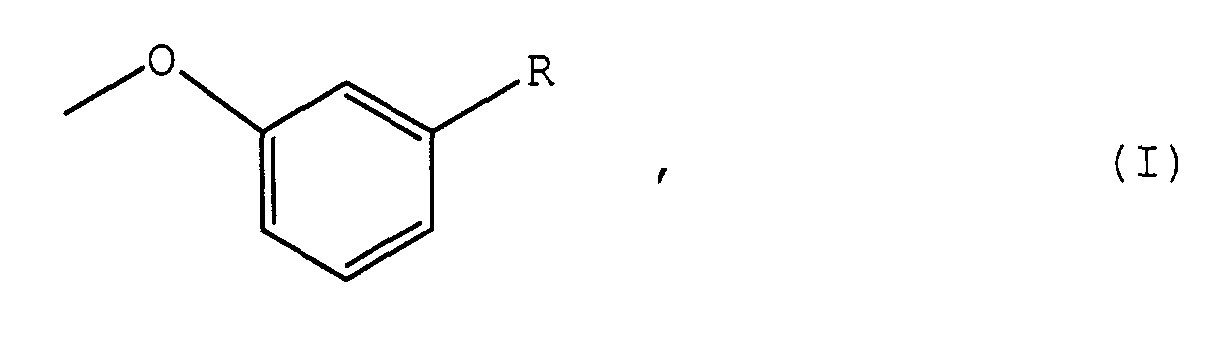
- the present invention provides a hollow fibrous organic nanotube having an inner pore diameter of 10 to 20 nm and an outer diameter of 40 to 80 nm, the nanotube comprising an O-glycoside type glycolipid having an aldose residue as the glycosyl group and a group represented by the general formula: wherein R represents an unsaturated straight-chain hydrocarbon group having 12 to 18 carbon atoms, as the aglycon.
- the present invention also provides a process for producing the hollow fibrous organic nanotube having an inner pore diameter of 10 to 20 nm and an outer diameter of 40 to 80 nm, the process comprising the steps of dissolving the above O-glycoside type glycolipid in water at an elevated temperature to saturation, cooling the aqueous solution gradually and allowing the solution to stand at room temperature to cause spontaneous molecular aggregation and quasi-crystallization.
- the hollow fibrous organic nanotube according to the present invention is produced by using, as the starting material, an O-glycoside type glycolipid having an aldose residue as the glycosyl group and a long-chain alkylphenol residue represented by the above given general formula (I) as the aglycon or, specifically, an O-glycoside type glycolipid represented by the general formula: wherein R has the same meaning as above and G is an aldofuranose or aldopyranose residue in which the carbon atom at the reducing end participates in the O-glycoside bonding.
- G in the aforementioned formula (II), i.e. the glycosyl group include residues obtained by removing a hydrogen atom from a reducing end-hydroxyl group of an aldopyranose such as glucopyranose, galactopyranose, mannopyranose, allopyranose, altropyranose, gulopyranose, idopyranose and talopyranose as well as corresponding aldofuranoses.
- an aldopyranose such as glucopyranose, galactopyranose, mannopyranose, allopyranose, altropyranose, gulopyranose, idopyranose and talopyranose as well as corresponding aldofuranoses.
- R in the formula (II) above is an aliphatically unsaturated straight-chain hydrocarbon group having 12 to 18 or, preferably, 15 carbon atoms.
- a hydrocarbon group include the dodecyl group, tridecyl group, tetradecyl group, pentadecyl group, hexadecyl group, heptadecyl group and octadecyl group having a monoenic, dienic or trienic linkage introduced as an unsaturated structure.
- An 8-pentadecenyl group, 8,11-pentadecadienyl group and 8,11,14-pentadecatrienyl group are preferable in respect of good availability of source materials.
- O-glycoside type glycolipids represented by the aforementioned formula (II) are novel compounds not described in any literature.
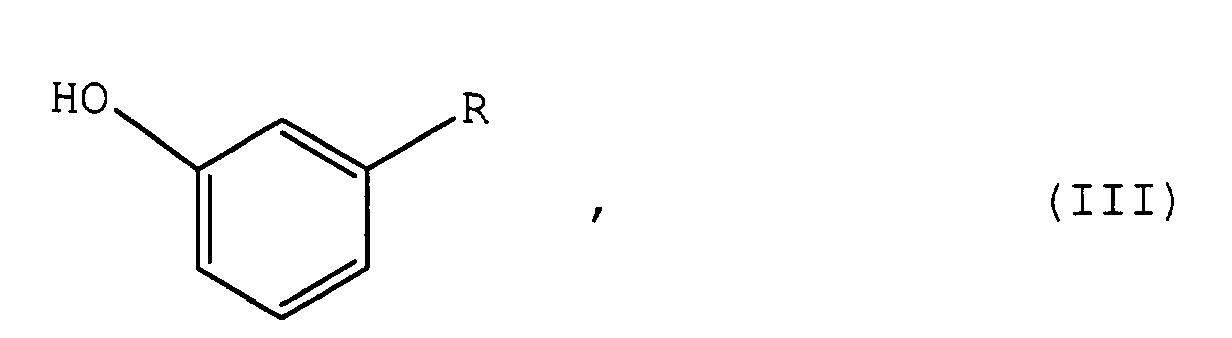
- Such an O-glycoside type glycolipid can be produced by reacting a (long-chain hydrocarbon group-substituted) phenol represented by the general formula: wherein R has the same meaning as above, with a reactive functional derivative of the reducing-end hydroxyl group of an aldopyranose or aldofuranose (hereinafter referred to simply as a protected aldose) in which all of the hydroxyl groups except that at the reducing end are protected, to form an O-glycoside bond and thereafter releasing the protective group.
- a protective group an acetyl group, benzyl group or 1,2-isopropylidene group is preferably used.
- Examples of the reactive functional derivative of the reducing-end hydroxyl group include trichloroacetoimidates, bromides (sugar bromides), fluorides (sugar fluorides), thioglycosides and O-acylates of the corresponding aldoses.
- fluorides and trichloroacetoimidates react in a high yield and are therefore preferable.
- those having an unsaturated straight-chain alkyl group having 15 carbon atoms can readily be obtained by using cashew nut shell liquid as the starting material. Specifically, it is obtained by subjecting cashew nut shell liquid, which is commonly used as a starting material for cashew varnishes and brake pads and linings for machines or automobiles, to vacuum distillation and collecting the cardanol fraction having a boiling point ranging from 220 to 235 °C.
- the vacuum pressure in this vacuum distillation is preferably in the range from 250 to 700 Pa.
- the cashew nut shell liquid is simply called cashew nut liquid and is an oily liquid obtained by processing the shell of the fruit of a cashew nut tree ( Anacardium occidentale ) belonging to the family Anacardiaceae by solvent extraction or fractional distillation under heating.
- the cashew nut liquid is obtained as a mixture consisting mainly of anacardic acid and cardol when processing by solvent extraction and as a mixture consisting mainly of cardanol and cardol when processing by fractional distillation under heating.
- this cashew nut shell liquid is subjected to an extraction treatment with an organic solvent such as n-hexane to give cardanol which is dissolved in a solvent and used as the starting material in the present invention.
- an organic solvent such as n-hexane
- the reactive functional derivative of the protected aldose which is to be reacted with this long-chain alkylphenol may be produced in the following manner.
- the halogenated product or sugar bromide or fluoride by bromination or fluorination at the reducing-end hydroxyl group of an aldose is obtained by acetylating the aldose in pyridine followed by reaction with hydrogen bromide or hydrogen fluoride in acetic acid.
- the corresponding trichloroacetoimidate is obtained by acetylation of the aldose in the same manner as above followed by reaction with hydrazine acetate in dimethylformamide to give a sugar chain ingredient selectively deacetylated at the reducing end only which is then reacted with trichloroacetonitrile in the presence of a basic catalyst.
- the reaction solvent used includes preferably halogen compounds such as methylene chloride and chloroform and the basic catalyst includes preferably sodium hydride and cesium carbonate.
- reaction for forming the O-glycoside linkage from the long-chain alkylphenol represented by the general formula (III) and the reactive functional derivative of the protected aldose is performed in the following manner.
- the reaction is performed in the presence of a basic material by using tin trifluoromethanesulfonate as a catalyst.
- a basic material such as chloroform or toluene is used but a chloroform/toluene mixture is preferable in respect of solubility behavior.
- the basic material 2,4,6-trimethylpyridine or 1,1,3,3-tetramethylurea is used.
- the reaction temperature is from room temperature to 40 °C and the reaction is completed usually within 10 to 20 hours. A still higher yield of the product can be ensured by conducting the reaction in the presence of molecular sieve 4A.
- the reaction is performed in the presence of a Lewis acid catalyst.
- the reaction solvent used here is exemplified by halogenated solvents such as chloroform, methylene chloride and 1,2-dichloroethane, acetonitrile and nitromethane. Particularly, methylene chloride is preferable.
- the Lewis acid catalyst used in this reaction is trimethylsilyl trifluoromethanesulfonate or a boron trifluoride/ether complex.
- the amount of the Lewis acid catalyst to be used is preferably 2 to 3 equivalents relative to the amount of trichloroacetoimidate.
- reaction temperature is selected in the range from -5 to 0 °C.
- reaction time is usually 2 to 3 hours, though dependent on the type of Lewis acid and the reaction temperature. This reaction is preferably conducted in the presence of a molecular sieve under agitation.
- glucose is used as the aldose and a boron trifluoride/ether complex is used, the glucose can be converted directly to an aldose compound in which all of the hydroxyl groups including the reducing-end hydroxyl group are acetylated without conversion of the glucose in advance into trichloroacetoimidate so that the O-glycoside can be obtained in high yield.
- This method is particularly advantageous when glucose is used in respect of high yield of the reaction product.
- the reaction for removing the protective groups or, for example, acetyl groups can be performed by treating the O-glycoside having the protected sugar chain structure with an alkali metal alcoholate such as sodium methoxide or potassium methoxide followed by neutralization with a strongly acidic cation exchange resin.
- an aqueous solution of a trialkylamine such as trimethylamine is mixed with several times by volume of a reaction solvent and the reaction of the O-glycoside having the above mentioned protected sugar chain structure is conducted therein.
- the concentration of the aqueous trialkylamine solution is preferably in the range from 30 to 50% by weight.
- reaction solvent in this case, an alcoholic solvent such as methyl alcohol or ethyl alcohol or a mixed solvent of an ether solvent such as diethyl ether or tetrahydrofuran and an alcoholic solvent is used preferably.
- the pH of the reaction solution be kept at 8.0 to 8.5 in order to avoid certain side-reactions such as hydrolysis of the ester linkage.
- the reaction is completed usually within 12 to 24 hours though dependent on the reaction conditions.
- an O-glycoside type glycolipid having the long-chain alkylphenol residue represented by the aforementioned general formula (I) as the aglycon is obtained in the form of a white powder.
- the crude product obtained in this manner can be isolated and purified into a high purity product chromatographically by using a silica gel column.
- a good coincidence can usually be obtained in the elementary composition of the O-glycoside type glycolipid between the actual analytical values with the product obtained in this manner and the calculated values for the same compound within analytical errors.
- the compound having a sugar chain structure protected by acetyl groups can readily be identified from the 1 H-NMR spectrum in d -chloroform at 25 °C exhibiting a characteristic signal assignable to the hydrogen atoms of the methyl groups of the acetyl groups at a ⁇ value of 2.03 to 2.08 ppm.
- the compound as the product from which the acetyl groups have been removed can be identified from the 1 H-NMR spectrum in dimethylsulfoxide- d 6 at 25 °C exhibiting signals at the ⁇ values of 0.88 ppm (hydrogen atoms of the methyl group of a long-chain alkyl group), 1.26 ppm (hydrogen atoms of the methylene group of the long-chain alkyl group), 1.58 ppm (hydrogen atoms of the second methylene group from the aromatic portion in the long-chain alkyl group), 2.56 ppm (hydrogen atoms of a methylene group directly bonded to the aromatic portion), 3.13-3.69 ppm (hydrogen atoms bonded to C2, C3, C4, C5 and C6 carbon atoms of the sugar chain), 4.82 ppm (anomeric hydrogen atoms bonded to the C1 carbon atom of the sugar chain), 5.34-5.42 ppm (hydrogen atoms bonded to the vinyl group)
- the O-glycoside type glycolipid obtained in this manner is used to produce a hollow fibrous organic nanotube in the following manner.
- water is added to the O-glycoside as the starting material and the mixture is heated to prepare a saturated aqueous solution.
- the amount of water is selected in the range from 20 to 1000 times that of the O-glycoside by weight.
- the heating temperature is preferably raised to boiling point in order to increase the amount of the dissolved O-glycoside as much as possible. However, it is optional that the temperature is lower than the boiling point.
- the saturated aqueous O-glycoside solution prepared in this manner is gradually cooled and kept standing at room temperature so as to cause spontaneous formation of a hollow fibrous organic nanotube therein.
- the cooling rate is selected in the range not exceeding 0.5 °C/minute or, in particular, not exceeding 0.2 °C/minute.
- the solvent used in the preparation of the aqueous solution is usually water alone, it is optional, if desired, to use a mixture of water and an alcohol.
- the alcohol in this case for example, a water-miscible alcohol such as methyl, ethyl or propyl alcohol can be used.
- the fibers obtained in this manner are collected and air-dried or vacuum-dried to obtain a hollow fibrous organic nanotube which is stable in air and has an inner diameter of the pore of 10 to 20 nm, an outer diameter of 40 to 80 nm and a length of several tens ⁇ m to several hundreds ⁇ m.
- the form of the resulting tube-like structure can easily be observed using a standard optical microscope.
- the tube structure can be recognized in further detail by using a laser microscope, atomic force microscope or electron microscope.
- the hollow fibrous organic nanotube obtained by the process of the present invention can be utilized, for example, as a clathrate and separating material and drug delivery material for a medicament and useful biomolecules in the fields of fine chemical industries, pharmaceutics and cosmetic preparations or as a microelectronic part in electronic and information technologies by coating the nanotube with a conductive material or a metal.
- the hollow fibrous organic nanotube is useful as a gas storage material in the energy industry and also as an artificial blood vessel, nanotube capillary and nanoreactor which utilizes the fine tubular structure in the fields of medical treatment, analysis and chemical product manufacturing, exhibiting high industrial usefulness.
- Rf 1 the value obtained when a 6:4 by volume mixture of hexane and ethyl acetate was used as the developing solvent was recorded as Rf 1 .
- Cashew nut shell liquid (CNSL) was subjected twice to vacuum distillation under a pressure of about 400 Pa to collect the fraction having a boiling point of 220 to 230 °C thereby obtaining cardanol.
- a 1.52 g (5 mmoles) portion of the thus obtained cardanol was dissolved in 10 ml of dehydrated methylene chloride and 1.95 g (5 mmoles) of ⁇ -D-glucose pentaacetate and 0.62 ml (5 mmoles) of boron trifluoride diethyl ether were added thereto in the presence of 2 g of molecular sieve 4A.
- reaction mixture was stirred for 24 hours at room temperature, the reaction mixture was poured into an aqueous 5%-sodium hydrogencarbonate solution.
- the organic phase was separated by phase separation and washed with an aqueous sodium hydrogencarbonate solution and then with water followed by drying over anhydrous sodium sulfate.
- the organic solvent was completely distilled off under reduced pressure and the resulting crude product was recrystallized from ethanol.
- a 5 mg portion of 1-(O- ⁇ -D-glucopyranoside) cardanol obtained in Reference Example 1 was taken and placed in a flask. To this were added 100 ml of water and the mixture was heated using a mantle heater to effect boiling and dissolving. The heating temperature of the mantle heater was gradually decreased under control down to room temperature at a cooling rate of 0.2 °C/minute and the mixture was then kept standing at room temperature for one month. A small portion of the resulting aqueous mixture containing fibrous materials was taken and inspected under an optical microscope to find a fibrous structure with a length of several tens ⁇ m to several hundreds ⁇ m.
- Figures 1 and 2 are respectively a sketch from an optical microphotograph of the resulting organic nanotubes and a sketch from a transmission electron microscopic photograph thereof.
- a hollow fibrous organic nanotube was obtained in the same manner as in Example 1 except that a 10:1 by volume water/ethanol mixture was used as the solvent and heated to about 70 °C, in place of the boiling water in Example 1.
- the resulting organic nanotube was found to have a hollow fibrous structure with an inner pore diameter of about 10 to 20 nm, an outer diameter of about 40 to 60 nm and a length of several tens ⁇ m to several hundreds ⁇ m as inspected using a transmission electron microscope.
- a hollow fibrous organic nanotube was obtained in the same manner as in Example 1 except that a 10:1 by volume water/acetone mixture was used as the solvent and heated to about 70 °C, in place of the boiling water in Example 1.
- the resulting organic nanotube was found to have a hollow fibrous structure with an inner pore diameter of about 10 to 20 nm, an outer diameter of about 40 to 60 nm and a length of several tens ⁇ m to several hundreds ⁇ m as inspected using a transmission electron microscope.
Landscapes
- Chemical & Material Sciences (AREA)
- Engineering & Computer Science (AREA)
- Organic Chemistry (AREA)
- Crystallography & Structural Chemistry (AREA)
- Textile Engineering (AREA)
- Nanotechnology (AREA)
- Biochemistry (AREA)
- Condensed Matter Physics & Semiconductors (AREA)
- Genetics & Genomics (AREA)
- Molecular Biology (AREA)
- Biotechnology (AREA)
- Physics & Mathematics (AREA)
- Composite Materials (AREA)
- General Health & Medical Sciences (AREA)
- General Physics & Mathematics (AREA)
- Materials Engineering (AREA)
- Life Sciences & Earth Sciences (AREA)
- Chemical Kinetics & Catalysis (AREA)
- General Chemical & Material Sciences (AREA)
- Health & Medical Sciences (AREA)
- Mechanical Engineering (AREA)
- Saccharide Compounds (AREA)
Abstract

Description
- The present invention relates to an organic nanotube which has a hollow fibrous form with an inner pore diameter of 10 to 20 nm, an outer diameter of 40 to 80 nm and a length of several tens µm to several hundreds µm, and which finds use in the industries of fine chemicals, medicines and cosmetic and toiletry preparations as well as in electronic information technology, energy industry and chemical industry, and also relates to a method for the preparation thereof.
- A lipid of certain type self-assembles to form a stable molecular aggregate and is utilized as a functional material in the fine chemical and medical fields. Such a lipid or, for example, the so-called ribosome which is a spherical aggregate comprising a phospholipid derived from a natural origin is produced by the thin film method, thermal dispersion method, solution injection method, cholic acid method or reverse layer method. These methods are all complicated and must use technologies requiring skillfulness. This causes difficulties in putting these methods into practice. Also, because molecular aggregates obtained by these methods all have a spherical morphology so that a hollow fibrous molecular aggregate having a large axial ratio, which is the ratio of the width to length of a fiber, cannot be obtained and consequently the application fields where these molecular aggregates are used are inevitably limited.
- On the other hand, it is known that a fibrous or rod-shaped molecular aggregate is obtained by dispersing a synthetic amphiphilic compound in water ["Journal of American Chemical Society", Vol. 107, pages 509-510 (1985)].
- However, although the molecular aggregate obtained by this method has a ribbon- or string-like fiber form, it is impossible to produce a nanotube structure having a unidimensional isolated void and a large surface area which is effective for gas storage and isolation of useful biomolecules and therefore it has almost no utilizability as a fibrous molecular aggregate.
- The present invention has been made with an object to provide a novel hollow fibrous organic nanotube which can be produced by a simple method from an inexpensive and renewable resource-based natural material of good availability along with regenerability and has a wide range of applicability.
- The inventors of the present invention have repeatedly conducted extensive studies for a method of forming a functional material having a wide range of applicability simply from an easily available material and, as a result, found that an organic nanotube having a hollow fibrous structure can be obtained by causing molecular aggregation of an O-glycoside type glycolipid, in which the aglycon is a long-chain alkylphenol isolated from cashew nut shell liquid or a derivative thereof, by using several different methods and followed by quasi-crystallization of the glycolipid. Based on this finding, the present invention has been completed.
- Accordingly, the present invention provides a hollow fibrous organic nanotube having an inner pore diameter of 10 to 20 nm and an outer diameter of 40 to 80 nm, the nanotube comprising an O-glycoside type glycolipid having an aldose residue as the glycosyl group and a group represented by the general formula:wherein R represents an unsaturated straight-chain hydrocarbon group having 12 to 18 carbon atoms, as the aglycon. The present invention also provides a process for producing the hollow fibrous organic nanotube having an inner pore diameter of 10 to 20 nm and an outer diameter of 40 to 80 nm, the process comprising the steps of dissolving the above O-glycoside type glycolipid in water at an elevated temperature to saturation, cooling the aqueous solution gradually and allowing the solution to stand at room temperature to cause spontaneous molecular aggregation and quasi-crystallization.
- In the accompanying drawings:
- Fig. 1 is a sketch from an optical microscopic photograph of the organic nanotubes obtained in Example 1.
- Fig. 2 is a sketch from a transmission electron microscopic photograph of the organic nanotubes obtained in Example 1.
-
- The hollow fibrous organic nanotube according to the present invention is produced by using, as the starting material, an O-glycoside type glycolipid having an aldose residue as the glycosyl group and a long-chain alkylphenol residue represented by the above given general formula (I) as the aglycon or, specifically, an O-glycoside type glycolipid represented by the general formula:wherein R has the same meaning as above and G is an aldofuranose or aldopyranose residue in which the carbon atom at the reducing end participates in the O-glycoside bonding.

- Examples of G in the aforementioned formula (II), i.e. the glycosyl group, include residues obtained by removing a hydrogen atom from a reducing end-hydroxyl group of an aldopyranose such as glucopyranose, galactopyranose, mannopyranose, allopyranose, altropyranose, gulopyranose, idopyranose and talopyranose as well as corresponding aldofuranoses.
- R in the formula (II) above is an aliphatically unsaturated straight-chain hydrocarbon group having 12 to 18 or, preferably, 15 carbon atoms. Examples of such a hydrocarbon group include the dodecyl group, tridecyl group, tetradecyl group, pentadecyl group, hexadecyl group, heptadecyl group and octadecyl group having a monoenic, dienic or trienic linkage introduced as an unsaturated structure. An 8-pentadecenyl group, 8,11-pentadecadienyl group and 8,11,14-pentadecatrienyl group are preferable in respect of good availability of source materials.
- All of the O-glycoside type glycolipids represented by the aforementioned formula (II) are novel compounds not described in any literature.
- Such an O-glycoside type glycolipid can be produced by reacting a (long-chain hydrocarbon group-substituted) phenol represented by the general formula:wherein R has the same meaning as above, with a reactive functional derivative of the reducing-end hydroxyl group of an aldopyranose or aldofuranose (hereinafter referred to simply as a protected aldose) in which all of the hydroxyl groups except that at the reducing end are protected, to form an O-glycoside bond and thereafter releasing the protective group. As the protective group, an acetyl group, benzyl group or 1,2-isopropylidene group is preferably used.
- Examples of the reactive functional derivative of the reducing-end hydroxyl group include trichloroacetoimidates, bromides (sugar bromides), fluorides (sugar fluorides), thioglycosides and O-acylates of the corresponding aldoses. Among these compounds, fluorides and trichloroacetoimidates react in a high yield and are therefore preferable.
- Among the (long-chain hydrocarbon group-substituted) phenols represented by the general formula (III), those having an unsaturated straight-chain alkyl group having 15 carbon atoms can readily be obtained by using cashew nut shell liquid as the starting material. Specifically, it is obtained by subjecting cashew nut shell liquid, which is commonly used as a starting material for cashew varnishes and brake pads and linings for machines or automobiles, to vacuum distillation and collecting the cardanol fraction having a boiling point ranging from 220 to 235 °C. The vacuum pressure in this vacuum distillation is preferably in the range from 250 to 700 Pa.
- The cashew nut shell liquid is simply called cashew nut liquid and is an oily liquid obtained by processing the shell of the fruit of a cashew nut tree (Anacardium occidentale) belonging to the family Anacardiaceae by solvent extraction or fractional distillation under heating. The cashew nut liquid is obtained as a mixture consisting mainly of anacardic acid and cardol when processing by solvent extraction and as a mixture consisting mainly of cardanol and cardol when processing by fractional distillation under heating.
- Optionally, this cashew nut shell liquid is subjected to an extraction treatment with an organic solvent such as n-hexane to give cardanol which is dissolved in a solvent and used as the starting material in the present invention.
- On the other hand, the reactive functional derivative of the protected aldose which is to be reacted with this long-chain alkylphenol may be produced in the following manner.
- Thus, the halogenated product or sugar bromide or fluoride by bromination or fluorination at the reducing-end hydroxyl group of an aldose is obtained by acetylating the aldose in pyridine followed by reaction with hydrogen bromide or hydrogen fluoride in acetic acid.
- The corresponding trichloroacetoimidate is obtained by acetylation of the aldose in the same manner as above followed by reaction with hydrazine acetate in dimethylformamide to give a sugar chain ingredient selectively deacetylated at the reducing end only which is then reacted with trichloroacetonitrile in the presence of a basic catalyst. The reaction solvent used includes preferably halogen compounds such as methylene chloride and chloroform and the basic catalyst includes preferably sodium hydride and cesium carbonate.
- In the reaction for obtaining the halide of the aldose, the α-isomer is selectively obtained. In the reaction for obtaining the trichloroacetoimidate, the α-isomer is selectively obtained if the reaction is continued for 2 hours or longer at room temperature. These facts can be evidenced by the 1H-NMR spectrum of each compound in d-chloroform at 25 °C showing a doublet signal (spin-spin coupling constant = 3.4 to 4.0 Hz) at 6.4 to 6.6 ppm of the δ value.
- Next, the reaction for forming the O-glycoside linkage from the long-chain alkylphenol represented by the general formula (III) and the reactive functional derivative of the protected aldose is performed in the following manner.
- For example, when the reactive functional derivative of the protected aldose is a bromide, the reaction is performed in the presence of a basic material by using tin trifluoromethanesulfonate as a catalyst. As the reaction solvent in this case, chloroform or toluene is used but a chloroform/toluene mixture is preferable in respect of solubility behavior. As the basic material, 2,4,6-trimethylpyridine or 1,1,3,3-tetramethylurea is used. In this case, the reaction temperature is from room temperature to 40 °C and the reaction is completed usually within 10 to 20 hours. A still higher yield of the product can be ensured by conducting the reaction in the presence of molecular sieve 4A.
- When the reactive functional derivative of the protected aldose is trichloroacetoimidate, the reaction is performed in the presence of a Lewis acid catalyst. The reaction solvent used here is exemplified by halogenated solvents such as chloroform, methylene chloride and 1,2-dichloroethane, acetonitrile and nitromethane. Particularly, methylene chloride is preferable. The Lewis acid catalyst used in this reaction is trimethylsilyl trifluoromethanesulfonate or a boron trifluoride/ether complex. The amount of the Lewis acid catalyst to be used is preferably 2 to 3 equivalents relative to the amount of trichloroacetoimidate. In this case, the reaction temperature is selected in the range from -5 to 0 °C. The reaction time is usually 2 to 3 hours, though dependent on the type of Lewis acid and the reaction temperature. This reaction is preferably conducted in the presence of a molecular sieve under agitation.
- If glucose is used as the aldose and a boron trifluoride/ether complex is used, the glucose can be converted directly to an aldose compound in which all of the hydroxyl groups including the reducing-end hydroxyl group are acetylated without conversion of the glucose in advance into trichloroacetoimidate so that the O-glycoside can be obtained in high yield. This method is particularly advantageous when glucose is used in respect of high yield of the reaction product.
- When the bromide or trichloroacetoimidate is used, the β-isomeric O-glycoside is selectively obtained. This fact is evidenced from the 1H-NMR spectra (in dimethylsulfoxide-d 6 at 25 °C) of each of these compounds showing a doublet signal (spin-spin coupling constant = 7.8 to 8.0 Hz) at 4.4 to 4.9 ppm of the δ value.
- It is necessary to remove the protective groups finally from the O-glycoside type glycolipid containing the protected aldose residue and obtained in the above manner.
- The reaction for removing the protective groups or, for example, acetyl groups can be performed by treating the O-glycoside having the protected sugar chain structure with an alkali metal alcoholate such as sodium methoxide or potassium methoxide followed by neutralization with a strongly acidic cation exchange resin. Alternatively, in a simpler way, an aqueous solution of a trialkylamine such as trimethylamine is mixed with several times by volume of a reaction solvent and the reaction of the O-glycoside having the above mentioned protected sugar chain structure is conducted therein. In this case, the concentration of the aqueous trialkylamine solution is preferably in the range from 30 to 50% by weight. As the reaction solvent in this case, an alcoholic solvent such as methyl alcohol or ethyl alcohol or a mixed solvent of an ether solvent such as diethyl ether or tetrahydrofuran and an alcoholic solvent is used preferably. At this time, it is desirable that the pH of the reaction solution be kept at 8.0 to 8.5 in order to avoid certain side-reactions such as hydrolysis of the ester linkage. The reaction is completed usually within 12 to 24 hours though dependent on the reaction conditions. By distilling off the solvent from the reaction mixture after completion of the reaction, an O-glycoside type glycolipid having the long-chain alkylphenol residue represented by the aforementioned general formula (I) as the aglycon is obtained in the form of a white powder. The crude product obtained in this manner can be isolated and purified into a high purity product chromatographically by using a silica gel column.
- A good coincidence can usually be obtained in the elementary composition of the O-glycoside type glycolipid between the actual analytical values with the product obtained in this manner and the calculated values for the same compound within analytical errors. Further, the compound having a sugar chain structure protected by acetyl groups can readily be identified from the 1H-NMR spectrum in d-chloroform at 25 °C exhibiting a characteristic signal assignable to the hydrogen atoms of the methyl groups of the acetyl groups at a δ value of 2.03 to 2.08 ppm.
- On the other hand, the compound as the product from which the acetyl groups have been removed can be identified from the 1H-NMR spectrum in dimethylsulfoxide-d 6 at 25 °C exhibiting signals at the δ values of 0.88 ppm (hydrogen atoms of the methyl group of a long-chain alkyl group), 1.26 ppm (hydrogen atoms of the methylene group of the long-chain alkyl group), 1.58 ppm (hydrogen atoms of the second methylene group from the aromatic portion in the long-chain alkyl group), 2.56 ppm (hydrogen atoms of a methylene group directly bonded to the aromatic portion), 3.13-3.69 ppm (hydrogen atoms bonded to C2, C3, C4, C5 and C6 carbon atoms of the sugar chain), 4.82 ppm (anomeric hydrogen atoms bonded to the C1 carbon atom of the sugar chain), 5.34-5.42 ppm (hydrogen atoms bonded to the vinyl group) and 6.79, 6.80-6.89 ppm, 7.19-7.20 ppm (hydrogen atoms bonded to the aromatic ring).
- Next, the O-glycoside type glycolipid obtained in this manner is used to produce a hollow fibrous organic nanotube in the following manner. First, water is added to the O-glycoside as the starting material and the mixture is heated to prepare a saturated aqueous solution. In this case, if the amount of water is too small, a portion of the solute remains undissolved whereas, if the amount of water is too large, the concentration does not reach saturation. Therefore, the amount of water is selected in the range from 20 to 1000 times that of the O-glycoside by weight. In this case, the heating temperature is preferably raised to boiling point in order to increase the amount of the dissolved O-glycoside as much as possible. However, it is optional that the temperature is lower than the boiling point.
- Next, the saturated aqueous O-glycoside solution prepared in this manner is gradually cooled and kept standing at room temperature so as to cause spontaneous formation of a hollow fibrous organic nanotube therein. At this time, if the cooling rate is excessive, a fiber of large length can hardly be formed and aggregates of short fibers are produced. It is preferable that the cooling rate is selected in the range not exceeding 0.5 °C/minute or, in particular, not exceeding 0.2 °C/minute. While the solvent used in the preparation of the aqueous solution is usually water alone, it is optional, if desired, to use a mixture of water and an alcohol. As the alcohol in this case, for example, a water-miscible alcohol such as methyl, ethyl or propyl alcohol can be used.
- After lapse of 1 to 2 days following gradual cooling in this manner, precipitation of a fibrous material proceeds in the aqueous solution. Almost all of the fibers obtained by aging for several days in this manner, however, have a morphology in which a ribbon fiber is wound up coil-wise in the direction of the longer axis according to observation using a polarizing microscope or phase-contrast microscope. In order to obtain a hollow fibrous nanotube, it is necessary for the solution to be kept standing at room temperature for a further 2 to 3 weeks with the fibrous material left in the aqueous solution. In order to convert all of the fibers from the coil-like form to a complete tube-like structure, it is desirable to allow the aqueous solution to be kept standing for about one month as an aging period and this is desirable for increasing the yield of the organic nanotubes. The fibers obtained in this manner are collected and air-dried or vacuum-dried to obtain a hollow fibrous organic nanotube which is stable in air and has an inner diameter of the pore of 10 to 20 nm, an outer diameter of 40 to 80 nm and a length of several tens µm to several hundreds µm.
- The form of the resulting tube-like structure can easily be observed using a standard optical microscope. The tube structure can be recognized in further detail by using a laser microscope, atomic force microscope or electron microscope.
- The hollow fibrous organic nanotube obtained by the process of the present invention can be utilized, for example, as a clathrate and separating material and drug delivery material for a medicament and useful biomolecules in the fields of fine chemical industries, pharmaceutics and cosmetic preparations or as a microelectronic part in electronic and information technologies by coating the nanotube with a conductive material or a metal. Further, the hollow fibrous organic nanotube is useful as a gas storage material in the energy industry and also as an artificial blood vessel, nanotube capillary and nanoreactor which utilizes the fine tubular structure in the fields of medical treatment, analysis and chemical product manufacturing, exhibiting high industrial usefulness.
- In the following, the present invention will be described in more detail by way of examples, which, however, do not limit the scope of the present invention.
- As to the Rf value in thin-layer chromatography, the value obtained when a 6:4 by volume mixture of hexane and ethyl acetate was used as the developing solvent was recorded as Rf1.
- Cashew nut shell liquid (CNSL) was subjected twice to vacuum distillation under a pressure of about 400 Pa to collect the fraction having a boiling point of 220 to 230 °C thereby obtaining cardanol. A 1.52 g (5 mmoles) portion of the thus obtained cardanol was dissolved in 10 ml of dehydrated methylene chloride and 1.95 g (5 mmoles) of β-D-glucose pentaacetate and 0.62 ml (5 mmoles) of boron trifluoride diethyl ether were added thereto in the presence of 2 g of molecular sieve 4A. After the reaction mixture was stirred for 24 hours at room temperature, the reaction mixture was poured into an aqueous 5%-sodium hydrogencarbonate solution. The organic phase was separated by phase separation and washed with an aqueous sodium hydrogencarbonate solution and then with water followed by drying over anhydrous sodium sulfate. The organic solvent was completely distilled off under reduced pressure and the resulting crude product was recrystallized from ethanol. The resulting solid product was subjected to column chromatography using, as the eluent, a 7:3 by volume mixture of hexane and ethyl acetate to obtain 2.36 g (yield: 75%) of 1-(O-β-D-glucopyranosido-tetraacetate) cardanol as a white solid.
- The physical properties of the resulting product are as follows.
Rf value: Rf1 = 0.47 in thin-layer chromatography
Melting point: 60 °CElementary analysis value (C35H50O10) C H Calculated (%) 66.65 7.99 Found (%) 66.78 7.82 - Next, 1.26 g (2 mmoles) of the 1-(O-β-D-glucopyranosidotetraacetate) cardanol were added to a 1:4 by volume mixture of a 45% by weight aqueous solution of trimethylamine and methyl alcohol to effect the reaction for 24 hours. The solvent was removed by distillation under reduced pressure and then the resulting syrupy residue was crystallized from a methyl alcohol/acetonitrile (volume ratio = 1:2) mixed solvent and recrystallized from the same solvent to obtain 0.88 g (yield: 95%) of the desired deacetylated 1-(O-β-D-glucopyranoside) cardanol almost quantitatively as a white solid.
- The physical properties of the resulting product are as follows.
Melting point: 135.2 °CElementary analysis value (C27H42O6) C H Calculated (%) 70.10 9.15 Found (%) 70.39 9.44 - A 5 mg portion of 1-(O-β-D-glucopyranoside) cardanol obtained in Reference Example 1 was taken and placed in a flask. To this were added 100 ml of water and the mixture was heated using a mantle heater to effect boiling and dissolving. The heating temperature of the mantle heater was gradually decreased under control down to room temperature at a cooling rate of 0.2 °C/minute and the mixture was then kept standing at room temperature for one month. A small portion of the resulting aqueous mixture containing fibrous materials was taken and inspected under an optical microscope to find a fibrous structure with a length of several tens µm to several hundreds µm. Further, the resulting product was evaluated by observation using a transmission electron microscope and, as a result, a hollow fibrous organic nanotube material having an inner pore diameter of about 10 to 15 nm and an outer diameter of about 40 to 50 nm was detected. Figures 1 and 2 are respectively a sketch from an optical microphotograph of the resulting organic nanotubes and a sketch from a transmission electron microscopic photograph thereof.
- A hollow fibrous organic nanotube was obtained in the same manner as in Example 1 except that a 10:1 by volume water/ethanol mixture was used as the solvent and heated to about 70 °C, in place of the boiling water in Example 1. The resulting organic nanotube was found to have a hollow fibrous structure with an inner pore diameter of about 10 to 20 nm, an outer diameter of about 40 to 60 nm and a length of several tens µm to several hundreds µm as inspected using a transmission electron microscope.
- A hollow fibrous organic nanotube was obtained in the same manner as in Example 1 except that a 10:1 by volume water/acetone mixture was used as the solvent and heated to about 70 °C, in place of the boiling water in Example 1. The resulting organic nanotube was found to have a hollow fibrous structure with an inner pore diameter of about 10 to 20 nm, an outer diameter of about 40 to 60 nm and a length of several tens µm to several hundreds µm as inspected using a transmission electron microscope.
Claims (4)
- A hollow fibrous organic nanotube having an inner pore diameter of 10 to 20 nm and an outer diameter of 40 to 80 nm and consisting of an O-glycoside-based glycolipid having an aldose residue as the glycosyl group and a group represented by the general formula:wherein R is an unsaturated straight-chain hydrocarbon group having 12 to 18 carbon atoms, as the aglycon.

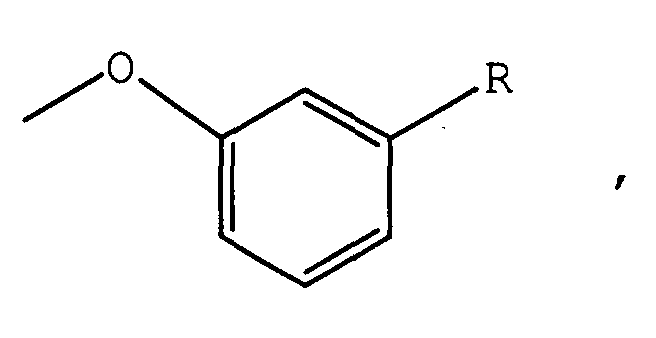
- A method for the preparation of a hollow fibrous organic nanotube having an inner pore diameter of 10 to 20 nm and an outer diameter of 40 to 80 nm as defined in claim 1 which comprises the steps of:(a) dissolving an O-glycoside-based glycolipid compound having an aldose residue as the glycosyl group and a group represented by the general formula:wherein R is an unsaturated straight-chain hydrocarbon group having 12 to 18 carbon atoms, as the aglycon, in water at an elevated temperature to form a saturated aqueous solution thereof;
 (b) gradually cooling the saturated aqueous solution to room temperature; and(c) allowing the solution to be kept standing at room temperature to cause spontaneous molecular aggregation and quasi-crystallization of the glycolipid compound.
 - The method as claimed in claim 2 in which the elevated temperature in step (a) is the boiling point of the solution.
- The method as claimed in claim 2 in which the cooling rate of the mixture in step (b) does not exceed 0.5 °C/minute.
Applications Claiming Priority (2)
| Application Number | Priority Date | Filing Date | Title |
|---|---|---|---|
| JP2000271192A JP3598367B2 (en) | 2000-09-07 | 2000-09-07 | Hollow fibrous organic nanotube and method for producing the same |
| JP2000271192 | 2000-09-07 |
Publications (2)
| Publication Number | Publication Date |
|---|---|
| EP1186688A1 true EP1186688A1 (en) | 2002-03-13 |
| EP1186688B1 EP1186688B1 (en) | 2005-06-15 |
Family
ID=18757513
Family Applications (1)
| Application Number | Title | Priority Date | Filing Date |
|---|---|---|---|
| EP01307413A Expired - Lifetime EP1186688B1 (en) | 2000-09-07 | 2001-08-31 | Hollow fibrous organic nanotube and method for producing the same |
Country Status (4)
| Country | Link |
|---|---|
| US (1) | US6632497B2 (en) |
| EP (1) | EP1186688B1 (en) |
| JP (1) | JP3598367B2 (en) |
| DE (1) | DE60111467T2 (en) |
Cited By (6)
| Publication number | Priority date | Publication date | Assignee | Title |
|---|---|---|---|---|
| WO2002090370A1 (en) * | 2001-04-26 | 2002-11-14 | Japan Science And Technology Corporation | Novel asymmetrically bicipital lipid and tubular aggregate formed by using the same |
| WO2003072489A1 (en) * | 2002-02-26 | 2003-09-04 | Japan Science And Technology Agency | Microfine self-aggregate |
| WO2003074720A1 (en) * | 2002-03-07 | 2003-09-12 | Japan Science And Technology Agency | Process for producing fine self-aggregate |
| WO2004065399A1 (en) | 2003-01-22 | 2004-08-05 | Japan Science And Technology Agency | N-glycoside type glycolipids and hollow fiber type organic nanotubes made of the same |
| EP1479799A4 (en) * | 2002-02-26 | 2007-12-12 | Japan Science & Tech Agency | FIBROUS NANOMETRIC AUTO-ASSEMBLIES |
| ES2329218A1 (en) * | 2008-05-22 | 2009-11-23 | Consejo Superior De Invstigaci | Neoglycolipids, aggregates thereof with carbon nanotubes, method for obtaining same and use thereof |
Families Citing this family (10)
| Publication number | Priority date | Publication date | Assignee | Title |
|---|---|---|---|---|
| FR2827312B1 (en) * | 2001-07-12 | 2004-05-14 | Commissariat Energie Atomique | PROCESS FOR THE PREPARATION OF ORGANIC NANOTUBULES, IN PARTICULAR LITHOCHOLIC ACID, AND USES THEREOF |
| DE10210626A1 (en) * | 2002-03-11 | 2003-09-25 | Transmit Technologietransfer | Process for the production of hollow fibers |
| JP2004261885A (en) * | 2003-02-18 | 2004-09-24 | Japan Science & Technology Agency | How to introduce functional materials into organic nanotubes |
| FR2853657B1 (en) * | 2003-04-10 | 2005-06-24 | Centre Nat Rech Scient | AUTO-ASSEMBLED AND PHOTOPOLYMERIZED MACROMOLECULES AROUND CARBON NANOTUBES, PROCESS FOR THEIR PREPARATION, AND APPLICATIONS THEREOF |
| US20090211907A1 (en) * | 2005-02-25 | 2009-08-27 | Japan Science And Technology Agency | Separation Medium for Biochemical Analysis |
| US8030376B2 (en) | 2006-07-12 | 2011-10-04 | Minusnine Technologies, Inc. | Processes for dispersing substances and preparing composite materials |
| JP5487480B2 (en) | 2008-02-25 | 2014-05-07 | 保土谷化学工業株式会社 | Method for preparing aqueous emulsion using surface active organic compound as emulsifier |
| JP5641634B2 (en) | 2008-03-13 | 2014-12-17 | 日東電工株式会社 | Pressure-sensitive adhesive composition, pressure-sensitive adhesive layer, pressure-sensitive adhesive member, image display device, method for removing optical film from image display device, and method for taking out display panel |
| JPWO2024058024A1 (en) * | 2022-09-16 | 2024-03-21 | ||
| JPWO2024058023A1 (en) * | 2022-09-16 | 2024-03-21 |
Citations (2)
| Publication number | Priority date | Publication date | Assignee | Title |
|---|---|---|---|---|
| JPH0680685A (en) * | 1992-09-03 | 1994-03-22 | Agency Of Ind Science & Technol | O-glycoside type glycolipid with serine long chain alkyl derivative as hydrophobic domain |
| JP2000204030A (en) * | 1999-01-11 | 2000-07-25 | Kanebo Ltd | Skin cosmetic |
Family Cites Families (1)
| Publication number | Priority date | Publication date | Assignee | Title |
|---|---|---|---|---|
| JP2692738B2 (en) * | 1995-11-20 | 1997-12-17 | 工業技術院長 | Method for manufacturing ultrafine fibrous structure having twist structure |
-
2000
- 2000-09-07 JP JP2000271192A patent/JP3598367B2/en not_active Expired - Lifetime
-
2001
- 2001-08-28 US US09/939,841 patent/US6632497B2/en not_active Expired - Fee Related
- 2001-08-31 DE DE60111467T patent/DE60111467T2/en not_active Expired - Lifetime
- 2001-08-31 EP EP01307413A patent/EP1186688B1/en not_active Expired - Lifetime
Patent Citations (2)
| Publication number | Priority date | Publication date | Assignee | Title |
|---|---|---|---|---|
| JPH0680685A (en) * | 1992-09-03 | 1994-03-22 | Agency Of Ind Science & Technol | O-glycoside type glycolipid with serine long chain alkyl derivative as hydrophobic domain |
| JP2000204030A (en) * | 1999-01-11 | 2000-07-25 | Kanebo Ltd | Skin cosmetic |
Non-Patent Citations (2)
| Title |
|---|
| DATABASE WPI Section Ch Week 199416, Derwent World Patents Index; Class B03, AN 1994-132035, XP002184710 * |
| PATENT ABSTRACTS OF JAPAN vol. 2000, no. 10 17 November 2000 (2000-11-17) * |
Cited By (9)
| Publication number | Priority date | Publication date | Assignee | Title |
|---|---|---|---|---|
| WO2002090370A1 (en) * | 2001-04-26 | 2002-11-14 | Japan Science And Technology Corporation | Novel asymmetrically bicipital lipid and tubular aggregate formed by using the same |
| WO2003072489A1 (en) * | 2002-02-26 | 2003-09-04 | Japan Science And Technology Agency | Microfine self-aggregate |
| EP1479799A4 (en) * | 2002-02-26 | 2007-12-12 | Japan Science & Tech Agency | FIBROUS NANOMETRIC AUTO-ASSEMBLIES |
| WO2003074720A1 (en) * | 2002-03-07 | 2003-09-12 | Japan Science And Technology Agency | Process for producing fine self-aggregate |
| WO2004065399A1 (en) | 2003-01-22 | 2004-08-05 | Japan Science And Technology Agency | N-glycoside type glycolipids and hollow fiber type organic nanotubes made of the same |
| EP1609796A4 (en) * | 2003-01-22 | 2007-12-19 | Japan Science & Tech Agency | N-GLYCOSIDE GLYCOLIPIDS AND HOLLOW FIBER-LIKE ORGANIC NANOTUBES COMPOSED THEREFROM |
| US7713545B2 (en) | 2003-01-22 | 2010-05-11 | Japan Science And Technology Agency | N-glycoside type glycolipids and hollow fiber type organic nanotubes made of the same |
| ES2329218A1 (en) * | 2008-05-22 | 2009-11-23 | Consejo Superior De Invstigaci | Neoglycolipids, aggregates thereof with carbon nanotubes, method for obtaining same and use thereof |
| WO2009141486A1 (en) * | 2008-05-22 | 2009-11-26 | Consejo Superior De Investigaciones Científicas | Neoglycolipids, aggregates thereof with carbon nanotubes, method for obtaining same and use thereof |
Also Published As
| Publication number | Publication date |
|---|---|
| US6632497B2 (en) | 2003-10-14 |
| US20020051881A1 (en) | 2002-05-02 |
| JP3598367B2 (en) | 2004-12-08 |
| DE60111467D1 (en) | 2005-07-21 |
| DE60111467T2 (en) | 2006-05-11 |
| EP1186688B1 (en) | 2005-06-15 |
| JP2002080489A (en) | 2002-03-19 |
Similar Documents
| Publication | Publication Date | Title |
|---|---|---|
| EP1186688B1 (en) | Hollow fibrous organic nanotube and method for producing the same | |
| CA1258452A (en) | Organic synthesis process of oligosaccharides containing galactosamine- uronic acid motives, oligosaccharides thus obtained and their biological uses | |
| Pozsgay et al. | Synthetic oligosaccharides related to group B streptococcal polysaccharides. 3. Synthesis of oligosaccharides corresponding to the common polysaccharide antigen of group B streptococci | |
| JPH0557280B2 (en) | ||
| EP0084999A1 (en) | Process for the preparation of organic oligosaccharides, corresponding to fragments of natural muco-polysaccharides, oligosaccharides obtained and their biological applications | |
| Slomiany et al. | Glycolipids of the human gastric content: structure of the sulfated glyceroglucolipid | |
| US7713545B2 (en) | N-glycoside type glycolipids and hollow fiber type organic nanotubes made of the same | |
| JP3533440B2 (en) | Method for producing O-glycoside molecular assembly | |
| JP2003252893A (en) | Fibrous nano self-assembly | |
| Levene et al. | THE SUBSTITUTION OF GLUCOSE IN POSITION (4). I | |
| EP1311521B1 (en) | Methods of preparing disaccharide and trisaccharide c6-c12 fatty acid esters with high alpha content and materials therefrom | |
| JPH05984A (en) | Glyceryl etherified polyhydric alcohol and its production | |
| CA1252460A (en) | Process for synthesising aldosides or alkyl, cycloalkyl or alkenyl polyaldosides | |
| Uriel et al. | Methyl 1, 2‐Orthoesters as Useful Glycosyl Donors in Glycosylation Reactions: A Comparison with n‐Pent‐4‐enyl 1, 2‐Orthoesters | |
| FR2464961A1 (en) | PROCESS FOR THE PREPARATION OF L-A-GLYCERYLPHOSPHORYL CHOLINE | |
| Aleem et al. | A method for oestriol estimation in amniotic fluid and its use in the study of normal and abnormal pregnancy | |
| Gilbert et al. | 129. A constitutional synthesis of cellobiose and gentiobiose | |
| WO1988008000A1 (en) | Process for specific synthesis of o-alkyl-3 d-glucose and products obtained by such process | |
| JP2001261693A (en) | Novel O-glycoside type glycolipid and method for producing the same | |
| Gigg et al. | The allyl group for protection in carbohydrate chemistry. Part 19. The coupling of allyl 2, 3-di-O-methyl-4-O-(3, 6-di-O-methyl-β-D-glucopyranosyl)-α-L-rhamnopyranoside to bovine serum albumin. Preparation of a diagnostic reagent for antibodies to the major glycolipid of Mycobacterium leprae (the leprosy bacillus) in human sera | |
| EP0082793A1 (en) | Derivatives with a uronic acid structure, their preparation and their biological applications | |
| EP1512750A1 (en) | Process for producing fine self-aggregate | |
| WO2003072489A1 (en) | Microfine self-aggregate | |
| JP2643105B2 (en) | Partially methylated cyclodextrin | |
| JP2643106B2 (en) | Partially methylated cyclodextrin |
Legal Events
| Date | Code | Title | Description |
|---|---|---|---|
| PUAI | Public reference made under article 153(3) epc to a published international application that has entered the european phase |
Free format text: ORIGINAL CODE: 0009012 |
|
| AK | Designated contracting states |
Kind code of ref document: A1 Designated state(s): AT BE CH CY DE DK ES FI FR GB GR IE IT LI LU MC NL PT SE TR Kind code of ref document: A1 Designated state(s): DE FR GB NL |
|
| AX | Request for extension of the european patent |
Free format text: AL;LT;LV;MK;RO;SI |
|
| 17P | Request for examination filed |
Effective date: 20020701 |
|
| AKX | Designation fees paid |
Free format text: DE FR GB NL |
|
| 17Q | First examination report despatched |
Effective date: 20040706 |
|
| GRAP | Despatch of communication of intention to grant a patent |
Free format text: ORIGINAL CODE: EPIDOSNIGR1 |
|
| GRAS | Grant fee paid |
Free format text: ORIGINAL CODE: EPIDOSNIGR3 |
|
| GRAA | (expected) grant |
Free format text: ORIGINAL CODE: 0009210 |
|
| AK | Designated contracting states |
Kind code of ref document: B1 Designated state(s): DE FR GB NL |
|
| REG | Reference to a national code |
Ref country code: GB Ref legal event code: FG4D |
|
| REF | Corresponds to: |
Ref document number: 60111467 Country of ref document: DE Date of ref document: 20050721 Kind code of ref document: P |
|
| ET | Fr: translation filed | ||
| PLBE | No opposition filed within time limit |
Free format text: ORIGINAL CODE: 0009261 |
|
| STAA | Information on the status of an ep patent application or granted ep patent |
Free format text: STATUS: NO OPPOSITION FILED WITHIN TIME LIMIT |
|
| 26N | No opposition filed |
Effective date: 20060316 |
|
| PGFP | Annual fee paid to national office [announced via postgrant information from national office to epo] |
Ref country code: NL Payment date: 20100813 Year of fee payment: 10 |
|
| PGFP | Annual fee paid to national office [announced via postgrant information from national office to epo] |
Ref country code: FR Payment date: 20100901 Year of fee payment: 10 Ref country code: DE Payment date: 20100823 Year of fee payment: 10 |
|
| PGFP | Annual fee paid to national office [announced via postgrant information from national office to epo] |
Ref country code: GB Payment date: 20100819 Year of fee payment: 10 |
|
| REG | Reference to a national code |
Ref country code: NL Ref legal event code: V1 Effective date: 20120301 |
|
| GBPC | Gb: european patent ceased through non-payment of renewal fee |
Effective date: 20110831 |
|
| REG | Reference to a national code |
Ref country code: FR Ref legal event code: ST Effective date: 20120430 |
|
| PG25 | Lapsed in a contracting state [announced via postgrant information from national office to epo] |
Ref country code: NL Free format text: LAPSE BECAUSE OF NON-PAYMENT OF DUE FEES Effective date: 20120301 |
|
| REG | Reference to a national code |
Ref country code: DE Ref legal event code: R119 Ref document number: 60111467 Country of ref document: DE Effective date: 20120301 |
|
| PG25 | Lapsed in a contracting state [announced via postgrant information from national office to epo] |
Ref country code: GB Free format text: LAPSE BECAUSE OF NON-PAYMENT OF DUE FEES Effective date: 20110831 Ref country code: FR Free format text: LAPSE BECAUSE OF NON-PAYMENT OF DUE FEES Effective date: 20110831 |
|
| PG25 | Lapsed in a contracting state [announced via postgrant information from national office to epo] |
Ref country code: DE Free format text: LAPSE BECAUSE OF NON-PAYMENT OF DUE FEES Effective date: 20120301 |