EP1186671A2 - Method for hybridization of arrays on siliceous surfaces - Google Patents
Method for hybridization of arrays on siliceous surfaces Download PDFInfo
- Publication number
- EP1186671A2 EP1186671A2 EP01121185A EP01121185A EP1186671A2 EP 1186671 A2 EP1186671 A2 EP 1186671A2 EP 01121185 A EP01121185 A EP 01121185A EP 01121185 A EP01121185 A EP 01121185A EP 1186671 A2 EP1186671 A2 EP 1186671A2
- Authority
- EP
- European Patent Office
- Prior art keywords
- hybridization
- microarray
- oligonucleotide
- hours
- siliceous
- Prior art date
- Legal status (The legal status is an assumption and is not a legal conclusion. Google has not performed a legal analysis and makes no representation as to the accuracy of the status listed.)
- Withdrawn
Links
- 238000009396 hybridization Methods 0.000 title claims abstract description 168
- 238000000034 method Methods 0.000 title claims abstract description 76
- 238000003491 array Methods 0.000 title abstract description 7
- 239000000758 substrate Substances 0.000 claims abstract description 75
- 108091034117 Oligonucleotide Proteins 0.000 claims abstract description 47
- 239000000463 material Substances 0.000 claims abstract description 46
- 239000000872 buffer Substances 0.000 claims abstract description 40
- 238000002493 microarray Methods 0.000 claims abstract description 40
- 150000001768 cations Chemical class 0.000 claims abstract description 17
- 230000003139 buffering effect Effects 0.000 claims abstract description 15
- 239000000243 solution Substances 0.000 claims description 42
- FAPWRFPIFSIZLT-UHFFFAOYSA-M Sodium chloride Chemical compound [Na+].[Cl-] FAPWRFPIFSIZLT-UHFFFAOYSA-M 0.000 claims description 18
- 239000004094 surface-active agent Substances 0.000 claims description 15
- KWGKDLIKAYFUFQ-UHFFFAOYSA-M lithium chloride Chemical compound [Li+].[Cl-] KWGKDLIKAYFUFQ-UHFFFAOYSA-M 0.000 claims description 14
- 239000002738 chelating agent Substances 0.000 claims description 11
- 150000003839 salts Chemical class 0.000 claims description 11
- 239000011780 sodium chloride Substances 0.000 claims description 9
- 239000007993 MOPS buffer Substances 0.000 claims description 8
- DVLFYONBTKHTER-UHFFFAOYSA-N 3-(N-morpholino)propanesulfonic acid Chemical compound OS(=O)(=O)CCCN1CCOCC1 DVLFYONBTKHTER-UHFFFAOYSA-N 0.000 claims description 7
- SXGZJKUKBWWHRA-UHFFFAOYSA-N 2-(N-morpholiniumyl)ethanesulfonate Chemical compound [O-]S(=O)(=O)CC[NH+]1CCOCC1 SXGZJKUKBWWHRA-UHFFFAOYSA-N 0.000 claims description 3
- 102000039446 nucleic acids Human genes 0.000 abstract description 35
- 108020004707 nucleic acids Proteins 0.000 abstract description 35
- 150000007523 nucleic acids Chemical class 0.000 abstract description 35
- 238000003556 assay Methods 0.000 abstract description 34
- 238000011534 incubation Methods 0.000 abstract description 15
- 238000001514 detection method Methods 0.000 abstract description 4
- 239000000523 sample Substances 0.000 description 37
- 125000003729 nucleotide group Chemical group 0.000 description 36
- 108091033319 polynucleotide Proteins 0.000 description 35
- 102000040430 polynucleotide Human genes 0.000 description 35
- 239000002157 polynucleotide Substances 0.000 description 35
- VYPSYNLAJGMNEJ-UHFFFAOYSA-N Silicium dioxide Chemical compound O=[Si]=O VYPSYNLAJGMNEJ-UHFFFAOYSA-N 0.000 description 34
- 239000002773 nucleotide Substances 0.000 description 31
- 108020004414 DNA Proteins 0.000 description 24
- 239000002585 base Substances 0.000 description 20
- 239000013077 target material Substances 0.000 description 19
- 238000004090 dissolution Methods 0.000 description 18
- 239000000377 silicon dioxide Substances 0.000 description 17
- 108091032973 (ribonucleotides)n+m Proteins 0.000 description 14
- 238000003786 synthesis reaction Methods 0.000 description 12
- 238000001212 derivatisation Methods 0.000 description 11
- -1 nucleoside triphosphate Chemical class 0.000 description 11
- 230000015556 catabolic process Effects 0.000 description 9
- 238000006731 degradation reaction Methods 0.000 description 9
- 239000011521 glass Substances 0.000 description 9
- 239000000203 mixture Substances 0.000 description 9
- 239000007983 Tris buffer Substances 0.000 description 8
- JLCPHMBAVCMARE-UHFFFAOYSA-N [3-[[3-[[3-[[3-[[3-[[3-[[3-[[3-[[3-[[3-[[3-[[5-(2-amino-6-oxo-1H-purin-9-yl)-3-[[3-[[3-[[3-[[3-[[3-[[5-(2-amino-6-oxo-1H-purin-9-yl)-3-[[5-(2-amino-6-oxo-1H-purin-9-yl)-3-hydroxyoxolan-2-yl]methoxy-hydroxyphosphoryl]oxyoxolan-2-yl]methoxy-hydroxyphosphoryl]oxy-5-(5-methyl-2,4-dioxopyrimidin-1-yl)oxolan-2-yl]methoxy-hydroxyphosphoryl]oxy-5-(6-aminopurin-9-yl)oxolan-2-yl]methoxy-hydroxyphosphoryl]oxy-5-(6-aminopurin-9-yl)oxolan-2-yl]methoxy-hydroxyphosphoryl]oxy-5-(6-aminopurin-9-yl)oxolan-2-yl]methoxy-hydroxyphosphoryl]oxy-5-(6-aminopurin-9-yl)oxolan-2-yl]methoxy-hydroxyphosphoryl]oxyoxolan-2-yl]methoxy-hydroxyphosphoryl]oxy-5-(5-methyl-2,4-dioxopyrimidin-1-yl)oxolan-2-yl]methoxy-hydroxyphosphoryl]oxy-5-(4-amino-2-oxopyrimidin-1-yl)oxolan-2-yl]methoxy-hydroxyphosphoryl]oxy-5-(5-methyl-2,4-dioxopyrimidin-1-yl)oxolan-2-yl]methoxy-hydroxyphosphoryl]oxy-5-(5-methyl-2,4-dioxopyrimidin-1-yl)oxolan-2-yl]methoxy-hydroxyphosphoryl]oxy-5-(6-aminopurin-9-yl)oxolan-2-yl]methoxy-hydroxyphosphoryl]oxy-5-(6-aminopurin-9-yl)oxolan-2-yl]methoxy-hydroxyphosphoryl]oxy-5-(4-amino-2-oxopyrimidin-1-yl)oxolan-2-yl]methoxy-hydroxyphosphoryl]oxy-5-(4-amino-2-oxopyrimidin-1-yl)oxolan-2-yl]methoxy-hydroxyphosphoryl]oxy-5-(4-amino-2-oxopyrimidin-1-yl)oxolan-2-yl]methoxy-hydroxyphosphoryl]oxy-5-(6-aminopurin-9-yl)oxolan-2-yl]methoxy-hydroxyphosphoryl]oxy-5-(4-amino-2-oxopyrimidin-1-yl)oxolan-2-yl]methyl [5-(6-aminopurin-9-yl)-2-(hydroxymethyl)oxolan-3-yl] hydrogen phosphate Polymers Cc1cn(C2CC(OP(O)(=O)OCC3OC(CC3OP(O)(=O)OCC3OC(CC3O)n3cnc4c3nc(N)[nH]c4=O)n3cnc4c3nc(N)[nH]c4=O)C(COP(O)(=O)OC3CC(OC3COP(O)(=O)OC3CC(OC3COP(O)(=O)OC3CC(OC3COP(O)(=O)OC3CC(OC3COP(O)(=O)OC3CC(OC3COP(O)(=O)OC3CC(OC3COP(O)(=O)OC3CC(OC3COP(O)(=O)OC3CC(OC3COP(O)(=O)OC3CC(OC3COP(O)(=O)OC3CC(OC3COP(O)(=O)OC3CC(OC3COP(O)(=O)OC3CC(OC3COP(O)(=O)OC3CC(OC3COP(O)(=O)OC3CC(OC3COP(O)(=O)OC3CC(OC3COP(O)(=O)OC3CC(OC3COP(O)(=O)OC3CC(OC3CO)n3cnc4c(N)ncnc34)n3ccc(N)nc3=O)n3cnc4c(N)ncnc34)n3ccc(N)nc3=O)n3ccc(N)nc3=O)n3ccc(N)nc3=O)n3cnc4c(N)ncnc34)n3cnc4c(N)ncnc34)n3cc(C)c(=O)[nH]c3=O)n3cc(C)c(=O)[nH]c3=O)n3ccc(N)nc3=O)n3cc(C)c(=O)[nH]c3=O)n3cnc4c3nc(N)[nH]c4=O)n3cnc4c(N)ncnc34)n3cnc4c(N)ncnc34)n3cnc4c(N)ncnc34)n3cnc4c(N)ncnc34)O2)c(=O)[nH]c1=O JLCPHMBAVCMARE-UHFFFAOYSA-N 0.000 description 8
- 230000000295 complement effect Effects 0.000 description 8
- 229920000642 polymer Polymers 0.000 description 8
- 230000015572 biosynthetic process Effects 0.000 description 7
- LENZDBCJOHFCAS-UHFFFAOYSA-N tris Chemical compound OCC(N)(CO)CO LENZDBCJOHFCAS-UHFFFAOYSA-N 0.000 description 7
- 102000053602 DNA Human genes 0.000 description 6
- KCXVZYZYPLLWCC-UHFFFAOYSA-N EDTA Chemical compound OC(=O)CN(CC(O)=O)CCN(CC(O)=O)CC(O)=O KCXVZYZYPLLWCC-UHFFFAOYSA-N 0.000 description 6
- 230000027455 binding Effects 0.000 description 6
- 108020004711 Nucleic Acid Probes Proteins 0.000 description 5
- WCUXLLCKKVVCTQ-UHFFFAOYSA-M Potassium chloride Chemical compound [Cl-].[K+] WCUXLLCKKVVCTQ-UHFFFAOYSA-M 0.000 description 5
- 125000005210 alkyl ammonium group Chemical group 0.000 description 5
- 239000007853 buffer solution Substances 0.000 description 5
- 238000007796 conventional method Methods 0.000 description 5
- 239000002853 nucleic acid probe Substances 0.000 description 5
- 108090000623 proteins and genes Proteins 0.000 description 5
- 108091028043 Nucleic acid sequence Proteins 0.000 description 4
- 208000037065 Subacute sclerosing leukoencephalitis Diseases 0.000 description 4
- 206010042297 Subacute sclerosing panencephalitis Diseases 0.000 description 4
- 229920004892 Triton X-102 Polymers 0.000 description 4
- 238000004166 bioassay Methods 0.000 description 4
- 239000003795 chemical substances by application Substances 0.000 description 4
- 230000001419 dependent effect Effects 0.000 description 4
- MOTZDAYCYVMXPC-UHFFFAOYSA-N dodecyl hydrogen sulfate Chemical class CCCCCCCCCCCCOS(O)(=O)=O MOTZDAYCYVMXPC-UHFFFAOYSA-N 0.000 description 4
- 239000002777 nucleoside Substances 0.000 description 4
- 229910000077 silane Inorganic materials 0.000 description 4
- 239000002904 solvent Substances 0.000 description 4
- 230000001225 therapeutic effect Effects 0.000 description 4
- XLYOFNOQVPJJNP-UHFFFAOYSA-N water Substances O XLYOFNOQVPJJNP-UHFFFAOYSA-N 0.000 description 4
- 238000000018 DNA microarray Methods 0.000 description 3
- 229910019142 PO4 Inorganic materials 0.000 description 3
- DBMJMQXJHONAFJ-UHFFFAOYSA-M Sodium laurylsulphate Chemical compound [Na+].CCCCCCCCCCCCOS([O-])(=O)=O DBMJMQXJHONAFJ-UHFFFAOYSA-M 0.000 description 3
- 150000001343 alkyl silanes Chemical class 0.000 description 3
- 230000008901 benefit Effects 0.000 description 3
- 150000001734 carboxylic acid salts Chemical class 0.000 description 3
- 150000001875 compounds Chemical class 0.000 description 3
- 229940043264 dodecyl sulfate Drugs 0.000 description 3
- 238000002474 experimental method Methods 0.000 description 3
- 239000012634 fragment Substances 0.000 description 3
- 230000001965 increasing effect Effects 0.000 description 3
- 238000002844 melting Methods 0.000 description 3
- 230000008018 melting Effects 0.000 description 3
- 150000003833 nucleoside derivatives Chemical class 0.000 description 3
- 239000010452 phosphate Substances 0.000 description 3
- 239000008363 phosphate buffer Substances 0.000 description 3
- 150000004713 phosphodiesters Chemical class 0.000 description 3
- 239000001488 sodium phosphate Substances 0.000 description 3
- 229910000162 sodium phosphate Inorganic materials 0.000 description 3
- 150000003871 sulfonates Chemical class 0.000 description 3
- 238000012360 testing method Methods 0.000 description 3
- 238000011282 treatment Methods 0.000 description 3
- RYFMWSXOAZQYPI-UHFFFAOYSA-K trisodium phosphate Chemical compound [Na+].[Na+].[Na+].[O-]P([O-])([O-])=O RYFMWSXOAZQYPI-UHFFFAOYSA-K 0.000 description 3
- KDCGOANMDULRCW-UHFFFAOYSA-N 7H-purine Chemical compound N1=CNC2=NC=NC2=C1 KDCGOANMDULRCW-UHFFFAOYSA-N 0.000 description 2
- 108020004635 Complementary DNA Proteins 0.000 description 2
- CSNNHWWHGAXBCP-UHFFFAOYSA-L Magnesium sulfate Chemical compound [Mg+2].[O-][S+2]([O-])([O-])[O-] CSNNHWWHGAXBCP-UHFFFAOYSA-L 0.000 description 2
- OKIZCWYLBDKLSU-UHFFFAOYSA-M N,N,N-Trimethylmethanaminium chloride Chemical compound [Cl-].C[N+](C)(C)C OKIZCWYLBDKLSU-UHFFFAOYSA-M 0.000 description 2
- NBIIXXVUZAFLBC-UHFFFAOYSA-N Phosphoric acid Chemical compound OP(O)(O)=O NBIIXXVUZAFLBC-UHFFFAOYSA-N 0.000 description 2
- 206010037867 Rash macular Diseases 0.000 description 2
- BLRPTPMANUNPDV-UHFFFAOYSA-N Silane Chemical compound [SiH4] BLRPTPMANUNPDV-UHFFFAOYSA-N 0.000 description 2
- 229920004890 Triton X-100 Polymers 0.000 description 2
- 239000013504 Triton X-100 Substances 0.000 description 2
- 239000002253 acid Substances 0.000 description 2
- 230000003321 amplification Effects 0.000 description 2
- 239000012620 biological material Substances 0.000 description 2
- 239000008366 buffered solution Substances 0.000 description 2
- 238000007385 chemical modification Methods 0.000 description 2
- 238000004587 chromatography analysis Methods 0.000 description 2
- 238000004891 communication Methods 0.000 description 2
- 230000007423 decrease Effects 0.000 description 2
- 230000000593 degrading effect Effects 0.000 description 2
- 230000002939 deleterious effect Effects 0.000 description 2
- 230000000694 effects Effects 0.000 description 2
- 125000000524 functional group Chemical group 0.000 description 2
- 230000002209 hydrophobic effect Effects 0.000 description 2
- 238000002955 isolation Methods 0.000 description 2
- YFVGRULMIQXYNE-UHFFFAOYSA-M lithium;dodecyl sulfate Chemical compound [Li+].CCCCCCCCCCCCOS([O-])(=O)=O YFVGRULMIQXYNE-UHFFFAOYSA-M 0.000 description 2
- 238000010369 molecular cloning Methods 0.000 description 2
- 239000000178 monomer Substances 0.000 description 2
- 238000003199 nucleic acid amplification method Methods 0.000 description 2
- NBIIXXVUZAFLBC-UHFFFAOYSA-K phosphate Chemical compound [O-]P([O-])([O-])=O NBIIXXVUZAFLBC-UHFFFAOYSA-K 0.000 description 2
- 238000002360 preparation method Methods 0.000 description 2
- 238000010008 shearing Methods 0.000 description 2
- 150000004756 silanes Chemical class 0.000 description 2
- 235000012239 silicon dioxide Nutrition 0.000 description 2
- 239000000126 substance Substances 0.000 description 2
- YMBCJWGVCUEGHA-UHFFFAOYSA-M tetraethylammonium chloride Chemical compound [Cl-].CC[N+](CC)(CC)CC YMBCJWGVCUEGHA-UHFFFAOYSA-M 0.000 description 2
- 238000013518 transcription Methods 0.000 description 2
- 230000035897 transcription Effects 0.000 description 2
- 238000005406 washing Methods 0.000 description 2
- 229920000936 Agarose Polymers 0.000 description 1
- 241000972773 Aulopiformes Species 0.000 description 1
- 241000894006 Bacteria Species 0.000 description 1
- 108020004998 Chloroplast DNA Proteins 0.000 description 1
- 108020005133 Chloroplast RNA Proteins 0.000 description 1
- FCKYPQBAHLOOJQ-UHFFFAOYSA-N Cyclohexane-1,2-diaminetetraacetic acid Chemical compound OC(=O)CN(CC(O)=O)C1CCCCC1N(CC(O)=O)CC(O)=O FCKYPQBAHLOOJQ-UHFFFAOYSA-N 0.000 description 1
- 201000003883 Cystic fibrosis Diseases 0.000 description 1
- 229920002307 Dextran Polymers 0.000 description 1
- RWSOTUBLDIXVET-UHFFFAOYSA-N Dihydrogen sulfide Chemical class S RWSOTUBLDIXVET-UHFFFAOYSA-N 0.000 description 1
- 241000196324 Embryophyta Species 0.000 description 1
- 241000233866 Fungi Species 0.000 description 1
- 108010054147 Hemoglobins Proteins 0.000 description 1
- 241000282412 Homo Species 0.000 description 1
- 229920001732 Lignosulfonate Polymers 0.000 description 1
- 241001465754 Metazoa Species 0.000 description 1
- 108020005196 Mitochondrial DNA Proteins 0.000 description 1
- QPCDCPDFJACHGM-UHFFFAOYSA-N N,N-bis{2-[bis(carboxymethyl)amino]ethyl}glycine Chemical compound OC(=O)CN(CC(O)=O)CCN(CC(=O)O)CCN(CC(O)=O)CC(O)=O QPCDCPDFJACHGM-UHFFFAOYSA-N 0.000 description 1
- BACYUWVYYTXETD-UHFFFAOYSA-N N-Lauroylsarcosine Chemical compound CCCCCCCCCCCC(=O)N(C)CC(O)=O BACYUWVYYTXETD-UHFFFAOYSA-N 0.000 description 1
- 239000000020 Nitrocellulose Substances 0.000 description 1
- 239000004677 Nylon Substances 0.000 description 1
- 108020005187 Oligonucleotide Probes Proteins 0.000 description 1
- 108700020796 Oncogene Proteins 0.000 description 1
- 102000043276 Oncogene Human genes 0.000 description 1
- 239000004698 Polyethylene Substances 0.000 description 1
- 239000004743 Polypropylene Substances 0.000 description 1
- 239000004793 Polystyrene Substances 0.000 description 1
- CZPWVGJYEJSRLH-UHFFFAOYSA-N Pyrimidine Chemical compound C1=CN=CN=C1 CZPWVGJYEJSRLH-UHFFFAOYSA-N 0.000 description 1
- 102000006382 Ribonucleases Human genes 0.000 description 1
- 108010083644 Ribonucleases Proteins 0.000 description 1
- 240000004808 Saccharomyces cerevisiae Species 0.000 description 1
- 108020004682 Single-Stranded DNA Proteins 0.000 description 1
- 108010090804 Streptavidin Proteins 0.000 description 1
- ULUAUXLGCMPNKK-UHFFFAOYSA-N Sulfobutanedioic acid Chemical class OC(=O)CC(C(O)=O)S(O)(=O)=O ULUAUXLGCMPNKK-UHFFFAOYSA-N 0.000 description 1
- 241000726445 Viroids Species 0.000 description 1
- 241000700605 Viruses Species 0.000 description 1
- 230000002378 acidificating effect Effects 0.000 description 1
- 150000007513 acids Chemical class 0.000 description 1
- 238000013019 agitation Methods 0.000 description 1
- 150000001298 alcohols Chemical class 0.000 description 1
- 239000003513 alkali Substances 0.000 description 1
- PNEYBMLMFCGWSK-UHFFFAOYSA-N aluminium oxide Inorganic materials [O-2].[O-2].[O-2].[Al+3].[Al+3] PNEYBMLMFCGWSK-UHFFFAOYSA-N 0.000 description 1
- 229910000147 aluminium phosphate Inorganic materials 0.000 description 1
- 150000001412 amines Chemical class 0.000 description 1
- 239000012491 analyte Substances 0.000 description 1
- 238000004458 analytical method Methods 0.000 description 1
- 238000013459 approach Methods 0.000 description 1
- 238000000429 assembly Methods 0.000 description 1
- 230000000712 assembly Effects 0.000 description 1
- 239000011324 bead Substances 0.000 description 1
- 230000001588 bifunctional effect Effects 0.000 description 1
- 239000005312 bioglass Substances 0.000 description 1
- 239000012472 biological sample Substances 0.000 description 1
- 230000000903 blocking effect Effects 0.000 description 1
- 150000001733 carboxylic acid esters Chemical class 0.000 description 1
- 239000003054 catalyst Substances 0.000 description 1
- 210000004027 cell Anatomy 0.000 description 1
- 239000001913 cellulose Substances 0.000 description 1
- 229920002678 cellulose Polymers 0.000 description 1
- 229920002301 cellulose acetate Polymers 0.000 description 1
- 239000000919 ceramic Substances 0.000 description 1
- 238000012512 characterization method Methods 0.000 description 1
- 238000006243 chemical reaction Methods 0.000 description 1
- 239000003153 chemical reaction reagent Substances 0.000 description 1
- 210000000349 chromosome Anatomy 0.000 description 1
- 238000003776 cleavage reaction Methods 0.000 description 1
- 239000002299 complementary DNA Substances 0.000 description 1
- 230000001010 compromised effect Effects 0.000 description 1
- 230000003247 decreasing effect Effects 0.000 description 1
- 238000013461 design Methods 0.000 description 1
- 239000005546 dideoxynucleotide Substances 0.000 description 1
- 230000003028 elevating effect Effects 0.000 description 1
- 238000005516 engineering process Methods 0.000 description 1
- 230000006862 enzymatic digestion Effects 0.000 description 1
- 238000005530 etching Methods 0.000 description 1
- 238000011156 evaluation Methods 0.000 description 1
- 235000013861 fat-free Nutrition 0.000 description 1
- 239000000835 fiber Substances 0.000 description 1
- 238000013467 fragmentation Methods 0.000 description 1
- 238000006062 fragmentation reaction Methods 0.000 description 1
- 238000003500 gene array Methods 0.000 description 1
- PCHJSUWPFVWCPO-UHFFFAOYSA-N gold Chemical compound [Au] PCHJSUWPFVWCPO-UHFFFAOYSA-N 0.000 description 1
- 229910052736 halogen Inorganic materials 0.000 description 1
- 150000002431 hydrogen Chemical class 0.000 description 1
- 229910052739 hydrogen Inorganic materials 0.000 description 1
- 239000001257 hydrogen Substances 0.000 description 1
- 230000007062 hydrolysis Effects 0.000 description 1
- 238000006460 hydrolysis reaction Methods 0.000 description 1
- 230000003301 hydrolyzing effect Effects 0.000 description 1
- XLYOFNOQVPJJNP-UHFFFAOYSA-M hydroxide Chemical compound [OH-] XLYOFNOQVPJJNP-UHFFFAOYSA-M 0.000 description 1
- 238000010348 incorporation Methods 0.000 description 1
- 238000011835 investigation Methods 0.000 description 1
- 150000002500 ions Chemical class 0.000 description 1
- SUMDYPCJJOFFON-UHFFFAOYSA-N isethionic acid Chemical class OCCS(O)(=O)=O SUMDYPCJJOFFON-UHFFFAOYSA-N 0.000 description 1
- 238000002372 labelling Methods 0.000 description 1
- 239000003446 ligand Substances 0.000 description 1
- 239000002502 liposome Substances 0.000 description 1
- 239000007788 liquid Substances 0.000 description 1
- 229910052943 magnesium sulfate Inorganic materials 0.000 description 1
- 235000019341 magnesium sulphate Nutrition 0.000 description 1
- 238000004519 manufacturing process Methods 0.000 description 1
- 108020004999 messenger RNA Proteins 0.000 description 1
- 229910052751 metal Inorganic materials 0.000 description 1
- 239000002184 metal Substances 0.000 description 1
- 229910044991 metal oxide Inorganic materials 0.000 description 1
- 150000004706 metal oxides Chemical class 0.000 description 1
- 150000002739 metals Chemical class 0.000 description 1
- MYWUZJCMWCOHBA-VIFPVBQESA-N methamphetamine Chemical compound CN[C@@H](C)CC1=CC=CC=C1 MYWUZJCMWCOHBA-VIFPVBQESA-N 0.000 description 1
- 244000005700 microbiome Species 0.000 description 1
- 108091064355 mitochondrial RNA Proteins 0.000 description 1
- 238000002156 mixing Methods 0.000 description 1
- 238000012986 modification Methods 0.000 description 1
- 230000004048 modification Effects 0.000 description 1
- 229930014626 natural product Natural products 0.000 description 1
- 229920001220 nitrocellulos Polymers 0.000 description 1
- QJGQUHMNIGDVPM-UHFFFAOYSA-N nitrogen group Chemical group [N] QJGQUHMNIGDVPM-UHFFFAOYSA-N 0.000 description 1
- 230000009871 nonspecific binding Effects 0.000 description 1
- 229920001778 nylon Polymers 0.000 description 1
- 239000002751 oligonucleotide probe Substances 0.000 description 1
- 238000002515 oligonucleotide synthesis Methods 0.000 description 1
- 239000012188 paraffin wax Substances 0.000 description 1
- 239000002245 particle Substances 0.000 description 1
- YWAKXRMUMFPDSH-UHFFFAOYSA-N pentene Chemical compound CCCC=C YWAKXRMUMFPDSH-UHFFFAOYSA-N 0.000 description 1
- 150000002972 pentoses Chemical class 0.000 description 1
- 125000002467 phosphate group Chemical group [H]OP(=O)(O[H])O[*] 0.000 description 1
- 150000003904 phospholipids Chemical class 0.000 description 1
- PTMHPRAIXMAOOB-UHFFFAOYSA-L phosphoramidate Chemical compound NP([O-])([O-])=O PTMHPRAIXMAOOB-UHFFFAOYSA-L 0.000 description 1
- 150000003014 phosphoric acid esters Chemical class 0.000 description 1
- OJMIONKXNSYLSR-UHFFFAOYSA-N phosphorous acid Chemical compound OP(O)O OJMIONKXNSYLSR-UHFFFAOYSA-N 0.000 description 1
- 239000013612 plasmid Substances 0.000 description 1
- 229920002401 polyacrylamide Polymers 0.000 description 1
- 229920000058 polyacrylate Polymers 0.000 description 1
- 229920000573 polyethylene Polymers 0.000 description 1
- 239000005020 polyethylene terephthalate Substances 0.000 description 1
- 229920000139 polyethylene terephthalate Polymers 0.000 description 1
- 229920005597 polymer membrane Polymers 0.000 description 1
- 229920000193 polymethacrylate Polymers 0.000 description 1
- 229920000056 polyoxyethylene ether Polymers 0.000 description 1
- 229920001184 polypeptide Polymers 0.000 description 1
- 229920001155 polypropylene Polymers 0.000 description 1
- 229920001451 polypropylene glycol Polymers 0.000 description 1
- 229920002223 polystyrene Polymers 0.000 description 1
- 229920000915 polyvinyl chloride Polymers 0.000 description 1
- 239000004800 polyvinyl chloride Substances 0.000 description 1
- 239000000843 powder Substances 0.000 description 1
- 235000008476 powdered milk Nutrition 0.000 description 1
- 108090000765 processed proteins & peptides Proteins 0.000 description 1
- 102000004196 processed proteins & peptides Human genes 0.000 description 1
- 102000004169 proteins and genes Human genes 0.000 description 1
- 230000010076 replication Effects 0.000 description 1
- 239000011347 resin Substances 0.000 description 1
- 229920005989 resin Polymers 0.000 description 1
- 108091008146 restriction endonucleases Proteins 0.000 description 1
- 238000004007 reversed phase HPLC Methods 0.000 description 1
- 125000006413 ring segment Chemical group 0.000 description 1
- 235000019515 salmon Nutrition 0.000 description 1
- 230000007017 scission Effects 0.000 description 1
- 230000035945 sensitivity Effects 0.000 description 1
- 238000000926 separation method Methods 0.000 description 1
- 208000007056 sickle cell anemia Diseases 0.000 description 1
- 150000003384 small molecules Chemical class 0.000 description 1
- 239000005361 soda-lime glass Substances 0.000 description 1
- 239000001509 sodium citrate Substances 0.000 description 1
- NLJMYIDDQXHKNR-UHFFFAOYSA-K sodium citrate Chemical compound O.O.[Na+].[Na+].[Na+].[O-]C(=O)CC(O)(CC([O-])=O)C([O-])=O NLJMYIDDQXHKNR-UHFFFAOYSA-K 0.000 description 1
- 238000010561 standard procedure Methods 0.000 description 1
- RYYWUUFWQRZTIU-UHFFFAOYSA-K thiophosphate Chemical compound [O-]P([O-])([O-])=S RYYWUUFWQRZTIU-UHFFFAOYSA-K 0.000 description 1
- PYJJCSYBSYXGQQ-UHFFFAOYSA-N trichloro(octadecyl)silane Chemical compound CCCCCCCCCCCCCCCCCC[Si](Cl)(Cl)Cl PYJJCSYBSYXGQQ-UHFFFAOYSA-N 0.000 description 1
- PPDADIYYMSXQJK-UHFFFAOYSA-N trichlorosilicon Chemical compound Cl[Si](Cl)Cl PPDADIYYMSXQJK-UHFFFAOYSA-N 0.000 description 1
- 239000001226 triphosphate Substances 0.000 description 1
- 235000011178 triphosphate Nutrition 0.000 description 1
Images
Classifications
-
- C—CHEMISTRY; METALLURGY
- C12—BIOCHEMISTRY; BEER; SPIRITS; WINE; VINEGAR; MICROBIOLOGY; ENZYMOLOGY; MUTATION OR GENETIC ENGINEERING
- C12Q—MEASURING OR TESTING PROCESSES INVOLVING ENZYMES, NUCLEIC ACIDS OR MICROORGANISMS; COMPOSITIONS OR TEST PAPERS THEREFOR; PROCESSES OF PREPARING SUCH COMPOSITIONS; CONDITION-RESPONSIVE CONTROL IN MICROBIOLOGICAL OR ENZYMOLOGICAL PROCESSES
- C12Q1/00—Measuring or testing processes involving enzymes, nucleic acids or microorganisms; Compositions therefor; Processes of preparing such compositions
- C12Q1/68—Measuring or testing processes involving enzymes, nucleic acids or microorganisms; Compositions therefor; Processes of preparing such compositions involving nucleic acids
- C12Q1/6813—Hybridisation assays
- C12Q1/6834—Enzymatic or biochemical coupling of nucleic acids to a solid phase
- C12Q1/6837—Enzymatic or biochemical coupling of nucleic acids to a solid phase using probe arrays or probe chips
Definitions
- This invention relates to biological assays.
- the invention relates to the materials and methods for assays of arrays of nucleic acid molecules for analytical, therapeutic and diagnostic purposes.
- Microarrays of DNA or RNA polynucleotides or oligonucleotides are state-of-the-art biological tools used in the investigation and evaluation of genes for analytical, diagnostic, and therapeutic purposes.
- Microarrays typically comprise a plurality of oligomers, synthesized or deposited on a glass support or substrate in an array pattern.
- the support-bound oligomers are called "probes", which function to bind or hybridize with a sample of DNA or RNA material under test, called a "target” in hybridization experiments. Note that some investigators also use the reverse definition, referring to the surface-bound oligonucleotides as targets and the solution sample of nucleic acids as probes.
- the array surface is contacted with one or more targets under conditions that promote specific, high-affinity binding of the target to one or more of the probes.
- the targets are typically labeled with an optically detectable label, such as a fluorescent tag, so that the hybridized targets and probes are detectable with scanning equipment.
- DNA array technology offers the potential of using a multitude (hundreds of thousands) of different oligonucleotides to analyze changing mRNA populations.
- substrates used in hybridization assays There are numerous types of substrates used in hybridization assays. Common substrates or supports used for array assays are surface-derivatized siliceous substrates, such as glass. DNA microarrays are typically, but not always, synthesized or deposited onto these substrates. The substrate surface is derivatized to enable or facilitate the initial attachment of nucleic acids to the surface for the manufacture of the array probes. Surface derivatization techniques are well-known in the art. A common surface derivatization is silane-based, as further described below (see for example, the cited references in the Definitions section, infra).
- oligomer probes such as oligonucleotides or polynucleotides
- oligomer probes are hybridized using conventional methods and hybridization solutions. J. Sambrook, E. F. Fritsch, T. Maniatis, Molecular Cloning: A Laboratory Manual, Cold Spring Harbor Laboratory Press, Cold Spring Harbor, Ed. 2 nd , 1989, vol. 1-3, incorporated herein by reference, describe the considerations and conditions for hybridization of oligonucleotide probes. Probe length, hybridization temperature, as well as other factors, that are well known in the art affect hybridization conditions.
- hybridizations using synthetic oligomers are usually carried out under conditions that are 5-10°C below the calculated melting temperature T m of a perfect hybrid to minimize mismatched or non-Watson/Crick base pairing between the probe and target, and maximize the rate at which Watson/Crick base pairs form.
- Other factors influencing the rate of hybrid formation include the salt concentration, the presence of solvents or co-solvents, the concentration of nucleic acid in solution, the length of hybridization, and the degree and method of agitation.
- the hybridization solution typically comprises a salt (monovalent cation), a buffer that provides buffering capacity between pH 6.8-8.5 (more typically between pH 7.0-7.5), a divalent cation chelating agent (e.g. ethylenediaminetetraacetic acid, EDTA), and agents for blocking non-specific binding of targets to the array surface (surfactants, proteins and/or carrier DNA from an organism unrelated to the experiment at hand).
- a salt monovalent cation
- a buffer that provides buffering capacity between pH 6.8-8.5 (more typically between pH 7.0-7.5
- a divalent cation chelating agent e.g. ethylenediaminetetraacetic acid, EDTA
- agents for blocking non-specific binding of targets to the array surface surfactants, proteins and/or carrier DNA from an organism unrelated to the experiment at hand.
- a typical hybridization solution contains 6x SSPE (0.9 M NaCl, 60 mM sodium phosphate (pH 7.4); 6 mM EDTA); or 6x SSC (0.9 M NaCl, 90 mM sodium citrate (pH 7.0)), 0.5% w/v sodium dodecyl sulfate (SDS); 100 ⁇ g/ml denatured, fragmented salmon sperm DNA; and 0.1% nonfat dried milk.
- 6x SSPE 0.9 M NaCl, 60 mM sodium phosphate (pH 7.4); 6 mM EDTA); or 6x SSC (0.9 M NaCl, 90 mM sodium citrate (pH 7.0)), 0.5% w/v sodium dodecyl sulfate (SDS); 100 ⁇ g/ml denatured, fragmented salmon sperm DNA; and 0.1% nonfat dried milk.
- the array is hybridized for a period of time ranging from about 2 hours to about 2 days, depending on at least the make-up of the probes (i.e., probe length and diversity of probe composition) and the complexity of the target, for example, at a controlled temperature, which typically ranges from 20°C to 70°C, depending on the melting temperature T m , as discussed above.
- Low temperature hybridizations are performed at about 20°C to about 50°C (typically about 37-45°C).
- High temperature hybridizations are performed at or around 55°C to about 70°C (typically 60°C to 65°C).
- high temperature hybridizations are preferred in the art since the higher temperature maximizes the rate of Watson/Crick base pairing of nucleotides.
- the typical time period for hybridization of an array is overnight or longer (i.e., anywhere from 8 hours to at least 24 hours) so as to hybridize the target.
- the array is then washed and dried and optically scanned to measure the degree of hybridization using conventional methods and equipment that are well known in the art.
- a problem in the DNA microarray hybridization art is sporadic poor hybridization assay performance characterized by low-intensity or missing features on the microarray substrate, high backgrounds, and visually "blotchy" substrates.
- This problem has been observed using conventional hybridization conditions, such as with a solution comprising 10 mM Tris buffer at pH 7.6, 1 M NaCl, and 0.5% N-lauryl sarcosine surfactant at high hybridization temperature of about 66°C and a hybridization time of about 14 to 18 hours.
- the poor performance characteristics have been observed within as little as 6 hours of incubation time at high temperature and conventional buffer solution.
- the present invention provides a method for hybridizing nucleic acid microarrays with other nucleic acid materials used in high throughput analytical, therapeutic, and diagnostic applications.
- the method uses an envelope of hybridization conditions, which are advantageously compatible with siliceous substrates and surface-derivatized siliceous substrates, for performing assays at high hybridization temperatures for long periods of time.
- the present invention works particularly well on silane-derivatized siliceous substrates ("silylated-siliceous" substrates).
- the envelope of conditions addresses solution pH and buffer type, salt composition, surfactant composition, temperature and time.
- the present invention allows sensitive, selective detection of nucleic acid targets, while preserving the intactness of the derivatized siliceous surface.
- the method of the invention overcomes the problems found in the art by minimizing substrate surface dissolution when performing assays on derivatized siliceous substrates at high hybridization temperatures between about 55°C and 70°C for time periods used to hybridize a target material.
- the method of the present invention provides optimized hybridization assay performance by maintaining the integrity of the derivatized surface of the siliceous substrates.
- a method of hybridizing nucleic acid microarrays on surface derivatized-siliceous substrates with another nucleic acid material comprises the steps of maintaining a hybridization solution at a pH between pH 5.5 and 6.7, and incubating the nucleic acid microarray with the nucleic acid material in the pH-maintained hybridization solution at a hybridization temperature ranging from about 55°C to about 70°C.
- the hybridization solution is maintained at a pH between pH 5.5 and 6.7 with a buffer having buffering capacity between pH 5.5 and 6.7 and a monovalent cation.
- the pH is maintained between pH 6.0 and 6.6; the buffer is selected from one or more of MES or MOPS; and the monovalent cation is provided by a salt preferably selected from one or more of LiCl, NaCl, or KCl.
- the hybridization temperature preferably ranges from about 60°C to 66°C.
- the hybridization solution further comprises one or more of a chelating agent and a surfactant.
- a hybridization assay may take anywhere from less than about 2 hours to more than 48 hours, depending on at least the type and complexity of the hybridization experiment.
- the problem in the art with dissolution of surface derivatized-siliceous substrates is more evident for hybridizations taking about 8 hours and more to complete at high hybridization temperatures.
- complete it is meant that a desired amount of hybridization of the target nucleic acid material is achieved, which is both user and target material dependent.
- the present method may be used for hybridizations times ranging from less than about 2 hours to at least 48 hours. More importantly, the present invention works well where the conventional hybridization parameters fail, i.e., at a hybridization time of about 6 hours and longer.
- the present invention works particularly well for hybridizations taking at least 24 hours to complete, and more particularly, for hybridizations taking between about 12 hours to at least 24 hours.
- a method of hybridizing a microarray of an oligonucleotide bound to a silylated-siliceous substrate with another oligonucleotide material comprises the steps of combining the oligonucleotide material with a hybridization solution having a pH between pH 5.5 and 6.7 comprising a buffer and a monovalent cation; and incubating the material in the buffered solution with the oligonucleotide microarray at a hybridization temperature ranging from about 55°C to about 70°C so as to hybridize the oligonucleotide material.
- the incubation time period can range from less than about 2 hours to at least 48 hours.
- the buffer is selected from one or more of MES or MOPS, which has a buffering capacity within the pH range of pH 5.5 and 6.7.
- the monovalent cation is provided by a salt, preferably selected from one or more of LiCI, NaCl, or KCl.
- the hybridization temperature preferably ranges from about 60°C to 66°C. More preferably, the hybridization solution further comprises one or more of a chelating agent and a surfactant.
- a kit in still another aspect of the invention, comprises a microarray of an oligonucleotide on a derivatized surface of a siliceous substrate and instructions for performing a hybridization assay using the microarray.
- the instructions comprise the method of the present invention.
- the kit further comprises a hybridization solution having a pH maintained between pH 5.5 and 6.7, preferably using a buffer having a useful buffering capacity in that pH range.
- the method of the present invention overcomes the problems in the art by minimizing degradation of the surface derivatization of the siliceous substrate and further, etching of the substrate, both of which impacted the hybridization results between nucleic acid probes and target materials at high temperatures. Further, the present invention does not affect the signal intensities of the signal labeling system used in conventional hybridization assays.
- hybridization conditions and methods of the present invention are particularly useful in DNA or RNA microarray assays performed at high temperatures, i.e., above about 55°C, and for longer hybridization times, i.e., greater than about 6 hours, where conventional buffer compositions, including but not limited to SSC, SSPE, Tris Cl, having high pH (i.e., pH ⁇ 6.8) buffering capacity react with the conventional siliceous substrates that are derivatized, and affect hybridization results.
- conventional buffer compositions including but not limited to SSC, SSPE, Tris Cl, having high pH (i.e., pH ⁇ 6.8) buffering capacity react with the conventional siliceous substrates that are derivatized, and affect hybridization results.
- Nucleic acid - a high molecular weight material that is a polynucleotide or an oligonucleotide of DNA or RNA.
- Polynucleotide - a compound or composition that is a polymeric nucleotide or nucleic acid polymer.
- the polynucleotide may be a natural compound or a synthetic compound.
- the polynucleotide can have from about 20 to 5,000,000 or more nucleotides.
- the larger polynucleotides are generally found in the natural state.
- the polynucleotide In an isolated state the polynucleotide can have about 30 to 50,000 or more nucleotides, usually about 100 to 20,000 nucleotides, more frequently 500 to 10,000 nucleotides. It is thus obvious that isolation of a polynucleotide from the natural state often results in fragmentation.
- the polynucleotides include nucleic acids, and fragments thereof, from any source in purified or unpurified form including DNA, double-stranded or single-stranded (dsDNA and ssDNA), and RNA, including t-RNA, m-RNA, r-RNA, mitochondrial DNA and RNA, chloroplast DNA and RNA, DNA/RNA hybrids, or mixtures thereof, genes, chromosomes, plasmids, the genomes of biological materials such as microorganisms, e.g. bacteria, yeasts, viruses, viroids, molds, fungi, plants, animals, humans, and the like.
- the polynucleotide can be only a minor fraction of a complex mixture such as a biological sample. Also included are genes, such as hemoglobin gene for sickle-cell anemia, cystic fibrosis gene, oncogenes, cDNA, and the like.
- Polynucleotides include analogs of naturally occurring polynucleotides in which one or more nucleotides are modified over naturally occurring nucleotides. Polynucleotides then, include compounds produced synthetically (for example, PNA as described in U. S. Patent No. 5,948,902 and the references cited therein, all of which are incorporated herein by reference), which can hybridize in a sequence specific manner analogous to that of naturally occurring complementary polynucleotides.
- the polynucleotide can be obtained from various biological materials by procedures well known in the art.
- the polynucleotide where appropriate, may be cleaved to obtain a fragment that contains a target nucleotide sequence, for example, by shearing or by treatment with a restriction endonuclease or other site-specific chemical cleavage method.
- the polynucleotide, or a cleaved fragment obtained from the polynucleotide will usually be at least partially denatured or single-stranded or treated to render it denatured or single-stranded.
- treatments are well known in the art and include, for instance, heat or alkali treatment, or enzymatic digestion of one strand.
- double stranded DNA dsDNA
- dsDNA can be heated at 90-100°C for a period of about 1 to 10 minutes to produce denatured material, while RNA produced via transcription from a dsDNA template is already single-stranded.
- Oligonucleotide a polynucleotide, usually single-stranded, usually a synthetic polynucleotide but may be a naturally occurring polynucleotide.
- the oligonucleotide(s) are usually comprised of a sequence of at least 5 nucleotides, usually, 10 to 100 nucleotides, preferably, 20 to 60 nucleotides, more preferably, 20 to 35 nucleotides, and desirably about 25 nucleotides in length.
- oligonucleotide can be obtained by biological synthesis or by chemical synthesis. For short sequences (up to about 100 nucleotides), chemical synthesis will frequently be more economical as compared to the biological synthesis. In addition to economy, chemical synthesis provides a convenient way of incorporating low molecular weight compounds and/or modified bases during specific synthesis steps. Furthermore, chemical synthesis is very flexible in the choice of length and region of target polynucleotides binding sequence.
- the oligonucleotide can be synthesized by standard methods such as those used in commercial automated nucleic acid synthesizers.
- oligonucleotide synthesis include phosphotriester and phosphodiester methods (Narang, et al., (1979) Meth. Enzymol 68:90) and synthesis on a support (Beaucage, et al. (1981) Tetrahedron Letters 22:1859-1862) as well as phosphoramidate techniques (Caruthers, M. H., et al., "Methods in Enzymology," Vol. 154, pp. 287-314 (1988) and others described in “Synthesis and Applications of DNA and RNA," S. A. Narang, editor, Academic Press, New York, 1987, and the references contained therein.
- oligonucleotide and polynucleotide are used interchangeably.
- Nucleotide - the monomeric unit of nucleic acid polymers, i.e., DNA and RNA, whether obtained from a natural source or produced synthetically, which comprises a nitrogenous heterocyclic base, which is a derivative of either a purine or pyrimidine, a pentose sugar, and a phosphate (or phosphoric acid).
- a nitrogenous heterocyclic base which is a derivative of either a purine or pyrimidine, a pentose sugar, and a phosphate (or phosphoric acid).
- the monomeric unit that remains is a "nucleoside”.
- a nucleotide is a 5'-phosphate of the corresponding nucleoside.
- the nitrogenous base is removed from the nucleotide, the monomeric unit that remains is a "phosphodiester”.
- nucleotide includes its corresponding nucleoside and phosphodiester
- oligonucleotide includes its corresponding oligonucleoside and oligophosphodiester, unless indicated otherwise.
- nucleotide includes "modified nucleotide” that contains a modified base, sugar or phosphate group.
- the modified nucleotide can be produced by a chemical modification of a nucleotide either as part of the nucleic acid polymer or prior to the incorporation of the modified nucleotide into the nucleic acid polymer. For example, the methods mentioned above for the synthesis of an oligonucleotide may be employed.
- a modified nucleotide in another approach, can be produced by incorporating a modified nucleoside triphosphate into the polymer chain during an amplification reaction.
- modified nucleotides include dideoxynucleotides, derivatives or analogs that are biotinylated, amine modified, alkylated, fluorophore-labeled, and the like and also include phosphorothioate, phosphite, ring atom modified derivatives, and so forth.
- Target material or target - a sequence of nucleotides to be identified, usually existing within a portion or all of a polynucleotide, usually a polynucleotide analyte.
- the identity of the target nucleotide sequence generally is known to a extent sufficient to allow preparation of various probe sequences hybridizable with the target material.
- the target material usually contains from about 30 to 5,000 or more nucleotides, preferably 50 to 1,000 nucleotides.
- the target material is generally a fraction of a larger molecule or it may be substantially the entire molecule such as a polynucleotide as described above.
- the minimum number of nucleotides in the target material is selected to assure that the presence of a target polynucleotide in a sample is a specific indicator of the presence of polynucleotide in a sample.
- the maximum number of nucleotides in the target material is normally governed by several factors: the length of the polynucleotide from which it is derived, the tendency of such polynucleotide to be broken by shearing or other processes during isolation, the efficiency of any procedures required to prepare the sample for analysis (e.g. transcription of a DNA template into RNA) and the efficiency of detection and/or amplification of the target nucleotide sequence, where appropriate.
- the design and preparation of the nucleic acid probes are generally dependent upon the sensitivity and specificity required, the sequence of the target material and, in certain cases, the biological significance of certain portions of the target material.
- Hybridization and binding - in the context of nucleotide sequences these terms are used interchangeably herein.
- the ability of two nucleotide sequences to hybridize with each other is based on the degree of complementarity of the two nucleotide sequences, which in turn is based on the fraction of matched complementary nucleotide pairs.
- the more nucleotides in a given sequence that are complementary to another sequence the more stringent the conditions can be for hybridization and the more specific will be the binding of the two sequences.
- Increased stringency is achieved by elevating the temperature, increasing the ratio of co-solvents, lowering the salt concentration, and the like.
- hybridization of complementary Watson/Crick base pairs of probes on the microarray and of the target material is preferred, but non Watson/Crick base pairing during hybridization may also occur.
- Conditions for hybridization typically include (1) high ionic strength solution, (2) at a controlled temperature, and (3) in the presence of carrier DNA and surfactants and chelators of divalent cations, all of which are well known in the art.
- RNA sequences are complementary when the sequence of one can bind to the sequence of the other in an anti-parallel sense wherein the 3'-end of each sequence binds to the 5'-end of the other sequence and each A, T(U), G, and C of one sequence is then aligned with a T(U), A, C, and G, respectively, of the other sequence, to form Watson/Crick base pairs.
- Substrate or surface - a porous or non-porous water insoluble support material.
- the surface can have any one of a number of shapes, such as strip, plate, disk, rod, particle, including bead, and the like.
- the substrate can be hydrophobic or hydrophilic or capable of being rendered hydrophobic or hydrophilic and includes inorganic powders such as silica, magnesium sulfate, and alumina; natural polymeric materials, particularly cellulosic materials and materials derived from cellulose, such as fiber-containing papers, e.g., filter paper, chromatographic paper, etc.; synthetic or modified naturally occurring polymers, such as nitrocellulose, cellulose acetate, poly (vinyl chloride), polyacrylamide, cross linked dextran, agarose, polyacrylate, polyethylene, polypropylene, poly (4-methylbutene), polystyrene, polymethacrylate, poly(ethylene terephthalate), nylon, poly(vinyl butyrate), etc.; either used
- Common substrates used for arrays in accordance with the invention are surface-derivatized glass or silica, or polymer membrane surfaces, as described in Z. Guo et al. (cited above) and U. Maskos, E. M. Southern, Nucleic Acids Res 20, 1679-84 (1992) and E. M. Southern et al., Nucleic Acids Res 22, 1368-73 (1994), both incorporated herein by reference.
- modifying siliceous or metal oxide surfaces one technique that has been used is derivatization with bifunctional silanes, i.
- silanes having a first functional group enabling covalent binding to the surface (often an Si-halogen or Si-alkoxy group, as in SiCl 3 or -Si(OCH 3 ) 3 , respectively) and a second functional group that can impart the desired chemical and/or physical modifications to the surface to covalently or non-covalently attach ligands and/or the polymers or monomers for the biological probe array.
- Silylated derivatizations and other surface derivatizations that are known in the art are within the scope of the invention. See, for example, U. S. Patent No. 5,624,711 to Sundberg, U. S. Patent No. 5,266,222 to Willis and U. S. Patent No. 5,137,765 to Farnsworth, each incorporated herein by reference.
- Immobilization of oligonucleotides on a substrate or surface may be accomplished by well-known techniques, commonly available in the literature. See, for example, A. C. Pease, et al., Proc. Nat. Acad. Sci. USA, 91:5022-5026 (1994); Z. Guo, R. A. Guilfoyle, A. J. Thiel, R. Wang, L. M. Smith, Nucleic Acids Res 22,-5456-65 (1994); and M. Schena, D. Shalon, R. W. Davis, P. O. Brown, Science , 270, 467-70 (1995), each incorporated herein by reference.
- Silylated siliceous substrate is a siliceous substrate that has at least one surface derivatized with a silane compound using materials and methods known in the art to facilitate the bonding of nucleic acid probes.
- the hybridized features had low-intensity or were missing from the substrate surface and array uniformity was affected if different regions of the array substrate surface showed different dissolution rates. It appeared that some of the conventional hybridization buffers at conventional solution pH were not compatible with hybridization assays at high temperature and repeatedly produced poor hybridization assay results.
- the surface dissolution theory may be confirmed by comparing to the field of high performance liquid chromatograph (HPLC), where silica-based columns are used for chromatography separations.
- HPLC high performance liquid chromatograph
- the silica-based column material is typically derivatized with various alkyl silanes, such as octadecyltrichlorosilane.
- alkyl silanes such as octadecyltrichlorosilane.
- aqueous-based solvents gradually degrade the alkyl silane layer. See for example, E. F. Vansant et al., "Characterization and Chemical Modification of the Silica Surface", p. 149-192, Elsevier, New York, 1995, incorporated herein by reference.
- silica-based column As the alkyl silane layer is degraded, the stability of silica-based column degrades over time due to the dissolution of the silica caused by the pH of the buffer solutions and the temperatures used.
- J. J. Kirkland et al. discuss the stability of silica-based columns in "Stability of Silica-based, endcapped columns with pH 7 and 11 mobile phases for reversed-phase high-performance liquid chromatography", Journal of Chromatography A, 762 (1997) 97-112, incorporated herein by reference. It was reported therein that silica-based columns are not usually recommended for operation at higher pH (e.g., > pH 8), because of potential dissolution of the silica support and accompanied column failure.
- the solutions found in the HPLC art do not address the additional concern of the inventors of preserving DNA hybridization assay performance.
- the organic buffer Tris at an intermediate and higher pH range e.g., pH 7 - 9
- the present invention addresses both the surface dissolution problem and assay performance.
- the methods of the present invention provide optimized hybridization assay performance and maintain the integrity of the derivatized surface of the siliceous substrates.
- Substrates or supports used in biological assays in analytical, therapeutic and diagnostic applications using nucleic acid microarrays are as defined above.
- Typical substrates for microarray applications are soda lime glass, pure silica, heat resistant glasses, or other materials that are typically derivatized with a silane compound ("silylated-siliceous substrate") to improve bonding of monomers or polymers of nucleic acids to the surface, as is well known in the art.
- silane compound silane compound
- the invention is described below for silylated-siliceous substrates, other surface derivatizations are known and are within the scope of the present invention.
- the method of the present invention does not degrade the conventional siliceous substrate materials, their surface derivatizations, or hybridization assay performance thereon at high hybridization temperatures ranging from 55°C to 70°C.
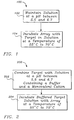
- a method 100 of hybridizing a microarray of an oligonucleotide on a surface derivatized-siliceous substrate with another oligonucleotide materials is provided.
- Figure 1 is a flow chart illustrating the steps of the method 100.
- the method 100 comprises the steps of maintaining 102 a hybridization solution at a pH between pH 5.5 and 6.7; and incubating 104 the microarray with the oligonucleotide material in the pH-maintained hybridization solution at a temperature ranging from about 55°C to about 70°C.
- hybridizations conventionally can take anywhere from less than about 2 hours to more than 48 hours to be completed at hybridization temperatures ranging from about 20°C to about 70°C.
- hybridization temperatures ranging from about 20°C to about 70°C.
- the surface derivatized-siliceous substrate degradation problem in the art was more prevalent where higher temperatures and/or longer hybridization (incubation) times were used.
- Higher temperature hybridizations at about 55°C to about 70°C are known in the art to advantageously maximize the rate of Watson/Crick base-pairing than lower temperature hybridizations at about 20°C to about 50°C, and therefore, higher temperature hybridizations are preferred.
- hybridization "completion" is dependent on the user and the target oligonucleotide material to be hybridized; the hybridization time is not intended to limit the scope of the invention, but instead, the hybridization time is intended to emphasis the benefit of the invention.
- Hybridization could comprise anywhere from 1% to 100% of the probes on at least one feature of the microarray being hybridized with the target material, for example.
- the hybridization time periods to achieve completion within the 1 % to 100% range will vary greatly.
- the hybridization time periods at the higher temperatures usually are about 8 hours to more than about 24 hours typically, to achieve optimum results or throughput, when the nucleotide make-up of the mixture of probes is diverse and/or the target population is complex.
- the problem of surface derivatized-siliceous substrate dissolution in the art was visible in hybridizations as early as about 6 hours during high temperature hybridizations.
- the present method 100 overcomes the problems of degraded siliceous surfaces during hybridizations at higher temperatures and for longer incubation time periods.
- the hybridization solution is maintained at a pH ranging from about 5.5 to 6.7 using a buffer having a buffering capacity between pH 5.5 and 6.7.
- buffering capacity it is meant that the buffer has the ability to buffer or maintain a constant pH or pH range during the incubation period and at the - hybridization temperature.
- buffers that have a buffering capacity at a pH in the pH range of 5.5 to 6.7 and that are soluble at the concentration of interest are also within the scope of the invention.
- the information in Table 1 was obtained from Sigma Catalog, "Molecular Biology Reagents”; free acids that are RNase-, DNase-, and protease-free, page 1913. Part No. Buffer p Ka at 25C Useful pH range M-3023 MES 6.1 5.5 - 6.7 M-8899 MOPS 7.2 6.5 - 7.9 MES: 2-[N-morpholino] ethane sulfonic acid. MOPS: 3-[N-morpholino] propane sulfonic acid
- the conventional SSPE buffers having a useful pH range typically above pH 7.0, contain sodium phosphate, which acts as a catalyst for dissolution and greatly accelerates the rate of dissolution at higher temperatures.
- the conventional Tris-Cl organic buffers (“Tris” is a well-known abbreviation for Tris-[hydroxymethyl] amino methane), having a p Ka of 8.1 at 25°C and a useful pH range of 7.0 - 9.0, also degrades the silylated-siliceous substrate surface when used in hybridization assays of nucleic acid materials having typical long incubation time periods and high hybridization temperatures.
- Tris buffers could be used below their "optimal buffering range" (i.e., in the pH range of pH 6.1-pH 6.7) and still provide reasonable assay performance for the purposes of the invention.
- the buffers in Table 1 are preferred since their optimal or useful buffering ranges are within the pH range of the invention. In other words, there is a higher confidence level that the buffers of Table 1 will maintain the pH in the appropriate range of pH 5.5 - 6.7 during the course of the hybridization.
- the surface derivatization on the siliceous substrate comprises silane
- the pH range is between 6.1 and 6.6 and the hybridization temperature ranges from about 60°C to 66°C.
- the pH range is between pH 6.1 and 6.4. Decreasing the pH from 6.6 to about 6.4 results in less hydrolytic degradation of the surface, improving the overall functional performance of the array.
- the present method may be used for hybridizations times ranging from less than about 2 hours to at least 48 hours. More importantly, the present invention works well where the conventional hybridization parameters fail (i.e., at the hybridization time of about 6 hours and much longer).
- the present invention works particularly well for hybridizations preferably taking up to at least about 24 hours, and more preferably between about 12 hours and about 24 hours.
- the hybridization solution of the present method further comprises a monovalent cation provided by a salt preferably selected from one or more of LiCl, NaCl, and KCI.
- a quaternary alkylammonium salt may be used instead.
- the quaternary alkylammonium salts include, but are not limited to, one or more of tetraethylammonium chloride (TEACl) and/or tetramethylammonium chloride (TMACl).
- TEACl tetraethylammonium chloride
- TMACl tetramethylammonium chloride
- the effectiveness of using quaternary alkylammonium salts in the buffer of the invention to overcome the dissolution problem in the art may be limited.
- Quaternary alkylammonium salts are known to lower the melting temperatures (T m s ) of complementary nucleotide hybrids. Therefore, the optimal hybridization temperatures when using a quaternary alkylammonium salt in the buffer may be in a range where the rate of dissolution of siliceous surfaces is relatively slow. Their use and effectiveness in the invention will depend on many factors, such as concentration, oligomer length, etc. More preferably, the buffer is selected from one or more of Li-MES, Na-MES, K-MES, Li-MOPS, Na-MOPS or K-MOPS.
- the hybridization solution further comprises one or more of a chelating agent and/or a surfactant.
- a chelating agent is used to sequester divalent cations that stabilize nucleic acid tertiary structures.
- the chelating agent may also participate in degrading the silylated surface of the siliceous substrate. Therefore, whether to use a chelating agent and how much to use in the hybridization solution will depend on many factors, which one skilled in the art can determine without undue experimentation.
- Divalent cation chelating agents useful for the invention include, but are not limited to, EDTA (ethylenediaminetetraacetic acid), CDTA (trans-1,2-diaminocyclohexanetetraacetic acid) or DTPA (diethylenetriaminopentaacetic acid).
- EDTA ethylenediaminetetraacetic acid
- CDTA trans-1,2-diaminocyclohexanetetraacetic acid
- DTPA diethylenetriaminopentaacetic acid
- a surfactant is useful for providing better mixing of the hybridization solution, target material and the probes on the microarray.
- the surfactant may contribute to silylated-siliceous substrate degradation also. Therefore, whether to use a surfactant, which one to use and how much to use in the hybridization solution will depend on many factors, including but not limited to incubation time, temperature, pH and the siliceous substrate used, all of which one skilled in the art can readily determine without undue experimentation.
- the surfactant may be selected from one or more of Triton X-102® , Triton X-100® , or a carboxylic acid salt.
- Triton X-102® and Triton X-100® are trademarks of Union Carbide and are octylphenoxy-polyoxyethylene ethers.
- the carboxylic acid salt preferably includes, but is not limited to, one or more of sodium dodecyl sulfate, N-lauryl sarcoside, acylated polypeptides, linear alkybenzene sulfonates, lignin sulfonates, paraffin sulfonates, sulfosuccinate esters, alkylnaphthalene sulfonates, isethionates, phosphoric acid esters, perfluorinated carboxylic acid salts, polyoxyethylenated alkylphenols, polyoxyethylenated straight chain alcohols, polyoxyethylenated polyoxypropylene glycols, polyoxyethylenated mercaptans, long chain carboxylic acid esters, alkanol
- dodecyl sulfates are used to slow RNase degradation during hybridizations and therefore, have particular use when the target material or the nucleic acid probes are RNA-based.
- dodecyl sulfate surfactants may not be necessary when the target material and probes are DNA-based.
- a dodecyl sulfate surfactant is included in the hybridization solution, it is well known that using a Li+ salt will help keep the dodecyl sulfate in solution.
- a method 200 of hybridizing a microarray of an oligonucleotide on a silylated-siliceous substrate with another oligonucleotide material is provided.
- Figure 2 is a flow chart illustrating the steps of the method 200.
- the method 200 of hybridizing comprises the steps combining the oligonucleotide material with a hybridization solution having a pH between pH 5.5 and 6.7 comprising a buffer and a monovalent cation; and incubating 204 the material in the buffered solution with the microarray at a hybridization temperature ranging from about 55°C to about 70°C so as to hybridize the oligonucleotide material.
- the pH of the hybridization solution ranges from pH 6.0 to 6.7, more preferably from pH 6.1 to 6.6, and most preferably from pH 6.1 to 6.4.
- the buffer is selected from one or more of the buffers listed in Table 1, although other buffers with similar buffering capacity may be used as long as they are soluble at the concentration of interest.
- the monovalent cation is provided by a salt preferably selected from one or more of NaCl, LiCl or KCl.
- the incubation temperature preferably ranges from 60°C to 66°C and the incubation time to hybridize the oligonucleotide material is greater than or equal to 6 hours (e.g., to at least about 48 hours), preferably within at least 24 hours, and more preferably from about 12 hours to at least 24 hours.
- the hybridization solution used in method 200 preferably may further comprise one or more of a chelating agent and/or a surfactant, as described above.
- a hybridization solution having a pH within a range of between pH 5.5 and 6.7.
- the lower limit between pH 5.5 and pH 6.0 more non Watson/Crick base pairing tends to occur.
- non-Watson/Crick base pairing is acceptable, but not preferred.
- the lower limit of the pH range is not less than pH 6.0, and more preferably, is pH 6.1, to further minimize or substantially eliminate non-Watson/Crick base pairing.
- the upper limit of the pH above pH 6.7, the amount of observable hybridizations decreases, believed to be due to an increase in silylated-siliceous surface degradation.
- pH 6.6 and below the amount of observable hybridizations increases significantly.
- the upper limit in pH range is not more than pH 6.6 to further increase the amount of observable hybridizations at high temperatures, and more preferably, the upper limit is a pH of 6.4, which has shown to slow degradation of the surface, improving the overall functional performance of the array.
- a pH of less than pH 6.0 or greater than pH 6.6 provide hybridizations in accordance with the invention that are a significant improvement over conventional methods, the yield and quality of the hybridizations are not as optimum.
- a preferred pH for the invention is a pH within the range of pH 6.0 and 6.6, more preferably, the pH is within the range of pH 6.1 and 6.6, and most preferably the pH is within the range of pH 6.1 and 6.4, to produce optimum hybridizations at high temperatures.
- the present invention according to method 100, 200 advantageously can provide optimized hybridization results at conventionally high hybridization temperatures and long incubation time periods on silylated-siliceous substrates.
- the oligonucleotide bound to the microarray surface may be either a probe or a target under test.
- the other oligonucleotide material may be either the probe or the target.
- the target material or the probes may be directly or indirectly labeled using conventional methods, such that after hybridization, the targets or probes that are hybridized emit a signal when optically interrogated.
- the resulting hybridized microarray of the invention is washed to flush unhybridized material off the surface and then spun or blown dry using conventional methods.
- the dried microarray is optically scanned to measure the degree of hybridization using conventional scanning equipment and techniques.
- a post-hybridization stain such as streptavidin covalently linked to a fluorophore or colloidal gold, is typically applied to the microarray after hybridization, but before final washing.
- streptavidin covalently linked to a fluorophore or colloidal gold
- a kit in another aspect of the invention, comprises a microarray populated with an oligonucleotide for a user.
- the microarray comprises a siliceous substrate with a surface derivatization to facilitate the immobilization of the oligonucleotide thereon.
- the substrate is a silylated-siliceous substrate.
- the kit further comprises instructions to the user for performing a high temperature hybridization assay using the method 100, 200.
- the kit further comprises a hybridization solution comprising a buffer having a buffering capacity at a pH within the range of pH 5.5 and 6.7, as described above for method 100, 200.
- the user or an agent thereof will typically expose an oligonucleotide sample to the microarray in accordance with the instructions.
- the hybridized array is then interrogated following exposure. Interrogation is usually accomplished by a suitable scanner that can read the location and intensity of fluorescence at each feature of an array following exposure to a fluorescently labeled sample (such as a polynucleotide containing sample).
- a suitable scanner may be similar to the GENEARRAY scanner available from Hewlett-Packard, Palo Alto, CA.
- Results from the interrogation can be processed results, such as obtained by rejecting a reading for a feature which is below a predetermined threshold and/or forming conclusions based on the pattern read from the array (such as whether or not a particular target sequence may have been present).
- the hybridization assay may be performed in a first location, the interrogation may be performed in the first or a second location different from the first by a user or an agent thereof, and the results of the interrogation (processed or not) can be forwarded (such as by communication) to a third location remote from the first or second location, if desired, and received there for further use by the user or an agent thereof.
- remote location it is meant that the first, second or third location is at least in a different building from the others, and may be at least one mile, ten miles, or at least one hundred miles apart.
- Communication references transmitting the data representing that information as electrical signals over a suitable communication channel (for example, a private or public network).
- Forceing an item (including information) refers to any means of getting that item from one location to the next, whether by physically transporting that item or otherwise (where that is possible) and includes, at least in the case of data, physically transporting a medium carrying the data or communicating the data.
- the present invention allows sensitive, selective detection of nucleic acid targets, while preserving the intactness of the surface derivatized-siliceous substrate.
- the method of the invention overcomes the problems found in the art of performing assays on the preferred silylated-siliceous substrates at the preferred high hybridization temperatures of between about 55°C and 70°C for long incubation times of greater than about 6 hours.
- the following examples illustrate preferred hybridization solutions having buffering capacity between pH 6.0 and 6.6 at the hybridization temperature range of 55°C and 70°C.
- the solutions were used in the method of hybridizing 100, 200 of the invention using arrays of oligomers attached to array siliceous substrates that were silane-derivatized.
- the examples herein are illustrative only and not intended to limit the scope of the invention.
- the components, the volumes and the final concentrations below may each vary and still be within the scope of the invention.
Landscapes
- Chemical & Material Sciences (AREA)
- Organic Chemistry (AREA)
- Life Sciences & Earth Sciences (AREA)
- Zoology (AREA)
- Wood Science & Technology (AREA)
- Proteomics, Peptides & Aminoacids (AREA)
- Health & Medical Sciences (AREA)
- Engineering & Computer Science (AREA)
- Microbiology (AREA)
- Immunology (AREA)
- Physics & Mathematics (AREA)
- Molecular Biology (AREA)
- Biotechnology (AREA)
- Biophysics (AREA)
- Analytical Chemistry (AREA)
- Biochemistry (AREA)
- Bioinformatics & Cheminformatics (AREA)
- General Engineering & Computer Science (AREA)
- General Health & Medical Sciences (AREA)
- Genetics & Genomics (AREA)
- Measuring Or Testing Involving Enzymes Or Micro-Organisms (AREA)
Abstract
Description
| Part No. | Buffer | pKa at 25C | Useful pH range |
| M-3023 | MES | 6.1 | 5.5 - 6.7 |
| M-8899 | MOPS | 7.2 | 6.5 - 7.9 |
| MES: 2-[N-morpholino] ethane sulfonic acid. | |||
| MOPS: 3-[N-morpholino] propane sulfonic acid |
| Final Concentration | Component | Volume (µl) |
| Nuclease-free water | 230 | |
| 1225 mM 8.0 M LiCl | 8.0 M LiCl | 1530 |
| 300 mM | 0.5 M Li-MES (pH 6.1) | 6000 |
| 12 mM | 0.5 M EDTA (pH 8.0) | 240 |
| 3.0% (w/v) 2.0% (w/v) | 15% Lithium Dodecyl Sulfate, 10% Triton X-102 | 2000 |
| Total monovalent cation is 1500 mM | Volume 2x (ml) | 10 |
| Final Concentration | Component | Volume (µl) |
| Nuclease-free water | 398 | |
| 1225 mM | 8.0 M LiCl | 1530 |
| 300 mM | 0.5 M Li-MES (pH 6.1) | 6000 |
| 36 mM | 0.5 M NaCl | 72 |
| 3.0% (w/v) 2.0% (w/v) | 15% Lithium Dodecyl Sulfate, 10% Triton X-102 | 2000 |
| Total monovalent cation is 1500 mM | Volume 2x (ml) | 10 |
Claims (10)
- A method (100, 200) of hybridizing a microarray of an oligonucleotide bound to a surface derivatized siliceous substrate with another oligonucleotide material comprising the steps of:maintaining (102) a hybridization solution at a pH between
pH 5.5 and 6.7 with a
buffer having buffering capacity between pH 5.5 and 6.7 and a monovalent cation; andincubating (104, 204) the microarray with the oligonucleotide material in the pH maintained hybridization solution at a hybridization temperature ranging from about 55°C to about 70°C. - The method (100, 200) of Claim 1, wherein the buffer is selected from one or more of 2-[N-morpholino] ethane sulfonic acid (MES) or 3-[N-morpholino] propane sulfonic acid (MOPS) and the monovalent cation is provided by a salt selected from one or more of LiCl, NaCl, KCI, or a quaternary allcylammonium salt.5
- The method (100, 200) of any of Claims 1-2, wherein the pH is maintained (102) between pH 6.0 and 6.6.
- The method (100, 200) of any of Claims 1-3, wherein the pH is maintained (102) between pH 6.1 and 6.6.
- The method (100, 200) of any of Claim 1-4, wherein the pH is maintained (102) between pH 6.1 and 6.4 and the microarray and the oligonucleotide material are incubated (104, 204) for a time period ranging from less than about 2 hours to at least 48 hours in the pH-maintained hybridization solution.
- The method (100, 200) of any of Claims 1-5, wherein the hybridization temperature ranges from about 60°C to 66°C.
- The method (100, 200) of any of Claims 1-6, wherein the hybridization solution further comprises one or both of a chelating agent and a surfactant.
- The method (100, 200) of any of Claims 1-7, wherein the surface of the siliceous substrate is silane-derivatized.
- The method according to any of Claims 1-8, after the step of incubating, further comprising one or more of the steps of:interrogating the hybridized microarray at a first location;transmitting data representing a result of the interrogation; andreceiving the transmitted data at a second location, wherein the first location is the same or remote from the second location.
- The method (100, 200) of any of Claims 1-9 used in a kit for hybridizing an oligonucleotide material comprising:a microarray having a sifceous substrate, wherein a surface of the substrate is derivatized, and a plurality of an oligonucleotide attached to the surface in an array pattern of features; andinstructions for using the kit with the oligonucleotide material comprising the method.
Applications Claiming Priority (2)
| Application Number | Priority Date | Filing Date | Title |
|---|---|---|---|
| US65548200A | 2000-09-05 | 2000-09-05 | |
| US655482 | 2000-09-05 |
Publications (2)
| Publication Number | Publication Date |
|---|---|
| EP1186671A2 true EP1186671A2 (en) | 2002-03-13 |
| EP1186671A3 EP1186671A3 (en) | 2003-12-17 |
Family
ID=24629061
Family Applications (1)
| Application Number | Title | Priority Date | Filing Date |
|---|---|---|---|
| EP01121185A Withdrawn EP1186671A3 (en) | 2000-09-05 | 2001-09-04 | Method for hybridization of arrays on siliceous surfaces |
Country Status (1)
| Country | Link |
|---|---|
| EP (1) | EP1186671A3 (en) |
Cited By (3)
| Publication number | Priority date | Publication date | Assignee | Title |
|---|---|---|---|---|
| EP1302548A1 (en) * | 2001-07-05 | 2003-04-16 | Agilent Technologies, Inc. | Buffer composition for hybridization of microarrays |
| EP1595127A4 (en) * | 2002-12-13 | 2006-04-19 | Affymetrix Inc | Chip-in-a-well scanning |
| EP1702990A1 (en) * | 2005-03-16 | 2006-09-20 | Agilent Technologies, Inc. | Composition and method for array hybridization |
Family Cites Families (4)
| Publication number | Priority date | Publication date | Assignee | Title |
|---|---|---|---|---|
| US6203989B1 (en) * | 1998-09-30 | 2001-03-20 | Affymetrix, Inc. | Methods and compositions for amplifying detectable signals in specific binding assays |
| US6506594B1 (en) * | 1999-03-19 | 2003-01-14 | Cornell Res Foundation Inc | Detection of nucleic acid sequence differences using the ligase detection reaction with addressable arrays |
| CA2366459A1 (en) * | 1999-03-26 | 2000-10-05 | Affymetrix, Inc. | Universal arrays |
| US6582906B1 (en) * | 1999-04-05 | 2003-06-24 | Affymetrix, Inc. | Proportional amplification of nucleic acids |
-
2001
- 2001-09-04 EP EP01121185A patent/EP1186671A3/en not_active Withdrawn
Cited By (6)
| Publication number | Priority date | Publication date | Assignee | Title |
|---|---|---|---|---|
| EP1302548A1 (en) * | 2001-07-05 | 2003-04-16 | Agilent Technologies, Inc. | Buffer composition for hybridization of microarrays |
| US6753145B2 (en) | 2001-07-05 | 2004-06-22 | Agilent Technologies, Inc. | Buffer composition and method for hybridization of microarrays on adsorbed polymer siliceous surfaces |
| EP1595127A4 (en) * | 2002-12-13 | 2006-04-19 | Affymetrix Inc | Chip-in-a-well scanning |
| EP1702990A1 (en) * | 2005-03-16 | 2006-09-20 | Agilent Technologies, Inc. | Composition and method for array hybridization |
| JP2006254912A (en) * | 2005-03-16 | 2006-09-28 | Agilent Technol Inc | Composition and method for array hybridization |
| US7618777B2 (en) | 2005-03-16 | 2009-11-17 | Agilent Technologies, Inc. | Composition and method for array hybridization |
Also Published As
| Publication number | Publication date |
|---|---|
| EP1186671A3 (en) | 2003-12-17 |
Similar Documents
| Publication | Publication Date | Title |
|---|---|---|
| US6753145B2 (en) | Buffer composition and method for hybridization of microarrays on adsorbed polymer siliceous surfaces | |
| US11377676B2 (en) | Methods for seamless nucleic acid assembly | |
| JP7169999B2 (en) | Methods for Seamless Nucleic Acid Assembly | |
| EP3020831B1 (en) | Methods for helicase based amplification and detection of polynucleotides | |
| JP4551216B2 (en) | Methods for fragmenting, labeling and immobilizing nucleic acids | |
| US20090233804A1 (en) | Methods for analysis of nucleic acid methylation status and methods for fragmentation, labeling and immobilization of nucleic acids | |
| US20020187476A1 (en) | Methods and compositions for arraying nucleic acids onto a solid support | |
| EP1589118A2 (en) | Methods and compositions for assessing CpG methylation | |
| US20080220979A1 (en) | Rapid Method To Detect Nucleic Acid Molecules | |
| US20070009915A1 (en) | Microarray analysis of RNA | |
| US20060210997A1 (en) | Composition and method for array hybridization | |
| EP2464729A2 (en) | METHODS, COMPOSITIONS, AND KITS FOR GENERATING rRNA-DEPLETED SAMPLES OR ISOLATING rRNA FROM SAMPLES | |
| US20070048747A1 (en) | Methods for assaying analytes | |
| JP2005519264A (en) | Surface modification, linker bonding, and polymerization methods | |
| US20020115841A1 (en) | Methods and compositions for stripping nucleic acids | |
| KR20010101093A (en) | Method for immobilizing oligonucleotide on a carrier | |
| JP2003144172A (en) | Oligonucleotide-immobilized substrate for methylation detection | |
| US20090197775A1 (en) | Nuclease on chip | |
| CN1610757A (en) | Method for detecting hybridization events in nucleic acids | |
| US20070049745A1 (en) | Oligonucleotide synthesis using periodate salts | |
| US20100056382A1 (en) | Dna millichip | |
| US20080102454A1 (en) | Reducing size of analytes in RNA sample | |
| JP2009284783A (en) | Method for preparing solution for hybridization | |
| US7645578B2 (en) | Cleavage of RNA at redundant sites | |
| JP2001281246A (en) | Immobilized nucleic acids and nucleic acid detection methods |
Legal Events
| Date | Code | Title | Description |
|---|---|---|---|
| PUAI | Public reference made under article 153(3) epc to a published international application that has entered the european phase |
Free format text: ORIGINAL CODE: 0009012 |
|
| AK | Designated contracting states |
Kind code of ref document: A2 Designated state(s): AT BE CH CY DE DK ES FI FR GB GR IE IT LI LU MC NL PT SE TR |
|
| AX | Request for extension of the european patent |
Free format text: AL;LT;LV;MK;RO;SI |
|
| RAP1 | Party data changed (applicant data changed or rights of an application transferred) |
Owner name: AGILENT TECHNOLOGIES, INC. (A DELAWARE CORPORATION |
|
| PUAL | Search report despatched |
Free format text: ORIGINAL CODE: 0009013 |
|
| AK | Designated contracting states |
Kind code of ref document: A3 Designated state(s): AT BE CH CY DE DK ES FI FR GB GR IE IT LI LU MC NL PT SE TR |
|
| AX | Request for extension of the european patent |
Extension state: AL LT LV MK RO SI |
|
| AKX | Designation fees paid | ||
| REG | Reference to a national code |
Ref country code: DE Ref legal event code: 8566 |
|
| STAA | Information on the status of an ep patent application or granted ep patent |
Free format text: STATUS: THE APPLICATION IS DEEMED TO BE WITHDRAWN |
|
| 18D | Application deemed to be withdrawn |
Effective date: 20040618 |