EP1186287A1 - Hair growth or hair formation controlling agents - Google Patents
Hair growth or hair formation controlling agents Download PDFInfo
- Publication number
- EP1186287A1 EP1186287A1 EP01917702A EP01917702A EP1186287A1 EP 1186287 A1 EP1186287 A1 EP 1186287A1 EP 01917702 A EP01917702 A EP 01917702A EP 01917702 A EP01917702 A EP 01917702A EP 1186287 A1 EP1186287 A1 EP 1186287A1
- Authority
- EP
- European Patent Office
- Prior art keywords
- same
- hydrogen
- alkyl
- phenyl
- formula
- Prior art date
- Legal status (The legal status is an assumption and is not a legal conclusion. Google has not performed a legal analysis and makes no representation as to the accuracy of the status listed.)
- Withdrawn
Links
- 0 CC1=NC(S*)=N*1 Chemical compound CC1=NC(S*)=N*1 0.000 description 6
- MYQGYHHHXSLJKS-LOZZCIAOSA-N C=NNC(CCc1c2O[C@@H](C[C@H]([C@@H]3CC[C@H](CC4CCCCC4)O)O)[C@@H]3c2ccc1)NN Chemical compound C=NNC(CCc1c2O[C@@H](C[C@H]([C@@H]3CC[C@H](CC4CCCCC4)O)O)[C@@H]3c2ccc1)NN MYQGYHHHXSLJKS-LOZZCIAOSA-N 0.000 description 1
- KYRMPMCAOPMOIR-UHFFFAOYSA-N CCc1nnn[nH]1 Chemical compound CCc1nnn[nH]1 KYRMPMCAOPMOIR-UHFFFAOYSA-N 0.000 description 1
Classifications
-
- A—HUMAN NECESSITIES
- A61—MEDICAL OR VETERINARY SCIENCE; HYGIENE
- A61Q—SPECIFIC USE OF COSMETICS OR SIMILAR TOILETRY PREPARATIONS
- A61Q7/00—Preparations for affecting hair growth
-
- A—HUMAN NECESSITIES
- A61—MEDICAL OR VETERINARY SCIENCE; HYGIENE
- A61K—PREPARATIONS FOR MEDICAL, DENTAL OR TOILETRY PURPOSES
- A61K31/00—Medicinal preparations containing organic active ingredients
- A61K31/33—Heterocyclic compounds
- A61K31/335—Heterocyclic compounds having oxygen as the only ring hetero atom, e.g. fungichromin
- A61K31/34—Heterocyclic compounds having oxygen as the only ring hetero atom, e.g. fungichromin having five-membered rings with one oxygen as the only ring hetero atom, e.g. isosorbide
- A61K31/343—Heterocyclic compounds having oxygen as the only ring hetero atom, e.g. fungichromin having five-membered rings with one oxygen as the only ring hetero atom, e.g. isosorbide condensed with a carbocyclic ring, e.g. coumaran, bufuralol, befunolol, clobenfurol, amiodarone
-
- A—HUMAN NECESSITIES
- A61—MEDICAL OR VETERINARY SCIENCE; HYGIENE
- A61K—PREPARATIONS FOR MEDICAL, DENTAL OR TOILETRY PURPOSES
- A61K31/00—Medicinal preparations containing organic active ingredients
- A61K31/33—Heterocyclic compounds
- A61K31/395—Heterocyclic compounds having nitrogen as a ring hetero atom, e.g. guanethidine or rifamycins
- A61K31/41—Heterocyclic compounds having nitrogen as a ring hetero atom, e.g. guanethidine or rifamycins having five-membered rings with two or more ring hetero atoms, at least one of which being nitrogen, e.g. tetrazole
-
- A—HUMAN NECESSITIES
- A61—MEDICAL OR VETERINARY SCIENCE; HYGIENE
- A61K—PREPARATIONS FOR MEDICAL, DENTAL OR TOILETRY PURPOSES
- A61K8/00—Cosmetics or similar toiletry preparations
- A61K8/18—Cosmetics or similar toiletry preparations characterised by the composition
- A61K8/30—Cosmetics or similar toiletry preparations characterised by the composition containing organic compounds
- A61K8/49—Cosmetics or similar toiletry preparations characterised by the composition containing organic compounds containing heterocyclic compounds
-
- A—HUMAN NECESSITIES
- A61—MEDICAL OR VETERINARY SCIENCE; HYGIENE
- A61K—PREPARATIONS FOR MEDICAL, DENTAL OR TOILETRY PURPOSES
- A61K8/00—Cosmetics or similar toiletry preparations
- A61K8/18—Cosmetics or similar toiletry preparations characterised by the composition
- A61K8/30—Cosmetics or similar toiletry preparations characterised by the composition containing organic compounds
- A61K8/49—Cosmetics or similar toiletry preparations characterised by the composition containing organic compounds containing heterocyclic compounds
- A61K8/4973—Cosmetics or similar toiletry preparations characterised by the composition containing organic compounds containing heterocyclic compounds with oxygen as the only hetero atom
-
- A—HUMAN NECESSITIES
- A61—MEDICAL OR VETERINARY SCIENCE; HYGIENE
- A61P—SPECIFIC THERAPEUTIC ACTIVITY OF CHEMICAL COMPOUNDS OR MEDICINAL PREPARATIONS
- A61P17/00—Drugs for dermatological disorders
- A61P17/14—Drugs for dermatological disorders for baldness or alopecia
-
- A—HUMAN NECESSITIES
- A61—MEDICAL OR VETERINARY SCIENCE; HYGIENE
- A61K—PREPARATIONS FOR MEDICAL, DENTAL OR TOILETRY PURPOSES
- A61K2800/00—Properties of cosmetic compositions or active ingredients thereof or formulation aids used therein and process related aspects
- A61K2800/74—Biological properties of particular ingredients
- A61K2800/78—Enzyme modulators, e.g. Enzyme agonists
- A61K2800/782—Enzyme inhibitors; Enzyme antagonists
Definitions
- the present invention relates to an agent for modulating growth or generation of hair, which promotes or inhibits growth or generation of hair.
- Each hair has its own growth cycle (anagen, catagen, telogen and defluxion). However, when generation or growth cycle of each hair is disturbed by a genetic cause or by some other cause, the hair rapidly falls out or conversely grows lengthily and thickly. Abnormal generation of hair includes atrichia and hirsutism, and abnormal hair growth includes alopecia (male pattern alopecia and alopecia areata). These causes are thought to include various factors such as influences by hormones, decrease in blood flow into, hair follicle hypersteatosis, unbalanced diet and stress. Thus, conventional therapy is performed by reducing these causes.
- therapies of alopecia include inhibition of androgen, increasing in blood flow into hair follicle, pharmacotherapies using compounds which remove unnecessary cuticle and sebum, dietetic treatment and psychotherapies. Since the real cause of alopecia has not been completely clarified, sufficient therapeutic or preventive effect has not been attained.
- Methods for removing hairs such as body hairs include physical treatments using shavers or depilators, and pharmacotherapies using grainer creams or depilatory creams. However, these methods accompany skin chapping or irritation pain, so that they are not satisfactory as depiliation methods. Thus, development of an agent for modulating growth or generation of hair, which shows sufficient effect, has been demanded for a long time.
- prostaglandin E 2 shows a wide variety of physiological actions such as uterine-contracting action, gastric acid secretion-inhibiting action, gastric mucosa-protecting action, stimulation action of peristalsis of digestive tract, febrifacient action and diarrhea-causing action. Therefore, if PGE 2 is used for the purpose of growing or generating hair, these actions act as side effects. physiological actions by PGE 2 are expressed by binding of PGE 2 to specific receptors.
- the receptors to which PGE 2 bind may be classified into 4 receptor subtypes called EP1, EP2, EP3 and EP4 receptors (Coleman,R.A.et al., Pharmacol. Rev.,46,205-229(1994)). It is also known that each receptor subtype participates in different physiological action. For example, the febrile response by PGE 2 is caused by binding of PGE 2 to EP3 receptor (Ushikubi F., Nature, 395, 281-284 (1998)).
- An object of the present invention is to provide an agent for modulating growth or generation of hair, which has an excellent activity for modulating growth or generation of hair, and of which side effect is small.
- the present inventors intensively searched the compounds which have small side effects and which show excellent activities for modulating growth or generation of hair to discover that compounds which strongly act on EP4 receptor and which weakly bind to other subtypes of PGE 2 attain this object, thereby completing the present invention.
- the present invention provides an agent for modulating growth or generation of hair comprising a prostaglandin EP4 receptor ligand as an active ingredient.
- the present invention also provides use of a prostaglandin EP4 receptor ligand for production of an agent for modulating growth or generation of hair.
- the present invention further provides a method for modulating growth or generation of hair comprising administering a prostaglandin EP4 receptor ligand in an amount effective for modulating growth or generation of hair to human or an animal.
- the agent for modulating growth or generation of hair according to the present invention has an excellent activity for modulating growth or generation of hair, and its side effects are small.
- the prostaglandin EP4 receptor ligand is not restricted as long as it acts on prostaglandin EP4 receptor.
- R 2 examples include hydrogen, methyl, ethyl, propyl, butyl, isopropyl, isobutyl, tert-butyl, trifluoromethyl, acetyl, propionyl, benzoyl, phenylacetyl, methoxycarbonyl and ethoxycarbonyl.
- preferred are hydrogen, methyl, ethyl, propyl, butyl, isopropyl, isobutyl, tert-butyl and trifluoromethyl, more preferred are hydrogen, methyl, ethyl, propyl, butyl and trifluoromethyl, and still more preferred are hydrogen and methyl.
- R 3 examples include hydrogen, methyl, ethyl, propyl, butyl, isopropyl, isobutyl, tert-butyl, formyl, acetyl, propionyl, butyloyl, benzoyl, phenylacetyl, 3-phenylpropionyl, 10-phenyldecanoyl, p-phenylbenzoyl, ⁇ -naphthoyl, ⁇ -naphthoyl, benzyl, phenetyl, 3-phenylpropyl, 6-phenylhexyl, 10-phenyldecyl, p-methylbenzyl, p-ethylbenzyl, p-propylbenzyl, p-pentylbenzyl, p-nonylbenzyl, 3,5-dimethylbenzyl, 3,5-diethylbenzyl, 3,5-dibutylbenzyl, p-
- R 4 examples include methyl, ethyl, propyl, butyl, pentyl, hexyl, heptyl, octyl, dodecyl, isopropyl, isobutyl, tert-butyl, 1-methylbutyl, 2-methylbutyl, 3-methylbutyl, 1-methylpentyl, 2-methylpentyl, 3-methylpentyl, 4-methylpentyl, 1-methylhexyl, 2-methylhexyl, 3-methylhexyl, 4-methylhexyl, 5-methylhexyl, 1-methylheptyl, 2-methylheptyl, 3-methylheptyl, 4-methylheptyl, 5-methylheptyl, 6-methylheptyl, 1-methyloctyl, 2-methyloctyl, 3-methyloctyl, 4-methyloctyl, 5-methyloctyl, 6-methyloctyl, 7-methyloctyl, 1-methyln
- R 5 include hydrogen, lithium ion, sodium ion, potassium ion, magnesium ion, calcium ion, cations derived from amines (e.g., methylamine, dimethylamine, triethylamine, ethylamine, dibutylamine, triisopropylamine, N-methylhexylamine, decylamine, dodecylamine, allylamine, crotylamine, cyclopentylamine, dicyclohexylamine, benzylamine, dibenzylamine, ⁇ -phenylethylamine, ⁇ -phenylethylamine, ethylenediamine, diethylenetriamine, 1-methylpiperidine, 4-ethylmorpholine, 1-isopropylpyrrolidine, 2-methylpyrrolidine, 1,4-dimethylpiperazine, 2-methylpiperidine, mono-, di-, and triethanolamine, ethyldiethanolamine, N-butylethanol
- R 6 examples include cyclopropyl, cyclobutyl, cyclopentyl, cyclohexyl, cycloheptyl, cyclooctyl, cyclononyl, cyclododecyl, 2-methylcyclopropyl, 3-methylcyclobutyl, 3-methylcyclopentyl, 4-methylcyclohexyl, 4-methylcycloheptyl, 5-methylcyclooctyl and 5-methylcyclononyl.
- cyclopentyl preferred are cyclohexyl, cycloheptyl, 3-methylcyclopentyl, 4-methylcyclohexyl and 4-methylcycloheptyl, and more preferred are cyclohexyl and 4-methylcyclohexyl, still more preferred is cyclohexyl.
- R 7 examples include hydrogen, methyl, ethyl, propyl, butyl, isopropyl, isobutyl and tert-butyl. Among these, preferred are hydrogen, methyl, ethyl, isopropyl and tert-butyl, still more preferred are hydrogen, methyl and ethyl, and still more preferred are hydrogen and methyl.
- R 8 examples include hydrogen, methyl, ethyl, propyl, butyl, isopropyl, isobutyl and tert-butyl. Among these, preferred are hydrogen, methyl, ethyl, isopropyl and tert-butyl, still more preferred are hydrogen, methyl and ethyl, and still more preferred are hydrogen and methyl.
- R 9 examples include hydrogen, methyl, ethyl, propyl, butyl, isopropyl, isobutyl and tert-butyl. Among these, preferred are hydrogen, methyl, ethyl, isopropyl and tert-butyl, still more preferred are hydrogen, methyl and ethyl, and still more preferred are hydrogen and methyl.
- R 10 represents hydrogen or benzoyl, and hydrogen is especially preferred.
- R 11 represents phenyl, p-bromophenyl, p-chlorophenyl, p-biphenyl, p-nitrophenyl, p-benzamidephenyl or 2-naphthyl, preferably phenyl, p-bromophenyl, p-chlorophenyl, p-biphenyl or p-nitrophenyl, more preferably phenyl, p-chlorophenyl or p-biphenyl, still more preferably phenyl.
- R 12 examples include hydrogen, methyl, ethyl, propyl, butyl, pentyl, hexyl, heptyl, octyl, dodecyl, isopropyl, isobutyl, tert-butyl, 4-methylpentyl, 5-methylhexyl, 6-methylheptyl, 7-methyloctyl, benzyl, phenetyl, 3-phenylpropyl, 6-phenylhexyl, p-methylbenzyl, p-ethylbenzyl, p-propylbenzyl, p-pentylbenzyl, 3,5-dimethylbenzyl and 3,5-diethylbenzyl.
- R13 examples include hydrogen, methyl, ethyl, propyl, butyl, pentyl, hexyl, heptyl, octyl, dodecyl, isopropyl, isobutyl, tert-butyl, 4-methylpentyl, 5-methylhexyl, 6-methylheptyl, 7-methyloctyl, benzyl, phenetyl, 3-phenylpropyl, 6-phenylhexyl, p-methylbenzyl, p-ethylbenzyl, p-propylbenzyl, p-pentylbenzyl, 3,5-dimethylbenzyl and 3,5-diethylbenzyl.
- R 14 examples include methyl, ethyl, propyl, butyl, pentyl, hexyl, octyl, hexadecanyl, octaeicosanyl, acetyl, octanoyl, decanoyl, palmitoyl, eicosanoyl and hexaeicosanoyl.
- preferred are methyl, ethyl, propyl, acetyl, octanoyl and decanoyl, more preferred are methyl, ethyl, acetyl and octanoyl, and still more preferred are methyl and acetyl.
- R 15 examples include hydrogen, methyl, ethyl, propyl, butyl, isopropyl, isobutyl, tert-butyl, trifluoromethyl, acetyl, propionyl, benzoyl, phenylacetyl, methoxycarbonyl and ethoxycarbonyl.
- preferred are hydrogen, methyl, ethyl, propyl, butyl, isopropyl, isobutyl, tert-butyl and trifluoromethyl, more preferred are hydrogen, methyl, ethyl, propyl, butyl and trifluoromethyl, and still more preferred are hydrogen and methyl.
- R 16 examples include hydrogen, methyl, ethyl, propyl, butyl, pentyl, hexyl, heptyl, octyl, dodecyl, isopropyl, isobutyl, tert-butyl, 1-methylbutyl, 2-methylbutyl, 3-methylbutyl, 1-methylpentyl, 2-methylpentyl, 3-methylpentyl, 4-methylpentyl, 1-methylhexyl, 2-methylhexyl, 3-methylhexyl, 4-methylhexyl, 5-methylhexyl, 1-methylheptyl, 2-methylheptyl, 3-methylheptyl, 4-methylheptyl, 5-methylheptyl, 6-methylheptyl, 1-methyloctyl, 2-methyloctyl, 3-methyloctyl, 4-methyloctyl, 5-methyloctyl, 6-methyloctyl, 7-methyloctyl, 1-
- preferred are hydrogen, methyl, ethyl, propyl, butyl, phenyl, acetyl and propionyl, more preferred are hydrogen, methyl, ethyl, propyl, phenyl and acetyl, and still more preferred are hydrogen, methyl, phenyl and acetyl.
- R 17 examples include methyl, ethyl, propyl, butyl, pentyl, hexyl, heptyl, octyl, dodecyl, isopropyl, isobutyl, tert-butyl, 1-methylbutyl, 2-methylbutyl, 3-methylbutyl, 1-methylpentyl, 2-methylpentyl, 3-methylpentyl, 4-methylpentyl, 1-methylhexyl, 2-methylhexyl, 3-methylhexyl, 4-methylhexyl, 5-methylhexyl, 1-methylheptyl, 2-methylheptyl, 3-methylheptyl, 4-methylheptyl, 5-methylheptyl, 6-methylheptyl, 1-methyloctyl, 2-methyloctyl, 3-methyloctyl, 4-methyloctyl, 5-methyloctyl, 6-methyloctyl, 7-methyloctyl, 1-methyln
- R 18 examples include methyl, ethyl, propyl, butyl, pentyl, hexyl, heptyl, octyl, dodecyl, isopropyl, isobutyl, tert-butyl, 1-methylbutyl, 2-methylbutyl, 3-methylbutyl, 1-methylpentyl, 2-methylpentyl, 3-methylpentyl, 4-methylpentyl, 1-methylhexyl, 2-methylhexyl, 3-methylhexyl, 4-methylhexyl, 5-methylhexyl, 1-methylheptyl, 2-methylheptyl, 3-methylheptyl, 4-methylheptyl, 5-methylheptyl, 6-methylheptyl, 1-methyloctyl, 2-methyloctyl, 3-methyloctyl, 4-methyloctyl, 5-methyloctyl, 6-methyloctyl, 7-methyloctyl, 1-methyln
- R 20 examples include hydrogen, methyl, ethyl, propyl, butyl, pentyl, hexyl, heptyl, octyl, dodecyl, isopropyl, isobutyl, tert-butyl, 1-methylbutyl, 2-methylbutyl, 3-methylbutyl, 1-methylpentyl, 2-methylpentyl, 3-methylpentyl, 4-methylpentyl, 1-methylhexyl, 2-methylhexyl, 3-methylhexyl, 4-methylhexyl, 5-methylhexyl, 1-methylheptyl, 2-methylheptyl, 3-methylheptyl, 4-methylheptyl, 5-methylheptyl, 6-methylheptyl, 1-methyloctyl, 2-methyloctyl, 3-methyloctyl, 4-methyloctyl, 5-methyloctyl, 6-methyloctyl, 7-methyloctyl, 1-
- preferred are hydrogen, methyl, ethyl, propyl, butyl, phenyl, acetyl and propionyl, more preferred are hydrogen, methyl, ethyl, propyl, phenyl and acetyl, and still more preferred are hydrogen, methyl, phenyl and acetyl.
- R 21 examples include methyl, ethyl, propyl, butyl, pentyl, hexyl, heptyl, octyl, dodecyl, isopropyl, isobutyl, tert-butyl, 1-methylbutyl, 2-methylbutyl, 3-methylbutyl, 1-methylpentyl, 2-methylpentyl, 3-methylpentyl, 4-methylpentyl, 1-methylhexyl, 2-methylhexyl, 3-methylhexyl, 4-methylhexyl, 5-methylhexyl, 1-methylheptyl, 2-methylheptyl, 3-methylheptyl, 4-methylheptyl, 5-methylheptyl, 6-methylheptyl, 1-methyloctyl, 2-methyloctyl, 3-methyloctyl, 4-methyloctyl, 5-methyloctyl, 6-methyloctyl, 7-methyloctyl, 1-methyln
- R 22 examples include hydrogen, fluorine, chlorine, bromine, iodine, cyano, methyl, ethyl, propyl, butyl, isopropyl, isobutyl and tert-butyl.
- preferred are hydrogen, fluorine, cyano, methyl, ethyl, propyl, butyl, isopropyl, isobutyl and tert-butyl, more preferred are hydrogen, fluorine, methyl, ethyl and isopropyl, and still more preferred are hydrogen, fluorine and methyl.
- R 23 examples include hydrogen, methyl, ethyl, propyl, butyl, isopropyl, isobutyl, tert-butyl, phenyl, p-fluorophenyl, p-nitrophenyl, p-methoxyphenyl, methoxymethyl, ethoxymethyl, lithium ion, sodium ion, potassium ion, magnesium ion, calcium ion, and cations derived from amines (e.g., methylamine, dimethylamine, triethylamine, ethylamine, dibutylamine, triisopropylamine, N-methylhexylamine, decylamine, dodecylamine, allylamine, crotylamine, cyclopentylamine, dicyclohexylamine, benzylamine, dibenzylamine, ⁇ -phenylethylamine, ⁇ -phenylethylamine, ethylenediamine
- R 24 examples include methyl, ethyl, propyl, butyl, pentyl, hexyl, heptyl, octyl, dodecyl, isopropyl, isobutyl, tert-butyl, 1-methylbutyl, 2-methylbutyl, 3-methylbutyl, 1-methylpentyl, 2-methylpentyl, 3-methylpentyl, 4-methylpentyl, 1-methylhexyl, 2-methylhexyl, 3-methylhexyl, 4-methylhexyl, 5-methylhexyl, 1-methylheptyl, 2-methylheptyl, 3-methylheptyl, 4-methylheptyl, 5-methylheptyl, 6-methylheptyl, 1-methyloctyl, 2-methyloctyl, 3-methyloctyl, 4-methyloctyl, 5-methyloctyl, 6-methyloctyl, 7-methyloctyl, 1-methyln
- R 25 examples include hydrogen, methyl, ethyl, propyl, butyl, pentyl, hexyl, heptyl, octyl, dodecyl, isopropyl, isobutyl, tert-butyl, 1-methylbutyl, 2-methylbutyl, 3-methylbutyl, 1-methylpentyl, 2-methylpentyl, 3-methylpentyl, 4-methylpentyl, 1-methylhexyl, 2-methylhexyl, 3-methylhexyl, 4-methylhexyl, 5-methylhexyl, 1-methylheptyl, 2-methylheptyl, 3-methylheptyl, 4-methylheptyl, 5-methylheptyl, 6-methylheptyl, 1-methyloctyl, 2-methyloctyl, 3-methyloctyl, 4-methyloctyl, 5-methyloctyl, 6-methyloctyl, 7-methyloctyl, 1-
- R 26 examples include methyl, ethyl, propyl, butyl, pentyl, hexyl, heptyl, octyl, dodecyl, isopropyl, isobutyl, tert-butyl, 1-methylbutyl, 2-methylbutyl, 3-methylbutyl, 1-methylpentyl, 2-methylpentyl, 3-methylpentyl, 4-methylpentyl, 1-methylhexyl, 2-methylhexyl, 3-methylhexyl, 4-methylhexyl, 5-methylhexyl, 1-methylheptyl, 2-methylheptyl, 3-methylheptyl, 4-methylheptyl, 5-methylheptyl, 6-methylheptyl, 1-methyloctyl, 2-methyloctyl, 3-methyloctyl, 4-methyloctyl, 5-methyloctyl, 6-methyloctyl, 7-methyloctyl, 1-methyln
- R 27 examples include hydrogen, methyl, ethyl, propyl, butyl, pentyl, hexyl, heptyl, octyl, dodecyl, cyclopropyl, cyclobutyl, cyclopentyl, cyclohexyl, cycloheptyl, cyclooctyl, cyclononyl, cyclododecyl, cyclopropylmethyl, cyclobutylmethyl, cyclopentylmethyl, cyclohexylmethyl, cycloheptylmethyl, cyclododecylmethyl, 2-cyclopropylethyl, 2-cyclobutylethyl, 2-cyclopentylethyl, 2-cyclohexylethyl, 2-cycloheptylethyl, 3-cyclopropylpropyl, 3-cyclobutylpropyl, 3-cyclopentylpropyl, 3-cyclo
- R 28 examples include methyl, ethyl, propyl, butyl, pentyl, hexyl, heptyl, octyl, dodecyl, isopropyl, isobutyl, tert-butyl, 1-methylbutyl, 2-methylbutyl, 3-methylbutyl, 1-methylpentyl, 2-methylpentyl, 3-methylpentyl, 4-methylpentyl, 1-methylhexyl, 2-methylhexyl, 3-methylhexyl, 4-methylhexyl, 5-methylhexyl, 1-methylheptyl, 2-methylheptyl, 3-methylheptyl, 4-methylheptyl, 5-methylheptyl, 6-methylheptyl, 1-methyloctyl, 2-methyloctyl, 3-methyloctyl, 4-methyloctyl, 5-methyloctyl, 6-methyloctyl, 7-methyloctyl, 1-methyln
- R 29 examples include hydrogen, fluorine, chlorine, bromine, iodine, cyano, methyl, ethyl, propyl, butyl, isopropyl, isobutyl and tert-butyl.
- preferred are hydrogen, fluorine, cyano, methyl, ethyl, propyl, butyl, isopropyl, isobutyl and tert-butyl, more preferred are hydrogen, fluorine, methyl, ethyl and isopropyl, and still more preferred are hydrogen, fluorine and methyl.
- R 31 examples include hydrogen, methyl, ethyl, propyl, butyl, isopropyl, isobutyl, tert-butyl, fluorine, chlorine, bromine and iodine.
- preferred are hydrogen, methyl, ethyl, isopropyl, tert-butyl and fluorine, more preferred are hydrogen, methyl and ethyl, and still more preferred are hydrogen and methyl.
- R 32 examples include hydrogen, methyl, ethyl, propyl, butyl, isopropyl, isobutyl, tert-butyl, trifluoromethyl, acetyl, propionyl, benzoyl, phenylacetyl, methoxycarbonyl and ethoxycarbonyl.
- preferred are hydrogen, methyl, ethyl, propyl, butyl, isopropyl, isobutyl, tert-butyl and trifluoromethyl, more preferred are hydrogen, methyl, ethyl, propyl, butyl and trifluoromethyl, and still more preferred are hydrogen and methyl.
- R 33 examples include hydrogen, methyl, ethyl, propyl, butyl, isopropyl, isobutyl, tert-butyl, formyl, acetyl, propionyl, butyloyl, benzoyl, phenylacetyl, 3-phenylpropionyl, 10-phenyldecanoyl, p-phenylbenzoyl, ⁇ -naphthoyl, ⁇ -naphthoyl, benzyl, phenetyl, 3-phenylpropyl, 6-phenylhexyl, 10-phenyldecyl, p-methylbenzyl, p-ethylbenzyl, p-propylbenzyl, p-pentylbenzyl, p-nonylbenzyl, 3,5-dimethylbenzyl, 3,5-diethylbenzyl, 3,5-dibutylbenzyl, p-
- R 34 examples include methyl, ethyl, propyl, butyl, pentyl, hexyl, heptyl, octyl, dodecyl, isopropyl, isobutyl, tert-butyl, 1-methylbutyl, 2-methylbutyl, 3-methylbutyl, 1-methylpentyl, 2-methylpentyl, 3-methylpentyl, 4-methylpentyl, 1-methylhexyl, 2-methylhexyl, 3-methylhexyl, 4-methylhexyl, 5-methylhexyl, 1-methylheptyl, 2-methylheptyl, 3-methylheptyl, 4-methylheptyl, 5-methylheptyl, 6-methylheptyl, 1-methyloctyl, 2-methyloctyl, 3-methyloctyl, 4-methyloctyl, 5-methyloctyl, 6-methyloctyl, 7-methyloctyl, 1-methyln
- R 35 examples include methyl, ethyl, propyl, butyl, pentyl, hexyl, heptyl, octyl, dodecyl, isopropyl, isobutyl, tert-butyl, 1-methylbutyl, 2-methylbutyl, 3-methylbutyl, 1-methylpentyl, 2-methylpentyl, 3-methylpentyl, 4-methylpentyl, 1-methylhexyl, 2-methylhexyl, 3-methylhexyl, 4-methylhexyl, 5-methylhexyl, 1-methylheptyl, 2-methylheptyl, 3-methylheptyl, 4-methylheptyl, 5-methylheptyl, 6-methylheptyl, 1-methyloctyl, 2-methyloctyl, 3-methyloctyl, 4-methyloctyl, 5-methyloctyl, 6-methyloctyl, 7-methyloctyl, 1-methyln
- R 36 examples include hydrogen, methyl, ethyl, propyl, butyl, isopropyl, isobutyl and tert-butyl. Among these, preferred are hydrogen, methyl, ethyl, isopropyl and tert-butyl, more preferred are hydrogen, methyl and ethyl, and still more preferred are hydrogen and methyl.
- G examples include hydrogen, fluorine, chlorine, bromine, iodine, trifluoromethyl, methyl, ethyl, propyl, butyl, isopropyl, isobutyl, tert-butyl, 1-methylbutyl, 2-methylbutyl, 3-methylbutyl, 1-methylpentyl, 2-methylpentyl, 3-methylpentyl, 4-methylpentyl, 1,1-dimethylbutyl, 2,2-dimethylbutyl and 3,3-dimethylbutyl.
- Examples of Y include hydrogen, methyl, ethyl, propyl, butyl, isopropyl, isobutyl, tert-butyl, fluorine, chlorine, bromine, formyl, methoxy and nitro.
- preferred are hydrogen, methyl, fluorine, chlorine, bromine, and formyl, more preferred are hydrogen, methyl and fluorine, and still more preferred is hydrogen.
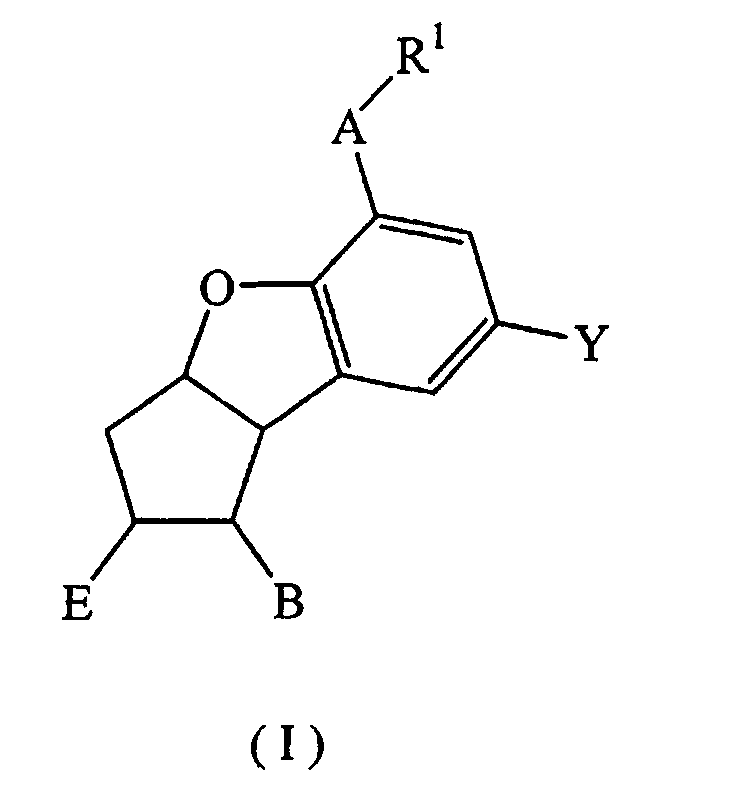
- R 1 , Y, E and A represent the same meanings as described above
- B is wherein V, Q, R 29 and Z is the following in the definition of claim 2, the two R 29 s may be the same or different
- R 37 is C 3 -C 12 cycloalkyl, C 4 -C 13 cycloalkylalkyl, C 3 -C 12 cycloalkyl substituted with 1 to 4 R 38 s (wherein R 38 is hydrogen or C 1 -C 5 alkyl), C 4 -C 13 cycloalkylalkyl substituted with 1 to 3 R 38 s (wherein R 38 is defined as the same as the above), phenyl, substituted phenyl (wherein the substituent is the same as the substituent defined for the substituted phenyl in claim 2), ⁇ -naphthyl, ⁇ -nap
- R 51 is (i) -COOR 52 wherein R 52 is hydrogen, a pharmacologically acceptable cation or methyl, or wherein Y is hydrogen or fluorine
- B is wherein R 53 is hydrogen, fluorine or C 1 -C 4 alkyl, the two R 53 s may be the same or different
- Z represents the following in the definition of claim 2
- R 54 is C 5 -C 7 cycloalkyl, phenyl, or substituted phenyl (wherein the substituent is the same as the substituent defined for the substituted phenyl in claim 2), or wherein Z and R 54 are defined as the same as the above
- E is hydrogen or -OH
- A is wherein m is an integer of 0 to 2
- G represents hydrogen or fluorine, and all Gs may be the same or different].
- Examples of the prostaglandin EP4 ligand of the present invention also include 3,7-dithiaprostanoic acid derivatives and azole derivatives. Examples of these include 3,7-dithiaprostanoic acid derivatives of the following Formula (VII), mixtures thereof with 8-epi compounds which are equilibrium compounds thereof, pharmacologically acceptable salts thereof, and clathrate compounds thereof included in cyclodextrin: [wherein R 56 is hydroxy, C 1 -C 6 alkyloxy or NR 61 R 62 (wherein R 61 and R 62 independently represent hydrogen or C 1 -C 6 alkyl), R 57 is hydrogen or hydroxy, R 58 is a single bond or C 1 -C 6 alkylene, R 59 is
- heterocyclic group means saturated or unsaturated monocyclic or polycyclic group having at least one heteroatom selected from the group consisting of nitrogen, sulfur or oxygen;
- protected carboxy means (1) C 1 -C 6 alkyl esters, (2) C 2 -C 6 alkenyl esters, (3) C 2 -C 6 alkynyl esters, (4) arylalkyl esters substituted with C 1 -C 6 alkyl, C 1 -C 6 alkyloxy, phenyl, nitro or halogen, or (5) aryl esters substituted with C 1 -C 6 alkyl, C 1 -C 6 alkyloxy, phenyl, nitro or halogen; and the term “aryl” means phenyl or naphthyl, which may be substituted with C 1 -C 6 alkyl.
- those having (an) asymmetric carbon(s) include various optical isomers, and those having at least two asymmetrical carbons include various diasteromers.
- the present invention include these optical isomers and respective isomers thereof.
- the present invention also include stereoisomers.
- the compounds having binding activities for prostaglandin EP4 receptor and salts thereof per se are known, and may be produced by the methods described in the above-mentioned Laid-open patent application, International patent publications WO/8903387 and WO/0024727.
- Examples of the pharmacologically acceptable salts include alkaline metal salts such as sodium salt and potassium salt; alkaline earth metal salts such as calcium salt and magnesium salt; amine salts such as methylamine salt, dimethylamine salt, trimethylamine salt, methylpiperidine salt, ethanolamine salt, diethanolamine salt, triethanolamine salt and lysine salt; ammonium salt; basic amino acid salts; inorganic acid salts such as hydrochloric acid salt and sulfuric acid salt; organic carboxylic acid salts such as acetic acid salt, tartaric acid salt and maleic acid salt; and organic sulfonic acid salts such as p-toluenesulfonic acid salt.
- the pharmacologically acceptable salts are not restricted to those described above.
- one or several prostaglandin EP4 receptor ligands or (a) salt(s) thereof may be applied to head as it is, or the ligand(s) may be applied after being admixed with a vehicle, stablizer and/or the like, which are usually used in formulation of pharmaceuticals.
- Such an additive examples include animal oils; plant oils; paraffin; gum arabic; saccharides such as starch, lactose, sucrose, glucose, dextrin and mannitol; inorganic acid salts such as calcium carbonate and calcium sulfate; organic acid salts such as sodium citrate, sodium lactate and magnesium stearate; water-soluble polymers such as methylcellulose, gelatin, polyethylene glycol, polyvinyl alcohol, polyvinylpyrrolidone, hydroxyethylcellulose and hydroxypropylcellulose; alcohols such as ethanol, glycerin, propylene glycol and sorbitol; and surfactants such as sorbitan aliphatic acid esters, polyoxyethylenesorbitan aliphatic acid esters, polyoxyethylene aliphatic acid esters and glycerin aliphatic acid esters.
- the additives are not restricted to those described above.
- the agent for modulating growth or generation of hair may be applied in various dosage forms. More particularly, the agent may be in a form which is usually used, such as in the form of liquid, jelly, emulsion, aerosol or ointment. For example, it may be used as a hair-growing agent, hair tonic, hair liquid, hair lotion, hair cream, hair gel, hair foam, hair mist, hair oil, hair treatment, mousse, shampoo or rinse. Alternatively, it may be used as an injection solution for subcutaneous, intravenous or local injections. Further, it may be formulated into a dosage form for oral administration, such as tablets, powder, granules, balls and capsules. However, the formulations are not restricted to those described above.
- the agent for modulating growth or generation of hair since the agent for modulating growth or generation of hair according to the present invention has a high selectivity to EP4 receptor subtype and exhibits hair-growing or hair-generating activities to epilated rabbit models of different ages (17 and 8 weeks old), it may be used for therapy or treatment of, for example, atrichia and hirsutism, or alopecia (male pattern alopecia and alopecia areata) as abnormal hair growth.
- the dose of administration of the agent for modulating growth or generation of hair according to the present invention varies depending on the symptom, age, individual difference, formulation of the agent and the like, and usually the agent may be administered in an amount of 0.0001 mg to 1000 mg, preferably 0.001 mg to 100 mg in one time or in several times. However, the dose of administration is not restricted thereto.
- the agent for modulating growth or generation of hair according to the present invention may be administered together with (a) hair-growing agent(s) (blood circulation promoters, potassium channel openers, androgen inhibitors, antiinflammatory agents, follicle-stimulators, antioxidants and keratolytic drugs) other than the agent of the present invention simultaneously or with a time interval.
- hair-growing agent(s) blood circulation promoters, potassium channel openers, androgen inhibitors, antiinflammatory agents, follicle-stimulators, antioxidants and keratolytic drugs
- blood circulation promoters such as carpron
- the agent for modulating growth or generation of hair according to the present invention may also be administered to animals other than human. That is, the agent can modulate growth or generation of hair by administering it to animals other than human, so that it can be applied for epilation and abnormality of fur, or therapy or treatment of animals other than human.
- the compound of the Formula (I) described above was tested for its selective binding activity to EP4 receptor by using PGE 2 receptor subtype-expressing cells.
- EP3 and EP4 cloned human PGE 2 receptor subtypes
- COS-7 cells cloned human PGE 2 receptor subtypes
- EP2 was stably expressed by CHO cells. These cells were prepared into membrane specimens. Each of the prepared membrane fractions (10 ⁇ g/tube) was incubated with a reaction solution containing 3 H-PGE 2 at 30°C for 1 hour.
- the reaction was terminated by iced buffer (l0mM MES(pH6.0), l0mM MgC l2 , 1mM EDTA), and the resultant was subjected to filtration by means of suction under reduced pressure to trap the bound 3 H-PGE 2 on a glass filter (GF/C), followed by measurement of the radioactivity with a liquid scintillation counter.
- the Kd value was determined from Scatchard plot according to the conventional method. Non-specific binding was determined in terms of the amount of bound radioactivity in the presence of an excess amount (5 ⁇ M) of non-labeled PGE 2 . Measurement of inhibition of 3 H-PGE 2 binding by Compound I was carried out by adding 3 H-PGE 2 (5 nM) and various concentrations of Compound 1 of the following Formula (V):
- Compound 1 was prepared according to Example 17 of Japanese Patent No. 1933167.
- the dissociation constant Ki of Compound 1 to EP4 was 19 nM.
- Compound 1 has a high selectivity to EP4 receptor subtype and its binding abilities to other receptor subtypes are low, so that it is thought that its side effect is small when it is administered.
- hair-growth/generation test was performed using rabbits. The test was carried out as follows. The hair on the back of each rabbit was removed with an electric clipper and evacream was applied for a short time to the back so as to epilate the back. After wiping the epilated region with water, test compound was subcutaneously administered to the back at a dose of 0.25 ml/kg (dissolved in 0.9% sodium chloride solution) once a day from the second day to 20th day after epilation. The state of generation of hair was observed and the length of the hair was measured.
- This ring preparation was mounted on a hook for blood vessels, and then suspended in a Magnus tube filled with Krebs solution aerated with 95% O 2 + 5% CO 2 mixed gas and kept at 37°C.
- the isometric tension of each blood vessel was recorded on a recorder through an isometric transducer.
- a base tension of 1.0 g was applied and the blood vessel tissue was stabilized for about 30 minutes until the baseline became stabilized.
- the blood vessel was contracted with 40 mM KCl, and the shrinkage and washing were repeated until the contraction became stable.
- a thromboxane antagonist S-145 1000 nM was applied previously and then cumulative application experiments of Compounds 1 to 7 were carried out.
- the reactivity to PGE 2 which was a positive control drug was measured, and after washing, the action of each compound was studied.
- the effectiveness of each drug was expressed in terms of the concentration (EC 50 ) at which the rate of relaxation of the test drug to the contraction by 40 mM KCl was 50%.
- EC 5o value was calculated by plotting logarithm of the concentration of each drug along the abscissa and plotting the rate of relaxation with respect to the contraction by 40 mM KCl along the ordinate, and by determining the concentration at which the height of contraction was 50% based on the linear area of the concentration-reaction curve in each experiment.
- hair-growth/generation test was performed using young rabbits (New Zealand White rabbits, male, 8 weeks old, Kitayama Labes). The test was carried out as follows. The hair on the back of each rabbit was removed and evacream was applied for a short time to the back so as to epilate the back. After wiping the epilated region with water, test compound was subcutaneously administered to the back at a dose of 0.25 ml/kg once a day from the second day to 7th day after epilation. The length of the hair was measured.
- the agent for modulating growth or generation of hair according to the present invention has an excellent activity to modulate growth or generation of hair, and its side effects are small. Therefore, it is useful for therapy or treatment of atrichia and hirsutism, or alopecia (male pattern alopecia and alopecia areata) as abnormal hair growth.
Landscapes
- Health & Medical Sciences (AREA)
- Life Sciences & Earth Sciences (AREA)
- Animal Behavior & Ethology (AREA)
- Veterinary Medicine (AREA)
- Public Health (AREA)
- General Health & Medical Sciences (AREA)
- Epidemiology (AREA)
- Pharmacology & Pharmacy (AREA)
- Medicinal Chemistry (AREA)
- Chemical & Material Sciences (AREA)
- Birds (AREA)
- Dermatology (AREA)
- Engineering & Computer Science (AREA)
- Bioinformatics & Cheminformatics (AREA)
- Chemical Kinetics & Catalysis (AREA)
- General Chemical & Material Sciences (AREA)
- Nuclear Medicine, Radiotherapy & Molecular Imaging (AREA)
- Organic Chemistry (AREA)
- Pharmaceuticals Containing Other Organic And Inorganic Compounds (AREA)
Abstract
An agent for modulating growth or generation of hair, which has an excellent
activity for modulating growth or generation of hair, and of which side effect is small,
is disclosed. The agent for modulating growth or generation of hair according to
the present invention comprises a prostaglandin EP4 receptor ligand as an active
ingredient.
Description
- The present invention relates to an agent for modulating growth or generation of hair, which promotes or inhibits growth or generation of hair.
- Each hair has its own growth cycle (anagen, catagen, telogen and defluxion). However, when generation or growth cycle of each hair is disturbed by a genetic cause or by some other cause, the hair rapidly falls out or conversely grows lengthily and thickly. Abnormal generation of hair includes atrichia and hirsutism, and abnormal hair growth includes alopecia (male pattern alopecia and alopecia areata). These causes are thought to include various factors such as influences by hormones, decrease in blood flow into, hair follicle hypersteatosis, unbalanced diet and stress. Thus, conventional therapy is performed by reducing these causes. For example, therapies of alopecia include inhibition of androgen, increasing in blood flow into hair follicle, pharmacotherapies using compounds which remove unnecessary cuticle and sebum, dietetic treatment and psychotherapies. Since the real cause of alopecia has not been completely clarified, sufficient therapeutic or preventive effect has not been attained. Methods for removing hairs such as body hairs include physical treatments using shavers or depilators, and pharmacotherapies using grainer creams or depilatory creams. However, these methods accompany skin chapping or irritation pain, so that they are not satisfactory as depiliation methods. Thus, development of an agent for modulating growth or generation of hair, which shows sufficient effect, has been demanded for a long time.
- It has been disclosed that E type prostaglandins (hereinafter referred to as "PG" for short) and their derivatives promote growth of hair (WO9833497). However, prostaglandin E2 (hereinafter referred to as "PGE2" for short) shows a wide variety of physiological actions such as uterine-contracting action, gastric acid secretion-inhibiting action, gastric mucosa-protecting action, stimulation action of peristalsis of digestive tract, febrifacient action and diarrhea-causing action. Therefore, if PGE2 is used for the purpose of growing or generating hair, these actions act as side effects.
physiological actions by PGE2 are expressed by binding of PGE2 to specific receptors. Further, the receptors to which PGE2 bind may be classified into 4 receptor subtypes called EP1, EP2, EP3 and EP4 receptors (Coleman,R.A.et al., Pharmacol. Rev.,46,205-229(1994)). It is also known that each receptor subtype participates in different physiological action. For example, the febrile response by PGE2 is caused by binding of PGE2 to EP3 receptor (Ushikubi F., Nature, 395, 281-284 (1998)). It is known that compounds which specifically bind to EP4 receptor subtype are effective for prevention, therapy or amelioration of immune diseases, asthma, osteodystrophy, apoptosis of neurocytes, hepatopathy, nephritis, hypertension, myocardial ischemia, gastrointestinal disorder, shock and the like (Japanese Laid-open Patent Application (Kokai) No. 10-265454, WO98/55468). However, it is not known that these compounds have hair generation- or hair growth-modulating actions. - An object of the present invention is to provide an agent for modulating growth or generation of hair, which has an excellent activity for modulating growth or generation of hair, and of which side effect is small.
- The present inventors intensively searched the compounds which have small side effects and which show excellent activities for modulating growth or generation of hair to discover that compounds which strongly act on EP4 receptor and which weakly bind to other subtypes of PGE2 attain this object, thereby completing the present invention.
- That is, the present invention provides an agent for modulating growth or generation of hair comprising a prostaglandin EP4 receptor ligand as an active ingredient. The present invention also provides use of a prostaglandin EP4 receptor ligand for production of an agent for modulating growth or generation of hair. The present invention further provides a method for modulating growth or generation of hair comprising administering a prostaglandin EP4 receptor ligand in an amount effective for modulating growth or generation of hair to human or an animal.
- The agent for modulating growth or generation of hair according to the present invention has an excellent activity for modulating growth or generation of hair, and its side effects are small.
- The prostaglandin EP4 receptor ligand is not restricted as long as it acts on prostaglandin EP4 receptor. Examples of such a ligand include 5,6,7-trinor-4,8-inter-m-phenylene PGI2 derivatives of the following Formula (I) and pharmacologically acceptable salts thereof:[wherein
R1 iswherein R2 is hydrogen, C1-C4 linear alkyl, C3 or C4 branched alkyl, trifluoromethyl, -C(=O)-R4, or -C(=O)-O-R4, wherein R4 is C1-C12 linear alkyl, C3-C14 branched alkyl, C3-C12 cycloalkyl, C7-C)12 aralkyl, phenyl or substituted phenyl (wherein the substituent is at least one fluorine, chlorine, bromine, iodine, trifluoromethyl, C1-C4 alkyl, nitro, cyano, methoxy, phenyl, phenoxy, p-acetamidebenzamide, -CH=N-NH-C(=O)-NH2, -NH-C(=O)-Ph, -NH-C(=O)-CH3 or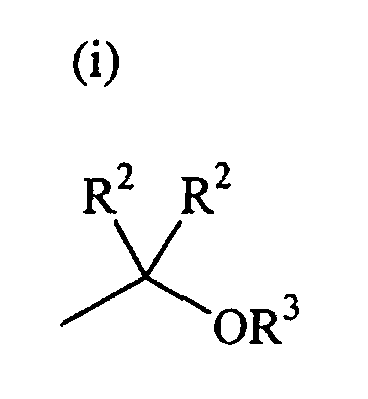
-NH-C(=O)-NH2), and the two R2s may be the same or different; R3 is hydrogen, C1-C4 alkyl, C1-C12 acyl, C7-C16 aroyl, C7-C16 aralkyl, tetrahydropyranyl, tetrahydrofuranyl, 1-ethoxyethyl, allyl, tert-butyl or tert-butyldimethylsilyl, - (1) hydrogen or pharmacologically acceptable cation,
- (2) C1-C12 linear alkyl or C3-C14 branched alkyl,
- (3) -Z-R6
wherein Z is a valence bond, or linear or branched alkylene represented by the formula CtH2t wherein t represents an integer of 1 to 6, R6 is C3-C12 cycloalkyl, or C3-C12 cycloalkyl substituted with 1 to 4 R7s wherein R7 is hydrogen or C1-C5 alkyl, - (4) -(CH2CH2O)nCH3
wherein n represents an integer of 1 to 5, - (5) -Z-Ar
wherein Z is defined as the same as the above, Ar is phenyl, α-naphthyl, β-naphthyl, 2-pyridyl, 3-pyridyl, 4-pyridyl, α-furyl, β-furyl, α-thienyl, β-thienyl or substituted phenyl (wherein the substituent is the same as the substituent defined for the substituted phenyl mentioned above), - (6) -CtH2tCOOR8
wherein t is defined as the same as the above, R8 is hydrogen or C1-C5 alkyl, - (7) -CtH2tN(R9)2
wherein t is defined as the same as above, R9 is hydrogen or C1-C5 alkyl, and the two R9s may be the same or different, - (8) -CH(R10)-C(=O)-R11
wherein R10 is hydrogen or benzoyl, R11 is phenyl, p-bromophenyl, p-chlorophenyl, p-biphenyl, p-nitrophenyl, p-benzamidephenyl or 2-naphthyl, - (9) -CpH2p-W-R12
wherein p represents an integer of 1 to 5, W is -CH=CH-, -CH=C(R13)- or
-C≡C- wherein R13 is C1-C30 linear alkyl, C3-C30 branched alkyl or C7-C30 aralkyl, R12 is hydrogen, C1-C30 linear alkyl, C3-C30 branched alkyl or C7-C30 aralkyl, or - (10) -CH(CH2OR14)2
wherein R14 is C1-C30 alkyl or C1-C30 acyl, and the two R14s may be the same or different,wherein R15 is hydrogen, C1-C4 linear alkyl, C3 or C4 branched alkyl, trifluoromethyl, C(=O)-R17 or -C(=O)-O-R17 wherein R17 is C1-C12 linear alkyl, C3-C14 branched alkyl, C3-C12 cycloalkyl, C7-C12 aralkyl, phenyl or substituted phenyl (wherein the substituent is the same as the substituent defined for the substituted phenyl mentioned above), and the two R15s may be the same or different; R16 is hydrogen, C1-C12 linear alkyl, C3-C14 branched alkyl, phenyl or substituted phenyl (wherein the substituent is the same as the substituent defined for the substituted phenyl mentioned above), or
-C(=O)-R18 wherein R18 represents C1-C12 linear alkyl, C3-C14 branched alkyl, C3-C12 cycloalkyl, C7-C12 aralkyl, phenyl or substituted phenyl (wherein the substituent is the same as the substituent defined for the substituted phenyl mentioned above), wherein R20 is hydrogen, C1-C12 linear alkyl, C3-C14 branched alkyl, phenyl, substituted phenyl (wherein the substituent is the same as the substituent defined for the substituted phenyl mentioned above), or -C(=O)-R21 wherein R21 is C1-C12 linear alkyl, C3-C14 branched alkyl, C3-C12 cycloalkyl, C7-C12 aralkyl, phenyl, or substituted phenyl (wherein the substituent is the same as the substituent defined for the substituted phenyl mentioned above),
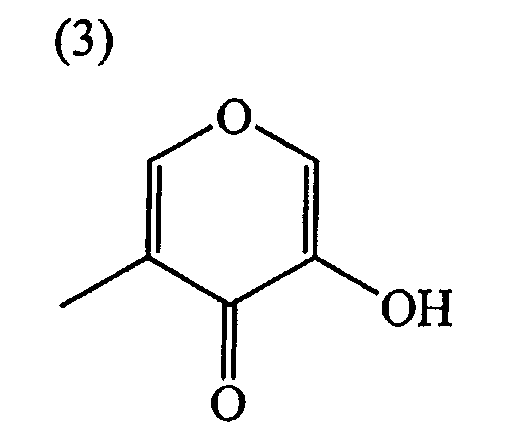
 wherein X represents -O- or -S-, or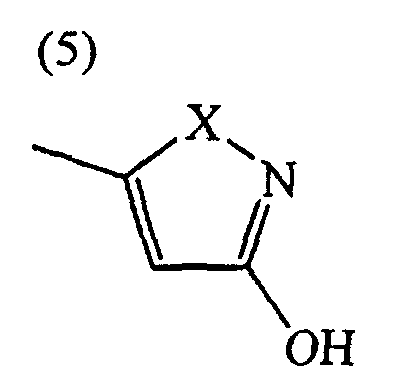
- (6) azide,
wherein R23 represents hydrogen, C1-C4 alkyl, phenyl, substituted phenyl (wherein the substituent is the same as the substituent defined for the substituted phenyl mentioned above), -CH2-OR24 (wherein R24 is C1-C12 linear alkyl, C3-C14 branched alkyl, C3-C12 cycloalkyl, C7-C12 aralkyl, phenyl, or substituted phenyl (wherein the substituent is the same as the substituent defined for the substituted phenyl mentioned above), or pharmacologically acceptable cation, and the two R23s may be the same or different,

-SO2-R26, the other R25 is not -SO2-R26),
wherein k represents an integer of 1 or 2, or
-
- Examples about the above-described Formula (I) will now be described. However, the present invention is not restricted thereto.
- Examples of R2 include hydrogen, methyl, ethyl, propyl, butyl, isopropyl, isobutyl, tert-butyl, trifluoromethyl, acetyl, propionyl, benzoyl, phenylacetyl, methoxycarbonyl and ethoxycarbonyl. Among these, preferred are hydrogen, methyl, ethyl, propyl, butyl, isopropyl, isobutyl, tert-butyl and trifluoromethyl, more preferred are hydrogen, methyl, ethyl, propyl, butyl and trifluoromethyl, and still more preferred are hydrogen and methyl.
- Examples of R3 include hydrogen, methyl, ethyl, propyl, butyl, isopropyl, isobutyl, tert-butyl, formyl, acetyl, propionyl, butyloyl, benzoyl, phenylacetyl, 3-phenylpropionyl, 10-phenyldecanoyl, p-phenylbenzoyl, α-naphthoyl, β-naphthoyl, benzyl, phenetyl, 3-phenylpropyl, 6-phenylhexyl, 10-phenyldecyl, p-methylbenzyl, p-ethylbenzyl, p-propylbenzyl, p-pentylbenzyl, p-nonylbenzyl, 3,5-dimethylbenzyl, 3,5-diethylbenzyl, 3,5-dibutylbenzyl, p-phenylbenzyl, tetrahydropyranyl, tetrahydrofuranyl, 1-ethoxyethyl, allyl, tert-butyl and tert-butyldimethylsilyl. Among these, preferred are hydrogen, acetyl, propionyl, butyloyl, benzoyl, phenylacetyl, 3-phenylpropionyl, 10-phenyldecanoyl, p-phenylbenzoyl, α-naphthoyl, β-naphthoyl, tetrahydropyranyl, tetrahydrofuranyl, 1-ethoxyethyl, allyl and tert-butyldimethylsilyl, more preferred are hydrogen, acetyl, tetrahydropyranyl, tetrahydrofuranyl and tert-butyldimethylsilyl, and still more preferred is hydrogen.
- Examples of R4 include methyl, ethyl, propyl, butyl, pentyl, hexyl, heptyl, octyl, dodecyl, isopropyl, isobutyl, tert-butyl, 1-methylbutyl, 2-methylbutyl, 3-methylbutyl, 1-methylpentyl, 2-methylpentyl, 3-methylpentyl, 4-methylpentyl, 1-methylhexyl, 2-methylhexyl, 3-methylhexyl, 4-methylhexyl, 5-methylhexyl, 1-methylheptyl, 2-methylheptyl, 3-methylheptyl, 4-methylheptyl, 5-methylheptyl, 6-methylheptyl, 1-methyloctyl, 2-methyloctyl, 3-methyloctyl, 4-methyloctyl, 5-methyloctyl, 6-methyloctyl, 7-methyloctyl, 1-methylnonyl, 2-methylnonyl, 1-methyldecanyl, 2-methyldecanyl, 1,1-dimethylbutyl, 2,2-dimethylbutyl, 3,3-dimethylbutyl, 1,1-dimethylpentyl, 2,2-dimethylpentyl, 3,3-dimethylpentyl, 4,4-dimethylpentyl, 1,1-dimethylhexyl, 2,2-dimethylhexyl, 3,3-dimethylhexyl, 4,4-dimethylhexyl, 5,5-dimethylhexyl, 1,1-dimethylheptyl, 2,2-dimethylheptyl, 3,3-dimethylheptyl, 4,4-dimethylheptyl, 5,5-dimethylheptyl, 6,6-dimethylheptyl, 1,1-dimethyloctyl, 2,2-dimethyloctyl, 3,3-dimethyloctyl, 1,1-dimethylnonyl, 2,2-dimethylnonyl, 3,3-dimethylnonyl, 1,1-dimethyldecanyl, 2,2-dimethyldecanyl, 3,3-dimethyldecanyl, 1,1,2,2-tetramethylpentyl, 1,1,3,3-tetramethylpentyl, 1,1,2,2-tetramethylhexyl, 1,1,3,3-tetramethylhexyl, 2,2,3,3-tetramethylhexyl, cyclopropyl, cyclobutyl, cyclopentyl, cyclohexyl, cycloheptyl, cyclooctyl, cyclononyl, cyclododecyl, benzyl, phenetyl, 3-phenylpropyl, 6-phenylhexyl, p-methylbenzyl, p-ethylbenzyl, p-propylbenzyl, p-pentylbenzyl, 3,5-dimethylbenzyl, 3,5-diethylbenzyl, phenyl, p-fluorophenyl, p-nitrophenyl and p-methoxyphenyl. Among these, preferred are methyl, ethyl, propyl, butyl and phenyl, more preferred are methyl, ethyl and phenyl, and still more preferred are methyl and phenyl.
- Preferred examples of R5 include hydrogen, lithium ion, sodium ion, potassium ion, magnesium ion, calcium ion, cations derived from amines (e.g., methylamine, dimethylamine, triethylamine, ethylamine, dibutylamine, triisopropylamine, N-methylhexylamine, decylamine, dodecylamine, allylamine, crotylamine, cyclopentylamine, dicyclohexylamine, benzylamine, dibenzylamine, α-phenylethylamine, β-phenylethylamine, ethylenediamine, diethylenetriamine, 1-methylpiperidine, 4-ethylmorpholine, 1-isopropylpyrrolidine, 2-methylpyrrolidine, 1,4-dimethylpiperazine, 2-methylpiperidine, mono-, di-, and triethanolamine, ethyldiethanolamine, N-butylethanolamine, 2-amino-1-butanol, 2-amino-2-ethyl-1,3-propanediol, tris(hydroxymethyl)aminomethane, N-phenylethanolamine, N-(p-tert-aminophenyl)diethanolamine, galactamine, N-methylglutamine, N-methylglucosamine, ephedrine, phenylephrine, epinephrine, procaine, lysine and arginine), methyl, ethyl, propyl, butyl, pentyl, hexyl, heptyl, octyl and dodecyl. Among these, more preferred are hydrogen, lithium ion, sodium ion, potassium ion, magnesium ion, calcium ion, cations derived from amines (triethylamine, ethylenediamine, diethylenetriamine, and mono-, di- and triethanolamine), methyl, ethyl, propyl and butyl, and still more preferred are hydrogen, sodium ion and methyl.
- Examples of R6 include cyclopropyl, cyclobutyl, cyclopentyl, cyclohexyl, cycloheptyl, cyclooctyl, cyclononyl, cyclododecyl, 2-methylcyclopropyl, 3-methylcyclobutyl, 3-methylcyclopentyl, 4-methylcyclohexyl, 4-methylcycloheptyl, 5-methylcyclooctyl and 5-methylcyclononyl. Among these, preferred are cyclopentyl, cyclohexyl, cycloheptyl, 3-methylcyclopentyl, 4-methylcyclohexyl and 4-methylcycloheptyl, and more preferred are cyclohexyl and 4-methylcyclohexyl, still more preferred is cyclohexyl.
- Examples of R7 include hydrogen, methyl, ethyl, propyl, butyl, isopropyl, isobutyl and tert-butyl. Among these, preferred are hydrogen, methyl, ethyl, isopropyl and tert-butyl, still more preferred are hydrogen, methyl and ethyl, and still more preferred are hydrogen and methyl.
- Examples of R8 include hydrogen, methyl, ethyl, propyl, butyl, isopropyl, isobutyl and tert-butyl. Among these, preferred are hydrogen, methyl, ethyl, isopropyl and tert-butyl, still more preferred are hydrogen, methyl and ethyl, and still more preferred are hydrogen and methyl.
- Examples of R9 include hydrogen, methyl, ethyl, propyl, butyl, isopropyl, isobutyl and tert-butyl. Among these, preferred are hydrogen, methyl, ethyl, isopropyl and tert-butyl, still more preferred are hydrogen, methyl and ethyl, and still more preferred are hydrogen and methyl.
- R10 represents hydrogen or benzoyl, and hydrogen is especially preferred.
- R11 represents phenyl, p-bromophenyl, p-chlorophenyl, p-biphenyl, p-nitrophenyl, p-benzamidephenyl or 2-naphthyl, preferably phenyl, p-bromophenyl, p-chlorophenyl, p-biphenyl or p-nitrophenyl, more preferably phenyl, p-chlorophenyl or p-biphenyl, still more preferably phenyl.
- Examples of R12 include hydrogen, methyl, ethyl, propyl, butyl, pentyl, hexyl, heptyl, octyl, dodecyl, isopropyl, isobutyl, tert-butyl, 4-methylpentyl, 5-methylhexyl, 6-methylheptyl, 7-methyloctyl, benzyl, phenetyl, 3-phenylpropyl, 6-phenylhexyl, p-methylbenzyl, p-ethylbenzyl, p-propylbenzyl, p-pentylbenzyl, 3,5-dimethylbenzyl and 3,5-diethylbenzyl. Among these, preferred are hydrogen, methyl, ethyl, propyl, isopropyl, isobutyl, tert-butyl, benzyl, phenetyl and 3-phenylpropyl, more preferred are hydrogen, methyl, ethyl, isopropyl, isobutyl, benzyl and phenetyl, and still more preferred are hydrogen, methyl, isopropyl and benzyl.
- Examples of R13 include hydrogen, methyl, ethyl, propyl, butyl, pentyl, hexyl, heptyl, octyl, dodecyl, isopropyl, isobutyl, tert-butyl, 4-methylpentyl, 5-methylhexyl, 6-methylheptyl, 7-methyloctyl, benzyl, phenetyl, 3-phenylpropyl, 6-phenylhexyl, p-methylbenzyl, p-ethylbenzyl, p-propylbenzyl, p-pentylbenzyl, 3,5-dimethylbenzyl and 3,5-diethylbenzyl. Among these, preferred are hydrogen, methyl, ethyl, propyl, isopropyl, isobutyl, tert-butyl, benzyl, phenetyl and 3-phenylpropyl, more preferred are hydrogen, methyl, ethyl, isopropyl, isobutyl, benzyl and phenetyl, and still more preferred are hydrogen, methyl, isopropyl and benzyl.
- Examples of R 14 include methyl, ethyl, propyl, butyl, pentyl, hexyl, octyl, hexadecanyl, octaeicosanyl, acetyl, octanoyl, decanoyl, palmitoyl, eicosanoyl and hexaeicosanoyl. Among these, preferred are methyl, ethyl, propyl, acetyl, octanoyl and decanoyl, more preferred are methyl, ethyl, acetyl and octanoyl, and still more preferred are methyl and acetyl.
- Examples of R15 include hydrogen, methyl, ethyl, propyl, butyl, isopropyl, isobutyl, tert-butyl, trifluoromethyl, acetyl, propionyl, benzoyl, phenylacetyl, methoxycarbonyl and ethoxycarbonyl. Among these, preferred are hydrogen, methyl, ethyl, propyl, butyl, isopropyl, isobutyl, tert-butyl and trifluoromethyl, more preferred are hydrogen, methyl, ethyl, propyl, butyl and trifluoromethyl, and still more preferred are hydrogen and methyl.
- Examples of R16 include hydrogen, methyl, ethyl, propyl, butyl, pentyl, hexyl, heptyl, octyl, dodecyl, isopropyl, isobutyl, tert-butyl, 1-methylbutyl, 2-methylbutyl, 3-methylbutyl, 1-methylpentyl, 2-methylpentyl, 3-methylpentyl, 4-methylpentyl, 1-methylhexyl, 2-methylhexyl, 3-methylhexyl, 4-methylhexyl, 5-methylhexyl, 1-methylheptyl, 2-methylheptyl, 3-methylheptyl, 4-methylheptyl, 5-methylheptyl, 6-methylheptyl, 1-methyloctyl, 2-methyloctyl, 3-methyloctyl, 4-methyloctyl, 5-methyloctyl, 6-methyloctyl, 7-methyloctyl, 1-methylnonyl, 2-methylnonyl, 1-methyldecanyl, 2-methyldecanyl, 1,1-dimethylbutyl, 2,2-dimethylbutyl, 3,3-dimethylbutyl, 1,1-dimethylpentyl, 2,2-dimethylpentyl, 3,3-dimethylpentyl, 4,4-dimethylpentyl, 1,1-dimethylhexyl, 2,2-dimethylhexyl, 3,3-dimethylhexyl, 4,4-dimethylhexyl, 5,5-dimethylhexyl, 1,1-dimethylheptyl, 2,2-dimethylheptyl, 3,3-dimethylheptyl, 4,4-dimethylheptyl, 5,5-dimethylheptyl, 6,6-dimethylheptyl, 1,1-dimethyloctyl, 2,2-dimethyloctyl, 3,3-dimethyloctyl, 1,1-dimethylnonyl, 2,2-dimethylnonyl, 3,3-dimethylnonyl, 1,1-dimethyldecanyl, 2,2-dimethyldecanyl, 3,3-dimethyldecanyl, 1,1,2,2-tetramethylpentyl, 1,1,3,3-tetramethylpentyl, 1,1,2,2-tetramethylhexyl, 1,1,3,3-tetramethylhexyl, 2,2,3,3-tetramethylhexyl, phenyl, p-fluorophenyl, p-nitrophenyl, p-methoxyphenyl, acetyl and propionyl. Among these, preferred are hydrogen, methyl, ethyl, propyl, butyl, phenyl, acetyl and propionyl, more preferred are hydrogen, methyl, ethyl, propyl, phenyl and acetyl, and still more preferred are hydrogen, methyl, phenyl and acetyl.
- Examples of R17 include methyl, ethyl, propyl, butyl, pentyl, hexyl, heptyl, octyl, dodecyl, isopropyl, isobutyl, tert-butyl, 1-methylbutyl, 2-methylbutyl, 3-methylbutyl, 1-methylpentyl, 2-methylpentyl, 3-methylpentyl, 4-methylpentyl, 1-methylhexyl, 2-methylhexyl, 3-methylhexyl, 4-methylhexyl, 5-methylhexyl, 1-methylheptyl, 2-methylheptyl, 3-methylheptyl, 4-methylheptyl, 5-methylheptyl, 6-methylheptyl, 1-methyloctyl, 2-methyloctyl, 3-methyloctyl, 4-methyloctyl, 5-methyloctyl, 6-methyloctyl, 7-methyloctyl, 1-methylnonyl, 2-methylnonyl, 1-methyldecanyl, 2-methyldecanyl, 1,1-dimethylbutyl, 2,2-dimethylbutyl, 3,3-dimethylbutyl, 1,1-dimethylpentyl, 2,2-dimethylpentyl, 3,3-dimethylpentyl, 4,4-dimethylpentyl, 1,1-dimethylhexyl, 2,2-dimethylhexyl, 3,3-dimethylhexyl, 4,4-dimethylhexyl, 5,5-dimethylhexyl, 1,1-dimethylheptyl, 2,2-dimethylheptyl, 3,3-dimethylheptyl, 4,4-dimethylheptyl, 5,5-dimethylheptyl, 6,6-dimethylheptyl, 1,1-dimethyloctyl, 2,2-dimethyloctyl, 3,3-dimethyloctyl, 1,1-dimethylnonyl, 2,2-dimethylnonyl, 3,3-dimethylnonyl, 1,1-dimethyldecanyl, 2,2-dimethyldecanyl, 3,3-dimethyldecanyl, 1,1,2,2-tetramethylpentyl, 1,1,3,3-tetramethylpentyl, 1,1,2,2-tetramethylhexyl, 1,1,3,3-tetramethylhexyl, 2,2,3,3-tetramethylhexyl, cyclopropyl, cyclobutyl, cyclopentyl, cyclohexyl, cycloheptyl, cyclooctyl, cyclononyl, cyclododecyl, benzyl, phenetyl, 3-phenylpropyl, 6-phenylhexyl, p-methylbenzyl, p-ethylbenzyl, p-propylbenzyl, p-pentylbenzyl, 3,5-dimethylbenzyl, 3,5-diethylbenzyl, phenyl, p-fluorophenyl, p-nitrophenyl and p-methoxyphenyl. Among these, preferred are methyl, ethyl, propyl, butyl and phenyl, more preferred are methyl, ethyl and phenyl, and still more preferred are methyl and phenyl.
- Examples of R18 include methyl, ethyl, propyl, butyl, pentyl, hexyl, heptyl, octyl, dodecyl, isopropyl, isobutyl, tert-butyl, 1-methylbutyl, 2-methylbutyl, 3-methylbutyl, 1-methylpentyl, 2-methylpentyl, 3-methylpentyl, 4-methylpentyl, 1-methylhexyl, 2-methylhexyl, 3-methylhexyl, 4-methylhexyl, 5-methylhexyl, 1-methylheptyl, 2-methylheptyl, 3-methylheptyl, 4-methylheptyl, 5-methylheptyl, 6-methylheptyl, 1-methyloctyl, 2-methyloctyl, 3-methyloctyl, 4-methyloctyl, 5-methyloctyl, 6-methyloctyl, 7-methyloctyl, 1-methylnonyl, 2-methylnonyl, 1-methyldecanyl, 2-methyldecanyl, 1,1-dimethylbutyl, 2,2-dimethylbutyl, 3,3-dimethylbutyl, 1,1-dimethylpentyl, 2,2-dimethylpentyl, 3,3-dimethylpentyl, 4,4-dimethylpentyl, 1,1-dimethylhexyl, 2,2-dimethylhexyl, 3,3-dimethylhexyl, 4,4-dimethylhexyl, 5,5-dimethylhexyl, 1,1-dimethylheptyl, 2,2-dimethylheptyl, 3,3-dimethylheptyl, 4,4-dimethylheptyl, 5,5-dimethylheptyl, 6,6-dimethylheptyl, 1,1-dimethyloctyl, 2,2-dimethyloctyl, 3,3-dimethyloctyl, 1,1-dimethylnonyl, 2,2-dimethylnonyl, 3,3-dimethylnonyl, 1,1-dimethyldecanyl, 2,2-dimethyldecanyl, 3,3-dimethyldecanyl, 1,1,2,2-tetramethylpentyl, 1,1,3,3-tetramethylpentyl, 1,1,2,2-tetramethylhexyl, 1,1,3,3-tetramethylhexyl, 2,2,3,3-tetramethylhexyl, cyclopropyl, cyclobutyl, cyclopentyl, cyclohexyl, cycloheptyl, cyclooctyl, cyclononyl, cyclododecyl, benzyl, phenetyl, 3-phenylpropyl, 6-phenylhexyl, p-methylbenzyl, p-ethylbenzyl, p-propylbenzyl, p-pentylbenzyl, 3,5-dimethylbenzyl, 3,5-diethylbenzyl, phenyl, p-fluorophenyl, p-nitrophenyl and p-methoxyphenyl. Among these, preferred are methyl, ethyl, propyl, butyl and phenyl, more preferred are methyl, ethyl and phenyl, and still more preferred are methyl and phenyl.
- Examples of R20 include hydrogen, methyl, ethyl, propyl, butyl, pentyl, hexyl, heptyl, octyl, dodecyl, isopropyl, isobutyl, tert-butyl, 1-methylbutyl, 2-methylbutyl, 3-methylbutyl, 1-methylpentyl, 2-methylpentyl, 3-methylpentyl, 4-methylpentyl, 1-methylhexyl, 2-methylhexyl, 3-methylhexyl, 4-methylhexyl, 5-methylhexyl, 1-methylheptyl, 2-methylheptyl, 3-methylheptyl, 4-methylheptyl, 5-methylheptyl, 6-methylheptyl, 1-methyloctyl, 2-methyloctyl, 3-methyloctyl, 4-methyloctyl, 5-methyloctyl, 6-methyloctyl, 7-methyloctyl, 1-methylnonyl, 2-methylnonyl, 1-methyldecanyl, 2-methyldecanyl, 1,1-dimethylbutyl, 2,2-dimethylbutyl, 3,3-dimethylbutyl, 1,1-dimethylpentyl, 2,2-dimethylpentyl, 3,3-dimethylpentyl, 4,4-dimethylpentyl, 1,1-dimethylhexyl, 2,2-dimethylhexyl, 3,3-dimethylhexyl, 4,4-dimethylhexyl, 5,5-dimethylhexyl, 1,1-dimethylheptyl, 2,2-dimethylheptyl, 3,3-dimethylheptyl, 4,4-dimethylheptyl, 5,5-dimethylheptyl, 6,6-dimethylheptyl, 1,1-dimethyloctyl, 2,2-dimethyloctyl, 3,3-dimethyloctyl, 1,1-dimethylnonyl, 2,2-dimethylnonyl, 3,3-dimethylnonyl, 1,1-dimethyldecanyl, 2,2-dimethyldecanyl, 3,3-dimethyldecanyl, 1,1,2,2-tetramethylpentyl, 1,1,3,3-tetramethylpentyl, 1,1,2,2-tetramethylhexyl, 1,1,3,3-tetramethylhexyl, 2,2,3,3-tetramethylhexyl, phenyl, p-fluorophenyl, p-nitrophenyl, p-methoxyphenyl, acetyl and propionyl. Among these, preferred are hydrogen, methyl, ethyl, propyl, butyl, phenyl, acetyl and propionyl, more preferred are hydrogen, methyl, ethyl, propyl, phenyl and acetyl, and still more preferred are hydrogen, methyl, phenyl and acetyl.
- Examples of R21 include methyl, ethyl, propyl, butyl, pentyl, hexyl, heptyl, octyl, dodecyl, isopropyl, isobutyl, tert-butyl, 1-methylbutyl, 2-methylbutyl, 3-methylbutyl, 1-methylpentyl, 2-methylpentyl, 3-methylpentyl, 4-methylpentyl, 1-methylhexyl, 2-methylhexyl, 3-methylhexyl, 4-methylhexyl, 5-methylhexyl, 1-methylheptyl, 2-methylheptyl, 3-methylheptyl, 4-methylheptyl, 5-methylheptyl, 6-methylheptyl, 1-methyloctyl, 2-methyloctyl, 3-methyloctyl, 4-methyloctyl, 5-methyloctyl, 6-methyloctyl, 7-methyloctyl, 1-methylnonyl, 2-methylnonyl, 1-methyldecanyl, 2-methyldecanyl, 1,1-dimethylbutyl, 2,2-dimethylbutyl, 3,3-dimethylbutyl, 1,1-dimethylpentyl, 2,2-dimethylpentyl, 3,3-dimethylpentyl, 4,4-dimethylpentyl, 1,1-dimethylhexyl, 2,2-dimethylhexyl, 3,3-dimethylhexyl, 4,4-dimethylhexyl, 5,5-dimethylhexyl, 1,1-dimethylheptyl, 2,2-dimethylheptyl, 3,3-dimethylheptyl, 4,4-dimethylheptyl, 5,5-dimethylheptyl, 6,6-dimethylheptyl, 1,1-dimethyloctyl, 2,2-dimethyloctyl, 3,3-dimethyloctyl, 1,1-dimethylnonyl, 2,2-dimethylnonyl, 3,3-dimethylnonyl, 1,1-dimethyldecanyl, 2,2-dimethyldecanyl, 3,3-dimethyldecanyl, 1,1,2,2-tetramethylpentyl, 1,1,3,3-tetramethylpentyl, 1,1,2,2-tetramethylhexyl, 1,1,3,3-tetramethylhexyl, 2,2,3,3-tetramethylhexyl, cyclopropyl, cyclobutyl, cyclopentyl, cyclohexyl, cycloheptyl, cyclooctyl, cyclononyl, cyclododecyl, benzyl, phenetyl, 3-phenylpropyl, 6-phenylhexyl, p-methylbenzyl, p-ethylbenzyl, p-propylbenzyl, p-pentylbenzyl, 3,5-dimethylbenzyl, 3,5-diethylbenzyl, phenyl, p-fluorophenyl, p-nitrophenyl and p-methoxyphenyl. Among these, preferred are methyl, ethyl, propyl, butyl and phenyl, more preferred are methyl, ethyl and phenyl, and still more preferred are methyl and phenyl.
- Examples of R22 include hydrogen, fluorine, chlorine, bromine, iodine, cyano, methyl, ethyl, propyl, butyl, isopropyl, isobutyl and tert-butyl. Among these, preferred are hydrogen, fluorine, cyano, methyl, ethyl, propyl, butyl, isopropyl, isobutyl and tert-butyl, more preferred are hydrogen, fluorine, methyl, ethyl and isopropyl, and still more preferred are hydrogen, fluorine and methyl.
- Examples of R23 include hydrogen, methyl, ethyl, propyl, butyl, isopropyl, isobutyl, tert-butyl, phenyl, p-fluorophenyl, p-nitrophenyl, p-methoxyphenyl, methoxymethyl, ethoxymethyl, lithium ion, sodium ion, potassium ion, magnesium ion, calcium ion, and cations derived from amines (e.g., methylamine, dimethylamine, triethylamine, ethylamine, dibutylamine, triisopropylamine, N-methylhexylamine, decylamine, dodecylamine, allylamine, crotylamine, cyclopentylamine, dicyclohexylamine, benzylamine, dibenzylamine, α-phenylethylamine, β-phenylethylamine, ethylenediamine, diethylenetriamine, 1-methylpiperidine, 4-ethylmorpholine, 1-isopropylpyrrolidine, 2-methylpyrrolidine, 1,4-dimethylpiperazine, 2-methylpiperidine, mono-, di-, and triethanolamine, ethyldiethanolamine, N-butylethanolamine, 2-amino-1-butanol, 2-amino-2-ethyl-1,3-propanediol, tris(hydroxymethyl)aminomethane, N-phenylethanolamine, N-(p-tert-amylphenyl)diethanolamine, galactamine, N-methylglutamine, N-methylglucosamine, ephedrine, phenylephrine, epinephrine, procaine, lysine and arginine). Among these, preferred are hydrogen, methyl, ethyl, propyl, butyl, isopropyl, isobutyl, tert-butyl, lithium ion, sodium ion, potassium ion, magnesium ion, calcium ion, and cations derived from amines (triethylamine, ethylenediamine, diethylenetriamine, and mono-, di-, and triethanolamine), more preferred are hydrogen, methyl, isopropyl, lithium ion, sodium ion, potassium ion, magnesium ion and calcium ion, and still more preferred are hydrogen, methyl and sodium ion.
- Examples of R24 include methyl, ethyl, propyl, butyl, pentyl, hexyl, heptyl, octyl, dodecyl, isopropyl, isobutyl, tert-butyl, 1-methylbutyl, 2-methylbutyl, 3-methylbutyl, 1-methylpentyl, 2-methylpentyl, 3-methylpentyl, 4-methylpentyl, 1-methylhexyl, 2-methylhexyl, 3-methylhexyl, 4-methylhexyl, 5-methylhexyl, 1-methylheptyl, 2-methylheptyl, 3-methylheptyl, 4-methylheptyl, 5-methylheptyl, 6-methylheptyl, 1-methyloctyl, 2-methyloctyl, 3-methyloctyl, 4-methyloctyl, 5-methyloctyl, 6-methyloctyl, 7-methyloctyl, 1-methylnonyl, 2-methylnonyl, 1-methyldecanyl, 2-methyldecanyl, 1,1-dimethylbutyl, 2,2-dimethylbutyl, 3,3-dimethylbutyl, 1,1-dimethylpentyl, 2,2-dimethylpentyl, 3,3-dimethylpentyl, 4,4-dimethylpentyl, 1,1-dimethylhexyl, 2,2-dimethylhexyl, 3,3-dimethylhexyl, 4,4-dimethylhexyl, 5,5-dimethylhexyl, 1,1-dimethylheptyl, 2,2-dimethylheptyl, 3,3-dimethylheptyl, 4,4-dimethylheptyl, 5,5-dimethylheptyl, 6,6-dimethylheptyl, 1,1-dimethyloctyl, 2,2-dimethyloctyl, 3,3-dimethyloctyl, 1,1-dimethylnonyl, 2,2-dimethylnonyl, 3,3-dimethylnonyl, 1,1-dimethyldecanyl, 2,2-dimethyldecanyl, 3,3-dimethyldecanyl, 1,1,2,2-tetramethylpentyl, 1,1,3,3-tetramethylpentyl, 1,1,2,2-tetramethylhexyl, 1,1,3,3-tetramethylhexyl, 2,2,3,3-tetramethylhexyl, cyclopropyl, cyclobutyl, cyclopentyl, cyclohexyl, cycloheptyl, cyclooctyl, cyclononyl, cyclododecyl, benzyl, phenetyl, 3-phenylpropyl, 6-phenylhexyl, p-methylbenzyl, p-ethylbenzyl, p-propylbenzyl, p-pentylbenzyl, 3,5-dimethylbenzyl, 3,5-diethylbenzyl, phenyl, p-fluorophenyl, p-nitrophenyl and p-methoxyphenyl. Among these, preferred are methyl, ethyl, propyl, butyl and phenyl, more preferred are methyl, ethyl and phenyl, and still more preferred are methyl and phenyl.
- Examples of R25 include hydrogen, methyl, ethyl, propyl, butyl, pentyl, hexyl, heptyl, octyl, dodecyl, isopropyl, isobutyl, tert-butyl, 1-methylbutyl, 2-methylbutyl, 3-methylbutyl, 1-methylpentyl, 2-methylpentyl, 3-methylpentyl, 4-methylpentyl, 1-methylhexyl, 2-methylhexyl, 3-methylhexyl, 4-methylhexyl, 5-methylhexyl, 1-methylheptyl, 2-methylheptyl, 3-methylheptyl, 4-methylheptyl, 5-methylheptyl, 6-methylheptyl, 1-methyloctyl, 2-methyloctyl, 3-methyloctyl, 4-methyloctyl, 5-methyloctyl, 6-methyloctyl, 7-methyloctyl, 1-methylnonyl, 2-methylnonyl, 1-methyldecanyl, 2-methyldecanyl, 1,1-dimethylbutyl, 2,2-dimethylbutyl, 3,3-dimethylbutyl, 1,1-dimethylpentyl, 2,2-dimethylpentyl, 3,3-dimethylpentyl, 4,4-dimethylpentyl, 1,1-dimethylhexyl, 2,2-dimethylhexyl, 3,3-dimethylhexyl, 4,4-dimethylhexyl, 5,5-dimethylhexyl, 1,1-dimethylheptyl, 2,2-dimethylheptyl, 3,3-dimethylheptyl, 4,4-dimethylheptyl, 5,5-dimethylheptyl, 6,6-dimethylheptyl, 1,1-dimethyloctyl, 2,2-dimethyloctyl, 3,3-dimethyloctyl, 1,1-dimethylnonyl, 2,2-dimethylnonyl, 3,3-dimethylnonyl, 1,1-dimethyldecanyl, 2,2-dimethyldecanyl, 3,3-dimethyldecanyl, 1,1,2,2-tetramethylpentyl, 1,1,3,3-tetramethylpentyl, 1,1,2,2-tetramethylhexyl, 1,1,3,3-tetramethylhexyl, 2,2,3,3-tetramethylhexyl, cyclopropyl, cyclobutyl, cyclopentyl, cyclohexyl, cycloheptyl, cyclooctyl, cyclononyl, cyclododecyl, cyclopropylmethyl, cyclobutylmethyl, cyclopentylmethyl, cyclohexylmethyl, cycloheptylmethyl, cyclododecylmethyl, 2-cyclopropylethyl, 2-cyclobutylethyl, 2-cyclopentylethyl, 2-cyclohexylethyl, 2-cycloheptylethyl, 3-cyclopropylpropyl, 3-cyclobutylpropyl, 3-cyclopentylpropyl, 3-cyclopentylpropyl, 3-cyclohexylpropyl, 3-cycloheptylpropyl, 6-cyclopropylhexyl, 6-cyclobutylhexyl, 6-cyclopentylhexyl, 6-cyclohexylhexyl, 6-cycloheptylhexyl, benzyl, phenetyl, 3-phenylpropyl, 6-phenylhexyl, p-methylbenzyl, p-ethylbenzyl, p-propylbenzyl, p-pentylbenzyl, 3,5-dimethylbenzyl, 3,5-diethylbenzyl, acetyl, propionyl, benzoyl, phenylacetyl, methoxycarbonyl, ethoxycarbonyl, methylsulfonyl, ethylsulfonyl, phenylsulfonyl, phenyl, p-fluorophenyl, p-nitrophenyl and p-methoxyphenyl. Among these, preferred are hydrogen, p-methylbenzyl, p-ethylbenzyl, p-propylbenzyl, p-pentylbenzyl, 3,5-dimethylbenzyl, 3,5-diethylbenzyl, acetyl, propionyl, benzoyl, pyhenylacetyl, methoxycarbonyl, ethoxycarbonyl, methylsulfonyl, ethylsulfonyl, phenylsulfonyl, phenyl, p-fluorophenyl, p-nitrophenyl and p-methoxyphenyl, more preferred are hydrogen, acetyl, propionyl, benzoyl, phenylacetyl, methylsulfonyl, ethylsulfonyl and phenylsulfonyl, and still more preferred are hydrogen, acetyl, benzoyl, methylsulfonyl and phenylsulfonyl.
- Examples of R26 include methyl, ethyl, propyl, butyl, pentyl, hexyl, heptyl, octyl, dodecyl, isopropyl, isobutyl, tert-butyl, 1-methylbutyl, 2-methylbutyl, 3-methylbutyl, 1-methylpentyl, 2-methylpentyl, 3-methylpentyl, 4-methylpentyl, 1-methylhexyl, 2-methylhexyl, 3-methylhexyl, 4-methylhexyl, 5-methylhexyl, 1-methylheptyl, 2-methylheptyl, 3-methylheptyl, 4-methylheptyl, 5-methylheptyl, 6-methylheptyl, 1-methyloctyl, 2-methyloctyl, 3-methyloctyl, 4-methyloctyl, 5-methyloctyl, 6-methyloctyl, 7-methyloctyl, 1-methylnonyl, 2-methylnonyl, 1-methyldecanyl, 2-methyldecanyl, 1,1-dimethylbutyl, 2,2-dimethylbutyl, 3,3-dimethylbutyl, 1,1-dimethylpentyl, 2,2-dimethylpentyl, 3,3-dimethylpentyl, 4,4-dimethylpentyl, 1,1-dimethylhexyl, 2,2-dimethylhexyl, 3,3-dimethylhexyl, 4,4-dimethylhexyl, 5,5-dimethylhexyl, 1,1-dimethylheptyl, 2,2-dimethylheptyl, 3,3-dimethylheptyl, 4,4-dimethylheptyl, 5,5-dimethylheptyl, 6,6-dimethylheptyl, 1,1-dimethyloctyl, 2,2-dimethyloctyl, 3,3-dimethyloctyl, 1,1-dimethylnonyl, 2,2-dimethylnonyl, 3,3-dimethylnonyl, 1,1-dimethyldecanyl, 2,2-dimethyldecanyl, 3,3-dimethyldecanyl, 1,1,2,2-tetramethylpentyl, 1,1,3,3-tetramethylpentyl, 1,1,2,2-tetramethylhexyl, 1,1,3,3-tetramethylhexyl, 2,2,3,3-tetramethylhexyl, cyclopropyl, cyclobutyl, cyclopentyl, cyclohexyl, cycloheptyl, cyclooctyl, cyclononyl, cyclododecyl, benzyl, phenetyl, 3-phenylpropyl, 6-phenylhexyl, p-methylbenzyl, p-ethylbenzyl, p-propylbenzyl, p-pentylbenzyl, 3,5-dimethylbenzyl, 3,5-diethylbenzyl, phenyl, p-fluorophenyl, p-nitrophenyl and p-methoxyphenyl. Among these, preferred are methyl, ethyl, propyl, butyl and phenyl, more preferred are methyl, ethyl and phenyl, and still more preferred are methyl and phenyl.
- Examples of R27 include hydrogen, methyl, ethyl, propyl, butyl, pentyl, hexyl, heptyl, octyl, dodecyl, cyclopropyl, cyclobutyl, cyclopentyl, cyclohexyl, cycloheptyl, cyclooctyl, cyclononyl, cyclododecyl, cyclopropylmethyl, cyclobutylmethyl, cyclopentylmethyl, cyclohexylmethyl, cycloheptylmethyl, cyclododecylmethyl, 2-cyclopropylethyl, 2-cyclobutylethyl, 2-cyclopentylethyl, 2-cyclohexylethyl, 2-cycloheptylethyl, 3-cyclopropylpropyl, 3-cyclobutylpropyl, 3-cyclopentylpropyl, 3-cyclopentylpropyl, 3-cyclohexylpropyl, 3-cycloheptylpropyl, 6-cyclopropylhexyl, 6-cyclobutylhexyl, 6-cyclopentylhexyl, 6-cyclohexylhexyl, 6-cycloheptylhexyl, benzyl, phenetyl, 3-phenylpropyl, 6-phenylhexyl, p-methylbenzyl, p-ethylbenzyl, p-propylbenzyl, p-pentylbenzyl, 3,5-dimethylbenzyl, 3,5-diethylbenzyl, cyano, methylsulfonyl, ethylsulfonyl, phenylsulfonyl, phenyl, p-fluorophenyl, p-nitrophenyl and p-methoxyphenyl. Among these, preferred are hydrogen, p-methylbenzyl, p-ethylbenzyl, p-propylbenzyl, p-pentylbenzyl, 3,5-dimethylbenzyl, 3,5-diethylbenzyl, cyano, methylsulfonyl, ethylsulfonyl, phenylsulfonyl, phenyl, p-fluorophenyl, p-nitrophenyl and p-methoxyphenyl, more preferred are hydrogen, cyano, methylsulfonyl, ethylsulfonyl and phenylsulfonyl, and still more preferred are hydrogen, cyano, methylsulfonyl and phenylsulfonyl.
- Examples of R28 include methyl, ethyl, propyl, butyl, pentyl, hexyl, heptyl, octyl, dodecyl, isopropyl, isobutyl, tert-butyl, 1-methylbutyl, 2-methylbutyl, 3-methylbutyl, 1-methylpentyl, 2-methylpentyl, 3-methylpentyl, 4-methylpentyl, 1-methylhexyl, 2-methylhexyl, 3-methylhexyl, 4-methylhexyl, 5-methylhexyl, 1-methylheptyl, 2-methylheptyl, 3-methylheptyl, 4-methylheptyl, 5-methylheptyl, 6-methylheptyl, 1-methyloctyl, 2-methyloctyl, 3-methyloctyl, 4-methyloctyl, 5-methyloctyl, 6-methyloctyl, 7-methyloctyl, 1-methylnonyl, 2-methylnonyl, 1-methyldecanyl, 2-methyldecanyl, 1,1-dimethylbutyl, 2,2-dimethylbutyl, 3,3-dimethylbutyl, 1,1-dimethylpentyl, 2,2-dimethylpentyl, 3,3-dimethylpentyl, 4,4-dimethylpentyl, 1,1-dimethylhexyl, 2,2-dimethylhexyl, 3,3-dimethylhexyl, 4,4-dimethylhexyl, 5,5-dimethylhexyl, 1,1-dimethylheptyl, 2,2-dimethylheptyl, 3,3-dimethylheptyl, 4,4-dimethylheptyl, 5,5-dimethylheptyl, 6,6-dimethylheptyl, 1,1-dimethyloctyl, 2,2-dimethyloctyl, 3,3-dimethyloctyl, 1,1-dimethylnonyl, 2,2-dimethylnonyl, 3,3-dimethylnonyl, 1,1-dimethyldecanyl, 2,2-dimethyldecanyl, 3,3-dimethyldecanyl, 1,1,2,2-tetramethylpentyl, 1,1,3,3-tetramethylpentyl, 1,1,2,2-tetramethylhexyl, 1,1,3,3-tetramethylhexyl, 2,2,3,3-tetramethylhexyl, cyclopropyl, cyclobutyl, cyclopentyl, cyclohexyl, cycloheptyl, cyclooctyl, cyclononyl, cyclododecyl, benzyl, phenetyl, 3-phenylpropyl, 6-phenylhexyl, p-methylbenzyl, p-ethylbenzyl, p-propylbenzyl, p-pentylbenzyl, 3,5-dimethylbenzyl, 3,5-diethylbenzyl, phenyl, p-fluorophenyl, p-nitrophenyl and p-methoxyphenyl. Among these, preferred are methyl, ethyl, propyl, butyl and phenyl, more preferred are methyl, ethyl and phenyl, and still more preferred are methyl and phenyl.
- Examples of R29 include hydrogen, fluorine, chlorine, bromine, iodine, cyano, methyl, ethyl, propyl, butyl, isopropyl, isobutyl and tert-butyl. Among these, preferred are hydrogen, fluorine, cyano, methyl, ethyl, propyl, butyl, isopropyl, isobutyl and tert-butyl, more preferred are hydrogen, fluorine, methyl, ethyl and isopropyl, and still more preferred are hydrogen, fluorine and methyl.
- Examples of R31 include hydrogen, methyl, ethyl, propyl, butyl, isopropyl, isobutyl, tert-butyl, fluorine, chlorine, bromine and iodine. Among these, preferred are hydrogen, methyl, ethyl, isopropyl, tert-butyl and fluorine, more preferred are hydrogen, methyl and ethyl, and still more preferred are hydrogen and methyl.
- Examples of R32 include hydrogen, methyl, ethyl, propyl, butyl, isopropyl, isobutyl, tert-butyl, trifluoromethyl, acetyl, propionyl, benzoyl, phenylacetyl, methoxycarbonyl and ethoxycarbonyl. Among these, preferred are hydrogen, methyl, ethyl, propyl, butyl, isopropyl, isobutyl, tert-butyl and trifluoromethyl, more preferred are hydrogen, methyl, ethyl, propyl, butyl and trifluoromethyl, and still more preferred are hydrogen and methyl.
- Examples of R33 include hydrogen, methyl, ethyl, propyl, butyl, isopropyl, isobutyl, tert-butyl, formyl, acetyl, propionyl, butyloyl, benzoyl, phenylacetyl, 3-phenylpropionyl, 10-phenyldecanoyl, p-phenylbenzoyl, α-naphthoyl, β-naphthoyl, benzyl, phenetyl, 3-phenylpropyl, 6-phenylhexyl, 10-phenyldecyl, p-methylbenzyl, p-ethylbenzyl, p-propylbenzyl, p-pentylbenzyl, p-nonylbenzyl, 3,5-dimethylbenzyl, 3,5-diethylbenzyl, 3,5-dibutylbenzyl, p-phenylbenzyl, tetrahydropyranyl, tetrahydrofuranyl, 1-ethoxyethyl, allyl, tert-butyl and tert-butyldimethylsilyl. Among these, preferred are hydrogen, acetyl, propionyl, butyloyl, benzoyl, phenylacetyl, 3-phenylpropionyl, 10-phenyldecanoyl, p-phenylbenzoyl, α-naphthoyl, β-naphthoyl, tetrahydropyranyl, tetrahydrofuranyl, 1-ethoxyethyl, allyl and tert-butyldimethylsilyl, more preferred are hydrogen, acetyl, tetrahydropyranyl, tetrahydrofuranyl and tert-butyldimethylsilyl, and still more preferred is hydrogen.
- Examples of R34 include methyl, ethyl, propyl, butyl, pentyl, hexyl, heptyl, octyl, dodecyl, isopropyl, isobutyl, tert-butyl, 1-methylbutyl, 2-methylbutyl, 3-methylbutyl, 1-methylpentyl, 2-methylpentyl, 3-methylpentyl, 4-methylpentyl, 1-methylhexyl, 2-methylhexyl, 3-methylhexyl, 4-methylhexyl, 5-methylhexyl, 1-methylheptyl, 2-methylheptyl, 3-methylheptyl, 4-methylheptyl, 5-methylheptyl, 6-methylheptyl, 1-methyloctyl, 2-methyloctyl, 3-methyloctyl, 4-methyloctyl, 5-methyloctyl, 6-methyloctyl, 7-methyloctyl, 1-methylnonyl, 2-methylnonyl, 1-methyldecanyl, 2-methyldecanyl, 1,1-dimethylbutyl, 2,2-dimethylbutyl, 3,3-dimethylbutyl, 1,1-dimethylpentyl, 2,2-dimethylpentyl, 3,3-dimethylpentyl, 4,4-dimethylpentyl, 1,1-dimethylhexyl, 2,2-dimethylhexyl, 3,3-dimethylhexyl, 4,4-dimethylhexyl, 5,5-dimethylhexyl, 1,1-dimethylheptyl, 2,2-dimethylheptyl, 3,3-dimethylheptyl, 4,4-dimethylheptyl, 5,5-dimethylheptyl, 6,6-dimethylheptyl, 1,1-dimethyloctyl, 2,2-dimethyloctyl, 3,3-dimethyloctyl, 1,1-dimethylnonyl, 2,2-dimethylnonyl, 3,3-dimethylnonyl, 1,1-dimethyldecanyl, 2,2-dimethyldecanyl, 3,3-dimethyldecanyl, 1,1,2,2-tetramethylpentyl, 1,1,3,3-tetramethylpentyl, 1,1,2,2-tetramethylhexyl, 1,1,3,3-tetramethylhexyl, 2,2,3,3-tetramethylhexyl, cyclopropyl, cyclobutyl, cyclopentyl, cyclohexyl, cycloheptyl, cyclooctyl, cyclononyl, cyclododecyl, benzyl, phenetyl, 3-phenylpropyl, 6-phenylhexyl, p-methylbenzyl, p-ethylbenzyl, p-propylbenzyl, p-pentylbenzyl, 3,5-dimethylbenzyl, 3,5-diethylbenzyl, phenyl, p-fluorophenyl, p-nitrophenyl and p-methoxyphenyl. Among these, preferred are methyl, ethyl, propyl, butyl and phenyl, more preferred are methyl, ethyl and phenyl, and still more preferred are methyl and phenyl.
- Examples of R35 include methyl, ethyl, propyl, butyl, pentyl, hexyl, heptyl, octyl, dodecyl, isopropyl, isobutyl, tert-butyl, 1-methylbutyl, 2-methylbutyl, 3-methylbutyl, 1-methylpentyl, 2-methylpentyl, 3-methylpentyl, 4-methylpentyl, 1-methylhexyl, 2-methylhexyl, 3-methylhexyl, 4-methylhexyl, 5-methylhexyl, 1-methylheptyl, 2-methylheptyl, 3-methylheptyl, 4-methylheptyl, 5-methylheptyl, 6-methylheptyl, 1-methyloctyl, 2-methyloctyl, 3-methyloctyl, 4-methyloctyl, 5-methyloctyl, 6-methyloctyl, 7-methyloctyl, 1-methylnonyl, 2-methylnonyl, 1-methyldecanyl, 2-methyldecanyl, 1,1-dimethylbutyl, 2,2-dimethylbutyl, 3,3-dimethylbutyl, 1,1-dimethylpentyl, 2,2-dimethylpentyl, 3,3-dimethylpentyl, 4,4-dimethylpentyl, 1,1-dimethylhexyl, 2,2-dimethylhexyl, 3,3-dimethylhexyl, 4,4-dimethylhexyl, 5,5-dimethylhexyl, 1,1-dimethylheptyl, 2,2-dimethylheptyl, 3,3-dimethylheptyl, 4,4-dimethylheptyl, 5,5-dimethylheptyl, 6,6-dimethylheptyl, 1,1-dimethyloctyl, 2,2-dimethyloctyl, 3,3-dimethyloctyl, 1,1-dimethylnonyl, 2,2-dimethylnonyl, 3,3-dimethylnonyl, 1,1-dimethyldecanyl, 2,2-dimethyldecanyl, 3,3-dimethyldecanyl, 1,1,2,2-tetramethylpentyl, 1,1,3,3-tetramethylpentyl, 1,1,2,2-tetramethylhexyl, 1,1,3,3-tetramethylhexyl, 2,2,3,3-tetramethylhexyl, cyclopropyl, cyclobutyl, cyclopentyl, cyclohexyl, cycloheptyl, cyclooctyl, cyclononyl, cyclododecyl, cyclopropylmethyl, cyclobutylmethyl, cyclopentylmethyl, cyclohexylmethyl, cycloheptylmethyl, cyclododecylmethyl, 2-cyclopropylethyl, 2-cyclobutylethyl, 2-cyclopentylethyl, 2-cyclohexylethyl, 2-cycloheptylethyl, 3-cyclopropylpropyl, 3-cyclobutylpropyl, 3-cyclopentylpropyl, 3-cyclopentylpropyl, 3-cyclohexylpropyl, 3-cycloheptylpropyl, 6-cyclopropylhexyl, 6-cyclobutylhexyl, 6-cyclopentylhexyl, 6-cyclohexylhexyl, 6-cycloheptylhexyl, 2-methylcyclopropyl, 3-methylcyclobutyl, 3-methylcyclopentyl, 4-methylcyclohexyl, 4-methylcycloheptyl, 5-methylcyclooctyl, 5-methylcyclononyl, 2-methylcyclopropylmethyl, 3-methylcyclobutylmethyl, 3-methylcyclopentylmethyl, 4-methylcyclohexylmethyl, 4-methylcycloheptylmethyl, 5-methylcyclooctylmethyl, 5-methylcyclononylmethyl, phenyl, p-fluorophenyl, p-nitrophenyl, p-methoxyphenyl, α-naphthyl, β-naphthyl, 2-pyridyl, 3-pyridyl, 4-pyridyl, α-furyl, (β-furyl, α-thienyl and β-thienyl. Among these, preferred are methyl, ethyl, propyl, butyl, pentyl, hexyl, isopropyl, isobutyl, tert-butyl, 1-methylbutyl, 2-methylbutyl, 3-methylbutyl, 1-methylpentyl, 2-methylpentyl, 3-methylpentyl, 4-methylpentyl, 1-methylhexyl, 2-methylhexyl, 3-methylhexyl, 4-methylhexyl, 5-methylhexyl, 1-methylheptyl, 2-methylheptyl, 3-methylheptyl, 4-methylheptyl, 5-methylheptyl, 6-methylheptyl, 1,1-dimethylbutyl, 2,2-dimethylbutyl, 3,3-dimethylbutyl, 1,1-dimethylpentyl, 2,2-dimethylpentyl, 3,3-dimethylpentyl, 4,4-dimethylpentyl, 1,1-dimethylhexyl, 2,2-dimethylhexyl, 3,3-dimethylhexyl, 4,4-dimethylhexyl, 5,5-dimethylhexyl, cyclopropyl, cyclobutyl, cyclopentyl, cyclohexyl, cycloheptyl, cyclooctyl, cyclononyl, cyclododecyl, cyclopropylmethyl, cyclobutylmethyl, cyclopentylmethyl, cyclohexylmethyl, 2-methylcyclopropyl, 3-methylcyclobutyl, 3-methylcyclopentyl, 4-methylcyclohexyl, 4-methylcycloheptyl, 5-methylcyclooctyl, 5-methylcyclononyl, 2-methylcyclopropylmethyl, 3-methylcyclobutylmethyl, 3-methylcyclopentylmethyl, phenyl, p-fluorophenyl, p-nitrophenyl and p-methoxyphenyl, more preferred are methyl, ethyl, propyl, butyl, isopropyl, isobutyl, tert-butyl, 1-methylbutyl, 2-methylbutyl, 3-methylbutyl, 1-methylpentyl, 2-methylpentyl, 3-methylpentyl, 4-methylpentyl, 1,1-dimethylbutyl, 2,2-dimethylbutyl, 3,3-dimethylbutyl, cyclopropyl, cyclobutyl, cyclopentyl, cyclohexyl, cycloheptyl, cyclooctyl, cyclononyl, cyclopropylmethyl, cyclobutylmethyl, cyclopentylmethyl, cyclohexylmethyl, 2-methylcyclopropyl, 3-methylcyclobutyl, 3-methylcyclopentyl, 4-methylcyclohexyl, 4-methylcycloheptyl, 5-methylcyclooctyl, 2-methylcyclopropylmethyl, 3-methylcyclobutylmethyl, 3-methylcyclopentylmethyl and phenyl, and still more preferred are cyclopentyl, cyclohexyl, cycloheptyl and phenyl.
- Examples of R36 include hydrogen, methyl, ethyl, propyl, butyl, isopropyl, isobutyl and tert-butyl. Among these, preferred are hydrogen, methyl, ethyl, isopropyl and tert-butyl, more preferred are hydrogen, methyl and ethyl, and still more preferred are hydrogen and methyl.
- Examples of G include hydrogen, fluorine, chlorine, bromine, iodine, trifluoromethyl, methyl, ethyl, propyl, butyl, isopropyl, isobutyl, tert-butyl, 1-methylbutyl, 2-methylbutyl, 3-methylbutyl, 1-methylpentyl, 2-methylpentyl, 3-methylpentyl, 4-methylpentyl, 1,1-dimethylbutyl, 2,2-dimethylbutyl and 3,3-dimethylbutyl. Among these, preferred are hydrogen, fluorine, chlorine, bromine, iodine, trifluoromethyl, methyl, ethyl, propyl and butyl, more preferred are hydrogen, fluorine, methyl, ethyl, propyl and butyl, and still more preferred are hydrogen and fluorine.
- Examples of Y include hydrogen, methyl, ethyl, propyl, butyl, isopropyl, isobutyl, tert-butyl, fluorine, chlorine, bromine, formyl, methoxy and nitro. Among these, preferred are hydrogen, methyl, fluorine, chlorine, bromine, and formyl, more preferred are hydrogen, methyl and fluorine, and still more preferred is hydrogen.
- Among the 5,6,7-trinor-4,8-inter-m-phenylene PGI2 derivatives represented by Formula (I), preferred are those wherein R1 , Y, E and A represent the same meanings as described above, B iswherein V, Q, R29 and Z is the following in the definition of claim 2, the two R29s may be the same or different, R37 is C3-C12 cycloalkyl, C4-C13 cycloalkylalkyl, C3-C12 cycloalkyl substituted with 1 to 4 R38s (wherein R38 is hydrogen or C1-C5 alkyl), C4-C13 cycloalkylalkyl substituted with 1 to 3 R38s (wherein R38 is defined as the same as the above), phenyl, substituted phenyl (wherein the substituent is the same as the substituent defined for the substituted phenyl in claim 2), α-naphthyl, β-naphthyl, 2-pyridyl, 3-pyridyl, 4-pyridyl, α-furyl, β-filryl, α-thienyl or β-thienyl,
 wherein Q, R29, Z and R37 are defined as the same as the above, and the two R29s may be the same or different, or
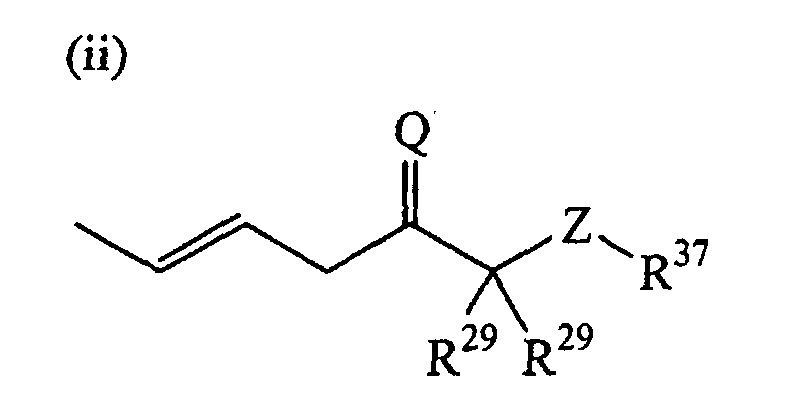 wherein V, Q, Z and R37 are defined as the same as the above.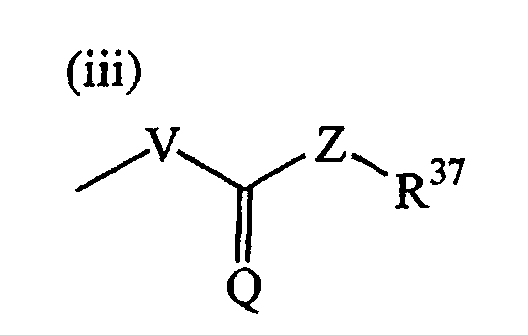
- Among these, especially preferred are those represented by the following Formula (II):[wherein R39 is
 wherein R40 is hydrogen, C1-C4 linear alkyl or trifluoromethyl, the two R40 may be the same or different,
 wherein R42 is hydrogen, C1-C4 linear alkyl or trifluoromethyl, the two R42s may be the same or different, R43 is hydrogen, C1-C4 linear alkyl, phenyl, or -C(=O)-R44
wherein R44 represents C1-C4 linear alkyl, or
or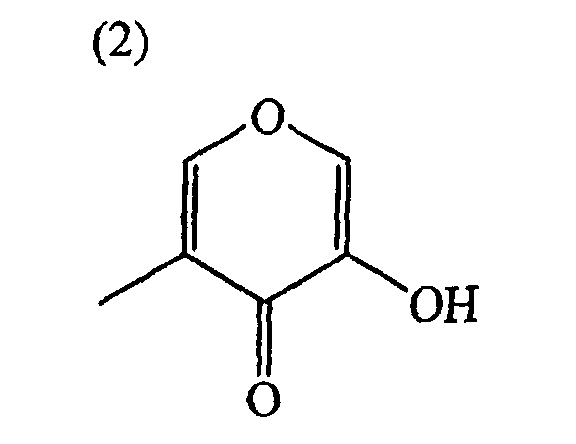 wherein X is the following in the definition of claim 2,
 wherein R47 is hydrogen, C1-C4 alkyl, or a pharmacologically acceptable cation, and the two R47s may be the same or different, or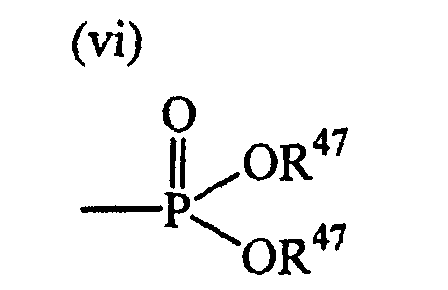
Y is hydrogen, fluorine, chlorine or bromine,
B iswherein V is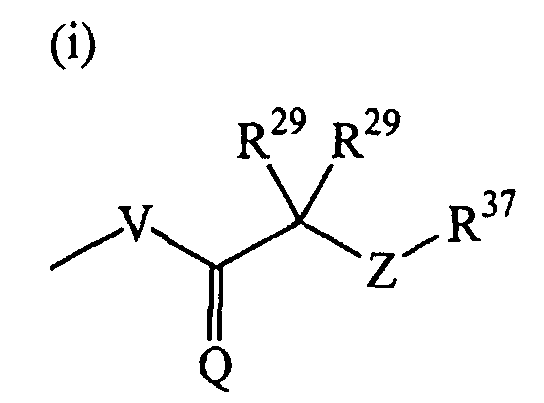
―R50
―OR33
―R50
―R50wherein Q, R29, Z and R37 are defined as the same as the above, and the two R29s may be the same or different, or wherein V, Q, Z and R37 are defined as the same as the above,
E represents the following in the definition of claim 2,
A iswherein m is an integer of 0 to 3, G is hydrogen, fluorine, chlorine, bromine, iodine, trifluoromethyl or C1-C4 linear alkyl, and all Gs may be the same or different,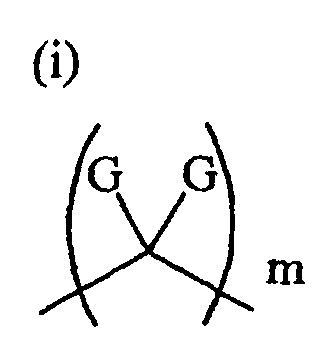 wherein j is an integer of 1 or 2, p represents the following in the definition of claim 2, G is defined as the same as the above, and all Gs may be the same or different,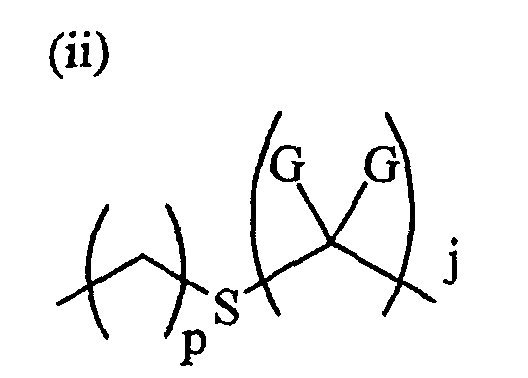
- More preferred are those represented by the following Formula (III):[wherein R51 is
 wherein Y is hydrogen or fluorine,
B iswherein R53 is hydrogen, fluorine or C1-C4 alkyl, the two R53s may be the same or different, Z represents the following in the definition of claim 2, R54 is C5-C7 cycloalkyl, phenyl, or substituted phenyl (wherein the substituent is the same as the substituent defined for the substituted phenyl in claim 2), or wherein Z and R54 are defined as the same as the above,
E is hydrogen or -OH,
A iswherein m is an integer of 0 to 2, G represents hydrogen or fluorine, and all Gs may be the same or different].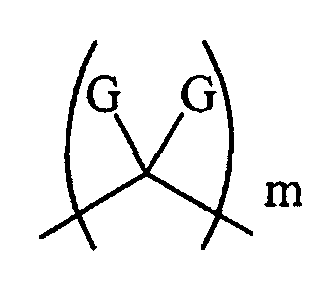
- Still more preferred are those represented by the following Formula (IV):[wherein R51 is the same meaning as described above,
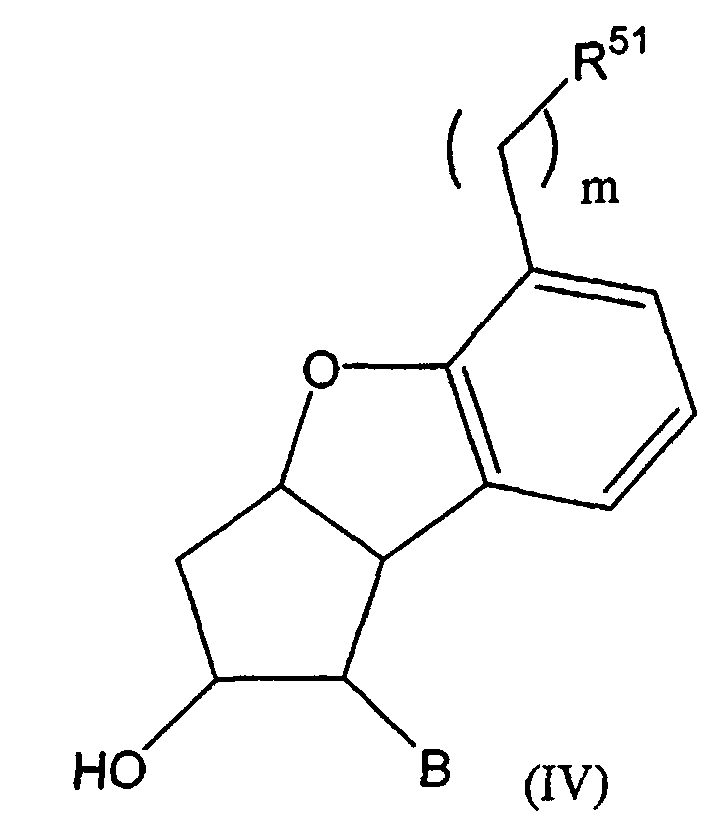
B iswherein Z is the following in the definition of claim 2, R55 is C5-C7 cycloalkyl or phenyl, or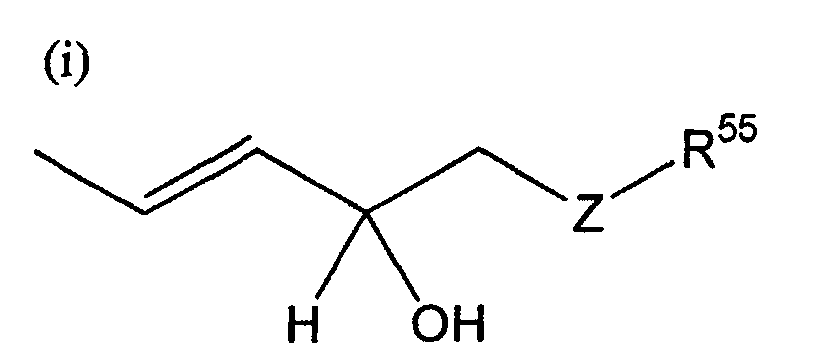 wherein Z and R55 are defined as the same as the above, m represents an integer of 0 to 2].
- Among these, especially preferred are the compounds represented by the following Formula (V) or (VI):

- Examples of the prostaglandin EP4 ligand of the present invention also include 3,7-dithiaprostanoic acid derivatives and azole derivatives. Examples of these include 3,7-dithiaprostanoic acid derivatives of the following Formula (VII), mixtures thereof with 8-epi compounds which are equilibrium compounds thereof, pharmacologically acceptable salts thereof, and clathrate compounds thereof included in cyclodextrin:[wherein R56 is hydroxy, C1-C6 alkyloxy or NR61R62 (wherein R61 and R62 independently represent hydrogen or C1-C6 alkyl),
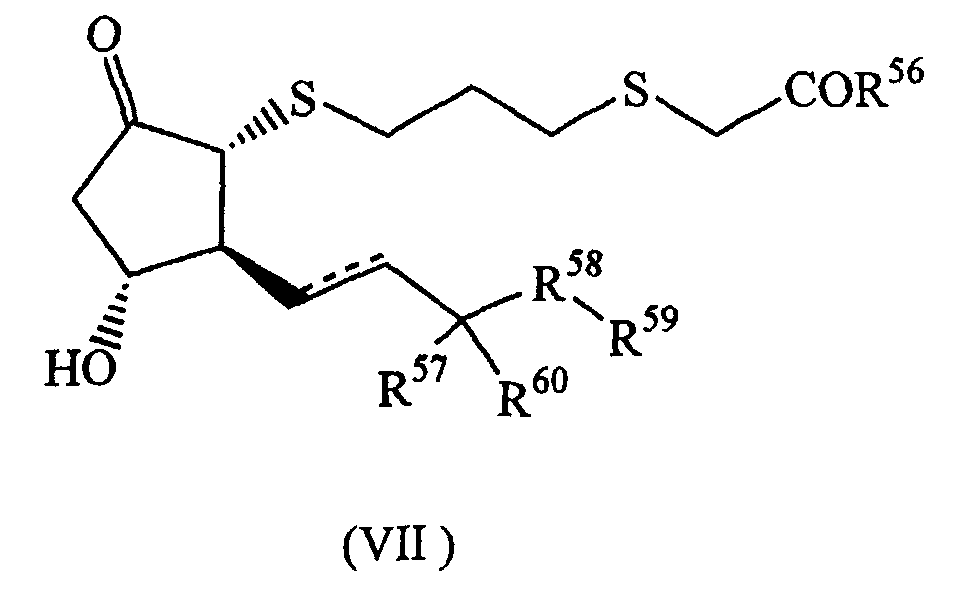
R57 is hydrogen or hydroxy,
R58 is a single bond or C1-C6 alkylene,
R59 is - (I) C1-C8 alkyl, C2-C8 alkenyl or C2-C8 alkynyl,
- (2) C1-C8 alkyl, C2-C8 alkenyl or C2-C8 alkynyl, each of which is substituted with 1 to 3 C1-C6 alkyloxy or halogen,
- (3) C1-C8 alkyl, C2-C8 alkenyl or C2-C8 alkynyl, each of which is substituted with phenyl or C3-C7 cycloalkyl,
- (4) phenyl, phenyloxy, C3-C7 cycloalkyl or C3-C7 cycloalkyloxy,
- (5) furyl, furyloxy, thienyl, thienyloxy, naphthyl, naphthyloxy, phthalanyl or phthalanyloxy,
- (6) phenyl, phenyloxy, C3-C7 cycloalkyl or C3-C7 cycloalkyloxy, each of which is
substituted with 1 to 3 of the following groups:
- C1-C6 alkyl, C2-C6 alkenyl, C2-C6 alkynyl, C1-C6 alkyloxy, C1-C6 alkyl substituted with C1-C6 alkyloxy, C1-C6 alkyloxy substituted with C1-C6 alkyloxy, C1-C6 alkyl substituted with C2-C6 alkenyloxy, C1-C6 alkyl substituted with 1 to 3 hydroxy, C1-C6 alkyl substituted with 1 to 3 halogen, C1-C6 alkylthio, C1-C6 alkyl substituted with C1-C6 alkylthio, C1-C6 alkyloxy substituted with C1-C6 alkylthio, C1-C6 alkyl substituted with C2-C6 alkenylthio, C1-C6 alkylsulfonyl, halogen, trihalomethyl, cyano, nitro, amino, hydroxy, C3-C7 cycloalkyl, C3-C7 cycloalkyloxy, C1-C6 alkyl substituted with C3-C7 cycloalkyl, C1-C6 alkyl substituted with C3-C7 cycloalkyloxy, phenyl, phenyloxy, C1-C6 alkyl substituted with phenyl, C2-C6 alkenyl substituted with phenyl, C2-C6 alkynyl substituted with phenyl, C1-C6 alkyl substituted with phenyloxy, C2-C6 alkenyl substituted with phenyloxy, C2-C6 alkynyl substituted with phenyloxy, furyl, furyloxy, C1-C6 alkyl substituted with furyl, C1-C6 alkyl substituted with furyloxy, thienyl, thienyloxy, C1-C6 alkyl substituted with thienyl, or C1-C6 alkyl substituted with thienyloxy (provided that the above-mentioned phenyl, furyl, thienyl and cycloalkyl may be substiuted with 1 to 3 C1-C6 alkyl, C1-C6 alkyloxy, C1-C6 alkyl substituted with C1-C6 alkyloxy, nitro, halogen, trihalomethyl, amino, or hydroxy), or
- (7) furyl, furyloxy, thienyl, thienyloxy, naphthyl, naphthyloxy, phthalanyl or
phthalanyloxy substituted with 1 to 3 of the following groups:
- C1-C6 alkyl, C2-C6 alkenyl, C2C6 alkynyl, C1-C6 alkyloxy, C1-C6 alkyl substituted with C1-C6 alkyloxy, C1-C6 alkyloxy substituted with C1-C6 alkyloxy, C1-C6 alkyl substituted with C2-C6 alkenyloxy, C1-C6 alkyl substituted with 1 to 3 hydroxy, C1-C6 alkyl substituted with 1 to 3 halogen, C1-C6 alkylthio, C1-C6 alkyl substituted with C1-C6 alkylthio, C1-C6 alkyloxy substituted with C1-C6 alkylthio, C1-C6 alkyl substituted with C2-C6 alkenylthio, C1-C6 alkylsulfonyl, halogen, trihalomethyl, cyano, nitro, amino, hydroxy, C3-C7 cycloalkyl, C3-C7 cycloalkyloxy, C1-C6 alkyl substituted with C3-C7 cycloalkyl, C1-C6 alkyl substituted with C3-C7 cycloalkyloxy, phenyl, phenyloxy, C1-C6 alkyl substituted with phenyl, C2-C6 alkenyl substituted with phenyl, C2C6 alkynyl substituted with phenyl, C1-C6 alkyl substituted with phenyloxy, C2-C6 alkenyl substituted with phenyloxy, C2-C6 alkynyl substituted with phenyloxy, furyl, furyloxy, C1-C6 alkyl substituted with furyl, C1-C6 alkyl substituted with furyloxy, thienyl, thienyloxy, C1-C6 alkyl substituted with thienyl, or C1-C6 alkyl substituted with thienyloxy (provided that the above-mentioned phenyl, furyl, thienyl and cycloalkyl may be substiuted with 1 to 3 C1-C6 alkyl, C1-C6 alkyloxy, C1-C6 alkyl substituted with C1-C6 alkyloxy, nitro, halogen, trihalomethyl, amino, or hydroxy), R60 is hydrogen or C1-C6 alkyl,
- (1) C1-C6 alkyl substituted with hydroxy, protected carboxy or carboxy,
- (2) carboxy,
- (3) protected carboxy,
- (4) carbamoyl,
- (5) heterocyclic group,
- (6) cyano,
- (7) C1-C6 haloalkylsulfonyloxy,
- (8) C1-C6 alkyloxy substituted with hydroxy or carbamoyl,
- (9) aryl substituted with carboxy, protected carboxy, carbamoyl or heterocyclic group,
- (10) amino which may be substituted with protected carboxy or C1-C6 alkylsulfonyl,
-
- Here, the term "heterocyclic group" means saturated or unsaturated monocyclic or polycyclic group having at least one heteroatom selected from the group consisting of nitrogen, sulfur or oxygen; the term "protected carboxy" means (1) C1-C6 alkyl esters, (2) C2-C6 alkenyl esters, (3) C2-C6 alkynyl esters, (4) arylalkyl esters substituted with C1-C6 alkyl, C1-C6 alkyloxy, phenyl, nitro or halogen, or (5) aryl esters substituted with C1-C6 alkyl, C1-C6 alkyloxy, phenyl, nitro or halogen; and the term "aryl" means phenyl or naphthyl, which may be substituted with C1-C6 alkyl.
- Among the compounds having binding activities for prostaglandin EP4 receptor, those having (an) asymmetric carbon(s) include various optical isomers, and those having at least two asymmetrical carbons include various diasteromers. The present invention include these optical isomers and respective isomers thereof. The present invention also include stereoisomers.
- The compounds having binding activities for prostaglandin EP4 receptor and salts thereof per se are known, and may be produced by the methods described in the above-mentioned Laid-open patent application, International patent publications WO/8903387 and WO/0024727.
- Examples of the pharmacologically acceptable salts include alkaline metal salts such as sodium salt and potassium salt; alkaline earth metal salts such as calcium salt and magnesium salt; amine salts such as methylamine salt, dimethylamine salt, trimethylamine salt, methylpiperidine salt, ethanolamine salt, diethanolamine salt, triethanolamine salt and lysine salt; ammonium salt; basic amino acid salts; inorganic acid salts such as hydrochloric acid salt and sulfuric acid salt; organic carboxylic acid salts such as acetic acid salt, tartaric acid salt and maleic acid salt; and organic sulfonic acid salts such as p-toluenesulfonic acid salt. However, the pharmacologically acceptable salts are not restricted to those described above.
- In application of the agent for modulating growth or generation of hair according to the present invention, one or several prostaglandin EP4 receptor ligands or (a) salt(s) thereof may be applied to head as it is, or the ligand(s) may be applied after being admixed with a vehicle, stablizer and/or the like, which are usually used in formulation of pharmaceuticals. Examples of such an additive include animal oils; plant oils; paraffin; gum arabic; saccharides such as starch, lactose, sucrose, glucose, dextrin and mannitol; inorganic acid salts such as calcium carbonate and calcium sulfate; organic acid salts such as sodium citrate, sodium lactate and magnesium stearate; water-soluble polymers such as methylcellulose, gelatin, polyethylene glycol, polyvinyl alcohol, polyvinylpyrrolidone, hydroxyethylcellulose and hydroxypropylcellulose; alcohols such as ethanol, glycerin, propylene glycol and sorbitol; and surfactants such as sorbitan aliphatic acid esters, polyoxyethylenesorbitan aliphatic acid esters, polyoxyethylene aliphatic acid esters and glycerin aliphatic acid esters. However, the additives are not restricted to those described above.
- The agent for modulating growth or generation of hair according to the present invention may be applied in various dosage forms. More particularly, the agent may be in a form which is usually used, such as in the form of liquid, jelly, emulsion, aerosol or ointment. For example, it may be used as a hair-growing agent, hair tonic, hair liquid, hair lotion, hair cream, hair gel, hair foam, hair mist, hair oil, hair treatment, mousse, shampoo or rinse. Alternatively, it may be used as an injection solution for subcutaneous, intravenous or local injections. Further, it may be formulated into a dosage form for oral administration, such as tablets, powder, granules, balls and capsules. However, the formulations are not restricted to those described above.
- As will be concretely shown in the Examples below, since the agent for modulating growth or generation of hair according to the present invention has a high selectivity to EP4 receptor subtype and exhibits hair-growing or hair-generating activities to epilated rabbit models of different ages (17 and 8 weeks old), it may be used for therapy or treatment of, for example, atrichia and hirsutism, or alopecia (male pattern alopecia and alopecia areata) as abnormal hair growth.
- The dose of administration of the agent for modulating growth or generation of hair according to the present invention varies depending on the symptom, age, individual difference, formulation of the agent and the like, and usually the agent may be administered in an amount of 0.0001 mg to 1000 mg, preferably 0.001 mg to 100 mg in one time or in several times. However, the dose of administration is not restricted thereto.
- The agent for modulating growth or generation of hair according to the present invention may be administered together with (a) hair-growing agent(s) (blood circulation promoters, potassium channel openers, androgen inhibitors, antiinflammatory agents, follicle-stimulators, antioxidants and keratolytic drugs) other than the agent of the present invention simultaneously or with a time interval. Examples of the hair-growing agents which may be used together with the agent for modulating growth or generation of hair according to the present invention include blood circulation promoters such as carpronium hydrochloride, cepharanthin and nicotinamide; potassium channel openers such as minoxidil, pinacidil and carpronium hydrochloride; androgen inhibitors such as 5α reductase inhibitors such as finasteride, and eugenyl glucoside; antiinflammatory agents such as glycyrrhizic acid and derivatives thereof, and glycyrrhetinic acid and derivatives thereof; follicle stimulators such as pentadecanoic acid glyceride, carpronium hydrochloride and procyanidin B; antioxidants such as vitamins including vitamin C, vitamin E and derivatives thereof; keratolytic agents such as aspirin; hormones such as estrogen and adenocorticotropic hormone; and amino acids such as taurine.
- The agent for modulating growth or generation of hair according to the present invention may also be administered to animals other than human. That is, the agent can modulate growth or generation of hair by administering it to animals other than human, so that it can be applied for epilation and abnormality of fur, or therapy or treatment of animals other than human.
- To describe the present invention in more detail, examples thereof will now be described.
- The compound of the Formula (I) described above was tested for its selective binding activity to EP4 receptor by using PGE2 receptor subtype-expressing cells.
- According to the reported method (Breyer,R.M. et al.,J.Biol.Chem.269,6163-6169(1994)), cloned human PGE2 receptor subtypes (EP3 and EP4) were transiently expressed by COS-7 cells. EP2 was stably expressed by CHO cells. These cells were prepared into membrane specimens. Each of the prepared membrane fractions (10 µg/tube) was incubated with a reaction solution containing 3H-PGE2 at 30°C for 1 hour. The reaction was terminated by iced buffer (l0mM MES(pH6.0), l0mM MgCl2, 1mM EDTA), and the resultant was subjected to filtration by means of suction under reduced pressure to trap the bound 3H-PGE2 on a glass filter (GF/C), followed by measurement of the radioactivity with a liquid scintillation counter.
- The Kd value was determined from Scatchard plot according to the conventional method. Non-specific binding was determined in terms of the amount of bound radioactivity in the presence of an excess amount (5 µM) of non-labeled PGE2. Measurement of inhibition of 3H-PGE2 binding by Compound I was carried out by adding 3H-PGE2 (5 nM) and various concentrations of Compound 1 of the following Formula (V):
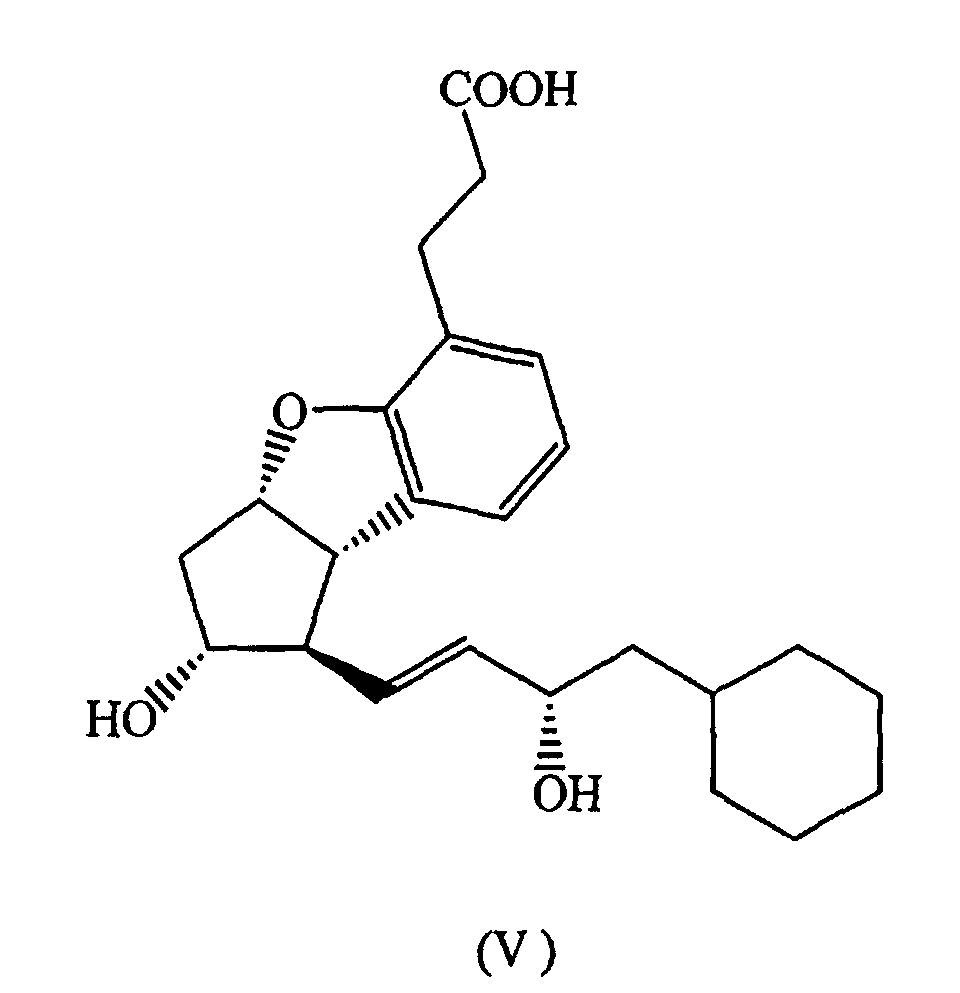
- Compound 1 was prepared according to Example 17 of Japanese Patent No. 1933167.
- The dissociation constant Ki (nM) of Compound 1 was calculated according to the following equation:
- As a result, the dissociation constant Ki of Compound 1 to EP4 was 19 nM. Thus, Compound 1 has a high selectivity to EP4 receptor subtype and its binding abilities to other receptor subtypes are low, so that it is thought that its side effect is small when it is administered.
- To investigate the hair-growth or hair-generation modulation action of Compound 1 which was shown to be a prostaglandin EP4 receptor agonist in Example 1, hair-growth/generation test was performed using rabbits. The test was carried out as follows. The hair on the back of each rabbit was removed with an electric clipper and evacream was applied for a short time to the back so as to epilate the back. After wiping the epilated region with water, test compound was subcutaneously administered to the back at a dose of 0.25 ml/kg (dissolved in 0.9% sodium chloride solution) once a day from the second day to 20th day after epilation. The state of generation of hair was observed and the length of the hair was measured.
- As a result, generation of hair was observed on the 15th day after administration of Compound 1, and the hair-generated area became not less than 50% in 3 rabbits out of 4 rabbits on the 20th day after administration. Further, the length of the new hair was increased by administration of Compound 1. The results are shown in Table 1. From these results, it was proved that Compound 1 has excellent hair-growing or hair-genrating activity.
Hair-Growth or Hair-Generation Modulation Activity of Compound 1 (20th day) Rate of Hair-generated Area Length of New Hair (%) Rate of Rabbits with 50% or More Hair-Generated Area (mm) Control Group 10.0±5.5 0/4 4.8+0.4 Compound 1-administered Group 0.03mg/kg 15.8±13.2 1/4 6.0±0.6 0.1mg/kg 48.8±13.6 3/4 7.3+0.5 Values indicate mean ± standard error. - Investigation of agonistic activity to EP4 was carried out by an improved method of the method of Lydford et al. (S. J. Lydford et al., Br. J. Pharmacol. 117, 13-20 (1996)) using rabbit saphenous veins. That is, each rabbit was deeply anesthetized by administering pentobarbital (50 mg/kg) to auricular vein, and then sacrificed by bleeding by cutting carotid artery. Saphenous vein was carefully but quickly removed and transferred into Krebs solution (NaCl 118.1 mM, KCl 5.31 mM, MgSO4 1.01 mM, CaCl2 3.52 mM, NaH2PO4 1.09 mM, NaHCO3 25.0 mM, glucose 9.99 mM, pH 7.4) which was preliminarily saturated with 95% O2 + 5% CO2 mixed gas. The connective tissue and the fatty tissue of each saphenous vein were isolated using a scissors for ophthalmology to prepare a ring preparation with a width of about 4 mm. This ring preparation was mounted on a hook for blood vessels, and then suspended in a Magnus tube filled with Krebs solution aerated with 95% O2 + 5% CO2 mixed gas and kept at 37°C. The isometric tension of each blood vessel was recorded on a recorder through an isometric transducer. To each blood vessel, a base tension of 1.0 g was applied and the blood vessel tissue was stabilized for about 30 minutes until the baseline became stabilized. After the baseline became stable, the blood vessel was contracted with 40 mM KCl, and the shrinkage and washing were repeated until the contraction became stable. After the contraction with KCl became stable, a thromboxane antagonist S-145 (1000 nM) was applied previously and then cumulative application experiments of Compounds 1 to 7 were carried out. More specifically, the reactivity to PGE2 which was a positive control drug was measured, and after washing, the action of each compound was studied. The effectiveness of each drug was expressed in terms of the concentration (EC50) at which the rate of relaxation of the test drug to the contraction by 40 mM KCl was 50%. EC5o value was calculated by plotting logarithm of the concentration of each drug along the abscissa and plotting the rate of relaxation with respect to the contraction by 40 mM KCl along the ordinate, and by determining the concentration at which the height of contraction was 50% based on the linear area of the concentration-reaction curve in each experiment.
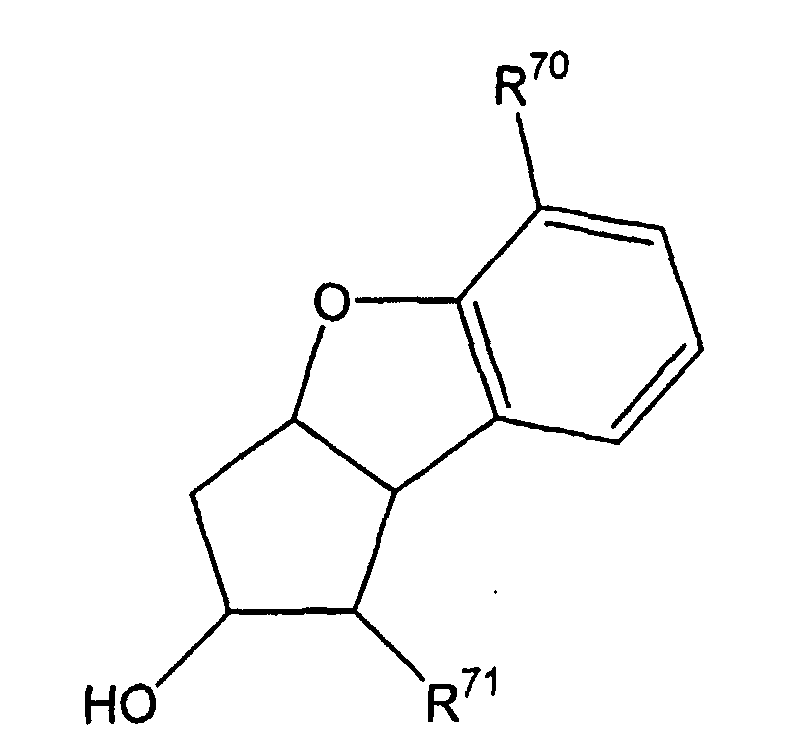
- Compounds 2, 6 and 7 were prepared as described in International Publication WO/0024727, Compound 3 was prepared as described in Japanese Patent No. 2893812, Compound 4 was prepared as described in Japanese Patent No. 1933167, and Compound 5 was prepared as described in Japanese Patent No. 1974492.
- The results are shown in Table 2. Thus, Compounds 1 to 7 have high selectivities to EP4 receptor subtype and their binding abilities to other receptor subtypes are low, so that that their side effects are thought to be small when they are administered.

- To investigate the hair-growth or hair-generation modulation action of Compound 2 which was shown to be a prostaglandin EP4 receptor agonist in Example 3, hair-growth/generation test was performed using young rabbits (New Zealand White rabbits, male, 8 weeks old, Kitayama Labes). The test was carried out as follows. The hair on the back of each rabbit was removed and evacream was applied for a short time to the back so as to epilate the back. After wiping the epilated region with water, test compound was subcutaneously administered to the back at a dose of 0.25 ml/kg once a day from the second day to 7th day after epilation. The length of the hair was measured.
- As a result, the length of the new hair was increased. The results are shown in Table 2. By these results, it was proved that Compound 2 has an excellent hair-growing or hair-generating activity.
Hair-Growth or Hair-Generation Modulation Activity of Compound 1 (7th day) Length of New Hair (mm) Control Group 9.2±0.3 Compound 2-administered Group 0.03mg/kg 11.7±0.5 Values indicate mean ± standard error. - The agent for modulating growth or generation of hair according to the present invention has an excellent activity to modulate growth or generation of hair, and its side effects are small. Therefore, it is useful for therapy or treatment of atrichia and hirsutism, or alopecia (male pattern alopecia and alopecia areata) as abnormal hair growth.
Y is hydrogen, C1-C4 alkyl, fluorine, chlorine, bromine, formyl, methoxy or nitro;
B is
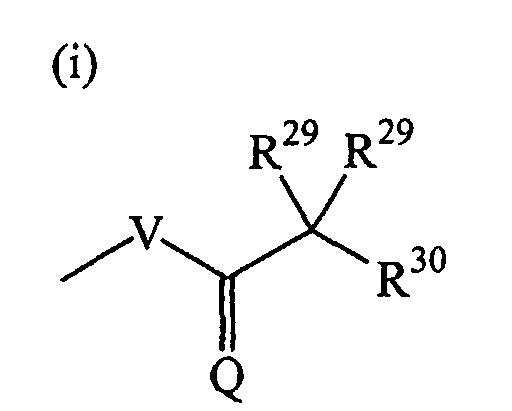
Q is
―R32
―OR33
―R32
―R32
R30 is
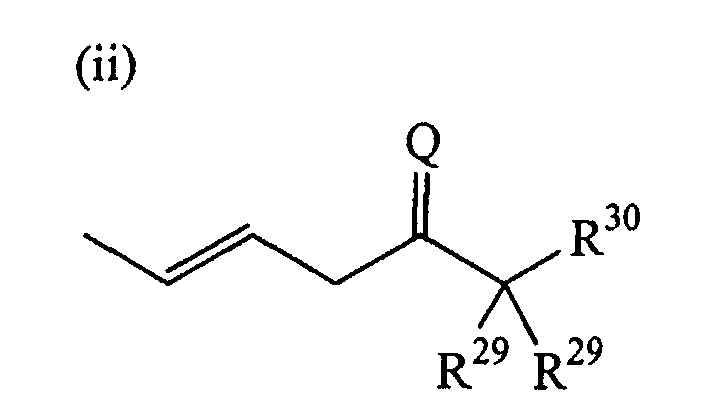

E represents hydrogen or -OR33 wherein R33 is defined as the same as the above;
A is

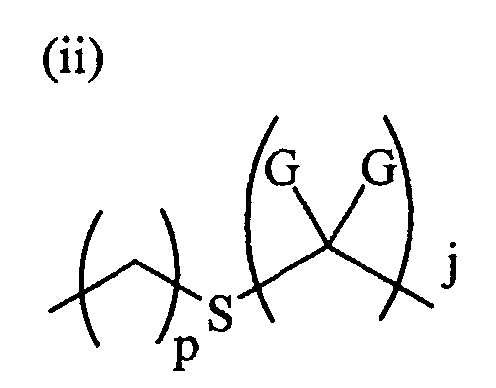
the symbol
- - - - is double bond or single bond, with the proviso that when R57 is hydrogen, the C1-C6 alkylene represented by R58 may be substituted with one hydroxy], and also include the azole derivatives of the following Formula (VIII) and pharmacologically acceptable salts thereof:
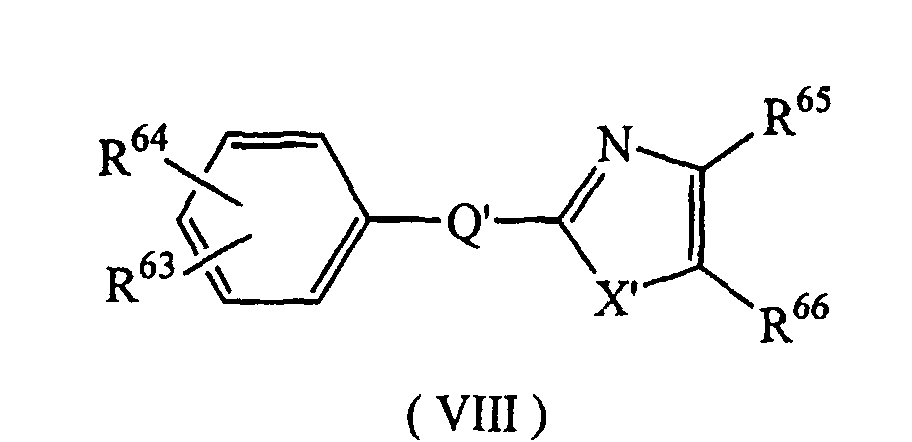
R65 is aryl which may be substituted with halogen,
R66 is aryl which may be substituted with halogen,
Q is
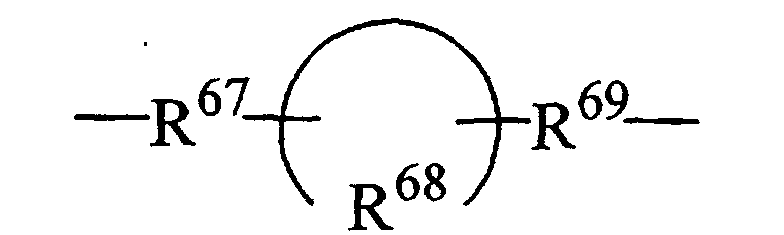
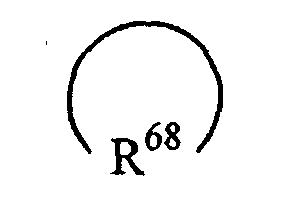
-R69- is single bond or C1-C6 alkylene), and
X' is O, NH or S].
Claims (24)
- An agent for modulating growth or generation of hair comprising a prostaglandin EP4 ligand as an active ingredient.
- The agent for modulating growth or generation of hair according to claim 1, wherein the said prostaglandin EP4 receptor ligand is a 5,6,7-trinor-4,8-inter-m-phenylene PGI2 derivative of the following Formula (I) or a pharmacologically acceptable salt thereof:[wherein

R1 iswherein R2 is hydrogen, C1-C4 linear alkyl, C3 or C4 branched alkyl, trifluoromethyl, -C(=O)-R4, or -C(=O)-O-R4, wherein R4 is C1-C12 linear alkyl, C3-C14 branched alkyl, C3-C12 cycloalkyl, C7-C12 aralkyl, phenyl or substituted phenyl (wherein the substituent is at least one fluorine, chlorine, bromine, iodine, trifluoromethyl, C1-C4 alkyl, nitro, cyano, methoxy, phenyl, phenoxy, p-acetamidebenzamide, -CH=N-NH-C(=O)-NH2, -NH-C(=O)-Ph, -NH-C(=O)-CH3 or
-NH-C(=O)-NH2), and the two R2s may be the same or different; R3 is hydrogen, C1-C4 alkyl, C1-C12 acyl, C7-C16 aroyl, C7-C16 aralkyl, tetrahydropyranyl, tetrahydrofuranyl, 1-ethoxyethyl, allyl, tert-butyl or tert-butyldimethylsilyl,
(1) hydrogen or pharmacologically acceptable cation,
(2) C1-C12 linear alkyl or C3-C14 branched alkyl,
-C≡C- wherein R13 is C1-C30 linear alkyl, C3-C30 branched alkyl or C7-C30 aralkyl, R12 is hydrogen, C1-C30 linear alkyl, C3-C30 branched alkyl or C7-C30 aralkyl, or (10) -CH(CH2OR14)2
wherein R14 is C1-C30 alkyl or C1-C30 acyl, and the two R14s may be the same or different,wherein R15 represents is hydrogen, C1-C4 linear alkyl, C3 or C4 branched alkyl, trifluoromethyl, -C(=O)-R17 -C(=O)-O-R17 wherein R17 is C1-C12 linear alkyl, C3-C14 branched alkyl, C3-C12 cycloalkyl, C7-C12 aralkyl, phenyl or substituted phenyl (wherein the substituent is the same as the substituent defined for the substituted phenyl mentioned above), and the two R15s may be the same or different; R16 is hydrogen, C1-C12 linear alkyl, C3-C14 branched alkyl, phenyl or substituted phenyl (wherein the substituent is the same as the substituent defined for the substituted phenyl mentioned above), or
-C(=O)-R18 wherein R18 represents C1-C12 linear alkyl, C3-C14 branched alkyl, C3-C12 cycloalkyl, C7-C12 aralkyl, phenyl or substituted phenyl (wherein the substituent is the same as the substituent defined for the substituted phenyl mentioned above),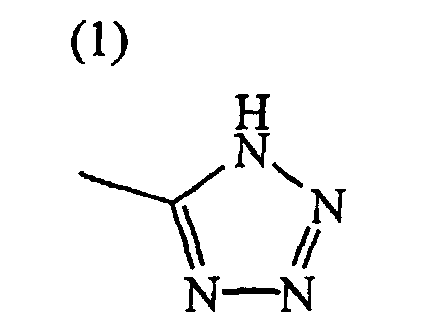 wherein R20 represents hydrogen, C1-C12 linear alkyl, C3-C14 branched alkyl, phenyl, substituted phenyl (wherein the substituent is the same as the substituent defined for the substituted phenyl mentioned above), or -C(=O)-R21 wherein R21 is C1-C12 linear alkyl, C3-C14 branched alkyl, C3-C12 cycloalkyl, C7-C12 aralkyl, phenyl, or substituted phenyl (wherein the substituent is the same as the substituent defined for the substituted phenyl mentioned above),
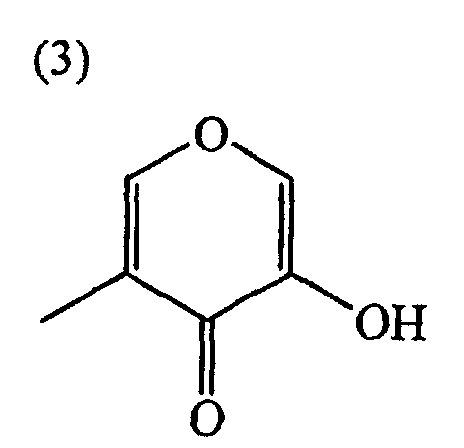
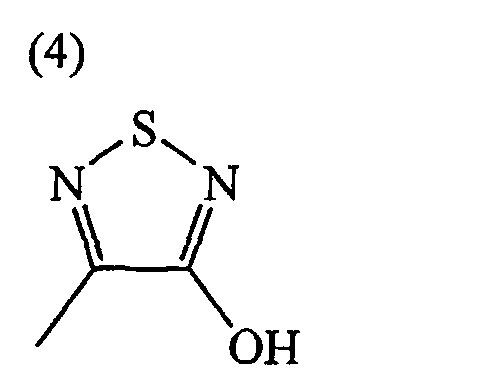 wherein X represents -O- or -S-, or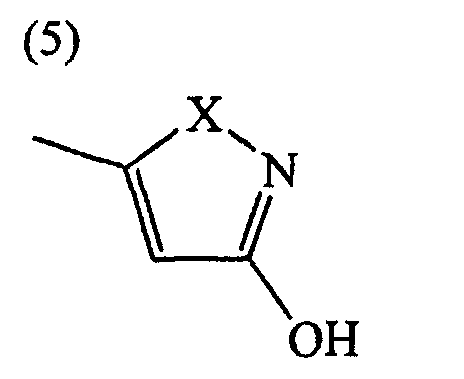
(6) azide,wherein R23 represents hydrogen, C1-C4 alkyl, phenyl, substituted phenyl (wherein the substituent is the same as the substituent defined for the substituted phenyl mentioned above), -CH2-OR24 (wherein R24 is C1-C12 linear alkyl, C3-C14 branched alkyl, C3-C12 cycloalkyl, C7-C12 aralkyl, phenyl, or substituted phenyl (wherein the substituent is the same as the substituent defined for the substituted phenyl mentioned above), or pharmacologically acceptable cation, and the two R23s may be the same or different,
Y is hydrogen, C1-C4 alkyl, fluorine, chlorine, bromine, formyl, methoxy or nitro;
B iswherein V is
Q is
―R32
―OR33
―R32
R30 iswherein Q, R29 and R30 are defined as the same as the above, and the two R29s may be the same or different, or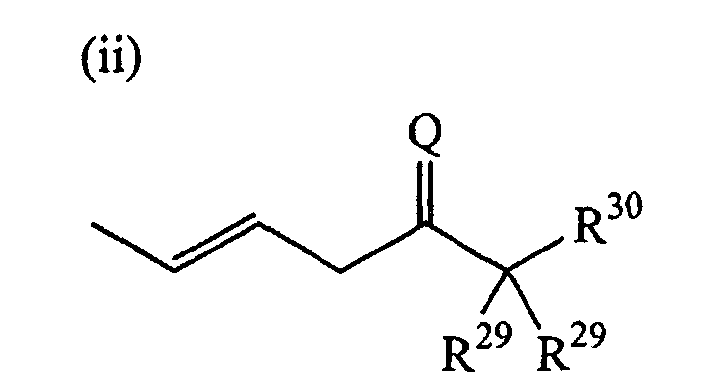 wherein V, Q and R30 are defined as the same as the above;
E represents hydrogen or -OR33 wherein R33 is defined as the same as the above;
A iswherein m represents an integer of 0 to 5, G represents hydrogen, fluorine, chlorine, bromine, iodine, trifuluoromethyl, C1-C4 linear alkyl or C3-C6 branched alkyl, and all Gs may be the same or different, wherein j represents an integer of 1 to 4, p represents an integer of 0 or 1, G is defined as the same as the above, and all Gs may be the same or different,
- The agent for modulating growth or generation of hair according to claim 2, wherein the said 5,6,7-trinor-4,8-inter-m-phenylene PGI2 derivative is represented by the following Formula (I):[wherein R1, Y, E and A represent the following in the definition of claim 2, B is
 wherein V, Q, R29 and Z represent the following in the definition of claim 2, the two R29s may be the same or different, R37 is C3-C12 cycloalkyl, C4-C13 cycloalkylalkyl, C3-C12 cycloalkyl substituted with 1 to 4 R38s (wherein R38 is hydrogen or C1-C5 alkyl), C4-C13 cycloalkylalkyl substituted with 1 to 3 R38s (wherein R38 is defined as the same as the above), phenyl, substituted phenyl (wherein the substituent is the same as the substituent defined for the substituted phenyl in claim 2), α-naphthyl, β-naphthyl, 2-pyridyl, 3-pyridyl, 4-pyridyl, α-furyl, β-furyl, α-thienyl or β-thienyl,
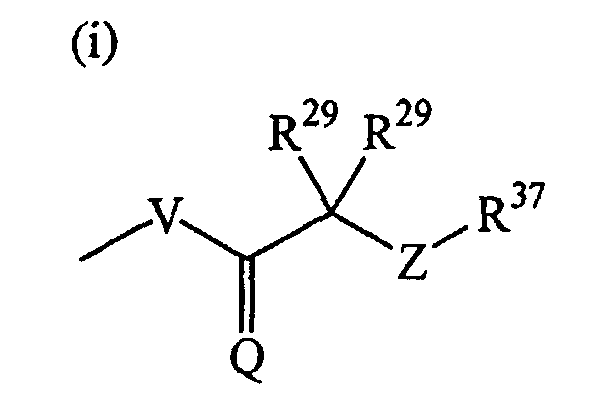 wherein Q, R29, Z and R37 are defined as the same as the above, and the two R29s may be the same or different, or
 wherein V, Q, Z and R37 are defined as the same as the above].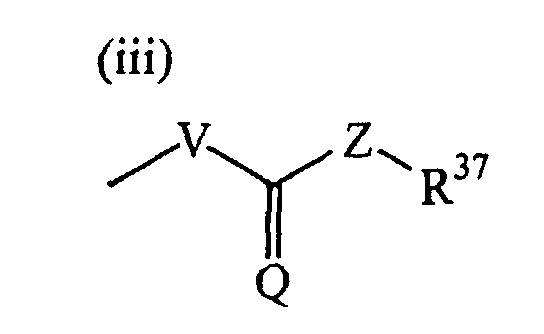
- The agent for modulating growth or generation of hair according to claim 3, wherein the said 5,6,7-trinor-4,8-inter-m-phenylene PGI2 derivative is represented by the following Formula (II):[wherein R39 is
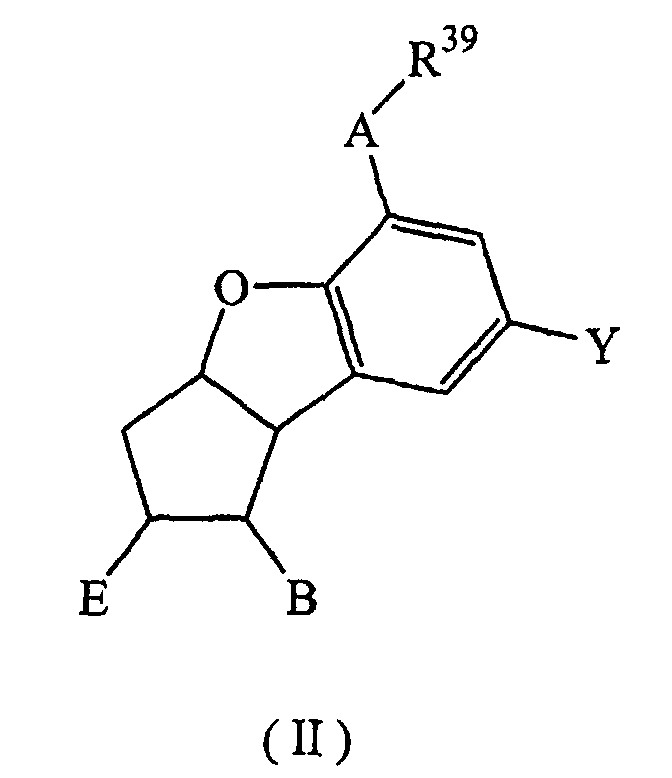 wherein R40 is hydrogen, C1-C4 linear alkyl or trifluoromethyl, the two R40 may be the same or different,
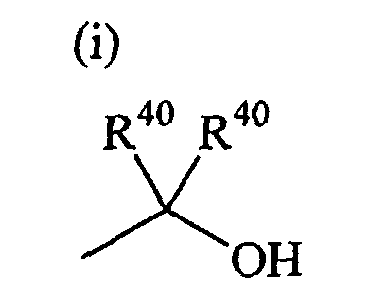 wherein R42 is hydrogen, C1-C4 linear alkyl or trifluoromethyl, the two R42s may be the same or different, R43 is hydrogen, C1-C4 linear alkyl, phenyl, or -C(=O)-R44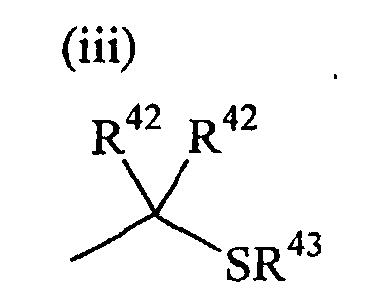
wherein R44 represents C1-C4 linear alkyl,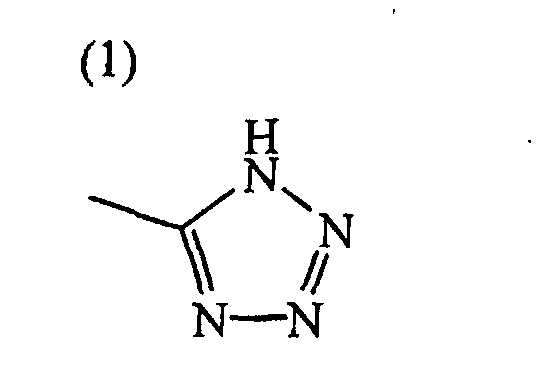 or
or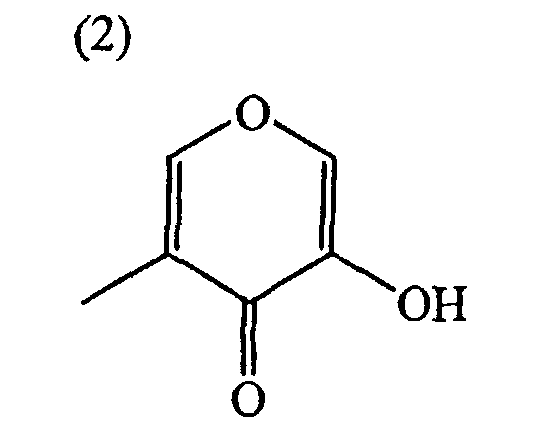 wherein X represents the following in the definition of claim 2,
 wherein R47 represents hydrogen, C1-C4 alkyl, or a pharmacologically acceptable cation, and the two R47s may be the same or different, or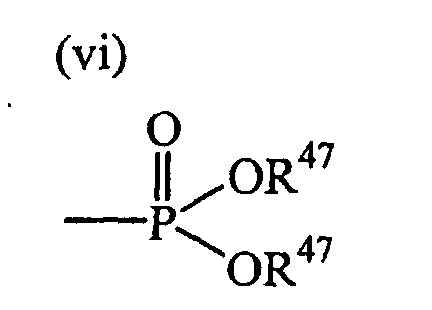
Y is hydrogen, fluorine, chlorine or bromine,
B iswherein V is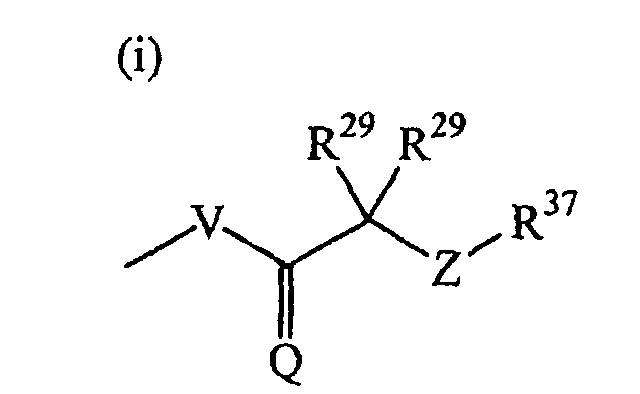
―R50
―OR33
―R50
―R50wherein Q, R29, Z and R37 are defined as the same as the above, and the two R29s may be the same or different, or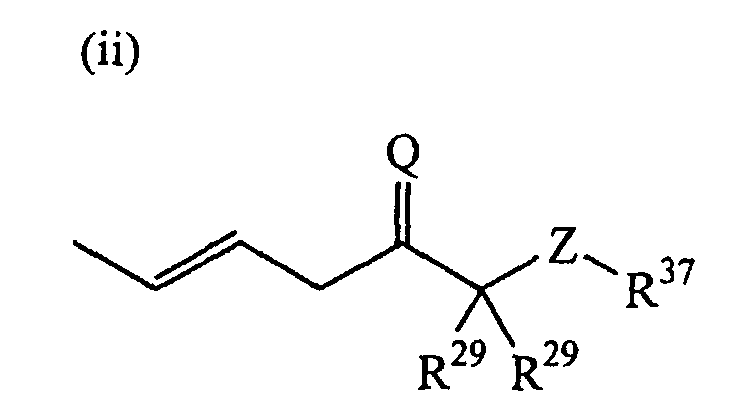 wherein V, Q, Z and R37 are defined as the same as the above,
E represents the following in the definition of claim 2,
A iswherein m represents an integer of 0 to 3, G is hydrogen, fluorine, chlorine, bromine, iodine, trifluoromethyl or C1-C4 linear alkyl, and all Gs may be the same or different,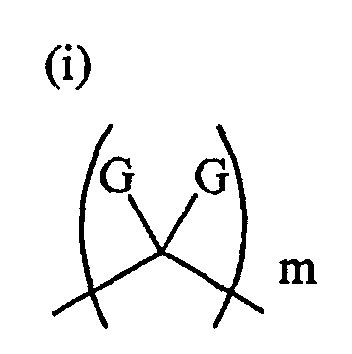 wherein j represents an integer of 1 or 2, p represents the following in the definition of claim 2, G is defined as the same as the above, and all Gs may be the same or different,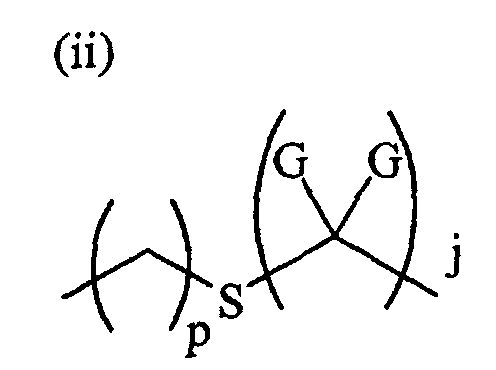
- The agent for modulating growth or generation of hair according to claim 4, wherein the said 5,6,7-trinor-4,8-inter-m-phenylene PGI2 derivative is represented by the following Formula (III):[wherein R51 is
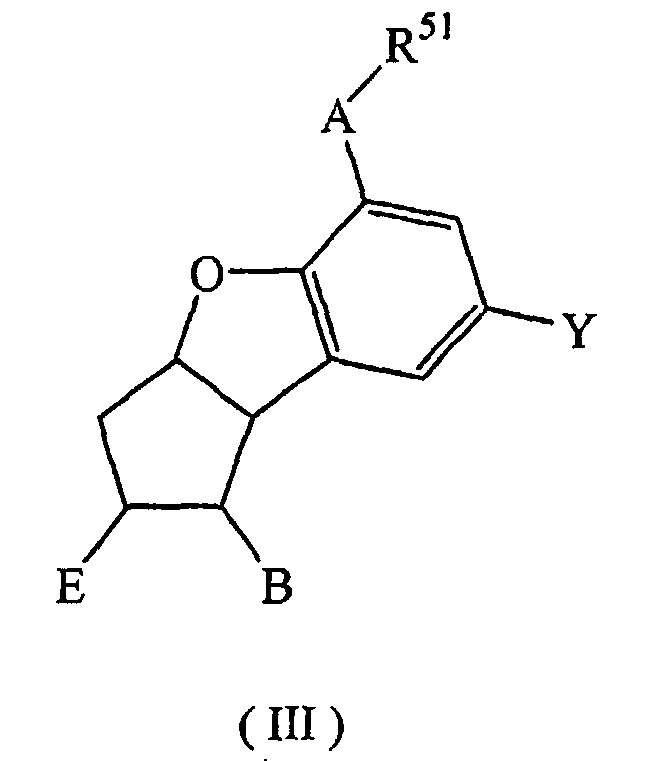 wherein Y is hydrogen or fluorine,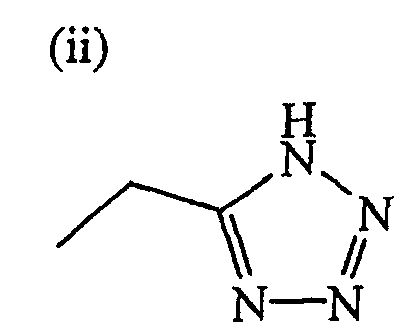
B iswherein R53 is hydrogen, fluorine or C1-C4 alkyl, the two R53s may be the same or different, Z represents the following in the definition of claim 2, R54 is C5-C7 cycloalkyl, phenyl, or substituted phenyl (wherein the substituent is the same as the substituent defined for the substituted phenyl in claim 2), or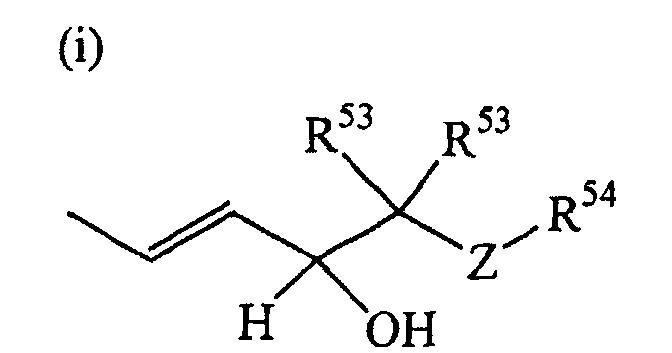 wherein Z and R54 are defined as the same as the above,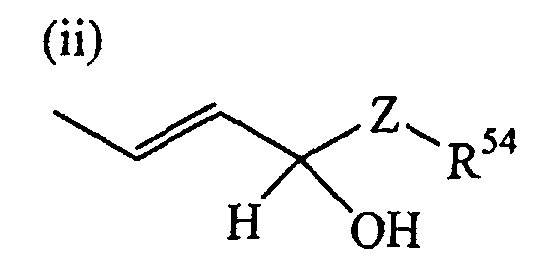
E is hydrogen or -OH,
A iswherein m represents an integer of 0 to 2, G represents hydrogen or fluorine, and all Gs may be the same or different].
- The agent for modulating growth or generation of hair according to claim 5, wherein the said 5,6,7-trinor-4,8-inter-m-phenylene PGI2 derivative is represented by the following Formula (IV):[wherein R51 represents the following in the definition of claim 5,

B iswherein Z represents the following in the definition of claim 2, R55 is C5-C7 cycloalkyl or phenyl, or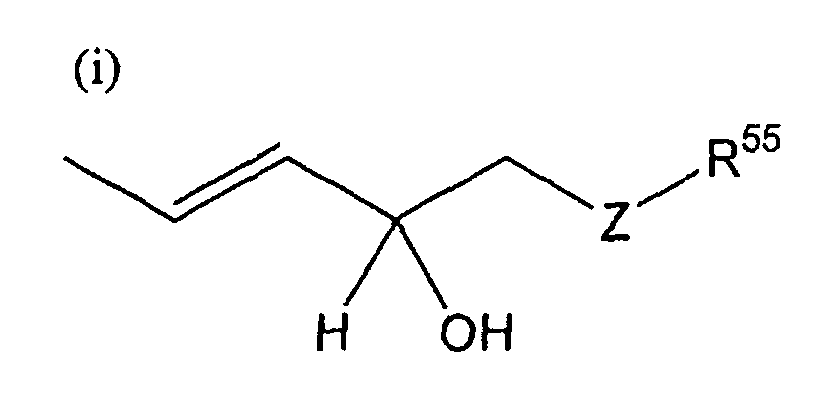 wherein Z and R55 are defined as the same as the above, m represents an integer of 0 to 2].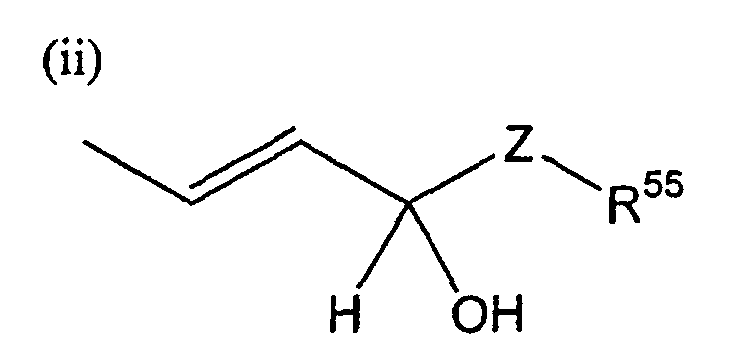
- The agent for modulating growth or generation of hair according to claim 6,
wherein the said 5,6,7-trinor-4,8-inter-m-phenylene PGI2 derivative is represented by the following Formula (V) or (VI).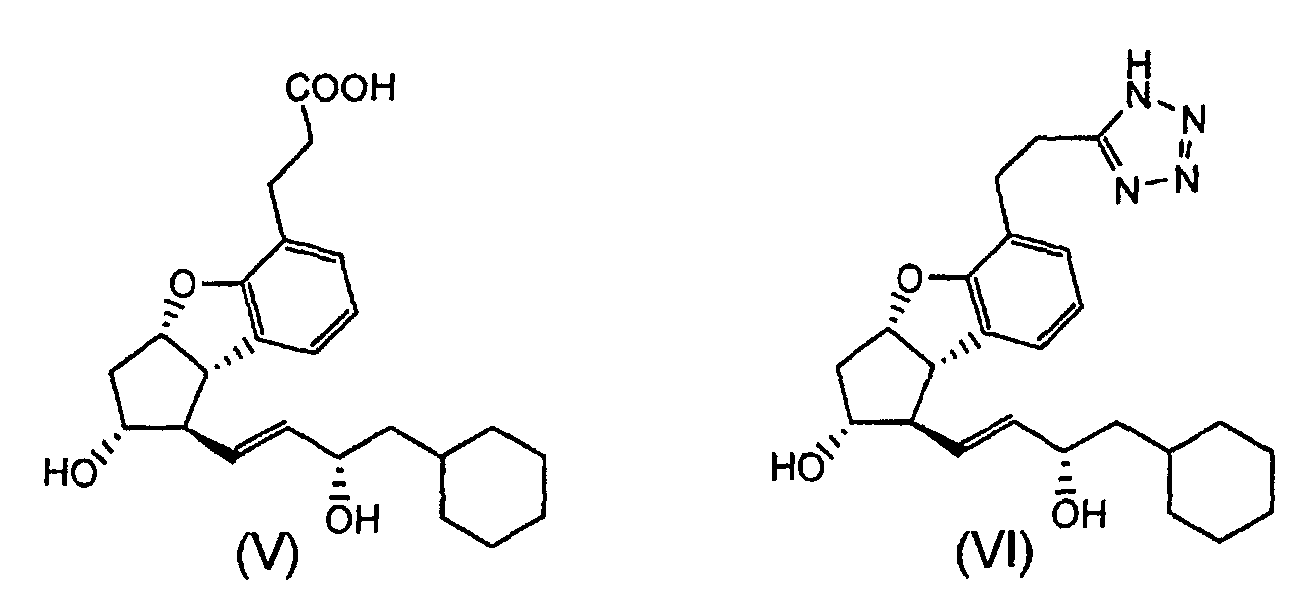
- The agent for modulating growth or generation of hair according to any one of claims 1 to 7, which is a promoting agent for growth or generation of hair.
- Use of a prostaglandin EP4 receptor ligand for production of an agent for modulating growth or generation of hair.
- The use according to claim 9, wherein the said prostaglandin EP4 receptor ligand is a 5,6,7-trinor-4,8-inter-m-phenylene PGI2 derivative of said Formula (I) (wherein the definitions of the substituents in Formula (I) are the same as the definitions of the respective substituents in Formula (I) in claim 2) or a pharmacologically acceptable salt thereof.
- The use according to claim 10, wherein the said 5,6,7-trinor-4,8-inter-m-phenylene PGI2 derivative is represented by Formula (I) (wherein the definitions of the substituents in Formula (I) are the same as the definitions of the respective substituents in Formula (I) in claim 3) or a pharmacologically acceptable salt thereof.
- The use according to claim 11, wherein the said 5,6,7-trinor-4,8-inter-m-phenylene PGI2 derivative is represented by Formula (II) (wherein the definitions of the substituents in Formula (II) are the same as the definitions of the respective substituents in Formula (II) in claim 4) or a pharmacologically acceptable salt thereof.
- The use according to claim 12, wherein the said 5,6,7-trinor-4,8-inter-m-phenylene PGI2 derivative is represented by Formula (III) (wherein the definitions of the substituents in Formula (III) are the same as the definitions of the respective substituents in Formula (III) in claim 5) or a pharmacologically acceptable salt thereof.
- The use according to claim 13, wherein the said 5,6,7-trinor-4,8-inter-m-phenylene PGI2 derivative is represented by Formula (IV) (wherein the definitions of the substituents in Formula (IV) are the same as the definitions of the respective substituents in Formula (IV) in claim 6) or a pharmacologically acceptable salt thereof.
- The use according to claim 14, wherein the said 5,6,7-trinor-4,8-inter-m-phenylene PGI2 derivative is represented by the said Formula (V) or (VI).
- The use according to any one of claims 9 to 15, wherein the said agent for modulating growth or generation of hair is an agent for promoting growth or generation of hair.
- A method for modulating growth or generation of hair comprising administering a prostaglandin EP4 receptor ligand in an amount effective for modulating growth or generation of hair to human or an animal.
- The method according to claim 17, wherein the said prostaglandin EP4 receptor ligand is a 5,6,7-trinor-4,8-inter-m-phenylene PGI2 derivative of the said Formula (I) (wherein the definitions of the substituents in Formula (I) are the same as the definitions of the respective substituents in Formula (I) in claim 2) or a pharmacologically acceptable salt thereof.
- The method according to claim 18, wherein the said 5,6,7-trinor-4,8-inter-m-phenylene PGI2 derivative is represented by Formula (I) (wherein the definitions of the substituents in Formula (I) are the same as the definitions of the respective substituents in Formula (I) in claim 3) or a pharmacologically acceptable salt thereof.
- The method according to claim 19, wherein the said 5,6,7-trinor-4,8-inter-m-phenylene PGI2 derivative is represented by Formula (II) (wherein the definitions of the substituents in Formula (II) are the same as the definitions of the respective substituents in Formula (II) in claim 4) or a pharmacologically acceptable salt thereof.
- The method according to claim 20, wherein the said 5,6,7-trinor-4,8-inter-m-phenylene PGI2 derivative is represented by Formula (III) (wherein the definitions of the substituents in Formula (III) are the same as the definitions of the respective substituents in Formula (III) in claim 5) or a pharmacologically acceptable salt thereof.
- The method according to claim 21, wherein the said 5,6,7-trinor-4,8-inter-m-phenylene PGI2 derivative is represented by Formula (IV) (wherein the definitions of the substituents in Formula (IV) are the same as the definitions of the respective substituents in Formula (IV) in claim 6) or a pharmacologically acceptable salt thereof.
- The method according to claim 22, wherein the said 5,6,7-trinor-4,8-inter-m-phenylene PGI2 derivative is represented by the said Formula (V) or (VI).
- The method according to any one of claims 17 to 23, wherein the said agent for modulating growth or generation of hair is an agent for promoting growth or generation of hair.
Applications Claiming Priority (3)
| Application Number | Priority Date | Filing Date | Title |
|---|---|---|---|
| JP2000097542 | 2000-03-31 | ||
| JP2000097542 | 2000-03-31 | ||
| PCT/JP2001/002756 WO2001072268A1 (en) | 2000-03-31 | 2001-03-30 | Hair growth or hair formation controlling agents |
Publications (1)
| Publication Number | Publication Date |
|---|---|
| EP1186287A1 true EP1186287A1 (en) | 2002-03-13 |
Family
ID=18612153
Family Applications (1)
| Application Number | Title | Priority Date | Filing Date |
|---|---|---|---|
| EP01917702A Withdrawn EP1186287A1 (en) | 2000-03-31 | 2001-03-30 | Hair growth or hair formation controlling agents |
Country Status (6)
| Country | Link |
|---|---|
| US (1) | US20030083381A1 (en) |
| EP (1) | EP1186287A1 (en) |
| CN (1) | CN1366458A (en) |
| AU (1) | AU4466901A (en) |
| CA (1) | CA2374731A1 (en) |
| WO (1) | WO2001072268A1 (en) |
Cited By (1)
| Publication number | Priority date | Publication date | Assignee | Title |
|---|---|---|---|---|
| CN103717216A (en) * | 2011-01-21 | 2014-04-09 | 阿勒根公司 | Compounds and methods for enhancing hair growth |
Families Citing this family (44)
| Publication number | Priority date | Publication date | Assignee | Title |
|---|---|---|---|---|
| CA2364948C (en) | 1999-03-05 | 2011-04-26 | Duke University | C16 unsaturated fp-selective prostaglandins analogs |
| US20020013294A1 (en) | 2000-03-31 | 2002-01-31 | Delong Mitchell Anthony | Cosmetic and pharmaceutical compositions and methods using 2-decarboxy-2-phosphinico derivatives |
| US20020172693A1 (en) * | 2000-03-31 | 2002-11-21 | Delong Michell Anthony | Compositions and methods for treating hair loss using non-naturally occurring prostaglandins |
| US20020146439A1 (en) * | 2000-03-31 | 2002-10-10 | Delong Mitchell Anthony | Compositions and methods for treating hair loss using oximyl and hydroxylamino prostaglandins |
| US20020037914A1 (en) * | 2000-03-31 | 2002-03-28 | Delong Mitchell Anthony | Compositions and methods for treating hair loss using C16-C20 aromatic tetrahydro prostaglandins |
| US9216183B2 (en) | 2002-02-04 | 2015-12-22 | Allergan, Inc. | Topical treatment for chemotherapy induced eyelash loss or hypotrichosis using prostamide F2 alpha agonists |
| US7351404B2 (en) | 2002-02-04 | 2008-04-01 | Allergan, Inc. | Method of enhancing hair growth |
| US8758733B2 (en) | 2002-02-04 | 2014-06-24 | Allergan, Inc. | Topical treatment for chemotherapy induced eyelash loss or hypotrichosis using prostamide F2 alpha agonists |
| EP1358868A3 (en) * | 2002-04-23 | 2003-11-19 | L'oreal | Cosmetic composition for increasing hair growth and/or for preventing or delaying hair loss |
| EP1513589B1 (en) | 2002-06-06 | 2010-11-10 | Merck Frosst Canada Ltd. | 1,5-disubstituted pyrrolid-2-one derivatives for use as ep4 receptor agonists in the treatment of eye diseases such as glaucoma |
| HUE029417T2 (en) | 2002-10-10 | 2017-02-28 | Ono Pharmaceutical Co | Microspheres comprising ONO-1301 |
| EP1581503A4 (en) | 2002-11-08 | 2007-07-25 | Merck & Co Inc | OPHTHALMIC COMPOSITIONS FOR TREATING OCULAR HYPERTENSION |
| US7196082B2 (en) | 2002-11-08 | 2007-03-27 | Merck & Co. Inc. | Ophthalmic compositions for treating ocular hypertension |
| US7053085B2 (en) | 2003-03-26 | 2006-05-30 | Merck & Co. Inc. | EP4 receptor agonist, compositions and methods thereof |
| US7326717B2 (en) | 2003-05-06 | 2008-02-05 | L'oreal | Pyrimidine n-oxide compounds for stimulating the growth of keratin fibers and/or reducing loss thereof |
| US7494983B2 (en) | 2003-09-04 | 2009-02-24 | Merck & Co. Inc. | Ophthalmic compositions for treating ocular hypertension |
| BRPI0414102A (en) | 2003-09-04 | 2006-10-31 | Merck & Co Inc | compound use and composition |
| US7563816B2 (en) | 2004-07-20 | 2009-07-21 | Merck & Co. Inc. | Ophthalmic compositions for treating ocular hypertension |
| US20060193804A1 (en) * | 2005-02-24 | 2006-08-31 | L'oreal | Haircare use of cyclic amine derivatives |
| EP2094839B1 (en) | 2006-12-08 | 2020-02-05 | University of Rochester | Expansion of hematopoietic stem cells |
| FR2920309B1 (en) | 2007-08-28 | 2010-05-28 | Galderma Res & Dev | USE OF TRAVOPROST TO TREAT THE FALL OF HAIR |
| US8623918B2 (en) | 2008-10-29 | 2014-01-07 | Novaer Holdings, Inc. | Amino acid salts of prostaglandins |
| US8722739B2 (en) * | 2008-10-29 | 2014-05-13 | Novaer Holdings, Inc. | Amino acid salts of prostaglandins |
| US20100204335A1 (en) * | 2008-12-01 | 2010-08-12 | Allergan, Inc. | Kit and composition for eyelash growth |
| WO2010064203A1 (en) | 2008-12-02 | 2010-06-10 | L'oreal | Combination of reduced glutathione and amino acids for improving the quality of the hair in women |
| FR2949052B1 (en) | 2009-08-13 | 2015-03-27 | Oreal | PROCESS FOR COSMETIC TREATMENT OF SCALP. |
| WO2011031990A1 (en) * | 2009-09-11 | 2011-03-17 | Follica, Inc. | Intermittent and pulse lithium treatments for modulating hair growth |
| NZ716349A (en) | 2009-11-09 | 2017-07-28 | Allergan Inc | Compositions and methods for stimulating hair growth |
| US9149484B2 (en) | 2009-11-09 | 2015-10-06 | Allergan, Inc. | Compositions and methods for stimulating hair growth |
| CA2738045C (en) | 2010-05-28 | 2019-02-19 | Simon Fraser University | Conjugate compounds, methods of making same, and uses thereof |
| JP2014500275A (en) | 2010-12-06 | 2014-01-09 | フォリカ,インコーポレイテッド | Methods for treating baldness and for promoting hair growth |
| CA2870666A1 (en) | 2012-04-16 | 2013-10-24 | Case Western Reserve University | Compositions and methods of modulating 15-pgdh activity |
| ES2733998T3 (en) | 2012-10-29 | 2019-12-03 | Cardio Incorporated | Specific therapeutic agent of lung disease |
| US9968716B2 (en) | 2013-10-15 | 2018-05-15 | Ono Pharmaceutical Co., Ltd. | Drug-eluting stent graft |
| CA2927730A1 (en) | 2013-10-15 | 2015-05-07 | Case Western Reserve University | Compositions and methods of modulating short-chain dehydrogenase activity |
| US9650414B1 (en) | 2014-05-30 | 2017-05-16 | Simon Fraser University | Dual-action EP4 agonist—bisphosphonate conjugates and uses thereof |
| CN107849072B (en) | 2015-06-12 | 2020-12-15 | 西蒙弗雷泽大学 | Amide-linked EP4 agonist-bisphosphonate compounds and uses thereof |
| JP6816887B2 (en) * | 2015-10-20 | 2021-01-20 | 国立大学法人 東京医科歯科大学 | Hair growth promoting composition and its use |
| EP3548035A4 (en) | 2016-11-30 | 2020-07-22 | Case Western Reserve University | COMBINATIONS OF 15 PGDH INHIBITORS WITH CORTICOSTEROIDS AND / OR TNF INHIBITORS AND USES THEREOF |
| CN110573154A (en) | 2017-02-06 | 2019-12-13 | 卡斯西部储备大学 | Compositions and methods for modulating short-chain dehydrogenase activity |
| KR102294129B1 (en) * | 2017-03-16 | 2021-08-27 | 국제약품 주식회사 | N-Benzyl-N-phenoxycarbonyl-phenylsulfonamide Derivatives and Pharmaceutical Composition Comprising the Same |
| WO2020106998A1 (en) | 2018-11-21 | 2020-05-28 | Case Western Reserve University | Compositions and methods of modulating short-chain dehydrogenase activity |
| AU2021224268A1 (en) | 2020-02-21 | 2022-09-15 | Case Western Reserve University | Compositions and methods for treating renal injury |
| CR20220654A (en) | 2020-05-20 | 2023-08-24 | Rodeo Therapeutics Corp | Compositions and methods of modulating short-chain dehydrogenase activity |
Family Cites Families (5)
| Publication number | Priority date | Publication date | Assignee | Title |
|---|---|---|---|---|
| JPS61218510A (en) * | 1985-03-22 | 1986-09-29 | Dai Ichi Seiyaku Co Ltd | Agent for hair |
| US5578643A (en) * | 1992-05-20 | 1996-11-26 | Loyola University Of Chicago | Protective prostaglandins for use in conjunction with chemotherapeutic agents |
| JP3102141B2 (en) * | 1992-05-29 | 2000-10-23 | 東レ株式会社 | Hair restorer |
| JP3217293B2 (en) * | 1997-04-17 | 2001-10-09 | 株式会社アールテック・ウエノ | Hair growth / hair restorer |
| EP1080728A1 (en) * | 1999-03-16 | 2001-03-07 | Toray Industries, Inc. | Prostaglandin ep4 receptor agonist and treatment method |
-
2001
- 2001-03-30 WO PCT/JP2001/002756 patent/WO2001072268A1/en not_active Ceased
- 2001-03-30 CN CN01801068A patent/CN1366458A/en active Pending
- 2001-03-30 EP EP01917702A patent/EP1186287A1/en not_active Withdrawn
- 2001-03-30 CA CA002374731A patent/CA2374731A1/en not_active Abandoned
- 2001-03-30 AU AU44669/01A patent/AU4466901A/en not_active Abandoned
- 2001-03-31 US US09/980,197 patent/US20030083381A1/en not_active Abandoned
Non-Patent Citations (1)
| Title |
|---|
| See references of WO0172268A1 * |
Cited By (2)
| Publication number | Priority date | Publication date | Assignee | Title |
|---|---|---|---|---|
| CN103717216A (en) * | 2011-01-21 | 2014-04-09 | 阿勒根公司 | Compounds and methods for enhancing hair growth |
| WO2012100238A3 (en) * | 2011-01-21 | 2014-07-03 | Allergan, Inc. | Compounds and methods for enhancing hair growth |
Also Published As
| Publication number | Publication date |
|---|---|
| US20030083381A1 (en) | 2003-05-01 |
| CN1366458A (en) | 2002-08-28 |
| CA2374731A1 (en) | 2001-10-04 |
| WO2001072268A1 (en) | 2001-10-04 |
| AU4466901A (en) | 2001-10-08 |
Similar Documents
| Publication | Publication Date | Title |
|---|---|---|
| US20030083381A1 (en) | Hair growth or hair formation controlling agents | |
| US20250049683A1 (en) | Compositions and methods for inhibiting hair growth | |
| JP5579158B2 (en) | Composition for treating alopecia using C16-C20 aromatic tetrahydroprostaglandin and method for treating the same | |
| US9675539B2 (en) | Cosmetic and pharmaceutical compositions and methods using 2-decarboxy-2-phosphinico derivatives | |
| JP2019001828A (en) | Compositions and methods for treating hair loss using non-naturally occurring prostaglandins | |
| US20020146439A1 (en) | Compositions and methods for treating hair loss using oximyl and hydroxylamino prostaglandins | |
| FR3045604A1 (en) | PROCESS FOR DEPIGMENTING KERATINIC MATERIALS USING THIOPYRIDINONE COMPOUNDS | |
| DE60313791T2 (en) | Hair treatment composition containing a styrene pyrazole | |
| AU770459B2 (en) | Heterocyclic ester and amide hair growth compositions and uses | |
| US20240024295A1 (en) | Compositions and methods for inhibiting hair growth | |
| US20080025940A1 (en) | Administration of 3-sulfanylpropanamide compounds for stimulating hair and eyelash growth and/or for stopping the loss and/or limiting the depigmentation thereof | |
| JP7032323B2 (en) | Phenylurea derivative as N-formylmethionide receptor modulator | |
| JPWO2001072268A1 (en) | Hair growth or hair growth regulators | |
| JP2005060391A (en) | Compositions containing 2-thioacetamide and their use for stimulating growth and / or reducing loss of keratin fibers | |
| JP2007533708A (en) | 2-Oxy-acetamide compounds, their use and compositions for delaying stimulation or induction and / or loss of keratin fiber growth | |
| JP2008528539A (en) | Use of 3-sulfanylpropanamides for promoting hair and eyelash growth and / or for limiting their loss and / or depigmentation | |
| WO2025050100A1 (en) | Compositions and methods for treating hair and skin conditions related to folliculopilosebaceous units | |
| JP2002525302A (en) | Method of treating hair loss using ketoamides | |
| US20050169863A1 (en) | 2-Thioacetamide compositions for stimulating the growth of keratin fibers and/or for reducing loss thereof | |
| MXPA01003327A (en) | Method of treating hair loss using sulfonamides |
Legal Events
| Date | Code | Title | Description |
|---|---|---|---|
| PUAI | Public reference made under article 153(3) epc to a published international application that has entered the european phase |
Free format text: ORIGINAL CODE: 0009012 |
|
| 17P | Request for examination filed |
Effective date: 20011227 |
|
| AK | Designated contracting states |
Kind code of ref document: A1 Designated state(s): AT BE CH CY DE DK ES FI FR GB GR IE IT LI LU MC NL PT SE TR |
|
| RBV | Designated contracting states (corrected) |
Designated state(s): DE ES FR GB IT |
|
| STAA | Information on the status of an ep patent application or granted ep patent |
Free format text: STATUS: THE APPLICATION HAS BEEN WITHDRAWN |
|
| 18W | Application withdrawn |
Effective date: 20041028 |