EP1184778A2 - Method and system for tracking the current date and time with a printer and operating the printer accordingly - Google Patents
Method and system for tracking the current date and time with a printer and operating the printer accordingly Download PDFInfo
- Publication number
- EP1184778A2 EP1184778A2 EP01307486A EP01307486A EP1184778A2 EP 1184778 A2 EP1184778 A2 EP 1184778A2 EP 01307486 A EP01307486 A EP 01307486A EP 01307486 A EP01307486 A EP 01307486A EP 1184778 A2 EP1184778 A2 EP 1184778A2
- Authority
- EP
- European Patent Office
- Prior art keywords
- printer
- time
- date data
- clock circuit
- date
- Prior art date
- Legal status (The legal status is an assumption and is not a legal conclusion. Google has not performed a legal analysis and makes no representation as to the accuracy of the status listed.)
- Granted
Links
Images



Classifications
-
- G—PHYSICS
- G06—COMPUTING OR CALCULATING; COUNTING
- G06K—GRAPHICAL DATA READING; PRESENTATION OF DATA; RECORD CARRIERS; HANDLING RECORD CARRIERS
- G06K15/00—Arrangements for producing a permanent visual presentation of the output data, e.g. computer output printers
-
- G—PHYSICS
- G06—COMPUTING OR CALCULATING; COUNTING
- G06K—GRAPHICAL DATA READING; PRESENTATION OF DATA; RECORD CARRIERS; HANDLING RECORD CARRIERS
- G06K15/00—Arrangements for producing a permanent visual presentation of the output data, e.g. computer output printers
- G06K15/02—Arrangements for producing a permanent visual presentation of the output data, e.g. computer output printers using printers
- G06K15/18—Conditioning data for presenting it to the physical printing elements
- G06K15/1801—Input data handling means
- G06K15/181—Receiving print data characterized by its formatting, e.g. particular page description languages
-
- G—PHYSICS
- G06—COMPUTING OR CALCULATING; COUNTING
- G06K—GRAPHICAL DATA READING; PRESENTATION OF DATA; RECORD CARRIERS; HANDLING RECORD CARRIERS
- G06K15/00—Arrangements for producing a permanent visual presentation of the output data, e.g. computer output printers
- G06K15/02—Arrangements for producing a permanent visual presentation of the output data, e.g. computer output printers using printers
- G06K15/18—Conditioning data for presenting it to the physical printing elements
- G06K15/1801—Input data handling means
- G06K15/1822—Analysing the received data before processing
-
- G—PHYSICS
- G06—COMPUTING OR CALCULATING; COUNTING
- G06Q—INFORMATION AND COMMUNICATION TECHNOLOGY [ICT] SPECIALLY ADAPTED FOR ADMINISTRATIVE, COMMERCIAL, FINANCIAL, MANAGERIAL OR SUPERVISORY PURPOSES; SYSTEMS OR METHODS SPECIALLY ADAPTED FOR ADMINISTRATIVE, COMMERCIAL, FINANCIAL, MANAGERIAL OR SUPERVISORY PURPOSES, NOT OTHERWISE PROVIDED FOR
- G06Q30/00—Commerce
- G06Q30/02—Marketing; Price estimation or determination; Fundraising
- G06Q30/0241—Advertisements
Definitions
- the present invention relates to the field of printing devices and printer operation. More specifically, the present invention relates to a method and system for tracking the current date and time with a printer. The present invention also relates to methods of efficiently operating the printer according to the current date and time to best suit the needs of printer users.
- Some high-end printers may include a clock circuit, but have required the user to set the clock by inputting a date and time using a control panel on the printer unit. Because the printer's operation does not depend on the date or time, however, many users do not make the effort required to learn the procedure for setting the printer clock through the printer control panel or simply do not take the time to set the clock when needed. Moreover, both the clock circuit and control panel for setting the clock circuit add to the expense of the printer.
- the present invention meets the above-described needs and others. Specifically, the present invention provides a method and system of tracking the current date and time with a printer. The present invention also provides for methods of advantageously operating the printer in accordance with the current date and/or time.
- the present invention may be embodied and described as a system for tracking time and date with a printer and managing that printer accordingly.
- the system of the present invention preferably includes a printer or printing device having a clock circuit and one or more printer clients, each having its own clock circuit.
- the printer driver of the printer client appends time/date data from the clock circuit of that printer client to a print job being transmitted to the printer.
- the printer then extracts the time/date data from the print job transmission and uses that time/date data to set or adjust the clock circuit of the printer. In this way, the printer's clock circuit is automatically set without requiring any user action.
- the printer may compare the time/date data received with the incoming print job to time/date data from the clock circuit of the printer or other time/date data received with other print jobs. If the incoming time/date data is beyond a predetermined threshold, for example a standard deviation from the other time/date data, the printer may reject the incoming data as erroneous. Otherwise, the printer averages the time/date data received with the print job with other time/date data received with other print jobs and then sets or adjusts the clock circuit of the printer according to a resulting average of all the time/date data. This provides a more accurate time/date setting for the printer's clock circuit.
- the clock circuit of the printer may be connected to a battery as a back-up power source.
- the output of the printer's clock circuit can then be used to more efficiently manage the operation of the printer.
- the printer may be maintained in an operating mode during pre-defined hours and days based on output from the clock circuit of the printer. Consequently, during those pre-defined hours, no time is lost waiting for the printer to switch out of a power-save mode.
- the printer may avoid performing a calibration procedure during pre-defined hours and days based on output from the clock circuit of the printer. Thus, no time is wasted during those pre-defined times waiting for the printer to finish the calibration procedure.
- the present invention also includes all the methods of making and operating the system described above.
- the present invention encompasses a method of tracking time and date with a printer by appending time/date data to a print job sent to the printer from a printer client having a clock circuit.
- the method also includes extracting the time/date data from the print job and using the time/date data to set or adjust a clock circuit of the printer. The printer is then operated accordingly.
- the present invention encompasses the computer-readable instructions, software or firmware, required to cause the printer client devices and the printer to operate in the manner described above, i.e., according to the principles of the present invention.
- the present invention encompasses computer-readable instructions recorded in a medium for storing computer-readable instructions, where (1) a first set of the instructions causes a processing device in a printer client device to append time/date data to a print job sent to the printer, the printer client device having a clock circuit that outputs time/date data; and (2) a second set of the instructions cause a processing device in the printer to extract the time/date data from the print job and use the time/date data to set or adjust a clock circuit of the printer.
- Fig. 1 is a block diagram of a network including a printer and print clients implementing the present invention so that the printer can track the current date and time.
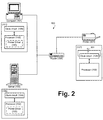
- Fig. 2 is a block diagram of a network including a printer and print clients implementing a second embodiment of the present invention.
- Fig. 3 is a flowchart of a method according to the present invention by which a printer can track the current date and time.
- Fig. 4 is a flowchart of a method according to the present invention by which the operating mode of the printer is controlled by the current date and time.
- Fig. 5 is a flowchart of a method according to the present invention by which the calibration of a color printer is controlled by the current date and time.
- Fig. 1 is a block diagram of a local area network ("LAN") that includes a printer and print clients. These networked devices implement the present invention so that the printer can track the current date and time. As will be appreciated by those skilled in the art, Fig. 1 could also represent a wide area network in which the present invention may also be implemented.
- LAN local area network
- the LAN (100) includes a printer (107).
- the printer (107) may be any type of printing device, including but not limited to, a laser printer, an ink jet printer, a dot-matrix printer, a fax machine, an electronic copier, a plotter or the like.
- the LAN (100) also includes a number of printer clients, devices which send data to the printer (107) for printing.
- these printer clients include a networked desktop computer (101) and a server (105). It will be understood by those skilled in the art that a number of other devices could also be connected to the network (100) and serve as printer clients.
- a laptop computer, a modem or the like For example, a laptop computer, a modem or the like.
- a router (106) serves as the backbone of the network (100).
- the router (106) appropriately routes communications between networked devices (101, 105, 107).
- Each printer client (101, 105) has a printer driver (103) which is a piece of software running on the client processor (102).
- the printer driver (103) processes the data and transmits it via the network (100) to the printer (107) in a form required by the printer.
- the printer (107) can then receive and print the data as desired.
- printer clients particularly computers (101) and servers (105), also include an internal clock circuit (104) which tracks the current date and time. This date/time data is continuously available to the processor (102) of the printer client. Most computers display the current date and time as part of the user interface on the unit's monitor.
- the printer driver (103) on each printer client (101, 105) is modified so as to include in each job sent to the printer (107) an indication of the current date and time as tracked by the clock circuit (104) of that printer client (101, 105). This information is received by the printer (107) with the transmission of the print job.
- the processor (109) of the printer (107) extracts the date/time data from the print job transmission and uses that information to automatically set or adjust a clock circuit (108) internal to the printer (107).
- the preferred method of using the date/time data sent with a print job transmission to set the printer's clock circuit (108) will be detailed below.
- the present invention allows the printer (107) to track the current date and time with its own clock circuit (108), and set, reset or adjust that clock circuit (108) automatically without requiring any time or intervention on the part of the printer owner or user.
- Fig. 2 illustrates a second embodiment of the network (100) implementing the present invention.
- Identical reference numerals indicate identical elements as those illustrated and described in connection with Fig. 1.
- the printer (107) may include a battery (201) which is connected across the clock circuit (108) of the printer (107). With the battery (201) in place, the clock circuit (108) in the printer is able to continue keeping the current date and time even if the printer (107) looses power or is disconnected from its power source.
- Fig. 3 is a flow chart detailing the method by which the date/time data from the printer client (101, 105) is used by the printer (107) to maintain the most accurate tracking of the current date and time.
- the method begins when time/date data are sent to the printer (107) with a print job from a printer client. (301).
- the processor (109) of the printer (107) will extract the time/date data from the print job transmission and compare that most recent incoming time/data data with the time/date reading of the clock circuit (108) in the printer (107) and/or other time/date data received with previous print jobs. (302).
- the processor (109) of the printer (107) is preferably programmed to ignore any time/date data the is beyond a predefined threshold from the time/data data previously received or the current reading of the printer's clock circuit (108).
- the processor (109) of the printer (107) may take a sample of time/data data readings with incoming print jobs, look at the distribution of those data points and determine the standard deviation.
- the incoming time/date data is more than a standard deviation (303) away from the time/date data received with previous print jobs as sampled by the processor (109)
- the incoming time/date data may be presumed to be erroneous and discarded (304).
- the time/date data provided with the current print job can be averaged with previous time/data data provided with other print jobs from the same or other printer clients (305). The current date and time as determined by this averaging process can then be used to adjust the reading of the printer's clock circuit (108) accordingly. (306).
- the printer (107) automatically adjusts its clock circuit (108) to an average time/date as kept by the clocks circuits (104) of all the printer client devices (101, 105) sending print jobs to the printer (107).
- this average time is generally more accurate than relying on the time/date data from any single printer client device.
- the setting of the printer's clock circuit (108) is automatic and dynamic to constantly reflect the best time/date data available to the printer (107).
- the averaging of previously received time/date data with the time/date date provided with the current print job can be accomplished in a number of ways.
- a preferred example would be as follows.
- the printer's processor (109) will count the number of print jobs received (N) that include time/date data.
- the current reading of the printer's clock circuit is then weighted to reflect the number (N) of time/date data readings that have been received and used to set the printer's clock circuit. If, for example, 10 time/date data readings have been received with previous print jobs, the current reading of the printer's clock circuit may be multiplied by 10 and then added to the time/date reading associated with the current incoming print job. Division by 11 then provides an averaged time/date reading that is appropriately weighted to reflect the data received with previous print jobs, but also reflects the latest date/time data received.
- the printer's clock circuit (108) may then be adjusted to reflect the calculated average.
- the number N may be limited to a predetermined maximum value, for example, 10. This will prevent the average from becoming completely unresponsive to newly received time/date date carried by incoming print jobs.
- Fig. 4 is a flowchart illustrating a method of better managing a printer using the principles of the present invention.
- printers can require a substantial amount of power to be ready to print data received from a printer client device.
- toner applied to a sheet of paper to form the printed image is heat-sealed to the paper with a heating element called a fuser nip. Maintaining the fuser nip at sufficient temperature to heat-seal toner requires power and generates heat. The power required by the fuser nip and the heat generated are wasted if the printer is not being used to print documents.
- the printer is programmed to enter a power-save mode when unused for specified period of time. This allows the printer to save power and reduce unwanted thermal energy when not is use.
- time is required to bring the printer from the power-save mode back into an operating mode. For example, in a laser printer, the fuser nip must be heated. Therefore, if the printer is unused for a period of time during regular working hours, e.g. 8:00 am to 5:00 pm, and consequently goes into power-save mode, anyone needing to print will have to send the print job to the printer and then be required to wait for the printer to come out of power-save mode and "warm-up" before printing can be accomplished.
- the printer processor will periodically check the time/date data output by the printer's clock circuit (401). The processor will determine whether the time data output by the printer's clock circuit falls outside pre-determined business hours (402).
- These pre-determined business hours may be standard hours pre-programmed into the printer, such as 9:00 am to 5:00 pm, or may be specific hours programmed into the printer by the user as reflective of the user's specific work habits or the habits of those operating the various printer client devices.
- the pre-determined hours may also include multiple blocks of time, e.g., 9:00 am to 12:00 pm and 1:00 pm to 5:00 pm.
- the printer determines that the current time is outside the pre-defined business hours, the printer will then switch into power-save mode (403), if not then in use.
- the printer may require a period during which no print jobs are received after the expiration of the pre-defined business hours before entering into power-save mode.
- the printer processor may then check the date data output by the printer's clock circuit to determine if the date is a weekend day, i.e., Saturday or Sunday. (404). If so, the printer may remain in, or switch to power-save mode, if not then in use.
- the printer's clock circuit indicates that the current time is within pre-defined business hours and the current date is not a weekend, the printer may be maintained in normal operating mode so as to be ready at all times to print documents for the printer clients without requiring time to switch from power-save mode to normal operating mode. Similarly at the commencement of the pre-defined business hours, the printer may automatically bring itself into normal operating mode from power-save mode so as to be ready for any incoming print job.
- the printer processor (104) may also be programmed to recognize holidays or other days during which the printer would not routinely be used and should, therefore, be in power-save mode unless a print job is received. This feature can be made completely programmable by the printer owner or user to provide maximum flexibility in efficiently operating the printer.
- Fig. 5 is a flowchart detailing another specific application of the present invention.
- color printers periodically require calibration. This calibration is performed automatically by the printer, but requires some time to complete during which time no print jobs can be executed. Consequently, this may be inconvenient for a printer user who needs something printed during the period of time the printer is recalibrating.
- the printer processor will be programmed to recalibrate the color printer periodically based on an appropriate measure of the need for recalibration (501).
- the printer processor first checks the current time/date data output by the printer's clock circuit (502). If the printer clock circuit indicates that the time and date are outside pre-determined business hours or on a weekend, holiday or other non-business day (503), calibration is commenced (504).
- the calibration is delayed until after the pre-determined business hours. In this way, the printer is much more likely to be available when needed by a printer client rather than being caught in a calibration procedure during which print jobs cannot be executed.
- this method is set so that calibration is considered “due” and is attempted, and hopefully completed, at some predetermined lead time before calibration is actually needed or critical to the effective operation of the printer. In this way, recalibration is always likely to be accomplished before becoming critically necessary and before any loss of print quality occurs.
- the present invention also encompasses the software or computer-readable instructions which can be used to cause printer client devices and a printer to implement the principles of the present invention.
- the present invention includes computer-readable instructions incorporated into the printer driver in a printer client that cause the printer client to append time/date data from the printer client's internal clock circuit to a print job transmission sent to the printer.
- the present invention also includes the computer-readable instructions that cause the printer processor, microprocessor or firmware to receive and extract the time/date data from the print job transmissions and use that time/date data to set or adjust the time kept by a clock circuit internal to the printer.
- the present invention also includes the computer-readable instructions that cause the processing device of the printer (hardware or firmware) to use the time/date data output by the printer's clock circuit to more effectively manage the printer.
- computer-readable instructions include, but are not limited to, software, such as object or source code, written in any language, as well as firmware.
- the processing device or processor means receiving the instructions may be, but is not limited to, a host computer, a microprocessor (in a computer or printing device), an ASIC (in a computer or printing device) or firmware.
Landscapes
- Engineering & Computer Science (AREA)
- Physics & Mathematics (AREA)
- General Physics & Mathematics (AREA)
- Theoretical Computer Science (AREA)
- Business, Economics & Management (AREA)
- General Engineering & Computer Science (AREA)
- Development Economics (AREA)
- Accounting & Taxation (AREA)
- Finance (AREA)
- Strategic Management (AREA)
- Computational Linguistics (AREA)
- Entrepreneurship & Innovation (AREA)
- Game Theory and Decision Science (AREA)
- Economics (AREA)
- Marketing (AREA)
- General Business, Economics & Management (AREA)
- Accessory Devices And Overall Control Thereof (AREA)
- Electric Clocks (AREA)
- Facsimiles In General (AREA)
Abstract
Description
- The present invention relates to the field of printing devices and printer operation. More specifically, the present invention relates to a method and system for tracking the current date and time with a printer. The present invention also relates to methods of efficiently operating the printer according to the current date and time to best suit the needs of printer users.
- In the past, most printers have typically not had any function or hardware for tracking the current date or time. Print jobs are simply executed and printer operations are handled without any reference to the current date or time.
- Some high-end printers may include a clock circuit, but have required the user to set the clock by inputting a date and time using a control panel on the printer unit. Because the printer's operation does not depend on the date or time, however, many users do not make the effort required to learn the procedure for setting the printer clock through the printer control panel or simply do not take the time to set the clock when needed. Moreover, both the clock circuit and control panel for setting the clock circuit add to the expense of the printer.
- As will be disclosed herein, there are advantages in the field of printer operation that can be derived when the printer is tracking the current date and time. Consequently, there is a need in the art for a method and system of tracking the current date and time with a printer. There is a further need in the art for methods of advantageously operating the printer in accordance with the current date and/or time.
- The present invention meets the above-described needs and others. Specifically, the present invention provides a method and system of tracking the current date and time with a printer. The present invention also provides for methods of advantageously operating the printer in accordance with the current date and/or time.
- The present invention may be embodied and described as a system for tracking time and date with a printer and managing that printer accordingly. The system of the present invention preferably includes a printer or printing device having a clock circuit and one or more printer clients, each having its own clock circuit. The printer driver of the printer client appends time/date data from the clock circuit of that printer client to a print job being transmitted to the printer. The printer then extracts the time/date data from the print job transmission and uses that time/date data to set or adjust the clock circuit of the printer. In this way, the printer's clock circuit is automatically set without requiring any user action.
- Additionally, the printer may compare the time/date data received with the incoming print job to time/date data from the clock circuit of the printer or other time/date data received with other print jobs. If the incoming time/date data is beyond a predetermined threshold, for example a standard deviation from the other time/date data, the printer may reject the incoming data as erroneous. Otherwise, the printer averages the time/date data received with the print job with other time/date data received with other print jobs and then sets or adjusts the clock circuit of the printer according to a resulting average of all the time/date data. This provides a more accurate time/date setting for the printer's clock circuit. The clock circuit of the printer may be connected to a battery as a back-up power source.
- The output of the printer's clock circuit can then be used to more efficiently manage the operation of the printer. For example, the printer may be maintained in an operating mode during pre-defined hours and days based on output from the clock circuit of the printer. Consequently, during those pre-defined hours, no time is lost waiting for the printer to switch out of a power-save mode. Similarly, the printer may avoid performing a calibration procedure during pre-defined hours and days based on output from the clock circuit of the printer. Thus, no time is wasted during those pre-defined times waiting for the printer to finish the calibration procedure.
- The present invention also includes all the methods of making and operating the system described above. For example, the present invention encompasses a method of tracking time and date with a printer by appending time/date data to a print job sent to the printer from a printer client having a clock circuit. As above, the method also includes extracting the time/date data from the print job and using the time/date data to set or adjust a clock circuit of the printer. The printer is then operated accordingly.
- Finally, the present invention encompasses the computer-readable instructions, software or firmware, required to cause the printer client devices and the printer to operate in the manner described above, i.e., according to the principles of the present invention. Specifically, the present invention encompasses computer-readable instructions recorded in a medium for storing computer-readable instructions, where (1) a first set of the instructions causes a processing device in a printer client device to append time/date data to a print job sent to the printer, the printer client device having a clock circuit that outputs time/date data; and (2) a second set of the instructions cause a processing device in the printer to extract the time/date data from the print job and use the time/date data to set or adjust a clock circuit of the printer.
- The accompanying drawings illustrate exemplary embodiments of the present invention and are a part of the specification. Together with the following description, the drawings demonstrate and explain the principles of the present invention.
- Fig. 1 is a block diagram of a network including a printer and print clients implementing the present invention so that the printer can track the current date and time.
- Fig. 2 is a block diagram of a network including a printer and print clients implementing a second embodiment of the present invention.
- Fig. 3 is a flowchart of a method according to the present invention by which a printer can track the current date and time.
- Fig. 4 is a flowchart of a method according to the present invention by which the operating mode of the printer is controlled by the current date and time.
- Fig. 5 is a flowchart of a method according to the present invention by which the calibration of a color printer is controlled by the current date and time.
- Using the drawings, the preferred embodiments of the present invention will now be explained.
- Fig. 1 is a block diagram of a local area network ("LAN") that includes a printer and print clients. These networked devices implement the present invention so that the printer can track the current date and time. As will be appreciated by those skilled in the art, Fig. 1 could also represent a wide area network in which the present invention may also be implemented.
- As shown in Fig. 1, the LAN (100) includes a printer (107). The printer (107) may be any type of printing device, including but not limited to, a laser printer, an ink jet printer, a dot-matrix printer, a fax machine, an electronic copier, a plotter or the like.
- The LAN (100) also includes a number of printer clients, devices which send data to the printer (107) for printing. In the example of Fig. 1, these printer clients include a networked desktop computer (101) and a server (105). It will be understood by those skilled in the art that a number of other devices could also be connected to the network (100) and serve as printer clients. For example, a laptop computer, a modem or the like.
- A router (106) serves as the backbone of the network (100). The router (106) appropriately routes communications between networked devices (101, 105, 107).
- Each printer client (101, 105) has a printer driver (103) which is a piece of software running on the client processor (102). When the printer client (101, 105) sends data to the printer for printing, the printer driver (103) processes the data and transmits it via the network (100) to the printer (107) in a form required by the printer. The printer (107) can then receive and print the data as desired.
- Most printer clients, particularly computers (101) and servers (105), also include an internal clock circuit (104) which tracks the current date and time. This date/time data is continuously available to the processor (102) of the printer client. Most computers display the current date and time as part of the user interface on the unit's monitor.
- Under the principles of the present invention, the printer driver (103) on each printer client (101, 105) is modified so as to include in each job sent to the printer (107) an indication of the current date and time as tracked by the clock circuit (104) of that printer client (101, 105). This information is received by the printer (107) with the transmission of the print job.
- The processor (109) of the printer (107) extracts the date/time data from the print job transmission and uses that information to automatically set or adjust a clock circuit (108) internal to the printer (107). The preferred method of using the date/time data sent with a print job transmission to set the printer's clock circuit (108) will be detailed below. In any event, by these means, the present invention allows the printer (107) to track the current date and time with its own clock circuit (108), and set, reset or adjust that clock circuit (108) automatically without requiring any time or intervention on the part of the printer owner or user.
- Fig. 2 illustrates a second embodiment of the network (100) implementing the present invention. Identical reference numerals indicate identical elements as those illustrated and described in connection with Fig. 1.
- As shown in Fig. 2, the printer (107) may include a battery (201) which is connected across the clock circuit (108) of the printer (107). With the battery (201) in place, the clock circuit (108) in the printer is able to continue keeping the current date and time even if the printer (107) looses power or is disconnected from its power source.
- Fig. 3 is a flow chart detailing the method by which the date/time data from the printer client (101, 105) is used by the printer (107) to maintain the most accurate tracking of the current date and time. As shown in Fig. 3, the method begins when time/date data are sent to the printer (107) with a print job from a printer client. (301). The processor (109) of the printer (107) will extract the time/date data from the print job transmission and compare that most recent incoming time/data data with the time/date reading of the clock circuit (108) in the printer (107) and/or other time/date data received with previous print jobs. (302).
- As some time/date data transmitted to the printer (107) may be completely erroneous, the processor (109) of the printer (107) is preferably programmed to ignore any time/date data the is beyond a predefined threshold from the time/data data previously received or the current reading of the printer's clock circuit (108). For example, the processor (109) of the printer (107) may take a sample of time/data data readings with incoming print jobs, look at the distribution of those data points and determine the standard deviation.
- Then, if the incoming time/date data is more than a standard deviation (303) away from the time/date data received with previous print jobs as sampled by the processor (109), the incoming time/date data may be presumed to be erroneous and discarded (304). If, however, the incoming time/date data is not more than a standard deviation (303) away from the data available to the printer's processor (109), the time/date data provided with the current print job can be averaged with previous time/data data provided with other print jobs from the same or other printer clients (305). The current date and time as determined by this averaging process can then be used to adjust the reading of the printer's clock circuit (108) accordingly. (306).
- Thus, the printer (107) automatically adjusts its clock circuit (108) to an average time/date as kept by the clocks circuits (104) of all the printer client devices (101, 105) sending print jobs to the printer (107). Presumably, this average time is generally more accurate than relying on the time/date data from any single printer client device. Moreover, the setting of the printer's clock circuit (108) is automatic and dynamic to constantly reflect the best time/date data available to the printer (107).
- The averaging of previously received time/date data with the time/date date provided with the current print job can be accomplished in a number of ways. A preferred example would be as follows. The printer's processor (109) will count the number of print jobs received (N) that include time/date data. The current reading of the printer's clock circuit is then weighted to reflect the number (N) of time/date data readings that have been received and used to set the printer's clock circuit. If, for example, 10 time/date data readings have been received with previous print jobs, the current reading of the printer's clock circuit may be multiplied by 10 and then added to the time/date reading associated with the current incoming print job. Division by 11 then provides an averaged time/date reading that is appropriately weighted to reflect the data received with previous print jobs, but also reflects the latest date/time data received.
- The printer's clock circuit (108) may then be adjusted to reflect the calculated average. The printer's clock circuit (108) is preferably adjusted so that its adjusted reading (x2) equals its previous reading (x1) times the number of print jobs received that include time/data data (N) plus the time/date data from the incoming print job (T1) divided by N+1; or
- Additionally, the number N may be limited to a predetermined maximum value, for example, 10. This will prevent the average from becoming completely unresponsive to newly received time/date date carried by incoming print jobs.
- Fig. 4 is a flowchart illustrating a method of better managing a printer using the principles of the present invention. As will be appreciated by those skilled in the art, printers can require a substantial amount of power to be ready to print data received from a printer client device. For example, in a laser printer, toner applied to a sheet of paper to form the printed image is heat-sealed to the paper with a heating element called a fuser nip. Maintaining the fuser nip at sufficient temperature to heat-seal toner requires power and generates heat. The power required by the fuser nip and the heat generated are wasted if the printer is not being used to print documents.
- Consequently, in this and other similar circumstances depending on the type of printer involved, the printer is programmed to enter a power-save mode when unused for specified period of time. This allows the printer to save power and reduce unwanted thermal energy when not is use. However, time is required to bring the printer from the power-save mode back into an operating mode. For example, in a laser printer, the fuser nip must be heated. Therefore, if the printer is unused for a period of time during regular working hours, e.g. 8:00 am to 5:00 pm, and consequently goes into power-save mode, anyone needing to print will have to send the print job to the printer and then be required to wait for the printer to come out of power-save mode and "warm-up" before printing can be accomplished.
- Under the method illustrated in Fig. 4, this situation can be avoided and the printer operation better managed by the present invention. As shown in Fig. 4, the printer processor will periodically check the time/date data output by the printer's clock circuit (401). The processor will determine whether the time data output by the printer's clock circuit falls outside pre-determined business hours (402).
- These pre-determined business hours may be standard hours pre-programmed into the printer, such as 9:00 am to 5:00 pm, or may be specific hours programmed into the printer by the user as reflective of the user's specific work habits or the habits of those operating the various printer client devices. The pre-determined hours may also include multiple blocks of time, e.g., 9:00 am to 12:00 pm and 1:00 pm to 5:00 pm.
- If upon consideration of the time data output by the printer's clock circuit, the printer determines that the current time is outside the pre-defined business hours, the printer will then switch into power-save mode (403), if not then in use. As an additional feature, the printer may require a period during which no print jobs are received after the expiration of the pre-defined business hours before entering into power-save mode.
- If the time is within the pre-defined business hours, the printer processor may then check the date data output by the printer's clock circuit to determine if the date is a weekend day, i.e., Saturday or Sunday. (404). If so, the printer may remain in, or switch to power-save mode, if not then in use.
- Otherwise, if the printer's clock circuit indicates that the current time is within pre-defined business hours and the current date is not a weekend, the printer may be maintained in normal operating mode so as to be ready at all times to print documents for the printer clients without requiring time to switch from power-save mode to normal operating mode. Similarly at the commencement of the pre-defined business hours, the printer may automatically bring itself into normal operating mode from power-save mode so as to be ready for any incoming print job.
- As will be appreciated by those skilled in the art, the printer processor (104) may also be programmed to recognize holidays or other days during which the printer would not routinely be used and should, therefore, be in power-save mode unless a print job is received. This feature can be made completely programmable by the printer owner or user to provide maximum flexibility in efficiently operating the printer.
- Fig. 5 is a flowchart detailing another specific application of the present invention. As will be known by those skilled in the art, color printers periodically require calibration. This calibration is performed automatically by the printer, but requires some time to complete during which time no print jobs can be executed. Consequently, this may be inconvenient for a printer user who needs something printed during the period of time the printer is recalibrating.
- The present invention can solve this problem as follows. The printer processor will be programmed to recalibrate the color printer periodically based on an appropriate measure of the need for recalibration (501). When calibration is indicated, the printer processor first checks the current time/date data output by the printer's clock circuit (502). If the printer clock circuit indicates that the time and date are outside pre-determined business hours or on a weekend, holiday or other non-business day (503), calibration is commenced (504).
- However, if the current date and time are within business hours on a working day, the calibration is delayed until after the pre-determined business hours. In this way, the printer is much more likely to be available when needed by a printer client rather than being caught in a calibration procedure during which print jobs cannot be executed.
- Preferably, this method is set so that calibration is considered "due" and is attempted, and hopefully completed, at some predetermined lead time before calibration is actually needed or critical to the effective operation of the printer. In this way, recalibration is always likely to be accomplished before becoming critically necessary and before any loss of print quality occurs.
- These are just some examples of uses of the present invention. Another application would be having the printer time stamp print jobs as they are printed based on the time/date data provided by the printer's internal clock circuit. Those skilled in the art will recognize other applications for better printer management that can be implemented in a printer that accurately maintains the current date and time. These additional applications are also within the spirit and scope of the present invention.
- The present invention also encompasses the software or computer-readable instructions which can be used to cause printer client devices and a printer to implement the principles of the present invention. For example, the present invention includes computer-readable instructions incorporated into the printer driver in a printer client that cause the printer client to append time/date data from the printer client's internal clock circuit to a print job transmission sent to the printer. The present invention also includes the computer-readable instructions that cause the printer processor, microprocessor or firmware to receive and extract the time/date data from the print job transmissions and use that time/date data to set or adjust the time kept by a clock circuit internal to the printer. The present invention also includes the computer-readable instructions that cause the processing device of the printer (hardware or firmware) to use the time/date data output by the printer's clock circuit to more effectively manage the printer.
- In this regard, computer-readable instructions include, but are not limited to, software, such as object or source code, written in any language, as well as firmware. The processing device or processor means receiving the instructions may be, but is not limited to, a host computer, a microprocessor (in a computer or printing device), an ASIC (in a computer or printing device) or firmware.
- The preceding description has been presented only to illustrate and describe the invention. It is not intended to be exhaustive or to limit the invention to any precise form disclosed. Many modifications and variations are possible in light of the above teaching.
- The preferred embodiment was chosen and described in order to best explain the principles of the invention and its practical application. The preceding description is intended to enable others skilled in the art to best utilize the invention in various embodiments and with various modifications as are suited to the particular use contemplated. It is intended that the scope of the invention be defined by the following claims.
Claims (10)
- A system for tracking time and date with a printer and managing that printer accordingly, the system comprising:wherein:a printer (107) having a clock circuit (108); andone or more printer clients (101, 105), each having a clock circuit (104);a printer driver (103) of said printer client (101, 105) appends time/date data from said clock circuit (104) of that printer client (101, 105) to a print job being transmitted to said printer (107); andsaid printer (107) extracts said time/date data from said print job transmission and uses said time/date data to set or adjust said clock circuit (108) of said printer (107).
- The system of claim 1, wherein said printer (107) compares said time/date data received with said print job to time/date data from said clock circuit (108) of said printer (107) or other time/date data received with other print jobs.
- The system of claim 2, wherein said printer (107) rejects said time/date data if beyond a predetermined threshold relative to other time/date data received.
- The system of claim 3, wherein said printer (107) rejects said time/date data if more than a standard deviation away from a sampling of other time/data data received.
- The system of claim 1, wherein said printer (107) averages said time/date data received with said print job with other time/date data received with other print jobs and then sets or adjusts said clock circuit (108) of said printer (107) according to a resulting average of all said time/date data.
- The system of claim 1, wherein said printer (107) is maintained in an operating mode during pre-defined hours and days based on output from said clock circuit (108) of said printer (107).
- The system of claim 1, wherein said printer (107) avoids performing a calibration procedure during pre-defined hours and days based on output from said clock circuit (108) of said printer (107).
- A method of tracking time and date with a printer (107) and managing that printer accordingly, the method comprising appending time/date data to a print job sent to said printer (107) from a printer client (101, 105) having a clock circuit (104).
- The method of claim 8, further comprising, extracting said time/date data from said print job and using said time/date data to set or adjust a clock circuit (108) of said printer (107).
- The method of claim 9, further comprising comparing said time/date data received with said print job to time/date data from said clock circuit (108) of said printer (107) or other time/date data received with other print jobs.
Applications Claiming Priority (2)
| Application Number | Priority Date | Filing Date | Title |
|---|---|---|---|
| US654815 | 1991-02-13 | ||
| US09/654,815 US7054019B1 (en) | 2000-09-05 | 2000-09-05 | Method and system for tracking the current date and time with a printer and operating the printer accordingly |
Publications (3)
| Publication Number | Publication Date |
|---|---|
| EP1184778A2 true EP1184778A2 (en) | 2002-03-06 |
| EP1184778A3 EP1184778A3 (en) | 2004-06-09 |
| EP1184778B1 EP1184778B1 (en) | 2010-08-11 |
Family
ID=24626347
Family Applications (1)
| Application Number | Title | Priority Date | Filing Date |
|---|---|---|---|
| EP01307486A Expired - Lifetime EP1184778B1 (en) | 2000-09-05 | 2001-09-03 | Method and system for tracking the current date and time with a printer and operating the printer accordingly |
Country Status (4)
| Country | Link |
|---|---|
| US (1) | US7054019B1 (en) |
| EP (1) | EP1184778B1 (en) |
| JP (1) | JP3655227B2 (en) |
| DE (1) | DE60142762D1 (en) |
Cited By (2)
| Publication number | Priority date | Publication date | Assignee | Title |
|---|---|---|---|---|
| DE10234675B4 (en) * | 2001-08-01 | 2008-05-21 | Hewlett-Packard Development Co., L.P., Houston | Method and associated printer for preventing unnecessary printer calibration activities |
| CN114915362A (en) * | 2021-02-07 | 2022-08-16 | 杭州市数据质量研究院 | Time calibration system of code spraying printer |
Families Citing this family (7)
| Publication number | Priority date | Publication date | Assignee | Title |
|---|---|---|---|---|
| JP2002244834A (en) * | 2001-02-15 | 2002-08-30 | Fuji Xerox Co Ltd | Printing device |
| JP4537133B2 (en) * | 2004-07-09 | 2010-09-01 | キヤノン株式会社 | Printer, control method, program, and storage medium |
| JP4300486B2 (en) * | 2005-09-27 | 2009-07-22 | ブラザー工業株式会社 | Image forming apparatus |
| US8294946B2 (en) * | 2006-06-12 | 2012-10-23 | Hewlett-Packard Development Company, L.P. | Printer |
| JP4909124B2 (en) * | 2007-03-02 | 2012-04-04 | キヤノン株式会社 | Information processing apparatus, information processing method, and computer program |
| JP6742815B2 (en) * | 2016-05-23 | 2020-08-19 | キヤノン株式会社 | Image processing apparatus and program for controlling display of screen for allowing user to input time |
| US10331392B1 (en) * | 2017-12-08 | 2019-06-25 | Kyocera Document Solutions Inc. | Image forming operation monitoring systems and methods |
Family Cites Families (16)
| Publication number | Priority date | Publication date | Assignee | Title |
|---|---|---|---|---|
| JPS62187279A (en) | 1986-02-13 | 1987-08-15 | Clarion Co Ltd | Radio receiver with time piece |
| JPH01169392A (en) | 1987-12-25 | 1989-07-04 | Ricoh Co Ltd | Time adjustment system for facsimile apparatus |
| GB9001248D0 (en) | 1990-01-19 | 1990-03-21 | Applied Voice Technologies Uk | Time and date printing system |
| US5581669A (en) * | 1992-12-18 | 1996-12-03 | Microsoft Corporation | System and method for peripheral data transfer |
| JPH06244999A (en) | 1993-02-18 | 1994-09-02 | Ricoh Co Ltd | Communication device |
| US6522770B1 (en) * | 1999-05-19 | 2003-02-18 | Digimarc Corporation | Management of documents and other objects using optical devices |
| JP3555667B2 (en) * | 1995-05-19 | 2004-08-18 | ブラザー工業株式会社 | Image reading device and image data transfer system |
| JPH09200419A (en) | 1996-01-11 | 1997-07-31 | Canon Inc | Printing device and printing method |
| JP3496428B2 (en) * | 1997-02-05 | 2004-02-09 | ミノルタ株式会社 | Copier |
| EP0910008A3 (en) * | 1997-10-14 | 2005-01-26 | Canon Kabushiki Kaisha | Apparatus and method for changing, adding and deleting a job, and a storage medium for such a program |
| US7274474B2 (en) * | 1997-10-27 | 2007-09-25 | Canon Kabushiki Kaisha | Printing data held on a WWW server |
| GB2334404A (en) | 1998-02-16 | 1999-08-18 | Novelera Limited | Voice mail system |
| US6219085B1 (en) * | 1998-10-21 | 2001-04-17 | International Business Machines Corporation | Method and system for improved performance of adjustable printer clocks in an electrophotographic device |
| JP2000163242A (en) | 1998-11-30 | 2000-06-16 | Ricoh Co Ltd | How to set the real-time clock |
| US6594028B1 (en) * | 1999-04-14 | 2003-07-15 | Canon Kabushiki Kaisha | Status-based control over printer |
| US6932523B1 (en) * | 1999-08-31 | 2005-08-23 | Brother Kogyo Kabushiki Kaisha | Printing system including a printer and client devices connected by a network |
-
2000
- 2000-09-05 US US09/654,815 patent/US7054019B1/en not_active Expired - Lifetime
-
2001
- 2001-09-03 EP EP01307486A patent/EP1184778B1/en not_active Expired - Lifetime
- 2001-09-03 DE DE60142762T patent/DE60142762D1/en not_active Expired - Lifetime
- 2001-09-05 JP JP2001268906A patent/JP3655227B2/en not_active Expired - Lifetime
Non-Patent Citations (1)
| Title |
|---|
| BOUZELAT ET AL.: "Simple Reading, Implicit Rejection and Average Function for Fault-Tolerant Physical Clock Synchronisation", IEEE COMPUT. SOC, US, 1 September 1997 (1997-09-01), pages 524 - 531 |
Cited By (3)
| Publication number | Priority date | Publication date | Assignee | Title |
|---|---|---|---|---|
| DE10234675B4 (en) * | 2001-08-01 | 2008-05-21 | Hewlett-Packard Development Co., L.P., Houston | Method and associated printer for preventing unnecessary printer calibration activities |
| CN114915362A (en) * | 2021-02-07 | 2022-08-16 | 杭州市数据质量研究院 | Time calibration system of code spraying printer |
| CN114915362B (en) * | 2021-02-07 | 2024-10-15 | 杭州市数据质量研究院 | Time calibration system of code spraying printer |
Also Published As
| Publication number | Publication date |
|---|---|
| EP1184778A3 (en) | 2004-06-09 |
| EP1184778B1 (en) | 2010-08-11 |
| US7054019B1 (en) | 2006-05-30 |
| JP2002140179A (en) | 2002-05-17 |
| DE60142762D1 (en) | 2010-09-23 |
| JP3655227B2 (en) | 2005-06-02 |
Similar Documents
| Publication | Publication Date | Title |
|---|---|---|
| US8547564B2 (en) | Image processing apparatus connectable to a plurality of host devices and having a receiver | |
| US8078888B2 (en) | Image forming apparatus and electric power consumption control system | |
| US6567622B2 (en) | Image forming devices and image forming methods | |
| US20020097423A1 (en) | Printer and power save control method for the same | |
| GB2397928A (en) | Modifying printing based on print job clues | |
| CN101155233B (en) | Information-processing system, information-processing device, method, and computer-readable medium | |
| US7054019B1 (en) | Method and system for tracking the current date and time with a printer and operating the printer accordingly | |
| JP2007043665A (en) | Image forming apparatus and control method thereof | |
| US10708459B2 (en) | Image forming apparatus, server, control program of image forming apparatus, and control program of server | |
| US20070236721A1 (en) | Image processing apparatus | |
| US20100104309A1 (en) | Systems and methods for stepped energy saving modes for a printing device | |
| US8300246B2 (en) | Image forming apparatus and host terminal apparatus | |
| CN103763449A (en) | Print apparatus, a method of controlling printing, and a program | |
| CN102298299B (en) | Image forming apparatus and image forming method | |
| US8150274B2 (en) | Apparatus and method for image forming | |
| KR20090060866A (en) | Host device connected to the image forming apparatus and its power saving mode control method | |
| US7099036B2 (en) | Image forming system and image forming method | |
| US7760381B2 (en) | Printer and method of controlling the same | |
| GB2397926A (en) | Customising print job clues | |
| US7797385B2 (en) | Image processing apparatus, management apparatus and image processing method that reduce delays in print job processing caused by rewriting of firmware | |
| US20060007487A1 (en) | Printer, control method, program and recording medium | |
| JP3776076B2 (en) | Electronic device and remote control method of electronic device | |
| JP2002163098A (en) | Image processing system and control method thereof | |
| JP2000122835A (en) | Printer server | |
| JP2000276322A (en) | Printing system control method |
Legal Events
| Date | Code | Title | Description |
|---|---|---|---|
| PUAI | Public reference made under article 153(3) epc to a published international application that has entered the european phase |
Free format text: ORIGINAL CODE: 0009012 |
|
| AK | Designated contracting states |
Kind code of ref document: A2 Designated state(s): AT BE CH CY DE DK ES FI FR GB GR IE IT LI LU MC NL PT SE TR |
|
| AX | Request for extension of the european patent |
Free format text: AL;LT;LV;MK;RO;SI |
|
| PUAL | Search report despatched |
Free format text: ORIGINAL CODE: 0009013 |
|
| AK | Designated contracting states |
Kind code of ref document: A3 Designated state(s): AT BE CH CY DE DK ES FI FR GB GR IE IT LI LU MC NL PT SE TR |
|
| AX | Request for extension of the european patent |
Extension state: AL LT LV MK RO SI |
|
| 17P | Request for examination filed |
Effective date: 20041119 |
|
| AKX | Designation fees paid |
Designated state(s): DE GB |
|
| 17Q | First examination report despatched |
Effective date: 20080624 |
|
| GRAP | Despatch of communication of intention to grant a patent |
Free format text: ORIGINAL CODE: EPIDOSNIGR1 |
|
| GRAS | Grant fee paid |
Free format text: ORIGINAL CODE: EPIDOSNIGR3 |
|
| GRAA | (expected) grant |
Free format text: ORIGINAL CODE: 0009210 |
|
| AK | Designated contracting states |
Kind code of ref document: B1 Designated state(s): DE GB |
|
| REG | Reference to a national code |
Ref country code: GB Ref legal event code: FG4D |
|
| REF | Corresponds to: |
Ref document number: 60142762 Country of ref document: DE Date of ref document: 20100923 Kind code of ref document: P |
|
| PGFP | Annual fee paid to national office [announced via postgrant information from national office to epo] |
Ref country code: DE Payment date: 20100929 Year of fee payment: 10 |
|
| PLBE | No opposition filed within time limit |
Free format text: ORIGINAL CODE: 0009261 |
|
| STAA | Information on the status of an ep patent application or granted ep patent |
Free format text: STATUS: NO OPPOSITION FILED WITHIN TIME LIMIT |
|
| 26N | No opposition filed |
Effective date: 20110512 |
|
| REG | Reference to a national code |
Ref country code: DE Ref legal event code: R097 Ref document number: 60142762 Country of ref document: DE Effective date: 20110512 |
|
| PGFP | Annual fee paid to national office [announced via postgrant information from national office to epo] |
Ref country code: GB Payment date: 20110926 Year of fee payment: 11 |
|
| REG | Reference to a national code |
Ref country code: DE Ref legal event code: R082 Ref document number: 60142762 Country of ref document: DE Representative=s name: SCHOPPE, ZIMMERMANN, STOECKELER, ZINKLER & PAR, DE |
|
| REG | Reference to a national code |
Ref country code: DE Ref legal event code: R082 Ref document number: 60142762 Country of ref document: DE Representative=s name: SCHOPPE, ZIMMERMANN, STOECKELER, ZINKLER & PAR, DE Effective date: 20120229 Ref country code: DE Ref legal event code: R081 Ref document number: 60142762 Country of ref document: DE Owner name: HEWLETT-PACKARD DEVELOPMENT CO., L.P., US Free format text: FORMER OWNER: HEWLETT-PACKARD COMPANY, PALO ALTO, US Effective date: 20120229 Ref country code: DE Ref legal event code: R081 Ref document number: 60142762 Country of ref document: DE Owner name: HEWLETT-PACKARD DEVELOPMENT COMPANY, L.P., HOU, US Free format text: FORMER OWNER: HEWLETT-PACKARD COMPANY, PALO ALTO, CALIF., US Effective date: 20120229 Ref country code: DE Ref legal event code: R082 Ref document number: 60142762 Country of ref document: DE Representative=s name: SCHOPPE, ZIMMERMANN, STOECKELER, ZINKLER, SCHE, DE Effective date: 20120229 |
|
| REG | Reference to a national code |
Ref country code: GB Ref legal event code: 732E Free format text: REGISTERED BETWEEN 20120329 AND 20120404 |
|
| GBPC | Gb: european patent ceased through non-payment of renewal fee |
Effective date: 20120903 |
|
| REG | Reference to a national code |
Ref country code: DE Ref legal event code: R119 Ref document number: 60142762 Country of ref document: DE Effective date: 20130403 |
|
| PG25 | Lapsed in a contracting state [announced via postgrant information from national office to epo] |
Ref country code: GB Free format text: LAPSE BECAUSE OF NON-PAYMENT OF DUE FEES Effective date: 20120903 Ref country code: DE Free format text: LAPSE BECAUSE OF NON-PAYMENT OF DUE FEES Effective date: 20130403 |