EP1184457A1 - Identification of a capacitative calcium channel in antigen presenting cells and uses thereof - Google Patents
Identification of a capacitative calcium channel in antigen presenting cells and uses thereof Download PDFInfo
- Publication number
- EP1184457A1 EP1184457A1 EP01402283A EP01402283A EP1184457A1 EP 1184457 A1 EP1184457 A1 EP 1184457A1 EP 01402283 A EP01402283 A EP 01402283A EP 01402283 A EP01402283 A EP 01402283A EP 1184457 A1 EP1184457 A1 EP 1184457A1
- Authority
- EP
- European Patent Office
- Prior art keywords
- mlsn1
- region
- nucleic acid
- terminal
- sequence
- Prior art date
- Legal status (The legal status is an assumption and is not a legal conclusion. Google has not performed a legal analysis and makes no representation as to the accuracy of the status listed.)
- Withdrawn
Links
- 210000000612 antigen-presenting cell Anatomy 0.000 title claims description 10
- 102000003922 Calcium Channels Human genes 0.000 title abstract description 15
- 108090000312 Calcium Channels Proteins 0.000 title abstract description 15
- 108090000623 proteins and genes Proteins 0.000 claims abstract description 154
- 238000000034 method Methods 0.000 claims abstract description 41
- 230000000694 effects Effects 0.000 claims abstract description 40
- 210000002865 immune cell Anatomy 0.000 claims abstract description 32
- 210000002540 macrophage Anatomy 0.000 claims abstract description 31
- 239000000203 mixture Substances 0.000 claims abstract description 8
- 150000007523 nucleic acids Chemical class 0.000 claims description 209
- 210000004027 cell Anatomy 0.000 claims description 156
- 108090000765 processed proteins & peptides Proteins 0.000 claims description 155
- 102000039446 nucleic acids Human genes 0.000 claims description 146
- 108020004707 nucleic acids Proteins 0.000 claims description 146
- 239000002773 nucleotide Substances 0.000 claims description 134
- 125000003729 nucleotide group Chemical group 0.000 claims description 133
- 102000004196 processed proteins & peptides Human genes 0.000 claims description 132
- 229920001184 polypeptide Polymers 0.000 claims description 110
- 150000001413 amino acids Chemical class 0.000 claims description 105
- 150000001875 compounds Chemical class 0.000 claims description 79
- 210000004899 c-terminal region Anatomy 0.000 claims description 72
- 108091028043 Nucleic acid sequence Proteins 0.000 claims description 70
- 102000004169 proteins and genes Human genes 0.000 claims description 64
- 230000035897 transcription Effects 0.000 claims description 59
- 238000013518 transcription Methods 0.000 claims description 59
- 239000012634 fragment Substances 0.000 claims description 55
- 230000014509 gene expression Effects 0.000 claims description 51
- 230000003834 intracellular effect Effects 0.000 claims description 50
- 239000003446 ligand Substances 0.000 claims description 49
- 238000012216 screening Methods 0.000 claims description 43
- 230000000295 complement effect Effects 0.000 claims description 42
- 210000004897 n-terminal region Anatomy 0.000 claims description 37
- 238000012360 testing method Methods 0.000 claims description 36
- 125000003275 alpha amino acid group Chemical group 0.000 claims description 31
- 239000013598 vector Substances 0.000 claims description 28
- 230000027455 binding Effects 0.000 claims description 24
- 230000003185 calcium uptake Effects 0.000 claims description 18
- 239000002299 complementary DNA Substances 0.000 claims description 17
- 230000006870 function Effects 0.000 claims description 17
- 102000040430 polynucleotide Human genes 0.000 claims description 15
- 108091033319 polynucleotide Proteins 0.000 claims description 15
- 239000002157 polynucleotide Substances 0.000 claims description 15
- 239000000126 substance Substances 0.000 claims description 15
- 230000004913 activation Effects 0.000 claims description 12
- 230000000692 anti-sense effect Effects 0.000 claims description 12
- 208000037265 diseases, disorders, signs and symptoms Diseases 0.000 claims description 12
- 239000012528 membrane Substances 0.000 claims description 11
- 230000001594 aberrant effect Effects 0.000 claims description 10
- 208000035475 disorder Diseases 0.000 claims description 10
- 230000004071 biological effect Effects 0.000 claims description 7
- 238000004519 manufacturing process Methods 0.000 claims description 7
- 238000002360 preparation method Methods 0.000 claims description 7
- 108091034117 Oligonucleotide Proteins 0.000 claims description 6
- 238000003745 diagnosis Methods 0.000 claims description 6
- 239000001963 growth medium Substances 0.000 claims description 6
- 230000002103 transcriptional effect Effects 0.000 claims description 6
- 230000008859 change Effects 0.000 claims description 5
- 239000008188 pellet Substances 0.000 claims description 5
- JLCPHMBAVCMARE-UHFFFAOYSA-N [3-[[3-[[3-[[3-[[3-[[3-[[3-[[3-[[3-[[3-[[3-[[5-(2-amino-6-oxo-1H-purin-9-yl)-3-[[3-[[3-[[3-[[3-[[3-[[5-(2-amino-6-oxo-1H-purin-9-yl)-3-[[5-(2-amino-6-oxo-1H-purin-9-yl)-3-hydroxyoxolan-2-yl]methoxy-hydroxyphosphoryl]oxyoxolan-2-yl]methoxy-hydroxyphosphoryl]oxy-5-(5-methyl-2,4-dioxopyrimidin-1-yl)oxolan-2-yl]methoxy-hydroxyphosphoryl]oxy-5-(6-aminopurin-9-yl)oxolan-2-yl]methoxy-hydroxyphosphoryl]oxy-5-(6-aminopurin-9-yl)oxolan-2-yl]methoxy-hydroxyphosphoryl]oxy-5-(6-aminopurin-9-yl)oxolan-2-yl]methoxy-hydroxyphosphoryl]oxy-5-(6-aminopurin-9-yl)oxolan-2-yl]methoxy-hydroxyphosphoryl]oxyoxolan-2-yl]methoxy-hydroxyphosphoryl]oxy-5-(5-methyl-2,4-dioxopyrimidin-1-yl)oxolan-2-yl]methoxy-hydroxyphosphoryl]oxy-5-(4-amino-2-oxopyrimidin-1-yl)oxolan-2-yl]methoxy-hydroxyphosphoryl]oxy-5-(5-methyl-2,4-dioxopyrimidin-1-yl)oxolan-2-yl]methoxy-hydroxyphosphoryl]oxy-5-(5-methyl-2,4-dioxopyrimidin-1-yl)oxolan-2-yl]methoxy-hydroxyphosphoryl]oxy-5-(6-aminopurin-9-yl)oxolan-2-yl]methoxy-hydroxyphosphoryl]oxy-5-(6-aminopurin-9-yl)oxolan-2-yl]methoxy-hydroxyphosphoryl]oxy-5-(4-amino-2-oxopyrimidin-1-yl)oxolan-2-yl]methoxy-hydroxyphosphoryl]oxy-5-(4-amino-2-oxopyrimidin-1-yl)oxolan-2-yl]methoxy-hydroxyphosphoryl]oxy-5-(4-amino-2-oxopyrimidin-1-yl)oxolan-2-yl]methoxy-hydroxyphosphoryl]oxy-5-(6-aminopurin-9-yl)oxolan-2-yl]methoxy-hydroxyphosphoryl]oxy-5-(4-amino-2-oxopyrimidin-1-yl)oxolan-2-yl]methyl [5-(6-aminopurin-9-yl)-2-(hydroxymethyl)oxolan-3-yl] hydrogen phosphate Polymers Cc1cn(C2CC(OP(O)(=O)OCC3OC(CC3OP(O)(=O)OCC3OC(CC3O)n3cnc4c3nc(N)[nH]c4=O)n3cnc4c3nc(N)[nH]c4=O)C(COP(O)(=O)OC3CC(OC3COP(O)(=O)OC3CC(OC3COP(O)(=O)OC3CC(OC3COP(O)(=O)OC3CC(OC3COP(O)(=O)OC3CC(OC3COP(O)(=O)OC3CC(OC3COP(O)(=O)OC3CC(OC3COP(O)(=O)OC3CC(OC3COP(O)(=O)OC3CC(OC3COP(O)(=O)OC3CC(OC3COP(O)(=O)OC3CC(OC3COP(O)(=O)OC3CC(OC3COP(O)(=O)OC3CC(OC3COP(O)(=O)OC3CC(OC3COP(O)(=O)OC3CC(OC3COP(O)(=O)OC3CC(OC3COP(O)(=O)OC3CC(OC3CO)n3cnc4c(N)ncnc34)n3ccc(N)nc3=O)n3cnc4c(N)ncnc34)n3ccc(N)nc3=O)n3ccc(N)nc3=O)n3ccc(N)nc3=O)n3cnc4c(N)ncnc34)n3cnc4c(N)ncnc34)n3cc(C)c(=O)[nH]c3=O)n3cc(C)c(=O)[nH]c3=O)n3ccc(N)nc3=O)n3cc(C)c(=O)[nH]c3=O)n3cnc4c3nc(N)[nH]c4=O)n3cnc4c(N)ncnc34)n3cnc4c(N)ncnc34)n3cnc4c(N)ncnc34)n3cnc4c(N)ncnc34)O2)c(=O)[nH]c1=O JLCPHMBAVCMARE-UHFFFAOYSA-N 0.000 claims description 4
- 210000004369 blood Anatomy 0.000 claims description 4
- 239000008280 blood Substances 0.000 claims description 4
- 108091092328 cellular RNA Proteins 0.000 claims description 3
- 230000035800 maturation Effects 0.000 claims description 3
- 238000000159 protein binding assay Methods 0.000 claims description 3
- 230000002441 reversible effect Effects 0.000 claims description 3
- 239000012503 blood component Substances 0.000 claims description 2
- 239000013592 cell lysate Substances 0.000 claims description 2
- 230000001143 conditioned effect Effects 0.000 claims description 2
- 238000012258 culturing Methods 0.000 claims description 2
- 238000003306 harvesting Methods 0.000 claims description 2
- 230000003204 osmotic effect Effects 0.000 claims description 2
- 230000035939 shock Effects 0.000 claims description 2
- 238000000527 sonication Methods 0.000 claims description 2
- WTKZEGDFNFYCGP-UHFFFAOYSA-N Pyrazole Chemical class C=1C=NNC=1 WTKZEGDFNFYCGP-UHFFFAOYSA-N 0.000 claims 1
- -1 SEW04225 Chemical class 0.000 claims 1
- 125000002924 primary amino group Chemical group [H]N([H])* 0.000 claims 1
- 210000001744 T-lymphocyte Anatomy 0.000 abstract description 11
- 238000000338 in vitro Methods 0.000 abstract description 9
- 230000005934 immune activation Effects 0.000 abstract description 8
- 238000001727 in vivo Methods 0.000 abstract description 8
- 210000003630 histaminocyte Anatomy 0.000 abstract description 7
- 210000001616 monocyte Anatomy 0.000 abstract description 7
- 210000003719 b-lymphocyte Anatomy 0.000 abstract description 5
- 239000000090 biomarker Substances 0.000 abstract description 5
- 239000003814 drug Substances 0.000 abstract description 5
- 229940079593 drug Drugs 0.000 abstract description 3
- 230000005965 immune activity Effects 0.000 abstract description 2
- 230000028993 immune response Effects 0.000 abstract description 2
- 230000028709 inflammatory response Effects 0.000 abstract description 2
- 238000012544 monitoring process Methods 0.000 abstract description 2
- 239000000047 product Substances 0.000 description 43
- 239000011575 calcium Substances 0.000 description 31
- 229910052791 calcium Inorganic materials 0.000 description 30
- OYPRJOBELJOOCE-UHFFFAOYSA-N Calcium Chemical compound [Ca] OYPRJOBELJOOCE-UHFFFAOYSA-N 0.000 description 29
- CJGYSWNGNKCJSB-YVLZZHOMSA-N bucladesine Chemical compound C([C@H]1O2)OP(O)(=O)O[C@H]1[C@@H](OC(=O)CCC)[C@@H]2N1C(N=CN=C2NC(=O)CCC)=C2N=C1 CJGYSWNGNKCJSB-YVLZZHOMSA-N 0.000 description 21
- 229960005263 bucladesine Drugs 0.000 description 21
- BHPQYMZQTOCNFJ-UHFFFAOYSA-N Calcium cation Chemical compound [Ca+2] BHPQYMZQTOCNFJ-UHFFFAOYSA-N 0.000 description 18
- 229910001424 calcium ion Inorganic materials 0.000 description 18
- 108091006146 Channels Proteins 0.000 description 15
- 230000004069 differentiation Effects 0.000 description 13
- 239000013604 expression vector Substances 0.000 description 12
- 239000011148 porous material Substances 0.000 description 12
- 102000007079 Peptide Fragments Human genes 0.000 description 10
- 108010033276 Peptide Fragments Proteins 0.000 description 10
- MMWCIQZXVOZEGG-HOZKJCLWSA-N [(1S,2R,3S,4S,5R,6S)-2,3,5-trihydroxy-4,6-diphosphonooxycyclohexyl] dihydrogen phosphate Chemical compound O[C@H]1[C@@H](O)[C@H](OP(O)(O)=O)[C@@H](OP(O)(O)=O)[C@H](O)[C@H]1OP(O)(O)=O MMWCIQZXVOZEGG-HOZKJCLWSA-N 0.000 description 9
- 238000011161 development Methods 0.000 description 9
- 230000018109 developmental process Effects 0.000 description 9
- 230000001965 increasing effect Effects 0.000 description 8
- 238000003259 recombinant expression Methods 0.000 description 8
- 210000000170 cell membrane Anatomy 0.000 description 7
- 230000007423 decrease Effects 0.000 description 7
- 238000005516 engineering process Methods 0.000 description 7
- 238000002474 experimental method Methods 0.000 description 7
- 210000000987 immune system Anatomy 0.000 description 7
- 230000002519 immonomodulatory effect Effects 0.000 description 6
- 230000001105 regulatory effect Effects 0.000 description 6
- 230000001225 therapeutic effect Effects 0.000 description 6
- 108091026890 Coding region Proteins 0.000 description 5
- HATRDXDCPOXQJX-UHFFFAOYSA-N Thapsigargin Natural products CCCCCCCC(=O)OC1C(OC(O)C(=C/C)C)C(=C2C3OC(=O)C(C)(O)C3(O)C(CC(C)(OC(=O)C)C12)OC(=O)CCC)C HATRDXDCPOXQJX-UHFFFAOYSA-N 0.000 description 5
- 230000009471 action Effects 0.000 description 5
- 238000003556 assay Methods 0.000 description 5
- 238000006243 chemical reaction Methods 0.000 description 5
- 230000003828 downregulation Effects 0.000 description 5
- 230000005923 long-lasting effect Effects 0.000 description 5
- 230000004048 modification Effects 0.000 description 5
- 238000012986 modification Methods 0.000 description 5
- 102000005962 receptors Human genes 0.000 description 5
- 108020003175 receptors Proteins 0.000 description 5
- 230000000638 stimulation Effects 0.000 description 5
- 238000005406 washing Methods 0.000 description 5
- 108020004414 DNA Proteins 0.000 description 4
- 108700008625 Reporter Genes Proteins 0.000 description 4
- 230000008901 benefit Effects 0.000 description 4
- 230000009460 calcium influx Effects 0.000 description 4
- 238000001514 detection method Methods 0.000 description 4
- 239000003623 enhancer Substances 0.000 description 4
- 238000009396 hybridization Methods 0.000 description 4
- 239000002955 immunomodulating agent Substances 0.000 description 4
- 230000002584 immunomodulator Effects 0.000 description 4
- 229940121354 immunomodulator Drugs 0.000 description 4
- 230000002779 inactivation Effects 0.000 description 4
- 230000005764 inhibitory process Effects 0.000 description 4
- 108020004999 messenger RNA Proteins 0.000 description 4
- 239000000523 sample Substances 0.000 description 4
- IXFPJGBNCFXKPI-FSIHEZPISA-N thapsigargin Chemical compound CCCC(=O)O[C@H]1C[C@](C)(OC(C)=O)[C@H]2[C@H](OC(=O)CCCCCCC)[C@@H](OC(=O)C(\C)=C/C)C(C)=C2[C@@H]2OC(=O)[C@@](C)(O)[C@]21O IXFPJGBNCFXKPI-FSIHEZPISA-N 0.000 description 4
- 241000588724 Escherichia coli Species 0.000 description 3
- 241000238631 Hexapoda Species 0.000 description 3
- 206010061218 Inflammation Diseases 0.000 description 3
- 108091081024 Start codon Proteins 0.000 description 3
- 241000700605 Viruses Species 0.000 description 3
- 238000001042 affinity chromatography Methods 0.000 description 3
- 230000003321 amplification Effects 0.000 description 3
- 230000033228 biological regulation Effects 0.000 description 3
- 230000028956 calcium-mediated signaling Effects 0.000 description 3
- 230000001413 cellular effect Effects 0.000 description 3
- 238000005119 centrifugation Methods 0.000 description 3
- 210000004978 chinese hamster ovary cell Anatomy 0.000 description 3
- 238000000684 flow cytometry Methods 0.000 description 3
- 230000004054 inflammatory process Effects 0.000 description 3
- PGHMRUGBZOYCAA-UHFFFAOYSA-N ionomycin Natural products O1C(CC(O)C(C)C(O)C(C)C=CCC(C)CC(C)C(O)=CC(=O)C(C)CC(C)CC(CCC(O)=O)C)CCC1(C)C1OC(C)(C(C)O)CC1 PGHMRUGBZOYCAA-UHFFFAOYSA-N 0.000 description 3
- PGHMRUGBZOYCAA-ADZNBVRBSA-N ionomycin Chemical compound O1[C@H](C[C@H](O)[C@H](C)[C@H](O)[C@H](C)/C=C/C[C@@H](C)C[C@@H](C)C(/O)=C/C(=O)[C@@H](C)C[C@@H](C)C[C@@H](CCC(O)=O)C)CC[C@@]1(C)[C@@H]1O[C@](C)([C@@H](C)O)CC1 PGHMRUGBZOYCAA-ADZNBVRBSA-N 0.000 description 3
- 239000003550 marker Substances 0.000 description 3
- 238000005259 measurement Methods 0.000 description 3
- 238000003199 nucleic acid amplification method Methods 0.000 description 3
- 230000037361 pathway Effects 0.000 description 3
- 238000004393 prognosis Methods 0.000 description 3
- 238000011084 recovery Methods 0.000 description 3
- 241000701161 unidentified adenovirus Species 0.000 description 3
- 241000701447 unidentified baculovirus Species 0.000 description 3
- 230000003827 upregulation Effects 0.000 description 3
- 108020005345 3' Untranslated Regions Proteins 0.000 description 2
- 229920000936 Agarose Polymers 0.000 description 2
- 108010012236 Chemokines Proteins 0.000 description 2
- 108020004705 Codon Proteins 0.000 description 2
- 108090000695 Cytokines Proteins 0.000 description 2
- 108700039691 Genetic Promoter Regions Proteins 0.000 description 2
- 108091008585 IP3 receptors Proteins 0.000 description 2
- 102000007640 Inositol 1,4,5-Trisphosphate Receptors Human genes 0.000 description 2
- 241001465754 Metazoa Species 0.000 description 2
- PXHVJJICTQNCMI-UHFFFAOYSA-N Nickel Chemical compound [Ni] PXHVJJICTQNCMI-UHFFFAOYSA-N 0.000 description 2
- 108700026244 Open Reading Frames Proteins 0.000 description 2
- 238000009004 PCR Kit Methods 0.000 description 2
- 239000012980 RPMI-1640 medium Substances 0.000 description 2
- 108091008874 T cell receptors Proteins 0.000 description 2
- 102000016266 T-Cell Antigen Receptors Human genes 0.000 description 2
- 239000004098 Tetracycline Substances 0.000 description 2
- 102100031233 Transient receptor potential cation channel subfamily M member 1 Human genes 0.000 description 2
- 102000014384 Type C Phospholipases Human genes 0.000 description 2
- 108010079194 Type C Phospholipases Proteins 0.000 description 2
- FPKBIYKAYFGTKG-UHFFFAOYSA-N [5-(2-amino-6-oxo-1H-purin-9-yl)-2-[[[2-[[[2-[[[2-[[[2-[[[2-[[[2-[[[2-[[[2-[[[2-[[[2-[[[5-(2-amino-6-oxo-1H-purin-9-yl)-2-[[[5-(2-amino-6-oxo-1H-purin-9-yl)-2-[[[2-[[[2-[[[5-(2-amino-6-oxo-1H-purin-9-yl)-2-(hydroxymethyl)oxolan-3-yl]oxy-hydroxyphosphoryl]oxymethyl]-5-(4-amino-2-oxopyrimidin-1-yl)oxolan-3-yl]oxy-hydroxyphosphoryl]oxymethyl]-5-(6-aminopurin-9-yl)oxolan-3-yl]oxy-hydroxyphosphoryl]oxymethyl]oxolan-3-yl]oxy-hydroxyphosphoryl]oxymethyl]oxolan-3-yl]oxy-hydroxyphosphoryl]oxymethyl]-5-(4-amino-2-oxopyrimidin-1-yl)oxolan-3-yl]oxy-hydroxyphosphoryl]oxymethyl]-5-(6-aminopurin-9-yl)oxolan-3-yl]oxy-hydroxyphosphoryl]oxymethyl]-5-(6-aminopurin-9-yl)oxolan-3-yl]oxy-hydroxyphosphoryl]oxymethyl]-5-(6-aminopurin-9-yl)oxolan-3-yl]oxy-hydroxyphosphoryl]oxymethyl]-5-(4-amino-2-oxopyrimidin-1-yl)oxolan-3-yl]oxy-hydroxyphosphoryl]oxymethyl]-5-(4-amino-2-oxopyrimidin-1-yl)oxolan-3-yl]oxy-hydroxyphosphoryl]oxymethyl]-5-(6-aminopurin-9-yl)oxolan-3-yl]oxy-hydroxyphosphoryl]oxymethyl]-5-(5-methyl-2,4-dioxopyrimidin-1-yl)oxolan-3-yl]oxy-hydroxyphosphoryl]oxymethyl]-5-(5-methyl-2,4-dioxopyrimidin-1-yl)oxolan-3-yl]oxy-hydroxyphosphoryl]oxymethyl]-5-(5-methyl-2,4-dioxopyrimidin-1-yl)oxolan-3-yl]oxy-hydroxyphosphoryl]oxymethyl]oxolan-3-yl] [3-[[3-[[3-[[5-(2-amino-6-oxo-1H-purin-9-yl)-3-hydroxyoxolan-2-yl]methoxy-hydroxyphosphoryl]oxy-5-(5-methyl-2,4-dioxopyrimidin-1-yl)oxolan-2-yl]methoxy-hydroxyphosphoryl]oxy-5-(6-aminopurin-9-yl)oxolan-2-yl]methoxy-hydroxyphosphoryl]oxy-5-(6-aminopurin-9-yl)oxolan-2-yl]methyl hydrogen phosphate Chemical compound Cc1cn(C2CC(OP(O)(=O)OCC3OC(CC3O)n3cnc4c3nc(N)[nH]c4=O)C(COP(O)(=O)OC3CC(OC3COP(O)(=O)OC3CC(OC3COP(O)(=O)OC3CC(OC3COP(O)(=O)OC3CC(OC3COP(O)(=O)OC3CC(OC3COP(O)(=O)OC3CC(OC3COP(O)(=O)OC3CC(OC3COP(O)(=O)OC3CC(OC3COP(O)(=O)OC3CC(OC3COP(O)(=O)OC3CC(OC3COP(O)(=O)OC3CC(OC3COP(O)(=O)OC3CC(OC3COP(O)(=O)OC3CC(OC3COP(O)(=O)OC3CC(OC3COP(O)(=O)OC3CC(OC3COP(O)(=O)OC3CC(OC3COP(O)(=O)OC3CC(OC3COP(O)(=O)OC3CC(OC3CO)n3cnc4c3nc(N)[nH]c4=O)n3ccc(N)nc3=O)n3cnc4c(N)ncnc34)n3cnc4c3nc(N)[nH]c4=O)n3cnc4c3nc(N)[nH]c4=O)n3ccc(N)nc3=O)n3cnc4c(N)ncnc34)n3cnc4c(N)ncnc34)n3cnc4c(N)ncnc34)n3ccc(N)nc3=O)n3ccc(N)nc3=O)n3cnc4c(N)ncnc34)n3cc(C)c(=O)[nH]c3=O)n3cc(C)c(=O)[nH]c3=O)n3cc(C)c(=O)[nH]c3=O)n3cnc4c3nc(N)[nH]c4=O)n3cnc4c(N)ncnc34)n3cnc4c(N)ncnc34)O2)c(=O)[nH]c1=O FPKBIYKAYFGTKG-UHFFFAOYSA-N 0.000 description 2
- 230000004075 alteration Effects 0.000 description 2
- 238000004458 analytical method Methods 0.000 description 2
- 238000000137 annealing Methods 0.000 description 2
- 239000000074 antisense oligonucleotide Substances 0.000 description 2
- 238000012230 antisense oligonucleotides Methods 0.000 description 2
- 230000001580 bacterial effect Effects 0.000 description 2
- 239000011324 bead Substances 0.000 description 2
- 230000009286 beneficial effect Effects 0.000 description 2
- 239000006143 cell culture medium Substances 0.000 description 2
- 230000024245 cell differentiation Effects 0.000 description 2
- 239000003153 chemical reaction reagent Substances 0.000 description 2
- 239000000306 component Substances 0.000 description 2
- 238000004590 computer program Methods 0.000 description 2
- 230000001086 cytosolic effect Effects 0.000 description 2
- 230000001419 dependent effect Effects 0.000 description 2
- 238000000502 dialysis Methods 0.000 description 2
- 201000010099 disease Diseases 0.000 description 2
- 238000001962 electrophoresis Methods 0.000 description 2
- 210000003527 eukaryotic cell Anatomy 0.000 description 2
- 230000028023 exocytosis Effects 0.000 description 2
- 238000004128 high performance liquid chromatography Methods 0.000 description 2
- PNDZEEPOYCVIIY-UHFFFAOYSA-N indo-1 Chemical compound CC1=CC=C(N(CC(O)=O)CC(O)=O)C(OCCOC=2C(=CC=C(C=2)C=2N=C3[CH]C(=CC=C3C=2)C(O)=O)N(CC(O)=O)CC(O)=O)=C1 PNDZEEPOYCVIIY-UHFFFAOYSA-N 0.000 description 2
- 230000001939 inductive effect Effects 0.000 description 2
- 239000003112 inhibitor Substances 0.000 description 2
- 230000007246 mechanism Effects 0.000 description 2
- 230000035772 mutation Effects 0.000 description 2
- 238000007857 nested PCR Methods 0.000 description 2
- 238000002823 phage display Methods 0.000 description 2
- 230000008488 polyadenylation Effects 0.000 description 2
- 230000010076 replication Effects 0.000 description 2
- 230000004044 response Effects 0.000 description 2
- 230000001177 retroviral effect Effects 0.000 description 2
- 238000000926 separation method Methods 0.000 description 2
- 230000019491 signal transduction Effects 0.000 description 2
- 230000011664 signaling Effects 0.000 description 2
- 239000006228 supernatant Substances 0.000 description 2
- 230000002459 sustained effect Effects 0.000 description 2
- 238000003786 synthesis reaction Methods 0.000 description 2
- 229960002180 tetracycline Drugs 0.000 description 2
- 229930101283 tetracycline Natural products 0.000 description 2
- 235000019364 tetracycline Nutrition 0.000 description 2
- 150000003522 tetracyclines Chemical class 0.000 description 2
- 238000012546 transfer Methods 0.000 description 2
- 230000014616 translation Effects 0.000 description 2
- 241001430294 unidentified retrovirus Species 0.000 description 2
- 230000003612 virological effect Effects 0.000 description 2
- 108091032973 (ribonucleotides)n+m Proteins 0.000 description 1
- 102000040650 (ribonucleotides)n+m Human genes 0.000 description 1
- HXKKHQJGJAFBHI-UHFFFAOYSA-N 1-aminopropan-2-ol Chemical compound CC(O)CN HXKKHQJGJAFBHI-UHFFFAOYSA-N 0.000 description 1
- 108020000948 Antisense Oligonucleotides Proteins 0.000 description 1
- 241000972773 Aulopiformes Species 0.000 description 1
- 208000023275 Autoimmune disease Diseases 0.000 description 1
- 244000063299 Bacillus subtilis Species 0.000 description 1
- 235000014469 Bacillus subtilis Nutrition 0.000 description 1
- 102100026189 Beta-galactosidase Human genes 0.000 description 1
- 241000244203 Caenorhabditis elegans Species 0.000 description 1
- 101100426900 Caenorhabditis elegans trd-1 gene Proteins 0.000 description 1
- 101150109517 Camlg gene Proteins 0.000 description 1
- 102000000844 Cell Surface Receptors Human genes 0.000 description 1
- 108010001857 Cell Surface Receptors Proteins 0.000 description 1
- RYGMFSIKBFXOCR-UHFFFAOYSA-N Copper Chemical compound [Cu] RYGMFSIKBFXOCR-UHFFFAOYSA-N 0.000 description 1
- 102000004127 Cytokines Human genes 0.000 description 1
- 102000053602 DNA Human genes 0.000 description 1
- 102000004163 DNA-directed RNA polymerases Human genes 0.000 description 1
- 108090000626 DNA-directed RNA polymerases Proteins 0.000 description 1
- 241000702421 Dependoparvovirus Species 0.000 description 1
- 241000196324 Embryophyta Species 0.000 description 1
- 241000701867 Enterobacteria phage T7 Species 0.000 description 1
- 238000012413 Fluorescence activated cell sorting analysis Methods 0.000 description 1
- 108091006027 G proteins Proteins 0.000 description 1
- 102000030782 GTP binding Human genes 0.000 description 1
- 108091000058 GTP-Binding Proteins 0.000 description 1
- 108700028146 Genetic Enhancer Elements Proteins 0.000 description 1
- 102100026122 High affinity immunoglobulin gamma Fc receptor I Human genes 0.000 description 1
- 241000282412 Homo Species 0.000 description 1
- 101000917826 Homo sapiens Low affinity immunoglobulin gamma Fc region receptor II-a Proteins 0.000 description 1
- 101000917824 Homo sapiens Low affinity immunoglobulin gamma Fc region receptor II-b Proteins 0.000 description 1
- 101000844510 Homo sapiens Transient receptor potential cation channel subfamily M member 1 Proteins 0.000 description 1
- 241000598171 Human adenovirus sp. Species 0.000 description 1
- 108010073807 IgG Receptors Proteins 0.000 description 1
- DGAQECJNVWCQMB-PUAWFVPOSA-M Ilexoside XXIX Chemical compound C[C@@H]1CC[C@@]2(CC[C@@]3(C(=CC[C@H]4[C@]3(CC[C@@H]5[C@@]4(CC[C@@H](C5(C)C)OS(=O)(=O)[O-])C)C)[C@@H]2[C@]1(C)O)C)C(=O)O[C@H]6[C@@H]([C@H]([C@@H]([C@H](O6)CO)O)O)O.[Na+] DGAQECJNVWCQMB-PUAWFVPOSA-M 0.000 description 1
- 102000000588 Interleukin-2 Human genes 0.000 description 1
- 108010002350 Interleukin-2 Proteins 0.000 description 1
- 102000004890 Interleukin-8 Human genes 0.000 description 1
- 108090001007 Interleukin-8 Proteins 0.000 description 1
- FFEARJCKVFRZRR-BYPYZUCNSA-N L-methionine Chemical compound CSCC[C@H](N)C(O)=O FFEARJCKVFRZRR-BYPYZUCNSA-N 0.000 description 1
- 102100029204 Low affinity immunoglobulin gamma Fc region receptor II-a Human genes 0.000 description 1
- 108060001084 Luciferase Proteins 0.000 description 1
- 239000005089 Luciferase Substances 0.000 description 1
- 241000713862 Moloney murine sarcoma virus Species 0.000 description 1
- 102000003945 NF-kappa B Human genes 0.000 description 1
- 108010057466 NF-kappa B Proteins 0.000 description 1
- 229930193140 Neomycin Natural products 0.000 description 1
- 206010061309 Neoplasm progression Diseases 0.000 description 1
- 108090000854 Oxidoreductases Proteins 0.000 description 1
- 101710182846 Polyhedrin Proteins 0.000 description 1
- 102100029796 Protein S100-A10 Human genes 0.000 description 1
- 101710110950 Protein S100-A10 Proteins 0.000 description 1
- 102000004022 Protein-Tyrosine Kinases Human genes 0.000 description 1
- 108090000412 Protein-Tyrosine Kinases Proteins 0.000 description 1
- 241000589516 Pseudomonas Species 0.000 description 1
- 108020004511 Recombinant DNA Proteins 0.000 description 1
- 102000007056 Recombinant Fusion Proteins Human genes 0.000 description 1
- 108010008281 Recombinant Fusion Proteins Proteins 0.000 description 1
- 239000006146 Roswell Park Memorial Institute medium Substances 0.000 description 1
- 240000004808 Saccharomyces cerevisiae Species 0.000 description 1
- 241000293869 Salmonella enterica subsp. enterica serovar Typhimurium Species 0.000 description 1
- 206010039491 Sarcoma Diseases 0.000 description 1
- 108010052164 Sodium Channels Proteins 0.000 description 1
- 102000018674 Sodium Channels Human genes 0.000 description 1
- 241000256251 Spodoptera frugiperda Species 0.000 description 1
- 241000191940 Staphylococcus Species 0.000 description 1
- 241000187747 Streptomyces Species 0.000 description 1
- 101710123703 Transient receptor potential cation channel subfamily M member 1 Proteins 0.000 description 1
- 102100031234 Transient receptor potential cation channel subfamily M member 2 Human genes 0.000 description 1
- 230000003213 activating effect Effects 0.000 description 1
- 239000012190 activator Substances 0.000 description 1
- 239000000654 additive Substances 0.000 description 1
- 230000000996 additive effect Effects 0.000 description 1
- 108010024144 adenylyl cyclase 1 Proteins 0.000 description 1
- 108010023957 adenylyl cyclase 6 Proteins 0.000 description 1
- 239000011543 agarose gel Substances 0.000 description 1
- 239000000556 agonist Substances 0.000 description 1
- AVKUERGKIZMTKX-NJBDSQKTSA-N ampicillin Chemical compound C1([C@@H](N)C(=O)N[C@H]2[C@H]3SC([C@@H](N3C2=O)C(O)=O)(C)C)=CC=CC=C1 AVKUERGKIZMTKX-NJBDSQKTSA-N 0.000 description 1
- 229960000723 ampicillin Drugs 0.000 description 1
- 230000003266 anti-allergic effect Effects 0.000 description 1
- 230000003110 anti-inflammatory effect Effects 0.000 description 1
- 238000013459 approach Methods 0.000 description 1
- 206010003246 arthritis Diseases 0.000 description 1
- 208000006673 asthma Diseases 0.000 description 1
- 230000001363 autoimmune Effects 0.000 description 1
- 239000013602 bacteriophage vector Substances 0.000 description 1
- 108010005774 beta-Galactosidase Proteins 0.000 description 1
- 239000010836 blood and blood product Substances 0.000 description 1
- 229940125691 blood product Drugs 0.000 description 1
- 239000008366 buffered solution Substances 0.000 description 1
- 239000006227 byproduct Substances 0.000 description 1
- 150000001669 calcium Chemical class 0.000 description 1
- 102000028861 calmodulin binding Human genes 0.000 description 1
- 108091000084 calmodulin binding Proteins 0.000 description 1
- 125000002091 cationic group Chemical group 0.000 description 1
- 230000020411 cell activation Effects 0.000 description 1
- 238000004113 cell culture Methods 0.000 description 1
- 230000003915 cell function Effects 0.000 description 1
- 150000005829 chemical entities Chemical class 0.000 description 1
- 239000003795 chemical substances by application Substances 0.000 description 1
- 238000004587 chromatography analysis Methods 0.000 description 1
- 238000003776 cleavage reaction Methods 0.000 description 1
- 208000030499 combat disease Diseases 0.000 description 1
- 238000010276 construction Methods 0.000 description 1
- 230000008602 contraction Effects 0.000 description 1
- 238000007796 conventional method Methods 0.000 description 1
- 229910052802 copper Inorganic materials 0.000 description 1
- 239000010949 copper Substances 0.000 description 1
- 210000000805 cytoplasm Anatomy 0.000 description 1
- 230000003247 decreasing effect Effects 0.000 description 1
- 230000003412 degenerative effect Effects 0.000 description 1
- 238000004925 denaturation Methods 0.000 description 1
- 230000036425 denaturation Effects 0.000 description 1
- 239000003599 detergent Substances 0.000 description 1
- 230000007120 differential activation Effects 0.000 description 1
- 230000003292 diminished effect Effects 0.000 description 1
- 230000002222 downregulating effect Effects 0.000 description 1
- 239000000975 dye Substances 0.000 description 1
- 238000002001 electrophysiology Methods 0.000 description 1
- 230000007831 electrophysiology Effects 0.000 description 1
- 238000010828 elution Methods 0.000 description 1
- 230000002255 enzymatic effect Effects 0.000 description 1
- ZMMJGEGLRURXTF-UHFFFAOYSA-N ethidium bromide Chemical compound [Br-].C12=CC(N)=CC=C2C2=CC=C(N)C=C2[N+](CC)=C1C1=CC=CC=C1 ZMMJGEGLRURXTF-UHFFFAOYSA-N 0.000 description 1
- 229960005542 ethidium bromide Drugs 0.000 description 1
- 230000000763 evoking effect Effects 0.000 description 1
- 238000010195 expression analysis Methods 0.000 description 1
- 238000001914 filtration Methods 0.000 description 1
- MHMNJMPURVTYEJ-UHFFFAOYSA-N fluorescein-5-isothiocyanate Chemical compound O1C(=O)C2=CC(N=C=S)=CC=C2C21C1=CC=C(O)C=C1OC1=CC(O)=CC=C21 MHMNJMPURVTYEJ-UHFFFAOYSA-N 0.000 description 1
- 238000001943 fluorescence-activated cell sorting Methods 0.000 description 1
- 230000037433 frameshift Effects 0.000 description 1
- 238000002825 functional assay Methods 0.000 description 1
- YFHXZQPUBCBNIP-UHFFFAOYSA-N fura-2 Chemical compound CC1=CC=C(N(CC(O)=O)CC(O)=O)C(OCCOC=2C(=CC=3OC(=CC=3C=2)C=2OC(=CN=2)C(O)=O)N(CC(O)=O)CC(O)=O)=C1 YFHXZQPUBCBNIP-UHFFFAOYSA-N 0.000 description 1
- 102000037865 fusion proteins Human genes 0.000 description 1
- 108020001507 fusion proteins Proteins 0.000 description 1
- 238000001476 gene delivery Methods 0.000 description 1
- 238000001415 gene therapy Methods 0.000 description 1
- 230000002068 genetic effect Effects 0.000 description 1
- 238000010166 immunofluorescence Methods 0.000 description 1
- 230000002163 immunogen Effects 0.000 description 1
- 230000006698 induction Effects 0.000 description 1
- 208000015181 infectious disease Diseases 0.000 description 1
- 230000002757 inflammatory effect Effects 0.000 description 1
- 230000002401 inhibitory effect Effects 0.000 description 1
- 230000000977 initiatory effect Effects 0.000 description 1
- 230000003993 interaction Effects 0.000 description 1
- 238000012482 interaction analysis Methods 0.000 description 1
- XKTZWUACRZHVAN-VADRZIEHSA-N interleukin-8 Chemical compound C([C@H](NC(=O)[C@H](CC(O)=O)NC(=O)[C@H](CC=1C2=CC=CC=C2NC=1)NC(=O)[C@@H](NC(C)=O)CCSC)C(=O)N[C@@H](CC(O)=O)C(=O)N[C@@H](CC(O)=O)C(=O)N[C@@H](CC(C)C)C(=O)N[C@@H](CC(N)=O)C(=O)N[C@@H](CC=1C=CC=CC=1)C(=O)N[C@@H]([C@@H](C)O)C(=O)NCC(=O)N[C@@H](CCSC)C(=O)N1[C@H](CCC1)C(=O)N1[C@H](CCC1)C(=O)N[C@@H](C)C(=O)N[C@H](CC(O)=O)C(=O)N[C@H](CCC(O)=O)C(=O)N[C@H](CC(O)=O)C(=O)N[C@H](CC=1C=CC(O)=CC=1)C(=O)N[C@H](CO)C(=O)N1[C@H](CCC1)C(N)=O)C1=CC=CC=C1 XKTZWUACRZHVAN-VADRZIEHSA-N 0.000 description 1
- 229940096397 interleukin-8 Drugs 0.000 description 1
- 239000002555 ionophore Substances 0.000 description 1
- 230000000236 ionophoric effect Effects 0.000 description 1
- 210000003734 kidney Anatomy 0.000 description 1
- 230000000670 limiting effect Effects 0.000 description 1
- 150000002632 lipids Chemical class 0.000 description 1
- 210000004962 mammalian cell Anatomy 0.000 description 1
- 238000004949 mass spectrometry Methods 0.000 description 1
- 239000002609 medium Substances 0.000 description 1
- 229930182817 methionine Natural products 0.000 description 1
- 244000005700 microbiome Species 0.000 description 1
- 230000037230 mobility Effects 0.000 description 1
- 239000013642 negative control Substances 0.000 description 1
- 229960004927 neomycin Drugs 0.000 description 1
- 229910052759 nickel Inorganic materials 0.000 description 1
- 210000000287 oocyte Anatomy 0.000 description 1
- 238000005457 optimization Methods 0.000 description 1
- 210000000056 organ Anatomy 0.000 description 1
- 230000010355 oscillation Effects 0.000 description 1
- 230000007170 pathology Effects 0.000 description 1
- 210000001322 periplasm Anatomy 0.000 description 1
- 150000003906 phosphoinositides Chemical class 0.000 description 1
- 210000004896 polypeptide structure Anatomy 0.000 description 1
- 239000013641 positive control Substances 0.000 description 1
- 230000008569 process Effects 0.000 description 1
- 230000000770 proinflammatory effect Effects 0.000 description 1
- 210000001236 prokaryotic cell Anatomy 0.000 description 1
- 230000035755 proliferation Effects 0.000 description 1
- 230000000644 propagated effect Effects 0.000 description 1
- 238000001742 protein purification Methods 0.000 description 1
- 230000004850 protein–protein interaction Effects 0.000 description 1
- 238000000746 purification Methods 0.000 description 1
- 150000003217 pyrazoles Chemical class 0.000 description 1
- 238000011002 quantification Methods 0.000 description 1
- 230000002285 radioactive effect Effects 0.000 description 1
- 230000003252 repetitive effect Effects 0.000 description 1
- JQXXHWHPUNPDRT-WLSIYKJHSA-N rifampicin Chemical compound O([C@](C1=O)(C)O/C=C/[C@@H]([C@H]([C@@H](OC(C)=O)[C@H](C)[C@H](O)[C@H](C)[C@@H](O)[C@@H](C)\C=C\C=C(C)/C(=O)NC=2C(O)=C3C([O-])=C4C)C)OC)C4=C1C3=C(O)C=2\C=N\N1CC[NH+](C)CC1 JQXXHWHPUNPDRT-WLSIYKJHSA-N 0.000 description 1
- 229960001225 rifampicin Drugs 0.000 description 1
- 235000019515 salmon Nutrition 0.000 description 1
- 230000007017 scission Effects 0.000 description 1
- 238000007423 screening assay Methods 0.000 description 1
- 229930009674 sesquiterpene lactone Natural products 0.000 description 1
- 150000002107 sesquiterpene lactone derivatives Chemical class 0.000 description 1
- 230000007727 signaling mechanism Effects 0.000 description 1
- 229910052708 sodium Inorganic materials 0.000 description 1
- 239000011734 sodium Substances 0.000 description 1
- 239000000243 solution Substances 0.000 description 1
- 241000894007 species Species 0.000 description 1
- 230000000087 stabilizing effect Effects 0.000 description 1
- 238000010186 staining Methods 0.000 description 1
- 239000000725 suspension Substances 0.000 description 1
- 238000002560 therapeutic procedure Methods 0.000 description 1
- 210000001519 tissue Anatomy 0.000 description 1
- 108091008023 transcriptional regulators Proteins 0.000 description 1
- 230000009466 transformation Effects 0.000 description 1
- 230000009261 transgenic effect Effects 0.000 description 1
- 238000013519 translation Methods 0.000 description 1
- 230000005945 translocation Effects 0.000 description 1
- 210000004881 tumor cell Anatomy 0.000 description 1
- 230000005751 tumor progression Effects 0.000 description 1
- 241001515965 unidentified phage Species 0.000 description 1
- 239000013603 viral vector Substances 0.000 description 1
Images


Classifications
-
- C—CHEMISTRY; METALLURGY
- C07—ORGANIC CHEMISTRY
- C07K—PEPTIDES
- C07K14/00—Peptides having more than 20 amino acids; Gastrins; Somatostatins; Melanotropins; Derivatives thereof
- C07K14/435—Peptides having more than 20 amino acids; Gastrins; Somatostatins; Melanotropins; Derivatives thereof from animals; from humans
- C07K14/705—Receptors; Cell surface antigens; Cell surface determinants
Definitions
- the present invention relates to the characterisation of a capacitative calcium channel homologue for the immune system activation, and its use to report or to modulate the activity of immune cells in vitro, ex vivo or in vivo.
- This invention more specifically discloses that a mlsn1 gene product represents a capacitative calcium channel in immune cells such as macrophages, monocytes, T-cells, B-cells and mast-cells.
- This invention is a proven identification of a gene expressing a capacitative calcium channel in immune cells, and can be used in various compositions and methods for monitoring or modulating an immune response in a subject.
- the present invention can be used to develop biomarkers for immune system activation or inflammatory responses or to screen for specific immune system activity altering drugs.
- SOCs Store operated channels
- IP3 inositol 1,4,5-triphosphate
- Plasma membrane Ca 2+ channel activation results in a small inward current in parallel with a sustained raise in [Ca 2+ ]i.
- a current has been shown to be induced by intra-cellular dialysis with IP3 in rat mastcells (5) or by Thapsigargin-activation of Jurkat T-cells (6).
- Thapsigargin (TG) a plant derived sesquiterpene lactone, depletes IP3-sensitive stores through its ability to inhibit Ca 2+ -ATPases (7).
- TG depletion of intracellullar calcium stores in T-cells activates a Ca 2+ influx that was similar to and not additive with that evoked by T-Cell Receptor (TCR) stimulation (8-10).
- SOCs have a high diversity.
- the essential defining feature of these channels is that they are activated by a variety of stimuli that deplete intra-cellular stores such as agonists to phosphoinositide-linked receptors, intra-cellular IP3, Ca 2+ ionophores, inhibitors of SERCA-type Ca 2+ ATP ases, and intra-cellular dialysis with buffered solutions containing low concentrations of Ca 2+ ([Ca 2+ ] ⁇ 50 nM) (1).
- IP3 activation of SOCs implies that the channel is not directly coupled to the receptor and artificial store depletion activation indicates that SOC activation responds to store Ca 2+ depletion after IP3-receptor binding than to IP3 itself.
- SOCs are generally described as lacking voltage dependent gating.
- Icrac activity might be regulated either directly or indirectly through the concentration of intra-cellular Ca 2+ (13).
- An increase in the intra-cellular calcium ion concentration controls a diverse range of cell functions, including adhesion, mobility, gene expression and proliferation can occur as single transients, repetitive oscillations or a sustained plateau (14).
- Two recent reports have suggested that the amplitude, duration and frequency of a Ca 2+ signal in cells of the immune system control differential activation of proinflammatory transcriptional regulators NF- ⁇ B, JNK and NF-AT (15; 16).
- Mlsn1 and its gene products could therefore be used as a basis of screens to identify new therapeutic compounds such as immune system suppressors, including anti-allergic or anti-inflammatory compounds, or immune system activators for the treatment of immuno degenerative disorders.
- Mlsn1 could as well represent a powerfull biomarker for onset and progression of autoimmune or inflammatory deseases (e.g. COPD, Arthritis, organ rejection).
- the present invention discloses the characterisation of a capacitative Ca 2+ channel in immune cells, more specifically in macrophages. MRNA expression is differentially increased in monocytes to macrophages differentiation as well as in macrophages activation.
- the inventors have identified the presence of a novel calcium pore sequence within the products of the mlsn1 gene, and this calcium pore is part of the major capacitative calcium channel in immune system cells, more specifically in macrophages.
- the present invention shows that a product of the mlsn1 gene is expressed in the U937 cells (monocyte like) specifically after 48h differentiation to a more macrophage like cell type and that mlsn1 regulates capacitative calcium entry in these cells. Expression is further increased by macrophages activation. PCR subtraction experiments show that mlsn1 gene expression is several times upregulated, which is in concordance with the previously established differential increases of the Calcium signalling phenotype during this differentiation step (18).
- This invention also shows that particular mlsn1-specifi anti-sense nucleic acids down regulate calcium entry in U937 cells differentiated to a macrophage phenotype. This is of particular importance since it is the first time that a sequence specific tool has succeeded to inhibit the immune cell Calcium signalling, thereby associating a given gene to the Ca 2+ pore gene expression.
- This invention represents the characterisation of a SOC channel in immuno-modulatory cells, more specifically in macrophages.
- This invention provides a mean 1) to use it as a modulator of immune activation 2) to use it as a biomarker for immune activation and inflammation 3) to identify new targets for the screening of immuno-modulators.
- the described invention further shows, the nucleic acid sequence of the Mlsn1 transcriptional promoter elements 5'to the putative Mlsn1 start codon.
- An object of the present invention resides in the use of a mlsn1 gene, gene product(s) and transcription promoters for the screening of compounds that modulate the activity of an Icrac expressing immune cell, more specifically of an antigen presenting cell, most specifically of a compound that modulates the activity of macrophages.
- Mlsn1 peptides include Mlsn1 peptides, nucleic acids, vectors, and recombinant cells, which can be used for therapeutic (as target) or diagnostic approaches (as biomarker).
- An object of the present invention resides in the characterisation of functional components of Mlsn1.
- the polypeptide structure of Mlsn1 has been determined. Nucleic acid sequences and peptides which encode the N- and C-terminal regions have been identified. Also, nucleic acid sequences and peptides which encode transmembrane domains and intra- and extra-cellular loop regions have been identified. Crucially, nucleic acid and peptide sequences which encode the Mlsn1 calcium pore region have been identified. The above nucleic acid and peptide sequences offer vital target molecules for the development of therapeutic molecules to combat disorders associated with aberrant Icrac function.
- the inventors have identified putative transcription promoter elements 5' to the nucleic acid encoding Methionine-1 start codon of Mlsn1.
- Another object of this invention resides, generally, in the use of a mlsn1 gene, gene product, fragments thereof, or transcriptional promoter elements for the screening of compound(s) that modulate the activity of an immune cell, more specifically for the screening of a compound that modulates the activity of monocytes, macrophages, T-cells, B-cells and mast-cells in vitro, ex vivo or in vivo, most specifically for the screening of compounds that modulate the activity of macrophages in vitro, ex vivo or in vivo.
- This invention also relates to particular Mlsn1 polypeptides and nucleic acids, methods of screening of immuno-modulators.
- Methods of screening for immuno-modulatory compounds comprising contacting a test compound with a Mlsn1 gene or a Mlsn1 gene product or Mlsn1 transcription promoter element(s) and determining the ability of said test compound to interact with the Mlsn1 gene or a Mlsn1 gene product or Mlsn1 transcriptional promoter element(s).
- Methods of screening for identification of new (known or unknown) immuno-modulatory targets after modulation of the Mlsn1 gene, Mlsn1 gene product activity or transcription promoter activity after modulation of the Mlsn1 gene, Mlsn1 gene product activity or transcription promoter activity.
- mlsn1 gene, gene products or nucleic acids to report and/or to modulate the activity of Mlsn1 in immune cells in vitro, ex vivo or in vivo.
- mlsn1 gene designates a nucleotide sequence encoding the Mlsn1 protein, any nucleotide sequence encoding a fragment of the Mlsn1 protein, or any variants or homologs thereof.
- Variants or homologs designate more particularly any naturally-existing human genes that would exhibit sequence variation(s) resulting from polymorphism(s), mutation(s), or other alteration(s) as compared to the above sequence, without depriving the property of the encoded protein to function as an Icrac channel.
- Homologs or variants also include any recombinant DNA molecule, such as a cDNA molecule, encoding a Mlsn1 protein.
- variants also include any sequence that would hybridize with the above nucleic acid sequences under stringent conditions and encode a functionally active Icrac channel.
- Nucleotide sequences encoding fragments of the Mlsn1 protein which represent a biological relevant region of this protein such as the N- and C- terminal domains, the transmembrane domains, the intra and extra-cellular loops and the predicted calcium pore as well as the polypeptides representing these biologically relevant regions are also included.
- stringent hybridization conditions can be defined as follows:
- the hybridization step is conducted at 65°C in the presence of 6 x SSC buffer, 5 x Denhardt's solution, 0.5 % SDS and 100 ⁇ g/ml of salmon sperm DNA.
- the hybridization step is followed by four washing steps:
- a Mlsn1 gene product designates, in accordance with the present invention, polypeptides (or proteins) encoded by a mlsn1 gene as described above.
- the Mlsn1 gene product may comprise several polypeptides, resulting from alternative splicings of a mlsn1 gene during transcription. More specific Mlsn1 gene products of this invention are encoded by a mlsn1 gene as described above and/or comprise the amino acid sequence of Mlsn1, such as that of SEQ ID N°1.
- Mlsn1 transcription promoter(s) designates nucleotide sequence(s) encoding Mlsn1 transcription promoter element(s), nucleotide sequence encoding a fragment thereof, or any variants or homologs thereof.
- Variants or homologs designate more particularly any human transcription promoter elements that would exhibit sequence variation(s) resulting from polymorphism(s), mutation(s), or other alteration(s) as compared to the above sequence, without depriving the property of the nucleic acid sequences to function as an Icrac transcription promoter.
- Further variants also include any sequence that would hybridize with the above nucleic acid sequences under stringent conditions and encode a functionally active transcription promoter.
- a Mlsn1 transcription promoter element designates, in accordance with the present invention, encoded by a Mlsnl nucleic acid sequence as described above.
- the transcription promoter elements is further characterized by being located 5' the Mlsn1 start codon.
- More specific Mlsn1 transcription promoter elements of this invention are encoded by Mlsn1 nucleic acid sequences of SEQ ID N°41, 42 or 43.
- the human mlsn1 cDNA has been described in US Patent 5,674,739 as FOHY030. This gene is described as being expressed specifically in certain tumor cells and not in healthy tissues and was thus characterized as involved in tumor progression.
- the sequence of human mlsn1 cDNA is also available from Genbank (accession number AF071787).
- Genbank accession number AF071787
- the published nucleic acid sequence encoding the open reading frame of human Mlsn1 is predicted to be 4602 nucleic acids in length (including a stop codon). This nucleotide sequence is shown in SEQ ID N°23.
- This published mlsn1 gene encodes a linear polypeptide of 1533 amino acids.
- the predicted amino acid sequence of this Mlsn1 is shown in SEQ ID N°1 and figure 1.
- the present invention stems from the identification that expression of a Mlsn1 gene product is essential for a functional capacitative calcium channel in immune- cells such as monocytes, macrophages, T-cells, B-cells and mast-cells, specifically in antigen presenting cells, more specifically in macrophages.
- immune- cells such as monocytes, macrophages, T-cells, B-cells and mast-cells, specifically in antigen presenting cells, more specifically in macrophages.
- this invention provides additional means in designing immuno-modulatory compounds as well as modulators compounds and in reporting immune activation and inflammation. More particularly, this invention now provides a novel target for screening immuno-modulatory compounds and deciphering immune activation gene pathways.
- a first object of the invention is the use of any purified or isolated nucleic acid encoding a human Mlsn1 or a sequence complementary thereto, wherein, the encoding nucleic acid encodes a polypeptide having the following characteristics;
- a further object of the invention consists of the use of any purified or isolated nucleic acid having at least 80%, preferably 90%, more preferably 95% and most preferably 98% nucleotide identity with the nucleotide sequence of SEQ ID N°23 or a sequence complementary thereto, for the screening of Mlsn1 modulators, more specifically Icrac modulators. Also encompassed by the present invention is the use of any nucleic acid that hybridizes, under stringent condition, with SEQ ID N°23, its complementary strand, or a portion thereof, and encodes a polypeptide with calcium channel activity.
- a second object of the invention is the use of any purified or isolated peptide encoding a human Mlsn1 or fragment thereof, wherein, the peptide has the following characteristics;
- a further object of the invention consists of the use of any purified or isolated peptide having at least 90%, preferably 95%, more preferably 98% and most preferably 99% amino acid identity with the sequence of SEQ ID N°1 or fragment thereof, for the screening of Mlsn1 modulators, more specifically Icrac modulators.
- Another object of the invention is a purified or isolated nucleic acid sequence encoding a polypeptide, wherein said nucleic acid encodes a polypeptide having at least 90%, preferably 95%, more preferably 98% and most preferably 99% sequence identity with the polypeptide of SEQ ID N° 1.
- Icrac function is modulated by Mlsn1 provides a means to correlate the severity of an Icrac associated disorder with the levels of expression in immune cells.
- a third object of the invention is the use of any purified or isolated nucleic acid encoding a human Mlsn1 or a sequence complementary thereto, wherein, the encoding nucleic acid encodes a polypeptide having the following characteristics;
- a further object of the invention consists of the use of any purified or isolated nucleic acid having at least 80%, preferably 90%, more preferably 95% and most preferably 98% nucleotide identity with the nucleotide sequence of SEQ ID N°23 or a sequence complementary thereto, for the diagnosis of disorders associated with aberrant Icrac function in immune cells.
- a fourth object of the invention is the use of any purified or isolated peptide encoding a human Mlsn1 or fragment thereof, wherein, the peptide has the following characteristics;
- a further object of the invention consists of the use of any purified or isolated peptide having at least 90%, preferably 95%, more preferably 98% and most preferably 99% amino acid identity with the sequence of SEQ ID N°1 or fragment thereof, for the screening of Icrac modulators and the diagnosis of disorders associated with aberrant Icrac function in immune cells.
- the inventors have identified biological relevant components of the mlsn1 gene and expression products.
- the inventors performed gene alignment experiments with various subtypes of voltage-gated Ca 2+ channels, using the Clustal method (MegAlign-DNAstar/Lasergene software package).
- Trp proteins were compared, in a window of 41 residues between the predicted transmembrane segments 5 and 6 (the corresponding Genbank accession numbers are indicated): Trp, J04844; TRPL calmodulin-binding protein, M88185; TRPC7 transient receptor potential channel 7, NM 003307; Melastatin 1, AF071787 and the genome sequence of the nematode Caenorhabditis elegans, 277132.
- Trp, J04844 TRPL calmodulin-binding protein, M88185
- Melastatin 1 AF071787
- the genome sequence of the nematode Caenorhabditis elegans 277132.
- This polypeptide is predicted to possess 6 transmembrane domains (TRD 1-6), and cytoplasmic N- and C-terminal domains.
- TRD 1-6 transmembrane domains
- the N-domain, C- domain and TMDs are all connected by 5 peptide loops, two intra-cellular loops and three extra-cellular loops. Extra-cellular loop 3 forming part of the Icrac calcium pore.
- the TMDs incorporate the following peptides: TRD1, amino acids 757-781 (as shown in figure 1 of the polypeptide sequence with anotations); TMD2, amino acids 790-810 (as shown in figure 1); TMD3, amino acids 828-849 (as shown in figure 1); TMD4, amino acids 859-878 (as shown in figure 1); TMD5 amino acids 892-912 (as shown in figure 1) and TMD6, amino acids 985-1015 (as shown in figure 1).
- the N-terminal region includes amino acids 1 to 756 as shown in SEQ ID N°2 and 3, and in figure 1.
- the C-terminal region includes amino acids 1016-1533 as shown in SEQ ID N°4 and 5, and in figure 1.
- Intra-cellular loop 1 is encoded by amino acids 811-827 as shown in SEQ ID N°6 and 7, and in figure 1 and intra-cellular loop 2 is encoded by amino acids 879-891 as shown in SEQ ID N°8 and 9 and figure 1.
- Extra-cellular loop 1 is encoded by amino acids 782-789 as shown in SEQ ID N°10 and 11, and in figure 1.
- Extra-cellular loop 2 is encoded by amino acids 850-858 as shown in SEQ ID N°12 and 13 and in figure 1.
- Extra-cellular loop 3 is encoded by amino acids 913-984 as shown in SEQ ID N°14 to 17 and figure 1.
- the inventors believe that extra-cellular loop 3 plays a role in forming the calcium channel pore. Furthermore, the inventors believe that the 23 amino acid (amino acids 922-944) peptide sequence of SEQ ID N°16 which is predicted to be part of the calcium pore is essential for the function of Icrac.
- Mlsn1 intra-cellular and extra-cellular exposed surfaces of Mlsn1 as well as the calcium pore provide vital target molecules for the development of therapeutic compounds to modulate Icrac.
- These surfaces include amino acids encoding the N- and C-terminal regions, as well as amino acids which encode loops connecting the transmembrane domains.
- the ascribing of Icrac function to Mlsn1 has enabled the inventors to identify a calcium pore within the transmembrane region, and an external peptide loop. This loop is thought to directly modulate calcium flux in Icrac. Both the calcium pore and associated loop hold special significance in the development of therapeutics for the treatment of aberrant Icrac function.
- peptides of Mlsn1 allow the development of diagnostic tools to assay for Icrac function and levels in immune cells.
- nucleic acids which encode the said peptides offer opportunities to identify modulators of Icrac, and the development of diagnostic tools.
- the inventors believe that the N-terminal cytoplasmic region of Mlsn1 could play a role in the translocation of the Mlsn1 polypeptide from the cytoplasm to the cell membrane.
- an object of the invention is a purified or isolated human Mlsn1 N-terminal region, wherein the N-terminal region comprises a consecutive sequence of at least 25 amino acids, preferably at least 100 amino acids, more preferably at least 250 amino acids and most preferably at least 500 amino acids, located N-terminal of the first transmembrane region of the Mlsn1 protein.
- Preferred is a consecutive sequence taken from the amino acid sequences of SEQ ID N°2 or 3. More preferred are the sequences of SEQ ID N°2 or 3.
- a further object of the invention resides in a purified or isolated human Mlsn1 N-terminal region, wherein the N-terminal region has at least 90%, preferably 95%, more preferably 98% and most preferably 99% amino acid identity with any of the peptides of amino acid sequences SEQ ID N°2 or 3, or fragments thereof.
- a second object of the invention consists of a purified or isolated human Mlsn1 C-terminal region, wherein the C-terminal region comprises a consecutive sequence of at least 25 amino acids, preferably at least 50 amino acids, more preferably at least 100 amino acids and most preferably at least 200 amino acids, located C-terminal of the sixth transmembrane region of the Mlsn1 protein.
- Preferred is a consecutive sequence taken from the amino acid sequence of SEQ ID N°4 or 5. More preferred is the sequences of SEQ ID N°4 or 5.
- a further object of the invention resides in a purified or isolated human Mlsn1 C-terminal region, wherein the C-terminal region has at least 90%, preferably 95%, more preferably 98% and most preferably 99% amino acid identity with any of the peptides of amino acid sequences SEQ ID N°4 or 5, or fragments thereof.
- a third object of the invention is a purified or isolated human Mlsn1 intra-cellular loop-1 region, wherein the intra-cellular loop-1 region comprises a consecutive sequence of at least 7 amino acids, preferably at least 10 amino acids, more preferably at least 15 amino acids, located C-terminal of the second transmembrane region and N-terminal to the third transmembrane region of the Mlsn1 protein.
- the intra-cellular loop-1 region comprises a consecutive sequence taken from the amino acid sequence of SEQ ID N°6 or 7. More preferred are the sequences of SEQ ID N°6 or 7.
- a further object of the invention resides in a purified or isolated human Mlsn1 intra-cellular loop-1 region, wherein the intra-cellular loop-1 region has at least 90%, preferably 95%, more preferably 98% and most preferably 99% amino acid identity with any of the peptides of amino acid sequences SEQ ID N°6 or 7, or fragments thereof.
- a fourth object of the invention is a purified or isolated human Mlsn1 intra-cellular loop-2 region, wherein the intra-cellular loop-2 region comprises a consecutive sequence of at least 7 amino acids, preferably at least 10 amino acids, located C-terminal of the fourth transmembrane region and N-terminal of the fifth transmembrane region of the Mlsn1 protein.
- Preferred is a consecutive sequence taken from the amino acid sequences of SEQ ID N°8 or 9. More preferred is the sequences of SEQ ID N°8 or 9.
- a further object of the invention is a purified or isolated human Mlsn1 intra-cellular loop-2 region, wherein the intra-cellular loop-2 region has at least 90%, preferably 95%, more preferably 98% and most preferably 99% amino acid identity with any of the peptides of amino acid sequences SEQ ID N°8 or 9, or fragments thereof.
- a fifth object of the invention is purified or isolated human Mlsn1 extra-cellular loop-1 region, wherein the extra-cellular loop-1 region comprises a consecutive sequence of at least 5 amino acid located C-terminal of the first transmembrane region and N-terminal of the second transmembrane region of the Mlsn1 protein.
- Preferred is a consecutive sequence taken from the amino acid sequences of SEQ ID N°10 or 11. More preferred is the sequence of SEQ ID N°10 or 11.
- a further object of the invention is purified or isolated human Mlsn1 extra-cellular loop-1 region, wherein the extra-cellular loop-1 region has at least 90%, preferably 95%, more preferably 98% and most preferably 99% amino acid identity with any of the peptides of amino acid sequences SEQ ID N°10 or 11, or fragments thereof.
- a sixth object of the invention is purified or isolated human Mlsn1 extra-cellular loop-2 region, wherein the extra-cellular loop-2 region comprises a consecutive sequence of at least 5 amino acids, located C-terminal of the third transmembrane region and N-terminal of the fourth transmembrane region of the Mlsn1 protein.
- Preferred is a consecutive sequence taken from the amino acid sequence of SEQ ID N°12 or 13. More preferred is the sequence of SEQ ID N°12 or 13
- a further object is purified or isolated human Mlsn1 extra-cellular loop-2 region, wherein the extra-cellular loop-2 region has at least 90%, preferably 95%, more preferably 98% and most preferably 99% amino acid identity with any of the peptides of amino acid sequences SEQ ID N°12 or 13, or fragments thereof.
- a seventh object of the invention is a purified or isolated human Mlsn1 extra-cellular loop-3 region, wherein the extra-cellular loop-3 region comprises a consecutive sequence of at least 7 amino acids, preferably at least 10 amino acids, more preferably at least 20 amino acids, most preferably at least 50 amino acids, located C-terminal of the fifth transmembrane region and N-terminal of the sixth transmembrane region of the Mlsn1 protein.
- Preferred is a consecutive sequence taken from the amino acid sequence of SEQ ID N°14, 15, 16 or 17. More preferred are the sequences of SEQ ID N°14, 15, 16 or 17.
- a further object of the invention is purified or isolated human Mlsn1 extra-cellular loop-3 region, wherein the extra-cellular loop-3 region has at least 90%, preferably 95%, more preferably 98% and most preferably 99% amino acid identity with any of the peptides of amino acid sequences SEQ ID N°14, 15, 16 or 17, or fragments thereof.
- an eighth object of the invention is purified or isolated human Mlsn1 peptide containing both intra- and extra-cellular loop regions, wherein said intra-and extra-cellular loop region comprises a consecutive sequence of at least 50 amino acids, preferably at least 100 amino acids and most preferably at least 250 amino acids, located C-terminal to the N-terminal region and N-terminal to the C-terminal region of the Mlsn1 protein.
- said intra-and extra-cellular loop region comprises a consecutive sequence of at least 50 amino acids, preferably at least 100 amino acids and most preferably at least 250 amino acids, located C-terminal to the N-terminal region and N-terminal to the C-terminal region of the Mlsn1 protein.
- Preferred is a consecutive sequence taken from the amino acid sequence of SEQ ID N°18 or 19. More preferred is the sequence of SEQ ID N°18 or 19.
- a further object of the invention is purified or isolated human Mlsn1 peptide containing both intra-and extra-cellular loop regions, wherein the intra- and extra-cellular loop region has at least 90%, preferably 95%, more preferably 98% and most preferably 99% amino acid identity with any of the peptides of amino acid sequences SEQ ID N°18 or 19, or fragments thereof.
- Amino acid identity may be determined using various methods known in the art. In particular, amino acid identity (or sequence homology) may be assessed by commercially available computer programs, such as CLUSTAL or BLAST (NCBI). Various search or alignment parameters may also be used. In a preferred embodiment, % amino acid (or nucleic acid) identity is determined using the CLUSTAL-W program (Compugen).
- This invention also relates generally to the use of nucleic acid sequences encoding said Mlsn1 peptides for the development of screening and diagnostic technologies.
- An object of the invention is a purified or isolated nucleic acid sequence encoding the human Mlsn1 N-terminal region, wherein the N-terminal region is encoded by a consecutive sequence of at least 75 nucleotides, preferably at least 300 nucleotides, more preferably at least 750 nucleotides and most preferably at least 1500 nucleotides, located 5' with respect to nucleotides encoding the first transmembrane region of the Mlsn1 protein.
- Preferred is a consecutive sequence taken from the nucleic acid sequences of SEQ ID N°24 or 25. More preferred is the sequence of SEQ ID N°24 or 25.
- a further object of the invention is a purified or isolated nucleic acid sequence encoding the human Mlsn1 N-terminal region, wherein the nucleic acid has at least 80%, preferably 90%, more preferably 95% and most preferably 98% nucleic acid identity with any of the nucleotide sequences or SEQ ID N°24 or 25, or a complementary sequences thereto.
- Another object of the invention is a purified or isolated nucleic acid sequence encoding a polypeptide, wherein said nucleic acid encodes a polypeptide having at least 90%, preferably, 95, more preferably 98% and most preferably 99% with any of the polypeptides of SEQ ID N°2 or 3.
- a further object of the invention is a purified or isolated nucleic acid sequence encoding the human Mlsn1 C-terminal region, wherein the C-terminal region is encoded by a consecutive sequence of at least 75 nucleotides, preferably at least 150 nucleotides, more preferably at least 300 nucleotides and most preferably at least 600 nucleotides, located 5' with respect to nucleotides encoding the sixth transmembrane region of the Mlsn1 protein.
- Preferred is a consecutive sequences taken from the nucleic acid sequence of SEQ ID N°26 or 27. More preferred is the sequence of SEQ ID N°26 or 27.
- a further object of the invention is a purified or isolated nucleic acid sequence encoding the human Mlsn1 C-terminal region, wherein the nucleic acid has at least 80%, preferably 90%, more preferably 95% and most preferably 98% nucleic acid identity with any of the nucleotide sequences or SEQ ID N°26 or 27, or a complementary sequences thereto.
- a further object of the invention is a purified or isolated nucleic acid sequence encoding a polypeptide, wherein said nucleic acid encodes a polypeptide having at least 90%, preferably, 95%, more preferably 98% and most preferably 99% with any of the polypeptides of SEQ ID N°4 or 5.
- a further object of the invention resides is a purified or isolated nucleic acid sequence encoding the human Mlsn1 intra-cellular loop-1 region, wherein the intra-cellular loop-1 region is encoded by a consecutive sequence of at least 21 nucleotides, preferably at least 30 nucleotides, more preferably at least 45 nucleotides, located 3' with respect to nucleotides encoding the second transmembrane region and 5' with respect to nucleotides encoding the third transmembrane region of the Mlsn1 protein.
- Preferred is a consecutive sequence taken from the nucleic acid sequence of SEQ ID N°28 or 29. More preferred is the sequence of SEQ ID N°28 or 29.
- a further object of the invention is a purified or isolated nucleic acid sequence encoding the human Mlsn1 loop-1 region, wherein the nucleic acid has at least 80%, preferably 90%, more preferably 95% and most preferably 98% nucleic acid identity with any of the nucleotide sequences or SEQ ID N°28 or 29, or a complementary sequences thereto.
- Another object of the invention is a purified or isolated nucleic acid sequence encoding a polypeptide, wherein said nucleic acid encodes a polypeptide having at least 90%, preferably, 95%, more preferably 98% and most preferably 99% with any of the polypeptides of SEQ ID N°6 or 7.
- a further object of the invention is a purified or isolated nucleic acid sequence encoding the human Mlsn1 intra-cellular loop-2 region, wherein the intra-cellular loops-2 region is encoded by a consecutive sequence of at least 21 nucleotides, preferably at least 30 nucleotides, located 3' with respect to nucleotides encoding the fourth transmembrane region and 5' with respect to nucleotides encoding the fifth transmembrane region of the Mlsn1 protein.
- Preferred is a consecutive sequence taken from the nucleic acid sequence of SEQ ID N°30 or 31. More preferred is the sequence of SEQ ID N°30 or 31.
- a further object of the invention is a purified or isolated nucleic acid sequence encoding the human Mlsn1 intra-cellular loop-2 region, wherein the nucleic acid has at least 80%, preferably 90%, more preferably 95% and most preferably 98% nucleic acid identity with any of the nucleotide sequences or SEQ ID N°30 or 31, or a complementary sequences thereto.
- Another object of the invention is a purified or isolated nucleic acid sequence encoding a polypeptide, wherein said nucleic acid encodes a polypeptide having at least 90%, preferably, 95%, more preferably 98% and most preferably 99% with any of the polypeptides of SEQ ID N°8 or 9.
- a further object of the invention is a purified or isolated nucleic acid sequence encoding the human Mlsn1 extra-cellular loop-1 region, wherein the extra-cellular loops-1 region is encoded by a consecutive sequence of at least 15 nucleotides, located 3' with respect to nucleotides encoding the first transmembrane region and 5' with respect to nucleotides encoding the second transmembrane region of the Mlsnl protein.
- Preferred is a consecutive sequence taken from the nucleic acid sequence of SEQ ID N°32 or 33. More preferred is the sequence of SEQ ID N°32 or 33.
- a further object of the invention is purified or isolated nucleic acid sequence encoding the human Mlsn1 extra-cellular loop-1 region, wherein the nucleic acid has at least 80%, preferably 90%, more preferably 95% and most preferably 98% nucleic acid identity with any of the nucleotide sequences or SEQ ID N°32 or 33, or a complementary sequences thereto.
- Another object of the invention is a purified or isolated nucleic acid sequence encoding a polypeptide, wherein said nucleic acid encodes a polypeptide having at least 90%, preferably, 95%, more preferably 98% and most preferably 99% with any of the polypeptides of SEQ ID N°10 or 11.
- a further object of the invention is purified or isolated nucleic acid sequence encoding the human Mlsn1 extra-cellular loop-2 region, wherein the extra-cellular loops-2 region is encoded by a consecutive sequence of at least 15 nucleotides, located 3' with respect to nucleotides encoding the third transmembrane region and 5' with respect to nucleotides encoding the fourth transmembrane region of the Mlsn1 protein.
- Preferred is a consecutive sequence taken from the nucleic acid sequence of SEQ ID N°34 or 35. More preferred is the sequence of SEQ ID N°34 or 35.
- a further object of the invention is purified or isolated nucleic acid sequence encoding the human Mlsn1 extra-cellular loop-2 region, wherein the nucleic acid has at least 80%, preferably 90%, more preferably 95% and most preferably 98% nucleic acid identity with any of the nucleotide sequences or SEQ ID N°34 or 35, or a complementary sequences thereto.
- Another object of the invention is a purified or isolated nucleic acid sequence encoding a polypeptide, wherein said nucleic acid encodes a polypeptide having at least 90%, preferably, 95%, more preferably 98% and most preferably 99% with any of the polypeptides of SEQ ID N°12 or 13.
- a further object of the invention is purified or isolated nucleic acid sequence encoding the human Mlsn1 extra-cellular loop-3 region, wherein the extra-cellular loops-3 region is encoded by a consecutive sequence of at least 21 nucleotides, preferably at least 30 nucleotides, more preferably at least 60 nucleotides and most preferably at least 150 nucleotides 3' with respect to nucleotides encoding the fifth transmembrane region and 5' with respect to nucleotides encoding the sixth transmembrane region of the Mlsn1 protein.
- Preferred is a consecutive sequence taken from the nucleic acid sequence of SEQ ID N°36, 37 or 38. More preferred is the sequence of SEQ ID N°36, 37 or 38.
- a further object is purified or isolated nucleic acid sequence encoding the human Mlsn1 extra-cellular loop-3 region, wherein the nucleic acid has at least 80%, preferably 90%, more preferably 95% and most preferably 98% nucleic acid identity with any of the nucleotide sequences or SEQ ID N°36, 37 or 38, or a complementary sequences thereto.
- Another object of the invention is a purified or isolated nucleic acid sequence encoding a polypeptide, wherein said nucleic acid encodes a polypeptide having at least 90%, preferably, 95%, more preferably 98% and most preferably 99% with any of the polypeptides of SEQ ID N°14, 15, 16 or 17.
- An other object of the invention is purified or isolated nucleic acid sequence encoding the human Mlsn1 peptide containing both intra- and extra-cellular loop regions, wherein said intra- and extra-cellular loop region is encoded by a consecutive sequence of at least 150 nucleotides, preferably at least 300 nucleotides and most preferably at least 750 nucleotides 3' with respect to nucleotides encoding the N-terminal region and 5' with respect to nucleotides encoding the C-terminal regions of the Mlsn1 protein.
- Preferred is a consecutive sequence taken from the nucleic acid sequence of SEQ ID N°39 or 40. More preferred is the sequence of SEQ ID N°39 or 40.
- Another object of the invention is purified or isolated nucleic acid sequence encoding the human Mlsn1 peptide containing both intra- and extra-cellular loop regions, wherein the nucleic acid has at least 80%, preferably 90%, more preferably 95% and most preferably 98% nucleic acid identity with any of the nucleotide sequences or SEQ ID N°39 or 40, or a complementary sequences thereto.
- Another object of the invention is a purified or isolated nucleic acid sequence encoding a polypeptide, wherein said nucleic acid encodes a polypeptide having at least 90%, preferably, 95%, more preferably 98% and most preferably 99% with any of the polypeptides of SEQ ID N°18 or 19.
- Nucleic acid sequence identity may be determined using various methods known in the art. In particular, nucleic acid sequence identity (or sequence homology) may be assessed by commercially available computer programs, such as CLUSTAL or BLAST (NCBI). Various search or alignment parameters may also be used. In a preferred embodiment, % amino acid (or nucleic acid) identity is determined using the CLUSTAL-W program (Compugen).
- a first preferred nucleic acid sequence is a nucleic acid sequence which encodes an Mlsn1 transcription promoter of SEQ ID N°41 or a complementary sequence thereto.
- a further object of the invention consists of nucleic acid sequences having at least 80%, preferably 90%, more preferably 95% and most preferably 98% nucleotide identity with the nucleotide sequence of SEQ ID N°41 or a complementary sequence thereto.
- a second preferred nucleic acid sequence is a nucleic acid sequence which encodes an Mlsn1 transcription promoter of SEQ ID N°42 or a complementary sequence thereto.
- a further object of the invention consists of nucleic acid sequences having at least 80%, preferably 90%, more preferably 95% and most preferably 98% nucleotide identity with the nucleotide sequence of SEQ ID N°42 or a complementary sequence thereto.
- a third preferred nucleic acid sequence is a nucleic acid sequence which encodes an Mlsn1 transcription promoter of SEQ ID N°43 or a complementary sequence thereto.
- a further object of the invention consists of nucleic acid sequence having at least 80%, preferably 90%, more preferably 95% and most preferably 98% nucleotide identity with the nucleotide sequence of SEQ ID N°43 or a complementary sequence thereto.
- Mlsn1 gene was expressed in U937 cells differentiated into a macrophage phenotype, and that the product of this gene functions as a calcium channel, more specifically as an Icrac channel.
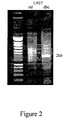
- Mlsn1-specific primers were designed and used to screen for Mlsn1 gene expression in various cells. The composition of these primers are indicated in SEQ ID N°44 to 47. With said primer pairs, Mlsn1-specific PCR products were obtained from U937 cells. Furthermore, cDNA subtraction experiments were performed using DNA preparations from differentiated and undifferentiated U937 cells.
- the results obtained demonstrate that the expression of the Mlsn1 gene product in U937 cells is differentially increased in dbcAMP-differentiated U937 cells (macrophage-like) as compared to undifferentiated U937-cells (monocyte like).
- the upregulation of the mlsn1 gene correlates with the expression of the Icrac phenotype in U937 cells (18) and thus establishes that expression upregulation of Mlsn1 in these cells coincides with the increased Icrac phenotype.
- this invention unexpectedly demonstrates that Mlsn1 is expressed in immune cells such as macrophages and that the down-regulation of the Mlsn1 gene expression during differentiation of U937 cells to macrophage like cells decreases calcium influx in these cells.
- This invention also demonstrates that Mlsn1 gene product expression is up-regulated during U937 cell differentiation to macrophage like cells, which correlates with the maturation stage of these cells and their ability to exhibit the Icrac phenotype
- the present invention also encompasses a family of recombinant vectors comprising any one of the nucleic acids described herein.
- the invention further deals with a recombinant vector comprising a nucleic acid selected from the group consisting of:
- a recombinant vector of the invention is used to amplify the inserted polynucleotide derived from the nucleic acid encoding a Mlsn1 of the invention or Mlsn1 transcription promoter in a suitable host cell, this polynucleotide being amplified every time the recombinant vector replicates.
- a second preferred embodiment of the recombinant vectors according to the invention consists of expression vectors comprising a nucleic acid encoding an Mlsn1 of the invention, preferably a nucleic acid encoding a human Mlsn1, and more preferably a nucleic acid encoding a polypeptide selected from the group consisting of the amino acid sequences of SEQ ID N° 1 to 22.
- Recombinant expression vectors comprising a nucleic acid encoding the peptide fragments of an Mlsn1 that are specified in the present specification are also part of the invention.
- expression vectors can be employed to express Mlsn1 of the invention or a peptide fragment thereof which can then be purified and for example, be used as a immunogen in order to raise specific antibodies directed against said Mlsn1 protein or a peptide fragment thereof.
- the expression vectors are used for constructing transgenic animals and also for gene therapy, notably for anti-sense therapy.
- Expression requires that appropriate signals are provided in the vectors, said signals including various regulatory elements such as enhancers/promoters from both viral and mammalian sources that drive expression of the genes of interest in host cells.
- the regulatory sequences of the expression vectors of the invention are operably linked to the nucleic acid encoding the Mlsn1 protein of interest or a peptide fragment thereof.
- operably linked refers to a linkage of polynucleotide elements in a functional relationship.
- a promoter or an enhancer is operably linked to a coding sequence if it affects the transcription of the coding sequence.
- two DNA molecules are said to be " operably linked” if the nature of the linkage between the two polynucleotides does not : (1) result in the introduction of a frame-shift mutation or (2) interfere with the ability of the polynucleotide containing the promoter to direct the transcription of the coding polynucleotide.
- recombinant expression vectors will include origins of replication, selectable markers, permitting transformation of the host cell, and a promoter derived from a highly expressed gene to direct transcription of a downstream structural sequence.
- the heterologous structural sequence is assembled in an appropriate frame with the translation, initiation and termination sequences, and preferably a leader sequence capable of directing sequences of the translated protein into the periplasmic space or the extra-cellular medium.
- preferred vectors will comprise an origin of replication from the desired host, a suitable promoter and an enhancer, and also any necessary ribosome binding sites, polyadenylation site, transcriptional termination sequences, and optionally 5'-flanking non-transcribed sequences.
- DNA sequences derived from the SV 40 viral genome for example SV 40 origin, early promoter, enhancer, and polyadenylation sites may be used to provide the required non-transcribed genetic elements.
- a recombinant expression vector of the invention advantageously also comprises an untranscribed polynucleotide located at the 3' end of the coding sequence (ORF), this 3'-UTR polynucleotide being useful for stabilizing the corresponding mRNA or for increasing the expression rate of the vector insert if this 3'-UTR harbors regulation signal elements such as enhancer sequences.
- Suitable promoter regions used in the expression vectors according to the invention are chosen taking into account the host cell in which the heterologous nucleic acids have to be expressed.
- a suitable promoter may be heterologous with respect to the nucleic acid for which it controls the expression, or alternatively can be endogenous to the native polynucleotide containing the coding sequence to be expressed.
- the promoter is generally heterologous with respect to the recombinant vector sequences within which the construct promoter/coding sequence has been inserted.
- Preferred bacterial promoters are the LacI, LacZ, T3 or T7 bacteriophage RNA polymerase promoters, the lambda PR, PL and trp promoters (a EP-0 036 776), the polyhedrin promoter, or the p10 protein promoter from baculovirus (kit Novagen; Smith et al., (1983); O'Reilly et al. (1992).
- Preferred selectable marker genes contained in the expression recombinant vectors of the invention for selection of transformed host cells are preferably dehydrofolate reductase or neomycin resistance for eukaryotic cell culture, TRP1 for S. cerevisiae or tetracycline, rifampicin or ampicillin resistance in E. coli, or Levamsaccharase for Mycobacteria , this latter marker being a negative selection marker.
- Preferred bacterial vectors of the invention are listed hereafter as illustrative but not limitative examples: pQE70, pQE60, pQE-9 (Quiagen), pD10, phagescript, psiX174, p.Bluescript SK, pNH8A, pNH16A, pNH18A, pNH46A (Stratagene); pKK223-3, pKK233-3, pDR540, pRIT5 (Pharmacia); pWLNEO, pSV2CAT, pOG44, pXT1, pSG (Stratagene); pSVK3, pBPV, pMSG, pSVL (Pharmacia); pQE-30 (QIA express).
- Preferred bacteriophage recombinant vectors of the invention are P1 bacteriophage vectors such as described by Sternberg N.L. (1992;1994).
- a suitable vector for the expression of Mlsn1 polypeptide of the invention or a fragment thereof is a baculovirus vector that can be propagated in insect cells and in insect cell-lines.
- a specific suitable host vector system is the pVL 1392/1393 baculovirus transfer vector (Pharmingen) that is used to transfect the SF9 cell line (ATCC N°CRL 1711) which is derived from spodoptera frugiperda.
- the recombinant expression vectors from the invention may also be derived from an adenovirus such as those described by Feldman and Steig. (1996) or Ohno et al. (1994).
- Another preferred recombinant adenovirus according to this specific embodiment of the present invention is the human adenovirus type two or five (Ad 2 or Ad 5) or an adenovirus of animal origin (French Patent Application n°FR 93 05 954).
- retroviral in vitro or in vivo gene delivery vehicles of the present invention include retroviruses selected from the group consisting of Mink-Cell Focus Inducing Virus, murine sarcoma virus, and Ross Sarcoma Virus.
- retroviral vectors are those described in Roth et al. (1996), in PCT Application WO 93/25 234, in PCT Application WO 94/06920, and also in Roux et al. (1989), Julan et al.(1992) and Nada et al. (1991).
- AAV adeno associated viruses
- a further object of the invention consists of a recombinant expression vector comprising a nucleic acid encoding an Mlsn1 or a peptide fragment thereof or a variant thereof, wherein said nucleic acid is operably linked to a promoter sequence.
- this nucleic acid encodes a human Mlsn1, a fragment of human Mlsn1, or Mlsn1 transcription promoter, and preferably that of SEQ ID N°23 and nucleic acid sequence encoding peptide sequence of SEQ ID N°1, or a variant or a peptide fragment thereof.
- Preferred fragments include those of SEQ ID N° 2-22 and 24 to 40.
- Preferred Mlsn1 transcription promoters include those of SEQ ID N°41 to 43.
- any of the identified Mlsn1 promoter elements of SEQ ID N°41 to 43 could be used to modulate the expression of a reporter molecule, as part of an expression construct.
- these Mlsn1 transcription promoter elements could be used to regulate Mlsn1 gene of gene fragment expression as part of a construct.
- Host cells that endogenously express Mlsn1 or have been transformed or transfected with one of the nucleic acids described herein, or with one of the recombinant vector, particularly recombinant expression vector, described herein are also part of the present invention.
- host cells that are transformed (prokaryotic cells) or are transfected (eukaryotic cells) with a recombinant vector such as one of those described above.
- Preferred host cells used as recipients for the expression vectors of the invention are the following:
- these host cells have also been transfected or transformed with a polynucleotide or a recombinant vector allowing the expression of a natural ligand of Mlsn1 or a modulator of Mlsn1.
- the present invention also concerns a method for producing one of the Mlsn1 polypeptides or peptides described herein and especially a polypeptide selected from the group consisting the amino acid sequences of SEQ ID N°1 to 22, wherein said method comprises the steps of:
- the nucleic acid to be inserted in the appropriate vector has previously undergone an amplification reaction, using a pair of primers.
- Preferred primers used for such an amplification reaction are primer pairs which amplify nucleic acids encoding the Mlsn1 open reading frame and fragments thereof.
- the polypeptide thus produced is further characterized, for example by binding onto an immuno-affinity chromatography column on which polyclonal or monoclonal antibodies directed to Mlsn1 polypeptide or a peptide fragment thereof, have previously been immobilised.
- Purification of the recombinant Mlsn1 proteins according to the present invention or a peptide fragment thereof may be carried out by passage onto a nickel or copper affinity chromatography column.
- the Mlsn1 polypeptides or peptide fragments thus obtained may be purified, for example, by high performance liquid chromatography, such as reverse phase and/or cationic exchange HPLC, as described by Rougeot et al. (1994).
- the Mlsn1 protein or fragments thereof can be prepared using recombinant technology, cell lines or chemical synthesis. Recombinant technology and chemical synthesis of the Mlsn1 or fragments thereof can allow the modification of the gene encoding the Mlsn1 to include such features as recognition tags, cleavage sites and modifications of the Mlsn1 polypeptide or fragments thereof.
- the endogenous expression system or recombinant expression system should allow the Mlsn1 polypeptide to be expressed at and transported to the cell surface in a functional form or allow production of Mlsn1 fragments which can be purified.
- Preferred cell lines are those which allow high levels of expression of Mlsn1 or fragments thereof.
- Such cell lines include cell lines which naturally expresss Mlsn1 or common mammalian cell lines expressing Mlsn1 such as CHO cells and COS cells, etc., or more specific immune cell lines such as T-cell lines.
- Mlsn1 a mammalian cell lines expressing Mlsn1
- COS cells etc.
- specific immune cell lines such as T-cell lines.
- other cell types which are commonly used for recombinant protein production such as insect cells, amphibian cells such as oocytes, yeast and procaryotic cell lines such as E.coli can also be considered.
- the Mlsn1 or fragments thereof can be utilised in a ligand screen either as a purified protein, as a protein chimera such as those described in phage display, as a cell membrane (lipid or detergent) preparation, or in intact cells.
- the Mlsn1 polypeptide or fragment thereof can be utilised in a functional screen format or ligand binding screen format. Examples of both screening formats are provided below.
- the present invention also concerns methods for screening ligand substances or molecules that are able to modulate the biological activity of the Mlsn1 gene or gene product of the invention.
- diseases where there is a down-regulation of the immune system and conditions associated with virus and micro-organism infection, enhancement of the activity of Mlsn1 would be beneficial.
- conditions such as asthma, inflammation and auto-immune disease it would be beneficial to identify ligands which can down-regulate the activity of the Mlsn1 gene.
- this invention now discloses the use of a Mlsn1 gene product for the screening of compound(s) that modulate the activity of immune cells, in particular antigen presenting cells, more specifically for the screening of compound(s) that modulate the activity of macrophages, in vitro, ex vivo or in vivo.
- This invention also discloses the use of Mlsn1 promoter elements for the screening of compounds that modulate the activity of immune cells, in particular antigen presenting cells, more specifically for the screening of compounds that modulate the activity of macrophages, in vitro, ex vivo or in vivo.
- screening assays can be used within the instant invention, such as binding assays or functional assays.
- this invention more specifically relates to methods of screening for immuno-modulatory compounds, comprising;
- the screening method comprises;
- the screening method comprises contacting a test compound with a cell expressing a reporter gene under the control of Mlsn1 transcription promoter elements, more particularly an antigen presenting cell (or a macrophage), expressing the said promoter/reporter construct and determining the ability of the said test compound to modulate reporter expression.
- Ligand binding screens to the Mlsn1 gene, polypeptide, a fragment thereof or Mlsn1 transcription promoter element can allow rapid identification of ligands which are capable of interacting with the gene or product(s). Further testing may be required to determine the therapeutic activity of these ligands. Development of a functional screen, whereby the activity of Mlsn1 is measured (or reporter activity measured) upon ligand binding allows ligands to be rapidly identified which modulate the activity of Mlsn1.
- This invention also relates to the use of the Mlsn1 gene product to screen for any molecule involved in the Mlsn1 gene pathway, i.e. for any protein or peptide that interact with Mlsn1.
- targets or Mlsn1 partners or signaling molecules
- protein-protein interaction analysis techniques double-hybrid system for instance
- Ligand binding screening method (phage display, flashplate)
- Ligand binding screening comprises, preferably, contacting a test compound with an Mlsn1 gene product or Mlsn1 transcription promoter element(s) and determining the ability of said test compound to interact with the Mlsn1 gene product or transcription promoter element(s).
- the ligand binding screen comprises contacting one or several (in parallel) test compounds with a Mlsn1 polypeptide (e.g., protein or a fragment thereof) or transcription promoter element(s), in the presence (or absence, as a reference) of a Mlsn1 ligand or transcription promoter ligand, and assessing the ability of the test compound(s) to bind Mlsn1 transcription polypeptide or promoter element(s) by assessing ligand binding.
- a Mlsn1 polypeptide e.g., protein or a fragment thereof
- transcription promoter element(s) e.g., in the presence (or absence, as a reference) of a Mlsn1 ligand or transcription promoter
- the Mlsn1 polypeptide can be part of an intact cell, membrane preparation or a purified polypeptide, optionally attached to a support, such as beads, column plate, etc.
- the polypeptide is preferably characterized by comprising an amino acid sequence selected from SEQ ID N°1 to 22.
- the Mlsn1 transcription promoter element(s) can preferably but not exclusively be a purified nucleic acid, optionally attatched to a support such as beads, column, plate etc..
- the nucleic acid encoding the promoter elements is preferably characterized by comprising nucleic acid sequences selected from SEQ ID N°41, 42 or 43.
- the test compound can be a peptide or a protein or an antibody or chemical entity, either alone or in combination(s) or in a mixture with any other substance.
- the test compound may even represent a library of compounds.
- excess non Mlsn1 bound ligand can be removed by separation. Separation can take the form of washing /filtering or centrifugation (to pellet the Mlsn1 protein). In this latter case, the supernatant can then be removed and the Mlsn1 re-suspended in buffer.
- the binding is preferably performed in the presence of a Mlsn1 ligand or transcription promoter element ligand, to allow an assessment of the binding activity of each test compound.
- a labeled Mlsn1 ligand or promoter element ligand is used and the binding activity of the test compound is determined by assessing any modulation of the ligand binding.
- the ligand may be contacted with the Mlsn1 polypeptide or transcription promoter element either before, simultaneously or after the test compound.
- the ligand should be detectable and/or quantifiable.
- the ligand can be labeled in a number of ways, such as with a chromophore, radioactive, fluorescent, phosphorescent, enzymatic or antibody label, for instance. If the ligand is not directly detectable it must be amenable to detection and quantification by secondary detection, which may employ the above technologies. Preferably (in the case of certain detection methods), unbound ligand is removed from the mixture prior to detecting ligand binding, as described above.
- Mlsn1 polypeptide or fragment thereof of Mlsn1 transcription promoter element(s) can be detectable or quantifiable. This can be achieved in a similar manner to that described above.
- Mlsn1 ligands that can be used in the instant invention include any product that is known to interact with Mlsn1, such as an antibody, physiological ligand or receptor, or synthetic ligands or Mlsn1 inhibitors.
- Specific examples of such ligands include pyrazole compounds as described in WO99/19303, which exhibit calcium release-dependent calcium channel inhibitory effect. These compounds may be labeled according to various techniques, including radioactivity or fluorescence. More specific compounds are compounds SEW04225, KM02940, KM03000 and GK02421 as listed in the Maybridge Co. Trial Drug Catalogue (UK, Cornwall, published August 95).
- Mlsn1 transcription promoter element ligands that can be used in this instant invention include any product that is known to interact with Mlsn1 promoter elements, such as polymerases, antibodies, other naturally occuring ligands or synthetic ligands.
- Binding of the test compound modifies the interaction of the ligand with the binding site and changes the affinity or binding of ligand for/to its binding site.
- the difference between the observed amount of ligand bound relative to the theoretical maximum amount of ligand bound (or to the ligand bound in the absence of a test compound under the same conditions) is a reflection of the binding ability (and optionally the amount and/or affinity) of a test compound to bind Mlsn1 or its transcription promoter elements.
- the amount of test compound bound to the Mlsn1 protein or a fragment thereof, or transcription promoter element(s) can be determined by a combination of chromatography and mass spectroscopy.
- the amount of test compound bound to the Mlsn1 protein or a fragment thereof or transcription promoter element(s) can also be determined by direct measurement of the change in mass upon compound or ligand binding to Mlsn1 or transcription promoter element(s). This can be achieved with technologies such as Biacore (Amersham Pharmacia).
- the Mlsn1 protein or a fragment thereof, or promoter element(s), the compound or the ligand can be fluorescently labeled and association of Mlsn1 protein or promoter element(s) with the compound can be followed by changes in Fluorescence Energy Transfer (FRET).
- FRET Fluorescence Energy Transfer
- the functional screen essentially comprises contacting a Mlsn1-expressing cell with a test compound, and assessing the ability of said test compound to affect Mlsn1 gene pathway or Mlsn1 gene product activity within the cells. This can be performed by measuring calcium fluxes, activation potential (or profile) or signal transduction pathway (e.g., selected cellular gene expression level) within said cells.
- the present invention thus resides in a method of screening (or identifying or selecting or characterizing) immuno-modulators, comprising (i) exposing a Mlsn1-expressing cell to one or several test compounds and (ii) detecting the compound that induce a modulation of the calcium flux or the activation potential in said cells.
- the cells are recombinant cells expressing a Mlsn1 polypeptide, or immune cells, in particular antigen-presenting cells, more preferably macrophages.
- the functional screening method comprises the following steps:
- the cell express a functional Mlsn1 polypeptide comprising all or part of SEQ ID N°1, in particular a polypeptide comprising a sequence selected from SEQ ID N°1 to 22.
- Calcium Flux may be measured according to various techniques, such as for instance using sodium sensitive dyes such as Fura II.
- compounds are selected for their ability to cause an increase in calcium concentration within the cell.
- compounds are selected for their ability to cause a decrease in calcium concentration within the cell.
- compounds are selected for their ability to alter the rate of recovery of the calcium channel.
- substances or molecules of interest are selected for their ability to induce changes in the activation potential, the inactivation time, or the rate of recovery of the sodium channel.
- Preferred molecules or substances are those inducing a decrease in the inactivation potential, and/or a decrease in the rate of inactivation, and/or which decreases the rate of recovery from inactivation, as compared with the same measures performed in the absence of the substance of molecule to be tested.
- the functional screen is based on a measure of selected gene expression or activity within the cells.
- the present invention now proposes, for the first time, to select Icrac modulators based on their ability to modify the expression pattern of particular genes. More preferably, the selected genes are selected from cytokine genes (in particular interleukin-2, interleukin-8, etc.) and chemokine genes (in particular MIPa).
- a preferred screening method of this invention comprises contacting Mlsn1-expressing cells with one or several test compounds and identifying the compounds that cause a modification in expression or activity of a gene selected from a cytokine or a chemokine gene, within said exposed cells.
- Modification in gene expression or activity may be determined by assessing the presence or (relative) level of the gene product in the cell, in particular of the mRNA or polypeptide.
- Polypeptides may be detected or dosed using affinity reagents, such as antibodies (or fragments or derivatives thereof), either within the cells or at the cell surface, or in the cell culture medium (or supernatant).
- mRNA levels may be evaluated using conventional techniques (primers, probes, etc).
- the exposed cells or any preparation derived therefrom such as membranes, pellets, RNAs, etc) are contacted with a support to which particular affinity reagents are attached (antibodies or nucleic acids).
- a promoter-reporter assay can be used to screen for compounds that modulate Mlsn1 expression.
- a reporter gene encoding a reporter molecule i.e. a molecule(s) that can be directly or indirectly detected
- Mlsn1 transcription promoter element(s) i.e. a molecule(s) that can be directly or indirectly detected
- Preferable transcription promoter elements are chosen from nucleic acids encoded by SEQ ID N°41, 42 or 43.
- Preferred reporter genes could be those that encode functional ⁇ -Galactosidase, Green fluorescence Protein or Luciferase. However, many other reporter molecules could be used, the identity and characteristics of which are known to those skilled in the art.
- test compounds can be measured by exposure of these compounds to cell lines expressing the promoter-reporter construct.
- Compounds which down regulate the action of the Mlsn1 promoter elements will manifest by reducing the amount or activity of the reporter in the cell relative to cells not compound treated cells.
- Compounds which up regulate the action of the Mlsn1 promoter elements will manifest by increasing the amount or activity of the reporter in the cell relative to cells not compound treated cells.
- Compounds which modulate the amount of reporter or activity by other means could be distinguished from those that do not by secondary screening with similar cell lines expressing reporter with non Mlsn1 transcription promoter elements. Compounds which modulate the reporter in the first screen and not in the second screen could be considered to mediate its action either directly or indirectly through the Mlsn1 transcription promoter elements.
- An assay would comprise the following steps;
- Mlsn1 in immune cells The inventors believe that the ability to detect and measure the amount of Mlsn1 in immune cells would be a valuable tool for the prognosis of aberrant Mlsn1 and Icrac conditions in humans.
- detection of Mlsn1 in immune cells could be achieved by measuring the amount of expressed Mlsn1 nucleic acid in immune cells. This could be achieved using a multi-step process:
- This test could be used to determine if Mlsn1 is being expressed in immune cells, therefore providing a valuable indication in the prognosis of disorders associated with aberrant Icrac function.
- Furthemore an ability to accurately quantitate the level of expression if Mlsn1 in immune cells would help in the prognosis of the severity of an Icrac associated disorder. Quantitation could be achieved with the inclusion of further step(s). This step(s) would require the assay of a known quantity of nucleic acid which encodes Mlsn1.
- Co-electrophoresis of samples which have not been subjected to blood products but have been "spiked” with known concentrations of nucleic acids encoding human Mlsn1 such as SEQ ID N°23 or fragments thereof, or complementary sequences thereto with the test sample, would allow identification and quantitation of levels of Mlsn1 in the blood sample.
- a Mlsn1 gene product is expressed in human U937 cells
- cDNA libraries were prepared from U937 cells (these cells being refered to as undifferentiated cells) and dbcAMP differentiated U937 cells (48 hours) using the Clontech SMART system (K1052-1).
- U937 cell were cultured in suspension in cell culture media (RPMI 1640 plus 10% heat inactivated FBS) at 37°C in 5 % CO 2 , in the presence and absence of differentiating agent (dbcAMP Conc 1 ⁇ M) (48 hours).
- Differentiated and undifferentiated cells were harvested by centrifugation at 1,200g for 10 minutes, the supernatent removed from the cell pellet and cellular RNA extracted using FastTrack 2.0 kit (Invitrogen).
- a SMART library was prepared from the differentiated and undifferentiated cells according to Clontech protocols. These libraries were used to determine the relative abundance of Mlsn1 cDNA in the libraries.
- PCR reactions were carried out using Advantage cDNA PCR Kit (#K1905-1) in the suppliers buffer conditions.
- PCR primer concentration was 20 fmol/primer/100 ⁇ l reaction.
- cDNA template concentration was 0.2 ⁇ g.
- PCR reactions were carried out as two step cycles (denaturation 95°C for 30 sec, for annealing/elongation 68°C for 6min). PCR product was visualised by electrophoresis in an agarose gel and staining with ethidium bromide (0.5 ⁇ g/ml).
- Mlsn1 The presence of the expression of Mlsn1 in these libraries was further confirmed using nested PCR primers, SEQ ID NO: 44 and 46 together with CDS III/3 primer of SMART cDNA libraries (c.f. Advantage cDNA PCR Kit (#K1905-1)).
- a 2kb PCR product was obtained (figure 2). This corresponded to the predicted size of a Mlsn1 PCR product and indicated that the gene encoding Mlsn1 was being expressed in differentiated and undifferentiated U937 cell lines. However, the intensity of the band corresponding to the Mlsn1 PCR product was greater in the differentiated cell library than in the undifferentiated cell library.
- MLSN1(TrpC8) expression is differentially increased in dbcAMP treated (macrophage-like) U937 cells
- Mlsn1 specific primer pair (SEQ ID N°44 and 47) were used to amplify cDNA-fragments from Mlsn1 from subtracted pools and controls using Advantage cDNA PCR, under suppliers conditions as two step cycles (95°C for 30 sec, 68°C for 1min annealing/elongation) (figure 3).
- U937 cells were cultured at 37°C in 5 % CO 2 in RPMI 1640, 10% heat inactivated FBS. Cells were incubated in absence or presence of 0, 1 or 10 ⁇ M Mlsn1 anti-sense nucleic acid (SEQ ID NO:26), 4 hours prior to and 48h during differentiation treatment by dbcAMP. All oligonucleotides used in this experiment contained phosphorothiorate modifications at their first two and last two linkages (terminal 5' and 3' linkage). A scrambled oligonucleotide ( 5' CTGGTGGAAGAAGAGGACGTCCAT 3' ,SEQ ID N°48) was used at 10 ⁇ M in the same conditions as negative control.
- oligonucleotide against Fc ⁇ RII (CD 32) ( 5' TCTGGGACATACATTCTGAGACAT 3' , SEQ ID N° 49) was used at 10 ⁇ M in the same conditions as positive control for anti-sense uptake.
- DbcAMP induced differentiation was controlled by immunofluorescence using FACS quantitation of CD 32 and CD 64, as well as Ca 2+ signaling after Thapsigargin stimulation, before and after dbcAMP treatment using fura 2 and fluorimetry. Intra-cellular Ca 2+ after stimulation by ionomycin was measured during FACS analysis. Cells were loaded with 2 ⁇ g/ml indo-1 during 30 min at 37°C, 5 % CO 2 in RPMI, 2 mg/ml BSA.
Landscapes
- Health & Medical Sciences (AREA)
- Chemical & Material Sciences (AREA)
- Life Sciences & Earth Sciences (AREA)
- Organic Chemistry (AREA)
- Biochemistry (AREA)
- Genetics & Genomics (AREA)
- Gastroenterology & Hepatology (AREA)
- Toxicology (AREA)
- Immunology (AREA)
- Biophysics (AREA)
- General Health & Medical Sciences (AREA)
- Zoology (AREA)
- Medicinal Chemistry (AREA)
- Molecular Biology (AREA)
- Proteomics, Peptides & Aminoacids (AREA)
- Cell Biology (AREA)
- Micro-Organisms Or Cultivation Processes Thereof (AREA)
- Peptides Or Proteins (AREA)
Abstract
Description
- The present invention relates to the caracterisation of a capacitative calcium channel homologue for the immune system activation, and its use to report or to modulate the activity of immune cells in vitro, ex vivo or in vivo. This invention more specifically discloses that a mlsn1 gene product represents a capacitative calcium channel in immune cells such as macrophages, monocytes, T-cells, B-cells and mast-cells. This invention is a proven identification of a gene expressing a capacitative calcium channel in immune cells, and can be used in various compositions and methods for monitoring or modulating an immune response in a subject. The present invention can be used to develop biomarkers for immune system activation or inflammatory responses or to screen for specific immune system activity altering drugs.
- Regulated entry of calcium across the plasma membrane is an essential signaling mechanism, implicated in phenomena like exocytosis, contraction, gene expression, and cell differentiation (1). Store operated channels (SOCs), defined as channels that open in response to depletion of intra-cellular calcium stores, represent one of the most ubiquitous mechanisms for triggering calcium influx in non-excitable cells.
- A large number of cell surface receptors are coupled through G-proteins or tyrosine kinases to the activation of phospholipase C (PLC) and consequently the generation of
inositol - SOCs have a high diversity. The essential defining feature of these channels is that they are activated by a variety of stimuli that deplete intra-cellular stores such as agonists to phosphoinositide-linked receptors, intra-cellular IP3, Ca2+ ionophores, inhibitors of SERCA-type Ca2+ ATP ases, and intra-cellular dialysis with buffered solutions containing low concentrations of Ca2+ ([Ca2+]<50 nM) (1). IP3 activation of SOCs implies that the channel is not directly coupled to the receptor and artificial store depletion activation indicates that SOC activation responds to store Ca2+ depletion after IP3-receptor binding than to IP3 itself. SOCs are generally described as lacking voltage dependent gating.
- Calcium entry through Icrac has been shown to accelerate the rate of exocytosis in mast cells. It inhibits adenylyl cyclase type VI, but activates adenylyl cyclase type I. Icrac activity might be regulated either directly or indirectly through the concentration of intra-cellular Ca2+ (13). An increase in the intra-cellular calcium ion concentration controls a diverse range of cell functions, including adhesion, mobility, gene expression and proliferation can occur as single transients, repetitive oscillations or a sustained plateau (14). Two recent reports have suggested that the amplitude, duration and frequency of a Ca2+ signal in cells of the immune system control differential activation of proinflammatory transcriptional regulators NF-κB, JNK and NF-AT (15; 16). Thus Calcium signalling could play a crucial role in the activation of cells of the immune system. The identification of an immune system specific Calcium channel would therefore represent an important step forward in determining the pathology of Icrac in disease states. Mlsn1 and its gene products could therefore be used as a basis of screens to identify new therapeutic compounds such as immune system suppressors, including anti-allergic or anti-inflammatory compounds, or immune system activators for the treatment of immuno degenerative disorders. Mlsn1 could as well represent a powerfull biomarker for onset and progression of autoimmune or inflammatory deseases (e.g. COPD, Arthritis, organ rejection).
- The present invention discloses the caracterisation of a capacitative Ca2+ channel in immune cells, more specifically in macrophages. MRNA expression is differentially increased in monocytes to macrophages differentiation as well as in macrophages activation.
- More particularly, the inventors have identified the presence of a novel calcium pore sequence within the products of the mlsn1 gene, and this calcium pore is part of the major capacitative calcium channel in immune system cells, more specifically in macrophages.
- The present invention shows that a product of the mlsn1 gene is expressed in the U937 cells (monocyte like) specifically after 48h differentiation to a more macrophage like cell type and that mlsn1 regulates capacitative calcium entry in these cells. Expression is further increased by macrophages activation. PCR subtraction experiments show that mlsn1 gene expression is several times upregulated, which is in concordance with the previously established differential increases of the Calcium signalling phenotype during this differentiation step (18).
- This invention also shows that particular mlsn1-specifi anti-sense nucleic acids down regulate calcium entry in U937 cells differentiated to a macrophage phenotype. This is of particular importance since it is the first time that a sequence specific tool has succeeded to inhibit the immune cell Calcium signalling, thereby associating a given gene to the Ca2+ pore gene expression.
- This invention represents the caracterisation of a SOC channel in immuno-modulatory cells, more specifically in macrophages. This invention provides a mean 1) to use it as a modulator of immune activation 2) to use it as a biomarker for immune activation and inflammation 3) to identify new targets for the screening of immuno-modulators.
- The described invention further shows, the nucleic acid sequence of the Mlsn1 transcriptional promoter elements 5'to the putative Mlsn1 start codon.
- An object of the present invention resides in the use of a mlsn1 gene, gene product(s) and transcription promoters for the screening of compounds that modulate the activity of an Icrac expressing immune cell, more specifically of an antigen presenting cell, most specifically of a compound that modulates the activity of macrophages.
- Further objects of the present invention include Mlsn1 peptides, nucleic acids, vectors, and recombinant cells, which can be used for therapeutic (as target) or diagnostic approaches (as biomarker).
-
- Figure 1: Amino acid sequence of Mlsn1 with predicted secondary structure.
Where;<<N-TERMINUS>> represents the N-terminal domain_TMD1 to 6 represent the transmembrane domains --EXL1 to 3-- represents the extra-cellular loop --INL1 and 2-- represent the intra-cellular loops <<C-TERMINUS>> represents the C-terminal domain - Figure 2: Represents the analysis on agarose of PCR products obtained with Mlsn1-specific primer pairs from differentiated or undifferentiated U937 macrophage cells.
- Figure 3: Illustrates the Mlsn1(TrpC8) expression analysis by cDNA subtraction.
- 1 : dbcAMP differentiated U937 subtracted by undifferentiated U937.
- 2 : unsubtracted dbcAMP differentiated U937 control.
- 3 : undifferentiated U937 subtracted by dbcAMP differentiated U937.
- 4 : unsubtracted undifferentiated U937 control.
- 5 : 1kb ladder PCR have been carried out on subtraction DNA fragments using "Not 1a" and "Not 2b" Mlsn1 specific primers.
- Figure 4: Down regulation of calcium entry during dbcAMP differentiation of U937 cells
using Mlsn1 anti-sense - Calcium flux analysis using Indo-1 and flow cytometry
- a : Undifferentiated U937
- b : dbcAMP differentiated U937
- c : dbcAMP differentiated U937 treated with 10 µM scrambled oligonucleotide
- d : dbcAMP differentiated U937 treated with 1 µM Mlsn1 anti-sense
- e : dbcAMP differentiated U937 treated with 10 µM Mlsn1 anti-sense
-
- An object of the present invention resides in the caracterisation of functional components of Mlsn1. The polypeptide structure of Mlsn1 has been determined. Nucleic acid sequences and peptides which encode the N- and C-terminal regions have been identified. Also, nucleic acid sequences and peptides which encode transmembrane domains and intra- and extra-cellular loop regions have been identified. Crucially, nucleic acid and peptide sequences which encode the Mlsn1 calcium pore region have been identified. The above nucleic acid and peptide sequences offer vital target molecules for the development of therapeutic molecules to combat disorders associated with aberrant Icrac function.
- Furthermore, the inventors have identified putative transcription promoter elements 5' to the nucleic acid encoding Methionine-1 start codon of Mlsn1.
- Another object of this invention resides, generally, in the use of a mlsn1 gene, gene product, fragments thereof, or transcriptional promoter elements for the screening of compound(s) that modulate the activity of an immune cell, more specifically for the screening of a compound that modulates the activity of monocytes, macrophages, T-cells, B-cells and mast-cells in vitro, ex vivo or in vivo, most specifically for the screening of compounds that modulate the activity of macrophages in vitro, ex vivo or in vivo. This invention also relates to particular Mlsn1 polypeptides and nucleic acids, methods of screening of immuno-modulators.
- Other aspects of the present invention relate to:
- Methods of screening for immuno-modulatory compounds, comprising contacting a test compound with a Mlsn1 gene or a Mlsn1 gene product or Mlsn1 transcription promoter element(s) and determining the ability of said test compound to interact with the Mlsn1 gene or a Mlsn1 gene product or Mlsn1 transcriptional promoter element(s).
- Methods of screening for identification of new (known or unknown) immuno-modulatory targets after modulation of the Mlsn1 gene, Mlsn1 gene product activity or transcription promoter activity.
- Further aspects of the present invention relate to:
- The use of mlsn1 gene, gene products or nucleic acids to report and/or to modulate the activity of Mlsn1 in immune cells in vitro, ex vivo or in vivo.
- Within the context of the present invention, the term mlsn1 gene designates a nucleotide sequence encoding the Mlsn1 protein, any nucleotide sequence encoding a fragment of the Mlsn1 protein, or any variants or homologs thereof. Variants or homologs designate more particularly any naturally-existing human genes that would exhibit sequence variation(s) resulting from polymorphism(s), mutation(s), or other alteration(s) as compared to the above sequence, without depriving the property of the encoded protein to function as an Icrac channel. Homologs or variants also include any recombinant DNA molecule, such as a cDNA molecule, encoding a Mlsn1 protein. Further variants also include any sequence that would hybridize with the above nucleic acid sequences under stringent conditions and encode a functionally active Icrac channel. Nucleotide sequences encoding fragments of the Mlsn1 protein which represent a biological relevant region of this protein such as the N- and C- terminal domains, the transmembrane domains, the intra and extra-cellular loops and the predicted calcium pore as well as the polypeptides representing these biologically relevant regions are also included.
- As an illustrative embodiment, stringent hybridization conditions can be defined as follows:
- The hybridization step is conducted at 65°C in the presence of 6 x SSC buffer, 5 x Denhardt's solution, 0.5 % SDS and 100µg/ml of salmon sperm DNA.
- The hybridization step is followed by four washing steps:
- two washings during 5 minutes, preferably at 65°C in a 2 x SSC and 0.1% SDS buffer;
- one washing during 30 minutes, preferably at 65°C in a 2 x SSC and 0.1% SDS buffer;
- one washing during 10 minutes, preferably at 35°C in a 0.1 x SSC and 0.1% SDS buffer,
- A Mlsn1 gene product designates, in accordance with the present invention, polypeptides (or proteins) encoded by a mlsn1 gene as described above. The Mlsn1 gene product may comprise several polypeptides, resulting from alternative splicings of a mlsn1 gene during transcription. More specific Mlsn1 gene products of this invention are encoded by a mlsn1 gene as described above and/or comprise the amino acid sequence of Mlsn1, such as that of SEQ ID N°1.
- Also within the context of the present invention, the term Mlsn1 transcription promoter(s) designates nucleotide sequence(s) encoding Mlsn1 transcription promoter element(s), nucleotide sequence encoding a fragment thereof, or any variants or homologs thereof. Variants or homologs designate more particularly any human transcription promoter elements that would exhibit sequence variation(s) resulting from polymorphism(s), mutation(s), or other alteration(s) as compared to the above sequence, without depriving the property of the nucleic acid sequences to function as an Icrac transcription promoter. Further variants also include any sequence that would hybridize with the above nucleic acid sequences under stringent conditions and encode a functionally active transcription promoter.
- A Mlsn1 transcription promoter element designates, in accordance with the present invention, encoded by a Mlsnl nucleic acid sequence as described above. The transcription promoter elements is further characterized by being located 5' the Mlsn1 start codon. More specific Mlsn1 transcription promoter elements of this invention are encoded by Mlsn1 nucleic acid sequences of SEQ ID N°41, 42 or 43.
- The human mlsn1 cDNA has been described in US Patent 5,674,739 as FOHY030. This gene is described as being expressed specifically in certain tumor cells and not in healthy tissues and was thus characterized as involved in tumor progression. The sequence of human mlsn1 cDNA is also available from Genbank (accession number AF071787). The published nucleic acid sequence encoding the open reading frame of human Mlsn1 is predicted to be 4602 nucleic acids in length (including a stop codon). This nucleotide sequence is shown in SEQ ID N°23. This published mlsn1 gene encodes a linear polypeptide of 1533 amino acids. The predicted amino acid sequence of this Mlsn1 is shown in SEQ ID N°1 and figure 1. The present invention stems from the identification that expression of a Mlsn1 gene product is essential for a functional capacitative calcium channel in immune- cells such as monocytes, macrophages, T-cells, B-cells and mast-cells, specifically in antigen presenting cells, more specifically in macrophages. Considering the implication of calcium influx in regulating various cell activities, this invention provides additional means in designing immuno-modulatory compounds as well as modulators compounds and in reporting immune activation and inflammation. More particularly, this invention now provides a novel target for screening immuno-modulatory compounds and deciphering immune activation gene pathways.
- Therefore, a first object of the invention is the use of any purified or isolated nucleic acid encoding a human Mlsn1 or a sequence complementary thereto, wherein, the encoding nucleic acid encodes a polypeptide having the following characteristics;
- (1) the N-terminal region is encoded by a consecutive sequence of at least 75
nucleotides, preferably at least 300 nucleotides, more preferably at least 750 nucleotides ,
most preferably 1500 nucleotides, located 5' with respect to nucleotides encoding the
transmembrane and C- terminal regions of the Mlsn1 protein. More particularly the
sequence is selected within
nucleotides 1 to 2268 of SEQ ID N°23, - (2) a transmembrane region encoding six membrane spanning domains, encoded by a consecutive sequence of at least 150 nucleotides, preferably at least 300 nucleotides, more preferably at least 750 nucleotides, located 3' with respect to the nucleotides encoding the N-terminal region and 5' with respect to nucleotides encoding the C-terminal region of Mlsn1. More particularly the sequence is selected within the nucleotides 2271 to 3045 of SEQ ID N°23, and
- (3) a C-terminal region encoded by a consecutive sequence of at least 75 nucleotides, preferably at least 150 nucleotides, more preferably at least 600 nucleotides located 3' with respect to nucleotidesencoding the N-terminal region and transmembrane region of Mlsn1. More particularly selected within nucleotides 3048 to 4599 of SEQ ID N°23, for the screening of Mlsn1 modulators, more specifically Icrac modulators. A preferred nucleic acids encoding Mlsn1 is that of SEQ ID N°23.
-
- A further object of the invention consists of the use of any purified or isolated nucleic acid having at least 80%, preferably 90%, more preferably 95% and most preferably 98% nucleotide identity with the nucleotide sequence of SEQ ID N°23 or a sequence complementary thereto, for the screening of Mlsn1 modulators, more specifically Icrac modulators. Also encompassed by the present invention is the use of any nucleic acid that hybridizes, under stringent condition, with SEQ ID N°23, its complementary strand, or a portion thereof, and encodes a polypeptide with calcium channel activity.
- A second object of the invention is the use of any purified or isolated peptide encoding a human Mlsn1 or fragment thereof, wherein, the peptide has the following characteristics;
- (1) the N-terminal region comprises consecutive sequence of at least 25 amino
acids, preferably at least 100 amino acids, more preferably at least 250 amino acids, most
preferably 500 amino acids, located N-terminal with respect to the transmembrane and C-terminal
regions of Mlsn1 protein. More particularly the sequence is selected within the
amino acids 1 to 756 of SEQ ID N°1, - (2) a transmembrane region forming six membrane spanning domains, comprising a consecutive sequence of at least 50 amino acids, preferably at least 100 amino acids, more preferably at least 250 amino acids, C-terminal with respect to the N-terminal region, and N-terminal with respect to the C-terminal region of Mlsn1. More particularly the sequence is selected within amino acids 757 to 1015 of SEQ ID N°1, and
- (3) a C-terminal region comprising a consecutive sequence of at least 25 amino acids, preferably at least 50 amino acids, more preferably at least 200 amino acids, located C-terminal with respect to the N-terminal and transmembrane regions of Mlsn1. More particularly the sequence is selected within amino acids 1016 to 1533 of SEQ ID N°1, for the screening of Icrac modulators, more specifically Mlsn1 modulators. Preferred amino acids encoding Mlsn1 is that of SEQ ID N°1.
-
- A further object of the invention consists of the use of any purified or isolated peptide having at least 90%, preferably 95%, more preferably 98% and most preferably 99% amino acid identity with the sequence of SEQ ID N°1 or fragment thereof, for the screening of Mlsn1 modulators, more specifically Icrac modulators.
- Another object of the invention is a purified or isolated nucleic acid sequence encoding a polypeptide, wherein said nucleic acid encodes a polypeptide having at least 90%, preferably 95%, more preferably 98% and most preferably 99% sequence identity with the polypeptide of SEQ ID N° 1.
- Furthermore, the discovery that Icrac function is modulated by Mlsn1 provides a means to correlate the severity of an Icrac associated disorder with the levels of expression in immune cells.
- A third object of the invention is the use of any purified or isolated nucleic acid encoding a human Mlsn1 or a sequence complementary thereto, wherein, the encoding nucleic acid encodes a polypeptide having the following characteristics;
- (1) the N-terminal region is encoded by a consecutive sequence of at least 75
nucleotides, preferably at least 300 nucleotides, more preferably at least 750 nucleotides,
most preferably 1500 nucleotides, located 5' with respect to nucleotides encoding the
transmembrane and C- terminal regions of Mlsn1 protein. More particularly the sequence
is selected within
nucleotides 1 to 2268 of SEQ ID N°23, - (2) a transmembrane region encoding six membrane spanning domains, encoded by a consecutive sequence of at least 150 nucleotides, preferably at least 300 nucleotides, more preferably at least 750 nucleotides, located 3' with respect to the nucleotides encoding the N-terminal region and 5' with respect to nucleotides encoding the C-terminal region of Mlsn1. More particularly the sequence is selected within nucleotides 2271 to 3045 of SEQ ID N°23, and
- (3) a C-terminal region encoded by a consecutive sequence of at least 75 nucleotides, preferably at least 150 nucleotides, more preferably at least 600 nucleotides, located 3' with respect to nucleotides encoding the N-terminal region and transmembrane region of Mlsn1. More particularly the sequence is selected within nucleotides 3048 to 4599 of SEQ ID N°23, for the diagnosis of disorders associated with aberrant Icrac function in immune cells. A preferred nucleic acid encoding Mlsn1 is that of SEQ ID N°23.
-
- A further object of the invention consists of the use of any purified or isolated nucleic acid having at least 80%, preferably 90%, more preferably 95% and most preferably 98% nucleotide identity with the nucleotide sequence of SEQ ID N°23 or a sequence complementary thereto, for the diagnosis of disorders associated with aberrant Icrac function in immune cells.
- A fourth object of the invention is the use of any purified or isolated peptide encoding a human Mlsn1 or fragment thereof, wherein, the peptide has the following characteristics;
- (1) the N-terminal region comprises a consecutive sequence of at least 25
amino acids, preferably at least 100 amino acids, more preferably at least 250 amino
acids, most preferably 500 amino acids, located N-terminal with respect to the
transmembrane and C- terminal regions of Mlsn1 protein. More particularly the sequence
is selected within
amino acids 1 756 of SEQ ID N°1, - (2) a transmembrane region forming six membrane spanning domains, comprising a consecutive sequence of at least 50 amino acids, preferably at least 100 amino acids, more preferably at least 250 amino acids, located C-terminal with respect to the N-terminal region and N-terminal with respect to the C-terminal region of Mlsn1. More particularly the sequence is selected within nucleic acids 757 to 1015 of SEQ ID N°1, and
- (3) a C-terminal region comprising a consecutive sequence of at least 25 amino acids, preferably at least 50 amino acids, more preferably at least 200 amino acids, located C-terminal with respect to the N-terminal and transmembrane regions of Mlsn1. More particularly the sequence is selected from amino acids 1016 to 1533 of SEQ ID N°1, for the diagnosis of disorders associated with aberrant Icrac function in immune cells. A preferred nucleic acids encoding Mlsn1 is that of SEQ ID N°1.
-
- A further object of the invention consists of the use of any purified or isolated peptide having at least 90%, preferably 95%, more preferably 98% and most preferably 99% amino acid identity with the sequence of SEQ ID N°1 or fragment thereof, for the screening of Icrac modulators and the diagnosis of disorders associated with aberrant Icrac function in immune cells.
- The inventors have identified biological relevant components of the mlsn1 gene and expression products. The inventors performed gene alignment experiments with various subtypes of voltage-gated Ca2+ channels, using the Clustal method (MegAlign-DNAstar/Lasergene software package). In particular, the amino acid sequence of the following Trp proteins were compared, in a window of 41 residues between the predicted
transmembrane segments 5 and 6 (the corresponding Genbank accession numbers are indicated): Trp, J04844; TRPL calmodulin-binding protein, M88185; TRPC7 transient receptorpotential channel 7, NM 003307;Melastatin 1, AF071787 and the genome sequence of the nematode Caenorhabditis elegans, 277132. These experiments allowed the identification of a novel calcium pore sequence in the Mlsn1 gene. The inventors believe that the active form of Mlsn1 is a membrane spanning polypeptide. This polypeptide is predicted to possess 6 transmembrane domains (TRD 1-6), and cytoplasmic N- and C-terminal domains. The N-domain, C- domain and TMDs are all connected by 5 peptide loops, two intra-cellular loops and three extra-cellular loops.Extra-cellular loop 3 forming part of the Icrac calcium pore. The TMDs incorporate the following peptides: TRD1, amino acids 757-781 (as shown in figure 1 of the polypeptide sequence with anotations); TMD2, amino acids 790-810 (as shown in figure 1); TMD3, amino acids 828-849 (as shown in figure 1); TMD4, amino acids 859-878 (as shown in figure 1); TMD5 amino acids 892-912 (as shown in figure 1) and TMD6, amino acids 985-1015 (as shown in figure 1). The N-terminal region includesamino acids 1 to 756 as shown in SEQ ID N°2 and 3, and in figure 1. The C-terminal region includes amino acids 1016-1533 as shown in SEQ ID N°4 and 5, and in figure 1.Intra-cellular loop 1 is encoded by amino acids 811-827 as shown in SEQ ID N°6 and 7, and in figure 1 andintra-cellular loop 2 is encoded by amino acids 879-891 as shown in SEQ ID N°8 and 9 and figure 1.Extra-cellular loop 1 is encoded by amino acids 782-789 as shown in SEQ ID N°10 and 11, and in figure 1.Extra-cellular loop 2 is encoded by amino acids 850-858 as shown in SEQ ID N°12 and 13 and in figure 1.Extra-cellular loop 3 is encoded by amino acids 913-984 as shown in SEQ ID N°14 to 17 and figure 1. The inventors believe thatextra-cellular loop 3 plays a role in forming the calcium channel pore. Furthermore, the inventors believe that the 23 amino acid (amino acids 922-944) peptide sequence of SEQ ID N°16 which is predicted to be part of the calcium pore is essential for the function of Icrac. - The inventors believe that intra-cellular and extra-cellular exposed surfaces of Mlsn1 as well as the calcium pore provide vital target molecules for the development of therapeutic compounds to modulate Icrac. These surfaces include amino acids encoding the N- and C-terminal regions, as well as amino acids which encode loops connecting the transmembrane domains. Crucially, the ascribing of Icrac function to Mlsn1 has enabled the inventors to identify a calcium pore within the transmembrane region, and an external peptide loop. This loop is thought to directly modulate calcium flux in Icrac. Both the calcium pore and associated loop hold special significance in the development of therapeutics for the treatment of aberrant Icrac function. Furthermore, peptides of Mlsn1 allow the development of diagnostic tools to assay for Icrac function and levels in immune cells.
- Likewise the nucleic acids which encode the said peptides offer opportunities to identify modulators of Icrac, and the development of diagnostic tools.
- The inventors believe that the N-terminal cytoplasmic region of Mlsn1 could play a role in the translocation of the Mlsn1 polypeptide from the cytoplasm to the cell membrane.
- Therefore, an object of the invention is a purified or isolated human Mlsn1 N-terminal region, wherein the N-terminal region comprises a consecutive sequence of at least 25 amino acids, preferably at least 100 amino acids, more preferably at least 250 amino acids and most preferably at least 500 amino acids, located N-terminal of the first transmembrane region of the Mlsn1 protein. Preferred is a consecutive sequence taken from the amino acid sequences of SEQ ID N°2 or 3. More preferred are the sequences of SEQ ID N°2 or 3.
- A further object of the invention resides in a purified or isolated human Mlsn1 N-terminal region, wherein the N-terminal region has at least 90%, preferably 95%, more preferably 98% and most preferably 99% amino acid identity with any of the peptides of amino acid sequences SEQ ID N°2 or 3, or fragments thereof.
- The inventors also believe that the C-terminal region of Mlsnl plays a role in the modulation of activity of Mlsn1. Therefore, a second object of the invention consists of a purified or isolated human Mlsn1 C-terminal region, wherein the C-terminal region comprises a consecutive sequence of at least 25 amino acids, preferably at least 50 amino acids, more preferably at least 100 amino acids and most preferably at least 200 amino acids, located C-terminal of the sixth transmembrane region of the Mlsn1 protein. Preferred is a consecutive sequence taken from the amino acid sequence of SEQ ID N°4 or 5. More preferred is the sequences of SEQ ID N°4 or 5.
- A further object of the invention resides in a purified or isolated human Mlsn1 C-terminal region, wherein the C-terminal region has at least 90%, preferably 95%, more preferably 98% and most preferably 99% amino acid identity with any of the peptides of amino acid sequences SEQ ID N°4 or 5, or fragments thereof.
- The inventors believe that peptide encoding intra-cellular loop-1 of Mlsn1 play an important role in the regulation of Mlsn1 and its capacity to transduce intra-cellular signals. Therefore, a third object of the invention is a purified or isolated human Mlsn1 intra-cellular loop-1 region, wherein the intra-cellular loop-1 region comprises a consecutive sequence of at least 7 amino acids, preferably at least 10 amino acids, more preferably at least 15 amino acids, located C-terminal of the second transmembrane region and N-terminal to the third transmembrane region of the Mlsn1 protein. Preferred is a consecutive sequence taken from the amino acid sequence of SEQ ID N°6 or 7. More preferred are the sequences of SEQ ID N°6 or 7.
- A further object of the invention resides in a purified or isolated human Mlsn1 intra-cellular loop-1 region, wherein the intra-cellular loop-1 region has at least 90%, preferably 95%, more preferably 98% and most preferably 99% amino acid identity with any of the peptides of amino acid sequences SEQ ID N°6 or 7, or fragments thereof.
- The inventors believe that peptide encoding intra-cellular loop-2 of Mlsn1 also play an important role in the regulation of Mlsn1 and its capacity to transduce intra-cellular signals. Therefore, a fourth object of the invention is a purified or isolated human Mlsn1 intra-cellular loop-2 region, wherein the intra-cellular loop-2 region comprises a consecutive sequence of at least 7 amino acids, preferably at least 10 amino acids, located C-terminal of the fourth transmembrane region and N-terminal of the fifth transmembrane region of the Mlsn1 protein. Preferred is a consecutive sequence taken from the amino acid sequences of SEQ ID N°8 or 9. More preferred is the sequences of SEQ ID N°8 or 9.
- A further object of the invention is a purified or isolated human Mlsn1 intra-cellular loop-2 region, wherein the intra-cellular loop-2 region has at least 90%, preferably 95%, more preferably 98% and most preferably 99% amino acid identity with any of the peptides of amino acid sequences SEQ ID N°8 or 9, or fragments thereof.
- The inventors believe that the peptides encoding
extra-cellular loop 1 of Mlsn1 may play a crucial role in the modulation of calcium through the Icrac channel. Therefore a fifth object of the invention is purified or isolated human Mlsn1 extra-cellular loop-1 region, wherein the extra-cellular loop-1 region comprises a consecutive sequence of at least 5 amino acid located C-terminal of the first transmembrane region and N-terminal of the second transmembrane region of the Mlsn1 protein. Preferred is a consecutive sequence taken from the amino acid sequences of SEQ ID N°10 or 11. More preferred is the sequence of SEQ ID N°10 or 11. - A further object of the invention is purified or isolated human Mlsn1 extra-cellular loop-1 region, wherein the extra-cellular loop-1 region has at least 90%, preferably 95%, more preferably 98% and most preferably 99% amino acid identity with any of the peptides of amino acid sequences SEQ ID N°10 or 11, or fragments thereof.
- The inventors believe that the peptides encoding
extra-cellular loop 2 region of Mlsn1 may also play a crucial role in the modulation of calcium through the Icrac channel. Therefore, a sixth object of the invention is purified or isolated human Mlsn1 extra-cellular loop-2 region, wherein the extra-cellular loop-2 region comprises a consecutive sequence of at least 5 amino acids, located C-terminal of the third transmembrane region and N-terminal of the fourth transmembrane region of the Mlsn1 protein. Preferred is a consecutive sequence taken from the amino acid sequence of SEQ ID N°12 or 13. More preferred is the sequence of SEQ ID N°12 or 13 - A further object is purified or isolated human Mlsn1 extra-cellular loop-2 region, wherein the extra-cellular loop-2 region has at least 90%, preferably 95%, more preferably 98% and most preferably 99% amino acid identity with any of the peptides of amino acid sequences SEQ ID N°12 or 13, or fragments thereof.
- The inventors believe that the peptides encoding extra-cellular loop-3 region, has a function in the modulation of calcium flux in Icrac. Therefore, a seventh object of the invention is a purified or isolated human Mlsn1 extra-cellular loop-3 region, wherein the extra-cellular loop-3 region comprises a consecutive sequence of at least 7 amino acids, preferably at least 10 amino acids, more preferably at least 20 amino acids, most preferably at least 50 amino acids, located C-terminal of the fifth transmembrane region and N-terminal of the sixth transmembrane region of the Mlsn1 protein. Preferred is a consecutive sequence taken from the amino acid sequence of SEQ ID N°14, 15, 16 or 17. More preferred are the sequences of SEQ ID N°14, 15, 16 or 17.
- A further object of the invention is purified or isolated human Mlsn1 extra-cellular loop-3 region, wherein the extra-cellular loop-3 region has at least 90%, preferably 95%, more preferably 98% and most preferably 99% amino acid identity with any of the peptides of amino acid sequences SEQ ID N°14, 15, 16 or 17, or fragments thereof.
- The inventors believe that peptides which contain both intra- and extra- cellular loop regions and transmembrane regions but lacking associated N-and C-terminal regions could play a role in the understanding of Icrac and the development of modulators of Icrac and diagnostic tools. Therefore, an eighth object of the invention is purified or isolated human Mlsn1 peptide containing both intra- and extra-cellular loop regions, wherein said intra-and extra-cellular loop region comprises a consecutive sequence of at least 50 amino acids, preferably at least 100 amino acids and most preferably at least 250 amino acids, located C-terminal to the N-terminal region and N-terminal to the C-terminal region of the Mlsn1 protein. Preferred is a consecutive sequence taken from the amino acid sequence of SEQ ID N°18 or 19. More preferred is the sequence of SEQ ID N°18 or 19.
- A further object of the invention is purified or isolated human Mlsn1 peptide containing both intra-and extra-cellular loop regions, wherein the intra- and extra-cellular loop region has at least 90%, preferably 95%, more preferably 98% and most preferably 99% amino acid identity with any of the peptides of amino acid sequences SEQ ID N°18 or 19, or fragments thereof.
- Amino acid identity may be determined using various methods known in the art. In particular, amino acid identity (or sequence homology) may be assessed by commercially available computer programs, such as CLUSTAL or BLAST (NCBI). Various search or alignment parameters may also be used. In a preferred embodiment, % amino acid (or nucleic acid) identity is determined using the CLUSTAL-W program (Compugen).
- This invention also relates generally to the use of nucleic acid sequences encoding said Mlsn1 peptides for the development of screening and diagnostic technologies.
- An object of the invention is a purified or isolated nucleic acid sequence encoding the human Mlsn1 N-terminal region, wherein the N-terminal region is encoded by a consecutive sequence of at least 75 nucleotides, preferably at least 300 nucleotides, more preferably at least 750 nucleotides and most preferably at least 1500 nucleotides, located 5' with respect to nucleotides encoding the first transmembrane region of the Mlsn1 protein. Preferred is a consecutive sequence taken from the nucleic acid sequences of SEQ ID N°24 or 25. More preferred is the sequence of SEQ ID N°24 or 25.
- A further object of the invention is a purified or isolated nucleic acid sequence encoding the human Mlsn1 N-terminal region, wherein the nucleic acid has at least 80%, preferably 90%, more preferably 95% and most preferably 98% nucleic acid identity with any of the nucleotide sequences or SEQ ID N°24 or 25, or a complementary sequences thereto.
- Another object of the invention is a purified or isolated nucleic acid sequence encoding a polypeptide, wherein said nucleic acid encodes a polypeptide having at least 90%, preferably, 95, more preferably 98% and most preferably 99% with any of the polypeptides of SEQ ID N°2 or 3.
- A further object of the invention is a purified or isolated nucleic acid sequence encoding the human Mlsn1 C-terminal region, wherein the C-terminal region is encoded by a consecutive sequence of at least 75 nucleotides, preferably at least 150 nucleotides, more preferably at least 300 nucleotides and most preferably at least 600 nucleotides, located 5' with respect to nucleotides encoding the sixth transmembrane region of the Mlsn1 protein. Preferred is a consecutive sequences taken from the nucleic acid sequence of SEQ ID N°26 or 27. More preferred is the sequence of SEQ ID N°26 or 27.
- A further object of the invention is a purified or isolated nucleic acid sequence encoding the human Mlsn1 C-terminal region, wherein the nucleic acid has at least 80%, preferably 90%, more preferably 95% and most preferably 98% nucleic acid identity with any of the nucleotide sequences or SEQ ID N°26 or 27, or a complementary sequences thereto.
- A further object of the invention is a purified or isolated nucleic acid sequence encoding a polypeptide, wherein said nucleic acid encodes a polypeptide having at least 90%, preferably, 95%, more preferably 98% and most preferably 99% with any of the polypeptides of SEQ ID N°4 or 5.
- A further object of the invention resides is a purified or isolated nucleic acid sequence encoding the human Mlsn1 intra-cellular loop-1 region, wherein the intra-cellular loop-1 region is encoded by a consecutive sequence of at least 21 nucleotides, preferably at least 30 nucleotides, more preferably at least 45 nucleotides, located 3' with respect to nucleotides encoding the second transmembrane region and 5' with respect to nucleotides encoding the third transmembrane region of the Mlsn1 protein. Preferred is a consecutive sequence taken from the nucleic acid sequence of SEQ ID N°28 or 29. More preferred is the sequence of SEQ ID N°28 or 29.
- A further object of the invention is a purified or isolated nucleic acid sequence encoding the human Mlsn1 loop-1 region, wherein the nucleic acid has at least 80%, preferably 90%, more preferably 95% and most preferably 98% nucleic acid identity with any of the nucleotide sequences or SEQ ID N°28 or 29, or a complementary sequences thereto.
- Another object of the invention is a purified or isolated nucleic acid sequence encoding a polypeptide, wherein said nucleic acid encodes a polypeptide having at least 90%, preferably, 95%, more preferably 98% and most preferably 99% with any of the polypeptides of SEQ ID N°6 or 7.
- A further object of the invention is a purified or isolated nucleic acid sequence encoding the human Mlsn1 intra-cellular loop-2 region, wherein the intra-cellular loops-2 region is encoded by a consecutive sequence of at least 21 nucleotides, preferably at least 30 nucleotides, located 3' with respect to nucleotides encoding the fourth transmembrane region and 5' with respect to nucleotides encoding the fifth transmembrane region of the Mlsn1 protein. Preferred is a consecutive sequence taken from the nucleic acid sequence of SEQ ID N°30 or 31. More preferred is the sequence of SEQ ID N°30 or 31.
- A further object of the invention is a purified or isolated nucleic acid sequence encoding the human Mlsn1 intra-cellular loop-2 region, wherein the nucleic acid has at least 80%, preferably 90%, more preferably 95% and most preferably 98% nucleic acid identity with any of the nucleotide sequences or SEQ ID N°30 or 31, or a complementary sequences thereto.
- Another object of the invention is a purified or isolated nucleic acid sequence encoding a polypeptide, wherein said nucleic acid encodes a polypeptide having at least 90%, preferably, 95%, more preferably 98% and most preferably 99% with any of the polypeptides of SEQ ID N°8 or 9.
- A further object of the invention is a purified or isolated nucleic acid sequence encoding the human Mlsn1 extra-cellular loop-1 region, wherein the extra-cellular loops-1 region is encoded by a consecutive sequence of at least 15 nucleotides, located 3' with respect to nucleotides encoding the first transmembrane region and 5' with respect to nucleotides encoding the second transmembrane region of the Mlsnl protein. Preferred is a consecutive sequence taken from the nucleic acid sequence of SEQ ID N°32 or 33. More preferred is the sequence of SEQ ID N°32 or 33.
- A further object of the invention is purified or isolated nucleic acid sequence encoding the human Mlsn1 extra-cellular loop-1 region, wherein the nucleic acid has at least 80%, preferably 90%, more preferably 95% and most preferably 98% nucleic acid identity with any of the nucleotide sequences or SEQ ID N°32 or 33, or a complementary sequences thereto.
- Another object of the invention is a purified or isolated nucleic acid sequence encoding a polypeptide, wherein said nucleic acid encodes a polypeptide having at least 90%, preferably, 95%, more preferably 98% and most preferably 99% with any of the polypeptides of SEQ ID N°10 or 11.
- A further object of the invention is purified or isolated nucleic acid sequence encoding the human Mlsn1 extra-cellular loop-2 region, wherein the extra-cellular loops-2 region is encoded by a consecutive sequence of at least 15 nucleotides, located 3' with respect to nucleotides encoding the third transmembrane region and 5' with respect to nucleotides encoding the fourth transmembrane region of the Mlsn1 protein. Preferred is a consecutive sequence taken from the nucleic acid sequence of SEQ ID N°34 or 35. More preferred is the sequence of SEQ ID N°34 or 35.
- A further object of the invention is purified or isolated nucleic acid sequence encoding the human Mlsn1 extra-cellular loop-2 region, wherein the nucleic acid has at least 80%, preferably 90%, more preferably 95% and most preferably 98% nucleic acid identity with any of the nucleotide sequences or SEQ ID N°34 or 35, or a complementary sequences thereto.
- Another object of the invention is a purified or isolated nucleic acid sequence encoding a polypeptide, wherein said nucleic acid encodes a polypeptide having at least 90%, preferably, 95%, more preferably 98% and most preferably 99% with any of the polypeptides of SEQ ID N°12 or 13.
- A further object of the invention is purified or isolated nucleic acid sequence encoding the human Mlsn1 extra-cellular loop-3 region, wherein the extra-cellular loops-3 region is encoded by a consecutive sequence of at least 21 nucleotides, preferably at least 30 nucleotides, more preferably at least 60 nucleotides and most preferably at least 150 nucleotides 3' with respect to nucleotides encoding the fifth transmembrane region and 5' with respect to nucleotides encoding the sixth transmembrane region of the Mlsn1 protein. Preferred is a consecutive sequence taken from the nucleic acid sequence of SEQ ID N°36, 37 or 38. More preferred is the sequence of SEQ ID N°36, 37 or 38.
- A further object is purified or isolated nucleic acid sequence encoding the human Mlsn1 extra-cellular loop-3 region, wherein the nucleic acid has at least 80%, preferably 90%, more preferably 95% and most preferably 98% nucleic acid identity with any of the nucleotide sequences or SEQ ID N°36, 37 or 38, or a complementary sequences thereto.
- Another object of the invention is a purified or isolated nucleic acid sequence encoding a polypeptide, wherein said nucleic acid encodes a polypeptide having at least 90%, preferably, 95%, more preferably 98% and most preferably 99% with any of the polypeptides of SEQ ID N°14, 15, 16 or 17.
- An other object of the invention is purified or isolated nucleic acid sequence encoding the human Mlsn1 peptide containing both intra- and extra-cellular loop regions, wherein said intra- and extra-cellular loop region is encoded by a consecutive sequence of at least 150 nucleotides, preferably at least 300 nucleotides and most preferably at least 750 nucleotides 3' with respect to nucleotides encoding the N-terminal region and 5' with respect to nucleotides encoding the C-terminal regions of the Mlsn1 protein. Preferred is a consecutive sequence taken from the nucleic acid sequence of SEQ ID N°39 or 40. More preferred is the sequence of SEQ ID N°39 or 40.
- Another object of the invention is purified or isolated nucleic acid sequence encoding the human Mlsn1 peptide containing both intra- and extra-cellular loop regions, wherein the nucleic acid has at least 80%, preferably 90%, more preferably 95% and most preferably 98% nucleic acid identity with any of the nucleotide sequences or SEQ ID N°39 or 40, or a complementary sequences thereto.
- Another object of the invention is a purified or isolated nucleic acid sequence encoding a polypeptide, wherein said nucleic acid encodes a polypeptide having at least 90%, preferably, 95%, more preferably 98% and most preferably 99% with any of the polypeptides of SEQ ID N°18 or 19.
- Nucleic acid sequence identity may be determined using various methods known in the art. In particular, nucleic acid sequence identity (or sequence homology) may be assessed by commercially available computer programs, such as CLUSTAL or BLAST (NCBI). Various search or alignment parameters may also be used. In a preferred embodiment, % amino acid (or nucleic acid) identity is determined using the CLUSTAL-W program (Compugen).
- The inventors have identified three genomic nucleic acid sequences 5' to the published
codon encoding Methionine 1 of the Mlsn1 gene that encode transcription promoter sequences. The inventors believe that nucleic acids encoding transcription promoter(s) elements of Mlsn1 are targets for the development of therapeutics which modulate Icrac activity. A first preferred nucleic acid sequence is a nucleic acid sequence which encodes an Mlsn1 transcription promoter of SEQ ID N°41 or a complementary sequence thereto. A further object of the invention consists of nucleic acid sequences having at least 80%, preferably 90%, more preferably 95% and most preferably 98% nucleotide identity with the nucleotide sequence of SEQ ID N°41 or a complementary sequence thereto. - A second preferred nucleic acid sequence is a nucleic acid sequence which encodes an Mlsn1 transcription promoter of SEQ ID N°42 or a complementary sequence thereto. A further object of the invention consists of nucleic acid sequences having at least 80%, preferably 90%, more preferably 95% and most preferably 98% nucleotide identity with the nucleotide sequence of SEQ ID N°42 or a complementary sequence thereto.
- A third preferred nucleic acid sequence is a nucleic acid sequence which encodes an Mlsn1 transcription promoter of SEQ ID N°43 or a complementary sequence thereto. A further object of the invention consists of nucleic acid sequence having at least 80%, preferably 90%, more preferably 95% and most preferably 98% nucleotide identity with the nucleotide sequence of SEQ ID N°43 or a complementary sequence thereto.
- The inventors discovered that the Mlsn1 gene was expressed in U937 cells differentiated into a macrophage phenotype, and that the product of this gene functions as a calcium channel, more specifically as an Icrac channel. Mlsn1-specific primers were designed and used to screen for Mlsn1 gene expression in various cells. The composition of these primers are indicated in SEQ ID N°44 to 47. With said primer pairs, Mlsn1-specific PCR products were obtained from U937 cells. Furthermore, cDNA subtraction experiments were performed using DNA preparations from differentiated and undifferentiated U937 cells. The results obtained demonstrate that the expression of the Mlsn1 gene product in U937 cells is differentially increased in dbcAMP-differentiated U937 cells (macrophage-like) as compared to undifferentiated U937-cells (monocyte like). The upregulation of the mlsn1 gene correlates with the expression of the Icrac phenotype in U937 cells (18) and thus establishes that expression upregulation of Mlsn1 in these cells coincides with the increased Icrac phenotype. Sequence specific evidence for Mlsn1 involvement in the Icrac phenotype was obtained by the demonstration that Mlsn1-specifi anti-sense treatment of U937 cells during dbcAMP induced differentiation could significantly decrease the calcium signal in these cells.
- Accordingly, this invention unexpectedly demonstrates that Mlsn1 is expressed in immune cells such as macrophages and that the down-regulation of the Mlsn1 gene expression during differentiation of U937 cells to macrophage like cells decreases calcium influx in these cells. This invention also demonstrates that Mlsn1 gene product expression is up-regulated during U937 cell differentiation to macrophage like cells, which correlates with the maturation stage of these cells and their ability to exhibit the Icrac phenotype
- The present invention also encompasses a family of recombinant vectors comprising any one of the nucleic acids described herein. Thus, the invention further deals with a recombinant vector comprising a nucleic acid selected from the group consisting of:
- (a) a purified or isolated nucleic acid encoding Mlsn1, preferably human Mlsn1 or
Mlsn1 transcription promoter element(s), and more preferably a polypeptide having at
least 90% amino acid identity with a polypeptide selected from the group consisting of;
nucleic acids encoding Mlsn1, such as SEQ ID N°1, nucleic acids encoding the N-terminal
region of Mlsn1, such as SEQ ID N°2 and 3, nucleic acids encoding C-terminal
region of Mlsn1, such as SEQ ID N°4 and 5, nucleic acids encoding Intra-cellular loops
of Mlsn1, such as SEQ ID N°6 to 9, nucleic acids encoding
extra-cellular loops extra-cellular loop 3 of Mlsn1, such as SEQ ID N°14 to 17, nucleic acids encoding both intra- and extra cellular loops of Mlsn1, such as SEQ ID N°18 and 19 and nucleic acids encoding transcription promoter elements of SEQ ID N°41 to 43, or a sequence complementary thereto; - (b) a purified or isolated nucleic acid having at least 80% nucleotide identity with a polynucleotide selected from the group consisting of the nucleotide sequences of SEQ ID N°23 to43, or a sequence complementary thereto;
- (c) a purified or isolated polynucleotide comprising at least 10 consecutive nucleotides of a nucleic acid described in (a) or (b), or a sequence complementary thereto.
-
- In a first preferred embodiment a recombinant vector of the invention is used to amplify the inserted polynucleotide derived from the nucleic acid encoding a Mlsn1 of the invention or Mlsn1 transcription promoter in a suitable host cell, this polynucleotide being amplified every time the recombinant vector replicates.
- A second preferred embodiment of the recombinant vectors according to the invention consists of expression vectors comprising a nucleic acid encoding an Mlsn1 of the invention, preferably a nucleic acid encoding a human Mlsn1, and more preferably a nucleic acid encoding a polypeptide selected from the group consisting of the amino acid sequences of SEQ ID N° 1 to 22.
- Recombinant expression vectors comprising a nucleic acid encoding the peptide fragments of an Mlsn1 that are specified in the present specification are also part of the invention.
- Within certain embodiments, expression vectors can be employed to express Mlsn1 of the invention or a peptide fragment thereof which can then be purified and for example, be used as a immunogen in order to raise specific antibodies directed against said Mlsn1 protein or a peptide fragment thereof.
- In another embodiment, the expression vectors are used for constructing transgenic animals and also for gene therapy, notably for anti-sense therapy.
- Expression requires that appropriate signals are provided in the vectors, said signals including various regulatory elements such as enhancers/promoters from both viral and mammalian sources that drive expression of the genes of interest in host cells. The regulatory sequences of the expression vectors of the invention are operably linked to the nucleic acid encoding the Mlsn1 protein of interest or a peptide fragment thereof.
- As used herein, the term " operably linked " refers to a linkage of polynucleotide elements in a functional relationship. For instance, a promoter or an enhancer is operably linked to a coding sequence if it affects the transcription of the coding sequence.
- More precisely, two DNA molecules (such as a polynucleotide containing a promoter region and a polynucleotide encoding a desired polypeptide or polynucleotide) are said to be " operably linked" if the nature of the linkage between the two polynucleotides does not : (1) result in the introduction of a frame-shift mutation or (2) interfere with the ability of the polynucleotide containing the promoter to direct the transcription of the coding polynucleotide.
- Generally, recombinant expression vectors will include origins of replication, selectable markers, permitting transformation of the host cell, and a promoter derived from a highly expressed gene to direct transcription of a downstream structural sequence. The heterologous structural sequence is assembled in an appropriate frame with the translation, initiation and termination sequences, and preferably a leader sequence capable of directing sequences of the translated protein into the periplasmic space or the extra-cellular medium.
- In a specific embodiment wherein the vector is adapted for transfecting and expressing desired sequences in mammalian host cells, preferred vectors will comprise an origin of replication from the desired host, a suitable promoter and an enhancer, and also any necessary ribosome binding sites, polyadenylation site, transcriptional termination sequences, and optionally 5'-flanking non-transcribed sequences.
- DNA sequences derived from the SV 40 viral genome, for example SV 40 origin, early promoter, enhancer, and polyadenylation sites may be used to provide the required non-transcribed genetic elements.
- Additionally, a recombinant expression vector of the invention advantageously also comprises an untranscribed polynucleotide located at the 3' end of the coding sequence (ORF), this 3'-UTR polynucleotide being useful for stabilizing the corresponding mRNA or for increasing the expression rate of the vector insert if this 3'-UTR harbors regulation signal elements such as enhancer sequences.
- Suitable promoter regions used in the expression vectors according to the invention are chosen taking into account the host cell in which the heterologous nucleic acids have to be expressed.
- A suitable promoter may be heterologous with respect to the nucleic acid for which it controls the expression, or alternatively can be endogenous to the native polynucleotide containing the coding sequence to be expressed.
- Additionally, the promoter is generally heterologous with respect to the recombinant vector sequences within which the construct promoter/coding sequence has been inserted.
- Preferred bacterial promoters are the LacI, LacZ, T3 or T7 bacteriophage RNA polymerase promoters, the lambda PR, PL and trp promoters (a EP-0 036 776), the polyhedrin promoter, or the p10 protein promoter from baculovirus (kit Novagen; Smith et al., (1983); O'Reilly et al. (1992).
- Preferred selectable marker genes contained in the expression recombinant vectors of the invention for selection of transformed host cells are preferably dehydrofolate reductase or neomycin resistance for eukaryotic cell culture, TRP1 for S. cerevisiae or tetracycline, rifampicin or ampicillin resistance in E. coli, or Levamsaccharase for Mycobacteria, this latter marker being a negative selection marker.
- Preferred bacterial vectors of the invention are listed hereafter as illustrative but not limitative examples:
pQE70, pQE60, pQE-9 (Quiagen), pD10, phagescript, psiX174, p.Bluescript SK, pNH8A, pNH16A, pNH18A, pNH46A (Stratagene); pKK223-3, pKK233-3, pDR540, pRIT5 (Pharmacia); pWLNEO, pSV2CAT, pOG44, pXT1, pSG (Stratagene); pSVK3, pBPV, pMSG, pSVL (Pharmacia); pQE-30 (QIA express). - Preferred bacteriophage recombinant vectors of the invention are P1 bacteriophage vectors such as described by Sternberg N.L. (1992;1994).
- A suitable vector for the expression of Mlsn1 polypeptide of the invention or a fragment thereof, is a baculovirus vector that can be propagated in insect cells and in insect cell-lines. A specific suitable host vector system is the pVL 1392/1393 baculovirus transfer vector (Pharmingen) that is used to transfect the SF9 cell line (ATCC N°CRL 1711) which is derived from spodoptera frugiperda.
- The recombinant expression vectors from the invention may also be derived from an adenovirus such as those described by Feldman and Steig. (1996) or Ohno et al. (1994).
- Another preferred recombinant adenovirus according to this specific embodiment of the present invention is the human adenovirus type two or five (
Ad 2 or Ad 5) or an adenovirus of animal origin (French Patent Application n°FR 93 05 954). - Particularly preferred retrovirus as for the preparation or construction of retroviral in vitro or in vivo gene delivery vehicles of the present invention include retroviruses selected from the group consisting of Mink-Cell Focus Inducing Virus, murine sarcoma virus, and Ross Sarcoma Virus. Other preferred retroviral vectors are those described in Roth et al. (1996), in PCT Application WO 93/25 234, in PCT Application WO 94/06920, and also in Roux et al. (1989), Julan et al.(1992) and Nada et al. (1991).
- Yet, another viral vector system that is contemplated by the invention consist in the adeno associated viruses (AAV) such as those described by Flotte et al. (1992), Samulski et al. (1989) and McLaughlin et al. (1996).
- Thus, a further object of the invention consists of a recombinant expression vector comprising a nucleic acid encoding an Mlsn1 or a peptide fragment thereof or a variant thereof, wherein said nucleic acid is operably linked to a promoter sequence.
- In a preferred embodiment, this nucleic acid encodes a human Mlsn1, a fragment of human Mlsn1, or Mlsn1 transcription promoter, and preferably that of SEQ ID N°23 and nucleic acid sequence encoding peptide sequence of SEQ ID N°1, or a variant or a peptide fragment thereof. Preferred fragments include those of SEQ ID N° 2-22 and 24 to 40. Preferred Mlsn1 transcription promoters include those of SEQ ID N°41 to 43.
- In a specific embodiment of this invention, any of the identified Mlsn1 promoter elements of SEQ ID N°41 to 43 could be used to modulate the expression of a reporter molecule, as part of an expression construct. Furthermore, these Mlsn1 transcription promoter elements could be used to regulate Mlsn1 gene of gene fragment expression as part of a construct.
- Host cells that endogenously express Mlsn1 or have been transformed or transfected with one of the nucleic acids described herein, or with one of the recombinant vector, particularly recombinant expression vector, described herein are also part of the present invention.
- Also included are host cells that are transformed (prokaryotic cells) or are transfected (eukaryotic cells) with a recombinant vector such as one of those described above. Preferred host cells used as recipients for the expression vectors of the invention are the following:
- (a) prokaryotic host cells: Escherichia coli, strains. (i.e. DH5-α, strain) Bacillus subtilis, Salmonella typhimurium and strains from species like Pseudomonas, Streptomyces and Staphylococcus,
- (b) eukaryotic host cells: T-cell lines (ECACC U937, 85011440; ECACC
J.CaMl.6, 96060401 ; ECACC Jurkat E6.1, 88042803 and ECACC J45.01, 93031145),
HeLa cells (ATCC N°CCL2; N°CCL2.1; N°CCL2.2),
Cv 1 cells (ATCC N°CCL70), COS cells (ATCC N°CRL 1650; N°CRL 1651), Sf-9 cells (ATCC N°CRL 1711), C127 cells (ATCC N°CRL-1804), 3T3 cells (ATCC N°CRL-6361), CHO cells (ATCC N°CCL-61), human kidney 293 cells (ATCC N° 45504; N°CRL-1573), BHK (ECACC N°84100 501; N°84111301), PC12 (ATCC N° CRL-1721), NT2, SHSY5Y (ATCC N° CRL-2266), NG108 (ECACC N°88112302) and F11, SK-N-SH (ATCC N° CRL-HTB-11), SK-N-BE(2) (ATCC N° CRL-2271), IMR-32 (ATCC N° CCL-127). A preferred system to which the gene of the invention can be expressed are cell lines such as T-cell lines, B-cell lines, mast cell lines, jurkat cell lines, U937 cell lines, KU-812 cell lines, COS cells, 3T3 cells, HeLa cells, 292 cells and CHO cells. A most preferred system for the efficient expression of Mlsn1 involves the use of T-cell lines. The gene can be expressed through an endogenous promoter of native T-cells, or through an exogenous promoter. Suitable exogenous promoters include such as SV40 and CMV, or perhaps a eukaryotic promoter such as the tetracycline promoter. The preferred promoter when Mlsn1 is endogenously expressed is an endogenous promoter. A prefered promoter in a recombinant cell line would be CMV. -
- In a specific embodiment of the host cells described above, these host cells have also been transfected or transformed with a polynucleotide or a recombinant vector allowing the expression of a natural ligand of Mlsn1 or a modulator of Mlsn1.
- The present invention also concerns a method for producing one of the Mlsn1 polypeptides or peptides described herein and especially a polypeptide selected from the group consisting the amino acid sequences of SEQ ID N°1 to 22, wherein said method comprises the steps of:
- (a) inserting the nucleic acid encoding the desired Mlsn1 polypeptide or peptide fragment thereof in an appropriate vector;
- (b) culturing, in an appropriate culture medium, a host cell previously transformed or transfected with the recombinant vector of step (a);
- (c) harvesting the culture medium thus conditioned or lyse the host cell, for example by sonication or by an osmotic shock;
- (d) separating or purifying, from said culture medium, or from the pellet of the resultant host cell lysate, the thus produced Mlsn1 polypeptide of interest.
-
- In a first preferred embodiment of the above method, the nucleic acid to be inserted in the appropriate vector has previously undergone an amplification reaction, using a pair of primers.
- Preferred primers used for such an amplification reaction are primer pairs which amplify nucleic acids encoding the Mlsn1 open reading frame and fragments thereof.
- In a second preferred embodiment of the above method, the polypeptide thus produced is further characterized, for example by binding onto an immuno-affinity chromatography column on which polyclonal or monoclonal antibodies directed to Mlsn1 polypeptide or a peptide fragment thereof, have previously been immobilised.
- Purification of the recombinant Mlsn1 proteins according to the present invention or a peptide fragment thereof may be carried out by passage onto a nickel or copper affinity chromatography column.
- In another embodiment, the Mlsn1 polypeptides or peptide fragments thus obtained may be purified, for example, by high performance liquid chromatography, such as reverse phase and/or cationic exchange HPLC, as described by Rougeot et al. (1994).
- The reason to prefer this kind of peptide or protein purification is the lack of byproducts formed in the elution samples which renders the resultant purified protein or peptide more suitable for therapeutic use.
- The Mlsn1 protein or fragments thereof can be prepared using recombinant technology, cell lines or chemical synthesis. Recombinant technology and chemical synthesis of the Mlsn1 or fragments thereof can allow the modification of the gene encoding the Mlsn1 to include such features as recognition tags, cleavage sites and modifications of the Mlsn1 polypeptide or fragments thereof. For efficient polypeptide production, the endogenous expression system or recombinant expression system should allow the Mlsn1 polypeptide to be expressed at and transported to the cell surface in a functional form or allow production of Mlsn1 fragments which can be purified. Preferred cell lines are those which allow high levels of expression of Mlsn1 or fragments thereof. Such cell lines include cell lines which naturally expresss Mlsn1 or common mammalian cell lines expressing Mlsn1 such as CHO cells and COS cells, etc., or more specific immune cell lines such as T-cell lines. However, other cell types which are commonly used for recombinant protein production such as insect cells, amphibian cells such as oocytes, yeast and procaryotic cell lines such as E.coli can also be considered.
- The Mlsn1 or fragments thereof can be utilised in a ligand screen either as a purified protein, as a protein chimera such as those described in phage display, as a cell membrane (lipid or detergent) preparation, or in intact cells.
- The Mlsn1 polypeptide or fragment thereof can be utilised in a functional screen format or ligand binding screen format. Examples of both screening formats are provided below.
- The present invention also concerns methods for screening ligand substances or molecules that are able to modulate the biological activity of the Mlsn1 gene or gene product of the invention. For example diseases where there is a down-regulation of the immune system and conditions associated with virus and micro-organism infection, enhancement of the activity of Mlsn1 would be beneficial. In conditions such as asthma, inflammation and auto-immune disease it would be beneficial to identify ligands which can down-regulate the activity of the Mlsn1 gene.
- In this regard, this invention now discloses the use of a Mlsn1 gene product for the screening of compound(s) that modulate the activity of immune cells, in particular antigen presenting cells, more specifically for the screening of compound(s) that modulate the activity of macrophages, in vitro, ex vivo or in vivo.
- This invention also discloses the use of Mlsn1 promoter elements for the screening of compounds that modulate the activity of immune cells, in particular antigen presenting cells, more specifically for the screening of compounds that modulate the activity of macrophages, in vitro, ex vivo or in vivo.
- Several screening assays can be used within the instant invention, such as binding assays or functional assays. In a particular embodiment, this invention more specifically relates to methods of screening for immuno-modulatory compounds, comprising;
- a) contacting a test compound with Mlsn1 gene, an Mlsn1 gene product or Mlsn1 promoter element and,
- b) measuring the ability of said test compound to interact with the Mlsn1 gene, Mlsn1 gene product or transcription promoter element (i.e., binding assay).
-
- In another embodiment, the screening method comprises;
- a) contacting a test compound with an Mlsn1 expressing cell, more particularly an antigen presenting cell (or a macrophage) and,
- b) determining the ability of said test compound to affect Mlsn1 gene or an Mlsn1 gene product activity within the cells.
-
- In a further embodiment, the screening method comprises contacting a test compound with a cell expressing a reporter gene under the control of Mlsn1 transcription promoter elements, more particularly an antigen presenting cell (or a macrophage), expressing the said promoter/reporter construct and determining the ability of the said test compound to modulate reporter expression.
- Ligand binding screens to the Mlsn1 gene, polypeptide, a fragment thereof or Mlsn1 transcription promoter element can allow rapid identification of ligands which are capable of interacting with the gene or product(s). Further testing may be required to determine the therapeutic activity of these ligands. Development of a functional screen, whereby the activity of Mlsn1 is measured (or reporter activity measured) upon ligand binding allows ligands to be rapidly identified which modulate the activity of Mlsn1.
- This invention also relates to the use of the Mlsn1 gene product to screen for any molecule involved in the Mlsn1 gene pathway, i.e. for any protein or peptide that interact with Mlsn1. Such targets (or Mlsn1 partners or signaling molecules) can be screened by protein-protein interaction analysis techniques (double-hybrid system for instance), or any other method known to the skilled artisan.
- Ligand binding screening comprises, preferably, contacting a test compound with an Mlsn1 gene product or Mlsn1 transcription promoter element(s) and determining the ability of said test compound to interact with the Mlsn1 gene product or transcription promoter element(s). In a typical embodiment, the ligand binding screen comprises contacting one or several (in parallel) test compounds with a Mlsn1 polypeptide (e.g., protein or a fragment thereof) or transcription promoter element(s), in the presence (or absence, as a reference) of a Mlsn1 ligand or transcription promoter ligand, and assessing the ability of the test compound(s) to bind Mlsn1 transcription polypeptide or promoter element(s) by assessing ligand binding.
- The Mlsn1 polypeptide can be part of an intact cell, membrane preparation or a purified polypeptide, optionally attached to a support, such as beads, column plate, etc. The polypeptide is preferably characterized by comprising an amino acid sequence selected from SEQ ID N°1 to 22.
- The Mlsn1 transcription promoter element(s) can preferably but not exclusively be a purified nucleic acid, optionally attatched to a support such as beads, column, plate etc.. The nucleic acid encoding the promoter elements is preferably characterized by comprising nucleic acid sequences selected from SEQ ID N°41, 42 or 43.
- The test compound can be a peptide or a protein or an antibody or chemical entity, either alone or in combination(s) or in a mixture with any other substance. The test compound may even represent a library of compounds. Optionally, excess non Mlsn1 bound ligand can be removed by separation. Separation can take the form of washing /filtering or centrifugation (to pellet the Mlsn1 protein). In this latter case, the supernatant can then be removed and the Mlsn1 re-suspended in buffer.
- The binding is preferably performed in the presence of a Mlsn1 ligand or transcription promoter element ligand, to allow an assessment of the binding activity of each test compound. In particular, in a preferred embodiment, a labeled Mlsn1 ligand or promoter element ligand is used and the binding activity of the test compound is determined by assessing any modulation of the ligand binding.
- The ligand may be contacted with the Mlsn1 polypeptide or transcription promoter element either before, simultaneously or after the test compound.
- The ligand should be detectable and/or quantifiable. To achieve this, the ligand can be labeled in a number of ways, such as with a chromophore, radioactive, fluorescent, phosphorescent, enzymatic or antibody label, for instance. If the ligand is not directly detectable it must be amenable to detection and quantification by secondary detection, which may employ the above technologies. Preferably (in the case of certain detection methods), unbound ligand is removed from the mixture prior to detecting ligand binding, as described above.
- Alternatively the Mlsn1 polypeptide or fragment thereof of Mlsn1 transcription promoter element(s) can be detectable or quantifiable. This can be achieved in a similar manner to that described above.
- Preferred examples of such Mlsn1 ligands that can be used in the instant invention include any product that is known to interact with Mlsn1, such as an antibody, physiological ligand or receptor, or synthetic ligands or Mlsn1 inhibitors. Specific examples of such ligands include pyrazole compounds as described in WO99/19303, which exhibit calcium release-dependent calcium channel inhibitory effect. These compounds may be labeled according to various techniques, including radioactivity or fluorescence. More specific compounds are compounds SEW04225, KM02940, KM03000 and GK02421 as listed in the Maybridge Co. Trial Drug Catalogue (UK, Cornwall, published August 95).
- Preferred examples of Mlsn1 transcription promoter element ligands that can be used in this instant invention include any product that is known to interact with Mlsn1 promoter elements, such as polymerases, antibodies, other naturally occuring ligands or synthetic ligands.
- Binding of the test compound modifies the interaction of the ligand with the binding site and changes the affinity or binding of ligand for/to its binding site. The difference between the observed amount of ligand bound relative to the theoretical maximum amount of ligand bound (or to the ligand bound in the absence of a test compound under the same conditions) is a reflection of the binding ability (and optionally the amount and/or affinity) of a test compound to bind Mlsn1 or its transcription promoter elements.
- Alternatively, the amount of test compound bound to the Mlsn1 protein or a fragment thereof, or transcription promoter element(s) can be determined by a combination of chromatography and mass spectroscopy. The amount of test compound bound to the Mlsn1 protein or a fragment thereof or transcription promoter element(s) can also be determined by direct measurement of the change in mass upon compound or ligand binding to Mlsn1 or transcription promoter element(s). This can be achieved with technologies such as Biacore (Amersham Pharmacia). Alternatively, the Mlsn1 protein or a fragment thereof, or promoter element(s), the compound or the ligand can be fluorescently labeled and association of Mlsn1 protein or promoter element(s) with the compound can be followed by changes in Fluorescence Energy Transfer (FRET).
- In addition to, or in replacement of the binding screen, functional screens may be used to identify or characterize immuno-modulators or Mlsn1 modulators. Such a functional screen is advantageously transferable to high throughput, to allow the screening of large numbers of test compounds. The functional screen essentially comprises contacting a Mlsn1-expressing cell with a test compound, and assessing the ability of said test compound to affect Mlsn1 gene pathway or Mlsn1 gene product activity within the cells. This can be performed by measuring calcium fluxes, activation potential (or profile) or signal transduction pathway (e.g., selected cellular gene expression level) within said cells.
- In a particular embodiment, the present invention thus resides in a method of screening (or identifying or selecting or characterizing) immuno-modulators, comprising (i) exposing a Mlsn1-expressing cell to one or several test compounds and (ii) detecting the compound that induce a modulation of the calcium flux or the activation potential in said cells. More preferably, the cells are recombinant cells expressing a Mlsn1 polypeptide, or immune cells, in particular antigen-presenting cells, more preferably macrophages.
- In a first preferred variant of this embodiment, the functional screening method comprises the following steps:
- (1) obtaining a recombinant cell expressing Mlsn1 gene or gene product,
- (2) exposing said recombinant cell to a substance or molecule to be tested; and
- (3) measuring the change in calcium flux or activation potential within the exposed recombinant cell.
-
- In a preferred embodiment, the cell express a functional Mlsn1 polypeptide comprising all or part of SEQ ID N°1, in particular a polypeptide comprising a sequence selected from SEQ ID N°1 to 22.
- Calcium Flux may be measured according to various techniques, such as for instance using sodium sensitive dyes such as Fura II. In a particular embodiment, compounds are selected for their ability to cause an increase in calcium concentration within the cell. In an other embodiment, compounds are selected for their ability to cause a decrease in calcium concentration within the cell. Alternatively, compounds are selected for their ability to alter the rate of recovery of the calcium channel.
- In another embodiment of the functional screening method, substances or molecules of interest are selected for their ability to induce changes in the activation potential, the inactivation time, or the rate of recovery of the sodium channel. Preferred molecules or substances are those inducing a decrease in the inactivation potential, and/or a decrease in the rate of inactivation, and/or which decreases the rate of recovery from inactivation, as compared with the same measures performed in the absence of the substance of molecule to be tested.
- In an other preferred variant, the functional screen is based on a measure of selected gene expression or activity within the cells. In this regard, the present invention now proposes, for the first time, to select Icrac modulators based on their ability to modify the expression pattern of particular genes. More preferably, the selected genes are selected from cytokine genes (in particular interleukin-2, interleukin-8, etc.) and chemokine genes (in particular MIPa). Accordingly, a preferred screening method of this invention comprises contacting Mlsn1-expressing cells with one or several test compounds and identifying the compounds that cause a modification in expression or activity of a gene selected from a cytokine or a chemokine gene, within said exposed cells.
- Modification in gene expression or activity may be determined by assessing the presence or (relative) level of the gene product in the cell, in particular of the mRNA or polypeptide. Polypeptides may be detected or dosed using affinity reagents, such as antibodies (or fragments or derivatives thereof), either within the cells or at the cell surface, or in the cell culture medium (or supernatant). mRNA levels may be evaluated using conventional techniques (primers, probes, etc). In a specific embodiment, the exposed cells (or any preparation derived therefrom such as membranes, pellets, RNAs, etc) are contacted with a support to which particular affinity reagents are attached (antibodies or nucleic acids).
- In a further embodiment, a promoter-reporter assay can be used to screen for compounds that modulate Mlsn1 expression. A reporter gene encoding a reporter molecule (i.e. a molecule(s) that can be directly or indirectly detected) is placed 3' with respect to the nucleic acids encoding Mlsn1 transcription promoter element(s). The position and orientation of which is such that reporter gene expression is initiated from the Mlsn1 transcription promoter. Preferable transcription promoter elements are chosen from nucleic acids encoded by SEQ ID N°41, 42 or 43. Preferred reporter genes could be those that encode functional β-Galactosidase, Green fluorescence Protein or Luciferase. However, many other reporter molecules could be used, the identity and characteristics of which are known to those skilled in the art.
- Further optimization of reporter expression could be achieved with the inclusion of additional nucleic acid elements, as described previously.
- The action of test compounds can be measured by exposure of these compounds to cell lines expressing the promoter-reporter construct. Compounds which down regulate the action of the Mlsn1 promoter elements will manifest by reducing the amount or activity of the reporter in the cell relative to cells not compound treated cells. Compounds which up regulate the action of the Mlsn1 promoter elements will manifest by increasing the amount or activity of the reporter in the cell relative to cells not compound treated cells.
- Compounds which modulate the amount of reporter or activity by other means could be distinguished from those that do not by secondary screening with similar cell lines expressing reporter with non Mlsn1 transcription promoter elements. Compounds which modulate the reporter in the first screen and not in the second screen could be considered to mediate its action either directly or indirectly through the Mlsn1 transcription promoter elements.
- An assay would comprise the following steps;
- a) obtaining a recombinant cell expressing a reporter molecule under the control of an Mlsn1 transcription promoter Mlsn1 gene,
- b) exposing said recombinant cell to a substance or molecule to be tested ; and Measuring the change in reporter expression or activity in said recombinant cell. According to a further embodiment, the active compounds are evalued by their in vitro activity. This activity is determined for example by IC 50 measurement.
-
- The inventors believe that the ability to detect and measure the amount of Mlsn1 in immune cells would be a valuable tool for the prognosis of aberrant Mlsn1 and Icrac conditions in humans. The inventors believe that detection of Mlsn1 in immune cells could be achieved by measuring the amount of expressed Mlsn1 nucleic acid in immune cells. This could be achieved using a multi-step process:
- (a) obtaining a (small) blood sample from a patient (of known volume),
- (b) optionally separating immune cells from other blood components. This could be achieved by centrifugation and/or affinity chromatography.
- (c) reverse transcribe cellular RNA to cDNA using protocols similar to those described in examples,
- (d) amplify Mlsn1 nucleic acid obtained in step c) by PCR with a plurality of Mlsn1 specific oligonucleotides capable of hybridizing, under stringent conditions to Mlsn1 nucleic acids. Such oligonucleotides and amplification conditions have been outlined in examples,
- (e) characterize the PCR product. One way to identify the presence of an Mlsn1 specific PCR product would be to electrophorese an aliquote of amplified nucleic acid in agarose. Such technology has been outlined in examples.
-
- This test could be used to determine if Mlsn1 is being expressed in immune cells, therefore providing a valuable indication in the prognosis of disorders associated with aberrant Icrac function. Furthemore, an ability to accurately quantitate the level of expression if Mlsn1 in immune cells would help in the prognosis of the severity of an Icrac associated disorder. Quantitation could be achieved with the inclusion of further step(s). This step(s) would require the assay of a known quantity of nucleic acid which encodes Mlsn1.
- Co-electrophoresis of samples which have not been subjected to blood products but have been "spiked" with known concentrations of nucleic acids encoding human Mlsn1 such as SEQ ID N°23 or fragments thereof, or complementary sequences thereto with the test sample, would allow identification and quantitation of levels of Mlsn1 in the blood sample.
- Other aspects and advantages of the present invention will be disclosed in the following experimental section, which should be regarded as illustrative and not limiting the scope of protection.
- cDNA libraries were prepared from U937 cells (these cells being refered to as undifferentiated cells) and dbcAMP differentiated U937 cells (48 hours) using the Clontech SMART system (K1052-1). In brief, U937 cell were cultured in suspension in cell culture media (RPMI 1640 plus 10% heat inactivated FBS) at 37°C in 5 % CO2, in the presence and absence of differentiating agent (dbcAMP Conc 1µM) (48 hours). Differentiated and undifferentiated cells were harvested by centrifugation at 1,200g for 10 minutes, the supernatent removed from the cell pellet and cellular RNA extracted using FastTrack 2.0 kit (Invitrogen). A SMART library was prepared from the differentiated and undifferentiated cells according to Clontech protocols. These libraries were used to determine the relative abundance of Mlsn1 cDNA in the libraries.
- Two nested primer pairs were designed to screen for Mlsn1 cDNA in the above libraries. The sequence of these primers is as follows:




- All PCR reactions were carried out using Advantage cDNA PCR Kit (#K1905-1) in the suppliers buffer conditions. PCR primer concentration was 20 fmol/primer/100µl reaction. cDNA template concentration was 0.2µg. PCR reactions were carried out as two step cycles (denaturation 95°C for 30 sec, for annealing/elongation 68°C for 6min). PCR product was visualised by electrophoresis in an agarose gel and staining with ethidium bromide (0.5µg/ml).
- Nested PCR using primer pair SEQ ID N°44 and 47 and nested pair SEQ ID N°45 and 46 indicated Mlsn1 expression in U937 cells. Similar experiments indicated the expression of Mlsn1 in Jurkat and KU-812 cells.
- The presence of the expression of Mlsn1 in these libraries was further confirmed using nested PCR primers, SEQ ID NO: 44 and 46 together with CDS III/3 primer of SMART cDNA libraries (c.f. Advantage cDNA PCR Kit (#K1905-1)). A 2kb PCR product was obtained (figure 2). This corresponded to the predicted size of a Mlsn1 PCR product and indicated that the gene encoding Mlsn1 was being expressed in differentiated and undifferentiated U937 cell lines. However, the intensity of the band corresponding to the Mlsn1 PCR product was greater in the differentiated cell library than in the undifferentiated cell library. These results indicate that Mlsn1 cDNA was present in U937 cell lines and that this Mlsn1 expression was more pronounced in U937 cell lines differentiated to a macrophage phenotype.
- The relative abundance of nucleic acid encoding Mlsn1 in undifferentiated and dbcAMP differentiated U937 cell lines was determined. Briefly, undifferentiated and dbcAMP differentiated U937 cell lines were cultured and harvested as described above, and subtracted cDNA libraries prepared using Clontech PCR Select kit (K1804-1) and the protocols therein. This technology allows for selective enrichment of differentially expressed genes between the differentiated and undifferentiated cell lines.
- Following PCR substraction, Mlsn1 specific primer pair (SEQ ID N°44 and 47) were used to amplify cDNA-fragments from Mlsn1 from subtracted pools and controls using Advantage cDNA PCR, under suppliers conditions as two step cycles (95°C for 30 sec, 68°C for 1min annealing/elongation) (figure 3).
- Forward subtraction of differentiated cells nucleic acid with non differentiated cell nucleic acid resulted in a strong Mlsn1 specific PCR product. Back subtraction of non-differentiated cells with differentiated cells resulted in undetectable amounts PCR product. This result indicates that there was greater Mlsn1 gene expression in the differentiated U937 cells than in the undifferentiated U937 cells. This result correlates with the observation that the Icrac phenotype increases during dbcAMP treatment of U937 cell line to a more macrophage like phenotype. The inventors conclude that the emergence of an Icrac phenotype in the dbcAMP differentiated U937 cells corresponds with an increase in expression of Mlsn1.
- U937 cells were cultured at 37°C in 5 % CO2 in
RPMI 1640, 10% heat inactivated FBS. Cells were incubated in absence or presence of 0, 1 or 10 µM Mlsn1 anti-sense nucleic acid (SEQ ID NO:26), 4 hours prior to and 48h during differentiation treatment by dbcAMP. All oligonucleotides used in this experiment contained phosphorothiorate modifications at their first two and last two linkages (terminal 5' and 3' linkage). A scrambled oligonucleotide (5'CTGGTGGAAGAAGAGGACGTCCAT3' ,SEQ ID N°48) was used at 10 µM in the same conditions as negative control. Another oligonucleotide against FcγRII (CD 32) (5'TCTGGGACATACATTCTGAGACAT3', SEQ ID N° 49) was used at 10 µM in the same conditions as positive control for anti-sense uptake. DbcAMP induced differentiation was controlled by immunofluorescence using FACS quantitation of CD 32 and CD 64, as well as Ca2+ signaling after Thapsigargin stimulation, before and after dbcAMPtreatment using fura 2 and fluorimetry. Intra-cellular Ca2+ after stimulation by ionomycin was measured during FACS analysis. Cells were loaded with 2 µg/ml indo-1 during 30 min at 37°C, 5 % CO2 in RPMI, 2 mg/ml BSA. Cells were then activated by 2 µg/ml ionomycin. Ionomycin induced variations of intra-cellular calcium concentration were measured by flow cytometry (figure 4). CD 32 expression was quantitated by immunofluoresence with an FITC labeled anti CD32 antibody using flow cytometry. - Comparison of figures 4 a) and 4 b) shows apparition of a long lasting calcium current when differentiating U937 cells by dbcAMP.
- Comparison of figures 4 b) and 4 c) shows a non specific inhibition of long lasting calcium current due to antisens treatment conditions.
- Comparison of figures 4 c) and 4 d) show a specific inhibition of long lasting calcium current due to 1 µM Mlsn1 antisens .
- Comparison of figures 4 c) and 4 e) show a specific inhibition of long lasting calcium current due to 10 µM Mlsn1 antisens .
- Dibutyrate cAMP differentiation induced differences in calcium flux responses on U937 cells after Ionomycine 2µg/ml stimulation (R2 were 3% in wild type Vs 29% after DBC differentiation. Particularly,
- Even though anti-sens condition (absence of anti-sens itself) affected the level of differentiation (R2 were 29% Vs 23%), Mlsn1 anti-sens treatment seems to decrease the expression of R2 population in a dose-related manner, R2 moved from 23% to 17% and 14% according to anti-sens control, 1µM and 10µM Mlsn1 anti-sens treatment respectively. These data show the existence of a long lasting calcium flux after DBC differentiation of U937 cells with 39% inhibition of this typical calcium flux induction after Mlsn1 anti-sens 10µM treatment.
-
-
- 1. Lewis, R.S. 1999. Store-operated calcium channels. Adv Second Messenger Phosphoprotein Res 33:279.
- 2. Berridge, M.J. 1993. Inositol trisphosphate and calcium signalling. Nature 361:315.
- 3. Streb, H., R.F. Irvine, M.J. Berridge, and I. Schulz. 1983. Release of Ca2+ from a nonmitochondrial intra-cellular store in pancreatic acinar cells by inositol-1,4,5-trisphosphate. Nature 306:67.
- 4. Putney, J.W.J. 1990. Capacitative calcium entry revisited. Cell Calcium 11:611.
- 5. Penner, R., G. Matthews, and E. Neher. 1988. Regulation of calcium influx by second messengers in rat mast cells. Nature 334:499.
- 6. Lewis, R.S. and M.D. Cahalan. 1989. Mitogen-induced oscillations of cytosolic Ca2+ and transmembrane Ca2+ current in human leukemic T-cells. Cell Regul 1:99.
- 7. Thastrup, O., P.J. Cullen, B.K. Drobak, M.R. Hanley, and A.P. Dawson. 1990. Thapsigargin, a tumor promoter, discharges intra-cellular Ca2+ stores by specific inhibition of the endoplasmic reticulum Ca2+-ATPase. Proc Natl Acad Sci U S A 87:2466.
- 8. Gouy, H., D. Cefai, S.B. Christensen, P. Debre, and G. Bismuth. 1990. Ca2+ influx in human T lymphocytes is induced independently of inositol phosphate production by mobilization of intra-cellular Ca2+ stores. A study with the Ca2+ endoplasmic reticulum-ATPase inhibitor thapsigargin. Eur J Immunol 20:2269.
- 9. Mason, M.J., M.P. Mahaut-Smith, and S. Grinstein. 1991. The role of intra-cellular Ca2+ in the regulation of the plasma membrane Ca2+ permeability of unstimulated rat lymphocytes. J Biol Chem 266:10872.
- 10. Hoth, M. and R. Penner. 1992. Depletion of intra-cellular calcium stores activates a calcium current in mast [see comments]. Nature 355:353.
- 11. Hoth, M. and R. Penner. 1993. Calcium release-activated calcium current in rat mastcells. J Physiol (Lond) 465:359.
- 12. Zweifach, A. and R.S. Lewis. 1993. Mitogen-regulated Ca2+ current of T lymphocytes is activated by depletion of intra-cellular Ca2+stores. Proc Natl Acad Sci U S A 90:6295.
- 13. Parekh, A.B. and R. Penner. 1997. Store depletion and calcium influx. Physiol Rev 77:901.
- 14. Clapham, D.E. 1995. Calcium signaling. Cell 80:259.
- 15. Dolmetsch, R.E., K. Xu, and R.S. Lewis. 1998. Calcium oscillations increase the efficiency and specificity of gene expression [see comments]. Nature 392:933.
- 16. Li, W., J. Llopis, M. Whitney, G. Zlokarnik, and R.Y. Tsien. 1998. Cell-permeant caged InsP3 ester shows that Ca2+ spike frequency can optimize gene expression [see comments]. Nature 392:936.
- 17. Partiseti, M., F. Le Deist, C. Hivroz, A. Fischer, H. Korn, and D. Choquet. 1994. The calcium current activated by T-cell receptor and store depletion in human lymphocytes is absent in a primary immunodeficiency. J Biol Chem 269:32327.
- 18. Floto RA, Mahaut-Smith MP, Allen JM, Somasundaram B.1996. Differentiation of the human monocytic cell line U937 results in an upregulation of the calcium release-activated current, ICRAC. J. Physiol. (Lond). 495 : 331.
- 19. Melendez A, Floto RA, Cameron AJ, Gillooly DJ, Harnett MM, Allen JM. 1998. A molecular switch changes the signalling pathway used by the Fc gamma RI antibody receptor to mobilise calcium. Curr Biol. 4 : 210.
-
-

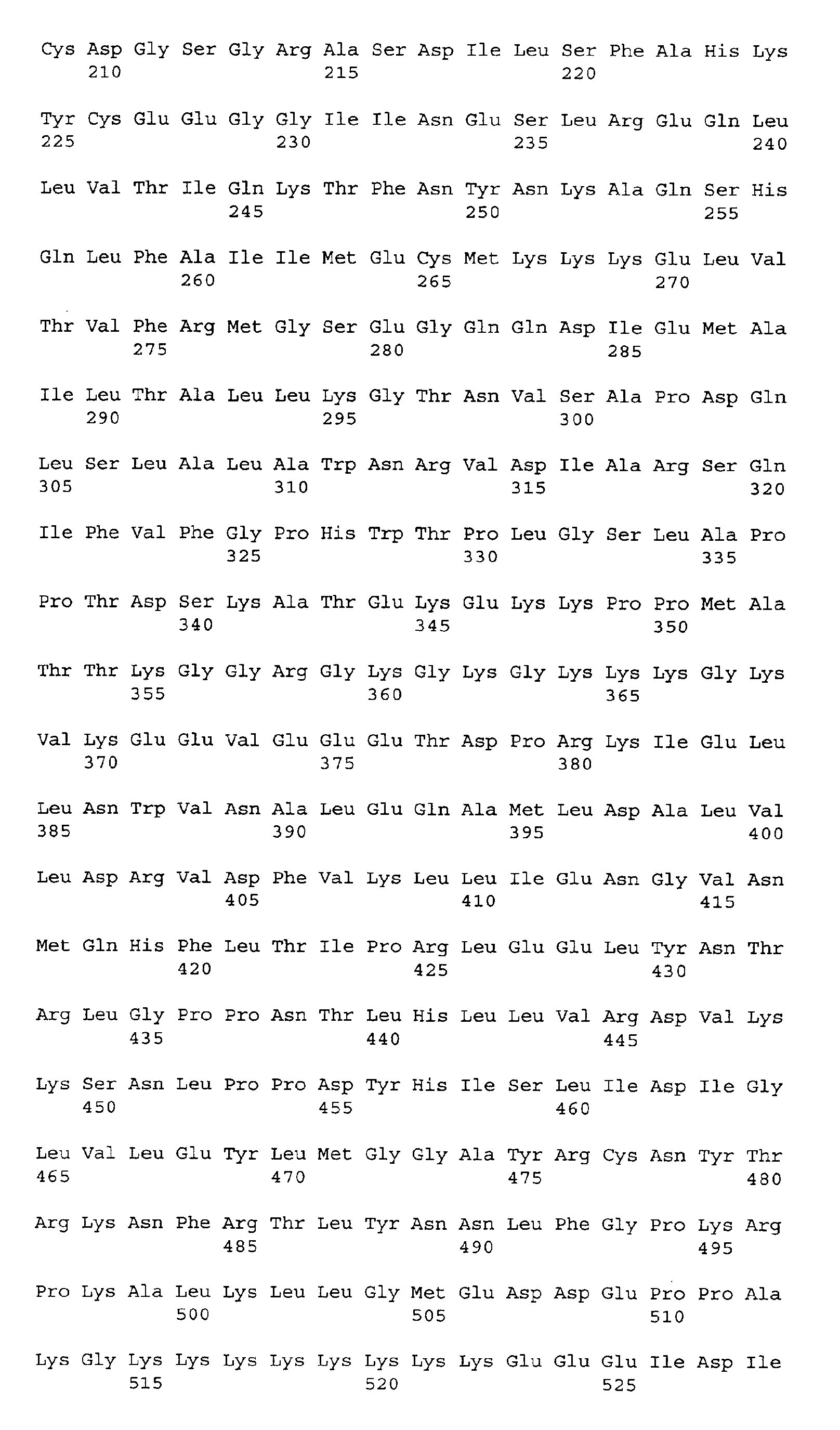

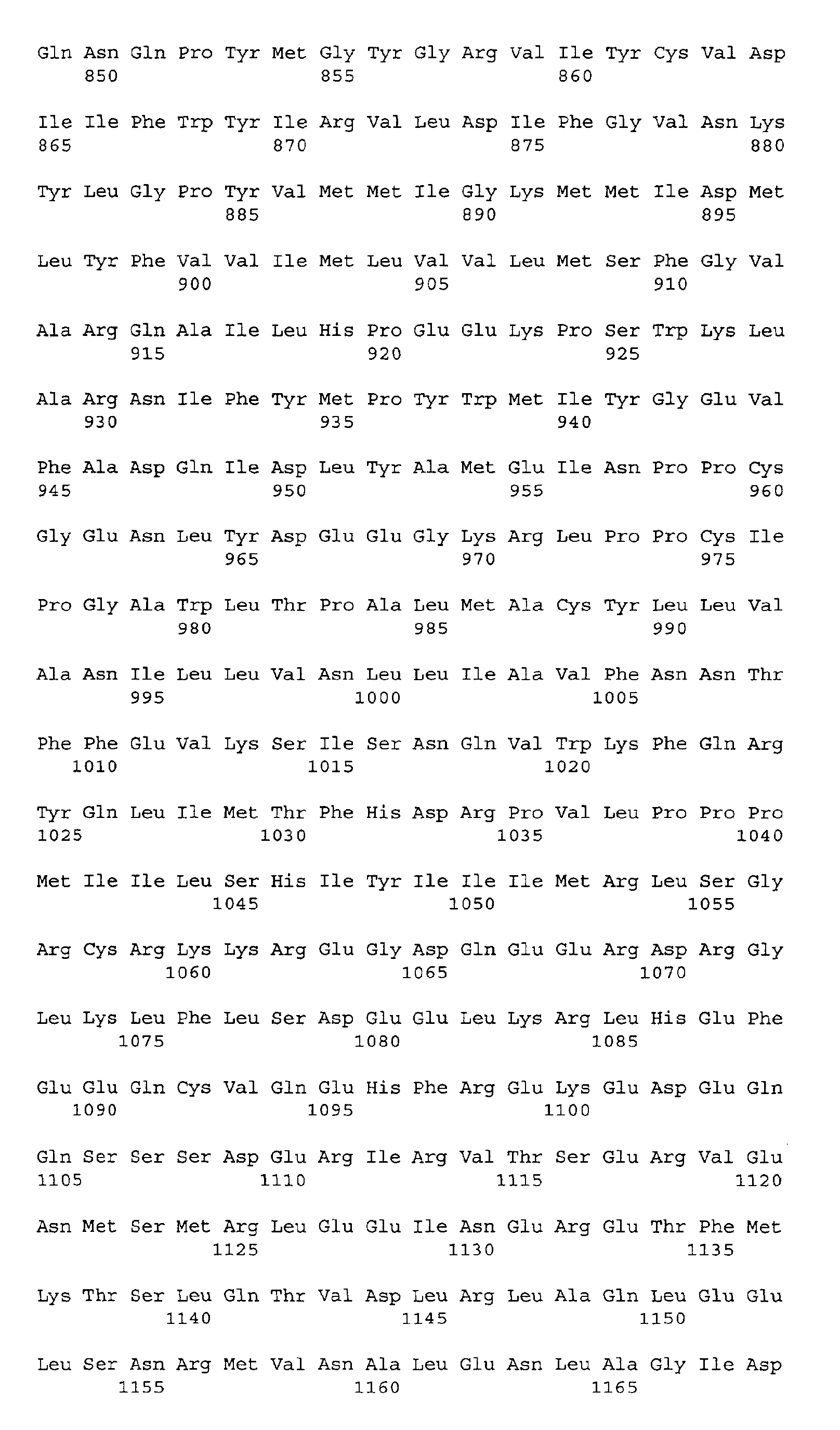
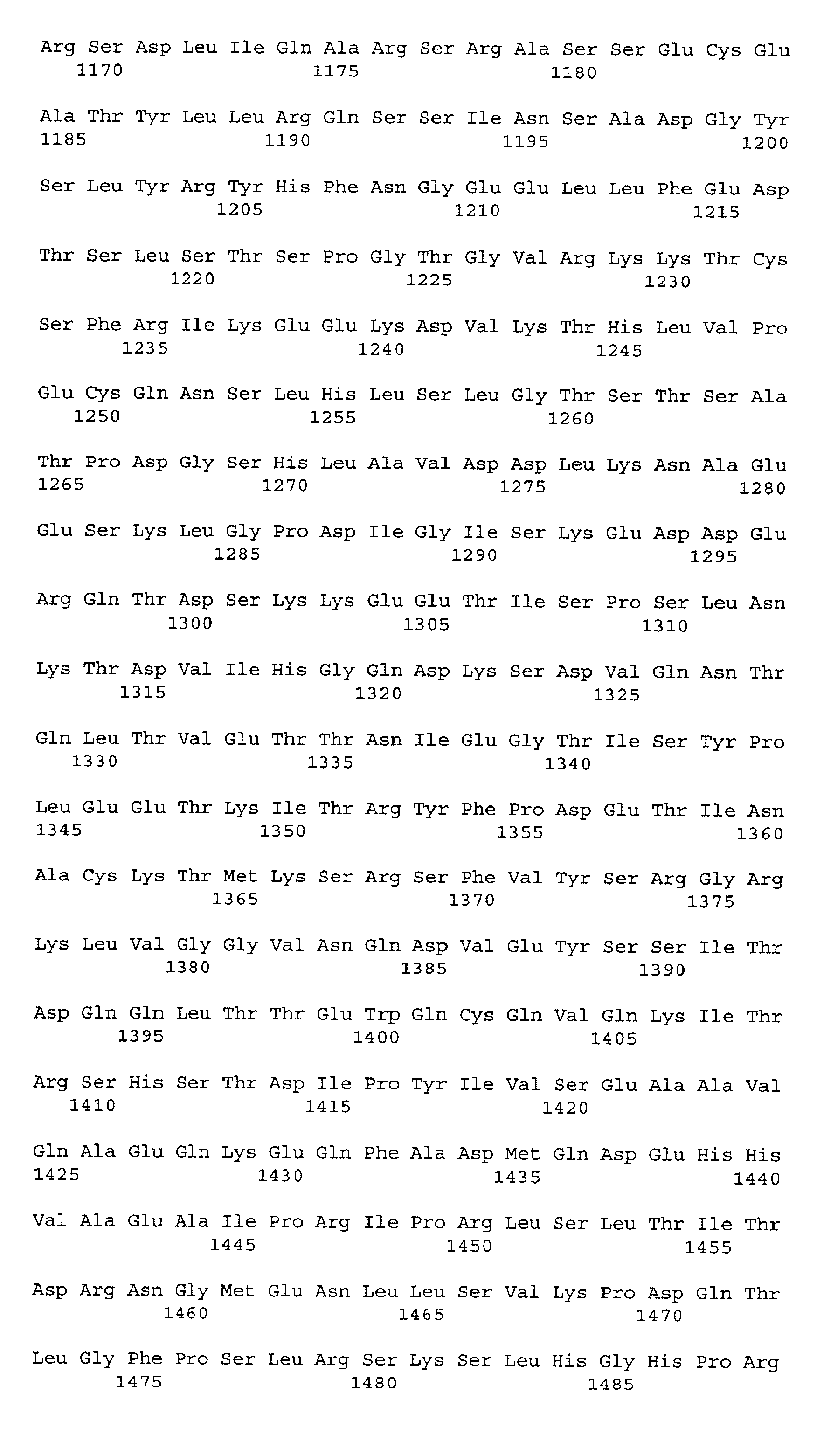

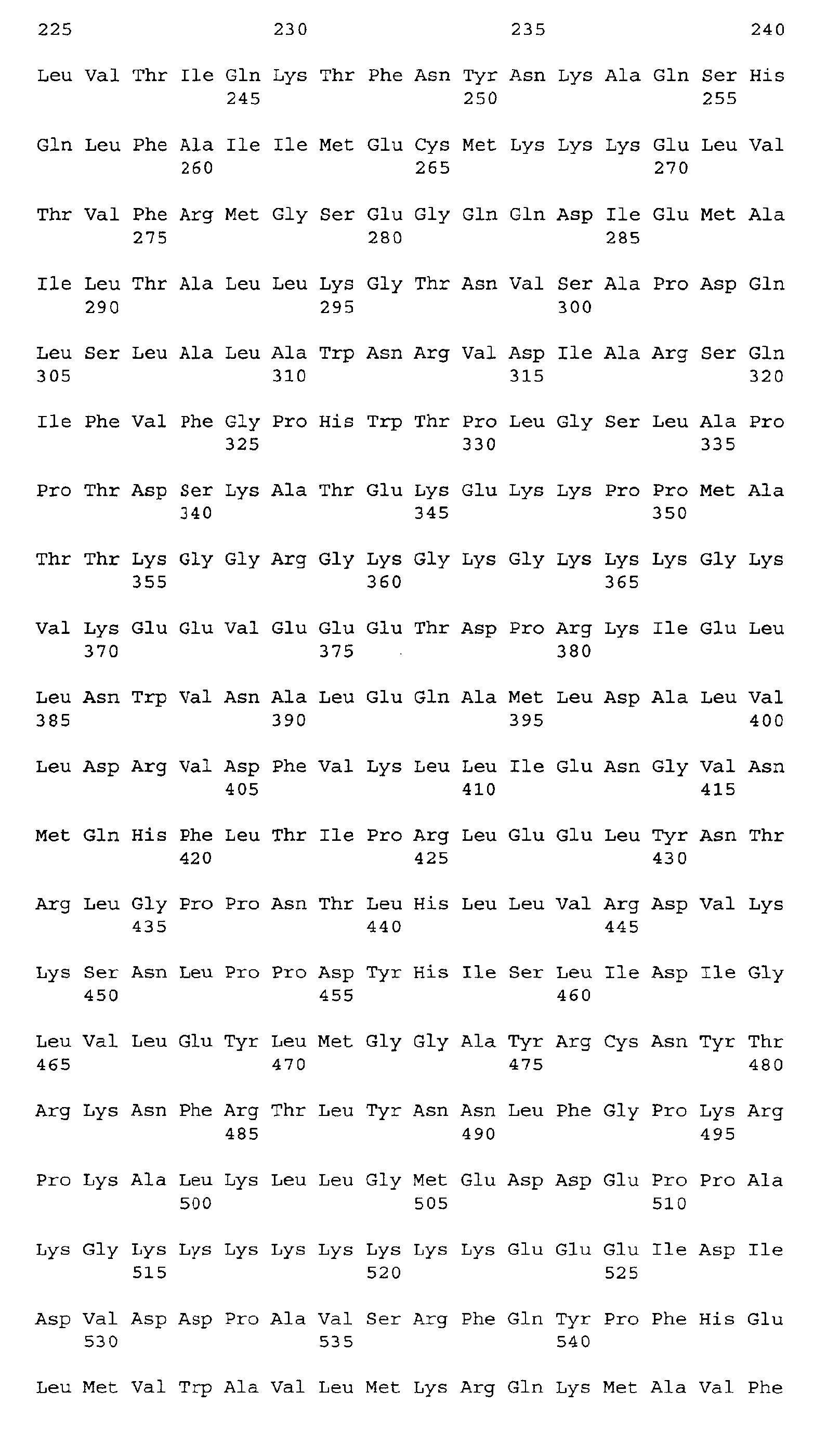
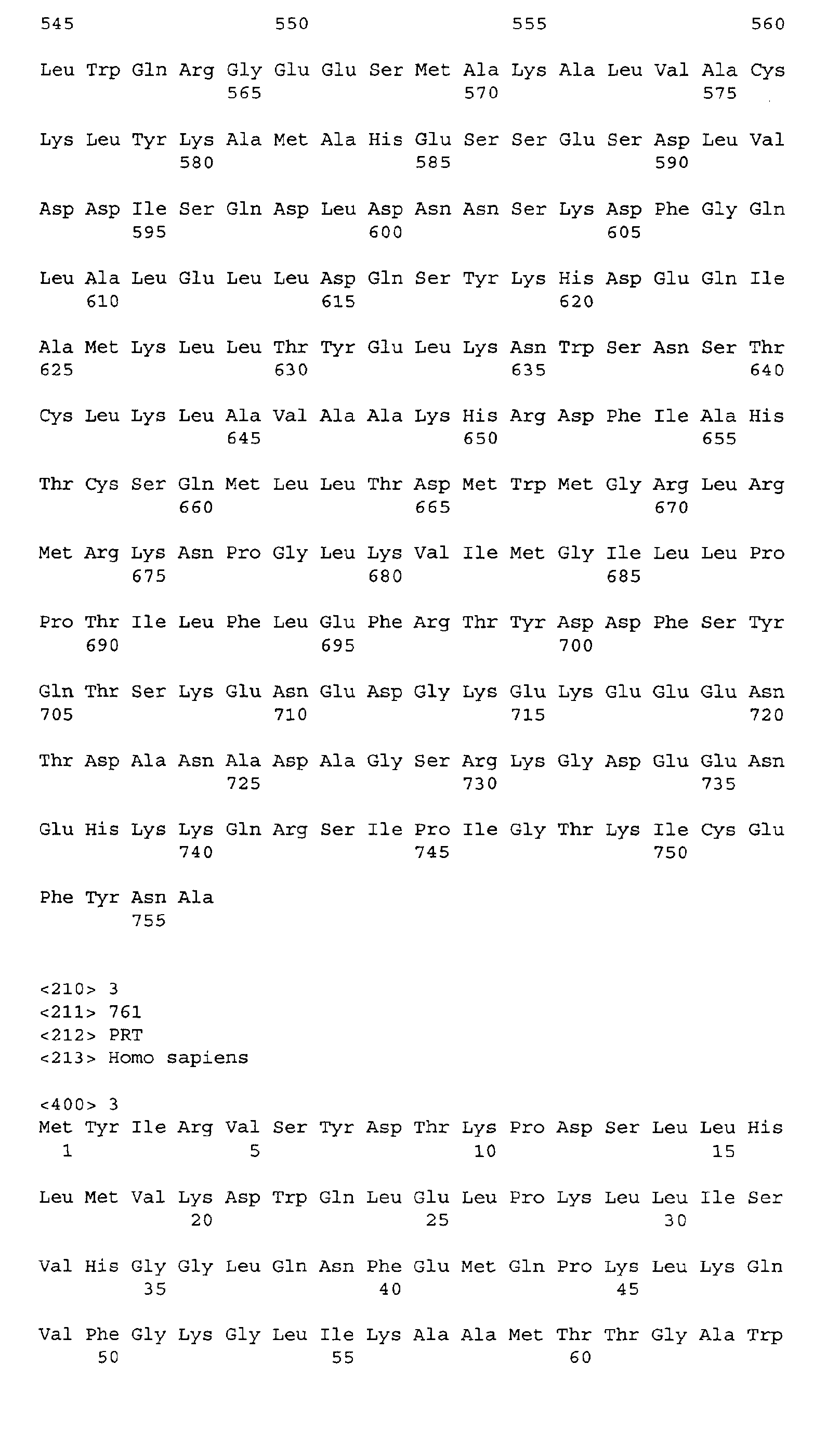


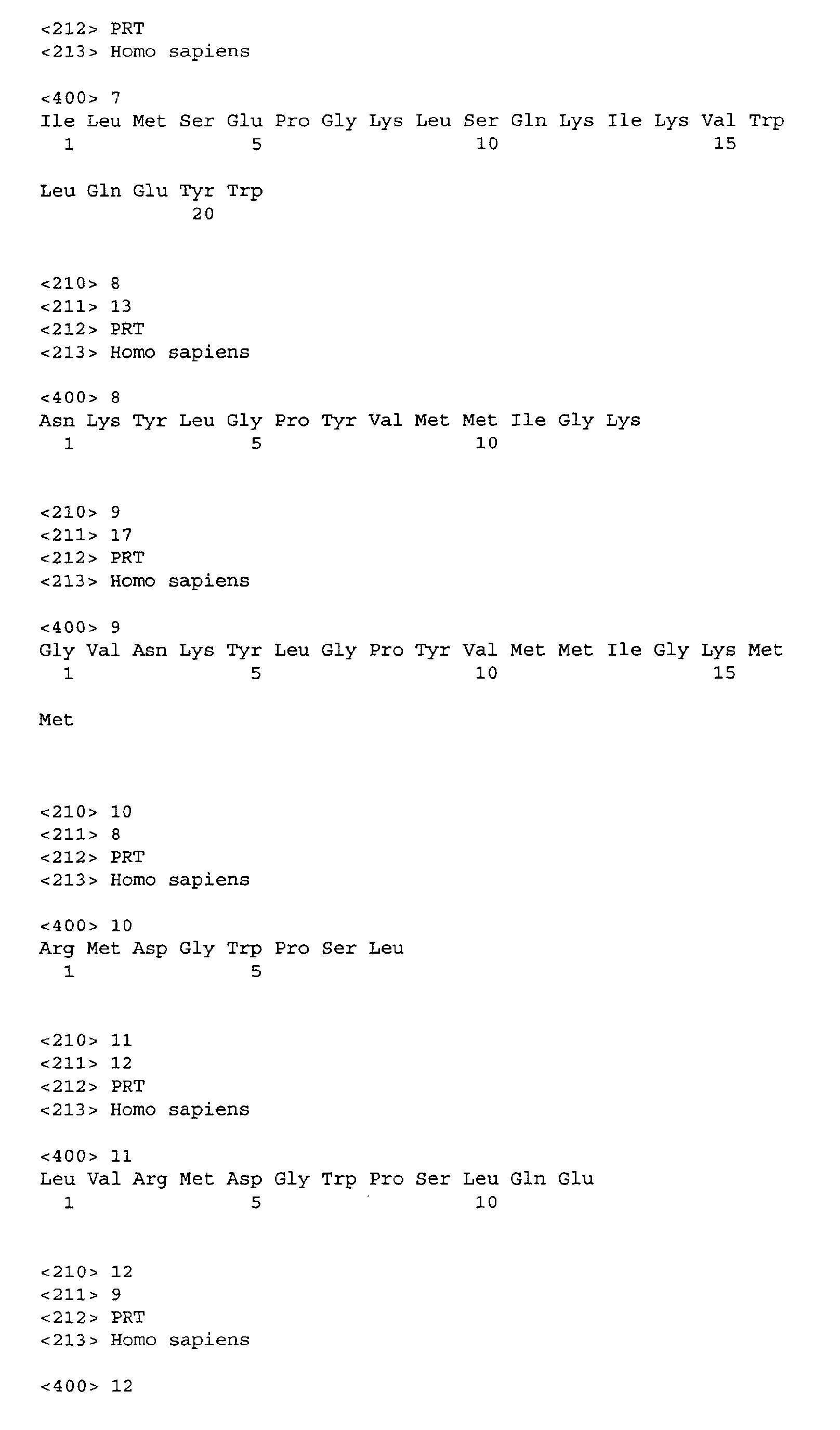


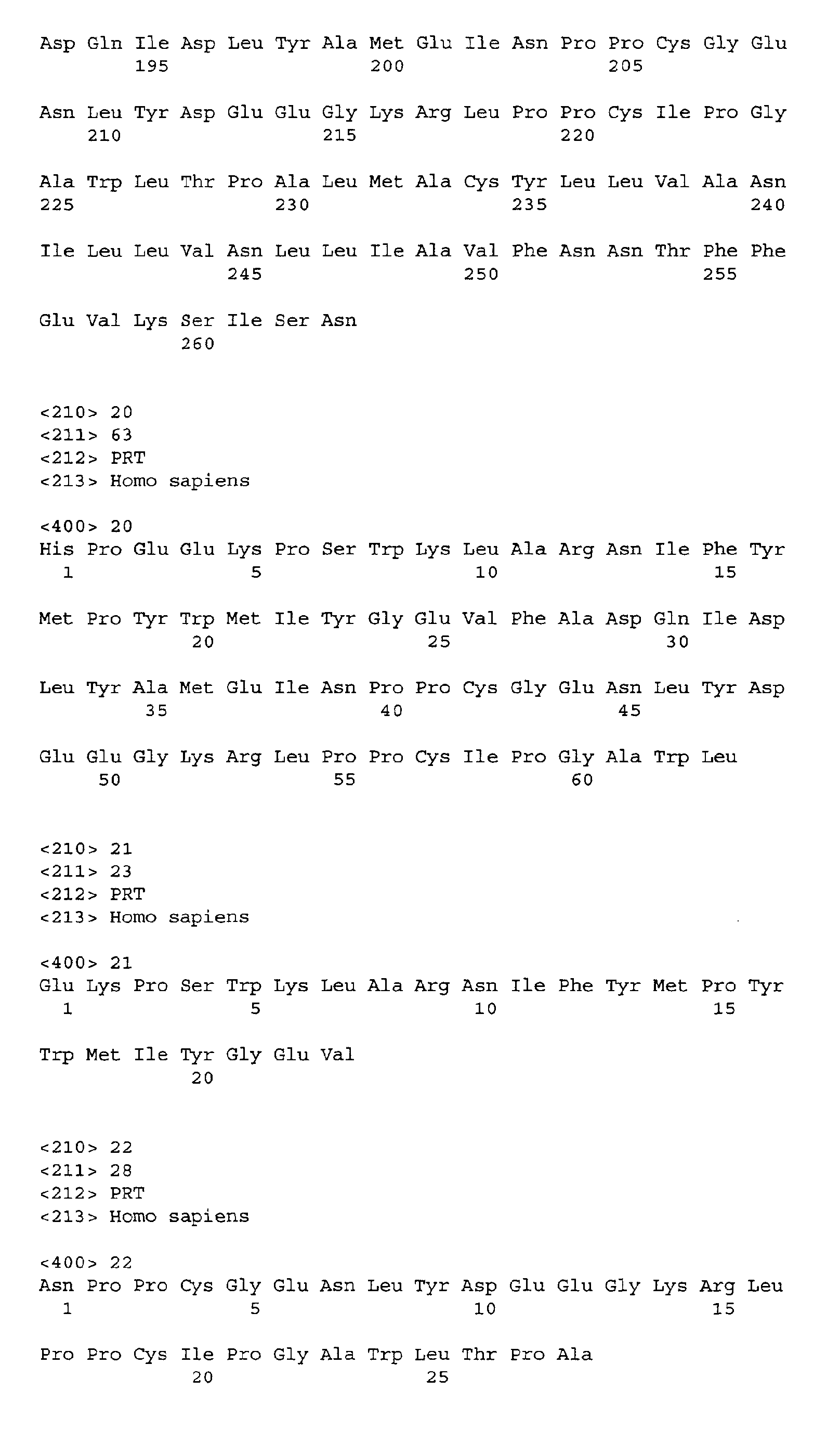
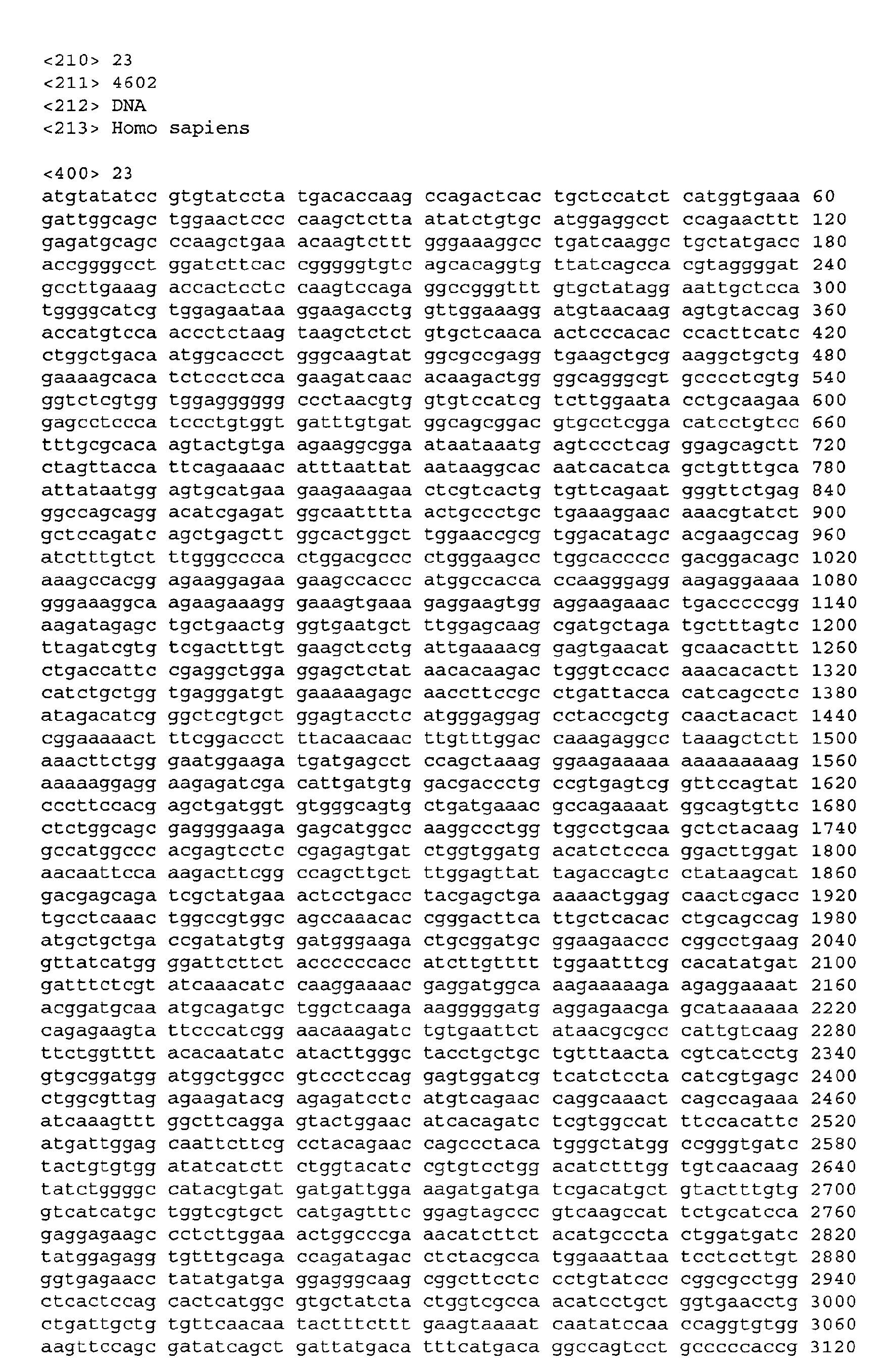


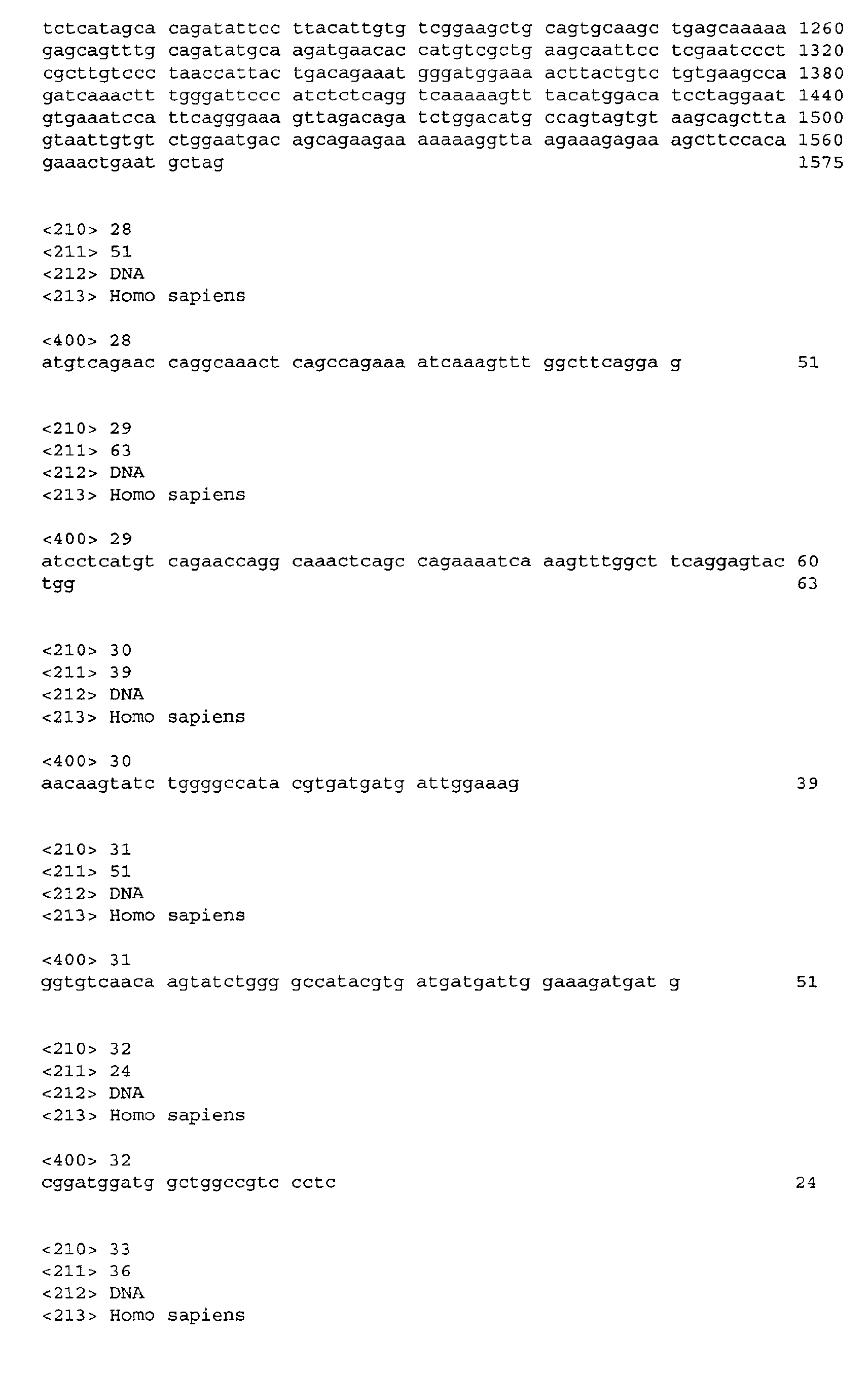
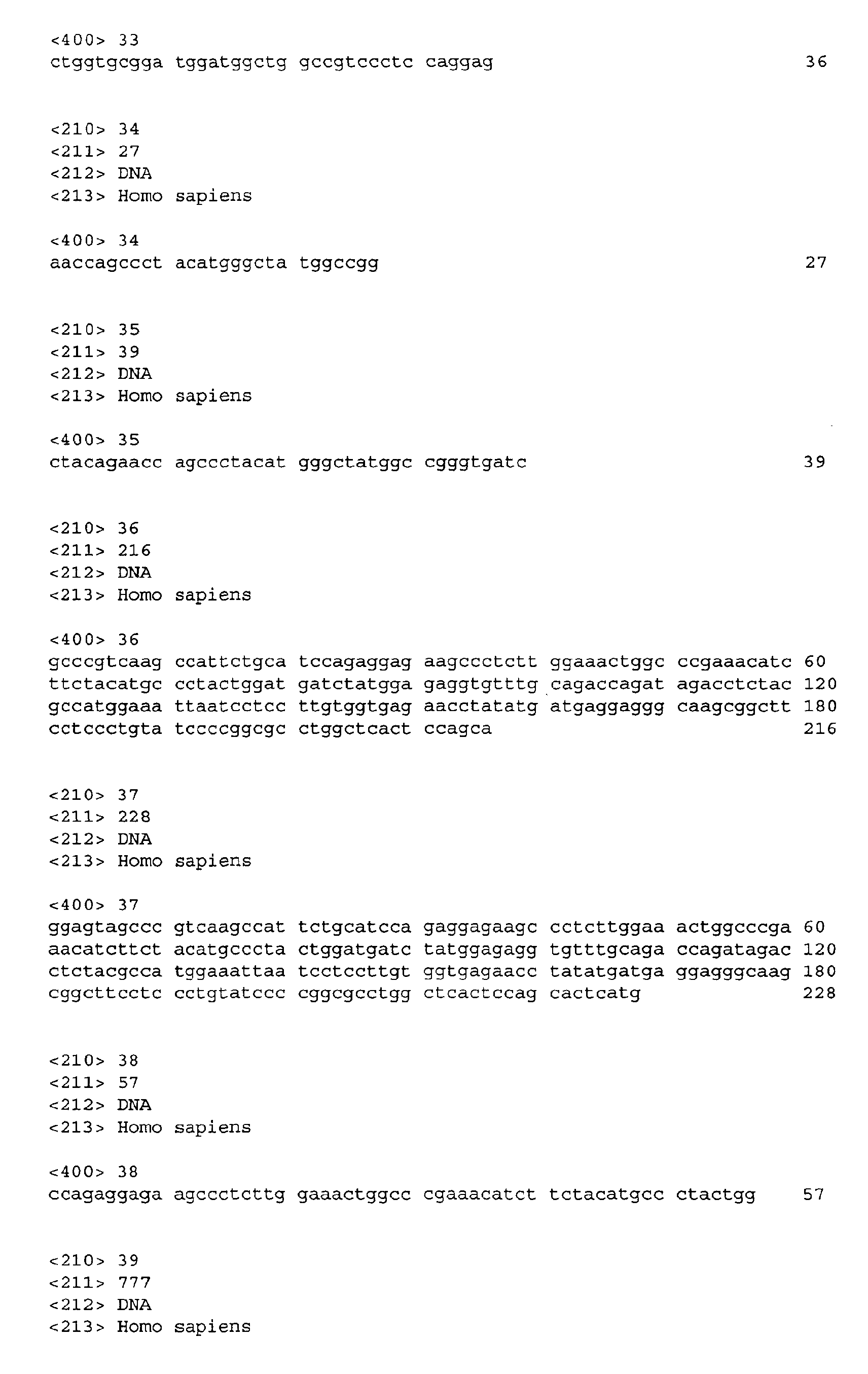
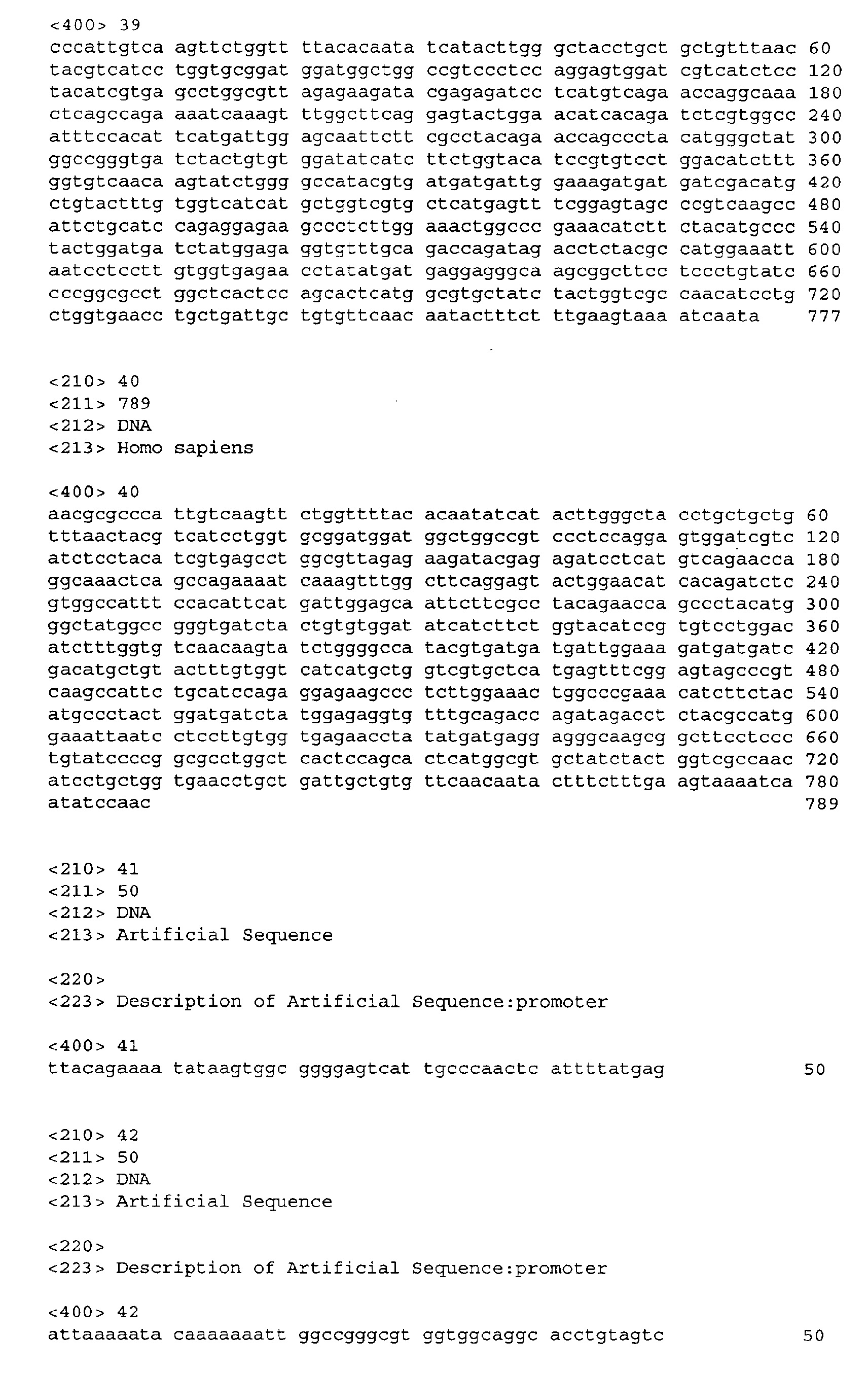
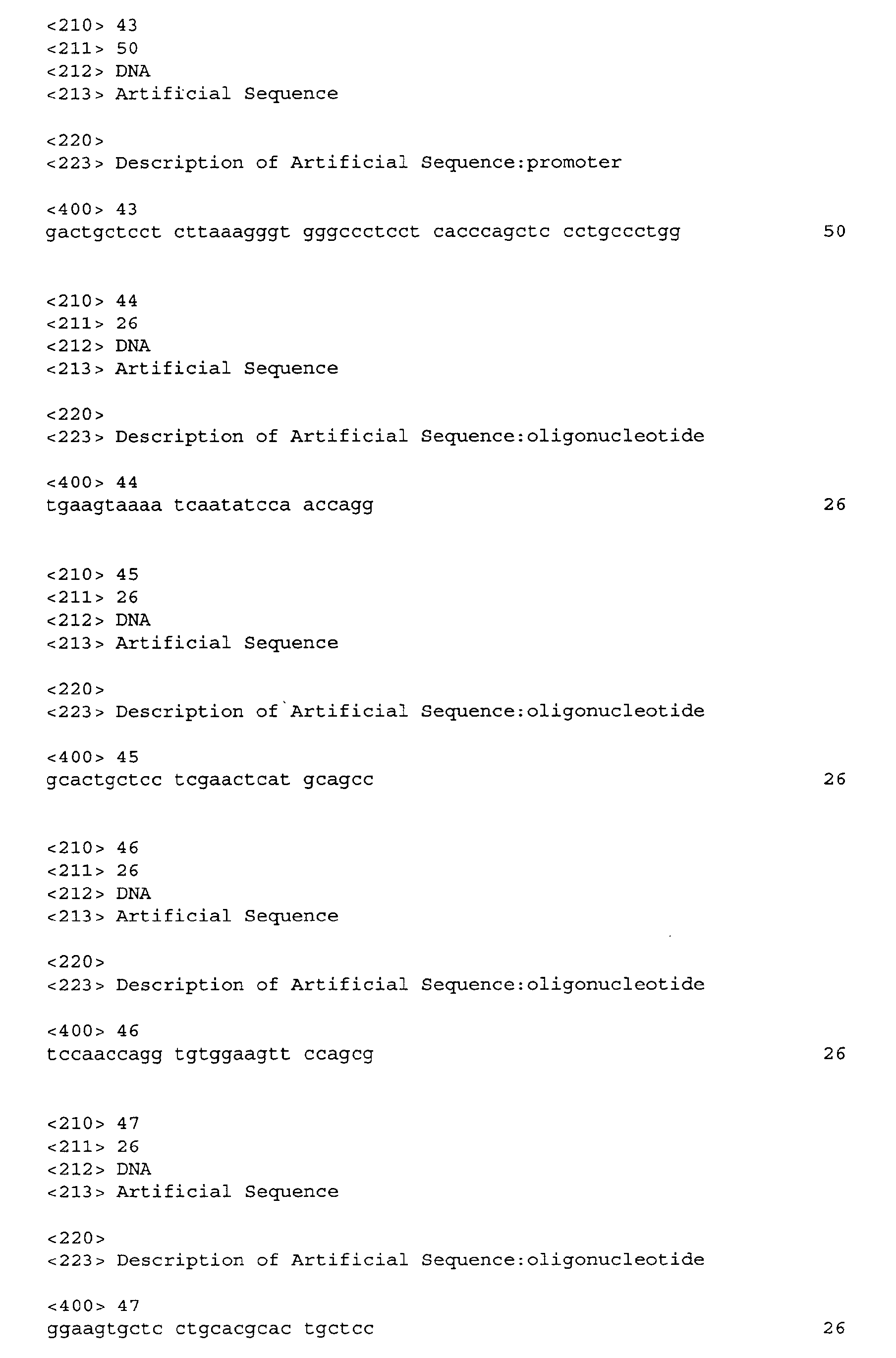
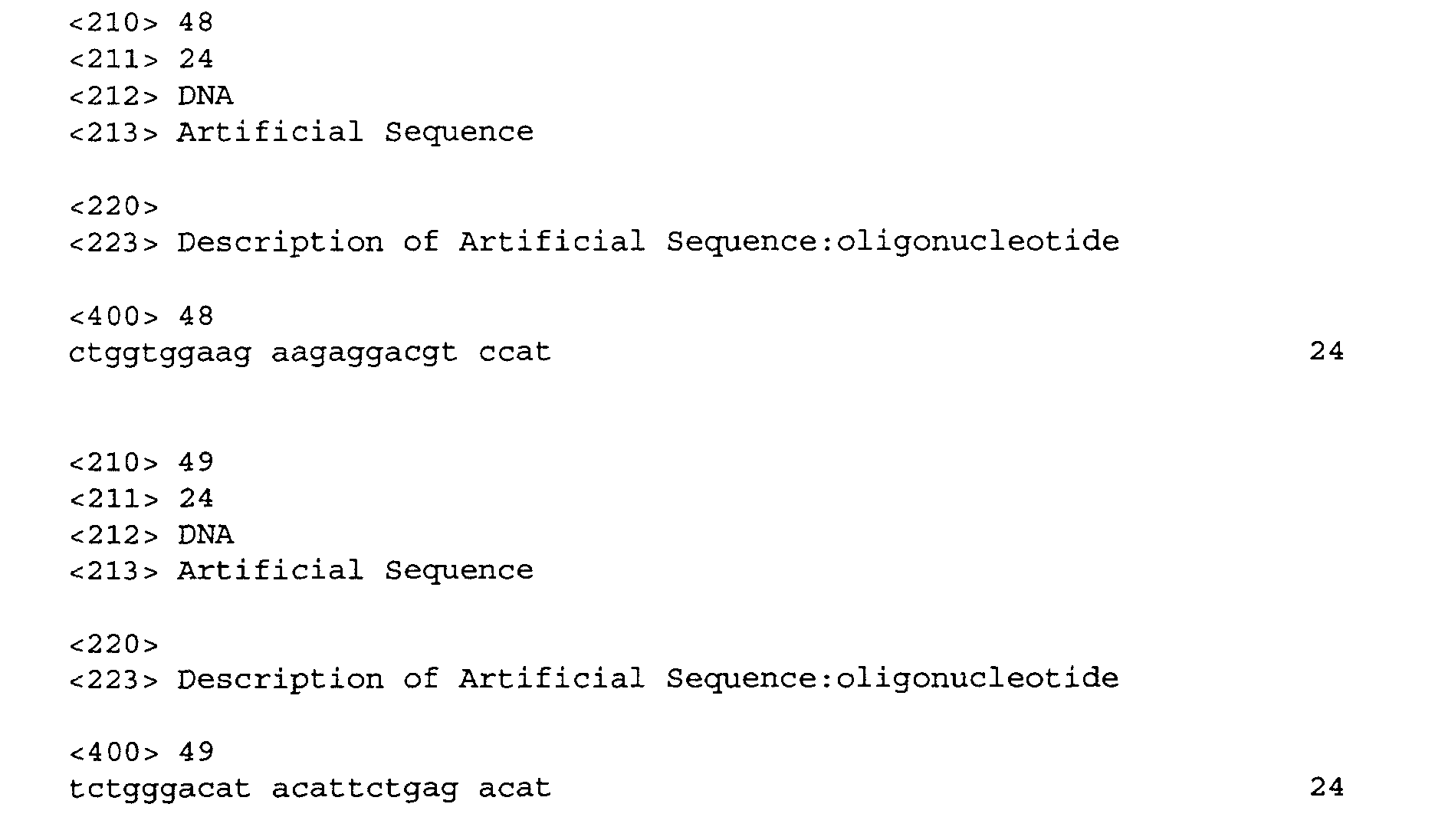
The choice of compounds (called in-after hit) from which series of compounds are developped should take into account parameters such as IC 50 measurement, structural features of the hits, the possibility to alter the substituants, the physico-chemical properties such as solubility as well as physiological features such as half-life and bioavailability.....
Therefore another embodiment of the instant invention is the use of an active compound (hit) as identified, selected or characterized by the screening method described previously for the preparation of pharmaceutical compounds or compositions that bind and/or modulate the biological activity of Mlsn1.
DbcAMP treatment was shown to increase intra-cellular Ca2+ after stimulation according to Floto et al.. The results demonstrate that anti-sense oligonucleotide treated cultures have their calcium signal decreased by about 40%. This antisense experiment demonstrates that the down-regulation of Mlsn1 expression anti-sense oligonucleotides results in a diminished Icrac phenotype in U937 cell lines. This result also demonstrates that anti-sense nucleic acid specific to Mlsn1 is capable of down-regulating the Icrac phenotype.
Claims (61)
- The use of any purified or isolated nucleic acid encoding a human Mlsn1 or a sequence complementary thereto for the screening of Mlsn1 modulators, wherein the encoding nucleic acid encodes a polypeptide having the following characteristics:(1) the N-terminal region is encoded by a consecutive sequence of at least 75 nucleotides, located 5' with respect to nucleotides encoding the transmembrane and C- terminal regions of Mlsn1 protein,(2) a transmembrane region encoding six membrane spanning domains, encoded by a consecutive sequence of at least 150 nucleotides, located 3' with respect to the nucleotides encoding the N-terminal region and 5' with respect to nucleotides encoding the C-terminal region, and(3) a C-terminal region encoded by a consecutive sequence of at least 75 nucleotides, located 3' with respect to nucleotides encoding the N-terminal region and transmembrane region.
- The use of any purified or isolated nucleic acid encoding human Mlsn1 according to claim 1, wherein said nucleic acid has at least 80% nucleotide identity with the nucleotide sequence of SEQ ID N°23 or a sequence complementary thereto.
- The use of any purified or isolated human Mlsn1 polypeptide or a fragment thereof, for the screening of Mlsn1 modulators, wherein the polypeptide has the following characteristics:(1) the N-terminal region comprises a consecutive sequence of at least 25 amino acids, located N-terminal with respect to the transmembrane and C- terminal regions of Mlsn1 protein,(2) a transmembrane region forming six membrane spanning domains, comprising a consecutive sequence of at least 50 amino acids, located C-terminal with respect to the N-terminal region and N-terminal with respect to the C-terminal region, and(3) a C-terminal region comprising a consecutive sequence of at least 25 amino acids, located C-terminal with respect to the N-terminal and transmembrane regions.
- The use of any purified or isolated polypeptide encoding human Mlsn1 according to claim 3, wherein said polypeptide has at least 90% amino acid identity with the sequence of SEQ ID N°1 or a fragment thereof.
- The use of any purified or isolated nucleic acid encoding a human Mlsn1 or a sequence complementary thereto for the diagnosis of disorders associated with aberrant Icrac function in immune cells, wherein the encoding nucleic acid encodes a polypeptide having the following characteristics:(1) the N-terminal region is encoded by a consecutive sequence of at least 75 nucleotides, located 5' with respect to nucleotides encoding the transmembrane and C- terminal regions of Mlsn1 protein,(2) a transmembrane region encoding six membrane spanning domains, encoded by a consecutive sequence of at least 150 nucleotides, located 3' with respect to the nucleotides encoding the N-terminal region and 5' with respect to nucleotides encoding the C-terminal region, and(3) a C-terminal region encoded by a consecutive sequence of at least 75 nucleotides, located 3' with respect to nucleotides encoding the N-terminal region and transmembrane region.
- The use of any purified or isolated nucleic acid encoding human Mlsn1 according to claim 5, wherein said nucleic acid has at least 80% nucleotide identity with the nucleotide sequence of SEQ ID N°23 or a sequence complementary thereto.
- The use of any purified or isolated polypeptide encoding a human Mlsn1 or fragment thereof for the diagnosis of disorders associated with aberrant Icrac function in immune cells, wherein the polypeptide has the following characteristics:(1) the N-terminal region comprises a consecutive sequence of at least 25 amino acids, located N-terminal with respect to the transmembrane and C- terminal regions of Mlsn1 protein,(2) a transmembrane region forming six membrane spanning domains, comprising a consecutive sequence of at least 50 amino acids, located C-terminal with respect to the N-terminal region and N-terminal with respect to the C-terminal region, and(3) a C-terminal region comprising a consecutive sequence of at least 25 amino acids, located C-terminal with respect to the N-terminal and transmembrane regions.
- The use of any purified or isolated polypeptide encoding human Mlsn1 according to claim 7, wherein said polypeptide has at least 90% amino identity with the sequence of SEQ ID N° 1 or a fragment thereof.
- A purified or isolated human Mlsn1 N-terminal polypeptide region, wherein the N-terminal region comprises a consecutive sequence of at least 25 amino acids, located N-terminal of the first transmembrane region of the Mlsn1 protein.
- A purified or isolated human Mlsn1 N-terminal polypeptide region according to claim 9, wherein said N-terminal polypeptide has at least 90% amino acid identity with any of the amino acid sequences SEQ ID N°2 or 3, or fragments thereof.
- A purified or isolated human Mlsn1 C-terminal polypeptide region, wherein the C-terminal region comprises a consecutive sequence of at least 25 amino acids, located C-terminal of the sixth transmembrane region of the Mlsn1 protein.
- A purified or isolated human Mlsn1 C-terminal region according to claim 11, wherein said C-terminal polypeptide has at least 90% amino acid identity with any of the polypeptides of amino acid sequences SEQ ID N°4 or 5, or fragments thereof.
- A purified or isolated human Mlsn1 Intra-cellular loop-1 polypeptide region, wherein the intra-cellular loop-1 region comprises a consecutive sequence of at least 7 amino acids, located C-terminal of the second transmembrane region and N-terminal to the third transmembrane region of the Mlsn1 protein.
- A purified or isolated human Mlsn1 intracellular loop-1 region according to claim 13, wherein said intra-cellular loop-1 polypeptide has at least 90% amino acid identity with any of the polypeptides of amino acid sequences SEQ ID N°6 or 7, or fragments thereof.
- A purified or isolated human Mlsn1 intra-cellular loop-2 polypeptide region, wherein the intra-cellular loop-2 polypeptide region comprises a consecutive sequence of at least 7 amino acids, located C-terminal of the fourth transmembrane region and N-terminal of the fifth transmembrane region of the Mlsn1 protein.
- A purified or isolated human Mlsn1 intra-cellular loop-2 region according to claim 15, wherein said intra-cellular loop-2 region polypeptide has at least 90% amino acid identity with any of the polypeptides of amino acid sequences SEQ ID N°8 or 9, or fragments thereof.
- A purified or isolated human Mlsn1 extra-cellular loop-1 polypeptide region, wherein the extra-cellular loop-1 region comprises a consecutive sequence of at least 5 amino acids, located C-terminal of the first transmembrane region and N-terminal of the second transmembrane region of the Mlsn1 protein.
- A purified or isolated human Mlsn1 extra-cellular loop-1 region according to claim 17, wherein said extra-cellular loop-1 region polypeptide has at least 90% amino acid identity with any of the polypeptides of amino acid sequences SEQ ID N°10 or 11, or fragments thereof.
- A purified or isolated human Mlsn1 extra-cellular loop-2 polypeptide region, wherein the extra-cellular loop-2 region comprises a consecutive sequence of at least 5 amino acids, located C-terminal of the third transmembrane region and N-terminal of the fourth transmembrane region of the Mlsn1 protein.
- A purified or isolated human Mlsn1 extra-cellular loop-2 region according to claim 19, wherein said extra-cellular loop-2 region polypeptide has at least 90% amino acid identity with any of the polypeptides of amino acid sequences SEQ ID N°12 or 13, or fragments thereof.
- A purified or isolated human Mlsn1 extra-cellular loop-3 polypeptide region, wherein the extra-cellular loop-3 region comprises a consecutive sequence of at least 7 amino acids C-terminal of the fifth transmembrane region and N-terminal of the sixth transmembrane region of the Mlsn1 protein.
- A purified or isolated human Mlsn1 extra-cellular loop-3 region according to claim 21, wherein said extra-cellular loop-3 region polypeptide has at least 90% amino acid identity with any of the polypeptides of amino acid sequences SEQ ID N°14, 15, 16 or 17, or fragments thereof.
- A purified or isolated human Mlsn1 polypeptide containing both intra- and extra-cellular loop regions, wherein said intra-and extra-cellular loop region comprises a consecutive sequence of at least 50 amino acids, located C-terminal to the N-terminal region and N-terminal to the C-terminal region of the Mlsn1 protein.
- A purified or isolated human Mlsn1 peptide containing both intra-and extra-cellular loop regions according to claim 23, wherein said intra- and extra-cellular loop region polypeptide has at least 90% amino acid identity with any of the polypeptides of amino acid sequences SEQ ID N°18 or 19, or fragments thereof.
- A purified or isolated nucleic acid encoding the human Mlsn1 N-terminal region, wherein the N-terminal region is encoded by a consecutive sequence of at least 75 nucleotides, located 5' with respect to nucleotides encoding the first transmembrane region of the Mlsn1 protein.
- A purified or isolated nucleic acid encoding the human Mlsn1 N-terminal region according to claim 25, wherein said nucleic acid has at least 80% nucleic acid identity with any of the nucleotide sequences SEQ ID N°24 or 25, or a complementary sequence thereto.
- A purified or isolated nucleic acid encoding the human Mlsn1 C-terminal region, wherein the C-terminal region is encoded by a consecutive sequence of at least 75 nucleotides, located 5' with respect to nucleotides encoding the sixth transmembrane region of the Mlsn1 protein.
- A purified or isolated nucleic acid encoding the human Mlsn1 C-terminal region according to claim 27, wherein said nucleic acid has at least 80% nucleic acid identity with any of the nucleotide sequences of SEQ ID N°26 or 27, or a complementary sequence thereto.
- A purified or isolated nucleic acid encoding the human Mlsn1 intra-cellular loop-1 region, wherein the intra-cellular loop-1 region is encoded by a consecutive sequence of at least 21 nucleotides, located 3' with respect to nucleotides encoding the second transmembrane region and 5' with respect to nucleotides encoding the third transmembrane region of the Mlsn1 protein.
- A purified or isolated nucleic acid encoding the human Mlsn1 intra-cellular loop-1 region according to claim 29, wherein said nucleic acid has at least 80% nucleic acid identity with any of the nucleotide sequences of SEQ ID N°28 or 29, or a complementary sequence thereto.
- A purified or isolated nucleic acid encoding the human Mlsn1 intra-cellular loop-2 region, wherein the intra-cellular loops-2 region is encoded by a consecutive sequence of at least 21 nucleotides, located 3' with respect to nucleotides encoding the fourth transmembrane region and 5' with respect to nucleotides encoding the fifth transmembrane region of the Mlsn1 protein.
- A purified or isolated nucleic acid encoding the human Mlsn1 intra-cellular loop-2 region according to claim 31, wherein said nucleic acid has at least 80% nucleic acid identity with any of the nucleotide sequences of SEQ ID N°30 or 31, or a complementary sequence thereto.
- A purified or isolated nucleic acid encoding the human Mlsn1 extra-cellular loop-1 region, wherein the extra-cellular loop-1 region is encoded by a consecutive sequence of at least 15 nucleotides, located 3' with respect to nucleotides encoding the first transmembrane region and 5' with respect to nucleotides encoding the second transmembrane region of the Mlsn1 protein.
- A purified or isolated nucleic acid encoding the human Mlsn1 extra-cellular loop-1 region according to claim 33, wherein said nucleic acid has at least 80% nucleic acid identity with any of the nucleotide sequences of SEQ ID N°32 or 33, or a complementary sequence thereto.
- A purified or isolated nucleic acid encoding the human Mlsn1 extra-cellular loop-2 region, wherein the extra-cellular loop-2 region is encoded by a consecutive sequence of at least 15 nucleotides, located 3' with respect to nucleotides encoding the third transmembrane region and 5' with respect to nucleotides encoding the fourth transmembrane region of the Mlsn1 protein.
- A purified or isolated nucleic acid encoding the human Mlsn1 extra-cellular loop-2 region according to claim 35, wherein said nucleic acid has at least 80% nucleic acid identity with any of the nucleotide sequences of SEQ ID N°34 or 35, or a complementary sequence thereto.
- A purified or isolated nucleic acid encoding the human Mlsn1 extra-cellular loop-3 region, wherein the extra-cellular loop-3 region is encoded by a consecutive sequence of at least 21 nucleotides, located 3' with respect to nucleotides encoding the fifth transmembrane region and 5' with respect to nucleotides encoding the sixth transmembrane region of the Mlsn1 protein.
- A purified or isolated nucleic acid encoding the human Mlsn1 extra-cellular loop-3 region according to claim 37, wherein said nucleic acid has at least 80% nucleic acid identity with any of the nucleotide sequences of SEQ ID N°36, 37 or 38, or a complementary sequence thereto.
- A purified or isolated nucleic acid encoding a human Mlsn1 polypeptide containing both intra- and extra-cellular loop regions, wherein said intra- and extra-cellular loop region is encoded by a consecutive sequence of at least 150 nucleotides, located 3' with respect to nucleotides encoding the N-terminal region and 5' with respect to nucleotides encoding the C-terminal regions of the Mlsn1 protein.
- A purified or isolated nucleic acid encoding the human Mlsn1 polypeptide containing both intra- and extra-cellular loop regions according to claim 39, wherein said nucleic acid has at least 80% nucleic acid identity with any of the nucleotide sequences of SEQ ID N°39 or 40, or a complementary sequence thereto.
- A nucleic acid sequence encoding an Mlsn1 transcription promoter of SEQ ID N°41 or a complementary sequence thereto.
- A nucleic acid sequence of claim 41, having at least 80% nucleotide identity with the nucleotide sequence of SEQ ID N°41 or a complementary sequence thereto.
- A nucleic acid sequence encoding an Mlsn1 transcription promoter of SEQ ID N°42 or a complementary sequence thereto.
- A nucleic acid sequence of claim 43, having at least 80% nucleotide identity with the nucleotide sequence of SEQ ID N°42 or a complementary sequence thereto.
- A nucleic acid sequence encoding an Mlsn1 transcription promoter of SEQ ID N°43 or a complementary sequence thereto.
- A nucleic acid sequence of claim 45, having at least 80% nucleotide identity with the nucleotide sequence of SEQ ID N°43 or a complementary sequence thereto.
- A recombinant vector comprising a nucleic acid according to any one of the claims 25 to 46.
- A recombinant vector comprising a nucleic acid encoding an Mlsn1 polypeptide according to any one of the claims 9 to24
- A recombinant host cell comprising a nucleic acid according to any one of the claims 25 to 46 or a vector of claim 47 or 48.
- A recombinant host cell comprising a nucleic acid ncoding an Mlsn1 polypeptide according to any one of the claims 9 to 24.
- A method for producing a Mlsn1 polypeptide, wherein the said method comprises the following steps of:a) culturing, in an appropriate culture medium, a host cell previously transformed or transfected with a polynucleotide according to any one of claims 25 to 48,b) harvesting the culture medium thus conditioned or lyse the host cell, for example by sonication or by osmotic shock ; andc) separating or purifying, from said culture medium, or from the pellet of the resulting cell lysate, the produced Mlsnl polypeptide of interest.
- A method for screening ligand substances or molecules that are able to bind to a Mlsn1, or fragment thereof, or Mlsn1 transcription promoter elements of any one of the claims 1 to 46, said method comprising ;a) contacting a test compound with Mlsn1 gene, an Mlsn1 gene product or Mlsn1 transcription promoter element and,b) measuring the ability of said test compound to interact with the Mlsn1 gene, Mlsn1 gene product or transcription promoter element (i.e., binding assay).
- A method for screening ligand substances or molecules that are able to modulate the biological activity of Mlsnl, or fragment thereof, of any one of the claims 1 to 40, said method comprising ;a) contacting a test compound with an Mlsn1 expressing cell, and,b) determining the ability of said test compound to affect Mlsn1 gene or an Mlsn1 gene product activity within the cells.
- A method for screening ligand substances or molecules that are able to modulate the biological activity of Mlsn1, or fragment thereof, of any one of the claims 1 to 40, said method comprising ;a) obtaining a recombinant cell expressing Mlsn1 gene or gene product,b) exposing said recombinant cell to a substance or molecule to be tested ; andc) Measuring the change in calcium flux or activation potential within the exposed recombinant cell.
- A method for screening ligand substances or molecules that are able to modulate the biological activity of Mlsn1, or fragment thereof, of any one of the claims 41 to 46, said method comprising ;a) obtaining a recombinant cell expressing a reporter molecule under the control of an Mlsn1 transcription promoterMlsn1 gene,b) Exposing said recombinant cell to a substance or molecule to be tested ; andc) Measuring the change in reporter expression or activity in said recombinant cell.
- A method for screening ligand substances or molecules that are able to bind to a Mlsn1, or modulate the biological activity of Mlsn1, according to any one of claims 51 to 55, wherein a competitor Mlsn1 binding ligand, preferably selected from the class of pyrazol compounds such as SEW04225, KM02940, KM03000 or GK02421, is added and the binding of said competitor in the presence and/or absence of a test compound is determined.
- A method for detecting any one of the nucleic acids of claims 6, 8, or 25 to 50, in a blood sample, said method comprising ;a) obtaining a blood sample,b) optionally separating immune cells from other blood components,c) reverse transcribing cellular RNA to cDNA, andd) amplifying Mlsn1 nucleic acid obtained in step c) by PCR with a plurality of Mlsn1 specific oligonucleotides capable of hybridizing, under stringent conditions to Mlsn1 nucleic acids and characterize the PCR product.
- The use of a Mlsn1 gene, gene product or transcriptional element, to screen compounds that modulate the activity of an antigen presenting cell, particularly of macrophages, in particular macrophage maturation.
- The use of a compound that modulates the activity of Mlsn1 gene, gene product or transcriptional element, for the manufacture of a composition to regulate the activity of an antigen presenting cell, particularly of macrophages, in particular macrophage maturation.
- An antisense nucleic acid molecule comprising a sequence region which is complementary to at least a region of a Mlsn1 nucleic acid of claims 25 to 40.
- The use of an active compound as identified, selected or characterized by the screening method described in claims 52 to 56 for the preparation of pharmaceutical compounds or compositions that bind and/or modulate the biological activity of Mlsn1.
Priority Applications (1)
| Application Number | Priority Date | Filing Date | Title |
|---|---|---|---|
| EP01402283A EP1184457A1 (en) | 2000-09-05 | 2001-09-03 | Identification of a capacitative calcium channel in antigen presenting cells and uses thereof |
Applications Claiming Priority (3)
| Application Number | Priority Date | Filing Date | Title |
|---|---|---|---|
| EP00402436 | 2000-09-05 | ||
| EP00402436A EP1186661A1 (en) | 2000-09-05 | 2000-09-05 | Identification of the major capacitative calcium channel in antigen presenting cells and uses thereof |
| EP01402283A EP1184457A1 (en) | 2000-09-05 | 2001-09-03 | Identification of a capacitative calcium channel in antigen presenting cells and uses thereof |
Publications (1)
| Publication Number | Publication Date |
|---|---|
| EP1184457A1 true EP1184457A1 (en) | 2002-03-06 |
Family
ID=26073574
Family Applications (1)
| Application Number | Title | Priority Date | Filing Date |
|---|---|---|---|
| EP01402283A Withdrawn EP1184457A1 (en) | 2000-09-05 | 2001-09-03 | Identification of a capacitative calcium channel in antigen presenting cells and uses thereof |
Country Status (1)
| Country | Link |
|---|---|
| EP (1) | EP1184457A1 (en) |
Citations (3)
| Publication number | Priority date | Publication date | Assignee | Title |
|---|---|---|---|---|
| US5674739A (en) * | 1995-03-29 | 1997-10-07 | Millennium Pharmaceuticals, Inc. | Human gene FOHY030 coding for tumor progression inhibitor |
| WO2000040614A2 (en) * | 1998-12-30 | 2000-07-13 | Beth Israel Deaconess Medical Center, Inc. | Characterization of the soc/crac calcium channel protein family |
| EP1024138A1 (en) * | 1997-10-13 | 2000-08-02 | Yamanouchi Pharmaceutical Co. Ltd. | Pyrazole derivatives |
-
2001
- 2001-09-03 EP EP01402283A patent/EP1184457A1/en not_active Withdrawn
Patent Citations (3)
| Publication number | Priority date | Publication date | Assignee | Title |
|---|---|---|---|---|
| US5674739A (en) * | 1995-03-29 | 1997-10-07 | Millennium Pharmaceuticals, Inc. | Human gene FOHY030 coding for tumor progression inhibitor |
| EP1024138A1 (en) * | 1997-10-13 | 2000-08-02 | Yamanouchi Pharmaceutical Co. Ltd. | Pyrazole derivatives |
| WO2000040614A2 (en) * | 1998-12-30 | 2000-07-13 | Beth Israel Deaconess Medical Center, Inc. | Characterization of the soc/crac calcium channel protein family |
Non-Patent Citations (5)
| Title |
|---|
| BRIDGLAND-TAYLOR M H ET AL: "VALIDATION OF A HIGH THROUGHPUT SCREEN TO DETECT POTENTIAL MODULATORS OF CA2RELEASE-ACTIVATED CA2+CHANNELS IN JURKAT T-CELLS", BRITISH JOURNAL OF PHARMACOLOGY,BASINGSTOKE, HANTS,GB, vol. 125, no. PROC. SUPPL, December 1998 (1998-12-01), pages 82, XP000938347, ISSN: 0007-1188 * |
| DATABASE EMBL 30 August 1999 (1999-08-30), BIRREN B. ET AL.: "Homo sapiens chromosome 15 clone RP11-348B17 map 15", XP002157751 * |
| FLOTO R A ET AL: "Differentiation of the human monocytic cell line U937 results in an upregulation of the calcium release-activated current, I-CRAC.", JOURNAL OF PHYSIOLOGY (CAMBRIDGE), vol. 495, no. 2, 1996, pages 331 - 338, XP000972925, ISSN: 0022-3751 * |
| HUNTER JOHN J ET AL: "Chromosomal localization and genomic characterization of the mouse melastatin gene (Mlsn1).", GENOMICS, vol. 54, no. 1, 15 November 1998 (1998-11-15), pages 116 - 123, XP000910696, ISSN: 0888-7543 * |
| SCHARENBERG A M ET AL: "MLSN-1/SOC-1 DEFINES A WIDELY EXPRESSED CA2+/CATION CHANNEL FAMILY INVOLVED IN CA2+ HOMEOSTASIS AND STORE-OPERATED CA2+ SIGNALING", JOURNAL OF GENERAL PHYSIOLOGY,US,ROCKEFELLER INSTITUTE FOR MEDICAL RESEARCH,, vol. 114, no. 1, 1999, pages 14A, XP000910708, ISSN: 0022-1295 * |
Similar Documents
| Publication | Publication Date | Title |
|---|---|---|
| CA2452716C (en) | Mammalian sweet and amino acid heterodimeric taste receptors | |
| US7173118B2 (en) | Nogo receptor homologs | |
| US20030040045A1 (en) | Mammalian sweet taste receptors | |
| US7956163B2 (en) | Antibodies that bind human OX2 receptors | |
| JP2002536966A (en) | Characterization of the calcium channel family | |
| WO2001048189A1 (en) | Novel guanosine triphosphate-binding protein-coupled receptors, genes thereof and production and use of the same | |
| US20050221420A1 (en) | Nogo receptor homologues and their use | |
| WO2001004299A1 (en) | AMYLOID β PROTEIN AGGLUTINATION CONTROLLING FACTOR | |
| EP1186661A1 (en) | Identification of the major capacitative calcium channel in antigen presenting cells and uses thereof | |
| US6780600B2 (en) | Synaptic activation protein compositions and method | |
| KR20040010169A (en) | Novel g proteins, polynucleotide encoding the same and utilization thereof | |
| US6413728B1 (en) | Methods for detecting SODD genes and proteins | |
| WO1998040407A9 (en) | Synaptic activation protein compositions and method | |
| US20060292639A1 (en) | Splice variant of the vanilloid receptor VR1A | |
| US7517960B2 (en) | Rat KCNQ5 voltage-gated potassium channel | |
| KR101338885B1 (en) | Use of MGC4504 | |
| EP2356216B1 (en) | Papio cynocephalus toll-like receptor 3 | |
| CA2526887A1 (en) | Splice variants of human voltage-gated calcium channel alpha2delta-2 subunit designated-alpha2delta2-a and alpha2delta2-b | |
| AU2007207596A1 (en) | A novel binding site for retigabine on KCNQ5 | |
| WO2003018776A9 (en) | IDENTIFICATION OF THE IκBNS PROTEIN AND ITS PRODUCTS |
Legal Events
| Date | Code | Title | Description |
|---|---|---|---|
| PUAI | Public reference made under article 153(3) epc to a published international application that has entered the european phase |
Free format text: ORIGINAL CODE: 0009012 |
|
| AK | Designated contracting states |
Kind code of ref document: A1 Designated state(s): AT BE CH CY DE DK ES FI FR GB GR IE IT LI LU MC NL PT SE TR |
|
| AX | Request for extension of the european patent |
Free format text: AL;LT;LV;MK;RO;SI |
|
| 17P | Request for examination filed |
Effective date: 20020328 |
|
| AKX | Designation fees paid |
Free format text: AT BE CH CY DE DK ES FI FR GB GR IE IT LI LU MC NL PT SE TR |
|
| AXX | Extension fees paid |
Free format text: AL PAYMENT 20020328;LT PAYMENT 20020328;LV PAYMENT 20020328;MK PAYMENT 20020328;RO PAYMENT 20020328;SI PAYMENT 20020328 |
|
| RAP1 | Party data changed (applicant data changed or rights of an application transferred) |
Owner name: WARNER-LAMBERT COMPANY LLC |
|
| 17Q | First examination report despatched |
Effective date: 20070112 |
|
| RAP1 | Party data changed (applicant data changed or rights of an application transferred) |
Owner name: WARNER-LAMBERT COMPANY LLC |
|
| STAA | Information on the status of an ep patent application or granted ep patent |
Free format text: STATUS: THE APPLICATION IS DEEMED TO BE WITHDRAWN |
|
| 18D | Application deemed to be withdrawn |
Effective date: 20070401 |