EP1182259A1 - Pyruvate:NADP+ oxidoreductase and uses thereof - Google Patents
Pyruvate:NADP+ oxidoreductase and uses thereof Download PDFInfo
- Publication number
- EP1182259A1 EP1182259A1 EP00117730A EP00117730A EP1182259A1 EP 1182259 A1 EP1182259 A1 EP 1182259A1 EP 00117730 A EP00117730 A EP 00117730A EP 00117730 A EP00117730 A EP 00117730A EP 1182259 A1 EP1182259 A1 EP 1182259A1
- Authority
- EP
- European Patent Office
- Prior art keywords
- pno
- plant
- nucleic acid
- polynucleotide
- polypeptide
- Prior art date
- Legal status (The legal status is an assumption and is not a legal conclusion. Google has not performed a legal analysis and makes no representation as to the accuracy of the status listed.)
- Withdrawn
Links
- 102000004316 Oxidoreductases Human genes 0.000 title claims abstract description 23
- 108090000854 Oxidoreductases Proteins 0.000 title claims abstract description 23
- 108090000765 processed proteins & peptides Proteins 0.000 claims abstract description 156
- ZSLZBFCDCINBPY-ZSJPKINUSA-N acetyl-CoA Chemical compound O[C@@H]1[C@H](OP(O)(O)=O)[C@@H](COP(O)(=O)OP(O)(=O)OCC(C)(C)[C@@H](O)C(=O)NCCC(=O)NCCSC(=O)C)O[C@H]1N1C2=NC=NC(N)=C2N=C1 ZSLZBFCDCINBPY-ZSJPKINUSA-N 0.000 claims abstract description 148
- 102000040430 polynucleotide Human genes 0.000 claims abstract description 148
- 108091033319 polynucleotide Proteins 0.000 claims abstract description 148
- 239000002157 polynucleotide Substances 0.000 claims abstract description 148
- 102000004196 processed proteins & peptides Human genes 0.000 claims abstract description 142
- 238000000034 method Methods 0.000 claims abstract description 138
- 229920001184 polypeptide Polymers 0.000 claims abstract description 130
- 150000001875 compounds Chemical class 0.000 claims abstract description 94
- 230000014509 gene expression Effects 0.000 claims abstract description 88
- 239000013598 vector Substances 0.000 claims abstract description 87
- 230000015572 biosynthetic process Effects 0.000 claims abstract description 60
- 238000004519 manufacturing process Methods 0.000 claims abstract description 59
- 235000014113 dietary fatty acids Nutrition 0.000 claims abstract description 57
- 229930195729 fatty acid Natural products 0.000 claims abstract description 57
- 239000000194 fatty acid Substances 0.000 claims abstract description 57
- 150000004665 fatty acids Chemical class 0.000 claims abstract description 57
- 150000002632 lipids Chemical class 0.000 claims abstract description 49
- 238000003786 synthesis reaction Methods 0.000 claims abstract description 37
- 235000019386 wax ester Nutrition 0.000 claims abstract description 35
- 239000004164 Wax ester Substances 0.000 claims abstract description 34
- 235000013343 vitamin Nutrition 0.000 claims abstract description 33
- 235000021466 carotenoid Nutrition 0.000 claims abstract description 32
- 150000001747 carotenoids Chemical class 0.000 claims abstract description 32
- 229940088594 vitamin Drugs 0.000 claims abstract description 32
- 239000011782 vitamin Substances 0.000 claims abstract description 32
- 229930003231 vitamin Natural products 0.000 claims abstract description 32
- 150000003505 terpenes Chemical class 0.000 claims abstract description 31
- 230000009261 transgenic effect Effects 0.000 claims abstract description 31
- 239000005014 poly(hydroxyalkanoate) Substances 0.000 claims abstract description 29
- 229920000903 polyhydroxyalkanoate Polymers 0.000 claims abstract description 29
- 150000001720 carbohydrates Chemical class 0.000 claims abstract description 27
- 230000001965 increasing effect Effects 0.000 claims abstract description 23
- 239000008194 pharmaceutical composition Substances 0.000 claims abstract description 16
- 230000003213 activating effect Effects 0.000 claims abstract description 6
- 230000002401 inhibitory effect Effects 0.000 claims abstract description 6
- 210000004027 cell Anatomy 0.000 claims description 237
- 150000007523 nucleic acids Chemical class 0.000 claims description 149
- 102000039446 nucleic acids Human genes 0.000 claims description 144
- 108020004707 nucleic acids Proteins 0.000 claims description 144
- 230000000694 effects Effects 0.000 claims description 65
- 125000003729 nucleotide group Chemical group 0.000 claims description 59
- 239000002773 nucleotide Substances 0.000 claims description 57
- 101710182361 Pyruvate:ferredoxin oxidoreductase Proteins 0.000 claims description 54
- 125000003275 alpha amino acid group Chemical group 0.000 claims description 47
- 230000000692 anti-sense effect Effects 0.000 claims description 45
- 210000001519 tissue Anatomy 0.000 claims description 45
- 108020004414 DNA Proteins 0.000 claims description 38
- 150000001413 amino acids Chemical class 0.000 claims description 37
- 239000012634 fragment Substances 0.000 claims description 35
- 230000001105 regulatory effect Effects 0.000 claims description 27
- 239000000523 sample Substances 0.000 claims description 26
- 108091028043 Nucleic acid sequence Proteins 0.000 claims description 25
- 241000195620 Euglena Species 0.000 claims description 24
- 102100023897 NADPH-cytochrome P450 reductase Human genes 0.000 claims description 21
- 230000000295 complement effect Effects 0.000 claims description 21
- 108091026890 Coding region Proteins 0.000 claims description 19
- 108010076504 Protein Sorting Signals Proteins 0.000 claims description 16
- 239000005557 antagonist Substances 0.000 claims description 15
- LCTONWCANYUPML-UHFFFAOYSA-M Pyruvate Chemical compound CC(=O)C([O-])=O LCTONWCANYUPML-UHFFFAOYSA-M 0.000 claims description 13
- 210000002706 plastid Anatomy 0.000 claims description 13
- 108091032973 (ribonucleotides)n+m Proteins 0.000 claims description 12
- 238000006467 substitution reaction Methods 0.000 claims description 12
- 241000589158 Agrobacterium Species 0.000 claims description 11
- 238000002360 preparation method Methods 0.000 claims description 11
- 241000588724 Escherichia coli Species 0.000 claims description 10
- 239000000556 agonist Substances 0.000 claims description 10
- 239000000463 material Substances 0.000 claims description 10
- 238000012258 culturing Methods 0.000 claims description 7
- 238000012217 deletion Methods 0.000 claims description 7
- 230000037430 deletion Effects 0.000 claims description 7
- 230000008569 process Effects 0.000 claims description 7
- 101710088194 Dehydrogenase Proteins 0.000 claims description 5
- 230000002068 genetic effect Effects 0.000 claims description 5
- 238000012216 screening Methods 0.000 claims description 5
- 241000701447 unidentified baculovirus Species 0.000 claims description 5
- 108010045510 NADPH-Ferrihemoprotein Reductase Proteins 0.000 claims description 4
- 239000003937 drug carrier Substances 0.000 claims description 4
- FWMNVWWHGCHHJJ-SKKKGAJSSA-N 4-amino-1-[(2r)-6-amino-2-[[(2r)-2-[[(2r)-2-[[(2r)-2-amino-3-phenylpropanoyl]amino]-3-phenylpropanoyl]amino]-4-methylpentanoyl]amino]hexanoyl]piperidine-4-carboxylic acid Chemical compound C([C@H](C(=O)N[C@H](CC(C)C)C(=O)N[C@H](CCCCN)C(=O)N1CCC(N)(CC1)C(O)=O)NC(=O)[C@H](N)CC=1C=CC=CC=1)C1=CC=CC=C1 FWMNVWWHGCHHJJ-SKKKGAJSSA-N 0.000 claims description 3
- 230000003247 decreasing effect Effects 0.000 claims description 3
- 208000030852 Parasitic disease Diseases 0.000 claims description 2
- 150000002402 hexoses Chemical class 0.000 claims description 2
- 230000036281 parasite infection Effects 0.000 claims description 2
- 230000004044 response Effects 0.000 claims description 2
- 150000003722 vitamin derivatives Chemical class 0.000 claims description 2
- HVYWMOMLDIMFJA-DPAQBDIFSA-N cholesterol Chemical compound C1C=C2C[C@@H](O)CC[C@]2(C)[C@@H]2[C@@H]1[C@@H]1CC[C@H]([C@H](C)CCCC(C)C)[C@@]1(C)CC2 HVYWMOMLDIMFJA-DPAQBDIFSA-N 0.000 abstract description 41
- 230000004060 metabolic process Effects 0.000 abstract description 38
- 235000012000 cholesterol Nutrition 0.000 abstract description 20
- 150000003180 prostaglandins Chemical class 0.000 abstract description 19
- 239000003613 bile acid Substances 0.000 abstract description 18
- 150000002576 ketones Chemical class 0.000 abstract description 18
- 239000003270 steroid hormone Substances 0.000 abstract description 18
- 150000003626 triacylglycerols Chemical class 0.000 abstract description 18
- 241000196324 Embryophyta Species 0.000 description 205
- 108090000623 proteins and genes Proteins 0.000 description 166
- 102000004169 proteins and genes Human genes 0.000 description 127
- 235000018102 proteins Nutrition 0.000 description 123
- 239000000047 product Substances 0.000 description 53
- 244000025670 Eleusine indica Species 0.000 description 41
- 235000001014 amino acid Nutrition 0.000 description 41
- 102000004190 Enzymes Human genes 0.000 description 37
- 108090000790 Enzymes Proteins 0.000 description 37
- 229940088598 enzyme Drugs 0.000 description 37
- 229940024606 amino acid Drugs 0.000 description 34
- 239000013604 expression vector Substances 0.000 description 27
- 230000009466 transformation Effects 0.000 description 26
- 230000004927 fusion Effects 0.000 description 24
- 239000002299 complementary DNA Substances 0.000 description 22
- 239000003814 drug Substances 0.000 description 22
- -1 e.g. Substances 0.000 description 22
- 229940079593 drug Drugs 0.000 description 21
- 102000037865 fusion proteins Human genes 0.000 description 21
- 108020001507 fusion proteins Proteins 0.000 description 21
- 108020004999 messenger RNA Proteins 0.000 description 21
- 244000005700 microbiome Species 0.000 description 21
- 239000000126 substance Substances 0.000 description 21
- 239000013615 primer Substances 0.000 description 20
- 238000009396 hybridization Methods 0.000 description 19
- 241000233866 Fungi Species 0.000 description 18
- XJLXINKUBYWONI-DQQFMEOOSA-N [[(2r,3r,4r,5r)-5-(6-aminopurin-9-yl)-3-hydroxy-4-phosphonooxyoxolan-2-yl]methoxy-hydroxyphosphoryl] [(2s,3r,4s,5s)-5-(3-carbamoylpyridin-1-ium-1-yl)-3,4-dihydroxyoxolan-2-yl]methyl phosphate Chemical compound NC(=O)C1=CC=C[N+]([C@@H]2[C@H]([C@@H](O)[C@H](COP([O-])(=O)OP(O)(=O)OC[C@@H]3[C@H]([C@@H](OP(O)(O)=O)[C@@H](O3)N3C4=NC=NC(N)=C4N=C3)O)O2)O)=C1 XJLXINKUBYWONI-DQQFMEOOSA-N 0.000 description 17
- 125000000539 amino acid group Chemical group 0.000 description 17
- 101150101703 PNO gene Proteins 0.000 description 16
- 230000004048 modification Effects 0.000 description 16
- 238000012986 modification Methods 0.000 description 16
- 241000894006 Bacteria Species 0.000 description 15
- 239000012847 fine chemical Substances 0.000 description 14
- 238000003752 polymerase chain reaction Methods 0.000 description 14
- 238000012546 transfer Methods 0.000 description 14
- 230000001939 inductive effect Effects 0.000 description 13
- 230000001404 mediated effect Effects 0.000 description 12
- VAOCPAMSLUNLGC-UHFFFAOYSA-N metronidazole Chemical compound CC1=NC=C([N+]([O-])=O)N1CCO VAOCPAMSLUNLGC-UHFFFAOYSA-N 0.000 description 12
- 239000000203 mixture Substances 0.000 description 12
- 102000007056 Recombinant Fusion Proteins Human genes 0.000 description 11
- 108010008281 Recombinant Fusion Proteins Proteins 0.000 description 11
- 238000006243 chemical reaction Methods 0.000 description 11
- 230000006870 function Effects 0.000 description 11
- 229960000282 metronidazole Drugs 0.000 description 11
- 241000195493 Cryptophyta Species 0.000 description 10
- 108010074122 Ferredoxins Proteins 0.000 description 10
- 230000000875 corresponding effect Effects 0.000 description 10
- 210000003470 mitochondria Anatomy 0.000 description 10
- 229930027945 nicotinamide-adenine dinucleotide Natural products 0.000 description 10
- 239000002243 precursor Substances 0.000 description 10
- 240000004808 Saccharomyces cerevisiae Species 0.000 description 9
- 235000014680 Saccharomyces cerevisiae Nutrition 0.000 description 9
- 230000001413 cellular effect Effects 0.000 description 9
- 239000012707 chemical precursor Substances 0.000 description 9
- 230000002438 mitochondrial effect Effects 0.000 description 9
- 239000000816 peptidomimetic Substances 0.000 description 9
- 108090000994 Catalytic RNA Proteins 0.000 description 8
- 102000053642 Catalytic RNA Human genes 0.000 description 8
- 241000186226 Corynebacterium glutamicum Species 0.000 description 8
- 101100244430 Euglena gracilis PNO gene Proteins 0.000 description 8
- 241001465754 Metazoa Species 0.000 description 8
- 108091034117 Oligonucleotide Proteins 0.000 description 8
- 240000007594 Oryza sativa Species 0.000 description 8
- 235000007164 Oryza sativa Nutrition 0.000 description 8
- 240000008042 Zea mays Species 0.000 description 8
- 235000002017 Zea mays subsp mays Nutrition 0.000 description 8
- 238000007792 addition Methods 0.000 description 8
- 239000012528 membrane Chemical class 0.000 description 8
- 238000002703 mutagenesis Methods 0.000 description 8
- 231100000350 mutagenesis Toxicity 0.000 description 8
- 230000035772 mutation Effects 0.000 description 8
- 239000003921 oil Substances 0.000 description 8
- 235000019198 oils Nutrition 0.000 description 8
- 239000013612 plasmid Substances 0.000 description 8
- 108091092562 ribozyme Proteins 0.000 description 8
- 235000009566 rice Nutrition 0.000 description 8
- 241000223782 Ciliophora Species 0.000 description 7
- 102000053602 DNA Human genes 0.000 description 7
- 241000195619 Euglena gracilis Species 0.000 description 7
- 235000007340 Hordeum vulgare Nutrition 0.000 description 7
- 240000005979 Hordeum vulgare Species 0.000 description 7
- 235000016383 Zea mays subsp huehuetenangensis Nutrition 0.000 description 7
- 239000002253 acid Substances 0.000 description 7
- 239000000427 antigen Substances 0.000 description 7
- 102000036639 antigens Human genes 0.000 description 7
- 238000003556 assay Methods 0.000 description 7
- 239000001963 growth medium Substances 0.000 description 7
- 239000000543 intermediate Substances 0.000 description 7
- 235000009973 maize Nutrition 0.000 description 7
- 230000002018 overexpression Effects 0.000 description 7
- 230000037361 pathway Effects 0.000 description 7
- 125000002148 phenethicilloyl group Chemical group C(=O)(O)[C@@H]1N[C@H](SC1(C)C)[C@@H](C(=O)*)NC(C(C)OC1=CC=CC=C1)=O 0.000 description 7
- 230000002829 reductive effect Effects 0.000 description 7
- 239000000243 solution Substances 0.000 description 7
- 238000013518 transcription Methods 0.000 description 7
- 230000035897 transcription Effects 0.000 description 7
- 235000004977 Brassica sinapistrum Nutrition 0.000 description 6
- 241001112695 Clostridiales Species 0.000 description 6
- 241000209140 Triticum Species 0.000 description 6
- 235000021307 Triticum Nutrition 0.000 description 6
- 108091007433 antigens Proteins 0.000 description 6
- 238000005516 engineering process Methods 0.000 description 6
- 230000002255 enzymatic effect Effects 0.000 description 6
- FVTCRASFADXXNN-SCRDCRAPSA-N flavin mononucleotide Chemical compound OP(=O)(O)OC[C@@H](O)[C@@H](O)[C@@H](O)CN1C=2C=C(C)C(C)=CC=2N=C2C1=NC(=O)NC2=O FVTCRASFADXXNN-SCRDCRAPSA-N 0.000 description 6
- 238000002744 homologous recombination Methods 0.000 description 6
- 230000006801 homologous recombination Effects 0.000 description 6
- 230000001900 immune effect Effects 0.000 description 6
- 239000003550 marker Substances 0.000 description 6
- 230000037353 metabolic pathway Effects 0.000 description 6
- 238000010369 molecular cloning Methods 0.000 description 6
- 238000007254 oxidation reaction Methods 0.000 description 6
- 244000045947 parasite Species 0.000 description 6
- 230000009467 reduction Effects 0.000 description 6
- 238000006722 reduction reaction Methods 0.000 description 6
- 241000894007 species Species 0.000 description 6
- 235000008170 thiamine pyrophosphate Nutrition 0.000 description 6
- 239000011678 thiamine pyrophosphate Substances 0.000 description 6
- 238000013519 translation Methods 0.000 description 6
- 230000032258 transport Effects 0.000 description 6
- 230000003612 virological effect Effects 0.000 description 6
- 240000002791 Brassica napus Species 0.000 description 5
- 108091033380 Coding strand Proteins 0.000 description 5
- 102000005720 Glutathione transferase Human genes 0.000 description 5
- 108010070675 Glutathione transferase Proteins 0.000 description 5
- 235000010469 Glycine max Nutrition 0.000 description 5
- 244000068988 Glycine max Species 0.000 description 5
- 108010020056 Hydrogenase Proteins 0.000 description 5
- FAPWRFPIFSIZLT-UHFFFAOYSA-M Sodium chloride Chemical compound [Na+].[Cl-] FAPWRFPIFSIZLT-UHFFFAOYSA-M 0.000 description 5
- 235000002595 Solanum tuberosum Nutrition 0.000 description 5
- 244000061456 Solanum tuberosum Species 0.000 description 5
- 230000003321 amplification Effects 0.000 description 5
- 230000001580 bacterial effect Effects 0.000 description 5
- 239000003623 enhancer Substances 0.000 description 5
- 230000004136 fatty acid synthesis Effects 0.000 description 5
- 238000000855 fermentation Methods 0.000 description 5
- 230000004151 fermentation Effects 0.000 description 5
- 230000001976 improved effect Effects 0.000 description 5
- 210000004962 mammalian cell Anatomy 0.000 description 5
- 230000002503 metabolic effect Effects 0.000 description 5
- 238000003199 nucleic acid amplification method Methods 0.000 description 5
- 238000000746 purification Methods 0.000 description 5
- 150000003254 radicals Chemical class 0.000 description 5
- 238000003259 recombinant expression Methods 0.000 description 5
- 238000012360 testing method Methods 0.000 description 5
- GVJHHUAWPYXKBD-UHFFFAOYSA-N (±)-α-Tocopherol Chemical compound OC1=C(C)C(C)=C2OC(CCCC(C)CCCC(C)CCCC(C)C)(C)CCC2=C1C GVJHHUAWPYXKBD-UHFFFAOYSA-N 0.000 description 4
- 241000589155 Agrobacterium tumefaciens Species 0.000 description 4
- OKTJSMMVPCPJKN-UHFFFAOYSA-N Carbon Chemical compound [C] OKTJSMMVPCPJKN-UHFFFAOYSA-N 0.000 description 4
- 108010078791 Carrier Proteins Proteins 0.000 description 4
- 239000003155 DNA primer Substances 0.000 description 4
- 241000206602 Eukaryota Species 0.000 description 4
- ZHNUHDYFZUAESO-UHFFFAOYSA-N Formamide Chemical compound NC=O ZHNUHDYFZUAESO-UHFFFAOYSA-N 0.000 description 4
- WQZGKKKJIJFFOK-GASJEMHNSA-N Glucose Natural products OC[C@H]1OC(O)[C@H](O)[C@@H](O)[C@@H]1O WQZGKKKJIJFFOK-GASJEMHNSA-N 0.000 description 4
- 244000020551 Helianthus annuus Species 0.000 description 4
- 235000003222 Helianthus annuus Nutrition 0.000 description 4
- 241000238631 Hexapoda Species 0.000 description 4
- 102000003939 Membrane transport proteins Human genes 0.000 description 4
- 108090000301 Membrane transport proteins Proteins 0.000 description 4
- 108020004511 Recombinant DNA Proteins 0.000 description 4
- 244000082988 Secale cereale Species 0.000 description 4
- 235000007238 Secale cereale Nutrition 0.000 description 4
- 230000004913 activation Effects 0.000 description 4
- 230000004075 alteration Effects 0.000 description 4
- 238000004458 analytical method Methods 0.000 description 4
- 238000013459 approach Methods 0.000 description 4
- WQZGKKKJIJFFOK-VFUOTHLCSA-N beta-D-glucose Chemical compound OC[C@H]1O[C@@H](O)[C@H](O)[C@@H](O)[C@@H]1O WQZGKKKJIJFFOK-VFUOTHLCSA-N 0.000 description 4
- 210000004899 c-terminal region Anatomy 0.000 description 4
- 229910052799 carbon Inorganic materials 0.000 description 4
- 239000003184 complementary RNA Substances 0.000 description 4
- 235000013399 edible fruits Nutrition 0.000 description 4
- 238000004520 electroporation Methods 0.000 description 4
- 239000000839 emulsion Substances 0.000 description 4
- 238000000338 in vitro Methods 0.000 description 4
- 239000003446 ligand Substances 0.000 description 4
- 230000037356 lipid metabolism Effects 0.000 description 4
- 239000002609 medium Substances 0.000 description 4
- 230000009061 membrane transport Effects 0.000 description 4
- 210000003463 organelle Anatomy 0.000 description 4
- 229920000642 polymer Polymers 0.000 description 4
- 239000011541 reaction mixture Substances 0.000 description 4
- 238000011160 research Methods 0.000 description 4
- 238000012552 review Methods 0.000 description 4
- 229920006395 saturated elastomer Polymers 0.000 description 4
- 238000012163 sequencing technique Methods 0.000 description 4
- AYEKOFBPNLCAJY-UHFFFAOYSA-O thiamine pyrophosphate Chemical compound CC1=C(CCOP(O)(=O)OP(O)(O)=O)SC=[N+]1CC1=CN=C(C)N=C1N AYEKOFBPNLCAJY-UHFFFAOYSA-O 0.000 description 4
- 238000001890 transfection Methods 0.000 description 4
- 235000015112 vegetable and seed oil Nutrition 0.000 description 4
- 108020005544 Antisense RNA Proteins 0.000 description 3
- 235000006008 Brassica napus var napus Nutrition 0.000 description 3
- 235000006618 Brassica rapa subsp oleifera Nutrition 0.000 description 3
- 108020004705 Codon Proteins 0.000 description 3
- 229920000742 Cotton Polymers 0.000 description 3
- 101001129362 Cryptosporidium parvum Pyruvate dehydrogenase [NADP(+)] Proteins 0.000 description 3
- 102000004163 DNA-directed RNA polymerases Human genes 0.000 description 3
- 108020005199 Dehydrogenases Proteins 0.000 description 3
- LFQSCWFLJHTTHZ-UHFFFAOYSA-N Ethanol Chemical compound CCO LFQSCWFLJHTTHZ-UHFFFAOYSA-N 0.000 description 3
- 244000299507 Gossypium hirsutum Species 0.000 description 3
- 102100034343 Integrase Human genes 0.000 description 3
- 108090000364 Ligases Proteins 0.000 description 3
- 102000003960 Ligases Human genes 0.000 description 3
- 235000007688 Lycopersicon esculentum Nutrition 0.000 description 3
- 108091092724 Noncoding DNA Proteins 0.000 description 3
- 229920000291 Poly(9,9-dioctylfluorene) Polymers 0.000 description 3
- DNIAPMSPPWPWGF-UHFFFAOYSA-N Propylene glycol Chemical compound CC(O)CO DNIAPMSPPWPWGF-UHFFFAOYSA-N 0.000 description 3
- 108010092799 RNA-directed DNA polymerase Proteins 0.000 description 3
- 241000607142 Salmonella Species 0.000 description 3
- 108091081021 Sense strand Proteins 0.000 description 3
- 240000003768 Solanum lycopersicum Species 0.000 description 3
- 238000002105 Southern blotting Methods 0.000 description 3
- 241000700605 Viruses Species 0.000 description 3
- 150000007513 acids Chemical class 0.000 description 3
- 230000009471 action Effects 0.000 description 3
- 239000003963 antioxidant agent Substances 0.000 description 3
- 235000006708 antioxidants Nutrition 0.000 description 3
- 239000000074 antisense oligonucleotide Substances 0.000 description 3
- 238000012230 antisense oligonucleotides Methods 0.000 description 3
- 230000004071 biological effect Effects 0.000 description 3
- 230000006696 biosynthetic metabolic pathway Effects 0.000 description 3
- 230000008859 change Effects 0.000 description 3
- 238000003776 cleavage reaction Methods 0.000 description 3
- 238000010367 cloning Methods 0.000 description 3
- 238000007796 conventional method Methods 0.000 description 3
- 238000013461 design Methods 0.000 description 3
- 238000011161 development Methods 0.000 description 3
- 230000018109 developmental process Effects 0.000 description 3
- 239000008121 dextrose Substances 0.000 description 3
- 150000002148 esters Chemical class 0.000 description 3
- 210000003527 eukaryotic cell Anatomy 0.000 description 3
- 230000002538 fungal effect Effects 0.000 description 3
- 230000036541 health Effects 0.000 description 3
- 230000008676 import Effects 0.000 description 3
- 239000003112 inhibitor Substances 0.000 description 3
- 238000001990 intravenous administration Methods 0.000 description 3
- 238000002955 isolation Methods 0.000 description 3
- 230000007246 mechanism Effects 0.000 description 3
- 125000000449 nitro group Chemical group [O-][N+](*)=O 0.000 description 3
- 235000015097 nutrients Nutrition 0.000 description 3
- 230000000243 photosynthetic effect Effects 0.000 description 3
- 238000003976 plant breeding Methods 0.000 description 3
- 235000020777 polyunsaturated fatty acids Nutrition 0.000 description 3
- 239000002987 primer (paints) Substances 0.000 description 3
- 210000001236 prokaryotic cell Anatomy 0.000 description 3
- 230000010076 replication Effects 0.000 description 3
- 230000007017 scission Effects 0.000 description 3
- 239000011780 sodium chloride Substances 0.000 description 3
- 238000010561 standard procedure Methods 0.000 description 3
- 229960004072 thrombin Drugs 0.000 description 3
- XLYOFNOQVPJJNP-UHFFFAOYSA-N water Substances O XLYOFNOQVPJJNP-UHFFFAOYSA-N 0.000 description 3
- KJTLQQUUPVSXIM-ZCFIWIBFSA-N (R)-mevalonic acid Chemical compound OCC[C@](O)(C)CC(O)=O KJTLQQUUPVSXIM-ZCFIWIBFSA-N 0.000 description 2
- RFLVMTUMFYRZCB-UHFFFAOYSA-N 1-methylguanine Chemical compound O=C1N(C)C(N)=NC2=C1N=CN2 RFLVMTUMFYRZCB-UHFFFAOYSA-N 0.000 description 2
- YSAJFXWTVFGPAX-UHFFFAOYSA-N 2-[(2,4-dioxo-1h-pyrimidin-5-yl)oxy]acetic acid Chemical compound OC(=O)COC1=CNC(=O)NC1=O YSAJFXWTVFGPAX-UHFFFAOYSA-N 0.000 description 2
- FZWGECJQACGGTI-UHFFFAOYSA-N 2-amino-7-methyl-1,7-dihydro-6H-purin-6-one Chemical compound NC1=NC(O)=C2N(C)C=NC2=N1 FZWGECJQACGGTI-UHFFFAOYSA-N 0.000 description 2
- OIVLITBTBDPEFK-UHFFFAOYSA-N 5,6-dihydrouracil Chemical compound O=C1CCNC(=O)N1 OIVLITBTBDPEFK-UHFFFAOYSA-N 0.000 description 2
- ZLAQATDNGLKIEV-UHFFFAOYSA-N 5-methyl-2-sulfanylidene-1h-pyrimidin-4-one Chemical compound CC1=CNC(=S)NC1=O ZLAQATDNGLKIEV-UHFFFAOYSA-N 0.000 description 2
- KDCGOANMDULRCW-UHFFFAOYSA-N 7H-purine Chemical compound N1=CNC2=NC=NC2=C1 KDCGOANMDULRCW-UHFFFAOYSA-N 0.000 description 2
- LRFVTYWOQMYALW-UHFFFAOYSA-N 9H-xanthine Chemical compound O=C1NC(=O)NC2=C1NC=N2 LRFVTYWOQMYALW-UHFFFAOYSA-N 0.000 description 2
- 102000008146 Acetate-CoA ligase Human genes 0.000 description 2
- 108010049926 Acetate-CoA ligase Proteins 0.000 description 2
- 241000589156 Agrobacterium rhizogenes Species 0.000 description 2
- 241000219194 Arabidopsis Species 0.000 description 2
- 235000017060 Arachis glabrata Nutrition 0.000 description 2
- 244000105624 Arachis hypogaea Species 0.000 description 2
- 235000010777 Arachis hypogaea Nutrition 0.000 description 2
- 235000018262 Arachis monticola Nutrition 0.000 description 2
- XKRFYHLGVUSROY-UHFFFAOYSA-N Argon Chemical compound [Ar] XKRFYHLGVUSROY-UHFFFAOYSA-N 0.000 description 2
- IJGRMHOSHXDMSA-UHFFFAOYSA-N Atomic nitrogen Chemical compound N#N IJGRMHOSHXDMSA-UHFFFAOYSA-N 0.000 description 2
- 235000007319 Avena orientalis Nutrition 0.000 description 2
- 244000075850 Avena orientalis Species 0.000 description 2
- 241000194107 Bacillus megaterium Species 0.000 description 2
- 241000219310 Beta vulgaris subsp. vulgaris Species 0.000 description 2
- 241000219198 Brassica Species 0.000 description 2
- 235000014698 Brassica juncea var multisecta Nutrition 0.000 description 2
- 240000000385 Brassica napus var. napus Species 0.000 description 2
- 108020004635 Complementary DNA Proteins 0.000 description 2
- 241000192700 Cyanobacteria Species 0.000 description 2
- KJTLQQUUPVSXIM-UHFFFAOYSA-N DL-mevalonic acid Natural products OCCC(O)(C)CC(O)=O KJTLQQUUPVSXIM-UHFFFAOYSA-N 0.000 description 2
- 108090000626 DNA-directed RNA polymerases Proteins 0.000 description 2
- 241000605747 Desulfovibrio africanus Species 0.000 description 2
- 108010024882 Electron Transport Complex III Proteins 0.000 description 2
- 102000015782 Electron Transport Complex III Human genes 0.000 description 2
- 102100027297 Fatty acid 2-hydroxylase Human genes 0.000 description 2
- 108010057366 Flavodoxin Proteins 0.000 description 2
- 241000223221 Fusarium oxysporum Species 0.000 description 2
- 108010068370 Glutens Proteins 0.000 description 2
- DHMQDGOQFOQNFH-UHFFFAOYSA-N Glycine Chemical compound NCC(O)=O DHMQDGOQFOQNFH-UHFFFAOYSA-N 0.000 description 2
- 101000937693 Homo sapiens Fatty acid 2-hydroxylase Proteins 0.000 description 2
- AVXURJPOCDRRFD-UHFFFAOYSA-N Hydroxylamine Chemical compound ON AVXURJPOCDRRFD-UHFFFAOYSA-N 0.000 description 2
- 108091092195 Intron Proteins 0.000 description 2
- RRHGJUQNOFWUDK-UHFFFAOYSA-N Isoprene Chemical class CC(=C)C=C RRHGJUQNOFWUDK-UHFFFAOYSA-N 0.000 description 2
- HNDVDQJCIGZPNO-YFKPBYRVSA-N L-histidine Chemical compound OC(=O)[C@@H](N)CC1=CN=CN1 HNDVDQJCIGZPNO-YFKPBYRVSA-N 0.000 description 2
- AGPKZVBTJJNPAG-WHFBIAKZSA-N L-isoleucine Chemical compound CC[C@H](C)[C@H](N)C(O)=O AGPKZVBTJJNPAG-WHFBIAKZSA-N 0.000 description 2
- COLNVLDHVKWLRT-QMMMGPOBSA-N L-phenylalanine Chemical compound OC(=O)[C@@H](N)CC1=CC=CC=C1 COLNVLDHVKWLRT-QMMMGPOBSA-N 0.000 description 2
- AYFVYJQAPQTCCC-GBXIJSLDSA-N L-threonine Chemical compound C[C@@H](O)[C@H](N)C(O)=O AYFVYJQAPQTCCC-GBXIJSLDSA-N 0.000 description 2
- QIVBCDIJIAJPQS-VIFPVBQESA-N L-tryptophane Chemical compound C1=CC=C2C(C[C@H](N)C(O)=O)=CNC2=C1 QIVBCDIJIAJPQS-VIFPVBQESA-N 0.000 description 2
- OUYCCCASQSFEME-QMMMGPOBSA-N L-tyrosine Chemical compound OC(=O)[C@@H](N)CC1=CC=C(O)C=C1 OUYCCCASQSFEME-QMMMGPOBSA-N 0.000 description 2
- KZSNJWFQEVHDMF-BYPYZUCNSA-N L-valine Chemical compound CC(C)[C@H](N)C(O)=O KZSNJWFQEVHDMF-BYPYZUCNSA-N 0.000 description 2
- LTYOQGRJFJAKNA-KKIMTKSISA-N Malonyl CoA Natural products S(C(=O)CC(=O)O)CCNC(=O)CCNC(=O)[C@@H](O)C(CO[P@](=O)(O[P@](=O)(OC[C@H]1[C@@H](OP(=O)(O)O)[C@@H](O)[C@@H](n2c3ncnc(N)c3nc2)O1)O)O)(C)C LTYOQGRJFJAKNA-KKIMTKSISA-N 0.000 description 2
- 240000003183 Manihot esculenta Species 0.000 description 2
- 102000002568 Multienzyme Complexes Human genes 0.000 description 2
- 108010093369 Multienzyme Complexes Proteins 0.000 description 2
- HYVABZIGRDEKCD-UHFFFAOYSA-N N(6)-dimethylallyladenine Chemical compound CC(C)=CCNC1=NC=NC2=C1N=CN2 HYVABZIGRDEKCD-UHFFFAOYSA-N 0.000 description 2
- 108010021487 Nitric Oxide Synthase Proteins 0.000 description 2
- 102000008299 Nitric Oxide Synthase Human genes 0.000 description 2
- 238000000636 Northern blotting Methods 0.000 description 2
- 108700026244 Open Reading Frames Proteins 0.000 description 2
- 238000012408 PCR amplification Methods 0.000 description 2
- 229920002984 Paramylon Polymers 0.000 description 2
- 235000010582 Pisum sativum Nutrition 0.000 description 2
- 240000004713 Pisum sativum Species 0.000 description 2
- 108700001094 Plant Genes Proteins 0.000 description 2
- 241000224016 Plasmodium Species 0.000 description 2
- 239000002202 Polyethylene glycol Substances 0.000 description 2
- 108010031852 Pyruvate Synthase Proteins 0.000 description 2
- 102000006382 Ribonucleases Human genes 0.000 description 2
- 108010083644 Ribonucleases Proteins 0.000 description 2
- 101100237164 Saccharomyces cerevisiae (strain ATCC 204508 / S288c) MET10 gene Proteins 0.000 description 2
- 108010016634 Seed Storage Proteins Proteins 0.000 description 2
- 235000021536 Sugar beet Nutrition 0.000 description 2
- 108010027912 Sulfite Oxidase Proteins 0.000 description 2
- 108010024840 Sulfite Reductase (NADPH) Proteins 0.000 description 2
- 102000043440 Sulfite oxidase Human genes 0.000 description 2
- 241000223892 Tetrahymena Species 0.000 description 2
- AYFVYJQAPQTCCC-UHFFFAOYSA-N Threonine Natural products CC(O)C(N)C(O)=O AYFVYJQAPQTCCC-UHFFFAOYSA-N 0.000 description 2
- 239000004473 Threonine Substances 0.000 description 2
- 108090000190 Thrombin Proteins 0.000 description 2
- 108091023040 Transcription factor Proteins 0.000 description 2
- QIVBCDIJIAJPQS-UHFFFAOYSA-N Tryptophan Natural products C1=CC=C2C(CC(N)C(O)=O)=CNC2=C1 QIVBCDIJIAJPQS-UHFFFAOYSA-N 0.000 description 2
- ISAKRJDGNUQOIC-UHFFFAOYSA-N Uracil Chemical compound O=C1C=CNC(=O)N1 ISAKRJDGNUQOIC-UHFFFAOYSA-N 0.000 description 2
- KZSNJWFQEVHDMF-UHFFFAOYSA-N Valine Natural products CC(C)C(N)C(O)=O KZSNJWFQEVHDMF-UHFFFAOYSA-N 0.000 description 2
- 241000219873 Vicia Species 0.000 description 2
- 229930003427 Vitamin E Natural products 0.000 description 2
- JLCPHMBAVCMARE-UHFFFAOYSA-N [3-[[3-[[3-[[3-[[3-[[3-[[3-[[3-[[3-[[3-[[3-[[5-(2-amino-6-oxo-1H-purin-9-yl)-3-[[3-[[3-[[3-[[3-[[3-[[5-(2-amino-6-oxo-1H-purin-9-yl)-3-[[5-(2-amino-6-oxo-1H-purin-9-yl)-3-hydroxyoxolan-2-yl]methoxy-hydroxyphosphoryl]oxyoxolan-2-yl]methoxy-hydroxyphosphoryl]oxy-5-(5-methyl-2,4-dioxopyrimidin-1-yl)oxolan-2-yl]methoxy-hydroxyphosphoryl]oxy-5-(6-aminopurin-9-yl)oxolan-2-yl]methoxy-hydroxyphosphoryl]oxy-5-(6-aminopurin-9-yl)oxolan-2-yl]methoxy-hydroxyphosphoryl]oxy-5-(6-aminopurin-9-yl)oxolan-2-yl]methoxy-hydroxyphosphoryl]oxy-5-(6-aminopurin-9-yl)oxolan-2-yl]methoxy-hydroxyphosphoryl]oxyoxolan-2-yl]methoxy-hydroxyphosphoryl]oxy-5-(5-methyl-2,4-dioxopyrimidin-1-yl)oxolan-2-yl]methoxy-hydroxyphosphoryl]oxy-5-(4-amino-2-oxopyrimidin-1-yl)oxolan-2-yl]methoxy-hydroxyphosphoryl]oxy-5-(5-methyl-2,4-dioxopyrimidin-1-yl)oxolan-2-yl]methoxy-hydroxyphosphoryl]oxy-5-(5-methyl-2,4-dioxopyrimidin-1-yl)oxolan-2-yl]methoxy-hydroxyphosphoryl]oxy-5-(6-aminopurin-9-yl)oxolan-2-yl]methoxy-hydroxyphosphoryl]oxy-5-(6-aminopurin-9-yl)oxolan-2-yl]methoxy-hydroxyphosphoryl]oxy-5-(4-amino-2-oxopyrimidin-1-yl)oxolan-2-yl]methoxy-hydroxyphosphoryl]oxy-5-(4-amino-2-oxopyrimidin-1-yl)oxolan-2-yl]methoxy-hydroxyphosphoryl]oxy-5-(4-amino-2-oxopyrimidin-1-yl)oxolan-2-yl]methoxy-hydroxyphosphoryl]oxy-5-(6-aminopurin-9-yl)oxolan-2-yl]methoxy-hydroxyphosphoryl]oxy-5-(4-amino-2-oxopyrimidin-1-yl)oxolan-2-yl]methyl [5-(6-aminopurin-9-yl)-2-(hydroxymethyl)oxolan-3-yl] hydrogen phosphate Polymers Cc1cn(C2CC(OP(O)(=O)OCC3OC(CC3OP(O)(=O)OCC3OC(CC3O)n3cnc4c3nc(N)[nH]c4=O)n3cnc4c3nc(N)[nH]c4=O)C(COP(O)(=O)OC3CC(OC3COP(O)(=O)OC3CC(OC3COP(O)(=O)OC3CC(OC3COP(O)(=O)OC3CC(OC3COP(O)(=O)OC3CC(OC3COP(O)(=O)OC3CC(OC3COP(O)(=O)OC3CC(OC3COP(O)(=O)OC3CC(OC3COP(O)(=O)OC3CC(OC3COP(O)(=O)OC3CC(OC3COP(O)(=O)OC3CC(OC3COP(O)(=O)OC3CC(OC3COP(O)(=O)OC3CC(OC3COP(O)(=O)OC3CC(OC3COP(O)(=O)OC3CC(OC3COP(O)(=O)OC3CC(OC3COP(O)(=O)OC3CC(OC3CO)n3cnc4c(N)ncnc34)n3ccc(N)nc3=O)n3cnc4c(N)ncnc34)n3ccc(N)nc3=O)n3ccc(N)nc3=O)n3ccc(N)nc3=O)n3cnc4c(N)ncnc34)n3cnc4c(N)ncnc34)n3cc(C)c(=O)[nH]c3=O)n3cc(C)c(=O)[nH]c3=O)n3ccc(N)nc3=O)n3cc(C)c(=O)[nH]c3=O)n3cnc4c3nc(N)[nH]c4=O)n3cnc4c(N)ncnc34)n3cnc4c(N)ncnc34)n3cnc4c(N)ncnc34)n3cnc4c(N)ncnc34)O2)c(=O)[nH]c1=O JLCPHMBAVCMARE-UHFFFAOYSA-N 0.000 description 2
- 239000012190 activator Substances 0.000 description 2
- 229960000643 adenine Drugs 0.000 description 2
- 230000000845 anti-microbial effect Effects 0.000 description 2
- 239000007864 aqueous solution Substances 0.000 description 2
- YZXBAPSDXZZRGB-DOFZRALJSA-N arachidonic acid Chemical compound CCCCC\C=C/C\C=C/C\C=C/C\C=C/CCCC(O)=O YZXBAPSDXZZRGB-DOFZRALJSA-N 0.000 description 2
- QVGXLLKOCUKJST-UHFFFAOYSA-N atomic oxygen Chemical compound [O] QVGXLLKOCUKJST-UHFFFAOYSA-N 0.000 description 2
- 239000002585 base Substances 0.000 description 2
- 230000008238 biochemical pathway Effects 0.000 description 2
- 230000008827 biological function Effects 0.000 description 2
- 230000001851 biosynthetic effect Effects 0.000 description 2
- 238000009395 breeding Methods 0.000 description 2
- 230000001488 breeding effect Effects 0.000 description 2
- 125000004432 carbon atom Chemical group C* 0.000 description 2
- 210000004978 chinese hamster ovary cell Anatomy 0.000 description 2
- 210000003763 chloroplast Anatomy 0.000 description 2
- 238000004590 computer program Methods 0.000 description 2
- 238000006482 condensation reaction Methods 0.000 description 2
- 239000000470 constituent Substances 0.000 description 2
- 238000010276 construction Methods 0.000 description 2
- 239000002537 cosmetic Substances 0.000 description 2
- 244000038559 crop plants Species 0.000 description 2
- 239000013078 crystal Substances 0.000 description 2
- 210000000805 cytoplasm Anatomy 0.000 description 2
- 238000001514 detection method Methods 0.000 description 2
- 201000010099 disease Diseases 0.000 description 2
- 208000037265 diseases, disorders, signs and symptoms Diseases 0.000 description 2
- 239000003596 drug target Substances 0.000 description 2
- 239000000284 extract Substances 0.000 description 2
- WIGCFUFOHFEKBI-UHFFFAOYSA-N gamma-tocopherol Natural products CC(C)CCCC(C)CCCC(C)CCCC1CCC2C(C)C(O)C(C)C(C)C2O1 WIGCFUFOHFEKBI-UHFFFAOYSA-N 0.000 description 2
- 230000030279 gene silencing Effects 0.000 description 2
- 238000012226 gene silencing method Methods 0.000 description 2
- 230000023266 generation of precursor metabolites and energy Effects 0.000 description 2
- 230000012010 growth Effects 0.000 description 2
- HNDVDQJCIGZPNO-UHFFFAOYSA-N histidine Natural products OC(=O)C(N)CC1=CN=CN1 HNDVDQJCIGZPNO-UHFFFAOYSA-N 0.000 description 2
- FDGQSTZJBFJUBT-UHFFFAOYSA-N hypoxanthine Chemical compound O=C1NC=NC2=C1NC=N2 FDGQSTZJBFJUBT-UHFFFAOYSA-N 0.000 description 2
- 238000007918 intramuscular administration Methods 0.000 description 2
- 238000007912 intraperitoneal administration Methods 0.000 description 2
- AGPKZVBTJJNPAG-UHFFFAOYSA-N isoleucine Natural products CCC(C)C(N)C(O)=O AGPKZVBTJJNPAG-UHFFFAOYSA-N 0.000 description 2
- 229960000310 isoleucine Drugs 0.000 description 2
- BPHPUYQFMNQIOC-NXRLNHOXSA-N isopropyl beta-D-thiogalactopyranoside Chemical compound CC(C)S[C@@H]1O[C@H](CO)[C@H](O)[C@H](O)[C@H]1O BPHPUYQFMNQIOC-NXRLNHOXSA-N 0.000 description 2
- 230000000670 limiting effect Effects 0.000 description 2
- 239000002502 liposome Substances 0.000 description 2
- 230000004807 localization Effects 0.000 description 2
- LTYOQGRJFJAKNA-DVVLENMVSA-N malonyl-CoA Chemical compound O[C@@H]1[C@H](OP(O)(O)=O)[C@@H](COP(O)(=O)OP(O)(=O)OCC(C)(C)[C@@H](O)C(=O)NCCC(=O)NCCSC(=O)CC(O)=O)O[C@H]1N1C2=NC=NC(N)=C2N=C1 LTYOQGRJFJAKNA-DVVLENMVSA-N 0.000 description 2
- 239000002417 nutraceutical Substances 0.000 description 2
- 235000021436 nutraceutical agent Nutrition 0.000 description 2
- 230000035764 nutrition Effects 0.000 description 2
- 235000016709 nutrition Nutrition 0.000 description 2
- 210000000056 organ Anatomy 0.000 description 2
- 150000002894 organic compounds Chemical class 0.000 description 2
- 238000005895 oxidative decarboxylation reaction Methods 0.000 description 2
- 230000001590 oxidative effect Effects 0.000 description 2
- 239000001301 oxygen Substances 0.000 description 2
- 229910052760 oxygen Inorganic materials 0.000 description 2
- 230000036961 partial effect Effects 0.000 description 2
- 239000002245 particle Substances 0.000 description 2
- 235000020232 peanut Nutrition 0.000 description 2
- COLNVLDHVKWLRT-UHFFFAOYSA-N phenylalanine Natural products OC(=O)C(N)CC1=CC=CC=C1 COLNVLDHVKWLRT-UHFFFAOYSA-N 0.000 description 2
- 230000008488 polyadenylation Effects 0.000 description 2
- 229920001223 polyethylene glycol Polymers 0.000 description 2
- 102000054765 polymorphisms of proteins Human genes 0.000 description 2
- 230000004481 post-translational protein modification Effects 0.000 description 2
- 239000008057 potassium phosphate buffer Substances 0.000 description 2
- 235000012015 potatoes Nutrition 0.000 description 2
- 125000002924 primary amino group Chemical group [H]N([H])* 0.000 description 2
- 108020001580 protein domains Proteins 0.000 description 2
- 210000001938 protoplast Anatomy 0.000 description 2
- 108020003175 receptors Proteins 0.000 description 2
- 102000005962 receptors Human genes 0.000 description 2
- 238000010188 recombinant method Methods 0.000 description 2
- 230000006798 recombination Effects 0.000 description 2
- 238000005215 recombination Methods 0.000 description 2
- YGSDEFSMJLZEOE-UHFFFAOYSA-N salicylic acid Chemical compound OC(=O)C1=CC=CC=C1O YGSDEFSMJLZEOE-UHFFFAOYSA-N 0.000 description 2
- 230000028327 secretion Effects 0.000 description 2
- 230000028201 sequestering of triglyceride Effects 0.000 description 2
- 239000007787 solid Substances 0.000 description 2
- 238000000638 solvent extraction Methods 0.000 description 2
- 238000007920 subcutaneous administration Methods 0.000 description 2
- 239000000758 substrate Substances 0.000 description 2
- 239000000725 suspension Substances 0.000 description 2
- HLZKNKRTKFSKGZ-UHFFFAOYSA-N tetradecan-1-ol Chemical compound CCCCCCCCCCCCCCO HLZKNKRTKFSKGZ-UHFFFAOYSA-N 0.000 description 2
- 229960002363 thiamine pyrophosphate Drugs 0.000 description 2
- YXVCLPJQTZXJLH-UHFFFAOYSA-N thiamine(1+) diphosphate chloride Chemical compound [Cl-].CC1=C(CCOP(O)(=O)OP(O)(O)=O)SC=[N+]1CC1=CN=C(C)N=C1N YXVCLPJQTZXJLH-UHFFFAOYSA-N 0.000 description 2
- RWQNBRDOKXIBIV-UHFFFAOYSA-N thymine Chemical compound CC1=CNC(=O)NC1=O RWQNBRDOKXIBIV-UHFFFAOYSA-N 0.000 description 2
- 230000000699 topical effect Effects 0.000 description 2
- 231100000331 toxic Toxicity 0.000 description 2
- 230000002588 toxic effect Effects 0.000 description 2
- 230000002103 transcriptional effect Effects 0.000 description 2
- 238000011426 transformation method Methods 0.000 description 2
- OUYCCCASQSFEME-UHFFFAOYSA-N tyrosine Natural products OC(=O)C(N)CC1=CC=C(O)C=C1 OUYCCCASQSFEME-UHFFFAOYSA-N 0.000 description 2
- 238000011144 upstream manufacturing Methods 0.000 description 2
- 239000004474 valine Substances 0.000 description 2
- 239000008158 vegetable oil Substances 0.000 description 2
- 235000013311 vegetables Nutrition 0.000 description 2
- 239000003981 vehicle Substances 0.000 description 2
- 239000013603 viral vector Substances 0.000 description 2
- 235000019165 vitamin E Nutrition 0.000 description 2
- 229940046009 vitamin E Drugs 0.000 description 2
- 239000011709 vitamin E Substances 0.000 description 2
- 238000005406 washing Methods 0.000 description 2
- 239000002023 wood Substances 0.000 description 2
- HDTRYLNUVZCQOY-UHFFFAOYSA-N α-D-glucopyranosyl-α-D-glucopyranoside Natural products OC1C(O)C(O)C(CO)OC1OC1C(O)C(O)C(O)C(CO)O1 HDTRYLNUVZCQOY-UHFFFAOYSA-N 0.000 description 1
- MTCFGRXMJLQNBG-REOHCLBHSA-N (2S)-2-Amino-3-hydroxypropansäure Chemical compound OC[C@H](N)C(O)=O MTCFGRXMJLQNBG-REOHCLBHSA-N 0.000 description 1
- KIUKXJAPPMFGSW-DNGZLQJQSA-N (2S,3S,4S,5R,6R)-6-[(2S,3R,4R,5S,6R)-3-Acetamido-2-[(2S,3S,4R,5R,6R)-6-[(2R,3R,4R,5S,6R)-3-acetamido-2,5-dihydroxy-6-(hydroxymethyl)oxan-4-yl]oxy-2-carboxy-4,5-dihydroxyoxan-3-yl]oxy-5-hydroxy-6-(hydroxymethyl)oxan-4-yl]oxy-3,4,5-trihydroxyoxane-2-carboxylic acid Chemical compound CC(=O)N[C@H]1[C@H](O)O[C@H](CO)[C@@H](O)[C@@H]1O[C@H]1[C@H](O)[C@@H](O)[C@H](O[C@H]2[C@@H]([C@@H](O[C@H]3[C@@H]([C@@H](O)[C@H](O)[C@H](O3)C(O)=O)O)[C@H](O)[C@@H](CO)O2)NC(C)=O)[C@@H](C(O)=O)O1 KIUKXJAPPMFGSW-DNGZLQJQSA-N 0.000 description 1
- CABVTRNMFUVUDM-VRHQGPGLSA-N (3S)-3-hydroxy-3-methylglutaryl-CoA Chemical compound O[C@@H]1[C@H](OP(O)(O)=O)[C@@H](COP(O)(=O)OP(O)(=O)OCC(C)(C)[C@@H](O)C(=O)NCCC(=O)NCCSC(=O)C[C@@](O)(CC(O)=O)C)O[C@H]1N1C2=NC=NC(N)=C2N=C1 CABVTRNMFUVUDM-VRHQGPGLSA-N 0.000 description 1
- YYGNTYWPHWGJRM-UHFFFAOYSA-N (6E,10E,14E,18E)-2,6,10,15,19,23-hexamethyltetracosa-2,6,10,14,18,22-hexaene Chemical compound CC(C)=CCCC(C)=CCCC(C)=CCCC=C(C)CCC=C(C)CCC=C(C)C YYGNTYWPHWGJRM-UHFFFAOYSA-N 0.000 description 1
- WJNGQIYEQLPJMN-IOSLPCCCSA-N 1-methylinosine Chemical compound C1=NC=2C(=O)N(C)C=NC=2N1[C@@H]1O[C@H](CO)[C@@H](O)[C@H]1O WJNGQIYEQLPJMN-IOSLPCCCSA-N 0.000 description 1
- OWEGMIWEEQEYGQ-UHFFFAOYSA-N 100676-05-9 Natural products OC1C(O)C(O)C(CO)OC1OCC1C(O)C(O)C(O)C(OC2C(OC(O)C(O)C2O)CO)O1 OWEGMIWEEQEYGQ-UHFFFAOYSA-N 0.000 description 1
- HLYBTPMYFWWNJN-UHFFFAOYSA-N 2-(2,4-dioxo-1h-pyrimidin-5-yl)-2-hydroxyacetic acid Chemical compound OC(=O)C(O)C1=CNC(=O)NC1=O HLYBTPMYFWWNJN-UHFFFAOYSA-N 0.000 description 1
- SGAKLDIYNFXTCK-UHFFFAOYSA-N 2-[(2,4-dioxo-1h-pyrimidin-5-yl)methylamino]acetic acid Chemical compound OC(=O)CNCC1=CNC(=O)NC1=O SGAKLDIYNFXTCK-UHFFFAOYSA-N 0.000 description 1
- IAJOBQBIJHVGMQ-UHFFFAOYSA-N 2-amino-4-[hydroxy(methyl)phosphoryl]butanoic acid Chemical compound CP(O)(=O)CCC(N)C(O)=O IAJOBQBIJHVGMQ-UHFFFAOYSA-N 0.000 description 1
- TWJNQYPJQDRXPH-UHFFFAOYSA-N 2-cyanobenzohydrazide Chemical compound NNC(=O)C1=CC=CC=C1C#N TWJNQYPJQDRXPH-UHFFFAOYSA-N 0.000 description 1
- XMSMHKMPBNTBOD-UHFFFAOYSA-N 2-dimethylamino-6-hydroxypurine Chemical compound N1C(N(C)C)=NC(=O)C2=C1N=CN2 XMSMHKMPBNTBOD-UHFFFAOYSA-N 0.000 description 1
- SMADWRYCYBUIKH-UHFFFAOYSA-N 2-methyl-7h-purin-6-amine Chemical compound CC1=NC(N)=C2NC=NC2=N1 SMADWRYCYBUIKH-UHFFFAOYSA-N 0.000 description 1
- VWFJDQUYCIWHTN-YFVJMOTDSA-N 2-trans,6-trans-farnesyl diphosphate Chemical compound CC(C)=CCC\C(C)=C\CC\C(C)=C\CO[P@](O)(=O)OP(O)(O)=O VWFJDQUYCIWHTN-YFVJMOTDSA-N 0.000 description 1
- KOLPWZCZXAMXKS-UHFFFAOYSA-N 3-methylcytosine Chemical compound CN1C(N)=CC=NC1=O KOLPWZCZXAMXKS-UHFFFAOYSA-N 0.000 description 1
- GJAKJCICANKRFD-UHFFFAOYSA-N 4-acetyl-4-amino-1,3-dihydropyrimidin-2-one Chemical compound CC(=O)C1(N)NC(=O)NC=C1 GJAKJCICANKRFD-UHFFFAOYSA-N 0.000 description 1
- OVONXEQGWXGFJD-UHFFFAOYSA-N 4-sulfanylidene-1h-pyrimidin-2-one Chemical compound SC=1C=CNC(=O)N=1 OVONXEQGWXGFJD-UHFFFAOYSA-N 0.000 description 1
- MQJSSLBGAQJNER-UHFFFAOYSA-N 5-(methylaminomethyl)-1h-pyrimidine-2,4-dione Chemical compound CNCC1=CNC(=O)NC1=O MQJSSLBGAQJNER-UHFFFAOYSA-N 0.000 description 1
- WPYRHVXCOQLYLY-UHFFFAOYSA-N 5-[(methoxyamino)methyl]-2-sulfanylidene-1h-pyrimidin-4-one Chemical compound CONCC1=CNC(=S)NC1=O WPYRHVXCOQLYLY-UHFFFAOYSA-N 0.000 description 1
- LQLQRFGHAALLLE-UHFFFAOYSA-N 5-bromouracil Chemical compound BrC1=CNC(=O)NC1=O LQLQRFGHAALLLE-UHFFFAOYSA-N 0.000 description 1
- VKLFQTYNHLDMDP-PNHWDRBUSA-N 5-carboxymethylaminomethyl-2-thiouridine Chemical compound O[C@@H]1[C@H](O)[C@@H](CO)O[C@H]1N1C(=S)NC(=O)C(CNCC(O)=O)=C1 VKLFQTYNHLDMDP-PNHWDRBUSA-N 0.000 description 1
- ZFTBZKVVGZNMJR-UHFFFAOYSA-N 5-chlorouracil Chemical compound ClC1=CNC(=O)NC1=O ZFTBZKVVGZNMJR-UHFFFAOYSA-N 0.000 description 1
- KSNXJLQDQOIRIP-UHFFFAOYSA-N 5-iodouracil Chemical compound IC1=CNC(=O)NC1=O KSNXJLQDQOIRIP-UHFFFAOYSA-N 0.000 description 1
- KELXHQACBIUYSE-UHFFFAOYSA-N 5-methoxy-1h-pyrimidine-2,4-dione Chemical compound COC1=CNC(=O)NC1=O KELXHQACBIUYSE-UHFFFAOYSA-N 0.000 description 1
- LRSASMSXMSNRBT-UHFFFAOYSA-N 5-methylcytosine Chemical compound CC1=CNC(=O)N=C1N LRSASMSXMSNRBT-UHFFFAOYSA-N 0.000 description 1
- 150000004958 5-nitroimidazoles Chemical class 0.000 description 1
- DCPSTSVLRXOYGS-UHFFFAOYSA-N 6-amino-1h-pyrimidine-2-thione Chemical compound NC1=CC=NC(S)=N1 DCPSTSVLRXOYGS-UHFFFAOYSA-N 0.000 description 1
- MSSXOMSJDRHRMC-UHFFFAOYSA-N 9H-purine-2,6-diamine Chemical compound NC1=NC(N)=C2NC=NC2=N1 MSSXOMSJDRHRMC-UHFFFAOYSA-N 0.000 description 1
- 102000000452 Acetyl-CoA carboxylase Human genes 0.000 description 1
- 108010016219 Acetyl-CoA carboxylase Proteins 0.000 description 1
- 101710146995 Acyl carrier protein Proteins 0.000 description 1
- 108010001058 Acyl-CoA Dehydrogenase Proteins 0.000 description 1
- 102000002735 Acyl-CoA Dehydrogenase Human genes 0.000 description 1
- 229930024421 Adenine Natural products 0.000 description 1
- GFFGJBXGBJISGV-UHFFFAOYSA-N Adenine Chemical compound NC1=NC=NC2=C1N=CN2 GFFGJBXGBJISGV-UHFFFAOYSA-N 0.000 description 1
- 229920000936 Agarose Polymers 0.000 description 1
- 102100027211 Albumin Human genes 0.000 description 1
- 108010088751 Albumins Proteins 0.000 description 1
- 102000005369 Aldehyde Dehydrogenase Human genes 0.000 description 1
- 108020002663 Aldehyde Dehydrogenase Proteins 0.000 description 1
- 102000002260 Alkaline Phosphatase Human genes 0.000 description 1
- 108020004774 Alkaline Phosphatase Proteins 0.000 description 1
- 241001605719 Appias drusilla Species 0.000 description 1
- 241000219195 Arabidopsis thaliana Species 0.000 description 1
- 241000203069 Archaea Species 0.000 description 1
- 239000004475 Arginine Substances 0.000 description 1
- DCXYFEDJOCDNAF-UHFFFAOYSA-N Asparagine Natural products OC(=O)C(N)CC(N)=O DCXYFEDJOCDNAF-UHFFFAOYSA-N 0.000 description 1
- 235000007558 Avena sp Nutrition 0.000 description 1
- 108010018763 Biotin carboxylase Proteins 0.000 description 1
- 101000972350 Bombyx mori Lebocin-4 Proteins 0.000 description 1
- 235000011331 Brassica Nutrition 0.000 description 1
- 235000005637 Brassica campestris Nutrition 0.000 description 1
- 240000008100 Brassica rapa Species 0.000 description 1
- 241000219193 Brassicaceae Species 0.000 description 1
- DPUOLQHDNGRHBS-UHFFFAOYSA-N Brassidinsaeure Natural products CCCCCCCCC=CCCCCCCCCCCCC(O)=O DPUOLQHDNGRHBS-UHFFFAOYSA-N 0.000 description 1
- UXVMQQNJUSDDNG-UHFFFAOYSA-L Calcium chloride Chemical compound [Cl-].[Cl-].[Ca+2] UXVMQQNJUSDDNG-UHFFFAOYSA-L 0.000 description 1
- 235000005881 Calendula officinalis Nutrition 0.000 description 1
- 240000001432 Calendula officinalis Species 0.000 description 1
- 235000002566 Capsicum Nutrition 0.000 description 1
- 108090000489 Carboxy-Lyases Proteins 0.000 description 1
- 102000004031 Carboxy-Lyases Human genes 0.000 description 1
- 108010066477 Carnitine O-acetyltransferase Proteins 0.000 description 1
- 102000014914 Carrier Proteins Human genes 0.000 description 1
- 241000701489 Cauliflower mosaic virus Species 0.000 description 1
- 102000000844 Cell Surface Receptors Human genes 0.000 description 1
- 108010001857 Cell Surface Receptors Proteins 0.000 description 1
- 241000191366 Chlorobium Species 0.000 description 1
- KRKNYBCHXYNGOX-UHFFFAOYSA-K Citrate Chemical compound [O-]C(=O)CC(O)(CC([O-])=O)C([O-])=O KRKNYBCHXYNGOX-UHFFFAOYSA-K 0.000 description 1
- 235000013162 Cocos nucifera Nutrition 0.000 description 1
- 244000060011 Cocos nucifera Species 0.000 description 1
- 240000007154 Coffea arabica Species 0.000 description 1
- 241000248395 Colpidium Species 0.000 description 1
- 108020004394 Complementary RNA Proteins 0.000 description 1
- 235000009091 Cordyline terminalis Nutrition 0.000 description 1
- 244000289527 Cordyline terminalis Species 0.000 description 1
- 241000186216 Corynebacterium Species 0.000 description 1
- 102000018832 Cytochromes Human genes 0.000 description 1
- 108010052832 Cytochromes Proteins 0.000 description 1
- 241000701022 Cytomegalovirus Species 0.000 description 1
- 108010066133 D-octopine dehydrogenase Proteins 0.000 description 1
- 230000005778 DNA damage Effects 0.000 description 1
- 231100000277 DNA damage Toxicity 0.000 description 1
- 230000006820 DNA synthesis Effects 0.000 description 1
- 241000702421 Dependoparvovirus Species 0.000 description 1
- 229920002307 Dextran Polymers 0.000 description 1
- MYMOFIZGZYHOMD-UHFFFAOYSA-N Dioxygen Chemical compound O=O MYMOFIZGZYHOMD-UHFFFAOYSA-N 0.000 description 1
- 101100136092 Drosophila melanogaster peng gene Proteins 0.000 description 1
- 101710201734 E3 protein Proteins 0.000 description 1
- 238000002965 ELISA Methods 0.000 description 1
- 241000380130 Ehrharta erecta Species 0.000 description 1
- 235000001950 Elaeis guineensis Nutrition 0.000 description 1
- 244000127993 Elaeis melanococca Species 0.000 description 1
- LVGKNOAMLMIIKO-UHFFFAOYSA-N Elaidinsaeure-aethylester Natural products CCCCCCCCC=CCCCCCCCC(=O)OCC LVGKNOAMLMIIKO-UHFFFAOYSA-N 0.000 description 1
- 108091006149 Electron carriers Proteins 0.000 description 1
- 108010013369 Enteropeptidase Proteins 0.000 description 1
- 102100029727 Enteropeptidase Human genes 0.000 description 1
- YQYJSBFKSSDGFO-UHFFFAOYSA-N Epihygromycin Natural products OC1C(O)C(C(=O)C)OC1OC(C(=C1)O)=CC=C1C=C(C)C(=O)NC1C(O)C(O)C2OCOC2C1O YQYJSBFKSSDGFO-UHFFFAOYSA-N 0.000 description 1
- URXZXNYJPAJJOQ-UHFFFAOYSA-N Erucic acid Natural products CCCCCCC=CCCCCCCCCCCCC(O)=O URXZXNYJPAJJOQ-UHFFFAOYSA-N 0.000 description 1
- 241000248488 Euplotes Species 0.000 description 1
- 108010074860 Factor Xa Proteins 0.000 description 1
- VWFJDQUYCIWHTN-UHFFFAOYSA-N Farnesyl pyrophosphate Natural products CC(C)=CCCC(C)=CCCC(C)=CCOP(O)(=O)OP(O)(O)=O VWFJDQUYCIWHTN-UHFFFAOYSA-N 0.000 description 1
- MBMLMWLHJBBADN-UHFFFAOYSA-N Ferrous sulfide Chemical compound [Fe]=S MBMLMWLHJBBADN-UHFFFAOYSA-N 0.000 description 1
- 108010003471 Fetal Proteins Proteins 0.000 description 1
- 102000004641 Fetal Proteins Human genes 0.000 description 1
- GHASVSINZRGABV-UHFFFAOYSA-N Fluorouracil Chemical compound FC1=CNC(=O)NC1=O GHASVSINZRGABV-UHFFFAOYSA-N 0.000 description 1
- 206010071602 Genetic polymorphism Diseases 0.000 description 1
- 208000010412 Glaucoma Diseases 0.000 description 1
- 108010061711 Gliadin Proteins 0.000 description 1
- 239000005561 Glufosinate Substances 0.000 description 1
- WHUUTDBJXJRKMK-UHFFFAOYSA-N Glutamic acid Natural products OC(=O)C(N)CCC(O)=O WHUUTDBJXJRKMK-UHFFFAOYSA-N 0.000 description 1
- 108010018837 Glycerol-3-Phosphate O-Acyltransferase Proteins 0.000 description 1
- 102000002754 Glycerol-3-Phosphate O-Acyltransferase Human genes 0.000 description 1
- 239000004471 Glycine Substances 0.000 description 1
- 229930186217 Glycolipid Natural products 0.000 description 1
- 239000005562 Glyphosate Substances 0.000 description 1
- 241000288105 Grus Species 0.000 description 1
- 102000002812 Heat-Shock Proteins Human genes 0.000 description 1
- 108010004889 Heat-Shock Proteins Proteins 0.000 description 1
- 241000589989 Helicobacter Species 0.000 description 1
- 241001465965 Holotrichia Species 0.000 description 1
- 241000701109 Human adenovirus 2 Species 0.000 description 1
- UFHFLCQGNIYNRP-UHFFFAOYSA-N Hydrogen Chemical compound [H][H] UFHFLCQGNIYNRP-UHFFFAOYSA-N 0.000 description 1
- 206010020649 Hyperkeratosis Diseases 0.000 description 1
- UGQMRVRMYYASKQ-UHFFFAOYSA-N Hypoxanthine nucleoside Natural products OC1C(O)C(CO)OC1N1C(NC=NC2=O)=C2N=C1 UGQMRVRMYYASKQ-UHFFFAOYSA-N 0.000 description 1
- 108060003951 Immunoglobulin Proteins 0.000 description 1
- 235000000177 Indigofera tinctoria Nutrition 0.000 description 1
- 229930010555 Inosine Natural products 0.000 description 1
- UGQMRVRMYYASKQ-KQYNXXCUSA-N Inosine Chemical compound O[C@@H]1[C@H](O)[C@@H](CO)O[C@H]1N1C2=NC=NC(O)=C2N=C1 UGQMRVRMYYASKQ-KQYNXXCUSA-N 0.000 description 1
- 101710125507 Integrase/recombinase Proteins 0.000 description 1
- 102000014150 Interferons Human genes 0.000 description 1
- 108010050904 Interferons Proteins 0.000 description 1
- 102000015696 Interleukins Human genes 0.000 description 1
- 108010063738 Interleukins Proteins 0.000 description 1
- 108010081409 Iron-Sulfur Proteins Proteins 0.000 description 1
- 102000005298 Iron-Sulfur Proteins Human genes 0.000 description 1
- XUJNEKJLAYXESH-REOHCLBHSA-N L-Cysteine Chemical compound SC[C@H](N)C(O)=O XUJNEKJLAYXESH-REOHCLBHSA-N 0.000 description 1
- ONIBWKKTOPOVIA-BYPYZUCNSA-N L-Proline Chemical compound OC(=O)[C@@H]1CCCN1 ONIBWKKTOPOVIA-BYPYZUCNSA-N 0.000 description 1
- QNAYBMKLOCPYGJ-REOHCLBHSA-N L-alanine Chemical compound C[C@H](N)C(O)=O QNAYBMKLOCPYGJ-REOHCLBHSA-N 0.000 description 1
- ODKSFYDXXFIFQN-BYPYZUCNSA-P L-argininium(2+) Chemical compound NC(=[NH2+])NCCC[C@H]([NH3+])C(O)=O ODKSFYDXXFIFQN-BYPYZUCNSA-P 0.000 description 1
- DCXYFEDJOCDNAF-REOHCLBHSA-N L-asparagine Chemical compound OC(=O)[C@@H](N)CC(N)=O DCXYFEDJOCDNAF-REOHCLBHSA-N 0.000 description 1
- CKLJMWTZIZZHCS-REOHCLBHSA-N L-aspartic acid Chemical compound OC(=O)[C@@H](N)CC(O)=O CKLJMWTZIZZHCS-REOHCLBHSA-N 0.000 description 1
- WHUUTDBJXJRKMK-VKHMYHEASA-N L-glutamic acid Chemical compound OC(=O)[C@@H](N)CCC(O)=O WHUUTDBJXJRKMK-VKHMYHEASA-N 0.000 description 1
- ZDXPYRJPNDTMRX-VKHMYHEASA-N L-glutamine Chemical compound OC(=O)[C@@H](N)CCC(N)=O ZDXPYRJPNDTMRX-VKHMYHEASA-N 0.000 description 1
- ROHFNLRQFUQHCH-YFKPBYRVSA-N L-leucine Chemical compound CC(C)C[C@H](N)C(O)=O ROHFNLRQFUQHCH-YFKPBYRVSA-N 0.000 description 1
- KDXKERNSBIXSRK-YFKPBYRVSA-N L-lysine Chemical compound NCCCC[C@H](N)C(O)=O KDXKERNSBIXSRK-YFKPBYRVSA-N 0.000 description 1
- FFEARJCKVFRZRR-BYPYZUCNSA-N L-methionine Chemical compound CSCC[C@H](N)C(O)=O FFEARJCKVFRZRR-BYPYZUCNSA-N 0.000 description 1
- FBOZXECLQNJBKD-ZDUSSCGKSA-N L-methotrexate Chemical compound C=1N=C2N=C(N)N=C(N)C2=NC=1CN(C)C1=CC=C(C(=O)N[C@@H](CCC(O)=O)C(O)=O)C=C1 FBOZXECLQNJBKD-ZDUSSCGKSA-N 0.000 description 1
- 108091026898 Leader sequence (mRNA) Proteins 0.000 description 1
- 101710094902 Legumin Proteins 0.000 description 1
- ROHFNLRQFUQHCH-UHFFFAOYSA-N Leucine Natural products CC(C)CC(N)C(O)=O ROHFNLRQFUQHCH-UHFFFAOYSA-N 0.000 description 1
- 241000209510 Liliopsida Species 0.000 description 1
- 240000006240 Linum usitatissimum Species 0.000 description 1
- 235000004431 Linum usitatissimum Nutrition 0.000 description 1
- KDXKERNSBIXSRK-UHFFFAOYSA-N Lysine Natural products NCCCCC(N)C(O)=O KDXKERNSBIXSRK-UHFFFAOYSA-N 0.000 description 1
- 239000004472 Lysine Substances 0.000 description 1
- 241000829100 Macaca mulatta polyomavirus 1 Species 0.000 description 1
- GUBGYTABKSRVRQ-PICCSMPSSA-N Maltose Natural products O[C@@H]1[C@@H](O)[C@H](O)[C@@H](CO)O[C@@H]1O[C@@H]1[C@@H](CO)OC(O)[C@H](O)[C@H]1O GUBGYTABKSRVRQ-PICCSMPSSA-N 0.000 description 1
- 241000124008 Mammalia Species 0.000 description 1
- 235000016735 Manihot esculenta subsp esculenta Nutrition 0.000 description 1
- 240000004658 Medicago sativa Species 0.000 description 1
- 235000017587 Medicago sativa ssp. sativa Nutrition 0.000 description 1
- 241001529936 Murinae Species 0.000 description 1
- 235000021360 Myristic acid Nutrition 0.000 description 1
- TUNFSRHWOTWDNC-UHFFFAOYSA-N Myristic acid Natural products CCCCCCCCCCCCCC(O)=O TUNFSRHWOTWDNC-UHFFFAOYSA-N 0.000 description 1
- SGSSKEDGVONRGC-UHFFFAOYSA-N N(2)-methylguanine Chemical compound O=C1NC(NC)=NC2=C1N=CN2 SGSSKEDGVONRGC-UHFFFAOYSA-N 0.000 description 1
- 102000002247 NADPH Dehydrogenase Human genes 0.000 description 1
- 108010014870 NADPH Dehydrogenase Proteins 0.000 description 1
- 102000008763 Neurofilament Proteins Human genes 0.000 description 1
- 108010088373 Neurofilament Proteins Proteins 0.000 description 1
- 235000002637 Nicotiana tabacum Nutrition 0.000 description 1
- 244000061176 Nicotiana tabacum Species 0.000 description 1
- 108010025915 Nitrite Reductases Proteins 0.000 description 1
- 239000000020 Nitrocellulose Substances 0.000 description 1
- 239000006057 Non-nutritive feed additive Substances 0.000 description 1
- 108091093105 Nuclear DNA Proteins 0.000 description 1
- 108020004711 Nucleic Acid Probes Proteins 0.000 description 1
- 108091005461 Nucleic proteins Chemical group 0.000 description 1
- 239000004677 Nylon Substances 0.000 description 1
- 102000015636 Oligopeptides Human genes 0.000 description 1
- 108010038807 Oligopeptides Proteins 0.000 description 1
- 101710160107 Outer membrane protein A Proteins 0.000 description 1
- 229910019142 PO4 Inorganic materials 0.000 description 1
- 101150101414 PRP1 gene Proteins 0.000 description 1
- 241000223785 Paramecium Species 0.000 description 1
- 239000006002 Pepper Substances 0.000 description 1
- 108010067902 Peptide Library Proteins 0.000 description 1
- 241000243198 Peritrichia Species 0.000 description 1
- 235000010627 Phaseolus vulgaris Nutrition 0.000 description 1
- 244000046052 Phaseolus vulgaris Species 0.000 description 1
- 108700023175 Phosphate acetyltransferases Proteins 0.000 description 1
- 235000016761 Piper aduncum Nutrition 0.000 description 1
- 240000003889 Piper guineense Species 0.000 description 1
- 235000017804 Piper guineense Nutrition 0.000 description 1
- 235000008184 Piper nigrum Nutrition 0.000 description 1
- 108020005089 Plant RNA Proteins 0.000 description 1
- 206010035226 Plasma cell myeloma Diseases 0.000 description 1
- 241000223960 Plasmodium falciparum Species 0.000 description 1
- 241000018149 Platyophrya Species 0.000 description 1
- 108010068086 Polyubiquitin Proteins 0.000 description 1
- ONIBWKKTOPOVIA-UHFFFAOYSA-N Proline Natural products OC(=O)C1CCCN1 ONIBWKKTOPOVIA-UHFFFAOYSA-N 0.000 description 1
- 241001491893 Pseudocohnilembus Species 0.000 description 1
- CZPWVGJYEJSRLH-UHFFFAOYSA-N Pyrimidine Chemical compound C1=CN=CN=C1 CZPWVGJYEJSRLH-UHFFFAOYSA-N 0.000 description 1
- 108010011939 Pyruvate Decarboxylase Proteins 0.000 description 1
- 238000002123 RNA extraction Methods 0.000 description 1
- 108091007187 Reductases Proteins 0.000 description 1
- 108091028664 Ribonucleotide Proteins 0.000 description 1
- 108010003581 Ribulose-bisphosphate carboxylase Proteins 0.000 description 1
- 241000220317 Rosa Species 0.000 description 1
- 241000235070 Saccharomyces Species 0.000 description 1
- 240000000111 Saccharum officinarum Species 0.000 description 1
- 235000007201 Saccharum officinarum Nutrition 0.000 description 1
- 241000124033 Salix Species 0.000 description 1
- 241000235347 Schizosaccharomyces pombe Species 0.000 description 1
- 238000012300 Sequence Analysis Methods 0.000 description 1
- MTCFGRXMJLQNBG-UHFFFAOYSA-N Serine Natural products OCC(N)C(O)=O MTCFGRXMJLQNBG-UHFFFAOYSA-N 0.000 description 1
- 108020004682 Single-Stranded DNA Proteins 0.000 description 1
- 235000002597 Solanum melongena Nutrition 0.000 description 1
- 244000061458 Solanum melongena Species 0.000 description 1
- 235000011684 Sorghum saccharatum Nutrition 0.000 description 1
- 244000062793 Sorghum vulgare Species 0.000 description 1
- 241000251131 Sphyrna Species 0.000 description 1
- 241001467592 Spirotrichea Species 0.000 description 1
- 108091081024 Start codon Proteins 0.000 description 1
- 241000248520 Stylonychia Species 0.000 description 1
- 241000248518 Stylonychia lemnae Species 0.000 description 1
- 208000037065 Subacute sclerosing leukoencephalitis Diseases 0.000 description 1
- 206010042297 Subacute sclerosing panencephalitis Diseases 0.000 description 1
- 241001531212 Suctoria Species 0.000 description 1
- NINIDFKCEFEMDL-UHFFFAOYSA-N Sulfur Chemical compound [S] NINIDFKCEFEMDL-UHFFFAOYSA-N 0.000 description 1
- LSNNMFCWUKXFEE-UHFFFAOYSA-N Sulfurous acid Chemical compound OS(O)=O LSNNMFCWUKXFEE-UHFFFAOYSA-N 0.000 description 1
- 108091008874 T cell receptors Proteins 0.000 description 1
- 102000016266 T-Cell Antigen Receptors Human genes 0.000 description 1
- 235000012308 Tagetes Nutrition 0.000 description 1
- 241000736851 Tagetes Species 0.000 description 1
- 108010006785 Taq Polymerase Proteins 0.000 description 1
- 239000004098 Tetracycline Substances 0.000 description 1
- BHEOSNUKNHRBNM-UHFFFAOYSA-N Tetramethylsqualene Natural products CC(=C)C(C)CCC(=C)C(C)CCC(C)=CCCC=C(C)CCC(C)C(=C)CCC(C)C(C)=C BHEOSNUKNHRBNM-UHFFFAOYSA-N 0.000 description 1
- 244000269722 Thea sinensis Species 0.000 description 1
- 244000299461 Theobroma cacao Species 0.000 description 1
- 235000005764 Theobroma cacao ssp. cacao Nutrition 0.000 description 1
- 235000005767 Theobroma cacao ssp. sphaerocarpum Nutrition 0.000 description 1
- 241000204652 Thermotoga Species 0.000 description 1
- 241000191001 Thiocapsa Species 0.000 description 1
- RYYWUUFWQRZTIU-UHFFFAOYSA-N Thiophosphoric acid Chemical group OP(O)(S)=O RYYWUUFWQRZTIU-UHFFFAOYSA-N 0.000 description 1
- 108091036066 Three prime untranslated region Proteins 0.000 description 1
- 241000723873 Tobacco mosaic virus Species 0.000 description 1
- 101710081312 Trans-2-enoyl-CoA reductase Proteins 0.000 description 1
- 102000040945 Transcription factor Human genes 0.000 description 1
- 102000004357 Transferases Human genes 0.000 description 1
- 108090000992 Transferases Proteins 0.000 description 1
- HDTRYLNUVZCQOY-WSWWMNSNSA-N Trehalose Natural products O[C@@H]1[C@@H](O)[C@@H](O)[C@@H](CO)O[C@@H]1O[C@@H]1[C@H](O)[C@@H](O)[C@@H](O)[C@@H](CO)O1 HDTRYLNUVZCQOY-WSWWMNSNSA-N 0.000 description 1
- 241000224527 Trichomonas vaginalis Species 0.000 description 1
- 239000007983 Tris buffer Substances 0.000 description 1
- 235000019714 Triticale Nutrition 0.000 description 1
- 108090000631 Trypsin Proteins 0.000 description 1
- 102000004142 Trypsin Human genes 0.000 description 1
- 240000007026 Tylosema esculentum Species 0.000 description 1
- 235000010749 Vicia faba Nutrition 0.000 description 1
- 240000006677 Vicia faba Species 0.000 description 1
- 108020000999 Viral RNA Proteins 0.000 description 1
- 239000005862 Whey Substances 0.000 description 1
- 102000007544 Whey Proteins Human genes 0.000 description 1
- 108010046377 Whey Proteins Proteins 0.000 description 1
- 235000005824 Zea mays ssp. parviglumis Nutrition 0.000 description 1
- 108010055615 Zein Proteins 0.000 description 1
- 230000036579 abiotic stress Effects 0.000 description 1
- 238000002835 absorbance Methods 0.000 description 1
- OJFDKHTZOUZBOS-CITAKDKDSA-N acetoacetyl-CoA Chemical compound O[C@@H]1[C@H](OP(O)(O)=O)[C@@H](COP(O)(=O)OP(O)(=O)OCC(C)(C)[C@@H](O)C(=O)NCCC(=O)NCCSC(=O)CC(=O)C)O[C@H]1N1C2=NC=NC(N)=C2N=C1 OJFDKHTZOUZBOS-CITAKDKDSA-N 0.000 description 1
- 230000021736 acetylation Effects 0.000 description 1
- 238000006640 acetylation reaction Methods 0.000 description 1
- JUGOREOARAHOCO-UHFFFAOYSA-M acetylcholine chloride Chemical compound [Cl-].CC(=O)OCC[N+](C)(C)C JUGOREOARAHOCO-UHFFFAOYSA-M 0.000 description 1
- 230000002378 acidificating effect Effects 0.000 description 1
- 125000000641 acridinyl group Chemical group C1(=CC=CC2=NC3=CC=CC=C3C=C12)* 0.000 description 1
- 239000013543 active substance Substances 0.000 description 1
- 239000000654 additive Substances 0.000 description 1
- 238000005273 aeration Methods 0.000 description 1
- 230000009603 aerobic growth Effects 0.000 description 1
- 238000001042 affinity chromatography Methods 0.000 description 1
- 238000001261 affinity purification Methods 0.000 description 1
- 235000004279 alanine Nutrition 0.000 description 1
- 230000001476 alcoholic effect Effects 0.000 description 1
- 150000001298 alcohols Chemical class 0.000 description 1
- 125000001931 aliphatic group Chemical group 0.000 description 1
- 230000029936 alkylation Effects 0.000 description 1
- 238000005804 alkylation reaction Methods 0.000 description 1
- OENHQHLEOONYIE-UKMVMLAPSA-N all-trans beta-carotene Natural products CC=1CCCC(C)(C)C=1/C=C/C(/C)=C/C=C/C(/C)=C/C=C/C=C(C)C=CC=C(C)C=CC1=C(C)CCCC1(C)C OENHQHLEOONYIE-UKMVMLAPSA-N 0.000 description 1
- HDTRYLNUVZCQOY-LIZSDCNHSA-N alpha,alpha-trehalose Chemical compound O[C@@H]1[C@@H](O)[C@H](O)[C@@H](CO)O[C@@H]1O[C@@H]1[C@H](O)[C@@H](O)[C@H](O)[C@@H](CO)O1 HDTRYLNUVZCQOY-LIZSDCNHSA-N 0.000 description 1
- 102000004139 alpha-Amylases Human genes 0.000 description 1
- 108090000637 alpha-Amylases Proteins 0.000 description 1
- 229940024171 alpha-amylase Drugs 0.000 description 1
- 150000001408 amides Chemical class 0.000 description 1
- 150000003863 ammonium salts Chemical class 0.000 description 1
- 230000009604 anaerobic growth Effects 0.000 description 1
- 239000003242 anti bacterial agent Substances 0.000 description 1
- 229940088710 antibiotic agent Drugs 0.000 description 1
- 230000000890 antigenic effect Effects 0.000 description 1
- 239000004599 antimicrobial Substances 0.000 description 1
- 239000002246 antineoplastic agent Substances 0.000 description 1
- 229940041181 antineoplastic drug Drugs 0.000 description 1
- 239000008365 aqueous carrier Substances 0.000 description 1
- 239000003125 aqueous solvent Substances 0.000 description 1
- 229940114079 arachidonic acid Drugs 0.000 description 1
- 235000021342 arachidonic acid Nutrition 0.000 description 1
- ODKSFYDXXFIFQN-UHFFFAOYSA-N arginine Natural products OC(=O)C(N)CCCNC(N)=N ODKSFYDXXFIFQN-UHFFFAOYSA-N 0.000 description 1
- 229910052786 argon Inorganic materials 0.000 description 1
- 150000004982 aromatic amines Chemical class 0.000 description 1
- 150000001491 aromatic compounds Chemical class 0.000 description 1
- 210000001367 artery Anatomy 0.000 description 1
- 125000003118 aryl group Chemical group 0.000 description 1
- 235000009582 asparagine Nutrition 0.000 description 1
- 229960001230 asparagine Drugs 0.000 description 1
- 235000003704 aspartic acid Nutrition 0.000 description 1
- 230000002238 attenuated effect Effects 0.000 description 1
- DZBUGLKDJFMEHC-UHFFFAOYSA-N benzoquinolinylidene Chemical group C1=CC=CC2=CC3=CC=CC=C3N=C21 DZBUGLKDJFMEHC-UHFFFAOYSA-N 0.000 description 1
- YTCZZXIRLARSET-VJRSQJMHSA-M beraprost sodium Chemical compound [Na+].O([C@H]1C[C@@H](O)[C@@H]([C@@H]21)/C=C/[C@@H](O)C(C)CC#CC)C1=C2C=CC=C1CCCC([O-])=O YTCZZXIRLARSET-VJRSQJMHSA-M 0.000 description 1
- 235000021028 berry Nutrition 0.000 description 1
- OQFSQFPPLPISGP-UHFFFAOYSA-N beta-carboxyaspartic acid Natural products OC(=O)C(N)C(C(O)=O)C(O)=O OQFSQFPPLPISGP-UHFFFAOYSA-N 0.000 description 1
- TUPZEYHYWIEDIH-WAIFQNFQSA-N beta-carotene Natural products CC(=C/C=C/C=C(C)/C=C/C=C(C)/C=C/C1=C(C)CCCC1(C)C)C=CC=C(/C)C=CC2=CCCCC2(C)C TUPZEYHYWIEDIH-WAIFQNFQSA-N 0.000 description 1
- 235000013734 beta-carotene Nutrition 0.000 description 1
- 239000011648 beta-carotene Substances 0.000 description 1
- 229960002747 betacarotene Drugs 0.000 description 1
- 108091008324 binding proteins Proteins 0.000 description 1
- 230000000975 bioactive effect Effects 0.000 description 1
- 238000004166 bioassay Methods 0.000 description 1
- 238000005842 biochemical reaction Methods 0.000 description 1
- 230000031018 biological processes and functions Effects 0.000 description 1
- 229920001222 biopolymer Polymers 0.000 description 1
- 230000004790 biotic stress Effects 0.000 description 1
- 230000037396 body weight Effects 0.000 description 1
- 230000005587 bubbling Effects 0.000 description 1
- 239000000872 buffer Substances 0.000 description 1
- CDQSJQSWAWPGKG-UHFFFAOYSA-N butane-1,1-diol Chemical compound CCCC(O)O CDQSJQSWAWPGKG-UHFFFAOYSA-N 0.000 description 1
- 239000006227 byproduct Substances 0.000 description 1
- 238000010804 cDNA synthesis Methods 0.000 description 1
- 235000001046 cacaotero Nutrition 0.000 description 1
- 239000001110 calcium chloride Substances 0.000 description 1
- 229910001628 calcium chloride Inorganic materials 0.000 description 1
- 239000001506 calcium phosphate Substances 0.000 description 1
- 229910000389 calcium phosphate Inorganic materials 0.000 description 1
- 235000011010 calcium phosphates Nutrition 0.000 description 1
- BPKIGYQJPYCAOW-FFJTTWKXSA-I calcium;potassium;disodium;(2s)-2-hydroxypropanoate;dichloride;dihydroxide;hydrate Chemical compound O.[OH-].[OH-].[Na+].[Na+].[Cl-].[Cl-].[K+].[Ca+2].C[C@H](O)C([O-])=O BPKIGYQJPYCAOW-FFJTTWKXSA-I 0.000 description 1
- 235000014633 carbohydrates Nutrition 0.000 description 1
- 239000000969 carrier Substances 0.000 description 1
- 230000006652 catabolic pathway Effects 0.000 description 1
- 230000015556 catabolic process Effects 0.000 description 1
- 239000003054 catalyst Substances 0.000 description 1
- 210000004671 cell-free system Anatomy 0.000 description 1
- 239000002738 chelating agent Substances 0.000 description 1
- 238000012824 chemical production Methods 0.000 description 1
- 239000007795 chemical reaction product Substances 0.000 description 1
- 239000003795 chemical substances by application Substances 0.000 description 1
- 238000002512 chemotherapy Methods 0.000 description 1
- 238000000975 co-precipitation Methods 0.000 description 1
- 239000003086 colorant Substances 0.000 description 1
- 238000005094 computer simulation Methods 0.000 description 1
- 238000011960 computer-aided design Methods 0.000 description 1
- 230000005494 condensation Effects 0.000 description 1
- 230000021615 conjugation Effects 0.000 description 1
- 235000005822 corn Nutrition 0.000 description 1
- 230000002596 correlated effect Effects 0.000 description 1
- 230000008878 coupling Effects 0.000 description 1
- 238000010168 coupling process Methods 0.000 description 1
- 238000005859 coupling reaction Methods 0.000 description 1
- 210000004748 cultured cell Anatomy 0.000 description 1
- 238000005520 cutting process Methods 0.000 description 1
- XUJNEKJLAYXESH-UHFFFAOYSA-N cysteine Natural products SCC(N)C(O)=O XUJNEKJLAYXESH-UHFFFAOYSA-N 0.000 description 1
- 235000018417 cysteine Nutrition 0.000 description 1
- 125000000151 cysteine group Chemical group N[C@@H](CS)C(=O)* 0.000 description 1
- 210000000172 cytosol Anatomy 0.000 description 1
- 231100000433 cytotoxic Toxicity 0.000 description 1
- 230000001472 cytotoxic effect Effects 0.000 description 1
- 230000002950 deficient Effects 0.000 description 1
- 238000006297 dehydration reaction Methods 0.000 description 1
- 239000005547 deoxyribonucleotide Substances 0.000 description 1
- 125000002637 deoxyribonucleotide group Chemical group 0.000 description 1
- 230000001419 dependent effect Effects 0.000 description 1
- 239000002283 diesel fuel Substances 0.000 description 1
- 235000015872 dietary supplement Nutrition 0.000 description 1
- 238000009792 diffusion process Methods 0.000 description 1
- 230000029087 digestion Effects 0.000 description 1
- 239000003085 diluting agent Substances 0.000 description 1
- 239000000539 dimer Substances 0.000 description 1
- 230000003292 diminished effect Effects 0.000 description 1
- 150000002009 diols Chemical class 0.000 description 1
- 229910001882 dioxygen Inorganic materials 0.000 description 1
- LOKCTEFSRHRXRJ-UHFFFAOYSA-I dipotassium trisodium dihydrogen phosphate hydrogen phosphate dichloride Chemical compound P(=O)(O)(O)[O-].[K+].P(=O)(O)([O-])[O-].[Na+].[Na+].[Cl-].[K+].[Cl-].[Na+] LOKCTEFSRHRXRJ-UHFFFAOYSA-I 0.000 description 1
- NEKNNCABDXGBEN-UHFFFAOYSA-L disodium;4-(4-chloro-2-methylphenoxy)butanoate;4-(2,4-dichlorophenoxy)butanoate Chemical compound [Na+].[Na+].CC1=CC(Cl)=CC=C1OCCCC([O-])=O.[O-]C(=O)CCCOC1=CC=C(Cl)C=C1Cl NEKNNCABDXGBEN-UHFFFAOYSA-L 0.000 description 1
- PRAKJMSDJKAYCZ-UHFFFAOYSA-N dodecahydrosqualene Natural products CC(C)CCCC(C)CCCC(C)CCCCC(C)CCCC(C)CCCC(C)C PRAKJMSDJKAYCZ-UHFFFAOYSA-N 0.000 description 1
- 241001493065 dsRNA viruses Species 0.000 description 1
- 239000003792 electrolyte Substances 0.000 description 1
- 230000000408 embryogenic effect Effects 0.000 description 1
- 210000002257 embryonic structure Anatomy 0.000 description 1
- 210000002889 endothelial cell Anatomy 0.000 description 1
- 230000002708 enhancing effect Effects 0.000 description 1
- 230000007613 environmental effect Effects 0.000 description 1
- 238000006911 enzymatic reaction Methods 0.000 description 1
- 238000001976 enzyme digestion Methods 0.000 description 1
- DPUOLQHDNGRHBS-KTKRTIGZSA-N erucic acid Chemical compound CCCCCCCC\C=C/CCCCCCCCCCCC(O)=O DPUOLQHDNGRHBS-KTKRTIGZSA-N 0.000 description 1
- 239000003797 essential amino acid Substances 0.000 description 1
- 235000020776 essential amino acid Nutrition 0.000 description 1
- LVGKNOAMLMIIKO-QXMHVHEDSA-N ethyl oleate Chemical compound CCCCCCCC\C=C/CCCCCCCC(=O)OCC LVGKNOAMLMIIKO-QXMHVHEDSA-N 0.000 description 1
- 229940093471 ethyl oleate Drugs 0.000 description 1
- 230000001747 exhibiting effect Effects 0.000 description 1
- 210000001723 extracellular space Anatomy 0.000 description 1
- 238000000605 extraction Methods 0.000 description 1
- 150000002191 fatty alcohols Chemical class 0.000 description 1
- 239000000835 fiber Substances 0.000 description 1
- 235000004426 flaxseed Nutrition 0.000 description 1
- 239000012530 fluid Substances 0.000 description 1
- 239000007850 fluorescent dye Substances 0.000 description 1
- 229960002949 fluorouracil Drugs 0.000 description 1
- 235000013305 food Nutrition 0.000 description 1
- 239000004459 forage Substances 0.000 description 1
- 230000005714 functional activity Effects 0.000 description 1
- 238000010230 functional analysis Methods 0.000 description 1
- 150000002270 gangliosides Chemical class 0.000 description 1
- 238000001415 gene therapy Methods 0.000 description 1
- 230000008570 general process Effects 0.000 description 1
- 238000012252 genetic analysis Methods 0.000 description 1
- 238000010353 genetic engineering Methods 0.000 description 1
- 239000003365 glass fiber Substances 0.000 description 1
- 239000008103 glucose Substances 0.000 description 1
- 235000013922 glutamic acid Nutrition 0.000 description 1
- 239000004220 glutamic acid Substances 0.000 description 1
- ZDXPYRJPNDTMRX-UHFFFAOYSA-N glutamine Natural products OC(=O)C(N)CCC(N)=O ZDXPYRJPNDTMRX-UHFFFAOYSA-N 0.000 description 1
- 108010050792 glutenin Proteins 0.000 description 1
- 150000004676 glycans Chemical class 0.000 description 1
- 150000002327 glycerophospholipids Chemical class 0.000 description 1
- 230000034659 glycolysis Effects 0.000 description 1
- 230000013595 glycosylation Effects 0.000 description 1
- 238000006206 glycosylation reaction Methods 0.000 description 1
- 108010072405 glycyl-aspartyl-glycine Proteins 0.000 description 1
- 229940097068 glyphosate Drugs 0.000 description 1
- XDDAORKBJWWYJS-UHFFFAOYSA-M glyphosate(1-) Chemical compound OP(O)(=O)CNCC([O-])=O XDDAORKBJWWYJS-UHFFFAOYSA-M 0.000 description 1
- ZJYYHGLJYGJLLN-UHFFFAOYSA-N guanidinium thiocyanate Chemical compound SC#N.NC(N)=N ZJYYHGLJYGJLLN-UHFFFAOYSA-N 0.000 description 1
- 238000003306 harvesting Methods 0.000 description 1
- 230000007407 health benefit Effects 0.000 description 1
- 230000002363 herbicidal effect Effects 0.000 description 1
- 239000004009 herbicide Substances 0.000 description 1
- 229940088597 hormone Drugs 0.000 description 1
- 239000005556 hormone Substances 0.000 description 1
- 238000003898 horticulture Methods 0.000 description 1
- 229920002674 hyaluronan Polymers 0.000 description 1
- 229960003160 hyaluronic acid Drugs 0.000 description 1
- 210000004408 hybridoma Anatomy 0.000 description 1
- 239000001257 hydrogen Substances 0.000 description 1
- 229910052739 hydrogen Inorganic materials 0.000 description 1
- 230000028993 immune response Effects 0.000 description 1
- 230000002163 immunogen Effects 0.000 description 1
- 102000018358 immunoglobulin Human genes 0.000 description 1
- 229940072221 immunoglobulins Drugs 0.000 description 1
- 238000001114 immunoprecipitation Methods 0.000 description 1
- 230000001771 impaired effect Effects 0.000 description 1
- 238000001727 in vivo Methods 0.000 description 1
- 238000011065 in-situ storage Methods 0.000 description 1
- 238000010348 incorporation Methods 0.000 description 1
- 229940097275 indigo Drugs 0.000 description 1
- COHYTHOBJLSHDF-UHFFFAOYSA-N indigo powder Natural products N1C2=CC=CC=C2C(=O)C1=C1C(=O)C2=CC=CC=C2N1 COHYTHOBJLSHDF-UHFFFAOYSA-N 0.000 description 1
- 239000011261 inert gas Substances 0.000 description 1
- 208000015181 infectious disease Diseases 0.000 description 1
- 238000001802 infusion Methods 0.000 description 1
- 230000000977 initiatory effect Effects 0.000 description 1
- 238000002347 injection Methods 0.000 description 1
- 239000007924 injection Substances 0.000 description 1
- 229910052500 inorganic mineral Inorganic materials 0.000 description 1
- 229960003786 inosine Drugs 0.000 description 1
- 238000003780 insertion Methods 0.000 description 1
- 230000037431 insertion Effects 0.000 description 1
- 230000010354 integration Effects 0.000 description 1
- 230000003993 interaction Effects 0.000 description 1
- 230000002452 interceptive effect Effects 0.000 description 1
- 229940047124 interferons Drugs 0.000 description 1
- 229940047122 interleukins Drugs 0.000 description 1
- 239000013067 intermediate product Substances 0.000 description 1
- 230000003834 intracellular effect Effects 0.000 description 1
- BKWBIMSGEOYWCJ-UHFFFAOYSA-L iron;iron(2+);sulfanide Chemical compound [SH-].[SH-].[Fe].[Fe+2] BKWBIMSGEOYWCJ-UHFFFAOYSA-L 0.000 description 1
- NUHSROFQTUXZQQ-UHFFFAOYSA-N isopentenyl diphosphate Chemical compound CC(=C)CCO[P@](O)(=O)OP(O)(O)=O NUHSROFQTUXZQQ-UHFFFAOYSA-N 0.000 description 1
- 238000005304 joining Methods 0.000 description 1
- 229930027917 kanamycin Natural products 0.000 description 1
- 229960000318 kanamycin Drugs 0.000 description 1
- SBUJHOSQTJFQJX-NOAMYHISSA-N kanamycin Chemical compound O[C@@H]1[C@@H](O)[C@H](O)[C@@H](CN)O[C@@H]1O[C@H]1[C@H](O)[C@@H](O[C@@H]2[C@@H]([C@@H](N)[C@H](O)[C@@H](CO)O2)O)[C@H](N)C[C@@H]1N SBUJHOSQTJFQJX-NOAMYHISSA-N 0.000 description 1
- 229930182823 kanamycin A Natural products 0.000 description 1
- 238000011031 large-scale manufacturing process Methods 0.000 description 1
- 238000001638 lipofection Methods 0.000 description 1
- 210000004185 liver Anatomy 0.000 description 1
- 210000001853 liver microsome Anatomy 0.000 description 1
- 239000000314 lubricant Substances 0.000 description 1
- 210000001161 mammalian embryo Anatomy 0.000 description 1
- 210000005075 mammary gland Anatomy 0.000 description 1
- 235000005739 manihot Nutrition 0.000 description 1
- 238000013507 mapping Methods 0.000 description 1
- 230000037345 metabolism of vitamins Effects 0.000 description 1
- MYWUZJCMWCOHBA-VIFPVBQESA-N methamphetamine Chemical compound CN[C@@H](C)CC1=CC=CC=C1 MYWUZJCMWCOHBA-VIFPVBQESA-N 0.000 description 1
- 229930182817 methionine Natural products 0.000 description 1
- 229960000485 methotrexate Drugs 0.000 description 1
- IZAGSTRIDUNNOY-UHFFFAOYSA-N methyl 2-[(2,4-dioxo-1h-pyrimidin-5-yl)oxy]acetate Chemical compound COC(=O)COC1=CNC(=O)NC1=O IZAGSTRIDUNNOY-UHFFFAOYSA-N 0.000 description 1
- 230000011987 methylation Effects 0.000 description 1
- 238000007069 methylation reaction Methods 0.000 description 1
- 230000002906 microbiologic effect Effects 0.000 description 1
- 238000000520 microinjection Methods 0.000 description 1
- 230000003228 microsomal effect Effects 0.000 description 1
- 210000001589 microsome Anatomy 0.000 description 1
- 235000013336 milk Nutrition 0.000 description 1
- 239000008267 milk Substances 0.000 description 1
- 210000004080 milk Anatomy 0.000 description 1
- 230000003278 mimic effect Effects 0.000 description 1
- 239000011707 mineral Substances 0.000 description 1
- 230000002297 mitogenic effect Effects 0.000 description 1
- 238000001823 molecular biology technique Methods 0.000 description 1
- 238000012544 monitoring process Methods 0.000 description 1
- 239000000178 monomer Substances 0.000 description 1
- 230000000877 morphologic effect Effects 0.000 description 1
- 201000000050 myeloid neoplasm Diseases 0.000 description 1
- 229940043348 myristyl alcohol Drugs 0.000 description 1
- XJVXMWNLQRTRGH-UHFFFAOYSA-N n-(3-methylbut-3-enyl)-2-methylsulfanyl-7h-purin-6-amine Chemical compound CSC1=NC(NCCC(C)=C)=C2NC=NC2=N1 XJVXMWNLQRTRGH-UHFFFAOYSA-N 0.000 description 1
- 229930014626 natural product Natural products 0.000 description 1
- 210000005044 neurofilament Anatomy 0.000 description 1
- 210000002569 neuron Anatomy 0.000 description 1
- BOPGDPNILDQYTO-NNYOXOHSSA-N nicotinamide-adenine dinucleotide Chemical compound C1=CCC(C(=O)N)=CN1[C@H]1[C@H](O)[C@H](O)[C@@H](COP(O)(=O)OP(O)(=O)OC[C@@H]2[C@H]([C@@H](O)[C@@H](O2)N2C3=NC=NC(N)=C3N=C2)O)O1 BOPGDPNILDQYTO-NNYOXOHSSA-N 0.000 description 1
- 101150117431 nifJ gene Proteins 0.000 description 1
- 229920001220 nitrocellulos Polymers 0.000 description 1
- 229910052757 nitrogen Inorganic materials 0.000 description 1
- 239000012457 nonaqueous media Substances 0.000 description 1
- 239000000346 nonvolatile oil Substances 0.000 description 1
- 239000002853 nucleic acid probe Substances 0.000 description 1
- 239000002777 nucleoside Substances 0.000 description 1
- 125000003835 nucleoside group Chemical group 0.000 description 1
- 230000000050 nutritive effect Effects 0.000 description 1
- 229920001778 nylon Polymers 0.000 description 1
- 239000004006 olive oil Substances 0.000 description 1
- 235000008390 olive oil Nutrition 0.000 description 1
- 238000005457 optimization Methods 0.000 description 1
- 150000002895 organic esters Chemical class 0.000 description 1
- 230000008520 organization Effects 0.000 description 1
- 108090000021 oryzin Proteins 0.000 description 1
- 230000003647 oxidation Effects 0.000 description 1
- 230000004783 oxidative metabolism Effects 0.000 description 1
- 230000010627 oxidative phosphorylation Effects 0.000 description 1
- 229940094443 oxytocics prostaglandins Drugs 0.000 description 1
- 210000000496 pancreas Anatomy 0.000 description 1
- FJKROLUGYXJWQN-UHFFFAOYSA-N papa-hydroxy-benzoic acid Natural products OC(=O)C1=CC=C(O)C=C1 FJKROLUGYXJWQN-UHFFFAOYSA-N 0.000 description 1
- 238000007911 parenteral administration Methods 0.000 description 1
- 244000052769 pathogen Species 0.000 description 1
- 230000001717 pathogenic effect Effects 0.000 description 1
- 239000000813 peptide hormone Substances 0.000 description 1
- 238000010647 peptide synthesis reaction Methods 0.000 description 1
- 230000000737 periodic effect Effects 0.000 description 1
- 210000002824 peroxisome Anatomy 0.000 description 1
- 239000000546 pharmaceutical excipient Substances 0.000 description 1
- NBIIXXVUZAFLBC-UHFFFAOYSA-K phosphate Chemical compound [O-]P([O-])([O-])=O NBIIXXVUZAFLBC-UHFFFAOYSA-K 0.000 description 1
- 239000010452 phosphate Substances 0.000 description 1
- 239000002953 phosphate buffered saline Substances 0.000 description 1
- 150000003904 phospholipids Chemical class 0.000 description 1
- 230000026731 phosphorylation Effects 0.000 description 1
- 238000006366 phosphorylation reaction Methods 0.000 description 1
- 230000000704 physical effect Effects 0.000 description 1
- 230000008121 plant development Effects 0.000 description 1
- 239000005648 plant growth regulator Substances 0.000 description 1
- 229920003023 plastic Polymers 0.000 description 1
- 239000004033 plastic Substances 0.000 description 1
- 230000025540 plastid localization Effects 0.000 description 1
- 238000006116 polymerization reaction Methods 0.000 description 1
- 229920001282 polysaccharide Polymers 0.000 description 1
- 239000005017 polysaccharide Substances 0.000 description 1
- 101150067427 por gene Proteins 0.000 description 1
- 230000001124 posttranscriptional effect Effects 0.000 description 1
- CBIDRCWHNCKSTO-UHFFFAOYSA-N prenyl diphosphate Chemical compound CC(C)=CCO[P@](O)(=O)OP(O)(O)=O CBIDRCWHNCKSTO-UHFFFAOYSA-N 0.000 description 1
- 125000001844 prenyl group Chemical group [H]C([*])([H])C([H])=C(C([H])([H])[H])C([H])([H])[H] 0.000 description 1
- 239000003755 preservative agent Substances 0.000 description 1
- 230000003405 preventing effect Effects 0.000 description 1
- 108060006613 prolamin Proteins 0.000 description 1
- 230000001737 promoting effect Effects 0.000 description 1
- ULWHHBHJGPPBCO-UHFFFAOYSA-N propane-1,1-diol Chemical compound CCC(O)O ULWHHBHJGPPBCO-UHFFFAOYSA-N 0.000 description 1
- 235000004252 protein component Nutrition 0.000 description 1
- 230000012846 protein folding Effects 0.000 description 1
- 238000001742 protein purification Methods 0.000 description 1
- 230000002797 proteolythic effect Effects 0.000 description 1
- 230000006337 proteolytic cleavage Effects 0.000 description 1
- 244000000040 protozoan parasite Species 0.000 description 1
- 239000010453 quartz Substances 0.000 description 1
- 230000009257 reactivity Effects 0.000 description 1
- 238000011084 recovery Methods 0.000 description 1
- 230000001172 regenerating effect Effects 0.000 description 1
- 230000008929 regeneration Effects 0.000 description 1
- 238000011069 regeneration method Methods 0.000 description 1
- 230000014493 regulation of gene expression Effects 0.000 description 1
- 230000022532 regulation of transcription, DNA-dependent Effects 0.000 description 1
- 230000008844 regulatory mechanism Effects 0.000 description 1
- 239000011347 resin Substances 0.000 description 1
- 229920005989 resin Polymers 0.000 description 1
- 108091008146 restriction endonucleases Proteins 0.000 description 1
- 210000003660 reticulum Anatomy 0.000 description 1
- 238000003757 reverse transcription PCR Methods 0.000 description 1
- 230000002441 reversible effect Effects 0.000 description 1
- 239000002336 ribonucleotide Substances 0.000 description 1
- 125000002652 ribonucleotide group Chemical group 0.000 description 1
- 210000003705 ribosome Anatomy 0.000 description 1
- 229960004889 salicylic acid Drugs 0.000 description 1
- 235000003441 saturated fatty acids Nutrition 0.000 description 1
- 150000004671 saturated fatty acids Chemical class 0.000 description 1
- 238000000926 separation method Methods 0.000 description 1
- HBMJWWWQQXIZIP-UHFFFAOYSA-N silicon carbide Chemical compound [Si+]#[C-] HBMJWWWQQXIZIP-UHFFFAOYSA-N 0.000 description 1
- 229910010271 silicon carbide Inorganic materials 0.000 description 1
- VYPSYNLAJGMNEJ-UHFFFAOYSA-N silicon dioxide Inorganic materials O=[Si]=O VYPSYNLAJGMNEJ-UHFFFAOYSA-N 0.000 description 1
- 238000004088 simulation Methods 0.000 description 1
- 238000002741 site-directed mutagenesis Methods 0.000 description 1
- AWUCVROLDVIAJX-GSVOUGTGSA-N sn-glycerol 3-phosphate Chemical compound OC[C@@H](O)COP(O)(O)=O AWUCVROLDVIAJX-GSVOUGTGSA-N 0.000 description 1
- 150000003408 sphingolipids Chemical class 0.000 description 1
- 210000004989 spleen cell Anatomy 0.000 description 1
- 229940031439 squalene Drugs 0.000 description 1
- TUHBEKDERLKLEC-UHFFFAOYSA-N squalene Natural products CC(=CCCC(=CCCC(=CCCC=C(/C)CCC=C(/C)CC=C(C)C)C)C)C TUHBEKDERLKLEC-UHFFFAOYSA-N 0.000 description 1
- 238000003153 stable transfection Methods 0.000 description 1
- 238000012409 standard PCR amplification Methods 0.000 description 1
- 239000007858 starting material Substances 0.000 description 1
- 239000008174 sterile solution Substances 0.000 description 1
- 230000004152 substrate-level phosphorylation Effects 0.000 description 1
- 235000000346 sugar Nutrition 0.000 description 1
- 150000008163 sugars Chemical class 0.000 description 1
- 229910052717 sulfur Inorganic materials 0.000 description 1
- 239000011593 sulfur Substances 0.000 description 1
- 238000002198 surface plasmon resonance spectroscopy Methods 0.000 description 1
- 230000008685 targeting Effects 0.000 description 1
- 229960002180 tetracycline Drugs 0.000 description 1
- 229930101283 tetracycline Natural products 0.000 description 1
- 235000019364 tetracycline Nutrition 0.000 description 1
- 150000003522 tetracyclines Chemical class 0.000 description 1
- 108010007387 therin Proteins 0.000 description 1
- ZEMGGZBWXRYJHK-UHFFFAOYSA-N thiouracil Chemical compound O=C1C=CNC(=S)N1 ZEMGGZBWXRYJHK-UHFFFAOYSA-N 0.000 description 1
- 230000005030 transcription termination Effects 0.000 description 1
- 238000010361 transduction Methods 0.000 description 1
- 230000026683 transduction Effects 0.000 description 1
- 238000006276 transfer reaction Methods 0.000 description 1
- 230000001131 transforming effect Effects 0.000 description 1
- 230000007704 transition Effects 0.000 description 1
- QORWJWZARLRLPR-UHFFFAOYSA-H tricalcium bis(phosphate) Chemical compound [Ca+2].[Ca+2].[Ca+2].[O-]P([O-])([O-])=O.[O-]P([O-])([O-])=O QORWJWZARLRLPR-UHFFFAOYSA-H 0.000 description 1
- 230000004102 tricarboxylic acid cycle Effects 0.000 description 1
- LENZDBCJOHFCAS-UHFFFAOYSA-N tris Chemical compound OCC(N)(CO)CO LENZDBCJOHFCAS-UHFFFAOYSA-N 0.000 description 1
- 239000012588 trypsin Substances 0.000 description 1
- 241000701161 unidentified adenovirus Species 0.000 description 1
- 241001515965 unidentified phage Species 0.000 description 1
- 241001430294 unidentified retrovirus Species 0.000 description 1
- 235000021122 unsaturated fatty acids Nutrition 0.000 description 1
- 150000004670 unsaturated fatty acids Chemical class 0.000 description 1
- 229940035893 uracil Drugs 0.000 description 1
- 229960005486 vaccine Drugs 0.000 description 1
- 210000003934 vacuole Anatomy 0.000 description 1
- MWOOGOJBHIARFG-UHFFFAOYSA-N vanillin Chemical compound COC1=CC(C=O)=CC=C1O MWOOGOJBHIARFG-UHFFFAOYSA-N 0.000 description 1
- 235000012141 vanillin Nutrition 0.000 description 1
- FGQOOHJZONJGDT-UHFFFAOYSA-N vanillin Natural products COC1=CC(O)=CC(C=O)=C1 FGQOOHJZONJGDT-UHFFFAOYSA-N 0.000 description 1
- 239000000080 wetting agent Substances 0.000 description 1
- WCNMEQDMUYVWMJ-JPZHCBQBSA-N wybutoxosine Chemical compound C1=NC=2C(=O)N3C(CC([C@H](NC(=O)OC)C(=O)OC)OO)=C(C)N=C3N(C)C=2N1[C@@H]1O[C@H](CO)[C@@H](O)[C@H]1O WCNMEQDMUYVWMJ-JPZHCBQBSA-N 0.000 description 1
- 241000228158 x Triticosecale Species 0.000 description 1
- 229940075420 xanthine Drugs 0.000 description 1
- OENHQHLEOONYIE-JLTXGRSLSA-N β-Carotene Chemical compound CC=1CCCC(C)(C)C=1\C=C\C(\C)=C\C=C\C(\C)=C\C=C\C=C(/C)\C=C\C=C(/C)\C=C\C1=C(C)CCCC1(C)C OENHQHLEOONYIE-JLTXGRSLSA-N 0.000 description 1
- GZIFEOYASATJEH-VHFRWLAGSA-N δ-tocopherol Chemical compound OC1=CC(C)=C2O[C@@](CCC[C@H](C)CCC[C@H](C)CCCC(C)C)(C)CCC2=C1 GZIFEOYASATJEH-VHFRWLAGSA-N 0.000 description 1
Images

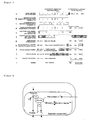


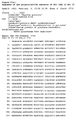
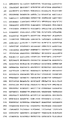



Classifications
-
- C—CHEMISTRY; METALLURGY
- C12—BIOCHEMISTRY; BEER; SPIRITS; WINE; VINEGAR; MICROBIOLOGY; ENZYMOLOGY; MUTATION OR GENETIC ENGINEERING
- C12N—MICROORGANISMS OR ENZYMES; COMPOSITIONS THEREOF; PROPAGATING, PRESERVING, OR MAINTAINING MICROORGANISMS; MUTATION OR GENETIC ENGINEERING; CULTURE MEDIA
- C12N9/00—Enzymes; Proenzymes; Compositions thereof; Processes for preparing, activating, inhibiting, separating or purifying enzymes
- C12N9/0004—Oxidoreductases (1.)
- C12N9/0008—Oxidoreductases (1.) acting on the aldehyde or oxo group of donors (1.2)
-
- A—HUMAN NECESSITIES
- A61—MEDICAL OR VETERINARY SCIENCE; HYGIENE
- A61P—SPECIFIC THERAPEUTIC ACTIVITY OF CHEMICAL COMPOUNDS OR MEDICINAL PREPARATIONS
- A61P33/00—Antiparasitic agents
-
- C—CHEMISTRY; METALLURGY
- C12—BIOCHEMISTRY; BEER; SPIRITS; WINE; VINEGAR; MICROBIOLOGY; ENZYMOLOGY; MUTATION OR GENETIC ENGINEERING
- C12N—MICROORGANISMS OR ENZYMES; COMPOSITIONS THEREOF; PROPAGATING, PRESERVING, OR MAINTAINING MICROORGANISMS; MUTATION OR GENETIC ENGINEERING; CULTURE MEDIA
- C12N15/00—Mutation or genetic engineering; DNA or RNA concerning genetic engineering, vectors, e.g. plasmids, or their isolation, preparation or purification; Use of hosts therefor
- C12N15/09—Recombinant DNA-technology
- C12N15/63—Introduction of foreign genetic material using vectors; Vectors; Use of hosts therefor; Regulation of expression
- C12N15/79—Vectors or expression systems specially adapted for eukaryotic hosts
- C12N15/82—Vectors or expression systems specially adapted for eukaryotic hosts for plant cells, e.g. plant artificial chromosomes (PACs)
- C12N15/8241—Phenotypically and genetically modified plants via recombinant DNA technology
- C12N15/8242—Phenotypically and genetically modified plants via recombinant DNA technology with non-agronomic quality (output) traits, e.g. for industrial processing; Value added, non-agronomic traits
- C12N15/8243—Phenotypically and genetically modified plants via recombinant DNA technology with non-agronomic quality (output) traits, e.g. for industrial processing; Value added, non-agronomic traits involving biosynthetic or metabolic pathways, i.e. metabolic engineering, e.g. nicotine, caffeine
-
- C—CHEMISTRY; METALLURGY
- C12—BIOCHEMISTRY; BEER; SPIRITS; WINE; VINEGAR; MICROBIOLOGY; ENZYMOLOGY; MUTATION OR GENETIC ENGINEERING
- C12N—MICROORGANISMS OR ENZYMES; COMPOSITIONS THEREOF; PROPAGATING, PRESERVING, OR MAINTAINING MICROORGANISMS; MUTATION OR GENETIC ENGINEERING; CULTURE MEDIA
- C12N15/00—Mutation or genetic engineering; DNA or RNA concerning genetic engineering, vectors, e.g. plasmids, or their isolation, preparation or purification; Use of hosts therefor
- C12N15/09—Recombinant DNA-technology
- C12N15/63—Introduction of foreign genetic material using vectors; Vectors; Use of hosts therefor; Regulation of expression
- C12N15/79—Vectors or expression systems specially adapted for eukaryotic hosts
- C12N15/82—Vectors or expression systems specially adapted for eukaryotic hosts for plant cells, e.g. plant artificial chromosomes (PACs)
- C12N15/8241—Phenotypically and genetically modified plants via recombinant DNA technology
- C12N15/8242—Phenotypically and genetically modified plants via recombinant DNA technology with non-agronomic quality (output) traits, e.g. for industrial processing; Value added, non-agronomic traits
- C12N15/8257—Phenotypically and genetically modified plants via recombinant DNA technology with non-agronomic quality (output) traits, e.g. for industrial processing; Value added, non-agronomic traits for the production of primary gene products, e.g. pharmaceutical products, interferon
- C12N15/8258—Phenotypically and genetically modified plants via recombinant DNA technology with non-agronomic quality (output) traits, e.g. for industrial processing; Value added, non-agronomic traits for the production of primary gene products, e.g. pharmaceutical products, interferon for the production of oral vaccines (antigens) or immunoglobulins
Definitions
- polynucleotides encoding Pyruvate:NADP+ oxidoreductases (PNO) as well as methods for obtaining the same. Furthermore, vectors comprising said polynucleotides are described, wherein the polynucleotides are operatively linked to expression control sequences allowing the expression in prokaryotic and/or eukaryotic host cells.
- polypeptides encoded by said polynucleotides, antibodies to said polypeptides and methods for their production are provided.
- transgenic plants, plant tissues, and plant cells containing the above described polynucleotides and vectors are described as well as the use of the mentioned polynucleotides, vectors, polypeptides, antibodies, and/or compounds identified by the method of the invention in the production of acetyl CoA metabolism products, e.g., fatty acids, carotenoids, isoprenoids, vitamins, lipids, (poly)saccharides, wax esters, and/or polyhydroxyalkanoates, and/or its metabolism products, in particular, steroid hormones, prostaglandin, cholesterol, triacylglycerols, bile acids and/or ketone bodies and pharmaceutical compositions.
- acetyl CoA metabolism products e.g., fatty acids, carotenoids, isoprenoids, vitamins, lipids, (poly)saccharides, wax esters, and/or polyhydroxyalkanoates, and/or its metabolism products, in particular, steroid hormones, pros
- Fine chemicals comprise, e.g., fatty acids, carotenoids, isoprenoids, vitamins, lipids, wax esters, (poly)saccharides, polyhydroxyalkanoates, steroid hormones, prostaglandin, cholesterol, triacylglycerols, bile acids and/or ketone bodies and/or cofactors.
- Fine chemicals can be produced in microorganisms through the large-scale culture of microorganisms developed to produce and secrete large quantities of one or more desired molecules.
- the production of fine chemicals can be most conveniently performed via the large scale production of plants developed to produce one of aforementioned fine chemicals.
- Particularly well suited plants for this purpose are oilseed plants containing high amounts of lipid compounds like rapeseed, canola, linseed, soybean and sunflower.
- other crop plants containing fatty acids, carotenoids, isoprenoids, vitamins, lipids, (poly)saccharides, wax esters and/or polyhydroxyalkanoates, and/ or its metabolism products, in particular, steroid hormones, prostaglandin, cholesterol, triacylglycerols, bile acids and/or ketone bodies are well suited as mentioned in the detailed description of this invention.
- steroid hormones, prostaglandin, cholesterol, triacylglycerols, bile acids and/or ketone bodies are well suited as mentioned in the detailed description of this invention.
- a number of mutant plants have been developed which produce an array of desirable lipids and fatty acids, car
- the production of fine chemicals by biological processes as, e.g. via the cultivation of microorganisms, cells or plants producing said fine chemicals, is limited by the often small concentrations of educts, e.g., acetyl CoA, for the production of said compounds.
- WO 00/00614 reports the overexpression of several enzymes in a cell, i.e., acetyl CoA synthetase, plastidic pyruvate dehydrogenase, ATP citrate lysase, pyruvate decarboxylase and aldehyde dehydrogenase to alter the acetyl CoA content in plants.
- WO 00/11199 describe compositions comprising nucleotide sequences encoding acetyl CoA synthetases for the increased biosynthesis of fatty acids and carotenoids in plants.
- the technical problem underlying the present invention is to provide alternative, preferably advantageous means and methods for the efficient biological production of fine chemicals, e.g., fatty acids, carotenoids, isoprenoids, vitamins, lipids, (poly)saccharides, wax esters and/or polyhydroxyalkanoates, and/or its metabolism products, in particular, e.g.
- fine chemicals e.g., fatty acids, carotenoids, isoprenoids, vitamins, lipids, (poly)saccharides, wax esters and/or polyhydroxyalkanoates, and/or its metabolism products, in particular, e.g.
- steroid hormones, prostaglandin, cholesterol, triacylglycerols, bile acids and/or ketone bodies which can minimize the expenses of such a production and to provide microorganisms, cells or plants which synthesize fine chemicals, in particular, fatty acids, carotenoids, isoprenoids, vitamins, lipids, (poly)saccharides, wax esters and/or polyhydroxyalkanoates, and/or its metabolism products, in particular, steroid hormones, prostaglandin, cholesterol, triacylglycerols, bile acids and/or ketone bodies in high amounts.
- the present invention relates to a polynucleotide comprising a nucleic acid molecule selected from the group consisting of:
- nucleic acid molecule(s) refers to a polymeric form of nucleotides of any length, either ribonucleotides or deoxyribonucleotides. This term refers only to the primary structure of the molecule.
- this term includes double- and single-stranded DNA, and RNA. It also includes known types of modifications, for example, methylation, "caps" substitution of one or more of the naturally occurring nucleotides with an analog.
- the DNA sequence of the invention comprises a coding sequence encoding the above defined polypeptide.
- a “coding sequence” is a nucleotide sequence which is transcribed into mRNA and/or translated into a polypeptide when placed under the control of appropriate regulatory sequences. The boundaries of the coding sequence are determined by a translation start codon at the 5'-terminus and a translation stop codon at the 3'-terminus.
- a coding sequence can include, but is not limited to mRNA, cDNA, recombinant nucleotide sequences or genomic DNA, while introns may be present as well under certain circumstances.
- hybridizing it is meant that such nucleic acid molecules hybridize under conventional hybridization conditions, preferably under stringent conditions such as described by, e.g., Sambrook (Molecular Cloning; A Laboratory Manual, 2nd Edition, Cold Spring Harbor Laboratory Press, Cold Spring Harbor, NY (1989)).
- stringent hybridization condition is hybridization at 4XSSC at 65°C, followed by a washing in 0.1XSSC at 65°C for one hour.
- an exemplary stringent hybridization condition is in 50 % formamide, 4XSSC at 42°C.
- PNO derived from other organisms may be encoded by other DNA sequences which hybridize to the sequences for Euglena gracilis under relaxed hybridization conditions and which code on expression for peptides having the ability to interact with PNOs. Further, some applications have to be performed at low stringency hybridisation conditions, without any consequences for the specificity of the hybridisation. For example, as described in the Example 2, a Southern blot analysis of total Euglena DNA was probed with a polynucleotide of the present invention further defined below (pFgPNO3) and washed at low stringency (55°C in 2xSSPE, 0,1% SDS). The hybridisation analysis revealed a simple pattern of only genes encoding Eugelna PNO ( Figure 1b).
- non-stringent hybridization conditions are 4XSSC at 50°C or hybridization with 30-40 % formamide at 42°C.
- Such molecules comprise those which are fragments, analogues or derivatives of the pyruvate:NADP+ oxidoreductase (PNO) of the invention and differ, for example, by way of amino acid and/or nucleotide deletion(s), insertion(s), substitution (s), addition(s) and/or recombination (s) or any other modification(s) known in the art either alone or in combination from the above-described amino acid sequences or their underlying nucleotide sequence(s).
- PNO pyruvate:NADP+ oxidoreductase
- the term "homology” means that the respective nucleic acid molecules or encoded proteins are functionally and/or structurally equivalent.
- the nucleic acid molecules that are homologous to the nucleic acid molecules described above and that are derivatives of said nucleic acid molecules are, for example, variations of said nucleic acid molecules which represent modifications having the same biological function, in particular encoding proteins with the same or substantially the same biological function. They may be naturally occurring variations, such as sequences from other plant varieties or species, or mutations. These mutations may occur naturally or may be obtained by mutagenesis techniques.
- the allelic variations may be naturally occurring allelic variants as well as synthetically produced or genetically engineered variants. Structurally equivalents can, for example, identified by testing the binding of said polypeptide to antibodies. Structurally equivalent have the similar immunological characteristic, e.g. comprise similar epitopes.
- fragment means a truncated sequence of the original sequence referred to.
- the truncated sequence can vary widely in length; the minimum size being a sequence of sufficient size to provide a sequence with at least a comparable function and/or activity of the original sequence referred to, while the maximum size is not critical. In some applications, the maximum size usually is not substantially greater than that required to provide the desired activity and/or function(s) of the original sequence.
- the truncated amino acid sequence will range from about 5 to about 60 amino acids in length. More typically, however, the sequence will be a maximum of about 50 amino acids in length, preferably a maximum of about 30 amino acids. It is usually desirable to select sequences of at least about 10, 12 or 15 amino acids, up to a maximum of about 20 or 25 amino acids.
- epitope relates to specific immunoreactive sites within an antigen, also known as antigenic determinates. These epitopes can be a linear array of monomers in a polymeric composition - such as amino acids in a protein - or consist of or comprise a more complex secondary or tertiary structure.
- immunogens i.e., substances capable of eliciting an immune response
- antigens are antigens; however, some antigen, such as haptens, are not immunogens but may be made immunogenic by coupling to a carrier molecule.
- antigen includes references to a substance to which an antibody can be generated and/or to which the antibody is specifically immunoreactive.
- one or several amino acids relates to at least one amino acid but not more than that number of amino acids which would result in a homology of below 60% identity.
- the identity is more than 70% or 80%, more preferred are 85%, 90% or 95%, even more preferred are 96%, 97%, 98%, or 99% identity.
- PNO or "PNO activity” relates to enzymatic activities of a polypeptide as described below or which can be determined as described in Example 5. Furthermore, polypeptides that are inactive in an assay as described in Example 5 but are recognized by an antibody specifically binding to PNOs, i.e., having one or more PNO epitopes, are also comprised under the term "PNO". In these cases activity refers to their immunological activity.
- polynucleotide and nucleic acid molecule also relate to “isolated” polynucleotides or nucleic acids molecules.
- An “isolated” nucleic acid molecule is one which is separated from other nucleic acid molecules which are present in the natural source of the nucleic acid.
- an “isolated” nucleic acid is free of sequences which naturally flank the nucleic acid (i.e., sequences located at the 5' and 3' ends of the nucleic acid) in the genomic DNA of the organism from which the nucleic acid is derived.
- the PNO polynucleotide can contain less than about 5 kb, 4kb, 3kb, 2kb, 1 kb, 0.5 kb or 0.1 kb of nucleotide sequences which naturally flank the nucleic acid molecule in genomic DNA of the cell from which the nucleic acid is derived (e.g., a Euglena cell).
- the polynucleotides of the present invention in particular an "isolated" nucleic acid molecule, such as a cDNA molecule, can be substantially free of other cellular material, or culture medium when produced by recombinant techniques, or chemical precursors or other chemicals when chemically synthesized.
- the polynucleotide of the present invention encoding PNO can, e.g., be expressed in a host cell, a plant cell, a plant tissue and/or a plant modulating the biosynthesis of acetyl CoA and, thus, of its metabolism products.
- PNO is so far an unique enzyme and, until now, it is only known to occur in E. gracilis.
- the evolutionary closest microorganisms to E. gracilis were determined and their relation to E. gracilis were mapped.
- the protein domains of the PFOs of said related organisms were analyzed, in particular, the reaction centers of different PFOs were compared to identify common structure characteristics.
- two evolutionary conservative domains of PFOs could be revealed. Primers hybridizing with polynucleotides encoding said conservative PFO domains were synthesized and put in an amplification reaction (PCR) with E. gracilis cDNA as template.
- PCR amplification reaction
- said amplification reaction with E. gracilis cDNA as template but with primers against PFO polynucleotides revealed an around 700bp PNO DNA fragment which could be isolated, sequenced and further used as hybridizytion probe for the cDNA library screening resulting in the first identification of the polypeptide and polynucleotide sequence of an PNO. Sequencing of the complete gene revealed that around 30% of the in Inui disclosed N-terminal PNO sequence was incorrect explaining the negative results of the first PNO identification attemps.
- the heterologous expression of the Euglena PNO gene is an alternative pathway for the production of acetyl-CoA in plant cells.
- this exogenous pathway is not controlled by endogenous regulation mechanisms present in plants.
- E. gracilis contains an oxygen-sensitive pyruvate:NADP + oxidoreductase (PNO), the key enzyme of wax ester fermentation (Inui et al. 1984b). Transfer of aerobically grown E. gracilis to anaerobic conditions causes a prompt synthesis of wax esters with a concomitant fall of the reserve polysaccharide paramylon (Inui et al. 1982).
- PNO oxygen-sensitive pyruvate:NADP + oxidoreductase
- This anaerobic wax ester formation is accompanied by a net synthesis of ATP by substrate level phosphorylation in glycolysis, thus allowing the organism to survive anaerobiosis up to 30 days (Buetow, 1989).
- the reverse change takes place; wax esters are rapidly decomposed while paramylon is synthesized (Inui et al. 1982).
- acetyl-CoA produced by PNO feeds oxidative phosphorylation via a modified Krebs cycle (Buetow, 1989).
- the polynucleotide provided in the present invention encoding the PNO of E. gracilis provides the unique possibility to synthesize acetyl-CoA from pyruvate in various specifically targeted organelles, e.g., of plant cells, in addition to acetyl-CoA formed by endogenous PDH during intermediary metabolism.
- Acetyl-CoA synthesis in higher plant plastids proceeds via a multi-subunit enzyme complex (PDH).
- PDH multi-subunit enzyme complex
- the clone for the unique single subunit PNO enzyme from E. gracilis possesses great potential for modifying metabolism of a host cell, e.g. a microorganism or a plant cell, by expressing PNO, for example, fused to an appropriate plastid-signal peptide that directs the PNO protein into the plastids.
- Acetyl CoA itself is the starting material for several biochemical pathways which all result in the biosynthesis of fine chemicals of high economical interest.
- acetyl CoA is the central educt for the biosynthesis of fatty acids, which then are further transformed to triacylglycerols, membrane lipids and prostaglandin.
- Fatty acids and fatty alkohols are, further, also metabolized to become moieties of wax esters.
- Isoprenoids are components synthesized by polymerization of series of isoprenes via prenyl transfer reactions.
- a few example of biological important isoprenoids are cholesterol, Ganglioside, mevalonate, farnesyl pyrophosphate, squalene, protosterol, etc.
- the carbon atoms of the isopentenyl pyrophosphate and dimethylallyl pyrophosphate for the synthesis of isoprenes originate in acetyl-CoA and acetoacetyl-CoA.
- Carotenoids can not be synthesized by humans, like most other animals. Main suppliers are fruits, vegetables and also rather indirect fungi, algae and bacteria.
- Carotenoids like all terpenoids are synthesized from hydroxymethylglutaryl-coenzyme A, which is first converted to mevalonic acid.
- One carotenoid produced in high quantities is beta-carotene.
- Prostaglandins comprise a family of compounds that be regarded as derivates of the hypothetical compound prostanic acid.
- acetyl CoA is a precursor for the biosynthesis of ketone bodies as well as of cholesterol. Cholesterol is further metabolized to bile acids and steroid hormones.
- acetyl CoA is the educt for biosynthesis of polymers such as polyhydroxyalkanoates.
- PHB poly-beta-D-hydroxybutric acid
- acetyl CoA is a precursor in the metabolism of vitamins, e.g. vitamin E.
- vitamins e.g. vitamin E.
- E. gracilis produce wax esters, mainly C28 esters with considerable amounts of saturated C26 and C27 esters but no unsaturated ones are formed.
- the biochemistry of all said compounds is well know to a person skilled in the art and is easily found in any biochemistry text book, e.g. Rawn, J.D., Biochemistry, Cambridge, 1983, Streyer, Biochemistry, New York, 1988, etc.
- the term 'fine chemical' includes molecules produced by an organism which have applications in various industries, such as, but not limited to, the pharmaceutical, agriculture, and cosmetics industries.
- Such compounds include isoprenoids, prostaglandin, tracylglycerols, cholesterol, polyhydroxyalkanoates, cofactors and enzymes, both proteinogenic and non-proteinogenic amino acids, purine and pyrimidine bases, nucleosides, and nucleotides (as described e.g. in Kuninaka, A. (1996) Nucleotides and related compounds, p. 561-612, in Biotechnology vol. 6, Rehm et al., eds.
- VCH Weinheim, and references contained therein
- lipids lipids, wax esters, both saturated and polyunsaturated fatty acids (e.g., arachidonic acid), diols (e.g., propane diol, and butane diol), carbohydrates, (e.g. (poly)saccharides or hyaluronic acid and trehalose), aromatic compounds (e.g., aromatic amines, vanillin, and indigo), vitamins, in particular vitamin E, and cofactors (as described in Ullmann's Encyclopedia of Industrial Chemistry, vol. A27, Vitamins, p. 443-613 (1996) VCH: Weinheim and references therein; and Ong, A.S., Niki, E. & Packer, L.
- seed storage lipids of higher plants are made of fatty acids, primarily of 16 to 18 carbon atoms. These fatty acids are located in the seed oils of various plant genera. Few plants, such as Cruciferae accumulate oils of C20 and C22. The production of said oils can be increased due to the expression of the polynucleotide of the present invention.
- vegetable oils e.g. with a high erucic acid level, are useful. These oils can be used as diesel fuel and as a material for an array of products, such as plastics, pharmaceuticals and lubricants. Accordingly, the term "lipids" as used in the present invention also relates to seed storage lipids and seed oil.
- lipid molecules are lipid molecules.
- Lipid synthesis may be divided into two parts: the synthesis of fatty acids and their attachment to sn-glycerol-3-phosphate, and the addition or modification of a polar head group.
- Typical lipids utilized in bacterial membranes include phospholipids, glycolipids, sphingolipids, and phosphoglycerides.
- Fatty acid synthesis begins with the conversion of acetyl CoA either to malonyl CoA by acetyl CoA carboxylase, or to acetyl-ACP by acetyltransacylase.
- Vitamins, cofactors, and nutraceuticals comprise a group of molecules which ability to synthesize higher animals have lost. These molecules are either bioactive substances themselves, or are precursors of biologically active substances which may serve as electron carriers or intermediates in a variety of metabolic pathways. Aside from their nutritive value, these compounds also have significant industrial value as coloring agents, antioxidants, and catalysts or other processing aids. (For an overview of the structure, activity, and industrial applications of these compounds, see, for example, Ullman's Encyclopedia of Industrial Chemistry, Vitamins vol. A27, p. 443-613, VCH: Weinheim, 1996.).
- cofactor includes nonproteinaceous compounds required for a normal enzymatic activity to occur. Such compounds may be organic or inorganic; the cofactor molecules of the invention are preferably organic.
- nutraceutical includes dietary supplements having health benefits in plants and animals, particularly humans. Examples of such molecules are vitamins, antioxidants, and also certain lipids (e.g., polyunsaturated fatty acids). The biosynthesis of these molecules in organisms capable of producing them, such as bacteria, has been largely characterized (Ullman's Encyclopedia of Industrial Chemistry, Vitamins vol. A27, p. 443-613, VCH: Weinheim, 1996; Michal, G.
- the present invention provides polynucleotides and polypeptides which are involved in the biosynthesis of acetyl CoA and, further, products of the metabolism of acetyl CoA, e.g., fatty acids, carotenoids, isoprenoids, wax esters, vitamins, lipids, (poly)saccharides and/or polyhydroxyalkanoates, and/or its metabolism products, in particular, steroid hormones, prostaglandin, cholesterol, triacylglycerols, bile acids and/or ketone bodies, and/or further cofactors and molecules well known to the persons skilled in art.
- fatty acids e.g., carotenoids, isoprenoids, wax esters, vitamins, lipids, (poly)saccharides and/or polyhydroxyalkanoates, and/or its metabolism products, in particular, steroid hormones, prostaglandin, cholesterol, triacylglycerols, bile acids and/or ketone bodies, and
- the molecules of the invention may be utilized in the modulation of production of fine chemicals, preferably said compounds, from microorganisms, such as Corynebacterium, ciliates, fungi, algae and plants like maize, wheat, rye, oat, triticale, rice, barley, soybean, peanut, cotton, Brassica species like rapeseed, canola and turnip rape, pepper, sunflower and tagetes, solanaceaous plants like potato, tobacco, eggplant, and tomato, Vicia species, pea, manihot, alfalfa, bushy plants (coffee, cacao, tea), Salix species, trees (oil palm, coconut) and perennial grasses and forage crops either directly (e.g., where overexpression or optimization of a fatty acid biosynthesis protein has a direct impact on the yield, production, and/or efficiency of production of the fatty acid from modified organisms), or may have an indirect impact which nonetheless results in an increase of yield, production, and/or efficiency of production of the desired compound or decrease of unde
- production or “productivity” are art-recognized and include the concentration of the fermentation product (for example fatty acids, carotenoids, (poly)saccharides, vitamins, isoprenoids, lipids, wax esters, and/or polymers like polyhydroxyalkanoates and/or its metabolism products or further desired fine chemical as mentioned herein) formed within a given time and a given fermentation volume (e.g., kg product per hour per liter) .
- concentration of the fermentation product for example fatty acids, carotenoids, (poly)saccharides, vitamins, isoprenoids, lipids, wax esters, and/or polymers like polyhydroxyalkanoates and/or its metabolism products or further desired fine chemical as mentioned herein
- efficiency of production includes the time required for a particular level of production to be achieved (for example, how long it takes for the cell to attain a particular rate of output of a said acetyl CoA metabolism products, in particular, fatty acids, carotenoids, (poly)saccharides, vitamins, isoprenoids, lipids, wax esters, polyhydroxyalkanoates etc.).
- yield or “product/carbon yield” is art-recognized and includes the efficiency of the conversion of the carbon source into the product (i.e. acetyl CoA, fatty acids, carotenoids, (poly)saccharides, vitamins, isoprenoids, lipids, wax esters, polyhydroxyalkanoates etc. and/or further compounds as defined above and which biosynthesis is based on said products). This is generally written as, for example, kg product per kg carbon source.
- the yield or production of the compound By increasing the yield or production of the compound, the quantity of recovered molecules, or of useful recovered molecules of that compound in a given amount of culture over a given amount of time is increased.
- biosynthesis (which is used synonymously for “synthesis” of “biological production” in cells, tissues plants, etc.) or a “biosynthetic pathway” are art-recognized and include the synthesis of a compound, preferably an organic compound, by a cell from intermediate compounds in what may be a multistep and highly regulated process.
- metabolism is art-recognized and includes the totality of the biochemical reactions that take place in an organism.
- the metabolism of a particular compound e.g., the metabolism of acetyl CoA, an fatty acid, hexose, lipid, isoprenoid, wax esteres, vitamin, polyhydroxyalkanoate etc.
- acetyl CoA an fatty acid, hexose, lipid, isoprenoid, wax esteres, vitamin, polyhydroxyalkanoate etc.
- the polypeptide of the invention comprises one of the nucleotide sequences shown in SEQ ID No:2.
- the sequence of SEQ ID No:2 corresponds to the Euglena gracilis PNO cDNAs of the invention.
- the polynucleotide of the invention comprises a nucleic acid molecule which is a complement of one of the nucleotide sequences of above mentioned polynucleotides or a portion thereof.
- a nucleic acid molecule which is complementary to one of the nucleotide sequences shown in SEQ ID No:2 is one which is sufficiently complementary to one of the nucleotide sequences shown in SEQ ID No:2 such that it can hybridize to one of the nucleotide sequences shown in SEQ ID No:2, thereby forming a stable duplex.
- the polynucleotide of the invention comprises a nucleotide sequence which is at least about 60%, preferably at least about 65-70%, more preferably at least about 70-80%, 80-90%, or 90-95%, and even more preferably at least about 95%, 96%, 97%, 98%, 99% or more homologous to a nucleotide sequence shown in SEQ ID No:2 A, or a portion thereof.
- the polynucleotide of the invention comprises a nucleotide sequence which hybridizes, e.g., hybridizes under stringent conditions as defined herein, to one of the nucleotide sequences shown in SEQ ID No:2, or a portion thereof.
- the polynucleotide of the invention can comprise only a portion of the coding region of one of the sequences in SEQ ID No:2, for example a fragment which can be used as a probe or primer or a fragment encoding a biologically active portion of an PNO.
- the nucleotide sequences determined from the cloning of the PNO gene from E. gracilis allows for the generation of probes and primers designed for use in identifying and/or cloning PNO homologues in other cell types and organisms.
- the probe/primer typically comprises substantially purified oligonucleotide.
- the oligonucleotide typically comprises a region of nucleotide sequence that hybridizes under stringent conditions to at least about 12, 15 preferably about 20 or 25, more preferably about 40, 50 or 75 consecutive nucleotides of a sense strand of one of the sequences set forth, e.g., in SEQ ID No. No:2, an anti-sense sequence of one of the sequences, e.g., set forth in SEQ ID No.: 2, or naturally occurring mutants thereof.
- Primers based on a nucleotide of invention can be used in PCR reactions to clone PNO homologues. Probes based on the PNO nucleotide sequences can be used to detect transcripts or genomic sequences encoding the same or homologous proteins.
- the probe can further comprise a label group attached thereto, e.g. the label group can be a radioisotope, a fluorescent compound, an enzyme, or an enzyme co-factor.
- a label group can be a radioisotope, a fluorescent compound, an enzyme, or an enzyme co-factor.
- Such probes can be used as a part of a genomic marker test kit for identifying cells which express an PNO, such as by measuring a level of an PNO-encoding nucleic acid molecule in a sample of cells, e.g., detecting PNO mRNA levels or determining whether a genomic PNO gene has been mutated or deleted.
- the polynucleotide of the invention encodes a polypeptide or portion thereof which includes an amino acid sequence which is sufficiently homologous to an amino acid sequence of SEQ ID No:1 such that the protein or portion thereof maintains the ability to participate in the synthesis of acetyl CoA, in particular a PNO activity as described in the examples in microorganisms or plants.
- the language "sufficiently homologous” refers to proteins or portions thereof which have amino acid sequences which include a minimum number of identical or equivalent (e.g., an amino acid residue which has a similar side chain as an amino acid residue in one of the sequences of the polypeptide of the present invention amino acid residues to an amino acid sequence of Seq.
- acetyl-CoA such that the protein or portion thereof is able to participate in the synthesis of acetyl-CoA in microorganisms or plants.
- PNO activity are also described herein.
- the function of an PNO contributes either directly or indirectly to the yield, production, and/or efficiency of production of acetyl CoA or products of pathways, wherein acetyl CoA is an educt, e.g., fatty acids, carotenoids, (poly)saccharides, vitamins, isoprenoids, lipids, wax esters, polyhydroxyalkanoate and/or one or more of said further products of their metabolism.
- acetyl CoA is an educt, e.g., fatty acids, carotenoids, (poly)saccharides, vitamins, isoprenoids, lipids, wax esters, polyhydroxyalkanoate and/or one or more of said further products of their metabolism.
- the protein is at least about 60-65%, preferably at least about 66-70%, and more preferably at least about 70-80%, 80-90%, 90-95%, and most preferably at least about 96%, 97%, 98%, 99% or more homologous to an entire amino acid sequence of SEQ ID No:2.
- Portions of proteins encoded by the PNO polynucleotide of the invention are preferably biologically active portions of one of the PNO.
- biologically active portion of PNO is intended to include a portion, e.g., a domain/motif, that participates in the metabolism of acetyl-CoA or has an immunological activity such that it is binds to an antibody binding specifially to PNO, e.g., it has an activity as set forth in teh Examples.
- an assay of enzymatic activity may be performed. Such assay methods are well known to those skilled in the art, as detailed in the Examples.
- Additional nucleic acid fragments encoding biologically active portions of an PNO can be prepared by isolating a portion of one of the sequences in SEQ ID No:2, expressing the encoded portion of the PNO or peptide (e.g., by recombinant expression in vitro) and assessing the activity of the encoded portion of the PNO or peptide.
- the invention further encompasses polynucleotides that differ from one of the nucleotide sequences shown in SEQ ID No:2 (and portions thereof) due to degeneracy of the genetic code and thus encode a PNO as that encoded by the nucleotide sequences shown in SEQ ID No:2. Further the polynucleotide of the invention has a nucleotide sequence encoding a protein having an amino acid sequence shown in SEQ ID No:1. In a still further embodiment, the polynucleotide of the invention encodes a full length E. gracilis protein which is substantially homologous to an amino acid sequence of SEQ ID No:1.
- DNA sequence polymorphisms that lead to changes in the amino acid sequences may exist within a population (e.g., the E. gracilis population).
- Such genetic polymorphism in the PNO gene may exist among individuals within a population due to natural variation.
- the terms “gene” and “recombinant gene” refer to nucleic acid molecules comprising an open reading frame encoding an PNO, preferably a E. gracilis PNO. Such natural variations can typically result in 1-5% variance in the nucleotide sequence of the PNO gene. Any and all such nucleotide variations and resulting amino acid polymorphisms in PNO that are the result of natural variation and that do not alter the functional activity of PNO are intended to be within the scope of the invention.
- Polynucleotides corresponding to natural variants and non-E. gracilis homologues of the PNO cDNA of the invention can be isolated based on their homology to E. gracilis PNO polynucleotides disclosed herein using the polynucleotide of the invention, or a portion thereof, as a hybridization probe according to standard hybridization techniques under stringent hybridization conditions.
- an polynucleotide of the invention is at least 15 nucleotides in length. Preferably it hybridizes under stringent conditions to the nucleic acid molecule comprising a nucleotide sequence of the polynucleotide of the present invention, e.g. SEQ ID No:2.
- the nucleic acid is at least 20, 30, 50, 100, 250 or more nucleotides in length.
- hybridizes under stringent conditions is defined above and is intended to describe conditions for hybridization and washing under which nucleotide sequences at least 60% identical to each other typically remain hybridized to each other.
- the conditions are such that sequences at least about 65% or 70%, more preferably at least about 75% or 80%, and even more preferably at least about 85%, 90% or 95% or more identical to each other typically remain hybridized to each other.
- polynucleotide of the invention that hybridizes under stringent conditions to a sequence of SEQ ID No:2 corresponds to a naturally-occurring nucleic acid molecule.
- a "naturally-occurring" nucleic acid molecule refers to an RNA or DNA molecule having a nucleotide sequence that occurs in nature (e.g., encodes a natural protein).
- the polynucleotide encodes a natural E. gracilis PNO.
- non-essential amino acid residue is a residue that can be altered from the wild-type sequence of one of the PNO without altering the activity of said PNO, whereas an "essential" amino acid residue is required for PNO activity.
- Other amino acid residues e.g., those that are not conserved or only semi-conserved in the domain having PNO activity) may not be essential for activity and thus are likely to be amenable to alteration without altering PNO activity.
- the invention relates to polynucleotides encoding PNO that contain changes in amino acid residues that are not essential for PNO activity.
- PNOs differ in amino acid sequence from a sequence contained in SEQ ID No:1 yet retain the PNO activity described herein.
- the polynucleotide can comprise a nucleotide sequence encoding a polypeptide, wherein the polypeptide comprises an amino acid sequence at least about 60% identical to an amino acid sequence of SEQ ID No:1 and is capable of participation in the synthesis of acetyl-CoA.
- the protein encoded by the nucleic acid molecule is at least about 60-65% identical to the sequence in SEQ ID No:1, more preferably at least about 60-70% identical to one of the sequences in SEQ ID No:1, even more preferably at least about 70-80%, 80-90%, 90-95% homologous to the sequence in SEQ ID No:1, and most preferably at least about 96%, 97%, 98%, or 99% identical to the sequence in SEQ ID No:1.
- sequences are aligned for optimal comparison purposes (e.g., gaps can be introduced in the sequence of one protein or nucleic acid for optimal alignment with the other protein or nucleic acid).
- amino acid residues or nucleotides at corresponding amino acid positions or nucleotide positions are then compared.
- a position in one sequence e.g., one of the sequences of SEQ ID No:1 or 2
- the molecules are homologous at that position (i.e., as used herein amino acid or nucleic acid "homology” is equivalent to amino acid or nucleic acid "identity").
- the homology can be e.g. determined by computer programs as e.g. Blast 2.0.
- Fig. 6 shown the results of a blast search.
- a nucleic acid molecule encoding an PNO homologous to a protein sequence of SEQ ID No:1 can be created by introducing one or more nucleotide substitutions, additions or deletions into a nucleotide sequence of the polynucleotide of the present invention, in particular of SEQ ID No: 2 such that one or more amino acid substitutions, additions or deletions are introduced into the encoded protein. Mutations can be introduced into the sequences of, e.g., SEQ ID No:2 by standard techniques, such as site-directed mutagenesis and PCR-mediated mutagenesis. Preferably, conservative amino acid substitutions are made at one or more predicted non-essential amino acid residues.
- a “conservative amino acid substitution” is one in which the amino acid residue is replaced with an amino acid residue having a similar side chain.
- Families of amino acid residues having similar side chains have been defined in the art. These families include amino acids with basic side chains (e.g., lysine, arginine, histidine), acidic side chains (e.g., aspartic acid, glutamic acid), uncharged polar side chains (e.g., glycine, asparagine, glutamine, serine, threonine, tyrosine, cysteine), nonpolar side chains (e.g., alanine, valine, leucine, isoleucine, proline, phenylalanine, methionine, tryptophan), beta-branched side chains (e.g., threonine, valine, isoleucine) and aromatic side chains (e.g., tyrosine, phenylalanine, tryptophan, histidine).
- a predicted nonessential amino acid residue in an PNO is preferably replaced with another amino acid residue from the same family.
- mutations can be introduced randomly along all or part of an PNO coding sequence, such as by saturation mutagenesis, and the resultant mutants can be screened for an PNO activity described herein to identify mutants that retain PNO activity.
- the encoded protein can be expressed recombinantly and the activity of the protein can be determined using, for example, assays described herein (see Examples).
- the polynucleotide of the present invention is DNA or RNA.
- a polynucleotide of the present invention e.g., a nucleic acid molecule having a nucleotide sequence of Seq ID NO: 2, or a portion thereof, can be isolated using standard molecular biology techniques and the sequence information provided herein.
- PNO cDNA can be isolated from a library using all or portion of one of the sequences of the polynucleotide of the present invention as a hybridization probe and standard hybridization techniques (e.g., as described in Sambrook et al., Molecular Cloning: A Laboratory Manual. 2nd, ed., Cold Spring Harbor Laboratory, Cold Spring Harbor Laboratory Press, Cold Spring Harbor, NY, 1989).
- a polynucleotide encompassing all or a portion of one of the sequences of the polynucleotide of the present invention can be isolated by the polymerase chain reaction using oligonucleotide primers designed based upon this sequence (e.g., a nucleic acid molecule encompassing all or a portion of one of the sequences of polynucleotide of the present invention can be isolated by the polymerase chain reaction using oligonucleotide primers, e.g. of SEQ ID No:3 or 4, designed based upon this same sequence of polynucleotide of the present invention.
- oligonucleotide primers e.g. of SEQ ID No:3 or 4 designed based upon this same sequence of polynucleotide of the present invention.
- mRNA can be isolated from cells, e.g.
- Euglena e.g., by the guanidinium-thiocyanate extraction procedure of Chirgwin et al. (1979) Biochemistry 18: 5294-5299
- cDNA can be prepared using reverse transcriptase (e.g., Moloney MLV reverse transcriptase, available from Gibco/BRL, Bethesda, MD; or AMV reverse transcriptase, available from Seikagaku America, Inc., St. Russia, FL).
- reverse transcriptase e.g., Moloney MLV reverse transcriptase, available from Gibco/BRL, Bethesda, MD; or AMV reverse transcriptase, available from Seikagaku America, Inc., St. Russia, FL.
- Synthetic oligonucleotide primers for polymerase chain reaction amplification can be designed based upon one of the nucleotide sequences shown in SEQ ID 100:2.
- a polynucleotide of the invention can be amplified using cDNA or, alternatively, genomic DNA, as a template and appropriate oligonucleotide primers according to standard PCR amplification techniques.
- the polynucleotide so amplified can be cloned into an appropriate vector and characterized by DNA sequence analysis.
- oligonucleotides corresponding to an PNO nucleotide sequence can be prepared by standard synthetic techniques, e.g., using an automated DNA synthesizer.
- polynucleotide is operatively linked to a nucleic acid sequence encoding a signal sequence.
- nucleic acid molecule according to the invention is expressed in a cell it is in principle possible to modify the coding sequence in such a way that the protein is located in any desired compartment of the plant cell.
- these include the nucleus, endoplasmatic reticulum, the vacuole, the mitochondria, the plastids like amyloplasts, chloroplasts, chromoplasts, the apoplast, the cytoplasm, extracellular space, oil bodies, peroxisomes and other compartments of plant cells (for review see Kermode, Crit. Rev. Plant Sci. 15, 4 (1996), 285-423 and references cited therin).
- E. gracilis PNO bears a 37 amino acid long N-terminal transit peptide for the import into the mitochondria.
- polypeptide sequence is indicated in Figure 1.
- said PNO mitochondria transit signal can be mutated or deleted (which will be performed conveniently at the polynucleotide level).
- the polynucleotide can then operatively be fused to an appropriate polynucleotide, e.g., a vector, encoding a signal for the transport into the desirable compartment.
- the acetyl-CoA concentration can be altered in the cytoplasm of the cell due to the expression of PNO.
- important acetyl CoA based products e.g., fatty acids, carotenoids, (poly)saccharides, vitamins, isoprenoids, lipids, wax esters, polyhydroxyalkanoates and/or their above defined metabolism compounds, take place in specialized cell organelles, i.e. plastids, corresponding signal sequences are introduced into the polynucleotide to direct the protein of the invention in the desirable compartment.
- the acetyl CoA concentration is advantageously increased in such a organelle or plastid due to the expression of the polynucleotide of the present invention. Consequently, the increased amounts of acetyl CoA are then mainly metabolized to fatty acids, carotenoids, (poly)saccharides, vitamins, isoprenoids, lipids, wax esters, polyhydroxyalkanoates and/or products, which are based on the metabolism of said compounds as defined above.
- the increase of acetyl CoA in a cellular compartment might be achieved be coexpressing the polypeptide together with molecules involved in the transport of acetyl CoA into such a compartment, e.g. carnitine-acetyl CoA transferase.
- the increase of acetyl CoA in plastids is achieved by expressing a PNO encoded by the polynucleotide of the present invention comprising further an appropriate signal sequence.
- the present invention relates to a polynucleotide wherein the signal sequence is a plastidal transit signal sequence.
- the mitochondrial PNO transit signal is replaced by a plastidal transit signal sequence.
- a plastidal transit signal sequence For example, for the N-terminal basic amino acids of Arabidipsis PRPP-amidotransferase can be used as plastidal transit signal (Heijne, Eur. J. Biochem. 180, 1989, 535 - 545, Kermode, Crit. Rev. Plant. Sci. 15, 1996, 285 - 423).
- a sequence encoding such a signal sequence can be cloned in to a plant transformation vector as the vector of the present invention replacing, e.g. the existing signal sequence, i.e., the mitochondrial transit peptide.
- the present invention relates to a method for making a recombinant vector comprising inserting a polynucleotide of the invention into a vector.
- the present invention relates to a recombinant vector containing the polynucleotide of the invention or produced by said method of the invention.
- vector refers to a nucleic acid molecule capable of transporting a polynucleotide to which it has been linked.
- plasmid refers to a circular double stranded DNA loop into which additional DNA segments can be ligated.
- viral vector Another type of vector is a viral vector, wherein additional DNA or PNA segments can be ligated into the viral genome.
- Certain vectors are capable of autonomous replication in a host cell into which they are introduced (e.g., bacterial vectors having a bacterial origin of replication and episomal mammalian vectors).
- vectors e.g., non-episomal mammalian vectors
- Other vectors are integrated into the genome of a host cell upon introduction into the host cell, and thereby are replicated along with the host genome.
- certain vectors are capable of directing the expression of genes to which they are operatively linked.
- Such vectors are referred to herein as "expression vectors".
- expression vectors of utility in recombinant DNA techniques are often in the form of plasmids.
- plasmid and vector can be used interchangeably as the plasmid is the most commonly used form of vector.
- the invention is intended to include such other forms of expression vectors, such as viral vectors (e.g., replication defective retroviruses, adenoviruses and adeno-associated viruses), which serve equivalent functions.
- the present invention also relates to cosmids, viruses, bacteriophages and other vectors used conventionally in genetic engineering that contain a nucleic acid molecule according to the invention.
- Methods which are well known to those skilled in the art can be used to construct various plasmids and vectors; see, for example, the techniques described in Sambrook, Molecular Cloning A Laboratory Manual, Cold Spring Harbor Laboratory (1989) N.Y. and Ausubel, Current Protocols in Molecular Biology, Green Publishing Associates and Wiley Interscience, N.Y. (1989).
- the nucleic acid molecules and vectors of the invention can be reconstituted into liposomes for delivery to target cells.
- control sequences In an other preferred embodiment to present invention relates to a vector in which the polynucleotide of the present invention is operatively linked to expression control sequences allowing expression in prokaryotic or eukaryotic host cells.
- control sequences generally include promoter, ribosomal binding site, and terminators.
- control sequences In eukaryotes, generally control sequences include promoters, terminators and, in some instances, enhancers, transactivators; or transcription factors.
- control sequence is intended to include, at a minimum, components the presence of which are necessary for expression, and may also include additional advantageous components.
- operably linked refers to a juxtaposition wherein the components so described are in a relationship permitting them to function in their intended manner.
- a control sequence "operably linked" to a coding sequence is ligated in such a way that expression of the coding sequence is achieved under conditions compatible with the control sequences.
- the control sequence is a promoter, it is obvious for a skilled person that double-stranded nucleic acid is used.
- Regulatory sequences include those which direct constitutive expression of a nucleotide sequence in many types of host cell and those which direct expression of the nucleotide sequence only in certain host cells or under certain conditions.
- the design of the expression vector can depend on such factors as the choice of the host cell to be transformed, the level of expression of protein desired, etc.
- the expression vectors of the invention can be introduced into host cells to thereby produce proteins or peptides, including fusion proteins or peptides, encoded by polynucleotides as described herein.
- the recombinant expression vectors of the invention can be designed for expression of PNO in prokaryotic or eukaryotic cells.
- genes encoding the polynucleotide of the invention can be expressed in bacterial cells such as E. coli, C. glutamicum, insect cells (using baculovirus expression vectors), yeast and other fungal cells (see Romanos, M.A. et al. (1992) Foreign gene expression in yeast: a review, Yeast 8: 423-488; van den Hondel, C.A.M.J.J. et al. (1991) Heterologous gene expression in filamentous fungi, in: More Gene Manipulations in Fungi, J.W. Bennet & L.L.
- telomeres Suitable host cells are discussed further in Goeddel, Gene Expression Technology: Methods in Enzymology 185, Academic Press, San Diego, CA (1990).
- the recombinant expression vector can be transcribed and translated in vitro, for example using T7 promoter regulatory sequences and T7 polymerase.
- Fusion vectors add a number of amino acids to a protein encoded therein, usually to the amino terminus of the recombinant protein but also to the C-terminus or fused within suitable regions in the proteins.
- Such fusion vectors typically serve three purposes: 1) to increase expression of recombinant protein; 2) to increase the solubility of the recombinant protein; and 3) to aid in the purification of the recombinant protein by acting as a ligand in affinity purification.
- the fusion vector can also encode for additional proteins, which expression supports an increase of metabolic products of acetyl CoA in a cell, for example transporters, which provide an increase of precursors in a cell or a compartment of a cell or which transport the product of a metabolic pathway based on acetyl CoA.
- transporters which provide an increase of precursors in a cell or a compartment of a cell or which transport the product of a metabolic pathway based on acetyl CoA.
- Other enzymes are well know to a person skilled in the art and include enlongases, carboxylases, decarboxylases, synthases, synthetases, dehydrogenases etc., e.g. involved in plant fatty acid biosynthesis, desaturation, lipid metabolism and membrane transport of lipoic compounds, beta-oxidation, fatty acid modification, etc.
- a proteolytic cleavage site is introduced at the junction of the fusion moiety and the recombinant protein to enable separation of the recombinant protein from the fusion moiety subsequent to purification of the fusion protein.
- enzymes, and their cognate recognition sequences include Factor Xa, thrombin and enterokinase.
- Typical fusion expression vectors include pGEX (Pharmacia Biotech Inc; Smith, D.B. and Johnson, K.S. (1988) Gene 67:31-40), pMAL (New England Biolabs, Beverly, MA) and pRIT5 (Pharmacia, Piscataway, NJ) which fuse glutathione S-transferase (GST), maltose E binding protein, or protein A, respectively, to the target recombinant protein.
- GST glutathione S-transferase
- the coding sequence of the polypeptide encoded by the polynucleotide of the present invention is cloned into a pGEX expression vector to create a vector encoding a fusion protein comprising, from the N-terminus to the C-terminus, GST-thrombin cleavage site-X protein.
- the fusion protein can be purified by affinity chromatography using glutathione-agarose resin. E.g. recombinant PNO unfused to GST can be recovered by cleavage of the fusion protein with thrombin.
- Suitable inducible non-fusion E. coli expression vectors include pTrc (Amann et al., (1988) Gene 69:301-315) and pET 11d (Studier et al., Gene Expression Technology: Methods in Enzymology 185, Academic Press, San Diego, California (1990) 60-89).
- Target gene expression from the pTrc vector relies on host RNA polymerase transcription from a hybrid trp-lac fusion promoter.
- Target gene expression from the pET 11d vector relies on transcription from a T7 gn10-lac fusion promoter mediated by a coexpressed viral RNA polymerase (T7 gnl). This viral polymerase is supplied by host strains BL21(DE3) or HMS174(DE3) from a resident ⁇ prophage harboring a T7 gn1 gene under the transcriptional control of the lacUV 5 promoter.
- One strategy to maximize recombinant protein expression is to express the protein in a host bacteria with an impaired capacity to proteolytically cleave the recombinant protein (Gottesman, S., Gene Expression Technology: Methods in Enzymology 185, Academic Press, San Diego, California (1990) 119-128).
- Another strategy is to alter the nucleic acid sequence of the nucleic acid to be inserted into an expression vector so that the individual codons for each amino acid are those preferentially utilized in the bacterium chosen for expression, such as E. coli or C. glutamicum (Wada et al. (1992) Nucleic Acids Res. 20:2111-2118).
- Such alteration of nucleic acid sequences of the invention can be carried out by standard DNA synthesis techniques.
- the PNO vector can be a yeast expression vector.
- yeast expression vectors for expression in yeast S. cerivisae include pYepSec1 (Baldari, et al., (1987) Embo J. 6:229-234), pMFa (Kurjan and Herskowitz, (1982) Cell 30:933-943), pJRY88 (Schultz et al., (1987) Gene 54:113-123), and pYES2 (Invitrogen Corporation, San Diego, CA).
- Vectors and methods for the construction of vectors appropriate for use in other fungi, such as the filamentous fungi include those detailed in: van den Hondel, C.A.M.J.J. & Punt, P.J.
- the polynucleotide of the invention can be introduced in insect cells using baculovirus expression vectors.
- Baculovirus vectors available for expression of proteins in cultured insect cells include the pAc series (Smith et al. (1983) Mol. Cell Biol. 3:2156-2165) and the pVL series (Lucklow and Summers (1989) Virology 170:31-39).
- the polynucleotide of the invention is introduced in mammalian cells using a mammalian expression vector.
- mammalian expression vectors include pCDM8 (Seed, B. (1987) Nature 329:840) and pMT2PC (Kaufman et al. (1987) EMBO J. 6:187-195).
- the expression vector's control functions are often provided by viral regulatory elements.
- commonly used promoters are derived from polyoma, Adenovirus 2, cytomegalovirus and Simian Virus 40.
- suitable expression systems for both prokaryotic and eukaryotic cells see chapters 16 and 17 of Sambrook, J., Fritsh, E. F., and Maniatis, T. Molecular Cloning: A Laboratory Manual. 2nd, ed., Cold Spring Harbor Laboratory, Cold Spring Harbor Laboratory Press, Cold Spring Harbor, NY, 1989.
- the recombinant mammalian expression vector can be capable of directing expression of the nucleic acid preferentially in a particular cell type (e.g., tissue-specific regulatory elements are used to express the nucleic acid).
- tissue-specific regulatory elements are known in the art.
- suitable tissue-specific promoters include the albumin promoter (liver-specific; Pinkert et al. (1987) Genes Dev. 1:268-277), lymphoid-specific promoters (Calame and Eaton (1988) Adv. Immunol. 43:235-275), in particular promoters of T cell receptors (Winoto and Baltimore (1989) EMBO J. 8:729-733) and immunoglobulins (Banerji et al.
- Neuron-specific promoters e.g., the neurofilament promoter; Byrne and Ruddle (1989) PNAS 86:5473-5477
- pancreas-specific promoters e.g., milk whey promoter; U.S. Patent No. 4,873,316 and European Application Publication No. 264,166.
- promoters are also encompassed, for example the murine hox promoters (Kessel and Gruss (1990) Science 249:374-379) and the fetoprotein promoter (Campes and Tilghman (1989) Genes Dev. 3:537-546).
- the polynucleotide of the present invention is operatively linked to a plant expression control sequences, e.g. expression cassettes a plant expression cassette preferably contains regulatory sequences capable to drive gene expression in plants cells and which are operably linked so that each sequence can fulfil its function such as termination of transcription such as polyadenylation signals.
- Preferred polyadenylation signals are those originating from Agrobacterium tumefaciens t-DNA such as the gene 3 known as octopine synthase of the Ti-plasmid pTiACH5 (Gielen et al., EMBO J. 3 (1984), 835 ff) or functional equivalents therof but also all other terminators functionally active in plants are suitable.
- plant expression cassette preferably contains other operably linked sequences like translational enhancers such as the overdrive-sequence containing the 5'-untranlated leader sequence from tobacco mosaic virus enhancing the protein per RNA ratio (Gallie et al 1987, Nucl. Acids Research 15:8693-8711).
- the polynucleotide can be operably linked to an appropriate promoter conferring gene expression in a timely, cell or tissue specific manner.
- promoters driving constitutitive expression (Benfey et al., EMBO J. 8 (1989) 2195-2202) like those derived from plant viruses like the 35S CAMV (Franck et al., Cell 21(1980) 285-294), the 19S CaMV (see also US5352605 and WO8402913) or plant promoters like those from Rubisco small subunit described in US4962028.
- Plant gene expression can also be facilitated via a chemically inducible promoter (for rewiew see Gatz 1997, Annu. Rev. Plant Physiol. Plant Mol. Biol., 48:89-108).
- Chemically inducible promoters are especially suitable if gene expression is wanted to occur in a time specific manner. Examples for such promoters are a salicylic acid inducible promoter (WO 95/19443), a tetracycline inducible promoter (Gatz et al., (1992) Plant J. 2, 397-404) and an ethanol inducible promoter (WO 93/21334).
- promoters responding to biotic or abiotic stress conditions are suitable promoters such as the pathogen inducible PRP1-gene promoter (Ward et al., Plant. Mol. Biol. 22 (1993), 361-366), the heat inducible hsp80-promoter from tomato (US5187267), cold inducible alpha-amylase promoter from potato (WO9612814) or the wound-inducible pinII-promoter (EP375091).
- promoters are preferred which confer gene expression in tissues and organs where lipid and oil biosynthesis occurs in seed cells such as cells of the endosperm and the developing embryo.
- Suitable promoters are the napin-gene promoter from rapeseed (US5608152), the USP-promoter from Vicia faba (Baeumlein et al., Mol Gen Genet, 1991, 225 (3):459-67), the oleosin-promoter from Arabidopsis (WO9845461), the phaseolin-promoter from Phaseolus vulgaris (US5504200), the Bce4-promoter from Brassica (WO9113980) or the legumin B4 promoter (LeB4; Baeumlein et al., 1992, Plant Journal, 2 (2):233-9) as well as promoters conferring seed specific expression in monocot plants like maize, barley, wheat, rye, rice etc.
- Suitable promoters to note are the lpt2 or 1pt1-gene promoter from barley (WO9515389 and WO9523230) or those desribed in WO9916890 (promoters from the barley hordein-gene, the rice glutelin gene, the rice oryzin gene, the rice prolamin gene, the wheat gliadin gene, wheat glutelin gene, the maize zein gene, the oat glutelin gene, the Sorghum kasirin-gene, the rye secalin gene).
- promoters that confer plastid-specific gene expression as plastids are the compartment where precursors and some end products of lipid biosynthesis are synthesized.
- Suitable promoters such as the viral RNA-polymerase promoter are described in WO9516783 and WO9706250 and the clpP-promoter from Arabidopsis described in WO9946394.
- the polynucleotide of the invention can be cloned into the expression vector in an antisense orientation. That is, the DNA molecule is operatively linked to a regulatory sequence in a manner which allows for expression (by transcription of the DNA molecule) of an RNA molecule which is antisense to PNO mRNA. Regulatory sequences operatively linked to a nucleic acid cloned in the antisense orientation can be chosen which direct the continuous expression of the antisense RNA molecule in a variety of cell types, for instance viral promoters and/or enhancers, or regulatory sequences can be chosen which direct constitutive, tissue specific or cell type specific expression of antisense RNA.
- the antisense expression vector can be in the form of a recombinant plasmid, phagemid or attenuated virus in which antisense nucleic acid molecules are produced under the control of a high efficiency regulatory region, the activity of which can be determined by the cell type into which the vector is introduced.
- a high efficiency regulatory region the activity of which can be determined by the cell type into which the vector is introduced.
- the present invention relates to a method of making a recombinant host cell comprising introducing the vector or the polynucleotide of the present invention into a host cell.
- Vector DNA can be introduced into prokaryotic or eukaryotic cells via conventional transformation or transfection techniques.
- transformation and “transfection”, conjugation and transduction are intended to refer to a variety of art-recognized techniques for introducing foreign nucleic acid (e.g., DNA) into a host cell, including calcium phosphate or calcium chloride co-precipitation, DEAE-dextran-mediated transfection, lipofection, natural competence, chemical-mediated transfer, or electroporation.
- Suitable methods for transforming or transfecting host cells including plant cells can be found in Sambrook, et al. ( Molecular Cloning: A Laboratory Manual.
- a gene that encodes a selectable marker (e.g., resistance to antibiotics) is generally introduced into the host cells along with the gene of interest.
- selectable markers include those which confer resistance to drugs, such as G418, hygromycin and methotrexate or in plants that confer resistance towards a herbicide such as glyphosate or glufosinate.
- Nucleic acid encoding a selectable marker can be introduced into a host cell on the same vector as that encoding the polypeptide of the present invention or can be introduced on a separate vector. Cells stably transfected with the introduced nucleic acid can be identified by, for example, drug selection (e.g., cells that have incorporated the selectable marker gene will survive, while the other cells die).
- a vector which contains at least a portion of the polynucleotide of the present invention into which a deletion, addition or substitution has been introduced to thereby alter, e.g., functionally disrupt, the PNO gene.
- this PNO gene is a E. gracilis PNO gene, but it can be a homologue from a related or different source.
- the vector is designed such that, upon homologous recombination, the endogenous PNO gene is functionally disrupted (i.e., no longer encodes a functional protein; also referred to as a knock-out vector).
- the vector can be designed such that, upon homologous recombination, the endogenous PNO gene is mutated or otherwise altered but still encodes functional protein (e.g., the upstream regulatory region can be altered to thereby alter the expression of the endogenous PNO).
- DNA-RNA hybrids can be used known as chimeraplasty known from Cole-Strauss et al. 1999, Nucleic Acids Research 27(5):1323-1330 and Kmiec Gene therapy. 19999, American Scientist. 87(3):240-247.
- the vector is introduced into a cell and cells in which the introduced polynucleotide gene has homologously recombined with the endogenous PNO gene are selected, using art-known techniques.
- Further host cells can be produced which contain selection systems which allow for regulated expression of the introduced gene.
- selection systems which allow for regulated expression of the introduced gene.
- inclusion of the polynucleotide of the invention on a vector placing it under control of the lac operon permits expression of the polynucleotide only in the presence of IPTG.
- Such regulatory systems are well known in the art.
- the introduced nucleic acid molecule is foreign to the host cell.
- nucleic acid molecule is either heterologous with, respect to the host cell, this means derived from a cell or organism with a different genomic background, or is homologous with respect to the host cell but located in a different genomic environment than the naturally occurring counterpart of said nucleic acid molecule. This means that, if the nucleic acid molecule is homologous with respect to the host cell, it is not located in its natural location in the genome of said host cell, in particular it is surrounded by different genes. In this case the nucleic acid molecule may be either under the control of its own promoter or under the control of a heterologous promoter.
- the vector or nucleic acid molecule according to the invention which is present in the host cell may either be integrated into the genome of the host cell or it may be maintained in some form extrachromosomally.
- the nucleic acid molecule of the invention can be used to restore or create a mutant gene via homologous recombination (Paszkowski (ed.), Homologous Recombination and Gene Silencing in Plants. Kluwer Academic Publishers (1994)).
- the present invention relates to a host cell genetically engineered with the polynucleotide of the invention or the vector of the invention.
- host cell and "recombinant host cell” are used interchangeably herein. It is understood that such terms refer not only to the particular subject cell but to the progeny or potential progeny of such a cell. Because certain modifications may occur in succeeding generations due to either mutation or environmental influences, such progeny may not, in fact, be identical to the parent cell, but are still included within the scope of the term as used herein.
- an polynucleotide of the present invention can be introduced in bacterial cells such as insect cells, fungal cells or mammalian cells (such as Chinese hamster ovary cells (CHO) or COS cells), algae, ciliates, plant cells, fungi or other microorganims like C. glutamicum .
- bacterial cells such as insect cells, fungal cells or mammalian cells (such as Chinese hamster ovary cells (CHO) or COS cells), algae, ciliates, plant cells, fungi or other microorganims like C. glutamicum .
- Other suitable host cells are known to those skilled in the art.
- E. coli, baculovirus, Agrobacterium or fungal cells are, for example, those of the genus Saccharomyces, e.g. those of the species S. cerevisiae.
- the host cell can also be transformed such that further enzymes and proteins are (over)expressed which expression supports an increase of acetyl CoA or of metabolic products of acetyl CoA in a cell, for example transporters, which provide an increase of precursors in a cell or a compartment of a cell or which transport the product of a metabolic pathway based on acetyl CoA.
- further enzymes and proteins are (over)expressed which expression supports an increase of acetyl CoA or of metabolic products of acetyl CoA in a cell, for example transporters, which provide an increase of precursors in a cell or a compartment of a cell or which transport the product of a metabolic pathway based on acetyl CoA.
- enzymes are well know to a person skilled in the art and include enlongases, synthases, synthetases, dehydrogenases etc., plant fatty acid biosynthesis, desaturation, lipid metabolism and membrane transport of lipoic compounds, beta-oxidation, fatty acid modification, of educts and products of acetyl CoA based metablosims.
- cells of one of herein mentioned plants in particular, of one of the above-mentioned oil producing plants, and/orariae, rice, soya, rape of sunflower.
- the present invention relates to a process for the production of a polypeptide having PNO activity comprising culturing the host cell of the invention and recovering the polypeptide encoded by said polynucleotide and expressed by the host cell from the culture or the cells.
- expression means the production of a protein or nucleotide sequence in the cell. However, said term also includes expression of the protein in a cell-free system. It includes transcription into an RNA product, post-transcriptional modification and/or translation to a protein product or polypeptide from a Dna encoding that product, as well as possible post-translational modifications.
- the protein may be recovered from the cells, from the culture medium or from both.
- the protein it is well known that it is not only possible to express a native protein but also to express the protein as fusion polypeptides or to add signal sequences directing the protein to specific compartments of the host cell, e.g., ensuring secretion of the protein into the culture medium, etc.
- a protein and fragments thereof can be chemically synthesized and/or modified according to standard methods described, for example hereinbelow.
- a host cell of the invention such as a prokaryotic or eukaryotic host cell in culture, can be used to produce (i.e., express) the polypeptide encoded by the polynucleotide of the invention, preferably having a PNO activity.
- An alternate method can be applied in addition in plants by the direct transfer of DNA into developing flowers via electroporation or Agrobacterium medium gene transfer.
- the invention further provides methods for producing PNO using the host cells of the invention.
- the method comprises culturing the host cell of invention in a suitable medium such that PNO is produced. Further, the method comprises isolating recovering PNO from the medium or the host cell.
- the polypeptide of the present invention is preferably produced by recombinant DNA techniques.
- a nucleic acid molecule encoding the protein is cloned into an expression vector (as described above), the expression vector is introduced into a host cell (as described above) and said polypeptide is expressed in the host cell.
- Said polypeptide can then be isolated from the cells by an appropriate purification scheme using standard protein purification techniques.
- the PNO polypeptide or peptide can be synthesized chemically using standard peptide synthesis techniques.
- native PNO can be isolated from cells (e.g., endothelial cells), for example using the antibody of the present invention as described below, in particular, an anti-PNO antibody, which can be produced by standard techniques utilizing PNO or fragment thereof, i.e., the polypeptide of this invention.
- the present invention relates to a polypeptide having the amino acid sequence encoded by a polynucleotide of the invention or obtainable by a process of the invention.
- polypeptide refers to a polymer of amino acids (amino acid sequence) and does not refer to a specific length of the molecule. Thus peptides and oligopeptides are included within the definition of polypeptide. This term does also refer to or include post-translational modifications of the polypeptide, for example, glycosylations, acetylations, phosphorylations and the like. Included within the definition are, for example, polypeptides containing one or more analogs of an amino acid (including, for example, unnatural amino acids, etc.), polypeptides with substituted linkages, as well as other modifications known in the art, both naturally occurring and non-naturally occurring.
- the polypeptide is isolated.
- An "isolated” or “purified” protein or biologically active portion thereof is substantially free of cellular material when produced by recombinant DNA techniques, or chemical precursors or other chemicals when chemically synthesized.
- the language “substantially free of cellular material” includes preparations of the polypeptide of the invention in which the protein is separated from cellular components of the cells in which it is naturally or recombinantly produced. In one embodiment, the language “substantially free of cellular material” includes preparations having less than about 30% (by dry weight) of "contaminating protein", more preferably less than about 20% of “contaminating protein”, still more preferably less than about 10% of "contaminating protein”, and most preferably less than about 5% "contaminating protein”.
- Contaminating protein relates to polypeptides which are not polypeptides of the present invention.
- the polypeptide of the present invention or biologically active portion thereof is recombinantly produced, it is also preferably substantially free of culture medium, i.e., culture medium represents less than about 20%, more preferably less than about 10%, and most preferably less than about 5% of the volume of the protein preparation.
- culture medium represents less than about 20%, more preferably less than about 10%, and most preferably less than about 5% of the volume of the protein preparation.
- substantially free of chemical precursors or other chemicals includes preparations in which the polypeptide or of the present invention is separated from chemical precursors or other chemicals which are involved in the synthesis of the protein.
- substantially free of chemical precursors or other chemicals includes preparations having less than about 30% (by dry weight) of chemical precursors or non-PNO chemicals, more preferably less than about 20% chemical precursors or non-PNO chemicals, still more preferably less than about 10% chemical precursors or non-PNO chemicals, and most preferably less than about 5% chemical precursors or non-PNO chemicals.
- isolated proteins or biologically active portions thereof lack contaminating proteins from the same organism from which the polypeptide of the present invention is derived. Typically, such proteins are produced by recombinant expression of, for a example, a E. gracilis PNO in a plant or a microorganisms such as E. coli or C. glutamicum or ciliates, algae or fungi.
- a polypeptide of the invention can participate in the polypeptide or portion thereof comprises preferably an amino acid sequence which is sufficiently homologous to an amino acid sequence of SEQ ID No:1 such that the protein or portion thereof maintains the ability to synthesis acetyl-CoA.
- the portion of the protein is preferably a biologically active portion as described herein.
- the polypeptide of the invention has an amino acid sequence identical as shown in SEQ ID No:1.
- the polypeptide can have an amino acid sequence which is encoded by a nucleotide sequence which hybridizes, preferably hybridizes under stringent conditions as described above, to a nucleotide sequence of the polynucleotide of the present invention.
- the PNO has an amino acid sequence which is encoded by a nucleotide sequence that is at least about 60-65%, preferably at least about 66-70%, more preferably at least about 70-80%, 80-90%, 90-95%, and even more preferably at least about 96%, 97%, 98%, 99% or more homologous to one of the amino acid sequences of SEQ ID No:1.
- the preferred polypeptide of the present invention also preferably possess at least one of the PNO activities described herein, e.g. its enzymatic or immunological acitivities.
- a preferred polypeptide of the present invention includes an amino acid sequence encoded by a nucleotide sequence which hybridizes, e.g., hybridizes under stringent conditions, to a nucleotide sequence of SEQ ID No:2 or which is homologous thereto, as defined above.
- polypeptide of the present invention can from SEQ ID No:1 in amino acid sequence due to natural variation or mutagenesis, as described in detail herein. Accordingly, the polypeptide comprise an amino acid sequence which is at least about 60-65%, preferably at least about 66-70%, and more preferably at least about 70-80, 80-90, 90-95%, and most preferably at least about 96%, 97%, 98%, 99% or more homologous to an entire amino acid sequence of SEQ ID No:1.
- Biologically active portions of an polypeptide of the present invention include peptides comprising amino acid sequences derived from the amino acid sequence of an PNO, e.g., the amino acid sequence shown in SEQ ID No:1 or the amino acid sequence of a protein homologous to an PNO, which include fewer amino acids than a full length PNO or the full length protein which is homologous to an PNO, and exhibit at least one activity of an PNO.
- biologically (or immunologically) active portions peptides, e.g., peptides which are, for example, 5, 10, 15, 20, 30, 35, 36, 37, 38, 39, 40, 50, 100 or more amino acids in length
- biologically active portions in which other regions of the polypeptide are deleted, can be prepared by recombinant techniques and evaluated for one or more of the activities described herein.
- the biologically active portions of the PNO include one or more selected domains/motifs or portions thereof having biological activity.
- the invention also provides chimeric or fusion proteins.
- an "chimeric protein” or “fusion protein” comprises an polypeptide operatively linked to a non-PNO polypeptide.
- PNO polypeptide refers to a polypeptide having an amino acid sequence corresponding to polypeptide having a PNO activity (e.g. biological or immunological), whereas a “non-PNO polypeptide” refers to a polypeptide having an amino acid sequence corresponding to a protein which is not substantially homologous to the PNO, e.g., a protein which is different from the PNO and which is derived from the same or a different organism.
- the term "operatively linked" is intended to indicate that the PNO polypeptide and the non-PNO polypeptide are fused to each other so that both sequences fulfil the proposed function addicted to the sequence used.
- the non-PNO polypeptide can be fused to the N-terminus or C-terminus of the PNO polypeptide.
- the fusion protein is a GST-LMRP fusion protein in which the PNO sequences are fused to the C-terminus of the GST sequences.
- Such fusion proteins can facilitate the purification of recombinant PNO.
- the fusion protein is an PNO containing a heterologous signal sequence at its N-terminus. In certain host cells (e.g., mammalian host cells), expression and/or secretion of an PNO can be increased through use of a heterologous signal sequence.
- an PNO chimeric or fusion protein of the invention is produced by standard recombinant DNA techniques.
- DNA fragments coding for the different polypeptide sequences are ligated together in-frame in accordance with conventional techniques, for example by employing blunt-ended or stagger-ended termini for ligation, restriction enzyme digestion to provide for appropriate termini, filling-in of cohesive ends as appropriate, alkaline phosphatase treatment to avoid undesirable joining, and enzymatic ligation.
- the fusion gene can be synthesized by conventional techniques including automated DNA synthesizers.
- PCR amplification of gene fragments can be carried out using anchor primers which give rise to complementary overhangs between two consecutive gene fragments which can subsequently be annealed and reamplified to generate a chimeric gene sequence (see, for example, Current Protocols in Molecular Biology, eds. Ausubel et al. John Wiley & Sons: 1992).
- anchor primers which give rise to complementary overhangs between two consecutive gene fragments which can subsequently be annealed and reamplified to generate a chimeric gene sequence
- many expression vectors are commercially available that already encode a fusion moiety (e.g., a GST polypeptide).
- An PNO-encoding polynucleotide can be cloned into such an expression vector such that the fusion moiety is linked in-frame to the PNO.
- folding simulations and computer redesign of structural motifs of the protein of the invention can be performed using appropriate computer programs (Olszewski, Proteins 25 (1996), 286-299; Hoffman, Comput. Appl. Biosci. 11 (1995), 675-679).
- Computer modeling of protein folding can be used for the conformational and energetic analysis of detailed peptide and protein models (Monge, J. Mol. Biol. 247 (1995), 995-1012; Renouf, Adv. Exp. Med. Biol. 376 (1995), 37-45).
- the appropriate programs can be used for the identification of interactive sites of mitogenic cyplin and its receptor, its ligand or other interacting proteins by computer assistant searches for complementary peptide sequences (Fassina, Immunomethods (1994), 114-120.
- Further appropriate computer systems for the design of protein and peptides are described in the prior art, for example in Berry, Biochem. Soc. Trans. 22 (1994), 1033-1036; Wodak, Ann. N. Y. Acad. Sci. 501 (1987), 1-13; Pabo, Biochemistry 25 (1986), 5987-5991.
- the results obtained from the above-described computer analysis can be used for, e.g., the preparation of peptidomimetics of the protein of the invention or fragments thereof.
- pseudopeptide analogues of the, natural amino acid sequence of the protein may very efficiently mimic the parent protein (Benkirane, J. Biol. Chem. 271 (1996), 33218-33224).
- incorporation of easily available achiral Q-amino acid residues into a protein of the invention or a fragment thereof results in the substitution of amide bonds by polymethylene units of an aliphatic chain, thereby providing a convenient strategy for constructing a peptidomimetic (Banerjee, Biopolymers 39 (1996), 769-777).
- a three-dimensional and/or crystallographic structure of the protein of the invention can be used for the design of peptidomimetic inhibitors of the biological activity of the protein of the invention (Rose, Biochemistry 35 (1996), 12933-12944; Rutenber, Bioorg. Med. Chem. 4 (1996),1545-1558).
- the present invention relates to an antibody that binds specifically to the polypeptide of the present invention or parts, i.e. specific fragments or epitopes of such a protein.
- the antibodies of the invention can be used to identify and isolate other PNOs and genes in any organism, preferably algae. These antibodies can be monoclonal antibodies, polyclonal antibodies or synthetic antibodies as well as fragments of antibodies, such as Fab, Fv or scFv fragments etc. Monoclonal antibodies can be prepared, for example, by the techniques as originally described in K6hler and Milstein, Nature 256 (1975), 495, and Galfr6, Meth. Enzymol. 73 (1981), 3, which comprise the fusion of mouse myeloma cells to spleen cells derived from immunized mammals.
- antibodies or fragments thereof to the aforementioned peptides can be obtained by using methods which are described, e.g., in Harlow and Lane “Antibodies, A Laboratory Manual", CSH Press, Cold Spring Harbor, 1988. These antibodies can be used, for example, for the immunoprecipitation and immunolocalization of proteins according to the invention as well as for the monitoring of the synthesis of such proteins, for example, in recombinant organisms, and for the identification of compounds interacting with the protein according to the invention.
- surface plasmon resonance as employed in the BlAcore system can be used to increase the efficiency of phage antibodies selections, yielding a high increment of affinity from a single library of phage antibodies which bind to an epitope of the protein of the invention (Schier, Human Antibodies Hybridomas 7 (1996), 97-105; Malmborg, J. Immunol. Methods 183 (1995), 7-13). In many cases, the binding phenomena of antibodies to antigens is equivalent to other ligand/anti-ligand binding.
- the present invention relates to an antisense nucleic acid molecule comprising the complementary sequence of any one of (a) to (l).
- Sense strand refers to the strand of a double-stranded DNA molecule that is homologous to a mRNA transcript thereof.
- anti-sense strand contains an inverted sequence which is complementary to that of the "sense strand”.
- an “antisense” nucleic acid molecule comprises a nucleotide sequence which is complementary to a "sense" nucleic acid molecule encoding a protein, e.g., complementary to the coding strand of a double-stranded cDNA molecule or complementary to an mRNA sequence. Accordingly, an antisense nucleic acid molecule can hydrogen bond to a sense nucleic acid molecule.
- the antisense nucleic acid molecule can be complementary to an entire PNO coding strand, or to only a portion thereof. Accordingly, an antisense nucleic acid molecule can be antisense to a "coding region" of the coding strand of a nucleotide sequence encoding an PNO.
- coding region refers to the region of the nucleotide sequence comprising codons which are translated into amino acid residues. Further, the antisense nucleic acid molecule is antisense to a "noncoding region" of the coding strand of a nucleotide sequence encoding PNO.
- noncoding region refers to 5' and 3' sequences which flank the coding region that are not translated into a polypeptide (i.e., also referred to as 5' and 3' untranslated regions).
- antisense nucleic acid molecules of the invention can be designed according to the rules of Watson and Crick base pairing.
- the antisense nucleic acid molecule can be complementary to the entire coding region of PNO mRNA, but can also be an oligonucleotide which is antisense to only a portion of the coding or noncoding region of PNO mRNA.
- the antisense oligonucleotide can be complementary to the region surrounding the translation start site of PNO mRNA.
- An antisense oligonucleotide can be, for example, about 5, 10, 15, 20, 25, 30, 35, 40, 45 or 50 nucleotides in length.
- an antisense nucleic acid molecule of the invention can be constructed using chemical synthesis and enzymatic ligation reactions using procedures known in the art.
- an antisense nucleic acid molecule e.g., an antisense oligonucleotide
- an antisense nucleic acid molecule can be chemically synthesized using naturally occurring nucleotides or variously modified nucleotides designed to increase the biological stability of the molecules or to increase the physical stability of the duplex formed between the antisense and sense nucleic acids, e.g., phosphorothioate derivatives and acridine substituted nucleotides can be used.
- modified nucleotides which can be used to generate the anti-sense nucleic acid include 5-fluorouracil, 5-bromouracil, 5-chlorouracil, 5-iodouracil, hypoxanthine, xanthine, 4-acetylcytosine, 5-(carboxyhydroxylmethyl) uracil, 5-carboxymethylaminomethyl-2-thiouridine, 5-carboxymethylaminomethyluracil, dihydrouracil, beta-D-galactosylqueosine, inosine, N6-isopentenyladenine, 1-methylguanine, 1-methylinosine, 2,2-dimethylguanine, 2-methyladenine, 2-methylguanine, 3-methylcytosine, 5-methylcytosine, N6-adenine, 7-methylguanine, 5-methylaminomethyluracil, 5-methoxyaminomethyl-2-thiouracil, beta-D-mannosylqueosine, 5'-methoxy
- the antisense nucleic acid can be produced biologically using an expression vector into which a polynucleotide has been subcloned in an antisense orientation (i.e., RNA transcribed from the inserted polynucleotide will be of an antisense orientation to a target polynucleotide of interest, described further in the following subsection).
- the antisense nucleic acid molecules of the invention are typically administered to a cell or generated in situ such that they hybridize with or bind to cellular mRNA and/or genomic DNA encoding an PNO to thereby inhibit expression of the protein, e.g., by inhibiting transcription and/or translation.
- the hybridization can be by conventional nucleotide complementarity to form a stable duplex, or, for example, in the case of an antisense nucleic acid molecule which binds to DNA duplexes, through specific interactions in the major groove of the double helix.
- the anti-sense molecule can be modified such that it specifically binds to a receptor or an antigen expressed on a selected cell surface, e.g., by linking the antisense nucleic acid molecule to a peptide or an antibody which binds to a cell surface receptor or antigen.
- the antisense nucleic acid molecule can also be delivered to cells using the vectors described herein. To achieve sufficient intracellular concentrations of the antisense molecules, vector constructs in which the antisense nucleic acid molecule is placed under the control of a strong prokaryotic, viral, or eukaryotic including plant promoters are preferred.
- the antisense nucleic acid molecule of the invention can be an ⁇ -anomeric nucleic acid molecule.
- An ⁇ -anomeric nucleic acid molecule forms specific double-stranded hybrids with complementary RNA in which, contrary to the usual ⁇ -units, the strands run parallel to each other (Gaultier et al. (1987) Nucleic Acids. Res. 15:6625-6641).
- the antisense nucleic acid molecule can also comprise a 2'-o-methylribonucleotide (Inoue et al. (1987) Nucleic Acids Res. 15:6131-6148) or a chimeric RNA-DNA analogue (Inoue et al. (1987) FEBS Lett. 215:327-330).
- the antisense nucleic acid molecule of the invention can be a ribozyme.
- Ribozymes are catalytic RNA molecules with ribonuclease activity which are capable of cleaving a single-stranded nucleic acid, such as an mRNA, to which they have a complementary region.
- ribozymes e.g., hammerhead ribozymes (described in Haselhoff and Gerlach (1988) Nature 334:585-591)
- a ribozyme having specificity for an PNO-encoding nucleic acid molecule can be designed based upon the nucleotide sequence of an PNO cDNA disclosed herein or on the basis of a heterologous sequence to be isolated according to methods taught in this invention.
- a derivative of a Tetrahymena L-19 IVS RNA can be constructed in which the nucleotide sequence of the active site is complementary to the nucleotide sequence to be cleaved in an encoding mRNA. See, e.g., Cech et al. U.S. Patent No. 4,987,071 and Cech et al. U.S. Patent No. 5,116,742.
- PNO mRNA can be used to select a catalytic RNA having a specific ribonuclease activity from a pool of RNA molecules. See, e.g., Bartel, D. and Szostak, J.W. (1993) Science 261:1411-1418.
- PNO gene expression can be inhibited by targeting nucleotide sequences complementary to the regulatory region of an PNO nucleotide sequence (e.g., an PNO promoter and/or enhancers) to form triple helical structures that prevent transcription of an PNO gene in target cells.
- an PNO nucleotide sequence e.g., an PNO promoter and/or enhancers
- the present invention relates to a method for the production of transgenic plants, plant cells or plant tissue comprising the introduction of the polynucleotide or the vector of the present invention into the genome of said plant, plant tissue or plant cell.
- the molecules are placed under the control of regulatory elements which ensure the expression in plant cells.
- regulatory elements may be heterologous or homologous with respect to the nucleic acid molecule to be expressed as well with respect to the plant species to be transformed.
- such regulatory elements comprise a promoter active in plant cells.
- constitutive promoters such as the 35 S promoter of CaMV (Odell, Nature 313 (1985), 810-812) or promoters of the polyubiquitin genes of maize (Christensen, Plant Mol. Biol. 18 (1982), 675-689).
- tissue specific promoters see, e.g., Stockhaus, EMBO J. 8 (1989), 2245-2251).
- tissue specific promoters see, e.g., Stockhaus, EMBO J. 8 (1989), 2245-2251).
- promoters which are specifically active in tubers of potatoes or in seeds of different plants species, such as maize, Vicia, wheat, barley etc. Inducible promoters may be used in order to be able to exactly control expression.
- inducible promoters are the promoters of genes encoding heat shock proteins. Also microspore-specific regulatory elements and their uses have been described (W096/16182). Furthermore, the chemically inducible Tet-system may be employed (Gatz, Mol. Gen. Genet. 227 (1991); 229-237). Further suitable promoters are known to the person skilled in the art and are described, e.g., in Ward (Plant Mol. Biol. 22 (1993), 361-366).
- the regulatory elements may further comprise transcriptional and/or translational enhancers functional in plants cells. Furthermore, the regulatory elements may include transcription termination signals, such as a poly-A signal, which lead to the addition of a poly A tail to the transcript which may improve its stability.
- Methods for the introduction of foreign DNA into plants are also well known in the art. These include, for example, the transformation of plant cells or tissues with T-DNA using Agrobacterium turnefaciens or Agrobacterium rhizogenes, the fusion of protoplasts, direct gene transfer (see, e.g., EP-A 164 575), injection, electroporation, biolistic methods like particle bombardment, pollen-mediated transformation, plant RNA virus-mediated transformation, liposome-mediated transformation, transformation using wounded or enzyme-degraded immature embryos, or wounded or enzyme-degraded embryogenic callus and other methods known in the art.
- the vectors used in the method of the invention may contain further functional elements, for example "left border”- and “right border”-sequences of the T-DNA of Agrobacterium which allow for stably integration into the plant genome.
- methods and vectors are known to the person skilled in the art which permit the generation of marker free transgenic plants, i.e. the selectable or scorable marker gene is lost at a certain stage of plant development or plant breeding. This can be achieved by, for example cotransformation (Lyznik, Plant Mol. Biol. 13 (1989), 151-161; Peng, Plant Mol. Biol.
- Suitable strains of Agrobacterium tumefaciens and vectors as well as transformation of Agrobacteria and appropriate growth and selection media are well known to those skilled in the art and are described in the prior art (GV31 01 (pMK90RK), Koncz, Mol. Gen. Genet. 204 (1986), 383-396; C58C1 (pGV 3850kan), Deblaere, Nucl. Acid Res. 13 (1985), 4777; Bevan, Nucleic. Acid Res. 12(1984), 8711; Koncz, Proc. NatI. Acad. Sci. USA 86 (1989), 8467-8471; Koncz, Plant Mol. Biol.
- Agrobacteriurn tumefaciens is preferred in the method of the invention
- other Agrobacterium strains such as Agrobacterium rhizogenes, may be used, for example if a phenotype conferred by said strain is desired.
- transformation refers to the transfer of an exogenous polynucleotide into a host cell, irrespective of the method used for the transfer.
- the polynucleotide may be transiently or stably introduced into the host cell and may be maintained non-integrated, for example, as a plasmid or as chimeric links, or alternatively, may be integrated into the host genome.
- the resulting transformed plant cell can then be used to regenerate a transformed plant in a manner known by a skilled person.
- the plants which can be modified according to the invention and which either show overexpression of a protein according to the invention or a reduction of the synthesis of such a protein can be derived from any desired plant species.
- They can be monocotyledonous plants or dicotyledonous plants, preferably they belong to plant species of interest in agriculture, wood culture or horticulture interest, such as crop plants (e.g. maize, rice, barley, wheat, rye, oats etc.), potatoes, oil producing plants (e.g. oilseed rape, sunflower, pea nut, soy bean, etc.), cotton, sugar beet, sugar cane, leguminous plants (e.g. beans, peas etc.), wood producing plants, preferably trees, etc.
- crop plants e.g. maize, rice, barley, wheat, rye, oats etc.
- potatoes oil producing plants
- oil producing plants e.g. oilseed rape, sunflower, pea nut, soy bean, etc.
- the present invention relates to a plant cell comprising the polynucleotide the vector or obtainable by the method of the present invention.
- the present invention relates also to transgenic plant cells which contain (preferably stably integrated into the genome) a polynucleotide according to the invention linked to regulatory elements which allow expression of the polynucleotide in plant cells and wherein the polynucleotide is foreign to the transgenic plant cell.
- a polynucleotide according to the invention linked to regulatory elements which allow expression of the polynucleotide in plant cells and wherein the polynucleotide is foreign to the transgenic plant cell.
- the presence and expression of the polynucleotide in the transgenic plant cells modulates, preferably increases the synthesis of acetyl CoA and leads to physiological and, preferably, to phenotypic changes in plants containing such cells.
- the present invention also relates to transgenic plants and plant tissue comprising transgenic plant cells according to the invention. Due to the (over)expression of a polypeptide of the invention, e.g., at developmental stages and/or in plant tissue, e.g., which are involved in the fatty acids, carotenoids, isoprenoids, vitamins, lipids, wax ester, (poly)saccharides and/or polyhydroxyalkanoates, and/or its metabolism products, in particular, steroid hormones, prostaglandin, cholesterol, triacylglycerols, bile acids, ketone bodies etc biosynthesis, these transgenic plants may show various physiological, developmental and/or morphological modifications in comparison to wild-type plants.
- a polypeptide of the invention e.g., at developmental stages and/or in plant tissue, e.g., which are involved in the fatty acids, carotenoids, isoprenoids, vitamins, lipids, wax ester, (poly)saccharides and/or
- transgenic plants expressing the PNO gene its coding region can be cloned, e.g., into the pBinAR vector (Höfgen und Willmitzer, Plant-Science, 66, 1990, 221-230).
- pBinAR vector Hafgen und Willmitzer, Plant-Science, 66, 1990, 221-230.
- PCR polymerase chain reaction
- the coding region of PNO can be amplified using Primers as shown in the examples and figures, e.g., SEQ ID NO: 3 and SEQ ID NO: 4.
- the obtained PCR fragment can be purified and subsequently the fragment can be cloned into a vector.
- the resulted vector can be transferred into Agrobacterium turnefaciens.
- This strain can be used to transform and transgenic plants can then be selected in another embodiment, the present invention relates to a transgenic plant or plant tissue comprising the plant cell of the present invention.
- the plant cell, plant tissue or plant can also be transformed such that further enzymes and proteins are (over)expressed which expression supports an increase of acetyl CoA or of metabolic products of acetyl CoA in a cell, for example transporters, which provide an increase of precursors in a cell or a compartment of a cell or which transport the product of a metabolic pathway based on acetyl CoA.
- further enzymes and proteins are (over)expressed which expression supports an increase of acetyl CoA or of metabolic products of acetyl CoA in a cell, for example transporters, which provide an increase of precursors in a cell or a compartment of a cell or which transport the product of a metabolic pathway based on acetyl CoA.
- enzymes are well know to a person skilled in the art and include enlongases, synthases, synthetases, dehydrogenases etc., plant fatty acid biosynthesis, desaturation, lipid metabolism and membrane transport of lipoic compounds, beta-oxidation, fatty acid modification, of educts and products of acetyl CoA based metabolisms.
- DANN sequences involved in said system e.g. beta-ketoacyl-CoA synthases could be also be overexpressed in the plant cell, plant tissue, or plant but also in above mentioned host cell.
- enzymes of the de novo fatty acid synthesis which are localized in the plastids and involve intermediates bound to acyl carrier proteins can be overexpressed together with the polynucleotide of the present invention.
- the present invention also relates to cultured plant tissues comprising transgenic plant cells as described above which show expression of a protein according to the invention.
- Any transformed plant obtained according to the invention can be used in a conventional breeding scheme or in in vitro plant propagation to produce more transformed plants with the same characteristics and/or can be used to introduce the same characteristic in other varieties of the same or related species. Such plants are also part of the invention. Seeds obtained from the transformed plants genetically also contain the same characteristic and are part of the invention.
- the present invention is in principle applicable to any plant and crop that can be transformed with any of the transformation method known to those skilled in the art and includes for instance corn, wheat, barley, rice, oilseed crops, cotton, tree species, sugar beet, cassava, tomato, potato, numerous other vegetables, fruits.
- the transgenic plant or plant tissue of the present invention has an altered acetyl-CoA synthesis upon the presence of the polynucleotide or the vector.
- the present invention relates to a method for modulating the acetyl-CoA synthesis in a host cell comprising providing the host cell or the steps of the method of the present invention and further culturing the cell under conditions which permit the expression of the polypeptide of the present invention.
- the expressed polypeptide is localized in the plant cell's plastid.
- Methods to achive a plastid localization of a foreign polypeptide, i.e. of PNO polypeptide, are described above.
- transit signal sequences are fused with said polypeptide.
- the invention relates to a method for modulating the acetyl-CoA synthesis in a plant, plant tissue, or plant cell comprising providing the plant, plant tissue or plant cell of the invention or comprising the steps of the method of the invention and further culturing the plant, plant tissue or plant cell under condition which permits the expression of the polypeptide of the present invention.
- the present invention relates to the transgenic plant, the host cell or the method of the invention, wherein the acetyl CoA synthesis is increased.
- the present invention relates to the transgenic plant, the host cell or the method of the present invention, wherein the synthesis of fatty acids, carotenoids, isoprenoids, vitamins, wax esters, lipids, (poly)saccharides, and/or polyhydroxyalkanoates is increased. Further, the biosynthesis of other products mentioned herein might also be increased.
- the present invention also relates to plants, host cells or methods, wherein the biosynthesis of compounds is increased which biosynthesis starts with one of above mentioned compounds, in particular, steroid hormones, cholesteral, prostaglandin, triacylglycerols, bile acids and/or ketone bodies. Preferred is also the increased synthesis of vitamine E.
- the invention also relates to harvestable parts and to propagation material of the transgenic plants according to the invention which either contain transgenic plant cells expressing a nucleic acid molecule according to the invention or which contain cells which show a reduced level of the described protein.
- Harvestable parts can be in principle any useful parts of a plant, for example, flowers, pollen, seedlings, tubers, leaves, stems, fruit, seeds, roots etc.
- Propagation material includes, for example, seeds, fruits, cuttings, seedlings, tubers, root-stocks etc.
- the present invention relates to a method for the production of fatty acids, carotenoids, (poly)saccharides, vitamins, isoprenoids, lipids, wax esters, and/or polyhydroxyalkanoates and/or its metabolism products, in particular, steroid hormones, cholesterol, triacylglycerols, bile acids and/or ketone bodies comprising the steps of the method of the present invention and further isolating said compounds from the cell, culture, plant or tissue.
- the present invention relates to the use of the polynucleotide, the vector, or the polypeptide of the present invention for making fatty acids, carotenoids, isoprenoids, vitamins, lipids, wax esters, (poly)saccharides and/or polyhydroxyalkanoates, and/or its metabolism products, in particular, steroid hormones, cholesterol, prostaglandin, triacylglycerols, bile acids and/or ketone bodies producing cells, tissues and/or plants.
- Manipulation of the PNO polynucleotide of the invention may result in the production of PNOs having functional differences from the wild-type PNOs. These proteins may be improved in efficiency or activity, may be present in greater numbers in the cell than is usual, or may be decreased in efficiency or activity.
- an PNO of the invention may directly affect the yield, production, and/or efficiency of production of fatty acids, carotenoids, isoprenoids, vitamins, wax esters, lipids, (poly)saccharides and/or polyhydroxyalkanoates, and/or its metabolism products, in particular, steroid hormones, cholesterol, triacylglycerols, prostaglandin, bile acids and/or ketone bodies or further of above defined fine chemicals incorporating such an altered protein.
- glutamicum, ciliates, algae or fungi is significantly improved if the cell secretes the desired compounds, since such compounds may be readily purified from the culture medium (as opposed to extracted from the mass of cultured cells).
- increased transport can lead to improved partitioning within the plant tissue and organs.
- acetyl-CoA which is the basis for many products, e.g., fatty acids, carotenoids, isoprenoids, vitamines, lipids, (poly)saccharides, wax esters, and/or polyhydroxyalkanoates, and/ or its metabolism products, in particular, prostaglandin, steroid hormones, cholesterol, triacylglycerols, bile acids and/or ketone bodies in a cell, it may be possible to increase the amount of the produced said compounds thus permitting greater ease of harvesting and purification or in case of plants more efficient partitioning.
- fatty acids carotenoids, isoprenoids, vitamins, was esters, lipids, (poly)saccharides, and/or polyhydroxyalkanoates, and/or its metabolism products, in particular, steroid hormones, cholesterol, prostaglandin, triacylglycerols, bile acids and/or ketone bodies molecules etc. in algae, plants, fungi or other microorganims like C. glutamicum .
- the polynucleotide and polypeptide of the invention may be utilized to generate algae, ciliates, plants, fungi or other microorganims like C. glutamicum expressing wildtyp PNO or mutated PNO polynucleotide and protein molecules such that the yield, production, and/or efficiency of production of a desired compound is improved.
- This desired compound may be any natural product of algae, ciliates, plants, fungi or C. glutamicum, which includes the final products of biosynthesis pathways and intermediates of naturally-occurring metabolic pathways, as well as molecules which do not naturally occur in the metabolism of said cells, but which are produced by a said cells of the invention.
- the present invention relates to a method for the identification of an agonist or antagonist of PNO activity comprising
- Said compound may be chemically synthesized or microbiologically produced and/or comprised in, for example, samples, e.g., cell extracts from, e.g., plants, animals or microorganisms. Furthermore, said compound(s) may be known in the art but hitherto not known to be capable of suppressing or activating PNO.
- the reaction mixture may be a cell free extract or may comprise a cell or tissue culture. Suitable set ups for the method of the invention are known to the person skilled in the art and are, for example, generally described in Alberts et al., Molecular Biology of the Cell, third edition (1994), in particular Chapter 17.
- the compounds may be, e.g., added to the reaction mixture, culture medium, injected into the cell or sprayed onto the plant.
- a sample containing a compound is identified in the method of the invention, then it is either possible to isolate the compound from the original sample identified as containing the compound capable of suppressing or activating PNO, or one can further subdivide the original sample, for example, if it consists of a plurality of different compounds, so as to reduce the number of different substances per sample and repeat the method with the subdivisions of the original sample.
- the steps described above can be performed several times, preferably until the sample identified according to the method of the invention only comprises a limited number of or only one substance(s).
- said sample comprises substances of similar chemical and/or physical properties, and most preferably said substances are identical.
- the compound identified according to the above described method or its derivative is further formulated in a form suitable for the application in plant breeding or plant cell and tissue culture.
- the compounds which can be tested and identified according to a method of the invention may be expression libraries, e.g., cDNA expression libraries, peptides, proteins, nucleic acids, antibodies, small organic compounds, hormones, peptidomimetics, PNAs or the like (Milner, Nature Medicine 1 (1995), 879-880; Hupp, Cell 83 (1995), 237-245; Gibbs, Cell 79 (1994), 193-198 and references cited supra). Said compounds can also be functional derivatives or analogues of known inhibitors or activators.
- the cell or tissue that may be employed in the method of the invention preferably is a host cell, plant cell or plant tissue of the invention described in the embodiments hereinbefore.
- the invention relates to a compound obtained or identified according to the method of the invention said compound being an antagonist or agonist of PNO.
- the present invention further relates to a compound identified by the method of the present invention.
- Said compound is, for example, a homologous of PNO.
- Homologues of the PNO can be generated by mutagenesis, e.g., discrete point mutation or truncation of the PNO.
- the term "homologue” refers to a variant form of the PNO which acts as an agonist or antagonist of the activity of the PNO.
- An agonist of the PNO can retain substantially the same, or a subset, of the biological activities of the PNO.
- An antagonist of the PNO can inhibit one or more of the activities of the naturally occurring form of the PNO, by, for example, competitively binding to a downstream or upstream member of the acetyl CoA metabolic cascade which includes PNO, or by binding to an PNO, thereby preventing activity.
- the invention relates to an antibody specifically recognizing the compound of the present invention.
- the invention also relates to a diagnostic composition
- a diagnostic composition comprising at least one of the aforementioned polynucleotides, nucleic acid molecules, vectors, proteins, antibodies or compounds and optionally suitable means for detection.
- It comprises isolation of mRNA from a cell and contacting the mRNA so obtained with a probe comprising a nucleic acid probe as described above under hybridizing conditions, detecting the presence of mRNA hybridized to the probe, and thereby detecting the expression of the protein in the cell.
- Further methods of detecting the presence of a protein according to the present invention comprises immunotechniques well known in the art, for example enzyme linked immunosorbent assay.
- the nucleic acid molecules according to the invention as molecular markers in plant breeding.
- the present invention relates to a pharmaceutical composition
- a pharmaceutical composition comprising the antisense nucleic acid molecule, the antibody or the compound of the invention and optionally a pharmaceutically acceptable carrier.
- the pharmaceutical composition of the present invention may further comprise a pharmaceutically acceptable carrier, excipient and/or diluent.
- suitable pharmaceutical carriers include phosphate buffered saline solutions, water, emulsions, such as oil/water emulsions, various types of wetting agents, sterile solutions etc.
- Compositions comprising such carriers can be formulated by well known conventional methods. These pharmaceutical compositions can be administered to the subject at a suitable dose. Administration of the suitable compositions may be effected by different ways, e.g., by intravenous, intraperitoneal, subcutaneous, intramuscular, topical, intradermal, intranasal or intrabrochchial administration. The dosage regimen will be determined by the attending physician and clinical factors.
- dosages for any one patient depends upon many factors, including the patient's size, body surface area, age, the particular compound to be administered, sex, time and route of administration, general health, and other drugs being administered concurrently.
- Proteinaceous pharmaceutically active matter may be present in amounts between 1 ng and 10 mg per dose; however, doses below or above this exemplary range are envisioned, especially considering the aforementioned factors.
- Administration of the suitable compositions may be effected by different ways, e.g., by intravenous, intraperitoneal, subcutaneous, intramuscular, topical or intradermal administration. If the regimen is a continuous infusion, it should be in the range of 1 ⁇ g to 10 mg units per kilogram of body weight per minute, respectively.
- compositions of the invention may be administered locally or systemically. Administration will generally be parenterally, e.g., intravenously.
- the compositions of the invention may also be administered directly to the target site, e.g., by biolistic delivery ot an interal or external target site or by catheter to a site in an artery.
- Preparations for parenteral administration include sterile aqueous or non-aqueous solutions, suspensions, and emulsions.
- non-aqueous solvents are propylene glycol, polyethylene glycol, vegetable oils such as olive oil, and injectable organic esters such as ethyl oleate.
- Aqueous carriers include water, alcoholic/aqueous solutions, emulsions or suspensions, including saline and buffered media.
- Parenteral vehicles include sodium chloride solution, Ringer's dextrose, dextrose and sodium chloride, lactated Ringer's, or fixed oils.
- Intravenous vehicles include fluid and nutrient replenishers, electrolyte replenishers (such as those based on Ringer's dextrose), and the like. Preservatives and other additives may also be present such as, for example, antimicrobials, anti-oxidants, chelating agents, and inert gases and the like.
- the pharmaceutical composition of the invention may comprise further agents such as interleukins, interferons and/or CpG-containing DANN stretches, depending on the intended use of the pharmaceutical composition.
- composition as defined herein is a vaccine.
- the present invention relates to the use of the antisense nucleic acid molecule, the antibody, or the compound which is an antogonist of the invention for the preparation of a pharmaceutical composition for the treatment of parasite infections.
- the PNO polypeptide can also find use as drug target and for the development of novel drugs.
- Pyruvate:ferredoxin oxidoreductase is known as drug target in amitochondriate parasites.
- Metronidazole (1-(2-hydroxyethyl)-2-methyl-5-nitroimidazole) is the drug of choice used in chemotherapy for the treatment of infections caused by anaerobic or microaerophilic microorganisms (Freeman et al. 1997).
- the antimicrobial effect of this drug depends on its metabolic reduction within the target cell resulting in the release of reactive free radicals (Edwards, 1993).
- a common property of organisms susceptible to 5-nitroimidazoles is the presence of electron-generating and electron-transport systems which are able to transfer electrons to the nitro group of the drug.
- the drug enters the cell through passive diffusion, where it acts as a preferential electron acceptor.
- the electron-transport proteins providing the source of electrons for the reductive activation of metronidazole are involved in oxidative fermentation of pyruvate. Key proteins in this pathway are PFO, and some other enzymes like hydrogenase found specifically in microaerophilic bacteria and protozoan parasites. These proteins are lakking in the aerobic cell of the eukaryotic host.
- Metronidazole replaces the protons as the acceptor of electrons donated by ferredoxin.
- protons would normally be reduced to molecular hydrogen by the action of hydrogenase (Johnson 1993, Marczak et al. 1983, Yarlett et al. 1985).
- the importance of PFO and ferredoxin in drug activaton has been substantiated by data showing that certain strains of protozoa and bacteria that have become resistant to the drug have altered activities for either PFO (Britz and Wilkinson, 1979; Sindar et al. 1982; Cerkasovova et al. 1984) or ferredoxin (Yarlett et al 1986; Lloyd et al 1986; Quon et al. 1992)
- the antimicrobial activity of reduced metronidazole is proposed to result from the reactivity of intermediates formed as the nitro group of the drug is reduced in single electron steps to a hydroxylamine.
- the toxic intermediates interact with various cellular components such as DNA, proteins and membranes (Johnson, 1993). Reduction of the nitro group of metronidazole has been correlated with DNA damage both in vivo and in vitro (Ings et al. 1974, Edwards 1986).
- metronidazole resistence is well documented for various bacteria and protozoan species (Johnson 1993; Sindar et al. 1982). Although the precise mechanisms underlying metronidazole resistance in different anaerobic protozoa and bacteria are unknown, studies indicate that many resistent strains appear to be altered in their ability to activate the drug. The activity of one or more proteins involved in drug activation is frequently either diminished or abolished (Johnson, 1993). These proteins include PFO, ferredoxin, terminal oxidase and hydrogenase. PFO as a key enzyme in drug activation will therefore also play an important role in the understanding and overcome of drug resistence in parasites.
- parasites e.g., plasmodium, in particular plasmodium falciparum
- the parasites may have anaerobic or microaerophilic stages.
- they can be treated with drugs, which specifically inhibit the activity of PFO or PNO or which are activated by the PFO or PNO pathway.
- drugs are not toxic to the host organisms/cells since they do not interact with PDH or related pathways.
- the polypeptides of the present invention can be used to identify antagonists or agonists of PFO. Accordingly, the method of the present invention can comprise one or more further steps, relating to the identification of PFO antagonists, e.g., testing an PNO antagonist for its activity to inhibit PFO.
- the present invention relates to a kit comprising the polynucleotide of any one of claims 1 to 4, the vector of claim 6 or 7, the host cell of claim 9, the polypeptide of claim 12, the antisense nucleic acid of claim 14, the antibody of claim 13 or 31, plant cell of claim 16, the plant or plant tissue of claim 17, the harvestable part of claim 24, the propagation material of claim 25 or the compound of claim 30 or 31.
- the compounds of the kit of the present invention may be packaged in containers such as vials, optionally with/in buffers and/or solution. If appropriate, one or more of said components may be packaged in one and the same container. Additionally or alternatively, one or more of said components may be adsorbed to a solid support as, e.g. a nitrocellulose filter, a glas plate, a chip, or a nylon membrane or to the well of a micro titerplate.
- the kit can be used for any of the herein described methods and embodiments, e.g. for the production of the host cells, transgenic plants, pharmaceutical compositions, detection of homologous sequences, identification of antagonists or agonists, etc.
- kit can comprise instructions for the use of the kit for any of said embodiments, in particular for its use for modulating acetyl CoA biosynthesis in a host cell, plant cell, plant tissue or plant.
- the present invention relates to a method for the production of a pharmaceutical composition comprising the steps of the method of the present invention.
- the present invention also pertains to several embodiments relating to further uses and methods.
- polynucleotide, polypeptide, protein homologues, fusion proteins, primers, vectors, host cells, described herein can be used in one or more of the following methods: identification of E. gracilis and related organisms; mapping of genomes of organisms related to E. gracilis; identification and localization of E.
- gracilis sequences of interest gracilis sequences of interest; evolutionary studies; determination of PNO regions required for function; modulation of an PNO activity; modulation of the metabolism of acetyl-CoA and modulation of cellular production of the desired compound, such as fatty acids, carotenoids, isoprenoids, wax esters, vitamins, lipids, (poly)saccharides and/or polyhydroxyalkanoates, and/or its metabolism products, in particular, steroid hormones, prostaglandin, cholesterol, triacylglycerols, bile acids and/or ketone bodies.
- desired compound such as fatty acids, carotenoids, isoprenoids, wax esters, vitamins, lipids, (poly)saccharides and/or polyhydroxyalkanoates, and/or its metabolism products, in particular, steroid hormones, prostaglandin, cholesterol, triacylglycerols, bile acids and/or ketone bodies.
- the polynucleotides of the present invention have a variety of uses. First, they may be used to identify an organism as being E. gracilis or a close relative thereof. Also, they may be used to identify the presence of E. gracilis or a relative thereof in a mixed population of microorganisms. By probing the extracted genomic DNA of a culture of a unique or mixed population of microorganisms under stringent conditions with a probe spanning a region of a E. gracilis gene which is unique to this organism, one can ascertain whether this organism is present.
- polynucleotide of the invention may be sufficiently homologous to the sequences of related species such that these nucleic acid molecules may serve as markers for the construction of a genomic map in related organism.
- the polynucleotides of the invention are also useful for evolutionary and protein structural studies. By comparing the sequences of the PNO of the present invention to those encoding similar enzymes from other organisms, the evolutionary relatedness of the organisms can be assessed. Similarly, such a comparison permits an assessment of which regions of the sequence are conserved and which are not, which may aid in determining those regions of the protein which are essential for the functioning of the enzyme. This type of determination is of value for protein engineering studies and may give an indication of what the protein can tolerate in terms of mutagenesis without losing function.
- Euglena gracilis strain SAG 1224-5/25 was grown as 5 1 cultures under continuous light in Euglena medium with minerals (Botanica Acta(1997) 107: 111-186) in 10 l fermenters with aeration (2 l/ min). For aerobic growth, 2% CO 2 in air, for anaerobic growth, 2% CO 2 in N 2 was used. Cultures were harvested after four days. For dark treatment, Euglena cultures were grown two days in the light, subjected to darkness and harvested after two additional days.
- RNA isolation, cDNA synthesis and cloning in ?ZapII for Euglena gracilis were performed as described (Henze et al., 1996).
- a cDNA library was prepared from mRNA isolated from aerobically light-grown cells.
- a hybridization probe for PNO from Euglena was isolated by PCR against genomic DNA using combinations of oligonucleotides designed against the conserved amino acid motifs LFEDNEFG(F/W/Y)G (SEQ ID NO.: 8) and GGDGWAY-DIG(F/Y) (SEQ ID NO.: 9) identified through alignment of prokaryotic and eukaryotic PFO extracted from the databases.
- PCR was performed with a Perkin-Elmer thermocycler for one cycle of 95°C for 10 min and 29 cyclesof 95°C for 30 sec, 67°C for 30 sec, 72°C for 1 min in 10 mM Tris pH 8.3, 50 mM KCl, 2 mMMg 2+ , 50 ⁇ M of each dNTP, 40 pmol of each primer,10 ng of template DNA and 0.5 units of Taq polymerase (Qiagen) in a final volume of 25 ⁇ l.
- a Perkin-Elmer thermocycler for one cycle of 95°C for 10 min and 29 cyclesof 95°C for 30 sec, 67°C for 30 sec, 72°C for 1 min in 10 mM Tris pH 8.3, 50 mM KCl, 2 mMMg 2+ , 50 ⁇ M of each dNTP, 40 pmol of each primer,10 ng of template DNA and 0.5 units of Taq polymerase (Qiagen) in a final volume of 25 ⁇ l
- Agrobacterium mediated plant transformation was performed using the GV3101(pMP90) (Koncz and Schell, Mol. Gen.Genet. 204 (1986), 383-396) Agrobacterium tumefaciens strain. Transformation cause performed by standard transformation techniques (Deblaere et al., Nucl. Acids. Tes. 13 (1984), 4777-4788).
- Agrobacterium mediated plant transformation cause performed using standard transformation and regeneration techniques (Gelvin, Stanton B.; Schilperoort, Robert A, "Plant Molecular Biology Manual”,2nd Ed. - Dordrecht : Kluwer Academic Publ., 1995. - in Sect., Ringbuc Biology Signatur: BT11-P ISBN 0-7923-2731-4; Glick, Bernard R.; Thompson, John E., "Methods in Plant Molecular Biology and Biotechnology", Boca Raton : CRC Press, 1993. - 360 S.,ISBN 0-8493-5164-2).
- Rapeseed cause transformed via cotyledon transformation (Moloney et al., Plant cell Report 8 (1989), 238-242; De Block et al., Plant Physiol. 91 (1989, 694-701). Kanamycin was used for Agrobacterium and plant selection.
- Transformation of soybean can be performed using for example a technique described in EP 0424 047, US 322 783 (Pioneer Hi-Bred International) or in EP 0397 687, US 5 376 543, US 5 169 770 (University Toledo).
- pEgPNO3 was 15 bp shorter at the 5-'end and 12 bp shorter at the 3-'end of the cDNA in comparison to pEgPNO12. Both were proofed to be identical over a ⁇ 200 bp region at the 5-' and 3'-ends.
- pEgPNO3 The insert of pEgPNO3 is 5812 bp, encoding an ORF of 1803 amino acids (aa) corresponding to a protein with a calculated Mr of 199819 Da and extensive similarity to PFO in the N-terminal portion ( ⁇ 1250 aa residues), and to NADPH:cytochromeP 450 reductases (CPR) and related proteins over the remaining C-terminal ⁇ 550 aa (see below). Additionally, pEgPNO3 bears a 37 aa long N-terminal transit peptide for import into the mitochondrion. PNO from Euglena mitochondria thus consists of a translational fusion of a complete PFO and NADPH-cytochrome P 450 reductase.
- the deduced proteins are identical with peptides previously determined from the active enzyme purified from Euglena mitochondria (Inui et al. 1991).
- FIG. 2 A structural model of the E. gracilis PFO/CPR fusion protein is shown in Fig. 2.
- PNO is a dimer of identical subunits.
- the flow of electrons within PNO can be predicted to be from pyruvate to TPP, to the conserved [4Fe-4S] clusters of the PFO-domain, and finally to NADP + bound to the corresponding domains of the C-terminal CPR fusion (Inui et al. 1991).
- Fig. 3d shows the pattern of similarity revealed by BLAST and DOTPLOT between PNO and a hypothetical protein from the Saccharomyces cerevisiae genome annotated as a putative sulfite reductase and to a homologue of this hypothetical protein in the Schizosaccharomyces pombe genome.
- PFO domains I, II (partial) and VI constitute a translational fusion of PFO domains I, II (partial) and VI with the FMN domain of CPR, as in EgPNOmt and CpPNO, that in turn is fused to a hemoprotein domain.
- the PFO domains of PuSR share ⁇ 30% identity in conserved regions to eubacterial PFO.
- the FMN domain shares ⁇ 30% identity to FMN domains from eubacterial and eukaryotic CPR (yet only ⁇ 20-25% identity to the FMN domain of EgPNOmt and CpPNO), whereas the C-terminal hemoprotein domain shares ⁇ 40% identity to the hemoprotein components of eubacterial sulfite reductase and ⁇ 25% identity to nitrite reductases.
- Domain III and a portion of domain II of PFO are located on a separate protein, MET10, in both the yeast and S. pombe genomes (Fig. 3f).
- the CPR domain of EgPNOmt and CpPNO also shares similarity to a number of other proteins and protein components. Among these are the ?-subunit of NADPH sulfite reductase (CysJ, Fig. 3h) from Salmonella (Ostrowski et al., 1989), which requires the hemoprotein ?-component CysI (similar to the C-terminaldomain of yeast PuSR in Fig. 3e) for activity. Further similarity is found in NADPH:cytochrome P450reductases (CPR) (Fig. 3h), enzymes involved in the oxidative metabolism of numerous compounds (Wang et al., 1997), e.g. fatty acid oxidation.
- CPR cytochrome P450reductases
- CPR The cognate substrate of CPR is typically cytochrome P 450 (Wang et al., 1997), which is found fused to the CPR domain both in the fatty acid hydroxylase P450BM-3 (Fig. 3i) from Bacillus megaterium (Govindaraj and Poulos, 1997) and in an identically organized protein in the genome of the fungus Fusarium oxysporum.
- the CPR domain also occurs in the C-terminus of metazoan nitric oxide synthases (Fig. 3j).
- constituent components of the CPR domain are found as individual proteins, including ferredoxin:NADP reductase of cyanobacteria and chloroplasts, which transfers electrons from the photosynthetic membrane to NADP + , yielding NADPH (Fig. 3k), and the soluble protein flavodoxin itself (Fig. 31).
- acetyl-CoA from the PNO reaction serves as the end acceptor of electrons stemming from oxidative glucose breakdown (Inui et al. 1984b) in that it is used for malonyl-CoA dependent fatty acid synthesis, regenerating NAD(P): fatty acids are synthesized by reversal of ?-oxidation with the exception that the last step is catalyzed by trans-2-enoyl-CoA reductase (EC 1.3.1.-) instead of acyl-CoA dehydrogenase (EC 1.3.99.3, Inui et al. 1984a).
- This mitochondrial-localized system has the ability to synthesize fatty acids directly from acetyl-CoA which serves both as primer and C2-donor using NADH as electron donor and does not require any ATP (Inui et al. 1984a).
- the main products of this mitochondrial fatty acid synthetic system are fatty acids and alcohols ranging from C10 to C17, the main ones being myristic acid and myristyl alcohol (Inui et al. 1982, 1984a).
- the fatty acids appear to be transferred to the cytosol by the action of acyl carnitine transferase, where they are partly reduced to fatty alcohols and finally esterified to wax esters in microsomes (Inui et al. 1983).
- the composition of wax esters in anaerobically grown cells is also important: mainly saturated C28 esters with considerable amounts of saturated C26 and C27 esters but none of unsaturated ones are formed (Inui et al. 1983).
- the properties of the recombinant protein indicated that the recombinant PFO behaved like the native D. africanus enzyme (Pieulle et al. 1997).
- the enzyme, so obtained was active and crystallized, the tertiary structure of the enzyme is known (Pieulle et al. 1999, Charon et al. 1999).
- overexpression of the Euglena pEgPNO3 will be performed in anaerobically grown E. coli cells.
- the recombinant protein will be further isolated and used for assay of PNO activity.
- the activities of pyruvate:NADP + oxidoreductase with NADP + as electron acceptor can be determined photometrically by assay of the absorbance change at 340 nm due to the formation of NADPH.
- the reaction mixture for PNO contains 5 mM pyruvate, 0.2 mM CoA, 1 mM NADP + , 100 mM potassium phosphate buffer, pH 6.8, and the enzyme solution in a total volume of 2 ml (Inui et al. 1984b).
- the enzymatic reaction is initiated by the addition of enzyme and conducted at 30°C under anaerobic conditions. Anaerobiosis can be achieved by bubbling argon into the reaction mixture for 1 min in a rubber-capped quartz cuvette or test tube without the enzyme.
- the enzyme solution is freed of oxygen and added anaerobically by using a microsyringe.
- pyruvate:NADP + oxidoreductase can be measured by the hydroxylamine method (Reed et al. 1966) with some modifications according to Inui et al. 1984b.
- the assay mixture contains 5 mM pyruvate, 0.2 mM CoA, 5 mM NADP + , 10 U of phosphotransacetylase, 100 mM potassium phosphate buffer, pH 6.8, and the enzyme solution in a total volume of 0.5 ml. Initiation and conduction is performed as described above.
Landscapes
- Health & Medical Sciences (AREA)
- Life Sciences & Earth Sciences (AREA)
- Genetics & Genomics (AREA)
- Chemical & Material Sciences (AREA)
- Engineering & Computer Science (AREA)
- Organic Chemistry (AREA)
- Zoology (AREA)
- Molecular Biology (AREA)
- Bioinformatics & Cheminformatics (AREA)
- Wood Science & Technology (AREA)
- Biotechnology (AREA)
- Biomedical Technology (AREA)
- General Engineering & Computer Science (AREA)
- General Health & Medical Sciences (AREA)
- Medicinal Chemistry (AREA)
- Biochemistry (AREA)
- Microbiology (AREA)
- Biophysics (AREA)
- Physics & Mathematics (AREA)
- Cell Biology (AREA)
- Plant Pathology (AREA)
- Pharmacology & Pharmacy (AREA)
- Veterinary Medicine (AREA)
- Immunology (AREA)
- Nutrition Science (AREA)
- Nuclear Medicine, Radiotherapy & Molecular Imaging (AREA)
- Chemical Kinetics & Catalysis (AREA)
- General Chemical & Material Sciences (AREA)
- Tropical Medicine & Parasitology (AREA)
- Animal Behavior & Ethology (AREA)
- Public Health (AREA)
- Micro-Organisms Or Cultivation Processes Thereof (AREA)
- Preparation Of Compounds By Using Micro-Organisms (AREA)
- Pharmaceuticals Containing Other Organic And Inorganic Compounds (AREA)
- Peptides Or Proteins (AREA)
- Breeding Of Plants And Reproduction By Means Of Culturing (AREA)
- Acyclic And Carbocyclic Compounds In Medicinal Compositions (AREA)
- Investigating Or Analysing Biological Materials (AREA)
- Enzymes And Modification Thereof (AREA)
- Medicines That Contain Protein Lipid Enzymes And Other Medicines (AREA)
Abstract
Provided are polynucleotides encoding Pyruvate:NADP+ oxidoreductases
(PNO) as well as methods for obtaining the same. Furthermore,
vectors comprising said polynucleotides are described, wherein
the polynucleotides are operatively linked to expression
control sequences allowing the expression in prokaryotic and/or
eukaryotic host cells. In addition, polypeptides encoded by said
polynucleotides, antibodies to said polypeptides and methods for
their production are provided. Further described are methods for
increasing the acetyl CoA synthesis as well as methods for the
production of fatty acids, carotenoids, isoprenoids, vitamins,
lipids, wax esters, (poly)saccharides and/or polyhydroxyalkanoates,
or its metabolism products, in particular, steroid hormones,
prostaglandin, cholesterol, triacylglycerols, bile acids or
ketone bodies, comprising the expression of the polynucleotide or
polypeptide described herein in a host cell or plant cell, plant
tissue or plant. Methods for the identification of compounds
being capable of activating or inhibiting PNO are described as
well. Further, a pharmaceutical composition comprising the aforementioned
inhibiting compounds and antibodies is described. Furthermore,
transgenic plants, plant tissues, and plant cells containing
the above described polynucleotides and vectors are described
as well as the use of the mentioned polynucleotides, vectors,
polypeptides, antibodies, and/or compounds identified by
the method of the invention in the production of acetyl CoA metabolism
products, e.g., fatty acids, carotenoids, isoprenoids,
vitamins, lipids, (poly)saccharides, wax esters, and/or polyhydroxyalkanoates,
and/or its metabolism products, in particular,
steroid hormones, prostaglandin, cholesterol, triacylglycerols,
bile acids and/or ketone bodies and pharmaceutical compositions.
Description
- Provided are polynucleotides encoding Pyruvate:NADP+ oxidoreductases (PNO) as well as methods for obtaining the same. Furthermore, vectors comprising said polynucleotides are described, wherein the polynucleotides are operatively linked to expression control sequences allowing the expression in prokaryotic and/or eukaryotic host cells. In addition, polypeptides encoded by said polynucleotides, antibodies to said polypeptides and methods for their production are provided. Further described are methods for increasing the acetyl CoA synthesis as well as methods for the production of fatty acids, carotenoids, isoprenoids, vitamins, lipids, wax esters, (poly)saccharides and/or polyhydroxyalkanoates, or its metabolism products, in particular, steroid hormones, prostaglandin, cholesterol, triacylglycerols, bile acids or ketone bodies, comprising the expression of the polynucleotide or polypeptide described herein in a host cell or plant cell, plant tissue or plant. Methods for the identification of compounds being capable of activating or inhibiting PNO are described as well. Further, a pharmaceutical composition comprising the aforementioned inhibiting compounds and antibodies is described. Furthermore, transgenic plants, plant tissues, and plant cells containing the above described polynucleotides and vectors are described as well as the use of the mentioned polynucleotides, vectors, polypeptides, antibodies, and/or compounds identified by the method of the invention in the production of acetyl CoA metabolism products, e.g., fatty acids, carotenoids, isoprenoids, vitamins, lipids, (poly)saccharides, wax esters, and/or polyhydroxyalkanoates, and/or its metabolism products, in particular, steroid hormones, prostaglandin, cholesterol, triacylglycerols, bile acids and/or ketone bodies and pharmaceutical compositions.
- Several documents are cited throughout the text of this specification either by name or full reference. Full bibliographic citations may be found at the end of the specification immediately preceding the claims. Each of the documents cited herein (including any manufacture's specifications, instructions, etc.) are hereby incorportated by reference; however, there is no admisssion that any document is indeed prior art as to the present invention.
- Certain products and by-products of naturally-occurring metabolic processes in cells have utility in a wide array of industries, including the food, feed, cosmetics, and pharmaceutical industries. These molecules, collectively termed 'fine chemicals', comprise, e.g., fatty acids, carotenoids, isoprenoids, vitamins, lipids, wax esters, (poly)saccharides, polyhydroxyalkanoates, steroid hormones, prostaglandin, cholesterol, triacylglycerols, bile acids and/or ketone bodies and/or cofactors. Fine chemicals can be produced in microorganisms through the large-scale culture of microorganisms developed to produce and secrete large quantities of one or more desired molecules.
- Their production is most conveniently performed through the large-scale culture of microorganisms developed to produce and/or secrete large quantities of one or more desired molecules. Through strain selection, a number of mutant strains of the respective microorganisms have been developed which produce an array of desirable compounds. However, selection of strains improved for the production of a particular molecule is a time-consuming and difficult process.
- Alternatively the production of fine chemicals can be most conveniently performed via the large scale production of plants developed to produce one of aforementioned fine chemicals. Particularly well suited plants for this purpose are oilseed plants containing high amounts of lipid compounds like rapeseed, canola, linseed, soybean and sunflower. But also other crop plants containing fatty acids, carotenoids, isoprenoids, vitamins, lipids, (poly)saccharides, wax esters and/or polyhydroxyalkanoates, and/ or its metabolism products, in particular, steroid hormones, prostaglandin, cholesterol, triacylglycerols, bile acids and/or ketone bodies are well suited as mentioned in the detailed description of this invention. Through conventional breeding, a number of mutant plants have been developed which produce an array of desirable lipids and fatty acids, carotenoids, cofactors and enzymes.
- The production of fine chemicals by biological processes as, e.g. via the cultivation of microorganisms, cells or plants producing said fine chemicals, is limited by the often small concentrations of educts, e.g., acetyl CoA, for the production of said compounds.
- Recently, several molecular biological approaches to increase the efficiency of fine chemical production, in particular, of fatty acids and lipids, have been developed. Some reports describe an increase of acetyl CoA production for higher fatty acid quantities.
- WO 00/00614 reports the overexpression of several enzymes in a cell, i.e., acetyl CoA synthetase, plastidic pyruvate dehydrogenase, ATP citrate lysase, pyruvate decarboxylase and aldehyde dehydrogenase to alter the acetyl CoA content in plants. WO 00/11199 describe compositions comprising nucleotide sequences encoding acetyl CoA synthetases for the increased biosynthesis of fatty acids and carotenoids in plants.
- Therefore, the technical problem underlying the present invention is to provide alternative, preferably advantageous means and methods for the efficient biological production of fine chemicals, e.g., fatty acids, carotenoids, isoprenoids, vitamins, lipids, (poly)saccharides, wax esters and/or polyhydroxyalkanoates, and/or its metabolism products, in particular, e.g. steroid hormones, prostaglandin, cholesterol, triacylglycerols, bile acids and/or ketone bodies which can minimize the expenses of such a production and to provide microorganisms, cells or plants which synthesize fine chemicals, in particular, fatty acids, carotenoids, isoprenoids, vitamins, lipids, (poly)saccharides, wax esters and/or polyhydroxyalkanoates, and/or its metabolism products, in particular, steroid hormones, prostaglandin, cholesterol, triacylglycerols, bile acids and/or ketone bodies in high amounts.
- The solution of the technical problem is achieved by providing the embodiments characterized in the claims.
- Accordingly, the present invention relates to a polynucleotide comprising a nucleic acid molecule selected from the group consisting of:
- (a) nucleic acid molecules encoding at least the mature form of the polypeptide depicted in SEQ ID NO: 1 (Figure 5);
- (b) nucleic acid molecules comprising the coding sequence as depicted in SEQ ID NO: 2 (Figure 5) encoding at least the mature form of the polypeptide;
- (c) nucleic acid molecules the nucleotide sequence of which is degenerate as a result of the genetic code to a nucleotide
- (d) nucleic acid molecules encoding a polypeptide derived from the polypeptide encoded by a polynucleotide of (a) to (c) by way of substitution, deletion and/or addition of one or several amino acids of the amino acid sequence of the polypeptide encoded by a polynucleotide of (a) to (c);
- (e) nucleic acid molecules encoding a polypeptide the sequence of which has an identity of 60% or more to the amino acid sequence of the polypeptide encoded by a nucleic acid molecule of (a) or (b);
- (f) nucleic acid molecules comprising a fragment or a epitope-bearing portion of a polypeptide encoded by a nucleic acid molecule of any one of (a) to (e) and having acetyl-CoA synthesis regulating activity;
- (g) nucleic acid molecules comprising a polynucleotide having a sequence of a nucleic acid molecule amplified from an Euglena nucleic acid library using the primers depicted in SEQ ID NO: 3 and 4;
- (h) nucleic acid molecules encoding a pyruvate dehydrogenase active fragment, a pyruvate:ferredoxin oxidoreductase active fragment, and/or a NADPH-cytochrome P450 reductase active fragment of a polypeptide encoded by any one of (a) to (g);
- (i) nucleic acid molecules comprising at least 15 nucleotides of a polynucleotide of any one of (a) or (d);
- (j) nucleic acid molecules encoding a polypeptide having pyruvate:NADP+ oxidoreductase (PNO) activity being recognized by antibodies that have been raised against a polypeptide encoded by a nucleic acid molecule of any one of (a) to (h);
- (k) nucleic acid molecules obtainable by screening an appropriate library under stringent conditions with a probe having the sequence of the nucleic acid molecule of any one of (a) to (j) and having a pyruvate:NADP+ oxidoreductase (PNO) activity;
- (1) nucleic acid molecules the complementary strand of which hybridizes
under stringent conditions with a nucleic acid molecule
of any one of (a) or (k) and having pyruvate:NADP+ oxidoreductase
(PNO) activity;
or the complementary strand of any one of (a) to (1);
wherein the polynucleotide is not a polynucleotide encoding a polypeptide having the sequence TSGPKPASXI (SEQ ID No.: 5), TSGPKPASXIEVSXAK (SEQ ID No.: 6) or AAAPSGNXVTILYGSEEGNS (SEQ ID No.: 7). -
- The terms "gene(s)", "polynucleotide", "nucleic acid sequence", "nucleotide sequence", "DNA sequence" or "nucleic acid molecule(s)" as used herein refers to a polymeric form of nucleotides of any length, either ribonucleotides or deoxyribonucleotides. This term refers only to the primary structure of the molecule.
- Thus, this term includes double- and single-stranded DNA, and RNA. It also includes known types of modifications, for example, methylation, "caps" substitution of one or more of the naturally occurring nucleotides with an analog. Preferably, the DNA sequence of the invention comprises a coding sequence encoding the above defined polypeptide.
- A "coding sequence" is a nucleotide sequence which is transcribed into mRNA and/or translated into a polypeptide when placed under the control of appropriate regulatory sequences. The boundaries of the coding sequence are determined by a translation start codon at the 5'-terminus and a translation stop codon at the 3'-terminus. A coding sequence can include, but is not limited to mRNA, cDNA, recombinant nucleotide sequences or genomic DNA, while introns may be present as well under certain circumstances.
- By "hybridizing" it is meant that such nucleic acid molecules hybridize under conventional hybridization conditions, preferably under stringent conditions such as described by, e.g., Sambrook (Molecular Cloning; A Laboratory Manual, 2nd Edition, Cold Spring Harbor Laboratory Press, Cold Spring Harbor, NY (1989)). An example of one such stringent hybridization condition is hybridization at 4XSSC at 65°C, followed by a washing in 0.1XSSC at 65°C for one hour. Alternatively, an exemplary stringent hybridization condition is in 50 % formamide, 4XSSC at 42°C. PNO derived from other organisms, may be encoded by other DNA sequences which hybridize to the sequences for Euglena gracilis under relaxed hybridization conditions and which code on expression for peptides having the ability to interact with PNOs. Further, some applications have to be performed at low stringency hybridisation conditions, without any consequences for the specificity of the hybridisation. For example, as described in the Example 2, a Southern blot analysis of total Euglena DNA was probed with a polynucleotide of the present invention further defined below (pFgPNO3) and washed at low stringency (55°C in 2xSSPE, 0,1% SDS). The hybridisation analysis revealed a simple pattern of only genes encoding Eugelna PNO (Figure 1b). A further example of such non-stringent hybridization conditions are 4XSSC at 50°C or hybridization with 30-40 % formamide at 42°C. Such molecules comprise those which are fragments, analogues or derivatives of the pyruvate:NADP+ oxidoreductase (PNO) of the invention and differ, for example, by way of amino acid and/or nucleotide deletion(s), insertion(s), substitution (s), addition(s) and/or recombination (s) or any other modification(s) known in the art either alone or in combination from the above-described amino acid sequences or their underlying nucleotide sequence(s).
- The term "homology" means that the respective nucleic acid molecules or encoded proteins are functionally and/or structurally equivalent. The nucleic acid molecules that are homologous to the nucleic acid molecules described above and that are derivatives of said nucleic acid molecules are, for example, variations of said nucleic acid molecules which represent modifications having the same biological function, in particular encoding proteins with the same or substantially the same biological function. They may be naturally occurring variations, such as sequences from other plant varieties or species, or mutations. These mutations may occur naturally or may be obtained by mutagenesis techniques. The allelic variations may be naturally occurring allelic variants as well as synthetically produced or genetically engineered variants. Structurally equivalents can, for example, identified by testing the binding of said polypeptide to antibodies. Structurally equivalent have the similar immunological characteristic, e.g. comprise similar epitopes.
- The terms "fragment", "fragment of a sequence" or "part of a sequence" mean a truncated sequence of the original sequence referred to. The truncated sequence (nucleic acid or protein sequence) can vary widely in length; the minimum size being a sequence of sufficient size to provide a sequence with at least a comparable function and/or activity of the original sequence referred to, while the maximum size is not critical. In some applications, the maximum size usually is not substantially greater than that required to provide the desired activity and/or function(s) of the original sequence.
- Typically, the truncated amino acid sequence will range from about 5 to about 60 amino acids in length. More typically, however, the sequence will be a maximum of about 50 amino acids in length, preferably a maximum of about 30 amino acids. It is usually desirable to select sequences of at least about 10, 12 or 15 amino acids, up to a maximum of about 20 or 25 amino acids.
- The term "epitope" relates to specific immunoreactive sites within an antigen, also known as antigenic determinates. These epitopes can be a linear array of monomers in a polymeric composition - such as amino acids in a protein - or consist of or comprise a more complex secondary or tertiary structure. Those of skill will recognize that all immunogens (i.e., substances capable of eliciting an immune response) are antigens; however, some antigen, such as haptens, are not immunogens but may be made immunogenic by coupling to a carrier molecule. The term "antigen" includes references to a substance to which an antibody can be generated and/or to which the antibody is specifically immunoreactive.
- The term "one or several amino acids" relates to at least one amino acid but not more than that number of amino acids which would result in a homology of below 60% identity. Preferably, the identity is more than 70% or 80%, more preferred are 85%, 90% or 95%, even more preferred are 96%, 97%, 98%, or 99% identity.
- The term "PNO" or "PNO activity" relates to enzymatic activities of a polypeptide as described below or which can be determined as described in Example 5. Furthermore, polypeptides that are inactive in an assay as described in Example 5 but are recognized by an antibody specifically binding to PNOs, i.e., having one or more PNO epitopes, are also comprised under the term "PNO". In these cases activity refers to their immunological activity.
- The terms "polynucleotide" and "nucleic acid molecule" also relate to "isolated" polynucleotides or nucleic acids molecules. An "isolated" nucleic acid molecule is one which is separated from other nucleic acid molecules which are present in the natural source of the nucleic acid. Preferably, an "isolated" nucleic acid is free of sequences which naturally flank the nucleic acid (i.e., sequences located at the 5' and 3' ends of the nucleic acid) in the genomic DNA of the organism from which the nucleic acid is derived. For example, in various embodiments, the PNO polynucleotide can contain less than about 5 kb, 4kb, 3kb, 2kb, 1 kb, 0.5 kb or 0.1 kb of nucleotide sequences which naturally flank the nucleic acid molecule in genomic DNA of the cell from which the nucleic acid is derived (e.g., a Euglena cell). Moreover, the polynucleotides of the present invention, in particular an "isolated" nucleic acid molecule, such as a cDNA molecule, can be substantially free of other cellular material, or culture medium when produced by recombinant techniques, or chemical precursors or other chemicals when chemically synthesized.
- According to the invention, said technical problem can be solved by providing the polynucleotide of the present invention. The polynucleotide of the present invention encoding PNO can, e.g., be expressed in a host cell, a plant cell, a plant tissue and/or a plant modulating the biosynthesis of acetyl CoA and, thus, of its metabolism products.
- Inui et al. reported already 1991 two short PNO polypeptides of 16 and 20 amino acid length encoding the processed N-terminus of the native E. gracilis PNO enzyme as well as a short internal polypeptide sequence, N-terminus of a NADPH diaporase trypsin fragment of E. gracilis PNO. Surprisingly, more than nine years after the publication of said peptides the PNO primary structure has still not been solved.
- On basis of said sequences degenerated primers were constructed which could hybridize with nucleic acid molecules encoding said peptides. The primer were then used to amplify E. gracilis cDNA to reveal a polynucleotide fragment encoding E. gracilis cDNA. However, all approaches failed. Although varying PCR conditions were used it was not possible to isolate a PNO encoding cDNA fragment on basis of the information published in Inui et al, 1991.
- Accordingly, a new isolation approach had to developed to solve the problem of the present invention and to provide a PNO encoding polynucleotide.
- PNO is so far an unique enzyme and, until now, it is only known to occur in E. gracilis. Thus, in detailed evolutionary studies the evolutionary closest microorganisms to E. gracilis were determined and their relation to E. gracilis were mapped. The protein domains of the PFOs of said related organisms were analyzed, in particular, the reaction centers of different PFOs were compared to identify common structure characteristics. Finally, two evolutionary conservative domains of PFOs could be revealed. Primers hybridizing with polynucleotides encoding said conservative PFO domains were synthesized and put in an amplification reaction (PCR) with E. gracilis cDNA as template.
- Surprisingly, said amplification reaction with E. gracilis cDNA as template but with primers against PFO polynucleotides revealed an around 700bp PNO DNA fragment which could be isolated, sequenced and further used as hybridizytion probe for the cDNA library screening resulting in the first identification of the polypeptide and polynucleotide sequence of an PNO. Sequencing of the complete gene revealed that around 30% of the in Inui disclosed N-terminal PNO sequence was incorrect explaining the negative results of the first PNO identification attemps.
- Because PNO is not present in higher plant cells, the heterologous expression of the Euglena PNO gene is an alternative pathway for the production of acetyl-CoA in plant cells. Advantageously, this exogenous pathway is not controlled by endogenous regulation mechanisms present in plants.
- The oxidative decarboxylation of pyruvate to acetyl-CoA is a key reaction in intermediary metabolism. In most aerobically growing eubacteria and in mitochondriate organisms, this reaction is catalyzed by a well-studied pyruvate dehydrogenase multi-enzyme-complex (PDH). In most anaerobic eubacteria and archaebacteria, and in many anaerobic protists studied to date, the oxidative decarboxylation of pyruvate to acetyl-CoA is performed by pyruvate:ferredoxin oxidoreductase (PFO), functioning with ferredoxin as electron acceptor. PFO contains thiamine pyrophosphate as a cofactor and 1-3 [4Fe-4S] clusters are involved as redox centers.
- The facultatively anaerobic mitochondria of the photosynthetic protist Euglena gracilis represent a peculiar exception among mitochondria-bearing eukaryotes. Activtity of PDH has so far not convincingly been demonstrated. Instead, E. gracilis contains an oxygen-sensitive pyruvate:NADP+ oxidoreductase (PNO), the key enzyme of wax ester fermentation (Inui et al. 1984b). Transfer of aerobically grown E. gracilis to anaerobic conditions causes a prompt synthesis of wax esters with a concomitant fall of the reserve polysaccharide paramylon (Inui et al. 1982). This anaerobic wax ester formation is accompanied by a net synthesis of ATP by substrate level phosphorylation in glycolysis, thus allowing the organism to survive anaerobiosis up to 30 days (Buetow, 1989). When the cells are brought back to aerobiosis the reverse change takes place; wax esters are rapidly decomposed while paramylon is synthesized (Inui et al. 1982). Under aerobic conditions, acetyl-CoA produced by PNO feeds oxidative phosphorylation via a modified Krebs cycle (Buetow, 1989).
- The polynucleotide provided in the present invention encoding the PNO of E. gracilis provides the unique possibility to synthesize acetyl-CoA from pyruvate in various specifically targeted organelles, e.g., of plant cells, in addition to acetyl-CoA formed by endogenous PDH during intermediary metabolism.
- Acetyl-CoA synthesis in higher plant plastids proceeds via a multi-subunit enzyme complex (PDH). Accordingly the clone for the unique single subunit PNO enzyme from E. gracilis possesses great potential for modifying metabolism of a host cell, e.g. a microorganism or a plant cell, by expressing PNO, for example, fused to an appropriate plastid-signal peptide that directs the PNO protein into the plastids.
- Acetyl CoA itself is the starting material for several biochemical pathways which all result in the biosynthesis of fine chemicals of high economical interest. For example, acetyl CoA is the central educt for the biosynthesis of fatty acids, which then are further transformed to triacylglycerols, membrane lipids and prostaglandin. Fatty acids and fatty alkohols are, further, also metabolized to become moieties of wax esters. Isoprenoids are components synthesized by polymerization of series of isoprenes via prenyl transfer reactions. A few example of biological important isoprenoids are cholesterol, Ganglioside, mevalonate, farnesyl pyrophosphate, squalene, protosterol, etc. Further example are well know to skilled person. The carbon atoms of the isopentenyl pyrophosphate and dimethylallyl pyrophosphate for the synthesis of isoprenes originate in acetyl-CoA and acetoacetyl-CoA. Carotenoids can not be synthesized by humans, like most other animals. Main suppliers are fruits, vegetables and also rather indirect fungi, algae and bacteria. Carotenoids like all terpenoids are synthesized from hydroxymethylglutaryl-coenzyme A, which is first converted to mevalonic acid. One carotenoid produced in high quantities is beta-carotene. Prostaglandins comprise a family of compounds that be regarded as derivates of the hypothetical compound prostanic acid. They comprise PGEs, PGFs and several further compounds well known to a person skilled in the art. Further, via hydroxymethylgluteryl CoA acetyl CoA is a precursor for the biosynthesis of ketone bodies as well as of cholesterol. Cholesterol is further metabolized to bile acids and steroid hormones. In addition in some microorganisms or transgenic plants acetyl CoA is the educt for biosynthesis of polymers such as polyhydroxyalkanoates. For example, US 5,650,555 and US5,610,041 and references therein disclose genetically modified plants producing poly-beta-D-hydroxybutric acid (PHB) and related polyhydroxyalkonoates. PHB, for example, is a very useful polymer which is biodegradable. Furthermore, it is known, that acetyl CoA is a precursor in the metabolism of vitamins, e.g. vitamin E. Furthermore, under anaerobic conditions some microorganisms, in particular E. gracilis produce wax esters, mainly C28 esters with considerable amounts of saturated C26 and C27 esters but no unsaturated ones are formed. The biochemistry of all said compounds is well know to a person skilled in the art and is easily found in any biochemistry text book, e.g. Rawn, J.D., Biochemistry, Cambridge, 1983, Streyer, Biochemistry, New York, 1988, etc.
- The term 'fine chemical' includes molecules produced by an organism which have applications in various industries, such as, but not limited to, the pharmaceutical, agriculture, and cosmetics industries. Such compounds include isoprenoids, prostaglandin, tracylglycerols, cholesterol, polyhydroxyalkanoates, cofactors and enzymes, both proteinogenic and non-proteinogenic amino acids, purine and pyrimidine bases, nucleosides, and nucleotides (as described e.g. in Kuninaka, A. (1996) Nucleotides and related compounds, p. 561-612, in Biotechnology vol. 6, Rehm et al., eds. VCH: Weinheim, and references contained therein), lipids, wax esters, both saturated and polyunsaturated fatty acids (e.g., arachidonic acid), diols (e.g., propane diol, and butane diol), carbohydrates, (e.g. (poly)saccharides or hyaluronic acid and trehalose), aromatic compounds (e.g., aromatic amines, vanillin, and indigo), vitamins, in particular vitamin E, and cofactors (as described in Ullmann's Encyclopedia of Industrial Chemistry, vol. A27, Vitamins, p. 443-613 (1996) VCH: Weinheim and references therein; and Ong, A.S., Niki, E. & Packer, L. (1995) Nutrition, Lipids, Health, and Disease Proceedings of the UNESCO/Confederation of Scientific and Technological Associations in Malaysia, and the Society for Free Radical Research, Asia, held Sept. 1-3, 1994 at Penang, Malaysia, AOCS Press, (1995)), enzymes, and all other chemicals described in Gutcho (1983) Chemicals by Fermentation, Noyes Data Corporation, ISBN: 0818805086 and references therein.
- For example, seed storage lipids of higher plants are made of fatty acids, primarily of 16 to 18 carbon atoms. These fatty acids are located in the seed oils of various plant genera. Few plants, such as Cruciferae accumulate oils of C20 and C22. The production of said oils can be increased due to the expression of the polynucleotide of the present invention. In particular for industrial uses, vegetable oils, e.g. with a high erucic acid level, are useful. These oils can be used as diesel fuel and as a material for an array of products, such as plastics, pharmaceuticals and lubricants. Accordingly, the term "lipids" as used in the present invention also relates to seed storage lipids and seed oil.
- For example, the synthesis of membranes is a well-characterized process involving a number of components, the most important of which are lipid molecules. Lipid synthesis may be divided into two parts: the synthesis of fatty acids and their attachment to sn-glycerol-3-phosphate, and the addition or modification of a polar head group. Typical lipids utilized in bacterial membranes include phospholipids, glycolipids, sphingolipids, and phosphoglycerides. Fatty acid synthesis begins with the conversion of acetyl CoA either to malonyl CoA by acetyl CoA carboxylase, or to acetyl-ACP by acetyltransacylase. Following a condensation reaction, these two product molecules together form acetoacetyl-ACP, which is converted by a series of condensation, reduction and dehydration reactions to yield a saturated fatty acid molecule having a desired chain length. The production of unsaturated fatty acids from such molecules is catalyzed by specific desaturases either aerobically, with the help of molecular oxygen, or anaerobically (for reference on fatty acid synthesis in microorganisms, see F.C. Neidhardt et al. (1996) E. coli and Salmonella. ASM Press: Washington, D.C., p. 612-636 and references contained therein; Lengeler et al. (eds) (1999) Biology of Prokaryotes. Thieme: Stuttgart, New York, and references contained therein; and Magnuson, K. et al., (1993) Microbiological Reviews 57: 522-542, and references contained therein). Furthermore fatty acid have to be transported and incorporated into the triacylglycerol storage lipid subsequent to various modifications. For publications on plant fatty acid biosynthesis, desaturation, lipid metabolism and membrane transport of lipoic compounds, beta-oxidation, fatty acid modification and cofactors, triacylglycerol storage and assembly including references therein see following articles: Kinney, 1997, Genetic Engeneering, ed.: JK Setlow, 19:149-166; Ohlrogge and Browse, 1995, Plant Cell 7:957-970; Shanklin and Cahoon, 1998, Annu. Rev. Plant Physiol. Plant Mol. Biol.,49:611-641; Voelker, 1996, Genetic Engeneering, ed.: JK Setlow, 18:111-13; Gerhardt, 1992, Prog. Lipid R. 31:397-417; Gühnemann-Schäfer &Kindl, 1995, Biochim. Biophys Acta 1256:181-186; Kunau et al., 1995, Prog. Lipid Res. 34:267-342; Stymne et al 1993, in: Biochemistry and Molecular Biology of Membrane and Storrage Lipids of Plants, Eds: Murata and Somerville, Rockville, American Society of Plant Physiologists, 150-158, Murphy & Ross 1998, Plant Journal. 13(1):1-16. Another essential step in lipid synthesis is the transfer of fatty acids onto the polar head groups by, for example, glycerol-phosphate-acyltransferases (see Frentzen, 1998, Lipid, 100(4-5):161-166).
- The combination of various precursor molecules and biosynthetic enzymes results in the production of different fatty acid molecules, which has a profound effect on the composition of the membrane.
- Vitamins, cofactors, and nutraceuticals comprise a group of molecules which ability to synthesize higher animals have lost. These molecules are either bioactive substances themselves, or are precursors of biologically active substances which may serve as electron carriers or intermediates in a variety of metabolic pathways. Aside from their nutritive value, these compounds also have significant industrial value as coloring agents, antioxidants, and catalysts or other processing aids. (For an overview of the structure, activity, and industrial applications of these compounds, see, for example, Ullman's Encyclopedia of Industrial Chemistry, Vitamins vol. A27, p. 443-613, VCH: Weinheim, 1996.).
- In case of polyunsaturated fatty acids see and also references cited therein: Simopoulos 1999, Am. J. Clin. Nutr., 70 (3 Suppl):560-569, Takahata et al., Biosc. Biotechnol. Biochem, 1998, 62 (11):2079-2085, Willich und Winther, 1995, Deutsche Medizinische Wochenschrift, 120 (7):229 ff.
- The language "cofactor" includes nonproteinaceous compounds required for a normal enzymatic activity to occur. Such compounds may be organic or inorganic; the cofactor molecules of the invention are preferably organic. The term nutraceutical includes dietary supplements having health benefits in plants and animals, particularly humans. Examples of such molecules are vitamins, antioxidants, and also certain lipids (e.g., polyunsaturated fatty acids). The biosynthesis of these molecules in organisms capable of producing them, such as bacteria, has been largely characterized (Ullman's Encyclopedia of Industrial Chemistry, Vitamins vol. A27, p. 443-613, VCH: Weinheim, 1996; Michal, G. (1999) Biochemical Pathways: An Atlas of Biochemistry and Molecular Biology, John Wiley & Sons; Ong, A.S., Niki, E. & Packer, L. (1995) Nutrition, Lipids, Health, and Disease" Proceedings of the UNESCO/Confederation of Scientific and Technological Associations in Malaysia, and the Society for Free Radical Research Asia, held Sept. 1-3, 1994 at Penang, Malaysia, AOCS Press: Champaign, IL X, 374 S).
- Accordingly, the present invention provides polynucleotides and polypeptides which are involved in the biosynthesis of acetyl CoA and, further, products of the metabolism of acetyl CoA, e.g., fatty acids, carotenoids, isoprenoids, wax esters, vitamins, lipids, (poly)saccharides and/or polyhydroxyalkanoates, and/or its metabolism products, in particular, steroid hormones, prostaglandin, cholesterol, triacylglycerols, bile acids and/or ketone bodies, and/or further cofactors and molecules well known to the persons skilled in art. The molecules of the invention may be utilized in the modulation of production of fine chemicals, preferably said compounds, from microorganisms, such as Corynebacterium, ciliates, fungi, algae and plants like maize, wheat, rye, oat, triticale, rice, barley, soybean, peanut, cotton, Brassica species like rapeseed, canola and turnip rape, pepper, sunflower and tagetes, solanaceaous plants like potato, tobacco, eggplant, and tomato, Vicia species, pea, manihot, alfalfa, bushy plants (coffee, cacao, tea), Salix species, trees (oil palm, coconut) and perennial grasses and forage crops either directly (e.g., where overexpression or optimization of a fatty acid biosynthesis protein has a direct impact on the yield, production, and/or efficiency of production of the fatty acid from modified organisms), or may have an indirect impact which nonetheless results in an increase of yield, production, and/or efficiency of production of the desired compound or decrease of undesired compounds (e.g., where modulation of the metabolism of acetyl CoA, lipids, fatty acids, carotenoids, etc. results in alterations in the yield, production, and/or efficiency of production or the composition of desired compounds within the cells, which in turn may impact the production of one or more acetyl CoA metabolism based compounds as mentioned herein).
- Accordingly, due to the expression of PNO microorganisms, cells or plants metabolic pathways are modulated in yield production, and/or efficiency of production.
- The terms "production" or "productivity" are art-recognized and include the concentration of the fermentation product (for example fatty acids, carotenoids, (poly)saccharides, vitamins, isoprenoids, lipids, wax esters, and/or polymers like polyhydroxyalkanoates and/or its metabolism products or further desired fine chemical as mentioned herein) formed within a given time and a given fermentation volume (e.g., kg product per hour per liter) .
- The term "efficiency" of production includes the time required for a particular level of production to be achieved (for example, how long it takes for the cell to attain a particular rate of output of a said acetyl CoA metabolism products, in particular, fatty acids, carotenoids, (poly)saccharides, vitamins, isoprenoids, lipids, wax esters, polyhydroxyalkanoates etc.).
- The term "yield" or "product/carbon yield" is art-recognized and includes the efficiency of the conversion of the carbon source into the product (i.e. acetyl CoA, fatty acids, carotenoids, (poly)saccharides, vitamins, isoprenoids, lipids, wax esters, polyhydroxyalkanoates etc. and/or further compounds as defined above and which biosynthesis is based on said products). This is generally written as, for example, kg product per kg carbon source. By increasing the yield or production of the compound, the quantity of recovered molecules, or of useful recovered molecules of that compound in a given amount of culture over a given amount of time is increased.
- The terms "biosynthesis" (which is used synonymously for "synthesis" of "biological production" in cells, tissues plants, etc.) or a "biosynthetic pathway" are art-recognized and include the synthesis of a compound, preferably an organic compound, by a cell from intermediate compounds in what may be a multistep and highly regulated process.
- The language "metabolism" is art-recognized and includes the totality of the biochemical reactions that take place in an organism. The metabolism of a particular compound, then, (e.g., the metabolism of acetyl CoA, an fatty acid, hexose, lipid, isoprenoid, wax esteres, vitamin, polyhydroxyalkanoate etc.) comprises the overall biosynthetic, modification, and degradation pathways in the cell related to this compound.
- Preferably, the polypeptide of the invention comprises one of the nucleotide sequences shown in SEQ ID No:2. The sequence of SEQ ID No:2 corresponds to the Euglena gracilis PNO cDNAs of the invention.
- Further, the polynucleotide of the invention comprises a nucleic acid molecule which is a complement of one of the nucleotide sequences of above mentioned polynucleotides or a portion thereof. A nucleic acid molecule which is complementary to one of the nucleotide sequences shown in SEQ ID No:2 is one which is sufficiently complementary to one of the nucleotide sequences shown in SEQ ID No:2 such that it can hybridize to one of the nucleotide sequences shown in SEQ ID No:2, thereby forming a stable duplex.
- The polynucleotide of the invention comprises a nucleotide sequence which is at least about 60%, preferably at least about 65-70%, more preferably at least about 70-80%, 80-90%, or 90-95%, and even more preferably at least about 95%, 96%, 97%, 98%, 99% or more homologous to a nucleotide sequence shown in SEQ ID No:2 A, or a portion thereof. The polynucleotide of the invention comprises a nucleotide sequence which hybridizes, e.g., hybridizes under stringent conditions as defined herein, to one of the nucleotide sequences shown in SEQ ID No:2, or a portion thereof.
- Moreover, the polynucleotide of the invention can comprise only a portion of the coding region of one of the sequences in SEQ ID No:2, for example a fragment which can be used as a probe or primer or a fragment encoding a biologically active portion of an PNO. The nucleotide sequences determined from the cloning of the PNO gene from E. gracilis allows for the generation of probes and primers designed for use in identifying and/or cloning PNO homologues in other cell types and organisms. The probe/primer typically comprises substantially purified oligonucleotide. The oligonucleotide typically comprises a region of nucleotide sequence that hybridizes under stringent conditions to at least about 12, 15 preferably about 20 or 25, more preferably about 40, 50 or 75 consecutive nucleotides of a sense strand of one of the sequences set forth, e.g., in SEQ ID No. No:2, an anti-sense sequence of one of the sequences, e.g., set forth in SEQ ID No.: 2, or naturally occurring mutants thereof. Primers based on a nucleotide of invention can be used in PCR reactions to clone PNO homologues. Probes based on the PNO nucleotide sequences can be used to detect transcripts or genomic sequences encoding the same or homologous proteins. The probe can further comprise a label group attached thereto, e.g. the label group can be a radioisotope, a fluorescent compound, an enzyme, or an enzyme co-factor. Such probes can be used as a part of a genomic marker test kit for identifying cells which express an PNO, such as by measuring a level of an PNO-encoding nucleic acid molecule in a sample of cells, e.g., detecting PNO mRNA levels or determining whether a genomic PNO gene has been mutated or deleted.
- The polynucleotide of the invention encodes a polypeptide or portion thereof which includes an amino acid sequence which is sufficiently homologous to an amino acid sequence of SEQ ID No:1 such that the protein or portion thereof maintains the ability to participate in the synthesis of acetyl CoA, in particular a PNO activity as described in the examples in microorganisms or plants. As used herein, the language "sufficiently homologous" refers to proteins or portions thereof which have amino acid sequences which include a minimum number of identical or equivalent (e.g., an amino acid residue which has a similar side chain as an amino acid residue in one of the sequences of the polypeptide of the present invention amino acid residues to an amino acid sequence of Seq. ID No.: 1 such that the protein or portion thereof is able to participate in the synthesis of acetyl-CoA in microorganisms or plants. Examples of a PNO activity are also described herein. Thus, the function of an PNO contributes either directly or indirectly to the yield, production, and/or efficiency of production of acetyl CoA or products of pathways, wherein acetyl CoA is an educt, e.g., fatty acids, carotenoids, (poly)saccharides, vitamins, isoprenoids, lipids, wax esters, polyhydroxyalkanoate and/or one or more of said further products of their metabolism.
- The protein is at least about 60-65%, preferably at least about 66-70%, and more preferably at least about 70-80%, 80-90%, 90-95%, and most preferably at least about 96%, 97%, 98%, 99% or more homologous to an entire amino acid sequence of SEQ ID No:2.
- Portions of proteins encoded by the PNO polynucleotide of the invention are preferably biologically active portions of one of the PNO.
- As mentioned herein, the term "biologically active portion of PNO" is intended to include a portion, e.g., a domain/motif, that participates in the metabolism of acetyl-CoA or has an immunological activity such that it is binds to an antibody binding specifially to PNO, e.g., it has an activity as set forth in teh Examples. To determine whether an PNO or a biologically active portion thereof can participate in the metabolism an assay of enzymatic activity may be performed. Such assay methods are well known to those skilled in the art, as detailed in the Examples. Additional nucleic acid fragments encoding biologically active portions of an PNO can be prepared by isolating a portion of one of the sequences in SEQ ID No:2, expressing the encoded portion of the PNO or peptide (e.g., by recombinant expression in vitro) and assessing the activity of the encoded portion of the PNO or peptide.
- The invention further encompasses polynucleotides that differ from one of the nucleotide sequences shown in SEQ ID No:2 (and portions thereof) due to degeneracy of the genetic code and thus encode a PNO as that encoded by the nucleotide sequences shown in SEQ ID No:2. Further the polynucleotide of the invention has a nucleotide sequence encoding a protein having an amino acid sequence shown in SEQ ID No:1. In a still further embodiment, the polynucleotide of the invention encodes a full length E. gracilis protein which is substantially homologous to an amino acid sequence of SEQ ID No:1.
- In addition, it will be appreciated by those skilled in the art that DNA sequence polymorphisms that lead to changes in the amino acid sequences may exist within a population (e.g., the E. gracilis population). Such genetic polymorphism in the PNO gene may exist among individuals within a population due to natural variation.
- As used herein, the terms "gene" and "recombinant gene" refer to nucleic acid molecules comprising an open reading frame encoding an PNO, preferably a E. gracilis PNO. Such natural variations can typically result in 1-5% variance in the nucleotide sequence of the PNO gene. Any and all such nucleotide variations and resulting amino acid polymorphisms in PNO that are the result of natural variation and that do not alter the functional activity of PNO are intended to be within the scope of the invention.
- Polynucleotides corresponding to natural variants and non-E. gracilis homologues of the PNO cDNA of the invention can be isolated based on their homology to E. gracilis PNO polynucleotides disclosed herein using the polynucleotide of the invention, or a portion thereof, as a hybridization probe according to standard hybridization techniques under stringent hybridization conditions. Accordingly, in another embodiment, an polynucleotide of the invention is at least 15 nucleotides in length. Preferably it hybridizes under stringent conditions to the nucleic acid molecule comprising a nucleotide sequence of the polynucleotide of the present invention, e.g. SEQ ID No:2. In other embodiments, the nucleic acid is at least 20, 30, 50, 100, 250 or more nucleotides in length. The term "hybridizes under stringent conditions" is defined above and is intended to describe conditions for hybridization and washing under which nucleotide sequences at least 60% identical to each other typically remain hybridized to each other. Preferably, the conditions are such that sequences at least about 65% or 70%, more preferably at least about 75% or 80%, and even more preferably at least about 85%, 90% or 95% or more identical to each other typically remain hybridized to each other. Preferably, polynucleotide of the invention that hybridizes under stringent conditions to a sequence of SEQ ID No:2 corresponds to a naturally-occurring nucleic acid molecule.
- As used herein, a "naturally-occurring" nucleic acid molecule refers to an RNA or DNA molecule having a nucleotide sequence that occurs in nature (e.g., encodes a natural protein). Preferably, the polynucleotide encodes a natural E. gracilis PNO.
- In addition to naturally-occurring variants of the PNO sequence that may exist in the population, the skilled artisan will further appreciate that changes can be introduced by mutation into a nucleotide sequence of the polynucleotide encoding PNO, thereby leading to changes in the amino acid sequence of the encoded PNO, without altering the functional ability of the PNO. For example, nucleotide substitutions leading to amino acid substitutions at "non-essential" amino acid residues can be made in a sequence of the polynucleotide encoding PNO, e.g. SEQ ID No:2. A "non-essential" amino acid residue is a residue that can be altered from the wild-type sequence of one of the PNO without altering the activity of said PNO, whereas an "essential" amino acid residue is required for PNO activity. Other amino acid residues, however, (e.g., those that are not conserved or only semi-conserved in the domain having PNO activity) may not be essential for activity and thus are likely to be amenable to alteration without altering PNO activity.
- Accordingly, the invention relates to polynucleotides encoding PNO that contain changes in amino acid residues that are not essential for PNO activity. Such PNOs differ in amino acid sequence from a sequence contained in SEQ ID No:1 yet retain the PNO activity described herein. The polynucleotide can comprise a nucleotide sequence encoding a polypeptide, wherein the polypeptide comprises an amino acid sequence at least about 60% identical to an amino acid sequence of SEQ ID No:1 and is capable of participation in the synthesis of acetyl-CoA. Preferably, the protein encoded by the nucleic acid molecule is at least about 60-65% identical to the sequence in SEQ ID No:1, more preferably at least about 60-70% identical to one of the sequences in SEQ ID No:1, even more preferably at least about 70-80%, 80-90%, 90-95% homologous to the sequence in SEQ ID No:1, and most preferably at least about 96%, 97%, 98%, or 99% identical to the sequence in SEQ ID No:1.
- To determine the percent homology of two amino acid sequences (e.g., one of the sequences of Seq. ID No.: 1 and a mutant form thereof) or of two nucleic acids, the sequences are aligned for optimal comparison purposes (e.g., gaps can be introduced in the sequence of one protein or nucleic acid for optimal alignment with the other protein or nucleic acid). The amino acid residues or nucleotides at corresponding amino acid positions or nucleotide positions are then compared. When a position in one sequence (e.g., one of the sequences of SEQ ID No:1 or 2) is occupied by the same amino acid residue or nucleotide as the corresponding position in the other sequence (e.g., a mutant form of the sequence selected), then the molecules are homologous at that position (i.e., as used herein amino acid or nucleic acid "homology" is equivalent to amino acid or nucleic acid "identity"). The percent homology between the two sequences is a function of the number of identical positions shared by the sequences (i.e., % homology = numbers of identical positions/total numbers of positions x 100). The homology can be e.g. determined by computer programs as e.g. Blast 2.0. Fig. 6 shown the results of a blast search.
- A nucleic acid molecule encoding an PNO homologous to a protein sequence of SEQ ID No:1 can be created by introducing one or more nucleotide substitutions, additions or deletions into a nucleotide sequence of the polynucleotide of the present invention, in particular of SEQ ID No: 2 such that one or more amino acid substitutions, additions or deletions are introduced into the encoded protein. Mutations can be introduced into the sequences of, e.g., SEQ ID No:2 by standard techniques, such as site-directed mutagenesis and PCR-mediated mutagenesis. Preferably, conservative amino acid substitutions are made at one or more predicted non-essential amino acid residues. A "conservative amino acid substitution" is one in which the amino acid residue is replaced with an amino acid residue having a similar side chain. Families of amino acid residues having similar side chains have been defined in the art. These families include amino acids with basic side chains (e.g., lysine, arginine, histidine), acidic side chains (e.g., aspartic acid, glutamic acid), uncharged polar side chains (e.g., glycine, asparagine, glutamine, serine, threonine, tyrosine, cysteine), nonpolar side chains (e.g., alanine, valine, leucine, isoleucine, proline, phenylalanine, methionine, tryptophan), beta-branched side chains (e.g., threonine, valine, isoleucine) and aromatic side chains (e.g., tyrosine, phenylalanine, tryptophan, histidine). Thus, a predicted nonessential amino acid residue in an PNO is preferably replaced with another amino acid residue from the same family. Alternatively, in another embodiment, mutations can be introduced randomly along all or part of an PNO coding sequence, such as by saturation mutagenesis, and the resultant mutants can be screened for an PNO activity described herein to identify mutants that retain PNO activity. Following mutagenesis of one of the sequences of SEQ ID No:2, the encoded protein can be expressed recombinantly and the activity of the protein can be determined using, for example, assays described herein (see Examples).
- Accordingly, in one preferred embodiment the polynucleotide of the present invention is DNA or RNA.
- A polynucleotide of the present invention, e.g., a nucleic acid molecule having a nucleotide sequence of Seq ID NO: 2, or a portion thereof, can be isolated using standard molecular biology techniques and the sequence information provided herein. For example, PNO cDNA can be isolated from a library using all or portion of one of the sequences of the polynucleotide of the present invention as a hybridization probe and standard hybridization techniques (e.g., as described in Sambrook et al., Molecular Cloning: A Laboratory Manual. 2nd, ed., Cold Spring Harbor Laboratory, Cold Spring Harbor Laboratory Press, Cold Spring Harbor, NY, 1989). Moreover, a polynucleotide encompassing all or a portion of one of the sequences of the polynucleotide of the present invention can be isolated by the polymerase chain reaction using oligonucleotide primers designed based upon this sequence (e.g., a nucleic acid molecule encompassing all or a portion of one of the sequences of polynucleotide of the present invention can be isolated by the polymerase chain reaction using oligonucleotide primers, e.g. of SEQ ID No:3 or 4, designed based upon this same sequence of polynucleotide of the present invention. For example, mRNA can be isolated from cells, e.g. Euglena (e.g., by the guanidinium-thiocyanate extraction procedure of Chirgwin et al. (1979) Biochemistry 18: 5294-5299) and cDNA can be prepared using reverse transcriptase (e.g., Moloney MLV reverse transcriptase, available from Gibco/BRL, Bethesda, MD; or AMV reverse transcriptase, available from Seikagaku America, Inc., St. Petersburg, FL). Synthetic oligonucleotide primers for polymerase chain reaction amplification can be designed based upon one of the nucleotide sequences shown in SEQ ID 100:2. A polynucleotide of the invention can be amplified using cDNA or, alternatively, genomic DNA, as a template and appropriate oligonucleotide primers according to standard PCR amplification techniques. The polynucleotide so amplified can be cloned into an appropriate vector and characterized by DNA sequence analysis. Furthermore, oligonucleotides corresponding to an PNO nucleotide sequence can be prepared by standard synthetic techniques, e.g., using an automated DNA synthesizer.
- In another preferred embodiment of the invention the polynucleotide is operatively linked to a nucleic acid sequence encoding a signal sequence.
- In the case that a nucleic acid molecule according to the invention is expressed in a cell it is in principle possible to modify the coding sequence in such a way that the protein is located in any desired compartment of the plant cell. These include the nucleus, endoplasmatic reticulum, the vacuole, the mitochondria, the plastids like amyloplasts, chloroplasts, chromoplasts, the apoplast, the cytoplasm, extracellular space, oil bodies, peroxisomes and other compartments of plant cells (for review see Kermode, Crit. Rev. Plant Sci. 15, 4 (1996), 285-423 and references cited therin). E. gracilis PNO bears a 37 amino acid long N-terminal transit peptide for the import into the mitochondria. The peptide sequence is indicated in Figure 1. In case the polypeptide of the present invention is to be imported into one of said further compartments, said PNO mitochondria transit signal can be mutated or deleted (which will be performed conveniently at the polynucleotide level). The polynucleotide can then operatively be fused to an appropriate polynucleotide, e.g., a vector, encoding a signal for the transport into the desirable compartment.
- In general, the acetyl-CoA concentration can be altered in the cytoplasm of the cell due to the expression of PNO. However, since several pathways for the biosynthesis of important acetyl CoA based products, e.g., fatty acids, carotenoids, (poly)saccharides, vitamins, isoprenoids, lipids, wax esters, polyhydroxyalkanoates and/or their above defined metabolism compounds, take place in specialized cell organelles, i.e. plastids, corresponding signal sequences are introduced into the polynucleotide to direct the protein of the invention in the desirable compartment.
- Methods how to carry out this modifications and signal sequences ensuring localization in a desired compartment are well known to the person skilled in the art.
- The acetyl CoA concentration is advantageously increased in such a organelle or plastid due to the expression of the polynucleotide of the present invention. Consequently, the increased amounts of acetyl CoA are then mainly metabolized to fatty acids, carotenoids, (poly)saccharides, vitamins, isoprenoids, lipids, wax esters, polyhydroxyalkanoates and/or products, which are based on the metabolism of said compounds as defined above.
- The increase of acetyl CoA in a cellular compartment might be achieved be coexpressing the polypeptide together with molecules involved in the transport of acetyl CoA into such a compartment, e.g. carnitine-acetyl CoA transferase. Preferably, the increase of acetyl CoA in plastids is achieved by expressing a PNO encoded by the polynucleotide of the present invention comprising further an appropriate signal sequence.
- Accordingly, in one preferred embodiment the present invention relates to a polynucleotide wherein the signal sequence is a plastidal transit signal sequence.
- Accordingly, preferably, the mitochondrial PNO transit signal is replaced by a plastidal transit signal sequence. For example, for the N-terminal basic amino acids of Arabidipsis PRPP-amidotransferase can be used as plastidal transit signal (Heijne, Eur. J. Biochem. 180, 1989, 535 - 545, Kermode, Crit. Rev. Plant. Sci. 15, 1996, 285 - 423). A sequence encoding such a signal sequence can be cloned in to a plant transformation vector as the vector of the present invention replacing, e.g. the existing signal sequence, i.e., the mitochondrial transit peptide.
- In an other embodiment, the present invention relates to a method for making a recombinant vector comprising inserting a polynucleotide of the invention into a vector.
- Further, the present invention relates to a recombinant vector containing the polynucleotide of the invention or produced by said method of the invention.
- As used herein, the term "vector" refers to a nucleic acid molecule capable of transporting a polynucleotide to which it has been linked. One type of vector is a "plasmid", which refers to a circular double stranded DNA loop into which additional DNA segments can be ligated. Another type of vector is a viral vector, wherein additional DNA or PNA segments can be ligated into the viral genome. Certain vectors are capable of autonomous replication in a host cell into which they are introduced (e.g., bacterial vectors having a bacterial origin of replication and episomal mammalian vectors). Other vectors (e.g., non-episomal mammalian vectors) are integrated into the genome of a host cell upon introduction into the host cell, and thereby are replicated along with the host genome. Moreover, certain vectors are capable of directing the expression of genes to which they are operatively linked. Such vectors are referred to herein as "expression vectors". In general, expression vectors of utility in recombinant DNA techniques are often in the form of plasmids. In the present specification, "plasmid" and "vector" can be used interchangeably as the plasmid is the most commonly used form of vector. However, the invention is intended to include such other forms of expression vectors, such as viral vectors (e.g., replication defective retroviruses, adenoviruses and adeno-associated viruses), which serve equivalent functions.
- The present invention also relates to cosmids, viruses, bacteriophages and other vectors used conventionally in genetic engineering that contain a nucleic acid molecule according to the invention. Methods which are well known to those skilled in the art can be used to construct various plasmids and vectors; see, for example, the techniques described in Sambrook, Molecular Cloning A Laboratory Manual, Cold Spring Harbor Laboratory (1989) N.Y. and Ausubel, Current Protocols in Molecular Biology, Green Publishing Associates and Wiley Interscience, N.Y. (1989). Alternatively, the nucleic acid molecules and vectors of the invention can be reconstituted into liposomes for delivery to target cells.
- In an other preferred embodiment to present invention relates to a vector in which the polynucleotide of the present invention is operatively linked to expression control sequences allowing expression in prokaryotic or eukaryotic host cells. The nature of such control sequences differs depending upon the host organism. In prokaryotes, control sequences generally include promoter, ribosomal binding site, and terminators. In eukaryotes, generally control sequences include promoters, terminators and, in some instances, enhancers, transactivators; or transcription factors.
- The term "control sequence" is intended to include, at a minimum, components the presence of which are necessary for expression, and may also include additional advantageous components.
- The term "operably linked" refers to a juxtaposition wherein the components so described are in a relationship permitting them to function in their intended manner. A control sequence "operably linked" to a coding sequence is ligated in such a way that expression of the coding sequence is achieved under conditions compatible with the control sequences. In case the control sequence is a promoter, it is obvious for a skilled person that double-stranded nucleic acid is used.
- Such regulatory sequences are described, for example, in Goeddel; Gene Expression Technology: Methods in Enzymology 185, Academic Press, San Diego, CA (1990) or see: Gruber and Crosby, in: Methods in Plant Molecular Biology and Biotechnolgy, CRC Press,Boca Raton, Florida, eds.:Glick and Thompson, Chapter 7, 89-108 including the references therein. Regulatory sequences include those which direct constitutive expression of a nucleotide sequence in many types of host cell and those which direct expression of the nucleotide sequence only in certain host cells or under certain conditions. It will be appreciated by those skilled in the art that the design of the expression vector can depend on such factors as the choice of the host cell to be transformed, the level of expression of protein desired, etc. The expression vectors of the invention can be introduced into host cells to thereby produce proteins or peptides, including fusion proteins or peptides, encoded by polynucleotides as described herein.
- The recombinant expression vectors of the invention can be designed for expression of PNO in prokaryotic or eukaryotic cells. For example, genes encoding the polynucleotide of the invention can be expressed in bacterial cells such as E. coli, C. glutamicum, insect cells (using baculovirus expression vectors), yeast and other fungal cells (see Romanos, M.A. et al. (1992) Foreign gene expression in yeast: a review, Yeast 8: 423-488; van den Hondel, C.A.M.J.J. et al. (1991) Heterologous gene expression in filamentous fungi, in: More Gene Manipulations in Fungi, J.W. Bennet & L.L. Lasure, eds., p. 396-428: Academic Press: San Diego; and van den Hondel, C.A.M.J.J. & Punt, P.J. (1991) Gene transfer systems and vector development for filamentous fungi, in: Applied Molecular Genetics of Fungi, Peberdy, J.F. et al., eds., p. 1-28, Cambridge University Press: Cambridge), algae (Falciatore et al., 1999, Marine Biotechnology.1, 3:239-251), ciliates of the types: Holotrichia, Peritrichia, Spirotrichia, Suctoria, Tetrahymena, Paramecium, Colpidium, Glaucoma, Platyophrya, Potomacus, Pseudocohnilembus, Euplotes, Engelmaniella, and Stylonychia, especially of the genus Stylonychia lemnae with vectors following a transformation method as described in WO9801572 and multicellular plant cells (see Schmidt, R. and Willmitzer, L. (1988), High efficiency Agrobacterium tumefaciens-mediated transformation of Arabidopsis thaliana leaf and cotyledon explants, Plant Cell Rep.: 583-586); Plant Molecular Biology and Biotechnology, C Press, Boca Raton, Florida,
chapter 6/7, S.71-119 (1993); F.F. White, B. Jenes et al., Techniques for Gene Transfer, in: Transgenic Plants, Vol. 1, Engineering and Utilization, eds.:Kung und R. Wu, Academic Press (1993), 128-43; Potrykus, Annu. Rev. Plant Physiol. Plant Molec. Biol. 42 (1991), 205-225 (and references cited therein) or mammalian cells. Suitable host cells are discussed further in Goeddel, Gene Expression Technology: Methods in Enzymology 185, Academic Press, San Diego, CA (1990). Alternatively, the recombinant expression vector can be transcribed and translated in vitro, for example using T7 promoter regulatory sequences and T7 polymerase. - Expression of proteins in prokaryotes is most often carried out with vectors containing constitutive or inducible promoters directing the expression of either fusion or non-fusion proteins. Fusion vectors add a number of amino acids to a protein encoded therein, usually to the amino terminus of the recombinant protein but also to the C-terminus or fused within suitable regions in the proteins. Such fusion vectors typically serve three purposes: 1) to increase expression of recombinant protein; 2) to increase the solubility of the recombinant protein; and 3) to aid in the purification of the recombinant protein by acting as a ligand in affinity purification. Further, the fusion vector can also encode for additional proteins, which expression supports an increase of metabolic products of acetyl CoA in a cell, for example transporters, which provide an increase of precursors in a cell or a compartment of a cell or which transport the product of a metabolic pathway based on acetyl CoA. Other enzymes are well know to a person skilled in the art and include enlongases, carboxylases, decarboxylases, synthases, synthetases, dehydrogenases etc., e.g. involved in plant fatty acid biosynthesis, desaturation, lipid metabolism and membrane transport of lipoic compounds, beta-oxidation, fatty acid modification, etc. of educts and products of acetyl CoA based metablosims. Often, in fusion expression vectors, a proteolytic cleavage site is introduced at the junction of the fusion moiety and the recombinant protein to enable separation of the recombinant protein from the fusion moiety subsequent to purification of the fusion protein. Such enzymes, and their cognate recognition sequences, include Factor Xa, thrombin and enterokinase.
- Typical fusion expression vectors include pGEX (Pharmacia Biotech Inc; Smith, D.B. and Johnson, K.S. (1988) Gene 67:31-40), pMAL (New England Biolabs, Beverly, MA) and pRIT5 (Pharmacia, Piscataway, NJ) which fuse glutathione S-transferase (GST), maltose E binding protein, or protein A, respectively, to the target recombinant protein. In one embodiment, the coding sequence of the polypeptide encoded by the polynucleotide of the present invention is cloned into a pGEX expression vector to create a vector encoding a fusion protein comprising, from the N-terminus to the C-terminus, GST-thrombin cleavage site-X protein. The fusion protein can be purified by affinity chromatography using glutathione-agarose resin. E.g. recombinant PNO unfused to GST can be recovered by cleavage of the fusion protein with thrombin.
- Examples of suitable inducible non-fusion E. coli expression vectors include pTrc (Amann et al., (1988) Gene 69:301-315) and pET 11d (Studier et al., Gene Expression Technology: Methods in Enzymology 185, Academic Press, San Diego, California (1990) 60-89). Target gene expression from the pTrc vector relies on host RNA polymerase transcription from a hybrid trp-lac fusion promoter. Target gene expression from the pET 11d vector relies on transcription from a T7 gn10-lac fusion promoter mediated by a coexpressed viral RNA polymerase (T7 gnl). This viral polymerase is supplied by host strains BL21(DE3) or HMS174(DE3) from a resident λ prophage harboring a T7 gn1 gene under the transcriptional control of the
lacUV 5 promoter. - One strategy to maximize recombinant protein expression is to express the protein in a host bacteria with an impaired capacity to proteolytically cleave the recombinant protein (Gottesman, S., Gene Expression Technology: Methods in Enzymology 185, Academic Press, San Diego, California (1990) 119-128). Another strategy is to alter the nucleic acid sequence of the nucleic acid to be inserted into an expression vector so that the individual codons for each amino acid are those preferentially utilized in the bacterium chosen for expression, such as E. coli or C. glutamicum (Wada et al. (1992) Nucleic Acids Res. 20:2111-2118). Such alteration of nucleic acid sequences of the invention can be carried out by standard DNA synthesis techniques.
- Further, the PNO vector can be a yeast expression vector. Examples of vectors for expression in yeast S. cerivisae include pYepSec1 (Baldari, et al., (1987) Embo J. 6:229-234), pMFa (Kurjan and Herskowitz, (1982) Cell 30:933-943), pJRY88 (Schultz et al., (1987) Gene 54:113-123), and pYES2 (Invitrogen Corporation, San Diego, CA). Vectors and methods for the construction of vectors appropriate for use in other fungi, such as the filamentous fungi, include those detailed in: van den Hondel, C.A.M.J.J. & Punt, P.J. (1991) "Gene transfer systems and vector development for filamentous fungi, in: Applied Molecular Genetics of Fungi, J.F. Peberdy, et al., eds., p. 1-28, Cambridge University Press: Cambridge.
- Alternatively, the polynucleotide of the invention can be introduced in insect cells using baculovirus expression vectors. Baculovirus vectors available for expression of proteins in cultured insect cells (e.g.,
Sf 9 cells) include the pAc series (Smith et al. (1983) Mol. Cell Biol. 3:2156-2165) and the pVL series (Lucklow and Summers (1989) Virology 170:31-39). - Alternatively, the polynucleotide of the invention is introduced in mammalian cells using a mammalian expression vector. Examples of mammalian expression vectors include pCDM8 (Seed, B. (1987) Nature 329:840) and pMT2PC (Kaufman et al. (1987) EMBO J. 6:187-195). When used in mammalian cells, the expression vector's control functions are often provided by viral regulatory elements. For example, commonly used promoters are derived from polyoma,
Adenovirus 2, cytomegalovirus and Simian Virus 40. For other suitable expression systems for both prokaryotic and eukaryotic cells seechapters 16 and 17 of Sambrook, J., Fritsh, E. F., and Maniatis, T. Molecular Cloning: A Laboratory Manual. 2nd, ed., Cold Spring Harbor Laboratory, Cold Spring Harbor Laboratory Press, Cold Spring Harbor, NY, 1989. - The recombinant mammalian expression vector can be capable of directing expression of the nucleic acid preferentially in a particular cell type (e.g., tissue-specific regulatory elements are used to express the nucleic acid). Tissue-specific regulatory elements are known in the art. Non-limiting examples of suitable tissue-specific promoters include the albumin promoter (liver-specific; Pinkert et al. (1987) Genes Dev. 1:268-277), lymphoid-specific promoters (Calame and Eaton (1988) Adv. Immunol. 43:235-275), in particular promoters of T cell receptors (Winoto and Baltimore (1989) EMBO J. 8:729-733) and immunoglobulins (Banerji et al. (1983) Cell 33:729-740; Queen and Baltimore (1983) Cell 33:741-748), neuron-specific promoters (e.g., the neurofilament promoter; Byrne and Ruddle (1989) PNAS 86:5473-5477), pancreas-specific promoters (Edlund et al. (1985) Science 230:912-916), and mammary gland-specific promoters (e.g., milk whey promoter; U.S. Patent No. 4,873,316 and European Application Publication No. 264,166). Developmentally-regulated promoters are also encompassed, for example the murine hox promoters (Kessel and Gruss (1990) Science 249:374-379) and the fetoprotein promoter (Campes and Tilghman (1989) Genes Dev. 3:537-546).
- Preferably, the polynucleotide of the present invention is operatively linked to a plant expression control sequences, e.g. expression cassettes a plant expression cassette preferably contains regulatory sequences capable to drive gene expression in plants cells and which are operably linked so that each sequence can fulfil its function such as termination of transcription such as polyadenylation signals. Preferred polyadenylation signals are those originating from Agrobacterium tumefaciens t-DNA such as the
gene 3 known as octopine synthase of the Ti-plasmid pTiACH5 (Gielen et al., EMBO J. 3 (1984), 835 ff) or functional equivalents therof but also all other terminators functionally active in plants are suitable. - As plant gene expression is very often not limited on transcriptional levels as plant expression cassette preferably contains other operably linked sequences like translational enhancers such as the overdrive-sequence containing the 5'-untranlated leader sequence from tobacco mosaic virus enhancing the protein per RNA ratio (Gallie et al 1987, Nucl. Acids Research 15:8693-8711).
- Accordingly, the polynucleotide can be operably linked to an appropriate promoter conferring gene expression in a timely, cell or tissue specific manner. Preferrred are promoters driving constitutitive expression (Benfey et al., EMBO J. 8 (1989) 2195-2202) like those derived from plant viruses like the 35S CAMV (Franck et al., Cell 21(1980) 285-294), the 19S CaMV (see also US5352605 and WO8402913) or plant promoters like those from Rubisco small subunit described in US4962028.
- Plant gene expression can also be facilitated via a chemically inducible promoter (for rewiew see
Gatz 1997, Annu. Rev. Plant Physiol. Plant Mol. Biol., 48:89-108). Chemically inducible promoters are especially suitable if gene expression is wanted to occur in a time specific manner. Examples for such promoters are a salicylic acid inducible promoter (WO 95/19443), a tetracycline inducible promoter (Gatz et al., (1992) Plant J. 2, 397-404) and an ethanol inducible promoter (WO 93/21334). - Also promoters responding to biotic or abiotic stress conditions are suitable promoters such as the pathogen inducible PRP1-gene promoter (Ward et al., Plant. Mol. Biol. 22 (1993), 361-366), the heat inducible hsp80-promoter from tomato (US5187267), cold inducible alpha-amylase promoter from potato (WO9612814) or the wound-inducible pinII-promoter (EP375091).
- Especially those promoters are preferred which confer gene expression in tissues and organs where lipid and oil biosynthesis occurs in seed cells such as cells of the endosperm and the developing embryo. Suitable promoters are the napin-gene promoter from rapeseed (US5608152), the USP-promoter from Vicia faba (Baeumlein et al., Mol Gen Genet, 1991, 225 (3):459-67), the oleosin-promoter from Arabidopsis (WO9845461), the phaseolin-promoter from Phaseolus vulgaris (US5504200), the Bce4-promoter from Brassica (WO9113980) or the legumin B4 promoter (LeB4; Baeumlein et al., 1992, Plant Journal, 2 (2):233-9) as well as promoters conferring seed specific expression in monocot plants like maize, barley, wheat, rye, rice etc. Suitable promoters to note are the lpt2 or 1pt1-gene promoter from barley (WO9515389 and WO9523230) or those desribed in WO9916890 (promoters from the barley hordein-gene, the rice glutelin gene, the rice oryzin gene, the rice prolamin gene, the wheat gliadin gene, wheat glutelin gene, the maize zein gene, the oat glutelin gene, the Sorghum kasirin-gene, the rye secalin gene).
- Also especially suited are promoters that confer plastid-specific gene expression as plastids are the compartment where precursors and some end products of lipid biosynthesis are synthesized. Suitable promoters such as the viral RNA-polymerase promoter are described in WO9516783 and WO9706250 and the clpP-promoter from Arabidopsis described in WO9946394.
- Further, the polynucleotide of the invention can be cloned into the expression vector in an antisense orientation. That is, the DNA molecule is operatively linked to a regulatory sequence in a manner which allows for expression (by transcription of the DNA molecule) of an RNA molecule which is antisense to PNO mRNA. Regulatory sequences operatively linked to a nucleic acid cloned in the antisense orientation can be chosen which direct the continuous expression of the antisense RNA molecule in a variety of cell types, for instance viral promoters and/or enhancers, or regulatory sequences can be chosen which direct constitutive, tissue specific or cell type specific expression of antisense RNA. The antisense expression vector can be in the form of a recombinant plasmid, phagemid or attenuated virus in which antisense nucleic acid molecules are produced under the control of a high efficiency regulatory region, the activity of which can be determined by the cell type into which the vector is introduced. For a discussion of the regulation of gene expression using antisense genes see Weintraub, H. et al., Antisense RNA as a molecular tool for genetic analysis, Reviews - Trends in Genetics, Vol. 1(1) 1986 and Mol et al., 1990, FEES Letters 268:427-430.
- In one embodiment the present invention relates to a method of making a recombinant host cell comprising introducing the vector or the polynucleotide of the present invention into a host cell.
- Vector DNA can be introduced into prokaryotic or eukaryotic cells via conventional transformation or transfection techniques. As used herein, the terms "transformation" and "transfection", conjugation and transduction are intended to refer to a variety of art-recognized techniques for introducing foreign nucleic acid (e.g., DNA) into a host cell, including calcium phosphate or calcium chloride co-precipitation, DEAE-dextran-mediated transfection, lipofection, natural competence, chemical-mediated transfer, or electroporation. Suitable methods for transforming or transfecting host cells including plant cells can be found in Sambrook, et al. (Molecular Cloning: A Laboratory Manual. 2nd, ed., Cold Spring Harbor Laboratory, Cold Spring Harbor Laboratory Press, Cold Spring Harbor, NY, 1989) and other laboratory manuals such as Methods in Molecular Biology, 1995, Vol. 44, Agrobacterium protocols, ed: Gartland and Davey, Humana Press, Totowa, New Jersey.
- For stable transfection of mammalian cells, it is known that, depending upon the expression vector and transfection technique used, only a small fraction of cells may integrate the foreign DNA into their genome. In order to identify and select these integrants, a gene that encodes a selectable marker (e.g., resistance to antibiotics) is generally introduced into the host cells along with the gene of interest. Preferred selectable markers include those which confer resistance to drugs, such as G418, hygromycin and methotrexate or in plants that confer resistance towards a herbicide such as glyphosate or glufosinate. Nucleic acid encoding a selectable marker can be introduced into a host cell on the same vector as that encoding the polypeptide of the present invention or can be introduced on a separate vector. Cells stably transfected with the introduced nucleic acid can be identified by, for example, drug selection (e.g., cells that have incorporated the selectable marker gene will survive, while the other cells die).
- To create a homologous recombinant microorganism, a vector is prepared which contains at least a portion of the polynucleotide of the present invention into which a deletion, addition or substitution has been introduced to thereby alter, e.g., functionally disrupt, the PNO gene. Preferably, this PNO gene is a E. gracilis PNO gene, but it can be a homologue from a related or different source. In a preferred embodiment, the vector is designed such that, upon homologous recombination, the endogenous PNO gene is functionally disrupted (i.e., no longer encodes a functional protein; also referred to as a knock-out vector). Alternatively, the vector can be designed such that, upon homologous recombination, the endogenous PNO gene is mutated or otherwise altered but still encodes functional protein (e.g., the upstream regulatory region can be altered to thereby alter the expression of the endogenous PNO). To create a point mutation via homologous recombination also DNA-RNA hybrids can be used known as chimeraplasty known from Cole-Strauss et al. 1999, Nucleic Acids Research 27(5):1323-1330 and Kmiec Gene therapy. 19999, American Scientist. 87(3):240-247.
- The vector is introduced into a cell and cells in which the introduced polynucleotide gene has homologously recombined with the endogenous PNO gene are selected, using art-known techniques.
- Further host cells can be produced which contain selection systems which allow for regulated expression of the introduced gene. For example, inclusion of the polynucleotide of the invention on a vector placing it under control of the lac operon permits expression of the polynucleotide only in the presence of IPTG. Such regulatory systems are well known in the art.
- Preferably, the introduced nucleic acid molecule is foreign to the host cell.
- By "foreign" it is meant that the nucleic acid molecule is either heterologous with, respect to the host cell, this means derived from a cell or organism with a different genomic background, or is homologous with respect to the host cell but located in a different genomic environment than the naturally occurring counterpart of said nucleic acid molecule. This means that, if the nucleic acid molecule is homologous with respect to the host cell, it is not located in its natural location in the genome of said host cell, in particular it is surrounded by different genes. In this case the nucleic acid molecule may be either under the control of its own promoter or under the control of a heterologous promoter. The vector or nucleic acid molecule according to the invention which is present in the host cell may either be integrated into the genome of the host cell or it may be maintained in some form extrachromosomally. In this respect, it is also to be understood that the nucleic acid molecule of the invention can be used to restore or create a mutant gene via homologous recombination (Paszkowski (ed.), Homologous Recombination and Gene Silencing in Plants. Kluwer Academic Publishers (1994)).
- Accordingly, in another embodiment the present invention relates to a host cell genetically engineered with the polynucleotide of the invention or the vector of the invention.
- The terms "host cell" and "recombinant host cell" are used interchangeably herein. It is understood that such terms refer not only to the particular subject cell but to the progeny or potential progeny of such a cell. Because certain modifications may occur in succeeding generations due to either mutation or environmental influences, such progeny may not, in fact, be identical to the parent cell, but are still included within the scope of the term as used herein.
- For example, an polynucleotide of the present invention can be introduced in bacterial cells such as insect cells, fungal cells or mammalian cells (such as Chinese hamster ovary cells (CHO) or COS cells), algae, ciliates, plant cells, fungi or other microorganims like C. glutamicum. Other suitable host cells are known to those skilled in the art. Preferred are E. coli, baculovirus, Agrobacterium or fungal cells are, for example, those of the genus Saccharomyces, e.g. those of the species S. cerevisiae.
- Further, the host cell can also be transformed such that further enzymes and proteins are (over)expressed which expression supports an increase of acetyl CoA or of metabolic products of acetyl CoA in a cell, for example transporters, which provide an increase of precursors in a cell or a compartment of a cell or which transport the product of a metabolic pathway based on acetyl CoA. Other enzymes are well know to a person skilled in the art and include enlongases, synthases, synthetases, dehydrogenases etc., plant fatty acid biosynthesis, desaturation, lipid metabolism and membrane transport of lipoic compounds, beta-oxidation, fatty acid modification, of educts and products of acetyl CoA based metablosims.
- Further preferred are cells of one of herein mentioned plants, in particular, of one of the above-mentioned oil producing plants, and/or maise, rice, soya, rape of sunflower.
- In another embodiment, the present invention relates to a process for the production of a polypeptide having PNO activity comprising culturing the host cell of the invention and recovering the polypeptide encoded by said polynucleotide and expressed by the host cell from the culture or the cells.
- The term "expression" means the production of a protein or nucleotide sequence in the cell. However, said term also includes expression of the protein in a cell-free system. It includes transcription into an RNA product, post-transcriptional modification and/or translation to a protein product or polypeptide from a Dna encoding that product, as well as possible post-translational modifications.
- Depending on the specific constructs and conditions used, the protein may be recovered from the cells, from the culture medium or from both. For the person skilled in the art it is well known that it is not only possible to express a native protein but also to express the protein as fusion polypeptides or to add signal sequences directing the protein to specific compartments of the host cell, e.g., ensuring secretion of the protein into the culture medium, etc. Furthermore, such a protein and fragments thereof can be chemically synthesized and/or modified according to standard methods described, for example hereinbelow.
- A host cell of the invention, such as a prokaryotic or eukaryotic host cell in culture, can be used to produce (i.e., express) the polypeptide encoded by the polynucleotide of the invention, preferably having a PNO activity. An alternate method can be applied in addition in plants by the direct transfer of DNA into developing flowers via electroporation or Agrobacterium medium gene transfer. Accordingly, the invention further provides methods for producing PNO using the host cells of the invention. In one embodiment, the method comprises culturing the host cell of invention in a suitable medium such that PNO is produced. Further, the method comprises isolating recovering PNO from the medium or the host cell.
- The polypeptide of the present invention is preferably produced by recombinant DNA techniques. For example, a nucleic acid molecule encoding the protein is cloned into an expression vector (as described above), the expression vector is introduced into a host cell (as described above) and said polypeptide is expressed in the host cell. Said polypeptide can then be isolated from the cells by an appropriate purification scheme using standard protein purification techniques. Alternative to recombinant expression, the PNO polypeptide or peptide can be synthesized chemically using standard peptide synthesis techniques. Moreover, native PNO can be isolated from cells (e.g., endothelial cells), for example using the antibody of the present invention as described below, in particular, an anti-PNO antibody, which can be produced by standard techniques utilizing PNO or fragment thereof, i.e., the polypeptide of this invention.
- In one embodiment, the present invention relates to a polypeptide having the amino acid sequence encoded by a polynucleotide of the invention or obtainable by a process of the invention.
- The terms "protein" and "polypeptide" used in this application are interchangeable. "Polypeptide" refers to a polymer of amino acids (amino acid sequence) and does not refer to a specific length of the molecule. Thus peptides and oligopeptides are included within the definition of polypeptide. This term does also refer to or include post-translational modifications of the polypeptide, for example, glycosylations, acetylations, phosphorylations and the like. Included within the definition are, for example, polypeptides containing one or more analogs of an amino acid (including, for example, unnatural amino acids, etc.), polypeptides with substituted linkages, as well as other modifications known in the art, both naturally occurring and non-naturally occurring.
- Preferably, the polypeptide is isolated. An "isolated" or "purified" protein or biologically active portion thereof is substantially free of cellular material when produced by recombinant DNA techniques, or chemical precursors or other chemicals when chemically synthesized.
- The language "substantially free of cellular material" includes preparations of the polypeptide of the invention in which the protein is separated from cellular components of the cells in which it is naturally or recombinantly produced. In one embodiment, the language "substantially free of cellular material" includes preparations having less than about 30% (by dry weight) of "contaminating protein", more preferably less than about 20% of "contaminating protein", still more preferably less than about 10% of "contaminating protein", and most preferably less than about 5% "contaminating protein". The term "Contaminating protein" relates to polypeptides which are not polypeptides of the present invention. When the polypeptide of the present invention or biologically active portion thereof is recombinantly produced, it is also preferably substantially free of culture medium, i.e., culture medium represents less than about 20%, more preferably less than about 10%, and most preferably less than about 5% of the volume of the protein preparation. The language "substantially free of chemical precursors or other chemicals" includes preparations in which the polypeptide or of the present invention is separated from chemical precursors or other chemicals which are involved in the synthesis of the protein. The language "substantially free of chemical precursors or other chemicals" includes preparations having less than about 30% (by dry weight) of chemical precursors or non-PNO chemicals, more preferably less than about 20% chemical precursors or non-PNO chemicals, still more preferably less than about 10% chemical precursors or non-PNO chemicals, and most preferably less than about 5% chemical precursors or non-PNO chemicals. In preferred embodiments, isolated proteins or biologically active portions thereof lack contaminating proteins from the same organism from which the polypeptide of the present invention is derived. Typically, such proteins are produced by recombinant expression of, for a example, a E. gracilis PNO in a plant or a microorganisms such as E. coli or C. glutamicum or ciliates, algae or fungi.
- A polypeptide of the invention can participate in the polypeptide or portion thereof comprises preferably an amino acid sequence which is sufficiently homologous to an amino acid sequence of SEQ ID No:1 such that the protein or portion thereof maintains the ability to synthesis acetyl-CoA. The portion of the protein is preferably a biologically active portion as described herein. Preferably, the polypeptide of the invention has an amino acid sequence identical as shown in SEQ ID No:1. Further, the polypeptide can have an amino acid sequence which is encoded by a nucleotide sequence which hybridizes, preferably hybridizes under stringent conditions as described above, to a nucleotide sequence of the polynucleotide of the present invention. Accordingly, the PNO has an amino acid sequence which is encoded by a nucleotide sequence that is at least about 60-65%, preferably at least about 66-70%, more preferably at least about 70-80%, 80-90%, 90-95%, and even more preferably at least about 96%, 97%, 98%, 99% or more homologous to one of the amino acid sequences of SEQ ID No:1. The preferred polypeptide of the present invention also preferably possess at least one of the PNO activities described herein, e.g. its enzymatic or immunological acitivities. For example, a preferred polypeptide of the present invention includes an amino acid sequence encoded by a nucleotide sequence which hybridizes, e.g., hybridizes under stringent conditions, to a nucleotide sequence of SEQ ID No:2 or which is homologous thereto, as defined above.
- Accordingly the polypeptide of the present invention can from SEQ ID No:1 in amino acid sequence due to natural variation or mutagenesis, as described in detail herein. Accordingly, the polypeptide comprise an amino acid sequence which is at least about 60-65%, preferably at least about 66-70%, and more preferably at least about 70-80, 80-90, 90-95%, and most preferably at least about 96%, 97%, 98%, 99% or more homologous to an entire amino acid sequence of SEQ ID No:1.
- Biologically active portions of an polypeptide of the present invention include peptides comprising amino acid sequences derived from the amino acid sequence of an PNO, e.g., the amino acid sequence shown in SEQ ID No:1 or the amino acid sequence of a protein homologous to an PNO, which include fewer amino acids than a full length PNO or the full length protein which is homologous to an PNO, and exhibit at least one activity of an PNO. Typically, biologically (or immunologically) active portions (peptides, e.g., peptides which are, for example, 5, 10, 15, 20, 30, 35, 36, 37, 38, 39, 40, 50, 100 or more amino acids in length) comprise a domain or motif with at least one activity or epitope of an PNO. Moreover, other biologically (or immunologically) active portions, in which other regions of the polypeptide are deleted, can be prepared by recombinant techniques and evaluated for one or more of the activities described herein. Preferably, the biologically active portions of the PNO include one or more selected domains/motifs or portions thereof having biological activity.
- The invention also provides chimeric or fusion proteins.
- As used herein, an "chimeric protein" or "fusion protein" comprises an polypeptide operatively linked to a non-PNO polypeptide.
- An "PNO polypeptide" refers to a polypeptide having an amino acid sequence corresponding to polypeptide having a PNO activity (e.g. biological or immunological), whereas a "non-PNO polypeptide" refers to a polypeptide having an amino acid sequence corresponding to a protein which is not substantially homologous to the PNO, e.g., a protein which is different from the PNO and which is derived from the same or a different organism.
- Within the fusion protein, the term "operatively linked" is intended to indicate that the PNO polypeptide and the non-PNO polypeptide are fused to each other so that both sequences fulfil the proposed function addicted to the sequence used. The non-PNO polypeptide can be fused to the N-terminus or C-terminus of the PNO polypeptide. For example, in one embodiment the fusion protein is a GST-LMRP fusion protein in which the PNO sequences are fused to the C-terminus of the GST sequences. Such fusion proteins can facilitate the purification of recombinant PNO. In another embodiment, the fusion protein is an PNO containing a heterologous signal sequence at its N-terminus. In certain host cells (e.g., mammalian host cells), expression and/or secretion of an PNO can be increased through use of a heterologous signal sequence.
- Preferably, an PNO chimeric or fusion protein of the invention is produced by standard recombinant DNA techniques. For example, DNA fragments coding for the different polypeptide sequences are ligated together in-frame in accordance with conventional techniques, for example by employing blunt-ended or stagger-ended termini for ligation, restriction enzyme digestion to provide for appropriate termini, filling-in of cohesive ends as appropriate, alkaline phosphatase treatment to avoid undesirable joining, and enzymatic ligation. The fusion gene can be synthesized by conventional techniques including automated DNA synthesizers. Alternatively, PCR amplification of gene fragments can be carried out using anchor primers which give rise to complementary overhangs between two consecutive gene fragments which can subsequently be annealed and reamplified to generate a chimeric gene sequence (see, for example, Current Protocols in Molecular Biology, eds. Ausubel et al. John Wiley & Sons: 1992). Moreover, many expression vectors are commercially available that already encode a fusion moiety (e.g., a GST polypeptide). An PNO-encoding polynucleotide can be cloned into such an expression vector such that the fusion moiety is linked in-frame to the PNO.
- Furthermore, folding simulations and computer redesign of structural motifs of the protein of the invention can be performed using appropriate computer programs (Olszewski, Proteins 25 (1996), 286-299; Hoffman, Comput. Appl. Biosci. 11 (1995), 675-679). Computer modeling of protein folding can be used for the conformational and energetic analysis of detailed peptide and protein models (Monge, J. Mol. Biol. 247 (1995), 995-1012; Renouf, Adv. Exp. Med. Biol. 376 (1995), 37-45). In particular, the appropriate programs can be used for the identification of interactive sites of mitogenic cyplin and its receptor, its ligand or other interacting proteins by computer assistant searches for complementary peptide sequences (Fassina, Immunomethods (1994), 114-120. Further appropriate computer systems for the design of protein and peptides are described in the prior art, for example in Berry, Biochem. Soc. Trans. 22 (1994), 1033-1036; Wodak, Ann. N. Y. Acad. Sci. 501 (1987), 1-13; Pabo, Biochemistry 25 (1986), 5987-5991. The results obtained from the above-described computer analysis can be used for, e.g., the preparation of peptidomimetics of the protein of the invention or fragments thereof. Such pseudopeptide analogues of the, natural amino acid sequence of the protein may very efficiently mimic the parent protein (Benkirane, J. Biol. Chem. 271 (1996), 33218-33224). For example, incorporation of easily available achiral Q-amino acid residues into a protein of the invention or a fragment thereof results in the substitution of amide bonds by polymethylene units of an aliphatic chain, thereby providing a convenient strategy for constructing a peptidomimetic (Banerjee, Biopolymers 39 (1996), 769-777).
- Superactive peptidomimetic analogues of small peptide hormones in other systems are described in the prior art (Zhang, Biochem. Biophys. Res. Commun. 224 (1996), 327-331). Appropriate peptidomimetics of the protein of the present invention can also be identified by the synthesis of peptidomimetic combinatorial libraries through successive amide alkylation and testing the resulting compounds, e.g., for their binding and immunological properties. Methods for the generation and use of peptidomimetic combinatorial libraries are described in the prior art, for example in Ostresh, Methods in Enzymology 267 (1996), 220-234 and Dorner, Bioorg. Med. Chem. 4 (1996), 709-715.
- Furthermore, a three-dimensional and/or crystallographic structure of the protein of the invention can be used for the design of peptidomimetic inhibitors of the biological activity of the protein of the invention (Rose, Biochemistry 35 (1996), 12933-12944; Rutenber, Bioorg. Med. Chem. 4 (1996),1545-1558).
- In a further embodiment, the present invention relates to an antibody that binds specifically to the polypeptide of the present invention or parts, i.e. specific fragments or epitopes of such a protein.
- The antibodies of the invention can be used to identify and isolate other PNOs and genes in any organism, preferably algae. These antibodies can be monoclonal antibodies, polyclonal antibodies or synthetic antibodies as well as fragments of antibodies, such as Fab, Fv or scFv fragments etc. Monoclonal antibodies can be prepared, for example, by the techniques as originally described in K6hler and Milstein, Nature 256 (1975), 495, and Galfr6, Meth. Enzymol. 73 (1981), 3, which comprise the fusion of mouse myeloma cells to spleen cells derived from immunized mammals.
- Furthermore, antibodies or fragments thereof to the aforementioned peptides can be obtained by using methods which are described, e.g., in Harlow and Lane "Antibodies, A Laboratory Manual", CSH Press, Cold Spring Harbor, 1988. These antibodies can be used, for example, for the immunoprecipitation and immunolocalization of proteins according to the invention as well as for the monitoring of the synthesis of such proteins, for example, in recombinant organisms, and for the identification of compounds interacting with the protein according to the invention. For example, surface plasmon resonance as employed in the BlAcore system can be used to increase the efficiency of phage antibodies selections, yielding a high increment of affinity from a single library of phage antibodies which bind to an epitope of the protein of the invention (Schier, Human Antibodies Hybridomas 7 (1996), 97-105; Malmborg, J. Immunol. Methods 183 (1995), 7-13). In many cases, the binding phenomena of antibodies to antigens is equivalent to other ligand/anti-ligand binding.
- In one embodiment, the present invention relates to an antisense nucleic acid molecule comprising the complementary sequence of any one of (a) to (l).
- Methods to modify the expression levels and/or the activity are known to persons skilled in the art and include for instance overexpression, co-suppression, the use of ribozymes, sense and anti-sense strategies, gene silencing approaches. "Sense strand" refers to the strand of a double-stranded DNA molecule that is homologous to a mRNA transcript thereof. The "anti-sense strand" contains an inverted sequence which is complementary to that of the "sense strand".
- An "antisense" nucleic acid molecule comprises a nucleotide sequence which is complementary to a "sense" nucleic acid molecule encoding a protein, e.g., complementary to the coding strand of a double-stranded cDNA molecule or complementary to an mRNA sequence. Accordingly, an antisense nucleic acid molecule can hydrogen bond to a sense nucleic acid molecule. The antisense nucleic acid molecule can be complementary to an entire PNO coding strand, or to only a portion thereof. Accordingly, an antisense nucleic acid molecule can be antisense to a "coding region" of the coding strand of a nucleotide sequence encoding an PNO. The term "coding region" refers to the region of the nucleotide sequence comprising codons which are translated into amino acid residues. Further, the antisense nucleic acid molecule is antisense to a "noncoding region" of the coding strand of a nucleotide sequence encoding PNO. The term "noncoding region" refers to 5' and 3' sequences which flank the coding region that are not translated into a polypeptide (i.e., also referred to as 5' and 3' untranslated regions).
- Given the coding strand sequences encoding PNO disclosed herein, antisense nucleic acid molecules of the invention can be designed according to the rules of Watson and Crick base pairing. The antisense nucleic acid molecule can be complementary to the entire coding region of PNO mRNA, but can also be an oligonucleotide which is antisense to only a portion of the coding or noncoding region of PNO mRNA. For example, the antisense oligonucleotide can be complementary to the region surrounding the translation start site of PNO mRNA. An antisense oligonucleotide can be, for example, about 5, 10, 15, 20, 25, 30, 35, 40, 45 or 50 nucleotides in length. An antisense nucleic acid molecule of the invention can be constructed using chemical synthesis and enzymatic ligation reactions using procedures known in the art. For example, an antisense nucleic acid molecule (e.g., an antisense oligonucleotide) can be chemically synthesized using naturally occurring nucleotides or variously modified nucleotides designed to increase the biological stability of the molecules or to increase the physical stability of the duplex formed between the antisense and sense nucleic acids, e.g., phosphorothioate derivatives and acridine substituted nucleotides can be used. Examples of modified nucleotides which can be used to generate the anti-sense nucleic acid include 5-fluorouracil, 5-bromouracil, 5-chlorouracil, 5-iodouracil, hypoxanthine, xanthine, 4-acetylcytosine, 5-(carboxyhydroxylmethyl) uracil, 5-carboxymethylaminomethyl-2-thiouridine, 5-carboxymethylaminomethyluracil, dihydrouracil, beta-D-galactosylqueosine, inosine, N6-isopentenyladenine, 1-methylguanine, 1-methylinosine, 2,2-dimethylguanine, 2-methyladenine, 2-methylguanine, 3-methylcytosine, 5-methylcytosine, N6-adenine, 7-methylguanine, 5-methylaminomethyluracil, 5-methoxyaminomethyl-2-thiouracil, beta-D-mannosylqueosine, 5'-methoxycarboxymethyluracil, 5-methoxyuracil, 2-methylthio-N6-isopentenyladenine, uracil-5-oxyacetic acid (v), wybutoxosine, pseudouracil, queosine, 2-thiocytosine, 5-methyl-2-thiouracil, 2-thiouracil, 4-thiouracil, 5-methyluracil, uracil-5- oxyacetic acid methylester, uracil-5-oxyacetic acid (v), 5-methyl-2-thiouracil, 3-(3-amino-3-N-2-carboxypropyl) uracil, (acp3)w, and 2,6-diaminopurine. Alternatively, the antisense nucleic acid can be produced biologically using an expression vector into which a polynucleotide has been subcloned in an antisense orientation (i.e., RNA transcribed from the inserted polynucleotide will be of an antisense orientation to a target polynucleotide of interest, described further in the following subsection).
- The antisense nucleic acid molecules of the invention are typically administered to a cell or generated in situ such that they hybridize with or bind to cellular mRNA and/or genomic DNA encoding an PNO to thereby inhibit expression of the protein, e.g., by inhibiting transcription and/or translation. The hybridization can be by conventional nucleotide complementarity to form a stable duplex, or, for example, in the case of an antisense nucleic acid molecule which binds to DNA duplexes, through specific interactions in the major groove of the double helix. The anti-sense molecule can be modified such that it specifically binds to a receptor or an antigen expressed on a selected cell surface, e.g., by linking the antisense nucleic acid molecule to a peptide or an antibody which binds to a cell surface receptor or antigen. The antisense nucleic acid molecule can also be delivered to cells using the vectors described herein. To achieve sufficient intracellular concentrations of the antisense molecules, vector constructs in which the antisense nucleic acid molecule is placed under the control of a strong prokaryotic, viral, or eukaryotic including plant promoters are preferred.
- Further embodiment, the antisense nucleic acid molecule of the invention can be an α-anomeric nucleic acid molecule. An α-anomeric nucleic acid molecule forms specific double-stranded hybrids with complementary RNA in which, contrary to the usual β-units, the strands run parallel to each other (Gaultier et al. (1987) Nucleic Acids. Res. 15:6625-6641). The antisense nucleic acid molecule can also comprise a 2'-o-methylribonucleotide (Inoue et al. (1987) Nucleic Acids Res. 15:6131-6148) or a chimeric RNA-DNA analogue (Inoue et al. (1987) FEBS Lett. 215:327-330).
- Further the antisense nucleic acid molecule of the invention can be a ribozyme. Ribozymes are catalytic RNA molecules with ribonuclease activity which are capable of cleaving a single-stranded nucleic acid, such as an mRNA, to which they have a complementary region. Thus, ribozymes (e.g., hammerhead ribozymes (described in Haselhoff and Gerlach (1988) Nature 334:585-591)) can be used to catalytically cleave PNO mRNA transcripts to thereby inhibit translation of mRNA. A ribozyme having specificity for an PNO-encoding nucleic acid molecule can be designed based upon the nucleotide sequence of an PNO cDNA disclosed herein or on the basis of a heterologous sequence to be isolated according to methods taught in this invention. For example, a derivative of a Tetrahymena L-19 IVS RNA can be constructed in which the nucleotide sequence of the active site is complementary to the nucleotide sequence to be cleaved in an encoding mRNA. See, e.g., Cech et al. U.S. Patent No. 4,987,071 and Cech et al. U.S. Patent No. 5,116,742. Alternatively, PNO mRNA can be used to select a catalytic RNA having a specific ribonuclease activity from a pool of RNA molecules. See, e.g., Bartel, D. and Szostak, J.W. (1993) Science 261:1411-1418.
- Alternatively, PNO gene expression can be inhibited by targeting nucleotide sequences complementary to the regulatory region of an PNO nucleotide sequence (e.g., an PNO promoter and/or enhancers) to form triple helical structures that prevent transcription of an PNO gene in target cells. See generally, Helene, C. (1991) Anticancer Drug Des. 6(6):569-84; Helene, C. et al. (1992) Ann. N.Y. Acad. Sci. 660:27-36; and Maher, L.J. (1992) Bioassays 14 (12) :807-15.
- In addition, in one embodiment, the present invention relates to a method for the production of transgenic plants, plant cells or plant tissue comprising the introduction of the polynucleotide or the vector of the present invention into the genome of said plant, plant tissue or plant cell.
- For the expression of the nucleic acid molecules according to the invention in sense or antisense orientation in plant cells, the molecules are placed under the control of regulatory elements which ensure the expression in plant cells. These regulatory elements may be heterologous or homologous with respect to the nucleic acid molecule to be expressed as well with respect to the plant species to be transformed.
- In general, such regulatory elements comprise a promoter active in plant cells. To obtain expression in all tissues of a transgenic plant, preferably constitutive promoters are used, such as the 35 S promoter of CaMV (Odell, Nature 313 (1985), 810-812) or promoters of the polyubiquitin genes of maize (Christensen, Plant Mol. Biol. 18 (1982), 675-689). In order to achieve expression in specific tissues of a transgenic plant it is possible to use tissue specific promoters (see, e.g., Stockhaus, EMBO J. 8 (1989), 2245-2251). Known are also promoters which are specifically active in tubers of potatoes or in seeds of different plants species, such as maize, Vicia, wheat, barley etc. Inducible promoters may be used in order to be able to exactly control expression.
- An example for inducible promoters are the promoters of genes encoding heat shock proteins. Also microspore-specific regulatory elements and their uses have been described (W096/16182). Furthermore, the chemically inducible Tet-system may be employed (Gatz, Mol. Gen. Genet. 227 (1991); 229-237). Further suitable promoters are known to the person skilled in the art and are described, e.g., in Ward (Plant Mol. Biol. 22 (1993), 361-366). The regulatory elements may further comprise transcriptional and/or translational enhancers functional in plants cells. Furthermore, the regulatory elements may include transcription termination signals, such as a poly-A signal, which lead to the addition of a poly A tail to the transcript which may improve its stability.
- Methods for the introduction of foreign DNA into plants are also well known in the art. These include, for example, the transformation of plant cells or tissues with T-DNA using Agrobacterium turnefaciens or Agrobacterium rhizogenes, the fusion of protoplasts, direct gene transfer (see, e.g., EP-A 164 575), injection, electroporation, biolistic methods like particle bombardment, pollen-mediated transformation, plant RNA virus-mediated transformation, liposome-mediated transformation, transformation using wounded or enzyme-degraded immature embryos, or wounded or enzyme-degraded embryogenic callus and other methods known in the art. The vectors used in the method of the invention may contain further functional elements, for example "left border"- and "right border"-sequences of the T-DNA of Agrobacterium which allow for stably integration into the plant genome. Furthermore, methods and vectors are known to the person skilled in the art which permit the generation of marker free transgenic plants, i.e. the selectable or scorable marker gene is lost at a certain stage of plant development or plant breeding. This can be achieved by, for example cotransformation (Lyznik, Plant Mol. Biol. 13 (1989), 151-161; Peng, Plant Mol. Biol. 27 (1995), 91-104) and/or by using systems which utilize enzymes capable of promoting homologous recombination in plants (see, e.g., W097/08331; Bayley, Plant Mol. Biol. 18 (1992), 353-361); Lloyd, Mol. Gen. Genet, 242 (1994), 653-657; Maeser, Mol. Gen. Genet. 230 (1991), 170-176; Onouchi, Nucl. Acids Res. 19 (1991), 6373-6378). Methods for the preparation of appropriate vectors are described by, e.g., Sambrook (Molecular Cloning; A Laboratory Manual, 2nd Edition (1989), Cold Spring Harbor Laboratory Press, Cold Spring Harbor, NY).
- Suitable strains of Agrobacterium tumefaciens and vectors as well as transformation of Agrobacteria and appropriate growth and selection media are well known to those skilled in the art and are described in the prior art (GV31 01 (pMK90RK), Koncz, Mol. Gen. Genet. 204 (1986), 383-396; C58C1 (pGV 3850kan), Deblaere, Nucl. Acid Res. 13 (1985), 4777; Bevan, Nucleic. Acid Res. 12(1984), 8711; Koncz, Proc. NatI. Acad. Sci. USA 86 (1989), 8467-8471; Koncz, Plant Mol. Biol. 20 (1992), 963-976; Koncz, Specialized vectors for gene tagging and expression studies. In: Plant Molecular
Biology Manual Vol 2, Gelvin and Schilperoort (Eds.), Dordrecht, The Netherlands: Kluwer Academic Publ. (1994), 1-22; EP-A-120 516; Hoekema: The Binary Plant Vector System, Offsetdrukkerij Kanters B.V., Alblasserdam (1985), Chapter V, Fraley, Crit. Rev. Plant. Sci., 4, 1-46; An, EMBO J. 4 (1985), 277-287). - Although the use of Agrobacteriurn tumefaciens is preferred in the method of the invention, other Agrobacterium strains, such as Agrobacterium rhizogenes, may be used, for example if a phenotype conferred by said strain is desired.
- Methods for the transformation using biolistic methods are well known to the person skilled in the art; see, e.g., Wan, Plant Physiol. 104 (1994), 37-48; Vasil, Bio/Technology 11 (1993), 1553-1558 and Christou (1996) Trends in
Plant Science 1, 423-431. Microinjection can be performed as described in Potrykus and Spangenberg (eds.), Gene Transfer To Plants. Springer Verlag, Berlin, NY (1995). - The transformation of most dicotyledonous plants is possible with the methods described above. But also for the transformation of monocotyledonous plants several successful transformation techniques have been developed. These include the transformation using biolistic methods as, e.g., described above as well as protoplast transformation, electroporation of partially permeabilized cells, introduction of DNA using glass fibers, etc.
- The term "transformation" as used herein, refers to the transfer of an exogenous polynucleotide into a host cell, irrespective of the method used for the transfer. The polynucleotide may be transiently or stably introduced into the host cell and may be maintained non-integrated, for example, as a plasmid or as chimeric links, or alternatively, may be integrated into the host genome. The resulting transformed plant cell can then be used to regenerate a transformed plant in a manner known by a skilled person.
- In general, the plants which can be modified according to the invention and which either show overexpression of a protein according to the invention or a reduction of the synthesis of such a protein can be derived from any desired plant species. They can be monocotyledonous plants or dicotyledonous plants, preferably they belong to plant species of interest in agriculture, wood culture or horticulture interest, such as crop plants (e.g. maize, rice, barley, wheat, rye, oats etc.), potatoes, oil producing plants (e.g. oilseed rape, sunflower, pea nut, soy bean, etc.), cotton, sugar beet, sugar cane, leguminous plants (e.g. beans, peas etc.), wood producing plants, preferably trees, etc.
- Further, in one embodiment, the present invention relates to a plant cell comprising the polynucleotide the vector or obtainable by the method of the present invention.
- Thus, the present invention relates also to transgenic plant cells which contain (preferably stably integrated into the genome) a polynucleotide according to the invention linked to regulatory elements which allow expression of the polynucleotide in plant cells and wherein the polynucleotide is foreign to the transgenic plant cell. For the meaning of foreign; see supra.
- The presence and expression of the polynucleotide in the transgenic plant cells modulates, preferably increases the synthesis of acetyl CoA and leads to physiological and, preferably, to phenotypic changes in plants containing such cells.
- Thus, the present invention also relates to transgenic plants and plant tissue comprising transgenic plant cells according to the invention. Due to the (over)expression of a polypeptide of the invention, e.g., at developmental stages and/or in plant tissue, e.g., which are involved in the fatty acids, carotenoids, isoprenoids, vitamins, lipids, wax ester, (poly)saccharides and/or polyhydroxyalkanoates, and/or its metabolism products, in particular, steroid hormones, prostaglandin, cholesterol, triacylglycerols, bile acids, ketone bodies etc biosynthesis, these transgenic plants may show various physiological, developmental and/or morphological modifications in comparison to wild-type plants.
- For example, to obtain transgenic plants expressing the PNO gene, its coding region can be cloned, e.g., into the pBinAR vector (Höfgen und Willmitzer, Plant-Science, 66, 1990, 221-230). For example, following a polymerase chain reaction (PCR) technology the coding region of PNO can be amplified using Primers as shown in the examples and figures, e.g., SEQ ID NO: 3 and SEQ ID NO: 4.
- The obtained PCR fragment can be purified and subsequently the fragment can be cloned into a vector.
- The resulted vector can be transferred into Agrobacterium turnefaciens. This strain can be used to transform and transgenic plants can then be selected in another embodiment, the present invention relates to a transgenic plant or plant tissue comprising the plant cell of the present invention.
- Further, the plant cell, plant tissue or plant can also be transformed such that further enzymes and proteins are (over)expressed which expression supports an increase of acetyl CoA or of metabolic products of acetyl CoA in a cell, for example transporters, which provide an increase of precursors in a cell or a compartment of a cell or which transport the product of a metabolic pathway based on acetyl CoA. Other enzymes are well know to a person skilled in the art and include enlongases, synthases, synthetases, dehydrogenases etc., plant fatty acid biosynthesis, desaturation, lipid metabolism and membrane transport of lipoic compounds, beta-oxidation, fatty acid modification, of educts and products of acetyl CoA based metabolisms.
- In particular, due to the commercial value of plants exhibiting a modified fatty acid elongation system, DANN sequences involved in said system, e.g. beta-ketoacyl-CoA synthases could be also be overexpressed in the plant cell, plant tissue, or plant but also in above mentioned host cell. Further, enzymes of the de novo fatty acid synthesis, which are localized in the plastids and involve intermediates bound to acyl carrier proteins can be overexpressed together with the polynucleotide of the present invention.
- The present invention also relates to cultured plant tissues comprising transgenic plant cells as described above which show expression of a protein according to the invention.
- Any transformed plant obtained according to the invention can be used in a conventional breeding scheme or in in vitro plant propagation to produce more transformed plants with the same characteristics and/or can be used to introduce the same characteristic in other varieties of the same or related species. Such plants are also part of the invention. Seeds obtained from the transformed plants genetically also contain the same characteristic and are part of the invention. As mentioned before, the present invention is in principle applicable to any plant and crop that can be transformed with any of the transformation method known to those skilled in the art and includes for instance corn, wheat, barley, rice, oilseed crops, cotton, tree species, sugar beet, cassava, tomato, potato, numerous other vegetables, fruits.
- In a preferred embodiment, the transgenic plant or plant tissue of the present invention has an altered acetyl-CoA synthesis upon the presence of the polynucleotide or the vector.
- In a further embodiment, the present invention relates to a method for modulating the acetyl-CoA synthesis in a host cell comprising providing the host cell or the steps of the method of the present invention and further culturing the cell under conditions which permit the expression of the polypeptide of the present invention.
- In another, preferred embodiment, in the method of the present invention the expressed polypeptide is localized in the plant cell's plastid. Methods to achive a plastid localization of a foreign polypeptide, i.e. of PNO polypeptide, are described above. For example, transit signal sequences are fused with said polypeptide.
- Further, in one embodiment the invention relates to a method for modulating the acetyl-CoA synthesis in a plant, plant tissue, or plant cell comprising providing the plant, plant tissue or plant cell of the invention or comprising the steps of the method of the invention and further culturing the plant, plant tissue or plant cell under condition which permits the expression of the polypeptide of the present invention.
- In another embodiment, the present invention relates to the transgenic plant, the host cell or the method of the invention, wherein the acetyl CoA synthesis is increased.
- Further, in one preferred embodiment the present invention relates to the transgenic plant, the host cell or the method of the present invention, wherein the synthesis of fatty acids, carotenoids, isoprenoids, vitamins, wax esters, lipids, (poly)saccharides, and/or polyhydroxyalkanoates is increased. Further, the biosynthesis of other products mentioned herein might also be increased. Thus, the present invention also relates to plants, host cells or methods, wherein the biosynthesis of compounds is increased which biosynthesis starts with one of above mentioned compounds, in particular, steroid hormones, cholesteral, prostaglandin, triacylglycerols, bile acids and/or ketone bodies. Preferred is also the increased synthesis of vitamine E.
- In yet another aspect, the invention also relates to harvestable parts and to propagation material of the transgenic plants according to the invention which either contain transgenic plant cells expressing a nucleic acid molecule according to the invention or which contain cells which show a reduced level of the described protein.
- Harvestable parts can be in principle any useful parts of a plant, for example, flowers, pollen, seedlings, tubers, leaves, stems, fruit, seeds, roots etc. Propagation material includes, for example, seeds, fruits, cuttings, seedlings, tubers, root-stocks etc.
- In one embodiment, the present invention relates to a method for the production of fatty acids, carotenoids, (poly)saccharides, vitamins, isoprenoids, lipids, wax esters, and/or polyhydroxyalkanoates and/or its metabolism products, in particular, steroid hormones, cholesterol, triacylglycerols, bile acids and/or ketone bodies comprising the steps of the method of the present invention and further isolating said compounds from the cell, culture, plant or tissue.
- In another embodiment, the present invention relates to the use of the polynucleotide, the vector, or the polypeptide of the present invention for making fatty acids, carotenoids, isoprenoids, vitamins, lipids, wax esters, (poly)saccharides and/or polyhydroxyalkanoates, and/or its metabolism products, in particular, steroid hormones, cholesterol, prostaglandin, triacylglycerols, bile acids and/or ketone bodies producing cells, tissues and/or plants.
- Manipulation of the PNO polynucleotide of the invention may result in the production of PNOs having functional differences from the wild-type PNOs. These proteins may be improved in efficiency or activity, may be present in greater numbers in the cell than is usual, or may be decreased in efficiency or activity.
- There are a number of mechanisms by which the alteration of an PNO of the invention may directly affect the yield, production, and/or efficiency of production of fatty acids, carotenoids, isoprenoids, vitamins, wax esters, lipids, (poly)saccharides and/or polyhydroxyalkanoates, and/or its metabolism products, in particular, steroid hormones, cholesterol, triacylglycerols, prostaglandin, bile acids and/or ketone bodies or further of above defined fine chemicals incorporating such an altered protein. Recovery of said compounds from large-scale cultures of C. glutamicum, ciliates, algae or fungi is significantly improved if the cell secretes the desired compounds, since such compounds may be readily purified from the culture medium (as opposed to extracted from the mass of cultured cells). In the case of plants expressing PNOs increased transport can lead to improved partitioning within the plant tissue and organs. By either increasing the expression of acetyl-CoA which is the basis for many products, e.g., fatty acids, carotenoids, isoprenoids, vitamines, lipids, (poly)saccharides, wax esters, and/or polyhydroxyalkanoates, and/ or its metabolism products, in particular, prostaglandin, steroid hormones, cholesterol, triacylglycerols, bile acids and/or ketone bodies in a cell, it may be possible to increase the amount of the produced said compounds thus permitting greater ease of harvesting and purification or in case of plants more efficient partitioning. Conversely, in order to efficiently overproduce acetyl-CoA and further one or more of said acetyl CoA metabolism products, increased amounts of the cofactors, precursor molecules, and intermediate compounds for the appropriate biosynthetic pathways maybe required. Therefore, by increasing the number and/ or activity of transporter proteins involved in the import of nutrients, such as carbon sources (i.e., sugars), nitrogen sources (i.e., amino acids, ammonium salts), phosphate, and sulfur, it may be possible to improve the production of acetyl CoA and its metabolism products as mentioned above, due to the removal of any nutrient supply limitations on the biosynthetic process. In particular, it may be possible to increase the yield, production, and/or efficiency of production of said compounds, e.g. fatty acids, carotenoids, isoprenoids, vitamins, was esters, lipids, (poly)saccharides, and/or polyhydroxyalkanoates, and/or its metabolism products, in particular, steroid hormones, cholesterol, prostaglandin, triacylglycerols, bile acids and/or ketone bodies molecules etc. in algae, plants, fungi or other microorganims like C. glutamicum.
- The aforementioned mutagenesis strategies for PNO to result in increased yields of said compound are not meant to be limiting; variations on these strategies will be readily apparent to one skilled in the art. Using such strategies, and incorporating the mechanisms disclosed herein, the polynucleotide and polypeptide of the invention may be utilized to generate algae, ciliates, plants, fungi or other microorganims like C. glutamicum expressing wildtyp PNO or mutated PNO polynucleotide and protein molecules such that the yield, production, and/or efficiency of production of a desired compound is improved. This desired compound may be any natural product of algae, ciliates, plants, fungi or C. glutamicum, which includes the final products of biosynthesis pathways and intermediates of naturally-occurring metabolic pathways, as well as molecules which do not naturally occur in the metabolism of said cells, but which are produced by a said cells of the invention.
- Furthermore, in one embodiment, the present invention relates to a method for the identification of an agonist or antagonist of PNO activity comprising
- (a) contacting cells which express the polypeptide of the present invention with a candidate compound;
- (b) assaying the PNO activity;
- (c) comparing the PNO activity to a standard response made in the absence of the candidate compound; whereby, an increased PNO activity over the standard indicates that the compound is an agonist and a decreased PNO activity indicates that the compound is an antagonist.
-
- Said compound may be chemically synthesized or microbiologically produced and/or comprised in, for example, samples, e.g., cell extracts from, e.g., plants, animals or microorganisms. Furthermore, said compound(s) may be known in the art but hitherto not known to be capable of suppressing or activating PNO. The reaction mixture may be a cell free extract or may comprise a cell or tissue culture. Suitable set ups for the method of the invention are known to the person skilled in the art and are, for example, generally described in Alberts et al., Molecular Biology of the Cell, third edition (1994), in particular Chapter 17. The compounds may be, e.g., added to the reaction mixture, culture medium, injected into the cell or sprayed onto the plant.
- If a sample containing a compound is identified in the method of the invention, then it is either possible to isolate the compound from the original sample identified as containing the compound capable of suppressing or activating PNO, or one can further subdivide the original sample, for example, if it consists of a plurality of different compounds, so as to reduce the number of different substances per sample and repeat the method with the subdivisions of the original sample. Depending on the complexity of the samples, the steps described above can be performed several times, preferably until the sample identified according to the method of the invention only comprises a limited number of or only one substance(s). Preferably said sample comprises substances of similar chemical and/or physical properties, and most preferably said substances are identical. Preferably, the compound identified according to the above described method or its derivative is further formulated in a form suitable for the application in plant breeding or plant cell and tissue culture.
- The compounds which can be tested and identified according to a method of the invention may be expression libraries, e.g., cDNA expression libraries, peptides, proteins, nucleic acids, antibodies, small organic compounds, hormones, peptidomimetics, PNAs or the like (Milner, Nature Medicine 1 (1995), 879-880; Hupp, Cell 83 (1995), 237-245; Gibbs, Cell 79 (1994), 193-198 and references cited supra). Said compounds can also be functional derivatives or analogues of known inhibitors or activators. Methods for the preparation of chemical derivatives and analogues are well known to those skilled in the art and are described in, for example, Beilstein, Handbook of Organic Chemistry, Springer edition New York Inc., 175 Fifth Avenue, New York, N.Y. 10010 U.S.A. and Organic Synthesis, Wiley, New York, USA. Furthermore, said derivatives and analogues can be tested for their effects according to methods known in the art. Furthermore, peptidomimetics and/or computer aided design of appropriate derivatives and analogues can be used, for example, according to the methods described above. The cell or tissue that may be employed in the method of the invention preferably is a host cell, plant cell or plant tissue of the invention described in the embodiments hereinbefore.
- Determining whether a compound is capable of suppressing or activating PNO can be done, as described in the examples. The inhibitor or activator identified by the above-described method may prove useful as a chemotherapeutikum and/or as a plant growth regulator. Thus, in a further embodiment the invention relates to a compound obtained or identified according to the method of the invention said compound being an antagonist or agonist of PNO.
- Accordingly, in one embodiment, the present invention further relates to a compound identified by the method of the present invention.
- Said compound is, for example, a homologous of PNO. Homologues of the PNO can be generated by mutagenesis, e.g., discrete point mutation or truncation of the PNO. As used herein, the term "homologue" refers to a variant form of the PNO which acts as an agonist or antagonist of the activity of the PNO. An agonist of the PNO can retain substantially the same, or a subset, of the biological activities of the PNO. An antagonist of the PNO can inhibit one or more of the activities of the naturally occurring form of the PNO, by, for example, competitively binding to a downstream or upstream member of the acetyl CoA metabolic cascade which includes PNO, or by binding to an PNO, thereby preventing activity.
- In one embodiment, the invention relates to an antibody specifically recognizing the compound of the present invention.
- The invention also relates to a diagnostic composition comprising at least one of the aforementioned polynucleotides, nucleic acid molecules, vectors, proteins, antibodies or compounds and optionally suitable means for detection.
- It comprises isolation of mRNA from a cell and contacting the mRNA so obtained with a probe comprising a nucleic acid probe as described above under hybridizing conditions, detecting the presence of mRNA hybridized to the probe, and thereby detecting the expression of the protein in the cell. Further methods of detecting the presence of a protein according to the present invention comprises immunotechniques well known in the art, for example enzyme linked immunosorbent assay. Furthermore, it is possible to use the nucleic acid molecules according to the invention as molecular markers in plant breeding.
- In another embodiment, the present invention relates to a pharmaceutical composition comprising the antisense nucleic acid molecule, the antibody or the compound of the invention and optionally a pharmaceutically acceptable carrier.
- The pharmaceutical composition of the present invention may further comprise a pharmaceutically acceptable carrier, excipient and/or diluent. Examples of suitable pharmaceutical carriers are well known in the art and include phosphate buffered saline solutions, water, emulsions, such as oil/water emulsions, various types of wetting agents, sterile solutions etc. Compositions comprising such carriers can be formulated by well known conventional methods. These pharmaceutical compositions can be administered to the subject at a suitable dose. Administration of the suitable compositions may be effected by different ways, e.g., by intravenous, intraperitoneal, subcutaneous, intramuscular, topical, intradermal, intranasal or intrabrochchial administration. The dosage regimen will be determined by the attending physician and clinical factors. As is well known in the medical arts, dosages for any one patient depends upon many factors, including the patient's size, body surface area, age, the particular compound to be administered, sex, time and route of administration, general health, and other drugs being administered concurrently. Proteinaceous pharmaceutically active matter may be present in amounts between 1 ng and 10 mg per dose; however, doses below or above this exemplary range are envisioned, especially considering the aforementioned factors. Administration of the suitable compositions may be effected by different ways, e.g., by intravenous, intraperitoneal, subcutaneous, intramuscular, topical or intradermal administration. If the regimen is a continuous infusion, it should be in the range of 1 µg to 10 mg units per kilogram of body weight per minute, respectively. Progress can be monitored by periodic assessment. The compositions of the invention may be administered locally or systemically. Administration will generally be parenterally, e.g., intravenously. The compositions of the invention may also be administered directly to the target site, e.g., by biolistic delivery ot an interal or external target site or by catheter to a site in an artery. Preparations for parenteral administration include sterile aqueous or non-aqueous solutions, suspensions, and emulsions. Example of non-aqueous solvents are propylene glycol, polyethylene glycol, vegetable oils such as olive oil, and injectable organic esters such as ethyl oleate. Aqueous carriers include water, alcoholic/aqueous solutions, emulsions or suspensions, including saline and buffered media. Parenteral vehicles include sodium chloride solution, Ringer's dextrose, dextrose and sodium chloride, lactated Ringer's, or fixed oils. Intravenous vehicles include fluid and nutrient replenishers, electrolyte replenishers (such as those based on Ringer's dextrose), and the like. Preservatives and other additives may also be present such as, for example, antimicrobials, anti-oxidants, chelating agents, and inert gases and the like. Furthermore, the pharmaceutical composition of the invention may comprise further agents such as interleukins, interferons and/or CpG-containing DANN stretches, depending on the intended use of the pharmaceutical composition.
- For example the pharmaceutical composition as defined herein is a vaccine.
- In one embodiment the present invention relates to the use of the antisense nucleic acid molecule, the antibody, or the compound which is an antogonist of the invention for the preparation of a pharmaceutical composition for the treatment of parasite infections.
- The PNO polypeptide can also find use as drug target and for the development of novels drugs. For example, Pyruvate:ferredoxin oxidoreductase is known as drug target in amitochondriate parasites. Metronidazole (1-(2-hydroxyethyl)-2-methyl-5-nitroimidazole) is the drug of choice used in chemotherapy for the treatment of infections caused by anaerobic or microaerophilic microorganisms (Freeman et al. 1997). The antimicrobial effect of this drug depends on its metabolic reduction within the target cell resulting in the release of reactive free radicals (Edwards, 1993). A common property of organisms susceptible to 5-nitroimidazoles is the presence of electron-generating and electron-transport systems which are able to transfer electrons to the nitro group of the drug. The drug enters the cell through passive diffusion, where it acts as a preferential electron acceptor. The electron-transport proteins providing the source of electrons for the reductive activation of metronidazole are involved in oxidative fermentation of pyruvate. Key proteins in this pathway are PFO, and some other enzymes like hydrogenase found specifically in microaerophilic bacteria and protozoan parasites. These proteins are lakking in the aerobic cell of the eukaryotic host.
- Metronidazole replaces the protons as the acceptor of electrons donated by ferredoxin. In the absence of the drug, protons would normally be reduced to molecular hydrogen by the action of hydrogenase (Johnson 1993, Marczak et al. 1983, Yarlett et al. 1985). The importance of PFO and ferredoxin in drug activaton has been substantiated by data showing that certain strains of protozoa and bacteria that have become resistant to the drug have altered activities for either PFO (Britz and Wilkinson, 1979; Sindar et al. 1982; Cerkasovova et al. 1984) or ferredoxin (Yarlett et al 1986; Lloyd et al 1986; Quon et al. 1992)
- The antimicrobial activity of reduced metronidazole is proposed to result from the reactivity of intermediates formed as the nitro group of the drug is reduced in single electron steps to a hydroxylamine. By analogy with the action of other free radicals it has been suggested that the toxic intermediates interact with various cellular components such as DNA, proteins and membranes (Johnson, 1993). Reduction of the nitro group of metronidazole has been correlated with DNA damage both in vivo and in vitro (Ings et al. 1974, Edwards 1986).
- Treatment with metronidazole is usually very effective, however, metronidazole resistence is well documented for various bacteria and protozoan species (Johnson 1993; Sindar et al. 1982). Although the precise mechanisms underlying metronidazole resistance in different anaerobic protozoa and bacteria are unknown, studies indicate that many resistent strains appear to be altered in their ability to activate the drug. The activity of one or more proteins involved in drug activation is frequently either diminished or abolished (Johnson, 1993). These proteins include PFO, ferredoxin, terminal oxidase and hydrogenase. PFO as a key enzyme in drug activation will therefore also play an important role in the understanding and overcome of drug resistence in parasites.
- Accordingly, parasites, e.g., plasmodium, in particular plasmodium falciparum, depend in some stages on an acetyl CoA synthesis via an PFO polypeptide, PNO polypeptide or related enzymes, which are homologous to the PNO polypeptide of the present invention. The parasites may have anaerobic or microaerophilic stages. Preferably, they can be treated with drugs, which specifically inhibit the activity of PFO or PNO or which are activated by the PFO or PNO pathway. Preferably, those drugs are not toxic to the host organisms/cells since they do not interact with PDH or related pathways.
- Due to the conserved structures in PNO and PFO, the polypeptides of the present invention can be used to identify antagonists or agonists of PFO. Accordingly, the method of the present invention can comprise one or more further steps, relating to the identification of PFO antagonists, e.g., testing an PNO antagonist for its activity to inhibit PFO. Preferred are antagonists of parasites PFO, e.g. of plasmodium,
- In another embodiment, the present invention relates to a kit comprising the polynucleotide of any one of
claims 1 to 4, the vector ofclaim 6 or 7, the host cell ofclaim 9, the polypeptide of claim 12, the antisense nucleic acid of claim 14, the antibody of claim 13 or 31, plant cell ofclaim 16, the plant or plant tissue of claim 17, the harvestable part of claim 24, the propagation material ofclaim 25 or the compound of claim 30 or 31. - The compounds of the kit of the present invention may be packaged in containers such as vials, optionally with/in buffers and/or solution. If appropriate, one or more of said components may be packaged in one and the same container. Additionally or alternatively, one or more of said components may be adsorbed to a solid support as, e.g. a nitrocellulose filter, a glas plate, a chip, or a nylon membrane or to the well of a micro titerplate. The kit can be used for any of the herein described methods and embodiments, e.g. for the production of the host cells, transgenic plants, pharmaceutical compositions, detection of homologous sequences, identification of antagonists or agonists, etc.
- Further, the kit can comprise instructions for the use of the kit for any of said embodiments, in particular for its use for modulating acetyl CoA biosynthesis in a host cell, plant cell, plant tissue or plant.
- In another embodiment, the present invention relates to a method for the production of a pharmaceutical composition comprising the steps of the method of the present invention; and
- (a) formulating the compound identified in step (c) in a pharmaceutically acceptable form.
-
- The present invention also pertains to several embodiments relating to further uses and methods.
- The polynucleotide, polypeptide, protein homologues, fusion proteins, primers, vectors, host cells, described herein can be used in one or more of the following methods: identification of E. gracilis and related organisms; mapping of genomes of organisms related to E. gracilis; identification and localization of E. gracilis sequences of interest; evolutionary studies; determination of PNO regions required for function; modulation of an PNO activity; modulation of the metabolism of acetyl-CoA and modulation of cellular production of the desired compound, such as fatty acids, carotenoids, isoprenoids, wax esters, vitamins, lipids, (poly)saccharides and/or polyhydroxyalkanoates, and/or its metabolism products, in particular, steroid hormones, prostaglandin, cholesterol, triacylglycerols, bile acids and/or ketone bodies.
- Accordingly, the polynucleotides of the present invention have a variety of uses. First, they may be used to identify an organism as being E. gracilis or a close relative thereof. Also, they may be used to identify the presence of E. gracilis or a relative thereof in a mixed population of microorganisms. By probing the extracted genomic DNA of a culture of a unique or mixed population of microorganisms under stringent conditions with a probe spanning a region of a E. gracilis gene which is unique to this organism, one can ascertain whether this organism is present.
- Further, the polynucleotide of the invention may be sufficiently homologous to the sequences of related species such that these nucleic acid molecules may serve as markers for the construction of a genomic map in related organism.
- The polynucleotides of the invention are also useful for evolutionary and protein structural studies. By comparing the sequences of the PNO of the present invention to those encoding similar enzymes from other organisms, the evolutionary relatedness of the organisms can be assessed. Similarly, such a comparison permits an assessment of which regions of the sequence are conserved and which are not, which may aid in determining those regions of the protein which are essential for the functioning of the enzyme. This type of determination is of value for protein engineering studies and may give an indication of what the protein can tolerate in terms of mutagenesis without losing function.
- These and other embodiments are disclosed and encompassed by the description and examples of the present invention. Further literature concerning any one of the methods, uses and compounds to be employed in accordance with the present invention may be retrieved from public libraries, using for example electronic devices. For example the public database "Medline" may be utilized which is available on the Internet, for example under hftp://www.ncbi.nim.nih.gov/PubMed/medline.html. Further databases and addresses, such as hftp://www.ncbi.nlm.nih.gov/, hftp://www.infobiogen. fr/, hftp://www.fmi.ch/biology/research-tools.html, hftp://www.tigr.org/, are known to the person skilled in the art and can also be obtained using, e.g., hftp://www.lycos.com. An overview of patent information in biotechnology and a survey of relevant sources of patent information useful for retrospective searching and for current awareness is given in Berks, TIBTECH 12 (1994), 352-364.
- The figures show:
- Figure 1:
- (a) Processed amino-terminal leader sequences of Trichomonas vaginalis hydrogenosomal PFO and comparison of transit peptide regions from Euglena gracilis mitochondrial complex III and PNO. Solid lines denote the amino-termini of mature proteins isolated from the organelle or the organism. The determined NH2-terminal amino acid sequences of both proteolytic fragments of Euglena PNO are underlined. EgPNOmt, Euglena mitochondrial PNO; CIII, mitochondrial complex III; SU, subunit. (Hrdy and Müller 1995, Cui et al. 1994, Inui et al. 1991).
- (b) Southern-blot analysis of the PNO gene in E. gracilis genomic DNA; 20 µg of nuclear DNA was digested with HindIII (lane 1), KpnI (lane 2), EcoRI (lane 3) and SalI (lane 4). The probe was the 700 bp amplification product obtained with degenerated PCR-primers against PNO from E. gracilis. Numbers on the left indicate the size (kb) of DNA markers.
- (c) Northern-blot analysis of RNA from E. gracilis extracted from cells grown under aerobic and anaerobic conditions (light and dark). The blot was loaded with 5 µg per lane and probed with pEgPNO3.
- Figure 2: Structural model of the E. gracilis PFO/CPR fusion protein. The flow of electrons can be predicted to be from pyruvate to TPP, to the conserved [4Fe-4S] clusters of the PFO domain, to FMN, to FAD and finally to NADP+ bound to the corresponding domains of the C-terminal CPR fusion. [Fe-S], iron sulfur cluster; FAD, ferredoxin adenine dinucleotide; FMN, ferredoxin mononucleotide; TPP, thiamine pyrophosphate
- Figure 3: Sequence similarity among the PFO and CPR domains of PNO. (a) Modular domain structure of the Desulvovibrios PFO (Charon et al 1999) and NADPH:cytochromeP450 reductase from rat liver microsomes (Wang et al 1997) inferred from their crystal structure. Solid cycles denote each one conserved cysteinyl residue implicated in binding the iron-sulfur centers; small square indicates the conserved Gly-Asp-Gly of the beginning of the putative TPP binding motif. (b) Deduced domain organization of homodimeric eukaryotic PFO, eubacterial PFO and nifJ and Chlorobium PFO/PS(pyruvate synthase). (c) Domain structure of heterotetrameric achaebacterial PFO/PS(pyruvate synthase) and heterotetrameric eubacterial PFO from Thermotoga and Helicobacter. (d) Euglena PNO fusion protein consisting of a complete PFO and NADPH:cytochrome P450 reductase with an N-terminal ∼40 amino acid mitochondrial transit peptide (T). Large asteriks denote the determined amino-termini of the PNO- and CPR domain (Inui et al. 1991); arrows indicate the primers used for RT-PCR. (e) Patterns of similarity revealed by BLAST and DOTPLOT (GCG) between PNO and hypothetical proteins from the S. cerevisiae genome annotated as putative sulfite and the S. pombe genome. (f) Patterns of similarity revealed by BLAST and DOTPLOT (GCG) between PNO and a protein termed MET10 (sufite reductase, ??subunit) both in yeast and its homologue in the S. pombe genome (T41439). (g) NADPH sulfite reductase (?-subunit) from Salmonella and Thiocapsa. (h) NADPH:cytochromeP450 reductase from eubacteria, fungi, plants and animals and NADPH:ferrihemoprotein reductase from fungi, plants and animals. (i) Fatty acid hydroxylase P450BM-3 from Bacillus megaterium (Govindaraj and Poulos, 1997) and Fusarium oxysporum (GenBank Ac. AB030037). (j) Metazoan nitric-oxide synthetase. (k,l) Ferredoxin:NADP reductase from cyanobacteria and plants and eubacterial and plant flavodoxin.Small asteriks denote regions which revealed no similarity to anything with BLAST, regions underlayed with grey indicate domains with no similarity to the above and beneath protein domains.
- Figure 4: Scheme of metronidazole activation in an anaerobic parasite. In the presence of metronidazole, electrons generated by pyruvate:ferredoxin oxidoreductase (PFO) are transported by ferredoxin [2Fe-2S] to the drug and not to their natural acceptor hydrogenase (HY). Consequently, metronidazole reduction occurs while production of H2 is ceased. The cytotoxic radicals (R-NO2-) are formed as intermediate products of the drug reduction. (Kulda, 1999).
- Figure 5:
- (a) polypeptide sequence of E. gracilis PNO (SEQ ID NO: 1),
- (b) polynucleotide sequence of E. gracilis PNO (SEQ ID NO: 2).
- Figure 6: Results of blast search of E. gracilis PNO polypeptide sequence.This invention is further illustrated by the following examples which should not be construed as limiting. The contents of all references, patent applications, patents, and published patent applications cited throughout this application are hereby incorporated by reference.
-
- Euglena gracilis strain SAG 1224-5/25 was grown as 5 1 cultures under continuous light in Euglena medium with minerals (Botanica Acta(1997) 107: 111-186) in 10 l fermenters with aeration (2 l/ min). For aerobic growth, 2% CO2 in air, for anaerobic growth, 2% CO2 in N2 was used. Cultures were harvested after four days. For dark treatment, Euglena cultures were grown two days in the light, subjected to darkness and harvested after two additional days.
- Messenger RNA isolation, cDNA synthesis and cloning in ?ZapII for Euglena gracilis were performed as described (Henze et al., 1996). A cDNA library was prepared from mRNA isolated from aerobically light-grown cells. A hybridization probe for PNO from Euglena was isolated by PCR against genomic DNA using combinations of oligonucleotides designed against the conserved amino acid motifs LFEDNEFG(F/W/Y)G (SEQ ID NO.: 8) and GGDGWAY-DIG(F/Y) (SEQ ID NO.: 9) identified through alignment of prokaryotic and eukaryotic PFO extracted from the databases. PCR was performed with a Perkin-Elmer thermocycler for one cycle of 95°C for 10 min and 29 cyclesof 95°C for 30 sec, 67°C for 30 sec, 72°C for 1 min in 10 mM Tris pH 8.3, 50 mM KCl, 2 mMMg2+, 50 µM of each dNTP, 40 pmol of each primer,10 ng of template DNA and 0.5 units of Taq polymerase (Qiagen) in a final volume of 25 µl. The primers pno1F953 5'-TITTYGARGAYAAYGCIGARTTYGGITTYGG-3' (SEQ ID NO: 3) and pno2R1095 5'-AAICCDATRTCRTAIGCCCAICCRTCICC-3' (SEQ ID NO: 4) yielded a ∼700 bp amplification product that was cloned, verified by sequencing and used as a hybridization probe for cDNA screening. Sequencing of clones so identified was determined using nested deletions and synthetic primers. Northerns (Hannaert et al, 2000) and standard molecular methods were performed as described (Sambrook et al. 1989).
- Phylogenetic methods. Databases searching, sequence handling, sequence similarity searching and multiple alignment were performed with BLAST (Altschul et al. 1989) and with programs of the GCG Pakkage version 9.1 (Genetics Computer Group, Madison, WI, USA). Alignments were reinspected and adjusted manually.
- Agrobacterium mediated plant transformation was performed using the GV3101(pMP90) (Koncz and Schell, Mol. Gen.Genet. 204 (1986), 383-396) Agrobacterium tumefaciens strain. Transformation cause performed by standard transformation techniques (Deblaere et al., Nucl. Acids. Tes. 13 (1984), 4777-4788).
- Agrobacterium mediated plant transformation cause performed using standard transformation and regeneration techniques (Gelvin, Stanton B.; Schilperoort, Robert A, "Plant Molecular Biology Manual",2nd Ed. - Dordrecht : Kluwer Academic Publ., 1995. - in Sect., Ringbuc Zentrale Signatur: BT11-P ISBN 0-7923-2731-4; Glick, Bernard R.; Thompson, John E., "Methods in Plant Molecular Biology and Biotechnology", Boca Raton : CRC Press, 1993. - 360 S.,ISBN 0-8493-5164-2).
- Rapeseed cause transformed via cotyledon transformation (Moloney et al., Plant cell Report 8 (1989), 238-242; De Block et al., Plant Physiol. 91 (1989, 694-701). Kanamycin was used for Agrobacterium and plant selection.
- Transformation of soybean can be performed using for example a technique described in EP 0424 047, US 322 783 (Pioneer Hi-Bred International) or in EP 0397 687,
US 5 376 543,US 5 169 770 (University Toledo). - Instead of Agrobacteria mediated plant transformation particle bombardment or Polyethylene Glycol mediated DNA uptake or via the Silicon Carbide Fiber technique can be used alternatively (Freeling and Walbot "The maize handbook" (1993)ISBN 3-540-97826-7, Springer Verlag New York).
- Previous biochemical work by Inui and colleagues on PNO from Euglena (Inui et al. 1987, 1990, 1991) suggested that the "pyruvate dehydrogenase active fragment" (Inui et al. 1991) released by tryptic digestion of the isolated enzyme corresponded to a PFO domain. The N-terminus of the E. gracilis PNO active enzyme (TSGPKPASXI, SEQ ID No.: 5;TSGPXPASXIEVSXAK, SEQ ID NO: 6) and the E. gracilis N-terminus of the PNO CPR domain (AAAPSGNXVTILYGSEEGNS, SEQ ID NO 7) have been determined by Inui et al, 1991. Said sequences are shown in Figure 1. However, PCR reactions with primes constructed on the polynucleotide sequences encoding said sequences did not result in any useful product. Accordingly, a new isolation strategy had to be developed. Using PCR with primers from conserved regions of PFO alignments with Euglena total DNA as a substrate, a 695 bp fragment was isolated that contained 300 bp of coding region, the deduced amino acid sequence of which shared roughly 50% amino acid identity to known PFO sequences from eukaryotes and eubacteria, and two introns of 221 and 174 bp. Using this probe, 12 independent positives were found among 300,000 cDNA clones that showed sequence similarity to PFO and were identical in overlapping regions. Two full-size cDNAs encoding PNO, pEgPNO3 and pEgPNO12, from mitochondria of the photosynthetic protist Euglena gracilis were isolated. pEgPNO3 was 15 bp shorter at the 5-'end and 12 bp shorter at the 3-'end of the cDNA in comparison to pEgPNO12. Both were proofed to be identical over a∼200 bp region at the 5-' and 3'-ends. The insert of pEgPNO3 is 5812 bp, encoding an ORF of 1803 amino acids (aa) corresponding to a protein with a calculated Mr of 199819 Da and extensive similarity to PFO in the N-terminal portion (∼1250 aa residues), and to NADPH:cytochromeP450 reductases (CPR) and related proteins over the remaining C-terminal ∼550 aa (see below). Additionally, pEgPNO3 bears a 37 aa long N-terminal transit peptide for import into the mitochondrion. PNO from Euglena mitochondria thus consists of a translational fusion of a complete PFO and NADPH-cytochrome P450 reductase.
- The deduced proteins are identical with peptides previously determined from the active enzyme purified from Euglena mitochondria (Inui et al. 1991).
- With the exception of one uncertain amino acid "X" at
position 9, the first 12 residues of the N-terminal sequence of purified PNO from Euglena mitochondria (Inui et al. 1991) are identical to the sequence starting from amino acid position 38 of the protein encoded by pEgPNO3 (Fig. 1A). Furthermore, the fifteen unambiguous residues determined by amino acid sequencing from the N-terminus of the smaller tryptic fragment obtained from purified PNO, the "NADPH diaphorase active fragment" (Inui et al. 1991), are identical to the sequence starting from amino acid position 1249 of the protein encoded by pEgPNO3 (Fig. 1A). The identity of 27 amino acids stemming from two different regions of the purified protein to the deduced amino sequence of pEgPNO3 provides strong and direct evidence that the protein encoded by pEgPNO3 is the precursor of Euglena mitochondrial PNO (designated EgPNOmt) and that the cleavage site of the transit peptide is as indicated in Fig. 1A. - The frequency and identity of positives observed in cDNA screening suggested that Euglena expresses only one PNO gene under aerobic conditions in the light. A Southern blot of total Euglena DNA probed with pEgPNO3 and washed at low stringency (55°C in 2x SSPE, 0.1% SDS) revealed a very simple pattern, indicating the presence of one to at most three genes in the genome (Fig. 1B). A Northern blot loaded with 5 µg per lane of polyA+ Euglena RNA extracted from cells grown under aerobic and anaerobic conditions and probed with the ∼700 bp amplification product obtained by PCR with degenerate primers against PFO revealed that in the light the gene is strongly expressed under aerobic conditions but strongly reduced in anaerobically grown cells. Higher expression levels were found in anaerobically grown cultures transferred to the dark (Fig 1C). This PNO mRNA levels are in agreement with the finding that the PNO activity in E. gracilis is very high under both aerobic and anaerobic conditions, but the transition to anaerobiosis does not coincide with a dramatic change in PNO activity levels (Kitaoka et al. 1989).
- A structural model of the E. gracilis PFO/CPR fusion protein is shown in Fig. 2. In contrast to PDH, being an aggregate multi-enzyme complex of E1?, E1?, E2 and E3 proteins, PNO is a dimer of identical subunits. The flow of electrons within PNO can be predicted to be from pyruvate to TPP, to the conserved [4Fe-4S] clusters of the PFO-domain, and finally to NADP+ bound to the corresponding domains of the C-terminal CPR fusion (Inui et al. 1991).
- Database searching of Euglena PNO and their constituent PFO and CPR domains revealed extremely complex patterns of sequence similarity, shared domains among proteins, gene fusions and apparent recombination events, as summarized in Fig. 3. An important guide to understanding these patterns are the functional domains of PFO from the Desulfovibrio africanus (Chabriere et al., 1999; Charon et al., 1999) and of rat microsomal NADPH-cytochrome P450 reductase (Wang et al., 1997) inferred from their crystal structures (Fig. 3a). Although the fusion of a complete PFO and an NADPH-cytochrome P450 reductase in EgPNOmt is unique among sequences reported to date (Fig. 3d), partial fusions of the two domains are found among eukaryotes. Fig. 3e shows the pattern of similarity revealed by BLAST and DOTPLOT between PNO and a hypothetical protein from the Saccharomyces cerevisiae genome annotated as a putative sulfite reductase and to a homologue of this hypothetical protein in the Schizosaccharomyces pombe genome. These proteins constitute a translational fusion of PFO domains I, II (partial) and VI with the FMN domain of CPR, as in EgPNOmt and CpPNO, that in turn is fused to a hemoprotein domain. The PFO domains of PuSR share ∼30% identity in conserved regions to eubacterial PFO. The FMN domain shares ∼30% identity to FMN domains from eubacterial and eukaryotic CPR (yet only ∼20-25% identity to the FMN domain of EgPNOmt and CpPNO), whereas the C-terminal hemoprotein domain shares ∼40% identity to the hemoprotein components of eubacterial sulfite reductase and ∼25% identity to nitrite reductases. Domain III and a portion of domain II of PFO are located on a separate protein, MET10, in both the yeast and S. pombe genomes (Fig. 3f).
- The CPR domain of EgPNOmt and CpPNO also shares similarity to a number of other proteins and protein components. Among these are the ?-subunit of NADPH sulfite reductase (CysJ, Fig. 3h) from Salmonella (Ostrowski et al., 1989), which requires the hemoprotein ?-component CysI (similar to the C-terminaldomain of yeast PuSR in Fig. 3e) for activity. Further similarity is found in NADPH:cytochrome P450reductases (CPR) (Fig. 3h), enzymes involved in the oxidative metabolism of numerous compounds (Wang et al., 1997), e.g. fatty acid oxidation. The cognate substrate of CPR is typically cytochrome P450 (Wang et al., 1997), which is found fused to the CPR domain both in the fatty acid hydroxylase P450BM-3 (Fig. 3i) from Bacillus megaterium (Govindaraj and Poulos, 1997) and in an identically organized protein in the genome of the fungus Fusarium oxysporum. The CPR domain also occurs in the C-terminus of metazoan nitric oxide synthases (Fig. 3j). Finally, constituent components of the CPR domain are found as individual proteins, including ferredoxin:NADP reductase of cyanobacteria and chloroplasts, which transfers electrons from the photosynthetic membrane to NADP+, yielding NADPH (Fig. 3k), and the soluble protein flavodoxin itself (Fig. 31).
- Under anaerobic conditions, acetyl-CoA from the PNO reaction serves as the end acceptor of electrons stemming from oxidative glucose breakdown (Inui et al. 1984b) in that it is used for malonyl-CoA dependent fatty acid synthesis, regenerating NAD(P): fatty acids are synthesized by reversal of ?-oxidation with the exception that the last step is catalyzed by trans-2-enoyl-CoA reductase (EC 1.3.1.-) instead of acyl-CoA dehydrogenase (EC 1.3.99.3, Inui et al. 1984a). This mitochondrial-localized system has the ability to synthesize fatty acids directly from acetyl-CoA which serves both as primer and C2-donor using NADH as electron donor and does not require any ATP (Inui et al. 1984a). The main products of this mitochondrial fatty acid synthetic system are fatty acids and alcohols ranging from C10 to C17, the main ones being myristic acid and myristyl alcohol (Inui et al. 1982, 1984a). The fatty acids appear to be transferred to the cytosol by the action of acyl carnitine transferase, where they are partly reduced to fatty alcohols and finally esterified to wax esters in microsomes (Inui et al. 1983). The composition of wax esters in anaerobically grown cells is also important: mainly saturated C28 esters with considerable amounts of saturated C26 and C27 esters but none of unsaturated ones are formed (Inui et al. 1983).
- The overexpression of the cloned cDNA will give further proof for the functional identity of the pEgPNO3 cDNA with the Pyruvate:NADP+ oxidoreductase. As the only known PFO so far, the por gene encoding pyruvate:ferredoxin oxidoreductase in Desulvovibrio africanus has been expressed in anaerobically grown E. coli cells behind the isopropyl-?-D-thiogalactopyranoside -inducible tac-promotor, resulting in the production of POR in its active form (Pieulle et al. 1997). The properties of the recombinant protein indicated that the recombinant PFO behaved like the native D. africanus enzyme (Pieulle et al. 1997). The enzyme, so obtained was active and crystallized, the tertiary structure of the enzyme is known (Pieulle et al. 1999, Charon et al. 1999). In analogy, overexpression of the Euglena pEgPNO3 will be performed in anaerobically grown E. coli cells. The recombinant protein will be further isolated and used for assay of PNO activity.
- The activities of pyruvate:NADP+ oxidoreductase with NADP+ as electron acceptor can be determined photometrically by assay of the absorbance change at 340 nm due to the formation of NADPH. The reaction mixture for PNO contains 5 mM pyruvate, 0.2 mM CoA, 1 mM NADP+, 100 mM potassium phosphate buffer, pH 6.8, and the enzyme solution in a total volume of 2 ml (Inui et al. 1984b). The enzymatic reaction is initiated by the addition of enzyme and conducted at 30°C under anaerobic conditions. Anaerobiosis can be achieved by bubbling argon into the reaction mixture for 1 min in a rubber-capped quartz cuvette or test tube without the enzyme. The enzyme solution is freed of oxygen and added anaerobically by using a microsyringe.
- Alternatively pyruvate:NADP+ oxidoreductase can be measured by the hydroxylamine method (Reed et al. 1966) with some modifications according to Inui et al. 1984b. The assay mixture contains 5 mM pyruvate, 0.2 mM CoA, 5 mM NADP+, 10 U of phosphotransacetylase, 100 mM potassium phosphate buffer, pH 6.8, and the enzyme solution in a total volume of 0.5 ml. Initiation and conduction is performed as described above.
-
- Altschul SF, (1997) Gapped BLAST and PSI-BLAST: a new generation of protein database search programs. Nucleic Acids Res. 25:3389-3402
- Britz ML, (1979) Antimicrob Agents Chemother 16: 19-27
- Buetow DE (1989) The mitochondrion. In: The Biology of Euglena, Vol. IV (Buetow D.E., ed.) pp. 247-314, Academic Press, San Diego.
- Cerkasovova A, (1984) Mol Biochem Parasitol 11: 105-118
- Chabriere, E., 1999. Nature Struct. Biol. 6: 182-90.
- Charon M-H, (1999) Curr Opin Struct Biol 9: 663-669
- Edwards DI (1986) Biochem Pharmacol 35: 53-58
- Edwards DI (1993) J Antimicrob Chemother 31: 9-20
- Freeman CD, (1997) Drugs 54: 679-708)
- Genetics Computer Group. 1994. Program manual for Version 8, 575 Science Drive, Madison, Wisconsin, 53711,USA.
- Govindaraj S, (1997) J Biol Chem 272:7915-7921
- Hannaert V, Mol. Biol. Evol. in press.(2000)
- Henze K, (1995) Proc Natl Acad Sci USA 92: 9122-9126.
- Ings RM, (1974) Biochem Pharmacol 23: 1421-1429
- Inui H, (1982) FEBS Lett 150: 89-93
- Inui H, (1983) Agric Biol Chem 47: 2669-2671
- Inui H, (1984a) Eur J Biochem 142: 121-126
- Inui H, (1984b) J.Biochem. 96: 931-934
- Inui H, (1987) J Biol Chem 262: 9130-9135
- Inui H, (1990) Arch Biochem Biophys 280: 292-298
- Inui H, (1991) Arch Biochem Biophys 286: 270-276
- Johnson PJ (1993) Metronidazole and drug resistence. Parasitol Today 9: 183-186
- Kitaoka S, (1989) Enzymes and their functional location. In Buetow
DE (ed) The Biology of Euglena,
Vol 6, Subcellular Biochemistry and Molecular Biology, pp 2-135. Academic Press, San Diego. - Kulda J (1999) Int J Parasitol 29: 199-212
- Lloyd D, (1986) Biochem Pharmacol 35: 61-64
- Marczak T, (1983) J Biol Chem 258: 12427-12433
- Ostrowski J, (1989) J Biol Chem 264: 15796-15808.
- Pieulle L, (1997) J Bacteriol 179: 5684-5692.
- Quon DVK, (1992) Proc Natl Acad Sci 89: 4402-4406
- Reed LJ, (1966) in Methods in Enzymology (Colowick, SP and Kaplan NO, eds.) Vol. IX, pp. 247-265, Academic Press, Inc., New York. Sambrook J, Molecular Cloning: A Laboratory Manual. Cold Spring Harbor, New York(1989).
- Sindar P, (1982) J Med Microbiol 15: 503-509
- Wang M, 1997. Proc Natl Acad Sci 4: 8411-8416.
- Yarlett N, (1985) Mol Biochem Parasitol 14: 29-40
- Yarlett N, (1986) Biochem Pharmacol 35: 1703-1708
-
-
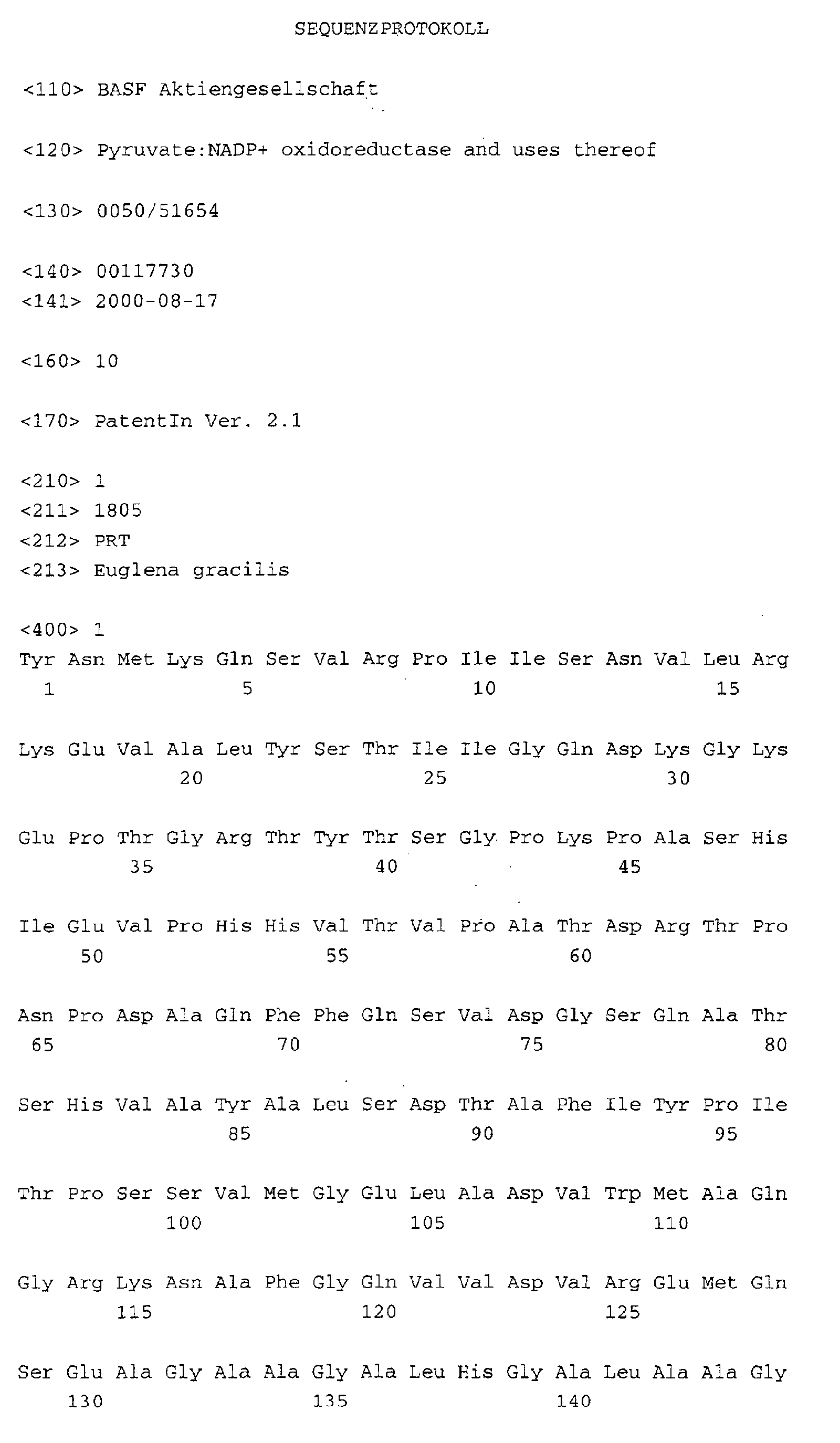


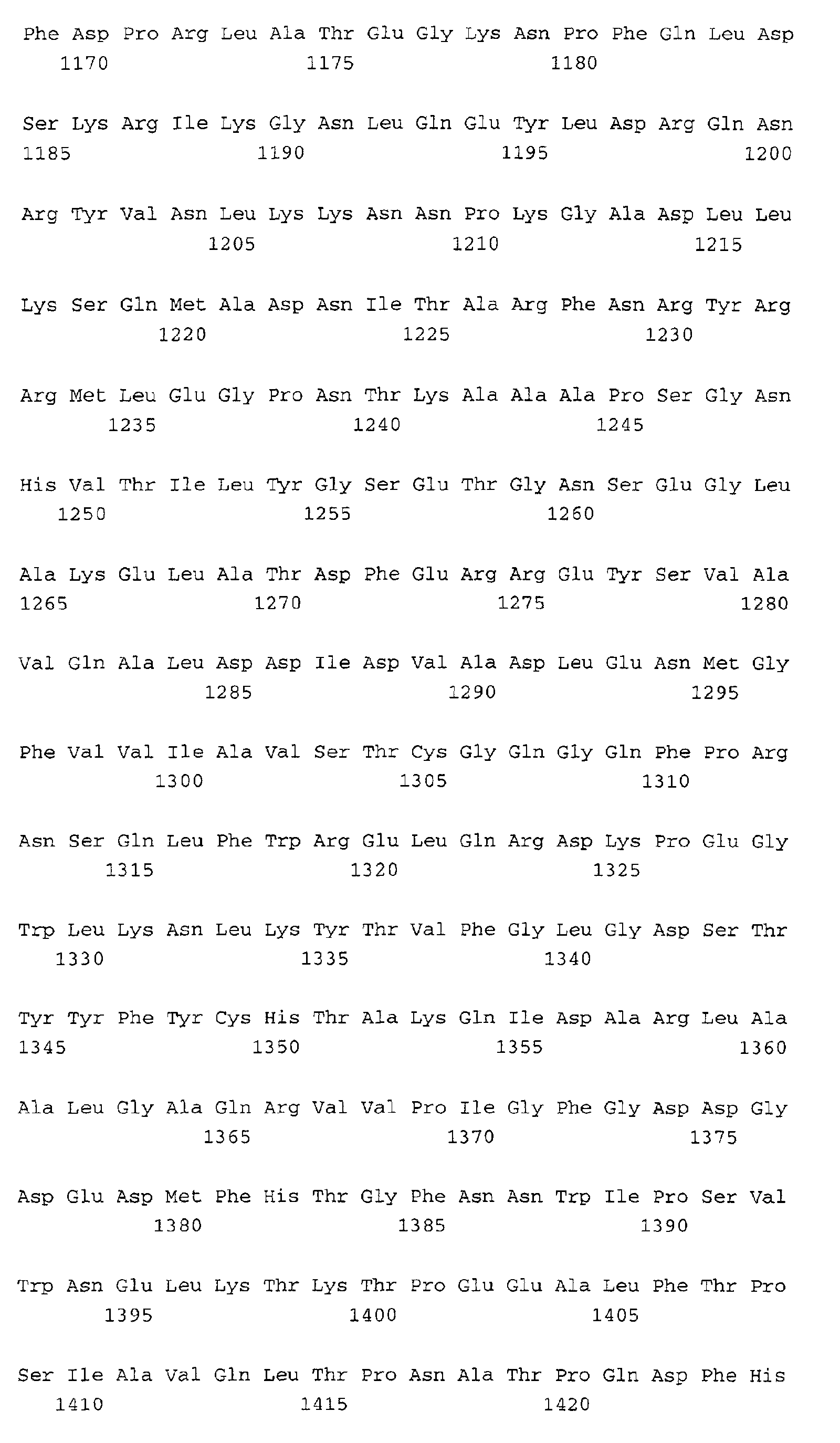

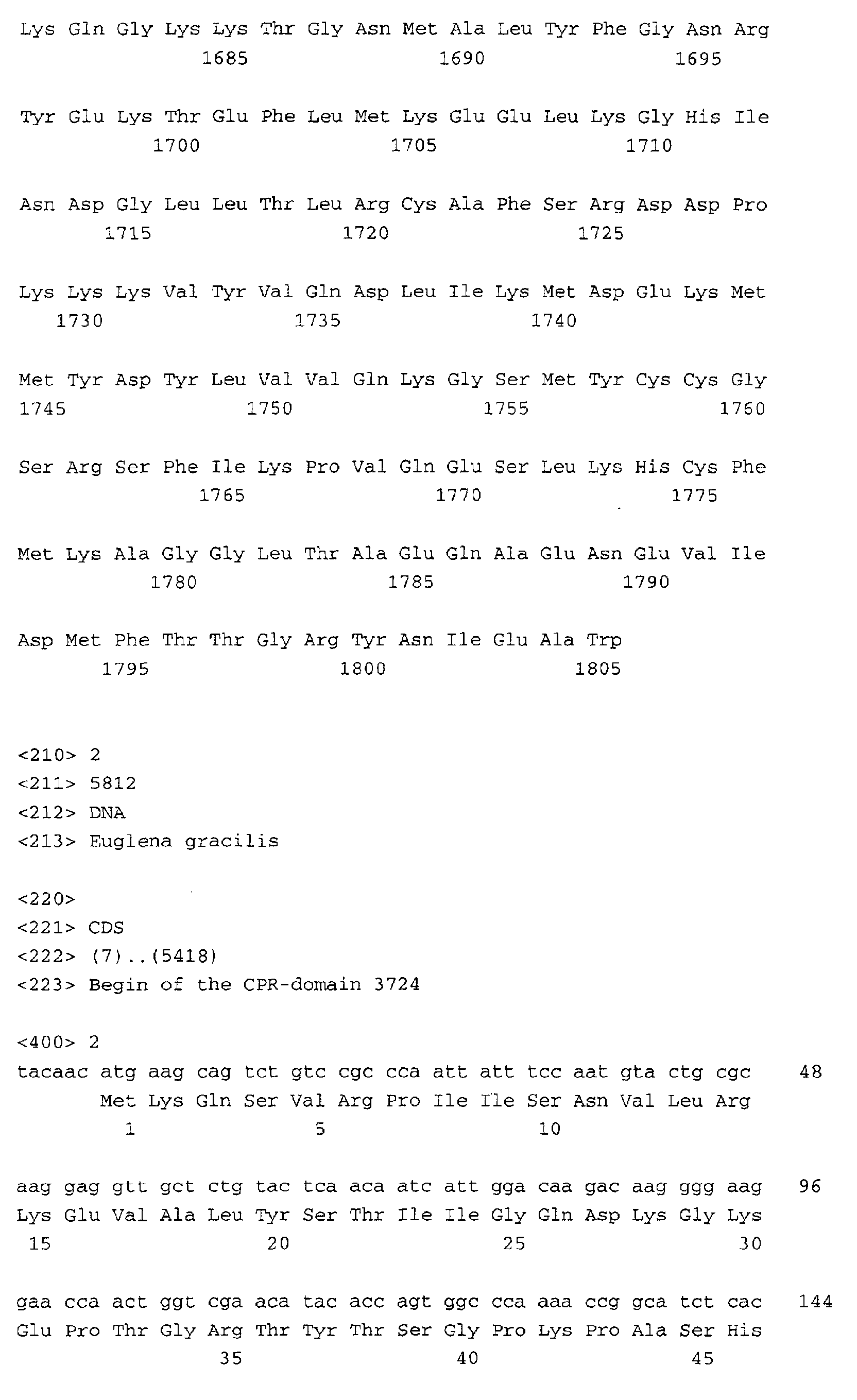
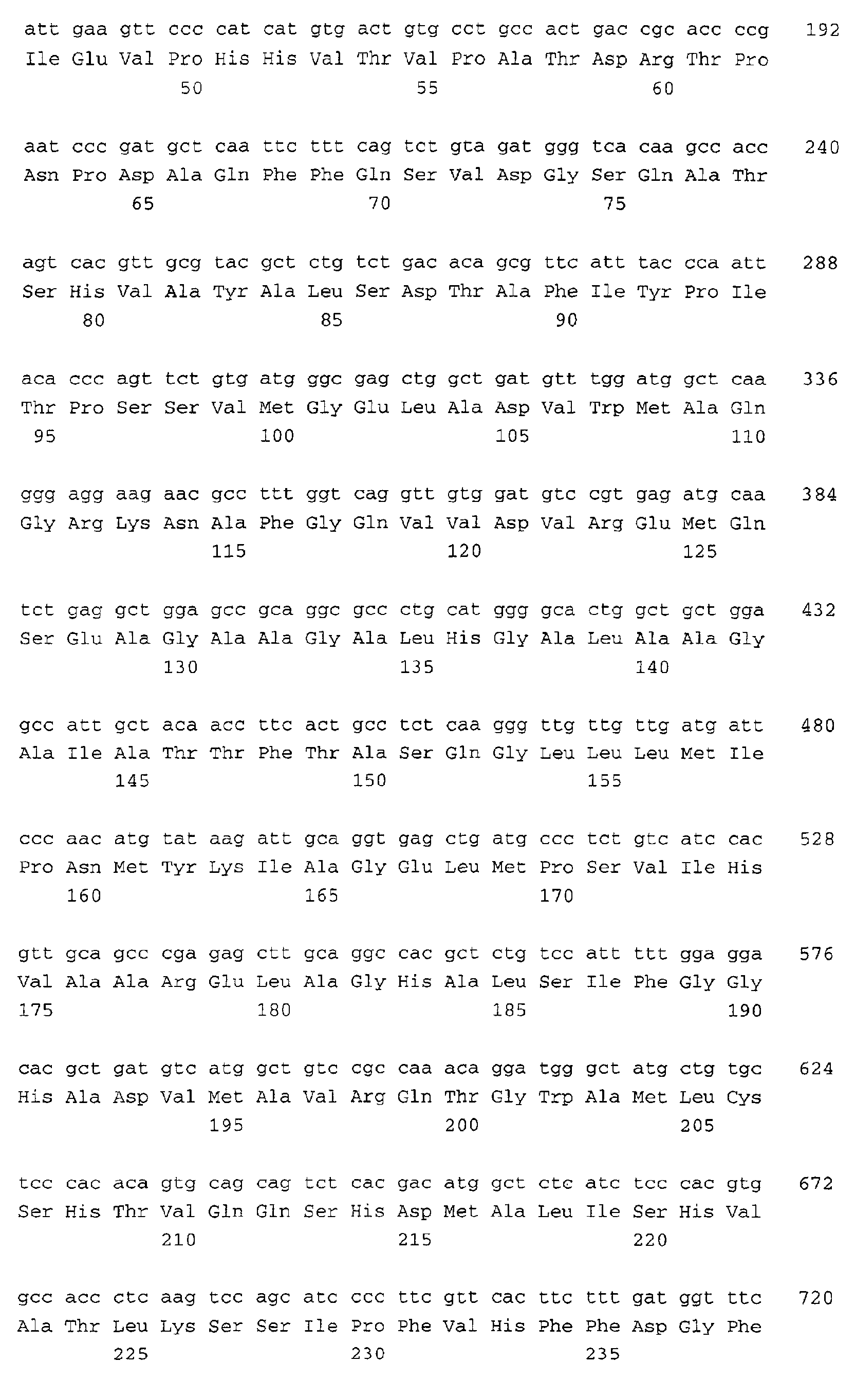


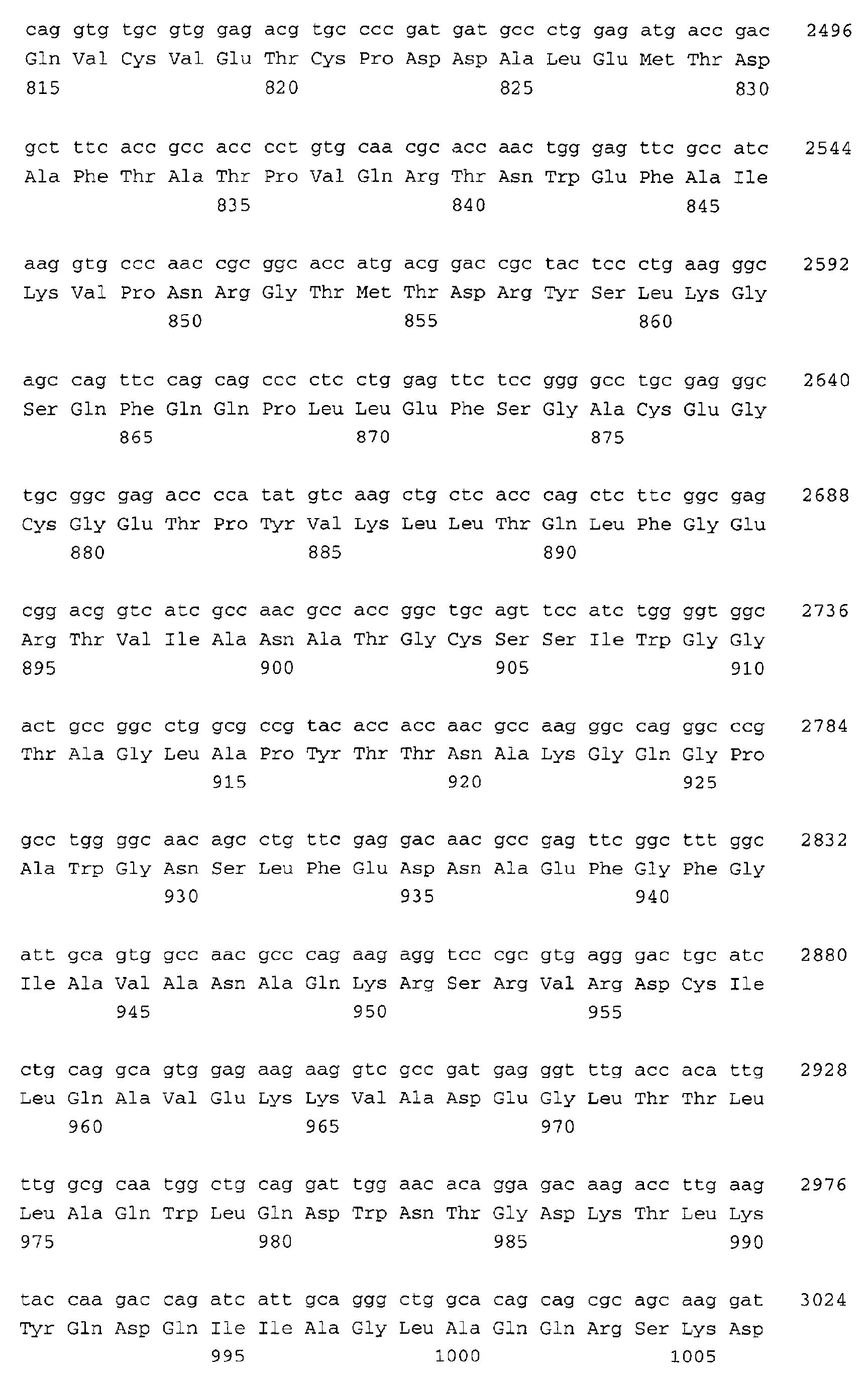

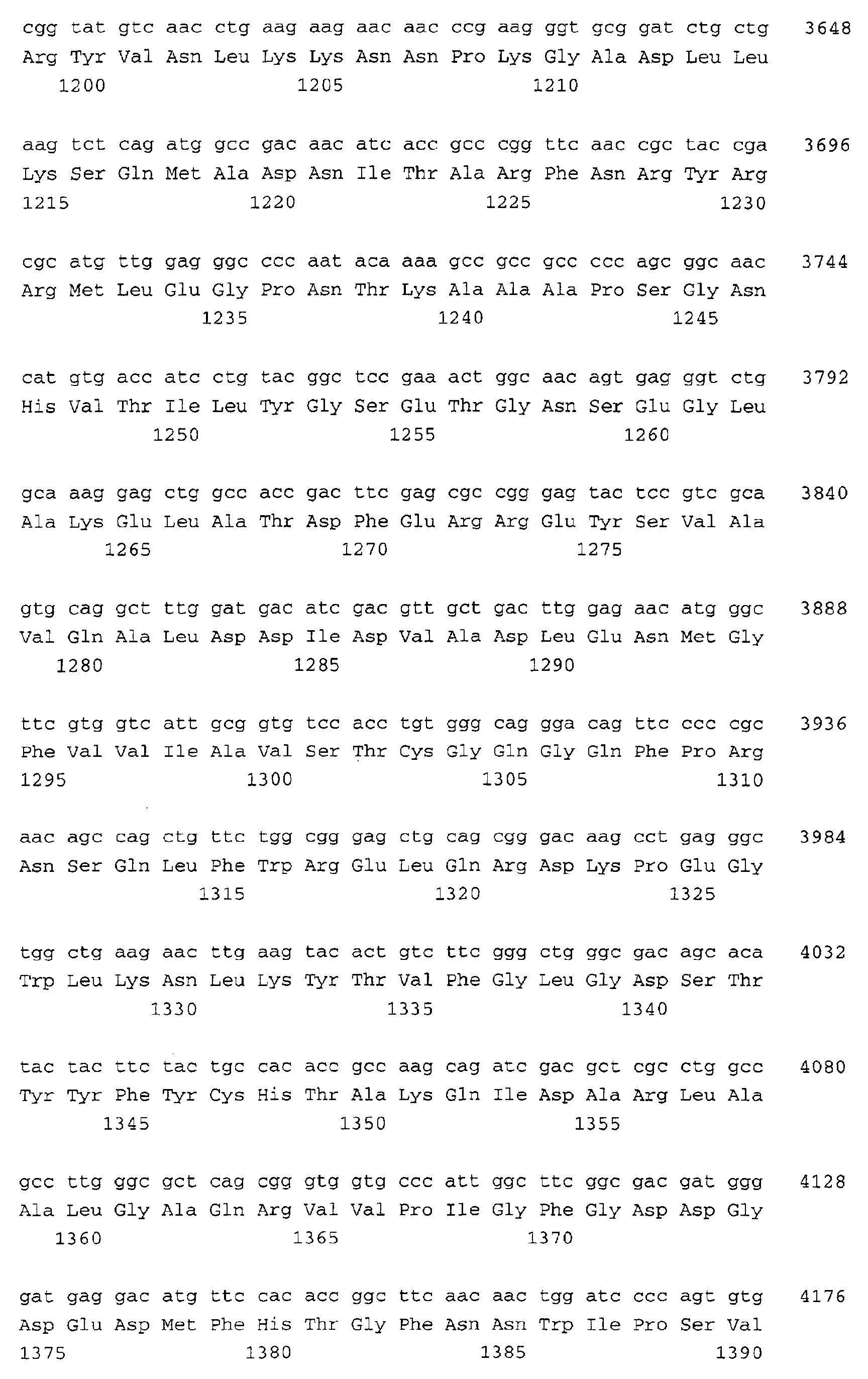
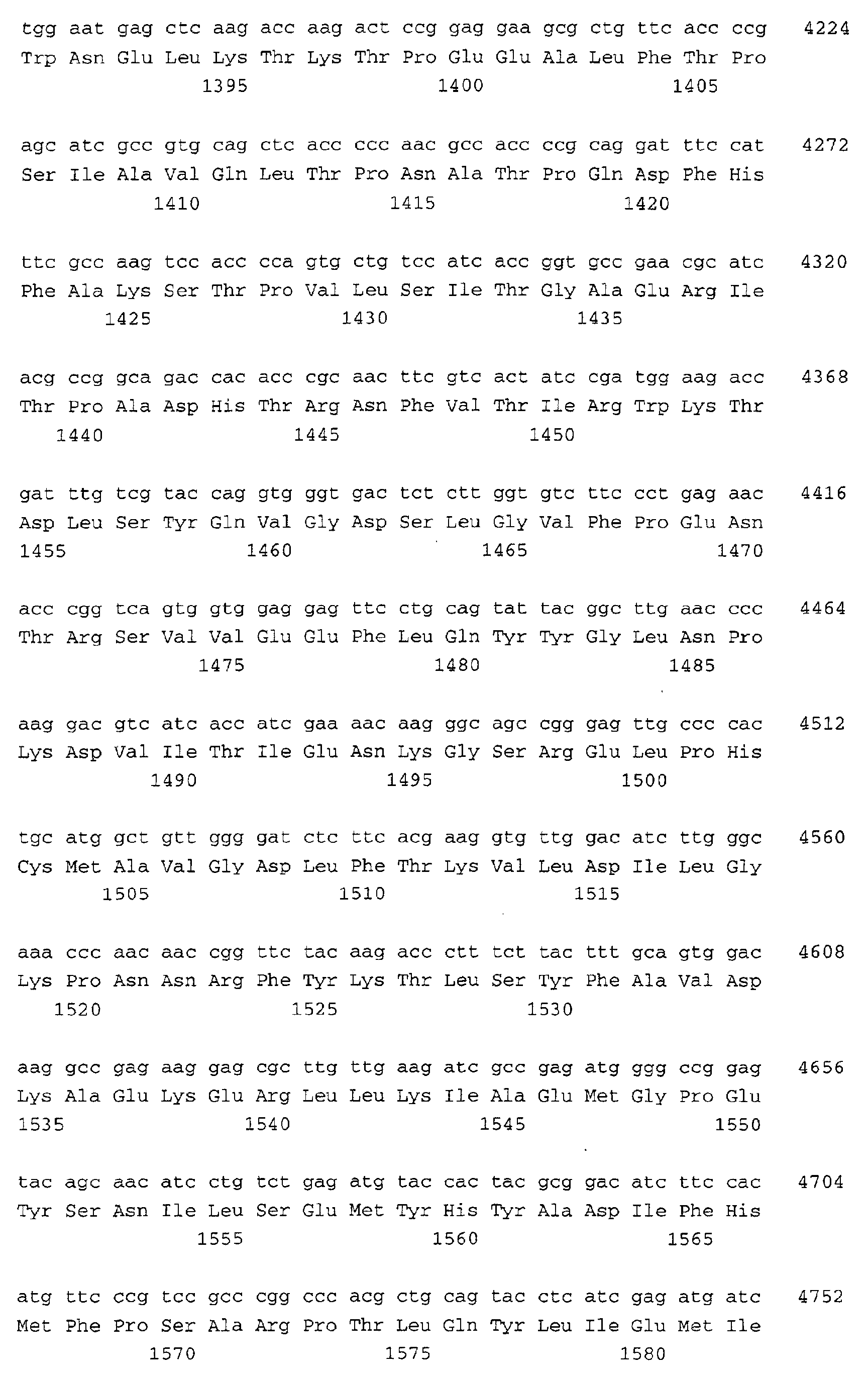


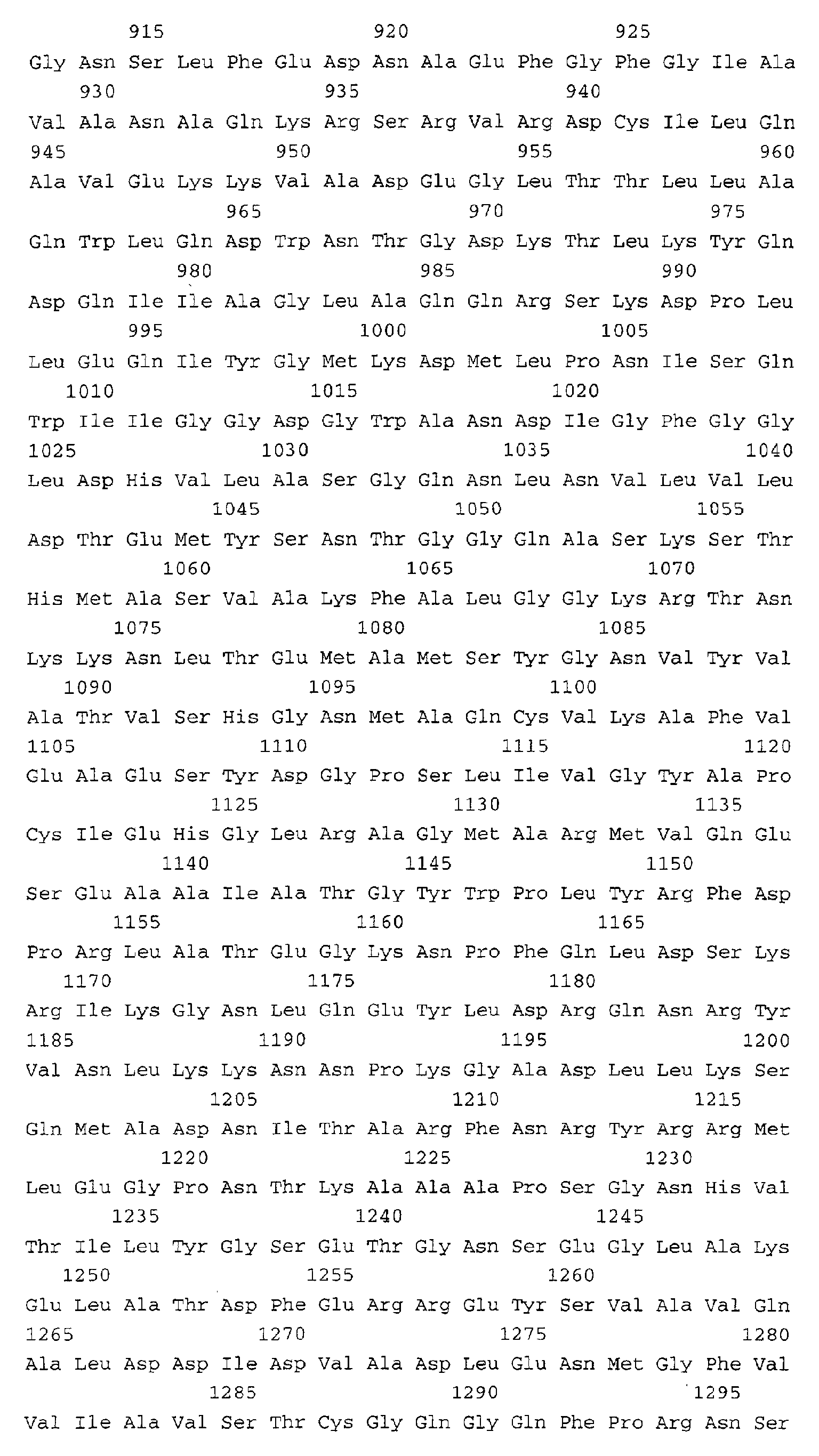

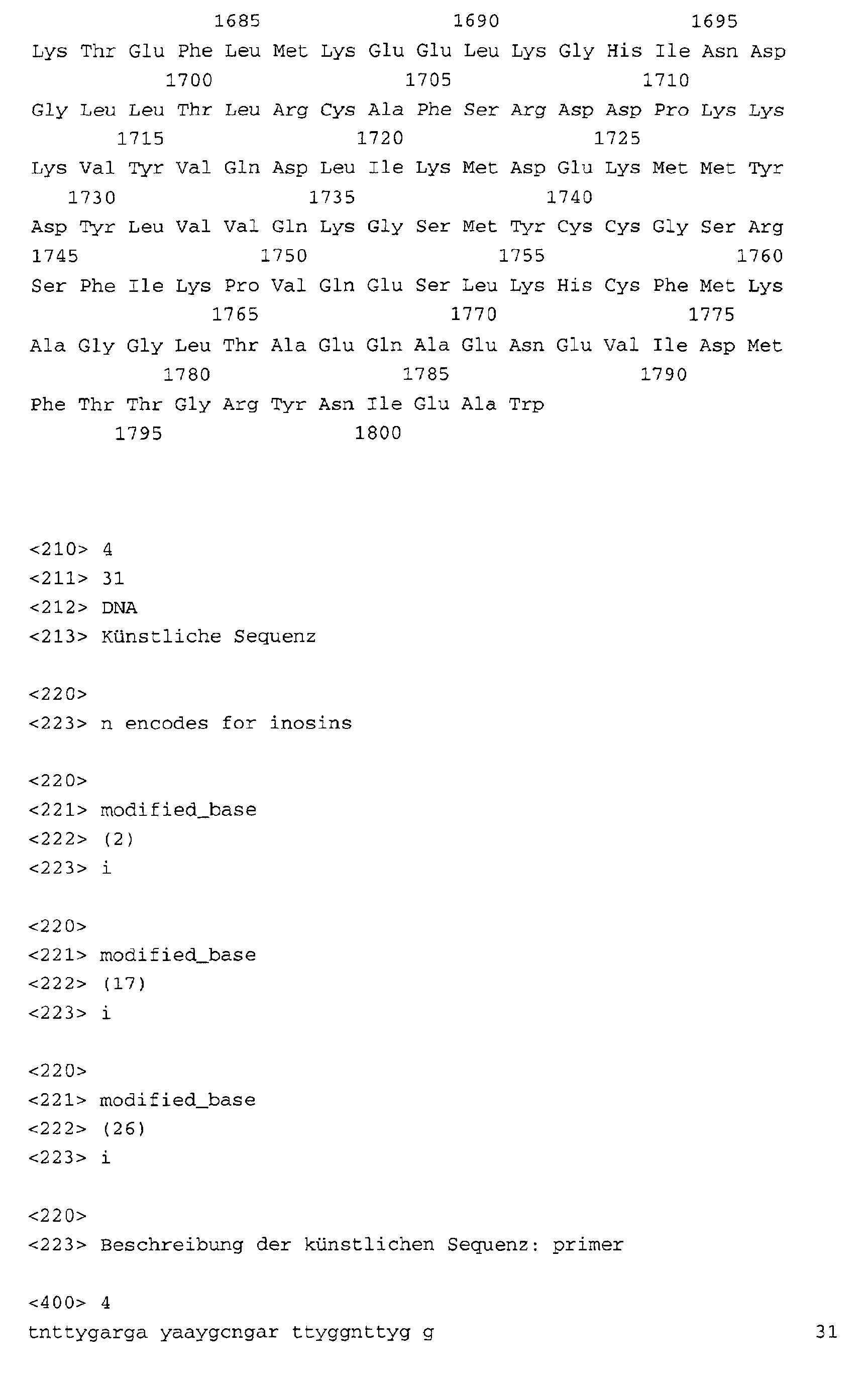
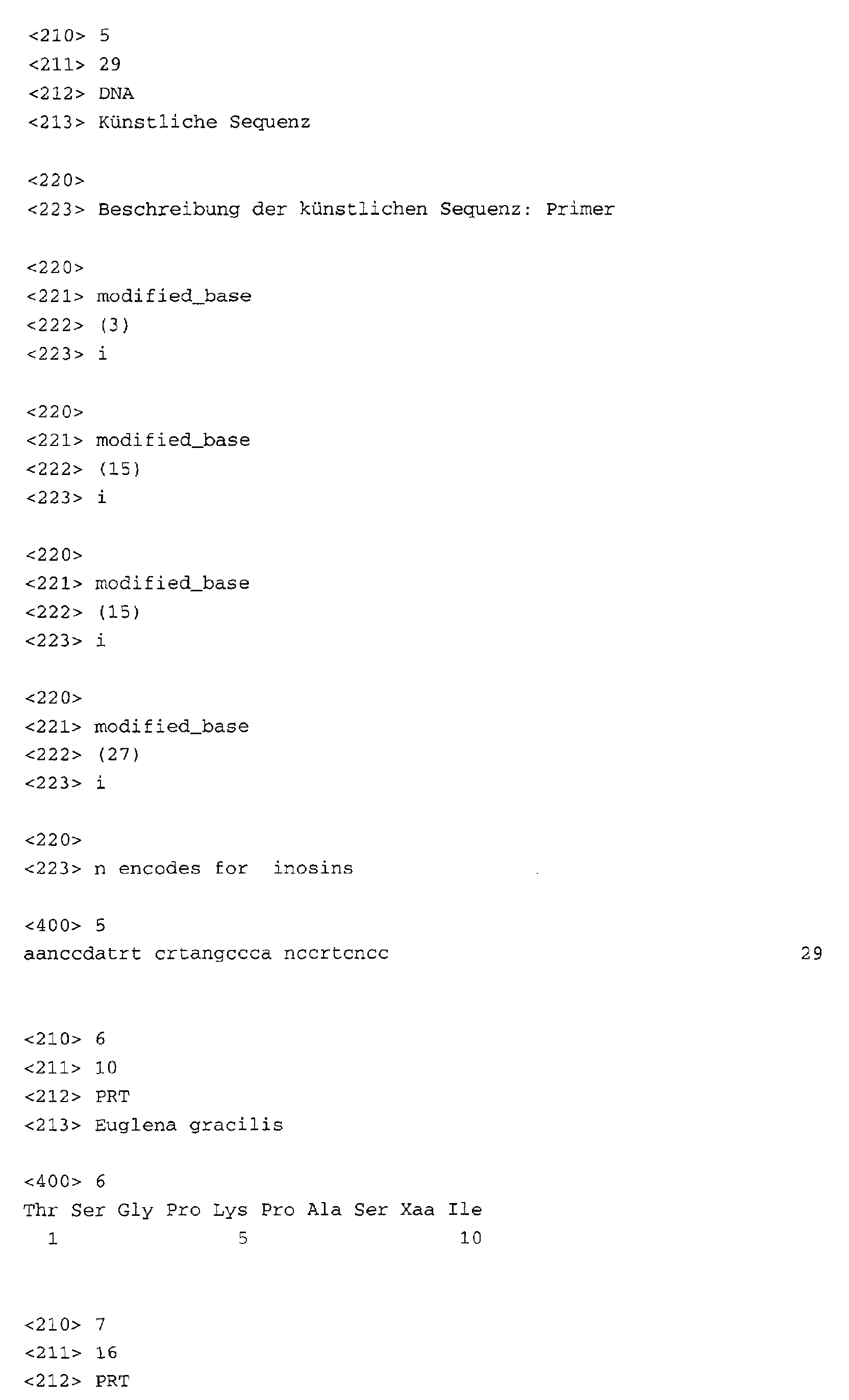

Claims (36)
- A polynucleotide comprising a nucleic acid molecule selected from the group consisting of:or the complementary strand of any one of (a) to (l);(a) nucleic acid molecules encoding at least the mature form of the polypeptide depicted in SEQ ID NO: 1 (Figure 5);(b) nucleic acid molecules comprising the coding sequence as depicted in SEQ ID NO: 2 (Figure 5) encoding at least the mature form of the polypeptide;(c) nucleic acid molecules the nucleotide sequence of which is degenerate as a result of the genetic code to a nucleotide sequence of (a) or (b);(d) nucleic acid molecules encoding a polypeptide derived from the polypeptide encoded by a polynucleotide of (a) to (c) by way of substitution, deletion and/or addition of one or several amino acids of the amino acid sequence of the polypeptide encoded by a polynucleotide of (a) to (c);(e) nucleic acid molecules encoding a polypeptide the sequence of which has an identity of 60% or more to the amino acid sequence of the polypeptide encoded by a nucleic acid molecule of (a) or (b);(f) nucleic acid molecules comprising a fragment or a epitope-bearing portion of a polypeptide encoded by a nucleic acid molecule of any one of (a) to (e) and having acetyl-CoA synthesis regulating activity;(g) nucleic acid molecules comprising a polynucleotide having a sequence of a nucleic acid molecule amplified from an Euglena nucleic acid library using the primers depicted in SEQ ID NO: 3 and 4 (Figure 5); (h) nucleic acid molecules encoding a pyruvate dehydrogenase active fragment, a pyruvate:ferredoxin oxidoreductase active fragment, and/or a NADPH-cytochrome P450 reductase active fragment of a polypeptide encoded by any one of (a) to (g) ;(i) nucleic acid molecules comprising at least 15 nucleotides of a polynucleotide of any one of (a) or (d);(j) nucleic acid molecules encoding a polypeptide having pyruvate:NADP+ oxidoreductase (PNO) activity being recognized by antibodies that have been raised against a polypeptide encoded by a nucleic acid molecule of any one of (a) to (h) ;(k) nucleic acid molecules obtainable by screening an appropriate library under stringent conditions with a probe having the sequence of the nucleic acid molecule of any one of (a) to (j) and having a PNO activity;(l) nucleic acid molecules the complementary strand of which hybridizes under stringent conditions with a nucleic acid molecule of any one of (a) or (k) and having PNO activity;
wherein the polynucleotide is not a polynucleotide encoding a polypeptide having the sequence TSGPKPASXI (SEQ ID No.: 5), TSGPKPASXIEVSXAK (SEQ ID No.: 6) or AAAPSGNXVTILYGSEEGNS (SEQ ID No.: 7). - The polynucleotide of claim 1 which is DNA or RNA.
- The polynucleotide of claim 1 or 2, wherein the polynucleotide is operatively linked to a nucleic acid sequence encoding a signal sequence.
- The polynucleotide of claim 3, wherein the signal sequence is a plastidal transit signal sequence.
- A method for making a recombinant vector comprising inserting a polynucleotide of any one of claims 1 to 4 into a vector.
- A recombinant vector containing the polynucleotide of any one of claims 1 to 4 or produced by the method of claim 5.
- The vector of claim 6 in which the polynucleotide is operatively linked to expression control sequences allowing expression in prokaryotic or eukaryotic host cells.
- A method of making a recombinant host cell comprising introducing the vector of claim 6 or 7 into a host cell.
- A host cell genetically engineered with the polynucleotide of any one of claims 1 to 4 or the vector of claim 6 or 7.
- The host cell of claim 9, which is E. coli, baculovirus, Agrobacterium, or a plant cell.
- A process for the production of a polypeptide having PNO activity comprising culturing the host cell of claim 9 or 10 and recovering the polypeptide encoded by said polynucleotide and expressed by the host cell from the culture or the host cells.
- A polypeptide having the amino acid sequence encoded by a polynucleotide of any one of claims 1 to 4 or obtainable by the process of claim 11.
- An antibody that binds specifically to the polypeptide of claim 12.
- An antisense nucleic acid molecule comprising the complementary sequence of any one of (a) to (1).
- A method for the production of transgenic plants, plant cells or plant tissue comprising the introduction of the polynucleotide of any one of claims 1 to 4, or the vector of claim 6 or 7 into the genome of said plant, plant tissue or plant cell.
- A plant cell comprising the polynucleotide of any one of claims 1 to 4, the vector of claim 6 or 7 or obtainable by the method of claim 15.
- A transgenic plant or plant tissue comprising the plant cell of claim 16.
- The transgenic plant or plant tissue of claim 17, which upon the presence of the polynucleotide or the vector has an altered acetyl-CoA synthesis.
- A method for modulating the acetyl CoA synthesis in a host cell comprising providing the host cell of claim 9 or the steps of the method of claim 8 and further culturing the cell under conditions which permit the expression of the polypeptide of claim 12.
- The method of claim 19 wherein the expressed polypeptide is localized in the cell's plastid.
- A method for modulating the acetyl-CoA synthesis in a plant, plant tissue, or plant cell comprising providing the plant, plant tissue or plant cell of claim 16 or 17 or comprising the steps of the method of claim 15 and further culturing the plant, plant tissue or plant cell under condition which permits the expression of the polypeptide of claim 12.
- The transgenic plant of claim 17 or 18, the host cell of claim 9 or the method of any one of claims 19 to 21, wherein the acetyl-CoA-synthesis is increased.
- The transgenic plant of claim 16, 17 or 22, the host cell of claim 9 or 22 or the method of any one of claims 19 to 22, wherein the synthesis of the fatty acids, carotenoids, isoprenoids, vitamins, lipids, wax esters, (poly)saccharides) and/or polyhydroxyalkanoates is increased.
- Harvestable parts of the transgenic plant of claim 17, 18, 22 or 23 comprising the plant cell of claim 16.
- Propagation material of the transgenic plant of claim 17, 18, 22 or 23 comprising the cell of claim 16.
- A method for the production of fatty acids, carotenoids, (poly)saccharides), vitamins, isoprenoids, lipids, wax esters, and/or polyhydroxyalkanoates comprising the steps of the method of any one of claims 19 to 22 and further isolating said compound from the cell, culture, plant or tissue.
- Use of the polynucleotide of any one of claims 1 to 4, the vector of claim 6 or 7, or the polypeptide of claim 12 for making fatty acid, carotenoids, hexose, vitamin, isoprenoid, lipid, wax ester, and/or polyhydroxyalkanoate producing cells, tissues and/or plants.
- A method for the identification of an agonist or antagonist of PNO activity comprising(a) contacting cells which express the polypeptide of claim 12 with a candidate compound;(b) assaying the PNO activity;(c) comparing the PNO activity to a standard response made in the absence of the candidate compound; whereby, an increased PNO activity over the standard indicates that the compound is an agonist and a decreased PNO activity indicates that the compound is an antagonist.
- A compound identified by the method of claim 28.
- A compound identified by the method of claim 28 which is an antagonist or an agonist of the polypeptide of claim 12.
- An antibody specifically recognizing the compound of claim 29 or 30.
- Use of the polynucleotide of any one of claims 1 to 4, the vector of claim 6 or 7, the polypeptide of claim 12, the antibody of claim 13 or 31, or the compound of claim 29 or 30 for identifying and/or producing compounds activating or inhibiting PNO activity.
- A pharmaceutical composition comprising the antisense nucleic acid molecule of claims 14, the antibody of claim 13 or 31 or the compound of claim 30, which is an antagonist and optionally a pharmaceutically acceptable carrier.
- Use of the antisense nucleic acid molecule of claim 14, the antibody of claim 13 or 31, or the compound of claim 30, which is an antagonist for the preparation of a pharmaceutical composition for the treatment of parasite infections.
- A kit comprising the polynucleotide of any one of claims 1 to 4, the vector of claim 6 or 7, the host cell of claim 9, 22 or 23, the polypeptide of claim 12, the antisense nucleic acid of claim 14, the antibody of claim 13 or 31, plant cell of claim 16, the plant or plant tissue of claim 17, 18, 22 or 23, the harvestable part of claim 24, the propagation material of claim 25 or the compound of claim 29 or 30.
- A method for the production of a pharmaceutical composition comprising the steps of the method of claim 28; and(a) formulating the compound identified in step (c) in a pharmaceutically acceptable form.
Priority Applications (12)
| Application Number | Priority Date | Filing Date | Title |
|---|---|---|---|
| EP00117730A EP1182259A1 (en) | 2000-08-17 | 2000-08-17 | Pyruvate:NADP+ oxidoreductase and uses thereof |
| IL15407301A IL154073A0 (en) | 2000-08-17 | 2001-08-11 | Pyruvate: nadp+ oxidoreductase and uses thereof |
| US10/343,509 US20040101865A1 (en) | 2000-08-17 | 2001-08-11 | Pyruvate:nadpand uses thereof |
| AU8400901A AU8400901A (en) | 2000-08-17 | 2001-08-11 | Pyruvate:nadp+ oxidoreductase and uses thereof |
| BR0113309-8A BR0113309A (en) | 2000-08-17 | 2001-08-11 | Polynucleotide, method for making a recombinant vector, recombinant vector, method for making a recombinant host cell, host cell, process for producing a polypeptide, polypeptide, antibody, antisense necleic acid molecule, method for producing transgenic plants, plant cells or plant tissue, plant cell, transgenic plant or plant tissues, methods for modulating acetyl coa synthesis in a host cell and acetyl-coa synthesis in a plant, plant tissue or plant cell, harvestable parts of the transgenic plant transgenic plant propagation material, method for producing fatty acids, carotenoids, (poly) saccharides, vitamins, isoprenids, lipids, waxy esters and / or polyhydroxyalkanoates, methods for identifying an agonist or antagonist of pno activity, compound, antibody, polynucleotide, vector, polypeptide, antibody, compound and a uses antisense nucleic acid molecule, pharmaceutical composition, kit, and method for producing a pharmaceutical composition |
| AU2001284009A AU2001284009B2 (en) | 2000-08-17 | 2001-08-11 | Pyruvate:NADP+ oxidoreductase and uses thereof |
| EP01962938A EP1311694A1 (en) | 2000-08-17 | 2001-08-11 | Pyruvate:nadp+ oxidoreductase and uses thereof |
| JP2002519648A JP2004515223A (en) | 2000-08-17 | 2001-08-11 | Pyruvate: NADP + oxidoreductase, and uses thereof |
| PCT/EP2001/009317 WO2002014522A1 (en) | 2000-08-17 | 2001-08-11 | Pyruvate:nadp+ oxidoreductase and uses thereof |
| CA002419020A CA2419020A1 (en) | 2000-08-17 | 2001-08-11 | Pyruvate:nadp+ oxidoreductase and uses thereof |
| ARP010103894A AR030354A1 (en) | 2000-08-17 | 2001-08-15 | PIRUVATO: NADP + OXIDORREDUCTASE AND USES OF THE SAME |
| NO20030656A NO20030656L (en) | 2000-08-17 | 2003-02-10 | Pyruvate: NADP + oxidoreductase and applications thereof |
Applications Claiming Priority (1)
| Application Number | Priority Date | Filing Date | Title |
|---|---|---|---|
| EP00117730A EP1182259A1 (en) | 2000-08-17 | 2000-08-17 | Pyruvate:NADP+ oxidoreductase and uses thereof |
Publications (1)
| Publication Number | Publication Date |
|---|---|
| EP1182259A1 true EP1182259A1 (en) | 2002-02-27 |
Family
ID=8169561
Family Applications (2)
| Application Number | Title | Priority Date | Filing Date |
|---|---|---|---|
| EP00117730A Withdrawn EP1182259A1 (en) | 2000-08-17 | 2000-08-17 | Pyruvate:NADP+ oxidoreductase and uses thereof |
| EP01962938A Withdrawn EP1311694A1 (en) | 2000-08-17 | 2001-08-11 | Pyruvate:nadp+ oxidoreductase and uses thereof |
Family Applications After (1)
| Application Number | Title | Priority Date | Filing Date |
|---|---|---|---|
| EP01962938A Withdrawn EP1311694A1 (en) | 2000-08-17 | 2001-08-11 | Pyruvate:nadp+ oxidoreductase and uses thereof |
Country Status (10)
| Country | Link |
|---|---|
| US (1) | US20040101865A1 (en) |
| EP (2) | EP1182259A1 (en) |
| JP (1) | JP2004515223A (en) |
| AR (1) | AR030354A1 (en) |
| AU (2) | AU2001284009B2 (en) |
| BR (1) | BR0113309A (en) |
| CA (1) | CA2419020A1 (en) |
| IL (1) | IL154073A0 (en) |
| NO (1) | NO20030656L (en) |
| WO (1) | WO2002014522A1 (en) |
Cited By (4)
| Publication number | Priority date | Publication date | Assignee | Title |
|---|---|---|---|---|
| WO2005095636A3 (en) * | 2004-03-24 | 2006-04-27 | Aveo Pharmaceuticals Inc | Methods for measuring enzyme activities in cells, blood, tumors and tissues |
| RU2476590C2 (en) * | 2007-03-16 | 2013-02-27 | Те Риджентс Оф Те Юниверсити Оф Калифорния | Compositions and methods for reduction of level of h2s in fermented beverages |
| US8679798B2 (en) | 2007-12-21 | 2014-03-25 | Ajinomoto Co., Inc. | Method for producing an L-amino acid using a bacterium of the Enterobacteriaceae family |
| CN101939412B (en) * | 2007-09-04 | 2016-01-20 | 味之素株式会社 | Amino acid-producing microorganism and method for producing amino acid |
Families Citing this family (4)
| Publication number | Priority date | Publication date | Assignee | Title |
|---|---|---|---|---|
| WO2008124526A1 (en) * | 2007-04-03 | 2008-10-16 | Saphire Andrew C S | Methods for transforming eukaryotic algae |
| WO2009006386A2 (en) * | 2007-06-29 | 2009-01-08 | The Regents Of The University Of California | Host cells and methods for producing isoprenyl alkanoates |
| JP2010263790A (en) | 2007-09-04 | 2010-11-25 | Ajinomoto Co Inc | Amino acid-producing microorganism and method for producing amino acid |
| CZ304183B6 (en) | 2012-08-27 | 2013-12-11 | Vysoké ucení technické v Brne | Process for preparing polyhydroxyalkanoates (PHA) on oil substrate |
Citations (3)
| Publication number | Priority date | Publication date | Assignee | Title |
|---|---|---|---|---|
| WO1999000505A1 (en) * | 1997-06-30 | 1999-01-07 | The Curators Of The University Of Missouri | Use of dna encoding plastid pyruvate dehydrogenase and branched chain oxoacid dehydrogenase components to enhance polyhydroxyalkanoate biosynthesis in plants |
| WO2000000619A2 (en) * | 1998-06-26 | 2000-01-06 | Iowa State University Research Foundation, Inc. | MATERIALS AND METHODS FOR THE ALTERATION OF ENZYME AND ACETYL CoA LEVELS IN PLANTS |
| WO2000011199A1 (en) * | 1998-08-20 | 2000-03-02 | Pioneer Hi-Bred International, Inc. | COMPOSITIONS AND METHODS FOR ALTERING AN ACETYL-CoA METABOLIC PATHWAY OF A PLANT |
Family Cites Families (1)
| Publication number | Priority date | Publication date | Assignee | Title |
|---|---|---|---|---|
| US5955329A (en) * | 1995-05-15 | 1999-09-21 | Calgene, Inc. | Engineering plant thioesterases for altered substrate specificity |
-
2000
- 2000-08-17 EP EP00117730A patent/EP1182259A1/en not_active Withdrawn
-
2001
- 2001-08-11 JP JP2002519648A patent/JP2004515223A/en active Pending
- 2001-08-11 EP EP01962938A patent/EP1311694A1/en not_active Withdrawn
- 2001-08-11 CA CA002419020A patent/CA2419020A1/en not_active Abandoned
- 2001-08-11 US US10/343,509 patent/US20040101865A1/en not_active Abandoned
- 2001-08-11 WO PCT/EP2001/009317 patent/WO2002014522A1/en not_active Ceased
- 2001-08-11 AU AU2001284009A patent/AU2001284009B2/en not_active Ceased
- 2001-08-11 IL IL15407301A patent/IL154073A0/en unknown
- 2001-08-11 AU AU8400901A patent/AU8400901A/en active Pending
- 2001-08-11 BR BR0113309-8A patent/BR0113309A/en not_active Application Discontinuation
- 2001-08-15 AR ARP010103894A patent/AR030354A1/en not_active Application Discontinuation
-
2003
- 2003-02-10 NO NO20030656A patent/NO20030656L/en not_active Application Discontinuation
Patent Citations (3)
| Publication number | Priority date | Publication date | Assignee | Title |
|---|---|---|---|---|
| WO1999000505A1 (en) * | 1997-06-30 | 1999-01-07 | The Curators Of The University Of Missouri | Use of dna encoding plastid pyruvate dehydrogenase and branched chain oxoacid dehydrogenase components to enhance polyhydroxyalkanoate biosynthesis in plants |
| WO2000000619A2 (en) * | 1998-06-26 | 2000-01-06 | Iowa State University Research Foundation, Inc. | MATERIALS AND METHODS FOR THE ALTERATION OF ENZYME AND ACETYL CoA LEVELS IN PLANTS |
| WO2000011199A1 (en) * | 1998-08-20 | 2000-03-02 | Pioneer Hi-Bred International, Inc. | COMPOSITIONS AND METHODS FOR ALTERING AN ACETYL-CoA METABOLIC PATHWAY OF A PLANT |
Non-Patent Citations (5)
| Title |
|---|
| DATABASE EMBL SEQUENCE DATABASE 1 May 1997 (1997-05-01), PIEULLE, L., ET AL.: "Isolation and analysis of the gene encoding the pyruvate-ferredoxin oxidoreductase of Desulfovibrio africanus, production of the recombinant enzyme in Escherichia coli, and effect of carboxy-terminal deletions on its stability", XP002165258 * |
| DATABASE EMBL SEQUENE DATABASE 24 August 2000 (2000-08-24), NAKAZAWA, M., ET AL.: "the origin of pyruvate:NADP+ oxidoreduxtase in mitochondria of Euglena gracilis", XP002165259 * |
| INUI H ET AL: "PURIFICATION AND CHARACTERIZATION OF PYRUVATE NADP OXIDOREDUCTASE IN EUGLENA-GRACILIS", JOURNAL OF BIOLOGICAL CHEMISTRY, vol. 262, no. 19, 1987, pages 9130 - 9135, XP002165256, ISSN: 0021-9258 * |
| INUI H ET AL: "PYRUVATE NADP POSITIVE OXIDOREDUCTASE FROM EUGLENA-GRACILIS LIMITED PROTEOLYSIS OF THE ENZYME WITH TRYPSIN", ARCHIVES OF BIOCHEMISTRY AND BIOPHYSICS, vol. 286, no. 1, 1991, pages 270 - 276, XP000998234, ISSN: 0003-9861 * |
| NAKAZAWA MASAMI ET AL: "The origin of pyruvate:NADP+ oxidoreductase in mitochondria of Euglena gracilis.", FEBS LETTERS, vol. 479, no. 3, 2000, pages 155 - 156, XP002165257, ISSN: 0014-5793 * |
Cited By (4)
| Publication number | Priority date | Publication date | Assignee | Title |
|---|---|---|---|---|
| WO2005095636A3 (en) * | 2004-03-24 | 2006-04-27 | Aveo Pharmaceuticals Inc | Methods for measuring enzyme activities in cells, blood, tumors and tissues |
| RU2476590C2 (en) * | 2007-03-16 | 2013-02-27 | Те Риджентс Оф Те Юниверсити Оф Калифорния | Compositions and methods for reduction of level of h2s in fermented beverages |
| CN101939412B (en) * | 2007-09-04 | 2016-01-20 | 味之素株式会社 | Amino acid-producing microorganism and method for producing amino acid |
| US8679798B2 (en) | 2007-12-21 | 2014-03-25 | Ajinomoto Co., Inc. | Method for producing an L-amino acid using a bacterium of the Enterobacteriaceae family |
Also Published As
| Publication number | Publication date |
|---|---|
| NO20030656D0 (en) | 2003-02-10 |
| AU8400901A (en) | 2002-02-25 |
| CA2419020A1 (en) | 2002-02-21 |
| AU2001284009B2 (en) | 2007-07-26 |
| AU2001284009B8 (en) | 2002-02-25 |
| IL154073A0 (en) | 2003-07-31 |
| JP2004515223A (en) | 2004-05-27 |
| EP1311694A1 (en) | 2003-05-21 |
| US20040101865A1 (en) | 2004-05-27 |
| AR030354A1 (en) | 2003-08-20 |
| BR0113309A (en) | 2003-07-01 |
| WO2002014522A1 (en) | 2002-02-21 |
| NO20030656L (en) | 2003-04-14 |
Similar Documents
| Publication | Publication Date | Title |
|---|---|---|
| HUP0300081A2 (en) | Novel elongase gene and method for producing multiple-unsaturated fatty acids | |
| CA2567764A1 (en) | Nucleic acid molecules encoding wrinkled1-like polypeptides and methods of use in plants | |
| US20110010803A1 (en) | Polypeptides, Such As Lipases, Capable Of Altering The Seed Storage Content In Transgenic Plants | |
| CN101589148A (en) | Plants with increased yield | |
| MXPA04007327A (en) | Novel elongase gene and method for producing polyunsaturated fatty acids. | |
| US8188339B2 (en) | Sugar and lipid metabolism regulators in plants IV | |
| MXPA02005214A (en) | Moss genes from physcomitrella patens. | |
| AU2009801A (en) | Moss genes from physcomitrella patens encoding proteins involved in the synthesis of tocopherols carotenoids and aromatic amino acids | |
| AU2001284009B8 (en) | Pyruvate:NADP+ oxidoreductase and uses thereof | |
| AU2001284009A1 (en) | Pyruvate:NADP+ oxidoreductase and uses thereof | |
| US20030157592A1 (en) | Moss genes from physcomitrella patens encoding proteins involved in the synthesis of tocopherols and carotenoids | |
| CA2448881A1 (en) | Sugar and lipid metabolism regulators in plants ii | |
| US20020142422A1 (en) | Moss genes from physcomitrella patens encoding proteins involved in the synthesis of amino acids, vitamins, cofactors, nucleotides and nucleosides | |
| AU2007237379B2 (en) | Sugar and lipid metabolism regulators in plants IV | |
| US20080127369A1 (en) | Arabidopsis And Brassica Nucleic Acid Sequences Conferring Lipid And Sugar Alterations In Plants And Methods Of Use | |
| CA2576296A1 (en) | Nucleic acids conferring lipid and sugar alterations in plants ii | |
| US20030024003A1 (en) | Moss genes from Physcomitrella patens encoding proteins involved in the regulation of cell division, growth and biomass formation in plants | |
| AU2007234625A1 (en) | Sugar and lipid metabolism regulators in plants II | |
| EP1282713A2 (en) | Moss genes from physcomitrella patens encoding proteins involved in the synthesis of polyunsaturated fatty acids and lipids |
Legal Events
| Date | Code | Title | Description |
|---|---|---|---|
| PUAI | Public reference made under article 153(3) epc to a published international application that has entered the european phase |
Free format text: ORIGINAL CODE: 0009012 |
|
| AK | Designated contracting states |
Kind code of ref document: A1 Designated state(s): AT BE CH CY DE DK ES FI FR GB GR IE IT LI LU MC NL PT SE |
|
| AX | Request for extension of the european patent |
Free format text: AL;LT;LV;MK;RO;SI |
|
| AKX | Designation fees paid | ||
| REG | Reference to a national code |
Ref country code: DE Ref legal event code: 8566 |
|
| STAA | Information on the status of an ep patent application or granted ep patent |
Free format text: STATUS: THE APPLICATION HAS BEEN WITHDRAWN |
|
| 18W | Application withdrawn |
Effective date: 20021220 |