EP1180026B1 - Use of 15-deoxyspergualin for the treatment of hyperreactive inflammatory diseases and autoimmune diseases - Google Patents
Use of 15-deoxyspergualin for the treatment of hyperreactive inflammatory diseases and autoimmune diseases Download PDFInfo
- Publication number
- EP1180026B1 EP1180026B1 EP00926953A EP00926953A EP1180026B1 EP 1180026 B1 EP1180026 B1 EP 1180026B1 EP 00926953 A EP00926953 A EP 00926953A EP 00926953 A EP00926953 A EP 00926953A EP 1180026 B1 EP1180026 B1 EP 1180026B1
- Authority
- EP
- European Patent Office
- Prior art keywords
- use according
- preceeding
- treatment
- days
- cycle
- Prior art date
- Legal status (The legal status is an assumption and is not a legal conclusion. Google has not performed a legal analysis and makes no representation as to the accuracy of the status listed.)
- Expired - Lifetime
Links
- 0 NCCCNCCCCNCOC**C(*NC(N)=N)=O Chemical compound NCCCNCCCCNCOC**C(*NC(N)=N)=O 0.000 description 1
Images
Classifications
-
- A—HUMAN NECESSITIES
- A61—MEDICAL OR VETERINARY SCIENCE; HYGIENE
- A61K—PREPARATIONS FOR MEDICAL, DENTAL OR TOILETRY PURPOSES
- A61K31/00—Medicinal preparations containing organic active ingredients
- A61K31/16—Amides, e.g. hydroxamic acids
-
- A—HUMAN NECESSITIES
- A61—MEDICAL OR VETERINARY SCIENCE; HYGIENE
- A61K—PREPARATIONS FOR MEDICAL, DENTAL OR TOILETRY PURPOSES
- A61K31/00—Medicinal preparations containing organic active ingredients
- A61K31/16—Amides, e.g. hydroxamic acids
- A61K31/164—Amides, e.g. hydroxamic acids of a carboxylic acid with an aminoalcohol, e.g. ceramides
-
- A—HUMAN NECESSITIES
- A61—MEDICAL OR VETERINARY SCIENCE; HYGIENE
- A61K—PREPARATIONS FOR MEDICAL, DENTAL OR TOILETRY PURPOSES
- A61K31/00—Medicinal preparations containing organic active ingredients
- A61K31/21—Esters, e.g. nitroglycerine, selenocyanates
- A61K31/27—Esters, e.g. nitroglycerine, selenocyanates of carbamic or thiocarbamic acids, meprobamate, carbachol, neostigmine
-
- A—HUMAN NECESSITIES
- A61—MEDICAL OR VETERINARY SCIENCE; HYGIENE
- A61P—SPECIFIC THERAPEUTIC ACTIVITY OF CHEMICAL COMPOUNDS OR MEDICINAL PREPARATIONS
- A61P1/00—Drugs for disorders of the alimentary tract or the digestive system
- A61P1/04—Drugs for disorders of the alimentary tract or the digestive system for ulcers, gastritis or reflux esophagitis, e.g. antacids, inhibitors of acid secretion, mucosal protectants
-
- A—HUMAN NECESSITIES
- A61—MEDICAL OR VETERINARY SCIENCE; HYGIENE
- A61P—SPECIFIC THERAPEUTIC ACTIVITY OF CHEMICAL COMPOUNDS OR MEDICINAL PREPARATIONS
- A61P19/00—Drugs for skeletal disorders
- A61P19/02—Drugs for skeletal disorders for joint disorders, e.g. arthritis, arthrosis
-
- A—HUMAN NECESSITIES
- A61—MEDICAL OR VETERINARY SCIENCE; HYGIENE
- A61P—SPECIFIC THERAPEUTIC ACTIVITY OF CHEMICAL COMPOUNDS OR MEDICINAL PREPARATIONS
- A61P25/00—Drugs for disorders of the nervous system
- A61P25/28—Drugs for disorders of the nervous system for treating neurodegenerative disorders of the central nervous system, e.g. nootropic agents, cognition enhancers, drugs for treating Alzheimer's disease or other forms of dementia
-
- A—HUMAN NECESSITIES
- A61—MEDICAL OR VETERINARY SCIENCE; HYGIENE
- A61P—SPECIFIC THERAPEUTIC ACTIVITY OF CHEMICAL COMPOUNDS OR MEDICINAL PREPARATIONS
- A61P29/00—Non-central analgesic, antipyretic or antiinflammatory agents, e.g. antirheumatic agents; Non-steroidal antiinflammatory drugs [NSAID]
-
- A—HUMAN NECESSITIES
- A61—MEDICAL OR VETERINARY SCIENCE; HYGIENE
- A61P—SPECIFIC THERAPEUTIC ACTIVITY OF CHEMICAL COMPOUNDS OR MEDICINAL PREPARATIONS
- A61P35/00—Antineoplastic agents
-
- A—HUMAN NECESSITIES
- A61—MEDICAL OR VETERINARY SCIENCE; HYGIENE
- A61P—SPECIFIC THERAPEUTIC ACTIVITY OF CHEMICAL COMPOUNDS OR MEDICINAL PREPARATIONS
- A61P37/00—Drugs for immunological or allergic disorders
-
- A—HUMAN NECESSITIES
- A61—MEDICAL OR VETERINARY SCIENCE; HYGIENE
- A61P—SPECIFIC THERAPEUTIC ACTIVITY OF CHEMICAL COMPOUNDS OR MEDICINAL PREPARATIONS
- A61P37/00—Drugs for immunological or allergic disorders
- A61P37/02—Immunomodulators
-
- A—HUMAN NECESSITIES
- A61—MEDICAL OR VETERINARY SCIENCE; HYGIENE
- A61P—SPECIFIC THERAPEUTIC ACTIVITY OF CHEMICAL COMPOUNDS OR MEDICINAL PREPARATIONS
- A61P37/00—Drugs for immunological or allergic disorders
- A61P37/02—Immunomodulators
- A61P37/06—Immunosuppressants, e.g. drugs for graft rejection
-
- A—HUMAN NECESSITIES
- A61—MEDICAL OR VETERINARY SCIENCE; HYGIENE
- A61P—SPECIFIC THERAPEUTIC ACTIVITY OF CHEMICAL COMPOUNDS OR MEDICINAL PREPARATIONS
- A61P43/00—Drugs for specific purposes, not provided for in groups A61P1/00-A61P41/00
-
- A—HUMAN NECESSITIES
- A61—MEDICAL OR VETERINARY SCIENCE; HYGIENE
- A61P—SPECIFIC THERAPEUTIC ACTIVITY OF CHEMICAL COMPOUNDS OR MEDICINAL PREPARATIONS
- A61P9/00—Drugs for disorders of the cardiovascular system
-
- A—HUMAN NECESSITIES
- A61—MEDICAL OR VETERINARY SCIENCE; HYGIENE
- A61P—SPECIFIC THERAPEUTIC ACTIVITY OF CHEMICAL COMPOUNDS OR MEDICINAL PREPARATIONS
- A61P9/00—Drugs for disorders of the cardiovascular system
- A61P9/14—Vasoprotectives; Antihaemorrhoidals; Drugs for varicose therapy; Capillary stabilisers
Definitions
- the invention relates to the use of deoxyspergualin or analogues thereof for the preparation of a medicament for the treatment of hyperreactive inflammatory diseases, as vasculitis, and autoimmune diseases.
- Hyperreactive inflammatory diseases are characterized in that the body hyperreacts to nonspecific stimuli with an uncontrolled inflammation reaction. This inflammatory reaction (hyperreactivity) causes pathological changes leading to the onset of the disease and its chronic establishment. Concerning a definition and examples of hyperreactive inflammatory diseases reference is made to EP-0 673 646, explicitly incorporated herein. Vasculitis is an example of such a hyperreactive inflammatory disease.
- vasculitis nomenclature A general approach to vasculitis nomenclature and a set of definitions was agreed by consensus (Jennette et al., 1994, "Nomenclature of systemic vasculitides. Proposal of an international consensus conference" Arthritis and Rheumatism, 37, 187-92), and is incorporated herein by reference. According to this nomenclature, the distinction between the various forms of vasculitis depends principally on the size of vessel affected with recognition of charateristic features.
- vasculitis encompasses small vessel vasculitis (Wegener's granulomatosis, Churg-Strauss syndrome, microscopic polyangiitis, Henoch-Schönlein purpura, essential cryoglobulinaemic angiitis), medium-sized vessel vasculitis (cutaneous leucocytoclastic angiitis) and large vessel vasculitis (Polyarteritis nodosa, Kawasaki's disease, Giant cell (temporal) arteritis, Takayasu's arteritis).
- the salient features are illustrated in: "Oxford Textbook of Clinical Nephrology", 2nd edition (1998), Vol. 2, Chapter 4.5, incorporated herein by reference. See e.g. page 880, Table 1, for a short listing of the classification.
- vasculitis The clinical presentation of vasculitis is very diverse; it may be present as a primary disease or be associated with other diseases; vessels of different sizes may be affected in a single patient.
- the aetiology and pathogenesis are unknown in the vast majority of patients with vasculitis.
- ANCA anti-neutrophil cytoplasmic antibodies
- Autoimmune diseases are characterized by humoral, complement or cell-mediated immunity to constituents of the body's own tissues causing a clinical abnormality.
- these tissues may also be allografts or xenografts, and graft-versus-host disease (GvHD) is considered an autoimmune disease for the purpose of this disclosure.
- GvHD graft-versus-host disease
- examples of autoimmune diseases are: collagenoses, vasculitides, arthritis, granulomatoses, organ specific autoimmunopathies as Morbus Crohn, ulcerative colitis and GvHD.
- autoimmune mechanisms are at least suspected as the molecular cause of disease.
- Various animal models of human autoimmune diseases exist and are used to test possible treatments.
- the diseases which may be treated according to the invention also encompass malignant diseases of the immune system as chronic immuno-proliferative syndrome, monoclonal gammopathies, Morbus Hodgkin and Non-Hodgkin-Lymphoma and chronic proliferative CD8-cell disease.
- the diseases which may be treated according to the invention generally encompass those mentioned in Peter/Pichler, "Klinische Immunologie", 2nd ed., Urban & Schwarzenberg, 1996, p. X-XIV (Teil C réelle).
- vasculitis early attempts of treatment include the use of oral corticosteroids (OCS). Later, cyclophosphamid was added in steroid-resistant disease.
- OCS oral corticosteroids
- CYC cyclophosphamide
- OCS oral corticosteroids
- Various therapeutic regimen including Prednisolone and cyclophosphamide or Azathioprine are disclosed in "Oxford Textbook for Clinical Nephrology, pp. 890", referenced above.
- DSG 15-deoxyspergualin
- DSG is a synthetic derivative of spergualin, a natural product isolated from Bacillus laterosporus . It was originally described as having antitumor activity, and subsequently was found to possess immunosuppressive properties in experimental transplantation. In additional studies, DSG has demonstrated immunosuppressive activity in many animal models of transplant rejection. For clinical human transplantation, the safety and effectiveness of DSG treatment were proved in kidney graft recipients. Moreover, DSG showed an immunosuppressive effect in animal models of autoimmune diseases (C. Odaka et al., Immunology, 95, 370-376, 1998) and hyperreactive inflammatory diseases (EP-0 673 646).
- a novel method for preventing, stabilising or causing the regression of hyperreactive inflammatory diseases, including vasculitis, and autoimmune diseases comprises the administration of a therapeutically effective amount of a component selected from the group consisting of 15-deoxyspergualin or its derivatives or analogues to a mammalian species in need of such treatment in two or more treament cycles.
- autoimmune diseases as defined above also encompass diseases in which the immunity is directed to constituents of tissues on allografts or xenografts, and, thus, graft-versus-host disease (GvHD). It also includes diseases in which autoimmune mechanisms are involved in the pathogenesis.
- GvHD graft-versus-host disease
- hyperreactive inflammatory disease is used as defined in EP-0 673 646, incorporated herein by reference.
- Vasculitis is an example of a hyperreactive inflammatory disease and is defined as indicated above and in the "Oxford Textbook of Clinical Nephrology", 1998, Chapter 4.5 (referenced above) and in: Jennette et al., 1994, "Nomenclature of systemic vasculitides. Proposal of an international consensus conference" Arthritis and Rheumatism, 37, 187-92, both explicitly incorporated herein by reference.
- Malignant diseases of the immune system may also be treated according to the invention.
- preventing refers to partially or fully inhibiting the development or progression of disease.
- BVAS Birmingham Vasculitis Activity Score
- the medicaments of the present invention can be used for preventing, stabilizing or causing the regression of hyperreactive inflammatory diseases and autoimmune diseases.
- various materials can be used to manufacture a medicament for use in treating these diseases.
- Preferred materials include 15-deoxyspergualin (DSG) and analogues thereof.
- DSG 15-deoxyspergualin
- analogues refers also to related compounds and derivatives of DSG and spergualin.
- Such compounds which may be used in the present invention, are disclosed, inter alia, in EP-0 701 817, EP-0 669 316, EP-0 600 762, EP-0 212 606, EP-0 213 526, EP-0 347 820, EP-0 105 193, EP-0 241 797, EP-181 592, WO94/0414, WO96/24579, EP-0 743 300, EP-0 765 866, EP-0 349 297, WO 99/03504 and German Patent application No. 35 06 330.
- compounds characterized by the following formula (I) may be used: wherin Y is an alkylene group having an even number of from 4 to 12 carbons, preferably 6 to 10 carbons, or a meta or para mono-dialkylene phenyl radical substituent group, having in total 2 to 5 carbons in the alkylene residue (S), preferably 2 to 4 carbons, and X is an alkylene radical having 1 to 5 carbons, preferably 1 to 3 carbons, which may have hydroxy, methoxy or hydroxymethyl group at the alpha- or beta-position as a substituent, or NH-X-CO- is an amino acid residue, especially Gly, L-His, L- and D-Ser, gamma-ABA and DL-HABA.
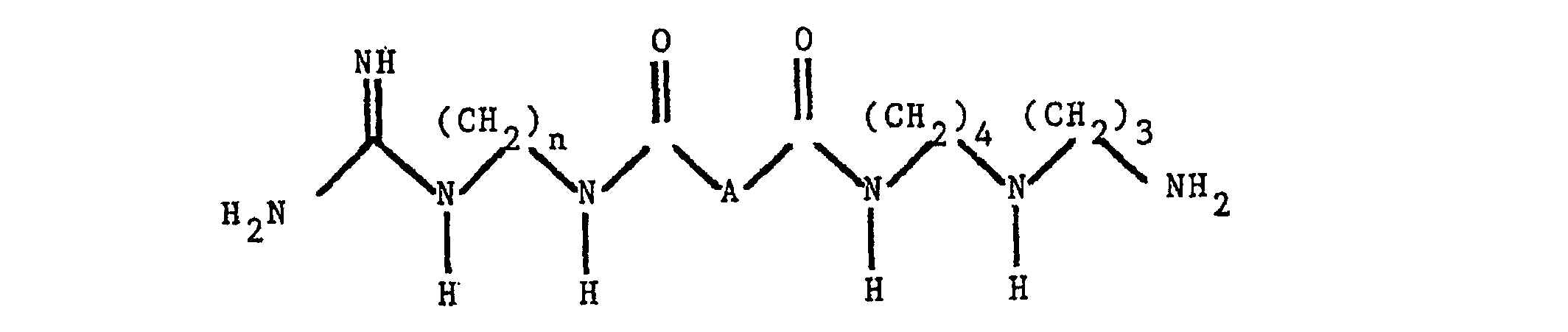
- preferred compounds are characterized by the formula (II) : wherein: A is a single bond, -CH 2 -, -CH 2 -O-, -CH 2 -NH-, -CH-(OH)-, -CHF- or -CH-(OCH 3 )-; and n is 6 or 8.
- n 6 or 8;
- A means a single bond, -CH 2 -, -CH(OH)-, -CHF-, -CH-(OCH 3 )-, -CH 2 NH- or -CH 2 -O- and its addition salts.
- DSG or an analogue or derivative thereof is administered subcutaneously.
- DSG can be administered by subcutaneous injection without local complications and is efficient to reach a systemically effective concentration within short time.
- the feasability and effectivity of this mode of administration was even more surprising, as the information sheet on Gusperimus hydrochloride preparation (Spanidin) Inj. of Nippon Kayaku Co. Ltd., Japan, of April 1994, recommends an intravenous infusion over a time period of 3 hours.
- treatment cycle is defined as a series of subsequent days of administration of DSG or its analogue.
- treatment cycle also encompasses a series of subsequent administrations (at least two) wherein the time period between two subsequent administrations of the drug(s) is less than 24 hours or more than 24 hours, for example 48 hours, as long as these subsequent administrations form a treatment "block” or "cycle” which is separated from the next treatment cycle (block) by a time period which is considerably longer than the time period between two subsequent administrations within one treatment cycle.
- the latter time period is preferably less than 48 hours, in particular between 12 and 24 hours.
- the sequence of treatment cycles interrupted by interphases in which no drug is administered is more efficient than a continuous administration (i.e. not in cycles). It is assumed, though the invention is not limited to a theoretical mechanism, that the multi-cycle treatment may provide a progressive immunomodulatory effect on the immune cell populations. This may be achieved by the repeated recovery (maturation and differentiation from progenitor cells) and selection of regulative or properly regulated cell populations. Cell populations directly or indirectly involved in the pathogenesis may be eliminated or otherwise inactivated during these repeated modulations.
- a treatment cycle lasts at least for 5 days, preferably at least about 7 days, more preferably at least about 10 days, in particular at least about 14 days.
- the latter time period is preferred in order to make sure that all activated mature cells and all cells maturating during this time period are affected.
- a treatment cycle lasts about 18 to 21 days, bowever, longer cycles may be used.
- each cycle of treatment is aiming at a concentration of white blood cells of 3.000 to 4.000/ ⁇ l in the peripheral blood.
- the white blood cell count of the patient is routinely determined and the decrease in white blood cells is monitored.
- the treatment is stopped to allow the concentration of white blood cells to recover to at least about the range from 4.000 to 8.000/ ⁇ l.
- the efficiency of the treatment may be also optimized by monitoring the level of granulocytes, and in particular neutrophils (in addition to or instead of white blood cells) in the peripheral blood of the patient and adjusting the duration of and interphase between the treatment cycles accordingly.
- the neutrophil count of the patient is routinely determined and the decrease of neutrophils monitored.
- the numbers may be determined from a complete blood count (hemogram) of a blood sample, counting erythrocytes, leucocytes (WBC), thrombocytes and reticulocytes as well as from a differential blood count, performed by counting 100 nucleated cells in a blood smear.
- the leucocytopenia induced by DSG or analogues thereof has been described as an adverse side effect of the drug.
- the present invention a controlled and defined decrease in leucocyte, and particularly in neutrophil counts, is even aimed at and made use of, as it has been surprisingly found that these parameters allow the optimisation of a multi-cycle treatment of hyperreactive inflammatory diseases and autoimmune diseases.
- a treatment cycle is aiming at a decrease (inhibition) of the WBC level of at least about 20%. (In other words, at the end of the cycle, only 80% or less of the WBC are left.) An inhibition of WBC of about 50 to about 80% is preferred. However, higher inhibition rates up to 95% or more may be used and may even be preferrable, as long as the remaining level of WBC is not critical to the patient.
- the level of WBC (or neutrophils, see below) may be decreased to a WHO toxicity grade of 3-4 (corresponding to app. 1000 WBC/ ⁇ l or 500 neutrophils/ ⁇ l).
- the percentual inhibition of neutrophils is monitored in order to determine the duration and interval of the treatment cycles.
- a treatment cycle may be aiming at an inhibition of neutrophils in peripheral blood of at least 25%.
- a preferred inhibition rate is between 55% and 90%, however, higher inhibition rates may be used and even preferred.
- the lower limit is determined by the minimum level of neutrophils tolerated without causing health problems to the patient (see above).
- the preferred recovery of WBCs and neutrophils is as defined above (at least to about the range from 4.000 to 8.000 WBC/ ⁇ l or at least about 3.000 to 6.000 neutrophils/ ⁇ l).
- a dosage of at least 0.2 mg/kg body weight of the patient /day, preferably at least 0.3 mg/kg body weight of the patient /day may be advantageously used to induce a progressive and reproducible reduction of white blood cells in the patient within a reasonable cycle time.
- a dosage of at least 0.5 mg DSG /kg body weight of the patient/day is used.
- subcutaneous dosages of between 0.01 or 0.05 to 0.2 mg/kg body weight /day, especially in cases when such lower dosages lead to a better controllable and reasonably progressing decrease of WBCs/neutrophils.
- the time period between two treatment cycles is between 4 to 20 days. However, in certain instances, depending on recovery of white blood cells and the other clinical parameters the time period between two treatment cycles may be shorter or considerably longer.
- the interphase between two treatment cycles is between 10 days to five weeks, in particular between two and four weeks.
- the following protocol may be followed: in case the WBC count drops to 3.000/ ⁇ l or less within less than 14 days, the cycle is terminated and the dosage of deoxyspergualin or its analogue is reduced in the subsequent treatment cycle (e.g. from 0.5 mg/kg/d to 0.25 mg/kg/d). In case the WBC count drops to 3.000/ ⁇ l or less between day 14 and day 21 of the treatment cycle, the cycle is terminated and the subsequent treatment cycle is performed with an identical dosage. In case the WBC count has not dropped to 3.000/ ⁇ l or less on day 21 of the cycle, the cycle is prolonged until such a WBC count is reached, maximally up to four weeks. The interval between two treatment cycles is generally about 14 days according to this embodiment.
- the new treatment cycle may be started within less than 14 days from the termination of the previous cycle, under the proviso that a WBC count of at least 4.000/ ⁇ l has been reached again.
- a dosage of about 5 mg/kg/d may be used intravenously (e.g. in a three hour slow infusion) until a WBC count of 3.000/ ⁇ l or less is reached, or a maximum of 10 days.
- the treatment cycle is then followed by a rest until at least 4.000 WBC/ ⁇ l are reached again.
- the interval between two treatment cycles is around 14 days, unless a relapse occurs within the interval.
- the cycle treatment may be continued with a reduced dosage of spergualin or an analogue thereof as soon as disease control has been achieved.
- DSG or an analogue thereof are used in the treatment of vaculitis, in particular ANCA-associated vasculitis. It was found that the whole complex range of clinical symptoms associated with vasculitis could be improved and eliminated. Thus, it was surprisingly found that after 2 to 6 cycles of treatment with DSG or an analogue or derivative thereof a complete remission occured, since no acute or chronic disease activity was present. This is in contrast to the high relapse rate and incomplete remission observed with the standard therapy of cytotoxic agents combined with steroids, for example of cyclophosphamid and oral corticoids (OCS). Also, no toxic side effects occured in using DSG or an analogue or derivative thereof.
- OCS cyclophosphamid and oral corticoids
- the treatment comprises at least two, preferably at least three or four treatment cycles as set out above. In many cases it was found that typically 6 to 12 cycles are preferable.
- DSG or an analogue or derivative thereof is used in combination with other compounds known in the art to have a beneficial effect in the treatment of the disease treated.
- oral corticosteroids OCS
- the dose of OCS can be severly reduced, for example from 16 mg/d to about 6 mg/d (corresponding to about 0.02 to about 0.08 mg/kg body weight/d).
- deoxyspergualin compounds set forth above are typically used in the form of a pharmaceutically acceptable salt. Any salt of inorganic or organic acids may be used, as long as it is pharmacologically acceptable. Preferred examples include chloride or hydrochloride salts, especially the tri-hydrochloride salt. Examples of acceptable salts may be found in WO99/03504, incorporated herein by reference.
- the medicament may be prepared for a peroral, intravenous, intracutaneous, intraperitoneal, intrahecal, intraocular, ocular, buccal, nasal, percutaneous, cutaneous, topical, inhalative, intramuscular or rectal administration.
- the clinically therapeutic dose of DSG and related compounds is from about 0,01 to about 100 mg/d/kg of patient body weight, preferably from 0,1 to 5 mg/d/kg, and may be administered in single or divided doses. For oral administrations up to 500 mg/d/kg may be used.
- the present invention can also be practised using DSG and related compounds in a racemic mixture, as well as (+) and (-) isomers of DSG or its analogues.
- the agent(s) used may be administered to humans, but also to other mammalian species, such as monkeys, dogs, cats, rats etc.
- the agent used for treatment may be incorporated in a conventional dosage form, such as a tablet, capsule, elixier or injectable.
- a conventional dosage form such as a tablet, capsule, elixier or injectable.
- the above dosage forms will also include the necessary carrier material, excipient, lubricant, buffer, antibacterial, bulking agent (such as mannitol), antioxidans (e.g. ascorbic acid or sodium bisulfite), or other necessary or beneficial additives as well-known or apparent to a person skilled in the art. Examples of excipients and carriers may be found in WO99/03504, incorporated herein by reference.
- CYC cyclophosphamide
- OCS oral corticosteroids
- AZA Azathioprene
- MMF Mycophenolate Mofetil
- ATG anti-thymocyte-globuline
- MTX Metalhotrexate
- IVG intravenous immunoglobulins
- plasmapheresis showing several relapses.
- the disease activity according to the BVAS before DSG-treatment was 12.
- the DSG used was a Gusperimus hydrochloride preparation (100 mg/vial) (Spanidin inj.) of Nippon Kayaku Co. Ltd., Tokyo, Japan.
- the formulation also contained 200 mg of lactose as an inactive ingredient.
- the lyophilized DSG (100 mg) was reconstituted with physiological saline and admininstered at 0,5 mg/kg/d subcutaneously over 19 days.
- the white blood cell count in peripheral blood dropped from 12.300 white blood cells (WBC)/ ⁇ l on day 1 to 3.460 WBC/ ⁇ l on day 19.
- Treatment with DSG was discontinued and white blood cell counts recovered to 9.600/ ⁇ l on day 33. No side effects were observed.
- the levels of white blood cells and neutrophils were regularily monitored. It was observed that those levels reached a nadir a few days after termination of a treatment cycle and then recovered in an almost predictable manner.
- the second DSG-treatment cycle was started on day 33 and subcutaneous administration of DSG was continued until day 52 (WBC count 3500/ ⁇ l). Following an treatment rest from day 52 to day 65 (WBC count 11.500/ ⁇ l), a third treatment cycle was performed from day 66 to day 85 (WBC counts 12.000/ ⁇ l and 3800/ ⁇ l, respectively).
- Neutrophil counts were always in the range from 2000/ ⁇ l to 3000/ ⁇ l at the termination of a cycle and above 4000/ ⁇ l when the subsequent cycle was started.
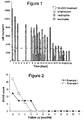
- the first treatment cycle and the levels of white blood cells (leucocytes), lymphocytes and neutrophils are shown in Fig 1.
- the shaded area corresponds to the first cycle (DSG administration period).
- BVAS Bermingham vasculitis activity score
- a 50 year old female with M. Wegener having ANCA-associated systemic vasculitis showed involvement of peripheral nerves, kidney, gut and eyes.
- the diagnosis of ANCA-associated systemic vasculitis was confirmed histologically and immunologically.
- the patient showed mononeuritis multiplex with palsies, necrotizing glomerulonephritis, stenosis of small bowel segments, sinusitis, serotympanon and episcleritis. She had also been given various treatments including CYC + OCS, AZA and MMF with frequent relapses.
- DSG was administered subcutaneously as described in Example I (0,5 mg/kg/d).
- the two treatment cycles were 14 days and 21 days, respectively, and were terminated at white blood cell counts in the range of 3000-4000/ ⁇ l (neutrophil counts (2000-3000/ ⁇ l). The levels of white blood cells and neutrophils were regularly monitored. Treatment cycles were started at white blood cell counts above 4000/ ⁇ l, and neutrophil counts above 3500/ ⁇ l.
- BVAS Bermingham vasculitis activity score
- MRL/lpr mice develop systemic lupus erythematosus (SLE)-like lesions.
- SLE systemic lupus erythematosus
- the disease is characterized by massive lymphadenopathy, development of antibodies to self antigens, and glomerulonephritis. Therefore, these mice offer a good model for autoimmune disease.
- MRL/MpJ-lpr/lpr mice Male MRL/MpJ-lpr/lpr mice were obtained from Charles River Japan (Atsugi, Kanagawa, Japan). The mice were maintained in specific pathogen-free conditions.
- DSG was administered from week 13 through week 20 (58 days):
- Each treatment group consisted of 10 mice.
- a set of control MRL/lpr-mice (10) receiving saline were included.
- the weight of the lymph nodes, serum anti-DNA titer and BUN serum urea nitrogen
- the levels of white blood cells in peripheral blood were decreased both in groups A and B to about 6.000/ ⁇ l compared to about 18.000/ ⁇ l in the control group.
- mice of group B showed a more pronounced reduction of weight of the mesenteric, axillary, elbow, inguinal, submaxillary and iliac lymph nodes as compared to group A. Also, the BUN and the anti-DNA titer was at a significantly lower level in group B as compared to group A.
- the cycle treatment with DSG according to the invention in the early phase of the autoimmune disease was superior to continuous daily administration of an equal dosage of DSG and was more efficient in suppressing the development of SLE-like lesions. This was even more surprising, as the total amount of DSG administered in group B was almost half of that administered in group A.
Landscapes
- Health & Medical Sciences (AREA)
- Chemical & Material Sciences (AREA)
- Medicinal Chemistry (AREA)
- Pharmacology & Pharmacy (AREA)
- Life Sciences & Earth Sciences (AREA)
- Animal Behavior & Ethology (AREA)
- General Health & Medical Sciences (AREA)
- Public Health (AREA)
- Veterinary Medicine (AREA)
- Engineering & Computer Science (AREA)
- Bioinformatics & Cheminformatics (AREA)
- Organic Chemistry (AREA)
- Chemical Kinetics & Catalysis (AREA)
- General Chemical & Material Sciences (AREA)
- Nuclear Medicine, Radiotherapy & Molecular Imaging (AREA)
- Epidemiology (AREA)
- Immunology (AREA)
- Neurosurgery (AREA)
- Heart & Thoracic Surgery (AREA)
- Rheumatology (AREA)
- Cardiology (AREA)
- Biomedical Technology (AREA)
- Emergency Medicine (AREA)
- Neurology (AREA)
- Hospice & Palliative Care (AREA)
- Psychiatry (AREA)
- Pain & Pain Management (AREA)
- Transplantation (AREA)
- Physical Education & Sports Medicine (AREA)
- Orthopedic Medicine & Surgery (AREA)
- Vascular Medicine (AREA)
- Acyclic And Carbocyclic Compounds In Medicinal Compositions (AREA)
- Pharmaceuticals Containing Other Organic And Inorganic Compounds (AREA)
- Medicines That Contain Protein Lipid Enzymes And Other Medicines (AREA)
- Peptides Or Proteins (AREA)
Description


Claims (29)
- The use of deoxyspergualin (DSG) or an analogue thereof for the preparation of a medicament for the treatment of and/or prophylaxis against hyperreactive inflammatory diseases and autoimmune diseases, wherein the treatment is performed in two or more treatment cycles (blocks) which are separated form each other by a time period which is considerably longer than the time period between two subsequent administrations within one treatment cycle.
- The use according to claim 1, characterized in that deoxyspergualin or its analogue are administered subcutaneously.
- The use according to any one of the preceeding claims, characterized in that the treatment cycles have a length of at least about 5 days, preferably at least 7 days, more preferably at least 10 days, in particular about 21 days.
- The use according to any one of the preceeding claims, characterized in that each treatment cycle is aimed to reach a level of white blood cells (WBC) in the peripheral blood of the patient in the range from about 1.000 to about 5.000/µl blood, preferably from 2.500 to 5.000/µl blood, in particular from 3.000 to 4.000/µl blood.
- The use according to any one of the proceeding claims, characterized in that the treatment cycles are aimed to reach a level of neutrophils in the peripheral blood of the patient in the range from about 500 to about 4.000/µl blood, preferably from 1.000 to 4.000/µl blood, in particular from 2.000 to 3.000/µl blood.
- The use according to any one of the preceeding claims, characterized in that the next treatment cycle is started when the level of white blood cells in the peripheral blood of the patient has recovered to at least about 4.000/µl blood.
- The use according to any one of the preceeding claims, characterized in that the next treatment cycle is started when the level of neutrophils in the peripheral blood of the patient has recovered to at least about 3.000/µl blood.
- The use according to any one of the preceeding claims, characterized in that the treatment cycles are aiming at a decrease (inhibition) of the WBC level in peripheral blood of at least about 20%, preferably about 50% to about 80% or more.
- The use according to any one of the preceeding claims, characterized in that the treatment cycles are aiming at a decrease of the level of neutrophils in peripheral blood of at least 25%, preferably between 55% and 90% or more.
- The use according to any one of the preceeding claims, characterized in that the interphase between two treatment cycles is from 10 days to five weeks, preferably from two to four weeks, in particular about 14 days.
- The use according to any one of the preceeding claims, characterized in that the interphase between two treatment cycles is less than 14 days from the termination of the previous cycle in case a relapse or increased disease activity occurs in the interval between two treatment cycles, under the proviso that a WBC level in peripheral blood of at least 4.000/µl has been reached again.
- The use according to any one of the proceeding claims, characterized in that at least 3 or 4 cycles are performed.
- The use according to any one of the preceeding claims, characterized in that a treatment cycle is terminated in case the WBC level in peripheral blood drops to 3.000/µl or less within less than 14 days from the start of the cycle and the dosage of deoxyspergualin or its analogue is reduced in the subsequent treatment cycle.
- The use according to any one of the preceeding claims, characterized in that a treatment cycle is terminated in case the WBC level in peripheral blood drops to 3.000/µl or less between 14 days and 21 days from the start of the cycle and the subsequent treatment cycle is performed with an identical dosage.
- The use according to any one of the preceeding claims, characterized in that a treatment cycle is prolonged until a WBC level in peripheral blood of 3.000/µl or less is reached, maximally up to four weeks.
- The use according to any one of the preceeding claims, characterized in that a dosage of about 5 mg/kg/d is used intravenously until either a WBC level in peripheral blood of 3.000/µl or less is reached, or 10 days from the beginning of the cycle have lapsed.
- The use according to claim 16, characterized in that the the subsequent cycles are performed with a reduced dosage of deoxyspergualin or an analogue thereof.
- The use according to any one of the preceeding claims, wherein the hyperreactive inflammatory disease is vasculitis, in particular ANCA-associated vasculitis.
- The use according to any one of the preceeding claims, wherein the autoimmune disease is collagenoses, vasculitides, arthritis, granulomatoses, organ specific autoimmunopathies as Morbus Crohn, ulcerative colitis and GvHD.
- The use according to any one of the preceeding claims, characterized in that an active stereoisomer is used.
- The use according to any one of the preceeding claims, characterized in that one or more additional active compounds are used.
- The use according to claim 21, characterized in that the additional active compounds are steroids and/or cytotoxic agent(s).
- The use according to claim 21 or 22, characterized in that the additional active compound(s) is (are) DSG or analogues thereof.
- The use according to any one of the preceeding claims, characterized in that a medicament containing deoxyspergualin or an analogue thereof is prepared for a dosage of 0,01 mg to 100 mg/kg, preferably of 0,1 to 5 mg/kg.
- The use according to claim 24, characterized in that 15-deoxyspergualin is used in a dosage of 0.5 mg/kg/d.
- The use according to any one of the preceeding claims, wherein the medicament is prepared for peroral, intravenous, intracutaneous, intraperitoneal, intrahecal, intraocular, ocular, buccal, nasal, percutaneous, cutaneous, topical, inhalative, intramuscular or rectal administration.
- The use according to any one of the preceeding claims, characterized in that a Gusperimus hydrochloride preparation is used.
- The use according to any one of claims 1 to 26, characterized in that a compound of the following formula is used:wherein: A is a single bond, -CH2-, -CH2-O-, -CH2-NH-, -CH-(OH)-, -CHF- or -CH-(OCH3)-; and n is 6 or 8.

- The use according to any one of claims 1 to 26, characterized in that a compound of the the following formula is used:wherein: n is 6 or 8; A means a single bond, -CH2-, -CH(OH)-, -CHF-, -CH-(OCH3)-, -CH2NH- or -CH2-O- and its addition salts.
Applications Claiming Priority (3)
| Application Number | Priority Date | Filing Date | Title |
|---|---|---|---|
| DE19923961 | 1999-05-25 | ||
| DE19923961A DE19923961A1 (en) | 1999-05-25 | 1999-05-25 | Use of 15-deoxyspergualin for the treatment of hyper-reactive inflammatory and autoimmune diseases |
| PCT/EP2000/003430 WO2000071103A2 (en) | 1999-05-25 | 2000-04-14 | Use of 15-deoxyspergualin for the treatment of hyperreactive inflammatory diseases and autoimmune diseases |
Publications (2)
| Publication Number | Publication Date |
|---|---|
| EP1180026A2 EP1180026A2 (en) | 2002-02-20 |
| EP1180026B1 true EP1180026B1 (en) | 2002-12-04 |
Family
ID=7909146
Family Applications (1)
| Application Number | Title | Priority Date | Filing Date |
|---|---|---|---|
| EP00926953A Expired - Lifetime EP1180026B1 (en) | 1999-05-25 | 2000-04-14 | Use of 15-deoxyspergualin for the treatment of hyperreactive inflammatory diseases and autoimmune diseases |
Country Status (20)
| Country | Link |
|---|---|
| US (2) | US7153887B1 (en) |
| EP (1) | EP1180026B1 (en) |
| JP (2) | JP4422349B2 (en) |
| KR (1) | KR100681626B1 (en) |
| CN (1) | CN1199636C (en) |
| AR (1) | AR024071A1 (en) |
| AT (1) | ATE228833T1 (en) |
| AU (1) | AU762018B2 (en) |
| BR (1) | BR0008637A (en) |
| CA (1) | CA2362582C (en) |
| CZ (1) | CZ299440B6 (en) |
| DE (2) | DE19923961A1 (en) |
| ES (1) | ES2188538T3 (en) |
| HU (1) | HU228843B1 (en) |
| MX (1) | MXPA01008587A (en) |
| PL (1) | PL352314A1 (en) |
| RU (1) | RU2255732C2 (en) |
| TW (1) | TWI283175B (en) |
| WO (1) | WO2000071103A2 (en) |
| ZA (1) | ZA200106596B (en) |
Families Citing this family (3)
| Publication number | Priority date | Publication date | Assignee | Title |
|---|---|---|---|---|
| EP1689435A4 (en) * | 2003-10-22 | 2007-10-03 | Univ Rochester | ANTI-THYMOCYTE ANTISERUM AND USE THEREOF TO DECLINE APOPTOSIS FROM B CELLS |
| AR048210A1 (en) * | 2003-12-19 | 2006-04-12 | Chugai Pharmaceutical Co Ltd | A PREVENTIVE AGENT FOR VASCULITIS. |
| PT2012814E (en) * | 2006-04-12 | 2013-07-18 | Genzyme Corp | Methods of treating autoimmune diseases |
Family Cites Families (13)
| Publication number | Priority date | Publication date | Assignee | Title |
|---|---|---|---|---|
| DE3508033A1 (en) * | 1985-03-07 | 1986-09-11 | Behringwerke Ag, 3550 Marburg | Use of (-)-15-deoxyspergualine as immunosuppressor |
| US6083503A (en) * | 1991-08-28 | 2000-07-04 | The United States Of America As Represented By The Department Of Health And Human Services | Interleukin-2 stimulated T lymphocyte cell death for the treatment of autoimmune diseases, allergic responses, and graft rejection |
| FR2698628B1 (en) * | 1992-12-02 | 1995-02-17 | Fournier Ind & Sante | Analogs of 15-deoxyspergualine, their preparation process and their use in therapy. |
| US5250442A (en) * | 1993-04-08 | 1993-10-05 | Orestes Cabezas | Method of treating rheumatoid arthritis using tetracycline |
| FR2716452B1 (en) * | 1994-02-24 | 1996-05-10 | Fournier Ind & Sante | Analogs of 15-deoxyspergualine, their preparation process and their use in therapy. |
| US5505715A (en) * | 1994-02-25 | 1996-04-09 | Bristol-Myers Squibb Company | Iontophoretic transdermal delivery of deoxyspergualin compounds |
| EP0673646B1 (en) * | 1994-03-22 | 1998-12-02 | Nippon Kayaku Co., Ltd. | Use of Deoxypergualin in the manufacture of a medicament for the treatment of inflammatory-hyperresponsiveness diseases |
| US5624938A (en) * | 1994-07-18 | 1997-04-29 | The Trustees Of Columbia University In The City Of New York | Use of chloroquine to treat multiple sclerosis |
| FR2734263B1 (en) * | 1995-05-17 | 1997-06-20 | Fournier Ind & Sante | 15-DEOXYSPERGUALIN ANALOGS, THEIR PREPARATION PROCESS AND THEIR THERAPEUTIC USE |
| US5679651A (en) * | 1995-06-05 | 1997-10-21 | Richardson; Bruce C. | Treatment for systemic lupus erythematosus |
| DE19711803A1 (en) * | 1997-03-21 | 1998-09-24 | Hoechst Ag | Extension of expression of transgenic proteins by immunomodulating treatment with 15-deoxyspergualin |
| DE19728436A1 (en) * | 1997-07-03 | 1999-01-07 | Niels Franke | Low-dose 15-deoxyspergualin preparations |
| TW536400B (en) * | 1997-07-18 | 2003-06-11 | Nippon Kayaku Kk | Pharmaceutical composition for the treatment of immunodeficiency disease which cause by HIV infection |
-
1999
- 1999-05-25 DE DE19923961A patent/DE19923961A1/en not_active Withdrawn
-
2000
- 2000-04-14 ES ES00926953T patent/ES2188538T3/en not_active Expired - Lifetime
- 2000-04-14 AT AT00926953T patent/ATE228833T1/en not_active IP Right Cessation
- 2000-04-14 MX MXPA01008587A patent/MXPA01008587A/en active IP Right Grant
- 2000-04-14 RU RU2001134896/14A patent/RU2255732C2/en active
- 2000-04-14 EP EP00926953A patent/EP1180026B1/en not_active Expired - Lifetime
- 2000-04-14 WO PCT/EP2000/003430 patent/WO2000071103A2/en not_active Ceased
- 2000-04-14 CZ CZ20014158A patent/CZ299440B6/en not_active IP Right Cessation
- 2000-04-14 US US09/979,365 patent/US7153887B1/en not_active Expired - Lifetime
- 2000-04-14 CA CA002362582A patent/CA2362582C/en not_active Expired - Lifetime
- 2000-04-14 KR KR1020017011776A patent/KR100681626B1/en not_active Expired - Lifetime
- 2000-04-14 PL PL00352314A patent/PL352314A1/en not_active Application Discontinuation
- 2000-04-14 CN CNB008055785A patent/CN1199636C/en not_active Expired - Lifetime
- 2000-04-14 JP JP2000619410A patent/JP4422349B2/en not_active Expired - Lifetime
- 2000-04-14 HU HU0200354A patent/HU228843B1/en unknown
- 2000-04-14 DE DE60000937T patent/DE60000937T2/en not_active Expired - Lifetime
- 2000-04-14 AU AU45504/00A patent/AU762018B2/en not_active Expired
- 2000-04-14 BR BR0008637-1A patent/BR0008637A/en not_active Application Discontinuation
- 2000-05-20 TW TW089109780A patent/TWI283175B/en not_active IP Right Cessation
- 2000-05-23 AR ARP000102508A patent/AR024071A1/en unknown
-
2001
- 2001-08-10 ZA ZA200106596A patent/ZA200106596B/en unknown
-
2006
- 2006-08-10 US US11/463,848 patent/US7776829B2/en not_active Expired - Fee Related
-
2009
- 2009-07-17 JP JP2009168344A patent/JP2009263397A/en active Pending
Also Published As
Similar Documents
| Publication | Publication Date | Title |
|---|---|---|
| US8435520B2 (en) | Combinations of immunosuppressive agents for the treatment or prevention of graft rejections | |
| US20250312322A1 (en) | Use of rifaximin on circulating aged neutrophils in sickle cell disease | |
| WO2015063287A1 (en) | Activators or stimulators of soluble guanylate cyclase for use in treating chronic fatigue syndrome | |
| US7776829B2 (en) | Use of 15-deoxyspergualin for the treatment of hyperreactive inflammatory diseases and autoimmune diseases | |
| EP4193995A1 (en) | Use of btk inhibitors in the treatment of diseases | |
| US7998973B2 (en) | Tivozanib and temsirolimus in combination | |
| EP3621628B1 (en) | Method for treating multiple sclerosis using arsenic trioxide | |
| AU2020339737B2 (en) | Method for the treatment of chronic fatigue syndrome using an inhibitory or cytotoxic agent against plasma cells | |
| Salame et al. | INFLUENCE OF THE EXTERNAL BILIARY DRAINAGE ON THE CICLOSPORINE PHARMACOKINETIC AND RENAL FUNCTION IN THE EARLY PERIOD POST-LIVER TRANSPLANTATION.: 177 | |
| Furukawa et al. | EFFICACY AND SAFETY OF BASILIXIMAB INDUCTION THERAPY IN ADULT LIVING DONOR LIVER TRANSPLANTATION.: 179 | |
| Holt et al. | LONG-TERM EFFICACY AND SAFETY OF MYCOPHENOLATE MOFETIL WITH TACROLIMUS IN ORTHOTOPIC (OLT) LIVER TRANSPLANT RECIPIENTS.: 180 | |
| WO1995017189A1 (en) | NEW USE OF δ-OPIOID RECEPTOR ANTAGONISTS |
Legal Events
| Date | Code | Title | Description |
|---|---|---|---|
| PUAI | Public reference made under article 153(3) epc to a published international application that has entered the european phase |
Free format text: ORIGINAL CODE: 0009012 |
|
| 17P | Request for examination filed |
Effective date: 20010828 |
|
| AK | Designated contracting states |
Kind code of ref document: A2 Designated state(s): AT BE CH CY DE DK ES FI FR GB GR IE IT LI LU MC NL PT SE |
|
| AX | Request for extension of the european patent |
Free format text: AL;LT;LV;MK;RO;SI |
|
| GRAG | Despatch of communication of intention to grant |
Free format text: ORIGINAL CODE: EPIDOS AGRA |
|
| 17Q | First examination report despatched |
Effective date: 20020404 |
|
| GRAG | Despatch of communication of intention to grant |
Free format text: ORIGINAL CODE: EPIDOS AGRA |
|
| GRAH | Despatch of communication of intention to grant a patent |
Free format text: ORIGINAL CODE: EPIDOS IGRA |
|
| GRAH | Despatch of communication of intention to grant a patent |
Free format text: ORIGINAL CODE: EPIDOS IGRA |
|
| GRAA | (expected) grant |
Free format text: ORIGINAL CODE: 0009210 |
|
| AK | Designated contracting states |
Kind code of ref document: B1 Designated state(s): AT BE CH CY DE DK ES FI FR GB GR IE IT LI LU MC NL PT SE |
|
| PG25 | Lapsed in a contracting state [announced via postgrant information from national office to epo] |
Ref country code: BE Free format text: LAPSE BECAUSE OF FAILURE TO SUBMIT A TRANSLATION OF THE DESCRIPTION OR TO PAY THE FEE WITHIN THE PRESCRIBED TIME-LIMIT Effective date: 20021204 Ref country code: GR Free format text: LAPSE BECAUSE OF FAILURE TO SUBMIT A TRANSLATION OF THE DESCRIPTION OR TO PAY THE FEE WITHIN THE PRESCRIBED TIME-LIMIT Effective date: 20021204 Ref country code: AT Free format text: LAPSE BECAUSE OF FAILURE TO SUBMIT A TRANSLATION OF THE DESCRIPTION OR TO PAY THE FEE WITHIN THE PRESCRIBED TIME-LIMIT Effective date: 20021204 Ref country code: FI Free format text: LAPSE BECAUSE OF FAILURE TO SUBMIT A TRANSLATION OF THE DESCRIPTION OR TO PAY THE FEE WITHIN THE PRESCRIBED TIME-LIMIT Effective date: 20021204 |
|
| REF | Corresponds to: |
Ref document number: 228833 Country of ref document: AT Date of ref document: 20021215 Kind code of ref document: T |
|
| REG | Reference to a national code |
Ref country code: GB Ref legal event code: FG4D |
|
| REG | Reference to a national code |
Ref country code: CH Ref legal event code: EP |
|
| REG | Reference to a national code |
Ref country code: IE Ref legal event code: FG4D |
|
| REF | Corresponds to: |
Ref document number: 60000937 Country of ref document: DE Date of ref document: 20030116 |
|
| PG25 | Lapsed in a contracting state [announced via postgrant information from national office to epo] |
Ref country code: DK Free format text: LAPSE BECAUSE OF FAILURE TO SUBMIT A TRANSLATION OF THE DESCRIPTION OR TO PAY THE FEE WITHIN THE PRESCRIBED TIME-LIMIT Effective date: 20030304 |
|
| PG25 | Lapsed in a contracting state [announced via postgrant information from national office to epo] |
Ref country code: PT Free format text: LAPSE BECAUSE OF FAILURE TO SUBMIT A TRANSLATION OF THE DESCRIPTION OR TO PAY THE FEE WITHIN THE PRESCRIBED TIME-LIMIT Effective date: 20030305 |
|
| REG | Reference to a national code |
Ref country code: CH Ref legal event code: NV Representative=s name: KELLER & PARTNER PATENTANWAELTE AG |
|
| PG25 | Lapsed in a contracting state [announced via postgrant information from national office to epo] |
Ref country code: LU Free format text: LAPSE BECAUSE OF NON-PAYMENT OF DUE FEES Effective date: 20030414 Ref country code: CY Free format text: LAPSE BECAUSE OF FAILURE TO SUBMIT A TRANSLATION OF THE DESCRIPTION OR TO PAY THE FEE WITHIN THE PRESCRIBED TIME-LIMIT Effective date: 20030414 Ref country code: IE Free format text: LAPSE BECAUSE OF NON-PAYMENT OF DUE FEES Effective date: 20030414 |
|
| PG25 | Lapsed in a contracting state [announced via postgrant information from national office to epo] |
Ref country code: MC Free format text: LAPSE BECAUSE OF NON-PAYMENT OF DUE FEES Effective date: 20030430 |
|
| LTIE | Lt: invalidation of european patent or patent extension |
Effective date: 20021204 |
|
| ET | Fr: translation filed | ||
| REG | Reference to a national code |
Ref country code: ES Ref legal event code: FG2A Ref document number: 2188538 Country of ref document: ES Kind code of ref document: T3 |
|
| PLBE | No opposition filed within time limit |
Free format text: ORIGINAL CODE: 0009261 |
|
| STAA | Information on the status of an ep patent application or granted ep patent |
Free format text: STATUS: NO OPPOSITION FILED WITHIN TIME LIMIT |
|
| 26N | No opposition filed |
Effective date: 20030905 |
|
| REG | Reference to a national code |
Ref country code: IE Ref legal event code: MM4A |
|
| REG | Reference to a national code |
Ref country code: DE Ref legal event code: R082 Ref document number: 60000937 Country of ref document: DE Representative=s name: WESTENDORP SOMMER, DE |
|
| REG | Reference to a national code |
Ref country code: NL Ref legal event code: SD Effective date: 20111010 |
|
| REG | Reference to a national code |
Ref country code: CH Ref legal event code: PUEA Owner name: NIPPON KAYAKU KABUSHIKI KAISHA Free format text: NIPPON KAYAKU KABUSHIKI KAISHA#11-2, FUJIMI 1-CHOME, CHIYODA-KU#TOKYO 102-8172 (JP) $ EURO NIPPON KAYAKU GMBH#STAUFENSTRASSE 4#60323 FRANKFURT/MAIN (DE) -TRANSFER TO- NIPPON KAYAKU KABUSHIKI KAISHA#11-2, FUJIMI 1-CHOME, CHIYODA-KU#TOKYO 102-8172 (JP) |
|
| REG | Reference to a national code |
Ref country code: GB Ref legal event code: 732E Free format text: REGISTERED BETWEEN 20111020 AND 20111025 |
|
| REG | Reference to a national code |
Ref country code: DE Ref legal event code: R082 Ref document number: 60000937 Country of ref document: DE Representative=s name: ANDRAE WESTENDORP PATENTANWAELTE PARTNERSCHAFT, DE Effective date: 20111010 Ref country code: DE Ref legal event code: R081 Ref document number: 60000937 Country of ref document: DE Owner name: NIPPON KAYAKU KABUSHIKI KAISHA, JP Free format text: FORMER OWNER: NIPPON KAYAKU K.K., EURO NIPPON KAYAKU GMBH, , JP Effective date: 20111010 Ref country code: DE Ref legal event code: R081 Ref document number: 60000937 Country of ref document: DE Owner name: NIPPON KAYAKU KABUSHIKI KAISHA, JP Free format text: FORMER OWNERS: NIPPON KAYAKU K.K., TOKIO/TOKYO, JP; EURO NIPPON KAYAKU GMBH, 60323 FRANKFURT, DE Effective date: 20111010 |
|
| REG | Reference to a national code |
Ref country code: FR Ref legal event code: TP Owner name: NIPPON KAYAKU KABUSHIKI KAISHA, JP Effective date: 20111108 |
|
| REG | Reference to a national code |
Ref country code: ES Ref legal event code: PC2A Owner name: NIPPON KAYAKU KABUSHIKI KAISHA Effective date: 20120202 |
|
| REG | Reference to a national code |
Ref country code: CH Ref legal event code: PCAR Free format text: NEW ADDRESS: EIGERSTRASSE 2 POSTFACH, 3000 BERN 14 (CH) |
|
| REG | Reference to a national code |
Ref country code: FR Ref legal event code: PLFP Year of fee payment: 17 |
|
| REG | Reference to a national code |
Ref country code: FR Ref legal event code: PLFP Year of fee payment: 18 |
|
| REG | Reference to a national code |
Ref country code: FR Ref legal event code: PLFP Year of fee payment: 19 |
|
| PGFP | Annual fee paid to national office [announced via postgrant information from national office to epo] |
Ref country code: NL Payment date: 20190418 Year of fee payment: 20 |
|
| PGFP | Annual fee paid to national office [announced via postgrant information from national office to epo] |
Ref country code: IT Payment date: 20190419 Year of fee payment: 20 Ref country code: ES Payment date: 20190520 Year of fee payment: 20 Ref country code: DE Payment date: 20190430 Year of fee payment: 20 |
|
| PGFP | Annual fee paid to national office [announced via postgrant information from national office to epo] |
Ref country code: SE Payment date: 20190425 Year of fee payment: 20 Ref country code: FR Payment date: 20190423 Year of fee payment: 20 |
|
| PGFP | Annual fee paid to national office [announced via postgrant information from national office to epo] |
Ref country code: CH Payment date: 20190424 Year of fee payment: 20 |
|
| PGFP | Annual fee paid to national office [announced via postgrant information from national office to epo] |
Ref country code: GB Payment date: 20190424 Year of fee payment: 20 |
|
| REG | Reference to a national code |
Ref country code: DE Ref legal event code: R071 Ref document number: 60000937 Country of ref document: DE |
|
| REG | Reference to a national code |
Ref country code: NL Ref legal event code: MK Effective date: 20200413 |
|
| REG | Reference to a national code |
Ref country code: CH Ref legal event code: PL |
|
| REG | Reference to a national code |
Ref country code: GB Ref legal event code: PE20 Expiry date: 20200413 |
|
| PG25 | Lapsed in a contracting state [announced via postgrant information from national office to epo] |
Ref country code: GB Free format text: LAPSE BECAUSE OF EXPIRATION OF PROTECTION Effective date: 20200413 |
|
| REG | Reference to a national code |
Ref country code: ES Ref legal event code: FD2A Effective date: 20220103 |
|
| PG25 | Lapsed in a contracting state [announced via postgrant information from national office to epo] |
Ref country code: ES Free format text: LAPSE BECAUSE OF EXPIRATION OF PROTECTION Effective date: 20200415 |