EP1178969B1 - Gastrin and cholecystokinin receptor ligands - Google Patents
Gastrin and cholecystokinin receptor ligands Download PDFInfo
- Publication number
- EP1178969B1 EP1178969B1 EP99954196A EP99954196A EP1178969B1 EP 1178969 B1 EP1178969 B1 EP 1178969B1 EP 99954196 A EP99954196 A EP 99954196A EP 99954196 A EP99954196 A EP 99954196A EP 1178969 B1 EP1178969 B1 EP 1178969B1
- Authority
- EP
- European Patent Office
- Prior art keywords
- acid
- amino
- ethyl
- adamantan
- methyl
- Prior art date
- Legal status (The legal status is an assumption and is not a legal conclusion. Google has not performed a legal analysis and makes no representation as to the accuracy of the status listed.)
- Expired - Lifetime
Links
- AOXOCDRNSPFDPE-UKEONUMOSA-N chembl413654 Chemical compound C([C@H](C(=O)NCC(=O)N[C@H](CC=1C2=CC=CC=C2NC=1)C(=O)N[C@H](CCSC)C(=O)N[C@H](CC(O)=O)C(=O)N[C@H](CC=1C=CC=CC=1)C(N)=O)NC(=O)[C@@H](C)NC(=O)[C@@H](CCC(O)=O)NC(=O)[C@@H](CCC(O)=O)NC(=O)[C@@H](CCC(O)=O)NC(=O)[C@H](CCC(O)=O)NC(=O)[C@H](CCC(O)=O)NC(=O)[C@H](CC(C)C)NC(=O)[C@H](CC=1C2=CC=CC=C2NC=1)NC(=O)[C@H]1N(CCC1)C(=O)CNC(=O)[C@@H](N)CCC(O)=O)C1=CC=C(O)C=C1 AOXOCDRNSPFDPE-UKEONUMOSA-N 0.000 title abstract description 10
- 239000003446 ligand Substances 0.000 title abstract description 7
- 102000004859 Cholecystokinin Receptors Human genes 0.000 title abstract description 5
- 108090001085 Cholecystokinin Receptors Proteins 0.000 title abstract description 5
- 108010089448 Cholecystokinin B Receptor Proteins 0.000 title abstract description 3
- 102000052874 Gastrin receptors Human genes 0.000 title abstract description 3
- 150000001875 compounds Chemical class 0.000 claims abstract description 419
- 125000001183 hydrocarbyl group Chemical group 0.000 claims abstract description 18
- 125000004432 carbon atom Chemical group C* 0.000 claims abstract description 15
- 125000003178 carboxy group Chemical group [H]OC(*)=O 0.000 claims abstract description 14
- 150000003839 salts Chemical class 0.000 claims abstract description 12
- NQRYJNQNLNOLGT-UHFFFAOYSA-N Piperidine Chemical compound C1CCNCC1 NQRYJNQNLNOLGT-UHFFFAOYSA-N 0.000 claims abstract description 8
- 229910052757 nitrogen Inorganic materials 0.000 claims abstract description 8
- 125000003831 tetrazolyl group Chemical group 0.000 claims abstract description 8
- 125000004433 nitrogen atom Chemical group N* 0.000 claims abstract description 7
- 229910052799 carbon Inorganic materials 0.000 claims abstract description 5
- RWRDLPDLKQPQOW-UHFFFAOYSA-N Pyrrolidine Chemical group C1CCNC1 RWRDLPDLKQPQOW-UHFFFAOYSA-N 0.000 claims abstract description 3
- 229910006069 SO3H Inorganic materials 0.000 claims abstract description 3
- 125000000743 hydrocarbylene group Chemical group 0.000 claims abstract description 3
- 238000000034 method Methods 0.000 claims description 543
- -1 hydroxy, amino Chemical group 0.000 claims description 69
- 238000006243 chemical reaction Methods 0.000 claims description 29
- 125000001997 phenyl group Chemical group [H]C1=C([H])C([H])=C(*)C([H])=C1[H] 0.000 claims description 12
- 150000001412 amines Chemical class 0.000 claims description 11
- 150000002367 halogens Chemical class 0.000 claims description 10
- 238000004519 manufacturing process Methods 0.000 claims description 10
- 125000000956 methoxy group Chemical group [H]C([H])([H])O* 0.000 claims description 10
- 229910052736 halogen Inorganic materials 0.000 claims description 9
- PXIPVTKHYLBLMZ-UHFFFAOYSA-N Sodium azide Chemical compound [Na+].[N-]=[N+]=[N-] PXIPVTKHYLBLMZ-UHFFFAOYSA-N 0.000 claims description 8
- 229910052739 hydrogen Inorganic materials 0.000 claims description 8
- 125000005843 halogen group Chemical group 0.000 claims description 7
- 229910052801 chlorine Inorganic materials 0.000 claims description 6
- 125000004435 hydrogen atom Chemical group [H]* 0.000 claims description 6
- 239000008194 pharmaceutical composition Substances 0.000 claims description 6
- LPXPTNMVRIOKMN-UHFFFAOYSA-M sodium nitrite Chemical compound [Na+].[O-]N=O LPXPTNMVRIOKMN-UHFFFAOYSA-M 0.000 claims description 6
- 125000005073 adamantyl group Chemical group C12(CC3CC(CC(C1)C3)C2)* 0.000 claims description 5
- 229910052794 bromium Inorganic materials 0.000 claims description 5
- 125000000113 cyclohexyl group Chemical group [H]C1([H])C([H])([H])C([H])([H])C([H])(*)C([H])([H])C1([H])[H] 0.000 claims description 5
- 239000003085 diluting agent Substances 0.000 claims description 5
- 229910052731 fluorine Inorganic materials 0.000 claims description 5
- 125000000582 cycloheptyl group Chemical group [H]C1([H])C([H])([H])C([H])([H])C([H])([H])C([H])(*)C([H])([H])C1([H])[H] 0.000 claims description 4
- RIFGWPKJUGCATF-UHFFFAOYSA-N ethyl chloroformate Chemical compound CCOC(Cl)=O RIFGWPKJUGCATF-UHFFFAOYSA-N 0.000 claims description 4
- 125000004430 oxygen atom Chemical group O* 0.000 claims description 4
- 125000006239 protecting group Chemical group 0.000 claims description 4
- 125000004434 sulfur atom Chemical group 0.000 claims description 4
- 125000000738 acetamido group Chemical group [H]C([H])([H])C(=O)N([H])[*] 0.000 claims description 3
- 229910052740 iodine Inorganic materials 0.000 claims description 3
- 125000002496 methyl group Chemical group [H]C([H])([H])* 0.000 claims description 3
- 235000010288 sodium nitrite Nutrition 0.000 claims description 3
- 125000004953 trihalomethyl group Chemical group 0.000 claims description 3
- CYTQBVOFDCPGCX-UHFFFAOYSA-N trimethyl phosphite Chemical compound COP(OC)OC CYTQBVOFDCPGCX-UHFFFAOYSA-N 0.000 claims description 3
- 125000002147 dimethylamino group Chemical group [H]C([H])([H])N(*)C([H])([H])[H] 0.000 claims description 2
- 238000001727 in vivo Methods 0.000 claims description 2
- 238000002156 mixing Methods 0.000 claims description 2
- 125000002347 octyl group Chemical group [H]C([*])([H])C([H])([H])C([H])([H])C([H])([H])C([H])([H])C([H])([H])C([H])([H])C([H])([H])[H] 0.000 claims description 2
- 125000002023 trifluoromethyl group Chemical group FC(F)(F)* 0.000 claims description 2
- 150000003863 ammonium salts Chemical class 0.000 claims 1
- XLYOFNOQVPJJNP-UHFFFAOYSA-N water Substances O XLYOFNOQVPJJNP-UHFFFAOYSA-N 0.000 description 627
- 238000005160 1H NMR spectroscopy Methods 0.000 description 405
- IAZDPXIOMUYVGZ-UHFFFAOYSA-N DMSO Substances CS(C)=O IAZDPXIOMUYVGZ-UHFFFAOYSA-N 0.000 description 366
- 239000002253 acid Substances 0.000 description 341
- RYHBNJHYFVUHQT-UHFFFAOYSA-N 1,4-Dioxane Chemical compound C1COCCO1 RYHBNJHYFVUHQT-UHFFFAOYSA-N 0.000 description 302
- MBBZMMPHUWSWHV-BDVNFPICSA-N N-methylglucamine Chemical compound CNC[C@H](O)[C@@H](O)[C@H](O)[C@H](O)CO MBBZMMPHUWSWHV-BDVNFPICSA-N 0.000 description 290
- XEKOWRVHYACXOJ-UHFFFAOYSA-N Ethyl acetate Chemical compound CCOC(C)=O XEKOWRVHYACXOJ-UHFFFAOYSA-N 0.000 description 228
- YMWUJEATGCHHMB-UHFFFAOYSA-N Dichloromethane Chemical compound ClCCl YMWUJEATGCHHMB-UHFFFAOYSA-N 0.000 description 219
- 230000004048 modification Effects 0.000 description 198
- 238000012986 modification Methods 0.000 description 198
- HEDRZPFGACZZDS-MICDWDOJSA-N Trichloro(2H)methane Chemical compound [2H]C(Cl)(Cl)Cl HEDRZPFGACZZDS-MICDWDOJSA-N 0.000 description 170
- 239000000047 product Substances 0.000 description 165
- VYPSYNLAJGMNEJ-UHFFFAOYSA-N Silicium dioxide Chemical compound O=[Si]=O VYPSYNLAJGMNEJ-UHFFFAOYSA-N 0.000 description 110
- YQEQHIZMMDWDOV-UHFFFAOYSA-N benzyl 3-aminobenzoate Chemical compound NC1=CC=CC(C(=O)OCC=2C=CC=CC=2)=C1 YQEQHIZMMDWDOV-UHFFFAOYSA-N 0.000 description 108
- 239000000243 solution Substances 0.000 description 104
- KVFDZFBHBWTVID-UHFFFAOYSA-N cyclohexanecarbaldehyde Chemical compound O=CC1CCCCC1 KVFDZFBHBWTVID-UHFFFAOYSA-N 0.000 description 103
- VLKZOEOYAKHREP-UHFFFAOYSA-N n-Hexane Chemical compound CCCCCC VLKZOEOYAKHREP-UHFFFAOYSA-N 0.000 description 96
- CSNNHWWHGAXBCP-UHFFFAOYSA-L Magnesium sulfate Chemical compound [Mg+2].[O-][S+2]([O-])([O-])[O-] CSNNHWWHGAXBCP-UHFFFAOYSA-L 0.000 description 88
- OKKJLVBELUTLKV-UHFFFAOYSA-N Methanol Chemical compound OC OKKJLVBELUTLKV-UHFFFAOYSA-N 0.000 description 87
- 239000007787 solid Substances 0.000 description 87
- DGPBVJWCIDNDPN-UHFFFAOYSA-N 2-(dimethylamino)benzaldehyde Chemical compound CN(C)C1=CC=CC=C1C=O DGPBVJWCIDNDPN-UHFFFAOYSA-N 0.000 description 70
- 239000002904 solvent Substances 0.000 description 66
- 239000000203 mixture Substances 0.000 description 61
- 239000000377 silicon dioxide Substances 0.000 description 54
- 238000003818 flash chromatography Methods 0.000 description 52
- ZMXDDKWLCZADIW-UHFFFAOYSA-N N,N-Dimethylformamide Chemical compound CN(C)C=O ZMXDDKWLCZADIW-UHFFFAOYSA-N 0.000 description 51
- VEXZGXHMUGYJMC-UHFFFAOYSA-N Hydrochloric acid Chemical compound Cl VEXZGXHMUGYJMC-UHFFFAOYSA-N 0.000 description 45
- 229910052943 magnesium sulfate Inorganic materials 0.000 description 44
- GRJXQBBDZNFZME-UHFFFAOYSA-N 5-[2-(1-adamantyl)ethyl]-2-(2-methylphenyl)-1h-imidazole-4-carboxylic acid Chemical compound CC1=CC=CC=C1C(N1)=NC(C(O)=O)=C1CCC1(C2)CC(C3)CC2CC3C1 GRJXQBBDZNFZME-UHFFFAOYSA-N 0.000 description 40
- QTBSBXVTEAMEQO-UHFFFAOYSA-N Acetic acid Chemical compound CC(O)=O QTBSBXVTEAMEQO-UHFFFAOYSA-N 0.000 description 40
- LFQSCWFLJHTTHZ-UHFFFAOYSA-N Ethanol Chemical compound CCO LFQSCWFLJHTTHZ-UHFFFAOYSA-N 0.000 description 40
- WYURNTSHIVDZCO-UHFFFAOYSA-N Tetrahydrofuran Chemical compound C1CCOC1 WYURNTSHIVDZCO-UHFFFAOYSA-N 0.000 description 40
- VDJWRMQQXQBYIO-UHFFFAOYSA-N dibenzyl 5-aminobenzene-1,3-dicarboxylate Chemical compound C=1C(N)=CC(C(=O)OCC=2C=CC=CC=2)=CC=1C(=O)OCC1=CC=CC=C1 VDJWRMQQXQBYIO-UHFFFAOYSA-N 0.000 description 40
- GGPNHAMREWAHMV-UHFFFAOYSA-N benzyl 5-amino-2-methylbenzoate Chemical compound CC1=CC=C(N)C=C1C(=O)OCC1=CC=CC=C1 GGPNHAMREWAHMV-UHFFFAOYSA-N 0.000 description 39
- 239000012267 brine Substances 0.000 description 30
- 239000012043 crude product Substances 0.000 description 30
- HPALAKNZSZLMCH-UHFFFAOYSA-M sodium;chloride;hydrate Chemical compound O.[Na+].[Cl-] HPALAKNZSZLMCH-UHFFFAOYSA-M 0.000 description 30
- PQXODCONICGQAE-UHFFFAOYSA-N 5-[2-(1-adamantyl)ethyl]-2-cyclohexyl-1h-imidazole-4-carboxylic acid Chemical compound N1C(CCC23CC4CC(CC(C4)C2)C3)=C(C(=O)O)N=C1C1CCCCC1 PQXODCONICGQAE-UHFFFAOYSA-N 0.000 description 29
- PJKVFARRVXDXAD-UHFFFAOYSA-N 2-naphthaldehyde Chemical compound C1=CC=CC2=CC(C=O)=CC=C21 PJKVFARRVXDXAD-UHFFFAOYSA-N 0.000 description 28
- HEMHJVSKTPXQMS-UHFFFAOYSA-M Sodium hydroxide Chemical compound [OH-].[Na+] HEMHJVSKTPXQMS-UHFFFAOYSA-M 0.000 description 27
- FMASTMURQSHELY-UHFFFAOYSA-N n-(4-fluoro-2-methylphenyl)-3-methyl-n-[(2-methyl-1h-indol-4-yl)methyl]pyridine-4-carboxamide Chemical compound C1=CC=C2NC(C)=CC2=C1CN(C=1C(=CC(F)=CC=1)C)C(=O)C1=CC=NC=C1C FMASTMURQSHELY-UHFFFAOYSA-N 0.000 description 27
- 239000003921 oil Substances 0.000 description 27
- 235000019198 oils Nutrition 0.000 description 27
- YYMZNBOLRHIVLT-UHFFFAOYSA-N 5-[2-(1-adamantyl)ethyl]-2-naphthalen-2-yl-1h-imidazole-4-carboxylic acid Chemical compound C1=CC=CC2=CC(C3=NC(=C(N3)CCC34CC5CC(CC(C5)C3)C4)C(=O)O)=CC=C21 YYMZNBOLRHIVLT-UHFFFAOYSA-N 0.000 description 26
- RTZKZFJDLAIYFH-UHFFFAOYSA-N Diethyl ether Chemical compound CCOCC RTZKZFJDLAIYFH-UHFFFAOYSA-N 0.000 description 23
- 150000004702 methyl esters Chemical class 0.000 description 23
- 239000011541 reaction mixture Substances 0.000 description 23
- 239000006260 foam Substances 0.000 description 22
- ZMANZCXQSJIPKH-UHFFFAOYSA-N Triethylamine Chemical compound CCN(CC)CC ZMANZCXQSJIPKH-UHFFFAOYSA-N 0.000 description 21
- 238000010511 deprotection reaction Methods 0.000 description 21
- VHYFNPMBLIVWCW-UHFFFAOYSA-N 4-Dimethylaminopyridine Chemical compound CN(C)C1=CC=NC=C1 VHYFNPMBLIVWCW-UHFFFAOYSA-N 0.000 description 20
- HEDRZPFGACZZDS-UHFFFAOYSA-N Chloroform Chemical compound ClC(Cl)Cl HEDRZPFGACZZDS-UHFFFAOYSA-N 0.000 description 20
- YLQBMQCUIZJEEH-UHFFFAOYSA-N tetrahydrofuran Natural products C=1C=COC=1 YLQBMQCUIZJEEH-UHFFFAOYSA-N 0.000 description 20
- QNIAMDVYLUGYOD-UHFFFAOYSA-N ethyl 5-(1-adamantyl)-2,3-dioxopentanoate;hydrate Chemical compound O.C1C(C2)CC3CC2CC1(CCC(=O)C(=O)C(=O)OCC)C3 QNIAMDVYLUGYOD-UHFFFAOYSA-N 0.000 description 19
- 239000012074 organic phase Substances 0.000 description 19
- FGUUSXIOTUKUDN-IBGZPJMESA-N C1(=CC=CC=C1)N1C2=C(NC([C@H](C1)NC=1OC(=NN=1)C1=CC=CC=C1)=O)C=CC=C2 Chemical compound C1(=CC=CC=C1)N1C2=C(NC([C@H](C1)NC=1OC(=NN=1)C1=CC=CC=C1)=O)C=CC=C2 FGUUSXIOTUKUDN-IBGZPJMESA-N 0.000 description 18
- UIIMBOGNXHQVGW-UHFFFAOYSA-M Sodium bicarbonate Chemical class [Na+].OC([O-])=O UIIMBOGNXHQVGW-UHFFFAOYSA-M 0.000 description 18
- YXFVVABEGXRONW-UHFFFAOYSA-N Toluene Chemical compound CC1=CC=CC=C1 YXFVVABEGXRONW-UHFFFAOYSA-N 0.000 description 18
- 238000010992 reflux Methods 0.000 description 18
- 239000000725 suspension Substances 0.000 description 18
- 239000005711 Benzoic acid Substances 0.000 description 17
- RAXXELZNTBOGNW-UHFFFAOYSA-N imidazole Natural products C1=CNC=N1 RAXXELZNTBOGNW-UHFFFAOYSA-N 0.000 description 16
- LEHBURLTIWGHEM-UHFFFAOYSA-N pyridinium chlorochromate Chemical compound [O-][Cr](Cl)(=O)=O.C1=CC=[NH+]C=C1 LEHBURLTIWGHEM-UHFFFAOYSA-N 0.000 description 16
- CSCPPACGZOOCGX-UHFFFAOYSA-N Acetone Chemical compound CC(C)=O CSCPPACGZOOCGX-UHFFFAOYSA-N 0.000 description 15
- WSFSSNUMVMOOMR-UHFFFAOYSA-N Formaldehyde Chemical compound O=C WSFSSNUMVMOOMR-UHFFFAOYSA-N 0.000 description 15
- HUMNYLRZRPPJDN-UHFFFAOYSA-N benzaldehyde Chemical compound O=CC1=CC=CC=C1 HUMNYLRZRPPJDN-UHFFFAOYSA-N 0.000 description 15
- HIKRJHFHGKZKRI-UHFFFAOYSA-N 2,4,6-trimethylbenzaldehyde Chemical compound CC1=CC(C)=C(C=O)C(C)=C1 HIKRJHFHGKZKRI-UHFFFAOYSA-N 0.000 description 14
- 238000001914 filtration Methods 0.000 description 14
- BTFQKIATRPGRBS-UHFFFAOYSA-N o-tolualdehyde Chemical compound CC1=CC=CC=C1C=O BTFQKIATRPGRBS-UHFFFAOYSA-N 0.000 description 14
- 239000012044 organic layer Substances 0.000 description 14
- DQNWKASPZFJVMJ-UHFFFAOYSA-N 2-cycloheptylacetic acid Chemical compound OC(=O)CC1CCCCCC1 DQNWKASPZFJVMJ-UHFFFAOYSA-N 0.000 description 13
- 125000000217 alkyl group Chemical group 0.000 description 13
- ZCLYCHVAVBUHHI-UHFFFAOYSA-N benzyl 2-(3-aminophenyl)acetate Chemical group NC1=CC=CC(CC(=O)OCC=2C=CC=CC=2)=C1 ZCLYCHVAVBUHHI-UHFFFAOYSA-N 0.000 description 13
- 239000000460 chlorine Substances 0.000 description 13
- KAESVJOAVNADME-UHFFFAOYSA-N Pyrrole Chemical compound C=1C=CNC=1 KAESVJOAVNADME-UHFFFAOYSA-N 0.000 description 12
- IXCSERBJSXMMFS-UHFFFAOYSA-N hydrogen chloride Substances Cl.Cl IXCSERBJSXMMFS-UHFFFAOYSA-N 0.000 description 12
- 229910000041 hydrogen chloride Inorganic materials 0.000 description 12
- VZDNXXPBYLGWOS-UHFFFAOYSA-N methyl 3-aminobenzoate Chemical compound COC(=O)C1=CC=CC(N)=C1 VZDNXXPBYLGWOS-UHFFFAOYSA-N 0.000 description 12
- DTQVDTLACAAQTR-UHFFFAOYSA-N Trifluoroacetic acid Chemical compound OC(=O)C(F)(F)F DTQVDTLACAAQTR-UHFFFAOYSA-N 0.000 description 11
- FJOICYRROJXYHO-UHFFFAOYSA-N ethyl 4-(1-adamantyl)-3-oxobutanoate Chemical compound C1C(C2)CC3CC2CC1(CC(=O)CC(=O)OCC)C3 FJOICYRROJXYHO-UHFFFAOYSA-N 0.000 description 11
- XLYOFNOQVPJJNP-ZSJDYOACSA-N heavy water Substances [2H]O[2H] XLYOFNOQVPJJNP-ZSJDYOACSA-N 0.000 description 11
- MOWXJLUYGFNTAL-DEOSSOPVSA-N (s)-[2-chloro-4-fluoro-5-(7-morpholin-4-ylquinazolin-4-yl)phenyl]-(6-methoxypyridazin-3-yl)methanol Chemical compound N1=NC(OC)=CC=C1[C@@H](O)C1=CC(C=2C3=CC=C(C=C3N=CN=2)N2CCOCC2)=C(F)C=C1Cl MOWXJLUYGFNTAL-DEOSSOPVSA-N 0.000 description 10
- ZWUSBSHBFFPRNE-UHFFFAOYSA-N 3,4-dichlorobenzaldehyde Chemical compound ClC1=CC=C(C=O)C=C1Cl ZWUSBSHBFFPRNE-UHFFFAOYSA-N 0.000 description 10
- KWYUFKZDYYNOTN-UHFFFAOYSA-M Potassium hydroxide Chemical compound [OH-].[K+] KWYUFKZDYYNOTN-UHFFFAOYSA-M 0.000 description 10
- KEAYESYHFKHZAL-UHFFFAOYSA-N Sodium Chemical compound [Na] KEAYESYHFKHZAL-UHFFFAOYSA-N 0.000 description 10
- 125000001797 benzyl group Chemical group [H]C1=C([H])C([H])=C(C([H])=C1[H])C([H])([H])* 0.000 description 10
- QVFRKPIPJDMZBX-UHFFFAOYSA-N ethyl 5-[2-(1-adamantyl)ethyl]-2-phenyl-1h-imidazole-4-carboxylate Chemical compound N1C(CCC23CC4CC(CC(C4)C2)C3)=C(C(=O)OCC)N=C1C1=CC=CC=C1 QVFRKPIPJDMZBX-UHFFFAOYSA-N 0.000 description 10
- 239000000463 material Substances 0.000 description 10
- 230000003647 oxidation Effects 0.000 description 10
- 238000007254 oxidation reaction Methods 0.000 description 10
- 239000012312 sodium hydride Substances 0.000 description 10
- 229910000104 sodium hydride Inorganic materials 0.000 description 10
- 125000004494 ethyl ester group Chemical group 0.000 description 9
- SWSZSSZIIGQTIZ-UHFFFAOYSA-N 3-cycloheptylpropanoic acid Chemical compound OC(=O)CCC1CCCCCC1 SWSZSSZIIGQTIZ-UHFFFAOYSA-N 0.000 description 8
- HNFOXZBCUXJBJM-UHFFFAOYSA-N 4-bicyclo[2.2.2]octanylmethanol Chemical compound C1CC2CCC1(CO)CC2 HNFOXZBCUXJBJM-UHFFFAOYSA-N 0.000 description 8
- XKRFYHLGVUSROY-UHFFFAOYSA-N Argon Chemical compound [Ar] XKRFYHLGVUSROY-UHFFFAOYSA-N 0.000 description 8
- 102400000921 Gastrin Human genes 0.000 description 8
- 108010052343 Gastrins Proteins 0.000 description 8
- AMIMRNSIRUDHCM-UHFFFAOYSA-N Isopropylaldehyde Chemical compound CC(C)C=O AMIMRNSIRUDHCM-UHFFFAOYSA-N 0.000 description 8
- JGFZNNIVVJXRND-UHFFFAOYSA-N N,N-Diisopropylethylamine (DIPEA) Chemical compound CCN(C(C)C)C(C)C JGFZNNIVVJXRND-UHFFFAOYSA-N 0.000 description 8
- 150000002148 esters Chemical class 0.000 description 8
- HYBBIBNJHNGZAN-UHFFFAOYSA-N furfural Chemical compound O=CC1=CC=CO1 HYBBIBNJHNGZAN-UHFFFAOYSA-N 0.000 description 8
- DTHMTBUWTGVEFG-UHFFFAOYSA-N methyl 2-amino-2-phenylacetate;hydrochloride Chemical compound [Cl-].COC(=O)C([NH3+])C1=CC=CC=C1 DTHMTBUWTGVEFG-UHFFFAOYSA-N 0.000 description 8
- CTSLXHKWHWQRSH-UHFFFAOYSA-N oxalyl chloride Chemical compound ClC(=O)C(Cl)=O CTSLXHKWHWQRSH-UHFFFAOYSA-N 0.000 description 8
- QNGNSVIICDLXHT-UHFFFAOYSA-N para-ethylbenzaldehyde Natural products CCC1=CC=C(C=O)C=C1 QNGNSVIICDLXHT-UHFFFAOYSA-N 0.000 description 8
- LIGACIXOYTUXAW-UHFFFAOYSA-N phenacyl bromide Chemical compound BrCC(=O)C1=CC=CC=C1 LIGACIXOYTUXAW-UHFFFAOYSA-N 0.000 description 8
- 239000002244 precipitate Substances 0.000 description 8
- FYSNRJHAOHDILO-UHFFFAOYSA-N thionyl chloride Chemical compound ClS(Cl)=O FYSNRJHAOHDILO-UHFFFAOYSA-N 0.000 description 8
- NICPJLVQTQFOIN-AWEZNQCLSA-N 9h-fluoren-9-ylmethyl (2s)-2-formylpyrrolidine-1-carboxylate Chemical compound O=C[C@@H]1CCCN1C(=O)OCC1C2=CC=CC=C2C2=CC=CC=C21 NICPJLVQTQFOIN-AWEZNQCLSA-N 0.000 description 7
- USFZMSVCRYTOJT-UHFFFAOYSA-N Ammonium acetate Chemical compound N.CC(O)=O USFZMSVCRYTOJT-UHFFFAOYSA-N 0.000 description 7
- OKJPEAGHQZHRQV-UHFFFAOYSA-N Triiodomethane Natural products IC(I)I OKJPEAGHQZHRQV-UHFFFAOYSA-N 0.000 description 7
- 150000001299 aldehydes Chemical class 0.000 description 7
- 239000007864 aqueous solution Substances 0.000 description 7
- YBUDWIYXQVZZGH-UHFFFAOYSA-N benzyl 5-(1-adamantyl)-2,3-dioxopentanoate;hydrate Chemical compound O.C1C(C2)CC(C3)CC2CC13CCC(=O)C(=O)C(=O)OCC1=CC=CC=C1 YBUDWIYXQVZZGH-UHFFFAOYSA-N 0.000 description 7
- 239000006185 dispersion Substances 0.000 description 7
- INQOMBQAUSQDDS-UHFFFAOYSA-N iodomethane Chemical compound IC INQOMBQAUSQDDS-UHFFFAOYSA-N 0.000 description 7
- 239000010410 layer Substances 0.000 description 7
- ILVPFTMKCHREDJ-UHFFFAOYSA-N methyl 5-amino-2-fluorobenzoate Chemical compound COC(=O)C1=CC(N)=CC=C1F ILVPFTMKCHREDJ-UHFFFAOYSA-N 0.000 description 7
- 238000003756 stirring Methods 0.000 description 7
- HLJZTKUZIQZBDP-UHFFFAOYSA-N 5-[2-(1-adamantyl)ethyl]-2-(2,4,6-trimethylpyridin-3-yl)-1h-imidazole-4-carboxylic acid Chemical compound CC1=NC(C)=CC(C)=C1C(N1)=NC(C(O)=O)=C1CCC1(C2)CC(C3)CC2CC3C1 HLJZTKUZIQZBDP-UHFFFAOYSA-N 0.000 description 6
- QWNHNCFXGGRHPK-UHFFFAOYSA-N 5-[2-(1-adamantyl)ethyl]-2-(2-fluorophenyl)-1h-imidazole-4-carboxylic acid Chemical compound N1C(CCC23CC4CC(CC(C4)C2)C3)=C(C(=O)O)N=C1C1=CC=CC=C1F QWNHNCFXGGRHPK-UHFFFAOYSA-N 0.000 description 6
- UHOVQNZJYSORNB-UHFFFAOYSA-N Benzene Chemical compound C1=CC=CC=C1 UHOVQNZJYSORNB-UHFFFAOYSA-N 0.000 description 6
- WVDDGKGOMKODPV-UHFFFAOYSA-N Benzyl alcohol Chemical compound OCC1=CC=CC=C1 WVDDGKGOMKODPV-UHFFFAOYSA-N 0.000 description 6
- 101800001982 Cholecystokinin Proteins 0.000 description 6
- JUJWROOIHBZHMG-UHFFFAOYSA-N Pyridine Chemical compound C1=CC=NC=C1 JUJWROOIHBZHMG-UHFFFAOYSA-N 0.000 description 6
- 125000003118 aryl group Chemical group 0.000 description 6
- KRKNYBCHXYNGOX-UHFFFAOYSA-N citric acid Chemical compound OC(=O)CC(O)(C(O)=O)CC(O)=O KRKNYBCHXYNGOX-UHFFFAOYSA-N 0.000 description 6
- PWYGUZWKOAKSFJ-UHFFFAOYSA-N ethyl 4-cycloheptyl-3-oxobutanoate Chemical compound CCOC(=O)CC(=O)CC1CCCCCC1 PWYGUZWKOAKSFJ-UHFFFAOYSA-N 0.000 description 6
- 239000000706 filtrate Substances 0.000 description 6
- 125000004051 hexyl group Chemical group [H]C([H])([H])C([H])([H])C([H])([H])C([H])([H])C([H])([H])C([H])([H])* 0.000 description 6
- BWHMMNNQKKPAPP-UHFFFAOYSA-L potassium carbonate Chemical compound [K+].[K+].[O-]C([O-])=O BWHMMNNQKKPAPP-UHFFFAOYSA-L 0.000 description 6
- 229940002612 prodrug Drugs 0.000 description 6
- 239000000651 prodrug Substances 0.000 description 6
- IZTQOLKUZKXIRV-YRVFCXMDSA-N sincalide Chemical compound C([C@@H](C(=O)N[C@@H](CCSC)C(=O)NCC(=O)N[C@@H](CC=1C2=CC=CC=C2NC=1)C(=O)N[C@@H](CCSC)C(=O)N[C@@H](CC(O)=O)C(=O)N[C@@H](CC=1C=CC=CC=1)C(N)=O)NC(=O)[C@@H](N)CC(O)=O)C1=CC=C(OS(O)(=O)=O)C=C1 IZTQOLKUZKXIRV-YRVFCXMDSA-N 0.000 description 6
- FXZFFVCJWZTTMX-UHFFFAOYSA-N 1-methylcyclohexane-1-carbaldehyde Chemical compound O=CC1(C)CCCCC1 FXZFFVCJWZTTMX-UHFFFAOYSA-N 0.000 description 5
- REHQLKUNRPCYEW-UHFFFAOYSA-N 1-methylcyclohexane-1-carboxylic acid Chemical compound OC(=O)C1(C)CCCCC1 REHQLKUNRPCYEW-UHFFFAOYSA-N 0.000 description 5
- YHXHHGDUANVQHE-UHFFFAOYSA-N 2-bromo-1-naphthalen-2-ylethanone Chemical compound C1=CC=CC2=CC(C(=O)CBr)=CC=C21 YHXHHGDUANVQHE-UHFFFAOYSA-N 0.000 description 5
- MQLZRIWOJRILDI-UHFFFAOYSA-N 3-(1-adamantyl)propanoic acid Chemical compound C1C(C2)CC3CC2CC1(CCC(=O)O)C3 MQLZRIWOJRILDI-UHFFFAOYSA-N 0.000 description 5
- XYWIPYBIIRTJMM-IBGZPJMESA-N 4-[[(2S)-2-[4-[5-chloro-2-[4-(trifluoromethyl)triazol-1-yl]phenyl]-5-methoxy-2-oxopyridin-1-yl]butanoyl]amino]-2-fluorobenzamide Chemical compound CC[C@H](N1C=C(OC)C(=CC1=O)C1=C(C=CC(Cl)=C1)N1C=C(N=N1)C(F)(F)F)C(=O)NC1=CC(F)=C(C=C1)C(N)=O XYWIPYBIIRTJMM-IBGZPJMESA-N 0.000 description 5
- NBIIXXVUZAFLBC-UHFFFAOYSA-N Phosphoric acid Chemical compound OP(O)(O)=O NBIIXXVUZAFLBC-UHFFFAOYSA-N 0.000 description 5
- 150000001732 carboxylic acid derivatives Chemical class 0.000 description 5
- 229940107137 cholecystokinin Drugs 0.000 description 5
- 125000000753 cycloalkyl group Chemical group 0.000 description 5
- UMLALJWFSQWCTI-UHFFFAOYSA-N ethyl 5-(cycloheptylmethyl)-1h-imidazole-4-carboxylate Chemical compound N1=CNC(CC2CCCCCC2)=C1C(=O)OCC UMLALJWFSQWCTI-UHFFFAOYSA-N 0.000 description 5
- TXQYVSXQTDVREZ-UHFFFAOYSA-N ethyl 5-[2-(1-adamantyl)ethyl]-1-methyl-2-(2-methylphenyl)imidazole-4-carboxylate Chemical compound CN1C(CCC23CC4CC(CC(C4)C2)C3)=C(C(=O)OCC)N=C1C1=CC=CC=C1C TXQYVSXQTDVREZ-UHFFFAOYSA-N 0.000 description 5
- ZJKQCCRNBMREJO-UHFFFAOYSA-N ethyl 5-[2-(1-adamantyl)ethyl]-3-methyl-2-(2-methylphenyl)imidazole-4-carboxylate Chemical compound CN1C(C(=O)OCC)=C(CCC23CC4CC(CC(C4)C2)C3)N=C1C1=CC=CC=C1C ZJKQCCRNBMREJO-UHFFFAOYSA-N 0.000 description 5
- 238000000746 purification Methods 0.000 description 5
- 241000894007 species Species 0.000 description 5
- RIOQSEWOXXDEQQ-UHFFFAOYSA-N triphenylphosphine Substances C1=CC=CC=C1P(C=1C=CC=CC=1)C1=CC=CC=C1 RIOQSEWOXXDEQQ-UHFFFAOYSA-N 0.000 description 5
- DSSYKIVIOFKYAU-MHPPCMCBSA-N (4r)-4,7,7-trimethylbicyclo[2.2.1]heptan-3-one Chemical compound C1C[C@@]2(C)C(=O)CC1C2(C)C DSSYKIVIOFKYAU-MHPPCMCBSA-N 0.000 description 4
- 229930007886 (R)-camphor Natural products 0.000 description 4
- WSLDOOZREJYCGB-UHFFFAOYSA-N 1,2-Dichloroethane Chemical compound ClCCCl WSLDOOZREJYCGB-UHFFFAOYSA-N 0.000 description 4
- FJJYHTVHBVXEEQ-UHFFFAOYSA-N 2,2-dimethylpropanal Chemical compound CC(C)(C)C=O FJJYHTVHBVXEEQ-UHFFFAOYSA-N 0.000 description 4
- GQHTUMJGOHRCHB-UHFFFAOYSA-N 2,3,4,6,7,8,9,10-octahydropyrimido[1,2-a]azepine Chemical compound C1CCCCN2CCCN=C21 GQHTUMJGOHRCHB-UHFFFAOYSA-N 0.000 description 4
- SXUGBJTWJHUEKG-UHFFFAOYSA-N 2-(1-adamantylmethyl)-5-phenyl-1h-pyrrole-3-carboxylic acid Chemical compound N1C(CC23CC4CC(CC(C4)C2)C3)=C(C(=O)O)C=C1C1=CC=CC=C1 SXUGBJTWJHUEKG-UHFFFAOYSA-N 0.000 description 4
- DJJFITSKVYCEQV-UHFFFAOYSA-N 3-[2-[5-[2-(1-adamantyl)ethyl]-1-methyl-2-(2-methylphenyl)imidazol-4-yl]ethenyl]benzoic acid Chemical compound CC1=CC=CC=C1C(N1C)=NC(C=CC=2C=C(C=CC=2)C(O)=O)=C1CCC1(C2)CC(C3)CC2CC3C1 DJJFITSKVYCEQV-UHFFFAOYSA-N 0.000 description 4
- JWXZNYKJNDXYAY-UHFFFAOYSA-N 3-[2-[5-[2-(1-adamantyl)ethyl]-3-methyl-2-(2-methylphenyl)imidazol-4-yl]ethenyl]benzoic acid Chemical compound CC1=CC=CC=C1C(N1C)=NC(CCC23CC4CC(CC(C4)C2)C3)=C1C=CC1=CC=CC(C(O)=O)=C1 JWXZNYKJNDXYAY-UHFFFAOYSA-N 0.000 description 4
- RKPUHYCGNGSOCF-UHFFFAOYSA-N 3-[[5-(1-adamantyloxymethyl)-2-cyclohexyl-1h-imidazole-4-carbonyl]amino]benzoic acid Chemical compound OC(=O)C1=CC=CC(NC(=O)C2=C(NC(=N2)C2CCCCC2)COC23CC4CC(CC(C4)C2)C3)=C1 RKPUHYCGNGSOCF-UHFFFAOYSA-N 0.000 description 4
- AYUVDAFCEJPWLS-UHFFFAOYSA-N 3-[[5-[2-(1-adamantyl)ethyl]-2-[1-(methoxymethyl)cyclohexyl]-1h-imidazole-4-carbonyl]amino]benzoic acid Chemical compound N=1C(C(=O)NC=2C=C(C=CC=2)C(O)=O)=C(CCC23CC4CC(CC(C4)C2)C3)NC=1C1(COC)CCCCC1 AYUVDAFCEJPWLS-UHFFFAOYSA-N 0.000 description 4
- QCQCHGYLTSGIGX-GHXANHINSA-N 4-[[(3ar,5ar,5br,7ar,9s,11ar,11br,13as)-5a,5b,8,8,11a-pentamethyl-3a-[(5-methylpyridine-3-carbonyl)amino]-2-oxo-1-propan-2-yl-4,5,6,7,7a,9,10,11,11b,12,13,13a-dodecahydro-3h-cyclopenta[a]chrysen-9-yl]oxy]-2,2-dimethyl-4-oxobutanoic acid Chemical compound N([C@@]12CC[C@@]3(C)[C@]4(C)CC[C@H]5C(C)(C)[C@@H](OC(=O)CC(C)(C)C(O)=O)CC[C@]5(C)[C@H]4CC[C@@H]3C1=C(C(C2)=O)C(C)C)C(=O)C1=CN=CC(C)=C1 QCQCHGYLTSGIGX-GHXANHINSA-N 0.000 description 4
- KVCQTKNUUQOELD-UHFFFAOYSA-N 4-amino-n-[1-(3-chloro-2-fluoroanilino)-6-methylisoquinolin-5-yl]thieno[3,2-d]pyrimidine-7-carboxamide Chemical compound N=1C=CC2=C(NC(=O)C=3C4=NC=NC(N)=C4SC=3)C(C)=CC=C2C=1NC1=CC=CC(Cl)=C1F KVCQTKNUUQOELD-UHFFFAOYSA-N 0.000 description 4
- 239000005695 Ammonium acetate Substances 0.000 description 4
- 102100025841 Cholecystokinin Human genes 0.000 description 4
- AYCPARAPKDAOEN-LJQANCHMSA-N N-[(1S)-2-(dimethylamino)-1-phenylethyl]-6,6-dimethyl-3-[(2-methyl-4-thieno[3,2-d]pyrimidinyl)amino]-1,4-dihydropyrrolo[3,4-c]pyrazole-5-carboxamide Chemical compound C1([C@H](NC(=O)N2C(C=3NN=C(NC=4C=5SC=CC=5N=C(C)N=4)C=3C2)(C)C)CN(C)C)=CC=CC=C1 AYCPARAPKDAOEN-LJQANCHMSA-N 0.000 description 4
- KDLHZDBZIXYQEI-UHFFFAOYSA-N Palladium Chemical compound [Pd] KDLHZDBZIXYQEI-UHFFFAOYSA-N 0.000 description 4
- 229940043376 ammonium acetate Drugs 0.000 description 4
- 235000019257 ammonium acetate Nutrition 0.000 description 4
- 239000005557 antagonist Substances 0.000 description 4
- 239000007900 aqueous suspension Substances 0.000 description 4
- 229910052786 argon Inorganic materials 0.000 description 4
- OBDADQJUUXQARX-UHFFFAOYSA-N benzyl 3-amino-2-methylbenzoate Chemical compound CC1=C(N)C=CC=C1C(=O)OCC1=CC=CC=C1 OBDADQJUUXQARX-UHFFFAOYSA-N 0.000 description 4
- PJUFJHXUTZLMPB-UHFFFAOYSA-N benzyl 5-[2-(2-adamantyl)ethyl]-2-cyclohexyl-1h-imidazole-4-carboxylate Chemical compound N1=C(C2CCCCC2)NC(CCC2C3CC4CC(C3)CC2C4)=C1C(=O)OCC1=CC=CC=C1 PJUFJHXUTZLMPB-UHFFFAOYSA-N 0.000 description 4
- SFGQMNGYKJJCNW-UHFFFAOYSA-N benzyl 5-[2-(4-bicyclo[2.2.2]octanyl)ethyl]-2-cyclohexyl-1h-imidazole-4-carboxylate Chemical compound N1=C(C2CCCCC2)NC(CCC23CCC(CC2)CC3)=C1C(=O)OCC1=CC=CC=C1 SFGQMNGYKJJCNW-UHFFFAOYSA-N 0.000 description 4
- ILAHWRKJUDSMFH-UHFFFAOYSA-N boron tribromide Chemical compound BrB(Br)Br ILAHWRKJUDSMFH-UHFFFAOYSA-N 0.000 description 4
- 239000002775 capsule Substances 0.000 description 4
- 125000002837 carbocyclic group Chemical group 0.000 description 4
- PFKFTWBEEFSNDU-UHFFFAOYSA-N carbonyldiimidazole Chemical compound C1=CN=CN1C(=O)N1C=CN=C1 PFKFTWBEEFSNDU-UHFFFAOYSA-N 0.000 description 4
- 238000009903 catalytic hydrogenation reaction Methods 0.000 description 4
- 239000013058 crude material Substances 0.000 description 4
- UGBFRCHGZFHSBC-UHFFFAOYSA-N cycloheptanecarbaldehyde Chemical compound O=CC1CCCCCC1 UGBFRCHGZFHSBC-UHFFFAOYSA-N 0.000 description 4
- HILRSFARTBGBEO-UHFFFAOYSA-N ethyl 5-[2-(1-adamantyl)ethyl]-2-(2-methylphenyl)-1h-imidazole-4-carboxylate Chemical compound N1C(CCC23CC4CC(CC(C4)C2)C3)=C(C(=O)OCC)N=C1C1=CC=CC=C1C HILRSFARTBGBEO-UHFFFAOYSA-N 0.000 description 4
- 238000001704 evaporation Methods 0.000 description 4
- NUJOXMJBOLGQSY-UHFFFAOYSA-N manganese dioxide Chemical compound O=[Mn]=O NUJOXMJBOLGQSY-UHFFFAOYSA-N 0.000 description 4
- VAMXMNNIEUEQDV-UHFFFAOYSA-N methyl anthranilate Chemical compound COC(=O)C1=CC=CC=C1N VAMXMNNIEUEQDV-UHFFFAOYSA-N 0.000 description 4
- 125000000449 nitro group Chemical group [O-][N+](*)=O 0.000 description 4
- CHKVPAROMQMJNQ-UHFFFAOYSA-M potassium bisulfate Chemical compound [K+].OS([O-])(=O)=O CHKVPAROMQMJNQ-UHFFFAOYSA-M 0.000 description 4
- 238000002360 preparation method Methods 0.000 description 4
- 230000035484 reaction time Effects 0.000 description 4
- 235000017557 sodium bicarbonate Nutrition 0.000 description 4
- 229910000030 sodium bicarbonate Inorganic materials 0.000 description 4
- VZGDMQKNWNREIO-UHFFFAOYSA-N tetrachloromethane Chemical compound ClC(Cl)(Cl)Cl VZGDMQKNWNREIO-UHFFFAOYSA-N 0.000 description 4
- AICIYIDUYNFPRY-UHFFFAOYSA-N 1,3-dihydro-2H-imidazol-2-one Chemical class O=C1NC=CN1 AICIYIDUYNFPRY-UHFFFAOYSA-N 0.000 description 3
- ZNLAHAOCFKBYRH-UHFFFAOYSA-N 1,4-dioxane-2,3-dione Chemical class O=C1OCCOC1=O ZNLAHAOCFKBYRH-UHFFFAOYSA-N 0.000 description 3
- DMIYKWPEFRFTPY-UHFFFAOYSA-N 2,6-dichlorobenzaldehyde Chemical compound ClC1=CC=CC(Cl)=C1C=O DMIYKWPEFRFTPY-UHFFFAOYSA-N 0.000 description 3
- SDOHDLQLIIWWCD-UHFFFAOYSA-N 2-[3-[[5-(1-adamantyloxymethyl)-2-cyclohexyl-1h-imidazole-4-carbonyl]amino]phenyl]acetic acid Chemical compound OC(=O)CC1=CC=CC(NC(=O)C2=C(NC(=N2)C2CCCCC2)COC23CC4CC(CC(C4)C2)C3)=C1 SDOHDLQLIIWWCD-UHFFFAOYSA-N 0.000 description 3
- WUJQTKBVPNTQLU-UHFFFAOYSA-N 3-(dimethylamino)benzaldehyde Chemical compound CN(C)C1=CC=CC(C=O)=C1 WUJQTKBVPNTQLU-UHFFFAOYSA-N 0.000 description 3
- NXTNASSYJUXJDV-UHFFFAOYSA-N 3-nitrobenzoyl chloride Chemical compound [O-][N+](=O)C1=CC=CC(C(Cl)=O)=C1 NXTNASSYJUXJDV-UHFFFAOYSA-N 0.000 description 3
- XMIIGOLPHOKFCH-UHFFFAOYSA-N 3-phenylpropionic acid Chemical compound OC(=O)CCC1=CC=CC=C1 XMIIGOLPHOKFCH-UHFFFAOYSA-N 0.000 description 3
- KMRMUZKLFIEVAO-UHFFFAOYSA-N 7,7-dimethylbicyclo[3.1.1]hept-3-ene-4-carbaldehyde Chemical compound C1C2C(C)(C)C1CC=C2C=O KMRMUZKLFIEVAO-UHFFFAOYSA-N 0.000 description 3
- WFDIJRYMOXRFFG-UHFFFAOYSA-N Acetic anhydride Chemical compound CC(=O)OC(C)=O WFDIJRYMOXRFFG-UHFFFAOYSA-N 0.000 description 3
- WEVYAHXRMPXWCK-UHFFFAOYSA-N Acetonitrile Chemical compound CC#N WEVYAHXRMPXWCK-UHFFFAOYSA-N 0.000 description 3
- 229910000761 Aluminium amalgam Inorganic materials 0.000 description 3
- FEWJPZIEWOKRBE-JCYAYHJZSA-N Dextrotartaric acid Chemical compound OC(=O)[C@H](O)[C@@H](O)C(O)=O FEWJPZIEWOKRBE-JCYAYHJZSA-N 0.000 description 3
- 239000001828 Gelatine Substances 0.000 description 3
- UFHFLCQGNIYNRP-UHFFFAOYSA-N Hydrogen Chemical compound [H][H] UFHFLCQGNIYNRP-UHFFFAOYSA-N 0.000 description 3
- DGAQECJNVWCQMB-PUAWFVPOSA-M Ilexoside XXIX Chemical compound C[C@@H]1CC[C@@]2(CC[C@@]3(C(=CC[C@H]4[C@]3(CC[C@@H]5[C@@]4(CC[C@@H](C5(C)C)OS(=O)(=O)[O-])C)C)[C@@H]2[C@]1(C)O)C)C(=O)O[C@H]6[C@@H]([C@H]([C@@H]([C@H](O6)CO)O)O)O.[Na+] DGAQECJNVWCQMB-PUAWFVPOSA-M 0.000 description 3
- WMFOQBRAJBCJND-UHFFFAOYSA-M Lithium hydroxide Chemical compound [Li+].[OH-] WMFOQBRAJBCJND-UHFFFAOYSA-M 0.000 description 3
- KMRMUZKLFIEVAO-RKDXNWHRSA-N Myrtenal Natural products C1[C@H]2C(C)(C)[C@@H]1CC=C2C=O KMRMUZKLFIEVAO-RKDXNWHRSA-N 0.000 description 3
- UIIMBOGNXHQVGW-DEQYMQKBSA-M Sodium bicarbonate-14C Chemical class [Na+].O[14C]([O-])=O UIIMBOGNXHQVGW-DEQYMQKBSA-M 0.000 description 3
- YASAGUJYGKMPKD-UHFFFAOYSA-N [5-(3-aminophenyl)tetrazol-1-yl]methyl 2,2-dimethylpropanoate Chemical compound CC(C)(C)C(=O)OCN1N=NN=C1C1=CC=CC(N)=C1 YASAGUJYGKMPKD-UHFFFAOYSA-N 0.000 description 3
- 239000004480 active ingredient Substances 0.000 description 3
- 125000002723 alicyclic group Chemical group 0.000 description 3
- 229940024606 amino acid Drugs 0.000 description 3
- 229960004050 aminobenzoic acid Drugs 0.000 description 3
- FRHWYVGCFUQMJR-UHFFFAOYSA-N benzyl 3-aminopropanoate;4-methylbenzenesulfonic acid Chemical compound CC1=CC=C(S(O)(=O)=O)C=C1.NCCC(=O)OCC1=CC=CC=C1 FRHWYVGCFUQMJR-UHFFFAOYSA-N 0.000 description 3
- PHARROAMRGZIEE-UHFFFAOYSA-N benzyl 5-(2-cyclohexylethyl)-2-(2-methylphenyl)-1h-imidazole-4-carboxylate Chemical compound CC1=CC=CC=C1C(N1)=NC(C(=O)OCC=2C=CC=CC=2)=C1CCC1CCCCC1 PHARROAMRGZIEE-UHFFFAOYSA-N 0.000 description 3
- GAVQHOKHDGRTBP-UHFFFAOYSA-N benzyl 5-[2-(1-adamantyl)ethyl]-2-cyclohexyl-1-methylimidazole-4-carboxylate Chemical compound CN1C(CCC23CC4CC(CC(C4)C2)C3)=C(C(=O)OCC=2C=CC=CC=2)N=C1C1CCCCC1 GAVQHOKHDGRTBP-UHFFFAOYSA-N 0.000 description 3
- AGEZXYOZHKGVCM-UHFFFAOYSA-N benzyl bromide Chemical compound BrCC1=CC=CC=C1 AGEZXYOZHKGVCM-UHFFFAOYSA-N 0.000 description 3
- 210000004899 c-terminal region Anatomy 0.000 description 3
- 239000003054 catalyst Substances 0.000 description 3
- 125000000392 cycloalkenyl group Chemical group 0.000 description 3
- 230000000694 effects Effects 0.000 description 3
- HURLBLDHNRITPV-UHFFFAOYSA-N ethyl 5-(1-adamantyl)-3-oxopentanoate Chemical compound C1C(C2)CC3CC2CC1(CCC(=O)CC(=O)OCC)C3 HURLBLDHNRITPV-UHFFFAOYSA-N 0.000 description 3
- PQVSTLUFSYVLTO-UHFFFAOYSA-N ethyl n-ethoxycarbonylcarbamate Chemical compound CCOC(=O)NC(=O)OCC PQVSTLUFSYVLTO-UHFFFAOYSA-N 0.000 description 3
- 230000008020 evaporation Effects 0.000 description 3
- 239000000284 extract Substances 0.000 description 3
- 229920000159 gelatin Polymers 0.000 description 3
- 235000019322 gelatine Nutrition 0.000 description 3
- 239000001257 hydrogen Substances 0.000 description 3
- 239000000543 intermediate Substances 0.000 description 3
- 229940040692 lithium hydroxide monohydrate Drugs 0.000 description 3
- GLXDVVHUTZTUQK-UHFFFAOYSA-M lithium hydroxide monohydrate Substances [Li+].O.[OH-] GLXDVVHUTZTUQK-UHFFFAOYSA-M 0.000 description 3
- DGBOCKNQMSJDRK-UHFFFAOYSA-N methyl 3-aminobenzoate;hydrochloride Chemical compound Cl.COC(=O)C1=CC=CC(N)=C1 DGBOCKNQMSJDRK-UHFFFAOYSA-N 0.000 description 3
- 229910000343 potassium bisulfate Inorganic materials 0.000 description 3
- 229910000027 potassium carbonate Inorganic materials 0.000 description 3
- 125000002924 primary amino group Chemical group [H]N([H])* 0.000 description 3
- UMJSCPRVCHMLSP-UHFFFAOYSA-N pyridine Natural products COC1=CC=CN=C1 UMJSCPRVCHMLSP-UHFFFAOYSA-N 0.000 description 3
- 102000005962 receptors Human genes 0.000 description 3
- 108020003175 receptors Proteins 0.000 description 3
- 230000009467 reduction Effects 0.000 description 3
- CDBYLPFSWZWCQE-UHFFFAOYSA-L sodium carbonate Substances [Na+].[Na+].[O-]C([O-])=O CDBYLPFSWZWCQE-UHFFFAOYSA-L 0.000 description 3
- FVAUCKIRQBBSSJ-UHFFFAOYSA-M sodium iodide Chemical compound [Na+].[I-] FVAUCKIRQBBSSJ-UHFFFAOYSA-M 0.000 description 3
- BNWCETAHAJSBFG-UHFFFAOYSA-N tert-butyl 2-bromoacetate Chemical compound CC(C)(C)OC(=O)CBr BNWCETAHAJSBFG-UHFFFAOYSA-N 0.000 description 3
- 125000005931 tert-butyloxycarbonyl group Chemical group [H]C([H])([H])C(OC(*)=O)(C([H])([H])[H])C([H])([H])[H] 0.000 description 3
- DSSYKIVIOFKYAU-OIBJUYFYSA-N (S)-camphor Chemical compound C1C[C@]2(C)C(=O)C[C@H]1C2(C)C DSSYKIVIOFKYAU-OIBJUYFYSA-N 0.000 description 2
- VBICKXHEKHSIBG-UHFFFAOYSA-N 1-monostearoylglycerol Chemical compound CCCCCCCCCCCCCCCCCC(=O)OCC(O)CO VBICKXHEKHSIBG-UHFFFAOYSA-N 0.000 description 2
- SQAINHDHICKHLX-UHFFFAOYSA-N 1-naphthaldehyde Chemical compound C1=CC=C2C(C=O)=CC=CC2=C1 SQAINHDHICKHLX-UHFFFAOYSA-N 0.000 description 2
- LLMLNAVBOAMOEE-UHFFFAOYSA-N 2,3-dichlorobenzaldehyde Chemical compound ClC1=CC=CC(C=O)=C1Cl LLMLNAVBOAMOEE-UHFFFAOYSA-N 0.000 description 2
- CRBZVDLXAIFERF-UHFFFAOYSA-N 2,4,6-trimethoxybenzaldehyde Chemical compound COC1=CC(OC)=C(C=O)C(OC)=C1 CRBZVDLXAIFERF-UHFFFAOYSA-N 0.000 description 2
- GISVICWQYMUPJF-UHFFFAOYSA-N 2,4-Dimethylbenzaldehyde Chemical compound CC1=CC=C(C=O)C(C)=C1 GISVICWQYMUPJF-UHFFFAOYSA-N 0.000 description 2
- QOJQBWSZHCKOLL-UHFFFAOYSA-N 2,6-dimethylbenzaldehyde Chemical compound CC1=CC=CC(C)=C1C=O QOJQBWSZHCKOLL-UHFFFAOYSA-N 0.000 description 2
- AOTQGWFNFTVXNQ-UHFFFAOYSA-N 2-(1-adamantyl)acetic acid Chemical compound C1C(C2)CC3CC2CC1(CC(=O)O)C3 AOTQGWFNFTVXNQ-UHFFFAOYSA-N 0.000 description 2
- RYNSYNZPEBDAAA-UHFFFAOYSA-N 2-(1-adamantyloxy)acetic acid Chemical compound C1C(C2)CC3CC2CC1(OCC(=O)O)C3 RYNSYNZPEBDAAA-UHFFFAOYSA-N 0.000 description 2
- YAXCSRIWYPQGEX-UHFFFAOYSA-N 2-(cycloheptylmethyl)-5-naphthalen-2-yl-1h-pyrrole-3-carboxylic acid Chemical compound OC(=O)C=1C=C(C=2C=C3C=CC=CC3=CC=2)NC=1CC1CCCCCC1 YAXCSRIWYPQGEX-UHFFFAOYSA-N 0.000 description 2
- ZDVRPKUWYQVVDX-UHFFFAOYSA-N 2-(trifluoromethyl)benzaldehyde Chemical group FC(F)(F)C1=CC=CC=C1C=O ZDVRPKUWYQVVDX-UHFFFAOYSA-N 0.000 description 2
- UNNGUFMVYQJGTD-UHFFFAOYSA-N 2-Ethylbutanal Chemical compound CCC(CC)C=O UNNGUFMVYQJGTD-UHFFFAOYSA-N 0.000 description 2
- NGNBDVOYPDDBFK-UHFFFAOYSA-N 2-[2,4-di(pentan-2-yl)phenoxy]acetyl chloride Chemical class CCCC(C)C1=CC=C(OCC(Cl)=O)C(C(C)CCC)=C1 NGNBDVOYPDDBFK-UHFFFAOYSA-N 0.000 description 2
- VFVHWCKUHAEDMY-UHFFFAOYSA-N 2-chloro-5-nitrobenzaldehyde Chemical compound [O-][N+](=O)C1=CC=C(Cl)C(C=O)=C1 VFVHWCKUHAEDMY-UHFFFAOYSA-N 0.000 description 2
- NTWBHJYRDKBGBR-UHFFFAOYSA-N 2-ethylbenzaldehyde Chemical compound CCC1=CC=CC=C1C=O NTWBHJYRDKBGBR-UHFFFAOYSA-N 0.000 description 2
- ZWDVQMVZZYIAHO-UHFFFAOYSA-N 2-fluorobenzaldehyde Chemical group FC1=CC=CC=C1C=O ZWDVQMVZZYIAHO-UHFFFAOYSA-N 0.000 description 2
- CSDSSGBPEUDDEE-UHFFFAOYSA-N 2-formylpyridine Chemical compound O=CC1=CC=CC=N1 CSDSSGBPEUDDEE-UHFFFAOYSA-N 0.000 description 2
- NEAQRZUHTPSBBM-UHFFFAOYSA-N 2-hydroxy-3,3-dimethyl-7-nitro-4h-isoquinolin-1-one Chemical compound C1=C([N+]([O-])=O)C=C2C(=O)N(O)C(C)(C)CC2=C1 NEAQRZUHTPSBBM-UHFFFAOYSA-N 0.000 description 2
- IZHVBANLECCAGF-UHFFFAOYSA-N 2-hydroxy-3-(octadecanoyloxy)propyl octadecanoate Chemical compound CCCCCCCCCCCCCCCCCC(=O)OCC(O)COC(=O)CCCCCCCCCCCCCCCCC IZHVBANLECCAGF-UHFFFAOYSA-N 0.000 description 2
- BAUHZKXBGXCLBO-UHFFFAOYSA-N 2-propylpentanal Chemical compound CCCC(C=O)CCC BAUHZKXBGXCLBO-UHFFFAOYSA-N 0.000 description 2
- XBLALEZYNHRQRA-UHFFFAOYSA-N 3-(4-bicyclo[2.2.2]octanyl)propanoic acid Chemical compound C1CC2CCC1(CCC(=O)O)CC2 XBLALEZYNHRQRA-UHFFFAOYSA-N 0.000 description 2
- YGYGASJNJTYNOL-CQSZACIVSA-N 3-[(4r)-2,2-dimethyl-1,1-dioxothian-4-yl]-5-(4-fluorophenyl)-1h-indole-7-carboxamide Chemical compound C1CS(=O)(=O)C(C)(C)C[C@@H]1C1=CNC2=C(C(N)=O)C=C(C=3C=CC(F)=CC=3)C=C12 YGYGASJNJTYNOL-CQSZACIVSA-N 0.000 description 2
- IAVREABSGIHHMO-UHFFFAOYSA-N 3-hydroxybenzaldehyde Chemical compound OC1=CC=CC(C=O)=C1 IAVREABSGIHHMO-UHFFFAOYSA-N 0.000 description 2
- SQUQBRLKTFCDJP-UHFFFAOYSA-N 3-methoxy-2-(methoxymethyl)propanal Chemical compound COCC(C=O)COC SQUQBRLKTFCDJP-UHFFFAOYSA-N 0.000 description 2
- WMPDAIZRQDCGFH-UHFFFAOYSA-N 3-methoxybenzaldehyde Chemical compound COC1=CC=CC(C=O)=C1 WMPDAIZRQDCGFH-UHFFFAOYSA-N 0.000 description 2
- ZETIVVHRRQLWFW-UHFFFAOYSA-N 3-nitrobenzaldehyde Chemical compound [O-][N+](=O)C1=CC=CC(C=O)=C1 ZETIVVHRRQLWFW-UHFFFAOYSA-N 0.000 description 2
- AFPHTEQTJZKQAQ-UHFFFAOYSA-N 3-nitrobenzoic acid Chemical compound OC(=O)C1=CC=CC([N+]([O-])=O)=C1 AFPHTEQTJZKQAQ-UHFFFAOYSA-N 0.000 description 2
- XKOGXRMDXIYVDT-UHFFFAOYSA-N 4,7,7-trimethylbicyclo[2.2.1]heptane-3-carbaldehyde Chemical compound C1CC2(C)C(C=O)CC1C2(C)C XKOGXRMDXIYVDT-UHFFFAOYSA-N 0.000 description 2
- BGNGWHSBYQYVRX-UHFFFAOYSA-N 4-(dimethylamino)benzaldehyde Chemical compound CN(C)C1=CC=C(C=O)C=C1 BGNGWHSBYQYVRX-UHFFFAOYSA-N 0.000 description 2
- RGHHSNMVTDWUBI-UHFFFAOYSA-N 4-hydroxybenzaldehyde Chemical compound OC1=CC=C(C=O)C=C1 RGHHSNMVTDWUBI-UHFFFAOYSA-N 0.000 description 2
- JBEQSDIJXLIMGP-UHFFFAOYSA-N 5-(1-adamantyloxymethyl)-2-cyclohept-4-en-1-yl-1h-imidazole-4-carboxylic acid Chemical compound N1C(COC23CC4CC(CC(C4)C2)C3)=C(C(=O)O)N=C1C1CCC=CCC1 JBEQSDIJXLIMGP-UHFFFAOYSA-N 0.000 description 2
- SMYSPECHLSZACP-UHFFFAOYSA-N 5-(2-cycloheptylethyl)-2-cyclohexyl-1h-imidazole-4-carboxylic acid Chemical compound OC(=O)C=1N=C(C2CCCCC2)NC=1CCC1CCCCCC1 SMYSPECHLSZACP-UHFFFAOYSA-N 0.000 description 2
- PMZBXTFVKDJKBW-UHFFFAOYSA-N 5-(2-cycloheptylethyl)-2-phenyl-1h-imidazole-4-carboxylic acid Chemical compound OC(=O)C=1N=C(C=2C=CC=CC=2)NC=1CCC1CCCCCC1 PMZBXTFVKDJKBW-UHFFFAOYSA-N 0.000 description 2
- JQRLTOJZUMAXPT-UHFFFAOYSA-N 5-(cycloheptylmethyl)-2-naphthalen-2-yl-1h-imidazole-4-carboxylic acid Chemical compound OC(=O)C=1N=C(C=2C=C3C=CC=CC3=CC=2)NC=1CC1CCCCCC1 JQRLTOJZUMAXPT-UHFFFAOYSA-N 0.000 description 2
- UFOMDKFZLDGCST-UHFFFAOYSA-N 5-[2-(1-adamantyl)ethyl]-1-methyl-2-(2-methylphenyl)imidazole-4-carbaldehyde Chemical compound CC1=CC=CC=C1C(N1C)=NC(C=O)=C1CCC1(C2)CC(C3)CC2CC3C1 UFOMDKFZLDGCST-UHFFFAOYSA-N 0.000 description 2
- CZIYZKFTYSYRIL-UHFFFAOYSA-N 5-[2-(1-adamantyl)ethyl]-2-pyridin-2-yl-1h-imidazole-4-carboxylic acid Chemical compound N1C(CCC23CC4CC(CC(C4)C2)C3)=C(C(=O)O)N=C1C1=CC=CC=N1 CZIYZKFTYSYRIL-UHFFFAOYSA-N 0.000 description 2
- AAAHJOXTNLCPRT-UHFFFAOYSA-N 5-[2-(1-adamantyl)ethyl]-2-pyridin-3-yl-1h-imidazole-4-carboxylic acid Chemical compound N1C(CCC23CC4CC(CC(C4)C2)C3)=C(C(=O)O)N=C1C1=CC=CN=C1 AAAHJOXTNLCPRT-UHFFFAOYSA-N 0.000 description 2
- YMEPUMQPBNTYRJ-UHFFFAOYSA-N 5-[[5-[2-(1-adamantyl)ethyl]-2-cyclohexyl-1h-imidazole-4-carbonyl]amino]-2-methylbenzoic acid Chemical compound C1=C(C(O)=O)C(C)=CC=C1NC(=O)C1=C(CCC23CC4CC(CC(C4)C2)C3)NC(C2CCCCC2)=N1 YMEPUMQPBNTYRJ-UHFFFAOYSA-N 0.000 description 2
- RUCHWTKMOWXHLU-UHFFFAOYSA-N 5-nitroanthranilic acid Chemical compound NC1=CC=C([N+]([O-])=O)C=C1C(O)=O RUCHWTKMOWXHLU-UHFFFAOYSA-N 0.000 description 2
- NICPJLVQTQFOIN-CQSZACIVSA-N 9h-fluoren-9-ylmethyl (2r)-2-formylpyrrolidine-1-carboxylate Chemical compound O=C[C@H]1CCCN1C(=O)OCC1C2=CC=CC=C2C2=CC=CC=C21 NICPJLVQTQFOIN-CQSZACIVSA-N 0.000 description 2
- MJSFGPQLFILXPF-UHFFFAOYSA-N 9h-fluoren-9-ylmethyl 2-formylpiperidine-1-carboxylate Chemical compound O=CC1CCCCN1C(=O)OCC1C2=CC=CC=C2C2=CC=CC=C21 MJSFGPQLFILXPF-UHFFFAOYSA-N 0.000 description 2
- IKHGUXGNUITLKF-UHFFFAOYSA-N Acetaldehyde Chemical compound CC=O IKHGUXGNUITLKF-UHFFFAOYSA-N 0.000 description 2
- WPYMKLBDIGXBTP-UHFFFAOYSA-N Benzoic acid Natural products OC(=O)C1=CC=CC=C1 WPYMKLBDIGXBTP-UHFFFAOYSA-N 0.000 description 2
- ZTQSAGDEMFDKMZ-UHFFFAOYSA-N Butyraldehyde Chemical compound CCCC=O ZTQSAGDEMFDKMZ-UHFFFAOYSA-N 0.000 description 2
- VTYYLEPIZMXCLO-UHFFFAOYSA-L Calcium carbonate Chemical compound [Ca+2].[O-]C([O-])=O VTYYLEPIZMXCLO-UHFFFAOYSA-L 0.000 description 2
- OKTJSMMVPCPJKN-UHFFFAOYSA-N Carbon Chemical compound [C] OKTJSMMVPCPJKN-UHFFFAOYSA-N 0.000 description 2
- ZAMOUSCENKQFHK-UHFFFAOYSA-N Chlorine atom Chemical compound [Cl] ZAMOUSCENKQFHK-UHFFFAOYSA-N 0.000 description 2
- 101710089098 Cholecystokinins Proteins 0.000 description 2
- BAPJBEWLBFYGME-UHFFFAOYSA-N Methyl acrylate Chemical compound COC(=O)C=C BAPJBEWLBFYGME-UHFFFAOYSA-N 0.000 description 2
- 206010028980 Neoplasm Diseases 0.000 description 2
- 229930040373 Paraformaldehyde Natural products 0.000 description 2
- ZLMJMSJWJFRBEC-UHFFFAOYSA-N Potassium Chemical compound [K] ZLMJMSJWJFRBEC-UHFFFAOYSA-N 0.000 description 2
- 229910006124 SOCl2 Inorganic materials 0.000 description 2
- FAPWRFPIFSIZLT-UHFFFAOYSA-M Sodium chloride Chemical compound [Na+].[Cl-] FAPWRFPIFSIZLT-UHFFFAOYSA-M 0.000 description 2
- DKGAVHZHDRPRBM-UHFFFAOYSA-N Tert-Butanol Chemical compound CC(C)(C)O DKGAVHZHDRPRBM-UHFFFAOYSA-N 0.000 description 2
- HWMMCNQPTXYBJO-UHFFFAOYSA-N [5-[3-amino-5-[1-(2,2-dimethylpropanoyloxymethyl)tetrazol-5-yl]phenyl]tetrazol-1-yl]methyl 2,2-dimethylpropanoate Chemical compound CC(C)(C)C(=O)OCN1N=NN=C1C1=CC(N)=CC(C=2N(N=NN=2)COC(=O)C(C)(C)C)=C1 HWMMCNQPTXYBJO-UHFFFAOYSA-N 0.000 description 2
- 150000007513 acids Chemical class 0.000 description 2
- 125000003342 alkenyl group Chemical group 0.000 description 2
- 125000004448 alkyl carbonyl group Chemical group 0.000 description 2
- 230000029936 alkylation Effects 0.000 description 2
- 238000005804 alkylation reaction Methods 0.000 description 2
- 229910000147 aluminium phosphate Inorganic materials 0.000 description 2
- DKNWSYNQZKUICI-UHFFFAOYSA-N amantadine Chemical compound C1C(C2)CC3CC2CC1(N)C3 DKNWSYNQZKUICI-UHFFFAOYSA-N 0.000 description 2
- 238000007112 amidation reaction Methods 0.000 description 2
- 150000001413 amino acids Chemical class 0.000 description 2
- 230000003466 anti-cipated effect Effects 0.000 description 2
- 239000012298 atmosphere Substances 0.000 description 2
- 239000002585 base Substances 0.000 description 2
- 150000007514 bases Chemical class 0.000 description 2
- IHGRFCKOIDHHBL-UHFFFAOYSA-N benzyl 3-[[4-(1-adamantyloxy)-2-hydroxyimino-3-oxobutanoyl]amino]benzoate Chemical compound C1C(C2)CC(C3)CC2CC13OCC(=O)C(=NO)C(=O)NC(C=1)=CC=CC=1C(=O)OCC1=CC=CC=C1 IHGRFCKOIDHHBL-UHFFFAOYSA-N 0.000 description 2
- HAYMFXXPBRRISM-PDMAQINYSA-N benzyl 3-[[5-[2-(1-adamantyl)ethyl]-2-[(2r)-pyrrolidin-2-yl]-1h-imidazole-4-carbonyl]amino]benzoate Chemical compound N1=C([C@@H]2NCCC2)NC(CCC23CC4CC(CC(C4)C2)C3)=C1C(=O)NC(C=1)=CC=CC=1C(=O)OCC1=CC=CC=C1 HAYMFXXPBRRISM-PDMAQINYSA-N 0.000 description 2
- HAYMFXXPBRRISM-LKCDSLEMSA-N benzyl 3-[[5-[2-(1-adamantyl)ethyl]-2-[(2s)-pyrrolidin-2-yl]-1h-imidazole-4-carbonyl]amino]benzoate Chemical compound N1=C([C@H]2NCCC2)NC(CCC23CC4CC(CC(C4)C2)C3)=C1C(=O)NC(C=1)=CC=CC=1C(=O)OCC1=CC=CC=C1 HAYMFXXPBRRISM-LKCDSLEMSA-N 0.000 description 2
- QCLMZTCDRVMSHA-UHFFFAOYSA-N benzyl 3-hydroxybenzoate Chemical compound OC1=CC=CC(C(=O)OCC=2C=CC=CC=2)=C1 QCLMZTCDRVMSHA-UHFFFAOYSA-N 0.000 description 2
- XHTYEUPHICJCTL-UHFFFAOYSA-N benzyl 5-(1-adamantyloxymethyl)-2-cyclohept-4-en-1-yl-1h-imidazole-4-carboxylate Chemical compound N1=C(C2CCC=CCC2)NC(COC23CC4CC(CC(C4)C2)C3)=C1C(=O)OCC1=CC=CC=C1 XHTYEUPHICJCTL-UHFFFAOYSA-N 0.000 description 2
- CYROCWRGHKJFTK-UHFFFAOYSA-N benzyl 5-[2-(1-adamantyl)ethyl]-1-methyl-2-(2,4,6-trimethylphenyl)imidazole-4-carboxylate Chemical compound CC1=CC(C)=CC(C)=C1C(N1C)=NC(C(=O)OCC=2C=CC=CC=2)=C1CCC1(C2)CC(C3)CC2CC3C1 CYROCWRGHKJFTK-UHFFFAOYSA-N 0.000 description 2
- ICRUCVUUZVYAEA-UHFFFAOYSA-N benzyl 5-[2-(1-adamantyl)ethyl]-2-(2-methylphenyl)-1-[2-[(2-methylpropan-2-yl)oxy]-2-oxoethyl]imidazole-4-carboxylate Chemical compound CC1=CC=CC=C1C(N1CC(=O)OC(C)(C)C)=NC(C(=O)OCC=2C=CC=CC=2)=C1CCC1(C2)CC(C3)CC2CC3C1 ICRUCVUUZVYAEA-UHFFFAOYSA-N 0.000 description 2
- KXQZSTCXJVIYML-UHFFFAOYSA-N benzyl 5-[2-(1-adamantyl)ethyl]-2-(2-methylphenyl)-3-[2-[(2-methylpropan-2-yl)oxy]-2-oxoethyl]imidazole-4-carboxylate Chemical compound CC1=CC=CC=C1C(N1CC(=O)OC(C)(C)C)=NC(CCC23CC4CC(CC(C4)C2)C3)=C1C(=O)OCC1=CC=CC=C1 KXQZSTCXJVIYML-UHFFFAOYSA-N 0.000 description 2
- MJDNEPJMTMSJHL-UHFFFAOYSA-N benzyl 5-[2-(1-adamantyl)ethyl]-3-methyl-2-(2,4,6-trimethylphenyl)imidazole-4-carboxylate Chemical compound CC1=CC(C)=CC(C)=C1C(N1C)=NC(CCC23CC4CC(CC(C4)C2)C3)=C1C(=O)OCC1=CC=CC=C1 MJDNEPJMTMSJHL-UHFFFAOYSA-N 0.000 description 2
- DHLBQQARJBQDKT-UHFFFAOYSA-N benzyl 5-cyclohexyl-2,3-dioxopentanoate;hydrate Chemical compound O.C=1C=CC=CC=1COC(=O)C(=O)C(=O)CCC1CCCCC1 DHLBQQARJBQDKT-UHFFFAOYSA-N 0.000 description 2
- 235000019445 benzyl alcohol Nutrition 0.000 description 2
- AJIBZRIAUXVGQJ-UHFFFAOYSA-N bicyclo[2.2.1]hept-2-ene-5-carbaldehyde Chemical compound C1C2C(C=O)CC1C=C2 AJIBZRIAUXVGQJ-UHFFFAOYSA-N 0.000 description 2
- ZAAXJBTYNKLKGY-UHFFFAOYSA-N bicyclo[2.2.1]hepta-2,5-diene-7-carbaldehyde Chemical compound C1=CC2C=CC1C2C=O ZAAXJBTYNKLKGY-UHFFFAOYSA-N 0.000 description 2
- 239000011230 binding agent Substances 0.000 description 2
- 230000015572 biosynthetic process Effects 0.000 description 2
- GZUXJHMPEANEGY-UHFFFAOYSA-N bromomethane Chemical compound BrC GZUXJHMPEANEGY-UHFFFAOYSA-N 0.000 description 2
- 230000003197 catalytic effect Effects 0.000 description 2
- 210000003169 central nervous system Anatomy 0.000 description 2
- 239000007795 chemical reaction product Substances 0.000 description 2
- 239000003795 chemical substances by application Substances 0.000 description 2
- QFLBZJPOIZFFJQ-UHFFFAOYSA-N cholecystokinin 33 Chemical compound C=1NC2=CC=CC=C2C=1CC(C(=O)NC(CCSC)C(=O)NC(CC(O)=O)C(=O)NC(CC=1C=CC=CC=1)C(N)=O)NC(=O)CNC(=O)C(CCSC)NC(=O)C(C=1C=CC(OS(O)(=O)=O)=CC=1)NC(=O)C(CC(O)=O)NC(=O)C(CCCNC(N)=N)NC(=O)C(CC(O)=O)NC(=O)C(CO)NC(=O)C(C(C)CC)NC(=O)C(CCCNC(N)=N)NC(=O)C(NC(=O)C(CO)NC(=O)C1N(CCC1)C(=O)C(CC(O)=O)NC(=O)C(CC(C)C)NC(=O)C(CC(N)=O)NC(=O)C(CCC(N)=O)NC(=O)C(CC(C)C)NC(=O)C(CC(N)=O)NC(=O)C(CCCCN)NC(=O)C(NC(=O)C(NC(=O)C(CO)NC(=O)C(CCSC)NC(=O)C(CCCNC(N)=N)NC(=O)CNC(=O)C(CO)NC(=O)C1N(CCC1)C(=O)C(C)NC(=O)C(N)CCCCN)C(C)CC)C(C)C)CC1=CNC=N1 QFLBZJPOIZFFJQ-UHFFFAOYSA-N 0.000 description 2
- 238000004587 chromatography analysis Methods 0.000 description 2
- 238000001816 cooling Methods 0.000 description 2
- QYTGOKJETKZZAM-UHFFFAOYSA-N cyclohept-4-ene-1-carbaldehyde Chemical compound O=CC1CCC=CCC1 QYTGOKJETKZZAM-UHFFFAOYSA-N 0.000 description 2
- HJZLEGIHUQOJBA-UHFFFAOYSA-N cyclohexane propionic acid Chemical compound OC(=O)CCC1CCCCC1 HJZLEGIHUQOJBA-UHFFFAOYSA-N 0.000 description 2
- IGGUWVNICWZJQU-UHFFFAOYSA-N cyclooctanecarbaldehyde Chemical compound O=CC1CCCCCCC1 IGGUWVNICWZJQU-UHFFFAOYSA-N 0.000 description 2
- IIRFCWANHMSDCG-UHFFFAOYSA-N cyclooctanone Chemical compound O=C1CCCCCCC1 IIRFCWANHMSDCG-UHFFFAOYSA-N 0.000 description 2
- 230000032050 esterification Effects 0.000 description 2
- 238000005886 esterification reaction Methods 0.000 description 2
- BGEFYKPSJWCYCT-UHFFFAOYSA-N ethyl 2-(1-adamantylmethyl)-5-phenyl-1h-pyrrole-3-carboxylate Chemical compound N1C(CC23CC4CC(CC(C4)C2)C3)=C(C(=O)OCC)C=C1C1=CC=CC=C1 BGEFYKPSJWCYCT-UHFFFAOYSA-N 0.000 description 2
- FPMYHGIRGOAKKR-UHFFFAOYSA-N ethyl 4-cycloheptyl-2,3-dioxobutanoate;hydrate Chemical compound O.CCOC(=O)C(=O)C(=O)CC1CCCCCC1 FPMYHGIRGOAKKR-UHFFFAOYSA-N 0.000 description 2
- 238000010438 heat treatment Methods 0.000 description 2
- 125000000623 heterocyclic group Chemical group 0.000 description 2
- 238000005984 hydrogenation reaction Methods 0.000 description 2
- 125000004356 hydroxy functional group Chemical group O* 0.000 description 2
- 239000003701 inert diluent Substances 0.000 description 2
- 238000007918 intramuscular administration Methods 0.000 description 2
- 238000007912 intraperitoneal administration Methods 0.000 description 2
- 238000001990 intravenous administration Methods 0.000 description 2
- FGKJLKRYENPLQH-UHFFFAOYSA-N isocaproic acid Chemical compound CC(C)CCC(O)=O FGKJLKRYENPLQH-UHFFFAOYSA-N 0.000 description 2
- CFHGBZLNZZVTAY-UHFFFAOYSA-N lawesson's reagent Chemical compound C1=CC(OC)=CC=C1P1(=S)SP(=S)(C=2C=CC(OC)=CC=2)S1 CFHGBZLNZZVTAY-UHFFFAOYSA-N 0.000 description 2
- 239000012280 lithium aluminium hydride Substances 0.000 description 2
- 239000000314 lubricant Substances 0.000 description 2
- HQKMJHAJHXVSDF-UHFFFAOYSA-L magnesium stearate Chemical compound [Mg+2].CCCCCCCCCCCCCCCCCC([O-])=O.CCCCCCCCCCCCCCCCCC([O-])=O HQKMJHAJHXVSDF-UHFFFAOYSA-L 0.000 description 2
- 150000002690 malonic acid derivatives Chemical class 0.000 description 2
- VNWKTOKETHGBQD-UHFFFAOYSA-N methane Natural products C VNWKTOKETHGBQD-UHFFFAOYSA-N 0.000 description 2
- GFVONTHWABMGNL-UHFFFAOYSA-N methyl 2-[(2-methylpropan-2-yl)oxycarbonylamino]-2-(3-nitrophenyl)acetate Chemical compound CC(C)(C)OC(=O)NC(C(=O)OC)C1=CC=CC([N+]([O-])=O)=C1 GFVONTHWABMGNL-UHFFFAOYSA-N 0.000 description 2
- ZUEBJZWKRYBPBJ-UHFFFAOYSA-N methyl 3-(5-amino-2-chlorophenyl)prop-2-enoate Chemical compound COC(=O)C=CC1=CC(N)=CC=C1Cl ZUEBJZWKRYBPBJ-UHFFFAOYSA-N 0.000 description 2
- YEPWCJHMSVABPQ-UHFFFAOYSA-N methyl 3-amino-4-methylbenzoate Chemical compound COC(=O)C1=CC=C(C)C(N)=C1 YEPWCJHMSVABPQ-UHFFFAOYSA-N 0.000 description 2
- LZXXNPOYQCLXRS-UHFFFAOYSA-N methyl 4-aminobenzoate Chemical compound COC(=O)C1=CC=C(N)C=C1 LZXXNPOYQCLXRS-UHFFFAOYSA-N 0.000 description 2
- XEKRORJSPIKUHC-UHFFFAOYSA-N methyl 5-amino-2-(dimethylamino)benzoate Chemical compound COC(=O)C1=CC(N)=CC=C1N(C)C XEKRORJSPIKUHC-UHFFFAOYSA-N 0.000 description 2
- JNPZKGOLYSCSEL-UHFFFAOYSA-N methyl 5-amino-2-methylbenzoate Chemical compound COC(=O)C1=CC(N)=CC=C1C JNPZKGOLYSCSEL-UHFFFAOYSA-N 0.000 description 2
- ZQWPRMPSCMSAJU-UHFFFAOYSA-N methyl cyclohexanecarboxylate Chemical compound COC(=O)C1CCCCC1 ZQWPRMPSCMSAJU-UHFFFAOYSA-N 0.000 description 2
- 239000001788 mono and diglycerides of fatty acids Substances 0.000 description 2
- BQJCRHHNABKAKU-KBQPJGBKSA-N morphine Chemical compound O([C@H]1[C@H](C=C[C@H]23)O)C4=C5[C@@]12CCN(C)[C@@H]3CC5=CC=C4O BQJCRHHNABKAKU-KBQPJGBKSA-N 0.000 description 2
- QIQXTHQIDYTFRH-UHFFFAOYSA-N octadecanoic acid Chemical compound CCCCCCCCCCCCCCCCCC(O)=O QIQXTHQIDYTFRH-UHFFFAOYSA-N 0.000 description 2
- 150000007530 organic bases Chemical class 0.000 description 2
- ZRSNZINYAWTAHE-UHFFFAOYSA-N p-methoxybenzaldehyde Chemical compound COC1=CC=C(C=O)C=C1 ZRSNZINYAWTAHE-UHFFFAOYSA-N 0.000 description 2
- 210000000496 pancreas Anatomy 0.000 description 2
- 229920002866 paraformaldehyde Polymers 0.000 description 2
- 125000005592 polycycloalkyl group Polymers 0.000 description 2
- 239000011591 potassium Substances 0.000 description 2
- 229910052700 potassium Inorganic materials 0.000 description 2
- 239000003755 preservative agent Substances 0.000 description 2
- 108090000765 processed proteins & peptides Proteins 0.000 description 2
- QELSKZZBTMNZEB-UHFFFAOYSA-N propylparaben Chemical compound CCCOC(=O)C1=CC=C(O)C=C1 QELSKZZBTMNZEB-UHFFFAOYSA-N 0.000 description 2
- QJZUKDFHGGYHMC-UHFFFAOYSA-N pyridine-3-carbaldehyde Chemical compound O=CC1=CC=CN=C1 QJZUKDFHGGYHMC-UHFFFAOYSA-N 0.000 description 2
- XIIOFHFUYBLOLW-UHFFFAOYSA-N selpercatinib Chemical compound OC(COC=1C=C(C=2N(C=1)N=CC=2C#N)C=1C=NC(=CC=1)N1CC2N(C(C1)C2)CC=1C=NC(=CC=1)OC)(C)C XIIOFHFUYBLOLW-UHFFFAOYSA-N 0.000 description 2
- 239000002002 slurry Substances 0.000 description 2
- 229910000029 sodium carbonate Inorganic materials 0.000 description 2
- 239000012321 sodium triacetoxyborohydride Substances 0.000 description 2
- 238000007920 subcutaneous administration Methods 0.000 description 2
- YBBRCQOCSYXUOC-UHFFFAOYSA-N sulfuryl dichloride Chemical compound ClS(Cl)(=O)=O YBBRCQOCSYXUOC-UHFFFAOYSA-N 0.000 description 2
- DYHSDKLCOJIUFX-UHFFFAOYSA-N tert-butoxycarbonyl anhydride Chemical compound CC(C)(C)OC(=O)OC(=O)OC(C)(C)C DYHSDKLCOJIUFX-UHFFFAOYSA-N 0.000 description 2
- 125000000999 tert-butyl group Chemical group [H]C([H])([H])C(*)(C([H])([H])[H])C([H])([H])[H] 0.000 description 2
- 230000001225 therapeutic effect Effects 0.000 description 2
- 150000007979 thiazole derivatives Chemical class 0.000 description 2
- HPGGPRDJHPYFRM-UHFFFAOYSA-J tin(iv) chloride Chemical compound Cl[Sn](Cl)(Cl)Cl HPGGPRDJHPYFRM-UHFFFAOYSA-J 0.000 description 2
- VZCYOOQTPOCHFL-UHFFFAOYSA-N trans-butenedioic acid Natural products OC(=O)C=CC(O)=O VZCYOOQTPOCHFL-UHFFFAOYSA-N 0.000 description 2
- 230000001228 trophic effect Effects 0.000 description 2
- VCGRFBXVSFAGGA-UHFFFAOYSA-N (1,1-dioxo-1,4-thiazinan-4-yl)-[6-[[3-(4-fluorophenyl)-5-methyl-1,2-oxazol-4-yl]methoxy]pyridin-3-yl]methanone Chemical compound CC=1ON=C(C=2C=CC(F)=CC=2)C=1COC(N=C1)=CC=C1C(=O)N1CCS(=O)(=O)CC1 VCGRFBXVSFAGGA-UHFFFAOYSA-N 0.000 description 1
- DOMQFIFVDIAOOT-ROUUACIJSA-N (2S,3R)-N-[4-(2,6-dimethoxyphenyl)-5-(5-methylpyridin-3-yl)-1,2,4-triazol-3-yl]-3-(5-methylpyrimidin-2-yl)butane-2-sulfonamide Chemical compound COC1=C(C(=CC=C1)OC)N1C(=NN=C1C=1C=NC=C(C=1)C)NS(=O)(=O)[C@@H](C)[C@H](C)C1=NC=C(C=N1)C DOMQFIFVDIAOOT-ROUUACIJSA-N 0.000 description 1
- NDQQRRVKUBPTHQ-QBIQUQHTSA-N (2r,3r,4r,5s)-6-(methylamino)hexane-1,2,3,4,5-pentol Chemical compound CNC[C@H](O)[C@@H](O)[C@H](O)[C@H](O)CO.CNC[C@H](O)[C@@H](O)[C@H](O)[C@H](O)CO NDQQRRVKUBPTHQ-QBIQUQHTSA-N 0.000 description 1
- OBXFOWSMDMVTMV-KEDMVYJHSA-N (2s)-1-[3-[[5-[2-(1-adamantyl)ethyl]-2-cyclohexyl-1h-imidazole-4-carbonyl]amino]benzoyl]pyrrolidine-2-carboxylic acid Chemical compound OC(=O)[C@@H]1CCCN1C(=O)C1=CC=CC(NC(=O)C2=C(NC(=N2)C2CCCCC2)CCC23CC4CC(CC(C4)C2)C3)=C1 OBXFOWSMDMVTMV-KEDMVYJHSA-N 0.000 description 1
- RRQPJERSRXTHEI-UHFFFAOYSA-N (3-aminophenyl)methyl methyl carbonate Chemical compound COC(=O)OCC1=CC=CC(N)=C1 RRQPJERSRXTHEI-UHFFFAOYSA-N 0.000 description 1
- OLTPSBJPRFGSGJ-UHFFFAOYSA-M (3-methoxycarbonylphenyl)methyl-triphenylphosphanium;bromide Chemical compound [Br-].COC(=O)C1=CC=CC(C[P+](C=2C=CC=CC=2)(C=2C=CC=CC=2)C=2C=CC=CC=2)=C1 OLTPSBJPRFGSGJ-UHFFFAOYSA-M 0.000 description 1
- KBLFXSLLGVSTME-UHFFFAOYSA-N (3-phenylmethoxycarbonylphenyl) 5-[2-(1-adamantyl)ethyl]-2-(2-methylphenyl)-1h-imidazole-4-carboxylate Chemical compound CC1=CC=CC=C1C(N1)=NC(C(=O)OC=2C=C(C=CC=2)C(=O)OCC=2C=CC=CC=2)=C1CCC1(C2)CC(C3)CC2CC3C1 KBLFXSLLGVSTME-UHFFFAOYSA-N 0.000 description 1
- MAYZWDRUFKUGGP-VIFPVBQESA-N (3s)-1-[5-tert-butyl-3-[(1-methyltetrazol-5-yl)methyl]triazolo[4,5-d]pyrimidin-7-yl]pyrrolidin-3-ol Chemical compound CN1N=NN=C1CN1C2=NC(C(C)(C)C)=NC(N3C[C@@H](O)CC3)=C2N=N1 MAYZWDRUFKUGGP-VIFPVBQESA-N 0.000 description 1
- DDROKKYSSQPXQO-FWEHEUNISA-N (3s)-4-[[(2s)-1-amino-1-oxo-3-phenylpropan-2-yl]amino]-3-[[(2s)-2-[[(2s)-3-(1h-indol-3-yl)-2-[(2-methylpropan-2-yl)oxycarbonylamino]propanoyl]amino]-4-methylsulfanylbutanoyl]amino]-4-oxobutanoic acid Chemical compound C([C@H](NC(=O)[C@H](CC(O)=O)NC(=O)[C@@H](NC(=O)[C@H](CC=1C2=CC=CC=C2NC=1)NC(=O)OC(C)(C)C)CCSC)C(N)=O)C1=CC=CC=C1 DDROKKYSSQPXQO-FWEHEUNISA-N 0.000 description 1
- AJIBZRIAUXVGQJ-ALKRTJFJSA-N (4r,5r)-bicyclo[2.2.1]hept-2-ene-5-carbaldehyde Chemical compound C1C2C[C@@H](C=O)[C@@]1([H])C=C2 AJIBZRIAUXVGQJ-ALKRTJFJSA-N 0.000 description 1
- FYGUSUBEMUKACF-BOJSHJERSA-N (4r,5r)-bicyclo[2.2.1]hept-2-ene-5-carboxylic acid Chemical compound C1C2C[C@@H](C(O)=O)[C@@]1([H])C=C2 FYGUSUBEMUKACF-BOJSHJERSA-N 0.000 description 1
- RUMOYJJNUMEFDD-SNVBAGLBSA-N (4s)-4-prop-1-en-2-ylcyclohexene-1-carbaldehyde Chemical compound CC(=C)[C@H]1CCC(C=O)=CC1 RUMOYJJNUMEFDD-SNVBAGLBSA-N 0.000 description 1
- PTNZGHXUZDHMIQ-CVHRZJFOSA-N (4s,4ar,5s,5ar,6r,12ar)-4-(dimethylamino)-1,5,10,11,12a-pentahydroxy-6-methyl-3,12-dioxo-4a,5,5a,6-tetrahydro-4h-tetracene-2-carboxamide;hydrochloride Chemical compound Cl.C1=CC=C2[C@H](C)[C@@H]([C@H](O)[C@@H]3[C@](C(O)=C(C(N)=O)C(=O)[C@H]3N(C)C)(O)C3=O)C3=C(O)C2=C1O PTNZGHXUZDHMIQ-CVHRZJFOSA-N 0.000 description 1
- AJIBZRIAUXVGQJ-SPDVFEMOSA-N (4s,5s)-bicyclo[2.2.1]hept-2-ene-5-carbaldehyde Chemical compound C1C2C[C@H](C=O)[C@]1([H])C=C2 AJIBZRIAUXVGQJ-SPDVFEMOSA-N 0.000 description 1
- FYGUSUBEMUKACF-FWPZAIACSA-N (4s,5s)-bicyclo[2.2.1]hept-2-ene-5-carboxylic acid Chemical compound C1C2C[C@H](C(O)=O)[C@]1([H])C=C2 FYGUSUBEMUKACF-FWPZAIACSA-N 0.000 description 1
- KJPRLNWUNMBNBZ-QPJJXVBHSA-N (E)-cinnamaldehyde Chemical compound O=C\C=C\C1=CC=CC=C1 KJPRLNWUNMBNBZ-QPJJXVBHSA-N 0.000 description 1
- JMUOYANNVIFGFN-SNAWJCMRSA-N (e)-3-(2,6-difluorophenyl)prop-2-enoic acid Chemical compound OC(=O)\C=C\C1=C(F)C=CC=C1F JMUOYANNVIFGFN-SNAWJCMRSA-N 0.000 description 1
- XVZZOWSXNIOZCD-MDZDMXLPSA-N (e)-3-[3-[[5-[2-(1-adamantyl)ethyl]-2-cyclohexyl-1h-imidazole-4-carbonyl]amino]phenyl]prop-2-enoic acid Chemical compound OC(=O)\C=C\C1=CC=CC(NC(=O)C2=C(NC(=N2)C2CCCCC2)CCC23CC4CC(CC(C4)C2)C3)=C1 XVZZOWSXNIOZCD-MDZDMXLPSA-N 0.000 description 1
- UKGJZDSUJSPAJL-YPUOHESYSA-N (e)-n-[(1r)-1-[3,5-difluoro-4-(methanesulfonamido)phenyl]ethyl]-3-[2-propyl-6-(trifluoromethyl)pyridin-3-yl]prop-2-enamide Chemical compound CCCC1=NC(C(F)(F)F)=CC=C1\C=C\C(=O)N[C@H](C)C1=CC(F)=C(NS(C)(=O)=O)C(F)=C1 UKGJZDSUJSPAJL-YPUOHESYSA-N 0.000 description 1
- ZGYIXVSQHOKQRZ-COIATFDQSA-N (e)-n-[4-[3-chloro-4-(pyridin-2-ylmethoxy)anilino]-3-cyano-7-[(3s)-oxolan-3-yl]oxyquinolin-6-yl]-4-(dimethylamino)but-2-enamide Chemical compound N#CC1=CN=C2C=C(O[C@@H]3COCC3)C(NC(=O)/C=C/CN(C)C)=CC2=C1NC(C=C1Cl)=CC=C1OCC1=CC=CC=N1 ZGYIXVSQHOKQRZ-COIATFDQSA-N 0.000 description 1
- SCYULBFZEHDVBN-UHFFFAOYSA-N 1,1-Dichloroethane Chemical compound CC(Cl)Cl SCYULBFZEHDVBN-UHFFFAOYSA-N 0.000 description 1
- APWRZPQBPCAXFP-UHFFFAOYSA-N 1-(1-oxo-2H-isoquinolin-5-yl)-5-(trifluoromethyl)-N-[2-(trifluoromethyl)pyridin-4-yl]pyrazole-4-carboxamide Chemical compound O=C1NC=CC2=C(C=CC=C12)N1N=CC(=C1C(F)(F)F)C(=O)NC1=CC(=NC=C1)C(F)(F)F APWRZPQBPCAXFP-UHFFFAOYSA-N 0.000 description 1
- QJNFJEMGWIQMJT-UHFFFAOYSA-N 1-(4-chlorophenyl)cyclopentane-1-carboxylic acid Chemical compound C=1C=C(Cl)C=CC=1C1(C(=O)O)CCCC1 QJNFJEMGWIQMJT-UHFFFAOYSA-N 0.000 description 1
- LENYLESHOWGJLW-UHFFFAOYSA-N 1-(methoxymethyl)cyclohexane-1-carbaldehyde Chemical compound COCC1(C=O)CCCCC1 LENYLESHOWGJLW-UHFFFAOYSA-N 0.000 description 1
- ASOKPJOREAFHNY-UHFFFAOYSA-N 1-Hydroxybenzotriazole Chemical compound C1=CC=C2N(O)N=NC2=C1 ASOKPJOREAFHNY-UHFFFAOYSA-N 0.000 description 1
- ABDDQTDRAHXHOC-QMMMGPOBSA-N 1-[(7s)-5,7-dihydro-4h-thieno[2,3-c]pyran-7-yl]-n-methylmethanamine Chemical compound CNC[C@@H]1OCCC2=C1SC=C2 ABDDQTDRAHXHOC-QMMMGPOBSA-N 0.000 description 1
- DLFMQRIAOMPMIG-UHFFFAOYSA-N 1-[5-[2-(1-adamantyl)ethyl]-2-(2-methylphenyl)-1h-imidazole-4-carbonyl]piperidine-3-carboxylic acid Chemical compound CC1=CC=CC=C1C(N1)=NC(C(=O)N2CC(CCC2)C(O)=O)=C1CCC1(C2)CC(C3)CC2CC3C1 DLFMQRIAOMPMIG-UHFFFAOYSA-N 0.000 description 1
- QLHOHQNQPRZIEI-UHFFFAOYSA-N 1-[5-[2-(1-adamantyl)ethyl]-2-(2-methylphenyl)-1h-imidazole-4-carbonyl]piperidine-4-carboxylic acid Chemical compound CC1=CC=CC=C1C(N1)=NC(C(=O)N2CCC(CC2)C(O)=O)=C1CCC1(C2)CC(C3)CC2CC3C1 QLHOHQNQPRZIEI-UHFFFAOYSA-N 0.000 description 1
- XSOHXMFFSKTSIT-UHFFFAOYSA-N 1-adamantylmethanamine Chemical compound C1C(C2)CC3CC2CC1(CN)C3 XSOHXMFFSKTSIT-UHFFFAOYSA-N 0.000 description 1
- MDVGOOIANLZFCP-UHFFFAOYSA-N 1-adamantylmethanol Chemical compound C1C(C2)CC3CC2CC1(CO)C3 MDVGOOIANLZFCP-UHFFFAOYSA-N 0.000 description 1
- UPBWYSBQHBPGPD-UHFFFAOYSA-N 1-benzyl-5-(cycloheptylmethyl)imidazole-4-carboxylic acid Chemical compound C1CCCCCC1CC1=C(C(=O)O)N=CN1CC1=CC=CC=C1 UPBWYSBQHBPGPD-UHFFFAOYSA-N 0.000 description 1
- GFFGYTMCNVMFAJ-UHFFFAOYSA-N 1-isocyanato-3-nitrobenzene Chemical compound [O-][N+](=O)C1=CC=CC(N=C=O)=C1 GFFGYTMCNVMFAJ-UHFFFAOYSA-N 0.000 description 1
- IXPNQXFRVYWDDI-UHFFFAOYSA-N 1-methyl-2,4-dioxo-1,3-diazinane-5-carboximidamide Chemical compound CN1CC(C(N)=N)C(=O)NC1=O IXPNQXFRVYWDDI-UHFFFAOYSA-N 0.000 description 1
- IIZPXYDJLKNOIY-JXPKJXOSSA-N 1-palmitoyl-2-arachidonoyl-sn-glycero-3-phosphocholine Chemical compound CCCCCCCCCCCCCCCC(=O)OC[C@H](COP([O-])(=O)OCC[N+](C)(C)C)OC(=O)CCC\C=C/C\C=C/C\C=C/C\C=C/CCCCC IIZPXYDJLKNOIY-JXPKJXOSSA-N 0.000 description 1
- IAQHPZFALQQESM-UHFFFAOYSA-N 1-pentylbicyclo[2.2.2]octane-4-carboxylic acid Chemical compound C1CC2(C(O)=O)CCC1(CCCCC)CC2 IAQHPZFALQQESM-UHFFFAOYSA-N 0.000 description 1
- YQYLLBSWWRWWAY-UHFFFAOYSA-N 1-tritylimidazole-4-carbaldehyde Chemical compound C1=NC(C=O)=CN1C(C=1C=CC=CC=1)(C=1C=CC=CC=1)C1=CC=CC=C1 YQYLLBSWWRWWAY-UHFFFAOYSA-N 0.000 description 1
- FGRBYDKOBBBPOI-UHFFFAOYSA-N 10,10-dioxo-2-[4-(N-phenylanilino)phenyl]thioxanthen-9-one Chemical compound O=C1c2ccccc2S(=O)(=O)c2ccc(cc12)-c1ccc(cc1)N(c1ccccc1)c1ccccc1 FGRBYDKOBBBPOI-UHFFFAOYSA-N 0.000 description 1
- YBYIRNPNPLQARY-UHFFFAOYSA-N 1H-indene Natural products C1=CC=C2CC=CC2=C1 YBYIRNPNPLQARY-UHFFFAOYSA-N 0.000 description 1
- ADZUEEUKBYCSEY-UHFFFAOYSA-N 1h-indole-5-carbaldehyde Chemical compound O=CC1=CC=C2NC=CC2=C1 ADZUEEUKBYCSEY-UHFFFAOYSA-N 0.000 description 1
- HXDPBEOILRTIJM-UHFFFAOYSA-N 2,2-dicyclohexylacetaldehyde Chemical compound C1CCCCC1C(C=O)C1CCCCC1 HXDPBEOILRTIJM-UHFFFAOYSA-N 0.000 description 1
- BFYCFODZOFWWAA-UHFFFAOYSA-N 2,4,6-trimethylpyridine-3-carbaldehyde Chemical compound CC1=CC(C)=C(C=O)C(C)=N1 BFYCFODZOFWWAA-UHFFFAOYSA-N 0.000 description 1
- YSFBEAASFUWWHU-UHFFFAOYSA-N 2,4-dichlorobenzaldehyde Chemical compound ClC1=CC=C(C=O)C(Cl)=C1 YSFBEAASFUWWHU-UHFFFAOYSA-N 0.000 description 1
- WCGPCBACLBHDCI-UHFFFAOYSA-N 2,4-difluorobenzaldehyde Chemical compound FC1=CC=C(C=O)C(F)=C1 WCGPCBACLBHDCI-UHFFFAOYSA-N 0.000 description 1
- SMUVABOERCFKRW-UHFFFAOYSA-N 2,5-Dimethylbenzaldehyde Chemical compound CC1=CC=C(C)C(C=O)=C1 SMUVABOERCFKRW-UHFFFAOYSA-N 0.000 description 1
- VHTFHZGAMYUZEP-UHFFFAOYSA-N 2,6,6-Trimethyl-1-cyclohexen-1-acetaldehyde Chemical compound CC1=C(CC=O)C(C)(C)CCC1 VHTFHZGAMYUZEP-UHFFFAOYSA-N 0.000 description 1
- SOWRUJSGHKNOKN-UHFFFAOYSA-N 2,6-difluorobenzaldehyde Chemical compound FC1=CC=CC(F)=C1C=O SOWRUJSGHKNOKN-UHFFFAOYSA-N 0.000 description 1
- HCBHQDKBSKYGCK-UHFFFAOYSA-N 2,6-dimethylbenzoic acid Chemical compound CC1=CC=CC(C)=C1C(O)=O HCBHQDKBSKYGCK-UHFFFAOYSA-N 0.000 description 1
- KJJUTPWEDKHAGG-UHFFFAOYSA-N 2-(1-adamantyl)-1-methyl-5-phenylpyrrole-3-carboxylic acid Chemical compound C=1C(C(O)=O)=C(C23CC4CC(CC(C4)C2)C3)N(C)C=1C1=CC=CC=C1 KJJUTPWEDKHAGG-UHFFFAOYSA-N 0.000 description 1
- BLQURGBJSSSGAU-UHFFFAOYSA-N 2-(1-adamantyl)acetaldehyde Chemical compound C1C(C2)CC3CC2CC1(CC=O)C3 BLQURGBJSSSGAU-UHFFFAOYSA-N 0.000 description 1
- UOEJXPRIUIDKDP-UHFFFAOYSA-N 2-(1-adamantylmethoxy)acetic acid Chemical compound C1C(C2)CC3CC2CC1(COCC(=O)O)C3 UOEJXPRIUIDKDP-UHFFFAOYSA-N 0.000 description 1
- AVFVRJROSGVUBS-UHFFFAOYSA-N 2-(1-adamantylmethyl)-1-methyl-5-phenylpyrrole-3-carboxylic acid Chemical compound CN1C(CC23CC4CC(CC(C4)C2)C3)=C(C(O)=O)C=C1C1=CC=CC=C1 AVFVRJROSGVUBS-UHFFFAOYSA-N 0.000 description 1
- JBJBVDCYMQKABS-UHFFFAOYSA-N 2-(1-adamantylmethyl)-5-(2-phenylethyl)-1h-imidazole-4-carboxylic acid Chemical compound OC(=O)C=1N=C(CC23CC4CC(CC(C4)C2)C3)NC=1CCC1=CC=CC=C1 JBJBVDCYMQKABS-UHFFFAOYSA-N 0.000 description 1
- OLQHCDHWCGWIRT-UHFFFAOYSA-N 2-(1-adamantylmethyl)-5-naphthalen-2-yl-1h-pyrrole-3-carboxylic acid Chemical compound C1=CC=CC2=CC(C3=CC(=C(N3)CC34CC5CC(CC(C5)C3)C4)C(=O)O)=CC=C21 OLQHCDHWCGWIRT-UHFFFAOYSA-N 0.000 description 1
- LQELCZVQMJDZBN-UHFFFAOYSA-N 2-(1-adamantylmethyl)-n-[3,5-bis(2h-tetrazol-5-yl)phenyl]-5-phenyl-1h-pyrrole-3-carboxamide Chemical compound C1=C(C=2C=CC=CC=2)NC(CC23CC4CC(CC(C4)C2)C3)=C1C(=O)NC(C=1)=CC(C=2NN=NN=2)=CC=1C1=NN=NN1 LQELCZVQMJDZBN-UHFFFAOYSA-N 0.000 description 1
- FUGDCKXBUZFEON-UHFFFAOYSA-N 2-(2,6-difluorophenyl)acetic acid Chemical compound OC(=O)CC1=C(F)C=CC=C1F FUGDCKXBUZFEON-UHFFFAOYSA-N 0.000 description 1
- SWCDVNXPSAHGJB-UHFFFAOYSA-N 2-(2-methylphenyl)-5-(2-phenylethyl)-1h-imidazole-4-carboxylic acid Chemical compound CC1=CC=CC=C1C(N1)=NC(C(O)=O)=C1CCC1=CC=CC=C1 SWCDVNXPSAHGJB-UHFFFAOYSA-N 0.000 description 1
- SSFDAZXGUKDEAH-UHFFFAOYSA-N 2-(4-chlorophenyl)-2-methylpropanoic acid Chemical compound OC(=O)C(C)(C)C1=CC=C(Cl)C=C1 SSFDAZXGUKDEAH-UHFFFAOYSA-N 0.000 description 1
- SFRDXVJWXWOTEW-UHFFFAOYSA-N 2-(hydroxymethyl)propane-1,3-diol Chemical compound OCC(CO)CO SFRDXVJWXWOTEW-UHFFFAOYSA-N 0.000 description 1
- HZAXFHJVJLSVMW-UHFFFAOYSA-N 2-Aminoethan-1-ol Chemical compound NCCO HZAXFHJVJLSVMW-UHFFFAOYSA-N 0.000 description 1
- PKZJLOCLABXVMC-UHFFFAOYSA-N 2-Methoxybenzaldehyde Chemical compound COC1=CC=CC=C1C=O PKZJLOCLABXVMC-UHFFFAOYSA-N 0.000 description 1
- IDQZLWYGAMAGBB-UHFFFAOYSA-N 2-[2-(1-adamantyl)ethyl]-5-phenyl-1h-pyrrole-3-carboxylic acid Chemical compound N1C(CCC23CC4CC(CC(C4)C2)C3)=C(C(=O)O)C=C1C1=CC=CC=C1 IDQZLWYGAMAGBB-UHFFFAOYSA-N 0.000 description 1
- HCGXMOVAUJMBSY-UHFFFAOYSA-N 2-[3-[[5-(1-adamantyloxymethyl)-2-(2,4,6-trimethylphenyl)-1h-imidazole-4-carbonyl]amino]phenyl]acetic acid Chemical compound CC1=CC(C)=CC(C)=C1C(N1)=NC(C(=O)NC=2C=C(CC(O)=O)C=CC=2)=C1COC1(C2)CC(C3)CC2CC3C1 HCGXMOVAUJMBSY-UHFFFAOYSA-N 0.000 description 1
- OINVCWNITICZSQ-UHFFFAOYSA-N 2-[3-[[5-(1-adamantyloxymethyl)-2-(4-bicyclo[2.2.2]octanyl)-1h-imidazole-4-carbonyl]amino]phenyl]acetic acid Chemical compound OC(=O)CC1=CC=CC(NC(=O)C2=C(NC(=N2)C23CCC(CC2)CC3)COC23CC4CC(CC(C4)C2)C3)=C1 OINVCWNITICZSQ-UHFFFAOYSA-N 0.000 description 1
- VGEMVEXTNOTTBR-UHFFFAOYSA-N 2-[3-[[5-(1-adamantyloxymethyl)-2-cycloheptyl-1h-imidazole-4-carbonyl]amino]phenyl]acetic acid Chemical compound OC(=O)CC1=CC=CC(NC(=O)C2=C(NC(=N2)C2CCCCCC2)COC23CC4CC(CC(C4)C2)C3)=C1 VGEMVEXTNOTTBR-UHFFFAOYSA-N 0.000 description 1
- LEMVPVQDWPOCLI-UHFFFAOYSA-N 2-[3-[[5-[2-(1-adamantyl)ethyl]-1-methyl-2-(2,4,6-trimethylphenyl)imidazole-4-carbonyl]amino]phenyl]acetic acid Chemical compound CC1=CC(C)=CC(C)=C1C(N1C)=NC(C(=O)NC=2C=C(CC(O)=O)C=CC=2)=C1CCC1(C2)CC(C3)CC2CC3C1 LEMVPVQDWPOCLI-UHFFFAOYSA-N 0.000 description 1
- SODMULGFVAKPRJ-UHFFFAOYSA-N 2-[3-[[5-[2-(1-adamantyl)ethyl]-2-(2,4,6-trimethylphenyl)-1h-imidazole-4-carbonyl]amino]phenyl]acetic acid Chemical compound CC1=CC(C)=CC(C)=C1C(N1)=NC(C(=O)NC=2C=C(CC(O)=O)C=CC=2)=C1CCC1(C2)CC(C3)CC2CC3C1 SODMULGFVAKPRJ-UHFFFAOYSA-N 0.000 description 1
- GLLGROKBIRQDHS-UHFFFAOYSA-N 2-[3-[[5-[2-(1-adamantyl)ethyl]-2-(2-methylphenyl)-1h-imidazole-4-carbonyl]amino]phenoxy]acetic acid Chemical compound CC1=CC=CC=C1C(N1)=NC(C(=O)NC=2C=C(OCC(O)=O)C=CC=2)=C1CCC1(C2)CC(C3)CC2CC3C1 GLLGROKBIRQDHS-UHFFFAOYSA-N 0.000 description 1
- UAUAYXKIQBNMBX-UHFFFAOYSA-N 2-[3-[[5-[2-(1-adamantyl)ethyl]-2-(2-methylphenyl)-1h-imidazole-4-carbonyl]amino]phenyl]acetic acid Chemical compound CC1=CC=CC=C1C(N1)=NC(C(=O)NC=2C=C(CC(O)=O)C=CC=2)=C1CCC1(C2)CC(C3)CC2CC3C1 UAUAYXKIQBNMBX-UHFFFAOYSA-N 0.000 description 1
- PXZBAJBUZODWLK-UHFFFAOYSA-N 2-[3-[[5-[2-(1-adamantyl)ethyl]-2-cyclohexyl-1-methylimidazole-4-carbonyl]amino]phenyl]acetic acid Chemical compound CN1C(CCC23CC4CC(CC(C4)C2)C3)=C(C(=O)NC=2C=C(CC(O)=O)C=CC=2)N=C1C1CCCCC1 PXZBAJBUZODWLK-UHFFFAOYSA-N 0.000 description 1
- AKOBFWSYLZGAAM-UHFFFAOYSA-N 2-[3-[[5-[2-(1-adamantyl)ethyl]-2-cyclohexyl-1H-imidazole-4-carbonyl]amino]phenyl]-2-aminoacetic acid 2,2,2-trifluoroacetic acid Chemical compound OC(=O)C(F)(F)F.OC(=O)C(F)(F)F.OC(=O)C(N)C1=CC=CC(NC(=O)C2=C(NC(=N2)C2CCCCC2)CCC23CC4CC(CC(C4)C2)C3)=C1 AKOBFWSYLZGAAM-UHFFFAOYSA-N 0.000 description 1
- HRDVOWNCZKNSMO-UHFFFAOYSA-N 2-[3-[[5-[2-(1-adamantyl)ethyl]-2-cyclohexyl-1h-imidazole-4-carbonyl]amino]-2,6-difluorophenyl]acetic acid Chemical compound OC(=O)CC1=C(F)C=CC(NC(=O)C2=C(NC(=N2)C2CCCCC2)CCC23CC4CC(CC(C4)C2)C3)=C1F HRDVOWNCZKNSMO-UHFFFAOYSA-N 0.000 description 1
- SQZVITIBTMRMII-UHFFFAOYSA-N 2-[3-[[5-[2-(1-adamantyl)ethyl]-2-cyclohexyl-1h-imidazole-4-carbonyl]amino]anilino]acetic acid Chemical compound OC(=O)CNC1=CC=CC(NC(=O)C2=C(NC(=N2)C2CCCCC2)CCC23CC4CC(CC(C4)C2)C3)=C1 SQZVITIBTMRMII-UHFFFAOYSA-N 0.000 description 1
- XVXHVLVLWLJHHT-UHFFFAOYSA-N 2-[3-[[5-[2-(1-adamantyl)ethyl]-2-cyclohexyl-1h-imidazole-4-carbonyl]amino]phenyl]-2-hydroxypropanoic acid Chemical compound OC(=O)C(O)(C)C1=CC=CC(NC(=O)C2=C(NC(=N2)C2CCCCC2)CCC23CC4CC(CC(C4)C2)C3)=C1 XVXHVLVLWLJHHT-UHFFFAOYSA-N 0.000 description 1
- XXHKCQFVVMRMTI-UHFFFAOYSA-N 2-[3-[[5-[2-(1-adamantyl)ethyl]-2-cyclohexyl-1h-imidazole-4-carbonyl]amino]phenyl]-2-methylpropanoic acid Chemical compound OC(=O)C(C)(C)C1=CC=CC(NC(=O)C2=C(NC(=N2)C2CCCCC2)CCC23CC4CC(CC(C4)C2)C3)=C1 XXHKCQFVVMRMTI-UHFFFAOYSA-N 0.000 description 1
- FOAGJQQOOBACNL-UHFFFAOYSA-N 2-[3-[[5-[2-(1-adamantyl)ethyl]-2-cyclohexyl-1h-imidazole-4-carbonyl]amino]phenyl]acetic acid Chemical compound OC(=O)CC1=CC=CC(NC(=O)C2=C(NC(=N2)C2CCCCC2)CCC23CC4CC(CC(C4)C2)C3)=C1 FOAGJQQOOBACNL-UHFFFAOYSA-N 0.000 description 1
- DXKPNGCBWHOFHK-UHFFFAOYSA-N 2-[3-[[5-[2-(1-adamantyl)ethyl]-2-cyclohexyl-1h-imidazole-4-carbonyl]amino]phenyl]propanoic acid Chemical compound OC(=O)C(C)C1=CC=CC(NC(=O)C2=C(NC(=N2)C2CCCCC2)CCC23CC4CC(CC(C4)C2)C3)=C1 DXKPNGCBWHOFHK-UHFFFAOYSA-N 0.000 description 1
- VSNJKOVHSRELPX-UHFFFAOYSA-N 2-[3-[[5-[2-(1-adamantyl)ethyl]-2-phenyl-1h-imidazole-4-carbonyl]amino]phenyl]acetic acid Chemical compound OC(=O)CC1=CC=CC(NC(=O)C2=C(NC(=N2)C=2C=CC=CC=2)CCC23CC4CC(CC(C4)C2)C3)=C1 VSNJKOVHSRELPX-UHFFFAOYSA-N 0.000 description 1
- KVUPHFWIKQGSHZ-UHFFFAOYSA-N 2-[3-[[5-[2-(1-adamantyl)ethyl]-3-methyl-2-(2,4,6-trimethylphenyl)imidazole-4-carbonyl]amino]phenyl]acetic acid Chemical compound CC1=CC(C)=CC(C)=C1C(N1C)=NC(CCC23CC4CC(CC(C4)C2)C3)=C1C(=O)NC1=CC=CC(CC(O)=O)=C1 KVUPHFWIKQGSHZ-UHFFFAOYSA-N 0.000 description 1
- PZENIEJYHRPXLJ-UHFFFAOYSA-N 2-[4-[[5-[2-(1-adamantyl)ethyl]-2-(2-methylphenyl)-1h-imidazole-4-carbonyl]amino]phenyl]acetic acid Chemical compound CC1=CC=CC=C1C(N1)=NC(C(=O)NC=2C=CC(CC(O)=O)=CC=2)=C1CCC1(C2)CC(C3)CC2CC3C1 PZENIEJYHRPXLJ-UHFFFAOYSA-N 0.000 description 1
- WVBHKLCZGGFAQG-UHFFFAOYSA-N 2-[[2-(1-adamantylmethyl)-5-phenyl-1h-pyrrole-3-carbonyl]amino]benzoic acid Chemical compound OC(=O)C1=CC=CC=C1NC(=O)C1=C(CC23CC4CC(CC(C4)C2)C3)NC(C=2C=CC=CC=2)=C1 WVBHKLCZGGFAQG-UHFFFAOYSA-N 0.000 description 1
- YPPRPADWDIMYPU-UHFFFAOYSA-N 2-[[3-[[5-[2-(1-adamantyl)ethyl]-2-cyclohexyl-1h-imidazole-4-carbonyl]amino]benzoyl]-methylamino]acetic acid Chemical compound OC(=O)CN(C)C(=O)C1=CC=CC(NC(=O)C2=C(NC(=N2)C2CCCCC2)CCC23CC4CC(CC(C4)C2)C3)=C1 YPPRPADWDIMYPU-UHFFFAOYSA-N 0.000 description 1
- VOWOXKLRELYIBE-UHFFFAOYSA-N 2-[[3-[[5-[2-(1-adamantyl)ethyl]-2-cyclohexyl-1h-imidazole-4-carbonyl]amino]benzoyl]amino]acetic acid Chemical compound OC(=O)CNC(=O)C1=CC=CC(NC(=O)C2=C(NC(=N2)C2CCCCC2)CCC23CC4CC(CC(C4)C2)C3)=C1 VOWOXKLRELYIBE-UHFFFAOYSA-N 0.000 description 1
- YHPAPNARGTXRID-UHFFFAOYSA-N 2-[[3-[[5-[2-(1-adamantyl)ethyl]-2-cyclohexyl-1h-imidazole-4-carbonyl]amino]phenyl]sulfonylamino]acetic acid Chemical compound OC(=O)CNS(=O)(=O)C1=CC=CC(NC(=O)C2=C(NC(=N2)C2CCCCC2)CCC23CC4CC(CC(C4)C2)C3)=C1 YHPAPNARGTXRID-UHFFFAOYSA-N 0.000 description 1
- HPJCOBTWNMNTBV-UHFFFAOYSA-N 2-[[5-[2-(1-adamantyl)ethyl]-2-(2-fluorophenyl)-1h-imidazole-4-carbonyl]amino]acetic acid Chemical compound N1C(CCC23CC4CC(CC(C4)C2)C3)=C(C(=O)NCC(=O)O)N=C1C1=CC=CC=C1F HPJCOBTWNMNTBV-UHFFFAOYSA-N 0.000 description 1
- WHUJPQDQVRHYPY-UHFFFAOYSA-N 2-[[5-[2-(1-adamantyl)ethyl]-2-(2-methylphenyl)-1h-imidazole-4-carbonyl]amino]-2-phenylacetic acid Chemical compound CC1=CC=CC=C1C(N1)=NC(C(=O)NC(C(O)=O)C=2C=CC=CC=2)=C1CCC1(C2)CC(C3)CC2CC3C1 WHUJPQDQVRHYPY-UHFFFAOYSA-N 0.000 description 1
- GBMGPFRFFPRSRZ-UHFFFAOYSA-N 2-acetamido-2-[3-[[5-[2-(1-adamantyl)ethyl]-2-cyclohexyl-1h-imidazole-4-carbonyl]amino]phenyl]acetic acid Chemical compound CC(=O)NC(C(O)=O)C1=CC=CC(NC(=O)C2=C(NC(=N2)C2CCCCC2)CCC23CC4CC(CC(C4)C2)C3)=C1 GBMGPFRFFPRSRZ-UHFFFAOYSA-N 0.000 description 1
- JMAHEFCUPCAUQK-UHFFFAOYSA-N 2-acetamido-3-[3-[[5-[2-(1-adamantyl)ethyl]-2-cyclohexyl-1h-imidazole-4-carbonyl]amino]phenyl]propanoic acid Chemical compound CC(=O)NC(C(O)=O)CC1=CC=CC(NC(=O)C2=C(NC(=N2)C2CCCCC2)CCC23CC4CC(CC(C4)C2)C3)=C1 JMAHEFCUPCAUQK-UHFFFAOYSA-N 0.000 description 1
- ZRTWYGPBUGLAND-UHFFFAOYSA-N 2-aminoacetic acid;chloromethane Chemical compound ClC.NCC(O)=O ZRTWYGPBUGLAND-UHFFFAOYSA-N 0.000 description 1
- XMGAXELQRATLJP-UHFFFAOYSA-N 2-bromo-1-(2-methylphenyl)ethanone Chemical compound CC1=CC=CC=C1C(=O)CBr XMGAXELQRATLJP-UHFFFAOYSA-N 0.000 description 1
- UVFWYVCDRKRAJH-UHFFFAOYSA-N 2-bromo-5-nitrobenzoic acid Chemical compound OC(=O)C1=CC([N+]([O-])=O)=CC=C1Br UVFWYVCDRKRAJH-UHFFFAOYSA-N 0.000 description 1
- RCXJARRRXOPXBC-UHFFFAOYSA-N 2-bromoadamantane Chemical compound C1C(C2)CC3CC1C(Br)C2C3 RCXJARRRXOPXBC-UHFFFAOYSA-N 0.000 description 1
- NDOPHXWIAZIXPR-UHFFFAOYSA-N 2-bromobenzaldehyde Chemical compound BrC1=CC=CC=C1C=O NDOPHXWIAZIXPR-UHFFFAOYSA-N 0.000 description 1
- FPYUJUBAXZAQNL-UHFFFAOYSA-N 2-chlorobenzaldehyde Chemical compound ClC1=CC=CC=C1C=O FPYUJUBAXZAQNL-UHFFFAOYSA-N 0.000 description 1
- VWAKNHMNIHLAJB-UHFFFAOYSA-N 2-cyclohexyl-5-(2-phenylethyl)-1h-imidazole-4-carboxylic acid Chemical compound OC(=O)C=1N=C(C2CCCCC2)NC=1CCC1=CC=CC=C1 VWAKNHMNIHLAJB-UHFFFAOYSA-N 0.000 description 1
- JJMDTERTPNYIGZ-UHFFFAOYSA-N 2-cyclohexylacetaldehyde Chemical compound O=CCC1CCCCC1 JJMDTERTPNYIGZ-UHFFFAOYSA-N 0.000 description 1
- ILJKKAIQFPEIBL-UHFFFAOYSA-N 2-cyclopropyl-2-hydroxyacetonitrile Chemical compound N#CC(O)C1CC1 ILJKKAIQFPEIBL-UHFFFAOYSA-N 0.000 description 1
- LGYNIFWIKSEESD-UHFFFAOYSA-N 2-ethylhexanal Chemical compound CCCCC(CC)C=O LGYNIFWIKSEESD-UHFFFAOYSA-N 0.000 description 1
- QVTPWONEVZJCCS-UHFFFAOYSA-N 2-formylbenzonitrile Chemical compound O=CC1=CC=CC=C1C#N QVTPWONEVZJCCS-UHFFFAOYSA-N 0.000 description 1
- GPZXFICWCMCQPF-UHFFFAOYSA-N 2-methylbenzoyl chloride Chemical compound CC1=CC=CC=C1C(Cl)=O GPZXFICWCMCQPF-UHFFFAOYSA-N 0.000 description 1
- IEEHKTFVUIVORU-UHFFFAOYSA-N 2-methylpropanedioyl dichloride Chemical compound ClC(=O)C(C)C(Cl)=O IEEHKTFVUIVORU-UHFFFAOYSA-N 0.000 description 1
- JHRPHASLIZOEBJ-UHFFFAOYSA-N 2-methylpyridine-3-carbaldehyde Chemical compound CC1=NC=CC=C1C=O JHRPHASLIZOEBJ-UHFFFAOYSA-N 0.000 description 1
- LTNUSYNQZJZUSY-UHFFFAOYSA-N 3,3-dimethylbutanal Chemical compound CC(C)(C)CC=O LTNUSYNQZJZUSY-UHFFFAOYSA-N 0.000 description 1
- KIBKTRKOPOAXKL-UHFFFAOYSA-N 3,5-bis(2H-tetrazol-5-yl)aniline Chemical compound C=1C(N)=CC(C2=NNN=N2)=CC=1C=1N=NNN=1 KIBKTRKOPOAXKL-UHFFFAOYSA-N 0.000 description 1
- CASRSOJWLARCRX-UHFFFAOYSA-N 3,5-dichlorobenzaldehyde Chemical compound ClC1=CC(Cl)=CC(C=O)=C1 CASRSOJWLARCRX-UHFFFAOYSA-N 0.000 description 1
- SCJHPUGWYHCYAZ-UHFFFAOYSA-N 3,5-diethyl-2-propylpyridine Chemical compound CCCC1=NC=C(CC)C=C1CC SCJHPUGWYHCYAZ-UHFFFAOYSA-N 0.000 description 1
- HCDMJFOHIXMBOV-UHFFFAOYSA-N 3-(2,6-difluoro-3,5-dimethoxyphenyl)-1-ethyl-8-(morpholin-4-ylmethyl)-4,7-dihydropyrrolo[4,5]pyrido[1,2-d]pyrimidin-2-one Chemical compound C=1C2=C3N(CC)C(=O)N(C=4C(=C(OC)C=C(OC)C=4F)F)CC3=CN=C2NC=1CN1CCOCC1 HCDMJFOHIXMBOV-UHFFFAOYSA-N 0.000 description 1
- MXZCYGUABALZTR-UHFFFAOYSA-N 3-(2-adamantyl)propanoic acid Chemical compound C1C(C2)CC3CC1C(CCC(=O)O)C2C3 MXZCYGUABALZTR-UHFFFAOYSA-N 0.000 description 1
- GNFTZDOKVXKIBK-UHFFFAOYSA-N 3-(2-methoxyethoxy)benzohydrazide Chemical compound COCCOC1=CC=CC(C(=O)NN)=C1 GNFTZDOKVXKIBK-UHFFFAOYSA-N 0.000 description 1
- CDNMFYYWCNXSQZ-UHFFFAOYSA-N 3-(3,5-dimethyl-1-adamantyl)propanoic acid Chemical compound C1C(C2)CC3(C)CC1(C)CC2(CCC(O)=O)C3 CDNMFYYWCNXSQZ-UHFFFAOYSA-N 0.000 description 1
- OFPPVELHHQODQJ-UHFFFAOYSA-N 3-(3-methoxycarbonylphenyl)propanoic acid Chemical compound COC(=O)C1=CC=CC(CCC(O)=O)=C1 OFPPVELHHQODQJ-UHFFFAOYSA-N 0.000 description 1
- BYHQTRFJOGIQAO-GOSISDBHSA-N 3-(4-bromophenyl)-8-[(2R)-2-hydroxypropyl]-1-[(3-methoxyphenyl)methyl]-1,3,8-triazaspiro[4.5]decan-2-one Chemical compound C[C@H](CN1CCC2(CC1)CN(C(=O)N2CC3=CC(=CC=C3)OC)C4=CC=C(C=C4)Br)O BYHQTRFJOGIQAO-GOSISDBHSA-N 0.000 description 1
- BNBLDFLXVPAJQY-UHFFFAOYSA-N 3-[2-[4-(1-adamantylcarbamoyl)-2-(2-methylphenyl)-1h-imidazol-5-yl]ethyl]benzoic acid Chemical compound CC1=CC=CC=C1C1=NC(CCC=2C=C(C=CC=2)C(O)=O)=C(C(=O)NC23CC4CC(CC(C4)C2)C3)N1 BNBLDFLXVPAJQY-UHFFFAOYSA-N 0.000 description 1
- KFKVMIRMNRDMSR-UHFFFAOYSA-N 3-[2-[4-(1-adamantylmethylcarbamoyl)-2-(2-methylphenyl)-1h-imidazol-5-yl]ethyl]benzoic acid Chemical compound CC1=CC=CC=C1C1=NC(CCC=2C=C(C=CC=2)C(O)=O)=C(C(=O)NCC23CC4CC(CC(C4)C2)C3)N1 KFKVMIRMNRDMSR-UHFFFAOYSA-N 0.000 description 1
- YWCKTQMJHOJWAU-UHFFFAOYSA-N 3-[2-[5-[2-(1-adamantyl)ethyl]-1-methyl-2-(2-methylphenyl)imidazol-4-yl]ethyl]benzoic acid Chemical compound CC1=CC=CC=C1C(N1C)=NC(CCC=2C=C(C=CC=2)C(O)=O)=C1CCC1(C2)CC(C3)CC2CC3C1 YWCKTQMJHOJWAU-UHFFFAOYSA-N 0.000 description 1
- FVHBCAIJOLJAGV-UHFFFAOYSA-N 3-[2-[5-[2-(1-adamantyl)ethyl]-2-(2-methylphenyl)-1h-imidazol-4-yl]ethyl]benzoic acid Chemical compound CC1=CC=CC=C1C(N1)=NC(CCC=2C=C(C=CC=2)C(O)=O)=C1CCC1(C2)CC(C3)CC2CC3C1 FVHBCAIJOLJAGV-UHFFFAOYSA-N 0.000 description 1
- KQTROGVNTXXGTR-UHFFFAOYSA-N 3-[2-[5-[2-(1-adamantyl)ethyl]-3-methyl-2-(2-methylphenyl)imidazol-4-yl]ethyl]benzoic acid Chemical compound CC1=CC=CC=C1C(N1C)=NC(CCC23CC4CC(CC(C4)C2)C3)=C1CCC1=CC=CC(C(O)=O)=C1 KQTROGVNTXXGTR-UHFFFAOYSA-N 0.000 description 1
- WNEODWDFDXWOLU-QHCPKHFHSA-N 3-[3-(hydroxymethyl)-4-[1-methyl-5-[[5-[(2s)-2-methyl-4-(oxetan-3-yl)piperazin-1-yl]pyridin-2-yl]amino]-6-oxopyridin-3-yl]pyridin-2-yl]-7,7-dimethyl-1,2,6,8-tetrahydrocyclopenta[3,4]pyrrolo[3,5-b]pyrazin-4-one Chemical compound C([C@@H](N(CC1)C=2C=NC(NC=3C(N(C)C=C(C=3)C=3C(=C(N4C(C5=CC=6CC(C)(C)CC=6N5CC4)=O)N=CC=3)CO)=O)=CC=2)C)N1C1COC1 WNEODWDFDXWOLU-QHCPKHFHSA-N 0.000 description 1
- SRVXSISGYBMIHR-UHFFFAOYSA-N 3-[3-[3-(2-amino-2-oxoethyl)phenyl]-5-chlorophenyl]-3-(5-methyl-1,3-thiazol-2-yl)propanoic acid Chemical compound S1C(C)=CN=C1C(CC(O)=O)C1=CC(Cl)=CC(C=2C=C(CC(N)=O)C=CC=2)=C1 SRVXSISGYBMIHR-UHFFFAOYSA-N 0.000 description 1
- MQXSISUCUFQQEP-UHFFFAOYSA-N 3-[3-[[5-[2-(1-adamantyl)ethyl]-2-(2-methylphenyl)-1h-imidazole-4-carbonyl]amino]phenyl]propanoic acid;2,2,2-trifluoroacetic acid Chemical compound OC(=O)C(F)(F)F.CC1=CC=CC=C1C(N1)=NC(C(=O)NC=2C=C(CCC(O)=O)C=CC=2)=C1CCC1(C2)CC(C3)CC2CC3C1 MQXSISUCUFQQEP-UHFFFAOYSA-N 0.000 description 1
- ZPPCOHVAFVMBKA-UHFFFAOYSA-N 3-[3-[[5-[2-(1-adamantyl)ethyl]-2-cyclohexyl-1h-imidazole-4-carbonyl]amino]-2,6-difluorophenyl]propanoic acid Chemical compound OC(=O)CCC1=C(F)C=CC(NC(=O)C2=C(NC(=N2)C2CCCCC2)CCC23CC4CC(CC(C4)C2)C3)=C1F ZPPCOHVAFVMBKA-UHFFFAOYSA-N 0.000 description 1
- PHMPARDHTVFNOU-UHFFFAOYSA-N 3-[3-[[5-[2-(1-adamantyl)ethyl]-2-cyclohexyl-1h-imidazole-4-carbonyl]amino]anilino]-3-oxopropanoic acid Chemical compound OC(=O)CC(=O)NC1=CC=CC(NC(=O)C2=C(NC(=N2)C2CCCCC2)CCC23CC4CC(CC(C4)C2)C3)=C1 PHMPARDHTVFNOU-UHFFFAOYSA-N 0.000 description 1
- NRGDWQANVKDBMI-UHFFFAOYSA-N 3-[3-[[5-[2-(1-adamantyl)ethyl]-2-cyclohexyl-1h-imidazole-4-carbonyl]amino]phenyl]propanoic acid;2,2,2-trifluoroacetic acid Chemical compound OC(=O)C(F)(F)F.OC(=O)CCC1=CC=CC(NC(=O)C2=C(NC(=N2)C2CCCCC2)CCC23CC4CC(CC(C4)C2)C3)=C1 NRGDWQANVKDBMI-UHFFFAOYSA-N 0.000 description 1
- WCWDNWJXNQKTRU-UHFFFAOYSA-N 3-[4-[[5-[2-(1-adamantyl)ethyl]-2-cyclohexyl-1h-imidazole-4-carbonyl]amino]phenyl]propanoic acid Chemical compound C1=CC(CCC(=O)O)=CC=C1NC(=O)C1=C(CCC23CC4CC(CC(C4)C2)C3)NC(C2CCCCC2)=N1 WCWDNWJXNQKTRU-UHFFFAOYSA-N 0.000 description 1
- NIUNFWBRFBGVQS-UHFFFAOYSA-N 3-[5-[2-(1-adamantyl)ethyl]-2-(2-methylphenyl)-1h-imidazole-4-carbonyl]oxybenzoic acid Chemical compound CC1=CC=CC=C1C(N1)=NC(C(=O)OC=2C=C(C=CC=2)C(O)=O)=C1CCC1(C2)CC(C3)CC2CC3C1 NIUNFWBRFBGVQS-UHFFFAOYSA-N 0.000 description 1
- WCXHPEVQUNADGO-UHFFFAOYSA-N 3-[5-[2-(1-adamantyl)ethyl]-2-cyclohexyl-1h-imidazole-4-carbonyl]oxybenzoic acid Chemical compound OC(=O)C1=CC=CC(OC(=O)C2=C(NC(=N2)C2CCCCC2)CCC23CC4CC(CC(C4)C2)C3)=C1 WCXHPEVQUNADGO-UHFFFAOYSA-N 0.000 description 1
- QRTTWUXMPZEREB-UHFFFAOYSA-N 3-[5-[[5-[2-(1-adamantyl)ethyl]-2-cyclohexyl-1h-imidazole-4-carbonyl]amino]-2-chlorophenyl]prop-2-enoic acid Chemical compound C1=C(Cl)C(C=CC(=O)O)=CC(NC(=O)C2=C(NC(=N2)C2CCCCC2)CCC23CC4CC(CC(C4)C2)C3)=C1 QRTTWUXMPZEREB-UHFFFAOYSA-N 0.000 description 1
- ZVZBNEIIDSYIPZ-UHFFFAOYSA-N 3-[5-[[5-[2-(1-adamantyl)ethyl]-2-cyclohexyl-1h-imidazole-4-carbonyl]amino]-2-chlorophenyl]propanoic acid Chemical compound C1=C(Cl)C(CCC(=O)O)=CC(NC(=O)C2=C(NC(=N2)C2CCCCC2)CCC23CC4CC(CC(C4)C2)C3)=C1 ZVZBNEIIDSYIPZ-UHFFFAOYSA-N 0.000 description 1
- WDWSWEGCWHLSHD-UHFFFAOYSA-N 3-[[2-(1-adamantyl)-5-[2-(1-adamantyl)ethyl]-1h-imidazole-4-carbonyl]amino]benzoic acid Chemical compound OC(=O)C1=CC=CC(NC(=O)C2=C(NC(=N2)C23CC4CC(CC(C4)C2)C3)CCC23CC4CC(CC(C4)C2)C3)=C1 WDWSWEGCWHLSHD-UHFFFAOYSA-N 0.000 description 1
- BCTBWBNSDBCFFV-UHFFFAOYSA-N 3-[[2-(1-adamantylmethyl)-5-(2-phenylethyl)-1h-imidazole-4-carbonyl]amino]benzoic acid Chemical compound OC(=O)C1=CC=CC(NC(=O)C2=C(NC(CC34CC5CC(CC(C5)C3)C4)=N2)CCC=2C=CC=CC=2)=C1 BCTBWBNSDBCFFV-UHFFFAOYSA-N 0.000 description 1
- QWPVIWFKQNBMNC-UHFFFAOYSA-N 3-[[2-(1-adamantylmethyl)-5-phenyl-1h-pyrrole-3-carbonyl]amino]benzoic acid Chemical compound OC(=O)C1=CC=CC(NC(=O)C2=C(NC(=C2)C=2C=CC=CC=2)CC23CC4CC(CC(C4)C2)C3)=C1 QWPVIWFKQNBMNC-UHFFFAOYSA-N 0.000 description 1
- SYPKLWBEIOUHMZ-UHFFFAOYSA-N 3-[[2-(1-adamantylmethyl)-5-phenyl-1h-pyrrole-3-carbonyl]amino]propanoic acid Chemical compound N1C(CC23CC4CC(CC(C4)C2)C3)=C(C(=O)NCCC(=O)O)C=C1C1=CC=CC=C1 SYPKLWBEIOUHMZ-UHFFFAOYSA-N 0.000 description 1
- DUUWRMNICHOHAD-UHFFFAOYSA-N 3-[[2-(2-adamantyl)-5-[2-(1-adamantyl)ethyl]-1h-imidazole-4-carbonyl]amino]benzoic acid Chemical compound OC(=O)C1=CC=CC(NC(=O)C2=C(NC(=N2)C2C3CC4CC(C3)CC2C4)CCC23CC4CC(CC(C4)C2)C3)=C1 DUUWRMNICHOHAD-UHFFFAOYSA-N 0.000 description 1
- DNCCKQBXYFVXBL-UHFFFAOYSA-N 3-[[2-(2-methylphenyl)-5-(2-phenylethyl)-1h-imidazole-4-carbonyl]amino]benzoic acid Chemical compound CC1=CC=CC=C1C(N1)=NC(C(=O)NC=2C=C(C=CC=2)C(O)=O)=C1CCC1=CC=CC=C1 DNCCKQBXYFVXBL-UHFFFAOYSA-N 0.000 description 1
- VQZIRAVQCBUVTL-UHFFFAOYSA-N 3-[[2-(cycloheptylmethyl)-5-naphthalen-2-yl-1h-pyrrole-3-carbonyl]amino]benzoic acid Chemical compound OC(=O)C1=CC=CC(NC(=O)C2=C(NC(=C2)C=2C=C3C=CC=CC3=CC=2)CC2CCCCCC2)=C1 VQZIRAVQCBUVTL-UHFFFAOYSA-N 0.000 description 1
- HMMOSVKZHZQZGO-UHFFFAOYSA-N 3-[[2-(cycloheptylmethyl)-5-phenyl-1h-pyrrole-3-carbonyl]amino]benzoic acid Chemical compound OC(=O)C1=CC=CC(NC(=O)C2=C(NC(=C2)C=2C=CC=CC=2)CC2CCCCCC2)=C1 HMMOSVKZHZQZGO-UHFFFAOYSA-N 0.000 description 1
- PWLNOALQUDBGPV-UHFFFAOYSA-N 3-[[2-[2-(1-adamantyl)ethyl]-5-(2-methylphenyl)-1h-pyrrole-3-carbonyl]amino]benzoic acid Chemical compound CC1=CC=CC=C1C(N1)=CC(C(=O)NC=2C=C(C=CC=2)C(O)=O)=C1CCC1(C2)CC(C3)CC2CC3C1 PWLNOALQUDBGPV-UHFFFAOYSA-N 0.000 description 1
- UKLPIJHZDHDDID-UHFFFAOYSA-N 3-[[2-[2-(1-adamantyl)ethyl]-5-phenyl-1h-pyrrole-3-carbonyl]amino]benzoic acid Chemical compound OC(=O)C1=CC=CC(NC(=O)C2=C(NC(=C2)C=2C=CC=CC=2)CCC23CC4CC(CC(C4)C2)C3)=C1 UKLPIJHZDHDDID-UHFFFAOYSA-N 0.000 description 1
- OIWKLCPNJRDFSQ-UHFFFAOYSA-N 3-[[2-[[5-[2-(1-adamantyl)ethyl]-2-(2-methylphenyl)-1h-imidazole-4-carbonyl]amino]acetyl]amino]benzoic acid Chemical compound CC1=CC=CC=C1C(N1)=NC(C(=O)NCC(=O)NC=2C=C(C=CC=2)C(O)=O)=C1CCC1(C2)CC(C3)CC2CC3C1 OIWKLCPNJRDFSQ-UHFFFAOYSA-N 0.000 description 1
- RBXZWIOYNBGJCK-UHFFFAOYSA-N 3-[[2-cyclohexyl-5-(2-cyclohexylethyl)-1h-imidazole-4-carbonyl]amino]benzoic acid Chemical compound OC(=O)C1=CC=CC(NC(=O)C2=C(NC(=N2)C2CCCCC2)CCC2CCCCC2)=C1 RBXZWIOYNBGJCK-UHFFFAOYSA-N 0.000 description 1
- KIVHBAPSJDPTOE-UHFFFAOYSA-N 3-[[2-cyclohexyl-5-(2-phenylethyl)-1h-imidazole-4-carbonyl]amino]benzoic acid Chemical compound OC(=O)C1=CC=CC(NC(=O)C2=C(NC(=N2)C2CCCCC2)CCC=2C=CC=CC=2)=C1 KIVHBAPSJDPTOE-UHFFFAOYSA-N 0.000 description 1
- YSIOMRFGIHQSHV-UHFFFAOYSA-N 3-[[2-cyclohexyl-5-[2-(1-methylcyclohexyl)ethyl]-1h-imidazole-4-carbonyl]amino]benzoic acid Chemical compound N1C(C2CCCCC2)=NC(C(=O)NC=2C=C(C=CC=2)C(O)=O)=C1CCC1(C)CCCCC1 YSIOMRFGIHQSHV-UHFFFAOYSA-N 0.000 description 1
- GCCPHZIKUFGYPD-UHFFFAOYSA-N 3-[[2-cyclohexyl-5-[2-(3,5-dimethyl-1-adamantyl)ethyl]-1h-imidazole-4-carbonyl]amino]benzoic acid Chemical compound C1C(C)(C2)CC(C3)CC1(C)CC23CCC=1NC(C2CCCCC2)=NC=1C(=O)NC1=CC=CC(C(O)=O)=C1 GCCPHZIKUFGYPD-UHFFFAOYSA-N 0.000 description 1
- ICAQIGKVDFHGQM-UHFFFAOYSA-N 3-[[2-cyclohexyl-5-[2-(oxepan-2-yl)ethyl]-1h-imidazole-4-carbonyl]amino]benzoic acid Chemical compound OC(=O)C1=CC=CC(NC(=O)C2=C(NC(=N2)C2CCCCC2)CCC2OCCCCC2)=C1 ICAQIGKVDFHGQM-UHFFFAOYSA-N 0.000 description 1
- SIPCUPYFJZOZER-UHFFFAOYSA-N 3-[[4-[2-(1-adamantyl)ethyl]-2-cyclohexyl-1,3-thiazole-5-carbonyl]amino]benzoic acid Chemical compound OC(=O)C1=CC=CC(NC(=O)C2=C(N=C(S2)C2CCCCC2)CCC23CC4CC(CC(C4)C2)C3)=C1 SIPCUPYFJZOZER-UHFFFAOYSA-N 0.000 description 1
- MKCWAWIUUDEVRN-UHFFFAOYSA-N 3-[[5-(1-adamantylmethoxymethyl)-2-cyclohexyl-1h-imidazole-4-carbonyl]amino]benzoic acid Chemical compound OC(=O)C1=CC=CC(NC(=O)C2=C(NC(=N2)C2CCCCC2)COCC23CC4CC(CC(C4)C2)C3)=C1 MKCWAWIUUDEVRN-UHFFFAOYSA-N 0.000 description 1
- RXFQZLXGIXTYMP-UHFFFAOYSA-N 3-[[5-(1-adamantylmethyl)-2-(2-methylphenyl)-1h-imidazole-4-carbonyl]amino]benzoic acid Chemical compound CC1=CC=CC=C1C(N1)=NC(C(=O)NC=2C=C(C=CC=2)C(O)=O)=C1CC1(C2)CC(C3)CC2CC3C1 RXFQZLXGIXTYMP-UHFFFAOYSA-N 0.000 description 1
- PSABMEIVZZELDL-UHFFFAOYSA-N 3-[[5-(1-adamantyloxymethyl)-2-(1-methylcyclohexyl)-1h-imidazole-4-carbonyl]amino]benzoic acid Chemical compound N=1C(C(=O)NC=2C=C(C=CC=2)C(O)=O)=C(COC23CC4CC(CC(C4)C2)C3)NC=1C1(C)CCCCC1 PSABMEIVZZELDL-UHFFFAOYSA-N 0.000 description 1
- FLAQYJTUMDECTB-UHFFFAOYSA-N 3-[[5-(1-adamantyloxymethyl)-2-(1-pentyl-4-bicyclo[2.2.2]octanyl)-1h-imidazole-4-carbonyl]amino]benzoic acid Chemical compound C1CC(CCCCC)(CC2)CCC12C(NC=1COC23CC4CC(CC(C4)C2)C3)=NC=1C(=O)NC1=CC=CC(C(O)=O)=C1 FLAQYJTUMDECTB-UHFFFAOYSA-N 0.000 description 1
- XVPUHDXGAHGMAZ-UHFFFAOYSA-N 3-[[5-(1-adamantyloxymethyl)-2-(2,4,6-trimethylphenyl)-1h-imidazole-4-carbonyl]amino]benzoic acid Chemical compound CC1=CC(C)=CC(C)=C1C(N1)=NC(C(=O)NC=2C=C(C=CC=2)C(O)=O)=C1COC1(C2)CC(C3)CC2CC3C1 XVPUHDXGAHGMAZ-UHFFFAOYSA-N 0.000 description 1
- YLNFAISDCYYTOV-UHFFFAOYSA-N 3-[[5-(1-adamantyloxymethyl)-2-(2,6-dichlorophenyl)-1h-imidazole-4-carbonyl]amino]benzoic acid Chemical compound OC(=O)C1=CC=CC(NC(=O)C2=C(NC(=N2)C=2C(=CC=CC=2Cl)Cl)COC23CC4CC(CC(C4)C2)C3)=C1 YLNFAISDCYYTOV-UHFFFAOYSA-N 0.000 description 1
- TZXWAZZHOYIPQW-UHFFFAOYSA-N 3-[[5-(1-adamantyloxymethyl)-2-(2-chlorophenyl)-1h-imidazole-4-carbonyl]amino]benzoic acid Chemical compound OC(=O)C1=CC=CC(NC(=O)C2=C(NC(=N2)C=2C(=CC=CC=2)Cl)COC23CC4CC(CC(C4)C2)C3)=C1 TZXWAZZHOYIPQW-UHFFFAOYSA-N 0.000 description 1
- MKRACVUMQRZDRM-UHFFFAOYSA-N 3-[[5-(1-adamantyloxymethyl)-2-(2-methylphenyl)-1h-imidazole-4-carbonyl]amino]benzoic acid Chemical compound CC1=CC=CC=C1C(N1)=NC(C(=O)NC=2C=C(C=CC=2)C(O)=O)=C1COC1(C2)CC(C3)CC2CC3C1 MKRACVUMQRZDRM-UHFFFAOYSA-N 0.000 description 1
- AEDQYRINDDSINR-UHFFFAOYSA-N 3-[[5-(1-adamantyloxymethyl)-2-(4-bicyclo[2.2.2]oct-2-enyl)-1h-imidazole-4-carbonyl]amino]benzoic acid Chemical compound OC(=O)C1=CC=CC(NC(=O)C2=C(NC(=N2)C23CCC(CC2)C=C3)COC23CC4CC(CC(C4)C2)C3)=C1 AEDQYRINDDSINR-UHFFFAOYSA-N 0.000 description 1
- XFOYGQOZMHRVRN-UHFFFAOYSA-N 3-[[5-(1-adamantyloxymethyl)-2-(4-bicyclo[2.2.2]octanyl)-1h-imidazole-4-carbonyl]amino]-2-methylbenzoic acid Chemical compound C1=CC=C(C(O)=O)C(C)=C1NC(=O)C1=C(COC23CC4CC(CC(C4)C2)C3)NC(C23CCC(CC2)CC3)=N1 XFOYGQOZMHRVRN-UHFFFAOYSA-N 0.000 description 1
- KLDWQAKTWGNFLF-UHFFFAOYSA-N 3-[[5-(1-adamantyloxymethyl)-2-(4-bicyclo[2.2.2]octanyl)-1h-imidazole-4-carbonyl]amino]benzoic acid Chemical compound OC(=O)C1=CC=CC(NC(=O)C2=C(NC(=N2)C23CCC(CC2)CC3)COC23CC4CC(CC(C4)C2)C3)=C1 KLDWQAKTWGNFLF-UHFFFAOYSA-N 0.000 description 1
- YZDOZFZAVUDFBU-UHFFFAOYSA-N 3-[[5-(1-adamantyloxymethyl)-2-(7-bicyclo[2.2.1]hepta-2,5-dienyl)-1h-imidazole-4-carbonyl]amino]benzoic acid Chemical compound OC(=O)C1=CC=CC(NC(=O)C2=C(NC(=N2)C2C3C=CC2C=C3)COC23CC4CC(CC(C4)C2)C3)=C1 YZDOZFZAVUDFBU-UHFFFAOYSA-N 0.000 description 1
- BWQWAYNNMYRPDQ-UHFFFAOYSA-N 3-[[5-(1-adamantyloxymethyl)-2-(7-bicyclo[2.2.1]heptanyl)-1h-imidazole-4-carbonyl]amino]benzoic acid Chemical compound OC(=O)C1=CC=CC(NC(=O)C2=C(NC(=N2)C2C3CCC2CC3)COC23CC4CC(CC(C4)C2)C3)=C1 BWQWAYNNMYRPDQ-UHFFFAOYSA-N 0.000 description 1
- MYUCDYSKGYTXDX-UHFFFAOYSA-N 3-[[5-(1-adamantyloxymethyl)-2-(oxan-4-yl)-1h-imidazole-4-carbonyl]amino]benzoic acid Chemical compound OC(=O)C1=CC=CC(NC(=O)C2=C(NC(=N2)C2CCOCC2)COC23CC4CC(CC(C4)C2)C3)=C1 MYUCDYSKGYTXDX-UHFFFAOYSA-N 0.000 description 1
- QCCHKQYSXYFCIS-UHFFFAOYSA-N 3-[[5-(1-adamantyloxymethyl)-2-cyclohept-4-en-1-yl-1h-imidazole-4-carbonyl]amino]benzoic acid Chemical compound OC(=O)C1=CC=CC(NC(=O)C2=C(NC(=N2)C2CCC=CCC2)COC23CC4CC(CC(C4)C2)C3)=C1 QCCHKQYSXYFCIS-UHFFFAOYSA-N 0.000 description 1
- FKMSJDHBLGIWOJ-UHFFFAOYSA-N 3-[[5-(1-adamantyloxymethyl)-2-cycloheptyl-1h-imidazole-4-carbonyl]amino]benzoic acid Chemical compound OC(=O)C1=CC=CC(NC(=O)C2=C(NC(=N2)C2CCCCCC2)COC23CC4CC(CC(C4)C2)C3)=C1 FKMSJDHBLGIWOJ-UHFFFAOYSA-N 0.000 description 1
- ISFDNEDQVYFNQE-UHFFFAOYSA-N 3-[[5-(1-adamantyloxymethyl)-2-cyclohexyl-1h-imidazole-4-carbonyl]amino]-2-methylbenzoic acid Chemical compound C1=CC=C(C(O)=O)C(C)=C1NC(=O)C1=C(COC23CC4CC(CC(C4)C2)C3)NC(C2CCCCC2)=N1 ISFDNEDQVYFNQE-UHFFFAOYSA-N 0.000 description 1
- UCCPCWWHJCIWPI-UHFFFAOYSA-N 3-[[5-(1-adamantyloxymethyl)-2-cyclohexyl-3-hydroxyimidazole-4-carbonyl]amino]benzoic acid Chemical compound OC(=O)C1=CC=CC(NC(=O)C=2N(C(C3CCCCC3)=NC=2COC23CC4CC(CC(C4)C2)C3)O)=C1 UCCPCWWHJCIWPI-UHFFFAOYSA-N 0.000 description 1
- OVXYPPAEQWAQJP-UHFFFAOYSA-N 3-[[5-(1-adamantyloxymethyl)-2-cyclooctyl-1h-imidazole-4-carbonyl]amino]benzoic acid Chemical compound OC(=O)C1=CC=CC(NC(=O)C2=C(NC(=N2)C2CCCCCCC2)COC23CC4CC(CC(C4)C2)C3)=C1 OVXYPPAEQWAQJP-UHFFFAOYSA-N 0.000 description 1
- LYJKKRPTPZDZCP-UHFFFAOYSA-N 3-[[5-(2-cycloheptylethyl)-2-(2-fluorophenyl)-1h-imidazole-4-carbonyl]amino]benzoic acid Chemical compound OC(=O)C1=CC=CC(NC(=O)C2=C(NC(=N2)C=2C(=CC=CC=2)F)CCC2CCCCCC2)=C1 LYJKKRPTPZDZCP-UHFFFAOYSA-N 0.000 description 1
- SXOCXACOVZSQLW-UHFFFAOYSA-N 3-[[5-(2-cycloheptylethyl)-2-(3-methoxyphenyl)-1h-imidazole-4-carbonyl]amino]benzoic acid Chemical compound COC1=CC=CC(C=2NC(CCC3CCCCCC3)=C(C(=O)NC=3C=C(C=CC=3)C(O)=O)N=2)=C1 SXOCXACOVZSQLW-UHFFFAOYSA-N 0.000 description 1
- LZLYDSGZJKISNG-UHFFFAOYSA-N 3-[[5-(2-cycloheptylethyl)-2-[2-(trifluoromethyl)phenyl]-1h-imidazole-4-carbonyl]amino]benzoic acid Chemical compound OC(=O)C1=CC=CC(NC(=O)C2=C(NC(=N2)C=2C(=CC=CC=2)C(F)(F)F)CCC2CCCCCC2)=C1 LZLYDSGZJKISNG-UHFFFAOYSA-N 0.000 description 1
- YCBSQPXJEVANNA-UHFFFAOYSA-N 3-[[5-(2-cycloheptylethyl)-2-cyclohexyl-1h-imidazole-4-carbonyl]amino]benzoic acid Chemical compound OC(=O)C1=CC=CC(NC(=O)C2=C(NC(=N2)C2CCCCC2)CCC2CCCCCC2)=C1 YCBSQPXJEVANNA-UHFFFAOYSA-N 0.000 description 1
- SKUFNCMKIZKKOD-UHFFFAOYSA-N 3-[[5-(2-cyclohexylethyl)-2-(2-methylphenyl)-1h-imidazole-4-carbonyl]amino]benzoic acid Chemical compound CC1=CC=CC=C1C(N1)=NC(C(=O)NC=2C=C(C=CC=2)C(O)=O)=C1CCC1CCCCC1 SKUFNCMKIZKKOD-UHFFFAOYSA-N 0.000 description 1
- FIGRKMXCMXOTET-UHFFFAOYSA-N 3-[[5-(2-methylbutyl)-2-(2-methylphenyl)-1h-imidazole-4-carbonyl]amino]benzoic acid Chemical compound CCC(C)CC=1NC(C=2C(=CC=CC=2)C)=NC=1C(=O)NC1=CC=CC(C(O)=O)=C1 FIGRKMXCMXOTET-UHFFFAOYSA-N 0.000 description 1
- KKTWRFYXOJMDRW-UHFFFAOYSA-N 3-[[5-(3,3-dimethylbutyl)-2-(2-methylphenyl)-1h-imidazole-4-carbonyl]amino]benzoic acid Chemical compound CC1=CC=CC=C1C1=NC(C(=O)NC=2C=C(C=CC=2)C(O)=O)=C(CCC(C)(C)C)N1 KKTWRFYXOJMDRW-UHFFFAOYSA-N 0.000 description 1
- JMWWUNPCVSSGTA-UHFFFAOYSA-N 3-[[5-(cycloheptylmethyl)-2-(2-methylphenyl)-1h-imidazole-4-carbonyl]amino]benzoic acid Chemical compound CC1=CC=CC=C1C(N1)=NC(C(=O)NC=2C=C(C=CC=2)C(O)=O)=C1CC1CCCCCC1 JMWWUNPCVSSGTA-UHFFFAOYSA-N 0.000 description 1
- SSZISSZLYNGXCI-UHFFFAOYSA-N 3-[[5-(cycloheptylmethyl)-2-naphthalen-2-yl-1h-imidazole-4-carbonyl]amino]benzoic acid Chemical compound OC(=O)C1=CC=CC(NC(=O)C2=C(NC(=N2)C=2C=C3C=CC=CC3=CC=2)CC2CCCCCC2)=C1 SSZISSZLYNGXCI-UHFFFAOYSA-N 0.000 description 1
- ZBIKVVGSSWIIEO-UHFFFAOYSA-N 3-[[5-(cycloheptylmethyl)-2-phenyl-1h-imidazole-4-carbonyl]amino]benzoic acid Chemical compound OC(=O)C1=CC=CC(NC(=O)C2=C(NC(=N2)C=2C=CC=CC=2)CC2CCCCCC2)=C1 ZBIKVVGSSWIIEO-UHFFFAOYSA-N 0.000 description 1
- ABHVPWTWRVKCJB-UHFFFAOYSA-N 3-[[5-[2-(1-adamantyl)ethyl]-1-(2-ethoxy-2-oxoethyl)-2-(2-methylphenyl)imidazole-4-carbonyl]amino]benzoic acid Chemical compound CCOC(=O)CN1C(CCC23CC4CC(CC(C4)C2)C3)=C(C(=O)NC=2C=C(C=CC=2)C(O)=O)N=C1C1=CC=CC=C1C ABHVPWTWRVKCJB-UHFFFAOYSA-N 0.000 description 1
- WZFZMEZTAKTJTE-UHFFFAOYSA-N 3-[[5-[2-(1-adamantyl)ethyl]-1-(carboxymethyl)-2-(2-methylphenyl)imidazole-4-carbonyl]amino]benzoic acid;2,2,2-trifluoroacetic acid Chemical compound OC(=O)C(F)(F)F.CC1=CC=CC=C1C(N1CC(O)=O)=NC(C(=O)NC=2C=C(C=CC=2)C(O)=O)=C1CCC1(C2)CC(C3)CC2CC3C1 WZFZMEZTAKTJTE-UHFFFAOYSA-N 0.000 description 1
- NNAWBNYJBMMENI-UHFFFAOYSA-N 3-[[5-[2-(1-adamantyl)ethyl]-1-benzyl-2-(2-methylphenyl)imidazole-4-carbonyl]amino]benzoic acid Chemical compound CC1=CC=CC=C1C(N1CC=2C=CC=CC=2)=NC(C(=O)NC=2C=C(C=CC=2)C(O)=O)=C1CCC1(C2)CC(C3)CC2CC3C1 NNAWBNYJBMMENI-UHFFFAOYSA-N 0.000 description 1
- DKZCCZPUHNWQPT-UHFFFAOYSA-N 3-[[5-[2-(1-adamantyl)ethyl]-1-methyl-2-(2-methylphenyl)imidazol-4-yl]methylamino]benzoic acid Chemical compound CC1=CC=CC=C1C(N1C)=NC(CNC=2C=C(C=CC=2)C(O)=O)=C1CCC1(C2)CC(C3)CC2CC3C1 DKZCCZPUHNWQPT-UHFFFAOYSA-N 0.000 description 1
- RUFFSJBHDSTEFE-UHFFFAOYSA-N 3-[[5-[2-(1-adamantyl)ethyl]-1-methyl-2-(2-methylphenyl)imidazole-4-carbonyl]amino]benzoic acid Chemical compound CC1=CC=CC=C1C(N1C)=NC(C(=O)NC=2C=C(C=CC=2)C(O)=O)=C1CCC1(C2)CC(C3)CC2CC3C1 RUFFSJBHDSTEFE-UHFFFAOYSA-N 0.000 description 1
- JBCYFTCBWINKHJ-UHFFFAOYSA-N 3-[[5-[2-(1-adamantyl)ethyl]-1h-imidazole-4-carbonyl]amino]benzoic acid Chemical compound OC(=O)C1=CC=CC(NC(=O)C2=C(NC=N2)CCC23CC4CC(CC(C4)C2)C3)=C1 JBCYFTCBWINKHJ-UHFFFAOYSA-N 0.000 description 1
- HYEFJHYIDRHWEI-UHFFFAOYSA-N 3-[[5-[2-(1-adamantyl)ethyl]-2-(1,3-dimethoxypropan-2-yl)-1h-imidazole-4-carbonyl]amino]benzoic acid Chemical compound C1C(C2)CC(C3)CC2CC13CCC=1NC(C(COC)COC)=NC=1C(=O)NC1=CC=CC(C(O)=O)=C1 HYEFJHYIDRHWEI-UHFFFAOYSA-N 0.000 description 1
- SENALJXYBWJQJJ-UHFFFAOYSA-N 3-[[5-[2-(1-adamantyl)ethyl]-2-(1-methylcyclohexyl)-1h-imidazole-4-carbonyl]amino]benzoic acid Chemical compound N=1C(C(=O)NC=2C=C(C=CC=2)C(O)=O)=C(CCC23CC4CC(CC(C4)C2)C3)NC=1C1(C)CCCCC1 SENALJXYBWJQJJ-UHFFFAOYSA-N 0.000 description 1
- CPCIUOXPMKZRRM-UHFFFAOYSA-N 3-[[5-[2-(1-adamantyl)ethyl]-2-(1-methylpiperidin-2-yl)-1h-imidazole-4-carbonyl]amino]benzoic acid Chemical compound CN1CCCCC1C(N1)=NC(C(=O)NC=2C=C(C=CC=2)C(O)=O)=C1CCC1(C2)CC(C3)CC2CC3C1 CPCIUOXPMKZRRM-UHFFFAOYSA-N 0.000 description 1
- SNCVRAPEVBYBDG-UHFFFAOYSA-N 3-[[5-[2-(1-adamantyl)ethyl]-2-(2,2-dimethylpropyl)-1h-imidazole-4-carbonyl]amino]benzoic acid Chemical compound C1C(C2)CC(C3)CC2CC13CCC=1NC(CC(C)(C)C)=NC=1C(=O)NC1=CC=CC(C(O)=O)=C1 SNCVRAPEVBYBDG-UHFFFAOYSA-N 0.000 description 1
- KKBRIGNAPFJTNR-UHFFFAOYSA-N 3-[[5-[2-(1-adamantyl)ethyl]-2-(2,3-dichlorophenyl)-1h-imidazole-4-carbonyl]amino]benzoic acid Chemical compound OC(=O)C1=CC=CC(NC(=O)C2=C(NC(=N2)C=2C(=C(Cl)C=CC=2)Cl)CCC23CC4CC(CC(C4)C2)C3)=C1 KKBRIGNAPFJTNR-UHFFFAOYSA-N 0.000 description 1
- QCPOXZPXZNNBJT-UHFFFAOYSA-N 3-[[5-[2-(1-adamantyl)ethyl]-2-(2,4,6-trimethoxyphenyl)-1h-imidazole-4-carbonyl]amino]benzoic acid Chemical compound COC1=CC(OC)=CC(OC)=C1C(N1)=NC(C(=O)NC=2C=C(C=CC=2)C(O)=O)=C1CCC1(C2)CC(C3)CC2CC3C1 QCPOXZPXZNNBJT-UHFFFAOYSA-N 0.000 description 1
- ZEGDFKWCWZUXQX-UHFFFAOYSA-N 3-[[5-[2-(1-adamantyl)ethyl]-2-(2,4,6-trimethylphenyl)-1h-imidazole-4-carbonyl]amino]benzoic acid Chemical compound CC1=CC(C)=CC(C)=C1C(N1)=NC(C(=O)NC=2C=C(C=CC=2)C(O)=O)=C1CCC1(C2)CC(C3)CC2CC3C1 ZEGDFKWCWZUXQX-UHFFFAOYSA-N 0.000 description 1
- HVXVZGTWILVAJT-UHFFFAOYSA-N 3-[[5-[2-(1-adamantyl)ethyl]-2-(2,4,6-trimethylpyridin-3-yl)-1h-imidazole-4-carbonyl]amino]benzoic acid Chemical compound CC1=NC(C)=CC(C)=C1C(N1)=NC(C(=O)NC=2C=C(C=CC=2)C(O)=O)=C1CCC1(C2)CC(C3)CC2CC3C1 HVXVZGTWILVAJT-UHFFFAOYSA-N 0.000 description 1
- XWIDAKDJUOPXHZ-UHFFFAOYSA-N 3-[[5-[2-(1-adamantyl)ethyl]-2-(2,4-dichlorophenyl)-1h-imidazole-4-carbonyl]amino]benzoic acid Chemical compound OC(=O)C1=CC=CC(NC(=O)C2=C(NC(=N2)C=2C(=CC(Cl)=CC=2)Cl)CCC23CC4CC(CC(C4)C2)C3)=C1 XWIDAKDJUOPXHZ-UHFFFAOYSA-N 0.000 description 1
- YKYBPVVLSPQWIK-UHFFFAOYSA-N 3-[[5-[2-(1-adamantyl)ethyl]-2-(2,4-difluorophenyl)-1h-imidazole-4-carbonyl]amino]benzoic acid Chemical compound OC(=O)C1=CC=CC(NC(=O)C2=C(NC(=N2)C=2C(=CC(F)=CC=2)F)CCC23CC4CC(CC(C4)C2)C3)=C1 YKYBPVVLSPQWIK-UHFFFAOYSA-N 0.000 description 1
- CQBPOKFLLSPKGU-UHFFFAOYSA-N 3-[[5-[2-(1-adamantyl)ethyl]-2-(2,4-dimethylphenyl)-1h-imidazole-4-carbonyl]amino]benzoic acid Chemical compound CC1=CC(C)=CC=C1C(N1)=NC(C(=O)NC=2C=C(C=CC=2)C(O)=O)=C1CCC1(C2)CC(C3)CC2CC3C1 CQBPOKFLLSPKGU-UHFFFAOYSA-N 0.000 description 1
- KZNBGGFBOLEZSK-UHFFFAOYSA-N 3-[[5-[2-(1-adamantyl)ethyl]-2-(2,6-dichlorophenyl)-1h-imidazole-4-carbonyl]amino]benzoic acid Chemical compound OC(=O)C1=CC=CC(NC(=O)C2=C(NC(=N2)C=2C(=CC=CC=2Cl)Cl)CCC23CC4CC(CC(C4)C2)C3)=C1 KZNBGGFBOLEZSK-UHFFFAOYSA-N 0.000 description 1
- BCLGRDHTFSVHMD-UHFFFAOYSA-N 3-[[5-[2-(1-adamantyl)ethyl]-2-(2,6-difluorophenyl)-1h-imidazole-4-carbonyl]amino]benzoic acid Chemical compound OC(=O)C1=CC=CC(NC(=O)C2=C(NC(=N2)C=2C(=CC=CC=2F)F)CCC23CC4CC(CC(C4)C2)C3)=C1 BCLGRDHTFSVHMD-UHFFFAOYSA-N 0.000 description 1
- VGDIKGRBNLSMOK-UHFFFAOYSA-N 3-[[5-[2-(1-adamantyl)ethyl]-2-(2,6-dimethylphenyl)-1h-imidazole-4-carbonyl]amino]benzoic acid Chemical compound CC1=CC=CC(C)=C1C(N1)=NC(C(=O)NC=2C=C(C=CC=2)C(O)=O)=C1CCC1(C2)CC(C3)CC2CC3C1 VGDIKGRBNLSMOK-UHFFFAOYSA-N 0.000 description 1
- HOHRJVINMUHXEU-UHFFFAOYSA-N 3-[[5-[2-(1-adamantyl)ethyl]-2-(2-bromophenyl)-1h-imidazole-4-carbonyl]amino]benzoic acid Chemical compound OC(=O)C1=CC=CC(NC(=O)C2=C(NC(=N2)C=2C(=CC=CC=2)Br)CCC23CC4CC(CC(C4)C2)C3)=C1 HOHRJVINMUHXEU-UHFFFAOYSA-N 0.000 description 1
- MTBABXZUSMYBFU-UHFFFAOYSA-N 3-[[5-[2-(1-adamantyl)ethyl]-2-(2-ethylphenyl)-1h-imidazole-4-carbonyl]amino]benzoic acid Chemical compound CCC1=CC=CC=C1C(N1)=NC(C(=O)NC=2C=C(C=CC=2)C(O)=O)=C1CCC1(C2)CC(C3)CC2CC3C1 MTBABXZUSMYBFU-UHFFFAOYSA-N 0.000 description 1
- FGCFDRFNHFYPLX-UHFFFAOYSA-N 3-[[5-[2-(1-adamantyl)ethyl]-2-(2-fluorophenyl)-1h-imidazole-4-carbonyl]amino]benzoic acid Chemical compound OC(=O)C1=CC=CC(NC(=O)C2=C(NC(=N2)C=2C(=CC=CC=2)F)CCC23CC4CC(CC(C4)C2)C3)=C1 FGCFDRFNHFYPLX-UHFFFAOYSA-N 0.000 description 1
- DNYDXFPSTHZUJF-UHFFFAOYSA-N 3-[[5-[2-(1-adamantyl)ethyl]-2-(2-fluorophenyl)-1h-imidazole-4-carbonyl]amino]propanoic acid Chemical compound N1C(CCC23CC4CC(CC(C4)C2)C3)=C(C(=O)NCCC(=O)O)N=C1C1=CC=CC=C1F DNYDXFPSTHZUJF-UHFFFAOYSA-N 0.000 description 1
- DOMSTJSRZSARLL-UHFFFAOYSA-N 3-[[5-[2-(1-adamantyl)ethyl]-2-(2-hydroxyphenyl)-1H-imidazole-4-carbonyl]amino]benzoic acid Chemical compound OC(=O)C1=CC=CC(NC(=O)C2=C(NC(=N2)C=2C(=CC=CC=2)O)CCC23CC4CC(CC(C4)C2)C3)=C1 DOMSTJSRZSARLL-UHFFFAOYSA-N 0.000 description 1
- ZJNWFQMNPNGJPD-UHFFFAOYSA-N 3-[[5-[2-(1-adamantyl)ethyl]-2-(2-methoxyphenyl)-1h-imidazole-4-carbonyl]amino]benzoic acid Chemical compound COC1=CC=CC=C1C(N1)=NC(C(=O)NC=2C=C(C=CC=2)C(O)=O)=C1CCC1(C2)CC(C3)CC2CC3C1 ZJNWFQMNPNGJPD-UHFFFAOYSA-N 0.000 description 1
- BPOATDJHKIXQGE-UHFFFAOYSA-N 3-[[5-[2-(1-adamantyl)ethyl]-2-(2-methylphenyl)-1-[2-[(2-methylpropan-2-yl)oxy]-2-oxoethyl]imidazole-4-carbonyl]amino]benzoic acid Chemical compound CC1=CC=CC=C1C(N1CC(=O)OC(C)(C)C)=NC(C(=O)NC=2C=C(C=CC=2)C(O)=O)=C1CCC1(C2)CC(C3)CC2CC3C1 BPOATDJHKIXQGE-UHFFFAOYSA-N 0.000 description 1
- XXTJEQONNMNUPN-UHFFFAOYSA-N 3-[[5-[2-(1-adamantyl)ethyl]-2-(2-methylphenyl)-1h-imidazol-4-yl]carbamoyl]benzoic acid Chemical compound CC1=CC=CC=C1C(N1)=NC(NC(=O)C=2C=C(C=CC=2)C(O)=O)=C1CCC1(C2)CC(C3)CC2CC3C1 XXTJEQONNMNUPN-UHFFFAOYSA-N 0.000 description 1
- JSIDYTCYWGOZTI-UHFFFAOYSA-N 3-[[5-[2-(1-adamantyl)ethyl]-2-(2-methylphenyl)-1h-imidazol-4-yl]carbamoylamino]benzoic acid Chemical compound CC1=CC=CC=C1C(N1)=NC(NC(=O)NC=2C=C(C=CC=2)C(O)=O)=C1CCC1(C2)CC(C3)CC2CC3C1 JSIDYTCYWGOZTI-UHFFFAOYSA-N 0.000 description 1
- KGHWPTAQFDHFBX-UHFFFAOYSA-N 3-[[5-[2-(1-adamantyl)ethyl]-2-(2-methylphenyl)-1h-imidazole-4-carbonyl]amino]-2,6-difluorobenzoic acid Chemical compound CC1=CC=CC=C1C(N1)=NC(C(=O)NC=2C(=C(C(O)=O)C(F)=CC=2)F)=C1CCC1(C2)CC(C3)CC2CC3C1 KGHWPTAQFDHFBX-UHFFFAOYSA-N 0.000 description 1
- KEHOVWNYXKAAQV-UHFFFAOYSA-N 3-[[5-[2-(1-adamantyl)ethyl]-2-(2-methylphenyl)-1h-imidazole-4-carbonyl]amino]-2,6-dimethylbenzoic acid Chemical compound CC1=CC=CC=C1C(N1)=NC(C(=O)NC=2C(=C(C(O)=O)C(C)=CC=2)C)=C1CCC1(C2)CC(C3)CC2CC3C1 KEHOVWNYXKAAQV-UHFFFAOYSA-N 0.000 description 1
- PGORVMMKHKXYKQ-UHFFFAOYSA-N 3-[[5-[2-(1-adamantyl)ethyl]-2-(2-methylphenyl)-1h-imidazole-4-carbonyl]amino]-2-methylbenzoic acid Chemical compound CC1=CC=CC=C1C(N1)=NC(C(=O)NC=2C(=C(C(O)=O)C=CC=2)C)=C1CCC1(C2)CC(C3)CC2CC3C1 PGORVMMKHKXYKQ-UHFFFAOYSA-N 0.000 description 1
- QUEVKZGEZZHVHJ-UHFFFAOYSA-N 3-[[5-[2-(1-adamantyl)ethyl]-2-(2-methylphenyl)-1h-imidazole-4-carbonyl]amino]-4-chlorobenzoic acid Chemical compound CC1=CC=CC=C1C(N1)=NC(C(=O)NC=2C(=CC=C(C=2)C(O)=O)Cl)=C1CCC1(C2)CC(C3)CC2CC3C1 QUEVKZGEZZHVHJ-UHFFFAOYSA-N 0.000 description 1
- NTOHTYUDJGCTJT-UHFFFAOYSA-N 3-[[5-[2-(1-adamantyl)ethyl]-2-(2-methylphenyl)-1h-imidazole-4-carbonyl]amino]-4-fluorobenzoic acid Chemical compound CC1=CC=CC=C1C(N1)=NC(C(=O)NC=2C(=CC=C(C=2)C(O)=O)F)=C1CCC1(C2)CC(C3)CC2CC3C1 NTOHTYUDJGCTJT-UHFFFAOYSA-N 0.000 description 1
- CLJQLMBOTJAGMV-UHFFFAOYSA-N 3-[[5-[2-(1-adamantyl)ethyl]-2-(2-methylphenyl)-1h-imidazole-4-carbonyl]amino]-4-methylbenzoic acid Chemical compound CC1=CC=C(C(O)=O)C=C1NC(=O)C1=C(CCC23CC4CC(CC(C4)C2)C3)NC(C=2C(=CC=CC=2)C)=N1 CLJQLMBOTJAGMV-UHFFFAOYSA-N 0.000 description 1
- NOVVOVZSSOHAPS-UHFFFAOYSA-N 3-[[5-[2-(1-adamantyl)ethyl]-2-(2-methylphenyl)-1h-imidazole-4-carbonyl]amino]-5-(trifluoromethyl)benzoic acid Chemical compound CC1=CC=CC=C1C(N1)=NC(C(=O)NC=2C=C(C=C(C=2)C(O)=O)C(F)(F)F)=C1CCC1(C2)CC(C3)CC2CC3C1 NOVVOVZSSOHAPS-UHFFFAOYSA-N 0.000 description 1
- PVDDFNVZHCBMMB-UHFFFAOYSA-N 3-[[5-[2-(1-adamantyl)ethyl]-2-(2-methylphenyl)-1h-imidazole-4-carbonyl]amino]-5-methylbenzoic acid Chemical compound OC(=O)C1=CC(C)=CC(NC(=O)C2=C(NC(=N2)C=2C(=CC=CC=2)C)CCC23CC4CC(CC(C4)C2)C3)=C1 PVDDFNVZHCBMMB-UHFFFAOYSA-N 0.000 description 1
- UOENESGQJOIQSX-UHFFFAOYSA-N 3-[[5-[2-(1-adamantyl)ethyl]-2-(2-methylphenyl)-1h-imidazole-4-carbonyl]amino]benzoic acid Chemical compound CC1=CC=CC=C1C(N1)=NC(C(=O)NC=2C=C(C=CC=2)C(O)=O)=C1CCC1(C2)CC(C3)CC2CC3C1 UOENESGQJOIQSX-UHFFFAOYSA-N 0.000 description 1
- JAIDBERJPKPULT-UHFFFAOYSA-N 3-[[5-[2-(1-adamantyl)ethyl]-2-(2-methylpyridin-3-yl)-1h-imidazole-4-carbonyl]amino]benzoic acid Chemical compound CC1=NC=CC=C1C(N1)=NC(C(=O)NC=2C=C(C=CC=2)C(O)=O)=C1CCC1(C2)CC(C3)CC2CC3C1 JAIDBERJPKPULT-UHFFFAOYSA-N 0.000 description 1
- IRKIBWQFDWYZOZ-UHFFFAOYSA-N 3-[[5-[2-(1-adamantyl)ethyl]-2-(3,4-dichlorophenyl)-1h-imidazole-4-carbonyl]amino]benzoic acid Chemical compound OC(=O)C1=CC=CC(NC(=O)C2=C(NC(=N2)C=2C=C(Cl)C(Cl)=CC=2)CCC23CC4CC(CC(C4)C2)C3)=C1 IRKIBWQFDWYZOZ-UHFFFAOYSA-N 0.000 description 1
- QONPJGUSKMHGDT-UHFFFAOYSA-N 3-[[5-[2-(1-adamantyl)ethyl]-2-(3,5-dichlorophenyl)-1h-imidazole-4-carbonyl]amino]benzoic acid Chemical compound OC(=O)C1=CC=CC(NC(=O)C2=C(NC(=N2)C=2C=C(Cl)C=C(Cl)C=2)CCC23CC4CC(CC(C4)C2)C3)=C1 QONPJGUSKMHGDT-UHFFFAOYSA-N 0.000 description 1
- WDLSRIHGRLELTD-UHFFFAOYSA-N 3-[[5-[2-(1-adamantyl)ethyl]-2-(3-fluorophenyl)-1h-imidazole-4-carbonyl]amino]benzoic acid Chemical compound OC(=O)C1=CC=CC(NC(=O)C2=C(NC(=N2)C=2C=C(F)C=CC=2)CCC23CC4CC(CC(C4)C2)C3)=C1 WDLSRIHGRLELTD-UHFFFAOYSA-N 0.000 description 1
- YBHKPXAHLFDKLU-UHFFFAOYSA-N 3-[[5-[2-(1-adamantyl)ethyl]-2-(3-hydroxyphenyl)-1h-imidazole-4-carbonyl]amino]benzoic acid Chemical compound OC(=O)C1=CC=CC(NC(=O)C2=C(NC(=N2)C=2C=C(O)C=CC=2)CCC23CC4CC(CC(C4)C2)C3)=C1 YBHKPXAHLFDKLU-UHFFFAOYSA-N 0.000 description 1
- BXSYWNFICYSSKM-UHFFFAOYSA-N 3-[[5-[2-(1-adamantyl)ethyl]-2-(4-bicyclo[2.2.2]octanyl)-1h-imidazole-4-carbonyl]amino]benzoic acid Chemical compound OC(=O)C1=CC=CC(NC(=O)C2=C(NC(=N2)C23CCC(CC2)CC3)CCC23CC4CC(CC(C4)C2)C3)=C1 BXSYWNFICYSSKM-UHFFFAOYSA-N 0.000 description 1
- IVWWURIRPBBJAT-UHFFFAOYSA-N 3-[[5-[2-(1-adamantyl)ethyl]-2-(4-fluoro-2-methylphenyl)-1h-imidazole-4-carbonyl]amino]benzoic acid Chemical compound CC1=CC(F)=CC=C1C(N1)=NC(C(=O)NC=2C=C(C=CC=2)C(O)=O)=C1CCC1(C2)CC(C3)CC2CC3C1 IVWWURIRPBBJAT-UHFFFAOYSA-N 0.000 description 1
- RNNUGHGYJCRUGS-UHFFFAOYSA-N 3-[[5-[2-(1-adamantyl)ethyl]-2-(4-fluorophenyl)-1h-imidazole-4-carbonyl]amino]benzoic acid Chemical compound OC(=O)C1=CC=CC(NC(=O)C2=C(NC(=N2)C=2C=CC(F)=CC=2)CCC23CC4CC(CC(C4)C2)C3)=C1 RNNUGHGYJCRUGS-UHFFFAOYSA-N 0.000 description 1
- GAWDELVRHPZSPU-UHFFFAOYSA-N 3-[[5-[2-(1-adamantyl)ethyl]-2-(4-hydroxyphenyl)-1H-imidazole-4-carbonyl]amino]benzoic acid Chemical compound OC(=O)C1=CC=CC(NC(=O)C2=C(NC(=N2)C=2C=CC(O)=CC=2)CCC23CC4CC(CC(C4)C2)C3)=C1 GAWDELVRHPZSPU-UHFFFAOYSA-N 0.000 description 1
- MHDGVLSHXBJCKP-UHFFFAOYSA-N 3-[[5-[2-(1-adamantyl)ethyl]-2-(4-propan-2-ylcyclohexyl)-1h-imidazole-4-carbonyl]amino]benzoic acid Chemical compound C1CC(C(C)C)CCC1C(N1)=NC(C(=O)NC=2C=C(C=CC=2)C(O)=O)=C1CCC1(C2)CC(C3)CC2CC3C1 MHDGVLSHXBJCKP-UHFFFAOYSA-N 0.000 description 1
- DOAMFHACKSWFHH-UHFFFAOYSA-N 3-[[5-[2-(1-adamantyl)ethyl]-2-(6,6-dimethyl-4-bicyclo[3.1.1]hept-3-enyl)-1h-imidazole-4-carbonyl]amino]benzoic acid Chemical compound CC1(C)C(CC=2)CC1C=2C(NC=1CCC23CC4CC(CC(C4)C2)C3)=NC=1C(=O)NC1=CC=CC(C(O)=O)=C1 DOAMFHACKSWFHH-UHFFFAOYSA-N 0.000 description 1
- DPPPVARAJHUGID-UHFFFAOYSA-N 3-[[5-[2-(1-adamantyl)ethyl]-2-(6,6-dimethyl-4-bicyclo[3.1.1]heptanyl)-1h-imidazole-4-carbonyl]amino]benzoic acid Chemical compound CC1(C)C(CC2)CC1C2C(NC=1CCC23CC4CC(CC(C4)C2)C3)=NC=1C(=O)NC1=CC=CC(C(O)=O)=C1 DPPPVARAJHUGID-UHFFFAOYSA-N 0.000 description 1
- LZHMZDRMLYBUNC-UHFFFAOYSA-N 3-[[5-[2-(1-adamantyl)ethyl]-2-(9-bicyclo[3.3.1]nonanyl)-1h-imidazole-4-carbonyl]amino]benzoic acid Chemical compound OC(=O)C1=CC=CC(NC(=O)C2=C(NC(=N2)C2C3CCCC2CCC3)CCC23CC4CC(CC(C4)C2)C3)=C1 LZHMZDRMLYBUNC-UHFFFAOYSA-N 0.000 description 1
- SDYNROIYPWQSLL-UHFFFAOYSA-N 3-[[5-[2-(1-adamantyl)ethyl]-2-(cyclohexylmethyl)-1h-imidazole-4-carbonyl]amino]benzoic acid Chemical compound OC(=O)C1=CC=CC(NC(=O)C2=C(NC(CC3CCCCC3)=N2)CCC23CC4CC(CC(C4)C2)C3)=C1 SDYNROIYPWQSLL-UHFFFAOYSA-N 0.000 description 1
- SASWVGIJBSZIOK-UHFFFAOYSA-N 3-[[5-[2-(1-adamantyl)ethyl]-2-(furan-2-yl)-1h-imidazole-4-carbonyl]amino]benzoic acid Chemical compound OC(=O)C1=CC=CC(NC(=O)C2=C(NC(=N2)C=2OC=CC=2)CCC23CC4CC(CC(C4)C2)C3)=C1 SASWVGIJBSZIOK-UHFFFAOYSA-N 0.000 description 1
- QYBZTKZVFPMUJF-UHFFFAOYSA-N 3-[[5-[2-(1-adamantyl)ethyl]-2-(oxolan-2-yl)-1h-imidazole-4-carbonyl]amino]benzoic acid Chemical compound OC(=O)C1=CC=CC(NC(=O)C2=C(NC(=N2)C2OCCC2)CCC23CC4CC(CC(C4)C2)C3)=C1 QYBZTKZVFPMUJF-UHFFFAOYSA-N 0.000 description 1
- XRADMKIHLNOFFY-UHFFFAOYSA-N 3-[[5-[2-(1-adamantyl)ethyl]-2-[(2,6,6-trimethylcyclohexen-1-yl)methyl]-1h-imidazole-4-carbonyl]amino]benzoic acid Chemical compound CC1(C)CCCC(C)=C1CC(N1)=NC(C(=O)NC=2C=C(C=CC=2)C(O)=O)=C1CCC1(C2)CC(C3)CC2CC3C1 XRADMKIHLNOFFY-UHFFFAOYSA-N 0.000 description 1
- JAHSGXJCPMUOFH-SNSDHJTQSA-N 3-[[5-[2-(1-adamantyl)ethyl]-2-[(2r)-1-(2-methylpropyl)pyrrolidin-2-yl]-1h-imidazole-4-carbonyl]amino]benzoic acid Chemical compound CC(C)CN1CCC[C@@H]1C(N1)=NC(C(=O)NC=2C=C(C=CC=2)C(O)=O)=C1CCC1(C2)CC(C3)CC2CC3C1 JAHSGXJCPMUOFH-SNSDHJTQSA-N 0.000 description 1
- GBVHJCUUALDALX-XJRHHUCISA-N 3-[[5-[2-(1-adamantyl)ethyl]-2-[(2r)-1-methylpyrrolidin-2-yl]-1h-imidazole-4-carbonyl]amino]benzoic acid Chemical compound CN1CCC[C@@H]1C(N1)=NC(C(=O)NC=2C=C(C=CC=2)C(O)=O)=C1CCC1(C2)CC(C3)CC2CC3C1 GBVHJCUUALDALX-XJRHHUCISA-N 0.000 description 1
- GBVHJCUUALDALX-NGSVYCESSA-N 3-[[5-[2-(1-adamantyl)ethyl]-2-[(2s)-1-methylpyrrolidin-2-yl]-1h-imidazole-4-carbonyl]amino]benzoic acid Chemical compound CN1CCC[C@H]1C(N1)=NC(C(=O)NC=2C=C(C=CC=2)C(O)=O)=C1CCC1(C2)CC(C3)CC2CC3C1 GBVHJCUUALDALX-NGSVYCESSA-N 0.000 description 1
- DTZUAPIYCQDJIE-IBMZFAAVSA-N 3-[[5-[2-(1-adamantyl)ethyl]-2-[(2s)-pyrrolidin-2-yl]-1h-imidazole-4-carbonyl]amino]benzoic acid Chemical compound OC(=O)C1=CC=CC(NC(=O)C2=C(NC(=N2)[C@H]2NCCC2)CCC23CC4CC(CC(C4)C2)C3)=C1 DTZUAPIYCQDJIE-IBMZFAAVSA-N 0.000 description 1
- TXSRNHRNNHAHCY-OLIMOHEXSA-N 3-[[5-[2-(1-adamantyl)ethyl]-2-[(4r)-4,7,7-trimethyl-3-bicyclo[2.2.1]heptanyl]-1h-imidazole-4-carbonyl]amino]benzoic acid Chemical compound C1([C@@]2(C)CCC(C1)C2(C)C)C(NC=1CCC23CC4CC(CC(C4)C2)C3)=NC=1C(=O)NC1=CC=CC(C(O)=O)=C1 TXSRNHRNNHAHCY-OLIMOHEXSA-N 0.000 description 1
- TXSRNHRNNHAHCY-QVIRXKPFSA-N 3-[[5-[2-(1-adamantyl)ethyl]-2-[(4s)-4,7,7-trimethyl-3-bicyclo[2.2.1]heptanyl]-1h-imidazole-4-carbonyl]amino]benzoic acid Chemical compound C1([C@]2(C)CCC(C1)C2(C)C)C(NC=1CCC23CC4CC(CC(C4)C2)C3)=NC=1C(=O)NC1=CC=CC(C(O)=O)=C1 TXSRNHRNNHAHCY-QVIRXKPFSA-N 0.000 description 1
- UNYCWPMRMYCRQA-UHFFFAOYSA-N 3-[[5-[2-(1-adamantyl)ethyl]-2-[1-(hydroxymethyl)cyclohexyl]-1h-imidazole-4-carbonyl]amino]benzoic acid Chemical compound N=1C(C(=O)NC=2C=C(C=CC=2)C(O)=O)=C(CCC23CC4CC(CC(C4)C2)C3)NC=1C1(CO)CCCCC1 UNYCWPMRMYCRQA-UHFFFAOYSA-N 0.000 description 1
- KVBFRENZRWOJID-UHFFFAOYSA-N 3-[[5-[2-(1-adamantyl)ethyl]-2-[2-(dimethylamino)phenyl]-1h-imidazole-4-carbonyl]amino]benzoic acid Chemical compound CN(C)C1=CC=CC=C1C(N1)=NC(C(=O)NC=2C=C(C=CC=2)C(O)=O)=C1CCC1(C2)CC(C3)CC2CC3C1 KVBFRENZRWOJID-UHFFFAOYSA-N 0.000 description 1
- FWKGVNTZIXEWLN-UHFFFAOYSA-N 3-[[5-[2-(1-adamantyl)ethyl]-2-[2-(trifluoromethyl)phenyl]-1h-imidazole-4-carbonyl]amino]benzoic acid Chemical compound OC(=O)C1=CC=CC(NC(=O)C2=C(NC(=N2)C=2C(=CC=CC=2)C(F)(F)F)CCC23CC4CC(CC(C4)C2)C3)=C1 FWKGVNTZIXEWLN-UHFFFAOYSA-N 0.000 description 1
- QZQMQUGAWVEWPN-UHFFFAOYSA-N 3-[[5-[2-(1-adamantyl)ethyl]-2-[3-(dimethylamino)phenyl]-1h-imidazole-4-carbonyl]amino]benzoic acid Chemical compound CN(C)C1=CC=CC(C=2NC(CCC34CC5CC(CC(C5)C3)C4)=C(C(=O)NC=3C=C(C=CC=3)C(O)=O)N=2)=C1 QZQMQUGAWVEWPN-UHFFFAOYSA-N 0.000 description 1
- GIZIYHSATJZTGJ-UHFFFAOYSA-N 3-[[5-[2-(1-adamantyl)ethyl]-2-[4-(dimethylamino)phenyl]-1h-imidazole-4-carbonyl]amino]benzoic acid Chemical compound C1=CC(N(C)C)=CC=C1C(N1)=NC(C(=O)NC=2C=C(C=CC=2)C(O)=O)=C1CCC1(C2)CC(C3)CC2CC3C1 GIZIYHSATJZTGJ-UHFFFAOYSA-N 0.000 description 1
- VWBAQTYDRNIYOF-UHFFFAOYSA-N 3-[[5-[2-(1-adamantyl)ethyl]-2-cyclododecyl-1h-imidazole-4-carbonyl]amino]benzoic acid Chemical compound OC(=O)C1=CC=CC(NC(=O)C2=C(NC(=N2)C2CCCCCCCCCCC2)CCC23CC4CC(CC(C4)C2)C3)=C1 VWBAQTYDRNIYOF-UHFFFAOYSA-N 0.000 description 1
- JCENCZMCSSSIND-UHFFFAOYSA-N 3-[[5-[2-(1-adamantyl)ethyl]-2-cycloheptyl-1h-imidazole-4-carbonyl]amino]benzoic acid Chemical compound OC(=O)C1=CC=CC(NC(=O)C2=C(NC(=N2)C2CCCCCC2)CCC23CC4CC(CC(C4)C2)C3)=C1 JCENCZMCSSSIND-UHFFFAOYSA-N 0.000 description 1
- WUBPWTYGXIXQDE-UHFFFAOYSA-N 3-[[5-[2-(1-adamantyl)ethyl]-2-cyclohex-3-en-1-yl-1h-imidazole-4-carbonyl]amino]benzoic acid Chemical compound OC(=O)C1=CC=CC(NC(=O)C2=C(NC(=N2)C2CC=CCC2)CCC23CC4CC(CC(C4)C2)C3)=C1 WUBPWTYGXIXQDE-UHFFFAOYSA-N 0.000 description 1
- KWLLSXYDDSGPEM-UHFFFAOYSA-N 3-[[5-[2-(1-adamantyl)ethyl]-2-cyclohexyl-1-methylimidazole-4-carbonyl]amino]benzoic acid Chemical compound CN1C(CCC23CC4CC(CC(C4)C2)C3)=C(C(=O)NC=2C=C(C=CC=2)C(O)=O)N=C1C1CCCCC1 KWLLSXYDDSGPEM-UHFFFAOYSA-N 0.000 description 1
- AWDUWWOSGFLXSR-UHFFFAOYSA-N 3-[[5-[2-(1-adamantyl)ethyl]-2-cyclohexyl-1h-imidazole-4-carbonyl]amino]-2-methylbenzoic acid Chemical compound C1=CC=C(C(O)=O)C(C)=C1NC(=O)C1=C(CCC23CC4CC(CC(C4)C2)C3)NC(C2CCCCC2)=N1 AWDUWWOSGFLXSR-UHFFFAOYSA-N 0.000 description 1
- IMPFCFCDLITQED-UHFFFAOYSA-N 3-[[5-[2-(1-adamantyl)ethyl]-2-cyclohexyl-1h-imidazole-4-carbonyl]amino]-4-methylbenzoic acid Chemical compound CC1=CC=C(C(O)=O)C=C1NC(=O)C1=C(CCC23CC4CC(CC(C4)C2)C3)NC(C2CCCCC2)=N1 IMPFCFCDLITQED-UHFFFAOYSA-N 0.000 description 1
- FOUAJMOEHNNLRL-UHFFFAOYSA-N 3-[[5-[2-(1-adamantyl)ethyl]-2-cyclohexyl-1h-imidazole-4-carbonyl]amino]benzenesulfonic acid Chemical compound OS(=O)(=O)C1=CC=CC(NC(=O)C2=C(NC(=N2)C2CCCCC2)CCC23CC4CC(CC(C4)C2)C3)=C1 FOUAJMOEHNNLRL-UHFFFAOYSA-N 0.000 description 1
- ZXEPWVGSUXIBGI-UHFFFAOYSA-N 3-[[5-[2-(1-adamantyl)ethyl]-2-cyclohexyl-1h-imidazole-4-carbonyl]amino]benzoic acid Chemical compound OC(=O)C1=CC=CC(NC(=O)C2=C(NC(=N2)C2CCCCC2)CCC23CC4CC(CC(C4)C2)C3)=C1 ZXEPWVGSUXIBGI-UHFFFAOYSA-N 0.000 description 1
- SWOWFWBJUIRCIU-UHFFFAOYSA-N 3-[[5-[2-(1-adamantyl)ethyl]-2-cyclopentyl-1h-imidazole-4-carbonyl]amino]benzoic acid Chemical compound OC(=O)C1=CC=CC(NC(=O)C2=C(NC(=N2)C2CCCC2)CCC23CC4CC(CC(C4)C2)C3)=C1 SWOWFWBJUIRCIU-UHFFFAOYSA-N 0.000 description 1
- ZFCACPUIPUTNRV-UHFFFAOYSA-N 3-[[5-[2-(1-adamantyl)ethyl]-2-cyclopropyl-1h-imidazole-4-carbonyl]amino]benzoic acid Chemical compound OC(=O)C1=CC=CC(NC(=O)C2=C(NC(=N2)C2CC2)CCC23CC4CC(CC(C4)C2)C3)=C1 ZFCACPUIPUTNRV-UHFFFAOYSA-N 0.000 description 1
- GSBAZUNNXQUELB-UHFFFAOYSA-N 3-[[5-[2-(1-adamantyl)ethyl]-2-heptan-3-yl-1h-imidazole-4-carbonyl]amino]benzoic acid Chemical compound C1C(C2)CC(C3)CC2CC13CCC=1NC(C(CC)CCCC)=NC=1C(=O)NC1=CC=CC(C(O)=O)=C1 GSBAZUNNXQUELB-UHFFFAOYSA-N 0.000 description 1
- SQWUGFZSAVKSIE-UHFFFAOYSA-N 3-[[5-[2-(1-adamantyl)ethyl]-2-heptan-4-yl-1h-imidazole-4-carbonyl]amino]benzoic acid Chemical compound C1C(C2)CC(C3)CC2CC13CCC=1NC(C(CCC)CCC)=NC=1C(=O)NC1=CC=CC(C(O)=O)=C1 SQWUGFZSAVKSIE-UHFFFAOYSA-N 0.000 description 1
- DKTWTOWWZXZHNH-UHFFFAOYSA-N 3-[[5-[2-(1-adamantyl)ethyl]-2-methyl-1h-imidazole-4-carbonyl]amino]benzoic acid Chemical compound C1C(C2)CC(C3)CC2CC13CCC=1NC(C)=NC=1C(=O)NC1=CC=CC(C(O)=O)=C1 DKTWTOWWZXZHNH-UHFFFAOYSA-N 0.000 description 1
- JSYSAVHMOAMYOV-UHFFFAOYSA-N 3-[[5-[2-(1-adamantyl)ethyl]-2-naphthalen-1-yl-1h-imidazole-4-carbonyl]amino]benzoic acid Chemical compound OC(=O)C1=CC=CC(NC(=O)C2=C(NC(=N2)C=2C3=CC=CC=C3C=CC=2)CCC23CC4CC(CC(C4)C2)C3)=C1 JSYSAVHMOAMYOV-UHFFFAOYSA-N 0.000 description 1
- HYTTYOJUSFAYKO-UHFFFAOYSA-N 3-[[5-[2-(1-adamantyl)ethyl]-2-naphthalen-2-yl-1h-imidazole-4-carbonyl]amino]benzoic acid Chemical compound OC(=O)C1=CC=CC(NC(=O)C2=C(NC(=N2)C=2C=C3C=CC=CC3=CC=2)CCC23CC4CC(CC(C4)C2)C3)=C1 HYTTYOJUSFAYKO-UHFFFAOYSA-N 0.000 description 1
- WOBUEWJVEYNQAO-UHFFFAOYSA-N 3-[[5-[2-(1-adamantyl)ethyl]-2-pentan-3-yl-1h-imidazole-4-carbonyl]amino]benzoic acid Chemical compound C1C(C2)CC(C3)CC2CC13CCC=1NC(C(CC)CC)=NC=1C(=O)NC1=CC=CC(C(O)=O)=C1 WOBUEWJVEYNQAO-UHFFFAOYSA-N 0.000 description 1
- YNIDWYLBKQOAHI-UHFFFAOYSA-N 3-[[5-[2-(1-adamantyl)ethyl]-2-phenyl-1h-imidazole-4-carbonyl]amino]benzoic acid Chemical compound OC(=O)C1=CC=CC(NC(=O)C2=C(NC(=N2)C=2C=CC=CC=2)CCC23CC4CC(CC(C4)C2)C3)=C1 YNIDWYLBKQOAHI-UHFFFAOYSA-N 0.000 description 1
- QOJWXDYKUJUWOW-UHFFFAOYSA-N 3-[[5-[2-(1-adamantyl)ethyl]-2-propan-2-yl-1h-imidazole-4-carbonyl]amino]benzoic acid Chemical compound C1C(C2)CC(C3)CC2CC13CCC=1NC(C(C)C)=NC=1C(=O)NC1=CC=CC(C(O)=O)=C1 QOJWXDYKUJUWOW-UHFFFAOYSA-N 0.000 description 1
- CXIIAZUZMXKQBV-UHFFFAOYSA-N 3-[[5-[2-(1-adamantyl)ethyl]-2-propyl-1h-imidazole-4-carbonyl]amino]benzoic acid Chemical compound C1C(C2)CC(C3)CC2CC13CCC=1NC(CCC)=NC=1C(=O)NC1=CC=CC(C(O)=O)=C1 CXIIAZUZMXKQBV-UHFFFAOYSA-N 0.000 description 1
- HPPZPMPPMSMKBU-UHFFFAOYSA-N 3-[[5-[2-(1-adamantyl)ethyl]-2-pyridin-2-yl-1h-imidazole-4-carbonyl]amino]benzoic acid Chemical compound OC(=O)C1=CC=CC(NC(=O)C2=C(NC(=N2)C=2N=CC=CC=2)CCC23CC4CC(CC(C4)C2)C3)=C1 HPPZPMPPMSMKBU-UHFFFAOYSA-N 0.000 description 1
- ZQQIUPRDXDBLEQ-UHFFFAOYSA-N 3-[[5-[2-(1-adamantyl)ethyl]-2-pyridin-3-yl-1h-imidazole-4-carbonyl]amino]benzoic acid Chemical compound OC(=O)C1=CC=CC(NC(=O)C2=C(NC(=N2)C=2C=NC=CC=2)CCC23CC4CC(CC(C4)C2)C3)=C1 ZQQIUPRDXDBLEQ-UHFFFAOYSA-N 0.000 description 1
- MXSWXSLDJSIXKW-UHFFFAOYSA-N 3-[[5-[2-(1-adamantyl)ethyl]-2-pyridin-4-yl-1h-imidazole-4-carbonyl]amino]benzoic acid Chemical compound OC(=O)C1=CC=CC(NC(=O)C2=C(NC(=N2)C=2C=CN=CC=2)CCC23CC4CC(CC(C4)C2)C3)=C1 MXSWXSLDJSIXKW-UHFFFAOYSA-N 0.000 description 1
- HKBYMWFROSMGAG-UHFFFAOYSA-N 3-[[5-[2-(1-adamantyl)ethyl]-2-tert-butyl-1h-imidazole-4-carbonyl]amino]benzoic acid Chemical compound C1C(C2)CC(C3)CC2CC13CCC=1NC(C(C)(C)C)=NC=1C(=O)NC1=CC=CC(C(O)=O)=C1 HKBYMWFROSMGAG-UHFFFAOYSA-N 0.000 description 1
- JGUVDNIFHIMAAN-UHFFFAOYSA-N 3-[[5-[2-(1-adamantyl)ethyl]-3-methyl-2-(2-methylphenyl)imidazole-4-carbonyl]amino]benzoic acid Chemical compound CC1=CC=CC=C1C(N1C)=NC(CCC23CC4CC(CC(C4)C2)C3)=C1C(=O)NC1=CC=CC(C(O)=O)=C1 JGUVDNIFHIMAAN-UHFFFAOYSA-N 0.000 description 1
- QYUDVFHDANCBJY-UHFFFAOYSA-N 3-[[5-[2-(1-adamantyl)propyl]-2-cyclohexyl-1h-imidazole-4-carbonyl]amino]benzoic acid Chemical compound C1C(C2)CC(C3)CC2CC13C(C)CC=1NC(C2CCCCC2)=NC=1C(=O)NC1=CC=CC(C(O)=O)=C1 QYUDVFHDANCBJY-UHFFFAOYSA-N 0.000 description 1
- GLUXNGCXKMZPIZ-UHFFFAOYSA-N 3-[[5-[2-(2-adamantyl)ethyl]-2-cyclohexyl-1h-imidazole-4-carbonyl]amino]benzoic acid Chemical compound OC(=O)C1=CC=CC(NC(=O)C2=C(NC(=N2)C2CCCCC2)CCC2C3CC4CC(C3)CC2C4)=C1 GLUXNGCXKMZPIZ-UHFFFAOYSA-N 0.000 description 1
- XHBTWDLNWVDNQR-UHFFFAOYSA-N 3-[[5-[2-(4-bicyclo[2.2.2]octanyl)ethyl]-2-cyclohexyl-1h-imidazole-4-carbonyl]amino]benzoic acid Chemical compound OC(=O)C1=CC=CC(NC(=O)C2=C(NC(=N2)C2CCCCC2)CCC23CCC(CC2)CC3)=C1 XHBTWDLNWVDNQR-UHFFFAOYSA-N 0.000 description 1
- OLGWYWCYJCSZFO-UHFFFAOYSA-N 3-[[5-[3-(1-adamantyl)propyl]-2-cyclohexyl-1h-imidazole-4-carbonyl]amino]benzoic acid Chemical compound OC(=O)C1=CC=CC(NC(=O)C2=C(NC(=N2)C2CCCCC2)CCCC23CC4CC(CC(C4)C2)C3)=C1 OLGWYWCYJCSZFO-UHFFFAOYSA-N 0.000 description 1
- QLRFHWHIKQLHIW-UHFFFAOYSA-N 3-[[[5-[2-(1-adamantyl)ethyl]-2-phenyl-1h-imidazole-4-carbonyl]amino]methyl]benzoic acid Chemical compound OC(=O)C1=CC=CC(CNC(=O)C2=C(NC(=N2)C=2C=CC=CC=2)CCC23CC4CC(CC(C4)C2)C3)=C1 QLRFHWHIKQLHIW-UHFFFAOYSA-N 0.000 description 1
- STSMQKKQCMAMOI-UHFFFAOYSA-N 3-amino-n-(benzenesulfonyl)benzamide Chemical compound NC1=CC=CC(C(=O)NS(=O)(=O)C=2C=CC=CC=2)=C1 STSMQKKQCMAMOI-UHFFFAOYSA-N 0.000 description 1
- ZAJAQTYSTDTMCU-UHFFFAOYSA-N 3-aminobenzenesulfonic acid Chemical compound NC1=CC=CC(S(O)(=O)=O)=C1 ZAJAQTYSTDTMCU-UHFFFAOYSA-N 0.000 description 1
- PIKNVEVCWAAOMJ-UHFFFAOYSA-N 3-fluorobenzaldehyde Chemical compound FC1=CC=CC(C=O)=C1 PIKNVEVCWAAOMJ-UHFFFAOYSA-N 0.000 description 1
- MZGLMQXMGCTVAK-UHFFFAOYSA-N 3-methoxy-2-(methoxymethyl)propan-1-ol Chemical compound COCC(CO)COC MZGLMQXMGCTVAK-UHFFFAOYSA-N 0.000 description 1
- WMZNGTSLFSJHMZ-UHFFFAOYSA-N 3-methoxycarbonylbenzoic acid Chemical compound COC(=O)C1=CC=CC(C(O)=O)=C1 WMZNGTSLFSJHMZ-UHFFFAOYSA-N 0.000 description 1
- ODCLHXGXGFBBTA-UHFFFAOYSA-N 3-nitro-5-(trifluoromethyl)benzoic acid Chemical compound OC(=O)C1=CC([N+]([O-])=O)=CC(C(F)(F)F)=C1 ODCLHXGXGFBBTA-UHFFFAOYSA-N 0.000 description 1
- XJCVRTZCHMZPBD-UHFFFAOYSA-N 3-nitroaniline Chemical compound NC1=CC=CC([N+]([O-])=O)=C1 XJCVRTZCHMZPBD-UHFFFAOYSA-N 0.000 description 1
- MWWNNNAOGWPTQY-UHFFFAOYSA-N 3-nitrobenzenesulfonyl chloride Chemical compound [O-][N+](=O)C1=CC=CC(S(Cl)(=O)=O)=C1 MWWNNNAOGWPTQY-UHFFFAOYSA-N 0.000 description 1
- HMMSZUQCCUWXRA-UHFFFAOYSA-N 4,4-dimethyl valeric acid Chemical compound CC(C)(C)CCC(O)=O HMMSZUQCCUWXRA-UHFFFAOYSA-N 0.000 description 1
- PAZKXECQWUCVBE-UHFFFAOYSA-N 4,7,7-trimethylbicyclo[2.2.1]heptane-3-carbonitrile Chemical compound C1CC2(C)C(C#N)CC1C2(C)C PAZKXECQWUCVBE-UHFFFAOYSA-N 0.000 description 1
- UMVGUIRJTRHXGQ-UHFFFAOYSA-N 4-(1-adamantyl)butanoic acid Chemical compound C1C(C2)CC3CC2CC1(CCCC(=O)O)C3 UMVGUIRJTRHXGQ-UHFFFAOYSA-N 0.000 description 1
- CSDQQAQKBAQLLE-UHFFFAOYSA-N 4-(4-chlorophenyl)-4,5,6,7-tetrahydrothieno[3,2-c]pyridine Chemical compound C1=CC(Cl)=CC=C1C1C(C=CS2)=C2CCN1 CSDQQAQKBAQLLE-UHFFFAOYSA-N 0.000 description 1
- VJPPLCNBDLZIFG-ZDUSSCGKSA-N 4-[(3S)-3-(but-2-ynoylamino)piperidin-1-yl]-5-fluoro-2,3-dimethyl-1H-indole-7-carboxamide Chemical compound C(C#CC)(=O)N[C@@H]1CN(CCC1)C1=C2C(=C(NC2=C(C=C1F)C(=O)N)C)C VJPPLCNBDLZIFG-ZDUSSCGKSA-N 0.000 description 1
- CTFCYISCACKELG-UHFFFAOYSA-N 4-[2-(1-adamantyl)ethyl]-2-cyclohexyl-1,3-thiazole-5-carboxylic acid Chemical compound N=1C(CCC23CC4CC(CC(C4)C2)C3)=C(C(=O)O)SC=1C1CCCCC1 CTFCYISCACKELG-UHFFFAOYSA-N 0.000 description 1
- YFCIFWOJYYFDQP-PTWZRHHISA-N 4-[3-amino-6-[(1S,3S,4S)-3-fluoro-4-hydroxycyclohexyl]pyrazin-2-yl]-N-[(1S)-1-(3-bromo-5-fluorophenyl)-2-(methylamino)ethyl]-2-fluorobenzamide Chemical compound CNC[C@@H](NC(=O)c1ccc(cc1F)-c1nc(cnc1N)[C@H]1CC[C@H](O)[C@@H](F)C1)c1cc(F)cc(Br)c1 YFCIFWOJYYFDQP-PTWZRHHISA-N 0.000 description 1
- QWXSAGSNQJKBBS-UHFFFAOYSA-N 4-[[2-(1-adamantylmethyl)-5-phenyl-1h-pyrrole-3-carbonyl]amino]benzoic acid Chemical compound C1=CC(C(=O)O)=CC=C1NC(=O)C1=C(CC23CC4CC(CC(C4)C2)C3)NC(C=2C=CC=CC=2)=C1 QWXSAGSNQJKBBS-UHFFFAOYSA-N 0.000 description 1
- XQMWUJHDUSOFSK-UHFFFAOYSA-N 4-[[5-[2-(1-adamantyl)ethyl]-2-(2-fluorophenyl)-1h-imidazole-4-carbonyl]amino]benzoic acid Chemical compound C1=CC(C(=O)O)=CC=C1NC(=O)C1=C(CCC23CC4CC(CC(C4)C2)C3)NC(C=2C(=CC=CC=2)F)=N1 XQMWUJHDUSOFSK-UHFFFAOYSA-N 0.000 description 1
- WXOHKMNWMKZMND-UHFFFAOYSA-N 4-aminohydrocinnamic acid Chemical compound NC1=CC=C(CCC(O)=O)C=C1 WXOHKMNWMKZMND-UHFFFAOYSA-N 0.000 description 1
- KWVXDZLVCISXIB-UHFFFAOYSA-N 4-bromo-3-methylbenzoic acid Chemical compound CC1=CC(C(O)=O)=CC=C1Br KWVXDZLVCISXIB-UHFFFAOYSA-N 0.000 description 1
- ADCFIKGEGWFWEA-UHFFFAOYSA-N 4-fluoro-2-methylbenzaldehyde Chemical compound CC1=CC(F)=CC=C1C=O ADCFIKGEGWFWEA-UHFFFAOYSA-N 0.000 description 1
- BOJWTAQWPVBIPG-UHFFFAOYSA-N 4-fluoro-3-nitrobenzoic acid Chemical compound OC(=O)C1=CC=C(F)C([N+]([O-])=O)=C1 BOJWTAQWPVBIPG-UHFFFAOYSA-N 0.000 description 1
- UOQXIWFBQSVDPP-UHFFFAOYSA-N 4-fluorobenzaldehyde Chemical compound FC1=CC=C(C=O)C=C1 UOQXIWFBQSVDPP-UHFFFAOYSA-N 0.000 description 1
- BBEWSMNRCUXQRF-UHFFFAOYSA-N 4-methyl-3-nitrobenzoic acid Chemical compound CC1=CC=C(C(O)=O)C=C1[N+]([O-])=O BBEWSMNRCUXQRF-UHFFFAOYSA-N 0.000 description 1
- HLMMJCSFHRSASE-UHFFFAOYSA-N 4-o-benzyl 1-o-tert-butyl 5-[2-(1-adamantyl)ethyl]-2-(2-methylphenyl)imidazole-1,4-dicarboxylate Chemical compound CC1=CC=CC=C1C(N1C(=O)OC(C)(C)C)=NC(C(=O)OCC=2C=CC=CC=2)=C1CCC1(C2)CC(C3)CC2CC3C1 HLMMJCSFHRSASE-UHFFFAOYSA-N 0.000 description 1
- GLBRWLVEZQRTKY-UHFFFAOYSA-N 4-propan-2-ylcyclohexane-1-carbaldehyde Chemical compound CC(C)C1CCC(C=O)CC1 GLBRWLVEZQRTKY-UHFFFAOYSA-N 0.000 description 1
- JBQOHLLMKFXQJU-UHFFFAOYSA-N 5-(1-adamantyloxymethyl)-2-(2,6-dichlorophenyl)-1h-imidazole-4-carboxylic acid Chemical compound N1C(COC23CC4CC(CC(C4)C2)C3)=C(C(=O)O)N=C1C1=C(Cl)C=CC=C1Cl JBQOHLLMKFXQJU-UHFFFAOYSA-N 0.000 description 1
- CCALVJIFNDNVNT-UHFFFAOYSA-N 5-(1-adamantyloxymethyl)-2-(2-chlorophenyl)-1h-imidazole-4-carboxylic acid Chemical compound N1C(COC23CC4CC(CC(C4)C2)C3)=C(C(=O)O)N=C1C1=CC=CC=C1Cl CCALVJIFNDNVNT-UHFFFAOYSA-N 0.000 description 1
- CAACKPTZSWLBII-UHFFFAOYSA-N 5-(1-adamantyloxymethyl)-2-(4-bicyclo[2.2.2]oct-2-enyl)-1h-imidazole-4-carboxylic acid Chemical compound C1CC(C=C2)CCC12C1=NC(C(=O)O)=C(COC23CC4CC(CC(C4)C2)C3)N1 CAACKPTZSWLBII-UHFFFAOYSA-N 0.000 description 1
- LGARSGYIHPPCDB-UHFFFAOYSA-N 5-(1-adamantyloxymethyl)-2-(7-bicyclo[2.2.1]hepta-2,5-dienyl)-1h-imidazole-4-carboxylic acid Chemical compound C1C(C2)CC(C3)CC2CC13OCC1=C(C(=O)O)N=C(C2C3C=CC2C=C3)N1 LGARSGYIHPPCDB-UHFFFAOYSA-N 0.000 description 1
- NATIBONRJKIETM-UHFFFAOYSA-N 5-(1-adamantyloxymethyl)-2-cyclohexyl-1h-imidazole-4-carboxylic acid Chemical compound N1C(COC23CC4CC(CC(C4)C2)C3)=C(C(=O)O)N=C1C1CCCCC1 NATIBONRJKIETM-UHFFFAOYSA-N 0.000 description 1
- KZSQYHHYSQLKNQ-UHFFFAOYSA-N 5-(1-adamantyloxymethyl)-2-cyclohexyl-n-[3-(hydroxycarbamoyl)phenyl]-1h-imidazole-4-carboxamide Chemical compound ONC(=O)C1=CC=CC(NC(=O)C2=C(NC(=N2)C2CCCCC2)COC23CC4CC(CC(C4)C2)C3)=C1 KZSQYHHYSQLKNQ-UHFFFAOYSA-N 0.000 description 1
- NZSUNRBIHVKKSU-UHFFFAOYSA-N 5-(1-adamantyloxymethyl)-2-cyclohexyl-n-[3-(phenylmethoxycarbamoyl)phenyl]-1h-imidazole-4-carboxamide Chemical compound N1=C(C2CCCCC2)NC(COC23CC4CC(CC(C4)C2)C3)=C1C(=O)NC(C=1)=CC=CC=1C(=O)NOCC1=CC=CC=C1 NZSUNRBIHVKKSU-UHFFFAOYSA-N 0.000 description 1
- YMLHNSTZFOQQSX-UHFFFAOYSA-N 5-(1-adamantyloxymethyl)-2-cyclohexyl-n-[3-[2-(hydroxyamino)-2-oxoethyl]phenyl]-1h-imidazole-4-carboxamide Chemical compound ONC(=O)CC1=CC=CC(NC(=O)C2=C(NC(=N2)C2CCCCC2)COC23CC4CC(CC(C4)C2)C3)=C1 YMLHNSTZFOQQSX-UHFFFAOYSA-N 0.000 description 1
- FDRWWOZSVZKZNF-UHFFFAOYSA-N 5-(2-cycloheptylethyl)-2-(2-fluorophenyl)-1h-imidazole-4-carboxylic acid Chemical compound OC(=O)C=1N=C(C=2C(=CC=CC=2)F)NC=1CCC1CCCCCC1 FDRWWOZSVZKZNF-UHFFFAOYSA-N 0.000 description 1
- WXUHTZIWVBRPKY-UHFFFAOYSA-N 5-(2-cycloheptylethyl)-2-(3-methoxyphenyl)-1h-imidazole-4-carboxylic acid Chemical compound COC1=CC=CC(C=2NC(CCC3CCCCCC3)=C(C(O)=O)N=2)=C1 WXUHTZIWVBRPKY-UHFFFAOYSA-N 0.000 description 1
- MWTYWWDTDJWGIR-UHFFFAOYSA-N 5-(2-cycloheptylethyl)-2-[2-(trifluoromethyl)phenyl]-1h-imidazole-4-carboxylic acid Chemical compound OC(=O)C=1N=C(C=2C(=CC=CC=2)C(F)(F)F)NC=1CCC1CCCCCC1 MWTYWWDTDJWGIR-UHFFFAOYSA-N 0.000 description 1
- QNVVZRPFXDHHDT-UHFFFAOYSA-N 5-(cycloheptylmethyl)-2-phenyl-1h-imidazole-4-carboxylic acid Chemical compound OC(=O)C=1N=C(C=2C=CC=CC=2)NC=1CC1CCCCCC1 QNVVZRPFXDHHDT-UHFFFAOYSA-N 0.000 description 1
- IRPVABHDSJVBNZ-RTHVDDQRSA-N 5-[1-(cyclopropylmethyl)-5-[(1R,5S)-3-(oxetan-3-yl)-3-azabicyclo[3.1.0]hexan-6-yl]pyrazol-3-yl]-3-(trifluoromethyl)pyridin-2-amine Chemical compound C1=C(C(F)(F)F)C(N)=NC=C1C1=NN(CC2CC2)C(C2[C@@H]3CN(C[C@@H]32)C2COC2)=C1 IRPVABHDSJVBNZ-RTHVDDQRSA-N 0.000 description 1
- VRWQZDAUJDSLDV-UHFFFAOYSA-N 5-[2-(1-adamantyl)ethyl]-1-benzyl-2-(2-methylphenyl)imidazole-4-carboxylic acid Chemical compound CC1=CC=CC=C1C(N1CC=2C=CC=CC=2)=NC(C(O)=O)=C1CCC1(C2)CC(C3)CC2CC3C1 VRWQZDAUJDSLDV-UHFFFAOYSA-N 0.000 description 1
- XFIXGRBOHJBWTI-UHFFFAOYSA-N 5-[2-(1-adamantyl)ethyl]-1-methyl-2-(2-methylphenyl)imidazole-4-carboxylic acid Chemical compound CC1=CC=CC=C1C(N1C)=NC(C(O)=O)=C1CCC1(C2)CC(C3)CC2CC3C1 XFIXGRBOHJBWTI-UHFFFAOYSA-N 0.000 description 1
- YULRWLUUOHMGAI-UHFFFAOYSA-N 5-[2-(1-adamantyl)ethyl]-2-(2-methylphenyl)-1,3-oxazole-4-carboxylic acid Chemical compound CC1=CC=CC=C1C(O1)=NC(C(O)=O)=C1CCC1(C2)CC(C3)CC2CC3C1 YULRWLUUOHMGAI-UHFFFAOYSA-N 0.000 description 1
- OYJXRPRLVPKZMM-UHFFFAOYSA-N 5-[2-(1-adamantyl)ethyl]-2-(2-methylphenyl)-1,3-thiazole-4-carboxylic acid Chemical compound CC1=CC=CC=C1C(S1)=NC(C(O)=O)=C1CCC1(C2)CC(C3)CC2CC3C1 OYJXRPRLVPKZMM-UHFFFAOYSA-N 0.000 description 1
- XAGMYJUVKQJDRU-UHFFFAOYSA-N 5-[2-(1-adamantyl)ethyl]-2-(2-methylphenyl)-1-[(2-methylpropan-2-yl)oxycarbonyl]imidazole-4-carboxylic acid Chemical compound CC1=CC=CC=C1C(N1C(=O)OC(C)(C)C)=NC(C(O)=O)=C1CCC1(C2)CC(C3)CC2CC3C1 XAGMYJUVKQJDRU-UHFFFAOYSA-N 0.000 description 1
- HNAZDTOVJCGTSD-UHFFFAOYSA-N 5-[2-(1-adamantyl)ethyl]-2-(2-methylpyridin-3-yl)-1h-imidazole-4-carboxylic acid Chemical compound CC1=NC=CC=C1C(N1)=NC(C(O)=O)=C1CCC1(C2)CC(C3)CC2CC3C1 HNAZDTOVJCGTSD-UHFFFAOYSA-N 0.000 description 1
- FPBCGCYMLAWRJU-UHFFFAOYSA-N 5-[2-(1-adamantyl)ethyl]-2-(3,4-dichlorophenyl)-1h-imidazole-4-carboxylic acid Chemical compound N1C(CCC23CC4CC(CC(C4)C2)C3)=C(C(=O)O)N=C1C1=CC=C(Cl)C(Cl)=C1 FPBCGCYMLAWRJU-UHFFFAOYSA-N 0.000 description 1
- GXHOJYVFKWGQPM-UHFFFAOYSA-N 5-[2-(1-adamantyl)ethyl]-2-(4-fluoro-2-methylphenyl)-1h-imidazole-4-carboxylic acid Chemical compound CC1=CC(F)=CC=C1C(N1)=NC(C(O)=O)=C1CCC1(C2)CC(C3)CC2CC3C1 GXHOJYVFKWGQPM-UHFFFAOYSA-N 0.000 description 1
- OASMILVJDYBUGN-UHFFFAOYSA-N 5-[2-(1-adamantyl)ethyl]-2-(5-bicyclo[2.2.1]hept-2-enyl)-1h-imidazole-4-carboxylic acid Chemical compound C1C(C2)CC(C3)CC2CC13CCC1=C(C(=O)O)N=C(C2C3CC(C=C3)C2)N1 OASMILVJDYBUGN-UHFFFAOYSA-N 0.000 description 1
- STAMBTUBAHLSQX-UHFFFAOYSA-N 5-[2-(1-adamantyl)ethyl]-2-(6,6-dimethyl-4-bicyclo[3.1.1]hept-3-enyl)-1h-imidazole-4-carboxylic acid Chemical compound C1C(C2)CC(C3)CC2CC13CCC(N1)=C(C(O)=O)N=C1C1=CCC2C(C)(C)C1C2 STAMBTUBAHLSQX-UHFFFAOYSA-N 0.000 description 1
- YNKCDTNLTOGXST-LCMZDVHKSA-N 5-[2-(1-adamantyl)ethyl]-2-[(2s)-1-(9h-fluoren-9-ylmethoxycarbonyl)pyrrolidin-2-yl]-1h-imidazole-4-carboxylic acid Chemical compound C12=CC=CC=C2C2=CC=CC=C2C1COC(=O)N1CCC[C@H]1C1=NC(C(=O)O)=C(CCC23CC4CC(CC(C4)C2)C3)N1 YNKCDTNLTOGXST-LCMZDVHKSA-N 0.000 description 1
- MYCOMJRZPJSPBR-UHFFFAOYSA-N 5-[2-(1-adamantyl)ethyl]-2-[2-(dimethylamino)phenyl]-1h-imidazole-4-carboxylic acid Chemical compound CN(C)C1=CC=CC=C1C(N1)=NC(C(O)=O)=C1CCC1(C2)CC(C3)CC2CC3C1 MYCOMJRZPJSPBR-UHFFFAOYSA-N 0.000 description 1
- FAGZNRFFDFRVCY-UHFFFAOYSA-N 5-[2-(1-adamantyl)ethyl]-2-pentan-3-yl-1h-imidazole-4-carboxylic acid Chemical compound N1C(C(CC)CC)=NC(C(O)=O)=C1CCC1(C2)CC(C3)CC2CC3C1 FAGZNRFFDFRVCY-UHFFFAOYSA-N 0.000 description 1
- HZABFTXBGHNJRC-UHFFFAOYSA-N 5-[2-(1-adamantyl)ethyl]-2-pyridin-4-yl-1h-imidazole-4-carboxylic acid Chemical compound N1C(CCC23CC4CC(CC(C4)C2)C3)=C(C(=O)O)N=C1C1=CC=NC=C1 HZABFTXBGHNJRC-UHFFFAOYSA-N 0.000 description 1
- NKDQOFYXLPLHQK-UHFFFAOYSA-N 5-[2-(1-adamantyl)ethyl]-n-[3-(benzenesulfonylcarbamoyl)phenyl]-2-(2-methylphenyl)-1h-imidazole-4-carboxamide Chemical compound CC1=CC=CC=C1C(N1)=NC(C(=O)NC=2C=C(C=CC=2)C(=O)NS(=O)(=O)C=2C=CC=CC=2)=C1CCC1(C2)CC(C3)CC2CC3C1 NKDQOFYXLPLHQK-UHFFFAOYSA-N 0.000 description 1
- UAGRYCMGRDRUHP-UHFFFAOYSA-N 5-[2-(1-adamantyl)ethyl]-n-[3-(benzoylsulfamoyl)phenyl]-2-(2-methylphenyl)-1h-imidazole-4-carboxamide Chemical compound CC1=CC=CC=C1C(N1)=NC(C(=O)NC=2C=C(C=CC=2)S(=O)(=O)NC(=O)C=2C=CC=CC=2)=C1CCC1(C2)CC(C3)CC2CC3C1 UAGRYCMGRDRUHP-UHFFFAOYSA-N 0.000 description 1
- YORHPHNXIVTSMI-UHFFFAOYSA-N 5-[2-(1-adamantyl)ethyl]-n-[3-(hydroxymethyl)phenyl]-2-phenyl-1h-imidazole-4-carboxamide Chemical compound OCC1=CC=CC(NC(=O)C2=C(NC(=N2)C=2C=CC=CC=2)CCC23CC4CC(CC(C4)C2)C3)=C1 YORHPHNXIVTSMI-UHFFFAOYSA-N 0.000 description 1
- MTWSPNHOHPHYBJ-UHFFFAOYSA-N 5-[2-(1-adamantyloxy)-1-hydroxyethylidene]-2,2-dimethyl-1,3-dioxane-4,6-dione Chemical compound O=C1OC(C)(C)OC(=O)C1=C(O)COC1(C2)CC(C3)CC2CC3C1 MTWSPNHOHPHYBJ-UHFFFAOYSA-N 0.000 description 1
- SBONMLDSFUEGIH-UHFFFAOYSA-N 5-[2-(3-methoxycarbonylphenyl)ethyl]-2-(2-methylphenyl)-1h-imidazole-4-carboxylic acid Chemical compound COC(=O)C1=CC=CC(CCC2=C(N=C(N2)C=2C(=CC=CC=2)C)C(O)=O)=C1 SBONMLDSFUEGIH-UHFFFAOYSA-N 0.000 description 1
- PXSKUAQBDUUUPY-UHFFFAOYSA-N 5-[2-[2-(1-adamantylmethyl)-5-phenyl-1h-pyrrol-3-yl]-1-amino-2-oxoethyl]benzene-1,3-dicarboxylic acid Chemical compound C=1C(C(O)=O)=CC(C(O)=O)=CC=1C(N)C(=O)C(=C(N1)CC23CC4CC(CC(C4)C2)C3)C=C1C1=CC=CC=C1 PXSKUAQBDUUUPY-UHFFFAOYSA-N 0.000 description 1
- XBOPTXVULQNZRY-UHFFFAOYSA-N 5-[[1-benzyl-5-(cycloheptylmethyl)imidazole-4-carbonyl]amino]benzene-1,3-dicarboxylic acid Chemical compound OC(=O)C1=CC(C(=O)O)=CC(NC(=O)C2=C(N(CC=3C=CC=CC=3)C=N2)CC2CCCCCC2)=C1 XBOPTXVULQNZRY-UHFFFAOYSA-N 0.000 description 1
- JGFMRXIFBPZMKH-UHFFFAOYSA-N 5-[[2-(1-adamantylmethyl)-1-methyl-5-phenylpyrrole-3-carbonyl]amino]benzene-1,3-dicarboxylic acid Chemical compound CN1C(CC23CC4CC(CC(C4)C2)C3)=C(C(=O)NC=2C=C(C=C(C=2)C(O)=O)C(O)=O)C=C1C1=CC=CC=C1 JGFMRXIFBPZMKH-UHFFFAOYSA-N 0.000 description 1
- WXUGHBYJXZSRLC-UHFFFAOYSA-N 5-[[2-(1-adamantylmethyl)-5-naphthalen-2-yl-1h-pyrrole-3-carbonyl]amino]benzene-1,3-dicarboxylic acid Chemical compound OC(=O)C1=CC(C(=O)O)=CC(NC(=O)C2=C(NC(=C2)C=2C=C3C=CC=CC3=CC=2)CC23CC4CC(CC(C4)C2)C3)=C1 WXUGHBYJXZSRLC-UHFFFAOYSA-N 0.000 description 1
- SKPKRWWTWHPMMU-UHFFFAOYSA-N 5-[[2-(1-adamantylmethyl)-5-phenyl-1h-pyrrole-3-carbonyl]amino]benzene-1,3-dicarboxylic acid Chemical compound OC(=O)C1=CC(C(=O)O)=CC(NC(=O)C2=C(NC(=C2)C=2C=CC=CC=2)CC23CC4CC(CC(C4)C2)C3)=C1 SKPKRWWTWHPMMU-UHFFFAOYSA-N 0.000 description 1
- ZHAOOFZADLADEF-UHFFFAOYSA-N 5-[[2-(cycloheptylmethyl)-5-naphthalen-2-yl-1h-pyrrole-3-carbonyl]amino]benzene-1,3-dicarboxylic acid Chemical compound OC(=O)C1=CC(C(=O)O)=CC(NC(=O)C2=C(NC(=C2)C=2C=C3C=CC=CC3=CC=2)CC2CCCCCC2)=C1 ZHAOOFZADLADEF-UHFFFAOYSA-N 0.000 description 1
- FGPCWFWNHFSQGA-UHFFFAOYSA-N 5-[[2-(cycloheptylmethyl)-5-phenyl-1h-pyrrole-3-carbonyl]amino]benzene-1,3-dicarboxylic acid Chemical compound OC(=O)C1=CC(C(=O)O)=CC(NC(=O)C2=C(NC(=C2)C=2C=CC=CC=2)CC2CCCCCC2)=C1 FGPCWFWNHFSQGA-UHFFFAOYSA-N 0.000 description 1
- QNCRGRRJXQJIAD-UHFFFAOYSA-N 5-[[2-[2-(1-adamantyl)ethyl]-5-phenyl-1h-pyrrole-3-carbonyl]amino]benzene-1,3-dicarboxylic acid Chemical compound OC(=O)C1=CC(C(=O)O)=CC(NC(=O)C2=C(NC(=C2)C=2C=CC=CC=2)CCC23CC4CC(CC(C4)C2)C3)=C1 QNCRGRRJXQJIAD-UHFFFAOYSA-N 0.000 description 1
- AOEYOMKVKAUGAK-UHFFFAOYSA-N 5-[[5-(1-adamantylmethoxymethyl)-2-cyclohexyl-1h-imidazole-4-carbonyl]amino]-2-methylbenzoic acid Chemical compound C1=C(C(O)=O)C(C)=CC=C1NC(=O)C1=C(COCC23CC4CC(CC(C4)C2)C3)NC(C2CCCCC2)=N1 AOEYOMKVKAUGAK-UHFFFAOYSA-N 0.000 description 1
- DOIZLJIYVKIYPC-UHFFFAOYSA-N 5-[[5-(1-adamantylmethyl)-2-phenyl-1h-imidazole-4-carbonyl]amino]benzene-1,3-dicarboxylic acid Chemical compound OC(=O)C1=CC(C(=O)O)=CC(NC(=O)C2=C(NC(=N2)C=2C=CC=CC=2)CC23CC4CC(CC(C4)C2)C3)=C1 DOIZLJIYVKIYPC-UHFFFAOYSA-N 0.000 description 1
- FPLCKACRUWGDIB-UHFFFAOYSA-N 5-[[5-(1-adamantyloxymethyl)-2-(1-methylcyclohexyl)-1h-imidazole-4-carbonyl]amino]-2-methylbenzoic acid Chemical compound C1=C(C(O)=O)C(C)=CC=C1NC(=O)C1=C(COC23CC4CC(CC(C4)C2)C3)NC(C2(C)CCCCC2)=N1 FPLCKACRUWGDIB-UHFFFAOYSA-N 0.000 description 1
- WRHLNCXSWRJPMO-UHFFFAOYSA-N 5-[[5-(1-adamantyloxymethyl)-2-(2-methylphenyl)-1h-imidazole-4-carbonyl]amino]-2-methylbenzoic acid Chemical compound C1=C(C(O)=O)C(C)=CC=C1NC(=O)C1=C(COC23CC4CC(CC(C4)C2)C3)NC(C=2C(=CC=CC=2)C)=N1 WRHLNCXSWRJPMO-UHFFFAOYSA-N 0.000 description 1
- NOHXLUCVGOTMCY-UHFFFAOYSA-N 5-[[5-(1-adamantyloxymethyl)-2-(4-bicyclo[2.2.2]oct-2-enyl)-1h-imidazole-4-carbonyl]amino]-2-methylbenzoic acid Chemical compound C1=C(C(O)=O)C(C)=CC=C1NC(=O)C1=C(COC23CC4CC(CC(C4)C2)C3)NC(C23CCC(CC2)C=C3)=N1 NOHXLUCVGOTMCY-UHFFFAOYSA-N 0.000 description 1
- LBRKHCNTRHSBLX-UHFFFAOYSA-N 5-[[5-(1-adamantyloxymethyl)-2-(4-bicyclo[2.2.2]octanyl)-1h-imidazole-4-carbonyl]amino]-2-fluorobenzoic acid Chemical compound C1=C(F)C(C(=O)O)=CC(NC(=O)C2=C(NC(=N2)C23CCC(CC2)CC3)COC23CC4CC(CC(C4)C2)C3)=C1 LBRKHCNTRHSBLX-UHFFFAOYSA-N 0.000 description 1
- BVYLNTHCIKQBAK-UHFFFAOYSA-N 5-[[5-(1-adamantyloxymethyl)-2-(4-bicyclo[2.2.2]octanyl)-1h-imidazole-4-carbonyl]amino]-2-methylbenzoic acid Chemical compound C1=C(C(O)=O)C(C)=CC=C1NC(=O)C1=C(COC23CC4CC(CC(C4)C2)C3)NC(C23CCC(CC2)CC3)=N1 BVYLNTHCIKQBAK-UHFFFAOYSA-N 0.000 description 1
- AQZHYULTQLKLJD-UHFFFAOYSA-N 5-[[5-(1-adamantyloxymethyl)-2-(7-bicyclo[2.2.1]heptanyl)-1h-imidazole-4-carbonyl]amino]-2-methylbenzoic acid Chemical compound C1=C(C(O)=O)C(C)=CC=C1NC(=O)C1=C(COC23CC4CC(CC(C4)C2)C3)NC(C2C3CCC2CC3)=N1 AQZHYULTQLKLJD-UHFFFAOYSA-N 0.000 description 1
- CQFAWFBPVALUTG-UHFFFAOYSA-N 5-[[5-(1-adamantyloxymethyl)-2-cycloheptyl-1h-imidazole-4-carbonyl]amino]-2-methylbenzoic acid Chemical compound C1=C(C(O)=O)C(C)=CC=C1NC(=O)C1=C(COC23CC4CC(CC(C4)C2)C3)NC(C2CCCCCC2)=N1 CQFAWFBPVALUTG-UHFFFAOYSA-N 0.000 description 1
- PBLCSASTDUZORU-UHFFFAOYSA-N 5-[[5-(1-adamantyloxymethyl)-2-cyclohexyl-1h-imidazole-4-carbonyl]amino]-2-fluorobenzoic acid Chemical compound C1=C(F)C(C(=O)O)=CC(NC(=O)C2=C(NC(=N2)C2CCCCC2)COC23CC4CC(CC(C4)C2)C3)=C1 PBLCSASTDUZORU-UHFFFAOYSA-N 0.000 description 1
- IPWSGSZPTRSVBK-UHFFFAOYSA-N 5-[[5-(1-adamantyloxymethyl)-2-cyclohexyl-1h-imidazole-4-carbonyl]amino]-2-methylbenzoic acid Chemical compound C1=C(C(O)=O)C(C)=CC=C1NC(=O)C1=C(COC23CC4CC(CC(C4)C2)C3)NC(C2CCCCC2)=N1 IPWSGSZPTRSVBK-UHFFFAOYSA-N 0.000 description 1
- QMIJXDHFWSERAU-UHFFFAOYSA-N 5-[[5-(2-cycloheptylethyl)-2-[2-(trifluoromethyl)phenyl]-1h-imidazole-4-carbonyl]amino]benzene-1,3-dicarboxylic acid Chemical compound OC(=O)C1=CC(C(=O)O)=CC(NC(=O)C2=C(NC(=N2)C=2C(=CC=CC=2)C(F)(F)F)CCC2CCCCCC2)=C1 QMIJXDHFWSERAU-UHFFFAOYSA-N 0.000 description 1
- ZVUMDFFTDOBRPC-UHFFFAOYSA-N 5-[[5-(2-cycloheptylethyl)-2-cyclohexyl-1h-imidazole-4-carbonyl]amino]-2-methylbenzoic acid Chemical compound C1=C(C(O)=O)C(C)=CC=C1NC(=O)C1=C(CCC2CCCCCC2)NC(C2CCCCC2)=N1 ZVUMDFFTDOBRPC-UHFFFAOYSA-N 0.000 description 1
- FXGCZMIZWCNKPL-UHFFFAOYSA-N 5-[[5-(2-cycloheptylethyl)-2-phenyl-1h-imidazole-4-carbonyl]amino]benzene-1,3-dicarboxylic acid Chemical compound OC(=O)C1=CC(C(=O)O)=CC(NC(=O)C2=C(NC(=N2)C=2C=CC=CC=2)CCC2CCCCCC2)=C1 FXGCZMIZWCNKPL-UHFFFAOYSA-N 0.000 description 1
- QXKYBVOBYWFVHN-UHFFFAOYSA-N 5-[[5-(2-cyclohexylethyl)-2-(2-methylphenyl)-1h-imidazole-4-carbonyl]amino]-2-methylbenzoic acid Chemical compound C1=C(C(O)=O)C(C)=CC=C1NC(=O)C1=C(CCC2CCCCC2)NC(C=2C(=CC=CC=2)C)=N1 QXKYBVOBYWFVHN-UHFFFAOYSA-N 0.000 description 1
- CUCICFZWPMZWOH-UHFFFAOYSA-N 5-[[5-(cycloheptylmethyl)-2-(1h-indol-5-yl)-1h-imidazole-4-carbonyl]amino]benzene-1,3-dicarboxylic acid Chemical compound OC(=O)C1=CC(C(=O)O)=CC(NC(=O)C2=C(NC(=N2)C=2C=C3C=CNC3=CC=2)CC2CCCCCC2)=C1 CUCICFZWPMZWOH-UHFFFAOYSA-N 0.000 description 1
- PNYIGBZEANLFCF-UHFFFAOYSA-N 5-[[5-(cycloheptylmethyl)-2-(1h-pyrrol-2-yl)-1h-imidazole-4-carbonyl]amino]benzene-1,3-dicarboxylic acid Chemical compound OC(=O)C1=CC(C(=O)O)=CC(NC(=O)C2=C(NC(=N2)C=2NC=CC=2)CC2CCCCCC2)=C1 PNYIGBZEANLFCF-UHFFFAOYSA-N 0.000 description 1
- FUTZKUGZGBQYJY-UHFFFAOYSA-N 5-[[5-(cycloheptylmethyl)-2-(2-phenylethyl)-1h-imidazole-4-carbonyl]amino]benzene-1,3-dicarboxylic acid Chemical compound OC(=O)C1=CC(C(=O)O)=CC(NC(=O)C2=C(NC(CCC=3C=CC=CC=3)=N2)CC2CCCCCC2)=C1 FUTZKUGZGBQYJY-UHFFFAOYSA-N 0.000 description 1
- KAXRZUUQKTUQFO-UHFFFAOYSA-N 5-[[5-(cycloheptylmethyl)-2-(3-methoxyphenyl)-1h-imidazole-4-carbonyl]amino]benzene-1,3-dicarboxylic acid Chemical compound COC1=CC=CC(C=2NC(CC3CCCCCC3)=C(C(=O)NC=3C=C(C=C(C=3)C(O)=O)C(O)=O)N=2)=C1 KAXRZUUQKTUQFO-UHFFFAOYSA-N 0.000 description 1
- RJHXGNRFYPEBIK-UHFFFAOYSA-N 5-[[5-(cycloheptylmethyl)-2-(4-methoxyphenyl)-1h-imidazole-4-carbonyl]amino]benzene-1,3-dicarboxylic acid Chemical compound C1=CC(OC)=CC=C1C(N1)=NC(C(=O)NC=2C=C(C=C(C=2)C(O)=O)C(O)=O)=C1CC1CCCCCC1 RJHXGNRFYPEBIK-UHFFFAOYSA-N 0.000 description 1
- IPOUINOAMWNIBP-UHFFFAOYSA-N 5-[[5-(cycloheptylmethyl)-2-cyclohexyl-1h-imidazole-4-carbonyl]amino]benzene-1,3-dicarboxylic acid Chemical compound OC(=O)C1=CC(C(=O)O)=CC(NC(=O)C2=C(NC(=N2)C2CCCCC2)CC2CCCCCC2)=C1 IPOUINOAMWNIBP-UHFFFAOYSA-N 0.000 description 1
- SYPSXZSYLJFGPM-UHFFFAOYSA-N 5-[[5-(cycloheptylmethyl)-2-naphthalen-1-yl-1h-imidazole-4-carbonyl]amino]benzene-1,3-dicarboxylic acid Chemical compound OC(=O)C1=CC(C(=O)O)=CC(NC(=O)C2=C(NC(=N2)C=2C3=CC=CC=C3C=CC=2)CC2CCCCCC2)=C1 SYPSXZSYLJFGPM-UHFFFAOYSA-N 0.000 description 1
- LMOYSENJARMINP-UHFFFAOYSA-N 5-[[5-(cycloheptylmethyl)-2-naphthalen-2-yl-1h-imidazole-4-carbonyl]amino]benzene-1,3-dicarboxylic acid Chemical compound OC(=O)C1=CC(C(=O)O)=CC(NC(=O)C2=C(NC(=N2)C=2C=C3C=CC=CC3=CC=2)CC2CCCCCC2)=C1 LMOYSENJARMINP-UHFFFAOYSA-N 0.000 description 1
- GKCYDBIAYSDXFF-UHFFFAOYSA-N 5-[[5-(cycloheptylmethyl)-2-pyridin-3-yl-1h-imidazole-4-carbonyl]amino]benzene-1,3-dicarboxylic acid Chemical compound OC(=O)C1=CC(C(=O)O)=CC(NC(=O)C2=C(NC(=N2)C=2C=NC=CC=2)CC2CCCCCC2)=C1 GKCYDBIAYSDXFF-UHFFFAOYSA-N 0.000 description 1
- UACRVOZZCLGVBG-UHFFFAOYSA-N 5-[[5-[2-(1-adamantyl)ethyl]-1-methyl-2-(2-methylphenyl)imidazole-4-carbonyl]amino]-2-methylbenzoic acid Chemical compound C1=C(C(O)=O)C(C)=CC=C1NC(=O)C1=C(CCC23CC4CC(CC(C4)C2)C3)N(C)C(C=2C(=CC=CC=2)C)=N1 UACRVOZZCLGVBG-UHFFFAOYSA-N 0.000 description 1
- XNCLYZFWRRHHKN-UHFFFAOYSA-N 5-[[5-[2-(1-adamantyl)ethyl]-2-(1-methylcyclohexyl)-1h-imidazole-4-carbonyl]amino]-2-fluorobenzoic acid Chemical compound N=1C(C(=O)NC=2C=C(C(F)=CC=2)C(O)=O)=C(CCC23CC4CC(CC(C4)C2)C3)NC=1C1(C)CCCCC1 XNCLYZFWRRHHKN-UHFFFAOYSA-N 0.000 description 1
- PZLNPXKYCTZVAW-UHFFFAOYSA-N 5-[[5-[2-(1-adamantyl)ethyl]-2-(1-methylcyclohexyl)-1h-imidazole-4-carbonyl]amino]-2-methylbenzoic acid Chemical compound C1=C(C(O)=O)C(C)=CC=C1NC(=O)C1=C(CCC23CC4CC(CC(C4)C2)C3)N=C(C2(C)CCCCC2)N1 PZLNPXKYCTZVAW-UHFFFAOYSA-N 0.000 description 1
- AYCFHVKGFHFXDF-UHFFFAOYSA-N 5-[[5-[2-(1-adamantyl)ethyl]-2-(2,3-dichlorophenyl)-1h-imidazole-4-carbonyl]amino]-2-methylbenzoic acid Chemical compound C1=C(C(O)=O)C(C)=CC=C1NC(=O)C1=C(CCC23CC4CC(CC(C4)C2)C3)NC(C=2C(=C(Cl)C=CC=2)Cl)=N1 AYCFHVKGFHFXDF-UHFFFAOYSA-N 0.000 description 1
- XKZNAUGJOHKTNL-UHFFFAOYSA-N 5-[[5-[2-(1-adamantyl)ethyl]-2-(2,4,6-trimethylphenyl)-1h-imidazole-4-carbonyl]amino]-2-fluorobenzoic acid Chemical compound CC1=CC(C)=CC(C)=C1C(N1)=NC(C(=O)NC=2C=C(C(F)=CC=2)C(O)=O)=C1CCC1(C2)CC(C3)CC2CC3C1 XKZNAUGJOHKTNL-UHFFFAOYSA-N 0.000 description 1
- MYYQAPSPAKFHPX-UHFFFAOYSA-N 5-[[5-[2-(1-adamantyl)ethyl]-2-(2,4,6-trimethylphenyl)-1h-imidazole-4-carbonyl]amino]-2-methylbenzoic acid Chemical compound CC1=CC(C)=CC(C)=C1C(N1)=NC(C(=O)NC=2C=C(C(C)=CC=2)C(O)=O)=C1CCC1(C2)CC(C3)CC2CC3C1 MYYQAPSPAKFHPX-UHFFFAOYSA-N 0.000 description 1
- WWBSLKGOXKRHGZ-UHFFFAOYSA-N 5-[[5-[2-(1-adamantyl)ethyl]-2-(2,4,6-trimethylpyridin-3-yl)-1h-imidazole-4-carbonyl]amino]-2-fluorobenzoic acid Chemical compound CC1=NC(C)=CC(C)=C1C(N1)=NC(C(=O)NC=2C=C(C(F)=CC=2)C(O)=O)=C1CCC1(C2)CC(C3)CC2CC3C1 WWBSLKGOXKRHGZ-UHFFFAOYSA-N 0.000 description 1
- DFRLEMMZOABYFK-UHFFFAOYSA-N 5-[[5-[2-(1-adamantyl)ethyl]-2-(2,4,6-trimethylpyridin-3-yl)-1h-imidazole-4-carbonyl]amino]-2-methylbenzoic acid Chemical compound CC1=NC(C)=CC(C)=C1C(N1)=NC(C(=O)NC=2C=C(C(C)=CC=2)C(O)=O)=C1CCC1(C2)CC(C3)CC2CC3C1 DFRLEMMZOABYFK-UHFFFAOYSA-N 0.000 description 1
- HIPRWANVBFKWNI-UHFFFAOYSA-N 5-[[5-[2-(1-adamantyl)ethyl]-2-(2,4-difluorophenyl)-1h-imidazole-4-carbonyl]amino]-2-methylbenzoic acid Chemical compound C1=C(C(O)=O)C(C)=CC=C1NC(=O)C1=C(CCC23CC4CC(CC(C4)C2)C3)NC(C=2C(=CC(F)=CC=2)F)=N1 HIPRWANVBFKWNI-UHFFFAOYSA-N 0.000 description 1
- MGGWGWCFRFLZPC-UHFFFAOYSA-N 5-[[5-[2-(1-adamantyl)ethyl]-2-(2,4-dimethylphenyl)-1h-imidazole-4-carbonyl]amino]-2-methylbenzoic acid Chemical compound CC1=CC(C)=CC=C1C(N1)=NC(C(=O)NC=2C=C(C(C)=CC=2)C(O)=O)=C1CCC1(C2)CC(C3)CC2CC3C1 MGGWGWCFRFLZPC-UHFFFAOYSA-N 0.000 description 1
- GIVHUKMDBXJMBN-UHFFFAOYSA-N 5-[[5-[2-(1-adamantyl)ethyl]-2-(2,6-dichlorophenyl)-1h-imidazole-4-carbonyl]amino]-2-methylbenzoic acid Chemical compound C1=C(C(O)=O)C(C)=CC=C1NC(=O)C1=C(CCC23CC4CC(CC(C4)C2)C3)NC(C=2C(=CC=CC=2Cl)Cl)=N1 GIVHUKMDBXJMBN-UHFFFAOYSA-N 0.000 description 1
- NASHKRDZXUXAAD-UHFFFAOYSA-N 5-[[5-[2-(1-adamantyl)ethyl]-2-(2,6-dimethylphenyl)-1h-imidazole-4-carbonyl]amino]-2-methylbenzoic acid Chemical compound C1=C(C(O)=O)C(C)=CC=C1NC(=O)C1=C(CCC23CC4CC(CC(C4)C2)C3)NC(C=2C(=CC=CC=2C)C)=N1 NASHKRDZXUXAAD-UHFFFAOYSA-N 0.000 description 1
- VMQMIQBJOLOLBB-UHFFFAOYSA-N 5-[[5-[2-(1-adamantyl)ethyl]-2-(2-ethylphenyl)-1h-imidazole-4-carbonyl]amino]-2-methylbenzoic acid Chemical compound CCC1=CC=CC=C1C(N1)=NC(C(=O)NC=2C=C(C(C)=CC=2)C(O)=O)=C1CCC1(C2)CC(C3)CC2CC3C1 VMQMIQBJOLOLBB-UHFFFAOYSA-N 0.000 description 1
- UKVCYRKKYUVFFC-UHFFFAOYSA-N 5-[[5-[2-(1-adamantyl)ethyl]-2-(2-methylphenyl)-1h-imidazole-4-carbonyl]amino]-2-(dimethylamino)benzoic acid Chemical compound C1=C(C(O)=O)C(N(C)C)=CC=C1NC(=O)C1=C(CCC23CC4CC(CC(C4)C2)C3)NC(C=2C(=CC=CC=2)C)=N1 UKVCYRKKYUVFFC-UHFFFAOYSA-N 0.000 description 1
- MLFYWZHIGNGNEG-UHFFFAOYSA-N 5-[[5-[2-(1-adamantyl)ethyl]-2-(2-methylphenyl)-1h-imidazole-4-carbonyl]amino]-2-aminobenzoic acid;dihydrochloride Chemical compound Cl.Cl.CC1=CC=CC=C1C(N1)=NC(C(=O)NC=2C=C(C(N)=CC=2)C(O)=O)=C1CCC1(C2)CC(C3)CC2CC3C1 MLFYWZHIGNGNEG-UHFFFAOYSA-N 0.000 description 1
- GTQYEFZHKJUKJZ-UHFFFAOYSA-N 5-[[5-[2-(1-adamantyl)ethyl]-2-(2-methylphenyl)-1h-imidazole-4-carbonyl]amino]-2-bromobenzoic acid Chemical compound CC1=CC=CC=C1C(N1)=NC(C(=O)NC=2C=C(C(Br)=CC=2)C(O)=O)=C1CCC1(C2)CC(C3)CC2CC3C1 GTQYEFZHKJUKJZ-UHFFFAOYSA-N 0.000 description 1
- QCHPXXUHQRUDQB-UHFFFAOYSA-N 5-[[5-[2-(1-adamantyl)ethyl]-2-(2-methylphenyl)-1h-imidazole-4-carbonyl]amino]-2-chlorobenzoic acid Chemical compound CC1=CC=CC=C1C(N1)=NC(C(=O)NC=2C=C(C(Cl)=CC=2)C(O)=O)=C1CCC1(C2)CC(C3)CC2CC3C1 QCHPXXUHQRUDQB-UHFFFAOYSA-N 0.000 description 1
- FKSHXOWRGIUYLQ-UHFFFAOYSA-N 5-[[5-[2-(1-adamantyl)ethyl]-2-(2-methylphenyl)-1h-imidazole-4-carbonyl]amino]-2-fluorobenzoic acid Chemical compound CC1=CC=CC=C1C(N1)=NC(C(=O)NC=2C=C(C(F)=CC=2)C(O)=O)=C1CCC1(C2)CC(C3)CC2CC3C1 FKSHXOWRGIUYLQ-UHFFFAOYSA-N 0.000 description 1
- MWUDZLYWJNUWRJ-UHFFFAOYSA-N 5-[[5-[2-(1-adamantyl)ethyl]-2-(2-methylphenyl)-1h-imidazole-4-carbonyl]amino]-2-methoxybenzoic acid Chemical compound C1=C(C(O)=O)C(OC)=CC=C1NC(=O)C1=C(CCC23CC4CC(CC(C4)C2)C3)NC(C=2C(=CC=CC=2)C)=N1 MWUDZLYWJNUWRJ-UHFFFAOYSA-N 0.000 description 1
- PDKVMFCONNRTTK-UHFFFAOYSA-N 5-[[5-[2-(1-adamantyl)ethyl]-2-(2-methylphenyl)-1h-imidazole-4-carbonyl]amino]-2-methylbenzoic acid Chemical compound C1=C(C(O)=O)C(C)=CC=C1NC(=O)C1=C(CCC23CC4CC(CC(C4)C2)C3)NC(C=2C(=CC=CC=2)C)=N1 PDKVMFCONNRTTK-UHFFFAOYSA-N 0.000 description 1
- NDFBBPNTOQKJQQ-UHFFFAOYSA-N 5-[[5-[2-(1-adamantyl)ethyl]-2-(6,6-dimethyl-4-bicyclo[3.1.1]heptanyl)-1h-imidazole-4-carbonyl]amino]-2-methylbenzoic acid Chemical compound C1=C(C(O)=O)C(C)=CC=C1NC(=O)C1=C(CCC23CC4CC(CC(C4)C2)C3)NC(C2C3CC(C3(C)C)CC2)=N1 NDFBBPNTOQKJQQ-UHFFFAOYSA-N 0.000 description 1
- NROFJOZXVXTWQR-UHFFFAOYSA-N 5-[[5-[2-(1-adamantyl)ethyl]-2-(furan-2-yl)-1h-imidazole-4-carbonyl]amino]-2-methylbenzoic acid Chemical compound C1=C(C(O)=O)C(C)=CC=C1NC(=O)C1=C(CCC23CC4CC(CC(C4)C2)C3)NC(C=2OC=CC=2)=N1 NROFJOZXVXTWQR-UHFFFAOYSA-N 0.000 description 1
- GKWGDYSXBAAJCM-UHFFFAOYSA-N 5-[[5-[2-(1-adamantyl)ethyl]-2-(oxolan-2-yl)-1h-imidazole-4-carbonyl]amino]-2-methylbenzoic acid Chemical compound C1=C(C(O)=O)C(C)=CC=C1NC(=O)C1=C(CCC23CC4CC(CC(C4)C2)C3)NC(C2OCCC2)=N1 GKWGDYSXBAAJCM-UHFFFAOYSA-N 0.000 description 1
- SUVVJGVNVXMQMV-ONYZCQJHSA-N 5-[[5-[2-(1-adamantyl)ethyl]-2-[(2s)-1-methylpyrrolidin-2-yl]-1h-imidazole-4-carbonyl]amino]-2-methylbenzoic acid Chemical compound CN1CCC[C@H]1C(N1)=NC(C(=O)NC=2C=C(C(C)=CC=2)C(O)=O)=C1CCC1(C2)CC(C3)CC2CC3C1 SUVVJGVNVXMQMV-ONYZCQJHSA-N 0.000 description 1
- UMNAIYRRJJSQQP-UHFFFAOYSA-N 5-[[5-[2-(1-adamantyl)ethyl]-2-cyclohexyl-1h-imidazole-4-carbonyl]amino]-2-fluorobenzoic acid Chemical compound C1=C(F)C(C(=O)O)=CC(NC(=O)C2=C(NC(=N2)C2CCCCC2)CCC23CC4CC(CC(C4)C2)C3)=C1 UMNAIYRRJJSQQP-UHFFFAOYSA-N 0.000 description 1
- AHBRNNMXEGSEND-UHFFFAOYSA-N 5-[[5-[2-(1-adamantyl)ethyl]-2-cyclohexyl-1h-imidazole-4-carbonyl]amino]benzene-1,3-dicarboxylic acid Chemical compound OC(=O)C1=CC(C(=O)O)=CC(NC(=O)C2=C(NC(=N2)C2CCCCC2)CCC23CC4CC(CC(C4)C2)C3)=C1 AHBRNNMXEGSEND-UHFFFAOYSA-N 0.000 description 1
- XWAJSXUDAPJOLG-UHFFFAOYSA-N 5-[[5-[2-(1-adamantyl)ethyl]-2-heptan-4-yl-1h-imidazole-4-carbonyl]amino]-2-methylbenzoic acid Chemical compound C1C(C2)CC(C3)CC2CC13CCC=1NC(C(CCC)CCC)=NC=1C(=O)NC1=CC=C(C)C(C(O)=O)=C1 XWAJSXUDAPJOLG-UHFFFAOYSA-N 0.000 description 1
- BEFBTOVFNLEKFH-UHFFFAOYSA-N 5-[[5-[2-(1-adamantyl)ethyl]-2-naphthalen-2-yl-1h-imidazole-4-carbonyl]amino]benzene-1,3-dicarboxylic acid Chemical compound OC(=O)C1=CC(C(=O)O)=CC(NC(=O)C2=C(NC(=N2)C=2C=C3C=CC=CC3=CC=2)CCC23CC4CC(CC(C4)C2)C3)=C1 BEFBTOVFNLEKFH-UHFFFAOYSA-N 0.000 description 1
- NZHPLDQYJPRZIR-UHFFFAOYSA-N 5-[[5-[2-(1-adamantyl)ethyl]-2-pentan-3-yl-1h-imidazole-4-carbonyl]amino]-2-methylbenzoic acid Chemical compound C1C(C2)CC(C3)CC2CC13CCC=1NC(C(CC)CC)=NC=1C(=O)NC1=CC=C(C)C(C(O)=O)=C1 NZHPLDQYJPRZIR-UHFFFAOYSA-N 0.000 description 1
- ULSWNESUCRKNDC-UHFFFAOYSA-N 5-[[5-[2-(1-adamantyl)ethyl]-2-phenyl-1h-imidazole-4-carbonyl]amino]benzene-1,3-dicarboxylic acid Chemical compound OC(=O)C1=CC(C(=O)O)=CC(NC(=O)C2=C(NC(=N2)C=2C=CC=CC=2)CCC23CC4CC(CC(C4)C2)C3)=C1 ULSWNESUCRKNDC-UHFFFAOYSA-N 0.000 description 1
- BTHGDEOFBBAAQP-UHFFFAOYSA-N 5-[[5-[2-(1-adamantyl)ethyl]-2-pyridin-2-yl-1h-imidazole-4-carbonyl]amino]-2-methylbenzoic acid Chemical compound C1=C(C(O)=O)C(C)=CC=C1NC(=O)C1=C(CCC23CC4CC(CC(C4)C2)C3)NC(C=2N=CC=CC=2)=N1 BTHGDEOFBBAAQP-UHFFFAOYSA-N 0.000 description 1
- OVDJJKPSUKJPFD-UHFFFAOYSA-N 5-[[5-[2-(1-adamantyl)ethyl]-2-tert-butyl-1h-imidazole-4-carbonyl]amino]-2-methylbenzoic acid Chemical compound C1=C(C(O)=O)C(C)=CC=C1NC(=O)C1=C(CCC23CC4CC(CC(C4)C2)C3)NC(C(C)(C)C)=N1 OVDJJKPSUKJPFD-UHFFFAOYSA-N 0.000 description 1
- ZWCIJNMLCZLGJE-UHFFFAOYSA-N 5-[[5-[2-(1-adamantyl)ethyl]-3-methyl-2-(2-methylphenyl)imidazole-4-carbonyl]amino]-2-methylbenzoic acid Chemical compound C1=C(C(O)=O)C(C)=CC=C1NC(=O)C(N(C(C=1C(=CC=CC=1)C)=N1)C)=C1CCC1(C2)CC(C3)CC2CC3C1 ZWCIJNMLCZLGJE-UHFFFAOYSA-N 0.000 description 1
- CBFGLIANDQYLPV-UHFFFAOYSA-N 5-[[5-[2-(2-adamantyl)ethyl]-2-cyclohexyl-1h-imidazole-4-carbonyl]amino]-2-methylbenzoic acid Chemical compound C1=C(C(O)=O)C(C)=CC=C1NC(=O)C1=C(CCC2C3CC4CC(C3)CC2C4)NC(C2CCCCC2)=N1 CBFGLIANDQYLPV-UHFFFAOYSA-N 0.000 description 1
- YXAVWJSEQQELFT-UHFFFAOYSA-N 5-[[5-[2-(4-bicyclo[2.2.2]octanyl)ethyl]-2-cyclohexyl-1h-imidazole-4-carbonyl]amino]-2-methylbenzoic acid Chemical compound C1=C(C(O)=O)C(C)=CC=C1NC(=O)C1=C(CCC23CCC(CC2)CC3)NC(C2CCCCC2)=N1 YXAVWJSEQQELFT-UHFFFAOYSA-N 0.000 description 1
- KCBWAFJCKVKYHO-UHFFFAOYSA-N 6-(4-cyclopropyl-6-methoxypyrimidin-5-yl)-1-[[4-[1-propan-2-yl-4-(trifluoromethyl)imidazol-2-yl]phenyl]methyl]pyrazolo[3,4-d]pyrimidine Chemical compound C1(CC1)C1=NC=NC(=C1C1=NC=C2C(=N1)N(N=C2)CC1=CC=C(C=C1)C=1N(C=C(N=1)C(F)(F)F)C(C)C)OC KCBWAFJCKVKYHO-UHFFFAOYSA-N 0.000 description 1
- ZCYVEMRRCGMTRW-UHFFFAOYSA-N 7553-56-2 Chemical compound [I] ZCYVEMRRCGMTRW-UHFFFAOYSA-N 0.000 description 1
- CYJRNFFLTBEQSQ-UHFFFAOYSA-N 8-(3-methyl-1-benzothiophen-5-yl)-N-(4-methylsulfonylpyridin-3-yl)quinoxalin-6-amine Chemical compound CS(=O)(=O)C1=C(C=NC=C1)NC=1C=C2N=CC=NC2=C(C=1)C=1C=CC2=C(C(=CS2)C)C=1 CYJRNFFLTBEQSQ-UHFFFAOYSA-N 0.000 description 1
- HBAQYPYDRFILMT-UHFFFAOYSA-N 8-[3-(1-cyclopropylpyrazol-4-yl)-1H-pyrazolo[4,3-d]pyrimidin-5-yl]-3-methyl-3,8-diazabicyclo[3.2.1]octan-2-one Chemical class C1(CC1)N1N=CC(=C1)C1=NNC2=C1N=C(N=C2)N1C2C(N(CC1CC2)C)=O HBAQYPYDRFILMT-UHFFFAOYSA-N 0.000 description 1
- ZRPZPNYZFSJUPA-UHFFFAOYSA-N ARS-1620 Chemical compound Oc1cccc(F)c1-c1c(Cl)cc2c(ncnc2c1F)N1CCN(CC1)C(=O)C=C ZRPZPNYZFSJUPA-UHFFFAOYSA-N 0.000 description 1
- QTBSBXVTEAMEQO-UHFFFAOYSA-M Acetate Chemical compound CC([O-])=O QTBSBXVTEAMEQO-UHFFFAOYSA-M 0.000 description 1
- GUBGYTABKSRVRQ-XLOQQCSPSA-N Alpha-Lactose Chemical compound O[C@@H]1[C@@H](O)[C@@H](O)[C@@H](CO)O[C@H]1O[C@@H]1[C@@H](CO)O[C@H](O)[C@H](O)[C@H]1O GUBGYTABKSRVRQ-XLOQQCSPSA-N 0.000 description 1
- 208000000103 Anorexia Nervosa Diseases 0.000 description 1
- 208000027559 Appetite disease Diseases 0.000 description 1
- 239000004475 Arginine Substances 0.000 description 1
- 241000416162 Astragalus gummifer Species 0.000 description 1
- JXYACYYPACQCDM-UHFFFAOYSA-N Benzyl glycinate Chemical compound NCC(=O)OCC1=CC=CC=C1 JXYACYYPACQCDM-UHFFFAOYSA-N 0.000 description 1
- 208000015163 Biliary Tract disease Diseases 0.000 description 1
- CPELXLSAUQHCOX-UHFFFAOYSA-M Bromide Chemical compound [Br-] CPELXLSAUQHCOX-UHFFFAOYSA-M 0.000 description 1
- WKBOTKDWSSQWDR-UHFFFAOYSA-N Bromine atom Chemical compound [Br] WKBOTKDWSSQWDR-UHFFFAOYSA-N 0.000 description 1
- BCXREFDLCKBEPM-UHFFFAOYSA-N C1=C(C=2C=C3C=CC=CC3=CC=2)NC(CC23CC4CC(CC(C4)C2)C3)=C1C(=O)NC(C=1)=CC(C=2NN=NN=2)=CC=1C1=NN=NN1 Chemical compound C1=C(C=2C=C3C=CC=CC3=CC=2)NC(CC23CC4CC(CC(C4)C2)C3)=C1C(=O)NC(C=1)=CC(C=2NN=NN=2)=CC=1C1=NN=NN1 BCXREFDLCKBEPM-UHFFFAOYSA-N 0.000 description 1
- MEYSEGKLOPWJDS-UHFFFAOYSA-N C1=C(C=2C=C3C=CC=CC3=CC=2)NC(CC2CCCCCC2)=C1C(=O)NC(C=1)=CC(C=2NN=NN=2)=CC=1C1=NN=NN1 Chemical compound C1=C(C=2C=C3C=CC=CC3=CC=2)NC(CC2CCCCCC2)=C1C(=O)NC(C=1)=CC(C=2NN=NN=2)=CC=1C1=NN=NN1 MEYSEGKLOPWJDS-UHFFFAOYSA-N 0.000 description 1
- ZAMHOXTXRXILLW-UHFFFAOYSA-N C1=C(C=2C=C3C=CC=CC3=CC=2)NC(CC2CCCCCC2)=C1C(=O)NC(C=1)=CC=CC=1C1=NN=NN1 Chemical compound C1=C(C=2C=C3C=CC=CC3=CC=2)NC(CC2CCCCCC2)=C1C(=O)NC(C=1)=CC=CC=1C1=NN=NN1 ZAMHOXTXRXILLW-UHFFFAOYSA-N 0.000 description 1
- RMAMVXWEWIKAOR-UHFFFAOYSA-N CC(C)(C)C(=O)OCN1N=NN=C1C1=CC(NC(=O)C2=C(NC(=C2)C=2C=CC=CC=2)CC23CC4CC(CC(C4)C2)C3)=CC(C=2N(N=NN=2)COC(=O)C(C)(C)C)=C1 Chemical compound CC(C)(C)C(=O)OCN1N=NN=C1C1=CC(NC(=O)C2=C(NC(=C2)C=2C=CC=CC=2)CC23CC4CC(CC(C4)C2)C3)=CC(C=2N(N=NN=2)COC(=O)C(C)(C)C)=C1 RMAMVXWEWIKAOR-UHFFFAOYSA-N 0.000 description 1
- OYPRJOBELJOOCE-UHFFFAOYSA-N Calcium Chemical compound [Ca] OYPRJOBELJOOCE-UHFFFAOYSA-N 0.000 description 1
- VEXZGXHMUGYJMC-UHFFFAOYSA-M Chloride anion Chemical compound [Cl-] VEXZGXHMUGYJMC-UHFFFAOYSA-M 0.000 description 1
- XJUZRXYOEPSWMB-UHFFFAOYSA-N Chloromethyl methyl ether Chemical compound COCCl XJUZRXYOEPSWMB-UHFFFAOYSA-N 0.000 description 1
- KRKNYBCHXYNGOX-UHFFFAOYSA-K Citrate Chemical compound [O-]C(=O)CC(O)(CC([O-])=O)C([O-])=O KRKNYBCHXYNGOX-UHFFFAOYSA-K 0.000 description 1
- 229920002261 Corn starch Polymers 0.000 description 1
- 241000557626 Corvus corax Species 0.000 description 1
- RGHNJXZEOKUKBD-SQOUGZDYSA-M D-gluconate Chemical compound OC[C@@H](O)[C@@H](O)[C@H](O)[C@@H](O)C([O-])=O RGHNJXZEOKUKBD-SQOUGZDYSA-M 0.000 description 1
- 239000004150 EU approved colour Substances 0.000 description 1
- 102000004190 Enzymes Human genes 0.000 description 1
- 108090000790 Enzymes Proteins 0.000 description 1
- GISRWBROCYNDME-PELMWDNLSA-N F[C@H]1[C@H]([C@H](NC1=O)COC1=NC=CC2=CC(=C(C=C12)OC)C(=O)N)C Chemical compound F[C@H]1[C@H]([C@H](NC1=O)COC1=NC=CC2=CC(=C(C=C12)OC)C(=O)N)C GISRWBROCYNDME-PELMWDNLSA-N 0.000 description 1
- 208000019454 Feeding and Eating disease Diseases 0.000 description 1
- 241000282326 Felis catus Species 0.000 description 1
- PXGOKWXKJXAPGV-UHFFFAOYSA-N Fluorine Chemical compound FF PXGOKWXKJXAPGV-UHFFFAOYSA-N 0.000 description 1
- VZCYOOQTPOCHFL-OWOJBTEDSA-N Fumaric acid Chemical compound OC(=O)\C=C\C(O)=O VZCYOOQTPOCHFL-OWOJBTEDSA-N 0.000 description 1
- 206010017807 Gastric mucosal hypertrophy Diseases 0.000 description 1
- 206010061459 Gastrointestinal ulcer Diseases 0.000 description 1
- CPELXLSAUQHCOX-UHFFFAOYSA-N Hydrogen bromide Chemical compound Br CPELXLSAUQHCOX-UHFFFAOYSA-N 0.000 description 1
- 206010061218 Inflammation Diseases 0.000 description 1
- ODKSFYDXXFIFQN-BYPYZUCNSA-P L-argininium(2+) Chemical compound NC(=[NH2+])NCCC[C@H]([NH3+])C(O)=O ODKSFYDXXFIFQN-BYPYZUCNSA-P 0.000 description 1
- JVTAAEKCZFNVCJ-UHFFFAOYSA-M Lactate Chemical compound CC(O)C([O-])=O JVTAAEKCZFNVCJ-UHFFFAOYSA-M 0.000 description 1
- GUBGYTABKSRVRQ-QKKXKWKRSA-N Lactose Natural products OC[C@H]1O[C@@H](O[C@H]2[C@H](O)[C@@H](O)C(O)O[C@@H]2CO)[C@H](O)[C@@H](O)[C@H]1O GUBGYTABKSRVRQ-QKKXKWKRSA-N 0.000 description 1
- FYYHWMGAXLPEAU-UHFFFAOYSA-N Magnesium Chemical compound [Mg] FYYHWMGAXLPEAU-UHFFFAOYSA-N 0.000 description 1
- AFVFQIVMOAPDHO-UHFFFAOYSA-N Methanesulfonic acid Chemical compound CS(O)(=O)=O AFVFQIVMOAPDHO-UHFFFAOYSA-N 0.000 description 1
- VYQIZTUQGZVDIX-UHFFFAOYSA-N N-[3,5-bis(2H-tetrazol-5-yl)phenyl]-5-(cycloheptylmethyl)-2-phenyl-1H-imidazole-4-carboxamide Chemical compound O=C(Nc1cc(cc(c1)-c1nnn[nH]1)-c1nnn[nH]1)c1nc([nH]c1CC1CCCCCC1)-c1ccccc1 VYQIZTUQGZVDIX-UHFFFAOYSA-N 0.000 description 1
- FEYNFHSRETUBEM-UHFFFAOYSA-N N-[3-(1,1-difluoroethyl)phenyl]-1-(4-methoxyphenyl)-3-methyl-5-oxo-4H-pyrazole-4-carboxamide Chemical compound COc1ccc(cc1)N1N=C(C)C(C(=O)Nc2cccc(c2)C(C)(F)F)C1=O FEYNFHSRETUBEM-UHFFFAOYSA-N 0.000 description 1
- QIAFMBKCNZACKA-UHFFFAOYSA-N N-benzoylglycine Chemical compound OC(=O)CNC(=O)C1=CC=CC=C1 QIAFMBKCNZACKA-UHFFFAOYSA-N 0.000 description 1
- CJUMAFVKTCBCJK-UHFFFAOYSA-N N-benzyloxycarbonylglycine Chemical compound OC(=O)CNC(=O)OCC1=CC=CC=C1 CJUMAFVKTCBCJK-UHFFFAOYSA-N 0.000 description 1
- 238000005481 NMR spectroscopy Methods 0.000 description 1
- 229910002651 NO3 Inorganic materials 0.000 description 1
- 108090000189 Neuropeptides Proteins 0.000 description 1
- NHNBFGGVMKEFGY-UHFFFAOYSA-N Nitrate Chemical compound [O-][N+]([O-])=O NHNBFGGVMKEFGY-UHFFFAOYSA-N 0.000 description 1
- ILUJQPXNXACGAN-UHFFFAOYSA-N O-methylsalicylic acid Chemical compound COC1=CC=CC=C1C(O)=O ILUJQPXNXACGAN-UHFFFAOYSA-N 0.000 description 1
- IDRGFNPZDVBSSE-UHFFFAOYSA-N OCCN1CCN(CC1)c1ccc(Nc2ncc3cccc(-c4cccc(NC(=O)C=C)c4)c3n2)c(F)c1F Chemical compound OCCN1CCN(CC1)c1ccc(Nc2ncc3cccc(-c4cccc(NC(=O)C=C)c4)c3n2)c(F)c1F IDRGFNPZDVBSSE-UHFFFAOYSA-N 0.000 description 1
- 235000019502 Orange oil Nutrition 0.000 description 1
- 229910019142 PO4 Inorganic materials 0.000 description 1
- 235000019483 Peanut oil Nutrition 0.000 description 1
- XBDQKXXYIPTUBI-UHFFFAOYSA-N Propionic acid Substances CCC(O)=O XBDQKXXYIPTUBI-UHFFFAOYSA-N 0.000 description 1
- 108010087230 Sincalide Proteins 0.000 description 1
- 229920002472 Starch Polymers 0.000 description 1
- 235000021355 Stearic acid Nutrition 0.000 description 1
- QAOWNCQODCNURD-UHFFFAOYSA-L Sulfate Chemical compound [O-]S([O-])(=O)=O QAOWNCQODCNURD-UHFFFAOYSA-L 0.000 description 1
- 229920002253 Tannate Polymers 0.000 description 1
- 229920001615 Tragacanth Polymers 0.000 description 1
- HCHKCACWOHOZIP-UHFFFAOYSA-N Zinc Chemical compound [Zn] HCHKCACWOHOZIP-UHFFFAOYSA-N 0.000 description 1
- 201000008629 Zollinger-Ellison syndrome Diseases 0.000 description 1
- LXRZVMYMQHNYJB-UNXOBOICSA-N [(1R,2S,4R)-4-[[5-[4-[(1R)-7-chloro-1,2,3,4-tetrahydroisoquinolin-1-yl]-5-methylthiophene-2-carbonyl]pyrimidin-4-yl]amino]-2-hydroxycyclopentyl]methyl sulfamate Chemical compound CC1=C(C=C(S1)C(=O)C1=C(N[C@H]2C[C@H](O)[C@@H](COS(N)(=O)=O)C2)N=CN=C1)[C@@H]1NCCC2=C1C=C(Cl)C=C2 LXRZVMYMQHNYJB-UNXOBOICSA-N 0.000 description 1
- GENZYQMKEBLMMM-UHFFFAOYSA-N [3-[[5-(cycloheptylmethyl)-2-naphthalen-2-yl-1h-imidazole-4-carbonyl]amino]-5-(methoxycarbonyloxymethyl)phenyl]methyl methyl carbonate Chemical compound COC(=O)OCC1=CC(COC(=O)OC)=CC(NC(=O)C2=C(NC(=N2)C=2C=C3C=CC=CC3=CC=2)CC2CCCCCC2)=C1 GENZYQMKEBLMMM-UHFFFAOYSA-N 0.000 description 1
- XIINXRRPRUIXPB-UHFFFAOYSA-N [3-[[5-[2-(1-adamantyl)ethyl]-2-phenyl-1h-imidazole-4-carbonyl]amino]phenyl]methyl methyl carbonate Chemical compound COC(=O)OCC1=CC=CC(NC(=O)C2=C(NC(=N2)C=2C=CC=CC=2)CCC23CC4CC(CC(C4)C2)C3)=C1 XIINXRRPRUIXPB-UHFFFAOYSA-N 0.000 description 1
- GVOQFNXNAABNCX-UHFFFAOYSA-N [3-amino-5-(methoxycarbonyloxymethyl)phenyl]methyl methyl carbonate Chemical compound COC(=O)OCC1=CC(N)=CC(COC(=O)OC)=C1 GVOQFNXNAABNCX-UHFFFAOYSA-N 0.000 description 1
- BRSYCDWGFLYYSZ-UHFFFAOYSA-N [5-[2-(1-adamantyl)ethyl]-1-methyl-2-(2-methylphenyl)imidazol-4-yl]methanol Chemical compound CC1=CC=CC=C1C(N1C)=NC(CO)=C1CCC1(C2)CC(C3)CC2CC3C1 BRSYCDWGFLYYSZ-UHFFFAOYSA-N 0.000 description 1
- 238000010521 absorption reaction Methods 0.000 description 1
- 230000009858 acid secretion Effects 0.000 description 1
- 230000002378 acidificating effect Effects 0.000 description 1
- 230000004913 activation Effects 0.000 description 1
- IYKFYARMMIESOX-UHFFFAOYSA-N adamantanone Chemical compound C1C(C2)CC3CC1C(=O)C2C3 IYKFYARMMIESOX-UHFFFAOYSA-N 0.000 description 1
- WNLRTRBMVRJNCN-UHFFFAOYSA-L adipate(2-) Chemical compound [O-]C(=O)CCCCC([O-])=O WNLRTRBMVRJNCN-UHFFFAOYSA-L 0.000 description 1
- 235000010443 alginic acid Nutrition 0.000 description 1
- 239000000783 alginic acid Substances 0.000 description 1
- 229920000615 alginic acid Polymers 0.000 description 1
- 229960001126 alginic acid Drugs 0.000 description 1
- 150000004781 alginic acids Chemical class 0.000 description 1
- 125000005024 alkenyl aryl group Chemical group 0.000 description 1
- 125000003545 alkoxy group Chemical group 0.000 description 1
- 125000003282 alkyl amino group Chemical group 0.000 description 1
- 125000002877 alkyl aryl group Chemical group 0.000 description 1
- 125000003806 alkyl carbonyl amino group Chemical group 0.000 description 1
- 125000005119 alkyl cycloalkyl group Chemical group 0.000 description 1
- 125000005189 alkyl hydroxy group Chemical group 0.000 description 1
- 125000004414 alkyl thio group Chemical group 0.000 description 1
- 230000002152 alkylating effect Effects 0.000 description 1
- 125000002947 alkylene group Chemical group 0.000 description 1
- 125000000304 alkynyl group Chemical group 0.000 description 1
- 125000005025 alkynylaryl group Chemical group 0.000 description 1
- 230000009435 amidation Effects 0.000 description 1
- 150000001408 amides Chemical class 0.000 description 1
- 125000003277 amino group Chemical group 0.000 description 1
- 230000036592 analgesia Effects 0.000 description 1
- 150000001450 anions Chemical class 0.000 description 1
- 239000003242 anti bacterial agent Substances 0.000 description 1
- 229940088710 antibiotic agent Drugs 0.000 description 1
- 230000000949 anxiolytic effect Effects 0.000 description 1
- 239000008346 aqueous phase Substances 0.000 description 1
- 239000008135 aqueous vehicle Substances 0.000 description 1
- ODKSFYDXXFIFQN-UHFFFAOYSA-N arginine Natural products OC(=O)C(N)CCCNC(N)=N ODKSFYDXXFIFQN-UHFFFAOYSA-N 0.000 description 1
- 125000004429 atom Chemical group 0.000 description 1
- CBHOOMGKXCMKIR-UHFFFAOYSA-N azane;methanol Chemical class N.OC CBHOOMGKXCMKIR-UHFFFAOYSA-N 0.000 description 1
- HUMNYLRZRPPJDN-KWCOIAHCSA-N benzaldehyde Chemical group O=[11CH]C1=CC=CC=C1 HUMNYLRZRPPJDN-KWCOIAHCSA-N 0.000 description 1
- JUHORIMYRDESRB-UHFFFAOYSA-N benzathine Chemical compound C=1C=CC=CC=1CNCCNCC1=CC=CC=C1 JUHORIMYRDESRB-UHFFFAOYSA-N 0.000 description 1
- SRSXLGNVWSONIS-UHFFFAOYSA-M benzenesulfonate Chemical compound [O-]S(=O)(=O)C1=CC=CC=C1 SRSXLGNVWSONIS-UHFFFAOYSA-M 0.000 description 1
- 125000003785 benzimidazolyl group Chemical group N1=C(NC2=C1C=CC=C2)* 0.000 description 1
- 125000000499 benzofuranyl group Chemical group O1C(=CC2=C1C=CC=C2)* 0.000 description 1
- 235000010233 benzoic acid Nutrition 0.000 description 1
- 125000004619 benzopyranyl group Chemical group O1C(C=CC2=C1C=CC=C2)* 0.000 description 1
- 125000004622 benzoxazinyl group Chemical group O1NC(=CC2=C1C=CC=C2)* 0.000 description 1
- RXTVTMWRJOOIEA-GFCCVEGCSA-N benzyl (2r)-2-(3-aminophenyl)propanoate Chemical compound O=C([C@H](C)C=1C=C(N)C=CC=1)OCC1=CC=CC=C1 RXTVTMWRJOOIEA-GFCCVEGCSA-N 0.000 description 1
- YGYLYUIRSJSFJS-MRVPVSSYSA-N benzyl (2r)-2-aminopropanoate Chemical compound C[C@@H](N)C(=O)OCC1=CC=CC=C1 YGYLYUIRSJSFJS-MRVPVSSYSA-N 0.000 description 1
- RXTVTMWRJOOIEA-LBPRGKRZSA-N benzyl (2s)-2-(3-aminophenyl)propanoate Chemical compound O=C([C@@H](C)C=1C=C(N)C=CC=1)OCC1=CC=CC=C1 RXTVTMWRJOOIEA-LBPRGKRZSA-N 0.000 description 1
- YGYLYUIRSJSFJS-QMMMGPOBSA-N benzyl (2s)-2-aminopropanoate Chemical compound C[C@H](N)C(=O)OCC1=CC=CC=C1 YGYLYUIRSJSFJS-QMMMGPOBSA-N 0.000 description 1
- IHHNGWAEGPHFCJ-UHFFFAOYSA-N benzyl 2-(3-aminoanilino)acetate Chemical compound NC1=CC=CC(NCC(=O)OCC=2C=CC=CC=2)=C1 IHHNGWAEGPHFCJ-UHFFFAOYSA-N 0.000 description 1
- AIPCFZIUEFXJSW-UHFFFAOYSA-N benzyl 2-(3-aminophenoxy)acetate Chemical compound NC1=CC=CC(OCC(=O)OCC=2C=CC=CC=2)=C1 AIPCFZIUEFXJSW-UHFFFAOYSA-N 0.000 description 1
- DPJWYRIDWCTIIM-UHFFFAOYSA-N benzyl 2-(3-nitroanilino)acetate Chemical compound [O-][N+](=O)C1=CC=CC(NCC(=O)OCC=2C=CC=CC=2)=C1 DPJWYRIDWCTIIM-UHFFFAOYSA-N 0.000 description 1
- DAHLQQYMHTWHQA-UHFFFAOYSA-N benzyl 2-(4-aminophenyl)acetate Chemical compound C1=CC(N)=CC=C1CC(=O)OCC1=CC=CC=C1 DAHLQQYMHTWHQA-UHFFFAOYSA-N 0.000 description 1
- INKMLGJBBDRIQR-UHFFFAOYSA-N benzyl 2-(triphenyl-$l^{5}-phosphanylidene)acetate Chemical compound C=1C=CC=CC=1P(C=1C=CC=CC=1)(C=1C=CC=CC=1)=CC(=O)OCC1=CC=CC=C1 INKMLGJBBDRIQR-UHFFFAOYSA-N 0.000 description 1
- AYPNBUGTUPNMFR-UHFFFAOYSA-N benzyl 2-[(3-aminophenyl)sulfonylamino]acetate Chemical compound NC1=CC=CC(S(=O)(=O)NCC(=O)OCC=2C=CC=CC=2)=C1 AYPNBUGTUPNMFR-UHFFFAOYSA-N 0.000 description 1
- PDBRITFJHDNEST-UHFFFAOYSA-N benzyl 2-[(3-nitrophenyl)sulfonylamino]acetate Chemical compound [O-][N+](=O)C1=CC=CC(S(=O)(=O)NCC(=O)OCC=2C=CC=CC=2)=C1 PDBRITFJHDNEST-UHFFFAOYSA-N 0.000 description 1
- BGILEYCDTRKGOI-UHFFFAOYSA-N benzyl 2-[3-[[5-(1-adamantyloxymethyl)-2-cyclohept-4-en-1-yl-1h-imidazole-4-carbonyl]amino]phenyl]acetate Chemical compound C=1C=CC=CC=1COC(=O)CC(C=1)=CC=CC=1NC(=O)C(=C(N1)COC23CC4CC(CC(C4)C2)C3)N=C1C1CCC=CCC1 BGILEYCDTRKGOI-UHFFFAOYSA-N 0.000 description 1
- JHVLLYQQQYIWKX-UHFFFAOYSA-N benzyl 2-bromoacetate Chemical compound BrCC(=O)OCC1=CC=CC=C1 JHVLLYQQQYIWKX-UHFFFAOYSA-N 0.000 description 1
- YTPXDMGJIGDIMT-UHFFFAOYSA-N benzyl 2-cyclohexyl-5-(2-cyclohexylethyl)-1h-imidazole-4-carboxylate Chemical compound N1=C(C2CCCCC2)NC(CCC2CCCCC2)=C1C(=O)OCC1=CC=CC=C1 YTPXDMGJIGDIMT-UHFFFAOYSA-N 0.000 description 1
- HFQWAJJRXFMYDU-UHFFFAOYSA-N benzyl 2-cyclohexyl-5-[2-(3,5-dimethyl-1-adamantyl)ethyl]-1h-imidazole-4-carboxylate Chemical compound C1C(C)(C2)CC(C3)CC1(C)CC23CCC=1NC(C2CCCCC2)=NC=1C(=O)OCC1=CC=CC=C1 HFQWAJJRXFMYDU-UHFFFAOYSA-N 0.000 description 1
- BYBCIJRHVGNOPT-UHFFFAOYSA-N benzyl 3-(aminomethyl)benzoate Chemical compound NCC1=CC=CC(C(=O)OCC=2C=CC=CC=2)=C1 BYBCIJRHVGNOPT-UHFFFAOYSA-N 0.000 description 1
- RGLMZASZOPEDFI-UHFFFAOYSA-N benzyl 3-[[4-(1-adamantyloxy)-3-oxobutanoyl]amino]benzoate Chemical compound C1C(C2)CC(C3)CC2CC13OCC(=O)CC(=O)NC(C=1)=CC=CC=1C(=O)OCC1=CC=CC=C1 RGLMZASZOPEDFI-UHFFFAOYSA-N 0.000 description 1
- IJBZMSQGFDECJD-UHFFFAOYSA-N benzyl 3-[[5-(1-adamantyloxymethyl)-2-(4-bicyclo[2.2.2]oct-2-enyl)-1h-imidazole-4-carbonyl]amino]benzoate Chemical compound N1=C(C23CCC(CC2)C=C3)NC(COC23CC4CC(CC(C4)C2)C3)=C1C(=O)NC(C=1)=CC=CC=1C(=O)OCC1=CC=CC=C1 IJBZMSQGFDECJD-UHFFFAOYSA-N 0.000 description 1
- UASRSAQPNNKWQK-UHFFFAOYSA-N benzyl 3-[[5-(1-adamantyloxymethyl)-2-(7-bicyclo[2.2.1]hepta-2,5-dienyl)-1h-imidazole-4-carbonyl]amino]benzoate Chemical compound N1=C(C2C3C=CC2C=C3)NC(COC23CC4CC(CC(C4)C2)C3)=C1C(=O)NC(C=1)=CC=CC=1C(=O)OCC1=CC=CC=C1 UASRSAQPNNKWQK-UHFFFAOYSA-N 0.000 description 1
- BPHDHCUJEDQIGR-UHFFFAOYSA-N benzyl 3-[[5-(1-adamantyloxymethyl)-2-cyclohexyl-1h-imidazole-4-carbonyl]amino]benzoate Chemical compound N1=C(C2CCCCC2)NC(COC23CC4CC(CC(C4)C2)C3)=C1C(=O)NC(C=1)=CC=CC=1C(=O)OCC1=CC=CC=C1 BPHDHCUJEDQIGR-UHFFFAOYSA-N 0.000 description 1
- ITHFYAWFSHNNNF-UHFFFAOYSA-N benzyl 3-[[5-(1-adamantyloxymethyl)-2-cyclohexyl-3-hydroxyimidazole-4-carbonyl]amino]benzoate Chemical compound ON1C(C2CCCCC2)=NC(COC23CC4CC(CC(C4)C2)C3)=C1C(=O)NC(C=1)=CC=CC=1C(=O)OCC1=CC=CC=C1 ITHFYAWFSHNNNF-UHFFFAOYSA-N 0.000 description 1
- MXJGWSKHSJYCKT-UHFFFAOYSA-N benzyl 3-[[5-[2-(1-adamantyl)ethyl]-1-methyl-2-(2-methylphenyl)imidazol-4-yl]methylamino]benzoate Chemical compound CC1=CC=CC=C1C(N1C)=NC(CNC=2C=C(C=CC=2)C(=O)OCC=2C=CC=CC=2)=C1CCC1(C2)CC(C3)CC2CC3C1 MXJGWSKHSJYCKT-UHFFFAOYSA-N 0.000 description 1
- HLYIDAIHNMFAAX-UHFFFAOYSA-N benzyl 3-[[5-[2-(1-adamantyl)ethyl]-1-methyl-2-(2-methylphenyl)imidazole-4-carbonyl]amino]benzoate Chemical compound CC1=CC=CC=C1C(N1C)=NC(C(=O)NC=2C=C(C=CC=2)C(=O)OCC=2C=CC=CC=2)=C1CCC1(C2)CC(C3)CC2CC3C1 HLYIDAIHNMFAAX-UHFFFAOYSA-N 0.000 description 1
- VDCBLTQQMMVXIS-UHFFFAOYSA-N benzyl 3-[[5-[2-(1-adamantyl)ethyl]-2-(2,4,6-trimethylpyridin-3-yl)-1h-imidazole-4-carbonyl]amino]benzoate Chemical compound CC1=NC(C)=CC(C)=C1C(N1)=NC(C(=O)NC=2C=C(C=CC=2)C(=O)OCC=2C=CC=CC=2)=C1CCC1(C2)CC(C3)CC2CC3C1 VDCBLTQQMMVXIS-UHFFFAOYSA-N 0.000 description 1
- KXRLPFRXTRSUER-UHFFFAOYSA-N benzyl 3-[[5-[2-(1-adamantyl)ethyl]-2-(2-fluorophenyl)-1h-imidazole-4-carbonyl]amino]propanoate Chemical compound FC1=CC=CC=C1C(N1)=NC(C(=O)NCCC(=O)OCC=2C=CC=CC=2)=C1CCC1(C2)CC(C3)CC2CC3C1 KXRLPFRXTRSUER-UHFFFAOYSA-N 0.000 description 1
- LYSVJTFOFQKKGE-UHFFFAOYSA-N benzyl 3-[[5-[2-(1-adamantyl)ethyl]-2-(2-methylphenyl)-1-[2-[(2-methylpropan-2-yl)oxy]-2-oxoethyl]imidazole-4-carbonyl]amino]benzoate Chemical compound CC1=CC=CC=C1C(N1CC(=O)OC(C)(C)C)=NC(C(=O)NC=2C=C(C=CC=2)C(=O)OCC=2C=CC=CC=2)=C1CCC1(C2)CC(C3)CC2CC3C1 LYSVJTFOFQKKGE-UHFFFAOYSA-N 0.000 description 1
- VYKQNSICCOTYGY-UHFFFAOYSA-N benzyl 3-[[5-[2-(1-adamantyl)ethyl]-2-(2-methylphenyl)-1h-imidazol-4-yl]carbamoylamino]benzoate Chemical compound CC1=CC=CC=C1C(N1)=NC(NC(=O)NC=2C=C(C=CC=2)C(=O)OCC=2C=CC=CC=2)=C1CCC1(C2)CC(C3)CC2CC3C1 VYKQNSICCOTYGY-UHFFFAOYSA-N 0.000 description 1
- WUQKKAAZDXDKRN-UHFFFAOYSA-N benzyl 3-[[5-[2-(1-adamantyl)ethyl]-2-(2-methylpyridin-3-yl)-1h-imidazole-4-carbonyl]amino]benzoate Chemical compound CC1=NC=CC=C1C(N1)=NC(C(=O)NC=2C=C(C=CC=2)C(=O)OCC=2C=CC=CC=2)=C1CCC1(C2)CC(C3)CC2CC3C1 WUQKKAAZDXDKRN-UHFFFAOYSA-N 0.000 description 1
- LOLMXPRCDIQMFR-QQEAZHGNSA-N benzyl 3-[[5-[2-(1-adamantyl)ethyl]-2-[(2s)-1-methylpyrrolidin-2-yl]-1h-imidazole-4-carbonyl]amino]benzoate Chemical compound CN1CCC[C@H]1C(N1)=NC(C(=O)NC=2C=C(C=CC=2)C(=O)OCC=2C=CC=CC=2)=C1CCC1(C2)CC(C3)CC2CC3C1 LOLMXPRCDIQMFR-QQEAZHGNSA-N 0.000 description 1
- IBQGICJCPPPAAQ-UHFFFAOYSA-N benzyl 3-[[5-[2-(1-adamantyl)ethyl]-2-[2-(dimethylamino)phenyl]-1h-imidazole-4-carbonyl]amino]benzoate Chemical compound CN(C)C1=CC=CC=C1C(N1)=NC(C(=O)NC=2C=C(C=CC=2)C(=O)OCC=2C=CC=CC=2)=C1CCC1(C2)CC(C3)CC2CC3C1 IBQGICJCPPPAAQ-UHFFFAOYSA-N 0.000 description 1
- FMZATZPXQVMCAQ-UHFFFAOYSA-N benzyl 3-[[5-[2-(1-adamantyl)ethyl]-2-piperidin-2-yl-1h-imidazole-4-carbonyl]amino]benzoate Chemical compound N1=C(C2NCCCC2)NC(CCC23CC4CC(CC(C4)C2)C3)=C1C(=O)NC(C=1)=CC=CC=1C(=O)OCC1=CC=CC=C1 FMZATZPXQVMCAQ-UHFFFAOYSA-N 0.000 description 1
- ILZJURPPSBZILT-UHFFFAOYSA-N benzyl 3-[[5-[2-(1-adamantyl)ethyl]-2-pyridin-2-yl-1h-imidazole-4-carbonyl]amino]benzoate Chemical compound N1=C(C=2N=CC=CC=2)NC(CCC23CC4CC(CC(C4)C2)C3)=C1C(=O)NC(C=1)=CC=CC=1C(=O)OCC1=CC=CC=C1 ILZJURPPSBZILT-UHFFFAOYSA-N 0.000 description 1
- PSPFBUBMGKHPCI-UHFFFAOYSA-N benzyl 3-[[5-[2-(1-adamantyl)ethyl]-2-pyridin-3-yl-1h-imidazole-4-carbonyl]amino]benzoate Chemical compound N1=C(C=2C=NC=CC=2)NC(CCC23CC4CC(CC(C4)C2)C3)=C1C(=O)NC(C=1)=CC=CC=1C(=O)OCC1=CC=CC=C1 PSPFBUBMGKHPCI-UHFFFAOYSA-N 0.000 description 1
- VOSVYOGMPYGVID-UHFFFAOYSA-N benzyl 3-[[5-[2-(1-adamantyl)ethyl]-2-pyridin-4-yl-1h-imidazole-4-carbonyl]amino]benzoate Chemical compound N1=C(C=2C=CN=CC=2)NC(CCC23CC4CC(CC(C4)C2)C3)=C1C(=O)NC(C=1)=CC=CC=1C(=O)OCC1=CC=CC=C1 VOSVYOGMPYGVID-UHFFFAOYSA-N 0.000 description 1
- CANCPUBPPUIWPX-UHFFFAOYSA-N benzyl 3-aminopropanoate Chemical compound NCCC(=O)OCC1=CC=CC=C1 CANCPUBPPUIWPX-UHFFFAOYSA-N 0.000 description 1
- YOPLKZBVNLZZOI-UHFFFAOYSA-N benzyl 4-(1-adamantyl)-2,3-dioxobutanoate;hydrate Chemical compound O.C1C(C2)CC(C3)CC2CC13CC(=O)C(=O)C(=O)OCC1=CC=CC=C1 YOPLKZBVNLZZOI-UHFFFAOYSA-N 0.000 description 1
- UKFNMASLRKAUHT-UHFFFAOYSA-N benzyl 4-(1-adamantyloxy)-2,3-dioxobutanoate;hydrate Chemical compound O.C1C(C2)CC(C3)CC2CC13OCC(=O)C(=O)C(=O)OCC1=CC=CC=C1 UKFNMASLRKAUHT-UHFFFAOYSA-N 0.000 description 1
- ZQJMVRSZEAKQGI-UHFFFAOYSA-N benzyl 5-(1-adamantyl)-2,3-dioxohexanoate;hydrate Chemical compound O.C1C(C2)CC(C3)CC2CC13C(C)CC(=O)C(=O)C(=O)OCC1=CC=CC=C1 ZQJMVRSZEAKQGI-UHFFFAOYSA-N 0.000 description 1
- UKOUCQQPYDREIF-UHFFFAOYSA-N benzyl 5-(1-adamantylmethyl)-2-(2-methylphenyl)-1h-imidazole-4-carboxylate Chemical compound CC1=CC=CC=C1C(N1)=NC(C(=O)OCC=2C=CC=CC=2)=C1CC1(C2)CC(C3)CC2CC3C1 UKOUCQQPYDREIF-UHFFFAOYSA-N 0.000 description 1
- WXEPPRKOHUQVSJ-UHFFFAOYSA-N benzyl 5-(1-adamantyloxymethyl)-2-(2,6-dichlorophenyl)-1h-imidazole-4-carboxylate Chemical compound ClC1=CC=CC(Cl)=C1C(N1)=NC(C(=O)OCC=2C=CC=CC=2)=C1COC1(C2)CC(C3)CC2CC3C1 WXEPPRKOHUQVSJ-UHFFFAOYSA-N 0.000 description 1
- JBASEZYRZGLNGH-UHFFFAOYSA-N benzyl 5-(1-adamantyloxymethyl)-2-(2-chlorophenyl)-1h-imidazole-4-carboxylate Chemical compound ClC1=CC=CC=C1C(N1)=NC(C(=O)OCC=2C=CC=CC=2)=C1COC1(C2)CC(C3)CC2CC3C1 JBASEZYRZGLNGH-UHFFFAOYSA-N 0.000 description 1
- QPLINJQAJSCEHS-UHFFFAOYSA-N benzyl 5-(1-adamantyloxymethyl)-2-(4-bicyclo[2.2.2]oct-2-enyl)-1h-imidazole-4-carboxylate Chemical compound N1=C(C23CCC(CC2)C=C3)NC(COC23CC4CC(CC(C4)C2)C3)=C1C(=O)OCC1=CC=CC=C1 QPLINJQAJSCEHS-UHFFFAOYSA-N 0.000 description 1
- GWDVLGACTMGTHD-UHFFFAOYSA-N benzyl 5-(1-adamantyloxymethyl)-2-(7-bicyclo[2.2.1]hepta-2,5-dienyl)-1h-imidazole-4-carboxylate Chemical compound N1=C(C2C3C=CC2C=C3)NC(COC23CC4CC(CC(C4)C2)C3)=C1C(=O)OCC1=CC=CC=C1 GWDVLGACTMGTHD-UHFFFAOYSA-N 0.000 description 1
- PRXNMTSUBDITBS-UHFFFAOYSA-N benzyl 5-(1-adamantyloxymethyl)-2-cyclohexyl-1h-imidazole-4-carboxylate Chemical compound N1=C(C2CCCCC2)NC(COC23CC4CC(CC(C4)C2)C3)=C1C(=O)OCC1=CC=CC=C1 PRXNMTSUBDITBS-UHFFFAOYSA-N 0.000 description 1
- LGRHQVRRQKRAOC-UHFFFAOYSA-N benzyl 5-(1-methylcyclohexyl)-2,3-dioxopentanoate;hydrate Chemical compound O.C=1C=CC=CC=1COC(=O)C(=O)C(=O)CCC1(C)CCCCC1 LGRHQVRRQKRAOC-UHFFFAOYSA-N 0.000 description 1
- QURQGHPPSDDCAF-UHFFFAOYSA-N benzyl 5-(2-adamantyl)-2,3-dioxopentanoate;hydrate Chemical compound O.C1C2CC(C3)CC1CC3C2CCC(=O)C(=O)C(=O)OCC1=CC=CC=C1 QURQGHPPSDDCAF-UHFFFAOYSA-N 0.000 description 1
- WXVBIOMVTJDYFV-UHFFFAOYSA-N benzyl 5-(2-methylbutyl)-2-(2-methylphenyl)-1h-imidazole-4-carboxylate Chemical compound CCC(C)CC=1NC(C=2C(=CC=CC=2)C)=NC=1C(=O)OCC1=CC=CC=C1 WXVBIOMVTJDYFV-UHFFFAOYSA-N 0.000 description 1
- QLYGJCHVSOPNSM-UHFFFAOYSA-N benzyl 5-(3,3-dimethylbutyl)-2-(2-methylphenyl)-1h-imidazole-4-carboxylate Chemical compound CC1=CC=CC=C1C1=NC(C(=O)OCC=2C=CC=CC=2)=C(CCC(C)(C)C)N1 QLYGJCHVSOPNSM-UHFFFAOYSA-N 0.000 description 1
- SVYNGBBUSGKPHC-UHFFFAOYSA-N benzyl 5-(3,5-dimethyl-1-adamantyl)-2,3-dioxopentanoate;hydrate Chemical compound O.C1C(C)(C2)CC(C3)CC1(C)CC23CCC(=O)C(=O)C(=O)OCC1=CC=CC=C1 SVYNGBBUSGKPHC-UHFFFAOYSA-N 0.000 description 1
- BGHJLWOWGRPULS-UHFFFAOYSA-N benzyl 5-(4-bicyclo[2.2.2]octanyl)-2,3-dioxopentanoate;hydrate Chemical compound O.C1CC(CC2)CCC12CCC(=O)C(=O)C(=O)OCC1=CC=CC=C1 BGHJLWOWGRPULS-UHFFFAOYSA-N 0.000 description 1
- UHEADGLUCCTHHK-UHFFFAOYSA-N benzyl 5-(oxepan-2-yl)-2,3-dioxopentanoate;hydrate Chemical compound O.C=1C=CC=CC=1COC(=O)C(=O)C(=O)CCC1CCCCCO1 UHEADGLUCCTHHK-UHFFFAOYSA-N 0.000 description 1
- GLJFTEGGOZDBMG-UHFFFAOYSA-N benzyl 5-[2-(1-adamantyl)ethyl]-2-(2,4,6-trimethylphenyl)-1h-imidazole-4-carboxylate Chemical compound CC1=CC(C)=CC(C)=C1C(N1)=NC(C(=O)OCC=2C=CC=CC=2)=C1CCC1(C2)CC(C3)CC2CC3C1 GLJFTEGGOZDBMG-UHFFFAOYSA-N 0.000 description 1
- JMNKDZAJHOSRQB-UHFFFAOYSA-N benzyl 5-[2-(1-adamantyl)ethyl]-2-(2-methylphenyl)-1h-imidazole-4-carboxylate Chemical compound CC1=CC=CC=C1C(N1)=NC(C(=O)OCC=2C=CC=CC=2)=C1CCC1(C2)CC(C3)CC2CC3C1 JMNKDZAJHOSRQB-UHFFFAOYSA-N 0.000 description 1
- OCFJFPFRZMQKCJ-UHFFFAOYSA-N benzyl 5-[2-(1-adamantyl)ethyl]-2-(6,6-dimethyl-4-bicyclo[3.1.1]hept-3-enyl)-1h-imidazole-4-carboxylate Chemical compound CC1(C)C(CC=2)CC1C=2C(NC=1CCC23CC4CC(CC(C4)C2)C3)=NC=1C(=O)OCC1=CC=CC=C1 OCFJFPFRZMQKCJ-UHFFFAOYSA-N 0.000 description 1
- JUXQFFOYLONQPY-YDWUANHPSA-N benzyl 5-[2-(1-adamantyl)ethyl]-2-[(2s)-1-(9h-fluoren-9-ylmethoxycarbonyl)pyrrolidin-2-yl]-1h-imidazole-4-carboxylate Chemical compound C1C(C2)CC(C3)CC2CC13CCC=1NC([C@@H]2CCCN2C(OCC2C3=CC=CC=C3C3=CC=CC=C32)=O)=NC=1C(=O)OCC1=CC=CC=C1 JUXQFFOYLONQPY-YDWUANHPSA-N 0.000 description 1
- GPGLCHOHIPGIQG-UHFFFAOYSA-N benzyl 5-[2-(1-adamantyl)ethyl]-2-[2-(dimethylamino)phenyl]-1h-imidazole-4-carboxylate Chemical compound CN(C)C1=CC=CC=C1C(N1)=NC(C(=O)OCC=2C=CC=CC=2)=C1CCC1(C2)CC(C3)CC2CC3C1 GPGLCHOHIPGIQG-UHFFFAOYSA-N 0.000 description 1
- LPWBCVOPWCUUDX-UHFFFAOYSA-N benzyl 5-[2-(1-adamantyl)ethyl]-2-cyclohexyl-1h-imidazole-4-carboxylate Chemical compound N1=C(C2CCCCC2)NC(CCC23CC4CC(CC(C4)C2)C3)=C1C(=O)OCC1=CC=CC=C1 LPWBCVOPWCUUDX-UHFFFAOYSA-N 0.000 description 1
- YYKIJKFDPHPLCH-UHFFFAOYSA-N benzyl 5-[2-(1-adamantyl)ethyl]-2-cyclohexyl-3-methylimidazole-4-carboxylate Chemical compound CN1C(C2CCCCC2)=NC(CCC23CC4CC(CC(C4)C2)C3)=C1C(=O)OCC1=CC=CC=C1 YYKIJKFDPHPLCH-UHFFFAOYSA-N 0.000 description 1
- BKHKLDJLDIBTPD-UHFFFAOYSA-N benzyl 5-[2-(3-methoxycarbonylphenyl)ethyl]-2-(2-methylphenyl)-1h-imidazole-4-carboxylate Chemical compound COC(=O)C1=CC=CC(CCC2=C(N=C(N2)C=2C(=CC=CC=2)C)C(=O)OCC=2C=CC=CC=2)=C1 BKHKLDJLDIBTPD-UHFFFAOYSA-N 0.000 description 1
- OKKLBCINAUBSLB-UHFFFAOYSA-N benzyl 5-[3-(1-adamantyl)propyl]-2-cyclohexyl-1h-imidazole-4-carboxylate Chemical compound N1=C(C2CCCCC2)NC(CCCC23CC4CC(CC(C4)C2)C3)=C1C(=O)OCC1=CC=CC=C1 OKKLBCINAUBSLB-UHFFFAOYSA-N 0.000 description 1
- OJYBDDMOPDTJAN-UHFFFAOYSA-N benzyl 5-[[5-[2-(1-adamantyl)ethyl]-2-(2,4,6-trimethylpyridin-3-yl)-1h-imidazole-4-carbonyl]amino]-2-methylbenzoate Chemical compound CC1=NC(C)=CC(C)=C1C(N1)=NC(C(=O)NC=2C=C(C(C)=CC=2)C(=O)OCC=2C=CC=CC=2)=C1CCC1(C2)CC(C3)CC2CC3C1 OJYBDDMOPDTJAN-UHFFFAOYSA-N 0.000 description 1
- GBRWFDVPTDMQHC-UHFFFAOYSA-N benzyl 5-[[5-[2-(1-adamantyl)ethyl]-2-pyridin-2-yl-1h-imidazole-4-carbonyl]amino]-2-methylbenzoate Chemical compound C1=C(C(=O)OCC=2C=CC=CC=2)C(C)=CC=C1NC(=O)C(=C(N1)CCC23CC4CC(CC(C4)C2)C3)N=C1C1=CC=CC=N1 GBRWFDVPTDMQHC-UHFFFAOYSA-N 0.000 description 1
- OUNKLJVMJOZZJQ-UHFFFAOYSA-N benzyl 5-amino-2-methoxybenzoate Chemical compound COC1=CC=C(N)C=C1C(=O)OCC1=CC=CC=C1 OUNKLJVMJOZZJQ-UHFFFAOYSA-N 0.000 description 1
- XOQXICILZYJICR-UHFFFAOYSA-N benzyl 6,6-dimethyl-2,3-dioxoheptanoate;hydrate Chemical compound O.CC(C)(C)CCC(=O)C(=O)C(=O)OCC1=CC=CC=C1 XOQXICILZYJICR-UHFFFAOYSA-N 0.000 description 1
- BVADKEAGZHYZRK-UHFFFAOYSA-N benzyl 6-(1-adamantyl)-2,3-dioxohexanoate;hydrate Chemical compound O.C1C(C2)CC(C3)CC2CC13CCCC(=O)C(=O)C(=O)OCC1=CC=CC=C1 BVADKEAGZHYZRK-UHFFFAOYSA-N 0.000 description 1
- QWPNRLLFMMSGNX-UHFFFAOYSA-N benzyl 6-methyl-2,3-dioxoheptanoate;hydrate Chemical compound O.CC(C)CCC(=O)C(=O)C(=O)OCC1=CC=CC=C1 QWPNRLLFMMSGNX-UHFFFAOYSA-N 0.000 description 1
- WJKJXKRHMUXQSL-UHFFFAOYSA-N benzyl glycinate 4-methylbenzenesulfonate salt Chemical compound CC1=CC=C(S(O)(=O)=O)C=C1.NCC(=O)OCC1=CC=CC=C1 WJKJXKRHMUXQSL-UHFFFAOYSA-N 0.000 description 1
- DMFIILJDODEYHQ-UHFFFAOYSA-N benzyl piperidine-3-carboxylate Chemical compound C1CCNCC1C(=O)OCC1=CC=CC=C1 DMFIILJDODEYHQ-UHFFFAOYSA-N 0.000 description 1
- BLBHAAHASZMYPI-UHFFFAOYSA-N benzyl piperidine-4-carboxylate Chemical compound C1CNCCC1C(=O)OCC1=CC=CC=C1 BLBHAAHASZMYPI-UHFFFAOYSA-N 0.000 description 1
- GRSTVVGJSKHCCS-UHFFFAOYSA-N bis(1h-imidazol-2-yl)methanone Chemical compound N=1C=CNC=1C(=O)C1=NC=CN1 GRSTVVGJSKHCCS-UHFFFAOYSA-N 0.000 description 1
- 230000037396 body weight Effects 0.000 description 1
- 210000004556 brain Anatomy 0.000 description 1
- GDTBXPJZTBHREO-UHFFFAOYSA-N bromine Substances BrBr GDTBXPJZTBHREO-UHFFFAOYSA-N 0.000 description 1
- 239000000872 buffer Substances 0.000 description 1
- FJDQFPXHSGXQBY-UHFFFAOYSA-L caesium carbonate Chemical compound [Cs+].[Cs+].[O-]C([O-])=O FJDQFPXHSGXQBY-UHFFFAOYSA-L 0.000 description 1
- 229910000024 caesium carbonate Inorganic materials 0.000 description 1
- 239000011575 calcium Substances 0.000 description 1
- 229910052791 calcium Inorganic materials 0.000 description 1
- 229910000019 calcium carbonate Inorganic materials 0.000 description 1
- 239000001506 calcium phosphate Substances 0.000 description 1
- 229910000389 calcium phosphate Inorganic materials 0.000 description 1
- 235000011010 calcium phosphates Nutrition 0.000 description 1
- MIOPJNTWMNEORI-UHFFFAOYSA-N camphorsulfonic acid Chemical compound C1CC2(CS(O)(=O)=O)C(=O)CC1C2(C)C MIOPJNTWMNEORI-UHFFFAOYSA-N 0.000 description 1
- 125000004623 carbolinyl group Chemical group 0.000 description 1
- 150000001767 cationic compounds Chemical class 0.000 description 1
- 210000004027 cell Anatomy 0.000 description 1
- 238000010609 cell counting kit-8 assay Methods 0.000 description 1
- 239000001913 cellulose Substances 0.000 description 1
- 229920002678 cellulose Polymers 0.000 description 1
- DGLFSNZWRYADFC-UHFFFAOYSA-N chembl2334586 Chemical compound C1CCC2=CN=C(N)N=C2C2=C1NC1=CC=C(C#CC(C)(O)C)C=C12 DGLFSNZWRYADFC-UHFFFAOYSA-N 0.000 description 1
- 239000003153 chemical reaction reagent Substances 0.000 description 1
- FOCAUTSVDIKZOP-UHFFFAOYSA-N chloroacetic acid Chemical compound OC(=O)CCl FOCAUTSVDIKZOP-UHFFFAOYSA-N 0.000 description 1
- 229940106681 chloroacetic acid Drugs 0.000 description 1
- OMVQCOMYUOPINZ-UHFFFAOYSA-N chloroethane;2-(methylamino)acetic acid Chemical compound CCCl.CNCC(O)=O OMVQCOMYUOPINZ-UHFFFAOYSA-N 0.000 description 1
- 229940061627 chloromethyl methyl ether Drugs 0.000 description 1
- 125000003016 chromanyl group Chemical group O1C(CCC2=CC=CC=C12)* 0.000 description 1
- 125000004230 chromenyl group Chemical group O1C(C=CC2=CC=CC=C12)* 0.000 description 1
- 125000000259 cinnolinyl group Chemical group N1=NC(=CC2=CC=CC=C12)* 0.000 description 1
- 210000001072 colon Anatomy 0.000 description 1
- 230000008602 contraction Effects 0.000 description 1
- 238000007796 conventional method Methods 0.000 description 1
- 239000008120 corn starch Substances 0.000 description 1
- 125000000332 coumarinyl group Chemical group O1C(=O)C(=CC2=CC=CC=C12)* 0.000 description 1
- 239000013078 crystal Substances 0.000 description 1
- 238000002425 crystallisation Methods 0.000 description 1
- 125000004093 cyano group Chemical group *C#N 0.000 description 1
- 125000004367 cycloalkylaryl group Chemical group 0.000 description 1
- 125000001995 cyclobutyl group Chemical group [H]C1([H])C([H])([H])C([H])(*)C1([H])[H] 0.000 description 1
- DCFDVJPDXYGCOK-UHFFFAOYSA-N cyclohex-3-ene-1-carbaldehyde Chemical compound O=CC1CCC=CC1 DCFDVJPDXYGCOK-UHFFFAOYSA-N 0.000 description 1
- JMMKXVYQBRGGJF-UHFFFAOYSA-N cyclohexanecarbothioamide Chemical compound NC(=S)C1CCCCC1 JMMKXVYQBRGGJF-UHFFFAOYSA-N 0.000 description 1
- 125000000596 cyclohexenyl group Chemical group C1(=CCCCC1)* 0.000 description 1
- VELDYOPRLMJFIK-UHFFFAOYSA-N cyclopentanecarbaldehyde Chemical compound O=CC1CCCC1 VELDYOPRLMJFIK-UHFFFAOYSA-N 0.000 description 1
- 125000001511 cyclopentyl group Chemical group [H]C1([H])C([H])([H])C([H])([H])C([H])(*)C1([H])[H] 0.000 description 1
- 125000001559 cyclopropyl group Chemical group [H]C1([H])C([H])([H])C1([H])* 0.000 description 1
- BNDMFEZDOYAWSF-UHFFFAOYSA-N dibenzyl 5-[[2-(1-adamantylmethyl)-5-phenyl-1h-pyrrole-3-carbonyl]amino]benzene-1,3-dicarboxylate Chemical compound C1=C(C=2C=CC=CC=2)NC(CC23CC4CC(CC(C4)C2)C3)=C1C(=O)NC(C=1)=CC(C(=O)OCC=2C=CC=CC=2)=CC=1C(=O)OCC1=CC=CC=C1 BNDMFEZDOYAWSF-UHFFFAOYSA-N 0.000 description 1
- UELGELZJPYDDAH-UHFFFAOYSA-N dibenzyl 5-[[5-(cycloheptylmethyl)-2-naphthalen-2-yl-1h-imidazole-4-carbonyl]amino]benzene-1,3-dicarboxylate Chemical compound N1=C(C=2C=C3C=CC=CC3=CC=2)NC(CC2CCCCCC2)=C1C(=O)NC(C=1)=CC(C(=O)OCC=2C=CC=CC=2)=CC=1C(=O)OCC1=CC=CC=C1 UELGELZJPYDDAH-UHFFFAOYSA-N 0.000 description 1
- MHDVGSVTJDSBDK-UHFFFAOYSA-N dibenzyl ether Chemical compound C=1C=CC=CC=1COCC1=CC=CC=C1 MHDVGSVTJDSBDK-UHFFFAOYSA-N 0.000 description 1
- ZBCBWPMODOFKDW-UHFFFAOYSA-N diethanolamine Chemical compound OCCNCCO ZBCBWPMODOFKDW-UHFFFAOYSA-N 0.000 description 1
- SIPUZPBQZHNSDW-UHFFFAOYSA-N diisobutylaluminium hydride Substances CC(C)C[Al]CC(C)C SIPUZPBQZHNSDW-UHFFFAOYSA-N 0.000 description 1
- WDSUGSZHOMKYNQ-UHFFFAOYSA-N dimethyl 5-(methylamino)benzene-1,3-dicarboxylate Chemical compound CNC1=CC(C(=O)OC)=CC(C(=O)OC)=C1 WDSUGSZHOMKYNQ-UHFFFAOYSA-N 0.000 description 1
- RSAVKXGKTUYQSD-UHFFFAOYSA-N dimethyl 5-[[1-benzyl-5-(cycloheptylmethyl)imidazole-4-carbonyl]amino]benzene-1,3-dicarboxylate Chemical compound COC(=O)C1=CC(C(=O)OC)=CC(NC(=O)C2=C(N(CC=3C=CC=CC=3)C=N2)CC2CCCCCC2)=C1 RSAVKXGKTUYQSD-UHFFFAOYSA-N 0.000 description 1
- DEKPYXUDJRABNK-UHFFFAOYSA-N dimethyl 5-aminobenzene-1,3-dicarboxylate Chemical compound COC(=O)C1=CC(N)=CC(C(=O)OC)=C1 DEKPYXUDJRABNK-UHFFFAOYSA-N 0.000 description 1
- 229950010286 diolamine Drugs 0.000 description 1
- 208000037265 diseases, disorders, signs and symptoms Diseases 0.000 description 1
- 208000035475 disorder Diseases 0.000 description 1
- 229940079593 drug Drugs 0.000 description 1
- 239000003814 drug Substances 0.000 description 1
- 238000012377 drug delivery Methods 0.000 description 1
- 210000000981 epithelium Anatomy 0.000 description 1
- 229950000206 estolate Drugs 0.000 description 1
- IDGUHHHQCWSQLU-UHFFFAOYSA-N ethanol;hydrate Chemical compound O.CCO IDGUHHHQCWSQLU-UHFFFAOYSA-N 0.000 description 1
- JCYNPGABPWAJSB-UHFFFAOYSA-N ethyl 1-(3-aminophenyl)cyclopentane-1-carboxylate Chemical compound C=1C=CC(N)=CC=1C1(C(=O)OCC)CCCC1 JCYNPGABPWAJSB-UHFFFAOYSA-N 0.000 description 1
- DHYRTOGYIZLVGO-UHFFFAOYSA-N ethyl 1-benzyl-5-(cycloheptylmethyl)imidazole-4-carboxylate Chemical compound C1CCCCCC1CC1=C(C(=O)OCC)N=CN1CC1=CC=CC=C1 DHYRTOGYIZLVGO-UHFFFAOYSA-N 0.000 description 1
- NOIKETTVAGMFKJ-UHFFFAOYSA-N ethyl 2,6-difluoro-3-nitrobenzoate Chemical compound CCOC(=O)C1=C(F)C=CC([N+]([O-])=O)=C1F NOIKETTVAGMFKJ-UHFFFAOYSA-N 0.000 description 1
- AQVJEYLDVSZZKJ-UHFFFAOYSA-N ethyl 2-(1-adamantylmethyl)-1-methyl-5-phenylpyrrole-3-carboxylate Chemical compound CN1C(CC23CC4CC(CC(C4)C2)C3)=C(C(=O)OCC)C=C1C1=CC=CC=C1 AQVJEYLDVSZZKJ-UHFFFAOYSA-N 0.000 description 1
- RIANEPLWCCXWRM-UHFFFAOYSA-N ethyl 2-(1-adamantyloxy)acetate Chemical compound C1C(C2)CC3CC2CC1(OCC(=O)OCC)C3 RIANEPLWCCXWRM-UHFFFAOYSA-N 0.000 description 1
- YNABQLXUBZJNHS-UHFFFAOYSA-N ethyl 2-(3-amino-2,6-difluorophenyl)acetate Chemical compound CCOC(=O)CC1=C(F)C=CC(N)=C1F YNABQLXUBZJNHS-UHFFFAOYSA-N 0.000 description 1
- MFWHVEKPHBOREA-UHFFFAOYSA-N ethyl 2-(3-aminophenyl)-2-methylpropanoate Chemical compound CCOC(=O)C(C)(C)C1=CC=CC(N)=C1 MFWHVEKPHBOREA-UHFFFAOYSA-N 0.000 description 1
- XLLSOKOEONACSI-UHFFFAOYSA-N ethyl 2-(3-aminophenyl)propanoate Chemical compound CCOC(=O)C(C)C1=CC=CC(N)=C1 XLLSOKOEONACSI-UHFFFAOYSA-N 0.000 description 1
- MITKOHWGMPXBHC-UHFFFAOYSA-N ethyl 2-[(3-aminobenzoyl)-methylamino]acetate Chemical compound CCOC(=O)CN(C)C(=O)C1=CC=CC(N)=C1 MITKOHWGMPXBHC-UHFFFAOYSA-N 0.000 description 1
- XEFPJYYNHJOHHU-UHFFFAOYSA-N ethyl 2-[methyl-(3-nitrobenzoyl)amino]acetate Chemical compound CCOC(=O)CN(C)C(=O)C1=CC=CC([N+]([O-])=O)=C1 XEFPJYYNHJOHHU-UHFFFAOYSA-N 0.000 description 1
- TZORNSWZUZDUCU-UHFFFAOYSA-N ethyl 2-methylpyridine-3-carboxylate Chemical compound CCOC(=O)C1=CC=CN=C1C TZORNSWZUZDUCU-UHFFFAOYSA-N 0.000 description 1
- WYGQZTFEIRNMTO-UHFFFAOYSA-N ethyl 3-(2,6-difluorophenyl)propanoate Chemical compound CCOC(=O)CCC1=C(F)C=CC=C1F WYGQZTFEIRNMTO-UHFFFAOYSA-N 0.000 description 1
- RIURYHOHNIAEFD-UHFFFAOYSA-N ethyl 3-(3-amino-2,6-difluorophenyl)propanoate Chemical compound CCOC(=O)CCC1=C(F)C=CC(N)=C1F RIURYHOHNIAEFD-UHFFFAOYSA-N 0.000 description 1
- FRTJQCRGTWZCJD-UHFFFAOYSA-N ethyl 3-[[5-[2-(1-adamantyl)ethyl]-2-(2-methylphenyl)-1h-imidazole-4-carbonyl]amino]-2,6-difluorobenzoate Chemical compound CCOC(=O)C1=C(F)C=CC(NC(=O)C2=C(NC(=N2)C=2C(=CC=CC=2)C)CCC23CC4CC(CC(C4)C2)C3)=C1F FRTJQCRGTWZCJD-UHFFFAOYSA-N 0.000 description 1
- MKOBTIREOGYOMY-UHFFFAOYSA-N ethyl 3-[[5-[2-(1-adamantyl)ethyl]-2-(2-methylphenyl)-1h-imidazole-4-carbonyl]amino]-5-methylbenzoate Chemical compound CCOC(=O)C1=CC(C)=CC(NC(=O)C2=C(NC(=N2)C=2C(=CC=CC=2)C)CCC23CC4CC(CC(C4)C2)C3)=C1 MKOBTIREOGYOMY-UHFFFAOYSA-N 0.000 description 1
- QQMGVHGMXCDLTM-UHFFFAOYSA-N ethyl 3-amino-2,6-difluorobenzoate Chemical compound CCOC(=O)C1=C(F)C=CC(N)=C1F QQMGVHGMXCDLTM-UHFFFAOYSA-N 0.000 description 1
- UERBFOBSOAELHC-UHFFFAOYSA-N ethyl 3-amino-5-methylbenzoate Chemical compound CCOC(=O)C1=CC(C)=CC(N)=C1 UERBFOBSOAELHC-UHFFFAOYSA-N 0.000 description 1
- GKLGSVCUQUCYRY-UHFFFAOYSA-N ethyl 4-(1-adamantyl)-3-oxo-2-phenacylbutanoate Chemical compound C1C(C2)CC(C3)CC2CC13CC(=O)C(C(=O)OCC)CC(=O)C1=CC=CC=C1 GKLGSVCUQUCYRY-UHFFFAOYSA-N 0.000 description 1
- WWZDHVDEJSVUII-UHFFFAOYSA-N ethyl 4-[2-(1-adamantyl)ethyl]-2-cyclohexyl-1,3-thiazole-5-carboxylate Chemical compound N=1C(CCC23CC4CC(CC(C4)C2)C3)=C(C(=O)OCC)SC=1C1CCCCC1 WWZDHVDEJSVUII-UHFFFAOYSA-N 0.000 description 1
- HPGIHZYAZMSKHE-UHFFFAOYSA-N ethyl 4-bromo-3-methyl-5-nitrobenzoate Chemical compound CCOC(=O)C1=CC(C)=C(Br)C([N+]([O-])=O)=C1 HPGIHZYAZMSKHE-UHFFFAOYSA-N 0.000 description 1
- CYOAWMQGDOFFCU-UHFFFAOYSA-N ethyl 5-(1-adamantyl)-2-[(2-methylbenzoyl)amino]-3-oxopentanoate Chemical compound C1C(C2)CC(C3)CC2CC13CCC(=O)C(C(=O)OCC)NC(=O)C1=CC=CC=C1C CYOAWMQGDOFFCU-UHFFFAOYSA-N 0.000 description 1
- UUQMUSISTPBWMR-UHFFFAOYSA-N ethyl 5-(1-adamantyl)-2-amino-3-oxopentanoate;hydrochloride Chemical compound Cl.C1C(C2)CC3CC2CC1(CCC(=O)C(N)C(=O)OCC)C3 UUQMUSISTPBWMR-UHFFFAOYSA-N 0.000 description 1
- HPEPFGKPTPGHTQ-UHFFFAOYSA-N ethyl 5-(cycloheptylmethyl)-2-naphthalen-2-yl-1h-imidazole-4-carboxylate Chemical compound CCOC(=O)C=1N=C(C=2C=C3C=CC=CC3=CC=2)NC=1CC1CCCCCC1 HPEPFGKPTPGHTQ-UHFFFAOYSA-N 0.000 description 1
- NTCDLIBUZSGTOO-UHFFFAOYSA-N ethyl 5-[2-(1-adamantyl)ethyl]-1-benzyl-2-(2-methylphenyl)imidazole-4-carboxylate Chemical compound C=1C=CC=CC=1CN1C(CCC23CC4CC(CC(C4)C2)C3)=C(C(=O)OCC)N=C1C1=CC=CC=C1C NTCDLIBUZSGTOO-UHFFFAOYSA-N 0.000 description 1
- ZNQYIUIMOSQYTK-UHFFFAOYSA-N ethyl 5-[2-(1-adamantyl)ethyl]-2-(2,4-difluorophenyl)-1h-imidazole-4-carboxylate Chemical compound N1C(CCC23CC4CC(CC(C4)C2)C3)=C(C(=O)OCC)N=C1C1=CC=C(F)C=C1F ZNQYIUIMOSQYTK-UHFFFAOYSA-N 0.000 description 1
- ZEWUGWKQNKXPHX-UHFFFAOYSA-N ethyl 5-[2-(1-adamantyl)ethyl]-2-(2,4-dimethylphenyl)-1h-imidazole-4-carboxylate Chemical compound N1C(CCC23CC4CC(CC(C4)C2)C3)=C(C(=O)OCC)N=C1C1=CC=C(C)C=C1C ZEWUGWKQNKXPHX-UHFFFAOYSA-N 0.000 description 1
- JGSFFGKJVRSERP-UHFFFAOYSA-N ethyl 5-[2-(1-adamantyl)ethyl]-2-(2,5-dimethylphenyl)-1h-imidazole-4-carboxylate Chemical compound N1C(CCC23CC4CC(CC(C4)C2)C3)=C(C(=O)OCC)N=C1C1=CC(C)=CC=C1C JGSFFGKJVRSERP-UHFFFAOYSA-N 0.000 description 1
- WNJFKTOQIRRVJP-UHFFFAOYSA-N ethyl 5-[2-(1-adamantyl)ethyl]-2-(2,6-difluorophenyl)-1h-imidazole-4-carboxylate Chemical compound N1C(CCC23CC4CC(CC(C4)C2)C3)=C(C(=O)OCC)N=C1C1=C(F)C=CC=C1F WNJFKTOQIRRVJP-UHFFFAOYSA-N 0.000 description 1
- YBPVJSHKVYYVBT-UHFFFAOYSA-N ethyl 5-[2-(1-adamantyl)ethyl]-2-(2,6-dimethylphenyl)-1h-imidazole-4-carboxylate Chemical compound N1C(CCC23CC4CC(CC(C4)C2)C3)=C(C(=O)OCC)N=C1C1=C(C)C=CC=C1C YBPVJSHKVYYVBT-UHFFFAOYSA-N 0.000 description 1
- GXKOBMTURUYIQG-UHFFFAOYSA-N ethyl 5-[2-(1-adamantyl)ethyl]-2-(2-bromophenyl)-1h-imidazole-4-carboxylate Chemical compound N1C(CCC23CC4CC(CC(C4)C2)C3)=C(C(=O)OCC)N=C1C1=CC=CC=C1Br GXKOBMTURUYIQG-UHFFFAOYSA-N 0.000 description 1
- MZACDHCZJZZMPK-UHFFFAOYSA-N ethyl 5-[2-(1-adamantyl)ethyl]-2-(2-fluorophenyl)-1h-imidazole-4-carboxylate Chemical compound N1C(CCC23CC4CC(CC(C4)C2)C3)=C(C(=O)OCC)N=C1C1=CC=CC=C1F MZACDHCZJZZMPK-UHFFFAOYSA-N 0.000 description 1
- XTDSTROWIUDUTO-UHFFFAOYSA-N ethyl 5-[2-(1-adamantyl)ethyl]-2-(2-hydroxyphenyl)-1H-imidazole-4-carboxylate Chemical compound N1C(CCC23CC4CC(CC(C4)C2)C3)=C(C(=O)OCC)N=C1C1=CC=CC=C1O XTDSTROWIUDUTO-UHFFFAOYSA-N 0.000 description 1
- CQLFOZIHTNQCMS-UHFFFAOYSA-N ethyl 5-[2-(1-adamantyl)ethyl]-2-(2-methoxyphenyl)-1h-imidazole-4-carboxylate Chemical compound N1C(CCC23CC4CC(CC(C4)C2)C3)=C(C(=O)OCC)N=C1C1=CC=CC=C1OC CQLFOZIHTNQCMS-UHFFFAOYSA-N 0.000 description 1
- PTJACXNHUFRFBG-UHFFFAOYSA-N ethyl 5-[2-(1-adamantyl)ethyl]-2-(2-methylphenyl)-1,3-oxazole-4-carboxylate Chemical compound O1C(CCC23CC4CC(CC(C4)C2)C3)=C(C(=O)OCC)N=C1C1=CC=CC=C1C PTJACXNHUFRFBG-UHFFFAOYSA-N 0.000 description 1
- JWPOUPPXWCFWLC-UHFFFAOYSA-N ethyl 5-[2-(1-adamantyl)ethyl]-2-(2-methylphenyl)-1,3-thiazole-4-carboxylate Chemical compound S1C(CCC23CC4CC(CC(C4)C2)C3)=C(C(=O)OCC)N=C1C1=CC=CC=C1C JWPOUPPXWCFWLC-UHFFFAOYSA-N 0.000 description 1
- LMNHHADIPIUJIU-UHFFFAOYSA-N ethyl 5-[2-(1-adamantyl)ethyl]-2-(3,4-dichlorophenyl)-1h-imidazole-4-carboxylate Chemical compound N1C(CCC23CC4CC(CC(C4)C2)C3)=C(C(=O)OCC)N=C1C1=CC=C(Cl)C(Cl)=C1 LMNHHADIPIUJIU-UHFFFAOYSA-N 0.000 description 1
- PBWNFCUAFZCHQI-UHFFFAOYSA-N ethyl 5-[2-(1-adamantyl)ethyl]-2-(3-fluorophenyl)-1h-imidazole-4-carboxylate Chemical compound N1C(CCC23CC4CC(CC(C4)C2)C3)=C(C(=O)OCC)N=C1C1=CC=CC(F)=C1 PBWNFCUAFZCHQI-UHFFFAOYSA-N 0.000 description 1
- VBQDTQPSDBBUIE-UHFFFAOYSA-N ethyl 5-[2-(1-adamantyl)ethyl]-2-(3-hydroxyphenyl)-1h-imidazole-4-carboxylate Chemical compound N1C(CCC23CC4CC(CC(C4)C2)C3)=C(C(=O)OCC)N=C1C1=CC=CC(O)=C1 VBQDTQPSDBBUIE-UHFFFAOYSA-N 0.000 description 1
- LXTZAPQSOPXUJD-UHFFFAOYSA-N ethyl 5-[2-(1-adamantyl)ethyl]-2-(4-fluorophenyl)-1h-imidazole-4-carboxylate Chemical compound N1C(CCC23CC4CC(CC(C4)C2)C3)=C(C(=O)OCC)N=C1C1=CC=C(F)C=C1 LXTZAPQSOPXUJD-UHFFFAOYSA-N 0.000 description 1
- ZITHAAKAMAZEOK-UHFFFAOYSA-N ethyl 5-[2-(1-adamantyl)ethyl]-2-(4-hydroxyphenyl)-1H-imidazole-4-carboxylate Chemical compound N1C(CCC23CC4CC(CC(C4)C2)C3)=C(C(=O)OCC)N=C1C1=CC=C(O)C=C1 ZITHAAKAMAZEOK-UHFFFAOYSA-N 0.000 description 1
- VJHMDWOSPLEQMX-UHFFFAOYSA-N ethyl 5-[2-(1-adamantyl)ethyl]-2-[2-(trifluoromethyl)phenyl]-1h-imidazole-4-carboxylate Chemical compound N1C(CCC23CC4CC(CC(C4)C2)C3)=C(C(=O)OCC)N=C1C1=CC=CC=C1C(F)(F)F VJHMDWOSPLEQMX-UHFFFAOYSA-N 0.000 description 1
- 239000002024 ethyl acetate extract Substances 0.000 description 1
- LRCJMCXMONWEMN-UHFFFAOYSA-N ethyl bicyclo[2.2.2]oct-2-ene-4-carboxylate Chemical compound C1CC2CCC1(C(=O)OCC)C=C2 LRCJMCXMONWEMN-UHFFFAOYSA-N 0.000 description 1
- PQJJJMRNHATNKG-UHFFFAOYSA-N ethyl bromoacetate Chemical compound CCOC(=O)CBr PQJJJMRNHATNKG-UHFFFAOYSA-N 0.000 description 1
- 125000001495 ethyl group Chemical group [H]C([H])([H])C([H])([H])* 0.000 description 1
- 238000000605 extraction Methods 0.000 description 1
- 239000012467 final product Substances 0.000 description 1
- 239000000796 flavoring agent Substances 0.000 description 1
- 125000003983 fluorenyl group Chemical group C1(=CC=CC=2C3=CC=CC=C3CC12)* 0.000 description 1
- 239000011737 fluorine Substances 0.000 description 1
- 125000001153 fluoro group Chemical group F* 0.000 description 1
- 235000013355 food flavoring agent Nutrition 0.000 description 1
- 235000003599 food sweetener Nutrition 0.000 description 1
- 125000002485 formyl group Chemical group [H]C(*)=O 0.000 description 1
- 239000012634 fragment Substances 0.000 description 1
- 239000012458 free base Substances 0.000 description 1
- 229940050411 fumarate Drugs 0.000 description 1
- 125000002541 furyl group Chemical group 0.000 description 1
- 210000000232 gallbladder Anatomy 0.000 description 1
- 230000027119 gastric acid secretion Effects 0.000 description 1
- 230000002496 gastric effect Effects 0.000 description 1
- 230000030136 gastric emptying Effects 0.000 description 1
- 201000000052 gastrinoma Diseases 0.000 description 1
- 239000003629 gastrointestinal hormone Substances 0.000 description 1
- 210000001035 gastrointestinal tract Anatomy 0.000 description 1
- 229960001731 gluceptate Drugs 0.000 description 1
- KWMLJOLKUYYJFJ-VFUOTHLCSA-N glucoheptonic acid Chemical compound OC[C@@H](O)[C@@H](O)[C@H](O)[C@@H](O)[C@@H](O)C(O)=O KWMLJOLKUYYJFJ-VFUOTHLCSA-N 0.000 description 1
- 229940050410 gluconate Drugs 0.000 description 1
- 229940074045 glyceryl distearate Drugs 0.000 description 1
- 229940075507 glyceryl monostearate Drugs 0.000 description 1
- 238000011905 homologation Methods 0.000 description 1
- 229940088597 hormone Drugs 0.000 description 1
- 239000005556 hormone Substances 0.000 description 1
- 229950011479 hyclate Drugs 0.000 description 1
- BHEPBYXIRTUNPN-UHFFFAOYSA-N hydridophosphorus(.) (triplet) Chemical compound [PH] BHEPBYXIRTUNPN-UHFFFAOYSA-N 0.000 description 1
- XMBWDFGMSWQBCA-UHFFFAOYSA-N hydrogen iodide Chemical compound I XMBWDFGMSWQBCA-UHFFFAOYSA-N 0.000 description 1
- 230000003301 hydrolyzing effect Effects 0.000 description 1
- NPZTUJOABDZTLV-UHFFFAOYSA-N hydroxybenzotriazole Substances O=C1C=CC=C2NNN=C12 NPZTUJOABDZTLV-UHFFFAOYSA-N 0.000 description 1
- 150000002460 imidazoles Chemical class 0.000 description 1
- 125000002632 imidazolidinyl group Chemical group 0.000 description 1
- 125000002636 imidazolinyl group Chemical group 0.000 description 1
- 125000002883 imidazolyl group Chemical group 0.000 description 1
- 125000003392 indanyl group Chemical group C1(CCC2=CC=CC=C12)* 0.000 description 1
- 125000003453 indazolyl group Chemical group N1N=C(C2=C1C=CC=C2)* 0.000 description 1
- 125000003454 indenyl group Chemical group C1(C=CC2=CC=CC=C12)* 0.000 description 1
- 125000003387 indolinyl group Chemical group N1(CCC2=CC=CC=C12)* 0.000 description 1
- 125000001041 indolyl group Chemical group 0.000 description 1
- 230000004054 inflammatory process Effects 0.000 description 1
- 229910001411 inorganic cation Inorganic materials 0.000 description 1
- 230000000968 intestinal effect Effects 0.000 description 1
- 239000011630 iodine Substances 0.000 description 1
- SUMDYPCJJOFFON-UHFFFAOYSA-N isethionic acid Chemical compound OCCS(O)(=O)=O SUMDYPCJJOFFON-UHFFFAOYSA-N 0.000 description 1
- 125000003384 isochromanyl group Chemical group C1(OCCC2=CC=CC=C12)* 0.000 description 1
- 125000003151 isocoumarinyl group Chemical group C1(=O)OC(=CC2=CC=CC=C12)* 0.000 description 1
- 239000012948 isocyanate Substances 0.000 description 1
- 150000002513 isocyanates Chemical class 0.000 description 1
- 125000005438 isoindazolyl group Chemical group 0.000 description 1
- 125000000904 isoindolyl group Chemical group C=1(NC=C2C=CC=CC12)* 0.000 description 1
- 238000002955 isolation Methods 0.000 description 1
- 125000005956 isoquinolyl group Chemical group 0.000 description 1
- 125000001786 isothiazolyl group Chemical group 0.000 description 1
- 150000002576 ketones Chemical class 0.000 description 1
- 229940099584 lactobionate Drugs 0.000 description 1
- JYTUSYBCFIZPBE-AMTLMPIISA-N lactobionic acid Chemical compound OC(=O)[C@H](O)[C@@H](O)[C@@H]([C@H](O)CO)O[C@@H]1O[C@H](CO)[C@H](O)[C@H](O)[C@H]1O JYTUSYBCFIZPBE-AMTLMPIISA-N 0.000 description 1
- 239000008101 lactose Substances 0.000 description 1
- 239000000787 lecithin Substances 0.000 description 1
- 235000010445 lecithin Nutrition 0.000 description 1
- 229940067606 lecithin Drugs 0.000 description 1
- 229940057995 liquid paraffin Drugs 0.000 description 1
- 239000011777 magnesium Substances 0.000 description 1
- 229910052749 magnesium Inorganic materials 0.000 description 1
- 235000019359 magnesium stearate Nutrition 0.000 description 1
- 235000019341 magnesium sulphate Nutrition 0.000 description 1
- VZCYOOQTPOCHFL-UPHRSURJSA-N maleic acid Chemical compound OC(=O)\C=C/C(O)=O VZCYOOQTPOCHFL-UPHRSURJSA-N 0.000 description 1
- 150000002689 maleic acids Chemical class 0.000 description 1
- GXHFUVWIGNLZSC-UHFFFAOYSA-N meldrum's acid Chemical compound CC1(C)OC(=O)CC(=O)O1 GXHFUVWIGNLZSC-UHFFFAOYSA-N 0.000 description 1
- MAPYKNWQCGBCES-UHFFFAOYSA-N methyl 1-(methoxymethyl)cyclohexane-1-carboxylate Chemical compound COCC1(C(=O)OC)CCCCC1 MAPYKNWQCGBCES-UHFFFAOYSA-N 0.000 description 1
- JSWIXCXPTGPDBA-UHFFFAOYSA-N methyl 2-(3-aminophenyl)-2-[(2-methylpropan-2-yl)oxycarbonylamino]acetate Chemical compound CC(C)(C)OC(=O)NC(C(=O)OC)C1=CC=CC(N)=C1 JSWIXCXPTGPDBA-UHFFFAOYSA-N 0.000 description 1
- XSXPHEWACUOLRW-UHFFFAOYSA-N methyl 2-(methylamino)-5-nitrobenzoate Chemical compound CNC1=CC=C([N+]([O-])=O)C=C1C(=O)OC XSXPHEWACUOLRW-UHFFFAOYSA-N 0.000 description 1
- OJURWUUOVGOHJZ-UHFFFAOYSA-N methyl 2-[(2-acetyloxyphenyl)methyl-[2-[(2-acetyloxyphenyl)methyl-(2-methoxy-2-oxoethyl)amino]ethyl]amino]acetate Chemical compound C=1C=CC=C(OC(C)=O)C=1CN(CC(=O)OC)CCN(CC(=O)OC)CC1=CC=CC=C1OC(C)=O OJURWUUOVGOHJZ-UHFFFAOYSA-N 0.000 description 1
- HNQHCRSHSQNNFP-UHFFFAOYSA-N methyl 2-[(2-methylpropan-2-yl)oxycarbonylamino]-5-nitrobenzoate Chemical compound COC(=O)C1=CC([N+]([O-])=O)=CC=C1NC(=O)OC(C)(C)C HNQHCRSHSQNNFP-UHFFFAOYSA-N 0.000 description 1
- KPFZCMGSPFSUAB-UHFFFAOYSA-N methyl 2-[(3-aminobenzoyl)amino]acetate Chemical compound COC(=O)CNC(=O)C1=CC=CC(N)=C1 KPFZCMGSPFSUAB-UHFFFAOYSA-N 0.000 description 1
- SRHCLZBLAYUMEW-UHFFFAOYSA-N methyl 2-[(3-nitrobenzoyl)amino]acetate Chemical compound COC(=O)CNC(=O)C1=CC=CC([N+]([O-])=O)=C1 SRHCLZBLAYUMEW-UHFFFAOYSA-N 0.000 description 1
- MGFBFPWDNHWHHG-UHFFFAOYSA-N methyl 2-[[2-(1-adamantylmethyl)-5-phenyl-1h-pyrrole-3-carbonyl]amino]benzoate Chemical compound COC(=O)C1=CC=CC=C1NC(=O)C1=C(CC23CC4CC(CC(C4)C2)C3)NC(C=2C=CC=CC=2)=C1 MGFBFPWDNHWHHG-UHFFFAOYSA-N 0.000 description 1
- IGZUAZFRERLVNT-UHFFFAOYSA-N methyl 2-[[5-[2-(1-adamantyl)ethyl]-2-(2-methylphenyl)-1h-imidazole-4-carbonyl]amino]-2-phenylacetate Chemical compound C=1C=CC=CC=1C(C(=O)OC)NC(=O)C(=C(N1)CCC23CC4CC(CC(C4)C2)C3)N=C1C1=CC=CC=C1C IGZUAZFRERLVNT-UHFFFAOYSA-N 0.000 description 1
- GLOZCCGEAKQXFW-UHFFFAOYSA-N methyl 2-acetamido-2-(3-aminophenyl)acetate Chemical compound COC(=O)C(NC(C)=O)C1=CC=CC(N)=C1 GLOZCCGEAKQXFW-UHFFFAOYSA-N 0.000 description 1
- IOPLHGOSNCJOOO-UHFFFAOYSA-N methyl 3,4-diaminobenzoate Chemical compound COC(=O)C1=CC=C(N)C(N)=C1 IOPLHGOSNCJOOO-UHFFFAOYSA-N 0.000 description 1
- DZAYQJDPKGBBEB-UHFFFAOYSA-N methyl 3-(3,4,5-trioxo-5-phenylmethoxypentyl)benzoate;hydrate Chemical compound O.COC(=O)C1=CC=CC(CCC(=O)C(=O)C(=O)OCC=2C=CC=CC=2)=C1 DZAYQJDPKGBBEB-UHFFFAOYSA-N 0.000 description 1
- AYVSYVZVFXMKSW-UHFFFAOYSA-N methyl 3-(3-aminoanilino)-3-oxopropanoate Chemical compound COC(=O)CC(=O)NC1=CC=CC(N)=C1 AYVSYVZVFXMKSW-UHFFFAOYSA-N 0.000 description 1
- VCSGRXIKJCLEAN-UHFFFAOYSA-N methyl 3-(3-aminophenyl)prop-2-enoate Chemical compound COC(=O)C=CC1=CC=CC(N)=C1 VCSGRXIKJCLEAN-UHFFFAOYSA-N 0.000 description 1
- WGSNKIVFIQBXQR-UHFFFAOYSA-N methyl 3-(3-nitroanilino)-3-oxopropanoate Chemical compound COC(=O)CC(=O)NC1=CC=CC([N+]([O-])=O)=C1 WGSNKIVFIQBXQR-UHFFFAOYSA-N 0.000 description 1
- HESJQWJKZUGFMG-UHFFFAOYSA-N methyl 3-(5-amino-2-chlorophenyl)propanoate Chemical compound COC(=O)CCC1=CC(N)=CC=C1Cl HESJQWJKZUGFMG-UHFFFAOYSA-N 0.000 description 1
- XCGOBRNSEPXEOA-UHFFFAOYSA-N methyl 3-[(2-aminoacetyl)amino]benzoate Chemical compound COC(=O)C1=CC=CC(NC(=O)CN)=C1 XCGOBRNSEPXEOA-UHFFFAOYSA-N 0.000 description 1
- SZAZROCBXOEWMU-UHFFFAOYSA-N methyl 3-[2-[4-(1-adamantylcarbamoyl)-2-(2-methylphenyl)-1h-imidazol-5-yl]ethyl]benzoate Chemical compound COC(=O)C1=CC=CC(CCC2=C(NC(=N2)C=2C(=CC=CC=2)C)C(=O)NC23CC4CC(CC(C4)C2)C3)=C1 SZAZROCBXOEWMU-UHFFFAOYSA-N 0.000 description 1
- HHSBZJDBAJFIKI-UHFFFAOYSA-N methyl 3-[2-[5-[2-(1-adamantyl)ethyl]-1-benzyl-2-(2-methylphenyl)imidazol-4-yl]ethenyl]benzoate Chemical compound COC(=O)C1=CC=CC(C=CC2=C(N(CC=3C=CC=CC=3)C(C=3C(=CC=CC=3)C)=N2)CCC23CC4CC(CC(C4)C2)C3)=C1 HHSBZJDBAJFIKI-UHFFFAOYSA-N 0.000 description 1
- WRRSLZKCNMVBAE-UHFFFAOYSA-N methyl 3-[2-[5-[2-(1-adamantyl)ethyl]-1-methyl-2-(2-methylphenyl)imidazol-4-yl]ethenyl]benzoate Chemical compound COC(=O)C1=CC=CC(C=CC2=C(N(C)C(C=3C(=CC=CC=3)C)=N2)CCC23CC4CC(CC(C4)C2)C3)=C1 WRRSLZKCNMVBAE-UHFFFAOYSA-N 0.000 description 1
- LILIFQDTJZIXBP-UHFFFAOYSA-N methyl 3-[[2-[[5-[2-(1-adamantyl)ethyl]-2-(2-methylphenyl)-1h-imidazole-4-carbonyl]amino]acetyl]amino]benzoate Chemical compound COC(=O)C1=CC=CC(NC(=O)CNC(=O)C2=C(NC(=N2)C=2C(=CC=CC=2)C)CCC23CC4CC(CC(C4)C2)C3)=C1 LILIFQDTJZIXBP-UHFFFAOYSA-N 0.000 description 1
- QGHWVLQWHRXMAR-UHFFFAOYSA-N methyl 3-[[4-[2-(1-adamantyl)ethyl]-2-cyclohexyl-1,3-thiazole-5-carbonyl]amino]benzoate Chemical compound COC(=O)C1=CC=CC(NC(=O)C2=C(N=C(S2)C2CCCCC2)CCC23CC4CC(CC(C4)C2)C3)=C1 QGHWVLQWHRXMAR-UHFFFAOYSA-N 0.000 description 1
- HXGDTYHALOGXDW-UHFFFAOYSA-N methyl 3-[[5-(1-adamantyloxymethyl)-2-(2,6-dichlorophenyl)-1h-imidazole-4-carbonyl]amino]benzoate Chemical compound COC(=O)C1=CC=CC(NC(=O)C2=C(NC(=N2)C=2C(=CC=CC=2Cl)Cl)COC23CC4CC(CC(C4)C2)C3)=C1 HXGDTYHALOGXDW-UHFFFAOYSA-N 0.000 description 1
- SBNHBWJLXDWTJC-UHFFFAOYSA-N methyl 3-[[5-(1-adamantyloxymethyl)-2-(2-chlorophenyl)-1h-imidazole-4-carbonyl]amino]benzoate Chemical compound COC(=O)C1=CC=CC(NC(=O)C2=C(NC(=N2)C=2C(=CC=CC=2)Cl)COC23CC4CC(CC(C4)C2)C3)=C1 SBNHBWJLXDWTJC-UHFFFAOYSA-N 0.000 description 1
- NBZIOTHDWHKERQ-UHFFFAOYSA-N methyl 3-[[5-(1-adamantyloxymethyl)-2-cyclohept-4-en-1-yl-1h-imidazole-4-carbonyl]amino]benzoate Chemical compound COC(=O)C1=CC=CC(NC(=O)C2=C(NC(=N2)C2CCC=CCC2)COC23CC4CC(CC(C4)C2)C3)=C1 NBZIOTHDWHKERQ-UHFFFAOYSA-N 0.000 description 1
- DRRASASKKQXLMZ-UHFFFAOYSA-N methyl 3-[[5-[2-(1-adamantyl)ethyl]-2-(2-methylphenyl)-1h-imidazol-4-yl]carbamoyl]benzoate Chemical compound COC(=O)C1=CC=CC(C(=O)NC2=C(NC(=N2)C=2C(=CC=CC=2)C)CCC23CC4CC(CC(C4)C2)C3)=C1 DRRASASKKQXLMZ-UHFFFAOYSA-N 0.000 description 1
- WWGGFIMWLIYJKX-UHFFFAOYSA-N methyl 3-[[5-[2-(1-adamantyl)ethyl]-2-(2-methylphenyl)-1h-imidazole-4-carbonyl]amino]-2,6-dimethylbenzoate Chemical compound COC(=O)C1=C(C)C=CC(NC(=O)C2=C(NC(=N2)C=2C(=CC=CC=2)C)CCC23CC4CC(CC(C4)C2)C3)=C1C WWGGFIMWLIYJKX-UHFFFAOYSA-N 0.000 description 1
- FLUHUDWSQQURAP-UHFFFAOYSA-N methyl 3-amino-2,6-dimethylbenzoate Chemical compound COC(=O)C1=C(C)C=CC(N)=C1C FLUHUDWSQQURAP-UHFFFAOYSA-N 0.000 description 1
- IOUBMFSWJJVNTE-UHFFFAOYSA-N methyl 3-amino-4-chlorobenzoate;hydrochloride Chemical compound Cl.COC(=O)C1=CC=C(Cl)C(N)=C1 IOUBMFSWJJVNTE-UHFFFAOYSA-N 0.000 description 1
- UTGGIQHJOAPIPD-UHFFFAOYSA-N methyl 3-carbonochloridoylbenzoate Chemical compound COC(=O)C1=CC=CC(C(Cl)=O)=C1 UTGGIQHJOAPIPD-UHFFFAOYSA-N 0.000 description 1
- CKISQOPVVJEPTP-UHFFFAOYSA-N methyl 5-[[5-(1-adamantyloxymethyl)-2-(4-bicyclo[2.2.2]octanyl)-1h-imidazole-4-carbonyl]amino]-2-fluorobenzoate Chemical compound C1=C(F)C(C(=O)OC)=CC(NC(=O)C2=C(NC(=N2)C23CCC(CC2)CC3)COC23CC4CC(CC(C4)C2)C3)=C1 CKISQOPVVJEPTP-UHFFFAOYSA-N 0.000 description 1
- FDQZLNFTJQJDQK-UHFFFAOYSA-N methyl 5-[[5-(1-adamantyloxymethyl)-2-cyclohexyl-1h-imidazole-4-carbonyl]amino]-2-fluorobenzoate Chemical compound C1=C(F)C(C(=O)OC)=CC(NC(=O)C2=C(NC(=N2)C2CCCCC2)COC23CC4CC(CC(C4)C2)C3)=C1 FDQZLNFTJQJDQK-UHFFFAOYSA-N 0.000 description 1
- HYDFRGYYBPCCBD-UHFFFAOYSA-N methyl 5-[[5-[2-(1-adamantyl)ethyl]-2-(2,4,6-trimethylphenyl)-1h-imidazole-4-carbonyl]amino]-2-fluorobenzoate Chemical compound C1=C(F)C(C(=O)OC)=CC(NC(=O)C2=C(NC(=N2)C=2C(=CC(C)=CC=2C)C)CCC23CC4CC(CC(C4)C2)C3)=C1 HYDFRGYYBPCCBD-UHFFFAOYSA-N 0.000 description 1
- DWHMQRRGMVKWSI-UHFFFAOYSA-N methyl 5-[[5-[2-(1-adamantyl)ethyl]-2-(2,4,6-trimethylpyridin-3-yl)-1h-imidazole-4-carbonyl]amino]-2-fluorobenzoate Chemical compound C1=C(F)C(C(=O)OC)=CC(NC(=O)C2=C(NC(=N2)C=2C(=NC(C)=CC=2C)C)CCC23CC4CC(CC(C4)C2)C3)=C1 DWHMQRRGMVKWSI-UHFFFAOYSA-N 0.000 description 1
- FVMHYRCMSXMUMF-UHFFFAOYSA-N methyl 5-[[5-[2-(1-adamantyl)ethyl]-2-(2-methylphenyl)-1h-imidazole-4-carbonyl]amino]-2-(dimethylamino)benzoate Chemical compound C1=C(N(C)C)C(C(=O)OC)=CC(NC(=O)C2=C(NC(=N2)C=2C(=CC=CC=2)C)CCC23CC4CC(CC(C4)C2)C3)=C1 FVMHYRCMSXMUMF-UHFFFAOYSA-N 0.000 description 1
- ORDMYWDFBWUQKF-UHFFFAOYSA-N methyl 5-[[5-[2-(1-adamantyl)ethyl]-2-(4-bicyclo[2.2.2]octanyl)-1h-imidazole-4-carbonyl]amino]-2-fluorobenzoate Chemical compound C1=C(F)C(C(=O)OC)=CC(NC(=O)C2=C(NC(=N2)C23CCC(CC2)CC3)CCC23CC4CC(CC(C4)C2)C3)=C1 ORDMYWDFBWUQKF-UHFFFAOYSA-N 0.000 description 1
- HOQHMIGOFBYWSA-UHFFFAOYSA-N methyl 5-amino-2-[(2-methylpropan-2-yl)oxycarbonylamino]benzoate Chemical compound COC(=O)C1=CC(N)=CC=C1NC(=O)OC(C)(C)C HOQHMIGOFBYWSA-UHFFFAOYSA-N 0.000 description 1
- OFDWPQOLEQDJIX-UHFFFAOYSA-N methyl 5-amino-2-bromobenzoate Chemical compound COC(=O)C1=CC(N)=CC=C1Br OFDWPQOLEQDJIX-UHFFFAOYSA-N 0.000 description 1
- UFKIEWLFIQETME-UHFFFAOYSA-N methyl 5-amino-2-chlorobenzoate;hydrochloride Chemical compound Cl.COC(=O)C1=CC(N)=CC=C1Cl UFKIEWLFIQETME-UHFFFAOYSA-N 0.000 description 1
- BFQODTAKZISMTA-UHFFFAOYSA-N methyl 5-amino-2-fluorobenzoate;hydrochloride Chemical compound Cl.COC(=O)C1=CC(N)=CC=C1F BFQODTAKZISMTA-UHFFFAOYSA-N 0.000 description 1
- 229940102396 methyl bromide Drugs 0.000 description 1
- JZMJDSHXVKJFKW-UHFFFAOYSA-M methyl sulfate(1-) Chemical compound COS([O-])(=O)=O JZMJDSHXVKJFKW-UHFFFAOYSA-M 0.000 description 1
- 150000007522 mineralic acids Chemical class 0.000 description 1
- 229960005181 morphine Drugs 0.000 description 1
- 125000002757 morpholinyl group Chemical group 0.000 description 1
- CFFLIZXCUDHAQH-UHFFFAOYSA-N n-(3-aminophenyl)sulfonylbenzamide Chemical compound NC1=CC=CC(S(=O)(=O)NC(=O)C=2C=CC=CC=2)=C1 CFFLIZXCUDHAQH-UHFFFAOYSA-N 0.000 description 1
- LJPOVRFPXRICEZ-UHFFFAOYSA-N n-[3,5-bis(hydroxymethyl)phenyl]-5-(cycloheptylmethyl)-2-naphthalen-2-yl-1h-imidazole-4-carboxamide Chemical compound OCC1=CC(CO)=CC(NC(=O)C2=C(NC(=N2)C=2C=C3C=CC=CC3=CC=2)CC2CCCCCC2)=C1 LJPOVRFPXRICEZ-UHFFFAOYSA-N 0.000 description 1
- NNKPHNTWNILINE-UHFFFAOYSA-N n-cyclopropyl-3-fluoro-4-methyl-5-[3-[[1-[2-[2-(methylamino)ethoxy]phenyl]cyclopropyl]amino]-2-oxopyrazin-1-yl]benzamide Chemical compound CNCCOC1=CC=CC=C1C1(NC=2C(N(C=3C(=C(F)C=C(C=3)C(=O)NC3CC3)C)C=CN=2)=O)CC1 NNKPHNTWNILINE-UHFFFAOYSA-N 0.000 description 1
- 125000001624 naphthyl group Chemical group 0.000 description 1
- 238000006396 nitration reaction Methods 0.000 description 1
- 150000002825 nitriles Chemical class 0.000 description 1
- 125000002868 norbornyl group Chemical group C12(CCC(CC1)C2)* 0.000 description 1
- HYDZPXNVHXJHBG-UHFFFAOYSA-N o-benzylhydroxylamine;hydron;chloride Chemical compound Cl.NOCC1=CC=CC=C1 HYDZPXNVHXJHBG-UHFFFAOYSA-N 0.000 description 1
- GYCKQBWUSACYIF-UHFFFAOYSA-N o-hydroxybenzoic acid ethyl ester Natural products CCOC(=O)C1=CC=CC=C1O GYCKQBWUSACYIF-UHFFFAOYSA-N 0.000 description 1
- OQCDKBAXFALNLD-UHFFFAOYSA-N octadecanoic acid Natural products CCCCCCCC(C)CCCCCCCCC(O)=O OQCDKBAXFALNLD-UHFFFAOYSA-N 0.000 description 1
- 229950004864 olamine Drugs 0.000 description 1
- 229940049964 oleate Drugs 0.000 description 1
- ZQPPMHVWECSIRJ-KTKRTIGZSA-M oleate Chemical compound CCCCCCCC\C=C/CCCCCCCC([O-])=O ZQPPMHVWECSIRJ-KTKRTIGZSA-M 0.000 description 1
- 239000004006 olive oil Substances 0.000 description 1
- 235000008390 olive oil Nutrition 0.000 description 1
- 229940127240 opiate Drugs 0.000 description 1
- 229940006093 opthalmologic coloring agent diagnostic Drugs 0.000 description 1
- 239000010502 orange oil Substances 0.000 description 1
- 150000007524 organic acids Chemical class 0.000 description 1
- CXLGNJCMPWUZKM-UHFFFAOYSA-N oxane-4-carbaldehyde Chemical compound O=CC1CCOCC1 CXLGNJCMPWUZKM-UHFFFAOYSA-N 0.000 description 1
- 150000007978 oxazole derivatives Chemical class 0.000 description 1
- 125000002971 oxazolyl group Chemical group 0.000 description 1
- 230000020477 pH reduction Effects 0.000 description 1
- 239000004031 partial agonist Substances 0.000 description 1
- 239000000312 peanut oil Substances 0.000 description 1
- 235000019371 penicillin G benzathine Nutrition 0.000 description 1
- RUMOYJJNUMEFDD-UHFFFAOYSA-N perillaldehyde Natural products CC(=C)C1CCC(C=O)=CC1 RUMOYJJNUMEFDD-UHFFFAOYSA-N 0.000 description 1
- 239000000546 pharmaceutical excipient Substances 0.000 description 1
- 230000000144 pharmacologic effect Effects 0.000 description 1
- WVDDGKGOMKODPV-ZQBYOMGUSA-N phenyl(114C)methanol Chemical compound O[14CH2]C1=CC=CC=C1 WVDDGKGOMKODPV-ZQBYOMGUSA-N 0.000 description 1
- NBIIXXVUZAFLBC-UHFFFAOYSA-K phosphate Chemical compound [O-]P([O-])([O-])=O NBIIXXVUZAFLBC-UHFFFAOYSA-K 0.000 description 1
- 239000010452 phosphate Substances 0.000 description 1
- 230000000704 physical effect Effects 0.000 description 1
- 125000004193 piperazinyl group Chemical group 0.000 description 1
- 125000005936 piperidyl group Chemical group 0.000 description 1
- 239000001267 polyvinylpyrrolidone Substances 0.000 description 1
- 235000013855 polyvinylpyrrolidone Nutrition 0.000 description 1
- LZMJNVRJMFMYQS-UHFFFAOYSA-N poseltinib Chemical compound C1CN(C)CCN1C(C=C1)=CC=C1NC1=NC(OC=2C=C(NC(=O)C=C)C=CC=2)=C(OC=C2)C2=N1 LZMJNVRJMFMYQS-UHFFFAOYSA-N 0.000 description 1
- 239000001120 potassium sulphate Substances 0.000 description 1
- 239000002243 precursor Substances 0.000 description 1
- 230000002265 prevention Effects 0.000 description 1
- MFDFERRIHVXMIY-UHFFFAOYSA-N procaine Chemical compound CCN(CC)CCOC(=O)C1=CC=C(N)C=C1 MFDFERRIHVXMIY-UHFFFAOYSA-N 0.000 description 1
- 229960004919 procaine Drugs 0.000 description 1
- 230000008569 process Effects 0.000 description 1
- 102000004196 processed proteins & peptides Human genes 0.000 description 1
- 208000020016 psychiatric disease Diseases 0.000 description 1
- 125000004309 pyranyl group Chemical group O1C(C=CC=C1)* 0.000 description 1
- 125000003373 pyrazinyl group Chemical group 0.000 description 1
- 125000003072 pyrazolidinyl group Chemical group 0.000 description 1
- 125000003226 pyrazolyl group Chemical group 0.000 description 1
- 125000002098 pyridazinyl group Chemical group 0.000 description 1
- BGUWFUQJCDRPTL-UHFFFAOYSA-N pyridine-4-carbaldehyde Chemical compound O=CC1=CC=NC=C1 BGUWFUQJCDRPTL-UHFFFAOYSA-N 0.000 description 1
- 125000004590 pyridopyridyl group Chemical group N1=C(C=CC2=C1C=CC=N2)* 0.000 description 1
- 125000004076 pyridyl group Chemical group 0.000 description 1
- 125000000719 pyrrolidinyl group Chemical group 0.000 description 1
- 125000001422 pyrrolinyl group Chemical group 0.000 description 1
- 125000000168 pyrrolyl group Chemical group 0.000 description 1
- 238000010791 quenching Methods 0.000 description 1
- 230000000171 quenching effect Effects 0.000 description 1
- 125000002294 quinazolinyl group Chemical group N1=C(N=CC2=CC=CC=C12)* 0.000 description 1
- 125000005493 quinolyl group Chemical group 0.000 description 1
- 238000006722 reduction reaction Methods 0.000 description 1
- 230000003893 regulation of appetite Effects 0.000 description 1
- MOODSJOROWROTO-UHFFFAOYSA-N salicylsulfuric acid Chemical compound OC(=O)C1=CC=CC=C1OS(O)(=O)=O MOODSJOROWROTO-UHFFFAOYSA-N 0.000 description 1
- 229920006395 saturated elastomer Polymers 0.000 description 1
- 230000028327 secretion Effects 0.000 description 1
- XGVXKJKTISMIOW-ZDUSSCGKSA-N simurosertib Chemical compound N1N=CC(C=2SC=3C(=O)NC(=NC=3C=2)[C@H]2N3CCC(CC3)C2)=C1C XGVXKJKTISMIOW-ZDUSSCGKSA-N 0.000 description 1
- 239000011734 sodium Substances 0.000 description 1
- 229910052708 sodium Inorganic materials 0.000 description 1
- 235000010413 sodium alginate Nutrition 0.000 description 1
- 239000000661 sodium alginate Substances 0.000 description 1
- 229940005550 sodium alginate Drugs 0.000 description 1
- 239000011780 sodium chloride Substances 0.000 description 1
- 235000009518 sodium iodide Nutrition 0.000 description 1
- 239000001488 sodium phosphate Substances 0.000 description 1
- 229910000162 sodium phosphate Inorganic materials 0.000 description 1
- 235000019698 starch Nutrition 0.000 description 1
- 239000008107 starch Substances 0.000 description 1
- 239000007858 starting material Substances 0.000 description 1
- 239000008117 stearic acid Substances 0.000 description 1
- 239000000021 stimulant Substances 0.000 description 1
- 210000002784 stomach Anatomy 0.000 description 1
- 239000000126 substance Substances 0.000 description 1
- 125000001424 substituent group Chemical group 0.000 description 1
- 239000000758 substrate Substances 0.000 description 1
- KDYFGRWQOYBRFD-UHFFFAOYSA-L succinate(2-) Chemical compound [O-]C(=O)CCC([O-])=O KDYFGRWQOYBRFD-UHFFFAOYSA-L 0.000 description 1
- 125000000446 sulfanediyl group Chemical group *S* 0.000 description 1
- 229940071103 sulfosalicylate Drugs 0.000 description 1
- 239000000375 suspending agent Substances 0.000 description 1
- 239000003765 sweetening agent Substances 0.000 description 1
- 238000003786 synthesis reaction Methods 0.000 description 1
- 239000000454 talc Substances 0.000 description 1
- 235000012222 talc Nutrition 0.000 description 1
- 229910052623 talc Inorganic materials 0.000 description 1
- 229940095064 tartrate Drugs 0.000 description 1
- KKEYFWRCBNTPAC-UHFFFAOYSA-L terephthalate(2-) Chemical compound [O-]C(=O)C1=CC=C(C([O-])=O)C=C1 KKEYFWRCBNTPAC-UHFFFAOYSA-L 0.000 description 1
- GANGBWCRWNYWKO-ZDUSSCGKSA-N tert-butyl (2s)-1-(3-aminophenyl)pyrrolidine-2-carboxylate Chemical compound CC(C)(C)OC(=O)[C@@H]1CCCN1C1=CC=CC(N)=C1 GANGBWCRWNYWKO-ZDUSSCGKSA-N 0.000 description 1
- IUUYANMOEMBTBV-FJXQXJEOSA-N tert-butyl (2s)-pyrrolidine-2-carboxylate;hydron;chloride Chemical compound Cl.CC(C)(C)OC(=O)[C@@H]1CCCN1 IUUYANMOEMBTBV-FJXQXJEOSA-N 0.000 description 1
- BOWXHYBYICVWQC-UHFFFAOYSA-N tert-butyl 2-acetyloxy-3-(3-aminophenyl)propanoate Chemical compound CC(C)(C)OC(=O)C(OC(=O)C)CC1=CC=CC(N)=C1 BOWXHYBYICVWQC-UHFFFAOYSA-N 0.000 description 1
- ZOCSRJWIOZVLSS-UHFFFAOYSA-N tert-butyl 2-acetyloxy-3-[3-[[5-[2-(1-adamantyl)ethyl]-2-cyclohexyl-1h-imidazole-4-carbonyl]amino]phenyl]propanoate Chemical compound CC(C)(C)OC(=O)C(OC(=O)C)CC1=CC=CC(NC(=O)C2=C(NC(=N2)C2CCCCC2)CCC23CC4CC(CC(C4)C2)C3)=C1 ZOCSRJWIOZVLSS-UHFFFAOYSA-N 0.000 description 1
- PAXUMWVHPFOIIP-UHFFFAOYSA-N tert-butyl 3-(3-aminophenyl)propanoate Chemical compound CC(C)(C)OC(=O)CCC1=CC=CC(N)=C1 PAXUMWVHPFOIIP-UHFFFAOYSA-N 0.000 description 1
- HCJDMRMYAFQTMG-UHFFFAOYSA-N tert-butyl 3-[3-[[5-[2-(1-adamantyl)ethyl]-2-(2-methylphenyl)-1h-imidazole-4-carbonyl]amino]phenyl]propanoate Chemical compound CC1=CC=CC=C1C(N1)=NC(C(=O)NC=2C=C(CCC(=O)OC(C)(C)C)C=CC=2)=C1CCC1(C2)CC(C3)CC2CC3C1 HCJDMRMYAFQTMG-UHFFFAOYSA-N 0.000 description 1
- SWZAYWAXPRUMBA-UHFFFAOYSA-N tert-butyl 3-[3-[[5-[2-(1-adamantyl)ethyl]-2-cyclohexyl-1h-imidazole-4-carbonyl]amino]phenyl]-2-hydroxypropanoate Chemical compound CC(C)(C)OC(=O)C(O)CC1=CC=CC(NC(=O)C2=C(NC(=N2)C2CCCCC2)CCC23CC4CC(CC(C4)C2)C3)=C1 SWZAYWAXPRUMBA-UHFFFAOYSA-N 0.000 description 1
- XORZZOFCJDWNPN-UHFFFAOYSA-N tert-butyl 5-[2-(1-adamantyl)ethyl]-2-(2-methylphenyl)-4-(phenylmethoxycarbonylamino)imidazole-1-carboxylate Chemical compound CC1=CC=CC=C1C(N1C(=O)OC(C)(C)C)=NC(NC(=O)OCC=2C=CC=CC=2)=C1CCC1(C2)CC(C3)CC2CC3C1 XORZZOFCJDWNPN-UHFFFAOYSA-N 0.000 description 1
- HLRBOWLHKXOSPC-UHFFFAOYSA-N tert-butyl 5-[2-(1-adamantyl)ethyl]-2-(2-methylphenyl)-4-[(3-phenylmethoxycarbonylphenyl)carbamoylamino]imidazole-1-carboxylate Chemical compound CC1=CC=CC=C1C(N1C(=O)OC(C)(C)C)=NC(NC(=O)NC=2C=C(C=CC=2)C(=O)OCC=2C=CC=CC=2)=C1CCC1(C2)CC(C3)CC2CC3C1 HLRBOWLHKXOSPC-UHFFFAOYSA-N 0.000 description 1
- OHXJOFCQHHMHFV-UHFFFAOYSA-N tert-butyl 5-[2-(1-adamantyl)ethyl]-4-[(3-methoxycarbonylbenzoyl)amino]-2-(2-methylphenyl)imidazole-1-carboxylate Chemical compound COC(=O)C1=CC=CC(C(=O)NC2=C(N(C(=O)OC(C)(C)C)C(C=3C(=CC=CC=3)C)=N2)CCC23CC4CC(CC(C4)C2)C3)=C1 OHXJOFCQHHMHFV-UHFFFAOYSA-N 0.000 description 1
- VPFOWNDPRPTDKM-UHFFFAOYSA-N tert-butyl 5-[2-(1-adamantyl)ethyl]-4-amino-2-(2-methylphenyl)imidazole-1-carboxylate Chemical compound CC1=CC=CC=C1C(N1C(=O)OC(C)(C)C)=NC(N)=C1CCC1(C2)CC(C3)CC2CC3C1 VPFOWNDPRPTDKM-UHFFFAOYSA-N 0.000 description 1
- PGDQPYRGGSHYIT-UHFFFAOYSA-N tert-butyl n-(3-nitrophenyl)carbamate Chemical compound CC(C)(C)OC(=O)NC1=CC=CC([N+]([O-])=O)=C1 PGDQPYRGGSHYIT-UHFFFAOYSA-N 0.000 description 1
- JRMUNVKIHCOMHV-UHFFFAOYSA-M tetrabutylammonium bromide Chemical compound [Br-].CCCC[N+](CCCC)(CCCC)CCCC JRMUNVKIHCOMHV-UHFFFAOYSA-M 0.000 description 1
- 125000003718 tetrahydrofuranyl group Chemical group 0.000 description 1
- 150000003536 tetrazoles Chemical class 0.000 description 1
- 150000003557 thiazoles Chemical class 0.000 description 1
- 125000000335 thiazolyl group Chemical group 0.000 description 1
- 125000001544 thienyl group Chemical group 0.000 description 1
- 210000001519 tissue Anatomy 0.000 description 1
- JOXIMZWYDAKGHI-UHFFFAOYSA-N toluene-4-sulfonic acid Chemical compound CC1=CC=C(S(O)(=O)=O)C=C1 JOXIMZWYDAKGHI-UHFFFAOYSA-N 0.000 description 1
- 238000011200 topical administration Methods 0.000 description 1
- CFOAUYCPAUGDFF-UHFFFAOYSA-N tosmic Chemical compound CC1=CC=C(S(=O)(=O)C[N+]#[C-])C=C1 CFOAUYCPAUGDFF-UHFFFAOYSA-N 0.000 description 1
- QORWJWZARLRLPR-UHFFFAOYSA-H tricalcium bis(phosphate) Chemical compound [Ca+2].[Ca+2].[Ca+2].[O-]P([O-])([O-])=O.[O-]P([O-])([O-])=O QORWJWZARLRLPR-UHFFFAOYSA-H 0.000 description 1
- SIOVKLKJSOKLIF-HJWRWDBZSA-N trimethylsilyl (1z)-n-trimethylsilylethanimidate Chemical compound C[Si](C)(C)OC(/C)=N\[Si](C)(C)C SIOVKLKJSOKLIF-HJWRWDBZSA-N 0.000 description 1
- LENZDBCJOHFCAS-UHFFFAOYSA-N tris Chemical compound OCC(N)(CO)CO LENZDBCJOHFCAS-UHFFFAOYSA-N 0.000 description 1
- 229960000281 trometamol Drugs 0.000 description 1
- 150000003672 ureas Chemical class 0.000 description 1
- HGBOYTHUEUWSSQ-UHFFFAOYSA-N valeric aldehyde Natural products CCCCC=O HGBOYTHUEUWSSQ-UHFFFAOYSA-N 0.000 description 1
- 239000000080 wetting agent Substances 0.000 description 1
- 239000011701 zinc Substances 0.000 description 1
- 229910052725 zinc Inorganic materials 0.000 description 1
Classifications
-
- C—CHEMISTRY; METALLURGY
- C07—ORGANIC CHEMISTRY
- C07D—HETEROCYCLIC COMPOUNDS
- C07D233/00—Heterocyclic compounds containing 1,3-diazole or hydrogenated 1,3-diazole rings, not condensed with other rings
- C07D233/54—Heterocyclic compounds containing 1,3-diazole or hydrogenated 1,3-diazole rings, not condensed with other rings having two double bonds between ring members or between ring members and non-ring members
- C07D233/64—Heterocyclic compounds containing 1,3-diazole or hydrogenated 1,3-diazole rings, not condensed with other rings having two double bonds between ring members or between ring members and non-ring members with substituted hydrocarbon radicals attached to ring carbon atoms, e.g. histidine
-
- A—HUMAN NECESSITIES
- A61—MEDICAL OR VETERINARY SCIENCE; HYGIENE
- A61P—SPECIFIC THERAPEUTIC ACTIVITY OF CHEMICAL COMPOUNDS OR MEDICINAL PREPARATIONS
- A61P1/00—Drugs for disorders of the alimentary tract or the digestive system
- A61P1/14—Prodigestives, e.g. acids, enzymes, appetite stimulants, antidyspeptics, tonics, antiflatulents
-
- A—HUMAN NECESSITIES
- A61—MEDICAL OR VETERINARY SCIENCE; HYGIENE
- A61P—SPECIFIC THERAPEUTIC ACTIVITY OF CHEMICAL COMPOUNDS OR MEDICINAL PREPARATIONS
- A61P1/00—Drugs for disorders of the alimentary tract or the digestive system
- A61P1/18—Drugs for disorders of the alimentary tract or the digestive system for pancreatic disorders, e.g. pancreatic enzymes
-
- A—HUMAN NECESSITIES
- A61—MEDICAL OR VETERINARY SCIENCE; HYGIENE
- A61P—SPECIFIC THERAPEUTIC ACTIVITY OF CHEMICAL COMPOUNDS OR MEDICINAL PREPARATIONS
- A61P25/00—Drugs for disorders of the nervous system
- A61P25/04—Centrally acting analgesics, e.g. opioids
-
- A—HUMAN NECESSITIES
- A61—MEDICAL OR VETERINARY SCIENCE; HYGIENE
- A61P—SPECIFIC THERAPEUTIC ACTIVITY OF CHEMICAL COMPOUNDS OR MEDICINAL PREPARATIONS
- A61P25/00—Drugs for disorders of the nervous system
- A61P25/18—Antipsychotics, i.e. neuroleptics; Drugs for mania or schizophrenia
-
- A—HUMAN NECESSITIES
- A61—MEDICAL OR VETERINARY SCIENCE; HYGIENE
- A61P—SPECIFIC THERAPEUTIC ACTIVITY OF CHEMICAL COMPOUNDS OR MEDICINAL PREPARATIONS
- A61P25/00—Drugs for disorders of the nervous system
- A61P25/22—Anxiolytics
-
- A—HUMAN NECESSITIES
- A61—MEDICAL OR VETERINARY SCIENCE; HYGIENE
- A61P—SPECIFIC THERAPEUTIC ACTIVITY OF CHEMICAL COMPOUNDS OR MEDICINAL PREPARATIONS
- A61P35/00—Antineoplastic agents
-
- C—CHEMISTRY; METALLURGY
- C07—ORGANIC CHEMISTRY
- C07D—HETEROCYCLIC COMPOUNDS
- C07D207/00—Heterocyclic compounds containing five-membered rings not condensed with other rings, with one nitrogen atom as the only ring hetero atom
- C07D207/02—Heterocyclic compounds containing five-membered rings not condensed with other rings, with one nitrogen atom as the only ring hetero atom with only hydrogen or carbon atoms directly attached to the ring nitrogen atom
- C07D207/30—Heterocyclic compounds containing five-membered rings not condensed with other rings, with one nitrogen atom as the only ring hetero atom with only hydrogen or carbon atoms directly attached to the ring nitrogen atom having two double bonds between ring members or between ring members and non-ring members
- C07D207/34—Heterocyclic compounds containing five-membered rings not condensed with other rings, with one nitrogen atom as the only ring hetero atom with only hydrogen or carbon atoms directly attached to the ring nitrogen atom having two double bonds between ring members or between ring members and non-ring members with hetero atoms or with carbon atoms having three bonds to hetero atoms with at the most one bond to halogen, e.g. ester or nitrile radicals, directly attached to ring carbon atoms
-
- C—CHEMISTRY; METALLURGY
- C07—ORGANIC CHEMISTRY
- C07D—HETEROCYCLIC COMPOUNDS
- C07D233/00—Heterocyclic compounds containing 1,3-diazole or hydrogenated 1,3-diazole rings, not condensed with other rings
- C07D233/54—Heterocyclic compounds containing 1,3-diazole or hydrogenated 1,3-diazole rings, not condensed with other rings having two double bonds between ring members or between ring members and non-ring members
- C07D233/66—Heterocyclic compounds containing 1,3-diazole or hydrogenated 1,3-diazole rings, not condensed with other rings having two double bonds between ring members or between ring members and non-ring members with hetero atoms or with carbon atoms having three bonds to hetero atoms with at the most one bond to halogen, e.g. ester or nitrile radicals, directly attached to ring carbon atoms
- C07D233/88—Nitrogen atoms, e.g. allantoin
-
- C—CHEMISTRY; METALLURGY
- C07—ORGANIC CHEMISTRY
- C07D—HETEROCYCLIC COMPOUNDS
- C07D233/00—Heterocyclic compounds containing 1,3-diazole or hydrogenated 1,3-diazole rings, not condensed with other rings
- C07D233/54—Heterocyclic compounds containing 1,3-diazole or hydrogenated 1,3-diazole rings, not condensed with other rings having two double bonds between ring members or between ring members and non-ring members
- C07D233/66—Heterocyclic compounds containing 1,3-diazole or hydrogenated 1,3-diazole rings, not condensed with other rings having two double bonds between ring members or between ring members and non-ring members with hetero atoms or with carbon atoms having three bonds to hetero atoms with at the most one bond to halogen, e.g. ester or nitrile radicals, directly attached to ring carbon atoms
- C07D233/90—Carbon atoms having three bonds to hetero atoms with at the most one bond to halogen, e.g. ester or nitrile radicals
-
- C—CHEMISTRY; METALLURGY
- C07—ORGANIC CHEMISTRY
- C07D—HETEROCYCLIC COMPOUNDS
- C07D263/00—Heterocyclic compounds containing 1,3-oxazole or hydrogenated 1,3-oxazole rings
- C07D263/02—Heterocyclic compounds containing 1,3-oxazole or hydrogenated 1,3-oxazole rings not condensed with other rings
- C07D263/30—Heterocyclic compounds containing 1,3-oxazole or hydrogenated 1,3-oxazole rings not condensed with other rings having two or three double bonds between ring members or between ring members and non-ring members
- C07D263/34—Heterocyclic compounds containing 1,3-oxazole or hydrogenated 1,3-oxazole rings not condensed with other rings having two or three double bonds between ring members or between ring members and non-ring members with hetero atoms or with carbon atoms having three bonds to hetero atoms with at the most one bond to halogen, e.g. ester or nitrile radicals, directly attached to ring carbon atoms
-
- C—CHEMISTRY; METALLURGY
- C07—ORGANIC CHEMISTRY
- C07D—HETEROCYCLIC COMPOUNDS
- C07D277/00—Heterocyclic compounds containing 1,3-thiazole or hydrogenated 1,3-thiazole rings
- C07D277/02—Heterocyclic compounds containing 1,3-thiazole or hydrogenated 1,3-thiazole rings not condensed with other rings
- C07D277/20—Heterocyclic compounds containing 1,3-thiazole or hydrogenated 1,3-thiazole rings not condensed with other rings having two or three double bonds between ring members or between ring members and non-ring members
- C07D277/32—Heterocyclic compounds containing 1,3-thiazole or hydrogenated 1,3-thiazole rings not condensed with other rings having two or three double bonds between ring members or between ring members and non-ring members with hetero atoms or with carbon atoms having three bonds to hetero atoms with at the most one bond to halogen, e.g. ester or nitrile radicals, directly attached to ring carbon atoms
- C07D277/56—Carbon atoms having three bonds to hetero atoms with at the most one bond to halogen
-
- C—CHEMISTRY; METALLURGY
- C07—ORGANIC CHEMISTRY
- C07D—HETEROCYCLIC COMPOUNDS
- C07D401/00—Heterocyclic compounds containing two or more hetero rings, having nitrogen atoms as the only ring hetero atoms, at least one ring being a six-membered ring with only one nitrogen atom
- C07D401/02—Heterocyclic compounds containing two or more hetero rings, having nitrogen atoms as the only ring hetero atoms, at least one ring being a six-membered ring with only one nitrogen atom containing two hetero rings
- C07D401/04—Heterocyclic compounds containing two or more hetero rings, having nitrogen atoms as the only ring hetero atoms, at least one ring being a six-membered ring with only one nitrogen atom containing two hetero rings directly linked by a ring-member-to-ring-member bond
-
- C—CHEMISTRY; METALLURGY
- C07—ORGANIC CHEMISTRY
- C07D—HETEROCYCLIC COMPOUNDS
- C07D401/00—Heterocyclic compounds containing two or more hetero rings, having nitrogen atoms as the only ring hetero atoms, at least one ring being a six-membered ring with only one nitrogen atom
- C07D401/02—Heterocyclic compounds containing two or more hetero rings, having nitrogen atoms as the only ring hetero atoms, at least one ring being a six-membered ring with only one nitrogen atom containing two hetero rings
- C07D401/12—Heterocyclic compounds containing two or more hetero rings, having nitrogen atoms as the only ring hetero atoms, at least one ring being a six-membered ring with only one nitrogen atom containing two hetero rings linked by a chain containing hetero atoms as chain links
-
- C—CHEMISTRY; METALLURGY
- C07—ORGANIC CHEMISTRY
- C07D—HETEROCYCLIC COMPOUNDS
- C07D403/00—Heterocyclic compounds containing two or more hetero rings, having nitrogen atoms as the only ring hetero atoms, not provided for by group C07D401/00
- C07D403/02—Heterocyclic compounds containing two or more hetero rings, having nitrogen atoms as the only ring hetero atoms, not provided for by group C07D401/00 containing two hetero rings
- C07D403/04—Heterocyclic compounds containing two or more hetero rings, having nitrogen atoms as the only ring hetero atoms, not provided for by group C07D401/00 containing two hetero rings directly linked by a ring-member-to-ring-member bond
-
- C—CHEMISTRY; METALLURGY
- C07—ORGANIC CHEMISTRY
- C07D—HETEROCYCLIC COMPOUNDS
- C07D403/00—Heterocyclic compounds containing two or more hetero rings, having nitrogen atoms as the only ring hetero atoms, not provided for by group C07D401/00
- C07D403/02—Heterocyclic compounds containing two or more hetero rings, having nitrogen atoms as the only ring hetero atoms, not provided for by group C07D401/00 containing two hetero rings
- C07D403/06—Heterocyclic compounds containing two or more hetero rings, having nitrogen atoms as the only ring hetero atoms, not provided for by group C07D401/00 containing two hetero rings linked by a carbon chain containing only aliphatic carbon atoms
-
- C—CHEMISTRY; METALLURGY
- C07—ORGANIC CHEMISTRY
- C07D—HETEROCYCLIC COMPOUNDS
- C07D403/00—Heterocyclic compounds containing two or more hetero rings, having nitrogen atoms as the only ring hetero atoms, not provided for by group C07D401/00
- C07D403/02—Heterocyclic compounds containing two or more hetero rings, having nitrogen atoms as the only ring hetero atoms, not provided for by group C07D401/00 containing two hetero rings
- C07D403/12—Heterocyclic compounds containing two or more hetero rings, having nitrogen atoms as the only ring hetero atoms, not provided for by group C07D401/00 containing two hetero rings linked by a chain containing hetero atoms as chain links
-
- C—CHEMISTRY; METALLURGY
- C07—ORGANIC CHEMISTRY
- C07D—HETEROCYCLIC COMPOUNDS
- C07D405/00—Heterocyclic compounds containing both one or more hetero rings having oxygen atoms as the only ring hetero atoms, and one or more rings having nitrogen as the only ring hetero atom
- C07D405/02—Heterocyclic compounds containing both one or more hetero rings having oxygen atoms as the only ring hetero atoms, and one or more rings having nitrogen as the only ring hetero atom containing two hetero rings
- C07D405/04—Heterocyclic compounds containing both one or more hetero rings having oxygen atoms as the only ring hetero atoms, and one or more rings having nitrogen as the only ring hetero atom containing two hetero rings directly linked by a ring-member-to-ring-member bond
Definitions
- This invention relates to gastrin and cholecystokinin (CCK) receptor ligands.
- the invention also relates to methods for preparing such ligands and to compounds which are useful intermediates in such methods.
- the invention further relates to pharmaceutical compositions comprising such ligands and methods for preparing such pharmaceutical compositions.
- Gastrin and the cholecystokinins are structurally related neuropeptides which exist in gastrointestinal tissue and the central nervous system (Mutt V., Gastrointestinal Hormones, Glass G.B.J., ed., Raven Press, New York, p. 169; Nisson G., ibid, p. 127).
- Gastrin is one of the three primary stimulants of gastric acid secretion.
- Several forms of gastrin are found including 34-, 17- and 14-amino acid species with the minimum active fragment being the C-terminal tetrapeptide (TrpMetAspPhe-NH 2 ) which is reported in the literature to have full pharmacological activity (Tracey H.J. and Gregory R.A., Nature (London), 1964, 204 , 935).
- Much effort has been devoted to the synthesis of analogues of this tetrapeptide (and the N-protected derivative Boc-TrpMetAspPhe-NH 2 ) in an attempt to elucidate the relationship between structure and activity.
- Natural cholecystokinin is a 33 amino acid peptide (CCK-33), the C-terminal 5 amino acids of which are identical to those of gastrin. Also found naturally is the C-terminal octapeptide (CCK-8) of CCK-33.
- cholecystokinins are reported to be important in the regulation of appetite. They stimulate intestinal mobility, gall bladder contraction, pancreatic enzyme secretion and are known to have a trophic action on the pancreas. They also inhibit gastric emptying and have various effects in the central nervous system.
- Compounds which bind to cholecystokinin and/or gastrin receptors are important because of their potential pharmaceutical use as antagonists or partial agonists of the natural peptides.
- CCK receptor ligands are disclosed in WO9530647, WO9504720, WO9210476 and WO9316982.
- gastrin antagonists have been proposed for various therapeutic applications, including the prevention of gastrin-related disorders, gastrointestinal ulcers, Zollinger-Ellison syndrome, antral G cell hyperplasia and other conditions in which lower gastrin activity or lower acid secretion is desirable.
- the hormone has also been shown to have a trophic action on cells and so an antagonist may be expected to be useful in the treatment of cancers, particularly in the stomach and the colon.
- cholecystokinin antagonists include the control of appetite disorders such as anorexia nervosa and the treatment of pancreatic inflammation, biliary tract disease and various psychiatric disorders.
- Other possible uses are in the potentiation of opiate (for example morphine) analgesia and in the treatment of cancers, especially of the pancreas.
- opiate for example morphine
- CCK B receptors ligands for cholecystokinin receptors in the brain have been claimed to possess anxiolytic activity.
- R 5 is selected from H, Me, Et, Pr and Bn; Z is -(NR 7 ) a -CO-(NR 8 ) b -, -CO-NH-CH 2 -CO-NH- or a bond; Q is V is -CO-NH-SO 2 -Ph, -SO 2 -NH-CO-Ph, -OCH 2 COOH, tetrazolyl or -(CH 2 ) s COOH, wherein s is from 0 to 2; and T is C 1 to C 6 hydrocarbyl, -NR 6 R 7 , -OMe, -OH, -CH 2 OH or halogen.
- Z is -(NR 7 ) a -CO-(NR 8 ) b -, -CO-NH-CH 2 -CO-NH- or a bond
- Q is V is -CO-NH-SO 2 -Ph, -SO 2 -NH-CO-Ph, -OCH 2 COOH
- a further group of compounds according to the invention are those in which R 5 is selected from H, Me, Et, Pr and Bn; Z is -(NR 7 ) a -CO-(NR 8 ) b -, Q is -(CH 2 ) r COOH, wherein r is from 1 to 3; and T is C 1 to C 6 hydrocarbyl, NR 6 R 7 , -OMe, -OH, -CH 2 OH or halogen.
- a still further group of compounds according to the invention are those in which R 5 is selected from H, Me, Et, Pr and Bn; -Z-Q is k is 1 or 2; and T is C 1 to C 6 hydrocarbyl, -NR 6 R 7 , -OMe, -OH, -CH 2 OH or halogen.
- R 1 is C 1 to C 12 hydrocarbyl wherein one C atom may optionally be replaced by N or O and up to three H atoms may optionally be replaced by F, Cl or Br. More preferably R 1 is C 3 to C 12 alicyclic; phenyl (optionally substituted with OMe, NMe 2 , CF 3 , Me, F, Cl, Br or I); or C 1 to C 8 alkyl. Alicyclic groups include C 5 to C 8 cycloalkyl, C 7 to C 10 polycycloalkyl, C 5 to C 8 cycloalkenyl and C 7 to C 10 polycycloalkenyl, all optionally substituted with methyl.
- Z is -CO-NH-.
- Q is and more preferably p is preferably 0 or 1, and q is preferably 0. If p is greater than 0, then T is preferably C 1 to C 6 hydrocarbyl or halo. m is preferably 1, and V is preferably -CO 2 H, -CH 2 CO 2 H or tetrazolyl.
- R 2 and R 3 are H; n is 1 to 3; and R 4 is C 3 to C 12 carbocyclic. More preferably, R 4 is adamantyl, cycloheptyl, cyclohexyl or phenyl.
- R 4 may be -NH-R 13 or -OR 13 , wherein R 13 is C 3 to C 12 carbocyclic, preferably adamantyl, cycloheptyl, cyclohexyl or phenyl
- R 10 is preferably a bond, C 1 or C 2 alkylene (optionally substituted by hydroxy, amino or acetamido), -O-(C 1 to C 3 alkylene)-; -SO 2 NR 11 -CHR 12 -; -CO-NR 11 -CHR 12 -, -NH-(CO) c -CH 2 -, or a group of the formula
- Certain compounds of the invention exist in various regioisomeric, enantiomeric, tautomeric and diastereomeric forms. It will be understood that the invention comprehends the different regioisomers, enantiomers, tautomers and diastereomers in isolations from each other as well as mixtures.
- a suitably protected malonic acid derivative (II) is deprotonated and reacted with a suitably substituted acid chloride (III).
- the reaction product (IV) is deprotonated and reacted with a suitably substituted ⁇ -bromo carbonyl compound (V).
- the reaction product (VI) is cyclised, using for example AcOH and AcONH 4 .
- the cyclisation product (VII) is deprotected to yield pyrrole (VIII).
- the free carboxylic acid of pyrrole (VIII) is activated, using for example SOCl 2 , and reacted with a suitably substituted amine (IX) to yield compound (X).
- a suitably substituted carboxylic acid (XI) is reacted, using for example EDC or SOCl 2 , with a suitably protected phosphorous ylid (XII).
- the product ylid (XIII) is oxidised, using for example oxone.
- the oxidation product (XIV) is cyclised with a suitably substituted aldehyde (XV), using for example AcOH and AcONH 4 .
- the cyclisation product (XVI) is deprotected to yield imidazole (XVII).
- the free carboxylic acid of imidazole (XVII) is activated, using for example PyBrOP or EDC, and reacted with a suitably substituted amine (XVIII) to yield compound (XIX).
- a method of making a compound of formula (I) includes the step of cyclising a suitable precursor (VI) or (XIV) to yield a five membered ring, preferably a pyrrole (VII) or an imidazole (XVI).
- a suitable precursor (VI) or (XIV) to yield a five membered ring, preferably a pyrrole (VII) or an imidazole (XVI).
- XVI pyrrole
- XVI imidazole
- said cyclisation is effected using AcOH and AcONH 4 .
- the invention further provides compounds which are useful intermediates in such methods.
- the starting compound (XX) may be, for example, an N-protected derivative of compound (XVII) shown in Reaction Scheme B.
- Compound (XX) is first treated with ethylchloroformate and triethylamine, and sodium azide is then added. After heating under reflux, the compound (XXI) is obtained. Reaction of this compound with an amine of the formula Q'-NH, followed by appropriate deprotection, yields the urea derivative (XXII).
- compound (XXI) may be reacted with benzyl alcohol, followed by catalytic hydrogenation (using, for example, a Pd/C catalyst) to yield the corresponding amine (XXIII). This, in turn, may be reacted with an acid chloride of the formula Q'-COCl, followed by appropriate deprotection, to provide the "reverse" amide (XXIV).
- the dioxane-dione derivative (XXXVII) may be obtained by reaction of the corresponding acid R 4 -(CR 2 R 3 ) n -COOH with carbonyl di-imidazole, as illustrated in Example 308 below.
- Compound (XXXVII) is then reacted with amine Q'NHR 8 , such as by heating in toluene in the presence of catalytic quantities of DMAP.
- the product (XXXVIII) is reacted with sodium nitrite to form the hydroxyimino derivative (XXXIX). This is then reacted with the aldehyde R 1 CHO to form the substituted hydroxyimidazole (XL), which is subsequently deprotected as appropriate.
- the protected hydroxyimidazole (XL) provides a further route to the corresponding imidazole compound (XLII), by treatment with trimethylphosphite, and subsequent deprotection (if necessary).
- the final product is the compound (XVI) having a protected carboxyl group. This may be deprotected and subsequently elaborated to provide compounds according to the invention, as discussed above.
- the invention also comprehends derivative compounds ("pro-drugs'') which are degraded in vivo to yield the species of formula (I).
- Pro-drugs are usually (but not always) of lower potency at the target receptor than the species to which they are degraded.
- Prodrugs are particularly useful when the desired species has chemical or physical properties which make its administration difficult or inefficient. For example, the desired species may be only poorly soluble, it may be poorly transported across the mucosal epithelium, or it may have an undesirably short plasma half-life. Further discussion of pro-drugs may be found in Stella, V. J. et al ., "Prodrugs", Drug Delivery Systems , 1985, pp. 112-176, and Drugs, 1985, 29 , pp. 455-473.
- Pro-drug forms of the pharmacologically-active compounds of the invention will generally be compounds according to formula (I) having an acid group which is esterified or amidated. Included in such esterified acid groups are groups of the form -COOR 14 , wherein R 14 is C 1 to C 5 alkyl, phenyl, substituted phenyl, benzyl, substituted benzyl, or one of the following:
- Amidated acid groups include groups of the formula -CONR 15 R 16 , wherein R 15 is H, C 1 to C 5 alkyl, phenyl, substituted phenyl, benzyl, or substituted benzyl, and R 16 is -OH or one of the groups just recited for R 15 .
- Compounds of formula (I) having an amino group may be derivatised with a ketone or an aldehyde such as formaldehyde to form a Mannich base. This will hydrolyse with first order kinetics in aqueous solution.
- Another aspect of the present invention is a pharmaceutical composition
- a pharmaceutical composition comprising a compound of formula (I) substantially as described herein before with a pharmaceutically acceptable diluent or carrier.
- Yet another aspect of the present invention is a method of making a pharmaceutical composition
- a pharmaceutical composition comprising a compound of formula (I) substantially as described herein before, comprising mixing said compound with a pharmaceutically acceptable diluent or carrier.
- salts of the acidic or basic compounds of the invention can of course be made by conventional procedures, such as by reacting the free base or acid with at least a stoichiometric amount of the desired salt-forming acid or base.
- Pharmaceutically acceptable salts of the acidic compounds of the invention include salts with inorganic cations such as sodium, potassium, calcium, magnesium, and zinc, and salts with organic bases.
- Suitable organic bases include N-methyl-D-glucamine, arginine, benzathine, diolamine, olamine, procaine and tromethamine.
- salts of the basic compounds of the invention include salts derived from organic or inorganic acids.
- Suitable anions include acetate, adipate, besylate, bromide, camsylate, chloride, citrate, edisylate, estolate, fumarate, gluceptate, gluconate, glucumnate, hippurate, hyclate, hydrobromide, hydrochloride.
- iodide isethionate, lactate, lactobionate, maleate, mesylate, methylbromide, methylsulfate, napsylate, nitrate, oleate, pamoate, phosphate, polygalactumnate, stearate, succinate, sulfate, sulfosalicylate, tannate, tartrate, terephthalate, tosylate and triethiodide.
- the compounds of the invention can be administered by oral or parenteral routes, including intravenous, intramuscular, intraperitoneal, subcutaneous, rectal and topical administration, and inhalation.
- the compounds of the invention will generally be provided in the form of tablets or capsules or as an aqueous solution or suspension
- Tablets for oral use may include the active ingredient mixed with pharmaceutically acceptable excipients such as inert diluents, disintegrating agents, binding agents, lubricating agents, sweetening agents, flavouring agents, colouring agents and preservatives.
- suitable inert diluents include sodium and calcium carbonate, sodium and calcium phosphate and lactose.
- Corn starch and alginic acid are suitable disintegrating agents.
- Binding agents may include starch and gelatine.
- the lubricating agent if present, will generally be magnesium stearate, stearic acid or talc. If desired, the tablets may be coated with a material such as glyceryl monostearate or glyceryl distearate, to delay absorption in the gastrointestinal tract.
- Capsules for oral use include hard gelatine capsules in which the active ingredient Is mixed with a solid diluent and soft gelatine capsules wherein the active ingredient is mixed with water or an oil such as peanut oil, liquid paraffin or olive oil.
- the compounds of the invention will generally be provided in sterile aqueous solutions or suspensions, buffered to an appropriate pH and isotonicity.
- Suitable aqueous vehicles include Ringer's solution and isotonic sodium chloride.
- Aqueous suspensions according to the invention may include suspending agents such as cellulose derivatives, sodium alginate, polyvinyl-pyrrolidone and gum tragacanth, and a wetting agent such as lecithin.
- Suitable preservatives for aqueous suspensions include ethyl and n-propyl p-hydroxybenzoate.
- Effective doses of the compounds of the present invention may be ascertained be conventional methods.
- the specific dosage level required for any particular patient will depend on a number of factors, including severity of the condition being treated, the route of administration and the weight of the patient, In general, however, it is anticipated that the daily dose (whether administered as a single dose or as divided doses) will be in the range 0.001 to 5000 mg per day, more usually from 1 to 1000 mg per day, and most usually from 10 to 200 mg per day.
- a typical dose will be expected to be between 0.01 ⁇ g/kg and 50 mg/kg, especially between 10 ⁇ g/kg and 10 mg/kg, eg. between 100 ⁇ g/kg and 2 mg/kg.
- hydrocarbyl is used herein to refer to monovalent groups consisting of carbon and hydrogen. Hydrocarbyl groups thus include alkyl, alkenyl and alkynyl groups (in both straight and branched chain forms), cycloalkyl (including polycycloalkyl), cycloalkenyl and aryl groups, and combinations of the foregoing, such as alkylcycloalkyl, alkylpolycycloalkyl, alkylaryl, alkenylaryl, alkynylaryl, cycloalkylaryl and cycloalkenylaryl groups.
- a “carbocyclic” group comprises one or more closed chains or rings, which consist entirely of carbon atoms.
- Carbocyclic groups thus include aryl groups (such as phenyl, naphthyl, indanyl, fluorenyl, (1,2,3,4)-tetrahydronaphthyl, indenyl and isoindenyl, and substituted derivatives thereof), and also alicyclic groups.
- alicyclic group refers to a carbocyclic group which does not contain an aromatic ring, and thus includes groups such as cyclopropyl, cyclobutyl, cyclopentyl, cyclohexyl, cyclohexenyl, adamantyl, norbornyl, bicyclo[2.2.2]octyl, norbomenyl and bicyclo[2.2.2]octenyl, and also groups (such as adamantanemethyl and methylcyclohexyl) which contain both alkyl or alkenyl groups in addition to cycloalkyl or cycloalkenyl moieties.
- alkyl is used herein to refer to both straight and branched chain forms.
- a "heterocyclic” group comprises one or more closed chains or rings which have at least one atom other than carbon in the closed chain or ring.
- Examples include benzimidazolyl, thienyl, furanyl, pyrrolyl, imidazolyl, pyrazolyl, thiazolyl, isothiazolyl, oxazolyl, pyrrolidinyl, pyrrolinyl, imidazolidinyl, imidazolinyl, pyrazolidinyl, tetrahydrofuranyl, pyranyl, pyronyl, pyridyl, pyrazinyl, pyridazinyl, piperidyl, piperazinyl, morpholinyl, thionaphthyl, benzofuranyl, isobenzofuryl, indolyl, oxyindolyl, isoindolyl, indazolyl, indolinyl, 7-
- the substituents are preferably from 1 to 3 in number and selected from C 1 to C 6 alkyl, C 1 to C 6 alkoxy, thio, C 1 to C 6 alkylthio, carboxy, carboxy(C 1 to C 6 )alkyl, formyl, C 1 to C 6 alkylcarbonyl, C 1 to C 6 alkylcarbonylalkoxy, nitro, trihalomethyl, hydroxy, C 1 to C 6 alkylhydroxy, hydroxy(C 1 to C 6 )alkyl, amino, C 1 to C 6 alkylamino, di(C 1 to C 6 alkyl)amino, aminocarboxy, C 1 to C 6 alkylaminocarboxy, di(C 1 to C 6 alkyl)aminocarboxy, aminocarboxy(C 1 to C 6 )alkyl, C 1 to C 6 alkyl
- halogen is used herein to refer to any of fluorine, chlorine, bromine and iodine. Most usually, however, halogen substituents in the compounds of the invention are chlorine and fluorine substituents:
- Step a 4-Adamantan-1-yl-3-oxo-2-(2-oxo-2-phenyl-ethyl)-butyric acid ethyl ester.
- 4-adamantan-1-yl-3-oxo-butyric acid ethyl ester prepared by a modification of Wierenga and Skulnick's procedure (W. Wierenga and H.I. Skulnick, J. Org.
- Step b 2-Adamantan-1-ylmethyl-5-phenyl-1 H -pyrrole-3-carboxylic acid ethyl ester.
- This compound was prepared by modification of Sammes's procedure (P.-K. Chiu and M. P. Sammes, Tetrahedron , 1990, 46 , 3439).
- the product of step a (1.10g, 2.88mmol) and ammonium acetate (780mg, 10.1mmol) were stirred in acetic acid (1.4ml) at 80°C for 24h.
- the reaction mixture was cooled, then partitioned between DCM and saturated sodium hydrogen carbonate.
- the organic layer was dried, the solvent was evaporated.
- Step c 2-Adamantan-1-ylmethyl-5-phenyl-1 H -pyrrole-3-carboxylic acid .
- sodium hydroxide 5ml of 6.0M solution.
- the mixture was heated at reflux for 48h, it was allowed to cool to room temperature and concentrated to small volume under reduced pressure.
- the concentrated solution was diluted with 2M hydrochloric acid (40ml), the precipitated solid was filtered, washed with water and dried to afford the acid (660mg, 94%).
- Step d 5-[(2-Adamantan-1-ylmethyl-5-phenyl-1 H -pyrrole-3-carbonyl)-amino]-isophthalic acid dibenzyl ester.
- Step e A round bottom flask containing the product from the previous step (180mg, 0.27mmol), 10% palladium on charcoal (50mg) and THF/methanol (1:1 mixture, 20ml) was evacuated and flushed with hydrogen three times. The mixture was vigorously stirred overnight under an atmosphere of hydrogen. The catalyst was removed by filtration and the filtrate evaporated to afford the product as a white solid (130mg, 98%).
- Step a 2-Adamantan-1-ylmethyl-5-phenyl-1 H -pyrrole-3-carboxylic acid [3,5-bis-(1-pivaloyloxymethyl-1 H -tetrazol-5-yl)-phenyl]-amide .
- 2-Adamantan-1-yl-methyl-5-phenyl-1 H -pyrrole-3-carboxylic acid (Example 1, step c) was reacted with 3,5-bis(1-pivaloyloxymethyl-1 H -tetrazol-5-yl)-phenylamine according the procedure given in Example 1, step d.
- the benzyl ester of the title compound was prepared by reacting 2-adamantan-1-ylmethyl-5-phenyl-1 H -pyrrole-3-carboxylic acid (Example 1, step c) with 3-amino-benzoic acid benzyl ester according to the procedure of Example 1, step d. This was converted to the title compound using the procedure of Example 1, step e.
- 2-Adamantan-1-ylmethyl-5-naphthalen-2-yl-1 H -pyrrole-3-carboxylic acid was prepared according to the procedure of Example 1, steps a, b and c, using 2-bromo-1-naphthalen-2-yl-ethanone in step a instead of 2-bromo-1-phenyl-ethanone. This acid was then converted to the title compound using essentially the procedure of Example 2, steps a and b.
- Step a 2-[(2-Adamantan-1-ylmethyl-5-phenyl-1 H -pyrrole-3-carbonyl)-amino]-benzoic acid methyl ester .
- 2-Adamantan-1-ylmethyl-5-phenyl-1 H -pyrrole-3-carboxylic acid (Example 1, step c) (335mg, 1.00mmol) was reacted with 2-amino-benzoic acid methyl ester (151mg, 1.00mmol) according to the procedure of Example 1, step d to afford the product as a pale yellow solid (155mg, 33%).
- Step b To a solution of the product from step a above (155mg, 0.33mmol) in THF (5ml) and water (0.5ml) was added lithium hydroxide monohydrate (42mg, 1.00mmol). The reaction mixture was stirred at room temperature for 24h, the solvent was evaporated under reduced pressure and the residue was partitioned between ethyl acetate and 2M hydrochloric acid. The organic layer was washed with brine, dried and the solvent was evaporated to afford the title compound as a white solid (143mg, 95%).
- Step a 2-Adamantan-1-ylmethyl-1-methyl-5-phenyl-1 H -pyrrole-3-carboxylic acid ethyl ester.
- 2-adamantan-1-ylmethyl-5-phenyl-1 H -pyrrole-3-carboxylic acid ethyl ester (Example 1, step b) (726mg, 2.00mmol) in DMF (3ml) was added sodium hydride (60% dispersion in oil) (100mg, 2.50mmol) in small portions at 0°C. The mixture was stirred at room temperature for 30min, then iodomethane (1.00ml, 16.0mmol) was added and the stirring was continued for 1h.
- Step b 2-Adamantan-1-ylmethyl-1-methyl-5-phenyl-1 H -pyrrole-3-carboxylic acid.
- sodium hydroxide 3.ml of 6M solution
- the mixture was cooled to room temperature, concentrated under reduced pressure, then 1M hydrochloric acid (20ml) was added and the product was extracted with ethyl acetate (2x20ml). The combined organic layers were washed with brine, dried (MgSO 4 ) and the solvent was evaporated.
- Step c The product of step b was converted to the title compound according to the procedure given in Example 1, steps d and e.
- 1 H NMR 300MHz, d 6 -DMSO) 13.00 (2H, br s), 9.83 (1H, s), 8.60 (2H, s), 8.12 (1H, s), 7.40 (5H, m), 6.87 (1H, s), 3.52 (3H, s), 2.99 (2H, br s), 1.87 (3H, br s), 1.57 (12H, m).
- the acid was converted to the di( N -methyl-D-glucamine) salt and lyophilised from water/dioxan. Found: C 57.77, H 7.12, N, 5.83%; C 45 H 66 N 4 O 15 .2.0 H 2 O requires: C 58.09, H 7.42, N 5.89%.
- the title compound was prepared according to the procedure of Example 1, using 4-cycloheptyl-3-oxo-butyric acid ethyl ester instead of 4-adamantan-1-yl-3-oxo-butyric acid ethyl ester in step a, and 3-amino-benzoic acid benzyl ester instead of 5-amino-isophthalic acid dibenzyl ester in step d.
- the title compound was prepared according to the procedure of Example 1, using 4-cycloheptyl-3-oxo-butyric acid ethyl ester and 2-bromo-1-naphthalen-2-yl-ethanone instead of 4-adamantan-1-yl-3-oxo-butyric acid ethyl ester and 2-bromo-1-phenyl-ethanone in step a, and 3-amino-benzoic acid benzyl ester instead of 5-amino-isophthalic acid dibenzyl ester in step d.
- step d The acid was then reacted with 3-(1-pivaloyloxymethyl-1 H -tetrazol-5-yl)-phenylamine using essentially the same procedure as in Example 1, step d.
- Deprotection was performed following essentially the procedure of Example 2, step b, with the exception that after acidification the product was isolated by extraction with DCM.
- 2-(2-Adamantan-1-yl-ethyl)-5-phenyl-1 H -pyrrole-3-carboxylic acid was prepared following the procedure of Example 1, steps a, b and c, with the modification that 5-adamantan-1-yl-3-oxo-peatanoic acid ethyl ester was used as the substrate in step a.
- the acid was then converted to the title compound according to the procedure of Example 2, steps a and b.
- Step a 4-Cycloheptyl-2,3-dioxo-butyric acid ethyl ester monohydrate .
- Cycloheptaneacetic acid was converted to 4-cycloheptyl-2,3-dioxo-butyric acid ethyl ester hydrate according to the procedure of H.H. Wassennan (H.H. Wasserman, D.S. Ennis, C.A. Blum and V.M. Rotello, Tetrahedron Lett ., 1992, 33 , 6003).
- the tricarbonyl was isolated as pale yellow oil.
- Step b 5-Cycloheptylmethyl-2-naphthalen-2-yl-1 H -imidazole-4-carboxylic acid ethyl ester.
- This compound was prepared by modification of Brackeen's procedure (M.F. Brackeen, J.A. Stafford, P.L. Feldman and D.S. Karanewsky, Tetrahedron Lett ., 1994, 35 ,1635).
- Step c 5-Cycloheptylmethyl-2-naphthalen-2-yl-1 H -imidazole-4-carboxylic acid .
- ethanol 25ml
- sodium hydroxide 1.29g, 32.3mmol
- the reaction mixture was heated under reflux for 48h, allowed to cool to room temperature and concentrated under reduced pressure.
- Step d 5-[(5-Cycloheptylmethyl-2-naphthalen-2-yl-1 H -imidazole-4-carbonyl)-amino]-isophthalic acid dibenzyl ester.
- 1-hydmxybenzotriazole 195mg, 1.44mmol
- DMAP 4-dimethylaminopyridine
- EDC 1-(3-dimethylamino
- Step e The product of step d (450mg, 0.65mmol) was deprotected using the same procedure as in Example 1, step e to afford the title compound as a white solid (310mg, 94%).
- 1 H NMR 300MHz, d 6 -DMSO
- 10.75 1H, s), 8.77 (3H, m), 8.40 (1H; d), 8.25 (1H, s), 8.13 (1H, d), 8.02 (2H, m), 7.65 (2H, m), 3.05 (2H, d), 2.11 (1H, m), 1.75-1.31 (12H, m).
- the acid was converted to the di( N -methyl-D-glucamine) salt and lyophilised from water/dioxan. Found: C 53.27, H 7.24, N 7.09%; C 44 H 63 N 5 O 15 .4.8 H 2 O requires: C 53.44. H 7.41, N7.08%.
- Step a 5-Cycloheptylmethyl-2-naphthalen-2-yl-1 H -imidazole-4-carboxylic acid (3,5 bis-methoxycarbonyloxymethyl-phenyl)-amide .
- 5-Cycloheptylmethyl-2-naphthalen-2-yl-1 H -imidazole-4-carboxylic acid (Example 20, step c) (605mg, 1.75mmol) was reacted with 3,5-bis-methoxycarbonyloxymethyl-aniline (492mg, 1.75mmol) according to the procedure of Example 20, step d to afford the product as a white solid (438mg, 42%).
- Step b To the solution of the product of step a (438mg, 0.72mmol) in methanol (50ml) was slowly added a 1% aqueous solution of potassium carbonate. The mixture was stirred at room temperature for 2h, then heated at reflux for 1h. The reaction mixture was allowed to cool to room temperature and the methanol was evaporated in vacuo . The precipitate was collected by filtration, washed with water and dried to afford the title compound as a white solid (290mg, 83%).
- 5-Cycloheptylmethyl-2-phenyl-1 H -imidazole-4-carboxylic acid was prepared using essentially the same procedure as in Example 20, steps a, b and c, with the modification that benzaldehyde was used in step b instead of 2-naphthaldehyde.
- the acid was then reacted with 3,5-bis-(1-pivaloyloxymethyl-1 H -tetrazol-5-yl)-phenylamine according to the procedure of Example 20, step d.
- Deprotection was carried out following the procedure of Example 2, step b to afford the title compound as a white solid.
- the acid was converted to the di( N -methyl-D-glucamine) salt and lyophilised from water/dioxan. Found: C 50.06, H 7.48, N 8.78%; C 34 H 57 N 5 O 15 .2.1 H 2 O requires: C 50.22, H 7.58, N 8.61%.
- Step a 1-Benzyl-5-cycloheptylmethyl-1 H -imidazole-4-carboxylic acid ethyl ester.
- DMF dimethyl methyl sulfoxide
- sodium hydride 50% dispersion in oil
- Step b 1-Benzyl-5-cycloheptylmethyl-1 H -imidazole-4-carboxylic acid .
- ethanol 20ml
- sodium hydroxide 1.33g, 33.2mmol
- the solution was heated under reflux for 16h, allowed to cool to room temperature, and concentrated under reduced pressure.
- Step c 5-[(1-Benzyl-5-cycloheptylmethyl-1 H -imidazole-4-carbonyl)-amino]-isophthalic acid dimethyl ester.
- the product of step b above (310mg, 1.00mmol) was reacted with 5-amino-isophthalic acid dimethyl ester (210mg, 1.00mmol) using essentially the same procedure as in Example 20, step d.
- the crude product was purified by flash column chromatography (silica, DCM/ethyl acetate 92:8) to afford colourless foam (110mg, 20%).
- 5-Adamantan-1-yl-2,3-dioxo-pentanoic acid ethyl ester monohydrate was prepared from 3-(adamantan-1-yl)-propionic acid (W. Oppolzer and R. Moretti, Tetrahedron, 1988, 44, 5541) according to the procedure of Example 20, step a. It was then reacted with 2-naphthaldehyde and the ethyl ester was hydrolized to produce 5-(2-adamantan-1-yl-ethyl)-2-naphthalen-2-yl-1 H -imidazole-4-carboxylic acid according to the procedure of Example 20, step b and c.
- Example 46 5-(2-Adamantan-1-yl-ethyl)-2-phenyl-1 H -imidazole-4-carboxylic acid ethyl ester (Example 46) was converted to the title compound using essentially the same procedure as in Example 20, steps c, d and e, with the modification that 3-amino-benzoic acid benzyl ester replaced 5-amino-isophthalic acid dibenzyl ester in step d.
- Example 46 5-(2-Adamantan-1-yl-ethyl)-2-phenyl-1 H -imidazole-4-carboxylic acid ethyl ester (Example 46) was hydrolized according to the procedure of Example 20, step c. The acid was reacted with 3-methoxycarbonyloxymethyl-aniline using the procedure of Example 20, step d to produce 5-(2-adamantan-1-yl-ethyl)-2-phenyl-1 H -imidazole-4-carboxylic acid (3-methoxycarbonyloxymethyl-phenyl)-amide, which was deprotected according to the procedure of Example 22, step b to afford the title compound as a white solid.
- Example 50 5-(2-Adamantan-1-yl-ethyl)-2-(2-fluoro-phenyl)-1 H -imidazole-4-carboxylic acid (Example 50) was reacted with 4-amino-benzoic acid methyl ester according to the procedure of Example 20, step d. Deprotection was carried out using essentially the same procedure as in Example 36, step d to afford the title compound as a white solid.
- Step a 3- ⁇ [5-(2-Adamantan-1-yl-ethyl)-2-(2-fluoro-phenyl)-1 H -imidazole-4-carbonyl]-amino ⁇ -propionic acid benzyl ester.
- Step b The product from the previous step was deprotected according to the procedure of Example 1, step e to afford the title compound as a colourless foam.
- 1 H NMR 300MHz, d 6 -DMSO
- the acid was converted to the N -methyl-D-glucamine salt and lyophilised from water/dioxan. Found: C 56.35, H 7.85, N 7.81 %; C 32 H 47 FN 4 O 8 .2.8 H 2 O requires: C 56.03, H 7.74, N 8.17%.
- Step a 5-(2-Adamantan-1-yl-ethyl)-2-(2-dimethylamino-phenyl)-1 H -imidazole-4-carboxylic acid benzyl ester.
- 5-Adamantan-1-yl-2,3-dioxo-pentanoic acid benzyl ester monohydrate (1.10g, 3.00mmol) prepared from 3-(adamantan-1-yl)-propionic acid (W. Oppolzer and R.
- Step b 5-(2-Adamantan-1-yl-ethyl)-2-(2-dimethylamino-phenyl)-1 H -imidazole-4-carboxylic acid .
- the product of step a (690mg, 1.43mmol) was deprotected using the same procedure as in Example 1, step e to afford the acid as a pale yellow solid (533mg, 95%).
- Step c 3- ⁇ [5-(2-Adamantan-1-yl-ethyl)-2-(2-dimethylamino-phenyl)-1 H -imidazole-4-carbonyl]-amino ⁇ -benzoic acid benzyl ester.
- the product of step b (310mg, 0.80mmol) was reacted with 3-amino-benzoic acid benzyl ester (220mg, 0.95mmol) according to the procedure given in Example 20, step d to afford a colourless foam after purification by flash column chromatography (silica, DCM/hexane/ethyl acetate 9:9:2) (278mg, 58%).
- Step d The product of step c (278mg, 0.46mmol) was deprotected using the same procedure as in Example 1, step e to afford the title compound as a white solid (224mg, 95%).
- the acid was converted to the N -methyl-D-glucamine salt and lyophilised from water/dioxan. Found: C 59.99, H 7.65, N 8.81%; C 38 H 53 N 5 O 8 .3.2 H 2 O requires: C 59.69, H 7.82, N 9.16%.
- Step a 5-(2-Adamantan-1-yl-ethyl)-1-methyl-2- o -tolyl-1 H -imidazole-4-carboxylic acid ethyl ester and 5-(2-adamantan-1-yl-ethyl)-3-methyl-2- o -tolyl-3 H -imidazole-4-carboxylic acid ethyl ester.
- the products were separated by flash column chromatography (silica, DCM/ethyl acetate 9:1, then 1:1).
- the high R f product (257mg, 32%) was identified as 5-(2-adamantan-1-yl-ethyl)-3-methyl-2- o -tolyl-3 H -imidazole-4-carboxylic acid ethyl ester, whilst the low R f material (397mg, 49%) was the isomeric 5-(2-adamantan-1-yl-ethyl)-1-methyl-2- o -tolyl-1 H -imidazole-4-carboxylic acid ethyl ester.
- Step b 5-(2-Adamantan-1-yl-ethyl)-1-methyl-2- o -tolyl-1 H -imidazole-4-carboxylic acid
- ethanol 30ml
- 2.0M potassium hydroxide solution 3.4ml
- Step c 3- ⁇ [5-(2-Adamantan-1-yl-ethyl)-1-methyl-2- o -tolyl-1 H -imidazole-4-carbonyl]-amino ⁇ -benzoic acid benzyl ester.
- the product of step b above (351mg, 0.93mmol) was reacted with 3-amino-benzoic acid benzyl ester (211mg, 0.93mmol) using essentially the same procedure as in Example 70, step c to afford the benzyl ester as a white solid (388mg, 71%).
- Step d The product of step c (388mg, 0.66mmol) was deprotected using the same procedure as in Example 1, step e to afford the title compound as a white solid (292mg, 89%).
- 1 H NMR 300MHz, d 6 -DMSO) 12.50 (1H, br s), 9.85 (1H, s), 8.53 (1H, s), 7.92 (1H, d), 7.60 (1H, m), 7.36 (5H, m), 3.35 (3H, s), 3.02 (2H, m), 2.16 (3H, s), 1.96 (3H, s), 1.71-1.58 (12H, m), 1.32 (2H, m).
- the acid was converted to the N -methyl-D-glucamine salt and lyophilised from water/dioxan. Found: C 63.42, H 8.00, N 7.75%; C 38 H 52 N 4 O 8 .1.5 H 2 O requires: C 63.40, H 7.70, N 7.78%.
- Example 73 step a was converted to the title compound according to the procedure of Example 73, steps b, c and d.
- Step a 5-(2-Adamantan-1-yl-ethyl)-2- o -tolyl-1H-imidazole-4-carboxylic acid bertzyl ester.
- 5-Adamantan-1-yl-2,3-dioxo-pentanoic acid benzyl ester monohydrate (8.44g, 22.8mmol) (prepared from 3-(adamantan-1-yl)-propionic acid (W. Oppolzer and R. Moretti, Tetrahedron, 1988, 44 , 5541) according to the procedure of Example 20, step a) was reacted with o -tolualdehyde (5.47g, 44.0mmol) using essentially the procedure of Example 20, step b.
- Step b 5-(2-Adamantan-1-yl-ethyl)-2- o -tolyl-imidazole-1,4-dicarboxylic acid 4-benzyl ester 1- tert -butyl ester.
- di- tert -butyl dicarbonate 264mg, 1.20mmol
- 4-dimethylaminopyridine 20mg
- Step c 5-(2-Adamantan-1-yl-ethyl)-2- o -tolyl-imtdazole-1,4-dicarboxylic acid 1 -tert- butyl ester.
- the benzyl ester of the product of step b (300mg, 0.54mmol) was hydmgenolyzed using the same procedure as in Example 1, step e to afford the acid as a colourless foam (237mg, 95%).
- Step d 5-(2-Adamantan-1-yl-ethyl)-4-[3-(3-benzyloxycarbonyl-phenyl)-ureido]-2- o -tolyl-imidazole-1-carboxylic acid tert- butyl ester.
- a solution of the product of step c above (464mg, 1.00mmol) and triethylamine (186 ⁇ l, 1.33mmol) in anhydrous acetone (7ml) was slowly added a solution of ethyl-chloroformate (186ml, 2.00mmol) in anhydrous acetone (2ml) at 0°C.
- reaction mixture was stirred at 0°c for 30min, then a solution of sodium azide (100mg, 1.50mmol) in water (1ml) was added dropwise and the stirring was continued at room temperature for 30min.
- the reaction mixture was diluted with water (20ml) and the acetone was evaporated under reduced pressure.
- the aqueous layer was extracted with toluene (2x10ml), and the combined toluene layers were dried (MgSO 4 ) and filtered.
- the filtrate was heated at reflux for 1h, then 3-amino-benzoic acid benzyl ester was added and the mixture was heated at reflux for further 2h.
- the reaction mixture was cooled; the solvent was evaporated in vacuo.
- Step e 3- ⁇ 3-[5-(2-Adamantan-1-yl-ethyl)-2- o -tolyl-1 H -imidazol-4-yl]-ureido ⁇ -benzoic acid benzyl ester.
- the product of step d (237mg, 0.34mmol) was dissolved in trifluoroacetic acid (2ml) and the solution was stirred at room temperature for 1h.
- the trifluroracetic acid was removed in vacuo.
- the residue was partitioned between DCM and saturated aqueous sodium hydrogen carbonate.
- the organic layer was dried (MgSO 4 ) and the solvent was evaporated to afford the product as a white solid (190mg, 94%).
- Step f The product of step e (190mg, 0.32mmol) was deprotected using the procedure of Example 1, step e to afford the title compound as a white solid.
- 1 H NMR 300MHz, d 6 -DMSO) 12.40 (1H, br s), 12.0 (1H, br s), 10.0(1H, br s), 8.20 (1H, br s), 8.11 (1H, s), 7.67-7.25 (7H, m), 2.59 (3H, s), 2.50 (2H, m), 1.92 (3H, s), 1.76-1.58 (12H, m), 1.38 (2H, m).
- the acid was converted to the N -methyl-D-glucamine salt and lyophilised from water/dioxan. Found: C 60.21, H 7.83, N 9.26%; C 37 H 51 N 5 O 8 .1.5 H 2 O requires: C 60.01 H 7.65, N 9.46%.
- the title compound was prepared using essentially the same procedure as in Example 70, with the modification that benzaldehyde was used in step a instead of 2-dimethylamino-benzaldehyde and 3-amino-benzoic acid benzyl ester was replaced with (3-amino-phenyl)-acetic acid benzyl ester in step c.
- the title compound was prepared using essentially the same procedure as in Example 70, with the modification that o-tolualdehyde was used in step a instead of 2-dimethylamino-benzaldehyde and 3-amino-benzoic acid benzyl ester was replaced with (3-amino-phenyl)-acetic acid benzyl ester in step c.
- the title compound was prepared using essentially the same procedure as in Example 70, with the modification that cyclohexanecarboxaldehyde was used in step a instead of 2-dimethylamino-benzaldehyde and 3-amino-benzoic acid benzyl ester was replaced with (3-amino-phenyl)-acetic acid benzyl ester in step c.
- 2-Adamantan-1-ylmethyl-5-phenethyl-1 H -imidazole-4-carboxylic acid was prepared according to the procedure of Example 20, steps a, b and c with the modification that phenylpropionic acid was used in step a instead of cycloheptaneacetic acid and adamantan-1-yl-acetaldehyde replaced 2-naphthaldehyde in step b.
- the acid was then converted to the title compound according to the procedure of Example 20, steps d and e, 3-amino-benzoic acid benzyl ester was used in step d instead of 5-amino-isophthalic acid dibenzyl ester.
- 5-Phenethyl-2- o -tolyl-1 H -imidazole-4-carboxylic acid was prepared according to the procedure of Example 20, steps a, b and c with the modification that phenylpropionic acid was used in step a instead of cycloheptaneacetic acid and o -tolualdehyde replaced 2-naphthaldehyde in step b.
- the acid was then converted to the title compound according to the procedure of Example 20, steps d and e, with the modification that 3-amino-benzoic acid benzyl ester was used in step d instead of 5-amino-isophthalic acid dibenzyl ester.
- 2-Cyclohexyl-5-phenethyl-1 H -imidazole-4-carboxylic acid was prepared according to the procedure of Example 20, steps a, b and c with the modification that phenylpropionic acid was used in step a instead of cycloheptaneacetic acid and cyclohexanecarboxaldehyde replaced 2-naphthaldehyde in step b.
- the acid was then converted to the title compound according to the procedure of Example 20, steps d and e, with the modification that 3-amino-benzoic acid benzyl ester was used in step d instead of 5-amino-isophthalic acid dibenzyl ester.
- 6-Methyl-2,3-dioxo-heptanoic acid benzyl ester monohydrate (prepared from 4-methyl-pentanoic acid according to the procedure of Example 20, step a) was reacted with o -tolualdehyde according to the procedure of Example 20, step b to produce 5-(2-methylbutyl)-2- o -tolyl-1 H -imidazole-4-carboxylic acid benzyl ester. This derivative was then converted to the title compound following the procedure of Example 70, steps b, c and d.
- Step a 5-(2-Adamantan-1-yl-ethyl)-4-benzyloxycarbonylamino-2- o -tolyl-imidazole-1-carboxylic acid tert- butyl ester.
- 5-(2-Adamantan-1-yl-ethyl)-2- o -tolyl-imidazole-1,4-dicarboxylic acid 1- tert -butyl ester (Example 75, step c) was converted to the isocyanate and reacted with benzyl alcohol according to the procedure of Example 75, step d using benzyl alcohol in place of 3-amino-benzoic acid benzyl ester.
- Step b 5-(2-Adamantan-1-yl-ethyl)-4-amino-2- o -tolyl-imidazole-1-carboxylic acid tert- butyl ester.
- the product from the previous step (340mg, 0.57mmol) was hydrogenolyzed using the same procedure as in Example 1, step e to afford the amine (175mg, 71%).
- Step c 5-(2-Adamantan-1-yl-ethyl)-4-(3-methoxycarbonyl-benzoylamino)-2- o -tolyl-imidazole-1-carboxylic acid tert-butyl ester.
- Isophthalic acid mono methyl ester 200mg, 1.10mmol
- DMF cat.
- the solvent was evaporated in vacuo, the residue was dissolved in DCM (5ml) and the solvent was evaporated to afford 3-chlorocarborryl-beazoic acid methyl ester.
- Step d N -[5-(2-Adamantan-1-yl-ethyl)-2- o -tolyl-1 H -imidazol-4-yl]-isophthalamic acid methyl ester.
- the product of step c above was deprotected according to the procedure of Example 75, step e.
- Step e The methyl ester was hydrolyzed following essentially the procedure of Example 36, step d to afford the title compound as a beige solid.
- the acid was converted to the N -methyl-D-glucamine salt and lyophilised from water/dioxan. Found: C 61.34, H 7.72, N 7.57%; C 37 H 50 N 4 O 8 .2.5 H 2 O requires: C 61.39, H 7.66, N 7.74%.
- Example 93 5-(2-Adamantan-1-yl-ethyl)-2- o -tolyl-1 H -imidazole-4-carboxylic acid (Example 93) was converted to the title compound according to the procedure of Example 70, steps c and d, using ( ⁇ )-piperidine-4-carboxylic acid benzyl ester in step c instead of 3-amino-benzoic acid benzyl ester.
- Example 93 5-(2-Adamantan-1-yl-ethyl)-2- o -tolyl-1 H -imidazole-4-carboxylic acid (Example 93) was converted to the title compound according to the procedure of Example 70, steps c and d, using (2 S )-pyrrolidine-carboxylic acid benzyl ester in step c instead of 3-amino benzoic acid benzyl ester.
- Step a 3-(3- ⁇ [5-(2-Adamantan-1-yl-ethyl)-2- o -tolyl-1 H -imidazole-4-carbonyl]-amino ⁇ -phenyl)-propionic acid tert- butyl ester.
- Step b The product of step b above (355mg, 0.63 mmol) was dissolved in trifluoroacetic acid (5ml) and the solution was stirred at room temperature for 16h. The reaction mixture was diluted with toluene (50ml) and the solvent was evaporated in vacuo. The residue was suspended in chloroform (2x40ml) and the solvent was evaporated. The same process was repeated from methanol (2x30ml). The residue was dried in vacuo to afford the title compound as a white solid (378mg, 96%).
- Example 93 5-(2-Adamantan-1-yl-ethyl)-2- o -tolyl-1 H -imidazole-4-carboxylic acid (Example 93) was converted to the title compound according to the procedure of Example 70, steps c and d, using (3-amino-phenoxy)-acetic acid benzyl ester in step c instead of 3-amino benzoic acid benzyl ester.
- Example 93 5-(2-Adamantan-1-yl-ethyl)-2- o -tolyl-1 H -imidazole-4-carboxylic acid (Example 93) was converted to the title compound according to the procedure of Example 70, steps c and d, using (4-amino-phenyl)-acetic acid benzyl ester in step c instead of 3-amino benzoic acid benzyl ester.
- Step a ⁇ [5-(2-Adamantan-1-yl-ethyl)-2- o -tolyl-1 H -imidazole-4-carbonyl]-amino ⁇ -phenyl-acetic acid methyl ester.
- Step a 3-(1-Benzyloxycarbonylamino-acetylamino)-benzoic acid methyl ester.
- 3 -Amino-benzoic acid methyl ester hydrochloride (1.88g, 10.0mmol) was reacted with N - ⁇ -CBZ-glycine (3.14g, 15.0mmol) according to the procedure of Example 102, step a to afford the product (3.12g, 91%).
- Step b 3-(2-Amino-acetylamino)-benzoic acid methyl ester.
- the product of step a above (3.12g, 9.12mmol) was deprotected according to the procedure of Example 1, step e to afford the amine (1.95g, 100%).
- 1 H NMR 300MHz, CDCl 3 ) 9.54 (1H, br s), 8.05 (2H, m), 7.79 (1H, m), 7.42 (1H, m), 3.92 (3H, s), 3.50 (2H, s), 1.61 (2H, br s).
- the amine was converted to the hydrochloride salt with 4M hydrogen chloride in dioxan.
- Step c 5-(2-Adamantan-1-yl-ethyl)-2- o -tolyl-1 H -imidazole-4-carboxylic acid (Example 93) was reacted with the product of step b above according to the procedure of Example 102, step a to afford 3-(2- ⁇ [5-(2-Adamantan-1-yl-ethyl)-2- o -tolyl-1 H -imidazole-4-carbonyl]-amino ⁇ -acetylamino)-benzoic acid methyl ester.
- the methyl ester was hydrolyzed using the same procedure as in Example 102, step b to afford the title compound as a white solid.
- Example 93 5-(2-Adamantan-1-yl-ethyl)-2- o -tolyl-1 H -imidazole-4-carboxylic acid (Example 93) was converted to the title compound according to the procedure of Example 20, steps d and e, using 5-amino-2-methyl-benzoic acid benzyl ester in step d instead of 5-amino-isophthalic acid dibenzyl ester.
- 5-(2-Adamantan-1-yl-ethyl)-2-cyclohexyl-1 H -imidazole-4-carboxylic acid was prepared according to the procedure of Example 70, steps a and b, using cyclohexanecarboxaldehyde in step a instead of 2-dimethylamino-benzaldehyde.
- the acid was converted to the title compound using essentially the same procedure as in Example 52, steps a and b, with the modification that 5-amino-2-methyl-benzoic acid benzyl ester replaced ⁇ -alanine benzyl ester p -toluenesulfonate in step a.
- 5-(2-Adamantan-1-yl-ethyl)-2-(1-ethyl-propyl)-1 H -imidazole-4-carboxylic acid was prepared using essentially the same procedure as in Example 70, steps a and b, with the modification that 2-ethyl-butyraldehyde was used in step a instead of 2-dimethylamino-benzaldehyde.
- the acid was converted to the title compound according to the procedure of Example 20, steps d and e, using 5-amino-2-methyl-benzoic acid benzyl ester in step d instead of 5-amino-isophthalic acid dibenzyl ester.
- Step a ( ⁇ ) -endo- 5-(2-Adamantan-1-yl-ethyl)-2-bicyclo[2.2.1]hept-5-en-2-yl-1 H -imidazole-4-carboxylic acid benzyl ester.
- 5-Adamantan-1-yl-2,3-dioxo-pentanoic acid benzyl ester monohydrate (Example 70, step a) (1.43g, 3.85mmol) was reacted with ( ⁇ )-5-norbornene-2-carboxaldehyde (693 ⁇ l, 5.78mmol) using essentially the same procedure as in Example 20, step b.
- Step b The endo isomer of step a above was converted to the title compound using essentially the same procedure as in Example 70, steps b, c and d to afford the acid as a white solid.
- 1 H NMR 300MHz, d 6 -DMSO) 11.92 (1H, br s), 9.54 (1H, s), 8.43 (1H, s), 7.92 (1H, m), 7.60 (1H, m), 7.40 (1H, t), 3.10 (1H, m), 2.90 (2H, m), 2.52 (1H, m), 2.27 (1H, m), 1.93 (3H, s), 1.82 (1H, m), 1.64 (6H, m), 1.50 (8H, m), 1.35 (6H, m), 1.01 (1H, m).
- Step a ( ⁇ ) -endo- 5-(2-Adamantan-1-yl-ethyl)-2-bicyclo[2.2.1]hept-5-en-2-yl-1 H -imidazole-4-carboxylic acid ethyl ester.
- 5-Adamantan-1-yl-2,3-dioxo-pentanoic acid ethyl ester monohydrate (Example 44) (1.96g, 6.32mmol) was reacted with ( ⁇ )-5-norbomene-2-carboxaldehyde (1.20ml, 9.48mmol) using essentially the same procedure as in Example 20, step b.
- Step b The endo isomer of step a above was hydrolyzed according to the procedure of Example 20, step c and the resulting ( ⁇ )-5-(2-adamantan-1-yl-ethyl)-2-bicyclo[2.2.1]hept-5-en-2-yl-1 H -imidazole-4-carboxylic acid was reacted with 3-amino-benzoic acid methyl ester using essentially the same procedure as in Example 52, step a. Deprotection was carried out following the procedure of Example 36, step d to afford the title compound as a white solid.
- Step a 5-[2-(3-Methoxycarbonyl-phenyl)-ethyl]-2- o -tolyl-1H-imidazole-4-carboxylic acid benzyl ester.
- 3-(4-Benzyloxycarbonyl-3,4-dioxo-butyl)-benzoic acid methyl ester monohydrate (3.70g, 10mmol) (prepared from 3-(2-carboxy-ethyl)-benzoic acid methyl ester according to the procedure of Example 20, step a) was reacted with o -tolualdehyde (2.40g, 20mmol) using essentially the procedure of Example 20, step b.
- Step b 5-[2-(3-Methoxycarbonyl-phenyl)-ethyl]-2- o -tolyl-1H-imidazole-4-carboxylic acid
- step a The product of step a (2.42g, 5.33mmol) was deprotected using the same procedure as in Example 1, step e, to afford the acid (1.81g, 93%).
- 1 H NMR 300 MHz, d 6 -DMSO) 12.20 (1H, br d), 7.94-7.26 (8H, m), 3.82 (3H, s), 3.16 (2H, m), 3.02 (2H, m), 2.43 (3H, s).
- Step c 3- ⁇ 2-[5-(Adamantan-1-ylcarbamoyl)-2-o-tolyl-1 H -imidazole-4-yl]-ethyl ⁇ -benzoic acid methyl ester.
- the product of step b was reacted with 1-adamantanamine using essentially the same procedure as in Example 70, step c.
- Step a 5-Adamantan-1-yl-2-(2-methyl-benzoylamino)-3-oxo-pentanoic acid ethyl ester.
- 5-Adamantan-1-yl-2-amino-3-oxo-pentanoic acid ethyl ester hydrochloride (prepared using the method of T.W. von Geldern & C. Hutchins et al, J. Med. Chem. 1996, 39 , 957) (3.30g, 10.0mmol) was suspended in DMF (15ml) and a solution of 2-methylbenzoyl chloride (1.55g 10.0mmol) in THF (15ml) was added.
- Step b 5-(2-Adamantan-1-yl-ethyl)-2- o -tolyl-oxazole-4-carboxylic acid ethyl ester.
- acetonitrile 4ml
- pyridine 4ml
- carbon tetrachloride 486 ⁇ l, 4.88mmol
- 1,8-diazabicyclo[5,4,0]undec-7-ene (1.22ml, 8.13mmol
- triphenylphosphine 693mg, 2.64mmol
- Step c 5-(2-Adamantan-1-yl-ethyl)-2- o -tolyl-oxazole-4-carboxylic acid
- ethanol 48ml
- 2M sodium hydroxide 4.8ml, 9.60mmol
- Step d 3- ⁇ [5-(2-Adamanatan-1-yl-ethyl)-2- o -tolyl-oxazole-4-carbonyl]-amino ⁇ -benzoic acid benzyl ester.
- the acid from step c was coupled to 3-amino-benzoic acid benzyl ester using essentially the procedure of Example 52, step a to afford the product as a white solid (328mg, 45%).
- Step e The product of step d (328mg, 0.57mmol) was deprotected using the same procedure as in Example 1, step e to afford the title compound as a white solid (273mg, 99%).
- 1 H NMR 300MHz, d 6 -DMSO) 12.96 (1H, s), 10.04 (1H, s), 8.48 (1H, s), 7.99 (2H, m), 7.68 (1H, d), 7.49- 7.37 (4H, m), 3.12 (2H, m), 2.68 (3H, s), 1.94 (3H, s), 1.75-1.46 (14H, m).
- the acid was converted to the N -methyl-D-glucamine salt and lyophilised from water/dioxan. Found: C 63.50, H 7.46, N 5.96%. C 37 H 49 N 3 O 9 .H 2 O requires: C 63.68, H 7.37, N 6.02%.
- Step a 5-(2-Adamantan-1-yl-ethyl)-2- o -tolyl-thiazole-4-carboxylic acid ethyl ester.
- a solution of the product from Example 120, step a (1.00g, 2.43mmol) and Lawesson's reagent (1.23g, 3.00mmol) in THF (16ml) was refluxed for 4 hrs. The solvent was evaporated and the residue was taken up in DCM. The solution was washed with saturated sodium bicarbonate, brine, 1M phosphoric acid, then dried (MgSO 4 ), and the solvent was evaporated.
- Step b 5-(2-Adamantan-1-yl-ethyl)-2- o -tolyl-thiazole-4-carboxylic acid
- the ethyl ester from step a (400mg, 0.98mmol) was hydrolysed using essentially the same procedure as in Example 120, step c to afford the product as a white solid (351mg, 94%).
- 1 H NMR 300 MHz, CDCl 3 ) 7.65 (1H, d), 7.35 (3H, m), 3.31 (2H, m), 2.60 (3H, s), 2.00 (3H, s), 1.76-1.50 (14H, m).
- Step c 3- ⁇ [5-(2-Adamanatan-1-yl-ethyl)-2- o -tolyl-thiazole-4-carbonyl]-amino ⁇ -benzoic acid methyl ester .
- the acid from step b was reacted with 3-amino-benzoic acid methyl ester using essentially the same procedure as in Example 52, step a to afford the product as a white solid.
- Step d The product of step c (351mg, 0.68mmol) was hydrolysed using essentially the same procedure as in Example 118, step d, to afford the title compound as a white solid (315mg, 93%).
- 1 H NMR 300 MHz, d 6 -DMSO) 12.94 (1H, s), 10.24 (1H, s), 8.46 (1H, s), 8.00 (1H, d), 7.90 (1H, d), 7.68 (1H, d), 7.49- 7.34 (4H, m), 3.34 (2H, m), 2.60 (3H, s), 1.95 (3H, s), 1.70-1.45 (14H, m).
- Step a 4-Adamanatan-1-yl- 2-chloro-3-oxo-butyric acid ethyl ester.
- 4-adamantan-1-yl-3-oxo-butyric acid ethyl ester prepared by the method of W. Wierenga & H.I. Skulnick, J. Org. Chem . 1979, 44 , 310) (2.78g, 10.0mmol) in DCM (10ml) was added dropwise a solution of sulfuryl chloride (0.843ml, 10.5mmol) in DCM (10ml) over 10 min.
- Step b 4-(2-Adamantan-1-yl-ethyl)-2-cyclohexyl-thiazole-5-carboxylic acid ethyl ester.
- a solution of the product from step a (2.39g, 7.65mmol) and cyclohexanethiocarboxamide (1.19g 7.65mmol) in ethanol (30ml) was refluxed for 2h. The solvent was evaporated and the residue was taken up in ether. The solution was washed with saturated sodium bicarbonate, brine, dried (MgSO 4 ), and the solvent was evaporated. The residue was purified by flash column chromatography (silica, hexane/ethyl acetate 9:1) to afford the product as a colourless oil. (2.91g, 95%).
- 1 H NMR 300 MHz, CDCl 3 ) 4.32 (2H, q), 3.08 (2H, m), 2.96 (1H, m), 2.14-1.22 (30H, m).
- Step e 4-(2-Adamantan-1-yl-ethyl)-2- cyclohexyl-thiazole-5-carboxylic acid
- the product from step b (2.90g, 7.35mmol) was hydrolysed using essentially the procedure of Example 120, step c to afford the product as a white solid (1.80g, 66%).
- Step d 3- ⁇ [4-(2-Adamantan-1-yl-ethyl)-2-cyclohexyl-thiazole-5-carbonyl]-amino ⁇ -benzoic acid methyl ester.
- the product from step c was reacted with 3-amino-benzoic acid methyl ester using essentially the same method as in Example 52, step a.
- the product was obtained as a white solid in 59% yield.
- Step e The product from step d (300mg, 0.59mmol) was hydrolysed using essentially the same method as in Example 118, step d, to afford the title compound as a white solid (246mg, 90%).
- 1 H NMR 300 MHz, d 6 -DMSO) 13.0 (1H, br s), 10.27 (1H, s), 8.28 (1H, s), 7.85 (1H, d), 7.66 (1H, d), 7.45 (1H, t), 2.90 (3H, m), 2.18-1.36 (27H, m).
- the acid was converted to the N -methyl-D-glucamine salt and lyophilised from water/dioxan. Found: C 60.27, H 8.01, N 5.93% C 36 H 53 N 3 O 8 S. 1.5 H 2 O requires: C 60.48, H 7.90, N 5.88%.
- the title compound was synthesised following the procedure of Example 1, with the modification that 5-adamantan-1-yl-3-oxo-pentanoic acid ethyl ester was used instead of 4-adamantan-1-yl-3-oxo-butyric acid ethyl ester, and o -methyl-2-bromo-1-phenyl-ethanone was used instead of 2-bromo-1-phenyl-ethanone in step a, and 3- amino-benzoic acid benzyl ester replaced 5-amino-isophthalic acid dibenzyl ester in step d.
- Example 70 The title compound was prepared according to the procedure of Example 70, with the modification that 2-propyl-pentanal was used instead of 2-dimethylamino-benzaldehyde in step a, and 5-amino-2-methyl-benzoic acid benzyl ester replaced 3-amino benzoic acid benzyl ester in step c.
- the title compound was prepared according to the procedure given in Example 70, with the modification that ( ⁇ )-5-adamantan-1-yl-2,3-dioxo-hexanoic acid benzyl ester monohydrate was used instead of 5-adamantan-1-yl-2,3-dioxo-pentanoic acid benzyl ester monohydrate, and cyclohexylcarboxaldehyde was used instead of 2-dimethylamino-benzaldehyde in step a.
- the title compound was prepared according to the procedure of Example 70, with the modification that 5-(1-methyl-cyclohexyl)-2,3-dioxo-pentanoic acid benzyl ester monohydrate and cyclohexylcarboxaldehyde were used in step a instead of 5-adamantan-1-yl-2,3-dioxo pentanoic acid benzyl ester monohydrate and 2-dimethylamino-benzaldehyde.
- the title compound was prepared using essentially the same procedure as in Example 70, with the modification that cyclohexanecarboxaldehyde was used in step a instead of 2-dimethylamino-benzaldehyde, and 5-amino-2-methyl-benzoic acid benzyl ester replaced 3-amino-benzoic acid benzyl ester in step c.
- Step a ( S ) - 5-(2-Adamantan-1-yl-ethyl)-2-[1-(9 H -fluoren-9-ylmethoxycarbonyl)-pyrrolidin-2-yl]-1 H -imidazole-4-carboxylic acid benzyl ester.
- 5-Adamantan-1-yl-2,3-dioxo-pentanoic acid benzyl ester monohydrate (Example 70, step a ) (2.89g, 7.77mmol) was reacted with (S) -FMOC-pyrrolidine-2-carboxaldehyde (5.06g, 15.54mmol) using essentially the procedure of Example 20, step b.
- Step b ( S )-5-(2-Adamantan-1-yl-ethyl)-2-[1-(9H-fluoren-9-ylmethoxycarbonyl)-pyrrolidin-2-yl]-1 H -imidazole-4-carboxylic acid
- step a The product of step a (3.85g, 5.88mmol) was deprotected using the same procedure as in Example 1, step e to afford the acid as a white solid (3.05g, 92%).
- Step c. ( S )-3- ⁇ [5-(2-Adamantan-1-yl-ethyl)-2-[(1-(9H-fluoren-9-ylmethoxycarbonyl)-pyrrolidin-2-yl]-1 H -imidazole-4-carbonyl]-amino ⁇ -benzoic acid benzyl ester.
- the product from step b (565mg, 1mmol) was reacted with 3-amino-benzoic acid benzyl ester (227mg, 1mmol) using essentially the procedure of Example 70, step c.
- Step d ( S )-3- ⁇ [5-(2-Adamantan-1-yl-ethyl)-2-pyrrolidin-2-yl-1 H -imidazole-4-carbonyl]-amino ⁇ -benzoic acid benzyl ester.
- Step e The product from step d (100mg, 0.18mmol) was deprotected using essentially the same procedure as in Example 1, step e, with the modification that the hydrogenation was carried out for 2h. The title compound was isolated as a white solid (72mg, 87%).
- 1 H NMR 300 MHz, d 6 -DMSO) 9.67 (1H, s), 8.40 (1H, s), 7.93 (1H, d), 7.62 (1H, d), 7.36 (1H, t), 4.40 (1H, t), 3.14 (2H, m), 2.90 (2H, m), 2.10-1.57 (19H, m), 1.38 (2H, m).
- Step a (S)-3- ⁇ [5-(2-adamantan-1-yl-ethyl)-2-(1-methyl-pyrrolidin-2-yl)-1 H -imidazole-4-carbonyl]-amino ⁇ -benzoic acid benzyl ester.
- Step b The product from step a (130mg, 0.236mmol) was deprotected using the same procedure as in Example 136, step e, to afford the title compound as a white solid (107mg, 98%).
- 1 H NMR 300 MHz, d 6 -DMSO) 12.30 (1H, br s), 9.72 (1H, s), 8.48 (1H, s), 7.92 (1H, d), 7.60 (1H, d), 7.40 (1H, t), 3.80 (1H, m), 3.25 (2H, m), 2.90 (2H, m), 2.34 (3H, s), 2.2-1.3 (21H, m).
- Example 70 The title compound was prepared according to the procedure of Example 70, with the modification that 2,4-dimethylbenzaldehyde was used instead of 2-dimethylamino-benzaldehyde in step a, and 5-amino-2-methyl-benzoic acid benzyl ester replaced 3-amino-benzoic acid benzyl ester in step c.
- Example 70 The title compound was prepared according to the procedure of Example 70, with the modification that 2,4-difluoro-benzaldehyde was used instead of 2-dimethylamino-benzaldehyde in step a, and 5-amino-2-methyl-benzoic acid benzyl ester replaced 3-amino-benzoic acid benzyl ester in step c.
- Example 70 The title compound was prepared according to the procedure of Example 70, with the modification that 2,4,6-trimethylbenzaldehyde was used instead of 2-dimethylamino-benzaldehyde in step a, and 5-amino-2-methyl-benzoic acid benzyl ester replaced 3-amino-benzoic acid benzyl ester in step c.
- Example 70 The title compound was prepared according to the procedure of Example 70, with the modification that 2,4,6-trimethylbenzaldehyde was used instead of 2-dimethylamino-benzaldehyde in step a, and (3-amino-phenyl)-acetic acid benzyl ester replaced 3-amino-benzoic acid benzyl ester in step c.
- Example 70 The title compound was prepared according to the procedure of Example 70, with the modification that 2-ethyl-benzaldehyde was used instead of 2-dimethylamino-benzaldehyde in step a, and 5-amino-2-methyl-benzoic acid benzyl ester replaced 3-amino-benzoic acid benzyl ester in step c.
- Example 73, step a was converted to the title compound according to the procedure of Example 73, steps b, c and d, with the modification that 5-amino-2-methyl-benzoic acid benzyl ester replaced 3-amino-benzoic acid benzyl ester in step c.
- Step a 5-(2-Adamantan-1-yl-ethyl)-1-methyl-2-(2,4,6-trimethyl-phenyl)-1 H -imidazole-4-carboxylic acid benzyl ester and 5-(2-adamantan-1-yl-ethyl)-3-methyl-2-(2,4,6-trimethyl-phenyl)-3 H -imidazole-4-carboxylic acid benzyl ester.
- Step b 5-(2-Adamantan-1-yl-ethyl)-1-methyl-2-(2,4,6-trimethyl-phenyl)-1 H -imidazole-4-carboxylic acid benzyl ester (the low R f material isolated in step a) was converted to the title compound according to the procedure given in Example 73, steps b, c and d, with the modification that (3-amino-phenyl)-acetic acid benzyl ester replaced 3-amino-benzoic acid benzyl ester in step c.
- the title compound was prepared according to the procedure of Example 20, with the modification that o -tolualdehyde was used instead of 2-naphthaldehyde in step b, and 3-amino-benzoic acid benzyl ester replaced 5-amino-isophthalic acid dibenzyl ester in step d.
- 5-(2-Cycloheptyl-ethyl)-2-cyclohexyl-1 H -imidazole-4-carboxylic acid was prepared according to the procedure of Example 20, steps a, b and c, with the modification that cycloheptanepropionic acid was used instead of cycloheptaneacetic acid in step a, and cyclohexanecarboxaldehyde replaced 2-naphthaldehyde in step b.
- the acid was then converted to the title compound according to the procedure of Example 20, steps d and e, with the modification that 5-amino-2-methyl-benzoic acid benzyl ester replaced 5-amino-isophthalic acid dibenzyl ester in step d.
- 6-Adamantan-1-yl-2,3-dioxo-hexanoic acid benzyl ester monohydrate was prepared from 4-(adamantan-1-yl)-butanoic acid (synthesized from 3-(adamantan-1-yl)-propionic acid in four steps using standard homologation techniques) according to the procedure of Example 20, step a. This was reacted with cyclohexanecarboxaldehyde according to the procedure of Example 20, step b to produce 5-(3-adamantan-1-yl-propyl)-2-cyclohexyl-1 H -imidazole-4-carboxylic acid benzyl ester.
- 3-(Adamanta-2-yl)-propionic acid was synthesized in two steps by reacting 2-bromoadamantane with methyl acrylate according to the procedure of Eguchi (S. Eguchi et al. J.Org.Chem ., 1988, 53 , 1285) and then hydrolysing the methyl ester.
- 3-(Bicyclo[2.2.2]oct-1-yl)-propionic acid was prepared from bicyclo[2.2.2]oct-1-yl-methanol (C.A. Grob, M. Ohta, E. Renk and A. Weiss, Helv. Chim. Acta 1958, 41, 1191) using the same procedure as for the preparation of 3-(adamantan-1-yl)-propionic acid (W. Oppolzer and R. Moretti, Tetrahedron , 1988, 44 , 5541).
- Step a 3- ⁇ [5-(2-Adamantan-1-yl-ethyl)-2-pyridine-3-yl-1 H -imidazole-4-carbonyl]-amino ⁇ -benzoic acid benzyl ester.
- 5-(2-Adamantan-1-yl-ethyl)-2-pyridine-3-yl-1 H -imidazole-4-carboxylic acid was prepared according to the procedure of Example 70, steps a and b, with the modification that pyridine-3-carboxaldehyde was used instead of 2-dimethylamino-benzaldehyde in step a.
- Step b The product of step a was deprotected using the same procedure as in Example 1, step e, to afford the title compound as a white solid.
- 1 H NMR 300 MHz, d 6 - DMSO) 13.10 (1H, br s), 9.85 (1H, br s), 9.26 (1H, s), 8.57 (1H, dd), 8.41 (2H, m), 7.92 (1H, d), 7.63 (1H, d), 7.50 (1H, dd), 7.35 (1H, t), 3.01 (2H, m), 1.95 (3H, br s), 1.65 (6H, m), 1.55-1.35 (8H, m).
- 5-(2-Adamantan-1-yl-ethyl)-2-(2-methyl-pyridine-3-yl)-1 H -imidazole-4-carboxylic acid was prepared according to the procedure of Example 70, steps a and b, with the modification that 2-methyl-pyridine-3-carboxaldehyde (prepared from ethyl 2-methylnicotinate in two steps) was used in step a instead of 2-dimethylamino-benzaldehyde.
- the title compound was prepared according to the procedure of Example 70, with the modification that 2-furaldehyde was used in step a instead of 2-dimethylamino-benzaldehyde, and the reaction times in steps b and d were 2h and 72h respectively.
- the title compound was prepared according to the procedure of Example 70, with the modification that 2-furaldehyde was used in step a instead of 2-dimethylamino-benzaldehyde, and 5-amino-2-methyl-benzoic acid benzyl ester replaced 3-amino-benzoic acid benzyl ester in step c.
- the reaction times in steps b and d were 2h and 1h respectively.
- the title compound was prepared according to the procedure of Example 70, with the modification that 2-furaldehyde was used in step a instead of 2-dimethylamino-benzaldehyde, and 5-amino-2-methyl-benzoic acid benzyl ester replaced 3-amino-benzoic acid benzyl ester in step c.
- the reaction times in steps b and d were 2h and 72h respectively.
- Step a 3-Methoxy-2-methoxymethyl-propane-1-ol .
- Sodium hydride (60% dispersion in oil) (2.93g, 73.2mmol) was added to an ice-cooled solution of 2-hydroxymethyl-propane-1,3-diol (M. R. Harnden et al. J. Med. Chem . 1990, 33 , 187) (3.53g, 33.3mmol) in DMF (100ml) and the mixture was stirred at room temperature for 40min.
- the reaction mixture was cooled with ice and iodomethane (4.56ml, 73.2mmol) was added, the stirring was continued allowing the mixture to reach room temperature over 24h.
- Step b 3-Methoxy-2-methoxymethyl-propionaldehyde .
- a solution of oxalyl chloride (838 ⁇ l, 9.61mmol) in DCM (30ml) was cooled to -65°C and dimethyl sulfoxide (1.36ml, 19.17mmol) in DCM (5ml) was added dropwise. The solution was stirred at - 65°C for 30min, then the product of step a (1.03g, 7.68mmol) was added in DCM (5ml). After stirring at -65°C for further 45min, triethylamine (5.35ml, 38.4mmol) was added and the mixture was stirred at room temperature for 3h. Water (40ml) was added and the layers were separated.
- Step c The title compound was prepared using essentially the same procedure as in Example 70, with the modification that 3-methoxy-2-methoxymethyl-propionaldehyde was used in step a instead of 3-dimethylamino-benzaldehyde.
- Example 70 The title compound was prepared according to the procedure of Example 70, with the modification that (1R)-(-)-myrtenal was used in step a instead of 2-dimethylamino-benzaldehyde and 5-amino-2-methyl-benzoic acid benzyl ester replaced 3-amino-benzoic acid benzyl ester in step c.
- Example 70 The title compound was prepared according to the procedure of Example 70, with the modification that 4-isopropyl-cyclohexanecarboxaldehyde (prepared as a mixture of diastereoisomers by catalytic hydrogenation of (S)-perillaldehyde) was used in step a instead of 2-dimethylamino-benzaldehyde.
- 4-isopropyl-cyclohexanecarboxaldehyde prepared as a mixture of diastereoisomers by catalytic hydrogenation of (S)-perillaldehyde
- Example 70 The title compound was prepared according to the procedure of Example 70, with the modification that trimethylacetaldehyde was used in step a instead of 2-dimethylamino-benzaldehyde and 5-amino-2-methyl-benzoic acid benzyl ester replaced 3-amino-benzoic acid benzyl ester in step c.
- Example 70 The title compound was prepared according to the procedure of Example 70, with the modification that 1-methyl-cyclohexanecarboxaldehyde (prepared in two steps from 1-methyl-1-cyclohexanecarboxylic acid) was used in step a instead of 2-dimethylamino-benzaldehyde.
- Example 70 The title compound was prepared according to the procedure of Example 70, with the modification that 1-methyl-cyclohexanecarboxaldehyde (prepared in two steps from 1-methyl-1-cyclohexanecarboxylic acid) was used in step a instead of 2-dimethylamino-benzaldehyde and 5-amino-2-methyl-benzoic acid benzyl ester replaced 3-amino-benzoic acid benzyl ester in step c.
- 1-methyl-cyclohexanecarboxaldehyde prepared in two steps from 1-methyl-1-cyclohexanecarboxylic acid
- Example 70 The title compound was prepared according to the procedure of Example 70, with the modification that 1-methoxymethyl-cyclohexanecarboxaldehyde (prepared by alkylating methyl cyclohexanecarboxylate at -78°C with chloromethyl methyl ether, then converting resulting 1-methoxymethyl-cyclohexanecarboxylic acid methyl ester to the aldehyde) was used in step a instead of 2-dimethylamino-benzaldehyde.
- 1-methoxymethyl-cyclohexanecarboxaldehyde prepared by alkylating methyl cyclohexanecarboxylate at -78°C with chloromethyl methyl ether, then converting resulting 1-methoxymethyl-cyclohexanecarboxylic acid methyl ester to the aldehyde
- Step a 1,7,7-Trimethyl-bicyclo[2.2.1]heptane-2-carbonitrile .
- (1R)-(+)-Camphor was converted to the nitrile using tosylmethyl isocyanide according to the procedure of O.H. Oldenziel (O.H. Oldenziel, D. van Leusen, and A.M. van Leusen J.Org.Chem . 1977, 42 , 3114).
- Step b 1,7,7-Trimethyl-bicyclo[2.2.1]heptane-2-carbaldehyde .
- a solution of diisobutyl aluminium hydride (1.5M solution in toluene) (22.5ml, 33.8mmol) was added to an ice cooled solution of the product of step a (2.93g, 17.9mmol) in THF (30ml). The mixture was stirred at room temperature for 1.5h, then cooled with ice and MeOH (15ml) was added. Hydrochloric acid (2M, 50ml) was added and the product was extracted with diethyl ether (3x25ml).
- Step c The title compound was prepared according to the procedure of Example 70, with the modification that 1,7,7-trimethyl-bicyclo[2.2.1]heptane-2-carbaldehyde (step b of this Example) was used in step a instead of 2-dimethylamino-benzaldehyde.
Landscapes
- Organic Chemistry (AREA)
- Chemical & Material Sciences (AREA)
- Health & Medical Sciences (AREA)
- Engineering & Computer Science (AREA)
- Bioinformatics & Cheminformatics (AREA)
- Nuclear Medicine, Radiotherapy & Molecular Imaging (AREA)
- General Chemical & Material Sciences (AREA)
- Pharmacology & Pharmacy (AREA)
- Life Sciences & Earth Sciences (AREA)
- Animal Behavior & Ethology (AREA)
- General Health & Medical Sciences (AREA)
- Public Health (AREA)
- Veterinary Medicine (AREA)
- Medicinal Chemistry (AREA)
- Chemical Kinetics & Catalysis (AREA)
- Biomedical Technology (AREA)
- Neurology (AREA)
- Neurosurgery (AREA)
- Pain & Pain Management (AREA)
- Psychiatry (AREA)
- Nutrition Science (AREA)
- Pharmaceuticals Containing Other Organic And Inorganic Compounds (AREA)
- Plural Heterocyclic Compounds (AREA)
- Medicines That Contain Protein Lipid Enzymes And Other Medicines (AREA)
- Nitrogen Condensed Heterocyclic Rings (AREA)
- Thiazole And Isothizaole Compounds (AREA)
- Heterocyclic Carbon Compounds Containing A Hetero Ring Having Nitrogen And Oxygen As The Only Ring Hetero Atoms (AREA)
- Pyrrole Compounds (AREA)
- Low-Molecular Organic Synthesis Reactions Using Catalysts (AREA)
Abstract
Description
- This invention relates to gastrin and cholecystokinin (CCK) receptor ligands. The invention also relates to methods for preparing such ligands and to compounds which are useful intermediates in such methods. The invention further relates to pharmaceutical compositions comprising such ligands and methods for preparing such pharmaceutical compositions.
- Gastrin and the cholecystokinins are structurally related neuropeptides which exist in gastrointestinal tissue and the central nervous system (Mutt V., Gastrointestinal Hormones, Glass G.B.J., ed., Raven Press, New York, p. 169; Nisson G., ibid, p. 127).
- Gastrin is one of the three primary stimulants of gastric acid secretion. Several forms of gastrin are found including 34-, 17- and 14-amino acid species with the minimum active fragment being the C-terminal tetrapeptide (TrpMetAspPhe-NH2) which is reported in the literature to have full pharmacological activity (Tracey H.J. and Gregory R.A., Nature (London), 1964, 204, 935). Much effort has been devoted to the synthesis of analogues of this tetrapeptide (and the N-protected derivative Boc-TrpMetAspPhe-NH2) in an attempt to elucidate the relationship between structure and activity.
- Natural cholecystokinin is a 33 amino acid peptide (CCK-33), the C-terminal 5 amino acids of which are identical to those of gastrin. Also found naturally is the C-terminal octapeptide (CCK-8) of CCK-33.
- The cholecystokinins are reported to be important in the regulation of appetite. They stimulate intestinal mobility, gall bladder contraction, pancreatic enzyme secretion and are known to have a trophic action on the pancreas. They also inhibit gastric emptying and have various effects in the central nervous system.
- Compounds which bind to cholecystokinin and/or gastrin receptors are important because of their potential pharmaceutical use as antagonists or partial agonists of the natural peptides.
- CCK receptor ligands are disclosed in WO9530647, WO9504720, WO9210476 and WO9316982.
- A number of gastrin antagonists have been proposed for various therapeutic applications, including the prevention of gastrin-related disorders, gastrointestinal ulcers, Zollinger-Ellison syndrome, antral G cell hyperplasia and other conditions in which lower gastrin activity or lower acid secretion is desirable. The hormone has also been shown to have a trophic action on cells and so an antagonist may be expected to be useful in the treatment of cancers, particularly in the stomach and the colon.
- Possible therapeutic uses for cholecystokinin antagonists include the control of appetite disorders such as anorexia nervosa and the treatment of pancreatic inflammation, biliary tract disease and various psychiatric disorders. Other possible uses are in the potentiation of opiate (for example morphine) analgesia and in the treatment of cancers, especially of the pancreas. Moreover, ligands for cholecystokinin receptors in the brain (so-called CCKB receptors) have been claimed to possess anxiolytic activity.
- According to the present invention, there are provided compounds of formula (I)wherein X and Y are independently =N-, -N(R5)- (R5 being selected from H, Me, Et, Pr, Bn, -OH and -CH2COOR6, wherein R6 represents H, Me, Et, Pr or Bn), =CH-, -S-or -O- ;

n is from 1 to 4;
R1 is H or C1 to C15 hydrocarbyl wherein up to three C atoms may optionally be replaced by N, O and/or S atoms and up to three H atoms may optionally be replaced by halogen atoms;
R2 is selected from H, Me, Et, Pr and OH, each R2 being independently selected from H, Me, Et, Pr and OH when n is greater than 1;
R3 (when n is 1) is selected from H, Me, Et and Pr; or (when n is greater than 1) each R3 is independently selected from H, Me, Et and Pr, or two R3 groups on neighbouring carbon atoms are linked to form a C3 to C6 carbocylic ring, or two R3 groups are absent from neighbouring carbon atoms which are linked by a double bond; or R2 and R3 on the same carbon atom together represent an =O group;
R4 is C1 to C15 hydrocarbyl wherein up to two C atoms may optionally be replaced by N, O and/or S atoms and up to two H atoms may optionally be replaced by halogen atoms;
Z is -(NR7)a-CO-(NR8)b- (wherein a is 0 or 1, b is 0 or 1, and R7 and R8 are independently selected from the groups recited above for R6),
-CO-NR7-CH2-CO-NR8-, CO-O-, -CH2-CH2-, -CH=CH-, -CH2-NR8-or a bond;
Q is -R9V, or(wherein R9 is -CH2-; -CH2-CH2-; or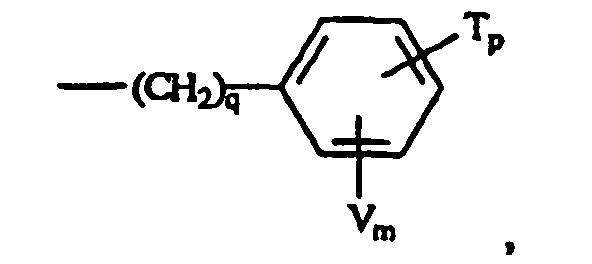 or R9 and R8, together with the nitrogen atom to which R8 is attached, form a piperidine or pyrrolidine ring which is substituted by V;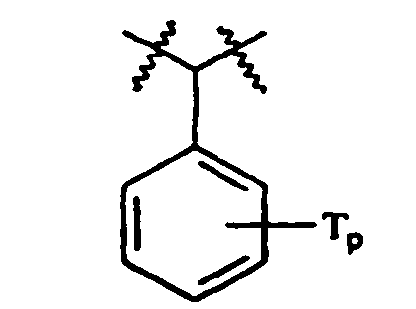
V is -CO-NH-SO2-Ph, -SO2-NH-CO-Ph, -CH2OH, or a group of the formula -R10U, (wherein U is -COOH, tetrazolyl, -CONHOH or -SO3H; and
R10 is a bond; C1 to C6 hydrocarbylene, optionally substituted by hydroxy, amino or acetamido; -O-(C1 to C3 alkylene)-; -SO2NR11-CHR12-;
-CO-NR11-CHR12-, R11 and R12 being independently selected from H and methyl; or NH-(CO)c-CH2-, c being 0 or 1);
T is C1 to C6 hydrocarbyl, -NR6R7 (wherein R6 and R7 are as defined above), -OMe, -OH, -CH2OH, halogen or trihalomethyl;
m is 1 or 2;
p is from 0 to 3; and
q is from 0 to 2, with the proviso that q is 1 or 2 when Z is a bond);
and pharmaceutically acceptable salts thereof. - In certain compounds according to the invention, R5 is selected from H, Me, Et, Pr and Bn; Z is -(NR7)a-CO-(NR8)b-, -CO-NH-CH2-CO-NH- or a bond; Q isV is -CO-NH-SO2-Ph, -SO2-NH-CO-Ph, -OCH2COOH, tetrazolyl or -(CH2)sCOOH, wherein s is from 0 to 2; and T is C1 to C6 hydrocarbyl, -NR6R7, -OMe, -OH, -CH2OH or halogen. Such compounds are disclosed in U.K. patent application No. 9824536.8, the contents of which are hereby incorporated by reference.
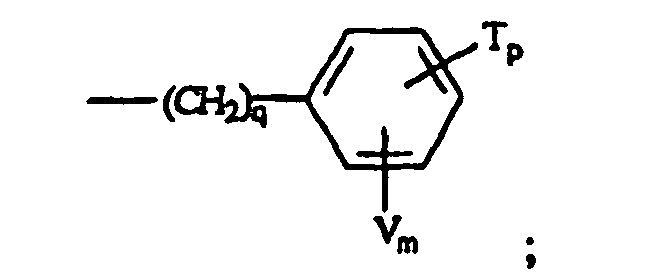
- A further group of compounds according to the invention are those in which R5 is selected from H, Me, Et, Pr and Bn; Z is -(NR7)a-CO-(NR8)b-, Q is -(CH2)rCOOH, wherein r is from 1 to 3; and T is C1 to C6 hydrocarbyl, NR6R7, -OMe, -OH, -CH2OH or halogen.
- A still further group of compounds according to the invention are those in which R5 is selected from H, Me, Et, Pr and Bn; -Z-Q isk is 1 or 2; and T is C1 to C6 hydrocarbyl, -NR6R7, -OMe, -OH, -CH2OH or halogen.

- Preferably X and Y are independently =N-, =CH-, -NH-, -NOH-, -NMe- or -NBn-. Most preferably X is -NH- or -NOH- and Y is =CH- (or vice versa) or X is =N- and Y is -NH- or -NOH- (or vice versa).
- Preferably R1 is C1 to C12 hydrocarbyl wherein one C atom may optionally be replaced by N or O and up to three H atoms may optionally be replaced by F, Cl or Br. More preferably R1 is C3 to C12 alicyclic; phenyl (optionally substituted with OMe, NMe2, CF3, Me, F, Cl, Br or I); or C1 to C8 alkyl. Alicyclic groups include C5 to C8 cycloalkyl, C7 to C10 polycycloalkyl, C5 to C8 cycloalkenyl and C7 to C10 polycycloalkenyl, all optionally substituted with methyl.
- Preferably Z is -CO-NH-.
- Preferably Q isand more preferably
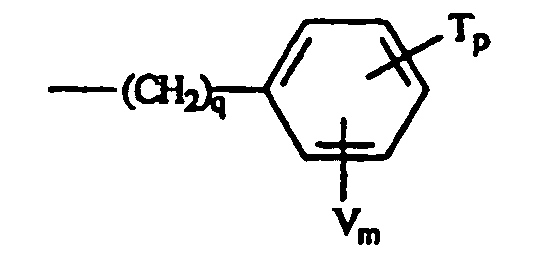 p is preferably 0 or 1, and q is preferably 0. If p is greater than 0, then T is preferably C1 to C6 hydrocarbyl or halo.
m is preferably 1, and V is preferably -CO2H, -CH2CO2H or tetrazolyl. - Preferably R2 and R3 are H; n is 1 to 3; and R4 is C3 to C12 carbocyclic. More preferably, R4 is adamantyl, cycloheptyl, cyclohexyl or phenyl. Alternatively, R4 may be -NH-R13 or -OR13, wherein R13 is C3 to C12 carbocyclic, preferably adamantyl, cycloheptyl, cyclohexyl or phenyl
R10 is preferably a bond, C1 or C2 alkylene (optionally substituted by hydroxy, amino or acetamido), -O-(C1 to C3 alkylene)-; -SO2NR11-CHR12-; -CO-NR11-CHR12-, -NH-(CO)c-CH2-, or a group of the formula
- Certain compounds of the invention exist in various regioisomeric, enantiomeric, tautomeric and diastereomeric forms. It will be understood that the invention comprehends the different regioisomers, enantiomers, tautomers and diastereomers in isolations from each other as well as mixtures.
- Compounds of the invention wherein
- (i) X is -NH-,
- (ii) Y is =CH-, and
- (iii) Z is -CO-NH- may conveniently be prepared by the route shown in Reaction Scheme A (in which PG represents a protecting group, and Q' represents Q or a suitably protected derivative of Q):
-
- A suitably protected malonic acid derivative (II) is deprotonated and reacted with a suitably substituted acid chloride (III). The reaction product (IV) is deprotonated and reacted with a suitably substituted α-bromo carbonyl compound (V). The reaction product (VI) is cyclised, using for example AcOH and AcONH4. The cyclisation product (VII) is deprotected to yield pyrrole (VIII). The free carboxylic acid of pyrrole (VIII) is activated, using for example SOCl2, and reacted with a suitably substituted amine (IX) to yield compound (X). Any appropriate deprotection carried out on compounds (X) leads to compounds of the invention wherein X is -NH-, Y is =CH-and Z is -CO-NH-.
- Compounds of the invention wherein
- (i) X is -NH- and Y is =N-, or X is =N- and Y is -NH-, and
- (ii) Z is -CO-NR8- may conveniently be prepared by the route shown in reaction Scheme B (in which Q' and PG are as defined above):
-
- A suitably substituted carboxylic acid (XI) is reacted, using for example EDC or SOCl2, with a suitably protected phosphorous ylid (XII). The product ylid (XIII) is oxidised, using for example oxone. The oxidation product (XIV) is cyclised with a suitably substituted aldehyde (XV), using for example AcOH and AcONH4. The cyclisation product (XVI) is deprotected to yield imidazole (XVII). The free carboxylic acid of imidazole (XVII) is activated, using for example PyBrOP or EDC, and reacted with a suitably substituted amine (XVIII) to yield compound (XIX). Any appropriate deprotection carried out on compounds (XIX) leads to compounds of the invention wherein X is -NH- and Y is =N- or X is =N- and Y is -NH-, and Z is -CO-NH-.
- Compounds in which X is -NR5- (wherein R5 is alkyl) may be made by treatment of compound (XVI) with sodium hydride, followed by quenching with R5Br, activation, reaction with Q'NHR8 and deprotection (if appropriate).
- Hence another aspect of the present invention is a method of making a compound of formula (I). Preferably said method includes the step of cyclising a suitable precursor (VI) or (XIV) to yield a five membered ring, preferably a pyrrole (VII) or an imidazole (XVI). Preferably said cyclisation is effected using AcOH and AcONH4. The invention further provides compounds which are useful intermediates in such methods.
- Compounds of the invention wherein Z is -NH-CO-NH- or -NH-CO- may conveniently be prepared by the route shown in reaction Scheme C, in which Q' is as defined above. X' and Y' correspond to X and Y, except that when X (or Y) is -NH-, X' (or Y', as the case may be) is -N(PG)-, in which PG represents a protecting group.

- In this reaction scheme, the starting compound (XX) may be, for example, an N-protected derivative of compound (XVII) shown in Reaction Scheme B. Compound (XX) is first treated with ethylchloroformate and triethylamine, and sodium azide is then added. After heating under reflux, the compound (XXI) is obtained. Reaction of this compound with an amine of the formula Q'-NH, followed by appropriate deprotection, yields the urea derivative (XXII). Alternatively, compound (XXI) may be reacted with benzyl alcohol, followed by catalytic hydrogenation (using, for example, a Pd/C catalyst) to yield the corresponding amine (XXIII). This, in turn, may be reacted with an acid chloride of the formula Q'-COCl, followed by appropriate deprotection, to provide the "reverse" amide (XXIV).
- Compounds wherein Z is -CH2-CH2- or -CH=CH- may conveniently be prepared by the method shown in Reaction Scheme D. In this scheme, compound (XXV) is an ester derived, for example, from compound (VII) shown in Reaction Scheme A or compound (XVI) shown in Reaction Scheme B. It is first reduced to the corresponding alcohol, such as by reaction with lithium aluminium hydride, followed by oxidation (e.g. using manganese(IV) oxide) to form the corresponding aldehyde (XXVI). The aldehyde, in turn, is reacted with a triphenylphosphonium compound of the formula Q'-CH2-PPh3 +Br-, to yield compound (XXVII). This may be deprotected as required to yield the target compound (XVIII) in which Z is -CH=CH-, or it may first be reduced and then deprotected (as necessary) to provide the compound (XXIX) in which Z is -CH2-CH2-.

- Compounds wherein X is =N- and Y is -S- may be prepared by the procedure outlined in Reaction Scheme E.

- Compound (IV) (Reaction Scheme A) is first reacted with sulfonyl chloride to form compound (XXX), which is then refluxed in a suitable solvent (such as ethanol) with a compound of formula R1-CS-NH2, leading to formation of the thiazole derivative (XXXI). This is then deprotected to form the corresponding carboxylic acid (XXXII). the carboxyl group of which may then be elaborated as shown in Reaction Schemes A, B and C. For example, amidation with a suitably protected amine Q'-NH2 leads to compound (XXXIII), which may then be deprotected to yield the target compound. The amidation reaction is preferably carried out using PyBrOP and N,N-diisopropylethylamine.
- Compounds wherein X is -S- and Y is =N- may be prepared by the method illustrated in Reaction Scheme F.
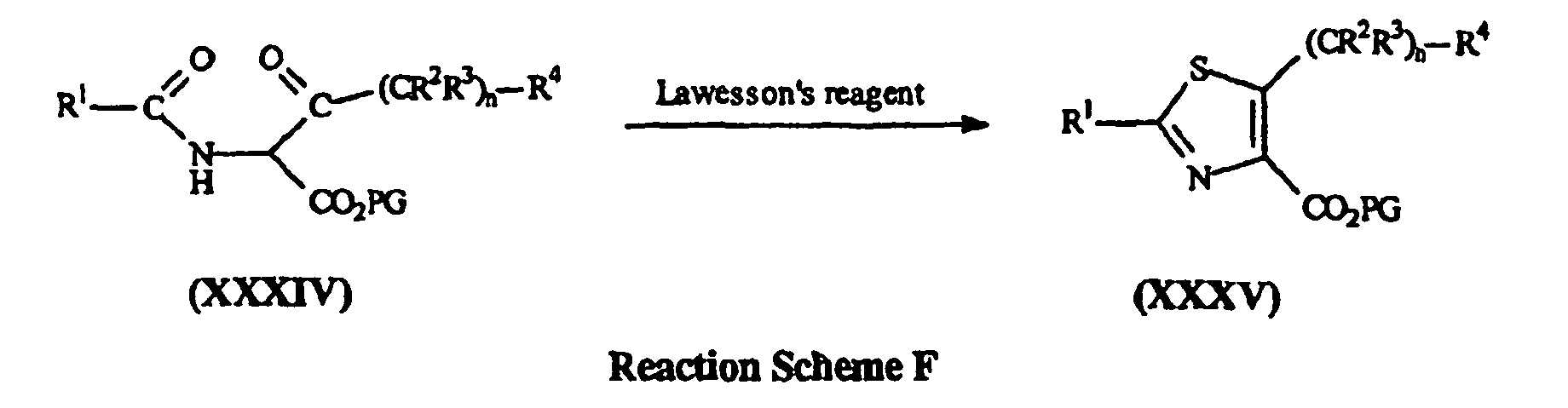
- Compound (XXXIV), which may be prepared by the general methodology of Example 120, step a, is reacted with Lawesson's reagent to form the protected thiazole derivative (XXXV). This may then be deprotected, and the carboxyl group subsequently elaborated as described above.
- Compound (XXXIV) may also be used in the preparation of compounds in which X is -O- and Y is =N-, as shown in Reaction Scheme G.

- In this case, carbon tetrachloride, 1,8-diazabicyclo[5,4,0]undec-7-ene (DBU), and triphenylphosphine are sequentially added to a solution of compound (XXXIV) to form the protected oxazole derivative (XXXVI). This may then be deprotected, and the carboxyl group subsequently elaborated in the same way as for the corresponding imidazole, pyrrole and thiazole compounds.
- Compounds of the invention wherein
- (i) X is -N=,
- (ii) Y is -N(OH)-, and
- (iii) Z is -CO-NR8- may conveniently be prepared by the route shown in Reaction Scheme H
-
- The dioxane-dione derivative (XXXVII) may be obtained by reaction of the corresponding acid R4-(CR2R3)n-COOH with carbonyl di-imidazole, as illustrated in Example 308 below. Compound (XXXVII) is then reacted with amine Q'NHR8, such as by heating in toluene in the presence of catalytic quantities of DMAP. The product (XXXVIII) is reacted with sodium nitrite to form the hydroxyimino derivative (XXXIX). This is then reacted with the aldehyde R1CHO to form the substituted hydroxyimidazole (XL), which is subsequently deprotected as appropriate.
- The protected hydroxyimidazole (XL) provides a further route to the corresponding imidazole compound (XLII), by treatment with trimethylphosphite, and subsequent deprotection (if necessary).
- An alternative way of making intermediates which may be elaborated to compounds of the invention in which X is -N= and Y is -NR5 (or vice versa) is shown in Reaction Scheme I. The protected carboxyl group of compound (XLV) may be deprotected in conventional manner, and the free carboxyl group may then be elaborated in the ways discussed above. Alternatively, compound (XLV) may be converted to compound (XVI) by reaction with trimethylphosphite.
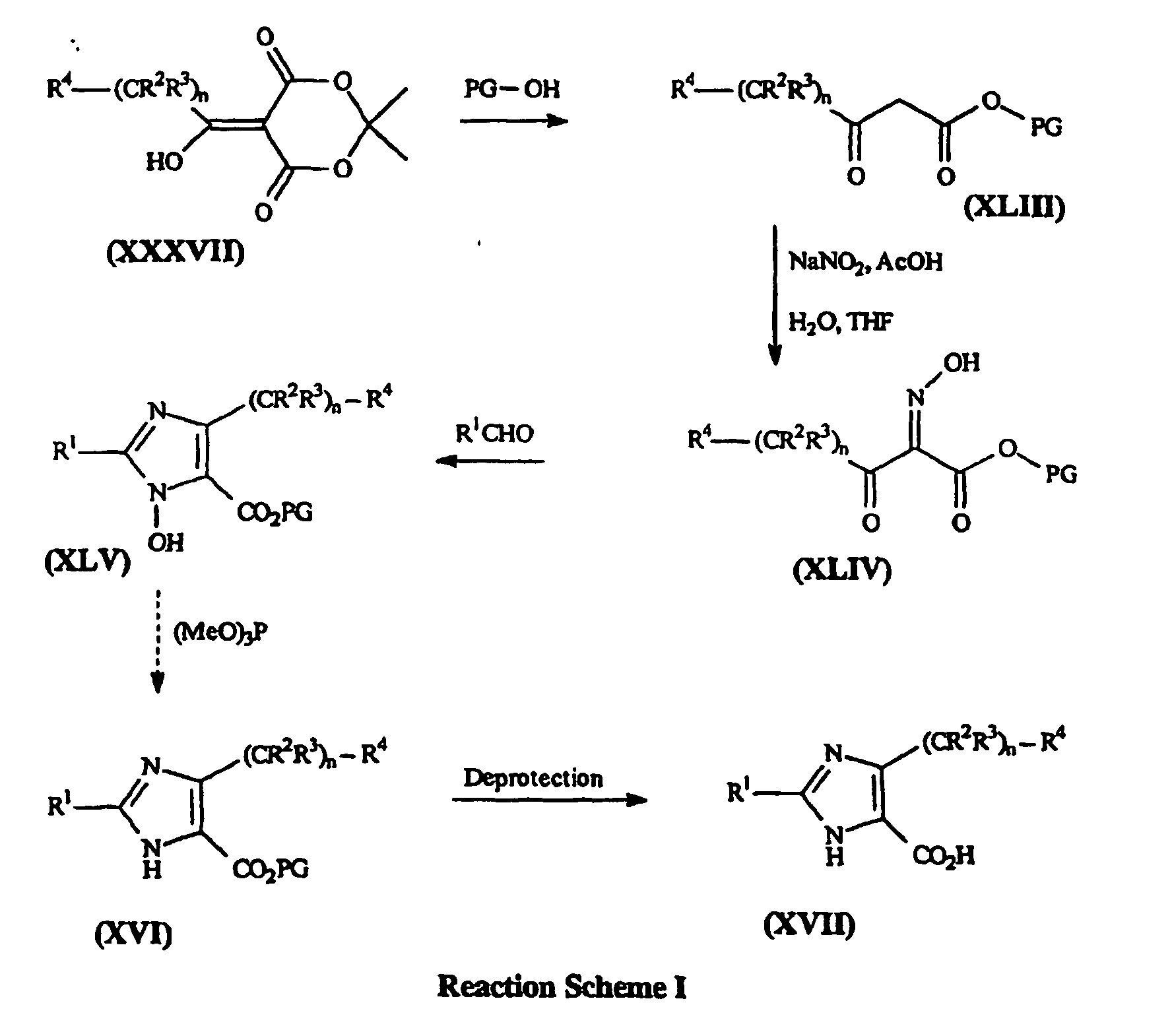
- Still further routes to compound (XVI) are illustrated in Reaction Scheme J and Reaction Scheme K below.
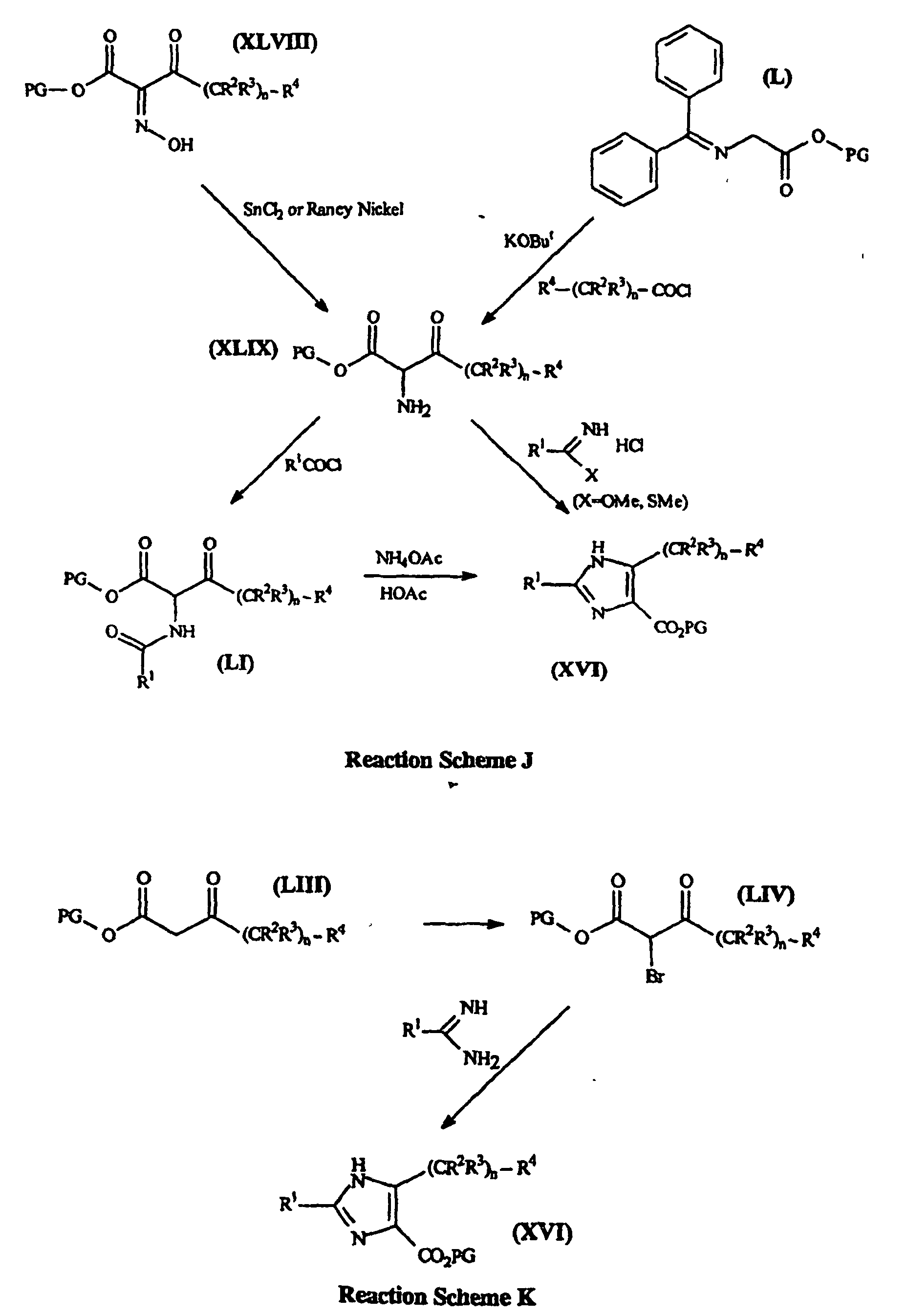
- In these reaction schemes, the final product is the compound (XVI) having a protected carboxyl group. This may be deprotected and subsequently elaborated to provide compounds according to the invention, as discussed above.
- The invention also comprehends derivative compounds ("pro-drugs'') which are degraded in vivo to yield the species of formula (I). Pro-drugs are usually (but not always) of lower potency at the target receptor than the species to which they are degraded. Prodrugs are particularly useful when the desired species has chemical or physical properties which make its administration difficult or inefficient. For example, the desired species may be only poorly soluble, it may be poorly transported across the mucosal epithelium, or it may have an undesirably short plasma half-life. Further discussion of pro-drugs may be found in Stella, V. J. et al., "Prodrugs", Drug Delivery Systems, 1985, pp. 112-176, and Drugs, 1985, 29, pp. 455-473.
- Pro-drug forms of the pharmacologically-active compounds of the invention will generally be compounds according to formula (I) having an acid group which is esterified or amidated. Included in such esterified acid groups are groups of the form -COOR14, wherein R14 is C1 to C5 alkyl, phenyl, substituted phenyl, benzyl, substituted benzyl, or one of the following:

- Amidated acid groups include groups of the formula -CONR15R16, wherein R15 is H, C1 to C5 alkyl, phenyl, substituted phenyl, benzyl, or substituted benzyl, and R16 is -OH or one of the groups just recited for R15.
- Compounds of formula (I) having an amino group may be derivatised with a ketone or an aldehyde such as formaldehyde to form a Mannich base. This will hydrolyse with first order kinetics in aqueous solution.
- Another aspect of the present invention is a pharmaceutical composition comprising a compound of formula (I) substantially as described herein before with a pharmaceutically acceptable diluent or carrier.
- Yet another aspect of the present invention is a method of making a pharmaceutical composition comprising a compound of formula (I) substantially as described herein before, comprising mixing said compound with a pharmaceutically acceptable diluent or carrier.
- Pharmaceutically acceptable salts of the acidic or basic compounds of the invention can of course be made by conventional procedures, such as by reacting the free base or acid with at least a stoichiometric amount of the desired salt-forming acid or base.
- Pharmaceutically acceptable salts of the acidic compounds of the invention include salts with inorganic cations such as sodium, potassium, calcium, magnesium, and zinc, and salts with organic bases. Suitable organic bases include N-methyl-D-glucamine, arginine, benzathine, diolamine, olamine, procaine and tromethamine.
- Pharmaceutically acceptable salts of the basic compounds of the invention include salts derived from organic or inorganic acids. Suitable anions include acetate, adipate, besylate, bromide, camsylate, chloride, citrate, edisylate, estolate, fumarate, gluceptate, gluconate, glucumnate, hippurate, hyclate, hydrobromide, hydrochloride. iodide, isethionate, lactate, lactobionate, maleate, mesylate, methylbromide, methylsulfate, napsylate, nitrate, oleate, pamoate, phosphate, polygalactumnate, stearate, succinate, sulfate, sulfosalicylate, tannate, tartrate, terephthalate, tosylate and triethiodide.
- It is anticipated that the compounds of the invention can be administered by oral or parenteral routes, including intravenous, intramuscular, intraperitoneal, subcutaneous, rectal and topical administration, and inhalation.
- For oral administration, the compounds of the invention will generally be provided in the form of tablets or capsules or as an aqueous solution or suspension
- Tablets for oral use may include the active ingredient mixed with pharmaceutically acceptable excipients such as inert diluents, disintegrating agents, binding agents, lubricating agents, sweetening agents, flavouring agents, colouring agents and preservatives. Suitable inert diluents include sodium and calcium carbonate, sodium and calcium phosphate and lactose. Corn starch and alginic acid are suitable disintegrating agents. Binding agents may include starch and gelatine. The lubricating agent, if present, will generally be magnesium stearate, stearic acid or talc. If desired, the tablets may be coated with a material such as glyceryl monostearate or glyceryl distearate, to delay absorption in the gastrointestinal tract.
- Capsules for oral use include hard gelatine capsules in which the active ingredient Is mixed with a solid diluent and soft gelatine capsules wherein the active ingredient is mixed with water or an oil such as peanut oil, liquid paraffin or olive oil.
- For intramuscular, intraperitoneal, subcutaneous and intravenous use, the compounds of the invention will generally be provided in sterile aqueous solutions or suspensions, buffered to an appropriate pH and isotonicity. Suitable aqueous vehicles include Ringer's solution and isotonic sodium chloride. Aqueous suspensions according to the invention may include suspending agents such as cellulose derivatives, sodium alginate, polyvinyl-pyrrolidone and gum tragacanth, and a wetting agent such as lecithin.
Suitable preservatives for aqueous suspensions include ethyl and n-propyl p-hydroxybenzoate. - Effective doses of the compounds of the present invention may be ascertained be conventional methods. The specific dosage level required for any particular patient will depend on a number of factors, including severity of the condition being treated, the route of administration and the weight of the patient, In general, however, it is anticipated that the daily dose (whether administered as a single dose or as divided doses) will be in the range 0.001 to 5000 mg per day, more usually from 1 to 1000 mg per day, and most usually from 10 to 200 mg per day. Expressed as dosage per unit body weight, a typical dose will be expected to be between 0.01 µg/kg and 50 mg/kg, especially between 10 µg/kg and 10 mg/kg, eg. between 100 µg/kg and 2 mg/kg.
- The term "hydrocarbyl" is used herein to refer to monovalent groups consisting of carbon and hydrogen. Hydrocarbyl groups thus include alkyl, alkenyl and alkynyl groups (in both straight and branched chain forms), cycloalkyl (including polycycloalkyl), cycloalkenyl and aryl groups, and combinations of the foregoing, such as alkylcycloalkyl, alkylpolycycloalkyl, alkylaryl, alkenylaryl, alkynylaryl, cycloalkylaryl and cycloalkenylaryl groups.
- A "carbocyclic" group, as the term is used herein, comprises one or more closed chains or rings, which consist entirely of carbon atoms. Carbocyclic groups thus include aryl groups (such as phenyl, naphthyl, indanyl, fluorenyl, (1,2,3,4)-tetrahydronaphthyl, indenyl and isoindenyl, and substituted derivatives thereof), and also alicyclic groups. The term "alicyclic group" refers to a carbocyclic group which does not contain an aromatic ring, and thus includes groups such as cyclopropyl, cyclobutyl, cyclopentyl, cyclohexyl, cyclohexenyl, adamantyl, norbornyl, bicyclo[2.2.2]octyl, norbomenyl and bicyclo[2.2.2]octenyl, and also groups (such as adamantanemethyl and methylcyclohexyl) which contain both alkyl or alkenyl groups in addition to cycloalkyl or cycloalkenyl moieties.
- The term "alkyl" is used herein to refer to both straight and branched chain forms.
- A "heterocyclic" group comprises one or more closed chains or rings which have at least one atom other than carbon in the closed chain or ring. Examples include benzimidazolyl, thienyl, furanyl, pyrrolyl, imidazolyl, pyrazolyl, thiazolyl, isothiazolyl, oxazolyl, pyrrolidinyl, pyrrolinyl, imidazolidinyl, imidazolinyl, pyrazolidinyl, tetrahydrofuranyl, pyranyl, pyronyl, pyridyl, pyrazinyl, pyridazinyl, piperidyl, piperazinyl, morpholinyl, thionaphthyl, benzofuranyl, isobenzofuryl, indolyl, oxyindolyl, isoindolyl, indazolyl, indolinyl, 7-azaindolyl, isoindazolyl, benzopyranyl, coumarinyl, isocoumarinyl, quinolyl, isoquinolyl, naphthridinyl, cinnolinyl, quinazolinyl, pyridopyridyl, benzoxazinyl, quinoxadinyl, chromenyl, chromanyl, isochromanyl and carbolinyl.
- When reference is made herein to a substituted carbocyclic group (such as substituted phenyl) or a substituted heterocyclic group, the substituents are preferably from 1 to 3 in number and selected from C1 to C6 alkyl, C1 to C6 alkoxy, thio, C1 to C6 alkylthio, carboxy, carboxy(C1 to C6)alkyl, formyl, C1 to C6 alkylcarbonyl, C1 to C6 alkylcarbonylalkoxy, nitro, trihalomethyl, hydroxy, C1 to C6 alkylhydroxy, hydroxy(C1 to C6)alkyl, amino, C1 to C6 alkylamino, di(C1 to C6 alkyl)amino, aminocarboxy, C1 to C6 alkylaminocarboxy, di(C1 to C6 alkyl)aminocarboxy, aminocarboxy(C1 to C6)alkyl, C1 to C6 alkylaminocarboxy(C1 to C6)alkyl, di(C1 to C6 alkyl)aminocarboxy(C1 to C6)alkyl, C1 to C6 alkylcarbonylamino, C5 to C8 cycloalkyl, C5 to C8 cycloalkyl(C1 to C6)alkyl, C1 to C6 alkylcarbonyl(C1 to C6 alkyl)amino, aryl, aryl(C1 to C6)alkyl, (C1 to C6 alkyl)aryl, halo, C1 to C6 alkylhalo, sulphamoyl, tetrazolyl and cyano.
- The term "halogen" is used herein to refer to any of fluorine, chlorine, bromine and iodine. Most usually, however, halogen substituents in the compounds of the invention are chlorine and fluorine substituents:
- The invention is now further illustrated by means of the following examples. All reactions were performed under an atmosphere of dry argon unless otherwise stated. Dichloromethane (DCM) was freshly distilled from calcium hydride. Anhydrous tetrahydrofuran (THF) and N,N-dimethylformamide (DMF) were used.
- Step a. 4-Adamantan-1-yl-3-oxo-2-(2-oxo-2-phenyl-ethyl)-butyric acid ethyl ester. To a solution of 4-adamantan-1-yl-3-oxo-butyric acid ethyl ester, prepared by a modification of Wierenga and Skulnick's procedure (W. Wierenga and H.I. Skulnick, J. Org. Chem., 1979, 44, 310) (3.00g, 11.0mmol) in acetone (30ml) was added sodium iodide (0.55g, 3.67mmol) and anhydrous potassium carbonate (3.04g, 22.0mmol), then a solution of 2-bromo-1-phenyl-ethanone (2.38g, 11.5mmol) in acetone (10ml). The mixture was stirred at reflux for 36h, cooled to room temperature and filtered. The filtrate was evaporated, the residue was dissolved in diethyl ether (50ml) and washed with water (2x20ml). The organic phase was dried (MgSO4) and the solvent was evaporated. The residue was purified by flash column chromatography (silica, hexane/ethyl acetate 4:1) to afford the product as pale yellow oil (1.92g, 46%). 1H NMR (300MHz, CDCl3) 7.98 (2H, m), 7.65 (1H, m), 7.46 (2H, m), 4.19 (3H, m), 3.60 (1H, dd), 5.59 (1H, dd), 2.50 (2H, dd), 1.96 (3H, br s), 1.68 (12H, m), 1.29 (3H, t).
- Step b. 2-Adamantan-1-ylmethyl-5-phenyl-1H-pyrrole-3-carboxylic acid ethyl ester. This compound was prepared by modification of Sammes's procedure (P.-K. Chiu and M. P. Sammes, Tetrahedron, 1990, 46, 3439). The product of step a (1.10g, 2.88mmol) and ammonium acetate (780mg, 10.1mmol) were stirred in acetic acid (1.4ml) at 80°C for 24h. The reaction mixture was cooled, then partitioned between DCM and saturated sodium hydrogen carbonate. The organic layer was dried, the solvent was evaporated. The residue was crystallised from hexane/ethyl acetate 4:1 to afford the product as a white solid (750mg, 71 %). 1H NMR (300MHz, CDCl3) 8.21 (1H, br s), 7.21-7.48 (5H, m), 6.88 (1H, d), 4.30 (2H, q), 2.85 (2H, s), 1.96 (3H, br s), 1.60 (12H, m), 1.38 (3H, t).
- Step c. 2-Adamantan-1-ylmethyl-5-phenyl-1H-pyrrole-3-carboxylic acid. To a solution of the product of step b (750mg, 2.06mmol) in ethanol (45ml) was added sodium hydroxide (5ml of 6.0M solution). The mixture was heated at reflux for 48h, it was allowed to cool to room temperature and concentrated to small volume under reduced pressure. The concentrated solution was diluted with 2M hydrochloric acid (40ml), the precipitated solid was filtered, washed with water and dried to afford the acid (660mg, 94%). 1H NMR (300MEz, CDCl3) 11.5 (1H, br s), 8.26 (1H, br s), 7.48 (2H, m), 7.40 (2H, m), 7.26 (1H, m), 6.94 (1H, d), 2.87 92H, s), 1.97 (3H, br s), 1.63 (12H, m).
- Step d. 5-[(2-Adamantan-1-ylmethyl-5-phenyl-1H-pyrrole-3-carbonyl)-amino]-isophthalic acid dibenzyl ester. To a suspension of the product of step c above (290mg, 0.91mmol) in DCM (5ml) was added thionyl chloride (200µl, 2.74mmol) and one drop of DMF. The mixture was stirred at room temperature for 30min, the solvent was evaporated and the residue was coevaporated with DCM (2x5ml). 5-Amino-isophthalic acid dibenzyl ester (361 mg, 1.00mmol) was added to the residue followed by anhydrous pyridine (2ml). The solution was kept at room temperature for 16h and diluted with DCM (30ml). The organic phase was washed with 2M hydrochloric acid (2x20ml), brine (20ml), dried (MgSO4) and the solvent was evaporated. The residue was purified by flash column chromatography (silica, DCM/hexane/ethyl acetate 9:92) to afford the product as pale yellow solid (300mg, 45%). 1H NMR (300MHz, CDCl3) 8.48 (3H, s), 8.30 (1H, br s), 7.69 (1H, s), 7.49-7.27 (15H, m), 6.66 (1H, d), 5.40 (4H, s), 2.91 (2H, s), 1.95 (3H, br s), 1.63 (12H, m).
- Step e. A round bottom flask containing the product from the previous step (180mg, 0.27mmol), 10% palladium on charcoal (50mg) and THF/methanol (1:1 mixture, 20ml) was evacuated and flushed with hydrogen three times. The mixture was vigorously stirred overnight under an atmosphere of hydrogen. The catalyst was removed by filtration and the filtrate evaporated to afford the product as a white solid (130mg, 98%). 1H NMR (300MHz, d 6 -DMSO) 13.17 (2H, br s), 11.22 (1H, s), 9.80 (1H, s), 8.64 (2H, s), 8.13 (1H, s), 7.66 (2H, m), 7.39 (2H, m), 7.19 (2H, m), 2.85 (2H, s), 1.88 (3H, br s), 1.53 (12H, m). The acid was converted to the di(N-methyl-D-glucamine) salt and lyophilised from water/dioxan. Found: C 57.03, H 7.64, N, 6.03%; C44H64N4O15 .2.0 H2O requires: C 57.13, H 7.41, N 6.06%.
- Step a. 2-Adamantan-1-ylmethyl-5-phenyl-1H-pyrrole-3-carboxylic acid [3,5-bis-(1-pivaloyloxymethyl-1H-tetrazol-5-yl)-phenyl]-amide. 2-Adamantan-1-yl-methyl-5-phenyl-1H-pyrrole-3-carboxylic acid (Example 1, step c) was reacted with 3,5-bis(1-pivaloyloxymethyl-1H-tetrazol-5-yl)-phenylamine according the procedure given in Example 1, step d. 1H NMR (300MHz, d 6 -DMSO) 11.27 (1H, s), 9.95 (1H, s), 8.82 (2H, s), 8.44 (1H, s), 7.68 (2H, d), 7.40 (2H,t), 7.22 (2H,m), 6.70 (4H, s), 2.88 (2H, s), 1.88 (3H, br s), 1.56 (12H, m), 1.16 (18H, s).
- Step b. The solution of the product of step a above (320mg, 0.41mmol) in saturated methanolic ammonia (20ml) was stirred at room temperature for 2h. The solvent was evaporated under reduced pressure, the residue was dissolved in water (10ml) and the solution was acidified (pH=1, 1M HCl). The precipitate was collected by filtration, washed with water and dried to afford the title compound as a white solid (164mg, 73%). 1H NMR (300MHz, d 6 -DMSO) 11.28 (1H, s), 9.99 (1H, s), 8.72 (2H, s), 8.40 (1H, s), 7.68 (2H, d), 7.40 (2H,t), 7.20 (2H, t), 2.89 (2H, s), 1.89 (3H, br s), 1.54 (12H, m). The product was converted to the di(N-methyl-D-glucamine) salt and lyophilised from water/dioxan. Found: C 53.92, H 6.94, N 17.24%; C45H68N12O11 .2.0 H2O requires: C 54.20, H 7.24, N 17.24%.
- The benzyl ester of the title compound was prepared by reacting 2-adamantan-1-ylmethyl-5-phenyl-1H-pyrrole-3-carboxylic acid (Example 1, step c) with 3-amino-benzoic acid benzyl ester according to the procedure of Example 1, step d. This was converted to the title compound using the procedure of Example 1, step e. 1H NMR (300MHz, d 6 -DMSO) 11.19 (1H, s), 9.62 (1H, s), 837 (1H, s), 7.97 (1H, d) 7.66 (2H, d), 7.58 (1H, d), 7.39 (3H, m), 7.16 (2H, m), 2.84 (2H, s), 1.88 (3H, br s), 1.54 (12H, m). The product was converted to the N-methyl-D-glucamine salt and lyophilised from water/dioxan. Found: C 62.82, H 7.38, N 5.82%; C36H47N3O8 .2.0 H2O requires: C 63.04, H 7.50, N 6.12%.
- The title compound was prepared according to the procedure given in Examle 1, using 2-bromo-1-naphtalen-2-yl-ethanone in step a instead of 2-bromo-1-phenyl-ethanone. 1H NMR (300MHz, d 6 -DMSO) 11.41 (1H, s), 9.84 (1H, s), 8.65 (2H, s), 8.15 (1H, d), 7.88 (4H, m), 7.47 (2H, m), 7.36 (1H, s), 2.90 (2H, s), 1.90 (3H, br s), 1.57 (12H, m). The acid was converted to the di(N-methyl-D-glucamine) salt and lyophilised from water/dioxan. Found: C 58.96, H 7.31, N, 5.83%; C48H66N4O15.2.0 H2O requires: C 59.12, H 7.24, N 5.75%.
- 2-Adamantan-1-ylmethyl-5-naphthalen-2-yl-1H-pyrrole-3-carboxylic acid was prepared according to the procedure of Example 1, steps a, b and c, using 2-bromo-1-naphthalen-2-yl-ethanone in step a instead of 2-bromo-1-phenyl-ethanone. This acid was then converted to the title compound using essentially the procedure of Example 2, steps a and b. 1H NMR (300MHz, d 6 -DMSO) 11.42 (1H, s), 9.87 (1H, s), 8.64 (2H, s), 8.38 (1H, s), 8.19 (1H, s), 7.88 (2H, d), 7.95 (1H, d), 7.86 (3H, m), 7.47 (3H, m), 2.93 (2H, s), 1.91 (3H, br s), 1.59 (12H, m). The product was converted to the di(N-methyl-D-glucamine) salt and lyophilised from water/dioxan.
- Step a. 2-[(2-Adamantan-1-ylmethyl-5-phenyl-1H-pyrrole-3-carbonyl)-amino]-benzoic acid methyl ester. 2-Adamantan-1-ylmethyl-5-phenyl-1H-pyrrole-3-carboxylic acid (Example 1, step c) (335mg, 1.00mmol) was reacted with 2-amino-benzoic acid methyl ester (151mg, 1.00mmol) according to the procedure of Example 1, step d to afford the product as a pale yellow solid (155mg, 33%). 1H NMR (300MHz, d 6 -DMSO) 11.32 (1H, s), 11.24 (1H, s), 8.67 (1H, d), 8.00 (1H, d) 7.60 (3H, m), 7.40 (2H, m), 7.25 (1H, t), 7.12 (1H, t), 6.83 (1H, s), 3.92 (3H, s), 2.86 (2H, s), 1.88 (3H, s), 1.55 (12H, m).
- Step b. To a solution of the product from step a above (155mg, 0.33mmol) in THF (5ml) and water (0.5ml) was added lithium hydroxide monohydrate (42mg, 1.00mmol). The reaction mixture was stirred at room temperature for 24h, the solvent was evaporated under reduced pressure and the residue was partitioned between ethyl acetate and 2M hydrochloric acid. The organic layer was washed with brine, dried and the solvent was evaporated to afford the title compound as a white solid (143mg, 95%). 1H NMR (300MHz, d 6 -DMSO) 11.81 (1H, s), 11.30 (1H, s), 8.75 (1H, d), 8.01 (1H, d) 7.60 (3H, m), 7.40 (2H, m), 7.21 (1H, t), 7.09 (1H, t), 6.84 (1H, s), 2.86 (2H, s), 1.88 (3H, br s), 1.54 (12H, m). The product was converted to the N-methyl-D-glucamine salt and lyophilised from water/dioxan. Found: C 63.88, H 7.49, N 6.18%; C36H47N3O8 .1.5 H2O requires: C 63.89, H 7.45, N 6.2 1 %.
- The title compound was prepared according to the procedure of Example 6, steps a and b, using 4-amino-benzoic acid methyl ester in step a instead of 2-amino-benzoic acid methyl ester. 1H NMR (300MHz, d 6 -DMSO) 12.50 (1H, br s), 11.24 (1H, s), 9.77 (1H, s), 7.90 (4H, m), 7.68 (2H, d), 7.41 (2H, t), 7.21 (1H, t), 7.12 (1H, s), 2.86 (2H, s), 1.92 (3H, br s), 1.60 (12H, m). The product was converted to the N-methyl-D-glucamine salt and lyophilised from water/dioxan. Found: C 61.67, H 7.50, N 5.97%; C36H47N3O8 .3.0 H2O requires: C 61.47, H 7.59, N 5.97%.
- Step a. 2-Adamantan-1-ylmethyl-1-methyl-5-phenyl-1H-pyrrole-3-carboxylic acid ethyl ester. To a solution of 2-adamantan-1-ylmethyl-5-phenyl-1H-pyrrole-3-carboxylic acid ethyl ester (Example 1, step b) (726mg, 2.00mmol) in DMF (3ml) was added sodium hydride (60% dispersion in oil) (100mg, 2.50mmol) in small portions at 0°C. The mixture was stirred at room temperature for 30min, then iodomethane (1.00ml, 16.0mmol) was added and the stirring was continued for 1h. The reaction mixture was partitioned between ethyl acetate and 1M hydrochloric acid, the organic layer was washed with water, dried, and the solvent was evaporated to afford the product as a white solid (620mg, 82%). 1H NMR (300MHz, CDCl3) 7.35 (5H, m), 6.64 (1H, s), 4.27 (2H, q), 3.51 (3H, s), 2.80 (2H, br s), 1.96 (3H, br s), 1.64 (12H, m), 1.35 (3H, t).
- Step b. 2-Adamantan-1-ylmethyl-1-methyl-5-phenyl-1H-pyrrole-3-carboxylic acid. To a solution of the product of step a (620mg, 1.64mmol) in dioxan/ethanol (30ml of 1:1 mixture) was added sodium hydroxide (3.7ml of 6M solution) and the mixture was stirred under reflux for 5 days. The mixture was cooled to room temperature, concentrated under reduced pressure, then 1M hydrochloric acid (20ml) was added and the product was extracted with ethyl acetate (2x20ml). The combined organic layers were washed with brine, dried (MgSO4) and the solvent was evaporated. The crude product was heated at reflux in hexane/ethyl acetate 4:1 (20ml), cooled to room temperature, the precipitate was filtered, washed with hexane and dried to afford the product as a white solid (290mg, 51%). 1H NMR (300MHz, CDCl3) 11.80 (1H, br s), 7.40 (5H, m), 6.72 (1H, s), 3.52 (3H, s), 3.00 (2H, br s), 1.97 (3H, br s), 1.67 (12H, m).
- Step c. The product of step b was converted to the title compound according to the procedure given in Example 1, steps d and e. 1H NMR (300MHz, d 6 -DMSO) 13.00 (2H, br s), 9.83 (1H, s), 8.60 (2H, s), 8.12 (1H, s), 7.40 (5H, m), 6.87 (1H, s), 3.52 (3H, s), 2.99 (2H, br s), 1.87 (3H, br s), 1.57 (12H, m). The acid was converted to the di(N-methyl-D-glucamine) salt and lyophilised from water/dioxan. Found: C 57.77, H 7.12, N, 5.83%; C45H66N4O15 .2.0 H2O requires: C 58.09, H 7.42, N 5.89%.
- 2-Adamantan-1-ylmethyl-5-phenyl-1H-pyrrole-3-carboxylic acid (Example 1, step c) was reacted with 5-methylamino-isophthalic acid dimethyl ester according to the procedure of Example 1, step c. The dimethyl ester was hydrolized according to the procedure described in Example 6, step b to afford the title compound as a pale yellow foam. 1H NMR (300MHz, d 6 -DMSO) 13.06 (2H, br s), 11.01 (1H, s), 8.36 (1H, t), 8.32 (1H, s), 8.12 (2H, s), 7.60 (2H, m), 7.35 (2H, m), 7.16 (1H, m), 6.87 (1H, s), 4.46 (2H, d), 2.76 (2H, s), 1.80 (3H, br s), 1.47 (12H, m). The acid was converted to the di(N-methyl-D-glucamine) salt and lyophilised from water/dioxan. Found: C 59.61, H 7.09, N, 6.04%; C45H66N4O15 requites: C 59.85, H 7.37, N 6.20%.
- The title compound was prepared according to the procedure of Example 1, using β-alanine benzyl ester in step d instead of 5-amino-isophthalic acid dibenzyl ester. 1H NMR (300MHz, d 6 -DMSO) 10.94 (1H, s), 7.60 (3H, m), 7.34 (2H, m), 7.15 (1H, m), 6.80 (1H, s), 3.35 (2H, m), 2.76 (2H, s), 2.46 (2H, t), 1.86 (3H, br s), 1.51 (12H, m).
- The acid was converted to the di(N-methyl-D-glucamine) salt and lyophilised from water/dioxan. Found: C 61.93, H 7.73, N, 6.53%; C32H47N3O8.1.0 H2O requires: C 62.01, H 7.97, N, 6.78%.
- The title compound was prepared according to the procedure of Example 1, using 4-cycloheptyl-3-oxo-butyric acid ethyl ester and 2-bromo-1-naphthalen-2-yl-ethanone instead of 4-adamantan-1-yl-3-oxo-butyric acid ethyl ester and 2-bromo-1-phenyl-ethanone in step a. 1H NMR (300MHz, d 6 -DMSO) 11.66 (1H, s), 9.79 (1H, s), 8.66 (2H, s). 8.15 (2H, s), 7.88 (4H, m), 7.44 (4H, m), 2.94 (2H, d), 2.00 (1H, br s), 1.68-1.23 (12H, m). The acid was converted to the di(N-methyl-D-glucamine) salt and lyophilised from water/dioxan. Found: C 56.57, H 7.39, N 5.78%; C45H64N4O15.3.0 H2O requires: C 56.59, H 7.38, N 5.87%.
- The title compound was prepared according to the procedure of Example 1, using 4-cycloheptyl-3-oxo-butyric acid ethyl ester instead of 4-adamantan-1-yl-3-oxo-butyric acid ethyl ester in step a, and 3-amino-benzoic acid benzyl ester instead of 5-amino-isophthalic acid dibenzyl ester in step d. 1H NMR (300MHz, d 6 -DMSO) 11.42 (1H, s), 9.58 (1H, s), 8.38 (1H, s), 8.01 (1H, d), 7.62 (3H, m), 7.40 (3H, m), 7.20 (2H, m), 2.89 (2H, d), 1.93 (1H, br s), 1.61-1.19 (12H, m). The acid was converted to the N-methyl-D-glucamine salt and lyophilised from water/dioxan. Found: C 60.99, H 7.60, N 6.28%; C33H45N3O7 .2.0 H2O requires: C 61.20. H 7.63, N 6.49%.
- The title compound was prepared according to the procedure of Example 1, using 4-cycloheptyl-3-oxo-butyric acid ethyl ester instead of 4-adamantan-1-yl-3-oxo-butyric acid ethyl ester in step a. 1H NMR (300MHz, d 6 -DMSO) 11.46 (1H, s), 9.75 (1H, s), 8.65 (2H, s), 8.13 (1H, 3), 7.65 (2H, d), 7.39 (2H, t), 7.20 (2H, m), 2.89 (2H, d), 1.94 (1H, br s), 1.62-1.20 (12H, m). The acid was converted to the di(N-methyl-D-glucamine) salt and lyophilised from water/dioxan. Found: C 55.51, H 7.60, N 6.32%; C41H61N4O14 .2.0 H2O requires: C 55.52, H 7.50, N 6.28%.
- The title compound was prepared according to the procedure of Example 1, using 4-cycloheptyl-3-oxo-butyric acid ethyl ester and 2-bromo-1-naphthalen-2-yl-ethanone instead of 4-adamantan-1-yl-3-oxo-butyric acid ethyl ester and 2-bromo-1-phenyl-ethanone in step a, and 3-amino-benzoic acid benzyl ester instead of 5-amino-isophthalic acid dibenzyl ester in step d. 1H NMR (300MHz, d 6 -DMSO) 11.62 (1H, s), 9.64 (1H, s), 8.41 (1H, s), 8.14 (1H, s), 8.03 (1H, d), 7.94 (1H, d), 7.84 (3H, m), 7.60 (1H, m), 7.44 (3H, m), 7.34 (1H, s), 2.93 (2H, d), 1.98 (1H, br s), 1.67-1.22 (12H, m). The acid was converted to the N-methyl-D-glucamine salt and lyophilised from water/dioxan. Found: C 62.89, H 7.51, N 5.92%; C37H47N3O8 .2.5 H2O requires: C 62.87, H 7.41, N 5.94%.
- 2-Cycloheptylmethyl-5-naphthalen-2-yl-1H-pyrrole-3-carboxylic acid was prepared according to the procedure of Example 1, steps a, b and c, using 4-cycloheptyl-3-oxo-butyric acid ethyl ester and 2-bromo-1-naphthalen-2-yl-ethanone instead of 4-adamantan-1-yl-3-oxo-butyric acid ethyl ester and 2-bromo-1-phenyl-ethanone in step a. The acid was then converted to the title compound according to the procedure of Example 2. 1H NMR (300MHz, d 6 -DMSO) 11.69 (1H, s), 9.98 (1H, s), 8.75 (2H, s), 8.41 (1H, s), 8.16 (1H, s), 7.90 (4H, m), 7.50 (3H, m), 2.97 (2H, d), 2.02 (1H, br s), 1.70-1.21 (12H, m). The acid was converted to the di(N-methyl-D-glucamine) salt and lyophilised from water/dioxan. Found: C 53.80, H 6.88, N 16.52%; C45H64N12O11 .3.0 H2O requires: C 53.88, H 7.03, N 16.75%.
- 2-Cycloheptylmethyl-5-naphthalen-2-yl-1H-pyrrole-3-carboxylic acid was prepared according to the procedure of Example 1, steps a, b and c, using 4-cycloheptyl-3-oxo-butyric acid ethyl ester and 2-bromo-1-naphthalen-2-yl-ethanone instead of 4-adamantan-1-yl-3-oxo-butyric acid ethyl ester and 2-bromo-1-phenyl-ethanone in step a. The acid was then reacted with 3-(1-pivaloyloxymethyl-1H-tetrazol-5-yl)-phenylamine using essentially the same procedure as in Example 1, step d. Deprotection was performed following essentially the procedure of Example 2, step b, with the exception that after acidification the product was isolated by extraction with DCM.1H NMR (300MHz, d 6 -DMSO) 11.63 (1H, s), 9.72 (1H, s), 8.59 (1H, s), 8.15 (1H, s), 7.88 (5H, m), 7.67 (2H, d), 7.48 (3H, m), 7.34 (1H, s), 2.95 (2H, d), 1.99 (1H, br s), 1.68-1.23 (12H, m). The acid was converted to the N-methyl-D-glucamine salt and lyophilised from water/dioxan. Found: C 63.03, H 6.96, N 13.71%; C37H47N7O6 .1.0 H2O requires: C 63.14, H 7.02, N 13.93%.
- The title compound was synthesised following the procedure of Example 1 with the modification that 5-adamantan-1-yl-3-oxo-pentanoic acid ethyl ester was used in step a instead of 4-adamantan-1-yl-3-oxo-butyric acid ethyl ester. 1H NMR (300MHz, d 6 -DMSO) 11.45 (1H, s), 9.53 (1H, s), 8.45 (2H, s), 8.16 (1H, s), 7.65 (2H, d), 7.37 (2H, m), 7.24 (1H, s), 7.17 (1H, m), 2.96 (2H, m), 1.94 (3H, s), 1.65 (6H, m), 1.55 (6H, s), 1.40 (2H, m). The acid was converted to the di(N-methyl-D-glucamine) salt and lyophilised from water/dioxan. Found: C 56.39, H 7.66, N 5.92%; C45H66N12O11.3.0 H2O requires: C 56.47, H 7.58, N 5.85%.
- 2-(2-Adamantan-1-yl-ethyl)-5-phenyl-1H-pyrrole-3-carboxylic acid was prepared following the procedure of Example 1, steps a, b and c, with the modification that 5-adamantan-1-yl-3-oxo-peatanoic acid ethyl ester was used as the substrate in step a. The acid was then converted to the title compound according to the procedure of Example 2, steps a and b. 1H NMR (300MHz, d 6 -DMSO) 11.49 (1H, s), 9.86 (1H, s), 8.69 (2H, s), 8.40 (1H, s), 7.66 (2H, d), 7.40 (2H, t), 7.22 (2H, m), 2.98 (2H, m), 1.95 (3H, s), 1.65 (6H, m), 1.55 (6H, s), 1.42 (2H, m). The acid was converted to the di(N-methyl-D-glucamine) salt and lyophilised from water/dioxan. Found: C 47.87, H 7.39, N 14.59%; C45H66N12O11 .10.0 H2O requires: C 47.82, H 7.58, N 14.87%.
- The title compound was synthesised following the procedure of Example 1 with the modification that 5-adamantan-1-yl-3-oxo-pentanoic acid ethyl ester was used instead of 4-adamantan-1-yl-3-oxo-butyric acid ethyl ester in step a, and 3-amino-benzoic acid benzyl ester was used instead of 5-amino-isophthalic acid dibenzyl ester in step d.
1H NMR (300MHz, d 6 -DMSO) 11.38 (1H, s), 9.42 (1H, s), 8.22 (1H, s), 7.91 (1H, d), 7.63 (2H, d), 7.56 (1H, d), 7.37 (2H, t), 728 (1H, t), 7.17 (2H, m), 2.96 (2H, m), 1.94 (3H, br s), 1.65 (6H, m), 1.54 (6H, s), 1.38 (2H, m). The acid was converted to the N-methyl-D-glucamine salt and lyophilised from water/dioxan. - Step a. 4-Cycloheptyl-2,3-dioxo-butyric acid ethyl ester monohydrate. Cycloheptaneacetic acid was converted to 4-cycloheptyl-2,3-dioxo-butyric acid ethyl ester hydrate according to the procedure of H.H. Wassennan (H.H. Wasserman, D.S. Ennis, C.A. Blum and V.M. Rotello, Tetrahedron Lett., 1992, 33, 6003). The tricarbonyl was isolated as pale yellow oil. 1H NMR (300MHz, CDCl3) 4.99 (2H, br s), 4.30 (2H, q), 2.51 (2H, d), 2.14 (1H, m), 1.67-1.16 (15H, m).
- Step b. 5-Cycloheptylmethyl-2-naphthalen-2-yl-1H-imidazole-4-carboxylic acid ethyl ester. This compound was prepared by modification of Brackeen's procedure (M.F. Brackeen, J.A. Stafford, P.L. Feldman and D.S. Karanewsky, Tetrahedron Lett., 1994, 35,1635). To a slurry of ammonium acetate (9.0g, 116mmol) in acetic acid (35ml) was added the product of step a (3.00g, 11.6mmol) followed by 2-naphthaldehyde (3.60g, 23.2mmol). The mixture was stirred in an oil bath heated to 70°C for 2h. The solution was cooled to room temperature and the acetic acid was evaporated. The residue was dissolved in ethyl acetate (50ml) and washed with saturated sodium hydrogen carbonate (2x50ml), water (20ml) and brine (20ml). The organic phase was dried (MgSO4), the solvent was evaporated. The crude product was purified by crystallisation from ethyl acetate to afford the imidazole derivative as a white solid (1.74g, 40%). 1H NMR (300MHz, CDCl3) 10.18 and 9.97 (1H, br s), 839 (1H, s), 7.90 (4H, m), 7.52 (2H, br s), 4.40 (2H, q), 2.89 (2H, m), 2.05-1.26 (16H, m).
- Step c. 5-Cycloheptylmethyl-2-naphthalen-2-yl-1H-imidazole-4-carboxylic acid. To a suspension of the product of step b (1.73g, 4.62mmol) in ethanol (25ml) was added the solution of sodium hydroxide (1.29g, 32.3mmol) in water (5ml). The reaction mixture was heated under reflux for 48h, allowed to cool to room temperature and concentrated under reduced pressure. The aqueous solution was diluted with water (30ml) and acidified to pH=2 with 1M hydrochloric acid. The precipitate was collected by filtration, washed with water, and dried to afford the product as an off-white solid (1.53g, 96%).
1H NMR (300MHz, d 6 -DMSO) 8.77 (1H, s), 8.24-7.98 (4H, m), 7.64 (2H, m), 2.91 and 2.64 (2H, 2xd), 2.03 (1H, m), 1.69-1.24 (12H, m). - Step d. 5-[(5-Cycloheptylmethyl-2-naphthalen-2-yl-1H-imidazole-4-carbonyl)-amino]-isophthalic acid dibenzyl ester. To a solution of the product of step c above (500mg, 1.44mmol) and 5-amino-isophthalic acid dibenzyl ester (520mg, 1.44mmol) in DMF (3ml) was added 1-hydmxybenzotriazole (HOBt) (195mg, 1.44mmol), 4-dimethylaminopyridine (DMAP) (cat.) and 1-(3-dimethylaminopropyl-3-ethylcarbodiimide hydrochloride (EDC) (280mg, 1.44mmol). The solution was kept at room temperature for 72h, poured over 1M hydrochloric acid (20ml) and the product was extracted with ethyl acetate (2x20ml). The product crystallised from the ethyl acetate extracts. The crystals were collected by filtration, dried and triturated with methanol to afford a white solid (453mg, 46%). 1H NMR (300MHz, d 6 -DMSO) 13.00 (1H, br s), 10.50 (1H, s), 8.84 (2H, s), 8.61 (1H, s), 8.28 (2H, m), 8.00 (3H, m), 7.50 (12H, m), 5.41 (4H, s), 2.98 (2H, d), 2.00 (1H, m), 1.69-1.16 (12H, m).
- Step e. The product of step d (450mg, 0.65mmol) was deprotected using the same procedure as in Example 1, step e to afford the title compound as a white solid (310mg, 94%). 1H NMR (300MHz, d 6 -DMSO) 10.75 (1H, s), 8.77 (3H, m), 8.40 (1H; d), 8.25 (1H, s), 8.13 (1H, d), 8.02 (2H, m), 7.65 (2H, m), 3.05 (2H, d), 2.11 (1H, m), 1.75-1.31 (12H, m). The acid was converted to the di(N-methyl-D-glucamine) salt and lyophilised from water/dioxan. Found: C 53.27, H 7.24, N 7.09%; C44H63N5O15.4.8 H2O requires: C 53.44. H 7.41, N7.08%.
- The title compound was prepared using essentially the procedure of Example 20 with the modification that 3-amino-benzoic acid benzyl ester was used in step d instead of 5-amino-isophtbalic acid dibenzyl ester. 1H NMR (300MHz, d 6 -DMSO) 13.00 (1H, br s), 9.93 (1H, s), 8.54 (2H, d), 8.27 (1H, d), 8.00 (4H, m), 7.65-7.41 (4H, m), 2.98 (2H, d), 2.00 (1H, m), 1.70-1.22 (12H, m). The acid was converted to the N-methyl-D-glucamine salt and lyophilised from water/dioxan. Found: C 64.88, H 6.82, N 8.21%; C36H46N4O8 requires: C 65.24, H 7.00, N 8.45%.
- Step a. 5-Cycloheptylmethyl-2-naphthalen-2-yl-1H-imidazole-4-carboxylic acid (3,5 bis-methoxycarbonyloxymethyl-phenyl)-amide. 5-Cycloheptylmethyl-2-naphthalen-2-yl-1H-imidazole-4-carboxylic acid (Example 20, step c) (605mg, 1.75mmol) was reacted with 3,5-bis-methoxycarbonyloxymethyl-aniline (492mg, 1.75mmol) according to the procedure of Example 20, step d to afford the product as a white solid (438mg, 42%). 1H NMR (300MHz, CDCl3) 9.42 (1H, br s), 9.35 (1H, s), 8.27 (1H, s), 8.06-7.89 (4H, m), 7.79 (2H, s), 7.56 (2H, m), 7.14 (1H, s), 5.18 (4H, s), 3.83 (6H, s), 3.12 (2H, d), 2.00-1.29 (13H, m).
- Step b. To the solution of the product of step a (438mg, 0.72mmol) in methanol (50ml) was slowly added a 1% aqueous solution of potassium carbonate. The mixture was stirred at room temperature for 2h, then heated at reflux for 1h. The reaction mixture was allowed to cool to room temperature and the methanol was evaporated in vacuo. The precipitate was collected by filtration, washed with water and dried to afford the title compound as a white solid (290mg, 83%). 1H NMR (300MHz, d 6 -DMSO) 13.88 (1H, br s), 9.62 (1H, s), 8.55 (1H, s), 8.27 (1H, d), 7.98 (3H, m), 7.67 (2H, s), 7.57 (2H, m), 6.99 (1H, s), 5.16 (2H, t), 4.49 (4H, d), 2.97 (2H, d), 2.01 (1H, m), 1.70-1.22 (12H, m). Found: C 74.67, H 6.74, N 8.85%; C30H33N3O3 requires: C 74.51, H 6.88, N 8.69%.
- The title compound was prepared according to the procedure of Example 20, with the modification that 1-naphthaldehyde was used in step b instead of 2-naphthaldehyde.
1H NMR (300MHz, d 6 -DMSO) 13.25 (1H, br s), 12.86 (1H, br s), 10.17 (1H, s), 8.96 (1H, d), 8.68 (2H, s), 8.17 (1H, s), 8.01 (2H, m), 7.86 (1H, d), 7.60 (3H, m), 2.99 (2H, d), 2.03 (1H, m), 1.71-1.23 (12H, m). The acid was converted to the di(N-methyl-D-glucamine) salt and lyophilised from water/dioxan. Found: C 4.33, H 7.29, N 7.18%; C44H63N5O15 .2.4 H2O requires: C 54.12, H 6.99, N 7.17%. - The title compound was prepared according to the procedure of Example 20, with the modification that benzaldehyde was used in step b instead of 2-naphthaldehyde.
1H NMR (300MHz, d 6 -DMSO) 13.00 (1H, br s), 12.75 (1H, br s), 10.12 (1H, s), 8.70 (2H, s), 8.17 (1H, s), 8.09 (2H,d), 7.45 (3H, m), 2.94 (2H, d), 1.98 (1H, m), 1.67-1.15 (12H, m). The acid was converted to the di(N-methyl-D-glucamine) salt and lyophilised from water/dioxan. Found: C 53.78, H 7.34, N 7.67%; C40H61N5O15.2.4 H2O requires: C 53.64, H 7.41, N 7.82%. - 5-Cycloheptylmethyl-2-phenyl-1H-imidazole-4-carboxylic acid was prepared using essentially the same procedure as in Example 20, steps a, b and c, with the modification that benzaldehyde was used in step b instead of 2-naphthaldehyde. The acid was then reacted with 3,5-bis-(1-pivaloyloxymethyl-1H-tetrazol-5-yl)-phenylamine according to the procedure of Example 20, step d. Deprotection was carried out following the procedure of Example 2, step b to afford the title compound as a white solid. 1H NMR (300MHz, d 6 -DMSO) 11.10 (1H, s), 8.78 (2H, s), 8.51 (1H, s), 8.28 (2H, d), 7.61 (3H, m), 3.03 (2H, d), 2.06 (1H, m), 1.71-1.26 (12H, m). The acid was converted to the di(N-methyl-D-glucamine) salt and lyophilised from water/dioxan.
- The title compound was prepared according to the procedure of Example 20, with the modification that benzaldehyde was used in step b instead of 2-naphthaldehyde and 3-amino-benzoic acid benzyl ester was used in step d instead of 5-amino-isophthalic acid dibenzyl ester. 1H NMR (300MHz, d 6 -DMSO) 13.00 (1H, br s), 9.86 (1H, s), 8.51 (1H, s), 8.07 (2H, d), 7.99 (1H, d), 7.63 (1H, d), 7.42 (4H, m), 2.94 (2H, d), 1.98 (1H, m), 1.66-1.22 (12H, m). The acid was converted to the N-methyl-D-glucamine salt and lyophilised from water/dioxan. Found: C 59.97, H 7.32, N 8.72%; C32H44N4O8.1.5 H2O requires: C 60.04, H 7.41, N 8.75%.
- The title compound was prepared according to the procedure of Example 20, with the modification that trans-cinnamaldehyde was used in step b instead of 2-naphthaldehyde. 1H NMR (300MHz, CDCl3) 13.00 (2H, br s), 10.30 (1H, br s), 8.65 (2H, s), 8.17 (1H, s), 7.20 (5H, m), 3.36 (2H, br s), 2.86 (2H, d), 1.90 (1H, m), 1.60-1.15 (14H, m). The acid was converted to the di(N-methyl-D-glucamine) salt and lyophilised from water/dioxan.
- The title compound was prepared according to the procedure of Example 20, with the modification that m-anisaldehyde was used in step b instead of 2-naphthaldehyde. 1H NMR (300MHz, d 6 -DMSO) 13.20 (2H, br s), 12.82 (1H, br s), 10.16 (1H, s), 8.70 (2M, s), 8.16 (1H, s), 7.68 (2H, d), 7.39 (1H, t), 6.97 (1H, m), 3.84 (3H, s), 2.94 (2H, d), 1.97 (1H, m), 1.66-1.23 (12H, m). The acid was converted to the di(N-methyl-D-glucamine) salt and lyophilised from water/dioxan. Found: C 52.42, H 7.41, N 7.61%; C41H63N5O16 .3.1 H2O requires: C 52.55, H 7.43, N 7.47%.
- The title compound was prepared according to the procedure of Example 20, with the modification that p-anisaldehyde was used in step b instead of 2-naphthaldehyde. 1H NMR (300MHz, d 6 -DMSO) 12.66 (1H, br s), 10.09 (1H, s), 8.71 (2H, s), 8.22 (1H, s), 8.07 (2H, d), 7.09 (2H,d), 3.87 (3H, s), 2.98 (2H, d), 2.02 (1H, m), 1.70-1.28 (12H, m). The acid was converted to the di(N-methyl-D-glucamine) salt and lyophilised from water/dioxan. Found: C 52.63, H 7.42, N 7.61 %; C41H63N5O16 .2.9 H2O requires: C 52.75, H 7.42, N 7.50%.
- The title compound was prepared according to the procedure of Example 20, with the modification that indol-5-carboxaldehyde was used in step b instead of 2-naphthaldehyde. 1H NMR (300MHz, d 6 -DMSO) 13.21 (2H, br s), 12.64 (1H, br s), 11.27 (1H, s), 10.16 (1H, s), 8.73 (2H, s), 8.30 (1H, s), 8.19 (1H, s), 7.90 (1H, d), 7.50 (1H, d), 7.43 (1H, s), 6.54 (1H, s), 2.97 (2H, d), 2.02 (1H, m), 1.71-1.26 (12H, m). The acid was converted to the di(N-methyl-D-glucamine) salt and lyophilised from water/dioxan. Found: C 53.22, H 7.13, N 9.01%; C42H62N6O15 .3.0 H2O requires: C 53.34, H 7.26, N 8.89%.
- The title compound was prepared according to the procedure of Example 20, with the modification that 4-dimethylamino-benzaldehyde was used in step b instead of 2-naphthaldehyde. 1H NMR (300MHz, d 6 -DMSO) 13.00 (2H, br s), 10.50 (1H, br s), 8.68 (2H, s), 8.18 (1H, s), 7.97 (2H, d), 6.82 (2H, d), 2.99 (6H, s), 2.93 (2H, d), 1.97 (1H, m), 1.67-1.23 (12H, m). The acid was converted to the di(N-methyl-D-glucamine) salt and lyophilised from water/dioxan. Found: C 52.04, H 7.59, N 8.39%; C42H66N6O15 .4.3 H2O requires: C 51.85, H 7.73, N 8.64%.
- The title compound was prepared according to the procedure of Example 20, with the modification that 3-pyridinecarboxaldehyde was used in step b instead of 2-naphthaldehyde. 1H NMR (300MHz, d 6 -DMSO) 13.07 (3H, br s), 10.19 (1H, s), 9.33 (1H, s), 8.73 (2H, s), 8.59 (1H, d), 8.43 (1H, d), 8.19 (1H, s), 7.52 (1H, m), 2.97 (2H, d), 2.00 (1H, m) 1.82-1.21 (12H, m). The acid was converted to the di(N-methyl-D-glucamine) salt and lyophilised from water/dioxan. Found: C 51.44, H 7.17, N 9.53%; C39H60N6O15 .3.0 H2O requires: C 51.70, H 7.33, N 9.28%.
- The title compound was prepared according to the procedure of Example 20, with the modification that pymole-2-carboxaldehyde was used in step b instead of 2-naphthaldehyde. 1H NMR (300MHz, d 6 -DMSO) 13.22 (2H, br s), 12.42 (1H, s), 11.27 (1H, s), 9.91 (1H, s), 8.57 (2H, s), 8.16 (1H, s), 6.88 (1H, s), 6.62 (1H, s), 6.13 (1H, m), 2.90 (2H, d), 1.93 (1H, m), 1.67-1.22 (12H, m). The acid was converted to the di(N-tnethyl-D-glucamine) salt and lyophilised from water/dioxan. Found: C 52.53, H 7.47, N 9.84%; C38H60N6O15 .1.4 H2O requires: C 52.67, H 7.31, N 9.70%.
- The title compound was prepared according to the procedure of Example 20, with the modification that cyclohexanecarboxaldehyde was used in step b instead of 2-naphthaldehyde. 1H NMR (300MHz, d 6 -DMSO) 11.96 (1H, br s), 9.85 (1H, s), 8.61 (2H, s), 8.13 (1H, s), 2.82 (2H, d), 2.64 (1H, m), 1.95-1.17 (23H, m). The acid was converted to the di(N-methyl-D-glucamine) salt and lyophilised from water/dioxan. Found: C 51.49, H 7.85, N 7.48%; C40H67N5O15 .3.9 H2O requires: C 51.77, H 8.12, N 7.55%.
- 5-Cycloheptylmethyl-1H-imidazole-4-carboxylic acid ethyl ester was prepared according to the procedure of Example 20, steps a and b, with the modification that paraformaldehyde was used in step b instead of 2-naphthaldehyde. It was then converted to the title compound following the procedure of Example 20, steps c, d and e 1H NMR (300MHz, d 6 -DMSO) 13.14 (2H, br s), 12.45 (1H, br s), 10.13 (1H, s), 8.64 (2H, s), 8.14 (1H, s), 7.68 (1H, s), 2.88 (2H, d), 1.88 (1H, m), 1.62-1.17 (12H, m). The acid was converted to the di(N-methyl-D-glucamine) salt and lyophilised from water/dioxan. Found: C 50.06, H 7.48, N 8.78%; C34H57N5O15 .2.1 H2O requires: C 50.22, H 7.58, N 8.61%.
- Step a. 1-Benzyl-5-cycloheptylmethyl-1H-imidazole-4-carboxylic acid ethyl ester. To a suspension of 5-cycloheptylmethyl-1H-imidazole-4-carboxylic acid ethyl ester (Example 35) (1.16g, 4.63mmol) in DMF (15ml) was added sodium hydride (60% dispersion in oil) (200mg, 5.10mmol) in small portions. The resulting solution was stirred at room temperature for 1h, then benzyl bromide (0.55ml, 4.63mmol) was added. The reaction mixture was stirred at room temperature for 2h, the solvent was evaporated under reduced pressure and the residue was partitioned between saturated sodium hydrogen carbonate and ethyl acetate. The organic phase was washed with brine, dried (MgSO4) and the solvent was evaporated. The residue was purified by flash column chromatography (silica, DCM/ethyl acetate 8:2). The major isomer (lower Rf) was isolated (855mg, 54%). 1H NMR (300MHz,CDCl3) 7.42 (1H, s), 7.34 (3H, m), 7.04 (2H, m), 5.09 (2H, s), 4.35 (2H, m), 2.81 (2H, d), 1.86-1.16 (16H, m).
- Step b. 1-Benzyl-5-cycloheptylmethyl-1H-imidazole-4-carboxylic acid. To a solution of the product of step a (1.13g, 3.32mmol) in ethanol (20ml) was added the solution of sodium hydroxide (1.33g, 33.2mmol) in water (5ml). The solution was heated under reflux for 16h, allowed to cool to room temperature, and concentrated under reduced pressure. The aqueous solution was diluted with water (20ml), then acidified (pH=5.0, 1M HCl). The precipitate was collected by filtration, washed with water and dried to afford the acid as a white solid (1.03g, 99%). 1H NMR (300MHz, d 6 -DMSO) 7.62 (1H, s), 7.28 (3H, m), 7.05 (2H, m), 5.17 (2H, s), 2.77 (2H, d), 1.50 (5H, m), 1.37 (4H, m), 1.12 (4H, m).
- Step c. 5-[(1-Benzyl-5-cycloheptylmethyl-1H-imidazole-4-carbonyl)-amino]-isophthalic acid dimethyl ester. The product of step b above (310mg, 1.00mmol) was reacted with 5-amino-isophthalic acid dimethyl ester (210mg, 1.00mmol) using essentially the same procedure as in Example 20, step d. The crude product was purified by flash column chromatography (silica, DCM/ethyl acetate 92:8) to afford colourless foam (110mg, 20%). 1H NMR (300MHz,CDCl3) 9.36 (1H, s), 8.53 (2H, s), 8.40 (1H, s), 7.35 (4H, m), 7.08 (2H, m), 5.12 (2H, s), 3.94 (6H, s), 1.90- 1.22 (13H, m).
- Step d. To a solution of the product of step c above (110mg, 0.22mmol) in 1:1 THF/methanol (2ml) was added the solution of lithium hydroxide monohydrate (30mg, 0.66mmol) in water (1ml). The solution was stirred at room temperature for 16h, concentrated under reduced pressure, diluted with water (1ml) and acidified (pH=2.0, 1M HCl). The precipitate was collected by filtration, washed with water and dried to afford the title compound as a white solid (92mg, 89%). 1H NMR (300MHz, d 6 -DMSO) 13.00 (2H, br s), 10.23 (1H, s), 8.64 (2H, s), 8.15 (1H, s), 7.92 (1H, s), 7.32 (3H, m), 7.14 (2H, m), 5.28 (2H, s), 2.83 (2H, d), 1.51 (5H, m), 1.37 (4H, m), 1.14 (4H, m). The acid was converted to the di(N-methyl-D-glucamine) salt and lyophilised from water/dioxan Found: C 54.47, H 7.63, N 7.59%; C41H63N5O15 .2.2 H2O requires: C 54.35, H 7.50, N 7.73%.
- The title compound was prepared according to the procedure of Example 20, with the modification that adamantaneacetic acid was used instead of cycloheptaneacetic acid in step a, and benzaldehyde was used instead of 2-naphthaldehyde in step b. 1H NMR (300MHz, d 6 -DMSO) 13.20 (2H, s), 12.55 (1H, s), 10.16 (1H, s), 8.71 (2H, s), 8.12 (3H, m), 7.45 (3H, m), 2.85 (2H, s), 1.91 (3H, s), 1.56 (12H, m). The acid was converted to the di(N-methyl-D-glucamine) salt and lyophilised from water/dioxan. Found: C 57.80, H 7.49, N 7.55%; C43H63N5O15 .0.4 H2O requires: C 57.53, H 7.17, N 7.80%.
- 5-(2-Cycloheptyl-ethyl)-2-phenyl-1H-imidazole-4-carboxylic acid was prepared according to the procedure of Example 20, steps a, b and c, with the modification that cycloheptanepropionic acid was used in step a instead of cycloheptaneacetic acid, and 2-naphthaldehyde was replaced with benzaldehyde in step b. The acid was then converted to the title compound according to the procedure of Example 20, steps d and e, 3-amino-benzoic acid benzyl ester replacing 5-amino-isophthalic acid dibenzyl ester in step d. 1H NMR (300MHz, d 6 -DMSO) 13.20 (1H, br s), 10.10 (1H, s), 8.50 (1H, s), 8.10 (2H, m), 8.00 (1H, m), 7.64 (1H, d), 7.45 (4H, m), 3.04 (2H, m), 1.72-1.21 (15H, m). The acid was converted to the N-methyl-D-glucamine salt and lyophilised from water/dioxan. Found: C 58.92, H 7.61, N 8.48%; C33H46N4O8 .2.5 H2O requires: C 59.04, H 7.65, N 8.35%.
- 5-(2-Cycloheptyl-ethyl)-2-phenyl-1H-imidazole-4-carboxylic acid was prepared according to the procedure of Example 20, steps a, b and c, with the modification that cycloheptanepropionic acid was used instead of cycloheptaneacetic acid in step a, and benzaldehyde replaced 2-naphthaldehyde was in step b. The acid was then converted to the title compound according to the procedure of Example 20, steps d and e. 1H NMR (300MHz, d 6 -DMSO) 13.00 (3H, br s), 10.18 (1H, s), 8.70 (2H, s), 8.17 (1H, s), 8.09 (2H, m), 7.45 (3H, m), 3.03 (2H, m), 1.75-1.21(15H, m). The acid was converted to the di(N-methyl-D-glucamine) salt and lyophilised from water/dioxan. Found: C 53.71, H 7.61, N 7.76%; C41H63N5O15 .2.7 H2O requires: C 53.81, H 7.54, N 7.65%.
- 5-(2-Cyclobeptyl-ethyl)-2-(2-trifluoromethyl-phenyl)-1H-imidazole-4-carboxylic acid was prepared according to the procedure of Example 20, steps a, b and c, with the modification that cycloheptanepropionic acid was used instead of cycloheptaneacetic acid in step a, and 2-naphthaldehyde was replaced with α,α,α-trifluoro-o-tolualdehyde in step b. The acid was then converted to the title compound according to the procedure of Example 20, steps d and e, 3-amino-benzoic acid benzyl ester replacing 5-amino-isophthalic acid dibenzyl ester in step d. 1H NMR (300MHz, d 6 -DMSO) 12.88 (1H, br s), 12.68 (1H, s), 9.74 (1H, s), 8.48 (1H, s), 7.90-7.60 (6H, m), 7.40 (1H, m), 3.03 (2H, m), 1.62-1.22 (15H, m). The acid was converted to the N-methyl-D-glucamine salt and lyophilised from water/dioxan. Found: C 56.46, H 6.67, N 7.74%; C34H45F3N4O8 .1.5 H2O requires: C 56.51, H 6.71, N 7.75%.
- 5-(2-Cycloheptyl-ethyl)-2-(2-trifluoromethyl-phenyl)-1H-imidazole-4-carboxylic acid was prepared according to the procedure of Example 20, steps a, b and c, with the modification that cycloheptanepropionic acid was used instead of cycloheptaneacetic acid in step a, and 2-naphthaldehyde was replaced with α,α,α-trifluoro-o-tolualdehyde in step b. The acid was then converted to the title compound according to the procedure of Example 20, steps d and e. 1H NMR (300MHz, d 6 -DMSO) 13.16 (2H, br s), 12.68 (1H, s), 10.02 (1H, s), 8.61 (2H, s), 8.15 (1H, s), 7.90 (1H, d), 7.75 (3H, m), 3.03 (2H, t), 1.62-1.35 (15H, m). The acid was converted to the di(N-methyl-D-glucamine) salt and lyophilised from water/dioxan. Found: C 52.44, H 6.94, N 7.19%; C42H62F3N5O15 .1.7 H2O requires: C 52.35, H 6.83, N 7.27%.
- 5-(2-Cycloheptyl-ethyl)-2-(3-methoxy-phenyl)-1H-imidazole-4-carboxylic acid was prepared according to the procedure of Example 20, steps a, b and c, with the modification that cycloheptanepropionic acid was used instead of cycloheptaneacetic acid in step a, and 2-naphthaldehyde was replaced with m-anisaldehyde in step b. The acid was then converted to the title compound according to the procedure of Example 20, steps d and e, 3-amino-benzoic acid benzyl ester replacing 5-amino-isophthalic acid dibenzyl ester in step d. 1H NMR (300MHz, d 6 -DMSO) 12.91 (1H, s), 12.71 (1H, s), 9.86 (1H, s), 8.52 (1H, s), 8.02 (1H, d), 7.64 (3H, m), 7.42 (2H, m), 6.97 (1H, d), 3.85 (3H, s), 3.03 (2H, t), 1.78-1.21 (15H, m). The acid was converted to the N-methyl-D-glucamine salt and lyophilised from water/dioxan. Found: C 60.63, H 7.46, N 8.26%; C34H48N4O9 .0.9 H2O requires: C 60.63, H 7.46, N 8.31%.
- 5-(2-Cycloheptyl-ethyl)-2-(2-fluoro-phenyl)-1H-imidazole-4-carboxylic acid was prepared according to the procedure of Example 20, steps a, b and c, with the modification that cycloheptanepropionic acid was used instead of cycloheptaneacetic acid in step a, and 2-naphthaldehyde was replaced with 2-fluoro-benzaldehyde in step b. The acid was then converted to the title compound according to the procedure of Example 20, steps d and e, 3-amino-benzoic acid benzyl ester replacing 5-amino-isophthalic acid dibenzyl ester in step d. 1H NMR (300MHz, d 6 -DMSO) 12.90 (1H, br s), 12.51 (1H, s), 9.87 (1H, s), 8.51 (1H, s), 8.13 (1H, m), 8.00 (1H, d), 7.63 (1H, d), 7.45 (4H, m), 3.04 (2H, t), 1.61-1.21 (15H, m). The acid was converted to the N-methyl-D-glucamine salt and lyophilised from water/dioxan. Found: C 59.79, H 7.13, N 8.40%; C33H45FN4O8.1.0 H2O requires: C 59.74, H 7.15, N 8.45%.
- 5-Adamantan-1-yl-2,3-dioxo-pentanoic acid ethyl ester monohydrate was prepared from 3-(adamantan-1-yl)-propionic acid (W. Oppolzer and R. Moretti, Tetrahedron, 1988, 44, 5541) according to the procedure of Example 20, step a. It was then reacted with 2-naphthaldehyde and the ethyl ester was hydrolized to produce 5-(2-adamantan-1-yl-ethyl)-2-naphthalen-2-yl-1H-imidazole-4-carboxylic acid according to the procedure of Example 20, step b and c. This was converted to the title compound using the procedure of Example 20, steps d and e. 1H NMR (300MHz, d 6 -DMSO) 8.72 (2H, s), 8.56 (1H, s), 8.30 (1H, d), 8.17 (1H, s), 8.02 (1H, d), 7.96 (2H, m), 7.56 (2H, m), 3.02 (2H, m), 1.98 (3H, br s), 1.68 (6H, m), 1.58 (6H, s), 1.45 (2H, m). The acid was converted to the di(N-methyl-D-glucamine) salt and lyophilised from water/dioxan. Found: C 57.64, H 7.62, N 7.43%; C48H67N5O15 .2.2 H2O requires: C 58.03 H 7.24, N 7.05%.
- 5-(2-Adamantan-1-yl-ethyl)-2-naphthalen-2-yl-1H-imidazole-4-carboxylic acid (Example 44) was reacted with 3-amino-benzoic acid benzyl ester according to the procedure of Example 20, step d. The benzyl ester was deprotected according to the procedure of Example 20, step e to afford the title compound. 1H NMR (300MHz, d 6 -DMSO) 12.91 (1H, br s), 9.90 (1H, br s), 8.54 (2H, d), 8.27 (1H, dd), 8.04-7.94 (4H, m), 7.65-7.44 (4H, m), 3.04 (2H, m), 1.98 (3H, br s), 1.66 (6H, m), 1.58 (6H, s), 1.45 (2H, m). The acid was converted to the N-methyl-D-glucamine salt and lyophilised from water/dioxan. Found: C 63.85, H 7.57, N 7.80%; C40H50N4O8 .1.9 H2O requires: C 64.12 H 7.24, N 7.48%.
- 5-Adamantan-1-yl-2,3-dioxo-pentanoic acid ethyl ester monohydrate (Example 44) was reacted with benzaldehyde according to the procedure of Example 20, step b to produce 5-(2-adamantan-1-yl-ethyl)-2-phenyl-1H-imidazole-4-carboxylic acid ethyl ester. This was converted to the title compound following the procedure of Example 20, steps c, d and e. 1H NMR (300MHz, d 6 -DMSO) 12.74 (1H, s), 10.07 (1H, s), 8.67 (2H, s), 8.17 (1H, s), 8.08 (2H, d), 7.48 (2H, t), 7.39 (1H, t), 3.00 (2H, m), 1.96 (3H, br s), 1.66 (6H, m), 1.56 (6H, s), 1.45 (2H, m). The acid was converted to the di(N-methyl-D-glucamine) salt and lyophilised from water/dioxan. Found: C 51.67, H 7.29, N 7.16%; C44H65N5O15 .6.2 H2O requires: C 52.06, H 7.68, N 6.90%.
- 5-(2-Adamantan-1-yl-ethyl)-2-phenyl-1H-imidazole-4-carboxylic acid ethyl ester (Example 46) was converted to the title compound using essentially the same procedure as in Example 20, steps c, d and e, with the modification that 3-amino-benzoic acid benzyl ester replaced 5-amino-isophthalic acid dibenzyl ester in step d. 1H NMR (300MHz, d 6 -DMSO) 12.72 (1H, br s), 9.83 (1H, s), 8.50 (1H, s), 8.04 (3H, m), 7.63 (1H, d), 7.51-736 (4H, m), 2.99 (2H, m), 1.96 (3H, br s), 1.66 (6H, m), 1.55 (6H, s), 1.43 (2H, m). The acid was converted to the N-methyl-D-glucamine salt and lyophilised from water/dioxan. Found: C 60.48, H 7.84, N 8.04%; C36H48N4O8 .2.9 H2O requires: C 6035, H 7.56, N 7.82%.
- 5-(2-Adamantan-1-yl-ethyl)-2-phenyl-1H-imidazole-4-carboxylic acid ethyl ester (Example 46) was hydrolized according to the procedure of Example 20, step c. The acid was reacted with 3-methoxycarbonyloxymethyl-aniline using the procedure of Example 20, step d to produce 5-(2-adamantan-1-yl-ethyl)-2-phenyl-1H-imidazole-4-carboxylic acid (3-methoxycarbonyloxymethyl-phenyl)-amide, which was deprotected according to the procedure of Example 22, step b to afford the title compound as a white solid. 1H NMR (300MHz, d 6 -DMSO) 12.69 (1H, br s), 9.56 (1H, s), 8.08 (2H, d), 7.80 (1H, s), 7.65 (1H, d), 7.48 (2H, t), 7.39 (1H, t), 7.26 (1H, t), 7.00 (1H, d), 5.16 (1H, m), 4.49 (2H, d), 2.99 (2H, m), 1.96 (3H, br s), 1.67-1.55 (12H, m), 1.43 (2H, m). Found: C 76.26, H 7.38, N 9.09%; C29H33N3O2 requires: C 76.45, H 7.30, N 9.22%.
- 5-(2-Adamantan-1-yl-ethyl)-2-phenyl-1H-imidezole-4-carboxylic acid ethyl ester (Example 46) was hydrolized and then reacted with 3-(1-pivaloyloxymethyl-1H-tetrazol-5-yl)-phenylamine using the procedure of Example 20, steps c and d. Deprotection was performed following the procedure of Example 2, step b to afford the title compound as a white solid. 1H NMR (300MHz, d 6 -DMSO) 8.64 (1H, br s), 8.13 (2H, m), 7.98 (1H, d), 7.74 (1H, d), 7.52 (3H, m), 7.32 (1H, br s), 7.15 (1H, br s), 6.99 (1H, br s), 3.04 (2H, m), 1.96 (3H, br s), 1.72-1.43 (14H, m). The acid was converted to the N-methyl-D-glucamine salt and lyophilised from water/dioxan.
- 5-Adamantan-1-yl-2,3-dioxo-pentanoic acid ethyl ester monohydrate (Example 44) was reacted with 2-fluorobenzaldehyde according to the procedure of Example 20, step b to produce 5-(2-adamantan-1-yl-ethyl)-2-(2-fluoro-phenyl)-1H-imidazole-4-carboxylic acid ethyl ester. The ester was hydrolyzed according to the procedure of Example 20, step c and the resulting 5-(2-adamantan-1-yl-ethyl)-2-(2-fluoro-phenyl)-1H-imidazole-4-carboxylic acid was reacted with 3-amino-benzoic acid benzyl ester using essentially the same procedure as in Example 20, step d. Deprotection was carried out according to the procedure of Example 20, step e to afford the title compound as a colourless foam. 1H NMR (300MHz, d 6 -DMSO) 12.91(1H, br s), 12.53 (1H, s), 9.86 (1H, s), 8.51 (1H, s), 8.12 (1H, t), 8.00 (1H, d), 7.63 (1 H, d), 7.40 (4H, m), 3.01 (2H, m), 1.95 (3H, s), 1.71-1.39 (14H, m). The acid was converted to the N-methyl-D-glucamine salt and lyophilized from water/dioxan. Found: C 61.15, H 6.96, N 7.80%; C36H47FN4O8.1.3 H2O requires: C 61.19, H 7.08, N 7.93%.
- 5-(2-Adamantan-1-yl-ethyl)-2-(2-fluoro-phenyl)-1H-imidazole-4-carboxylic acid (Example 50) was reacted with 4-amino-benzoic acid methyl ester according to the procedure of Example 20, step d. Deprotection was carried out using essentially the same procedure as in Example 36, step d to afford the title compound as a white solid. 1H NMR (300MHz, d 6 -DMSO) 12.58 (2H, br s), 9.92 (1H, s), 8.12 (1H, m), 7.94 (4H, m), 7.47 (1H, m), 7.35 (2H, m), 3.00 (2H, m), 1.96 (3H, s), 1.65 (6H, m), 1.55 (6H, s), 1.42 (2H, m). The acid was converted to the N-methyl-D-glucamine salt and lyophilised from water/dioxan. Found: C 60.67, H 6.95, N 7.87%; C36H47FN4O8 .1.6 H2O requires: C 60.82, H 7.11, N 7.88%.
- Step a. 3-{[5-(2-Adamantan-1-yl-ethyl)-2-(2-fluoro-phenyl)-1H-imidazole-4-carbonyl]-amino}-propionic acid benzyl ester. To a solution of 5-(2-adamantan-1-yl-ethyl)-2-(2-fluoro-phenyl)-1H-imidazole-4-carboxylic acid (Example 50) (200mg, 0.50mmol) and β-alanine benzyl ester p-toluenesulfonate (175mg, 0.50mmol) in DCM (5ml) was added N,N-diisopropylethylamine (0.26ml, 1.50mmol), 4-dimethylaminopyridine (cat.) and bromo-tris-pyrrolidino-phosphonium hexafluorophosphate (PyBrOP) (230mg, 0.50mmol). The solution was kept at room temperature for 16h, diluted with DCM (10ml), washed with 5% aqueous potassium hydrogen sulphate and with saturated sodium hydrogen carbonate. The organic phase was dried (MgSO4) and the solvent was evaporated. The residue was purified by flash column chromatography (silica, DCM/ethyl acetate 9:1) to afford the product as colourless foam (153mg, 58%). 1H NMR (300MHz, CDCl3) 9.72 (1H, br s), 8.23 (1H, m), 7.68 (1H, t), 7.37-7.15 (8H, m), 5.17 (2H, s), 3.73 (2H, m), 3.07 (2H, m), 2.72 (2H, m), 1.97 (3H, s), 1.73-1.41 (14H, m).
- Step b. The product from the previous step was deprotected according to the procedure of Example 1, step e to afford the title compound as a colourless foam. 1H NMR (300MHz, d 6 -DMSO) 12.25 (1H, br s), 7.94-7.28 (5H, m), 3.40 (4H, m), 2.94 (2H, m), 1.94 (3H, s), 1.67 (6H, m), 1.39 (6H, s), 1.36 (2H, m). The acid was converted to the N-methyl-D-glucamine salt and lyophilised from water/dioxan. Found: C 56.35, H 7.85, N 7.81 %; C32H47FN4O8 .2.8 H2O requires: C 56.03, H 7.74, N 8.17%.
- The title compound was prepared according to the procedure of Example 52, using glycine benzyl ester p-toluenesulfonate in step a instead of β-alanine benzyl ester p-toluenesulfonate. 1H NMR (30OMHz, d 6 -DMSO) 12.60 (1H, br s), 12.42 (1H, s), 7.98 (2H, m), 7.45 (3H, m), 3.94 (2H, d), 2.98 (2H, m), 1.97 (3H, s), 1.69 (6H, m), 1.55 (6H, s), 1.39 (2H, m). The acid was converted to the N-methyl-D-glucamine salt and lyophilised from water/dioxan. Found: C 56.42, H 7.45, N 8.65%; C31H45FN4O8 .2.0 H2O requires: C 56.63, H 7.52, N 8.52%.
- 5-Adamantan-1-yl-2,3-dioxo-pentanoic acid ethyl ester monohydrate (Example 44) was reacted with 4-fluorobenzaldehyde according to the procedure of Example 20, step b to produce 5-(2-adamantan-1-yl-ethyl)-2-(4-fluoro-phenyl)-1H-imidazole-4-carboxylic acid ethyl ester. This was converted to the title compound using the procedure of Example 20, steps c, d and e, with the modification that 3-amino-benzoic acid benzyl ester was used in step d instead of 5-amino-isophthalic acid dibenzyl ester. 1H NMR (300MHz, d 6 -DMSO) 12.91 (1H, br s), 12.72 (1H, s), 9.85 (1H, s), 8.51 (1H, s), 8.11 (2H, m), 8.02 (1H, d), 7.63 (1H, d), 7.44 (1H, m), 7.34 (2H, m), 2.98 (2H, m), 1.96 (3H, s), 1.68 (6H, m), 1.56 (6H, s), 1.43 (2H, m). The acid was converted to the N-methyl-D-glucamine salt and lyophilised from water/dioxan. Found: C 60.27, H 6.98, N 7.98%; C36H47FN4O8 .1.8 H2O requires: C 60.43, H 7.13, N 7.83%.
- 5-Adamantan-1-yl-2,3-dioxo-pentanoic acid ethyl ester monohydrate (Example 44) was reacted with 3-fluorobenzaldehyde according to the procedure of Example 20, step b to produce 5-(2-adamantan-1-yl-ethyl)-2-(3-fluoro-phenyl)-1H-imidazole-4-carboxylic acid ethyl ester. This was converted to the title compound using the procedure of Example 20, steps c, d and e, with the modification that 3-amino-benzoic acid benzyl ester was used in step d instead of 5-amino-isophthalic acid dibenzyl ester. 1H NMR (300MHz, d 6 -DMSO) 12.83 (2H, br s), 9.88 (1H, s), 8.51 (1H, s), 8.03 (1H, d), 7.90 (2H, m), 7.64 (1H, d), 7.55 (2H, m), 7.23 (1H, t), 3.02 (2H, m), 1.96 (3H, s), 1.67-1.45 (14H, m). The acid was converted to the N-methyl-D-glucamine salt and lyophilised from water/dioxan. Found: C 61.16, H 7.11, N 8.05%; C36H47FN4O8 .1.3 H2O requires: C 61.27, H 7.08, N 7.94%.
- 5-Adamantan-1-yl-2,3-dioxo-pentanoic acid ethyl ester monohydrate (Example 44) was reacted with α,α,α,-trifluoro-o-tolualdehyde according to the procedure of Example 20, step b to produce 5-(2-adamantan-1-yl-ethyl)-2-(2-trifluoromethyl-phenyl)-1H-imidazole-4-carboxylic acid ethyl ester. This was converted to the title compound using the procedure of Example 20, steps c, d and e, with the modification that 3-amino-benzoic acid benzyl ester was used in step d instead of 5-amino-isophthalic acid dibenzyl ester. 1H NMR (300MHz, d 6 -DMSO) 13.00 (1H, br s), 12.71 (1H, s), 9.72 (1H, s), 8.48 (1H, s), 7.89 (2H, m), 7.75 (3H, m), 7.62 (1H, d), 7.41 (1H, t), 2.98 (2H, m), 1.95 (3H, s), 1.64 (6H, m), 1.53 (6H, s), 1.41 (2H, m). The acid was converted to the N-methyl-D-glucamine salt and lyophilised from water/dioxan. Found: C 57.65, H 6.58, N 7.19%;C37H47F3N4O8.2.0 H2O requires: C 57.76, H 6.69, N 7.28%.
- 5-Adamantan-1-yl-2,3-dioxo-pentanoic acid ethyl ester monohydrate (Example 44) was reacted with o-tolualdehyde according to the procedure of Example 20, step b to produce 5-(2-adamantan-1-yl-ethyl)-2-o-tolyl-1H-imidazole-4-carboxylic acid ethyl ester. This was converted to the title compound using the procedure of Example 20, steps c, d and e with the modification that 3-amino-benzoic acid benzyl ester was used in step d instead of 5-amino-isophthalic acid dibenzyl ester. 1H NMR (300MHz, d 6 -DMSO) 12.70 (1H, br s), 12.55 (1H, br s), 9.76 (1H, s), 8.49 (1H, s), 7.95 (1H, d), 7.61 (2H, m), 7.43 (1H, d), 7.30 (3H, m), 2.98 (2H, m), 2.55 (3H, s), 1.95 (3H, s), 1.71-1.41 (14H, m). The acid was converted to the N-methyl-D-glucamine salt and lyophilised from water/dioxan. Found: C 61.98, H 7.63, N 7.82%; C37H50N4O8.2.1 H2O requires: C 61.98, H 7.63, N 7.81 %.
- 5-Adamantan-1-yl-2,3-dioxo-pentanoic acid ethyl ester monohydrate (Example 44) was reacted with o-anisaldehyde according to the procedure of Example 20, step b to produce 5-(2-adamantan-1-yl-ethyl)-2-(2-methoxy-phenyl)-1H-imidazole-4-carboxylic acid ethyl ester. This was converted to the title compound using the procedure of Example 20, steps c, d and e with the modification that 3-amino-benzoic acid benzyl ester was used in step d instead of 5-amino-isophthalic acid dibenzyl ester. 1H NMR (300MHz, d 6 -DMSO) 13.00 (1H, br s), 11.93 (1H, s), 9.86 (1H, s), 8.51 (1H, s), 8.17 (1H, d), 8.02 (1H, d), 7.62 (1H, d), 7.42 (2H, m), 7.16 (1H, d), 7.06 (1H, t), 3.94 (3H, s), 3.02 (2H, m), 1.96 (3H, s), 1.71-1.38 (14H, m). The acid was converted to the N-methyl-D-glucamine salt and lyophilised from water/dioxan. Found: C 60.62, H 7.28, N 7.82%; C37H50N4O9.2.0 H2O requires: C 60.78, H 7.45, N 7.66%.
- 5-Adamantan-1-yl-2,3-dioxo-pentanoic acid ethyl ester monohydrate (Example 44) was reacted with 2-bromobenzaldehyde according to the procedure of Example 20, step b to produce 5-(2-adamantan-1-yl-ethyl)-2-(2-bromo-phenyl)-1H-imidazole-4-carboxylic acid ethyl ester. This was converted to the title compound using the procedure of Example 20, steps c, d and e with the modification that 3-amino-benzoic acid benzyl ester was used in step d instead of 5-amino-isophthalic acid dibenzyl ester. 1H NMR (300MHz, d 6 -DMSO) 10.23 (1H, s), 8.42 (1H, s), 8.11 (2H, m), 8.01 (1H, d), 7.70-7.46 (6H, m), 3.00 (2H, m), 1.95 (3H, s), 1.70-1.43 (14H, m). The acid was converted to the N-methyl-D-glucamine salt and lyophilised from water/dioxan. Found: C 57.86, H 6.58, N 7.30%; C36H47BrN4O8 requires: C 58.14, H 6.37, N 7.53%.
- 5-Adamantan-1-yl-2,3-dioxo-pentanoic acid ethyl ester monohydrate (Example 44) was reacted with 2,4-difluombenzaldehyde according to the procedure of Example 20, step b to produce 5-(2-adamantan-1-yl-ethyl)-2-(2,4-difluoro-phenyl)-1H-imidazole-4-carboxylic acid ethyl ester. This was converted to the title compound using the procedure of Example 20, steps c, d and e with the modification that 3-amino-benzoic acid benzyl ester was used in step d instead of 5-amino-isophthalic acid dibenzyl ester. 1H NMR (300MHz, d 6 -DMSO) 12.55 (1H, s), 9.85 (1H, s), 8.48 (1H, s), 8.13 (1H, m), 7.97 (1H, m), 7.62 (1H, m), 7.44 (2H, m), 7.25 (1H, m), 2.98 (2H, m), 1.95 (3H, s), 1.67 (6H, m), 1.54 (6H, s), 1.39 (2H, m). The acid was converted to the N-methyl-D-glucamine salt and lyophilised from water/dioxan. Found: C 60.09, H 6.77, N 7.62%; C36H46F2N4O8 .1.1 H2O requires: C 59.96, H 6.74, N 7.77%.
- 5-Adamantan-1-yl-2,3-dioxo-pentanoic acid ethyl ester monohydrate (Example 44) was reacted with 2,6-difluorobenzaldehyde according to the procedure of Example 20, step b to produce 5-(2-adamantan-1-yl-ethyl)-2-(2,6-difluoro-phenyl)-1H-imidazole-4-carboxylic acid ethyl ester. This was converted to the title compound using the procedure of Example 20, steps c, d and e with the modification that 3-amino-benzoic acid benzyl ester was used in step d instead of 5-amino-isophthalic acid dibenzyl ester. 1H NMR (300MHz, d 6 -DMSO) 12.85 (2H, s), 9.83 (1H, s), 8.52 (1H, s), 7.92 (1H, d), 7.60 (2H, m), 7.37 (1H. t), 7.25 (2H, m), 3.00 (2H, m), 1.95 (3H, s), 1.66 (6H, m), 1.53 (6H, s), 1.42 (2H, m). The acid was converted to the N-methyl-D-glucamine salt and lyophilised from water/dioxan. Found: C 58.66, H 6.94, N 7.67%; C36H46F2N4O8.2.0 H2O requires: C 58.68, H 6.84, N 7.60%.
- 5-Adamantan-1-yl-2,3-dioxo-pentanoic acid ethyl ester monohydrate (Example 44) was reacted with 3-hydroxybenzaldehyde according to the procedure of Example 20, step b to produce 5-(2-adamantan-1-yl-ethyl)-2-(3-hydroxy-phenyl)-1H-imidazole-4-carboxylic acid ethyl ester. This was converted to the title compound using the procedure of Example 20, steps c, d and e with the modification that 3-amino-benzoic acid benzyl ester was used in step d instead of 5-amino-isophthalic acid dibenzyl ester. 1H NMR (300MHz, d 6 -DMSO) 12.75 (1H, br s), 9.86 (1H, s), 9.59 (1H, s), 8.48 (1H, s), 7.99 (1H, d), 7.63 (1H, d), 7.44 (3H, m), 7.27 (1H, t), 6.81 (1H, d), 2.97 (2H, m), 1.95 (3H, br s), 1.67 (6H, m), 1.54 (6H, s), 1.42 (2H, m). The acid was converted to the N-methyl-D-glucamine salt and lyophilised from water/dioxan. Found: C 56.40, H 7.42, N 7.31%; C36H48N4O9.4.7 H2O requires: C 56.53, H 7.56, N 7.32%.
- 5-Adamantan-1-yl-2,3-dioxo-pentanoic acid ethyl ester monohydrate (Example 44) was reacted with 4-hydroxybenzaldehyde according to the procedure of Example 20, step b to produce 5-(2-adamantan-1-yl-ethyl)-2-(4-hydroxy-phenyl)-1H-imidazole-4-carboxylic acid ethyl ester. This was converted to the title compound using the procedure of Example 20, steps c, d and e with the modification that 3-amino-benzoic acid benzyl ester was used in step d instead of 5-amino-isophthalic acid dibenzyl ester. 1H NMR (300MHz, d 6 -DMSO) 12.95 (1H, br s), 12.55 (1H, br s), 9.83 (1H, s), 9.76 (1H, s), 8.48 (1H, s), 7.98 (1H, t), 7.88 (2H, d), 7.60 (1H, d), 7.43 (1H, t), 6.86 (2H, d), 2.95 (2H, m), 1.95 (3H, br s), 1.64 (6H, m), 1.55 (6H, s), 1.42 (2H, m). The acid was converted to the N-methyl-D-glucamine salt and lyophilised from water/dioxan. Found: C 59.98, H 7.55, N 7.92%; C36H48N4O9 .2.3 H2O requires: C 59.98, H 7.34, N 7.76%.
- 5-Adamantan-1-yl-2,3-dioxo-pentanoic acid ethyl ester monohydrate (Example 44) was reacted with 2-hydroxybcnzaldehyde according to the procedure of Example 20, step b to produce 5-(2-adamantan-1-yl-ethyl)-2-(2-hydroxy-phenyl)-1H-imidazole-4-carboxylic acid ethyl ester. This was converted to the title compound using the procedure of Example 20, steps c, d and e with the modification that 3-amino-benzoic acid benzyl ester was used in step d instead of 5-amino-isophthalic acid dibenzyl ester. 1H NMR (300MHz, d 6 -DMSO) 13.00 (1H, br s), 11.50 (1H, br s), 10.15 (1H, s), 8.40 (1H, s), 8.02 (1H, d), 7.91 (1H, d), 7.64 (1H, d), 7.42 (1H, m), 7.27 (1H, m), 6.95 (2H, m), 3.02 (2H, m), 1.95 (3H, s), 1.64 (6H, m), 1.55 (6H, s), 1.43 (2H, m). The acid was converted to the N-methyl-D-glucamine salt and lyophilised from water/dioxan. Found: C 59.89, H 7.22, N 7.66%; C36H48N4O9 .2.2 H2O requires: C 60.00, H 7.33, N 7.78%.
- 5-Adamantan-1-yl-2,3-dioxo-pentanoic acid ethyl ester monohydrate (Example 44) was reacted with 2,6-dimethylbenzaldehyde (L. Xiang, H. Wu and V. Hruby, Tetrahedron: Asymmetry, 1995, 6, 83) according to the procedure of Example 20, step b to produce 5-(2-adamantan-1-yl-ethyl)-2-(2,6-dimethyl-phenyl)-1H-imidazole-4-carboxylic acid ethyl ester. This was converted to the title compound using the procedure of Example 20, steps c, d and e with the modification that 3-amino-benzoic acid benzyl ester was used in step d instead of 5-amino-isophthalic acid dibenzyl ester. 1H NMR (300MHz, d 6 -DMSO) 12.43 (1H, s), 9.82 (1H, s), 8.53 (1H, s), 7.92 (1H, d), 7.60 (1H, d), 7.38 (1H, m), 7.26 (1H, m), 7.14 (2H, d), 3.00 (2H, m), 2.11 (6H, s), 1.95 (3H, s), 1.65 (6H, m), 1.51 (6H, s), 1.43 (2H, m). The acid was converted to the N-methyl-D-glucamine salt and lyophilised from water/dioxan. Found: C 61.03, H 7.71, N 7.40%; C38H52N4O8 .3.0 H2O requires: C 61.14, H 7.83, N 7.51%.
- 5-Adamantan-1-yl-2,3-dioxo-pentanoic acid ethyl ester monohydrate (Example 44) was reacted with 2,5-dimethylbenzaldehyde according to the procedure of Example 20, step b to produce 5-(2-adamantan-1-yl-ethyl)-2-(2,5-dimethyl-phenyl)-1H-imidazole-4-carboxylic acid ethyl ester. This was converted to the title compound using the procedure of Example 20, steps c, d and e with the modification that 3-amino-benzoic acid benzyl ester was used in step d instead of 5-amino-isophthalic acid dibenzyl ester. 1H NMR (300MHz, d 6 -DMSO) 12.48 (1H, br s), 9.72 (1H, s), 8.47 (1H, s), 7.94 (1H, d), 7.62 (1H, d), 7.42 (2H, m), 720 (2H, m), 2.99 (2H, m), 2.50 (3H, s), 2.32 (3H, s), 1.95 (3H, br s), 1.64 (6H, m), 1.54 (6H, s), 1.42 (2H, m). The acid was converted to the N-methyl-D-glucamine salt and lyophilised from water/dioxan. Found: C 61.03, H 7.92, N 7.47%; C38H52N4O8 3.0 H2O requires: C 61.05, H 7.83, N 7.49%.
- 5-Adamantan-1-yl-2,3-dioxo-pentanoic acid ethyl ester monohydrate (Example 44) was reacted with 2,4-dimethylbenzaldehyde according to the procedure of Example 20, step b to produce 5-(2-adamantan-1-yl-ethyl)-2-(2,4-dimethyl-phenyl)-1H-imidazole-4-carboxylic acid ethyl ester. This was converted to the title compound using the procedure of Example 20, steps c, d and e with the modification that 3-amino-benzoic acid benzyl ester was used in step d instead of 5-amino-isophthalic acid dibenzyl ester. 1H NMR (300MHz, d 6 -DMSO) 13.00 (1H, br s), 12.43 (1H, s), 9.71 (1H, s), 8.47 (1H, s), 7.94 (1H, d), 7.62 (1H, d), 7.44 (2H, m), 7.12 (2H, m), 2.97 (2H, m), 2.52 (3H, s), 2.31 (3H, s), 1.95 (3H, br s), 1.66 (6H, m), 1.54 (6H, s), 1.42 (2H, m). The acid was converted to the N-methyl-D-glucamine salt and lyophilised from water/dioxan. Found: C 61.40, H 7.88, N 7.65%; C38H52N4O8 .2.7 H2O requires: C 61.51, H 7.81, N 7.55%.
- 5-Adamantan-1-yl-2,3-dioxo-pentanoic acid ethyl ester monohydrate (Example 44) was reacted with 3,4-dichlorobenzaldehyde according to the procedure of Example 20, step b to produce 5-(2-adamantan-1-yl-ethyl)-2-(3,4-dichloro-phenyl)-1H-imidazole-4-carboxylic acid ethyl ester. The ester was hydrolyzed according to the procedure of Example 20, step c and the resulting 5-(2-adamantan-1-yl-ethyl)-2-(3,4-dichlorophenyl)-1H-imidazole-4-carboxylic acid was reacted with 3-amino-benzoic acid methyl ester using essentially the same procedure as in Example 52, step a. Deprotection was carried out following essentially the procedure of Example 36, step d to afford the title compound. 1H NMR (300MHz, d 6 -DMSO) 12.89 (2H, br s), 9.90 (1H, s), 8.50 (1H, s), 8.32 (1H, s), 8.03 (2H, m), 7.76 (1H, d), 7.63 (1H, d), 7.43 (1H, t), 2.98 (2H, m), 1.97 (3H, s), 1.70-1.39 (14H, m). The acid was converted to the N-methyl-D-glucamine salt and lyophilised from water/dioxan. Found: C 56.90, H 6.44, N 7.08%; C36H46Cl2N4O8 .1.6 H2O requires: C 56.72, H 6.50, N 7.35%.
- The title compound was prepared according to the procedure of Example 68, using 2,3-dichlorobenzaldehyde instead of 3,4-dichlorobenzaldehyde. 1H NMR (300MHz, d 6 -DMSO) 12.80 (1H, br s), 12.76 (1H, s), 9.85 (1H, s), 8.51 (1H, s), 7.93 (1H, m), 7.74 (2H, m), 7.62 (1H, d), 7.46 (2H, m), 3.00 (2H, m), 1.95 (3H, s), 1.66-1.40 (14H, m). The acid was converted to the N-methyl-D-glucamine salt and lyophilised from water/dioxan. Found: C 56.14, H 6.56, N 7.26%; C36H46Cl2N4O8.2.0 H2O requires: C 56.15, H 6.55, N 7.28%.
- Step a. 5-(2-Adamantan-1-yl-ethyl)-2-(2-dimethylamino-phenyl)-1H-imidazole-4-carboxylic acid benzyl ester. 5-Adamantan-1-yl-2,3-dioxo-pentanoic acid benzyl ester monohydrate (1.10g, 3.00mmol) (prepared from 3-(adamantan-1-yl)-propionic acid (W. Oppolzer and R. Moretti, Tetrahedron, 1988, 44, 5541) according to the procedure of Example 20, step a) was reacted with 2-dimethylamino-benzaldehyde (900mg, 6.00mmol) using essentially the procedure of Example 20, step b. The crude product was purified by flash column chromatography (silica, DCM/ethyl acetate 98:2) to afford the benzyl ester as a pale yellow oil (690mg, 48%). 1H NMR (300MHz, CDCl3) 12.25 and 12.10 (1H, 2xbr s), 8.30 (1H, m), 7.35 (8H, m), 5.40 and 5.34 (2H, 2xs), 3.05 and 2.88 (2H, 2xm), 2.72 (6H, s), 1.93 (3H, br s), 1.65 (6H, m), 1.49 (8H, m).
- Step b. 5-(2-Adamantan-1-yl-ethyl)-2-(2-dimethylamino-phenyl)-1H-imidazole-4-carboxylic acid. The product of step a (690mg, 1.43mmol) was deprotected using the same procedure as in Example 1, step e to afford the acid as a pale yellow solid (533mg, 95%). 1H NMR (300MHz, CDCl3) 8.29 (1 H, d), 7.31 (3H, m), 3.02 (2H, m), 2.75 (6H, s), 1.98 (3H, br s), 1.69 (6H, m), 1.59 (6H, s), 1.48 (2H, m).
- Step c. 3-{[5-(2-Adamantan-1-yl-ethyl)-2-(2-dimethylamino-phenyl)-1H-imidazole-4-carbonyl]-amino}-benzoic acid benzyl ester. The product of step b (310mg, 0.80mmol) was reacted with 3-amino-benzoic acid benzyl ester (220mg, 0.95mmol) according to the procedure given in Example 20, step d to afford a colourless foam after purification by flash column chromatography (silica, DCM/hexane/ethyl acetate 9:9:2) (278mg, 58%). 1H NMR (300MHz, CDCl3) 12.10 (1H, br s), 9.33 (1H, s), 8.29 (2H, m), 8.17 (1H, s), 7.80 (1H, d), 7.49-7.26 (9H, m), 5.39 (2H, s), 3.14 (2H, m), 2.76 (6H, s), 2.00 (3H, br s), 1.76-1.60 (12H, m), 1.48 (2H, m).
- Step d. The product of step c (278mg, 0.46mmol) was deprotected using the same procedure as in Example 1, step e to afford the title compound as a white solid (224mg, 95%). 1H NMR (300MHz, d 6 -DMSO) 13.00 (1H, br s), 10.00 (1H, br s), 8.47 (1H, s), 7.97 (2H, m), 7.64 (1H, d), 7.44 (3H, m), 7.25 (1H, m), 3.02 (2H, m), 2.76 (6H, br s), 1.94 (3H, s), 1.65 (6H, m), 1.54 (6H, s), 1.42 (2H, m). The acid was converted to the N-methyl-D-glucamine salt and lyophilised from water/dioxan. Found: C 59.99, H 7.65, N 8.81%; C38H53N5O8 .3.2 H2O requires: C 59.69, H 7.82, N 9.16%.
- The title compound was prepared using essentially the same procedure as in Example 70, with the modification that 3-dimethylamino-benzaldehyde was used in step a instead of 2-dimethylamino-benzaldehyde. 1H NMR (300MHz, d 6 -DMSO) 12.59 (1H, br s), 9.81 (1H, s), 8.49 (1H, s), 7.99 (1H, d), 7.62 (1H, d), 7.38 (3H, m), 7.25 (1H, t), 6.73 (1H, m), 2.97 (8H, m), 1.95 (3H, br s), 1.65 (6H, m), 1.55 (6H, s), 1.42 (2H, m). The acid was converted to the N-methyl-D-glucamine salt and lyophilised from water/dioxan. Found: C 61.02, H 8.00, N 9.22%; C38H53N5O8 .2.3 H2O requires: C 60.88, H 7.75, N 9.34%.
- The title compound was prepared using essentially the same procedure as in Example 70, with the modification that 4-dimethylamino-benzaldehyde was used in step a instead of 2-dimethylamino-benzaldehyde. 1H NMR (300MHz, d 6 -DMSO) 13.00 (1H, br s), 12.50 (1H, br s), 9.92 (1H, br s), 8.55 (1H, s), 8.04 (1H, d), 7.94 (2H, d), 7.67 (1H, d), 7.48 (1H, t), 6.84 (2H, d), 3.01 (8H, m), 2.00 (3H, br s), 1.70 (6H, m), 1.59 (6H, s), 1.46 (2H, m). The acid was converted to the N-methyl-D-glucamine salt and lyophilised from water/dioxan. Found: C 59.89, H 8.07, N 8.94%; C38H53N5O8 .3.1 H2O requires: C 59.82, H 7.81, N 9.18%.
- Step a. 5-(2-Adamantan-1-yl-ethyl)-1-methyl-2-o-tolyl-1H-imidazole-4-carboxylic acid ethyl ester and 5-(2-adamantan-1-yl-ethyl)-3-methyl-2-o-tolyl-3H-imidazole-4-carboxylic acid ethyl ester. To a solution of 5-(2-adamantan-1-yl-ethyl)-2-o-tolyl-1H-imidazole-4-carboxylic acid ethyl ester (Example 57) (784mg, 2.00mmol) in DMF (7.5ml) was added sodium hydride (60% dispersion in oil) (100mg, 2.50mmol) in small portions at 0°C. The mixture was stirred at room temperature for 30min, iodomethane (140µl, 2.20mmol) was added and the stirring was continued for 2h. The reaction mixture was partitioned between diethyl ether and 1M sodium hydroxide, the organic phase was washed with water, dried and the solvent was evaporated. The products were separated by flash column chromatography (silica, DCM/ethyl acetate 9:1, then 1:1). The high Rf product (257mg, 32%) was identified as 5-(2-adamantan-1-yl-ethyl)-3-methyl-2-o-tolyl-3H-imidazole-4-carboxylic acid ethyl ester, whilst the low Rf material (397mg, 49%) was the isomeric 5-(2-adamantan-1-yl-ethyl)-1-methyl-2-o-tolyl-1H-imidazole-4-carboxylic acid ethyl ester. 1H NMR (300MHz,CDCl3) of the high Rf material 7.34-7.24 (4H, m), 4.36 (2H, q), 3.62 (3H, s), 2.89 (2H, m), 2.17 (3H, s), 1.96 (3H, s), 1.74-1.57 (12H, m), 1.48 (2H, m), 1.42 (3H, t). 1H NMR (300MHz,CDCl3) of the low Rf material 7.33-7.22 (4H, m), 4.36 (2H, q), 3.31 (3H, s), 2.98 (2H, m), 2.15 (3H, s), 1.99 (3H, s), 1.75-1.60 (12H, m), 1.34 (5H, m).
- Step b. 5-(2-Adamantan-1-yl-ethyl)-1-methyl-2-o-tolyl-1H-imidazole-4-carboxylic acid To a solution of 5-(2-adamantan-1-yl-ethyl)-1-methyl-2-o-tolyl-1H-imidazole-4-carboxylic acid ethyl ester (397mg, 0.98mmol) in ethanol (30ml) was added 2.0M potassium hydroxide solution (3.4ml). The solution was heated at reflux for 16h, cooled to 50°C and acidified (1M hydrochloric acid, pH=3-4). The ethanol was evaporated, the residue was diluted with water (30ml) and the product was extracted with DCM. The organic layer was dried (MgSO4) and the solvent was evaporated to afford the product as a white solid (351mg, 95%). 1H NMR (300MHz,CDCl3) 7.41-727 (4H, m), 6.00 (1H, br s), 3.38 (3H, s), 3.01 (2H, m), 2.20 (3H, s), 2.01 (3H, s), 1.70 (6H, m), 1.61 (6H, s), 1.37 (2H, m).
- Step c. 3-{[5-(2-Adamantan-1-yl-ethyl)-1-methyl-2-o-tolyl-1H-imidazole-4-carbonyl]-amino}-benzoic acid benzyl ester. The product of step b above (351mg, 0.93mmol) was reacted with 3-amino-benzoic acid benzyl ester (211mg, 0.93mmol) using essentially the same procedure as in Example 70, step c to afford the benzyl ester as a white solid (388mg, 71%). 1H NMR (30OMHz,CDCl3) 9.19 (1H, s), 8.15 (1H, d), 8.13 (1H, s), 7.78 (1H, d), 7.45-7.31 (9H, m), 5.36 (2H, s), 3.37 (3H, s), 3.11 (2H, m), 2.23 (3H, s), 2.02 (3H, s), 1.77-1.64 (12H, m), 1.30 (2H, m).
- Step d. The product of step c (388mg, 0.66mmol) was deprotected using the same procedure as in Example 1, step e to afford the title compound as a white solid (292mg, 89%).1H NMR (300MHz, d 6 -DMSO) 12.50 (1H, br s), 9.85 (1H, s), 8.53 (1H, s), 7.92 (1H, d), 7.60 (1H, m), 7.36 (5H, m), 3.35 (3H, s), 3.02 (2H, m), 2.16 (3H, s), 1.96 (3H, s), 1.71-1.58 (12H, m), 1.32 (2H, m). The acid was converted to the N-methyl-D-glucamine salt and lyophilised from water/dioxan. Found: C 63.42, H 8.00, N 7.75%; C38H52N4O8.1.5 H2O requires: C 63.40, H 7.70, N 7.78%.
- 5-(2-Adamantan-1-yl-ethyl)-3-methyl-2-o-tolyl-3H-imidazole-4-carboxylic acid ethyl ester (Example 73, step a) was converted to the title compound according to the procedure of Example 73, steps b, c and d.1H NMR (300MHz, d 6 -DMSO) 13.00 (1H, br s), 9.84 (1H, s), 8.52 (1H, m), 7.91 (1H, m), 7.60 (1H, d), 7.36 (5H, m), 3.34 (3H, s), 3.03 (2H, m), 2.16 (3H, s), 1.96 (3H, s), 1.71-1.58 (12H, m), 1.32 (2H, m).
- Step a. 5-(2-Adamantan-1-yl-ethyl)-2-o-tolyl-1H-imidazole-4-carboxylic acid bertzyl ester. 5-Adamantan-1-yl-2,3-dioxo-pentanoic acid benzyl ester monohydrate (8.44g, 22.8mmol) (prepared from 3-(adamantan-1-yl)-propionic acid (W. Oppolzer and R. Moretti, Tetrahedron, 1988, 44, 5541) according to the procedure of Example 20, step a) was reacted with o-tolualdehyde (5.47g, 44.0mmol) using essentially the procedure of Example 20, step b. The crude product was purified by flash column chromatography (silica, hexane/DCM/ethyl acetate 9:9:2) to afford the benzyl ester as a colourless foam (5.54g, 54%). 1H NMR (300MHz, CDCl3) 9.71 (1H, br s), 7.63 (1H, d), 7.49-7.27 (8H, m), 5.36 (2H, s), 2.92 (2H, m), 2.58 (3H, s), 1.97 (3H, br s), 1.67 (6H, m), 1.48 (8H, m).
- Step b. 5-(2-Adamantan-1-yl-ethyl)-2-o-tolyl-imidazole-1,4-dicarboxylic acid 4-benzyl ester 1-tert-butyl ester. To a solution of the product of step a above (454mg, 1.00mmol) in anhydrous dioxan (5ml) was added di-tert-butyl dicarbonate (264mg, 1.20mmol) and 4-dimethylaminopyridine (20mg). The solution was stirred at room temperature for 3h, then the solvent was evaporated. The crude product was purified by flash column chromatography (silica, hexane/DCM/ethyl acetate 5:4:1). The major isomer (300mg, 54%) (low Rf) was used in step c. 1H NMR (300MHz, CDCl3) 7.51 (2H, d), 7.43-7.24 (8H, m), 5.44 (2H, s), 3.25 (2H, m), 2.23 (3H, s), 1.99 (3H, br s), 1.70 (6H, m), 1.52 (6H, s), 1.35 (2H, m), 1.22 (9H, s).
- Step c. 5-(2-Adamantan-1-yl-ethyl)-2-o-tolyl-imtdazole-1,4-dicarboxylic acid 1-tert-butyl ester. The benzyl ester of the product of step b (300mg, 0.54mmol) was hydmgenolyzed using the same procedure as in Example 1, step e to afford the acid as a colourless foam (237mg, 95%). 1H NMR (300MHz, CDCl3) 7.40 (1H, m), 7.30 (4H, m), 3.32 (2H, m), 2.24 (3H, s), 2.04 (3H, br s), 1.80-1.63 (12H, m), 1.44 (2H, m), 1.25 (9H, s).
- Step d. 5-(2-Adamantan-1-yl-ethyl)-4-[3-(3-benzyloxycarbonyl-phenyl)-ureido]-2-o-tolyl-imidazole-1-carboxylic acid tert-butyl ester. To a solution of the product of step c above (464mg, 1.00mmol) and triethylamine (186µl, 1.33mmol) in anhydrous acetone (7ml) was slowly added a solution of ethyl-chloroformate (186ml, 2.00mmol) in anhydrous acetone (2ml) at 0°C. The reaction mixture was stirred at 0°c for 30min, then a solution of sodium azide (100mg, 1.50mmol) in water (1ml) was added dropwise and the stirring was continued at room temperature for 30min. The reaction mixture was diluted with water (20ml) and the acetone was evaporated under reduced pressure. The aqueous layer was extracted with toluene (2x10ml), and the combined toluene layers were dried (MgSO4) and filtered. The filtrate was heated at reflux for 1h, then 3-amino-benzoic acid benzyl ester was added and the mixture was heated at reflux for further 2h. The reaction mixture was cooled; the solvent was evaporated in vacuo. The crude product was purified by flash column chromatography (silica, DCM/ethyl acetate 9:1) to afford the product as a white solid (237mg, 34%). 1H NMR (300MHz, CDCl3) 10.24 (1H, s), 8.03 (1H, s), 7.83 (1H, d), 7.74 (1H, d), 7.44-7.24 (10H, m), 6.48 (1H, s), 5.35 (2H, s), 2.77 (2H, m), 2.24 (3H, s), 1.98 (3H, br s), 1.65 (6H, m), 1.55 (6H, s), 1.29 (2H, m), 1.20 (9H, s).
- Step e. 3-{3-[5-(2-Adamantan-1-yl-ethyl)-2-o-tolyl-1H-imidazol-4-yl]-ureido}-benzoic acid benzyl ester. The product of step d (237mg, 0.34mmol) was dissolved in trifluoroacetic acid (2ml) and the solution was stirred at room temperature for 1h. The trifluroracetic acid was removed in vacuo. The residue was partitioned between DCM and saturated aqueous sodium hydrogen carbonate. The organic layer was dried (MgSO4) and the solvent was evaporated to afford the product as a white solid (190mg, 94%). 1H NMR (300MHz, CDCl3) 10.84 (1H, br s), 8.96 (1H, br s), 8.08 (1H, s), 7.75 (1H, d), 7.52 (1H, d), 7.47-7.27 (10H, m), 6.86 (1H, s), 5.36 (2H, s), 2.65 (3H, s), 2.57 (2H, m), 1.95 (3H, br s), 1.65 (6H, m), 1.51 (6H, s), 1.37 (2H, m).
- Step f. The product of step e (190mg, 0.32mmol) was deprotected using the procedure of Example 1, step e to afford the title compound as a white solid. 1H NMR (300MHz, d 6 -DMSO) 12.40 (1H, br s), 12.0 (1H, br s), 10.0(1H, br s), 8.20 (1H, br s), 8.11 (1H, s), 7.67-7.25 (7H, m), 2.59 (3H, s), 2.50 (2H, m), 1.92 (3H, s), 1.76-1.58 (12H, m), 1.38 (2H, m). The acid was converted to the N-methyl-D-glucamine salt and lyophilised from water/dioxan. Found: C 60.21, H 7.83, N 9.26%; C37H51N5O8.1.5 H2O requires: C 60.01 H 7.65, N 9.46%.
- The title compound was prepared using essentially the same procedure as in Example 70, with the modification that cyclohexanecarboxaldehyde was used in step a instead of 2-dimethylamino-benzaldehyde. 1H NMR (300MHz, d 6 -DMSO) 13.00 (1H, br s), 11.94 (1H, br s), 9.57 (1H, s), 8.46 (1H, s), 7.88 (1H, d), 7.58 (1H, d), 7.39 (1H, t), 2.88 (2H, m), 2.60 (1H, m), 1.93-1.26 (27H, m). The acid was converted to the N-methyl-D-glucamine salt and lyophilised from water/dioxan. Found: C 59.72, H 8.33, N 7.49%; C36H54N4O8 .3.1 H2O requires: C 59.50, H 8.35, N 7.71%.
- The title compound was prepared using essentially the same procedure as in Example 70, with the modification that paraformaldehyde was used in step a instead of 2-dimethylamino-benzaldehyde. 1H NMR (300MHz, d 6 -DMSO) 12.55 (1H, br s), 12.46 (1H, br s), 9.84 (1H, s), 8.52 (1H, s), 7.90 (1H, d), 7.60 (2H, m), 7.39 (1 H, m), 2.93 (2H, m), 1.94 (3H, br s), 1.63 (6H, m), 1.52 (6H, s), 1.34 (2H, m). The acid was converted to the N-methyl-D-glucamine salt and lyophilised from water/dioxan. Found: C 57.88, H 8.04, N 8.92%; C30H44N4O8 .2.0 H2O requires: C 57.74, H 7.74, N 8.98%.
- The title compound was prepared using essentially the same procedure as in Example 70, with the modification that iso-butyraldehyde was used in step a instead of 2-dimetbylamino-benzaldehyde. 1H NMR (300MHz, d 6 -DMSO) 13.20 (1H, br s), 12.25 (1H, br s), 9.77 (1H, br s), 8.45 (1H, s), 7.91 (1H, m), 7.61 (1H, d), 7.41 (1H, t), 3.10 (1H, m), 2.90 (2H, m), 1.94 (3H, br s), 1.63 (6H, m), 1.51 (6H, s),1.36 (2H, m), 1.29 (3H, s), 1.27 (3H, s). The acid was converted to the N-methyl-D-glucamine salt and lyophilised from water/dioxan. Found: C 57.52, H 8.33, N 8.04%; C33H50N4O8 .32 H2O requires: C 57.51, H 8.26, N 8.13%.
- The title compound was prepared using essentially the same procedure as in Example 70, with the modification that cycloheptanecarboxaldehyde was used in step a instead of 2-dimethylamino-benzaldehyde. 1H NMR (300MHz, d 4 -MeOH) 8.36 (1H, t), 7.91 (1H, dt), 7.79 (1H, dt), 7.44 (1H, t), 2.97 (2H, m), 2.90 (1H, m), 1.97 (6H, m), 1.87-1.60 (23H, m), 1.41 (2H, m). The acid was converted to the N-methyl-D-glucamine salt and lyophilised from water/dioxan. Found: C 61.04, H 8.49, N 7.89%; C37H56N4O8 .2.2 H2O requires: C 61.23, H 8.41, N 7.72%.
- The title compound was prepared using essentially the same procedure as in Example 70, with the modification that trimethylacetaldehyde was used in step a instead of 2-dimethylamino-benzaldehyde. 1H NMR (300MHz, d 4 -MeOH) 8.36 (1H, t), 7.93 (1H, dd), 7.76 (1H, dd), 7.45 (1H, t), 2.98 (2H, m), 1.96 (3H, s), 1.72 (6H, m), 1.60 (6H, m), 1.41 (11H, m). The acid was converted to the N-methyl-D-glucamine salt and lyophilised from water/dioxan. Found: C 59.69, H 8.46, N 8.17%; C34H52N4O8 .2.3 H2O requires: C 59.57, H 831, N 8.17%.
- The title compound was prepared using essentially the same procedure as in Example 70, with the modification that butyraldehyde was used in step a instead of 2-dimethylamino-benzaldehyde. 1H NMR (300MHz, d 4 -MeOH) 8.35 (1H, m), 7.81 (1H, m), 7.48 (1H, t), 2.99 (2H, m), 2.83 (2H, t), 1.96 (3H, s), 1.79 (8H, m), 1.59 (6H, m),1.44 (2H, m),1.02 (3H, t). The hydrochloride salt was formed by evaporating a solution of the title compound in dioxan/HCl. Found: C 64.89, H 7.41, N 8.79%; C26H34ClN3O3 .0.5 H2O requires: C 64.96, H 7.33, N 8.74%.
- The title compound was prepared using essentially the same procedure as in Example 70, with the modification that benzaldehyde was used in step a instead of 2-dimethylamino-benzaldehyde and 3-amino-benzoic acid benzyl ester was replaced with (3-amino-phenyl)-acetic acid benzyl ester in step c. 1H NMR (300MHz, d 6 -DMSO) 12.72 (1H, s), 12.25 (1H, br s), 9.58 (1H, s), 8.05 (2H, m), 7.70 (2H, m), 7.48 (2H, m), 7.38 (1H, m), 7.25 (1H, t), 6.95 (1H, d), 3.55 (2H, s), 2.98 (2H, m), 1.95 (3H, br s), 1.65 (6H, m), 1.54 (6H, s), 1.42 (2H, m). The acid was converted to the N-methyl-D-glucamine salt and lyophilised from water/dioxan. Found: C 60.45, H 7.80, N 7.47%; C37H50N4O8 .3.2 H2O requires: C 60.36, H 7.72, N 7.61%.
- The title compound was prepared using essentially the same procedure as in Example 70, with the modification that o-tolualdehyde was used in step a instead of 2-dimethylamino-benzaldehyde and 3-amino-benzoic acid benzyl ester was replaced with (3-amino-phenyl)-acetic acid benzyl ester in step c. 1H NMR (300MHz, d 6 -DMSO) 12.70 (1H, br s), 9.55 (1H, br s), 7.70 (1H, s), 7.61 (2H, m), 7.30 (4H, m), 6.94 (1H, d), 3.54 (2H, s), 2.98 (2H, m), 1.95 (3H, br s), 1.65 (6H, m), 1.54 (6H, s), 1.43 (2H, m). The acid was converted to the N-methyl-D-glucamine salt and lyophilised from water/dioxan. Found: C 61.11, H 8.17, N 7.38%; C38H52N4O8 3.2 H2O requires: C 60.87, H 7.84, N 7.47%.
- The title compound was prepared using essentially the same procedure as in Example 70, with the modification that cyclohexanecarboxaldehyde was used in step a instead of 2-dimethylamino-benzaldehyde and 3-amino-benzoic acid benzyl ester was replaced with (3-amino-phenyl)-acetic acid benzyl ester in step c. 1H NMR (300MHz, d 6 -DMSO) 12.00 (1H, br s), 9.31 (1H, s), 7.67 (1H, s), 7.57 (1H, m), 7.21 (1H, t), 6.90 (1H, d), 3.51 (2H, s), 2.87 (2H, m), 2.65 (1H, m), 1.93-1.30 (27H, m). The acid was converted to the N-methyl-D-glucamine salt and lyophilised from water/dioxan. Found: C 61.71, H 8.57, N 7.71%. C37H56N4O8 .2.0 H2O requires: C 61.63, H 8.39, N 7.77%.
- 5-(2-Adamantan-1-yl-ethyl)-2-phenyl-1H-imidazole-4-carboxylic acid ethyl ester (Example 46) was converted to the title compound using essentially the same procedure as in Example 20, steps c, d and e, with the modification that 3-aminomethyl-benzoic acid benzyl ester replaced 5-amino-isophthalic acid dibenzyl ester in step d. 1H NMR (300MHz, d 6 -DMSO) 13.00 (1H, br s), 12.54 (1H, br s), 8.44 (1H, t), 7.95 (3H, m), 7.80 (1H, d), 7.56 (1H, d), 7.40 (4H, m), 4.48 (2H, d), 2.94 (2H, m), 1.93 (3H, s), 1.64 (6H, m), 1.5 (6H, s), 1.39 (2H, m). The acid was converted to the N-methyl-D-glucamine N-methyl-D-glucamine salt and lyophilised from water/dioxan. Found: C 62.12, H 7.72, N 7.64%; C37H50N4O8 .2.1 H2O requires: C 62.03, H 7.62, N 7.82%.
- 2-Adamantan-1-ylmethyl-5-phenethyl-1H-imidazole-4-carboxylic acid was prepared according to the procedure of Example 20, steps a, b and c with the modification that phenylpropionic acid was used in step a instead of cycloheptaneacetic acid and adamantan-1-yl-acetaldehyde replaced 2-naphthaldehyde in step b. The acid was then converted to the title compound according to the procedure of Example 20, steps d and e, 3-amino-benzoic acid benzyl ester was used in step d instead of 5-amino-isophthalic acid dibenzyl ester. 1H NMR (300MHz, d 6 -DMSO) 12.00 (1H, br s), 9.63 (1H, s), 8.41 (1H, s), 7.89 (1H, d), 7.60 (1H, d), 7.36 (1H, t), 7.18 (5H, m), 3.20 (2H, m), 2.94 (2H, t), 2.35 (2H, s), 1.90 (3H, s), 1.55 (6H, m), 1.46 (6H, s). The acid was converted to the N-methyl-D-glucamine salt and lyophilised from water/dioxan. Found: C 60.43, H 7.82, N 7.57%; C37H50N4O8 .3.1 H2O requires: C 60.51, H 7.71, N 7.63%.
- 5-Phenethyl-2-o-tolyl-1H-imidazole-4-carboxylic acid was prepared according to the procedure of Example 20, steps a, b and c with the modification that phenylpropionic acid was used in step a instead of cycloheptaneacetic acid and o-tolualdehyde replaced 2-naphthaldehyde in step b. The acid was then converted to the title compound according to the procedure of Example 20, steps d and e, with the modification that 3-amino-benzoic acid benzyl ester was used in step d instead of 5-amino-isophthalic acid dibenzyl ester. 1H NMR (300MHz, d 6 -DMSO) 12.60 (1H, br s), 9.79 (1H, s), 8.51 (1H, s), 7.95 (1H, m), 7.60 (2H, m), 7.42 (1H, m), 7.32 (8H, m), 3.31 (2H, m), 2.99 (2H, m), 2.51 (3H, s). The acid was converted to the N-methyl-D-glucamine salt and lyophilised from water/dioxan. Found: C 61.26, H 6.86, N 8.47%; C33H40N4O8 .1.5 H2O requires: C 61.11, H 6.70, N 8.64%.
- 2-Cyclohexyl-5-phenethyl-1H-imidazole-4-carboxylic acid was prepared according to the procedure of Example 20, steps a, b and c with the modification that phenylpropionic acid was used in step a instead of cycloheptaneacetic acid and cyclohexanecarboxaldehyde replaced 2-naphthaldehyde in step b. The acid was then converted to the title compound according to the procedure of Example 20, steps d and e, with the modification that 3-amino-benzoic acid benzyl ester was used in step d instead of 5-amino-isophthalic acid dibenzyl ester. 1H NMR (300MHz, d 6 -DMSO) 13.00 (1H, br s), 12.10 (1H, br s), 9.68 (1H, s), 8.48 (1H, s), 7.92 (1H, dd), 7.61 (1H, d), 7.41 (1H, t), 7.30-7.15 (5H, m), 3.20 (2H, m), 2.90 (2H, m), 2.75 (1H, m), 1.94-1.35 (10H, m). The hydrochloride salt was formed with dioxan/HCl. Found: C 57.85, H 6.80, N 7.84%; C25H28ClN3O3 .3.71 H2O requires: C 57.66, H 6.86, N 8.07%.
- 5-Cyclohexyl-2,3-dioxo-pentanoic acid benzyl ester monohydrate (prepared from cyclohexanepropionic acid according to the procedure of Example 20, step a) was reacted with o-tolualdehyde according to the procedure of Example 20, step b to produce 5-(2-cyclohcxyl-ethyl)-2-o-tolyl-1H-imidazole-4-carboxylic acid benzyl ester. This derivative was then converted to the title compound following the procedure of Example 70, steps b, c and d. 1H NMR (300MHz, d 6 -DMSO) 12.50 (1H, br s), 9.76 (1H, s), 8.49 (1H, s), 7.94 (1H, m), 7.60 (2H, m), 7.41 (1H, t), 7.33 (3H, m), 3.03 (2H, m), 2.54 (3H, s), 1.78-1.53 (6H, m), 1.18 (5H, m), 0.93 (2H, m). The acid was converted to the N-methyl-D-glucamine salt and lyophilised from water/dioxan. Found: C 60.17, H 7.75, N 8.68%; C33H46N4O8 .1.67 H2O requires: C 60.34, H 7.57, N 8.53%.
- 6-Methyl-2,3-dioxo-heptanoic acid benzyl ester monohydrate (prepared from 4-methyl-pentanoic acid according to the procedure of Example 20, step a) was reacted with o-tolualdehyde according to the procedure of Example 20, step b to produce 5-(2-methylbutyl)-2-o-tolyl-1H-imidazole-4-carboxylic acid benzyl ester. This derivative was then converted to the title compound following the procedure of Example 70, steps b, c and d. 1H NMR (300MHz, d 6 -DMSO) 12.52 (1H, br s), 9.76 (1H, s), 8.49 (1H, s), 7.94 (1H, m), 7.60 (2H, m), 7.41 (1H, t), 7.32 (3H, m), 3.03 (2H, m), 2.54 (3H, s), 1.57 (3H, m), 0.93 (6H, m). The acid was converted to the N-methyl-D-glucamine salt and lyophilised from water/dioxan. Found: C 57.68, H 7.60, N 9.16%; C30H42N4O8 .2.0 H2O requires: C 57.85, H 7.45, N 8.99%.
- 6,6-Dimethyl-2,3-dioxo-heptanoic acid benzyl ester monohydrate (prepared from 4,4-dimethyl-pentanoic acid according to the procedure of Example 20, step a) was reacted with o-tolualdehyde according to the procedure of Example 20, step b to produce 5-(3,3-dimethyl-butyl)-2-o-tolyl-1H-imidazole-4-carboxylic acid benzyl ester. This derivative was then converted to the title compound following the procedure of Example 70, steps b, c and d. 1H NMR (30OMHz, d 6 -DMSO) 12.53 (1H, br s), 9.74 (1H, s), 8.47 (1H, s), 7.94 (1H, m), 7.60 (2H, m), 7.41 (1H, t), 7.32 (3H, m), 3.01 (2H, m), 2.55 (3H, s), 1.56 (2H, m), 0.95 (9H, s). The acid was converted to the N-methyl-D-glucamine salt and lyophilised from water/dioxan. Found: C 58.04, H 8.51, N 8.47%; C31H44N4O8.2.3 H2O requires: C 57.87, H 7.64, N 8.71%.
- Step a. 5-(2-Adamantan-1-yl-ethyl)-4-benzyloxycarbonylamino-2-o-tolyl-imidazole-1-carboxylic acid tert-butyl ester. 5-(2-Adamantan-1-yl-ethyl)-2-o-tolyl-imidazole-1,4-dicarboxylic acid 1-tert-butyl ester (Example 75, step c) was converted to the isocyanate and reacted with benzyl alcohol according to the procedure of Example 75, step d using benzyl alcohol in place of 3-amino-benzoic acid benzyl ester. The crude reaction mixture was purified by flash column chromatography (silica, hexane/ethyl acetate 3:2) to give the product. 1H NMR (300MHz, CDCl3) 7.39-7.19 (9H, m), 6.10 (1H, br s), 5.20 (2H, s), 2.79 (2H, m), 2.18 (3H, s), 1.96 (3H, s), 1.68 (6H, m), 1.50 (6H, s), 131 (2H, m), 1.19 (9H, s).
- Step b. 5-(2-Adamantan-1-yl-ethyl)-4-amino-2-o-tolyl-imidazole-1-carboxylic acid tert-butyl ester. The product from the previous step (340mg, 0.57mmol) was hydrogenolyzed using the same procedure as in Example 1, step e to afford the amine (175mg, 71%). 1H NMR (300MHz, CDCl3) 7.25-7.18 (4H, m), 3.28 (2H, br s), 2.72 (2H, m), 2.18 (3H, s), 1.98 (3H, s), 1.69 (6H, m), 1.57 (6H, m), 1.32 (2H, m), 1.18 (9H, s).
- Step c. 5-(2-Adamantan-1-yl-ethyl)-4-(3-methoxycarbonyl-benzoylamino)-2-o-tolyl-imidazole-1-carboxylic acid tert-butyl ester. Isophthalic acid mono methyl ester (200mg, 1.10mmol) was heated at reflux for 15min in the mixture of thionyl chloride (2ml) and DMF (cat.). The solvent was evaporated in vacuo, the residue was dissolved in DCM (5ml) and the solvent was evaporated to afford 3-chlorocarborryl-beazoic acid methyl ester. To a solution of the product of step b above (435mg, 1.00mmol) and triethylamine (280µl, 2.00mmol) in DCM (10ml) was added a solution of the previously prepared 3-chlorocarbonyl-benzoic acid methyl ester in DCM (2ml). The reaction mixture was stirred at room temperature for 1h. It was washed with 5% aqueous potassium hydrogen sulfate (10ml) and water (10ml), dried (MgSO4) and the solvent was evaporated. The residue was purified by flash column chromatography (silica, DCM/ethyl acetate 4:1) to afford the product as a white solid (310mg, 52%). 1H NMR (300MHz, CDCl3) 8.53 (1H, s), 8.18 (2H, m), 8.07 (1H, d), 7.51 (1H, t), 7.30-7.21 (4H, m), 3.95 (3H, s), 2.91 (2H, m), 2.20 (3H, s), 1.94 (3H, br s), 1.66 (6H, m), 1.52 (6H, s), 1.38 (2H, m), 1.21 (9H, s).
- Step d. N-[5-(2-Adamantan-1-yl-ethyl)-2-o-tolyl-1H-imidazol-4-yl]-isophthalamic acid methyl ester. The product of step c above was deprotected according to the procedure of Example 75, step e. 1H NMR (300MHz, d 6 -DMSO) 11.95 (1H, s), 10.12 (1H, s), 8.55 (1H, s), 8.24 (1H, d), 8.13 (1H, d), 7.66 (1H, t), 7.58 (1H, m), 7.26 (3H, m), 3.89 (3H, s), 2.54 (3H, s), 2.50 (2H, m), 1.89 (3H, br s), 1.63 (6H, m), 1.42 (8H, m).
- Step e. The methyl ester was hydrolyzed following essentially the procedure of Example 36, step d to afford the title compound as a beige solid. 1H NMR (300MHz,d 6 -DMSO) 13.00 (1H, br s), 11.96 (1H, br s), 10.09 (1H, s), 8.53 (1H, s), 8.20 (1H, d), 8.11 (1H, d), 7.62 (2H, m), 7.26 (3H, m), 2.54 (3H, s), 2.50 (2H, m), 1.89 (3H, br s), 1.62 (6H, m), 1.42 (8H, m). The acid was converted to the N-methyl-D-glucamine salt and lyophilised from water/dioxan. Found: C 61.34, H 7.72, N 7.57%; C37H50N4O8 .2.5 H2O requires: C 61.39, H 7.66, N 7.74%.
- 5-(2-Adamantan-1-yl-ethyl)-2-o-tolyl-1H-imidazole-4-carboxylic acid was prepared according to the procedure of Example 70, steps a and b, with the modification that o-tolualdehyde was used in step a instead of 2-dimethylamino-benzaldehyde. The acid was converted to the title compound according to the procedure of Example 70, steps c and d, using (±)-piperidine-3-carboxylic acid benzyl ester in step c instead of 3-amino-benzoic acid benzyl ester. 1H NMR (300MHz, d 6 -DMSO) 12.30 (2H, br s), 7.59 (1H, m), 7.26 (3H, m), 5.20-4.30 (2H, br m), 3.60-3.00 (2H, br m), 2.77 (2H, m), 2.51 (3H, s), 2.48 (1H, m), 2.00-1.35 (21H, m). The acid was converted to the N-methyl-D-glucamine salt and lyophilised from water/dioxan. Found: C 58.45, H 7.75, N 7.74%; C36H54N4O8 .1.0 DCM requires: C 58.75, H 7.46, N 7.40%.
- 5-(2-Adamantan-1-yl-ethyl)-2-o-tolyl-1H-imidazole-4-carboxylic acid (Example 93) was converted to the title compound according to the procedure of Example 70, steps c and d, using (±)-piperidine-4-carboxylic acid benzyl ester in step c instead of 3-amino-benzoic acid benzyl ester. 1H NMR (300MHz, d 6 -DMSO) 12.29 (1H, br s), 12.19 (1H, s), 7.58 (1H, m), 7.26 (3H, m), 5.20-4.30 (2H, br m), 3.40-2.80 (2H, br m), 2.75 (2H, m), 2.52 (3H, s), 1.93-1.35 (22H, m). The acid was converted to the N-methyl-D-glucamine salt and lyophilised from water/dioxan. Found: C 61.00, H 8.33, N 7.98%; C36H54N4O8 .2.0 H2O requires: C 61.17, H 8.27, N 7.92%.
- 5-(2-Adamantan-1-yl-ethyl)-2-o-tolyl-1H-imidazole-4-carboxylic acid (Example 93) was converted to the title compound according to the procedure of Example 70, steps c and d, using (2S)-pyrrolidine-carboxylic acid benzyl ester in step c instead of 3-amino benzoic acid benzyl ester. 1H NMR (300MHz, d 6 -DMSO) 12.30 (1H, br s), 12.20 (1H, s), 7.58 (1H, m), 7.29 (3H, m), 4.01 (1H, m), 3.60-3.30 (2H, br m), 2.88 (2H, m), 2.53 (3H, s), 2.25-1.35 (21H, m). The acid was converted to the N-methyl-D-glucamine salt and lyophilised from water/dioxan. Found: C 60.61, H 8.00, N 7.88%; C35H52N4O8 .2.0 H2O requires: C 60.67, H 8.14, N 8.08%.
- 5-(2-Adamantan-1-yl-ethyl)-2-(4-fluoro-2-methyl-phenyl)-1H-imidazole-4-carboxylic acid was prepared according to the procedure of Example 70, steps a and b, with the modification that 4-fluoro-2-methyl-benzaldehyde was used in step a instead of 2-dimethylamino-benzaldehyde. The acid was converted to the title compound according to the procedure of Example 70, steps c and d. 1H NMR (300MHz, d 6 -DMSO) 12.60 (1H, br s), 12.52 (1H, s), 9.74 (1H, s), 8.48 (1H, s), 7.94 (1H, d), 7.62 (2M, m), 7.41 (1H, t), 7.22-7.11 (2H, m), 2.97 (2H, m), 2.55 (3H, s), 1.95 (3H, s), 1.71-1.40 (14H, m). The acid was converted to the N-methyl-D-glucamine salt and lyophilised from water/dioxan. Found: C 61.39, H 7.29, N 7.55%; C37H49FN4O8.1.5 H2O requires: C 61.39, H 7.24, N 7.74%.
- Step a. 3-(3-{[5-(2-Adamantan-1-yl-ethyl)-2-o-tolyl-1H-imidazole-4-carbonyl]-amino}-phenyl)-propionic acid tert-butyl ester. 5-(2-Adamantan-1-yl-ethyl)-2-o-tolyl-1H-imidazole-4-carboxylic acid (Example 93) (364mg, 1.00mmol) was reacted with 3-(3-amino-phenyl)-propionic acid tert-butyl ester (243mg, 1.10mmol) according to the procedure of Example 70, step c to afford the product as a colourless foam (359mg, 63%). 1H NMR (300MHz, CDCl3) 9.14 (1H, br s), 9.07 (1H, br s), 7.59-7.51 (3H, m), 7.35-7.22 (4H, m), 6.94 (1H, d), 3.16 (2H, m), 2.92 (2H, m), 2.60 (3H, s), 2.56 (2H, m), 1.99 (3H, s), 1.76-1.44 (23H, m).
- Step b. The product of step b above (355mg, 0.63 mmol) was dissolved in trifluoroacetic acid (5ml) and the solution was stirred at room temperature for 16h. The reaction mixture was diluted with toluene (50ml) and the solvent was evaporated in vacuo. The residue was suspended in chloroform (2x40ml) and the solvent was evaporated. The same process was repeated from methanol (2x30ml). The residue was dried in vacuo to afford the title compound as a white solid (378mg, 96%). 1H NMR (300MHz, d 6 -DMSO) 13.00 (1H, br s), 9.58 (1H, br s), 8.00-6.00 (2H, br s), 7.59 (3H, m), 7.41-7.30 (3H, m), 7.23 (1H, m), 6.94 (1H, m), 2.95 (2H, m), 2.79 (2H, m), 2.52 (5H, m), 1.95 (3H, s), 1.68-1.44 (14H, m). Found: C 65.20, H 6.31, N 6.78%; C34H38F3N3O5 requires: C 65.27, H 6.12, N 6.72%.
- 5-(2-Adamantan-1-yl-ethyl)-2-o-tolyl-1H-imidazole-4-carboxylic acid (Example 93) was converted to the title compound according to the procedure of Example 70, steps c and d, using (3-amino-phenoxy)-acetic acid benzyl ester in step c instead of 3-amino benzoic acid benzyl ester. 1H NMR (300MHz, d 6 -DMSO) 13.00 (1H, br s), 12.50 (1H, br s), 9.51 (1H, br s), 7.58-7.16 (7H, m), 6.59 (1H, m), 4.63 (2H, s), 2.96 (2H, m), 2.53 (3H, s), 1.95 (3H, s), 1.67-1.40 (14H, m). The acid was converted to the N-methyl-D-glucamine salt and lyophilised from water/dioxan. Found: C 61.28, H 7.62, N 7.52%; C38H52N4O9 .2.0 H2O requires: C 61.27, H 7.58, N 7.52%.
- 5-(2-Adamantan-1-yl-ethyl)-2-o-tolyl-1H-imidazole-4-carboxylic acid (Example 93) was converted to the title compound according to the procedure of Example 70, steps c and d, using (4-amino-phenyl)-acetic acid benzyl ester in step c instead of 3-amino benzoic acid benzyl ester. 1H NMR (300MHz, d 6 -DMSO) 12.48 (1H, br s), 12.20 (1H, br s), 9.49 (1H, br s), 7.71 (2H, d), 7.58 (1H, m), 7.30 (3H, m), 7.20 (2H, d), 3.51 (2H, s), 2.99 (2H, m), 2.53 (3H, s), 1.95 (3H, s), 1.67-1.40 (14H, m). The acid was converted to the N-methyl-D-glucamine salt and lyophilised from water/dioxan. Found: C 61.19, H 7.98, N 7.66%; C38H52N4O9 .3.0 H2O requires: C 61.11, H 7.83, N 7.50%.
- 5-(2-Adamantan-1-yl-ethyl)-2-o-tolyl-1H-imidazole-4-carboxylic acid (Example 93) was reacted with 3-amino-N-benzoyl-benzenesulfonamide using essentially the same procedure as in Example 20, step d. The crude product was purified by flash column chromatography (silica, ethyl acetate/hexane 2:1) to afford the title compound. 1H NMR (300MHz, d 6 -DMSO) 12.52 (1H, br s), 9.85 (1H, br s), 8.55 (1H, br s), 7.89 (3H, m), 7.62-7.29 (9H, m), 2.99 (2H, m), 2.54 (3H, s), 1.95 (3H, s), 1.66-1.40 (14H, m). Found: C 67.51, H 6.33, N 8.63%; C36H38N4O4S .1.0 H2O requires: C 67.48, H 6.29, N 8.74%.
- 5-(2-Adamantan-1-yl-ethyl)-2-o-tolyl-1H-imidazole-4-carboxylic acid (Example 93) was reacted with N-(3-amino-benzoyl)-benzenesulfonamide using essentially the same procedure as in Example 20, step d. The crude product was purified by flash column chromatography (silica, ethyl acetate/hexane 2:1) to afford the title compound. 1H NMR (300MHz, d 6 -DMSO) 12.52 (1H, br s), 9.70 (1H, br s), 8.29 (1H, s), 7.98 (3H, m), 7.68-7.52 (5H, m), 7.42-7.28 (4H, m), 2.98 (2H, m), 2.54 (3H, s), 1.95 (3H, s), 1.67-1.35 (14H, m). Found: C 67.65, H 6.34, N 8.49%; C36H38N4O4S .1.0 H2O requires: C 67.48, H 6.29, N 8.74%.
- Step a. {[5-(2-Adamantan-1-yl-ethyl)-2-o-tolyl-1H-imidazole-4-carbonyl]-amino}-phenyl-acetic acid methyl ester. To a solution of 5-(2-adamantan-1-yl-ethyl)-2-o-tolyl-1H-imidazole-4-carboxylic acid (Example 93) (389mg, 1.07mmol) and DL-α-phenylglycine methyl ester hydrochloride (258mg, 1.28mmol) in DMF (5ml) was added triethylamine (196µl, 1.41mmol), 1-hydroxybenzotriazole (203mg, 1.50mmol) and 1-(3-dimethylaminopropyl-3-ethylcarbodiimide hydrochloride (288mg, 1.50mmol). The solution was kept at room temperature for 72h, poured into 1M hydrochloric acid (20ml) and the product was extracted with ethyl acetate (2x20ml). The solvent was evaporated and the residue was purified by flash column chromatography (silica, hexane/ethyl acetate 2:1) to afford the product as a colourless foam (447mg, 82%). 1H NMR (300MHz, CDCl3) 9.11 (1H, br s),8.13 (1H, br d), 7.55-7.26 (9H, m), 5.80 (1H, d), 3.75 (3H, s), 3.07 (2H, m), 2.57 (3H, s), 1.96 (3H, s), 1.73-1.54 (12H, m), 1.42 (2H, m).
- Step b. To a solution of the product of step a above (441mg, 0.86mmol) in water (4ml) and THF (4ml) was added lithium hydroxide monohydrate (181mg, 4.31mmol). The solution was stirred at room temperature for 16h, acidified with 2M hydrochloric acid (pH=1), diluted with water (20ml). The product was extracted with ethyl acetate (2x30ml), the organic phase was dried (MgSO4) and the solvent was evaporated to afford the title compound as a white solid (391mg, 91%). 1H NMR (300MHz, d 6 -DMSO) 13.00 (1H, br s), 12.42 (1H, br s), 8.11 (1H, d), 7.56 (1H, m), 7.44-7.27 (8H, m), 5.51 (1H, d), 2.90 (2H, m), 2.51 (3H, s), 1.91 (3H, br s), 1.63 (6H, m), 1.49 (6H, s), 1.37 (2H, m). The acid was converted to the N-methyl-D-glucamine salt and lyophilised from water/dioxan. Found: C 63.87, H 7.64, N 7.92%; C38H52N4O8 .1.0 H2O requires: C 64.21, H 7.66, N 7.88%.
- Step a. 3-(1-Benzyloxycarbonylamino-acetylamino)-benzoic acid methyl ester. 3-Amino-benzoic acid methyl ester hydrochloride (1.88g, 10.0mmol) was reacted with N-α-CBZ-glycine (3.14g, 15.0mmol) according to the procedure of Example 102, step a to afford the product (3.12g, 91%). 1H NMR (300MHz, CDCl3) 10.18 (1H, br s), 8.26 (1H, m), 7.84 (1H, d), 7.65 (1H, d), 7.55 (1H, d), 7.48-7.22 (7H, m), 5.05 (2H, s), 3.85 (3H, s), 3.83 (2H, d).
- Step b. 3-(2-Amino-acetylamino)-benzoic acid methyl ester. The product of step a above (3.12g, 9.12mmol) was deprotected according to the procedure of Example 1, step e to afford the amine (1.95g, 100%). 1H NMR (300MHz, CDCl3) 9.54 (1H, br s), 8.05 (2H, m), 7.79 (1H, m), 7.42 (1H, m), 3.92 (3H, s), 3.50 (2H, s), 1.61 (2H, br s). The amine was converted to the hydrochloride salt with 4M hydrogen chloride in dioxan.
- Step c. 5-(2-Adamantan-1-yl-ethyl)-2-o-tolyl-1H-imidazole-4-carboxylic acid (Example 93) was reacted with the product of step b above according to the procedure of Example 102, step a to afford 3-(2-{[5-(2-Adamantan-1-yl-ethyl)-2-o-tolyl-1H-imidazole-4-carbonyl]-amino}-acetylamino)-benzoic acid methyl ester. The methyl ester was hydrolyzed using the same procedure as in Example 102, step b to afford the title compound as a white solid. 1H NMR (300MHz, d 6 -DMSO) 13.00-12.50 (2H, br s), 10.26 (1H, s), 8.24 (1H, s), 8.15 (1H, br s), 7.85 (1H, d), 7.60 (2H, m), 7.45-7.29 (4H, m), 4.09 (2H, d), 2.93 (2H, m), 2.53 (3H, s), 1.90 (3H, br s), 1.65-1.40 (14H, m). The acid was converted to the N-methyl-D-glucamine salt and lyophilised from water/dioxan. Found: C 58.84, H 7.58, N 8.92%; C39H53N5O9 .3.25 H2O requires: C 58.96, H 7.55, N 8.82%.
- 5-(2-Adamantan-1-yl-ethyl)-2-o-toly)-1H-imidazole-4-carboxylic acid (Example 93) was converted to the title compound according to the procedure of Example 20, steps d and e, using 3-amino-2-methyl-benzoic acid benzyl ester in step d instead of 5-amino-isophthalic acid dibenzyl ester. 1H NMR (300MHz, d 6 -DMSO) 13.00 (1H, br s), 12.56 (1H, br s), 9.48 (1H, br s), 8.11 (1H, d), 7.63 (1H, m), 7.51 (1H, d), 7.33-7.25 (4H, m), 2.97 (2H, m), 2.59 (3H, s), 2.44 (3H, s), 1.94 (3H, s), 1.67-1.40 (14H, m). The acid was converted to the N-methyl-D-glucamine salt and lyophilised from water/dioxan. Found: C 61.49, H 7.84, N 7.60%; C38H52N4O9 .3.0 H2O requires: C 61.11, H 7.83, N 7.50%.
- The title compound was prepared using essentialy the same procedure as in Example 102, with the modification that 5-amino-2-fluoro-benzoic acid methyl ester hydrochloride was used in step a instead of DL-α-phenylglycine methyl ester hydrochloride. 1H NMR (300MHz, d 6 -DMSO) 12.50 (1H, br s), 10.27 (1H, br s), 8.38 (1H, m), 7.98 (1H, m), 7.63 (1H, d), 7.45-7.25 (4H, m), 3.00 (2H, m), 2.52 (3H, s), 1.95 (3H, s), 1.65 (6H, m), 1.55 (6H, br s), 1.44 (2H, m). The acid was converted to the N-methyl-D-glucamine salt and lyophilised from water/dioxan. Found: C 58.94, H 7.31, N 7.60%; C37H49FN4O8 .3.0 H2O requires: C 59.17, H 7.38, N 7.46%.
- 5-(2-Adamantan-1-yl-ethyl)-2-o-tolyl-1H-imidazole-4-carboxylic acid (Example 93) was converted to the title compound according to the procedure of Example 20, steps d and e, using 5-amino-2-methyl-benzoic acid benzyl ester in step d instead of 5-amino-isophthalic acid dibenzyl ester. 1H NMR (300MHz, d 6 -DMSO) 12.80 (1H, br s), 12.49 (1H, br s), 9.62 (1H, br s), 8.31 (1H, m), 7.79 (1H, m), 7.58 (1H, m), 7.33-7.20 (4H, m), 2.98 (2H, m), 2.54 (3H, s), 2.46 (3H, s),1.95 (3H, s), 1.67-1.40 (14H, m). The acid was converted to the N-methyl-D-glucamine salt and lyophilised from water/dioxan. Found: C 61.60, H 7.53, N 7.81%; C38H52N4O8 .2.5 H2O requires: C 61.85, H 7.79. N 7.59%.
- 5-(2-Adamantan-1-yl-ethyl)-2-cyclohexyl-1H-imidazole-4-carboxylic acid was prepared according to the procedure of Example 70, steps a and b, using cyclohexanecarboxaldehyde in step a instead of 2-dimethylamino-benzaldehyde. The acid was converted to the title compound using essentially the same procedure as in Example 52, steps a and b, with the modification that 5-amino-2-methyl-benzoic acid benzyl ester replaced β-alanine benzyl ester p-toluenesulfonate in step a. 1H NMR (300MHz, d 6 -DMSO) 12.30 (1H, br s), 11.92 (1H, br s), 9.45 (1H, s), 8.29 (1H, s), 7.74 (1H, m), 7.19 (1H, d), 2.85 (2H, m), 2.62 (1H, m), 2.45 (3H, s), 1.93-1.31 (27H, m). The acid was converted to the N-methyl-D-glucamine salt and lyophilised from water/dioxan. Found: C 59.81, H 8.49, N 7.66%; C37H56N4O8 3.0 H2O requires: C 60.14, H 8.46, N 7.58%.
- The title compound was prepared using essentially the same procedure as in Example 70, with the modification that acetaldehyde was used in step a instead of 2-dimethylamino-benzaldehyde. 1H NMR (300MHz, d 6 -DMSO) 10.60 (1H, s), 8.40 (1H, s), 7.96 (1H, m), 7.69 (1H, m), 7.48 (1H, t), 2.92 (2H, m), 2.55 (3H, s), 1.94 (3H, br s), 1.64 (6H, m), 1.50 (6H, m), 1.38 (2H, m). The acid was converted to the N-methyl-D-glucamine salt and lyophilised from water/dioxan. Found: C 53.10, H 8.04, N 8.39%; C31H46N4O8 .5.2 H2O requires: C 53.44. H 8.17, N 8.04%.
- The title compound was prepared using essentially the same procedure as in Example 70, with the modification that adamantan-1-yl-carboxaldehyde was used in step a instead of 2-dimethylamino-benzaldehyde. 1H NMR (300MHz, d 6 -DMSO) 11.85 (1H, br s), 9.48 (1H, s), 8.40 (1H, s), 7.90 (1H, dd), 7.60 (1H, d), 7.39 (1H, t), 2.88 (2H, m), 2.04 (3H, s), 1.97 (9H, m), 1.66 (12H, m), 1.51 (6H, s), 1.34 (2H, m). The acid was converted to the N-methyl-D-glucamine salt and lyophilised from water/dioxan.
- The title compound was prepared using essentially the same procedure as in Example 70, with the modification that 1-trityl-1H-imidazole-4-carbaldehyde was used in step a instead of 2-dimethylamino-benzaldehyde. 1H NMR (300MHz, d 6 -DMSO) 9.68 (1H, s), 8.44 (1H, s), 7.95 (1H, m), 7.78 (1H, d), 7.61 (2H, m), 7.42 (1H, t), 2.94 (2H, m), 1.95 (3H, s), 1.65 (6H, m), 1.53 (6H, s), 1.40 (2H, m). The acid was converted to the N-methyl-D-glucamine salt and lyophilised from water/dioxan. Found: C 56.99, H 7.18, N 12.33%; C33H46N6O8 .2.1 H2O requires: C 57.20, H 7.31, N 12.13%.
- The title compound was prepared using essentially the same procedure as in Example 70, with the modification that 3,3-dimethyl-butyraldehyde was used in step a instead of 2-dimethylamino-benzaldehyde. 1H NMR (300MHz, d 6 -DMSO) 8.43 (1H, s), 7.97 (1H, d), 7.68 (1H, d), 7.47 (1H, t), 2.96 (2H, m), 2.71 (2H, s), 1.93 (3H, br s), 1.63 (6H, m), 1.50 (6H, d), 1.38 (2H, m), 0.98 (9H, s). The acid was converted to the N-methyl-D-glucamine salt and lyophilised from water/dioxan. Found: C 58.61, H 8.25, N 7.99%; C35H54N4O8 .3.1 H2O requires: C 58.85, H 8.49, N 7.84%.
- The title compound was prepared using essentially the same procedure as in Example 70, with the modification that 2-ethyl-butyraldehyde was used in step a instead of 2-dimethylamino-benzaldehyde. 1H NMR (300MHz, d 6 -DMSO) 9.68 (1H, br s), 8.47 (1H, s), 7.91 (1H, d), 7.60 (1H, d), 7.40 (1H, t), 2.91 (2H, m), 2.56 (1H, m), 1.93 (3H, br s), 1.66 (10H, m), 1.51 (6H, d), 1.36 (2H, m), 0.77 (6H, t). The acid was converted to the N-methyl-D-glucamine salt and lyophilised from water/dioxan. Found: C 60.25, H 8.34, N 8.27%; C35H54N4O8 .2.0 H2O requires: C 60.47, H 8.42, N 8.06%.
- 5-(2-Adamantan-1-yl-ethyl)-2-(1-ethyl-propyl)-1H-imidazole-4-carboxylic acid was prepared using essentially the same procedure as in Example 70, steps a and b, with the modification that 2-ethyl-butyraldehyde was used in step a instead of 2-dimethylamino-benzaldehyde. The acid was converted to the title compound according to the procedure of Example 20, steps d and e, using 5-amino-2-methyl-benzoic acid benzyl ester in step d instead of 5-amino-isophthalic acid dibenzyl ester. 1H NMR (300MHz, d 6 -DMSO) 12.50 (1H, br s), 11.90 (1H, br s), 9.48 (1H, s), 8.30 (1H, m), 7.76 (1H, m), 7.20 (1H, d), 2.89 (2H, m), 2.50 (1H, m), 2.45 (3H, s), 1.92 (3H, s), 1.69-1.33 (18H, m), 0.76 (6H, m). The acid was converted to the N-methyl-D-glucamine salt and lyophilised from water/dioxan. Found: C 61.62, H 8.60, N 8.05%; C36H56N4O8 .1.5 H2O requires: C 61.78, H 8.50, N8.01%.
- Step a. (±)-endo-5-(2-Adamantan-1-yl-ethyl)-2-bicyclo[2.2.1]hept-5-en-2-yl-1H-imidazole-4-carboxylic acid benzyl ester. 5-Adamantan-1-yl-2,3-dioxo-pentanoic acid benzyl ester monohydrate (Example 70, step a) (1.43g, 3.85mmol) was reacted with (±)-5-norbornene-2-carboxaldehyde (693µl, 5.78mmol) using essentially the same procedure as in Example 20, step b. The crude product was purified by flash column chromatography (silica, DCM/ethyl acetate 92:8). Two isomers were obtained as white solids: endo (low Rf, 468mg, 27%) and exo (high Rf, 118mg, 7%). endo: 1H NMR (300MHz, CDCl3) 7.38 (5H, m), 6.41 (1H, m), 5.97 (1M, m), 5.28 (2H, s), 3.54 (1H, m), 3.21 (1H, s), 3.02 (1H, s), 2.74 (2H, m), 2.26 (1H, ddd), 1.90 (3H, br s), 1.58 (8H, m), 1.43 (6H, m), 1.36 (2H, m), 1.18 (1H, m). exo: 1H NMR (300MHz, CDCl3) 7.38 (5H, m), 6.17 (2H, s), 5.31 (2H, s), 3.02 (2H, s), 2.78 (2H, m), 2.69 (1H, dd), 2.01 (1H, m), 1.90 (3H, br s), 1.60 (8H, m), 1.43 (9H, m).
- Step b. The endo isomer of step a above was converted to the title compound using essentially the same procedure as in Example 70, steps b, c and d to afford the acid as a white solid. 1H NMR (300MHz, d 6 -DMSO) 11.92 (1H, br s), 9.54 (1H, s), 8.43 (1H, s), 7.92 (1H, m), 7.60 (1H, m), 7.40 (1H, t), 3.10 (1H, m), 2.90 (2H, m), 2.52 (1H, m), 2.27 (1H, m), 1.93 (3H, s), 1.82 (1H, m), 1.64 (6H, m), 1.50 (8H, m), 1.35 (6H, m), 1.01 (1H, m). The acid was converted to the N-methyl-D-glucamine salt and lyophilised from water/dioxan. Found: C 64.42, H 7.94, N 8.18%; C37H52N4O8 .0.4 H2O requires: C 64.48, H 8.00, N 8.13%.
- The exo isomer of Example 114, step a was converted to the title compound using essentially the same procedure as in Example 70, steps b, c and d to afford the acid as a white solid. 1H NMR (300MHz, d 6 -DMSO) 12.88 (1H, br s), 11.96 (1H, s), 9.55 (1H, s), 8.44 (1H, s), 7.92 (1H, m), 7.60 (1H, m), 7.40 (1H, t), 2.87 (2H, m), 2.72 (1H, m), 2.38 (1H, m), 2.31 (1H, m), 2.21 (1H, m), 1.94 (3H, s), 1.63 (6H, m), 1.50 (8H, m), 1.30 (6H, m), 1.09 (1H, m). The acid was converted to the N-methyl-D-glucamine salt and lyophilised from water/dioxan. Found: C 61.43, H 8.01, N 7.99%; C37H54N4O8 .2.1 H2O requires: C 61.65, H 8.14, N 7.77%.
- Step a. (±)-endo-5-(2-Adamantan-1-yl-ethyl)-2-bicyclo[2.2.1]hept-5-en-2-yl-1H-imidazole-4-carboxylic acid ethyl ester. 5-Adamantan-1-yl-2,3-dioxo-pentanoic acid ethyl ester monohydrate (Example 44) (1.96g, 6.32mmol) was reacted with (±)-5-norbomene-2-carboxaldehyde (1.20ml, 9.48mmol) using essentially the same procedure as in Example 20, step b. The crude product was purified by flash column chromatography (silica, DCM/ethyl acetate 85:15). Two isomers were obtained as white solids: endo (low Rf, 683mg, 27%) and exo (high Rf, 280mg, 11 %). endo: 1H NMR (300MHz, CDCl3) 6.42 (1H, m), 5.98 (1H, m), 4.33 (2H, m), 3.56 (1H, m), 3.22 (1H, s), 3.02 (1H, s), 2.81 (2H, m), 2.28 (1H, m), 1.97 (3H, br s), 1.74-1.35 (19 H, m), 1.18 (1H, m). exo: 1H NMR (300MHz, CDCl3) 6.18 (2H, s), 4.34 (2H, m), 3.02 (2H, m), 2.81 (2H, m), 2.69 (1H, m), 2.05 (1H, m), 1.97 (3H, br s), 1.70-1.35 (20H, m).
- Step b. The endo isomer of step a above was hydrolyzed according to the procedure of Example 20, step c and the resulting (±)-5-(2-adamantan-1-yl-ethyl)-2-bicyclo[2.2.1]hept-5-en-2-yl-1H-imidazole-4-carboxylic acid was reacted with 3-amino-benzoic acid methyl ester using essentially the same procedure as in Example 52, step a. Deprotection was carried out following the procedure of Example 36, step d to afford the title compound as a white solid. 1H NMR (300MHz, d 6 -DMSO) 11.75 (2H, br s), 9.49 (1H, s), 8.43 (1H, s), 7.89 (1H, d), 7.60 (1H, d), 7.39 (1H, t), 6.19 (1H, m), 5.76 (1H, m), 3.31 (2H, m), 2.91 (3H, m), 2.05 (1H, m), 1.93 (3H, s), 1.70-1.59 (7H, m), 1.51 (6H, s), 1.35 (4H, m). The acid was converted to the N-methyl-D-glucamine salt and lyophilised from water/dioxan. Found: C 59.61, H 8.07, N 7.79%; C37H52N4O8 .3.5 H2O requires: C 59.74, H 8.00, N 7.53%.
- The exo isomer of Example 116, step a was converted to the title compound according to the same procedure as in Example 116, step b. 1H NMR (300MHz, d 6 -DMSO) 12.00 (1H, s), 11.90 (1H, br s), 9.58 (1H, s), 8.44 (1H, s), 7.92 (1H, m), 7.60 (1H, d), 7.40 (1H, t), 6.21 (2H, s), 2.95 (2H, s), 2.90 (2H, m), 2.60 (1H, m), 2.10 (1H, m), 1.94 (3H, s), 1.70-1.59 (6H, m), 1.51 (6H, s), 1.42-1.30 (5H, m). The acid was converted to the N-methyl-D-glucamine salt and lyophilised from water/dioxan. Found: C 59.89, H 7.97, N 7.70%; C37H52N4O8 .3.5 H2O requires: C 59.74, H 8.00, N 7.53%.
- Step a. 5-[2-(3-Methoxycarbonyl-phenyl)-ethyl]-2-o-tolyl-1H-imidazole-4-carboxylic acid benzyl ester. 3-(4-Benzyloxycarbonyl-3,4-dioxo-butyl)-benzoic acid methyl ester monohydrate (3.70g, 10mmol) (prepared from 3-(2-carboxy-ethyl)-benzoic acid methyl ester according to the procedure of Example 20, step a) was reacted with o-tolualdehyde (2.40g, 20mmol) using essentially the procedure of Example 20, step b. The crude product was purified by flash column chromatography (silica, DCM/ethyl acetate 9:1) to afford the benzyl ester (2.42g, 53%). 1H NMR (300 MHz, CDCl3) 10.00 (1H, br s), 7.85 (2H, m), 7.55 (1H, m), 7.37-7.28 (10H, m), 5.28 (2H, m), 3.89 (3H, s), 3.26 (2H, m), 3.09 (2H, m) 2.51 (3H, s).
- Step b. 5-[2-(3-Methoxycarbonyl-phenyl)-ethyl]-2-o-tolyl-1H-imidazole-4-carboxylic acid The product of step a (2.42g, 5.33mmol) was deprotected using the same procedure as in Example 1, step e, to afford the acid (1.81g, 93%). 1H NMR (300 MHz, d 6 -DMSO) 12.20 (1H, br d), 7.94-7.26 (8H, m), 3.82 (3H, s), 3.16 (2H, m), 3.02 (2H, m), 2.43 (3H, s).
- Step c. 3-{2-[5-(Adamantan-1-ylcarbamoyl)-2-o-tolyl-1H-imidazole-4-yl]-ethyl}-benzoic acid methyl ester. The product of step b was reacted with 1-adamantanamine using essentially the same procedure as in Example 70, step c. 1H NMR (300 MHz, CDCl3) 8.60 (1H br s), 7.88 (2H, m), 7.39-7.20 (6H, m), 7.09 (1H, s), 3.89 (3H, s), 3.46 (2H, t), 3.10 (2H, t), 2.35 (3H, s), 2.17 (6H, s), 2.12 (3H, s), 1.73 (6H, m).
- Step d. To a solution of the product of step c (232mg, 0.65mmol) in ethanol (13ml) was added 1M sodium hydroxide (1.3ml, 1.3mmol). The solution was refluxed for 2h, diluted with water (10ml), then acidified (pH=5, 0.01M HCl). The resulting precipitate was collected by filtration, washed with water and dried to give the title compound (271mg, 86%). 1H NMR (300 MHz, d 6 -DMSO) 12.40 (1H, br s), 12.2 (1H, br s), 7.80-7.29 (8H, m), 6.98 (1H, br s), 3.23 (2H, m), 3.00 (2H, m), 2.44 (3H, s) 2.03 (9H, s), 1.65 (6H, s). The acid was converted to the N-methyl-D-glucamine salt and lyophilised from water/dioxan. Found: C 58.98, H 7.83, N 7.40% C37H50N4O8. 4H2O requires: C 59.18, H 7.79, N 7.46%.
- The title compound was prepared using essentially the same procedure as in Example 118, with the modification that 1-adamantanemethylamine was used in step c instead of 1-adamantanamine. 1H NMR (300 MHz, d 6 -DMSO) 12.60 (1H, br s), 12.38 (1H, s), 7.79-7.26 (9H, m), 3.26 (2H, t), 3.01 (2H, t), 2.96 (2H, d), 2.48 (3H, s), 1.92 (3H, s), 1.63 (6H, m), 1.55 (6H, s). The acid was converted to the N-methyl-D-glucamine salt and lyophilised from water/dioxan. Found: C 62.41, H 8.00, N 7.48%. C38H52N4O8. 2H2O requires: C 62.62, H 7.74, N 7.69%
- Step a. 5-Adamantan-1-yl-2-(2-methyl-benzoylamino)-3-oxo-pentanoic acid ethyl ester. 5-Adamantan-1-yl-2-amino-3-oxo-pentanoic acid ethyl ester hydrochloride (prepared using the method of T.W. von Geldern & C. Hutchins et al, J. Med. Chem. 1996, 39, 957) (3.30g, 10.0mmol) was suspended in DMF (15ml) and a solution of 2-methylbenzoyl chloride (1.55g 10.0mmol) in THF (15ml) was added. The mixture was stirred at room temperature and a solution of N,N-diispropylethylamine (3.48ml 20.0mmol) in THF (1 0ml) was added dropwise over 30min. After stirring for 2h the THF was evaporated and the residue was partitioned between ethyl acetate and saturated sodium bicarbonate. The organic layer was separated, washed with water, 2M HCl, brine, dried (MgSO4), and the solvent was evaporated. The residue was purified by flash column chromatography (silica, DCM/hexane/ethyl acetate 9:9:2) to afford the product as a pale yellow oil. (2.08g, 60%). 1NMR (300 MHz, CDCl3) 7.49-7.23 (4H, m), 6.97 (1H, d), 5.45 (1H, d), 4.30 (2H, m), 2.77 (2H, m), 2.47 (3H, s), 1.97 (3H, s), 1.67 (6H, m), 1.47 (8H, m), 1.34 (3H, t).
- Step b. 5-(2-Adamantan-1-yl-ethyl)-2-o-tolyl-oxazole-4-carboxylic acid ethyl ester. To a solution of the product from step a (1.00g, 2.43mmol) in acetonitrile (4ml) and pyridine (4ml) was added sequentially carbon tetrachloride (486µl, 4.88mmol) 1,8-diazabicyclo[5,4,0]undec-7-ene (1.22ml, 8.13mmol), and triphenylphosphine (693mg, 2.64mmol). The mixture was left to stand at room temperature for 16h. The solvent was evaporated and the residue was dissolved in DCM. The solution was washed with saturated sodium bicarbonate, brine, 1M phosphoric acid, brine, dried (MgSO4), and the solvent was evaporated. The residue was purified by flash column chromatography (silica, DCM/hexane/ethyl acetate 9:9:2) to afford the product as a pale yellow oil (540mg, 57%). 1H NMR (300 MHz, CDCl3) 7.98 (1H, d), 7.32 (3H, m), 4.42 (2H, q), 3.08 (2H, m), 2.68 (3H, s), 2.00 (3H s), 1.76-1.40 (14H, m), 1.26 (3H, t).
- Step c 5-(2-Adamantan-1-yl-ethyl)-2-o-tolyl-oxazole-4-carboxylic acid A solution of the product from step b (540mg, 1.37mmol) in ethanol (48ml) and 2M sodium hydroxide (4.8ml, 9.60mmol) were refluxed for 16h. The resulting hot suspension was acidified (pH=3, 1M H3PO4), the ethanol was evaporated, the residue was diluted with water and extracted with ethyl acetate. The organic layer was washed with water, dried (MgSO4), and the solvent was evaporated to afford the product as a white solid (460mg, 92%). 1H NMR (300 MHz, CDCl3) 8.00 (1H, d), 7.33 (3H, m), 3.11 (2H, m), 2.70 (3H, s), 2.00 (3H, s), 1.77-1.49 (14H, m).
- Step d. 3-{[5-(2-Adamanatan-1-yl-ethyl)-2-o-tolyl-oxazole-4-carbonyl]-amino}-benzoic acid benzyl ester. The acid from step c was coupled to 3-amino-benzoic acid benzyl ester using essentially the procedure of Example 52, step a to afford the product as a white solid (328mg, 45%). 1H NMR (300 MHz, CDCl3) 8.96 (1H, s), 8.20 (1H, d), 8.14 (1H, s), 7.98 (1H, d), 7.83 (1H, d), 7.49-7.33 (9H, m), 5.4 (2H, s), 3.19 (2H, m), 2.73 (3H, s), 2.00 (3H, s), 1.76-1.54 (14H, m).
- Step e. The product of step d (328mg, 0.57mmol) was deprotected using the same procedure as in Example 1, step e to afford the title compound as a white solid (273mg, 99%). 1H NMR (300MHz, d 6 -DMSO) 12.96 (1H, s), 10.04 (1H, s), 8.48 (1H, s), 7.99 (2H, m), 7.68 (1H, d), 7.49- 7.37 (4H, m), 3.12 (2H, m), 2.68 (3H, s), 1.94 (3H, s), 1.75-1.46 (14H, m). The acid was converted to the N-methyl-D-glucamine salt and lyophilised from water/dioxan. Found: C 63.50, H 7.46, N 5.96%. C37H49N3O9.H2O requires: C 63.68, H 7.37, N 6.02%.
- Step a. 5-(2-Adamantan-1-yl-ethyl)-2-o-tolyl-thiazole-4-carboxylic acid ethyl ester. A solution of the product from Example 120, step a (1.00g, 2.43mmol) and Lawesson's reagent (1.23g, 3.00mmol) in THF (16ml) was refluxed for 4 hrs. The solvent was evaporated and the residue was taken up in DCM. The solution was washed with saturated sodium bicarbonate, brine, 1M phosphoric acid, then dried (MgSO4), and the solvent was evaporated. The residue was purified by flash column chromatography (silica, DCM/hexane/ethyl acetate 9:9:2) to afford the product as a white solid (400mg, 40%). 1H NMR (300 MHz, CDCl3) 7.64 (2H, d), 7.29 (3H, m), 4.44 (2H, q), 3.26 (2H, m), 2.57 (3H, s), 2.01 (3H, s), 1.77-1.49 (14H, m), 1.43 (3H, t).
- Step b. 5-(2-Adamantan-1-yl-ethyl)-2-o-tolyl-thiazole-4-carboxylic acid The ethyl ester from step a (400mg, 0.98mmol) was hydrolysed using essentially the same procedure as in Example 120, step c to afford the product as a white solid (351mg, 94%). 1H NMR (300 MHz, CDCl3) 7.65 (1H, d), 7.35 (3H, m), 3.31 (2H, m), 2.60 (3H, s), 2.00 (3H, s), 1.76-1.50 (14H, m).
- Step c. 3-{[5-(2-Adamanatan-1-yl-ethyl)-2-o-tolyl-thiazole-4-carbonyl]-amino}-benzoic acid methyl ester. The acid from step b was reacted with 3-amino-benzoic acid methyl ester using essentially the same procedure as in Example 52, step a to afford the product as a white solid. 1H NMR (300 MHz, CDCl3) 9.55 (1H, s), 8.17 (1H, s), 8.11 (1H, d), 7.79 (1H, d), 7.70 (1H, d), 7.48-7.32 (4H, m), 3.94 (3H, s), 3.43 (2H, m), 2.65 (3H, s), 2.01 (3H, s), 1.73- 1.54 (14H, m).
- Step d The product of step c (351mg, 0.68mmol) was hydrolysed using essentially the same procedure as in Example 118, step d, to afford the title compound as a white solid (315mg, 93%). 1H NMR (300 MHz, d 6 -DMSO) 12.94 (1H, s), 10.24 (1H, s), 8.46 (1H, s), 8.00 (1H, d), 7.90 (1H, d), 7.68 (1H, d), 7.49- 7.34 (4H, m), 3.34 (2H, m), 2.60 (3H, s), 1.95 (3H, s), 1.70-1.45 (14H, m). The acid was converted to the N-methyl-D-glucamine salt and lyophilised from water/dioxan. Found: C 61.40, H 7.52, N 5. 85%. C37H49N3O8S. 1.5 H2O requires: C 61.47, H 7.25, N 5.81%.
- Step a . 4-Adamanatan-1-yl- 2-chloro-3-oxo-butyric acid ethyl ester. To a solution of 4-adamantan-1-yl-3-oxo-butyric acid ethyl ester (prepared by the method of W. Wierenga & H.I. Skulnick, J. Org. Chem. 1979, 44, 310) (2.78g, 10.0mmol) in DCM (10ml) was added dropwise a solution of sulfuryl chloride (0.843ml, 10.5mmol) in DCM (10ml) over 10 min. The solution was stirred at room temperature for 1h, then it was washed with water, brine, dried (MgSO4), and the solvent was evaporated to afford the product as an orange oil (2.39g, 73%). 1H NMR (300 MHz, CDCl3) 5.30 (1H, s), 4.27 (2H, m), 2.65 (2H, m), 1.96 (3H, s), 1.74-1.32 (14H, m), 1.30 (3H, t).
- Step b. 4-(2-Adamantan-1-yl-ethyl)-2-cyclohexyl-thiazole-5-carboxylic acid ethyl ester. A solution of the product from step a (2.39g, 7.65mmol) and cyclohexanethiocarboxamide (1.19g 7.65mmol) in ethanol (30ml) was refluxed for 2h. The solvent was evaporated and the residue was taken up in ether. The solution was washed with saturated sodium bicarbonate, brine, dried (MgSO4), and the solvent was evaporated. The residue was purified by flash column chromatography (silica, hexane/ethyl acetate 9:1) to afford the product as a colourless oil. (2.91g, 95%). 1H NMR (300 MHz, CDCl3) 4.32 (2H, q), 3.08 (2H, m), 2.96 (1H, m), 2.14-1.22 (30H, m).
- Step e. 4-(2-Adamantan-1-yl-ethyl)-2- cyclohexyl-thiazole-5-carboxylic acid The product from step b (2.90g, 7.35mmol) was hydrolysed using essentially the procedure of Example 120, step c to afford the product as a white solid (1.80g, 66%). 1H NMR (300 MHz, d 6 -DMSO) 13.00 (1H, br s), 2.95 (3H, m), 1.99-1.32 (27H, m).
- Step d. 3-{[4-(2-Adamantan-1-yl-ethyl)-2-cyclohexyl-thiazole-5-carbonyl]-amino}-benzoic acid methyl ester. The product from step c was reacted with 3-amino-benzoic acid methyl ester using essentially the same method as in Example 52, step a. The product was obtained as a white solid in 59% yield. 1H NMR (300 MHz, CDCl3) 8.00 (2H, m), 7.82 (1H, d), 7.47 (2H, m), 3.93 (3H, s), 3.06 (3H, m), 2.18-1.27 (27H, m).
- Step e. The product from step d (300mg, 0.59mmol) was hydrolysed using essentially the same method as in Example 118, step d, to afford the title compound as a white solid (246mg, 90%). 1H NMR (300 MHz, d 6 -DMSO) 13.0 (1H, br s), 10.27 (1H, s), 8.28 (1H, s), 7.85 (1H, d), 7.66 (1H, d), 7.45 (1H, t), 2.90 (3H, m), 2.18-1.36 (27H, m). The acid was converted to the N-methyl-D-glucamine salt and lyophilised from water/dioxan. Found: C 60.27, H 8.01, N 5.93% C36H53N3O8S. 1.5 H2O requires: C 60.48, H 7.90, N 5.88%.
- The title compound was synthesised following the procedure of Example 1, with the modification that 5-adamantan-1-yl-3-oxo-pentanoic acid ethyl ester was used instead of 4-adamantan-1-yl-3-oxo-butyric acid ethyl ester, and o-methyl-2-bromo-1-phenyl-ethanone was used instead of 2-bromo-1-phenyl-ethanone in step a, and 3- amino-benzoic acid benzyl ester replaced 5-amino-isophthalic acid dibenzyl ester in step d. 1H NMR (300MHz, d 6 -DMSO) 13.0 (1H, br s), 11.22 (1H, s), 9.51 (1H, s), 8.32 (1H, s), 8.02 (1 H, d), 7.60 (1H, d), 7.40 (2H, m), 7.25 (3H, m), 6.88 (1H, s), 2.95 (2H, m), 2.45 (3H, s), 1.94 (3H, s), 1.64 (6H, m), 1.53 (6H, s), 1.36 (2H, m). The acid was converted to the N-methyl-D-glucamine salt and lyophilised from water/dioxan. Found: C 64.72, H 7.77, N 5.87%. C38H51N3O8. 1.5 H2O requires: C 64.72, H 7.72, N 5.96%
- The title compound was prepared according to the procedure of Example 70, using 2-ethyl-hexanal instead of 2-dimethylamino-benzaldehyde in step a. 1H NMR (300 MHz, d 6 -DMSO) 12.00 (1H, s), 9.60 (1H, s), 8.39 (1H, s), 7.85 (1 H, d), 7.59 (1H, d), 7.34 (1H, t), 2.88 (2H, m), 2.60 (1H, m), 1.92 (3H, s), 1.64-1.22 (22H, m), 0.79 (6H, m). The acid was converted to the N-methyl-D-glucamine salt and lyophilised from water/dioxan. Found: C 61.31, N 8.80, N 7.61%. C37H58N4O8. 2H2O requires: C 61.47, H 8.65, N 7.75%.
- The title compound was prepared according to the procedure of Example 70, using 2-propyl-pentanal instead of 2-dimethylamino-benzaldehyde in step a. 1H NMR (300 MHz, d 6 -DMSO) 12.00 (1H, br s), 9.60 (1H, s), 8.45 (1H, s), 7.88 (1H, d), 7.59 (1H, d), 7.38 (1H, t), 2.87 (2H, m), 2.60 (1H, m), 1.92 (3H, s), 1.65 -1.12 (22H, m), 0.82 (6H, t). The acid was converted to the N-methyl-D-glucamine salt and lyophilised from water/dioxan. Found: C 60.70, H 8.83, N 7.49%. C37H58N4O8. 2.5 H2O requires: C 60.72, H 8.68, N 7.66%.
- The title compound was prepared according to the procedure of Example 70, with the modification that 2-propyl-pentanal was used instead of 2-dimethylamino-benzaldehyde in step a, and 5-amino-2-methyl-benzoic acid benzyl ester replaced 3-amino benzoic acid benzyl ester in step c. 1H NMR (300 MHz, d 6 -DMSO) 12.50 (1H, br s),11.90 (1H, br s), 9.46 (1H, s), 828 (1H, s), 7.75 (1H, d), 7.19 (1H, d), 2.86 (2H, m), 2.60 (1H, m), 2.45 (3H, s), 1.92 (3H, s), 1.65-1.12 (22H, m), 0.82 (6H, t). The acid was converted to the N-methyl-D-glucamine salt and lyophilised from water/dioxan. Found: C 61.05, H 8.96, N 7.68%. C38H60N4O8. 2.5 H2O requires C 61.19, H 8.78, N 7.51%.
- The title compound was prepared according to the procedure of Example 70, using cylododecanecarboxaldehyde instead of 2-dimethylamino-benzaldehyde in step a. 1H NMR (300 MHz, d 6 - DMSO) 12.50 (1H, br s), 12.00 (1H, s), 9.58 (1H, s), 8.45 (1H, s), 7.89 (1H, d), 7.59 (1H, d), 7.38 (1H, t), 2.88 (3H, m), 1.93 (3H, s), 1.70-1.30 (36H, m). The acid was converted to the N-methyl-D-glucamine salt and lyophilised from water/dioxan. Found: C 63.15, H 9.15, N 6.81%. C42H66N4O8. 2.5 H2O requires: C 63.05, H 8.96, N 7.00%.
- The title compound was prepared according to the procedure of Example 70 using dicyclohexylacetaldehyde instead of 2-dimethylamino-benzaldehyde in step a. 1H NMR (300 MHz, d 6 - DMSO). 12.00 (1H, br s), 9.30 (1H, br s), 8.31 (1H, s), 7.86 (1H, d), 7.66 (1H, d), 7.32 (1H, t), 2.87 (2H, m), 2.36 (1H, m), 1.89 (3H, s), 1.74-0.94 (36H, m). The acid was converted to the N-methyl-D-glucamine salt and lyophilised from water/dioxan. Found: C 61.38, N 9.00, N 6.77%. C43H66N4O8. 4H2O requires: C 61.55, H 8.89, N 6.68%.
- The title compound was prepared using essentially the same procedure as in Example 70 with the modification that cyclohexanecarboxaldehyde was used in step a instead of 2-dimethylamino-benzaldehyde and 5-amino-isophthalic acid dibenzyl ester was used instead of 3-amiao-benzoic acid benzyl ester in step c. 1H NMR (300 MHz, d 6 - DMSO) 12.0 (1H, br s), 9.83 (1H, s), 8.60 (2H, s), 8.14 (1H, s), 2.88 (2H, m), 2.60 (1H, m), 1.94-1.27 (27H, m). The acid was converted to the di(N-methyl-D-glucamine) salt and lyophilised from water/dioxan. Found: C 54.83, H 8.06, N 7.29%. C44H71N5O15. 3H2O requires: C 54.82, H 8.05, N 7.26%.
- 5-(2-Adamantan-1-yl-ethyl)-2-cyclohexyl-1H-imidazole-4-carboxylic acid[{3-(1-pivaloyloxymethyl-1H-tetrazol-5-yl)-phenyl]-amide was prepared using essentially the same procedure as in Example 70, steps a, b and c, with the modification that cyclohexanecarboxaldehyde was used in step a instead of 2-dimethylamino-benzaldehyde and 3-(1-pivalyloxymethyl-1H-tetrazol-5-yl)-phenylamine was used instead of 3-amino-benzoic acid benzyl ester in step c. Deprotection was carried out following essentially the same procedure as in Example 2, step b to afford the title compound. 1H NMR (300 MHz, d 6 -DMSO). 14.0 (1H, br s), 10.40 (1H, br s), 8.59 (1H, s), 7.90 (1H, d), 7.77 (1H, d), 7.59 (1H, t), 2.95 (3H, m), 1.99-1.36 (27H, m). The tetrazole was converted to the N-methyl-D-glucamine salt and lyophilised from water/dioxan. Found: C 56.55, H 8.17, N 14.32%. C36H54N8O6. 4H2O requires: C 56.38, H 8.15, N 14.61%.
- 3-{[5-(2-Adamantan-1-yl-ethyl)-2-cyclohexyl-1H-imidozole-4-carbonyl]-amino}-4-amino-benzoic acid was prepared using essentially the same procedure as in Example 70, steps a, b and c, with the modification that cyclohexanecarboxaldehyde was used in step a instead of 2-dimethylamino-benzaldehyde and 3,4-diamino-benzoic acid methyl ester was used instead of 3-amino-benzoic acid benzyl ester in step c. Deprotection was carried out following essentially the procedure of Example 36, step d. The title compound was isolated as the dihydrochloride salt. 1H NMR (300 MHz, d 6 -DMSO). 7.73 (1H, s), 7.56 (1H, d), 6.76 (1H, d), 6.0-4.00 (4H, br s), 2.90 (3H, m), 1.99-1.28 (27H, m). Found: C 59.02, H 7.38, N 9.33%. C29H40Cl2N4O3. 1.5 H2O requires: C 58.98, H 7.34, N 9.49%.
- The title compound was prepared according to the procedure given in Example 70, with the modification that (±)-5-adamantan-1-yl-2,3-dioxo-hexanoic acid benzyl ester monohydrate was used instead of 5-adamantan-1-yl-2,3-dioxo-pentanoic acid benzyl ester monohydrate, and cyclohexylcarboxaldehyde was used instead of 2-dimethylamino-benzaldehyde in step a. 1H NMR (300 MHz, d 6 - DMSO) 12.50 (1H, br s), 12.10 (1H, br s), 9.90 (1H, br s), 8.43 (1H, s), 7.90 (1H, d), 7.60 (1H, d), 7.41 (1H, t), 3.00 (1H, m), 2.71 (2H, m), 1.96-1.28 (26H, m), 0.61 (3H, d). The acid was converted to the N-methyl-D-glucamine salt and lyophilised from water/dioxan. Found: C 6128, H 8.70, N 7.55%. C37H56N4O8. 2.3 H2O requires C 61.19, H 8.41, N 7.77%.
- The title compound was prepared according to the procedure of Example 70, with the modification that 5-(1-methyl-cyclohexyl)-2,3-dioxo-pentanoic acid benzyl ester monohydrate and cyclohexylcarboxaldehyde were used in step a instead of 5-adamantan-1-yl-2,3-dioxo pentanoic acid benzyl ester monohydrate and 2-dimethylamino-benzaldehyde. 1H NMR (300 MHz, d 6 - DMSO) 12.80 (1H, br s), 12.00 (1H, br s), 9.58 (1H, s), 8.45 (1H, s), 7.90 (1H, d), 7.59 (1H, d), 7.39 (1H, t), 2.85 (2H, m), 2.60 (1H, m), 1,89-1.25 (22H, m), 0.91 (3H, s).The acid was converted to the N-methyl-D-glucamine salt and lyophilised from water/dioxan. Found: C 60.90, H 8.52, N 8.51%. C33H52N4O8. H2O requires: C 60.90, H 8.36, N 8.61%.
- The title compound was prepared according to the procedure given in Example 70, with the modification that 5-oxepan-2-yl-2,3-dioxo-pentanoic acid benzyl ester monohydrate and cyclohexylcarboxaldehyde were used instead of 5-adamantan-1-yl-2,3-dioxo-pentanoic acid benzyl ester monohydrate and 2-dimethylamino-benzaldehyde in step a. 1H NMR (300 MHz, d 6 - DMSO). 12.68 (1H, br s), 12.10 (1H, br s), 9.69 (1H, s), 8.47 (1H, s), 7.91 (1H, d), 7.60 (1H, d), 7.40 (1H, t), 3.75 (1H, m), 3.40 (2H, m), 2.94 (2H, m), 2.60 (1H, m), 1.90-1.27 (20H, m). The acid was converted to the N-methyl-D-glucamine salt and lyophilised from water/dioxan. Found: C 58.14, H 8.09, N 8.41%. C32H50N4O9. 1.5 H2O requires: C 58.08, H 8.07, N 8.47%
- The title compound was prepared using essentially the same procedure as in Example 70, with the modification that cyclohexanecarboxaldehyde was used in step a instead of 2-dimethylamino-benzaldehyde, and 5-amino-2-methyl-benzoic acid benzyl ester replaced 3-amino-benzoic acid benzyl ester in step c. 1H NMR (300 MHz, d 6 - DMSO) 12.30 (1H, br s), 11.92 (1H, br s), 9.45 (1H, s), 8.29 (1H, s), 7.73 (1H, d), 7.19 (1H, d), 2.84 (2H, m), 2.65 (1H, m), 2.45 (3H, s), 1.93-1.31 (27H, m). The acid was converted to the N-methyl-D-glucamine salt and lyophilised from water/dioxan. Found: 59.81, H 8.49, N 7.66%. C37H56N4O8. 3H2O requires: C 60.14, H 8.46, N 7.58%.
- Step a. (S)- 5-(2-Adamantan-1-yl-ethyl)-2-[1-(9H-fluoren-9-ylmethoxycarbonyl)-pyrrolidin-2-yl]-1H-imidazole-4-carboxylic acid benzyl ester. 5-Adamantan-1-yl-2,3-dioxo-pentanoic acid benzyl ester monohydrate (Example 70, step a ) (2.89g, 7.77mmol) was reacted with (S)-FMOC-pyrrolidine-2-carboxaldehyde (5.06g, 15.54mmol) using essentially the procedure of Example 20, step b. The crude product was purified by flash column chromatography (silica, DCM/ethyl acetate 4:1) to afford colourless oil (3.85g, 76%). 1H NMR (300 MHz, CDCl3) (Signals are broad and complex due to restricted rotation.) 10.37 (1H, br d), 7.79-730 (13H, m), 530 (2H, m), 4.90 (1H, m), 4.45 (2H, m), 4.26 (1H, m), 3.50 (2H, m), 2.79 (2H, m, 2.20-135 (21H, m).
- Step b. (S)-5-(2-Adamantan-1-yl-ethyl)-2-[1-(9H-fluoren-9-ylmethoxycarbonyl)-pyrrolidin-2-yl]-1H-imidazole-4-carboxylic acid The product of step a (3.85g, 5.88mmol) was deprotected using the same procedure as in Example 1, step e to afford the acid as a white solid (3.05g, 92%). 1H NMR (300 MHz, d 6 -DMSO) (Signals are broad and complex due to restricted rotation.) 12.40-11.90 (2H, br m), 7.87-7.06 (8H, m), 5.00-0.79 (1H, m), 4.25-4.03 (3H, m), 3.61 (1H, br s), 3.40 (1H, br s), 2.2-1.27 (21H, m).
- Step c. (S)-3-{[5-(2-Adamantan-1-yl-ethyl)-2-[(1-(9H-fluoren-9-ylmethoxycarbonyl)-pyrrolidin-2-yl]-1H-imidazole-4-carbonyl]-amino}-benzoic acid benzyl ester. The product from step b (565mg, 1mmol) was reacted with 3-amino-benzoic acid benzyl ester (227mg, 1mmol) using essentially the procedure of Example 70, step c. The crude material was purified by flash column chromatography (silica, DCM/hexane/ethyl acetate, 2:2:1) to afford the product as a white solid (554mg, 72%). 1H NMR (300 MHz, CDCl3) 10.33 (1H, s), 9.13 (1H, s), 8.24 (1H, d), 8.07 (1H, s), 7.78 (3H, d), 7.60 (2H, d), 7.50-730 (10H, m), 5.39 (2H, s), 4.94 (1H, m), 4.48 (2H, m), 4.28 (1H, t), 3.53 (2H, m), 2.96 (2H, m), 2.2-1.54 (19H, m), 1.38 (2H, m).
Step d. (S)-3-{[5-(2-Adamantan-1-yl-ethyl)-2-pyrrolidin-2-yl-1H-imidazole-4-carbonyl]-amino}-benzoic acid benzyl ester. To a solution of the product from step c (554mg, 0.72mmol) in DCM (4ml) was added piperidine (1ml). After standing for 30min at room temperature the solution was diluted with DCM (20ml) and washed with water (3 x 20ml). The solution was dried (MgSO4), and the solvent was evaporated. The residue was purified by flash column chromatography (silica, DCM/MeOH 9:1) to afford the product as a white solid (280mg, 71%). 1H NMR (300 MHz, CDCl3) 10.00 (1H, br s), 9.09 (1H, s), 8.20 (1H, d), 8.11 (1H, s), 7.77 (1H, d), 7.45-7.34 (6H, m), 5.38 (2H, s), 4.39 (1H, t), 3.06 (4H, m), 2.24-1.70 (19H, m), 1.40 (2H, t). - Step e. The product from step d (100mg, 0.18mmol) was deprotected using essentially the same procedure as in Example 1, step e, with the modification that the hydrogenation was carried out for 2h. The title compound was isolated as a white solid (72mg, 87%). 1H NMR (300 MHz, d 6 -DMSO) 9.67 (1H, s), 8.40 (1H, s), 7.93 (1H, d), 7.62 (1H, d), 7.36 (1H, t), 4.40 (1H, t), 3.14 (2H, m), 2.90 (2H, m), 2.10-1.57 (19H, m), 1.38 (2H, m). The acid was converted to the N-methyl-D-glucamine salt and lyophilised from water/dioxan. Found: C 58.77, H 8.07, N 10.03%. C34H51N5O8. 2H2O requires: C 58.85, H 7.99, N 10.09%.
- Step a. (S)-3-{[5-(2-adamantan-1-yl-ethyl)-2-(1-methyl-pyrrolidin-2-yl)-1H-imidazole-4-carbonyl]-amino}-benzoic acid benzyl ester. To a rapidly stirred solution of (S)-3-{(5-(2-adamantan-1-yl-ethyl)-2-pyrrolidin-2-yl-1H-imidazole-4-carbonyl]-amino}-benzoic acid benzyl ester (Example 136, step d) (180mg, 0.33mmol) and formaldehyde (100µl, 37% aqueous) in dichloroethane (5ml) was added sodium triacetoxyborohydride (100mg, 0.47mmol). After stirring for 1h at room temperature the reaction mixture was diluted with DCM and the solution was washed with saturated sodium bicarbonate. The organic layer was dried (MgSO4) and the solvent was evaporated. The residue was purified by flash column chromatography (silica, DCM/hexane/IPA, 9:9:2) to afford the product as a white solid (130mg, 71%). 1H NMR (300 MHz, CDCl3) 9.70 (1H, br s), 9.12 (1H, s), 8.17 (1H, d), 8.12 (1H, s), 7.77 (1H, d), 7.47-7.35 (6H, m), 5.37 (2H, s), 3.41 (1H, m), 3.20 (1H, m), 3.06 (2H, m), 2.30 (4H, s + m),1.96-1.55 (19H, m), 1.42 (2H, m).
- Step b. The product from step a (130mg, 0.236mmol) was deprotected using the same procedure as in Example 136, step e, to afford the title compound as a white solid (107mg, 98%). 1H NMR (300 MHz, d 6 -DMSO) 12.30 (1H, br s), 9.72 (1H, s), 8.48 (1H, s), 7.92 (1H, d), 7.60 (1H, d), 7.40 (1H, t), 3.80 (1H, m), 3.25 (2H, m), 2.90 (2H, m), 2.34 (3H, s), 2.2-1.3 (21H, m). The acid was converted to the N-methyl-D-glucamine salt and lyophilised from water/dioxan. Found: C 58.08, H 8.34, N 9.88%. C35H53N5O8. 3H2O requires: C 57.91, H 8.19, N 9.65 %.
- (S)-5-{[5-(2-Adamantan-1-yl-ethyl)-2-pyrrolidin-2-yl-1H-imidazole-4-caronyl]-amino}-2-methyl-benzoic acid benzyl ester was prepared using essentially the same procedure as in Example 136, steps a, b, c, d, with the modification that 5-amino-2-methyl-benzoic acid benzyl ester was used in step c instead of 3-amino-benzoic acid benzyl ester. The product was converted to the title compound following the procedure given in Example 137, steps a and b. 1H NMR (300 MHz, d 6 -DMSO) 12.10 (1H, br s), 9.56 (1H, s), 8.31 (1H, s), 7.75 (1H, d), 7.17 (1H, d), 3.28 (1H, t), 3.09 (1H, t), 2.88 (2H, m), 2.44 (3H, s), 2.15 (3H, s), 2.2-1.50 (20H, m), 1.36 (2H, m). The acid was converted to the N-methyl-D-glucamine salt and lyophilised from water/dioxan. Found: C 59.98, H 8.20, N 9.55%. C36H55N5O8. 2H2O requires: C 59.90, H 8.24, N 9.70%.
- (±)-3-{[5-(2-Adamantan-1-yl-ethyl)-2-piperidin-2-yl-1H-imidazole-4-carbonyl]-amino}-benzoic acid benzyl ester was prepared using essentially the same procedure as in Example 136, steps a, b, c, d, with the modification that that (±)-FMOC-piperidine-2-carboxaldehyde was used in step a instead of (S)-FMOC-pyrrolidine-2-carboxaldehyde. The product was converted to the title compound following the procedure given in Example 137, steps a and b. 1H NMR (300 MHz, d 6 -DMSO) 12.20 (1H, br s), 9.65 (1H, s), 8.49 (1H, s), 7.87 (1H, d), 7.60 (1H, d), 7.38 (1H, t), 3.06 (1H, t), 2.94 (3H, m), 2.01 (1H, m), 1.94 (3H, s), 1.90-1.57 (21H, m), 136 (2H, m). The acid was converted to the N-methyl-D-glucamine salt and lyophilised from water/dioxan. Found: C 60.07, H 8.51, N 9.88%. C36H55N5O8. 2H2O requires: C 59.90, H 8.24, N, 9.70%.
- (±)-3-{[5-(2-Adamantan-1-yl-ethyl)-2-piperidin-2-yl-1H-imidazole-4-carbonyl]-amino}-benzoic acid benzyl was prepared using essentially the same procedure as in Example 136, steps a, b, c, d, with the modification that that (±)-FMOC-piperidme-2-carboxaldehyde was used in step a instead of (S)-FMOC-pyrrolidine-2-carboxaldehyde. The product was converted to the title compound following the procedure given in Example 137, steps a and b, with the modification that 2-methyl propanal was used in step a instead of formaldehyde. 1H NMR (300 MHz, d 6 -DMSO) 12.00 (1H, br s), 9.64 (1H, s), 8.48 (1H, s), 7.88 (1H, d), 7.59 (1H, d), 7.38 (1H, t), 3.19 (1H, m), 3.05 (2H, m), 2.80 (1H, m), 1.93-1.50 (24H, m), 1.34 (2H, m), 0.90-0.66 (7H, m). The acid was converted to the N-methyl-D-glucamine salt and lyophilised from water/dioxan. Found: C 61.26, N 8.64, N 9.02% C39H61N5O8. 2H2O requires: C 61.32, H 8.58, N 9.17%
- (±)-5-{[5-(2-Adamantan-1-yl-ethyl)-2-piperidin-2-yl-1H-imidazole-4-carbonyl]-amino}-2-methyl-benzoic acid benzyl was prepared using essentially the same procedure as in Example 136, steps a, b, c, d, with the modification that that (±)-FMOC-piperidine-2-carboxaldehyde was used instead of (S)-FMOC-pyrrolidine-2-carboxaldehyde in step a, and 5-amino-2-methyl-benzoic acid benzyl ester replaced 3-amino-benzoic acid benzyl ester in step c. The product was converted to the title compound following the procedure given in Example 137, steps a and b. 1H NMR (300 MHz, d 6 -DMSO) 12.20 (1H, br s), 9.53 (1H, s), 8.30 (1H, s), 7.76 (1H, d), 7.18 (1H, d), 3.2-2.88 (4H, m), 2.48 (3H, s), 2.45 (3H, s), 2.00-1.33 (24H, m). The acid was converted to the N-methyl-D-glucamine salt and lyophilised from water/dioxan. Found: C 59.67, H 8.51, N 9.68%. C37H57N5O8. 2H2O requires: C 61.32, H 8.58, N 9.17%.
- 5-{[5-(2-Adamantan-1-yl-ethyl)-2-piperidin-2-yl-1H-imidazole-4-carbonyl]-amino}-2-methyl-benzoic acid benzyl was prepared using essentially the same procedure as in Example 136, steps a, b, c, d, with the modification that that FMOC-piperidine-2-carboxaldehyde was used instead of (S)-FMOC-pyrrolidine-2-carboxaldehyde in step a, and 5-amino-2-methyl-benzoic acid benzyl ester replaced 3-amino-benzoic acid benzyl ester in step c. The product was converted to the title compound following the procedure given in Example 137, steps a and b, with the modification that 2-methyl propanal was used in step a instead of formaldehyde. 1H NMR (300 MHz, d 6 -DMSO) 12.00 (1H, br s), 9.52 (1H, s), 8.30 (1H, s), 7.34 (1H, d), 7.19 (1H, d), 3.00-2.60 (4H, m, 2.45 (3H, s), 2.00-1.34 (26H, m), 0.88-0.67 (7H, m). The acid was converted to the N-methyl-D-glucamine salt and lyophilised from water/dioxan. Found: C 60.09, H 8.72, N, 8.92%. C40H63N5O8. 2.5 H2O requires: C 61.05, H 8.71, N 8.92%.
- (R)-3-{[5-(2-Adamantan-1-yl-ethyl)-2-pyrrolidin-2-yl-1H-imidazole-4-carbonyl]-amino}-benzoic acid benzyl ester was prepared using essentially the same procedure as in Example 136, steps a, b, c, d, with the modification that that (R)-FMOC-pyrrolidin-2-carboxaldehyde was used in step a instead of (S)-FMOC-pyrrolidine-2-carboxaldehyde. The product was converted to the title compound following the procedure given in Example 137, steps a and b. 1H NMR (300 MHz, d 6 -DMSO) 12.30 (1H, br s), 9.72 (1H, s), 8.48 (1H, s), 7.92 (1H, d), 7.60 (1H, d), 7.40 (1H, t), 3.80 (1H, m), 3.25 (2H, m), 2.90 (2H, m), 2.34 (3H, s), 2.20-1.30 (21H, m). The acid was converted to the N-methyl-D-glucamine salt and lyophilised from water/dioxan. Found: C 60.79, H 8.29, N 9.89%. C35H53N5O8. H2O requires: C 60.94, H 8.04, N 10.15%.
- (R)-3-{[5-(2-Adamantan-1-yl-ethyl)-2-pyrrolidin-2-yl-1H-imidazole-4-carbonyl]-amino}-benzoic acid benzyl ester was prepared using essentially the same procedure as in Example 136, steps a, b, c, d, with the modification that that (R)-FMOC-pyrrolidin-2-carboxaldehyde was used in step a instead of (S)-FMOC-pyrrolidine-2-carboxaldehyde. The product was converted to the title compound following the procedure given in Example 137, steps a and b, with the modification that 2-methyl propanal was used in step a instead of formaldehyde. 1H NMR (300 MHz, d 6 -DMSO) 12.00 (1H, br s), 9.68 (1H, s), 8.49 (1H, s), 7.90 (1H, d), 7.58 (1H, d), 7.38 (1H, t), 3.41 (2H, m), 3.20 (2H, m), 3.00 (1H, m), 2.80 (1H, m), 2.10-1.49 (21H, m), 1.35 (2H, m), 0.89-0.73 (7H, m). The acid was converted to the N-methyl-D-glucamine salt and lyophilised from water/dioxan. Found: C 61.77, H 8.60, N 9.55%. C38H59N5O8. 1.5 H2O requires: C 61.60, H 8.44, N 9.45%.
- The title compound was prepared according to the procedure of Example 70,with the modofication that 1-naphthaldehyde was used in step a instead of 2-dimethylamino-benzaldehyde. 1H NMR (300 MHz, d 6 -DMSO) 12.83 (1H, br s), 9.87 (1H, s), 8.88 (1H, d), 8.51 (1H, s), 8.00 (3H, m), 7.84 (1H, d), 7.61 (4H, m), 7.42 (1H, t), 3.05 (2H, m), 1.96 (3H, s), 1.71-1.46 (14H, m). The acid was converted to the N-methyl-D-glucamine salt and lyophilised from water/dioxan. Found: C 62.38, H 7.49, N 7.26%. C40H50N4O8. 3.1H2O requires: C 62.34, H 7.35, N 7.27%.
- The title compound was prepared according to the procedure of Example 68; using 2,4-dichlorobenzaldehyde instead of 3,4-dichlorobenzaldehyde. 1H NMR (300 MHz, d 6 -DMSO) 12.90 (1H, br s), 12.70 (1H, br s), 9.84 (1H, s), 8.49 (1H, s), 7.95 (1H, d), 7.81 (2H, m), 7.59 (2H, m), 7.41 (1H, t), 3.00 (2H, m), 1.95 (3H, s), 1.64 (6H, m), 1.54 (6H, s), 1.42 (2H, m). The acid was converted to the N-methyl-D-glucamine salt and lyophilised from water/dioxan. Found: C 56.95, H 6.68, N 7.53%. C36H46Cl2N4O8 .1.5 mol H2O requires: C 56.87, H 6.49, N 7.37%.
- The title compound was prepared according to the procedure of Example 68, using 3,5-dichlorobenzaldehyde instead of 3,4-dichlorobenzaldehyde. 1H NMR (300 MHz, d 6 -DMSO) 12.92 (2H, br s), 9.94 (1H, s), 8.50 (1H, s), 8.14 (2H, m), 8.04 (1H, d), 7.63 (2H, m), 7.43 (1H, t), 2.97 (2H, m), 1.95 (3H, s), 1.64 (6H, m), 1.54 (6H, s), 1.43 (2H, m). The acid was converted to the N-methyl-D-glucamine salt and lyophilised from water/dioxan. Found: C 56.95, H 6.68, N 7.53%. C36H46Cl2N4O8 .1.5 mol H2O requires: C 56.87, H 6.49, N 7.37%.
- The title compound was prepared according to the procedure of Example 68, using 2,6-dichlorobenzaldehyde instead of 3,4-dichlorobenzaldehyde. 1H NMR (300 MHz, d 6 -DMSO) 12.84 (1H, br s), 12.77 (1H, s), 9.88 (1H, s), 8.56 (1H, s), 7.92 (1H, m), 7.60 (4H, m), 7.39 (1H, t), 3.01 (2H, m), 1.94 (3H br s), 1.65 (6H, m), 1.52 (6H, s), 1.43 (2H, m). The acid was converted to the N-methyl-D-glucamine salt and lyophilised from water/dioxan. Found: C 56.55, H 6.57, N 7.15%. C36H46Cl2N4O8 .1.8 mol H2O requires: C 56.41, H 6.53, N 7.31%.
- The title compound was prepared according to the procedure of Example 68, using 2,6-dichlorobenzaldehyde instead of 3,4-dichlorobenzaldehyde and 5-amino-2-methylbenzoic acid methyl ester instead of 3-amino-benzoic acid methyl ester. 1H NMR (300 MHz, d 6 -DMSO) 12.74 (2H, br s), 9.75 (1H, s), 8.39 (1H, s), 7.77 (1H, d), 7.60 (3H, m), 7.19 (1H, d), 3.00 (2H, m), 2.45 (3H, s), 1.93 (3H, br s), 1.64 (6H, m), 1.51 (6H, s), 1.43 (2H, m). The acid was converted to the N-methyl-D-glucamine salt and lyophilised from water/dioxan. Found: C 57.53, H 6.70, N 7.12%. C37H48Cl2N4O8 .1.5 mol H2O requires: C 57.42, H 6.63, N 7.24%.
- The title compound was prepared according to the procedure of Example 68, using 2,3-dichlorobenzaldehyde instead of 3,4-dichlorobenzaldehyde and 5-amino-2-methylbenzoic acid methyl ester instead of 3-amino-benzoic acid methyl ester. 1H NMR (300 MHz, d 6 - DMSO) 12.73 (2H, s), 9.72 (1H, s), 8.33 (1H, s), 7.74 (3H, m), 7.50 (1H, m), 7.20 (1H, d), 2.99 (2H, m), 2.46 (3H, s), 1.94 (3H, s), 1.65 (6H, m), 1.53 (6H, s), 1.42 (2H, m). The acid was converted to the N-methyl-D-glucamine salt and lyophilised from water/dioxan. Found: C 56.31, H 6.62, N 7.07%. C37H48Cl2N4O8 .2.2 mols H2O requires: C 56.40, H 6.71, N 7.11%.
- The title compound was prepared according to the procedure of Example 70, with the modification that 2,4-dimethylbenzaldehyde was used instead of 2-dimethylamino-benzaldehyde in step a, and 5-amino-2-methyl-benzoic acid benzyl ester replaced 3-amino-benzoic acid benzyl ester in step c. 1H NMR (300 MHz, d 6 - DMSO) 12.45 (1H, br s), 9.59 (1H, s), 8.29 (1H, s), 7.78 (1H, dd), 7.48 (1H, d), 7.20 (1H, d), 7.10 (2H, m), 2.96 (2H, m), 2.52 (3H, s), 2.46 (3H, s), 2.31 (3H, s), 1.95 (3H, s), 1.65 (6H, m), 1.53 (6H, s), 1.42 (2H, m). The acid was converted to the N-methyl-D-glucamine salt and lyophilised from water/dioxan. Found: C 63.12, H 7.77, N 7.40%. C39H54N4O8 .2.0 mols H2O requires: C 63.04, H 7.87, N 7.54%.
- The title compound was prepared according to the procedure of Example 70, with the modification that 2,4-difluoro-benzaldehyde was used instead of 2-dimethylamino-benzaldehyde in step a, and 5-amino-2-methyl-benzoic acid benzyl ester replaced 3-amino-benzoic acid benzyl ester in step c. 1H NMR (300 MHz, d 6 -DMSO) 12.80 (1H, br s), 12.52 (1H, br s), 9.74 (1H, s), 8.32 (1H, s), 8.13 (1H, m), 7.83 (1H, dd), 7.43 (1H, m), 7.24 (2H, m), 2.98 (2H, m), 2.46 (3H, s), 1.95 (3H, s), 1.65 (6H, m), 1.53 (6H, s), 1.40 (2H, m). The acid was converted to the N-methyl-D-glucamine salt and lyophilised from water/dioxan. Found: C 60.55, H 6.92, N 7.40%. C37H48F2N4O8 .1.2 mols H2O requires: C 60.36, H 6.90, N 7.61%.
- The title compound was prepared according to the procedure of Example 70, with the modification that 2,6-dimethylbenzaldehyde (L. Xiang, H. Wu and V. Hruby, Tetrahedron: Asymmetry, 1995, 6, 83) was used instead of 2-dimethylamino-benzaldehyde in step a, and 5-amino-2-methyl-benzoic acid benzyl ester replaced 3-amino-benzoic acid benzyl ester in step c. 1H NMR (300 MHz, d 6 -DMSO) 12.70 (1H, br s), 12.40 (1H, br s), 9.70 (1H, s), 8.36 (1H, s), 7.78 (1H, dd), 7.28-7.12 (4H, m), 2.99 (2H, m), 2.45 (3H, s), 2.10 (6H, s), 1.93 (3H, s), 1.64 (6H, m), 1.51 (6H, s), 1.43 (2H, m). The acid was converted to the N-methyl-D-glucamine salt and lyophilised from water/dioxan. Found: C 63.80, H 7.77, N 7.67%. C39H54N4O8 .1.5 mols H2O requires: C 63.86, H 7.83, N 7.64%.
- The title compound was prepared according to the procedure of Example 70, with the modification that 2,4,6-trimethylbenzaldehyde was used instead of 2-dimethylamino-benzaldehyde in step a. 1H NMR (300 MHz, d 6 -DMSO) 12.36 (1H, br s), 9.80 (1H, s), 8.52 (1H, s), 7.92 (1H, d), 7.60 (1H, d), 7.38 (1H, t), 6.95 (2H, s), 2.99 (2H, m), 2.28 (3H, s), 2.07 (6H, s), 1.93 (3H, s), 1.63 (6H, m), 1.51 (6H, s), 1.43 (2H, m). The acid was converted to the N-methyl-D-glucamine salt and lyophilised from water/dioxan. Found: C 62.32, H 8.06, N 7.31%. C39H54N4O8 .2.5 mols H2O requires: C 62.28, H 7.91, N 7.45%.
- The title compound was prepared according to the procedure of Example 70, with the modification that 2,4,6-trimethylbenzaldehyde was used instead of 2-dimethylamino-benzaldehyde in step a, and 5-amino-2-methyl-benzoic acid benzyl ester replaced 3-amino-benzoic acid benzyl ester in step c. 1H NMR (300 MHz, d 6 -DMSO) 12.75 (1H, br s), 12.33 (1H, br s), 9.68 (1H, s), 8.35 (1H, d), 7.77 (1H, dd), 7.18 (1H, d), 6.95 (2H, s), 2.98 (2H, m), 2.45 (3H, s), 2.28 (3H, s), 2.06 (6H, s), 1.93 (3H, s), 1.63 (6H, m), 1.51 (6H, s), 1.42 (2H, m). The acid was converted to the N-methyl-D-glucamine salt and lyophilised from water/dioxan. Found: C 62.94, H 7.90, N 7.51%. C40H56N4O8 .2.3 mols H2O requires: C 63.10, H 8.01, N 7.36%.
- 5-{[5-(2-Adamantan-1-yl-ethyl)-2-(2,4,6-trimethyl-phenyl)-1H-imidazole-4-carbonyl]-amino}-2-fluoro-benzoic acid methyl ester was prepared according to the procedure of Example 70, steps a,b,and c, with the modification that 2,4,6-trimethylbenzaldehyde was used instead of 2-dimethylamino-benzaldehyde in step a, and 5-amino-2-fluorobenzoic acid methyl ester replaced 3-amino-benzoic acid benzyl ester in step c. Deprotection was carried out following essentially the procedure of Example 36, step d to afford the title compound. 1H NMR (300 MHz, d 6 - DMSO) 12.35 (1H, br s), 9.88 (1H, s), 8.44 (1H, dd), 7.95 (1H, m), 7.21 (1H, t), 6.95 (2H, s), 2.98 (2H, m), 2.28 (3H, s), 2.06 (6H, s), 1.93 (3H, s), 1.62 (6H, m), 1.51 (6H, s), 1.42 (2H, m). The acid was converted to the N-methyl-D-glucamine salt and lyophilised from water/dioxan. Found: C 61.85, H 7.80, N 7.14%. C39H53FN4O8 .1.9 mols H2O requires: C 61.74, H 7.54, N 7.38%.
- The title compound was prepared according to the procedure of Example 70, with the modification that 2,4,6-trimethylbenzaldehyde was used instead of 2-dimethylamino-benzaldehyde in step a, and (3-amino-phenyl)-acetic acid benzyl ester replaced 3-amino-benzoic acid benzyl ester in step c. 1H NMR (300 MHz, d 6 - DMSO) 12.30 (1H, br s), 9.53 (1H, s), 7.73 (1H, s), 7.60 (1H, d), 7.20 (1H, t), 6.92 (3H, m), 3.56 (2H, s), 2.98 (2H, m), 2.28 (3H, s), 2.06 (6H, s), 1.92 (3H, s), 1.63 (6H, m), 1.50 (6H, s), 1.42 (2H, m). The acid was converted to the N-methyl-D-glucamine salt and lyophilised from water/dioxan. Found: C 62.98, H 8.04, N 7.27%. C40H56N4O8 .2.4 mols H2O requires: C 62.93, H 8.02, N 7.34%.
- The title compound was prepared according to the procedure of Example 70, with the modification that 2-ethyl-benzaldehyde was used instead of 2-dimethylamino-benzaldehyde in step a. 1H NMR (300 MHz, d 6 - DMSO) 13.00 (1H, br s), 12.56 (1H, br s), 9.70 (1H, s), 8.47 (1H, s), 7.90 (1H, d), 7.62 (1H, d), 7.51 (1H, d), 7.44-7.29 (4H, m), 2.95 (4H, m), 1.94 (3H, br s), 1.64 (6H, m), 1.53 (6H, s), 1.44 (2H, m), 1.11 (3H, t). The acid was converted to the N-methyl-D-glucamine salt and lyophilised from water/dioxan. Found: C 62.90, H 7.75, N 7.66%. C38H52N4O8 .1.8 mols H2O requires: C 62.88, H 7.73, N 7.72%.
- The title compound was prepared according to the procedure of Example 70, with the modification that 2-ethyl-benzaldehyde was used instead of 2-dimethylamino-benzaldehyde in step a, and 5-amino-2-methyl-benzoic acid benzyl ester replaced 3-amino-benzoic acid benzyl ester in step c. 1H NMR (300 MHz, d 6 - DMSO) 12.80 (1H, br s), 12.53 (1H, br s), 9.58 (1H, s), 8.30 (1H, d), 7.76 (1H, dd), 7.50 (1H, d), 730 (3H, m), 7.21 (1H, d), 2.95 (4H, m), 2.46 (3H, s), 1.94 (3H, s), 1.65 (6H, m), 1.53 (6H, s), 1.43 (2H, m), 1.10 (3H, t). The acid was converted to the N-methyl-D-glucamine salt and lyophilised from water/dioxan. Found: C 64.56, H 7.88, N 7.54%. C40H56N4O8 .1.0 mol H2O requires: C 64.46, H 7.80, N 7.71%.
- The title compound was prepared according to the procedure of Example 70, with the modification that 2,4,6-trimethoxybenzaldehyde was used instead of 2-dimethylamino-benzaldehyde in step a. 1H NMR (300 MHz, d 6 - DMSO) 12.85 (1H, br s), 12.16 (1H, br s), 9.73 (1H, s), 8.55 (1H, s), 7.89 (1H, d), 7.59 (1H, d), 7.38 (1H, t), 6.29 (2H, s), 3.83 (3H, s), 3.68 (6H, s), 2.92 (2H, m), 1.94 (3H, br s), 1.64 (6H, m), 1.52 (6H, br s), 1.40 (2H, m). The acid was converted to the N-methyl-D-glucamine salt and lyophilised from water/dioxan. Found: C 57.87, H 7.65, N 7.42%. C39H54N4O11 .3.0 mols H2O requires: C 57.91, H 7.48, N 6.93%.
- The title compound was prepared according to the procedure of Example 73, with the modification that 5-amino-2-methyl-benzoic acid benzyl ester replaced 3-amino-benzoic acid benzyl ester in step c. 1H NMR (300 MHz, d 6 - DMSO) 12.73 (1H, br s), 9.72 (1H, s), 8.36 (1H, d), 7.78 (1H, m), 7.45-7.29 (4H, m), 7.20 (1H, d), 3.34 (3H, s), 3.02 (2H, m), 2.45 (3H, s), 2.16 (3H, s), 1.96 (3H, s), 1.72-1.58 (12H, m), 1.32 (2H, m). The acid was converted to the N-methyl-D-glucamine salt and lyophilised from water/dioxan. Found: C 62.28, H 7.99, N 7.37%. C39H54N4O8 .2.5 mols H2O requires: C 62.30, H 7.91, N 7.45%.
- 5-(2-Adamantan-1-yl-ethyl)-3-methyl-2-o-tolyl-3H-imidazole-4-carboxylic acid ethyl ester (Example 73, step a) was converted to the title compound according to the procedure of Example 73, steps b, c and d, with the modification that 5-amino-2-methyl-benzoic acid benzyl ester replaced 3-amino-benzoic acid benzyl ester in step c. 1H NMR (300 MHz, d 6 - DMSO) 10.11 (1H, br s), 8.18 (1H, d), 7.72 (1H, dd), 7.44-7.24 (5H, m), 3.46 (3H, s), 2.71 (2H, m), 2.47 (3H, s), 2.17 (3H, s), 1.85 (3H, br s), 1.65-1.52 (6H, m), 1.42-1.34 (8H, m). The acid was converted to the N-methyl-D-glucamine salt and lyophilised from water/dioxan. Found: C 63.17, H 7.70, N 7.36%. C39H54N4O8 .2.0 mols H2O requires: C 63.05, H 7.87, N 7.54%.
- Step a. 5-(2-Adamantan-1-yl-ethyl)-1-methyl-2-(2,4,6-trimethyl-phenyl)-1H-imidazole-4-carboxylic acid benzyl ester and 5-(2-adamantan-1-yl-ethyl)-3-methyl-2-(2,4,6-trimethyl-phenyl)-3H-imidazole-4-carboxylic acid benzyl ester. 5-(2-Adamantan-1-yl-ethyl)- 2-(2,4,6-trimethyl-phenyl)-1H-imidazole-4-carboxylic acid benzyl ester (prepared according to the procedure of Example 70, step a using 2,4,6-trimethylbenzaldehyde instead of 2-dimethylamino-benzaldehyde) was converted to the two isomeric N-methyl derivatives according to the procedure of Example 73, step a.
- Step b. 5-(2-Adamantan-1-yl-ethyl)-1-methyl-2-(2,4,6-trimethyl-phenyl)-1H-imidazole-4-carboxylic acid benzyl ester (the low Rf material isolated in step a) was converted to the title compound according to the procedure given in Example 73, steps b, c and d, with the modification that (3-amino-phenyl)-acetic acid benzyl ester replaced 3-amino-benzoic acid benzyl ester in step c. 1H NMR (300 MHz, d 6 - DMSO) 9.56 (1H, s), 7.74 (1H, s), 7.62 (1H, d), 7.21 (1H, t), 6.99 (2H, s), 6.92 (1H, d), 3.50 (2H, s), 3.23 (3H, s), 3.03 (2H, m), 2.30 (3H, s), 1.95 (9H, br s), 1.71-1.57 (12H, m), 1.32 (2H, m). The acid was converted to the N-methyl-D-glucamine salt and lyophilised from water/dioxan. Found: C 63.77, H 8.40, N 7.09%. C41H58N4O8 .2.2 mols H2O requires: C 63.58, H 8.12, N 7.23%.
- 5-(2-Adamantan-1-yl-ethyl)-3-methyl-2-(2,4,6-trimethyl-phenyl)-3H-imidazole-4-carboxylic acid benzyl ester (Example 163, step a, high Rf material) was converted to the title compound according to the procedure given in Example 73, steps b, c and d, with the modification that (3-amino-phenyl)-acetic acid benzyl ester replaced 3-amino-benzoic acid benzyl ester in step c. 1H NMR (300 MHz, d 6 - DMSO) 10.00 (1H, s), 7.63 (1H, s), 7.53 (1H, d), 7.27 (1H, t), 6.97 (3H, m), 3.53 (2H, s), 3.33 (3H, s), 2.73 (2H, m), 2.29 (3H, s), 1.95 (6H, s), 1.86 (3H, br s), 1.56 (6H, m), 1.38 (8H, m). The acid was converted to the N-methyl-D-glucamine salt and lyophilised from water/dioxan. Found: C 63.66, H 8.29, N 7.00%. C41H58N4O8 .2.3 mols H2O requires: C 63.44, H 8.13, N 7.22%.
- The title compound was prepared according to the procedure of Example 20, with the modification that o-tolualdehyde was used instead of 2-naphthaldehyde in step b, and 3-amino-benzoic acid benzyl ester replaced 5-amino-isophthalic acid dibenzyl ester in step d. 1H NMR (300 MHz, d 6 - DMSO) 13.00 (1H, br s), 12.52 (1H, br s), 9.78 (1H, s), 8.51 (1H, s), 7.93 (1H, m), 7.60 (2H, m), 7.41 (1H, t), 7.32 (3H, m), 2.93 (2H, d), 2.54 (3H, s), 2.00 (1H, m), 1.66-1.22 (12H, m). The acid was converted to the N-methyl-D-glucamine salt and lyophilised from water/dioxan. Found: C 60.05, H 7.70, N 8.46%. C33H46N4O8 .1.9 mols H2O requires: C 60.03, H 7.59, N 8.49%.
- 5-(2-Cycloheptyl-ethyl)-2-cyclohexyl-1H-imidazole-4-carboxylic acid was prepared according to the procedure of Example 20, steps a, b and c, with the modification that cycloheptanepropionic acid was used instead of cycloheptaneacetic acid in step a, and cyclohexanecarboxaldehyde replaced 2-naphthaldehyde in step b. The acid was then converted to the title compound according to the procedure of Example 20, steps d and e, with the modification that 3-amino-benzoic acid benzyl ester replaced 5-amino-isophthalic acid dibenzyl ester in step d. 1H NMR (300 MHz, d 6 -DMSO) 12.00 (1H, br s), 9.58 (1H, s), 8.45 (1H, s), 7.88 (1H, m), 7.59 (1H, d), 7.38 (1H, t), 2.89 (2H, m), 2.70 (1H, m), 2.00 (2H, m), 1.75-1.35 (23H. m). The acid was converted to the N-methyl-D-glucamine salt and lyophilised from water/dioxan. Found: C 60.15, H 8.43, N 8.58%. C33H52N4O8 .1.4 mols H2O requires: C 60.22, H 8.40, N 8.51%.
- 5-(2-Cycloheptyl-ethyl)-2-cyclohexyl-1H-imidazole-4-carboxylic acid was prepared according to the procedure of Example 20, steps a, b and c, with the modification that cycloheptanepropionic acid was used instead of cycloheptaneacetic acid in step a, and cyclohexanecarboxaldehyde replaced 2-naphthaldehyde in step b. The acid was then converted to the title compound according to the procedure of Example 20, steps d and e, with the modification that 5-amino-2-methyl-benzoic acid benzyl ester replaced 5-amino-isophthalic acid dibenzyl ester in step d. 1H NMR (300 MHz, d 6 -DMSO) 11.90 (1H, br s), 9.46 (1H, s), 8.29 (1H, d), 7.74 (1H, dd), 7.19 (1H, d), 2.92 (2H, m), 2.70 (1H, m), 2.45 (3H, s), 1.90 (2H, m), 1.75-1.35 (23H, m). The acid was converted to the N-methyl-D-glucamine salt and lyophilised from water/dioxan. Found: C 60.04, H 8.78, N 8.44%. C34H54N4O8 .1.8 mols H2O requires: C 60.05, H 8.55, N 8.24%.
- 5-Cyclohexyl-2,3-dioxo-pentanoic acid benzyl ester monohydrate (prepared from cyclohexanepropionic acid according to the procedure of Example 20, step a) was reacted with cyclohexanecarboxaldehyde according to the procedure of Example 20, step b to produce 2-cyclohexyl-5-(2-cyclohexyl-ethyl)-1H-imidazole-4-carboxylic acid benzyl ester. This derivative was then converted to the title compound following the procedure of Example 70, steps b, c and d. 1H NMR (300 MHz, d 6 -DMSO) 12.00 (1H, br s), 9.58 (1H, s), 8.46 (1H, s), 7.88 (1H, m), 7.59 (1H, m), 7.39 (1H, t), 2.92 (2H, m), 2.70 (1H, m), 1.89 (2H, m), 1.75-1.13 (19H, m), 0.91 (2H, m). The acid was converted to the N-methyl-D-glucamine salt and lyophilised from water/dioxan. Found: C 60.10, H 7.98, N 8.77%. C32N50N4O8 .1.0 mol H2O requires: C 60.36, H 8.23, N 8.80%.
- 5-(2-Cyclohexyl-ethyl)-2-o-tolyl-1H-imidazole-4-carboxylic acid benzyl ester (Example 89) was converted to the title compound according to the procedure of Example 70, steps b, c and d, with the modification that 5-amino-2-methyl-benzoic acid benzyl ester replaced 3-amino-benzoic acid benzyl ester in step c. 1H NMR (300 MHz, d 6 -DMSO) 12.60 (1H, br s), 9.64 (1H, s), 832 (1H, d), 7.78 (1H, m), 7.58 (1H, d), 7.30 (3H, m), 7.21 (1H, d), 3.02 (2H, m), 2.54 (3H, s), 2.46 (3H, s), 1.78-1.55 (7H, m), 1.17 (4H, m), 0.91 (2H, m). The acid was converted to the N-methyl-D-glucamine salt and lyophilised from water/dioxan. Found: C 60.23, H 7.73, N 8.25%. C34H48N4O8 .2.1 mols H2O requires: C 60.26, H 7.75, N 8.27%.
- 4-Adamantyl-2,3-dioxo-butyric acid benzyl ester monohydrate (prepared from adamantaneacetic acid according to the procedure of Example 20, step a) was reacted with o-tolualdehyde according to the procedure of Example 20, step b to produce 5-adamantan-1-ylmethyl-2-o-tolyl-1H-imidazole-4-carboxylic acid benzyl ester. This derivative was then converted to the title compound following the procedure of Example 70, steps b, c and d. 1H NMR (300 MHz, d 6 - DMSO) 1236 (1H, br s), 9.81 (1H, s), 8.51 (1H, s), 7.91 (1H, d), 7.60 (2H, m), 7.40 (1H, t), 732 (3H, m), 2.84 (2H, s), 2.53 (3H, s), 1.91 (3H, br s), 1.65-1.56 (12H, m). The acid was converted to the N-methyl-D-glucamine salt and lyophilised from water/dioxan. Found: C 61.88, H 7.42, N 8.05%. C36H48N4O8 .1.9 mols H2O requires: C 61.92, H 7.47, N 8.02%.
- 6-Adamantan-1-yl-2,3-dioxo-hexanoic acid benzyl ester monohydrate was prepared from 4-(adamantan-1-yl)-butanoic acid (synthesized from 3-(adamantan-1-yl)-propionic acid in four steps using standard homologation techniques) according to the procedure of Example 20, step a. This was reacted with cyclohexanecarboxaldehyde according to the procedure of Example 20, step b to produce 5-(3-adamantan-1-yl-propyl)-2-cyclohexyl-1H-imidazole-4-carboxylic acid benzyl ester. This derivative was then converted to the title compound following the procedure of Example 70, steps b, c and d. 1H NMR (300 MHz, d 6 -DMSO) 12.00 (1H, br s), 9.59 (1H, s), 8.47 (1H, s), 7.89 (1H, m), 7.59 (1H, d), 7.39 (1H, t), 2.85 (2H, t), 2.70 (1H, m), 1.89 (5H, m), 1.76 (2H, m), 1.66-1.27 (20H, m), 1.05 (2H, m). The acid was converted to the N-methyl-D-glucamine salt and lyophilised from water/dioxan. Found: C 61.59, H 8.66, N 7.52%. C37H56N4O8 .2.2 mols H2O requires: C 61.40, H 8.40, N 7.74%.
- 3-(Adamanta-2-yl)-propionic acid was synthesized in two steps by reacting 2-bromoadamantane with methyl acrylate according to the procedure of Eguchi (S. Eguchi et al. J.Org.Chem., 1988, 53, 1285) and then hydrolysing the methyl ester. The acid was converted to 5-adamantan-2-yl-2,3-dioxo-pentanoic acid benzyl ester monohydrate according to the procedure of Example 20, step a, which was reacted with cyclohexanecarboxaldehyde according to the procedure of Example 20, step b to produce 5-(2-adamantan-2-yl-ethyl)-2-cyclohexyl-1H-imidazole-4-carboxylic acid benzyl ester. This derivative was then converted to the title compound following the procedure of Example 70, steps b, c and d. 1H NMR (300 MHz, d 6 -DMSO) 13.00 (1H, br s), 12.00 (1H, br s), 9.59 (1H, s), 8.46 (1H, s), 7.90 (1H, dd), 7.60 (1H, d), 7.39 (1H, t), 2.88 (2H, m), 2.60 (1H, m), 1.90-1.20 (27H, m). The acid was converted to the N-methyl-D-glucamine salt and lyophilised from water/dioxan. Found: C 61.78, H 8.47, N 7.99%. C36H54N4O8 .1.5 mols H2O requires: C 61.96, H 8.23, N 8.03%.
- 5-(2-Adamantan-2-yl-ethyl)-2-cyclohexyl-1H-imidazole-4-carboxylic acid benzyl ester (Example 172) was converted to the title compound following the procedure of Example 70, steps b, c and d, with the modification that 5-amino-2-methyl-benzoic acid benzyl ester replaced 3-amino-benzoic acid benzyl ester in step c. 1H NMR (300 MHz, d 6 -DMSO) 12.80 (1H, br s), 11.94 (1H, br s), 9.46 (1H, s), 8.29 (1H, s), 7.74 (1H, dd), 7.19 (1H, d), 2.88 (2H, m), 2.60 (1H, m), 2.45 (3H, s), 1.93-1.27 (27H, m). The acid was converted to the N-methyl-D-glucamine salt and lyophilised from water/dioxan. Found: C 60.65, H 8.53, N 7.58%. C37H56N4O8 .2.5 mols H2O requires: C 60.89, H 8.42, N 7.68%.
- 5-(3,5-Dimethyl-adamantan-1-yl)-2,3-dioxo-pentanoic acid benzyl ester monohydrate (prepared from 3-(3,5-dimethyl-adamantan-1-yl)-propionic acid according to the procedure of Example 20, step a) was reacted with cyclohexanecarboxaldehyde according to the procedure of Example 20, step b to produce 2-cyclohexyl-5-[2-(3,5-dimethyl-adamantan-1-yl)-ethyl]-1H-imidazole-4-carboxylic acid benzyl ester. This derivative was then converted to the title compound following the procedure of Example 70, steps b, c and d. 1H NMR (300 MHz, d 6 -DMSO) 11.94 (1H, br s). 9.56 (1H, s), 8.44 (1H, s), 7.88 (1H, dd), 7.58 (1H, d), 7.38 (1H, t), 2.85 (2H, m), 2.70 (1H, m), 1.88-1.07 (25H, m), 0.79 (6H, s). The acid was converted to the N-methyl-D-glucamine salt and lyophilised from water/dioxan. Found: C 62.69, H 8.52, N 7.53%. C38H58N4O8 .1.9 mols H2O requires: C 62.55, H 8.48, N 7.68%.
- 3-(Bicyclo[2.2.2]oct-1-yl)-propionic acid was prepared from bicyclo[2.2.2]oct-1-yl-methanol (C.A. Grob, M. Ohta, E. Renk and A. Weiss, Helv. Chim. Acta 1958, 41, 1191) using the same procedure as for the preparation of 3-(adamantan-1-yl)-propionic acid (W. Oppolzer and R. Moretti, Tetrahedron, 1988, 44, 5541). 3-(Bicyclo[2.2.2]oct-1-yl)-propionic acid was converted to 5-bicyclo[2.2.2]oct-1-yl-2,3-dioxo-pentanoic acid benzyl ester monohydrate according to the procedure of Example 20, step a, which was reacted with cyclohexanecarboxaldehyde according to the procedure of Example 20, step b to produce 5-(2-bicyclo[2.2.2]oct-1-yl-ethyl)-2-cyclohexyl-1H-imidazole-4-carboxylic acid benzyl ester. This derivative was converted to the title compound following the procedure of Example 70, steps b, c and d. 1H NMR (300 MHz, d 6 -DMSO) 13.00 (1H, br s), 11.95 (1H, br s), 9.57 (1H, s), 8.46 (1H, s), 7.90 (1H, m), 7.60 (1H, m), 7.39 (1H, t), 2.82 (2H, m), 2.60 (1H, m), 1.90-1.20 (25H, m). The acid was converted to the N-methyl-D-glucamine salt and lyophilised from water/dioxan. Found: C 59.06, H 8.42, N 8.02%. C34H52N4O8 .2.5 mols H2O requires: C 59.20, H 8.33, N 8.12%.
- 5-(2-Bicyclo[2.2.2]oct-1-yl-ethyl)-2-cyclohexyl-1H-imidazole-4-carboxylic acid benzyl ester (Example 175) was converted to the title compound following the procedure of Example 70, steps b, c and d, with the modification that 5-amino-2-methyl-benzoic acid benzyl ester replaced 3-amino-benzoic acid benzyl ester in step c. 1H NMR (300 MHz, d 6 - DMSO) 11.95 (1H, br s), 9.46 (1H, s), 8.29 (1H, s), 7.73 (1H, m), 7.20 (1H, d), 2.81 (2H, m), 2.60 (1H, m), 2.45 (3H, s), 1.90-1.20 (25H, m). The acid was converted to the N-methyl-D-glucamine salt and lyophilised from water/dioxan. Found: C 60.23, H 832, N 7.87%. C35H54N4O8 .2.0 mols H2O requires: C 60.50, H 8.41, N 8.06%.
- Step a. 3-{[5-(2-Adamantan-1-yl-ethyl)-2-pyridine-3-yl-1H-imidazole-4-carbonyl]-amino}-benzoic acid benzyl ester. 5-(2-Adamantan-1-yl-ethyl)-2-pyridine-3-yl-1H-imidazole-4-carboxylic acid was prepared according to the procedure of Example 70, steps a and b, with the modification that pyridine-3-carboxaldehyde was used instead of 2-dimethylamino-benzaldehyde in step a. This was used in the following procedure: oxalyl chloride(115 µl, 1.32mmol) was added to a suspension of 5-(2-adamantan-1-yl-ethyl)-2-pyridine-3-yl-1H-imidazole-4-carboxylic acid (310mg, 0.88mmol) in DCM (10ml) containing 1 drop of DMF. The resulting solution was stirred at ambient temperature for 1h, then the excess reagent and the solvent were evaporated under reduced pressure. The residue was dissolved in THF (10ml), N,N-diisopropylethylamine (310µl, 1.76mmol), and the solution of 3-amino-benzoic acid benzyl ester (400mg, 1.76mmol) in THF (5ml) were added. The reaction mixture was stirred at ambient temperature for 16h, then the solvent was evaporated. The residue was dissolved in DCM (30ml) and the solution was washed with saturated sodium bicarbonate (1x20ml), dried (MgSO4) and the solvent was evaporated. The crude material was purified by flash colunm chromatography (DCM/methanol 97:3) to afford the product as a colourless foam (372mg, 75%). 1H NMR (300 MHz, CDCl3) 10.80 (1H, br s), 9.26 (1H, s), 9.20 (1H, s), 8.60 (1H, dd), 8.32 (1H, dt), 8.16 (2H, m), 7.81 (1H, d), 7.47-7.34 (6H, m), 5.37 (2H, s), 3.06 (2H, m), 1.91 (3H, br s), 1.61 (6H, m), 1.44 (8H, m).
- Step b. The product of step a was deprotected using the same procedure as in Example 1, step e, to afford the title compound as a white solid. 1H NMR (300 MHz, d 6 - DMSO) 13.10 (1H, br s), 9.85 (1H, br s), 9.26 (1H, s), 8.57 (1H, dd), 8.41 (2H, m), 7.92 (1H, d), 7.63 (1H, d), 7.50 (1H, dd), 7.35 (1H, t), 3.01 (2H, m), 1.95 (3H, br s), 1.65 (6H, m), 1.55-1.35 (8H, m). The acid was converted to the N-methyl-D-glucamine salt and lyophilised from water/dioxan. Found: C 56.16, H 7.57, N 9.59%. C35H47N5O8 .4.5 mols H2O requires: C 56.29, H 7.56, N 9.38%.
- 5-(2-Adamantan-1-yl-ethyl)-2-pyridine-2-yl-1H-imidazole-4-carboxylic acid (prepared according to the procedure of Example 70, steps a and b, with the modification that pyridine-2-carboxaldehyde was used instead of 2-dimethylamino-benzaldehyde in step a) was reacted with 3-amino-benzoic acid benzyl ester according to the procedure of Example 177, step a to afford 3-{[5-(2-adamantan-1-yl-ethyl)-2-pyridine-2-yl-1H-imidazole-4-carbonyl]-amino}-benzoic acid benzyl ester. The benzyl group was removed following the procedure of Example 1, step e, to afford the title compound as a white solid. 1H NMR (300 MHz, d 6 -DMSO) 13.18 (1H, br s), 9.84 (1H, br s), 8.63 (1H, d), 8.48 (1H, s), 8.23 (1H, d), 8.00 (1H, d), 7.93 (1H, td), 7.63 (1H, d), 7.42 (2H, m), 2.99 (2H, m), 1.95 (3H, br s), 1.65 (6H, m), 1.54 (6H, s), 1.42 (2H, m). The product was converted to the L-tartaric acid salt and lyophilised from water/dioxan. Found: C 58.35, H 6.11, N 8.80%. C32H36N4O9 .2.0 mols H2O requires: C 58.23, H 6.14, N 8.53%.
- 5-(2-Adamantan-1-yl-ethyl)-2-pyridine-2-yl-1H-imidazole-4-carboxylic acid (prepared according to the procedure of Example 70, steps a and b, with the modification that pyridine-2-carboxaldehyde was used instead of 2-dimethylamino-benzaldehyde in step a) was reacted with 5-amino-2-methyl-benzoic acid benzyl ester according to the procedure of Example 177, step a to afford 5-{[5-(2-adamantan-1-yl-ethyl)-2-pyridine-2-yl-1H-imidazole-4-carbonyl]-amino}-2-methyl-benzoic acid benzyl ester. The benzyl group was removed following the procedure of Example 1, step e, to afford the title compound as a white solid. 1H NMR (300 MHz, d 6 -DMSO) 13.18 (1H, br s), 9.71 (1H, br s), 8.66 (1H, d), 8.32 (1H, s), 8.25 (1H, d), 7.96 (1H, td), 7.86 (1H, dd), 7.44 (1H, m), 7.24 (1H, d), 2.98 (2H, m), 2.48 (3H, s),1.94 (3H, br s), 1.63 (6H, m), 1.53 (6H, m), 1.42 (2H, m). The product was converted to the L-tartaric acid salt and lyophilised from water/dioxan. Found: C 59.07, H 6.40, N 8.28%. C33H38N4O9 .2.0 mols H2O requires: C 59.10, H 6.31, N 8.35%.
- 5-(2-Adamantan-1-yl-ethyl)-2-pyridine-4-yl-1H-imidazole-4-carboxylic acid (prepared according to the procedure of Example 70, steps a and b, with the modification that pyridine-4-carboxaldehyde was used instead of 2-dimethylamino-benzaldehyde in step a) was reacted with 3-amino-benzoic acid benzyl ester according to the procedure of Example 177, step a to afford 3-{[5-(2-adamantan-1-yl-ethyl)-2-pyridine-4-yl-1H-imidazole-4-carbonyl]-amino}-benzoic acid benzyl ester. The benzyl group was removed following the procedure of Example 1, step e, to afford the title compound as a white solid. 1H NMR (300 MHz, d 6 -DMSO) 13.20 (1H, br s), 9.88 (1H, s), 8.67 (2H, dd), 8.47 (1H, s), 8.00 (3H, m), 7.64 (1H, d), 7.41 (1H, t), 3.01 (2H, m), 1.95 (3H, br s), 1.65 (6H, m), 1.55 (6H, s), 1.44 (2H, m). The product was converted to the maleic acid salt and lyophilised from water/dioxan. Found: C 60.81, H 6.48, N 8.95%. C32H34N4O7 .2.5 mols H2O requires: C 60.85, H 6.22, N 8.87%.
- 5-(2-Adamantan-1-yl-ethyl)-2-(2-methyl-pyridine-3-yl)-1H-imidazole-4-carboxylic acid was prepared according to the procedure of Example 70, steps a and b, with the modification that 2-methyl-pyridine-3-carboxaldehyde (prepared from ethyl 2-methylnicotinate in two steps) was used in step a instead of 2-dimethylamino-benzaldehyde. It was reacted with 3-amino-benzoic acid benzyl ester according to the procedure of Example 20, step d to afford 3-{[5-(2-adamantan-1-yl-ethyl)-2-(2-methylpyridine-3-yl)-1H-imidazole-4-carbonyl]-amino}-benzoic acid benzyl ester. The benzyl group was removed following the procedure of Example 1, step e, to afford the title compound as a white solid. 1H NMR (300 MHz, d 6 - DMSO) 12.70 (1H, br s), 9.77 (1H, s), 8.49 (2H, m), 7.97 (2H, m), 7.62 (1H, d), 7.41 (1H, t), 7.35 (1H, dd), 2.87 (2H, m), 2.76 (3H, s), 1.95 (3H, br s), 1.69 (6H, m), 1.54 (6H, m), 1.44 (2H, m). The acid was converted to the N-methyl-D-glucamine salt and lyophilised from water/dioxan. Found: C 58.93, H 7.55, N 9.80%. C36H49N5O8 .3.0 mols H2O requires: C 58.92, H 7.55, N 9.54%.
- 5-(2-Adamantan-1-yl-ethyl)-2-(2,4,6-trimethyl-pyridine-3-yl)-1H-imidazole-4-carboxylic acid was prepared according to the procedure of Example 70, steps a and b, with the modification that 2,4,6-trimethyl-pyridine-3-carboxaldehyde (P. Beak et al J. Org. Chem. 1980, 45, 13 54) was used in step a instead of 2-dimethylamino-benzaldehyde. It was reacted with 3-amino-benzoic acid benzyl ester according to the procedure of Example 20, step d to afford 3-{[5-(2-adamantan-1-yl-ethyl)-2-(2,4,6-trimethyl-pyridine-3-yl)-1H-imidazole-4-carbonyl]-amino}-benzoic acid benzyl ester. The benzyl group was removed following the procedure of Example 1, step e, to afford the title compound as a white solid. 1H NMR (300 MHz, d 6 - DMSO) 12.49 (1H, br s), 9.83 (1H, s), 8.51 (1H, s), 8.30 (1H, s), 7.93 (1H, d), 7.60 (1H, d), 7.38 (1H, t), 7.05 (1H, s), 3.00 (2H, t), 2.43 (3H, s), 2.26 (3H, s), 2.10 (3H, s), 1.93 (3H, br s), 1.64 (6H, m), 1.52 (6H, m), 1.43 (2H, t). The acid was converted to the N-methyl-D-glucamine salt and lyophilised from water/dioxan. Found: C 60.48, H 7.78, N 9.05%. C38H53N5O8 .2.5 mols H2O requires: C 60.62, H 7.77, N 9.30%.
- 5-(2-Adamantan-1-yl-ethyl)-2-(2,4,6-trimethyl-pyridine-3-yl)-1H-imidazole-4-carboxylic acid (Example 182) was reacted with 5-amino-2-methyl-benzoic acid benzyl ester according to the procedure of Example 20, step d to afford 5-{[5-(2-adamantan-1-yl-ethyl)-2-(2,4,6-trimethyl-pyridine-3-yl)-1H-imidazole-4-carbonyl]-amino}-2-methylbenzoic acid benzyl ester. The benzyl group was removed following the procedure of Example 1, step e, to afford the title compound as a white solid. 1H NMR (300 MHz, d 6 -DMSO) 12.40 (1H, br s), 9.69 (1H, s), 8.30 (1H, d), 7.76 (1H, d), 7.17 (1H, d), 7.05 (1H, s), 2.99 (2H, m), 2.44 (3H, s), 2.43 (3H, s), 2.25 (3H, s), 2.09 (3H, s), 1.92 (3H, br s), 1.64 (6H, m), 1.51 (6H, br s), 1.42 (2H, m). The acid was converted to the N-methyl-D-glucamine salt and lyophilised from water/dioxan. Found: C 54.92, H 8.21, N 8.30%. C39H55N5O8 .7.0 mols H2O requires: C 55.24, H 8.20, N 8.26%.
- 5-(2-Adamantan-1-yl-ethyl)-2-(2,4,6-trimethyl-pyridine-3-yl)-1H-imidazole-4-carboxylic acid (Example 182) was reacted with 5-amino-2-fluoro-benzoic acid methyl ester according to the procedure of Example 20, step d to afford 5-{[5-(2-adamantan-1-yl-ethyl)-2-(2,4,6-trimethyl-pyridine-3-yl)-1H-imidazole-4-carbonyl]-amino}-2-fluorobenzoic acid methyl ester. The ester was hydrolysed following the procedure of Example 36, step d, to afford the title compound as a white solid. 1H NMR (300 MHz, d 6 -DMSO) 12.50 (1H, br s), 9.67 (1H, s), 8.15 (1H, d), 7.71 (1H, m), 7.03 (2H, m), 2.99 (2H, m), 2.42 (3H, s), 2.25 (3H, s), 2.09 (3H, s), 1.92 (3H, br s), 1.60 (6H, m), 1.50 (6H, br s), 1.42 (2H, m). The acid was converted to the N-methyl-D-glucamine salt and lyophilised from water/dioxan. Found: C 53.44, H 7.81, N 8.03%. C38H52FN5O8 .7.0 mols H2O requires: C 53.57, H 7.81, N 8.22%.
- The title compound was prepared according to the procedure of Example 70,with the modification that 2-furaldehyde was used in step a instead of 2-dimethylamino-benzaldehyde, and the reaction times in steps b and d were 2h and 1h respectively. 1H NMR (300 MHz, d 6 -DMSO) 12.86 (1H, br s), 9.79 (1H, s), 8.51 (1H, s), 7.95 (1H, d), 7.81 (1H, s), 7.62 (1H, d), 7.42 (1H, t), 6.95 (1H, d), 6.65 (1H, dd), 2.96 (2H,m), 1.95 (3H, br s), 1.65 (6H, m), 1.54-1.38 (8H, m). The acid was converted to the N-methyl-D-glucamine salt and lyophilised from water/dioxan. Found: C 58.92, H 7.44, N 8.03%. C34H46N4O9. 2.0 H2O requires: C 59.12, H 7.30, N 8.11%.
- The title compound was prepared according to the procedure of Example 70, with the modification that 2-furaldehyde was used in step a instead of 2-dimethylamino-benzaldehyde, and the reaction times in steps b and d were 2h and 72h respectively. 1H NMR (300 MHz, d 4 -MeOH) 8.39 (1H, s), 7.95 (1H, d), 7.79 (1H, d), 7.47 (1H, t), 4.96 (1H, t), 4.11 (1H, dt), 3.94 (1H, dt), 3.02 (2H, m), 2.38 (1H, m), 2.25-2.05 (3H, m), 2.01 (3H, br s), 1.76 (6H, m), 1.64-1.42 (8H, m). The acid was converted to the N-methyl-D-glucamine salt and lyophilised from water/dioxan. Found: C 57.22, H 8.11, N 7.87%. C34H50N4O9. 3.0 H2O requires: C 57.29, H 7.92, N 7.86%.
- The title compound was prepared according to the procedure of Example 70, with the modification that 2-furaldehyde was used in step a instead of 2-dimethylamino-benzaldehyde, and 5-amino-2-methyl-benzoic acid benzyl ester replaced 3-amino-benzoic acid benzyl ester in step c. The reaction times in steps b and d were 2h and 1h respectively. 1H NMR (300 MHz, d 6 - DMSO) 12.83 (1H, br s), 12.75 (1H, br s), 9.66 (1H, s), 8.34 (1H, d), 7.80 (2H, m), 7.22 (1H, d), 6.94 (1H, d), 6.64 (1H, m), 2.96 (2H, m), 2.46 (3H, s), 1.95 (3H, br s), 1.65 (6H, m), 1.53 (6H, br s), 1.40 (2H, m). The acid was converted to the N-methyl-D-glucamine salt and lyophilised from water/dioxan. Found: C 59.69, H 7.64, N 7.89%. C35H48N4O9. 2.0 H2O requires: C 59.64, H 7.44, N 7.95%.
- The title compound was prepared according to the procedure of Example 70, with the modification that 2-furaldehyde was used in step a instead of 2-dimethylamino-benzaldehyde, and 5-amino-2-methyl-benzoic acid benzyl ester replaced 3-amino-benzoic acid benzyl ester in step c. The reaction times in steps b and d were 2h and 72h respectively. 1H NMR (300 MHz, d 6 -DMSO) 12.75 (1H, br s), 12.27 (1H, br s), 9.55 (1H, s), 8.30 (1H, s), 7.76 (1H, d), 7.19 (1H, d), 4.84 (1H, t), 3.92 (1H, dt), 3.77 (1H, dt), 2.89 (2H, m), 2.45 (3H, s), 2.17 (2H, m), 2.02-1.94 (5H, m), 1.65 (6H, m), 1.51 (6H, m), 135 (2H, m). The acid was converted to the N-methyl-D-glucamine salt and lyophilised from water/dioxan. Found: C 58.77, H 8.43, N 7.94%. C35H52N4O9. 2.5 H2O requires: C 58.56, H 8.00, N 7.80%.
- Step a. 3-Methoxy-2-methoxymethyl-propane-1-ol. Sodium hydride (60% dispersion in oil) (2.93g, 73.2mmol) was added to an ice-cooled solution of 2-hydroxymethyl-propane-1,3-diol (M. R. Harnden et al. J. Med. Chem. 1990, 33, 187) (3.53g, 33.3mmol) in DMF (100ml) and the mixture was stirred at room temperature for 40min. The reaction mixture was cooled with ice and iodomethane (4.56ml, 73.2mmol) was added, the stirring was continued allowing the mixture to reach room temperature over 24h. The mixture was poured into ethyl acetate (300ml) and washed with brine (150ml). The organic phase was dried (MgSO4), and the solvent was evaporated. The crude product was purified by flash column chromatography (silica, ethyl acetate) to afford colourless oil. 1H NMR (300 MHz, CDCl3) 3.72 (2H, d), 3.47 (2H, d), 3.45 (2H, d), 3.32 (6H, s), 2.07 (1H, m).
- Step b. 3-Methoxy-2-methoxymethyl-propionaldehyde. A solution of oxalyl chloride (838µl, 9.61mmol) in DCM (30ml) was cooled to -65°C and dimethyl sulfoxide (1.36ml, 19.17mmol) in DCM (5ml) was added dropwise. The solution was stirred at - 65°C for 30min, then the product of step a (1.03g, 7.68mmol) was added in DCM (5ml). After stirring at -65°C for further 45min, triethylamine (5.35ml, 38.4mmol) was added and the mixture was stirred at room temperature for 3h. Water (40ml) was added and the layers were separated. The aqueous layer was extracted with DCM (2x20ml), the combined organic layers were dried (MgSO4) and the solvent was evaporated. The crude product was purified by flash column chromatography (silica, hexane/ethyl acetate 1:1) to afford colourless oil (760mg, 75%). 1H NMR (300 MHz, CDCl3) 9.76 (1H, s), 3.76-3.64 (4H, m), 3.35 (6H, s), 2.77 (1H, m).
- Step c. The title compound was prepared using essentially the same procedure as in Example 70, with the modification that 3-methoxy-2-methoxymethyl-propionaldehyde was used in step a instead of 3-dimethylamino-benzaldehyde. 1H NMR (300 MHz, d 6 -DMSO) 12.10 (1H, br s), 9.58 (1H, s), 8.43 (1H, s), 7.90 (1H, d), 7.59 (1H, d), 7.35 (1H, t), 3.77 (1H, m), 3.63 (2H, d), 3.61 (2H, d), 3.23 (6H, s), 2.89 (2H, m), 1.94 (3H, br s), 1.65 (6H, m), 1.51 (6H, br s), 1.35 (2H, m). The acid was converted to the N-methyl-D-glucamine salt and lyophilised from water/dioxan. Found: C 56.22, H 8.05, N 7.84%. C35H54N4O10. 3.0 H2O requires: C 56.44, H 8.12, N 7.52%.
- The title compound was prepared according to the procedure of Example 70, with the modification that (1R)-(-)-myrtenal was used in step a instead of 2-dimethylamino-benzaldehyde. 1H NMR (300 MHz, d 4 -MeOH) 8.36 (1H, t), 7.89 (1H, ddd), 7.75 (1H, dt), 7.43 (1H, t), 3.42 (1H, m), 2.98 (2H, m), 2.59 (2H, m), 2.50 (1H, m), 2.30-1.98 (7H, m), 1.73 (6H, m), 1.61 (6H, d), 1.41 (2H, m), 1.31 (1H, d), 1.25 (3H, s), 0.71 (3H, s). The acid was converted to the N-methyl-D-glucamine salt and lyophilised from water/dioxan. Found: C 62.18, H 8.40, N 7.59%. C39H58N4O8. 2.3 H2O requires: C 62.31, H 8.39, N 7.45%.
- The title compound was prepared according to the procedure of Example 70, with the modification that (1R)-(-)-myrtenal was used in step a instead of 2-dimethylamino-benzaldehyde and 5-amino-2-methyl-benzoic acid benzyl ester replaced 3-amino-benzoic acid benzyl ester in step c. 1H NMR (300 MHz, d 4 - MeOH) 8.20 (1H, d), 7.75 (1H, dd), 7.25 (1H, d), 3.42 (1H, m), 2.97 (2H, m), 2.58 (2H, m), 2.54 (3H, s), 2.44 (1H, m), 2.25-1.96 (7H, m), 1.72 (6H, m), 1.60 (6H, d), 1.41 (2H, m), 1.30 (1H, d), 1.25 (3H, s), 0.70 (3H, s). The acid was converted to the N-methyl-D-glucamine salt and lyophilised from water/dioxan. Found: C 63.08, H 8.48, N 7.36%. C40H60N4O8. 2.0 H2O requires: C 63.08, H 8.63, N 7.41%.
- 5-(2-Adamantan-1-yl-ethyl)-2-(6,6-dimethyl-bicyclo[3.1.1]hept-2-en-2-yl)-1H-imidazole-4-carboxylic acid benzyl ester was prepared according to the procedure of Example 70, step a, with the modification that (1R)-(-)-myrtenal was used in instead of 2-dimethylamino-benzaldehyde. The benzyl ester was hydrolysed according to the procedure of Example 20, step c and the resulting 5-(2-adamantan-1-yl-ethyl)-2-(6,6-dimethyl-bicyclo[3.1.1]hept-2-en-2-yl)-1H-imidazole-4-carboxylic acid was reacted with 3-amino-benzoic acid methyl ester hydrochloride using essentially the same procedure as in Example 52, step a. Deprotection was carried out following essentially the procedure of Example 36, step d to afford the title compound. 1H NMR (300 MHz, d 4 - MeOH) 8.36 (1H, t), 7.90 (1H, ddd), 7.75 (1H, dt), 7.42 (1H, t), 6.30 (1H, m), 3.02 (1H, dt), 2.99 (2H, m), 2.57 (1H, m), 2.49 (2H, dd), 2.19 (1H, m), 1.95 (3H, s), 1.71 (6H, m), 1.60 (6H, d), 1.42 (2H, m), 1.40 (3H, s), 1.26 (1H, d), 0.90 (3H, s). The acid was converted to the N-methyl-D-glucamine salt and lyophilised from water/dioxan. Found: C 62.39, H 7.98, N 7.58%. C39H56N4O8. 2.2 H2O requires: C 62.55, H 8.14, N 7.48%.
- The title compound was prepared according to the procedure of Example 70, with the modification that cyclohexyl-acetaldehyde was used in step a instead of 2-dimethylamino-benzaldehyde. 1H NMR (300 MHz, d 6 -DMSO) 12.00 (1H, br s), 9.64 (1H, s), 8.49 (1H, s), 7.88 (1H, d), 7.59 (1H, d), 7.39 (1H, t), 2.89 (2H, m), 2.47 (2H, d), 1.93 (3H, br s), 1.64 (12H, m), 1.50 (6H, s), 1.35 (2H, m), 1.15 (3H, m), 0.95 (2H, m). The acid was converted to the N-methyl-D-glucamine salt and lyophilised from water/dioxan. Found: C 61.53, H 8.59, N 7.71 %. C37H56N4O8. 3.0 H2O requires: C 61.40, H 8.40, N 7.74%.
- The title compound was prepared according to the procedure of Example 70, with the modification that 4-isopropyl-cyclohexanecarboxaldehyde (prepared as a mixture of diastereoisomers by catalytic hydrogenation of (S)-perillaldehyde) was used in step a instead of 2-dimethylamino-benzaldehyde. 1H NMR (300 MHz, d 6 -DMSO) 9.59 (1H, s), 8.46 (1H, s), 7.91 (1H, d), 7.59 (1H, d), 7.39 (1H, t), 2.88 (2H, m), 2.56 (1H, tt), 2.01 (1H, br s), 1.94 (4H, br s), 1.77 (2H, m), 1.64 (6H, m), 1.50 (8H, m), 1.34 (2H, m), 1.07 (4H, m), 0.87 (6H, d). The acid was converted to the N-methyl-D-glucamine salt and lyophilised from water/dioxan. Found: C 62.64, H 8.79, N 7.51 %. C39H60N4O8. 2.0 H2O requires: C 62.61, H 8.61, N 7.50%.
- The title compound was prepared according to the procedure of Example 68, with the modification that 1,2,3,6-tetrahydro-benzaldehyde was used instead of 3,4-dichlorobenzaldehyde. 1H NMR (300 MHz, d 6 -DMSO) 12.00 (1H, br s), 9.60 (1H, s), 8.46 (1H, s), 7.90 (1H, m), 7.59 (1H, m), 7.39 (1H, t), 5.73 (2H, d), 2.90 (3H, m), 2.32 (2H, m), 2.12 (2H, m), 1.94 (4H, m), 1.66 (7H, m), 1.51 (6H, s), 1.36 (2H, m). The acid was converted to the N-methyl-D-glucamine salt and lyophilised from water/dioxan. Found: C 61.34, H 8.12, N 7.90%. C36H52N4O8. 2.0 H2O requires: C 61.31, H 8.11, N 7.94%.
- The title compound was prepared according to the procedure of Example 70, with the modification that cyclopentanecarboxaldehyde was used in step a instead of 2-dimethylamino-benzaldehyde. 1H NMR (300 MHz, d 6 -DMSO) 12.00 (1H, br s), 9.59 (1H, s), 8.45 (1H, s), 7.89 (1H, dd), 7.59 (1H, d), 7.38 (1H, t), 3.02 (1H, m), 2.87 (2H, m), 1.94 (5H, m), 1.77-1.58 (12H, m), 1.50 (6H, s), 1.34 (2H, m). The acid was converted to the N-methyl-D-glucamine salt and lyophilised from water/dioxan. Found: C 62.64, H 8.79, N 7.51%. C39H52N4O8. 2.0 H2O requires: C 62.61, H 8.61, N 7.50%.
- The title compound was prepared according to the procedure of Example 68, with the modification that cyclopropylcarboxaldehyde was used instead of 3,4-dichlorobenzaldehyde. 1H NMR (300 MHz, d 6 -DMSO) 9.51 (1H, s), 8.39 (1H, s), 7.85 (1H, d), 7.60 (1H, d), 7.34 (1H, t), 2.86 (2H, m), 1.94 (4H, m), 1.64 (6H, m), 1.50 (6H, m), 1.33 (2H, m), 0.89 (4H, m). The acid was converted to the N-methyl-D-glucamine salt and lyophilised from water/dioxan. Found: C 60.32, H 8.01, N 8.25%. C33H48N4O8. 1.7 H2O requires: C 60.13, H 7.86, N 8.50%.
- The title compound was prepared according to the procedure of Example 70, with the modification that trimethylacetaldehyde was used in step a instead of 2-dimethylamino-benzaldehyde and 5-amino-2-methyl-benzoic acid benzyl ester replaced 3-amino-benzoic acid benzyl ester in step c. 1H NMR (300 MHz, d 6 -DMSO) 12.75 (1H, br s), 11.85 (1H, br s), 9.38 (1H, s), 8.25 (1H, s), 7.76 (1H, d), 7.21 (1H, d), 2.88 (2H, m), 2.45 (3H, s), 1.94 (3H, br s), 1.74-1.59 (6H, m), 1.510 (6H, br s), 1.34 (11H, m). The acid was converted to the N-methyl-D-glucamine salt and lyophilised from water/dioxan. Found: C 61.52, H 8.39, N 7.91%. C35H54N4O8. 1.5 H2O requires: C 61.29, H 8.38, N 8.17%.
- The title compound was prepared according to the procedure of Example 70, with the modification that 1-methyl-cyclohexanecarboxaldehyde (prepared in two steps from 1-methyl-1-cyclohexanecarboxylic acid) was used in step a instead of 2-dimethylamino-benzaldehyde. 1H NMR (300 MHz, d 6 -DMSO) 13.00 (1H, br s), 11.85 (1H, br s), 9.54 (1H, br s), 8.40 (1H, s), 7.92 (1H, d), 7.61 (1H, d), 7.42 (1H, t), 2.90 (2H, m), 2.12 (2H, m), 1.93 (3H, br s), 1.63 (6H, m), 1.51-1.33 (16H, m), 1.22 (3H, s). The acid was converted to the N-methyl-D-glucamine salt and lyophilised from water/dioxan. Found: C 61.69, H 8.56, N 7.65%. C37H56N4O8. 2.0 H2O requires: C 61.63, H 8.39, N 7.77%.
- The title compound was prepared according to the procedure of Example 70, with the modification that 1-methyl-cyclohexanecarboxaldehyde (prepared in two steps from 1-methyl-1-cyclohexanecarboxylic acid) was used in step a instead of 2-dimethylamino-benzaldehyde and 5-amino-2-methyl-benzoic acid benzyl ester replaced 3-amino-benzoic acid benzyl ester in step c. 1H NMR (300 MHz, d 6 -DMSO) 11.80 (1H, br s), 936 (1H, s), 8.21 (1H, d), 7.75 (1H, dd), 7.19 (1H, d), 2.87 (2H, m), 2.45 (3H, s), 2.11 (2H, m), 1.93 (3H, br s), 1.62 (6H, m), 1.50-132 (16H, m), 1.20 (3H, s). The acid was converted to the N-methyl-D-glucamine salt and lyophilised from water/dioxan. Found: C 63.64, H 8.72, N 7.87%. C38H58N4O8. 1.1 H2O requires: C 63.57, H 8.44, N 7.80%.
- 5-{[5-(2-Adamantan-1-yl-ethyl)-2-(1-methyl-cyclohexyl-1H-imidazole-4-carbonyl]-amino}-2-fluoro-benzoic acid methyl ester was prepared according to the procedure of Example 70, steps a, b, and c, with the modification that 1-methyl-cyclohexanecarboxaldehyde (prepared in two steps from 1-methyl-1-cyclohexanecarboxylic acid) was used instead of 2-dimethylamino-benzaldehyde in step a, and 5-amino-2-fluoro-benzoic acid methyl ester replaced 3-amino-benzoic acid benzyl ester in step c. Deprotection was carried out following essentially the procedure of Example 36, step d to afford the title compound. 1H NMR (300 MHz, d 6 -DMSO) 13.00 (1H, br s), 12.00 (1H, br s), 9.70 (1H, br s), 8.33 (1H, m), 7.95 (1H, m), 7.23 (1H, m), 2.89 (2H, m), 2.14 (2H, m), 1.93 (3H, br s), 1.83-1.37 (22H, m), 1.22 (3H, s). The acid was converted to the N-methyl-D-glucamine salt and lyophilised from water/dioxan. Found: C 57.76, H 9.24, N 7.14%. C37H55FN4O8. 3.8 H2O requires: C 57.66, H 8.18, N 7.27%.
- The title compound was prepared according to the procedure of Example 68, with the modification that 2,6,6-trimethyl-1-cyclohexene-1-acetaldehyde was used instead of 3,4-dichlorobenzaldehyde. 1H NMR (300 MHz, d 6 -DMSO) 13.00 (1H, br s), 11.80 (1H, br s), 9.80 (1H, br s), 8.43 (1H, s), 7.89 (1H, d), 7.61 (1H, d), 7.41 (1H, t), 3.46 (2H, s), 2.88 (2H, m), 2.01 (2H, m), 1.93 (3H, br s), 1.65-1.45 (19H, m), 1.32 (2H, m), 0.91 (6H, s). The acid was converted to the N-methyl-D-glucamine salt and lyophilised from water/dioxan. Found: C 62.21, H 8.62, N 7.25%. C40H60N4O8. 2.7 H2O requires: C 62.13, H 8.52, N 7.25%.
- The title compound was prepared according to the procedure of Example 70, with the modification that 1-methoxymethyl-cyclohexanecarboxaldehyde ( prepared by alkylating methyl cyclohexanecarboxylate at -78°C with chloromethyl methyl ether, then converting resulting 1-methoxymethyl-cyclohexanecarboxylic acid methyl ester to the aldehyde) was used in step a instead of 2-dimethylamino-benzaldehyde. 1H NMR (300 MHz, d 6 -DMSO) 12.80 (1H, br s), 11.79 (1H, s), 9.47 (1H, s), 8.40 (1H, s), 7.92 (1H, d), 7.61 (1H, d), 7.41 (1H, t), 3.33 (2H, s), 3.14 (3H, s), 2.90 (2H, m), 2.19 (2H, m), 1.93 (3H, br s), 1.66 (6H, m), 1.51 (11H, m),1.35 (5H, m). The acid was converted to the N-methyl-D-glucamine salt and lyophilised from water/dioxan. Found: C 61.97, H 8.46, N 7.61%. C38H58N4O9. 1.3 H2O requires: C 61.88, H 8.27, N 7.60%.
- To a suspension of 3-{[5-(2-adamantan-1-yl-ethyl)-2-(1-methoxymethyl-cyclohexyl)-1H-imidazole-4-carbonyl]-amino}-benzoic acid (Example 203) (300mg, 0.58mmol) in DCM (10ml) was added 1M solution of boron tribromide in DCM (1.72ml, 1.72mmol) at 0°C. The mixture was stirred at room temperature for 16h, cooled to 0°C, and water (20ml) was added slowly. The product was extracted with DCM/McOH (3x20ml of 9:1 mixture), the organic phase was dried (MgSO4) and the solvent was evaporated. The crude product was purified by flash column chromatography (silica, DCM/MeOH 95:5) to afford the title compound as a white solid (40.5mg, 14%). 1H NMR (300 MHz, d 6 -DMSO) 9.51 (1H, s), 8.38 (1H, s), 7.92 (1H, d), 7.60 (1H, d), 7.40 (1H, t), 3.41 (2H, s), 2.87 (2H, m), 2.05 (2H, m), 1.94 (3H, br s), 1.65 (6H, m), 1.52 (11H, m), 1.34 (5H, m). The acid was converted to the N-methyl-D-glucamine salt and lyophilised from water/dioxan. Found: C 60.86, H 8.33, N 7.76%. C37H56N4O9. 1.6 H2O requires: C 60.86, H 8.18, N 7.67%.
- Step a. 1,7,7-Trimethyl-bicyclo[2.2.1]heptane-2-carbonitrile. (1R)-(+)-Camphor was converted to the nitrile using tosylmethyl isocyanide according to the procedure of O.H. Oldenziel (O.H. Oldenziel, D. van Leusen, and A.M. van Leusen J.Org.Chem. 1977, 42, 3114).
- Step b. 1,7,7-Trimethyl-bicyclo[2.2.1]heptane-2-carbaldehyde. A solution of diisobutyl aluminium hydride (1.5M solution in toluene) (22.5ml, 33.8mmol) was added to an ice cooled solution of the product of step a (2.93g, 17.9mmol) in THF (30ml). The mixture was stirred at room temperature for 1.5h, then cooled with ice and MeOH (15ml) was added. Hydrochloric acid (2M, 50ml) was added and the product was extracted with diethyl ether (3x25ml). The combined organic extracts were washed with brine (25ml), dried (MgSO4) and the solvent was evaporated. The crude product was purified by flash chromatography (silica, diethyl ether/hexane 3:7) to afford colourless oil (2.16g, 72%). 1H NMR (300MHz, CDCl3) 9.85 (1H, s), 2.54 (1H, m), 1.75 (4H, m), 1.40 (2H, m), 1.23 (1H, m), 1.08 (3H, s), 0.91 (3H, s), 0.88 (3H, s).
- Step c. The title compound was prepared according to the procedure of Example 70, with the modification that 1,7,7-trimethyl-bicyclo[2.2.1]heptane-2-carbaldehyde (step b of this Example) was used in step a instead of 2-dimethylamino-benzaldehyde. 1H NMR (300 MHz, CDCl3) 9.36 (1H, s), 8.34 (1H, d), 8.16 (1H, s), 7.82 (1H, d), 7.41 (1H, t), 6.98 (1H, s), 3.27 (1H, m), 3.05 (2H, m), 2.28 (2H, s), 1.94 (3H, br s), 1.79-1.26 (17H, m), 1.01 (3H, s), 0.98 (3H, s), 0.94 (3H, s). The acid was converted to the N-methyl-D-glucamine salt and lyophilised from water/dioxan. Found: C 61.79, H 8.52, N 7.33%. C40H60N4O8. 3.0 H2O requires: C 61.68, H 8.54, N 7.19%.
- The title compound was prepared according to the procedure of Example 205, with the modification that (1S)-(-)-camphor was used in step a instead of (1R)-(+)-camphor. 1H NMR (300 MHz, CDCl3) 9.36 (1H, s), 8.34 (1H, d), 8.16 (1H, s), 7.82 (1H, d), 7.41 (1H, t), 6.98 (1H, s), 327 (1H, m), 3.05 (2H, m), 2.28 (2H, s), 1.94 (3H, br s), 1.79-1.26 (17H, m), 1.01 (3H, s), 0.98 (3H, s), 0.94 (3H, s). The acid was converted to the N-methyl-D-glucamine salt and lyophilised from water/dioxan. Found: C 63.99, H 8.62, N 7.67%. C40H60N4O8. 1.5 H2O requires: C 63.89, H 8.45, N 7.45%.
- The title compound was prepared according to the procedure of Example 205, with the modification that adamantan-2-one was used in step a instead of (1R)-(+)-camphor. 1H NMR (300 MHz, d 6 -DMSO) 12.90 (1H, br s), 11.86 (1H, br s), 9.49 (1H, s), 8.41 (1H, s), 7.91 (1H, d), 7.60 (1H, d), 7.40 (1H, t), 2.96 (1H, br s), 2.88 (2H, m), 2.45 (2H, s), 1.98-1.88 (10H, m), 1.77-1.51 (17H, m), 1.36 (2H, m). The acid was converted to the N-methyl-D-glucamine salt and lyophilised from water/dioxan. Found: C 60.93, H 8.48, N 7.19%. C40H58N4O8. 3.0 H2O requires: C 61.13, H 8.34, N 7.13%.
- The title compound was prepared according to the procedure of Example 205, with the modification that bicyclo[3.3.1]non-9-one was used in step a instead of (1R)-(+)-camphor. 1H NMR (300 MHz, d 6 -DMSO) 12.88 (1H, br s), 11.87 (1H, br s), 9.50 (1H, s), 8.41 (1H, s), 7.91 (1H, d), 7.60 (1H, d), 7.41 (1H, t), 2.89 (2H, m), 2.72 (1H, s), 2.44 (2H, br s), 1.93-1.84 (10H, m), 1.70-1.59 (7H, m), 1.51 (8H, m), 1.35 (4H, m). The acid was converted to the N-methyl-D-glucamine salt and lyophilised from water/dioxan. Found: C 60.97, H 8.65, N 7.29%. C39H58N4O8. 3.0 H2O requires: C 61.08, H 8.44, N 7.31%.
- (±)-endo-5-(2-Adamantan-1-yl-ethyl)-2-bicyclo[2.2.1]hept-5-en-2-yl-1H-imidazole-4-carboxylic acid benzyl ester (Example 114, step a) was converted to the title compound using essentially the same procedure as in Example 70, steps b, c and d, with the modification the 5-amino-2-methyl-benzoic acid benzyl ester was used in step c instead of 3-amino-benzoic acid benzyl ester. 1H NMR (300 MHz, d 6 -DMSO) 12.80 (1H, br s), 9.75 (1H, br s), 8.26 (1H, d), 7.79 (1H, dd), 7.23 (1H, d), 2.90 (2H, m), 2.57 (1H, br m), 2.46 (3H, s), 2.29 (1H, br m), 1.93 (5H, m), 1.65 (6H, m), 1.50 (8H, m), 1.33 (6H, m), 0.97 (1H, m). The acid was converted to the N-methyl-D-glucamine salt and lyophilised from water/dioxan. Found: C 61.98, H 8.39, N 7.48%. C38H56N4O8. 2.3 H2O requires: C 61.89, H 8.27, N 7.60%.
- (±)-exo-5-(2-Adamantan-1-yl-ethyl)-2-bicyclo[2.2.1]hept-5-en-2-yl-1H-imidazole-4-carboxylic acid benzyl ester (Example 114, step a) was converted to the title compound using essentially the same procedure as in Example 70, steps b, c and d, with the modification that (3-amino-phenyl)-acetic acid benzyl ester was used in step c instead of 3-amino-benzoic acid benzyl ester. 1H NMR (300 MHz, d 6 -DMSO) 11.95 (1H, br s), 9.29 (1H, br s), 7.62 (2H, m), 7.21 (1H, t), 6.91 (1H, d), 3.16 (2H, s), 2.87 (2H, m), 2.70 (1H, dd), 2.37 (1H, br m), 2.31 (1H, br m), 2.13 (1H, m), 1.94 (3H, br s), 1.64 (6H, m), 1.50 (10H, m), 1.33 (3H, m), 1.23 (1H, m), 1.09 (1H, br d). The acid was converted to the N-methyl-D-glucamine salt and lyophilised from water/dioxan. Found: C 65.20, H 8.26, N 7.83%. C38H56N4O8 requires: C 65.49, H 8.10, N 8.04%.
- Step a. (±)-endo-5-{[5-(2-Adamantan-1-yl-ethyl)-2-bicyclo[2.2.1]hept-5-en-2-yl-1H-imidozole-4-carbonyl]-amino}-2-methyl-benzoic acid benzyl ester. (±)-endo-5-(2-Adamantan-1-yl-ethyl)-2-bicyclo[2.2.1]hept-5-en-2-yl-1H-imidazole-4-carboxylic acid ethyl ester (Example 116, step a) was hydrolysed according to the procedure of Example 20, step c and the resulting (±)-endo-5-(2-adamantan-1-yl-ethyl)-2-bicyclo[2.2.1]hept-5-en-2-yl-1H-imidazole-4-carboxylic acid was reacted with 5-amino-2-methyl-benzoic acid benzyl ester according to the procedure of Example 70, step c. 1H NMR (300 MHz CDCl3) 9.01 (1H, s), 8.65 (1H, br s), 8.00 (2H, m), 7.39 (5H, m), 720 (1H, d), 6.42 (1H, dd), 5.98 (1H, dd), 5.35 (2H, s), 3.45 (1H, m), 320 (1H, br m), 2.99 (3H, m), 2.26 (1H, m), 1.96 (3H, br m), 1.66 (6H, m), 1.57 (1H, m), 1.52 (6H, m), 1.45 (1H, m), 1.34 (3H, m).
- Step b. To a solution of the product of step a (921mg, 1.56mmol) in ethanol (16ml) was added a solution of potassium hydroxide (350mg, 6.24mmol) in water (4ml). The mixture was heated at reflux for 1h, then water (20ml) was added. Hydrochloric acid (1M) was added until pH=3 was reached. The aqueous layer was extracted with chloroform (3x25ml). The organic layers were combined and the product absorbed onto silica. Flash colunm chromatography (silica, DCM/MeOH 9:1) afforded the product as a white solid (545mg, 70%). 1H NMR (300 MHz, d 6 -DMSO) 9.37 (1H, s), 7.74 (1H, dd), 7.19 (1H, d), 6.18 (1H, dd), 5.74 (1H, dd), 3.30 (2H, m), 2.91 (1H, m), 2.85 (2H, m), 2.45 (3H, s), 2.06 (1H, m), 1.93 (3H, m), 1.64 (7H, m), 1.50 (6H, m), 1.38 (2H, m), 1.32 (2H, m). The acid was converted to the N-methyl-D-glucamine salt and lyophilised from water/dioxan. Found: C 62.54, H 7.86, N 7.40%. C38H54N4O8. 2.1 H2O requires: C 6231, H 8.01, N 7.65%.
- The title compound was prepared according to the procedure of Example 70, with the modification that bicyclo[2.2.2]oct-1-yl-carbaldehyde (prepared by pyridinium chlorochromate oxidation of bicyclo[2.2.2]oct-1-yl-methanol (C.A. Grob, M. Ohta, E. Renk and A. Weiss, Helv. Chim. Acta 1958, 41, 1191)) was used in step a instead of 3-dimethylamino benzaldehyde. 1H NMR (300 MHz, d 6 -DMSO) 11.86 (1H, br s), 9.49 (1H, br s), 8.43 (1H, s), 7.89 (1H, d), 7.59 (1H, d), 7.40 (1H, t), 2.86 (2H, m), 1.93 (3H, s), 1.80 (6H, m), 1.64 (13H, m), 1.50 (6H, s), 1.32 (2H, m). The acid was converted to the N-methyl-D-glucamine salt and lyophilised from water/dioxan. Found: C 60.54, H 8.53, N 7.48%. C38H56N4O8. 3.0 H2O requires: C 60.78, H 8.32, N 7.46%.
- 5-{[5-(2-Adamantan-1-yl-ethyl)-2-bicyclo[2.2.2]oct-1-yl-1H-imidazole-4-carbonyl]-amino}-2-fluoro-benzoic acid methyl ester was prepared according to the procedure of Example 70, steps a, b, and c, with the modification that bicyclo[2.2.2]oct-1-yl-carbaldehyde ( prepared by pyridinium chlorochromate oxidation of bicyclo[2.2.2]oct-1-yl-methanol (C.A. Grob, M. Ohta, E. Renk and A. Weiss, Helv Chim. Acta 1958, 41, 1191)) was used instead of 2-dimethylamino-benzaldehyde in step a, and 5-amino-2-fluoro-benzoic acid methyl ester replaced 3-amino-benzoic acid benzyl ester in step c. Deprotection was carried out following essentially the procedure of Example 36, step d to afford the title compound. 1H NMR (300 MHz, d 6 -DMSO) 8.30 (1H, d), 7.94 (1H, m), 7.28 (1H, t), 2.88 (2H, m), 1.98-1.75 (9H, m), 1.65 (13H, m), 1.49 (6H, s), 1.34 (2H, m). The acid was converted to the N-methyl-D-glucamine salt and lyophilised from water/dioxan. Found: C 57.85, H 8.12, N 7.18%. C38H55FN4O8. 4.0 H2O requires: C 58.00, H 8.07, N 7.12%.
- Step a. 5-(2-Adamantan-1-yl-ethyl)-2-cyclohexyl-1-methyl-1H-imidazole-4-carboxylic acid benzyl ester and 5-(2-adamantan-1-yl-ethyl)-2-cyclohexyl-3-methyl-3H-imidazole-4-carboxylic acid benzyl ester. 5-(2-Adamantan-1-yl-ethyl)- 2-cyclohexyl-1H-imidazole-4-carboxylic acid benzyl ester (prepared according to the procedure of Example 70, step a using cyclohexanecarboxaldehyde instead of 2-dimethylamino-benzaldehyde) was converted to the two isomeric N-methyl derivatives according to the procedure of Example 73, step a.
- Step b. 5-(2-Adamantan-1-yl-ethyl)-2-cyclohexyl-1-methyl-1H-imidazole-4-carboxylic acid benzyl ester (low Rf material from step a) was converted to the title compound according to the procedure given in Example 70, steps b, c and d. 1H NMR (300 MHz, d 6 -DMSO) 13.00 (1H, br s), 9.54 (1H, s), 8.43 (1H, s), 7.92 (1H, m), 7.62 (1H, d), 7.40 (1H, m), 3.49 (3H, s), 2.93 (2H, m), 2.76 (1H, m), 1.95-1.19 (27H, m). The acid was converted to the N-methyl-D-glucamine salt and lyophilised from water/dioxan. Found: C 62.44, H 8.49, N 7.88%. C37H56N4O8 .1.5 mols H2O requires: C 62.43, H 8.35, N 7.87%.
- 5-(2-Adamantan-1-yl-ethyl)-2-cyclohexyl-1-methyl-1H-imidazole-4-carboxylic acid benzyl ester (Example 214, step a) was converted to the title compound according to the procedure given in Example 70, steps b, c and d, with the modification that (3-aminophenyl)-acetic acid benzyl ester replaced 3-amino-benzoic acid benzyl ester in step c. 1H NMR (300 MHz, d 6 - DMSO) 9.27 (1H, br s), 7.62 (2H, m), 7.22 (1H, m), 6.93 (1H, d), 3.51 (2H, s), 3.48 (3H, s), 2.93 (2H, m), 2.73 (1H, m), 1.95-1.18 (27H, m). The acid was converted to the N-methyl-D-glucamine salt and lyophilised from water/dioxan. Found: C 61.19, H 8.66, N 7.61%. C38H58N4O8 .2.5 mols H2O requires: C 61.35, H 8.54, N 7.53%.
- Step a. (Adamantan-1-yloxy)-acetic acid A mixture of (adamantan-1-yloxy)-acetic acid ethyl ester (A.F. Noels et al. Tetrahedron, 1982, 38, 2733) (7.29g, 29mmol) and potassium hydroxide (2.60g, 46mmol) in water-ethanol (1:2 mixture, 180ml) was heated at reflux for 2h. The mixture was cooled, then concentrated in vacuum and acidified with concentrated hydrochloric acid. The resultant white precipitate was dissolved in ethyl acetate (200ml). The solution was washed with brine (2x200ml), dried (MgSO4) and the solvent was evaporated to afford white crystalline solid (5.85g 92%). 1H NMR (300 MHz, CDCl3) 4.08 (2H, s), 2.20-1.58 (15H, m).
- Step b. 4-(Adamantan-1-yloxy)-3-oxo-2-(triphenyl-15 -phosphanylidene)-butyric acid benzyl ester. Oxalyl chloride (18.6ml, 0.214mol) was added to a solution of the product of step a (39.13g, 0.178mol) in DCM (800ml) containing catalytic amount of DMF at room temperature. The mixture was stirred at room temperature for 1h, then the solvent was evaporated. The residue was dissolved in benzene (100ml) and added dropwise to a solution of benzyl (triphenylphosphoranylidene)acetate (72.9g, 0.178mol) and N,O-bis(trimethylsilyl)acetamide (53.2ml, 0.215mol) in benzene (300ml) at 0°C. The , mixture was allowed to warm to room temperature, and stirred for 16h. The reaction mixture was diluted with ethyl acetate (500ml), washed with 5% aqueous potassium hydrogen sulfate (500ml), 10% sodium carbonate (500ml), brine (300ml), dried (MgSO4) and the solvent was evaporated. The residue was triturated with diethyl ether to afford white solid (93.83g, 98%). 1H NMR (300MHz, CDCl3) 7.64-6.94 (20H, m), 4.74 (2H, s), 4.72 (2H, s), 2.08-1.57 (15H, m).
- Step c. 4-(Adamantan-1-yloxy)-2,3-dioxo-butyric acid benzyl ester monohydrate. To a vigorously stirred solution of the product of step b (12.0g, 20.0mmol) in DCM/water (1:1 mixture, 320ml) were added tetrabutylammonium bromide (645mg, 2.00mmol) and potassium peroxymonosufate (OXONE) (24.7g, 40.0mmol) at 0°C. The mixture was stirred at room temperature for 48h, the organic layer was separated, washed with water (3x100ml), brine (100ml), dried (MgSO4) and the solvent was evaporated in vacuum. The residue was purified by flash chromatography (silica, hexane/ethyl acetate 1:1) to afford the product as pale yellow oil (6.1g, 81%). 1H NMR (300 MHz, CDCl3) 7.33 (5H, m), 5.26 (2H, s), 4.98 (2H, br s), 4.30 (2H, s), 2.14 (3H, br s), 1.72-1.54 (12H, m).
- Step d. 5-(Adamantan-1-yloxymethyl)-2-cyclohexyl -1H-imidazole-4-carboxylic acid benzyl ester. To a slurry of the product of step c (1.70g, 4.54mmol) and ammonium acetate (3.40g, 45.4mmol) in acetic acid (20ml) was added cyclohexanecarboxaldehyde (1.10ml 9.08mmol). The mixture was stirred in an oil bath heated at 70°C for 2h. The solution was cooled to room temperature and the acetic acid was evaporated in vacuum. The residue was dissolved in ethyl acetate (30ml), saturated sodium bicarbonate (100ml) was slowly added and the mixture was stirred for 30min. The organic layer was separated, washed with sodium bicarbonate (30ml), brine (30ml), dried (MgSO4) and the solvent was evaporated. The crude product was purified by flash column chromatography (silica, DCM/ethyl acetate 4:1) to afford colourless foam (1.0g, 49%). 1H NMR (CDCl3) 7.40 (5H, m), 5.30 (2H, s), 4.76 (2H, br s), 2.79 (1H, m), 2.14 (3H, br s), 2.05 (2H, m), 1.85-1.26 (20H, m).
- Step e. 5-(Adamantan-1-yloxymethyl)-2-cyclohexyl-1H-imidazole-4-carboxylic acid The product of step c (1.00g, 2.23mmol) was deprotected using the same procedure as in Example 1, step e to afford the acid as a white solid (0.76g, 96%). 1H NMR (300 MHz, d 6 -DMSO) 12.00 (1H, br s), 4.60 (2H, br s), 2.63 (1 H, m), 2.09 (3H, br s), 2.02-123 (22H, m).
- Step f. 3-{[5-(Adamantan-1-yloxymethyl)-2-cyclohexyl -1H-imidazole-4-carbonyl]-amino}-benzoic acid benzyl ester. The product of step d (0.76 g, 2.12mmol) was reacted with 3-amino-benzoic acid benzyl ester (0.48g, 2.12mmol) according to the procedure of Example 20, step d. The crude material was purified by flash chromatography (silica, DCM/ethyl acetate 98:2, then 95:5) to afford colourless foam (786mg, 65.5%). 1H NMR (300 MHz, CDCl3) 9.50 and 8.90 (1H, 2x br s), 8.15 (2H, m), 7.81 (1H, d), 7.40 (6H, m), 5.38 (2H, s), 4.98 (2H, br s), 2.71 (1H, m), 2.16 (3H, br s), 2.00 (2H, m), 1.85-1.24 (20H, m).
- Step g. The product of step c (780mg, 1.37mmol) was deprotected using the same procedure as in Example 1, step e to afford white solid (636mg, 98%). 1H NMR (300 MHz, d d -DMSO) 12.50 (1H, br s), 12.00 (1H, br s), 9.70 (1H, br s), 8.45 (1H, s), 7.92 (1H, dd), 7.62 (1H, d), 7.41 (1H, t), 4.79 (2H, s), 2.70 (1H, m), 2.11 (3H, br s), 1.89 (2H, m), 1.76 (6H. m), 1.60 (10H, m), 130 (4H, m). The acid was converted to the N-methyl-D-glucamine salt and lyophilised from water/dioxan. Found: C 58.06, H 8.12, N 7.62%. C35H52N4O9 3.0 mols H2O requires: C 57.84. H 8.04, N 7.71%.
- The title compound was prepared according to the procedure of Example 216, with the modification that 5-amino-2-methyl-benzoic acid benzyl ester was used in step f instead of 3-amino-benzoic acid benzyl ester. 1H NMR (300 MHz, d 6 - DMSO) 9.57 (1H, br s), 8.31 (1H, br s), 7.77 (1H, dd), 7.21 (1H, d), 4.78 (2H, s), 2.72 (1H, m), 2.46 (3H, s), 2.11 (3H, br s), 1.88 (2H, m), 1.79-1.54 (16H, m), 1.30 (4H, m). The acid was converted to the N-methyl-D-glucamine salt and lyophilised from water/dioxan. Found: C 56.95, H 8.38, N 7.41%. C36H54N4O9.4.0 mols H2O requires: C 56.98, H 8.24, N 7.38%.
- The title compound was prepared according to the procedure of Example 216, with the modification that 3-amino-2-methyl-benzoic acid benzyl ester was used in step f instead of 3-amino-benzoic acid benzyl ester. 1H NMR (300 MHz, d 6 - DMSO) 12.20 (1H, br s), 9.38 (1H, br s), 7.90 (1H, br d), 7.50 (1H, d), 7.26 (1H, t), 4.78 (2H, s), 2.69 (1H, m), 2.39 (3H, s), 2.09 (3H, br s), 1.90 (2H, m), 1.79-1.52 (17H, m), 1.31 (3H, m). The acid was converted to the N-methyl-D-glucamine salt and lyophilised from water/dioxan. Found: C 59.75, H 8.26, N 7.62%. C36H54N4O9 .2.0 mols H2O requires: C 59.82, H 8.08, N 7.75%.
- The title compound was prepared according to the procedure of Example 216, with the modification that (3-amino-phenyl)-acetic acid benzyl ester was used in step f instead of 3-amino-benzoic acid benzyl ester. 1H NMR (300 MHz, d 6 -DMSO) 12.14 (1H, br s), 9.40 (1H, br s), 7.68 (1H, br s), 7.61 (1H, d), 7.23 (1H, t), 6.93 (1H, d), 4.78 (2H, br s), 3.52 (2H, s), 2.69 (1H, m), 2.11 (3H, br s), 1.89 (2H, m), 1.75 (6H, m), 1.57 (10H, m), 1.28 (4H, m). The acid was converted to the N-methyl-D-glucamine salt and lyophilised from water/dioxan. Found: C 61.21, H 8.28, N 7.87%. C36H54N4O9.1.2 mols H2O requires: C 61.11, H 8.02, N 7.92%.
- The title compound was prepared according to the procedure of Example 216, with the modification that 1-methyl-cyclohexanecarboxaldehyde (prepared in two steps from 1-methyl-1-cyclohexanecarboxylic acid) was used in step d instead of cyclohexanecarboxaldehyde and 5-amino-2-methyl-benzoic acid benzyl ester replaced 3-amino-benzoic acid benzyl ester in step f. 1H NMR (300 MHz, d 6 - DMSO) 12.70 (1H, br s), 12.09 (1H, br s), 9.48 (1H, s), 8.25 (1H, s), 7.79 (1H, dd), 7.23 (1H, d), 4.79 (2H, s), 2.46 (3H, s), 2.15 (5H, m), 1.75 (6H, s), 1.62-1.35 (14H, m), 1.22 (3H, s). The acid was converted to the N-methyl-D-glucamine salt and lyophilised from water/dioxan. Found: C 58.66, H 8.44, N 7.30%. C37H56N4O9 .3.0 mols H2O requires: C 58.87, H 8.28, N 7.42%.
- The title compound was prepared according to the procedure of Example 216, with the modification that bicyclo[2.2.2]oct-1-yl-carbaldehyde ( prepared by pyridinium chlorochromate oxidation of bicyclo[2.2.2]oct-1-yl-methanol (C.A. Grob, M. Ohta, E. Renk and A. Weiss, Helv. Chim. Acta 1958, 41, 1191)) was used in step d instead of cyclohexanecarboxaldehyde. 1H NMR (300 MHz, d 6 -DMSO) 12.80 (1H, br s), 12.06 (1H, br s), 9.59 (1H, s), 8.42 (1H, s), 7.92 (1H, d), 7.60 (1H, d), 7.41 (1H, t), 4.77 (2H, s), 2.10 (3H, br s), 1.84 (6H, m), 1.76 (6H, m), 1.64-1.53 (13H, m). The acid was converted to the N-methyl-D-glucamine salt and lyophilised from water/dioxan. Found: C 60.50, H 7.94, N 7.49%. C37H54N4O9 .2.0 mols H2O requires: C 60.47, H 7.96, N 7.62%.
- The title compound was prepared according to the procedure of Example 216, with the modification that bicyclo[2.2.2]oct-1-yl-carbaldehyde ( prepared by pyridinium chlorochromate oxidation of bicyclo[2.2.2]oct-1-yl-methanol (C.A. Grob, M. Ohta, E. Renk and A. Weiss, Helv. Chim. Acta 1958, 41, 1191)) was used in step d instead of cyclohexanecarboxaldehyde and 3-amino-2-methyl-benzoic acid benzyl ester replaced 3-amino-benzoic acid benzyl ester in step f. 1H NMR (300 MHz, d 6 - DMSO) 12.90 (1H, br s), 12.11 (1H, br s), 9.38 (1H, s), 8.01 (1H, d), 7.51 (1H, d), 7.28 (1H, t), 4.76 (2H, s), 2.40 (3H, s), 2.09 (3H, br s), 1.85-1.73 (12H, m), 1.64-1.52 (13H, m). The acid was converted to the N-methyl-D-glucamine salt and lyophilised from water/dioxan. Found: C 60.74, H 7.99, N 7.18%. C38H56N4O9 .2.0 mols H2O requires: C 60.94, H 8.08, N 7.48%.
- 5-{[5-(Adamantan-1-yloxymethyl)-2-bicyclo[2.2.2]oct-1-yl-1H-imidazole-4-carbonyl]-amino}-2-fluoro-benzoic acid methyl ester was prepared according to the procedure of Example 216, steps a, b, c, d, e and f with the modification that bicyclo[2.2.2]oct-1-yl-carbaldehyde ( prepared by pyridinium chlorochromate oxidation of bicyclo[2.2.2]oct-1-yl-methanol (C.A. Grob, M. Ohta, E. Renk and A. Weiss, Helv. Chim. Acta 1958, 41, 1191)) was used in step d instead of cyclohexanecarboxaldehyde, and 5-amino-2-fluorobenzoic acid methyl ester replaced 3-amino-benzoic acid benzyl ester in step f. Deprotection was carried out following essentially the procedure of Example 36, step d to afford the title compound. 1H NMR (300 MHz, d 6 -DMSO) 13.20 (1H, br s), 12.05 (1H, br s), 9.63 (1H, s), 8.33 (1H, d), 7.94 (1H, m), 7.24 (1H, t), 4.76 (2H, br s), 2.10 (3H, br s), 1.90-1.74 (12H, m), 1.64-1.53 (13H, m). The acid was converted to the N-methyl-D-glucamine salt and lyophilised from water/dioxan. Found: C 59.14, H 7.66, N 7.43%.C37H53FN4O9.2.0 mols H2O requires: C 59.03, H 7.63, N 7.44%.
- The title compound was prepared according to the procedure of Example 216, with the modification that bicyclo[2.2.2]oct-1-yl-carbaldehyde ( prepared by pyridinium chlorochromate oxidation of bicyclo[2.2.2]oct-1-yl-methanol (C.A. Grob, M. Ohta, E. Renk and A. Weiss, Helv. Chim. Acta 1958, 41, 1191)) was used in step d instead of cyclohexanecarboxaldehyde and (3-amino-phenyl)-acetic acid benzyl ester replaced 3-amino-benzoic acid benzyl ester in step f. 1H NMR (300 MHz, d 6 -DMSO) 12.05 (1H, br s), 9.34 (1H, br s), 7.62 (2H, m), 7.24 (1H, t), 6.94 (1H, d), 4.76 (2H, s), 3.52 (2H, s), 2.10 (3H, br s), 1.89-1.76 (12H, m), 1.64-1.58 (13H, m). The acid was converted to the N-methyl-D-glucamine salt and lyophilised from water/dioxan. Found: C 60.94, H 8.28, N 7.31%. C38H56N4O9 .2.0 mols H2O requires: C 60.94, H 8.08, N 7.48%.
- 5-(Adamantan-1-yloxymethyl)-2-bicyclo[2.2.2]oct-2-en-1-yl-1H-imidazole-4-carboxylic acid benzyl ester was prepared according to the procedure of Example 216, steps a, b, c and d with the modification that bicyclo[2.2.2]oct-2-en-1-yl-carbaldehyde ( prepared by reduction and then pyridinium chlorochromate oxidation of bicyclo[2.2.2]oct-2-en-1-yl-carboxylic acid ethyl ester (C.A. Grob, M. Ohta, E. Renk and A. Weiss, Helv. Chim. Acta 1958, 41, 1191)) was used in step d instead of cyclohexanecarboxaldehyde. The benzyl ester was hydrolysed according to the procedure of Example 211, step b and the resulting 5-(adamantan-1-yloxymethyl)-2-bicyclo[2.2.2]oct-2-en-1-yl-1H-imidazole-4-carboxylic acid was reacted with 3-amino-benzoic acid benzyl ester according to the procedure of Example 177, step a to afford 3-{[5-(adamantan-1-yloxymethyl)-2-bicyclo[2.2.2]oct-2-en-1-yl-1H-imidazole-4-carbonyl]-amino}-benzoic acid benzyl ester. The benzyl ester was hydrolysed according to the procedure of Example 211, step b to afford the title compound. 1H NMR (300 MHz, d 6 -DMSO) 12.35 (1H, br s), 9.69 (1H, s), 8.44 (1H, br s), 7.95 (1H, d), 7.62 (1H, d), 7.41 (1H, t), 6.73 (1H, d), 6.38 (1H, dd), 4.81 (2H, s), 2.63 (1H, br s), 2.11 (3H, br s), 1.97 (2H, td), 1.76 (6H, s), 1.67-1.53 (8H, m), 1.44 (2H, t), 1.30 (2H, t). The acid was converted to the N-methyl-D-glucamine salt and lyophilised from water/dioxan. Found: C 56.61, H 7.99, N 7.35%. C37H52N4O9 .5.0 mols H2O requires: C 56.47, H 7.94, N 7.12%.
- The title compound was prepared according to the procedure of Example 216, with the modification that 2,4,6-trimethylbenzaldehyde was used in step d instead of cyclohexanecarboxaldehyde. 1H NMR (300 MHz, d 6 -DMSO) 12.50 (1H, br s), 9.92 (1H, s), 8.53 (1H, s), 7.94 (1H, m), 7.62 (1H, d), 7.40 (1H, t), 6.95 (2H, s), 4.91 (2H, s), 2.28 (3H, s), 2.10 (3H, s), 2.07 (6H, s), 1.77 (6H, s), 1.57 (6H, m). The acid was converted to the N-methyl-D-glucamine salt and lyophilised from water/dioxan. Found: C 62.29, H 7.61, N 7.45%. C38H52N4O9 .1.2 mols H2O requires: C 62.56, H 7.50, N 7.68%.
- The title compound was prepared according to the procedure of Example 216, with the modification that 2,4,6-trimethylbenzaldehyde was used in step d instead of cyclohexanecarboxaldehyde and (3-amino-phenyl)-acetic acid benzyl ester replaced 3-amino-benzoic acid benzyl ester in step f. 1H NMR (300 MHz, d 6 - DMSO) 12.53 (1H, br s), 9.63 (1H, br s), 7.75 (1H, s), 7.62 (1H, d), 7.22 (1H, t), 6.95 (3H, m), 4.89 (2H, s), 3.50 (2H, s), 2.28 (3H, s), 2.10 (3H, s), 2.07 (6H, s), 1.77 (6H, s), 1.58 (6H, m). The acid was converted to the N-methyl-D-glucamine salt and lyophilised from water/dioxan. Found: C 61.64, H 7.80, N 7.28%. C39H54N4O9 .2.1 mols H2O requires: C 61.61, H 7.71, N 7.37%.
- The title compound was prepared according to the procedure of Example 216, with the modification that cycloheptanecarboxaldehyde was used in step d instead of cyclohexanecarboxaldehyde. 1H NMR (300 MHz, d 6 -MeOH) 8.33 (1H, t), 7.96 (1H, m), 7.79 (1H, m), 7.47 (1H, t), 4.89 (2H, s), 3.03 (1H, m), 2.18 (3H, br s), 2.04 (2H, m), 1.86 (9H, m), 1.69 (13H, m). The acid was converted to the N-methyl-D-glucamine salt and lyophilised from water/dioxan. Found: C 59.61, H 8.26, N 7.56%. C36H54N4O9 .2.2 mols H2O requires: C 59.58, H 8.18, N 7.72%.
- The title compound was prepared according to the procedure of Example 216, with the modification that cycloheptanecarboxaldehyde was used in step d instead of cyclohexanecarboxaldehyde and (3-amino-phenyl)-acetic acid benzyl ester replaced 3-amino-benzoic acid benzyl ester in step f. 1H NMR (300 MHz, d 4 -MeOH) 7.60 (2H, m), 7.31 (1H, t), 7.06 (1H, d), 4.88 (2H, s), 3.62 (2H, s), 2.96 (1H, m), 2.17 (3H, br s), 2.01 (2H, m), 1.85 (9H, m), 1.64 (13H, m). The acid was converted to the N-methyl-D-glucamine salt and lyophilised from water/dioxan. Found: C 60.04, H 8.44, N 7.69%. C37H56N4O9 .2.3 mols H2O requires: C 59.84, H 8.23, N 7.54%.
- 5-(Adamantan-1-yloxymethyl)-2-cyclohept-4-enyl-1H-imidazole-4-carboxylic acid benzyl ester was prepared according to the procedure of Example 216, steps a, b, c, d with the modification that cyclohept-4-enecarboxaldehyde (D.F. Murray et al. J. Org. Chem. 1986, 51, 1) was used in step d instead of cyclohexanecarboxaldehyde. The benzyl ester was hydrolysed according to the procedure of Example 211, step b and the resulting 5-(adamantan-1-yloxymethyl)-2-cyclohept-4-enyl-1H-imidazole-4-carboxylic acid was reacted with 3-amino-benzoic acid methyl ester according to the procedure of Example 20, step d to afford 3-{[5-(adamantan-1-yloxymethyl)-2-cyclohept-4-enyl-1H-imidazole-4-carbonyl]-amino}-benzoic acid methyl ester. The methyl ester was hydrolysed according to the procedure of Example 36, step d to afford the title compound. 1H NMR (300 MHz, d 6 - DMSO) 12.90 (1H, br s), 12.40 (1H, br s), 9.87 (1H, br s), 8.44 (1H, s), 7.93 (1H, d), 7.63 (1H, d), 7.42 (1H, t), 5.81 (2H, m), 4.79 (2H, s), 3.04 (1H, m), 2.30 (2H, m), 2.11 (5H, m), 1.96 (2H, m), 1.76-1.53 (14H, m). The acid was converted to the N-methyl-D-glucamine salt and lyophilised from water/dioxan. Found: C 59.69, H 7.90, N 7.88%. C36H52N4O9 .2.1 mols H2O requires: C 59.81, H 7.84, N 7.75%.
- 5-(Adamantan-1-yloxymethyl)-2-cyclohept-4-enyl-1H-imidazole-4-carboxylic acid benzyl ester was prepared according to the procedure of Example 216, steps a, b, c, d with the modification that cyclohept-4-enecarboxaldehyde (D.F. Murray et al. J. Org. Chem. 1986, 51, 1) was used in step d instead of cyclohexanecarboxaldehyde. The benzyl ester was hydrolysed according to the procedure of Example 211, step b and the resulting 5-(adamantan-1-yloxymethyl)-2-cyclohept-4-enyl-1H-imidazole-4-carboxylic acid was reacted with (3-amino-phenyl)-acetic acid benzyl ester according to the procedure of Example 20, step d to afford (3-{[5-(adamantan-1-yloxymethyl)-2-cyclohept-4-enyl-1H-imidazole-4-carbonyl]-amino}-phenyl)-acetic acid benzyl ester. The benzyl ester was hydrolysed according to the procedure of Example 211, step b to afford the title compound. 1H NMR (300 MHz, d 6 - DMSO) 1225 (2H, br m), 9.45 (1H, br s), 7.62 (2H, m), 7.24 (1H, t), 6.94 (1H, d), 5.82 (2H, br s), 4.78 (2H, s), 3.53 (2H, s), 3.03 (1H, m), 2.30 (2H, m), 2.13 (5H, m), 1.94 (2H, m), 1.76-1.58 (14H, m). The acid was converted to the N-methyl-D-glucamine salt and lyophilised from water/dioxan. Found: C 60.40, H 8.07, N 7.72%. C37H54N4O9.2.1 mols H2O requires: C 60.38, H 7.96, N 7.61%.
- The title compound was prepared according to the procedure of Example 216, with the modification that bicyclo[2.2.1]hepta-2,5-diene-7-carbaldehyde (G. W. Klumpp et al. Tetrahedron, 1981, 37,187) was used in step d instead of cyclohexanecarboxaldehyde. 1H NMR (300 MHz, d 6 - DMSO) 12.90 (1H, br s), 12.18 (1H, br s), 9.59 (1H, s), 8.42 (1H, s), 7.93 (1H, d), 7.61 (1H, d), 7.42 (1H, t), 4.79 (2H, br s), 2.76 (1H, s), 2.63 (2H, s), 2.09 (3H, br s), 1.76-1.53 (16H, m), 1.27 (2H, d), 1.18 (2H, d). The acid was converted to the N-methyl-D-glucamine salt and lyophilised from water/dioxan. Found: C 59.87, H 8.14, N 7.45%. C36H52N4O9 .2.2 mols H2O requires: C 59.98, H 7.83, N 7.77%.
- The title compound was prepared according to the procedure of Example 216, with the modification that tetrahydro-pyran-4-carbaldehyde (R.K. Anderson, P.C. Chapman et al. J. Antibiotics 1993, 46, 331) was used in step d instead of cyclohexanecarboxaldehyde. 1H NMR (300 MHz, d 6 -DMSO) 9.82 (1H, br s), 8.44 (1H, s), 7.94 (1H, d), 7.62 (1H, d), 7.43 (1H, t), 4.80 (2H, s), 3.92 (2H, m), 3.41 (2H, m), 3.00 (1H, m), 2.11 (3H, s), 1.81 (10H, m), 1.58 (6H, m). The acid was converted to the N-methyl-D-glucamine salt and lyophilised from water/dioxan. Found: C 56.42, H 7.95, N 7.62%. C34H50N4O10 .3.0 mols H2O requires: C 56.03, H 7.75, N 7.69%.
- (±)-endo-5-(Adamantan-1-yloxymethyl)-2-bicyclo[2.2.1]hept-5-en-2-yl-1H-imidazole-4-carboxylic acid benzyl ester was prepared according to the procedure of Example 216, steps a, b, c and d with the modification that (±)-5-norbornene-2-carboxaldehyde was used in step d instead of cyclohexanecarboxaldehyde. The benzyl ester was hydrolysed according to the procedure of Example 211, step b and the resulting (±)-endo-5-(adamantan-1-yloxymethyl)-2-bicyclo[2.2.1]hept-5-en-2-yl-1H-imidazole-4-carboxylic acid was reacted with 3-amino-benzoic acid methyl ester according to the procedure of , Example 20, step d to afford (±)-endo-3-{[5-(adamantan-1-yloxymethyl)-2-bicyclo[2.2.2]hept-5-en-2-yl-1H-imidazole-4-carbonyl]-amino}-benzoic acid methyl ester. The methyl ester was hydrolysed according to the procedure of Example 211, step b to afford the title compound. 1H NMR (300 MHz, d 4 - MeOH) 8.32 (1H, s), 7.77 (2H, d), 7.38 (1H, t), 6.29 (1H, dd), 5.79 (1H, dd), 4.86 (2H, s), 3.46 (1H, m), 3.28 (1H, br s), 2.98 (1H, br s), 2.17 (4H, m), 1.86 (6H, m), 1.67 (6H, m), 1.49 (3H, m). The acid was converted to the N-methyl-D-glucamine salt and lyophilised from water/dioxan. Found: C 58.69, H 7.88, N 7.46%. C36H50N4O9 .3.1 mols H2O requires: C 58.52, H 7.67, N 7.58%.
- endo-5-(Adamantan-1-yloxymethyl)-2-((1S,2S)-bicyclo[2.2.1]hept-5-en-2-yl)-1H-imidazole-4-carboxylic acid benzyl ester was prepared according to the procedure of Example 216, steps a, b, c and d with the modification that (1S,2S)-bicyclo[2.2.1]hept-5-en-2-carbaldehyde (prepared from (1S,2S)-bicyclo[2.2.1]hept-5-en-2-carboxylic acid (G. Helmchen et al. Tetrahedron Letters 1985, 26, 3095)) was used instead of cyclohexanecarboxaldehyde. The benzyl ester was hydrolysed according to the procedure of Example 211, step b and the resulting endo-5-(adamantan-1-yloxymethyl)-2-((1S,2S)-bicyclo[2.2.1]hept-5-en-2-yl)-1H-imidazole-4-carboxylic acid was reacted with 3-amino-benzoic acid methyl ester according to the procedure of Example 20, step d to afford endo-3-{[5-(adamantan-1-yloxymethyl)-2-((1S,2S)-bicyclo[2.2.2]hept-5-en-2-yl)-1H-imidazole-4-carbonyl]-amino}-benzoic acid methyl ester. The methyl ester was hydrolysed according to the procedure of Example 211, step b to afford the title compound. [α]D 27-97.4° (c=0.76. MeOH) 1H NMR (300 MHz, d 4 -MeOH) 8.32 (1H, s), 7.77 (2H, d), 7.38 (1H, t), 6.29 (1H, dd), 5.79 (1H, dd), 4.86 (2H, s), 3.46 (1H, m), 3.28 (1H, br s), 2.98 (1H, br s), 2.17 (4H, m), 1.86 (6H, m), 1.67 (6H, m), 1.49 (3H, m). The acid was converted to the N-methyl-D-glucamine salt and lyophilised from water/dioxan. Found: C 58.66, H 7.66, N 7.38%. C36H50N4O9 3.1 mols H2O requires: C 58.52, H 7.67, N 7.58%.
- endo-5-(Adamantan-1-yloxymethyl)-2-((1R,2R)-bicyclo[2.2.1]hept-5-en-2-yl)-1H-imidazole-4-carboxylic acid benzyl ester was prepared according to the procedure of Example 216, steps a, b, c and d with the modification that (1R,2R)-bicyclo[2.2.1]hept-5-en-2-carbaldehyde (prepared from (1R,2R)-bicyclo[2.2.1]hept-5-en-2-carboxylic acid (G. Helmchen et al. Tetrahedron Letters 1985, 26, 3095)) was used instead of cyclohexanecarboxaldehyde. The benzyl ester was hydrolysed according to the procedure of Example 211, step b and the resulting endo-5-(adamantan-1-yloxymethyl)-2-((1R,2R)-bicyclo[2.2.1]hept-5-en-2-yl)-1H-imidazole-4-carboxylic acid was reacted with 3-amino-benzoic acid methyl ester according to the procedure of Example 20, step d to afford endo-3-{[5-(adamantan-1-yloxymethyl)-2-((1R,2R)-bicyclo[2.2.2]hept-5-en-2-yl)-1H-imidazole-4-carbonyl]-amino}-benzoic acid methyl ester. The methyl ester was hydrolysed according to the procedure of Example 211, step b to afford the title compound. [α]D 26 +97.3° (c=0.74, MeOH) 1H NMR (300 MHz, d 4 -MeOH) 8.32 (1H, s), 7.77 (2H, d), 7.38 (1H, t), 6.29 (1H, dd), 5.79 (1H, dd), 4.86 (2H, s), 3.46 (1H, m), 3.28 (1H, br s), 2.98 (1H, br s), 2.17 (4H, m), 1.86 (6H, m), 1.67 (6H, m), 1.49 (3H, m). The acid was converted to the N-methyl-D-glucamine salt and lyophilised from water/dioxan. Found: C 60.94, H 7.64, N 7.84%. C36H50N4O9 .1.6 mols H2O requires: C 60.84, H 7.53, N 7.88%.
- The title compound was prepared according to the procedure of Example 102, with the modification that 3-amino-4-chloro-benzoic acid methyl ester hydrochloride was used in step a instead of D,L-α-phenylglycine methyl ester hydrochloride. 1H NMR (300 , MHz, d 6 -DMSO) 12.50 (1H, br s), 7.98 (1H, d), 7.71 (1H, d), 7.54-728 (6H,m), 2.85 (2H, br s), 2.47 (3H, s), 1.98 (3H, s), 1.69-1.34 (14H, m). The acid was converted to the N-methyl-D-glucamine salt and lyophilised from water/dioxan. Found: C 60.42, H 6.88, N 7.56%. C37H49ClN4O8 .1.1 mol H2O requires: C 60.58, H 7.04, N 7.64%.
- The title compound was prepared according to the procedure of Example 102, with the modification that 3-amino-4-fluoro-beazoic acid methyl ester (prepared in two steps from 4-fluoro-3-nitrobenzoic acid ) was used in step a instead of D,L-α-phenylglycine methyl ester hydrochloride. 1H NMR (300 MHz, d 6 -DMSO) 7.98 (1H, d), 7.72 (1H, d), 7.59-7.51 (3H, m), 7.42 (3H, m), 2.95 (2H, m), 2.39 (3H, s), 1.95 (3H, s), 1.73-1.42 (14H, m). The acid was converted to the N-methyl-D-glucamine salt and lyophilised from water/dioxan. Found: C 57.69, H 7.30, N 7.08%. C37H49FN4O8 .4.0 mols H2O requires: C 57.80, H 7.47, N 7.29%.
- The title compound was prepared according to the procedure of Example 102, with the modification that 3-amino-4-methyl-benzoic acid methyl ester (prepared in two steps from 4-methyl-3-nitrobenzoic acid ) was used in step a instead of D,L-α-phenylglycine methyl ester hydrochloride. 1H NMR (300 MHz, d 6 -DMSO) 12.80 (1H, br s), 9.53 (1H, br s), 8.65 (1H, br s), 7.63 (2H, m), 7.34 (4H, m), 2.99 (2H, m) 2.60 (3H, s), 2.54 (3H, s), 1.95 (3H, s), 1.69-1.45 (14H, m). The acid was converted to the N-methyl-D-glucamine salt and lyophilised from water/dioxan. Found: C 63.76, H 7.80, N 7.82%. C38H52N4O8 .1.3 mol H2O requires: C 63.79, H 7.68, N 7.83%.
- Step a. 3-{[5-(2-Adamantan-1-yl-ethyl)-2-o-tolyl-1H-imidazole-4-carbonyl]-amino}-2,6-dimethyl-benzoic acid methyl ester. 5-(2-Adamantan-1-yl-ethyl)-2-o-tolyl-1H-imidazole-4-carboxylic acid (Example 93) (374mg, 1.00mmol) was reacted with 3-amino-2,6-dimethyl-benzoic acid methyl ester (prepared from 2,6-dimethyl-benzoic acid by nitration, esterification and reduction) (179mg, 1.00mmol) according to the procedure of Example 20, step d. The crude product was purified by flash chromatography (silica, hexane/ethyl acetate 2:1) to afford colourless foam (344mg, 64%). 1H NMR (300 MHz, CDCl3) 9.32 (1H, br s), 9.22 (1H, br s), 8.12 (1H, d), 7.55 (1H, d), 7.29 (3H, m), 7.08 (1H, d), 3.92 (3H, s), 3.12 (2H, m) 2.63 (3H, s), 2.28 (6H, s), 1.97 (3H, s), 1.74-1.44 (14H, m).
- Step b. Boron tribromide (1M solution in DCM) (3.00ml, 3.00mmol) was added dropwise to an ice cooled solution of the product of step a (326mg, 0.61mmol) in DCM (3ml) and the mixture was stirred at this temperature for 1h. Water (50ml) was slowly added and the product was extracted with chloroform (50ml). The organic phase was washed with brine (50ml), dried (MgSO4) and the solvent was evaporated. The crude product was purified by flash column chromatography (silica, DCM/MeOH 7:1) to afford the title compound as a white solid (69mg, 22%). 1H NMR (300 MHz, d 6 -DMSO) 12.58 (1H, br s), 9.30 (1H, br s), 7.82 (1H, d), 7.63 (1H, m), 7.30 (3H, m), 7.02 (1H, d), 2.95 (2H, m) 2.58 (3H, s), 2.22 (3H, s), 2.18 (3H, s), 1.94 (3H, br s), 1.66-1.40 (14H, m). The acid was converted to the N-methyl-D-glucamine salt and lyophilised from water/dioxan. Found: C 61.60, H 7.91, N 7.59%. C39H54N4O8 3.0 mols H2O requires: C 61.56, H 7.95, N 7.36%.
- Step a. 5-{[5-(2-Adamantan-1-yl-ethyl)-2-o-tolyl-1H-imidazole-4-carbonyl]-amino}-2-tert-butorycarbonyl-amino-benzoic acid The acid was prepared according to the procedure of Example 102, with the modification that 5-amino-2-tert-butoxycarbonylamino-benzoic acid methyl ester (prepared from 2-amino-5-nitrobenzoic acid by esterification, BOC-protection, and reduction) was used in step a instead of D,L-α-phenylglycine methyl ester hydrochloride. 1H NMR (300 MHz, d 6 -DMSO) 12.56 (1H, br s), 12.44 (1H, br s), 9.75 (1H, br s), 8.29 (1H, m), 8.07 (1H, m), 7.72-7.59 (2H, m), 7.32-7.25 (3H, m), 2.96 (2H, m), 2.56 (3H, s), 1.94 (3H, s), 1.70-1.40 (23H, m).
- Step b. Hydrochloric acid (2ml of 4M solution in dioxan) was added to a solution of the product of step a (395mg, 0.66mmol) in chloroform (4ml). The resultant suspension was stirred at room temperature for 16h, diluted with chloroform (40ml) and the solvent was evaporated. The residue was triturated with diethyl ether to afford white solid (270mg, 72%). 1H NMR (300 MHz, d 6 -DMSO/D2O) 8.17 (1H, d), 7.68-7.39 (5H, m), 6.91 (1H, d), 3.00 (2H, m), 2.46 (3H, s), 1.92 (3H, br s), 1.68-1.41 (14H, m). Found: C 56.04, H 7.00, N 8.63%. C30H36Cl2N4O3.4.0 mols H2O requires: C 55.99, H 6.89, N 8.71 %.
- Step a. 5-Amino-2-dimethylamino-benzoic acid methyl ester. 2-Amino-5-nitro-benzoic acid was esterified with hydrochloric acid/methanol, then 2-tert-butoxycarbonylamino-5-nitro-benzoic acid methyl ester was prepared. Alkylation (cesium carbonate, iodomethane), then removal of the tert-butoxycarbonyl protecting group (trifluoroacetic acid) afforded 2-methylamino-5-nitro-benzoic acid methyl ester. Alkylation (sodium hydride, iodomethane), then catalytic hydrogenation of the nitro group afforded 5-amino-2-dimethylamino-benzoic acid methyl ester. 1H NMR (300 MHz, CDCl3) 7.06-6.97 (2H, m), 6.77 (1H, m), 3.90 (3H, s), 4.00-3.50 (2H, br s), 2.78 (6H, s).
- Step b. 5-{[5-(2-Adamantan-1-yl-ethyl)-2-o-tolyl-1H-imidazole-4-carbonyl]-amino}-2- dimethylamino-benzoic acid methyl ester. 5-(2-Adamantan-1-yl-ethyl)-2-o-tolyl-1H-imidazole-4-carboxylic acid (Example 93) (364mg,1.00mmol) was reacted with the product of step a (266mg, 1.37mmol) according to the procedure of Example 20, step d to afford white solid after purification by flash chromatography (silica, hexane/ethyl acetate 2:1) (399mg, 74%). 1H NMR (300 MHz, CDCl3) 9.15 (1H, br s), 9.07 (1H, br s), 7.92 (1H, d), 7.79 91H, dd), 7.56 (1H, d), 7.30 (3H, m), 6.99 (1H, d), 3.90 (3H, s), 3.14 (2H, m), 2.82 (6H, s), 2.59 (3H, s), 1.98 (3H, br s), 1.74-1.44 (14H, m).
- Step c. A solution of the product of step b (395mg, 0.73mmol) and lithium hydroxide (153mg, 3.65mmol) in water (4ml) and THF (4ml) was heated at reflux for 24h. The mixture was allowed to cool and pH=7 buffer (50ml) was added. The product was extracted with chloroform (2x40ml), the combined organic phases were dried (MgSO4) and the solvent was evaporated to afford white solid (384mg, 100%). 1H NMR (300 MHz, d 6 -DMSO) 12.51 (1H, br s), 9.80 (1H, s), 8.52 (1H, d), 7.99 (1H, dd), 7.72 (1H, d), 7.59 (1H, d), 7.30 (3H, m), 2.96 (2H, m), 2.81 (6H, s), 2.54 (3H, s), 1.95 (3H, br s), 1.75-1.46 (14H, m). Found: C 66.18, H 7.69, N 9.64%. C32H38N4O3.3.0 mols H2O requires: C 66.18, H 7.64, N 9.65%.
- 5-(2-Adamantan-1-yl-ethyl)-2-o-tolyl-1H-imidazole-4-carboxylic acid (Example 93) was converted to the title compound according to the procedure of Example 20, steps d and e, with the modification that 3-amino-5-trifluoramethyl-benzoic acid benzyl ester (prepared in two steps from 3-nitro-5-trifluoromethyl-benzoic acid) was used in step d instead 5-amino-isophthalic acid dibenzyl ester. 1H NMR (300 MHz, d 6 - DMSO) 12.65 (1H, br s), 9.97 (1H, br s), 8.62 (1H, s), 8.34 (1H, s), 7.88 (1H, s), 7.60 (1H, m), 7.29 (1H, m), 3.00 (2H, m) 2.56 (3H, s), 1.94 (3H, s), 1.66-1.41 (14H, m). The acid was converted to the N-methyl-D-glucamine salt and lyophilised from water/dioxan. Found: C 56.99, H 6.81, N 6.98%. C38H49F3N4O8 3.0 mol H2O requires: C 56.99, H 6.92, N 7.00%.
- 5-(2-Adamantan-1-yl-ethyl)-2-o-tolyl-1H-imidazole-4-carboxylic acid (Example 93) was converted to the title compound according to the procedure of Example 20, steps d and e, with the modification that 5-amino-2-methoxy-benzoic acid benzyl ester (prepared in three steps from o-anisic acid) was used in step d instead 5-amino-isophthalic acid dibenzyl ester. 1H NMR (300 MHz, d 6 - DMSO) 12.50 (1H, br s), 9.55 (1H, br s), 8.11 (1H, d), 7.81 (1H, dd), 7.59 (1H, d), 7.30 (3H, m), 7.07 (1H, d), 3.78 (3H, s), 2.98 (2H, m) 2.54 (3H, s), 1.95 (3H, s), 1.71-1.40 (14H, m). The acid was converted to the N-methyl-D-glucamine salt and lyophilised from water/dioxan. Found: C 59.80, H 7.65, N 7.55%. C38H52N4O9.3.0 mol H2O requires: C 59.83, H 7.66, N 7.34%.
- The title compound was prepared according to the procedure of Example 102, with the modification that 5-amino-2-chloro-benzoic acid methyl ester hydrochloride was used in step a instead of D,L-α-phenylglycine methyl ester hydrochloride. 1H NMR (300 MHz, d 6 -DMSO) 13.5 (1H, br s), 12.50 (1H, br s), 9.87 (1H, s), 8.34 (1H, d), 7.94 (1H, dd), 7.58 (1H, d), 7.47 (1H, d), 7.31 (3H, m), 2.98 (2H, m), 2.53 (3H, s), 1.95 (3H, br s), 1.66-1.40 (14H, m). The acid was converted to the N-methyl-D-glucamine salt and lyophilised from water/dioxan. Found: C 59.97, H 7.14, N 7.60%. C37H49ClN4O8 .1.5 mol H2O requires: C 60.03, H 7.08, N 7.57%.
- The title compound was prepared according to the procedure of Example 102, with the modification that 5-amino-2-bromo-benzoic acid methyl ester (prepared in steps from 2-bromo-5-nitro-benzoic acid) was used in step a instead of D,L-α-phenylglycine methyl ester hydrochloride. 1H NMR (300 MHz, d 6 -DMSO) 13.5-12.80 (2H, br s), 9.97 (1H, br s), 8.29 (1H, d), 7.87 (1H, dd), 7.60 (2H, m), 7.32 (3H, m), 2.98 (2H, m), 2.53 (3H, s), 1.95 (3H, s), 1.66-1.44 (14H, m). The acid was converted to the N-methyl-D-glucamine salt and lyophilised from water/dioxan. Found: C 56.48, H 6.78, N 7.09%. C37H49BrN4O8 .1.5 mol H2O requires: C 56.63, H 6.68, N 7.14%.
- Step a. 3-{[5-(2-Adamantan-1-yl-ethyl)-2-o-tolyl-1H-imidazole-4-carbonyl]-amino}-5-methyl-benzoic acid ethyl ester. 4-Bromo-3-methyl-benzoic acid was esterified, then nitrated to afford 4-bromo-3-methyl-5-nitro-benzoic acid ethyl ester. Catalytic hydrogenation afforded 3-amino-5-methyl-benzoic acid ethyl ester, which was reacted with 5-(2-adamantan-1-yl-ethyl)-2-o-tolyl-1H-imidazole-4-carboxylic acid (Example 93) according to the procedure of Example 20, step d to afford white solid after flash column chromatography (silica, hexane/ethyl acetate 3:1). 1H NMR (300 MHz, CDCl3) 9.23 (1H, br s), 9.11 (1H, br s), 8.03 (1H, s), 7.90 (1H, s), 7.57 (2H, m), 7.36-7.27 (3H, m), 4.36 (2H, q), 3.16 (2H, m), 2.60 (3H, s), 2.42 (3H, s), 2.00 (3H, br s), 1.68-1.38 (17H, m).
- Step b. A solution of the product of step a (360mg, 0.68mmol) and potassium hydroxide (152mg, 2.71mmol) in ethanol (6ml) and water (1ml) was heated at reflux for 40min. Hydrochloric acid (2M, 2ml) was added and the reaction mixture was diluted with ethyl acetate (40ml). The organic phase was washed with water (30ml), brine (30ml), dried (MgSO4) and the solvent was evaporated to afford the title compound as a white solid (350mg, 100%). 1H NMR (300 MHz, d 6 -DMSO) 13.00 (1H, br s), 10.10 (1H, br s), 8.25 (1H, s), 7.80 (1H, s), 7.64 (1H, d), 7.48-7.33 (4H, m), 3.01 (2H, m), 2.53 (3H, s), 2.35 (3H, s), 1.95 (3H, br s), 1.67-1.42 (14H, m). The acid was converted to the N-methyl-D-glucamine salt and lyophilised from water/dioxan. Found: C 62.64, H 7.75, N 7.39%. C38H52N4O8 .2.0 mol H2O requires: C 62.62, H 7.74, N 7.69%.
- 2,6-Difluoro-3-nitro-benzoic acid ethyl ester (K. Soon Kim et al. J. Med Chem. 1993, 36, 2335) was hydrogenated to afford 3-amino-2,6-difluoro-benzoic acid ethyl ester. This was reacted with 5-(2-adamantan-1-yl-ethyl)-2-o-tolyl-1H-imidazole-4-carboxylic acid (Example 93) according to the procedure of Example 20, step d to afford 3-{[5-(2-adamantan-1-yl-ethyl)-2-o-tolyl-1H-imidazole-4-carbonyl]-amino}-2,6-difluorobenzoic acid ethyl ester. The ester was hydrolysed according to the procedure of Example 247, step b to afford the title compound. 1H NMR (300 MHz, d 6 -DMSO) 14.00 (1H, br s), 12.60 (1H, br s), 9.48 (1H, s), 8.20 (1H, m), 7.61 (1H, m), 7.34-7.16 (4H, m), 2.95 (2H, m), 2.56 (3H, s), 1.94 (3H, br s), 1.66-1.39 (14H, m). The acid was converted to the N-methyl-D-glucamine salt and lyophilised from water/dioxan. Found: C 61.88, H 6.86, N 7.59%. C37H48F2N4O8 requires: C 62.17, H 6.77, N 7.84%.
- Step a. 5-(2-Adamantan-1-yl-ethyl)-1-tert-butoxycarbonylmethyl-2-o-tolyl-1H-imidazole-4-carboxylic acid benzyl ester and 5-(2-adamantan-1-yl-ethyl)-3-tert-butoxycarbonylmethyl-2-o-tolyl-3H-imidazole-4-carboxylic acid benzyl ester.
To an ice cooled soluiton of 5-(2-adamantan-1-yl-ethyl)-2-o-tolyl-1H-imidazole-4-carboxylic acid benzyl ester (prepared according to the procedure of Example 70, step a, using o-tolualdehyde instead of 2-dimethylamino-benzaldehyde) (1.00g, 2.20mol) in DMF (10ml) was added sodium hydride (60% dispersoin in oil) (132mg, 3.30mmol). - The cooling bath was removed and the reaction mixture was stirred at room temperature for 15min. The mixture was cooled to 0°C and tert-butyl bromoacetate (0.34ml, 2.30mmol) was added. The reaction mixture was stirred at room temperature for 16h, quenched with water (50ml), and the products were extracted with ethyl acetate (50ml). The organic phase was washed with brine (2x40ml), dried (MgSO4) and the solvent was evaporated. The products were separated by flash column chromatography (silica, hexane/ethyl acetate 2:1). The high Rf product (400mg, 32%) was identified as 5-(2-adamantan-1-yl-ethyl)-3-tert-butoxycarbonylmethyl-2-o-tolyl-3H-imidazole-4-carboxylic acid benzyl ester, whilst the low Rf material (450mg, 36%) was the isomeric 5-(2-adamantan-1-yl-ethyl)-1-tert-butoxycarbonylmethyl-2-o-tolyl-1H-imidazole-4-carboxylic acid benzyl ester. 1H NMR (300 MHz, CDCl3) of the high Rf material 7.46-7.23 (9H, m), 5.30 (2H, s), 4.66 (2H, s), 2.85 (2H, m), 2.19 (3H, s), 1.88-1.39 (26H, m). 1H NMR (300 MHz, CDCl3) of the low Rf material 7.48-7.25 (9H, m), 5.37 (2H, s), 4.28 (2H, s), 2.84 (2H, m), 2.19 (3H, s), 1.95-1.24 (26H, m).
- Step b. 5-(2-Adamantan-1-yl-ethyl)-1-tert-butoxycarbonylmethyl-2-o-tolyl-1H-imidazole-4-carboxylic acid 5-(2-Adamantan-1-yl-ethyl)-1-tert-butoxycarbonylmethyl-2-o-tolyl-1H-imidazole-4-carboxylic acid benzyl ester (step a, low Rf product) (442mg, 0.78mmol) was hydrogenolysed according to the procedure of Example 1, step e to afford colourless foam (342mg, 92%). 1H NMR (300 MHz, CDCl3) 7.40-7.19 (4H, m), 4.45 (2H, s), 2.83 (2H, m), 2.10 (3H, s), 1.94 (3H, br s), 1.71-1.51 (12H, m), 1.31-1.24 (11H, m).
- Step c. 3-{[5-(2-Adamantan-1-yl-ethyl)-1-tert-butoxycarbonylmethyl-2-o-tolyl-1H-imidazole-4-carbonyl]-amino}-benzoic acid benzyl ester. The product of step b (324mg, 0.68mmol) was reacted with 3-amino-benzoic acid benzyl ester (154mg, 0.68mmol) according to the procedure of Example 20, step d to afford colourless foam (284mg, 61%). 1H NMR (300 MHz, CDCl3) 9.21 (1H, s), 8.16 (2H, m), 7.80-7.77 (1H, m), 7.48-7.27 (10H, m), 5.36 (2H, s), 4.33 (2H, s), 3.02 (2H, m), 2.24 (3H, s), 2.01 (3H, br s), 1.77-1.37 (23H, m).
- Step d. 3-{[5-(2-Adamantan-1-yl-ethyl)-1-tert-butoxycarbonylmethyl-2-o-tolyl-1H-imidazole-4-carbonyl]-amino}-benzoic acid. The product of step c (273mg, 0.40mmol) was hydrogenolysed according to the procedure of Example 1, step e to afford white solid (223mg, 93%). 1H NMR (300 MHz, d 6 -DMSO) 13.00-12.00 (1H, br s), 9.90 (1H, s), 8.52 (1H, s), 7.93 (1H, m), 7.68 (1H, d), 7.45-7.25 (5H, m), 4.49 (2H, s), 2.94 (2H, m), 2.17 (3H, s), 1.96 (3H, br s), 1.72-1.55 (12H, m), 1.31 (11H, m).
- Step e. A solution of the product of step d (217mg, 0.36mmol) in trifluoroacetic acid was stirred at room temperature for 16h. The trifluoroacetic acid was removed in vacuum, the residue was dissolved in chloroform (15ml) and the solvent was evaporated to afford the triflouoroacetic acid salt. 1H NMR (300 MHz, d 6 -DMSO) 9.91 (1H, s), 8.52 (1H, d), 7.96 (1H, d), 7.63 (1H, d), 7.45-7.27 (5H, m), 5.00 (2H, br s), 2.93 (2H, m), 2.17 (3H, s), 1.96 (3H, br s), 1.71-1.54 (12H, m), 1.31 (2H, m). Found: C 62.33, H 5.73, N 6.27%. C34H36F3N3O7 requires: C 62.28, H 5.53, N 6.41%.
- The title compound was prepared using the same procedure as in Example 249, steps a, b, c and d, with the modification that ethyl bromoacetate was used in step a instead of tert-butyl bromoacetate. 1H NMR (300 MHz, d 6 -DMSO) 9.91 (1H, s), 8.52 (1H, s), 7.95 (1H, d), 7.63 (1H, d), 7.44-7.26 (5H, m), 4.62 (2H, s), 4.09 (2H, q), 2.93 (2H, m), 2.17 (3H, s), 1.95 (3H, br s), 1.71-1.54 (12H, m), 1.29 (2H, m), 1.11 (3H, t). The acid was converted to the N-methyl-D-glucamine salt and lyophilised from water/dioxan. Found: C 61.58, H 7.67, N 6.89%. C41H56N4O10 .2.0 mols H2O requires: C 61.48, H 7.55, N 7.00%.
- 5-(2-Adamantan-1-yl-ethyl)-1-benzyl-2-o-tolyl-1H-imidazole-4-carboxylic acid was prepared according to the procedure of Example 73, steps a and b, with the modification that benzyl-bromide was used in step a instead of iodomethane. This acid was reacted with 3-amino-benzoic acid methyl ester hydrochloride according to the procedure of Example 102, step a. The methyl ester was hydrolyzed using the same procedure as in Example 247, step b to afford the title compound. 1H NMR (300 MHz, d 6 -DMSO) 12.80 (1H, br s), 9.93 (1H, br s), 8.52 (1H, s), 7.93 (1H, m), 7.61 (1H, m), 7.43-7.24 (8H, m), 6.89 (2H, m), 5.03 (2H, s), 2.83 (2H, m), 2.12 (3H, s), 1.90 (3H, s), 1.66-1.53 (6H, m), 1.39 (6H, s), 1.13 (2H, m). The acid was converted to the N-methyl-D-glucamine salt and lyophilised from water/dioxan. Found: C 65.59, H 7.47, N 7.14%. C44H56N4O8 .2.0 mol H2O requires: C 65.65, H 7.51, N 6.96%.
- 5-(2-Adamantan-1-yl-ethyl)-2-cyclohexyl-1H-imidazole-4-carboxylic acid was prepared according to the procedure of Example 70, steps a and b, with the modification that cyclohexanecarboxaldehyde was used in step a instead of 2-dimethylamino-benzaldehyde. This acid was reacted with 3-amino-4-methyl-benzoic acid methyl ester according to the procedure of Example 20, step d. The methyl ester was hydrolyzed using the same procedure as in Example 247, step b to afford the title compound. 1H NMR (300 MHz, d 6 -DMSO) 14.00 (1H, br s), 10.41 (1H, br s), 7.98 (1H, br s), 7.74 (1H, d), 7.41 (1H, d), 2.95 (3H, m), 2.49 (3H, s), 2.04-125 (25H, m). The acid was converted to the N-methyl-D-glucamine salt. Found: C 58.71, H 8.51, N 7.21%. C37H56N4O8 .4.0 mol H2O requires: C 58.71, H 8.52, N 7.40%.
- 5-(2-Adamantan-1-yl-ethyl)-2-cyclohexyl-1H-imidazole-4-carboxylic acid (Example 252) was reacted with 3-amino-2-methyl-benzoic acid benzyl ester (prepared in two steps from 2-methyl-3-nitro-beazoic acid) according to the procedure of Example 20, step d. The benzyl ester was hydrogenated using the same procedure as in Example 1, step e to afford the title compound. 1H NMR (300 MHz, d 6 -DMSO) 13.00 (1H, br s), 11.95 (1H, br s), 9.31 (1H, br s), 8.01 (1H, d), 7.49 (1H, d), 7.24 (1H, m), 2.85 (2H, m), 2.60 (1H, m), 2.39 (3H, s), 1.93-1.24 (27H, m). The acid was converted to the N-methyl-D-glucamine salt and lyophilised from water/dioxan. Found: C 62.84, H 8.55, N 7.90%. C37H56N4O8 .1.0 mol H2O requires: C 63.23, H 8.32, N 7.97%.
- 5-(2-Adamantan-1-yl-ethyl)-2-cyclohexyl-1H-imidazole-4-carboxylic acid (Example 252) was reacted with 5-amino-2-fluoro-benzoic acid methyl ester according to the procedure of Example 20, step d. The methyl ester was hydrolysed using the same procedure as in Example 36, step d to afford the title compound. 1H NMR (300 MHz, d 6 -DMSO) 10.79 (1H, br s), 8.32 (1H, dd), 7.97 (1H, m), 7.32 (1H, m), 2.91 (3H, m), 1.98-1.34 (27H, m). The acid was converted to the N-methyl-D-glucamine salt and lyophilised from water/dioxan. Found: C 56.04, H 8.48, N 7.28%. C36H53FN4O8 .4.5 mols H2O requires: C 56.16, H 8.12, N 7.28%.
- 5-(2-Adamantan-1-yl-ethyl)-2-cyclohexyl-1H-imidazole-4-carboxylic acid (Example 252) was reacted with (±)-2-(3-amino-phenyl)-propionic acid ethyl ester (S. Mutti et al. Synth. Comm. 1997, 27, 425) according to the procedure of Example 20, step d. The ethyl ester was hydrolysed using the same procedure as in Example 247, step b to afford the title compound. 1H NMR (300 MHz, d 6 -DMSO) 12.20 (2H, br s), 9.44 (1H, s), 7.64 (2H, m), 7.23 (1H, m), 6.96 (1H, d), 3.61 (1H, m), 2.86 (2H, m), 2.60 (1H, m), 1.98-1.19 (30H, m). The acid was converted to the N-methyl-D-glucamine salt and lyophilised from water/dioxan. Found: C 62.88, H 8.66, N 7.68%. C38H58N4O8.1.5 mols H2O requires: C 62.87, H 8.47, N 7.72%.
- 5-(2-Adamantan-1-yl-ethyl)-2-cyclohexyl-1H-imidazole-4-carboxylic acid (Example 252) was reacted with 2-(3-amino-phenyl)-2-methyl-propionic acid ethyl ester (prepared from 2-(4-chloro-phenyl)-2-methyl-propionic acid using Mutti's procedure (S. Mutti et al. Synth. Comm. 1997, 27, 425)) according to the procedure of Example 20, step d. The ethyl ester was hydrolysed using the same procedure as in Example 247, step b to afford the title compound. 1H NMR (300 MHz, d 6 - DMSO) 10.52 (1H, br s), 7.70 (2H, m), 7.32 (1H, m), 7.12 (1H, d), 2.93 (3H, m), 1.98-1.35 (33H, m). The acid was converted to the N-methyl-D-glucamine salt and lyophilised from water/dioxan. Found: C 63.89, H 8.61, N 7.77%. C39H60N4O8 .1.0 mol H2O requires: C 64.09, H 8.55, N 7.67%.
- 5-(2-Adamantan-1-yl-ethyl)-2-cyclohexyl-1H-imidazole-4-carboxylic acid (Example 252) was reacted with 1-(3-amino-phenyl)-1-cyclopentanecarboxylic acid ethyl ester (prepared from 1-(4-chloro-phenyl)-1-cyclopentanecarboxylic acid using Mutti's procedure (S. Mutti et al. Synth. Comm. 1997, 27, 425)) according to the procedure of Example 20, step d. The ethyl ester was hydrolysed using the same procedure as in Example 247, step b to afford the title compound. 1H NMR (300 MHz, d 6 - DMSO) 12.00 (1H, br s), 9.29 (1H, br s), 7.63 (2H, m), 7.16 (1H, m), 7.02 (1H, d), 2.85 (2H, m), 2.49 (3H, m), 1.98-1.34 (33H, m). The acid was converted to the N-methyl-D-glucamine salt and lyophilised from water/dioxan. Found: C 62.88, H 8.79, N 7.07%. C41H62N4O8 .2.5 mols H2O requires: C 62.81, H 8.61, N 7.15%.
- The title compound was prepared according to the procedure of Example 97, with the modification that 5-(2-adamantan-1-yl-ethyl)-2-cyclohexyl-1H-imidazole-4-carboxylic acid (Example 252) was used in step a instead of 5-(2-adamantan-1-yl-ethyl)-2-o-tolyl-1H-imidazole-4-carboxylic acid. 1H NMR (300 MHz, d 6 - DMSO) 13.50-13.00 (1H, br s), 9.86 (1H, br s), 7.51 (2H, m), 7.26 (1H, t), 6.99 (1H, d), 2.81 (5H, m), 2.54 (2H, m), 1.93-1.33 (27H, m). Found: C 63.79, H 6.98, N 6.67%. C33H42F3N3O5 requires: C 64.17, H 6.85, N 6.80%.
- 5-(2-Adamantan-1-yl-ethyl)-2-cyclohexyl-1H-imidazole-4-carboxylic acid (Example 252) was reacted with 3-(3-amino-phenyl)-acrylic acid methyl ester (prepared in two steps from 3-nitro-benzaldehyde) according to the procedure of Example 20, step d. The methyl ester was hydrolysed using the same procedure as in Example 36, step d to afford the title compound. 1H NMR (300 MHz, d 6 -DMSO) 12.00 (1H, br s), 9.55 (1H, br s), 8.00 (1H, s), 7.86 (1H, m), 7.57 (1H, d), 736 (2H, m), 6.50 (1H, d), 2.89 (2H, m), 2.68 (1H, m),1.94 (5H, br s), 1.80-1.51 (17H, m), 1.39-1.19 (5H, m). The acid was converted to the N-methyl-D-glucamine salt and lyophilised from water/dioxane Found: C 60.52, H 8.50, N 7.59%. C38H56N4O8 .3.0 mols H2O requires: C 60.78, H 8.32, N 7.46%.
- Step a. (±)-3-(3-Amino-phenyl)-1-hydroxy-propionic acid tert-butyl ester. Sodium hydride (60% dispersion in oil) (1.32g, 33.0mmol) was added to a solution of 3-nitro-benzaldehyde (4.53g, 30.0mmol) and tert-butyl-bromoacetate (4.87ml, 33.0mmol) in DMF (100ml). The resulting suspension was heated at 65°C for 2h, cooled, then quenched with water (10ml). The mixture was diluted with ethyl acetate (100ml), the organic phase was washed with water (150ml), brine (2x150ml), dried (MgSO4 and the solvent was evaporated. The residue was dissolved in dioxan (50ml) and hydrogenated over palladium on charcoal (10%, 1.00g) for 24h. The catalyst was removed by filtration and the solvent was evaporated. The crude product was purified by flash column chromatography (silica, hexane/ethyl acetate 1:1) to afford colourless oil (2.95g, 41%). 1H NMR (300 MHz, CDCl3) 7.07 (1H, m), 6.60 (3H, m), 4.30 (1H, dd), 3.61 (2H, br s), 3.00 (1H, dd), 2.85 (2H, m), 1.46 (9H, s).
- Step b. (±)-Acetoxy-3-(3-amino-phenyl)-propionic acid tert-butyl ester. Acetic anhydride (1.60ml, 16.9mmol) was added to a stirred solution of the product of step a (2.94g, 12.4mmol), triethylamine (2.59ml, 18.6mmol) and 4-dimethylaminopyridine (DMAP) (cat.) in DCM (40ml). The reaction mixture was stirred for 16h, washed with 10% aqueous citric acid (50ml), saturated sodium bicarbonate (50ml), then the organic phase was dried (MgSO4) and the solvent was evaporated. The crude product was purified by flash column chromatography (silica, hexane/ethyl acetate 1:1) to afford yellow oil (549mg, 16%). 1H NMR (300 MHz, CDCl3) 7.07 (1H, m), 6.60 (3H, m), 5.07 (1H, m), 3.62 (2H, br s), 3.08-2.93 (21H, m), 2.09 (3H, s), 1.42 (9H, s).
- Step c. (±)-3-(3-{[5-(2-Adamantan-1-yl-ethyl)-2-cyclohexyl-1H-imidazole-4-carbonyl]-amino}-phenyl)-2-acetoxy-propionic acid tert-butyl ester. 5-(2-Adamantan-1-yl-ethyl)-2-cyclohexyl-1H-imidazole-4-carboxylic acid (Example 252) (690mg, 1.94mmol) was reacted with the product of step b (540mg, 1.94mmol) according to the procedure of Example 20, step d to afford colourless foam after purification by flash chromatography (silica, hexane/ethyl acetate 2:1) (287mg, 24%). 1H NMR (300 MHz, CDCl3) 9.04 (1H, br s), 8.63 (1H, br s), 7.60 (2H, m), 7.25 (1H, m), 6.97 (1H, d), 5.11 (1H, m), 3.17-3.03 (4H, m), 2.80 (1H, m), 2.10-1.27 (39H, m).
- Step d. (±)-3-(3-{[5-(2-Adamantan-1-yl-ethyl)-2-cyclohexyl-1H-imidazole-4-carbonyl]-amino}-phenyl)-2-hydroxy-propionic acid tert-butyl ester. A solution of the product of step c (282mg, 0.46mmol) and potassium carbonate (96mg, 0.70mmol) in methanol (3ml) and water (0.3ml) was stirred at room temperature for 3h. The reaction was quenched with 10% aqueous citric acid (1ml), then diluted with ethyl acetate (20ml). The organic phase was washed with water (20ml), brine (20ml), dried (MgSO4) and the solvent was evaporated. The residue was purified by flash chromatography (silica, hexane/ethyl acetate 2:1) to afford colourless foam (167mg, 63%). 1H NMR (300 MHz, CDCl3) 9.05 (1H, br s), 8.62 (1H, br s), 7.60 (2H, m), 7.25 (1H, m), 6.98 (1H, d), 4.34 (1H, m), 3.13-3.02 (4H, m), 2.93 (1H, m), 2.85 (1H, d), 2.68 (1H, m), 2.05-1.35 (36H, m).
- Step e. The product of step d (161mg, 0.28mmol) was deprotected according to the , procedure of Example 249, step e. The crude product (173mg, 98%) was crystallised from methanol/water to afford the acid as a white solid (34mg, 20%). 1H NMR (300 MHz, d 6 -DMSO/D2O) 7.51 (2H, m), 7.15 (1H, m), 6.91 (1H, d), 3.72 (1H, dd), 3.00-2.49 (5H, m), 1.91-1.06 (27H, m). Found: C 68.54, H 7.52, N 7.74%. C31H41N3O4 .0.29 mol CF3COOH requires: C 68.62, H 7.53, N 7.60%.
- (±)-tert-Butoxycarbonylamino-(3-nitro-phenyl)-acetic acid methyl ester (WO 97/09335) was hydrogenated to afford (±)-(3-amino-phenyl)-tert-butoxycarbonylamino-acetic acid methyl ester. This was reacted with 5-(2-adamantan-1-yl-ethyl)-2-cyclohexyl-1H-imidazole-4-carboxylic acid (Example 252) according to the procedure of Example 20, step d. The methyl ester was hydrolysed using the same procedure as in Example 36, step d. The tert-butoxycarbonyl protecting group was removed using the same procedure as in Example 249, step e to afford the title compound as the di(trifluaroacetic acid) salt. 1H NMR (300 MHz, d 6 -DMSO) 7.96 (1H, s), 7.70 (1H, d), 7.42 (1H, m), 7.20 (1H, d), 5.11(1H, s), 2.89 (3H, m), 1.93-1.28 (27H, m). Found: C 53.14, H 6.01, N 7.13%. C34H42F6N4O7 .2.0 mols H2O requires: C 53.12, H 6.03, N 7.29%.
- 3-Nitro-benzenesulfonyl chloride was reacted with glycine benzyl ester and the resulting (3-nitro-benzensulfonylamino)-acetic acid benzyl ester was reduced with tin chloride to afford (3-amino-benzenesulfonylamino)-acetic acid benzyl ester. This was reacted with 5-(2-adamantan-1-yl-ethyl)-2-cyclohexyl-1H-imidazole-4-carboxylic acid (Example 252) according to the procedure of Example 20, step d. The benzyl ester was hydrolysed using the same procedure as in Example 1, step e to afford the title compound. 1H NMR (300 MHz, d 6 - DMSO) 12.00 (1H, br s), 9.71 (1H, br s), 8.35 (1H, s), 7.96 (2H, m), 7.45 (2H, m), 3.57 (2H, s), 2.88 (2H, m), 2.60 (1H, m), 1.94-1.32 (27H, m). The acid was converted to the N-methyl-D-glucamine salt and lyophilised from water/dioxan. Found: C 55.50, H 7.88, N 8.83%. C37H57N5O10.2.0 mols H2O requires: C 55.55, H 7.69, N 8.75%.
- 3-Nitro-benzoic acid was reacted with glycine methyl hydrochloride and the resulting (3-nitro-benzoylamino)-acetic acid methyl ester was hydrogenated to afford (3-amino-benzoylamino)-acetic acid methyl ester. This was reacted with 5-(2-adamantan-1-yl-ethyl)-2-cyclohexyl-1H-imidazole-4-carboxylic acid (Example 252) according to the procedure of Example 20, step d. The methyl ester was hydrolysed using the same procedure as in Example 36, step d to afford the title compound. 1H NMR (300 MHz, d 6 - DMSO) 10.54 (1H, br s), 8.80 (1H, t), 8.25 (1H, s), 7.91 (1H, d), 7.61 (1H, d), 7.45 (1H, d), 3.92 (2H, m), 2.93 (3H, m), 1.98-1.33 (27H, m). The acid was converted to the N-methyl-D-glucamine salt and lyophilised from water/dioxan. Found: C 57.22, H 8.30, N 8.81%. C38H57N5O9.4.0 mols H2O requires: C 57.06, H 8.19, N 8.75%.
- (±)-Acetylamino-(3-amino-phenyl)-acetic acid methyl ester was prepared from (±)-tert-butoxycarbonylamino-(3-nitro-phenyl)-acetic acid methyl ester (WO 97/09335). This was reacted with 5-(2-adamantan-1-yl-ethyl)-2-cyclohexyl-1H-imidazole-4-carboxylic acid (Example 252) according to the procedure of Example 20, step d. The methyl ester was hydrolysed using the same procedure as in Example 36, step d to afford the title compound. 1H NMR (300 MHz, d 6 - DMSO) 12.80 (1H, br s), 10.00 (1H, br s), 8.59 (1H, d), 7.74 (2H, m), 7.32 (1H, t), 7.09 (1H, d), 5.28 (1H, m), 2.88 (3H, m), 1.98-1.33 (30H, m). The acid was converted to the N-methyl-D-glucamine salt and lyophilised from water/dioxan. Found: C 57.24, H 8.43, N 8.47%. C39H59N5O9.4.0 mols H2O requires: C 57.55, H 8.30, N 8.60%.
- (±)-2-Acetylamino-3-(3-amino-phenyl)-acetic acid methyl ester (T. Lowary et al. J. Org. Chem. 1998, 63, 9657) was reacted with 5-(2-adamantan-1-yl-ethyl)-2-cyclohexyl-1H-imidazole-4-carboxylic acid (Example 252) according to the procedure of Example 20, step d. The methyl ester was hydrolysed using the same procedure as in Example 36, step d to afford the title compound. 1H NMR (300 MHz, d 6 -DMSO) 12.80 (1H, br s), 9.42 (1H, br s), 8.16 (1H, br d), 7.59 (2H, m), 7.21 (1H, t), 6.92 (1H, d), 4.40 (1H, m), 3.01 (4H, m), 2.68 (1H, m), 1.94-1.20 (30H, m). The acid was converted to the N-methyl-D-glucamine salt and lyophilised from water/dioxan. Found: C 58.04, H 8.40, N 8.37%. C40H61N5O9.4.0 mols H2O requires: C 58.02, H 8.40, N 8.46%.
- 3-Nitro-benzoic acid was reacted with sarcosine ethyl hydrochloride and the resulting [(3-nitro-benzoyl)-methyl-amino]-acetic acid ethyl ester was hydrogenated to afford [(3-amino-benzoyl)-methyl-amino]-acetic acid ethyl ester. This was reacted with 5-(2-adamantan-1-yl-ethyl)-2-cyclohexyl-1H-imidazole-4-carboxylic acid (Example 252) according to the procedure of Example 20, step d. The ethyl ester was hydrolysed using the same procedure as in Example 247, step b to afford the title compound. 1H NMR (300 MHz, d 6 - DMSO) 10.79 (1H, br s), 7.83 (2H, m), 7.44 (1H, m), 7.14 and 7.01 (1H, 2xm), 4.15 and 3.97 (2H, 2xs), 2.94 (6H, m), 2.03-1.25 (27H, m). The acid was converted to the N-methyl-D-glucamine salt and lyophilised from water/dioxan. Found: C 60.14, H 8.24, N 8.97%. C39H59N5O9.2.0 mols H2O requires: C 60.21, H 8.16, N 9.00%.
- 3-Nitroaniline was reacted with methyl malonyl chloride to afford N-(3-nitro-phenyl)-malonamic acid methyl ester. Hydrogenation afforded N-(3-amino-phenyl)-malonamic acid methyl ester, which was reacted with 5-(2-adamantan-1-yl-ethyl)-2-cyclohexyl-1H-imidazole-4-carboxylic acid (Example 252) according to the procedure of Example 20, step d. The methyl ester was hydrolysed using the same procedure as in Example 247, step b to afford the title compound. 1H NMR (300 MHz, d 6 - DMSO) 10.30 (1H, br s), 10.20 (1H, br s), 8.06 (1H, s), 7.40 (2H, m), 7.27 (1H, t), 3.36 (2H, s), 2.92 (3H, m), 1.98-1.34 (27H, m). The acid was converted to the N-methyl-D-glucamine salt and lyophilised from water/dioxan. Found: C 57.04, H 8.30, N 8.49%. C38H57N5O9.4.0 mols H2O requires: C 57.06, H 8.19, N 8.75%.
- Oxalyl chloride (147µl, 1.69mmol) was added to an ice cooled suspension of 5-(2-adamantan-1-yl-ethyl)-2-cyclohexyl-1H-imidazole-4-carboxylic acid (Example 252) (500mg, 1.40mmol) in DCM (8ml), followed by two drops ofDMF. The mixture was stirred at room temperature for 1h, then the solvent was evaporated. The residue was susupended in THF (8ml), and tretaed sequentially with metanilic acid (346mg, 2.00mmol), N,N-diisopropylethylamine (348µl, 2.00mmol) and 4-dimethylaminopyridine (DMAP) (cat). The suspension was stirred at room temperature for 120h. Water (30ml), ethyl acetate (30ml) and methanol (2ml) were added and the mixture was stirred for 1h. The solid was filtered and dried to afford the title compound (294mg, 41 %). 1H NMR (300 MHz, d 6 -DMSO) 10.10 (1H, br s), 7.92 (1H, br s), 7.67 (1H, m), 7.34 (2H, m), 2.98-2.86 (3H, m), 2.02-1.34 (27H, m). The acid was converted to the N-methyl-D-glucamine salt and lyophilised from water/dioxan. Found: C 57.87, H 7.73, N 7.74%. C35H54N5O9S.1.0 mol H2O requires: C 57.99, H 7.79, N 7.73%.
- 3-(5-Amino-2-chloro-phenyl)-acrylic acid methyl ester (prepared in two steps from 2-chloro-5-nitro-benzaldehyde) was reacted with 5-(2-adamantan-1-yl-ethyl)-2-cyclohexyl-1H-imidazole-4-carboxylic acid (Example 252) according to the procedure of Example 20, step d. The methyl ester was hydrolysed using the same procedure as in Example 36, step d to afford the title compound. 1H NMR (300 MHz, d 6 -DMSO) 10.80 (1H, br s), 8.25 (1H, d), 7.96 (1H, d), 7.87 (1H, d), 7.55 (1H, d), 6.44 (1H, d), 2.94 (3H, m), 1.98-1.33 (27H, m). The acid was converted to the N-methyl-D-glucamine salt and lyophilised from water/dioxan. Found: C 55.45, H 7.91, N 6.97%. C38H55ClN4O8.5.0 mols H2O requires: C 55.57, H 7.98, N 6.82%.
- (2,6-Difluoro-phenyl)-acetic acid was esterified, the ester was nitrated and the nitro group was hydrogenated to afford (3-amino-2,6-difluoro-phenyl)-acetic acid ethyl ester. This was reacted with 5-(2-adamantan-1-yl-ethyl)-2-cyclohexyl-1H-imidazole-4-carboxylic acid (Example 252) according to the procedure of Example 20, step d. The ethyl ester was hydrolysed using the same procedure as in Example 247, step b to afford the title compound. 1H NMR (300 MHz, d 6 -DMSO) 10.10 (1H, br s), 7.68 (1H, br m), 7.13 (1H, t), 3.68 (2H, s), 2.90 (3H, m), 2.01-1.34 (27H, m). The acid was converted to the N-methyl-D-glucamine salt and lyophilised from water/dioxan. Found: C 56.07, H 8.01, N 6.99%. C37H54F2N4O8.4.0 mols H2O requires: C 56.05, H 7.88, N 7.07%.
- 3-(5-Amino-2-chloro-phenyl)-acrylic acid methyl ester (prepared in two steps from 2-chloro-5-nitro-benzaldehyde) was reduced with aluminium amalgam to produce 3-(5-amino-2-chloro-phenyl)-propionic acid methyl ester. This was reacted with 5-(2-adamantan-1-yl-ethyl)-2-cyclohexyl-1H-imidazole-4-carboxylic acid (Example 252) according to the procedure of Example 20, step d. The methyl ester was hydrolysed using the same procedure as in Example 36, step d to afford the title compound. 1H NMR (300 MHz, d 6 - DMSO) 14.00 (1H, br s), 10.70 (1H, br s), 7.71 (2H, m), 7.42 (1H, d), 2.90 (5H, m), 2.54 (2H, m), 1.98-1.50 (27H, m). The acid was converted to the N-methyl-D-glucamine salt and lyophilised from water/dioxan. Found: C 57.86, H 8.02, N 6.81%. C38H57ClN4O8.3.0 mols H2O requires: C 57.97, H 8.07, N 7.12%.
- 3-Nitrobenzoyl chloride was reacted with L-alanine benzyl ester, then reduced with aluminium amalgam to produce (S)-2-(3-amino-phenyl)-propionic acid benzyl ester. This was reacted with 5-(2-adamentan-1-yl-ethyl)-2-cyclohexyl-1H-imidazole-4-carboxylic acid (Example 252) according to the procedure of Example 20, step d. The benzyl ester was hydrogenolysed using the same procedure as in Example 1, step e to afford the title compound. 1H NMR (300 MHz, d 6 -DMSO) 11.96 (1H, br s), 9.46 (1H, br s), 8.57 (1H, br d), 8.16 (1H, s), 7.95 (1H, m), 7.54 (1H, d), 7.40-7.35 (1H, m), 4.40 (1H, m), 2.87 (2H, m), 2.63 (1H, m), 1.94-1.32 (30H, m). The acid was converted to the N-methyl-D-glucamine salt and lyophilised from water/dioxan. Found: C 58.89, H 8.28, N 8.97%. C39H59N4O9.3.0 mols H2O requires: C 58.85, H 8.23, N 8.86%.
- 3-Nitrobenzoyl chloride was reacted with D-alanine benzyl ester, then reduced with tin chloride to produce (R)-2-(3-amino-phenyl)-propionic acid benzyl ester. This was reacted with 5-(2-adamantan-1-yl-ethyl)-2-cyclohexyl-1H-imidazole-4-carboxylic acid (Example 252) according to the procedure of Example 20, step d. The benzyl ester was hydrogenolysed using the same procedure as in Example 1, step e to afford the title compound. 1H NMR (300 MHz, d 6 - DMSO) 11.96 (1H, br s), 9.46 (1H, br s), 8.57 (1H, br d), 8.16 (1H, s), 7.96 (1H, d), 7.54 (1H, d), 7.40-735 (1H, m), 4.41 (1H, m), 2.87 (2H, m), 2.63 (1H, m), 1.94-1.32 (30H, m). The acid was converted to the N-methyl-D-glucamine salt and lyophilised from water/dioxan. Found: C 60.15, H 8.33, N 9.04%. C39H59N5O9.2.0 mols H2O requires: C 60.21, H 8.16, N 9.00%.
- 3-Nitrophenylisocyanate was reacted with tert-butanol to form (3-nitro-phenyl)-carbamic acid tert-butyl ester. This was reacted with benzyl 2-bromoacetate, then the tert-butyloxycarbonyl group was removed and the resulting (3-nitro-phenylamino)-acetic acid benzyl ester was reduced with aluminium amalgam to afford (3-amino-phenylamino)-acetic acid benzyl ester. This was reacted with 5-(2-adamantan-1-yl-ethyl)-2-cyclohexyl-1H-imidazole-4-carboxylic acid (Example 252) according to the procedure of Example 20, step d. The benzyl ester was hydrogenolysed using the same procedure as in Example 1, step e to afford the title compound. 1H NMR (300 MHz, d 6 -DMSO/D2O) 7.02-6.86 (3H, m), 6.23 (1H, d), 3.55 (2H, s), 2.83 (2H, m), 2.61 (1H, m), 1.88-1.19 (27H, m). The acid was converted to the N-methyl-D-glucamine salt and lyophilised from water/dioxan. Found: C 59.09, H 8.60, N 9.41 %. C37H57N5O8.3.0 mols H2O requires: C 58.95, H 8.42, N 9.29%.
- Step a. [5-(2-Adamantan-1-yl-ethyl)-1-methyl-2-o-tolyl-1H-imidazol-4-yl]-methanol. Lithium aluminium hydride (355mg, 9.34mmol) was added in small portions to an ice cooled solution of 5-(2-adamantan-1-yl-ethyl)-1-methyl-2-o-tolyl-1H-imidazole-4-carboxylic acid ethyl ester (Example 73, step a) (1.83g, 4.67mmol) in THF (20ml). The suspension was allowed to warm to room temperature and stirred for 2h. The reaction mixture was quenched sequentially with water (360µl), sodium hydroxide (2M, 360µl) and water (3x360µl), diluted with ethyl acetate (50ml) and treated with magnesium sulfate. The suspension was filtered through celite, the solid residues were washed with ethyl acetate (20ml) and chloroform (100ml) and the filtrate was evaporated to afford white solid (2.15g). 1H NMR (300 MHz, d 6 - DMSO/D2O) 7.34-7.24 (4H, m), 4.60 (2H, s), 3.32 (3H, s), 2.61 (2H, m), 2.40 (1H, br s), 2.20 (3H, s), 2.01 (3H, br s), 1.78-1.58 (12H, m), 1.32 (2H, m).
- Step b. 5-(2-Adamantan-1-yl-ethyl)-1-methyl-2-o-tolyl-1H-imidazole-4-carbaldehyde. A mixture of the product of step a (2.14g, 5.87mmol) and manganese(IV) oxide (5.10g, 58.7mmol) in dioxan (60ml) was heated at reflux for 2.5h. The suspension was allowed to cool and then filtered through celite. The solid residue was washed with chloroform (180ml) and the filtrate was evaporated to afford the aldehyde (1.23g,72%). 1H NMR (300 MHz, CDCl3) 9.98 (1H, s), 7.42-7.27 (4H, m), 3.37 (3H, s), 2.99 (2H, m), 2.21 (3H, s), 2.02 (3H, br s), 1.78-1.62 (12H, m), 1.36 (2H, m).
- Step c. 3-{2-[5-(2-Adamantan-1-yl-ethyl)-1-methyl-2-o-tolyl-1H-imidazol-4-yl]-vinyl}-benzoic acid methyl ester. Sodium hydride (60% dispersion in oil) (122mg, 3.05mmol) was added to an ice cooled suspension of 3-methoxycarbonyl-benzyl-triphenylphosphonium bromide (1.25g, 2.54mmol) in THF (5ml). The yellow suspension was stirred at room temperature for 10min, cooled to 0°C and the solution of the product of step b (7686mg, 2.12mmol) in THF (5ml) was added. The suspension was allowed to warm to room temperature and stirred for 72h. Water (2ml), then ethyl acetate (40ml) were added. The organic phase was washed with water (30ml), brine (30ml), dried (MgSO4) and the solvent was evaporated. The crude product was purified by flash column chromatography (silica, hexane/ethyl acetate 5:2) to afford the product as 2:1 mixture of trans/cis isomers (778mg, 74%).
- Step d. The product of step c (741mg, 1.50mmol) was hydrolysed according to the procedure of Example 36, step d to afford the title compound as 1:1 mixture of cis/trans isomers (740mg, 100%). 1H NMR (300 MHz, d 6 - DMSO) (1:1 mixture of cis/trans isomers.) 8.09-6.55 (10H, m), 3.52 and 3.49 (3H, 2xs), 2.90 and 2.49 (2H, 2xm), 2.26 and 2.16 (3H, 2xm), 1.95 (3H, m), 1.69-1.16 (14H, m). The acid was converted to the N-methyl-D-glucamine salt and lyophilised from water/dioxan. Found: C 61.74, H 8.43, N 5.49%. C39H53N3O7.4.5 mols H2O requires: C 61.89, H 8.26, N 5.55%.
- The title compound was prepared according to the procedure of Example 275, with the modification that 5-(2-adamantan-1-yl-ethyl)-3-methyl-2-o-tolyl-3H-imidazole-4-carboxylic acid ethyl ester (Example 73, step a) was used in step a instead of 5-(2-adamantan-1-yl-ethyl)-1-methyl-2-o-tolyl-1H-imidazole-4-carboxylic acid ethyl ester. 1H NMR (300 MHz, d 6 - DMSO) complex, mixture of cis/trans isomers.The acid was converted to the N-methyl-D-glucamine salt and lyophilised from water/dioxan. Found: C 62.67, H 8.29, N 5.70%. C39H53N3O7.4.0 mols H2O requires: C 62.63, H 8.22, N 5.62%.
- 3-{2-[5-(2-Adamantan-1-yl-ethyl)-3-methyl-2-o-tolyl-3H-imidazol-4-yl]-vinyl}-benzoic acid (Example 276) (200mg, 0.42mmol) was hydrogenated according of the procedure of Example 1, step e to afford the title compound (171mg, 86%). 1H NMR (300 MHz, d 6 -DMSO) 14.20 (1H, br s), 7.81 (1H, m), 7.75 (1H. br s), 6.61 (1H, m), 7.54-7.40 (5H, m), 3.51 (3H, s), 3.02 (4H, m), 2.15 (5H, m), 1.90 (3H, br s), 1.68-1.55 (6H, m), 1.35 (6H, m), 0.93 (2H, m). The acid was converted to the N-methyl-D-glucamine salt and lyophilised from water/dioxan. Found: C 61.09, H 8.49, N 5.62%. C39H55N3O7.5.0 mols H2O requires: C 61.00, H 8.53, N 5.47%.
- 3-{2-[5-(2-Adamantan-1-yl-ethyl)-1-methyl-2-o-tolyl-1H-imidazol-4-yl]-vinyl}-benzoic acid (Example 275) (422mg, 0.88mmol) was hydrogenated according of the procedure of Example 1, step e to afford the title compound (399mg, 94%). 1H NMR (300 MHz. d 6 -DMSO) 14.80 (1H, br s), 7.77 (2H, m), 7.64-7.37 (6H, m), 3.41 (3H, s), 3.01 (4H, m), 2.39 (2H, m), 2.17 (3H, s), 1.92 (3H, s), 1.69-1.57 (6H, m), 1.41 (6H, m), 1.00 (2H, m). The acid was converted to the N-methyl-D-glucamine salt and lyophilised from water/dioxan. Found: C 62.45, H 8.69, N 5.77%. C39H55N3O7.4.0 mols H2O requires: C 62.46, H 8.47 N 5.60%.
- Step a. 3-{[5-(2-Adamantan-1-yl-ethyl)-1-methyl-2-o-tolyl-1H-imidazol-4-ylmethyl]-amino}-benzoic acid benzyl ester. To a solution of 5-(2-adamantan-1-yl-ethyl)-1-methyl-2-o-tolyl-1H-imidazole-4-carbaldehyde (Example 275, step b) (500mg, 1.38mmol) and 3-amino-benzoic acid benzyl ester (313mg, 1.38mmol) in 1,2-dichloroethane (5ml) were added sodium triacetoxyborohydride (409mg, 1.93mmol) and then acetic acid (79µl, 1.38mmol). The suspension was stirred at room temperature for 2h, then saturated sodium bicarbonate (40ml) was added. The product was extracted with ethyl acetate (40ml), the organic phase was washed with brine (40ml), dried (MgSO4) and the filtrate was evaporated. The residue was purified by flash column chromatography (silica, hexane/ethyl acetate 1:1) to afford the product (725mg, 92%). 1H NMR (300 MHz, CDCl3) 7.44-7.23 (12H, m), 6.91 (1H, m), 5.36 (2H, s), 4.50 (1H, br s), 4.24 (2H, s), 3.33 (3H, s), 2.61 (2H, m), 2.20 (3H, s), 2.00 (3H; br s), 1.77-1.57 (12H, m), 1.31 (2H, m).
- Step b. The product of step a (714mg, 1.24mmol) was hydrogenolysed according to the procedure of Example 1, step e to afford the title compound (600mg, 100%). 1H NMR (300 MHz, d 6 -DMSO) 7.35-7.08 (7H, m), 6.91 (1H, m), 4.11 (2H, br s), 3.27 (3H, s), 2.58 (2H, m), 2.14 (3H, s), 1.92 (3H, br s), 1.69-1.51 (12H, m), 1.20 (2H, m). The acid was converted to the N-methyl-D-glucamine salt and lyophilised from water/dioxan. Found: C 63.93, H 8.33, N 7.80%. C38H54N4O7.2.0 mols H2O requires: C 63.84, H 8.18, N 7.84%.
- 5-(2-Adamantan-1-yl-ethyl)-1-benzyl-2-o-tolyl-1H-imidazole-4-carboxylic acid ethyl ester was prepared according to the procedure of Example 73, step a, with the modification that benzyl-bromide was used instead of iodomethane. This was converted to 3-{2-[5-(2-adamantan-1-yl-ethyl)-1-benzyl-2-o-tolyl-1H-imidazol-4-yl]-vinyl}-benzoic acid methyl ester using essentially the same procedure as in Example 275, steps a, b and c. This product was hydrogenolysed according to the procedure of Example 1, step e to afford 3-{2-[5-(2-adamantan-1-yl-ethyl)-2-o-tolyl-1H-imidazol-4-yl)-ethyl)-benzoic acid methyl ester. The methyl ester was hydrolysed according to the procedure of Example 36, step d to afford the title compound. 1H NMR (300 MHz, d 6 -DMSO) 7.74 (2H, m), 7.50 (1H, m), 7.37-7.21 (5H, m), 2.95 (2H, m), 2.75 (2H, m), 2.50 (3H, s), 2.20 (2H, m), 1.90 (3H, s), 1.67-1.56 (6H, m), 1.38 (6H, br s), 0.96 (2H, m). The acid was converted to the N-methyl-D-glucamine salt and lyophilised from water/dioxan. Found: C 65.43, H 8.24, N 5.80%. C38H53N3O7.2.0 mols H2O requires: C 65.21, H 8.21 N 6.00%.
- Step a. 5-(2-Adamantan-1-yl-ethyl)-2-o-tolyl-1H-imidazole-4-carboxylic acid 3-benzyloxycarbonyl-phenyl ester. A solution of 5-(2-adamantan-1-yl-ethyl)-2-o-tolyl-1H-imidazole-4-carboxylic acid (Example 93) (57mg, 0.16mmol) and 1,1'-carbonyldiimidazole(25mg, 0.16mmol) in DMF (0.5ml) was stirred at room temperature for 30min. 3-Benzyloxycarbonyl-phenol (36mg, 0.16mmol) was added and the mixture was stirred at 115°C for 16h, then cooled to room temperature. Water (5ml) was added and the mixture was extracted with ethyl acetate (3x5ml). The combined extracts were washed with brine, dried (MgSO4) and the solvent was evaporated. The crude product was purified by flash chromatography (silica, DCM/ethyl acetate 9:1) to afford colourless foam (15mg, 17%). 1H NMR (300 MHz, CDCl3) 7.97 (1H, m), 7.91 (1H, m), 7.39 (4H, m), 5.37 (2H, s), 3.01 (2H, m), 2.52 (3H, s), 1.94 (3H, br s), 1.66 (6H, m), 1.54 (8H, m).
- Step b. The product of step a (15mg, 0.03mmol) was hydrogenolysed according to the procedure of Example 1, step a to afford the title compound (12mg, 90%). 1H NMR (300 MHz, d 4 -MeOH) 7.95 (1H, m), 7.88 (1H, m), 7.41 (6H, m), 3.05 (2H, m), 2.45 (3H, s), 1.95 (3H, br s), 1.71 (6H, m), 1.61 (6H, m), 1.52 (2H, m). The acid was converted to the N-methyl-D-glucamine salt and lyophilised from water/dioxan. Found: C 60.43, H 7.52, N 5.73%. C37H49N3O9.3.1 mols H2O requires: C 60.47, H 7.56 N 5.72%.
- The title compound was prepared according to the procedure given in Example 281, with the modification that 5-(2-adamantan-1-yl-ethyl)-2-cyclohexyl-1H-imidazole-4-carboxylic acid (Example 252) was used in step a instead of 5-(2-adamantan-1-yl-ethyl)-2-o-tolyl-1H-imidazole-4-carboxylic acid. 1H NMR (300 MHz, d 4 - MeOH) 7.94 (1H, dt), 7.84 (1H, t), 7.55 (1H, t), 7.46 (1H, ddd), 2.94 (2H, m), 2.77 (1H, m), 1.94 (7H, m), 1.70 (8H, m), 1.58 (7H, m), 1.42 (5H, m). The acid was converted to the N-methyl-D-glucamine salt and lyophilised from water/dioxan. Found: C 61.32, H 8.34, N 5.87%. C36H53N3O9.1.9 mols H2O requires: C 61.21, H 8.11 N 5.95%.
- 3-(4-Amino-phenyl)-propionic acid acid benzyl ester (prepared in two steps from 4-nitrocinnamic acid) was reacted with 5-(2-adamantan-1-yl-ethyl)-2-cyclohexyl-1H-imidazole-4-carboxylic acid (Example 252) according to the procedure of Example 20, step d. The benzyl ester was hydrogenolysed using the same procedure as in Example 1, step e to afford the title compound. 1H NMR (300 MHz, d 6 - DMSO) 12.00 (18, br s), 9.28 (1H, br s), 7.63 (1H, d), 7.14 (1H, d), 2.86 (2H, m), 2.76 (2H, t), 2.64 (1H, m), 2.62 (2H, m), 2.49 (2H, m), 1.93-1.30 (27H, m). The acid was converted to the N-methyl-D-glucamine salt and lyophilised from water/dioxan. Found: C 60.77, H 8.69, N 7.49%; C38H58N4O8.3.0 H2O requires: C 60.62, H 8.57, N 7.44%.
- 2,6-Difluorocinnamic acid was esterified, then hydrogenated to afford 3-(2,6-difluorophenyl)-propionic acid ethyl ester. This was nitrated and the nitro group was hydrogenated to afford 3-(3-amino-2,6-difluoro-phenyl)-propionic acid ethyl ester. This was reacted with 5-(2-adamantan-1-yl-ethyl)-2-cyclohexyl-1H-imidazole-4-carboxylic acid (Example 252) according to the procedure of Example 20, step d. The ethyl ester was hydrolysed using the same procedure as in Example 247, step b to afford the title compound. 1H NMR (300 MHz, d 6 - DMSO) 12.20 (1H, br s), 12.00 (1H, br s), 9.27 (1H, br s), 8.06 (1H, br m), 7.03 (1H, m), 2.86 (4H, m), 2.60 (1H, m), 2.51 (2H, m), 1.93-1.31 (27H, m). The acid was converted to the N-methyl-D-glucamine salt and lyophilised from water/dioxan. Found: C 59.04, H 8.00, N 7.33%; C38H56F2N4O8.2.0 H2O requires: C 59.20, H 7.85, N 7.27%.
- 3-Nitrobenzoyl chloride was reacted with L-proline tert-butyl ester hydrochloride, then hydrogenated to produce (S)-1-(3-amino-phenyl)-pyrrolidin-2-carboxylic acid tert-butyl ester. This was reacted with 5-(2-adamantan-1-yl-ethyl)-2-cyclohexyl-1H-imidazole-4-carboxylic acid (Example 252) according to the procedure of Example 20, step d. The tert-butyl ester was deprotected by treating the chloroform solution of the ester with 4.0 M solution of hydrogen chloride in dioxan to afford the title compound as the hydrochloride salt. 1H NMR (300 MHz, d 6 -DMSO) (mixture oftautomers) 14.10 (1H, br s), 10.95 (1H, br m), 8.00 and 7.79 (1H, 2xm), 7.88 (1H, m), 7.41 (1H, m), 7.26 and 7.11 (1H, 2x), 4.43 (1H, m), 4.12 (1H, m), 3.48 (1H,m), 2.97 (3H, m), 2.28-1.29 (31H, m). Found: C 64.88, H 7.78, N 8.92%; C34H45ClN4O4.1.0 mol H2O requires: C 65.11, H 7.55, N 8.93%.
- Step a. 5-(Adamantan-1-yloxymethyl)-2-cyclohexyl-1H-imidazole-4-carboxylic acid (3-benzyloxycarbamoyl-phenyl)-amide. 3-{[5-(Adamantan-1-yloxymethyl)-2-cyclohexyl-1H-imidazole-4-carbonyl]-amino}-benzoic acid (Example 216) (910mg, 1.90mmol) was reacted with O-benzylhydroxylamine hydrochloride ( 455mg, 2.85mmol) in the presence of triethylamine (0.40ml, 2.85mmol) according to the procedure of Example 20, step d. The crude material was purified by flash column chromatography (silica, DCM/methanol 95:5) to afford a colourless foam ( 910mg, 84%). 1H NMR (300MHz, CDCl3) 9.25 (1H, br s), 9.06 (1H, s), 8.64 (1H, s), 8.01 (1H, s), 7.84 (1H, m), 7.41 (6H, m), 5.06 (2H, s), 4.98 and 4.81 (2H, 2xs), 2.72 (1H, m), 2.19 (3H, br s), 2.07 (2H, m), 1.90-1.36 (20H, m).
- Step b. The product of step a (900mg, 1.58mmol) was deprotected using the same procedure as in Example 1, step e. The crude product was purified by flash column chromatography (silica, DCM/methanol 95:5) to afford an off-white solid. 1H NMR (300 MHz, d 6 -DMSO) 12.16 (1H, br s), 11.12 (1H, br s), 9.57 (1H, s), 8.98 (1H, br s), 8.15 (1H, s), 7.88 (1H, d), 7.36 (2H, m), 4.79 (2H, s), 2.68 (1H, m), 2.11 (3H, br s), 1.90 (2H, m), 1.76 (8H, m), 1.59 (8H, m), 1.39-1.20 (4H, m). The hydroxamic acid was converted to the N-methyl-D-glucamine salt and lyophilised from water/dioxan. Found: C 58.34, H 8.23, N 9.54%; C35H53N5O9.1.9 H2O requires: C 58.21, H 7.93, N 9.70%.
- The title compound was prepared according to the procedure of Example 286, with the modification that (3-{[5-(adamantan-1-yloxymethyl)-2-cyclohexyl-1H-imidazole-4-carbonyl]-amino}-phenyl)-acetic acid (Example 219) was used in step a instead of 3-{[5-(adamantan-1-yloxymethyl)-2-cyclobexyl -1H-imidazole-4-carbonyl]-amino}-benzoic acid. 1H NMR (300 MHz, d 6 -DMSO) 12.15 (1H, s), 10.62 (1H, s), 9.37 (1H, s), 8.80 (1H, s), 7.68 (1H, s), 7.58 (1H, d), 7.21 (1H, t), 6.94 (1H, d), 4.79 (2H, s), 3.25 (2H, s), 2.69 (1H, m), 2.11 (3H, br s), 1.90 (2H, m), 1.75 (8H, m), 1.55 (8H, m), 1.30 (4H, m). The hydroxamic acid was converted to the N-methyl-D-glucamine salt and lyophilised from water/dioxan. Found: C 59.81, H 8.06, N 9.68%; C36H55N5O9.1.1 H2O requires: C 59.87, H 7.99, N 9.70%.
- 5-(Adamantan-1-yloxymethyl)-2-bicyclo[2.2.1]hepta-2,5-dien-7-yl-1H-imidazole-4-carboxylic acid benzyl ester was prepared according to the procedure of Example 216, steps a, b, c and d with the modification that norbomadiene-7-carboxaldehyde (J. Stapersma and G.W. Klumpp Tetrahedron, 1981, 37, 187) was used in step d instead of cyclohexanecarboxaldehyde. The benzyl ester was hydrolysed according to the procedure of Example 211, step b and the resulting 5-(adamantan-1-yloxymethyl)-2-bicyclo[2.2.1]hepta-2,5-dien-7-yl-1H-imidazole-4-carboxylic acid was reacted with 3-amino-benzoic acid benzyl ester according to the procedure of Example 20, step d to afford 3-{[5-(adamantan-1-yloxymethyl)-2-bicyclo[2.2.1]hepta-2,5-dien-7-yl-1H-imidazole-4-carbonyl]-amino}-benzoic acid benzyl ester. The benzyl ester was hydrolysed according to the procedure of Example 211, step b and the crude product was purified by flash column chromatography (silica, DCM/methanol 95:5 ) to afford the title compound. 1H NMR (300 MHz, d 6 - DMSO) 12.10 (1H, br s), 9.65 (1H, br s), 8.42 (1H, br s), 7.92 (1H, d), 7.62 (1H, d), 7.41 (1H, t), 6.90 (2H, s), 6.59 (2H, s), 4.75 (2H, s), 4.06 (2H, s), 3.47 (1H, s), 2.10 (3H, br s), 1.75 (6H, s), 1.58 (6H, m). The acid was converted to the N-methyl-D-glucamine salt and lyophilised from water/dioxan. Found: C 58.71, H 7.44, N 7.50%. C36H48N4O9 .3.0 mols H2O requires: C 58.84, H 7.41, N 7.62%.
- endo-5-(Adamantan-1-yloxymethyl)-2-((1S,2S)-bicyclo[2.2.1]hept-5-en-2-yl)-1H-imidazole-4-carboxylic acid (Example 235) was reacted with 5-amino-2-methyl-benzoic acid benzyl ester according to the procedure of Example 20, step d to afford endo-5-{[5-(adamantan-1-yloxymethyl)-2-((1S,2S)-bicyclo[2.2.1]hept-5-en-2-yl)-1H-imidazole-4-carbonyl]-amino}-2-methyl-benzoic acid benzyl ester. The benzyl ester was hydrolysed according to the procedure of Example 211, step b to afford the title compound. [α]D 29 -66.23° (c=0.77, DMF). 1H NMR (300 MHz, d 6 - DMSO) 12.80 (1H, br s), 12.03 (1H, s), 9.45 (1H, s), 8.26 (1H, d), 7.77 (1H, dd), 7.20 (1H, d), 6.18 (1H, dd), 5.75 (1H, d), 4.81 (1H, d), 4.73 (1H, d), 3.35 (2H, m), 2.91 (1H, br m), 2.46 (3H, s), 2.03 (4H, m), 1.75 (6H, m), 1.58 (7H, m), 1.38 (2H, s). The acid was converted to the N-methyl-D-glucamine salt and lyophilised from water/dioxan. Found: C 61.02, H 7.69, N 7.58%; C37H52N4O9 .1.8 H2O requires: C 60.98, H 7.68, N 7.69%.
- endo-5-(Adamantan-1-yloxymethyl)-2-((1R,2R)-bicyclo[2.2.1]hept-5-en-2-yl)-1H-imidazole-4-carboxylic acid (Example 236) was reacted with 5-amino-2-methyl-benzoic acid benzyl ester according to the procedure of Example 20, step d to afford endo-5-{[5-(adamantan-1-yloxymethyl)-2-((1R,2R)-bicyclo[2.2.1]hept-5-en-2-yl)-1H-imidazole-4-carbonyl]-amino}-2-methyl-benzoic acid benzyl ester. The benzyl ester was hydrolysed according to the procedure of Example 211, step b to afford the title compound. [α]D 29 +84.0° (c=0.75, DMF). 1H NMR (300 MHz, d 4 -MeOH) 8.13 (1H, d), 7.85 (1H, dd), 7.32 (1H, m), 6.45 (1H, dd), 5.85 (1H, dd), 4.87 (2H, s), 3.60 (1H, m), 3.37 (1H, br m), 3.12 (1H, brm), 2.58 (3H, s), 2.36 (1H, m), 220 (3H, br s), 1.90 (6H, m), 1.66 (7H, m), 1.54 (2H, m). The acid was converted to the N-methyl-D-glucamine salt and lyophilised from water/dioxan. Found: C 58.82, H 7.52, N 7-38%; C37H52N4O9 .1.8 H2O . 0.7 mol HCl requires: C 58.88, H 7.52, N 7.42%.
- endo-5-(Adamantan-1-yloxymethyl)-2-((1S,2S)-bicyclo[2.2.1]hept-5-en-2-yl)-1H-imidazole-4-carboxylic acid (Example 235) was reacted with 3-amino-benzoic acid benzyl ester according to the procedure of Example 20, step d to afford endo-5-{[5-(adamantan-1-yloxymethyl)-2-((1S,2S)-bicyclo[2.2.1]hept-5-en-2-yl)-1H-imidazole-4-carbonyl]-amino}-benzoic acid benzyl ester. The benzyl ester was hydrogenolysed according to the procedure of Example 1, step e to afford the title compound. [α]D 29 - 14.3° (c=0.63, DMF). 1H NMR (300 MHz, d 6 - DMSO) 11.20 (1H, br s), 8.45 (1H, s), 8.01 (1H, d), 7.69 (1H, d), 7.49 (1H, t), 4.92 (2H, dd), 2.74(1H, m), 2.34 (1H, m), 2.11 (4H, m), 1.85 (1H, m), 1.77 (6H, m), 1.62-1.20 (12H, m), 0.92 (1H, m). The acid was converted to the N-methyl-D-glucamine salt and lyophilised from water/dioxan.
- endo-5-(Adamantan-1-yloxymethyl)-2-((1R,2R)-bicyclo[2.2.1]hept-5-en-2-yl)-1H-imidazole-4-carboxylic acid (Example 236) was reacted with 3-amino-benzoic acid benzyl ester according to the procedure of Example 20, step d to afford endo-3-{[5-(adamantan-1-yloxymethyl)-2-((1R,2R)-bicyclo[2.2.1]hept-5-en-2-yl)-1H-imidazole-4-carbonyl]-amino}-benzoic acid benzyl ester. The benzyl ester was hydrogenolysed according to the procedure of Example 1, step e to afford the title compound. [α]D 29 +9.8° (c=0.61, DMF). 1H NMR (300 MHz, d 6 -DMSO) 11.20 (1H, br s), 8.45 (1H, s), 8.01 (1H, d), 7.69 (1H, d), 7.49 (1H, t), 4.92 (2H, dd), 2.74(1H, m), 2.34 (1H, m), 2.11 (4H, m), 1.85 (1H, m), 1.77 (6H, m), 1.62-1.20 (12H, m), 0.92 (1H, m). The acid was converted to the N-methyl-D-glucamine salt and lyophilised from water/dioxan. Found: C 58.46, H 7.94, N 7.81%; C36H52N4O9 .2.9 H2O requires: C 58.66, H 7.90, N 7.60%.
- The title compound was prepared according to the procedure of Example 216, with the modification that bicyclo[2.2.1]hepta-2,5-diene-7-carbaldehyde (G. W. Klumpp et al. Tetrahedron 1981, 37, 187) was used in step d instead of cyclohexanecarboxaldehyde and 5-amino-2-methyl-benzoic acid benzyl ester replaced 3-amino-benzoic acid benzyl ester in step f. 1H NMR (300 MHz, d 6 - DMSO) 12.15 (1H, br s), 9.48 (1H, br s), 8.23 (1H, br s), 7.76 (1H, dd), 7.21 (1H, d), 4.77 (2H, s), 2.74 (1H, s), 2.62 (2H, s), 2.45 (3H, s), 2.09 (3H, br s), 1.75-1.52 (16H, m), 1.26 (2H, d), 1.17 (2H, d). The acid was converted to the N-methyl-D-glucamine salt and lyophilised from water/dioxan. Found: C 60.47, H 7.94, N 7.50%; C37H54N4O9 .2.0 H2O requires: C 60.47, H 7.96, N 7.62%.
- exo-5-(Adamantan-1-yloxymethyl)-2-((1S,2R)-bicyclo[2.2.1]hept-5-en-2-yl)-1H-imidazole-4-carboxylic acid benzyl ester was isolated as a minor product from the preparation and purification of endo-5-(adamantan-1-yloxymethyl)-2-((1S,2S)-bicyclo[2.2.1]hept-5-en-2-yl)-1H-imidazole-4-carboxylic acid benzyl ester (Example 235). This exo-isomer was converted to the title compound following the same procedure as in Example 235. [α]D 29 -7.3° (c=0.82, DMF). 1H NMR (300 MHz, d 4 -MeOH) 8.35 (1H, t), 7.94 (1H, ddd), 7.76 (1H, dt), 7.46 (1H, t), 6.23 (2H, m), 4.90 (2H, s), 3.01 (2H, m), 2.76 (1H, ddd), 2.18 (4H, m), 1.90 (6H, d), 1.69 (7H, m), 1.58 (1H, ddd), 1.45 (1H, m). The acid was converted to the N-methyl-D-glucamine salt and lyophilised from water/dioxan. Found: C 61.85, H 7.58, N 8.09%; C36H50N4O9 .0.9 H2O requires: C 61.84, H 7.47, N 8.01%.
- exo-5-(Adamantan-1-yloxymethyl)-2-((1R,2S)-bicyclo[2.2.1]hept-5-en-2-yl)-1H-imidazole-4-carboxylic acid benzyl ester was isolated as a minor product from the preparation and purification of endo-5-(adamantan-1-yloxymethyl)-2-((1R,2R)-bicyclo[2.2.1]hept-5-en-2-yl)-1H-imidazole-4-carboxylic acid benzyl ester (Example 236). This exo-isomer was converted to the title compound following the same procedure as in Example 236. [α]D 29 +7.8° (c=0.77, DMF). 1H NMR (300 MHz, d 4 -MeOH) 8.32 (1H, t), 7.97 (1H, dd), 7.81 (1H, d), 7.48 (1H, t), 6.27 (2H, s), 4.91 (2H, s), 3.08 (2H, d), 2.86 (1H, dd), 2.18 (4H, m), 1.91 (6H, d), 1.71 (8H, m), 1.51 (1H, m). The acid was converted to the N-methyl-D-glucamine salt and lyophilised from water/dioxan. Found: C 60.05, H 7.42, N 7.93%; C36H50N4O9 .0.9 H2O requires: C 60.30, H 7.16, N 7.81%.
- The title compound was prepared according to the procedure of Example 216, with the modification that cycloheptanecarboxaldehyde was used in step d instead of cyclohexanecarboxaldehyde and 5-amino-2-methyl-benzoic acid benzyl ester replaced 3-amino-benzoic acid benzyl ester in step f. 1H NMR (300 MHz, d 6 -DMSO) 12.40 (1H, br s), 12.11 (1H, br s), 9.55 (1H, s), 8.30 (1H, s), 7.76 (1H, d), 7.20 (1H, d), 4.78 (2H, s), 2.87 (1H, m), 2.45 (3H, s), 2.10-1.47 (27H, m). The acid was converted to the N-methyl-D-glucamine salt and lyophilised from water/dioxan. Found: C 60.38, H 8.36, N 7.51%; C37H56N4O9 .2.0 H2O requires: C 60.31, H 8.21, N 7.60%.
- The title compound was prepared according to the procedure of Example 216, with the modification that cyclooctanecarboxaldehyde (prepared from cyclooctanone according to the procedure given in Example 205, steps a and b) was used in step d instead of cyclohexanecarboxaldehyde. 1H NMR (300 MHz, d 6 - DMSO) 12.40 (1H, br s), 12.10 (1H, br s), 9.70 (1H, br s), 8.45 (1H, s), 7.91 (1H, d), 7.61 (1H, d), 7.41 (1H, t), 4.99 (2H, s), 2.95 (1H, m), 2.10-1.58 (29H, m). The acid was converted to the N-methyl-D-glucamine salt and lyophilised from water/dioxan. Found: C 61.14, H 8.41, N 7.53%; C37H56N4O9 .2.5 H2O requires: C 61.05, H 8.17, N 7.70%.
- The title compound was prepared according to the procedure of Example 216, with the modification that cyclooctanecarboxaldehyde (prepared from cyclooctanone according to the procedure given in Example 205, steps a and b) was used in step d instead of cyclohexanecarboxaldehyde and 5-amino-2-methyl-benzoic acid benzyl ester replaced 3-amino-benzoic acid benzyl ester in step f. 1H NMR (300 MHz, d 6 -DMSO) 12.40 (1H, br s), 12.10 (1H, br s), 9.55 (1H, br s), 8.29 (1H, s), 7.78 (1H, d), 7.20 (1H, d), 4.78 (2H, s), 2.96 (1H, m), 2.45 (3H, s), 2.10-1.53 (29H, m). The acid was converted to the N-methyl-D-glucamine salt and lyophilised from water/dioxan. Found: C 61.55, H 8.31, N 7.60%; C38H58N4O9 .1.5 H2O requires: C 61.52, H 8.28, N 7.55%.
- 5-{[5-(Adamantan-1-yloxymethyl)-2-cyclohexyl-1H-imidazole-4-carbonyl]-amino}-2-fluoro-benzoic acid methyl ester was prepared according to the procedure of Example 216, steps a, b, c, d, e and f with the modification that 5-amino-2-fluoro-benzoic acid methyl ester replaced 3-amino-benzoic acid benzyl ester in step f. Deprotection was carried out following essentially the procedure of Example 36, step d to afford the title compound. 1H NMR (300 MHz, d 6 -DMSO) 10.00 (1H, br s), 8.34 (1H, m), 7.94 (1H, m), 7.27 (1H, t), 4.79 (2H, s), 2.76 (1H, m), 2.11 (3H, br s), 1.90 (2H, m), 1.76-1.53 (16H, m), 1.35-1.27 (4H, m). The acid was converted to the N-methyl-D-glucamine salt and lyophilised from water/dioxan. Found: C 56.20, H 7.82, N 7.59%; C35H51FN4O9.3.0 H2O requires: C 56.44, H 7.71, N 7.52%.
- The title compound was prepared according to the procedure of Example 216, with the modification that bicyclo[2.2.2]oct-1-yl-carbaldehyde ( prepared by pyridinium chlorochromate oxidation of bicyclo[2.2.2]oct-1-yl-methanol (C. A. Grob, M. Ohta, E. Renk and A. Weiss, Helv. Chim. Acta 1958, 41, 1191)) was used in step d instead of cyclohexanecarboxaldehyde and 5-amino-2-methyl-benzoic acid benzyl ester replaced 3-amino-benzoic acid benzyl ester in step f. 1H NMR (300 MHz, d 6 -DMSO) 12.05 (1H, br s), 9.48 (1H, br s), 8.22 (1H, br s), 7.76 (1H, dd), 7.21 (1H, d), 4.76 (2H, s), 2.45 (3H, s), 2.08 (3H, br s), 1.88-1.73 (12H, m), 1.62-1.51 (13H, m). The acid was converted to the N-methyl-D-glucamine salt and lyophilised from water/dioxan. Found: C 60.69, H 8.29, N 7.28%; C38H56N4O9 .2.0 H2O requires: C 60.94, H 8.08, N 7.48%.
- The title compound was prepared according to the procedure of Example 225, with the modification that 5-amino-2-methyl-benzoic acid benzyl ester replaced 3-amino-benzoic acid benzyl ester. 1H NMR (300 MHz, d 6 - DMSO) 12.75 (1H, br s), 12.29 (1H, br s), 9.59 (1H, br s), 8.28(1H, br s), 7.80 (1H, d), 7.22 (1H, d), 6.72 (1H, d), 6.38 (1H, t), 4.80 (2H, s), 2.62 (1H, br s), 2.46 (3H, s), 2.10 (3H, br s), 1.96 (2H, t), 1.77 (6H, s), 1.68-1.54 (8H, m), 1.47-130 (4H, m). The acid was converted to the N-methyl-D-glucamine salt and lyophilised from water/dioxan: Found: C 61.19, H 7.98, N 7.58%; C38H54N4O9 .2.0 H2O requires: C 61.11, H 7.83, N 7.50%.
- The title compound was prepared according to the procedure of Example 216, with the modification that 4-pentyl-bicyclo[2.2.2]oct-1-yl-carbaldehyde ( prepared in two steps from 4-pentyl-bicyclo[2.2.2]oct-1-yl-carboxylic acid) was used in step d instead of cyclohexanecarboxaldehyde. 1H NMR (300 MHz, d 6 -DMSO) 12.07 (1H, br s), 9.58 (1H, br s), 8.41 (1H, s), 7.91 (1H, d), 7.62 (1H, d), 7.41 (1H, t), 4.77 (2H, s), 2.10 (3H, br s), 1.85-1.22 (32H, m), 0.85 (3H, t). The acid was converted to the N-methyl-D-glucamine salt and lyophilised from water/dioxan. Found: C 63.16, H 8.64, N 7.18%; C42H64N4O9 .1.5 H2O requires: C 6332, H 8.49, N 7.03%.
- The title compound was prepared according to the procedure of Example 216, with the modification that 1-methyl-cyclohexanecarboxaldehyde (prepared in two steps from 1-methyl-1-cyclohexanecarboxylic acid) was used in step d instead of cyclohexanecarboxaldehyde. 1H NMR (300 MHz, d 6 -DMSO) 13.00 (1H, br s), 12.40 (1H, br s), 9.80 (1H, br s), 8.38 (1H, s), 7.95 (1H, d), 7.64 (1H, d), 7.44 (1H, t), 4.80 (2H, s), 2.17 (2H, m), 2.10 (3H, s), 1.76 (6H, s), 1.62-1.34 (14H, m), 1.25 (3H, s). The acid was converted to the N-methyl-D-glucamine salt and lyophilised from water/dioxan.
- The title compound was prepared according to the procedure of Example 216, with the modification that o-tolualdehyde was used in step d instead of cyclohexanecarboxaldehyde. 1H NMR (300 MHz, d 6 -DMSO) 12.80 (1H, br s), 12.75 (1H, s), 9.86 (1H, s), 8.50 (1H, s), 7.96 (1H, d), 7.62 (2H, m), 7.40 (1H, m), 7.30 (3H, m), 4.90 (2H, s), 2.52 (3H, s), 2.12 (3H, s), 1.79 (6H, s), 1.59 (6H, m). The acid was converted to the N-methyl-D-glucamine salt and lyophilised from water/dioxan. Found: C 61.00, H 7.41, N 8.00%; C36H48N4O9 .1.6 H2O requires: C 60.96, H 7.27, N 7.90%.
- The title compound was prepared according to the procedure of Example 216, with the modification that o-tolualdehyde was used in step d instead of cyclohexanecarboxaldehyde and 5-amino-2-methyl-benzoic acid benzyl ester replaced 3-amino-benzoic acid benzyl ester in step f. 1H NMR (300 MHz, d 6 -DMSO) 12.70 (1H, br s), 9.77 (1H, s), 8.30 (1H, s), 7.79 (1H, m), 7.58 (1H, d), 7.31 (3H, m), 7.22 (1H, d), 4.89 (2H, s), 2.52 (3H, s), 2.47 (3H, s), 2.11 (3H, br s), 1.79 (6H, s), 1.59 (6H, s). The acid was converted to the N-methyl-D-glucamine salt and lyophilised from water/dioxan. Found: C 60.85, H 7.67, N 7.73%; C37H50N4O9 .2.0 H2O requires: C 60.76, H 7.45, N 7.66%.
- The title compound was prepared according to the procedure of Example 216, with the modification that 2-cyano-benzaldehyde was used in step d instead of cyclohexanecarboxaldehyde. 1H NMR (300 MHz, d 6 -DMSO) 13.25 (2H, br s), 9.80 (1H, br s), 8.41 (1H, s), 8.04 (1H, d), 7.97 (1H, d), 7.85 (2H, m), 7.63 (2H, m), 7.46 (1H, t), 4.91 (2H, s), 2.12 (3H, s), 1.80 (6H, s), 1.59 (6H, m). The acid was converted to the N-methyl-D-glucamine salt and lyophilised from water/dioxan.
- 5-(Adamantan-1-yloxymethyl)-2-(2-chloro-phenyl)-1H-imidazole-4-carboxylic acid benzyl ester was prepared according to the procedure of Example 216, steps a, b, c and d with the modification that 2-chloro-benzaldehyde was used in step d instead of cyclohexancearboxaldehyde. The benzyl ester was hydrolysed according to the procedure of Example 211, step b and the resulting 5-(adamantan-1-yloxymethyl)-2-(2-chloro-phenyl)-1H-imidazole-4-carboxylic acid was reacted with 3-amino-benzoic acid methyl ester according to the procedure of Example 20, step d to afford 3-{[5-(adamantan-1-yloxymethyl)-2-(2-chloro-phenyl)-1H-imidazole-4-carbonyl]-amino}-benzoic acid methyl ester. The methyl ester was hydrolysed according to the procedure of Example 36, step d to afford the title compound. 1H NMR (300 MHz, d 6 - DMSO) 12.82 (2H, br s), 9.96 (1H, s), 8.51 (1H, s), 7.94 (1H, d), 7.73 (1H, dd), 7.61 (2H, m), 7.45 (3H, m), 4.90 (2H, s), 2.11 (3H, s), 1.79 (6H, s), 1.59 (6H, s). The acid was converted to the N-methyl-D-glucamine salt and lyophilised from water/dioxan.
- Step a. 5-[2-(Adamantan-1-yloxy)-1-hydroxy-ethylidene]-2,2-dimethyl-[1,3]dioxane-4,6-dione. A mixture of (adamantan-1-yloxy)-acetic acid (Example 216, step a) (32.3g, 0.153mol) and 1,1'-carbonyl-diimidazole (27.6g, 0.17mol) in anhydrous DCM (600ml) was stirred at 0°C for 15min, then at room temperature for 75min. The mixture was concentrated in vacuo (~300ml) and the solution was added dropwise over 20min to a solution of 2,2-dimethyl-1,3-dioxan-4,6-dione (22.1g, 0.153mol) and pyridine (30ml, 0.371mol) in anhydrous DCM (450ml) at 0°C under argon. The mixture was allowed to warm to room temperature and stirred for 16h. The solution was washed with 2M HCl (2x500ml), brine (500ml) and dried (MgSO4). Filtration and evaporation gave the product as a white solid, which was washed with hexane, isolated by filtration and dried (50.1g, 97%). 1H NMR (300MHz, CDCl3) 4.92 (2H, s), 2.19 (3H, br s), 1.82 (6H, s), 1.74 (6H, s), 1.64 (6H, m).
- Step b. 5-[4-(Adamantan-1-yloxy)-3-oxo-butyrylamino]-benzoic acid benzyl ester. A mixture of the product of step a (3.36g, 10.0mmol), 3-amino-benzoic acid benzyl ester (3.41 g, 15mmol) and DMAP (cat.) in toluene (50ml) was heated under argon at reflux for 16h. The mixture was allowed to cool to room temperature, diluted with ethyl acetate (50ml), washed successively with 1M HCl (50ml), sat. sodium bicarbonate (75ml), brine (75ml) and dried (MgSO4). Filtration and evaporation of the solvent gave the crude product as a red oil, which was purified by flash column chromatography (silica, DCM/ethyl acetate 9:1). The product was obtained as a yellow oil (2.14g, 46%). 1H NMR (300MHz, CDCl3) 9.19 (1H, br s), 8.06 (1H, s), 7.95 (1H, d), 7.83 (1H, d), 7.40 (6H, m), 5.37 (2H, s), 4.14 (2H, s), 3.74 (2H, s), 2.19 (3H, br s), 1.78 (6H, s), 1.65 (6H, m).
- Step c. 3-[4-(Adamantan-1-yloxy)-2-hydroxyimino-3-oxo-butyrylamino]-benzoic acid benzyl ester. To a solution of the product of step b (2.10g, 4.55mmol) in acetic acid (20ml) and THF (20ml) was added water (2ml). The mixture was cooled to 5°C and an aqueous solution (3ml) of sodium nitrite (0.41g, 5.92mmol) was added dropwise while maintaining the temperature below 10°C. Upon completion of the addition, the reaction mixture was allowed to warm to room temperature and stirred for 1h. The THF and acetic acid were removed in vacuo and the solution was partitioned between water (100ml) and ethyl acetate (100ml). 1M NaOH was added until pH 8 was reached, the layers were separated, and the aqueous layer was washed with ethyl acetate (20ml). The combined organic layers were washed with brine (100ml), dried (MgSO4) and the solvent was evaporated to yield a yellow oil (2.13g, 96%). The crude product was purified by flash column chromatography (silica, DCM/ethyl acetate 95:5) to afford a yellow foam (1.29g, 58%). 1H NMR (300MHz, CDCl3) 11.04 (1H, br s), 8.23 (1H, s), 7.94 (1H, d), 7.86 (1H, d), 7.50-7.36 (6H, m), 5.39 (2H, s), 4.82 (2H, s), 2.20 (3H, br s), 1.81 (6H, s), 1.65 (6H, m).
- Step d. 3-{[5-(Adamantan-1-yloxymethyl)-2-cyclohexyl-3-hydroxy-3H-imidazole-4-carbonyl]-amino}-benzoic acid benzyl ester. A mixture of 3-[4-(adamantan-1-yloxy)-2-hydroxyimino-3-oxo-butyrylamino]-benzoic acid benzyl ester (1.16g, 2.36mmol), ammonium acetate (3.64g, 47.2mmol) and cyclohexane carboxaldehyde (0.38ml, 3.14mmol) in acetic acid (30ml) was heated at 80°C under argon for 2h. The mixture was cooled to room temperature and concentrated to remove most of the acetic acid. The residue was dissolved in ethyl acetate (50ml) and neutralised with sat. sodium bicarbonate. The aqueous phase was extracted with ethyl acetate (30ml), the combined organic phases were washed with brine (50ml), dried (MgSO4) and the solvent was evaporated. The crude product was purified by flash column chromatography (silica, DCM/MeOH 95:5) to afford yellow foam (990mg, 72%). 1H NMR (300MHz, CDCl3) (mixture of rotamers) 13.30 and 9.12 (1H, 2xbr s), 13.08 and 10.89 (1H, 2xs), 8.28 and 8.17 (1H, 2xs), 8.10-7.80 (2H, 4xd), 7.40 (6H, m), 5.38 and 5.37 (2H, 2xs), 4.97 and 4.79 (2H, 2xs), 3.27 and 2.92 (1H, 2xm), 2.20 and 2.14 (3H, 2xbr s), 1.94-1.34 (22H, m).
- Step e. The product of step d (660mg, 1.13mmol) was hydrogenolysed according to the procedure of Example 1, step e to afford the title compound as a white solid (540mg, 98%). 1H NMR (300 MHz, d 6 -DMSO) 13.98 (1H, br s), 12.97 (2H, br s), 8.29 (1H, s), 7.76 (1H, d), 7.65 (1H, d), 7.45 (1H, t), 4.80 (2H, s), 3.12 (1H, m), 2.11 (3H, br s), 1.76-1.57 (18H, m), 1.34-1.19 (4H, m). The acid was converted to the N-methyl-D-glucamine salt and lyophilised from water/dioxan. Found: C 58.20, H 7.99, N 7.79%; C35H52N4O10 .1.9 H2O requires: C 58.11, H 7.78, N 7.75%.
- Step a. (Adamantan-1-ylmethyoxy)-acetic acid A solution of 1-adamantanemethanol (3.11g, 18.7mmol) in dry DMF (50ml) was added to a suspension of sodium hydride (60% dispersion in oil, 1.55g, 38.6mmol) in DMF (20ml). The mixture was warmed to 80°C for 1h, cooled to room temperature and a solution of chloroacetic acid (1.86g, 19.6mmol) in DMF (25ml) was added dropwise. The mixture was heated at 80°C for 17h. On cooling, the mixture was poured into water (100ml), extracted with ethyl acetate (2x80ml), and the extracts were washed with 5%KHSO4 (150ml), brine (150ml) and dried (MgSO4). Filtration and evaporation of the solvent gave a white solid which was washed with diethyl ether and water, isolated by filtration and dried in vacuo at 50°C. The product was obtained as a white fluffy solid (1.61g, 38%). 1H NMR (300MHz, CDCl3) 4.08 (2H, s), 3.14 (2H, s), 2.00 (3H, br s), 1.70 (6H, q), 1.57 (6H, br s).
- Step b. The product of step a was converted to the title compound according to the procedure of Example 216, steps b, c, d, e, f and g. 1H NMR (300 MHz, d 6 - DMSO) 12.25 (1H, br s), 9.75 (1H, s), 8.49 (1H, s), 7.92 (1H, d), 7.61 (1H, d), 7.42 (1H, t), 4.76 (2H, s), 3.00 (2H, s), 2.75 (1H, m), 1.89-1.25 (25H, m). The acid was converted to the N-methyl-D-glucamine salt and lyophilised from water/dioxan.
- (Adamantan-1-ylinethyoxy)-acetic acid (Example 310) was converted to the title compound according to the procedure of Example 216, steps b, c, d, e, f and g, with the modification that 5-amino-2-methyl-benzoic acid benzyl ester was used in step f instead of 3-amino-benzoic acid benzyl ester. 1H NMR (300 MHz, d 6 - DMSO) 12.30 (1H, br s), 9.63 (1H, s), 8.31 (1H, s), 7.79 ( 1H, d), 7.21 (1H, d), 4.74 (2H, s), 2.99 (2H, s), 2.70 (1H, m), 2.46 (3H, s), 1.92-1.24 (25H, m). The acid was converted to the N-methyl-D-glucamine salt and lyophilised from water/dioxan.
- 5-(Adamantan-1-yloxymethyl)-2-(2,6-dichloro-phenyl)-1H-imidazole-4-carboxylic acid benzyl ester was prepared according to the procedure of Example 216, steps a, b, c and d with the modification that 2,6-dichloro-benzaldehyde was used in step d instead of cyclohexanecarboxaldehyde. The benzyl ester was hydrolysed according to the procedure of Example 211, step b and the resulting 5-(adamantan-1-yloxymethyl)-2-(2,6-dichloro-phenyl)-1H-imidazole-4-carboxylic acid was reacted with 3-amino-benzoic acid methyl ester according to the procedure of Example 20, step d to afford 3-{[5-(adamantan-1-yloxymethyl)-2-(2,6-dichloro-phenyl)-1H-imidazole-4-carbonyl]-amino}-benzoic acid methyl ester. The methyl ester was hydrolysed according to the procedure of Example 36, step d to afford the title compound. 1H NMR (300 MHz, d 6 -DMSO) 12.87 (2H, s), 10.00 (1H, s), 8.58 (1H, s), 7.94 (1H, d), 7.58 (4H, m), 7.39 (1H, t), 4.93 (2H, s), 2.11 (3H, s), 1.79 (6H, s), 1.58 (6H, s). The acid was converted to the N-methyl-D-glucamine salt and lyophilised from water/dioxan.
- The title compound was prepared using essentially the same procedure as in Example 308, with the modification that 2,4,6-trimethylbenzaldehyde was used in step d instead of cyclohexanecarboxaldehyde. 1H NMR (300 MHz, d 6 - DMSO) 13.87 (1H, br s), 8.22 (1H, s), 7.76 (1H, d), 7.58 (1H, d), 7.38 (1H, t), 6.91 (2H, s), 4.76 (2H, s), 2.28 (3H, s), 2.09 (3H, s), 2.06 (6H, s), 1.77 (6H, s), 1.57 (6H, s). The acid was converted to the N-methyl-D-glucamine salt and lyophilised from water/dioxan.
- 3-{[5-(Adamantan-1-yloxymethyl)-2-(2,6-dichloro-phenyl)-3-hydroxy-3H-imidazole-4-carbonyl]-amino}-benzoic acid benzyl ester was prepared using essentially the same procedure as in Example 308, steps a, b, c and d with the modification that 2,6-dichloro-benzaldehyde was used in step d instead of cyclohexanecarboxaldehyde. The benzyl ester was hydrolysed using the same procedure as in Example 211, step b to afford the title compound. 1H NMR (300 MHz, d 6 - DMSO) 13.57 (1H, br s), 13.48 (1H, br s), 12.98 (1H, br s), 8.33 (1H, s), 7.67 (5H, m), 7.47 (1H, t), 4.94 (2H, br s), 2.11 (3H, s), 1.79 (6H, s), 1.58 (6H, m). The acid was converted to the N-methyl-D-glucamine salt and lyophilised from water/dioxan.
- The title compound was prepared using essentially the same procedure as in Example 308, with the modification that bicyclo[2.2.2]oct-1-yl-carbaldehyde (prepared by pyridinium chlorochromate oxidation of bicyclo[2.2.2]oct-1-yl-methanol (C. A. Grob, M. Ohta, E. Renk and A. Weiss Helv. Chim. Acta 1958, 41, 1191)) was used in step d instead of cyclohexanecarboxaldehyde. 1H NMR (300 MHz, d 6 - DMSO) 13.58 (1H, br s), 12.90 (2H, br s), 8.28 (1H, s), 7.79 (1H, d), 7.66 (1H, d), 7.46 (1H, t), 4.73 (2H, s), 2.10 (3H, s), 2.02 (6H, br s), 1.75 (6H, s), 1.57-1.48 (13H, m). The acid was converted to the N-methyl-D-glucamine salt and lyophilised from water/dioxan.
- The compounds of the examples were tested for binding at the CCKB receptor in mouse cortical membranes by means of a radioligand binding assay. The procedure was as follows:
- The whole brains from male mice (CD1 22-25g; Charles River) were removed and placed in ice-cold buffer (pH 7.2 @ 21 ± 3°) of the following composition (mM); 10 HEPES, 130 NaCl, 4.7 KCl, 5 MgCl2, 1 EDTA and containing 0.25 g l-1 bacitracin. The cortex was dissected, weighed and homogenised in 40 ml ice-cold buffer using a Teflon-in-glass homogeniser. The homogenate was centrifuged at 39800 g for 20 min at 4°, the supernatant discarded and the pellet resuspended by homogenisation in fresh buffer. The homogenate was recentrifuged (39800 g, 20 min @ 4°) and the final pellet was resuspended in HEPES buffer to give a tissue concentration of 20 mg ml-1 (original wet weight).
- The membranes (400 ml) were incubated for 150 min at 21 ± 3° in a final volume of 0.5 ml with HEPES buffer containing [125I]-CCK8(S) (0.05 ml; 200 pM NEN 2200 Ci mmol-1) and competing compound. Total and non-specific binding of [125I]-CCK8(S) were defined using 0.05 ml of buffer and 0.05 ml of 10 mM L-365260 respectively. The assay was terminated by rapid filtration through pre-soaked Whatman GF/B filters using a Brandell Cell Harvester. The filters were washed (3 x 3 ml) with ice-cold 50 mM Tris-HCl (pH 7.4 @ 4°C) and bound radioactivity determined by counting (1 min) in a gamma-counter.
- The compounds of the examples were also tested for gastrin antagonist activity in an immature rat stomach assay. The procedure was as follows:
- The oesophagus of immature rats (33-50 g, ca. 21 days old) was ligated at the level of the cardiac sphincter and the duodenal sphincter was cannulated. The stomach was excised and flushed with ca. 1 ml of unbuffered physiological saline solution. The fundus was punctured and cannulated. A further 4-5 ml of unbuffered solution was flushed through the stomach to ensure the preparation was not leaking. The stomach was lowered into a jacketed organ bath containing 40 ml of buffered solution containing 3 x 10⁻⁸ M 5-methylfurmethide, maintained at 37° and gassed vigorously with 95% O2 /5% CO2. The stomach was continuously perfused at a rate of 1 ml min-1 with unbuffered solution gassed with 100% O2 with the perfusate passing over an internally referenced pH-electrode fixed 12 cm above the stomach.
- After 120 min of stabilisation the drugs were added directly to the serosal solution in the organ bath and after a further 60 min cumulative pentagastrin dose-response curves were started. Changes in acid secretion were monitored and the curves analysed according to Black et al., Br. J. Pharmacol., 1985, 86, 581.
- The results obtained from the gastrin and CCK assays are set out in Table 1.
Example No CCK B pK i Gastrin pK b 1 6.72 6.33 2 7.31 3 5.84 4 7.06 5.79 5 6.64 6 6.08 7 6.19 8 5.99 9 5.88 10 5.52 11 7.06 5.79 12 5.95 6.00 13 6.44 6.21 14 5.88 15 6.74 16 6.14 17 6.68 18 6.64 19 6.35 20 6.60 21 6.09 22 5.39 23 5.91 24 6.00 6.32 25 7.16 26 5.83 6.39 27 5.45 28 5.91 29 5.83 30 5.97 31 5.78 32 5.32 33 5.73 34 5.80 35 5.41 36 5.50 37 6.68 5.90 38 5.95 39 5.69 40 6.03 6.69 41 5.36 42 5.82 7.30 43 6.07 7.20 44 6.92 45 6.3 46 6.19 5.60 47 6.60 6.63 48 6.57 49 6.74 50 6.48 7.58 51 5.58 52 5.59 53 5.78 54 6.51 6.09 55 6.19 6.64 56 6.62 7.74 57 6.92 7.23 58 6.10 7.64 59 6.60 7.24 60 6.85 8.11 61 6.83 7.50 62 6.41 5.92 63 5.96 5.79 64 5.86 65 7.25 7.00 66 6.70 7.26 67 7.08 8.00 68 6.33 69 6.40 7.05 70 6.61 71 6.73 6.10 72 6.53 5.91 73 6.38 8.18 74 6.49 7.59 75 6.70 6.58 76 7.60 8.31 77 5.00 78 6.73 7.68 79 7.93 8.27 80 7.17 7.96 81 6.57 7.28 82 7.88 83 8.65 84 8.99 6.79 85 6.32 86 5.99 6.13 87 5.57 5.93 88 5.18 89 6.17 7.70 90 5.16 91 5.42 92 5.99 6.80 93 5.60 94 5.27 95 5.60 96 6.78 7.91 97 8.17 6.30 98 7.60 99 6.73 100 6.93 101 6.43 102 6.11 103 6.58 6.18 104 6.89 7.37 105 7.33 7.06 106 8.23 8.20 107 7.65 108 5.63 5.81 109 7.35 110 6.47 5.98 111 7.04 7.38 112 7.34 8.03 113 8.14 8.26 114 7.50 8.65 115 7.59 8.20 116 7.87 8.67 117 7.44 8.44 118 6.11 119 6.55 120 5.81 121 5.62 122 5.99 5.52 123 6.69 124 7.2 7.81 125 6.98 8.64 126 7.66 7.80 127 5.77 128 5.67 129 6.66 6.42 130 8.02 131 6.39 6.47 132 7.37 8.09 133 6.85 7.92 135 8.21 7.65 136 5.38 6.83 137 6.49 8.29 138 7.3 7.59 139 7.80 140 7.54 141 7.21 142 6.75 143 6.72 7.22 144 6.36 7.85 145 6.58 146 6.82 7.29 147 6.04 148 6.99 7.27 149 8.27 150 6.84 6.19 151 8.20 7.66 152 7.98 7.94 153 8.31 7.24 154 7.61 8.06 155 8.54 8.49 156 7.20 157 6.66 158 6.12 6.98 159 7.91 6.50 160 6.04 161 7.41 7.09 162 5.78 165 5.74 6.91 166 6.87 7.89 167 7.55 7.86 168 6.61 7.19 169 6.88 7.12 170 5.84 171 6.85 7.41 172 7.67 8.43 173 8.21 8.32 174 6.60 6.69 175 8.53 176 8.18 177 6.22 6.82 178 6.61 6.78 179 7.39 7.33 180 5.73 181 6.17 182 7.29 183 7.37 184 7.15 185 6.34 6.81 186 6.81 7.96 187 7.22 7.12 188 7.59 8.11 189 7.21 190 6.76 8.38 191 7.54 7.17 192 7.18 6.85 193 7.24 7.69 194 6.8 6.28 195 7.37 8.18 196 7.42 8.15 197 6.11 7.15 198 8.06 8.09 199 7.75 8.79 200 8.42 9.05 201 8.06 8.31 202 6.95 7.54 203 7.93 204 8.24 205 7.32 8.08 206 6.58 207 7.16 208 8.46 209 8.68 8.96 210 6.89 211 8.64 8.59 212 8.61 213 7.12 214 7.99 215 6.44 216 7.90 9.06 217 8.40 8.40 218 6.83 219 7.16 220 8.53 9.33 221 9.15 222 7.69 223 9.11 224 7.74 225 9.18 226 7.87 227 7.28 228 9.14 229 7.45 230 8.21 231 7.49 232 8.86 233 7.15 234 8.71 235 8.52 236 8.98 237 5.12 238 5.23 239 5.7 240 7.58 241 7.22 5.33 242 6.49 6.13 243 6.27 244 6.74 245 8.19 6.62 246 8.44 6.08 247 6.52 248 7.59 250 6.73 252 6.77 6.58 253 7.26 7.19 254 7.9 7.93 255 8.85 6.75 256 6.15 258 6.69 259 7.15 260 7.01 262 6.65 263 7.12 264 6.06 265 6.83 266 7.72 267 6.95 268 6.65 269 6.03 270 6.71 271 6.45 272 6.73 273 7.31 276 5.93 277 6.00 278 7.19 279 6.84 280 5.74 281 5.68 282 6.15 283 5.94 284 7.01 285 6.00 286 7.57 287 7.04 288 7.88 289 8.74 290 8.55 291 9.12 292 8.57 293 8.52 294 8.43 295 8.61 296 8.68 297 9.07 298 8.71 299 7.69 300 8.52 301 8.58 302 6.23 303 7.93 304 7.62 305 8.00 306 7.23 308 7.73 309 7.61 310 6.94 311 8.06 312 7.46 313 7.73 314 8.20 - The compounds of certain examples were also tested in a CCKA binding assay as follows:
- The pancreatata were removed from male guineau-pigs (200-300g; Dunkin Hartley) and placed in ice-cold HEPES buffer (pH 7.2 @ 21±3°C). The pancreatata were homogenised in 40ml ice-cold HEPES buffer using a polytron (Brinkmann, PT10, setting 10) 4 x 1 second. The homogenate was centrifuged at 39,800g for 15 min at 4°C. The supernatant was discarded and the pellet re-suspended using a Teflon-in-glass homogeniser in 20 volumes of fresh buffer and re-centrifuged as above. The final pellet was re-suspended using a Teflon-in-glass homogeniser to a tissue concentration of 1 mg.ml-1 (original wet weight), and filtered through a 500µm pore-size Nytex mesh.
- The membranes (400µl; containing 0.375µM PD134,308) were incubated for 150 minutes at 21±3°C in a final volume of 0.5ml with HEPES buffer containing [125I]-CCK8 (S) (50µl; 200pM) and competing compound. Total and non-specific binding of [125I]-CCK8 (S) were defined using 50µl of buffer and 50µ of 100nM L-364,718 respectively. The assay was terminated by rapid filtration through pre-soaked Whatman GF/B filters using a Brandell Cell Harvetser. The filters were washed (3 x 3ml) with ice-cold 50mM Tris HCl (pH 7.4 @ 4°C) and bound radioactivity was determined by counting (1 min) in a gamma counter.
- The results obtained are set out in Table 2.
Example CCK A pK i 76 6.2 155 6.9 200 6.6 211 7.0 216 6.3 219 6.3 221 6.1 224 6.2 235 5.6 236 6.1


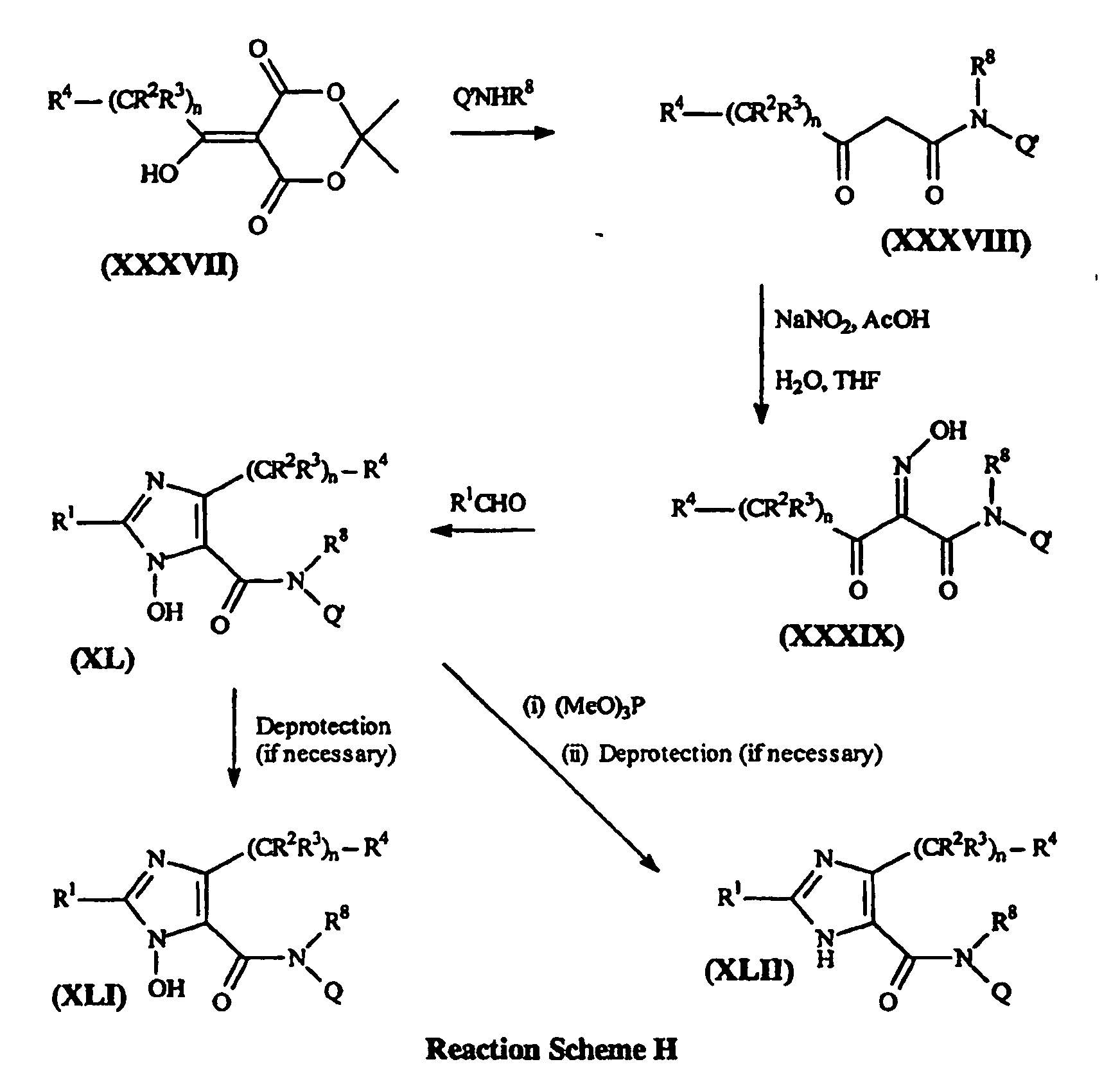
Claims (29)
- A compound of the formula (I)wherein X and Y are independently =N-, -N(R5)- (R5 being selected from H, Me, Et, Pr, Bn, -OH and -CH2COOR6, wherein R6 represents H, Me, Et, Pr or Bn), =CH-, -S-or -O- ;

n is from 1 to 4;
R1 is H or C1 to C15 hydrocarbyl wherein up to three C atoms may optionally be replaced by N, O and/or S atoms and up to three H atoms may optionally be replaced by halogen atoms;
R2 (when n is 1) is selected from H, Me, Et, Pr and OH; or (when n is greater than 1) each R2 is independently selected from H, Me, Et, Pr and OH;
R3 (when n is 1) is selected from H, Me, Et and Pr; or (when n is greater than 1) each R3 is independently selected from H, Me, Et and Pr, or two R3 groups on neighbouring carbon atoms are linked to form a C3 to C6 carbocylic ring, or two R3 groups are absent from neighbouring carbon atoms which are linked by a double bond; or R2 and R3 on the same carbon atom together represent an =O group;
R4 is C1 to C15 hydrocarbyl wherein up to two C atoms may optionally be replaced by N, O and/or S atoms and up to two H atoms may optionally be replaced by halogen atoms;
Z is -(NR7)a-CO-(NR8)b- (wherein a is 0 or 1, b is 0 or 1, and R7 and R8 are independently selected from the groups recited above for R6),
-CO-NR7-CH2-CO-NR8-, -CO-O-, -CH2-CH2-, -CH=CH-, -CH2-NR8-or a bond;
Q is -R9V, or(wherein R9 is -CH2-; -CH2-CH2-; or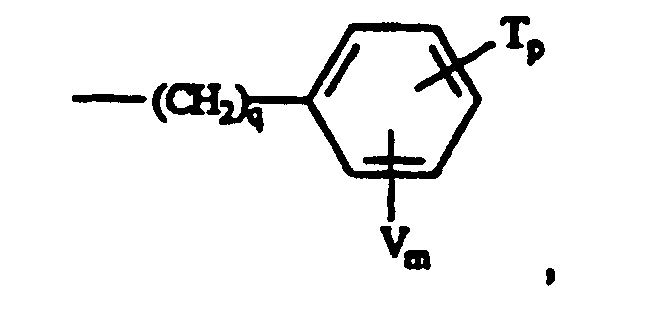 or R9 and R8, together with the nitrogen atom to which R8 is attached, form a piperidine or pyrrolidine ring which is substituted by V;
V is -CO-NH-SO2-Ph, -SO2-NH-CO-Ph, -CH2OH, or a group of the formula -R10U, (wherein U is -COOH, tetrazolyl, -CONHOH or -SO3H; and
R10 is a bond; C1 to C6 hydrocarbylene, optionally substituted by hydroxy, amino or acetamido; -O-(C1 to C3 alkylene)-; -SO2NR11-CHR12-;
-CO-NR11-CHR12-, R11 and R12 being independently selected from H and methyl; or -NH-(CO)c-CH2-, c being 0 or 1);
T is C1 to C6 hydrocarbyl, -NR6R7 (wherein R6 and R7 are as defined above), -OMe, -OH, -CH2OH, halogen or trihalomethyl;
m is 1 or 2;
p is from 0 to 3; and
q is from 0 to 2, with the proviso that q is 1 or 2 when Z is a bond);
or a pharmaceutically acceptable salt thereof. - A compound according to claim 1 wherein Q is
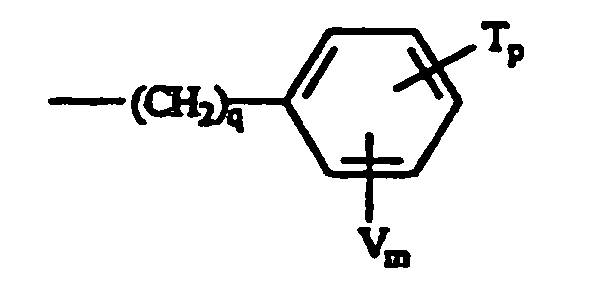
- A compound according to claim 2 wherein Q is
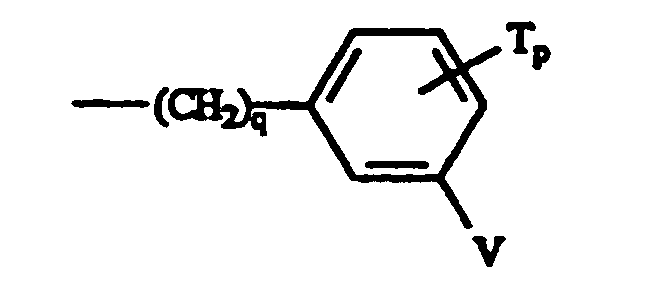
- A compound according to any preceding claim wherein X and Y are independently =N-, =CH-, -NH-, -NOH- or -NMe-.
- A compound according to claim 4 wherein X is -NH- and Y is =CH-, or Y is -NH- and X is =CH-.
- A compound according to claim 4 wherein X is -NH- or -NOH- and Y is =Nor wherein X is =N- and Y is -NH- or -NOH-.
- A compound according to any preceding claim wherein R1 is C1 to C12 hydrocarbyl, wherein one C atom may optionally be replaced by N or O and up to three H atoms may optionally be replaced by F, Cl or Br.
- A compound according to any preceding claim wherein R1 is C3 to C12 alicyclic; phenyl (optionally substituted with OMe, NMe2, CF3, Me, F, Cl, Br or I); or C1 to C8 alkyl.
- A compound according to any preceding claim wherein Z is -CO-NH-.
- A compound according to any preceding claim wherein p is 0 or 1, and q is 0.
- A compound according to any preceding claim wherein T is C1 to C6 hydrocarbyl or halo.
- A compound according to any preceding claim wherein V is -CO2H, -CH2CO2H or tetrazolyl.
- A compound according to any preceding claim wherein R2 and R3 are H, and n is from 1 to 3.
- A compound according to any of claims 1 to 12 wherein R2 and R3 together form an =O group, and n is 1.
- A compound according to claim 13 or claim 14 wherein R4 is C3 to C12 carbocyclic, preferably adamantyl, cycloheptyl, cyclohexyl or phenyl.
- A compound according to claim 13 or claim 14 wherein R4 is -NH-R13 or -OR13, in which R13 is C3 to C12 carbocyclic, preferably adamantyl, cycloheptyl, cyclohexyl or phenyl.
- A compound according to claim 1 wherein R5 is selected from H, Me, Et, Pr and Bn; Z is -(NR7)a-CO-(NR8)b-, -CO-NH-CH2-CO-NH- or a bond; Q isV is -CO-NH-SO2-Ph, -SO2-NH-CO-Ph, -OCH2COOH, tetrazolyl or
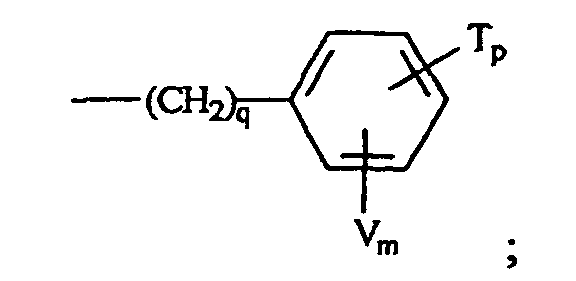
-(CH2)sCOOH, wherein s is from 0 to 2; and T is C1 to C6 hydrocarbyl, -NR6R7, -OMe, -OH, -CH2OH or halogen. - A compound according to claim 1 wherein R5 is selected from H, Me, Et, Pr and Bn; Z is -(NR7)a-CO-(NR8)b-, Q is -(CH2)rCOOH, wherein r is from 1 to 3; and T is C1 to C6 hydrocarbyl, -NR6R7, -OMe, -OH, -CH2OH or halogen.
- A compound according to claim 1 wherein R5 is selected from H, Me, Et, Pr and Bn; -Z-Q isk is 1 or 2; and T is C1 to C6 hydrocarbyl, -NR6R7, -OMe, -OH, -CH2OH or halogen.
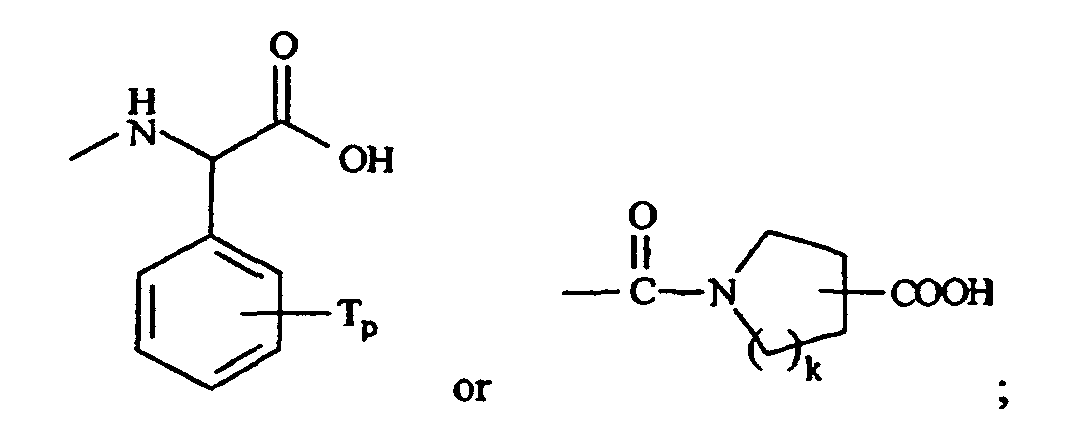
- A compound which is degraded in vivo to yield a compound according to any preceding claim.
- A method of making a compound according to claim 1 wherein Z is -CO-NR8-, said method including the step of reacting a compound of the formulawith a compound of the formula Q'NHR8, wherein Q' is Q or a suitably protected derivative of Q, and X, Y, R1, R2, R3, R4, R8 and Q are as defined in claim 1.

- A method of making a compound according to claim 1 wherein Z is -CO-NR8-, said method including the step of reacting a compound of the formulawith a trimethylphosphite, wherein R1, R2, R3, R4, R8, Z and Q are as defined in claim 1.

- A method of making a compound according to claim 1 wherein Z is -NR7-CO-NR8-, said method including the steps ofa) reacting a compound of the formula(or a suitably protected derivative thereof) with ethylchloroformate, followed by reaction with sodium azide, to form a compound of the formula
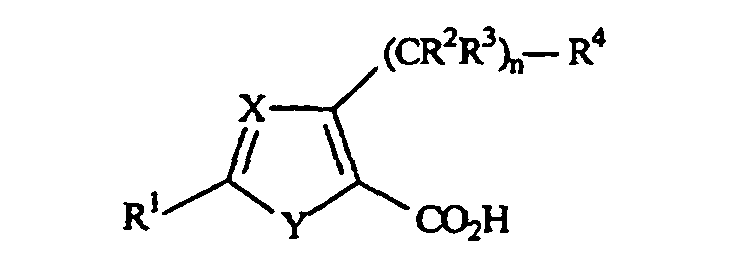 (or a suitably protected derivative thereof) and
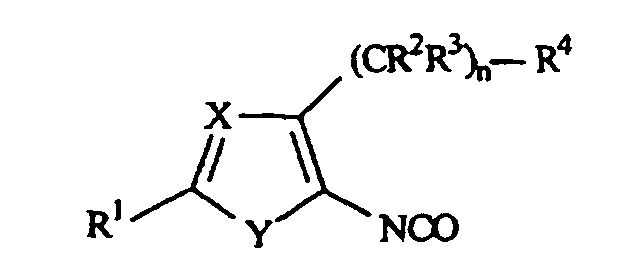 b) reacting the product with a compound of the formula Q'NHR8,
wherein Q' is Q or a suitably protected derivative of Q, and X, Y, R1, R2, R3, R4, R8 and Q are as defined in claim 1. - A method of making a compound according to claim 1 wherein Z is -NR7-CO-, said method including the steps ofwherein Q' is Q or a suitably protected derivative of Q, and X, Y, R1, R2, R3, R4, R7 and Q are as defined in claim 1.a) reacting a compound of the formula(or a suitably protected derivative thereof) with ethylchloroformate, followed by reaction with sodium azide, to form a compound of the formula
 (or a suitably protected derivative thereof),
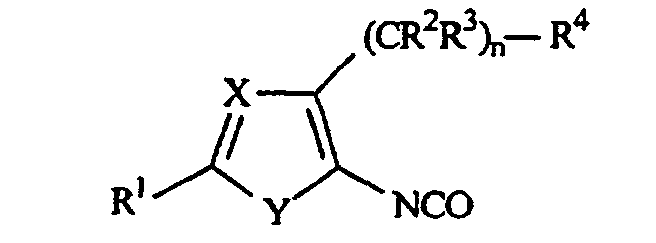 b) reducing the product to form the corresponding amine, andc) reacting said amine with a compound of the formula Q'-COCl,
 - A method of making a compound according to claim 1 wherein X or Y is -N(OH)- and the other is -N=, said method comprising the step of reacting a compound of the formulawith sodium nitrite, followed by reaction with a compound of formula R1CHO, wherein L is -NH- or -O-, Q' is Q or a suitably protected derivative of Q, and R1, R2, R3, R4 and Q are as defined in claim 1.
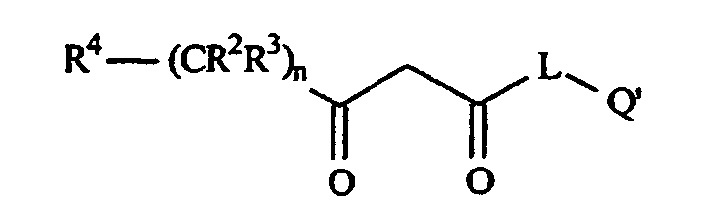
- A method of making a compound according to claim 1 wherein Z is -CO-O-, which may optionally then be converted to a compound according to claim 1 wherein Z is -CO-NR8-, said method comprising the step of reacting a compound of the formulawith a compound of formula
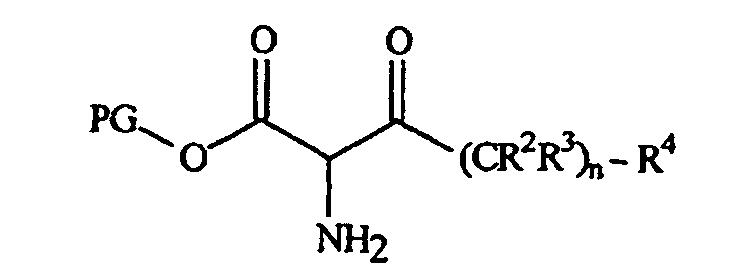 wherein PG is a protecting group and R1, R2, R3, R4 and R8 are as defined in claim 1.
- A method of making a compound according to claim 1 wherein Z is -CO-O-, which may optionally then be converted to a compound according to claim 1 wherein Z is -CO-NR8-, said method comprising the step of reacting a compound of the formulawith a compound of formula R1COCl, followed by reaction with an ammonium salt, wherein PG is a protecting group and R1, R2, R3, R4 and R8 are as defined in claim 1.

- A pharmaceutical composition comprising a compound according to any of claims 1 to 20 together with a pharmaceutically acceptable diluent or carrier.
- A method of making a pharmaceutical composition according to claim 28, comprising mixing a compound according to any of claims 1 to 20 with a pharmaceutically acceptable diluent or carrier.
Applications Claiming Priority (5)
| Application Number | Priority Date | Filing Date | Title |
|---|---|---|---|
| GBGB9824536.8A GB9824536D0 (en) | 1998-11-09 | 1998-11-09 | Gastrin and cholecystokinin receptor ligands |
| GB9824536 | 1998-11-09 | ||
| GBGB9916786.8A GB9916786D0 (en) | 1998-11-09 | 1999-07-16 | Gastrin and cholecystokinin receptor ligands |
| GB9916786 | 1999-07-16 | ||
| PCT/GB1999/003733 WO2000027823A1 (en) | 1998-11-09 | 1999-11-09 | Gastrin and cholecystokinin receptor ligands |
Publications (2)
| Publication Number | Publication Date |
|---|---|
| EP1178969A1 EP1178969A1 (en) | 2002-02-13 |
| EP1178969B1 true EP1178969B1 (en) | 2005-07-13 |
Family
ID=26314641
Family Applications (1)
| Application Number | Title | Priority Date | Filing Date |
|---|---|---|---|
| EP99954196A Expired - Lifetime EP1178969B1 (en) | 1998-11-09 | 1999-11-09 | Gastrin and cholecystokinin receptor ligands |
Country Status (13)
| Country | Link |
|---|---|
| US (1) | US6479531B1 (en) |
| EP (1) | EP1178969B1 (en) |
| JP (1) | JP2002529455A (en) |
| CN (1) | CN1325385A (en) |
| AT (1) | ATE299499T1 (en) |
| AU (1) | AU1061500A (en) |
| BR (1) | BR9915194A (en) |
| CA (1) | CA2346108A1 (en) |
| DE (1) | DE69926148D1 (en) |
| HU (1) | HUP0104038A3 (en) |
| NO (1) | NO20012288L (en) |
| PL (1) | PL347591A1 (en) |
| WO (1) | WO2000027823A1 (en) |
Families Citing this family (41)
| Publication number | Priority date | Publication date | Assignee | Title |
|---|---|---|---|---|
| GB0011094D0 (en) * | 2000-05-08 | 2000-06-28 | Black James Foundation | Gastrin and cholecystokinin receptor ligands (III) |
| GB0011095D0 (en) * | 2000-05-08 | 2000-06-28 | Black James Foundation | astrin and cholecystokinin receptor ligands (III) |
| GB0011098D0 (en) * | 2000-05-08 | 2000-06-28 | Black James Foundation | Pharmaceutical compositions comprising protpn pump inhibitors and gastrin/cholecystokinin receptor ligands |
| GB0319124D0 (en) * | 2003-08-14 | 2003-09-17 | Smithkline Beecham Corp | Chemical compounds |
| EP1723132A1 (en) | 2004-02-12 | 2006-11-22 | Asterand Uk Limited | Ep2 receptor agonists |
| WO2005121132A1 (en) * | 2004-06-11 | 2005-12-22 | Shionogi & Co., Ltd. | Fused heterocyclic compound having anti-hcv effect |
| US8026237B2 (en) * | 2004-07-30 | 2011-09-27 | Exelixis, Inc. | Pyrrole derivatives as pharmaceutical agents |
| US8080567B2 (en) | 2005-08-09 | 2011-12-20 | Asterand Uk Limited | EP2 receptor agonists |
| WO2007052843A1 (en) * | 2005-11-04 | 2007-05-10 | Takeda Pharmaceutical Company Limited | Heterocyclic amide compound and use thereof |
| WO2007123269A1 (en) | 2006-04-19 | 2007-11-01 | Astellas Pharma Inc. | Azolecarboxamide derivative |
| US8143410B2 (en) | 2006-11-16 | 2012-03-27 | Allergan, Inc. | Kinase inhibitors |
| BRPI0718895A2 (en) | 2006-11-16 | 2013-12-10 | Allergan Inc | SULFOXIMIN COMPOUND AND USE OF SUCH COMPOUND |
| US8558002B2 (en) | 2006-11-16 | 2013-10-15 | Allergan, Inc. | Sulfoximines as kinase inhibitors |
| WO2008136428A1 (en) | 2007-04-27 | 2008-11-13 | Takeda Pharmaceutical Company Limited | Nitrogen-containing five-membered heterocyclic compound |
| CN101801371B (en) | 2007-09-10 | 2012-11-28 | 詹森药业有限公司 | Process for the preparation of compounds useful as SGLT inhibitors |
| JP5555169B2 (en) * | 2007-10-11 | 2014-07-23 | バーテックス ファーマシューティカルズ インコーポレイテッド | Heteroarylamides useful as inhibitors of voltage-gated sodium channels |
| RU2461551C2 (en) | 2007-10-24 | 2012-09-20 | Астеллас Фарма Инк. | Azolcarboxamide compound or its pharmaceutically acceptable salt |
| US9447049B2 (en) | 2010-03-01 | 2016-09-20 | University Of Tennessee Research Foundation | Compounds for treatment of cancer |
| US9056850B2 (en) | 2008-10-17 | 2015-06-16 | Janssen Pharmaceutica N.V. | Process for the preparation of compounds useful as inhibitors of SGLT |
| JP2012506386A (en) * | 2008-10-21 | 2012-03-15 | メタボレックス, インコーポレイテッド | Aryl GPR120 receptor agonist and uses thereof |
| EP2253617A1 (en) * | 2009-05-20 | 2010-11-24 | Bayer CropScience AG | Halogenated compounds as pesticides |
| US20110009347A1 (en) | 2009-07-08 | 2011-01-13 | Yin Liang | Combination therapy for the treatment of diabetes |
| SG10201500258WA (en) | 2009-10-14 | 2015-03-30 | Janssen Pharmaceutica Nv | Process for the preparation of compounds useful as inhibitors of sglt2 |
| LT2568988T (en) | 2010-05-11 | 2016-09-12 | Janssen Pharmaceutica, N.V. | Pharmaceutical formulations comprising 1-(beta-d-glucopyranosyl)-2-thienylmethylbenzene derivatives as inhibitors of sglt |
| NZ604018A (en) | 2010-06-07 | 2015-02-27 | Novomedix Llc | Furanyl compounds and the use thereof |
| BR112013000925A2 (en) | 2010-07-15 | 2020-12-01 | Bayer Intellectual Property Gmbh | heterocyclic compounds as pesticides |
| EP2601208B1 (en) * | 2010-08-03 | 2015-02-11 | Graffinity Pharmaceuticals GmbH | LIGANDS FOR ANTIBODY AND Fc-FUSION PROTEIN PURIFICATION BY AFFINITY CHROMATOGRAPHY |
| AU2012241897C1 (en) | 2011-04-13 | 2017-05-11 | Janssen Pharmaceutica Nv | Process for the preparation of compounds useful as inhibitors of SGLT2 |
| TWI542596B (en) | 2011-05-09 | 2016-07-21 | 健生藥品公司 | (2S,3R,4R,5S,6R)-2-(3-((5-(4-fluorophenyl)thiophen-2-yl)methyl)-4-methylphenyl)-6-(hydroxyl L-proline and citric acid cocrystals of methyl)tetrahydro-2H-piperan-3,4,5-triol |
| CA2864091A1 (en) | 2012-02-08 | 2013-08-15 | Graffinity Pharmaceuticals Gmbh | Ligands for antibody and fc-fusion protein purification by affinity chromatography iv |
| CA2893843C (en) | 2012-12-21 | 2018-09-04 | Gilead Sciences, Inc. | Polycyclic-carbamoylpyridone compounds and their pharmaceutical use |
| DK3019503T3 (en) | 2013-07-12 | 2017-11-20 | Gilead Sciences Inc | POLYCYCLIC-CARBAMOYLPYRIDON COMPOUNDS AND ITS USES FOR TREATING HIV INFECTIONS |
| NO2865735T3 (en) | 2013-07-12 | 2018-07-21 | ||
| TWI677489B (en) | 2014-06-20 | 2019-11-21 | 美商基利科學股份有限公司 | Synthesis of polycyclic-carbamoylpyridone compounds |
| TW201613936A (en) | 2014-06-20 | 2016-04-16 | Gilead Sciences Inc | Crystalline forms of(2R,5S,13aR)-8-hydroxy-7,9-dioxo-n-(2,4,6-trifluorobenzyl)-2,3,4,5,7,9,13,13a-octahydro-2,5-methanopyrido[1',2':4,5]pyrazino[2,1-b][1,3]oxazepine-10-carboxamide |
| NO2717902T3 (en) | 2014-06-20 | 2018-06-23 | ||
| CA2976449C (en) | 2015-02-11 | 2022-08-09 | Icahn School Of Medicine At Mount Sinai | Benzenesulfonamide upregulators of npc1 for neimann-pick disease and other lysosomal storage disorders |
| US20170071970A1 (en) | 2015-09-15 | 2017-03-16 | Janssen Pharmaceutica Nv | Co-therapy comprising canagliflozin and phentermine for the treatment of obesity and obesity related disorders |
| AU2020274645A1 (en) * | 2019-05-14 | 2021-12-16 | Metabomed Ltd | ACSS2 inhibitors and methods of use thereof |
| AU2021391453A1 (en) * | 2020-12-04 | 2023-07-13 | Eubulus Biotherapeutics Inc. | Heteroaryl-acetylenes, pharmaceutical compositions thereof, and their therapeutic applications |
| JP2024016314A (en) * | 2020-12-24 | 2024-02-07 | 小野薬品工業株式会社 | Combination of a compound represented by general formula (IA), a pharmaceutically acceptable salt thereof, or a hydrate thereof with an immune checkpoint inhibitor and/or an EP4 receptor antagonist |
Family Cites Families (6)
| Publication number | Priority date | Publication date | Assignee | Title |
|---|---|---|---|---|
| US5202344A (en) | 1990-12-11 | 1993-04-13 | G. D. Searle & Co. | N-substituted lactams useful as cholecystokinin antagonists |
| DE69310152D1 (en) * | 1992-02-20 | 1997-05-28 | Black James Foundation | Bicyclo[2.2.2.]oktan derivate als cholestocystokinin harnstoffe |
| PT720601E (en) * | 1993-08-10 | 2001-02-28 | Black James Foundation | GASTRINE AND CCK RECEIVER LIGANDS |
| GB9409150D0 (en) * | 1994-05-09 | 1994-06-29 | Black James Foundation | Cck and gastrin receptor ligands |
| NZ299242A (en) | 1995-09-11 | 1997-12-19 | Nihon Nohyaku Co Ltd | N-phenyl-n'-(phenyl substituted imidazol-5-yl, -oxazol-4-yl, and -thiazol-4-yl)urea derivatives |
| ES2208935T3 (en) | 1996-08-01 | 2004-06-16 | Merckle Gmbh | ACIL-PIRROL-DICARBOXILIC ACIDS AND ACIL-INDOL-DICARBOXILIC ACIDS, AS WELL AS THEIR DERIVATIVES AS INHIBITORS OF CITOSOLICA PHOSPHOLIPASE A2. |
-
1999
- 1999-11-09 DE DE69926148T patent/DE69926148D1/en not_active Expired - Lifetime
- 1999-11-09 WO PCT/GB1999/003733 patent/WO2000027823A1/en not_active Ceased
- 1999-11-09 AU AU10615/00A patent/AU1061500A/en not_active Abandoned
- 1999-11-09 PL PL99347591A patent/PL347591A1/en not_active Application Discontinuation
- 1999-11-09 US US09/831,385 patent/US6479531B1/en not_active Expired - Fee Related
- 1999-11-09 BR BR9915194-4A patent/BR9915194A/en not_active Application Discontinuation
- 1999-11-09 HU HU0104038A patent/HUP0104038A3/en unknown
- 1999-11-09 EP EP99954196A patent/EP1178969B1/en not_active Expired - Lifetime
- 1999-11-09 CA CA002346108A patent/CA2346108A1/en not_active Abandoned
- 1999-11-09 CN CN99813085A patent/CN1325385A/en active Pending
- 1999-11-09 JP JP2000581003A patent/JP2002529455A/en active Pending
- 1999-11-09 AT AT99954196T patent/ATE299499T1/en not_active IP Right Cessation
-
2001
- 2001-05-09 NO NO20012288A patent/NO20012288L/en not_active Application Discontinuation
Also Published As
| Publication number | Publication date |
|---|---|
| JP2002529455A (en) | 2002-09-10 |
| NO20012288L (en) | 2001-07-02 |
| PL347591A1 (en) | 2002-04-08 |
| ATE299499T1 (en) | 2005-07-15 |
| AU1061500A (en) | 2000-05-29 |
| EP1178969A1 (en) | 2002-02-13 |
| DE69926148D1 (en) | 2005-08-18 |
| HUP0104038A2 (en) | 2002-05-29 |
| WO2000027823A1 (en) | 2000-05-18 |
| BR9915194A (en) | 2001-08-07 |
| US6479531B1 (en) | 2002-11-12 |
| CA2346108A1 (en) | 2000-05-18 |
| HUP0104038A3 (en) | 2002-07-29 |
| CN1325385A (en) | 2001-12-05 |
| NO20012288D0 (en) | 2001-05-09 |
Similar Documents
| Publication | Publication Date | Title |
|---|---|---|
| US6479531B1 (en) | Gastrin and cholecystokinin receptor ligands | |
| DE69530081T2 (en) | GASTRIN AND CCK ANTAGONISTS | |
| JP2760903B2 (en) | Heterocyclic substituted acylaminothiazole | |
| KR100222309B1 (en) | Substituted 2-acylamino-5-thiazole, their preparation and pharmaceutical composition containing them | |
| US4886803A (en) | Benzimidazole derivatives | |
| US6878734B2 (en) | Gastrin and cholecystokinin receptor ligands(II) | |
| US5939437A (en) | CCK and gastrin receptor ligands | |
| JP2008530103A (en) | Azolylacylguanidines as beta-secretase inhibitors | |
| CA2514940A1 (en) | Quinoline-derived amide modulators of vanilloid vr1 receptor | |
| SK67394A3 (en) | Alpha (-heteroaryloxymethylketones,pharmaceutical agents with their contents and using of these ketones or pharmaceutical agent for production of medicine | |
| JP2005532347A (en) | Pyrrole compounds for the treatment of prostaglandin mediated diseases | |
| EP0945438A1 (en) | Pyrazole derivatives | |
| EP0217519B1 (en) | 5-membered heterocyclic ring angiotensin converting enzyme inhibitors | |
| US20030195240A1 (en) | Pharmaceutical compositions comprising proton pump inhibitors and gastrin/cholecystokinin receptor ligands | |
| EP2094656B1 (en) | P<0}{0pyrrol derivatives, preparation and use of the same in therapy<0} | |
| US4946855A (en) | Carboxamide derivatives having tetrazole and thiazole rings and their use | |
| IE51510B1 (en) | 4h-1,2,4-triazole derivatives | |
| US3709906A (en) | 2-alkyl-4,5-diphenylpyrrole derivatives | |
| EP1899298B1 (en) | Derivatives of 4,5-diarylpyrrole, preparation method thereof and use of same in therapeutics | |
| Suzuki et al. | Syntheses of 2-Aryl-4-(3-thienyl) imidazole Derivatives with Antiinflammatory Preperties | |
| WO2008099076A2 (en) | Substituted n-(4-cyano-1h-pyrazol-3-yl)methylamine derivatives, preparation thereof and therapeutic use thereof | |
| WO2001085704A1 (en) | Gastrin and cholecystokinin receptor ligands (iv) | |
| CA1242731A (en) | Acrylamidobenzoic acid derivatives and their use | |
| EP0384450A1 (en) | Tetrazole amide derivatives of heterocyclic alkenyl acids and their use as antiallergic substances | |
| JPH05230019A (en) | New itaconic acid derivative |
Legal Events
| Date | Code | Title | Description |
|---|---|---|---|
| PUAI | Public reference made under article 153(3) epc to a published international application that has entered the european phase |
Free format text: ORIGINAL CODE: 0009012 |
|
| 17P | Request for examination filed |
Effective date: 20010424 |
|
| AK | Designated contracting states |
Kind code of ref document: A1 Designated state(s): AT BE CH CY DE DK ES FI FR GB GR IE IT LI LU MC NL PT SE |
|
| AX | Request for extension of the european patent |
Free format text: AL;LT;LV;MK;RO;SI |
|
| 17Q | First examination report despatched |
Effective date: 20031030 |
|
| GRAP | Despatch of communication of intention to grant a patent |
Free format text: ORIGINAL CODE: EPIDOSNIGR1 |
|
| GRAS | Grant fee paid |
Free format text: ORIGINAL CODE: EPIDOSNIGR3 |
|
| GRAA | (expected) grant |
Free format text: ORIGINAL CODE: 0009210 |
|
| AK | Designated contracting states |
Kind code of ref document: B1 Designated state(s): AT BE CH CY DE DK ES FI FR GB GR IE IT LI LU MC NL PT SE |
|
| PG25 | Lapsed in a contracting state [announced via postgrant information from national office to epo] |
Ref country code: NL Free format text: LAPSE BECAUSE OF FAILURE TO SUBMIT A TRANSLATION OF THE DESCRIPTION OR TO PAY THE FEE WITHIN THE PRESCRIBED TIME-LIMIT Effective date: 20050713 Ref country code: LI Free format text: LAPSE BECAUSE OF FAILURE TO SUBMIT A TRANSLATION OF THE DESCRIPTION OR TO PAY THE FEE WITHIN THE PRESCRIBED TIME-LIMIT Effective date: 20050713 Ref country code: IT Free format text: LAPSE BECAUSE OF FAILURE TO SUBMIT A TRANSLATION OF THE DESCRIPTION OR TO PAY THE FEE WITHIN THE PRESCRIBED TIME-LIMIT;WARNING: LAPSES OF ITALIAN PATENTS WITH EFFECTIVE DATE BEFORE 2007 MAY HAVE OCCURRED AT ANY TIME BEFORE 2007. THE CORRECT EFFECTIVE DATE MAY BE DIFFERENT FROM THE ONE RECORDED. Effective date: 20050713 Ref country code: FI Free format text: LAPSE BECAUSE OF FAILURE TO SUBMIT A TRANSLATION OF THE DESCRIPTION OR TO PAY THE FEE WITHIN THE PRESCRIBED TIME-LIMIT Effective date: 20050713 Ref country code: CH Free format text: LAPSE BECAUSE OF FAILURE TO SUBMIT A TRANSLATION OF THE DESCRIPTION OR TO PAY THE FEE WITHIN THE PRESCRIBED TIME-LIMIT Effective date: 20050713 Ref country code: BE Free format text: LAPSE BECAUSE OF FAILURE TO SUBMIT A TRANSLATION OF THE DESCRIPTION OR TO PAY THE FEE WITHIN THE PRESCRIBED TIME-LIMIT Effective date: 20050713 Ref country code: AT Free format text: LAPSE BECAUSE OF FAILURE TO SUBMIT A TRANSLATION OF THE DESCRIPTION OR TO PAY THE FEE WITHIN THE PRESCRIBED TIME-LIMIT Effective date: 20050713 |
|
| REG | Reference to a national code |
Ref country code: GB Ref legal event code: FG4D |
|
| REG | Reference to a national code |
Ref country code: CH Ref legal event code: EP |
|
| REG | Reference to a national code |
Ref country code: IE Ref legal event code: FG4D |
|
| REF | Corresponds to: |
Ref document number: 69926148 Country of ref document: DE Date of ref document: 20050818 Kind code of ref document: P |
|
| PG25 | Lapsed in a contracting state [announced via postgrant information from national office to epo] |
Ref country code: SE Free format text: LAPSE BECAUSE OF FAILURE TO SUBMIT A TRANSLATION OF THE DESCRIPTION OR TO PAY THE FEE WITHIN THE PRESCRIBED TIME-LIMIT Effective date: 20051013 Ref country code: GR Free format text: LAPSE BECAUSE OF FAILURE TO SUBMIT A TRANSLATION OF THE DESCRIPTION OR TO PAY THE FEE WITHIN THE PRESCRIBED TIME-LIMIT Effective date: 20051013 Ref country code: DK Free format text: LAPSE BECAUSE OF FAILURE TO SUBMIT A TRANSLATION OF THE DESCRIPTION OR TO PAY THE FEE WITHIN THE PRESCRIBED TIME-LIMIT Effective date: 20051013 |
|
| PG25 | Lapsed in a contracting state [announced via postgrant information from national office to epo] |
Ref country code: DE Free format text: LAPSE BECAUSE OF FAILURE TO SUBMIT A TRANSLATION OF THE DESCRIPTION OR TO PAY THE FEE WITHIN THE PRESCRIBED TIME-LIMIT Effective date: 20051014 |
|
| PG25 | Lapsed in a contracting state [announced via postgrant information from national office to epo] |
Ref country code: ES Free format text: LAPSE BECAUSE OF FAILURE TO SUBMIT A TRANSLATION OF THE DESCRIPTION OR TO PAY THE FEE WITHIN THE PRESCRIBED TIME-LIMIT Effective date: 20051024 |
|
| PG25 | Lapsed in a contracting state [announced via postgrant information from national office to epo] |
Ref country code: IE Free format text: LAPSE BECAUSE OF NON-PAYMENT OF DUE FEES Effective date: 20051109 Ref country code: CY Free format text: LAPSE BECAUSE OF FAILURE TO SUBMIT A TRANSLATION OF THE DESCRIPTION OR TO PAY THE FEE WITHIN THE PRESCRIBED TIME-LIMIT Effective date: 20051109 |
|
| PG25 | Lapsed in a contracting state [announced via postgrant information from national office to epo] |
Ref country code: MC Free format text: LAPSE BECAUSE OF NON-PAYMENT OF DUE FEES Effective date: 20051130 Ref country code: LU Free format text: LAPSE BECAUSE OF NON-PAYMENT OF DUE FEES Effective date: 20051130 |
|
| PG25 | Lapsed in a contracting state [announced via postgrant information from national office to epo] |
Ref country code: PT Free format text: LAPSE BECAUSE OF FAILURE TO SUBMIT A TRANSLATION OF THE DESCRIPTION OR TO PAY THE FEE WITHIN THE PRESCRIBED TIME-LIMIT Effective date: 20051219 |
|
| NLV1 | Nl: lapsed or annulled due to failure to fulfill the requirements of art. 29p and 29m of the patents act | ||
| REG | Reference to a national code |
Ref country code: CH Ref legal event code: PL |
|
| PLBE | No opposition filed within time limit |
Free format text: ORIGINAL CODE: 0009261 |
|
| STAA | Information on the status of an ep patent application or granted ep patent |
Free format text: STATUS: NO OPPOSITION FILED WITHIN TIME LIMIT |
|
| 26N | No opposition filed |
Effective date: 20060418 |
|
| REG | Reference to a national code |
Ref country code: IE Ref legal event code: MM4A |
|
| EN | Fr: translation not filed | ||
| PG25 | Lapsed in a contracting state [announced via postgrant information from national office to epo] |
Ref country code: FR Free format text: LAPSE BECAUSE OF FAILURE TO SUBMIT A TRANSLATION OF THE DESCRIPTION OR TO PAY THE FEE WITHIN THE PRESCRIBED TIME-LIMIT Effective date: 20060908 |
|
| PGFP | Annual fee paid to national office [announced via postgrant information from national office to epo] |
Ref country code: GB Payment date: 20061108 Year of fee payment: 8 |
|
| GBPC | Gb: european patent ceased through non-payment of renewal fee |
Effective date: 20071109 |
|
| PG25 | Lapsed in a contracting state [announced via postgrant information from national office to epo] |
Ref country code: FR Free format text: LAPSE BECAUSE OF FAILURE TO SUBMIT A TRANSLATION OF THE DESCRIPTION OR TO PAY THE FEE WITHIN THE PRESCRIBED TIME-LIMIT Effective date: 20051130 |
|
| PG25 | Lapsed in a contracting state [announced via postgrant information from national office to epo] |
Ref country code: FR Free format text: LAPSE BECAUSE OF FAILURE TO SUBMIT A TRANSLATION OF THE DESCRIPTION OR TO PAY THE FEE WITHIN THE PRESCRIBED TIME-LIMIT Effective date: 20050713 |
|
| PG25 | Lapsed in a contracting state [announced via postgrant information from national office to epo] |
Ref country code: GB Free format text: LAPSE BECAUSE OF NON-PAYMENT OF DUE FEES Effective date: 20071109 |