Technical Field
-
The present invention relates to a mobile station
apparatus (communication terminal apparatus) that
carries out random access using predetermined signatures
and a preamble reception apparatus mounted on a base
station apparatus in a mobile communication system.
Background Art
-
In a digital mobile communication system, when
starting a communication, a mobile station apparatus
carries out a communication called "random access" with
a base station apparatus equipped with a preamble
reception apparatus. This random access will be
explained by taking a case where the base station apparatus
incorporates a preamble reception apparatus described
in a 3GPP input document "Proposal for RACH Preambles"
(R1-99893, Motorola and Texas Instruments ) as an example.
-
FIG.1 is a schematic view showing an example of a
preamble that is sent by the mobile station apparatus
in random access. As shown in FIG.1, a preamble sent by
the mobile station apparatus at the time of random access
is created by multiplying a (16 × 256) chip code, that
is, a code made up of a chain of 256 signature hm's each
consisting of 16 chips, by 4096-chip scrambling code Cn.
-
At the time of random access, the mobile station
apparatus generates a preamble as shown in FIG.1 using
any one of 16 kinds of hm and sends the preamble generated.
The preamble sent by the mobile station apparatus is
received by a base station apparatus that supports
scrambling code Cn multiplied on this preamble.
-
This base station apparatus is equipped with a
preamble reception apparatus. This preamble reception
apparatus calculates a correlation value for each
signature using a received signal and then detects
correlation values that exceed a threshold from among
the calculated correlation values. The correlation
values are calculated using any one of coherent detection,
non-coherent detection or delay detection. After this,
for a signature whose correlation value exceeds the
threshold, this preamble reception apparatus recognizes
that the preamble corresponding to this signature has
been received reliably. That is, a signature whose
correlation value exceeds the threshold is detected by
the preamble reception apparatus. On the contrary, for
a signature whose correlation value does not exceed the
threshold, this preamble reception apparatus recognizes
that the preamble corresponding to this signature has
not been received reliably. That is, a signature whose
correlation value does not exceed the threshold value
is not detected by the preamble reception apparatus.
-
After this, the base station apparatus sends a signal
indicating that a preamble corresponding to a signature
whose correlation value exceeds the threshold has been
received reliably through a predetermined channel. Each
mobile station apparatus that sent a preamble before
demodulates the above-described signal received through
the above predetermined channel and determines whether
or not the previously sent preamble has been received
reliably by the base station apparatus.
-
Of the mobile station apparatuses that sent a
preamble before, those mobile station apparatuses whose
preamble has been received by the base station apparatus
finish random access and start a normal communication.
On the contrary, of the mobile station apparatuses that
sent a preamble before, those mobile station apparatuses
whose preamble has not been received by the base station
apparatus continue random access and resend the
above-described preamble.
-
However, the mobile communication system using the
above-described preamble reception apparatus has a
problem that the probability that a preamble sent by each
mobile station apparatus will be detected (that is,
probability of detecting a preamble) depends on the
propagation environment.
-
More specifically, when an apparatus that
calculates correlation values using coherent detection
is used as the preamble reception apparatus, if the
propagation environment is bad (for example, when a
frequency offset is large or during high-speed fading),
not only the probability of preamble detection
deteriorates, but also the probability of erroneously
detecting preambles (that is, probability of erroneous
preamble detection) will increase.
-
On the other hand, when an apparatus that calculates
correlation values using non-coherent detection or delay
detection is used as the preamble reception apparatus,
if the propagation environment is favorable ( for example,
when a frequency offset is small or during low-speed
fading), not only the probability of preamble detection
deteriorates but also the probability of erroneous
preamble detection increases compared to the case where
the apparatus that calculates correlation values using
coherent detection is used as the preamble reception
apparatus.
Disclosure of Invention
-
It is an object of the present invention to provide
a preamble reception apparatus capable of favorably
maintaining the probability of preamble detection and
probability of erroneous detection independently of the
propagation environment.
-
The present inventor has come up with the present
invention by discovering that while a correlation value
for a predetermined known signal (signature) calculated
using one type of coherent detection decreases under
influences of the propagation environment, a correlation
value for the above-described predetermined known signal
calculated using another type of coherent detection may
not have decreased.
-
The object of the present invention will be attained
by receiving a communication start request signal
(preamble) generated and sent by a communication terminal
apparatus using a known signal (signature) specific to
the communication terminal apparatus and calculating
correlation values for each known signal for every
detection process using the received preamble through
a plurality of mutually different detection processes
(for example, coherent detection, non-coherent detection
or delay detection).
Brief Description of Drawings
-
- FIG.1 is a schematic view showing an example of a
preamble sent by a mobile station apparatus in random
access;
- FIG.2 is a block diagram showing a configuration
of a preamble reception apparatus according to Embodiment
1 of the present invention;
- FIG.3 is a block diagram showing a configuration
of a coherent detection correlation value calculation
section in the preamble reception apparatus according
to Embodiment 1 of the present invention;
- FIG.4 is a block diagram showing a configuration
of a non-coherent detection correlation value calculation
section in the preamble reception apparatus according
to Embodiment 1 of the present invention;
- FIG.5 is a block diagram showing a configuration
of a preamble reception apparatus according to Embodiment
2 of the present invention;
- FIG.6 is a block diagram showing a configuration
of a preamble reception apparatus according to Embodiment
3 of the present invention;
- FIG.7 is a block diagram showing a configuration
of a preamble reception apparatus according to Embodiment
4 of the present invention;
- FIG.8 is a block diagram showing a configuration
of a delay detection correlation value calculation
section 701 in the preamble reception apparatus according
to Embodiment 4 of the present invention;
- FIG.9 is a block diagram showing a configuration
of a preamble reception apparatus according to Embodiment
5 of the present invention; and
- FIG.10 is a block diagram showing a configuration
of a preamble reception apparatus according to Embodiment
6 of the present invention.
-
Best Mode for Carrying out the Invention
-
With reference now to the attached drawings,
embodiments of the present invention will be explained
in detail below.
(Embodiment 1)
-
This embodiment will describe a case where
correlation values for all signatures are calculated
using two systems of coherent detection and non-coherent
detection.
-
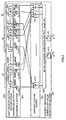
FIG.2 is a block diagram showing a configuration
of a preamble reception apparatus according to Embodiment
1 of the present invention. As shown in FIG.2, the
preamble reception apparatus according to this embodiment
comprises coherent detection correlation value
calculation section 201, non-coherent detection
correlation value calculation section 202, maximum value
detection section 203 and threshold determining section
204.
-
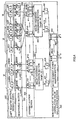
FIG.3 is a block diagram showing a configuration
of coherent detection correlation value calculation
section 201 in the preamble reception apparatus according
to Embodiment 1 of the present invention. The coherent
detection correlation value calculation section 201 shown
in FIG.3 is provided with shift register section 302,
descramble section 303, coherent addition section 304,
Walsh Hadamard conversion section 305 and absolute value
calculation sections A0 to A15.
-
In FIG.3, correlation value calculation section 201
has the function of calculating correlation values by
coherent detection and is provided with shift register
section 302, descramble section 303, coherent addition
section 304, Walsh Hadamard conversion section 305 and
absolute value calculation sections A0 to A15.
-
Shift register section 302 is provided with 4095
data flip flops (hereinafter referred to as "flip flops")
D0 to D4094 obtained by subtracting 1 from 4096 (16 chips
× 256 signature hm's). Here, flip flops D0 to D4094 are
serially connected.
-
Descramble section 303 is provided with 4096
multipliers M0 to M4095 corresponding to 16 chips × 256
signature hm's.
-
Of multipliers M0 to M4095, multipliers M0 to M4094
are connected to the output sides of flip flops D0 to
D4094 respectively and multiplier 4095 is connected to
the input side of flip flop D4094.
-
Coherent addition section 304 is provided with
adders P0 to P15. When 4096 multipliers M0 to M4095 are
divided into 256 groups each consisting of 16 multipliers
from the first multiplier, adder P0 is connected to the
output sides of the first multipliers of the respective
groups, multipliers M0, M16, ··· M4080, adder P1 is
connected to the output sides of the second multipliers
of the respective groups, multipliers M1, M17, ··· M4081,
and in the same way adder P15 is connected to the output
sides of the 16th multipliers of the respective groups,
multipliers M15, M31, ··· M4096. That is, adders P0 to
P15 are each connected to the outputs of 256 multipliers.
-
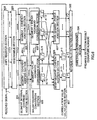
FIG.4 is a block diagram showing a configuration
of non-coherent detection correlation value calculation
section 202 in the preamble reception apparatus according
to Embodiment 1 of the present invention. In FIG.4, the
same configurations as those in FIG.3 are assigned the
same reference numerals in FIG.3 and detailed
explanations thereof will be omitted.
-
Non-coherent detection correlation value
calculation section 202 shown in FIG.4 has a configuration
to calculate correlation values by non-coherent detection
With j segments (the number of segments j=2 is assumed
in this embodiment) and is provided with shift register
section 302, descramble section 303, coherent addition
section 401, Walsh Hadamard conversion sections 402-1
to 402-j, absolute value calculation sections A0 to A31
and inter-segment power addition section 403.
-
Since the number of segments j=2 is assumed in this
embodiment, coherent addition section 401 is provided
with adders P0 to P31. When 4096 multipliers M0 to M4095
are divided into 256 groups each consisting of 16
multipliers from the first multiplier, adder P0 is
connected to the output sides of the first multipliers
of the respective groups, multipliers M0, M16, ··· M2032,
adder P1 is connected to the output sides of the second
multipliers of the respective groups, multipliers M1,
M17, ··· M2033, and in the same way adder P15 which is the
16th adder is connected to the output sides of the 16th
multipliers of the respective groups, multipliers M15,
M31, ··· M2047.
-
17th adder P16 is connected to the output sides of
the first multipliers of the respective groups,
multipliers M2048, M2064, ··· M4080, 18th adder P17 is
connected to the output sides of the second multipliers
of the respective groups, multipliers M2049, M2065, ···
M4081 and in the same way, 32nd adder P31 is connected
to the output sides of the 16th multipliers of the
respective groups, multipliers M2063, M2079, ··· M4095.
That is, adders P0 to P31 are each connected to the outputs
of 128 multipliers.
-
Inter-segment power addition section 403 is
provided with adders PB0 to PB15. Adder PB0 is connected
to the output sides of first A0 and A16 of absolute value
calculation sections A0 to A15 of the first group and
absolute value calculation sections A16 to A31 of the
second group and adder PB1 (not shown) is connected to
the output sides of second A1 and A17, and in the same
way, 16th adder PB15 is connected to the output sides
of 16th A15 and A31.
-
Then, an operation of the preamble reception
apparatus in the above configuration in random access
will be explained taking a case where this preamble
reception apparatus is mounted on the base station
apparatus as an example.
-
Each mobile station apparatus that carries out
random access to the above-described base station
apparatus generates, for example, a preamble as shown
in FIG.1 and sends the preamble generated to the base
station apparatus. Here, the preamble sent from each
mobile station apparatus corresponds to a signal for
requesting the base station apparatus for the start of
a communication (communication start request signal).
More specifically, as shown in FIG.1, a preamble sent
from each mobile station apparatus at the time of random
access is generated by multiplying a code of (16 × 256)
chips, that is, a code made up of a chain of 256 signature
(known signal) h
m's each consisting of 16 chips, by
4096-chip scrambling code C
n. Signature h
m used by the
mobile station apparatus is a known signal specific to
this mobile station apparatus. Furthermore, an Hadamard
code with a length of 16 is used as signature h
m and preamble
s
mn corresponding to mth signature h
m (m=0, 1, ···, 15) and
nth scrambling code C
n is expressed by expression (1)
below:
-
The preamble sent by each mobile station apparatus
is received by the base station apparatus equipped with
the preamble reception apparatus shown in FIG.2 through
a propagation path. This signal received (received
signal) by the base station apparatus is sent to the
preamble reception apparatus shown in FIG.2.
-
According to FIG.2, the received signal is output
to coherent detection correlation value calculation
section 201 and non-coherent detection correlation value
calculation section 202. First, an operation of coherent
detection correlation value calculation section 201 will
be explained with reference to FIG.3.
-
When received signal (preamble) r is input to shift
register section 302, this received signal r is
sequentially shifted through flip flops D0 to D4096 by
each flip flop holding and outputting the received signal
to the next stage and these signals are output to
multipliers M0 to M4095 of descramble section 303.
-
Multipliers M0 to M4095 multiply the respective
output signals of the
shift register section 302 by
corresponding scrambling code C
n and output these
multiplication results to respective adders P0 to P15
of above-described
coherent addition section 304 to which
multipliers M0 to M4095 are connected. The result of
descrambling preamble r(k) received by the base station
apparatus with respect to the mth signature is expressed
by Expression (2) below:
-
Adders P0 to P15 add up 256 multiplication results
and output these addition results to Walsh Hadamard
conversion section 305.
-
Walsh
Hadamard conversion section 305 carries out
a Walsh Hadamard conversion for every addition result,
that is, every signature h
m and outputs these results to
absolute value calculation sections A0 to A15.
Absolute value calculation sections A0 to A15 calculate
the squares the absolute values of the respective results
to obtain correlation values γ
0 c to γ
15 c and output these
correlation values to maximum
value detection section
203. The correlation values calculated by respective
absolute value detection sections A0 to A15 are expressed
by expression (3) below, where γ
m c corresponds to a
correlation value by coherent detection with respect to
mth signature h
m.
-
Correlation values γ0 c to γ15 c calculated by
correlation value calculation section 201 are output to
maximum value detection section 203. This completes the
explanation of the operation of coherent detection
correlation value calculation section 201.
Then, an operation of non-coherent detection correlation
value calculation section 202 will be explained with
reference to FIG.4. Coherent addition section 401
carries out a coherent addition within a segment and
outputs this result to Walsh Hadamard conversion sections
402-1 to 402-j. That is, 128 multiplication results added
up by respective adders P0 to P15 of the first group are
output to Walsh Hadamard conversion section 402-1 and
128 multiplication results added up by respective adders
P16 to P31 of the second group are output to Walsh Hadamard
conversion section 402-j.
-
Walsh Hadamard conversion section 402-1 carries out
a conversion for every addition result above, that is,
for every signature hm and outputs these results to
absolute value calculation sections A0 to A15 of the first
group. Walsh Hadamard conversion section 402-j carries
out a conversion for every addition result above, that
is, for every signature hm and outputs these results to
absolute value calculation sections A16 to A31 of the
second group.
-
Absolute value calculation sections A0 to A15 of
the first group and absolute value calculation sections
A16 to A31 of the second group each obtain the squares
of the absolute values of the respective correlation
values to calculate power values and output these power
values to inter-segment power addition section 403.
-
Inter-segment
power addition section 403 adds up
power values corresponding to j segments for every
signature h
m to calculate correlation values γ
0 n to γ
15 n shown in following expression (4) and outputs these
correlation values to maximum
value detection section
203. Here, γ
m n corresponds a correlation value by
non-coherent detection with respect to mth signature h
m
when the number of segments for carrying out a coherent
addition is j.
-
This completes the explanation of the operation of
non-coherent detection correlation value detection
section 202.
-
Correlation values γ0 c to γ15 c calculated by
coherent detection correlation value detection section
201 and non-correlation values γ0 n,j to γ15 n,j
calculated by non-coherent detection correlation value
detection section 202 are output to maximum value
detection section 203.
-
Maximum value detection section 203 detects a
correlation value of a maximum size (hereinafter referred
to as "maximum correlation value" ) from among correlation
values γ0 c to γ15 c and γ0 n,j to γ15 n,j. The detected
maximum correlation value is output to threshold
determining section 204 together with the corresponding
signature number.
-
Threshold determining section 204 compares the
maximum correlation value detected by maximum value
detection section 203 and a threshold. In the case where
this maximum correlation value is greater than the
threshold, it is recognized that the preamble
corresponding to the signature number from maximum value
detection section 203 has been received reliably. That
is, when this maximum correlation value is greater than
the threshold, this preamble reception apparatus detects
the preamble corresponding to the signature number from
maximum value detection section 203.
-
On the other hand, when focused on the signature
corresponding to the correlation value not detected by
maximum value detection section 203 of correlation values
γ0 c to γ15 c and γ0 n,j to γ15 n,j, this preamble reception
apparatus detects that the preamble corresponding to this
signature has not been received reliably.
-
Then, the signature number corresponding to the
maximum correlation value determined by threshold
determining section 204 to be greater than the threshold
is output to a transmission section (not shown) of the
base station apparatus equipped with this preamble
reception apparatus. This transmission section sends a
signal indicating that the preamble corresponding to the
signature number from threshold determining section 204
has been received reliably via a predetermined channel.
-
Each mobile station apparatus that sent a preamble
before demodulates the above-described signal received
through the above-described predetermined channel and
thereby determines whether the previously sent preamble
has been received reliably by the base station apparatus
or not.
-
Of the mobile station apparatuses that sent a
preamble before, the mobile station apparatuses whose
preamble has been received by the base station apparatus
finish random access and start a normal communication.
On the contrary, of the mobile station apparatuses that
sent a preamble before, the mobile station apparatuses
whose preamble has not been received by the base station
apparatus continue random access and resend the
above-described preamble. This completes the
explanations of the operation of the preamble reception
apparatus in the above configuration at the time of random
access.
-
As shown above, this embodiment calculates
correlation values for all signatures using both systems,
coherent detection and non-coherent detection systems.
Furthermore, this embodiment detects a maximum
correlation value from among all the calculated
correlation values and determines whether the detected
maximum correlation value is greater than a threshold
or not. Hereafter, for the signature corresponding to
a maximum correlation value which has been determined
to be greater than the threshold, this embodiment
recognizes that the preamble corresponding to this
signature has been received reliably. Furthermore, for
the signature corresponding to a maximum correlation
value which has been determined to be not greater than
the threshold, this embodiment recognizes that the
preamble corresponding to this signature has not been
received reliably. Furthermore, it goes without saying
that for any signature of all signatures other than the
signature corresponding to the maximum correlation value,
this embodiment recognizes that the preamble
corresponding to this signature has not been received
reliably.
-
Thus, when the propagation environment is bad due
to a large frequency offset or high-speed fading, even
if a correlation value by coherent detection for a
predetermined signature is small, it is highly probable
that the correlation value by non-coherent detection for
this predetermined signature has not decreased. As a
result, it is possible to prevent the probability of
detecting the preamble corresponding to this
predetermined signature from deteriorating, which in turn
can prevent the preambles corresponding to signatures
other than this predetermined signature from being
detected erroneously (in this case, it is naturally
assumed that no preambles corresponding to signatures
other than this predetermined signature have been sent
by other mobile station apparatuses).
-
On the contrary, when the propagation environment
is good because of a small frequency offset or low-speed
fading, even if a correlation value by non-coherent
detection for a predetermined signature is small, it is
highly probable that the correlation value by coherent
detection for this predetermined signature has increased.
As a result, it is possible to prevent the probability
of detecting the preamble corresponding to this
predetermined signature from deteriorating, which in turn
can prevent the preambles corresponding to signatures
other than this predetermined signature from being
detected erroneously (in this case, it is naturally
assumed that no preambles corresponding to signatures
other than this predetermined signature have been sent
by other mobile station apparatuses).
-
Thus, according to this embodiment, it is possible
to maintain the probability of detecting preambles and
the probability of erroneous detection at a favorable
level irrespective of the propagation environment.
(Embodiment 2)
-
This embodiment will explain a case where
correlation values of all signatures are calculated
according to a coherent detection system or a plurality
of non-coherent detection systems with the number of
segments differing from one another with reference to
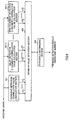
FIG.5. FIG.5 is a block diagram showing a configuration
of a preamble reception apparatus according to Embodiment
2 of the present invention. In FIG.5, the same
configurations as those of Embodiment 1 (FIG.2) are
assigned the same reference numerals in FIG.2 and detailed
explanations thereof will be omitted.
-
The preamble reception apparatus shown in FIG.2
comprises coherent detection correlation value
calculation section 201, non-coherent detection
(2-segment) correlation value calculation section 501-2
to non-coherent detection (j-segment) correlation value
calculation section 501-j having 2 to j segments,
respectively, maximum value detection section 502 and
threshold determining section 104.
-
Non-coherent detection (2-segment) correlation
value calculation section 501-2 has a similar
configuration to that of non-coherent detection
correlation value calculation section 202 shown in FIG.4
and calculates correlation values by non-coherent
detection for 2 segments. However, this non-coherent
detection correlation value calculation section 501-2
has a configuration when j=2 is assumed in FIG.4.
-
Non-coherent detection (j-segment) correlation
value calculation section 501-j has a similar
configuration to that of non-coherent detection
correlation value calculation section 202 shown in FIG.4
and calculates correlation values by non-coherent
detection for j (j>2) segments.
-
Maximum value detection section 502 detects maximum
correlation values from correlation values γ0 c to γ
15 c calculated by coherent detection correlation value
calculation section 201, correlation values γ0 n,2 to γ
15 n,2 calculated by non-coherent detection correlation
value calculation section 501-2 and correlation values
γ0 n,j to γ15 n,j calculated by non-coherent detection
correlation value calculation section 501-j.
-
Then, an operation of the preamble reception
apparatus in the above configuration will be explained
focused on differences from Embodiment 1 (FIG.2). First,
a received signal is sent to coherent detection
correlation value calculation section 201, non-coherent
detection correlation value calculation section 501-2
to non-coherent detection correlation value calculation
section 501-j. Coherent detection correlation value
calculation section 201 calculates correlation values
γ0 c to γ15 c by coherent detection for all signatures.
The calculated correlation values are output to maximum
value detection section 502.
-
Non-coherent detection correlation value
calculation section 501-2 calculates correlation values
γ0 n,2 to γ15 n,2 by non-coherent detection (number of
segments j=2) for all signatures. The calculated
correlation values are output to maximum value detection
section 502.
-
Non-coherent detection correlation value
calculation section 501-j calculates correlation values
γ0 n,j to γ15 n,j by non-coherent detection (number of
segments = j) for all signatures. The calculated
correlation values are output to maximum value detection
section 502. Here, non-coherent detection correlation
value calculation section 501-j with more segments
obtains large correlation values especially during
high-speed fading. Non-coherent detection correlation
value calculation section 501-2 with fewer segments
obtains large correlation values especially during
low-speed fading.
-
Maximum value detection section 203 detects a
maximum correlation value from among correlation values
γ0 c to γ15 c, γ0 n,2 to γ15 n,2 and γ0 n,j to γ15 n,j.
The detected maximum correlation value is output to
threshold determining section 204 together with the
corresponding signature number. The operation of
threshold determining section 204 is similar to that in
Embodiment 1 (FIG.2) and detailed explanations thereof
will be omitted.
-
As shown above, this embodiment calculates
correlation values for all signatures according to a
coherent detection system and a plurality of non-coherent
detection systems with the number of segments differing
from one another. This embodiment then detects a maximum
correlation value from all calculated correlation values
and determines whether the detected maximum correlation
value is greater than a threshold or not. Then, for the
signature corresponding to the maximum correlation value
which has been determined to be greater than the threshold,
this embodiment recognizes that the preamble
corresponding to this signature has been received
reliably. Furthermore, for the signature corresponding
to the maximum correlation value which has been determined
to be not greater than the threshold, this embodiment
recognizes that the preamble corresponding to this
signature has not been received reliably. Furthermore,
it goes without saying that for any signature of all
signatures other than the signature corresponding to the
maximum correlation value, this embodiment recognizes
that the preamble corresponding to this signature has
not been received reliably.
-
Because of this, when the propagation environment
is bad due to a large frequency offset or high-speed fading,
even if a correlation value by coherent detection for
a predetermined signature is small, it is highly probable
that the correlation value by non-coherent detection for
this predetermined signature has not decreased. As a
result, it is possible to prevent the probability of
detecting the preamble corresponding to this
predetermined signature from deteriorating, which in turn
can prevent the preambles corresponding to signatures
other than this predetermined signature from being
detected erroneously (in this case, it is naturally
assumed that no preambles corresponding to signatures
other than this predetermined signature have been sent
by other mobile station apparatuses).
-
On the contrary, when the propagation environment
is good because of a small frequency offset or low-speed
fading, even if a correlation value by non-coherent
detection for a predetermined signature is small, it is
highly probable that the correlation value by coherent
detection for this predetermined signature has increased.
-
As a result, it is possible to prevent the
probability of detecting the preamble corresponding to
this predetermined signature from deteriorating, which
in turn can prevent the preambles corresponding to
signatures other than this predetermined signature from
being detected erroneously (in this case, it is naturally
assumed that no preambles corresponding to signatures
other than this predetermined signature have been sent
by other mobile station apparatuses).
-
In addition, by calculating correlation values for
all signatures by a plurality of non-coherent detections
with the number of segments differing from one another,
this embodiment can obtain a large correlation value for
a predetermined signature independently of the fading
speed. Thus, it is possible to maintain the probability
of preamble detection and the probability of erroneous
detection at a favorable level.
-
Thus, this embodiment can maintain the probability
of preamble detection and the probability of erroneous
detection at a favorable level independently of the
propagation environment.
(Embodiment 3)
-
This embodiment will describe a case where
correlation values for all signatures are calculated by
coherent detection and non-coherent detection while
preventing the scale of the apparatus from expanding with
reference to FIG.6. FIG.6 is a block diagram showing a
configuration of a preamble reception apparatus according
to Embodiment 3 of the present invention. In FIG.6, the
same configurations as those in Embodiment 2 (FIG.5) are
assigned the same reference numerals in FIG.5 and detailed
explanations thereof will be omitted.
-
The preamble reception apparatus shown in FIG.3
comprises correlation value calculation section 601 that
calculates correlation values by coherent detection and
non-coherent detection, maximum value detection section
502 and threshold determining section 204.
-
Correlation value calculation section 601 is
provided with shift register section 602, descramble
section 303, segment internal coherent addition section
604, Walsh Hadamard conversion section 605, inter-segment
coherent addition section 606, inter-segment power
addition section 607, and groups of 16 power calculation
sections; power calculation sections A-0 to A-15, power
calculation sections A1-0 to A1-15, ···, power calculation
sections Aj-0 to Aj-15.
-
These configurations are equivalent to the
configurations shown in FIG.3 and FIG.4. In this
embodiment, segment internal coherent addition section
604 is provided with segment 1 coherent addition section
604-1 to segment j coherent addition section 604-j
corresponding to 1 segment to j segments, respectively.
-
In correspondence with this, Walsh Hadamard
conversion section 605 is provided with segment 1 Walsh
Hadamard conversion section 605-1 to segment j Walsh
Hadamard conversion section 605-j corresponding to 1
segment to j segments, respectively and the respective
output sides are connected to inter-segment coherent
addition section 606.
-
Power calculation sections A1-0 to A1-15, ···, Aj-0
to Aj-15 correspond to segment 1 to j above, respectively
and the input sides are connected to the output sides
of Walsh Hadamard conversion section 605-1 to segment
j Walsh Hadamard conversion section 605-j and the output
sides are connected to inter-segment power calculation
section 607.
-
Inter-segment coherent addition section 606 is
connected to maximum value detection section 502 via power
calculation sections A-0 to A-15. Inter-segment power
addition section 607 is directly connected to maximum
value detection section 502. Maximum value detection
section 502 is connected to threshold determining section
204.
-
An operation of the preamble reception apparatus
in the above configuration will be explained only focused
on differences from Embodiment 1 and Embodiment 2.
-
First, received signal r is input to shift register
section 602 and the output of this shift register section
602 is descrambled by descramble section 603 and output
to segment internal coherent addition section 604.
-
Segment internal coherent addition section 604
carries out a coherent addition in a segment and outputs
this result to Walsh Hadamard conversion section 605.
-
Walsh Hadamard conversion section 605 converts the
coherent addition result for every signature and outputs
this conversion result to inter-segment coherent addition
section 606 and at the same time, power calculation
sections A1-0 to A1-15, ···, Aj-0 to Aj-15 calculate the
squares of absolute values to convert the calculation
results to power and-output to inter-segment power
addition section 607.
-
Inter-segment coherent addition section 606
performs a coherent addition on the conversion results
corresponding to j segments for every signature, and then
power calculation sections A-0 to A-15 convert the
coherent addition result for every signature to power
and obtains correlation values and output these
correlation values to maximum value detection section
502.
-
Inter-segment power addition section 607 adds up
power corresponding to j segments for every signature
and outputs the correlation values obtained to maximum
value detection section 502. Hereafter, maximum value
detection section 502 and threshold determining section
204 carry out processing similar to that described in
Embodiment 2.
-
As shown above, in this embodiment, the section that
calculates correlation values by coherent detection and
the section that calculates correlation values by
non-coherent detection share at least part of the
configuration necessary for calculations of correlation
values. More specifically, these sections share shift
register section 602, descramble section 603, segment
internal addition section 604 and Walsh Hadamard
conversion section 605 when carrying out coherent
detection and non-coherent detection. Thus, according
to this embodiment compared to the preamble reception
apparatus according to Embodiment 1 and Embodiment 2,
it is possible to reduce the scale of the apparatus without
deteriorating the performance with respect to the
probability of preamble detection and the performance
with respect to the probability of erroneous detection
of preambles.
-
This embodiment has described the case where
non-coherent detection of j segments is performed as an
example of non-coherent detection, but it is also possible
to carry out a plurality of non-coherent detections with
the number of segments differing from one another as
non-coherent detection. In this case, it is further
possible to obtain large correlation values for
predetermined signatures irrespective of the fading
speed.
-
This embodiment has described the case where the
section that calculates correlation values by coherent
detection and the section that calculates correlation
values by non-coherent detection share shift register
section 602, descramble section 603, segment internal
addition section 604 and Walsh Hadamard conversion
section 605, but it goes without saying that it is also
possible for the section that calculates correlation
values by coherent detection and the section that
calculates correlation values by non-coherent detection
to share at least one of the above-described sections.
(Embodiment 4)
-
This embodiment will describe a case where
correlation values for all signatures are calculated
according to two systems; coherent detection and delay
detection with reference to FIG.7. FIG.7 is a block
diagram showing a configuration of a preamble reception
apparatus according to Embodiment 4 of the present
invention. In FIG.7, the same configurations as those
in Embodiment 1 (FIG.2) are assigned the same reference
numerals in FIG.2 and detailed explanations thereof will
be omitted.
-
The preamble reception apparatus shown in FIG.7
comprises coherent detection correlation value
calculation section 201, delay detection (j-segment)
correlation value calculation section 701, maximum value
detection section 702 and threshold determining section
204.
-
Delay detection (j-segment) correlation value
calculation section 402 calculates correlation values
of j segments by delay detection. Maximum value detection
section 702 detects maximum correlation values from among
correlation values γ0 c to γ15 c calculated by coherent
detection and correlation values γ0 d,j to γ15 d,j calculated
by delay detection.
-
FIG.8 is a block diagram showing a configuration
of delay detection correlation value calculation section
701 in the preamble reception apparatus according to
Embodiment 4 of the present invention. In FIG.8, the same
configurations as those in FIG.3 (FIG.4) are assigned
the same reference numerals in FIG.3 (FIG.4) and detailed
explanations thereof will be omitted.
-
Correlation value calculation section 701 shown in
FIG.8 has a configuration of calculating correlation
values of j segments (the number of segments is assumed
to be j=2 in this embodiment) by delay detection and is
provided with shift register section 302, descramble
section 303, coherent addition section 401, Walsh
Hadamard conversion sections 402-1 and 402-j, complex
conjugate calculation sections C0 to C15, multipliers
MM0 to MM31, inter-segment addition section 801 including
adders PP0 to PP15 and absolute value calculation sections
AA0 to AA15.
-
An operation of the preamble reception apparatus
in the above configuration will be explained only focused
on differences from Embodiment 1 to Embodiment 3 with
reference to FIG.7.
-
First, a received signal is input to coherent
detection correlation value calculation section 201 and
delay detection (j-segment) correlation value
calculation section 701. Coherent detection
correlation value calculation section 201 calculates
correlation values γ0 c to γ15 c by coherent detection for
all signatures. Calculated correlation values γ0 c to γ
15 c are output to maximum value detection section 702.
Delay detection correlation value calculation section
701 calculates correlation values γ0 d,j to γ15 d,j by delay
detection for all signatures. Calculated correlation
values γ0 d,j to γ15 d,j are output to maximum value detection
section 702.
-
Here, an operation of delay detection correlation
value calculation section 701 will be explained only
focused on differences from Embodiment 1 to Embodiment
3 with reference to FIG.8. Walsh Hadamard conversion
section 402-j carries out a Walsh Hadamard conversion
for every addition result of adders P16 to P31, that is,
for every signature hm and outputs these results to complex
conjugate calculation sections C0 to C15. Complex
conjugate calculation sections C0 to C15 calculate a
complex conjugate of the conversion result and output
this result to multipliers MM0 to MM15. Multipliers MM0
to MM15 multiply the calculation result of the complex
conjugate by the conversion result from Walsh Hadamard
conversion section 402-1 and output the multiplication
result to inter-segment addition section 801.
-
In inter-segment addition section 801, adders PP0
to PP15 add up power values corresponding to j-1 segments
for every signature hm (since j-1=1, no addition is
performed in this embodiment) and these addition results
are output to absolute value calculation sections AA0
to AA15.
-
Absolute value calculation sections AA0 to AA15
calculate absolute values of the respective addition
results and thereby calculate correlation values γ
0 d to
γ
15 d by delay detection. The correlation values
calculated by absolute value calculation sections AA0
to AA15 are expressed by expression (5) below, where
γ
d m corresponds to the correlation value for mth signature
hm by delay detection in the case where the number of
segments carrying out a coherent addition is j:
-
This completes the explanation of the operation of
delay detection correlation value calculation section
701.
-
Maximum value detection section 702 calculates a
maximum correlation value from among correlation values
γ0 c to γ15 c calculated by coherent detection correlation
value calculation section 201 and correlation values
γ0 d,j to γ15 d,j calculated by delay detection correlation
value calculation section 701. The detected maximum
correlation value is output to threshold determining
section 204 together with the signature number
corresponding to this maximum correlation value. The
operation of threshold determining section 204 is the
same as that in Embodiment 1 (FIG.2) and detailed
explanations thereof are omitted.
-
As shown above, this embodiment calculates
correlation values for all signatures according to both
coherent detection system and delay detection system.
Furthermore, this embodiment detects a maximum
correlation value from among all the calculated
correlation values and determines whether the detected
maximum correlation value is greater than a threshold
or not. Hereafter, for the signature corresponding to
the maximum correlation value determined to be greater
than the threshold, this embodiment recognizes that the
preamble corresponding to this signature has been
received reliably. Furthermore, for the signature
corresponding to the maximum correlation value determined
to be not greater than the threshold, this embodiment
recognizes that the preamble corresponding to this
signature has not been received reliably. Furthermore,
it goes without saying that for any signature of all
signatures other than the signature corresponding to the
maximum correlation value, this embodiment recognizes
that the preamble corresponding to this signature has
not been received reliably.
-
Thus, when the propagation environment is bad due
to a large frequency offset or high-speed fading, even
if a correlation value by coherent detection for a
predetermined signature is small, it is highly probable
that the correlation value for this predetermined
signature by non-coherent detection has not decreased.
-
As a result, it is possible to prevent the
probability of detecting the preamble corresponding to
this predetermined signature from deteriorating, which
in turn can prevent the preambles corresponding to
signatures other than this predetermined signature from
being detected erroneously (in this case, it is naturally
assumed that no preambles corresponding to signatures
other than this predetermined signature have been sent
by other mobile station apparatuses).
-
On the contrary, when the propagation environment
is good because of a small frequency offset or low-speed
fading, even if a correlation value for a predetermined
signature by non-coherent detection is small, it is highly
probable that the correlation value for this
predetermined signature by coherent detection has
increased. As a result, it is possible to prevent the
probability of detecting the preamble corresponding to
this predetermined signature from deteriorating, which
in turn can prevent the preambles corresponding to
signatures other than this predetermined signature from
being detected erroneously (in this case, it is naturally
assumed that no preambles corresponding to signatures
other than this predetermined signature have been sent
by other mobile station apparatuses).
-
Thus, according to this embodiment, it is possible
to maintain the probability of detecting preambles and
the probability of erroneous detection at a favorable
level irrespective of the propagation environment.
(Embodiment 5)
-
This embodiment will describe a case where
correlation values for all signatures are calculated
according to a coherent detection system and delay
detection systems with the number of segments differing
from one another with reference to FIG.9. FIG.9 is a block
diagram showing a configuration of a preamble reception
apparatus according to Embodiment 5 of the present
invention. In FIG.9, the same configurations as those
in Embodiment 1 (FIG.2) are assigned the same reference
numerals in FIG.2 and detailed explanations thereof will
be omitted.
-
The preamble reception apparatus shown in FIG.5
comprises coherent detection correlation value
calculation section 201, delay detection (2-segment)
correlation value calculation section 901-2 to delay
detection (j-segment) correlation value calculation
section 901-j with 2 to j segments respectively, maximum
value detection section 902 and threshold determining
section 204.
-
Delay detection (2-segment) correlation value
calculation section 901-2 has a configuration similar
to that of delay detection correlation value calculation
section 701 shown in FIG.8 and calculates correlation
values for 2 segments by delay detection. Here, this
delay detection correlation value calculation section
901-2 has a configuration with j=2 in FIG.8.
-
Delay detection (j-segment) correlation value
calculation section 901-j has a configuration similar
to that of delay detection correlation value calculation
section 701 shown in FIG.8 and calculates correlation
values for j (>2) segments by delay detection.
-
Maximum value detection section 902 detects maximum
correlation values from among correlation values γ0 c to
γ15 c calculated by coherent detection correlation value
calculation section 201, correlation values γ0 d,2 to γ
15 d,2 calculated by delay detection correlation value
calculation section 901-2 and correlation values γ0 d,j to
γ15 d,j calculated by delay detection correlation value
calculation section 901-j.
-
An operation of the preamble reception apparatus
in the above configuration will be explained only focused
on differences from Embodiment 1 to Embodiment 4.
-
First, a received signal is sent to coherent
detection correlation value calculation section 201,
delay detection (2-segment) correlation value
calculation section 901-2 and delay detection (j-segment)
correlation value calculation section 901-j.
-
Coherent detection correlation value calculation
section 201 calculates correlation values γ0 c to γ15 c for
all signatures by coherent detection. The calculated
correlation values are output to maximum value detection
section 902.
-
Non-coherent detection correlation value
calculation section 901-2 calculates correlation values
γ0 d,2 to γ15 d,2 for all signatures by delay detection
(number of segments = 2). The calculated correlation
values are output to maximum value detection section 902.
-
Non-coherent detection correlation value
calculation section 901-j calculates correlation values
γ0 d,j to γ15 d,j for all signatures by delay detection
(number of segments = j). The calculated correlation
values are output to maximum value detection section 902.
Here, delay detection correlation value calculation
section 901-j having more segments can obtain large
correlation values especially during high-speed fading.
Delay detection correlation value calculation section
901-j having fewer segments can obtain large correlation
values especially during low-speed fading.
-
Maximum value detection section 902 detects a
maximum correlation value from among correlation values
γ0 c to γ15 c, correlation values γ0 d,2 to γ15 d,2 and
correlation values γ0 d,j to γ15 d,j. The maximum
correlation value detected by maximum value detection
section 902 is output to threshold determining section
104 together with the signature number corresponding to
this maximum correlation value. The operation of
threshold determining section 204 is similar to that in
Embodiment 1 (FIG.2) and detailed explanations thereof
will be omitted.
-
As shown above, this embodiment calculates
correlation values for all signatures according to a
coherent detection system and a plurality of delay
detection systems with the number of segments differing
from one another. This embodiment further detects a
maximum correlation value from among all calculated
correlation values and determines whether the detected
maximum correlation value is greater than a threshold
or not. Hereafter, for the signature corresponding to
the maximum correlation value determined to be greater
than the threshold, this embodiment recognizes that the
preamble corresponding to this signature has been
received reliably. Furthermore, for the signature
corresponding to the maximum correlation value determined
to be not greater than the threshold, this embodiment
recognizes that the preamble corresponding to this
signature has not been received reliably. Furthermore,
it goes without saying that for any signature of all
signatures other than the signature corresponding to the
maximum correlation value, this embodiment recognizes
that the preamble corresponding to this signature has
not been received reliably.
-
Thus, when the propagation environment is bad due
to a large frequency offset or high-speed fading, even
if a correlation value by coherent detection for a
predetermined signature is small, it is highly probable
that the correlation value for this predetermined
signature by delay detection has not decreased. As a
result, it is possible to prevent the probability of
detecting the preamble corresponding to this
predetermined signature from deteriorating, which in turn
can prevent the preambles corresponding to signatures
other than this predetermined signature from being
detected erroneously (in this case, it is naturally
assumed that no preambles corresponding to signatures
other than this predetermined signature have been sent
by other mobile station apparatuses).
-
On the contrary, when the propagation environment
is good because of a small frequency offset or low-speed
fading, even if a correlation value for a predetermined
signature by delay detection is small, it is highly
probable that the correlation value for this
predetermined signature by coherent detection has
increased. As a result, it is possible to prevent the
probability of detecting the preamble corresponding to
this predetermined signature from deteriorating, which
in turn can prevent the preambles corresponding to
signatures other than this predetermined signature from
being detected erroneously (in this case, it is naturally
assumed that no preambles corresponding to signatures
other than this predetermined signature have been sent
by other mobile station apparatuses).
-
In addition, by calculating correlation values for
all signatures by a plurality of delay detections with
the number of segments differing from one another, this
embodiment can obtain a large correlation value for a
predetermined signature independently of the fading speed.
-
Thus, it is possible to maintain the probability
of detecting preambles and the probability of erroneous
detection at a favorable level.
-
Thus, this embodiment can maintain the probability
of detecting preambles and the probability of erroneous
detection at a favorable level independently of the
propagation environment.
(Embodiment 6)
-
This embodiment will describe a case where
correlation values for all signatures are calculated by
coherent detection and delay detection with reference
to FIG.10. FIG.10 is a block diagram showing a
configuration of a preamble reception apparatus according
to Embodiment 6 of the present invention. In FIG.10, the
same configurations as those in Embodiment 3 (FIG.6) are
assigned the same reference numerals in FIG.6 and FIG.9
and detailed explanations thereof will be omitted.
-
The preamble reception apparatus shown in FIG.10
comprises correlation value calculation section 1001 that
carries out correlation values by coherent detection and
delay detection, maximum value detection section 902 and
threshold determining section 204.
-
Correlation value calculation section 1001 is
provided with shift register section 602, descramble
section 603, segment internal coherent addition section
604, Walsh Hadamard conversion section 605, segment
inter-segment coherent addition section 606,
inter-segment addition section 1002, groups of complex
conjugate calculation sections C2-0 to C2-15 (not shown)
to Cj-0 to Cj-15, each group consisting of 16 complex
conjugate calculation sections, multipliers MI-0 to MI-15
to Mj-0 to Mj-15 and absolute value calculation sections
AA-0 to AA-15 and A-0 to A-15.
-
These configurations are equivalent to the
configurations shown in FIG.3 and FIG.8. In this
embodiment, segment internal coherent addition section
604 is provided with segment 1 coherent addition section
604-1 to segment j coherent addition section 604-j
corresponding to 1 to j segments, respectively.
-
In correspondence with this, Walsh Hadamard
conversion section 605 is provided with segment 1 Walsh
Hadamard conversion section 605-1 to segment j Walsh
Hadamard conversion section 605-j corresponding to 1 to
j segments, respectively and the output sides are
connected to inter-segment coherent addition section 606.
-
Complex conjugate calculation sections C2-0 to
C2-15 to Cj-0 to Cj-15 correspond to above segments 2
to j and the input sides are connected to the output sides
of segment 2 Walsh Hadamard conversion section 605-2 (not
shown) to segment j Walsh Hadamard conversion section
605-j, and the output sides are connected to inter-segment
addition section 1002.
-
Inter-segment coherent addition section 606 is
connected to maximum value detection section 902 via
absolute value calculation sections A-0 to A-15 and
inter-segment addition section 1002 is connected to
maximum value detection section 902 via absolute value
calculation sections AA-0 to AA-15. Maximum value
detection section 602 is also connected to threshold
determining section 303.
-
An operation of the preamble reception apparatus
in the above configuration will be explained.
-
First, received signal r is in put to shift register
section 602 and the output of this shift register section
602 is descrambled at descramble section 603 and output
to segment internal coherent addition section 604.
Segment internal coherent addition section 604 carries
out a coherent addition in a segment and outputs this
result to Walsh Hadamard conversion section 605.
-
Walsh Hadamard conversion section 605 carries out
a conversion for every signature and outputs this
conversion result to inter-segment coherent addition
section 606. Complex conjugate calculation sections
C2-0 to C2-15 to Cj-0 to Cj-15 take complex conjugates
of this conversion result and multipliers M2-0 to M2-0
to Mj-0 to Mj-15 multiply this result by the result of
the adjacent segments with the same sequence and output
the multiplication result to inter-segment addition
section 1002.
-
Inter-segment coherent addition section 606 carries
out a coherent addition corresponding to j segments for
every signature on the above conversion result and then
absolute value calculation sections A-0 to A-15 convert
the coherent addition result for every signature to power
to obtain a correlation value. This correlation value
is output to maximum value detection section 902.
-
Inter-segment addition section 1002 adds up complex
conjugates corresponding to j-1 segments for every
signature and then absolute value calculation sections
AA-0 to AA-15 convert the coherent addition result for
every signature to power to obtain a correlation value.
The correlation value obtained is output to maximum value
detection section 902.
-
Hereafter, maximum value detection section 902 and
threshold determining section 204 carry out processing
similar to that described in Embodiment 5.
-
As shown above, according to this embodiment, the
section that calculates correlation values by coherent
detection and the section that calculates correlation
values by delay detection share at least part of the
configuration necessary to calculate correlation values.
More specifically, when carrying out coherent detection
and j-segment delay detection, these sections share shift
register section 602, descramble section 603, segment
internal coherent addition section 604 and Walsh Hadamard
conversion section 605. Thus, according to this
embodiment, it is possible to reduce the scale of the
apparatus without deteriorating the performance with
respect to the probability of detection of preambles and
the performance with respect to the probability of
erroneous detection of preambles compared to the preamble
reception apparatus according to Embodiment 4 and
Embodiment 5.
-
This embodiment has described the case where
non-coherent detection of j segments is performed as an
example of non-coherent detection as delay detection,
but it is also possible to carry out a plurality of delay
detections with the number of segments differing from
one another as delay detection. In this case, it is
further possible to obtain large correlation values for
predetermined signatures irrespective of the fading
speed.
-
This embodiment has described the case where the
section that calculates correlation values by coherent
detection and the section that calculates correlation
values by delay detection share shift register section
602, descramble section 603, segment internal coherent
addition section 604 and Walsh Hadamard conversion
section 605, but it goes without saying that it is also
possible for the section that calculates correlation
values by coherent detection and the section that
calculates correlation values by delay detection to share
at least one of the above-described sections.
-
The embodiment above has described the case where
the mobile station apparatus sends the preamble shown
in FIG.1 to the base station apparatus, but the mobile
station apparatus can send the preamble shown in FIG.1
with an appropriate change added to the base station
apparatus, provided that the base station apparatus can
perform coherent detection, non-coherent detection and
delay detection.
-
The embodiment above has described the case where
at least two kinds of detection of coherent detection,
non-coherent detection and delay detection are used as
a plurality of detection processes, but detections other
than these processes can also be used as a plurality of
detection processes.
-
As is apparent to those interested in the art, the
present invention can be implemented using a commercially
available general digital computer or microprocessor
programmed according to the art described in the
above-described embodiments. As is apparent to those
interested in the art, the present invention includes
a computer program created by those interested in the
art based on the art described in the above-described
embodiments.
-
The scope of the present invention includes a
computer program product which is a recording medium
including instructions that can be used to program the
computer that implements the present invention. This
recording medium corresponds to disks such as a floppy
disk, optical disk, CD-ROM and magnetic disk, and ROM,
RAM, EPROM, EEPROM, magneto-optic card, memory card or
DVD, etc., but the present invention is not limited to
these media.
-
This application is based on the Japanese Patent
Application No.2000-065008 filed on March 9, 2000, entire
content of which is expressly incorporated by reference
herein.
Industrial Applicability
-
The present invention is ideally applicable to the
field of preamble reception apparatuses mounted on a
mobile station apparatus (communication terminal
apparatus) that carries out random access using
predetermined signatures and base station apparatus in
a mobile communication system.