EP1178381A2 - Automated, interactive data collection, data transmittal and data assessment method - Google Patents
Automated, interactive data collection, data transmittal and data assessment method Download PDFInfo
- Publication number
- EP1178381A2 EP1178381A2 EP01306576A EP01306576A EP1178381A2 EP 1178381 A2 EP1178381 A2 EP 1178381A2 EP 01306576 A EP01306576 A EP 01306576A EP 01306576 A EP01306576 A EP 01306576A EP 1178381 A2 EP1178381 A2 EP 1178381A2
- Authority
- EP
- European Patent Office
- Prior art keywords
- application
- parameters
- data
- post
- multiple processing
- Prior art date
- Legal status (The legal status is an assumption and is not a legal conclusion. Google has not performed a legal analysis and makes no representation as to the accuracy of the status listed.)
- Granted
Links
- 238000000034 method Methods 0.000 title claims abstract description 68
- 230000002452 interceptive effect Effects 0.000 title description 4
- 238000013480 data collection Methods 0.000 title 1
- 238000012545 processing Methods 0.000 claims abstract description 34
- 230000008569 process Effects 0.000 claims abstract description 31
- 238000012544 monitoring process Methods 0.000 claims abstract description 22
- 229910000510 noble metal Inorganic materials 0.000 claims description 19
- 239000000126 substance Substances 0.000 claims description 12
- 239000000463 material Substances 0.000 claims description 9
- 238000004590 computer program Methods 0.000 claims description 8
- 230000000694 effects Effects 0.000 claims description 5
- 238000005070 sampling Methods 0.000 claims description 4
- 230000015654 memory Effects 0.000 description 11
- 238000011156 evaluation Methods 0.000 description 7
- 238000004458 analytical method Methods 0.000 description 6
- 230000003287 optical effect Effects 0.000 description 6
- 238000004891 communication Methods 0.000 description 5
- XLYOFNOQVPJJNP-UHFFFAOYSA-N water Substances O XLYOFNOQVPJJNP-UHFFFAOYSA-N 0.000 description 5
- 238000009835 boiling Methods 0.000 description 4
- 238000002347 injection Methods 0.000 description 4
- 239000007924 injection Substances 0.000 description 4
- 229910052751 metal Inorganic materials 0.000 description 4
- 239000002184 metal Substances 0.000 description 4
- 150000002739 metals Chemical class 0.000 description 4
- 230000002093 peripheral effect Effects 0.000 description 3
- BASFCYQUMIYNBI-UHFFFAOYSA-N platinum Chemical compound [Pt] BASFCYQUMIYNBI-UHFFFAOYSA-N 0.000 description 3
- 241000894007 species Species 0.000 description 3
- 238000012360 testing method Methods 0.000 description 3
- PXHVJJICTQNCMI-UHFFFAOYSA-N Nickel Chemical compound [Ni] PXHVJJICTQNCMI-UHFFFAOYSA-N 0.000 description 2
- 230000009471 action Effects 0.000 description 2
- 230000009286 beneficial effect Effects 0.000 description 2
- 230000008859 change Effects 0.000 description 2
- 238000006243 chemical reaction Methods 0.000 description 2
- 238000005260 corrosion Methods 0.000 description 2
- 230000007797 corrosion Effects 0.000 description 2
- 238000010586 diagram Methods 0.000 description 2
- 230000001590 oxidative effect Effects 0.000 description 2
- 239000010948 rhodium Substances 0.000 description 2
- 238000012546 transfer Methods 0.000 description 2
- VYZAMTAEIAYCRO-UHFFFAOYSA-N Chromium Chemical compound [Cr] VYZAMTAEIAYCRO-UHFFFAOYSA-N 0.000 description 1
- FYYHWMGAXLPEAU-UHFFFAOYSA-N Magnesium Chemical compound [Mg] FYYHWMGAXLPEAU-UHFFFAOYSA-N 0.000 description 1
- ZOKXTWBITQBERF-UHFFFAOYSA-N Molybdenum Chemical compound [Mo] ZOKXTWBITQBERF-UHFFFAOYSA-N 0.000 description 1
- ATJFFYVFTNAWJD-UHFFFAOYSA-N Tin Chemical compound [Sn] ATJFFYVFTNAWJD-UHFFFAOYSA-N 0.000 description 1
- RTAQQCXQSZGOHL-UHFFFAOYSA-N Titanium Chemical compound [Ti] RTAQQCXQSZGOHL-UHFFFAOYSA-N 0.000 description 1
- HCHKCACWOHOZIP-UHFFFAOYSA-N Zinc Chemical compound [Zn] HCHKCACWOHOZIP-UHFFFAOYSA-N 0.000 description 1
- QCWXUUIWCKQGHC-UHFFFAOYSA-N Zirconium Chemical compound [Zr] QCWXUUIWCKQGHC-UHFFFAOYSA-N 0.000 description 1
- 239000008186 active pharmaceutical agent Substances 0.000 description 1
- 238000007792 addition Methods 0.000 description 1
- 229910052782 aluminium Inorganic materials 0.000 description 1
- XAGFODPZIPBFFR-UHFFFAOYSA-N aluminium Chemical compound [Al] XAGFODPZIPBFFR-UHFFFAOYSA-N 0.000 description 1
- 230000006399 behavior Effects 0.000 description 1
- 230000008901 benefit Effects 0.000 description 1
- 230000005540 biological transmission Effects 0.000 description 1
- 238000004364 calculation method Methods 0.000 description 1
- 229910052804 chromium Inorganic materials 0.000 description 1
- 239000011651 chromium Substances 0.000 description 1
- 230000000295 complement effect Effects 0.000 description 1
- 150000001875 compounds Chemical class 0.000 description 1
- 230000001143 conditioned effect Effects 0.000 description 1
- 229910052739 hydrogen Inorganic materials 0.000 description 1
- 239000001257 hydrogen Substances 0.000 description 1
- 125000004435 hydrogen atom Chemical class [H]* 0.000 description 1
- 229910052749 magnesium Inorganic materials 0.000 description 1
- 239000011777 magnesium Substances 0.000 description 1
- 230000007246 mechanism Effects 0.000 description 1
- 229910052750 molybdenum Inorganic materials 0.000 description 1
- 239000011733 molybdenum Substances 0.000 description 1
- 229910052759 nickel Inorganic materials 0.000 description 1
- 229910052697 platinum Inorganic materials 0.000 description 1
- 238000012552 review Methods 0.000 description 1
- 229910052703 rhodium Inorganic materials 0.000 description 1
- MHOVAHRLVXNVSD-UHFFFAOYSA-N rhodium atom Chemical compound [Rh] MHOVAHRLVXNVSD-UHFFFAOYSA-N 0.000 description 1
- 229910052715 tantalum Inorganic materials 0.000 description 1
- GUVRBAGPIYLISA-UHFFFAOYSA-N tantalum atom Chemical compound [Ta] GUVRBAGPIYLISA-UHFFFAOYSA-N 0.000 description 1
- 229910052718 tin Inorganic materials 0.000 description 1
- 239000011135 tin Substances 0.000 description 1
- 229910052719 titanium Inorganic materials 0.000 description 1
- 239000010936 titanium Substances 0.000 description 1
- 230000001052 transient effect Effects 0.000 description 1
- WFKWXMTUELFFGS-UHFFFAOYSA-N tungsten Chemical compound [W] WFKWXMTUELFFGS-UHFFFAOYSA-N 0.000 description 1
- 229910052721 tungsten Inorganic materials 0.000 description 1
- 239000010937 tungsten Substances 0.000 description 1
- 229910052720 vanadium Inorganic materials 0.000 description 1
- GPPXJZIENCGNKB-UHFFFAOYSA-N vanadium Chemical compound [V]#[V] GPPXJZIENCGNKB-UHFFFAOYSA-N 0.000 description 1
- 229910052725 zinc Inorganic materials 0.000 description 1
- 239000011701 zinc Substances 0.000 description 1
- 229910052726 zirconium Inorganic materials 0.000 description 1
Images


Classifications
-
- G—PHYSICS
- G05—CONTROLLING; REGULATING
- G05B—CONTROL OR REGULATING SYSTEMS IN GENERAL; FUNCTIONAL ELEMENTS OF SUCH SYSTEMS; MONITORING OR TESTING ARRANGEMENTS FOR SUCH SYSTEMS OR ELEMENTS
- G05B17/00—Systems involving the use of models or simulators of said systems
- G05B17/02—Systems involving the use of models or simulators of said systems electric
-
- Y—GENERAL TAGGING OF NEW TECHNOLOGICAL DEVELOPMENTS; GENERAL TAGGING OF CROSS-SECTIONAL TECHNOLOGIES SPANNING OVER SEVERAL SECTIONS OF THE IPC; TECHNICAL SUBJECTS COVERED BY FORMER USPC CROSS-REFERENCE ART COLLECTIONS [XRACs] AND DIGESTS
- Y02—TECHNOLOGIES OR APPLICATIONS FOR MITIGATION OR ADAPTATION AGAINST CLIMATE CHANGE
- Y02P—CLIMATE CHANGE MITIGATION TECHNOLOGIES IN THE PRODUCTION OR PROCESSING OF GOODS
- Y02P90/00—Enabling technologies with a potential contribution to greenhouse gas [GHG] emissions mitigation
- Y02P90/02—Total factory control, e.g. smart factories, flexible manufacturing systems [FMS] or integrated manufacturing systems [IMS]
Definitions
- This invention relates to monitoring process parameters and process effectiveness using data from multiple processing sites and, more particularly, to monitoring process parameters and process effectiveness for the application of noble metals to surfaces in nuclear reactors.
- a method of monitoring process parameters and process effectiveness over a global network includes (a) receiving application parameters from multiple processing sites over the global network, (b) receiving post-application data from the multiple processing sites at preset time intervals, (c) analyzing the application parameters and the post-application data to determine analytical models for future application parameters, and (d) enabling access to the analytical models and data via the global network.
- the analyzing step may include updating previous analytical models in accordance with the application parameters and the post-application data received from the multiple processing sites.
- the post-application data can be received over the global network or may be received by sampling physical materials from the multiple processing sites, or both. The data can also be received in real time for remote monitoring.
- the application parameters and the post-application data are preferably separated by site type, wherein application timing based on the application parameters and the post-application data is determined by site type.
- the application parameters and the post-application data relate to an application of noble metals in a boiling water nuclear reactor.
- the application parameters received include at least one of timing of chemical application, materials for chemical application, and method of chemical application.
- the post-application data relates to an existence of metals on protected boiling water nuclear reactor surfaces over time.
- the method may also include the step of enabling access to data archives of the application parameters and the post-application data. Still further, step (c) may be practiced in real time for consulting.
- a computer system for monitoring process parameters and process effectiveness includes at least one user computer running a computer program that effects entry of application parameters and post-application data for multiple processing sites.
- a system server runs a server program, wherein the user computer and the system server are interconnected by a computer network.
- the system server analyzes the application parameters and the post-application data according to the server program to determine analytical models for future application parameters.
- the server also enables access to the analytical models.
- a computer program embodied on a computer readable medium for monitoring process parameters and process effectiveness over a global network.
- the monitoring system implemented in the diagrams of FIGURES 1 and 2 is preferably a browser-based system in which a program running on a user's computer (the user's web browser) requests information from a server program running on a system server.
- the system server sends the requested data back to the browser program and the browser program then interprets and displays the data on the user's computer screen.
- the process is as follows:
- the browser program on the user's computer sends requests and receives the data needed to display the HTML page on the user's computer screen.
- the browser formats the data and displays the data on the user's computer screen.
- Helper applications, plug-ins, and enhancements such as JavaTM enable the browser, among other things, to play sound and/or display video inserted in the HTML file.
- the fonts installed on the user's computer and the display preferences in the browser used by the user determine how the text is formatted.
- the server loads and runs the program. This process usually creates a custom HTML page "on the fly" that contains the results of the program's action (e.g., the search results), and then sends those results back to the browser.
- a program e.g., a search
- Browser programs suitable for use in connection with the monitoring system of the present invention include Netscape® Navigator available from Netscape® Communications Corporation and Internet Explorer available from Microsoft® Corp.
- each user has a computer running a web browser
- more than one user could use a particular computer terminal or that a "kiosk" at a central location with access to the system server could be provided.
- FIGURE 3 generally illustrates a computer system 201 suitable for use as the client and server components of the monitoring system. It will be appreciated that the client and server computers will run appropriate software and that the client and server computers may be somewhat differently configured with respect to the processing power of their respective processors and with respect to the amount of memory used.
- Computer system 201 includes a processing unit 203 and a system memory 205.
- a system bus 207 couples various system components including system memory 205 to processing unit 203.
- System bus 207 may be any of several types of bus structures including a memory bus or memory controller, a peripheral bus, and a local bus using any of a variety of bus architectures.
- System memory 205 includes read only memory (ROM) 252 and random access memory (RAM) 254.
- a basic input/output system (BIOS) 256 containing the basic routines that help to transfer information between elements within computer system 201, such as during start-up, is stored in ROM 252.
- Computer system 201 further includes various drives and associated computer-readable media.
- a hard disk drive 209 reads from and writes to a (typically fixed) magnetic hard disk 211;
- a magnetic disk drive 213 reads from and writes to a removable "floppy" or other magnetic disk 215;
- an optical disk drive 217 reads from and, in some configurations, writes to a removable optical disk 219 such as a CD ROM or other optical media.
- Hard disk drive 209, magnetic disk drive 213, and optical disk drive 217 are connected to system bus 207 by a hard disk drive interface 221, a magnetic disk drive interface 223, and an optical drive interface 225, respectively.
- the drives and their associated computer-readable media provide nonvolatile storage of computer-readable instructions, SQL-based procedures, data structures, program modules, and other data for computer system 201.
- other types of computer-readable media that can store data that is accessible by a computer (e.g., magnetic cassettes, flash memory cards, digital video disks, Bernoulli cartridges, random access memories (RAMs), read only memories (ROMs) and the like) may also be used.
- a number of program modules may be stored on the hard disk 211, removable magnetic disk 215, optical disk 219 and/or ROM 252 and/or RAM 254 of the system memory 205.
- Such program modules may include an operating system providing graphics and sound APIs, one or more application programs, other program modules, and program data.
- a user may enter commands and information into computer system 201 through input devices such as a keyboard 227 and a pointing device 229.
- Other input devices may include a microphone, joystick, game controller, satellite dish, scanner, or the like.
- serial port interface 231 that is coupled to the system bus 207, but may be connected by other interfaces, such as a parallel port interface or a universal serial bus (USB).
- a monitor 233 or other type of display device is also connected to system bus 207 via an interface, such as a video adapter 235.
- the computer system 201 may also include a modem 254 or other means for establishing communications over the wide area network 252, such as the Internet.
- the modem 254 which may be internal or external, is connected to the system bus 207 via the serial port interface 231.
- a network interface 256 may also be provided for allowing the computer system 201 to communicate with a remote computing device 250 via a local area network 258 (or such communication may be via the wide area network 252 or other communications path such as dial-up or other communications means).
- the computer system 201 will typically include other peripheral output devices, such as printers and other standard peripheral devices.
- menu selections may be made by pointing-and-clicking using a mouse, trackball or other pointing device, or by using the TAB and ENTER keys on a keyboard. For example, menu selections may be highlighted by positioning the cursor on the selections using a mouse or by using the TAB key. The mouse may be left-clicked to select the selection or the ENTER key may be pressed.
- Other selection mechanisms including voice-recognition systems, touch-sensitive screens, etc. may be used and the invention is not limited in this respect.
- the present invention will be described in the context of an application of noble metals to interior surfaces of a boiling water nuclear reactor.
- This application is exemplary, and the invention is applicable to any application for globally compiled field data to determine application process parameters and the like. The application is thus not necessarily meant to be limited to the specifically described application.
- FIGURE 1 is a flow schematic of the system of the present invention.
- a user or customer accesses a supplier Internet site 12 or like information source via a global network such as the Internet with an access computer or portal 10.
- the user can access links 14 to engineering studies, analytical models and evaluation capabilities.
- the specific studies, models and evaluation capabilities are generated from application parameters that are received from multiple processing sites over the global network as well as post-application data from the multiple processing sites at preset time intervals. Since the present application is more generally directed to monitoring process parameters and effectiveness using globally compiled field data, the specific studies, models and evaluation capabilities will not be further described.
- the application parameters and the post-application data are separated by site type for different plant designs at a link 16.
- Previous history performance databases with links to chemistry assessments and the like can be accessed at a link 18, and specialized calculations to determine the noble metal application life, re-application time and the like can be accessed via a link 20.
- Expert or consultant feedback for advice, analysis or the like can be accessed via a link 21.
- Users can thus access globally compiled field data from other users that is organized, analyzed, or otherwise processed via the supplier or server site 12.
- the link areas 16, 18, 20, 21 include provisions such as drop-down menus and the like to effect user entry of data relating to the user's application parameters and post-application data.
- information concerning the noble metal application process can be accessed via a link 22, and more specific chemistry data during application and plant operation can be accessed via a link 24.
- data may include, for example, testing and/or sampling for the existence of platinum (Pt), rhodium (Rh), temperature, noble metal injection rates, noble metal loading data, concentration of ionic species, conductivity, pH and tests for electro-chemical potential (ECP), which is particularly useful for determining transient behavior of the noble metals after application.
- the data can be used not only to modify the application process but also monitor the reactor surfaces to determine an appropriate re-application time.
- the post-application data can be received from the users via the links 16, 18, 20 using on-site testing materials and systems and the like.
- the server or supplier may receive and sample physical materials from the multiple processing sites for supplier-side chemical analyses.
- Such data input via the link 24 is beneficial for the engineering studies, analytical models and evaluation capabilities at link 14.
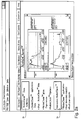
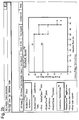
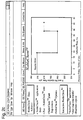
- FIGURES 2a, 2b and 2c are exemplary screen shots showing links to available information and information input areas as well as sample output graphs showing ion concentration over time for various materials (FIGURE 2a), showing the variation in injection rate with time (FIGURE 2b) and showing the temperature changes with time during the injection process (FIGURE 2c).
- the figures illustrate the use of a global network to monitor rapid process changes.
- the users can view archived application parameters and data, post-application data from multiple processing sites, plant experience information and recent updates to the application process, analytical models and the like.
- users can download and input data relating to the noble metal application. Additionally, the users are provided access to real time experts (via the link 21) that can provide instant review and analysis of field data.
- the experts can advise to change the temperature or change injection parameters to improve the process. This is important since the entire application process is completed in about 48 hours. In addition, if multiple applications are in progress, acquired information from one plant can be rapidly disseminated to other plants. On-line real time remote monitoring can be effected to keep track of the process, which is particularly useful for additions of other metals, such as zinc, chromium, nickel, titanium, zirconium, vanadium, tungsten, tin, magnesium, aluminum, molybdenum, tantalum.
- other metals such as zinc, chromium, nickel, titanium, zirconium, vanadium, tungsten, tin, magnesium, aluminum, molybdenum, tantalum.
- users can set up automated processes to collect proprietary data without compromising the data to other organizations.
- the system can be operated and processes can be performed without human intervention or with minimum human intervention.
- the data can be compiled automatically and used for automated analyses that employ statistical tools or recurring algorithms.
- a global network such as the Internet
- transmission and evaluation of data is made easy.
- the Internet enables access to and input from a much larger set of potential users.
- the system allows the users to make multiple evaluations with ease, which are beneficial in decision making and planning.
- the system gives users the ability to maintain records of previous evaluations for future reference and allows the users to keep up-to-date databases and up-to-date predictions.
- the system allows the users to improve the quality of the analysis as it uses inputs from databases or applicable complementary assessments from other time periods or other plants for inputs with minimum or without human intervention.
Landscapes
- Physics & Mathematics (AREA)
- General Physics & Mathematics (AREA)
- Engineering & Computer Science (AREA)
- Automation & Control Theory (AREA)
- Monitoring And Testing Of Nuclear Reactors (AREA)
- Testing And Monitoring For Control Systems (AREA)
- Data Exchanges In Wide-Area Networks (AREA)
Abstract
Description
Claims (10)
- A method of monitoring process parameters and process effectiveness over a global network, the method comprising:(a) receiving application parameters from multiple processing sites over the global network;(b) receiving post-application data from the multiple processing sites at preset time intervals;(c) analyzing the application parameters and the post-application data to determine analytical models for future application parameters; and(d) enabling access to the analytical models and the post-application data via the global network.
- A method according to claim 1, wherein step (c) is practiced by updating previous analytical models in accordance with the application parameters and the post-application data received from the multiple processing sites.
- A method according to claim 1, wherein step (b) is practiced by receiving the post-application data over the global network.
- A method according to claim 1, wherein step (b) is practiced by sampling physical materials from the multiple processing sites.
- A method according to claim 1, wherein the application parameters and the post-application data relate to an application of noble metals in a nuclear reactor and associated power generating components, and wherein step (a) is practiced by receiving parameters including at least one of timing of chemical application, materials for chemical application, and method of chemical application.
- A method according to claim 1, further comprising enabling access to data archives of the application parameters and the post-application data.
- A method according to claim 1, wherein step (c) is practiced in real time for consulting.
- A method of processing noble metal application in a nuclear reactor and associated power generating components, the method comprising accessing analytical models determined according to claim 1.
- A computer system for monitoring process parameters and process effectiveness, the computer system comprising:at least one user computer running a computer program that effects entry of application parameters and post-application data from multiple processing sites; anda system server running a server program, the at least one user computer and the system server being interconnected by a computer network, the system server analyzing the application parameters and the post-application data according to the server program to determine analytical models for future application parameters, and enabling access to the analytical models.
- A computer program embodied on a computer readable medium for monitoring process parameters and process effectiveness over a global network, the computer program comprising:means for receiving application parameters from multiple processing sites over the global network;means for receiving post-application data from the multiple processing sites at preset time intervals;means for analyzing the application parameters and the post-application data to determine analytical models for future application parameters; andmeans for enabling access to the analytical models via the global network.
Applications Claiming Priority (2)
| Application Number | Priority Date | Filing Date | Title |
|---|---|---|---|
| US09/631,373 US6681153B1 (en) | 2000-08-02 | 2000-08-02 | Automated, interactive data collection, data transmittal and data assessment method |
| US631373 | 2000-08-02 |
Publications (3)
| Publication Number | Publication Date |
|---|---|
| EP1178381A2 true EP1178381A2 (en) | 2002-02-06 |
| EP1178381A3 EP1178381A3 (en) | 2003-11-26 |
| EP1178381B1 EP1178381B1 (en) | 2008-09-10 |
Family
ID=24530924
Family Applications (1)
| Application Number | Title | Priority Date | Filing Date |
|---|---|---|---|
| EP01306576A Expired - Lifetime EP1178381B1 (en) | 2000-08-02 | 2001-07-31 | Automated, interactive data collection, data transmittal and data assessment method |
Country Status (7)
| Country | Link |
|---|---|
| US (1) | US6681153B1 (en) |
| EP (1) | EP1178381B1 (en) |
| JP (1) | JP2002196093A (en) |
| DE (1) | DE60135709D1 (en) |
| ES (1) | ES2312404T3 (en) |
| MX (1) | MXPA01007802A (en) |
| TW (1) | TW494411B (en) |
Cited By (2)
| Publication number | Priority date | Publication date | Assignee | Title |
|---|---|---|---|---|
| CN104811360A (en) * | 2015-05-12 | 2015-07-29 | 林海 | Framework of Internet of Things |
| WO2015152916A1 (en) * | 2014-04-02 | 2015-10-08 | Longsand Limited | Interactive document editing using data interchange format |
Families Citing this family (4)
| Publication number | Priority date | Publication date | Assignee | Title |
|---|---|---|---|---|
| US7299279B2 (en) * | 2002-12-30 | 2007-11-20 | General Electric Company | System and method for real-time viewing of monitoring system data |
| CN102541041A (en) * | 2012-03-20 | 2012-07-04 | 徐州中矿奥特麦科技有限公司 | Internet-of-things (IOT)-based comprehensive monitoring and quick response system for closed coal yard |
| US9310288B2 (en) * | 2013-01-28 | 2016-04-12 | Fisher-Rosemount Systems, Inc. | Systems and methods to monitor operating processes |
| EP3586250B1 (en) * | 2017-02-22 | 2023-09-20 | OpSec Online Limited | Systems and methods for direct in-browser markup of elements in internet content |
Family Cites Families (17)
| Publication number | Priority date | Publication date | Assignee | Title |
|---|---|---|---|---|
| EP0596863A1 (en) * | 1988-07-25 | 1994-05-11 | Nalco Chemical Company | Portable product refill tank unit |
| US5504692A (en) * | 1992-06-15 | 1996-04-02 | E. I. Du Pont De Nemours Co., Inc. | System and method for improved flow data reconciliation |
| CA2118885C (en) * | 1993-04-29 | 2005-05-24 | Conrad K. Teran | Process control system |
| JP3147586B2 (en) * | 1993-05-21 | 2001-03-19 | 株式会社日立製作所 | Plant monitoring and diagnosis method |
| US5600692A (en) | 1993-10-29 | 1997-02-04 | General Electric Company | Method for improving tenacity and loading of palladium on palladium-doped metal surfaces |
| US5602888A (en) | 1993-10-29 | 1997-02-11 | General Electric Company | Radiation-induced palladium doping of metals to protect against stress corrosion cracking |
| US5608766A (en) | 1993-10-29 | 1997-03-04 | General Electric Company | Co-deposition of palladium during oxide film growth in high-temperature water to mitigate stress corrosion cracking |
| US5448605A (en) | 1993-10-29 | 1995-09-05 | General Electric Company | Palladium acetylacetonate solution and related method of manufacture |
| US5600691A (en) * | 1993-10-29 | 1997-02-04 | General Electric Company | Noble metal doping or coating of crack interior for stress corrosion cracking protection of metals |
| US5773096A (en) | 1993-10-29 | 1998-06-30 | General Electric Company | Method of catalyst preparation by high-temperature hydrothermal incorporation of noble metals onto surfaces and matrices |
| US5625656A (en) * | 1993-10-29 | 1997-04-29 | General Electric Company | Method for monitoring noble metal distribution in reactor circuit during plant application |
| JP2658840B2 (en) * | 1993-12-01 | 1997-09-30 | 日本電気株式会社 | Process simulator, CVD apparatus and process simulation method using the same |
| US5724254A (en) | 1996-01-18 | 1998-03-03 | Electric Power Research Institute | Apparatus and method for analyzing power plant water chemistry |
| US5855791A (en) * | 1996-02-29 | 1999-01-05 | Ashland Chemical Company | Performance-based control system |
| US5659467A (en) * | 1996-06-26 | 1997-08-19 | Texas Instruments Incorporated | Multiple model supervisor control system and method of operation |
| US6445969B1 (en) * | 1997-01-27 | 2002-09-03 | Circuit Image Systems | Statistical process control integration systems and methods for monitoring manufacturing processes |
| US5832411A (en) * | 1997-02-06 | 1998-11-03 | Raytheon Company | Automated network of sensor units for real-time monitoring of compounds in a fluid over a distributed area |
-
2000
- 2000-08-02 US US09/631,373 patent/US6681153B1/en not_active Expired - Fee Related
-
2001
- 2001-07-16 TW TW090117322A patent/TW494411B/en not_active IP Right Cessation
- 2001-07-31 EP EP01306576A patent/EP1178381B1/en not_active Expired - Lifetime
- 2001-07-31 DE DE60135709T patent/DE60135709D1/en not_active Expired - Fee Related
- 2001-07-31 ES ES01306576T patent/ES2312404T3/en not_active Expired - Lifetime
- 2001-08-01 JP JP2001232980A patent/JP2002196093A/en active Pending
- 2001-08-01 MX MXPA01007802A patent/MXPA01007802A/en active IP Right Grant
Cited By (2)
| Publication number | Priority date | Publication date | Assignee | Title |
|---|---|---|---|---|
| WO2015152916A1 (en) * | 2014-04-02 | 2015-10-08 | Longsand Limited | Interactive document editing using data interchange format |
| CN104811360A (en) * | 2015-05-12 | 2015-07-29 | 林海 | Framework of Internet of Things |
Also Published As
| Publication number | Publication date |
|---|---|
| ES2312404T3 (en) | 2009-03-01 |
| MXPA01007802A (en) | 2003-08-20 |
| US6681153B1 (en) | 2004-01-20 |
| JP2002196093A (en) | 2002-07-10 |
| DE60135709D1 (en) | 2008-10-23 |
| EP1178381A3 (en) | 2003-11-26 |
| EP1178381B1 (en) | 2008-09-10 |
| TW494411B (en) | 2002-07-11 |
Similar Documents
| Publication | Publication Date | Title |
|---|---|---|
| US6754673B2 (en) | Method and system for assessing plant parameters and performance over a global network | |
| US7308497B2 (en) | On-line experimentation | |
| KR100532621B1 (en) | analysis system of online advertising impact and method thereof | |
| EP0840212A1 (en) | Computer implemented request to integrate (RTI) system for managing change control in software release stream | |
| US20040088199A1 (en) | Method of forming a business rule | |
| US20040088197A1 (en) | Method of generating a graphical display of a business rule with a translation | |
| Lee et al. | S-shaped software reliability growth models derived from stochastic differential equations | |
| US20040088195A1 (en) | Method of modifying a business rule | |
| US7031779B2 (en) | Method and apparatus for automated crack behavior prediction determination | |
| EP1178381B1 (en) | Automated, interactive data collection, data transmittal and data assessment method | |
| Marin et al. | Monte Carlo analysis and Bayesian decision theory for assessing the effects of waste sites on groundwater, I: Theory | |
| US7013224B2 (en) | Method and apparatus to perform crack estimations for nuclear reactor | |
| Zhang et al. | Research on modeling in operator mental workload based on VACP method | |
| Cooper | Design considerations in instrumenting and monitoring web‐based information retrieval systems | |
| Pulcini | On the prediction of future failures for a repairable equipment subject to overhauls | |
| JP4156146B2 (en) | WWW server client system and WWW server and terminal constituting the same | |
| Burchak et al. | MACHINE LEARNING SOFTWARE FRAMEWORK FOR PREDICTING AND OPTIMIZING WEB APPLICATION PERFORMANCE | |
| Ashmead et al. | Adaptive intervention methodology for reduction of respondent contact burden in the American Community Survey | |
| WO2026058508A1 (en) | Analysis program, information processing device, and analysis method | |
| Yang et al. | Response to ‘Comments on “Species-Specific Isotope Dilution-Based Calibration for Trace Element Speciation and Its Combined Uncertainty Evaluation: Determination of Tributyltin in Sediment by HPLC− ICPMS”' | |
| Shafiullah et al. | APCanalysis: an R package for identifying active factors using the APC method | |
| Coderre | Computer assisted audit tools and techniques | |
| Neuenschwander | Bayesian mixture analysis for tuberculin induration data | |
| Colson et al. | A risk-based focused decision-management approach for justifying characterization of Hanford tank waste. June 1996, Revision 1; April 1997, Revision 2 | |
| Metwally | Analysis and modeling of human performance in nuclear power plants |
Legal Events
| Date | Code | Title | Description |
|---|---|---|---|
| PUAI | Public reference made under article 153(3) epc to a published international application that has entered the european phase |
Free format text: ORIGINAL CODE: 0009012 |
|
| AK | Designated contracting states |
Kind code of ref document: A2 Designated state(s): AT BE CH CY DE DK ES FI FR GB GR IE IT LI LU MC NL PT SE TR |
|
| AX | Request for extension of the european patent |
Free format text: AL;LT;LV;MK;RO;SI |
|
| PUAL | Search report despatched |
Free format text: ORIGINAL CODE: 0009013 |
|
| AK | Designated contracting states |
Kind code of ref document: A3 Designated state(s): AT BE CH CY DE DK ES FI FR GB GR IE IT LI LU MC NL PT SE TR |
|
| AX | Request for extension of the european patent |
Extension state: AL LT LV MK RO SI |
|
| RIC1 | Information provided on ipc code assigned before grant |
Ipc: 7G 21D 3/08 B Ipc: 7G 05B 17/02 B Ipc: 7G 05B 23/02 B Ipc: 7G 05B 19/418 A |
|
| 17P | Request for examination filed |
Effective date: 20040526 |
|
| AKX | Designation fees paid |
Designated state(s): CH DE ES FI LI SE |
|
| 17Q | First examination report despatched |
Effective date: 20060721 |
|
| 17Q | First examination report despatched |
Effective date: 20060721 |
|
| GRAP | Despatch of communication of intention to grant a patent |
Free format text: ORIGINAL CODE: EPIDOSNIGR1 |
|
| GRAS | Grant fee paid |
Free format text: ORIGINAL CODE: EPIDOSNIGR3 |
|
| GRAA | (expected) grant |
Free format text: ORIGINAL CODE: 0009210 |
|
| AK | Designated contracting states |
Kind code of ref document: B1 Designated state(s): CH DE ES FI LI SE |
|
| REG | Reference to a national code |
Ref country code: CH Ref legal event code: EP |
|
| REG | Reference to a national code |
Ref country code: CH Ref legal event code: NV Representative=s name: SERVOPATENT GMBH |
|
| REF | Corresponds to: |
Ref document number: 60135709 Country of ref document: DE Date of ref document: 20081023 Kind code of ref document: P |
|
| REG | Reference to a national code |
Ref country code: SE Ref legal event code: TRGR |
|
| REG | Reference to a national code |
Ref country code: ES Ref legal event code: FG2A Ref document number: 2312404 Country of ref document: ES Kind code of ref document: T3 |
|
| PLBE | No opposition filed within time limit |
Free format text: ORIGINAL CODE: 0009261 |
|
| STAA | Information on the status of an ep patent application or granted ep patent |
Free format text: STATUS: NO OPPOSITION FILED WITHIN TIME LIMIT |
|
| 26N | No opposition filed |
Effective date: 20090611 |
|
| PGFP | Annual fee paid to national office [announced via postgrant information from national office to epo] |
Ref country code: ES Payment date: 20090727 Year of fee payment: 9 |
|
| PGFP | Annual fee paid to national office [announced via postgrant information from national office to epo] |
Ref country code: SE Payment date: 20090729 Year of fee payment: 9 Ref country code: FI Payment date: 20090730 Year of fee payment: 9 Ref country code: DE Payment date: 20090729 Year of fee payment: 9 Ref country code: CH Payment date: 20090728 Year of fee payment: 9 |
|
| REG | Reference to a national code |
Ref country code: CH Ref legal event code: PL |
|
| EUG | Se: european patent has lapsed | ||
| PG25 | Lapsed in a contracting state [announced via postgrant information from national office to epo] |
Ref country code: CH Free format text: LAPSE BECAUSE OF NON-PAYMENT OF DUE FEES Effective date: 20100731 Ref country code: DE Free format text: LAPSE BECAUSE OF NON-PAYMENT OF DUE FEES Effective date: 20110201 Ref country code: LI Free format text: LAPSE BECAUSE OF NON-PAYMENT OF DUE FEES Effective date: 20100731 |
|
| REG | Reference to a national code |
Ref country code: DE Ref legal event code: R119 Ref document number: 60135709 Country of ref document: DE Effective date: 20110201 |
|
| PG25 | Lapsed in a contracting state [announced via postgrant information from national office to epo] |
Ref country code: FI Free format text: LAPSE BECAUSE OF NON-PAYMENT OF DUE FEES Effective date: 20100731 |
|
| REG | Reference to a national code |
Ref country code: ES Ref legal event code: FD2A Effective date: 20110818 |
|
| PG25 | Lapsed in a contracting state [announced via postgrant information from national office to epo] |
Ref country code: ES Free format text: LAPSE BECAUSE OF NON-PAYMENT OF DUE FEES Effective date: 20100801 |
|
| PG25 | Lapsed in a contracting state [announced via postgrant information from national office to epo] |
Ref country code: SE Free format text: LAPSE BECAUSE OF NON-PAYMENT OF DUE FEES Effective date: 20100801 |