EP1177925A2 - Power window system with control unit for detecting foreign object caught in car window - Google Patents
Power window system with control unit for detecting foreign object caught in car window Download PDFInfo
- Publication number
- EP1177925A2 EP1177925A2 EP01118557A EP01118557A EP1177925A2 EP 1177925 A2 EP1177925 A2 EP 1177925A2 EP 01118557 A EP01118557 A EP 01118557A EP 01118557 A EP01118557 A EP 01118557A EP 1177925 A2 EP1177925 A2 EP 1177925A2
- Authority
- EP
- European Patent Office
- Prior art keywords
- window
- period
- cycle
- caught
- pulses
- Prior art date
- Legal status (The legal status is an assumption and is not a legal conclusion. Google has not performed a legal analysis and makes no representation as to the accuracy of the status listed.)
- Withdrawn
Links
Images



Classifications
-
- B—PERFORMING OPERATIONS; TRANSPORTING
- B60—VEHICLES IN GENERAL
- B60J—WINDOWS, WINDSCREENS, NON-FIXED ROOFS, DOORS, OR SIMILAR DEVICES FOR VEHICLES; REMOVABLE EXTERNAL PROTECTIVE COVERINGS SPECIALLY ADAPTED FOR VEHICLES
- B60J1/00—Windows; Windscreens; Accessories therefor
- B60J1/08—Windows; Windscreens; Accessories therefor arranged at vehicle sides
- B60J1/12—Windows; Windscreens; Accessories therefor arranged at vehicle sides adjustable
- B60J1/16—Windows; Windscreens; Accessories therefor arranged at vehicle sides adjustable slidable
-
- B—PERFORMING OPERATIONS; TRANSPORTING
- B60—VEHICLES IN GENERAL
- B60J—WINDOWS, WINDSCREENS, NON-FIXED ROOFS, DOORS, OR SIMILAR DEVICES FOR VEHICLES; REMOVABLE EXTERNAL PROTECTIVE COVERINGS SPECIALLY ADAPTED FOR VEHICLES
- B60J1/00—Windows; Windscreens; Accessories therefor
- B60J1/08—Windows; Windscreens; Accessories therefor arranged at vehicle sides
- B60J1/12—Windows; Windscreens; Accessories therefor arranged at vehicle sides adjustable
- B60J1/16—Windows; Windscreens; Accessories therefor arranged at vehicle sides adjustable slidable
- B60J1/17—Windows; Windscreens; Accessories therefor arranged at vehicle sides adjustable slidable vertically
-
- G—PHYSICS
- G05—CONTROLLING; REGULATING
- G05B—CONTROL OR REGULATING SYSTEMS IN GENERAL; FUNCTIONAL ELEMENTS OF SUCH SYSTEMS; MONITORING OR TESTING ARRANGEMENTS FOR SUCH SYSTEMS OR ELEMENTS
- G05B19/00—Program-control systems
- G05B19/02—Program-control systems electric
- G05B19/18—Numerical control [NC], i.e. automatically operating machines, in particular machine tools, e.g. in a manufacturing environment, so as to execute positioning, movement or co-ordinated operations by means of program data in numerical form
- G05B19/406—Numerical control [NC], i.e. automatically operating machines, in particular machine tools, e.g. in a manufacturing environment, so as to execute positioning, movement or co-ordinated operations by means of program data in numerical form characterised by monitoring or safety
- G05B19/4061—Avoiding collision or forbidden zones
-
- H—ELECTRICITY
- H02—GENERATION; CONVERSION OR DISTRIBUTION OF ELECTRIC POWER
- H02H—EMERGENCY PROTECTIVE CIRCUIT ARRANGEMENTS
- H02H7/00—Emergency protective circuit arrangements specially adapted for specific types of electric machines or apparatus or for sectionalised protection of cable or line systems, and effecting automatic switching in the event of an undesired change from normal working conditions
- H02H7/08—Emergency protective circuit arrangements specially adapted for specific types of electric machines or apparatus or for sectionalised protection of cable or line systems, and effecting automatic switching in the event of an undesired change from normal working conditions for dynamo-electric motors
- H02H7/085—Emergency protective circuit arrangements specially adapted for specific types of electric machines or apparatus or for sectionalised protection of cable or line systems, and effecting automatic switching in the event of an undesired change from normal working conditions for dynamo-electric motors against excessive load
- H02H7/0851—Emergency protective circuit arrangements specially adapted for specific types of electric machines or apparatus or for sectionalised protection of cable or line systems, and effecting automatic switching in the event of an undesired change from normal working conditions for dynamo-electric motors against excessive load for motors actuating a movable member between two end positions, e.g. detecting an end position or obstruction by overload signal
-
- G—PHYSICS
- G05—CONTROLLING; REGULATING
- G05B—CONTROL OR REGULATING SYSTEMS IN GENERAL; FUNCTIONAL ELEMENTS OF SUCH SYSTEMS; MONITORING OR TESTING ARRANGEMENTS FOR SUCH SYSTEMS OR ELEMENTS
- G05B2219/00—Program-control systems
- G05B2219/30—Nc systems
- G05B2219/37—Measurements
- G05B2219/37622—Detect collision, blocking, stall by change, lag in position
-
- G—PHYSICS
- G05—CONTROLLING; REGULATING
- G05B—CONTROL OR REGULATING SYSTEMS IN GENERAL; FUNCTIONAL ELEMENTS OF SUCH SYSTEMS; MONITORING OR TESTING ARRANGEMENTS FOR SUCH SYSTEMS OR ELEMENTS
- G05B2219/00—Program-control systems
- G05B2219/30—Nc systems
- G05B2219/41—Servomotor, servo controller till figures
- G05B2219/41419—Resolution of feedback of incremental position decreases with velocity speed
-
- G—PHYSICS
- G05—CONTROLLING; REGULATING
- G05B—CONTROL OR REGULATING SYSTEMS IN GENERAL; FUNCTIONAL ELEMENTS OF SUCH SYSTEMS; MONITORING OR TESTING ARRANGEMENTS FOR SUCH SYSTEMS OR ELEMENTS
- G05B2219/00—Program-control systems
- G05B2219/30—Nc systems
- G05B2219/45—Nc applications
- G05B2219/45242—Door, panel, window operation, opening, closing
-
- H—ELECTRICITY
- H02—GENERATION; CONVERSION OR DISTRIBUTION OF ELECTRIC POWER
- H02H—EMERGENCY PROTECTIVE CIRCUIT ARRANGEMENTS
- H02H7/00—Emergency protective circuit arrangements specially adapted for specific types of electric machines or apparatus or for sectionalised protection of cable or line systems, and effecting automatic switching in the event of an undesired change from normal working conditions
- H02H7/08—Emergency protective circuit arrangements specially adapted for specific types of electric machines or apparatus or for sectionalised protection of cable or line systems, and effecting automatic switching in the event of an undesired change from normal working conditions for dynamo-electric motors
- H02H7/0816—Emergency protective circuit arrangements specially adapted for specific types of electric machines or apparatus or for sectionalised protection of cable or line systems, and effecting automatic switching in the event of an undesired change from normal working conditions for dynamo-electric motors concerning the starting sequence, e.g. limiting the number of starts per time unit, monitoring speed during starting
-
- H—ELECTRICITY
- H02—GENERATION; CONVERSION OR DISTRIBUTION OF ELECTRIC POWER
- H02H—EMERGENCY PROTECTIVE CIRCUIT ARRANGEMENTS
- H02H7/00—Emergency protective circuit arrangements specially adapted for specific types of electric machines or apparatus or for sectionalised protection of cable or line systems, and effecting automatic switching in the event of an undesired change from normal working conditions
- H02H7/08—Emergency protective circuit arrangements specially adapted for specific types of electric machines or apparatus or for sectionalised protection of cable or line systems, and effecting automatic switching in the event of an undesired change from normal working conditions for dynamo-electric motors
- H02H7/093—Emergency protective circuit arrangements specially adapted for specific types of electric machines or apparatus or for sectionalised protection of cable or line systems, and effecting automatic switching in the event of an undesired change from normal working conditions for dynamo-electric motors against increase beyond, or decrease below, a predetermined level of rotational speed
Definitions
- the present invention relates to a power window system for an automobile, and in particular, to a power window system with a control unit for detecting a foreign object caught in a car window for the purpose of stopping or reversely operating to open or close the window when the foreign object is caught in the car window.
- a power window system for opening and closing window by a driving unit (motor) is used on an automobile.
- a power window system is proposed in which, when a foreign object is caught in a car window during opening or closing operation of the window, it is judged whether a foreign object is caught in the window, and if something is caught in the window, the motor is immediately stopped or reversely operated for the purpose of avoiding overload on the motor and of protecting what is caught in the window.
- a conventional type power window system as described above comprises, as shown in Fig. 4, a driving unit 41 (hereinafter referred as “motor”) rotatable in normal and reverse directions to open or close the window, a power feeding unit 42 for supplying power to the motor 41, an operation switch unit 43 having a plurality of switches and for outputting voltage serving as a signal for opening or closing the window by manual operation, a control unit 44 (hereinafter referred as "CPU”) for controlling rotation of the motor 41 via the power feeding unit 42 in response to operation of the operation switch unit 43, and a pulse generator 45 for generating repeated pulses accurately in response to the rotation of the motor 41.
- a driving unit 41 hereinafter referred as "motor”
- motor for supplying power to the motor 41
- an operation switch unit 43 having a plurality of switches and for outputting voltage serving as a signal for opening or closing the window by manual operation
- a control unit 44 hereinafter referred as "CPU”
- CPU control unit 44 for controlling rotation of the motor 41 via the power feeding unit
- the pulse generator 45 is operated in response to the rotation of the motor 41, and one-phase pulses, being reversed at each half turn, are generated, and the pulses are outputted to the input terminal P07 of the CPU 44.
- the CPU 44 finds out interval of rising/falling of the inputted pulses from the count of an internal clock signal.
- the count value thus obtained is converted to a motor torque value, and this is compared with a value already set in an internal memory. If the motor torque value is greater than the preset value, it is judged that a foreign object is caught in the window, and the motor 41 is stopped or reversely operated.
- the interval of generation of the inputted pulses is converted to moving speed of the window, and when the moving speed is decreased, it is judged that a foreign object is caught in the window. That is, when the amplitude of a pulse becomes longer, it is judged that a foreign object is caught in the window, and the motor 41 is stopped or reversely operated.
- the power window system comprises a driving unit rotatable in normal and reverse directions to open or close a car window, a pulse generator for generating repeated pulses in response to the operation of the driving unit, and a control unit for judging that a foreign object is caught in the window based on the repeated pulses and for stopping or reversely operating the driving unit, wherein in a first period (i.e. from the starting of the driving unit to a first time point when the window starts upward movement), the control unit judges and detects that a foreign object is caught in the window when time duration in which pulses are generated in one of a second cycle or a third cycle is longer than a given multiple of time duration required for the repeated pulses in a first cycle immediately before.
- a driving unit rotatable in normal and reverse directions to open or close a car window
- a pulse generator for generating repeated pulses in response to the operation of the driving unit
- a control unit for judging that a foreign object is caught in the window based on the repeated pulses and for stopping or reversely operating
- the present invention provides the power window system as described above, wherein, in a second period (i.e. from the first time point to a second time point when the window reaches and maintains operation at a constant speed), the control unit judges and detects that a foreign object is caught in the window when time duration in which pulses are generated in one of the second cycle and the third cycle is longer than time duration required for the first cycle.
- the present invention provides the power window system as described above, wherein, in a third period after the second time point, the control unit judges and detects that a foreign object is caught in the window when time duration in which pulses are generated in the second cycle is longer than a given multiple of time duration in which the pulses are generated in the first cycle, and also when time duration in which pulses are not generated in the second cycle is longer. than a given multiple of time duration in which pulses are not generated in the first cycle.
- Fig. 1 is a diagram of an arrangement of an embodiment of the power window system of the present invention.
- the power window system of the present invention comprises a driving unit 11 (hereinafter referred as “motor”), a power feeding unit 12 to supply power to the motor, operation switch unit 13, a control unit 14 (hereinafter referred as "CPU”), a pulse generator 15, and on-board power terminals 16, 17 and 18.
- the motor 11 is a motor rotatable in normal and reverse directions for opening/closing car window.
- UP when electric current flows downward from above (UP), it is rotated to close the window.
- DOWN When electric current flows upward from below (DOWN), it is rotated to open the window.
- the power feeding unit 12 is a circuit to supply power from the on-board power terminal 16 to the motor 11, and it comprises relays 19u and 19d and switch transistors 20u and 20d.
- the moving contacts of the relays 19u and 19d are connected to different terminals of the motor 11 respectively, and one of fixed contacts is connected to the on-board power terminal 16, and the other of the fixed contacts is connected to the ground.
- Each of the moving contacts is usually connected to the fixed contact on the ground side. These are connected to the fixed contacts on the on-board power terminal 16 when control current is flowing to coils of the relays 19u and 19d.
- the transistor 20u has its base connected to an output terminal P05 of the CPU 14. Its collector is grounded via coil of the relay 19u. Its emitter is connected to the on-board power terminal 17.
- the transistor 20d has its base connected to the output terminal P06 of the CPU 14. Its collector is grounded via the coil of the relay 19d, and its emitter is connected to the on-board power terminal 17.
- the operation switch unit 13 comprises a manual window closing switch (UP) 21u, a manual window opening switch (DOWN) 21d, an auto window closing switch (U-AUTO) 22u, and an auto window opening switch (D-AUTO) 22d.
- UP manual window closing switch
- DOWN manual window opening switch
- U-AUTO auto window closing switch
- D-AUTO auto window opening switch
- a moving contact of the manual window closing switch 21u is connected to an input terminal P02 of the CPU 14 via an inverter.
- One of fixed contacts is connected to the on-board power terminal 18, and the other of the fixed contacts is connected to the ground.
- a moving contact of the manual window opening switch 21d is connected to an input terminal P03 of the CPU 14.
- One of the fixed contacts is connected to the on-board power terminal 18, and the other of the fixed contacts is connected to the ground.
- each of the auto window closing switch 22u and the auto window opening switch 22d has its one end grounded, and the other end is connected to an input terminal P04 of the CPU 14.
- the CPU 14 has a plurality of terminals for input and output purposes.
- voltage is applied to serve as a signal from the operation switch unit 13.
- a voltage serving as a signal to turn each transistor on or off is outputted to the output terminals (P05 and P06) for the bases of the transistors 20u and 20d.
- the input terminal P07 is connected to the pulse generator 15, and repeated pulses generated by the pulse generator 15 are inputted. By the repeated pulses, it is judged whether a foreign object is caught in the window or not, and if a foreign object is caught in the window, the motor 11 is stopped or reversely operated.
- the pulse generator 15 is designed, for instance, to utilize threads on a gear mounted on the rotation shaft of the motor 11 or it is designed to detect reversal of a magnetic field based on the rotation of the motor 11 using a hole IC and a magnet for a sensor. It is interlocked with and designed to respond to the rotation of the motor 11 and generates the repeated pulses with high and low values changed at each half-turn, and the pulses are outputted to the CPU 14.
- Each of the on-board power terminals 16, 17 and 18 is connected to a positive electrode (+Vb) of an on-board power source, and the power is supplied to each unit.
- the auto window closing switch 22u when the auto window closing switch 22u is operated, the ground voltage is turned to a signal, and it is inputted to the input terminal P04 of the CPU 14. In this case, even when operation of the manual window closing switch 21u is stopped, the CPU 14 continues to output the signal to turn the transistor 20u on from the output terminal P05, and the window is continuously closed.
- the moving contact is separated from the on-board power terminal 18, and the ground voltage is inputted to the input terminal P02 of the CPU 14 via the inverter.
- the CPU 14 outputs a signal for turning the transistor 20u off to the output terminal P05.
- the transistor 20u is turned off, and a control current ceases to flow to the coil of the relay 19u.
- the moving contact of the relay 19u is switched over to the ground side, and voltage is not applied on the motor 11 any longer. Then, the rotation of the motor 11 is stopped, and the window is stopped.
- the ground voltage is turned to a signal, and it is inputted to the input terminal P05 of the CPU 14.
- the CPU 14 continues to output the signal for turning the transistor 20d on from the output terminal P06, and the window is continuously opened.
- the moving contact is separated from the on-board power terminal 18.
- the ground voltage is inputted to the input terminal P03 of the CPU 14 via the inverter.
- the CPU 14 outputs a signal for turning the transistor 20d off to the output terminal P06.
- the transistor 20d is turned off, and a control current is not supplied to the coil of the relay 19d any longer.
- the moving contact of the relay 19d is switched over to the ground side. Voltage is not applied on the motor 11 any longer.
- the rotation of the motor 11 is stopped, and the window is stopped.
- the signals are outputted to the CPU 14 in response to the operation of the switches of the operation switch unit 13.
- the CPU 14 controls the rotation of the motor 11 via the power feeding unit 12. As the motor 11 is rotated in normal/reverse directions, the window of the car is opened/closed. Interlocked with the rotation of the motor 11, the pulse generator 15 generates the repeated pulses, and the repeated pulses are inputted to the input terminal P07 of the CPU 14.
- Fig. 2 is a diagram showing the moving speed of window and the characteristics of motor torque value when the power window system is started.
- dotted line indicates the changes over time of the moving speed of the window from the time of starting of the motor 11.
- the power window system moves the window up or down by transmitting the rotation of the motor 11 to the window.
- a mechanism to move the window up or down there are two types: a wire type mechanism designed to connect the motor 11 with the window by a wire, and a gear type mechanism to connect the motor 11 with the window by a gear.
- the characteristics are different according to each type. For instance, from the time of starting of the motor 11 to the starting of upward or downward movement of the window, some time is required to take up or absorb slack of the wire in case of the wire type mechanism. In the case of the gear type mechanism, some time is required to take up or absorb idling until the gear engages. The duration of the time is different according to each type.
- the time period from the time point or moment (t0) of starting of the motor 11 to the time point (t1) of the starting of upward or downward movement of the window is defined as a first period (T1).
- the time point (t1) is set as given below, for instance.
- the time point (t1) is obtained from the maximum designed amount of the wire slack. For instance, it is assumed that the maximum amount of the wire slack is 15 mm and the rotating amount of the motor 11 per pulse is 0.875 mm. In this case, if 17 pulses are detected after the starting of the motor 11, it means that the slack of the wire has been taken up or absorbed.
- the time of the detection of these 17 pulses is set as the time point (t1).
- the above explanation has been given by taking the wire type mechanism as an example.
- the time may be set by replacing the wire slack with the idling up to the moment when the gear is engaged.
- the time period from the first period (T1) to the time point (t2) when the window is operated at constant speed is defined as a second period (T2).
- T2 The time period from the first period (T1) to the time point (t2) when the window is operated at constant speed.
- Torque value outputted by the motor 11 is shown by solid line in Fig. 2.
- the torque of the motor 11 is low in the first period (T1) and it is higher in the second period (T2) than in the first period (T1) if the period to absorb idling and the like immediately after starting is exempted. Then, it is further higher in the third period (T3) than in the second period (T2).
- the first period (T1) is defined as the time duration from the starting of the motor 11 to the time of generation of the 17th pulse.
- the second period (T2) is defined as time duration from generation of the 18th pulse to the generation of the 21st pulse, and the third period (T3) is the time period after the generation of the 22nd pulse.
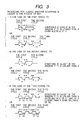
- Fig. 3 represents drawings to explain a procedure to judge that a foreign object is caught in the window in each of the periods.
- the time duration (X) required for a first cycle immediately before is compared with time duration (Y1) in which the pulses are outputted in one of a second cycle or a third cycle. If the latter (Y1) is longer than a given multiple (e.g. twice) of the former (X), it is judged that a foreign object is caught in the window. According to this judging procedure, in the first period there is a time period enough to absorb the idling and the like and enough to start upward or downward movement of the window. Even when a foreign object is not caught in the window, the rotation of the motor 11 varies extensively. In this sense, erroneous judgment based on the changes in the motor rotation, i.e. an erroneous judgment that a foreign object is caught in the window, is excluded.
- the multiplying factor used for the comparison varies according to the difference of the mechanism to move the window up or down such as wire type or gear type, and it may be three times instead of twice.
- the time duration (X) required for the first cycle is compared with the time duration (Y1) in which pulses are outputted in one of the cycles as in the first period. If the latter (Y1) is longer than the former (X), it is judged that there is a foreign object caught in the window. According to this judging procedure, upward or downward movement of the window is started in the second period, but it is not yet moving at a constant speed. The changes in the rotation of the motor 11 are small compared with those in the first period but the rotation varies in unstable manner, and erroneous judgment based on such changes in the motor rotation is prevented. If it is judged that no foreign object is caught in the window, the time is deviated by one cycle or by a half cycle similarly to the case of the first period.
- the third period it is judged that something is caught in the window in the following case: in the case where the time duration (Y1) in which the pulses are outputted in one of the cycles similar to the first period is longer than a given multiple (e.g. twice) of the time duration (X1) in which the pulses are outputted in the first cycle, and in the case where the time duration (Y2) in which the pulses are not outputted in one of the cycles similar to the first period is longer than a given multiple (e.g. twice) of the time duration (X2) in which the pulses are not outputted in the first cycle.
- the judging procedure is based on the fact that the changes of the rotation of the motor 11 are smaller in the third period than those of the first or the second period because the window is moving at a constant speed in the third period.
- the multiplying factor used for the comparison varies according to the difference of the mechanism to move the window up or down such as wire type or gear type.
- the multiplying factor may be three times instead of twice.
- the first cycle is compared with the second or the third cycle in each of the periods.
- the pulse generator 15 generating many pulses such as 2-phase pulses
- the number of pulses in one rotation of the motor 11 is bigger. Accordingly, the change of pulses is small and slight. Then, it is possible to identify the change of pulses much more easily by comparing the first cycle with the third cycle.
- the trouble that foreign object is caught in the window is detected by comparing only one cycle (X) of the pulse immediately before with a half cycle (Y1) of the next (or the next to the next) pulse so that correct judgment is made even when the window is stopped after hardly moving.
- the third period when judgment is made simply based on one comparison (X1 vs. Y1), detection value of Y1 may become higher due to some reason even though nothing is caught in the window, and it may be erroneously judged that something is caught in the window, and the window may be stopped or reversely operated. To prevent this erroneous operation, comparison is made by two times (X1 vs . Y1 and X2 vs. Y2). In the third period, the torque value of the motor 11 is high as shown in Fig. 2. Even when something is caught in the window during this period, the motor 11 is not immediately stopped, and 2 or 3 pulses may be generated. Therefore, it is possible to compare twice.
- the time period from the starting of the power window system is divided into three periods, and a judging procedure suitable for the characteristics during each of these periods is used to judge whether a foreign object is caught in the window or not. From the time point immediately after the starting to the time point when stable operation is reached, it is continuously tried to detect whether a foreign object is caught in the window or not within a short time, and erroneous detection rarely occurs in this power window system.
- the system of the present invention comprises a driving unit rotatable in normal and reverse directions to open or close car window, a pulse generator for generating repeated pulses in response to the operation of the driving unit, and a control unit for judging that something is caught in the window based on the repeated pulses and for stopping or reversely operating the driving unit.
- the control unit judges that a foreign object is caught in the window when time duration in which pulses are generated in one of the cycles in the second or the third period is longer than a given multiple of the time duration required for the first cycle immediately before the repeated pulses. In this respect, it is possible to reliably detect in a short time that there is a foreign object caught in the window in the period immediately after the starting of the motor.
- the control unit judges and detects that a foreign object is caught in the window when the time duration in which the pulses are generated in one of the second cycle and the third cycle is longer than time duration required for the first cycle.
- the control unit judges and detects that a foreign object is caught in the window when time duration in which the pulses are generated in the second cycle is longer than a given multiple of time duration in which the pulses are generated in the first cycle, and also when time duration in which the pulses are not outputted in the second cycle is longer than a given multiple of the time duration when the pulses are not outputted in the first cycle.
Landscapes
- Engineering & Computer Science (AREA)
- Human Computer Interaction (AREA)
- Manufacturing & Machinery (AREA)
- Physics & Mathematics (AREA)
- General Physics & Mathematics (AREA)
- Automation & Control Theory (AREA)
- Mechanical Engineering (AREA)
- Power-Operated Mechanisms For Wings (AREA)
- Window Of Vehicle (AREA)
- Motor And Converter Starters (AREA)
- Stopping Of Electric Motors (AREA)
- Control Of Direct Current Motors (AREA)
Abstract
Description
Claims (3)
- A power window system, comprising a driving unit rotatable in normal and reverse directions to open or close a car window, a pulse generator for generating repeated pulses in response to operation of the driving unit, and a control unit for judging that a foreign object is caught in the window based on the repeated pulses and for stopping or reversely operating the driving unit, wherein:in a first period (i.e. from the starting of the driving unit to a first time point when the window starts upward movement), the control unit judges and detects that a foreign object is caught in the window when time duration in which pulses are generated in one of a second cycle or a third cycle is longer than a given multiple of time duration required for the repeated pulses in a first cycle immediately before.
- A power window system according to claim 1, wherein, in a second period (i.e. from the first time point to a second time point when the window reaches and maintains operation at a constant speed), the control unit judges and detects that a foreign object is caught in the window when time duration in which pulses are generated in one of the second cycle and the third cycle is longer than time duration required for the first cycle.
- A power window system according to claim 1 or 2, wherein, in a third period after the second time point, the control unit judges and detects that a foreign object is caught in the window when time duration in which pulses are generated in the second cycle is longer than a given multiple of time duration in which the pulses are generated in the first cycle, and also when time duration in which pulses are not generated in the second cycle is longer than a given multiple of time duration in which pulses are not generated in the first cycle.
Applications Claiming Priority (2)
| Application Number | Priority Date | Filing Date | Title |
|---|---|---|---|
| JP2000238875A JP3917803B2 (en) | 2000-08-02 | 2000-08-02 | Power window equipment |
| JP2000238875 | 2000-08-02 |
Publications (2)
| Publication Number | Publication Date |
|---|---|
| EP1177925A2 true EP1177925A2 (en) | 2002-02-06 |
| EP1177925A3 EP1177925A3 (en) | 2006-07-26 |
Family
ID=18730507
Family Applications (1)
| Application Number | Title | Priority Date | Filing Date |
|---|---|---|---|
| EP01118557A Withdrawn EP1177925A3 (en) | 2000-08-02 | 2001-08-01 | Power window system with control unit for detecting foreign object caught in car window |
Country Status (4)
| Country | Link |
|---|---|
| US (1) | US6563279B2 (en) |
| EP (1) | EP1177925A3 (en) |
| JP (1) | JP3917803B2 (en) |
| KR (1) | KR100414477B1 (en) |
Cited By (4)
| Publication number | Priority date | Publication date | Assignee | Title |
|---|---|---|---|---|
| DE102007056676A1 (en) * | 2007-11-24 | 2009-05-28 | Bayerische Motoren Werke Aktiengesellschaft | To determine at least one function/characteristic of a driver-operated mechanism, at an automobile production line, the theoretic movement path is used with actual movement path data to establish e.g. play |
| FR2941792A1 (en) * | 2009-02-04 | 2010-08-06 | Peugeot Citroen Automobiles Sa | METHOD FOR CONTROLLING AN OPENING OF A MOTOR VEHICLE |
| CN103112337A (en) * | 2013-02-27 | 2013-05-22 | 北京经纬恒润科技有限公司 | Anti-pinch state judging method and system and anti-pinch method and system for electric tailgates |
| CN106323642A (en) * | 2016-07-29 | 2017-01-11 | 北京经纬恒润科技有限公司 | Clamp proof detection method and system |
Families Citing this family (15)
| Publication number | Priority date | Publication date | Assignee | Title |
|---|---|---|---|---|
| US6633147B2 (en) * | 2001-05-25 | 2003-10-14 | Motorola, Inc. | Method for closing a motor driven window |
| JP2004339708A (en) * | 2003-05-13 | 2004-12-02 | Tokai Rika Co Ltd | Power window device |
| FR2859026B1 (en) * | 2003-08-19 | 2005-10-14 | Somfy | METHOD FOR INITIALIZING A MOTORIZED ROLLING SHUTTER |
| JP3815738B2 (en) * | 2003-09-08 | 2006-08-30 | 本田技研工業株式会社 | Power window system |
| US7109676B2 (en) | 2003-11-24 | 2006-09-19 | Valeo Electrical Systems, Inc. | Control for electric motor in vehicles |
| US6933694B2 (en) * | 2003-11-24 | 2005-08-23 | Valeo Electrical Systems, Inc. | Control for electric motor in vehicles |
| DE102004018610A1 (en) * | 2004-04-16 | 2005-11-03 | Dr.Ing.H.C. F. Porsche Ag | Method for controlling an adjustment drive with anti-pinch protection for electrically operated centering disks in motor vehicles |
| JP2006002441A (en) * | 2004-06-17 | 2006-01-05 | Aisin Seiki Co Ltd | Opening and closing body drive device for vehicle |
| JP4181562B2 (en) * | 2005-05-13 | 2008-11-19 | 本田技研工業株式会社 | Power window equipment |
| JP4813920B2 (en) | 2006-02-17 | 2011-11-09 | 株式会社立花エレテック | Open / close control method |
| CN101070744A (en) * | 2007-06-13 | 2007-11-14 | 文元洪 | Automobile electric car-window control device |
| US11858065B2 (en) | 2015-01-09 | 2024-01-02 | Lsp Technologies, Inc. | Method and system for use in laser shock peening and laser bond inspection process |
| US20170234051A1 (en) * | 2016-02-11 | 2017-08-17 | Delphi Technologies, Inc. | Slack Removal Method For Vehicle Window Anti-Pinch System |
| CN108334052B (en) * | 2018-01-03 | 2024-04-05 | 广东东箭汽车科技股份有限公司 | Test circuit, test method and test equipment for electric door ECU |
| JP2026043974A (en) * | 2024-08-29 | 2026-03-12 | 東洋電装株式会社 | Vehicle window control device |
Family Cites Families (10)
| Publication number | Priority date | Publication date | Assignee | Title |
|---|---|---|---|---|
| JPS61130586A (en) * | 1984-11-27 | 1986-06-18 | 自動車電機工業株式会社 | Power window apparatus |
| JPH07224576A (en) * | 1993-12-17 | 1995-08-22 | Tokai Rika Co Ltd | Power window drive control device |
| DE19506994C2 (en) * | 1994-02-28 | 1999-07-08 | Ohi Seisakusho Co Ltd | Method for controlling movement of a window |
| US5497326A (en) * | 1994-08-03 | 1996-03-05 | The Cherry Corporation | Intelligent commutation pulse detection system to control electric D.C. motors used with automobile accessories |
| JP3480082B2 (en) * | 1994-10-28 | 2003-12-15 | 株式会社デンソー | Window opening and closing control device |
| JPH08135304A (en) * | 1994-11-04 | 1996-05-28 | Aisin Seiki Co Ltd | Switchgear |
| JP3524374B2 (en) * | 1998-03-23 | 2004-05-10 | アルプス電気株式会社 | Power window device pinch detection method |
| JP3675632B2 (en) * | 1998-03-23 | 2005-07-27 | アルプス電気株式会社 | Power window device pinching detection method |
| JP2000087647A (en) * | 1998-09-09 | 2000-03-28 | Toyo Denso Co Ltd | Power window device |
| JP3730795B2 (en) * | 1998-12-28 | 2006-01-05 | アルプス電気株式会社 | Power window device pinching detection method |
-
2000
- 2000-08-02 JP JP2000238875A patent/JP3917803B2/en not_active Expired - Fee Related
-
2001
- 2001-07-31 US US09/919,057 patent/US6563279B2/en not_active Expired - Lifetime
- 2001-08-01 KR KR10-2001-0046591A patent/KR100414477B1/en not_active Expired - Fee Related
- 2001-08-01 EP EP01118557A patent/EP1177925A3/en not_active Withdrawn
Cited By (6)
| Publication number | Priority date | Publication date | Assignee | Title |
|---|---|---|---|---|
| DE102007056676A1 (en) * | 2007-11-24 | 2009-05-28 | Bayerische Motoren Werke Aktiengesellschaft | To determine at least one function/characteristic of a driver-operated mechanism, at an automobile production line, the theoretic movement path is used with actual movement path data to establish e.g. play |
| FR2941792A1 (en) * | 2009-02-04 | 2010-08-06 | Peugeot Citroen Automobiles Sa | METHOD FOR CONTROLLING AN OPENING OF A MOTOR VEHICLE |
| FR2941793A1 (en) * | 2009-02-04 | 2010-08-06 | Peugeot Citroen Automobiles Sa | Powered opening frame controlling method for motor vehicle, involves triggering alarm that stops course of opening frame of motor vehicle, if measured time interval is greater than estimated time interval |
| CN103112337A (en) * | 2013-02-27 | 2013-05-22 | 北京经纬恒润科技有限公司 | Anti-pinch state judging method and system and anti-pinch method and system for electric tailgates |
| CN103112337B (en) * | 2013-02-27 | 2015-07-15 | 北京经纬恒润科技有限公司 | Anti-pinch state judging method and system and anti-pinch method and system for electric tailgates |
| CN106323642A (en) * | 2016-07-29 | 2017-01-11 | 北京经纬恒润科技有限公司 | Clamp proof detection method and system |
Also Published As
| Publication number | Publication date |
|---|---|
| JP3917803B2 (en) | 2007-05-23 |
| JP2002046468A (en) | 2002-02-12 |
| KR20020011893A (en) | 2002-02-09 |
| US20020030459A1 (en) | 2002-03-14 |
| EP1177925A3 (en) | 2006-07-26 |
| KR100414477B1 (en) | 2004-01-07 |
| US6563279B2 (en) | 2003-05-13 |
Similar Documents
| Publication | Publication Date | Title |
|---|---|---|
| EP1177925A2 (en) | Power window system with control unit for detecting foreign object caught in car window | |
| US7538500B2 (en) | Position detection and external driver multiplexing system for DC motors | |
| US6956351B2 (en) | Driving device for stepping motor | |
| US6078152A (en) | Bidirectional E.C. motor and method of operating the motor | |
| JP2009147778A (en) | Pulse signal generating apparatus, rotating machine, controller, and power window controller | |
| US5352929A (en) | Apparatus and method for regulating a generator of an internal combustion engine | |
| EP0651489A1 (en) | Abnormality detecting device for relay | |
| US4963800A (en) | Apparatus for controlling throttle actuator | |
| US20020014104A1 (en) | Meter having pointer-zero-position adjusting function | |
| US6741046B1 (en) | Method for starting a sensor- and brushless d.c. motor | |
| US7589487B2 (en) | Method of selectable simultaneous/sequential motor drive in a multiple drive circuit including failure detection | |
| JPWO2005097569A1 (en) | Wiper device control method | |
| KR20000023172A (en) | Device for controlling the power supply of an electric starter motor of a motor vehicle and a starter unit containing such a device | |
| US6734644B2 (en) | Control method for wiper apparatus | |
| US4732120A (en) | Control apparatus for internal combustion engine provided with permanent magnet type starting motor | |
| US7352145B2 (en) | Voltage-sensitive oscillator frequency for rotor position detection scheme | |
| US11336218B1 (en) | Motor controller | |
| US6650084B2 (en) | Motor driver | |
| JP2006166678A (en) | DC motor rotation information detector | |
| US6462504B2 (en) | Energization control device for electric motors | |
| JP4211139B2 (en) | Electrical load energization control device | |
| US20020105299A1 (en) | Motor driving circuit with a motor failure detecting function | |
| EP1569001A2 (en) | Indicating instrument | |
| JPH07123771A (en) | DC brushless motor speed controller | |
| US20230318509A1 (en) | Motor controller |
Legal Events
| Date | Code | Title | Description |
|---|---|---|---|
| PUAI | Public reference made under article 153(3) epc to a published international application that has entered the european phase |
Free format text: ORIGINAL CODE: 0009012 |
|
| AK | Designated contracting states |
Kind code of ref document: A2 Designated state(s): AT BE CH CY DE DK ES FI FR GB GR IE IT LI LU MC NL PT SE TR |
|
| AX | Request for extension of the european patent |
Free format text: AL;LT;LV;MK;RO;SI |
|
| PUAL | Search report despatched |
Free format text: ORIGINAL CODE: 0009013 |
|
| AK | Designated contracting states |
Kind code of ref document: A3 Designated state(s): AT BE CH CY DE DK ES FI FR GB GR IE IT LI LU MC NL PT SE TR |
|
| AX | Request for extension of the european patent |
Extension state: AL LT LV MK RO SI |
|
| 17P | Request for examination filed |
Effective date: 20061012 |
|
| AKX | Designation fees paid |
Designated state(s): DE FR GB SE |
|
| 17Q | First examination report despatched |
Effective date: 20070529 |
|
| STAA | Information on the status of an ep patent application or granted ep patent |
Free format text: STATUS: THE APPLICATION HAS BEEN WITHDRAWN |
|
| 18W | Application withdrawn |
Effective date: 20090821 |