EP1176193A1 - Inhibitors for viral infection targeting integrase n-terminal region - Google Patents
Inhibitors for viral infection targeting integrase n-terminal region Download PDFInfo
- Publication number
- EP1176193A1 EP1176193A1 EP00917458A EP00917458A EP1176193A1 EP 1176193 A1 EP1176193 A1 EP 1176193A1 EP 00917458 A EP00917458 A EP 00917458A EP 00917458 A EP00917458 A EP 00917458A EP 1176193 A1 EP1176193 A1 EP 1176193A1
- Authority
- EP
- European Patent Office
- Prior art keywords
- peptide
- substituted
- retroviral infection
- integrase
- infection inhibitor
- Prior art date
- Legal status (The legal status is an assumption and is not a legal conclusion. Google has not performed a legal analysis and makes no representation as to the accuracy of the status listed.)
- Granted
Links
Images


Classifications
-
- C—CHEMISTRY; METALLURGY
- C07—ORGANIC CHEMISTRY
- C07K—PEPTIDES
- C07K14/00—Peptides having more than 20 amino acids; Gastrins; Somatostatins; Melanotropins; Derivatives thereof
- C07K14/005—Peptides having more than 20 amino acids; Gastrins; Somatostatins; Melanotropins; Derivatives thereof from viruses
-
- A—HUMAN NECESSITIES
- A61—MEDICAL OR VETERINARY SCIENCE; HYGIENE
- A61P—SPECIFIC THERAPEUTIC ACTIVITY OF CHEMICAL COMPOUNDS OR MEDICINAL PREPARATIONS
- A61P31/00—Antiinfectives, i.e. antibiotics, antiseptics, chemotherapeutics
- A61P31/12—Antivirals
- A61P31/14—Antivirals for RNA viruses
- A61P31/18—Antivirals for RNA viruses for HIV
-
- C—CHEMISTRY; METALLURGY
- C12—BIOCHEMISTRY; BEER; SPIRITS; WINE; VINEGAR; MICROBIOLOGY; ENZYMOLOGY; MUTATION OR GENETIC ENGINEERING
- C12Q—MEASURING OR TESTING PROCESSES INVOLVING ENZYMES, NUCLEIC ACIDS OR MICROORGANISMS; COMPOSITIONS OR TEST PAPERS THEREFOR; PROCESSES OF PREPARING SUCH COMPOSITIONS; CONDITION-RESPONSIVE CONTROL IN MICROBIOLOGICAL OR ENZYMOLOGICAL PROCESSES
- C12Q1/00—Measuring or testing processes involving enzymes, nucleic acids or microorganisms; Compositions therefor; Processes of preparing such compositions
- C12Q1/70—Measuring or testing processes involving enzymes, nucleic acids or microorganisms; Compositions therefor; Processes of preparing such compositions involving virus or bacteriophage
- C12Q1/701—Specific hybridization probes
- C12Q1/702—Specific hybridization probes for retroviruses
- C12Q1/703—Viruses associated with AIDS
-
- A—HUMAN NECESSITIES
- A61—MEDICAL OR VETERINARY SCIENCE; HYGIENE
- A61K—PREPARATIONS FOR MEDICAL, DENTAL OR TOILETRY PURPOSES
- A61K38/00—Medicinal preparations containing peptides
-
- A—HUMAN NECESSITIES
- A61—MEDICAL OR VETERINARY SCIENCE; HYGIENE
- A61K—PREPARATIONS FOR MEDICAL, DENTAL OR TOILETRY PURPOSES
- A61K39/00—Medicinal preparations containing antigens or antibodies
-
- C—CHEMISTRY; METALLURGY
- C12—BIOCHEMISTRY; BEER; SPIRITS; WINE; VINEGAR; MICROBIOLOGY; ENZYMOLOGY; MUTATION OR GENETIC ENGINEERING
- C12N—MICROORGANISMS OR ENZYMES; COMPOSITIONS THEREOF; PROPAGATING, PRESERVING, OR MAINTAINING MICROORGANISMS; MUTATION OR GENETIC ENGINEERING; CULTURE MEDIA
- C12N2740/00—Reverse transcribing RNA viruses
- C12N2740/00011—Details
- C12N2740/10011—Retroviridae
- C12N2740/16011—Human Immunodeficiency Virus, HIV
- C12N2740/16022—New viral proteins or individual genes, new structural or functional aspects of known viral proteins or genes
Definitions
- the present invention relates to an infection inhibitor against a retrovirus such as an AIDS virus or the like, which can be obtained by targeting N-terminal domain of integrase of a retrovirus such as an AIDS virus or the like, a screening method of the viral inhibitor, and a therapeutic compound or AIDS vaccine containing the viral inhibitor.
- a retrovirus such as an AIDS virus or the like
- HIV Human immunodeficiency virus
- HIV-1 human immunodeficiency virus type-1
- HAV-2 human immunodeficiency virus type-2
- Lentivirus is a pathogenic virus which kills its host cell, and as many other lentiviruses, HIV brings about persistent infection, and shows low activity through most of the infection route.
- retroviruses including HIV-1 establish an infection by the following process comprising the steps of; adsorption to targeting cells for the infection, penetration and uncoating, transformation of single stranded RNA genes packaged in viral particles into double stranded DNA by reverse transcriptase, and integration of them to host chromosomes (integration reaction) after nuclear localization.
- the reverse transcription reaction and the integration reaction in earlier process of a viral infection, which are necessary for the proliferation of HIV-1 are virus-specific reaction processes, it is also known that these reactions are catalyzed by reverse transcriptase (RT), which is a product of polymerase (pol) gene of virus, and by integrase (IN).
- RT reverse transcriptase
- polymerase polymerase
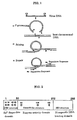
- the integration reaction process of a retrovirus comprises three processes of; 1 ⁇ a 3'-processing reaction in which each terminal of LTR domain on both terminals of viral DNA transformed into DNA by reverse transcriptase is worked on and 2 nucleotides on both 3'-terminals (GT in case of HIV-1) are excised; 2 ⁇ a joining reaction in which viral DNA completing the 3'-processing reaction enters into nucleus and associates with the host chromosome DNA, and each of 5'-terminal phosphoryl groups of the host chromosome DNA, being cut off simultaneously with being nicked by a nucleophilic reaction of both 3'-terminal-OH groups of the viral DNA, and 3'-terminal-OH groups of the viral DNA are ester bound, 3 ⁇ repair in which each 5'-terminal of the viral DNA and each 3'-terminal of the host chromosome DNA are bound respectively (Annu. Rev. Biochem. 63, 133-173, 1994). It is presumed that the 3' a 3'-processing
- An integrase protein of HIV-1 comprises 288 amino acids in total, and as shown in Fig. 2, has three domains being able to compliment functionally.
- the three domains are N-terminal domain (peptide containing 1 st to 50 th amino acids from N-terminal side), central enzyme activity domain (peptide containing 51 st to 212 th amino acids), and C-terminal domain (peptide containing 213 th to 288 th amino acids) (In Fig. 2, amino acids conserved in all retrovirus integrase and their positions are shown, and H, C, D and E represent histidine, cystein, aspartic acid and glutamic acid respectively.).
- the enzyme activity domain located at central part of integrase is important for integration reactions, in particular, it has been reported that three amino acid residues of 64 th and 116 th aspartic acids and 152 nd glutamic acid at the enzyme activity domain are essential for an integration reaction involved in binding to Mg 2+ or Mn 2+ , and that these amino acids are the center of the enzyme activity of integrase (J. Virol. 66, 6361-6369, 1992), (Mol. Cell. Biol. 12, 2331-2338, 1992), (J. Virol. 65, 5624-5630, 1991).
- 136 th , 156 th and 159 th lysin residues at this enzyme activity domain and strongly conserved between retroviruses are important for specific binding to viral DNA terminal regions.
- C-terminal domain of integrase has DNA binding ability, and the amino acid sequences in this domain show an abundant variety. Its functions including the formation of integrase polymer and nuclear localization are known so far, however, the details are still unknown.
- SH3 Structural Biology 2, 807-810, 1995
- Biochemistry 34, 9826-9833, 1995 the significance of some basic amino acid residues including 264 th lysin residue has been suggested (Nucleic Acids Research 22, 4125-4131, 1994), (Biochemistry 34, 9826-9833, 1995).
- HHCC motif comprised of two histidine residues (H) and two cystein residues (C), which are conserved in integrase of all retroviruses, and because this amino acid motif is similar to Zn finger motif observed in DNA binding domain of some transcriptional regulators, its function was thought to be specific DNA binding region of integrase, however, it is thought to be involved in the formation of dimer or polymer of integrase (Proc. Natl. Acad. Sci. USA. 93, 13659-13664, 1996).
- this N-terminal domain has a helix-turn-helix (HTH) structure comprised of four ⁇ helix structures shown by ⁇ 1 to ⁇ 4 in Fig. 3, that each of two histidine residues and two cystein residues of HHCC motif play an important role for the stabilization of the structure, in other words, the skeletal formation, by being oriented to encompass zinc ions, and that this N-terminal domain forms dimer in liquid (Nature Structural Biology 4, 567-577, 1997). It has been shown that this N-terminal domain is important for the stabilization of dimer formation of integrase molecules, and is involved in integration reactions indirectly, however, its true function is still unknown.
- HTH helix-turn-helix
- the HTH structure of N-terminal domain is quite similar to the HTH structure represented by a DNA binding region of a tryptophan reppressor protein.
- a domain corresponding to the second helix which is presumed to be a DNA binding region of a tryptophan reppressor protein, is an interface domain between integrase molecules in dimer formation in HIV-1 integrase.
- the inventors of the present invention have analyzed HIV-1 mutant stocks to which amino acid substitution mutants of histidine residues or cystein residues which form the skeleton of HHCC motif at integrase N-terminal domain had been introduced, and found that the viral infectivity would be lost almost completely, and reported the fact that the step after the viral adsorption/penetration and before the reverse transcription (uncoating process) would be inhibited as caused by this point mutation, at the first time in the world (J. Virol. 69, 6687-6696, 1995). Further, on the basis of these studies, now it is presumed that the structure of N-terminal domain having HHCC motif of integrase proteins as its skeleton plays an extremely important role for maintaining the viral infectivity.
- HIV human immunodeficiency virus
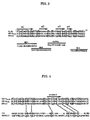
- N-terminal domain of integrase For further study of N-terminal domain of integrase, the inventors of the present invention have examined the homology of amino acid sequences of N-terminal domains of integrase among HIV-1, or its relative HIV-2, SIV, heterogeneous retroviruses, and found that there is ⁇ -helix-3, a hydrophobic amino acid motif being comprised of hydrophobic amino acid and strongly conserved between species in a domain corresponding to an interface domain in dimer formation of integrase, as shown in Fig. 4 (in Fig.
- NL43 indicates N-terminal of integrase gene domain contained in HIV-1 gene
- HIV-2 ROD indicates that of integrase gene domain of HIV-2 ROD stock
- SIV AGM indicates that of integrase gene domain of SIV derived from African green monkey
- FIV indicates that of integrase gene domain of feline immunodeficiency virus
- MoMuLV indicates that of integrase domain of murine leukemia virus
- HIV-1 mutant stocks wherein four amino acids of HHCC at N-terminal domain of integrase have been respectively substituted with HHCH, HHHC, HHHH, CCHH and CCCC, which are sequences being able to bind to zinc ions, and in HIV-1 mutant stocks to which a substitution mutant of 15 th tylosin residue, where a phosphorylation reaction is expected, has been introduced.
- N-terminal domain of HIV-1 integrase is influenced even by one amino acid substitution and apts to be functionally unstable, resulting in fatal influence on the viral infectivity.
- the inventors of the present invention have constructed and analyzed substitution mutants of amino acids conserved between species not only for N-terminal domain of HIV-1 integrase, but also for other enzyme activity domain and C-terminal domain, and confirmed that mutants whose viral infectivity is lost almost completely at the step before the reverse transcription reaction are limited to those mutants wherein N-terminal domain of HIV-1 integrase is substituted.
- the object of the present invention is to provide a screening method of a new integrase inhibitor being able to inhibit an HIV infection before the reverse transcription step and having a pharmaceutical site of action totally different from those of traditional integrase inhibitors, to provide a new integrase inhibitor being obtainable by the screening method, and to provide a pharmaceutical constituent including the integrase inhibitor and DNA encoding it, which are greatly expected as new remedies for AIDS.
- the inventors have given their attention not to the integration step of viral genes, an original field of enzyme activity of integrase proteins, but to N-terminal domain which plays an extremely important role for maintaining the viral infectivity.
- integrase mutant clones originally designed and confirmed that they can make viruses lose the infectivity completely, the structure of integrase mutant was analyzed, and it has been found that synthetic peptides having amino acid sequences of the domain where mutation was observed inhibit the replication of HIV-1 with an action different from those of integrase inhibitors reported so far, and thus the present invention has been completed.
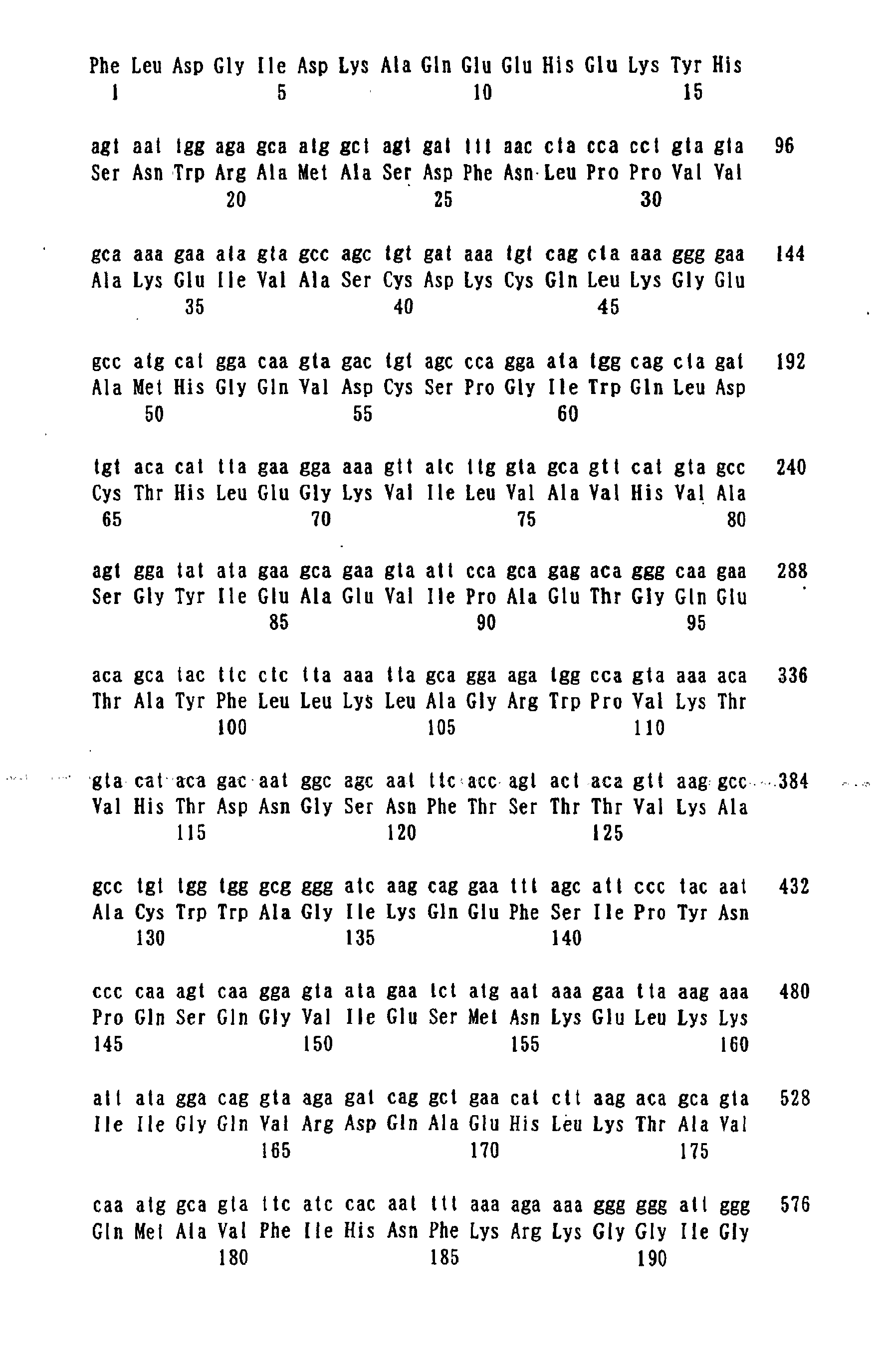
- the present invention relates to a screening method of a retroviral infection inhibitor characterized in targeting a domain comprised of a whole or a part of N-terminal domain of retroviral integrase or a domain including the N-terminal domain (claim 1), a screening method of a retroviral infection inhibitor characterized in detecting a subject material which binds to a peptide comprised of a whole or a part of N-terminal domain of retroviral integrase or a peptide including the N-terminal domain (claim 2), the screening method of a retroviral infection inhibitor according to claim 2, wherein the binding subject material is a peptide or a protein (claim 3), the screening method of a retroviral infection inhibitor according to claim 3, wherein the peptide or the protein contains an amino acid sequence where one or a few amino acids are deficient, substituted or added in a part of 1 st to 55 th amino acid sequences among amino acid sequences shown in Seq.
- the screening method of a retroviral infection inhibitor according to claim 3 or 4 wherein the detection of the peptide or the protein is conducted with a method selected from phage display method, immunoprecipitation method, two-hybrid assay and Far Western analysis (claim 5), a screening method of a retroviral infection inhibitor characterized in detecting a subject material which binds to RNA encoding a peptide comprised of a whole or a part of N-terminal domain of retroviral integarase, or a peptide containing the N-terminal domain (claim 6), the screening method of a retroviral infection inhibitor according to claim 6, wherein the binding subject material is DNA or RNA (claim 7), the screening method of a retroviral infection inhibitor according to claim 6, wherein the binding subject material is a peptide or a protein (claim 8), a screening method of a retroviral infection inhibitor
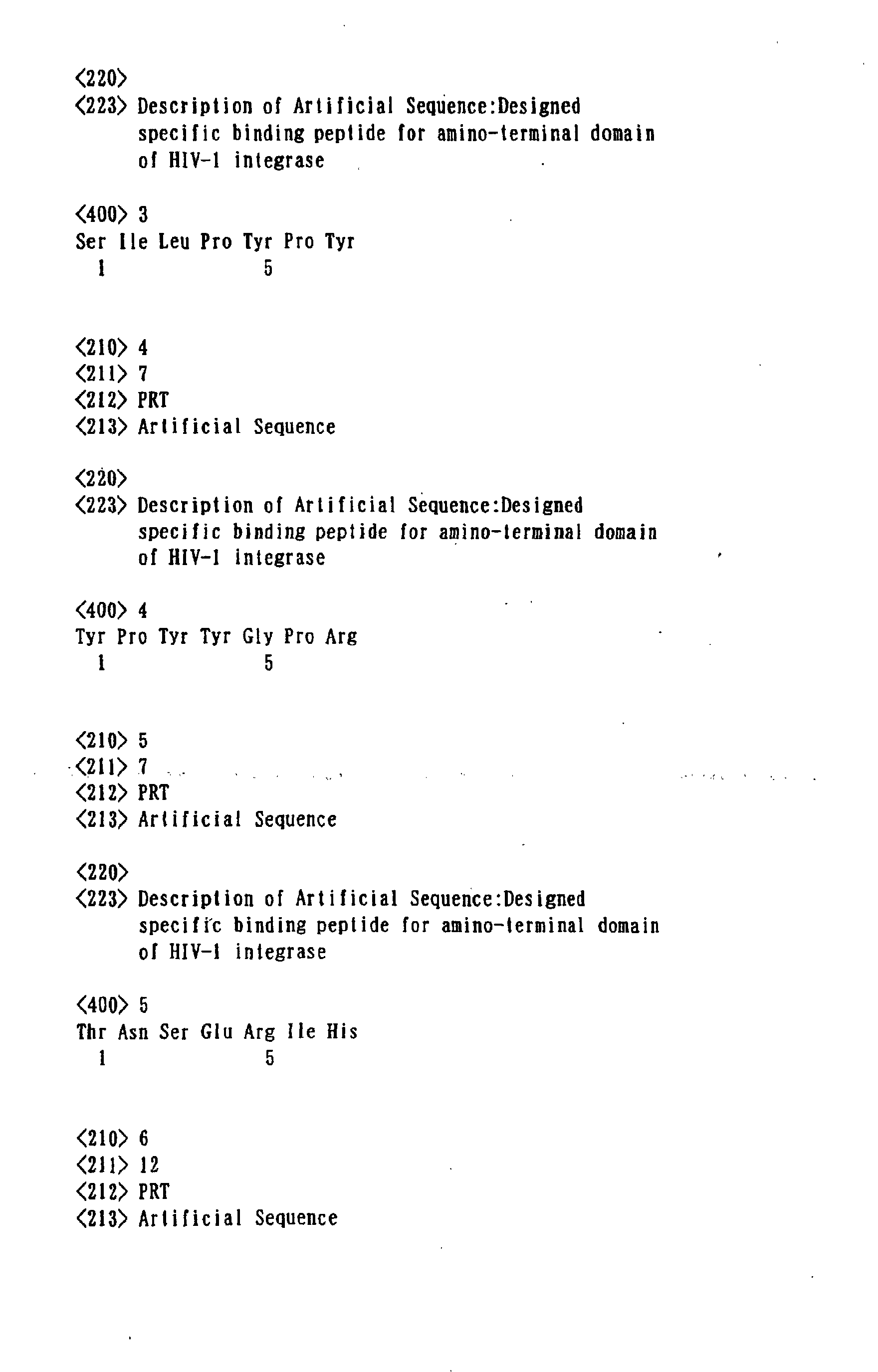
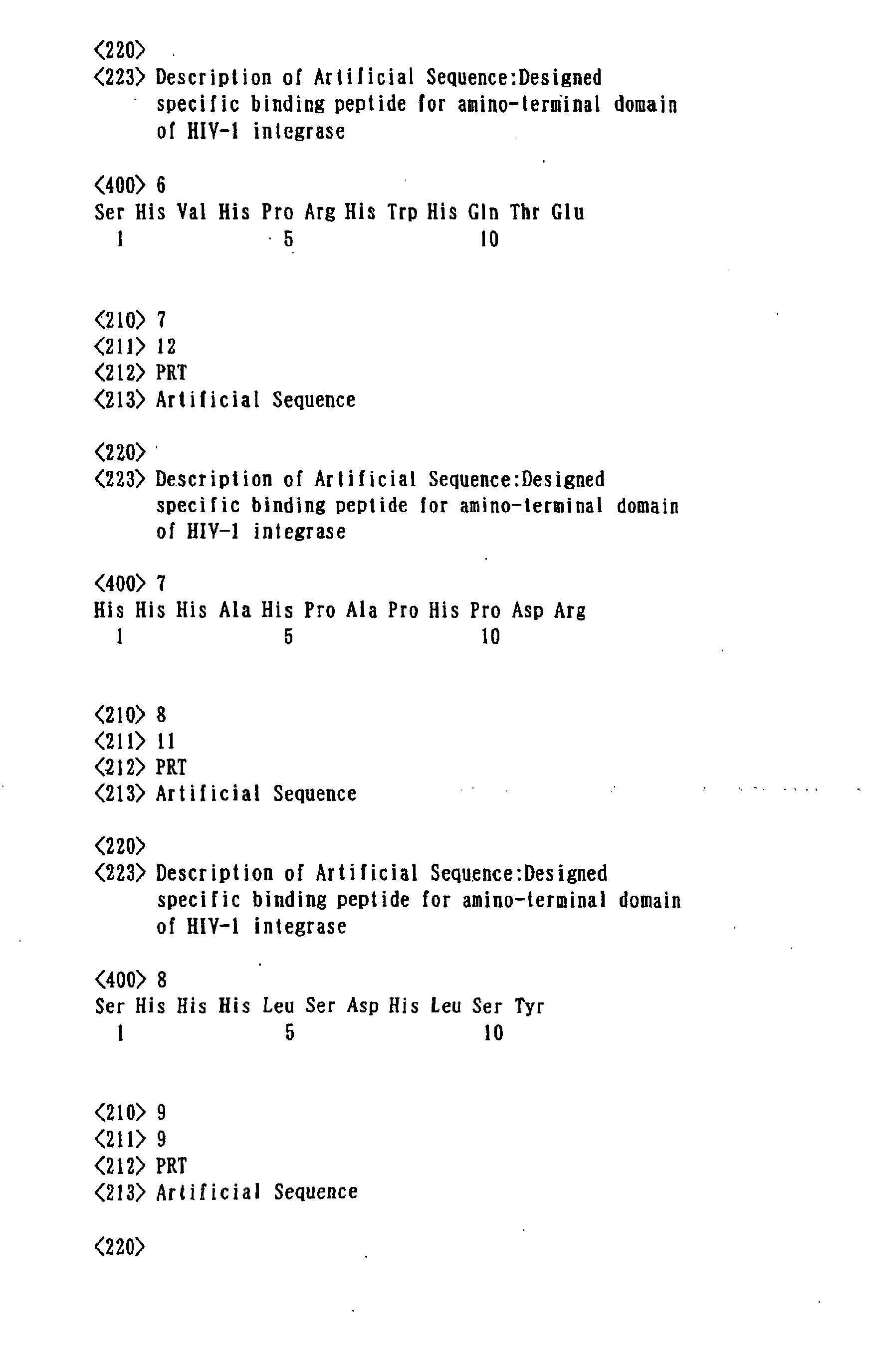
- the present invention also relates to a retroviral infection inhibitor being obtainable by the screening method of a retroviral infection inhibitor according to any one of claims 1 to 11 (claim 12), the retroviral infection inhibitor according to claim 12, wherein the obtainable retroviral infection inhibitor is DNA or RNA (claim 13), the retroviral infection inhibitor according to claim 12, wherein the obtainable retroviral infection inhibitor is a peptide or a protein (claim 14), a retroviral infection inhibitor characterized in comprising a peptide shown in any one of Seq. ID No.
- a retroviral infection inhibitor characterized in comprising a peptide having 26 th to 39 th amino acid sequences among amino acid sequences shown in Seq. ID No. 2, or a peptide or a protein containing said peptide (claim 16), a retroviral infection inhibitor characterized in comprising a monoclonal antibody being obtainable by using a peptide having 1 st to 55 th amino acid sequences among amino acid sequences shown in Seq. ID No.
- a retroviral infection inhibitor characterized in comprising a complex where the peptide or the protein according to any one of claims 14 to 17 is bound to other peptide or protein, or nonprotein (claim 18), the retroviral infection inhibitor according to claim 18, wherein other peptide or protein, or nonprotein is CD4 glycoprotein, which is T cell antigen (claim 19), the retroviral infection inhibitor according to claim 18, wherein other peptide or protein, or nonprotein is a coat protein of a retrovirus (claim 20), the retroviral infection inhibitor according to any one of claims 18 to 20, wherein the complex is protease-resistant or is chemically modified for intracellular introduction (claim 21), a retroviral infection inhibitor characterized in comprising DNA construct capable of expressing DNA encoding a peptide or a protein, or a part of a protein comprising the retroviral infection inhibitor according to any one of claims 14 to 21 (claim 22), the retroviral infection inhibitor according to claim 22, wherein the DNA construct capable of expression includes a viral vector
- the present invention relates to a therapeutic constituent characterized in containing the retroviral infection inhibitor according to any one of claims 12 to 26 (claim 27), the therapeutic constituent according to claim 27, wherein the therapeutic constituent containing the retroviral infection inhibitor further contains other antiviral drug (claim 28), the therapeutic constituent according to claim 28, wherein the antiviral drug contains any one of nucleoside or non-nucleoside reverse transcriptase inhibitor, HIV protease inhibitor, and tat inhibitor (claim 29), the therapeutic constituent according to claim 29, wherein the reverse transcriptase inhibitor comprises azidothymidine, dideoxyinosine, dideoxycytosine and d4T (claim 30), the therapeutic constituent according to any one of claims 27 to 30, wherein the retrovirus is HIV-1 (claim 31), a vaccine for a retrovirus characterized in comprising a retrovirus mutant stock having DNA which encodes mutant integrase in which one or a few amino acids are deficient, substituted, or added in a peptide comprising a whole or a part of
- any retrovirus can be used as long as it has RNA as a gene, and can convert genomic RNA into DNA with reverse transcriptase.
- specific examples are human immunodeficiency virus type 1 (in particular, HIV-1), human immunodeficiency virus type 2 (HIV-2), simian immunodeficiency virus, feline immunodeficiency virus, murine leukemia virus, equine infectious anemia virus, caprine arthritis virus, sheep visna virus, bovine immunodeficiency virus, Mason-Pfizer monkey virus, mouse mammary tumor virus, Rous sarcoma virus, bovine leukemia virus, human T cell leukemia virus, reticuloendotheliosis virus, feline leukemia virus, and human spuma retrovirus.
- integrase means a protein produced in an infected cell by said retrovirus, and any integrase can be used as long as it can catalyze an integration reaction where viral genome replicated by reverse transcriptase in a host is integrated into a host chromosome.
- N-terminal domain of retroviral integrase in the present invention means a domain which binds to a zinc ion or a part of C-terminal side adjacent to the domain in an amino acid sequence of a retroviral integrase protein.
- the domain includes not only N-terminal domain (domain of 1 to 50 amino acid sequences) usually called Zn finger-like domain, but also its adjacent 10 residues or so on C-terminal side.
- a retroviral infection inhibitor of the present invention means a substance which inhibits a viral infection before the reverse transcription reaction, and the retroviral infection inhibitor of the present invention makes it possible to inhibit the replication and the proliferation of retroviruses.
- any method can be used as long as the method targets a domain comprised of a whole or a part of N-terminal domain of retroviral integrase or a domain including the N-terminal domain.
- subject materials such as peptides or proteins which bind to peptides comprised of a whole or a part of N-terminal domain of retroviral integrase or peptides including the N-terminal domain, which are obtainable through recombinant DNA technology, by utilizing interaction between protein molecules.
- the examples of such methods include phage display method, immunoprecipitation method, two-hybrid assay and Far Western analysis.
- peptides or proteins containing amino acid sequences where one or a few amino acids are deficient, substituted or added in a part of amino acid sequences of N-terminal domain of HIV-1 integrase (from 1 st to 55 th ) or in a peptide containing said amino acid sequences or a part of said amino acid sequences are exemplified as possible subject materials of peptides or proteins.
- pSKAN system Mo Bi Tec
- Surf ZAP Cloning kit Stratagene
- NEB phage library
- MATCHMAKER Clontec
- HybridZAP HybridZAP
- Far Western analysis it becomes possible to detect binding proteins as bands on the membrane directly, and to clone them directly when using expression library such as ⁇ gt11 or the like. With these methods, it becomes possible to find new inhibitors with different pharmaceutical sites of action easier than with traditional screening methods where the inhibition of enzyme action is observed.
- materials which bind to RNA encoding peptides comprised of a whole or a part of N-terminal domain of retroviral integrase or peptides including the N-terminal domain are exemplified other than said materials.
- DNA or RNA, or, peptides or proteins are examples of the materials which bind to viral RNA, and it is possible to confirm regions in base sequences of viral RNA to which proteins are specifically bound, for instance, by foot printing analysis using ribonuclease.
- Examples of the screening methods of the present invention include a method wherein a wild-type retrovirus is infected to a host cell in the presence of a subject material, and in case the subject material is a peptide, under the condition that DNA encoding the peptide can express and then the amount of viral gene expression in the host cell after the infection is compared to the case using noninfected control (Mock), and a method wherein two-hybrid assay with an integrase gene of a wild-type retrovirus is conducted in the presence of a subject material, and in case the subject material is a peptide, under the condition that DNA encoding the peptide can express and the inhibition of integrase dimer formation is detected.
- a method wherein a wild-type retrovirus is infected to a host cell in the presence of a subject material, and in case the subject material is a peptide, under the condition that DNA encoding the peptide can express and the inhibition of integrase dimer formation is detected
- retroviral infection inhibitors of the present invention substances obtainable by said screening methods of retroviral infection inhibitors, for example, DNA or RNA, or, peptides or proteins; nine peptides described in Seq. ID No. 3 to 11, revealed by phage display method targeting recombinant purified proteins in integrase N-terminal domain that they are bound to said recombinant purified proteins, or peptides or proteins including said peptides; peptides having 26 th to 39 th amino acid sequences among amino acid sequences described in Seq. ID No.
- retroviral infection inhibitors of the present invention a complex where said peptides or proteins having retroviral infection inhibiting activity are bound to other peptides or nonproteins including proteins or glycoproteins can be exemplified.
- Specific examples of said complex are complexes to which CD4 glycoproteins, which are T cell antigens, or coat proteins of retroviruses are bound, and it is preferable to use complexes being modified to be protease-resistant or have improved permeability to cells by chemical modification or the like.
- DNA construct being able to express said DNA, for example, DNA construct in which said DNA is incorporated into a viral vector or the like so that the DNA would be able to express.
- an example of the retroviral infection inhibitors of the present invention is a transdominant negative integrase gene lacking its activity which can inhibit the replication of retroviruses, for example, a gene comprising DNA which encodes mutant integrase in which one or a few amino acids are deficient, substituted, or added in a peptide comprising a whole or a part of N-terminal domain of retroviral integrase or a peptide including said N-terminal domain, or DNA which hybridizes with said DNA under a stringent condition, that inhibits the replication of retroviruses before the reverse transcription reaction of a retroviral mutant stock containing these DNA.
- mutant integrase genes selected from some of the amino acid sequences of wild-type HIV-1 integrase described in Seq. ID No. 2, which are; (C43H), where 43 rd cystein is substituted with histidine; (C40H), where 40 th cystein is substituted with histidine; (C40H, C43H), where 40 th and 43 rd cysteins are substituted with histidines; (H12C, H16C), where 12 th and 16 th histidines are substituted with cysteins; (H12C, H16C, C40H, C43H), where 12 th and 16 th histidines are substituted with cysteins and 40 th and 43 rd cysteins are substituted with histidines; (P29F), where 29 th proline is substituted with phenylalanine; (V32E), where 32 nd valine is substituted with glutamic acid; (I36E
- constituents containing said retroviral infection inhibitors are exemplified, and the constituents include antiviral drugs such as a tat inhibitor, an HIV protease inhibitor, and nucleoside or non-nucleoside reverse transferase inhibitors comprising azidothymidine, dideoxyinosine, dideoxycytosine, d4T and the like.
- antiviral drugs such as a tat inhibitor, an HIV protease inhibitor, and nucleoside or non-nucleoside reverse transferase inhibitors comprising azidothymidine, dideoxyinosine, dideoxycytosine, d4T and the like.
- the therapeutic constituents of the present invention are useful as remedies for AIDS.
- examples of AIDS vaccines or other such vaccines for retroviruses of the present invention include vaccines comprised of retroviral mutant stocks having DNA which encodes mutant integrase in which one or a few amino acids are deficient, substituted, or added in a peptide comprising a whole or a part of N-terminal domain of retroviral integrase or a peptide including said N-terminal domain, or DNA which hybridizes with said DNA under a stringent condition, that inhibits the replication of retroviruses before the reverse transcription reaction of the mutant stock.
- vaccines comprising mutant stocks which have mutant integrase genes selected from said (C43H), (C40H), (C40H, C43H), (H12C, H16C), (H12C, H16C, C40H, C43H), (P29F), (V32E), (I36E), (Y15A), (15T) and the like, are exemplified.
- Said retroviral infection inhibitors, therapeutic constituents or vaccines for retroviruses can be used in the therapies in the present invention.
- Fig. 1 is a view showing the process of the integration reaction of retroviruses.
- Fig. 2 is a view showing amino acids conserved between retroviral integrases and their positions.
- Fig. 3 is a view showing the regions of ⁇ helix of ⁇ 1 to ⁇ 4 in N-terminal domain of HIV-1 integrase.
- Fig. 4 is a view showing amino acid residues conserved in N-terminal domain of retroviral integrase being targeted.
- Fig. 5 is a view showing the release of viral particles after cell infections in HIV-1 integrase mutant clones.
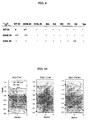
- Fig. 6 is a view showing the amount of viral gene expression after COS cell infections in HIV-1 integrase mutant clones.
- Fig. 7 is a view showing the amount of viral gene expression after RD cell infections in HIV-1 integrase mutant clones.
- Fig. 8 is a view showing that the infection was inhibited before the reverse transcription in HIV-1 integrase mutant clones.
- Fig. 9 is a view showing the protein interaction of HIV-1 integrase mutant clones upon two-hybrid assay.
- Fig. 10 is a view showing the specific binding of viral infection inhibitors upon phage display method.
- Mutagenetic DNA fragment of HIV-1 integrase was obtained from pNL4-3, which is an infectious clone, by the method previously described (J. Virol. 59, 284-291, 1986). As mutagenetic DNA fragment of HIV-1 integrase, 4.3kb fragment covering from SPeI site to SalI site of the pNL4-3 was subcloned into pBluescript SK (Stratagene).
- This vector DNA was prepared to be single-stranded DNA, and the single-stranded DNA was subjected to site-directed mutagenesis with helper phage M13K07 according to the instructions in the protocol of T7-GEN in vitro mutagenesis kit (Biochemical, U.S.A.), and mutant clones of HIV-1 integrase such as said (C43H), (C40H), (C40H, C43H), (H12C, H16C), (H12C, H16C, C40H, C43H), (P29F), (V32E), (I36E), (Y15A), (15T) and the like were obtained (see Fig. 4).
- 1 ⁇ g mutant clones of HIV-1 integrase (pNLluc ⁇ BgIII) obtained by the method described in Example 1, and 1 ⁇ g amphotropic envelope expression vector of murine leukemia virus (pDJ-1) were mixed in 10 ⁇ l Lipofect amine(BRL), then brought into reaction for 30 minutes at 30°C. The reactant was added to COS cells and transfected. Six hours after the transfection, 4 ml DMEM (Dulbecco's modified Eagle's medium) supplemented with 10% of bovine serum was added and then cultivation was conducted.
- DMEM Dulbecco's modified Eagle's medium
- the culture liquid was replaced by 4 ml new culture liquid of the same type, and the cultivation was continued to generate pseudotype viruses released from COS cells to culture liquid, and the amount of viral particle release in the viruses was determined by p24 solid phase enzyme immunoassay (Fig. 5).
- the obtained culture liquid was used as viral solution, and for control, COS cell culture liquid where no plasmid was transfected was used as non-viral solution (Mock) in the following experiments.
- Example 2 About 50 ng of each viral solution determined by p24 solid phase enzyme immunoassay descrived in Example 2 was added with deoxyribonuclease I and treated for 30 minutes in the presence of 10 mM magnesium chloride.
- the viral infection was conducted by inoculating the obtained DNA of each mutant virus to RD cells (human rhabdomyosarcoma cells). Two days and six days after the infection, virus genes emerging in the infected cells were measured by said luciferase assay (Fig. 7). As a result, all mutant viruses excluding one example (the mutant virus of P30N) showed smaller values than Mock, indicating that the viral infectivity is severely inhibited by the viral mutation.
- the resulted PCR product was fractionated by 2% agarose gel electrophoresis, then stained by cyber green and visualized (Fig. 8).
- Fig. 8 The resulted PCR product was fractionated by 2% agarose gel electrophoresis, then stained by cyber green and visualized.
- no viral DNA was detected in all mutant viruses excluding one example (the mutant virus of P30N) even with R/U5 and R/gag as primers, indicating that the viral infectivity is severely inhibited before the reverse transcription reaction.
- WTIN, D64EIN and C43LIN shown in DB of Fig. 9 mean each complex with a GAL4 DB vector constructed by inserting a gene of wild-type integrase, a D64E mutant gene of integrase and a C43L mutant gene of integrase respectively into MCS (multiple cloning sites) of pPC97 (GAL4 DB vector) in accordance with the frame of the GAL4 DB vector.
- WTIN gene of wild-type integrase
- D64EIN D64E mutant gene of integrase
- C43LIN C43L mutant gene of integrase
- MA p17 gene contained in a gag domain
- CA p24 gene contained in the gag domain
- NC p7 or p9 gene contained in the gag domain
- RT reverse transferase gene
- Vif viral infectious gene
- Vpr viral protein r gene
- Example 6 Inhibitive activity of a partial peptide at N-terminal domain of HIV-1 integrase
- Example 7 Sorting of antiviral drugs by phage display method with peptides binding to N-terminal domain of HIV-1 integrase
- PCR amplification was conducted with HIV-1 clone (pNL4-3) as a template (the amplification was conducted by 30 cycles; one cycle comprises heat-denaturation at 94°C for 1 minute, annealing at 60° C for 1 minute, and synthetic reaction at 72° C for 2 minutes).
- DNA fragments at N-terminal domain of HIV-1 integrase (a domain encoding 55 amino acid sequences from N-terminal side) were taken out of the PCR product and inserted into regions such as BamHI or EcoRI in the expression vector pGEX-2T (Pharmacia) to construct the HIV-1 integrase expression vector (pGEX2T-zinc).
- the constructed vector was introduced into Escherichia coli BL21 (DE3).
- the transformed Escherichia coli was added to culture liquid, then IPTG (isopropyl-1-thio- ⁇ -D-galactoside) was added to be 100 mM at final concentration, and the expression was induced for 5 hours at 37°C. 5 hours later, the Escherichia coli was centrifuged at 3000 rpm for 10 minutes and then collected. Next, Escherichia coli collected from medium per 1L was redissolved in physiological saline containing 100 ml of 1 M NaCl and 3 mM DTT (A solution), and crushed by an ultrasonic treatment (at 500 W for 10 minutes).
- IPTG isopropyl-1-thio- ⁇ -D-galactoside
- the obtained solution containing crushed Escherichia coli was centrifuged at 12000 rpm for 30 minutes to collect crude fractions of proteins , and integrase N-terminal proteins fused with GST (glutathione-S-transferase) contained in the protein crude fractions were purified by glutathione sepharose beads (Pharmacia).
- phage library wherein random peptides with various lengths are inserted into phages
- a phage containing a peptide which specifically binds to N-terminal domain of HIV-1 integrase was screened by repeating a panning operation (an operation wherein phage particles which do not bind to GST proteins in each phage library are collected, an operation wherein phage particles which bind to said prepared GST-fused integrase N-terminal protein are collected from selected phages) three to seven times.
- the obtained phage was cloned and sequenced.
- a 96-well plate was coated with 100 ⁇ g/ml GST-fused integrase N-terminal proteins, GST proteins or nonproteins, and after blocking, cloned phages having each peptide of 10 11 pFU were added to cause a reaction, and then secondary reaction was caused by anti-M13-HRP antibodies (horseradish peroxidase-labeled anti-M13).
- the 96-well plate was made to react with 2,2'-azinobis (3-ethylbenzthiazoline sulfonic acid) (ABTS; Sigma) as a substrate to cause a color reaction, and determined at absorbance of 405 nm.
- ABTS 2,2'-azinobis (3-ethylbenzthiazoline sulfonic acid)
- the present invention makes it possible to screen a new integrase inhibitor being able to inhibit an HIV infection before the reverse transcription step and having a pharmaceutical site of action totally different from those of traditional integrase inhibitors. Further, it becomes possible to obtain a new integrase inhibitor being able to inhibit the infection and the proliferation of retroviruses completely through the screening. Pharmaceutical constituents containing these new integrase inhibitors are expected as remedies for AIDS.
Landscapes
- Health & Medical Sciences (AREA)
- Life Sciences & Earth Sciences (AREA)
- Chemical & Material Sciences (AREA)
- Organic Chemistry (AREA)
- Virology (AREA)
- Proteomics, Peptides & Aminoacids (AREA)
- General Health & Medical Sciences (AREA)
- Molecular Biology (AREA)
- Engineering & Computer Science (AREA)
- Wood Science & Technology (AREA)
- Biophysics (AREA)
- Genetics & Genomics (AREA)
- Biochemistry (AREA)
- Zoology (AREA)
- Immunology (AREA)
- Medicinal Chemistry (AREA)
- AIDS & HIV (AREA)
- Physics & Mathematics (AREA)
- Microbiology (AREA)
- Bioinformatics & Cheminformatics (AREA)
- General Engineering & Computer Science (AREA)
- Biotechnology (AREA)
- Gastroenterology & Hepatology (AREA)
- Analytical Chemistry (AREA)
- General Chemical & Material Sciences (AREA)
- Animal Behavior & Ethology (AREA)
- Oncology (AREA)
- Chemical Kinetics & Catalysis (AREA)
- Tropical Medicine & Parasitology (AREA)
- Nuclear Medicine, Radiotherapy & Molecular Imaging (AREA)
- Pharmacology & Pharmacy (AREA)
- Communicable Diseases (AREA)
- Public Health (AREA)
- Veterinary Medicine (AREA)
- Medicines That Contain Protein Lipid Enzymes And Other Medicines (AREA)
- Peptides Or Proteins (AREA)
- Measuring Or Testing Involving Enzymes Or Micro-Organisms (AREA)
- Investigating Or Analysing Biological Materials (AREA)
- Enzymes And Modification Thereof (AREA)
- Pharmaceuticals Containing Other Organic And Inorganic Compounds (AREA)
Abstract
Description





Claims (35)
- A screening method of a retroviral infection inhibitor characterized in targeting a domain comprised of a whole or a -part of N-terminal domain of retroviral integrase or a domain including the N-terminal domain.
- A screening method of a retroviral infection inhibitor characterized in detecting a subject material which binds to a peptide comprised of a whole or a part of N-terminal domain of retroviral integrase or a peptide including the N-terminal domain.
- The screening method of a retroviral infection inhibitor according to claim 2, wherein the binding subject material is a peptide or a protein.
- The screening method of a retroviral infection inhibitor according to claim 3, wherein the peptide or the protein contains an amino acid sequence where one or a few amino acids are deficient, substituted or added in a part of 1st to 55th amino acid sequences among amino acid sequences shown in Seq. ID No. 2 or in a peptide containing said amino acid sequences or a part of said amino acid sequences.
- The screening method of a retroviral infection inhibitor according to claim 3 or 4, wherein the detection of the peptide or the protein is conducted with a method selected from phage display method, immunoprecipitation method, two-hybrid assay and Far Western analysis.
- A screening method of a retroviral infection inhibitor characterized in detecting a subject material which binds to RNA encoding a peptide comprised of a whole or a part of N-terminal domain of retroviral integarase, or a peptide containing the N-terminal domain.
- The screening method of a retroviral infection inhibitor according to claim 6, wherein the binding subject material is DNA or RNA.
- The screening method of a retroviral infection inhibitor according to claim 6, wherein the binding subject material is a peptide or a protein.
- A screening method of a retroviral infection inhibitor characterized in that a wild-type retrovirus is infected to a host cell in the presence of a subject material, and in case the subject material is a peptide, under the condition that DNA encoding the peptide can express, and then the amount of viral gene expression in the host cell after the infection is compared to the case using noninfected control.
- A screening method of a retroviral infection inhibitor characterized in that two-hybrid assay with an integrase gene of a wild-type retrovirus is conducted in the presence of a subject material, and in case the subject material is a peptide, under the condition that DNA encoding the peptide can express, and the inhibition of integrase dimer formation is detected.
- The screening method of a retroviral infection inhibitor according to any one of claims 1 to 10, wherein the retrovirus is HIV-1.
- A retroviral infection inhibitor being obtainable by the screening method of a retroviral infection inhibitor according to any one of claims 1 to 11.
- The retroviral infection inhibitor according to claim 12, wherein the obtainable retroviral infection inhibitor is DNA or RNA.
- The retroviral infection inhibitor according to claim 12, wherein the obtainable retroviral infection inhibitor is a peptide or a protein.
- A retroviral infection inhibitor characterized in comprising a peptide shown in any one of Seq. ID No. 3 to 11, or a peptide or a protein containing said peptide.
- A retroviral infection inhibitor characterized in comprising a peptide having 26th to 39th amino acid sequences among amino acid sequences shown in Seq. ID No. 2, or a peptide or a protein containing said peptide.
- A retroviral infection inhibitor characterized in comprising a monoclonal antibody being obtainable by using a peptide having 1st to 55th amino acid sequences among amino acid sequences shown in Seq. ID No. 2 as an antigen.
- A retroviral infection inhibitor characterized in comprising a complex where the peptide or the protein according to any one of claims 14 to 17 is bound to other peptide or protein, or nonprotein.
- The retroviral infection inhibitor according to claim 18, wherein other peptide or protein, or nonprotein is CD4 glycoprotein, which is T cell antigen.
- The retroviral infection inhibitor according to claim 18, wherein other peptide or protein, or nonprotein is a coat protein of a retrovirus.
- The retroviral infection inhibitor according to any one of claims 18 to 20, wherein the complex is protease-resistant or is chemically modified for intracellular introduction.
- A retroviral infection inhibitor characterized in comprising DNA construct capable of expressing DNA encoding a peptide or a protein, or a part of a protein comprising the retroviral infection inhibitor according to any one of claims 14 to 21.
- The retroviral infection inhibitor according to claim 22, wherein the DNA construct capable of expression includes a viral vector.
- A retroviral infection inhibitor characterized in comprising DNA which encodes mutant integrase in which one or a few amino acids are deficient, substituted, or added in a peptide comprising a whole or a part of N-terminal domain of retroviral integrase or a peptide including said N-terminal domain, or DNA which hybridizes with said DNA under a stringent condition, wherein the DNA inhibits the replication of retroviruses before the reverse transcription reaction of a retroviral mutant stock containing these DNA.
- The retroviral infection inhibitor according to claim 24, wherein the mutant integrase is selected from some of the amino acid sequences shown in Seq. ID No. 2, which are:C43H, where 43rd cystein is substituted with histidine;C40H, where 40th cystein is substituted with histidine;C40H, C43H, where 40th and 43rd cysteins are substituted with histidines;H12C, H16C, where 12th and 16th histidines are substituted with cysteins;H12C, H16C, C40H, C43H, where 12th and 16th histidines are substituted with cysteins, and 40th and 43rd cysteins are substituted with histidines;P29F, where 29th proline is substituted with phenylalanine;V32E, where 32nd valine is substituted with glutamic acid;I36E, where 36th isoleucine is substituted with glutamic acid;Y15A, where 15th tylosin is substituted with alanine; andY15T, where 15th tylosin is substituted with threonine.
- The retroviral infection inhibitor according to any one of claims 12 to 25, wherein the retrovirus is HIV-1.
- A therapeutic constituent characterized in containing the retroviral infection inhibitor according to any one of claims 12 to 26.
- The therapeutic constituent according to claim 27, wherein the therapeutic constituent containing the retroviral infection inhibitor further contains other antiviral drug.
- The therapeutic constituent according to claim 28, wherein the antiviral drug contains any one of nucleoside or non-nucleoside reverse transcriptase inhibitor, HIV protease inhibitor, and tat inhibitor.
- The therapeutic constituent according to claim 29, wherein the reverse transcriptase inhibitor comprises azidothymidine, dideoxyinosine, dideoxycytosine and d4T.
- The therapeutic constituent according to any one of claims 27 to 30, wherein the retrovirus is HIV-1.
- A vaccine for a retrovirus characterized in comprising a retrovirus mutant stock having DNA which encodes mutant integrase in which one or a few amino acids are deficient, substituted, or added in a peptide comprising a whole or a part of N-terminal domain of retroviral integrase or a peptide including said N-terminal domain, or DNA which hybridizes with said DNA under a stringent condition, and inhibiting the replication of retroviruses before the reverse transcription reaction of the mutant stock.
- The vaccine for a retrovirus according to claim 32, wherein the mutant integrase is selected from some of the amino acid sequences shown in Seq. ID No. 2, which are:C43H, where 43rd cystein is substituted with histidine;C40H, where 40th cystein is substituted with histidine;C40H, C43H, where 40th and 43rd cysteins are substituted with histidines;H12C, H16C, where 12th and 16th histidines are substituted with cysteins;H12C, H16C, C40H, C43H, where 12th and 16th histidines are substituted with cysteins, and 40th and 43rd cysteins are substituted with histidines;P29F, where 29th proline is substituted with phenylalanine;V32E, where 32nd valine is substituted with glutamic acid;I36E, where 36th isoleucine is substituted with glutamic acid;Y15A, where 15th tylosin is substituted with alanine; andY15T, where 15th tylosin is substituted with threonine.
- The vaccine for a retrovirus according to claim 32 or 33, wherein the retrovirus is HIV-1.
- A therapy characterized in using the retroviral infection inhibitor according to any one of claims 12 to 26, the therapeutic constituent according to any one of claims 27 to 31, or the vaccine for a retrovirus according to any one of claims 32 to 34.
Applications Claiming Priority (3)
| Application Number | Priority Date | Filing Date | Title |
|---|---|---|---|
| JP13340299 | 1999-05-13 | ||
| JP13340299 | 1999-05-13 | ||
| PCT/JP2000/002698 WO2000070035A1 (en) | 1999-05-13 | 2000-04-25 | Inhibitors for viral infection targeting integrase n-terminal region |
Publications (3)
| Publication Number | Publication Date |
|---|---|
| EP1176193A1 true EP1176193A1 (en) | 2002-01-30 |
| EP1176193A4 EP1176193A4 (en) | 2003-02-05 |
| EP1176193B1 EP1176193B1 (en) | 2012-05-30 |
Family
ID=15103920
Family Applications (1)
| Application Number | Title | Priority Date | Filing Date |
|---|---|---|---|
| EP00917458A Expired - Lifetime EP1176193B1 (en) | 1999-05-13 | 2000-04-25 | Inhibitors for viral infection targeting integrase n-terminal region |
Country Status (8)
| Country | Link |
|---|---|
| US (1) | US7276333B1 (en) |
| EP (1) | EP1176193B1 (en) |
| JP (1) | JP4562290B2 (en) |
| AU (1) | AU780121B2 (en) |
| CA (1) | CA2372456C (en) |
| DK (1) | DK1176193T3 (en) |
| TW (1) | TWI281497B (en) |
| WO (1) | WO2000070035A1 (en) |
Families Citing this family (2)
| Publication number | Priority date | Publication date | Assignee | Title |
|---|---|---|---|---|
| EP1795593A4 (en) * | 2004-08-24 | 2009-07-08 | Univ Kyoto | TARGET NUCLEIC ACID FOR RETROVIRAL INTEGRATION |
| AP3500A (en) * | 2009-03-19 | 2015-12-31 | Integrated Proteomics Llc | Inhibitors of viral integrase and methods of use |
Family Cites Families (4)
| Publication number | Priority date | Publication date | Assignee | Title |
|---|---|---|---|---|
| FI951078L (en) * | 1992-09-09 | 1995-03-08 | Amgen Boulder Inc | Inhibition of retroviral infection |
| US5627023A (en) | 1993-03-29 | 1997-05-06 | Duke University | Suppressor of HIV replication and transcription |
| US6815461B1 (en) | 1994-01-20 | 2004-11-09 | The University Of North Carolina At Chapel Hill | Method of inhibiting retroviral integrase |
| AU7689798A (en) * | 1997-05-20 | 1998-12-11 | St. Luke's-Roosevelt Hospital | Vif-derived hiv protease inhibitors |
-
2000
- 2000-04-25 CA CA002372456A patent/CA2372456C/en not_active Expired - Fee Related
- 2000-04-25 JP JP2000618441A patent/JP4562290B2/en not_active Expired - Fee Related
- 2000-04-25 AU AU38431/00A patent/AU780121B2/en not_active Ceased
- 2000-04-25 US US09/959,936 patent/US7276333B1/en not_active Expired - Fee Related
- 2000-04-25 EP EP00917458A patent/EP1176193B1/en not_active Expired - Lifetime
- 2000-04-25 WO PCT/JP2000/002698 patent/WO2000070035A1/en not_active Ceased
- 2000-04-25 DK DK00917458.2T patent/DK1176193T3/en active
- 2000-05-03 TW TW089108398A patent/TWI281497B/en not_active IP Right Cessation
Also Published As
| Publication number | Publication date |
|---|---|
| CA2372456C (en) | 2009-08-25 |
| TWI281497B (en) | 2007-05-21 |
| AU780121B2 (en) | 2005-03-03 |
| EP1176193A4 (en) | 2003-02-05 |
| JP4562290B2 (en) | 2010-10-13 |
| US7276333B1 (en) | 2007-10-02 |
| CA2372456A1 (en) | 2000-11-23 |
| WO2000070035A1 (en) | 2000-11-23 |
| EP1176193B1 (en) | 2012-05-30 |
| DK1176193T3 (en) | 2012-09-10 |
| AU3843100A (en) | 2000-12-05 |
Similar Documents
| Publication | Publication Date | Title |
|---|---|---|
| JP4234999B2 (en) | Multimer formation of HIV-1 VIF protein as a therapeutic target | |
| Cherepanov et al. | High‐level expression of active HIV‐1 integrase from a synthetic gene in human cells | |
| Ao et al. | Contribution of the C-terminal tri-lysine regions of human immunodeficiency virus type 1 integrase for efficient reverse transcription and viral DNA nuclear import | |
| AU2002307229A1 (en) | Multimerization of HIV-1 Vif protein as a therapeutic target | |
| US5773225A (en) | Screening method for the identification of compounds capable of abrogation HIV-1 gag-cyclophilin complex formation | |
| US20100099162A1 (en) | Nuclear localization signal of lentiviral integrase and method of use thereof | |
| Kitamura et al. | Inhibition of replication of HIV-1 at both early and late stages of the viral life cycle by single-chain antibody against viral integrase | |
| EP1401490B1 (en) | Tsg101 as inhibitor of hiv production | |
| EP1176193B1 (en) | Inhibitors for viral infection targeting integrase n-terminal region | |
| US6436648B1 (en) | Chimeric viral proteins | |
| AU2002303816A1 (en) | TSG101 as inhibitors of HIV production | |
| JP4520441B2 (en) | Viral infection inhibitor targeting integrase N-terminal region | |
| JPWO2000070035A1 (en) | Viral infection inhibitors targeting the N-terminal region of integrase | |
| Ver Plank | The characterization of the interaction of retroviral L domains with proteins that regulate ubiquitination | |
| Li | Host cell factors that interact with the HIV capsid and modulate uncoating | |
| Janardhan | Identification of immediate downstream effectors of HIV-1 Nef in T lymphocytes | |
| Stotland | Use of Retroviral Peptide Libraries for the Identification of Novel Cellular Targets of HIV-1 and the Discovery of Novel Inhibitors | |
| Narayan | Biochemical properties and regulation of human T-cell lymphotropic virus type 2 Rex protein function | |
| Rj et al. | 12: 14arn Page 8 |
Legal Events
| Date | Code | Title | Description |
|---|---|---|---|
| PUAI | Public reference made under article 153(3) epc to a published international application that has entered the european phase |
Free format text: ORIGINAL CODE: 0009012 |
|
| 17P | Request for examination filed |
Effective date: 20011107 |
|
| AK | Designated contracting states |
Kind code of ref document: A1 Designated state(s): AT BE CH CY DE DK ES FI FR GB GR IE IT LI LU MC NL PT SE |
|
| RIN1 | Information on inventor provided before grant (corrected) |
Inventor name: KANNAGI, MARI Inventor name: MASUDA, TAKAO |
|
| A4 | Supplementary search report drawn up and despatched |
Effective date: 20021223 |
|
| 17Q | First examination report despatched |
Effective date: 20031030 |
|
| RAP1 | Party data changed (applicant data changed or rights of an application transferred) |
Owner name: JAPAN SCIENCE AND TECHNOLOGY AGENCY |
|
| GRAP | Despatch of communication of intention to grant a patent |
Free format text: ORIGINAL CODE: EPIDOSNIGR1 |
|
| GRAS | Grant fee paid |
Free format text: ORIGINAL CODE: EPIDOSNIGR3 |
|
| GRAA | (expected) grant |
Free format text: ORIGINAL CODE: 0009210 |
|
| GRAF | Information related to payment of grant fee modified |
Free format text: ORIGINAL CODE: EPIDOSCIGR3 |
|
| AK | Designated contracting states |
Kind code of ref document: B1 Designated state(s): AT BE CH CY DE DK ES FI FR GB GR IE IT LI LU MC NL PT SE |
|
| REG | Reference to a national code |
Ref country code: GB Ref legal event code: FG4D |
|
| REG | Reference to a national code |
Ref country code: CH Ref legal event code: EP |
|
| REG | Reference to a national code |
Ref country code: AT Ref legal event code: REF Ref document number: 560092 Country of ref document: AT Kind code of ref document: T Effective date: 20120615 |
|
| REG | Reference to a national code |
Ref country code: IE Ref legal event code: FG4D |
|
| REG | Reference to a national code |
Ref country code: DE Ref legal event code: R096 Ref document number: 60047231 Country of ref document: DE Effective date: 20120802 |
|
| REG | Reference to a national code |
Ref country code: DK Ref legal event code: T3 |
|
| REG | Reference to a national code |
Ref country code: NL Ref legal event code: T3 |
|
| PG25 | Lapsed in a contracting state [announced via postgrant information from national office to epo] |
Ref country code: CY Free format text: LAPSE BECAUSE OF FAILURE TO SUBMIT A TRANSLATION OF THE DESCRIPTION OR TO PAY THE FEE WITHIN THE PRESCRIBED TIME-LIMIT Effective date: 20120530 Ref country code: SE Free format text: LAPSE BECAUSE OF FAILURE TO SUBMIT A TRANSLATION OF THE DESCRIPTION OR TO PAY THE FEE WITHIN THE PRESCRIBED TIME-LIMIT Effective date: 20120530 Ref country code: FI Free format text: LAPSE BECAUSE OF FAILURE TO SUBMIT A TRANSLATION OF THE DESCRIPTION OR TO PAY THE FEE WITHIN THE PRESCRIBED TIME-LIMIT Effective date: 20120530 |
|
| REG | Reference to a national code |
Ref country code: AT Ref legal event code: MK05 Ref document number: 560092 Country of ref document: AT Kind code of ref document: T Effective date: 20120530 |
|
| PG25 | Lapsed in a contracting state [announced via postgrant information from national office to epo] |
Ref country code: GR Free format text: LAPSE BECAUSE OF FAILURE TO SUBMIT A TRANSLATION OF THE DESCRIPTION OR TO PAY THE FEE WITHIN THE PRESCRIBED TIME-LIMIT Effective date: 20120831 |
|
| PG25 | Lapsed in a contracting state [announced via postgrant information from national office to epo] |
Ref country code: AT Free format text: LAPSE BECAUSE OF FAILURE TO SUBMIT A TRANSLATION OF THE DESCRIPTION OR TO PAY THE FEE WITHIN THE PRESCRIBED TIME-LIMIT Effective date: 20120530 |
|
| PG25 | Lapsed in a contracting state [announced via postgrant information from national office to epo] |
Ref country code: IT Free format text: LAPSE BECAUSE OF FAILURE TO SUBMIT A TRANSLATION OF THE DESCRIPTION OR TO PAY THE FEE WITHIN THE PRESCRIBED TIME-LIMIT Effective date: 20120530 Ref country code: PT Free format text: LAPSE BECAUSE OF FAILURE TO SUBMIT A TRANSLATION OF THE DESCRIPTION OR TO PAY THE FEE WITHIN THE PRESCRIBED TIME-LIMIT Effective date: 20121001 |
|
| PLBE | No opposition filed within time limit |
Free format text: ORIGINAL CODE: 0009261 |
|
| STAA | Information on the status of an ep patent application or granted ep patent |
Free format text: STATUS: NO OPPOSITION FILED WITHIN TIME LIMIT |
|
| PG25 | Lapsed in a contracting state [announced via postgrant information from national office to epo] |
Ref country code: ES Free format text: LAPSE BECAUSE OF FAILURE TO SUBMIT A TRANSLATION OF THE DESCRIPTION OR TO PAY THE FEE WITHIN THE PRESCRIBED TIME-LIMIT Effective date: 20120910 |
|
| 26N | No opposition filed |
Effective date: 20130301 |
|
| REG | Reference to a national code |
Ref country code: DE Ref legal event code: R097 Ref document number: 60047231 Country of ref document: DE Effective date: 20130301 |
|
| PGRI | Patent reinstated in contracting state [announced from national office to epo] |
Ref country code: IT Effective date: 20130601 |
|
| PG25 | Lapsed in a contracting state [announced via postgrant information from national office to epo] |
Ref country code: MC Free format text: LAPSE BECAUSE OF FAILURE TO SUBMIT A TRANSLATION OF THE DESCRIPTION OR TO PAY THE FEE WITHIN THE PRESCRIBED TIME-LIMIT Effective date: 20120530 |
|
| REG | Reference to a national code |
Ref country code: IE Ref legal event code: MM4A |
|
| PG25 | Lapsed in a contracting state [announced via postgrant information from national office to epo] |
Ref country code: IE Free format text: LAPSE BECAUSE OF NON-PAYMENT OF DUE FEES Effective date: 20130425 |
|
| PGFP | Annual fee paid to national office [announced via postgrant information from national office to epo] |
Ref country code: GB Payment date: 20140423 Year of fee payment: 15 |
|
| PGFP | Annual fee paid to national office [announced via postgrant information from national office to epo] |
Ref country code: FR Payment date: 20140409 Year of fee payment: 15 Ref country code: CH Payment date: 20140414 Year of fee payment: 15 Ref country code: NL Payment date: 20140308 Year of fee payment: 15 Ref country code: IT Payment date: 20140416 Year of fee payment: 15 Ref country code: DE Payment date: 20140430 Year of fee payment: 15 |
|
| PGFP | Annual fee paid to national office [announced via postgrant information from national office to epo] |
Ref country code: DK Payment date: 20140410 Year of fee payment: 15 Ref country code: BE Payment date: 20140414 Year of fee payment: 15 |
|
| PG25 | Lapsed in a contracting state [announced via postgrant information from national office to epo] |
Ref country code: LU Free format text: LAPSE BECAUSE OF NON-PAYMENT OF DUE FEES Effective date: 20130425 |
|
| REG | Reference to a national code |
Ref country code: DE Ref legal event code: R119 Ref document number: 60047231 Country of ref document: DE |
|
| REG | Reference to a national code |
Ref country code: DK Ref legal event code: EBP Effective date: 20150430 |
|
| REG | Reference to a national code |
Ref country code: CH Ref legal event code: PL |
|
| GBPC | Gb: european patent ceased through non-payment of renewal fee |
Effective date: 20150425 |
|
| REG | Reference to a national code |
Ref country code: NL Ref legal event code: MM Effective date: 20150501 |
|
| PG25 | Lapsed in a contracting state [announced via postgrant information from national office to epo] |
Ref country code: IT Free format text: LAPSE BECAUSE OF FAILURE TO SUBMIT A TRANSLATION OF THE DESCRIPTION OR TO PAY THE FEE WITHIN THE PRESCRIBED TIME-LIMIT Effective date: 20150425 Ref country code: CH Free format text: LAPSE BECAUSE OF NON-PAYMENT OF DUE FEES Effective date: 20150430 Ref country code: LI Free format text: LAPSE BECAUSE OF NON-PAYMENT OF DUE FEES Effective date: 20150430 Ref country code: GB Free format text: LAPSE BECAUSE OF NON-PAYMENT OF DUE FEES Effective date: 20150425 Ref country code: DE Free format text: LAPSE BECAUSE OF NON-PAYMENT OF DUE FEES Effective date: 20151103 |
|
| REG | Reference to a national code |
Ref country code: FR Ref legal event code: ST Effective date: 20151231 |
|
| PG25 | Lapsed in a contracting state [announced via postgrant information from national office to epo] |
Ref country code: FR Free format text: LAPSE BECAUSE OF NON-PAYMENT OF DUE FEES Effective date: 20150430 |
|
| PG25 | Lapsed in a contracting state [announced via postgrant information from national office to epo] |
Ref country code: NL Free format text: LAPSE BECAUSE OF NON-PAYMENT OF DUE FEES Effective date: 20150501 |
|
| PG25 | Lapsed in a contracting state [announced via postgrant information from national office to epo] |
Ref country code: DK Free format text: LAPSE BECAUSE OF NON-PAYMENT OF DUE FEES Effective date: 20150430 |
|
| PG25 | Lapsed in a contracting state [announced via postgrant information from national office to epo] |
Ref country code: BE Free format text: LAPSE BECAUSE OF NON-PAYMENT OF DUE FEES Effective date: 20150430 |