EP1175893A2 - Hair dye composition - Google Patents
Hair dye composition Download PDFInfo
- Publication number
- EP1175893A2 EP1175893A2 EP01116743A EP01116743A EP1175893A2 EP 1175893 A2 EP1175893 A2 EP 1175893A2 EP 01116743 A EP01116743 A EP 01116743A EP 01116743 A EP01116743 A EP 01116743A EP 1175893 A2 EP1175893 A2 EP 1175893A2
- Authority
- EP
- European Patent Office
- Prior art keywords
- branched
- linear
- hair
- group
- alkyl group
- Prior art date
- Legal status (The legal status is an assumption and is not a legal conclusion. Google has not performed a legal analysis and makes no representation as to the accuracy of the status listed.)
- Withdrawn
Links
- YXFVVABEGXRONW-UHFFFAOYSA-N Cc1ccccc1 Chemical compound Cc1ccccc1 YXFVVABEGXRONW-UHFFFAOYSA-N 0.000 description 1
Classifications
-
- A—HUMAN NECESSITIES
- A61—MEDICAL OR VETERINARY SCIENCE; HYGIENE
- A61K—PREPARATIONS FOR MEDICAL, DENTAL OR TOILETRY PURPOSES
- A61K8/00—Cosmetics or similar toiletry preparations
- A61K8/18—Cosmetics or similar toiletry preparations characterised by the composition
- A61K8/30—Cosmetics or similar toiletry preparations characterised by the composition containing organic compounds
- A61K8/33—Cosmetics or similar toiletry preparations characterised by the composition containing organic compounds containing oxygen
- A61K8/34—Alcohols
-
- A—HUMAN NECESSITIES
- A61—MEDICAL OR VETERINARY SCIENCE; HYGIENE
- A61K—PREPARATIONS FOR MEDICAL, DENTAL OR TOILETRY PURPOSES
- A61K8/00—Cosmetics or similar toiletry preparations
- A61K8/18—Cosmetics or similar toiletry preparations characterised by the composition
- A61K8/30—Cosmetics or similar toiletry preparations characterised by the composition containing organic compounds
- A61K8/33—Cosmetics or similar toiletry preparations characterised by the composition containing organic compounds containing oxygen
- A61K8/39—Derivatives containing from 2 to 10 oxyalkylene groups
-
- A—HUMAN NECESSITIES
- A61—MEDICAL OR VETERINARY SCIENCE; HYGIENE
- A61K—PREPARATIONS FOR MEDICAL, DENTAL OR TOILETRY PURPOSES
- A61K8/00—Cosmetics or similar toiletry preparations
- A61K8/18—Cosmetics or similar toiletry preparations characterised by the composition
- A61K8/30—Cosmetics or similar toiletry preparations characterised by the composition containing organic compounds
- A61K8/49—Cosmetics or similar toiletry preparations characterised by the composition containing organic compounds containing heterocyclic compounds
- A61K8/4906—Cosmetics or similar toiletry preparations characterised by the composition containing organic compounds containing heterocyclic compounds with one nitrogen as the only hetero atom
- A61K8/4913—Cosmetics or similar toiletry preparations characterised by the composition containing organic compounds containing heterocyclic compounds with one nitrogen as the only hetero atom having five membered rings, e.g. pyrrolidone carboxylic acid
-
- A—HUMAN NECESSITIES
- A61—MEDICAL OR VETERINARY SCIENCE; HYGIENE
- A61K—PREPARATIONS FOR MEDICAL, DENTAL OR TOILETRY PURPOSES
- A61K8/00—Cosmetics or similar toiletry preparations
- A61K8/18—Cosmetics or similar toiletry preparations characterised by the composition
- A61K8/30—Cosmetics or similar toiletry preparations characterised by the composition containing organic compounds
- A61K8/49—Cosmetics or similar toiletry preparations characterised by the composition containing organic compounds containing heterocyclic compounds
- A61K8/4906—Cosmetics or similar toiletry preparations characterised by the composition containing organic compounds containing heterocyclic compounds with one nitrogen as the only hetero atom
- A61K8/4926—Cosmetics or similar toiletry preparations characterised by the composition containing organic compounds containing heterocyclic compounds with one nitrogen as the only hetero atom having six membered rings
-
- A—HUMAN NECESSITIES
- A61—MEDICAL OR VETERINARY SCIENCE; HYGIENE
- A61K—PREPARATIONS FOR MEDICAL, DENTAL OR TOILETRY PURPOSES
- A61K8/00—Cosmetics or similar toiletry preparations
- A61K8/18—Cosmetics or similar toiletry preparations characterised by the composition
- A61K8/30—Cosmetics or similar toiletry preparations characterised by the composition containing organic compounds
- A61K8/49—Cosmetics or similar toiletry preparations characterised by the composition containing organic compounds containing heterocyclic compounds
- A61K8/494—Cosmetics or similar toiletry preparations characterised by the composition containing organic compounds containing heterocyclic compounds with more than one nitrogen as the only hetero atom
- A61K8/4946—Imidazoles or their condensed derivatives, e.g. benzimidazoles
-
- A—HUMAN NECESSITIES
- A61—MEDICAL OR VETERINARY SCIENCE; HYGIENE
- A61Q—SPECIFIC USE OF COSMETICS OR SIMILAR TOILETRY PREPARATIONS
- A61Q5/00—Preparations for care of the hair
- A61Q5/06—Preparations for styling the hair, e.g. by temporary shaping or colouring
- A61Q5/065—Preparations for temporary colouring the hair, e.g. direct dyes
-
- A—HUMAN NECESSITIES
- A61—MEDICAL OR VETERINARY SCIENCE; HYGIENE
- A61K—PREPARATIONS FOR MEDICAL, DENTAL OR TOILETRY PURPOSES
- A61K2800/00—Properties of cosmetic compositions or active ingredients thereof or formulation aids used therein and process related aspects
- A61K2800/40—Chemical, physico-chemical or functional or structural properties of particular ingredients
- A61K2800/42—Colour properties
- A61K2800/43—Pigments; Dyes
Definitions
- the present invention relates to a hair dye composition capable of dyeing the hair intensely and uniformly and having excellent resistance against shampooing and the like after hair dyeing.
- a direct dye has been used as a main colorant of a semi-permanent dye and it has been demanded to have intense and uniform hair dyeing capacity and have resistance against circumstances which the dyed hair is exposed to such as light, perspiration and shampooing.
- Cationic direct dyes having a triarylmethane structure and usable for dyeing of the human hair are conventionally known, but they are not fully satisfactory in coloring strength, uniform dyeing property and resistance against shampooing and the like after hair dyeing.
- An object of the present invention is therefore to provide a hair dye composition which contains a cationic direct dye having a triarylmethane structure, is capable of dyeing the hair intensely and uniformly and has excellent resistance against shampooing and the like after hair dyeing.
- a cationic direct dye having a triarylmethane structure is markedly improved in coloring strength, uniform dyeing property and resistance against shampooing and the like after hair dyeing when used in combination with a specific organic solvent.
- the present invention therefore provides a hair dye composition
- a hair dye composition comprising the following components (A) and (B):
- the present invention also provides a hair dyeing method, comprising applying the above-described hair dye composition to the hair.
- cationic direct dye having a triarylmethane structure as component A means a cationic direct dye having a triarylmethane structure but not having an acid group such as sulfonic acid group. It does not embrace a cationic direct dye having a xanthene structure or acridine structure.
- Examples of the cationic direct dye having a triarylmethane structure include C.I. Basic Blue 1, C.I. Basic Blue 2, C.I. Basic Blue 5, C.I. Basic Blue 7, C.I. Basic Blue 8, C.I. Basic Blue 11, C.I. Basic Blue 15, C.I. Basic Blue 18, C.I. Basic Blue 20, C.I. Basic Blue 23, C.I. Basic Blue 26, C. I. Basic Blue 55, C.I.
- Basic Blue 81 C.I. Basic Green 1, C.I. Basic Green 4, C.I. Basic Red 9, C.I. Basic Violet 1, C.I. Basic Violet 2, C.I. Basic Violet 3, C.I. Basic Violet 4, C.I. Basic Violet 13, C.I. Basic Violet 14, and C.I. Basic Violet 23.
- One or more of these cationic direct dyes having a triarylmethane structure can be used as the component (A). Its content is preferably 0.001 to 5 wt.%, more preferably 0.005 to 3 wt.%, especially 0.01 to 1 wt.% based on the whole composition.
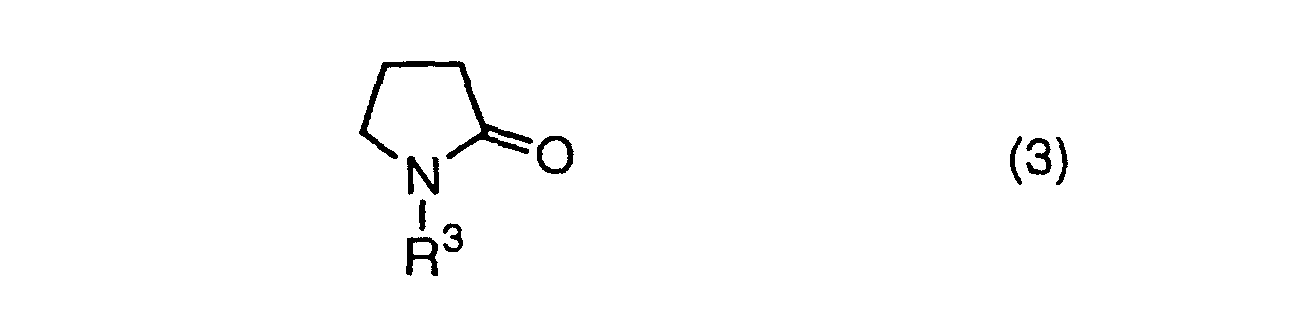
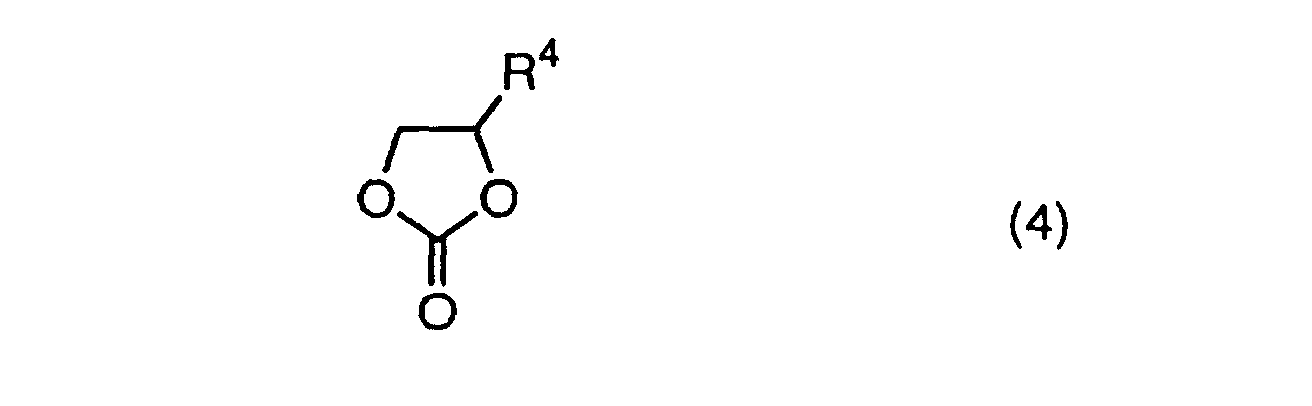
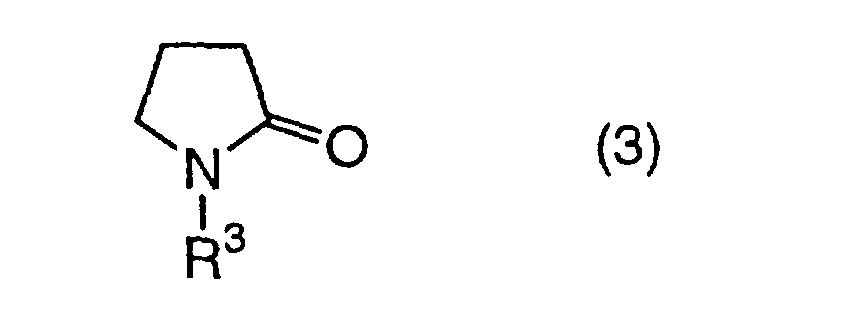
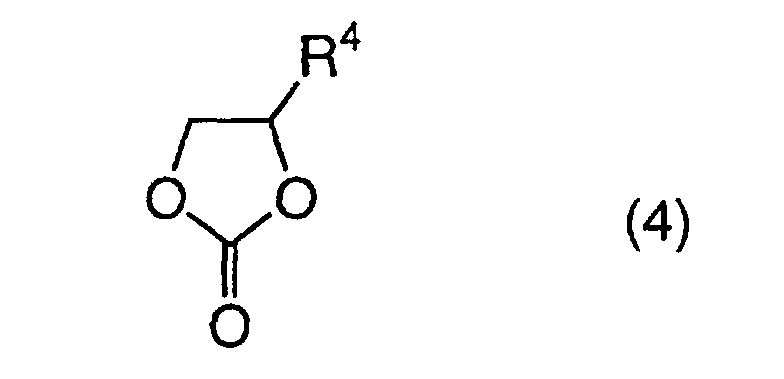
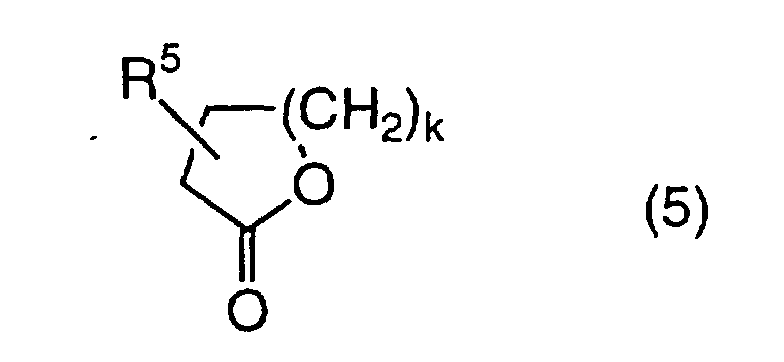
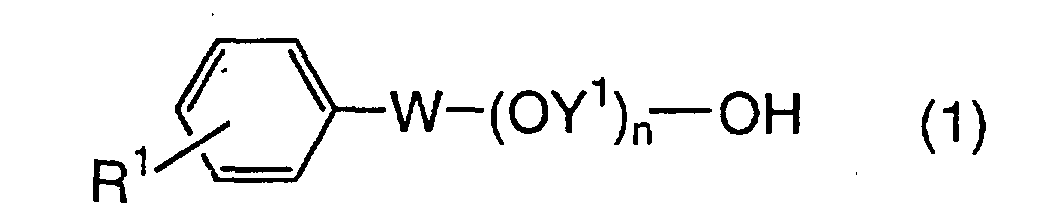
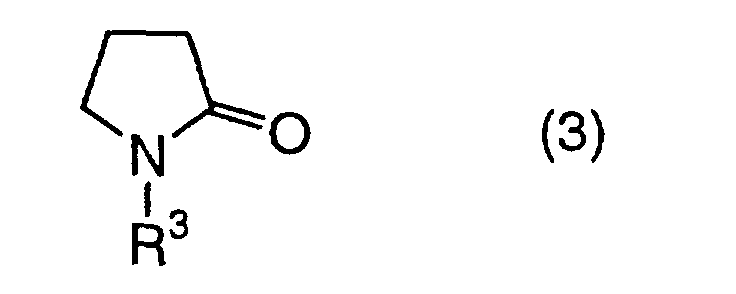
- Examples of the linear or branched C 1-4 alkyl group represented by R 1 , R 3 or R 4 in each of the formulas (1) to (5) representing the organic solvent of the component (B) include methyl, ethyl, propyl, isopropyl, butyl, isobutyl, sec-butyl and tert-butyl groups.
- Examples of the linear or branched C 1-4 alkoxy group represented by R 1 include methoxy, ethoxy, propoxy, isopropoxy and butoxy groups.
- Examples of the linear, branched or cyclic C 4-7 alkyl group represented by R 2 include butyl, pentyl, hexyl, heptyl, isobutyl, cyclopentyl and cyclohexyl groups.
- Examples of the linear or branched C 2-4 alkylene group represented by X, Y 1 or Y 2 include ethylene, trimethylene, propylene and tetramethylene groups.
- Examples of the organic solvent (1) include 2-phenoxyethanol, benzyl alcohol, 2-phenylethanol and 2-benzyloxyethanol
- those of the organic solvent (2) include n-butanol, ethylene glycol mono-n-butyl ether and diethylene glycol mono-n-butyl ether
- those of the organic solvent (3) include N-methylpyrrolidone and N-ethylpyrrolidone
- those of the organic solvent (4) include ethylene carbonate and propylene carbonate
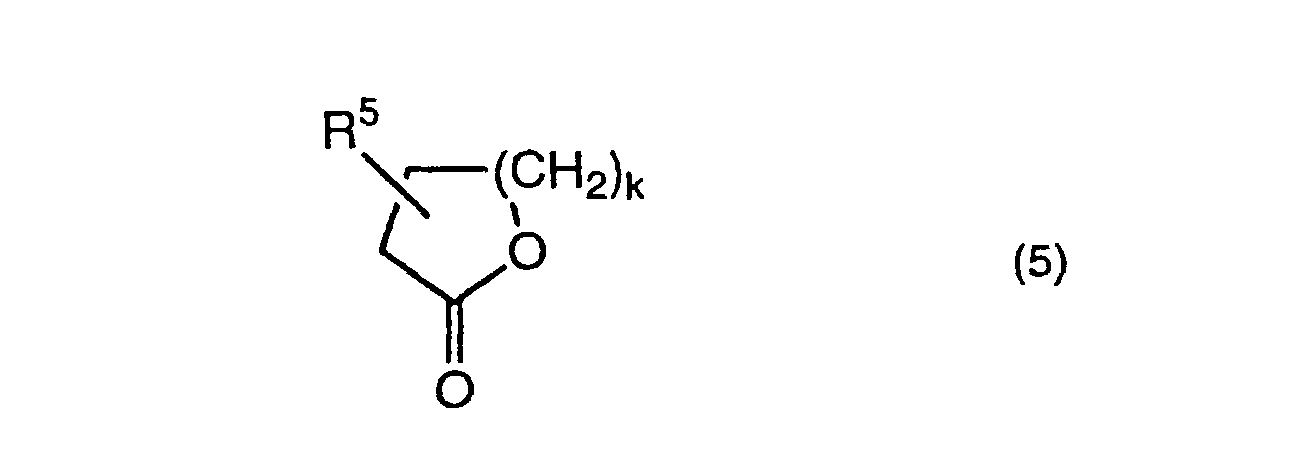
- those of the organic solvent (5) include ⁇ -butyrolactone and ⁇ -valerolactone.
- the organic solvent (1) particularly, benzyl alcohol and 2-benzyloxyethanol are preferred.
- One or more of these organic solvents may be used as the component (B). Its content is preferably 0.5 to 50 wt.%, more preferably 1 to 45 wt.%, especially 2 to 40 wt.%.
- a cationic direct dye represented by the following formula (6): [wherein, Q represents any one of the following groups (q1), (q2) and (q3): Z 1 and Z 2 each independently represents a nitrogen atom or a methine group, R 6 represents a hydrogen atom or a linear or branched C 1-4 alkyl group or forms, together with the adjacent nitrogen atom and the carbon atom of the benzene ring, a heterocycle, R 7 represents a hydrogen atom, a linear or branched C 1-4 alkoxy group or a group -NR 10 R 11 (in which R 10 and R 11 each independently represents a hydrogen atom or a linear or branched C 1-4 alkyl group or forms, together with the adjacent nitrogen atom and the carbon atom of the benzene ring, a heterocycle), R 8 and R 9 each independently represents a hydrogen atom, a halogen atom, a linear or branched C 1-4 alkyl group or a linear
- Examples of the linear or branched C 1-4 alkyl group represented by R 6 , R 8 , R 9 , R 10 or R 11 in the formula (6) include methyl, ethyl, propyl, isopropyl, butyl, isobutyl, sec-butyl and tert-butyl groups.
- Examples of the heterocycle formed by R 6 , R 10 or R 11 , together with the adjacent nitrogen atom and the carbon atom of the benzene ring include morpholine, pyrrolidine, piperidine and piperazine rings.
- Examples of the linear or branched C 1-4 alkoxy group represented by R 7 , R 8 or R 9 include methoxy, ethoxy, propoxy, isopropoxy and butoxy groups.
- anion represented by X - examples include chloride ions, bromide ions, iodide ions, trichlorozincic acid ions, tetrachlorozincic acid ions, sulfuric acid ions, hydrosulfuric acid ions, methyl sulfate ions, phosphoric acid ions, formic acid ions and acetic acid ions.
- the color brought by the cationic direct dye of the component (A) is limited to a cold color, mainly, blue color, while the cationic direct dye (6) as the component (C) imparts a warm color such as yellow, orange and red and has excellent dyeing property. Use of them in combination makes it possible to dye the human hair into a dark brown to black color excellent in coloring strength, uniform dyeing property and resistance against shampooing and the like after hair dyeing.
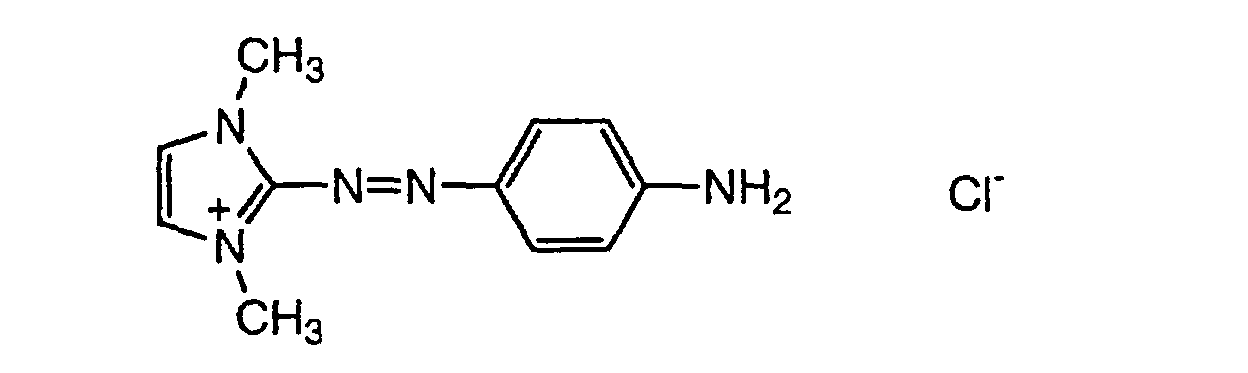
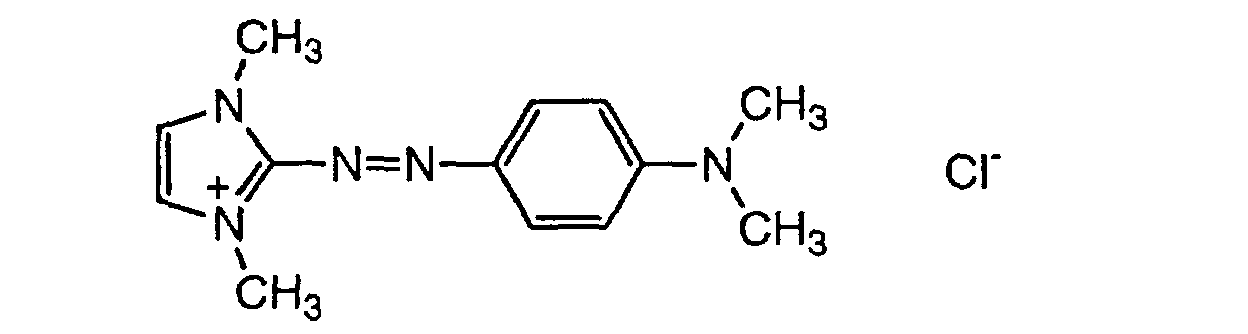
- the cationic direct dye (6) as component (C) is a known dye described in the pamphlet of International Patent Laid-Open No. 95/01772 or International Patent Laid-Open No. 95-15144. Preferred examples of it include:
- One or more of these cationic direct dyes (6) can be used as component (C). Its content is preferably 0.001 to 5 wt.%, more preferably 0.005 to 3 wt.%, especially 0.01 to 1 wt.% based on the whole composition.
- water and/or an organic solvent is used as a medium.
- the organic solvent include lower alkanols such as ethanol and 2-propanol, polyols such as propylene glycol, 1,3-butanediol and diethylene glycol, cellosolves such as ethyl cellosolve and carbitols such as ethyl carbitol.
- the hair dye composition of the present invention is preferred to have a pH of at least 6, more preferably at least 8, especially 8 to 11 from the viewpoints of dyeing property and fastness. Its pH can be adjusted by a pH regulator or the like.
- the pH regulator include inorganic acids such as hydrochloric acid and phosphoric acid, organic acids such as citric acid, glycolic acid and lactic acid, hydrochlorides such as ammonium chloride, organic amines such as monoethanolamine and 2-amino-2-methylpropanol, bicarbonates such as sodium bicarbonate and ammonium bicarbonate, carbonates such as ammonium carbonate and sodium carbonate, phosphates such as monopotassium dihydrogenphosphate and disodium monohydrogenphosphate, hydroxides such as sodium hydroxide and aqueous ammonia.
- the hair dye composition of the present invention is able to have improved hair dyeing effects and improved hair conditioning effects after dyeing by the incorporation therein a cationic surfactant, cationic polymer or silicone.
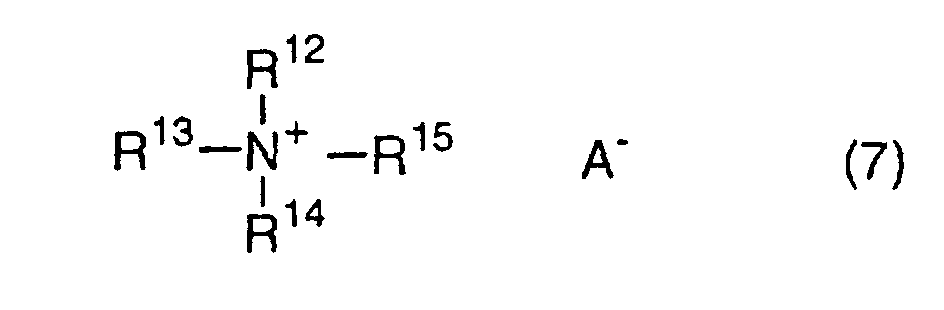
- a cationic surfactant include those represented by the following formula (7): [wherein, one or two of R 12 , R 13 , R 14 and R 15 each represents a linear or branched C 8-30 alkyl group or alkenyl group and the remaining two or three each represents a C 1-3 alkyl group or hydroxyalkyl group or benzyl group, and A - represents an anion].
- lauryltrimethylammonium chloride lauryltrimethylammonium bromide, cetyltrimethylammonium chloride, cetyltrimethylammonium bromide, stearyltrimethylammonium chloride, stearyltrimethylammonium bromide, dicetyldimethylammonium chloride, distearyldimethylammonium chloride, dicocoyldimethylammonium chloride and benzalconium chloride.
- the cationic surfactant one or more of the above-exemplified ones can be used. For bringing about sufficient effects, it is incorporated preferably in an amount of 0.1 to 5 wt.%, especially 0.5 to 2 wt.% based on the whole composition.
- the cationic polymer examples include cationated cellulose derivatives, cationated guar gum derivatives, cationated polysaccharides, diallyl dialkyl quaternary ammonium salt derivatives, and cationated polyvinyl pyrrolidone derivatives. Of these, diallyl dialkyl quaternary ammonium salt derivatives are preferred.
- the cationic polymer one or more of the above-exemplified ones can be used. For bringing about sufficient effects, it is incorporated preferably in an amount of 0.1 to 2 wt.%, especially 0.3 to 1 wt.% based on the whole composition.
- Exemplary silicones include dimethylpolysiloxane, methylphenylpolysoloxane, polyether-modified silicone, amino-modified silicone and poly(N-acylalkyleneimine)modified silicone.
- the silicone one or more of the above-exemplified ones can be used. For bringing about sufficient effects, it is incorporated preferably in an amount of 0.01 to 3 wt.%, especially 0.1 to 2 wt.% based on the whole composition.
- the hair dye composition of the present invention is preferred to have a viscosity, upon application to the hair, of 500 to 100000 mPa ⁇ s, because such a viscosity facilitates application of it to the hair.
- Thickening can be conducted by gelation using a thickening agent, or by forming the composition in the form of an emulsion or emulsified cream.
- the thickening agent include natural high molecules such as guar gum, xanthane gum and cellulose, and hydroxyalkylated derivatives, carboxyalkylated derivatives or cationated derivatives (the above-described cationic polymers) thereof.
- the hair dye composition of the present invention can contain a direct dye other than components (A) and (C), an autoxidation dye such as 5,6-dihydroxyindole or 5,6-dihydroxyindoline, anti-oxidant, sequestering agent, penetrant, buffer, surfactant, ultraviolet absorber, humectant, antiseptic, sterilizer, dispersant, film forming agent, oil agent, pigment and propellant.
- an autoxidation dye such as 5,6-dihydroxyindole or 5,6-dihydroxyindoline
- anti-oxidant sequestering agent
- penetrant buffer
- surfactant ultraviolet absorber
- humectant antiseptic
- sterilizer dispersant
- film forming agent oil agent
- pigment and propellant any one suited for hair dyeing can be used. Examples include powder, transparent liquid, emulsion, cream, gel, paste, aerosol, and aerosol foam.
- the hair dye composition of the present invention For dyeing the hair with the hair dye composition of the present invention, it is recommended to apply at least one of the invention compositions to the hair, allow it to stand for time (1 to 60 minutes, especially 5 to 40 minutes) enough to impart the hair with the desired color tone, rinse the hair, and, if necessary after shampooing and rinsing, dry the dyed hair.
- Hair dyes as shown in Table 1 were prepared and their dyeing power was evaluated.
- the invention product 3 was applied to the light-brown, damp-dry hair (gray hair ratio: 70%).
- the resulting hair was allowed to stand for 5 minutes at room temperature, rinsed with warm water and then dried. As a result, the hair was tinted intensely and uniformly with black.
- the Invention Products 4 to 8 were each applied to the light-brown hair (gray hair ratio: 70%). The resulting hair was allowed to stand for 15 minutes at room temperature, rinsed with warm water, shampooed, rinsed again and then dried. As a result, the hair dyed with Invention Product 4, 6 or 8 was tinted intensely and uniformly with black, while the hair dyed with Invention Product 5 or 7 was tinted intensely and uniformly with dark brown.
Landscapes
- Health & Medical Sciences (AREA)
- Life Sciences & Earth Sciences (AREA)
- Animal Behavior & Ethology (AREA)
- General Health & Medical Sciences (AREA)
- Public Health (AREA)
- Veterinary Medicine (AREA)
- Birds (AREA)
- Epidemiology (AREA)
- Emergency Medicine (AREA)
- Cosmetics (AREA)
Abstract

Description







| (wt.%) | Invention product | Comparative Product | |||
| 1 | 2 | 1 | 2 | 3 | |
| C.l. Basic Blue 7 [Component (A)] | 0.1 | - | 0.1 | - | - |
| C.l. Basic Blue 26 [Component (A)] | - | 0.1 | - | 0.1 | - |
| C.l. Acid Blue 9 | - | - | - | - | 0.1 |
| Benzyl alcohol | 4 | 4 | - | - | 4 |
| Ethanol | 15 | ||||
| Hydroxypropyl guar gum | 1.5 | ||||
| Monoethanolamine | 0.15 | ||||
| Phosphoric acid | Amount to adjust pH to 9 | ||||
| Water | Balance | ||||
| Evaluation of dyeing power | 30 | 30 | 10 | 10 | 10 |
| (wt%) | Invention Products | |||||
| 3 | 4 | 5 | 6 | 7 | 8 | |
| C.l. Basic Blue 7 [Component (A)] | 0.1 | 0.05 | - | 0.1 | - | 0.05 |
| C.l. Basic Violet 14 [Component (A)] | - | - | 0.02 | - | 0.02 | - |
| C.l. Basic Red 51 [Component (C)] | - | 0.01 | - | - | - | 0.01 |
| C.l. Basic Orange 31 [Component (C)] | 0.1 | - | 0.05 | 0.1 | 0.05 | - |
| C.l. Basic Yellow 87 [Component (C)] | - | 0.05 | 0.05 | - | 0.05 | 0.05 |
| Benzyl alcohol | 10 | - | - | - | - | - |
| 2-Benzyloxyethanol | - | 10 | - | - | - | - |
| Ethylene glycol mono-n-butyl ether | - | - | 10 | - | - | - |
| N-methylpyrrolidone | - | - | - | 10 | - | - |
| Propylene carbonate | - | - | - | - | 10 | - |
| γ-Butyrolactone | - | - | - | - | - | 10 |
| Ethanol | 10 | |||||
| Propylene glycol | 5 | |||||
| Hydroxypropyl guar gum | 1.5 | |||||
| "Gafquat 734" | 1 | - | - | 1 | - | - |
| "Catinal LC100" | - | 1 | 1 | - | 1 | 1 |
| Polyether-modified silicone "KF6005 | 1 | |||||
| Amodimethicone SM8702C | 1 | |||||
| Monoethanolamine | 0.1 | 0.01 | ||||
| Phosphoric acid | Amount to adjust pH 9 | Amount to adjust pH7 | ||||
| Water | Balance |
Claims (4)
- A hair dye composition comprising the following components (A) and (B):(A) a cationic direct dye having a triarylmethane structure, and(B) an organic solvent represented by any one of the following formulas (1), (2), (3), (4) and (5):[wherein, R1 represents a hydrogen atom, a linear or branched C1-4 alkyl group or a linear or branched C1-4 alkoxy group, W represents a single bond, a methylene group, or a linear or branched C2-4 alkylene group, Y1 represents a linear or branched C2-4 alkylene group and n stands for an integer of 0 to 3].
 [wherein, R3 represents a linear or branched C1-4 alkyl group].
 [wherein, R4 represents a hydrogen atom or a linear or branched C1-4 alkyl group].
 [wherein, R5 represents a hydrogen atom or a methyl group and k stands for 1 or 2].
- A hair dye composition according to claim 1, further comprising the following component (C):[wherein, Q represents any one of the following groups (q1), (q2) and (q3):
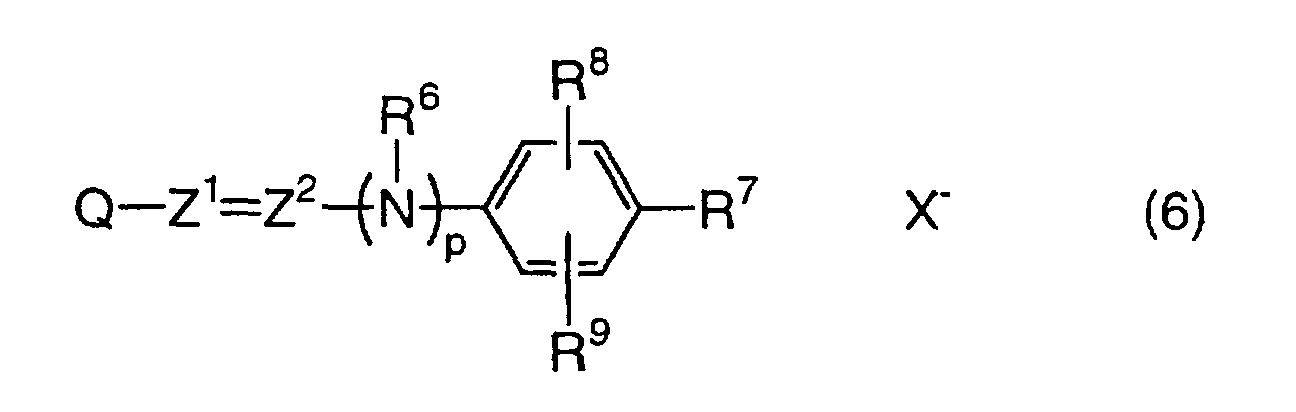 Z1 and Z2 each independently represents a nitrogen atom or a methine group, R6 represents a hydrogen atom or a linear or branched C1-4 alkyl group or forms, together with the adjacent nitrogen atom and the carbon atom of the benzene ring, a heterocycle, R7 represents a hydrogen atom, a linear or branched C1-4 alkoxy group or a group -NR10R11 (in which R10 and R11 each independently represents a hydrogen atom or a linear or branched C1-4 alkyl group or forms, together with the adjacent nitrogen atom or the carbon atom of the benzene ring, a heterocycle), R8 and R9 each independently represents a hydrogen atom, a halogen atom, a linear or branched C1-4 alkyl group or a linear or branched C1-4 alkoxy group, p stands for 0 or 1 and X- represents an anion].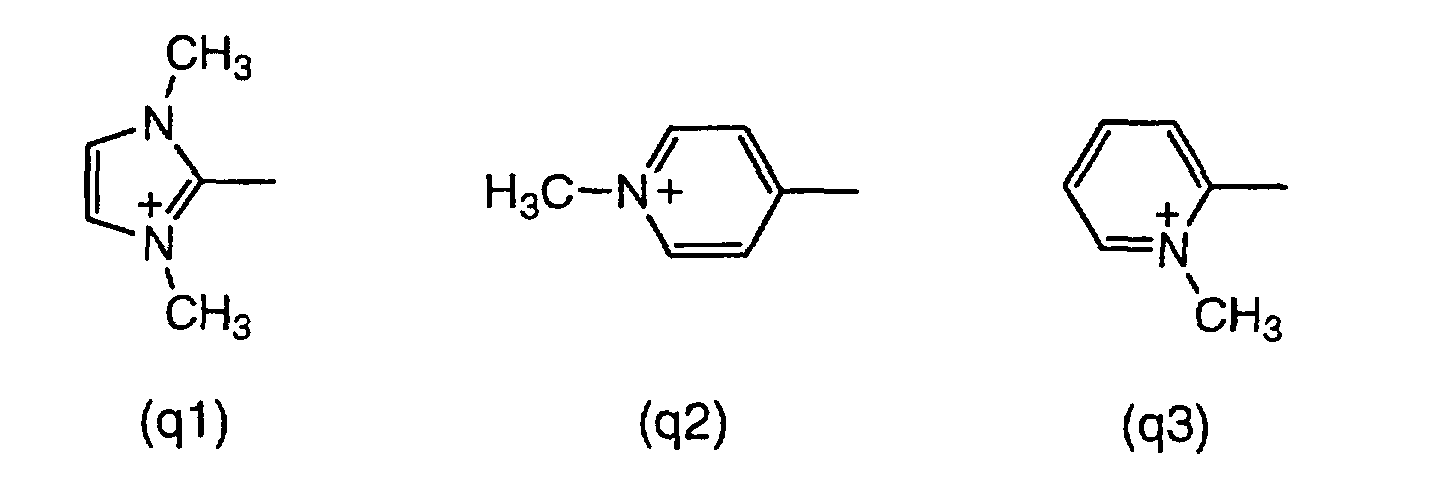
- A hair dye composition according to claim 1 or 2, which has a pH of 6 or greater.
- A hair dyeing method, comprising applying a hair dye composition as claimed in any one of claims 1 to 3 to the hair.
Applications Claiming Priority (2)
| Application Number | Priority Date | Filing Date | Title |
|---|---|---|---|
| JP2000223693 | 2000-07-25 | ||
| JP2000223693A JP2002037718A (en) | 2000-07-25 | 2000-07-25 | Hair dye composition |
Publications (2)
| Publication Number | Publication Date |
|---|---|
| EP1175893A2 true EP1175893A2 (en) | 2002-01-30 |
| EP1175893A3 EP1175893A3 (en) | 2004-01-07 |
Family
ID=18717748
Family Applications (1)
| Application Number | Title | Priority Date | Filing Date |
|---|---|---|---|
| EP01116743A Withdrawn EP1175893A3 (en) | 2000-07-25 | 2001-07-19 | Hair dye composition |
Country Status (2)
| Country | Link |
|---|---|
| EP (1) | EP1175893A3 (en) |
| JP (1) | JP2002037718A (en) |
Cited By (13)
| Publication number | Priority date | Publication date | Assignee | Title |
|---|---|---|---|---|
| EP1356803A1 (en) * | 2002-04-22 | 2003-10-29 | The Procter & Gamble Company | Fiber treatment blend |
| EP1356801A1 (en) * | 2002-04-22 | 2003-10-29 | The Procter & Gamble Company | Fiber treatment composition |
| EP1356800A3 (en) * | 2002-04-25 | 2004-01-21 | The Procter & Gamble Company | Durable fiber treatment composition |
| FR2862530A1 (en) * | 2003-11-21 | 2005-05-27 | Oreal | COMPOSITION FOR COLORING KERATINOUS FIBERS COMPRISING A COLORING COLOR OR PRECURSOR |
| US7300471B2 (en) | 2004-02-27 | 2007-11-27 | L'oreal S.A. | Composition comprising at least one mixed dye based on at least one chromophore of azo or tri(hetero) arylmethane type, dyeing process and mixed dyes. |
| FR2910303A1 (en) * | 2006-12-20 | 2008-06-27 | Oreal | COMPOSITION COMPRISING AN X COMPOUND AND A Y COMPOUND WHICH IS AT LEAST ONE OF SILICONE AND A DIRECT HYDROPHOBIC COLOR |
| US7582122B2 (en) | 2005-08-26 | 2009-09-01 | L'oreal S.A. | Mixed cationic dyes comprising at least one anthraquinone chromophore and their use in methods of hair dyeing |
| US7740664B2 (en) | 2006-12-20 | 2010-06-22 | L'oreal S.A. | Composition comprising at least one silicone compound and at least one organosilane |
| FR2942593A1 (en) * | 2009-02-27 | 2010-09-03 | Oreal | COMPOSITION COMPRISING A PARTICULAR DIRECT COLORANT AND 3-PHENYL-1-PROPANOL, COLORING OF KERATIN FIBERS. |
| FR2954133A1 (en) * | 2009-12-18 | 2011-06-24 | Oreal | Composition, useful for coloring keratin fibers, particular human keratin fibers such as hair, comprises one or more dye precursors having fused heterocyclic structure, indoline dione dye compound and liquid organic compound in a medium |
| WO2010097559A3 (en) * | 2009-02-27 | 2013-12-19 | L'oreal | Composition containing a dye and 3-phenyl-1-propanol and dyeing of keratin fibres |
| FR3045331A1 (en) * | 2015-12-21 | 2017-06-23 | Oreal | PHACIDIC COLORING COMPOSITION COMPRISING A DIRECT COLOR OF TRIARYLMETHANE STRUCTURE |
| FR3045346A1 (en) * | 2015-12-21 | 2017-06-23 | Oreal | COLORING COMPOSITION COMPRISING A DIRECT COLOR OF TRIARYLMETHANE STRUCTURE AND SILICONE |
Families Citing this family (1)
| Publication number | Priority date | Publication date | Assignee | Title |
|---|---|---|---|---|
| JP7784232B2 (en) | 2020-02-27 | 2025-12-11 | 保土谷化学工業株式会社 | Hair dye, hair dye composition containing the dye, and method for producing the dye |
Family Cites Families (6)
| Publication number | Priority date | Publication date | Assignee | Title |
|---|---|---|---|---|
| JPS604116A (en) * | 1983-06-21 | 1985-01-10 | Hoou Kk | Composition for dyeing hair |
| JPH0696507B2 (en) * | 1986-01-16 | 1994-11-30 | 鐘紡株式会社 | Hair dye |
| JPH02231414A (en) * | 1989-03-03 | 1990-09-13 | Kashiwa Kagaku Kogyo:Kk | Hair dye |
| DE19618595A1 (en) * | 1996-05-09 | 1997-11-13 | Wella Ag | dye |
| DE19641841C2 (en) * | 1996-10-10 | 1999-05-20 | Kao Corp | Means for simultaneously conditioning and tinting human hair |
| FR2779055B1 (en) * | 1998-05-28 | 2001-05-04 | Oreal | DIRECT DYE COMPOSITION FOR KERATINIC FIBERS WITH CATIONIC DIRECT DYE AND POLYOL AND / OR POLYOL ETHER |
-
2000
- 2000-07-25 JP JP2000223693A patent/JP2002037718A/en active Pending
-
2001
- 2001-07-19 EP EP01116743A patent/EP1175893A3/en not_active Withdrawn
Cited By (26)
| Publication number | Priority date | Publication date | Assignee | Title |
|---|---|---|---|---|
| EP1356803A1 (en) * | 2002-04-22 | 2003-10-29 | The Procter & Gamble Company | Fiber treatment blend |
| EP1356801A1 (en) * | 2002-04-22 | 2003-10-29 | The Procter & Gamble Company | Fiber treatment composition |
| EP1356802A1 (en) * | 2002-04-22 | 2003-10-29 | The Procter & Gamble Company | Fiber treatment blend |
| WO2003088937A1 (en) * | 2002-04-22 | 2003-10-30 | The Procter & Gamble Company | Fiber treatment blend |
| WO2003088936A1 (en) * | 2002-04-22 | 2003-10-30 | The Procter & Gamble Company | Fiber treatment blend |
| WO2003088938A1 (en) * | 2002-04-22 | 2003-10-30 | The Procter & Gamble Company | Fiber treatment composition |
| EP1356800A3 (en) * | 2002-04-25 | 2004-01-21 | The Procter & Gamble Company | Durable fiber treatment composition |
| US7785576B2 (en) | 2002-04-25 | 2010-08-31 | The Procter & Gamble Company | Durable fiber treatment composition |
| FR2862530A1 (en) * | 2003-11-21 | 2005-05-27 | Oreal | COMPOSITION FOR COLORING KERATINOUS FIBERS COMPRISING A COLORING COLOR OR PRECURSOR |
| EP1532970A3 (en) * | 2003-11-21 | 2006-02-08 | L'oreal | Use of triarylmethane derivatives for dyeing keratinous fibres |
| US7300471B2 (en) | 2004-02-27 | 2007-11-27 | L'oreal S.A. | Composition comprising at least one mixed dye based on at least one chromophore of azo or tri(hetero) arylmethane type, dyeing process and mixed dyes. |
| US7582122B2 (en) | 2005-08-26 | 2009-09-01 | L'oreal S.A. | Mixed cationic dyes comprising at least one anthraquinone chromophore and their use in methods of hair dyeing |
| EP1935403A3 (en) * | 2006-12-20 | 2008-09-10 | L'Oréal | Composition containing a compound x and a compound y, at least one of which is silicone, and a hydrophobic direct dye |
| US7740664B2 (en) | 2006-12-20 | 2010-06-22 | L'oreal S.A. | Composition comprising at least one silicone compound and at least one organosilane |
| US7780742B2 (en) | 2006-12-20 | 2010-08-24 | L'oreal S.A. | Composition comprising a compound X and A compound Y, at least one of which is a silicone, and a hydrophobic direct dye |
| FR2910303A1 (en) * | 2006-12-20 | 2008-06-27 | Oreal | COMPOSITION COMPRISING AN X COMPOUND AND A Y COMPOUND WHICH IS AT LEAST ONE OF SILICONE AND A DIRECT HYDROPHOBIC COLOR |
| WO2010097559A3 (en) * | 2009-02-27 | 2013-12-19 | L'oreal | Composition containing a dye and 3-phenyl-1-propanol and dyeing of keratin fibres |
| FR2942593A1 (en) * | 2009-02-27 | 2010-09-03 | Oreal | COMPOSITION COMPRISING A PARTICULAR DIRECT COLORANT AND 3-PHENYL-1-PROPANOL, COLORING OF KERATIN FIBERS. |
| FR2954133A1 (en) * | 2009-12-18 | 2011-06-24 | Oreal | Composition, useful for coloring keratin fibers, particular human keratin fibers such as hair, comprises one or more dye precursors having fused heterocyclic structure, indoline dione dye compound and liquid organic compound in a medium |
| FR3045331A1 (en) * | 2015-12-21 | 2017-06-23 | Oreal | PHACIDIC COLORING COMPOSITION COMPRISING A DIRECT COLOR OF TRIARYLMETHANE STRUCTURE |
| FR3045346A1 (en) * | 2015-12-21 | 2017-06-23 | Oreal | COLORING COMPOSITION COMPRISING A DIRECT COLOR OF TRIARYLMETHANE STRUCTURE AND SILICONE |
| WO2017108830A1 (en) * | 2015-12-21 | 2017-06-29 | L'oreal | Dyeing composition at acidic ph comprising a direct dye of triarylmethane structure |
| WO2017108828A1 (en) * | 2015-12-21 | 2017-06-29 | L'oreal | Dyeing composition comprising a direct dye of triarylmethane structure, and a silicone |
| EP3393441B1 (en) | 2015-12-21 | 2021-01-20 | L'oreal | Dyeing composition comprising a direct dye of triarylmethane structure, and a silicone |
| US11000464B2 (en) | 2015-12-21 | 2021-05-11 | L'oreal | Dyeing composition at acidic pH comprising a direct dye of triarylmethane structure |
| US11007131B2 (en) | 2015-12-21 | 2021-05-18 | L'oreal | Dyeing composition comprising a direct dye of triarylmethane structure, and a silicone |
Also Published As
| Publication number | Publication date |
|---|---|
| EP1175893A3 (en) | 2004-01-07 |
| JP2002037718A (en) | 2002-02-06 |
Similar Documents
| Publication | Publication Date | Title |
|---|---|---|
| US5785717A (en) | Composition for the oxidation dyeing of keratin fibers, comprising a diaminopyrazole derivative and a heterocyclic coupler, and dyeing process | |
| EP2135596B1 (en) | Hair cosmetic compositions | |
| JP5774052B2 (en) | Dyes containing thiol groups | |
| CN1065425C (en) | Composition for oxidation dyeing of keratinous fibres, and dyeing process using this composition | |
| US6572844B2 (en) | Method for lightening and highlighting hair | |
| JP3330625B2 (en) | Keratin fiber dyeing method and dye | |
| US20030229950A1 (en) | Dye composition for keratin fibres, with a cationic direct dye and a substantive polymer | |
| JPH07165543A (en) | Hair dye for keratin fiber | |
| JP3330626B2 (en) | Keratin fiber dyeing method and dye | |
| JP2902948B2 (en) | Hair dye | |
| CA2458683A1 (en) | Lightening dye with direct-dyeing colorants | |
| CN107753305A (en) | Hair colouring compositions | |
| JP2002037718A (en) | Hair dye composition | |
| DE69414314T2 (en) | Oxidation colorant for keratin fibers containing a para-aminophenol, a meta-aminophenol and a metaphenylene diamine | |
| CN102333515A (en) | Hair dyeing composition | |
| JP5275034B2 (en) | Triarylmethane dye | |
| US4895575A (en) | Use of 5-hydroxynaphthoquinones for dyeing human keratin fibres | |
| US7578857B1 (en) | Color shampoo formula | |
| JPH10245327A (en) | Hair dye composition | |
| US4888026A (en) | Use of hydroxynaphthoquinones for dyeing human keratin fibres | |
| SK1112000A3 (en) | Oxidation dyes, their use and method for coloring of human hairs | |
| US8231690B2 (en) | Composition comprising derivatives of phenoxazinones for hair colouring | |
| HU220148B (en) | Composition for the oxidative dyeing of keratinic fibers and dyeing process applying them | |
| WO1999013840A1 (en) | Hair dye composition | |
| CN1138454A (en) | Composition for oxidative dyeing of keratin fibers and dyeing method using the composition |
Legal Events
| Date | Code | Title | Description |
|---|---|---|---|
| PUAI | Public reference made under article 153(3) epc to a published international application that has entered the european phase |
Free format text: ORIGINAL CODE: 0009012 |
|
| AK | Designated contracting states |
Kind code of ref document: A2 Designated state(s): AT BE CH CY DE DK ES FI FR GB GR IE IT LI LU MC NL PT SE TR |
|
| AX | Request for extension of the european patent |
Free format text: AL;LT;LV;MK;RO;SI |
|
| PUAL | Search report despatched |
Free format text: ORIGINAL CODE: 0009013 |
|
| AK | Designated contracting states |
Kind code of ref document: A3 Designated state(s): AT BE CH CY DE DK ES FI FR GB GR IE IT LI LU MC NL PT SE TR |
|
| AX | Request for extension of the european patent |
Extension state: AL LT LV MK RO SI |
|
| 17P | Request for examination filed |
Effective date: 20040623 |
|
| AKX | Designation fees paid |
Designated state(s): DE FR GB |
|
| 17Q | First examination report despatched |
Effective date: 20050606 |
|
| 17Q | First examination report despatched |
Effective date: 20050606 |
|
| STAA | Information on the status of an ep patent application or granted ep patent |
Free format text: STATUS: THE APPLICATION HAS BEEN WITHDRAWN |
|
| 18W | Application withdrawn |
Effective date: 20080812 |