EP1174507B1 - The full gene sequence of the donkey leukocyte vaccine strain of the equine infectious anemia virus and their application - Google Patents
The full gene sequence of the donkey leukocyte vaccine strain of the equine infectious anemia virus and their application Download PDFInfo
- Publication number
- EP1174507B1 EP1174507B1 EP00918668A EP00918668A EP1174507B1 EP 1174507 B1 EP1174507 B1 EP 1174507B1 EP 00918668 A EP00918668 A EP 00918668A EP 00918668 A EP00918668 A EP 00918668A EP 1174507 B1 EP1174507 B1 EP 1174507B1
- Authority
- EP
- European Patent Office
- Prior art keywords
- vaccine strain
- eiav
- seq
- sequence
- attenuated vaccine
- Prior art date
- Legal status (The legal status is an assumption and is not a legal conclusion. Google has not performed a legal analysis and makes no representation as to the accuracy of the status listed.)
- Expired - Lifetime
Links
- 241000713730 Equine infectious anemia virus Species 0.000 title claims abstract description 87
- 241000283074 Equus asinus Species 0.000 title claims abstract description 46
- 210000000265 leukocyte Anatomy 0.000 title claims abstract description 44
- 229960005486 vaccine Drugs 0.000 title claims abstract description 38
- 108091028043 Nucleic acid sequence Proteins 0.000 title abstract description 4
- 108090000623 proteins and genes Proteins 0.000 claims abstract description 26
- 239000002773 nucleotide Substances 0.000 claims abstract description 13
- 125000003729 nucleotide group Chemical group 0.000 claims abstract description 13
- 108020004414 DNA Proteins 0.000 claims description 44
- 229940031567 attenuated vaccine Drugs 0.000 claims description 25
- 238000009629 microbiological culture Methods 0.000 claims description 10
- 108700004025 env Genes Proteins 0.000 claims description 3
- 101150030339 env gene Proteins 0.000 claims description 3
- 238000010353 genetic engineering Methods 0.000 claims description 3
- 108700004026 gag Genes Proteins 0.000 claims description 2
- 101150098622 gag gene Proteins 0.000 claims description 2
- 108700004029 pol Genes Proteins 0.000 claims description 2
- 101150088264 pol gene Proteins 0.000 claims description 2
- 229920001184 polypeptide Polymers 0.000 claims 6
- 108090000765 processed proteins & peptides Proteins 0.000 claims 6
- 102000004196 processed proteins & peptides Human genes 0.000 claims 6
- 108010041986 DNA Vaccines Proteins 0.000 claims 1
- 229940021995 DNA vaccine Drugs 0.000 claims 1
- 101100038000 Nicotiana alata S-2 gene Proteins 0.000 claims 1
- 101150075200 S-2 gene Proteins 0.000 claims 1
- 230000007812 deficiency Effects 0.000 claims 1
- 108700004030 rev Genes Proteins 0.000 claims 1
- 101150098213 rev gene Proteins 0.000 claims 1
- 229940031626 subunit vaccine Drugs 0.000 claims 1
- 108700004027 tat Genes Proteins 0.000 claims 1
- 101150098170 tat gene Proteins 0.000 claims 1
- 230000002238 attenuated effect Effects 0.000 abstract description 9
- 125000003275 alpha amino acid group Chemical group 0.000 abstract description 5
- 230000014509 gene expression Effects 0.000 abstract description 4
- 230000001566 pro-viral effect Effects 0.000 abstract 1
- 230000003321 amplification Effects 0.000 description 15
- 238000003199 nucleic acid amplification method Methods 0.000 description 15
- 238000006243 chemical reaction Methods 0.000 description 14
- 239000000047 product Substances 0.000 description 13
- 239000012634 fragment Substances 0.000 description 12
- 238000000034 method Methods 0.000 description 9
- 238000012163 sequencing technique Methods 0.000 description 8
- 241000713666 Lentivirus Species 0.000 description 7
- 238000012408 PCR amplification Methods 0.000 description 7
- 101710149951 Protein Tat Proteins 0.000 description 6
- 108700005075 Regulator Genes Proteins 0.000 description 6
- 210000004027 cell Anatomy 0.000 description 6
- 239000013598 vector Substances 0.000 description 6
- 241000725303 Human immunodeficiency virus Species 0.000 description 5
- 208000009724 equine infectious anemia Diseases 0.000 description 5
- 208000015181 infectious disease Diseases 0.000 description 5
- 241000283086 Equidae Species 0.000 description 4
- 241000283073 Equus caballus Species 0.000 description 4
- 239000003550 marker Substances 0.000 description 4
- 230000008520 organization Effects 0.000 description 4
- 102000004169 proteins and genes Human genes 0.000 description 4
- 241001430294 unidentified retrovirus Species 0.000 description 4
- 108010006785 Taq Polymerase Proteins 0.000 description 3
- 241000700605 Viruses Species 0.000 description 3
- 230000001900 immune effect Effects 0.000 description 3
- 238000011160 research Methods 0.000 description 3
- 208000030507 AIDS Diseases 0.000 description 2
- 108700024394 Exon Proteins 0.000 description 2
- 101000639777 Homo sapiens RNA polymerase-associated protein RTF1 homolog Proteins 0.000 description 2
- 102100034349 Integrase Human genes 0.000 description 2
- 241001465754 Metazoa Species 0.000 description 2
- 241000714177 Murine leukemia virus Species 0.000 description 2
- 230000004988 N-glycosylation Effects 0.000 description 2
- 102100034463 RNA polymerase-associated protein RTF1 homolog Human genes 0.000 description 2
- 241000712907 Retroviridae Species 0.000 description 2
- 101710172711 Structural protein Proteins 0.000 description 2
- 210000004899 c-terminal region Anatomy 0.000 description 2
- 238000011161 development Methods 0.000 description 2
- 238000003745 diagnosis Methods 0.000 description 2
- 125000001165 hydrophobic group Chemical group 0.000 description 2
- 244000052769 pathogen Species 0.000 description 2
- 230000001717 pathogenic effect Effects 0.000 description 2
- 238000012546 transfer Methods 0.000 description 2
- SNBCLPGEMZEWLU-QXFUBDJGSA-N 2-chloro-n-[[(2r,3s,5r)-3-hydroxy-5-(5-methyl-2,4-dioxopyrimidin-1-yl)oxolan-2-yl]methyl]acetamide Chemical compound O=C1NC(=O)C(C)=CN1[C@@H]1O[C@H](CNC(=O)CCl)[C@@H](O)C1 SNBCLPGEMZEWLU-QXFUBDJGSA-N 0.000 description 1
- 208000017667 Chronic Disease Diseases 0.000 description 1
- 101710121417 Envelope glycoprotein Proteins 0.000 description 1
- 241001331845 Equus asinus x caballus Species 0.000 description 1
- 102100040510 Galectin-3-binding protein Human genes 0.000 description 1
- 241000282412 Homo Species 0.000 description 1
- 102000011931 Nucleoproteins Human genes 0.000 description 1
- 108010061100 Nucleoproteins Proteins 0.000 description 1
- 102000035195 Peptidases Human genes 0.000 description 1
- 108091005804 Peptidases Proteins 0.000 description 1
- 206010037660 Pyrexia Diseases 0.000 description 1
- 108010092799 RNA-directed DNA polymerase Proteins 0.000 description 1
- 238000012300 Sequence Analysis Methods 0.000 description 1
- 101800001271 Surface protein Proteins 0.000 description 1
- 206010058874 Viraemia Diseases 0.000 description 1
- 238000000246 agarose gel electrophoresis Methods 0.000 description 1
- 208000007502 anemia Diseases 0.000 description 1
- 230000004071 biological effect Effects 0.000 description 1
- 239000012888 bovine serum Substances 0.000 description 1
- 238000012512 characterization method Methods 0.000 description 1
- 239000003153 chemical reaction reagent Substances 0.000 description 1
- 239000013611 chromosomal DNA Substances 0.000 description 1
- 210000000349 chromosome Anatomy 0.000 description 1
- 238000010367 cloning Methods 0.000 description 1
- 230000004069 differentiation Effects 0.000 description 1
- 201000010099 disease Diseases 0.000 description 1
- 208000037265 diseases, disorders, signs and symptoms Diseases 0.000 description 1
- 108010078428 env Gene Products Proteins 0.000 description 1
- 230000009088 enzymatic function Effects 0.000 description 1
- 210000003743 erythrocyte Anatomy 0.000 description 1
- 230000001605 fetal effect Effects 0.000 description 1
- 230000006870 function Effects 0.000 description 1
- 238000001415 gene therapy Methods 0.000 description 1
- 108091006104 gene-regulatory proteins Proteins 0.000 description 1
- 102000034356 gene-regulatory proteins Human genes 0.000 description 1
- 230000002068 genetic effect Effects 0.000 description 1
- 230000036039 immunity Effects 0.000 description 1
- 238000000338 in vitro Methods 0.000 description 1
- 230000002458 infectious effect Effects 0.000 description 1
- 238000011081 inoculation Methods 0.000 description 1
- 238000003780 insertion Methods 0.000 description 1
- 230000037431 insertion Effects 0.000 description 1
- 238000011835 investigation Methods 0.000 description 1
- 210000003734 kidney Anatomy 0.000 description 1
- 230000007246 mechanism Effects 0.000 description 1
- 230000001575 pathological effect Effects 0.000 description 1
- 230000002085 persistent effect Effects 0.000 description 1
- 230000002265 prevention Effects 0.000 description 1
- 235000019833 protease Nutrition 0.000 description 1
- 238000005215 recombination Methods 0.000 description 1
- 230000006798 recombination Effects 0.000 description 1
- 238000007670 refining Methods 0.000 description 1
- 230000001105 regulatory effect Effects 0.000 description 1
- 230000003362 replicative effect Effects 0.000 description 1
- 108091008146 restriction endonucleases Proteins 0.000 description 1
- 230000000405 serological effect Effects 0.000 description 1
- 239000006228 supernatant Substances 0.000 description 1
- 208000024891 symptom Diseases 0.000 description 1
Images


Classifications
-
- C—CHEMISTRY; METALLURGY
- C07—ORGANIC CHEMISTRY
- C07K—PEPTIDES
- C07K14/00—Peptides having more than 20 amino acids; Gastrins; Somatostatins; Melanotropins; Derivatives thereof
- C07K14/005—Peptides having more than 20 amino acids; Gastrins; Somatostatins; Melanotropins; Derivatives thereof from viruses
-
- C—CHEMISTRY; METALLURGY
- C12—BIOCHEMISTRY; BEER; SPIRITS; WINE; VINEGAR; MICROBIOLOGY; ENZYMOLOGY; MUTATION OR GENETIC ENGINEERING
- C12N—MICROORGANISMS OR ENZYMES; COMPOSITIONS THEREOF; PROPAGATING, PRESERVING, OR MAINTAINING MICROORGANISMS; MUTATION OR GENETIC ENGINEERING; CULTURE MEDIA
- C12N2740/00—Reverse transcribing RNA viruses
- C12N2740/00011—Details
- C12N2740/10011—Retroviridae
- C12N2740/15011—Lentivirus, not HIV, e.g. FIV, SIV
- C12N2740/15022—New viral proteins or individual genes, new structural or functional aspects of known viral proteins or genes
Definitions
- This invention relates to the full-length genome sequence of the donkey leukocyte attenuated EIAV vaccine strain, as well as the sequences and potential uses of the functional genes and their expression products.
- Equine Infectious Anemia Virus EIAV
- Equine Infectious Anemia Virus the pathogen of Equine Infectious Anemia
- Equine Infectious Anemia first described in France in 1843, has caused tremendous economic loss in animal husbandry for over one century.
- scientists all over the world have been making efforts to investigate techniques to control this disease.
- the Chinese government has provided extraordinary financial support to fund studies on the biological and immunological properties of EIAV.
- Chinese scientists isolated a virulent strain that was quite different from strains isolated in other countries. Through passage on donkey leukocyte for many generations, this virulent strain was successfully attenuated.
- EIAV is classified as a lentivirus of the Retroviridae family.
- EIAV shows great similarity to Human Immunodeficiency Virus (HIV), another lentivirus which is the cause of AIDS.
- HIV Human Immunodeficiency Virus
- J. M. Coffin The structure And Classification of Retroviruses, The Retroviridae, Vol.1, p19, edited by Jay A. Levy, Plenum Press
- HIV Human Immunodeficiency Virus
- EIAV may serve as an important research model in investigating the infection mechanisms and the enzymatic functions of other lentiviruses ( R. C. Montelaro et al, Equine Retroviruses, in: vol.2, p257 ).
- the genomic sequence and organization of the EIAV vaccine strain has not been previously characterized.
- the characterization of the EIAV vaccine strain genomic sequence and structure will not only lay the foundation for refining the vaccine and preparing new genetic engineering EIAV vaccines, but also, more importantly, may provide a model for developing other lentivirus vaccines.
- the objects of the invention are to provide the full-length genomic sequence of the EIAV vaccine strain adapted to donkey leukocyte; the sequences of each functional genes and their putative amino acid sequences; and uses of these genes and their expression products.
- the present invention relates to the full-length genomic sequence of the donkey leukocyte attenuated EIAV vaccine strain, including sequences of the main structural genes ( gag, pol, env ) and the regulatory genes ( LTR, rev, s2, tat ).
- the full-length sequence of this strain is 8258 bp long.
- the nucleotide sequence is shown in SEQ ID NO:1 (see below).
- the 5'-terminal LTR sequence extends from position 1 to 325 and the 3'-terminal LTR spans from position 7922 to 8258.
- the gag gene occupies the sequence between 466 and 1926; the pol gene spans the sequence between 1689 and 5120; and the env gene extends from 5313 to 7904.
- the regulatory gene tat contains two exons: the first exon lies between positions 365 and 462 while the second spans from 5138 to 5276.
- the regulatory gene rev also contains two exons: the first exon is found from position 5454 to 5546, while the second spans from position 7250 to 7651.
- the gene S2 lies between positions 5287 and 5493. The sequences of all these functional genes and their putative amino acid sequences are listed in SEQ ID NOs: 2 to 7 and SEQ ID NOs: 8 to 13, respectively.
- the donkey leukocyte-adapted EIAV strain is in the form of a provirus during its replicative phase in vitro and is integrated into the chromosomes of donkey leukocyte
- the chromosomal DNA of donkey leukocyte infected with attenuated EIAV was extracted and used as templates for PCR amplification.
- the preliminary PCR amplifications were first carried out by using different primers that were designed based on the genomic sequences of reference EIAV virulent strains. These PCR products were then sequenced. Specific primers that matched the fragment sequence of attenuated EIAV were synthesized and used for another round of PCR amplification.
- the ORF of full-length sequence was analyzed with GCG software (Genetic Computer Group, Inc., Wisconsin, USA). The nucleotide and the deduced amino acid sequences of different structural and regulatory genes were identified in the full-length sequence.
- nucleotide sequence homologies between each gene of the vaccine strain and that of the reference strains were 73.46% ⁇ 90.06%.
- the env, rev and S2 genes were among those with lower sequence homologies between the vaccine and reference strains.
- the homologies in nucleotide sequences between env, rev and S2 of the vaccine strain and those of the reference strains were 73.46%, 73.54% and 75.76%, respectively, and the homologies in amino acid sequences were 67.41%, 64.85% and 54.51%, respectively.
- the present invention serves as the first report within China and abroad which characterizes in detail the genomic organization (including structural and regulatory genes and the related proteins) of full-length genome of EIAV vaccine strain. This invention will guide attempts to develop the vaccine for immunoprophylaxis of chronic diseases caused by other lentivirus.
- the nucleotide sequence and the serological diagnostic reagents derived from the genes and proteins of EIAV vaccine strain can be used in the diagnosis of EIAV infection, the differentiation of infection by wild-type virus and inoculation of EIAV vaccine, and the development of new vaccines through genetic engineering.
- the gene sequence reported here can also be used for differentiating horses immunized with EIAV vaccine from those infected with the EIAV American strain, as described in Example 2 below.
- the full-length genome of the EIAV vaccine strain can be used to construct the gene transfer vector that is generally used in gene therapy. Since EIAV cannot cause illness to humans, the EIAV-based transfer vector can be used more widely and safely than other vectors, such as the vector derived from murine leukemia virus (MLV).
- MLV murine leukemia virus
- Equine Infectious Anemia Virus (EIAV) donkey leukocyte attenuated vaccine (Harbin Veterinary Research Institute, Harbin, China) was inoculated into healthy donkey leukocyte culture at 37°C with 100% bovine serum ( 1ml/10 7 cells ). When cell pathological effect appeared, the supernatant was discarded, and the cell genome DNA was extracted using Qiagen Genomic DNA Kit (Qiagen, USA).
- EIAV Equine Infectious Anemia Virus
- the gp90 and 5' LTR genes of the invention were first amplified using primers designed according to the published sequences of Wyoming strains. Then, primers were designed according to the vested sequences to amplify the other ranges of the genome. The PCR products were subcloned into pGEM ® -T Easy Vector (Promega) according to manufacturer's protocol. The restriction endonuclease EcoRI was used to identify recombination and ABI 377 DNA sequencer was used to sequence. Overlapping fragments of sequence were organized into a complete genome and every gene was identified by GCG software. The complete genome sequence is listed in SEQ ID NO. 1. Identified genes are presented in SEQ ID NO. 2-7. The following is concreted performance of different fragments:
- the reaction system was the same as the first circle except the primer and the template was replaced with 5 ul of the product from the first cycle.
- the reaction system is same as the first amplification cycle of FA (above) except that primer 732 and GR11 were used.
- the reaction condition was the same as the first amplification cycle of FA.
- Expend TM Long Template PCR System (Boehringer Mannheim) was used according to the protocol (the buffer is buffer 3); The PCR product was subcloned into a vector at common restriction sites and sequenced with universal primers T7, SP6, and the RLR10.
- the DNA sequences of the primers are as follows: T7 5'-TAA TC GAC TCA CTA TAG GGA GA-3' SP6 5'-CAT ACG ATT TAG GTG ACA CTA TAG-3' RTF1 5'-CCT CGA GGG AGA TGC ATA TTT C-3' RTR20 5'-CCC TCA TCT CAT CCA TGT T-3' RTR40 5'-GGT ATA GTG AAA TAT GCA TCT CC-3' GF40 5'-AAG TGA GGG ACA TCC GGC T-3' RLR10 5'-CTG TCC TCC CAT ACT TTC-3'
- the reaction system was the same as the first amplification cycle of FA, except that the primers F70 and R51 were used.
- the reaction condition was 95°C 5 min; then 94 °C 1 min, 52°C 1 min, 72°C 2 min, for 30 cycles followed by 72°C 10 min.
- Primers T7 and SP6 were first used to sequence, and primer LTR20 was designed from the resulting sequence (5'-GCCTTAATGCAACAGTC-3'). The complete sequence was obtained from LTR 20.
- Amplification was performed according to the protocol of Expend TM Long Template PCR System (Boehringer Mannheim) (Buffer 3 was used);
- the reaction system of the first cycle was similar to that of the first circle of Fragment A amplification, except that primers EF51 and LTR-R1 were used.
- the reaction condition is: 95°C 5 min; then 94°C 1 min, 52°C 1 min, 72°C 1.5 min, for 30 cycles followed by 72°C 10 min.
- the reaction system of the second cycle was similar to that of the first cycle mentioned above, except that primers LTR-F1 and LTR-R1 were used and 5ul of amplified product of the first cycle was used as the template.
- the reaction condition is: 95°C 5 min; then 94°C 1 min, 55°C 1 min, 72°C 1 min, for 30 cycles followed by 72°C 10 min.
- This example demonstrates the use of the gene sequences of the invention in detecting EIAV pathogen characteristics. It is useful to diagnose horses immunized by EIAV attenuated vaccine strain from those infected by the American epidemic EIAV strains.
- PCR was performed on different templates including total DNA from donkey leukocytes inoculated with the EIAV attenuated vaccine and from donkey leukocytes inoculated with international standard strain Wyoming.
- Taq DNA polymerase was purchased from PROMEGA Corp.
- PCR system includes 10 ⁇ buffer 5ul, 2.5mMMgCl 2 1ul, dNTP(2.5mM) 1ul, primer1(20uM) 1ul, primer2(20uM) 1ul, Taq polymerase(Promega) 1ul(2u), H 2 O 34.6ul, template 2ul.
- Primer 1 and primer 2 were combined as following group:
- Reaction conditions 95°C 5 min; then 94°C 40s, 50°C 30s, 72°C 30s, for 30 cycles followed by 72°C 10 min.
Landscapes
- Chemical & Material Sciences (AREA)
- Organic Chemistry (AREA)
- Health & Medical Sciences (AREA)
- Life Sciences & Earth Sciences (AREA)
- Molecular Biology (AREA)
- Medicinal Chemistry (AREA)
- Biophysics (AREA)
- General Health & Medical Sciences (AREA)
- Genetics & Genomics (AREA)
- Virology (AREA)
- Proteomics, Peptides & Aminoacids (AREA)
- Biochemistry (AREA)
- Gastroenterology & Hepatology (AREA)
- Medicines Containing Antibodies Or Antigens For Use As Internal Diagnostic Agents (AREA)
- Measuring Or Testing Involving Enzymes Or Micro-Organisms (AREA)
- Micro-Organisms Or Cultivation Processes Thereof (AREA)
- Medicines Containing Material From Animals Or Micro-Organisms (AREA)
- Peptides Or Proteins (AREA)
Abstract
Description
- This invention relates to the full-length genome sequence of the donkey leukocyte attenuated EIAV vaccine strain, as well as the sequences and potential uses of the functional genes and their expression products.
- Equine Infectious Anemia Virus (EIAV), the pathogen of Equine Infectious Anemia, was the first kind of virus discovered by human. Equine Infectious Anemia, first described in France in 1843, has caused tremendous economic loss in animal husbandry for over one century. Scientists all over the world have been making efforts to investigate techniques to control this disease. Since the 1960s, the Chinese government has provided extraordinary financial support to fund studies on the biological and immunological properties of EIAV. During their investigations, Chinese scientists isolated a virulent strain that was quite different from strains isolated in other countries. Through passage on donkey leukocyte for many generations, this virulent strain was successfully attenuated. Using this attenuated virus as a vaccine strain, inoculated animals developed persistent and strong immunity against EIAV and were protected against Equine Infectious Anemia. The vaccine has been prepared in large scale since 1976 and used nation-wide since 1978. More than 70 million horses, mules, and donkeys have been vaccinated and Equine Infectious Anemia has been successfully controlled in China (Rongxian Shen, et al. Study on immunological methods of Equine Infectious Anemia, China Agricultural Science, vol.4, 1-15, 1979).
- EIAV is classified as a lentivirus of the Retroviridae family. In many aspects, such as its genomic organization, functional proteins and the regulatory mode of gene expression, EIAV shows great similarity to Human Immunodeficiency Virus (HIV), another lentivirus which is the cause of AIDS. (J. M. Coffin, The structure And Classification of Retroviruses, The Retroviridae, Vol.1, p19, edited by Jay A. Levy, Plenum Press). Moreover, there are extensive homologies in structure and function of reverse transcriptase, proteinase, envelope glycoprotein, and nucleoprotein between EIAV and HIV. Horses infected with EIAV manifest symptoms typical of lentiviral infection, including periodical fever, anemia with the decrease of erythrocytes and durative viremia. Thus, EIAV may serve as an important research model in investigating the infection mechanisms and the enzymatic functions of other lentiviruses (R. C. Montelaro et al, Equine Retroviruses, in: vol.2, p257).
- With the development and widespread application of molecular biology since the 1970s, the genomic organization of EIAV has been intensively studied. In S.L. Payne et al., Journal of General Virology (1994), 75, 425-429, a variety of infectious molecular clones of EIAV, recovered from infected fetal equine kidney (FEK) cells, are characterized at a molecular level. Full-length genome sequences of EIAV from the standard (reference) virulent strain isolated in the USA (Wyoming strain), from another isolate in Japan (Goshum strain), and from several cell culture-adapted strains have all been registered in GenBank. None of these, however, are vaccine strains. Currently, the EIAV donkey leukocyte attenuated vaccine strain that was developed in China remains the only lentivirus vaccine strain in the world. It has been used in a large scale and has been proven to be effective and safe over a long period of application (R. C. Montelaro, et al. in: Vaccine against Retroviruses, Vol.4, P605; R. C. Montelaro, et al. Equine Retroviruses, in: Vol.2, P257). C. G. Pan et al. in Journal of Equine Veterinary Science, 13(3), 163-166 (1993), (Reprint) describe structural proteins thereof and their immunological properties.
- The genomic sequence and organization of the EIAV vaccine strain has not been previously characterized. The characterization of the EIAV vaccine strain genomic sequence and structure will not only lay the foundation for refining the vaccine and preparing new genetic engineering EIAV vaccines, but also, more importantly, may provide a model for developing other lentivirus vaccines.
- Therefore, the objects of the invention are to provide the full-length genomic sequence of the EIAV vaccine strain adapted to donkey leukocyte; the sequences of each functional genes and their putative amino acid sequences; and uses of these genes and their expression products.
- The present invention relates to the full-length genomic sequence of the donkey leukocyte attenuated EIAV vaccine strain, including sequences of the main structural genes (gag, pol, env) and the regulatory genes (LTR, rev, s2, tat). The full-length sequence of this strain is 8258 bp long. The nucleotide sequence is shown in SEQ ID NO:1 (see below). In this full-length sequence, the 5'-terminal LTR sequence extends from
position 1 to 325 and the 3'-terminal LTR spans from position 7922 to 8258. The gag gene occupies the sequence between 466 and 1926; the pol gene spans the sequence between 1689 and 5120; and the env gene extends from 5313 to 7904. The regulatory gene tat contains two exons: the first exon lies between positions 365 and 462 while the second spans from 5138 to 5276. Similarly, the regulatory gene rev also contains two exons: the first exon is found from position 5454 to 5546, while the second spans from position 7250 to 7651. The gene S2 lies between positions 5287 and 5493. The sequences of all these functional genes and their putative amino acid sequences are listed in SEQ ID NOs: 2 to 7 and SEQ ID NOs: 8 to 13, respectively. A genomic clone of the full-length gene sequence of EIAV donkey leukocyte attenuated vaccine strain was originally deposited to the China General Microbiological Culture Collection Center (CGMCC) on April 19, 1999 with an accession number of CGMCC No. 0394. This deposit was transferred to an international deposit under Budapest Treaty on April 19, 2000. As it is known by the skilled persons, the sequences shown in SEQ ID NOs: 1 to 7 may have some sequencing errors. - The objects of the invention have been realized using the following techniques. Because the donkey leukocyte-adapted EIAV strain is in the form of a provirus during its replicative phase in vitro and is integrated into the chromosomes of donkey leukocyte, the chromosomal DNA of donkey leukocyte infected with attenuated EIAV was extracted and used as templates for PCR amplification. Briefly, the preliminary PCR amplifications were first carried out by using different primers that were designed based on the genomic sequences of reference EIAV virulent strains. These PCR products were then sequenced. Specific primers that matched the fragment sequence of attenuated EIAV were synthesized and used for another round of PCR amplification. Finally the different PCR products, representing different regions of attenuated EIAV genome, were respectively cloned and sequenced. The full-length sequence including structural genes (gag, pol and env) and regulatory genes (LTR, rev, S2 and tat) of EIAV vaccine strain was obtained.
- The ORF of full-length sequence was analyzed with GCG software (Genetic Computer Group, Inc., Wisconsin, USA). The nucleotide and the deduced amino acid sequences of different structural and regulatory genes were identified in the full-length sequence.
- Compared with the sequences of the reference EIAV virulent strains that were released by Genbank, the nucleotide sequence homologies between each gene of the vaccine strain and that of the reference strains were 73.46%~90.06%. The env, rev and S2 genes were among those with lower sequence homologies between the vaccine and reference strains. The homologies in nucleotide sequences between env, rev and S2 of the vaccine strain and those of the reference strains were 73.46%, 73.54% and 75.76%, respectively, and the homologies in amino acid sequences were 67.41%, 64.85% and 54.51%, respectively.
- In addition, the secondary structures of the structural and regulatory proteins of EIAV vaccine strain were predicted using the GCG software. A significant difference was shown in secondary structures of the env and tat proteins between the vaccine and references strains. The quantities and the locations of α-helices, β-sheets and β-turns in many domains were quite different. There is a hydrophobic group at the C-terminal in the tat protein of the vaccine strain, a β-sheet in proximal region that forms a concentrated hydrophilic group, and 4 β-turns at N-terminal. In contrast, no hydrophobic groups are found at the C-terminal in the tat protein from the reference strains. Instead, there are loose random coils in proximal regions rather than a β-sheet, although 2 separate and distinct hydrophilic groups can be found. Moreover, many β-turns are present at the N-terminals. These differences between secondary structures may indicate functional differences. Based on these differences, we can modify the related genes and proteins of HIV and other lentivirus, and investigate the use of these modified strains as possible vaccines.
- Moreover, it was also found through the sequence analysis that there are 19 potential N-linked glycosylation sites in env gene of the vaccine strain, whereas 23 potential N-linked glycosylation sites can be found in the same region of the reference strain.
- The present invention serves as the first report within China and abroad which characterizes in detail the genomic organization (including structural and regulatory genes and the related proteins) of full-length genome of EIAV vaccine strain. This invention will guide attempts to develop the vaccine for immunoprophylaxis of chronic diseases caused by other lentivirus. The nucleotide sequence and the serological diagnostic reagents derived from the genes and proteins of EIAV vaccine strain can be used in the diagnosis of EIAV infection, the differentiation of infection by wild-type virus and inoculation of EIAV vaccine, and the development of new vaccines through genetic engineering. The gene sequence reported here can also be used for differentiating horses immunized with EIAV vaccine from those infected with the EIAV American strain, as described in Example 2 below. Finally, the full-length genome of the EIAV vaccine strain can be used to construct the gene transfer vector that is generally used in gene therapy. Since EIAV cannot cause illness to humans, the EIAV-based transfer vector can be used more widely and safely than other vectors, such as the vector derived from murine leukemia virus (MLV).
-
- Fig.1 shows the PCR amplification results of different templates using primer set I, as described in Example 2.
Lanes Lane 3 is the DNA marker (pBR322/BstNI);Lane 4 is amplification results of total DNA from donkey leukocytes infected with the reference strain (Wyoming strain). - Fig.2 shows the PCR amplification results of different templates using primer set II, as described in Example 2.
Lane 1 is the DNA marker (DL2000, TaKaRa);Lanes Lane 4 indicates the amplification results of total DNA from donkey leukocytes;Lane 5 shows the amplification results of total DNA from donkey leukocytes infected with the reference strain (Wyoming strain). - Fig.3 shows the PCR amplification results of different templates using primer set III, as described in Example 2.
Lane 1 is DNA marker (pBR322/BstNI);Lane 2 shows amplification results of total DNA from donkey leukocytes infected with the reference strain (Wyoming strain).Lanes - Fig.4 shows the PCR amplification results of different templates using primer set IV, as described in Example 2.
Lanes Lane 3 is DNA marker (pBR322/BstNI);Lane 4 is amplification results of total DNA from donkey leukocytes infected with the reference strain (Wyoming strain). - The invention will be illustrated with reference to the drawings and following examples.
- Sequencing of the complete genome of Equine Infectious Anemia Virus (EIAV) donkey leukocyte attenuated vaccine
- The Equine Infectious Anemia Virus (EIAV) donkey leukocyte attenuated vaccine (Harbin Veterinary Research Institute, Harbin, China) was inoculated into healthy donkey leukocyte culture at 37°C with 100% bovine serum ( 1ml/107 cells ). When cell pathological effect appeared, the supernatant was discarded, and the cell genome DNA was extracted using Qiagen Genomic DNA Kit (Qiagen, USA).
- The gp90 and 5' LTR genes of the invention were first amplified using primers designed according to the published sequences of Wyoming strains. Then, primers were designed according to the vested sequences to amplify the other ranges of the genome. The PCR products were subcloned into pGEM®-T Easy Vector (Promega) according to manufacturer's protocol. The restriction endonuclease EcoRI was used to identify recombination and ABI 377 DNA sequencer was used to sequence. Overlapping fragments of sequence were organized into a complete genome and every gene was identified by GCG software. The complete genome sequence is listed in SEQ ID NO. 1. Identified genes are presented in SEQ ID NO. 2-7. The following is concreted performance of different fragments:
- Amplified range: 5'LTR(1-320)
- Primers and method:
- First circle:
Forward primer: LTR-F1 5'-GCGCGCGAATTCTGTGGGGTTTTTATAQG-3' Backward primer. GR11 5'-AACCTTGCTGCTATGGGAAT-3' - (20uM) 1ul, GR11(20uM) 1ul, Taq polymerase (Promega)
- 1ul(1u), template 1ul(200ng), H2O 41ul.
- for 30 cycles followed by 72°C 10 min.
-
Forward primer: LTR-F1 5'-GCGCGCGAATTCTGTGGGGTTTTTATAQG-3' Backward primer:LTR-R1 5'-CCCCCTCTAQATCTAQGATCTGGAACAGAC-3' - The reaction system was the same as the first circle except the primer and the template was replaced with 5 ul of the product from the first cycle.
- Reaction condition: 95°
C 5 min; then 94°C 1 min, 55°C 1 min, 72°C 1 min, for 30 cycles followed by 72°C 10 min. - Sequencing method: universal primer T7 was used.
- Amplified range: 115-1188
- Primers and method:
Forward primer: 732 5'-ACCGCAATAACCGCATTTGTGACG-3' Backward primer: GR11 5'-AACCTTGCTGCTATGGGAAT-3' - The reaction system is same as the first amplification cycle of FA (above) except that primer 732 and GR11 were used. The reaction condition was the same as the first amplification cycle of FA.
- Sequencing method:
- Universal primers T7 and SP6 were used.
- Amplified range: 460-5254
- Primers used in the first cycle:
Forward primer: P13 5'-GTAAGATGGGAGACCCTTTG-3' Backward primer: EVENR1 5'- ATGCTGACCATGTTACCCCTT-3' - Primers used in the second cycle:
Forward primer: P13 5'-GTAAGATGGGAGACCCTTTG-3' Backward primer: EVENR2 5'-CAGATACTGAGGTTGTCTTCCT-3' - Reaction system and condition:
- Expend™ Long Template PCR System (Boehringer Mannheim) was used according to the protocol (the buffer is buffer 3); The PCR product was subcloned into a vector at common restriction sites and sequenced with universal primers T7, SP6, and the RLR10.
- Initially, universal primers T7 and SP6 were used and the direction of gene insertion was decided. Then the primers named RTF1, RTR20, RTR40, and GF40 were designed and synthesized according to the vested sequence, so that the sequencing extended. By this means, the full-length sequence of a subcloned DNA fragment was obtained.
- The DNA sequences of the primers are as follows:
T7 5'-TAA TC GAC TCA CTA TAG GGA GA-3' SP6 5'-CAT ACG ATT TAG GTG ACA CTA TAG-3' RTF1 5'-CCT CGA GGG AGA TGC ATA TTT C-3' RTR20 5'-CCC TCA TCT CAT CCA TGT T-3' RTR40 5'-GGT ATA GTG AAA TAT GCA TCT CC-3' GF40 5'-AAG TGA GGG ACA TCC GGC T-3' RLR10 5'-CTG TCC TCC CAT ACT TTC-3' - Amplified range: (5222-6715)
- Primers and method:
Forward primer: F70 5'-CCAACAAGGAAGGACAACCTC-3' Backward primer: R51 5'-AGACATAQEAQCGCTAQCAG-3' - The reaction system was the same as the first amplification cycle of FA, except that the primers F70 and R51 were used. The reaction condition was 95°
C 5 min; then 94 °C 1 min, 52°C 1 min, 72°C 2 min, for 30 cycles followed by 72°C 10 min. - Primers T7 and SP6 were first used to sequence, and primer LTR20 was designed from the resulting sequence (5'-GCCTTAATGCAACAGTC-3'). The complete sequence was obtained from LTR 20.
- Amplified range: (6680-8174)
- Primers:
Forward primer: EF51 5'-GCTACTGCTATTGCTGCTAQ-3' Backward primer: LR3 5'-CTCAGACCGCAGAATCTGAGT-3' - Reaction system and condition:
- Amplification was performed according to the protocol of Expend™ Long Template PCR System (Boehringer Mannheim) (
Buffer 3 was used); - Universal primers T7 and SP6 were used.
- Amplified range: 3'LTR (7937-8251)
- Primers used in the first cycle:
Forward primer: EF51 5'-GCTACTGCTATTGCTGCTAQ-3' Backward primer: LTR-R1 5'-CCCCCTCTAQATCTAQGATCTGGAACAGAC-3' - Primers used in the second cycle:
Forward primer: LTR-F1 5'-GCGCGCGAATTCTGTGGGGTTTTTATAQG-3' Backward primer: LTR-R1 5'-CCCCCTCTAQATCTAQGATCTGGAACAGAC-3' - The reaction system of the first cycle was similar to that of the first circle of Fragment A amplification, except that primers EF51 and LTR-R1 were used. The reaction condition is: 95°
C 5 min; then 94°C 1 min, 52°C 1 min, 72°C 1.5 min, for 30 cycles followed by 72°C 10 min. - The reaction system of the second cycle was similar to that of the first cycle mentioned above, except that primers LTR-F1 and LTR-R1 were used and 5ul of amplified product of the first cycle was used as the template. The reaction condition is: 95°
C 5 min; then 94°C 1 min, 55°C 1 min, 72°C 1 min, for 30 cycles followed by 72°C 10 min. - Sequencing method:
- Universal primer T7 was used.
- Diagnosis methods distinguishing EIAV attenuated vaccine strain from American epidemic EIAV strains
- This example demonstrates the use of the gene sequences of the invention in detecting EIAV pathogen characteristics. It is useful to diagnose horses immunized by EIAV attenuated vaccine strain from those infected by the American epidemic EIAV strains.
- Using the genomic sequence of the EIAV donkey leukocyte attenuated vaccine strain of this invention and the sequence of international standard strain Wyoming (Genebank Accession No. AF028232), the following primers specific to EIAV donkey leukocyte attenuated vaccine strain were designed and synthesized.
Primer name Position Sequence(5'-3') Direction CHF1369 1369 GGACATCCGGCTGATATAAC Forward CHR1567 1567 GACCAGCTAATCCTGCTTGA Backward CHR1553 1553 GCTTGAAGTGCCTTGGCTAA Backward CHF5129 5129 TCAGGAATCACCACCAGTCAG Forward CHR5610 5610 GTTGTTGCCTCTCATACCAC Backward CHF1338 1338 AGACAGATTGCTGTCTC Forward CHR1572 1572 CATAGGACCAGCTATC Backward - PCR was performed on different templates including total DNA from donkey leukocytes inoculated with the EIAV attenuated vaccine and from donkey leukocytes inoculated with international standard strain Wyoming. Taq DNA polymerase was purchased from PROMEGA Corp. PCR system includes 10 × buffer 5ul, 2.5mMMgCl2 1ul, dNTP(2.5mM) 1ul, primer1(20uM) 1ul, primer2(20uM) 1ul, Taq polymerase(Promega) 1ul(2u), H2O 34.6ul, template 2ul.
-
Primer 1 andprimer 2 were combined as following group: - Group I: CHF1369+CHR1567 (Product is about 200bp in length)
- Group II: CHF1369+CHR1553 (Product is about 190bp in length)
- Group III: CHF5129+CHR5610 (Product is about 380bp in length)
- Group IV: CHF1338+CHR1572 (Product is about 220bp in length)
- Reaction conditions: 95°
C 5 min; then 94°C 40s, 50°C 30s, 72°C 30s, for 30 cycles followed by 72°C 10 min. - The results were analyzed by agarose gel electrophoresis. It is demonstrated that the use of different primer groups leads to specific amplification products from the total DNA of the donkey leukocyte inoculated with the EIAV attenuated vaccine but not from DNA from donkey leukocyte inoculated with the international standard strain Wyoming under the same conditions. See Figs. 1∼4.
-
- <110> NATIONAL CENTER FOR AIDS PREVENTION AND CONTROL HARBIN VETERINARY RESEARCH INSTITUTE, CHINESE ACADEMY OF AGRICULTURAL SCIENCE
- <120> Full-length genome sequence of donkey leukocyte attenuated EIAV vaccine strain and uses thereof
- <130> P2000121C
- <140>
PCT/CN00/00096
<141> 2000-04-21 - <150>
CN99105852.6
<151> 1999-04-21 - <160> 13
- <170> Patent In version 3.1
- <210> 1
<211> 8258
<212> DNA
<213> Equine Infectious Anemia Virus (EIAV)
<400> 1


- <210> 2
<211> 1461
<212> DNA
<213> EIAV - <400> 2


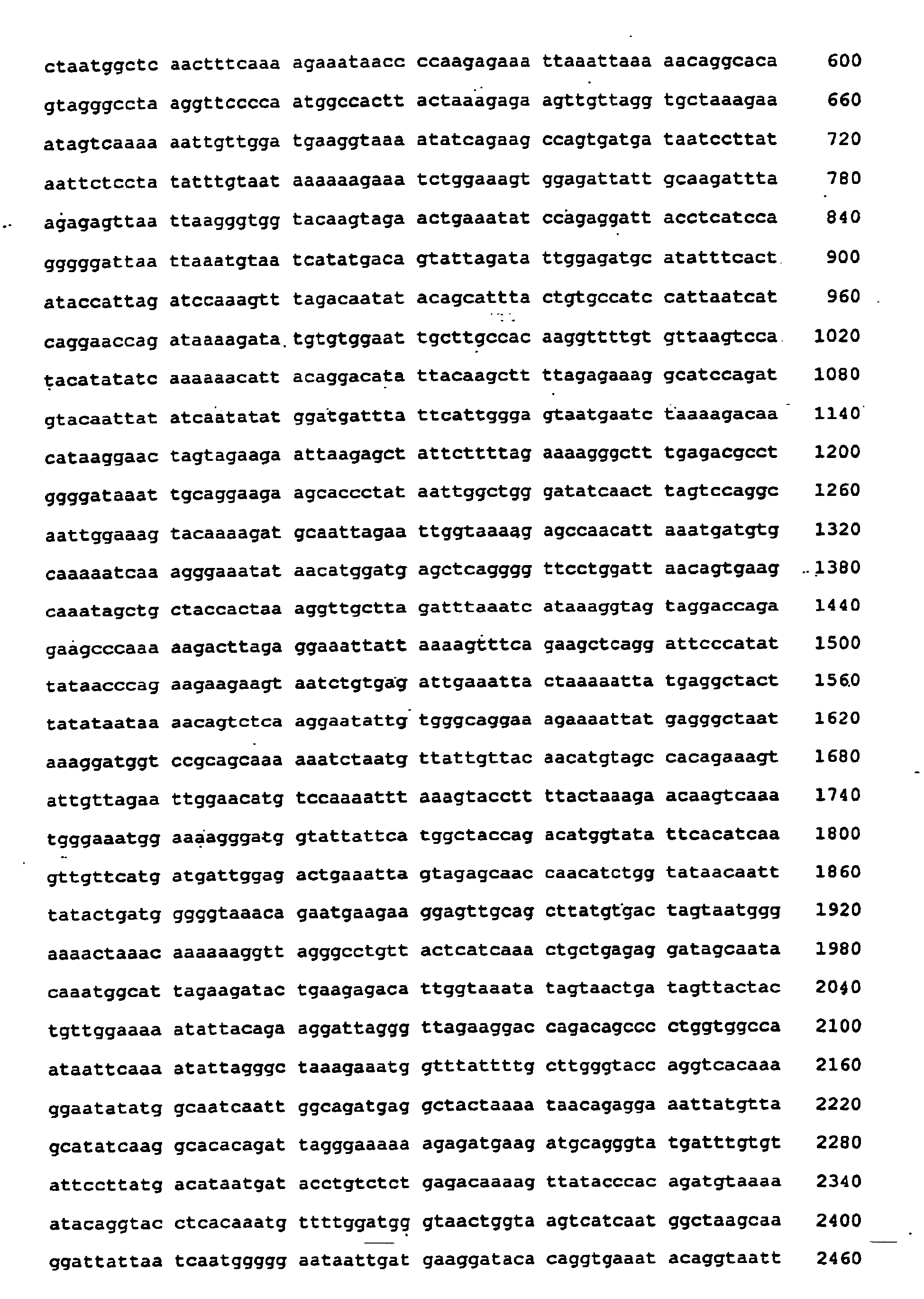
- <210> 3
<211> 3432
<212> DNA
<213> EIAV - <400> 3


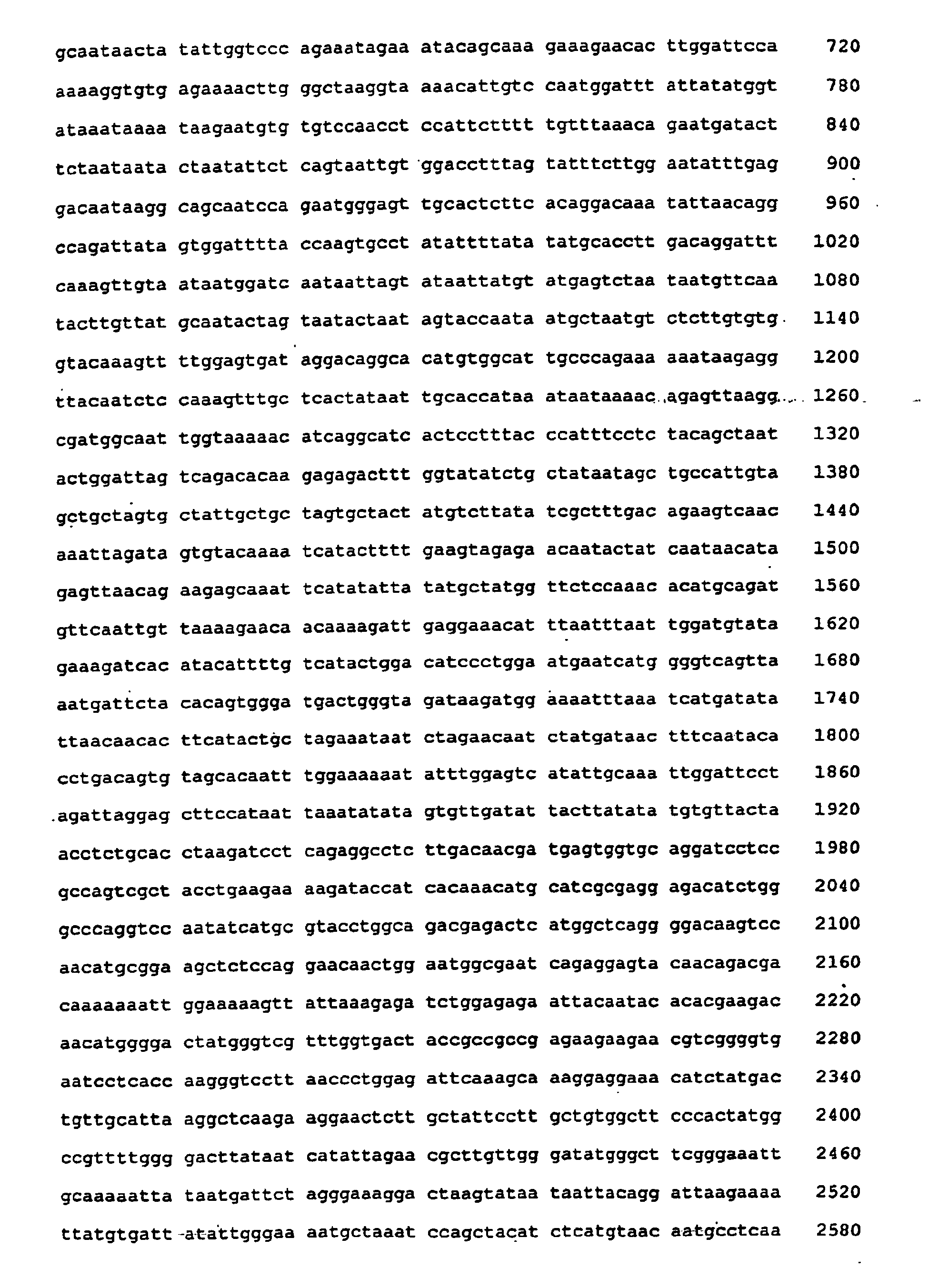
- <210> 4
<211> 2592
<212> DNA
<213> EIAV - <400> 4


- <210> 5
<211> 495
<212> DNA
<213> EIAV - <400> 5

- <210> 6
<211> 237
<212> DNA
<213> EIAV - <400> 6

- <210> 7
<211> 207
<212> DNA
<213> EIAV - <400> 7

- <210> 8
<211> 486
<212> PRT
<213> EIAV - <400> 8


- <210> 9
<211> 1143
<212> PRT - <213> EIAV
- <400> 9


- <210> 10
<211> 863
<212> PRT
<213> EIAV - <400> 10


- <210> 11
<211> 164
<212>. PRT
<213> EIAV - <400> 11

- <210> 12
<211> 78
<212> PRT
<213> EIAV - <400> 12


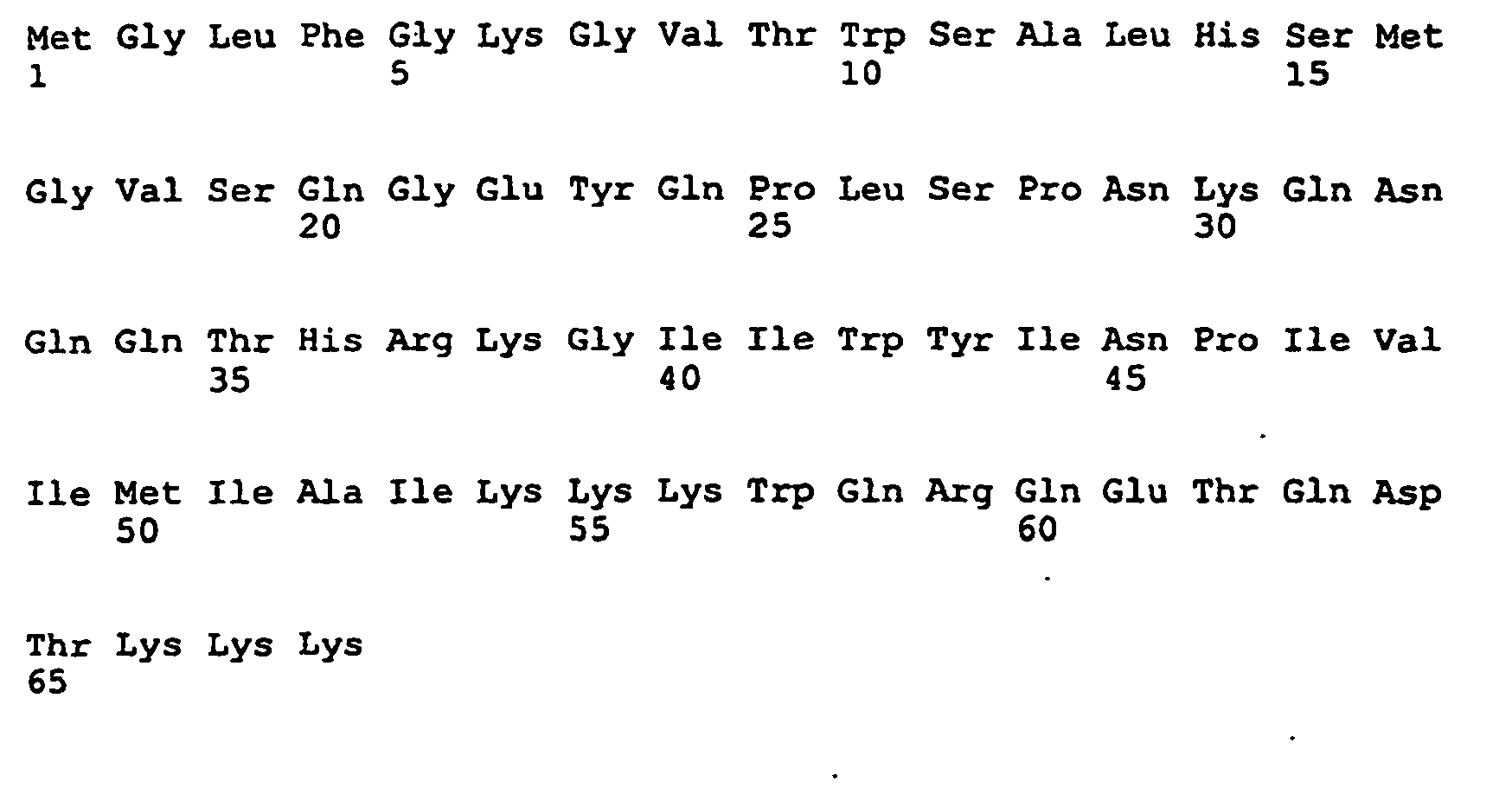
- <210> 13
<211> 68
<212> PRT
<213> EIAV - <400> 13
Claims (17)
- An isolated DNA comprising the full-length provirus genome sequence of EIAV Donkey Leukocyte Attenuated Vaccine strain as deposited to the China General Microbiological Culture Collection Center under CGMCC 0394, or the sequence as set forth in SEQ ID No.1.
- An isolated DNA comprising nucleotides 1 to 325 of the full length provirus genome of EIAV Donkey leukocyte Attenuated Vaccine strain as deposited to the China General Microbiological Culture Collection Center under CGMCC 0394 or of SEQ ID No. 1.
- An isolated DNA comprising nucleotides 7922 to 8258 of the full length provirus genome of EIAV Donkey leukocyte Attenuated Vaccine strain as deposited to the China General Microbiological Culture Collection Center under CGMCC 0394 or of SEQ ID No.1.
- An isolated DNA comprising nucleotides 466 to 1926 of the full length provirus genome of EIAV Donkey leukocyte Attenuated Vaccine strain as deposited to the China General Microbiological Culture Collection Center under CGMCC 0394 or of SEQ ID No. 1.
- An isolated DNA comprising nucleotides 1689 to 5120 of the full length provirus genome of EIAV Donkey leukocyte Attenuated Vaccine strain as deposited to the China General Microbiological Culture Collection Center under CGMCC 0394 or of SEQ ID No.1.
- An isolated DNA comprising nucleotides 5313 to 7904 of the full length provirus genome of EIAV Donkey leukocyte Attenuated Vaccine strain as deposited to the China General Microbiological Culture Collection Center under CGMCC 0394 or of SEQ ID No.1.
- An isolated DNA comprising nucleotides 365 to 462 and 5138 to 5276 of the full length provirus genome of EIAV Donkey leukocyte Attenuated Vaccine strain as deposited to the China General Microbiological Culture Collection Center under CGMCC 0394 or of SEQ ID No.1.
- An isolated DNA comprising nucleotides 5454 to 5546 and 7250 to 7651 of the full length provirus genome of EIAV Donkey leukocyte Attenuated Vaccine strain as deposited to the China General Microbiological Culture Collection Center under CGMCC 0394 or of SEQ ID No.1.
- An isolated DNA comprising nucleotides 5287 to 5493 of the full length provirus genome of EIAV Donkey leukocyte Attenuated Vaccine strain as deposited to the China General Microbiological Culture Collection Center under CGMCC 0394 or of SEQ ID No.1.
- A polypeptide coded by the isolated DNA as defined in claim 4, preferably coded by gag gene of Equine Infectious Anemia Virus Donkey Leukocyte Attenuated Vaccine strain and comprising the sequence as set forth in SEQ ID NO:8.
- A polypeptide coded by the isolated DNA as defined in claim 5, preferably coded by pol gene of Equine Infectious Anemia Virus Donkey Leukocyte Attenuated Vaccine strain and comprising the sequence as set forth in SEQ ID NO:9.
- A polypeptide coded by the isolated DNA as defined in claim 6, preferably coded by env gene of Equine Infectious Anemia Virus Donkey Leukocyte Attenuated Vaccine strain and comprising the sequence as set forth in SEQ ID NO:10.
- A polypeptide coded by the isolated DNA as defined in claim 8, preferably coded by rev gene of Equine Infectious Anemia Virus Donkey Leukocyte Attenuated Vaccine strain and comprising the sequence as set forth in SEQ ID NO:11.
- A polypeptide coded by the isolated DNA as defined in claim 7, preferably coded by tat gene of Equine Infectious Anemia Virus Donkey Leukocyte Attenuated Vaccine strain and comprising the sequence as set forth in SEQ ID NO:12.
- A polypeptide coded by the isolated DNA as defined in claim 9, preferably coded by s2 gene of Equine Infectious Anemia Virus Donkey Leukocyte Attenuated Vaccine strain and comprising the sequence as set forth in SEQ ID NO:13.
- Use of a DNA as claimed in any one of claims 1 to 9 in the preparation of genetic engineering subunit vaccines, gene-mutated vaccines, gene deficiency vaccines, DNA vaccines, or diagnostics.
- Primer sequence, comprising a sequence selected form the group consisting of:(a) GGACATCCGGCTGATATAAC,(b) GACCAGCTAATCCTGCTTGA,(c) GCTTGAAGTGCCTTGGCTAA,(d) TCAGGAATCACCACCAGTCAG,(e) GTTGTTGCCTCTCATACCAC,(f) AGACAGATTGCTGTCTC, and(g) CATAGGACCAGCTATC.
Applications Claiming Priority (3)
| Application Number | Priority Date | Filing Date | Title |
|---|---|---|---|
| CNB991058526A CN1173036C (en) | 1999-04-21 | 1999-04-21 | Full-length Gene Sequence of Equine Infectious Anemia Virus Donkey Leukocyte Attenuated Vaccine Strain |
| CN99105852 | 1999-04-21 | ||
| PCT/CN2000/000096 WO2000063387A1 (en) | 1999-04-21 | 2000-04-21 | The full gene sequence of the donkey leukocyte vaccine strain of the equine infectious anemia virus and their application |
Publications (3)
| Publication Number | Publication Date |
|---|---|
| EP1174507A1 EP1174507A1 (en) | 2002-01-23 |
| EP1174507A4 EP1174507A4 (en) | 2004-03-24 |
| EP1174507B1 true EP1174507B1 (en) | 2007-07-25 |
Family
ID=5272155
Family Applications (1)
| Application Number | Title | Priority Date | Filing Date |
|---|---|---|---|
| EP00918668A Expired - Lifetime EP1174507B1 (en) | 1999-04-21 | 2000-04-21 | The full gene sequence of the donkey leukocyte vaccine strain of the equine infectious anemia virus and their application |
Country Status (8)
| Country | Link |
|---|---|
| US (1) | US6987020B1 (en) |
| EP (1) | EP1174507B1 (en) |
| CN (1) | CN1173036C (en) |
| AT (1) | ATE368117T1 (en) |
| AU (1) | AU3955400A (en) |
| DE (1) | DE60035680T2 (en) |
| ES (1) | ES2288848T3 (en) |
| WO (1) | WO2000063387A1 (en) |
Families Citing this family (3)
| Publication number | Priority date | Publication date | Assignee | Title |
|---|---|---|---|---|
| US6461616B1 (en) * | 2000-09-09 | 2002-10-08 | Akzo Nobel Nv | EIAV p26 deletion vaccine and diagnostic |
| WO2002020049A2 (en) * | 2000-09-09 | 2002-03-14 | Akzo Nobel N.V. | Eiav chimeric vaccine and diagnostic |
| CN101705246B (en) * | 2007-04-29 | 2012-06-27 | 中国农业科学院哈尔滨兽医研究所 | Lentiviral gene transfer vector, preparation method and application thereof |
Family Cites Families (5)
| Publication number | Priority date | Publication date | Assignee | Title |
|---|---|---|---|---|
| JPH05501654A (en) | 1990-07-12 | 1993-04-02 | プレジデント アンド フェロウズ オブ ハーバード カレッジ | primate lentivirus vaccine |
| CN1059701C (en) | 1996-04-03 | 2000-12-20 | 中国农业科学院哈尔滨兽医研究所 | Donkey leukocyte hypotoxic strain for equine infection anemia and its culture method |
| WO1997039119A1 (en) | 1996-04-15 | 1997-10-23 | Vanderbilt University | Mammalian genes involved in viral infection and tumor suppression |
| EP0981636B1 (en) | 1997-05-13 | 2005-03-23 | University Of North Carolina At Chapel Hill | Lentivirus-based gene transfer vectors |
| DE69738969D1 (en) * | 1997-12-30 | 2008-10-16 | Univ Minas Gerais | PROCESS FOR EXPRESSING AND PREPARING THE RECOMBINANT PROTEIN GP90 OF THE GLYCOPROTEIN SHELL IN THE INFECTIOUS HORSE ANEMIA VIRUS EIAV |
-
1999
- 1999-04-21 CN CNB991058526A patent/CN1173036C/en not_active Expired - Lifetime
-
2000
- 2000-04-21 WO PCT/CN2000/000096 patent/WO2000063387A1/en not_active Ceased
- 2000-04-21 EP EP00918668A patent/EP1174507B1/en not_active Expired - Lifetime
- 2000-04-21 US US09/959,120 patent/US6987020B1/en not_active Expired - Lifetime
- 2000-04-21 ES ES00918668T patent/ES2288848T3/en not_active Expired - Lifetime
- 2000-04-21 AU AU39554/00A patent/AU3955400A/en not_active Abandoned
- 2000-04-21 DE DE60035680T patent/DE60035680T2/en not_active Expired - Lifetime
- 2000-04-21 AT AT00918668T patent/ATE368117T1/en active
Non-Patent Citations (1)
| Title |
|---|
| None * |
Also Published As
| Publication number | Publication date |
|---|---|
| WO2000063387A1 (en) | 2000-10-26 |
| DE60035680D1 (en) | 2007-09-06 |
| CN1173036C (en) | 2004-10-27 |
| EP1174507A1 (en) | 2002-01-23 |
| DE60035680T2 (en) | 2008-04-30 |
| ES2288848T3 (en) | 2008-02-01 |
| CN1271015A (en) | 2000-10-25 |
| US6987020B1 (en) | 2006-01-17 |
| AU3955400A (en) | 2000-11-02 |
| ATE368117T1 (en) | 2007-08-15 |
| EP1174507A4 (en) | 2004-03-24 |
Similar Documents
| Publication | Publication Date | Title |
|---|---|---|
| Herchenröder et al. | Isolation, cloning, and sequencing of simian foamy viruses from chimpanzees (SFVcpz): high homology to human foamy virus (HFV) | |
| US7078516B1 (en) | Nucleotide sequences derived from the genome of retroviruses of the hiv-1, hiv-2 and siv type, and their uses in particular for the amplification of the genomes of these retroviruses and for the in vitro diagnosis of the diseases due to these viruses | |
| JP3152605B2 (en) | Cloned DNA comprising a DNA insert fragment capable of hybridizing with genomic RNA of lymph node damage associated virus (LAV) | |
| JP4226657B2 (en) | Viral substances and nucleotide fragments associated with multiple sclerosis for diagnosis, prevention, and treatment | |
| JP2010047604A (en) | Viral material and nucleotide fragment associated with multiple sclerosis for diagnosis, prevention and treatment | |
| US6020123A (en) | Oligonucleotide sequences for the amplification of the genome of the retroviruses of the HIV-2 and SIV type, and their uses for in vitro diagnosis of the infections due to these viruses | |
| Quinlivan et al. | Real‐time quantitative RT‐PCR and PCR assays for a novel European field isolate of equine infectious anaemia virus based on sequence determination of the gag gene | |
| US5443828A (en) | Chimeric HIV-2 gag particles | |
| US7022814B1 (en) | Nucleotide sequences derived from the genome of retroviruses of the HIV-1, HIV-2 and SIV type, and their uses in particular for the amplification of the genomes of these retroviruses and for the in vitro diagnosis of the diseases due to these viruses | |
| US6987020B1 (en) | Full-gene sequence of the donkey leukocyte vaccine strain of the equine infectious anemia virus and their application | |
| US20030224350A1 (en) | Elimination of endogenous porcine retrovirus | |
| Kyaw-Tanner et al. | The induction of in vivo superinfection and recombination using feline immunodeficiency virus as the model | |
| WO2003015814A1 (en) | New peptides and use thereof in therapeutic agents against feline fiv infection | |
| CN1321182C (en) | Full gene cloning of horse infectious anemia virus representating virus strain and its use | |
| EP1036181B1 (en) | The process for expression and production of recombinant protein gp90 derived from glicoprotein envelope of equine infectious anemia virus eiav | |
| JP3531880B2 (en) | Novel feline immunodeficiency virus strain, DNA corresponding to its outer coat protein gene RNA, and feline immunodeficiency virus vaccine | |
| Vincent et al. | Characterization of a novel baboon virus closely resembling human T-cell leukemia virus | |
| US20060067948A1 (en) | Viral vectors | |
| EP1183383B1 (en) | Siv-based packaging-deficient vectors | |
| US20040116684A1 (en) | Ancestral viruses and vaccines | |
| JPH0767682A (en) | Retrovirus-like particle, method for producing the same, vaccine comprising the same, and cDNA of RNA having packaging ability | |
| HK1092839B (en) | Nucleotide sequences derived from the genomes of the retroviruses hiv-1, hiv-2 and siv, and their application to the amplification of these viral genomes and to the in vitro diagnosis of infections resulting from these viruses | |
| JP2002153275A (en) | Spumavirus plasmid and its use | |
| AU2002249393A1 (en) | Viral vectors | |
| HK1097574B (en) | Nucleotide sequences derived from the genomes of the retroviruses hiv-1, hiv-2 and siv, and their application to the amplification of pol sequences in these viral genomes and to the in vitro diagnosis of infections resulting from these viruses |
Legal Events
| Date | Code | Title | Description |
|---|---|---|---|
| PUAI | Public reference made under article 153(3) epc to a published international application that has entered the european phase |
Free format text: ORIGINAL CODE: 0009012 |
|
| 17P | Request for examination filed |
Effective date: 20011114 |
|
| AK | Designated contracting states |
Kind code of ref document: A1 Designated state(s): AT BE CH CY DE DK ES FI FR GB GR IE IT LI LU MC NL PT SE |
|
| AX | Request for extension of the european patent |
Free format text: AL;LT;LV;MK;RO;SI |
|
| A4 | Supplementary search report drawn up and despatched |
Effective date: 20040205 |
|
| 17Q | First examination report despatched |
Effective date: 20050622 |
|
| GRAP | Despatch of communication of intention to grant a patent |
Free format text: ORIGINAL CODE: EPIDOSNIGR1 |
|
| RIN1 | Information on inventor provided before grant (corrected) |
Inventor name: FAN, XIUJUAN Inventor name: FENG, YI Inventor name: CHEN, GANG Inventor name: YU, KANGZHEN Inventor name: JIA, BIN Inventor name: ZHAO, LIPING Inventor name: PAN, PINLIANG Inventor name: SHEN, RONGXIAN Inventor name: XUE, FEI Inventor name: SHAO, YIMING Inventor name: XIANG, WENHUA Inventor name: LUE, XIAOLING |
|
| GRAS | Grant fee paid |
Free format text: ORIGINAL CODE: EPIDOSNIGR3 |
|
| GRAA | (expected) grant |
Free format text: ORIGINAL CODE: 0009210 |
|
| AK | Designated contracting states |
Kind code of ref document: B1 Designated state(s): AT BE CH CY DE DK ES FI FR GB GR IE IT LI LU MC NL PT SE |
|
| REG | Reference to a national code |
Ref country code: GB Ref legal event code: FG4D |
|
| REG | Reference to a national code |
Ref country code: CH Ref legal event code: EP |
|
| REG | Reference to a national code |
Ref country code: IE Ref legal event code: FG4D |
|
| REF | Corresponds to: |
Ref document number: 60035680 Country of ref document: DE Date of ref document: 20070906 Kind code of ref document: P |
|
| REG | Reference to a national code |
Ref country code: CH Ref legal event code: NV Representative=s name: ISLER & PEDRAZZINI AG |
|
| ET | Fr: translation filed | ||
| PG25 | Lapsed in a contracting state [announced via postgrant information from national office to epo] |
Ref country code: PT Free format text: LAPSE BECAUSE OF FAILURE TO SUBMIT A TRANSLATION OF THE DESCRIPTION OR TO PAY THE FEE WITHIN THE PRESCRIBED TIME-LIMIT Effective date: 20071226 Ref country code: FI Free format text: LAPSE BECAUSE OF FAILURE TO SUBMIT A TRANSLATION OF THE DESCRIPTION OR TO PAY THE FEE WITHIN THE PRESCRIBED TIME-LIMIT Effective date: 20070725 |
|
| REG | Reference to a national code |
Ref country code: ES Ref legal event code: FG2A Ref document number: 2288848 Country of ref document: ES Kind code of ref document: T3 |
|
| PG25 | Lapsed in a contracting state [announced via postgrant information from national office to epo] |
Ref country code: BE Free format text: LAPSE BECAUSE OF FAILURE TO SUBMIT A TRANSLATION OF THE DESCRIPTION OR TO PAY THE FEE WITHIN THE PRESCRIBED TIME-LIMIT Effective date: 20070725 |
|
| PG25 | Lapsed in a contracting state [announced via postgrant information from national office to epo] |
Ref country code: GR Free format text: LAPSE BECAUSE OF FAILURE TO SUBMIT A TRANSLATION OF THE DESCRIPTION OR TO PAY THE FEE WITHIN THE PRESCRIBED TIME-LIMIT Effective date: 20071026 Ref country code: DK Free format text: LAPSE BECAUSE OF FAILURE TO SUBMIT A TRANSLATION OF THE DESCRIPTION OR TO PAY THE FEE WITHIN THE PRESCRIBED TIME-LIMIT Effective date: 20070725 |
|
| PLBE | No opposition filed within time limit |
Free format text: ORIGINAL CODE: 0009261 |
|
| STAA | Information on the status of an ep patent application or granted ep patent |
Free format text: STATUS: NO OPPOSITION FILED WITHIN TIME LIMIT |
|
| PG25 | Lapsed in a contracting state [announced via postgrant information from national office to epo] |
Ref country code: SE Free format text: LAPSE BECAUSE OF FAILURE TO SUBMIT A TRANSLATION OF THE DESCRIPTION OR TO PAY THE FEE WITHIN THE PRESCRIBED TIME-LIMIT Effective date: 20071025 |
|
| 26N | No opposition filed |
Effective date: 20080428 |
|
| PG25 | Lapsed in a contracting state [announced via postgrant information from national office to epo] |
Ref country code: MC Free format text: LAPSE BECAUSE OF NON-PAYMENT OF DUE FEES Effective date: 20080430 |
|
| PG25 | Lapsed in a contracting state [announced via postgrant information from national office to epo] |
Ref country code: CY Free format text: LAPSE BECAUSE OF FAILURE TO SUBMIT A TRANSLATION OF THE DESCRIPTION OR TO PAY THE FEE WITHIN THE PRESCRIBED TIME-LIMIT Effective date: 20070725 |
|
| PG25 | Lapsed in a contracting state [announced via postgrant information from national office to epo] |
Ref country code: LU Free format text: LAPSE BECAUSE OF NON-PAYMENT OF DUE FEES Effective date: 20080421 |
|
| PGFP | Annual fee paid to national office [announced via postgrant information from national office to epo] |
Ref country code: AT Payment date: 20120502 Year of fee payment: 13 |
|
| PGFP | Annual fee paid to national office [announced via postgrant information from national office to epo] |
Ref country code: IE Payment date: 20130419 Year of fee payment: 14 Ref country code: CH Payment date: 20130419 Year of fee payment: 14 Ref country code: DE Payment date: 20130628 Year of fee payment: 14 |
|
| PGFP | Annual fee paid to national office [announced via postgrant information from national office to epo] |
Ref country code: NL Payment date: 20130429 Year of fee payment: 14 Ref country code: IT Payment date: 20130418 Year of fee payment: 14 |
|
| REG | Reference to a national code |
Ref country code: DE Ref legal event code: R119 Ref document number: 60035680 Country of ref document: DE |
|
| REG | Reference to a national code |
Ref country code: NL Ref legal event code: V1 Effective date: 20141101 |
|
| REG | Reference to a national code |
Ref country code: CH Ref legal event code: PL |
|
| REG | Reference to a national code |
Ref country code: AT Ref legal event code: MM01 Ref document number: 368117 Country of ref document: AT Kind code of ref document: T Effective date: 20140421 |
|
| REG | Reference to a national code |
Ref country code: IE Ref legal event code: MM4A |
|
| REG | Reference to a national code |
Ref country code: DE Ref legal event code: R119 Ref document number: 60035680 Country of ref document: DE Effective date: 20141101 |
|
| PG25 | Lapsed in a contracting state [announced via postgrant information from national office to epo] |
Ref country code: DE Free format text: LAPSE BECAUSE OF NON-PAYMENT OF DUE FEES Effective date: 20141101 Ref country code: CH Free format text: LAPSE BECAUSE OF NON-PAYMENT OF DUE FEES Effective date: 20140430 Ref country code: LI Free format text: LAPSE BECAUSE OF NON-PAYMENT OF DUE FEES Effective date: 20140430 |
|
| PG25 | Lapsed in a contracting state [announced via postgrant information from national office to epo] |
Ref country code: AT Free format text: LAPSE BECAUSE OF NON-PAYMENT OF DUE FEES Effective date: 20140421 Ref country code: NL Free format text: LAPSE BECAUSE OF NON-PAYMENT OF DUE FEES Effective date: 20141101 |
|
| PG25 | Lapsed in a contracting state [announced via postgrant information from national office to epo] |
Ref country code: IT Free format text: LAPSE BECAUSE OF NON-PAYMENT OF DUE FEES Effective date: 20140421 |
|
| PG25 | Lapsed in a contracting state [announced via postgrant information from national office to epo] |
Ref country code: IE Free format text: LAPSE BECAUSE OF NON-PAYMENT OF DUE FEES Effective date: 20140421 |
|
| REG | Reference to a national code |
Ref country code: FR Ref legal event code: PLFP Year of fee payment: 17 |
|
| REG | Reference to a national code |
Ref country code: FR Ref legal event code: PLFP Year of fee payment: 18 |
|
| REG | Reference to a national code |
Ref country code: FR Ref legal event code: PLFP Year of fee payment: 19 |
|
| PGFP | Annual fee paid to national office [announced via postgrant information from national office to epo] |
Ref country code: ES Payment date: 20190520 Year of fee payment: 20 |
|
| PGFP | Annual fee paid to national office [announced via postgrant information from national office to epo] |
Ref country code: FR Payment date: 20190423 Year of fee payment: 20 |
|
| PGFP | Annual fee paid to national office [announced via postgrant information from national office to epo] |
Ref country code: GB Payment date: 20190424 Year of fee payment: 20 |
|
| REG | Reference to a national code |
Ref country code: GB Ref legal event code: PE20 Expiry date: 20200420 |
|
| REG | Reference to a national code |
Ref country code: ES Ref legal event code: FD2A Effective date: 20200803 |
|
| PG25 | Lapsed in a contracting state [announced via postgrant information from national office to epo] |
Ref country code: GB Free format text: LAPSE BECAUSE OF EXPIRATION OF PROTECTION Effective date: 20200420 |
|
| PG25 | Lapsed in a contracting state [announced via postgrant information from national office to epo] |
Ref country code: ES Free format text: LAPSE BECAUSE OF EXPIRATION OF PROTECTION Effective date: 20200422 |