(Technical Field)
The present invention relates to novel peptide
derivatives having an inhibitory activity of melanocyte-stimulating
hormone, and melanocyte-stimulating hormone
inhibitory compositions, as well as to a whitening agent,
an immunofunction regulator, an appetite regulator, a
cosmetic or a skin preparation for external use, which
comprises at least one of the said novel peptide
derivatives and the said inhibitory compositions.
(Background Art)
Melanocyte-stimulating hormone is known to
participate in the control of the colors of the skin and
hair of humans and animals, and to darken the color of the
human skin (e.g., Nature (1961) 189, 176-179). It is
reported as the main cause of such action that melanocyte-stimulating
hormone accelerates the growth of melanocytes
and also activates tyrosinase which is an enzyme for the
biosynthesis of melanin (Proc. Natl. Acad. Sci. (1995) 92,
1789-1793). On the other hand, it is known that
melanocyte-stimulating hormone is produced by skin
epidermal cells, and that the production amount is
increased largely by the irradiation of ultraviolet rays
(ACTH Relat. Rept. (1995) 6, 63-68). It is thought from
these facts that melanocyte-stimulating hormone is the main
cause of pigmentation after sunburn by ultraviolet rays.
As other actions of melanocyte-stimulating hormone,
there are known an inhibitory action of the production of
nitrogen monoxide by macrophages and an immunosuppressive
action through IL-10 (e.g., Immunology Today (1997) 18,
140-145) and an appetite-controlling action (e.g., Am. J.
Physiol. 274 Endocrinol. Metab. 37 (1998) E627-E633).
Accordingly, the suppression of the formation of
melanocyte-stimulating hormone or the inhibition of the
action thereof can realize the prevention of pigmentation
to be caused by ultraviolet rays, the prevention,
improvement or recovery of or from immune abnormality or
immunodeficiency, or the regulation of body weight by
appetite control.
Hitherto, there have been known as melanocyte-stimulating
hormone inhibitors, His-D-Arg-Ala-Trp-D-Phe-Lys-NH2
(Peptides (1994) 15, 627-632), D-Trp-Arg-Leu-NH2
(Proc. Natl. Acad. Sci. (1995) 92, 2894-2898), and the
like. However, these inhibitors all contain tryptophan
which is an unstable amino acid, and therefore there is a
problem that the stability during storage is inferior.
Moreover, these inhibitors are known to decolor the skin of
reptiles and the pigment cells of amphibians, but it has
not been clarified whether they have the action of
suppressing the formation of melanin and the activation of
tyrosinase by melanocyte-stimulating hormone, which cause
the pigmentation of the human skin.
Moreover, as other melanocyte-stimulating hormone
inhibitors, it is known that an agcuti protein and fragment
peptides thereof have a pigmentation inhibitory action (WO
97/00892), but there are problems that the production
thereof is not facile and that the stability during storage
thereof is inferior.
Furthermore, there are problems that some melanocyte-stimulating
hormone inhibitors which even show effects of
decoloring pigment cells, and the like, upon the evaluation
with cells, exhibit only weak effects, and that the
expression of the effects takes some period of time even
though they exhibit effects such as the prevention of
pigmentation, the prevention, improvement or recovery of or
from immune abnormality or immunodeficiency, the regulation
of body weight by appetite control, or the like, in the
case of their actual application to living body.
(Disclosure of the Invention)
Under the circumstance of the background art as has
been described above, a first object of the present
invention is to provide novel peptide derivatives, which
can inhibit the action of melanocyte-stimulating hormone,
whereby the pigmentation by ultraviolet rays can be
prevented, can prevent, improve or recover from immune
abnormality or immunodeficiency, or regulate body weight by
appetite control, and also can be used as cosmetics or
external preparations for the skin, and in addition, can be
produced easily, and are excellent in the stability during
storage.
Moreover, a second object of the present invention is
to provide a melanocyte-stimulating hormone inhibitory
composition which has a remarkably excellent inhibitory
effect of pigmentation, are effective for the prevention,
improvement or recovery of or from immune abnormality or
immunodeficiency, or can regulate body weight by appetite
control, and also can be used as cosmetics or external
preparations for the skin, when actually applied to the
living body.
As a result of the extensive studies for attaining
the above first object, the present inventors have found
that the above first object can be attained with novel
peptide derivatives represented by the following general
formula (1) or salts thereof, and accomplished the present
invention based on such findings.
Accordingly, the present invention relates to di- or
tripeptide derivatives having a naphthyl group and
represented by the following general formula (1) or salts
thereof.
(wherein Ar represents a naphthyl group which may have
substituent(s), R
1, R
2 and R
3 represent each independently a
hydrogen atom or a straight-chain or branched-chain alkyl
group having 1 to 6 carbon atoms which may have
substituent(s), R
4 represents a hydrogen atom, an amino
acid side chain, an amino group, an amidino group, a
guanidinyl group, a straight-chain or branched-chain
aminoalkyl group having 1 to 6 carbon atoms, a straight-chain
or branched-chain amidinoalkyl group having 1 to 6
carbon atoms, a straight-chain or branched-chain
guanidinoalkyl group having 1 to 6 carbon atoms, or an
amidinoaryl group having 6 to 12 carbon atoms, all of which
may have substituent(s), X
1 is actually absent (i.e.,
nothing) or an alkylene group having 1 or 6 carbon atoms,
an aminoalkylene group having 1 to 6 carbon atoms which may
have as a substituent a straight-chain or branched-chain
alkyl group having 1 to 6 carbon atoms, or a straight-chain
or branched-chain oxyalkylene group having 1 to 6 carbon
atoms, X
2 is actually absent or a straight-chain or
branched-chain alkylene group having 1 o 6 carbon atoms, R
6
represents a hydrogen atom or -NHY, wherein Y represents a
hydrogen atom, an acyl group having 2 to 22 carbon atoms,
an alkyl group having 1 to 22 carbon atoms, a hydroxyalkyl
group having 1 to 22 carbon atoms, or a 3-alkoxy-2-hydoxypropyl
group having an alkoxyl group having 1 to 22
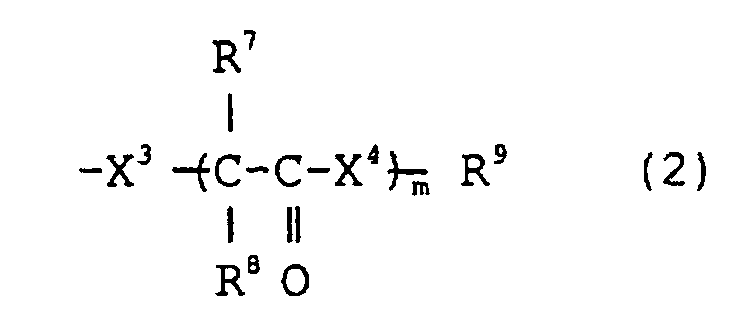
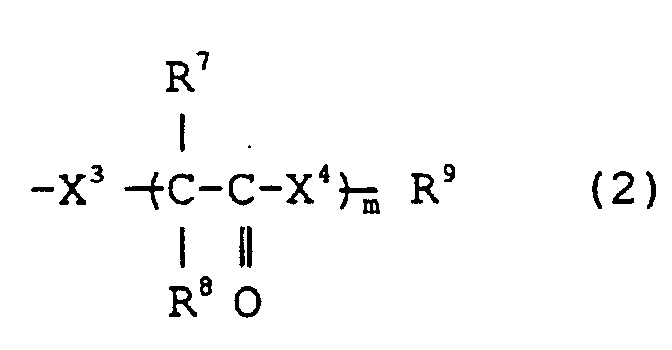
carbon atoms, n represents an integer of 0 or 1, and R
5
represents a group represented by the following general
formula (2),
wherein X
3 represents -O- or -NR
10-, X
4 represents -O- or-NR
11-,
R
7 represents a hydrogen atom, an amino acid side
chain or a straight-chain or branched-chain alkyl group
having 1 to 6 carbon atoms, R
8, R
10, and R
11 represent each
independently a hydrogen atom or a straight-chain or
branched-chain alkyl group having 1 to 6 carbon atoms, R
9
represents a hydrogen atom, an acyl group having 2 to 22
carbon atoms, an alkyl group having 1 to 22 carbon atoms, a
hydroxyalkyl group having 1 to 22 carbon atoms, or a 3-alkoxy-2-hydroxypropyl
group whose alkoxyl group is an
alkoxy group having 1 to 22 carbon atoms, and m represents
an integer of 0 or 1.).
It is to be noted that the peptide derivatives
represented by the above general formula (1) are novel
compounds which have not been described in the literature.
Moreover, as a result of extensive studies for
attaining the above second object, i.e., finding a compound
exhibiting remarkable effects such as pigmentation
inhibitor and the like, in the case of actual application
to living body, the present inventors have found that
compounds having an inhibitory activity of melanocyte-stimulating
hormone and having a certain cAMP production
inhibitory action can attain the above second object, and
accomplished the present invention. By the way, such
compounds are not limited to the peptide derivatives
represented by the above general formula (1) or salts
thereof.
Accordingly, the present invention relates to a
melanocyte-stimulating hormone inhibitory composition which
comprises, as the active ingredient, a compound having an
inhibitory activity of melanocyte-stimulating hormone, the
said compound showing a 50% inhibitory concentration of
cAMP production (IC50) of 100 nM or less.
Moreover, the present invention relates to a
melanocyte-stimulating hormone inhibitory composition which
comprises, as the active ingredient, at least one selected
from the peptide derivatives represented by the above
general formula (1) or salts thereof.
Furthermore, the present invention relates to a
whitening agent, an immunofunction regulator, an appetite
regulator, a cosmetic or a skin preparation for external
use, which comprises, as the active ingredient, at least
one of such melanocyte-stimulating hormone inhibitory
compositions or the compounds having an inhibitory activity
of melanocyte-stimulating hormone, the said compounds
showing a 50% inhibitory concentration of cAMP production
(IC50) of 100 nM or less.
In the following will be described the present
invention in greater detail.
In the peptide derivatives of the present invention
represented by the general formula (1) and salts thereof,
R6 is defined as described above, and specific examples of
Y in the case where R6 is NHY, include a hydrogen atom, and
an acetyl group, popionyl group, isopropionyl group, n-butyroyl
group, isobutyroyl group, sec-butyroyl group,
tert-butyroyl group, n-amyloyl group, sec-amloyl group,
tert-amyloryl group, isoamyloyl group, n-hexyloyl group,
cyclohexyloyl group, n-heptanoyl group, n-octanoyl group,
2-ethylhexyloyl group, nonyoyl group, isononyoyl group,
decanoyl group, isodecanoyl group, undecanoyl group,
lauroyl group, tridecanoyl group, isotridecanoyl group,
myristoyl group, palmitoyl group, isopalmitoyl group,
stearoyl group, isostearoyl group, oleoyl group, docosanoyl
group, methyl group, ethyl group, propyl group, isopropyl
group, n-butyl group, isobutyl group, sec-butyl group,
tert-butyl group, n-amyl group, sec-amyl group, tert-amyl
group, isoamyl group, n-hexyl group, cyclohexyl group, n-heptyl
group, n-octyl group, 2-ethylhexyl group, nonyl
group, isononyl group, decyl group, isodecyl group, undecyl
group, lauryl group, tridecyl group, isotridecyl group,
myristyl group, cetyl group, isocetyl group, stearyl group,
isostearyl group, oleyl group, behenyl group, 2-hydroxyethyl
group, 2-hydroxypropyl group, 2-hydroxyisopropyl
group, 2-hydroxy-n-butyl group, 2-hydroxyisobutyl
group, 2-hydroxy-sec-butyl group, 2-hydroxy-tert-butyl
group, 2-hydroxy-n-amyl group, 2-hydroxy-sec-amyl
group, 2-hydroxy-tert-amyl group, 2-hydroxyisoamyl
group, 2-hydroxy-n-hexyl group, 2-hydroxycyclohexyl
group, 2-hydroxy-n-heptyl group, 2-hydroxy-n-octyl
group, 2-hydroxy-2-ethylhexyl group, 2-hydroxynonyl
group, 2-hydroxyisononyl group, 2-hydroxydecyl
group, 2-hydroxyisodecyl group, 2-hydroxyundecyl group, 2-hydroxylauryl
group, 2-hydroxytridecyl group, 2-hydroxyisotridecyl
group, 2-hydroxymyristyl group, 2-hydroxycetyl
group, 2-hydroxyisocetyl group, 2-hydroxystearyl
group, 2-hydroxyisostearyl group, 2-hydroxyoleyl
group, 2-hydroxybehenyl group, 3-methoxy-2-hydroxypropyl
group, 3-ethoxy-2-hydroxypropyl group, 3-propoxy-2-hydroxypropyl
group, 3-isopropoxy-2-hydroxypropyl
group, 3-n-butoxy-2-hydroxypropyl group, 3-isobutoxy-2-hydroxypropyl
group, 3-sec-butoxy-2-hydroxypropyl group, 3-tert-butoxy-2-hydroxypropyl
group, 3-n-amyloxy-2-hydroxypropyl
group, 3-sec-amyloxy-2-hydroxypropyl group,
3-tert-amyloxy-2-hydroxypropyl group, 3-isoamyloxy-2-hydroxypropyl
group, 3-n-hexyloxy-2-hydroxypropyl group, 3-cyclohexyloxy-2-hydroxypropyl
group, 3-n-heptyloxy-2-hydroxypropyl
group, 3-n-octyloxy-2-hydroxypropyl group, 3-(2-ethylhexyl)oxy-2-hydroxypropyl
group, 3-nonyloxy-2-hydroxypropyl
group, 3-isononyloxy-2-hydroxypropyl group,
3-decyloxy-2-hydroxypropyl group, 3-isodecyloxy-2-hydroxypropyl
group, 3-undecyloxy-2-hydroxypropyl group, 3-lauryloxy-2-hydroxypropyl
group, 3-tridecyloxy-2-hydroxypropyl
group, 3-isotridecyloxy-2-hydroxypropyl
group, 3-myristyloxy-2-hydroxypropyl group, 3-cetyloxy-2-hydroxypropyl
group, 3-isocetyloxy-2-hydroxypropyl group,
3-stearyloxy-2-hydroxypropyl group, 3-isostearyloxy-2-hydroxypropyl
group, 3-oleyloxy-2-hydroxypropyl group, 3-behenyloxy-2-hydroxypropyl
group, and the like.
The position where Ar and X1, both defined as above,
are bonded to each other, is not particularly limited and
any position may be optionally selected. And, the hydrogen
atom(s) of these groups bonded to the aromatic ring may be
replaced by one or more of halogen atoms, alkyl groups
having 1 to 6 carbon atoms, hydroxyl groups, hydroxyalkyl
groups having 1 to 6 carbon atoms, nitro groups, alkoxyl
groups having 1 to 6 carbon atoms groups or carboxyl
groups, or sulfonic acid. In the case that the hydrogen
atoms are replaced by two or more groups, the two or more
substituents may be the same or different.
As the mother skeleton of Ar, there may be mentioned
1-naphthyl group or 2-naphthyl group.
As specific examples of R4 defined as above, there
may be mentioned amino acid side chains (by amino acid side
chain being meant a residue resulting from the removal of
C(COOH)NH2 from an amino acid) derivable from acidic amino
acids such as glutamic acid, aspartic acid, cysteic acid,
homocysteic acid, and the like, neutral amino acids such as
alanine, β-alanine, 2-aminobutyric acid, valine, norvaline,
leucine, norleucine, isoleucine, phenylalanine,
phenylglycine, threonine, serine, homoserine, tyrosine,
dopa, cysteine, methionine, glutamine, asparagine, and the
like, and basic amino acids such as lysine, homolysine,
ornithine, arginine, homoarginine, histidine, and the like;
or a hydrogen atom. Among them, more preferred are the
side chains derivable from basic amino acids. Other than
the side chains derivable from the amino acids, there may
be mentioned amidinoethyl, amidinopropyl, amidinobutyl,
amidinopentyl, amidinohexyl, amidinophenyl, and the like,
having an amidino group.
Specific examples of R7 in the general formula (2)
defined as above include amino acid side chains derivable
from acidic amino acids such as glutamic acid, aspartic
acid, cysteic acid, homocysteic acid, and the like, neutral
amino acids such as alanine, β-alanine, 2-aminobutyric
acid, valine, norvaline, leucine, norleucine, isoleucine,
phenylalanine, phenylglycine, tryptophan, threonine,
serine, homoserine, tyrosine, dopa, cysteine, methionine,
glutamine, asparagine, and the like, and basic amino acids
such as lysine, homolysine, ornithine, arginine,
homoarginine, histidine and the like; or a hydrogen atom.
Among them, more preferred are the amino acid side chains
derivable from neutral amino acids having a hydrophobic
side chain.
Specific examples of R9 defined as above include a
hydrogen atom, a methyl group, ethyl group, propyl group,
isopropyl group, n-butyl group, isobutyl group, sec-butyl
group, tert-butyl group, n-amyl group, sec-amyl group,
tert-amyl group, isoamyl group, n-hexyl group, cyclohexyl
group, n-heptyl group, n-octyl group, 2-ethylhexyl group,
nonyl group, isononyl group, decyl group, isodecyl group,
undecyl group, lauryl group, tridecyl group, isotridecyl
group, myristyl group, cetyl group, isocetyl group, stearyl
group, isostearyl group, oleyl group, vehenyl group, 2-hydroxyethyl
group, 2-hydroxypropyl group, 2-hydroxyisopropyl
group, 2-hydroxy-n-butyl group, 2-hydroxyisobutyl
group, 2-hydroxy-sec-butyl group, 2-hydroxy-tert-butyl
group, 2-hydroxy-n-amyl group, 2-hydroxy-sec-amyl
group, 2-hydroxy-tert-amyl group, 2-hydroxyisoamyl
group, 2-hydroxy-n-hexyl group, 2-hydroxycyclohexyl
group, 2-hydroxy-n-heptyl group, 2-hydroxy-n-octyl
group, 2-hydroxy-2-ethylhexyl group, 2-hydroxynonyl
group, 2-hydroxyisononyl group, 2-hydroxydecyl
group, 2-hydroxyisodecyl group, 2-hydroxyundecyl group, 2-hydroxylauryl
group, 2-hydroxytridecyl group, 2-hydroxyisotridecyl
group, 2-hydroxymyristyl group, 2-hydroxycetyl
group, 2-hydroxyisocetyl group, 2-hydroxystearyl
group, 2-hydroxyisostearyl group, 2-hydroxyoleyl
group, 2-hydroxybehenyl group, 3-methoxy-2-hydroxypropyl
group, 3-ethoxy-2-hydroxypropyl group, 3-propoxy-2-hydroxypropyl
group, 3-isopropoxy-2-hydroxypropyl
group, 3-n-butoxy-2-hydroxypropyl group, 3-isobutoxy-2-hydroxypropyl
group, 3-sec-butoxy-2-hydroxypropyl group, 3-tert-butoxy-2-hydroxypropyl
group, 3-n-amyloxy-2-hydroxypropyl
group, 3-sec-amyloxy-2-hydroxypropyl group,
3-tert-amyloxy-2-hydroxypropyl group, 3-isoamyloxy-2-hydroxypropyl
group, 3-n-hexyloxy-2-hydroxypropyl group, 3-cyclohexyloxy-2-hydroxypropyl
group, 3-n-heptyloxy-2-hydroxypropyl
group, 3-n-octyloxy-2-hydroxypropyl group, 3-(2-ethylhexyl)oxy-2-hydroxypropyl
group, 3-nonyloxy-2-hydroxypropyl
group, 3-isononyloxy-2-hydroxypropyl group,
3-decyloxy-2-hydroxypropyl group, 3-isodecyloxy-2-hydroxypropyl
group, 3-undecyloxy-2-hydroxypropyl group, 3-lauryloxy-2-hydroxypropyl
group, 3-tridecyloxy-2-hydroxypropyl
group, 3-isotridecyloxy-2-hydroxypropyl
group, 3-myristyloxy-2-hydroxypropyl group, 3-cetyloxy-2-hydroxypropyl
group, 3-isocetyloxy-2-hydroxypropyl group,
3-stearyloxy-2-hydroxypropyl group, 3-isostearyloxy-2-hydroxypropyl
group, 3-oleyloxy-2-hydroxypropyl group, 3-behenyloxy-2-hydroxypropyl
group, and the like.
The residue of each amino acid of the peptide
derivatives represented by the above general formula (1)
may be either optically active one or racemic one.
Specific examples of the salts of the compounds
represented by the above general formula (1) include
physiologically acceptable salts, for example, inorganic
salts, e.g., those of alkali metals such as sodium,
potassium and the like, those of alkaline earth metals such
as magnesium, calcium and the like, ammonium salts, and the
like; organic amine salts, e.g., those of monoethanolamine,
diethanolamine, triethanolamine, 2-amino-2-methyl-1-propanol,
2-amino-2-methyl-1,3-propanediol, lysine,
ornithine, arginine and the like; halogen salts, e.g.,
those of chlorine, bromine, iodine and the like; inorganic
acid salts, e.g., hydrochloride, sulfate, carbonate,
phosphate and the like; organic acid salts, e.g., acetates,
trifluoroacetates, tartrates, citrates, p-toluenesulfonates,
glycolates, malates, lactates, fatty
acid salts, acidic amino acid salts and pyroglutamates; and
the like. Two or more of these salts may be used in
combination.
The peptide derivatives of the present invention
represented by the above general formula (1) can be
synthesized, for example, as follows. First, a protected
basic amino acid and a neutral amino acid whose carboxyl
group has been amidated are condensed with a water-soluble
carbodiimide in methylene chloride, and successive
treatment such as acid treatment affords a protected
dipeptide wherein only the protective group on the main
chain has been removed. Next, the protected dipeptide and
an N-terminal protected amino acid derivative having an
aryl group such as naphthylmethyl group or the like on the
side chain are condensed with a water-soluble carbodiimide
in methylene chloride, and the protective group of the
resulting protected tripeptide is removed by, for example,
reduction in the presence of palladium-carbon catalyst,
whereby an aimed-at peptide derivative is obtained.
Further, various derivatives wherein the N-terminal amino
group is acylated, alkylated, hydroxyalkylated or 3-alkoxy-2-hydroxypropylated,
can be obtained by, for example,
reacting a protected tripeptide whose N-terminal is only
deprotected, with an acid anhydride, an acid chloride, an
alkyl halide, an epoxyalkane or an alkyl glycidyl ether,
followed by reductive deprotection in the presence of
palladium-carbon catalyst, and the like.
Moreover, a tripeptide whose C-terminal is a carboxyl
group can be obtained by catalytic reduction of a
tripeptide similarly obtained using a neutral amino acid
whose carboxyl group is protected with a benzyl group
instead of the neutral amino acid whose carboxyl group is
amidated. Furthermore, various derivatives can be obtained
by subjecting an N-terminal amino group to acylation,
alkylation, hydroxyalkylation or 3-alkoxy-2-hydroxypropylation
in a step precedent to the step of
removing the benzyl group which is a protective group of
the basic amino acid side chain or a protective group of
the carboxyl group, and successive catalytic reduction.
Furthermore, dehydrative condensation of the peptide
derivatives with an alcohol in the presence of an acid
catalyst affords various C-terminal carboxylic ester
derivatives.
In addition, a derivative whose C-terminal carboxyl
group is esterified or amidated can be obtained by
dehydrative condensation of a tripeptide whose C-terminal
is a carboxyl group and whose amino group on the mian chain
and basic amino acid side chain have been protected, with
an alkylamine or addition reaction of the tripeptide with
an epoxyalkane or an alkyl glycidyl ether, followed by
similar successive catalytic reduction.
The 50% inhibitory concentration of cAMP production
(IC50) according to the present invention regarding the
compounds having a melanocyte-stimulating hormone (MSH)
inhibitory activity is measured and defined as follows.
Namely, B16 melanoma cells are inoculated on a 12-well
plate in such way that 1 × 10⁴ cells are inoculated
into 1 well, and cultured at 37°C for 48 hours in the
presence of 5% CO2. After the culturing, the wells are
washed with 1 ml of a serum-free medium (serum-free D-MEM
medium) per 1 well. Then, a serum-free medium containing 1
mM 3-isobutyl-1-methylxanthine, 10 nM melanocyte-stimulating
hormone and a compound to be tested at a
different concentration is added in an amount of 1 ml per 1
well, followed by incubation at 37°C for 5 minutes. After
the incubation, the medium is completely removed from the
plate, 1 ml of ice-cooled 2.5% perchloric acid is exactly
added thereto, and then the whole is incubated for 30
minutes under ice-cooling to extract cAMP from within the
cells. After the incubation, the extract solution is
neutralized by adding 4.2M potassium hydroxide solution in
an amount of 90 ml per 1 well.
The neutralized extract solution is centrifuged at
4°C at 12,000 rpm for 10 minutes, and the amount of cAMP in
the supernatant is quantitatively determined using "Biotrak
cAMP EIA System" (manufactured by Amersham Pharmacia
Biotech), as follows. By the way, all the operations are
carried out at 5°C or lower. First, cAMP authentic samples
are prepared so as to be 0 to 3200 fM, and each sample is
placed in an amount of 100 µl in a 96-well plate. Then,
200 µl of 0.05M acetate buffer (pH 5.8, containing 0.02%
serum and 0.01% antiseptic agent) is placed in an NSB well
(Non-specific Binding Well) and 100 µl in a blank well. In
a sample well is placed 100 µl of a sample to be evaluated.
In each of all the wells except for the blank well and the
NSB well is added 100 µl of antiserum. The 96-well plate
is capped, slowly shaken, and incubated at 3 to 5°C for 2
hours. After the incubation, 50 µl of cAMP peroxidase is
added to each of all the wells except for the blank well.
The plate is capped and incubated at 3 to 5°C for 1 hour.
After the incubation, each of all the wells is washed four
times with 400 µl in total of 0.01M phosphate buffer (pH
7.5, containing 0.05% "Tween 20"). The liquid remaining in
the wells is removed by placing the plate in such manner
that the opening parts of the wells face downward, and
patting the plate on a paper.
To each of all the wells is added 150 µl of an enzyme
substrate, and the plate is shaken at 15 to 30°C for 1
hour. After the shaking, 100 µl of 1 M sulfuric acid is
added to each well, and absorbance at 450 nm is measured.
A calibration curve is prepared from the absorbance of the
cAMP authentic samples and the amount of cAMP of each
sample is determined.
The 50% inhibitory concentration of cAMP production
(IC50) is defined by the value in terms of nM unit, of a
50% inhibitory concentration obtained by the above
procedures, of a test compound against cAMP production with
10 nM melanocyte-stimulating hormone.
Among the melanocyte-stimulating hormone inhibiting
compounds of the present invention exhibiting a 50%
inhibitory concentration of cAMP production (IC50) of 100
nM or less, particularly preferred are those inhibiting
pigmentation by ultraviolet rays for employing as a
whitening agent.
Moreover, the melanocyte-stimulating hormone
inhibiting compounds of the present invention exhibiting a
50% inhibitory concentration of cAMP production (IC50) of
100 nM or less have preferably a molecular weight of 800 or
less, more preferably 200 to 600, from the view-point of
percutaneous absorbability, intestinal absorbability,
solubility, easiness of production, and the like.
The melanocyte-stimulating hormone inhibitory
composition, whitening agent, immunofunction controlling
agent, appetite controlling agent, cosmetic and external
preparation for the skin of the present invention, which
comprise, as the active ingredient, a peptide derivative
represented by the above general formula (1) or a salt
thereof, may be prepared optionally as those for oral or
parenteral administration. In this case, remarkably good
effects can be obtained by using a compound exhibiting a
50% inhibitory concentration of CAMP production (IC50) of
100 nM or less. Moreover, for the purpose of allowing the
same to act on the skin, they may be prepared in such
dosage form that they may be directly administered on the
skin by, e.g., application. In this case, they are
prepared by incorporating into a cosmetic or an external
preparation for the skin, at least one selected from the
peptides of the present invention and salts thereof or a
melanocyte-stimulating hormone inhibiting compound
exhibiting a 50% inhibitory concentration of CAMP
production (IC50) of 100 nM or less.
In these cases, at least one selected from the
peptides and salts thereof of the present invention or a
melanocyte-stimulating hormone inhibiting compound
exhibiting a 50% inhibitory concentration of cAMP
production (IC50) of 100 nM or less, may be incorporated
into a cosmetic usually in an amount of 0.01 to 10% by
weight, preferably 0.1 to 5% by weight, relative to the
total amount of the cosmetic, and into an external
preparation of the present invention usually in an amount
of 0.01 to 50% by weight, preferably 0.1 to 20% by weight.
When the amount is less than 0.01% by weight, the effect
caused by the addition is not exhibited and therefore, such
amount is not preferable. Whereas, when the amount is more
than 50% by weight, there may be problems of feeling upon
the use such as occurrence of creaky feeling toward the
skin and therefore, such amount is not preferable either.
When at least one selected from the peptides and
salts thereof of the present invention or a melanocyte-stimulating
hormone inhibiting compound exhibiting a 50%
inhibitory concentration of cAMP production (IC50) of 100
nM or less is used by incorporating the same into a
cosmetic or an external preparation, ingredients generally
used in cosmetics or external preparations may be added
within the amount range where the effects intended by the
present invention are not inhibited.
As examples of ingredients generally used in
cosmetics or external preparations, there may be mentioned
oily materials, surfactants, solvents, moisture keeping
agents, polymeric substances, powdery substances, pigments,
perfumes, other conventional ingredients, and the like.
The oily materials include oils and fats such as
animal and vegetable oils, and the like, waxes such as
lanolin, and the like, hydrocarbons such as paraffin, and
the like, higher alcohols such as cetanol, and the like,
higher fatty acids such as stearic acid, and the like,
sterols, phospholipids such as lecithin, and the like,
synthetic esters of myristic acid, and the like, metal
soaps, silicone oils, and the like.
The surfactants include anionic surfactants, cationic
surfactants, amphoteric surfactants, nonionic surfactants,
emulsifying or solubilizing agents, and the like.
The solvents include lower alcohols such as ethanol,
and the like, ethers, glycerols, liquid nonionic
surfactants, liquid oily materials, other organic solvents,
water, and the like.
The moisture keeping agents include polyhydric
alcohols such as glycerol, and the like, salts of organic
acids such as pyrrolidonecarboxylic acid, and the like,
urea, mucopolysaccharides such as hyaluronic acid, and the
like, salts of amino acids such as proline, and the like,
and the like.
The polymeric substances include natural polymeric
compounds such as collagen, and the like, semi-synthetic
polymeric compounds such as partially deacetylated chitin,
and the like, synthetic polymeric compounds such as
carboxymethyl cellulose, and the like, and the like.
The powdery substances include inorganic pigments
such as talc, and the like, functional pigments such as
synthetic mica, and the like, hybrid fine powder, pearl-glossy
pigments such as titanium dioxide-covered mica, and
the like, photochromic pigments, polymeric powders such as
nylon powder, and the like, organic powders such as N6-lauroyllysine,
and the like, and the like.
The pigments include the first class of the Japanese
statutory tar pigments, the second class of the Japanese
statutory tar pigments, the third class of the Japanese
statutory tar pigments, hair dyes, natural pigments,
mineral pigments, and the like.
The perfumes include animal perfumes such as musk,
and the like, vegetable perfumes such as jasmine, and the
like, synthetic perfumes such as α-amylcinnamaldehyde, and
the like, blended perfumes, and the like.
The other conventional ingredients for cosmetics or
external preparations for the skin include
antiseptics/disinfectants, antioxidants, UV absorbers,
chelating agents, antifading agents, buffering agents,
medicines for acne, antiscurf and antiitch agents,
antiperspirant deodorant, medicines for burns,
acaricides/pediculicides, keratin softeners, medicines for
xeroderma, antivirus agents, transdermal absorption
promoting agents, hormones, vitamins, amino acids/peptides,
proteins, astringents, anti-inflammatory agents,
refrigerants/irritants, ingredients derived from animals or
vegetables, melanin synthesis inhibitors (whitening
agents), antibiotics, antifungal agents, hair growth
agents, and the like.
The melanocyte-stimulating hormone inhibitory
composition, whitening agent, immunofunction controlling
agent, appetite controlling agent, cosmetic and external
preparation for the skin of the present invention are not
particularly limited in their dosage form, and they may
take suitable dosage forms such as solutions, pastes, gels,
solids, granules, powders, capsules, aerosols, and the
like. More specifically, they may be used in the dosage
form of oils, lotions, creams, emulsions, gels, shampoos,
hair rinses, hair conditioners, enamels, foundations,
lipsticks, face powders, packs, ointments, tablets,
injections, granules, capsules, perfumes, powders, eau de
Colognes, tooth pastes, soaps, aerosols, cleansing foams,
and the like.
The melanocyte-stimulating hormone inhibitory
compositon, whitening agent, immunofunction controlling
agent, appetite controlling agent, cosmetic and external
preparation for the skin of the present invention can be
used as agents for preventing or improving skin ageing,
agents for preventing or improving skin inflammation, bath
agents, hair growth agents, skin care solutions, anti-sunburn
agents, agents for preventing or improving
hyperesthesia optica such as xeroderma pigmentosum, solar
urticaria, and the like, agents for preventing or improving
photoallergy, agents for preventing or improving
photoimmunosuppression, or agents for preventing or
improving skin roughness due to trauma, chaps and cracks,
and the like.
Furthermore, the melanocyte-stimulating hormone
inhibitory compositon or whitening agent of the present
invention is useful for preventing or improving
pigmentation by ultraviolet rays, and for preventing or
improving chloasma, ephelides and senile pigment freckle.
Moreover, the melanocyte-stimulating hormone
inhibitory composition of the present invention can be used
as agents for preventing or treating various diseases in
which melanocyte-stimulating hormone participates, such as
immune abnormality or immunodeficiency, or for the purpose
of the regulation of body weight by appetite control.
(Brief Description of the Drawings)
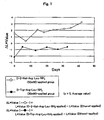
Figure 1 shows the results of the inhibitory test on
melanocyte-stimulating hormone in a living body (Test
Example 4).
(Best Mode for Carrying Out the Invention)
In the following will be described the present
invention more specifically with reference to the examples,
but the present invention is not limited these examples.
By the way, in the following examples, the
incorporated amounts are represented in terms of % by
weight, and naphthylalanyl group or naphthylalanine is
abbreviated as Nal.
Synthetic Example 1: D-1-Nal-Arg-LeuNH2
Boc-Arg(Z2) (5 g, 9.22 mmol) was dissolved in
methylene chloride (75 ml), and under ice-cooling, water-soluble
carbodiimide hydrochloride (1.77 g, 9.22 mmol) and
HOBt (1-hydroxybenzotriazole, 1.25 g, 9.22 mmol) were added
thereto. Then, a methylene chloride solution (75 ml) of
LeuNH2 hydrochloride (1.61 g, 9.68 mmol) and triethylamine
(1.91 g, 18.9 mmol) was added dropwise thereto over a
period of 10 minutes, and the mixture was heated back to
room temperature, followed by stirring overnight. The
reaction liquid was concentrated under reduced pressure and
then, ethyl acetate was added to the residue. The mixture
was washed with 5% citric acid, 5% sodium hydrogen
carbonate, and saturated saline, successively. After
drying over magnesium sulfate, drying under reduced
pressure afforded Boc-Arg(Z2)-LeuNH2 (5.8 g, 8.86 mmol).
A portion of the resulting Boc-Arg(Z2)-LeuNH2 (2 g,
3.1 mmol) was treated with trifluoroacetic acid (10 ml),
whereby Arg(Z2)-LeuNH2 (1.28 g, 2.3 mmol) was obtained.
Then, the resulting Arg(Z2)-LeuNH2 (1.28 g, 2.3 mmol) and
Z-D-1-Nal (0.803 g, 2.3 mmol) were similarly condensed,
whereby Z-D-1-Nal-Arg(Z2)-LeuNH2 (1.63 g, 1.84 mmol) was
obtained. Next, the resulting Z-D-1-Nal-Arg(Z2)-LeuNH2
(1.63 g, 1.84 mmol) was dissolved in methanol (1,000 ml)
and reduced in the presence of palladium-carbon catalyst,
whereby D-1-Nal-Arg-LeuNH2 (0.80 g, 1.66 mmol) was
obtained.
Synthesis Example 2: D-2-Nal-Arg-LeuNH2
Synthesis Example 1 was repeated except that Z-D-2-Nal
was used instead of Z-D-1-Nal, whereby D-2-Nal-Arg-LeuNH2
was obtained.
Synthesis Example 3: L-1-Nal-Arg-LeuNH2
Synthesis Example 1 was repeated except that Z-L-1-Nal
was used instead of Z-D-1-Nal, whereby L-1-Nal-Arg-LeuNH2
was obtained.
Synthesis Example 4: L-2-Nal-Arg-LeuNH2
Synthesis Example 1 was repeated except that Z-L-2-Nal
was used instead of Z-D-1-Nal, whereby L-2-Nal-Arg-LeuNH2
was obtained.
The results by the mass spectrometry (ESI-MS) of the
compounds obtained by the above Synthesis Examples will be
shown in the following Table 1.
| ESI mass spectra |
| Synthesis Example | Compounds | Molecular weight |
| | | Calcd. | Found(MH+) |
| 1 | D-1-Nal-Arg-LeuNH2 | 483 | 484 |
| 2 | D-2-Nal-Arg-LeuNH2 | 483 | 484 |
| 3 | L-1-Nal-Arg-LeuNH2 | 483 | 484 |
| 4 | L-2-Nal-Arg-LeuNH2 | 483 | 484 |
According to the method of measuring the 50%
inhibitory concentration of CAMP production (IC50)
explained in the above, IC50 was measured on the agents
listed in following Table 2, i.e., D-1-Nal-Arg-LeuNH2, D-2-Nal-Arg-LeuNH2,
L-1-Nal-Arg-LeuNH2 and D-Trp-Arg-LeuNH2.
Results will be shown in Table 2. As shown in the
table, the agents tested inhibited effectively the cAMP
increasing action by melanocyte-stimulating hormone.
| Test on inhibition against melanocyte-stimulating hormone |
| Test Compound |
| | 50% inhibitory concentration (IC50,nM) |
| D-1-Nal-Arg-LeuNH2 | 540 |
| D-2-Nal-Arg-LeuNH2 | 42 |
| L-1-Nal-Arg-LeuNH2 | 470 |
| D-Trp-Arg-LeuNH2 | 230 |
Human melanocytes in logarithmic growth phase were
treated with trypsin and inoculated to a 6-well plate with
"Medium 154s" (manufactured by Kurabo Industries Ltd.,
containing a growth factor (HMGS)), in an amount of 1.5 ×
105 per 1 well in terms of cell number. The cells were
cultured at 37°C in a carbon dioxide incubator, the CO2
concentration being 5%, for 1 day. Thereafter, rinsing was
carried out with the use of HBS (Hepes Buffer Saline),
followed by medium replacement with "MCDB153" (containing
fetal bovine serum, insulin, b-FGF, transferrin, and
tocopherol), and followed by culturing for further 2 days.
A whitening agent (containing a compound to be tested) was
prepared with "MCDB153" (containing fetal bovine serum,
insulin, b-FGF, transferrin, and tocopherol) + melanocyte-stimulating
hormone in such way that the concentration
would be 200 µM, 20 µM, or 2 µM, and was added to the 6-well
plate. Also, a further 6-well plate culture was
carried out with the use of "MCDB153" (containing fetal
bovine serum, insulin, b-FGF, transferrin, and tocopherol)
+ melanocyte-stimulating hormone without the whitening
agent, and still further a 6-well plate culture was carried
out with the use of "MCDB153" (containing fetal bovine
serum, insulin, b-FGF, transferrin, and tocopherol) alone,
at the same time. The medium replacement with the above
"MCDB153" (containing fetal bovine serum) containing a
whitening agent was carried out twice every 2 days.
After the first addition of the whitening agent, the
effect of suppressing the melanin formation was confirmed
on the 6th day. Namely, the medium on each 6-well plate
was removed by suction, and the wells were rinsed with HBS.
Thereafter, the 6-well plate was air-dried, and 1/5M NaOH
(230 µl) was added to the wells to dissolve the melanin out
of the melanocytes. The solution (200 µl) was evaluated by
Abs (absorbance) on a microplate reader (475 nm). The
suppression rate of the melanin formation by each compound
tested was calculated according to the following equation
(1). The results will be shown below in Table 3.
The suppression rate of the melanin formation (%)
= {1-(A1 - A3)/(A2 - A3)} × 100
| Test on suppression of the melanin formation |
| Compounds tested | Concentration (µM) | Suppression rate (%) |
| D-1-Nal-Arg-LeuNH 2 | 20 | 43 |
| 200 | 52 |
| D-2-Nal-Arg-LeuNH 2 | 2 | 49 |
| 20 | 51 |
| | 200 | 70 |
| L-1-Nal-Arg-LeuNH 2 | 20 | 8 |
| 200 | 28 |
| D-Trp-Arg-LeuNH 2 | 20 | 24 |
| 200 | 57 |
As is shown in Table 3, the test compounds suppressed
effectively the melanin formation by the melanocytes,
increased by the addition of the melanocyte-stimulating
hormone. It can be understood from this that the test
compounds have an inhibitory activity of the melanin
formation induced by melanocyte stimulating hormone.
Test Example 3: Test of stability during storage
An aqueous 0.1% solution of D-2-Nal-Arg-LeuNH
2 of the
present invention, and that of D-Trp-Arg-LeuNH
2 which is a
known melanocyte-stimulating hormone inhibitor were
prepared and stored at 4°C for 6 months, respectively. The
stability during storage was evaluated by comparing the
degree of coloring with standard colors of APHA (American
Public Healthy Association) method. The results will be
shown in the following Table 4.
| Test of stability during storage |
| | Compounds tested | Degree of coloring (APHA Standard color) |
| Example | D-2-Nal-Arg-LeuNH 2 | 20 |
| Comparative Example | D-Trp-Arg-LeuNH2 | 200 |
As is shown in Table 4, D-2-Nal-Arg-LeuNH2 of the
present invention showed an APHA value of 20 and was almost
not colored, whereas D-Trp-Arg-LeuNH2, a known melanocyte-stimulating
hormone inhivitor showed an APHA value of 200
and was much colored. It can be understood from this, that
D-2-Nal-Arg-LeuNH2 of the present invention has a good
stability.
Test Example 4: Inhibitory test of melanocyte-stimulating
hormone in living body (Test of suppressing
pigmentation in brown guinea pigs)
Inhibitory test of melanocyte-stimulating hormone was
carried out by repeating the application of each test
compound on a quinea pig and irradiation with ultraviolet
rays, followed by measuring the degree of coloring, as
follows.
1. Compounds to be tested:
D-2-Nal-Arg-LeuNH2 (50 mM, dissolved in 50% ethanol-water)
and D-Trp-Arg-LeuNH2 (50 mM, dissolved in 50%
ethanol-water) were used, and 50% ethanol-water was used as
the control.
2. Animal for evaluation:
Male Weiser-Maples brown guinea pigs (4 weeks old)
were purchased from Tokyo Experimental Animal K.K. and used
after pre-reared for 7 weeks.
3. Shaving of the brown guinea pigs:
The brown guinea pigs were individually fixed by
means of a fixing instrument and shaved in a square shape
of about 3 cm × 3 cm on their back with the use of a pair
of hair clippers "THRIVE MODEL 6000AD" (manufactured by
Natsume Seisakusyo) and "Home Hair Clipper Ceramic ER722"
(manufactured by National) and an electric shaver "Dual
1500AC/RC" (manufactured by BRAUN). The skin after shaved
was wiped with a water-soaked absorbent cotton, and the
moisture was removed with a paper towel "KIMWIPE"
(manufactured by CRECIA).
4. Tape stripping:
The exfoliation of part of the horny layer by
detaching an adhesive tape which has been attached onto the
skin surface is herein referred to as "tape stripping".
The skin of the back of the shaven brown guinea pigs
was wiped with an ethanol-soaked absorbent cotton, and the
horny layer having an area of about 2 cm x 2 cm was
subjected to tape stripping five times with the use of an
adhesive tape "Scotch 313D" (manufactured by 3M).
By the way, tape stripping was similarly carried out
after one month.
5. Application of the compound to be tested:
From the next day of the day when the tape stripping
had been carried out, a sample was applied onto the part
for evaluation of the skin at the frequency given below.
The application was carried out by means of "PIPETMAN"
(manufactured by GILSON) so as to spread the compound to be
tested or the control one for comparison.
(1) Before the term of the irradiation with ultraviolet
rays (the term between the finish of the tape stripping and
the start, i.e., 5 days after, of irradiation with
ultraviolet rays):
The sample was applied once a day in an amount of 10
µl onto the predetermined part (for 5 days).
(2) During the term of irradiation with ultraviolet rays:
After every irradiation with ultraviolet rays, the
sample was applied onto the predetermined part. The
application of the sample was carried out twice a day (in
the morning and in the evening), in an amount of 10 µl for
5 days per 1 week (from Monday to Friday) (for 2 weeks).
(3) After the term of the irradiation with ultraviolet
rays:
The sample was applied twice a day (in the morning
and in the evening) in an amount of 10 µl for 5 days per 1
week (from Monday to Friday) (for 40 days).
By the way, in order to cancel the effect of
absorption of ultraviolet rays by a sample during the term
of the irradiation with ultraviolet rays, upon the
application of the sample, the test compound of D-2-Nal-Arg-LeuNH2
(or D-Trp-Arg-LeuNH2) was also applied even to
the 50% ethanol-applied group. From the time when the
irradiation with ultraviolet rays had been terminated, 50%
ethanol was applied to the 50% ethanol-applied group.
6. Irradiation with ultraviolet rays:
The irradiation with ultraviolet rays was carried out
once a day on three days a week (Monday, Wednesday, and
Friday), i.e., 6 times in total after the passage of 5 days
from the day when the tape stripping had been conducted.
Immediately before the irradiation with ultraviolet
rays, the brown guinea pigs were shaven on the back in a
similar manner to the above, every time, and the part for
evaluation was washed with water to remove the compound to
be tested, and then an excess water was removed with a
paper towel. The brown guinea pigs were individually fixed
by means of a fixing instrument and irradiated with UVB
with the eyes being protected with an aluminum foil
(Apparatus for irradiation with ultraviolet rays "Dermaray
M-DMR-80 type" (Clinical Supply)). The irradiation was
carried out under the conditions of 0.5 mW x 5 minutes and
the intensity of ultraviolet rays was controlled by
measuring by means of a ultraviolet rays meter "DVR-305/365
"D(II)" (Clinical Supply).
7. Evaluation:
Evaluation was conducted by measuring L* on a
spectrocolorimeter "CM-2002" (manufactured by Minolta) once
or twice a week. Incidentally, the L* value is one of the
numerical values of L*a*b* color system and represents
brightness. The L*a*b* color system is standardized by the
International Commission on Illumination (CIE) in 1976, and
also adopted in JIS (Japanese Industrial Standard) in Japan
(JIS Z8729).
By the way, immediately before the evaluation, the
brown guinea pigs were shaven on the back in a similar
manner to the above, every time, and the part for
evaluation was washed with water to remove the compound to
be tested, and then an excess water was removed with a
paper towel.
The results will be shown later in Figure 1. In
Figure 1, the vertical axis represents the difference
between the L* value at the evaluated part onto which D-2-Nal-Arg-LeuNH2
(or D-Trp-Arg-LeuNH2) was applied and the L*
value at the evaluated part onto which 50% ethanol was
applied, as ΔL* value. The horizontal axis represents
day(s). The 0th day from the start of the evaluation means
the day when the irradiation with ultraviolet rays was
finished. The larger the ΔL* value is, the smaller the
pigmentation is, and this means inhibition of melanocyte-stimulating
hormone.
From these results, it can be understood that the
compounds having a melanocyte-stimulating hormone
inhibitory activity, i.e., a 50% inhibitory concentration
of cAMP production (IC50) of 100 nM or less, exhibit a
sufficient inhibitory effect against melanocyte-stimulating
hormone in a living body.
The above test results will be summarized in the
following Table 5.
The standards of the evaluations in Table 5 are as
follows:
| 50% Inhibitory concentration in the test | Evaluation |
| 100 nM or less | A |
| 101 to 1000 nM | B |
| 1001 nM or more | C |
(2) Melanin formation suppressing activity:
| Minimum concentration showing melanin formation suppressing activity in the test | Evaluation |
| 1 to 10 µM | A |
| 11 to 100 µM | B |
| 101 µM or more | C |
(3) Test on stability during storage:
| Degree of coloring in the test (APHA standard colors) | Evaluation |
| 20 or less | A |
| 21 to 100 | B |
| 101 or more | C |
| not tested | - |
(4) Brown guinea pig pigmentation suppressing test:
| | Evaluation |
| positive pigmentation suppressing effect | ○ |
| no pigmentation suppressing effect | x |
| not tested | - |
From the above table, it can be understood that the
compounds of the present invention are advantageous as a
whole.
Melanocyte-stimulating hormone inhibitory
compositions, cosmetics or skin preparations for external
use were prepared in an ordinary way in accordance with the
compositions indicated in the following Formulation
Examples 1 - 11.
| Formulation Example 1: Tablet | wt% |
| D-2-Nal-Arg-LeuNH2 | 10 |
| Milk sugar | 50 |
| Starch | 20 |
| Carboxymethyl cellulose | 19 |
| Magnesium stearate | 1 |
| Formulation Example 2: Injection | wt% |
| D-2-Nal-Arg-LeuNH2 | 0.1 |
| Grape sugar | 2.0 |
| Injection water | balance |
| Formulation Example 3: Ointment | wt% |
| N-Lauroyl-D-2-Nal-Arg-LeuNH2 | 1.0 |
| Urea | 20.0 |
| White vaseline | 15.0 |
| Light liquid paraffin | 6.0 |
| Cetanol | 3.0 |
| Stearyl alcohol | 5.0 |
| Glycerol monostearate | 5.0 |
| Perfume | proper amount |
| Preservative | proper amount |
| Buffer | 1 |
| Purified water | balance |
| Formulation Example 4: Cream | wt% |
| D-2-Nal-Arg-LeuOEt | 1.0 |
| Kojic acid | 1.0 |
| Stearic acid | 2.0 |
| Poly(oxyethylene)(25)cetyl ether | 3.0 |
| Glycerol monostearate | 2.0 |
| Octyl dodecanol | 10.0 |
| Cetanol | 6.0 |
| Reduced lanolin | 4.0 |
| Squalane | 9.0 |
| 1,3-Butylene glycol | 6.0 |
| Polyethylene glycol (1500) | 4.0 |
| Preservative | proper amount |
| Perfume | proper amount |
| Purified water | balance |
| Formulation Example 5: Cream | wt% |
| D-2-Nal-Arg-LeuOEt | 1.0 |
| Arbutin | 1.0 |
| Stearic acid | 2.0 |
| Poly(oxyethylene)(25)cetyl ether | 3.0 |
| Glycerol monostearate | 2.0 |
| Octyl dodecanol | 10.0 |
| Cetanol | 6.0 |
| Reduced lanolin | 4.0 |
| Squalane | 9.0 |
| 1,3-Butylene glycol | 6.0 |
| Polyethylene glycol (1500) | 4.0 |
| Preservative | proper amount |
| Perfume | proper amount |
| Purified water | balance |
| Formulation Example 6: Milky lotion | wt% |
| D-1-Nal-Arg-LeuNH2 | 2.0 |
| Retinol | 0.1 |
| Beeswax | 0.5 |
| Vaseline | 2.0 |
| Glycerol monostearate | 1.0 |
| Polyethylene glycol monooleate | 1.0 |
| Methylpolysiloxane | 2.0 |
| Cetanol | 1.0 |
| Squalane | 6.0 |
| Carboxyvinyl polymer | 0.5 |
| 1,3-Butylene glycol | 4.0 |
| Ethanol | 5.0 |
| Preservative | proper amount |
| Perfume | proper amount |
| Purified water | balance |
| Formulation Example 7: Gel | wt% |
| N-Acetyl-D-1-Nal-Arg-LeuNH2 | 0.1 |
| Liquid paraffin | 12.0 |
| Glycerol tri(2-ethylhexanoate) | 50.0 |
| Sorbit | 10.0 |
| Polyethylene glycol(400) | 5.0 |
| Acylmethyltaurine | 5.0 |
| Poly(oxyethylene)(20)isocetyl ether | 10.0 |
| Preservative | proper amount |
| Perfume | proper amount |
| Purified water | balance |
| Formulation Example 8: Cosmetic liquid | wt% |
| D-2-Nal-Arg-LeuNH2 | 0.5 |
| Dipropylene glycol | 5.0 |
| Polyethylene glycol(400) | 5.0 |
| Ethanol | 10.0 |
| Carboxyvinyl polymer | 0.5 |
| Sodium alginate | 0.5 |
| Potassium hydroxide | 0.2 |
| Poly(oxyethylene)(20)sorbitan monostearate | 1.0 |
| Sorbit monooleate | 0.5 |
| Oleyl alcohol | 0.5 |
| Placenta extract | 0.2 |
| dl-α-tocophenol acetate | 0.2 |
| Preservative | proper amount |
| Perfume | proper amount |
| Anti-fading agent | proper amount |
| Purified water | balance |
| Formulation Example 9: Pack | wt% |
| L-1-Nal-Arg-LeuNH2 | 3.0 |
| Poly(vinyl alcohol) | 15.0 |
| Carboxymethyl cellulose | 5.0 |
| 1,3-Butylene glycol | 5.0 |
| Ethanol | 12.0 |
| Poly(oxyethylene)(20)oleyl ether | 0.5 |
| Preservative | proper amount |
| Perfume | proper amount |
| Buffer | proper amount |
| Purified water | balance |
| Formulation Example 10: Foundation | wt% |
| N-Lauroyl-L-1-Nal-Arg-LeuNH2 | 5.0 |
| Liquid paraffin | 10.0 |
| Poly (oxyethylene) (20) sorbitan | 3.5 |
| monostearate |
| Propylene glycol | 3.0 |
| Titanium oxide | 9.0 |
| Kaolin | 24.0 |
| Talc | 42.0 |
| Coloring pigment | 3.0 |
| Preservative | proper amount |
| Perfume | proper amount |
| Purified water | balance |
| Formulation Example 11: Face wash | wt% |
| L-1-Nal-Arg-LeuNH2 | 0.5 |
| Triethanolamine N-lauroylglutamate | 25.0 |
| Triethanolamine laurate | 5.0 |
| Poly(oxyethylene) | 5.0 |
| (4)poly(oxypropylene)(11)butyl ether |
| Ethanol | 3.0 |
| Preservative | proper amount |
| Perfume | proper amount |
| Purified water | balance |
The peptide derivatives and melanocyte-stimulating
hormone inhibitory compositions of the present invention
can inhibit the action of melanocyte-stimulating hormone,
whereby pigmentation can be prevented, can prevent, improve
or recover from immune abnormality or immunodeficiency, or
regulate body weight by appetite control, and also can be
used as cosmetics or external preparations for the skin,
and in addition, can be produced easily, and are excellent
in the stability during storage.


 wherein X3 represents -O- or -NR10-, X4 represents -O- or-NR11-, R7 represent a hydrogen atom, an amino acid side chain or a straight-chain or branched-chain alkyl group having 1 to 6 carbon atoms, R8, R10, and R11 represent each independently a hydrogen atom or a straight-chain or branched-chain alkyl group having 1 to 6 carbon atoms, R9 represents a hydrogen atom, an acyl group having 2 to 22 carbon atoms, an alkyl group having 1 to 22 carbon atoms, a hydroxyalkyl group having 1 to 22 carbon atoms, or a 3-alkoxy-2-hydroxypropyl group whose alkoxyl group is an alkoxy group having 1 to 22 carbon atoms, and m represents an integer of 0 or 1.).