EP1173612B1 - METHOD FOR THE DETECTION AND/OR ANALYSIS, BY MEANS OF PRIMER EXTENSION TECHNIQUES, OF SINGLE NUCLEOTIDE POLYMORPHISMS IN RESTRICTION FRAGMENTS, IN PARTICULAR IN AMPLIFIED RESTRICTION FRAGMENTS GENERATED USING AFLP$m(3) - Google Patents
METHOD FOR THE DETECTION AND/OR ANALYSIS, BY MEANS OF PRIMER EXTENSION TECHNIQUES, OF SINGLE NUCLEOTIDE POLYMORPHISMS IN RESTRICTION FRAGMENTS, IN PARTICULAR IN AMPLIFIED RESTRICTION FRAGMENTS GENERATED USING AFLP$m(3) Download PDFInfo
- Publication number
- EP1173612B1 EP1173612B1 EP00921164A EP00921164A EP1173612B1 EP 1173612 B1 EP1173612 B1 EP 1173612B1 EP 00921164 A EP00921164 A EP 00921164A EP 00921164 A EP00921164 A EP 00921164A EP 1173612 B1 EP1173612 B1 EP 1173612B1
- Authority
- EP
- European Patent Office
- Prior art keywords
- nucleotide
- sequence
- oligonucleotide sequence
- oligonucleotide
- aflp
- Prior art date
- Legal status (The legal status is an assumption and is not a legal conclusion. Google has not performed a legal analysis and makes no representation as to the accuracy of the status listed.)
- Expired - Lifetime
Links
- 239000012634 fragment Substances 0.000 title claims abstract description 132
- 239000002773 nucleotide Substances 0.000 title claims abstract description 90
- 238000000034 method Methods 0.000 title claims abstract description 84
- 208000005652 acute fatty liver of pregnancy Diseases 0.000 title claims description 71
- 238000001514 detection method Methods 0.000 title description 85
- 238000004458 analytical method Methods 0.000 title description 17
- 102000054765 polymorphisms of proteins Human genes 0.000 title description 11
- 125000003729 nucleotide group Chemical group 0.000 claims abstract description 111
- 108091034117 Oligonucleotide Proteins 0.000 claims abstract description 62
- 239000000203 mixture Substances 0.000 claims abstract description 33
- 230000000295 complement effect Effects 0.000 claims abstract description 28
- 238000009396 hybridization Methods 0.000 claims abstract description 18
- 238000011144 upstream manufacturing Methods 0.000 claims abstract description 4
- 108020004414 DNA Proteins 0.000 claims description 36
- 150000007523 nucleic acids Chemical group 0.000 claims description 12
- 238000001502 gel electrophoresis Methods 0.000 claims description 10
- 239000011541 reaction mixture Substances 0.000 claims description 10
- 108091008146 restriction endonucleases Proteins 0.000 claims description 10
- 230000003321 amplification Effects 0.000 claims description 8
- 238000003199 nucleic acid amplification method Methods 0.000 claims description 8
- 239000007787 solid Substances 0.000 claims description 5
- 108091028043 Nucleic acid sequence Proteins 0.000 claims description 3
- 238000006243 chemical reaction Methods 0.000 description 19
- 230000035772 mutation Effects 0.000 description 10
- 235000010724 Wisteria floribunda Nutrition 0.000 description 8
- 239000011324 bead Substances 0.000 description 8
- 239000002777 nucleoside Substances 0.000 description 7
- 108700028369 Alleles Proteins 0.000 description 6
- 238000003491 array Methods 0.000 description 6
- 230000008901 benefit Effects 0.000 description 6
- 239000000872 buffer Substances 0.000 description 6
- 239000003550 marker Substances 0.000 description 6
- 239000000047 product Substances 0.000 description 6
- 238000012163 sequencing technique Methods 0.000 description 6
- 230000002068 genetic effect Effects 0.000 description 5
- 102000004190 Enzymes Human genes 0.000 description 4
- 108090000790 Enzymes Proteins 0.000 description 4
- TWRXJAOTZQYOKJ-UHFFFAOYSA-L Magnesium chloride Chemical compound [Mg+2].[Cl-].[Cl-] TWRXJAOTZQYOKJ-UHFFFAOYSA-L 0.000 description 4
- 210000002593 Y chromosome Anatomy 0.000 description 4
- 238000003556 assay Methods 0.000 description 4
- 238000000376 autoradiography Methods 0.000 description 4
- 239000002299 complementary DNA Substances 0.000 description 4
- 150000001875 compounds Chemical class 0.000 description 4
- 238000005516 engineering process Methods 0.000 description 4
- 108020004707 nucleic acids Proteins 0.000 description 4
- 102000039446 nucleic acids Human genes 0.000 description 4
- 125000003835 nucleoside group Chemical group 0.000 description 4
- 239000000523 sample Substances 0.000 description 4
- 108010014303 DNA-directed DNA polymerase Proteins 0.000 description 3
- 102000016928 DNA-directed DNA polymerase Human genes 0.000 description 3
- HEMHJVSKTPXQMS-UHFFFAOYSA-M Sodium hydroxide Chemical compound [OH-].[Na+] HEMHJVSKTPXQMS-UHFFFAOYSA-M 0.000 description 3
- JLCPHMBAVCMARE-UHFFFAOYSA-N [3-[[3-[[3-[[3-[[3-[[3-[[3-[[3-[[3-[[3-[[3-[[5-(2-amino-6-oxo-1H-purin-9-yl)-3-[[3-[[3-[[3-[[3-[[3-[[5-(2-amino-6-oxo-1H-purin-9-yl)-3-[[5-(2-amino-6-oxo-1H-purin-9-yl)-3-hydroxyoxolan-2-yl]methoxy-hydroxyphosphoryl]oxyoxolan-2-yl]methoxy-hydroxyphosphoryl]oxy-5-(5-methyl-2,4-dioxopyrimidin-1-yl)oxolan-2-yl]methoxy-hydroxyphosphoryl]oxy-5-(6-aminopurin-9-yl)oxolan-2-yl]methoxy-hydroxyphosphoryl]oxy-5-(6-aminopurin-9-yl)oxolan-2-yl]methoxy-hydroxyphosphoryl]oxy-5-(6-aminopurin-9-yl)oxolan-2-yl]methoxy-hydroxyphosphoryl]oxy-5-(6-aminopurin-9-yl)oxolan-2-yl]methoxy-hydroxyphosphoryl]oxyoxolan-2-yl]methoxy-hydroxyphosphoryl]oxy-5-(5-methyl-2,4-dioxopyrimidin-1-yl)oxolan-2-yl]methoxy-hydroxyphosphoryl]oxy-5-(4-amino-2-oxopyrimidin-1-yl)oxolan-2-yl]methoxy-hydroxyphosphoryl]oxy-5-(5-methyl-2,4-dioxopyrimidin-1-yl)oxolan-2-yl]methoxy-hydroxyphosphoryl]oxy-5-(5-methyl-2,4-dioxopyrimidin-1-yl)oxolan-2-yl]methoxy-hydroxyphosphoryl]oxy-5-(6-aminopurin-9-yl)oxolan-2-yl]methoxy-hydroxyphosphoryl]oxy-5-(6-aminopurin-9-yl)oxolan-2-yl]methoxy-hydroxyphosphoryl]oxy-5-(4-amino-2-oxopyrimidin-1-yl)oxolan-2-yl]methoxy-hydroxyphosphoryl]oxy-5-(4-amino-2-oxopyrimidin-1-yl)oxolan-2-yl]methoxy-hydroxyphosphoryl]oxy-5-(4-amino-2-oxopyrimidin-1-yl)oxolan-2-yl]methoxy-hydroxyphosphoryl]oxy-5-(6-aminopurin-9-yl)oxolan-2-yl]methoxy-hydroxyphosphoryl]oxy-5-(4-amino-2-oxopyrimidin-1-yl)oxolan-2-yl]methyl [5-(6-aminopurin-9-yl)-2-(hydroxymethyl)oxolan-3-yl] hydrogen phosphate Polymers Cc1cn(C2CC(OP(O)(=O)OCC3OC(CC3OP(O)(=O)OCC3OC(CC3O)n3cnc4c3nc(N)[nH]c4=O)n3cnc4c3nc(N)[nH]c4=O)C(COP(O)(=O)OC3CC(OC3COP(O)(=O)OC3CC(OC3COP(O)(=O)OC3CC(OC3COP(O)(=O)OC3CC(OC3COP(O)(=O)OC3CC(OC3COP(O)(=O)OC3CC(OC3COP(O)(=O)OC3CC(OC3COP(O)(=O)OC3CC(OC3COP(O)(=O)OC3CC(OC3COP(O)(=O)OC3CC(OC3COP(O)(=O)OC3CC(OC3COP(O)(=O)OC3CC(OC3COP(O)(=O)OC3CC(OC3COP(O)(=O)OC3CC(OC3COP(O)(=O)OC3CC(OC3COP(O)(=O)OC3CC(OC3COP(O)(=O)OC3CC(OC3CO)n3cnc4c(N)ncnc34)n3ccc(N)nc3=O)n3cnc4c(N)ncnc34)n3ccc(N)nc3=O)n3ccc(N)nc3=O)n3ccc(N)nc3=O)n3cnc4c(N)ncnc34)n3cnc4c(N)ncnc34)n3cc(C)c(=O)[nH]c3=O)n3cc(C)c(=O)[nH]c3=O)n3ccc(N)nc3=O)n3cc(C)c(=O)[nH]c3=O)n3cnc4c3nc(N)[nH]c4=O)n3cnc4c(N)ncnc34)n3cnc4c(N)ncnc34)n3cnc4c(N)ncnc34)n3cnc4c(N)ncnc34)O2)c(=O)[nH]c1=O JLCPHMBAVCMARE-UHFFFAOYSA-N 0.000 description 3
- 201000010099 disease Diseases 0.000 description 3
- 208000037265 diseases, disorders, signs and symptoms Diseases 0.000 description 3
- 150000003833 nucleoside derivatives Chemical class 0.000 description 3
- 108090000623 proteins and genes Proteins 0.000 description 3
- 238000012216 screening Methods 0.000 description 3
- 241000894007 species Species 0.000 description 3
- 238000010561 standard procedure Methods 0.000 description 3
- YBJHBAHKTGYVGT-ZKWXMUAHSA-N (+)-Biotin Chemical compound N1C(=O)N[C@@H]2[C@H](CCCCC(=O)O)SC[C@@H]21 YBJHBAHKTGYVGT-ZKWXMUAHSA-N 0.000 description 2
- QKNYBSVHEMOAJP-UHFFFAOYSA-N 2-amino-2-(hydroxymethyl)propane-1,3-diol;hydron;chloride Chemical compound Cl.OCC(N)(CO)CO QKNYBSVHEMOAJP-UHFFFAOYSA-N 0.000 description 2
- 102000002260 Alkaline Phosphatase Human genes 0.000 description 2
- 108020004774 Alkaline Phosphatase Proteins 0.000 description 2
- 241000238557 Decapoda Species 0.000 description 2
- ZHNUHDYFZUAESO-UHFFFAOYSA-N Formamide Chemical compound NC=O ZHNUHDYFZUAESO-UHFFFAOYSA-N 0.000 description 2
- 229920001213 Polysorbate 20 Polymers 0.000 description 2
- ISAKRJDGNUQOIC-UHFFFAOYSA-N Uracil Chemical compound O=C1C=CNC(=O)N1 ISAKRJDGNUQOIC-UHFFFAOYSA-N 0.000 description 2
- 230000006978 adaptation Effects 0.000 description 2
- 238000013459 approach Methods 0.000 description 2
- 108010058966 bacteriophage T7 induced DNA polymerase Proteins 0.000 description 2
- 239000003153 chemical reaction reagent Substances 0.000 description 2
- 238000004925 denaturation Methods 0.000 description 2
- 230000036425 denaturation Effects 0.000 description 2
- 230000001419 dependent effect Effects 0.000 description 2
- 238000001962 electrophoresis Methods 0.000 description 2
- 238000003205 genotyping method Methods 0.000 description 2
- 239000011521 glass Substances 0.000 description 2
- 229910001629 magnesium chloride Inorganic materials 0.000 description 2
- 238000013507 mapping Methods 0.000 description 2
- 239000000463 material Substances 0.000 description 2
- 238000010369 molecular cloning Methods 0.000 description 2
- 235000010486 polyoxyethylene sorbitan monolaurate Nutrition 0.000 description 2
- 239000000256 polyoxyethylene sorbitan monolaurate Substances 0.000 description 2
- 238000004611 spectroscopical analysis Methods 0.000 description 2
- 239000006228 supernatant Substances 0.000 description 2
- 108020004635 Complementary DNA Proteins 0.000 description 1
- 108010017826 DNA Polymerase I Proteins 0.000 description 1
- 102000004594 DNA Polymerase I Human genes 0.000 description 1
- 102000004163 DNA-directed RNA polymerases Human genes 0.000 description 1
- 108090000626 DNA-directed RNA polymerases Proteins 0.000 description 1
- AHCYMLUZIRLXAA-SHYZEUOFSA-N Deoxyuridine 5'-triphosphate Chemical compound O1[C@H](COP(O)(=O)OP(O)(=O)OP(O)(O)=O)[C@@H](O)C[C@@H]1N1C(=O)NC(=O)C=C1 AHCYMLUZIRLXAA-SHYZEUOFSA-N 0.000 description 1
- 241000701832 Enterobacteria phage T3 Species 0.000 description 1
- 241000588724 Escherichia coli Species 0.000 description 1
- 241000701533 Escherichia virus T4 Species 0.000 description 1
- 108010007577 Exodeoxyribonuclease I Proteins 0.000 description 1
- 102100029075 Exonuclease 1 Human genes 0.000 description 1
- 206010071602 Genetic polymorphism Diseases 0.000 description 1
- 241000282412 Homo Species 0.000 description 1
- 229930010555 Inosine Natural products 0.000 description 1
- UGQMRVRMYYASKQ-KQYNXXCUSA-N Inosine Chemical compound O[C@@H]1[C@H](O)[C@@H](CO)O[C@H]1N1C2=NC=NC(O)=C2N=C1 UGQMRVRMYYASKQ-KQYNXXCUSA-N 0.000 description 1
- 108020004711 Nucleic Acid Probes Proteins 0.000 description 1
- 108020005120 Plant DNA Proteins 0.000 description 1
- 108020004518 RNA Probes Proteins 0.000 description 1
- 239000003391 RNA probe Substances 0.000 description 1
- 238000012300 Sequence Analysis Methods 0.000 description 1
- 108010006785 Taq Polymerase Proteins 0.000 description 1
- 239000007983 Tris buffer Substances 0.000 description 1
- 239000012062 aqueous buffer Substances 0.000 description 1
- 238000000149 argon plasma sintering Methods 0.000 description 1
- 238000002306 biochemical method Methods 0.000 description 1
- 230000015572 biosynthetic process Effects 0.000 description 1
- 229960002685 biotin Drugs 0.000 description 1
- 235000020958 biotin Nutrition 0.000 description 1
- 239000011616 biotin Substances 0.000 description 1
- 238000009835 boiling Methods 0.000 description 1
- 238000001311 chemical methods and process Methods 0.000 description 1
- 238000010367 cloning Methods 0.000 description 1
- 239000011248 coating agent Substances 0.000 description 1
- 238000000576 coating method Methods 0.000 description 1
- 230000001351 cycling effect Effects 0.000 description 1
- UFJPAQSLHAGEBL-RRKCRQDMSA-N dITP Chemical compound O1[C@H](COP(O)(=O)OP(O)(=O)OP(O)(O)=O)[C@@H](O)C[C@@H]1N1C(N=CNC2=O)=C2N=C1 UFJPAQSLHAGEBL-RRKCRQDMSA-N 0.000 description 1
- 238000012217 deletion Methods 0.000 description 1
- 238000013461 design Methods 0.000 description 1
- 230000000694 effects Effects 0.000 description 1
- 238000002474 experimental method Methods 0.000 description 1
- 238000012252 genetic analysis Methods 0.000 description 1
- 238000010353 genetic engineering Methods 0.000 description 1
- 238000013412 genome amplification Methods 0.000 description 1
- 210000001182 human Y chromosome Anatomy 0.000 description 1
- 229960003786 inosine Drugs 0.000 description 1
- 238000011005 laboratory method Methods 0.000 description 1
- 238000007403 mPCR Methods 0.000 description 1
- 238000002493 microarray Methods 0.000 description 1
- 238000000386 microscopy Methods 0.000 description 1
- 238000012986 modification Methods 0.000 description 1
- 230000004048 modification Effects 0.000 description 1
- 239000002853 nucleic acid probe Substances 0.000 description 1
- 238000001668 nucleic acid synthesis Methods 0.000 description 1
- 238000002966 oligonucleotide array Methods 0.000 description 1
- 230000003287 optical effect Effects 0.000 description 1
- 239000013612 plasmid Substances 0.000 description 1
- 229920002401 polyacrylamide Polymers 0.000 description 1
- 238000002264 polyacrylamide gel electrophoresis Methods 0.000 description 1
- 238000002360 preparation method Methods 0.000 description 1
- 125000002924 primary amino group Chemical group [H]N([H])* 0.000 description 1
- 238000000746 purification Methods 0.000 description 1
- 239000012857 radioactive material Substances 0.000 description 1
- 238000002601 radiography Methods 0.000 description 1
- 150000003839 salts Chemical class 0.000 description 1
- 239000007790 solid phase Substances 0.000 description 1
- 238000011895 specific detection Methods 0.000 description 1
- 239000007858 starting material Substances 0.000 description 1
- 239000000126 substance Substances 0.000 description 1
- 238000003786 synthesis reaction Methods 0.000 description 1
- 238000012360 testing method Methods 0.000 description 1
- 239000005451 thionucleotide Substances 0.000 description 1
- 239000001226 triphosphate Substances 0.000 description 1
- 235000011178 triphosphate Nutrition 0.000 description 1
- 125000002264 triphosphate group Chemical class [H]OP(=O)(O[H])OP(=O)(O[H])OP(=O)(O[H])O* 0.000 description 1
- LENZDBCJOHFCAS-UHFFFAOYSA-N tris Chemical compound OCC(N)(CO)CO LENZDBCJOHFCAS-UHFFFAOYSA-N 0.000 description 1
- 229940035893 uracil Drugs 0.000 description 1
- 230000004304 visual acuity Effects 0.000 description 1
- 238000005406 washing Methods 0.000 description 1
- XLYOFNOQVPJJNP-UHFFFAOYSA-N water Substances O XLYOFNOQVPJJNP-UHFFFAOYSA-N 0.000 description 1
Images
Classifications
-
- C—CHEMISTRY; METALLURGY
- C12—BIOCHEMISTRY; BEER; SPIRITS; WINE; VINEGAR; MICROBIOLOGY; ENZYMOLOGY; MUTATION OR GENETIC ENGINEERING
- C12Q—MEASURING OR TESTING PROCESSES INVOLVING ENZYMES, NUCLEIC ACIDS OR MICROORGANISMS; COMPOSITIONS OR TEST PAPERS THEREFOR; PROCESSES OF PREPARING SUCH COMPOSITIONS; CONDITION-RESPONSIVE CONTROL IN MICROBIOLOGICAL OR ENZYMOLOGICAL PROCESSES
- C12Q1/00—Measuring or testing processes involving enzymes, nucleic acids or microorganisms; Compositions therefor; Processes of preparing such compositions
- C12Q1/68—Measuring or testing processes involving enzymes, nucleic acids or microorganisms; Compositions therefor; Processes of preparing such compositions involving nucleic acids
- C12Q1/6813—Hybridisation assays
- C12Q1/6827—Hybridisation assays for detection of mutation or polymorphism
- C12Q1/683—Hybridisation assays for detection of mutation or polymorphism involving restriction enzymes, e.g. restriction fragment length polymorphism [RFLP]
-
- C—CHEMISTRY; METALLURGY
- C12—BIOCHEMISTRY; BEER; SPIRITS; WINE; VINEGAR; MICROBIOLOGY; ENZYMOLOGY; MUTATION OR GENETIC ENGINEERING
- C12Q—MEASURING OR TESTING PROCESSES INVOLVING ENZYMES, NUCLEIC ACIDS OR MICROORGANISMS; COMPOSITIONS OR TEST PAPERS THEREFOR; PROCESSES OF PREPARING SUCH COMPOSITIONS; CONDITION-RESPONSIVE CONTROL IN MICROBIOLOGICAL OR ENZYMOLOGICAL PROCESSES
- C12Q1/00—Measuring or testing processes involving enzymes, nucleic acids or microorganisms; Compositions therefor; Processes of preparing such compositions
- C12Q1/68—Measuring or testing processes involving enzymes, nucleic acids or microorganisms; Compositions therefor; Processes of preparing such compositions involving nucleic acids
- C12Q1/6844—Nucleic acid amplification reactions
- C12Q1/6853—Nucleic acid amplification reactions using modified primers or templates
- C12Q1/6855—Ligating adaptors
Definitions
- the present invention relates to a method for analysing nucleic acid sequences and to an array for use in such a method.
- the invention relates to a method and array for determining the presence or absence of single nucleotide polymorphisms (SNP) in genomic DNA or a sample of restriction fragments derived from genomic DNA, such as AFLP fragments.
- SNP single nucleotide polymorphisms
- a number of methods for analyzing nucleic acid sequences are known. In general, these methods comprise immobilization of the sequences to be analysed, for instance by blotting; hybridization of the sequences with a labeled DNA-or RNA probe; stringency washes to remove non-hybridized material; followed by detection of those sequences that have hybridized with the probe.
- WO 98/59066 describes a method for the identification of multiple SNPs in a single reaction that can be used in combination with genomic. libraries or with restricted PCR products.
- WO-A 990531 describes various methods such as single nucleotide extension with labeled nucleotides using nucleic acid molecules that are immobilised on solid arrays for DNA fingerprinting using AFLP.
- WO 9617082 discloses modified AFLP assays for the detection of genetic polymorphisms.
- Such techniques are sometimes carried out after prior amplification-such as by PCR-of the starting nucleic acid sequences, usually a mixture of restriction fragments from a genomic DNA.
- the resulting mixture of amplified fragments is then separated, for instance on the basis of differences in length or molecular weight, such as by gel-electrophoresis, and then visualised, i. e. by blotting followed by hybridization.
- the resulting pattern of bands is referred to as a DNA fingerprint.
- DNA polymorphisms DNA fragments (i. e. bands) which are unique in or for a specific fingerprint.
- the presence or absence of such polymorphic bands, or the pattern thereof, can be used as a genetic marker, i. e. to identify a specific species, subspecies, variety, cultivar, race or individual, to establish the presence or absence of a specific inheritable trait, of a gene, or to determine the state of a disease.
- oligonucleotide arrays for analysing nucleic acid sequences or mixtures thereof, vide for instance WO 97/27317, WO 97/22720, WO 97/43450, EP 0 799 897, EP 0 785 280, WO 97/31256, WO 97/27317 and WO 98/08083.
- WO 90/09455, WO 91/02087, WO 91/13075, WO 92/15712 and EP 0 123 513 all describe techniques for detecting point mutations at a predetermined site of a DNA sequence (usually genomic DNA or full length cDNA), which are generally referred to as "minisequencing".
- minisequencing techniques may be used to detect differences between otherwise related or even identical DNAs at a single, specific base position. Such differences are also referred to as "Single Nucleotide Polymorphisms" or SNPs.
- Minisequencing is based upon extension of a primer that hybridizes with part of the DNA sequence such that the 3'end of the primer is immediately adjacent to the point mutation.
- the hybrid thus obtained is contacted-usually in a single "one-tube” reaction step-with a mixture containing at least one detectable nucleotide, under conditions that extension of the primer with the detectable nucleotide takes place when the detectable nucleotide is complementary to the nucleotide present at the site of the point mutation, but no extension takes place when the detectable nucleotide does not correspond to the nucleotide present at the point mutation, so that whether or not extension of the primer takes place provides information on the nucleotide present at the site of the point mutation.
- 2-4 differently labeled nucleotides can be used simultaneously, the extension with a specific labeled nucleotide being indicative for the presence of a complementary nucleotide at the site of mutation).
- the detectable nucleotide (s) and reaction mixtures/conditions used in mini-sequencing are also chosen such that, after the labeled nucleotide has been added to the primer, no further extension of the primer takes place ("terminator mixtures").
- terminal mixtures For instance, chain terminating dideoxyribonucleoside triphosphates (ddNTPs) or thionucleotides can be used.
- the method described herein differs from minisequencing at least in the following, non-limiting aspects:
- the thus amplified DNA-fragments can then be analysed and/or visualised, for instance by means of gel-electrophoresis, to provide a genetic fingerprint showing bands corresponding to those restriction fragments that have been linked to the adapter, recognized by the primer, and therefore amplified during the amplification step; the resulting bands providing information on the specific restriction site pattern of the starting DNA.
- AFLP-markers By comparing AFLP-fingerprints from related individuals, bands which are unique for each fingerprint can be identified. These polymorphisms, referred to as “AFLP-markers”, can again be used to identify a specific individual, cultivar, race, variety, subspecies or species, and/or to establish the presence or absence of a specific inherited trait, gene or disease state. The detection of such markers, however, is not the object of the present application. Besides such "marker fragments", an AFLP-fingerprint generally also contains a number of bands which are the same for the fingerprints compared (i. e. which are not polymorphic). Such "constant" AFLP-fragments therefore cannot be used as a marker, e. g.
- constant AFLP fragments may contain internal sequence variations, such as SNP, which can be detected by minisequencing.
- SNP sequence variations
- SNP located in constant AFLP fragments are of interest in this respect because both SNP alleles can be detected.
- the present invention is directed to a method for detecting such SNP contained in these corresponding (constant) AFLP bands, which therefore can make these non-polymorphic bands, which ordinarily do not provide any useful information when conventional AFLP-fingerprinting is used, informative as genetic markers as well.
- the invention aims to provide such a method for the detection of SNPs which benefits from the general advantages of AFLP-techniques, and in particular from the advantage that by using AFLP-methodology restriction fragments can be efficiently generated and provided for detection/analysis in multiplex form.
- the AFLP-techniques described above still suffer from the disadvantage that the amplified fragments have to be separated (i.e. by gel-electrophoresis) and visualized (i.e. by generation of a fingerprint).
- These are very elaborate and time consuming procedures, which require special apparatus, such as electrophoresis and auto-radiography equipment and are limited by the resolving power of the gel system used.
- detection by polyacrylamide gelelectrophoresis may be a limiting factor of the enormous multiplex capacity of the AFLP-technology for high throughput marker detection.
- the invention aims to overcome these limitations.
- one of the main objects of the invention is to provide a technique for analysing nucleic acid sequences, in particular for detecting nucleic acids sequence variations such as SNP, by which a high(er) throughput compared to conventional minisequencing can be achieved, and which in particular no longer requires the use of gel-electrophoresis and preferably also avoids the use of autoradiography and/or radioactive materials, and thereby improves throughput.
- the method of the invention is based upon specific extension/elongation of a oligonucleotide sequence (i.e.primer) that is complementary to (part of) the fragment to be detected, and located immediately 5' upstream of the SNP contained in this fragment, such that extension of the complementary oligonucleotide at the 3'end will only take place with the labeled ddNTP complementary to the SNP allele contained in the fragment, and will not take place with any other labeled ddNTP.
- the extension product (s) of the minisequencing reaction will be indicative for the SNP genotype at this locus.
- This extension-based detection can be used instead of gelelectrophoresis/autoradiography, for instance in analysing AFLP reaction mixtures, in particular for routine high-throughput genotyping.
- the invention inter alia also provides an array of oligonucleotides that can be used to test an AFLP reaction mixture for the presence of several (single nucleotide) polymorphisms simultaneously, i. e. in a single detection step.
- the invention generally provides the main strengths of AFLP-technology-in that it allows fragments to be generated/provided for detection in multiplex form without the limitations on throughput associated with conventional gelelectrophoresis/autoradiography and without the limitations posed by commonly used methods for amplification of templates for minisequencing based on amplification of genomic DNA or cDNA.
- the invention therefore relates to a method for determining the genotypes of polymorphic loci amplified in a mixture of restriction fragments that have been amplified using AFLP, whereby an oligonucleotide sequence is used that is essentially complementary to part of a target restriction fragment, and located adjacent (upstream) to the polymorphism to be detected, whereby the target restriction fragment is a fragment that has the same gel-electrophoretic mobility in AFLP-fingerprints of at least two related individuals, and whereby the method comprises the steps of :
- the method of the invention may further contain one or more steps in which the hybrid formed between the target restriction fragment and the oligonucleotide sequence is separated from any restriction fragments not hybridized to a oligonucleotide sequence, as well as any other unwanted sequences or compounds.
- Such a step may be carried out after step a), after step b), or both.
- the invention further relates to a method for determining the SNP genotype present in one or more target restriction fragments in a mixture of restriction fragments comprising the steps of:
- this method can contain one or two optional steps for separating the target restriction fragments hybridized with the oligonucleotide sequence from any restriction fragments not hybridized to a oligonucleotide sequence; as well as other unwanted sequences and excess reagents.
- the mixture of restriction fragments will usually be contacted simultaneously with at least 3, preferably at least 10, more preferably at least 50, most preferably at least 100 different oligonucleotide sequences, wherein each oligonucleotide sequence is most preferably specific for only one target restriction fragment, i.e. a restriction fragment harboring (or at least suspected to harbour) a (single nucleotide) polymorphism.
- the oligonucleotide sequence(s) used preferably are bound to a solid support, more preferably so as to form an array, and such arrays form a further aspect of the invention.
- an oligonucleotide specific for a target restriction fragment is meant that the oligonucleotide sequence is essentially complementary only to the intended target restriction fragment, but most preferably not essentially complementary to any other restriction fragment in the mixture.
- An oligonucleotide sequence is considered "essentially complementary to" a target restriction fragment when it has a high degree of sequence homology with the corresponding part of the target restriction fragment (determined on the basis of the full length of the oligonucleotide sequence), i.e. of at least 90%, preferably at least 95%, most preferably at least 99%.
- the restriction fragment containing the polymorphism to be detected is referred to as the " Target Sequence".
- a Target Sequence will be characterized in that it is obtainable/obtained by cutting a starting DNA, usually a genomic DNA or cDNA, with at least one, but commonly with two restriction enzymes, of which preferably at least one is a "frequent cutter” restriction enzyme and at least one is a “rare cutter” restriction enzyme.
- a starting DNA usually a genomic DNA or cDNA
- two restriction enzymes of which preferably at least one is a "frequent cutter” restriction enzyme and at least one is a "rare cutter” restriction enzyme.
- the "frequent cutter” serves the purpose of reducing the size of the restriction fragments to a range of sizes which are amplified efficiently and in a manner compatible with the detection technique used
- the "rare cutter” serves the purpose of controlling the total number of fragments generated.
- Non-limiting examples of suitable frequent cutter enzymes include Mse I and Taq I.
- suitable frequent cutter enzymes include Pst I, Hpa II, Msp I, Cla I, Hha I, EcoR I, EcoR II, BstB I, HinP I, HinD III, Mae II, Bbv I, Pvu II, Xma I, Sma I, Nci I, Ava I, Hae II, Sal I, Xhol , BstY I, BamH I, Bgl II and Pvu II, of which Pst I, Hpa II, Msp I, Cla I, EcoR I, EcoR II, BstB I, HinP1 , HinD II l , BamH I, Bgll I and Mae II are preferred.
- the Target Sequence is a restriction fragment as present in a mixture of restriction fragments, more preferably an amplified restriction fragment as present in a mixture of restriction fragments and/or amplified restriction fragments.
- the Target Sequence is a restriction fragment that corresponds to a "constant" AFLP-fragment (or part thereof), e. g. a restriction fragment amplified by AFLP as present in reaction mixture obtained after AI amplification.
- oligonucleotide sequence used to detect the Target Sequence will be referred to hereinbelow as the "Detection Oligonucleotide”, the “Detection Sequence” or the “Detection Primer”, which terms are to be considered equivalent.
- Each Detection Sequence should at least in part be complementary to a specific Target Sequence, as defined above.
- the Detection Sequence may be any nucleic acid (i. e. DNA or RNA) but is preferably DNA.
- the Detection Sequence will generally have a size of about 10 to 100 base pairs, preferably about 20 to 50 base pairs.
- the Detection Sequences may all be of the same size, or may be of different sizes. Also, when immobilized on an array as described below, the Detection Sequences may further contain a "tail"-such as a polyT sequence-for and improved accessibility to the Target Sequence.
- the Detection Sequence can be obtained in any suitable manner. For instance, when one or more constant AFLP-fragments harboring one or more single nucleotide polymorphisms have been identified in an AFLP fingerprint of a specific set of (preferably related) individuals, the sequence of each band/fragment may be determined in a manner known per se, and Detection Sequences may be synthesized that are complementary to any part of the sequence of each of the constant bands, i.e. using an automated DNA-synthesizer or in any other manner known per se. Also, solid phase nucleic acid synthesis techniques may be used, which may result directly in an array with the desired Detection Sequences, as described below. Furthermore, the Detection Sequence may be obtained using known techniques of genetic engineering, for instance by primer extension using the Target Sequence as a template, and/or by using one or more restriction enzymes, optionally using amplification.
- the Detection Sequence may obtain one or more "alternative nucleosides" as described in applicants European patent 974672, so that the Detection Sequence is an "alternative primer” as described therein.
- the Detection Sequence may be extended with such an alternative nucleoside/nucleotide, provided with a label. Examples thereof include the bases Inosine (I) and Uracil (U), as well as dUTP and dITP, and these are included within the term "labeled nucleotide analog" as mentioned above. It is to be understood that the presence of such alternative nucleosides does not prevent the Detection Sequence and the Target Sequence to be essentially complementary to one another as defined above.
- the Detection Sequences are preferably bound to a solid support, more preferably so as to form an array.
- Such an array will generally comprise at least 10, more specifically at least100, more preferably at least1000 different Detection Sequences.
- the total number of Detection Sequences can be in the range of 1000-100.000 per cm2 of surface area.
- the Detection Sequences will generally be bound to the carrier in such a way that each Detection Sequence is attached to, and corresponds with, a specific, distinct part of the carrier, so as to form an independently detectable area on the carrier, such as a spot or band.
- This makes it possible to "read" the array by scanning (i. e. visually or otherwise) the areas to which each Detection Sequence (i.e. a sequence corresponding to a marker of interest) is attached.
- scanning i. e. visually or otherwise
- each Detection Sequence i.e. a sequence corresponding to a marker of interest
- the one or more Detection Sequences are contacted with the sample (i.e. mixture of restriction fragments) to be analysed under hybridizing conditions known per se.
- Suitable hybridisation conditions i.e. buffers used, salt strength, temperature, duration
- Suitable hybridisation conditions can be selected by the skilled person, on the basis of experience or optionally after some preliminary experiments. These conditions may vary, depending on factors such the size of the Detection Sequences, the CG-content of the Detection Sequences and whether the Detection Sequence or Target Sequence is bound to an array as described below.
- Suitable hybridisation conditions are for instance described in Sambrook et al., Molecular Cloning.
- Especially preferred hybridisation conditions are those known per se for primer extension, such as the primer extension conditions used in minisequencing techniques, i. e. as described in WO 90/09455, WO 91/02087, WO 91/13075, WO 92/15712 and EP 0 123 513.
- This has the advantage that both step a) and step b) above can be carried out under the same "primer extension conditions", i. e. in a single reaction, using the same buffer, etc, optionally under repeated temperature cycling.
- the Detection Sequence When the mixture of restriction fragments is contacted with a Detection Sequence, and a Target Sequence for said Detection Sequence is present, a hybrid between the Target Sequence and the Detection Sequence will be formed. Said hybrid should be such-i. e. the Detection Sequence should be designed to be complementary to the Target Sequence such-that there is at least one unpaired nucleotide of the Target Sequence directly adjacent to the 3'end of the Detection Sequence, such that, in step b), the Detection Sequence is extended, e. g. with preferably with at most five, preferably at least most three, and most preferably only one nucleotide.
- step b) of the method of the invention the at least one position corresponding to said unpaired nucleotide (s) in the Target Sequenceis "filled in” with at least one nucleotide, by means of elongation of the Detection Sequence, in which the Target Sequence serves as a template for an extension reaction. Therefore, if the Target Sequence that corresponds to the specific Detection Sequence is not present, no hybrid will be formed, and said Detection Sequence will not be extended, showing that the (allelic variant of the) Target Sequence was not present in the starting mixture.
- Detectable Nucleotide For a further description of such "Detectable Nucleotides", reference is again made to applicants co-pending PCT application WO00/61800 "Method for the analysis of AFLP reaction mixtures using primer extension techniques" filed April 10, 2000.
- the mixture used in step b) for extending the Detection Sequence contains only one (type of) Detectable Nucleotide, i.e. one or more Detectable Nucleotides that are complementary to only one of A, T, C or G.
- the mixture used in step b) for extending the Detection Sequence will contain two, three or four different Detectable Nucleotides.
- different Detectable Nucleotide is meant that each Detectable Nucleotide is complementary to a different unpaired nucleotide A, T, G or C on the Target Sequence, and each Detectable Nucleotide is labeled in such a way that it can be distinguished-i.e.
- the conditions for extension of the Detection Sequence with the Detectable Nucleotide may include all conditions known per se for the extension of a oligonucleotide or primer hybridized to a nucleic acid template, for instance as described in the art for minisequencing, such as in WO 90/09455, WO 91/02087, WO 91/13075, WO 92/15712 and/or EP 0 123 513. These include use of a polymerase such as E.
- coli DNA polymerase Klenow fragment, bacteriophage T7 DNA polymerase, bacteriophage T4 DNA polymerase, Taq DNA polymerase and AMV transcriptase, in a suitable buffer, such as an aqueous buffer containing Mg-salts, at a temperature of 280 C, preferably 30-70 C.
- a suitable buffer such as an aqueous buffer containing Mg-salts, at a temperature of 280 C, preferably 30-70 C.
- any restriction fragments not hybridized to a Detection Sequence may be removed, for instance by washing the array.
- the resulting mixture is analysed to determine which Detection Sequence have been extended with a DN, using a suitable detection technique. This analysis may be carried out while the Detection Sequence (s) are still hybridized to the corresponding Target Sequence (s), or Target Sequence (s) may be removed/separated from the Detection Sequence (s) in a separate step prior to detection and analysis.
- the analysis of the array may be carried out in any manner known per se, including optical techniques, spectroscopy, chemical techniques, biochemical techniques, photochemical techniques, electrical techniques, lightscattering techniques, colorimetric techniques, radiography techniques, etc., depending on the label in the Detectable Nucleotides. Suitable techniques are for instance described in WO 97/27317, WO 97/22720, WO 97/43450, EP 0 799 897, WO 97/31256, WO 97/27317 and WO 98/08083.
- the array may be inspected visually or by (confocal) microscopy; by spectroscopy; using photographic film, electronic detectors or a CCD camera; by colorimetric or (bio) chemical assay; or by any other suitable method, for which again reference is made to WO 97/27317, WO97/22720, WO 97/43450, EP 0 799 897, WO 97/31256, WO 97/27317 and WO 98/08083. Automated scanning equipment based upon such techniques may also be used.
- the signal detected will be indicative for the (Detectable) Nucleotide with which the Detection Sequence has been extended, which in turn will be indicative for the base (s) present in the Target Sequence-e. g in the hybrid of the Target Sequence and the Detection Sequence-directly adjacent the 3'-end of the Detection Sequence.
- the method of the invention not only allows for the detection of (any) SNPs in the Target Sequence-e. g. directly adjacent to the Detection Sequence-but makes it possible to determine which specific base is present at the locus of the SNP in the Target Sequence.
- the relative intensity or absolute magnitude of a signal generated by a Detectable Nucleotide on a specific site on the array may be used as a relative indication or an absolute measure of the amount of the corresponding allelic variant of the Target Sequence fragment present in the original sample, for instance as described in WO 98/08083.
- the array of the invention can conveniently be provided as a kit of parts comprising the array and other components for use with the array, such as hybridization buffers, extension buffers, polymerase, labeled nucleotides, containers/paekaging and manuals, as well as components for AFLP-kits known per se.
- the array of the invention may even be in the form of a hand-held device such as a dipstick.
- method and arrays of the invention can be applied to, and can be used for, any purpose for which an SNP can be used and/or identified. This includes, but is not limited to, all the uses described in the art for SNPs known per se, such as detection of (SNP-)alleles.
- the invention relates to results and/or data obtainable by analysing a mixture of restriction fragments with the method of the invention.
- results or data may for instance be in the form of an image, of a score, of digital or analog data, or in another suitable form, and may optionally be stored on a suitable data carrier, including paper, photographic film, computer disc of files, a database, etc.. This data may be as directly obtained from analysing or scoring the array, or may have been processed further.
- the overall objective of the invention is to develop a high throughput DNA marker system for gene mapping and genetic diagnostics, and to demonstrate its utility for genetic analysis of human populations as a prelude to the mapping of complex diseases.
- AFLP allows the selective amplification of large sets of restriction fragments.
- the AFLP technology to date is the most efficient multiplex PCR technique available, in effect capable of quantitative whole-genome amplification. Therefore, the AFLP technique is the perfect enabling technology to prepare any number of templates for SNP analysis.
- the single nucleotide primer extension reaction used in the minisequencing assay offers a superior technology due to the inherent specificity of DNA polymerases.
- Oligonucleotides were synthesized according to standard procedures, or purchased from MWG - Biotech GmbH (Germany).
- AFLP templates were prepared according to standard procedures (Vos et al. 1995), using EcoR I and Taq I as the enzyme combination. AFLP reactions were preceeded by preamplifications with one selective nucleoside on each primer. AFLP reactions were performed with primer combinations with 3 selective nucleosides on each primer.
- AFLP templates were prepared according to standard procedures (Vos et al. 1995), using EcoR I and Mse I as the enzyme combination. AFLP reactions were preceeded by preamplifications with one selective nucleoside on each primer. AFLP reactions were performed with primer combinations with 2 or 3 selective nucleosides on each primer.
- AFLP-fragments were cut out from a dried polyacrylamide gel, reamplified with the same primer combination that was used to generate the fingerprint and either sequenced directly using AFLP primers, or cloned into plasmid pCR2.1-TOPO (TOPO TA Cloning kit, Invitrogen) and sequenced using M13 forward and reverse primers. Sequencing reactions were performed using the dye-terminator sequencing kit purchased from Perkin-Elmer and were analyzed on an ABI 377 sequencer.
- Minisequencing on ss DNA was performed according to Syvänen et al. (1990, 1993) with the following modifications. AFLP reactions were performed using one biotinylated primer and one standard primer and biotinylated AFLP products were collected on streptavidine-coated magnetic beads (Dynal). Subsequently, minisequencing was performed on either 1) the biotinylated strand that remained bound to the beads after denaturation with NaOH or 2) the non-biotinylated strand that could be separated from the biotinylated strand by boiling and pipetting off the supernatant. Subsequently, further purification of the supernatant was performed by adding shrimp alkaline phosphatase and exonuclease I to get rid of any leftover primer and dNTPs (Chen et al. 1997).
- the minisequencing reaction on the biotinlyated strand was carried out in 10 mM Tris-HCl pH 9.5, 50 mM KCl, 20 mM MgCl 2 , 0.02% Tween-20, 2 ⁇ l of 5 ⁇ M detection primer, 0.3 ⁇ l labeled 33 P ddNTP (Amersham) complementary to the nucleotide to be detected, 1 unit of Thermosequenase and water to a total volume of 50 ⁇ l.
- the reaction was incubated for 10' at 50 °C, beads were washed and minisequencing products were released from the beads by denaturation in formamide dye at 94 °C, spotted on Whatman paper and exposed to Fuji phosphoimage screens for 16 hours. Patterns were visualized using a Fuji BAS-2000 phosphoimage analysis system (Fuji Photo Film Company Ltd, Japan).
- the minisequencing reaction on the non-biotinlyated strand was performed 1) in the same way as described above, however a biotinylated detection primer was used: ds products were collected on streptavidine-coated magnetic beads (Dynal), beads were washed, spotted on filters and exposed to Fuji phosphoimage screens for 16 hours. Patterns were visualized using a Fuji BAS-2000 phosphoimage analysis system (Fuji Photo Film Company Ltd, Japan). 2) Minisequencing reactions were performed on glass slides with primers attached to them. Slides were washed and exposed to Fuji phosphoimage screens for 16 hours. Patterns were visualized using a Fuji BAS-2000 phosphoimage analysis system (Fuji Photo Film Company Ltd, Japan).
- minisequencing was performed in 10 mM Tris-HCl pH 9.5, 50 mM KCl, 20 mM MgCl 2 , 0.02% Tween-20, 2 ⁇ l of 5 ⁇ M biotin labeled detection primer, 0.3 ⁇ l labeled 33 P ddNTP (Amersham) complementary to the nucleotide to be detected, 5 ⁇ l 2 ⁇ M ddNTPs, 1 unit of Thermosequenase.
- the PCR profile consisted of 35 cycles 15" 95 °C , 30 " 58 °C (Chen et al. 1997).
- Human DNA samples were pooled into either male or female pools: for the screening of male-specific fragments as many different male and female samples as possible were collected in one pool.
- For the screening for Y-polymorphisms 3 different male pools were made with pooled DNA's from only I or 2 different populations to be able to detect quantitative differences in number of alleles present in a pool.
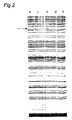
- Sequences were compared to look for SNPs. This was done for 3 male-specific fragments. Y-fragments sequenced in one or both ways are indicated (table 1). One putative SNP in a Y-fragment of 330 bp generated with primer combination E48T46 was detected this way (table 2). By fingerprinting the male and female individuals with this primer combination also an AFLP polymorphism for this fragment was detected (Fig. 2). There were no female individuals from which this fragment was amplified. The AFLP polymorphism was present within all 5 groups of male individuals, however in many cases the fragment was badly amplified and hard to score. Primer combinations detecting Y-chromosome derived AFLP fragments.
- the size of the Y-chromosome fragments is indicated in basepairs.
- Y-chromosome fragments sequenced in pools or sequenced as clones are indicated.
- Primer Combination Y-fragments in bp Sequenced in pools Sequenced as clones E17T35 170 E17T43 170 60 55 E48T31 285 X 170 X X E48T39 170 155 E48T43 170 X E48T46 330 X X 310 X E49T35 55 X E49T41 65
- Table 2 The putative SNP in fragment E48T46-330 as determined by sequencing 18 random clones harbouring this fragment; the SNP is located at position 97 from the TaqI site of the AFLP fragment..
- AFLP is an efficient way to screen for male-specific AFLP fragments and AFLP polymorphisms. Sequencing of male-specific AFLP fragments in pools to detect SNPs was not successive. Sequencing of cloned male-specific AFLP fragments resulted in detection of one putative SNP, however, this approach is very inefficient.
- Minisequencing was explored as a method to detect AFLP fragments.
- Minisequencing using AFLP template can be applied as a non-random method for SNP detection by using predetermined sequence information.
- minisequencing can also be applied to detect SNPs. Prerequisite is that at least 2 alleles are known, which often is not the case in AFLP, that mostly generates dominant markers.
Landscapes
- Chemical & Material Sciences (AREA)
- Organic Chemistry (AREA)
- Life Sciences & Earth Sciences (AREA)
- Zoology (AREA)
- Wood Science & Technology (AREA)
- Proteomics, Peptides & Aminoacids (AREA)
- Health & Medical Sciences (AREA)
- Engineering & Computer Science (AREA)
- Microbiology (AREA)
- Biochemistry (AREA)
- Physics & Mathematics (AREA)
- Molecular Biology (AREA)
- Biotechnology (AREA)
- Biophysics (AREA)
- Analytical Chemistry (AREA)
- Immunology (AREA)
- Bioinformatics & Cheminformatics (AREA)
- General Engineering & Computer Science (AREA)
- General Health & Medical Sciences (AREA)
- Genetics & Genomics (AREA)
- Chemical Kinetics & Catalysis (AREA)
- Measuring Or Testing Involving Enzymes Or Micro-Organisms (AREA)
- Application Of Or Painting With Fluid Materials (AREA)
Abstract
Description
- The present invention relates to a method for analysing nucleic acid sequences and to an array for use in such a method.
- In particular, the invention relates to a method and array for determining the presence or absence of single nucleotide polymorphisms (SNP) in genomic DNA or a sample of restriction fragments derived from genomic DNA, such as AFLP fragments.
- A number of methods for analyzing nucleic acid sequences are known. In general, these methods comprise immobilization of the sequences to be analysed, for instance by blotting; hybridization of the sequences with a labeled DNA-or RNA probe; stringency washes to remove non-hybridized material; followed by detection of those sequences that have hybridized with the probe.
- Examples of techniques that are used for the analysis of nucleic acid sequences are described inter alia in WO 98/59066, which describes a method for the identification of multiple SNPs in a single reaction that can be used in combination with genomic. libraries or with restricted PCR products. WO-A 990531 describes various methods such as single nucleotide extension with labeled nucleotides using nucleic acid molecules that are immobilised on solid arrays for DNA fingerprinting using AFLP. WO 9617082 discloses modified AFLP assays for the detection of genetic polymorphisms.
- Such techniques are sometimes carried out after prior amplification-such as by PCR-of the starting nucleic acid sequences, usually a mixture of restriction fragments from a genomic DNA. The resulting mixture of amplified fragments is then separated, for instance on the basis of differences in length or molecular weight, such as by gel-electrophoresis, and then visualised, i. e. by blotting followed by hybridization. The resulting pattern of bands is referred to as a DNA fingerprint.
- Usually in DNA fingerprinting, fingerprints of closely related species, subspecies, varieties, cultivars, races or individuals are compared. Such related fingerprints can be identical or very similar, i. e. contain a large number of corresponding-and therefore less informative-bands. Differences between two related fingerprints are referred to as "DNA polymorphisms". These are DNA fragments (i. e. bands) which are unique in or for a specific fingerprint. The presence or absence of such polymorphic bands, or the pattern thereof, can be used as a genetic marker, i. e. to identify a specific species, subspecies, variety, cultivar, race or individual, to establish the presence or absence of a specific inheritable trait, of a gene, or to determine the state of a disease.
- For a further discussion and definitions of DNA-fingerprinting, DNA typing, DNA polymorphisms, genotyping, PCR and similar techniques, reference is made to the discussion of the prior art in EP-0 534 858A1.
- The art also describes oligonucleotide arrays for analysing nucleic acid sequences or mixtures thereof, vide for instance WO 97/27317, WO 97/22720, WO 97/43450, EP 0 799 897, EP 0 785 280, WO 97/31256, WO 97/27317 and WO 98/08083.
- WO 90/09455, WO 91/02087, WO 91/13075, WO 92/15712 and EP 0 123 513 all describe techniques for detecting point mutations at a predetermined site of a DNA sequence (usually genomic DNA or full length cDNA), which are generally referred to as "minisequencing". In particular, such minisequencing techniques may be used to detect differences between otherwise related or even identical DNAs at a single, specific base position. Such differences are also referred to as "Single Nucleotide Polymorphisms" or SNPs.
- Minisequencing is based upon extension of a primer that hybridizes with part of the DNA sequence such that the 3'end of the primer is immediately adjacent to the point mutation. The hybrid thus obtained is contacted-usually in a single "one-tube" reaction step-with a mixture containing at least one detectable nucleotide, under conditions that extension of the primer with the detectable nucleotide takes place when the detectable nucleotide is complementary to the nucleotide present at the site of the point mutation, but no extension takes place when the detectable nucleotide does not correspond to the nucleotide present at the point mutation, so that whether or not extension of the primer takes place provides information on the nucleotide present at the site of the point mutation. (Alternatively, 2-4 differently labeled nucleotides can be used simultaneously, the extension with a specific labeled nucleotide being indicative for the presence of a complementary nucleotide at the site of mutation). Besides being provided with a detectable functionality, the detectable nucleotide (s) and reaction mixtures/conditions used in mini-sequencing are also chosen such that, after the labeled nucleotide has been added to the primer, no further extension of the primer takes place ("terminator mixtures"). For instance, chain terminating dideoxyribonucleoside triphosphates (ddNTPs) or thionucleotides can be used.
- The method described herein differs from minisequencing at least in the following, non-limiting aspects:
- a) minisequencing is used to detect/determine point mutations (SNP) at a specific, known site in the genome, which is commonly amplified by PCR using a pair of flanking primers, and is not used to determine the SNP alleles present in (a mixture) of AFLP fragments.
- b) partly as a consequence of a), in minisequencing, (amplified) total genomic or cDNA is used as the starting material, not a mixture of (amplified) restriction fragments;
- c) in minisequencing, usually only one or at most a small number of mutations are investigated simultaneously; in the invention, a mixture of (amplified) restriction fragments will usually be tested for the presence of at least 100 to more 1000 markers simultaneously;
- d) in minisequencing, it is generally difficult to generate template DNA in multiplex form;
- e) partly as a consequence of c) and d), in minisequencing, arrays containing a large number of different primers will not be used.
-
- Selective restriction fragment amplification or AFLP, a DNA-fingerprinting technique which requires no prior knowledge of the sequence to be analysed, is described in the European patent application 0 534 858 by applicant. This technique generally comprises the steps of:
- (a) digesting a nucleic acid, in particular a DNA, with one or more specific restriction endonucleases, to fragment said DNA into a corresponding series of restriction fragments;
- (b) ligating the restriction fragments thus obtained with at least one double stranded synthetic oligonucleotide adapter, one end of which is compatible with one or both of the ends of the restriction fragments, to thereby produce tagged restriction fragments of the starting DNA;
- (c) contacting said tagged restriction fragments under hybridizing conditions with at least one oligonucleotide primer;
- (d) amplifying said tagged restriction fragment hybridized with said primers by PCR or a similar technique so as to cause further elongation of the hybridized primers along the restriction fragments of the starting DNA to which said primers hybridized; and
- (e) identifying or recovering the amplified or elongated DNA fragment thus obtained.
-
- The thus amplified DNA-fragments can then be analysed and/or visualised, for instance by means of gel-electrophoresis, to provide a genetic fingerprint showing bands corresponding to those restriction fragments that have been linked to the adapter, recognized by the primer, and therefore amplified during the amplification step; the resulting bands providing information on the specific restriction site pattern of the starting DNA.
- For a further description of AFLP, its advantages, its embodiments, as well as the techniques, enzymes, adapters, primers and further compounds and tools used therein, reference is made to EP-A-0 534 858 and co-pending European applications EP 976 835 and EP 974 672, all by applicant
- Also, in the description hereinbelow, the definitions given in paragraph 5. lof EP-0 534 858 will be used, unless indicated otherwise.
- By comparing AFLP-fingerprints from related individuals, bands which are unique for each fingerprint can be identified. These polymorphisms, referred to as "AFLP-markers", can again be used to identify a specific individual, cultivar, race, variety, subspecies or species, and/or to establish the presence or absence of a specific inherited trait, gene or disease state. The detection of such markers, however, is not the object of the present application. Besides such "marker fragments", an AFLP-fingerprint generally also contains a number of bands which are the same for the fingerprints compared (i. e. which are not polymorphic). Such "constant" AFLP-fragments therefore cannot be used as a marker, e. g. based upon mobility differences upon gel-electrophoresis. Nevertheless, such constant AFLP fragments may contain internal sequence variations, such as SNP, which can be detected by minisequencing. Particularly SNP located in constant AFLP fragments are of interest in this respect because both SNP alleles can be detected. In a similar fashion but dependent on the sequence context, it may be possible to detect insertion-deletion type polymorphisms located in constant AFLP fragments by minisequencing, although these can usually be detected by gel-electrophoresis as well.
- Thus, generally, the present invention is directed to a method for detecting such SNP contained in these corresponding (constant) AFLP bands, which therefore can make these non-polymorphic bands, which ordinarily do not provide any useful information when conventional AFLP-fingerprinting is used, informative as genetic markers as well.
- In particular, the invention aims to provide such a method for the detection of SNPs which benefits from the general advantages of AFLP-techniques, and in particular from the advantage that by using AFLP-methodology restriction fragments can be efficiently generated and provided for detection/analysis in multiplex form.
- However, despite the advantages offered by AFLP-methodology, the AFLP-techniques described above still suffer from the disadvantage that the amplified fragments have to be separated (i.e. by gel-electrophoresis) and visualized (i.e. by generation of a fingerprint). These are very elaborate and time consuming procedures, which require special apparatus, such as electrophoresis and auto-radiography equipment and are limited by the resolving power of the gel system used. As a consequence, such detection by polyacrylamide gelelectrophoresis may be a limiting factor of the enormous multiplex capacity of the AFLP-technology for high throughput marker detection. The invention aims to overcome these limitations.
- Thus, one of the main objects of the invention is to provide a technique for analysing nucleic acid sequences, in particular for detecting nucleic acids sequence variations such as SNP, by which a high(er) throughput compared to conventional minisequencing can be achieved, and which in particular no longer requires the use of gel-electrophoresis and preferably also avoids the use of autoradiography and/or radioactive materials, and thereby improves throughput.
- This is achieved by the method of the invention, which is based upon specific extension/elongation of a oligonucleotide sequence (i.e.primer) that is complementary to (part of) the fragment to be detected, and located immediately 5' upstream of the SNP contained in this fragment, such that extension of the complementary oligonucleotide at the 3'end will only take place with the labeled ddNTP complementary to the SNP allele contained in the fragment, and will not take place with any other labeled ddNTP. Thus, the extension product (s) of the minisequencing reaction will be indicative for the SNP genotype at this locus.
- This extension-based detection can be used instead of gelelectrophoresis/autoradiography, for instance in analysing AFLP reaction mixtures, in particular for routine high-throughput genotyping. For this purpose, the invention inter alia also provides an array of oligonucleotides that can be used to test an AFLP reaction mixture for the presence of several (single nucleotide) polymorphisms simultaneously, i. e. in a single detection step.
- Thus, for the purposes of the detection of such "internal SNPs" as described above, the invention generally provides the main strengths of AFLP-technology-in that it allows fragments to be generated/provided for detection in multiplex form without the limitations on throughput associated with conventional gelelectrophoresis/autoradiography and without the limitations posed by commonly used methods for amplification of templates for minisequencing based on amplification of genomic DNA or cDNA.
- The invention therefore relates to a method for determining the genotypes of polymorphic loci amplified in a mixture of restriction fragments that have been amplified using AFLP, whereby an oligonucleotide sequence is used that is essentially complementary to part of a target restriction fragment, and located adjacent (upstream) to the polymorphism to be detected, whereby the target restriction fragment is a fragment that has the same gel-electrophoretic mobility in AFLP-fingerprints of at least two related individuals, and whereby the method comprises the steps of :
- a) contacting the mixture of restriction fragments with the oligonucleotide sequence under hybridization conditions, such that when the target restriction fragment is present, a hybrid is formed between the target restriction fragment and the oligonucleotide sequence, such that resulting hybrid has at least one unpaired nucleotide of the target restriction fragment directly adjacent to the 3'end of the oligonucleotide sequence;
- b) adding at least one labelled nucleotide or nucleotide analogue to the mixture resulting from step a), under conditions suitable for extension of an oligonucleotide; such that when a hybrid of the target restriction fragment and the oligonucleotide is present, and said at least one labelled nucleotide or nucleotide analogue is complementary to the at least one unpaired nucleotide of said target restriction fragment directly adjacent to the 3'end of the oligonucleotide sequence, the nucleotide sequence is extended with the labelled nucleotide or nucleotide analogue;
- c) detecting the presence or absence of any hybrid (s) with (an) added labelled nucleotide (s) or nucleotide analogue (s), and/or of any oligonucleotide sequence with (an) added labelled nucleotide (s) or nucleotide analogue (s).
-
- The method of the invention may further contain one or more steps in which the hybrid formed between the target restriction fragment and the oligonucleotide sequence is separated from any restriction fragments not hybridized to a oligonucleotide sequence, as well as any other unwanted sequences or compounds. Such a step may be carried out after step a), after step b), or both.
- Furthermore, it will be clear to the skilled person that the order in which the various compounds/sequences (i. e. the restriction fragments, the oligonucleotide and the labeled nucleotide) are added to/mixed with each another in steps a) and b) may be varied, and such variations will fall within the scope of the invention and claims. However, the order described above represents the most convenient way of carrying out the invention.
- The invention further relates to a method for determining the SNP genotype present in one or more target restriction fragments in a mixture of restriction fragments comprising the steps of:
- a) contacting the mixture of restriction fragments under hybridizing conditions with at least one oligonucleotide sequence, said oligonucleotide sequence being complementary to part of a target restriction fragment, but not to any other restriction fragment in the mixture, such that the resulting hybrid has at least one unpaired nucleotide of said target restriction fragment directly adjacent to the 3'end of the oligonucleotide sequence;
- b) extending the oligonucleotide sequence with at least one labeled nucleotide or nucleotide analog, said at least one labeled nucleotide or nucleotide analog being complementary to the at least one unpaired nucleotide of said target restriction fragment directly adjacent to the 3'end of the oligonucleotide sequence;
- c) detecting the oligonucleotide sequence with the added labeled nucleotide(s) or nucleotide analog(s).
-
- Again this method can contain one or two optional steps for separating the target restriction fragments hybridized with the oligonucleotide sequence from any restriction fragments not hybridized to a oligonucleotide sequence; as well as other unwanted sequences and excess reagents.
- In the method of the invention, during step a), the mixture of restriction fragments will usually be contacted simultaneously with at least 3, preferably at least 10, more preferably at least 50, most preferably at least 100 different oligonucleotide sequences, wherein each oligonucleotide sequence is most preferably specific for only one target restriction fragment, i.e. a restriction fragment harboring (or at least suspected to harbour) a (single nucleotide) polymorphism. For this purpose, in the method of the invention, the oligonucleotide sequence(s) used preferably are bound to a solid support, more preferably so as to form an array, and such arrays form a further aspect of the invention.
- By "an oligonucleotide specific for a target restriction fragment" is meant that the oligonucleotide sequence is essentially complementary only to the intended target restriction fragment, but most preferably not essentially complementary to any other restriction fragment in the mixture. An oligonucleotide sequence is considered "essentially complementary to" a target restriction fragment when it has a high degree of sequence homology with the corresponding part of the target restriction fragment (determined on the basis of the full length of the oligonucleotide sequence), i.e. of at least 90%, preferably at least 95%, most preferably at least 99%.
- In the present description, the restriction fragment containing the polymorphism to be detected is referred to as the "Target Sequence".
- Generally, a Target Sequence will be characterized in that it is obtainable/obtained by cutting a starting DNA, usually a genomic DNA or cDNA, with at least one, but commonly with two restriction enzymes, of which preferably at least one is a "frequent cutter" restriction enzyme and at least one is a "rare cutter" restriction enzyme. (In case of genomic DNA, the "frequent cutter" serves the purpose of reducing the size of the restriction fragments to a range of sizes which are amplified efficiently and in a manner compatible with the detection technique used, and the "rare cutter" serves the purpose of controlling the total number of fragments generated. For both, reference is made to EP-A-0 534 858 and EP-A-0 721 987 by applicant) Non-limiting examples of suitable frequent cutter enzymes include MseI and TaqI. Non-limiting examples of commercially available rare cutters include PstI, HpaII, MspI, ClaI, HhaI, EcoRI, EcoRII, BstBI, HinPI, HinDIII, MaeII, BbvI, PvuII, XmaI, SmaI, NciI, AvaI, HaeII, SalI, Xhol, BstYI, BamHI, BglII and PvuII, of which PstI, HpaII,MspI, ClaI, EcoRI, EcoRII, BstBI, HinP1, HinDIIl, BamHI, BgllI and MaeII are preferred.
- Preferably, the Target Sequence is a restriction fragment as present in a mixture of restriction fragments, more preferably an amplified restriction fragment as present in a mixture of restriction fragments and/or amplified restriction fragments.
- Even more preferably, the Target Sequence is a restriction fragment that corresponds to a "constant" AFLP-fragment (or part thereof), e. g. a restriction fragment amplified by AFLP as present in reaction mixture obtained after AI amplification.
- The oligonucleotide sequence used to detect the Target Sequence will be referred to hereinbelow as the "Detection Oligonucleotide", the "Detection Sequence" or the "Detection Primer", which terms are to be considered equivalent.
- Each Detection Sequence should at least in part be complementary to a specific Target Sequence, as defined above. The Detection Sequence may be any nucleic acid (i. e. DNA or RNA) but is preferably DNA. The Detection Sequence will generally have a size of about 10 to 100 base pairs, preferably about 20 to 50 base pairs. The Detection Sequences may all be of the same size, or may be of different sizes. Also, when immobilized on an array as described below, the Detection Sequences may further contain a "tail"-such as a polyT sequence-for and improved accessibility to the Target Sequence.
- The Detection Sequence can be obtained in any suitable manner. For instance, when one or more constant AFLP-fragments harboring one or more single nucleotide polymorphisms have been identified in an AFLP fingerprint of a specific set of (preferably related) individuals, the sequence of each band/fragment may be determined in a manner known per se, and Detection Sequences may be synthesized that are complementary to any part of the sequence of each of the constant bands, i.e. using an automated DNA-synthesizer or in any other manner known per se. Also, solid phase nucleic acid synthesis techniques may be used, which may result directly in an array with the desired Detection Sequences, as described below. Furthermore, the Detection Sequence may be obtained using known techniques of genetic engineering, for instance by primer extension using the Target Sequence as a template, and/or by using one or more restriction enzymes, optionally using amplification.
- Also, the Detection Sequence may obtain one or more "alternative nucleosides" as described in applicants European patent 974672, so that the Detection Sequence is an "alternative primer" as described therein. Similarly, in step b), the Detection Sequence may be extended with such an alternative nucleoside/nucleotide, provided with a label. Examples thereof include the bases Inosine (I) and Uracil (U), as well as dUTP and dITP, and these are included within the term "labeled nucleotide analog" as mentioned above. It is to be understood that the presence of such alternative nucleosides does not prevent the Detection Sequence and the Target Sequence to be essentially complementary to one another as defined above.
- As mentioned above, the Detection Sequences are preferably bound to a solid support, more preferably so as to form an array. Such an array will generally comprise at least 10, more specifically at least100, more preferably at least1000 different Detection Sequences. For a "high-density array" or "micro-array", the total number of Detection Sequences can be in the range of 1000-100.000 per cm2 of surface area.
- The Detection Sequences will generally be bound to the carrier in such a way that each Detection Sequence is attached to, and corresponds with, a specific, distinct part of the carrier, so as to form an independently detectable area on the carrier, such as a spot or band. This makes it possible to "read" the array by scanning (i. e. visually or otherwise) the areas to which each Detection Sequence (i.e. a sequence corresponding to a marker of interest) is attached. For a general description of such arrays, reference is made to applicants co-pending PCT application WO00/61800 "Method for the analysis of AFLP reaction mixtures using primer extension techniques" filed April 10, 2000. In step a) of the invention, the one or more Detection Sequences (or the array of the Detection Sequences) are contacted with the sample (i.e. mixture of restriction fragments) to be analysed under hybridizing conditions known per se. Suitable hybridisation conditions (i.e. buffers used, salt strength, temperature, duration) can be selected by the skilled person, on the basis of experience or optionally after some preliminary experiments. These conditions may vary, depending on factors such the size of the Detection Sequences, the CG-content of the Detection Sequences and whether the Detection Sequence or Target Sequence is bound to an array as described below. Suitable hybridisation conditions are for instance described in Sambrook et al., Molecular Cloning. A Laboratory manual, (1989) 2nd. Ed. Cold Spring Harbour, N. Y.; Berger and Kimmel,"Guide to Molecular Cloning Techniques", Methods in Enzymology", (1987), Volume 152, Academic Press Inc., San Diego, CA; Young and Davis (1983) Proc.Natl. Acad. Sci. (USA) 80: 1194;Laboratory Techniques in Biochemistry and Molecular Biology, Vol. 24, Hybridization with Nucleic Acid Probes; P. Thijssen, ed., Elsevier, N. Y. (1993), as well as WO 97/43450.EP-A-0 799 897, WO 97/27317, WO 92/10092, WO 95/1195, WO 97/22720 andUS-A-5,424,186, and generally may comprise temperatures between25-70 C, preferably35-65 C, a duration of between 1 minute and 30 hours, preferably about 15 minutes to 2 hours, and the use a suitable buffer, such as a'Tris-buffer. The hybridisation conditions are preferably chosen such that each Detection Sequence will only form a hybrid (duplex) with a Target Sequence with which the Detection Sequence is essentially complementary as defined above, and otherwise will not form any hybrid.
- Especially preferred hybridisation conditions are those known per se for primer extension, such as the primer extension conditions used in minisequencing techniques, i. e. as described in WO 90/09455, WO 91/02087, WO 91/13075, WO 92/15712 and EP 0 123 513. This has the advantage that both step a) and step b) above can be carried out under the same "primer extension conditions", i. e. in a single reaction, using the same buffer, etc, optionally under repeated temperature cycling.
- When the mixture of restriction fragments is contacted with a Detection Sequence, and a Target Sequence for said Detection Sequence is present, a hybrid between the Target Sequence and the Detection Sequence will be formed. Said hybrid should be such-i. e. the Detection Sequence should be designed to be complementary to the Target Sequence such-that there is at least one unpaired nucleotide of the Target Sequence directly adjacent to the 3'end of the Detection Sequence, such that, in step b), the Detection Sequence is extended, e. g. with preferably with at most five, preferably at least most three, and most preferably only one nucleotide.
- During step b) of the method of the invention, the at least one position corresponding to said unpaired nucleotide (s) in the Target Sequenceis "filled in" with at least one nucleotide, by means of elongation of the Detection Sequence, in which the Target Sequence serves as a template for an extension reaction. Therefore, if the Target Sequence that corresponds to the specific Detection Sequence is not present, no hybrid will be formed, and said Detection Sequence will not be extended, showing that the (allelic variant of the) Target Sequence was not present in the starting mixture.
- Preferably, said nucleotides used in step b) to extend the Detection Sequence nucleotides or nucleotide analogs that can be detected in a manner known per se, for instance by means of a detectable label, and such a nucleotide is referred to as a "Detectable Nucleotide". For a further description of such "Detectable Nucleotides", reference is again made to applicants co-pending PCT application WO00/61800 "Method for the analysis of AFLP reaction mixtures using primer extension techniques" filed April 10, 2000.
- According to one embodiment of the invention, the mixture used in step b) for extending the Detection Sequence contains only one (type of) Detectable Nucleotide, i.e. one or more Detectable Nucleotides that are complementary to only one of A, T, C or G. Under these conditions, only those target sequences that: 1) can hybridize successfully with the Detection Sequence; and 2) have in their sequence, on a position directly adjacent to the part of the sequence that hybridizes with the Detection Sequence, a nucleotide complementary to the Detectable Nucleotide, will lead to extension of the Detection Sequence with the Detectable Nucleotide and thereby to a positive signal, indicative for the presence of the corresponding allelic variant said Target Sequence in the mixture to be analysed.
- In another embodiment, the mixture used in step b) for extending the Detection Sequence will contain two, three or four different Detectable Nucleotides. By "different Detectable Nucleotide" is meant that each Detectable Nucleotide is complementary to a different unpaired nucleotide A, T, G or C on the Target Sequence, and each Detectable Nucleotide is labeled in such a way that it can be distinguished-i.e. using a suitable detection technique-from the other Detectable Nucleotide (s) present in the extension reaction and/or the extended Detection Sequence, so that extension of the Detection Sequence with a specific Detectable Nucleotide can be indicative for the presence of a specific nucleotide on the corresponding position of the Target Sequence.
- The conditions for extension of the Detection Sequence with the Detectable Nucleotide may include all conditions known per se for the extension of a oligonucleotide or primer hybridized to a nucleic acid template, for instance as described in the art for minisequencing, such as in WO 90/09455, WO 91/02087, WO 91/13075, WO 92/15712 and/or EP 0 123 513. These include use of a polymerase such as E. coli DNA polymerase, Klenow fragment, bacteriophage T7 DNA polymerase, bacteriophage T4 DNA polymerase, Taq DNA polymerase and AMV transcriptase, in a suitable buffer, such as an aqueous buffer containing Mg-salts, at a temperature of 280 C, preferably 30-70 C.
- Optionally, alter the hybridization of step a), and/or after the extension reaction of step b), any restriction fragments not hybridized to a Detection Sequence, as well as any other unwanted sequences, compounds, or excess reagents, may be removed, for instance by washing the array.
- After the Detection Sequence in the Target Sequence/Detection Sequence duplexes have been extended with the Detectable Nucleotide ("DN"), the resulting mixture is analysed to determine which Detection Sequence have been extended with a DN, using a suitable detection technique. This analysis may be carried out while the Detection Sequence (s) are still hybridized to the corresponding Target Sequence (s), or Target Sequence (s) may be removed/separated from the Detection Sequence (s) in a separate step prior to detection and analysis.
- For a more general description of techniques/methodology involving the use of Target Sequences, Detection Sequences, Detectable Nucleotides, arrays, etc. as used hereinabove for the purposes of the present invention, reference is again made to applicants co-pending PCT application WO0061800 "Method for the analysis of AFLP reaction mixtures using primer extension techniques" filed April 10,2000, and in particular to Figure 9 thereof.
- The analysis of the array may be carried out in any manner known per se, including optical techniques, spectroscopy, chemical techniques, biochemical techniques, photochemical techniques, electrical techniques, lightscattering techniques, colorimetric techniques, radiography techniques, etc., depending on the label in the Detectable Nucleotides. Suitable techniques are for instance described in WO 97/27317, WO 97/22720, WO 97/43450, EP 0 799 897, WO 97/31256, WO 97/27317 and WO 98/08083. For instance, the array may be inspected visually or by (confocal) microscopy; by spectroscopy; using photographic film, electronic detectors or a CCD camera; by colorimetric or (bio) chemical assay; or by any other suitable method, for which again reference is made to WO 97/27317, WO97/22720, WO 97/43450, EP 0 799 897, WO 97/31256, WO 97/27317 and WO 98/08083. Automated scanning equipment based upon such techniques may also be used.
- Generally, the signal detected will be indicative for the (Detectable) Nucleotide with which the Detection Sequence has been extended, which in turn will be indicative for the base (s) present in the Target Sequence-e. g in the hybrid of the Target Sequence and the Detection Sequence-directly adjacent the 3'-end of the Detection Sequence. Thus, in this manner, the method of the invention not only allows for the detection of (any) SNPs in the Target Sequence-e. g. directly adjacent to the Detection Sequence-but makes it possible to determine which specific base is present at the locus of the SNP in the Target Sequence.
- Optionally, the relative intensity or absolute magnitude of a signal generated by a Detectable Nucleotide on a specific site on the array may be used as a relative indication or an absolute measure of the amount of the corresponding allelic variant of the Target Sequence fragment present in the original sample, for instance as described in WO 98/08083.
- The array of the invention can conveniently be provided as a kit of parts comprising the array and other components for use with the array, such as hybridization buffers, extension buffers, polymerase, labeled nucleotides, containers/paekaging and manuals, as well as components for AFLP-kits known per se. The array of the invention may even be in the form of a hand-held device such as a dipstick.
- In principle, method and arrays of the invention can be applied to, and can be used for, any purpose for which an SNP can be used and/or identified. This includes, but is not limited to, all the uses described in the art for SNPs known per se, such as detection of (SNP-)alleles.
- In a further aspect, the invention relates to results and/or data obtainable by analysing a mixture of restriction fragments with the method of the invention. These results or data may for instance be in the form of an image, of a score, of digital or analog data, or in another suitable form, and may optionally be stored on a suitable data carrier, including paper, photographic film, computer disc of files, a database, etc.. This data may be as directly obtained from analysing or scoring the array, or may have been processed further.
- The invention will now be further illustrated by means of the following non-limiting Experimental Part, as well as by the enclosed Figures, which show:
- Fig.1:
- Screening for Y-fragments and Y-polymorphisms using 5 male pools and one female pool, respectively. Primer combinations used to generate the fingerprints are indicated above the panels. Y-fragments are indicated with arrows.
- Fig.2:
- Fingerprints of 48 male individuals generated with primer combination E48T46. The 330 bp Y-polymorphic fragment is indicated. Also the different populations, the individuals come from, are indicated (Bosnian: lanes B 1-12, Saami: lanes L 13-22, Hanti: lanes X 23-32, Mansi: lanes M 33-42, Somali lanes S 43-48).
- The overall objective of the invention is to develop a high throughput DNA marker system for gene mapping and genetic diagnostics, and to demonstrate its utility for genetic analysis of human populations as a prelude to the mapping of complex diseases.
- For future molecular diagnostic purposes the aim will be to generate many datapoints at low cost. This will only be possible by using procedures that do not need the costly and time consuming step of slabgel electrophoresis. The strategy to use series of mutation- dedicated oligonucleotides bound to a solid support should allow the simultaneous detection of hundreds to thousands of point mutations, thereby generating a comprehensive genetic fingerprint of an individual. Current estimates of the cost of such mass-produced chips are in the tens of dollars, a moderate price for routine diagnostic purposes in humans. Although the detection of many point mutations on a chip format is feasible on relatively small numbers (< 200) of SNPs, for higher numbers of markers there are a number of problems to be solved:
- 1. It is currently unclear as to how the target molecules for chip-analysis should be amplified, in an efficient way.
- 2. Having oligos on a chip for hybridization to a complex mixture of target sequences poses problems in sequence-specific hybridization. This can only be remedied by using several oligos to verify each possible polymorphic site. This limits the capacity of the system. In addition, sequence-dependent hybridization efficiencies make it necessary to be able to detect hybridization over a wide dynamic range.
-
- In this Example, we aim to design a better alternative for detection of SNPs on a microchip format. AFLP allows the selective amplification of large sets of restriction fragments. The AFLP technology to date is the most efficient multiplex PCR technique available, in effect capable of quantitative whole-genome amplification. Therefore, the AFLP technique is the perfect enabling technology to prepare any number of templates for SNP analysis. To alleviate the problems with low specificity of the hybridization assay, the single nucleotide primer extension reaction used in the minisequencing assay offers a superior technology due to the inherent specificity of DNA polymerases.
- Human population DNA samples; of each population 10 male and 10 female samples were present.
- Bosnian (muslims, Tuzla)
- Saami (Lovozero, Russia)
- Hanti (Ob-river, Siberia)
- Mansi (Ob-river, Siberia)
- Somali (Somalia, Africa)
-
- Oligonucleotides were synthesized according to standard procedures, or purchased from MWG - Biotech GmbH (Germany).
- AFLP templates were prepared according to standard procedures (Vos et al. 1995), using EcoRI and TaqI as the enzyme combination. AFLP reactions were preceeded by preamplifications with one selective nucleoside on each primer. AFLP reactions were performed with primer combinations with 3 selective nucleosides on each primer.
- For amplifying the fragments harbouring the Y-chromosomal SNPs an adaptation of the AFLP protocol was used that uses only one restriction enzyme (MseI) for template preparation.


- AFLP templates were prepared according to standard procedures (Vos et al. 1995), using EcoRI and MseI as the enzyme combination. AFLP reactions were preceeded by preamplifications with one selective nucleoside on each primer. AFLP reactions were performed with primer combinations with 2 or 3 selective nucleosides on each primer.
- AFLP-fragments were cut out from a dried polyacrylamide gel, reamplified with the same primer combination that was used to generate the fingerprint and either sequenced directly using AFLP primers, or cloned into plasmid pCR2.1-TOPO (TOPO TA Cloning kit, Invitrogen) and sequenced using M13 forward and reverse primers. Sequencing reactions were performed using the dye-terminator sequencing kit purchased from Perkin-Elmer and were analyzed on an ABI 377 sequencer.
- Minisequencing on ss DNA was performed according to Syvänen et al. (1990, 1993) with the following modifications. AFLP reactions were performed using one biotinylated primer and one standard primer and biotinylated AFLP products were collected on streptavidine-coated magnetic beads (Dynal). Subsequently, minisequencing was performed on either 1) the biotinylated strand that remained bound to the beads after denaturation with NaOH or 2) the non-biotinylated strand that could be separated from the biotinylated strand by boiling and pipetting off the supernatant. Subsequently, further purification of the supernatant was performed by adding shrimp alkaline phosphatase and exonuclease I to get rid of any leftover primer and dNTPs (Chen et al. 1997).
- The minisequencing reaction on the biotinlyated strand was carried out in 10 mM Tris-HCl pH 9.5, 50 mM KCl, 20 mM MgCl2, 0.02% Tween-20, 2 µl of 5 µM detection primer, 0.3 µl labeled 33P ddNTP (Amersham) complementary to the nucleotide to be detected, 1 unit of Thermosequenase and water to a total volume of 50 µl. The reaction was incubated for 10' at 50 °C, beads were washed and minisequencing products were released from the beads by denaturation in formamide dye at 94 °C, spotted on Whatman paper and exposed to Fuji phosphoimage screens for 16 hours. Patterns were visualized using a Fuji BAS-2000 phosphoimage analysis system (Fuji Photo Film Company Ltd, Japan).
- The minisequencing reaction on the non-biotinlyated strand was performed 1) in the same way as described above, however a biotinylated detection primer was used: ds products were collected on streptavidine-coated magnetic beads (Dynal), beads were washed, spotted on filters and exposed to Fuji phosphoimage screens for 16 hours. Patterns were visualized using a Fuji BAS-2000 phosphoimage analysis system (Fuji Photo Film Company Ltd, Japan). 2) Minisequencing reactions were performed on glass slides with primers attached to them. Slides were washed and exposed to Fuji phosphoimage screens for 16 hours. Patterns were visualized using a Fuji BAS-2000 phosphoimage analysis system (Fuji Photo Film Company Ltd, Japan).
- Minisequencing on ds DNA was performed according to Syvänen et al. (1990, 1993) with the following adaptations. AFLP reactions were performed and treated with shrimp alkaline phosphatase and exonucleaseI to get rid of any leftover primer and dNTPs (Chen et al. 1997). Subsequently, minisequencing was performed in 10 mM Tris-HCl pH 9.5, 50 mM KCl, 20 mM MgCl2, 0.02% Tween-20, 2 µl of 5 µM biotin labeled detection primer, 0.3 µl labeled 33P ddNTP (Amersham) complementary to the nucleotide to be detected, 5 µl 2µM ddNTPs, 1 unit of Thermosequenase. The PCR profile consisted of 35 cycles 15" 95 °C , 30 " 58 °C (Chen et al. 1997). Minisequencing products were collected on streptavidine-coated magnetic beads (Dynal), beads were washed, spotted on Whatman paper and exposed to Fuji phosphoimage screens for 16 hours. Patterns were visualized using a Fuji BAS-2000 phosphoimage analysis system (Fuji Photo Film Company Ltd, Japan).
- Coating of glass slides and binding of amino primers was performed as described by Guo et al. (1994). 1 µl of primers was spotted manually.
- Human DNA samples were pooled into either male or female pools: for the screening of male-specific fragments as many different male and female samples as possible were collected in one pool. For the screening for Y-polymorphisms, 3 different male pools were made with pooled DNA's from only I or 2 different populations to be able to detect quantitative differences in number of alleles present in a pool.
- 96 EcoRI/TaqI primer combinations were used to screen for male specific fragments; with 12 EcoRI/TaqI primer combinations out of those, male-specific fragments were detected (table 1, Fig. 1). A number of male-specific fragments isolated from AFLP fingerprints on pools was directly sequenced to search for male-specific polymorphisms between pools and within pools: for Y-polymorphisms within pools ambiguous sequence data were expected. This approach was not successful, since it was hard to isolate Y-chromosome derived fragments not contaminated with other AFLP fragments and, therefore, ambiguous sequence information was obtained anyway. As an alternative strategy, male-specific fragments isolated from AFLP fingerprints on pools were cloned, and 18 clones per fragment were sequenced. Sequences were compared to look for SNPs. This was done for 3 male-specific fragments. Y-fragments sequenced in one or both ways are indicated (table 1). One putative SNP in a Y-fragment of 330 bp generated with primer combination E48T46 was detected this way (table 2). By fingerprinting the male and female individuals with this primer combination also an AFLP polymorphism for this fragment was detected (Fig. 2). There were no female individuals from which this fragment was amplified. The AFLP polymorphism was present within all 5 groups of male individuals, however in many cases the fragment was badly amplified and hard to score.
Primer combinations detecting Y-chromosome derived AFLP fragments. The size of the Y-chromosome fragments is indicated in basepairs. Y-chromosome fragments sequenced in pools or sequenced as clones are indicated. Primer Combination Y-fragments in bp Sequenced in pools Sequenced as clones E17T35 170 E17T43 170 60 55 E48T31 285 X 170 X X E48T39 170 155 E48T43 170 X E48T46 330 X X 310 X E49T35 55 X E49T41 65 E50T33 170 E50T37 255 215 205 X 170 X E50T40 170 155 E51T31 160 

- The level of polymorphism in the human Y-chromosome is extremely low. AFLP is an efficient way to screen for male-specific AFLP fragments and AFLP polymorphisms. Sequencing of male-specific AFLP fragments in pools to detect SNPs was not succesful. Sequencing of cloned male-specific AFLP fragments resulted in detection of one putative SNP, however, this approach is very inefficient.
- Minisequencing was explored as a method to detect AFLP fragments. Minisequencing using AFLP template can be applied as a non-random method for SNP detection by using predetermined sequence information. By the method of the invention, using internal AFLP primers, minisequencing can also be applied to detect SNPs. Prerequisite is that at least 2 alleles are known, which often is not the case in AFLP, that mostly generates dominant markers.
Claims (12)
- Method for determining the genotypes of polymorphic loci amplified in a mixture of restriction fragments that have been amplified using AFLP, whereby an oligonucleotide sequence is used that is essentially complementary to part of a target restriction fragment, and located adjacent (upstream) to a polymorphism to be detected, whereby the target restriction fragment is a fragment that has the same gel-electrophoretic mobility in AFLP-fingerprints of at least two related individuals, and whereby the method comprises the steps of:a) contacting the mixture of restriction fragments with the oligonucleotide sequence under hybridization conditions, such that when the target restriction fragment is present, a hybrid is formed between the target restriction fragment and the oligonucleotide sequence, such that resulting hybrid has at least one unpaired nucleotide of the target restriction fragment directly adjacent to the 3'-end of the oligonucleotide sequence;b) adding at least one labelled nucleotide or nucleotide analogue to the mixture resulting from step a), under conditions suitable for extension of an oligonucleotide; such that when a hybrid of the target restriction fragment and the oligonucleotide is present, and said at least one labelled nucleotide or nucleotide analogue is complementary to the at least one unpaired nucleotide of said target restriction fragment directly adjacent to the 3'end of the oligonucleotide sequence, the nucleotide sequence is extended with the labelled nucleotide or nucleotide analogue;c) detecting the presence or absence of any hybrid (s) with (an) added labelled nucleotide (s) or nucleotide analogue (s), and/or of any oligonucleotide sequence with (an) added labelled nucleotide (s) or nucleotide analogue (s).
- Method according to claim 1, wherein step b) is carried out by contacting the hybrid of the target nucleic acid sequence and the oligonucleotide sequence, under conditions for extension of the oligonucleotide sequence, with a reaction mixture comprising at least two differently labelled nucleotides or nucleotide analogues that are complementary to only two of A, T, C or G, such that after extension of the oligonucleotide sequence, the presence of a specific labelled nucleotide or nucleotide oligonucleotide sequence, the presence of a specific labelled nucleotide or nucleotide analogue in the extended oligonucleotide sequence is indicative for the presence of A, T, C or G on the corresponding position of the target restriction fragment.
- Method according to claim 2 wherein the reaction mixture comprises at least three differently labelled nucleotides or nucleotide analogues that are complementary to only three, af A, T, C or G.
- Method according to claim 3 wherein the reaction mixture comprises at least four differently labelled nucleotides or nucleotide analogues that are complementary to only four af A, T, C or G.
- Method according to any of the preceding claims, wherein during step b), the at least one labelled nucleotide or nucleotide analogue is such that the extension of the oligonucleotide sequence is terminated after the oligonucleotide sequence has been extended with the at least one labelled nucleotide or nucleotide analogue.
- Method according to any of the preceding claims, wherein during step b), the oligonucleotide sequence is extended by a single labelled nucleotide or nucleotide analogue.
- Method according to any of the preceding claims, wherein the oligonucleotide sequences are immobilized on a solid support, preferably in the form of an array.
- Method according to any of the preceding claims, wherein the mixture of restriction fragments is obtainable by restricting a starting DNA with at least one restriction enzyme.
- Method according to claim 8 wherein a starting DNA is restricted by at least two restriction enzymes.
- Method according to claim 8 or 9 wherein a starting DNA is restricted by at least one rare cutter restriction enzyme and at least one frequent cutter restriction enzyme.
- Method according to claim 10 wherein the restriction of the starting DNA is followed by adapter ligation and amplification of (subsets of) the adapter ligated restriction fragments.
- Method according to any of the preceding claims, wherein the same oligonucleotide extension conditions are used for the hybridization of step a) and for the oligonucleotide extension of step b).
Priority Applications (1)
| Application Number | Priority Date | Filing Date | Title |
|---|---|---|---|
| EP00921164A EP1173612B1 (en) | 1999-04-09 | 2000-04-10 | METHOD FOR THE DETECTION AND/OR ANALYSIS, BY MEANS OF PRIMER EXTENSION TECHNIQUES, OF SINGLE NUCLEOTIDE POLYMORPHISMS IN RESTRICTION FRAGMENTS, IN PARTICULAR IN AMPLIFIED RESTRICTION FRAGMENTS GENERATED USING AFLP$m(3) |
Applications Claiming Priority (4)
| Application Number | Priority Date | Filing Date | Title |
|---|---|---|---|
| EP99201112 | 1999-04-09 | ||
| EP99201112 | 1999-04-09 | ||
| PCT/NL2000/000235 WO2000061801A2 (en) | 1999-04-09 | 2000-04-10 | METHOD FOR THE DETECTION AND/OR ANALYSIS, BY MEANS OF PRIMER EXTENSION TECHNIQUES, OF SINGLE NUCLEOTIDE POLYMORPHISMS IN RESTRICTION FRAGMENTS, IN PARTICULAR IN AMPLIFIED RESTRICTION FRAGMENTS GENERATED USING AFLP$m(3) |
| EP00921164A EP1173612B1 (en) | 1999-04-09 | 2000-04-10 | METHOD FOR THE DETECTION AND/OR ANALYSIS, BY MEANS OF PRIMER EXTENSION TECHNIQUES, OF SINGLE NUCLEOTIDE POLYMORPHISMS IN RESTRICTION FRAGMENTS, IN PARTICULAR IN AMPLIFIED RESTRICTION FRAGMENTS GENERATED USING AFLP$m(3) |
Publications (2)
| Publication Number | Publication Date |
|---|---|
| EP1173612A2 EP1173612A2 (en) | 2002-01-23 |
| EP1173612B1 true EP1173612B1 (en) | 2004-09-29 |
Family
ID=8240081
Family Applications (2)
| Application Number | Title | Priority Date | Filing Date |
|---|---|---|---|
| EP00921163A Expired - Lifetime EP1175512B1 (en) | 1999-04-09 | 2000-04-10 | Method for the analysis of AFLP reaction mixtures using primer extension techniques |
| EP00921164A Expired - Lifetime EP1173612B1 (en) | 1999-04-09 | 2000-04-10 | METHOD FOR THE DETECTION AND/OR ANALYSIS, BY MEANS OF PRIMER EXTENSION TECHNIQUES, OF SINGLE NUCLEOTIDE POLYMORPHISMS IN RESTRICTION FRAGMENTS, IN PARTICULAR IN AMPLIFIED RESTRICTION FRAGMENTS GENERATED USING AFLP$m(3) |
Family Applications Before (1)
| Application Number | Title | Priority Date | Filing Date |
|---|---|---|---|
| EP00921163A Expired - Lifetime EP1175512B1 (en) | 1999-04-09 | 2000-04-10 | Method for the analysis of AFLP reaction mixtures using primer extension techniques |
Country Status (8)
| Country | Link |
|---|---|
| US (1) | US7169552B1 (en) |
| EP (2) | EP1175512B1 (en) |
| AT (2) | ATE386819T1 (en) |
| AU (2) | AU773854B2 (en) |
| CA (2) | CA2366365A1 (en) |
| DE (2) | DE60038109T2 (en) |
| ES (1) | ES2298139T3 (en) |
| WO (2) | WO2000061801A2 (en) |
Families Citing this family (17)
| Publication number | Priority date | Publication date | Assignee | Title |
|---|---|---|---|---|
| ATE386819T1 (en) * | 1999-04-09 | 2008-03-15 | Keygene Nv | METHOD FOR ANALYZING AFLP REACTION MIXTURES USING PRIMER EXTENSION TECHNIQUES |
| US6596487B2 (en) | 2000-03-10 | 2003-07-22 | Ana-Gen Technologies, Inc. | Mutation detection using denaturing gradients |
| FR2806419A1 (en) * | 2000-03-14 | 2001-09-21 | Limagrain Sa | New markers for plant androgenesis, useful for evaluating androgenic potential, cloning of androgenesis genes and genetic analysis |
| CA2443999A1 (en) * | 2001-04-16 | 2002-10-24 | Applera Corporation | Methods and compositions for nucleotide analysis |
| DE10245145B4 (en) * | 2002-09-27 | 2004-12-02 | IPK-Institut für Pflanzengenetik und Kulturpflanzenforschung | Procedure for the detection of SNPs on polydimensional microarrays |
| AU2004253882B2 (en) | 2003-06-20 | 2010-06-10 | Illumina, Inc. | Methods and compositions for whole genome amplification and genotyping |
| US8785353B2 (en) | 2005-06-23 | 2014-07-22 | Keygene N.V. | Strategies for high throughput identification and detection of polymorphisms |
| US20090142758A1 (en) * | 2005-06-23 | 2009-06-04 | Keygene N V | Strategies for sequencing complex genomes using high throughput sequencing technologies |
| CA2910861C (en) | 2005-09-29 | 2018-08-07 | Michael Josephus Theresia Van Eijk | High throughput screening of mutagenized populations |
| US10316364B2 (en) | 2005-09-29 | 2019-06-11 | Keygene N.V. | Method for identifying the source of an amplicon |
| ES2882401T3 (en) | 2005-12-22 | 2021-12-01 | Keygene Nv | High-throughput AFLP-based polymorphism detection method |
| ES2301342B1 (en) * | 2006-03-14 | 2009-05-01 | Oryzon Genomics, S.A. | "METHOD OF ANALYSIS OF NUCLEIC ACIDS". |
| EP2002017B1 (en) | 2006-04-04 | 2015-06-10 | Keygene N.V. | High throughput detection of molecular markers based on restriction fragments |
| DE102007010311A1 (en) * | 2007-02-23 | 2008-08-28 | Thines, Marco, Dr. | Organism-specific hybridizable nucleic acid molecule |
| JP5526556B2 (en) * | 2008-02-28 | 2014-06-18 | 株式会社リコー | Toner, developer, process cartridge, image forming apparatus, and image forming method |
| US20090253121A1 (en) * | 2008-04-04 | 2009-10-08 | Micah Halpern | Method for amt-rflp dna fingerprinting |
| EP3577233B1 (en) | 2017-03-31 | 2021-07-14 | Marcella Chiari | Genotyping of mutations by combination of in-tube hybridization and universal tag-microarray |
Citations (1)
| Publication number | Priority date | Publication date | Assignee | Title |
|---|---|---|---|---|
| WO1998059066A1 (en) * | 1997-06-25 | 1998-12-30 | Orchid Biocomputer, Inc. | Methods for the detection of multiple single nucleotide polymorphisms in a single reaction |
Family Cites Families (18)
| Publication number | Priority date | Publication date | Assignee | Title |
|---|---|---|---|---|
| AU3694689A (en) * | 1988-04-28 | 1989-11-24 | Mark H. Skolnick | Amplified sequence polymorphisms (asps) |
| IE66572B1 (en) * | 1989-02-13 | 1996-01-24 | Geneco Pty Ltd | Detection of a nucleic acid sequence or a change therein |
| US5547839A (en) * | 1989-06-07 | 1996-08-20 | Affymax Technologies N.V. | Sequencing of surface immobilized polymers utilizing microflourescence detection |
| ZA927323B (en) * | 1991-09-24 | 1993-08-30 | Keygene Nv | Selective restriction fragment amplification: A general method for DNA fingerprinting |
| EP0607151B1 (en) * | 1992-06-17 | 2002-11-13 | City Of Hope | A method of detecting and discriminating between nucleic acid sequences |
| WO1995021271A1 (en) * | 1994-02-07 | 1995-08-10 | Molecular Tool, Inc. | Ligase/polymerase-mediated genetic bit analysistm of single nucleotide polymorphisms and its use in genetic analysis |
| WO1997027317A1 (en) | 1996-01-23 | 1997-07-31 | Affymetrix, Inc. | Nucleic acid analysis techniques |
| JPH10509594A (en) * | 1994-11-28 | 1998-09-22 | イー・アイ・デユポン・ドウ・ヌムール・アンド・カンパニー | Composite microsatellite primers for detection of genetic polymorphism |
| EP0721987A1 (en) * | 1995-01-16 | 1996-07-17 | Keygene N.V. | Amplification of simple sequence repeats |
| GB9507238D0 (en) * | 1995-04-07 | 1995-05-31 | Isis Innovation | Detecting dna sequence variations |
| AU2264197A (en) | 1996-02-09 | 1997-08-28 | Government Of The United States Of America, As Represented By The Secretary Of The Department Of Health And Human Services, The | Restriction display (rd-pcr) of differentially expressed mrnas |
| AUPO427996A0 (en) * | 1996-12-20 | 1997-01-23 | Co-Operative Research Centre For Diagnostic Technologies | Method for detecting a nucleotide at a specific location within a polynucleotide sequence and apparatus therefor |
| US6100030A (en) | 1997-01-10 | 2000-08-08 | Pioneer Hi-Bred International, Inc. | Use of selective DNA fragment amplification products for hybridization-based genetic fingerprinting, marker assisted selection, and high-throughput screening |
| JP2001517948A (en) * | 1997-04-01 | 2001-10-09 | グラクソ、グループ、リミテッド | Nucleic acid sequencing |
| HUP0002356A2 (en) * | 1997-07-22 | 2000-11-28 | Qiagen Genomics, Inc. | Amplification and other enzymatic reactions performed on nucleic acid arrays |
| WO1999008321A1 (en) | 1997-08-07 | 1999-02-18 | Matsushita Electric Works, Ltd. | Epoxy resin sealing material for molding semiconductor chip and method for manufacturing the same |
| IL143486A0 (en) * | 1998-12-04 | 2002-04-21 | Keygene Nv | Array and method for analysing nucleic acid sequences |
| ATE386819T1 (en) * | 1999-04-09 | 2008-03-15 | Keygene Nv | METHOD FOR ANALYZING AFLP REACTION MIXTURES USING PRIMER EXTENSION TECHNIQUES |
-
2000
- 2000-04-10 AT AT00921163T patent/ATE386819T1/en not_active IP Right Cessation
- 2000-04-10 AU AU41509/00A patent/AU773854B2/en not_active Ceased
- 2000-04-10 DE DE60038109T patent/DE60038109T2/en not_active Expired - Fee Related
- 2000-04-10 WO PCT/NL2000/000235 patent/WO2000061801A2/en not_active Ceased
- 2000-04-10 AT AT00921164T patent/ATE278034T1/en not_active IP Right Cessation
- 2000-04-10 DE DE60014350T patent/DE60014350T2/en not_active Expired - Lifetime
- 2000-04-10 EP EP00921163A patent/EP1175512B1/en not_active Expired - Lifetime
- 2000-04-10 CA CA002366365A patent/CA2366365A1/en not_active Abandoned
- 2000-04-10 AU AU41508/00A patent/AU773855B2/en not_active Ceased
- 2000-04-10 ES ES00921163T patent/ES2298139T3/en not_active Expired - Lifetime
- 2000-04-10 WO PCT/NL2000/000234 patent/WO2000061800A2/en not_active Ceased
- 2000-04-10 EP EP00921164A patent/EP1173612B1/en not_active Expired - Lifetime
- 2000-04-10 CA CA002366374A patent/CA2366374C/en not_active Expired - Fee Related
- 2000-04-10 US US09/958,345 patent/US7169552B1/en not_active Expired - Fee Related
Patent Citations (1)
| Publication number | Priority date | Publication date | Assignee | Title |
|---|---|---|---|---|
| WO1998059066A1 (en) * | 1997-06-25 | 1998-12-30 | Orchid Biocomputer, Inc. | Methods for the detection of multiple single nucleotide polymorphisms in a single reaction |
Also Published As
| Publication number | Publication date |
|---|---|
| ATE278034T1 (en) | 2004-10-15 |
| DE60014350D1 (en) | 2004-11-04 |
| WO2000061801A3 (en) | 2001-03-01 |
| US7169552B1 (en) | 2007-01-30 |
| WO2000061800A2 (en) | 2000-10-19 |
| AU4150800A (en) | 2000-11-14 |
| ATE386819T1 (en) | 2008-03-15 |
| WO2000061801A2 (en) | 2000-10-19 |
| WO2000061800A3 (en) | 2001-03-15 |
| CA2366374A1 (en) | 2000-10-19 |
| AU4150900A (en) | 2000-11-14 |
| EP1173612A2 (en) | 2002-01-23 |
| DE60038109D1 (en) | 2008-04-03 |
| EP1175512B1 (en) | 2008-02-20 |
| CA2366365A1 (en) | 2000-10-19 |
| DE60014350T2 (en) | 2005-10-13 |
| AU773855B2 (en) | 2004-06-10 |
| EP1175512A2 (en) | 2002-01-30 |
| CA2366374C (en) | 2009-09-22 |
| DE60038109T2 (en) | 2008-11-27 |
| ES2298139T3 (en) | 2008-05-16 |
| WO2000061800A8 (en) | 2002-05-30 |
| AU773854B2 (en) | 2004-06-10 |
Similar Documents
| Publication | Publication Date | Title |
|---|---|---|
| EP0777747B1 (en) | Nucleotide sequencing method | |
| EP0843735B2 (en) | Glycosylase mediated detection of known nucleotide sequences | |
| EP0804618B1 (en) | Compound microsatellite primers for the detection of genetic polymorphisms | |
| AU704625B2 (en) | Method for characterizing nucleic acid molecules | |
| CA2366374C (en) | Method for the detection and/or analysis, by means of primer extension techniques, of single nucleotide polymorphisms in restriction fragments, in particular in amplified restriction fragments generated using aflp | |
| CN101142325A (en) | Method for preparing polynucleotide for analysis | |
| US7294464B2 (en) | Length determination of nucleic acid repeat sequences by discontinuous primer extension | |
| EP1151136A1 (en) | Method for detecting variant nucleotides using arms multiplex amplification | |
| WO2000047767A1 (en) | Oligonucleotide array and methods of use | |
| EP1737978A1 (en) | Nucleic acid sequencing | |
| US20030190645A1 (en) | Microsatellite-aflp® | |
| US6670120B1 (en) | Categorising nucleic acid | |
| US20080305470A1 (en) | Nucleic Acid Sequencing | |
| US8008002B2 (en) | Nucleic acid sequencing | |
| EP1158056A1 (en) | Microsatellite-AFLP | |
| US20110257018A1 (en) | Nucleic acid sequencing | |
| JPH07500244A (en) | polymorphic loci | |
| CA2203143A1 (en) | Compound microsatellite primers for the detection of genetic polymorphisms |
Legal Events
| Date | Code | Title | Description |
|---|---|---|---|
| PUAI | Public reference made under article 153(3) epc to a published international application that has entered the european phase |
Free format text: ORIGINAL CODE: 0009012 |
|
| 17P | Request for examination filed |
Effective date: 20011009 |
|
| AK | Designated contracting states |
Kind code of ref document: A2 Designated state(s): AT BE CH CY DE DK ES FI FR GB GR IE IT LI LU MC NL PT SE |
|
| AX | Request for extension of the european patent |
Free format text: AL;LT;LV;MK;RO;SI |
|
| 17Q | First examination report despatched |
Effective date: 20030722 |
|
| GRAP | Despatch of communication of intention to grant a patent |
Free format text: ORIGINAL CODE: EPIDOSNIGR1 |
|
| GRAS | Grant fee paid |
Free format text: ORIGINAL CODE: EPIDOSNIGR3 |
|
| GRAA | (expected) grant |
Free format text: ORIGINAL CODE: 0009210 |
|
| AK | Designated contracting states |
Kind code of ref document: B1 Designated state(s): AT BE CH CY DE DK ES FI FR GB GR IE IT LI LU MC NL PT SE |
|
| PG25 | Lapsed in a contracting state [announced via postgrant information from national office to epo] |
Ref country code: IT Free format text: LAPSE BECAUSE OF FAILURE TO SUBMIT A TRANSLATION OF THE DESCRIPTION OR TO PAY THE FEE WITHIN THE PRESCRIBED TIME-LIMIT;WARNING: LAPSES OF ITALIAN PATENTS WITH EFFECTIVE DATE BEFORE 2007 MAY HAVE OCCURRED AT ANY TIME BEFORE 2007. THE CORRECT EFFECTIVE DATE MAY BE DIFFERENT FROM THE ONE RECORDED. Effective date: 20040929 Ref country code: FI Free format text: LAPSE BECAUSE OF FAILURE TO SUBMIT A TRANSLATION OF THE DESCRIPTION OR TO PAY THE FEE WITHIN THE PRESCRIBED TIME-LIMIT Effective date: 20040929 Ref country code: AT Free format text: LAPSE BECAUSE OF FAILURE TO SUBMIT A TRANSLATION OF THE DESCRIPTION OR TO PAY THE FEE WITHIN THE PRESCRIBED TIME-LIMIT Effective date: 20040929 |
|
| REG | Reference to a national code |
Ref country code: GB Ref legal event code: FG4D |
|
| REG | Reference to a national code |
Ref country code: CH Ref legal event code: EP |
|
| REG | Reference to a national code |
Ref country code: CH Ref legal event code: NV Representative=s name: A. BRAUN, BRAUN, HERITIER, ESCHMANN AG PATENTANWAE |
|
| REG | Reference to a national code |
Ref country code: IE Ref legal event code: FG4D |
|
| REF | Corresponds to: |
Ref document number: 60014350 Country of ref document: DE Date of ref document: 20041104 Kind code of ref document: P |
|
| PG25 | Lapsed in a contracting state [announced via postgrant information from national office to epo] |
Ref country code: GR Free format text: LAPSE BECAUSE OF FAILURE TO SUBMIT A TRANSLATION OF THE DESCRIPTION OR TO PAY THE FEE WITHIN THE PRESCRIBED TIME-LIMIT Effective date: 20041229 Ref country code: SE Free format text: LAPSE BECAUSE OF FAILURE TO SUBMIT A TRANSLATION OF THE DESCRIPTION OR TO PAY THE FEE WITHIN THE PRESCRIBED TIME-LIMIT Effective date: 20041229 Ref country code: DK Free format text: LAPSE BECAUSE OF FAILURE TO SUBMIT A TRANSLATION OF THE DESCRIPTION OR TO PAY THE FEE WITHIN THE PRESCRIBED TIME-LIMIT Effective date: 20041229 |
|
| PG25 | Lapsed in a contracting state [announced via postgrant information from national office to epo] |
Ref country code: ES Free format text: LAPSE BECAUSE OF FAILURE TO SUBMIT A TRANSLATION OF THE DESCRIPTION OR TO PAY THE FEE WITHIN THE PRESCRIBED TIME-LIMIT Effective date: 20050109 |
|
| LTIE | Lt: invalidation of european patent or patent extension |
Effective date: 20040929 |
|
| PG25 | Lapsed in a contracting state [announced via postgrant information from national office to epo] |
Ref country code: LU Free format text: LAPSE BECAUSE OF NON-PAYMENT OF DUE FEES Effective date: 20050410 Ref country code: CY Free format text: LAPSE BECAUSE OF FAILURE TO SUBMIT A TRANSLATION OF THE DESCRIPTION OR TO PAY THE FEE WITHIN THE PRESCRIBED TIME-LIMIT Effective date: 20050410 |
|
| PG25 | Lapsed in a contracting state [announced via postgrant information from national office to epo] |
Ref country code: IE Free format text: LAPSE BECAUSE OF NON-PAYMENT OF DUE FEES Effective date: 20050411 |
|
| PG25 | Lapsed in a contracting state [announced via postgrant information from national office to epo] |
Ref country code: MC Free format text: LAPSE BECAUSE OF NON-PAYMENT OF DUE FEES Effective date: 20050430 |
|
| ET | Fr: translation filed | ||
| PLBE | No opposition filed within time limit |
Free format text: ORIGINAL CODE: 0009261 |
|
| STAA | Information on the status of an ep patent application or granted ep patent |
Free format text: STATUS: NO OPPOSITION FILED WITHIN TIME LIMIT |
|
| 26N | No opposition filed |
Effective date: 20050630 |
|
| PG25 | Lapsed in a contracting state [announced via postgrant information from national office to epo] |
Ref country code: PT Free format text: LAPSE BECAUSE OF NON-PAYMENT OF DUE FEES Effective date: 20050228 |
|
| REG | Reference to a national code |
Ref country code: CH Ref legal event code: PFA Owner name: KEYGENE N.V. Free format text: KEYGENE N.V.#P.O. BOX 216#6700 AE WAGENINGEN (NL) -TRANSFER TO- KEYGENE N.V.#P.O. BOX 216#6700 AE WAGENINGEN (NL) |
|
| PGFP | Annual fee paid to national office [announced via postgrant information from national office to epo] |
Ref country code: FR Payment date: 20100428 Year of fee payment: 11 |
|
| PGFP | Annual fee paid to national office [announced via postgrant information from national office to epo] |
Ref country code: NL Payment date: 20100421 Year of fee payment: 11 Ref country code: DE Payment date: 20100511 Year of fee payment: 11 |
|
| PGFP | Annual fee paid to national office [announced via postgrant information from national office to epo] |
Ref country code: CH Payment date: 20100512 Year of fee payment: 11 Ref country code: BE Payment date: 20100419 Year of fee payment: 11 |
|
| PGFP | Annual fee paid to national office [announced via postgrant information from national office to epo] |
Ref country code: GB Payment date: 20100406 Year of fee payment: 11 |
|
| REG | Reference to a national code |
Ref country code: DE Ref legal event code: R231 Ref document number: 60014350 Country of ref document: DE |
|
| PG25 | Lapsed in a contracting state [announced via postgrant information from national office to epo] |
Ref country code: DE Free format text: LAPSE BECAUSE OF THE APPLICANT RENOUNCES Effective date: 20110608 |
|
| BERE | Be: lapsed |
Owner name: *KEYGENE N.V. Effective date: 20110430 |
|
| REG | Reference to a national code |
Ref country code: NL Ref legal event code: V1 Effective date: 20111101 |
|
| REG | Reference to a national code |
Ref country code: CH Ref legal event code: PL |
|
| GBPC | Gb: european patent ceased through non-payment of renewal fee |
Effective date: 20110410 |
|
| REG | Reference to a national code |
Ref country code: FR Ref legal event code: ST Effective date: 20111230 |
|
| PG25 | Lapsed in a contracting state [announced via postgrant information from national office to epo] |
Ref country code: CH Free format text: LAPSE BECAUSE OF NON-PAYMENT OF DUE FEES Effective date: 20110430 Ref country code: LI Free format text: LAPSE BECAUSE OF NON-PAYMENT OF DUE FEES Effective date: 20110430 Ref country code: FR Free format text: LAPSE BECAUSE OF NON-PAYMENT OF DUE FEES Effective date: 20110502 Ref country code: BE Free format text: LAPSE BECAUSE OF NON-PAYMENT OF DUE FEES Effective date: 20110430 Ref country code: NL Free format text: LAPSE BECAUSE OF NON-PAYMENT OF DUE FEES Effective date: 20111101 |
|
| PG25 | Lapsed in a contracting state [announced via postgrant information from national office to epo] |
Ref country code: GB Free format text: LAPSE BECAUSE OF NON-PAYMENT OF DUE FEES Effective date: 20110410 |