EP1172971A2 - Route retrieving system, method therefor and a router device to be used in the same - Google Patents
Route retrieving system, method therefor and a router device to be used in the same Download PDFInfo
- Publication number
- EP1172971A2 EP1172971A2 EP01116935A EP01116935A EP1172971A2 EP 1172971 A2 EP1172971 A2 EP 1172971A2 EP 01116935 A EP01116935 A EP 01116935A EP 01116935 A EP01116935 A EP 01116935A EP 1172971 A2 EP1172971 A2 EP 1172971A2
- Authority
- EP
- European Patent Office
- Prior art keywords
- node
- route
- hierarchal
- stage
- address
- Prior art date
- Legal status (The legal status is an assumption and is not a legal conclusion. Google has not performed a legal analysis and makes no representation as to the accuracy of the status listed.)
- Withdrawn
Links
- 238000000034 method Methods 0.000 title claims description 60
- 238000004891 communication Methods 0.000 claims abstract description 10
- 230000005540 biological transmission Effects 0.000 abstract description 3
- 238000012545 processing Methods 0.000 description 24
- 238000010276 construction Methods 0.000 description 13
- 238000007689 inspection Methods 0.000 description 3
- 238000013479 data entry Methods 0.000 description 2
- 238000010586 diagram Methods 0.000 description 2
- 230000006870 function Effects 0.000 description 2
- 238000007792 addition Methods 0.000 description 1
- 239000000284 extract Substances 0.000 description 1
- COCAUCFPFHUGAA-MGNBDDOMSA-N n-[3-[(1s,7s)-5-amino-4-thia-6-azabicyclo[5.1.0]oct-5-en-7-yl]-4-fluorophenyl]-5-chloropyridine-2-carboxamide Chemical compound C=1C=C(F)C([C@@]23N=C(SCC[C@@H]2C3)N)=CC=1NC(=O)C1=CC=C(Cl)C=N1 COCAUCFPFHUGAA-MGNBDDOMSA-N 0.000 description 1
- 238000012546 transfer Methods 0.000 description 1
Images






Classifications
-
- H—ELECTRICITY
- H04—ELECTRIC COMMUNICATION TECHNIQUE
- H04L—TRANSMISSION OF DIGITAL INFORMATION, e.g. TELEGRAPHIC COMMUNICATION
- H04L12/00—Data switching networks
- H04L12/28—Data switching networks characterised by path configuration, e.g. LAN [Local Area Networks] or WAN [Wide Area Networks]
- H04L12/44—Star or tree networks
-
- H—ELECTRICITY
- H04—ELECTRIC COMMUNICATION TECHNIQUE
- H04L—TRANSMISSION OF DIGITAL INFORMATION, e.g. TELEGRAPHIC COMMUNICATION
- H04L45/00—Routing or path finding of packets in data switching networks
- H04L45/48—Routing tree calculation
Definitions
- the present invention relates generally to a route retrieving system, a method therefor, a router device to be used in the same and a storage medium recording a control program therefor. More particularly, the invention relates to a route retrieving system for determining node for transmitting a reception packet on the basis of a destination address identifying a communication counterpart.
- IP Internet Protocol
- the repeating equipment determines an IP address (hereinafter referred to "NH" (Next Hop address)) of the a next transfer destination with reference to a target (designation) address (hereinafter referred to as "DA").
- NH Next Hop address
- DA target address
- the repeating equipment has a routing table associating the "DA” and the "NH” (route information memory). "NH” corresponding to "DA” is retrieved from the routing table per input IP packet.
- Fig. 16 shows an example of a routing table of IPv4 (IP version 4).
- "NA” and “mask length” indicates which network the “DA” belongs in.
- "NA” is a network address.
- the mask length represents that when the value of the mask length is "N", upper N bits among 32 bits are "1". Namely, in case of 24, it corresponds to "0xFFFFFF00" in hexadecimal expression. This is called as net mask.
- DA is "11.1.1.5"
- IP packet having "DA” of "10.1.0.1” is input to the repeating equipment having the routing table shown in Fig. 16.
- the repeating equipment takes an entry having the longest mask length among entries having NAs in which "DA”: 10.1.0.1 belongs. This is Longest Prefix Matching (LPM).
- LPM Longest Prefix Matching
- entries 1 and 2 are considered. Since the entrys has longer mask length, the entry 2 is selected as the retrieval result. Accordingly, the repeating equipment transmits the IP packet to the IP address of "21.1.1.1” indicated by "NH”.
- One of those two methods is a method for realizing by a dedicated hardware which is capable of parallel process. For example, by providing an inspection circuit per entry of the routing table, retrieval processes are performed for all entries in the routing table in parallel. While this method is high speed for permitting parallel access to respective entry in the routing table, cost thereof is high.
- the other method is applicable for the case where parallel access to the routing table is not possible.
- This corresponds to mounting by software or a hardware employing a general purpose memory or FPGA (Field Programmable Gate Array).
- FPGA Field Programmable Gate Array
- the later method will be classified into a retrieval method using hash method and a retrieval method using a binary tree structure.
- the method using hash method is a method for degenerating "DA" with certain hash function and for retrieving the key.
- IPv4 since address is 32 bits, if an entry space of thirty-second power of 2 (2 32 ) can be preliminarily provided, high speed retrieval becomes possible. However, it is not realistic in viewpoint of cost.
- a hash function the entry space can be made small.
- collision of entry may be caused.
- respective hash method has to be applied for simply thirty-one kinds of net mask patterns.
- the method using the binary tree structure is general in software mounting.
- Japanese Unexamined Patent Publication No. Heisei 11-191781 mounting method to hardware has been proposed.
- An example of binary tree structure is shown in Fig. 17. Each rectangle in Fig. 17 is referred to as node of binary tree.
- node of binary tree Each rectangle in Fig. 17 is referred to as node of binary tree.
- x is "NA” in hexadecimal expression
- "y" is a mask length.
- the method by the binary tree structure is more effective than the method using the hash method, as adapted to LPM.
- all of thirty-two bits has to be inspected by registered entry in the worst case.
- IPv6 IP version 6
- efficiency becomes low.
- An object of the present invention is to provide a route retrieving system which is more effective than the conventional binary tree retrieval in IP transmission device.
- a route retrieving system for determining a next node to transmit on the basis of a destination address identifying a communication counterpart, comprises:
- the node entry information may consist of a route data presence / absence information indicative of presence or absence of the route data in a corresponding node, a link presence / absence information indicative of presence or absence of a link to a lower hierarchal stage, a hierarchal value indicative of the lower hierarchal stage, a node ID identifying a node in the lower hierarchal stage, and a route data ID for identifying the route data and a network address corresponding to the node entry.
- An entry information of the route data may have at least an address value of the next node to transmit.
- the route retrieving means may include address generating means for taking an initial hierarchal stage of the tree structure and a node ID of a root node as an initial value, reading out upper N bits of the destination address corresponding to the initial hierarchal stage and generating an address for reading out the route memory by using the upper N bits and a node ID of the root node, and child node judgment means for commanding generation of a reading out address of the node entry information of next lower hierarchal stage by making judgment of the link presence / absence information of the node entry information for transmitting the hierarchal stage information of a read out node entry information and the node ID to the address generating means when link is present.
- the route retrieving means may comprise address judgment means for making judgment of matching of the network address in the read out node entry information and the destination address, route data presence / absence judgment means for making judgment of the route data presence / absence information of the read out node entry information, and control means for controlling reading out of the memory depending upon result of judgment of the address judgment means, the route data presence and absence judgment means and the child node judgment means.
- a route retrieving method for determining a next node to transmit on the basis of a destination address identifying a communication counterpart comprises:
- the node entry information may consists of a route data presence / absence information indicative of presence or absence of the route data in a cirresoinding node, a link presence / absence information indicative of presence or absence of a link to a lower hierarchal stage, a hierarchal value indicative of the lower hierarchal stage, a node ID identifying a node in the lower hierarchal stage, and a route data ID for identifying the route data and a network address corresponding to the node entry.
- An entry information of the route data may have at least an address value of the next node to transmit.
- the route retrieving step may include address generating step of taking an initial hierarchal stage of the tree structure and a node ID of a root node as an initial value, reading out upper N bits of the destination address corresponding to the initial hierarchal stage and generating an address for reading out the route memory by using the upper N bits and a node ID of the root node, and child node judgment step of commanding generation of a reading out address of the node entry information of next lower hierarchal stage by making judgment of the link presence / absence information of the node entry information for transmitting the hierarchal stage information of a read out node entry information and the node ID to the address generating step when link is present.
- the route retrieving step may comprise address judgment step of making judgment of matching of the network address in the read out node entry information and the destination address, route data presence / absence judgment step of making judgment of the route data presence / absence information of the read out node entry information, and control step of controlling reading out of the memory depending upon results of judgment of the address judgment step, the route data presence / absence judgment step and the child node judgment step.
- a router device for determining a next node to transmit on the basis of a destination address identifying a communication counterpart comprises:
- a storage medium recording a control program of a route retrieving method for determining a next node to transmit on the basis of a destination address identifying a communication counterpart comprises:
- Fig. 1A is a conceptual illustration showing the conventional binary tree retrieval method and Fig. 1B is a conceptual illustration of "M" branch (M > 2) retrieval method.
- rectangular blocks represent nodes and circular blocks represent data regions.
- the node has information for retrieval.
- data route information
- node and data region are present on the memory, and in the node, an address of data region is stored.
- nodes 101, 102 and 103 become candidate. Amongst, a node having the longest matching length becomes the final result and is output to the data region 104.
- the IP address is "0x80000001”
- the node 106 becomes the result of retrieval to be output to the data region 108.
- nodes 101, 102, and 103 in case of former example and the nodes 105 and 106 in the later example have to be inspected for binary tree.
- Fig. 1B shows an example, where the binary tree structure is replaced with a "M" branch tree structure proposed by the present invention.
- "M" is 8 and "N" is 3.
- N is 3.
- the ninth, tenth and eleventh bits of the IP address in a lump a branching destination can be determined.
- the data region is linked to the node from one having longer net mask length within a range of bit width of "N".
- the node 109 becomes candidate and the data region becomes 110.
- a data region 111 corresponds to the data region of the node 102, but, since the data regions are linked to the node in descending order of the net mask length, the data region 110 linked to the node 109 is the result, and data in the data regions 111 and 112 are not required to be read out.
- the data region from which data is to be output becomes 114.
- LPM Longest Prefix Matching
- FIG. 2 is an illustration conceptually showing the tree structure of the shown embodiment.
- the tree is divided into eight hierarchal stages L0 to L7.
- the tree is consisted of nodes and route data.
- Each node is identified by unique node identifier NID.
- Each node is sixteen node entries.
- the nodes includes a root node, leaf nodes and branch nodes.
- the root node is a fixed node at the hierarchal stage L0.
- the branch nodes are located at hierarchal stages other than the hierarchal stage L0.
- One of the entries of the node has a branch linked to other node in the lower hierarchal stage.
- Each leaf node is a node, one of the node entry of which has route data.
- the branch node may be the leaf node.
- each node and the route data occupy each one region on a memory.
- Fig. 3 shows a relationship between IPv4 address and a tree structure. Thirty-two bits of IPv4 address is divided into blocks per four bits and respective blocks are identified by B0 to B7. B0 to B7 corresponds to respective hierarchal stages of L0 to L7 of Fig. 2. For example, a relationship between the node A and the node B of Fig. 2 becomes a relationship shown in Fig. 3. Namely, the node entry of the node B is generated by adding a bit string of the block corresponding to the hierarchal stage of the node A and further adding several bits of "0" as required to "NID" of the node A. This becomes an address of the node entry forming the node B.
- Fig. 4 shows a structure of the node entry.
- V indicates that the node entry is valid or not, wherein “1” denotes valid node and "0" represents null node.
- L represents whether the relevant node entry has the route data or not. Therefore, it can be one bit construction indicating "1” or "0". However, in the shown embodiment, four bits are assigned for the following reason.
- "L” filed is other than "0000”
- the node has the route data.
- C represents presence or absence of the link to lower hierarchal stage.
- C represents a hierarchy of the node of the lower hierarchal stage which is effective when “C” is “1” and linked.
- NID represents a node ID of lower hierarchal stage, which is effective when “C” is “1”.
- EID is an identifier of the route data. By “EID”, a memory address storing the route data is uniquely identified. “EID” is effective when “L” is other than “0000”.
- NA is a network address corresponding to node entry.
- LPM Longest Prefix Matching
- Fig. 5 shows an example of a structure of the route data.
- A is “1”
- P is “1”
- NEID "EID” of the route data to the link destination is stored.
- NH and "OP” are respectively IP address and output port of the destination.
- NEID field of the route data 110
- a route retrieving circuit 600 in the repeating equipment (router device) based on the tree structure set forth above, is illustrated in a form of block diagram of Fig.6.
- DA target IP address
- An initial hierarchal stage corresponding to L0 of Fig. 2
- ID of the root node of Fig. 2 is input.
- the value of the initial hierarchal stage is "0" and the root node ID is a fixed value.
- Input "DA” is stored in a DA holding portion 601.
- An address generating portion 602 is reads out a block (B2 in the example of Fig. 3) corresponding to "CL" (indicative of lower hierarchal stage of the node) to be supplied by a child node judgment process portion 606, and generates an address shown in Fig. 3 using a bit string of the block and the "NID" (indicative of node ID of the lower hierarchal stage) supplied from the child node judgment process 606, to output to the node read out portion 603.
- the address generating portion 602 holds a read out hierarchal value indicative of a hierarchal value (B0 to B7 of Fig. 3) for reading out from "DA" and node ID.
- input initial hierarchal value is used as the read out hierarchal value
- the root node ID (fixed value) is used as the node ID.
- the node read out portion 603 receives a node read out demand from a control portion 611 and reads out the node entry of the address output fromthe address generating portion 602 to output to the child node judgment processing portion 606, a validity judgment processing portion 607, an NA judgment processing portion 608 and a L field judgment processing portion 609, respectively.
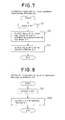
- the child judgment processing portion 606 checks "C" bit of the node entry (step S1). If “C” is “1”, the value of the "CL” field and the value of "NID” are output to the address generating portion 602 (step S2). The address generating portion 602 generates next address using the "CL” value and "NID” value. The child node judgment processing portion 606 outputs the value of "C” bit to the control portion 611, simultaneously (step S3). As shown in operation flow of Fig. 8, the validity judgment processing portion 607 extracts "V" bit of the node entry (step S21) to output to the control portion 611 (step S22).
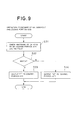
- the NA judgment processing portion 608 takes AND of "DA" held by the DA holding portion 601 and the "NA” field of the node entry (step S31), and the result is checked whether it is the same as the "NA” field of the node entry or not (step S32). If the same, "1" is output to the control portion 611 (step S33), and if different, "0" is output to the control portion 611 (step S34). As shown in operation flowchart of Fig. 10, the L field judgment processing portion 609 checks the "L" filed of the node entry (step S41).
- step S42 If “L” field is other than “0000”, the value of the "EID” field of the node entry is output to a result output portion 610 (step S42). On the other hand, when the "L” is “0000”, “0” is output to the control portion 611 (steps S43, S44), and “L” is other than “0000", “1” is output to the control portion 611 (step S45).
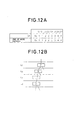
- FIG. 11 Content of process of the control portion 611 is shown in Fig. 11.
- Inputs from the child node judgment processing portion 606, the validity judgment processing portion 607, the NA judgment processing portion 608 and the L filed judgment processing portion 609 are expressed by one bit, respectively to form four bit input value as shown in Fig. 11.
- the control portion 611 outputs, the a node read out demand signal to the node read out portion 603 and outputs a result output demand signal and "EID" demand signal to the result output portion 610.
- the result output portion 610 holds the "EID” output from the L field judgment processing portion 609 only upon reception of "EID” updating demand from the control portion 611. When already held “EID” is present, the held “EID” is updated. On the other hand, when result output demand from the control portion 611 is received, the route data is read out from an external memory 604 via a memory controller 605, and outputs "OP" and "NH” values of the read out route data. If "EID" to be held is not present, a signal indicative of failure of retrieval is output.
- nodes of the tree established as memory region is traced in sequential order to find desired route information.
- NA judgment processing portion 608 is provided to perform matching judgment by comparing all bit values of "DA" and "NA".
- IPv6 address is taken as example.
- the network address is upper sixty-four bits. This information is provided not in the node entry but in the route data. By this, memory size of the node entry becomes small.
- a structure of the node entry is shown in Fig. 13 and a structure of the route data is shown in Fig. 14, respectively.
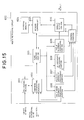
- Fig. 15 is a block diagram showing a construction of the shown embodiment of the route retrieving circuit 600. Like components to those of Fig. 6 will be identified by like reference numerals.
- a component different from the construction of Fig. 6 is an NA judgment processing portion 608.
- the NA judgment processing portion 608 makes judgment that the route data in the L filed judgment process portion 609 presents, the NA judgment processing portion 608 receives "EID" from the L field judgment process portion 609, reads out "NA" value in the route data from the external memory 604 via the memory controller 605 and then performs similar process to the NA judgment processing portion 608 of Fig. 6.
- Other circuit construction performs the same process as the circuit construction of Fig. 6. Redundant discussion for the process common to the circuit construction shown in Fig. 6 will be eliminated for simplification of the disclosure and thus for facilitating clear understanding of the present invention.
- construction other than the DA holding portion 601, the memory 604, the memory controller 605 and so forth shown in Fig. 6 and Fig. 15 may be realized by preliminarily storing control programs in a read-only storage medium and by performing control operation by reading out the control program by a computer (CPU).
- the present invention realizes a method dividing IP address into blocks and simultaneously checking a plurality of bits instead of checking per one bit, by employing M branch tree (M > 2). Therefore, number of times of access to the retrieval table can be reduced in comparison with binary tree retrieval. Also, checking a plurality of bits in a lump encounters a problem in that the net mask length can be handled per a unit of plurality of bits. However, the present invention enables handling of the net mask length per one bit, by employing a construction where the route data is linked.
- Such retrieving method handing the IP address per block is particularly effective for the case of handling IPv6 packet having address of 128 bit length which is four times of the IPv4 address.
Landscapes
- Engineering & Computer Science (AREA)
- Computer Networks & Wireless Communication (AREA)
- Signal Processing (AREA)
- Data Exchanges In Wide-Area Networks (AREA)
- Small-Scale Networks (AREA)
Abstract
Description
Claims (20)
- A route retrieving system for determining a next node to transmit on the basis of a destination address identifying a communication counterpart, comprising:a route memory establishing a tree structure of respective node entry information and route data in hierarchal structure, said tree structure having a M branch tree structure (M = 2N) to be checked per N bit (N is an integer greater than or equal to 2) from upper bit of said destination address; androute retrieval means for retrieving said node entry information of said memory from an initial hierarchal stage to lower hierarchal stage in sequential order based on said destination address, for deriving a corresponding route data.
- A route retrieving system as set forth in claim 1, wherein said node entry information consists of a route data presence / absence information indicative of presence or absence of said route data in a corresonding node, a link presence / absence information indicative of presence or absence of a link to a lower hierarchal stage, a hierarchal value indicative of the lower hierarchal stage, a node ID identifying a node in said lower hierarchal stage, and a route data ID for identifying said route data and a network address corresponding to said node entry.
- A route retrieving system as set forth in claim 2, wherein an entry information of said route data has at least an address value of the next node to transmit.
- A route retrieving system as set forth in claim 2, wherein said route retrieving means includes address generating means for taking an initial hierarchal stage of said tree structure and a node ID of a root node as an initial value, reading out upper N bits of said destination address corresponding to said initial hierarchal stage and generating an address for reading out said route memory by using said upper N bits and a node ID of said root node, and child node judgment means for commanding generation of a reading out address of said node entry information of next lower hierarchal stage by making judgment of said link presence / absence information of said node entry information for transmitting said hierarchal stage information of a read out node entry information and said node ID to said address generating means when link is present.
- A route retrieving system as set forth in claim 4, wherein said route retrieving means comprises address judgment means for making judgment of matching of said network address in said read out node entry information and said destination address, route data presence / absence judgment means for making judgment of said route data presence / absence information of said read out node entry information, and control means for controlling reading out of said memory depending upon results of judgment of said address judgment means, said route data presence / absence judgment means and said child node judgment means.
- A route retrieving method for determining a next node to transmit on the basis of a destination address identifying a communication counterpart, comprising:step of providing a route memory establishing a tree structure of respective node entry information and route data in hierarchal structure, said tree structure having a M branch tree structure (M = 2N) to be checked per N bit (N is an integer greater than or equal to 2) from upper bit of said destination address; androute retrieval step of retrieving said node entry information of said memory from an initial hierarchal stage to lower hierarchal stage in sequential order based on said destination address, for deriving a corresponding route data.
- A route retrieving method as set forth in claim 6, wherein said node entry information consists of a route data presence / absence information indicative of presence or absence of said route data in a corresponding node, a link presence / absence information indicative of presence or absence of a link to a lower hierarchal stage, a hierarchal value indicative of the lower hierarchal stage, a node ID identifying a node in said lower hierarchal stage, and a route data ID for identifying said route data and a network address corresponding to said node entry.
- A route retrieving method as set forth in claim 7, wherein an entry information of said route data has at least an address value of the next node to transmit.
- A route retrieving method as set forth in claim 7, wherein said route retrieving step includes address generating step of taking an initial hierarchal stage of said tree structure and a node ID of a root node as an initial value, reading out upper N bits of said destination address corresponding to said initial hierarchal stage and generating an address for reading out said route memory by using said upper N bits and a node ID of said root node, and child node judgment step of commanding generation of a reading out address of said node entry information of next lower hierarchal stage by making judgment of said link presence / absence information of said node entry information for transmitting said hierarchal stage information of said read out node entry information and said node ID to said address generating step when link is present.
- A route retrieving method as set forth in claim 9, wherein said route retrieving step comprises address judgment step of making judgment of matching of said network address in said read out node entry information and said destination address, route data presence / absence judgment step of making judgment of said route data presence / absence information of said read out node entry information, and control step of controlling reading out of said memory depending upon results of judgment of said address judgment step, said route data presence / absence judgment step and said child node judgment step.
- A router device for determining a next node to transmit on the basis of a destination address identifying a communication counterpart, comprising:a route memory establishing a tree structure of respective node entry information and route data in hierarchal structure, said tree structure having a M branch tree structure (M = 2N) to be checked per N bit (N is an integer greater than or equal to 2) from upper bit of said destination address; androute retrieval means for retrieving said node entry information of said memory from an initial hierarchal stage to lower hierarchal stage in sequential order based on said destination address, for deriving a corresponding route data.
- A router device as set forth in claim 11, wherein said node entry information consists of a route data presence / absence information indicative of presence or absence of said route data in a corresponding node, a link presence / absence information indicative of presence or absence of a link to a lower hierarchal stage, a hierarchal value indicative of the lower hierarchal stage, a node ID identifying a node in said lower hierarchal stage, and a route data ID for identifying said route data and a network address corresponding to said node entry.
- A router device as set forth in claim 12, wherein an entry information of said route data has at least an address value of the next node to transmit.
- A router device as set forth in claim 12, wherein said route retrieving means includes address generating means for taking an initial hierarchal stage of said tree structure and a node ID of a root node as an initial value, reading out upper N bits of said destination address corresponding to said initial hierarchal stage and generating an address for reading out said route memory by using said N bits and a node ID of said root node, and child node judgment means for commanding generation of a reading out address of said node entry information of next lower hierarchal stage by making judgment of said link presence / absence information of said node entry information for transmitting said hierarchal stage information of said read out node entry information and said node ID to said address generating means when link is present.
- A router device as set forth in claim 14, wherein said route retrieving means comprises address judgment means for making judgment of matching of said network address in said read out node entry information and said destination address, route data presence / absence judgment means for making judgment of said route data presence / absence information of said read out node entry information, and control means for controlling reading out of said memory depending upon results of judgment of said address judgment means, said route data presence / absence judgment means and said child node judgment means.
- A storage medium recording a control program of a route retrieving method for determining a next node to transmit on the basis of a destination address identifying a communication counterpart, comprising:step of providing a route memory establishing a tree structure of respective node entry information and route data in hierarchal structure, said tree structure having a M branch tree structure (M = 2N) to be checked per N bit (N is an integer greater than or equal to 2) from upper bit of said destination address; androute retrieval step of retrieving said node entry information of said memory from an initial hierarchal stage to lower hierarchal stage in sequential order based on said destination address, for deriving a corresponding route data.
- A storage medium as set forth in claim 16, wherein said node entry information consists of a route data presence / absence information indicative of presence or absence of said route data in a corresponding node, a link presence / absence information indicative of presence or absence of a link to a lower hierarchal stage, a hierarchal value indicative of the lower hierarchal stage, a node ID identifying a node in said lower hierarchal stage, and a route data ID for identifying said route data and a network address corresponding to said node entry.
- A storage medium as set forth in claim 17, wherein an entry information of said route data has at least an address value of the next node to transmit.
- A storage medium as set forth in claim 17, wherein said route retrieving step includes address generating step of taking an initial hierarchal stage of said tree structure and a node ID of a root node as an initial value, reading out upper N bits of said destination address corresponding to said initial hierarchal stage and generating an address for reading out said route memory by using said N bits and a node ID of said root node, and child node judgment step of commanding generation of a reading out address of said node entry information of next lower hierarchal stage by making judgment of said link presence / absence information of said node entry information for transmitting said hierarchal stage information of said read out node entry information and said node ID to said address generating step when link is present.
- A storage medium as set forth in claim 19, wherein said route retrieving step comprises address judgment step of making judgment of matching of said network address in said read out node entry information and said destination address, route data presence / absence judgment step of making judgment of said route data presence / absence information of said read out node entry information, and control step of controlling reading out of said memory depending upon results of judgment of said address judgment step, said route data presence / absence judgment step and said child node judgment step.
Applications Claiming Priority (2)
| Application Number | Priority Date | Filing Date | Title |
|---|---|---|---|
| JP2000210654A JP2002026973A (en) | 2000-07-12 | 2000-07-12 | Route search system and method, and router device used therefor |
| JP2000210654 | 2000-07-12 |
Publications (2)
| Publication Number | Publication Date |
|---|---|
| EP1172971A2 true EP1172971A2 (en) | 2002-01-16 |
| EP1172971A3 EP1172971A3 (en) | 2004-04-21 |
Family
ID=18706888
Family Applications (1)
| Application Number | Title | Priority Date | Filing Date |
|---|---|---|---|
| EP01116935A Withdrawn EP1172971A3 (en) | 2000-07-12 | 2001-07-11 | Route retrieving system, method therefor and a router device to be used in the same |
Country Status (5)
| Country | Link |
|---|---|
| US (1) | US20020009056A1 (en) |
| EP (1) | EP1172971A3 (en) |
| JP (1) | JP2002026973A (en) |
| KR (1) | KR100472275B1 (en) |
| CN (1) | CN1333616A (en) |
Cited By (1)
| Publication number | Priority date | Publication date | Assignee | Title |
|---|---|---|---|---|
| CN102156759A (en) * | 2011-05-25 | 2011-08-17 | 华为技术有限公司 | Binary tree parallel inquiry method and device |
Families Citing this family (11)
| Publication number | Priority date | Publication date | Assignee | Title |
|---|---|---|---|---|
| KR100421414B1 (en) * | 2001-07-23 | 2004-03-09 | 한국전자통신연구원 | Method for searching and updating using node structure of multiway search tree |
| US7050416B2 (en) * | 2002-05-14 | 2006-05-23 | Thomson Licensing | Technique for IP communication among wireless devices |
| JP2006526920A (en) * | 2003-06-03 | 2006-11-24 | カシエント・リミテッド | System and method for a wireless mesh network |
| US7840696B2 (en) * | 2003-07-25 | 2010-11-23 | Broadcom Corporation | Apparatus and method for classifier identification |
| US9185074B2 (en) * | 2004-07-06 | 2015-11-10 | Hewlett-Packard Development Company, L.P. | Method and system for generating ranges of internet protocol addresses |
| WO2006080069A1 (en) * | 2005-01-27 | 2006-08-03 | Fujitsu Limited | Network device management device, network device management method, network device, and program used therein |
| CN1889565B (en) * | 2005-08-16 | 2010-05-05 | 华为技术有限公司 | session establishment method |
| KR100887104B1 (en) | 2007-06-12 | 2009-03-04 | 건국대학교 산학협력단 | Apparatus and method for constructing segment tree for routing IP packet |
| NL2002799C2 (en) * | 2009-04-24 | 2010-10-26 | Univ Delft Tech | Data structure, method and system for address lookup. |
| CN102859508B (en) * | 2009-11-04 | 2015-11-25 | 沙特阿拉伯石油公司 | There is the wireless and wired Process Control System of the ADAPTIVE MIXED of delaminating process robotization field network collection |
| KR200498870Y1 (en) | 2022-01-21 | 2025-02-25 | 현충만 | Vinyl house frame for each Fruit tree |
Family Cites Families (16)
| Publication number | Priority date | Publication date | Assignee | Title |
|---|---|---|---|---|
| US5860136A (en) * | 1989-06-16 | 1999-01-12 | Fenner; Peter R. | Method and apparatus for use of associated memory with large key spaces |
| AU620994B2 (en) * | 1989-07-12 | 1992-02-27 | Digital Equipment Corporation | Compressed prefix matching database searching |
| US5654985A (en) * | 1993-02-19 | 1997-08-05 | Advanced Micro Devices, Inc. | Address tracking over repeater based networks |
| US5787430A (en) * | 1994-06-30 | 1998-07-28 | International Business Machines Corporation | Variable length data sequence backtracking a trie structure |
| KR0129140B1 (en) * | 1994-12-21 | 1998-04-08 | 양승택 | Multicasting communications route control method at the nodes of cdma mobile communications network |
| WO1997002680A1 (en) * | 1995-06-30 | 1997-01-23 | Philips Electronics N.V. | A method and apparatus for routing messages in a network of nodes |
| US6104701A (en) * | 1996-12-13 | 2000-08-15 | International Business Machines Corporation | Method and system for performing a least cost routing function for data communications between end users in a multi-network environment |
| US6285679B1 (en) * | 1997-08-22 | 2001-09-04 | Avici Systems, Inc. | Methods and apparatus for event-driven routing |
| US6018524A (en) * | 1997-09-09 | 2000-01-25 | Washington University | Scalable high speed IP routing lookups |
| IT1305140B1 (en) * | 1998-10-27 | 2001-04-10 | Cselt Centro Studi Lab Telecom | MEMORY FOR SEARCHING FOR INFORMATION THROUGH ANALYSIS OF INPARTICULAR PREFIXES FOR THE CREATION OF ROAD TABLES IN KNOTS |
| US6404752B1 (en) * | 1999-08-27 | 2002-06-11 | International Business Machines Corporation | Network switch using network processor and methods |
| EP1250775A2 (en) * | 1999-12-10 | 2002-10-23 | Mosaid Technologies Incorporated | Method and apparatus for longest match address lookup |
| EP1128608B1 (en) * | 2000-01-27 | 2006-03-01 | International Business Machines Corporation | Method and means for classifying data packets |
| KR100364433B1 (en) * | 2000-04-28 | 2002-12-11 | 학교법인 동국학원 | IP address look-up method using a bit-vector table |
| US6591285B1 (en) * | 2000-06-16 | 2003-07-08 | Shuo-Yen Robert Li | Running-sum adder networks determined by recursive construction of multi-stage networks |
| US7966421B2 (en) * | 2000-06-21 | 2011-06-21 | SAtech Group, A.B. Limited Liability Company | Method and apparatus for logically expanding the length of a search key |
-
2000
- 2000-07-12 JP JP2000210654A patent/JP2002026973A/en active Pending
-
2001
- 2001-07-09 US US09/899,986 patent/US20020009056A1/en not_active Abandoned
- 2001-07-11 CN CN01120404A patent/CN1333616A/en active Pending
- 2001-07-11 KR KR10-2001-0041465A patent/KR100472275B1/en not_active Expired - Fee Related
- 2001-07-11 EP EP01116935A patent/EP1172971A3/en not_active Withdrawn
Cited By (2)
| Publication number | Priority date | Publication date | Assignee | Title |
|---|---|---|---|---|
| CN102156759A (en) * | 2011-05-25 | 2011-08-17 | 华为技术有限公司 | Binary tree parallel inquiry method and device |
| CN102156759B (en) * | 2011-05-25 | 2013-12-18 | 华为技术有限公司 | Binary tree parallel inquiry method and device |
Also Published As
| Publication number | Publication date |
|---|---|
| CN1333616A (en) | 2002-01-30 |
| JP2002026973A (en) | 2002-01-25 |
| EP1172971A3 (en) | 2004-04-21 |
| KR100472275B1 (en) | 2005-03-08 |
| US20020009056A1 (en) | 2002-01-24 |
| KR20020006464A (en) | 2002-01-19 |
Similar Documents
| Publication | Publication Date | Title |
|---|---|---|
| US6560610B1 (en) | Data structure using a tree bitmap and method for rapid classification of data in a database | |
| US6633548B2 (en) | Method and apparatus for ternary content addressable memory (TCAM) table management | |
| US6778532B1 (en) | Packet relaying apparatus and high speed multicast system | |
| US7058642B2 (en) | Method and data structure for a low memory overhead database | |
| JP4355188B2 (en) | Packet transfer device | |
| US5787430A (en) | Variable length data sequence backtracking a trie structure | |
| CN1794236B (en) | Efficient CAM-Based Technique for String Search in Packet Payload | |
| US5027350A (en) | Method and apparatus for providing a local area network bridge | |
| CN101388030B (en) | Database and database processing methods | |
| CN101354719A (en) | Performing lookup operations on associative memory entries | |
| CN100547976C (en) | Method and apparatus for identifying reverse path forwarding information | |
| EP1172971A2 (en) | Route retrieving system, method therefor and a router device to be used in the same | |
| US7249149B1 (en) | Tree bitmap data structures and their use in performing lookup operations | |
| US20080037568A1 (en) | Method and Apparatus for Translating Data Packets From One Network Protocol to Another | |
| US8825896B2 (en) | Scalable distributed parallel access memory systems with internet routing applications | |
| US20050083937A1 (en) | IP address lookup method using pipeline binary tree, hardware architecture, and recording medium | |
| JPH0630004A (en) | Method for destruction of inessential data packet from communication network | |
| JP2004328433A (en) | Communication control device, communication control method, communication control program, communication control data structure | |
| US6532516B1 (en) | Technique for updating a content addressable memory | |
| US20040044868A1 (en) | Method and apparatus for high-speed longest prefix match of keys in a memory | |
| US7065085B2 (en) | Method for summarizing default address of PNNI lowest level node in ATM switching system | |
| CN113364676A (en) | Data stream processing method and device | |
| JP3970448B2 (en) | Information relay method and apparatus | |
| CN121312113A (en) | Multi-level TCAM matching in network devices | |
| EP0520116A1 (en) | Method and apparatus for performing pattern search functions |
Legal Events
| Date | Code | Title | Description |
|---|---|---|---|
| PUAI | Public reference made under article 153(3) epc to a published international application that has entered the european phase |
Free format text: ORIGINAL CODE: 0009012 |
|
| AK | Designated contracting states |
Kind code of ref document: A2 Designated state(s): AT BE CH CY DE DK ES FI FR GB GR IE IT LI LU MC NL PT SE TR |
|
| AX | Request for extension of the european patent |
Free format text: AL;LT;LV;MK;RO;SI |
|
| PUAL | Search report despatched |
Free format text: ORIGINAL CODE: 0009013 |
|
| AK | Designated contracting states |
Kind code of ref document: A3 Designated state(s): AT BE CH CY DE DK ES FI FR GB GR IE IT LI LU MC NL PT SE TR |
|
| AX | Request for extension of the european patent |
Extension state: AL LT LV MK RO SI |
|
| 17P | Request for examination filed |
Effective date: 20040305 |
|
| 17Q | First examination report despatched |
Effective date: 20040614 |
|
| AKX | Designation fees paid |
Designated state(s): DE FR GB IT |
|
| GRAP | Despatch of communication of intention to grant a patent |
Free format text: ORIGINAL CODE: EPIDOSNIGR1 |
|
| STAA | Information on the status of an ep patent application or granted ep patent |
Free format text: STATUS: THE APPLICATION HAS BEEN WITHDRAWN |
|
| 18W | Application withdrawn |
Effective date: 20050829 |