EP1172398A2 - Silicone compositions for personal care products and method for making - Google Patents
Silicone compositions for personal care products and method for making Download PDFInfo
- Publication number
- EP1172398A2 EP1172398A2 EP01305883A EP01305883A EP1172398A2 EP 1172398 A2 EP1172398 A2 EP 1172398A2 EP 01305883 A EP01305883 A EP 01305883A EP 01305883 A EP01305883 A EP 01305883A EP 1172398 A2 EP1172398 A2 EP 1172398A2
- Authority
- EP
- European Patent Office
- Prior art keywords
- formula
- range
- polysiloxane
- silicone
- composition
- Prior art date
- Legal status (The legal status is an assumption and is not a legal conclusion. Google has not performed a legal analysis and makes no representation as to the accuracy of the status listed.)
- Granted
Links
- 0 N*1I=CC=CC=C1 Chemical compound N*1I=CC=CC=C1 0.000 description 5
Classifications
-
- C—CHEMISTRY; METALLURGY
- C08—ORGANIC MACROMOLECULAR COMPOUNDS; THEIR PREPARATION OR CHEMICAL WORKING-UP; COMPOSITIONS BASED THEREON
- C08G—MACROMOLECULAR COMPOUNDS OBTAINED OTHERWISE THAN BY REACTIONS ONLY INVOLVING UNSATURATED CARBON-TO-CARBON BONDS
- C08G77/00—Macromolecular compounds obtained by reactions forming a linkage containing silicon with or without sulfur, nitrogen, oxygen or carbon in the main chain of the macromolecule
- C08G77/04—Polysiloxanes
- C08G77/38—Polysiloxanes modified by chemical after-treatment
- C08G77/382—Polysiloxanes modified by chemical after-treatment containing atoms other than carbon, hydrogen, oxygen or silicon
- C08G77/392—Polysiloxanes modified by chemical after-treatment containing atoms other than carbon, hydrogen, oxygen or silicon containing sulfur
-
- A—HUMAN NECESSITIES
- A61—MEDICAL OR VETERINARY SCIENCE; HYGIENE
- A61K—PREPARATIONS FOR MEDICAL, DENTAL OR TOILETRY PURPOSES
- A61K8/00—Cosmetics or similar toiletry preparations
- A61K8/18—Cosmetics or similar toiletry preparations characterised by the composition
- A61K8/72—Cosmetics or similar toiletry preparations characterised by the composition containing organic macromolecular compounds
- A61K8/84—Cosmetics or similar toiletry preparations characterised by the composition containing organic macromolecular compounds obtained by reactions otherwise than those involving only carbon-carbon unsaturated bonds
- A61K8/89—Polysiloxanes
- A61K8/891—Polysiloxanes saturated, e.g. dimethicone, phenyl trimethicone, C24-C28 methicone or stearyl dimethicone
- A61K8/894—Polysiloxanes saturated, e.g. dimethicone, phenyl trimethicone, C24-C28 methicone or stearyl dimethicone modified by a polyoxyalkylene group, e.g. cetyl dimethicone copolyol
-
- A—HUMAN NECESSITIES
- A61—MEDICAL OR VETERINARY SCIENCE; HYGIENE
- A61K—PREPARATIONS FOR MEDICAL, DENTAL OR TOILETRY PURPOSES
- A61K8/00—Cosmetics or similar toiletry preparations
- A61K8/18—Cosmetics or similar toiletry preparations characterised by the composition
- A61K8/72—Cosmetics or similar toiletry preparations characterised by the composition containing organic macromolecular compounds
- A61K8/84—Cosmetics or similar toiletry preparations characterised by the composition containing organic macromolecular compounds obtained by reactions otherwise than those involving only carbon-carbon unsaturated bonds
- A61K8/89—Polysiloxanes
- A61K8/896—Polysiloxanes containing atoms other than silicon, carbon, oxygen and hydrogen, e.g. dimethicone copolyol phosphate
- A61K8/898—Polysiloxanes containing atoms other than silicon, carbon, oxygen and hydrogen, e.g. dimethicone copolyol phosphate containing nitrogen, e.g. amodimethicone, trimethyl silyl amodimethicone or dimethicone propyl PG-betaine
-
- A—HUMAN NECESSITIES
- A61—MEDICAL OR VETERINARY SCIENCE; HYGIENE
- A61K—PREPARATIONS FOR MEDICAL, DENTAL OR TOILETRY PURPOSES
- A61K8/00—Cosmetics or similar toiletry preparations
- A61K8/18—Cosmetics or similar toiletry preparations characterised by the composition
- A61K8/72—Cosmetics or similar toiletry preparations characterised by the composition containing organic macromolecular compounds
- A61K8/84—Cosmetics or similar toiletry preparations characterised by the composition containing organic macromolecular compounds obtained by reactions otherwise than those involving only carbon-carbon unsaturated bonds
- A61K8/89—Polysiloxanes
- A61K8/896—Polysiloxanes containing atoms other than silicon, carbon, oxygen and hydrogen, e.g. dimethicone copolyol phosphate
- A61K8/899—Polysiloxanes containing atoms other than silicon, carbon, oxygen and hydrogen, e.g. dimethicone copolyol phosphate containing sulfur, e.g. sodium PG-propyldimethicone thiosulfate copolyol
-
- A—HUMAN NECESSITIES
- A61—MEDICAL OR VETERINARY SCIENCE; HYGIENE
- A61Q—SPECIFIC USE OF COSMETICS OR SIMILAR TOILETRY PREPARATIONS
- A61Q5/00—Preparations for care of the hair
- A61Q5/12—Preparations containing hair conditioners
-
- C—CHEMISTRY; METALLURGY
- C08—ORGANIC MACROMOLECULAR COMPOUNDS; THEIR PREPARATION OR CHEMICAL WORKING-UP; COMPOSITIONS BASED THEREON
- C08G—MACROMOLECULAR COMPOUNDS OBTAINED OTHERWISE THAN BY REACTIONS ONLY INVOLVING UNSATURATED CARBON-TO-CARBON BONDS
- C08G77/00—Macromolecular compounds obtained by reactions forming a linkage containing silicon with or without sulfur, nitrogen, oxygen or carbon in the main chain of the macromolecule
- C08G77/04—Polysiloxanes
- C08G77/38—Polysiloxanes modified by chemical after-treatment
-
- C—CHEMISTRY; METALLURGY
- C08—ORGANIC MACROMOLECULAR COMPOUNDS; THEIR PREPARATION OR CHEMICAL WORKING-UP; COMPOSITIONS BASED THEREON
- C08G—MACROMOLECULAR COMPOUNDS OBTAINED OTHERWISE THAN BY REACTIONS ONLY INVOLVING UNSATURATED CARBON-TO-CARBON BONDS
- C08G77/00—Macromolecular compounds obtained by reactions forming a linkage containing silicon with or without sulfur, nitrogen, oxygen or carbon in the main chain of the macromolecule
- C08G77/04—Polysiloxanes
- C08G77/38—Polysiloxanes modified by chemical after-treatment
- C08G77/382—Polysiloxanes modified by chemical after-treatment containing atoms other than carbon, hydrogen, oxygen or silicon
- C08G77/388—Polysiloxanes modified by chemical after-treatment containing atoms other than carbon, hydrogen, oxygen or silicon containing nitrogen
-
- A—HUMAN NECESSITIES
- A61—MEDICAL OR VETERINARY SCIENCE; HYGIENE
- A61K—PREPARATIONS FOR MEDICAL, DENTAL OR TOILETRY PURPOSES
- A61K2800/00—Properties of cosmetic compositions or active ingredients thereof or formulation aids used therein and process related aspects
- A61K2800/80—Process related aspects concerning the preparation of the cosmetic composition or the storage or application thereof
- A61K2800/94—Involves covalent bonding to the substrate
Definitions
- the present invention relates to compositions for personal care products. More particularly, the present invention relates to silicone compositions which achieve conditioning benefits in hair care products.
- Silicones are widely used in hair care products due to the conditioning benefit that they impart to hair.
- the silicone is deposited on hair during the application process but is held only by weak physical forces, such as hydrogen bonding or van der Waals interactions.
- conditioning benefits are attributed to the deposition of high molecular weight, high viscosity fluids and gums which can weigh down the hair. Because the interactive forces are weak, the benefits of silicone by deposition are short lived.
- Beneficial conditioning effects can also be caused by treating hair with silanol capped amino-functionalized silicones. These can undergo condensation cure reactions on hair to form somewhat durable films.
- silicone compositions which can be used to treat damaged hair and provide durable benefits.
- silicone products are constantly being sought which can both covalently bond to hair as well as impart hair care benefits appreciated by consumers.
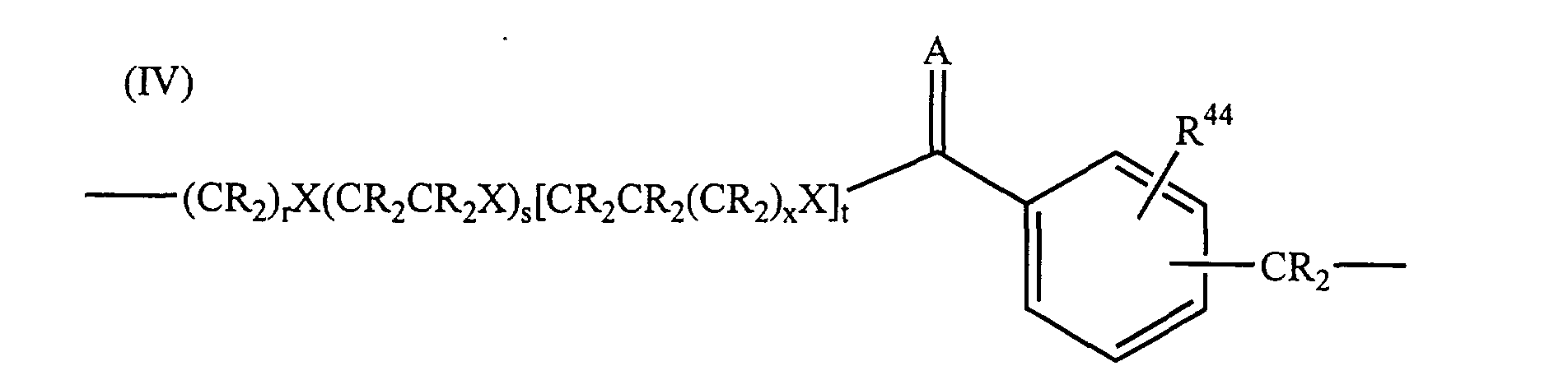
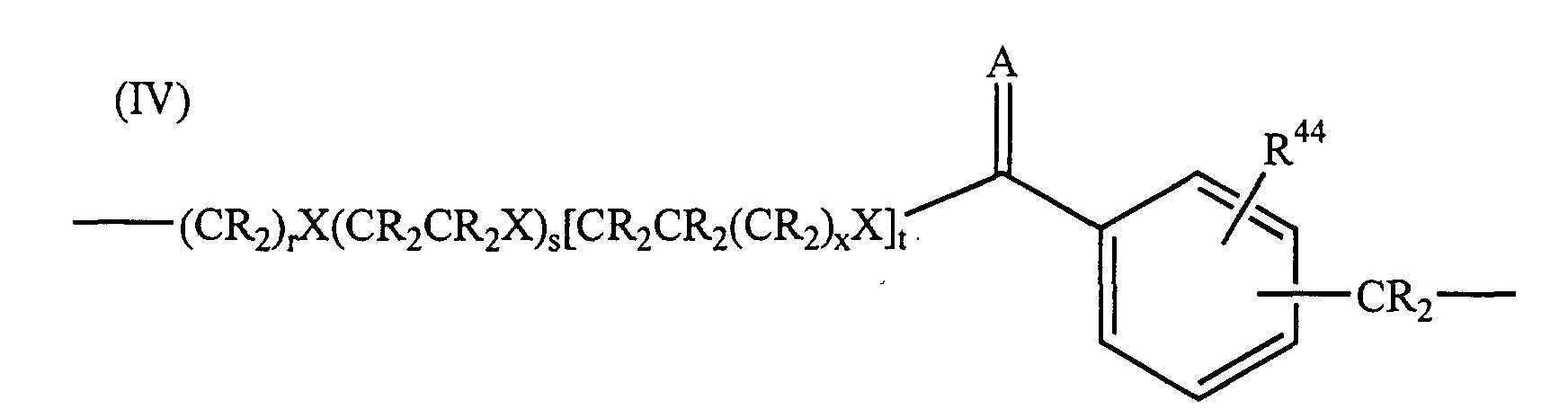
- the present invention provides a composition and method for making a silicone composition which comprises at least one polysiloxane or silicone resin, at least one molecular hook, and at least one linker wherein the linker comprises at least one moiety of the formulas (I), (II), (III), (IV), (V), or (VI):
- the present invention comprises a silicone composition which includes at least one polysiloxane or silicone resin, at least one linker, and at least one molecular hook.
- the linker is bound to both a molecular hook and to an atom of a polysiloxane or silicone resin.
- the linker is bound to a polysiloxane or silicone resin through a silicon (Si), carbon (C), oxygen (O), nitrogen (N), or sulfur (S) atom, and most preferably through a silicon atom.
- linkers may be bound to a polysiloxane or silicone resin through more than one type of atom, for example through both silicon and carbon atoms.
- the present invention includes at least one polysiloxane or silicone resin having the formula: M a M' b D c D' d T e T' f Q g where the subscripts a, b, c, d, e, f and g are zero or a positive integer, subject to the limitation that the sum of the subscripts b, d and f is one or greater; where M has the formula: R 39 3 SiO 1/2 ,
- the polysiloxanes or silicone resins of the present invention are typically prepared by the hydrosilylation of an organohydrogen silicone having the formula: M a M H b D c D H d T e T H f Q g where the subscripts a, b, c, d, e, f and g are zero or a positive integer, subject to the limitation that the sum of the subscripts b, d and f is one or greater; M, D, T and Q are defined as above;
- Hydrosilylation is typically accomplished in the presence of a suitable hydrosilylation catalyst.
- the catalysts preferred for use with these compositions are described in U.S. Pat. Nos. 3,715,334; 3,775,452; and 3,814,730 to Karstedt. Additional background concerning the art may be found at J. L. Spier, "Homogeneous Catalysis of Hydrosilation by Transition Metals, in Advances in Organometallic Chemistry, volume 17, pages 407 through 447, F. G. A. Stone and R. West editors, published by the Academic Press (New York, 1979).
- a preferred catalyst contains platinum. Persons skilled in the art can easily determine an effective amount of platinum catalyst. Generally, an effective amount is in a range between about 0.1 parts per million and about 50 parts per million of the total silicone composition.
- organohydrogen silicone compounds that are the precursors to the compounds of the present invention may be prepared by the process disclosed in U.S. Pat. No. 5,420,221.
- the '221 patent discloses the redistribution of polydimethylsiloxane polymers with organohydrogen silicone polymers and optionally, added chain stopper, to provide a silicone with randomly-distributed hydride groups using a Lewis acid catalyst, preferably a phosphonitrilic compound.
- Synthesis of the polysiloxane or silicone resin may also be performed by other method known to those skilled in the art, for example, the hydrosilylation of a monomer such as methyldichlorosilane could be followed by co-hydrolysis with the appropriate dialkyldichlorosilane and optionally, chlorotrimethylsilane
- the subscripts describing the organohydrogen siloxane precursor and the hydrosilylation adduct of the present invention are integers as required by the rules of chemical stoichiometry.
- the subscripts will assume non-integral values for mixtures of compounds that are described by these formulas.
- the restrictions on the subscripts heretofore described for the stoichiometric subscripts of these compounds are for the pure compounds, not the mixtures.
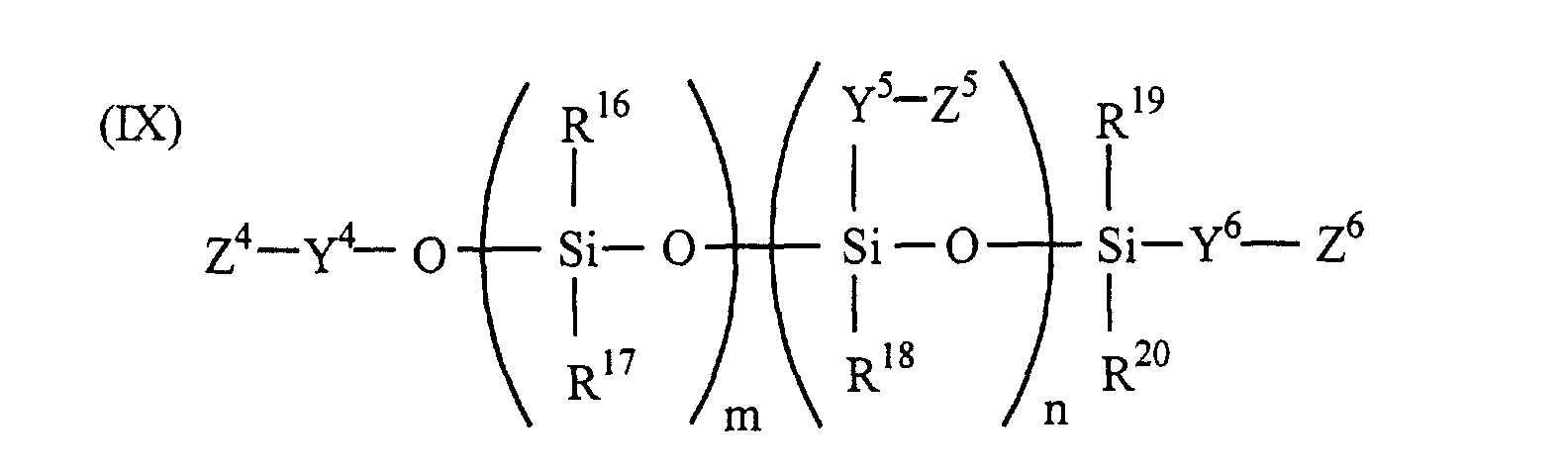
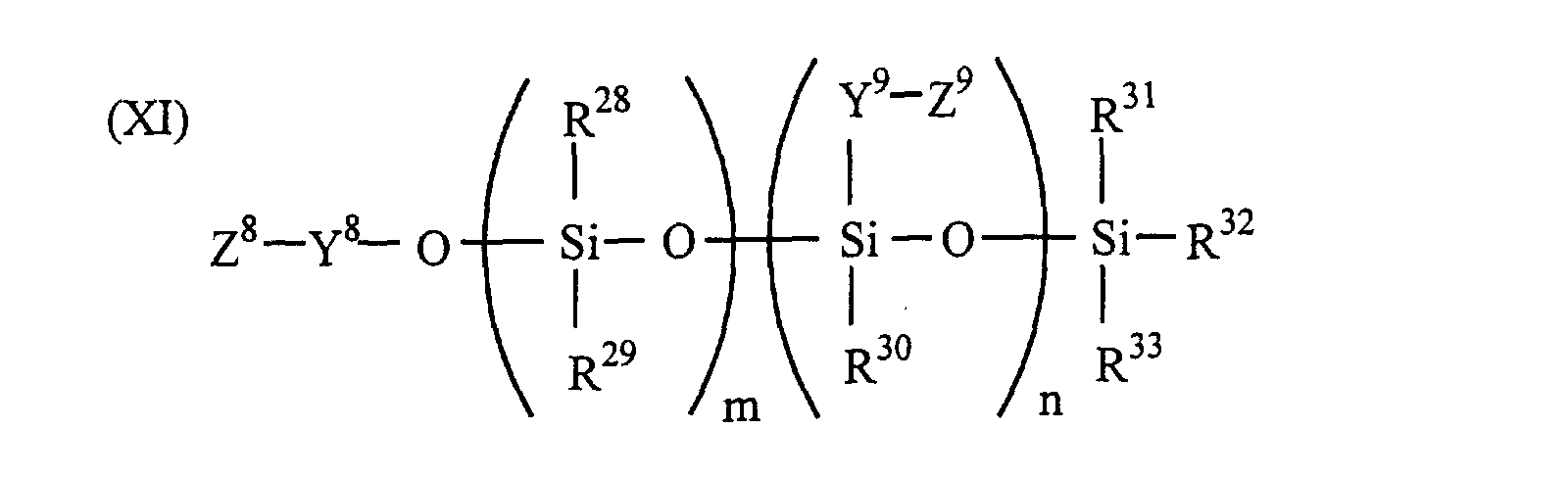
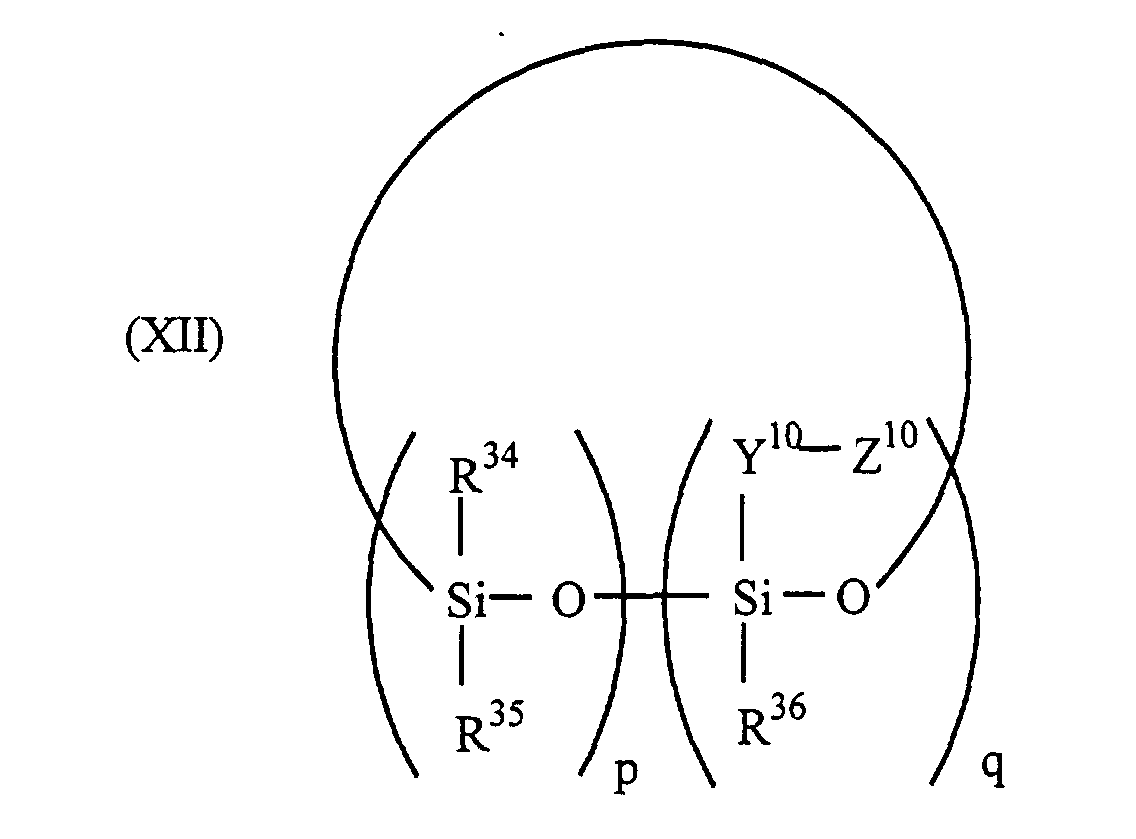
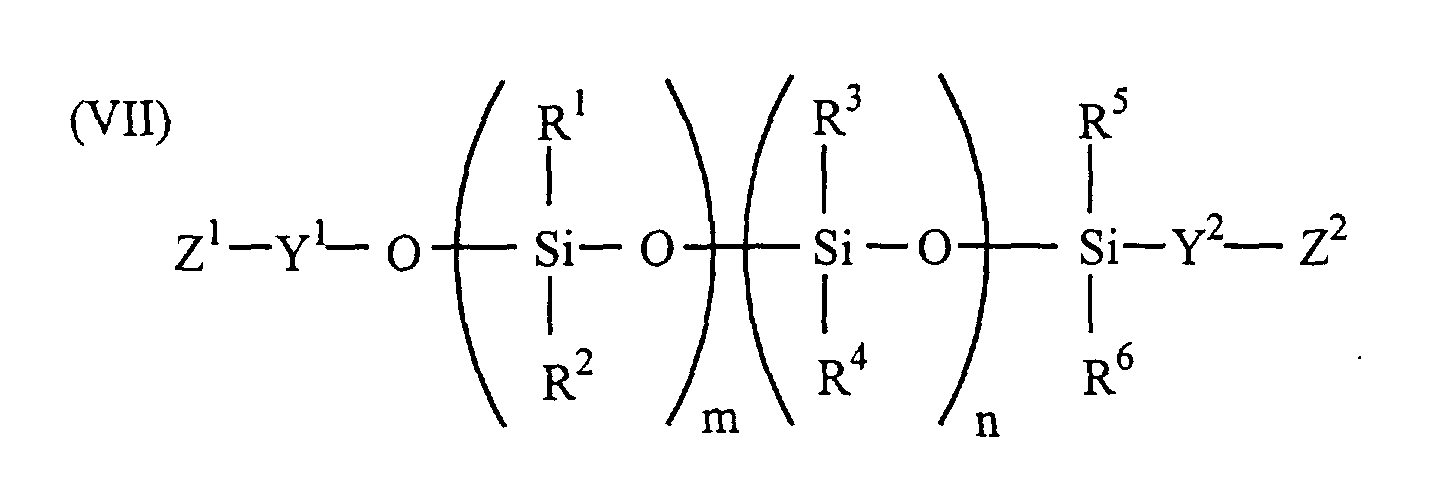
- the silicone composition typically comprises at least one compound of the following formulas, (VII), (VIII), (IX), (X), (XI), (XII), or (XIII) (XIII) (R 37 3 SiO 1/2 ) a [(Z-Y)R 38 2 SiO 1/2 ] b (SiO 4/2 ) g where each R 1 , R 2 , R 3 , R 4 , R 5 , R 6 , R 7 , R 8 , R 9 , R 10 , R 11 , R 12 , R 13 , R 14 , R 15 , R 16 , R 17 , R 18 , R 19 , R 20 , R 21 , R 22 , R 23 , R 24 , R 25 , R 26 , R 27 , R 28 , R 29 , R 30 , R 31 , R 32 , R 33 , R 34 , R 35 , R 36 , R 37 , and R 38 is independently at each occurrence a
- R 1-38 is preferably methyl.
- the preferred polysiloxane includes a compound of the formula (VII) or (VIII).
- the polysiloxane or silicone resin typically has a molecular weight in a range between about 100 and about 6,000,000, preferably in a range between about 250 and about 50,000, more preferably in a range between about 500 and about 25,000, and most preferably in a range between about 500 and about 15,000.
- the number of Y-Z moieties on a polysiloxane or silicone resin in the composition is at least one.
- the average number of Y-Z moieties on a polysiloxane or silicone resin is in a range between about 1 and about 100, more preferably in a range between about 1 and about 20, still more preferably in a range between about 1 and about 10.
- a polysiloxane- or silicone resin-containing composition includes a preponderance of a specific linear, branched, crosslinked, or cyclic polysiloxane or silicone resin.
- a polysiloxane- or silicone resin-containing composition comprises a mixture of polysiloxanes, mixture of silicone resins, or mixtures of polysiloxanes and silicone resins which may include linear, branched, cross-linked, and cyclic species.
- suitable compositions may comprise one or more polysiloxanes and/or silicone resins which may contain adventitious amounts of other species, for example, arising during the synthesis process for said polysiloxanes or silicone resins, for example at a level in a range between about 0.0001 wt.% and about 5 wt.% based on total silicon-containing species.
- suitable compositions may contain adventitious amounts of D 4 , or species containing Si-H, Si-OH, Si-O-alkyl bonds, and mixtures thereof.
- the molecular hook may be selected from the range consisting of heterocyclic molecular hooks, sp 2 aliphatic trigonal carbon molecular hooks, sp 3 carbon molecular hooks, metal based molecular hooks, non-metal and metalloid based molecular hooks, energy-sensitive molecular hooks and mixtures thereof.
- the molecular hook is preferably selected from the range consisting of heterocyclic molecular hooks, sp 2 aliphatic trigonal carbon molecular hooks, sp 3 carbon molecular hooks and non-metal molecular hooks.
- the molecular hook is more preferably selected from heterocyclic molecular hooks, sp 2 aliphatic trigonal carbon molecular hooks and non-metal molecular hooks.
- the molecular hook of the present invention preferably comprises a sulfur-containing compound wherein the sulfur-containing protective group may be a heterocyclic ring or ring system.
- Heterocyclic groups that are suitable for use in the present invention include mono- or polyunsaturated or saturated heterocyclic rings, heterocyclic ring systems, fused heterocyclic ring systems, substituted heterocyclic rings, substituted heterocyclic ring systems or substituted fused heterocyclic ring systems.
- the heterocyclic rings contain in a range between about three and about thirty members, and may contain electronegative heteroatoms including N, O, S, or P.
- a monovalent group which can be a silicone group, H or any of the following: a straight, branched or mono- or polycyclic aliphatic, mono or polyunsaturated alkyl, aryl, heteroalkyl, heteroaliphatic or heteroolefinic system including carbon atoms in a range between about 1 and about
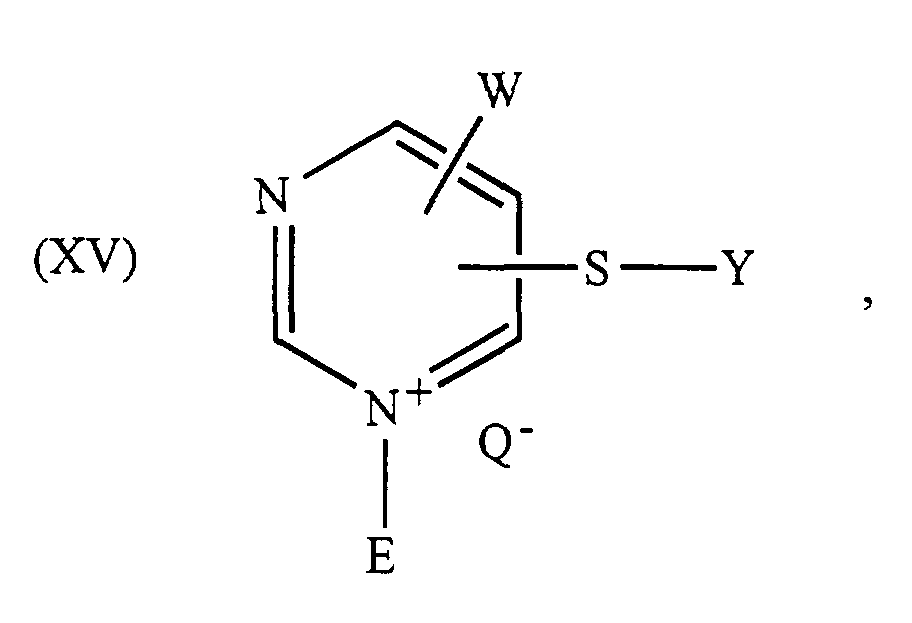
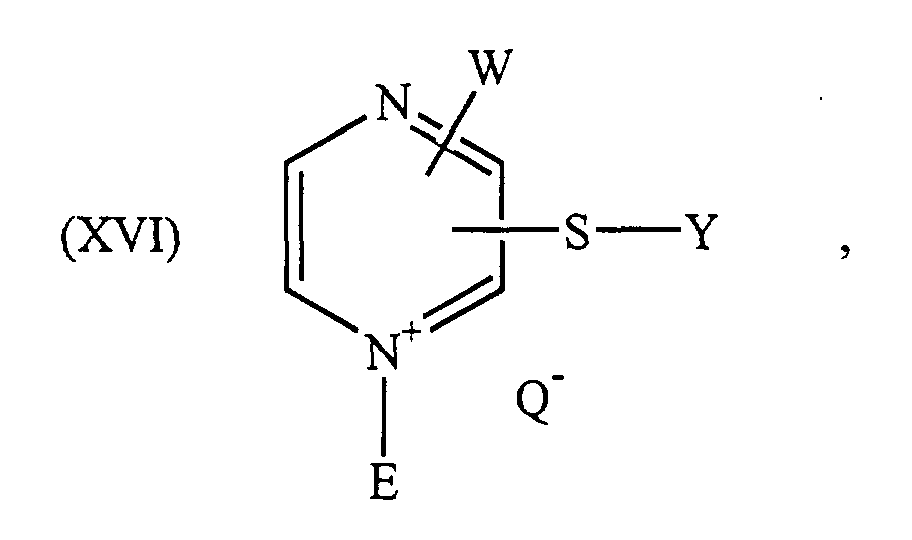
- the molecular hook may be a heterocyclic pyridinium compound (XIII), a heterocyclic triazinium compound (XIV), a heterocyclic pyrimidinium compound (XV), or a heterocyclic pyrazine compound (XVI): wherein W represents optional substituents on the heterocyclic ring or ring system, Y represents the linker, Q - represents a counterion, and E is defined above.
- the preferred molecular hook is the pyrimidinium molecular hook of formula (XV).
- the counterion, Q - can include halides, borates, phosphates, tosylates, mesylates, triflates, and other counterions known to those skilled in the art.
- Q - is preferably iodide, chloride, or bromide.
- the linker precursor has the formulas (I) through (VI) where
- the linker is typically derived from a polysiloxane or silicone resin bound linker precursor which comprises a linker bound to a leaving group (L).
- Illustrative leaving groups include halides such as chloride, bromide and iodide; tosylate, mesylate, phosphate; cyclic leaving groups (that is, those in which the leaving group remains bound in the linker) such as epoxy or other cyclic leaving group containing at least one heteroatom; and other leaving groups known to those skilled in the art.
- Preferred leaving groups are bromide, chloride, and iodide. In synthesis, the leaving group is replaced by a molecular hook, so that the linker becomes bound to a molecular hook.
- the method for making the silicone compositions of the present invention includes combining a molecular hook, a polysiloxane or silicone resin, and a linker.
- the sequence of addition can be varied, for example, the linker and the molecular hook can be combined and this combination can be sequentially combined with a polysiloxane or a silicone resin.
- the linker is combined with a polysiloxane or silicone resin and the combination is sequentially combined with the molecular hook.
- Silicone compositions of the present invention which include at least one polysiloxane or silicone resin, at least one linker, and at least one molecular hook typically impart cosmetic and other durable benefits in products such as hair care products, but also including, textile care products, cosmetic products, oral care products, and animal care products.
- a particular advantage of the present invention is that the described linkers provide solubility, in consumer relevant media, to the silicone composition as well as the potential for additional hair care benefits which may or may not be typically associated with the functional groups of the linker.
- the silicone compositions can be delivered to a substrate, for example hair, in any appropriate formulation, for example water or water and alcohol mixtures which can contain in a range between about 1% by weight and about 99% by weight alcohol based on the total formulation.
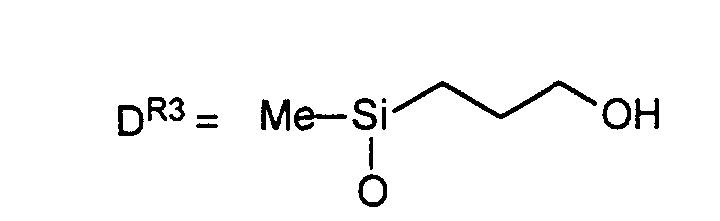
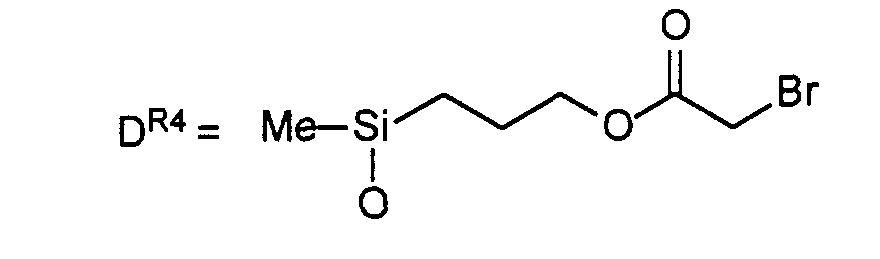
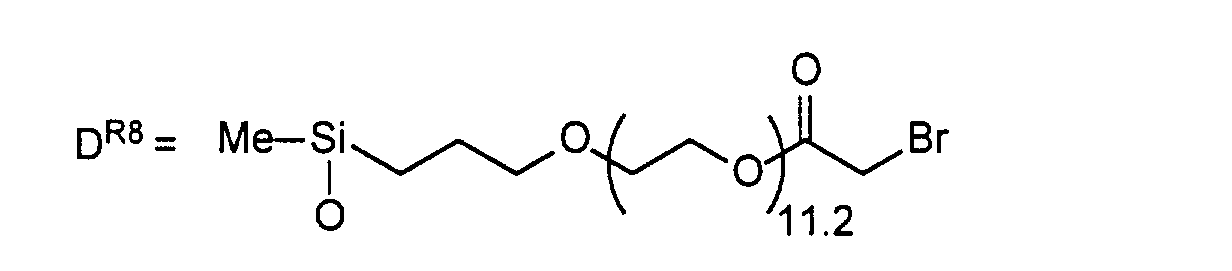
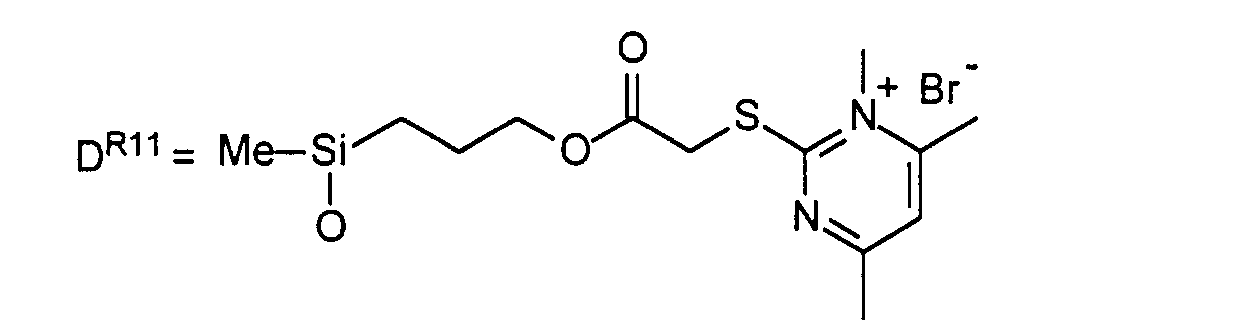
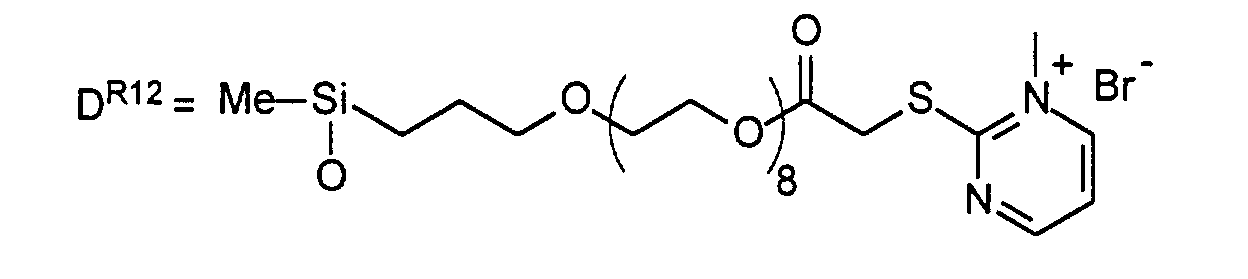
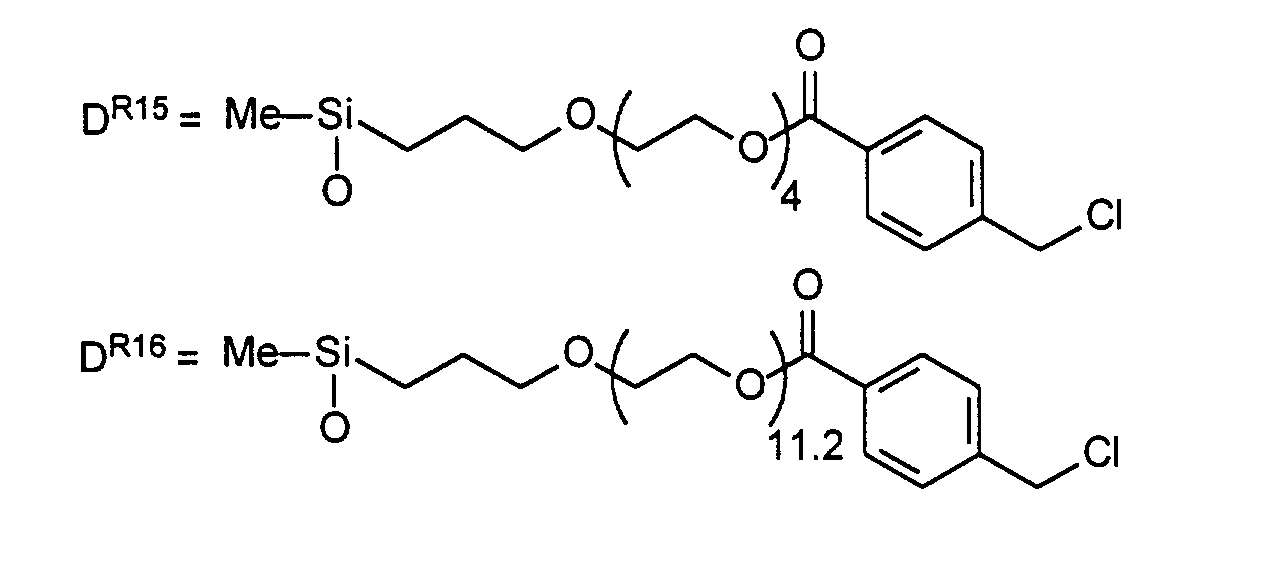
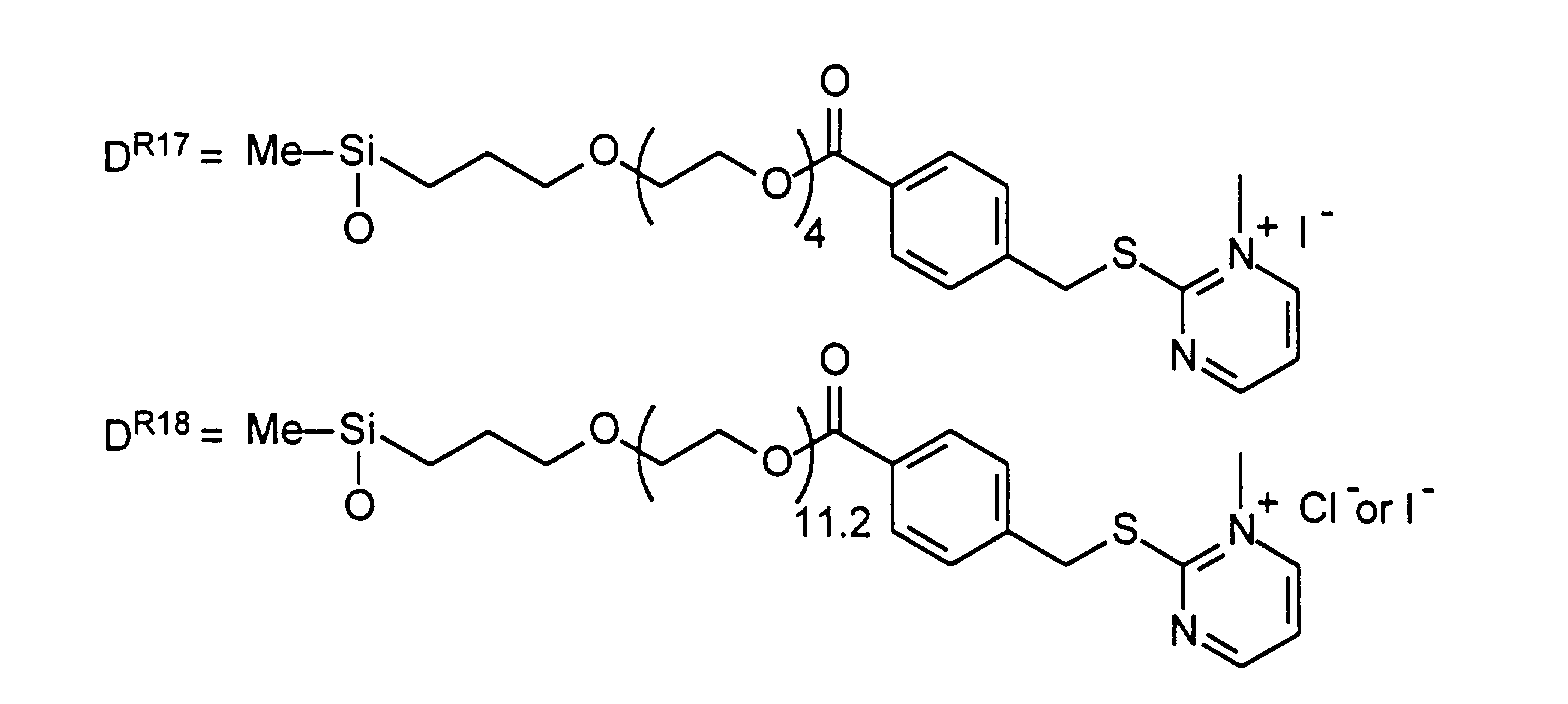
- D R1 through D R19 are defined as:
- Silicone hydride fluid (MD 21 D H 3.5 M).
- a silanol terminated polydimethylsiloxane polymer 535.1 grams, 7.23 moles dimethylsiloxy groups
- Polyether-substituted silicone (MD 21 D R1 3.5 M).
- a 1000 milliliter three-neck round bottom flask equipped with a stirbar, thermometer attached to a temperature controlling device, addition funnel and a condenser with a drying tube was charged with an allyl-started poly(oxyethylene) (CH 2 CHCH 2 O(CH 2 CH 2 O) 4 H, 157.07 grams, 0.662 moles), 2-propanol (123.4 grams) and Karstedt's catalyst (52 milligrams of a 10% Pt solution in a GE Silicones Product (M Vi M Vi ) solvent, 8.7 parts per million Pt).
- Silicone with bromo-acetylated polyether substituents (MD 21 D R2 3.5 M).
- a 250 milliliter three-neck round bottom flask equipped with a stirbar, thermometer attached to a temperature controlling device, Dean-Stark trap with a condenser and a drying tube was charged with bromoacetic acid (22.35 grams, 0.161moles), Isopar C (Exxon Product)(40.0 grams), and the silicone polyether fluid MD 21 D R1 3.5 M (133.85 grams, 0.169 equivalents hydroxy groups).
- the reaction mixture was sparged with nitrogen for 20 minutes at ambient temperature to remove dissolved air.
- Hydroxypropyl-substituted silicone (MD 45 D R3 3.5 M) .
- a 2000 milliliter three-neck round bottom flask equipped with a stirbar, thermometer attached to a temperature controlling device, addition funnel, and a condenser with a drying tube was charged with allyl alcohol (76.0 milliliters, 64.90 grams, 1.12 moles), 2-propanol (160 grams), and Karstedt's catalyst (706.8 mg of a 1% Pt solution in 2-propanol, 11 parts per million Pt).
- the solution was heated to reflux (85°C) and the silicone hydride polymer (MD 45 D H 3.5 M, 600 grams, 0.557 moles hydride) was added over 120 minutes.
- the mixture was vigorously stirred at 55°C for 17.5 hours under nitrogen.
- the cloudy orange CH 3 CN layer was decanted from the cloudy orange silicone layer.
- the silicone layer was washed with an equal volume of CH 3 CN two times.
- the product was dried under vacuum yielding 32.29 grams (75.2%) of a light orange rubber-like solid.
- Polyether-substituted silicone polymer (MD 52.7 D R7 3.3 M).
- a 1000 milliliter three-neck round bottom flask equipped with a stirbar, thermometer attached to a temperature controlling device, addition funnel and a condenser with a drying tube was charged with an allyl-started poly(oxyethylene) (176.47 grams, 0.329 moles), 2-propanol (119.0 grams) and Karstedt's catalyst (86.6 milligrams of a 10% Pt solution using a GE Silicones M Vi M Vi product as solvent).
- Silicone polymer with bromo-acetylated polyether substituents (MD 52.7 D R8 3.3 M).
- a 1000 milliliter three-neck round bottom flask equipped with a stirbar, thermometer attached to a temperature controlling device and a Dean-Stark trap with a condenser and a drying tube was charged with bromoacetic acid (34.00 grams, 0.245 moles), Isopar C (314 grams) and the polyether-substituted silicone MD 52.7 D R7 3.3 M (397.5 grams, 0.257 equivalents hydroxy groups).
- the reaction mixture was sparged with nitrogen for 20 minutes at ambient temperature to remove the dissolved air.
- Trimethylpyrimidinium-substituted polyether silicone polymer (MD 53 D R9 3.3 M) .
- a flask was charged with 33.5 g (5.53 millimoles) of the silicone polymer MD 53 D R8 3.3 M.
- Acetone 50 milliliters
- the suspension was allowed to stir for 1.5 h, after which 0.08 mole percent of excess thione remained by 1 H NMR spectroscopy.
- After the addition of 1.97 grams (0.325 millimoles) more silicone polymer the mixture was left stirring overnight. The mixture was then centrifuged to remove the solid salts remaining, and the product solution was decanted.
- 1,1,3,3-Tetramethyl-2-thiuronium-substituted polyether silicone (MD 53 D R10 3.3 M).
- a 300 milliliter round bottom flask containing a stir bar was charged with 35.47 g (5.446 millimoles) of the polyether-substituted silicone polymer MD 52.7 D R8 3.3 M followed by approximately 40 milliliters of acetonitrile.
- 1,1,3,3-Tetramethyl-2-thiourea (2.262 grams, 17.11 millimoles) was added in portions as a solid followed by another 30 milliliters of acetonitrile. After stirring overnight at room temperature, the cloudy, light yellow solution became clear and pale yellow.
- Trimethylpyrimidinium-substituted silicone polymer (MD 45 D R11 3.5 M).
- a flask was charged with 35.0 grams (8.0 millimoles) of the silicone polymer MD 45 D R4 3.5 M followed by 50 milliliters of acetone.
- the suspension was left stirring for six hours, whereupon starting material still remained by 1 H NMR.
- the mixture was left stirring overnight. The following morning, the mixture was centrifuged to remove the solid salts remaining, and the product solution was decanted and concentrated, affording 37.8 grams (87% yield) of polymer product.
- Silicone deposition Polymers described in this invention impart durable benefits to hair such as good combability, manageability, etc.
- Silicone hydride fluid (MD 21 D H 3.5 M) .
- Polyether-substituted silicone (MD 21 D R1 3.5 M) .
- a 1000 milliliter three-neck round bottom flask equipped with a stirbar, thermometer attached to a temperature controlling device, addition funnel and a condenser with a drying tube was charged with an allyl-started poly(oxyethylene) (CH 2 CHCH 2 O(CH 2 CH 2 O) 4 H, 157.07 grams, 0.662 moles), 2-propanol (123.4 grams) and Karstedt's catalyst (52 mg of a 10% Pt solution, 8.7 parts per million Pt in a GE Silicones M Vi M Vi solvent).
- Polyether-substituted silicone polymer (MD 52.7 D R7 3.3 M).
- a 1000 milliliter three-neck round bottom flask equipped with a stirbar, thermometer attached to a temperature controlling device, addition funnel and a condenser with a drying tube was charged with an allyl-started poly(oxyethylene) (176.47 grams, 0.329 moles), 2-propanol (119.0 grams) and Karstedt's catalyst (86.6 mg of a 10% Pt solution in a GE Silicone Products M Vi M Vi solvent).
- the solution was heated to 88°C, and the silicone hydride polymer MD 52.7 D H 3.3 M (300.0 grams, 0.2917 moles hydride), prepared by the same method as described above, was added over 90 minutes.
- Benzylchloride-substituted polyether silicone (MD 21 D R15 3.5 M).
- a 500 milliliter three-neck flask equipped with thermometer, drying tube and stirbar was charged with the silicone polyether MD 21 D R1 3.5 M (66.58 grams, 0.0889 moles OH), diethyl ether (35 milliliters) and triethylamine (9.242 g, 0.0915 moles).
- the reaction mixture was cooled with an ice bath to 5°C.
- a solution of 4-chloromethylbenzoyl chloride (15 grams, 0.0794 moles) in diethyl ether (30 milliliters) was added over 28 minutes, keeping the reaction temperature below 20°C.
- Benzylchloride-substituted polyether silicone (MD 45 D R16 3 M).
- a 500 milliliter three-neck round bottom flask was charged with 154.7 grams (29.03 millimoles) of the carbinol-terminated silicone polymer MD 45 D R2 3 M and 175 milliliters of anhydrous diethyl ether.
- 8.37 g (82.72 millimoles) of triethylamine the mixture was cooled to 5°C under nitrogen.
- An addition funnel was charged with 15.64 g (82.72 millimoles) of 4-chloromethylbenzoyl chloride dissolved in 10 milliliters of diethylether.
- the orange-yellow heterogeneous solution which gradually turned orange-red, was allowed to stir at room temperature for one day.
- the liquid was decanted from the white precipitate, and the solid was washed twice with an equal volume of acetone.
- the decanted solution and washings were combined and dried using a rotary evaporator.
- the final product was recovered upon drying under vacuum as a viscous material in 98.6% yield (25.01 grams).
- Silicone deposition The polymers described in this invention impart durable benefits to hair such as good combability, manageability, etc.
- Switches Solvent EtOH/water
- Treatment Time min
- Silicone Deposition ppm
Landscapes
- Health & Medical Sciences (AREA)
- Chemical & Material Sciences (AREA)
- Life Sciences & Earth Sciences (AREA)
- Veterinary Medicine (AREA)
- Public Health (AREA)
- General Health & Medical Sciences (AREA)
- Animal Behavior & Ethology (AREA)
- Medicinal Chemistry (AREA)
- Birds (AREA)
- Epidemiology (AREA)
- Organic Chemistry (AREA)
- Polymers & Plastics (AREA)
- Chemical Kinetics & Catalysis (AREA)
- General Chemical & Material Sciences (AREA)
- Dermatology (AREA)
- Silicon Polymers (AREA)
- Cosmetics (AREA)
- Compositions Of Macromolecular Compounds (AREA)
Abstract
Description





















| XRF data collected on hair switches treated with new silicone polymers after extraction and 20 shampoos with Prell®. | |||||
| Switches | Polymer | Solvent (EtOH/water) | pH | Treatment Time (min) | Silicone Deposition (ppm) |
| 1-3 | MD45DR6 3.5M | 90/10 | 7 | 5 | 954 |
| 4-6 | MD45DR6 3.5M | 90/10 | 7 | 30 | 2574 |
| 7-9 | MD45DR6 3.5M | 90/10 | 7 | 60 | 1836 |
| 10-12 | MD45DR6 3.5M | 90/10 | 9.5 | 30 | 5642 |
| 13-15 | MD45DR6 3.5M | 20/80 | 9.5 | 30 | 2868 |
| 16-18 | MD45DR11 3.5M | 90/10 | 7 | 5 | 951 |
| 19-21 | MD45DR11 3.5M | 90/10 | 7 | 30 | 1349 |
| 22-24 | MD45DR11 3.5M | 90/10 | 9.5 | 5 | 2619 |
| 25-27 | MD45DR11 3.5M | 90/10 | 9.5 | 30 | 3281 |
| 28-30 | MD45DR11 3.5M | 90/10 (buffered) | 9.5 | 30 | 9254 |
| 31-33 | MD32DR6 3M | 90/10 | 7 | 30 | 3408 |
| 34-36 | MD32DR6 3M | 90/10 | 9.5 | 30 | 6682 |
| 37-39 | MD32DR6 3M | 20/80 | 7 | 30 | 1891 |
| 40-42 | MD32DR6 3M | 20/80 | 9.5 | 30 | 4500 |
| 43-45 | MD32DR6 3M | 20/80 | 9.5 | 5 | 3268 |
| 46-48 | MD32DR6 3M | 20/80 | 9.5 | 60 | 2759 |
| 49-51 | MD21DR14 3M | 90/10 | 7 | 10 | 432 |
| 52-54 | MD21DR14 3M | 90/10 | 7 | 60 | 673 |
| 55-57 | MD21DR14 3M | 90/10 | 7 | 120 | 1759 |
| 58-60 | MD21DR14 3M | 90/10 | 9.5 | 30 | 678 |
| 61-63 | MD21DR14 3M | 90/10 | 9.5 | 60 | 1639 |
| XRF data collected on hair switches treated with MD21DR17 3.5M after extraction and 20 shampoos. | |||
| Switches | Solvent (EtOH/water) | Treatment Time (min) | Silicone Deposition (ppm) |
| 64-66 | 90/10 | 30 | 3286 |
| 67-69 | 90/10 | 60 | 3754 |
| 70-72 | 20/80 | 5 | 481 |
| 73-75 | 20/80 | 30 | 922 |
| 76-78 | 20/80 | 60 | 1538 |
Claims (20)
- A silicone composition which comprises at least one polysiloxane or silicone resin, at least one molecular hook, and at least one linker wherein the linker comprises at least one moiety of the formulas (I), (II), (III), (IV), (V), or (VI):




 and where the polysiloxane or the silicone resin is bound to the (CR2)r (Formula I, II, IV, and V) or (CR2)v (Formula III and VI).wherein r is in a range between about 1 and about 10;wherein s is in a range between about 0 and about 100;wherein t is in a range between about 0 and about 100;wherein u is in a range between about 1 and about 10;wherein v is in a range between about 1 and about 10;wherein w is 1 or 2; 2;wherein x is 1 or 2;wherein X is O, NOH, NOR, or NR;wherein R is independently at each occurrence hydrogen (H), C1-22 alkyl, C1-22 alkoxy, C2-22 alkenyl, C6-14 aryl, and C6-22 alkyl-substituted aryl, and C6-22 aralkyl where the C can be unsubstituted or substituted with heteroatoms such as oxygen (O), nitrogen (N), sulfur (S) or halogen;wherein R44 is independently at each occurrence hydrogen (H), C1-22 alkyl, C1- 22 alkoxy, C2-22 alkenyl, C6-14 aryl, C6-22 alkyl-substituted aryl, C6-22 aralkyl, and fused ring system which may or may not be fused to the phenyl group where the C can be unsubstituted or substituted with heteroatoms such as O, N, S or halogen;A = O, NOH, NOR, NR or S;B = O, NOH, NOR, NR or S;
 - The composition in accordance with claim 1, wherein r is 2 or 3; s is in a range between about 4 and about 20; t is 0; u is 1; v is 2 or 3; w is 1 or 2; x is 1 or 2; X is O; R is H; R44 is H; A is O; and B is O.
- The composition in accordance with claim 1 or claim 2, wherein the at least one linker is bound to a polysiloxane or silicone resin through a silicon, carbon, oxygen, nitrogen, or sulfur atom.
- The composition in accordance with any preceding claim, wherein the at least one polysiloxane or silicone resin has the formulaand Q has the formula SiO4/2, where each R39, R40, R41, R42, R43 is independently at each occurrence a hydrogen atom, C1-22 alkyl, C1-22 alkoxy, C2-22 alkenyl, C6-14 aryl, and C6-22 alkyl-substituted aryl, C6-22 aralkyl, or C1-22 fluoroalkyl, polyether, or amino alkyl; each Z, independently at each occurrence, is a molecular hook; and each Y, independently at each occurrence, is a linker.M' has the formula:D has the formula:D' has the formula:T has the formula:T' has the formula:
- The composition of claim 4 in which the average number of Y-Z moieties on a polysiloxane or silicone resin is between about 1 and about 100.
- The composition of claim 4 in which the at least one polysiloxane or silicone resin comprises at least one compound of the following formulas, (VII), (VIII), (IX), (X), (XI), or (XII):

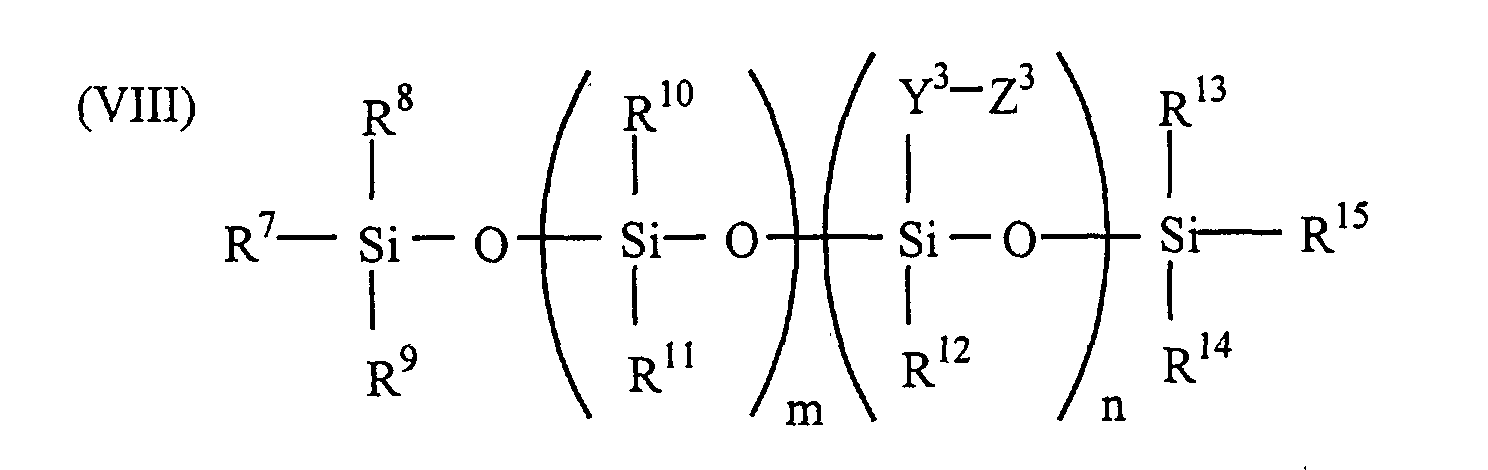
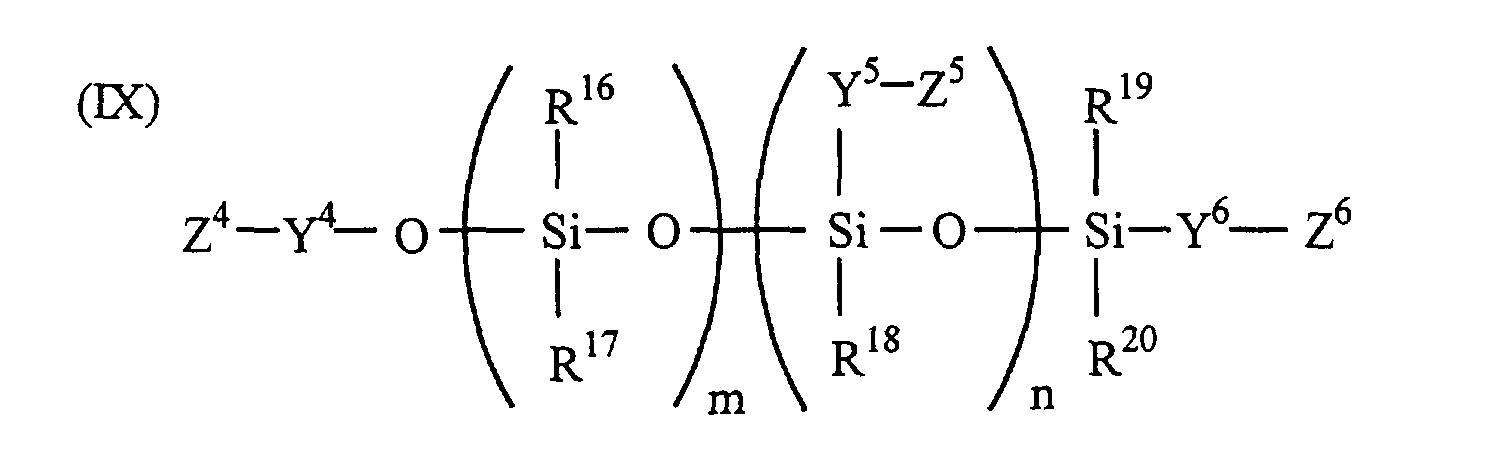

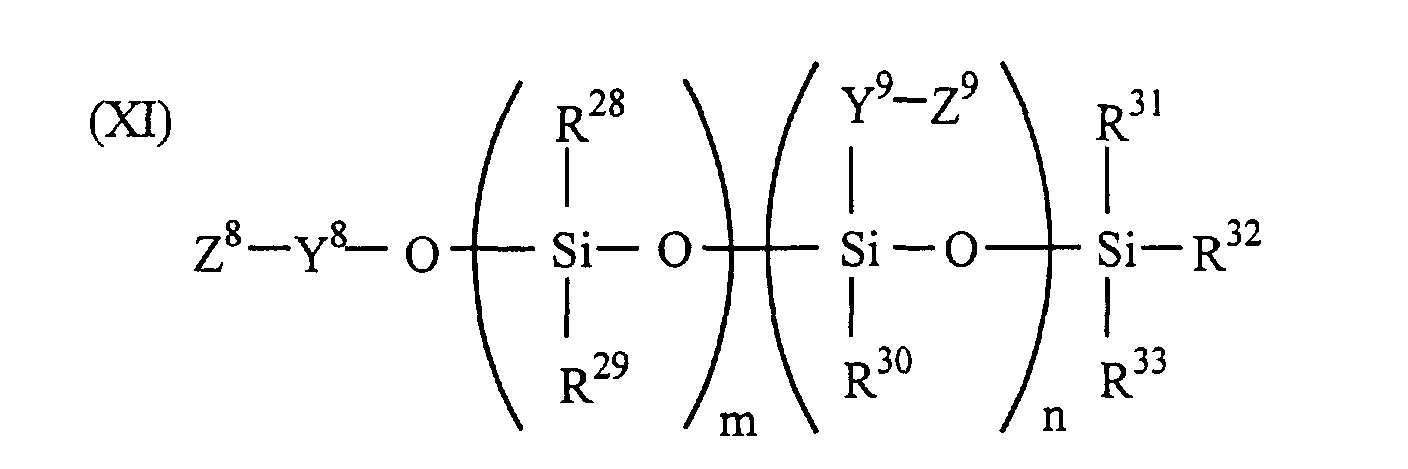

- The composition in accordance with claim 6, wherein the polysiloxane comprises at least one compound of formulas (VII), (VIII), (IX), (X), or (XI), wherein R1-33 is methyl; "m" in each formula has a value in a range between about 20 and about 120; "n" in each formula has a value in a range between about 2 and about 10; and "m+n" in each formula has a value in a range between about 15 and about 120.
- The composition in accordance with claim 6, wherein the polysiloxane comprises at least one compound of formula (XII), wherein "q" has a value of at least one; "p+q" has a value in a range between about 3 and about 6; and R34-36 is methyl.
- The composition in accordance with claim 6, wherein the moiety Z-Y is prepared by a process which comprises combining a hook with a linker precursor comprising a linker and a leaving group.
- The composition in accordance with claim 9, wherein the leaving group is selected from the group consisting of chloride, bromide, iodide, tosylate, mesylate, phosphate, and cyclic leaving groups containing at least one heteroatom.
- The composition in accordance with any preceding claim, wherein the molecular hook comprises a heterocyclic pyridinium compound, a heterocyclic triazinium compound, a heterocyclic pyrimidinium compound, or a heterocyclic pyrazine compound.
- The composition in accordance with claim 11, wherein the molecular hook is at least one member selected from the group consisting of a heterocyclic pyridinium compound (XIII), a heterocyclic triazinium compound (XIV), a heterocyclic pyrimidinium compound (XV), and a heterocyclic pyrazine compound (XVI):

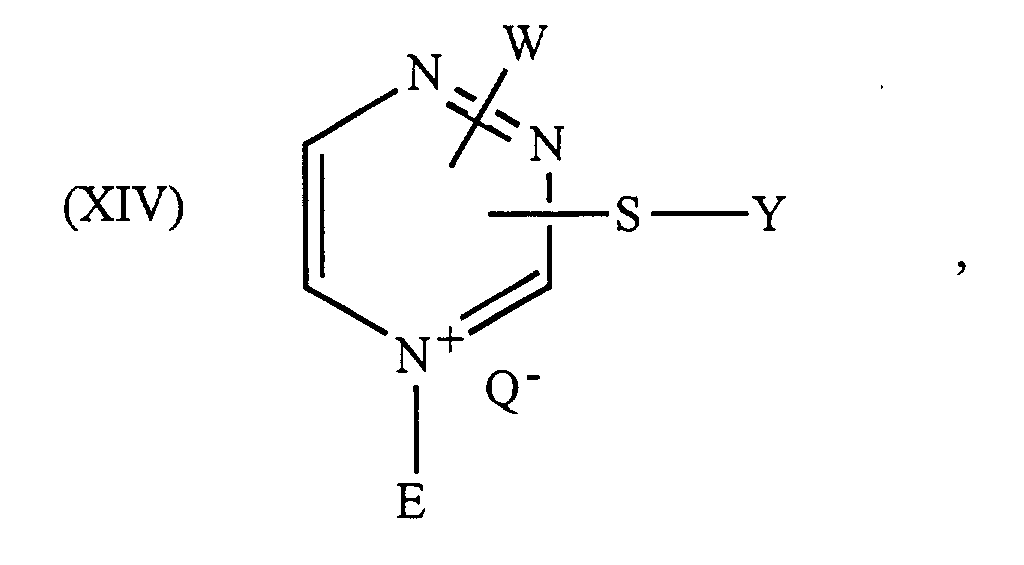
 wherein Y is a linker; W is hydrogen or is selected from electron withdrawing, electron neutral, or electron donating groups with Hammett sigma para values between -1.0 and +1.5 comprising carbon-linked groups of the classes defined as E1, E2, E3, and E4; S-linked groups including SE1, SCN, SO2E1, SO3E1, SSE1, SOE1, SO2NE1E2, SNE1E2, S(NE1)E2, SE1(NE2), SONE1E2; O-linked groups including OE1, OCN, ONE1E2; N-linked groups including NE1E2, NE1E2E3+, NE1OE2, NE1SE2, NCO, NCS, NO2, N=NE1, N=NOE1, NE1CN, N=C=NE1, NE1NE2E3, NE1NA2NA3A4, NA1N=NE2; other groups including CONE1 2, CONE1COE2, C(=NE1)NE1E2, CHO, CHS, CN, NC, Hal, and derived groups that connect one or more of the optional substituents via a ring system; Hal is fluorine, chlorine, bromine, or iodine; and wherein E, E1, E2, E3, and E4 each represent, independently from one another, a monovalent group which can be a silicone group, H, or any of the following: a straight, branched or mono- or polycyclic aliphatic, mono- or polyunsaturated alkyl, aryl, heteroalkyl, heteroaliphatic or heteroolefinic molecule including in a range between about 1 and about 30 carbon atoms together with heteroatoms in a range between about 0 and about 15, including oxygen, nitrogen, sulfur, phosphorus, silicon and incorporating one or more substituents including mono, poly or perfluoro substitution; and wherein the counterion, Q-, is selected from the group consisting of halides, borates, phosphates, tosylates, mesylates, and triflates.
- A silicone composition comprising at least one compound of the formula (VIII):where each R7-15 is methyl; Z3 is a pyrimidinium molecular hook of the formula (XV)
 wherein W is hydrogen, E is methyl; Q- is iodide, chloride, or bromide; and Y is at least one moiety of the formulas (I), (II), (III), (IV), (V), or (VI):




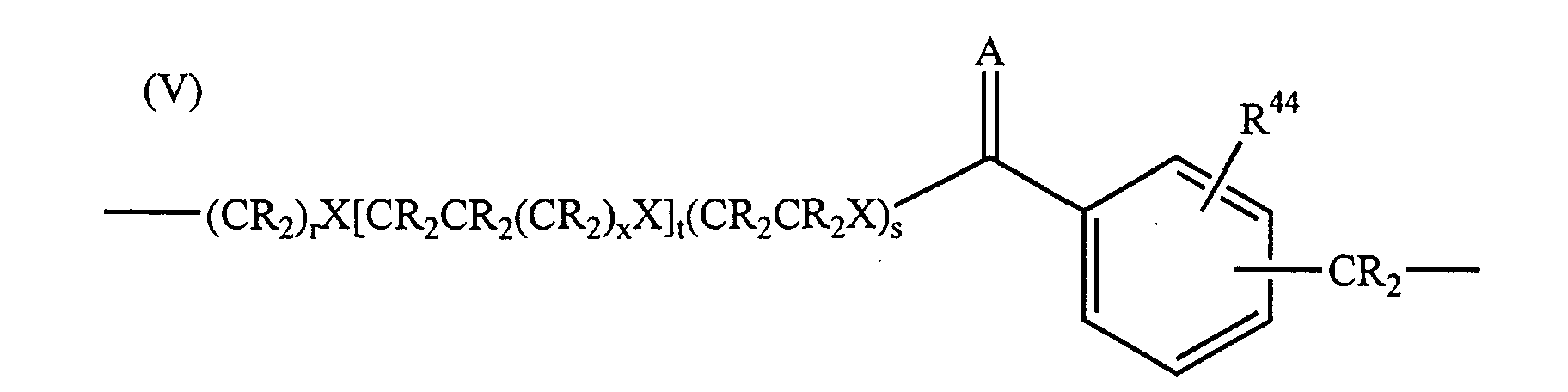 wherein "m" is in a range between about 20 and about 120; "n" is in a range between about 2 and about 10; r is 2 or 3; s is in a range between about 4 and about 20; t is 0; u is 1; v is 2 or 3; w is 1 or 2; x is 1 or 2; X is O; R is H; R44 is H; A is O; B is O; and where the polysiloxane is bound to the (CR2)r (Formula I, II, IV, and V) or (CR2)v (Formula III and VI).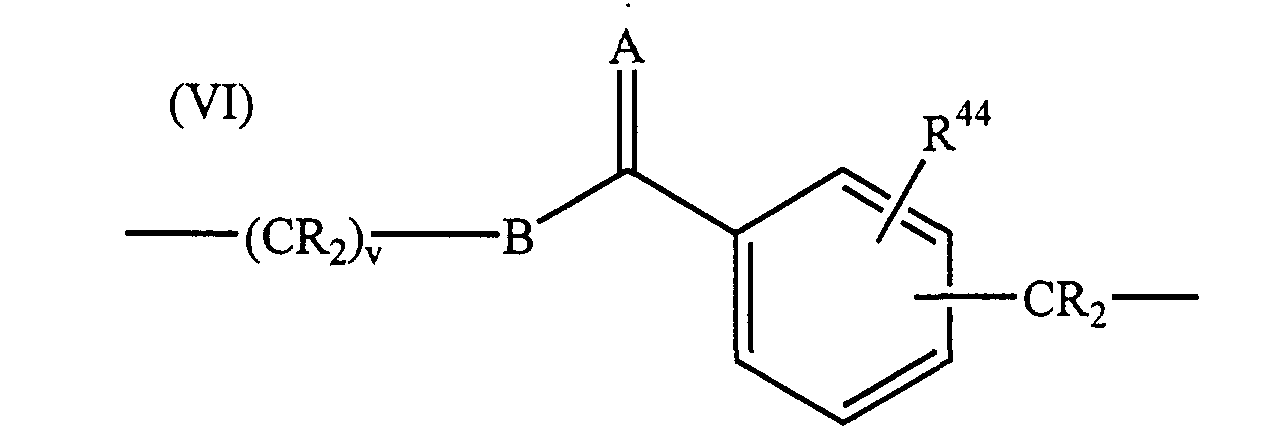
- A silicone composition comprising at least one compound of the formula (VII) :where each R1-6 is methyl; Z1-2 are each a pyrimidinium molecular hook of the formula (XIV):
 wherein W is hydrogen, E is methyl; Q- is iodide, chloride, or bromide; and Y is at least one moiety of the formulas (I), (II), (III), (IV), (V), or (VI):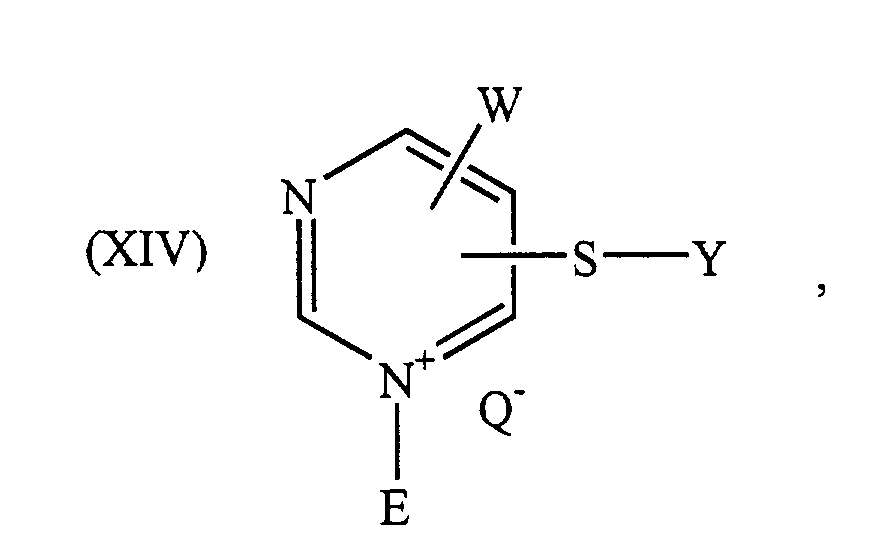

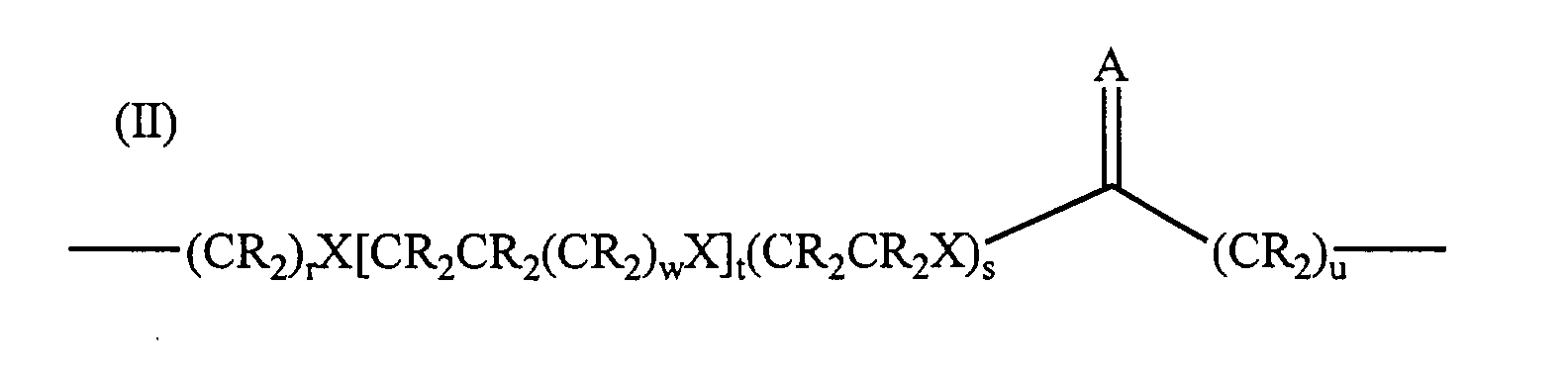
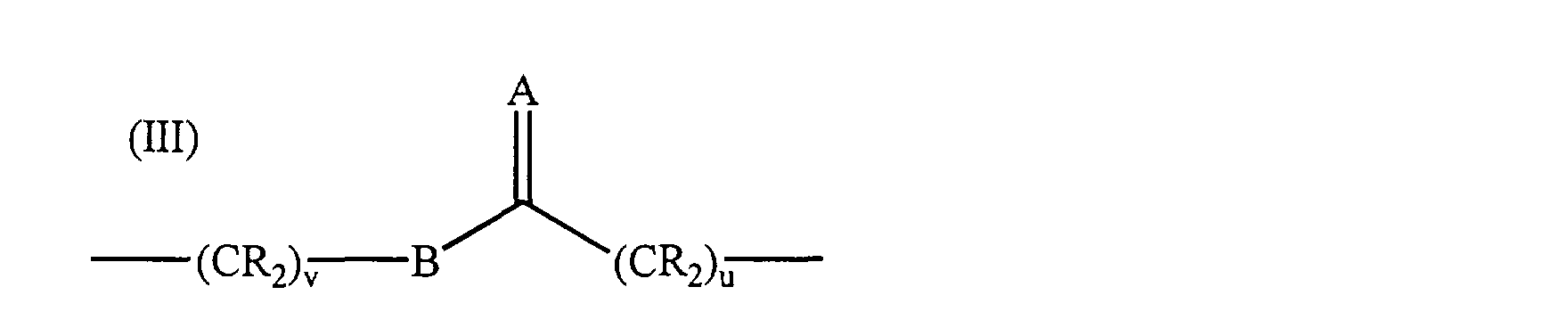
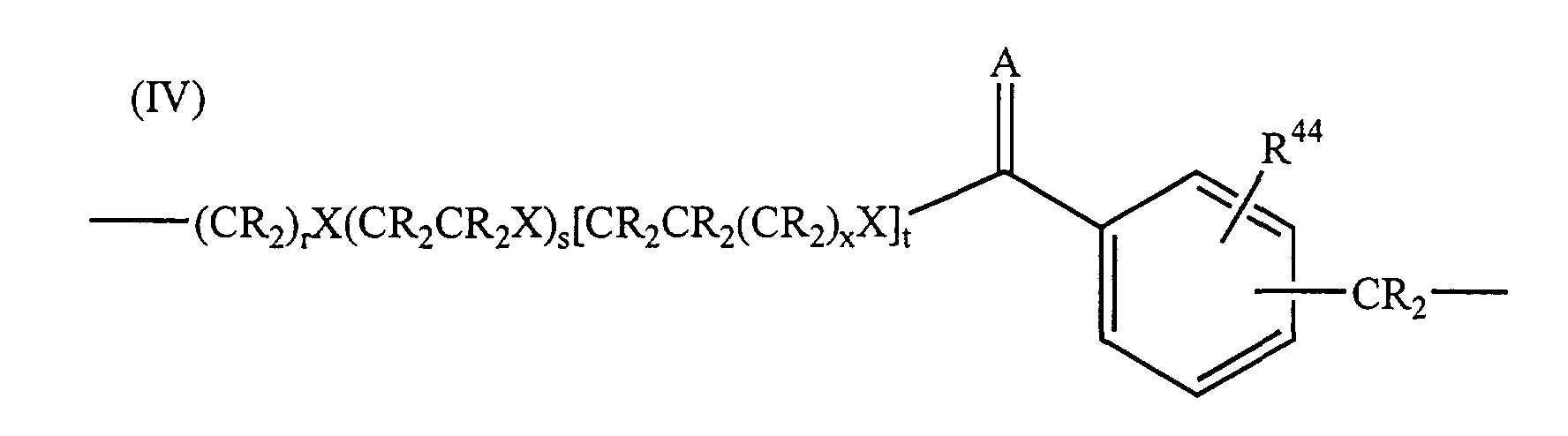
 wherein "m+n" has a value in a range between about 20 and about 120; r is 2 or 3; s is in a range between about 4 and about 20; t is 0; u is 1; v is 2 or 3; w is 1 or 2; x is 1 or 2; X is O; R is H; R44 is H; A is O; B is O; and where the polysiloxane is bound to the (CR2)r (Formula I, II, IV, and V) or (CR2)v (Formula III and VI).
- A hair care product, textile care product, cosmetic product, oral care product or animal care product comprising the composition of any preceding claim.
- A method for providing adhesion of polysiloxane or silicone resin to hair which comprises treating hair with the composition of any preceding claim.
- A method for making a silicone composition of any one of claims 1 to 14, which method comprises combining a linker, a molecular hook, and a polysiloxane or silicone resin wherein the linker comprises at least one moiety of the formulas (I), (II), (III), (IV), (V), or (VI) as defined in claim 1.
- The method of claim 17 which comprises (a) combining at least one linker with a polysiloxane or silicone resin and subsequently combining said combination with at least one molecular hook or (b) combining at least one linker with at least one molecular hook and subsequently combining said combination with a polysiloxane or silicone resin.
- A method for making a silicone composition comprising combining at least one linker with a polysiloxane and subsequently combining said combination with at least one molecular hook, wherein the polysiloxane is of the formula (VIII):where each R7-15 is methyl; Z3 is a pyrimidinium molecular hook of the formula (XV)
 wherein W is hydrogen, E is methyl; Q- is iodide; and Y is at least one moiety of the formulas (I), (II), (III), (IV), (V), or (VI) :



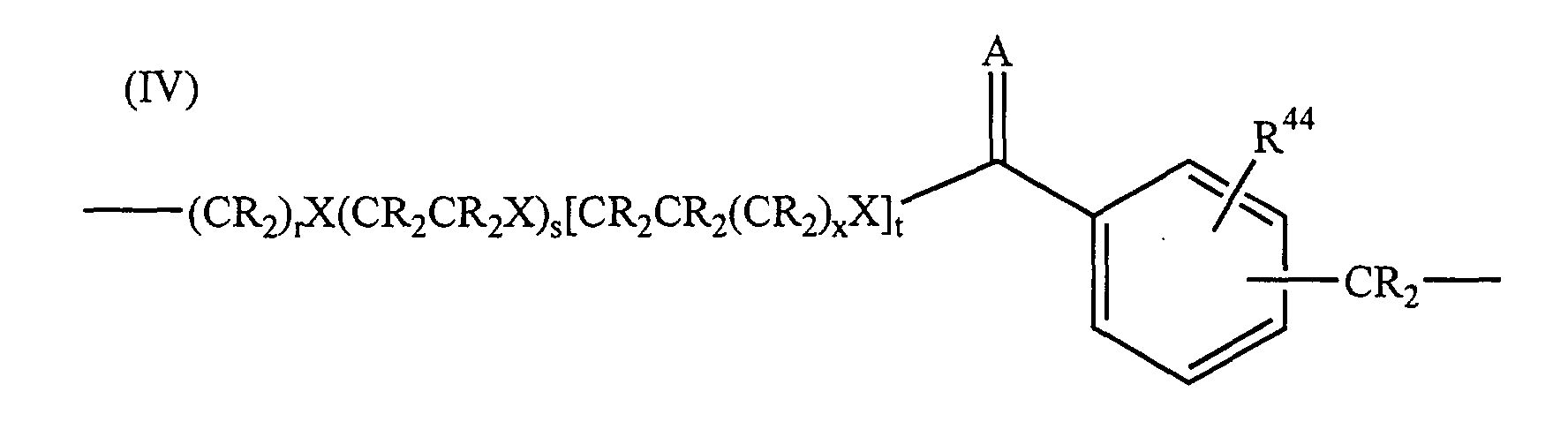
 wherein "m" is in a range between about 20 and about 120; "n" is in a range between about 2 and about 10; r is 2 or 3; s is in a range between about 4 and about 20; t is 0; u is 1; v is 2 or 3; w is 1 or 2; x is 1 or 2; X is O; R is H; R44 is H; A is O; B is O; and where the polysiloxane is bound to the (CR2)r (Formula I, II, IV, and V) or (CR2)v (Formula III and VI).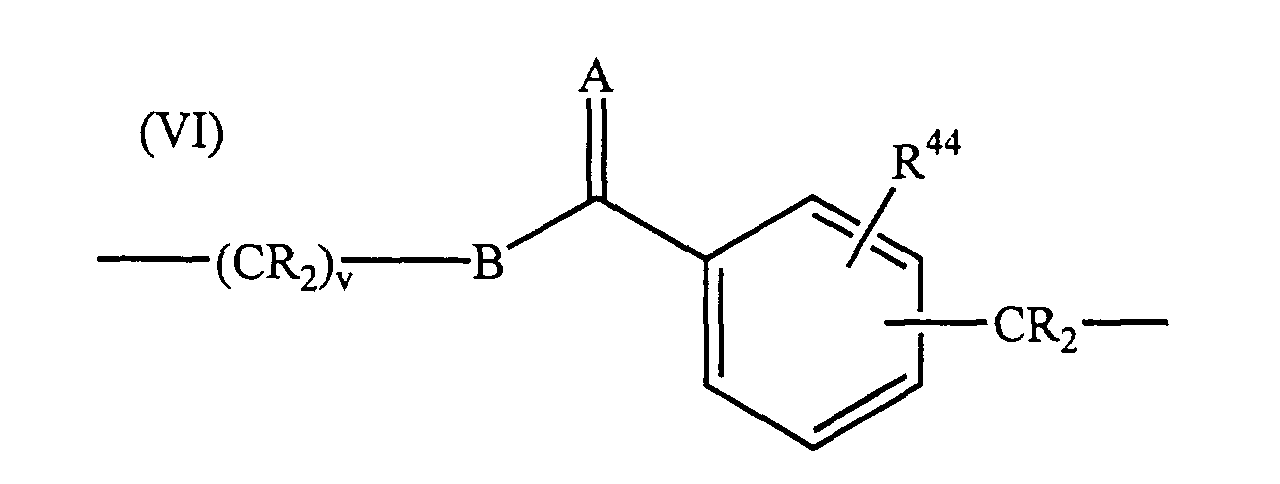
- A method for making a silicone composition comprising combining at least one linker with a polysiloxane and subsequently combining said combination with at least one molecular hook, wherein the polysiloxane is of the formula (VII):where each R1-6 is methyl; Z1-2 are each a pyrimidinium molecular hook of the formula (XIV)
 wherein W is hydrogen, E is methyl; Q- is iodide, chloride, or bromide; and Y is at least one moiety of the formulas (I), (II), (III), (IV), (V), or (VI):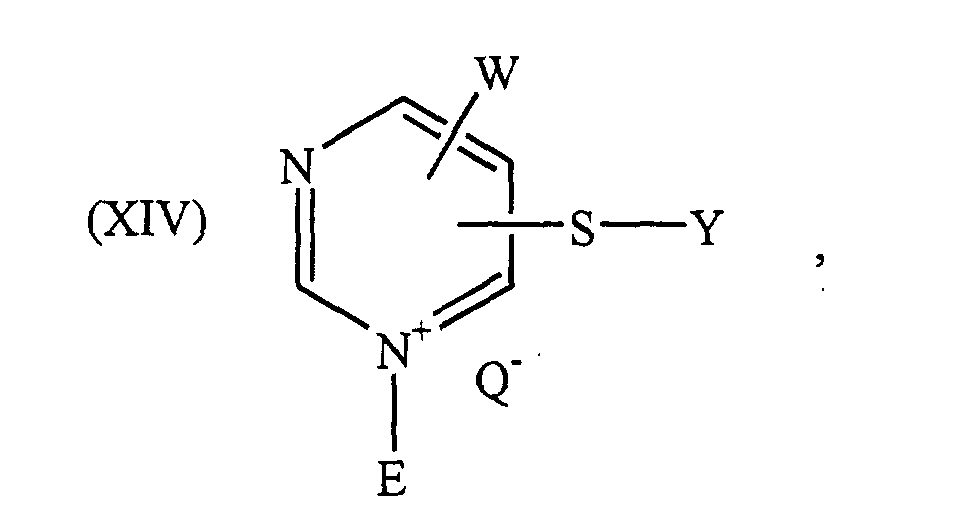
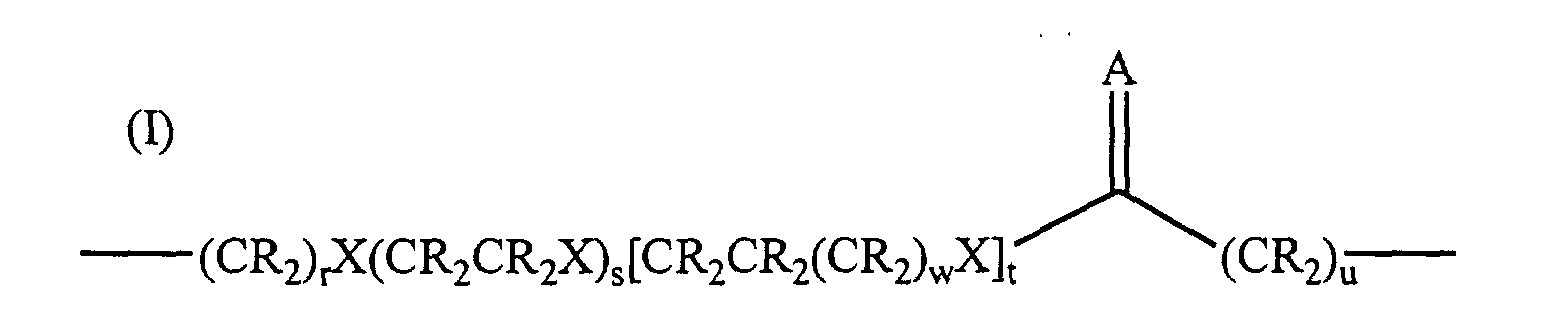


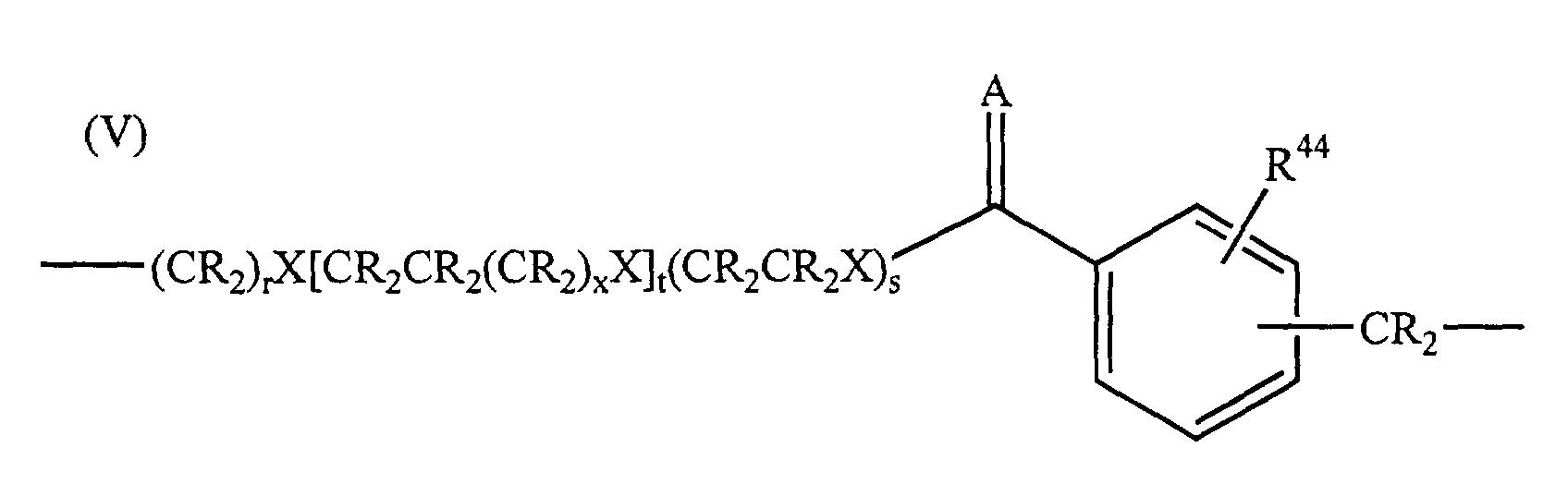 wherein "m+n" has a value in a range between about 15 and about 120; r is 2 or 3; s is in a range between about 4 and about 20; t is 0; u is 1; v is 2 or 3; w is 1 or 2; x is 1 or 2; X is O; R is H; R44 is H; A is O; B is O; and where the polysiloxane is bound to the (CR2)r (Formula I, II, IV, and V) or (CR2)v (Formula III and VI).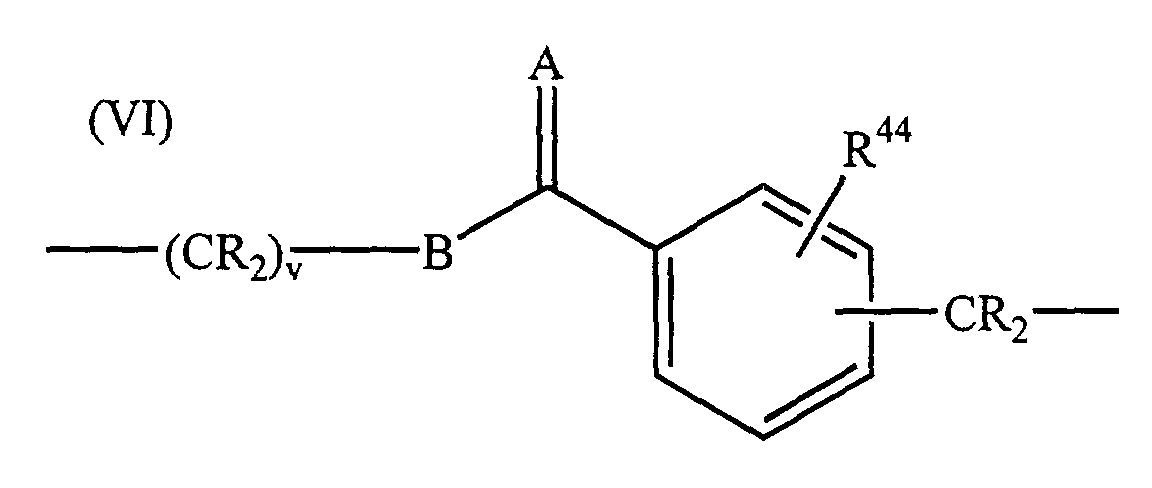
Applications Claiming Priority (2)
| Application Number | Priority Date | Filing Date | Title |
|---|---|---|---|
| US616533 | 2000-07-14 | ||
| US09/616,533 US6506371B1 (en) | 2000-07-14 | 2000-07-14 | Silicone compositions for personal care products and method for making |
Publications (3)
| Publication Number | Publication Date |
|---|---|
| EP1172398A2 true EP1172398A2 (en) | 2002-01-16 |
| EP1172398A3 EP1172398A3 (en) | 2002-02-13 |
| EP1172398B1 EP1172398B1 (en) | 2007-04-04 |
Family
ID=24469882
Family Applications (1)
| Application Number | Title | Priority Date | Filing Date |
|---|---|---|---|
| EP01305883A Expired - Lifetime EP1172398B1 (en) | 2000-07-14 | 2001-07-09 | Silicone compositions for personal care products and method for making |
Country Status (4)
| Country | Link |
|---|---|
| US (1) | US6506371B1 (en) |
| EP (1) | EP1172398B1 (en) |
| JP (1) | JP5081350B2 (en) |
| DE (1) | DE60127617T2 (en) |
Cited By (1)
| Publication number | Priority date | Publication date | Assignee | Title |
|---|---|---|---|---|
| CN107001637A (en) * | 2014-09-23 | 2017-08-01 | 迈图高新材料股份有限公司 | For handling silicone compounds of substrate based on amino acid and combinations thereof |
Families Citing this family (5)
| Publication number | Priority date | Publication date | Assignee | Title |
|---|---|---|---|---|
| US6488921B1 (en) * | 2000-07-14 | 2002-12-03 | General Electric Company | Silicone compositions for personal care products and method for making |
| US6390102B1 (en) * | 2000-07-14 | 2002-05-21 | General Electric Company | Silicone compositions for personal care products and method for making |
| US7118733B2 (en) * | 2000-07-14 | 2006-10-10 | General Electric Company | Topical silicone compositions and method for making |
| US20020192173A1 (en) * | 2001-01-22 | 2002-12-19 | The Procter & Gamble Company | Anhydrous treatment compositions for the delivery of reactive agents to amino-acid based substrates |
| US10556133B2 (en) | 2017-06-05 | 2020-02-11 | Momentive Performance Materials Inc. | Composition and method for strengthening hair fiber |
Family Cites Families (38)
| Publication number | Priority date | Publication date | Assignee | Title |
|---|---|---|---|---|
| US3215718A (en) * | 1961-11-24 | 1965-11-02 | Dow Corning | Sulfur-containing organosilicon compounds and method of preparation |
| AU571671B2 (en) | 1984-04-12 | 1988-04-21 | Revlon Inc. | Alkyltrialkosilane hair strengthening and permanent wave composition |
| US4567039A (en) | 1984-10-12 | 1986-01-28 | Revlon, Inc. | Hair conditioning composition and method |
| FR2607002B1 (en) | 1986-11-21 | 1989-04-07 | Oreal | NEW PROCESS FOR THE REINFORCEMENT AND / OR PERMANENT DEFORMATION OF HAIR, AND COMPOSITION FOR THE IMPLEMENTATION OF THIS PROCESS |
| US4749732A (en) | 1987-01-02 | 1988-06-07 | Dow Corning Corporation | Hair care composition containing modified aminoalkyl substituted polydiorganosiloxane |
| US4973475A (en) | 1988-10-07 | 1990-11-27 | Revlon, Inc. | Hair treatment and conditioning agents |
| JPH02281043A (en) * | 1989-04-21 | 1990-11-16 | Toshiba Silicone Co Ltd | Polysiloxane having pyrrolidinium ring terminal |
| JPH0717659B2 (en) * | 1989-08-18 | 1995-03-01 | 財団法人相模中央化学研究所 | Polyorganosiloxane having pyridinium salt at terminal and transdermal absorption enhancer |
| JP2624036B2 (en) * | 1990-06-13 | 1997-06-25 | 信越化学工業株式会社 | Siloxane compound and method for producing the same |
| US5087733A (en) | 1990-08-03 | 1992-02-11 | Clairol, Inc. | Sulfur containing quaternary ammonium salts as hair conditioning agents |
| US5206013A (en) | 1990-08-03 | 1993-04-27 | Clairol, Inc. | Sulfur containing quaternary ammonium salts as hair conditioning agents |
| US5211942A (en) | 1990-08-03 | 1993-05-18 | Clairol Incorporated | Halide containing quaternary ammonium salts as hair conditioning agents |
| US5030756A (en) | 1990-08-03 | 1991-07-09 | Clairol Incorporated | Halide containing quaternary ammonium salts as hair conditioning agents |
| US5254335A (en) | 1990-10-10 | 1993-10-19 | Clairol Incorporated | Hair conditioning compounds containing reactive nonionic surfactants and isothiuronium compounds and method of use |
| JP2942616B2 (en) * | 1990-11-06 | 1999-08-30 | 財団法人相模中央化学研究所 | Polyorganosiloxane having quaternary salt at one terminal and transdermal absorption enhancer |
| JP3026635B2 (en) * | 1991-05-08 | 2000-03-27 | 財団法人相模中央化学研究所 | Polyorganosiloxane having quaternary salt at one end and transdermal absorption enhancer |
| FR2675378B1 (en) | 1991-04-19 | 1993-08-27 | Oreal | COMPOSITION AND METHOD USING THIOL SILICONES FOR PROTECTING THE COLOR OF DYED KERATINIC FIBERS. |
| US5160733A (en) * | 1991-05-06 | 1992-11-03 | Clairol Inc. | Conditioning compositions with perfluoropolymethylisopropylethers |
| US5248783A (en) | 1991-11-06 | 1993-09-28 | Siltech Inc. | Silicone alkoxylated esters carboxylate salts |
| US5326890A (en) * | 1992-10-16 | 1994-07-05 | Rensselaer Polytechnic Institute | Sulfonated silicones and methods for their production |
| US5350572A (en) | 1993-02-18 | 1994-09-27 | Shiseido Co., Ltd. | Permanent waving composition |
| JPH06293781A (en) * | 1993-04-08 | 1994-10-21 | Shin Etsu Chem Co Ltd | Siloxane compound containing betaine group and its production |
| US5280099A (en) | 1993-04-22 | 1994-01-18 | Siltech Inc. | Silicone taurine polymers |
| GB9310241D0 (en) | 1993-05-18 | 1993-06-30 | Unilever Plc | Cosmetic treatment of substrates |
| JPH07133352A (en) * | 1993-08-10 | 1995-05-23 | Kao Corp | Organopolysiloxane, hair setting agent composition containing the same, and hair setting method using the same |
| US5609861A (en) | 1994-12-02 | 1997-03-11 | L'oreal | Composition and process using silicone thiols for the protection of the color of dyed keratinous fibres |
| JP3465391B2 (en) * | 1994-12-05 | 2003-11-10 | 信越化学工業株式会社 | Reactive organopolysiloxane |
| JP3995115B2 (en) * | 1995-06-30 | 2007-10-24 | 千葉製粉株式会社 | Novel silicone derivative, its production method and use |
| US5767192A (en) | 1996-01-11 | 1998-06-16 | Dow Corning Corporation | Silicone foam control agents for hydrocarbon liquids |
| DE19651287A1 (en) * | 1996-12-10 | 1998-06-18 | Wacker Chemie Gmbh | Ionic organosilicon compounds, their production and use |
| FR2760359B1 (en) | 1997-03-04 | 2000-01-07 | Oreal | PROCESS FOR TREATING A KERATINIC SUBSTRATE |
| DE19743722A1 (en) | 1997-10-02 | 1999-04-08 | Wacker Chemie Gmbh | Polysiloxanes with heterocyclic functions, their production and use |
| JPH11139938A (en) * | 1997-11-12 | 1999-05-25 | Shin Etsu Chem Co Ltd | Hair cosmetics |
| JPH11158287A (en) * | 1997-11-28 | 1999-06-15 | Dow Corning Toray Silicone Co Ltd | Diorganopolysiloxane and solid-treating agent |
| FR2773164B1 (en) | 1997-12-30 | 2000-03-17 | Rhodia Chimie Sa | PROCESS FOR THE PREPARATION OF HIGH PURITY ESTER FUNCTION SILICONES |
| JP4123312B2 (en) * | 1998-04-06 | 2008-07-23 | 信越化学工業株式会社 | Water-resistant ink composition |
| EP1143916A2 (en) | 1999-01-08 | 2001-10-17 | The Procter & Gamble Company | Topical compositions comprising protected functional thiols |
| US6488921B1 (en) * | 2000-07-14 | 2002-12-03 | General Electric Company | Silicone compositions for personal care products and method for making |
-
2000
- 2000-07-14 US US09/616,533 patent/US6506371B1/en not_active Expired - Lifetime
-
2001
- 2001-07-09 DE DE60127617T patent/DE60127617T2/en not_active Expired - Lifetime
- 2001-07-09 EP EP01305883A patent/EP1172398B1/en not_active Expired - Lifetime
- 2001-07-13 JP JP2001212952A patent/JP5081350B2/en not_active Expired - Fee Related
Cited By (2)
| Publication number | Priority date | Publication date | Assignee | Title |
|---|---|---|---|---|
| CN107001637A (en) * | 2014-09-23 | 2017-08-01 | 迈图高新材料股份有限公司 | For handling silicone compounds of substrate based on amino acid and combinations thereof |
| CN107001637B (en) * | 2014-09-23 | 2021-06-15 | 迈图高新材料股份有限公司 | Silicone compounds and compositions thereof for treating amino acid-based substrates |
Also Published As
| Publication number | Publication date |
|---|---|
| EP1172398B1 (en) | 2007-04-04 |
| DE60127617T2 (en) | 2007-12-13 |
| JP2002146192A (en) | 2002-05-22 |
| US6506371B1 (en) | 2003-01-14 |
| EP1172398A3 (en) | 2002-02-13 |
| DE60127617D1 (en) | 2007-05-16 |
| JP5081350B2 (en) | 2012-11-28 |
Similar Documents
| Publication | Publication Date | Title |
|---|---|---|
| EP1172411B1 (en) | Silicone compositions for personal care products and method of manufacture | |
| US4833225A (en) | Polyquaternary polysiloxane polymers, their synthesis and use in cosmetic preparations | |
| US5686547A (en) | Carbonate and hydroxy carbamate functionalized silicones | |
| US4994593A (en) | Hydroxylhydrocarbyl-modified aminoalkyl silicones | |
| WO2013103498A1 (en) | Process for the manufacture of silicone ionomer | |
| US6294634B1 (en) | Organosilicon compositions from cyclosiloxanes | |
| US6390102B1 (en) | Silicone compositions for personal care products and method for making | |
| US6506371B1 (en) | Silicone compositions for personal care products and method for making | |
| US5672338A (en) | Cosmetic compositions made with hydroxy carbamate functionalized silicones | |
| JPH10168196A (en) | Ionic organic silicon compound and its production | |
| US6619294B1 (en) | Silicone compositions for personal care products and method for making | |
| JP3270770B2 (en) | Novel silicone compound and cosmetic containing the compound | |
| JP2004504432A5 (en) | ||
| US7118733B2 (en) | Topical silicone compositions and method for making | |
| EP0372612B1 (en) | Hydroxylhydrocarbyl-modified aminoalkyl silicones | |
| JP3238807B2 (en) | Surfactants applied to the skin | |
| GB2340128A (en) | Carbonate functionalised silicones |
Legal Events
| Date | Code | Title | Description |
|---|---|---|---|
| PUAI | Public reference made under article 153(3) epc to a published international application that has entered the european phase |
Free format text: ORIGINAL CODE: 0009012 |
|
| PUAL | Search report despatched |
Free format text: ORIGINAL CODE: 0009013 |
|
| AK | Designated contracting states |
Kind code of ref document: A2 Designated state(s): DE FR GB Kind code of ref document: A2 Designated state(s): AT BE CH CY DE DK ES FI FR GB GR IE IT LI LU MC NL PT SE TR |
|
| AX | Request for extension of the european patent |
Free format text: AL;LT;LV;MK;RO;SI |
|
| AK | Designated contracting states |
Kind code of ref document: A3 Designated state(s): AT BE CH CY DE DK ES FI FR GB GR IE IT LI LU MC NL PT SE TR |
|
| AX | Request for extension of the european patent |
Free format text: AL;LT;LV;MK;RO;SI |
|
| 17P | Request for examination filed |
Effective date: 20020813 |
|
| AKX | Designation fees paid |
Free format text: DE FR GB |
|
| 17Q | First examination report despatched |
Effective date: 20041206 |
|
| GRAC | Information related to communication of intention to grant a patent modified |
Free format text: ORIGINAL CODE: EPIDOSCIGR1 |
|
| GRAP | Despatch of communication of intention to grant a patent |
Free format text: ORIGINAL CODE: EPIDOSNIGR1 |
|
| RIC1 | Information provided on ipc code assigned before grant |
Ipc: A61K 8/89 20060101ALI20060831BHEP Ipc: C08G 77/46 20060101ALI20060831BHEP Ipc: C08G 77/388 20060101ALI20060831BHEP Ipc: C08G 77/392 20060101ALI20060831BHEP Ipc: C08G 77/382 20060101AFI20060831BHEP |
|
| GRAS | Grant fee paid |
Free format text: ORIGINAL CODE: EPIDOSNIGR3 |
|
| GRAA | (expected) grant |
Free format text: ORIGINAL CODE: 0009210 |
|
| AK | Designated contracting states |
Kind code of ref document: B1 Designated state(s): DE FR GB |
|
| REG | Reference to a national code |
Ref country code: GB Ref legal event code: FG4D |
|
| REF | Corresponds to: |
Ref document number: 60127617 Country of ref document: DE Date of ref document: 20070516 Kind code of ref document: P |
|
| ET | Fr: translation filed | ||
| PLBE | No opposition filed within time limit |
Free format text: ORIGINAL CODE: 0009261 |
|
| STAA | Information on the status of an ep patent application or granted ep patent |
Free format text: STATUS: NO OPPOSITION FILED WITHIN TIME LIMIT |
|
| 26N | No opposition filed |
Effective date: 20080107 |
|
| PGFP | Annual fee paid to national office [announced via postgrant information from national office to epo] |
Ref country code: DE Payment date: 20140729 Year of fee payment: 14 |
|
| PGFP | Annual fee paid to national office [announced via postgrant information from national office to epo] |
Ref country code: GB Payment date: 20140729 Year of fee payment: 14 Ref country code: FR Payment date: 20140717 Year of fee payment: 14 |
|
| REG | Reference to a national code |
Ref country code: DE Ref legal event code: R119 Ref document number: 60127617 Country of ref document: DE |
|
| GBPC | Gb: european patent ceased through non-payment of renewal fee |
Effective date: 20150709 |
|
| PG25 | Lapsed in a contracting state [announced via postgrant information from national office to epo] |
Ref country code: GB Free format text: LAPSE BECAUSE OF NON-PAYMENT OF DUE FEES Effective date: 20150709 Ref country code: DE Free format text: LAPSE BECAUSE OF NON-PAYMENT OF DUE FEES Effective date: 20160202 |
|
| REG | Reference to a national code |
Ref country code: FR Ref legal event code: ST Effective date: 20160331 |
|
| PG25 | Lapsed in a contracting state [announced via postgrant information from national office to epo] |
Ref country code: FR Free format text: LAPSE BECAUSE OF NON-PAYMENT OF DUE FEES Effective date: 20150731 |