Background of the Invention
The present invention relates to a novel N-substituted-N'-substituted
urea derivative as well as a pharmaceutical composition, a TNF-α
production inhibitory agent and a therapeutic agent for treating an
autoimmune disease, which contain the compounds.
TNF- α (Tumor Necrosis Factor- α) has presently been recognized as
a cytokine strongly correlated with biological protection-immunological
mechanism, but the continuous and excess production of TNF-α causes
various tissue disorders and this accordingly becomes a principal cause of a
variety of diseases and exacerbation. For instance, examples of pathogenesis
associated with TNF- α include articular rheumatism, systemic
erythematodes (SLE), dyscrasia, acute infectious diseases, allergy, fever,
anemia and diabetes (YAMAZAKI, Clinical Immunology, 1995, 27:1270).
Moreover, it has also been reported that TNF- α plays an important role in
the crisis of chronic rheumatism and Crohn's disease, which are autoimmune
diseases (Andreas Eigler et al., Immunology Today, 1997, 18: 487).
Accordingly, a compound capable of inhibiting the production of TNF-α
or controlling the action thereof would be effective in the treatment of the
foregoing diseases and therefore, a variety of investigations have been done
to obtain such a compound (the foregoing articles: YAMAZAKI, Clinical
Immunology, 27; Andreas Eigler et al., Immunology Today, 18).
On the other hand, the compounds represented by the following
general formula I, in which R1, R3 and R4 simultaneously represent hydrogen
atoms and R6 and R' are both methyl groups, are disclosed in Japanese Un-Examined
Patent Publication No. Hei 1-224758 as sensitizing dyes (II-40). In
addition, the compounds represented by the following general formula I, in
which R1 is an aryl group or a furanylmethyl group, R3 is an isopropyl group
and R6 and R7 are both methyl groups, are disclosed in Japanese Un-Examined
Patent Publication No. Sho 57-209267 as examples of the
compounds having an effect as an antiarrhythmic agent (Examples 1, 2, 34,
37, 52 and 58).
Disclosure of the Invention
An object of the present invention is to provide a novel compound
having an activity of inhibiting TNF- α production.
It is another object of the present invention to provide an intermediate
useful in the preparation of the foregoing compound.
It is a further object of the present invention to provide a
pharmaceutical composition, a TNF-α production inhibitory agent and a
therapeutic agent for treating autoimmune diseases, which comprise the
foregoing compounds.
The inventors of this invention have conducted intensive studies to
synthesize a compound having a urea structure as a basic structure, which
has not conventionally been investigated as a drug, have established a large
number of novel compounds, have found that N-substituted-N'-substituted
urea derivatives represented by the following general formula I among the
foregoing novel compounds show an excellent TNF-α production inhibitory
activity and thus have completed the present invention on the basis of the
foregoing finding.
More specifically, the present invention herein provides an N-substituted-N'-substituted
urea derivative represented by the following
general formula I and a pharmaceutically acceptable salt thereof:
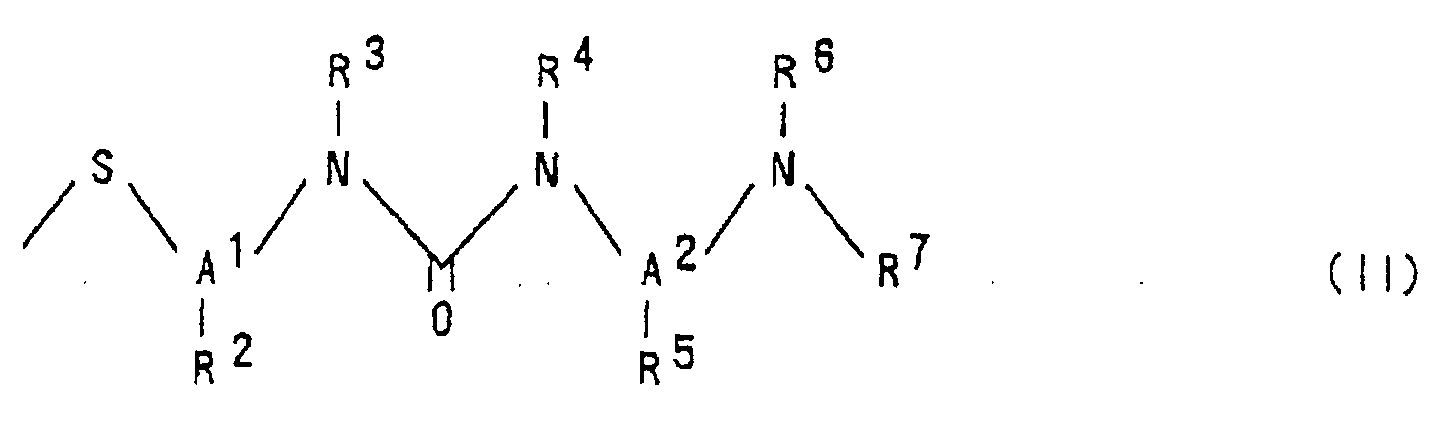
wherein R
1 represents a hydrogen atom, a lower alkyl group, an aryl group or
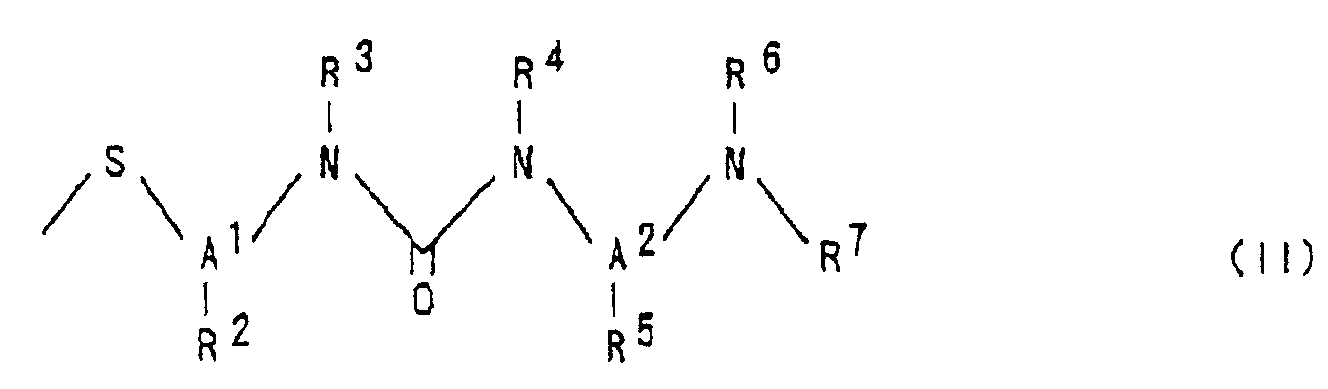
a group represented by the following general formula II:
wherein R
2 represents a hydrogen atom, a lower alkyl group, a cycloalkyl
group, an aryl group, a carboxyl group or an ester group, or R
2 may form a
ring together with R
1; R
3 and R
4 may be the same or different and each
represents a hydrogen atom, a lower alkyl group, a cycloalkylalkyl group, an
arylalkyl group, a cycloalkyl group or an aryl group; R
5 represents a
hydrogen atom, a lower alkyl group, a hydroxyl group, a lower alkoxy group
or an aryl group; R
6 and R
7 may be the same or different and each represents
a hydrogen atom, a lower alkyl group, a cycloalkylalkyl group, a cycloalkyl
group or an aryl group; A
1 and A
2 may be the same or different and each
represents a lower alkylene group, provided that if both R
6 and R
7 are methyl
groups, R
1, R
3 and R
4 do not simultaneously represent hydrogen atom, or if
R
3 is an isopropyl group and both R
6 and R
7 are methyl groups, R
1 does not
represent an aryl group and a furanylmethyl group.
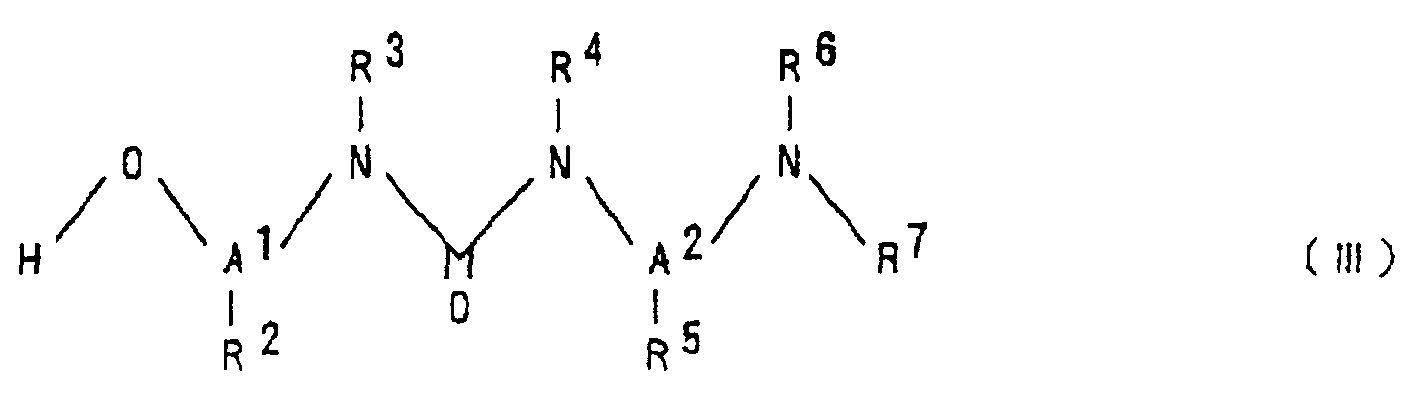
According to the present invention, there are also provided N-substituted-
N'-substituted urea derivatives represented by the following
general formula III and salts thereof:
The present invention likewise provides a pharmaceutical composition,
a TNF- α production inhibitory agent and a therapeutic agent for treating
autoimmune diseases, which comprise the foregoing N-substituted-N'-substituted
urea derivative or a pharmaceutically acceptable salt thereof.
Best Mode for Carrying Out the Invention
In the present invention, the lower alkyl group may be, for instance,
linear or branched alkyl groups having 1 to 8 carbon atoms such as methyl,
ethyl, propyl, isopropyl, butyl, isobutyl, t-butyl, pentyl, isopentyl and
isohexyl groups, with alkyl groups having 1 to 6 being preferred. The lower
alkyl group is more preferably those having 1 to 3 carbon atoms, in
particular, methyl group. Examples of cycloalkyl groups are those having 3
to 10 carbon atoms such as cyclopropyl, cyclobutyl, cyclopentyl, cyclohexyl
and cycloheptyl groups, with those having 3 to 6 carbon atoms being
preferred and cyclohexyl group being particularly preferred. Examples of
lower alkoxy groups include linear or branched alkoxy groups having 1 to 8
carbon atoms such as methoxy, ethoxy, propoxy, isopropoxy, butoxy and
hexyloxy groups, with those having 1 to 5 carbon atoms being preferred and
those having 1 to 3 carbon atoms being particularly preferred.
These lower alkyl, cycloalkyl and lower alkoxy groups may be
substituted wiTNFor instance, halogen atoms (such as fluorine, chlorine,
iodine and bromine atoms) and/or a hydroxyl group. Moreover, the cycloalkyl
group may be substituted with a lower alkyl group and/or a lower alkoxy
group.
Examples of lower alkylene groups are linear or branched alkylene
groups having 1 to 8 carbon atoms such as methylene, ethylene, -propylene,
isopropylene, methylmethylene, tetramethylene, 2-methyltrimethylene and
hexamethylene groups, with those having 1 to 5 carbon atoms being
preferred. The lower alkylene group is more preferably those having 2 to 4
carbon atoms and in particular, those having 2 to 3 carbon atoms.
In addition, examples of aryl groups are phenyl groups, naphthyl
groups and aromatic heterocyclic groups having 6 to 12 carbon atoms, which
may be substituted or unsubstituted and the aryl group is preferably a
substituted or unsubstituted phenyl group and particularly preferably an
unsubstituted phenyl group or a biphenylyl group. In this respect, the
substituent may be, for instance, a halogen atom (such as fluorine, chlorine,
iodine or bromine atom), a hydroxyl group, an amino group, a lower alkyl
group, a lower alkoxy group, a cycloalkyl group or a phenyl group.
Examples of cycloalkylalkyl and arylalkyl groups are linear or
branched alkyl groups having 1 to 8 carbon atoms, preferably alkyl groups
having 1 to 5 carbon atoms, more preferably alkyl groups having 1 to 3
carbon atoms and most preferably ethyl group, to which the foregoing
cycloalkyl or aryl group is bonded.
Examples of ester groups are lower alkyl esters, benzyl esters and
phenyl esters.
Examples of rings formed by the combination of substituents R2 and
R1 are 5- and 6-membered non-aromatic hetero rings including the sulfur
atom to which R1 is bonded as a member of the rings, such as
tetrahydrothiophene, thiolactone and dithiolan.
When the compound represented by the general formula I according to
the present invention has thiol, hydroxyl and/or amino groups, these groups
may be protected with commonly used protective groups.
Examples of protective groups for thiol group are those commonly
used as protective groups for thiol group such as acyl groups and substituted
thio groups. Specific examples thereof are acyl groups such as lower alkanoyl
groups, phenylcarbonyl groups, thenoyl groups, nicotinoyl groups, lower
alkoxycarbonyl groups, substituted lower alkoxycarbonyl groups and
substituted carbamoyl groups; and substituted thio groups such as lower
alkylthio groups and phenylthio group. In this connection, the phenyl rings
of the foregoing phenylcarbonyl and phenylthio groups may be substituted
with a halogen atom, a lower alkyl group, a lower alkoxy group or a nitro
group.
Among these, preferred are, for instance, acyl groups such as acetyl
group, propionyl group, butyryl group, pivaloyl group, benzoyl group, thenoyl
group, t-butoxycarbonyl group and benzyloxycarbonyl group; and substituted
thio groups such as ethylthio, t-butylthio and phenylthio groups, with lower
alkylcarbonyl groups (in particular, those having 2 to 5 carbon atoms) being
more preferably used.
Protective groups for hydroxyl group may be, for instance, those
commonly used as the protective groups for hydroxyl group such as acyl
groups, substituted lower alkyl groups and substituted silyl groups. Specific
examples thereof are acyl groups such as formyl group, lower alkanoyl
groups, halogenated lower alkanoyl groups, phenylcarbonyl groups, lower
alkoxycarbonyl groups and phenyl lower alkoxycarbonyl groups; substituted
lower alkyl groups such as allyl group, lower alkoxy lower alkyl groups,
substituted lower alkoxy lower alkyl groups, phenyl lower alkyl groups,
tetrahydropyranyl groups and tetrahydrofuranyl groups; and substituted
silyl groups such as lower alkyl silyl groups and phenyl silyl group. In this
respect, the phenyl rings of the foregoing phenylcarbonyl, phenyl lower
alkoxycarbonyl, phenyl lower alkyl and phenyl silyl groups may -be
substituted with a halogen atom, a lower alkyl group, a lower alkoxy group
or a nitro group.
Among these protective groups, preferred are acyl groups such as
formyl, acetyl, pivaloyl, monochloroacetyl, trichloroacetyl, trifluoroacetyl,
benzoyl, methoxycarbonyl, ethoxycarbonyl, isobutoxycarbonyl, t-butoxycarbonyl
and benzyloxycarbonyl groups, substituted alkyl groups such
as allyl, methoxymethyl, 1-ethoxyethyl, 2-methoxy- ethoxymethyl,
benzyloxymethyl, benzyl, 4-methoxybenzyl, trityl, 2-tetrahydropyranyl and
2-tetrahydrofuranyl groups, and substituted silyl groups such as trimethyl
silyl, triethyl silyl, triisopropyl silyl, t-butyldimethyl silyl and t-butyldiphenyl
silyl groups, with tri(lower alkyl) silyl groups being more
preferred.
Examples of protective groups for amino group are those commonly
used as protective groups for amino group such as acyl groups, substituted
lower alkyl groups and substituted sulfonyl groups. Specific examples
thereof are acyl groups such as formyl, lower alkanoyl, halogenated lower
alkanoyl, phenylcarbonyl, lower alkoxycarbonyl, substituted lower
alkoxycarbonyl and phenoxycarbonyl groups; substituted lower alkyl groups
such as allyl, phenyl lower alkyl and benzoyl lower alkyl groups; and
substituted sulfonyl groups such as lower alkyl sulfonyl and phenyl sulfonyl
groups. In this connection, the phenyl rings of the foregoing phenylcarbonyl,
phenoxycarbonyl, phenyl lower alkyl, benzoyl lower alkyl and phenyl
sulfonyl groups may be substituted with a halogen atom, a lower alkyl group,
a lower alkoxy group or a nitro group.
Among these protective groups, preferred are acyl groups such as
formyl, acetyl, trichloroacetyl, trifluoroacetyl, benzoyl, methoxycarbonyl,
isobutoxycarbonyl; t-butoxy-carbonyl, allyloxycarbonyl, 2,2,2-trichloroethoxycarbonyl,
benzyloxycarbonyl, diphenylmethoxycarbonyl and
phenoxycarbonyl groups; substituted alkyl groups such as allyl, benzyl, trityl
and (4-methoxyphenyl) diphenylmethyl groups; and substituted sulfonyl
groups such as benzenesulfonyl, 2,4,6-trimethylbenzenesulfonyl and
toluenesulfonyl groups, with lower alkoxycarbonyl groups being more
preferred.
In the compound of Formula I according to the present invention, R1 is
preferably a hydrogen atom, a lower alkyl group or a group represented by
Formula II and if R1 represents a hydrogen atom, preferred compounds
include those protected with thiol protective groups at the position of the
substituent R1. Moreover, R1 is preferably a hydrogen atom or a group
represented by Formula II and if R1 represents a hydrogen atom, preferred
compounds include those necessarily protected with thiol protective groups
at the position of the substituent R1. In addition, if R1 is a lower alkyl group,
the lower alkyl group is preferably an unsubstituted one.
The substituent R2 is preferably a hydrogen atom or an aryl group. If
R2 is an aryl group, the aryl group is preferably bonded to the 2nd or 3rd
carbon atom of the substituent A1, while the carbon atom of A1 bonded to the
S atom is defined to be the 1st carbon atom, with the aryl group bonded to the
2nd carbon atom of the substituent A1 being more preferred.
R3 and R4 may be the same or different and each preferably represents
a hydrogen atom, a lower alkyl group, a cycloalkylalkyl group or an arylalkyl
group. Moreover, R3 is preferably a cycloalkylalkyl group or an arylalkyl
group and R4 is preferably a hydrogen atom, a lower alkyl group or an
alylalkyl group.
In particular, the foregoing substituents R3 and R4 are different from
one another. Among these, one of them preferably represents a hydrogen
atom. The lower alkyl groups represented by the substituents R3 and R4 are
preferably linear or branched alkyl groups having 4 to 8 carbon atoms and,
in particular, alkyl groups having 4 to 6 carbon atoms, with an isopentyl
group being more preferred.
The substituent R5 preferably represents a hydrogen atom, a lower
alkyl group, a hydroxyl group or an aryl group, with a hydrogen atom, a
lower alkyl group and an aryl group being more preferred. If R5 represents a
hydroxyl group, it may be protected with a hydroxyl group-protecting group.
If R5 represents a group other than a hydrogen atom, R5 is preferably bonded
to the 1st, 2nd or 3rd carbon atom of the substituent A2, while the carbon atom
of the substituent A2 bonded to the nitrogen atom constituting a urea is
defined to be the 1st carbon atom. More preferably, R5 is bonded to the 1st or
2nd carbon atom of the substituent A2.
R6 and R7 may be the same or different and each preferably represents
a hydrogen atom, a lower alkyl group or an aryl group. More preferably, R6
represents a hydrogen atom or a lower alkyl group and R7 represents a
hydrogen atom, a lower alkyl group or an aryl group. In addition, if R6 and/or
R7 are hydrogen atoms, they may be protected with amino group-protecting
groups.
A1 and A2 may be the same or different and each preferably represents
a lower alkylene group having 2 to 4 carbon atoms and, in particular, A1 is
preferably a lower alkylene group having 2 or 3 carbon atoms.
Moreover, if R6 and R7 in the general formula I are both alkyl groups,
it is preferred that R1, R3 and R4 do not simultaneously represent hydrogen
atoms. In addition, R3, R6 and R7 simultaneously represent alkyl groups, it is
preferred that R1 does not represent an aryl group or a substituted lower
alkyl gloup.
Among the compounds of the present invention represented by
Formula I, preferred are those listed below:
Specific examples of preferred compounds of the present invention are
at least one member selected from the group consisting of 1-[2-(acetylthio)
ethyl]-3-[(1S)-1- benzyl-2-(dimethylamino) ethyl]-1-phenethyl urea, 1-[(1S)-2-(acetylthio)-1-benzylethyl]-3-[2-(dimethylamino)
ethyl]-3-isopentyl urea, 1-[(lS)-2-(acetylthio)-1-[(4-biphenylyl)
methyl] ethyl]-3-[2-(dimethylamino)
ethyl]-3-isopentyl urea, bis[(2S)-2-[3-(2- aminoethyl)-3-isopentyl ureido]-3-phenylpropane]
disulfide and bis[(2S)-2-[3-(2- aminoethyl)-3-isopentyl
ureido]-3-(4-biphenylyl) propane] disulfide as well as pharmaceutically
acceptable salts thereof.
The salts used in the present invention are not restricted to any
particular one inasmuch as they are pharmaceutically acceptable salts and
examples thereof are salts with inorganic acids such as hydrochloric acid,
nitric acid and sulfuric acid, salts with organic acids such as acetic acid,
fumaric acid, maleic acid, tartaric acid and citric acid. And salts with alkali
metals or alkaline earth metals such as sodium, potassium and calcium. In
addition, the compound of the present invention may form a geometrical
isomer or an optical isomer, these isomers likewise fall within the scope of
the present invention. Moreover, the compound of the present invention may
be in the form of a hydrate.
The compounds of the present invention represented by the general
formula I may be synthesized by, for instance, the following representative
method or those similar to the same.
The foregoing method includes the following two synthetic methods A
and B.
These synthetic methods will be detailed below.
Synthetic Method A:
A compound of Formula [IV] is reacted with an aminoalcohol
derivative [VI] in the presence of a condensation agent (such as 1,1'-carbonyl
diimidazole [VII]) to give a compound of Formula [III] and then the resulting
compound of Formula [III] and a thio derivative [VIII] are condensed
together according to the Mitsunobu reaction to give a compound
represented by the general formula I according to the present invention.
Synthetic Method B:
A compound of Formula [IV] is reacted with a compound of Formula
[IX] in the presence of a condensation agent (such as 1,1'-carbonyl
diimidazole [VII]) to directly give a compound represented by the general
formula I according to the present invention. In this respect, the compound
of Formula [IV] and the compound of Formula [IX] can easily be synthesized
according to the method disclosed in Japanese Patent Application Serial No.
Hei 10-79154.
The compounds of the foregoing Formula [III] are novel compounds
and useful intermediates for use in the preparation of the compounds
represented by the general formula I according to the present invention. In
the foregoing formula, R2, R3, R4, R5, R6, R7, A1 and A2 are the same as those
defined above in connection with the general formula I and preferred
examples thereof are likewise the same as those described above in
connection with the general formula I.
In the foregoing synthetic methods, if a reactant includes a thiol,
hydroxyl or amino group, in the molecule, these groups may, if necessary, be
protected with appropriate protective groups and these protective groups
may be removed after the completion of the reaction according to the usual
methods. In addition, if a reactant includes a carboxyl group in the molecule,
the carboxyl group may, if necessary, be esterified and the ester may be
converted into a carboxylic acid through hydrolysis.
In the compound of the present invention, if R2 is linked with the
sulfur atom adjacent to A1 to form a thiolactone ring, the compound of the
present invention can likewise be prepared according to the following
method in addition to the aforementioned route. More specifically, if R2
represents a carboxyl group and R1 represents a hydrogen atom in Formula
[I], the thiolactone ring may be synthesized by condensing these groups.
The compounds prepared according to the foregoing method may be
converted into the corresponding salts detailed above according to the usual
methods.
The TNF-α production inhibitory action of the compounds according
to the present invention will be described in the following section entitled
"Pharmacological Tests". In the tests, the inhibitory effects of the compounds
on the release of TNF-α induced by the stimulation of lipopolysaccharide
(LPS) were investigated in vitro. As a result, it was found that the
compounds of the present invention clearly showed an excellent TNF-α
production inhibitory action.
It has been known that the productivity of TNF-α is closely related to
the crisis of, for instance, autoimmune diseases such as articular
rheumatism, Crohn's disease and systemic erythematodes, dyscrasia, acute
infectious diseases, allergy, fever, anemia and diabetes. Accordingly,
compounds having an effect of inhibiting the production thereof such as
those of the present invention would be expected to be useful as drugs for
treating wide variety of these diseases.
The compound of the present invention may be administered through
oral and parenteral routes. Examples of the dosage forms of the compounds
include tablets, capsules, granules, powders and injections and they can be
formed into these pharmaceutical preparations using techniques currently
used in the art. For instance, oral drugs such as tablets, capsules, granules
and powders may be prepared by, if necessary, incorporating, into the
compound, a thickening agent such as lactose, crystalline cellulose, starch
and vegetable oils, a lubricant such as magnesium stearate and talc, a binder
such as hydroxypropyl cellulose and polyvinyl pyrolidone, a disintegrator
such as carboxymethyl cellulose, calcium and low substituted
hydroxypropylmethyl cellulose, a coating agent such as
hydroxypropylmethyl cellulose, macrogol and silicone resin, and a film-forming
agent such as gelatin film.
The dose of the compound of the present invention may appropriately
be selected depending on, for instance, the symptoms and age of each
particular patient and the dosage forms, but it usually ranges from 0.1 to
5000 mg, preferably 1 to 1000 mg per day for the oral administration, which
may be administered at a time or over several times in portions.
Preparation Examples of the compounds of the present invention,
Examples of pharmaceutical preparations and the results of Pharmacological
Tests will be given below, but they are given for deepening the understanding
of the present invention and never limit the scope of the present invention at
all.
[Preparation Examples]
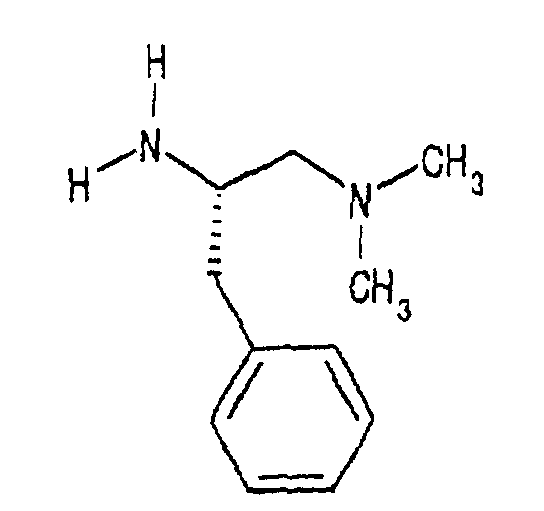
Reference Example 1: (1S)-1-Benzyl-2-(dimethylamino) ethylamine
(Reference Compound 1-1)
Lithium aluminum hydride (759 mg) was suspended in anhydrous
ether (20 ml) with ice cooling in the nitrogen gas atmosphere and then a
solution of (2S)-2-amino-N1,N1-dimethyl-3-phenylpropionamide (1.92 g) in
anhydrous tetrahydrofuran (10 ml) was dropwise added to the resulting
suspension. This mixture was stirred at room temperature for 1.5 hour.
Ethyl acetate was gradually and dropwise added to the reaction liquid till
the latter did not undergo foaming any more, with ice cooling. Then a 2N
aqueous sodium hydroxide solution was added to the reaction liquid and the
resulting mixture was extracted with chloroform. The organic phase thus
obtained was dried over anhydrous sodium sulfate and then concentrated
under reduced pressure. The resulting oily product was purified through the
silica gel column chromatography to give the title compound (Reference
Compound 1-1, 1.35 g).
(Reference Compound 1-1)
[α] D20: +15.3° (c = 1.0, chloroform)
IR (Film, cm-1): 3289, 2940, 2769, 1601, 1495, 1357 and 1264
The procedures similar to those used in Reference Example 1 were
repeated to give the following compound.
- (1S)-1-Benzyl-2-(dimethylamino)-N-phenethyl ethylamine di-hydrochloride
(Reference Compound 1-2)
- [α] D20:+4.0° (c = 1.0, methanol)
- IR (Film, cm-1): 3407, 2950, 2691, 1456, 750 and 701
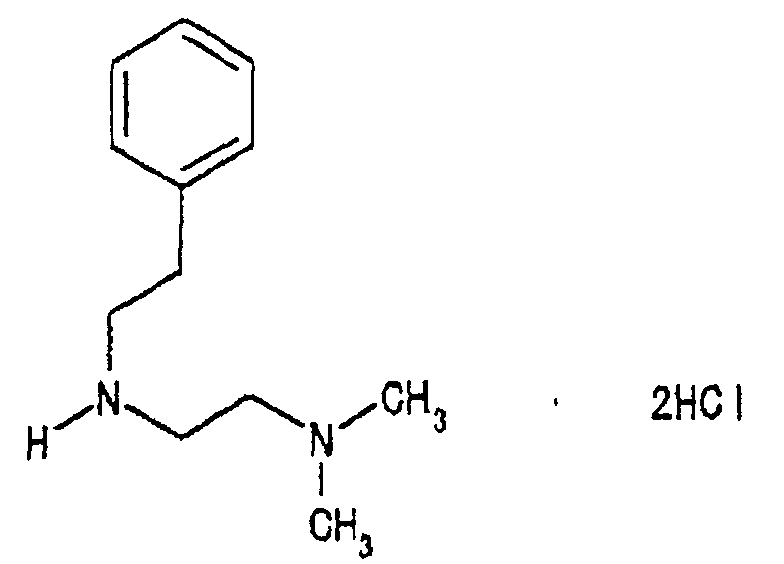
Reference Example 2: N-Phenethyl-2-(dimethylamino) ethylamine di-hydrochloride
(Reference Compound 2-1)
To a solution of phenethyl bromide (3.00 g) in ethanol (54 ml), there
were added 2-(dimethylamino) ethylamine (2.14 g) and sodium iodide (7.29
g) and the resulting mixture was refluxed with heating overnight with
stirring. The reaction liquid was concentrated under reduced pressure,
followed by the addition of water to the resulting residue and the extraction
of the reaction liquid with chloroform. The resulting organic phase was
washed with saturated sodium chloride aqueous solution, dried over
anhydrous magnesium sulfate and concentrated under reduced pressure.
The resulting oily product was dissolved in chloroform (5 ml) and a 4.6N
solution of hydrogen chloride in ethyl acetate (8 ml) was added to the
chloroform solution with ice cooling. The resulting precipitates were filtered
off to thus give the title compound (Reference Compound 2-1, 2.23 g) in the
form of crystals.
(Reference Compound 2-1)
mp: 180°C
IR (KBr, cm-1): 3400, 2957, 2710, 2442, 1471, 762 and 702
The procedures similar to those used in Reference Example 2 were
repeated to give the following compounds.
- N-Isopentyl-2-(dimethylamino) ethylamine (Reference Compound 2-2)
- IR (Film, cm-1): 3307, 2954, 2818, 1464 and 753
- 2-(t-Butoxycarboxamido)-N-isopentyl ethylamine (Reference Compound 2-3)
- IR (Film, cm-1): 3339, 2957, 1701, 1522, 1367, 1274, 1251, 1174 and 755
Example 1: 1-(2-Cyclohexylethyl)-3-[2-(dimethylamino) ethyl]-1-(2-hydroxyethyl)
urea (Compound 1-1)
1,1'-Carbonyldiimidazole (0.43 g) was dissolved in a solution of 2-(dimethylamino)
ethylamine (0.19 g) in anhydrous tetrahydrofuran (11 ml)
in the nitrogen gas atmosphere and the resulting solution was stirred at
room temperature for 20 minutes. To the reaction solution, there was added
N-(2-hydroxyethyl)-2-cyclohexyl ethylamine hydrochloride (0.50 g) and the
mixture was refluxed with heating for 3 hours. Chloroform was added to the
reaction solution with ice cooling, followed by washing the mixture with
saturated sodium hydrogen carbonate aqueous solution and then with
saturated sodium chloride aqueous solution, drying over anhydrous
magnesium sulfate and concentrating under reduced pressure. The resulting
oily product was purified through the silica gel column chromatography to
thus give the title compound (Compound 1-1, 0.68 g).
(Compound 1-1)
IR (Film, cm'): 3354, 2922, 2851, 1628, 1538, 1448, 1405, 1374, 1268 and
1054
The procedures similar to those used in Example 1 were repeated to
thus give the following compounds.
- 1-(2-Cyclohexylethyl)-3-[3-(dimethylamino) propyl]-1-(2-hydroxyethyl)
urea (Compound 1-2)
- IR (Film, cm-1): 3339, 2923, 2851, 1626, 1536, 1448, 1406, 1372, 1266,
1171 and 1053
- 1-[(1S)-1-Benzyl-2-(dimethylamino) ethyl]-3-(2-hydroxyethyl)-3-phenethyl
urea (Compound 1-3)
- IR (Film, cm-1): 3117, 2939, 1623, 1534, 1496, 1454, 1407, 1326, 1257 and
1063
- 1-(2-Cyclohexylethyl)-1-(2-hydroxyethyl)-3-[3-[(N-methyl) phenylamino]
propyl] urea (Compound 1-4)
- IR (Film, cm-1): 3323, 2922, 2850, 1621, 1600, 1541, 1507, 1448, 1407,
1372, 1270, 1229, 1197, 1132, 1054 and 748
- 1-[2-(Dimethylamino) ethyl]-3-(2-hydroxyethyl)-3-isopentyl urea
(Compound 1-5)
IR (Film, cm-1): 3353, 2954, 1632, 1537, 1467, 1406, 1367, 1236, 1056 and
756
- 1-(2-Cyclohexylethyl)-1-(2-hydroxyethyl)-3-[2,2-dimethyl-3-(dimethylamino)
propyl] urea (Compound 1-6)
- IR (Film, cm-1): 3178, 2923, 2852, 2777, 1624, 1533, 1451, 1257, 1064,
843 and 745
Example 2: 1-[(1S)-1-Benzyl-2-(benzyloxy) ethyl]-3-[2-(dimethylamino)
ethyl]-3- phenethyl urea (Compound 2-1)
To a solution of (1S)-1-benzyl-2-(benzyloxy) ethylamine hydrochloride
(351 mg) in anhydrous tetrahydrofuran (4.2 ml), there were added imidazole
(87 mg) and 1,1'-carbonyl diimidazole (268 mg) in the nitrogen gas
atmosphere and the resulting mixture was stirred at room temperature for
15 minutes. To the reaction liquid, there was added N-phenethyl-2-(dimethylamino)
ethylamine di-hydrochloride (Reference Compound 2-1, 408
mg), followed by the reflux of the resulting mixture under heating for one
hour. Water was added to the reaction liquid with ice cooling and the mixture
was extracted with ethyl acetate. The resulting organic phase was washed
with saturated sodium chloride aqueous solution, dried over anhydrous
magnesium sulfate and then concentrated under reduced pressure. The
resulting oily product was purified through the silica gel column
chromatography to give the title compound (Compound 2-1, 532 mg).
(Compound 2-1)
[α] D20: -10.7° (c = 1.0, chloroform)
IR (Film, cm-1): 2944, 1647, 1496, 1453, 1253, 1027, 746 and 699
The procedures similar to those used in Example 2 were repeated to
give the following compounds.
- 1- [(1S)-1-Benzyl-2-(benzyloxy) ethyl]-3-[2-(dimethylamino) ethyl]-3-isopentyl
urea (Compound 2-2)
- [α] D20: -8.5° (c = 0.57, chloroform)
- IR (Film, cm-1): 3357, 3222, 2952, 1647, 1496, 1454, 1252, 747 and 700
- 1-[(1S)-1-Benzyl-2-(benzyloxy) ethyl]-3-[(1S)-1-benzyl-2-(dimethylamino)
ethyl]-3- phenethyl urea (Compound 2-3)
- [α] D20: -40.1° (c = 0.57, chloroform)
- IR (Film, cm-1): 3458, 3026, 2937, 2858, 1646, 1496, 1454, 746 and 700
- 1- [(1S)-1-Benzyl-2-(benzyloxy) ethyl]-3-[2-(t-butoxycarboxamido) ethyl]-3-isopentyl
urea (Compound 2-4)
- [α] D20: -17.4° (c = 0.66, chloroform)
- IR (Film, cm-1): 3324, 2956, 2868, 1688, 1631, 1516, 1366, 1283, 1251,
1171, 764 and 699
Example 3: 1-[(1S)-1-Benzyl-2-hydroxyethyl]-3-[2-(dimethylamino) ethyl]-3-phenethyl
urea (Compound 3-1)
To a solution of 1-[(1S)-1-benzyl-2-(benzyloxy) ethyl]-3-[2-(dimethylamino)
ethyl]-3-phenethyl urea (Compound 2-1, 414 mg) in ethanol
(4.5 ml), there was added 20% palladium hydroxide-on-carbon (100 mg) in
the nitrogen gas atmosphere. This mixture was stirred for 3 days in the
hydrogen gas atmosphere. The palladium-on-carbon was removed by the
filtration through celite and the resulting filtrate was concentrated under
reduced pressure to thus give the title compound (Compound 3-1, 299 mg).
(Compound 3-1)
[α] D20: -54.6° (c = 1.0, dimethyl sulfoxide)
IR (Film, cm-1): 3346, 2949, 1622, 1538, 750 and 702
The procedures similar to those used in Example 3 were repeated to
give the following compounds.
- 1-[(1S)-1-Benzyl-2-hydroxyethyl]-3-[2-(dimethylamino) ethyl]-3-isopentyl
urea (Compound 3-2)
- [α] D20: -47.6° (c = 0.50, dimethyl sulfoxide)
- IR (Film, cm-1): 3423, 2957, 1626 and 1538
- 1- [(1S)-1-Benzyl-2-(dimethylamino) ethyl]-3-[(1S)-1-benzyl-2-hydroxyethyl]-1-phenethyl
urea (Compound 3-3)
- [α] D20: -52.1° (c = 0.52, chloroform)
- IR (Film, cm-1): 3384, 3027, 2951, 1631, 1525, 1455, 751 and 702
- 1-[(1S)-1-Benzyl-2-hydroxyethyl]-3-[2-(t-butoxycarboxamido) ethyl]-3-isopentyl
urea (Compound 3-4)
- [α] D20: -26.8 ° (c = 0.95, chloroform)
- IR (Film, cm-1): 3328, 2956, 1687, 1627, 1524, 1367, 1283, 1251, 1171,
756 and 701
Example 4: 1-[(1S)-1-(Benzyloxycarbonyl)-2-(4-biphenylyl) ethyl]-3-[2-(dimethylamino)
ethyl]-3-isopentyl urea (Compound 4-1)
To a suspension of 4-biphenylyl-L-alanine benzyl ester hydrochloride
(270 mg) in anhydrous tetrahydrofuran (2 ml), there were added imidazole
(50 mg) and 1,1'-carbonyl diimidazole (155 mg) in the nitrogen gas
atmosphere and the resulting mixture was stirred at room temperature for
10 minutes. Then a solution of N-isopentyl-2-(dimethylamino) ethylamine
(Reference Compound 2-2, 589 mg) in anhydrous tetrahydrofuran (3 ml) was
added to the mixture, followed by the reflux with heating for 1.5 hour.
Chloroform was added to this reaction liquid under ice cooling, the reaction
liquid was washed with saturated sodium hydrogen carbonate aqueous
solution and then with saturated sodium chloride aqueous solution, dried
over anhydrous sodium sulfate and then concentrated under reduced
pressure. The resulting oily product was purified through the silica gel
column chromatography to give the title compound (Compound 4-1, 402 mg).
(Compound 4-1)
[α] D20: -8.7° (c = 0.49, chloroform)
IR (Film, cm-1): 2953, 1741, 1650, 1519, 1487, 1466, 1252, 758 and 698
The procedures similar to those used in Example 4 were repeated to
give the following compound.
- 1-[(1S)-1-(Benzyloxycarbonyl)-2-(4-biphenylyl) ethyl]-3-[2-(t-butoxycarboxamido)
ethyl]-3-isopentyl urea (Compound 4-2)
- [α] D20: -18.8° (c = 0.97, chloroform)
- IR (Film, cm-1): 3324, 2957, 1740, 1684, 1637, 1518, 1454, 1172 and 756
Example 5: 1-[(1S)-1-[(4-Biphenylyl) methyl]-2-hydroxyethyl]-3-[2-(dimethylamino)
ethyl]-3-isopentyl urea (Compound 5-1)
Lithium bromide (179 mg) and sodium boron hydride (52 mg) were
suspended in anhydrous ethanol (1 ml) in the nitrogen gas atmosphere and
the resulting suspension was stirred at room temperature for one hour. To
the suspension, there was dropwise added a solution of 1-[(1S)-1-(benzyloxycarbonyl)-2-(4-biphenylyl)
ethyl]-3-[2-(dimethylamino) ethyl]-3-isopentyl
urea (Compound 4-1, 310 mg) in anhydrous ethanol (5.8 ml) with
ice cooling. The resulting mixture was stirred at room temperature for 24
hours. Saturated ammonium chloride aqueous solution was added to the
reaction liquid with ice cooling and then the resulting mixture was extracted
with ether. The resulting organic phase was washed with saturated sodium
chloride aqueous solution, dried over anhydrous magnesium sulfate and then
concentrated under reduced pressure. The resulting oily product was
purified through the silica gel column chromatography to give the title
compound (Compound 5-1, 138 mg).
(Compound 5-1)
[α] D20: -37.9 ° (c = 0.20, chloroform)
IR (Film, cm-1): 3358, 2953, 1628, 1521, 1487, 1467, 762 and 698
The procedures similar to those used in Example 5 were repeated to
give the following compound.
- 1-[(1S)-1-[(4-Biphenylyl) methyl]-2-hydroxyethyl]-3-[2-(t-butoxycarboxamido)
ethyl]-3 -isopentyl urea (Compound 5-2)
- [α] D20: -35.1° (c = 0.48, chloroform)
- IR (Film, cm-1): 3329, 2956, 1687, 1627, 1520, 1366, 1250, 1170 and 761
Example 6: 1-[2-(Acetylthio) ethyl]-1-(2-cyclohexyl ethyl)-3-[2-(dimethylamino)
ethyl] urea (Compound 6-1)
1-(2-Cyclohexyl ethyl)-3-[2-(dimethylamino) ethyl]-1-(2-hydroxyethyl)-urea
(Compound 1-1, 0.57 g) and triphenyl phosphine (1.04 g) were dissolved
in anhydrous tetrahydrofuran (10 ml) in the nitrogen gas atmosphere and
the resulting solution was stirred under cooling with sodium chloride-ice for
30 minutes. Diisopropyl azodicarboxylate (0.78 ml) and a solution of
thioacetic acid (0.30 g) in anhydrous tetrahydrofuran (1 ml) were dropwise
added to the solution while maintaining the temperature of the solution to a
level of not higher than 5°C. After stirring the solution for one hour,
saturated sodium hydrogen carbonate aqueous solution was added to the
reaction solution and the resulting mixture was extracted with ethyl acetate.
The resulting organic phase was washed with saturated sodium chloride
aqueous solution, dried over anhydrous sodium sulfate and then
concentrated under reduced pressure. The resulting oily product was
purified through the silica gel column chromatography to give the title
compound (Compound 6-1, 0.43 g).
(Compound 6-1)
IR (Film, cm-1): 3367, 2924, 2852, 2771, 1692, 1633, 1533, 1449, 1406,
1356, 1294, 1187 and 1137
The procedures similar to those used in Example 6 were repeated to
give the following compounds.
- 1-[2-(Acetylthio) ethyl]-1-(2-cyclohexyl ethyl)-3-[3-(dimethylamino)
propyl]-urea (Compound 6-2)
- IR (Film, cm-1): 3352, 2923, 2851, 2816, 1692, 1632, 1534, 1448, 1405,
1356, 1294, 1217 and 1135
- 1-[2-(Acetylthio) ethyl]-3-[(1S)-1-benzyl-2-(dimethylamino) ethyl]-1-phenethyl
urea (Compound 6-3)
- [α] D20: -26.2° (c = 1.0, methanol)
- IR (Film, cm-1): 3392, 2940, 1682, 1644, 1531, 1497, 1454, 1138, 750 and
701
- 1-[2-(Acetylthio) ethyl]-1-(2-cyclohexyl ethyl)-3-[3-[(N-methyl)-phenylamino]
propyl] urea (Compound 6-4)
- IR (Film, cm-1): 3348, 2922, 2850, 1690, 1630, 1599, 1506, 1291, 1217 and
1135
- 1-[2-(Acetylthio) ethyl]-1-isopentyl-3-[2-(dimethylamino) ethyl] urea
(Compound 6-5)
IR (Film, cm-1): 3367, 2954, 2361, 1690, 1632, 1532, 1360, 1296, 1235,
1136, 950 and 766
- 1-[2-(Acetylthio) ethyl]-1-(2-cyclohexyl ethyl)-3-[2,2-dimethyl-3-(dimethylamino)
propyl] urea (Compound 6-6)
- IR (Film, cm-1): 3305, 2923, 2852, 2776, 1693, 1641, 1524, 1450, 1355,
1293, 1218, 1136, 1040, 950, 844 and 753
- 1-[(1S)-2-(Acetylthio)-1-benzylethyl]-3-[2-(dimethylamino) ethyl]-3-phenethyl
urea (Compound 6-7)
- [α] D20: +15.9° (c = 1.0, chloroform)
- IR (Film, cm-1): 3350, 2943, 1691, 1648, 1602, 1253, 1136 and 701
- 1-[(1S)-2-(Acetylthio)-1-benzylethyl]-3- [2-(dimethylamino) ethyl]-3-isopentyl
urea (Compound 6-8)
- [α] D20: +22.4° (c = 0.44, chloroform)
- IR (Film, cm-1): 3351, 2953, 1694, 1651, 1524 and 701
- 1-[(1S)-2-(Acetylthio)-1-benzylethyl]-3-[(1S)-1-benzyl-2-(dimethylamino)-ethyl]-3-
phenethyl urea (Compound 6-9)
- [α] D20: -32.0° (c = 0.55, chloroform)
- IR (Film, cm-1): 3416, 2937, 1690, 1644, 1496, 749 and 700
- 1-[(1S)-2-(Acetylthio)-1-benzylethyl]-3-[2-(t-butoxycarboxamido)-ethyl]-3-isopentyl
urea (Compound 6-10)
- [α] D20: +7.0° (c = 0.52, chloroform)
- IR (Film, cm-1): 3316, 2957, 1690, 1632, 1528, 1252 and 701
- 1-[(1S)-2-(Acetylthio)-1-[(4-biphenylyl) methyl] ethyl]-3-[2-(dimethylamino)-ethyl]-3-isopentyl
urea (Compound 6-11)
- [α] D20: +15.9° (c = 0.47, chloroform)
- IR (Film, cm-1): 2953, 1693, 1651, 1519, 1250, 1136 and 762
- 1-[(1S)-2-(Acetylthio)-1-[(4-biphenylyl) methyl] ethyl]-3-[2-(t-butoxycarboxamido)
ethyl]-3-isopentyl urea (Compound 6-12)
- [α] D20: +6.0° (c = 0.49, chloroform)
- IR (Film, cm-1): 3316, 2956, 1686, 1632, 1520, 1366 and 761
Example 7: Bis [(2S)-2-[3- [2-(t-butoxycarboxamido) ethyl]-3-isopentyl
ureido]-3-phenylpropane] disulfide (Compound 7-1)
To a solution of 1-[(1S)-2-(acetylthio)-1-benzylethyl]-3-[2-(t-butoxycarboxamido)
ethyl]-3-isopentyl urea (Compound 6-10, 169 mg) in
tetrahydrofuran (4 ml), there were added 28% aqueous ammonia (10 ml) and
a small amount of iodine crystal and the resulting mixture was stirred at
room temperature overnight. Water was added to the reaction solution and
the mixture was extracted with ether. The resulting organic phase was
washed with a 10% sodium thiosulfate aqueous solution and saturated
sodium chloride aqueous solution, dried over anhydrous sodium sulfate and
then concentrated under reduced pressure. The resulting oily product was
purified through the silica gel column chromatography to thus give the title
compound (Compound 7-1, 70 mg).
(Compound 7-1)
[α] D20: +30.7° (c = 0.14, chloroform)
IR (Film, cm-1): 3316, 2956, 1684, 1629, 1532, 1454, 1366, 1171 and 752
The procedures similar to those used in Example 7 were repeated to
thus give the following compound.
- Bis [(2S)-2-[3-[2-(t-butoxycarboxamido) ethyl]-3-isopentyl ureido]-3-(4-biphenylyl)
propane] disulfide (Compound 7-2)
- [α] D20: +12.8° (c = 0.26, chloroform)
- IR (Film, cm-1): 3321, 2957, 1684, 1630, 1520, 1366, 1250, 1170 and 760
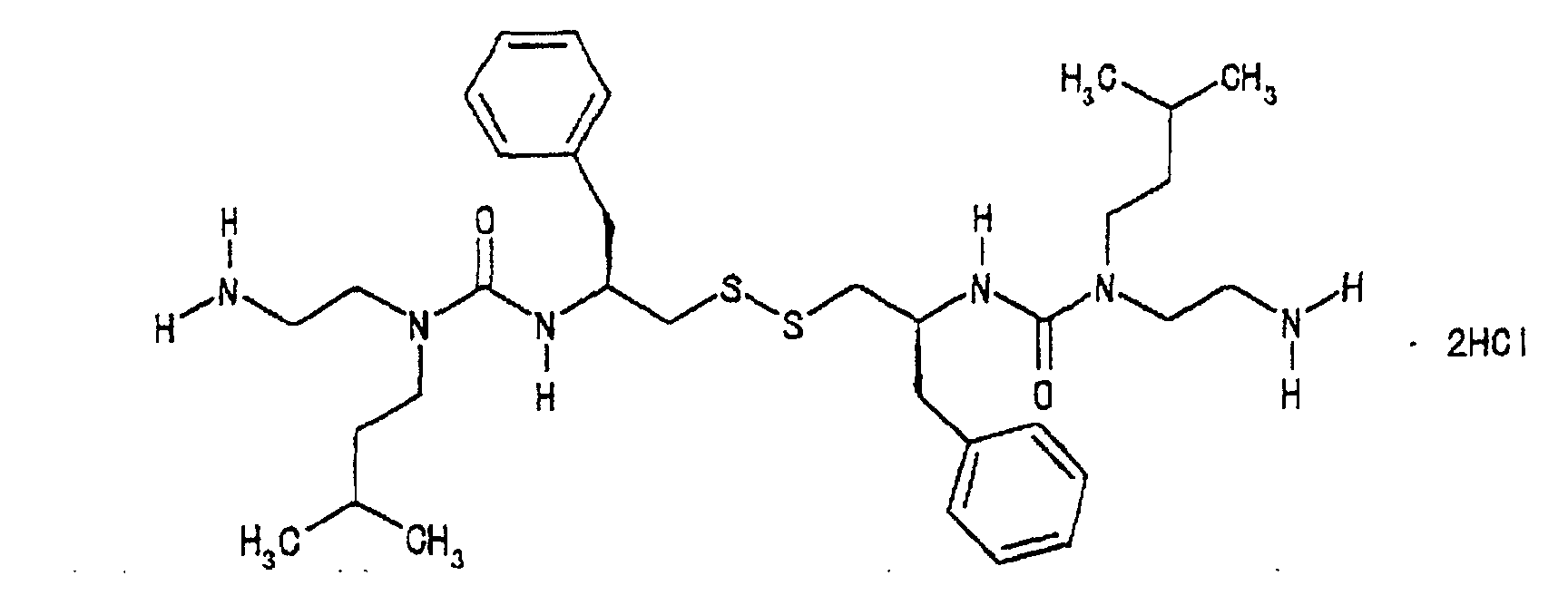
Example 8: Bis [(2S)-2-[3-(2-aminoethyl)-3-isopentyl ureido]-3-phenylpropane]
disulfide di-hydrochloride (Compound 8-1)
To a solution of bis [(25)-2-[3-[2-(t-butoxycarboxamido) ethyl]-3-isopentyl
ureido]-3- phenylpropane] disulfide (Compound 7-1, 53 mg) in
chloroform (0.6 ml), there was added a 4.6N solution of hydrogen chloride in
ethyl acetate (0.3 ml) in the nitrogen gas atmosphere. After stirring the
resulting mixture at room temperature for 24 hours, it was concentrated
under reduced pressure. Isopropyl ether was added to the resulting residue
and the resulting precipitates were filtered to thus give the title compound
(Compound 8-1, 21 mg) in the form of crystals.
(Compound 8-1)
mp: 100°C (decomposed)
IR (KBr, cm-1): 3326, 2956, 1619, 1535, 748 and 701
The procedures similar to those used in Example 8 were repeated to
give the following compound.
- Bis [(2S)-2- [3-(2-aminoethyl)-3-isopentyl ureido]-3-(4-biphenylyl) propane]-disulfide
di-hydrochloride (Compound 8-2)
- mp: 132.0 ∼ 136.0°C
- IR (KBr, cm-1): 2956, 1617, 1531, 762 and 699
[Examples of Pharmaceutical Preparations]
Examples of general formulations of orally administered drugs and
injections containing the compounds of the present invention will be given
below.
| 1) Tablets: Formulation 1 (per 100 mg) |
| Compound of the Present Invention | 1mg |
| Lactose | 66.4 mg |
| Corn Starch | 20 mg |
| Calcium Carboxymethylcellulose | 6mg |
| Hydroxypropylcellulose | 4 mg |
| Magnesium Stearate | 0.6 mg |
Each tablet having the foregoing formulation was coated with 2 mg of
a coating agent (for instance, a currently used coating agent such as
hydroxypropylmethylcellulose, macrogol or a silicone resin) to thus give a
desired coated tablet (the tablets having the following formulations were
likewise be prepared by the same method). In addition, desired tablets can be
prepared by appropriately and variously changing the amounts of the
compound according to the present invention and various additives.
| 2) Capsules: Formulation 1 (per 150 mg) |
| Compound of the Present Invention | 5 mg |
| Lactose | 145 mg |
Desired capsules can be prepared by appropriately and variously
changing the mixing ratio of the compound of the present invention to
lactose.
| 3) Injections: Formulation 1 (per 10 ml) |
| Compound of the Present Invention | 10 to 100 mg |
| Sodium Chloride | 90 mg |
| Sodium Hydroxide (or Hydrochloric Acid) | Sufficient Quantity |
| Sterilized and Purified Water | Sufficient Quantity |
Desired injections can be prepared by appropriately and variously
changing the mixing ratio of the compound of the present invention to the
additives.
[Pharmacological Tests]
Each candidate compound was inspected for the effect of inhibiting
TNF- α production induced by the stimulation with lipopolysaccharide
(LPS), by an in vitro test according to the method proposed by McGeehan et
al. (Nature, 1994, 370:558-561).
The test (assay) was carried out by determining the amount of TNF-α
produced by the human monocyte strain THP-1 cells induced by the
stimulation with LPS.
The culture medium used in this test was RPMI 1640 culture medium
supplemented wiTNFetal calf serum (10%), L-glutamine (2mM), 2-mercaptoethanol
(50µM), penicillin (50 units/ml) and streptomycin (50µ
g/ml).
Regarding the cells, the human monocyte strain THP-1 cells
cultivated in the foregoing culture medium were centrifuged at 100xg for 5
minutes to remove the supernatant and then again suspended in a fresh
culture medium prior to the practical use. The LPS used herein was derived
from S. Typhimurium and this was dissolved in purified water and then this
was dissolved in purified water and then diluted with the culture medium
prior to use. Each compound to be tested (candidate compound) was
dissolved in dimethyl sulfoxide (DMSO) and diluted with the culture
medium prior to the practical use.
The cells (106 cells/ml) prepared according to the foregoing method
were admixed with the LPS (2µg/ml) and a compound to be tested (10-5M),
the cells were incubated at 37°C for two hours and then centrifuged at
1000xg for 5 minutes. The resulting supernatant of the culture medium was
inspected for the level of TNF- α using the human TNF- α-specific ELISA
kit. In this connection, it was confirmed that the supernatant obtained by
cultivating the cells in the culture medium free of any LPS (control) never
included any TNF- α.
The rate of the TNF-α production inhibitory effect observed for each
candidate compound was determined according to the following equation:
Rate of Inhibition (%) = 100 × (A - B)/A
Wherein A is the level of TNF-α detected in the supernatant obtained from
the culture medium free of any candidate compound and B is the level of
TNF-α detected in the supernatant obtained from the culture medium
containing a candidate compound.
(Results)
A few test results, by way of example, or the inhibitory rate (%) of
TNF- α production observed at the concentration of 10
-5M are shown in the
following Table 1.
| Candidate Compound | Rate of Inhibition (%) |
| Compound 6-3 | 83 |
| Compound 6-8 | 60 |
| Compound 6-11 | 76 |
| Compound 8-1 | 81 |
| Compound 8-2 | 66 |
As will be seen from the results listed in Table 1, it was recognized
that the compounds of the present invention show the TNF-α production-inhibitory
effect at a low concentration.
As has been discussed above in detail, the compound of the present
invention has an excellent TNF-α production inhibitory effect and it is clear
that the compound has wide variety of applications as pharmaceutical
agents such as therapeutic agents for diseases, in which TNF-α is involved,
for instance, autoimmune diseases such as chronic articular rheumatism,
Crohn's disease and systemic erythematodes, dyscrasia, acute infectious
diseases, allergy, fever, anemia and diabetes.





 wherein R2 represents a hydrogen atom, a lower alkyl group, a cycloalkyl group, an aryl group, a carboxyl group or an ester group, or R2 may form a ring together with R1; R3 and R4 may be the same or different and each represents a hydrogen atom, a lower alkyl group, a cycloalkylalkyl group, an arylalkyl group, a cycloalkyl group or an aryl group; R5 represents a hydrogen atom, a lower alkyl group, a hydroxyl group, a lower alkoxy group or an aryl group; R6 and R7 may be the same or different and each represents a hydrogen atom, a lower alkyl group, a cycloalkylalkyl group, a cycloalkyl group or an aryl group; A1 and A2 may be the same or different and each represents a lower alkylene group, provided that if both R6 and R7 are methyl groups, R1, R3 and R4 do not simultaneously represent hydrogen atom, or if R3 is an isopropyl group and both R6 and R7 are methyl groups, R1 does not represent an aryl group and a furanylmethyl group.