EP1171437B1 - Pesticidal indazole or benzotriazole derivatives - Google Patents
Pesticidal indazole or benzotriazole derivatives Download PDFInfo
- Publication number
- EP1171437B1 EP1171437B1 EP00919009A EP00919009A EP1171437B1 EP 1171437 B1 EP1171437 B1 EP 1171437B1 EP 00919009 A EP00919009 A EP 00919009A EP 00919009 A EP00919009 A EP 00919009A EP 1171437 B1 EP1171437 B1 EP 1171437B1
- Authority
- EP
- European Patent Office
- Prior art keywords
- optionally substituted
- alkyl
- formula
- och
- chf
- Prior art date
- Legal status (The legal status is an assumption and is not a legal conclusion. Google has not performed a legal analysis and makes no representation as to the accuracy of the status listed.)
- Expired - Lifetime
Links
- VIEPPTLGGQIVDC-UHFFFAOYSA-N Cc(c1ccc2)ccnc1c2F Chemical compound Cc(c1ccc2)ccnc1c2F VIEPPTLGGQIVDC-UHFFFAOYSA-N 0.000 description 1
- GGGIOGMGLMESFD-UHFFFAOYSA-N Cc(c1ccc2)ncnc1c2F Chemical compound Cc(c1ccc2)ncnc1c2F GGGIOGMGLMESFD-UHFFFAOYSA-N 0.000 description 1
Classifications
-
- C—CHEMISTRY; METALLURGY
- C07—ORGANIC CHEMISTRY
- C07D—HETEROCYCLIC COMPOUNDS
- C07D401/00—Heterocyclic compounds containing two or more hetero rings, having nitrogen atoms as the only ring hetero atoms, at least one ring being a six-membered ring with only one nitrogen atom
- C07D401/02—Heterocyclic compounds containing two or more hetero rings, having nitrogen atoms as the only ring hetero atoms, at least one ring being a six-membered ring with only one nitrogen atom containing two hetero rings
- C07D401/12—Heterocyclic compounds containing two or more hetero rings, having nitrogen atoms as the only ring hetero atoms, at least one ring being a six-membered ring with only one nitrogen atom containing two hetero rings linked by a chain containing hetero atoms as chain links
-
- A—HUMAN NECESSITIES
- A01—AGRICULTURE; FORESTRY; ANIMAL HUSBANDRY; HUNTING; TRAPPING; FISHING
- A01N—PRESERVATION OF BODIES OF HUMANS OR ANIMALS OR PLANTS OR PARTS THEREOF; BIOCIDES, e.g. AS DISINFECTANTS, AS PESTICIDES OR AS HERBICIDES; PEST REPELLANTS OR ATTRACTANTS; PLANT GROWTH REGULATORS
- A01N43/00—Biocides, pest repellants or attractants, or plant growth regulators containing heterocyclic compounds
- A01N43/72—Biocides, pest repellants or attractants, or plant growth regulators containing heterocyclic compounds having rings with nitrogen atoms and oxygen or sulfur atoms as ring hetero atoms
- A01N43/80—Biocides, pest repellants or attractants, or plant growth regulators containing heterocyclic compounds having rings with nitrogen atoms and oxygen or sulfur atoms as ring hetero atoms five-membered rings with one nitrogen atom and either one oxygen atom or one sulfur atom in positions 1,2
-
- C—CHEMISTRY; METALLURGY
- C07—ORGANIC CHEMISTRY
- C07D—HETEROCYCLIC COMPOUNDS
- C07D417/00—Heterocyclic compounds containing two or more hetero rings, at least one ring having nitrogen and sulfur atoms as the only ring hetero atoms, not provided for by group C07D415/00
- C07D417/02—Heterocyclic compounds containing two or more hetero rings, at least one ring having nitrogen and sulfur atoms as the only ring hetero atoms, not provided for by group C07D415/00 containing two hetero rings
- C07D417/12—Heterocyclic compounds containing two or more hetero rings, at least one ring having nitrogen and sulfur atoms as the only ring hetero atoms, not provided for by group C07D415/00 containing two hetero rings linked by a chain containing hetero atoms as chain links
Definitions
- the present invention relates to azine and azole derivatives, to processes for preparing them, to fungicidal, insecticidal, acaricidal, molluscicidal and nematicidal compositions comprising them, to methods of using them to combat fungal diseases (especially fungal diseases of plants) and to methods of using them to combat and control insect, acarine, mollusc and nematode pests.
- Azole and azine derivatives are disclosed in WO95/31448, WO97/18198, WO98/02424 and WO98/05670.
- the present invention provides a compound of formula (I): wherein G is either where M 1 or M 2 is bonded to A; n is 0 or 1; A is optionally substituted C 1-6 alkylene, optionally substituted C 2-6 alkenylene, optionally substituted C 2-6 alkynylene, optionally substituted C 1-6 alkylenoxy, optionally substituted oxy(C 1-6 )alkylene, optionally substituted C 1-6 alkylenethio, optionally substituted thio(C 1-6 )alkylene, optionally substituted C 1-6 alkylenamino, optionally substituted amino(C 1-6 )alkylene, optionally substituted [C 1-6 alkyleneoxy(C 1-6 )alkylene], optionally substituted [C 1-6 alkylenethio(C 1-6 )alkylene], optionally substituted [C 1-6 alkylenesulfinyl(C 1-6 )alkylene], optionally substituted [C 1-6 alkylenesulfonyl
- the compounds of formula (I) may exist in different geometric or optical isomers or tautomeric forms. This invention covers all such isomers and tautomers and mixtures thereof in all proportions.
- Each alkyl moiety is a straight or branched chain and is, for example, methyl, ethyl, n -propyl, n -butyl, n -pentyl, n -hexyl, iso -propyl, n -butyl, sec -butyl, iso -butyl, tert -butyl or neo -pentyl.
- the optional substituents on alkyl include one or more of halogen, nitro, cyano, HO 2 C, C 1-10 alkoxy (itself optionally substituted by C 1-10 alkoxy), aryl(C 1-4 )alkoxy, C 1-10 alkylthio, C 1-10 alkylcarbonyl, C 1-10 alkoxycarbonyl, C 1-6 alkylaminocarbonyl, di(C 1-6 alkyl)aminocarbonyl, (C 1-6 )alkylcarbonyloxy, optionally substituted phenyl, heteroaryl, aryloxy, arylcarbonyloxy, heteroaryloxy, heterocyclyl, heterocyclyloxy, C 3-7 cycloalkyl (itself optionally substituted with (C 1-6 )alkyl or halogen), C 3-7 cycloalkyloxy, C 5-7 cycloalkenyl, C 1-6 alkylsulfonyl, C 1-6 alkylsulf
- Alkenyl and alkynyl moieties can be in the form of straight or branched chains, and the alkenyl moieties, where appropriate, can be of either the ( E )- or ( Z )-configuration. Examples are vinyl, allyl and propargyl. When present, the optional substituents on alkenyl or alkynyl include one or more of halogen, aryl and C 3-7 cycloalkyl.
- acyl is optionally substituted C 1-6 alkylcarbonyl (for example acetyl), optionally substituted C 2-6 alkenylcarbonyl, optionally substituted C 2-6 alkynylcarbonyl, optionally substituted arylcarbonyl (for example benzoyl) or optionally substituted heteroarylcarbonyl.
- C 1-6 alkylcarbonyl for example acetyl
- C 2-6 alkenylcarbonyl optionally substituted C 2-6 alkynylcarbonyl
- arylcarbonyl for example benzoyl
- heteroarylcarbonyl for example benzoyl
- Halogen is fluorine, chlorine, bromine or iodine.
- Haloalkyl groups are alkyl groups which are optionally substituted with one or more of the same or different halogen atoms and are, for example, CF 3 , CF 2 Cl, CF 3 CH 2 or CHF 2 CH 2 .
- Aryl includes naphthyl, anthracyl, fluorenyl and indenyl but is preferably phenyl.
- heteroaryl refers to an aromatic ring containing up to 10 atoms including one or more heteroatoms (preferably one or two heteroatoms) selected from O, S and N.
- heteroatoms preferably one or two heteroatoms
- examples of such rings include pyridine, pyrimidine, furan, quinoline, quinazoline, pyrazole, thiophene, thiazole, oxazole and isoxazole.
- heterocycle and heterocyclyl refers to a non-aromatic ring containing up to 10 atoms including one or more (preferably one or two) heteroatoms selected from O, S and N.
- examples of such rings include 1,3-dioxolane, tetrahydrofuran and morpholine. It is preferred that heterocyclyl is optionally substituted by C 1-6 alkyl.
- Cycloalkyl includes cyclopropyl, cyclopentyl and cyclohexyl.
- the optional substituents for cycloalkyl include halogen, cyano and C 1-3 alkyl.
- Cycloalkenyl includes cyclopentenyl and cyclohexenyl.
- the optional substituents for cycloalkenyl include C 1-3 alkyl, halogen and cyano.
- Carbocyclic rings include aryl, cycloalkyl and cycloalkenyl groups.
- substituents are independently selected from halogen, C 1-6 alkyl, C 1-6 haloalkyl, C 1-6 alkoxy(C 1-6 )alkyl, C 1-6 alkoxy, C 1-6 haloalkoxy, C 1-6 alkylthio, C 1-6 haloalkylthio, C 1-6 alkylsulfinyl, C 1-6 haloalkylsulfinyl, C 1-6 alkylsulfonyl, C 1-6 haloalkylsulfonyl, C 2-6 alkenyl, C 2-6 haloalkenyl, C 2-6 alkynyl, C 3-7 cycloalkyl, nitro, cyano, CO 2 H, C 1-6 alkylcarbonyl, C 1-6 alkoxycarbonyl, R 32 R 33 N or R 34 R 35 NC(O) wherein R 32
- dialkylamino substituents include those where the dialkyl groups together with the N atom to which they are attached form a five, six or seven-membered heterocyclic ring which may contain one or two further hetero atoms selected from O, N or S and which may be optionally substituted by one or two C 1-6 alkyl groups.
- heterocyclic rings are formed by joining two groups on an N atom, the resulting rings are suitably pyrrolidine, piperidine, thiomorpholine and morpholine each of which may be substituted by one or two (C 1-6 )alkyl groups.
- the present invention provides a compound of formula (IA): wherein A, G, J, R 3 , R 4 , R 5 and R 6 are as defined above for a compound of formula (I).
- n 0.
- A is C 1-4 alkylene, -C(O)- or C 1-4 alkyleneoxy.
- D is preferably S.
- E is N or CR 10 where R 10 is hydrogen, halogen, C 1-6 alkyl, C 1-6 haloalkyl, C 1-6 alkoxy, C 1-6 haloalkoxy, C 1-6 alkoxy (C 1-6 )alkyl, C 1-6 alkylthio or SF 5 ; or R 1 and R 10 together with the atoms to which they are attached form a benzene ring optionally substituted by C 1-6 alkyl, C 1-6 haloalkyl or halogen.
- G is (i).
- Y is O.
- J is N or CR 17 where R 17 is hydrogen, C 1-6 alkyl, C 1-6 haloalkyl, cyano, halogen or nitro.
- R 1 is preferably hydrogen, halogen, C 1-6 alkyl, C 2-6 alkenyl, C 1-6 haloalkyl, C 1-6 alkoxy, C 1-6 haloalkoxy, C 1-6 alkylthio, C 1-6 haloalkylmio, C 3-6 cycloalkyl, cyano, nitro or SF 5 .
- R 2 is preferably C 1-10 alkyl, C 1-6 alkoxy(C 1-6 )alkyl, allyl or propargyl.
- R 3 , R 4 and R 5 are, independently, hydrogen, C 1-3 alkyl or halogen.
- R 6 is preferably C 1-10 alkyl or C 1-10 haloalkyl (each one of which may be substituted with a C 1-6 alkyloxime, C 1-6 haloalkyloxime, C 1-6 alkylhydrazone or C 1-6 haloalkylhydrazone group) or C 1-6 cyanoalkyl, C 2-6 alkenyl(C 1-6 )alkyl, C 2-6 alkynyl(C 1-6 )alkyl, C 3-7 cycloalkyl, C 3-7 halocycloalkyl, C 3-7 cyanocycloalkyl, C 1-3 alkyl(C 3-7 )cycloalkyl, C 1-3 alkyl(C 3-7 )halocycloalkyl, C 5-6 cycloalkenyl, C 3-7 cycloalkyl(C 1-6 )alkyl, C 5-6 cycloalkenyl(C 1-6 )alkyl, C 2-6 haloalkeny
- the optionally substituted ring of formula is optionally substituted isothiazolyl, optionally substituted pyridyl, optionally substituted pyrimidinyl, optionally substituted quinazolinyl and optionally substituted quinolinyl groups in which the optional substituents are chosen from halo, C 1-6 alkyl, C 1-6 haloalkyl, C 1-6 alkoxy, C 1-6 alkoxy(C 1-6 )alkyl or C 1-6 haloalkoxy.
- A is CH 2 or CH 2 O, even more preferably CH 2 .
- J is N or CR 17 , where R 17 is hydrogen, methyl or halogen.
- R 2 is ethyl, ethoxymethyl, allyl or propargyl.
- R 3 , R 4 and R 5 are independently, hydrogen, or halogen (especially fluorine); it is especially preferred that each of R 3 , R 4 and R 5 is hydrogen.
- R 6 is C 1-8 alkyl, C 2-8 haloalkyl, C 1-8 cyanoalkyl, C 3-7 cycloalkyl, C 1-3 alkyl (C 3-7 ) cycloalkyl, C 1-6 alkoxy (C 1-6 ) alkyl, heterocyclic (optionally substituted by halo, nitro, cyano, C 1-6 alkyl, C 1-6 haloalkyl, C 1-6 alkoxy or C 1-6 haloalkoxy), phenyl (optionally substituted by halogen, C 1-6 alkyl, C 1-6 haloalkyl, C 1-6 alkoxy, nitro, cyano or C 1-6 alkylsulfonyl) or heteroaryl (optionally substituted by halogen, C 1-6 alkyl, C 1-6 haloalkyl, C 1-6 alkoxy, nitro, cyano or C 1-6 alkylsulfonyl).
- R 6 is C 1-8 alkyl, C 2-6 haloalkyl, C 1-6 alkoxy(C 1-6 )alkyl, C 3-7 cycloalkyl or C 3-7 cycloalkyl(C 1-6 )alkyl.
- R 1 is ethyl or, especially, methyl.
- R 10 is hydrogen, halogen (especially chloro) or cyano.
- the present invention provides a compound of formula (Ia) wherein R 1 is C 1-4 alkyl (especially methyl or ethyl); R 10 is hydrogen, halogen (especially chloro or bromo) or cyano; or R 1 and R 10 together form a cyclopentyl, cyclohexyl or phenyl ring; R 11 is hydrogen, C 1-4 alkyl (especially methyl or ethyl), phenyl(C 1-4 )alkyl (especially benzyl), C 1-4 alkylcarbonyl (especially acetyl) or C 1-4 alkylsulfonyl (especially methanesulfonyl); m is 0; Y is oxygen; and R 6 is C 1-6 alkyl [optionally substituted with halogen, C 1-4 alkoxy, phenyl (itself optionally substituted with halogen), CO 2 H, CONH 2 (itself optionally substituted with C 1-4 alkyl), cyan
- the present invention provides a compound of formula (IC): wherein n is 0 or 1;
- A is optionally substituted C 1-6 alkylene, optionally substituted C 2-6 alkenylene, optionally substituted C 2-6 alkynylene, optionally substituted C 1-6 alkylenoxy, optionally substituted oxy(C 1-6 )alkylene, optionally substituted C 1-6 alkylenethio, optionally substituted thio(C 1-6 )alkylene, optionally substituted C 1-6 alkylenamino, optionally substituted amino(C 1-6 )alkylene, optionally substituted [C 1-6 alkyleneoxy(C 1-6 )alkylene], optionally substituted [C 1-6 alkylenethio(C 1-6 )alkylene], optionally substituted [C 1-6 alkylenesulfinyl(C 1-6 )alkylene], optionally substituted [C 1-6 alkylenesulfonyl(C 1-6 )alkylene] or
- the compounds of formula (IC) may exist in different geometric or optical isomers or tautomeric forms. This invention covers all such isomers and tautomers and mixtures thereof in all proportions.
- the present invention provides a compound of formula (ID): wherein A, D, E, M 1 , Y, J, R 1 , R 3 , R 4 , R 5 and R 6 are as defined above for a compound of formula (IC).
- A is C 1-4 alkylene -C(O)- or C 1-4 alkyleneoxy.
- E is N or CR 10 where R 10 is hydrogen, halogen, C 1-6 alkyl, C 1-6 haloalkyl, C 1-6 alkoxy, C 1-6 haloalkoxy, C 1-6 alkoxy (C 1-6 )alkyl, C 1-6 alkylthio or SF 5 ; or R 1 and R 10 together with the atoms to which they are attached form a benzene ring optionally substituted by C 1-6 alkyl, C 1-6 haloalkyl or halogen.
- Y is O.
- J is N or CR 17 where R 17 is hydrogen, C 1-6 alkyl, C 1-6 haloalkyl, cyano, halogen or nitro.
- R 1 is preferably hydrogen, halogen, C 1-6 alkyl, C 2-6 alkenyl, C 1-6 haloalkyl, C 1-6 alkoxy, C 1-6 haloalkoxy, C 1-6 alkylthio, C 1-6 haloalkylthio, C 3-6 cycloalkyl, cyano, nitro or SF 5 .
- R 3 , R 4 and R 5 are independently hydrogen, C 1-3 alkyl or halogen.
- R 6 is preferably C 1-8 alkyl, C 1-6 haloalkyl, C 1-6 cyanoalkyl, C 2-6 alkenyl(C 1-6 )alkyl, C 2-6 alkynyl (C 1-6 )alkyl, C 3-7 cycloalkyl, C 3-7 halocycloalkyl, C 3-7 cyanocycloalkyl, C 1-3 alkyl(C 3-7 )cycloalkyl, C 1-3 alkyl(C 3-7 )halocycloalkyl, C 5-6 cycloalkenyl, C 3-7 cycloalkyl(C 1-6 )alkyl, C 5-6 cycloalkenyl(C 1-6 )alkyl, C 2-6 haloalkenyl(C 1-6 )alkyl, C 1-6 cyanoalkenyl(C 1-6 )alkyl, C 1-6 alkoxy(C 1-6 )alkyl, C 3-6 alkenyloxy(
- More preferred optionally substituted rings of formula include optionally substituted isothiazolyl, optionally substituted pyridyl, optionally substituted pyrimidinyl, optionally substituted quinazolinyl and optionally substituted quinolinyl groups in which the optional substituents are chosen from halo, C 1-6 alkyl, C 1-6 haloalkyl, C 1-6 alkoxy, C 1-6 alkoxy(C 1-6 )alkyl or C 1-6 haloalkoxy.
- A is CH 2 or CH 2 O, even more preferably CH 2 .
- R 3 , R 4 and R 5 are independently, hydrogen, or halogen (especially fluorine); it is especially preferred that each of R 3 , R 4 and R 5 is hydrogen.
- J is N or CR 17 where R 17 is hydrogen, methyl, or halogen.
- R 6 is C 1-8 alkyl, C 2-8 haloalkyl, C 1-8 cyanoalkyl, C 3-7 cycloalkyl, C 1-3 alkyl (C 3-7 ) cycloalkyl, C 1-6 alkoxy (C 1-6 ) alkyl, heterocyclic (optionally substituted by halo, nitro, cyano, C 1-6 alkyl, C 1-6 haloalkyl, C 1-6 alkoxy or C 1-6 haloalkoxy), phenyl (optionally substituted by halogen, C 1-6 alkyl, C 1-6 haloalkyl, C 1-6 alkoxy, nitro, cyano or C 1-6 alkylsulfonyl) or heteroaryl (optionally substituted by halogen, C 1-6 alkyl, C 1-6 haloalkyl, C 1-6 alkoxy, nitro, cyano or C 1-6 alkylsulfonyl).
- R 6 are C 1-8 alkyl, C 2-6 haloalkyl, C 1-6 alkoxy(C 1-6 )alkyl, C 3-7 cycloalkyl or C 3-7 cycloalkyl(C 1-6 )alkyl.
- Table A1 provides 432 compounds of Formula A1 wherein R 1 , D, E, R 11 , A and J are as defined in Table A1 and R 6 is methyl.
- Table A2 provides 432 compounds of Formula A1 wherein R 1 , D, E, R 11 , A and J are as defined in Table A1 and R 6 is ethyl.
- Table A3 provides 432 compounds of Formula A1 wherein R 1 , D, E, R 11 , A and J are as defined in Table A1 and R 6 is n -propyl.
- Table A4 provides 432 compounds of Formula A1 wherein R 1 , D, E, R 11 , A and J are as defined in Table A1 and R 6 is iso -propyl.
- Table A5 provides 432 compounds of Formula A1 wherein R 1 , D, E, R 11 , A and J are as defined in Table A1 and R 6 is n -butyl.
- Table A6 provides 432 compounds of Formula A1 wherein R 1 , D, E, R 11 , A and J are as defined in Table A1 and R 6 is sec -butyl.
- Table A7 provides 432 compounds of Formula A1 wherein R 1 , D, E, R 11 , A and J are as defined in Table A1 and R 6 is iso -butyl.
- Table A8 provides 432 compounds of Formula A1 wherein R 1 , D, E, R 11 , A and J are as defined in Table A1 and R 6 is tert -butyl.
- Table A9 provides 432 compounds of Formula A1 wherein R 1 , D, E, R 11 , A and J are as defined in Table A1 and R 6 is n -pentyl.
- Table A10 provides 432 compounds of Formula A1 wherein R 1 , D, E, R 11 , A and J are as defined in Table A1 and R 6 is 1-methylbutyl.
- Table A11 provides 432 compounds of Formula A1 wherein R 1 , D, E, R 11 , A and J are as defined in Table A1 and R 6 is 2-methylbutyl.
- Table A12 provides 432 compounds of Formula A1 wherein R 1 , D, E, R 11 , A and J are as defined in Table A1 and R 6 is 3-methylbutyl.
- Table A13 provides 432 compounds of Formula A1 wherein R 1 , D, E, R 11 , A and J are as defined in Table A1 and R 6 is neopentyl.
- Table A14 provides 432 compounds of Formula A1 wherein R 1 , D, E, R 11 , A and J are as defined in Table A1 and R 6 is 2,2-dimethylbutyl.
- Table A15 provides 432 compounds of Formula A1 wherein R 1 , D, E, R 11 , A and J are as defined in Table A1 and R 6 is 2,2,2-trifluoroethyl.
- Table A16 provides 432 compounds of Formula A1 wherein R 1 , D, E, R 11 , A and J are as defined in Table A1 and R 6 is 2,2-difluoro-2-methoxyethyl.
- Table A17 provides 432 compounds of Formula A1 wherein R 1 , D, E, R 11 , A and J are as defined in Table A1 and R 6 is 3,3,3-trifluoropropyl.
- Table A18 provides 432 compounds of Formula A1 wherein R 1 , D, E, R 11 , A and J are as defined in Table A1 and R 6 is para -fluorobenzyl.
- Table A19 provides 432 compounds of Formula A1 vherein R 1 , D, E, R 11 , A and J are as defined in Table A1 and R 6 is 2,4-dichlorophenyl.
- Table A20 provides 432 compounds of Formula A1 wherein R 1 , D, E, R 11 , A and J are as defined in Table A1 and R 6 is 2-chloro-4-trifluoromethylphenyl.
- Table A21 provides 432 compounds of Formula A1 wherein R 1 , D, E, R 11 , A and J are as defined in Table A1 and R 6 is 4-trifluoromethylphenyl.
- Table B1 provides 288 compounds of Formula B1 wherein R 1 , D, E, R 11 , A and J are as defined in Table B1 and R 6 is methyl.
- Table B2 provides 288 compounds of Formula B1 wherein R 1 , D, E, R 11 , A and J are as defined in Table B1 and R 6 is ethyl.
- Table B3 provides 288 compounds of Formula B1 wherein R 1 , D, E, R 11 , A and J are as defined in Table B1 and R 6 is n -propyl.
- Table B4 provides 288 compounds of Formula B1 wherein R 1 , D, E, R 11 , A and J are as defined in Table B1 and R 6 is iso -propyl.
- Table B5 provides 288 compounds of Formula B1 wherein R 1 , D, E, R 11 , A and J are as defined in Table B1 and R 6 is n -butyl.
- Table B6 provides 288 compounds of Formula B1 wherein R 1 , D, E, R 11 , A and J are as defined in Table B1 and R 6 is sec -butyl.
- Table B7 provides 288 compounds of Formula B1 wherein R 1 , D, E, R 11 , A and J are as defined in Table B1 and R 6 is iso -butyl.
- Table B8 provides 288 compounds of Formula B1 wherein R 1 , D, E, R 11 , A and J are as defined in Table B1 and R 6 is tert -butyl.
- Table B9 provides 288 compounds of Formula B1 wherein R 1 , D, E, R 11 , A and J are as defined in Table B1 and R 6 is n -pentyl.
- Table B10 provides 288 compounds of Formula B1 wherein R 1 , D, E, R 11 , A and J are as defined in Table B1 and R 6 is 1-methylbutyl.
- Table B11 provides 288 compounds of Formula B1 wherein R 1 , D, E, R 11 , A and J are as defined in Table B1 and R 6 is 2-methylbutyl.
- Table B12 provides 288 compounds of Formula B1 wherein R 1 , D, E, R 11 , A and J are as defined in Table B1 and R 6 is 3-methylbutyl.
- Table B13 provides 288 compounds of Formula B1 wherein R 1 , D, E, R 11 , A and J are as defined in Table B1 and R 6 is neopentyl.
- Table B14 provides 288 compounds of Formula B1 wherein R 1 , D, E, R 11 , A and J are as defined in Table B1 and R 6 is 2,2-dimethylbutyl.
- Table B15 provides 288 compounds of Formula B1 wherein R 1 , D, E, R 11 , A and J are as defined in Table B1 and R 6 is 2,2,2-trifluoroethyl.
- Table B16 provides 288 compounds of Formula B1 wherein R 1 , D, E, R 11 , A and J are as defined in Table B1 and R 6 is 2,2-dilluoro-2-methoxyethyl.
- Table B17 provides 288 compounds of Formula B1 wherein R 1 , D, E, R 11 , A and J are as defined in Table B1 and R 6 is 3,3,3-trifluoropropyl.
- Table B18 provides 288 compounds of Formula B1 wherein R 1 , D, E, R 11 , A and J are as defined in Table B1 and R 6 is para -fluorobenzyl.
- Table B19 provides 288 compounds of Formula B1 wherein R 1 , D, E, R 11 , A and J are as defined in Table B1 and R 6 is 2,4-dichlorophenyl.
- Table B20 provides 288 compounds of Formula B1 wherein R 1 , D, E, R 11 , A and J are as defined in Table B1 and R 6 is 2-chloro-4-trifluoromethylphenyl.
- Table C1 provides 144 compounds of Formula C1 wherein X, R 11 , A and J are as defined in Table C1 and R 6 is methyl.
- Table C2 provides 144 compounds of Formula C1 wherein X, R 11 , A and J are as defined in Table C1 and R 6 is ethyl.
- Table C3 provides 144 compounds of Formula C1 wherein X, R 11 , A and J are as defined in Table C1 and R 6 is n -propyl.
- Table C4 provides 144 compounds of Formula C1 wherein X, R 11 , A and J are as defined in Table C1 and R 6 is iso- propyl.
- Table C5 provides 144 compounds of Formula C1 wherein X, R 11 , A and J are as defined in Table C1 and R 6 is n -butyl.
- Table C6 provides 144 compounds of Formula C1 wherein X, R 11 , A and J are as defined in Table C1 and R 6 is sec -butyl.
- Table C7 provides 144 compounds of Formula C1 wherein X, R 11 , A and J are as defined in Table C1 and R 6 is iso -butyl.
- Table C8 provides 144 compounds of Formula C1 wherein X, R 11 , A and J are as defined in Table C1 and R 6 is tert -butyl.
- Table C9 provides 144 compounds of Formula C1 wherein X, R 11 , A and J are as defined in Table C1 and R 6 is n -pentyl.
- Table C10 provides 144 compounds of Formula C1 wherein X, R 11 , A and J are as defined in Table C1 and R 6 is 1-methylbutyl.
- Table C11 provides 144 compounds of Formula C1 wherein X, R 11 , A and J are as defined in Table C1 and R 6 is 2-methylbutyl.
- Table C12 provides 144 compounds of Formula C1 wherein X, R 11 , A and J are as defined in Table C1 and R 6 is 3-methylbutyl.
- Table C13 provides 144 compounds of Formula C1 wherein X, R 11 , A and J are as defined in Table C1 and R 6 is neopentyl.
- Table C14 provides 144 compounds of Formula C1 wherein X, R 11 , A and J are as defined in Table C1 and R 6 is 2,2-dimethylbutyl.
- Table C15 provides 144 compounds of Formula C1 wherein X, R 11 , A and J are as defined in Table C1 and R 6 is 2,2,2-trifluoroethyl.
- Table C16 provides 144 compounds of Formula C1 wherein X, R 11 , A and J are as defined in Table C1 and R 6 is 2,2-difluoro-2-methoxyethyl.
- Table C17 provides 144 compounds of Formula C1 wherein X, R 11 , A and J are as defined in Table C1 and R 6 is 3,3,3-trifluoropropyl.
- Table C18 provides 144 compounds of Formula C1 wherein X, R 11 , A and J are as defined in Table C1 and R 6 is para -fluorobenzyl.
- Table C19 provides 144 compounds of Formula C1 wherein X, R 11 , A and J are as defined in Table C1 and R 6 is 2,4-dichlorophenyl.
- Table C20 provides 144 compounds of Formula C1 wherein X, R 11 , A and J are as defined in Table C1 and R 6 is 2-chloro-4-trifluoromethylphenyl.
- Table D1 provides 96 compounds of Formula D1 wherein X, R 11 , A and J are as defined in Table D1 and R 6 is methyl.
- Compound No X R 11 A J D1.1 H H CH 2 C-H D1.2 H CH 2 CH 3 CH 2 C-H D1.3
- Table D2 provides 96 compounds of Formula D1 wherein X, R 11 , A and J are as defined in Table D1 and R 6 is ethyl.
- Table D3 provides 96 compounds of Formula D1 wherein X, R 11 , A and J are as defined in Table D1 and R 6 is n -propyl.
- Table D4 provides 96 compounds of Formula D1 wherein X, R 11 , A and J are as defined in Table D1 and R 6 is iso -propyl.
- Table D5 provides 96 compounds of Formula D1 wherein X, R 11 , A and J are as defined in Table D1 and R 6 is n -butyl.
- Table D6 provides 96 compounds of Formula D1 wherein X, R 11 , A and J are as defined in Table D1 and R 6 is sec -butyl.
- Table D7 provides 96 compounds of Formula D1 wherein X, R 11 , A and J are as defined in Table D1 and R 6 is iso -butyl.
- Table D8 provides 96 compounds of Formula D1 wherein X, R 11 , A and J are as defined in Table D1 and R 6 is tert -butyl.
- Table D9 provides 96 compounds of Formula D1 wherein X, R 11 , A and J are as defined in Table D1 and R 6 is n -pentyl.
- Table D10 provides 96 compounds of Formula D1 wherein X, R 11 , A and J are as defined in Table D1 and R 6 is 1-methylbutyl.
- Table D11 provides 96 compounds of Formula D1 wherein X, R 11 , A and J are as defined in Table D1 and R 6 is 2-methylbutyl.
- Table D12 provides 96 compounds of Formula D1 wherein X, R 11 , A and J are as defined in Table D1 and R 6 is 3-methylbutyl.
- Table D13 provides 96 compounds of Formula D1 wherein X, R 11 , A and J are as defined in Table D1 and R 6 is neopentyl.
- Table D14 provides 96 compounds of Formula D1 wherein X, R 11 , A and J are as defined in Table D1 and R 6 is 2,2-dimethylbutyl.
- Table D15 provides 96 compounds of Formula D1 wherein X, R 11 , A and J are as defined in Table D1 and R 6 is 2,2,2-trifluoroethyl.
- Table D16 provides 96 compounds of Formula D1 wherein X, R 11 , A and J are as defined in Table D1 and R 6 is 2,2-difluoro-2-methoxyethyl.
- Table D17 provides 96 compounds of Formula D1 wherein X, R 11 , A and J are as defined in Table D1 and R 6 is 3,3,3-trifluoropropyl.
- Table D18 provides 96 compounds of Formula D1 wherein X, R 11 , A and J are as defined in Table D1 and R 6 is para -fluorobenzyl.
- Table D19 provides 96 compounds of Formula D1 wherein X, R 11 , A and J are as defined in Table D1 and R 6 is 2,4-dichlorophenyl.
- Table D20 provides 96 compounds of Formula D1 wherein X, R 11 , A and J are as defined in Table D1 and R 6 is 2-chloro-4-trifluoromethylphenyl.
- Table E1 provides 432 compounds of Formula E1 wherein R 1 , D, E, R 11 , A and J are as defined in Table A1 and R 6 is methyl.
- Table E2 provides 432 compounds of Formula E1 wherein R 1 , D, E, R 11 , A and J are as defined in Table A1 and R 6 is ethyl.
- Table E3 provides 432 compounds of Formula E1 wherein R 1 , D, E, R 11 , A and J are as defined in Table A1 and R 6 is n -propyl.
- Table E4 provides 432 compounds of Formula E1 wherein R 1 , D, E, R 11 , A and J are as defined in Table A1 and R 6 is iso -propyl.
- Table E5 provides 432 compounds of Formula E1 wherein R 1 , D, E, R 11 , A and J are as defined in Table A1 and R 6 is n -butyl.
- Table E6 provides 432 compounds of Formula E1 wherein R 1 , D, E, R 11 , A and J are as defined in Table A1 and R 6 is sec -butyl.
- Table E7 provides 432 compounds of Formula E1 wherein R 1 , D, E, R 11 , A and J are as defined in Table A1 and R 6 is iso -butyl.
- Table E8 provides 432 compounds of Formula E1 wherein R 1 , D, E, R 11 , A and J are as defined in Table A1 and R 6 is tert -butyl.
- Table E9 provides 432 compounds of Formula E1 wherein R 1 , D, E, R 11 , A and J are as defined in Table A1 and R 6 is n -pentyl.
- Table E10 provides 432 compounds of Formula E1 wherein R 1 , D, E, R 11 , A and J are as defined in Table A1 and R 6 is 1-methylbutyl.
- Table E11 provides 432 compounds of Formula E1 wherein R 1 , D, E, R 11 , A and J are as defined in Table A1 and R 6 is 2-methylbutyl.
- Table E12 provides 432 compounds of Formula E1 wherein R 1 , D, E, R 11 , A and J are as defined in Table A1 and R 6 is 3-methylbutyl.
- Table E13 provides 432 compounds of Formula E1 wherein R 1 , D, E, R 11 , A and J are as defined in Table A1 and R 6 is neopentyl.
- Table E14 provides 432 compounds of Formula E1 wherein R 1 , D, E, R 11 , A and J are as defined in Table A1 and R 6 is 2,2-dimethylbutyl.
- Table E15 provides 432 compounds of Formula E1 wherein R 1 , D, E, R 11 , A and J are as defined in Table A1 and R 6 is 2,2,2-trifluoroethyl.
- Table E16 provides 432 compounds of Formula E1 wherein R 1 , D, E, R 11 , A and J are as defined in Table A1 and R 6 is 2,2-difluoro-2-methoxyethyl.
- Table E17 provides 432 compounds of Formula E1 wherein R 1 , D, E, R 11 , A and J are as defined in Table A1 and R 6 is 3,3,3-trifluoropropyl.
- Table E18 provides 432 compounds of Formula E1 wherein R 1 , D, E, R 11 , A and J are as defined in Table A1 and R 6 is para -fluorobenzyl.
- Table E19 provides 432 compounds of Formula E1 wherein R 1 , D, E, R 11 , A and J are as defined in Table A1 and R 6 is 2,4-dichlorophenyl.
- Table E20 provides 432 compounds of Formula E1 wherein R 1 , D, E, R 11 , A and J are as defined in Table A1 and R 6 is 2-chloro-4-trifluoromethylphenyl.
- Table E21 provides 432 compounds of Formula E1 wherein R 1 , D, E, R 11 , A and J are as defined in Table A1 and R 6 is 4-trifluoromethylphenyl.
- Table E22 provides 432 compounds of Formula E1 wherein R 1 , D, E, R 11 , A and J are as defined in Table A1 and R 6 is COCH 3 .
- Table F1 provides 432 compounds of Formula F1 wherein R 1 , D, E, R 11 , A and J are as defined in Table A1 and R 6 is methyl.
- Table F2 provides 432 compounds of Formula F1 wherein R 1 , D, E, R 11 , A and J are as defined in Table A1 and R 6 is ethyl.
- Table F3 provides 432 compounds of Formula F1 wherein R 1 , D, E, R 11 , A and J are as defined in Table A1 and R 6 is n -propyl.
- Table F4 provides 432 compounds of Formula F1 wherein R 1 , D, E, R 11 , A and J are as defined in Table A1 and R 6 is iso -propyl.
- Table F5 provides 432 compounds of Formula F1 wherein R 1 , D, E, R 11 , A and J are as defined in Table A1 and R 6 is n -butyl.
- Table F6 provides 432 compounds of Formula F1 wherein R 1 , D, E, R 11 , A and J are as defined in Table A1 and R 6 is sec -butyl.
- Table F7 provides 432 compounds of Formula F1 wherein R 1 , D, E, R 11 , A and J are as defined in Table A1 and R 6 is iso -butyl.
- Table F8 provides 432 compounds of Formula F1 wherein R 1 , D, E, R 11 , A and J are as defined in Table A1 and R 6 is tert -butyl.
- Table F9 provides 432 compounds of Formula F1 wherein R 1 , D, E, R 11 , A and J are as defined in Table A1 and R 6 is n -pentyl.
- Table F10 provides 432 compounds of Formula F1 wherein R 1 , D, E, R 11 , A and J are as defined in Table A1 and R 6 is 1-methylbutyl.
- Table F11 provides 432 compounds of Formula F1 wherein R 1 , D, E, R 11 , A and J are as defined in Table A1 and R 6 is 2-methylbutyl.
- Table F12 provides 432 compounds of Formula F1 wherein R 1 , D, E, R 11 , A and J are as defined in Table A1 and R 6 is 3-methylbutyl.
- Table F13 provides 432 compounds of Formula F1 wherein R 1 , D, E, R 11 , A and J are as defined in Table A1 and R 6 is neopentyl.
- Table F14 provides 432 compounds of Formula F1 wherein R 1 , D, E, R 11 , A and J are as defined in Table A1 and R 6 is 2,2-dimethylbutyl.
- Table F15 provides 432 compounds of Formula F1 wherein R 1 , D, E, R 11 , A and J are as defined in Table A1 and R 6 is 2,2,2-trifluoroethyl.
- Table F16 provides 432 compounds of Formula F1 wherein R 1 , D, E, R 11 , A and J are as defined in Table A1 and R 6 is 2,2-difluoro-2-methoxyethyl.
- Table F17 provides 432 compounds of Formula F1 wherein R 1 , D, E, R 11 , A and J are as defined in Table A1 and R 6 is 3,3,3-trifluoropropyl.
- Table F18 provides 432 compounds of Formula F1 wherein R 1 , D, E, R 11 , A and J are as defined in Table A1 and R 6 is para -fluorobenzyl.
- Table F19 provides 432 compounds of Formula F1 wherein R 1 , D, E, R 11 , A and J are as defined in Table A1 and R 6 is 2,4-dichlorophenyl.
- Table F20 provides 432 compounds of Formula F1 wherein R 1 , D, E, R 11 , A and J are as defined in Table A1 and R 6 is 2-chloro-4-trifluoromethylphenyl.
- Table F21 provides 432 compounds of Formula F1 wherein R 1 , D, E, R 11 , A and J are as defined in Table A1 and R 6 is 4-trifluoromethylphenyl.
- Table F22 provides 432 compounds of Formula F1 wherein R 1 , D, E, R 11 , A and J are as defined in Table A1 and R 6 is COCH 3 .
- Table G1 provides 144 compounds of Formula G1 wherein X, R 11 , A and J are as defined in Table C1 and R 6 is methyl.
- Table G2 provides 144 compounds of Formula G1 wherein X, R 11 , A and J are as defined in Table C1 and R 6 is ethyl.
- Table G3 provides 144 compounds of Formula G1 wherein X, R 11 , A and J are as defined in Table C1 and R 6 is n -propyl.
- Table G4 provides 144 compounds of Formula G1 wherein X, R 11 , A and J are as defined in Table C1 and R 6 is iso -propyl.
- Table G5 provides 144 compounds of Formula G1 wherein X, R 11 , A and J are as defined in Table C1 and R 6 is n -butyl.
- Table G6 provides 144 compounds of Formula G1 wherein X, R 11 , A and J are as defined in Table C1 and R 6 is sec -butyl.
- Table G7 provides 144 compounds of Formula G1 wherein X, R 11 , A and J are as defined in Table C1 and R 6 is iso -butyl.
- Table G8 provides 144 compounds of Formula G1 wherein X, R 11 , A and J are as defined in Table C1 and R 6 is tert -butyl.
- Table G9 provides 144 compounds of Formula G1 wherein X, R 11 , A and J are as defined in Table C1 and R 6 is n -pentyl.
- Table G10 provides 144 compounds of Formula G1 wherein X, R 11 , A and J are as defined in Table C1 and R 6 is 1-methylbutyl.
- Table G11 provides 144 compounds of Formula G1 wherein X, R 11 , A and J are as defined in Table C1 and R 6 is 2-methylbutyl.
- Table G12 provides 144 compounds of Formula G1 wherein X, R 11 , A and J are as defined in Table C1 and R 6 is 3-methylbutyl.
- Table G13 provides 144 compounds of Formula G1 wherein X, R 11 , A and J are as defined in Table C1 and R 6 is neopentyl.
- Table G14 provides 144 compounds of Formula G1 wherein X, R 11 , A and J are as defined in Table C1 and R 6 is 2,2-dimethylbutyl.
- Table G15 provides 144 compounds of Formula G1 wherein X, R 11 , A and J are as defined in Table C1 and R 6 is 2,2,2-trifluoroethyl.
- Table G16 provides 144 compounds of Formula G1 wherein X, R 11 , A and J are as defined in Table C1 and R 6 is 2,2-difluoro-2-methoxyethyl.
- Table G17 provides 144 compounds of Formula G1 wherein X, R 11 , A and J are as defined in Table C1 and R 6 is 3,3,3-trifluoropropyl.
- Table G18 provides 144 compounds of Formula G1 wherein X, R 11 , A and J are as defined in Table C1 and R 6 is para -fluorobenzyl.
- Table G19 provides 144 compounds of Formula G1 wherein X, R 11 , A and J are as defined in Table C1 and R 6 is 2,4-dichlorophenyl.
- Table G20 provides 144 compounds of Formula G1 wherein X, R 11 , A and J are as defined in Table C1 and R 6 is 2-chloro-4-trifluoromethylphenyl.
- Table H1 provides 144 compounds of Formula H1 wherein X, R 11 , A and J are as defined in Table C1 and R 6 is methyl.
- Table H2 provides 144 compounds of Formula H1 wherein X, R 11 , A and J are as defined in Table C1 and R 6 is ethyl.
- Table H3 provides 144 compounds of Formula H1 wherein X, R 11 , A and J are as defined in Table C1 and R 6 is n -propyl.
- Table H4 provides 144 compounds of Formula H1 wherein X, R 11 , A and J are as defined in Table C1 and R 6 is iso -propyl.
- Table H5 provides 144 compounds of Formula H1 wherein X, R 11 , A and J are as defined in Table C1 and R 6 is n -butyl.
- Table H6 provides 144 compounds of Formula H1 wherein X, R 11 , A and J are as defined in Table C1 and R 6 is sec -butyl.
- Table H7 provides 144 compounds of Formula H1 wherein X, R 11 , A and J are as defined in Table C1 and R 6 is iso -butyl.
- Table H8 provides 144 compounds of Formula H1 wherein X, R 11 , A and J are as defined in Table C1 and R 6 is tert -butyl.
- Table H9 provides 144 compounds of Formula H1 wherein X, R 11 , A and J are as defined in Table C1 and R 6 is n -pentyl.
- Table H10 provides 144 compounds of Formula H1 wherein X, R 11 , A and J are as defined in Table C1 and R 6 is 1-methylbutyl.
- Table H11 provides 144 compounds of Formula H1 wherein X, R 11 , A and J are as defined in Table C1 and R 6 is 2-methylbutyl.
- Table H12 provides 144 compounds of Formula H1 wherein X, R 11 , A and J are as defined in Table C1 and R 6 is 3-methylbutyl.
- Table H13 provides 144 compounds of Formula H1 wherein X, R 11 , A and J are as defined in Table C1 and R 6 is neopentyl.
- Table H14 provides 144 compounds of Formula H1 wherein X, R 11 , A and J are as defined in Table C1 and R 6 is 2,2-dimethylbutyl.
- Table H15 provides 144 compounds of Formula H1 wherein X, R 11 , A and J are as defined in Table C1 and R 6 is 2,2,2-trifluoroethyl.
- Table H16 provides 144 compounds of Formula H1 wherein X, R 11 , A and J are as defined in Table C1 and R 6 is 2,2-difluoro-2-methoxyethyl.
- Table H17 provides 144 compounds of Formula H1 wherein X, R 11 , A and J are as defined in Table C1 and R 6 is 3,3,3-trifluoropropyl.
- Table H18 provides 144 compounds of Formula H1 wherein X, R 11 , A and J are as defined in Table C1 and R 6 is para -fluorobenzyl.
- Table H19 provides 144 compounds of Formula H1 wherein X, R 11 , A and J are as defined in Table C1 and R 6 is 2,4-dichlorophcnyl.
- Table H20 provides 144 compounds of Formula H1 wherein X, R 11 , A and J are as defined in Table C1 and R 6 is 2-chloro-4-trifluoromethylphenyl.
- Table I1 provides 288 compounds of Formula I1, wherein R 1 , D, E, R 2 , A and J are as defined in Table I1 and R 6 is methyl.
- Table I2 provides 288 compounds of Formula I1 wherein X, R 2 , A and J are as defined in Table I1 and R 6 is ethyl.
- Table I3 provides 288 compounds of Formula I1 wherein X, R 2 , A and J are as defined in Table I1 and R 6 is n -propyl.
- Table I4 provides 288 compounds of Formula I1 wherein X, R 2 , A and J are as defined in Table I1 and R 6 is iso -propyl.
- Table I5 provides 288 compounds of Formula I1 wherein X, R 2 , A and J are as defined in Table I1 and R 6 is n -butyl.
- Table I6 provides 288 compounds of Formula I1 wherein X, R 2 , A and J are as defined in Table I1 and R 6 is sec -butyl.
- Table I7 provides 288 compounds of Formula I1 wherein X, R 2 , A and J are as defined in Table I1 and R 6 is iso -butyl.
- Table I8 provides 288 compounds of Formula I1 wherein X, R 2 , A and J are as defined in Table I1 and R 6 is tert -butyl.
- Table I9 provides 288 compounds of Formula I1 wherein X, R 2 , A and J are as defined in Table I1 and R 6 is n -pentyl.
- Table I10 provides 288 compounds of Formula I1 wherein X, R 2 , A and J are as defined in Table I1 and R 6 is 1-methylbutyl.
- Table I11 provides 288 compounds of Formula I1 wherein X, R 2 , A and J are as defined in Table I1 and R 6 is 2-methylbutyl.
- Table I12 provides 288 compounds of Formula I1 wherein X, R 2 , A and J are as defined in Table II and R 6 is 3-methylbutyl.
- Table I13 provides 288 compounds of Formula I1 wherein X, R 2 , A and J are as defined in Table I1 and R 6 is neopentyl.
- Table I14 provides 288 compounds of Formula I1 wherein X, R 2 , A and J are as defined in Table I1 and R 6 is 2,2-dimethylbutyl.
- Table I15 provides 288 compounds of Formula I1 wherein X, R 2 , A and J are as defined in Table I1 and R 6 is 2,2,2-trifluoroethyl.
- Table I16 provides 288 compounds of Formula I1 wherein X, R 2 , A and J are as defined in Table I1 and R 6 is 2,2-difluoro-2-methoxyethyl.
- Table I17 provides 288 compounds of Formula I1 wherein X, R 2 , A and J are as defined in Table I1 and R 6 is 3,3,3-trifluoropropyl.
- Table I18 provides 288 compounds of Formula I1 wherein X, R 2 , A and J are as defined in Table I1 and R 6 is para -fluorobenzyl.
- Table I19 provides 288 compounds of Formula I1 wherein X, R 2 , A and J are as defined in Table I1 and R 6 is 2,4-dichlorophenyl.
- Table I20 provides 288 compounds of Formula I1 wherein X, R 2 , A and J are as defined in Table I1 and R 6 is 2-chloro-4-trifluoromethylphenyl.
- Table J1 provides 288 compounds of Formula J1, wherein R 1 , D, E, R 2 , A and J are as defined in Table I1 and R 6 is methyl.
- Table J2 provides 288 compounds of Formula J1 wherein R 1 , D, E, R 2 , A and J are as defined in Table I1 and R 6 is ethyl.
- Table J3 provides 288 compounds of Formula J1 wherein R 1 , D, E, R 2 , A and J are as defined in Table I1 and R 6 is n -propyl.
- Table J4 provides 288 compounds of Formula J1 wherein R 1 , D, E, R 2 , A and J are as defined in Table I1 and R 6 is iso -psopyl.
- Table J5 provides 288 compounds of Formula J1 wherein R 1 , D, E, R 2 , A and J are as defined in Table I1 and R 6 is n -butyl.
- Table J6 provides 288 compounds of Formula J1 wherein R 1 , D, E, R 2 , A and J are as defined in Table J1 and R 6 is sec -butyl.
- Table J7 provides 288 compounds of Formula J1 wherein R 1 , D, E, R 2 , A and J are as defined in Table I1 and R 6 is iso -butyl.
- Table J8 provides 288 compounds of Formula J1 wherein R 1 , D, E, R 2 , A and J are as defined in Table I1 and R 6 is tert -butyl.
- Table J9 provides 288 compounds of Formula J1 wherein R 1 , D, E, R 2 , A and J are as defined in Table I1 and R 6 is n -pentyl.
- Table J10 provides 288 compounds of Formula J1 wherein R 1 , D, E, R 2 , A and J are as defined in Table I1 and R 6 is 1-methylbutyl.
- Table J11 provides 288 compounds of Formula J1 wherein R 1 , D, E, R 2 , A and J are as defined in Table I1 and R 6 is 2-methylbutyl.
- Table J12 provides 288 compounds of Formula J1 wherein R 1 , D, E, R 2 , A and J are as defined in Table I1 and R 6 is 3-methylbutyl.
- Table J13 provides 288 compounds of Formula J1 wherein R 1 , D, E, R 2 , A and J are as defined in Table I1 and R 6 is neopentyl.
- Table J14 provides 288 compounds of Formula J1 wherein R 1 , D, E, R 2 , A and J are as defined in Table I1 and R 6 is 2,2-dimethylbutyl.
- Table J15 provides 288 compounds of Formula J1 wherein R 1 , D, E, R 2 , A and J are as defined in Table I1 and R 6 is 2,2,2-trifluoroethyl.
- Table J16 provides 288 compounds of Formula J1 wherein R 1 , D, E, R 2 , A and J are as defined in Table I1 and R 6 is 2,2-difluoro-2-methoxyethyl.
- Table J17 provides 288 compounds of Formula J1 wherein R 1 , D, E, R 2 , A and J are as defined in Table I1 and R 6 is 3,3,3-trifluoropropyl.
- Table J18 provides 288 compounds of Formula J1 wherein R 1 , D, E, R 2 , A and J are as defined in Table II and R 6 is para -fluorobenzyl.
- Table J19 provides 288 compounds of Formula J1 wherein R 1 , D, E, R 2 , A and J are as defined in Table I1 and R 6 is 2,4-dichlorophenyl.
- Table J20 provides 288 compounds of Formula J1 wherein R 1 , D, E, R 2 , A and J are as defined in Table I1 and R 6 is 2-chloro-4-trifluoromethylphenyl.
- Table K1 provides 288 compounds of Formula K1, wherein R 1 , D, E, R 2 , A and J are as defined in Table I1 and R 6 is methyl.
- Table K2 provides 288 compounds of Formula K1 wherein R 1 , D, E, R 2 , A and J are as defined in Table I1 and R 6 is ethyl.
- Table K3 provides 288 compounds of Formula K1 wherein R 1 , D, E, R 2 , A and J are as defined in Table I1 and R 6 is n -propyl.
- Table K4 provides 288 compounds of Formula K1 wherein R 1 , D, E, R 2 , A and J are as defined in Table I1 and R 6 is iso -propyl.
- Table K5 provides 288 compounds of Formula K1 wherein R 1 , D, E, R 2 , A and J are as defined in Table I1 and R 6 is n -butyl.
- Table K6 provides 288 compounds of Formula K1 wherein R 1 , D, E, R 2 , A and J are as defined in Table I1 and R 6 is sec -butyl.
- Table K7 provides 288 compounds of Formula K1 wherein R 1 , D, E, R 2 , A and J are as defined in Table I1 and R 6 is iso -butyl.
- Table K8 provides 288 compounds of Formula K1 wherein R 1 , D, E, R 2 , A and J are as defined in Table I1 and R 6 is tert -butyl.
- Table K9 provides 288 compounds of Formula K1 wherein R 1 , D, E, R 2 , A and J are as defined in Table I1 and R 6 is n -pentyl.
- Table K10 provides 288 compounds of Formula K1 wherein R 1 , D, E, R 2 , A and J are as defined in Table I1 and R 6 is 1-methylbutyl.
- Table K11 provides 288 compounds of Formula K1 wherein R 1 , D, E, R 2 , A and J are as defined in Table I1 and R 6 is 2-methylbutyl.
- Table K12 provides 288 compounds of Formula K1 wherein R 1 , D, E, R 2 , A and J are as defined in Table I1 and R 6 is 3-methylbutyl.
- Table K13 provides 288 compounds of Formula K1 wherein R 1 , D, E, R 2 , A and J are as defined in Table I1 and R 6 is neopentyl.
- Table K14 provides 288 compounds of Formula K1 wherein R 1 , D, E, R 2 , A and J are as defined in Table I1 and R 6 is 2,2-dimethylbutyl.
- Table K15 provides 288 compounds of Formula K1 wherein R 1 , D, E, R 2 , A and J are as defined in Table I1 and R 6 is 2,2,2-trifluoroethyl.
- Table K16 provides 288 compounds of Formula K1 wherein R 1 , D, E, R 2 , A and J are as defined in Table I1 and R 6 is 2,2-difluoro-2-methoxyethyl.
- Table K17 provides 288 compounds of Formula K1 wherein R 1 , D, E, R 2 , A and J are as defined in Table I1 and R 6 is 3,3,3-trifluoropropyl.
- Table K18 provides 288 compounds of Formula K1 wherein R 1 , D, E, R 2 , A and J are as defined in Table I1 and R 6 is para -fluorobenzyl.
- Table K19 provides 288 compounds of Formula K1 wherein R 1 , D, E, R 2 , A and J are as defined in Table I1 and R 6 is 2,4-dichlorophenyl.
- Table K20 provides 288 compounds of Formula K1 wherein R 1 , D, E, R 2 , A and J are as defined in Table Il and R 6 is 2-chloro-4-trifluoromethylphenyl.
- Table L1 provides 192 compounds of Formula L1, wherein R 1 , D, E, R 2 , A and J are as defined in Table L1 and R 6 is methyl.
- Table L2 provides 192 compounds of Formula L1 wherein R 1 , D, E, R 2 , A and J are as defined in Table L1 and R 6 is ethyl.
- Table L3 provides 192 compounds of Formula L1 wherein R 1 , D, E, R 2 , A and J are as defined in Table L1 and R 6 is n -propyl.
- Table L4 provides 192 compounds of Formula L1 wherein R 1 , D, E, R 2 , A and J are as defined in Table L1 and R 6 is iso -propyl.
- Table L5 provides 192 compounds of Formula L1 wherein R 1 , D, E, R 2 , A and J are as defined in Table L1 and R 6 is n -butyl.
- Table L6 provides 192 compounds of Formula L1 wherein R 1 , D, E, R 2 , A and J are as defined in Table L1 and R 6 is sec -butyl.
- Table L7 provides 192 compounds of Formula L1 wherein R 1 , D, E, R 2 , A and J are as defined in Table L1 and R 6 is iso -butyl.
- Table L8 provides 192 compounds of Formula L1 wherein R 1 , D, E, R 2 , A and J are as defined in Table L1 and R 6 is tert -butyl.
- Table L9 provides 192 compounds of Formula L1 wherein R 1 , D, E, R 2 , A and J are as defined in Table L1 and R 6 is n -pentyl.
- Table L10 provides 192 compounds of Formula L1 wherein R 1 , D, E, R 2 , A and J are as defined in Table L1 and R 6 is 1-methylbutyl.
- Table L11 provides 192 compounds of Formula L1 wherein R 1 , D, E, R 2 , A and J are as defined in Table L1 and R 6 is 2-methylbutyl.
- Table L12 provides 192 compounds of Formula L1 wherein R 1 , D, E, R 2 , A and J are as defined in Table L1 and R 6 is 3-methylbutyl.
- Table L13 provides 192 compounds of Formula L1 wherein R 1 . D, E, R 2 , A and J are as defined in Table L1 and R 6 is neopentyl.
- Table L14 provides in compounds of Formula L1 wherein R 1 , D, E, R 2 , A and J are as defined in Table L1 and R 6 is 2,2-dimethylbutyl.
- Table L15 provides 192 compounds of Formula L1 wherein R 1 , D, E, R 2 , A and J are as defined in Table L1 and R 6 is 2,2,2-trifluoroethyl.
- Table L16 provides 192 compounds of Formula L1 wherein R 1 , D, E, R 2 , A and J are as defined in Table L1 and R 6 is 2,2-difluoro-2-methoxyethyl.
- Table L17 provides 192 compounds of Formula L1 wherein R 1 , D, E, R 2 , A and J are as defined in Table L1 and R 6 is 3,3,3-trifluoropropyl.
- Table L18 provides 192 compounds of Formula L1 wherein R 1 , D, E, R 2 , A and J are as defined in Table L1 and R 6 is para -fluorobenzyl.
- Table L19 provides 192 compounds of Formula L1 wherein R 1 , D, E, R 2 , A and J are as defined in Table L1 and R 6 is 2,4-dichlorophenyl.
- Table L20 provides 192 compounds of Formula L1 wherein R 1 , D, E, R 2 , A and J are as defined in Table L1 and R 6 is 2-chloro-4-trifluoromethylphenyl.
- Table 1 shows selected NMR data, all with CDCl 3 , as the solvent (unless otherwise stated; if a mixture of solvents is present, this is indicated as, for example (CDCl 3 / d 6 -DMSO)), (no attempt is made to list all characterising data in all cases) for compounds of Tables A1 to L20.
- Compound No. 1 H NMR (CDCl 3 unless otherwise stated) A3.1 1.0(t,3H); 2.15(m,2,H); 2.35(s,3H); 4.0(s,2H); 4.7(t,2H); 7.35(dd,1H); 7.85(d,1H); 7.95(d,1H); 8.15(br,1H).
- E22.1 2.40(s,3H); 3.03(s,3H); 4.10(s,2H); 7.52(dd,2H); 8.19(d,1H); 8.2(br,1H); 8.3(d,1H). F1.1 2.35(s,3H); 4.1(s,2H); 4.3(s,3H); 7.3(d,1H); 7.55(d,1H); 8.1(d,1H); 8.3(br.s,1H). F22.1 2.40(s,3H); 3.03(s,3H); 4.09(s,2H); 7.66(dd,2H); 8.10(d,1H); 8.2(br,1H); 8.34(d,1H).
- a known coupling agent such as 1,3-dicyclohexylcarbodiimide or 1-(3-dimethylaminopropyl)-3-ethylcarbodiimide.
- the invention provides a process for preparing a compound of formula (I) where Y is oxygen comprising reacting a compound of formula (II) with a compound of formula (III) where Y is oxygen and X 1 is a leaving group (such as alkoxy, aryloxy, OH, chloro or ClC(O)O or such that the compound of formula (III) is a dianhydride).
- Gerdes, PCT Int. Appl., WO9318008 A1, Donald Richard James and Raymond Anthony Felix, PCT Int. Appl., WO9425446 Al) and similar methods may be used to prepare compounds of formula (III) starting from known appropriately substituted anilines.
- halobenzotriazoles and haloindazoles especially where the halogen is bromo or iodo
- halobenzotriazoles and haloindazoles which may be prepared by the above methods, may be converted into compounds of formula (III) via procedures involving transition-metal catalysed transformations analogous to those described by Nitya G. Kundu et al., Tetrahedron, 53 (39), 13397, (1997), Takao Sakamoto et al. Heterocycles, 36 (11), 2509 (1993), Motoi Kawatsura and John F. Hartwig, JACS, 1999, 121 , 1473, and others.
- a compound of formula (Ia), wherein Y is sulphur may be prepared by reacting a compound of formula (Ia), wherein Y is oxygen, with a suitable thionating agent such as 2,4-bis(4-methoxyphenyl)-1,3-dithia-2,4-diphosphetane-2,4-disulfide (Lawesson's reagent), 2,4-bis(methylthio)-1,3-dithia-2,4-diphosphetane-2,4-disulfide (Davy reagent methyl), 2,4-bis( para -tolyl)-1,3-dithia-2,4-diphosphetane-2,4-disulfide (Davy reagent p -tolyl) or phosphorus pentasulfide in a suitable solvent such as toluene or fluorobenzene.
- a suitable thionating agent such as 2,4-bis(4-me
- the invention provides a process for preparing a compound of formula (I) where Y is sulphur comprising preparing a compound of formula (I) where Y is oxygen (by reacting a compound of formula (II) with a compound of formula (III) where Y is oxygen and X 1 is a leaving group) and then reacting this compound with a thionating agent
- a compound of formula (IV) may be made from a compound of formula (V) by treatment with N,N-dimethylformamide dialkyl acetal in a suitable solvent such as toluene or N,N-dimethylformamide. Frequently this reaction produces a mixture of E and Z isomers which are sometimes separable by standard techniques such as flash column chromatography and recrystallisation. This invention covers isolated isomers together with mixtures of isomers.
- a compound of formula (IV) may be treated subsequently with an amine (HNRaRb) to give a compound of formula (VI); a compound of formula (V) may be treated in an analogous manner with a trialkylorthoformate (HC(ORd) 3 ) to afford a compound of formula (VII):
- a compound of formula (Ia), wherein R 11 is hydrogen, may be treated with an optionally substituted alkylating agent (such as an alkyl halide, chloromethylether, dialkyl sulfate or trialkyloxonium salt) optionally in the presence of a base to give an additional compound of formula (Ia) wherein R 11 is optionally substituted alkyl, which forms a further part of this invention.
- an optionally substituted alkylating agent such as an alkyl halide, chloromethylether, dialkyl sulfate or trialkyloxonium salt
- a compound of formula (Ia), where R 11 is alkoxymethyl or acyloxymethyl may also be prepared from a compound of formula (Ia), where R 11 is hydrogen, by sequential reaction with formaldehyde and an alkylating or acylating agent.
- Additional compounds of formula (Ia) may be prepared from a compound of formula (I), where R 11 is hydrogen, by reaction with hydroxymethylbenzotriazole or benzotriazoles and aldehydes according to the method of A.R.Katritzky et al., J. Org. Chem., (1993), 58 , 2086.
- Re is H, optionally substituted alkyl, alkenyl or alkynyl
- Rf is substituted alkyl, alkenyl alkynyl, amino, substituted amino or alkoxy
- Rg is optionally substituted alkyl, alkenyl or alkynyl.
- a compound of formula (1d) where Re is hydrogen may be treated with an optionally substituted alkylating agent (such as an alkyl halide, chloromethylether, dialkyl sulfate or trialkyloxonium salt) optionally in the presence of a base to give a compound of formula (If).
- an optionally substituted alkylating agent such as an alkyl halide, chloromethylether, dialkyl sulfate or trialkyloxonium salt
- Heteroaryl N-oxides can be produced by methods known to the skilled person.
- the compounds of formula (I) can be used to combat and control infestations of insect pests such as Lepidoptera, Diptera, Hemiptera, Thysanoptera, Orthoptera, Dictyoptera, Coleoptera, Siphonaptera, Hymenoptera and Isoptera and also other invertebrate pests, for example, acarine, nematode and mollusc pests. Insects, acarines, nematodes and molluscs are hereinafter collectively referred to as pests.
- the pests which may be combated and controlled by the use of the invention compounds include those pests associated with agriculture (which term includes the growing of crops for food and fibre products), horticulture and animal husbandry, companion animals, forestry and the storage of products of vegetable origin (such as fruit, grain and timber); those pests associated with the damage of man-made structures and the transmission of diseases of man and animals; and also nuisance pests (such as flies).
- pest species which may be controlled by the compounds of formula (I) include: Myzus persicae (aphid), Aphis gossypii (aphid), Aphis fabae (aphid), Lygus spp. (capsids), Dysdercus spp. (capsids), Nilaparvata lugens (planthopper), Nephotettixc incticeps (leafhopper), Nezara spp. (stinkbugs), Euschistus spp. (stinkbugs), Leptocorisa spp. (stinkbugs), Frankliniella occidentalis (thrip), Thrips spp.
- the compounds of formula (I) are also active fungicides and may be used to control one or more of the following pathogens: Pyricularia oryzae ( Magnaporthe grisea ) on rice and wheat and other Pyricularia spp. on other hosts; Puccinia recondita, Puccinia striiformis and other rusts on wheat, Puccinia hordei, Puccinia striiformis and other rusts on barley, and rusts on other hosts (for example turf, rye, coffee, pears, apples, peanuts, sugar beet, vegetables and ornamental plants); Erysiphe cichoracearum on cucurbits (for example melon); Erysiphe graminis (powdery mildew) on barley, wheat, rye and turf and other powdery mildews on various hosts, such as Sphaerotheca macularis on hops, Sphaerotheca fusca ( Sphaerothe
- Botrytis cinerea grey mould
- Botrytis cinerea grey mould
- Alternaria spp. on vegetables (for example carrots), oil-seed rape, apples, tomatoes, potatoes, cereals (for example wheat) and other hosts
- Venturia spp. including Venturia inaequalis (scab)) on apples, pears, stone fruit, tree nuts and other hosts
- Cladosporium spp. on a range of hosts including cereals (for example wheat) and tomatoes
- Pleospora spp. on apples, pears, onions and other hosts; summer diseases (for example bitter rot ( Glomerella cingulata ), black rot or frogeye leaf spot ( Botryosphaeria obtusa ), Brooks fruit spot ( Mycosphaerella pomi ), Cedar apple rust ( Gymnosporangium juniperi-virginianae ), sooty blotch ( Gloeodes pomigena ), flyspeck ( Schizothyrium pomi ) and white rot ( Botryosphaeria dothidea )) on apples and pears; Plasmopara viticola on vines; other downy mildews, such as Bremia lactucae on lettuce, Peronospora spp.
- a compound of formula (I) may move acropetally, basipetally or locally in plant tissue to be active against one or more fungi. Moreover, a compound of formula (I) may be volatile enough to be active in the vapour phase against one or more fungi on the plant.
- the invention therefore provides a method of combating and controlling insects, acarines, nematodes or molluscs which comprises applying an insecticidally, acaricidally, nematicidally or molluscicidally effective amount of a compound of formula (I), or a composition comaining a compound of formula (I), to a pest, a locus of pest, or to a plant susceptible to attack by a pest, and a method of combating and controlling fungi which comprises applying a fungicidally effective amount of a compound of formula (I), or a composition containing a compound of formula (I), to a plant, to a seed of a plant, to the locus of the plant or seed, to soil or to any other growth medium (for example a nutrient solution).
- the compounds of formula (I) are preferably used against insects, acarines, nematodes or fungi.
- plant as used herein includes seedlings, bushes and trees. Furthermore, the fungicidal method of the invention includes protectant, curative, systemic, eradicant and antisporulant treatments.
- the compounds of formula (I) are preferably used for agricultural, horticultural and turfgrass purposes in the form of a composition.
- a compound of formula (I) is usually formulated into a composition which includes, in addition to the compound of formula (I), a suitable inert diluent or carrier and, optionally, a surface active agent (SFA).
- SFAs are chemicals which are able to modify the properties of an interface (for example, liquid/solid, liquid/air or liquid/liquid interfaces) by lowering the interfacial tension and thereby leading to changes in other properties (for example dispersion, emulsification and wetting). It is preferred that all compositions (both solid and liquid formulations) comprise, by weight, 0.0001 to 95%, more preferably 1 to 85%, for example 5 to 60%, of a compound of formula (I).
- the composition is generally used for the control of pests or fungi such that a compound of formula (I) is applied at a rate of from 0.1g to 10kg per hectare, preferably from 1g to 6kg per hectare, more preferably from 1g to 1kg per hectare.
- a compound of formula (I) When used in a seed dressing, a compound of formula (I) is used at a rate of 0.0001g to 10g (for example 0.001g or 0.05g), preferably 0.005g to 10g, more preferably 0.005g to 4g, per kilogram of seed.
- the present invention provides an insecticidal, acaricidal, nematicidal, molluscicidal or fungicidal composition
- an insecticidal, acaricidal, nematicidal, molluscicidal or fungicidal composition comprising an insecticidally, acaricidally, nematicidally, molluscicidally or fungicidally effective amount of a compound of formula (I) and a suitable carrier or diluent therefor.
- the composition is preferably an insecticidal, acaricidal, nematicidal or fungicidal composition.
- the invention provides a method of combating and controlling pests or fungi at a locus which comprises treating the pests or fungi or the locus of the pests or fungi with an insecticidally, acaricidally, nematicidally, molluscicidally or fungicidally effective amount of a composition comprising a compound of formula (I).
- the compounds of formula (I) are preferably used against insects, acarines, nematodes or fungi.
- compositions can be chosen from a number of formulation types, including durable powders (DP), soluble powders (SP), water soluble granules (SG), water dispersible granules (WG), wettable powders (WP), granules (GR) (slow or fast release), soluble concentrates (SL), oil miscible liquids (OL), ultra low volume liquids (UL), emulsifiable concentrates (EC), dispersible concentrates (DC), emulsions (both oil in water (EW) and water in oil (EO)), micro-emulsions (ME), suspension concentrates (SC), aerosols, fogging/smoke formulations, capsule suspensions (CS) and seed treatment formulations.
- the formulation type chosen in any instance will depend upon the particular purpose envisaged and the physical, chemical and biological properties of the compound of formula (I).
- Dustable powders may be prepared by mixing a compound of formula (I) with one or more solid diluents (for example natural clays, kaolin, pyrophyllite, bentomte, alumina, montmorillonite, kieselguhr, chalk, diatomaceous earths, calcium phosphates, calcium and magnesium carbonates, sulphur, lime, flours, talc and other organic and inorganic solid carriers) and mechanically grinding the mixture to a fine powder.
- solid diluents for example natural clays, kaolin, pyrophyllite, bentomte, alumina, montmorillonite, kieselguhr, chalk, diatomaceous earths, calcium phosphates, calcium and magnesium carbonates, sulphur, lime, flours, talc and other organic and inorganic solid carriers
- Soluble powders may be prepared by mixing a compound of formula (I) with one or more water-soluble inorganic salts (such as sodium bicarbonate, sodium carbonate or magnesium sulphate) or one or more water-soluble organic solids (such as a polysaccharide) and, optionally, one or more wetting agents, one or more dispersing agents or a mixture of said agents to improve water dispersibility/solubility. The mixture is then ground to a fine powder. Similar compositions may also be granulated to form water soluble granules (SG).
- water-soluble inorganic salts such as sodium bicarbonate, sodium carbonate or magnesium sulphate
- water-soluble organic solids such as a polysaccharide
- WP Wettable powders
- WG Water dispersible granules
- Granules may be formed either by granulating a mixture of a compound of formula (I) and one or more powdered solid diluents or carriers, or from pre-formed blank granules by absorbing a compound of formula (I) (or a solution thereof, in a suitable agent) in a porous granular material (such as pumice, attapulgite clays, fuller's earth, kieselguhr, diatomaceous earths or ground corn cobs) or by adsorbing a compound of formula (I) (or a solution thereof, in a suitable agent) on to a hard core material (such as sands, silicates, mineral carbonates, sulphates or phosphates) and drying if necessary.
- a hard core material such as sands, silicates, mineral carbonates, sulphates or phosphates
- Agents which are commonly used to aid absorption or adsorption include solvents (such as aliphatic and aromatic petroleum solvents, alcohols, ethers, ketones and esters) and sticking agents (such as polyvinyl acetates, polyvinyl alcohols, dextrins, sugars and vegetable oils).
- solvents such as aliphatic and aromatic petroleum solvents, alcohols, ethers, ketones and esters
- sticking agents such as polyvinyl acetates, polyvinyl alcohols, dextrins, sugars and vegetable oils.
- One or more other additives may also be included in granules (for example an emulsifying agent, wetting agent or dispersing agent).
- DC Dispersible Concentrates
- a compound of formula (I) may be prepared by dissolving a compound of formula (I) in water or an organic solvent, such as a ketone, alcohol or glycol ether.
- organic solvent such as a ketone, alcohol or glycol ether.
- surface active agent for example to improve water dilution or prevent crystallisation in a spray tank.
- Emulsifiable concentrates or oil-in-water emulsions (EW) may be prepared by dissolving a compound of formula (I) in an organic solvent (optionally containing one or more wetting agents, one or more emulsifying agents or a mixture of said agents).
- Suitable organic solvents for use in ECs include aromatic hydrocarbons (such as alkylbenzenes or alkylnaphthalenes, exemplified by SOLVESSO 100, SOLVESSO 150 and SOLVESSO 200; SOLVESSO is a Registered Trade Mark), ketones (such as cyclohexanone or methylcyclohexanone) and alcohols (such as benzyl alcohol, furfuryl alcohol or butanol), N-alkylpyrrolidones (such as N-methylpyrrolidone or N-octylpyrrolidone), dimethyl amides of fatty acids (such as C 8 -C 10 fatty acid dimethylamide) and chlorinated hydrocarbons.
- aromatic hydrocarbons such as alkylbenzenes or alkylnaphthalenes, exemplified by SOLVESSO 100, SOLVESSO 150 and SOLVESSO 200; SOLVESSO is a Registered Trade Mark
- ketones such as cycl
- An EC product may spontaneously emulsify on addition to water, to produce an emulsion with sufficient stability to allow spray application through appropriate equipment.
- Preparation of an EW involves obtaining a compound of formula (I) either as a liquid (if it is not a liquid at room temperature, it may be melted at a reasonable temperature, typically below 70°C) or in solution (by dissolving it in an appropriate solvent) and then emulsifiying the resultant liquid or solution into water containing one or more SFAs, under high shear, to produce an emulsion.
- Suitable solvents for use in EWs include vegetable oils, chlorinated hydrocarbons (such as chlorobenzenes), aromatic solvents (such as alkylbenzenes or alkylnaphthalenes) and other appropriate organic solvents which have a low solubility in water.
- Microemulsions may be prepared by mixing water with a blend of one or more solvents with one or more SFAs, to produce spontaneously a thermodynamically stable isotropic liquid formulation.
- a compound of formula (I) is present initially in either the water or the solvent/SFA blend.
- Suitable solvents for use in MEs include those hereinbefore described for use in in ECs or in EWs.
- An ME may be either an oil-in-water or a water-in-oil system (which system is present may be determined by conductivity measurements) and may be suitable for mixing water-soluble and oil-soluble pesticides in the same formulation.
- An ME is suitable for dilution into water, either remaining as a microemulsion or forming a conventional oil-in-water emulsion.
- SC Suspension concentrates
- SCs may comprise aqueous or non-aqueous suspensions of finely divided insoluble solid particles of a compound of formula (I).
- SCs may be prepared by ball or bead milling the solid compound of formula (I) in a suitable medium, optionally with one or more dispersing agents, to produce a fine particle suspension of the compound.
- One or more wetting agents may be included in the composition and a suspending agent may be included to reduce the rate at which the particles settle.
- a compound of formula (I) may be dry milled and added to water, containing agents hereinbefore described, to produce the desired end product.
- Aerosol formulations comprise a compound of formula (I) and a suitable propellant (for example n -butane).
- a compound of formula (I) may also be dissolved or dispersed in a suitable medium (for example water or a water miscible liquid, such as n -propanol) to provide compositions for use in non-pressurised, hand-actuated spray pumps.
- a compound of formula (I) may be mixed in the dry state with a pyrotechnic mixture to form a composition suitable for generating, in an enclosed space, a smoke containing the compound.
- Capsule suspensions may be prepared in a manner similar to the preparation of EW formulations but with an additional polymerisation stage such that an aqueous dispersion of oil droplets is obtained, in which each oil droplet is encapsulated by a polymeric shell and contains a compound of formula (I) and, optionally, a carrier or diluent therefor.
- the polymeric shell may be produced by either an interfacial polycondensation reaction or by a coacervation procedure.
- the compositions may provide for controlled release of the compound of formula (I) and they may be used for seed treatment.
- a compound of formula (I) may also be formulated in a biodegradable polymeric matrix to provide a slow, controlled release of the compound.
- a composition may include one or more additives to improve the biological performance of the composition (for example by improving wetting, retention or distribution on surfaces; resistance to rain on treated surfaces; or uptake or mobility of a compound of formula (I)).
- additives include surface active agents, spray additives based on oils, for example certain mineral oils or natural plant oils (such as soy bean and rape seed oil), and blends of these with other bio-enhancing adjuvants (ingredients which may aid or modify the action of a compound of formula (I)).
- a compound of formula (I) may also be formulated for use as a seed treatment, for example as a powder composition, including a powder for dry seed treatment (DS), a water soluble powder (SS) or a water dispersible powder for slurry treatment (WS), or as a liquid composition, including a flowable concentrate (FS), a solution (LS) or a capsule suspension (CS).
- DS powder for dry seed treatment
- SS water soluble powder
- WS water dispersible powder for slurry treatment
- CS capsule suspension
- the preparations of DS, SS, WS, FS and LS compositions are very similar to those of, respectively, DP, SP, WP, SC and DC compositions described above.
- Compositions for treating seed may include an agent for assisting the adhesion of the composition to the seed (for example a mineral oil or a film-forming barrier).
- Wetting agents, dispersing agents and emulsifying agents may be surface SFAs of the cationic, anionic, amphoteric or non-ionic type.
- Suitable SFAs of the cationic type include quaternary ammonium compounds (for example cetyltrimethyl ammonium bromide), imidazolines and amine salts.
- Suitable anionic SFAs include alkali metals salts of fatty acids, salts of aliphatic monoesters of sulphuric acid (for example sodium lauryl sulphate), salts of sulphonated aromatic compounds (for example sodium dodecylbenzenesulphonate, calcium dodecylbenzenesulphonate, butylnaphthalene sulphonate and mixtures of sodium di- iso propyl- and tri- iso propyl-naphthalene sulphonates), ether sulphates, alcohol ether sulphates (for example sodium laureth-3-sulphate), ether carboxylates (for example sodium laurcth-3-carboxylate), phosphate esters (products from the reaction between one or more fatty alcohols and phosphoric acid (predominately mono-esters) or phosphorus pentoxide (predominately di-esters), for example the reaction between lauryl alcohol and tetraphosphoric acid;
- Suitable SFAs of the amphoteric type include betaines, propionates and glycinates.
- Suitable SFAs of the non-ionic type include condensation products of alkylene oxides, such as ethylene oxide, propylene oxide, butylene oxide or mixtures thereof, with fatty alcohols (such as oleyl alcohol or cetyl alcohol) or with alkylphenols (such as octylphenol, nonylphenol or octylcresol); partial esters derived from long chain fatty acids or hexitol anhydrides; condensation products of said partial esters with ethylene oxide; block polymers (comprising ethylene oxide and propylene oxide); alkanolamides; simple esters (for example fatty acid polyethylene glycol esters); amine oxides (for example lauryl dimethyl amine oxide); and lecithins.
- alkylene oxides such as ethylene oxide, propylene oxide, butylene oxide or mixtures thereof
- fatty alcohols such as oleyl alcohol or cetyl alcohol
- alkylphenols such as octylphenol, nonyl
- Suitable suspending agents include hydrophilic colloids (such as polysaccharides, polyvinylpyrrolidone or sodium carboxymethylcellulose) and swelling clays (such as bentonite or attapulgite).
- hydrophilic colloids such as polysaccharides, polyvinylpyrrolidone or sodium carboxymethylcellulose
- swelling clays such as bentonite or attapulgite
- a compound of formula (I) may be applied by any of the known means of applying pesticidal or fungicidal compounds. For example, it may be applied, formulated or unformulated, to the pests or to a locus of the pests (such as a habitat of the pests, or a growing plant liable to infestation by the pests) or to any part of the plant, including the foliage, stems, branches or roots, to the seed before it is planted or to other media in which plants are growing or are to be planted (such as soil surrounding the roots, the soil generally, paddy water or hydroponic culture systems), directly or it may be sprayed on, dusted on, applied by dipping, applied as a cream or paste formulation, applied as a vapour or applied through distribution or incorporation of a composition (such as a granular composition or a composition packed in a water-soluble bag) in soil or an aqueous environment.
- a locus of the pests such as a habitat of the pests, or a growing plant liable to infestation by the pest
- a compound of formula (I) may also be injected into plants or sprayed onto vegetation using electrodynamic spraying techniques or other low volume methods, or applied by land or aerial irrigation systems.
- compositions for use as aqueous preparations are generally supplied in the form of a concentrate containing a high proportion of the active ingredient, the concentrate being added to water before use.
- These concentrates which may include DCs, SCs, ECs, EWs, MEs SGs, SPs, WPs, WGs and CSs, are often required to withstand storage for prolonged periods and, after such storage, to be capable of addition to water to form aqueous preparations which remain homogeneous for a sufficient time to enable them to be applied by conventional spray equipment.
- Such aqueous preparations may contain varying amounts of a compound of formula (I) (for example 0.0001 to 10%, by weight) depending upon the purpose for which they are to be used.
- a compound of formula (I) may be used in mixtures with fertilisers (for example nitrogen-, potassium- or phosphorus-containing fertilisers).
- fertilisers for example nitrogen-, potassium- or phosphorus-containing fertilisers.
- Suitable formulation types include granules of fertiliser.
- the mixtures suitably contain up to 25% by weight of the compound of formula (I).
- the invention therefore also provides a fertiliser composition comprising a fertiliser and a compound of formula (I).
- compositions of this invention may contain other compounds having biological activity, for example micronutrients or compounds having similar or complementary fungicidal activity or which possess plant growth regulating, herbicidal, insecticidal, nematicidal or acaricidal activity.
- the resulting composition may have a broader spectrum of activity or a greater level of intrinsic activity than the compound of formula (I) alone. Further the other fungicide may have a synergistic effect on the fungicidal activity of the compound of formula (I).
- the compound of formula (I) may be the sole active ingredient of the composition or it may be admixed with one or more additional active ingredients such as a pesticide, fungicide, synergist, herbicide or plant growth regulator where appropriate.
- An additional active ingredient may: provide a composition having a broader spectrum of activity or increased persistence at a locus; synergise the activity or complement the activity (for example by increasing the speed of effect or overcoming repellency) of the compound of formula (I); or help to overcome or prevent the development of resistance to individual components.
- suitable pesticides include the following:
- pesticides having particular targets may be employed in the composition, if appropriate for the intended utility of the composition.
- selective insecticides for particular crops for example stemborer specific insecticides (such as cartap) or hopper specific insocticides (such as buprofezin) for use in rice may be employed.
- insecticides or acaricides specific for particular insect species/stages may also be included in the compositions (for example acaricidal ovo-larvicides, such as clofentezine, flubenzimine, hexythiazox or tetradifon; acaricidal motilicides, such as dicofol or propargite; acaricides, such as bromopropylate or chlorobenzilate; or growth regulators, such as hydramethylnon, cyromazine, methoprene, chlorfluazuron or diflubenzuron).
- acaricidal ovo-larvicides such as clofentezine, flubenzimine, hexythiazox or tetradifon
- acaricidal motilicides such as dicofol or propargite
- acaricides such as bromopropylate or chlorobenzilate
- growth regulators such
- fungicidal compounds which may be included in the composition of the invention are ( E )- N -methyl-2-[2-(2,5-dimethylphenoxymethyl)phenyl]-2-methoxyiminoacetamide (SSF-129), 4-bromo-2-cyano- N,N -dimethyl-6-trifluoromethylbenzimidazole-1-sulphonamide, ⁇ -[ N -(3-chloro-2,6-xylyl)-2-methoxyacetamido]- ⁇ -butyrolactone, 4-chloro-2-cyano- N,N -dimethyl-5- p -tolylimidazole-1-sulfonamide (IKF-916, cyamidazosulfamid), 3-5-dichloro- N -(3-chloro-1-ethyl-1-methyl-2-oxopropyl)-4-methylbenzamide (RH-7281, zoxamide), N -ally
- the compounds of formula (I) may be mixed with soil, peat or other rooting media for the protection of plants against seed-borne, soil-borne or foliar fungal diseases.
- synergists for use in the compositions include piperonyl butoxide, sesamex, safroxan and dodecyl imidazole.
- Suitable herbicides and plant-growth regulators for inclusion in the compositions will depend upon the intended target and the effect required.
- An example of a rice selective herbicide which may be included is propanil.
- An example of a plant growth regulator for use in cotton is PIXTM.
- Some mixtures may comprise active ingredients which have significantly different physical, chemical or biological properties such that they do not easily lend themselves to the same conventional formulation type.
- other formulation types may be prepared.
- one active ingredient is a water insoluble solid and the other a water insoluble liquid
- the resultant composition is a suspoemulsion (SE) formulation.
- Step 1 Preparation of methyl 4-aminophenylacetate.
- 4-Aminophenylacetic acid 100g was suspended in methanol (1000ml) and gaseous hydrogen chloride was passed through until the mixture was saturated. The mixture was heated at 50°C for 2hours and was then allowed to cool to room temperature. The solvent was evaporated in vacuo and the residue was taken up in aqueous sodium bicarbonate solution and extracted with ethyl acetate. The organic extract was washed with brine, dried over anhydrous magnesium sulfate, filtered and the filtrate evaporated in vacuo to afford methyl 4-aminophenylacetate as a pale brown liquid.
- Step 2 Preparation of methyl 4-acetamido-3-nitrophenylacetate.
- Methyl 4-aminophenylacetate (110g, 0.667mol) was added dropwise to acetic anhydride (600ml), maintaining the temperature of the reaction mixture below 30°C by external cooling. Once the addition was complete the mixture was cooled to below 10°C and concentrated nitric acid (85 ml) was added dropwise. Once the addition of the acid was complete, the mixture was allowed to warm to room temperature and poured onto a mixture of ice and water. The precipitated solid was collected by filtration and dried to give methyl 4-acetamido-3-nitrophenylacetate (120g) as a pale yellow solid.
- Step 3 Preparation of methyl 4-acetamido-3-aminophenylacetate.
- Methyl 4-acctainido-3-nitrophenylacetate (40g, 0.159mol) was dissolved in methanol (400ml) and hydrogenated at 5bar over a 5% palladium on carbon catalyst. The catalyst was removed by filtration and the filtrate evaporated in vacuo to give methyl 4-acetamido-3-aminophenylacetate.
- Step 4 Preparation of methyl (benzotriazol-5-yl)acetate.
- Methyl 4-acetamido-3-aminophenylacetate (77g, 0.373mol) was taken up in a mixture of acetic acid (210ml) and water (210ml) and cooled to below 5°C. A solution of sodium nitrite (38.63g, 0.559mol) in water (200ml) was added dropwise, and once the addition was complete the mixture was stirred for 4hours, warming slowly to room temperature. The mixture was diluted with ethyl acetate and the insoluble material removed by filtration.
- Step 5 Preparation of methyl (2-propylbenzotriazol-5-yl)acetate.
- Step 6 Preparation of (2-propylbenzotriazol-5-yl)acetic acid.
- the acetate prepared in Step 5 above (4.8g, 0.0206mol) was dissolved in methanol (60ml) and potassium hydroxide flakes (1.27g, 0.0226mol) added. The mixture was refluxed for 2hours, then cooled and the solvent evaporated in vacuo . The residual solid was dissolved in water and extracted with diethyl ether. The aqueous solution was acidified to pH 1 by addition of dilute aqueous hydrochloric acid and extracted with ethyl acetate.
- Lithium bis(trimethylsilyl)amide (1.0 M solution in tetrahydrofuran, 3.3ml, 0.0033mol) was added dropwise to a solution of N-(4-chloro-3-methylisothiazol-5-yl)-(2-propylbenzotriazol-5-yl)acetamide (Compound No.A3.1) (0.699g, 0.002mol) in tetrahydrofuran (10ml) and once the addition was complete the mixture was stirred at room temperature for 30minutes. Chloromethylethyl ether (0.620g, 0.0066mol) was added and the mixture was stirred at room temperature for 2hours.
- Acetic anhydride (15.2ml, 0.16mol) was added dropwise to a stirred mixture of 4-bromo-2-methylaniline (10.0g, 0.054mol) and sodium acetate (2.52g, 0.056mol) in toluene (150ml). Once the addition was complete the mixture was warmed to 85°C and stirred for 40minutes. The mixture was cooled to room temperature, diluted with ethyl acetate and washed with water. The organic solution was evaporated in vacuo , a further quantity of toluene was added and then the solvent was evaporated to give 4-bromo-2-methylacetanilide (12.3g), as a colourless solid.
- tert -Butyl nitrite (8.34g, 0.081mol) was added dropwise, over 30minutes, to a suspension of 4-bromo-2-methylacetanilide (12.3g) in toluene (300ml) at 65°C and the mixture was stirred at 65°C for 45minutes and then at 90°C for 3hours. The mixture was cooled to room temperature and the solvent was removed in vacuo . The residue was purified by flash column chromatography on silica gel eluting with 2:1 diethyl ether:hexane to give 5-bromoindarole (4.12g), as a sand-coloured solid.
- Step 3 Preparation of 5-bromo-1-(2-methylpropyl)indazole and 5-bromo-2-(2-methylpropyl)indazole.
- Step 4 Preparation of ethyl [2-(2-methylpropyl)indazol-5-yl]acetate.
- Step 5 Preparation of N-(4-chloro-3-methylisothiazol-5-yl)-[2-(2-methylpropyl)indazol-5-yl]acetamide.
- N -(4-chloro-3-methylisothiazol-5-yl)-[2-(2-methylpropyl)indazol-5-yl]acetamide (0.50g, 0.0014mol) was dissolved in dichloromethane (15ml) and the solution was cooled to 5°C. Chloromethyl ethyl ether (0.32ml, 0.0035mol), 50% aqueous sodium hydroxide solution (0.56ml) and benzyltriethylammonium chloride (0.018g) were added sequentially and then the mixture was stirred for 2hours.
- This Example illustrates the pesticidal/insecticidal properties of compounds of formula (I).
- the activities of samples of individual compounds of formula (I) or of mixtures of compounds of formula (I) were determined using a variety of pests.
- the pests were treated with a liquid composition containing 500 parts per million (ppm) by weight of a compound.
- Each composition was made by dissolving the compound in an acetone and ethanol (50:50 by volume) mixture and diluting the solution with water containing 0.05% by volume of a wetting agent, SYNPERONIC NP8, until the liquid composition contained the required concentration of the compound.
- test procedure adopted with regard to each pest was essentially the same and comprised supporting a number of the pests on a medium which was usually a substrate, a host plant or a foodstuff on which the pests feed, and treating either or both the medium and the pests with a composition. Pest mortality was assessed usually between two and five days after treatment.
- results of the tests against peach aphid are presented below.
- Chinese cabbage leaves were infested with aphids, the infested leaves were sprayed with the test composition, and the mortality assessed after three days.
- the results indicate a grading of mortality (score) designated as 9,5 or 0 wherein 9 indicates 80-100% mortality, 5 indicates 40-79% mortality and 0 indicates less than 40% mortality.
- This Example illustrates the fungiddal properties of compoimds of formula (I).
- the compounds were tested against a variety of foliar fungal diseases of plants. The technique employed was as follows.
- Test samples were individually formulated as a solution either in acetone or acetone/ethanol (1:1 by volume) which was diluted in deionised water to a concentration of 100ppm (that is, 1mg of compound in a final volume of 10ml) immediately before use.
- TWEEN 20 (0.1% by volume) wasadded. TWEEN is a registered trade mark.
- the Phytophthora infestans lycopersici, Puccinia recondita and Pyricularia oryzae plants were inoculated with a calibrated fungal spore suspension.
- the Uncinula necator plants were inoculated using a 'blowing' inoculation technique.
- the disease level present (that is, the percentage leaf area covered by actively sporulating disease) was assessed visually. For each treatment, the assessed values for all its replicates were meaned to provide mean disease values. Untreated control plants were assessed in the same manner. The data were then processed by me method, described hereinafter, to provide PRCO (Percentage Reduction from Control) values.
- PRCO Percentage Reduction from Control
- the PRCO is then rounded to the nearest whole number; therefore, in this particular example, the PRCO result is 71.
Landscapes
- Chemical & Material Sciences (AREA)
- Organic Chemistry (AREA)
- Life Sciences & Earth Sciences (AREA)
- Dentistry (AREA)
- Wood Science & Technology (AREA)
- Plant Pathology (AREA)
- Health & Medical Sciences (AREA)
- Engineering & Computer Science (AREA)
- Agronomy & Crop Science (AREA)
- General Health & Medical Sciences (AREA)
- Pest Control & Pesticides (AREA)
- Zoology (AREA)
- Environmental Sciences (AREA)
- Plural Heterocyclic Compounds (AREA)
- Pharmaceuticals Containing Other Organic And Inorganic Compounds (AREA)
- Agricultural Chemicals And Associated Chemicals (AREA)
- Pretreatment Of Seeds And Plants (AREA)
Description
- The present invention relates to azine and azole derivatives, to processes for preparing them, to fungicidal, insecticidal, acaricidal, molluscicidal and nematicidal compositions comprising them, to methods of using them to combat fungal diseases (especially fungal diseases of plants) and to methods of using them to combat and control insect, acarine, mollusc and nematode pests.
- Azole and azine derivatives are disclosed in WO95/31448, WO97/18198, WO98/02424 and WO98/05670.
- The present invention provides a compound of formula (I):wherein G is either
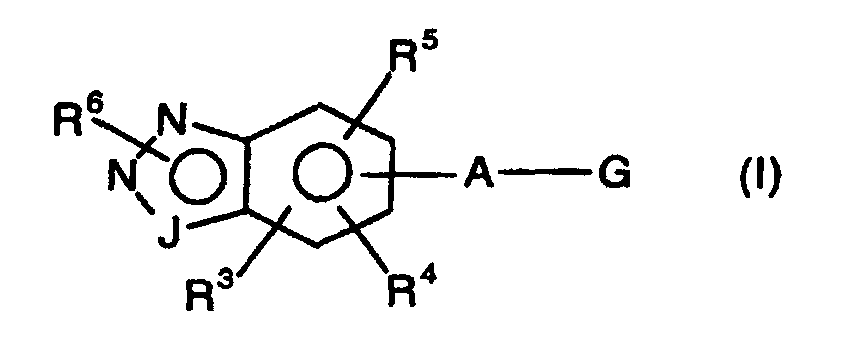 where M1 or M2 is bonded to A; n is 0 or 1; A is optionally substituted C1-6 alkylene, optionally substituted C2-6 alkenylene, optionally substituted C2-6 alkynylene, optionally substituted C1-6 alkylenoxy, optionally substituted oxy(C1-6)alkylene, optionally substituted C1-6 alkylenethio, optionally substituted thio(C1-6)alkylene, optionally substituted C1-6 alkylenamino, optionally substituted amino(C1-6)alkylene, optionally substituted [C1-6 alkyleneoxy(C1-6)alkylene], optionally substituted [C1-6 alkylenethio(C1-6)alkylene], optionally substituted [C1-6 alkylenesulfinyl(C1-6)alkylene], optionally substituted [C1-6 alkylenesulfonyl(C1-6)alkylene] or optionally substituted [C1-6 alkyleneamino(C1-6)alkylene]; when G is (i), D is S, NR7, CR8=CR9, CR8=N, CR8=N(O), N=CR9 or N(O)=CR9; when G is (ii), D is S or NR7; E is N, N-oxide or CR10; M1 is OC(=Y), N(R11)C(=Y), N=C(OR12), N=C(SR13) or N=C(NR14R15) where O or N is the atom of attachment to the ring containing D and E; M2 is N-C(=Y) where N is the atom of attachment to the ring containing D and E; Y is O, S or NR16; J is N or CR17; R1 is hydrogen, halogen, optionally substituted C1-6 alkyl, optionally substituted C2-6 alkenyl, optionally substituted C2-6 alkynyl, optionally substituted C1-6 alkoxy, optionally substituted C1-6 alkylthio, optionally substituted C3-7 cycloalkyl, cyano, nitro or SF5; R2 is optionally substituted C1-10 alkyl, optionally substituted [C2-6 alkenyl(C1-6)alkyl], optionally substituted [C2-6 alkynyl(C1-6)alkyl], optionally substituted C3-7 cycloalkyl, optionally substituted C1-10 alkylcarbonyl, optionally substituted C1-10 alkoxycarbonyl, formyl, optionally substituted C1-10 alkylaminocarbonyl, optionally substituted di(C1-10)alkylaminocarbonyl, optionally substituted phenoxycarbonyl, optionally substituted C1-6 alkylthio, optionally substituted C1-6 alkylsulfinyl, optionally substituted C1-6 alkylsulfonyl, optionally substituted arylthio, optionally substituted arylsulfinyl, optionally substituted arylsulfonyl or R18R19NS; R3, R4 and R5 are, independently, hydrogen, halogen, optionally substituted C1-6 alkyl, optionally substituted C1-6 alkoxy, optionally substituted C1-6 alkylthio, optionally substituted C1-6 alkylsulfinyl, optionally substituted C1-6 alkylsulfonyl, cyano, nitro, optionally substituted C1-6 alkylcarbonyl, optionally substituted C1-6 alkoxycarbonyl or SF5; R6 is hydrogen, cyano, optionally substituted C1-20 alkyl, optionally substituted C2-20 alkenyl(C1-6)alkyl, optionally substituted C2-20 alkynyl(C1-6)alkyl, optionally substituted C3-7 cycloalkyl, optionally substituted C5-6 cycloalkenyl, formyl, optionally substituted C1-20 alkoxycarbonyl, optionally substituted C1-20 alkylcarbonyl, aminocarbonyl, optionally substituted C1-20 alkylaminocarbonyl, optionally substituted di(C1-20)alkylaminocarbonyl, optionally substituted aryloxycarbonyl, optionally substituted arylcarbonyl, optionally substituted arylaminocarbonyl, optionally substituted N-alkyl-N-arylaminocarbonyl, optionally substituted diarylaminocarbonyl, optionally substituted heteroaryloxycarbonyl, optionally substituted heteroarylcarbonyl, optionally substituted heteroarylaminocarbonyl, optionally substituted alkylheteroarylaminocarbonyl, optionally substituted diheteroarylaminocarbonyl, optionally substituted phenyl, optionally substituted heteroaryl, optionally substituted heterocyclyl, optionally substituted C1-20 alkylsulfonyl or optionally substituted arylsulfonyl; R7 is C1-6 alkyl; R8 and R9 are, independently, hydrogen, halogen, cyano, nitro, optionally substituted C1-6 alkyl, optionally substituted C2-6 alkenyl, optionally substituted C2-6 alkynyl or optionally substituted C1-6 alkoxy; R10 is hydrogen, halogen, optionally substituted C1-6 alkyl, optionally substituted C2-6 alkenyl, optionally substituted C2-6 alkynyl, optionally substituted C1-6 alkoxy, optionally substituted C1-6 alkylthio, optionally substituted C1-6 alkylsulfinyl, optionally substituted C1-6 alkylsulfonyl, cyano, nitro, formyl, R20ON=C(R21), optionally substituted C1-6 alkylcarbonyl, optionally substituted C1-6 alkoxycarbonyl or SF5; or R1 and R10 together with the atoms to which they are attached may be joined to form a five, six or seven-membered saturated or unsaturated ring carbocylic or heterocyclic ring which may contain one or two hetero atoms selected from O, N and S and which may be optionally substituted by C1-6 alkyl, C1-6 haloalkyl or halogen; R11 is hydrogen, optionally substituted C1-10 alkyl, optionally substituted [C2-6 alkenyl(C1-6)alkyl], optionally substituted [C2-6 alkynyl(C1-6)alkyl], optionally substituted C3-7 cycloalkyl, optionally substituted C1-10 alkylcarbonyl, optionally substituted C1-10 alkoxycarbonyl, formyl, optionally substituted C1-10 alkylaminocarbonyl, optionally substituted di(C1-10)alkylaminocarbonyl, optionally substituted phenoxycarbonyl, optionally substituted C1-6 alkylthio, optionally substituted C1-6 alkylsulfinyl, optionally substituted C1-6 alkylsulfonyl, optionally substituted arylthio, optionally substituted arylsulfinyl, optionally substituted arylsulfonyl or R22R23NS; R12 is optionally substituted C1-10 alkyl, optionally substituted [C2-6 alkenyl(C1-6)alkyl], optionally substituted [C2-6 alkynyl(C1-6)alkyl], optionally substituted C3-7 cycloalkyl, optionally substituted C1-10 alkylcarbonyl, optionally substituted C1-10 alkoxycarbonyl, formyl, optionally substituted C1-10 alkylaminocarbonyl, optionally substituted di(C1-10)alkylaminocarbonyl, , amino, optionally substituted C1-6 alkylamino, optionally substituted di(C1-6)alkylamino, optionally substituted phenoxycarbonyl, tri(C1-4)alkylsilyl, aryldi(C1-4)alkylsilyl, (C1-4)alkyldiarylsilyl or triarylsilyl; R13 is optionally substituted C1-10 alkyl, optionally substituted [C2-6 alkenyl(C1-6)alkyl], optionally substituted [C2-6 alkynyl(C1-6)alkyl], optionally substituted C3-7 cycloalkyl, optionally substituted C1-10 alkylcarbonyl, optionally substituted C1-10 alkoxycarbonyl, optionally substituted C1-10 alkylaminocarbonyl, optionally substituted di(C1-10)alkylaminocarbonyl or optionally substituted phenoxycarbonyl); R14 and R15 are, independently optionally substituted C1-10 alkyl, optionally substituted C1-6 alkoxy, optionally substituted [C2-6 alkenyl(C1-6)alkyl], optionally substituted [C2-6 alkynyl(C1-6)alkyl], optionally substituted C3-7 cycloalkyl, optionally substituted C1-10 alkylcarbonyl, optionally substituted C1-10 alkoxycarbonyl, formyl, optionally substituted C1-10alkylaminocarbonyl, optionally substituted di(C1-10)alkylaminocarbonyl, hydroxy, amino, optionally substituted C1-6 alkylamino, optionally substituted di(C1-6)alkylamino, or optionally substituted phenoxycarbonyl; R16 is hydrogen, cyano, nitro, optionally substituted C1-6 alkyl, optionally substituted C3-7 cycloalkyl, optionally substituted (C2-6)alkenyl(C1-6)alkyl, optionally substituted (C2-6)alkynyl(C1-6)alkyl, optionally substituted phenyl, optionally substituted heteroaryl, optionally substituted C1-6 alkylcarbonyl, optionally substituted C1-6 alkoxycarbonyl, optionally substituted C1-6 alkylamino, optionally substituted di(C1-6)alkylamino, optionally substituted C1-6 alkylcarbonylamino, optionally substituted C1-6 alkoxycarbonylamino, optionally substituted C1-6 alkoxy, optionally substituted C1-6 alkylthio, optionally substituted C1-6 alkylsulfinyl, optionally substituted C1-6 alkylsulfonyl, optionally substituted arylthio, optionally substituted arylsulfinyl, optionally substituted arylsulfonyl or C1-6 acyloxy; R17 is hydrogen, halogen, nitro, cyano, optionally substituted C1-8 alkyl, optionally substituted C2-6 alkenyl, optionally substituted C2-6 alkynyl, optionally substituted C3-7 cycloalkyl, optionally substituted C1-6 alkoxycarbonyl, optionally substituted C1-6 alkylcarbonyl, optionally substituted C1-6 alkylaminocarbonyl, optionally substituted di(C1-6)alkylaminocarbonyl, optionally substituted phenyl or optionally substituted heteroaryl; R18 and R19 are, independently, optionally substituted C1-6 alkyl or R18 and R19 together with the N atom to which they are attached form a five, six or seven-membered heterocyclic ring which may contain one or two further hetero atoms selected from O, N or S and which may be optionally substituted by one or two C1-6 alkyl groups; R20 is hydrogen, optionally substituted phenyl, optionally substituted phenyl(C1-4)alkyl or optionally substituted C1-20 alkyl; R21 is hydrogen, optionally substituted phenyl or optionally substituted C1-6 alkyl; and R22 and R23 are, independently, optionally substituted C1-6 alkyl or R22 and R23 together with the N atom to which they are attached form a five, six or seven-membered heterocyclic ring which may contain one or two further hetero atoms selected from O, N or S and which may be optionally substituted by one or two C1-6 alkyl groups.
- The compounds of formula (I) may exist in different geometric or optical isomers or tautomeric forms. This invention covers all such isomers and tautomers and mixtures thereof in all proportions.
- When present, optional substituents on alkylene, alkenylene or alkynylene moieties include, subject to valency constraints, one or more of halogen, C1-6 alkyl, C1-6 haloalkyl, C1-6 cyanoalkyl, C1-6 alkoxy(C1-6) alkyl, C1-6 alkoxy, cyano, =O, =NR24 and =CR25R26, wherein R24 is C1-6 alkyl, C1-6 haloalkyl, OR27 or R28R29N; where R25 and R26 are, independently, hydrogen, C1-6 alkyl, C1-6 alkoxy, C1-6 haloalkyl, cyano, C1-6 alkoxycarbonyl, C1-6 alkylcarbonyl or R30R31N; R27 is C1-6 alkyl, C1-6 haloalkyl or phenyl(C1-2)alkyl; R28 and R29 are, independently, hydrogen, C1-8 alkyl, C3-7 cycloalkyl, C2-6 alkenyl(C1-6)alkyl, C2-6 alkynyl(C1-6)alkyl, C2-6 haloalkyl, C1-6 alkoxy(C1-6)alkyl, C1-6 alkoxycarbonyl(C1-6)alkyl, carboxy(C1-6)alkyl or phenyl(C1-2)alkyl or R28 and R29 together with the N atom to which they are attached form a five, six or seven-membered heterocyclic ring which may contain one or two further hetero atoms selected from O, N or S and which may be optionally substituted by one or two C1-6 alkyl groups; R30 and R31 are, independently, hydrogen, C1-8 alkyl, C3-7 cycloalkyl, C2-6 alkenyl(C1-6)alkyl, C2-6 alkynyl(C1-6)alkyl, C2-6 haloalkyl, C1-6 alkoxy(C1-6)alkyl, C1-6 alkoxycarbonyl(C1-6)alkyl, carboxy(C1-6)alkyl or phenyl(C1-2)alkyl; or R30 and R31 together with the N atom to which they are attached form a five, six or seven-membered heterocyclic ring which may contain one or two further hetero atoms selected from O, N or S and which may be optionally substituted by one or two C1-6 alkyl groups.
- Each alkyl moiety is a straight or branched chain and is, for example, methyl, ethyl, n-propyl, n-butyl, n-pentyl, n-hexyl, iso-propyl, n-butyl, sec-butyl, iso-butyl, tert-butyl or neo-pentyl. When present, the optional substituents on alkyl include one or more of halogen, nitro, cyano, HO2C, C1-10 alkoxy (itself optionally substituted by C1-10 alkoxy), aryl(C1-4)alkoxy, C1-10 alkylthio, C1-10 alkylcarbonyl, C1-10 alkoxycarbonyl, C1-6 alkylaminocarbonyl, di(C1-6 alkyl)aminocarbonyl, (C1-6)alkylcarbonyloxy, optionally substituted phenyl, heteroaryl, aryloxy, arylcarbonyloxy, heteroaryloxy, heterocyclyl, heterocyclyloxy, C3-7 cycloalkyl (itself optionally substituted with (C1-6)alkyl or halogen), C3-7 cycloalkyloxy, C5-7 cycloalkenyl, C1-6 alkylsulfonyl, C1-6 alkylsulfinyl, tri(C1-4)alkylsilyl, tri(C1-4)alkylsilyl(C1-6)alkoxy, aryldi(C1-4)alkylsilyl, (C1-4)alkyldiarylsilyl, triarylsilyl, =N-OR' and =N-NR'R"; where R' and R" are, independently, C1-6 alkyl or C1-6 haloalkyl.
- Alkenyl and alkynyl moieties can be in the form of straight or branched chains, and the alkenyl moieties, where appropriate, can be of either the (E)- or (Z)-configuration. Examples are vinyl, allyl and propargyl. When present, the optional substituents on alkenyl or alkynyl include one or more of halogen, aryl and C3-7 cycloalkyl.
- In the context of this specification acyl is optionally substituted C1-6 alkylcarbonyl (for example acetyl), optionally substituted C2-6 alkenylcarbonyl, optionally substituted C2-6 alkynylcarbonyl, optionally substituted arylcarbonyl (for example benzoyl) or optionally substituted heteroarylcarbonyl.
- Halogen is fluorine, chlorine, bromine or iodine.
- Haloalkyl groups are alkyl groups which are optionally substituted with one or more of the same or different halogen atoms and are, for example, CF3, CF2Cl, CF3CH2 or CHF2CH2.
- Aryl includes naphthyl, anthracyl, fluorenyl and indenyl but is preferably phenyl.
- The term heteroaryl refers to an aromatic ring containing up to 10 atoms including one or more heteroatoms (preferably one or two heteroatoms) selected from O, S and N. Examples of such rings include pyridine, pyrimidine, furan, quinoline, quinazoline, pyrazole, thiophene, thiazole, oxazole and isoxazole.
- The terms heterocycle and heterocyclyl refers to a non-aromatic ring containing up to 10 atoms including one or more (preferably one or two) heteroatoms selected from O, S and N. Examples of such rings include 1,3-dioxolane, tetrahydrofuran and morpholine. It is preferred that heterocyclyl is optionally substituted by C1-6 alkyl.
- Cycloalkyl includes cyclopropyl, cyclopentyl and cyclohexyl. The optional substituents for cycloalkyl include halogen, cyano and C1-3 alkyl.
- Cycloalkenyl includes cyclopentenyl and cyclohexenyl. The optional substituents for cycloalkenyl include C1-3 alkyl, halogen and cyano.
- Carbocyclic rings include aryl, cycloalkyl and cycloalkenyl groups.
- For substituted phenyl moieties, heterocyclyl and heteroaryl groups it is preferred that one or more substituents are independently selected from halogen, C1-6 alkyl, C1-6 haloalkyl, C1-6 alkoxy(C1-6)alkyl, C1-6 alkoxy, C1-6 haloalkoxy, C1-6 alkylthio, C1-6 haloalkylthio, C1-6 alkylsulfinyl, C1-6 haloalkylsulfinyl, C1-6 alkylsulfonyl, C1-6 haloalkylsulfonyl, C2-6 alkenyl, C2-6 haloalkenyl, C2-6 alkynyl, C3-7 cycloalkyl, nitro, cyano, CO2H, C1-6 alkylcarbonyl, C1-6 alkoxycarbonyl, R32R33N or R34R35NC(O) wherein R32, R33, R34 and R35 are, independently, hydrogen or C1-6 alkyl.
- It is to be understood that dialkylamino substituents include those where the dialkyl groups together with the N atom to which they are attached form a five, six or seven-membered heterocyclic ring which may contain one or two further hetero atoms selected from O, N or S and which may be optionally substituted by one or two C1-6 alkyl groups. When heterocyclic rings are formed by joining two groups on an N atom, the resulting rings are suitably pyrrolidine, piperidine, thiomorpholine and morpholine each of which may be substituted by one or two (C1-6)alkyl groups.
- In a further aspect, the present invention provides a compound of formula (IA):wherein A, G, J, R3, R4, R5 and R6 are as defined above for a compound of formula (I).

- More preferred compounds of formula (IA) are those wherein n is 0; A is C1-6 alkylene, C1-6 alkenylene, C1-6 alkylenoxy, oxy(C1-6)alkylene, C1-6 alkylenamino or C1-6 alkylenethio, each of which is optionally substituted by C1-3 alkyl, C1-3 haloalkyl, C1-3 cyanoalkyl, halogen, C1-3 alkoxy, C1-6 alkoxycarbonyl, cyano, =O, =NR36 or =CR37R38; when G is (i), D is S, NR7, CR8=CR9, CR8=N, CR8=N(O), N=CR9 or N(O)=CR9; when G is (ii), D is S or NR7; E is N or CR10; M1 is N(R11)C(=Y) or N=C(SR13) where O or N is the atom of attachment to the ring containing D and E; M2 is N-C(=Y) where N is the atom of attachment to the ring containing D and E; Y is O, S or NR16; J is N or CR17R1 is hydrogen, halogen, C1-6 alkyl, C2-6 alkenyl, C2-6 alkynyl, C1-6 cyanoalkyl, C1-6 haloalkyl, C1-6 alkoxy, C1-6 haloalkoxy, C1-6 alkylthio, C1-6 haloalkylthio, C3-6 cycloalkyl, C3-7 cycloalkyl(C1-4)alkyl, C1-6 alkoxy(C1-6)alkyl, cyano, nitro or SF5; R2 is C1-10 alkyl, benzyloxymethyl, benzoyloxymethyl, C1-6alkoxy(C1-6)alkyl, C2-6 alkenyl(C1-6)alkyl, C2-6 alkynyl(C1-6)alkyl, C1-10 alkylcarbonyl or C1-10 alkoxycarbonyl; R3, R4 and R5 are, independently, selected from hydrogen, halogen, C1-6 alkyl, C1-6 alkoxy, C1-6 haloalkoxy, C1-6 alkylthio, C1-6 haloalkylthio, C1-6 alkylsulfinyl, C1-6 haloalkylsulfinyl, C1-6 alkylsulfonyl, C1-6 haloalkylsulfonyl, C1-6 haloalkyl, cyano, nitro, C1-6 alkylcarbonyl, C1-6 alkoxycarbonyl or SF5; R6 is C1-10 alkyl or C1-10 haloalkyl (each one of which may be substituted with a C1-6 alkyloxime, C1-6 haloalkyloxime, C1-6 alkylhydrazone or C1-6 haloalkylhydrazone group) or cyano, C1-6 cyanoalkyl, C2-6 alkenyl(C1-6)alkyl, C2-6 alkynyl(C1-6)alkyl, C3-7 cycloalkyl, C3-7 halocycloalkyl, C3-7 cyanocycloalkyl, C1-3 alkyl(C3-7)cycloalkyl, C1-3 alkyl(C3-7)halocycloalkyl, C5-6 cycloalkenyl, C3-7 cycloalkyl(C1-6)alkyl, C5-6 cycloalkenyl(C1-6)alkyl, C2-6 haloalkenyl (C1-6)alkyl, C2-6 cyanoalkenyl(C1-6)alkyl, C1-6 alkoxy(C1-6)alkyl, C3-6 alkenyloxy(C1-6)alkyl, C3-6 alkynyloxy(C1-6)alkyl, aryloxy(C1-6)alkyl, formyl, C1-6 carboxyalkyl, C1-6 alkylcarbonyl(C1-6)alkyl, C2-6 alkenylcarbonyl(C1-6)alkyl, C2-6 alkynylcarbonyl(C1-6)alkyl, C1-6 alkoxycarbonyl(C1-6)alkyl, C3-6 alkenyloxycarbonyl(C1-6)alkyl, C3-6 alkynyloxycarbonyl(C1-6)alkyl, aryloxycarbonyl(C1-6)alkyl, C1-6 alkylthio(C1-6)alkyl, C1-6 alkylsulfinyl(C1-6)alkyl, C1-6 alkylsulfonyl(C1-6)alkyl, aminocarbonyl(C1-6)alkyl, aminocarbonyl(C2-6)alkenyl, aminocarbonyl(C2-6)alkynyl, C1-6alkylaminocarbonyl(C1-6)alkyl, di(C1-6)alkylaminocarbonyl(C1-6)alkyl, C1-6 alkylaminocarbonyl(C2-6)alkenyl(C1-6)alkyl, di(C1-6)alkylaminocarbonyl(C2-6)alkenyl(C1-6)alkyl, alkylaminocarbonyl(C2-6)alkynyl(C1-6)alkyl, di(C1-6)alkylaminocarbonyl(C2-6)alkynyl(C1-6)alkyl, C1-6 alkoxycarbonyl, C1-6 alkylcarbonyl, aminocarbonyl, C1-6 alkylaminocarbonyl, di(C1-6)alkylaminocarbonyl, phenyl (optionally substituted by halo, nitro, cyano, C1-6 alkyl, C1-6 haloalkyl, C1-6 alkoxy or C1-6 haloalkoxy), phenyl(C1-4)alkyl (wherein the phenyl group is optionally substituted by halo, nitro, cyano, C1-6 alkyl, C1-6 haloalkyl, C1-6 alkoxy or C1-6 haloalkoxy), phenyl(C2-4)alkenyl(C1-6)alkyl, (wherein the phenyl group is optionally substituted by halo, nitro, cyano, C1-6 alkyl, C1-6 haloalkyl, C1-6 alkoxy, C1-6 alkylsulfonyl or C1-6 haloalkoxy), heteroaryl (optionally substituted by halo, nitro, cyano, C1-6 alkyl, C1-6 haloalkyl, C1-6 alkoxy, C1-6 alkylsulfonyl or C1-6 haloalkoxy), heterocyclyl (optionally substituted by halo, nitro, cyano, C1-6 alkyl, C1-6 haloalkyl, C1-6 alkoxy or C1-6 haloalkoxy), heteroaryl(C1-4)alkyl (where the heteroaryl may be substituted by halo, nitro, cyano, C1-6 alkyl, C1-6 haloalkyl, C1-6 alkoxy or C1-6 haloalkoxy),or heterocyclyl(C1-4)alkyl (where the heterocyclyl may be substituted by halo, cyano, C1-6 alkyl, C1-6 haloalkyl, C1-6 alkoxy or C1-6 haloalkoxy); R7 is C1-6 alkyl; R8 and R9 independently are, hydrogen, halogen, C1-6 alkyl, C1-6 haloalkyl C2-6 alkenyl, C2-6 alkynyl, C1-6 alkoxy or C1-6 haloalkoxy; R10 is hydrogen, halogen, C1-6 alkyl, C2-6 alkenyl, C1-6 alkynyl, C1-6 haloalkyl, C1-6 alkoxy, C1-6 alkoxy (C1-6)alkyl, C1-6 haloalkoxy, C1-6 alkylthio, C1-6 haloalkylthio, C1-6 alkylsulfinyl, C1-6 haloalkylsulfinyl, C1-6 alkylsulfonyl, C1-6 haloalkylsulfonyl, C1-6 haloalkyl, cyano, nitro, formyl, R20ON=CH, C1-6 alkylcarbonyl, C1-6 alkoxycarbonyl or SF5; or together R1 and R10 together with the atoms to which they are attached may be joined to form a five, six or seven-membered saturated or unsaturated ring carbocylic or heterocyclic ring which may contain one or two hetero atoms selected from O, N or S and which may be optionally substituted by C1-6 alkyl, C1-6 haloalkyl or halogen; R11 is hydrogen, C1-10 alkyl, benzyloxymethyl, benzoyloxymethyl, C1-6alkoxy(C1-6)alkyl, C2-6 alkenyl(C1-6)alkyl (especially allyl), C2-6 alkynyl(C1-6)alkyl (especially propargyl), C1-10 alkylcarbonyl or C1-10 alkoxycarbonyl (especially isobutoxycarbonyl); R13 is C1-10 alkyl, benzyloxymethyl, benzoyloxymethyl, C1-6alkoxy(C1-6)alkyl, C2-6 alkenyl(C1-6)alkyl (especially allyl), C2-6 alkynyl(C1-6)alkyl (especially propargyl), C1-10 alkylcarbonyl or C1-10 alkoxycarbonyl (especially isobutoxycarbonyl); R16 is cyano, nitro, C1-6 alkyl, C1-6 haloalkyl, C3-7 cycloalkyl, C3-7 cycloalkyl(C1-6)alkyl, CH2(C2-6)alkenyl, CH2(C2-6)alkynyl, phenyl (optionally substituted by halo, nitro, cyano, C1-6 alkyl, C1-6 haloalkyl, C1-6 alkoxy or C1-6 haloalkoxy) heteroaryl (optionally substituted by halo, nitro, cyano, C1-6 alkyl, C1-6 haloalkyl, C1-6 alkoxy or C1-6 haloalkoxy), C1-6 alkylcarbonyl, C1-6 alkoxycarbonyl, C1-6 alkylamino, di(C1-6)alkylamino, C1-6 alkylcarbonylamino, C1-6 alkoxycarbonylamino, C1-6 alkoxy, C1-6 alkylthio, C1-6 alkylsulfinyl, C1-6 alkylsulfonyl, C1-6 haloalkylthio, C1-6 haloalkylsulfinyl, C1-6 haloalkylsulfonyl, arylthio, arylsulfinyl, arylsulfonyl or (C1-6)alkylC(O)O; R17 is hydrogen, halogen, nitro, cyano, C1-8 alkyl, C1-6 haloalkyl, C1-6 cyanoalkyl, C2-6 alkenyl, C2-6 alkynyl, C3-7 cycloalkyl, C2-6 haloalkenyl, C3-7 cycloalkyl(C1-6)alkyl, C1-6alkox(C1-6)alkyl, C1-6 alkoxycarbonyl, C1-6 alkylcarbonyl, C1-6 alkylaminocarbonyl, di(C1-6alkylaminocarbonyl, phenyl (optionally substituted by halo, nitro, cyano, C1-6 alkyl, C1-6 haloalkyl, C1-6 alkoxy or C1-6 haloalkoxy) or heteroaryl (optionally substituted by halo,nitro, cyano, C1-6 alkyl, C1-6 haloalkyl, C1-6 alkoxy or C1-6 haloalkoxy); R20 is C1-6 alkyl or phenyl(C1-2)alkyl (wherein the phenyl group is optionally substituted by halo, nitro, cyano, C1-6 alkyl, C1-6 haloalkyl, C1-6 alkoxy or C1-6 haloalkoxy); R36 is C1-6 alkyl, OR39 or NR40R41; R37 is hydrogen, C1-6 alkyl or C1-6 haloalkyl; R38 is hydrogen, C1-6 alkyl, C1-6 haloalkyl, C1-6 alkoxy, cyano, C1-6 alkoxycarbonyl, C1-6 alkylcarbonyl or NR42R43; R39 is C1-6 alkyl or optionally substituted phenyl(C1-2)alkyl; R40 and R41 independently are, hydrogen, C1-8 alkyl or phenyl (optionally substituted by halo, nitro, cyano, C1-6 alkyl, C1-6 haloalkyl, C1-6 alkoxy or C1-6 haloalkoxy); and R42 and R43 are, independently, hydrogen, C1-8 alkyl, C3-7 cycloalkyl, C3-6 alkenyl, C3-6 alkynyl, C2-6 haloalkyl, C1-6 alkoxy(C1-6)alkyl, C1-6 alkoxycarbonyl(C1-6)alkyl, carboxy(C1-6)alkyl or phenyl(C1-2)alkyl; or R42 and R43 together with the N atom to which they are attached form a five, six or seven-membered heterocyclic ring which may contain one or two further hetero atoms selected from O, N or S and which may be optionally substituted by one or two C1-6 alkyl groups.
- Preferably n is 0.
- Preferably A is C1-4 alkylene, -C(O)- or C1-4 alkyleneoxy.
- When G is (i), D is preferably S or CR8=CR9, where R8 and R9 are, independently, hydrogen, halogen, C1-6 alkyl, C1-6 haloalkyl C2-6 alkenyl, C1-6 alkynyl, C1-6 alkoxy or C1-6 haloalkoxy.
- When G is (ii), D is preferably S.
- Preferably E is N or CR10 where R10 is hydrogen, halogen, C1-6 alkyl, C1-6 haloalkyl, C1-6 alkoxy, C1-6 haloalkoxy, C1-6 alkoxy (C1-6)alkyl, C1-6 alkylthio or SF5; or R1 and R10 together with the atoms to which they are attached form a benzene ring optionally substituted by C1-6 alkyl, C1-6 haloalkyl or halogen.
- Preferably G is (i).
- Preferably M1 is N(R11)C(=O) where R11 is hydrogen, C1-6 alkyl, C1-6 alkoxy(C1-6)alkyl, benzyloxymethyl or benzoyloxymethyl.
- Preferably Y is O.
- Preferably J is N or CR17 where R17 is hydrogen, C1-6 alkyl, C1-6 haloalkyl, cyano, halogen or nitro.
- R1 is preferably hydrogen, halogen, C1-6 alkyl, C2-6 alkenyl, C1-6 haloalkyl, C1-6 alkoxy, C1-6 haloalkoxy, C1-6 alkylthio, C1-6 haloalkylmio, C3-6 cycloalkyl, cyano, nitro or SF5.
- R2 is preferably C1-10 alkyl, C1-6 alkoxy(C1-6)alkyl, allyl or propargyl.
- Preferably R3, R4 and R5 are, independently, hydrogen, C1-3 alkyl or halogen.
- R6 is preferably C1-10 alkyl or C1-10 haloalkyl (each one of which may be substituted with a C1-6 alkyloxime, C1-6 haloalkyloxime, C1-6 alkylhydrazone or C1-6 haloalkylhydrazone group) or C1-6 cyanoalkyl, C2-6 alkenyl(C1-6)alkyl, C2-6 alkynyl(C1-6)alkyl, C3-7 cycloalkyl, C3-7 halocycloalkyl, C3-7 cyanocycloalkyl, C1-3 alkyl(C3-7)cycloalkyl, C1-3 alkyl(C3-7)halocycloalkyl, C5-6 cycloalkenyl, C3-7 cycloalkyl(C1-6)alkyl, C5-6 cycloalkenyl(C1-6)alkyl, C2-6 haloalkenyl(C1-6)alkyl, C1-6cyanoalkenyl(C1-6)alkyl, C1-6 alkoxy(C1-6)alkyl, C3-6 alkenyloxy(C1-6)alkyl, C3-6 alkynyloxy(C1-6)alkyl, aryloxy(C1-6)alkyl, C1-6 carboxyalkyl, C1-6 alkylcarbonyl(C1-6)alkyl, C2-6 alkenylcarbonyl(C1-6)alkyl, C2-6 alkynylcarbonyl(C1-6)alkyl, C1-6 alkoxycarbonyl(C1-6)alkyl, C3-6 alkenyloxycarbonyl(C1-6)alkyl, C3-6 alkynyloxycarbonyl(C1-6)alkyl, aryloxycarbonyl(C1-6)alkyl, C1-6 alkylthio(C1-6)alkyl, C1-6 alkylsulfinyl(C1-6)alkyl, C1-6 alkylsulfonyl(C1-6)alkyl, aminocarbonyl(C1-6)alkyl, aminocarbonyl(C2-6)alkenyl, aminocarbonyl(C2-6)alkynyl, C1-6 alkylaminocarbonyl(C1-6)alkyl, di(C1-6)alkylaminocarbonyl(C1-6)alkyl, C1-6alkylaminocarbonyl(C2-6)alkenyl(C1-6)alkyl, di(C1-6)alkylaminocarbonyl(C2-6)alkenyl(C1-6)alkyl, alkylaminocarbonyl(C2-6)alkynyl(C1-6)alkyl, di(C1-6)alkylaminocarbonyl(C2-6)alkynyl(C1-6)alkyl, phenyl (optionally substituted by halo, nitro, cyano, C1-6 alkyl, C1-6 haloalkyl, C1-6 alkoxy or C1-6 haloalkoxy), phenyl(C1-4)alkyl (wherein the phenyl group is optionally substituted by halo, nitro, cyano, C1-6 alkyl, C1-6 haloalkyl, C1-6 alkoxy or C1-6 haloalkoxy), phenyl(C2-4)alkenyl(C1-6)alkyl, (wherein the phenyl group is optionally substituted by halo, nitro, cyano, C1-6 alkyl, C1-6 haloalkyl, C1-6 alkoxy, C1-6 alkylsulfonyl or C1-6 haloalkoxy), heteroaryl (optionally substituted by halo, nitro, cyano, C1-6 alkyl, C1-6 haloalkyl, C1-6 alkoxy or C1-6 haloalkoxy), heterocyclyl (wherein the heterocyclyl group is optionally substituted by halo, nitro, cyano, C1-6 alkyl, C1-6 haloalkyl, C1-6 alkoxy or C1-6 haloalkoxy), heteroaryl(C1-4)alkyl (wherein the heteroaryl group is optionally substituted by halo, nitro, cyano, C1-6 alkyl, C1-6 haloalkyl, C1-6 alkoxy, C1-6 alkylsulfonyl or C1-6 haloalkoxy)or heterocyclyl(C1-4)alkyl (wherein the heterocyclyl group is optionally substituted by halo, nitro, cyano, C1-6 alkyl, C1-6 haloalkyl, C1-6 alkoxy or C1-6 haloalkoxy).
- Preferably the optionally substituted ring of formulais optionally substituted isothiazolyl, optionally substituted pyridyl, optionally substituted pyrimidinyl, optionally substituted quinazolinyl and optionally substituted quinolinyl groups in which the optional substituents are chosen from halo, C1-6 alkyl, C1-6 haloalkyl, C1-6 alkoxy, C1-6 alkoxy(C1-6)alkyl or C1-6 haloalkoxy.

- Preferably the optionally substituted ring of formulato

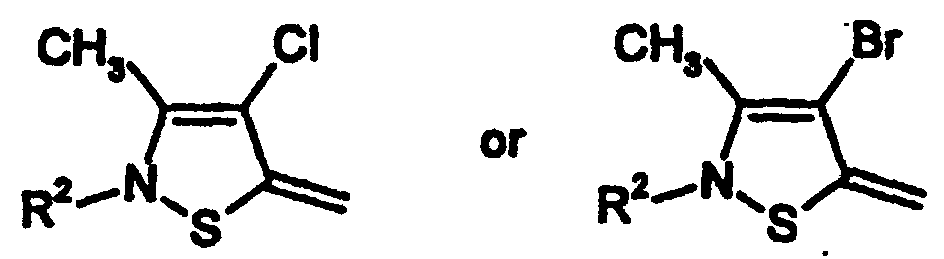
- More preferably A is CH2 or CH2O, even more preferably CH2.
- More preferably M1 is N(R11)C(=O), where R11 is hydrogen, C1-4 alkyl, C1-4 alkoxy(C1-4)alkyl, benzyloxymethyl or benzoyloxymethyl. It is especially preferred that R11 is hydrogen, ethyl, ethoxymethyl, allyl or propargyl.
- More preferably J is N or CR17, where R17 is hydrogen, methyl or halogen.
- More preferably R2 is ethyl, ethoxymethyl, allyl or propargyl.
- More preferably R3, R4 and R5 are independently, hydrogen, or halogen (especially fluorine); it is especially preferred that each of R3, R4 and R5 is hydrogen.
- More preferably R6 is C1-8 alkyl, C2-8 haloalkyl, C1-8 cyanoalkyl, C3-7 cycloalkyl, C1-3 alkyl (C3-7) cycloalkyl, C1-6 alkoxy (C1-6) alkyl, heterocyclic (optionally substituted by halo, nitro, cyano, C1-6 alkyl, C1-6 haloalkyl, C1-6 alkoxy or C1-6 haloalkoxy), phenyl (optionally substituted by halogen, C1-6 alkyl, C1-6 haloalkyl, C1-6 alkoxy, nitro, cyano or C1-6 alkylsulfonyl) or heteroaryl (optionally substituted by halogen, C1-6 alkyl, C1-6 haloalkyl, C1-6 alkoxy, nitro, cyano or C1-6 alkylsulfonyl).
- Even more preferably R6 is C1-8 alkyl, C2-6 haloalkyl, C1-6alkoxy(C1-6)alkyl, C3-7cycloalkyl or C3-7 cycloalkyl(C1-6)alkyl.
- Even more preferably the groupis

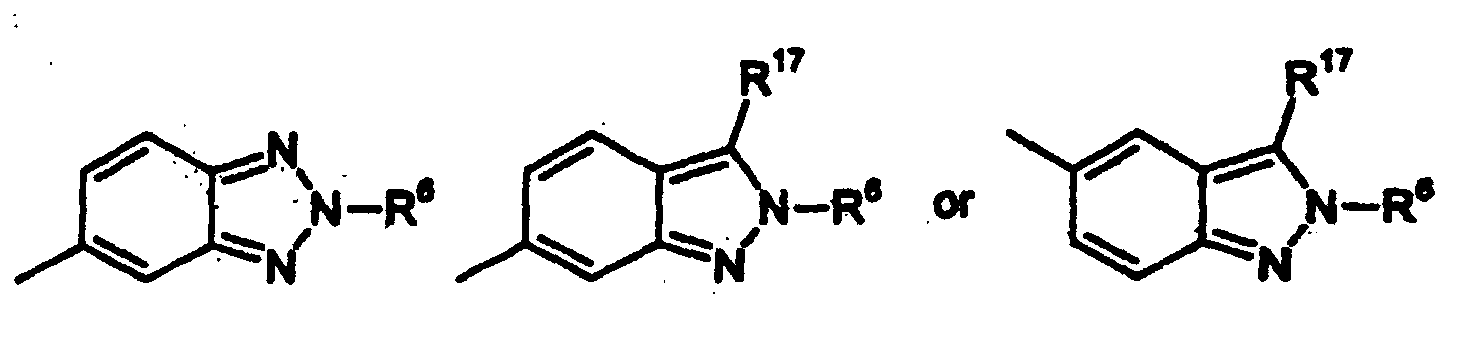
- Most preferably the optionally substituted ring of formula



- In a further aspect the present invention provides a compound of formula (IB):wherein R1 is hydrogen, halogen, C1-6 alkyl, C1-6 haloalkyl, C1-6 alkoxy, C1-6 haloalkoxy, C1-6 alkylthio, C3-6 cycloalkyl or C1-6 alkoxy(C1-6)alkyl; R10 is hydrogen, halogen, C1-6 alkyl, C1-6 haloalkyl, cyano, nitro, CHO, CH=NOR20, C1-6 alkylcarbonyl, C1-6 alkoxycarbonyl or C1-6 alkylS(O)q; or together R1 and R10 form a five or six membered saturated or unsaturated carbocyclic ring, optionally substituted by one or two C1-6 alkyl groups; R11 is hydrogen, C1-6 alkyl, CH2(C1-4 haloalkyl), C3-6 alkenyl, C3-6 alkynyl, C1-6 alkoxy(C1-6)alkyl, C1-6 alkylcarbonyl, C1-6 alkoxycarbonyl, formyl, optionally substituted phenoxycarbonyl, optionally substituted phenyl(C1-4)alkyl or S(O)pR44; R6 is hydrogen, C1-8 alkyl, C1-6 haloalkyl, C1-6 cyanoalkyl, C3-6 alkenyl, C3-6 alkynyl, C3-7 cycloalkyl, C3-6 cycloalkyl(C1-6)alkyl, C3-6 haloalkenyl, C1-6 alkoxy(C1-6)alkyl, C1-6 carboxyalkyl, C1-6 alkylcarbonyl(C1-6)alkyl, C1-6 alkoxycarbonyl(C1-6)alkyl, C1-6 alkylthio(C1-6)alkyl, C1-6 alkylsulfinyl(C1-6)alkyl, C1-6 alkylsulfonyl(C1-6)alkyl, aminocarbonyl(C1-6)alkyl, C1-6alkylaminocarbonyl(C1-6)alkyl, di(C1-6)alkylaminocarbonyl(C1-6)alkyl, optionally substituted phenyl, optionally substituted phenyl(C1-4)alkyl or optionally substituted heteroaryl; R20 is hydrogen, C1-6 alkyl, optionally substituted phenyl or optionally substituted phenyl(C1-4)alkyl; R44 is C1-6 alkyl, C1-6 haloalkyl or optionally substituted phenyl; Y is O or S; m is 0 or 1; and p and q are, independently, 0, 1 or 2; provided that when R6 is C3-6 alkenyl, C3-6 alkynyl or C3-6 haloalkenyl, R6 does not have an unsaturated carbon atom attached directly to N and provided that when R11 is C3-6 alkenyl or C3-6 alkynyl, R11 does not have an unsaturated carbon atom attached directly to N.
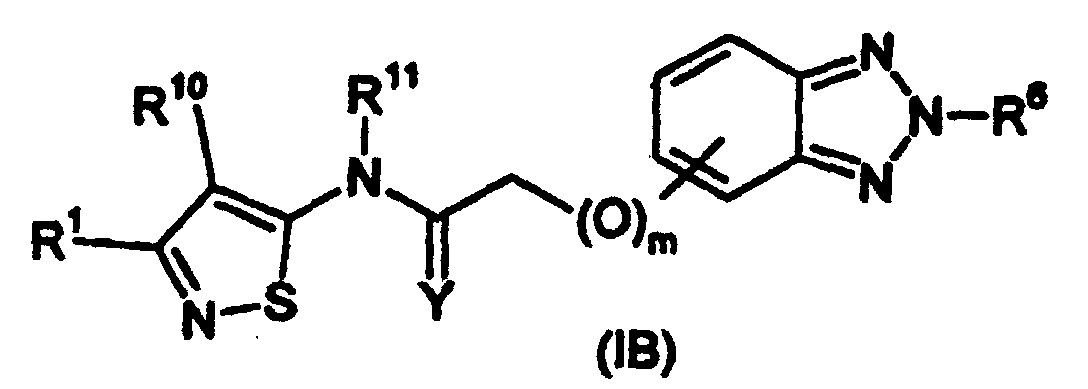
- It is preferred that R1 is ethyl or, especially, methyl.
- It is preferred that R10 is hydrogen, halogen (especially chloro) or cyano.
- It is preferred that m is 0.
- It is preferred that the compounds of the invention are of formula (Ia).
- In one particular aspect the present invention provides a compound of formula (Ia) wherein R1 is C1-4 alkyl (especially methyl or ethyl); R10 is hydrogen, halogen (especially chloro or bromo) or cyano; or R1 and R10 together form a cyclopentyl, cyclohexyl or phenyl ring; R11 is hydrogen, C1-4 alkyl (especially methyl or ethyl), phenyl(C1-4)alkyl (especially benzyl), C1-4 alkylcarbonyl (especially acetyl) or C1-4 alkylsulfonyl (especially methanesulfonyl); m is 0; Y is oxygen; and R6 is C1-6 alkyl [optionally substituted with halogen, C1-4 alkoxy, phenyl (itself optionally substituted with halogen), CO2H, CONH2 (itself optionally substituted with C1-4 alkyl), cyano, C3-6 cycloalkyl or CO(C1-4 alkoxy)], C3-6 alkenyl, C3-6 alkynyl, C3-6 cycloalkyl, phenyl [optionally substituted with halogen, C1-4 haloalkyl (especially CF3), nitro, CO2H, or cyano] or heteroaryl (especially pyridyl or pyrimidinyl) [optionally substituted with C1-4 alkyl or C1-4 haloalkyl].
- In a further aspect the present invention provides a compound of formula (IC):wherein n is 0 or 1; A is optionally substituted C1-6 alkylene, optionally substituted C2-6 alkenylene, optionally substituted C2-6 alkynylene, optionally substituted C1-6 alkylenoxy, optionally substituted oxy(C1-6)alkylene, optionally substituted C1-6 alkylenethio, optionally substituted thio(C1-6)alkylene, optionally substituted C1-6 alkylenamino, optionally substituted amino(C1-6)alkylene, optionally substituted [C1-6 alkyleneoxy(C1-6)alkylene], optionally substituted [C1-6 alkylenethio(C1-6)alkylene], optionally substituted [C1-6 alkylenesulfinyl(C1-6)alkylene], optionally substituted [C1-6 alkylenesulfonyl(C1-6)alkylene] or optionally substituted [C1-6 alkyleneamino(C1-6)alkylene]; D is S, NR7, CR8=CR9, CR8=N, CR8=N(O), N=CR9 or N(O)=CR9; R7 is C1-6 alkyl; E is N, N-oxide or CR10; M1 is OC(=Y), N(R11)C(=Y), N=C(OR12), N=C(SR13) or N=C(NR14R15) where O or N is the atom of attachment to the ring containing E and D; Y is O, S or NR16; J is N or CR17; R1 is hydrogen, halogen, optionally substituted C1-6 alkyl, optionally substituted C2-6 alkenyl, optionally substituted C2-6 alkynyl, optionally substituted C1-6 alkoxy, optionally substituted C1-6 alkylthio, optionally substituted C3-7 cycloalkyl, cyano, nitro or SF5; R11 is hydrogen, optionally substituted C1-10 alkyl, optionally substituted [C2-6 alkenyl(C1-6)alkyl], optionally substituted [C2-6 alkynyl(C1-6)alkyl], optionally substituted C3-7 cycloalkyl, optionally substituted C1-10 alkylcarbonyl, optionally substituted C1-10 alkoxycarbonyl, formyl, optionally substituted C1-10 alkylaminocarbonyl, optionally substituted di(C1-10)alkylaminocarbonyl, optionally substituted phenoxycarbonyl, optionally substituted C1-6 alkylthio, optionally substituted C1-6 alkylsulfinyl, optionally substituted C1-6 alkylsulfonyl, optionally-substituted C1-6 arylthio, optionally substituted C1-6 arylsulfinyl, optionally substituted C1-6 arylsulfonyl or R22R23NS; R12 is optionally substituted C1-10 alkyl, optionally substituted [C2-6 alkenyl(C1-6)alkyl], optionally substituted [C2-6 alkynyl(C1-6)alkyl], optionally substituted C3-7 cycloalkyl, optionally substituted C1-10 alkylcarbonyl, optionally substituted C1-10 alkoxycarbonyl, formyl, optionally substituted C1-10alkylaminocarbonyl, optionally substituted di(C1-10)alkylaminocarbonyl, , amino, optionally substituted C1-6 alkylamino, optionally substituted di(C1-6)alkylamino, optionally substituted phenoxycarbonyl, tri(C1-4)alkylsilyl, aryldi(C1-4)alkylsilyl, (C1-4)alkyldiarylsilyl or triarylsilyl; R13 is optionally substituted C1-10 alkyl, optionally substituted [C2-6 alkenyl(C1-6)alkyl], optionally substituted [C2-6 alkynyl(C1-6)alkyl], optionally substituted C3-7 cycloalkyl, optionally substituted C1-10 alkylcarbonyl, optionally substituted C1-10 alkoxycarbonyl, optionally substituted C1-10 alkylaminocarbonyl, optionally substituted di(C1-10)alkylaminocarbonyl or optionally substituted phenoxycarbonyl); R14 and R15 are, independently optionally substituted C1-10 alkyl, optionally substituted C1-6 alkoxy, optionally substituted [C2-6 alkenyl(C1-6)alkyl], optionally substituted [C2-6 alkynyl(C1-6)alkyl], optionally substituted C3-7 cycloalkyl, optionally substituted C1-10 alkylcarbonyl, optionally substituted C1-10 alkoxycarbonyl, formyl, optionally substituted C1-10 alkylaminocarbonyl, optionally substituted di(C1-10)alkylaminocarbonyl, hydroxy, amino, optionally substituted C1-6 alkylamino, optionally substituted di(C1-6)alkylamino, or optionally substituted phenoxycarbonyl; R3, R4 and R5 are, independently, hydrogen, halogen, optionally substituted C1-6 alkyl, optionally substituted - C1-6 alkoxy, optionally substituted C1-6 alkylthio, optionally substituted C1-6 alkylsulfinyl, optionally substituted C1-6 alkylsulfonyl, cyano, nitro, optionally substituted C1-6 alkylcarbonyl, optionally substituted C1-6 alkoxycarbonyl or SF5; R6 is hydrogen, cyano, optionally substituted C1-20 alkyl, optionally substituted C2-20 alkenyl(C1-6)alkyl, optionally substituted C2-20 alkynyl(C1-6)alkyl, optionally substituted C3-7 cycloalkyl, optionally substituted C5-6 cycloalkenyl, formyl, optionally substituted C1-20 alkoxycarbonyl, optionally substituted C1-20 alkylcarbonyl, aminocarbonyl, optionally substituted C1-20 alkylaminocarbonyl, optionally substituted di(C1-20)alkylaminocarbonyl, optionally substituted aryloxycarbonyl, optionally substituted arylcarbonyl, optionally substituted arylaminocarbonyl, optionally substituted N-alkyl-N-arylaminocarbonyl, optionally substituted diarylaminocarbonyl, optionally substituted heteroaryloxycarbonyl, optionally substituted heteoarylcarbonyl, optionally substituted hetoroarylaminocarbonyl, optionally substituted alkylheteroarylaminocarbonyl, optionally substituted diheteroarylaminocarbonyl, optionally substituted phenyl, optionally substituted heteroaryl, optionally substituted heterocyclyl, optionally substituted C1-20 alkylsulfonyl, or optionally substituted arylsulfonyl; R8 and R9 are, independently, hydrogen, halogen, cyano, nitro, optionally substituted C1-6 alkyl, optionally substituted C2-6 alkenyl, optionally substituted C2-6 alkynyl or optionally substituted C1-6 alkoxy; R10 is hydrogen, halogen, optionally substituted C1-6 alkyl, optionally substituted C2-6 alkenyl, optionally substituted C2-6 alkynyl, optionally substituted C1-6 alkoxy, optionally substituted C1-6 alkylthio, optionally substituted C1-6 alkylsulfinyl, optionally substituted C1-6 alkylsulfonyl, cyano, nitro, formyl, R20ON=C(R21), optionally substituted C1-6 alkylcarbonyl, optionally substituted C1-6 alkoxycarbonyl or SF5; or R1 and R10 together with the atoms to which they are attached may be joined to form a five, six or seven-membered saturated or unsaturated ring carbocylic or heterocyclic ring which may contain one or two hetero atoms selected from O, N or S and which may be optionally substituted by C1-6 alkyl, C1-6 haloalkyl or halogen; R16 is hydrogen, cyano, nitro, optionally substituted C1-6 alkyl, optionally substituted C3-7 cycloalkyl, optionally substituted (C2-6)alkenyl(C1-6)alkyl, optionally substituted (C2-6)alkynyl(C1-6)alkyl, optionally substituted phenyl, optionally substituted heteroaryl, optionally substituted C1-6 alkylcarbonyl, optionally substituted C1-6 alkoxycarbonyl, optionally substituted C1-6 alkylamino, optionally substituted di(C1-6)alkylamino, optionally substituted C1-6 alkylcarbonylamino, optionally substituted C1-6 alkoxycarbonylamino, optionally substituted C1-6 alkoxy, optionally substituted C1-6 alkylthio, optionally substituted C1-6 alkylsulfinyl, optionally substituted C1-6 alkylsulfonyl, optionally substituted arylthio, optionally substituted arylsulfinyl, optionally substituted arylsulfonyl or C1-6 acyloxy; R17 is hydrogen, halogen, nitro, cyano, optionally substituted - C1-8 alkyl, optionally substituted C2-6 alkenyl, optionally substituted C2-6 alkynyl, optionally substituted C3-7 cycloalkyl, optionally substituted C1-6 alkoxycarbonyl, optionally substituted C1-6 alkylcarbonyl, optionally substituted C1-6 alkylaminocarbonyl, optionally substituted di(C1-6)alkylaminocarbonyl, optionally substituted phenyl or optionally substituted heteroaryl; R22 and R23 are, independently, optionally substituted C1-6 alkyl or R22 and R23 together with the N atom to which they are attached form a five, six or seven-membered heterocyclic ring which may contain one or two further hetero atoms selected from O, N or S and which may be optionally substituted by one or two C1-6 alkyl groups; R21 is hydrogen, optionally substituted phenyl or optionally substituted C1-6 alkyl; and R20 is hydrogen, optionally substituted phenyl (C1-2)alkyl or optionally substituted C1-20 alkyl.

- The compounds of formula (IC) may exist in different geometric or optical isomers or tautomeric forms. This invention covers all such isomers and tautomers and mixtures thereof in all proportions.
- In a further aspect, the present invention provides a compound of formula (ID):wherein A, D, E, M1, Y, J, R1, R3, R4, R5 and R6 are as defined above for a compound of formula (IC). More preferred compounds of formula (ID) are those of formula (IE)
 wherein D is S, NR7, CR8=CR9, CR8=N, CR8=N(O), N=CR9 or N(O)=CR9; E is N or CR10; R1 is hydrogen, halogen, C1-6 alkyl, C2-6 alkenyl, C2-6 alkynyl, C1-6 cyanoalkyl, C1-6 haloalkyl, C1-6 alkoxy, C1-6 haloalkoxy, C1-6 alkylthio, C1-6 haloalkylthio, C3-6 cycloalkyl, C3-7 cycloalkyl(C1-4)alkyl, C1-6 alkoxy(C1-6)alkyl, cyano, nitro or SF5; A is C1-6 alkylene, C1-6 alkenylene, C1-6 alkylenoxy, oxy(C1-6)alkylene, C1-6 alkylenamino or C1-6 alkylenethio, each of which is optionally substituted by C1-3 alkyl, C1-3 haloalkyl, C1-3 cyanoalkyl, halogen, C1-3 alkoxy, C1-6 alkoxycarbonyl, cyano, =O, =NR36 or =CR37R38; M1 is N(R11)C(=Y) or N=C(SR13) where O or N is the atom of attachment to the ring containing E and D; Y is O, S or NR16; J is N or CR17; R11 is hydrogen, C1-10 alkyl, benzyloxymethyl, benzoyloxymethyl, C1-6alkoxy(C1-6)alkyl, C2-6 alkenyl(C1-6)alkyl (especially allyl), C2-6 alkynyl(C1-6)alkyl (especially propargyl), C1-10 alkylcarbonyl or C1-10 alkoxycarbonyl (especially isobutoxycarbonyl); R13 is C1-10 alkyl, benzyloxymethyl, benzoyloxymethyl, C1-6alkoxy(C1-6)alkyl, C2-6 alkenyl(C1-6)alkyl (especially allyl), C2-6 alkynyl(C1-6)alkyl (especially propargyl), C1-10 alkylcarbonyl or C1-10 alkoxycarbonyl (especially isobutoxycarbonyl); R3, R4 and R5 are independently selected from hydrogen, halogen, C1-6 alkyl, C1-6 alkoxy, C1-6 haloalkoxy, C1-6 alkylthio, C1-6 haloalkylthio, C1-6 alkylsulfinyl, C1-6 haloalkylsulfinyl, C1-6 alkylsulfonyl, C1-6 haloalkylsulfonyl, C1-6 haloalkyl, cyano, nitro, C1-6 alkylcarbonyl, C1-6 alkoxycarbonyl or SF5; R6 is cyano, C1-8 alkyl, C2-6 haloalkyl, C1-6 cyanoalkyl, C2-6 alkenyl(C1-6)alkyl, C2-6 alkynyl(C1-6)alkyl, C3-7 cycloalkyl, C3-7 halocycloalkyl, C3-7 cyanocycloalkyl, C1-3alkyl(C3-7)cycloalkyl, C1-3 alkyl(C3-7)halocycloalkyl, C5-6 cycloalkenyl, C3-7 cycloalkyl(C1-6)alkyl, C5-6 cycloalkenyl(C1-6)alkyl, C2-6 haloalkenyl(C1-6)alkyl, C1-6 cyanoalkenyl(C1-6)alkyl, C1-6 alkoxy(C1-6)alkyl, C3-6 alkenyloxy(C1-6)alkyl, C3-6 alkynyloxy(C1-6)alkyl, aryloxy(C1-6)alkyl, formyl, C1-6 carboxyalkyl, C1-6 alkylcarbonyl(C1-6)alkyl, C2-6 alkenylcarbonyl(C1-6)alkyl, C2-6 alkynylcarbonyl(C1-6)alkyl, C1-6 alkoxycarbonyl(C1-6)alkyl, C3-6 alkenyloxycarbonyl(C1-6)alkyl, C3-6 alkynyloxycarbonyl(C1-6)alkyl, aryloxycarbonyl(C1-6)alkyl, C1-6 alkylthio(C1-6)alkyl, C1-6 alkylsulfinyl(C1-6)alkyl, C1-6 alkylsulfonyl(C1-6)alkyl, aminocarbonyl(C1-6)alkyl, amiocarbonyl(C2-6)alkenyl, aminocarbonyl(C2-6)alkynyl, C1-6 alkylaminocarbonyl(C1-6)alkyl, di(C1-6)alkylaminocarbonyl(C1-6)alkyl, C1-6 alkylaminocarbonyl(C2-6)alkenyl(C1-6)alkyl, di(C1-6)alkylaminocarbonyl(C2-6)alkenyl(C1-6)alkyl, alkylaminocarbonyl(C2-6)alkynyl(C1-6)alkyl, di(C1-6)alkylaminocarbonyl(C1-6)alkynyl(C1-6)alkyl, C1-6 alkoxycarbonyl, C1-6 alkylcarbonyl, aminocarbonyl, C1-6 alkylaminocarbonyl, di(C1-6)alkylaminocabonyl, phenyl (optionally substituted by halo, nitro, cyano, C1-6 alkyl, C1-6 haloalkyl, C1-6 alkoxy or C1-6 haloalkoxy), phenyl(C1-4)alkyl (wherein the phenyl group is optionally substituted by halo, nitro, cyano, C1-6 alkyl, C1-6 haloalkyl, C1-6 alkoxy or C1-6 haloalkoxy), phenyl(C2-4)alkenyl(C1-6)alkyl, (wherein the phenyl group is optionally substituted by halo, nitro, cyano, C1-6 alkyl, C1-6 haloalkyl, C1-6 alkoxy, C1-6 alkylsulfonyl or C1-6 haloalkoxy), heteroaryl (optionally substituted by halo, nitro, cyano, C1-6 alkyl, C1-6 haloalkyl, C1-6 alkoxy, C1-6 alkylsulfonyl or C1-6 haloalkoxy), heterocyclyl (optionally substituted by halo, nitro, cyano, C1-6 alkyl, C1-6 haloalkyl, C1-6 alkoxy or C1-6 haloalkoxy), heteroaryl(C1-4)alkyl (where the heteroaryl may be substituted by halo, nitro, cyano, C1-6 alkyl, C1-6 haloalkyl, C1-6 alkoxy or C1-6 haloalkoxy),or heterocyclyl(C1-4)alkyl (where the heterocyclyl may be substituted by halo, cyano, C1-6 alkyl, C1-6 haloalkyl, C1-6 alkoxy or C1-6 haloalkoxy); R8 and R9 independently are, hydrogen, halogen, C1-6 alkyl, C1-6 haloalkyl C2-6 alkenyl, C1-6 alkynyl, C1-6 alkoxy or C1-6 haloalkoxy; R10 is hydrogen, halogen, C1-6 alkyl, C2-6 alkenyl, C1-6 alkynyl, C1-6 haloalkyl, C1-6 alkoxy, C1-6 alkoxy (C1-6)alkyl, C1-6 haloalkoxy, C1-6 alkylthio, C1-6 haloalkylthio, C1-6 alkylsulfinyl, C1-6 haloalkylsulfinyl, C1-6 alkylsulfonyl, C1-6 haloalkylsulfonyl, C1-6 haloalkyl, cyano, nitro, formyl, CH=NOR20, C1-6 alkylcarbonyl, C1-6 alkoxycarbonyl or SF5; or together R1 and R10 together with the atoms to which they are attached may be joined to form a five, six or seven-membered saturated or unsaturated ring carbocylic or heterocyclic ring which may contain one or two hetero atoms selected from O, N or S and which may be optionally substituted by C1-6 alkyl, C1-6 haloalkyl or halogen; R16 is cyano, nitro, C1-6 alkyl, C1-6 haloalkyl, C3-7 cycloalkyl, C3-7 cycloalkyl(C1-6)alkyl, CH2(C2-6)alkenyl, CH2(C2-6)alkynyl, phenyl (optionally substituted by halo, nitro, cyano, C1-6 alkyl, C1-6 haloalkyl, C1-6 alkoxy or C1-6 haloalkoxy) heteroaryl (optionally substituted by halo, nitro, cyano, C1-6 alkyl, C1-6 haloalkyl, C1-6 alkoxy or C1-6 haloalkoxy), C1-6 alkylcarbonyl, C1-6 alkoxycarbonyl, C1-6 alkylamino, di(C1-6)alkylamino, C1-6 alkylcarbonylamino, C1-6 alkoxycarbonylamino, C1-6 alkoxy, C1-6 alkylthio, C1-6 alkylsulfinyl, C1-6 alkylsulfonyl, C1-6 haloalkylthio, C1-6 haloalkylsulfinyl, C1-6 haloalkylsulfonyl, arylthio, arylsulfinyl, arylsulfonyl or OCO(C1-6)alkyl; R17 is hydrogen, halogen, nitro, cyano, C1-8 alkyl, C1-6 haloalkyl, C1-6 cyanoalkyl, C2-6 alkenyl, C2-6 alkynyl, C3-7 cycloalkyl, C2-6 haloalkenyl, C3-7 cycloalkyl(C1-6)alkyl, C1-6alkox(C1-6)alkyl, C1-6 alkoxycarbonyl, C1-6 alkylcarbonyl, C1-6 alkylaminocarbonyl, di(C1-6alkylaminocarbonyl, phenyl (optionally substituted by halo, nitro, cyano, C1-6 alkyl, C1-6 haloalkyl, C1-6 alkoxy or C1-6 haloalkoxy) or heteroaryl (optionally substituted by halo, nitro, cyano, C1-6 alky, C1-6 haloalkyl, C1-6 alkoxy or C1-6 haloalkoxy); R36 is C1-6 alkyl, OR39 or NR40R41; R37 is hydrogen, C1-6 alkyl or C1-6 haloalkyl; R38 is hydrogen, C1-6 alkyl, C1-6 haloalkyl, C1-6 alkoxy, cyano, C1-6 alkoxycarbonyl, C1-6 alkylcarbonyl or NR42R43; R22 and R23 independently are, hydrogen, C1-6 alkyl, CH2(C1-4 haloalkyl), C1-6 cyanoalkyl, C1-6 alkoxy(C1-6)alkyl, C1-6 alkylthio(C1-6)alkyl, C1-6 alkoxy(C1-6)alkoxy(C1-6)alkyl, phenyl(C1-4)alkyl (wherein the phenyl group is optionally substituted by halo, nitro, cyano, C1-6 alkyl, C1-6 haloalkyl, C1-6 alkoxy or C1-6 haloalkoxy), heteroaryl(C1-4)alkyl (wherein the heteroaryl group is optionally substituted by halo, nitro, cyano, C1-6 alkyl, C1-6 haloalkyl, C1-6 alkoxy or C1-6 haloalkoxy), heterocyclyl(C1-4)alkyl (wherein the heterocyclyl group is optionally substituted by halo, nitro, cyano, C1-6 alkyl, C1-6 haloalkyl, C1-6 alkoxy or C1-6 haloalkoxy), or R22 and R23 together with the N atom to which they are attached form a five, six or seven-membered heterocyclic ring which may contain one or two further hetero atoms selected from O, N or S and which may be optionally substituted by one or two C1-6 alkyl groups; R39 is C1-6 alkyl or optionally substituted phenyl(C1-2)alkyl; R40 and R41 independently are, hydrogen, C1-8 alkyl or phenyl (optionally substituted by halo, nitro, cyano, C1-6 alkyl, C1-6 haloalkyl, C1-6 alkoxy or C1-6 haloalkoxy); R21 is hydrogen or C1-3 alkyl; R20 is C1-6 alkyl or phenyl(C1-2)alkyl (wherein the phenyl group is optionally substituted by halo, nitro, cyano, C1-6 alkyl, C1-6 haloalkyl, C1-6 alkoxy or C1-6 haloalkoxy); and R42 and R43 independently, are, hydrogen, C1-8 alkyl, C3-7 cycloalkyl, C3-6 alkenyl, C3-6 alkynyl, C2-6 haloalkyl, C1-6 alkoxy(C1-6)alkyl, C1-6 alkoxycarbonyl(C1-6)alkyl, carboxy(C1-6)alkyl or phenyl(C1-2)alkyl; or R42 and R43 together with the N atom to which they are attached form a five, six or seven-membered heterocyclic ring which may contain one or two farther hetero atoms selected from O, N or S and which may be optionally substituted by one or two C1-6 alkyl groups.
- Preferably A is C1-4 alkylene -C(O)- or C1-4 alkyleneoxy.
- Preferably D is S or CR8=CR9, where R8 and R9 are, independently, hydrogen, halogen, C1-6 alkyl, C1-6 haloalkyl C2-6 alkenyl, C1-6 alkynyl, C1-6 alkoxy or C1-6 haloalkoxy.
- Preferably E is N or CR10 where R10 is hydrogen, halogen, C1-6 alkyl, C1-6 haloalkyl, C1-6 alkoxy, C1-6 haloalkoxy, C1-6 alkoxy (C1-6)alkyl, C1-6 alkylthio or SF5; or R1 and R10 together with the atoms to which they are attached form a benzene ring optionally substituted by C1-6 alkyl, C1-6 haloalkyl or halogen.
- A preferred value of M1 is N(R11)C(=O) where N is the atom of attachment to the ring containing E and D; and R11 is hydrogen, C1-6 alkyl, C1-6 alkoxy(C1-6 )alkyl, benzyloxymethyl or benzoyloxymethyl.
- Preferably Y is O.
- Preferably J is N or CR17 where R17 is hydrogen, C1-6 alkyl, C1-6 haloalkyl, cyano, halogen or nitro.
- R1 is preferably hydrogen, halogen, C1-6 alkyl, C2-6 alkenyl, C1-6 haloalkyl, C1-6 alkoxy, C1-6 haloalkoxy, C1-6 alkylthio, C1-6 haloalkylthio, C3-6 cycloalkyl, cyano, nitro or SF5.
- Preferably R3, R4 and R5 are independently hydrogen, C1-3 alkyl or halogen.
- R6 is preferably C1-8 alkyl, C1-6 haloalkyl, C1-6 cyanoalkyl, C2-6 alkenyl(C1-6)alkyl, C2-6 alkynyl (C1-6)alkyl, C3-7 cycloalkyl, C3-7 halocycloalkyl, C3-7 cyanocycloalkyl, C1-3 alkyl(C3-7)cycloalkyl, C1-3 alkyl(C3-7)halocycloalkyl, C5-6 cycloalkenyl, C3-7 cycloalkyl(C1-6)alkyl, C5-6 cycloalkenyl(C1-6)alkyl, C2-6 haloalkenyl(C1-6)alkyl, C1-6 cyanoalkenyl(C1-6)alkyl, C1-6 alkoxy(C1-6)alkyl, C3-6 alkenyloxy(C1-6)alkyl, C3-6 alkynyloxy(C1-6)alkyl, aryloxy(C1-6)alkyl, C1-6 carboxyalkyl, C1-6 alkylcarbonyl(C1-6)alkyl, C2-6 alkenylcarbonyl(C1-6)alkyl, C2-6 alkynylcarbonyl(C1-6)alkyl, C1-6 alkoxycarbonyl(C1-6)alkyl, C3-6 alkenyloxycarbonyl(C1-6)-alkyl, C3-6 alkynyloxycarbonyl(C1-6)alkyl, aryloxycarbonyl(C1-6)alkyl, C1-6 alkylthio(C1-6)-alkyl, C1-6 alkylsulfinyl(C1-6)alkyl, C1-6 alkylsulfonyl(C1-6)alkyl, amiocarbonyl(C1-6)alkyl, aminocarbonyl(C2-6)alkenyl, aminocarbonyl(C2-6)alkynyl, C1-6 alkylaminocarbonyl(C1-6)alkyl, di(C1-6)alkylaminocarbonyl(C1-6)alkyl, C1-6 alkylaminocarbonyl(C1-6)alkenyl(C1-6)alkyl, di (C1-6)alkylaminocarbonyl(C1-6)alkenyl(C1-6)alkyl, alkylaminocarbonyl(C1-6)alkynyl(C1-6)alkyl, di(C1-6)alkylaminocarbonyl(C1-6)alkynyl(C1-6)alkyl, phenyl (optionally substituted by halo, nitro, cyano, C1-6 alkyl, C1-6 haloalkyl, C1-6 alkoxy or C1-6 haloalkoxy), phenyl(C1-4)alkyl (wherein the phenyl group is optionally substituted by halo, nitro, cyano, C1-6 alkyl, C1-6 haloalkyl, C1-6 alkoxy or C1-6 haloalkoxy), phenyl(C2-4)alkenyl(C1-6)alkyl, (wherein the phenyl group is optionally substituted by halo, nitro, cyano, C1-6 alkyl, C1-6 haloalkyl, C1-6 alkoxy, C1-6 alkylsulfonyl or C1-6 haloalkoxy), heteroaryl (optionally substituted by halo, nitro, cyano, C1-6 alkyl, C1-6 haloalkyl, C1-6 alkoxy or C1-6 haloalkoxy), heterocyclyl (wherein the heterocyclyl group is optionally substituted by halo, nitro, cyano, C1-6 alkyl, C1-6 haloalkyl, C1-6 alkoxy or C1-6 haloalkoxy), heteroaryl(C1-4)alkyl (wherein the heteroaryl group is optionally substituted by halo, nitro, cyano, C1-6 alkyl, C1-6 haloalkyl, C1-6 alkoxy, C1-6 alkylsulfonyl or C1-6 haloalkoxy)or heterocyclyl(C1-4)alkyl (wherein the heterocyclyl group is optionally substituted by halo, nitro, cyano, C1-6 alkyl, C1-6 haloalkyl, C1-6 alkoxy or C1-6 haloalkoxy).
- More preferred optionally substituted rings of formulainclude optionally substituted isothiazolyl, optionally substituted pyridyl, optionally substituted pyrimidinyl, optionally substituted quinazolinyl and optionally substituted quinolinyl groups in which the optional substituents are chosen from halo, C1-6 alkyl, C1-6 haloalkyl, C1-6 alkoxy, C1-6 alkoxy(C1-6)alkyl or C1-6 haloalkoxy.
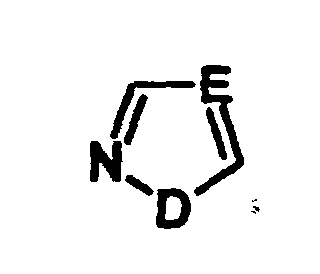
- Most preferred optionally substituted rings of formulaare

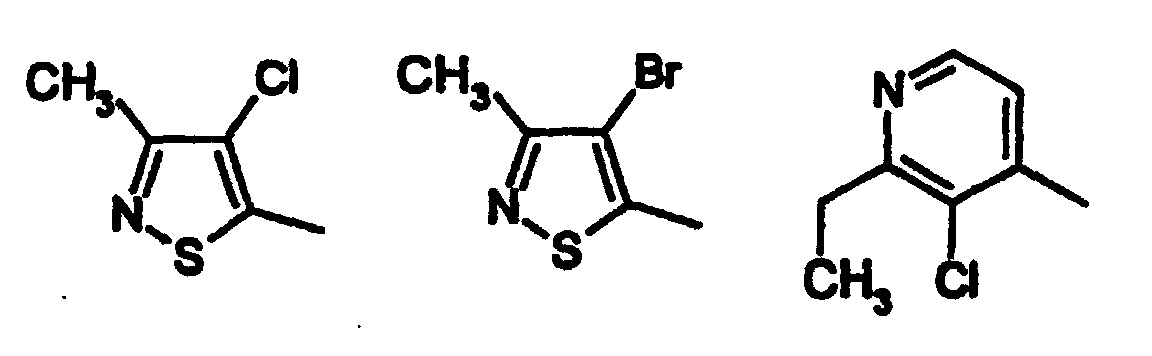

- More preferably A is CH2 or CH2O, even more preferably CH2.
- It is more preferred that M1 is NR11C(=O), where R11 is hydrogen, C1-4 alkyl, C1-4 alkoxy (C1-4)alkyl, benzyloxymethyl or benzoyloxymethyl. It is especially preferred that R11 is hydrogen, ethyl, ethoxymethyl, allyl or propargyl.
- It is more preferred that R3, R4 and R5 are independently, hydrogen, or halogen (especially fluorine); it is especially preferred that each of R3, R4 and R5 is hydrogen.
- More preferably J is N or CR17 where R17 is hydrogen, methyl, or halogen.
- More preferably R6 is C1-8 alkyl, C2-8 haloalkyl, C1-8 cyanoalkyl, C3-7 cycloalkyl, C1-3 alkyl (C3-7) cycloalkyl, C1-6 alkoxy (C1-6) alkyl, heterocyclic (optionally substituted by halo, nitro, cyano, C1-6 alkyl, C1-6 haloalkyl, C1-6 alkoxy or C1-6 haloalkoxy), phenyl (optionally substituted by halogen, C1-6 alkyl, C1-6 haloalkyl, C1-6 alkoxy, nitro, cyano or C1-6 alkylsulfonyl) or heteroaryl (optionally substituted by halogen, C1-6 alkyl, C1-6 haloalkyl, C1-6 alkoxy, nitro, cyano or C1-6 alkylsulfonyl).
- Particularly preferred values of R6 are C1-8 alkyl, C2-6 haloalkyl, C1-6alkoxy(C1-6)alkyl, C 3-7cycloalkyl or C3-7 cycloalkyl(C1-6)alkyl.
- Particularly preferred values of the group:are


- The compounds in the following Tables illustrate compounds of the invention.
- Table A1 provides 432 compounds of Formula A1 wherein R1, D, E, R11, A and J are as defined in Table A1 and R6 is methyl.
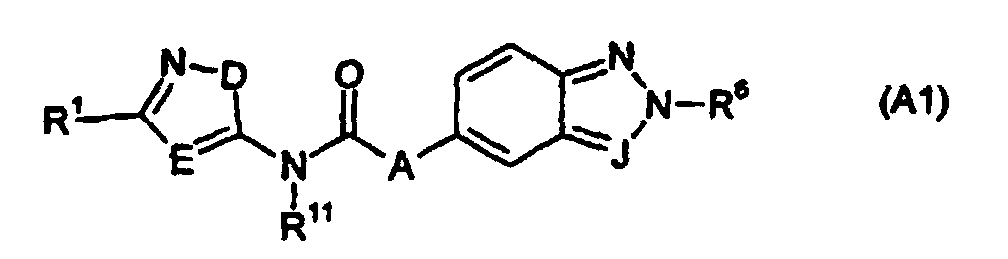
Compound No. R1 D E R11 A J A1.1 CH3 S C-Cl H CH2 N A1.2 CH3 S C-Cl CH2CH3 CH2 N A1.3 CH3 S C-Cl CH2C=CH2 CH2 N A1.4 CH3 S C-Cl CH2C.CH CH2 N A1.5 CH3 S C-Cl CH2OCH3 CH2 N A1.6 CH3 S C-Cl CH2OCH2CH3 CH2 N A1.7 CH3 S C-Br H CH2 N A1.8 CH3 S C-Br CH2CH3 CH2 N A1.9 CH3 S C-Br CH2C=CH2 CH2 N A1.10 CH3 S C-Br CH2C.CH CH2 N A1.11 CH3 S C-Br CH2OCH3 CH2 N A1.12 CH3 S C-Br CH2OCH2CH3 CH2 N A1.13 CH2CH3 S C-Cl H CH2 N A1.14 CH2CH3 S C-Cl CH2CH3 CH2 N A1.15 CH2CH3 S C-Cl CH2C=CH2 CH2 N A1.16 CH2CH3 S C-Cl CH2C.CH CH2 N A1.17 CH2CH3 S C-Cl CH2OCH3 CH2 N A1.18 CH2CH3 S C-Cl CH2OCH2CH3 CH2 N A1.19 CH2CH3 S C-Br H CH2 N A1.20 CH2CH3 S C-Br CH2CH3 CH2 N A1.21 CH2CH3 S C-Br CH2C=CH2 CH2 N A1.22 CH2CH3 S C-Br CH2C.CH CH2 N A1.23 CH2CH3 S C-Br CH2OCH3 CH2 N A1.24 CH2CH3 S C-Br CH2OCH2CH3 CH2 N A1.25 CH3 S C-Cl H CH(CH3) N A1.26 CH3 S C-Cl CH2CH3 CH(CH3) N A1.27 CH3 S C-Cl CH2C=CH2 CH(CH3) N A1.28 CH3 S C-Cl CH2C.CH CH(CH3) N A1.29 CH3 S C-Cl CH2OCH3 CH(CH3) N A1.30 CH3 S C-Cl CH2OCH2CH3 CH(CH3) N A1.31 CH3 S C-Br H CH(CH3) N A1.32 CH3 S C-Br CH2CH3 CH(CH3) N A1.33 CH3 S C-Br CH2C=CH2 CH(CH3) N A1.34 CH3 S C-Br CH2C.CH CH(CH3) N A1.35 CH3 S C-Br CH2OCH3 CH(CH3) N A1.36 CH3 S C-Br CH2OCH2CH3 CH(CH3) N A1.37 CH2CH3 S C-Cl H CH(CH3) N A1.38 CH2CH3 S C-Cl CH2CH3 CH(CH3) N A1.39 CH2CH3 S C-Cl CH2C=CH2 CH(CH3) N A1.40 CH2CH3 S C-Cl CH2C.CH CH(CH3) N A1.41 CH2CH3 S C-Cl CH2OCH3 CH(CH3) N A1.42 CH2CH3 S C-Cl CH2OCH2CH3 CH(CH3) N A1.43 CH2CH3 S C-Br H CH(CH3) N A1.44 CH2CH3 S C-Br CH2CH3 CH(CH3) N A1.45 CH2CH3 S C-Br CH2C=CH2 CH(CH3) N A1.46 CH2CH3 S C-Br CH2C.CH CH(CH3) N A1.47 CH2CH3 S C-Br CH2OCH3 CH(CH3) N A1.48 CH2CH3 S C-Br CH2OCH2CH3 CH(CH3) N A1.49 CH3 S C-Cl H CHF N A1.50 CH3 S C-Cl CH2CH3 CHF N A1.51 CH3 S C-Cl CH2C=CH2 CHF N A1.52 CH3 S C-Cl CH2C.CH CHF N A1.53 CH3 S C-Cl CH2OCH3 CHF N A1.54 CH3 S C-Cl CH2OCH2CH3 CHF N A1.55 CH3 S C-Br H CHF N A1.56 CH3 S C-Br CH2CH3 CHF N A1.57 CH3 S C-Br CH2C=CH2 CHF N A1.58 CH3 S C-Br CH2C.CH CHF N A1.59 CH3 S C-Br CH2OCH3 CHF N A1.60 CH3 S C-Br CH2OCH2CH3 CHF N A1.61 CH2CH3 S C-Cl H CHF N A1.62 CH2CH3 S C-Cl CH2CH3 CHF N A1.63 CH2CH3 S C-Cl CH2C=CH2 CHF N A1.64 CH2CH3 S C-Cl CH2C.CH CHF N A1.65 CH2CH3 S C-Cl CH2OCH3 CHF N A1.66 CH2CH3 S C-Cl CH2OCH2CH3 CHF N A1.67 CH2CH3 S C-Br H CHF N A1.68 CH2CH3 S C-Br CH2CH3 CHF N A1.69 CH2CH3 S C-Br CH2C=CH2 CHF N A1.70 CH2CH3 S C-Br CH2C.CH CHF N A1.71 CH2CH3 S C-Br CH2OCH3 CHF N A1.72 CH2CH3 S C-Br CH2OCH2CH3 CHF N A1.73 CH3 S C-Cl H CH2O N A1.74 CH3 S C-Cl CH2CH3 CH2O N A1.75 CH3 S C-Cl CH2C=CH2 CH2O N A1.76 CH3 S C-Cl CH2C.CH CH2O N A1.77 CH3 S C-Cl CH2OCH3 CH2O N A1.78 CH3 S C-Cl CH2OCH2CH3 CH2O N A1.79 CH3 S C-Br H CH2O N A1.80 CH3 S C-Br CH2CH3 CH2O N A1.81 CH3 S C-Br CH2C=CH2 CH2O N A1.82 CH3 S C-Br CH2C.CH CH2O N A1.83 CH3 S C-Br CH2OCH3 CH2O N A1.84 CH3 S C-Br CH2OCH2CH3 CH2O N A1.85 CH2CH3 S C-Cl H CH2O N A1.86 CH2CH3 S C-Cl CH2CH3 CH2O N A1.87 CH2CH3 S C-Cl CH2C=CH2 CH2O N A1.88 CH2CH3 S C-Cl CH2C.CH CH2O N A1.89 CH2CH3 S C-Cl CH2OCH3 CH2O N A1.90 CH2CH3 S C-Cl CH2OCH2CH3 CH2O N A1.91 CH2CH3 S C-Br H CH2O N A1.92 CH2CH3 S C-Br CH2CH3 CH2O N A1.93 CH2CH3 S C-Br CH2C=CH2 CH2O N A1.94 CH2CH3 S C-Br CH2C.CH CH2O N A1.95 CH2CH3 S C-Br CH2OCH3 CH2O N A1.96 CH2CH3 S C-Br CH2OCH2CH3 CH2O N A1.97 CH3 CH=CH C-Cl H CH2 N A1.98 CH3 CH=CH C-Cl CH2CH3 CH2 N A1.99 CH3 CH=CH C-Cl CH2C=CH2 CH2 N A1.100 CH3 CH=CH C-Cl CH2C.CH CH2 'N A1.101 CH3 CH=CH C-Cl CH2OCH3 CH2 N A1.102 CH3 CH=CH C-Cl CH2OCH2CH3 CH2 N A1.103 CH2CH3 CH=CH C-Cl H CH2 N A1.104 CH2CH3 CH=CH C-Cl CH2CH3 CH2 N A1.105 CH2CH3 CH=CH C-Cl CH2C=CH2 CH2 N A1.106 CH2CH3 CH=CH C-Cl CH2C.CH CH2 N A1.107 CH2CH3 CH=CH C-Cl CH2OCH3 CH2 N A1.108 CH2CH3 CH=CH C-Cl CH2OCH2CH3 CH2 N A1.109 CH3 CH=CH C-Cl H CH(CH3) N A1.110 CH3 CH=CH C-Cl CH2CH3 CH(CH3) N A1.111 CH3 CH=CH C-Cl CH2C=CH2 CH(CH3) N A1.112 CH3 CH=CH C-Cl CH2C.CH CH(CH3) N A1.113 CH3 CH=CH C-Cl CH2OCH3 CH(CH3) N A1.114 CH3 CH=CH C-Cl CH2OCH2CH3 CH(CH3) N A1.115 CH2CH3 CH=CH C-Cl H CH(CH3) N A1.116 CH2CH3 CH=CH C-Cl CH2CH3 CH(CH3) N A1.117 CH2CH3 CH=CH C-Cl CH2C=CH2 CH(CH3) N A1.118 CH2CH3 CH=CH C-Cl CH2C.CH CH(CH3) N A1.119 CH2CH3 CH=CH C-Cl CH2OCH3 CH(CH3) N A1.120 CH2CH3 CH=CH C-Cl CH2OCH2CH3 CH(CH3) N A1.121 CH3 CH=CH C-Cl H CHF N A1.122 CH3 CH=CH C-Cl CH2CH3 CHF N A1.123 CH3 CH=CH C-Cl CH2C=CH2 CHF N A1.124 CH3 CH=CH C-Cl CH2C.CH CHF N A1.125 CH3 CH=CH C-Cl CH2OCH3 CHF N A1.126 CH3 CH=CH C-Cl CH2OCH2CH3 CHF N A1.127 CH2CH3 CH=CH C-Cl H CHF N A1.128 CH2CH3 CH=CH C-Cl CH2CH3 CHF N A1.129 CH2CH3 CH=CH C-Cl CH2C=CH2 CHF N A1.130 CH2CH3 CH=CH C-Cl CH2C.CH CHF N A1.131 CH2CH3 CH=CH C-Cl CH2OCH3 CHF N A1.132 CH2CH3 CH=CH C-Cl CH2OCH2CH3 CHF N A1.133 CH3 CH=CH C-Cl H CH2O N A1.134 CH3 CH=CH C-Cl CH2CH3 CH2O N A1.135 CH3 CH=CH C-Cl CH2C=CH2 CH2O N A1.136 CH3 CH=CH C-Cl CH2C.CH CH2O N A1.137 CH3 CH=CH C-Cl CH2OCH3 CH2O N A1.138 CH3 CH=CH C-Cl CH2OCH2CH3 CH2O N A1.139 CH2CH3 CH=CH C-Cl H CH2O N A1.140 CH2CH3 CH=CH C-Cl CH2CH3 CH2O N A1.141 CH2CH3 CH=CH C-Cl CH2C=CH2 CH2O N A1.142 CH2CH3 CH=CH C-Cl CH2C.CH CH2O N A1.143 CH2CH3 CH=CH C-Cl CH2OCH3 CH2O N A1.144 CH2CH3 CH=CH C-Cl CH2OCH2CH3 CH2O N A1.145 CH3 S C-Cl H CH2 C-H A1.146 CH3 S C-Cl CH2CH3 CH2 C-H A1.147 CH3 S C-Cl CH2C=CH2 CH2 C-H A1.148 CH3 S C-Cl CH2C.CH CH2 C-H A1.149 CH3 S C-Cl CH2OCH3 CH2 C-H A1.150 CH3 S C-Cl CH2OCH2CH3 CH2 C-H A1.151 CH3 S C-Br H CH2 C-H A1.152 CH3 S C-Br CH2CH3 CH2 C-H A1.153 CH3 S C-Br CH2C=CH2 CH2 C-H A1.154 CH3 S C-Br CH2C.CH CH2 C-H A1.155 CH3 S C-Br CH2OCH3 CH2 C-H A1.156 CH3 S C-Br CH2OCH2CH3 CH2 C-H A1.157 CH2CH3 S C-Cl H CH2 C-H A1.158 CH2CH3 S C-Cl CH2CH3 CH2 C-H A1.159 CH2CH3 S C-Cl CH2C=CH2 CH2 C-H A1.160 CH2CH3 S C-Cl CH2C.CH CH2 C-H A1.161 CH2CH3 S C-Cl CH2OCH3 CH2 C-H A1.162 CH2CH3 S C-Cl CH2OCH2CH3 CH2 C-H A1.163 CH2CH3 S C-Br H CH2 C-H A1.164 CH2CH3 S C-Br CH2CH3 CH2 C-H A1.165 CH2CH3 S C-Br CH2C=CH2 CH2 C-H A1.166 CH2CH3 S C-Br CH2C.CH CH2 C-H A1.167 CH2CH3 S C-Br CH2OCH3 CH2 C-H A1.168 CH2CH3 S C-Br CH2OCH2CH3 CH2 C-H A1.169 CH3 S C-Cl H CH2 C-Cl A1.170 CH3 S C-Cl CH2CH3 CH2 C-Cl A1.171 CH3 S C-Cl CH2C=CH2 CH2 C-Cl A1.172 CH3 S C-Cl CH2C.CH CH2 C-Cl A1.173 CH3 S C-Cl CH2OCH3 CH2 C-Cl A1.174 CH3 S C-Cl CH2OCH2CH3 CH2 C-Cl A1.175 CH3 S C-Br H CH2 C-Cl A1.176 CH3 S C-Br CH2CH3 CH2 C-Cl A1.177 CH3 S C-Br CH2C=CH2 CH2 C-Cl A1.178 CH3 S C-Br CH2C.CH CH2 C-Cl A1.179 CH3 S C-Br CH2OCH3 CH2 C-Cl A1.180 CH3 S C-Br CH2OCH2CH3 CH2 C-Cl A1.181 CH2CH3 S C-Cl H CH2 C-Cl A1.182 CH2CH3 S C-Cl CH2CH3 CH2 C-Cl A1.183 CH2CH3 S C-Cl CH2C=CH2 CH2 C-Cl A1.184 CH2CH3 S C-Cl CH2C.CH CH2 C-Cl A1.185 CH2CH3 S C-Cl CH2OCH3 CH2 C-Cl A1.186 CH2CH3 S C-Cl CH2OCH2CH3 CH2 C-Cl A1.187 CH2CH3 S C-Br H CH2 C-Cl A1.188 CH2CH3 S C-Br CH2CH3 CH2 C-Cl A1.189 CH2CH3 S C-Br CH2C=CH2 CH2 C-Cl A1.190 CH2CH3 S C-Br CH2C.CH CH2 C-Cl A1.191 CH2CH3 S C-Br CH2OCH3 CH2 C-Cl A1.192 CH2CH3 S C-Br CH2OCH2CH3 CH2 C-Cl A1.193 CH3 S C-Cl H CH(CH3) C-H A1.194 CH3 S C-Cl CH2CH3 CH(CH3) C-H A1.195 CH3 S C-Cl CH2C=CH2 CH(CH3) C-H A1.196 CH3 S C-Cl CH2C.CH CH(CH3) C-H A1.197 CH3 S C-Cl CH2OCH3 CH(CH3) C-H A1.198 CH3 S C-Cl CH2OCH2CH3 CH(CH3) C-H A1.199 CH3 S C-Br H CH(CH3) C-H A1.200 CH3 S C-Br CH2CH3 CH(CH3) C-H A1.201 CH3 S C-Br CH2C=CH2 CH(CH3) C-H A1.202 CH3 S C-Br CH2C.CH CH(CH3) C-H A1.203 CH3 S C-Br CH2OCH3 CH(CH3) C-H A1.204 CH3 S C-Br CH2OCH2CH3 CH(CH3) C-H A1.205 CH2CH3 S C-Cl H CH(CH3) C-H A1.206 CH2CH3 S C-Cl CH2CH3 CH(CH3) C-H A1.207 CH2CH3 S C-Cl CH2C=CH2 CH(CH3) C-H A1.208 CH2CH3 S C-Cl CH2C.CH CH(CH3) C-H A1.209 CH2CH3 S C-Cl CH2OCH3 CH(CH3) C-H A1.210 CH2CH3 S C-Cl CH2OCH2CH3 CH(CH3) C-H A1.211 CH2CH3 S C-Br H CH(CH3) C-H A1.212 CH2CH3 S C-Br CH2CH3 CH(CH3) C-H A1.213 CH2CH3 S C-Br CH2C=CH2 CH(CH3) C-H A1.214 CH2CH3 S C-Br CH2C.CH CH(CH3) C-H A1.215 CH2CH3 S C-Br CH2OCH3 CH(CH3) C-H A1.216 CH2CH3 S C-Br CH2OCH2CH3 CH(CH3) C-H A1.217 CH3 S C-Cl H CH(CH3) C-Cl A1.218 CH3 S C-Cl CH2CH3 CH(CH3) C-Cl A1.219 CH3 S C-Cl CH2C=CH2 CH(CH3) C-Cl A1.220 CH3 S C-Cl CH2C.CH CH(CH3) C-Cl A1.221 CH3 S C-Cl CH2OCH3 CH(CH3) C-Cl A1.222 CH3 S C-Cl CH2OCH2CH3 CH(CH3) C-Cl A1.223 CH3 S C-Br H CH(CH3) C-Cl A1.224 CH3 S C-Br CH2CH3 CH(CH3) C-Cl A1.225 CH3 S C-Br CH2C=CH2 CH(CH3) C-Cl A1.226 CH3 S C-Br CH2C.CH CH(CH3) C-Cl A1.227 CH3 S C-Br CH2OCH3 CH(CH3) C-Cl A1.228 CH3 S C-Br CH2OCH2CH3 CH(CH3) C-Cl A1.229 CH2CH3 S C-Cl H CH(CH3) C-Cl A1.230 CH2CH3 S C-Cl CH2CH3 CH(CH3) C-Cl A1.231 CH2CH3 S C-Cl CH2C=CH2 CH(CH3) C-Cl A1.232 CH2CH3 S C-Cl CH2C.CH CH(CH3) C-Cl A1.233 CH2CH3 S C-Cl CH2OCH3 CH(CH3) C-Cl A1.234 CH2CH3 S C-Cl CH2OCH2CH3 CH(CH3) C-Cl A1.235 CH2CH3 S C-Br H CH(CH3) C-Cl A1.236 CH2CH3 S C-Br CH2CH3 CH(CH3) C-Cl A1.237 CH2CH3 S C-Br CH2C=CH2 CH(CH3) C-Cl A1.238 CH2CH3 S C-Br CH2C.CH CH(CH3) C-Cl A1.239 CH2CH3 S C-Br CH2OCH3 CH(CH3) C-Cl A1.240 CH2CH3 S C-Br CH2OCH2CH3 CH(CH3) C-Cl A1.241 CH3 S C-Cl H CHF C-H A1.242 CH3 S C-Cl CH2CH3 CHF C-H A1.243 CH3 S C-Cl CH2C=CH2 CHF C-H A1.244 CH3 S C-Cl CH2C.CH CHF C-H A1.245 CH3 S C-Cl CH2OCH3 CHF C-H A1.246 CH3 S C-Cl CH2OCH2CH3 CHF C-H A1.247 CH3 S C-Br H CHF C-H A1.248 CH3 S C-Br CH2CH3 CHF C-H A1.249 CH3 S C-Br CH2C=CH2 CHF C-H A1.250 CH3 S C-Br CH2C.CH CHF C-H A1.251 CH3 S C-Br CH2OCH3 CHF C-H A1.252 CH3 S C-Br CH2OCH2CH3 CHF C-H A1.253 CH2CH3 S C-Cl H CHF C-H A1.254 CH2CH3 S C-Cl CH2CH3 CHF C-H A1.255 CH2CH3 S C-Cl CH2C=CH2 CHF C-H A1.256 CH2CH3 S C-Cl CH2C.CH CHF C-H A1.257 CH2CH3 S C-Cl CH2OCH3 CHF C-H A1.258 CH2CH3 S C-Cl CH2OCH2CH3 CHF C-H A1.259 CH2CH3 S C-Br H CHF C-H A1.260 CH2CH3 S C-Br CH2CH3 CHF C-H A1.261 CH2CH3 S C-Br CH2C=CH2 CHF C-H A1.262 CH2CH3 S C-Br CH2C.CH CHF C-H A1.263 CH2CH3 S C-Br CH2OCH3 CHF C-H A1.264 CH2CH3 S C-Br CH2OCH2CH3 CHF C-H A1.265 CH3 S C-Cl H CHF C-Cl A1.266 CH3 S C-Cl CH2CH3 CHF C-Cl A1.267 CH3 S C-Cl CH2C=CH2 CHF C-Cl A1.268 CH3 S C-Cl CH2C.CH CHF C-Cl A1.269 CH3 S C-Cl CH2OCH3 CHF C-Cl A1.270 CH3 S C-Cl CH2OCH2CH3 CHF C-Cl A1.271 CH3 S C-Br H CHF C-Cl A1.272 CH3 S C-Br CH2CH3 CHF C-Cl A1.273 CH3 S C-Br CH2C=CH2 CHF C-Cl A1.274 CH3 S C-Br CH2C.CH CHF C-Cl A1.275 CH3 S C-Br CH2OCH3 CHF C-Cl A1.276 CH3 S C-Br CH2OCH2CH3 CHF C-Cl A1.277 CH2CH3 S C-Cl H CHF C-Cl A1.278 CH2CH3 S C-Cl CH2CH3 CHF C-Cl A1.279 CH2CH3 S C-Cl CH2C=CH2 CHF C-Cl A1.280 CH2CH3 S C-Cl CH2C.CH CHF C-Cl A1.281 CH2CH3 S C-Cl CH2OCH3 CHF C-Cl A1.282 CH2CH3 S C-Cl CH2OCH2CH3 CHF C-Cl A1.283 CH2CH3 S C-Br H CHF C-Cl A1.284 CH2CH3 S C-Br CH2CH3 CHF C-Cl A1.285 CH2CH3 S C-Br CH2C=CH2 CHF C-Cl A1.286 CH2CH3 S C-Br CH2C.CH CHF C-Cl A1.287 CH2CH3 S C-Br CH2OCH3 CHF C-Cl A1.288 CH2CH3 S C-Br CH2OCH2CH3 CHF C-Cl A1.289 CH3 S C-Cl H CH2O C-H A1.290 CH3 S C-Cl CH2CH3 CH2O C-H A1.291 CH3 S C-Cl CH2C=CH2 CH2O C-H A1.292 CH3 S C-Cl CH2C.CH CH2O C-H A1.293 CH3 S C-Cl CH2OCH3 CH2O C-H A1.294 CH3 S C-Cl CH2OCH2CH3 CH2O C-H A1.295 CH3 S C-Br H CH2O C-H A1.296 CH3 S C-Br CH2CH3 CH2O C-H A1.297 CH3 S C-Br CH2C=CH2 CH2O C-H A1.298 CH3 S C-Br CH2C.CH CH2O C-H A1.299 CH3 S C-Br CH2OCH3 CH2O C-H A1.300 CH3 S C-Br CH2OCH2CH3 CH2O C-H A1.301 CH2CH3 S C-Cl H CH2O C-H A1.302 CH2CH3 S C-Cl CH2CH3 CH2O C-H A1.303 CH2CH3 S C-Cl CH2C=CH2 CH2O C-H A1.304 CH2CH3 S C-Cl CH2C.CH CH2O C-H A1.305 CH2CH3 S C-Cl CH2OCH3 CH2O C-H A1.306 CH2CH3 S C-Cl CH2OCH2CH3 CH2O C-H A1.307 CH2CH3 S C-Br H CH2O C-H A1.308 CH2CH3 S C-Br CH2CH3 CH2O C-H A1.309 CH2CH3 S C-Br CH2C=CH2 CH2O C-H A1.310 CH2CH3 S C-Br CH2C.CH CH2O C-H A1.311 CH2CH3 S C-Br CH2OCH3 CH2O C-H A1.312 CH2CH3 S C-Br CH2OCH2CH3 CH2O C-H A1.313 CH3 S C-Cl H CH2O C-H A1.314 CH3 S C-Cl CH2CH3 CH2O C-H A1.315 CH3 S C-Cl CH2C=CH2 CH2O C-H A1.316 CH3 S C-Cl CH2C.CH CH2O C-H A1.317 CH3 S C-Cl CH2OCH3 CH2O C-H A1.318 CH3 S C-Cl CH2OCH2CH3 CH2O C-H A1.319 CH3 S C-Br H CH2O C-H A1.320 CH3 S C-Br CH2CH3 CH2O C-H A1.321 CH3 S C-Br CH2C=CH2 CH2O C-H A1.322 CH3 S C-Br CH2C.CH CH2O C-H A1.323 CH3 S C-Br CH2OCH3 CH2O C-H A1.324 CH3 S C-Br CH2OCH2CH3 CH2O C-H A1.325 CH2CH3 S C-Cl H CH2O C-Cl A1.326 CH2CH3 S C-Cl CH2CH3 CH2O C-Cl A1.327 CH2CH3 S C-Cl CH2C=CH2 CH2O C-Cl A1.328 CH2CH3 S C-Cl CH2C.CH CH2O C-Cl A1.329 CH2CH3 S C-Cl CH2OCH3 CH2O C-Cl A1.330 CH2CH3 S C-Cl CH2OCH2CH3 CH2O C-Cl A1.331 CH2CH3 S C-Br H CH2O C-Cl A1.332 CH2CH3 S C-Br CH2CH3 CH2O C-Cl A1.333 CH2CH3 S C-Br CH2C=CH2 CH2O C-Cl A1.334 CH2CH3 S C-Br CH2C.CH CH2O C-Cl A1.335 CH2CH3 S C-Br CH2OCH3 CH2O C-Cl A1.336 CH2CH3 S C-Br CH2OCH2CH3 CH2O C-Cl A1.337 CH3 CH=CH C-Cl H CH2 C-H A1.338 CH3 CH=CH C-Cl CH2CH3 CH2 C-H A1.339 CH3 CH=CH C-Cl CH2C=CH2 CH2 C-H A1.340 CH3 CH=CH C-Cl CH2C.CH CH2 C-H A1.341 CH3 CH=CH C-Cl CH2OCH3 CH2 C-H A1.342 CH3 CH=CH C-Cl CH2OCH2CH3 CH2 C-H A1.343 CH2CH3 CH=CH C-Cl H CH2 C-H A1.344 CH2CH3 CH=CH C-Cl CH2CH3 CH2 C-H A1.345 CH2CH3 CH=CH C-Cl CH2C=CH2 CH2 C-H A1.346 CH2CH3 CH=CH C-Cl CH2C.CH CH2 C-H A1.347 CH2CH3 CH=CH C-Cl CH2OCH3 CH2 C-H A1.348 CH2CH3 CH=CH C-Cl CH2OCH2CH3 CH2 C-H A1.349 CH3 CH=CH C-Cl H CH2 C-Cl A1.350 CH3 CH=CH C-Cl CH2CH3 CH2 C-Cl A1.351 CH3 CH=CH C-Cl CH2C=CH2 CH2 C-Cl A1.352 CH3 CH=CH C-Cl CH2C.CH CH2 C-Cl A1.353 CH3 CH=CH C-Cl CH2OCH3 CH2 C-Cl A1.354 CH3 CH=CH C-Cl CH2OCH2CH3 CH2 C-Cl A1.355 CH2CH3 CH=CH C-Cl H CH2 C-Cl A1.356 CH2CH3 CH=CH C-Cl CH2CH3 CH2 C-Cl A1.357 CH2CH3 CH=CH C-Cl CH2C=CH2 CH2 C-Cl A1.358 CH2CH3 CH=CH C-Cl CH2C.CH CH2 C-Cl A1.359 CH2CH3 CH=CH C-Cl CH2OCH3 CH2 C-Cl A1.360 CH2CH3 CH=CH C-Cl CH2OCH2CH3 CH2 C-Cl A1.361 CH3 CH=CH C-Cl H CH(CH3) C-H A1.362 CH3 CH=CH C-Cl CH2CH3 CH(CH3) C-H A1.363 CH3 CH=CH C-Cl CH2C=CH2 CH(CH3) C-H A1.364 CH3 CH=CH C-Cl CH2C.CH CH(CH3) C-H A1.365 CH3 CH=CH C-Cl CH2OCH3 CH(CH3) C-H A1.366 CH3 CH=CH C-Cl CH2OCH2CH3 CH(CH3) C-H A1.367 CH2CH3 CH=CH C-Cl H CH(CH3) C-H A1.368 CH2CH3 CH=CH C-Cl CH2CH3 CH(CH3) C-H A1.369 CH2CH3 CH=CH C-Cl CH2C=CH2 CH(CH3) C-H A1.370 CH2CH3 CH=CH C-Cl CH2C.CH CH(CH3) C-H A1.371 CH2CH3 CH=CH C-Cl CH2OCH3 CH(CH3) C-H A1.372 CH2CH3 CH=CH C-Cl CH2OCH2CH3 CH(CH3) C-H A1.373 CH3 CH=CH C-Cl H CH(CH3) C-Cl A1.374 CH3 CH=CH C-Cl CH2CH3 CH(CH3) C-Cl A1.375 CH3 CH=CH C-Cl CH2C=CH2 CH(CH3) C-Cl A1.376 CH3 CH=CH C-Cl CH2C.CH CH(CH3) C-Cl A1.377 CH3 CH=CH C-Cl CH2OCH3 CH(CH3) C-Cl A1.378 CH3 CH=CH C-Cl CH2OCH2CH3 CH(CH3) C-Cl A1.379 CH2CH3 CH=CH C-Cl H CH(CH3) C-Cl A1.380 CH2CH3 CH=CH C-Cl CH2CH3 CH(CH3) C-Cl A1.381 CH2CH3 CH=CH C-Cl CH2C=CH2 CH(CH3) C-Cl A1.382 CH2CH3 CH=CH C-Cl CH2C.CH CH(CH3) C-Cl A1.383 CH2CH3 CH=CH C-Cl CH2OCH3 CH(CH3) C-Cl A1.384 CH2CH3 CH=CH C-Cl CH2OCH2CH3 CH(CH3) C-Cl A1.385 CH3 CH=CH C-Cl H CHF C-H A1.386 CH3 CH=CH C-Cl CH2CH3 CHF C-H A1.387 CH3 CH=CH C-Cl CH2C=CH2 CHF C-H A1.388 CH3 CH=CH C-Cl CH2C.CH CHF C-H A1.389 CH3 CH=CH C-Cl CH2OCH3 CHF C-H A1.390 CH3 CH=CH C-Cl CH2OCH2CH3 CHF C-H A1.391 CH2CH3 CH=CH C-Cl H CHF C-H A1.392 CH2CH3 CH=CH C-Cl CH2CH3 CHF C-H A1.393 CH2CH3 CH=CH C-Cl CH2C=CH2 CHF C-H A1.394 CH2CH3 CH=CH C-Cl CH2C.CH CHF C-H A1.395 CH2CH3 CH=CH C-Cl CH2OCH3 CHF C-H A1.396 CH2CH3 CH=CH C-Cl CH2OCH2CH3 CHF C-H A1.397 CH3 CH=CH C-Cl H CHF C-Cl A1.398 CH3 CH=CH C-Cl CH2CH3 CHF C-Cl A1.399 CH3 CH=CH C-Cl CH2C=CH2 CHF C-Cl A1.400 CH3 CH=CH C-Cl CH2C.CH CHF C-Cl A1.401 CH3 CH=CH C-Cl CH2OCH3 CHF C-Cl A1.402 CH3 CH=CH C-Cl CH2OCH2CH3 CHF C-Cl A1.403 CH2CH3 CH=CH C-Cl H CHF C-Cl A1.404 CH2CH3 CH=CH C-Cl CH2CH3 CHF C-Cl A1.405 CH2CH3 CH=CH C-Cl CH2C=CH2 CHF C-Cl A1.406 CH2CH3 CH=CH C-Cl CH2C.CH CHF C-Cl A1.407 CH2CH3 CH=CH C-Cl CH2OCH3 CHF C-Cl A1.408 CH2CH3 CH=CH C-Cl CH2OCH2CH3 CHF C-Cl A1.409 CH3 CH=CH C-Cl H CH2O C-H A1.410 CH3 CH=CH C-Cl CH2CH3 CH2O C-H A1.411 CH3 CH=CH C-Cl CH2C=CH2 CH2O C-H A1.412 CH3 CH=CH C-Cl CH2C.CH CH2O C-H A1.413 CH3 CH=CH C-Cl CH2OCH3 CH2O C-H A1.414 CH3 CH=CH C-Cl CH2OCH2CH3 CH2O C-H A1.415 CH2CH3 CH=CH C-Cl H CH2O C-H A1.416 CH2CH3 CH=CH C-Cl CH2CH3 CH2O C-H A1.417 CH2CH3 CH=CH C-Cl CH2C=CH2 CH2O C-H A1.418 CH2CH3 CH=CH C-Cl CH2C.CH CH2O C-H A1.419 CH2CH3 CH=CH C-Cl CH2OCH3 CH2O C-H A1.420 CH2CH3 CH=CH C-Cl CH2OCH2CH3 CH2O C-H A1.421 CH3 CH=CH C-Cl H CH2O C-Cl A1.422 CH3 CH=CH C-Cl CH2CH3 CH2O C-Cl A1.423 CH3 CH=CH C-Cl CH2C=CH2 CH2O C-Cl A1.424 CH3 CH=CH C-Cl CH2C.CH CH2O C-Cl A1.425 CH3 CH=CH C-Cl CH2OCH3 CH2O C-Cl A1.426 CH3 CH=CH C-Cl CH2OCH2CH3 CH2O C-Cl A1.427 CH2CH3 CH=CH C-Cl H CH2O C-Cl A1.428 CH2CH3 CH=CH C-Cl CH2CH3 CH2O C-Cl A1.429 CH2CH3 CH=CH C-Cl CH2C=CH2 CH2O C-Cl A1.430 CH2CH3 CH=CH C-Cl CH2C.CH CH2O C-Cl A1.431 CH2CH3 CH=CH C-Cl CH2OCH3 CH2O C-Cl A1.432 CH2CH3 CH=CH C-Cl CH2OCH2CH3 CH2O C-Cl - Table A2 provides 432 compounds of Formula A1 wherein R1, D, E, R11, A and J are as defined in Table A1 and R6 is ethyl.
- Table A3 provides 432 compounds of Formula A1 wherein R1, D, E, R11, A and J are as defined in Table A1 and R6 is n-propyl.
- Table A4 provides 432 compounds of Formula A1 wherein R1, D, E, R11, A and J are as defined in Table A1 and R6 is iso-propyl.
- Table A5 provides 432 compounds of Formula A1 wherein R1, D, E, R11, A and J are as defined in Table A1 and R6 is n-butyl.
- Table A6 provides 432 compounds of Formula A1 wherein R1, D, E, R11, A and J are as defined in Table A1 and R6 is sec-butyl.
- Table A7 provides 432 compounds of Formula A1 wherein R1, D, E, R11, A and J are as defined in Table A1 and R6 is iso-butyl.
- Table A8 provides 432 compounds of Formula A1 wherein R1, D, E, R11, A and J are as defined in Table A1 and R6 is tert-butyl.
- Table A9 provides 432 compounds of Formula A1 wherein R1, D, E, R11, A and J are as defined in Table A1 and R6 is n-pentyl.
- Table A10 provides 432 compounds of Formula A1 wherein R1, D, E, R11, A and J are as defined in Table A1 and R6 is 1-methylbutyl.
- Table A11 provides 432 compounds of Formula A1 wherein R1, D, E, R11, A and J are as defined in Table A1 and R6 is 2-methylbutyl.
- Table A12 provides 432 compounds of Formula A1 wherein R1, D, E, R11, A and J are as defined in Table A1 and R6 is 3-methylbutyl.
- Table A13 provides 432 compounds of Formula A1 wherein R1, D, E, R11, A and J are as defined in Table A1 and R6 is neopentyl.
- Table A14 provides 432 compounds of Formula A1 wherein R1, D, E, R11, A and J are as defined in Table A1 and R6 is 2,2-dimethylbutyl.
- Table A15 provides 432 compounds of Formula A1 wherein R1, D, E, R11, A and J are as defined in Table A1 and R6 is 2,2,2-trifluoroethyl.
- Table A16 provides 432 compounds of Formula A1 wherein R1, D, E, R11, A and J are as defined in Table A1 and R6 is 2,2-difluoro-2-methoxyethyl.
- Table A17 provides 432 compounds of Formula A1 wherein R1, D, E, R11, A and J are as defined in Table A1 and R6 is 3,3,3-trifluoropropyl.
- Table A18 provides 432 compounds of Formula A1 wherein R1, D, E, R11, A and J are as defined in Table A1 and R6 is para-fluorobenzyl.
- Table A19 provides 432 compounds of Formula A1 vherein R1, D, E, R11, A and J are as defined in Table A1 and R6 is 2,4-dichlorophenyl.
- Table A20 provides 432 compounds of Formula A1 wherein R1, D, E, R11, A and J are as defined in Table A1 and R6 is 2-chloro-4-trifluoromethylphenyl.
- Table A21 provides 432 compounds of Formula A1 wherein R1, D, E, R11, A and J are as defined in Table A1 and R6 is 4-trifluoromethylphenyl.
- Table B1 provides 288 compounds of Formula B1 wherein R1, D, E, R11, A and J are as defined in Table B1 and R6 is methyl.
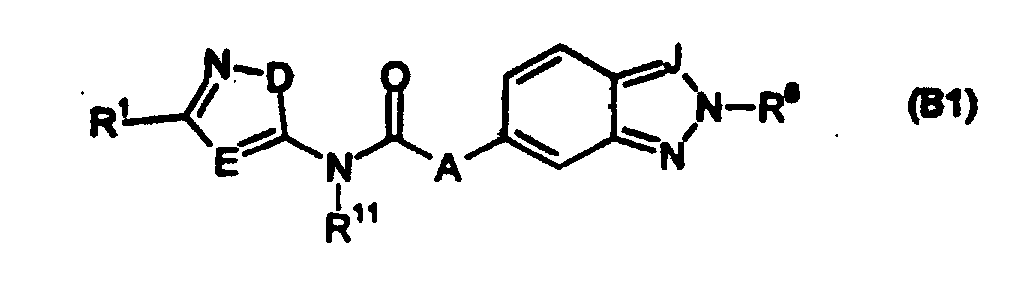
Compound No. R1 D E R11 A J B1.1 CH3 S C-Cl H CH2 C-H B1.2 CH3 S C-Cl CH2CH3 CH2 C-H B1.3 CH3 S C-Cl CH2C=CH2 CH2 C-H B1.4 CH3 S C-Cl CH2C.CH CH2 C-H B1.5 CH3 S C-Cl CH2OCH3 CH2 C-H B1.6 CH3 S C-Cl CH2OCH2CH3 CH2 C-H B1.7 CH3 S C-Br H CH2 C-H B1.8 CH3 S C-Br CH2CH3 CH2 C-H B1.9 CH3 S C-Br CH2C=CH2 CH2 C-H B1.10 CH3 S C-Br CH2C.CH CH2 C-H B1.11 CH3 S C-Br CH2OCH3 CH2 C-H B1.12 CH3 S C-Br CH2OCH2CH3 CH2 C-H B1.13 CH2CH3 S C-Cl H CH2 C-H B1.14 CH2CH3 S C-Cl CH2CH3 CH2 C-H B1.15 CH2CH3 S C-Cl CH2C=CH2 CH2 C-H B1.16 CH2CH3 S C-Cl CH2C.CH CH2 C-H B1.17 CH2CH3 S C-Cl CH2OCH3 CH2 C-H B1.18 CH2CH3 S C-Cl CH2OCH2CH3 CH2 C-H B1.19 CH2CH3 S C-Br H CH2 C-H B1.20 CH2CH3 S C-Br CH2CH3 CH2 C-H B1.21 CH2CH3 S C-Br CH2C=CH2 CH2 C-H B1.22 CH2CH3 S C-Br CH2C.CH CH2 C-H B1.23 CH2CH3 S C-Br CH2OCH3 CH2 C-H B1.24 CH2CH3 S C-Br CH2OCH2CH3 CH2 C-H B1.25 CH3 S C-Cl H CH(CH3) C-H B1.26 CH3 S C-Cl CH2CH3 CH(CH3) C-H B1.27 CH3 S C-Cl CH2C=CH2 CH(CH3) C-H B1.28 CH3 S C-Cl CH2C.CH CH(CH3) C-H B1.29 CH3 S C-Cl CH2OCH3 CH(CH3) C-H B1.30 CH3 S C-Cl CH2OCH2CH3 CH(CH3) C-H B1.31 CH3 S C-Br H CH(CH3) C-H B1.32 CH3 S C-Br CH2CH3 CH(CH3) C-H B1.33 CH3 S C-Br CH2C=CH2 CH(CH3) C-H B1.34 CH3 S C-Br CH2C.CH CH(CH3) C-H B1.35 CH3 S C-Br CH2OCH3 CH(CH3) C-H B1.36 CH3 S C-Br CH2OCH2CH3 CH(CH3) C-H B1.37 CH2CH3 S C-Cl H CH(CH3) C-H B1.38 CH2CH3 S C-Cl CH2CH3 CH(CH3) C-H B1.39 CH2CH3 S C-Cl CH2C=CH2 CH(CH3) C-H B1.40 CH2CH3 S C-Cl CH2C.CH CH(CH3) C-H B1.41 CH2CH3 S C-Cl CH2OCH3 CH(CH3) C-H B1.42 CH2CH3 S C-Cl CH2OCH2CH3 CH(CH3) C-H B1.43 CH2CH3 S C-Br H CH(CH3) C-H B1.44 CH2CH3 S C-Br CH2CH3 CH(CH3) C-H B1.45 CH2CH3 S C-Br CH2C=CH2 CH(CH3) C-H B1.46 CH2CH3 S C-Br CH2C.CH CH(CH3) C-H B1.47 CH2CH3 S C-Br CH2OCH3 CH(CH3) C-H B1.48 CH2CH3 S C-Br CH2OCH2CH3 CH(CH3) C-H B1.49 CH3 S C-Cl H CHF C-H B1.50 CH3 S C-Cl CH2CH3 CHF C-H B1.51 CH3 S C-Cl CH2C=CH2 CHF C-H B1.52 CH3 S C-Cl CH2C.CH CHF C-H B1.53 CH3 S C-Cl CH2OCH3 CHF C-H B1.54 CH3 S C-Cl CH2OCH2CH3 CHF C-H B1.55 CH3 S C-Br H CHF C-H B1.56 CH3 S C-Br CH2CH3 CHF C-H B1.57 CH3 S C-Br CH2C=CH2 CHF C-H B1.58 CH3 S C-Br CH2C.CH CHF C-H B1.59 CH3 S C-Br CH2OCH3 CHF C-H B1.60 CH3 S C-Br CH2OCH2CH3 CHF C-H B1.61 CH2CH3 S C-Cl H CHF C-H B1.62 CH2CH3 S C-Cl CH2CH3 CHF C-H B1.63 CH2CH3 S C-Cl CH2C=CH2 CHF C-H B1.64 CH2CH3 S C-Cl CH2C.CH CHF C-H B1.65 CH2CH3 S C-Cl CH2OCH3 CHF C-H B1.66 CH2CH3 S C-Cl CH2OCH2CH3 CHF C-H B1.67 CH2CH3 S C-Br H CHF C-H B1.68 CH2CH3 S C-Br CH2CH3 CHF C-H B1.69 CH2CH3 S C-Br CH2C=CH2 CHF C-H B1.70 CH2CH3 S C-Br CH2C.CH CHF C-H B1.71 CH2CH3 S C-Br CH2OCH3 CHF C-H B1.72 CH2CH3 S C-Br CH2OCH2CH3 CHF C-H B1.73 CH3 S C-Cl H CH2O C-H B1.74 CH3 S C-Cl CH2CH3 CH2O C-H B1.75 CH3 S C-Cl CH2C=CH2 CH2O C-H B1.76 CH3 S C-Cl CH2C.CH CH2O C-H B1.77 CH3 S C-Cl CH2OCH3 CH2O C-H B1.78 CH3 S C-Cl CH2OCH2CH3 CH2O C-H B1.79 CH3 S C-Br H CH2O C-H B1.80 CH3 S C-Br CH2CH3 CH2O C-H B1.81 CH3 S C-Br CH2C=CH2 CH2O C-H B1.82 CH3 S C-Br CH2C.CH CH2O C-H B1.83 CH3 S C-Br CH2OCH3 CH2O C-H B1.84 CH3 S C-Br CH2OCH2CH3 CH2O C-H B1.85 CH2CH3 S C-Cl H CH2O C-H B1.86 CH2CH3 S C-Cl CH2CH3 CH2O C-H B1.87 CH2CH3 S C-Cl CH2C=CH2 CH2O C-H B1.88 CH2CH3 S C-Cl CH2C.CH CH2O C-H B1.89 CH2CH3 S C-Cl CH2OCH3 CH2O C-H B1.90 CH2CH3 S C-Cl CH2OCH2CH3 CH2O C-H B1.91 CH2CH3 S C-Br H CH2O C-H B1.92 CH2CH3 S C-Br CH2CH3 CH2O C-H B1.93 CH2CH3 S C-Br CH2C=CH2 CH2O C-H B1.94 CH2CH3 S C-Br CH2C.CH CH2O C-H B1.95 CH2CH3 S C-Br CH2OCH3 CH2O C-H B1.96 CH2CH3 S C-Br CH2OCH2CH3 CH2O C-H B1.97 CH3 S C-Cl H CH2 C-Cl B1.98 CH3 S C-Cl CH2CH3 CH2 C-Cl B1.99 CH3 S C-Cl CH2C=CH2 CH2 C-Cl B1.100 CH3 S C-Cl CH2C.CH CH2 C-Cl B1.101 CH3 S C-Cl CH2OCH3 CH2 C-Cl B1.102 CH3 S C-Cl CH2OCH2CH3 CH2 C-Cl B1.103 CH3 S C-Br H CH2 C-Cl B1.104 CH3 S C-Br CH2CH3 CH2 C-Cl B1.105 CH3 S C-Br CH2C=CH2 CH2 C-Cl B1.106 CH3 S C-Br CH2C.CH CH2 C-Cl B1.107 CH3 S C-Br CH2OCH3 CH2 C-Cl B1.108 CH3 S C-Br CH2OCH2CH3 CH2 C-Cl B1.109 CH2CH3 S C-Cl H CH2 C-Cl B1.110 CH2CH3 S C-Cl CH2CH3 CH2 C-Cl B1.111 CH2CH3 S C-Cl CH2C=CH2 CH2 C-Cl B1.112 CH2CH3 S C-Cl CH2C.CH CH2 C-Cl B1.113 CH2CH3 S C-Cl CH2OCH3 CH2 C-Cl B1.114 CH2CH3 S C-Cl CH2OCH2CH3 CH2 C-Cl B1.115 CH2CH3 S C-Br H CH2 C-Cl B1.116 CH2CH3 S C-Br CH2CH3 CH2 C-Cl B1.117 CH2CH3 S C-Br CH2C=CH2 CH2 C-Cl B1.118 CH2CH3 S C-Br CH2C.CH CH2 C-Cl B1.119 CH2CH3 S C-Br CH2OCH3 CH2 C-Cl B1.120 CH2CH3 S C-Br CH2OCH2CH3 CH2 C-Cl B1.121 CH3 S C-Cl H CH(CH3) C-Cl B1.122 CH3 S C-Cl CH2CH3 CH(CH3) C-Cl B1.123 CH3 S C-Cl CH2C=CH2 CH(CH3) C-Cl B1.124 CH3 S C-Cl CH2C.CH CH(CH3) C-Cl B1.125 CH3 S C-Cl CH2OCH3 CH(CH3) C-Cl B1.126 CH3 S C-Cl CH2OCH2CH3 CH(CH3) C-Cl B1.127 CH3 S C-Br H CH(CH3) C-Cl B1.128 CH3 S C-Br CH2CH3 CH(CH3) C-Cl B1.129 CH3 S C-Br CH2C=CH2 CH(CH3) C-Cl B1.130 CH3 S C-Br CH2C.CH CH(CH3) C-Cl B1.131 CH3 S C-Br CH2OCH3 CH(CH3) C-Cl B1.132 CH3 S C-Br CH2OCH2CH3 CH(CH3) C-Cl B1.133 CH2CH3 S C-Cl H CH(CH3) C-Cl B1.134 CH2CH3 S C-Cl CH2CH3 CH(CH3) C-Cl B1.135 CH2CH3 S C-Cl CH2C=CH2 CH(CH3) C-Cl B1.136 CH2CH3 S C-Cl CH2C.CH CH(CH3) C-Cl B1.137 CH2CH3 S C-Cl CH2OCH3 CH(CH3) C-Cl B1.138 CH2CH3 S C-Cl CH2OCH2CH3 CH(CH3) C-Cl B1.139 CH2CH3 S C-Br H CH(CH3) C-Cl B1.140 CH2CH3 S C-Br CH2CH3 CH(CH3) C-Cl B1.141 CH2CH3 S C-Br CH2C=CH2 CH(CH3) C-Cl B1.142 CH2CH3 S C-Br CH2C.CH CH(CH3) C-Cl B1.143 CH2CH3 S C-Br CH2OCH3 CH(CH3) C-Cl B1.144 CH2CH3 S C-Br CH2OCH2CH3 CH(CH3) C-Cl B1.145 CH3 S C-Cl H CHF C-Cl B1.146 CH3 S C-Cl CH2CH3 CHF C-Cl B1.147 CH3 S C-Cl CH2C=CH2 CHF C-Cl B1.148 CH3 S C-Cl CH2C.CH CHF C-Cl B1.149 CH3 S C-Cl CH2OCH3 CHF C-Cl B1.150 CH3 S C-Cl CH2OCH2CH3 CHF C-Cl B1.151 CH3 S C-Br H CHF C-Cl B1.152 CH3 S C-Br CH2CH3 CHF C-Cl B1.153 CH3 S C-Br CH2C=CH2 CHF C-Cl B1.154 CH3 S C-Br CH2C.CH CHF C-Cl B1.155 CH3 S C-Br CH2OCH3 CHF C-Cl B1.156 CH3 S C-Br CH2OCH2CH3 CHF C-Cl B1.157 CH2CH3 S C-Cl H CHF C-Cl B1.158 CH2CH3 S C-Cl CH2CH3 CHF C-Cl B1.159 CH2CH3 S C-Cl CH2C=CH2 CHF C-Cl B1.160 CH2CH3 S C-Cl CH2C.CH CHF C-Cl B1.161 CH2CH3 S C-Cl CH2OCH3 CHF C-Cl B1.162 CH2CH3 S C-Cl CH2OCH2CH3 CHF C-Cl B1.163 CH2CH3 S C-Br H CHF C-Cl B1.164 CH2CH3 S C-Br CH2CH3 CHF C-Cl B1.165 CH2CH3 S C-Br CH2C=CH2 CHF C-Cl B1.166 CH2CH3 S C-Br CH2C.CH CHF C-Cl B1.167 CH2CH3 S C-Br CH2OCH3 CHF C-Cl B1.168 CH2CH3 S C-Br CH2OCH2CH3 CHF C-Cl B1.169 CH3 S C-Cl H CH2O C-Cl B1.170 CH3 S C-Cl CH2CH3 CH2O C-Cl B1.171 CH3 S C-Cl CH2C=CH2 CH2O C-Cl B1.172 CH3 S C-Cl CH2C.CH CH2O C-Cl B1.173 CH3 S C-Cl CH2OCH3 CH2O C-Cl B1.174 CH3 S C-Cl CH2OCH2CH3 CH2O C-Cl B1.175 CH3 S C-Br H CH2O C-Cl B1.176 CH3 S C-Br CH2CH3 CH2O C-Cl B1.177 CH3 S C-Br CH2C=CH2 CH2O C-Cl B1.178 CH3 S C-Br CH2C.CH CH2O C-Cl B1.179 CH3 S C-Br CH2OCH3 CH2O C-Cl B1.180 CH3 S C-Br CH2OCH2CH3 CH2O C-Cl B1.181 CH2CH3 S C-Cl H CH2O C-Cl B1.182 CH2CH3 S C-Cl CH2CH3 CH2O C-Cl B1.183 CH2CH3 S C-Cl CH2C=CH2 CH2O C-Cl B1.184 CH2CH3 S C-Cl CH2C.CH CH2O C-Cl B1.185 CH2CH3 S C-Cl CH2OCH3 CH2O C-Cl B1.186 CH2CH3 S C-Cl CH2OCH2CH3 CH2O C-Cl B1.187 CH2CH3 S C-Br H CH2O C-Cl B1.188 CH2CH3 S C-Br CH2CH3 CH2O C-Cl B1.189 CH2CH3 S C-Br CH2C=CH2 CH2O C-Cl B1.190 CH2CH3 S C-Br CH2C.CH CH2O C-Cl B1.191 CH2CH3 S C-Br CH2OCH3 CH2O C-Cl B1.192 CH2CH3 S C-Br CH2OCH2CH3 CH2O C-Cl B1.193 CH3 CH=CH C-Cl H CH2 C-H B1.194 CH3 CH=CH C-Cl CH2CH3 CH2 C-H B1.195 CH3 CH=CH C-Cl CH2C=CH2 CH2 C-H B1.196 CH3 CH=CH C-Cl CH2C.CH CH2 C-H B1.197 CH3 CH=CH C-Cl CH2OCH3 CH2 C-H B1.198 CH3 CH=CH C-Cl CH2OCH2CH3 CH2 C-H B1.199 CH2CH3 CH=CH C-Cl H CH2 C-H B1.200 CH2CH3 CH=CH C-Cl CH2CH3 CH2 C-H B1.201 CH2CH3 CH=CH C-Cl CH2C=CH2 CH2 C-H B1.202 CH2CH3 CH=CH C-Cl CH2C.CH CH2 C-H B1.203 CH2CH3 CH=CH C-Cl CH2OCH3 CH2 C-H B1.204 CH2CH3 CH=CH C-Cl CH2OCH2CH3 CH2 C-H B1.205 CH3 CH=CH C-Cl H CH2 C-Cl B1.206 CH3 CH=CH C-Cl CH2CH3 CH2 C-Cl B1.207 CH3 CH=CH C-Cl CH2C=CH2 CH2 C-Cl B1.208 CH3 CH=CH C-Cl CH2C.CH CH2 C-Cl B1.209 CH3 CH=CH C-Cl CH2OCH3 CH2 C-Cl B1.210 CH3 CH=CH C-Cl CH2OCH2CH3 CH2 C-Cl B1.211 CH2CH3 CH=CH C-Cl H CH2 C-Cl B1.212 CH2CH3 CH=CH C-Cl CH2CH3 CH2 C-Cl B1.213 CH2CH3 CH=CH C-Cl CH2C=CH2 CH2 C-Cl B1.214 CH2CH3 CH=CH C-Cl CH2C.CH CH2 C-Cl B1.215 CH2CH3 CH=CH C-Cl CH2OCH3 CH2 C-Cl B1.216 CH2CH3 CH=CH C-Cl CH2OCH2CH3 CH2 C-Cl B1.217 CH3 CH=CH C-Cl H CH(CH3) C-H B1.218 CH3 CH=CH C-Cl CH2CH3 CH(CH3) C-H B1.219 CH3 CH=CH C-Cl CH2C=CH2 CH(CH3) C-H B1.220 CH3 CH=CH C-Cl CH2C.CH CH(CH3) C-H B1.221 CH3 CH=CH C-Cl CH2OCH3 CH(CH3) C-H B1.222 CH3 CH=CH C-Cl CH2OCH2CH3 CH(CH3) C-H B1.223 CH2CH3 CH=CH C-Cl H CH(CH3) C-H B1.224 CH2CH3 CH=CH C-Cl CH2CH3 CH(CH3) C-H B1.225 CH2CH3 CH=CH C-Cl CH2C=CH2 CH(CH3) C-H B1.226 CH2CH3 CH=CH C-Cl CH2C.CH CH(CH3) C-H B1.227 CH2CH3 CH=CH C-Cl CH2OCH3 CH(CH3) C-H B1.228 CH2CH3 CH=CH C-Cl CH2OCH2CH3 CH(CH3) C-H B1.229 CH3 CH=CH C-Cl H CH(CH3) C-Cl B1.230 CH3 CH=CH C-Cl CH2CH3 CH(CH3) C-Cl B1.231 CH3 CH=CH C-Cl CH2C=CH2 CH(CH3) C-Cl B1.232 CH3 CH=CH C-Cl CH2C.CH CH(CH3) C-Cl B1.233 CH3 CH=CH C-Cl CH2OCH3 CH(CH3) C-Cl B1.234 CH3 CH=CH C-Cl CH2OCH2CH3 CH(CH3) C-Cl B1.235 CH2CH3 CH=CH C-Cl H CH(CH3) C-Cl B1.236 CH2CH3 CH=CH C-Cl CH2CH3 CH(CH3) C-Cl B1.237 CH2CH3 CH=CH C-Cl CH2C=CH2 CH(CH3) C-Cl B1.238 CH2CH3 CH=CH C-Cl CH2C.CH CH(CH3) C-Cl B1.239 CH2CH3 CH=CH C-Cl CH2OCH3 CH(CH3) C-Cl B1.240 CH2CH3 CH=CH C-Cl CH2OCH2CH3 CH(CH3) C-Cl B1.241 CH3 CH=CH C-Cl H CHF C-H B1.242 CH3 CH=CH C-Cl CH2CH3 CHF C-H B1.243 CH3 CH=CH C-Cl CH2C=CH2 CHF C-H B1.244 CH3 CH=CH C-Cl CH2C.CH CHF C-H B1.245 CH3 CH=CH C-Cl CH2OCH3 CHF C-H B1.246 CH3 CH=CH C-Cl CH2OCH2CH3 CHF C-H B1.247 CH2CH3 CH=CH C-Cl H CHF C-H B1.248 CH2CH3 CH=CH C-Cl CH2CH3 CHF C-H B1.249 CH2CH3 CH=CH C-Cl CH2C=CH2 CHF C-H B1.250 CH2CH3 CH=CH C-Cl CH2C.CH CHF C-H B1.251 CH2CH3 CH=CH C-Cl CH2OCH3 CHF C-H B1.252 CH2CH3 CH=CH C-Cl CH2OCH2CH3 CHF C-H B1.253 CH3 CH=CH C-Cl H CHF C-Cl B1.254 CH3 CH=CH C-Cl CH2CH3 CHF C-Cl B1.255 CH3 CH=CH C-Cl CH2C=CH2 CHF C-Cl B1.256 CH3 CH=CH C-Cl CH2C.CH CHF C-Cl B1.257 CH3 CH=CH C-Cl CH2OCH3 CHF C-Cl B1.258 CH3 CH=CH C-Cl CH2OCH2CH3 CHF C-Cl B1.259 CH2CH3 CH=CH C-Cl H CHF C-Cl B1.260 CH2CH3 CH=CH C-Cl CH2CH3 CHF C-Cl B1.261 CH2CH3 CH=CH C-Cl CH2C=CH2 CHF C-Cl B1.262 CH2CH3 CH=CH C-Cl CH2C.CH CHF C-Cl B1.263 CH2CH3 CH=CH C-Cl CH2OCH3 CHF C-Cl B1.264 CH2CH3 CH=CH C-Cl CH2OCH2CH3 CHF C-Cl B1.265 CH3 CH=CH C-Cl H CH2O C-H B1.266 CH3 CH=CH C-Cl CH2CH3 CH2O C-H B1.267 CH3 CH=CH C-Cl CH2C=CH2 CH2O C-H B1.268 CH3 CH=CH C-Cl CH2C.CH CH2O C-H B1.269 CH3 CH=CH C-Cl CH2OCH3 CH2O C-H B1.270 CH3 CH=CH C-Cl CH2OCH2CH3 CH2O C-H B1.271 CH2CH3 CH=CH C-Cl H CH2O C-H B1.272 CH2CH3 CH=CH C-Cl CH2CH3 CH2O C-H B1.273 CH2CH3 CH=CH C-Cl CH2C=CH2 CH2O C-H B1.274 CH2CH3 CH=CH C-Cl CH2C.CH CH2O C-H B1.275 CH2CH3 CH=CH C-Cl CH2OCH3 CH2O C-H B1.276 CH2CH3 CH=CH C-Cl CH2OCH2CH3 CH2O C-H B1.277 CH3 CH=CH C-Cl H CH2O C-Cl B1.278 CH3 CH=CH C-Cl CH2CH3 CH2O C-Cl B1.279 CH3 CH=CH C-Cl CH2C=CH2 CH2O C-Cl B1.280 CH3 CH=CH C-Cl CH2C.CH CH2O C-Cl B1.281 CH3 CH=CH C-Cl CH2OCH3 CH2O C-Cl B1.282 CH3 CH=CH C-Cl CH2OCH2CH3 CH2O C-Cl B1.283 CH2CH3 CH=CH C-Cl H CH2O C-Cl B1.284 CH2CH3 CH=CH C-Cl CH2CH3 CH2O C-Cl B1.285 CH2CH3 CH=CH C-Cl CH2C=CH2 CH2O C-Cl B1.286 CH2CH3 CH=CH C-Cl CH2C.CH CH2O C-Cl B1.287 CH2CH3 CH=CH C-Cl CH2OCH3 CH2O C-Cl B1.288 CH2CH3 CH=CH C-Cl CH2OCH2CH3 CH2O C-Cl - Table B2 provides 288 compounds of Formula B1 wherein R1, D, E, R11, A and J are as defined in Table B1 and R6 is ethyl.
- Table B3 provides 288 compounds of Formula B1 wherein R1, D, E, R11, A and J are as defined in Table B1 and R6 is n-propyl.
- Table B4 provides 288 compounds of Formula B1 wherein R1, D, E, R11, A and J are as defined in Table B1 and R6 is iso-propyl.
- Table B5 provides 288 compounds of Formula B1 wherein R1, D, E, R11, A and J are as defined in Table B1 and R6 is n-butyl.
- Table B6 provides 288 compounds of Formula B1 wherein R1, D, E, R11, A and J are as defined in Table B1 and R6 is sec-butyl.
- Table B7 provides 288 compounds of Formula B1 wherein R1, D, E, R11, A and J are as defined in Table B1 and R6 is iso-butyl.
- Table B8 provides 288 compounds of Formula B1 wherein R1, D, E, R11, A and J are as defined in Table B1 and R6 is tert-butyl.
- Table B9 provides 288 compounds of Formula B1 wherein R1, D, E, R11, A and J are as defined in Table B1 and R6 is n-pentyl.
- Table B10 provides 288 compounds of Formula B1 wherein R1, D, E, R11, A and J are as defined in Table B1 and R6 is 1-methylbutyl.
- Table B11 provides 288 compounds of Formula B1 wherein R1, D, E, R11, A and J are as defined in Table B1 and R6 is 2-methylbutyl.
- Table B12 provides 288 compounds of Formula B1 wherein R1, D, E, R11, A and J are as defined in Table B1 and R6 is 3-methylbutyl.
- Table B13 provides 288 compounds of Formula B1 wherein R1, D, E, R11, A and J are as defined in Table B1 and R6 is neopentyl.
- Table B14 provides 288 compounds of Formula B1 wherein R1, D, E, R11, A and J are as defined in Table B1 and R6 is 2,2-dimethylbutyl.
- Table B15 provides 288 compounds of Formula B1 wherein R1, D, E, R11, A and J are as defined in Table B1 and R6 is 2,2,2-trifluoroethyl.
- Table B16 provides 288 compounds of Formula B1 wherein R1, D, E, R11, A and J are as defined in Table B1 and R6 is 2,2-dilluoro-2-methoxyethyl.
- Table B17 provides 288 compounds of Formula B1 wherein R1, D, E, R11, A and J are as defined in Table B1 and R6 is 3,3,3-trifluoropropyl.
- Table B18 provides 288 compounds of Formula B1 wherein R1, D, E, R11, A and J are as defined in Table B1 and R6 is para-fluorobenzyl.
- Table B19 provides 288 compounds of Formula B1 wherein R1, D, E, R11, A and J are as defined in Table B1 and R6 is 2,4-dichlorophenyl.
- Table B20 provides 288 compounds of Formula B1 wherein R1, D, E, R11, A and J are as defined in Table B1 and R6 is 2-chloro-4-trifluoromethylphenyl.
- Table C1 provides 144 compounds of Formula C1 wherein X, R11, A and J are as defined in Table C1 and R6 is methyl.
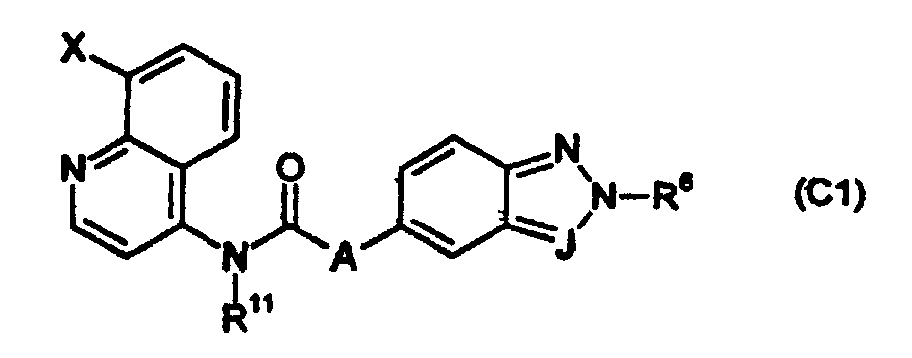
Compound No X R11 A J C1.1 H H CH2 N C1.2 H CH2CH3 CH2 N C1.3 H CH2C=CH2 CH2 N C1.4 H CH2C.CH CH2 N C1.5 H CH2OCH3 CH2 N C1.6 H CH2OCH2CH3 CH2 N C1.7 H H CH(CH3) N C1.8 H CH2CH3 CH(CH3) N C1.9 H CH2C=CH2 CH(CH3) N C1.10 H CH2C.CH CH(CH3) N C1.11 H CH2OCH3 CH(CH3) N C1.12 H CH2OCH2CH3 CH(CH3) N C1.13 H H CHF N C1.14 H CH2CH3 CHF N C1.15 H CH2C=CH2 CHF N C1.16 H CH2C.CH CHF N C1.17 H CH2OCH3 CHF N C1.18 H CH2OCH2CH3 CHF N C1.19 H H CH2O N C1.20 H CH2CH3 CH2O N C1.21 H CH2C=CH2 CH2O N C1.22 H CH2C.CH CH2O N C1.23 H CH2OCH3 CH2O N C1.24 H CH2OCH2CH3 CH2O N C1.25 F H CH2 N C1.26 F CH2CH3 CH2 N C1.27 F CH2C=CH2 CH2 N C1.28 F CH2C.CH CH2 N C1.29 F CH2OCH3 CH2 N C1.30 F CH2OCH2CH3 CH2 N C1.31 F H CH(CH3) N C1.32 F CH2CH3 CH(CH3) N C1.33 F CH2C=CH2 CH(CH3) N C1.34 F CH2C.CH CH(CH3) N C1.35 F CH2OCH3 CH(CH3) N C1.36 F CH2OCH2CH3 CH(CH3) N C1.37 F H CHF N C1.38 F CH2CH3 CHF N C1.39 F CH2C=CH2 CHF N C1.40 F CH2C.CH CHF N C1.41 F CH2OCH3 CHF N C1.42 F CH2OCH2CH3 CHF N C1.43 F H CH2O N C1.44 F CH2CH3 CH2O N C1.45 F CH2C=CH2 CH2O N C1.46 F CH2C.CH CH2O N C1.47 F CH2OCH3 CH2O N C1.48 F CH2OCH2CH3 CH2O N C1.49 H H CH2 C-H C1.50 H CH2CH3 CH2 C-H C1.51 H CH2C=CH2 CH2 C-H C1.52 H CH2C.CH CH2 C-H C1.53 H CH2OCH3 CH2 C-H C1.54 H CH2OCH2CH3 CH2 C-H C1.55 H H CH(CH3) C-H C1.56 H CH2CH3 CH(CH3) C-H C1.57 H CH2C=CH2 CH(CH3) C-H C1.58 H CH2C.CH CH(CH3) C-H C1.59 H CH2OCH3 CH(CH3) C-H C1.60 H CH2OCH2CH3 CH(CH3) C-H C1.61 H H CHF C-H C1.62 H CH2CH3 CHF C-H C1.63 H CH2C=CH2 CHF C-H C1.64 H CH2C.CH CHF C-H C1.65 H CH2OCH3 CHF C-H C1.66 H CH2OCH2CH3 CHF C-H C1.67 H H CH2O C-H C1.68 H CH2CH3 CH2O C-H C1.69 H CH2C=CH2 CH2O C-H C1.70 H CH2C.CH CH2O C-H C1.71 H CH2OCH3 CH2O C-H C1.72 H CH2OCH2CH3 CH2O C-H C1.73 F H CH2 C-H C1.74 F CH2CH3 CH2 C-H C1.75 F CH2C=CH2 CH2 C-H C1.76 F CH2C.CH CH2 C-H C1.77 F CH2OCH3 CH2 C-H C1.78 F CH2OCH2CH3 CH2 C-H C1.79 F H CH(CH3) C-H C1.80 F CH2CH3 CH(CH3) C-H C1.81 F CH2C=CH2 CH(CH3) C-H C1.82 F CH2C.CH CH(CH3) C-H C1.83 F CH2OCH3 CH(CH3) C-H C1.84 F CH2OCH2CH3 CH(CH3) C-H C1.85 F H CHF C-H C1.86 F CH2CH3 CHF C-H C1.87 F CH2C=CH2 CHF C-H C1.88 F CH2C.CH CHF C-H C1.89 F CH2OCH3 CHF C-H C1.90 F CH2OCH2CH3 CHF C-H C1.91 F H CH2O C-H C1.92 F CH2CH3 CH2O C-H C1.93 F CH2C=CH2 CH2O C-H C1.94 F CH2C.CH CH2O C-H C1.95 F CH2OCH3 CH2O C-H C1.96 F CH2OCH2CH3 CH2O C-H C1.97 H H CH2 C-Cl C1.98 H CH2CH3 CH2 C-Cl C1.99 H CH2C=CH2 CH2 C-Cl C1.100 H CH2C.CH CH2 C-Cl C1.101 H CH2OCH3 CH2 C-Cl C1.102 H CH2OCH2CH3 CH2 C-Cl C1.103 H H CH(CH3) C-Cl C1.104 H CH2CH3 CH(CH3) C-Cl C1.105 H CH2C=CH2 CH(CH3) C-Cl C1.106 H CH2C.CH CH(CH3) C-Cl C1.107 H CH2OCH3 CH(CH3) C-Cl C1.108 H CH2OCH2CH3 CH(CH3) C-Cl C1.109 H H CHF C-Cl C1.110 H CH2CH3 CHF C-Cl C1.111 H CH2C=CH2 CHF C-Cl C1.112 H CH2C.CH CHF C-Cl C1.113 H CH2OCH3 CHF C-Cl C1.114 H CH2OCH2CH3 CHF C-Cl C1.115 H H CH2O C-Cl C1.116 H CH2CH3 CH2O C-Cl C1.117 H CH2C=CH2 CH2O C-Cl C1.118 H CH2C.CH CH2O C-Cl C1.119 H CH2OCH3 CH2O C-Cl C1.120 H CH2OCH2CH3 CH2O C-Cl C1.121 F H CH2 C-Cl C1.122 F CH2CH3 CH2 C-Cl C1.123 F CH2C=CH2 CH2 C-Cl C1.124 F CH2C.CH CH2 C-Cl C1.125 F CH2OCH3 CH2 C-Cl C1.126 F CH2OCH2CH3 CH2 C-Cl C1.127 F H CH(CH3) C-Cl C1.128 F CH2CH3 CH(CH3) C-Cl C1.129 F CH2C=CH2 CH(CH3) C-Cl C1.130 F CH2C.CH CH(CH3) C-Cl C1.131 F CH2OCH3 CH(CH3) C-Cl C1.132 F CH2OCH2CH3 CH(CH3) C-Cl C1.133 F H CHF C-Cl C1.134 F CH2CH3 CHF C-Cl C1.135 F CH2C=CH2 CHF C-Cl C1.136 F CH2C.CH CHF C-Cl C1.137 F CH2OCH3 CHF C-Cl C1.138 F CH2OCH2CH3 CHF C-Cl C1.139 F H CH2O C-Cl C1.140 F CH2CH3 CH2O C-Cl C1.141 F CH2O=CH2 CH2O C-Cl C1.142 F CH2C.CH CH2O C-Cl C1.143 F CH2OCH3 CH2O C-Cl C1.144 F CH2OCH2CH3 CH2O C-Cl - Table C2 provides 144 compounds of Formula C1 wherein X, R11, A and J are as defined in Table C1 and R6 is ethyl.
- Table C3 provides 144 compounds of Formula C1 wherein X, R11, A and J are as defined in Table C1 and R6 is n-propyl.
- Table C4 provides 144 compounds of Formula C1 wherein X, R11, A and J are as defined in Table C1 and R6 is iso-propyl.
- Table C5 provides 144 compounds of Formula C1 wherein X, R11, A and J are as defined in Table C1 and R6 is n-butyl.
- Table C6 provides 144 compounds of Formula C1 wherein X, R11, A and J are as defined in Table C1 and R6 is sec-butyl.
- Table C7 provides 144 compounds of Formula C1 wherein X, R11, A and J are as defined in Table C1 and R6 is iso-butyl.
- Table C8 provides 144 compounds of Formula C1 wherein X, R11, A and J are as defined in Table C1 and R6 is tert-butyl.
- Table C9 provides 144 compounds of Formula C1 wherein X, R11, A and J are as defined in Table C1 and R6 is n-pentyl.
- Table C10 provides 144 compounds of Formula C1 wherein X, R11, A and J are as defined in Table C1 and R6 is 1-methylbutyl.
- Table C11 provides 144 compounds of Formula C1 wherein X, R11, A and J are as defined in Table C1 and R6 is 2-methylbutyl.
- Table C12 provides 144 compounds of Formula C1 wherein X, R11, A and J are as defined in Table C1 and R6 is 3-methylbutyl.
- Table C13 provides 144 compounds of Formula C1 wherein X, R11, A and J are as defined in Table C1 and R6 is neopentyl.
- Table C14 provides 144 compounds of Formula C1 wherein X, R11, A and J are as defined in Table C1 and R6 is 2,2-dimethylbutyl.
- Table C15 provides 144 compounds of Formula C1 wherein X, R11, A and J are as defined in Table C1 and R6 is 2,2,2-trifluoroethyl.
- Table C16 provides 144 compounds of Formula C1 wherein X, R11, A and J are as defined in Table C1 and R6 is 2,2-difluoro-2-methoxyethyl.
- Table C17 provides 144 compounds of Formula C1 wherein X, R11, A and J are as defined in Table C1 and R6 is 3,3,3-trifluoropropyl.
- Table C18 provides 144 compounds of Formula C1 wherein X, R11, A and J are as defined in Table C1 and R6 is para-fluorobenzyl.
- Table C19 provides 144 compounds of Formula C1 wherein X, R11, A and J are as defined in Table C1 and R6 is 2,4-dichlorophenyl.
- Table C20 provides 144 compounds of Formula C1 wherein X, R11, A and J are as defined in Table C1 and R6 is 2-chloro-4-trifluoromethylphenyl.
- Table D1 provides 96 compounds of Formula D1 wherein X, R11, A and J are as defined in Table D1 and R6 is methyl.
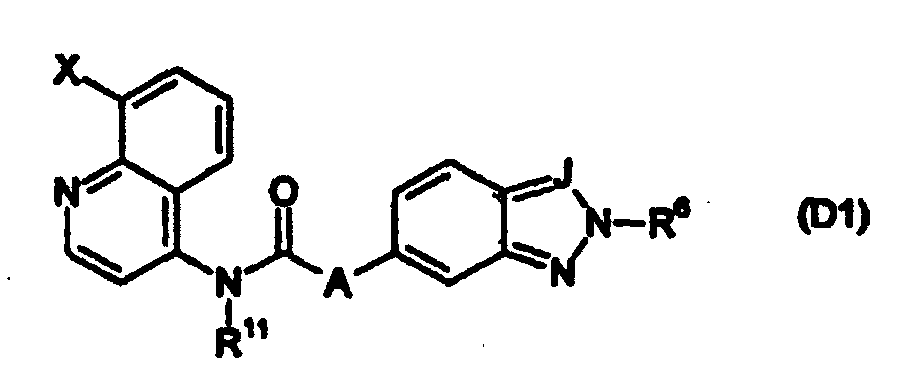
Compound No X R11 A J D1.1 H H CH2 C-H D1.2 H CH2CH3 CH2 C-H D1.3 H CH2C=CH2 CH2 C-H D1.4 H CH2C.CH CH2 C-H D1.5 H CH2OCH3 CH2 C-H D1.6 H CH2OCH2CH3 CH2 C-H D1.7 H H CH(CH3) C-H D1.8 H CH2CH3 CH(CH3) C-H D1.9 H CH2C=CH2 CH(CH3) C-H D1.10 H CH2C.CH CH(CH3) C-H D1.11 H CH2OCH3 CH(CH3) C-H D1.12 H CH2OCH2CH3 CH(CH3) C-H D1.13 H H CHF C-H D1.14 H CH2CH3 CHF C-H D1.15 H CH2C=CH2 CHF C-H D1.16 H CH2C.CH CHF C-H D1.17 H CH2OCH3 CHF C-H D1.18 H CH2OCH2CH3 CHF C-H D1.19 H H CH2O C-H D1.20 H CH2CH3 CH2O C-H D1.21 H CH2C=CH2 CH2O C-H D1.22 H CH2C.CH CH2O C-H D1.23 H CH2OCH3 CH2O C-H D1.24 H CH2OCH2CH3 CH2O C-H D1.25 F H CH2 C-H D1.26 F CH2CH3 CH2 C-H D1.27 F CH2C=CH2 CH2 C-H D1.28 F CH2C.CH CH2 C-H D1.29 F CH2OCH3 CH2 C-H D1.30 F CH2OCH2CH3 CH2 C-H D1.31 F H CH(CH3) C-H D1.32 F CH2CH3 CH(CH3) C-H D1.33 F CH2C=CH2 CH(CH3) C-H D1.34 F CH2C.CH CH(CH3) C-H D1.35 F CH2OCH3 CH(CH3) C-H D1.36 F CH2OCH2CH3 CH(CH3) C-H D1.37 F H CHF C-H D1.38 F CH2CH3 CHF C-H D1.39 F CH2C=CH2 CHF C-H D1.40 F CH2C.CH CHF C-H D1.41 F CH2OCH3 CHF C-H D1.42 F CH2OCH2CH3 CHF C-H D1.43 F H CH2O C-H D1.44 F CH2CH3 CH2O C-H D1.45 F CH2C=CH2 CH2O C-H D1.46 F CH2C.CH CH2O C-H D1.47 F CH2OCH3 CH2O C-H D1.48 F CH2OCH2CH3 CH2O C-H D1.49 H H CH2 C-Cl D1.50 H CH2CH3 CH2 C-Cl D1.51 H CH2C=CH2 CH2 C-Cl D1.52 H CH2C.CH CH2 C-Cl D1.53 H CH2OCH3 CH2 C-Cl D1.54 H CH2OCH2CH3 CH2 C-Cl D1.55 H H CH(CH3) C-Cl D1.56 H CH2CH3 CH(CH3) C-Cl D1.57 H CH2C=CH2 CH(CH3) C-Cl D1.58 H CH2C.CH CH(CH3) C-Cl D1.59 H CH2OCH3 CH(CH3) C-Cl D1.60 H CH2OCH2CH3 CH(CH3) C-Cl D1.61 H H CHF C-Cl D1.62 H CH2CH3 CHF C-Cl D1.63 H CH2C=CH2 CHF C-Cl D1.64 H CH2C.CH CHF C-Cl D1.65 H CH2OCH3 CHF C-Cl D1.66 H CH2OCH2CH3 CHF C-Cl D1.67 H H CH2O C-Cl D1.68 H CH2CH3 CH2O C-Cl D1.69 H CH2C=CH2 CH2O C-Cl D1.70 H CH2C.CH CH2O C-Cl D1.71 H CH2OCH3 CH2O C-Cl D1.72 H CH2OCH2CH3 CH2O C-Cl D1.73 F H CH2 C-Cl D1.74 F CH2CH3 CH2 C-Cl D1.75 F CH2C=CH2 CH2 C-Cl D1.76 F CH2C.CH CH2 C-Cl D1.77 F CH2OCH3 CH2 C-Cl D1.78 F CH2OCH2CH3 CH2 C-Cl D1.79 F H CH(CH3) C-Cl D1.80 F CH2CH3 CH(CH3) C-Cl D1.81 F CH2C=CH2 CH(CH3) C-Cl D1.82 F CH2C.CH CH(CH3) C-Cl D1.83 F CH2OCH3 CH(CH3) C-Cl D1.84 F CH2OCH2CH3 CH(CH3) C-Cl D1.85 F H CHF C-Cl D1.86 F CH2CH3 CHF C-Cl D1.87 F CH2C=CH2 CHF C-Cl D1.88 F CH2C.CH CHF C-Cl D1.89 F CH2OCH3 CHF C-Cl D1.90 F CH2OCH2CH3 CHF C-Cl D1.91 F H CH2O C-Cl D1.92 F CH2CH3 CH2O C-Cl D1.93 F CH2C=CH2 CH2O C-Cl D1.94 F CH2C.CH CH2O C-Cl D1.95 F CH2OCH3 CH2O C-Cl D1.96 F CH2OCH2CH3 CH2O C-Cl - Table D2 provides 96 compounds of Formula D1 wherein X, R11, A and J are as defined in Table D1 and R6 is ethyl.
- Table D3 provides 96 compounds of Formula D1 wherein X, R11, A and J are as defined in Table D1 and R6 is n-propyl.
- Table D4 provides 96 compounds of Formula D1 wherein X, R11, A and J are as defined in Table D1 and R6 is iso-propyl.
- Table D5 provides 96 compounds of Formula D1 wherein X, R11, A and J are as defined in Table D1 and R6 is n-butyl.
- Table D6 provides 96 compounds of Formula D1 wherein X, R11, A and J are as defined in Table D1 and R6 is sec-butyl.
- Table D7 provides 96 compounds of Formula D1 wherein X, R11, A and J are as defined in Table D1 and R6 is iso-butyl.
- Table D8 provides 96 compounds of Formula D1 wherein X, R11, A and J are as defined in Table D1 and R6 is tert-butyl.
- Table D9 provides 96 compounds of Formula D1 wherein X, R11, A and J are as defined in Table D1 and R6 is n-pentyl.
- Table D10 provides 96 compounds of Formula D1 wherein X, R11, A and J are as defined in Table D1 and R6 is 1-methylbutyl.
- Table D11 provides 96 compounds of Formula D1 wherein X, R11, A and J are as defined in Table D1 and R6 is 2-methylbutyl.
- Table D12 provides 96 compounds of Formula D1 wherein X, R11, A and J are as defined in Table D1 and R6 is 3-methylbutyl.
- Table D13 provides 96 compounds of Formula D1 wherein X, R11, A and J are as defined in Table D1 and R6 is neopentyl.
- Table D14 provides 96 compounds of Formula D1 wherein X, R11, A and J are as defined in Table D1 and R6 is 2,2-dimethylbutyl.
- Table D15 provides 96 compounds of Formula D1 wherein X, R11, A and J are as defined in Table D1 and R6 is 2,2,2-trifluoroethyl.
- Table D16 provides 96 compounds of Formula D1 wherein X, R11, A and J are as defined in Table D1 and R6 is 2,2-difluoro-2-methoxyethyl.
- Table D17 provides 96 compounds of Formula D1 wherein X, R11, A and J are as defined in Table D1 and R6 is 3,3,3-trifluoropropyl.
- Table D18 provides 96 compounds of Formula D1 wherein X, R11, A and J are as defined in Table D1 and R6 is para-fluorobenzyl.
- Table D19 provides 96 compounds of Formula D1 wherein X, R11, A and J are as defined in Table D1 and R6 is 2,4-dichlorophenyl.
- Table D20 provides 96 compounds of Formula D1 wherein X, R11, A and J are as defined in Table D1 and R6 is 2-chloro-4-trifluoromethylphenyl.
- Table E1 provides 432 compounds of Formula E1 wherein R1, D, E, R11, A and J are as defined in Table A1 and R6 is methyl.
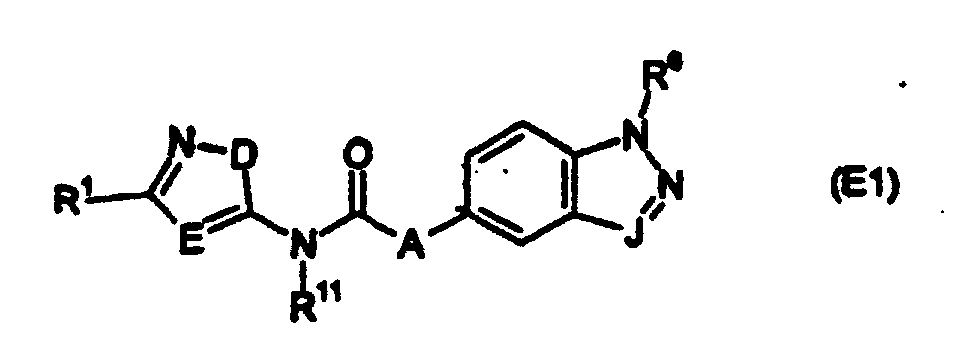
- Table E2 provides 432 compounds of Formula E1 wherein R1, D, E, R11, A and J are as defined in Table A1 and R6 is ethyl.
- Table E3 provides 432 compounds of Formula E1 wherein R1, D, E, R11, A and J are as defined in Table A1 and R6 is n-propyl.
- Table E4 provides 432 compounds of Formula E1 wherein R1, D, E, R11, A and J are as defined in Table A1 and R6 is iso-propyl.
- Table E5 provides 432 compounds of Formula E1 wherein R1, D, E, R11, A and J are as defined in Table A1 and R6 is n-butyl.
- Table E6 provides 432 compounds of Formula E1 wherein R1, D, E, R11, A and J are as defined in Table A1 and R6 is sec-butyl.
- Table E7 provides 432 compounds of Formula E1 wherein R1, D, E, R11, A and J are as defined in Table A1 and R6 is iso-butyl.
- Table E8 provides 432 compounds of Formula E1 wherein R1, D, E, R11, A and J are as defined in Table A1 and R6 is tert-butyl.
- Table E9 provides 432 compounds of Formula E1 wherein R1, D, E, R11, A and J are as defined in Table A1 and R6 is n-pentyl.
- Table E10 provides 432 compounds of Formula E1 wherein R1, D, E, R11, A and J are as defined in Table A1 and R6 is 1-methylbutyl.
- Table E11 provides 432 compounds of Formula E1 wherein R1, D, E, R11, A and J are as defined in Table A1 and R6 is 2-methylbutyl.
- Table E12 provides 432 compounds of Formula E1 wherein R1, D, E, R11, A and J are as defined in Table A1 and R6 is 3-methylbutyl.
- Table E13 provides 432 compounds of Formula E1 wherein R1, D, E, R11, A and J are as defined in Table A1 and R6 is neopentyl.
- Table E14 provides 432 compounds of Formula E1 wherein R1, D, E, R11, A and J are as defined in Table A1 and R6 is 2,2-dimethylbutyl.
- Table E15 provides 432 compounds of Formula E1 wherein R1, D, E, R11, A and J are as defined in Table A1 and R6 is 2,2,2-trifluoroethyl.
- Table E16 provides 432 compounds of Formula E1 wherein R1, D, E, R11, A and J are as defined in Table A1 and R6 is 2,2-difluoro-2-methoxyethyl.
- Table E17 provides 432 compounds of Formula E1 wherein R1, D, E, R11, A and J are as defined in Table A1 and R6 is 3,3,3-trifluoropropyl.
- Table E18 provides 432 compounds of Formula E1 wherein R1, D, E, R11, A and J are as defined in Table A1 and R6 is para-fluorobenzyl.
- Table E19 provides 432 compounds of Formula E1 wherein R1, D, E, R11, A and J are as defined in Table A1 and R6 is 2,4-dichlorophenyl.
- Table E20 provides 432 compounds of Formula E1 wherein R1, D, E, R11, A and J are as defined in Table A1 and R6 is 2-chloro-4-trifluoromethylphenyl.
- Table E21 provides 432 compounds of Formula E1 wherein R1, D, E, R11, A and J are as defined in Table A1 and R6 is 4-trifluoromethylphenyl.
- Table E22 provides 432 compounds of Formula E1 wherein R1, D, E, R11, A and J are as defined in Table A1 and R6 is COCH3.
- Table F1 provides 432 compounds of Formula F1 wherein R1, D, E, R11, A and J are as defined in Table A1 and R6 is methyl.
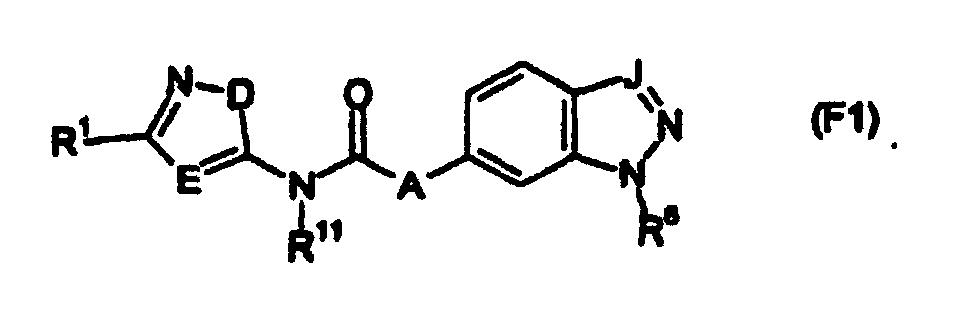
- Table F2 provides 432 compounds of Formula F1 wherein R1, D, E, R11, A and J are as defined in Table A1 and R6 is ethyl.
- Table F3 provides 432 compounds of Formula F1 wherein R1, D, E, R11, A and J are as defined in Table A1 and R6 is n-propyl.
- Table F4 provides 432 compounds of Formula F1 wherein R1, D, E, R11, A and J are as defined in Table A1 and R6 is iso-propyl.
- Table F5 provides 432 compounds of Formula F1 wherein R1, D, E, R11, A and J are as defined in Table A1 and R6 is n-butyl.
- Table F6 provides 432 compounds of Formula F1 wherein R1, D, E, R11, A and J are as defined in Table A1 and R6 is sec-butyl.
- Table F7 provides 432 compounds of Formula F1 wherein R1, D, E, R11, A and J are as defined in Table A1 and R6 is iso-butyl.
- Table F8 provides 432 compounds of Formula F1 wherein R1, D, E, R11, A and J are as defined in Table A1 and R6 is tert-butyl.
- Table F9 provides 432 compounds of Formula F1 wherein R1, D, E, R11, A and J are as defined in Table A1 and R6 is n-pentyl.
- Table F10 provides 432 compounds of Formula F1 wherein R1, D, E, R11, A and J are as defined in Table A1 and R6 is 1-methylbutyl.
- Table F11 provides 432 compounds of Formula F1 wherein R1, D, E, R11, A and J are as defined in Table A1 and R6 is 2-methylbutyl.
- Table F12 provides 432 compounds of Formula F1 wherein R1, D, E, R11, A and J are as defined in Table A1 and R6 is 3-methylbutyl.
- Table F13 provides 432 compounds of Formula F1 wherein R1, D, E, R11, A and J are as defined in Table A1 and R6 is neopentyl.
- Table F14 provides 432 compounds of Formula F1 wherein R1, D, E, R11, A and J are as defined in Table A1 and R6 is 2,2-dimethylbutyl.
- Table F15 provides 432 compounds of Formula F1 wherein R1, D, E, R11, A and J are as defined in Table A1 and R6 is 2,2,2-trifluoroethyl.
- Table F16 provides 432 compounds of Formula F1 wherein R1, D, E, R11, A and J are as defined in Table A1 and R6 is 2,2-difluoro-2-methoxyethyl.
- Table F17 provides 432 compounds of Formula F1 wherein R1, D, E, R11, A and J are as defined in Table A1 and R6 is 3,3,3-trifluoropropyl.
- Table F18 provides 432 compounds of Formula F1 wherein R1, D, E, R11, A and J are as defined in Table A1 and R6 is para-fluorobenzyl.
- Table F19 provides 432 compounds of Formula F1 wherein R1, D, E, R11, A and J are as defined in Table A1 and R6 is 2,4-dichlorophenyl.
- Table F20 provides 432 compounds of Formula F1 wherein R1, D, E, R11, A and J are as defined in Table A1 and R6 is 2-chloro-4-trifluoromethylphenyl.
- Table F21 provides 432 compounds of Formula F1 wherein R1, D, E, R11, A and J are as defined in Table A1 and R6 is 4-trifluoromethylphenyl.
- Table F22 provides 432 compounds of Formula F1 wherein R1, D, E, R11, A and J are as defined in Table A1 and R6 is COCH3.
- Table G1 provides 144 compounds of Formula G1 wherein X, R11, A and J are as defined in Table C1 and R6 is methyl.

- Table G2 provides 144 compounds of Formula G1 wherein X, R11, A and J are as defined in Table C1 and R6 is ethyl.
- Table G3 provides 144 compounds of Formula G1 wherein X, R11, A and J are as defined in Table C1 and R6 is n-propyl.
- Table G4 provides 144 compounds of Formula G1 wherein X, R11, A and J are as defined in Table C1 and R6 is iso-propyl.
- Table G5 provides 144 compounds of Formula G1 wherein X, R11, A and J are as defined in Table C1 and R6 is n-butyl.
- Table G6 provides 144 compounds of Formula G1 wherein X, R11, A and J are as defined in Table C1 and R6 is sec-butyl.
- Table G7 provides 144 compounds of Formula G1 wherein X, R11, A and J are as defined in Table C1 and R6 is iso-butyl.
- Table G8 provides 144 compounds of Formula G1 wherein X, R11, A and J are as defined in Table C1 and R6 is tert-butyl.
- Table G9 provides 144 compounds of Formula G1 wherein X, R11, A and J are as defined in Table C1 and R6 is n-pentyl.
- Table G10 provides 144 compounds of Formula G1 wherein X, R11, A and J are as defined in Table C1 and R6 is 1-methylbutyl.
- Table G11 provides 144 compounds of Formula G1 wherein X, R11, A and J are as defined in Table C1 and R6 is 2-methylbutyl.
- Table G12 provides 144 compounds of Formula G1 wherein X, R11, A and J are as defined in Table C1 and R6 is 3-methylbutyl.
- Table G13 provides 144 compounds of Formula G1 wherein X, R11, A and J are as defined in Table C1 and R6 is neopentyl.
- Table G14 provides 144 compounds of Formula G1 wherein X, R11, A and J are as defined in Table C1 and R6 is 2,2-dimethylbutyl.
- Table G15 provides 144 compounds of Formula G1 wherein X, R11, A and J are as defined in Table C1 and R6 is 2,2,2-trifluoroethyl.
- Table G16 provides 144 compounds of Formula G1 wherein X, R11, A and J are as defined in Table C1 and R6 is 2,2-difluoro-2-methoxyethyl.
- Table G17 provides 144 compounds of Formula G1 wherein X, R11, A and J are as defined in Table C1 and R6 is 3,3,3-trifluoropropyl.
- Table G18 provides 144 compounds of Formula G1 wherein X, R11, A and J are as defined in Table C1 and R6 is para-fluorobenzyl.
- Table G19 provides 144 compounds of Formula G1 wherein X, R11, A and J are as defined in Table C1 and R6 is 2,4-dichlorophenyl.
- Table G20 provides 144 compounds of Formula G1 wherein X, R11, A and J are as defined in Table C1 and R6 is 2-chloro-4-trifluoromethylphenyl.
- Table H1 provides 144 compounds of Formula H1 wherein X, R11, A and J are as defined in Table C1 and R6 is methyl.

- Table H2 provides 144 compounds of Formula H1 wherein X, R11, A and J are as defined in Table C1 and R6 is ethyl.
- Table H3 provides 144 compounds of Formula H1 wherein X, R11, A and J are as defined in Table C1 and R6 is n-propyl.
- Table H4 provides 144 compounds of Formula H1 wherein X, R11, A and J are as defined in Table C1 and R6 is iso-propyl.
- Table H5 provides 144 compounds of Formula H1 wherein X, R11, A and J are as defined in Table C1 and R6 is n-butyl.
- Table H6 provides 144 compounds of Formula H1 wherein X, R11, A and J are as defined in Table C1 and R6 is sec-butyl.
- Table H7 provides 144 compounds of Formula H1 wherein X, R11, A and J are as defined in Table C1 and R6 is iso-butyl.
- Table H8 provides 144 compounds of Formula H1 wherein X, R11, A and J are as defined in Table C1 and R6 is tert-butyl.
- Table H9 provides 144 compounds of Formula H1 wherein X, R11, A and J are as defined in Table C1 and R6 is n-pentyl.
- Table H10 provides 144 compounds of Formula H1 wherein X, R11, A and J are as defined in Table C1 and R6 is 1-methylbutyl.
- Table H11 provides 144 compounds of Formula H1 wherein X, R11, A and J are as defined in Table C1 and R6 is 2-methylbutyl.
- Table H12 provides 144 compounds of Formula H1 wherein X, R11, A and J are as defined in Table C1 and R6 is 3-methylbutyl.
- Table H13 provides 144 compounds of Formula H1 wherein X, R11, A and J are as defined in Table C1 and R6 is neopentyl.
- Table H14 provides 144 compounds of Formula H1 wherein X, R11, A and J are as defined in Table C1 and R6 is 2,2-dimethylbutyl.
- Table H15 provides 144 compounds of Formula H1 wherein X, R11, A and J are as defined in Table C1 and R6 is 2,2,2-trifluoroethyl.
- Table H16 provides 144 compounds of Formula H1 wherein X, R11, A and J are as defined in Table C1 and R6 is 2,2-difluoro-2-methoxyethyl.
- Table H17 provides 144 compounds of Formula H1 wherein X, R11, A and J are as defined in Table C1 and R6 is 3,3,3-trifluoropropyl.
- Table H18 provides 144 compounds of Formula H1 wherein X, R11, A and J are as defined in Table C1 and R6 is para-fluorobenzyl.
- Table H19 provides 144 compounds of Formula H1 wherein X, R11, A and J are as defined in Table C1 and R6 is 2,4-dichlorophcnyl.
- Table H20 provides 144 compounds of Formula H1 wherein X, R11, A and J are as defined in Table C1 and R6 is 2-chloro-4-trifluoromethylphenyl.
- Table I1 provides 288 compounds of Formula I1, wherein R1, D, E, R2, A and J are as defined in Table I1 and R6 is methyl.
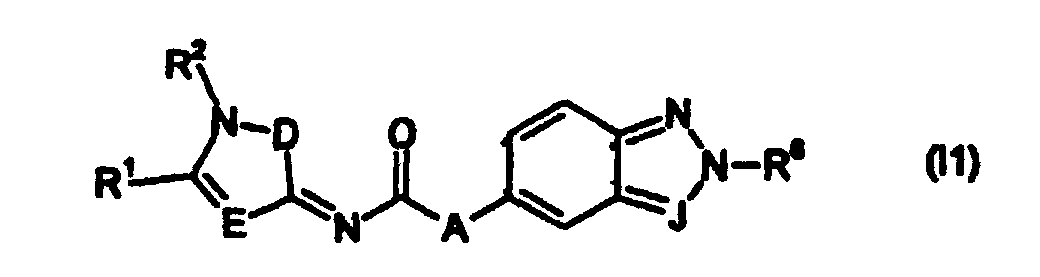
Compound No. R1 D E R2 A J I1.1 CH3 S C-Cl H CH2 N I1.2 CH3 S C-Cl CH2CH3 CH2 N I1.3 CH3 S C-Cl CH2C=CH2 CH2 N I1.4 CH3 S C-Cl CH2C.CH CH2 N I1.5 CH3 S C-Cl CH2OCH3 CH2 N I1.6 CH3 S C-Cl CH2OCH2CH3 CH2 N I1.7 CH3 S C-Br H CH2 N I1.8 CH3 S C-Br CH2CH3 CH2 N I1.9 CH3 S C-Br CH2C=CH2 CH2 N I1.10 CH3 S C-Br CH2C.CH CH2 N I1.11 CH3 S C-Br CH2OCH3 CH2 N I1.12 CH3 S C-Br CH2OCH2CH3 CH2 N I1.13 CH2CH3 S C-Cl H CH2 N I1.14 CH2CH3 S C-Cl CH2CH3 CH2 N I1.15 CH2CH3 S C-Cl CH2C=CH2 CH2 N I1.16 CH2CH3 S C-Cl CH2C.CH CH2 N I1.17 CH2CH3 S C-Cl CH2OCH3 CH2 N I1.18 CH2CH3 S C-Cl CH2OCH2CH3 CH2 N I1.19 CH2CH3 S C-Br H CH2 N I1.20 CH2CH3 S C-Br CH2CH3 CH2 N I1.21 CH2CH3 S C-Br CH2C=CH2 CH2 N I1.22 CH2CH3 S C-Br CH2C.CH CH2 N I1.23 CH2CH3 S C-Br CH2OCH3 CH2 N I1.24 CH2CH3 S C-Br CH2OCH2CH3 CH2 N I1.25 CH3 S C-Cl H CH(CH3) N I1.26 CH3 S C-Cl CH2CH3 CH(CH3) N I1.27 CH3 S C-Cl CH2C=CH2 CH(CH3) N I1.28 CH3 S C-Cl CH2C.CH CH(CH3) N I1.29 CH3 S C-Cl CH2OCH3 CH(CH3) N I1.30 CH3 S C-Cl CH2OCH2CH3 CH(CH3) N I1.31 CH3 S C-Br H CH(CH3) N I1.32 CH3 S C-Br CH2CH3 CH(CH3) N I1.33 CH3 S C-Br CH2C=CH2 CH(CH3) N I1.34 CH3 S C-Br CH2C.CH CH(CH3) N I1.35 CH3 S C-Br CH2OCH3 CH(CH3) N I1.36 CH3 S C-Br CH2OCH2CH3 CH(CH3) N I1.37 CH2CH3 S C-Cl H CH(CH3) N I1.38 CH2CH3 S C-Cl CH2CH3 CH(CH3) N I1.39 CH2CH3 S C-Cl CH2C=CH2 CH(CH3) N I1.40 CH2CH3 S C-Cl CH2C.CH CH(CH3) N I1.41 CH2CH3 S C-Cl CH2OCH3 CH(CH3) N I1.42 CH2CH3 S C-Cl CH2OCH2CH3 CH(CH3) N I1.43 CH2CH3 S C-Br H CH(CH3) N I1.44 CH2CH3 S C-Br CH2CH3 CH(CH3) N I1.45 CH2CH3 S C-Br CH2C=CH2 CH(CH3) N I1.46 CH2CH3 S C-Br CH2C.CH CH(CH3) N I1.47 CH2CH3 S C-Br CH2OCH3 CH(CH3) N I1.48 CH2CH3 S C-Br CH2OCH2CH3 CH(CH3) N I1.49 CH3 S C-Cl H CHF N I1.50 CH3 S C-Cl CH2CH3 CHF N I1.51 CH3 S C-Cl CH2C=CH2 CHF N I1.52 CH3 S C-Cl CH2C.CH CHF N I1.53 CH3 S C-Cl CH2OCH3 CHF N I1.54 CH3 S C-Cl CH2OCH2CH3 CHF N I1.55 CH3 S C-Br H CHF N I1.56 CH3 S C-Br CH2CH3 CHF N I1.57 CH3 S C-Br CH2C=CH2 CHF N I1.58 CH3 S C-Br CH2C.CH CHF N I1.59 CH3 S C-Br CH2OCH3 CHF N I1.60 CH3 S C-Br CH2OCH2CH3 CHF N I1.61 CH2CH3 S C-Cl H CHF N I1.62 CH2CH3 S C-Cl CH2CH3 CHF N I1.63 CH2CH3 S C-Cl CH2C=CH2 CHF N I1.64 CH2CH3 S C-Cl CH2C.CH CHF N I1.65 CH2CH3 S C-Cl CH2OCH3 CHF N I1.66 CH2CH3 S C-Cl CH2OCH2CH3 CHF N I1.67 CH2CH3 S C-Br H CHF N I1.68 CH2CH3 S C-Br CH2CH3 CHF N I1.69 CH2CH3 S C-Br CH2C=CH2 CHF N I1.70 CH2CH3 S C-Br CH2C.CH CHF N I1.71 CH2CH3 S C-Br CH2OCH3 CHF N I1.72 CH2CH3 S C-Br CH2OCH2CH3 CHF N I1.73 CH3 S C-Cl H CH2O N I1.74 CH3 S C-Cl CH2CH3 CH2O N I1.75 CH3 S C-Cl CH2C=CH2 CH2O N I1.76 CH3 S C-Cl CH2C.CH CH2O N I1.77 CH3 S C-Cl CH2OCH3 CH2O N I1.78 CH3 S C-Cl CH2OCH2CH3 CH2O N I1.79 CH3 S C-Br H CH2O N I1.80 CH3 S C-Br CH2CH3 CH2O N I1.81 CH3 S C-Br CH2C=CH2 CH2O N I1.82 CH3 S C-Br CH2C.CH CH2O N I1.83 CH3 S C-Br CH2OCH3 CH2O N I1.84 CH3 S C-Br CH2OCH2CH3 CH2O N I1.85 CH2CH3 S C-Cl H CH2O N I1.86 CH2CH3 S C-Cl CH2CH3 CH2O N I1.87 CH2CH3 S C-Cl CH2C=CH2 CH2O N I1.88 CH2CH3 S C-Cl CH2C.CH CH2O N I1.89 CH2CH3 S C-Cl CH2OCH3 CH2O N I1.90 CH2CH3 S C-Cl CH2OCH2CH3 CH2O N I1.91 CH2CH3 S C-Br H CH2O N I1.92 CH2CH3 S C-Br CH2CH3 CH2O N I1.93 CH2CH3 S C-Br CH2C=CH2 CH2O N I1.94 CH2CH3 S C-Br CH2C.CH CH2O N I1.95 CH2CH3 S C-Br CH2OCH3 CH2O N I1.96 CH2CH3 S C-Br CH2OCH2CH3 CH2O N I1.97 CH3 S C-Cl H CH2 C-H I1.98 CH3 S C-Cl CH2CH3 CH2 C-H I1.99 CH3 S C-Cl CH2C=CH2 CH2 C-H I1.100 CH3 S C-Cl CH2C.CH CH2 C-H I1.101 CH3 S C-Cl CH2OCH3 CH2 C-H I1.102 CH3 S C-Cl CH2OCH2CH3 CH2 C-H I1.103 CH3 S C-Br H CH2 C-H I1.104 CH3 S C-Br CH2CH3 CH2 C-H I1.105 CH3 S C-Br CH2C=CH2 CH2 C-H I1.106 CH3 S C-Br CH2C.CH CH2 C-H I1.107 CH3 S C-Br CH2OCH3 CH2 C-H I1.108 CH3 S C-Br CH2OCH2CH3 CH2 C-H I1.109 CH2CH3 S C-Cl H CH2 C-H I1.110 CH2CH3 S C-Cl CH2CH3 CH2 C-H I1.111 CH2CH3 S C-Cl CH2C=CH2 CH2 C-H I1.112 CH2CH3 S C-Cl CH2C.CH CH2 C-H I1.113 CH2CH3 S C-Cl CH2OCH3 CH2 C-H I1.114 CH2CH3 S C-Cl CH2OCH2CH3 CH2 C-H I1.115 CH2CH3 S C-Br H CH2 C-H I1.116 CH2CH3 S C-Br CH2CH3 CH2 C-H I1.117 CH2CH3 S C-Br CH2C=CH2 CH2 C-H I1.118 CH2CH3 S C-Br CH2C.CH CH2 C-H I1.119 CH2CH3 S C-Br CH2OCH3 CH2 C-H I1.120 CH2CH3 S C-Br CH2OCH2CH3 CH2 C-H I1.121 CH3 S C-Cl H CH(CH3) C-H I1.122 CH3 S C-Cl CH2CH3 CH(CH3) C-H I1.123 CH3 S C-Cl CH2C=CH2 CH(CH3) C-H I1.124 CH3 S C-Cl CH2C.CH CH(CH3) C-H I1.125 CH3 S C-Cl CH2OCH3 CH(CH3) C-H I1.126 CH3 S C-Cl CH2OCH2CH3 CH(CH3) C-H I1.127 CH3 S C-Br H CH(CH3) C-H I1.128 CH3 S C-Br CH2CH3 CH(CH3) C-H I1.129 CH3 S C-Br CH2C=CH2 CH(CH3) C-H I1.130 CH3 S C-Br CH2C.CH CH(CH3) C-H I1.131 CH3 S C-Br CH2OCH3 CH(CH3) C-H I1.132 CH3 S C-Br CH2OCH2CH3 CH(CH3) C-H I1.133 CH2CH3 S C-Cl H CH(CH3) C-H I1.134 CH2CH3 S C-Cl CH2CH3 CH(CH3) C-H I1.135 CH2CH3 S C-Cl CH2C=CH2 CH(CH3) C-H I1.136 CH2CH3 S C-Cl CH2C.CH CH(CH3) C-H I1.137 CH2CH3 S C-Cl CH2OCH3 CH(CH3) C-H I1.138 CH2CH3 S C-Cl CH2OCH2CH3 CH(CH3) C-H I1.139 CH2CH3 S C-Br H CH(CH3) C-H I1.140 CH2CH3 S C-Br CH2CH3 CH(CH3) C-H I1.141 CH2CH3 S C-Br CH2C=CH2 CH(CH3) C-H I1.142 CH2CH3 S C-Br CH2C.CH CH(CH3) C-H I1.143 CH2CH3 S C-Br CH2OCH3 CH(CH3) C-H I1.144 CH2CH3 S C-Br CH2OCH2CH3 CH(CH3) C-H I1.145 CH3 S C-Cl H CHF C-H I1.146 CH3 S C-Cl CH2CH3 CHF C-H I1.147 CH3 S C-Cl CH2C=CH2 CHF C-H I1.148 CH3 S C-Cl CH2C.CH CHF C-H I1.149 CH3 S C-Cl CH2OCH3 CHF C-H I1.150 CH3 S C-Cl CH2OCH2CH3 CHF C-H I1.151 CH3 S C-Br H CHF C-H I1.152 CH3 S C-Br CH2CH3 CHF C-H I1.153 CH3 S C-Br CH2C=CH2 CHF C-H I1.154 CH3 S C-Br CH2C.CH CHF C-H I1.155 CH3 S C-Br CH2OCH3 CHF C-H I1.156 CH3 S C-Br CH2OCH2CH3 CHF C-H I1.157 CH2CH3 S C-Cl H CHF C-H I1.158 CH2CH3 S C-Cl CH2CH3 CHF C-H I1.159 CH2CH3 S C-Cl CH2C=CH2 CHF C-H I1.160 CH2CH3 S C-Cl CH2C.CH CHF C-H I1.161 CH2CH3 S C-Cl CH2OCH3 CHF C-H I1.162 CH2CH3 S C-Cl CH2OCH2CH3 CHF C-H I1.163 CH2CH3 S C-Br H CHF C-H I1.164 CH2CH3 S C-Br CH2CH3 CHF C-H I1.165 CH2CH3 S C-Br CH2C=CH2 CHF C-H I1.166 CH2CH3 S C-Br CH2C.CH CHF C-H I1.167 CH2CH3 S C-Br CH2OCH3 CHF C-H I1.168 CH2CH3 S C-Br CH2OCH2CH3 CHF C-H I1.169 CH3 S C-Cl H CH2O C-H I1.170 CH3 S C-Cl CH2CH3 CH2O C-H I1.171 CH3 S C-Cl CH2C=CH2 OH2O C-H I1.172 CH3 S C-Cl CH2C.CH CH2O C-H I1.173 CH3 S C-Cl CH2OCH3 CH2O C-H I1.174 CH3 S C-Cl CH2OCH2CH3 CH2O C-H I1.175 CH3 S C-Br H CH2O C-H I1.176 CH3 S C-Br CH2CH3 CH2O C-H I1.177 CH3 S C-Br CH2C=CH2 CH2O C-H I1.178 CH3 S C-Br CH2C.CH CH2O C-H I1.179 CH3 S C-Br CH2OCH3 CH2O C-H I1.180 CH3 S C-Br CH2OCH2CH3 CH2O C-H I1.181 CH2CH3 S C-Cl H CH2O C-H I1.182 CH2CH3 S C-Cl CH2CH3 CH2O C-H I1.183 CH2CH3 S C-Cl CH2C=CH2 CH2O C-H I1.184 CH2CH3 S C-Cl CH2C.CH CH2O C-H I1.185 CH2CH3 S C-Cl CH2OCH3 CH2O C-H I1.186 CH2CH3 S C-Cl CH2OCH2CH3 CH2O C-H I1.187 CH2CH3 S C-Br H CH2O C-H I1.188 CH2CH3 S C-Br CH2CH3 CH2O C-H I1.189 CH2CH3 S C-Br CH2C=CH2 CH2O C-H I1.190 CH2CH3 S C-Br CH2C.CH CH2O C-H I1.191 CH2CH3 S C-Br CH2OCH3 CH2O C-H I1.192 CH2CH3 S C-Br CH2OCH2CH3 CH2O C-H I1.193 CH3 S C-Cl H CH2 C-Cl I1.194 CH3 S C-Cl CH2CH3 CH2 C-Cl I1.195 CH3 S C-Cl CH2C=CH2 CH2 C-Cl I1.196 CH3 S C-Cl CH2C.CH CH2 C-Cl Il.197 CH3 S C-Cl CH2OCH3 CH2 C-Cl I1.198 CH3 S C-Cl CH2OCH2CH3 CH2 C-Cl I1.199 CH3 S C-Br H CH2 C-Cl I1.200 CH3 S C-Br CH2CH3 CH2 C-Cl I1.201 CH3 S C-Br CH2C=CH2 CH2 C-Cl I1.202 CH3 S C-Br CH2C.CH CH2 C-Cl I1.203 CH3 S C-Br CH2OCH3 CH2 C-Cl I1.204 CH3 S C-Br CH2OCH2CH3 CH2 C-Cl I1.205 CH2CH3 S C-Cl H CH2 C-Cl I1.206 CH2CH3 S C-Cl CH2CH3 CH2 C-Cl I1207 CH2CH3 S C-Cl CH2C=CH2 CH2 C-Cl I1.208 CH2CH3 S C-Cl CH2C.CH CH2 C-Cl I1.209 CH2CH3 S C-Cl CH2OCH3 CH2 C-Cl I1.210 CH2CH3 S C-Cl CH2OCH2CH3 CH2 C-Cl I1.211 CH2CH3 S C-Br H CH2 C-Cl I1.212 CH2CH3 S C-Br CH2CH3 CH2 C-Cl I1.213 CH2CH3 S C-Br CH2C=CH2 CH2 C-Cl I1.214 CH2CH3 S C-Br CH2C.CH CH2 C-Cl I1.215 CH2CH3 S C-Br CH2OCH3 CH2 C-Cl I1.216 CH2CH3 S C-Br CH2OCH2CH3 CH2 C-Cl I1.217 CH3 S C-Cl H CH(CH3) C-Cl I1.218 CH3 S C-Cl CH2CH3 CH(CH3) C-Cl I1.219 CH3 S C-Cl CH2C=CH2 CH(CH3) C-Cl I1.220 CH3 S C-Cl CH2C.CH CH(CH3) C-Cl I1.221 CH3 S C-Cl CH2OCH3 CH(CH3) C-Cl I1.222 CH3 S C-Cl CH2OCH2CH3 CH(CH3) C-Cl I1.223 CH3 S C-Br H CH(CH3) C-Cl I1.224 CH3 S C-Br CH2CH3 CH(CH3) C-Cl I1.225 CH3 S C-Br CH2C=CH2 CH(CH3) C-Cl I1.226 CH3 S C-Br CH2C.CH CH(CH3) C-Cl I1.227 CH3 S C-Br CH2OCH3 CH(CH3) C-Cl I1.228 CH3 S C-Br CH2OCH2CH3 CH(CH3) C-Cl I1.229 CH2CH3 S C-Cl H CH(CH3) C-Cl I1.230 CH2CH3 S C-Cl CH2CH3 CH(CH3) C-Cl I1.231 CH2CH3 S C-Cl CH2C=CH2 CH(CH3) C-Cl I1.232 CH2CH3 S C-Cl CH2C.CH CH(CH3) C-Cl I1.233 CH2CH3 S C-Cl CH2OCH3 CH(CH3) C-Cl I1.234 CH2CH3 S C-Cl CH2OCH2CH3 CH(CH3) C-Cl I1.235 CH2CH3 S C-Br H CH(CH3) C-Cl I1.236 CH2CH3 S C-Br CH2CH3 CH(CH3) C-Cl I1.237 CH2CH3 S C-Br CH2C=CH2 CH(CH3) C-Cl I1.238 CH2CH3 S C-Br CH2C.CH CH(CH3) C-Cl I1.239 CH2CH3 S C-Br CH2OCH3 CH(CH3) C-Cl I1.240 CH2CH3 S C-Br CH2OCH2CH3 CH(CH3) C-Cl I1.241 CH3 S C-Cl H CHF C-Cl I1.242 CH3 S C-Cl CH2CH3 CHF C-Cl I1.243 CH3 S C-Cl CH2C=CH2 CHF C-Cl I1.244 CH3 S C-Cl CH2C.CH CHF C-Cl I1.245 CH3 S C-Cl CH2OCH3 CHF C-Cl I1.246 CH3 S C-Cl CH2OCH2CH3 CHF C-Cl I1.247 CH3 S C-Br H CHF C-Cl I1.248 CH3 S C-Br CH2CH3 CHF C-Cl I1.249 CH3 S C-Br CH2C=CH2 CHF C-Cl I1.250 CH3 S C-Br CH2C.CH CHF C-Cl I1.251 CH3 S C-Br CH2OCH3 CHF C-Cl I1.252 CH3 S C-Br CH2OCH2CH3 CHF C-Cl I1.253 CH2CH3 S C-Cl H CHF C-Cl I1.254 CH2CH3 S C-Cl CH2CH3 CHF C-Cl I1.255 CH2CH3 S C-Cl CH2C=CH2 CHF C-Cl I1.256 CH2CH3 S C-Cl CH2C.CH CHF C-Cl I1.257 CH2CH3 S C-Cl CH2OCH3 CHF C-Cl I1.258 CH2CH3 S C-Cl CH2OCH2CH3 CHF C-Cl I1.259 CH2CH3 S C-Br H CHF C-Cl I1.260 CH2CH3 S C-Br CH2CH3 CHF C-Cl I1261 CH2CH3 S C-Br CH2C=CH2 CHF C-Cl I1.262 CH2CH3 S C-Br CH2C.CH CHF C-Cl I1.263 CH2CH3 S C-Br CH2OCH3 CHF C-Cl I1.264 CH2CH3 S C-Br CH2OCH2CH3 CHF C-Cl I1.265 CH3 S C-Cl H CH2O C-Cl I1.266 CH3 S C-Cl CH2CH3 CH2O C-Cl I1.267 CH3 S C-Cl CH2C=CH2 CH2O C-Cl I1.268 CH3 S C-Cl CH2C.CH CH2O C-Cl I1.269 CH3 S C-Cl CH2OCH3 CH2O C-Cl I1.270 CH3 S C-Cl CH2OCH2CH3 CH2O C-Cl I1.271 CH3 S C-Br H CH2O C-Cl I1.272 CH3 S C-Br CH2CH3 CH2O C-Cl I1.273 CH3 S C-Br CH2C=CH2 CH2O C-Cl I1.274 CH3 S C-Br CH2C.CH CH2O C-Cl I1.275 CH3 S C-Br CH2OCH3 CH2O C-Cl I1.276 CH3 S C-Br CH2OCH2CH3 CH2O C-Cl I1.277 CH2CH3 S C-Cl H CH2O C-Cl I1.278 CH2CH3 S C-Cl CH2CH3 CH2O C-Cl I1.279 CH2CH3 S C-Cl CH2C=CH2 CH2O C-Cl I1.280 CH2CH3 S C-Cl CH2C.CH CH2O C-Cl I1.281 CH2CH3 S C-Cl CH2OCH3 CH2O C-Cl I1.282 CH2CH3 S C-Cl CH2OCH2CH3 CH2O C-Cl I1.283 CH2CH3 S C-Br H CH2O C-Cl I1.284 CH2CH3 S C-Br CH2CH3 CH2O C-Cl I1.285 CH2CH3 S C-Br CH2C=CH2 CH2O C-Cl I1.286 CH2CH3 S C-Br CH2C.CH CH2O C-Cl I1.287 CH2CH3 S C-Br CH2OCH3 CH2O C-Cl I1.288 CH2CH3 S C-Br CH2OCH2CH3 CH2O C-Cl - Table I2 provides 288 compounds of Formula I1 wherein X, R2, A and J are as defined in Table I1 and R6 is ethyl.
- Table I3 provides 288 compounds of Formula I1 wherein X, R2, A and J are as defined in Table I1 and R6 is n-propyl.
- Table I4 provides 288 compounds of Formula I1 wherein X, R2, A and J are as defined in Table I1 and R6 is iso-propyl.
- Table I5 provides 288 compounds of Formula I1 wherein X, R2, A and J are as defined in Table I1 and R6 is n-butyl.
- Table I6 provides 288 compounds of Formula I1 wherein X, R2, A and J are as defined in Table I1 and R6 is sec-butyl.
- Table I7 provides 288 compounds of Formula I1 wherein X, R2, A and J are as defined in Table I1 and R6 is iso-butyl.
- Table I8 provides 288 compounds of Formula I1 wherein X, R2, A and J are as defined in Table I1 and R6 is tert-butyl.
- Table I9 provides 288 compounds of Formula I1 wherein X, R2, A and J are as defined in Table I1 and R6 is n-pentyl.
- Table I10 provides 288 compounds of Formula I1 wherein X, R2, A and J are as defined in Table I1 and R6 is 1-methylbutyl.
- Table I11 provides 288 compounds of Formula I1 wherein X, R2, A and J are as defined in Table I1 and R6 is 2-methylbutyl.
- Table I12 provides 288 compounds of Formula I1 wherein X, R2, A and J are as defined in Table II and R6 is 3-methylbutyl.
- Table I13 provides 288 compounds of Formula I1 wherein X, R2, A and J are as defined in Table I1 and R6 is neopentyl.
- Table I14 provides 288 compounds of Formula I1 wherein X, R2, A and J are as defined in Table I1 and R6 is 2,2-dimethylbutyl.
- Table I15 provides 288 compounds of Formula I1 wherein X, R2, A and J are as defined in Table I1 and R6 is 2,2,2-trifluoroethyl.
- Table I16 provides 288 compounds of Formula I1 wherein X, R2, A and J are as defined in Table I1 and R6 is 2,2-difluoro-2-methoxyethyl.
- Table I17 provides 288 compounds of Formula I1 wherein X, R2, A and J are as defined in Table I1 and R6 is 3,3,3-trifluoropropyl.
- Table I18 provides 288 compounds of Formula I1 wherein X, R2, A and J are as defined in Table I1 and R6 is para-fluorobenzyl.
- Table I19 provides 288 compounds of Formula I1 wherein X, R2, A and J are as defined in Table I1 and R6 is 2,4-dichlorophenyl.
- Table I20 provides 288 compounds of Formula I1 wherein X, R2, A and J are as defined in Table I1 and R6 is 2-chloro-4-trifluoromethylphenyl.
- Table J1 provides 288 compounds of Formula J1, wherein R1, D, E, R2, A and J are as defined in Table I1 and R6 is methyl.

- Table J2 provides 288 compounds of Formula J1 wherein R1, D, E, R2, A and J are as defined in Table I1 and R6 is ethyl.
- Table J3 provides 288 compounds of Formula J1 wherein R1, D, E, R2, A and J are as defined in Table I1 and R6 is n-propyl.
- Table J4 provides 288 compounds of Formula J1 wherein R1, D, E, R2, A and J are as defined in Table I1 and R6 is iso-psopyl.
- Table J5 provides 288 compounds of Formula J1 wherein R1, D, E, R2, A and J are as defined in Table I1 and R6 is n-butyl.
- Table J6 provides 288 compounds of Formula J1 wherein R1, D, E, R2, A and J are as defined in Table J1 and R6 is sec-butyl.
- Table J7 provides 288 compounds of Formula J1 wherein R1, D, E, R2, A and J are as defined in Table I1 and R6 is iso-butyl.
- Table J8 provides 288 compounds of Formula J1 wherein R1, D, E, R2, A and J are as defined in Table I1 and R6 is tert-butyl.
- Table J9 provides 288 compounds of Formula J1 wherein R1, D, E, R2, A and J are as defined in Table I1 and R6 is n-pentyl.
- Table J10 provides 288 compounds of Formula J1 wherein R1, D, E, R2, A and J are as defined in Table I1 and R6 is 1-methylbutyl.
- Table J11 provides 288 compounds of Formula J1 wherein R1, D, E, R2, A and J are as defined in Table I1 and R6 is 2-methylbutyl.
- Table J12 provides 288 compounds of Formula J1 wherein R1, D, E, R2, A and J are as defined in Table I1 and R6 is 3-methylbutyl.
- Table J13 provides 288 compounds of Formula J1 wherein R1, D, E, R2, A and J are as defined in Table I1 and R6 is neopentyl.
- Table J14 provides 288 compounds of Formula J1 wherein R1, D, E, R2, A and J are as defined in Table I1 and R6 is 2,2-dimethylbutyl.
- Table J15 provides 288 compounds of Formula J1 wherein R1, D, E, R2, A and J are as defined in Table I1 and R6 is 2,2,2-trifluoroethyl.
- Table J16 provides 288 compounds of Formula J1 wherein R1, D, E, R2, A and J are as defined in Table I1 and R6 is 2,2-difluoro-2-methoxyethyl.
- Table J17 provides 288 compounds of Formula J1 wherein R1, D, E, R2, A and J are as defined in Table I1 and R6 is 3,3,3-trifluoropropyl.
- Table J18 provides 288 compounds of Formula J1 wherein R1, D, E, R2, A and J are as defined in Table II and R6 is para-fluorobenzyl.
- Table J19 provides 288 compounds of Formula J1 wherein R1, D, E, R2, A and J are as defined in Table I1 and R6 is 2,4-dichlorophenyl.
- Table J20 provides 288 compounds of Formula J1 wherein R1, D, E, R2, A and J are as defined in Table I1 and R6 is 2-chloro-4-trifluoromethylphenyl.
- Table K1 provides 288 compounds of Formula K1, wherein R1, D, E, R2, A and J are as defined in Table I1 and R6 is methyl.
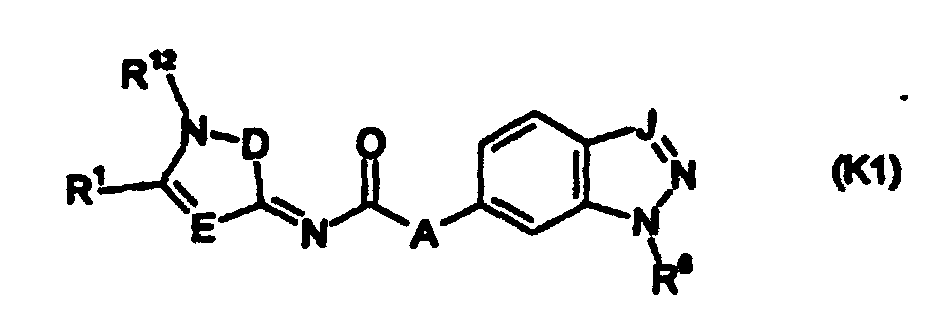
- Table K2 provides 288 compounds of Formula K1 wherein R1, D, E, R2, A and J are as defined in Table I1 and R6 is ethyl.
- Table K3 provides 288 compounds of Formula K1 wherein R1, D, E, R2, A and J are as defined in Table I1 and R6 is n-propyl.
- Table K4 provides 288 compounds of Formula K1 wherein R1, D, E, R2, A and J are as defined in Table I1 and R6 is iso-propyl.
- Table K5 provides 288 compounds of Formula K1 wherein R1, D, E, R2, A and J are as defined in Table I1 and R6 is n-butyl.
- Table K6 provides 288 compounds of Formula K1 wherein R1, D, E, R2, A and J are as defined in Table I1 and R6 is sec-butyl.
- Table K7 provides 288 compounds of Formula K1 wherein R1, D, E, R2, A and J are as defined in Table I1 and R6 is iso-butyl.
- Table K8 provides 288 compounds of Formula K1 wherein R1, D, E, R2, A and J are as defined in Table I1 and R6 is tert-butyl.
- Table K9 provides 288 compounds of Formula K1 wherein R1, D, E, R2, A and J are as defined in Table I1 and R6 is n-pentyl.
- Table K10 provides 288 compounds of Formula K1 wherein R1, D, E, R2, A and J are as defined in Table I1 and R6 is 1-methylbutyl.
- Table K11 provides 288 compounds of Formula K1 wherein R1, D, E, R2, A and J are as defined in Table I1 and R6 is 2-methylbutyl.
- Table K12 provides 288 compounds of Formula K1 wherein R1, D, E, R2, A and J are as defined in Table I1 and R6 is 3-methylbutyl.
- Table K13 provides 288 compounds of Formula K1 wherein R1, D, E, R2, A and J are as defined in Table I1 and R6 is neopentyl.
- Table K14 provides 288 compounds of Formula K1 wherein R1, D, E, R2, A and J are as defined in Table I1 and R6 is 2,2-dimethylbutyl.
- Table K15 provides 288 compounds of Formula K1 wherein R1, D, E, R2, A and J are as defined in Table I1 and R6 is 2,2,2-trifluoroethyl.
- Table K16 provides 288 compounds of Formula K1 wherein R1, D, E, R2, A and J are as defined in Table I1 and R6 is 2,2-difluoro-2-methoxyethyl.
- Table K17 provides 288 compounds of Formula K1 wherein R1, D, E, R2, A and J are as defined in Table I1 and R6 is 3,3,3-trifluoropropyl.
- Table K18 provides 288 compounds of Formula K1 wherein R1, D, E, R2, A and J are as defined in Table I1 and R6 is para-fluorobenzyl.
- Table K19 provides 288 compounds of Formula K1 wherein R1, D, E, R2, A and J are as defined in Table I1 and R6 is 2,4-dichlorophenyl.
- Table K20 provides 288 compounds of Formula K1 wherein R1, D, E, R2, A and J are as defined in Table Il and R6 is 2-chloro-4-trifluoromethylphenyl.
- Table L1 provides 192 compounds of Formula L1, wherein R1, D, E, R2, A and J are as defined in Table L1 and R6 is methyl.

Compound No. R1 D E R2 A J L1.1 CH3 S C-Cl H CH2 C-H L1.2 CH3 S C-Cl CH2CH3 CH2 C-H L1.3 CH3 S C-Cl CH2C=CH2 CH2 C-H L1.4 CH3 S C-Cl CH2C.CH CH2 C-H L1.5 CH3 S C-Cl CH2OCH3 CH2 C-H L1.6 CH3 S C-Cl CH2OCH2CH3 CH2 C-H L1.7 CH3 S C-Br H CH2 C-H L1.8 CH3 S C-Br CH2CH3 CH2 C-H L1.9 CH3 S C-Br CH2C=CH2 CH2 C-H L1.10 CH3 S C-Br CH2C.CH CH2 C-H L1.11 CH3 S C-Br CH2OCH3 CH2 C-H L1.12 CH3 S C-Br CH2OCH2CH3 CH2 C-H L1.13 CH2CH3 S C-Cl H CH2 C-H L1.14 CH2CH3 S C-Cl CH2CH3 CH2 C-H L1.15 CH2CH3 S C-Cl CH2C=CH2 CH2 C-H L1.16 CH2CH3 S C-Cl CH2C.CH CH2 C-H L1.17 CH2CH3 S C-Cl CH2OCH3 CH2 C-H L1.18 CH2CH3 S C-Cl CH2OCH2CH3 CH2 C-H L1.19 CH2CH3 S C-Br H CH2 C-H L1.20 CH2CH3 S C-Br CH2CH3 CH2 C-H L1.21 CH2CH3 S C-Br CH2C=CH2 CH2 C-H L1.22 CH2CH3 S C-Br CH2C.CH CH2 C-H L1.23 CH2CH3 S C-Br CH2OCH3 CH2 C-H L1.24 CH2CH3 S C-Br CH2OCH2CH3 CH2 C-H L1.25 CH3 S C-Cl H CH(CH3) C-H L1.26 CH3 S C-Cl CH2CH3 CH(CH3) C-H L1.27 CH3 S C-Cl CH2C=CH2 CH(CH3) C-H L1.28 CH3 S C-Cl CH2C.CH CH(CH3) C-H L1.29 CH3 S C-Cl CH2OCH3 CH(CH3) C-H L1.30 CH3 S C-Cl CH2OCH2CH3 CH(CH3) C-H L1.31 CH3 S C-Br H CH(CH3) C-H L1.32 CH3 S C-Br CH2CH3 CH(CH3) C-H L1.33 CH3 S C-Br CH2C=CH2 CH(CH3) C-H L1.34 CH3 S C-Br CH2C.CH CH(CH3) C-H L1.35 CH3 S C-Br CH2OCH3 CH(CH3) C-H L1.36 CH3 S C-Br CH2OCH2CH3 CH(CH3) C-H L1.37 CH2CH3 S C-Cl H CH(CH3) C-H L1.38 CH2CH3 S C-Cl CH2CH3 CH(CH3) C-H L1.39 CH2CH3 S C-Cl CH2C=CH2 CH(CH3) C-H L1.40 CH2CH3 S C-Cl CH2C.CH CH(CH3) C-H L1.41 CH2CH3 S C-Cl CH2OCH3 CH(CH3) C-H L1.42 CH2CH3 S C-Cl CH2OCH2CH3 CH(CH3) C-H L1.43 CH2CH3 S C-Br H CH(CH3) C-H L1.44 CH2CH3 S C-Br CH2CH3 CH(CH3) C-H L1.45 CH2CH3 S C-Br CH2C=CH2 CH(CH3) C-H L1.46 CH2CH3 S C-Br CH2C.CH CH(CH3) C-H L1.47 CH2CH3 S C-Br CH2OCH3 CH(CH3) C-H L1.48 CH2CH3 S C-Br CH2OCH2CH3 CH(CH3) C-H L1.49 CH3 S C-Cl H CHF C-H L1.50 CH3 S C-Cl CH2CH3 CHF C-H L1.51 CH3 S C-Cl CH2C=CH2 CHF C-H L1.52 CH3 S C-Cl CH2C.CH CHF C-H L1.53 CH3 S C-Cl CH2OCH3 CHF C-H L1.54 CH3 S C-Cl CH2OCH2CH3 CHF C-H L1.55 CH3 S C-Br H CHF C-H L1.56 CH3 S C-Br CH2CH3 CHF C-H L1.57 CH3 S C-Br CH2C=CH2 CHF C-H L1.58 CH3 S C-Br CH2C.CH CHF C-H L1.59 CH3 S C-Br CH2OCH3 CHF C-H L1.60 CH3 S C-Br CH2OCH2CH3 CHF C-H L1.61 CH2CH3 S C-Cl H CHF C-H L1.62 CH2CH3 S C-Cl CH2CH3 CHF C-H L1.63 CH2CH3 S C-Cl CH2C=CH2 CHF C-H L1.64 CH2CH3 S C-Cl CH2C.CH CHF C-H L1.65 CH2CH3 S C-Cl CH2OCH3 CHF C-H L1.66 CH2CH3 S C-Cl CH2OCH2CH3 CHF C-H L1.67 CH2CH3 S C-Br H CHF C-H L1.68 CH2CH3 S C-Br CH2CH3 CHF C-H L1.69 CH2CH3 S C-Br CH2C=CH2 CHF C-H L1.70 CH2CH3 S C-Br CH2C.CH CHF C-H L1.71 CH2CH3 S C-Br CH2OCH3 CHF C-H L1.72 CH2CH3 S C-Br CH2OCH2CH3 CHF C-H L1.73 CH3 S C-Cl H CH2O C-H L1.74 CH3 S C-Cl CH2CH3 CH2O C-H L1.75 CH3 S C-Cl CH2C=CH2 CH2O C-H L1.76 CH3 S C-Cl CH2C.CH CH2O C-H L1.77 CH3 S C-Cl CH2OCH3 CH2O C-H L1.78 CH3 S C-Cl CH2OCH2CH3 CH2O C-H L1.79 CH3 S C-Br H CH2O C-H L1.80 CH3 S C-Br CH2CH3 CH2O C-H L1.81 CH3 S C-Br CH2C=CH2 CH2O C-H L1.82 CH3 S C-Br CH2C.CH CH2O C-H L1.83 CH3 S C-Br CH2OCH3 CH2O C-H L1.84 CH3 S C-Br CH2OCH2CH3 CH2O C-H L1.85 CH2CH3 S C-Cl H CH2O C-H L1.86 CH2CH3 S C-Cl CH2CH3 CH2O C-H L1.87 CH2CH3 S C-Cl CH2C=CH2 CH2O C-H L1.88 CH2CH3 S C-Cl CH2C.CH CH2O C-H L1.89 CH2CH3 S C-Cl CH2OCH3 CH2O C-H L1.90 CH2CH3 S C-Cl CH2OCH2CH3 CH2O C-H L1.91 CH2CH3 S C-Br H CH2O C-H L1.92 CH2CH3 S C-Br CH2CH3 CH2O C-H L1.93 CH2CH3 S C-Br CH2C=CH2 CH2O C-H L1.94 CH2CH3 S C-Br CH2C.CH CH2O C-H L1.95 CH2CH3 S C-Br CH2OCH3 CH2O C-H L1.96 CH2CH3 S C-Br CH2OCH2CH3 CH2O C-H L1.97 CH3 S C-Cl H CH2 C-Cl L1.98 CH3 S C-Cl CH2CH3 CH2 C-Cl L1.99 CH3 S C-Cl CH2C=CH2 CH2 C-Cl L1.100 CH3 S C-Cl CH2C.CH CH2 C-Cl L1.101 CH3 S C-Cl CH2OCH3 CH2 C-Cl L1.102 CH3 S C-Cl CH2OCH2CH3 CH2 C-Cl L1.103 CH3 S C-Br H CH2 C-Cl L1.104 CH3 S C-Br CH2CH3 CH2 C-Cl L1.105 CH3 S C-Br CH2C=CH2 CH2 C-Cl L1.106 CH3 S C-Br CH2C.CH CH2 C-Cl L1.107 CH3 S C-Br CH2OCH3 CH2 C-Cl L1.108 CH3 S C-Br CH2OCH2CH3 CH2 C-Cl L1.109 CH2CH3 S C-Cl H CH2 C-Cl L1.110 CH2CH3 S C-Cl CH2CH3 CH2 C-Cl L1.111 CH2CH3 S C-Cl CH2C=CH2 CH2 C-Cl L1.112 CH2CH3 S C-Cl CH2C.CH CH2 C-Cl L1.113 CH2CH3 S C-Cl CH2OCH3 CH2 C-Cl L1.114 CH2CH3 S C-Cl CH2OCH2CH3 CH2 C-Cl L1.115 CH2CH3 S C-Br H CH2 C-Cl L1.116 CH2CH3 S C-Br CH2CH3 CH2 C-Cl L1.117 CH2CH3 S C-Br CH2C=CH2 CH2 C-Cl L1.118 CH2CH3 S C-Br CH2C.CH CH2 C-Cl L1.119 CH2CH3 S C-Br CH2OCH3 CH2 C-Cl L1.120 CH2CH3 S C-Br CH2OCH2CH3 CH2 C-Cl L1.121 CH3 S C-Cl H CH(CH3) C-Cl L1.122 CH3 S C-Cl CH2CH3 CH(CH3) C-Cl L1.123 CH3 S C-Cl CH2C=CH2 CH(CH3) C-Cl L1.124 CH3 S C-Cl CH2C.CH CH(CH3) C-Cl L1.125 CH3 S C-Cl CH2OCH3 CH(CH3) C-Cl L1.126 CH3 S C-Cl CH2OCH2CH3 CH(CH3) C-Cl L1.127 CH3 S C-Br H CH(CH3) C-Cl L1.128 CH3 S C-Br CH2CH3 CH(CH3) C-Cl L1.129 CH3 S C-Br CH2C=CH2 CH(CH3) C-Cl L1.130 CH3 S C-Br CH2C.CH CH(CH3) C-Cl L1.131 CH3 S C-Br CH2OCH3 CH(CH3) C-Cl L1.132 CH3 S C-Br CH2OCH2CH3 CH(CH3) C-Cl L1.133 CH2CH3 S C-Cl H CH(CH3) C-Cl L1.134 CH2CH3 S C-Cl CH2CH3 CH(CH3) C-Cl L1.135 CH2CH3 S C-Cl CH2C=CH2 CH(CH3) C-Cl L1.136 CH2CH3 S C-Cl CH2C.CH CH(CH3) C-Cl L1.137 CH2CH3 S C-Cl CH2OCH3 CH(CH3) C-Cl L1.138 CH2CH3 S C-Cl CH2OCH2CH3 CH(CH3) C-Cl L1.139 CH2CH3 S C-Br H CH(CH3) C-Cl L1.140 CH2CH3 S C-Br CH2CH3 CH(CH3) C-Cl L1.141 CH2CH3 S C-Br CH2C=CH2 CH(CH3) C-Cl L1.142 CH2CH3 S C-Br CH2C.CH CH(CH3) C-Cl L1.143 CH2CH3 S C-Br CH2OCH3 CH(CH3) C-Cl L1.144 CH2CH3 S C-Br CH2OCH2CH3 CH(CH3) C-Cl L1.145 CH3 S C-Cl H CHF C-Cl L1.146 CH3 S C-Cl CH2CH3 CHF C-Cl L1.147 CH3 S C-Cl CH2C=CH2 CHF C-Cl L1.148 CH3 S C-Cl CH2C.CH CHF C-Cl L1.149 CH3 S C-Cl CH2OCH3 CHF C-Cl L1.150 CH3 S C-Cl CH2OCH2CH3 CHF C-Cl L1.151 CH3 S C-Br H CHF C-Cl L1.152 CH3 S C-Br CH2CH3 CHF C-Cl L1.153 CH3 S C-Br CH2C=CH2 CHF C-Cl L1.154 CH3 S C-Br CH2C.CH CHF C-Cl L1.155 CH3 S C-Br CH2OCH3 CHF C-Cl L1.156 CH3 S C-Br CH2OCH2CH3 CHF C-Cl L1.157 CH2CH3 S C-Cl H CHF C-Cl L1.158 CH2CH3 S C-Cl CH2CH3 CHF C-Cl L1.159 CH2CH3 S C-Cl CH2C=CH2 CHF C-Cl L1.160 CH2CH3 S C-Cl CH2C.CH CHF C-Cl L1.161 CH2CH3 S C-Cl CH2OCH3 CHF C-Cl L1.162 CH2CH3 S C-Cl CH2OCH2CH3 CHF C-Cl L1.163 CH2CH3 S C-Br H CHF C-Cl L1.164 CH2CH3 S C-Br CH2CH3 CHF C-Cl L1.165 CH2CH3 S C-Br CH2C=CH2 CHF C-Cl L1.166 CH2CH3 S C-Br CH2C.CH CHF C-Cl L1.167 CH2CH3 S C-Br CH2OCH3 CHF C-Cl L1.168 CH2CH3 S C-Br CH2OCH2CH3 CHF C-Cl L1.169 CH3 S C-Cl H CH2O C-Cl L1.170 CH3 S C-Cl CH2CH3 CH2O C-Cl L1.171 CH3 S C-Cl CH2C=CH2 CH2O C-Cl L1.172 CH3 S C-Cl CH2C.CH CH2O C-Cl L1.173 CH3 S C-Cl CH2OCH3 CH2O C-Cl L1.174 CH3 S C-Cl CH2OCH2CH3 CH2O C-Cl L1.175 CH3 S C-Br H CH2O C-Cl L1.176 CH3 S C-Br CH2CH3 CH2O C-Cl L1.177 CH3 S C-Br CH2C=CH2 CH2O C-Cl L1.178 CH3 S C-Br CH2C.CH CH2O C-Cl L1.179 CH3 S C-Br CH2OCH3 CH2O C-Cl L1.180 CH3 S C-Br CH2OCH2CH3 CH2O C-Cl L1.181 CH2CH3 S C-Cl H CH2O C-Cl L1.182 CH2CH3 S C-Cl CH2CH3 CH2O C-Cl L1.183 CH2CH3 S C-Cl CH2C=CH2 CH2O C-Cl L1.184 CH2CH3 S C-Cl CH2C.CH CH2O C-Cl L1.185 CH2CH3 S C-Cl CH2OCH3 CH2O C-Cl L1.186 CH2CH3 S C-Cl CH2OCH2CH3 CH2O C-Cl L1.187 CH2CH3 S C-Br H CH2O C-Cl L1.188 CH2CH3 S C-Br CH2CH3 CH2O C-Cl L1.189 CH2CH3 S C-Br CH2C=CH2 CH2O C-Cl L1.190 CH2CH3 S C-Br CH2C.CH CH2O C-Cl L1.191 CH2CH3 S C-Br CH2OCH3 CH2O C-Cl L1.192 CH2CH3 S C-Br CH2OCH2CH3 CH2O C-Cl - Table L2 provides 192 compounds of Formula L1 wherein R1, D, E, R2, A and J are as defined in Table L1 and R6 is ethyl.
- Table L3 provides 192 compounds of Formula L1 wherein R1, D, E, R2, A and J are as defined in Table L1 and R6 is n-propyl.
- Table L4 provides 192 compounds of Formula L1 wherein R1, D, E, R2, A and J are as defined in Table L1 and R6 is iso-propyl.
- Table L5 provides 192 compounds of Formula L1 wherein R1, D, E, R2, A and J are as defined in Table L1 and R6 is n-butyl.
- Table L6 provides 192 compounds of Formula L1 wherein R1, D, E, R2, A and J are as defined in Table L1 and R6 is sec-butyl.
- Table L7 provides 192 compounds of Formula L1 wherein R1, D, E, R2, A and J are as defined in Table L1 and R6 is iso-butyl.
- Table L8 provides 192 compounds of Formula L1 wherein R1, D, E, R2, A and J are as defined in Table L1 and R6 is tert-butyl.
- Table L9 provides 192 compounds of Formula L1 wherein R1, D, E, R2, A and J are as defined in Table L1 and R6 is n-pentyl.
- Table L10 provides 192 compounds of Formula L1 wherein R1, D, E, R2, A and J are as defined in Table L1 and R6 is 1-methylbutyl.
- Table L11 provides 192 compounds of Formula L1 wherein R1, D, E, R2, A and J are as defined in Table L1 and R6 is 2-methylbutyl.
- Table L12 provides 192 compounds of Formula L1 wherein R1, D, E, R2, A and J are as defined in Table L1 and R6 is 3-methylbutyl.
- Table L13 provides 192 compounds of Formula L1 wherein R1. D, E, R2, A and J are as defined in Table L1 and R6 is neopentyl.
- Table L14 provides in compounds of Formula L1 wherein R1, D, E, R2, A and J are as defined in Table L1 and R6 is 2,2-dimethylbutyl.
- Table L15 provides 192 compounds of Formula L1 wherein R1, D, E, R2, A and J are as defined in Table L1 and R6 is 2,2,2-trifluoroethyl.
- Table L16 provides 192 compounds of Formula L1 wherein R1, D, E, R2, A and J are as defined in Table L1 and R6 is 2,2-difluoro-2-methoxyethyl.
- Table L17 provides 192 compounds of Formula L1 wherein R1, D, E, R2, A and J are as defined in Table L1 and R6 is 3,3,3-trifluoropropyl.
- Table L18 provides 192 compounds of Formula L1 wherein R1, D, E, R2, A and J are as defined in Table L1 and R6 is para-fluorobenzyl.
- Table L19 provides 192 compounds of Formula L1 wherein R1, D, E, R2, A and J are as defined in Table L1 and R6 is 2,4-dichlorophenyl.
- Table L20 provides 192 compounds of Formula L1 wherein R1, D, E, R2, A and J are as defined in Table L1 and R6 is 2-chloro-4-trifluoromethylphenyl.
- The following abbreviations are used throughout this description:
m.p. = melting point ppm = parts per million s = singlet br = broad d = doublet dd = doublet of doublets t = triplet q = quartet m = multiplet - Table 1 shows selected NMR data, all with CDCl3, as the solvent (unless otherwise stated; if a mixture of solvents is present, this is indicated as, for example (CDCl3 / d6 -DMSO)), (no attempt is made to list all characterising data in all cases) for compounds of Tables A1 to L20.
Compound No. 1H NMR (CDCl3 unless otherwise stated) A3.1 1.0(t,3H); 2.15(m,2,H); 2.35(s,3H); 4.0(s,2H); 4.7(t,2H); 7.35(dd,1H); 7.85(d,1H); 7.95(d,1H); 8.15(br,1H). A1.1 2.35(s,3H); 4.0(s,2H); 4.5(s,3H); 7.35(dd,1H); 7.8(d,1H); 7.9(d,1H); 8.05(br,1H). A18.1 (d 6-DMSO): 2.35(s,3H); 4.05(s,2H); 5.8(s,2H); 7.0(m,2H); 7.4(m,3H); 7.8(m,2H); 10.9(br,1H). A15.1 2.4(s,3H); 4.0(s,2H); 5.3(q,2H); 7.4(dd,1H); 7.85(d,1H); 7.95(d,1H); 8.15(br,1H). A9.1 0.9(t,3H); 1.35(m,4H); 2.15(m,2H); 2.4(s,3H); 4.05(s,2H); 4.7(t,2H); 7.35(dd,1H); 7.85(d,1H); 7.9(d,1H); 8.15(br,1H). A20.1 2.4(s,3H); 4.05(s,2H); 7.45(dd,1H); 7.75(dd,1H); 7.95(m,3H); 8.05(m,1H); 8.2(br,1H). A7.1 0.85(t,3H); 1.7(d,3H); 2.0-2.2(m,2H); 2.35(s,3H); 4.0(s,2H); 4.9(m,1H); 7.3(dd,1H); 7.85(d,1H); 7.9(d,1H); 8.15(br,1H). A2.1 1.75(t,3H); 2.35(s,3H); 4.0(s,2H); 4.8(q,2H); 7.35(dd,1H); 7.8(br,1H); 7.9(d,1H); 8.1(br,1H). A3.103 1.0(t,3H); 1.25(t,3H); 2.15(m,2H); 2.85(q,2H); 3.95(s,2H); 4.7(t,2H); 7.35(m,1H); 7.85(br,1H); 7.95(d,1H); 7.95(br,1H); 8.2(d,1H); 8.35(d,1H). A13.1 1.05(s.9H); 2.4(s,3H); 4.05(s,2H); 4.55(s,2H); 7.35(dd,1H); 7.85(br,1H); 7.95(d,1H); 8.15(br,1H). A3.2 0.95(t,3H); 1.2(t,3H); 2.13(m,2H); 2.5(s,3H); 3.65(br,2H), 3.8(br,2H); 4.65(t,2H); 7.15(br.d,1H); 7.5(br,1H); 7.78(dd,1H). A3.6 0.95(t,3H); 1.2(t,3H); 2.1(m,2H); 2.5(s,3H); 3.6(q,2H), 3.7(br,2H); 4.7(t,2H); 5.1(br,2H); 7.15(br,1H); 7.55(br,1H); 7.8(d,1H). A21.1 2.4(s,3H); 4.1(s,2H); 7.5(m,1H), 7.8-7.9(m,4H); 8.5(br.d,2H); 10.35(s,1H). A16.1 2.39(s,3H); 3.61(s,3H); 4.03(s,2H); 5.19(t,2H); 7.40(dd,1H); 7.88(s,1H); 7.97(d,1H); 8.16(s,1H). A10.1 1.0(d,6H); 2.03(q,2H); 2.37(s,3H); 2.37(m.1H); 4.0(s,2H); 4.77(dd,2H); 7.34(dd,1H); 7.83(s,1H); 7.92(d,1H); 8.16(s,1H). A6.1 1.0(d,6H); 2.37(s,3H); 2.54(septet,1H); 4.03(s,2H); 4.56(d,2H); 7.36(dd,1H); 7.84(s,1H); 7.94(d,1H). I3.2 0.95(t,3H); 1.4(t,3H); 2.12(m,2H); 2.5(s,3H); 3.9(q,2H); 4.2(s,2H); 4.65(t,2H); 7.42(dd,1H); 7.8(br,1H); 7.81(br,1H). I3.6 0.95(t,3H); 1.15(t,3H); 2.1(m,2H); 2.55(s,3H); 3.5(q,2H); 4.2(s,2H); 4.7(t,2H), 5.2(s,2H); 7.4(dd,1H); 7.8(m,2H). E1.1 2.35(s,3H); 4.1(s,2H); 4.3(s,3H); 7.55(m,2H); 8.0(d,1H); 8.3(br.s,1H). E15.1 2.4(s,3H); 4.05(s,2H); 5.25(q,2H); 7.4(dd,1H); 7.6(d,1H); 8.15(d,1H); 8.3(br,1H). F15.1 2.4(s,3H); 4.1(s,2H); 5.25(q,1H); 7.6(m,2H); 8.1(br.s,1H); 8.25(br,1H). E22.1 2.40(s,3H); 3.03(s,3H); 4.10(s,2H); 7.52(dd,2H); 8.19(d,1H); 8.2(br,1H); 8.3(d,1H). F1.1 2.35(s,3H); 4.1(s,2H); 4.3(s,3H); 7.3(d,1H); 7.55(d,1H); 8.1(d,1H); 8.3(br.s,1H). F22.1 2.40(s,3H); 3.03(s,3H); 4.09(s,2H); 7.66(dd,2H); 8.10(d,1H); 8.2(br,1H); 8.34(d,1H). E6.145 0.94(d,6H); 2.36(m,1H); 2.36(s,3H); 3.98(s,2H); 4.22(d,2H), 7.32(m,1H); 7.48(m,1H); 7.70(m,1H); 8.02(s,1H); 8.1(br,1H). A6.145 0.96(d,6H); 2.36(s,3H); 2.42(m,1H); 3.96(s,2H); 4.24(d,2H), 7.21(m,1H); 7.64(s,1H); 7.80(d,1H); 7.92(s,1H); 8.14(br,1H). E6.150 0.92(d,6H); 1.14(t,3H); 2.33(m,1H); 2.50(s,3H); 3.60(q,2H); 3.72(br,2H); 4.16(d,2H); 5.10(br,2H); 7.13(m,1H); 7.37(m,2H); 7.90(s,1H). J6.102 0.92(d,6H); 1.17(t,3H); 2.34(m,1H); 2.56(s,3H); 3.50(q,2H); 4.12-4.18(m,4H); 5.20(s,2H); 7.32-7.44(m,2H); 7.70(s,1H); 7.92(s,1H). A6.150 0.94(d,6H); 1.19(t,3H); 2.38(m,1H); 2.50(s,3H); 3.60(q,2H); 3.68(br,2H); 4.18(d,2H); 5.10(br,2H); 7.02(d,1H); 7.32(br,1H); 7.62(d,1H); 7.80(s,1H). I6.102 0.92(d,6H);1.15(t,3H); 2.39(m,1H); 2.54(s,3H); 3.50(q,2H); 4.14-4.20(m,4H); 5.20(s,2H); 7.32(m,1H); 7.60-7.68(m,2H); 7.82(s,1H). - The compounds of the invention may be made in a variety of ways. For example, as shown in Scheme 1, compounds (Ia) wherein Y is O and A is alkylene, alkenylene, alkylenoxy, alkylenamino or alkylenethio may be prepared by reacting amine (II) with an appropriate carboxylic ester (III) (X1 = alkoxy or aryloxy) or with a carboxylic acid (III, X1= OH) optionally in the presence of a known coupling agent such as 1,3-dicyclohexylcarbodiimide or 1-(3-dimethylaminopropyl)-3-ethylcarbodiimide. Alternatively the carboxylic acid (III, X1 = OH) may first be converted to an acid chloride, anhydride or chloroformate suitable for reaction with an amine to form an amide; such procedures are well known to those skilled in the art and are described, for example in J. March, Advanced Organic Chemistry, Third Edition, John Wiley and Sons, New York, 1985, pps 370-376 and references therein.

- Therefore in a further aspect the invention provides a process for preparing a compound of formula (I) where Y is oxygen comprising reacting a compound of formula (II) with a compound of formula (III) where Y is oxygen and X1 is a leaving group (such as alkoxy, aryloxy, OH, chloro or ClC(O)O or such that the compound of formula (III) is a dianhydride).
- Compounds of formula (II) are known compounds, or may be prepared from commercially available starting materials by methods described in the literature (see, for example, C. Oliver Kappe, Robert Flammang, and Curt Wentrup, Heterocycles, Vol. 37, No. 3, 1615, (1994), A. Adams and R. Slack, J. Chem. Soc., 3061, (1959) and Ronald E Hackler, Kenneth W. Burow, Jr., Sylvester V. Kaster and David I. Wicldser, J. Heterocyclic Chem, 26, 1575, (1989), Ronald E Hackler, Glen P Jourdan, Peter L Johnson, Brian R Thoreen and Jack G Samaritoni, PCT Int. Appl., WO9304580 A1, and references therein).
- The syntheses of substituted benzotriazoles and indazoles is described in the chemical literature (see, for example Alan R. Kalritzky and Charles W. Rees, Comprehensive Heterocyclic Chemistry, Pergamon Press, 1984; Christoph Ruchardt and Volker Hassmann, Liebis Ann. Chem., 1980, 908; Jean-Jacques Vandenbossche and Alain Lagrange, Eur. Pat. Appl., EP904769; F. Halley and X. Sava, Synth. Commun. 1997, 27 (7), 1199; Donald R. James, Don R. Baker, Steven D. Mielich, William J. Michaely, Steven Fitzjohn, Christopher G. Knudsen, Christopher Mathews and John M. Gerdes, PCT Int. Appl., WO9318008 A1, Donald Richard James and Raymond Anthony Felix, PCT Int. Appl., WO9425446 Al) and similar methods may be used to prepare compounds of formula (III) starting from known appropriately substituted anilines. Alternatively, halobenzotriazoles and haloindazoles (especially where the halogen is bromo or iodo), which may be prepared by the above methods, may be converted into compounds of formula (III) via procedures involving transition-metal catalysed transformations analogous to those described by Nitya G. Kundu et al., Tetrahedron, 53 (39), 13397, (1997), Takao Sakamoto et al. Heterocycles, 36 (11), 2509 (1993), Motoi Kawatsura and John F. Hartwig, JACS, 1999, 121, 1473, and others.
- A compound of formula (Ia), wherein Y is sulphur, may be prepared by reacting a compound of formula (Ia), wherein Y is oxygen, with a suitable thionating agent such as 2,4-bis(4-methoxyphenyl)-1,3-dithia-2,4-diphosphetane-2,4-disulfide (Lawesson's reagent), 2,4-bis(methylthio)-1,3-dithia-2,4-diphosphetane-2,4-disulfide (Davy reagent methyl), 2,4-bis(para-tolyl)-1,3-dithia-2,4-diphosphetane-2,4-disulfide (Davy reagent p-tolyl) or phosphorus pentasulfide in a suitable solvent such as toluene or fluorobenzene.
- Therefore in a further aspect the invention provides a process for preparing a compound of formula (I) where Y is sulphur comprising preparing a compound of formula (I) where Y is oxygen (by reacting a compound of formula (II) with a compound of formula (III) where Y is oxygen and X1 is a leaving group) and then reacting this compound with a thionating agent
- A compound of formula (IV) may be made from a compound of formula (V) by treatment with N,N-dimethylformamide dialkyl acetal in a suitable solvent such as toluene or N,N-dimethylformamide. Frequently this reaction produces a mixture of E and Z isomers which are sometimes separable by standard techniques such as flash column chromatography and recrystallisation. This invention covers isolated isomers together with mixtures of isomers.
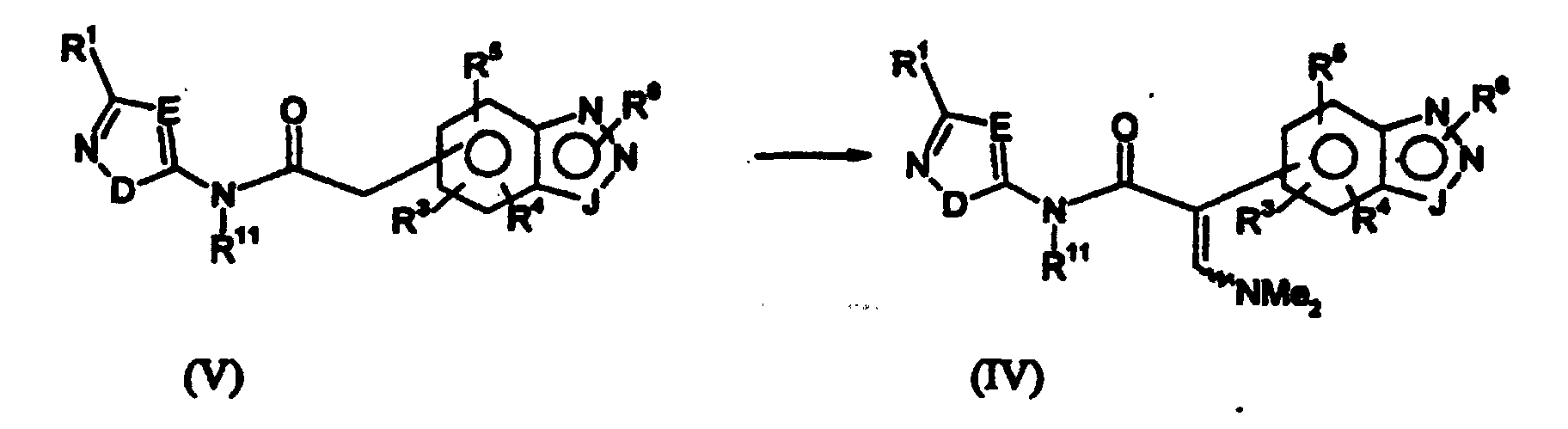
- A compound of formula (IV) may be treated subsequently with an amine (HNRaRb) to give a compound of formula (VI); a compound of formula (V) may be treated in an analogous manner with a trialkylorthoformate (HC(ORd)3) to afford a compound of formula (VII):
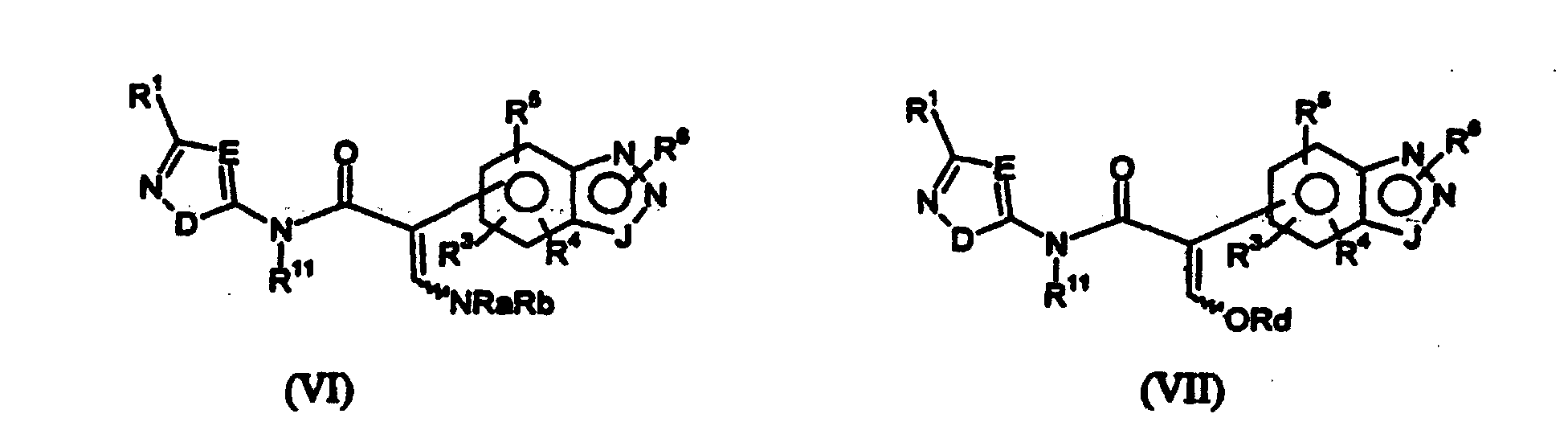
- A compound of formula (Ia), wherein R11 is hydrogen, may be treated with an optionally substituted alkylating agent (such as an alkyl halide, chloromethylether, dialkyl sulfate or trialkyloxonium salt) optionally in the presence of a base to give an additional compound of formula (Ia) wherein R11 is optionally substituted alkyl, which forms a further part of this invention. When Y is O, this reaction usually produces a mixture of isomeric products of formulae (Ia) and (Ib). In contrast, when Y is S, a compound of formula (Ic) is the predominant product.

- Those skilled in the art will recognise that analogous reactions involving sulfenylation, sulfonylation and acylation are possible when Y is O.
- A compound of formula (Ia), where R11 is alkoxymethyl or acyloxymethyl, may also be prepared from a compound of formula (Ia), where R11 is hydrogen, by sequential reaction with formaldehyde and an alkylating or acylating agent.
- Additional compounds of formula (Ia) may be prepared from a compound of formula (I), where R11 is hydrogen, by reaction with hydroxymethylbenzotriazole or benzotriazoles and aldehydes according to the method of A.R.Katritzky et al., J. Org. Chem., (1993), 58, 2086.
- A compound of formula (Ic) where Y = S may be reacted with an alcohol, amine, O-alkylhydroxyl-amine or hydrazine, optionally in the presence of a mercuric salt (such as mercuric chloride), according to known procedures to give a compound of formula (1d) or (Ie) respectively:where Re is H, optionally substituted alkyl, alkenyl or alkynyl, Rf is substituted alkyl, alkenyl alkynyl, amino, substituted amino or alkoxy and Rg is optionally substituted alkyl, alkenyl or alkynyl.
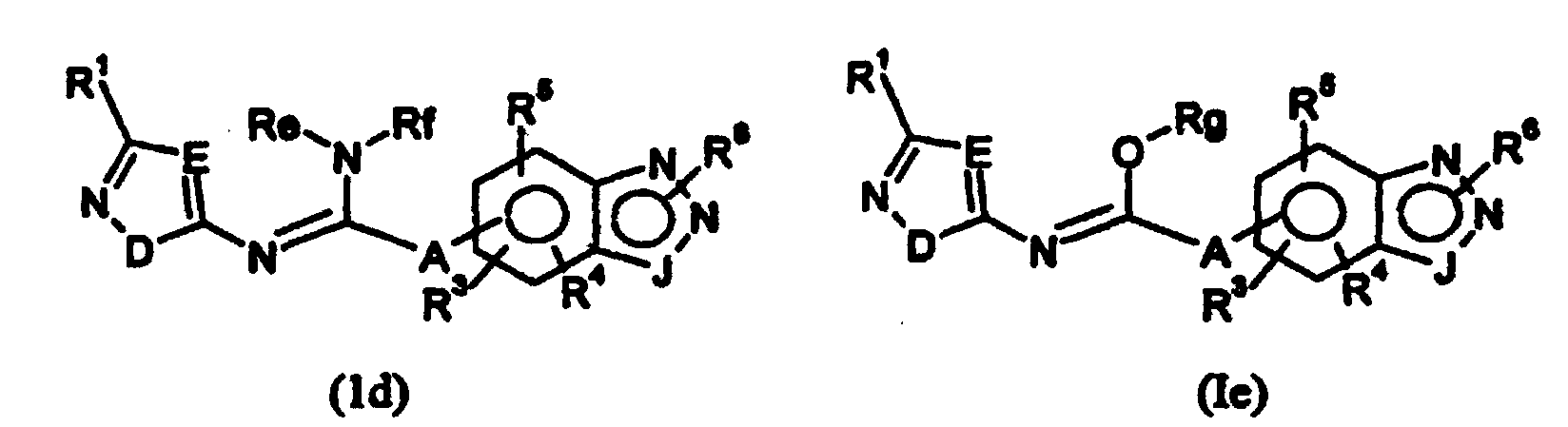
- A compound of formula (1d) where Re is hydrogen may be treated with an optionally substituted alkylating agent (such as an alkyl halide, chloromethylether, dialkyl sulfate or trialkyloxonium salt) optionally in the presence of a base to give a compound of formula (If).
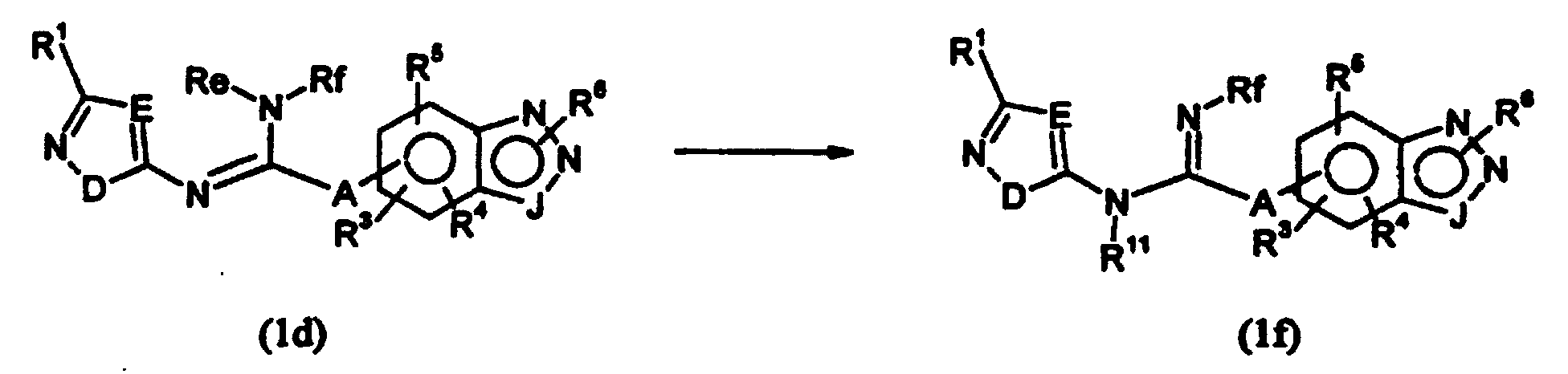
- Heteroaryl N-oxides can be produced by methods known to the skilled person.
- It will be appreciated that compounds of fomula (Ia), (Ib), (Ic), (Id), (Ie), (If), (IV), (V), (VI) and (VII) are all compounds of formula (I).
- The compounds of formula (I) can be used to combat and control infestations of insect pests such as Lepidoptera, Diptera, Hemiptera, Thysanoptera, Orthoptera, Dictyoptera, Coleoptera, Siphonaptera, Hymenoptera and Isoptera and also other invertebrate pests, for example, acarine, nematode and mollusc pests. Insects, acarines, nematodes and molluscs are hereinafter collectively referred to as pests. The pests which may be combated and controlled by the use of the invention compounds include those pests associated with agriculture (which term includes the growing of crops for food and fibre products), horticulture and animal husbandry, companion animals, forestry and the storage of products of vegetable origin (such as fruit, grain and timber); those pests associated with the damage of man-made structures and the transmission of diseases of man and animals; and also nuisance pests (such as flies).
- Examples of pest species which may be controlled by the compounds of formula (I) include: Myzus persicae (aphid), Aphis gossypii (aphid), Aphis fabae (aphid), Lygus spp. (capsids), Dysdercus spp. (capsids), Nilaparvata lugens (planthopper), Nephotettixc incticeps (leafhopper), Nezara spp. (stinkbugs), Euschistus spp. (stinkbugs), Leptocorisa spp. (stinkbugs), Frankliniella occidentalis (thrip), Thrips spp. (thrips), Leptinotarsa decemlineata (Colorado potato beetle), Anthonomus grandis (boll weevil), Aonidiella spp. (scale insects), Trialeurodes spp. (white flies), Bemisia tabaci (white fly), Ostrinia nubilalis (European corn borer), Spodoptera littoralis (cotton leafworm), Heliothis virescens (tobaoco budworm), Helicoverpa armigera (cotton bollworm), Helicoverpa zea (cotton bollworm), Sylepta derogata (cotton leaf roller), Pieris brassicae (white butterfly), Plutella xylostella (diamond back moth), Agrotis spp. (cutworms), Chilo suppressalis (rice stem borer), Locusta migratoria (locust), Chortiocetes terminifera (locust), Diabrotica spp. (rootworms), Panonychus ulmi (European red mite), Panonychus citri (citrus red mite), Tetranychus urticae (two-spotted spider mite), Tetranychus cinnabarinus (carmine spider mite), Phyllocoptruta oleivora (citrus rust mite), Polyphagotarsonemus latus (broad mite), Brevipalpus spp. (flat mites), Boophilus microplus (cattle tick), Dermacentor variabilis (American dog tick), Ctenocephalides felis (cat flea), Liriomyza spp. (leafminer), Musca domestica (housefly), Aedes aegypti (mosquito), Anopheles spp. (mosquitoes), Culex spp. (mosquitoes), Lucillia spp. (blowflies), Blattella germanica (cockroach), Periplaneta americana (cockroach), Blatta orientalis (cockroach), termites of the Mastotermitidae (for example Mastotermes spp.), the Kalotermitidae (for example Neotermes spp.), the Rhinotermitidae (for example Coptotermes formosanus, Reticulitermes flavipes, R. speratu, R. virginicus, R. hesperus, and R. santonensis) and the Termitidae (for example Globitermes sulphureus), Solenopsis geminata (fire ant), Monomorium pharaonis (pharaoh's ant), Damalinia spp. and Linognathus spp. (biting and sucking lice), Meloidogyne spp. (root knot nematodes), Globodera spp. and Heterodera spp. (cyst nematodes), Pratylenchus spp. (lesion nematodes), Rhodopholus spp. (banana burrowing nematodes), Tylenchulus spp.(citrus nematodes), Haemonchus contortus (barber pole worm), Caenorhabditis elegans (vinegar eelworm), Trichostrongylus spp. (gastro intestinal nematodes) and Deroceras reticulatum (slug).
- The compounds of formula (I) are also active fungicides and may be used to control one or more of the following pathogens: Pyricularia oryzae (Magnaporthe grisea) on rice and wheat and other Pyricularia spp. on other hosts; Puccinia recondita, Puccinia striiformis and other rusts on wheat, Puccinia hordei, Puccinia striiformis and other rusts on barley, and rusts on other hosts (for example turf, rye, coffee, pears, apples, peanuts, sugar beet, vegetables and ornamental plants); Erysiphe cichoracearum on cucurbits (for example melon); Erysiphe graminis (powdery mildew) on barley, wheat, rye and turf and other powdery mildews on various hosts, such as Sphaerotheca macularis on hops, Sphaerotheca fusca (Sphaerotheca fuliginea) on cucurbits (for example cucumber), Leveillula taurica on tomatoes, aubergine and green pepper, Podosphaera leucotricha on apples and Uncinula necator on vines; Cochliobolus spp., Helminthosporium spp., Drechslera spp. (Pyrenophora spp.), Rhynchosporium spp., Mycosphaerella graminicola (Septoria tritici) and Phaeosphaeria nodorum (Stagonospora nodorum or Septoria nodorum), Pseudocercosporella herpotrichoides and Gaeumannomyces graminis on cereals (for example wheat, barley, rye), turf and other hosts; Cercospora arachidicola and Cercosporidium personatum on peanuts and other Cercospora spp. on other hosts, for example sugar beet, bananas, soya beans and rice; Botrytis cinerea (grey mould) on tomatoes, strawberries, vegetables, vines and other hosts and other Botrytis spp. on other hosts; Alternaria spp. on vegetables (for example carrots), oil-seed rape, apples, tomatoes, potatoes, cereals (for example wheat) and other hosts; Venturia spp. (including Venturia inaequalis (scab)) on apples, pears, stone fruit, tree nuts and other hosts; Cladosporium spp. on a range of hosts including cereals (for example wheat) and tomatoes; Monilinia spp. on stone fruit, tree nuts and other hosts; Didymella spp. on tomatoes, turf, wheat, cucurbits and other hosts; Phoma spp. on oil-seed rape, turf, rice, potatoes, wheat and other hosts; Aspergillus spp. and Aureobasidium spp. on wheat, lumber and other hosts; Ascochyta spp. on peas, wheat, barley and other hosts; Stemphylium spp. (Pleospora spp.) on apples, pears, onions and other hosts; summer diseases (for example bitter rot (Glomerella cingulata), black rot or frogeye leaf spot (Botryosphaeria obtusa), Brooks fruit spot (Mycosphaerella pomi), Cedar apple rust (Gymnosporangium juniperi-virginianae), sooty blotch (Gloeodes pomigena), flyspeck (Schizothyrium pomi) and white rot (Botryosphaeria dothidea)) on apples and pears; Plasmopara viticola on vines; other downy mildews, such as Bremia lactucae on lettuce, Peronospora spp. on soybeans, tobacco, onions and other hosts, Pseudoperonospora humuli on hops and Pseudoperonospora cubensis on cucurbits; Pythium spp. (including Pythium ultimum) on turf and other hosts; Phytophthora infestans on potatoes and tomatoes and other Phytophthora spp. on vegetables, strawberries, avocado, pepper, ornamentals, tobacco, cocoa and other hosts; Thanatephorus cucumeris on rice and turf and other Rhizoctonia spp. on various hosts such as wheat and barley, peanuts, vegetables, cotton and turf; Sclerotinia spp. on turf, peanuts, potatoes, oil-seed rape and other hosts; Sclerotium spp. on turf, peanuts and other hosts; Gibberella fujikuroi on rice; Colletotrichum spp. on a range of hosts including turf, coffee and vegetables; Laetisaria fuciformis on turf; Mycosphaerella spp. on bananas, peanuts, citrus, pecans, papaya and other hosts; Diaporthe spp. on citrus, soybean, melon, pears, lupin and other hosts; Elsinoe spp. on citrus, vines, olives, pecans, roses and other hosts; Verticillium spp. on a range of hosts including hops, potatoes and tomatoes; Pyrenopeziza spp. on oil-seed rape and other hosts; Oncobasidium theobromae on cocoa causing vascular streak dieback; Fusarium spp., Typhula spp., Microdochium nivale, Ustilago spp., Urocystis spp., Tilletia spp. and Claviceps purpurea on a variety of hosts but particularly wheat, barley, turf and maize; Ramularia spp. on sugar beet, barley and other hosts; post-harvest diseases particularly of fruit (for example Penicillium digitatum, Penicillium italicum and Trichoderma viride on oranges, Colletotrichum musae and Gloeosporium musarum on bananas and Botrytis cinerea on grapes); other pathogens on vines, notably Eutypa lata, Guignardia bidwellii, Phellinus igniarus, Phomopsis viticola, Pseudopeziza tracheiphila and Stereum hirsutum; other pathogens on trees (for example Lophodermium seditiosum) or lumber, notably Cephaloascus fragrans, Ceratocystis spp., Ophiostoma piceae, Penicillium spp., Trichoderma pseudokoningii, Trichoderma viride, Trichoderma harzianum, Aspergillus niger, Leptographium lindbergi and Aureobasidium pullulans; and fungal vectors of viral diseases (for example Polymyxa graminis on cereals as the vector of barley yellow mosaic virus (BYMV) and Polymyxa betae on sugar beet as the vector of rhizomania).
- A compound of formula (I) may move acropetally, basipetally or locally in plant tissue to be active against one or more fungi. Moreover, a compound of formula (I) may be volatile enough to be active in the vapour phase against one or more fungi on the plant.
- The invention therefore provides a method of combating and controlling insects, acarines, nematodes or molluscs which comprises applying an insecticidally, acaricidally, nematicidally or molluscicidally effective amount of a compound of formula (I), or a composition comaining a compound of formula (I), to a pest, a locus of pest, or to a plant susceptible to attack by a pest, and a method of combating and controlling fungi which comprises applying a fungicidally effective amount of a compound of formula (I), or a composition containing a compound of formula (I), to a plant, to a seed of a plant, to the locus of the plant or seed, to soil or to any other growth medium (for example a nutrient solution). The compounds of formula (I) are preferably used against insects, acarines, nematodes or fungi.
- The term "plant" as used herein includes seedlings, bushes and trees. Furthermore, the fungicidal method of the invention includes protectant, curative, systemic, eradicant and antisporulant treatments.
- As fungicides, the compounds of formula (I) are preferably used for agricultural, horticultural and turfgrass purposes in the form of a composition.
- In order to apply a compound of formula (I) as an insecticide, acaricide, nematicide or molluscicide to a pest, a locus of pest, or to a plant susceptible to attack by a pest, or, as a fungicide to a plant, to a seed of a plant, to the locus of the plant or seed, to soil or to any other growth medium, a compound of formula (I) is usually formulated into a composition which includes, in addition to the compound of formula (I), a suitable inert diluent or carrier and, optionally, a surface active agent (SFA). SFAs are chemicals which are able to modify the properties of an interface (for example, liquid/solid, liquid/air or liquid/liquid interfaces) by lowering the interfacial tension and thereby leading to changes in other properties (for example dispersion, emulsification and wetting). It is preferred that all compositions (both solid and liquid formulations) comprise, by weight, 0.0001 to 95%, more preferably 1 to 85%, for example 5 to 60%, of a compound of formula (I). The composition is generally used for the control of pests or fungi such that a compound of formula (I) is applied at a rate of from 0.1g to 10kg per hectare, preferably from 1g to 6kg per hectare, more preferably from 1g to 1kg per hectare.
- When used in a seed dressing, a compound of formula (I) is used at a rate of 0.0001g to 10g (for example 0.001g or 0.05g), preferably 0.005g to 10g, more preferably 0.005g to 4g, per kilogram of seed.
- In another aspect the present invention provides an insecticidal, acaricidal, nematicidal, molluscicidal or fungicidal composition comprising an insecticidally, acaricidally, nematicidally, molluscicidally or fungicidally effective amount of a compound of formula (I) and a suitable carrier or diluent therefor. The composition is preferably an insecticidal, acaricidal, nematicidal or fungicidal composition.
- In a still further aspect the invention provides a method of combating and controlling pests or fungi at a locus which comprises treating the pests or fungi or the locus of the pests or fungi with an insecticidally, acaricidally, nematicidally, molluscicidally or fungicidally effective amount of a composition comprising a compound of formula (I). The compounds of formula (I) are preferably used against insects, acarines, nematodes or fungi.
- The compositions can be chosen from a number of formulation types, including durable powders (DP), soluble powders (SP), water soluble granules (SG), water dispersible granules (WG), wettable powders (WP), granules (GR) (slow or fast release), soluble concentrates (SL), oil miscible liquids (OL), ultra low volume liquids (UL), emulsifiable concentrates (EC), dispersible concentrates (DC), emulsions (both oil in water (EW) and water in oil (EO)), micro-emulsions (ME), suspension concentrates (SC), aerosols, fogging/smoke formulations, capsule suspensions (CS) and seed treatment formulations. The formulation type chosen in any instance will depend upon the particular purpose envisaged and the physical, chemical and biological properties of the compound of formula (I).
- Dustable powders (DP) may be prepared by mixing a compound of formula (I) with one or more solid diluents (for example natural clays, kaolin, pyrophyllite, bentomte, alumina, montmorillonite, kieselguhr, chalk, diatomaceous earths, calcium phosphates, calcium and magnesium carbonates, sulphur, lime, flours, talc and other organic and inorganic solid carriers) and mechanically grinding the mixture to a fine powder. Soluble powders (SP) may be prepared by mixing a compound of formula (I) with one or more water-soluble inorganic salts (such as sodium bicarbonate, sodium carbonate or magnesium sulphate) or one or more water-soluble organic solids (such as a polysaccharide) and, optionally, one or more wetting agents, one or more dispersing agents or a mixture of said agents to improve water dispersibility/solubility. The mixture is then ground to a fine powder. Similar compositions may also be granulated to form water soluble granules (SG).
- Wettable powders (WP) may be prepared by mixing a compound of formula (I) with one or more solid diluents or carriers, one or more wetting agents and, preferably, one or more dispersing agents and, optionally, one or more suspending agents to facilitate the dispersion in liquids. The mixture is then ground to a fine powder. Similar compositions may also be granulated to form water dispersible granules (WG).
- Granules (GR) may be formed either by granulating a mixture of a compound of formula (I) and one or more powdered solid diluents or carriers, or from pre-formed blank granules by absorbing a compound of formula (I) (or a solution thereof, in a suitable agent) in a porous granular material (such as pumice, attapulgite clays, fuller's earth, kieselguhr, diatomaceous earths or ground corn cobs) or by adsorbing a compound of formula (I) (or a solution thereof, in a suitable agent) on to a hard core material (such as sands, silicates, mineral carbonates, sulphates or phosphates) and drying if necessary. Agents which are commonly used to aid absorption or adsorption include solvents (such as aliphatic and aromatic petroleum solvents, alcohols, ethers, ketones and esters) and sticking agents (such as polyvinyl acetates, polyvinyl alcohols, dextrins, sugars and vegetable oils). One or more other additives may also be included in granules (for example an emulsifying agent, wetting agent or dispersing agent).
- Dispersible Concentrates (DC) may be prepared by dissolving a compound of formula (I) in water or an organic solvent, such as a ketone, alcohol or glycol ether. These solutions may contain a surface active agent (for example to improve water dilution or prevent crystallisation in a spray tank).
- Emulsifiable concentrates (EC) or oil-in-water emulsions (EW) may be prepared by dissolving a compound of formula (I) in an organic solvent (optionally containing one or more wetting agents, one or more emulsifying agents or a mixture of said agents). Suitable organic solvents for use in ECs include aromatic hydrocarbons (such as alkylbenzenes or alkylnaphthalenes, exemplified by SOLVESSO 100, SOLVESSO 150 and SOLVESSO 200; SOLVESSO is a Registered Trade Mark), ketones (such as cyclohexanone or methylcyclohexanone) and alcohols (such as benzyl alcohol, furfuryl alcohol or butanol), N-alkylpyrrolidones (such as N-methylpyrrolidone or N-octylpyrrolidone), dimethyl amides of fatty acids (such as C8-C10 fatty acid dimethylamide) and chlorinated hydrocarbons. An EC product may spontaneously emulsify on addition to water, to produce an emulsion with sufficient stability to allow spray application through appropriate equipment. Preparation of an EW involves obtaining a compound of formula (I) either as a liquid (if it is not a liquid at room temperature, it may be melted at a reasonable temperature, typically below 70°C) or in solution (by dissolving it in an appropriate solvent) and then emulsifiying the resultant liquid or solution into water containing one or more SFAs, under high shear, to produce an emulsion. Suitable solvents for use in EWs include vegetable oils, chlorinated hydrocarbons (such as chlorobenzenes), aromatic solvents (such as alkylbenzenes or alkylnaphthalenes) and other appropriate organic solvents which have a low solubility in water.
- Microemulsions (ME) may be prepared by mixing water with a blend of one or more solvents with one or more SFAs, to produce spontaneously a thermodynamically stable isotropic liquid formulation. A compound of formula (I) is present initially in either the water or the solvent/SFA blend. Suitable solvents for use in MEs include those hereinbefore described for use in in ECs or in EWs. An ME may be either an oil-in-water or a water-in-oil system (which system is present may be determined by conductivity measurements) and may be suitable for mixing water-soluble and oil-soluble pesticides in the same formulation. An ME is suitable for dilution into water, either remaining as a microemulsion or forming a conventional oil-in-water emulsion.
- Suspension concentrates (SC) may comprise aqueous or non-aqueous suspensions of finely divided insoluble solid particles of a compound of formula (I). SCs may be prepared by ball or bead milling the solid compound of formula (I) in a suitable medium, optionally with one or more dispersing agents, to produce a fine particle suspension of the compound. One or more wetting agents may be included in the composition and a suspending agent may be included to reduce the rate at which the particles settle. Alternatively, a compound of formula (I) may be dry milled and added to water, containing agents hereinbefore described, to produce the desired end product.
- Aerosol formulations comprise a compound of formula (I) and a suitable propellant (for example n-butane). A compound of formula (I) may also be dissolved or dispersed in a suitable medium (for example water or a water miscible liquid, such as n-propanol) to provide compositions for use in non-pressurised, hand-actuated spray pumps.
- A compound of formula (I) may be mixed in the dry state with a pyrotechnic mixture to form a composition suitable for generating, in an enclosed space, a smoke containing the compound.
- Capsule suspensions (CS) may be prepared in a manner similar to the preparation of EW formulations but with an additional polymerisation stage such that an aqueous dispersion of oil droplets is obtained, in which each oil droplet is encapsulated by a polymeric shell and contains a compound of formula (I) and, optionally, a carrier or diluent therefor. The polymeric shell may be produced by either an interfacial polycondensation reaction or by a coacervation procedure. The compositions may provide for controlled release of the compound of formula (I) and they may be used for seed treatment. A compound of formula (I) may also be formulated in a biodegradable polymeric matrix to provide a slow, controlled release of the compound.
- A composition may include one or more additives to improve the biological performance of the composition (for example by improving wetting, retention or distribution on surfaces; resistance to rain on treated surfaces; or uptake or mobility of a compound of formula (I)). Such additives include surface active agents, spray additives based on oils, for example certain mineral oils or natural plant oils (such as soy bean and rape seed oil), and blends of these with other bio-enhancing adjuvants (ingredients which may aid or modify the action of a compound of formula (I)).
- A compound of formula (I) may also be formulated for use as a seed treatment, for example as a powder composition, including a powder for dry seed treatment (DS), a water soluble powder (SS) or a water dispersible powder for slurry treatment (WS), or as a liquid composition, including a flowable concentrate (FS), a solution (LS) or a capsule suspension (CS). The preparations of DS, SS, WS, FS and LS compositions are very similar to those of, respectively, DP, SP, WP, SC and DC compositions described above. Compositions for treating seed may include an agent for assisting the adhesion of the composition to the seed (for example a mineral oil or a film-forming barrier).
- Wetting agents, dispersing agents and emulsifying agents may be surface SFAs of the cationic, anionic, amphoteric or non-ionic type.
- Suitable SFAs of the cationic type include quaternary ammonium compounds (for example cetyltrimethyl ammonium bromide), imidazolines and amine salts.
- Suitable anionic SFAs include alkali metals salts of fatty acids, salts of aliphatic monoesters of sulphuric acid (for example sodium lauryl sulphate), salts of sulphonated aromatic compounds (for example sodium dodecylbenzenesulphonate, calcium dodecylbenzenesulphonate, butylnaphthalene sulphonate and mixtures of sodium di-isopropyl- and tri-isopropyl-naphthalene sulphonates), ether sulphates, alcohol ether sulphates (for example sodium laureth-3-sulphate), ether carboxylates (for example sodium laurcth-3-carboxylate), phosphate esters (products from the reaction between one or more fatty alcohols and phosphoric acid (predominately mono-esters) or phosphorus pentoxide (predominately di-esters), for example the reaction between lauryl alcohol and tetraphosphoric acid; additionally these products may be ethoxylated), sulphosuccinamates, paraffin or olefine sulphonates, taurates and lignosulphonates.
- Suitable SFAs of the amphoteric type include betaines, propionates and glycinates.
- Suitable SFAs of the non-ionic type include condensation products of alkylene oxides, such as ethylene oxide, propylene oxide, butylene oxide or mixtures thereof, with fatty alcohols (such as oleyl alcohol or cetyl alcohol) or with alkylphenols (such as octylphenol, nonylphenol or octylcresol); partial esters derived from long chain fatty acids or hexitol anhydrides; condensation products of said partial esters with ethylene oxide; block polymers (comprising ethylene oxide and propylene oxide); alkanolamides; simple esters (for example fatty acid polyethylene glycol esters); amine oxides (for example lauryl dimethyl amine oxide); and lecithins.
- Suitable suspending agents include hydrophilic colloids (such as polysaccharides, polyvinylpyrrolidone or sodium carboxymethylcellulose) and swelling clays (such as bentonite or attapulgite).
- A compound of formula (I) may be applied by any of the known means of applying pesticidal or fungicidal compounds. For example, it may be applied, formulated or unformulated, to the pests or to a locus of the pests (such as a habitat of the pests, or a growing plant liable to infestation by the pests) or to any part of the plant, including the foliage, stems, branches or roots, to the seed before it is planted or to other media in which plants are growing or are to be planted (such as soil surrounding the roots, the soil generally, paddy water or hydroponic culture systems), directly or it may be sprayed on, dusted on, applied by dipping, applied as a cream or paste formulation, applied as a vapour or applied through distribution or incorporation of a composition (such as a granular composition or a composition packed in a water-soluble bag) in soil or an aqueous environment.
- A compound of formula (I) may also be injected into plants or sprayed onto vegetation using electrodynamic spraying techniques or other low volume methods, or applied by land or aerial irrigation systems.
- Compositions for use as aqueous preparations (aqueous solutions or dispersions) are generally supplied in the form of a concentrate containing a high proportion of the active ingredient, the concentrate being added to water before use. These concentrates, which may include DCs, SCs, ECs, EWs, MEs SGs, SPs, WPs, WGs and CSs, are often required to withstand storage for prolonged periods and, after such storage, to be capable of addition to water to form aqueous preparations which remain homogeneous for a sufficient time to enable them to be applied by conventional spray equipment. Such aqueous preparations may contain varying amounts of a compound of formula (I) (for example 0.0001 to 10%, by weight) depending upon the purpose for which they are to be used.
- A compound of formula (I) may be used in mixtures with fertilisers (for example nitrogen-, potassium- or phosphorus-containing fertilisers). Suitable formulation types include granules of fertiliser. The mixtures suitably contain up to 25% by weight of the compound of formula (I).
- The invention therefore also provides a fertiliser composition comprising a fertiliser and a compound of formula (I).
- The compositions of this invention may contain other compounds having biological activity, for example micronutrients or compounds having similar or complementary fungicidal activity or which possess plant growth regulating, herbicidal, insecticidal, nematicidal or acaricidal activity.
- By including another fungicide, the resulting composition may have a broader spectrum of activity or a greater level of intrinsic activity than the compound of formula (I) alone. Further the other fungicide may have a synergistic effect on the fungicidal activity of the compound of formula (I).
- The compound of formula (I) may be the sole active ingredient of the composition or it may be admixed with one or more additional active ingredients such as a pesticide, fungicide, synergist, herbicide or plant growth regulator where appropriate. An additional active ingredient may: provide a composition having a broader spectrum of activity or increased persistence at a locus; synergise the activity or complement the activity (for example by increasing the speed of effect or overcoming repellency) of the compound of formula (I); or help to overcome or prevent the development of resistance to individual components. The particular additional active ingredient will depend upon the intended utility of the composition. Examples of suitable pesticides include the following:
- a) Pyrethroids, such as permethrin, cypermethrin, fenvalerate, esfenvalerate, deltamethrin, cyhalothrin (in particular lambda-cyhalothrin), bifenthrin, fenpropathrin, cyfluthrin, tefluthrin, fish safe pyrethroids (for example ethofenprox), natural pyrethrin, tetramethrin, s-bioallethrin, fenfluthrin, prallethrin or 5-benzyl-3-furylmethyl-(E)-(1R,3S)-2,2-dimethyl-3-(2-oxothiolan-3-ylidenemethyl)cyclopropane carboxylate;
- b) Organophosphates, such as, profenofos, sulprofos, acephate, methyl parathion, azinphos-methyl, demeton-s-methyl, heptenophos, thiometon, fenamiphos, monocrotophos, profenofos, triazophos, methamidophos, dimethoate, phosphamidon, malathion, chlorpyrifos, phosalone, terbufos, fensulfothion, fonofos, phorate, phoxim, pirimiphos-methyl, pirimiphos-ethyl, fenitrothion, fosthiazate or diazinon;
- c) Carbamates (including aryl carbamates), such as pirimicarb, triazamate, cloethocarb, carbofuran, furathiocarb, ethiofencarb, aldicarb, thiofurox, carbosulfan, bendiocarb, fenobucarb, propoxur, methomyl or oxamyl;
- d) Benzoyl ureas, such as diflubenzuron, triflumuron, hexaflumuron, flufenoxuron or chlorfluazuron;
- e) Organic tin compounds, such as cyhexatin, fenbutatin oxide or azocyclotin;
- f) Pyrazoles, such as tebufenpyrad and fenpyroximate;
- g) Macrolides, such as avermectins or milbemycins, for example abamectin, emamectin benzoate, ivermectin, milbemycin, spinosad or azadirachtin;
- h) Hormones or pheromones;
- i) Organochlorine compounds such as endosulfan, benzene hexachloride, DDT, chlordane or dieldrin;
- j) Amidines, such as chlordimeform or amitraz;
- k) Fumigant agents, such as chloropicrin, dichloropropane, methyl bromide or metam;
- l) Chloronicotinyl compounds such as imidacloprid, thiacloprid, acetamiprid, nitenpyram or thiamethoxam;
- m) Diacylhydrazines, such as tebufenozide, chromafenozide or methoxyfenozide;
- n) Diphenyl ethers, such as diofenolan or pyriproxifen;
- o) Indoxacarb;
- p) Chlorfenapyr; or
- q) Pymetrozine.
-
- In addition to the major chemical classes of pesticide listed above, other pesticides having particular targets may be employed in the composition, if appropriate for the intended utility of the composition. For instance, selective insecticides for particular crops, for example stemborer specific insecticides (such as cartap) or hopper specific insocticides (such as buprofezin) for use in rice may be employed. Alternatively insecticides or acaricides specific for particular insect species/stages may also be included in the compositions (for example acaricidal ovo-larvicides, such as clofentezine, flubenzimine, hexythiazox or tetradifon; acaricidal motilicides, such as dicofol or propargite; acaricides, such as bromopropylate or chlorobenzilate; or growth regulators, such as hydramethylnon, cyromazine, methoprene, chlorfluazuron or diflubenzuron).
- Examples of fungicidal compounds which may be included in the composition of the invention are (E)-N-methyl-2-[2-(2,5-dimethylphenoxymethyl)phenyl]-2-methoxyiminoacetamide (SSF-129), 4-bromo-2-cyano-N,N-dimethyl-6-trifluoromethylbenzimidazole-1-sulphonamide, α-[N-(3-chloro-2,6-xylyl)-2-methoxyacetamido]-γ-butyrolactone, 4-chloro-2-cyano-N,N-dimethyl-5-p-tolylimidazole-1-sulfonamide (IKF-916, cyamidazosulfamid), 3-5-dichloro-N-(3-chloro-1-ethyl-1-methyl-2-oxopropyl)-4-methylbenzamide (RH-7281, zoxamide), N-allyl-4,5,-dimethyl-2-trimethylsilylthiophene-3-carboxamide (MON65500), N-(1-cyano-1,2-dimethylpropyl)-2-(2,4-dichlorophenoxy)propionamide (AC382042), N-(2-methoxy-5-pyridyl)-cyclopropane carboxamide, acibenzolar (CGA245704), alanycarb, aldimorph, anilazine, azaconazole, azoxystrobin, benalaxyl, benomyl, biloxazol, bitertanol, blasticidin S, bromuconazole, bupirimate, captafol, captan, carbendazim, carbendazim chlorhydrate, carboxin, carpropamid, carvone, CGA41396, CGA41397, chinomethionate, chlorothalonil, chlorozolinate, clozylacon, copper containing compounds such as copper oxychloride, copper oxyquinolate, copper sulphate, copper tallate and Bordeaux mixture, cymoxanil, cyproconazole, cyprodinil, debacarb, di-2-pyridyl disulphide 1,1'-dioxide, dichlofluanid, diclomezine, dicloran, diethofencarb, difenoconazole, difenzoquat, diflumetorim, O,O-di-iso-propyl-S-benzyl thiophosphate, dimefluazole, dimetconazole, dimethomorph, dimethirimol, diniconazole, dinocap, dithianon, dodecyl dimethyl ammonium chloride, dodemorph, dodine, doguadine, edifenphos, epoxiconazole, ethirimol, ethyl(Z)-N-benzyl-N([methyl(methylthioethylideneaminooxycarbonyl)amino]thio)-β-alaninate, etridiazole, famoxadone, fenamidone (RPA407213), fenarimol, fenbuconazole, fenfuram, fenhexamid (KBR2738), fenpiclonil, fenpropidin, fenpropimorph, fentin acetate, fentin hydroxide, ferbam, ferimzone, fluazmam, fludioxonil, flumetover, fluoroimide, fluquinconazole, flusilazole, flutolanil, flutriafol, folpet, fuberidazole, furalaxyl, furametpyr, guazatine, hexaconazole, hydroxyisoxazole, hymexazole, imazalil, imibenconazole, iminoctadine, iminoctadine triacetate, ipconazole, iprobenfos, iprodione, iprovalicarb (SZX0722), isopropanyl butyl carbamate, isoprothiolane, kasugamycin, kresoxim-methyl, LY186054, LY211795, LY248908, mancozeb, maneb, mefenoxam, mepanipyrim, mepronil, metalaxyl, metconazole, metiram, metiram-zinc, metominostrobin, myclobutanil, neoasozin, nickel dimethyldithiocarbamate, nitrothal-isopropyl, nuarimol, ofurace, organomercury compounds, oxadixyl, oxasulfuron, oxolinic acid, oxpoconazole, oxycarboxin, pefurazoate, penconazole, pencycuron, phenazin oxide, phosetyl-Al, phosphorus acids, phthalide, picoxystrobin (ZA1963), polyoxin D, polyram, probenazole, prochloraz, procymidone, propamocarb, propiconazole, propineb, propionic acid, pyrazophos, pyrifenox, pyrimethanil, pyroquilon, pyroxyfur, pyrrolnitrin, quaternary ammonium compounds, quinomethionate, quinoxyfen, quintozene, sipconazole (F-155), sodium pentachlorophenate, spiroxamine, streptomycin, sulphur, tebuconazole, tecloftalam, tecnazene, tetaconazole, thiabendazole, thifluzamid, 2-(thiocyanomethylthio)benzothiazole, thiophanate-methyl, thiram, timibenconazole, tolclofos-methyl, tolylfluanid, triadimefon, triadimenol, triazbutil, triazoxide, tricyclazole, tridemorph, trifloxystrobin (CGA279202), triforine, triflumizole, triticonazole, validamycin A, vapam, vinclozolin, zineb and ziram.
- The compounds of formula (I) may be mixed with soil, peat or other rooting media for the protection of plants against seed-borne, soil-borne or foliar fungal diseases.
- Examples of suitable synergists for use in the compositions include piperonyl butoxide, sesamex, safroxan and dodecyl imidazole.
- Suitable herbicides and plant-growth regulators for inclusion in the compositions will depend upon the intended target and the effect required.
- An example of a rice selective herbicide which may be included is propanil. An example of a plant growth regulator for use in cotton is PIX™.
- Some mixtures may comprise active ingredients which have significantly different physical, chemical or biological properties such that they do not easily lend themselves to the same conventional formulation type. In these circumstances other formulation types may be prepared. For example, where one active ingredient is a water insoluble solid and the other a water insoluble liquid, it may nevertheless be possible to disperse each active ingredient in the same continuous aqueous phase by dispersing the solid active ingredient as a suspension (using a preparation analogous to that of an SC) but dispersing the liquid active ingredient as an emulsion (using a preparation analogous to that of an EW). The resultant composition is a suspoemulsion (SE) formulation.
- The invention is illustrated by the following Examples.
- This Example illustrates the preparation of N-(4-chloro-3-methylisothiazol-5-yl)-(2-propylbenzotriazol-5-yl)acetamide (Compound No.A3.1).
- 4-Aminophenylacetic acid (100g) was suspended in methanol (1000ml) and gaseous hydrogen chloride was passed through until the mixture was saturated. The mixture was heated at 50°C for 2hours and was then allowed to cool to room temperature. The solvent was evaporated in vacuo and the residue was taken up in aqueous sodium bicarbonate solution and extracted with ethyl acetate. The organic extract was washed with brine, dried over anhydrous magnesium sulfate, filtered and the filtrate evaporated in vacuo to afford methyl 4-aminophenylacetate as a pale brown liquid.
- 1H NMR (CDCl3) δ ppm: 3.5(s,2H); 3.7(s,3H); 6.65(m,2H); 7.05(m,2H).
- Methyl 4-aminophenylacetate (110g, 0.667mol) was added dropwise to acetic anhydride (600ml), maintaining the temperature of the reaction mixture below 30°C by external cooling. Once the addition was complete the mixture was cooled to below 10°C and concentrated nitric acid (85 ml) was added dropwise. Once the addition of the acid was complete, the mixture was allowed to warm to room temperature and poured onto a mixture of ice and water. The precipitated solid was collected by filtration and dried to give methyl 4-acetamido-3-nitrophenylacetate (120g) as a pale yellow solid.
- 1H NMR (CDCl3) δ ppm: 2.3(s,3H); 3.65(s,2H); 3.7(s,3H); 7.55(dd,1H); 8.1(d,1H); 8.7(d,1H); 10.3(b,1H).
- Methyl 4-acctainido-3-nitrophenylacetate (40g, 0.159mol)) was dissolved in methanol (400ml) and hydrogenated at 5bar over a 5% palladium on carbon catalyst. The catalyst was removed by filtration and the filtrate evaporated in vacuo to give methyl 4-acetamido-3-aminophenylacetate.
- Methyl 4-acetamido-3-aminophenylacetate (77g, 0.373mol) was taken up in a mixture of acetic acid (210ml) and water (210ml) and cooled to below 5°C. A solution of sodium nitrite (38.63g, 0.559mol) in water (200ml) was added dropwise, and once the addition was complete the mixture was stirred for 4hours, warming slowly to room temperature. The mixture was diluted with ethyl acetate and the insoluble material removed by filtration. The filtrate was washed with brine, dried over anhydrous magnesium sulfate, filtered and the solvent evaporated in vacuo, to give a viscous residue (51g) which was then dissolved in a solution of methanol (400ml) previously saturated with hydrogen chloride and the mixture stirred for 2hours. The solvent was removed in vacuo, the residue taken up in water, neutralised with saturated aqueous sodium bicarbonate solution and extracted with ethyl acetate. The organic extract was washed with brine, dried over anhydrous magnesium sulfate, filtered and the filtrate evaporated in vacuo to afford methyl 5-benzotriazoleacetate (35g) as a reddish liquid which crystallised on standing.
- 1H NMR (CDCl3) δ ppm: 3.7(s,3H); 3.8(s, 2H); 7.35(d,1H); 7.8(b,2H); 13.6(b,1H).
- A solution of methyl 5-benzotriazoleacetate (10g, 0.0523mol) in N,N-dimethylformamide was added dropwise to a chilled (ice-bath) suspension of sodium hydride (60% dispersion in oil, 2.3g, 0.0575mol) in N,N-dimethylformamide. When the addition was complete, the ice-bath was removed and the mixture stirred for 1hour. N-Propyl iodide (9.78g, 0.0575mol) was added dropwise, and once the addition was complete the mixture was stirred at room temperature for 3hours. The reaction mixture was poured onto ice/water, and extracted with ethyl acetate. The organic extract was washed with brine, dried over anhydrous magnesium sulfate, filtered and the filtrate evaporated in vacuo. The residue was further purified by column chromatography to afford methyl (2-propylbenzotriazol-5-yl)acetate (4.8g).
- 1H NMR (CDCl3) δ ppm: 0.9(t,3H); 2.1(m,2H); 3.7(s,3H); 3.8(s,2H); 4.65(t,2H); 7.3(dd,1H); 7.7(d,1H); 7.8(d,1H).
- The acetate prepared in Step 5 above (4.8g, 0.0206mol) was dissolved in methanol (60ml) and potassium hydroxide flakes (1.27g, 0.0226mol) added. The mixture was refluxed for 2hours, then cooled and the solvent evaporated in vacuo. The residual solid was dissolved in water and extracted with diethyl ether. The aqueous solution was acidified to pH 1 by addition of dilute aqueous hydrochloric acid and extracted with ethyl acetate. The ethyl acetate extract was washed with brine, dried over anhydrous magnesium sulfate, filtered and the filtrate evaporated in vacuo to afford (2-propylbenzotriazol-5-yl)aoetic acid (3.6g) as a colourless solid.
- The acid prepared in Step 6 (0.438g, 0.002mol) was dissolved in dichloromethane (5ml) and one drop of N,N-dimethyl formamide was added. Oxalyl chloride (0.307g. 0.0022mol) was added dropwise, and the mixture stirred at room temperature for 2hours. The solvent was removed in vacuo, the residue taken up in xylene and added to a mixture of 5-amino-4-chloro-3-methylisothiazole (0.446g, 0.003mol) in xylene and heated at reflux for 2hours. The mixture was cooled to room temperature and the solvent evaporated in vacuo. The residue was taken up in ethyl acetate, washed sequentially with saturated aqueous sodium bicarbonate solution and brine, dried over anhydrous magnesium sulfate, filtered and the filtrate evaporated in vacuo. The residue was further purified by flash column chromatography, eluting with 2:1 hexane : ethyl acetate, to give the title compound (0.34g) as a sandy-coloured solid.
- This Example illustrates the preparation of N-(4-chloro-3-methylisothiazol-5-yl)-N-(ethoxymethyl)-(2-propylbenzotriazol-5-yl)acetamide (Compound No. A3.6) and N-[2-ethoxymethyl-4-chloro-3-methylisothiazolin-5-ylidene]-(2-propylbenzo-triazol-5-yl)acetamide(Compound No. I3.6).
- Lithium bis(trimethylsilyl)amide (1.0 M solution in tetrahydrofuran, 3.3ml, 0.0033mol) was added dropwise to a solution of N-(4-chloro-3-methylisothiazol-5-yl)-(2-propylbenzotriazol-5-yl)acetamide (Compound No.A3.1) (0.699g, 0.002mol) in tetrahydrofuran (10ml) and once the addition was complete the mixture was stirred at room temperature for 30minutes. Chloromethylethyl ether (0.620g, 0.0066mol) was added and the mixture was stirred at room temperature for 2hours. The mixture was poured into water, neutralised, and extracted with ethyl acetate. The organic extract was dried over anhydrous magnesium sulfate, filtered and the filtrate was evaporated in vacuo. The residue was further purified by flash column chromatography, eluting initially with 2:1 hexane: ethyl acetate and then with ethyl acetate to give N-(4-chloro-3-methylisothiazol-5-yl)-N-(ethoxymethyl)-(2-propylbenzotriazol-5-yl)acetamide (0.135g) as an orange gum and N-[2-ethoxymethyl-4-chloro-3-methylisothiazolin-5-ylidene]-(2-propylbenzotriazol-5-yl) acetamide (0.128g) as a colourless solid, m.p. 108-109 °C.
- This Example illustrates the preparation of N-(4-chloro-3-methylisothiazol-5-yl)-[2-(2-methylpropyl)indazol-5-yl]acetamide (Compound No.A6.145).
- Acetic anhydride (15.2ml, 0.16mol) was added dropwise to a stirred mixture of 4-bromo-2-methylaniline (10.0g, 0.054mol) and sodium acetate (2.52g, 0.056mol) in toluene (150ml). Once the addition was complete the mixture was warmed to 85°C and stirred for 40minutes. The mixture was cooled to room temperature, diluted with ethyl acetate and washed with water. The organic solution was evaporated in vacuo, a further quantity of toluene was added and then the solvent was evaporated to give 4-bromo-2-methylacetanilide (12.3g), as a colourless solid.
- tert-Butyl nitrite (8.34g, 0.081mol) was added dropwise, over 30minutes, to a suspension of 4-bromo-2-methylacetanilide (12.3g) in toluene (300ml) at 65°C and the mixture was stirred at 65°C for 45minutes and then at 90°C for 3hours. The mixture was cooled to room temperature and the solvent was removed in vacuo. The residue was purified by flash column chromatography on silica gel eluting with 2:1 diethyl ether:hexane to give 5-bromoindarole (4.12g), as a sand-coloured solid.
- 1H NMR (CDCl3) δ: 7.27(m,1H); 7.40-7.54(m,2H); 7.94(m,1H); 8.06(br,1H)ppm.
- Sodium hydride (80% suspension in oil, 0.7g, 0.023mol) was suspended in N,N-dimethylformamide (DMF) (10ml) and then a solution of 5-bromoindazole (4.1g, 0.021mol) in DMF (40ml) was added dropwise over 30minutes. Once the addition was complete the mixture was stirred at ambient temperature for 75minutes and then a solution of 1-bromo-2-methylpropane (3.7g, 0.027mol) in DMF (25ml) was added over 10minutes. The mixture was stirred for 5hours and was then allowed to stand at ambient temperature overnight. The mixture was poured into water, extracted with diethyl ether and then the organic extract was washed further with water, dried over anhydrous magnesium sulfate, filtered and the filtrate was evaporated in vacuo. The residue was purified by flash column chromatography on silica gel eluting with 1:1 diethyl ether:hexane to give 5-bromo-1-(2-methylpropyl)indazole (2.67g) and 5-bromo-2-(2-methylpropyl)indazole (1.49g), each as an orange oil.
- 5-Bromo-1-(2-methylpropyl)indazole:
1H NMR (CDCl3) δ: 0.92(d,6H); 2.32(m,1H); 4.16(d,2H); 7.28(m,1H); 7.44(m,1H); 7.86(m,1H); 7.92(s,1H)ppm. - 5-Bromo-2-(2-methylpropyl)indazole:
1H NMR (CDCl3) δ: 0.94(d,6H); 2.38(m,1H); 4.18(d,2H); 7.32(m,1H); 7.58(m,1H); 7.82(m,2H)ppm. - 5-Bromo-2-(2-methylpropyl)indazole (1.41g, 0.0056mol) and palladium acetate (0.063g, 0.00028mol) were stirred in toluene (10ml) under an atmosphere of nitrogen. Ethyl trimethylsilylacetate (2.35ml, 0.0115mol), potassium tert-butoxide (0.66g, 0.059mol) and a 10% w/v solution of tri-tert-butylphosphine in toluene (0.97ml, 0.00048mol) were added sequentially and then the mixture was heated to 90°C for 105minutes. The mixture was cooled to room temperature, diluted with diethyl ether and filtered through diatomaceous earth and the filtrate was evaporated in vacuo. The residue was purified by flash column chromatography on silica gel eluting with 2:1 diethyl ether : hexane to give ethyl[2-(2-methylpropyl)indazol-5-yl]acetate (1.85g),as a yellow oil.
- 1H NMR (CDCl3) δ: 0.96(d,6H); 127(t,3H); 2.39(m,1H); 3.68(s,2H); 4.12-4.22(m,4H); 7.22(m,1H); 7.54(m,1H); 7.68(m,1H); 7.84(s,1H) ppm.
- Sodium methoxide (0.42g, 0.0078mol) was added to a solution of 5-amino-4-chloro-3-methylisothiazole (0.46g, 0.0031mol) in tetrahydrofuran (THF) (15ml) and the mixture was stirred at ambient temperature for 15minutes. A solution of ethyl[2-(2-methylpropyl)indazol-5-yl]acetate (0.80g, 0.0031mol) in THF was added dropwise and, once the addition was complete, the mixture was stirred at ambient temperature for 3hours. The mixture was partitioned between ethyl acetate and saturated aqueous ammonium chloride solution and then the organic extract was dried over anhydrous magnesium sulfate, filtered and the filtrate was evaporated in vacuo. The residue was triturated with diethyl ether to give N-(4-chloro-3-methylisothiazol-5-yl)-[2-(2-methylpropyl)indazol-5-yl]acetamide (0.78g) as a pale-brown solid (m.p. 133-135°C).
- This Example illustrates the preparation of N-(4-chloro-3-methylisothiazol-5-yl)-N-(ethoxymethyl)-[2-(2-methylpropyl)indazol-5-yl]acetamide (Compound No.A6.150) and N-[2-ethoxymethyl-4-chloro-3-methylisothiazolin-5-ylidene]-[2-(2-methylpropyl)indazol-5-yl) acetamide (Compound No.I6.102).
- N-(4-chloro-3-methylisothiazol-5-yl)-[2-(2-methylpropyl)indazol-5-yl]acetamide (0.50g, 0.0014mol) was dissolved in dichloromethane (15ml) and the solution was cooled to 5°C. Chloromethyl ethyl ether (0.32ml, 0.0035mol), 50% aqueous sodium hydroxide solution (0.56ml) and benzyltriethylammonium chloride (0.018g) were added sequentially and then the mixture was stirred for 2hours. The mixture was diluted with dichloromethane, washed with water, dried over anhydrous magnesium sulfate, filtered and the filtrate was evaporated in vacuo. The residue was purified by flash column chromatography on silica gel, initially eluting with 3:1 diethyl ether : hexane, then with diethyl ether and finally with ethyl acetate to give N-(4-chloro-3-methylisothiazol-5-yl)-N-(ethoxymethyl)-[2-(2-methylpropyl)indazol-5-yl]acetamide (0.16g) as a yellow oil and N-[2-ethoxymethyl-4-chloro-3-methylisothiazolin-5-ylidene]-[2-(2-methylpropyl)indazol-5-yl) acetamide (0.20g) as a cream-coloured solid (m.p.105-106°C).
- This Example illustrates the pesticidal/insecticidal properties of compounds of formula (I). The activities of samples of individual compounds of formula (I) or of mixtures of compounds of formula (I) were determined using a variety of pests. The pests were treated with a liquid composition containing 500 parts per million (ppm) by weight of a compound. Each composition was made by dissolving the compound in an acetone and ethanol (50:50 by volume) mixture and diluting the solution with water containing 0.05% by volume of a wetting agent, SYNPERONIC NP8, until the liquid composition contained the required concentration of the compound.
- Samples used were as shown in Table 2.
Sample No. Component A (Compound No.) Component B (Compound No.) Molar Ratio A : B 1 A3.1 2 A1.1 3 F1.1 E1.1 1 : 3 4 A18.1 5 E18.1 F18.1 1 : 1 6 F15.1 E15.1 8 : 92 7 F15.1 E15.1 1 : 2 8 A15.1 9 A9.1 10 E9.1 F9.1 1 : 1 11 A20.1 12 E20.1 F20.1 1 : 1 13 A7.1 14 E7.1 F7.1 1 : 1 15 A2.1 16 E2.1 F2.1 1 : 1 17 A13.1 18 E13.1 F13.1 3 : 2 19 A3.2 20 A3.6 21 A21.1 22 F21.1 23 E21.1 F21.1 1 : 1 24 E3.1 F3.1 1 : 1 25 E21.1 F21.1 9 : 1 26 F21.1 27 E22.1 29 A16.1 30 A10.1 31 A6.1 32 A3.103 33 I3.2 34 I3.6 35 E6.145 36 A6.145 37 E6.150 38 J6.102 39 A6.150 40 I6.102 - The test procedure adopted with regard to each pest, was essentially the same and comprised supporting a number of the pests on a medium which was usually a substrate, a host plant or a foodstuff on which the pests feed, and treating either or both the medium and the pests with a composition. Pest mortality was assessed usually between two and five days after treatment.
- The results of the tests against peach aphid (Myzus persicae) are presented below. In this test Chinese cabbage leaves were infested with aphids, the infested leaves were sprayed with the test composition, and the mortality assessed after three days. The results indicate a grading of mortality (score) designated as 9,5 or 0 wherein 9 indicates 80-100% mortality, 5 indicates 40-79% mortality and 0 indicates less than 40% mortality.
- Sample Nos. 2, 13, 15, 19, 20, 30, 31, 32, 36, 37, 39 and 40 each gave a mortality score of 9 whilst Sample Nos. 8, 9, 11, 17, 29, 34, 35 and 38 each gave a score of 5.
- In addition, in a similar test against two-spotted spider mites (Tetranychus urticae) Sample Nos. 1, 8, 11, 12, 13, 17, 18, 19, 20 and 30 each gave a mortality score of 9 whilst Sample No. 9 gave a score of 5.
- This Example illustrates the fungiddal properties of compoimds of formula (I). The compounds were tested against a variety of foliar fungal diseases of plants. The technique employed was as follows.
- Plants were grown in John Innes Potting Compost (No.1 or 2) in 4cm diameter, 3.5cm depth minipots. The test samples were individually formulated as a solution either in acetone or acetone/ethanol (1:1 by volume) which was diluted in deionised water to a concentration of 100ppm (that is, 1mg of compound in a final volume of 10ml) immediately before use. When foliar sprays were applied to monocotyledonous crops, TWEEN 20 (0.1% by volume) wasadded. TWEEN is a registered trade mark.
- Individual compounds of formula (I), or mixtures of compounds of formula (1), were applied as a foliar (Folr) application (where the chemical solution was applied to the foliage of the test plants by spraying the plant to maximum droplet retention.)
- These tests were carried out against Uncinula necator (UNCINE), on vines; Phytophthora infestans lycopersici (PHYTIN) on tomatoes; Puccinia recondita (PUCCRT), on wheat; and Pyricularia oryzae (PYRIOR) on rice. Each treatment was applied to two or more replicate plants for Phytophthora infestans lycopersici and Uncinula necator. For tests on Puccinia recondita and Pyricularia oryzae two replicate pots each containing 6 to 10 plants were used for each treatment. The plants were inoculated one day before (Erad) or one day after (Prot) chemical application. The Phytophthora infestans lycopersici, Puccinia recondita and Pyricularia oryzae plants were inoculated with a calibrated fungal spore suspension. The Uncinula necator plants were inoculated using a 'blowing' inoculation technique.
- After chemical application and inoculation, the plants were incubated under high humidity conditions and then put into an appropriate environment to allow infection to proceed, until the disease was ready for assessment The time period between chemical application and assessment varied from five to fourteen days according to the disease and environment. However, each individual disease was assessed after the same time period for all samples.
- Assessments were performed on each of two leaves on each of the replicate plants for Phytophthora infestans lycopersici. Assessments were performed on a single leaf of each of the replicate plants for Uncinula necator. For Pucdnia recondita and Pyricularia recondita assessments were earned out collectively on the plants in each replicate pot.
- The disease level present (that is, the percentage leaf area covered by actively sporulating disease) was assessed visually. For each treatment, the assessed values for all its replicates were meaned to provide mean disease values. Untreated control plants were assessed in the same manner. The data were then processed by me method, described hereinafter, to provide PRCO (Percentage Reduction from Control) values.
- An example of a typical calculation is as follows:
- Mean disease level for treatment A = 25%
- Mean disease level on untreated controls = 85%
-
- The PRCO is then rounded to the nearest whole number; therefore, in this particular example, the PRCO result is 71.
- It is possible for negative PRCO values to be obtained.
- PRCO results are shown below in Table 3, where the Sample Nos. are as defined in Example 5.
Sample No. PHYTIN Prot PUCCRT Prot PYRIOR Prot UNCINE Erad 1 100 100 100 2 87 3 40 4 92 6 75 16 6 11 7 96 8 100 9 100 99 100 11 100 12 98 19 81 87 30 100 100 100 31 100 100 100 33 30 36 34 81 93 100
Claims (12)
- A compound of formula (I):wherein G is either
 where M1 or M2 is bonded to A; n is 0 or 1; A is optionally substituted C1-6 alkylene, optionally substituted C2-6 alkenylene, optionally substituted C2-6 alkynylene, optionally substituted C1-6 alkylenoxy, optionally substituted oxy(C1-6)alkylene, optionally substituted C1-6 alkylenethio, optionally substituted thio(C1-6)alkylene, optionally substituted C1-6 alkylenamino, optionally substituted amino(C1-6)alkylene, optionally substituted [C1-6 alkyleneoxy(C1-6)alkylene], optionally substituted - [C1-6 alkylenethio(C1-6)alkylene], optionally substituted [C1-6 alkylenesulfinyl(C1-6)alkylene], optionally substituted [C1-6 alkylenesulfonyl(C1-6)alkylene] or optionally substituted [C1-6 alkyleneamino(C1-6)alkylene]; when G is (i), D is S, NR7, CR8=CR9, CR8=N, CR8=N(O), N=CR9 or N(O)=CR9; when G is (ii), D is S or NR7; E is N, N-oxide or CR10; M1 is OC(=Y), N(R11)C(=Y), N=C(OR12), N=C(SR13) or N=C(NR14R15) where O or N is the atom of attachment to the ring containing D and E; M2 is N-C(=Y) where N is the atom of attachment to the ring containing D and E; Y is O, S or NR16; J is N or CR17; R1 is hydrogen, halogen, optionally substituted C1-6 alkyl, optionally substituted C2-6 alkenyl, optionally substituted C2-6 alkynyl, optionally substituted C1-6 alkoxy, optionally substituted C1-6 alkylthio, optionally substituted C3-7 cycloalkyl, cyano, nitro or SF5; R2 is optionally substituted C1-10 alkyl, optionally substituted [C2-6 alkenyl(C1-6)alkyl], optionally substituted [C2-6 alkynyl(C1-6)alkyl], optionally substituted C3-7 cycloalkyl, optionally substituted C1-10 alkylcarbonyl, optionally substituted C1-10 alkoxycarbonyl, formyl, optionally substituted C1-10 alkylaminocarbonyl, optionally substituted di(C1-10)alkylaminocarbonyl, optionally substituted phenoxycarbonyl, optionally substituted C1-6 alkylthio, optionally substituted C1-6 alkylsulfinyl, optionally substituted C1-6 alkylsulfonyl, optionally substituted arylthio, optionally substituted arylsulfinyl, optionally substituted arylsulfonyl or R18R19NS; R3, R4 and R5 are, independently, hydrogen, halogen, optionally substituted C1-6 alkyl, optionally substituted C1-6 alkoxy, optionally substituted C1-6 alkylthio, optionally substituted C1-6 alkylsulfinyl, optionally substituted C1-6 alkylsulfonyl, cyano, nitro, optionally substituted C1-6 alkylcarbonyl, optionally substituted C1-6 alkoxycarbonyl or SF5; R6 is hydrogen, cyano, optionally substituted C1-20 alkyl, optionally substituted C2-20 alkenyl(C1-6)alkyl, optionally substituted C2-20 alkynyl(C1-6)alkyl, optionally substituted C3-7 cycloalkyl, optionally substituted C5-6 cycloalkenyl, formyl, optionally substituted C1-20 alkoxycarbonyl, optionally substituted C1-20 alkylcarbonyl, aminocarbonyl, optionally substituted C1-20 alkylaminocarbonyl, optionally substituted di(C1-20)alkylaminocarbonyl, optionally substituted aryloxycarbonyl, optionally substituted arylcarbonyl, optionally substituted arylaminocarbonyl, optionally substituted N-alkyl-N-arylaminocarbonyl, optionally substituted diarylaminocarbonyl, optionally substituted heteroaryloxycarbonyl, optionally substituted heteroarylcarbonyl, optionally substituted heteroarylaminocarbonyl, optionally substituted alkylheteroarylaminocarbonyl, optionally substituted diheteroarylaminocarbonyl, optionally substituted phenyl, optionally substituted heteroaryl, optionally substituted heterocyclyl, optionally substituted C1-20 alkylsulfonyl or optionally substituted arylsulfonyl; R7 is C1-6 alkyl; R8 and R9 are, independently, hydrogen, halogen, cyano, nitro, optionally substituted C1-6 alkyl, optionally substituted C2-6 alkenyl, optionally substituted C2-6 alkynyl or optionally substituted C1-6 alkoxy; R10 is hydrogen, halogen, optionally substituted C1-6 alkyl, optionally substituted C2-6 alkenyl, optionally substituted C2-6 alkynyl, optionally substituted C1-6 alkoxy, optionally substituted C1-6 alkylthio, optionally substituted - C1-6 alkylsulfinyl, optionally substituted C1-6 alkylsulfonyl, cyano, nitro, formyl, R20ON=C(R21), optionally substituted C1-6 alkylcarbonyl, optionally substituted C1-6 alkoxycarbonyl or SF5; or R1 and R10 together with the atoms to which they are attached may be joined to form a five, six or seven-membered saturated or unsaturated ring carbocylic or heterocyclic ring which may contain one or two hetero atoms selected from O, N and S and which may be optionally substituted by C1-6 alkyl, C1-6 haloalkyl or halogen; R11 is hydrogen, optionally substituted C1-10 alkyl, optionally substituted [C2-6 alkenyl(C1-6)alkyl], optionally substituted [C2-6 alkynyl(C1-6)alkyl], optionally substituted C3-7 cycloalkyl, optionally substituted C1-10 alkylcarbonyl, optionally substituted C1-10 alkoxycarbonyl, formyl, optionally substituted C1-10alkylaminocarbonyl, optionally substituted di(C1-10)alkylaminocarbonyl, optionally substituted phenoxycarbonyl, optionally substituted C1-6 alkylthio, optionally substituted C1-6 alkylsulfinyl, optionally substituted C1-6 alkylsulfonyl, optionally substituted arylthio, optionally substituted arylsulfinyl, optionally substituted arylsulfonyl or R22R23NS; R12 is optionally substituted C1-10 alkyl, optionally substituted [C2-6 alkenyl(C1-6)alkyl], optionally substituted [C2-6 alkynyl(C1-6)alkyl], optionally substituted C3-7 cycloalkyl, optionally substituted C1-10 alkylcarbonyl, optionally substituted C1-10 alkoxycarbonyl, formyl, optionally substituted C1-10 alkylaminocarbonyl, optionally substituted di(C1-10)alkylaminocarbonyl, , amino, optionally substituted C1-6 alkylamino, optionally substituted di(C1-6)alkylamino, optionally substituted phenoxycarbonyl, tri(C1-4)alkylsilyl, aryldi(C1-4)alkylsilyl, (C1-4)alkyldiarylsilyl or triarylsilyl; R13 is optionally substituted C1-10 alkyl, optionally substituted [C2-6 alkenyl(C1-6)alkyl], optionally substituted [C2-6 alkynyl(C1-6)alkyl], optionally substituted C3-7 cycloalkyl, optionally substituted C1-10 alkylcarbonyl, optionally substituted C1-10 alkoxycarbonyl, optionally substituted C1-10 alkylaminocarbonyl, optionally substituted di(C1-10)alkylaminocarbonyl or optionally substituted phenoxycarbonyl); R14 and R15 are, independently optionally substituted C1-10 alkyl, optionally substituted C1-6 alkoxy, optionally substituted [C2-6 alkenyl(C1-6)alkyl], optionally substituted [C2-6 alkynyl(C1-6)alkyl], optionally substituted C3-7 cycloalkyl, optionally substituted C1-10 alkylcarbonyl, optionally substituted C1-10 alkoxycarbonyl, formyl, optionally substituted C1-10alkylaminocarbonyl, optionally substituted di(C1-10)alkylaminocarbonyl, hydroxy, amino, optionally substituted C1-6 alkylamino, optionally substituted di(C1-6)alkylamino, or optionally substituted phenoxycarbonyl; R16 is hydrogen, cyano, nitro, optionally substituted C1-6 alkyl, optionally substituted C3-7 cycloalkyl, optionally substituted (C2-6)alkenyl(C1-6)alkyl, optionally substituted (C2-6)alkynyl(C1-6)alkyl, optionally substituted phenyl, optionally substituted heteroaryl, optionally substituted C1-6 alkylcarbonyl, optionally substituted C1-6 alkoxycarbonyl, optionally substituted C1-6 alkylamino, optionally substituted di(C1-6)alkylamino, optionally substituted C1-6 alkylcarbonylamino, optionally substituted C1-6 alkoxycarbonylamino, optionally substituted C1-6 alkoxy, optionally substituted C1-6 alkylthio, optionally substituted C1-6 alkylsulfinyl, optionally substituted C1-6 alkylsulfonyl, optionally substituted arylthio, optionally substituted arylsulfinyl, optionally substituted arylsulfonyl or C1-6 acyloxy; R17 is hydrogen, halogen, nitro, cyano, optionally substituted C1-8 alkyl, optionally substituted C2-6 alkenyl, optionally substituted C2-6 alkynyl, optionally substituted C3-7 cycloalkyl, optionally substituted C1-6 alkoxycarbonyl, optionally substituted C1-6 alkylcarbonyl, optionally substituted C1-6 alkylaminocarbonyl, optionally substituted di(C1-6)alkylaminocarbonyl, optionally substituted phenyl or optionally substituted heteroaryl; R18 and R19 are, independently, optionally substituted C1-6 alkyl or R18 and R19 together with the N atom to which they are attached form a five, six or seven-membered heterocyclic ring which may contain one or two further hetero atoms selected from O, N or S and which may be optionally substituted by one or two C1-6 alkyl groups; R20 is hydrogen, optionally substituted phenyl, optionally substituted phenyl(C1-4)alkyl or optionally substituted C1-20 alkyl; R21 is hydrogen, optionally substituted phenyl or optionally substituted C1-6 alkyl; and R22 and R23 are, independently, optionally substituted C1-6 alkyl or R22 and R23 together with the N atom to which they are attached form a five, six or seven-membered heterocyclic ring which may contain one or two further hetero atoms selected from O, N or S and which may be optionally substituted by one or two C1-6 alkyl groups; wherein the optional substituents, when present, on the alkylene, alkenylene or alkynylene moieties are, subject to valency constraints, one or more of halogen, C1-6 alkyl, C1-6 haloalkyl, C1-6 cyanoalkyl, C1-6 alkoxy(C1-6) alkyl, C1-6 alkoxy, cyano, =O, =NR24 and =CR25R26, wherein R24 is C1-6 alkyl, C1-6 haloalkyl, OR27 or R28R29N; where R25 and R26 are, independently, hydrogen, C1-6 alkyl, C1-6 alkoxy, C1-6 haloalkyl, cyano, C1-6 alkoxycarbonyl, C1-6 alkylcarbonyl or R30R31N; R27 is C1-6 alkyl, C1-6 haloalkyl or phenyl(C1-2)alkyl; R28 and R29 are, independently, hydrogen, C1-8 alkyl, C3-7 cycloalkyl, C2-6 alkenyl(C1-6)alkyl, C2-6 alkynyl(C1-6)alkyl, C2-6 haloalkyl, C1-6 alkoxy(C1-6)alkyl, C1-6 alkoxycarbonyl(C1-6)alkyl, carboxy(C1-6)alkyl or phenyl(C1-2)alkyl or R28 and R29 together with the N atom to which they are attached form a five, six or seven-membered heterocyclic ring which may contain one or two further hetero atoms selected from O, N or S and which may be optionally substituted by one or two C1-6 alkyl groups; R30 and R31 are, independently, hydrogen, C1-8 alkyl, C3-7 cycloalkyl, C2-6 alkenyl(C1-6)alkyl, C2-6 alkynyl(C1-6)alkyl, C2-6 haloalkyl, C1-6 alkoxy-(C1-6)alkyl, C1-6 alkoxycarbonyl(C1-6)alkyl, carboxy(C1-6)alkyl or phenyl(C1-2)alkyl; or R30 and R31 together with the N atom to which they are attached form a five, six or seven-membered heterocyclic ring which may contain one or two further hetero atoms selectedfrom O, N or S and which may be optionally substituted by one or two C1-6 alkyl groups; and wherein each alkyl moiety is a straight or branched chain and, when present, the optional substituents on alkyl are one or more of halogen, nitro, cyano, HO2C, C1-10 alkoxy (itself optionally substituted by C1-10 alkoxy), aryl-(C1-4)alkoxy, C1-10 alkylthio, C1-10 alkylcarbonyl, C1-10 alkoxycarbonyl, C1-6 alkylaminocarbonyl, di(C1-6 alkyl)aminocarbonyl, (C1-6)alkylcarbonyloxy, optionally substituted phenyl, heteroaryl, aryloxy, arylcarbonyloxy, heteroaryloxy, heterocyclyl, heterocyclyloxy, C3-7 cycloalkyl (itself optionally substituted with (C1-6)alkyl or halogen), C3-7 cycloalkyloxy, C5-7 cycloalkenyl, C1-6 alkylsulfonyl, C1-6 alkylsulfinyl, tri(C1-4)alkylsilyl, tri(C1-4)alkylsilyl-(C1-6)alkoxy, aryldi(C1-4)alkylsilyl, (C1-4)alkyldiarylsilyl, triarylsilyl, =N-OR' and =N-NR'R"; where R' and R" are, independently, C1-6 alkyl or C1-6 haloalkyl; and where the alkenyl and alkynyl moieties are in the form of straight or branched chains, and the alkenyl moieties, where appropriate, can be of either the (E)- or (Z)-configuration; and, when present, the optional substituents on alkenyl or alkynyl are one or more of halogen, aryl and C3-7 cycloalkyl; and wherein acyl is optionally substituted C1-6 alkylcarbonyl, optionally substituted C2-6 alkenylcarbonyl, optionally substituted C2-6 alkynylcarbonyl, optionally substituted arylcarbonyl or optionally substituted heteroarylcarbonyl; and wherein halogen is fluorine, chlorine, bromine or iodine; haloalkyl groups are alkyl groups which are optionally substituted with one or more of the same or different halogen atoms; aryl is phenyl, naphthyl, anthracyl, fluorenyl and indenyl; heteroaryl is an aromatic ring containing up to 10 atoms including one or more heteroatoms selected from O, S and N; heterocycle and heterocyclyl are a non-aromatic ring containing up to 10 atoms including one or more heteroatoms selected from O, S and N; cycloalkyl is cyclopropyl, cyclopentyl and cyclohexyl and the optional substituents for cycloalkyl are halogen, cyano and C1-3 alkyl; cycloalkenyl is cyclopentenyl and cyclohexenyl and the optional substituents for cycloalkenyl are C1-3 alkyl, halogen and cyano; carbocyclic rings are aryl, cycloalkyl and cycloalkenyl groups; and for substituted phenyl moieties, heterocyclyl and heteroaryl groups the substituents are independently selected from one or more of halogen, C1-6 alkyl, C1-6 haloalkyl, C1-6 alkoxy(C1-6)alkyl, C1-6 alkoxy, C1-6 haloalkoxy, C1-6 alkylthio, C1-6 haloalkylthio, C1-6 alkylsulfinyl, C1-6 haloalkylsulfinyl, C1-6 alkylsulfonyl, C1-6 haloalkylsulfonyl, C2-6 alkenyl, C2-6 haloalkenyl, C2-6 alkynyl, C3-7 cycloalkyl, nitro, cyano, CO2H, C1-6 alkylcarbonyl, C1-6 alkoxycarbonyl, R32R33N or R34R35NC(O) wherein R32, R33, R34 and R35 are, independently, hydrogen or C1-6 alkyl; and wherein dialkylamino substituents include those where the dialkyl groups together with the N atom to which they are attached form a five, six or seven-membered heterocyclic ring which may contain one or two further hetero atoms selected from O, N or S and which may be optionally substituted by one or two C1-6 alkyl groups; and when heterocyclic rings are formed by joining two groups on an N atom, the resulting rings are pyrrolidine, piperidine, thiomorpholine and morpholine each of which may be substituted by one or two (C1-6)alkyl groups.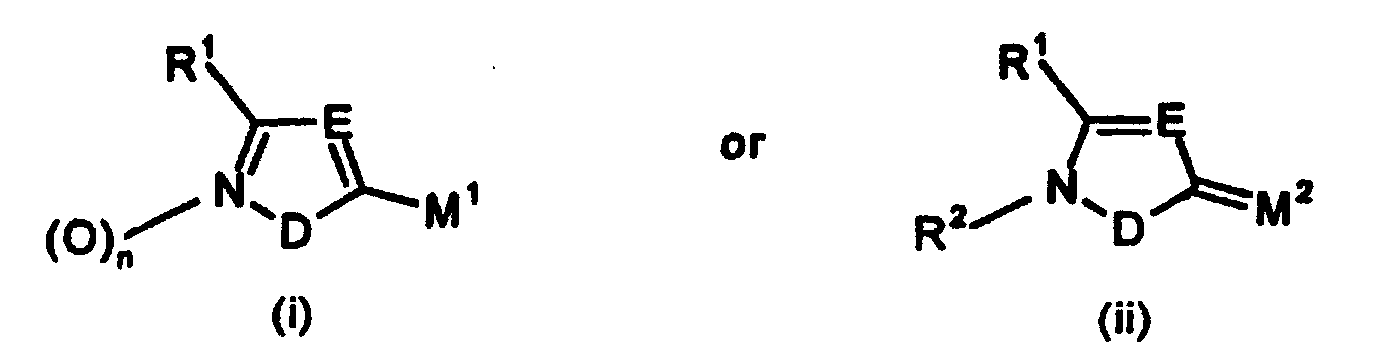
- A compound as claimed in claim 1 of formula (IA):wherein A, G, J, R3, R4, R5 and R6 are as claimed in claim 1.

- A compound of formula (I) as claimed in claim 1 or a compound of formula (IA) as claimed in claim 2 wherein, when G is (i) as defined in claim 1, D is S or CR8=CR9, where R8 and R9 are, independently, hydrogen, halogen, C1-6 alkyl, C1-6 haloalkyl C2-6 alkenyl, C2-6 alkynyl, C1-6 alkoxy or C1-6 haloalkoxy; when G is (ii) as defined in claim 1, D is S; E is N or CR10 where R10 is hydrogen, halogen, C1-6 alkyl, C1-6 haloalkyl, - C1-6 alkoxy, C1-6 haloalkoxy, C1-6 alkoxy (C1-6)alkyl, C1-6 alkylthio or SF5; or R1 and R10 together with the atoms to which they are attached form a benzene ring optionally substituted by C1-6 alkyl, C1-6 haloalkyl or halogen; and M1 is N(R11)C(=O) where R11 is hydrogen, C1-6 alkyl, C1-6 alkoxy(C1-6)alkyl, benzyloxymethyl or benzoyloxymethyl.
- A compound of formula (I) as claimed in claim 1 or 3 or a compound of formula (IA) as claimed in claim 2 or 3 wherein A is C1-4 alkylene, -C(O)- or C1-4 alkyleneoxy.
- A compound of formula (I) as claimed in claim 1, 3 or 4 or a compound of formula (IA) as claimed in claim 2, 3 or 4 wherein G is (i) as defined in claim 1 and n is 0.
- A compound of formula (I) as claimed in claim 1, 3, 4 or 5 or a compound of formula (IA) as claimed in claim 2, 3, 4 or 5 wherein R3, R4 and R5 are, independently, hydrogen, C1-3 alkyl or halogen.
- A compound of formula (I) as claimed in claim 1, 3, 4, 5 or 6 or a compound of formula (IA) as claimed in claim 2, 3, 4, 5 or 6 wherein R6 is C1-10 alkyl or C1-10 haloalkyl (each one of which may be substituted with a C1-6 alkyloxime, C1-6 haloalkyloxime, C1-6 alkylhydrazone or C1-6 haloalkylhydrazone group) or C1-6 cyanoalkyl, C2-6 alkenyl(C1-6)alkyl, C2-6 alkynyl(C1-6)alkyl, C3-7 cycloalkyl, C3-7 halocycloalkyl, C3-7 cyanocycloalkyl, C1-3 alkyl(C3-7)cycloalkyl, C1-3 alkyl(C3-7)halocycloalkyl, C5-6 cycloalkenyl, C3-7 cycloalkyl(C1-6)alkyl, C5-6 cycloalkenyl(C1-6)alkyl, C2-6 haloalkenyl(C1-6)alkyl, C1-6 cyanoalkenyl(C1-6)alkyl, C1-6 alkoxy(C1-6)alkyl, C3-6 alkenyloxy(C1-6)alkyl, C3-6 alkynyloxy(C1-6)alkyl, aryloxy(C1-6)alkyl, C1-6 carboxyalkyl, C1-6 alkylcarbonyl(C1-6)alkyl, C2-6 alkenylcarbonyl(C1-6)alkyl, C2-6 alkynylcarbonyl(C1-6)alkyl, C1-6 alkoxycarbonyl(C1-6)alkyl, C3-6 alkenyloxycarbonyl(C1-6)alkyl, C3-6 alkynyloxycarbonyl(C1-6)alkyl, aryloxycarbonyl(C1-6)alkyl, C1-6 alkylthio(C1-6)alkyl, C1-6 alkylsulfinyl(C1-6)alkyl, C1-6 alkylsulfonyl(C1-6)alkyl, aminocarbonyl(C1-6)alkyl, aminocarbonyl(C2-6)alkenyl, aminocarbonyl(C2-6)alkynyl, C1-6alkylaminocarbonyl(C1-6)alkyl, di(C1-6)alkylaminocarbonyl(C1-6)alkyl, C1-6alkylaminocarbonyl(C2-6)alkenyl(C1-6)alkyl, di(C1-6)alkylaminocarbonyl(C2-6)alkenyl(C1-6)alkyl, alkylaminocarbonyl(C2-6)alkynyl(C1-6)alkyl, di(C1-6)alkylaminocarbonyl(C2-6)alkynyl(C1-6)alkyl, phenyl (optionally substituted by halo, nitro, cyano, C1-6 alkyl, C1-6 haloalkyl, C1-6 alkoxy or C1-6 haloalkoxy), phenyl(C1-4)alkyl (wherein the phenyl group is optionally substituted by halo, nitro, cyano, C1-6 alkyl, C1-6 haloalkyl, C1-6 alkoxy or C1-6 haloalkoxy), phenyl(C2-4)alkenyl(C1-6)alkyl, (wherein the phenyl group is optionally substituted by halo, nitro, cyano, C1-6 alkyl, C1-6 haloalkyl, C1-6 alkoxy, C1-6 alkylsulfonyl or C1-6 haloalkoxy), heteroaryl (optionally substituted by halo, nitro, cyano, C1-6 alkyl, C1-6 haloalkyl, C1-6 alkoxy or C1-6 haloalkoxy), heterocyclyl (wherein the heterocyclyl group is optionally substituted by halo, nitro, cyano, C1-6 alkyl, C1-6 haloalkyl, C1-6 alkoxy or C1-6 haloalkoxy), heteroaryl(C1-4)alkyl (wherein the heteroaryl group is optionally substituted by halo, nitro, cyano, C1-6 alkyl, C1-6 haloalkyl, C1-6 alkoxy, C1-6 alkylsulfonyl or C1-6 haloalkoxy)or heterocyclyl(C1-4)alkyl (wherein the heterocyclyl group is optionally substituted by halo, nitro, cyano, C1-6 alkyl, C1-6 haloalkyl, C1-6 alkoxy or C1-6 haloalkoxy).
- A compound of formula (I) as claimed in claim 1, 3, 4, 5, 6 or 7 or a compound of formula (IA) as claimed in claim 2, 3, 4, 5, 6 or 7 wherein J is N or CR17 where R17 is hydrogen, C1-6 alkyl, C1-6 haloalkyl, cyano, halogen or nitro.
- A process for preparing a compound of formula (I) as claimed in claim 1 comprising(a) where Y is oxygen, reacting a compound of formula (II)where D, E, R1 and R11 are as defined in claim 1 with a compound of formula (III)
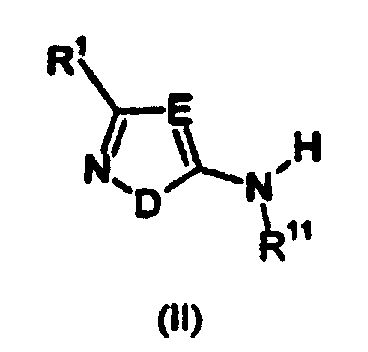 where Y is oxygen, X1 is a leaving group and A, J, R3, R4, R5 and R6 are as defined in claim 1; or
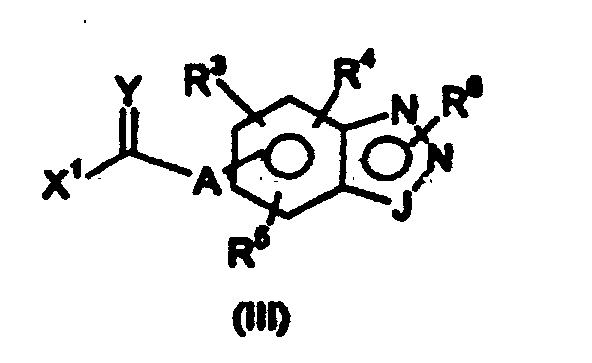 (b) where Y is sulphur, preparing a compound of formula (I) as claimed in claim 1 where Y is oxygen using the method described in (a) and then reacting this compound with a thionating agent.
 - A fungicidal, insecticidal, acaricidal, molluscicidal or nematicidal composition comprising a fungicidally, insecticidally, acaricidally, molluscicidally or nematicidally effective amount of a compound of formula (I) as claimed in claim 1 and a carrier or diluent therefor.
- A method of combating and controlling fungi comprising applying to a plant, to a seed of a plant, to the locus of the plant or seed or to the soil a fungicidally effective amount of either a compound of formula (I) as claimed in claim 1.
- A method of combating and controlling insects, acarines, nematodes or molluscs which comprises applying to a pest, to a locus of a pest, or to a plant susceptible to attack by a pest an insecticidally, acaricidally, nematicidally or molluscicidally effective amount of a compound of formula (I) as claimed in claim 1.
Applications Claiming Priority (5)
| Application Number | Priority Date | Filing Date | Title |
|---|---|---|---|
| GB9909062 | 1999-04-20 | ||
| GBGB9909062.3A GB9909062D0 (en) | 1999-04-20 | 1999-04-20 | Chemical compounds |
| GB0002039 | 2000-01-28 | ||
| GB0002039A GB0002039D0 (en) | 2000-01-28 | 2000-01-28 | Chemical compounds |
| PCT/GB2000/001272 WO2000063207A1 (en) | 1999-04-20 | 2000-04-04 | Pesticidal indazole or benzotriazole derivatives |
Publications (2)
| Publication Number | Publication Date |
|---|---|
| EP1171437A1 EP1171437A1 (en) | 2002-01-16 |
| EP1171437B1 true EP1171437B1 (en) | 2003-10-08 |
Family
ID=26243510
Family Applications (1)
| Application Number | Title | Priority Date | Filing Date |
|---|---|---|---|
| EP00919009A Expired - Lifetime EP1171437B1 (en) | 1999-04-20 | 2000-04-04 | Pesticidal indazole or benzotriazole derivatives |
Country Status (22)
| Country | Link |
|---|---|
| US (1) | US7112553B1 (en) |
| EP (1) | EP1171437B1 (en) |
| JP (1) | JP2002542244A (en) |
| KR (1) | KR100702064B1 (en) |
| CN (2) | CN100509807C (en) |
| AR (1) | AR028821A1 (en) |
| AT (1) | ATE251621T1 (en) |
| AU (1) | AU772298B2 (en) |
| BR (1) | BR0009907A (en) |
| CA (1) | CA2370265A1 (en) |
| CO (1) | CO5210890A1 (en) |
| DE (1) | DE60005808T2 (en) |
| DK (1) | DK1171437T3 (en) |
| EG (1) | EG21945A (en) |
| ES (1) | ES2208303T3 (en) |
| GT (1) | GT200000049A (en) |
| HU (1) | HUP0201874A3 (en) |
| IL (2) | IL145962A0 (en) |
| NZ (1) | NZ514948A (en) |
| PE (1) | PE20010254A1 (en) |
| PT (1) | PT1171437E (en) |
| WO (1) | WO2000063207A1 (en) |
Families Citing this family (18)
| Publication number | Priority date | Publication date | Assignee | Title |
|---|---|---|---|---|
| GB0012806D0 (en) * | 2000-05-25 | 2000-07-19 | Zeneca Ltd | Chemical compounds |
| AU2005271737A1 (en) | 2004-08-03 | 2006-02-16 | Wyeth | Indazoles useful in treating cardiovascular diseases |
| US7601847B2 (en) | 2004-10-26 | 2009-10-13 | Wyeth | Preparation and purification of 4-(indazol-3-yl)phenols |
| US8841334B2 (en) | 2006-05-31 | 2014-09-23 | Abbvie Inc. | Compounds as cannabinoid receptor ligands and uses thereof |
| CN101448800A (en) | 2006-05-31 | 2009-06-03 | 艾博特公司 | Novel compounds as cannabinoid receptor ligands and uses thereof |
| CN101765594A (en) | 2007-03-28 | 2010-06-30 | 雅培制药有限公司 | 1,3-thiazoles-2 (3H)-ylidene compounds as cannabinoid receptor ligand |
| US7872033B2 (en) | 2007-04-17 | 2011-01-18 | Abbott Laboratories | Compounds as cannabinoid receptor ligands |
| US8501794B2 (en) | 2007-04-17 | 2013-08-06 | Abbvie Inc. | Compounds as cannabinoid receptor ligands |
| CN101711253A (en) | 2007-05-18 | 2010-05-19 | 雅培制药有限公司 | Novel compounds as cannabinoid receptor ligands |
| US9193713B2 (en) | 2007-10-12 | 2015-11-24 | Abbvie Inc. | Compounds as cannabinoid receptor ligands |
| US8846730B2 (en) | 2008-09-08 | 2014-09-30 | Abbvie Inc. | Compounds as cannabinoid receptor ligands |
| TW201016692A (en) | 2008-09-16 | 2010-05-01 | Abbott Lab | Novel compounds as cannabinoid receptor ligands |
| PA8854001A1 (en) | 2008-12-16 | 2010-07-27 | Abbott Lab | NEW COMPOUNDS AS CANABINOID RECEIVERS LIGANDS |
| CN103030598B (en) * | 2012-12-17 | 2016-04-13 | 上海禾本药业股份有限公司 | The preparation method of methoxy acrylic bactericide |
| BR102013021210B1 (en) | 2013-01-25 | 2015-12-01 | Fundação Universidade Fed De São Carlos | process of obtaining biopolymeric nanoparticles containing oil and azadirachta extracts indicates a. juss (neem), biopolymer nanoparticles and powder microparticles |
| JP6740239B2 (en) * | 2015-03-12 | 2020-08-12 | エフ エム シー コーポレーションFmc Corporation | Heterocyclic-substituted bicyclic azole pesticides |
| MX2021000491A (en) | 2018-07-14 | 2021-04-12 | Fmc Corp | Pesticidal mixtures comprising indazoles. |
| CN112514904B (en) * | 2021-01-26 | 2021-10-26 | 青岛农业大学 | Application of benzydamine hydrochloride in preparation of bactericide for preventing and treating plant diseases caused by plant pathogenic bacteria |
Family Cites Families (3)
| Publication number | Priority date | Publication date | Assignee | Title |
|---|---|---|---|---|
| PT630367E (en) * | 1992-03-09 | 2000-10-31 | Zeneca Ltd | NEW ARILINDAZOLES AND ITS USE AS HERBICIDES |
| CA2189573A1 (en) * | 1994-05-17 | 1995-11-23 | Ronald E. Hackler | N-(5-isothiazolyl)amide pesticides |
| DE19642863A1 (en) * | 1996-10-17 | 1998-04-23 | Bayer Ag | Amides |
-
2000
- 2000-04-04 WO PCT/GB2000/001272 patent/WO2000063207A1/en not_active Ceased
- 2000-04-04 NZ NZ514948A patent/NZ514948A/en unknown
- 2000-04-04 DK DK00919009T patent/DK1171437T3/en active
- 2000-04-04 BR BR0009907-4A patent/BR0009907A/en not_active Application Discontinuation
- 2000-04-04 CN CNB2004100329180A patent/CN100509807C/en not_active Expired - Fee Related
- 2000-04-04 KR KR1020017013285A patent/KR100702064B1/en not_active Expired - Fee Related
- 2000-04-04 US US09/959,269 patent/US7112553B1/en not_active Expired - Fee Related
- 2000-04-04 JP JP2000612297A patent/JP2002542244A/en active Pending
- 2000-04-04 PT PT00919009T patent/PT1171437E/en unknown
- 2000-04-04 CN CNB008078149A patent/CN1156472C/en not_active Expired - Fee Related
- 2000-04-04 ES ES00919009T patent/ES2208303T3/en not_active Expired - Lifetime
- 2000-04-04 AT AT00919009T patent/ATE251621T1/en not_active IP Right Cessation
- 2000-04-04 CA CA002370265A patent/CA2370265A1/en not_active Abandoned
- 2000-04-04 HU HU0201874A patent/HUP0201874A3/en unknown
- 2000-04-04 AU AU39772/00A patent/AU772298B2/en not_active Ceased
- 2000-04-04 DE DE60005808T patent/DE60005808T2/en not_active Expired - Fee Related
- 2000-04-04 EP EP00919009A patent/EP1171437B1/en not_active Expired - Lifetime
- 2000-04-04 IL IL14596200A patent/IL145962A0/en active IP Right Grant
- 2000-04-18 EG EG20000494A patent/EG21945A/en active
- 2000-04-19 AR ARP000101823A patent/AR028821A1/en active IP Right Grant
- 2000-04-19 CO CO00028953A patent/CO5210890A1/en not_active Application Discontinuation
- 2000-04-19 PE PE2000000371A patent/PE20010254A1/en not_active Application Discontinuation
- 2000-04-25 GT GT200000049A patent/GT200000049A/en unknown
-
2001
- 2001-10-16 IL IL145962A patent/IL145962A/en unknown
Also Published As
| Publication number | Publication date |
|---|---|
| PE20010254A1 (en) | 2001-04-02 |
| EG21945A (en) | 2002-04-30 |
| JP2002542244A (en) | 2002-12-10 |
| ATE251621T1 (en) | 2003-10-15 |
| CA2370265A1 (en) | 2000-10-26 |
| IL145962A0 (en) | 2002-07-25 |
| NZ514948A (en) | 2003-05-30 |
| DE60005808D1 (en) | 2003-11-13 |
| EP1171437A1 (en) | 2002-01-16 |
| CN1535966A (en) | 2004-10-13 |
| DE60005808T2 (en) | 2004-09-23 |
| HUP0201874A3 (en) | 2002-12-28 |
| PT1171437E (en) | 2004-03-31 |
| AR028821A1 (en) | 2003-05-28 |
| US7112553B1 (en) | 2006-09-26 |
| CN100509807C (en) | 2009-07-08 |
| CN1156472C (en) | 2004-07-07 |
| AU3977200A (en) | 2000-11-02 |
| CN1351603A (en) | 2002-05-29 |
| WO2000063207A1 (en) | 2000-10-26 |
| GT200000049A (en) | 2001-10-17 |
| AU772298B2 (en) | 2004-04-22 |
| DK1171437T3 (en) | 2004-02-02 |
| BR0009907A (en) | 2002-04-16 |
| CO5210890A1 (en) | 2002-10-30 |
| KR100702064B1 (en) | 2007-03-30 |
| HUP0201874A2 (en) | 2002-09-28 |
| IL145962A (en) | 2007-07-24 |
| ES2208303T3 (en) | 2004-06-16 |
| KR20020008392A (en) | 2002-01-30 |
Similar Documents
| Publication | Publication Date | Title |
|---|---|---|
| WO2001055140A1 (en) | Isothiazole derivatives and their use as pesticides | |
| US8618173B2 (en) | Insecticidal compounds | |
| EP1100798B1 (en) | Benzazole, benzoxazole, benzthiazole and benzimidazole derivatives | |
| US20040209776A1 (en) | Azole derivatives useful as insecticide | |
| US7112553B1 (en) | Pesticidal indazole or benzotriazole derivatives | |
| US6703347B2 (en) | Isothiazole derivatives and their use as pesticides | |
| WO2001055139A1 (en) | Isothiazole derivatives and their use as pesticides | |
| WO2001055143A1 (en) | Benzoxazole derivatives and their use as pesticides | |
| WO2001055141A1 (en) | Azine derivatives as pesticides | |
| WO2001055145A1 (en) | Azine derivatives as pesticides | |
| WO2001055136A1 (en) | Benzoxazole derivatives and their use as pesticides | |
| GB2361474A (en) | Novel azole/azine compounds having fungicidal/pesticidal properties | |
| WO2001055138A1 (en) | Azole derivatives, their preparation and use | |
| WO2001055137A1 (en) | Azine derivatives as pesticides | |
| WO2001090105A1 (en) | Isothiazoles as pesticides | |
| WO2001055142A1 (en) | Isothiazole derivatives and their use as pesticides | |
| AU2002355672A1 (en) | Azole derivatives useful as insecticide | |
| HK1095811A (en) | Isothiazole derivatives and their use as pesticides |
Legal Events
| Date | Code | Title | Description |
|---|---|---|---|
| PUAI | Public reference made under article 153(3) epc to a published international application that has entered the european phase |
Free format text: ORIGINAL CODE: 0009012 |
|
| 17P | Request for examination filed |
Effective date: 20011120 |
|
| AK | Designated contracting states |
Kind code of ref document: A1 Designated state(s): AT BE CH CY DE DK ES FI FR GB GR IE IT LI LU MC NL PT SE |
|
| AX | Request for extension of the european patent |
Free format text: AL PAYMENT 20011120;LT PAYMENT 20011120;LV PAYMENT 20011120;MK PAYMENT 20011120;RO;SI PAYMENT 20011120 |
|
| 17Q | First examination report despatched |
Effective date: 20020204 |
|
| RAP1 | Party data changed (applicant data changed or rights of an application transferred) |
Owner name: SYNGENTA LIMITED |
|
| GRAH | Despatch of communication of intention to grant a patent |
Free format text: ORIGINAL CODE: EPIDOS IGRA |
|
| GRAS | Grant fee paid |
Free format text: ORIGINAL CODE: EPIDOSNIGR3 |
|
| GRAA | (expected) grant |
Free format text: ORIGINAL CODE: 0009210 |
|
| AK | Designated contracting states |
Kind code of ref document: B1 Designated state(s): AT BE CH CY DE DK ES FI FR GB GR IE IT LI LU MC NL PT SE |
|
| AX | Request for extension of the european patent |
Extension state: AL LT LV MK SI |
|
| PG25 | Lapsed in a contracting state [announced via postgrant information from national office to epo] |
Ref country code: CY Free format text: LAPSE BECAUSE OF FAILURE TO SUBMIT A TRANSLATION OF THE DESCRIPTION OR TO PAY THE FEE WITHIN THE PRESCRIBED TIME-LIMIT Effective date: 20031008 |
|
| REG | Reference to a national code |
Ref country code: GB Ref legal event code: FG4D |
|
| REG | Reference to a national code |
Ref country code: CH Ref legal event code: EP |
|
| REG | Reference to a national code |
Ref country code: IE Ref legal event code: FG4D |
|
| REF | Corresponds to: |
Ref document number: 60005808 Country of ref document: DE Date of ref document: 20031113 Kind code of ref document: P |
|
| REG | Reference to a national code |
Ref country code: SE Ref legal event code: TRGR |
|
| PG25 | Lapsed in a contracting state [announced via postgrant information from national office to epo] |
Ref country code: GR Free format text: LAPSE BECAUSE OF FAILURE TO SUBMIT A TRANSLATION OF THE DESCRIPTION OR TO PAY THE FEE WITHIN THE PRESCRIBED TIME-LIMIT Effective date: 20040108 |
|
| REG | Reference to a national code |
Ref country code: DK Ref legal event code: T3 |
|
| LTIE | Lt: invalidation of european patent or patent extension |
Effective date: 20031008 |
|
| REG | Reference to a national code |
Ref country code: PT Ref legal event code: SC4A Free format text: AVAILABILITY OF NATIONAL TRANSLATION Effective date: 20040108 |
|
| PG25 | Lapsed in a contracting state [announced via postgrant information from national office to epo] |
Ref country code: MC Free format text: LAPSE BECAUSE OF NON-PAYMENT OF DUE FEES Effective date: 20040430 |
|
| REG | Reference to a national code |
Ref country code: CH Ref legal event code: PFA Owner name: SYNGENTA LIMITED SYNGENTA EUROPEAN REGIONAL CENTR Free format text: SYNGENTA LIMITED#EUROPEAN REGIONAL CENTRE PRIESTLEY ROAD SURREY RESEARCH PARK#GUILDFORD SURREY GU2 7YH (GB) -TRANSFER TO- SYNGENTA LIMITED SYNGENTA EUROPEAN REGIONAL CENTRE#PRIESTLEY ROAD, SURREY RESEARCH PARK,#GUILDFORD, SURREY GU2 7YH (GB) |
|
| REG | Reference to a national code |
Ref country code: ES Ref legal event code: FG2A Ref document number: 2208303 Country of ref document: ES Kind code of ref document: T3 |
|
| ET | Fr: translation filed | ||
| PLBE | No opposition filed within time limit |
Free format text: ORIGINAL CODE: 0009261 |
|
| STAA | Information on the status of an ep patent application or granted ep patent |
Free format text: STATUS: NO OPPOSITION FILED WITHIN TIME LIMIT |
|
| 26N | No opposition filed |
Effective date: 20040709 |
|
| PGFP | Annual fee paid to national office [announced via postgrant information from national office to epo] |
Ref country code: PT Payment date: 20090330 Year of fee payment: 10 |
|
| PGFP | Annual fee paid to national office [announced via postgrant information from national office to epo] |
Ref country code: IE Payment date: 20090420 Year of fee payment: 10 Ref country code: DK Payment date: 20090415 Year of fee payment: 10 Ref country code: ES Payment date: 20090508 Year of fee payment: 10 |
|
| PGFP | Annual fee paid to national office [announced via postgrant information from national office to epo] |
Ref country code: DE Payment date: 20090402 Year of fee payment: 10 Ref country code: FI Payment date: 20090416 Year of fee payment: 10 Ref country code: LU Payment date: 20090424 Year of fee payment: 10 Ref country code: SE Payment date: 20090407 Year of fee payment: 10 Ref country code: NL Payment date: 20090405 Year of fee payment: 10 Ref country code: FR Payment date: 20090417 Year of fee payment: 10 Ref country code: IT Payment date: 20090423 Year of fee payment: 10 Ref country code: AT Payment date: 20090415 Year of fee payment: 10 |
|
| PGFP | Annual fee paid to national office [announced via postgrant information from national office to epo] |
Ref country code: BE Payment date: 20090428 Year of fee payment: 10 |
|
| PGFP | Annual fee paid to national office [announced via postgrant information from national office to epo] |
Ref country code: CH Payment date: 20090416 Year of fee payment: 10 |
|
| PGFP | Annual fee paid to national office [announced via postgrant information from national office to epo] |
Ref country code: GB Payment date: 20090401 Year of fee payment: 10 |
|
| BERE | Be: lapsed |
Owner name: *SYNGENTA LTD Effective date: 20100430 |
|
| REG | Reference to a national code |
Ref country code: NL Ref legal event code: V1 Effective date: 20101101 |
|
| EUG | Se: european patent has lapsed | ||
| REG | Reference to a national code |
Ref country code: CH Ref legal event code: PL |
|
| REG | Reference to a national code |
Ref country code: DK Ref legal event code: EBP |
|
| GBPC | Gb: european patent ceased through non-payment of renewal fee |
Effective date: 20100404 |
|
| REG | Reference to a national code |
Ref country code: IE Ref legal event code: MM4A |
|
| REG | Reference to a national code |
Ref country code: FR Ref legal event code: ST Effective date: 20101230 |
|
| PG25 | Lapsed in a contracting state [announced via postgrant information from national office to epo] |
Ref country code: IE Free format text: LAPSE BECAUSE OF NON-PAYMENT OF DUE FEES Effective date: 20100405 Ref country code: NL Free format text: LAPSE BECAUSE OF NON-PAYMENT OF DUE FEES Effective date: 20101101 Ref country code: FI Free format text: LAPSE BECAUSE OF NON-PAYMENT OF DUE FEES Effective date: 20100404 Ref country code: AT Free format text: LAPSE BECAUSE OF NON-PAYMENT OF DUE FEES Effective date: 20100404 |
|
| PG25 | Lapsed in a contracting state [announced via postgrant information from national office to epo] |
Ref country code: CH Free format text: LAPSE BECAUSE OF NON-PAYMENT OF DUE FEES Effective date: 20100430 Ref country code: LI Free format text: LAPSE BECAUSE OF NON-PAYMENT OF DUE FEES Effective date: 20100430 Ref country code: PT Free format text: LAPSE BECAUSE OF NON-PAYMENT OF DUE FEES Effective date: 20101004 Ref country code: DE Free format text: LAPSE BECAUSE OF NON-PAYMENT OF DUE FEES Effective date: 20101103 |
|
| PG25 | Lapsed in a contracting state [announced via postgrant information from national office to epo] |
Ref country code: BE Free format text: LAPSE BECAUSE OF NON-PAYMENT OF DUE FEES Effective date: 20100430 Ref country code: IT Free format text: LAPSE BECAUSE OF NON-PAYMENT OF DUE FEES Effective date: 20100404 Ref country code: GB Free format text: LAPSE BECAUSE OF NON-PAYMENT OF DUE FEES Effective date: 20100404 |
|
| PG25 | Lapsed in a contracting state [announced via postgrant information from national office to epo] |
Ref country code: DK Free format text: LAPSE BECAUSE OF NON-PAYMENT OF DUE FEES Effective date: 20100503 |
|
| REG | Reference to a national code |
Ref country code: ES Ref legal event code: FD2A Effective date: 20110714 |
|
| PG25 | Lapsed in a contracting state [announced via postgrant information from national office to epo] |
Ref country code: ES Free format text: LAPSE BECAUSE OF NON-PAYMENT OF DUE FEES Effective date: 20110704 |
|
| PG25 | Lapsed in a contracting state [announced via postgrant information from national office to epo] |
Ref country code: ES Free format text: LAPSE BECAUSE OF NON-PAYMENT OF DUE FEES Effective date: 20100405 |
|
| PG25 | Lapsed in a contracting state [announced via postgrant information from national office to epo] |
Ref country code: FR Free format text: LAPSE BECAUSE OF NON-PAYMENT OF DUE FEES Effective date: 20100430 |
|
| PG25 | Lapsed in a contracting state [announced via postgrant information from national office to epo] |
Ref country code: SE Free format text: LAPSE BECAUSE OF NON-PAYMENT OF DUE FEES Effective date: 20100405 Ref country code: LU Free format text: LAPSE BECAUSE OF NON-PAYMENT OF DUE FEES Effective date: 20100404 |