EP1170663A2 - Job distributed processing method and distributed processing system - Google Patents
Job distributed processing method and distributed processing system Download PDFInfo
- Publication number
- EP1170663A2 EP1170663A2 EP01116112A EP01116112A EP1170663A2 EP 1170663 A2 EP1170663 A2 EP 1170663A2 EP 01116112 A EP01116112 A EP 01116112A EP 01116112 A EP01116112 A EP 01116112A EP 1170663 A2 EP1170663 A2 EP 1170663A2
- Authority
- EP
- European Patent Office
- Prior art keywords
- job
- execution
- computer
- resource amount
- executed
- Prior art date
- Legal status (The legal status is an assumption and is not a legal conclusion. Google has not performed a legal analysis and makes no representation as to the accuracy of the status listed.)
- Withdrawn
Links
Images





Classifications
-
- G—PHYSICS
- G06—COMPUTING OR CALCULATING; COUNTING
- G06F—ELECTRIC DIGITAL DATA PROCESSING
- G06F9/00—Arrangements for program control, e.g. control units
- G06F9/06—Arrangements for program control, e.g. control units using stored programs, i.e. using an internal store of processing equipment to receive or retain programs
- G06F9/46—Multiprogramming arrangements
- G06F9/50—Allocation of resources, e.g. of the central processing unit [CPU]
- G06F9/5005—Allocation of resources, e.g. of the central processing unit [CPU] to service a request
- G06F9/5027—Allocation of resources, e.g. of the central processing unit [CPU] to service a request the resource being a machine, e.g. CPUs, Servers, Terminals
- G06F9/5033—Allocation of resources, e.g. of the central processing unit [CPU] to service a request the resource being a machine, e.g. CPUs, Servers, Terminals considering data affinity
Definitions
- the present invention is related to a job distributed processing method and a distributed processing system, capable of distributing a job to execute the distributed job, while using a plurality of computers connected to each other via a network.
- distributed processing systems are constituted so as to process various jobs in enterprises.
- these servers are employed in the own section, and also other sections in enterprises.
- the second major problem is given as follows. That is, since the respective servers which constitute this distributed processing system are very expensive, the servers owned by the respective sections of the enterprise are connected to each other via the network in order that these servers can be commonly used by the entire enterprise. In the case that the respective computers are effectively utilized by employing the above-explained job distributing method, the charge processing operations as to the respective sections must be carried out based upon the actual uses of the server resources. Conventionally, the following saving/totalizing method is known. That is, as to the use section, the user, and the use time of each of the server resources, the job execution history is saved and totalized.
- server resource becomes short, a serious influence may be given to the enterprise activity, a proper judgment is required in such a case that the sever resource is increased by analyzing the actual use of the server resource.
- the job distributing method performed in the distributed processing system corresponding to the first major problem, (1) when the job is initiated, the job distributing method is determined based upon the use conditions of the respective server resources.
- the server resources are varied time to time while time has passed, even in such a case that the servers owned the sufficiently large resource amounts when the job was initiated, the following happening may occur. That is, while the job is executed, the server resource becomes short, and thus, the job under execution is accomplished in abnormal state.
- the above-described judgment made by the job request person implies as follows: That is, even when a presently requested process content of a job and process contents are different from each other, a resource amount required to execute such a job can be judged by considering similarities from such a job whose processed data scale is identical to the above-explained processed data scale based upon a history of jobs which were executed in the past.
- the present invention has been made to solve the above-explainedproblems, and therefore, has an object to provide a job distributed processing method and a distributed processing system, capable of realizing a job distributing method, while considering a past job execution history. Also, another object of the present invention is to provide a job distributing method and a distributing processing system, capable of realizing a charge processing method, while considering the respective server capabilities.
- the present invention has been accomplished by paying an attention to the following problem of the conventional job distributing method. That is, the job is distributed based upon only a predetermined rule and also only the known fact, namely, the condition when the job is initiated, and the feature of the job is the known fact. In other words, to solve this problem, while the conventional technique is employed as the base, a judgment made by a job request person is additionally employed, so that the job must be distributed under optimum condition.
- the above-described judgment made by the job request person implies as follows: That is, even when a presently requested process content of a job and process contents are different from each other, a resource amount required to execute such a job can be judged by considering similarities from such a job whose processed data scale is identical to the above-explained processed data scale based upon a history of jobs which were executed in the past. As previously explained, since the history of the resembling jobs which were executed in the past is designated when the job is requested, the job distribution is determined with reference to this processed content. As a result, jobs having any scales may be executed.
- a job distributing method is featured by that in a job distributed processing method in which a plurality of computers having the respective preselected resource amounts are connected via a network to each other, and an entered job is distributed to any of the plural computers so as to execute the entered job, the job distributed processing method is characterized in that: a job execution history as to a plurality of jobs which were executed in the past is saved in each of the computers; and while referring to the job execution history, a selection is made of such a computer that when an execution-subject job is executed, the execution-subject job does not exceed the resource amount saved by the computer, and the execution-subject job is distributed to the selected computer.
- a job distributing processing method is featured by that while a job selection method is executed by which a job is selected from the job execution history, and the job is resembled to the execution-subject job and was executed in the past, a resource amount required when the execution-subject job is executed is predicted (Fig.
- step S21 step S21
- a selection is made of such a computer that a summed resource amount does not exceed the total resource amount saved by the computer, and further, a load thereof becomes minimum, the summed resource amount being calculated between the predicted resource amount of the execution-subject job and the used resource amount obtained with reference to the server resource management table; and the job is distributed to the selected computer (Fig. 3: step S23, S24).
- a job distributing processing method is featured by that the job selecting method selects the job which was executed in the past and is resembled to the execution-subject job, while referring to the respective items of a comment in which a name of a job, a name of a job execution request person, a job execution request day, and a feature of a job are described.
- a job distributing processing method, fourth aspect of the invention is featured by that when there is no job which was executed in the past and is resembled to the execution-subject job, a selection is made of such a computer that a ratio of the used resource amount with respect to the total resource amount saved by the computer becomes minimum, and also a load thereof becomes minimum, and the entered job is distributed to the selected computer.
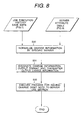
- a job distributing processing method is featured by that capabilities of the respective computers are normalized (Fig. 8: step S30) while a capability of a specific computer is used as a reference; actual use data normalized from the job execution history is totalized/processed based upon the normalized computer capability (Fig. 8: step 31); and a charging process operation is carried out with respect to each of users of the respective computers based on the actual use data (Fig. 8: step S32).
- a job distributing processing method is featured by that the charging process operation is carried out with respect to the user of each of the respective computers based upon a total expense required when each of the computers is conducted, a total expense required when each of the computers is operated, CPU time used by each of the jobs, and an actual memory amount used by each of the jobs.
- a distributed processing system is featured by such a distributed processing system comprising a job queuing server which mutually connects a plurality of computers (client 2, file server 41, servers 51, 52, 53) having preselected resource amounts to each other via a network, and also distributes an entered job to any of the plural computers so as to execute the entered job by the job-distributed computer, in which the job queuing server (job queuing server 3) saves a job execution history as to a plurality of jobs which were executed in the past; and while referring to the job execution history, the job queuing server selects such a computer that when an execution-subject job is executed, the execution-subject job does not exceed the resource amount saved by the computer, and the job queuing server distributes the execution-subject job to the selected computer.
- a job queuing server which mutually connects a plurality of computers (client 2, file server 41, servers 51, 52, 53) having preselected resource amounts to each other via a network, and also distributes an entered job
- a distributed processing system is featured by that the job queuing server is comprised of: history saving means (job history saving function 104) for saving thereinto the respective job execution histories of the plurality of jobs which were executed in the past; history referring means (job history referring function 101) operated in such a manner that while a job selection method is executed by which a job is selected from the job execution history, and the job is resembled to the execution-subject job and was executed in the past, a resource amount required when the execution-subject job is executed in predicted; resource managing means (server resource managing function 102) operated in such a manner that while both a total resource amount saved by each of the plural computers and also used resource amounts used by the respective computers are managed in the format of a server resource management table, a list is made of such a computer that a summed resource amount does not exceed the total resource amount saved by the computer, and further, a load thereof becomes minimum, the summed resource amount being calculated between the predicted resource amount of the execution-subject job and the
- a distributed processing system is featured by that the job selecting method selects the job which was executed in the past and is resembled to the execution-subject job, while referring to the respective items of a comment in which a name of a job, a name of a job execution request person, a job execution request day, and a feature of a job are described.
- a distributed processing system is featured by that when there is no job which was executed in the past and is resembled to the execution-subject job, the job distributing means selects such a computer that a ratio of the used resource amount with respect to the total resource amount saved by the computer becomes minimum, and also a load thereof becomes minimum, and also distributes the entered job to the selected computer.
- a distributed processing system is featured by that the distributed processing system is further comprised of: charge processing means (charge totalizing server 6) operated in such a manner that capabilities of the respective computers are normalized while a capability of a specific computer is used as a reference; actual use data normalized from the job execution history is totalized/processed based upon the normalized computer capability; and a charging process operation is carried out with respect to each of users of the respective computers based on the actual use data.
- charge processing means charge totalizing server 6
- charge totalizing server 6 operated in such a manner that capabilities of the respective computers are normalized while a capability of a specific computer is used as a reference
- actual use data normalized from the job execution history is totalized/processed based upon the normalized computer capability
- a charging process operation is carried out with respect to each of users of the respective computers based on the actual use data.
- a distributed processing system is featured by that the charge processing means further executes such a charging process operation with respect to the user of each of the respective computers based upon a total expense required when each of the computers is conducted, a total expense required when each of the computers is operated, CPU time used by each of the jobs, and an actual memory amount used by each of the jobs.
- the resource amount required for the execution-subject job is predicted.
- a computer can be selected in which the predicted resource amount added with the used resource amount do not exceed the resource amount saved in this computer when the execution-subject job is executed, and then, the execution-subject job is distributed to the selected computer.
- the job is distributed to such a computer which may be predicted as follows.
- the summation between the server resource amount and the used resource amounts of the respective servers managed by the server resource management table does not exceed the total resource amount saved by the respective computers, and at the same time, the load becomes minimum when the execution-subject job is executed.
- the above-explained server resource amount contains the actual memory capacity and the virtual memory capacity, which will be consumed by the execution-subject job in future.
- the actual use data are totalized which are normalized from the job execution history, while the capability of the specific computer is used as the reference.
- fair expenses can be charged to the computer users, and at the same time, the totalized actual use data can be utilized as the judging base when the computer capabilities are increased.
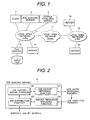
- Fig. 1 is a diagram for indicating an arrangement of a distributed processing system according to an embodiment mode 1 of the present invention.
- a client 2 corresponds to a computer used to enter a job
- a job queuing server 3 corresponds to a computer for seeking servers which can execute a job under optimum condition and for distributing the job to these servers
- a file server 41 corresponds to such a computer for storing thereinto both an input file and an application program, which are used in the job.
- servers 51, 52, and 53 correspond to computers for executing the job
- a charge totalizing server 6 corresponds to a computer for executing a charging process operation based upon a job execution history
- these computers 51 to 53 are connected to each other via networks 10, 11, and 12.
- the servers 3, 41, 51, 52, 53, 6, and the client 2 correspond to a computer containing a personal computer and a workstation.
- a job file, an input file, and an application file are stored into a storage apparatus connected to the server 41.
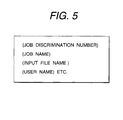
- Fig. 2 is a schematic block diagram for indicating a function of the job queuing server 3.
- the job queuing server 3 is provided with a job history referring function 101 for referring to a past job execution history by a user; a server resource managing function 102; a job distributing function 103; and a job history saving function 104.
- the server resource managing function 102 is to form a list of servers which are capable of executing a job, while referring to resembling job execution history information which is designated when the user requests the execution of the job.
- the job distributing function 103 is to select an optimum server from the formed server list, and then to distribute the job to this server.
- the job history saving function 104 is to save such a job execution history while the job is executed on the server.
- Fig . 4 indicates a display format of a job execution history, in which the user specifies such a job resembled to the execution-subject job by way of a job discrimination number with reference to a job name; a job request person; a job request day; and a comment for describing a feature of a job, which are described in the above-explained job execution history.
- the user transmits information related to the job (for example, job name, input file name, user name etc.) to the job queuing server 3 in such a format to which the job discrimination number is applied (see Fig. 5) at a step S22.
- the job queuing server 3 forms a list of such servers capable of executing this execution-subject job from a server resource management table (refer to Fig. 6) of the servers 51, 52, and 53.
- Fig. 6 indicates a display format of the server resource management table.
- This server resource management table contains information related to a server name; a mounted actual memory capacity "Mf", a mounted virtual memory capacity "My”; an actual memory capacity "Rf” to be used; and a virtual memory capacity "Rv” to be used.
- the servers 51, 52, and 53 may form a list of such servers by using the information of the server resource management table.
- both a use ratio Rf/Mf and another use ratio Rv/Mv of the server resources are low, and furthermore, such a value obtained by adding a predicted resource use amount of this execution-subject job to presently used resource amounts Rf and Rv does not exceed the mounted resource amounts Mf and Mv (step S23).
- the servers 51, 52, 53 form such a list of servers in which the above-described use ratio of the server resource is low. For instance, while a preselected number of servers are selected in such a sequential order that the use ratios of the server resources are low, a list of these selected servers is formed.
- a computer capability of a server is equal to a relative capability with respect to the servers 51, 52, and 53.
- the SPECINT 92 which has been publicly disclosed as the value indicative of the general capability is used as this computer capability. The larger this value becomes, the higher the computer capability is increased.
- both an actual memory capacity and a virtual memory capacity, which are scheduled to be used by this execution-subject job, are added to the actual memory capacity Rf and the virtual memory capacity Rv of the execution server (step S25).
- the input file of this execution-subject job is transferred to such a server to which the job execution is allocated, and then, the execution of this job is commenced (step S26).
- the added value at the step S25 is subtracted from the server resource management table (step S27).
- the execution history of the job is saved (step S28).
- This job execution history is defined as a job enter time instant, a user name, a job number, CPU use time, and the like, which are equal to the information related to the job execution.
- Fig. 7 is a diagram for representing one set of information used to save the job execution history, and also one record format.
- the job is designated which is resembled to the execution-subject job which is presently executed based upon the execution history of the job which was executed in the past by the job request person.
- the jobs can be accomplished under normal condition without the occurrence of such a problem, namely a lack of the server resources occurs with respect to the respective servers.
- Fig. 1 and Fig. 2 show a distributed processing system related to a charge processing operation, according to an embodiment mode 2 of the present invention.
- This distributed processing system is equipped with a function capable of forming charge totalizing information from the job execution history saved at the step S28 of Fig. 3 while using a specific server capability as a base, and also a function capable of executing a charge processing operation to a user of a computer.
- both the data of the format shown in Fig. 7 and data of such a format shown in Fig. 9 are firstly read, and then, charge information is normalized while using a specific server as a reference (step 330).
- the data of the format shown in Fig. 7 corresponds to the saved information of the job execution history.
- a name of a server, and a value of a CPU capability, for example, a value of SPECINT 92 are described.
- the charge information is normalized (step S30), assuming now that a capability of a reference server is "K”, a server capability to be normalized is "Pb”, and a server capability which has been normalized is Pb/K.
- an output format is designated to output a report (step S31).
- the output format corresponds to a server-depending CPU actual use time report (see Fig. 10), a section-depending server actual use time report (see Fig. 11) .
- an expense charging report (see Fig. 12) is formed.
- This expense charging report includes a server basic use charge (namely, expense required when server is conducted), a server operation expense (namely, unit cost per time), and a server use money amount.
- the server basic use charge is calculated based upon both use time of each of these servers and an expense required when a server is conducted as described in Fig. 9.
- the server operation expense is calculated based upon an expense originated from operation of a server.
- the server use money amount is calculated by using a memory cost ratio. This memory cost ratio is calculated based on a ratio of memory cost to a server purchase price.
- the actual use data are totalized which are normalized from the job execution history, while the capability of the specific server is used as the reference.
- fair expenses can be charged to the server users, and at the same time, the totalized actual use data can be utilized as the judging base when the server capabilities are increased.
- the computer resource amounts which are used by the respective jobs can be predicted in advance by specifying the job which was executed in the past and is resembled to the execution-subject job from the history of the jobs which were executed in the past by the job request person.
- the job can be executed by the optimum computers.
- the actual use data are totalized which are normalized from the job execution history, while the capability of the specific computer is used as the reference.
- fair expenses can be charged to the computer users, and at the same time, the totalized actual use data can be utilized as the judging base when the computer capabilities are increased.
Landscapes
- Engineering & Computer Science (AREA)
- Software Systems (AREA)
- Theoretical Computer Science (AREA)
- Physics & Mathematics (AREA)
- General Engineering & Computer Science (AREA)
- General Physics & Mathematics (AREA)
- Multi Processors (AREA)
- Computer And Data Communications (AREA)
Abstract
Description
Claims (14)
- A job distributed processing method in that a plurality of computers having the respective preselected resource amounts are connected through a network to each other, and an entered job to any of said plural computers are distributed so as to execute the entered job, said job distribution processing method comprising the steps of:storing a job execution history as to a plurality of jobs which were executed in the past in each of said computers;referring to said job execution history to select a computer such that when an execution-subject job is executed, said execution-subject job does not exceed the resource amount stored by said computer; anddistributing said execution-subject job to said selected computer.
- A job distributed processing method as claimed in claim 1 further comprising the steps of:predicting a resource amount required when said execution-subject job is executed, by selecting a job from said job execution history, and said job is resembled to said execution-subject job and was executed in the past; andmanaging both a total resource amount possessed by each of said plural computers and also used resource amounts used by the respective computers in the format of a server resource management table;executing a job selecting method to select a computer such that a summed resource amount does not exceed the total resource amount of said computer, and further, a load thereof becomes minimum, said summed resource amount being calculated between the predicted resource amount of the execution-subject job and the used resource amount obtained with reference to said server resource management table; anddistributing said job to said selected computer.
- A job distributed processing method as claimed in claim 2 wherein said job selecting method selects the job which was executed in the past and is resembled to said execution-subject job, while referring to the respective items of a comment in which a name of a job, a name of a job execution request person, a job execution request day, and a feature of a job are described.
- A job distributed processing method as claimed in claim 1, wherein when there is no job which was executed in the past and is resembled to said execution-subject job, a selection is made of such a computer that a ratio of the used resource amount with respect to the total resource amount saved by said computer becomes minimum, and also a load thereof becomes minimum, and the entered job is distributed to said selected computer.
- A job distributed processing method as claimed in claim 1 wherein capabilities of the respective computers are normalized while a capability of a specific computer is used as a reference;actual use data normalized from said job execution history is totalized/processed based upon the normalized computer capability; anda charging process operation is carried out with respect to each of users of the respective computers based on said actual use data.
- A job distributed processing method as claimed in claim 5 wherein the charging process operation is carried out with respect to the user of each of the respective computers based upon a total expense required when each of said computers is conducted, a total expense required when each of said computers is operated, CPU time used by each of said jobs, and an actual memory amount used by each of said jobs.
- A recording medium which stores a program capable of executing both said totalizing process operation of the actual use data and said charging process operation with respect to the user as recited in claim 5.
- A recording medium as claimed in claim 7, which further stores a program capable of executing said charging process operation as recited in claim 6.
- A distributed processing system comprising a job queuing server which mutually connects a plurality of computers having preselected resource amounts to each other via a network, and also distributes an entered job to any of said plural computers so as to execute the entered job by the job-distributed computer, wherein:said job queuing server saves a job execution history as to a plurality of jobs which were executed in the past; andwhile referring to said job execution history, said job queuing server selects such a computer that when an execution-subject job is executed, said execution-subject job does not exceed the resource amount saved by said computer, and said job queuing server distributes said execution-subject job to said selected computer.
- A distributed processing system as claimed in claim 9, wherein said job queuing server comprise:history saving means for saving thereinto the respective job execution histories of said plurality of jobs which were executed in the past;history referring means operated in such a manner that while a job selection method is executed by which a job is selected from said job execution history, and said job is resembled to said execution-subject job and was executed in the past, a resource amount required when said execution-subject job is executed in predicted;resource managing means operated in such a manner that while both a total resource amount saved by each of said plural computers and also used resource amounts used by the respective computers are managed in the format of a server resource management table, a list is made of such a computer that a summed resource amount does not exceed the total resource amount saved by said computer, and further, a load thereof becomes minimum, said summed resource amount being calculated between the predicted resource amount of the execution-subject job and the used resource amount obtained with reference to said server resource management table; anddistributing means for selecting such a computer whose load becomes minimum from said list and for distributing the entered job to the selected computer.
- A distributed processing system as claimed in claim 10, wherein said job selecting method selects the job which was executed in the past and is resembled to said execution-subject job, while referring to the respective items of a comment in which a name of a job, a name of a job execution request person, a job execution request day, and a feature of a job are described.
- A distributed processing system as claimed in claim 9, wherein when there is no job which was executed in the past and is resembled to said execution-subject job, said job distributing means selects such a computer that a ratio of the used resource amount with respect to the total resource amount saved by said computer becomes minimum, and also a load thereof becomes minimum, and also distributes the entered job to said selected computer.
- A distributed processing system as claimed in claim 9, further comprising:
charge processing means operated in such a manner that capabilities of the respective computers are normalized while a capability of a specific computer is used as a reference; actual use data normalized from said job execution history is totalized/processed based upon the normalized computer capability; and a charging process operation is carried out with respect to each of users of the respective computers based on said actual use data. - A distributed processing system as claimed in claim 13, wherein said charge processing means further executes such a charging process operation with respect to the user of each of the respective computers based upon a total expense required when each of said computers is conducted, a total expense required when each of said computers is operated, CPU time used by each of said jobs, and an actual memory amount used by each of said jobs.
Applications Claiming Priority (2)
| Application Number | Priority Date | Filing Date | Title |
|---|---|---|---|
| JP2000203907A JP2002024194A (en) | 2000-07-05 | 2000-07-05 | Method and system for processing of job distribution |
| JP2000203907 | 2000-07-05 |
Publications (2)
| Publication Number | Publication Date |
|---|---|
| EP1170663A2 true EP1170663A2 (en) | 2002-01-09 |
| EP1170663A3 EP1170663A3 (en) | 2004-09-15 |
Family
ID=18701250
Family Applications (1)
| Application Number | Title | Priority Date | Filing Date |
|---|---|---|---|
| EP01116112A Withdrawn EP1170663A3 (en) | 2000-07-05 | 2001-07-03 | Job distributed processing method and distributed processing system |
Country Status (3)
| Country | Link |
|---|---|
| US (1) | US20020004814A1 (en) |
| EP (1) | EP1170663A3 (en) |
| JP (1) | JP2002024194A (en) |
Cited By (3)
| Publication number | Priority date | Publication date | Assignee | Title |
|---|---|---|---|---|
| WO2003075160A1 (en) * | 2002-03-04 | 2003-09-12 | Matsushita Electric Industrial Co., Ltd. | Decentralized processing system, job decentralized processing method, and program |
| WO2005062176A1 (en) * | 2003-12-18 | 2005-07-07 | Club It Corporation | Server/client system, load distribution device, load distribution method, and load distribution program |
| US20110279858A1 (en) * | 2010-05-17 | 2011-11-17 | Konica Minolta Business Technologies, Inc. | Image Forming System, Image Forming Apparatus, Image Forming Method, and Non-Transitory Computer-Readable Recording Medium Encoded with Image Forming Program |
Families Citing this family (17)
| Publication number | Priority date | Publication date | Assignee | Title |
|---|---|---|---|---|
| JP2003108344A (en) * | 2001-09-28 | 2003-04-11 | Canon Inc | Diagnostic device, diagnostic system, diagnostic method, program, and medium |
| JP2003288285A (en) * | 2002-03-28 | 2003-10-10 | Fujitsu Ltd | Service request proxy method, service request proxy server, and service request proxy system |
| WO2004084083A1 (en) * | 2003-03-19 | 2004-09-30 | Unisys Corporation | Server consolidation analysis |
| JP2006082262A (en) * | 2004-09-14 | 2006-03-30 | Canon Inc | Image processing apparatus, job processing method, computer-readable storage medium storing program, and program |
| US20060155555A1 (en) * | 2004-12-30 | 2006-07-13 | International Business Machines Corporation | Utility computing method and apparatus |
| JP3942617B2 (en) | 2005-02-10 | 2007-07-11 | 株式会社日立製作所 | Computer resource management method for distributed processing system |
| JP2007249491A (en) * | 2006-03-15 | 2007-09-27 | Fujitsu Ltd | Program, apparatus, and method for distributing batch jobs in multi-server environment |
| US8156501B2 (en) * | 2006-10-27 | 2012-04-10 | International Business Machines Corporation | Implementing dynamic authority to perform tasks on a resource |
| JP2009237859A (en) * | 2008-03-27 | 2009-10-15 | Nec Corp | Virtual machine management system |
| US8904003B2 (en) * | 2008-06-30 | 2014-12-02 | Oracle America, Inc. | Method and system for delegated job control across a network |
| JP2011123817A (en) * | 2009-12-14 | 2011-06-23 | Fujitsu Ltd | Job distribution apparatus, job distribution program, and job distribution method |
| US9552478B2 (en) | 2010-05-18 | 2017-01-24 | AO Kaspersky Lab | Team security for portable information devices |
| JP5731907B2 (en) * | 2011-06-02 | 2015-06-10 | 株式会社東芝 | Load distribution apparatus, load distribution method, and load distribution program |
| RU2494453C2 (en) | 2011-11-24 | 2013-09-27 | Закрытое акционерное общество "Лаборатория Касперского" | Method for distributed performance of computer security tasks |
| JP5957965B2 (en) * | 2012-03-02 | 2016-07-27 | 日本電気株式会社 | Virtualization system, load balancing apparatus, load balancing method, and load balancing program |
| JP6425166B2 (en) * | 2014-07-07 | 2018-11-21 | 公立大学法人会津大学 | Information processing system using renewable energy |
| JP7259288B2 (en) * | 2018-11-28 | 2023-04-18 | 日本電気株式会社 | Job scheduling device, management system, and scheduling method |
Family Cites Families (13)
| Publication number | Priority date | Publication date | Assignee | Title |
|---|---|---|---|---|
| DE69031233T2 (en) * | 1989-02-24 | 1997-12-04 | At & T Corp | Adaptive work sequence planning for multiple processing systems |
| US5303369A (en) * | 1990-08-31 | 1994-04-12 | Texas Instruments Incorporated | Scheduling system for multiprocessor operating system |
| IL99923A0 (en) * | 1991-10-31 | 1992-08-18 | Ibm Israel | Method of operating a computer in a network |
| JP3658420B2 (en) * | 1994-04-14 | 2005-06-08 | 株式会社日立製作所 | Distributed processing system |
| JPH0830471A (en) * | 1994-07-14 | 1996-02-02 | Hitachi Ltd | Job execution processor change method |
| US6128646A (en) * | 1997-12-24 | 2000-10-03 | Genesys Telecommunications Laboratories Inc. | System for routing electronic mail to best qualified person based on content analysis |
| SE507720C2 (en) * | 1997-06-12 | 1998-07-06 | Telia Ab | Arrangements for load balancing in computer networks |
| US6587436B1 (en) * | 1997-11-24 | 2003-07-01 | Cisco Technology, Inc. | Method and apparatus for allocation of available bandwidth |
| US6744878B1 (en) * | 1999-03-02 | 2004-06-01 | Aspect Communications Corporation | Real-time transaction routing augmented with forecast data and agent schedules |
| JP3546764B2 (en) * | 1999-07-02 | 2004-07-28 | 日本電気株式会社 | Load balancing server provided in network and node including load balancing server |
| US6766348B1 (en) * | 1999-08-03 | 2004-07-20 | Worldcom, Inc. | Method and system for load-balanced data exchange in distributed network-based resource allocation |
| US6748413B1 (en) * | 1999-11-15 | 2004-06-08 | International Business Machines Corporation | Method and apparatus for load balancing of parallel servers in a network environment |
| US6658473B1 (en) * | 2000-02-25 | 2003-12-02 | Sun Microsystems, Inc. | Method and apparatus for distributing load in a computer environment |
-
2000
- 2000-07-05 JP JP2000203907A patent/JP2002024194A/en active Pending
-
2001
- 2001-07-02 US US09/898,771 patent/US20020004814A1/en not_active Abandoned
- 2001-07-03 EP EP01116112A patent/EP1170663A3/en not_active Withdrawn
Cited By (6)
| Publication number | Priority date | Publication date | Assignee | Title |
|---|---|---|---|---|
| WO2003075160A1 (en) * | 2002-03-04 | 2003-09-12 | Matsushita Electric Industrial Co., Ltd. | Decentralized processing system, job decentralized processing method, and program |
| EP1489506A4 (en) * | 2002-03-04 | 2005-05-11 | Matsushita Electric Industrial Co Ltd | DECENTRALIZED TREATMENT SYSTEM, METHOD AND PROGRAM FOR DECENTRALIZED WORK PROCESSING |
| WO2005062176A1 (en) * | 2003-12-18 | 2005-07-07 | Club It Corporation | Server/client system, load distribution device, load distribution method, and load distribution program |
| US7992152B2 (en) | 2003-12-18 | 2011-08-02 | G-Cluster Global Corporation | Server/client system, load distribution device, load distribution method, and load distribution program |
| US20110279858A1 (en) * | 2010-05-17 | 2011-11-17 | Konica Minolta Business Technologies, Inc. | Image Forming System, Image Forming Apparatus, Image Forming Method, and Non-Transitory Computer-Readable Recording Medium Encoded with Image Forming Program |
| US9342265B2 (en) * | 2010-05-17 | 2016-05-17 | Konica Minolta Business Technologies, Inc. | Image forming system, apparatus, method, and non-transitory computer-readable recording medium encoded with image forming program for management of the amount of resources consumed |
Also Published As
| Publication number | Publication date |
|---|---|
| EP1170663A3 (en) | 2004-09-15 |
| JP2002024194A (en) | 2002-01-25 |
| US20020004814A1 (en) | 2002-01-10 |
Similar Documents
| Publication | Publication Date | Title |
|---|---|---|
| EP1170663A2 (en) | Job distributed processing method and distributed processing system | |
| EP1282038A2 (en) | Distributed processing system and distributed job processing method | |
| US8095933B2 (en) | Grid project modeling, simulation, display, and scheduling | |
| US7853948B2 (en) | Method and apparatus for scheduling grid jobs | |
| US8996701B2 (en) | Computer resource distribution method based on prediction | |
| US7379884B2 (en) | Power on demand tiered response time pricing | |
| JP4954089B2 (en) | Method, system, and computer program for facilitating comprehensive grid environment management by monitoring and distributing grid activity | |
| US9477513B2 (en) | Batch scheduling | |
| US7941427B2 (en) | Dynamically managing computer resources based on valuations of work items being processed | |
| Seidmann et al. | The effects of task and information asymmetry on business process redesign | |
| EP1469387B1 (en) | Computer resource allocation system and method | |
| EP2391961B1 (en) | System and method for integrating capacity planning and workload management | |
| EP1293901A2 (en) | Distributed processing system, job distribution method and distribution program | |
| US7831971B2 (en) | Method and apparatus for presenting a visualization of processor capacity and network availability based on a grid computing system simulation | |
| JP2003256222A (en) | Distributed processing system, distributed job processing method and program | |
| JP2007183883A (en) | Resource plan creation program, recording medium recording the program, resource plan creation apparatus, and resource plan creation method | |
| US7496564B2 (en) | Resource optimizations in computing utilities | |
| WO2007031394A1 (en) | Method and apparatus for a grid network throttle and load collector | |
| CN113312359B (en) | Distributed job progress calculation method and device and storage medium | |
| JP2023096237A (en) | COST CONTROL DEVICE, COST CONTROL METHOD, AND PROGRAM | |
| Hellerstein et al. | An on-line, business-oriented optimization of performance and availability for utility computing | |
| Xiao et al. | EWS: Towards Cost-Effective Job Scheduling via Combinatorial Multi-Armed Bandit Learning | |
| Gradwell | Overview of Grid scheduling systems | |
| Jain | Control-theoretic approach to computer system performance improvement | |
| Li et al. | A QoS constrained dynamic priority scheduling algorithm for process engine |
Legal Events
| Date | Code | Title | Description |
|---|---|---|---|
| PUAI | Public reference made under article 153(3) epc to a published international application that has entered the european phase |
Free format text: ORIGINAL CODE: 0009012 |
|
| AK | Designated contracting states |
Kind code of ref document: A2 Designated state(s): AT BE CH CY DE DK ES FI FR GB GR IE IT LI LU MC NL PT SE TR |
|
| AX | Request for extension of the european patent |
Free format text: AL;LT;LV;MK;RO;SI |
|
| PUAL | Search report despatched |
Free format text: ORIGINAL CODE: 0009013 |
|
| AK | Designated contracting states |
Kind code of ref document: A3 Designated state(s): AT BE CH CY DE DK ES FI FR GB GR IE IT LI LU MC NL PT SE TR |
|
| AX | Request for extension of the european patent |
Extension state: AL LT LV MK RO SI |
|
| RIC1 | Information provided on ipc code assigned before grant |
Ipc: 7G 06F 9/46 A |
|
| 17P | Request for examination filed |
Effective date: 20041029 |
|
| 17Q | First examination report despatched |
Effective date: 20050131 |
|
| AKX | Designation fees paid |
Designated state(s): DE FR GB |
|
| STAA | Information on the status of an ep patent application or granted ep patent |
Free format text: STATUS: THE APPLICATION HAS BEEN WITHDRAWN |
|
| 18W | Application withdrawn |
Effective date: 20080425 |