EP1170375A2 - Microbial transformation process for hydroxyaromatic compounds - Google Patents
Microbial transformation process for hydroxyaromatic compounds Download PDFInfo
- Publication number
- EP1170375A2 EP1170375A2 EP01305536A EP01305536A EP1170375A2 EP 1170375 A2 EP1170375 A2 EP 1170375A2 EP 01305536 A EP01305536 A EP 01305536A EP 01305536 A EP01305536 A EP 01305536A EP 1170375 A2 EP1170375 A2 EP 1170375A2
- Authority
- EP
- European Patent Office
- Prior art keywords
- producing
- group
- formula
- compound according
- compound represented
- Prior art date
- Legal status (The legal status is an assumption and is not a legal conclusion. Google has not performed a legal analysis and makes no representation as to the accuracy of the status listed.)
- Withdrawn
Links
Classifications
-
- C—CHEMISTRY; METALLURGY
- C12—BIOCHEMISTRY; BEER; SPIRITS; WINE; VINEGAR; MICROBIOLOGY; ENZYMOLOGY; MUTATION OR GENETIC ENGINEERING
- C12N—MICROORGANISMS OR ENZYMES; COMPOSITIONS THEREOF; PROPAGATING, PRESERVING, OR MAINTAINING MICROORGANISMS; MUTATION OR GENETIC ENGINEERING; CULTURE MEDIA
- C12N1/00—Microorganisms; Compositions thereof; Processes of propagating, maintaining or preserving microorganisms or compositions thereof; Processes of preparing or isolating a composition containing a microorganism; Culture media therefor
- C12N1/20—Bacteria; Culture media therefor
- C12N1/205—Bacterial isolates
-
- C—CHEMISTRY; METALLURGY
- C12—BIOCHEMISTRY; BEER; SPIRITS; WINE; VINEGAR; MICROBIOLOGY; ENZYMOLOGY; MUTATION OR GENETIC ENGINEERING
- C12P—FERMENTATION OR ENZYME-USING PROCESSES TO SYNTHESISE A DESIRED CHEMICAL COMPOUND OR COMPOSITION OR TO SEPARATE OPTICAL ISOMERS FROM A RACEMIC MIXTURE
- C12P7/00—Preparation of oxygen-containing organic compounds
- C12P7/02—Preparation of oxygen-containing organic compounds containing a hydroxy group
- C12P7/22—Preparation of oxygen-containing organic compounds containing a hydroxy group aromatic
-
- C—CHEMISTRY; METALLURGY
- C12—BIOCHEMISTRY; BEER; SPIRITS; WINE; VINEGAR; MICROBIOLOGY; ENZYMOLOGY; MUTATION OR GENETIC ENGINEERING
- C12P—FERMENTATION OR ENZYME-USING PROCESSES TO SYNTHESISE A DESIRED CHEMICAL COMPOUND OR COMPOSITION OR TO SEPARATE OPTICAL ISOMERS FROM A RACEMIC MIXTURE
- C12P7/00—Preparation of oxygen-containing organic compounds
- C12P7/40—Preparation of oxygen-containing organic compounds containing a carboxyl group including Peroxycarboxylic acids
- C12P7/44—Polycarboxylic acids
-
- C—CHEMISTRY; METALLURGY
- C12—BIOCHEMISTRY; BEER; SPIRITS; WINE; VINEGAR; MICROBIOLOGY; ENZYMOLOGY; MUTATION OR GENETIC ENGINEERING
- C12R—INDEXING SCHEME ASSOCIATED WITH SUBCLASSES C12C - C12Q, RELATING TO MICROORGANISMS
- C12R2001/00—Microorganisms ; Processes using microorganisms
- C12R2001/01—Bacteria or Actinomycetales ; using bacteria or Actinomycetales
- C12R2001/025—Achromobacter
Definitions
- This invention relates to a microbial translformation process for producing hydroxyaromatic compounds.
- Hydroxyaromatic compounds have been conventionally produced by means of synthetic chemistry.
- a method is generally employed in which an aromatic compound is sulfonated followed by a reaction with alkali under a high temperature condition, so-called an alkali-fusion, thereby introducing a hydroxyl group.
- an alkali-fusion a reaction with alkali under a high temperature condition
- disposal of a large amount of an alkaline waste fluid is required, and therefore, industrial production process that is more effective has been sought.
- An object of the present invention is to provide a microbial transformation process for producing hydroxyaromatic compounds that satisfies the need described above.
- the present inventors have made extensive and intensive studies and found that a microorganism Ochrobactrum anthropi S9 that belongs to Ochrobactrum genus transforms an aromatic sulfonic acid compound to a hydroxyaromatic compound, and thus, the present invention has been completed.
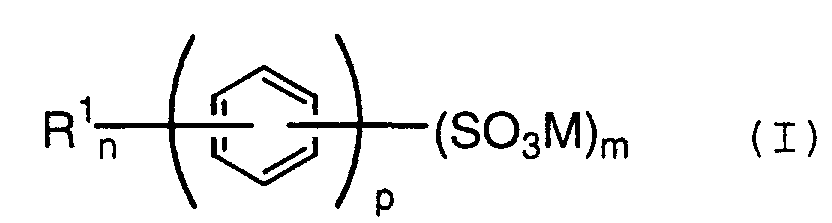
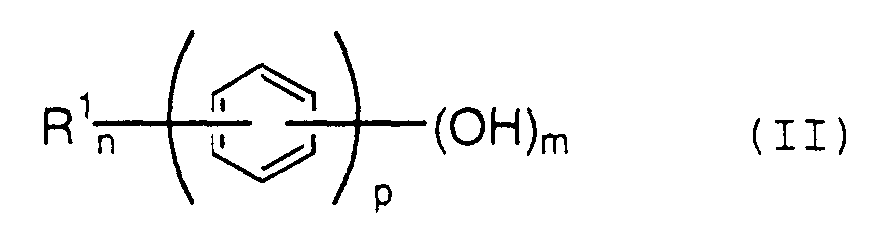
- the present invention relates to a microbial transformation process for producing a hydroxy aromatic compound represented by the formula (II): wherein R 1 represents a carboxyl group, a C 2-5 alkoxycarbonyl group, a hydroxyl group, a nitro group, a cyano group or a C 1-5 alkyl group, m represents an integer of 1 to 5, n represents an integer of 0 to 5, p represents an integer of 1 to 3, m, n and p satisfy a relation of m+n ⁇ 4+2p, and when n is 2 or more, R 1 may be the same or different from each other, which comprises bringing an aromatic sulfonic acid compound represented by the formula (I) wherein each of R 1 , m, n and p has the same meaning as defined above, and M represents a hydrogen atom, an alkali metal, an alkaline earth metal or a C 1-5 alkyl group, in contact with a culture medium, cells or treated cells of a microorganism
- the present invention relates to a microorganism belonging to Ochrobactrum genus of Ochrobactrum anthropi S9 which is deposited at the International Patent Organism Depository; National Institute of Advanced Industrial Science and Technology, Japan under a receipt number of FERM P-17918 which corresponds to FERM BP-7546 having an activity of hydroxylating an aromatic sulfonic acid compound.
- R 1 in the formula (I) and (II) represents a carboxyl group, C 2-5 alkoxycarbonyl group, a hydroxyl group, a nitro group, a cyano group or C 1-5 alkyl group.
- C 2-5 alkoxycarbonyl group there may be mentioned methoxycarbonyl group, ethoxycarbonyl group, n-propoxycarbonyl group, i-propoxycarbonyl group, c-propoxycarbonyl group, n-butoxycarbonyl group, i-butoxycarbonyl group, s-butoxycarbonyl group, t-butoxycarbonyl group, c-butoxycarbonyl group, 1-methyl-c-propoxycarbonyl group and 2-methyl-c-propoxycarbonyl group and the like.
- methoxycarbonyl group methoxycarbonyl group, ethoxycarbonyl group, n-propoxycarbonyl group, i-propoxycarbonyl group, c-propoxycarbonyl group and the like are preferable, and methoxycarbonyl group is more preferable.
- C 1-5 alkyl group there may be mentioned methyl group, ethyl group, n-propyl group, i-propyl group, c-propyl group, n-butyl group, i-butyl group, s-butyl group, t-butyl group, c-butyl group, 1-methyl-c-propyl group, 2-methyl-c-propyl group, n-pentyl group, 1-methyl-n-butyl group, 2-methyl-n-butyl group, 3-methyl-n-butyl group, 1,1-dimethyl-n-propyl group, 1,2-dimethyl-n-propyl group, 2,2-dimethyl-n-propyl group, 1-ethyl-n-propyl group, c-pentyl group, 1-methyl-c-butyl group, 2-methyl-c-butyl group, 3-methyl-c-butyl group, 1,2-dimethyl-c-propyl group, 2,3
- methyl group, ethyl group, n-propyl group, i-propyl group, c-propyl group, etc. are listed.
- M in the formula (I) represents a hydrogen atom, an alkali metal, an alkaline earth metal or a C 1-5 alkyl group.
- alkali metal there may be mentioned lithium, potassium, sodium and the like, among which sodium is preferred.
- alkaline earth metal there may be mentioned beryllium, magnesium, calcium, strontium, barium and the like, among which magnesium and calcium are preferred.
- C 1-5 alkyl group the same as the above described groups are mentioned, preferably methyl group, ethyl group, n-propyl group, i-propyl group and c-propyl group.
- m is a number of SO 3 M, representing an integer of 1 to 5, preferably 1 to 3, and more preferably 1.
- n is a number of R 1 , representing an integer of 0 to 5, preferably 1 or 2.
- R 1 may be the same or different from each other.
- p is a number of a benzene ring, representing an integer of 1 to 3. Preferred are 1 to 3 and more preferably 1. That is, there may be mentioned as an aromatic compound, benzene ring, naphthalene ring, anthracene ring and phenanthrene ring, among which benzene ring is preferred.
- Specific examples of the compound represented by the formula (I) may include, for example, benzenesulfonic acid sodium salt, 1-naphthalenesulfonic acid sodium salt and 5-sulfonaphthalic acid sodium salt.
- the present bacteria strain is identified as Ochrobackrum anthropi S9 strain.
- microorganisms are used in a state of dried cells such as freeze-dried cells, spray-dried cells and the like, as well as a treated cells such as treated cells with acetone or toluene and the like or disrupted cells, cell extract, etc.
- dried cells such as freeze-dried cells, spray-dried cells and the like
- treated cells such as treated cells with acetone or toluene and the like or disrupted cells, cell extract, etc.
- Culture of the transforming microorganism of the present invention is conducted in a culture media containing a nutrient that can be generally utilized by the microorganisms.
- a nutrient source the known nutrients used for culturing general microorganisms can be used.
- glucose, fructose, maltose, sucrose, mannitol, sodium glutamate, glycerol, succinic acid, dextrin, oat, rye, cornstarch, potato, glycerin and the like are used as a source of carbon.
- soybean powder As a source of nitrogen, soybean powder, wheat germ, meat powder, fishpowder, bouillon, peptone, corn steep liquor, dried yeast, an ammonium salt such as ammonium nitrate, and the like are used.
- additives can be used in combination, which helps growth of the microorganisms and enhances a synthesis of an enzyme having a hydroxylation activity to be utilized in the present invention, as well as a salt of inorganic material such as sodium chloride, potassium chloride, calcium carbonate, phosphates and the like.
- silicone oil In use of liquid culture, silicone oil, a vegetable oil, a surfactant, etc. are used as an anti-foaming agent.
- Culture is conducted under an aerobic condition, and generally used aerobic culture methods are, for example, solid culture, shaking culture, aeration-agitation culture and the like.
- a temperature used for culture is in the range of 20 to 30°C, preferably in the range of 25 to 30°C.
- the method (a) is carried out by culturing the microorganisms with addition of a compound represented by the formula (1). Timing of adding the compound depends on a suitable culture conditions for the transforming microorganisms to be used, especially, culture apparatus, culture composition, culture temperature and the like, it is preferably added at a point where an hydroxylation activity of the transforming microorganisms starts to elevate. Generally, it is preferable to add the compound 1 to 5 days after the start of culturing the transforming microorganisms. An amount added of the starting compound, that is, a substrate, is in the range of 0.01 to 5.0% based on the medium, preferably in the range of 0.025 to 0.5%.
- culture After the addition of the starting compound, culture is carried out under an aerobic condition at the above-mentioned temperature. Duration of culture is generally 1 to 8 days after the addition of the starting compound.
- the method (b) is carried out by culturing the transforming microorganisms in the presence of a little amount of a substrate by the above-mentioned method (a), until an hydroxylation activity of the transforming microorganisms is maximized.
- an hydroxylation activity depends on a type of a culture medium, a temperature and so on, it is generally maximized 2 or 3 days after the start of culture, thus, the culture is terminated at that point.
- the transforming microorganisms are collected by centrifugal separation, filtration, etc. Generally, it is preferable that the collected cells of the transforming microorganisms are used after being washed with physiological saline, buffer and the like.
- an aqueous solvent for example, in a 10 to 100 mM phosphate buffer of pH 5 to 9.
- a reaction due to contact is carried out normally at a temperature of 20 to 33°C, preferably 25 to 30°C.
- a concentration of the substrate is normally in the range of 0.01 to 5.0% based on the culture medium.
- a reaction time depends on a concentration of the substrate, a reaction temperature, and the like, and it is generally 1 to 8 days.
- the cell-free extract used in the method (c) is obtained by applying a physical or chemical means to the microorganisms obtained in the above-mentioned method, for example, in a form of crushed cells by trituration, ultrasonic treatment, etc. or in a form of a dissolved solution of the cells by treating with an organic solvent such as acetone, toluene and the like, a surfactant, an enzyme, etc.
- a physical or chemical means to the microorganisms obtained in the above-mentioned method, for example, in a form of crushed cells by trituration, ultrasonic treatment, etc. or in a form of a dissolved solution of the cells by treating with an organic solvent such as acetone, toluene and the like, a surfactant, an enzyme, etc.
- the cell-free extract that is the treated microorganism thus obtained
- a starting compound it is carried out in the same manner as in the above-described method of bringing microorganisms into contact with the starting compound.
- any method can be used for a reaction which is employed as an enzyme reaction system such as a method in which those enzymes and enzyme containing substances are immobilized by a conventional manner, etc.
- the objective compound can be collected, separated and purified by the conventionally known method from products.
- the obtained product is extracted by using an organic solvent that is difficultly miscible with water such as ethyl acetate or butanol under an acidic condition, and then, after the solvent is distilled from the extract, the obtained crude objective compound is subjected to a column chromatography using silica gel, alumina and the like and the objective compound can be separated and purified by elution using a proper eluent.
- the extract in the organic solvent is dissolved in a basic aqueous solution such as an aqueous alkaline solution, subsequently by means of a column chromatography using anion exchange resins, the product can be separated and purified.
- a basic aqueous solution such as an aqueous alkaline solution
- anion exchange resins the product of a high concentration can give a crystal in an aqueous solution.
- the microbial method of the present invention for converting a sulfone group to a hydroxyl group enables to inhibit formation of byproducts under mild conditions, without a need for a complicated separation procedure, thereby making it possible to advantageously produce a hydroxy aromatic compound.
- Culture medium is prepared as shown in Table 1 to 3.
- Composition of the culture medium Glucose 20.0 g Ammonium chloride 2.0 g Sodium glutamate 15.0 g Potassium dihydrogen phosphate 0.5 g Dipotassium hydrogen phosphate 4.0 g Magnesium chloride hexahydrate 0.2 g Magnesium chloride dihydrate 0.01 g Sodium chloride 0.01 g Metal solution 10 mL Vitamin mixed solution 1.0 mL Distilled water 1 L Composition of Metal solution Ferric chloride hexahydrate 0.5 g Manganese chloride tetrahydrate 0.5 g Sodium molybudate dihydrate 0.1 g Cupric chloride dihydrate 0.05 g Sodium tungstate dihydrate 0.05 g Hydrochloric acid 10 mL Distilled water 1 L Vitamin mixed solution Potassium pantothenate 400 mg Inositol 200 mg Nicotinic acid 400 mg Piridoxine hydrochloride 400 mg p-Amino benzoic acid 200 mg
- Culture liquid was sterilized by heating at 120°C for 15minutes, then 1 g of 5-sulfoisophthalic acid sodium salt was added. Ochrobactrum anthropi S9 was inoculated thereto and was subjected to shaking culture at 28°C for 4 days. It was observed that 1.19 mM of 5-hidroxyisophthalic acid (218 mg/L) was accumulated.
- Example 2 Treatment was conducted in the same manner as in Example 1 except that the amount of sodium glutamate was changed to 10.0 g. It was observed that 1.00 mM of 5-hydroxyisophthalic acid (182 mg/L) was accumulated.
- Ochrobactrum anthropi S9 was inoculated and subjected to shaking culture at 28°C for 60 hours.
- the resulting culture liquid (100 mL) was subjected to a centrifugal separation (12,000 rpm, 20 min.), subsequently, the resulting microorganisms were suspended in 6.7 mL of a 0.85% aqueous sodium chloride solution. It was mixed with 6.7 mL of a reaction solution containing 4.5 mM of 5-sulfoisophthalic acid, 0.1 M glycine-sodium hydroxide buffer (pH 9.5) and 5% (w/v) glucose and subjected to shaking at 30°C for 24 hours. It was observed that 1.85 mM of 5-hydroxyisophthalic acid (328 mg/L) was accumulated.
- Ochrobactrum anthropi S9 was inoculated and was subjected to shaking culture at 1158 rpm at a temperature of 33°C for 48 hours.
- the obtained culture liquid was subjected to a centrifugal separation (4°C, 8,000 rpm, 15 minutes), and then, the resulting microorganisms were washed with physiological saline for two times. They were suspended in physiological saline so that the final volume became one-fifteenth of the volume of the culture liquid.
- 0.88 ml of the obtained suspension of resting microorganisms was diluted with a reaction solution containing 15 mM of 5-sulfoisophthalic acid solution, 0.1 M glycine-sodium hydroxide buffer (pH 9.5) and 0.4 M glucose solution to prepare a reaction mixture so that the total volume of the liquid became 4 mL.
- the reaction mixture was subjected to shaking at 175 strokes/min at a temperature of 25°C, and after 24, 36 and 48 hours, 100 ⁇ M of glycine and 200 ⁇ M of glucose were added to the reaction mixture. After 60 hours, the reaction was terminated by a centrifugal separation (12,000 rpm, 5 minutes). A supernatant was analyzed by HPLC, and it was observed that 2.75 mM of 5-hydroxyisophthalic acid (501 mg/L) was accumulated.
Landscapes
- Chemical & Material Sciences (AREA)
- Organic Chemistry (AREA)
- Life Sciences & Earth Sciences (AREA)
- Engineering & Computer Science (AREA)
- Zoology (AREA)
- Wood Science & Technology (AREA)
- Health & Medical Sciences (AREA)
- Genetics & Genomics (AREA)
- Biotechnology (AREA)
- Bioinformatics & Cheminformatics (AREA)
- General Engineering & Computer Science (AREA)
- Microbiology (AREA)
- Biochemistry (AREA)
- General Health & Medical Sciences (AREA)
- Chemical Kinetics & Catalysis (AREA)
- General Chemical & Material Sciences (AREA)
- Biomedical Technology (AREA)
- Virology (AREA)
- Tropical Medicine & Parasitology (AREA)
- Medicinal Chemistry (AREA)
- Preparation Of Compounds By Using Micro-Organisms (AREA)
Abstract

which comprises bringing an aromatic sulfonic acid compound represented by the formula (I) :
Description
which comprises bringing an aromatic sulfonic acid compound represented by the formula (I)
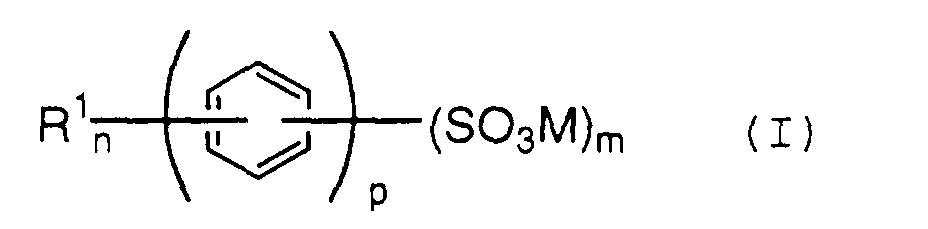
in contact with a culture medium, cells or treated cells of a microorganism belonging to Ochrobactrum genus.

| Composition of the culture medium | |
| Glucose | 20.0 g |
| Ammonium chloride | 2.0 g |
| Sodium glutamate | 15.0 g |
| Potassium dihydrogen phosphate | 0.5 g |
| Dipotassium hydrogen phosphate | 4.0 g |
| Magnesium chloride hexahydrate | 0.2 g |
| Magnesium chloride dihydrate | 0.01 g |
| Sodium chloride | 0.01 g |
| Metal solution | 10 mL |
| Vitamin mixed solution | 1.0 mL |
| Distilled water | 1 L |
| Composition of Metal solution | |
| Ferric chloride hexahydrate | 0.5 g |
| Manganese chloride tetrahydrate | 0.5 g |
| Sodium molybudate dihydrate | 0.1 g |
| Cupric chloride dihydrate | 0.05 g |
| Sodium tungstate dihydrate | 0.05 g |
| Hydrochloric acid | 10 mL |
| Distilled water | 1 L |
| Vitamin mixed solution | |
| Potassium pantothenate | 400 mg |
| Inositol | 200 mg |
| Nicotinic acid | 400 mg |
| Piridoxine hydrochloride | 400 mg |
| p-Amino benzoic acid | 200 mg |
| Cyanocobalamine | 0.5 mg |
| Riboflavin | 200 mg |
| Folic acid | 200 mg |
| Distilled water | 1 L |
Claims (16)
- A microbial transformation process for producing a hydroxyaromatic compound represented by the formula (II):wherein R1 represents a carboxyl group, a C2-5 alkoxycarbonyl group, a hydroxyl group, a nitro group, a cyano group or a C1-5 alkyl group, m represents an integer of 1 to 5, n represents an integer of 0 to 5, p represents an integer of 1 to 3, m, n and p satisfy a relation of m+n≦4+2p, and when n is 2 or more, R1 may be the same or different from each other,

which comprises bringing an aromatic sulfonic acid compound represented by the formula (I):wherein each of R1, m, n and p has the same meaning as defined above, and M represents a hydrogen atom, an alkali metal, an alkaline earth metal or a C1-5 alkyl group,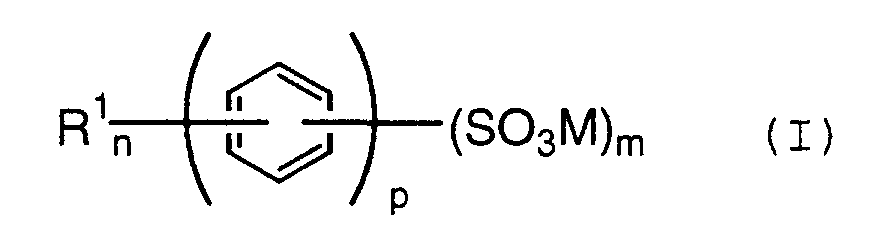
in contact with a culture medium, cells or treated cells of a microorganism belonging to Ochrobactrum genus. - The process for producing a hydroxyaromatic compound according to Claim 1, wherein R1 is a carboxyl group or a C2-5 alkoxycarbonyl group, and p is 1.
- The process for producing a hydroxyaromatic compound according to Claim 2, wherein n is 2 and m is 1.
- The process for producing a hydroxyaromatic compound according to Claim 1, wherein the aromatic sulfonic acid compound represented by the formula (I) is a compound selected from the group consisting of benzenesulfonic acid sodium salt, 1-naphthalenesulfonic acid sodium salt and 5-sulfonaphthalic acid sodium salt.
- The process for producing a hydroxyaromatic compound according to Claim 3, wherein the compound represented by the formula (I) is 5-sulfoisophthalic acid sodium salt and the compound represented by the formula (II) is 5-hydroxyisophthalic acid.
- The process for producing a hydroxyaromatic compound according to any one of Claims 1 to 4, wherein the microorganism belonging to Ochrobactrum genus is Ochrobactrum anthropi.
- The process for producing a hydroxyaromatic compound according to Claim 6, wherein Ochrobactrum anthropi is Ochrobactrum anthropi S9 deposited under a receipt number of FERM BP-7546.
- The process for producing a hydroxyaromatic compound according to Claim 1, wherein the process is carried out by(a) a method wherein microorganisms are cultured in a culture medium containing the compound represented by the formula (1) as a substrate;(b) a method wherein the microorganisms are collected from a culture medium where they were cultured and brought into contact with the compound represented by the formula (1); or(c) a method wherein a cell-free extract prepared from the cells of the microorganisms are brought into contact with the compound represented by the formula (1).
- The process for producing a hydroxyaromatic compound according to Claim 8, wherein culture is conducted under an aerobic condition by using an aerobic culture method at a temperature in the range of 20 to 30°C.
- The process for producing a hydroxyaromatic compound according to Claim 8, wherein the method (a) is carried out by culturing the microorganisms with addition of the compound represented by the formula (1) by adding at a point where an hydroxylation activity of transforming microorganisms starts to elevate.
- The process for producing a hydroxyaromatic compound according to Claim 8, wherein the compound represented by the formula (1) is added 1 to 5 days after the start of culturing the transforming microorganisms in an amount in the range of 0.01 to 5.0% based on the medium.
- The process for producing a hydroxyaromatic compound according to Claim 11, wherein the amount of the compound represented by the formula (1) is in the range of 0.025 to 0.5% based on the medium.
- The process for producing a hydroxyaromatic compound according to Claim 8, wherein the method (b) is carried out by culturing transforming microorganisms in the presence of a little amount of a substrate until an hydroxylation activity of the transforming microorganisms is maximized.
- The process for producing a hydroxyaromatic compound according to Claim 13, wherein culture is carried out for 2 or 3 days after the start of culture, and then, the transforming microorganisms are brought into contact with a starting compound in an aqueous solvent of a 10 to 100 mM phosphate buffer of pH 5 to 9 at a temperature of 20 to 33°C and a concentration of the substrate in the range of 0.01 to 5.0% based on the culture medium for 1 to 8 days.
- The process for producing a hydroxyaromatic compound according to Claim 8, wherein the cell-free extract used in the method (c) is obtained by applying a physical or chemical means to the microorganisms to give a product in a form of crushed cells by trituration or ultrasonic treatment, or in a form of a dissolved solution of the cells by treating with an organic solvent, a surfactant or an enzyme.
- Ochrobactrum anthropi S9 which is deposited under a receipt number of FERM BP-7546.
Applications Claiming Priority (2)
| Application Number | Priority Date | Filing Date | Title |
|---|---|---|---|
| JP2000193131 | 2000-06-27 | ||
| JP2000193131 | 2000-06-27 |
Publications (2)
| Publication Number | Publication Date |
|---|---|
| EP1170375A2 true EP1170375A2 (en) | 2002-01-09 |
| EP1170375A3 EP1170375A3 (en) | 2002-01-16 |
Family
ID=18692173
Family Applications (1)
| Application Number | Title | Priority Date | Filing Date |
|---|---|---|---|
| EP01305536A Withdrawn EP1170375A3 (en) | 2000-06-27 | 2001-06-26 | Microbial transformation process for hydroxyaromatic compounds |
Country Status (2)
| Country | Link |
|---|---|
| US (1) | US20020012978A1 (en) |
| EP (1) | EP1170375A3 (en) |
Families Citing this family (2)
| Publication number | Priority date | Publication date | Assignee | Title |
|---|---|---|---|---|
| EP2370554B1 (en) * | 2008-11-28 | 2019-05-15 | Corbion Biotech, Inc. | Manufacturing of tailored oils in recombinant heterotrophic microorganisms |
| US9894953B2 (en) | 2012-10-04 | 2018-02-20 | Intellectual Property Holdings, Llc | Helmet retention system |
Family Cites Families (5)
| Publication number | Priority date | Publication date | Assignee | Title |
|---|---|---|---|---|
| CA1202259A (en) * | 1982-06-28 | 1986-03-25 | Ching-Tsang Hou | Microbial cells and use thereof to produce oxidation products |
| GB2149783A (en) * | 1983-10-28 | 1985-06-19 | Allelix Inc | Microbiological process for the production of aromatic alcohols and aldehydes |
| GB8431365D0 (en) * | 1984-12-12 | 1985-01-23 | Chadwick A T | Alcohols |
| NL9100038A (en) * | 1991-01-11 | 1992-08-03 | Stamicarbon | ENZYME-CATALYZED PREPARATION OF OPTICALLY ACTIVE CARBONIC ACIDS. |
| PT932663E (en) * | 1996-11-22 | 2000-12-29 | Pioneer Hi Bred Int | COMPOSITIONS AND METHODS FOR ELIMINATING TOXICITY OF MONILIFORMINE |
-
2001
- 2001-06-26 EP EP01305536A patent/EP1170375A3/en not_active Withdrawn
- 2001-06-27 US US09/891,370 patent/US20020012978A1/en not_active Abandoned
Also Published As
| Publication number | Publication date |
|---|---|
| EP1170375A3 (en) | 2002-01-16 |
| US20020012978A1 (en) | 2002-01-31 |
Similar Documents
| Publication | Publication Date | Title |
|---|---|---|
| USRE30872E (en) | Process for producing 2-keto-L-gulonic acid | |
| JPH067157A (en) | Pseudogluconobacter oxidizer | |
| CA1206111A (en) | Physiologically active substance p-23924, its production and use | |
| US20020012978A1 (en) | Microbial transformation process for hydroxyaromatic compounds | |
| AU686920B2 (en) | Novel aminooligosaccharide derivative and process for preparing the same | |
| IL100819A (en) | Microbiological process for the preparation of 6-hydroxypicolinic acid | |
| EP0911415A2 (en) | Microbiological manufacture of L-ascorbic acid | |
| CS230551B2 (en) | Method of hydrolysis of racemic hydantoins to optical active amino acide derivative | |
| JP2002078496A (en) | Method for producing hydroxyaromatic compound using microorganism | |
| GB2174696A (en) | Cyclic adenosine-3',5'-monophosphate phosphodiesterase inhibitors | |
| JPH09192633A (en) | Method for decomposing urethane compound and fungus decomposing the compound | |
| JP2002017387A (en) | Method for producing indole derivatives | |
| EP0284358B1 (en) | Novel anti-tumor compounds, method for the preparation thereof, and pharmaceutical preparations containing them | |
| JP2002017386A (en) | Method for producing indole-3-carboxylic acid derivative | |
| JPH11193280A (en) | New antibiotics decatromycins A and B and their production | |
| EP1029927B1 (en) | Process for producing mizoribine by Eupenicillium javanicum | |
| JPH0859681A (en) | c-GMP PDE inhibitor FR901526 | |
| US20010036660A1 (en) | Method of producing optically active N-methylamino acids | |
| JPH06116281A (en) | Xanthoquinozin A, B, C, D and / or xanthoquinozin E substance and method for producing the same | |
| JPH0660170B2 (en) | Antibiotic preparation intermediate | |
| JP4865357B2 (en) | New antibiotic | |
| JP3112342B2 (en) | New compound UCE6 | |
| US5215900A (en) | Microbial transformation of a substituted pyridinone using streptomyces sp. MA6804 | |
| JPH0646835A (en) | Microbiological method for producing malonyl-7-aminocephalosporanic acid derivative | |
| JPH04248989A (en) | Method for producing 8-hydroxycarbostyryl and/or 8-hydro roxycoumarin |
Legal Events
| Date | Code | Title | Description |
|---|---|---|---|
| PUAI | Public reference made under article 153(3) epc to a published international application that has entered the european phase |
Free format text: ORIGINAL CODE: 0009012 |
|
| PUAL | Search report despatched |
Free format text: ORIGINAL CODE: 0009013 |
|
| AK | Designated contracting states |
Kind code of ref document: A2 Designated state(s): AT BE CH CY DE DK ES FI FR GB GR IE IT LI LU MC NL PT SE TR |
|
| AX | Request for extension of the european patent |
Free format text: AL;LT;LV;MK;RO;SI |
|
| AK | Designated contracting states |
Kind code of ref document: A3 Designated state(s): AT BE CH CY DE DK ES FI FR GB GR IE IT LI LU MC NL PT SE TR |
|
| AX | Request for extension of the european patent |
Free format text: AL;LT;LV;MK;RO;SI |
|
| AKX | Designation fees paid | ||
| REG | Reference to a national code |
Ref country code: DE Ref legal event code: 8566 |
|
| STAA | Information on the status of an ep patent application or granted ep patent |
Free format text: STATUS: THE APPLICATION IS DEEMED TO BE WITHDRAWN |
|
| 18D | Application deemed to be withdrawn |
Effective date: 20020717 |