EP1168217A1 - Methods and system for optimizing a campaign - Google Patents
Methods and system for optimizing a campaign Download PDFInfo
- Publication number
- EP1168217A1 EP1168217A1 EP01305143A EP01305143A EP1168217A1 EP 1168217 A1 EP1168217 A1 EP 1168217A1 EP 01305143 A EP01305143 A EP 01305143A EP 01305143 A EP01305143 A EP 01305143A EP 1168217 A1 EP1168217 A1 EP 1168217A1
- Authority
- EP
- European Patent Office
- Prior art keywords
- contact
- campaign
- contacts
- completed
- correlation
- Prior art date
- Legal status (The legal status is an assumption and is not a legal conclusion. Google has not performed a legal analysis and makes no representation as to the accuracy of the status listed.)
- Ceased
Links
Images


Classifications
-
- G—PHYSICS
- G06—COMPUTING OR CALCULATING; COUNTING
- G06Q—INFORMATION AND COMMUNICATION TECHNOLOGY [ICT] SPECIALLY ADAPTED FOR ADMINISTRATIVE, COMMERCIAL, FINANCIAL, MANAGERIAL OR SUPERVISORY PURPOSES; SYSTEMS OR METHODS SPECIALLY ADAPTED FOR ADMINISTRATIVE, COMMERCIAL, FINANCIAL, MANAGERIAL OR SUPERVISORY PURPOSES, NOT OTHERWISE PROVIDED FOR
- G06Q30/00—Commerce
- G06Q30/02—Marketing; Price estimation or determination; Fundraising
-
- G—PHYSICS
- G06—COMPUTING OR CALCULATING; COUNTING
- G06Q—INFORMATION AND COMMUNICATION TECHNOLOGY [ICT] SPECIALLY ADAPTED FOR ADMINISTRATIVE, COMMERCIAL, FINANCIAL, MANAGERIAL OR SUPERVISORY PURPOSES; SYSTEMS OR METHODS SPECIALLY ADAPTED FOR ADMINISTRATIVE, COMMERCIAL, FINANCIAL, MANAGERIAL OR SUPERVISORY PURPOSES, NOT OTHERWISE PROVIDED FOR
- G06Q30/00—Commerce
- G06Q30/02—Marketing; Price estimation or determination; Fundraising
- G06Q30/0201—Market modelling; Market analysis; Collecting market data
- G06Q30/0204—Market segmentation
-
- G—PHYSICS
- G06—COMPUTING OR CALCULATING; COUNTING
- G06Q—INFORMATION AND COMMUNICATION TECHNOLOGY [ICT] SPECIALLY ADAPTED FOR ADMINISTRATIVE, COMMERCIAL, FINANCIAL, MANAGERIAL OR SUPERVISORY PURPOSES; SYSTEMS OR METHODS SPECIALLY ADAPTED FOR ADMINISTRATIVE, COMMERCIAL, FINANCIAL, MANAGERIAL OR SUPERVISORY PURPOSES, NOT OTHERWISE PROVIDED FOR
- G06Q30/00—Commerce
- G06Q30/02—Marketing; Price estimation or determination; Fundraising
- G06Q30/0241—Advertisements
- G06Q30/0242—Determining effectiveness of advertisements
- G06Q30/0244—Optimization
-
- G—PHYSICS
- G06—COMPUTING OR CALCULATING; COUNTING
- G06Q—INFORMATION AND COMMUNICATION TECHNOLOGY [ICT] SPECIALLY ADAPTED FOR ADMINISTRATIVE, COMMERCIAL, FINANCIAL, MANAGERIAL OR SUPERVISORY PURPOSES; SYSTEMS OR METHODS SPECIALLY ADAPTED FOR ADMINISTRATIVE, COMMERCIAL, FINANCIAL, MANAGERIAL OR SUPERVISORY PURPOSES, NOT OTHERWISE PROVIDED FOR
- G06Q30/00—Commerce
- G06Q30/02—Marketing; Price estimation or determination; Fundraising
- G06Q30/0241—Advertisements
- G06Q30/0251—Targeted advertisements
- G06Q30/0255—Targeted advertisements based on user history
Definitions
- the present invention relates to methods and a system for optimizing campaigns while the campaign is in the operation environment.
- Outbound contact campaigns exist over a variety of channels such as e-mail, facsimile, regular postal mail, telephonic communication, and the like.
- telephonic communication is still the most popular and widely preferred contact campaign channel used by businesses to reach consumers.
- a selling business will identify a service or a product which it desires to market to consumers.
- a market/business analyst will identify individuals which are believed to be likely candidates for purchasing the service or the product.
- the individual names and telephone numbers of these identified consumers are acquired from a variety of sources such as organizations external to the selling business which compile and sell large amounts of information about consumers, internal customer data stores controlled by the selling business, and the like.
- NCR's Relationship Optimizer e.g. NCR's Relationship Optimizer, and the like
- Some data stores consist of historical information gathered from past campaigns and historical customer information collected during past interactions of all types with the customer (like prior purchases, credit applications, service information, and others).
- this mining exercise only creates a target list of consumers whom will be contacted during the campaign and it does not optimize the actual execution of the campaign.
- the contact list can be electronically provided to Computer Telephony Integration (CTI) software packages (e.g. Genesys, Geotel, and the like) wherein a record for each contact is maintained electronically and logically hooked to a customer database where additional information about a contacted consumer may be acquired and provided to the CSR during the contact with the consumer.
- CTI Computer Telephony Integration
- CTI packages may be interfaced to a variety of internal business Front Office Applications (FOA), such as Vantive, SilkNet, Siebel, ONYX, and Clarify.
- FOA internal business Front Office Applications
- the FOA's permit modification to fields in the internal customer database, and electronic screens are popped up on a CSR display when a call is delivered to a CSR, providing additional information to the CSR about the contact.
- CTI's do not require CSR's to dial any telephone number, this is all handled by the package automatically.
- a typical call center (e.g., 50 agents) may realize over $100,000 per year in savings by reducing each contact by 20 seconds, a savings typically realized by enabling a call center with CTI and FOA software.
- an object of the invention is to provide improved methods and a system of optimizing campaigns.
- a standard statistical correlation for the campaign may be established.
- the correlation may be used to evaluate the non completed contacts within the campaign and to sort the contacts in an order which is statistically more conducive for success.
- the correlation is modified at different adjustable time intervals, to continuously reorder the non completed contacts such that each contact is made at the most optimal statistically determined time during the campaign.
- the invention resides in a method of optimizing a campaign using a set of executable instructions, comprising receiving a campaign operable to determine a success factor and a failure factor; receiving a contact list including a plurality of contacts each contact associated with one or more demographic attributes; associating a completed contact list with each completed contact in the contact list and a remaining contact list with each non completed contact in the contact list; associating at least one of the success factor and the failure factor with each completed contact in the completed contact list; determining from the completed contact list if a correlation exists between the completed contacts associated with the factors and one of more of the demographic attributes; and retrieving each contact in the remaining contact list based on the determined correlation.
- One or more selective contacts in the remaining contact list may be removed based on an unfavorable value of the correlation which is associated with one or more of the selective contacts. Determination of the correlation is preferably initiated at one or more intervals, the intervals being adjusted if no substantial correlation is determined.
- the retrieved remaining contact list is preferably randomly seeded with an adjustable percentage of non completed contacts without regard for the determined correlation. The correlation is then redetermined to discover if as a result of randomly seeding a modified correlation is detected and each remaining contact in the remaining contact list is retrieved based on the modified correlation.
- Remaining contacts in the remaining contact list having unfavorable demographics with respect to the determined correlation are preferably discarded and one or more new contacts not originally associated with the contact list are acquired, each new contact having favorable demographics with respect to the determined correlation and being sorted into the remaining contact list.
- the invention resides in a system for optimizing campaigns comprising a campaign optimizer having means for communicating with one or more contact data stores, the data stores being associated with at least one or more completed contacts and one or more non completed contacts, the campaign optimizer being operable to receive completed contacts at adjustable time intervals, a correlator comprising means for communicating with the campaign optimizer, to receive the completed contacts and determining if a correlation associated with the completed contacts exist between the completed contacts identified with at least one of a success factor and a failure factor and one or more demographic attributes; and a non-completed contact sorter comprising means for communicating with the correlator and one or more of the data stores and means for sorting non-completed contacts in one or more of the data stores based on the correlation.
- the correlator preferably comprises means for determining a correlation coefficient for each of the demographic attributes and the contacts are preferably associated with an outbound contact campaign.
- the system preferably includes an outcome analyzer comprising means for determining if the completed contact is associated with at least one of the success factor and the failure factor, upon completion of one or more of the completed contacts and also an optimization manager for randomly seeding the non completed contacts in one or more of the data stores with a percentage of non completed contacts without regard to the correlation.
- the optimization manager is operable to communicate with the correlator to redetermine a modified correlation based on completed contacts associated with the randomly seeded contacts, the modified correlation being communicated to the non-completed contacts sorter resulting in a resort of the non completed contacts in one or more of the data stores based on the modified correlation.
- the invention also resides in a data structure stored in memory of a computer comprising instructions for optimizing a campaign which when executed cause the computer to perform the method described above, in a computer program comprising program instructions for optimizing a campaign and in an article including one or more machine-readable storage media containing instructions for optimizing a campaign, the instructions when executed by a computer system causing the system to perform the method described above.
- the invention may also be expressed as a method of optimizing a contact list during a campaign using a set of executable instructions, comprising identifying a contact campaign; receiving a contact list including completed contacts and non completed contacts, each of the contacts associated with a success factor, a failure factor, and one or more demographic attributes; determining during the contact campaign at adjustable intervals a correlation between the factors and one or more of the demographic attributes of the completed contacts; and reordering during the contact campaign the non completed contacts based on the correlation.
- An adjustable percentage of the non completed contacts is preferably seeded randomly without regard for the correlation.
- a new correlation may be determined by evaluating the factors and one or more of the demographic attributes for completed contacts after the seeding step and reordering the non completed contacts based on the new correlation.
- a reference operable to modify and retrieve one or more contact data records is preferably received from one or more data stores associated with each of the contacts. Summary data associated with the contact campaign may be reported.
- the contact campaign is preferably conducted over at least one of an e-mail channel, an on-line chat channel, a voice channel, a video channel, an audio channel, a kiosk channel, an ATM channel, and a wireless channel.
- the invention also resides in a data structure stored in memory of a computer comprising instructions for optimizing a contact list during a campaign which when executed cause the computer to perform the method described above, in a computer program comprising program instructions for optimizing a contact list during a campaign and in an article including one or more machine-readable storage media containing instructions for optimizing a contact list during a campaign, the instructions when executed by a computer system causing the system to perform the method described above.
- the present invention provides methods a system for optimizing campaigns.
- One embodiment of the present invention is implemented using NCR's Relationship Optimizer for the FOA, a customer data store housed in NCR's Teradata database, an CTI application using Genesys, and the methods and system written in C++ and Visual Basic programming languages.
- the operating system environment is both WINDOWS NT and Unix.
- FOA's, data stores, CTI's, programming languages, and operating systems (now known or hereafter developed) may also be readily employed.
- client operating system environment may differ from the server operating system environment, and each of the various architectural components may have their own operating system environment.
- a business identifies a campaign (e.g. sell more of product x, sell service y, acquire more subscriptions to trial offer z, and the like) and an analyst creates a campaign contact list, although as one skilled in the art will appreciate no analyst may be needed at all, as automated software programs, and other methods may acquire the initial campaign contact list. Identifying how a campaign contact may be determined a success or failure may be self-evident at the close of a contact, in which case conditional expressions may be automatically evaluated to determine the success or failure of the completed contact.
- a campaign e.g. sell more of product x, sell service y, acquire more subscriptions to trial offer z, and the like
- automated screens may be popped to a CSR's desktop upon completion of a contact where a selection will need to be made by the CSR, the selection operative to permit automated determination as to whether the contact was a success or a failure.
- CTI packages such as Genesys by way of example only, will receive a campaign contact list and in the normal course will proceed to make automated telephonic contact with each individual in the contact list.
- Genesys, and others permit some interfacing to FOA's (e.g. Vantive, and others) which hook to a businesses internal data stores (e.g. NCR's Teradata, and others).
- CTI packages often provided an application programming interface (API) where a business may augment the contact records associated with a contact to include data store fields associated with internal data stores. Even if the CTI package does not support the preferred data store of the business, standard data stores (e.g. Oracle, MS SQL, Informix, Sybase, DB2, and others) are often supported, interfacing to the non-supported data store is easily accomplished with any ODBC (Open Database Connectivity) connection using ANSI SQL queries.
- ODBC Open Database Connectivity
- Augmentation of the CTI's contact record may be achieved, by way of example only, by adding the following additional fields to the call record: Success Boolean Failure Boolean Skip Boolean Non-sort Boolean Predicted-success Floating/Integer/Boolean Tables String
- Success and failure conditions are evaluated by conditional expressions, or by manual indications made by the CSR via automated display screens popped to the CSR's display screen (discussed below).
- the Skip column is added to identify a particular contact record where a success or failure condition could not be ascertained and is used by the success correlator (discussed below).
- the Non-sort column is added to be used by a sorter set of executable instructions (discussed below). Predicted-success column is also used by the sorter (discussed below).
- the Tables column will contain a variable length string which identifies the table and column names associated with fields in one or more data stores where one or more demographic attributes associated with a particular contact may be acquired.
- the CTI package will provide a contact id which is operative to uniquely locate from one or more data stores the column values associated with the column names of the Tables column.
- Demographic attributes include, by way of example only, such things as age, occupation, address, city, state, gender, size of family, income, ethnic origin, and others.
- a global record maintained by a campaign optimizer set of executable instructions may be used to optimize each campaign.
- the campaign optimizer may be singly deployed for a plurality of campaigns being simultaneously managed and optimized, each campaign uniquely managed by a single global record with the following fields, by way of example only: Campaign-id Integer Success-vars String Failure-vars String Interval Integer Dem-vars String
- the Success-vars and Failure-vars are varying length strings which are used by a success analyzer set of executable instructions to evaluate whether a contact made is a business success or a failure.
- the string information embedded in these fields may be provided by an analyst equipped with an appropriate API which will translate the various conditions into computer readable and computer evaluatable conditional expressions or automated dialogue boxes for the CSR to manually identify successes or failures.
- These two fields each contain a string representing a conditional statement which is itself comprised of multiple boolean expressions connected by AND or OR logical connectors (which have equal precedence, the statement being evaluated left to right).
- TABLE variables those obtained from database tables
- DIALOG variables values obtained from a CSR's response to a pop-up dialog box.
- Variables are defined with the following fields: Type: String ("TABLE", DIALOG") Customer-key: Integer TABLE: Location String (Server + database + table + column names) TABLE: Var. Type String ("Integer”, "String”, and others) DIALOG: Box Info multiple strings to define query & responses
- Type field holds a string value of either "Table” or "Dialogue.”
- a “Table” value indicates that the variable must be fetched from a database table identified by the Location information (specifying all location information down to a data store table and column) in a row identified by using the Customer-key (e.g. passed by the CTI package as contact-id).
- a “Dialog” value indicates that the variable value is to be determined by the CSR's choice of a response in a dialog box constructed from the Dialog Info. The Success Analyzer parses the Dialog Info into a dialog box containing a query and two or more mutually exclusive responses. The result is a number. The CSR will not be able to proceed to the next contact until the dialogue window(s) is(are) addressed.
- a manual determination of success or failure may be identified by an automatically constructed dialogue window and used by the success analyzer.
- a variety of different techniques my be employed to achieve a CSR driven determination of a contact's success or failure.
- Success and Failure fields of the global campaign record are evaluated by the success analyzer set of executable instructions yielding a True or False result for the just completed contact.
- This result may be derived from one or more table values (like the amount of the order taken during the contact) or one or more dialog box results or a mixture of both.
- the Success and Failure fields of the global campaign record may be used by the success analyzer at the close of each contact to either automatically determine success or failure or to manually (although in an automated fashion) permit the CSR to select an option via a dialogue window wherein success or failure may be determined.
- the success analyzer determines success or failure the augmented contact record being maintained by the CTI package may be modified so that either the Success or Failure boolean columns have their values set to either "1" for true or "0" for false as is appropriate.
- the contact record is identified as either a success or a failure it is correspondingly known to have been a completed contact.
- the Interval column is used by an optimization manager set of executable instructions to determine how often a correlator set of executable instructions should be initiated, described below. Furthermore, the optimization manager may alter this interval period if the success ratio per interval associated with the campaign is not improving sufficiently well enough. For example, if the Interval field value for a campaign is initially set to 15 (an indication that the interval is 15 minutes) and the optimization manager detects that the success ratio for the interval periods (contacts in the interval identified as success versus the total number of contacts during the interval) are not improving (e.g. remaining at 25%), then the optimization manager may switch the period within which a success correlation is to be determined from 15 to 30. In this way, the optimization manager is capable of automatically determining the optimal level within which a success correlation is to be determined.
- the Dem-vars column is comprised of a series of fields which identify the demographic attributes associated with the contacts of the campaign, these fields are similar to the variable definitions in the Success and Failure sub-fields, as described above, but will have Type values of "Table,” additionally, a count field is provided since the Dem-vars are one to many demographic attributes, the count field permits parsing of the Dem-vars string for each individual demographic attribute.
- Fig. 1 illustrates a flow diagram of one embodiment of a method for optimizing a campaign.
- a campaign is received, the campaign is associated with, by way of example only, a contact list (managed within a CTI package), and conditional expressions or text which are operable to be embodied in a computer readable medium which when evaluated may determine whether a particular contact within the contact list may be associated with a campaign success or a campaign failure.
- a contact list managed within a CTI package
- conditional expressions or text which are operable to be embodied in a computer readable medium which when evaluated may determine whether a particular contact within the contact list may be associated with a campaign success or a campaign failure.
- the CTI package is augmented using the existing CTI's API so that additional fields of a contact record associated with each contact within the campaign includes a success field and a failure field.
- a campaign optimizer for managing one to many campaigns maintains information for each campaign, and is capable of identifying each campaign uniquely by a campaign id.
- the CTI package will provide the campaign id for each contact list being used within a campaign.
- the campaign optimizer is capable of identifying and receiving the campaign and the contact list (step 30). Individual contacts will have provided CTI contact ids which correspond to customer ids and permit access to the appropriate data store records where necessary.
- the CTI contact records are augmented to include a field which permits one to many demographic attributes associated with a contact to be directly associated with the contact (discussed above). Again, any particular contact may have its demographic variables referenced by using the contact id as a key along with the fields parsed from the Tables field which augments the contact record. Any demographic attributes which are to be used to determine a success or failure condition for the campaign will need to have non null values, if a particular contact has a null value for a demographic attribute associated with a success or failure condition or if any other anomalous condition precludes grading a contact as a success or failure, then the augmented field of the contact record identified as Skip is set to "1" or true. In this way, records which contain these types of error conditions will not be evaluated for purposes of determining any correlation associated with the demographic attributes.
- the contact may be logically assigned to a list associated with completed contacts (step 20) and before the CSR may continue to the next contact within the contact list (remaining list, step 40), a trap is raised and the success analyzer is called.
- the campaign optimizer's unique campaign information includes Success and Failure fields which are associated with the campaign (discussed above). These fields are retrieved by the success analyzer at the completion of each contact within the campaign and the conditional expression evaluated in light of the values associated with the referenced demographic attributes. Once a determination is made as to success or failure, the appropriate value of the contact record is set (step 70).
- the appropriate dialogue box is popped on the CSR's desktop and a selection made (process discussed above). After the selection, the appropriate value of the contact record is set for success or failure (step 70).
- the success analyzer has access to the contact record via the campaign id and the contact id where modification to the augmented records may be readily made.
- the campaign optimizer checks the campaign interval field to determine if a new interval has occurred. If an interval has expired the campaign optimizer passes to the optimization manager the current interval field value along with a sequential interval number.
- the optimization manager maintains information relating to the campaign's intervals and records, associated with previous success ratios from prior intervals. Moreover, the optimization manager initiates a call to the correlator and the sorter.
- the optimization manager calls the correlator.
- the correlator will process all records in the completed contact list which were completed during the last interval period.
- processing only contact records which were completed during the last interval may be accomplished by having the optimization manager pass to the correlator the sequential interval number and the ID of the last contact record processed, the correlator then simply scans up the list marking each contact record with the sequential interval number until it detects a contact record which already has an interval number (indicating that contact record begins a previous interval which has been previously processed).
- the correlator (step 80) will proceed to process the contact records identified as completed and belonging to the current interval. Records with a skip flag set are not processed, similarly records with no success or failure flag set are not processed. Having, identified only those contact records which need to be used to have a correlation established, the correlator proceeds to process the set of contact record's from the just completed time interval, mathematically correlating each individual demographic attribute against either the success fields or the failure fields from the call records. Each correlation derives a correlation coefficient for the demographic being evaluated. The correlation coefficient is a number between 0 and 1. When the correlation coefficient is greater than some threshold (for example 0.65) it is deemed to be significant.
- some threshold for example 0.65
- each significant demographic is given a weight associated with predicative value of success for that particular demographic.
- the weight is a decimal number from 0 to 1 with the sum of all weighting factors equaling 1.
- the correlation process also determines the range of values the demographic must have to be significant.
- the particular weighting factor for any demographic attribute being compared against either the success or failure fields may take on a range of values depending upon the campaign and decisions of a business analyst and correspondingly what determines a significant weighting factor is adjustable and modifiable and may be provided to the correlator so as to be configurable.
- each demographic variable will have a weight associated with it indicating its probability of either being a successful or unsuccessful contact.
- the correlation results which include the identity of the demographics which have been found to correlate with success (or failure) together with the value ranges that demographics must have to be predictors of success (or failure) and the weighting factor for each demographic are passed to the campaign list sorter via the campaign optimizer manager.
- the list sorter uses this information to find call records that predict to be successes.
- the optimization manager receives a total number of completed records processed along with the number of successful records and then uses information this to assign a success ratio to the current interval being evaluated.
- the optimization manager may check the various success ratios with prior intervals and determine that an interval length change needs to be made, or the optimization manager may detect that the highest correlation weighting factor associated with any one demographic attribute is not significant (this is configurable), if this occurs the interval length is adjusted by the optimization manager by modifying the Interval field for this particular campaign (using the campaign id) in the campaign optimizer. This modification to the interval length will result in an automatic adjustment (step 120) to the correlation upon the next call to the correlator.
- the sorter is called receiving the contact list, the demographic weighting factors, significant demographic identities and the value ranges they should have, and the interval length acquired from the campaign optimizer. Also, the sorter will be passed the number of records needed to accommodate calls that are needed to fill the next optimization interval. Further, the sorter will receive an adjustable and configurable number which is indicative of a percentage of contact records which are to be sorted into the remaining contact list (e.g. those contacts not yet processed by the correlator or without a skip flag set) without regard for the demographic weighting factors determined by the correlator. This sorting of the remaining contacts without regard to the correlation is referred to as seeding the remaining contact list, step 100. This ensures that some contacts made during the next interval period by the CSR are to contacts which are randomly placed before the CSR and not predetermined by sorting the list based on the correlation weighting factors (step 110).
- the sorter ensures that the correlator is able to detect during its next cycle new patterns or correlations occurring during the campaign. Moreover, any contact which was determined to be seeded randomly, will have its no sort flag set, in this way a standard statistical algorithm deployed in the correlator may give a higher weighted factor to demographics associated with non sort records, thereby, permitting the correlator to detect environmental changes occurring during execution of the contact campaign list. For example, if during the first interval of the campaign a correlation factor for a demographic attribute of gender was determined to be statistically significant in that no males were successful contacts and 30% of the females contacted were successful.
- the super bowl ends, if in the next interval a certain percentage of men were not randomly seeded into the remaining contact list for the CSR to contact, the system would not detect that in fact men were now likely to be successful contacts. In this way, the contact list is continuously improved and modified so that individuals are contacted at times which they are most likely to be receptive to the contact campaign.
- the seeding of the remaining contact list with random contacts without regard to the determined demographic correlation will also result in an adjustment to the correlations (step 120) during the next interval calculation.
- the sorter may randomly seed the remaining contact list by maintaining a counter which is initially set to 0, each time a contact is bubbled to the top of the remaining list, because it has a significant demographic correlation associated with one of its demographic attributes, the counter is incremented. Once the counter reaches a set number (percentage which is configurable and adjustable), the current record being processed in the remaining contact list is bubbled to the top of the list.
- This bubble sort algorithm is one of many sorting algorithms well known to those skilled in the art, and a variety of other sorting techniques both standard and ad hoc may be developed to randomly seed and sort the list.
- the sorter is configured to know the number of calls which a CSR may make in a certain time interval and correspondingly only sorts and seeds the appropriate number of contacts to the top of the remaining contact list for a given interval length. This number is calculated using recent operational statistics obtained from the CTI system. Further, any sorted remaining contact has its Predicted-success field set to a boolean value such as true where initially all contacts have a Predicted-success field value of false. Although, the average weighted correlation factors for each remaining contact in the contact list may be written to the contact records Predicted-success field as a percentage value as opposed to a boolean value.
- step 90 it may be desirable to remove contacts all together from the contact list based on extremely low correlation values, this may be done in step 90.
- contacts not originally in the list could be mined from the data stores using the correlation value to acquire new contacts not originally associated with the contact list in step 50.
- the correlator could after determining the correlations insert a Predicted-success value for each of the remaining contacts in the remaining contact list and in this case the sorter would simply sort on the Predic-success field of the remaining contact records and randomly sort records without regard to the Predicted-success value.
- Logging information about each interval may be tracked and recorded, such that a reporter set of executable instructions may read each interval along with the success ratio associated therewith and produce a graphic user interface (GUI) display for business analysts to review or monitor, such that manual interval modification could be interjected by an analyst who is detecting trends visually on a GUI presented graph.
- GUI graphic user interface
- Various information could be presented such as, by way of example only, predicted success rates versus actual success rates per interval, multiple windows displaying simultaneously occurring campaigns, and the like.
- third party report generators could be provided the logging information and, thereby, generating customized reports (e.g. Acuate, Crystal Reports, and others). Reports displayed visually on a display screen may also be printed in a hard copy format.
- Fig. 2 illustrates one embodiment of a system 130 for optimizing a campaign.
- a single contact campaign may be optimized, by way of example only, the system 130 depicted in Fig.2.
- Each campaign 160 is comprised of completed and remaining contacts 170 with each contact being identified, at some point during the campaign 160, as a success or a failure 180. Identifying completed and remaining contacts may be accomplished logically by flagging contact records with the appropriate values for fields contained within the record, as discussed above.
- a campaign success identification and a campaign failure identification may be made upon the completion of the contact via an automated evaluation of a conditional expression or via automated screen dialogue boxes presented to the CSR for manual resolution, as discussed above.
- Information regarding the campaign being managed and the success and/or failure evaluation is managed by a campaign optimizer 150. Individual contact success or failure evaluations is determined by an outcome analyzer 140. Moreover, a single instance of a campaign optimizer 150 may be used to manage more than one campaign 160.
- Contacts 210 are acquired from one or more data stores 200 wherein each contact is associated with one or more demographic attributes 220.
- a particular campaign 160 is associated with a subset of all available contacts 210 and identified as campaign contacts 190.
- a single contact may be associated with one to many demographic attributes 220 were each attribute originates from one to many different data stores 200.
- Access to the information contained in the data stores is achieved using standard data store queries, where a contact id and a campaign id provide primary access to desired records, as previously presented.
- standard CTI packages are augmented so that contact records associated with a campaign are associated with one or more demographic attributes 220.
- an optimization manager 250 will initiate a correlator 240 wherein completed records are evaluated.
- Completed contacts 170 associated with the campaign contacts 190 which have been flagged as a success or a failure 180 are evaluated using standard statistical methods well known in the industry against demographic attributes 220 to establish success or failure correlations. Selection of the statistical computation is based upon whether the demographic attribute is associated with a discrete (distinct) versus a continuous (indistinct) variable. Moreover, the relationship between success or failure may be accomplished so as to determine the dependency among all the demographic attributes 220 by using multi-variance statistical computations, also well known in the art.
- a contact sorter 230 is initiated by the optimization manager 250.
- the contact sorter 230 receives a configurable interval period associated with the campaign optimizer 150 which identifies the interval length within which correlations are currently being made.
- the contact sorter 230 is configured to know how many contacts a CSR may handle in a given interval. Further, the contact sorter 230 may be configured to determine a significant weighting factor and a seeding factor.
- the contact sorter 230 proceeds to sort contact records into the CSR's remaining contact list 170 for the next integral contact period, contact records identified as potential successes by using the correlation established by the correlator 240. Moreover, some records will be sorted in the next interval period without regard to the correlation determined by the correlator 240.
- this seeding of the remaining contact list will ensure automatic adjustment to the correlation determined by the correlator 240 in the next interval period of the campaign 160.
- contacts are contacted by a CSR at time periods within which they are more statistically likely to positively receive any sale's pitch or promotional offer being conveyed by the CSR.
- Fig. 3 illustrates another embodiment of a system for optimizing a campaign.
- a campaign is initially generated in step 270 and a campaign list acquired in step 280 from one or more data stores 300.
- a CTI package provides for managing individual contacts in the campaign list in step 290.
- a trap is raised causing an analyzer 320 to evaluate the completed contact to determine if the contact was a success or a failure. The success or failure of the completed contact is recorded with the contact record.
- an optimization manger 260 initiates the calling of a correlator 330 where completed contacts in the contact list are evaluated using standard statistical correlation which determine correlations between a contact's success or failure and each of a contact's associated demographic attributes, as previously discussed. Further, the optimization manager 260 initiates a sorter 340 upon completion of the correlator 330 wherein the remaining contacts which are to be presented to the CSR during the next campaign interval are sorted based upon any correlation determined by the correlator 330. A configurable percentage of records presented in the next campaign interval will be sorted without regard to the correlation determined so as to identify in the next determined interval period changes with respect to the correlation which are occurring within the contact population based upon outside environmental factors, as discussed above.
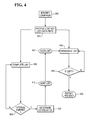
- Fig. 4 illustrates a flow diagram of one embodiment for a method of optimizing a contact list during a campaign.
- a campaign is identified in step 360 and a contact list associated with the campaign is received in step 370, along with data references which permit access to one or more additional data fields associated with each contact in the list. Access to these additional fields is achieved using a contact id and acquired from one or more data stores. Moreover, some of these additional data references identify demographic attributes associated with any particular contact.
- step 380 completed contacts in the contact list are logically identifiable in step 380 as are remaining contacts in step 430. Each completed contact is determined to either be a successful contact or not.
- a check is made in step 390 to determine if a correlation is to be established in step 400.
- a standard statistical correlation is determined (step 400), and the remaining contact list is sorted in step 410 and seeded in step 420 with an adjustable percentage of remaining contacts without regard to any predictive success value identified by the demographic attributes.
- the remaining contact list is traversed by the CTI software and checked in step 440 to determine if all contacts have been made in the campaign and if all contacts are completed in step 450 the campaign terminates and reports are generated, as appropriate.
Landscapes
- Business, Economics & Management (AREA)
- Strategic Management (AREA)
- Engineering & Computer Science (AREA)
- Accounting & Taxation (AREA)
- Development Economics (AREA)
- Finance (AREA)
- Entrepreneurship & Innovation (AREA)
- General Business, Economics & Management (AREA)
- Game Theory and Decision Science (AREA)
- Economics (AREA)
- Marketing (AREA)
- Physics & Mathematics (AREA)
- General Physics & Mathematics (AREA)
- Theoretical Computer Science (AREA)
- Data Mining & Analysis (AREA)
- Management, Administration, Business Operations System, And Electronic Commerce (AREA)
Abstract
Description
- The present invention relates to methods and a system for optimizing campaigns while the campaign is in the operation environment.
- Outbound contact campaigns exist over a variety of channels such as e-mail, facsimile, regular postal mail, telephonic communication, and the like. By and large, telephonic communication is still the most popular and widely preferred contact campaign channel used by businesses to reach consumers.
- Typically, a selling business will identify a service or a product which it desires to market to consumers. Next, a market/business analyst will identify individuals which are believed to be likely candidates for purchasing the service or the product. The individual names and telephone numbers of these identified consumers are acquired from a variety of sources such as organizations external to the selling business which compile and sell large amounts of information about consumers, internal customer data stores controlled by the selling business, and the like.
- Often analysts will mine a plurality of data stores using a variety of existing automated tools (e.g. NCR's Relationship Optimizer, and the like) in order to define appropriate profiles on potential purchasers and to correspondingly restrict the contact campaign to the potential purchasers matching the profiles. Some data stores consist of historical information gathered from past campaigns and historical customer information collected during past interactions of all types with the customer (like prior purchases, credit applications, service information, and others). However, this mining exercise only creates a target list of consumers whom will be contacted during the campaign and it does not optimize the actual execution of the campaign.
- After a campaign is identified and a contact list created, a variety of existing automated software packages permit the campaign to be automatically managed, placing calls to the target consumer and connecting the call (after the consumer answers) to the next available call center agent (also referred to as a customer service representative "CSR"). For example, the contact list can be electronically provided to Computer Telephony Integration (CTI) software packages (e.g. Genesys, Geotel, and the like) wherein a record for each contact is maintained electronically and logically hooked to a customer database where additional information about a contacted consumer may be acquired and provided to the CSR during the contact with the consumer.
- Furthermore, these CTI packages may be interfaced to a variety of internal business Front Office Applications (FOA), such as Vantive, SilkNet, Siebel, ONYX, and Clarify. The FOA's permit modification to fields in the internal customer database, and electronic screens are popped up on a CSR display when a call is delivered to a CSR, providing additional information to the CSR about the contact. CTI's do not require CSR's to dial any telephone number, this is all handled by the package automatically.
- It is well known by those skilled in the art that various environmental factors, such as time of day, time of week, current events, consumer obligations, and consumer activities, and the like will have a significant impact on whether or not a contacted consumer in the campaign will be receptive to the CSR's offered services and/or products. Yet, existing outbound contact campaigns do not provide methods or systems which enable the campaign execution system to select target customers who are likely to be receptive at the time the call is placed while traversing the contact list. Since, ideally the selected contact list is already optimized prior to the campaign with the appropriate consumers, it is desirable to continuously optimize the order in which the contact list is traversed during the campaign such that the consumers are contacted at appropriate times where their individual environmental factors are most favorable to permitting a successful CSR contact (e.g. a sale, a trial offer, and the like).
- Moreover, by contacting consumers at a time which is conducive to their individual favorable environmental factors, the CSR does not waste his/her time talking to individuals predisposed to rejecting a telemarketing call and therefore more successes are recorded during the campaign. More successes translate into potentially more revenues for the selling business. A typical call center (e.g., 50 agents) may realize over $100,000 per year in savings by reducing each contact by 20 seconds, a savings typically realized by enabling a call center with CTI and FOA software. Increasing the number of customer contacts by one each hour, which achieves the business success for which the campaign was undertaken, typically improves the CSR's productive time by 6 minutes each hour. Therefore, as one skilled in the art will appreciate, the ability to only marginally increase the success rate of a campaign can have a significant impact on the selling business by increasing revenues while decreasing the expenses associated with CSR's.
- Accordingly, it is an object of the invention is to provide improved methods and a system of optimizing campaigns. By augmenting existing campaign management systems to include conditional expressions operative to automatically determine whether a contact made during the campaign is a business success and to include demographic attributes associated with the contacts, a standard statistical correlation for the campaign may be established. The correlation may be used to evaluate the non completed contacts within the campaign and to sort the contacts in an order which is statistically more conducive for success. Moreover, the correlation is modified at different adjustable time intervals, to continuously reorder the non completed contacts such that each contact is made at the most optimal statistically determined time during the campaign.
- From a first aspect, the invention resides in a method of optimizing a campaign using a set of executable instructions, comprising receiving a campaign operable to determine a success factor and a failure factor; receiving a contact list including a plurality of contacts each contact associated with one or more demographic attributes; associating a completed contact list with each completed contact in the contact list and a remaining contact list with each non completed contact in the contact list; associating at least one of the success factor and the failure factor with each completed contact in the completed contact list; determining from the completed contact list if a correlation exists between the completed contacts associated with the factors and one of more of the demographic attributes; and retrieving each contact in the remaining contact list based on the determined correlation.
- One or more selective contacts in the remaining contact list may be removed based on an unfavorable value of the correlation which is associated with one or more of the selective contacts. Determination of the correlation is preferably initiated at one or more intervals, the intervals being adjusted if no substantial correlation is determined. The retrieved remaining contact list is preferably randomly seeded with an adjustable percentage of non completed contacts without regard for the determined correlation. The correlation is then redetermined to discover if as a result of randomly seeding a modified correlation is detected and each remaining contact in the remaining contact list is retrieved based on the modified correlation.
- Remaining contacts in the remaining contact list having unfavorable demographics with respect to the determined correlation are preferably discarded and one or more new contacts not originally associated with the contact list are acquired, each new contact having favorable demographics with respect to the determined correlation and being sorted into the remaining contact list.
- From a second aspect, the invention resides in a system for optimizing campaigns comprising a campaign optimizer having means for communicating with one or more contact data stores, the data stores being associated with at least one or more completed contacts and one or more non completed contacts, the campaign optimizer being operable to receive completed contacts at adjustable time intervals, a correlator comprising means for communicating with the campaign optimizer, to receive the completed contacts and determining if a correlation associated with the completed contacts exist between the completed contacts identified with at least one of a success factor and a failure factor and one or more demographic attributes; and a non-completed contact sorter comprising means for communicating with the correlator and one or more of the data stores and means for sorting non-completed contacts in one or more of the data stores based on the correlation.
- The correlator preferably comprises means for determining a correlation coefficient for each of the demographic attributes and the contacts are preferably associated with an outbound contact campaign.
- The system preferably includes an outcome analyzer comprising means for determining if the completed contact is associated with at least one of the success factor and the failure factor, upon completion of one or more of the completed contacts and also an optimization manager for randomly seeding the non completed contacts in one or more of the data stores with a percentage of non completed contacts without regard to the correlation. The optimization manager is operable to communicate with the correlator to redetermine a modified correlation based on completed contacts associated with the randomly seeded contacts, the modified correlation being communicated to the non-completed contacts sorter resulting in a resort of the non completed contacts in one or more of the data stores based on the modified correlation.
- The invention also resides in a data structure stored in memory of a computer comprising instructions for optimizing a campaign which when executed cause the computer to perform the method described above, in a computer program comprising program instructions for optimizing a campaign and in an article including one or more machine-readable storage media containing instructions for optimizing a campaign, the instructions when executed by a computer system causing the system to perform the method described above.
- The invention may also be expressed as a method of optimizing a contact list during a campaign using a set of executable instructions, comprising identifying a contact campaign; receiving a contact list including completed contacts and non completed contacts, each of the contacts associated with a success factor, a failure factor, and one or more demographic attributes; determining during the contact campaign at adjustable intervals a correlation between the factors and one or more of the demographic attributes of the completed contacts; and reordering during the contact campaign the non completed contacts based on the correlation. An adjustable percentage of the non completed contacts is preferably seeded randomly without regard for the correlation. A new correlation may be determined by evaluating the factors and one or more of the demographic attributes for completed contacts after the seeding step and reordering the non completed contacts based on the new correlation. A reference operable to modify and retrieve one or more contact data records is preferably received from one or more data stores associated with each of the contacts. Summary data associated with the contact campaign may be reported. The contact campaign is preferably conducted over at least one of an e-mail channel, an on-line chat channel, a voice channel, a video channel, an audio channel, a kiosk channel, an ATM channel, and a wireless channel.
- The invention also resides in a data structure stored in memory of a computer comprising instructions for optimizing a contact list during a campaign which when executed cause the computer to perform the method described above, in a computer program comprising program instructions for optimizing a contact list during a campaign and in an article including one or more machine-readable storage media containing instructions for optimizing a contact list during a campaign, the instructions when executed by a computer system causing the system to perform the method described above.
- Embodiments of the invention will now be described with reference to the accompanying drawings in which:
- Fig. 1 depicts a flow diagram of a method of optimizing a campaign;
- Fig. 2 depicts a block diagram of a system for optimizing a campaign;
- Fig. 3 depicts a flow diagram of a system for optimizing a campaign; and
- Fig. 4 depicts a flow diagram of a method of optimizing a contact list during a campaign.
- The present invention provides methods a system for optimizing campaigns. One embodiment of the present invention is implemented using NCR's Relationship Optimizer for the FOA, a customer data store housed in NCR's Teradata database, an CTI application using Genesys, and the methods and system written in C++ and Visual Basic programming languages. The operating system environment is both WINDOWS NT and Unix. Of course other FOA's, data stores, CTI's, programming languages, and operating systems (now known or hereafter developed) may also be readily employed. Moreover, as one skilled in the art will readily appreciate the client operating system environment may differ from the server operating system environment, and each of the various architectural components may have their own operating system environment.
- Initially, a business identifies a campaign (e.g. sell more of product x, sell service y, acquire more subscriptions to trial offer z, and the like) and an analyst creates a campaign contact list, although as one skilled in the art will appreciate no analyst may be needed at all, as automated software programs, and other methods may acquire the initial campaign contact list. Identifying how a campaign contact may be determined a success or failure may be self-evident at the close of a contact, in which case conditional expressions may be automatically evaluated to determine the success or failure of the completed contact. However, if a conditional expression is not deployed or not capable of being deployed given the complexity associated with determining whether a particular contact was a success or failure, automated screens may be popped to a CSR's desktop upon completion of a contact where a selection will need to be made by the CSR, the selection operative to permit automated determination as to whether the contact was a success or a failure.
- As previously discussed a CTI package, such as Genesys by way of example only, will receive a campaign contact list and in the normal course will proceed to make automated telephonic contact with each individual in the contact list. Genesys, and others, permit some interfacing to FOA's (e.g. Vantive, and others) which hook to a businesses internal data stores (e.g. NCR's Teradata, and others). CTI packages often provided an application programming interface (API) where a business may augment the contact records associated with a contact to include data store fields associated with internal data stores. Even if the CTI package does not support the preferred data store of the business, standard data stores (e.g. Oracle, MS SQL, Informix, Sybase, DB2, and others) are often supported, interfacing to the non-supported data store is easily accomplished with any ODBC (Open Database Connectivity) connection using ANSI SQL queries.
- Augmentation of the CTI's contact record may be achieved, by way of example only, by adding the following additional fields to the call record:
Success Boolean Failure Boolean Skip Boolean Non-sort Boolean Predicted-success Floating/Integer/Boolean Tables String - Where the newly added field for the Success column is used to identify a successful contact and the Failure column identifies a failed contact. Success and failure conditions are evaluated by conditional expressions, or by manual indications made by the CSR via automated display screens popped to the CSR's display screen (discussed below). The Skip column is added to identify a particular contact record where a success or failure condition could not be ascertained and is used by the success correlator (discussed below). The Non-sort column is added to be used by a sorter set of executable instructions (discussed below). Predicted-success column is also used by the sorter (discussed below). The Tables column will contain a variable length string which identifies the table and column names associated with fields in one or more data stores where one or more demographic attributes associated with a particular contact may be acquired. The CTI package will provide a contact id which is operative to uniquely locate from one or more data stores the column values associated with the column names of the Tables column. Demographic attributes include, by way of example only, such things as age, occupation, address, city, state, gender, size of family, income, ethnic origin, and others.
- Once the CTI package is augmented with the above additional columns in the contact record, a global record maintained by a campaign optimizer set of executable instructions may be used to optimize each campaign. The campaign optimizer may be singly deployed for a plurality of campaigns being simultaneously managed and optimized, each campaign uniquely managed by a single global record with the following fields, by way of example only:
Campaign-id Integer Success-vars String Failure-vars String Interval Integer Dem-vars String - Where the Campaign-id identifies uniquely the campaign being managed, this is the primary key used to access the global campaign record. The Success-vars and Failure-vars are varying length strings which are used by a success analyzer set of executable instructions to evaluate whether a contact made is a business success or a failure. The string information embedded in these fields may be provided by an analyst equipped with an appropriate API which will translate the various conditions into computer readable and computer evaluatable conditional expressions or automated dialogue boxes for the CSR to manually identify successes or failures. These two fields each contain a string representing a conditional statement which is itself comprised of multiple boolean expressions connected by AND or OR logical connectors (which have equal precedence, the statement being evaluated left to right). Each boolean expression relates constants and/or variables with any of the standard boolean operators (like =, <, >, <=, >=,) to obtain a boolean answer (True, False)). There are two types of variables: TABLE variables, those obtained from database tables, and DIALOG variables, values obtained from a CSR's response to a pop-up dialog box. Variables are defined with the following fields:

Type: String ("TABLE", DIALOG") Customer-key: Integer TABLE: Location String (Server + database + table + column names) TABLE: Var. Type String ("Integer", "String", and others) DIALOG: Box Info multiple strings to define query & responses - Where the Type field holds a string value of either "Table" or "Dialogue." A "Table" value indicates that the variable must be fetched from a database table identified by the Location information (specifying all location information down to a data store table and column) in a row identified by using the Customer-key (e.g. passed by the CTI package as contact-id). A "Dialog" value indicates that the variable value is to be determined by the CSR's choice of a response in a dialog box constructed from the Dialog Info. The Success Analyzer parses the Dialog Info into a dialog box containing a query and two or more mutually exclusive responses. The result is a number. The CSR will not be able to proceed to the next contact until the dialogue window(s) is(are) addressed. In this way, a manual determination of success or failure may be identified by an automatically constructed dialogue window and used by the success analyzer. Although as one skilled in the art will appreciate, a variety of different techniques my be employed to achieve a CSR driven determination of a contact's success or failure.
- In this way, the Success and Failure fields of the global campaign record are evaluated by the success analyzer set of executable instructions yielding a True or False result for the just completed contact. This result may be derived from one or more table values (like the amount of the order taken during the contact) or one or more dialog box results or a mixture of both.
- As described above, the Success and Failure fields of the global campaign record may be used by the success analyzer at the close of each contact to either automatically determine success or failure or to manually (although in an automated fashion) permit the CSR to select an option via a dialogue window wherein success or failure may be determined. Once the success analyzer determines success or failure the augmented contact record being maintained by the CTI package may be modified so that either the Success or Failure boolean columns have their values set to either "1" for true or "0" for false as is appropriate. Moreover, once the contact record is identified as either a success or a failure it is correspondingly known to have been a completed contact.
- Continuing with the description of the fields associated with the global campaign record, the Interval column is used by an optimization manager set of executable instructions to determine how often a correlator set of executable instructions should be initiated, described below. Furthermore, the optimization manager may alter this interval period if the success ratio per interval associated with the campaign is not improving sufficiently well enough. For example, if the Interval field value for a campaign is initially set to 15 (an indication that the interval is 15 minutes) and the optimization manager detects that the success ratio for the interval periods (contacts in the interval identified as success versus the total number of contacts during the interval) are not improving (e.g. remaining at 25%), then the optimization manager may switch the period within which a success correlation is to be determined from 15 to 30. In this way, the optimization manager is capable of automatically determining the optimal level within which a success correlation is to be determined.
- Finally, the Dem-vars column is comprised of a series of fields which identify the demographic attributes associated with the contacts of the campaign, these fields are similar to the variable definitions in the Success and Failure sub-fields, as described above, but will have Type values of "Table," additionally, a count field is provided since the Dem-vars are one to many demographic attributes, the count field permits parsing of the Dem-vars string for each individual demographic attribute.
- With the above discussion examples depicting one embodiment, of a structure and a layout of the present invention as a foundation, the methods and system of the present invention will be discussed.
- Fig. 1 illustrates a flow diagram of one embodiment of a method for optimizing a campaign. In step 10 a campaign is received, the campaign is associated with, by way of example only, a contact list (managed within a CTI package), and conditional expressions or text which are operable to be embodied in a computer readable medium which when evaluated may determine whether a particular contact within the contact list may be associated with a campaign success or a campaign failure.
- As discussed above, the CTI package is augmented using the existing CTI's API so that additional fields of a contact record associated with each contact within the campaign includes a success field and a failure field. Moreover, a campaign optimizer for managing one to many campaigns maintains information for each campaign, and is capable of identifying each campaign uniquely by a campaign id. Typically, the CTI package will provide the campaign id for each contact list being used within a campaign. However, as one skilled in the art will appreciate it is possible to augment the CTI contact record so as to include an additional field where the campaign id is hardcoded. In this way, the campaign optimizer is capable of identifying and receiving the campaign and the contact list (step 30). Individual contacts will have provided CTI contact ids which correspond to customer ids and permit access to the appropriate data store records where necessary.
- Moreover, the CTI contact records are augmented to include a field which permits one to many demographic attributes associated with a contact to be directly associated with the contact (discussed above). Again, any particular contact may have its demographic variables referenced by using the contact id as a key along with the fields parsed from the Tables field which augments the contact record. Any demographic attributes which are to be used to determine a success or failure condition for the campaign will need to have non null values, if a particular contact has a null value for a demographic attribute associated with a success or failure condition or if any other anomalous condition precludes grading a contact as a success or failure, then the augmented field of the contact record identified as Skip is set to "1" or true. In this way, records which contain these types of error conditions will not be evaluated for purposes of determining any correlation associated with the demographic attributes.
- Once a CSR completes a contact, the contact may be logically assigned to a list associated with completed contacts (step 20) and before the CSR may continue to the next contact within the contact list (remaining list, step 40), a trap is raised and the success analyzer is called. Further, the campaign optimizer's unique campaign information includes Success and Failure fields which are associated with the campaign (discussed above). These fields are retrieved by the success analyzer at the completion of each contact within the campaign and the conditional expression evaluated in light of the values associated with the referenced demographic attributes. Once a determination is made as to success or failure, the appropriate value of the contact record is set (step 70). Further, if a conditional expression is not available but, rather, the success or failure is to be determined by the CSR using a dialogue window, then the appropriate dialogue box is popped on the CSR's desktop and a selection made (process discussed above). After the selection, the appropriate value of the contact record is set for success or failure (step 70).
- The success analyzer has access to the contact record via the campaign id and the contact id where modification to the augmented records may be readily made. Once success or failure is determined, the campaign optimizer checks the campaign interval field to determine if a new interval has occurred. If an interval has expired the campaign optimizer passes to the optimization manager the current interval field value along with a sequential interval number. The optimization manager maintains information relating to the campaign's intervals and records, associated with previous success ratios from prior intervals. Moreover, the optimization manager initiates a call to the correlator and the sorter.
- At the end of an interval period, the optimization manager calls the correlator. The correlator will process all records in the completed contact list which were completed during the last interval period. By way of example only, processing only contact records which were completed during the last interval may be accomplished by having the optimization manager pass to the correlator the sequential interval number and the ID of the last contact record processed, the correlator then simply scans up the list marking each contact record with the sequential interval number until it detects a contact record which already has an interval number (indicating that contact record begins a previous interval which has been previously processed).
- Next, the correlator (step 80) will proceed to process the contact records identified as completed and belonging to the current interval. Records with a skip flag set are not processed, similarly records with no success or failure flag set are not processed. Having, identified only those contact records which need to be used to have a correlation established, the correlator proceeds to process the set of contact record's from the just completed time interval, mathematically correlating each individual demographic attribute against either the success fields or the failure fields from the call records. Each correlation derives a correlation coefficient for the demographic being evaluated. The correlation coefficient is a number between 0 and 1. When the correlation coefficient is greater than some threshold (for example 0.65) it is deemed to be significant. There may be more than one significant correlation in which case each significant demographic is given a weight associated with predicative value of success for that particular demographic. The weight is a decimal number from 0 to 1 with the sum of all weighting factors equaling 1. The correlation process also determines the range of values the demographic must have to be significant. Although as one skilled in the art will appreciate, the particular weighting factor for any demographic attribute being compared against either the success or failure fields may take on a range of values depending upon the campaign and decisions of a business analyst and correspondingly what determines a significant weighting factor is adjustable and modifiable and may be provided to the correlator so as to be configurable.
- Determining the statistical correlation between a series of variables is readily knowable to those skilled in the art, and standard techniques may be deployed to account for discrete variables (e.g. gender) versus continuous variables (e.g. income level), which are associated with the demographic attributes. Moreover, a multi-variance (multi-dimensional) statistical algorithm may be deployed to account for the dependence among all the demographic attributes in relation to the success or failure field, rather, than accounting for each demographic variable in isolation. Upon completion of the correlator, each demographic variable will have a weight associated with it indicating its probability of either being a successful or unsuccessful contact.
- The correlation results which include the identity of the demographics which have been found to correlate with success (or failure) together with the value ranges that demographics must have to be predictors of success (or failure) and the weighting factor for each demographic are passed to the campaign list sorter via the campaign optimizer manager. The list sorter then uses this information to find call records that predict to be successes.
- Once the correlator is completed the optimization manager receives a total number of completed records processed along with the number of successful records and then uses information this to assign a success ratio to the current interval being evaluated. As previously stated, the optimization manager may check the various success ratios with prior intervals and determine that an interval length change needs to be made, or the optimization manager may detect that the highest correlation weighting factor associated with any one demographic attribute is not significant (this is configurable), if this occurs the interval length is adjusted by the optimization manager by modifying the Interval field for this particular campaign (using the campaign id) in the campaign optimizer. This modification to the interval length will result in an automatic adjustment (step 120) to the correlation upon the next call to the correlator.
- Next, the sorter is called receiving the contact list, the demographic weighting factors, significant demographic identities and the value ranges they should have, and the interval length acquired from the campaign optimizer. Also, the sorter will be passed the number of records needed to accommodate calls that are needed to fill the next optimization interval. Further, the sorter will receive an adjustable and configurable number which is indicative of a percentage of contact records which are to be sorted into the remaining contact list (e.g. those contacts not yet processed by the correlator or without a skip flag set) without regard for the demographic weighting factors determined by the correlator. This sorting of the remaining contacts without regard to the correlation is referred to as seeding the remaining contact list,
step 100. This ensures that some contacts made during the next interval period by the CSR are to contacts which are randomly placed before the CSR and not predetermined by sorting the list based on the correlation weighting factors (step 110). - In this way, the sorter, ensures that the correlator is able to detect during its next cycle new patterns or correlations occurring during the campaign. Moreover, any contact which was determined to be seeded randomly, will have its no sort flag set, in this way a standard statistical algorithm deployed in the correlator may give a higher weighted factor to demographics associated with non sort records, thereby, permitting the correlator to detect environmental changes occurring during execution of the contact campaign list. For example, if during the first interval of the campaign a correlation factor for a demographic attribute of gender was determined to be statistically significant in that no males were successful contacts and 30% of the females contacted were successful. Then, assuming an environmental change occurs outside the scope of the campaign, for example, the super bowl ends, if in the next interval a certain percentage of men were not randomly seeded into the remaining contact list for the CSR to contact, the system would not detect that in fact men were now likely to be successful contacts. In this way, the contact list is continuously improved and modified so that individuals are contacted at times which they are most likely to be receptive to the contact campaign. The seeding of the remaining contact list with random contacts without regard to the determined demographic correlation will also result in an adjustment to the correlations (step 120) during the next interval calculation.
- By way of example only, the sorter may randomly seed the remaining contact list by maintaining a counter which is initially set to 0, each time a contact is bubbled to the top of the remaining list, because it has a significant demographic correlation associated with one of its demographic attributes, the counter is incremented. Once the counter reaches a set number (percentage which is configurable and adjustable), the current record being processed in the remaining contact list is bubbled to the top of the list. This bubble sort algorithm is one of many sorting algorithms well known to those skilled in the art, and a variety of other sorting techniques both standard and ad hoc may be developed to randomly seed and sort the list.
- Finally, the sorter is configured to know the number of calls which a CSR may make in a certain time interval and correspondingly only sorts and seeds the appropriate number of contacts to the top of the remaining contact list for a given interval length. This number is calculated using recent operational statistics obtained from the CTI system. Further, any sorted remaining contact has its Predicted-success field set to a boolean value such as true where initially all contacts have a Predicted-success field value of false. Although, the average weighted correlation factors for each remaining contact in the contact list may be written to the contact records Predicted-success field as a percentage value as opposed to a boolean value. Moreover, it may be desirable to remove contacts all together from the contact list based on extremely low correlation values, this may be done in
step 90. Likewise, contacts not originally in the list could be mined from the data stores using the correlation value to acquire new contacts not originally associated with the contact list instep 50. - Further, as one skilled in the art will appreciate, the correlator could after determining the correlations insert a Predicted-success value for each of the remaining contacts in the remaining contact list and in this case the sorter would simply sort on the Predic-success field of the remaining contact records and randomly sort records without regard to the Predicted-success value.
- Moreover, as one skilled in the art will appreciate, no sort is needed at all since standard database queries using the Predict-success field and other fields could retrieve for a CSR records identified as potential successes without the need to actually alter the remaining contact list. By way of example only, the correlator could alter the Predict-success field and a database query could search the contact list for remaining contacts with the Predict-success field set to "1" or true, then only the number of calls which a CSR could handle during the next interval are provided to the CSR. Further, no Predict-success field is needed at all, since the demographic and their relationship to success or failure could be directly provided in a database query which is tasked for retrieving contacts which are potential successes. In this way, the contact list is not altered at all but, rather, logically provided to the CSR in an ordered manner.
- Logging information about each interval may be tracked and recorded, such that a reporter set of executable instructions may read each interval along with the success ratio associated therewith and produce a graphic user interface (GUI) display for business analysts to review or monitor, such that manual interval modification could be interjected by an analyst who is detecting trends visually on a GUI presented graph. Various information could be presented such as, by way of example only, predicted success rates versus actual success rates per interval, multiple windows displaying simultaneously occurring campaigns, and the like. Moreover, third party report generators could be provided the logging information and, thereby, generating customized reports (e.g. Acuate, Crystal Reports, and others). Reports displayed visually on a display screen may also be printed in a hard copy format.
- Fig. 2 illustrates one embodiment of a
system 130 for optimizing a campaign. Architecturally, a single contact campaign may be optimized, by way of example only, thesystem 130 depicted in Fig.2. Although, as one skilled in the art will appreciate alternative structures are possible without departing from the invention herein disclosed. - Each
campaign 160 is comprised of completed and remainingcontacts 170 with each contact being identified, at some point during thecampaign 160, as a success or afailure 180. Identifying completed and remaining contacts may be accomplished logically by flagging contact records with the appropriate values for fields contained within the record, as discussed above. A campaign success identification and a campaign failure identification, may be made upon the completion of the contact via an automated evaluation of a conditional expression or via automated screen dialogue boxes presented to the CSR for manual resolution, as discussed above. Information regarding the campaign being managed and the success and/or failure evaluation is managed by acampaign optimizer 150. Individual contact success or failure evaluations is determined by anoutcome analyzer 140. Moreover, a single instance of acampaign optimizer 150 may be used to manage more than onecampaign 160. -
Contacts 210 are acquired from one or more data stores 200 wherein each contact is associated with one or more demographic attributes 220. Aparticular campaign 160 is associated with a subset of allavailable contacts 210 and identified ascampaign contacts 190. As one skilled in the art will appreciate, a single contact may be associated with one to manydemographic attributes 220 were each attribute originates from one to many different data stores 200. Access to the information contained in the data stores is achieved using standard data store queries, where a contact id and a campaign id provide primary access to desired records, as previously presented. By way of example only, standard CTI packages are augmented so that contact records associated with a campaign are associated with one or more demographic attributes 220. - At configurable intervals, an
optimization manager 250 will initiate acorrelator 240 wherein completed records are evaluated. Completedcontacts 170 associated with thecampaign contacts 190 which have been flagged as a success or afailure 180 are evaluated using standard statistical methods well known in the industry againstdemographic attributes 220 to establish success or failure correlations. Selection of the statistical computation is based upon whether the demographic attribute is associated with a discrete (distinct) versus a continuous (indistinct) variable. Moreover, the relationship between success or failure may be accomplished so as to determine the dependency among all the demographic attributes 220 by using multi-variance statistical computations, also well known in the art. - Once a success or failure correlation is established, a
contact sorter 230 is initiated by theoptimization manager 250. Thecontact sorter 230 receives a configurable interval period associated with thecampaign optimizer 150 which identifies the interval length within which correlations are currently being made. Moreover, thecontact sorter 230 is configured to know how many contacts a CSR may handle in a given interval. Further, thecontact sorter 230 may be configured to determine a significant weighting factor and a seeding factor. - Once initiated or provided access to the above information, the
contact sorter 230 proceeds to sort contact records into the CSR's remainingcontact list 170 for the next integral contact period, contact records identified as potential successes by using the correlation established by thecorrelator 240. Moreover, some records will be sorted in the next interval period without regard to the correlation determined by thecorrelator 240. - As previously discussed, this seeding of the remaining contact list will ensure automatic adjustment to the correlation determined by the
correlator 240 in the next interval period of thecampaign 160. In this way, contacts are contacted by a CSR at time periods within which they are more statistically likely to positively receive any sale's pitch or promotional offer being conveyed by the CSR. - Fig. 3 illustrates another embodiment of a system for optimizing a campaign. In Fig. 3 a campaign is initially generated in
step 270 and a campaign list acquired instep 280 from one ormore data stores 300. Next, a CTI package provides for managing individual contacts in the campaign list instep 290. Once a CSR completes a contact a trap is raised causing ananalyzer 320 to evaluate the completed contact to determine if the contact was a success or a failure. The success or failure of the completed contact is recorded with the contact record. - At configurable intervals, an
optimization manger 260 initiates the calling of acorrelator 330 where completed contacts in the contact list are evaluated using standard statistical correlation which determine correlations between a contact's success or failure and each of a contact's associated demographic attributes, as previously discussed. Further, theoptimization manager 260 initiates asorter 340 upon completion of thecorrelator 330 wherein the remaining contacts which are to be presented to the CSR during the next campaign interval are sorted based upon any correlation determined by thecorrelator 330. A configurable percentage of records presented in the next campaign interval will be sorted without regard to the correlation determined so as to identify in the next determined interval period changes with respect to the correlation which are occurring within the contact population based upon outside environmental factors, as discussed above. - Lastly,
additional data stores 350 provided to theanalyzer 320, thecorrelator 330, and thesorter 340, through a standard data interface mechanism, demographics that are not stored in the campaign call list. - Fig. 4 illustrates a flow diagram of one embodiment for a method of optimizing a contact list during a campaign. Initially, a campaign is identified in
step 360 and a contact list associated with the campaign is received instep 370, along with data references which permit access to one or more additional data fields associated with each contact in the list. Access to these additional fields is achieved using a contact id and acquired from one or more data stores. Moreover, some of these additional data references identify demographic attributes associated with any particular contact. - As the campaign ensues, completed contacts in the contact list are logically identifiable in
step 380 as are remaining contacts instep 430. Each completed contact is determined to either be a successful contact or not. At adjustable intervals, a check is made instep 390 to determine if a correlation is to be established instep 400. Using the data references associated with demographic attributes of the contacts, a standard statistical correlation is determined (step 400), and the remaining contact list is sorted instep 410 and seeded instep 420 with an adjustable percentage of remaining contacts without regard to any predictive success value identified by the demographic attributes. - The remaining contact list is traversed by the CTI software and checked in
step 440 to determine if all contacts have been made in the campaign and if all contacts are completed instep 450 the campaign terminates and reports are generated, as appropriate.
Claims (26)
removing one or more selective contacts in the remaining contact list based on an unfavorable value of the correlation which is associated with one or more of the selective contacts.
initiating at one or more intervals the step for determining the correlation.
adjusting one or more of the intervals if no substantial correlation is determined.
randomly seeding the retrieved remaining contact list with an adjustable percentage of non completed contacts without regard for the determined correlation.
an outcome analyzer comprising means for determining if the completed contact is associated with at least one of the success factor and the failure factor, upon completion of one or more of the completed contacts.
seeding in random order an adjustable percentage of the non completed contacts without regard for the correlation.
receiving a reference operable to modify and retrieve one or more contact data records from one or more data stores associated with each of the contacts.
reporting summary data associated with the contact campaign.
Applications Claiming Priority (2)
| Application Number | Priority Date | Filing Date | Title |
|---|---|---|---|
| US604503 | 1996-02-21 | ||
| US09/604,503 US6954731B1 (en) | 2000-06-27 | 2000-06-27 | Methods and system for optimizing a campaign |
Publications (1)
| Publication Number | Publication Date |
|---|---|
| EP1168217A1 true EP1168217A1 (en) | 2002-01-02 |
Family
ID=24419856
Family Applications (1)
| Application Number | Title | Priority Date | Filing Date |
|---|---|---|---|
| EP01305143A Ceased EP1168217A1 (en) | 2000-06-27 | 2001-06-13 | Methods and system for optimizing a campaign |
Country Status (2)
| Country | Link |
|---|---|
| US (1) | US6954731B1 (en) |
| EP (1) | EP1168217A1 (en) |
Cited By (1)
| Publication number | Priority date | Publication date | Assignee | Title |
|---|---|---|---|---|
| US8577916B1 (en) | 2006-09-01 | 2013-11-05 | Avaya Inc. | Search-based contact initiation method and apparatus |
Families Citing this family (35)
| Publication number | Priority date | Publication date | Assignee | Title |
|---|---|---|---|---|
| US7268700B1 (en) | 1998-01-27 | 2007-09-11 | Hoffberg Steven M | Mobile communication device |
| US6985885B1 (en) * | 1999-09-21 | 2006-01-10 | Intertrust Technologies Corp. | Systems and methods for pricing and selling digital goods |
| US7043690B1 (en) * | 2000-09-11 | 2006-05-09 | International Business Machines Corporation | Method, system, and program for checking contact information |
| US7406434B1 (en) * | 2000-12-15 | 2008-07-29 | Carl Meyer | System and method for improving the performance of electronic media advertising campaigns through multi-attribute analysis and optimization |
| US8386315B1 (en) * | 2001-05-30 | 2013-02-26 | Carl Meyer | Yield management system and method for advertising inventory |
| US9818136B1 (en) | 2003-02-05 | 2017-11-14 | Steven M. Hoffberg | System and method for determining contingent relevance |
| US20040204973A1 (en) * | 2003-04-14 | 2004-10-14 | Thomas Witting | Assigning customers to activities in marketing campaigns |
| US20050038861A1 (en) | 2003-08-14 | 2005-02-17 | Scott Lynn | Method and system for dynamically generating electronic communications |
| US8249929B2 (en) * | 2004-08-11 | 2012-08-21 | Adknowledge, Inc. | Method and system for generating and distributing electronic communications for maximum revenue |
| US8429190B2 (en) * | 2004-08-11 | 2013-04-23 | Adknowledge, Inc. | Method and system for generating and distributing electronic communications |
| US7590589B2 (en) | 2004-09-10 | 2009-09-15 | Hoffberg Steven M | Game theoretic prioritization scheme for mobile ad hoc networks permitting hierarchal deference |
| US20060136286A1 (en) * | 2004-12-22 | 2006-06-22 | Microsoft Corporation | Method and apparatus for marketing using templates, lists and activities |
| US20060212338A1 (en) * | 2005-03-18 | 2006-09-21 | Bogle Phillip L | Method and apparatus for identifying candidates for a position |
| US8121895B2 (en) | 2005-07-21 | 2012-02-21 | Adknowledge, Inc. | Method and system for delivering electronic communications |
| US7974882B1 (en) * | 2005-09-16 | 2011-07-05 | Direct Resources Solutions, LLC | Method and system for creating a comprehensive undeliverable-as-addressed database for the improvement of the accuracy of marketing mailing lists |
| US8874477B2 (en) | 2005-10-04 | 2014-10-28 | Steven Mark Hoffberg | Multifactorial optimization system and method |
| US8209222B2 (en) | 2005-10-12 | 2012-06-26 | Adknowledge, Inc. | Method and system for encrypting data delivered over a network |
| US8379834B2 (en) | 2006-01-21 | 2013-02-19 | Soundbite Communications, Inc. | Method and system for managing interactive communications campaigns |
| US20070288304A1 (en) * | 2006-06-08 | 2007-12-13 | Adknowledge, Inc. | System and method for behaviorally targeted electronic communications |
| US20070288298A1 (en) * | 2006-06-08 | 2007-12-13 | Chris Gutierrez | System and method for behaviorally targeting electronic communications |
| WO2008067565A1 (en) | 2006-11-30 | 2008-06-05 | Google Inc. | Targeted content request |
| CA2659538A1 (en) * | 2009-03-30 | 2010-09-30 | Acquisio Inc. | System and method for managing and optimizing advertising networks |
| US20110225038A1 (en) * | 2010-03-15 | 2011-09-15 | Yahoo! Inc. | System and Method for Efficiently Evaluating Complex Boolean Expressions |
| US11080734B2 (en) | 2013-03-15 | 2021-08-03 | Cdk Global, Llc | Pricing system for identifying prices for vehicles offered by vehicle dealerships and other entities |
| US9894205B1 (en) * | 2014-09-23 | 2018-02-13 | Noble Systems Corporation | Measuring contact center agent effectiveness using a predictive model |
| WO2018118983A1 (en) * | 2016-12-19 | 2018-06-28 | Interactive Intelligence Group, Inc. | System and method for managing contact center system |
| US11501351B2 (en) | 2018-03-21 | 2022-11-15 | Cdk Global, Llc | Servers, systems, and methods for single sign-on of an automotive commerce exchange |
| US11190608B2 (en) | 2018-03-21 | 2021-11-30 | Cdk Global Llc | Systems and methods for an automotive commerce exchange |
| US12020217B2 (en) | 2020-11-11 | 2024-06-25 | Cdk Global, Llc | Systems and methods for using machine learning for vehicle damage detection and repair cost estimation |
| US11080105B1 (en) | 2020-11-18 | 2021-08-03 | Cdk Global, Llc | Systems, methods, and apparatuses for routing API calls |
| US11514021B2 (en) | 2021-01-22 | 2022-11-29 | Cdk Global, Llc | Systems, methods, and apparatuses for scanning a legacy database |
| US12045212B2 (en) | 2021-04-22 | 2024-07-23 | Cdk Global, Llc | Systems, methods, and apparatuses for verifying entries in disparate databases |
| US11803535B2 (en) | 2021-05-24 | 2023-10-31 | Cdk Global, Llc | Systems, methods, and apparatuses for simultaneously running parallel databases |
| US12277306B2 (en) | 2022-05-03 | 2025-04-15 | Cdk Global, Llc | Cloud service platform integration with dealer management systems |
| US11983145B2 (en) | 2022-08-31 | 2024-05-14 | Cdk Global, Llc | Method and system of modifying information on file |
Family Cites Families (11)
| Publication number | Priority date | Publication date | Assignee | Title |
|---|---|---|---|---|
| US5898762A (en) | 1985-07-10 | 1999-04-27 | Ronald A. Katz Technology Licensing, L.P. | Telephonic-interface statistical analysis system |
| US5321833A (en) | 1990-08-29 | 1994-06-14 | Gte Laboratories Incorporated | Adaptive ranking system for information retrieval |
| US5436965A (en) | 1993-11-16 | 1995-07-25 | Automated Systems And Programming, Inc. | Method and system for optimization of telephone contact campaigns |
| US5873068A (en) | 1994-06-14 | 1999-02-16 | New North Media Inc. | Display based marketing message control system and method |
| US5854923A (en) | 1994-06-21 | 1998-12-29 | International Business Machines Corp. | Facility for the intelligent selection of information objects (persona) |
| US5812642A (en) | 1995-07-12 | 1998-09-22 | Leroy; David J. | Audience response monitor and analysis system and method |
| US5966695A (en) * | 1995-10-17 | 1999-10-12 | Citibank, N.A. | Sales and marketing support system using a graphical query prospect database |
| US5974412A (en) * | 1997-09-24 | 1999-10-26 | Sapient Health Network | Intelligent query system for automatically indexing information in a database and automatically categorizing users |
| US6286005B1 (en) * | 1998-03-11 | 2001-09-04 | Cannon Holdings, L.L.C. | Method and apparatus for analyzing data and advertising optimization |
| US6240411B1 (en) * | 1998-06-15 | 2001-05-29 | Exchange Applications, Inc. | Integrating campaign management and data mining |
| US6236977B1 (en) * | 1999-01-04 | 2001-05-22 | Realty One, Inc. | Computer implemented marketing system |
-
2000
- 2000-06-27 US US09/604,503 patent/US6954731B1/en not_active Expired - Lifetime
-
2001
- 2001-06-13 EP EP01305143A patent/EP1168217A1/en not_active Ceased
Non-Patent Citations (1)
| Title |
|---|
| No Search * |
Cited By (1)
| Publication number | Priority date | Publication date | Assignee | Title |
|---|---|---|---|---|
| US8577916B1 (en) | 2006-09-01 | 2013-11-05 | Avaya Inc. | Search-based contact initiation method and apparatus |
Also Published As
| Publication number | Publication date |
|---|---|
| US6954731B1 (en) | 2005-10-11 |
Similar Documents
| Publication | Publication Date | Title |
|---|---|---|
| US6954731B1 (en) | Methods and system for optimizing a campaign | |
| US8285580B2 (en) | System and method for filtering exceptions generated by forecasting and replenishment engine | |
| US7158968B2 (en) | Database query system and method | |
| US20110076663A1 (en) | Systems and methods for selecting survey questions and available responses | |
| US6917940B1 (en) | Olap-based customer behavior profiling method and system | |
| US7415423B2 (en) | Method, algorithm, and computer program for optimizing the performance of messages including advertisements in an interactive measurable medium | |
| US7013285B1 (en) | System and method for data collection, evaluation, information generation, and presentation | |
| US7314166B2 (en) | System and method for calculating recommended charge limits | |
| US20020062241A1 (en) | Apparatus and method for coding electronic direct marketing lists to common searchable format | |
| EP0669032B1 (en) | Fraud detection using predictive modelling | |
| US6480844B1 (en) | Method for inferring behavioral characteristics based on a large volume of data | |
| US20120143651A1 (en) | Data mining of user activity data to identify sequential item acquisition patterns | |
| US20030200135A1 (en) | System and method for predicting and preventing customer churn | |
| US20040034558A1 (en) | Managing customer loss using a graphical user interface | |
| US20040143496A1 (en) | System and method for offering awards to patrons of an establishment | |
| US20020128960A1 (en) | Systems and methods for managing accounts | |
| US8055547B2 (en) | Method for site selection for retail and restaurant chains | |
| US20020069101A1 (en) | System and methods for graphically representing purchase profiles and sales guidance to a customer service representative | |
| US20030233339A1 (en) | Data analysis system | |
| US20040103018A1 (en) | Methods and systems for demand forecasting of promotion, cannibalization, and affinity effects | |
| McCarty | Differences in response rates using most recent versus final dispositions in telephone surveys | |
| US20060253468A1 (en) | Dynamic selection of complementary inbound marketing offers | |
| CN113971538A (en) | System and method for identifying items and inventories | |
| US7689453B2 (en) | Capturing marketing events and data models | |
| CN110929144A (en) | Business data management method, system and readable storage medium |
Legal Events
| Date | Code | Title | Description |
|---|---|---|---|
| PUAI | Public reference made under article 153(3) epc to a published international application that has entered the european phase |
Free format text: ORIGINAL CODE: 0009012 |
|
| AK | Designated contracting states |
Kind code of ref document: A1 Designated state(s): DE FR GB Kind code of ref document: A1 Designated state(s): AT BE CH CY DE DK ES FI FR GB GR IE IT LI LU MC NL PT SE TR |
|
| AX | Request for extension of the european patent |
Free format text: AL;LT;LV;MK;RO;SI |
|
| 17P | Request for examination filed |
Effective date: 20020702 |
|
| AKX | Designation fees paid |
Free format text: DE FR GB |
|
| RAP1 | Party data changed (applicant data changed or rights of an application transferred) |
Owner name: TERADATA US, INC. |
|
| 17Q | First examination report despatched |
Effective date: 20090210 |
|
| STAA | Information on the status of an ep patent application or granted ep patent |
Free format text: STATUS: THE APPLICATION HAS BEEN REFUSED |
|
| 18R | Application refused |
Effective date: 20091203 |