EP1167976A2 - Immunoassay for the detection of amphetamines and derivatives thereof - Google Patents
Immunoassay for the detection of amphetamines and derivatives thereof Download PDFInfo
- Publication number
- EP1167976A2 EP1167976A2 EP01115342A EP01115342A EP1167976A2 EP 1167976 A2 EP1167976 A2 EP 1167976A2 EP 01115342 A EP01115342 A EP 01115342A EP 01115342 A EP01115342 A EP 01115342A EP 1167976 A2 EP1167976 A2 EP 1167976A2
- Authority
- EP
- European Patent Office
- Prior art keywords
- amphetamine
- methamphetamine
- analyte
- sample
- methylenedioxy
- Prior art date
- Legal status (The legal status is an assumption and is not a legal conclusion. Google has not performed a legal analysis and makes no representation as to the accuracy of the status listed.)
- Granted
Links
Images

Classifications
-
- G—PHYSICS
- G01—MEASURING; TESTING
- G01N—INVESTIGATING OR ANALYSING MATERIALS BY DETERMINING THEIR CHEMICAL OR PHYSICAL PROPERTIES
- G01N33/00—Investigating or analysing materials by specific methods not covered by groups G01N1/00 - G01N31/00
- G01N33/48—Biological material, e.g. blood, urine; Haemocytometers
- G01N33/50—Chemical analysis of biological material, e.g. blood, urine; Testing involving biospecific ligand binding methods; Immunological testing
- G01N33/94—Chemical analysis of biological material, e.g. blood, urine; Testing involving biospecific ligand binding methods; Immunological testing involving narcotics or drugs or pharmaceuticals, neurotransmitters or associated receptors
- G01N33/946—CNS-stimulants, e.g. cocaine, amphetamines
-
- Y—GENERAL TAGGING OF NEW TECHNOLOGICAL DEVELOPMENTS; GENERAL TAGGING OF CROSS-SECTIONAL TECHNOLOGIES SPANNING OVER SEVERAL SECTIONS OF THE IPC; TECHNICAL SUBJECTS COVERED BY FORMER USPC CROSS-REFERENCE ART COLLECTIONS [XRACs] AND DIGESTS
- Y10—TECHNICAL SUBJECTS COVERED BY FORMER USPC
- Y10S—TECHNICAL SUBJECTS COVERED BY FORMER USPC CROSS-REFERENCE ART COLLECTIONS [XRACs] AND DIGESTS
- Y10S436/00—Chemistry: analytical and immunological testing
- Y10S436/815—Test for named compound or class of compounds
- Y10S436/816—Alkaloids, amphetamines, and barbiturates
Definitions
- This invention relates generally to the field of measuring an analyte in a liquid medium. More specifically, it relates to an assay for the measurement of a drug of abuse in a biological sample. In particular, the invention relates to a highly sensitive immunoassay method for the detection of amphetamines, methamphetamines, structurally related drugs such as 3,4-methylenedioxymethamphetamine (MDMA) and metabolites of these drugs in biological samples.
- MDMA 3,4-methylenedioxymethamphetamine
- the amphetamine analogues of methylenedioxyphenylalkylamine are a series of compounds referred to as "designer" amphetamines.
- these psychotropic drugs are ring-substituted derivatives chemically related to mescaline. They include methylenedioxyamphetamine (MDA), methylenedioxymethamphetamine (MDMA, also known as Ecstasy), methylenedioxyethylamphetamine (MDEA), N-methylbenzodioxazolylbutanamine (MBDB) and benzodioxazol-5'-yl-2-butanamine (BDB), the most common of these being MDMA.
- MDA methylenedioxyamphetamine
- MDMA methylenedioxymethamphetamine
- MDEA methylenedioxyethylamphetamine
- MBDB N-methylbenzodioxazolylbutanamine
- BDB benzodioxazol-5'-yl
- MDA has been shown to be the metabolite of both MDMA and MDEA.
- MDMA is metabolized by N-demethylation, deamination, O-methylation and O-conjugation to glucuronide and/or sulfate metabolites.
- Detected in urine are the parent drug (MDMA), 3,4-methylenedioxylamphetamine (MDA), 4-hydroxy-3-methoxymethamphetamine (HMMA), 3-hydroxy-4-methoxymethamphetamine, 4-hydroxy-3-methoxyphenylacetone, 3,4-methylenedioxyphenylacetone and 3,4-dihydroxyphenylacetone.
- MDA 3,4-methylenedioxylamphetamine
- HMMA 4-hydroxy-3-methoxymethamphetamine
- HMMA 4-hydroxy-3-methoxymethamphetamine
- 4-hydroxy-3-methoxyphenylacetone 3,4-methylenedioxyphenylacetone
- 3,4-dihydroxyphenylacetone 3,4-di
- Urine and blood are the most commonly studied biological matrices for MDMA, MDA, MDEA and MBDB and are well documented in the literature. Determination of these designer drugs in other biological specimens such as saliva, sweat and hair has been reported more recently. The parent drug is detected in higher concentrations than its metabolites in these matrices.
- analyte in a biological sample competes with a labeled reagent, or analyte analog, or tracer, for a limited number of receptor binding sites on antibodies specific for the analyte and analyte analog.
- Enzymes such a ⁇ -galactosidase and peroxidase, fluorescent molecules such as fluorescein compounds, radioactive compounds such as 125 I, and microparticles are common labeling substances used as tracers.
- the concentration of analyte in the sample determines the amount of analyte analog which will bind to the antibody.
- the amount of analyte analog that will bind is inversely proportional to the concentration of analyte in the sample, because the analyte and the analyte analog each bind to the antibody in proportion to their respective concentrations.
- the amount of free or bound analyte analog can then be determined by methods appropriate to the particular label being used.
- GC/MS Gas chromatography/mass spectrometry
- a highly specific immunoassay method for the detection of amphetamines, methamphetamines, structurally related drugs such as 3,4-methylenedioxymethamphetamine (MDMA) and their metabolites in urine samples can be achieved by the use of a calibrator comprising a substance selected from the group consisting of methylenedioxy designer amphetamines in drug free, normal human urine and an antibody having specificity for amphetamine or methamphetamine and cross-reactivity with amphetamine analogues of methylenedioxyphenylalkylamine.
- MDMA 3,4-methylenedioxymethamphetamine
- a sample suspected of containing amphetamine, methamphetamine or a structurally related drug is combined with an antibody having specificity for amphetamine or methamphetamine and a labeled binding partner which can interact with the combination of antibody and its corresponding analyte so as to detect the presence of the analytes at selected cutoff levels either alone or in combination.
- the particular antibody or antibodies used must have cross-reactivity with amphetamine analogues of methylenedioxyphenylalkylamine.
- This invention can be used with any type of immunoassay format, e.g., turbidometric agglutination assay, radioimmunoassay, enzyme immunoassay, or fluorescent polarization immunoassay.
- immunoassay format e.g., turbidometric agglutination assay, radioimmunoassay, enzyme immunoassay, or fluorescent polarization immunoassay.
- agglutinometric formats susceptible to an instrumental method for the measurement of the changes brought about by the agglutination reaction.
- Both manual as well as automated apparatus testing may be suitably employed for such agglutinometric analysis.
- automated instrumentation will operate utilizing a multiplicity of reagent containers or reservoirs from which will be pipetted the appropriate amount of each reagent for addition to the sample.
- immunoassays such as the subject agglutination assay
- this will usually involve at least two such containers; typically, one for an antibody reagent and the other for the microparticles bound with the corresponding ligand.
- Additional containers or reservoirs may be present in some instruments containing diluent, buffers or other additives for appropriate treatment of the sample.
- the clinical analyzer pipettes the onboard reagents and samples into one cuvette where the competitive agglomeration reaction occurs and measurement of the turbidity is made.
- urine sample is pipetted with sample diluent into the cuvette, followed immediately by the appropriate amount of antibody reagent and mixing.
- An initial spectrophotometer reading is taken.
- the appropriate quantity of microparticle reagent is transferred to the cuvette and the reaction mixed.
- a final turbidity measurement is made.
- the overall change in turbidity (absorbance) in the reaction is compared to a calibration curve and results reported in ng/ml.
- the present invention also encompasses a reagent test kit which comprises, in packaged combination, an antibody specific for amphetamine, an antibody specific for methamphetamine, a complex comprising a ligand of amphetamine or an amphetamine derivative coupled to a labeling moiety, and a calibrator comprising a known amount of a substance selected from the group consisting of methylenedioxy designer amphetamines.
- a test kit provides reagents for an assay with enhanced clinical sensitivity for MDMA and structurally-related compounds.
- the only way to determine MDMA via immunoassay is to use reagents or a reagent kit for determining amphetamine or methamphetamine comprising an amphetamine antibody and methamphetamine antibody having high cross-reactivity with MDMA and using amphetamine or methamphetamine as a calibrator.
- a substance selected from the group consisting of methylenedioxy designer amphetamines is used to calibrate a commercially available assay using antibodies for amphetamine and methamphetamine.
- a methylenedioxy designer amphetamine calibrator significantly increased the clinical sensitivity for MDMA, MBDB ,MDA, MDE, and BDB without significant increase for medications such as ⁇ -hydroxyphenylamines, e.g., ephedrine, pseudoephedrine, phentamine, tyramine and phenylpropanolamine (PPA).
- ⁇ -hydroxyphenylamines e.g., ephedrine, pseudoephedrine, phentamine, tyramine and phenylpropanolamine (PPA).
- methylenedioxy designer amphetamines is meant the group of amphetamine analogues of methylenedioxyphenylalkylamine including methylenedioxyamphetamine (MDA), methylenedioxymethamphetamine (MDMA, Ecstasy), methylenedioxyethylamphetamine (MDEA), N-methylbenzodioxazolylbutanamine (MBDB) and benzodioxazol-5'-yl-2-butanamine (BDB).
- MDA methylenedioxyamphetamine
- MDMA methylenedioxymethamphetamine
- MDEA methylenedioxyethylamphetamine
- MBDB N-methylbenzodioxazolylbutanamine
- BDB benzodioxazol-5'-yl-2-butanamine
- Cutoff levels which are indicated in the above chart for each method, are the concentration of drugs in the sample required for the test to determine a positive result.
- a first reagent was prepared according to the directions accompanying the ABUSCREEN® OnLine HS Amphetamine/MDMA reagent kit (Roche Diagnostics, Cat. No. 1986619).
- the reagent contained amphetamine and methamphetamine monoclonal antibodies (mouse) in a buffer with bovine serum albumin and a preservative.
- a second reagent was prepared according to the directions accompanying the ABUSCREEN® OnLine HS Amphetamine/MDMA reagent kit (Roche Diagnostics, Cat. No. 1986619).
- the reagent contained an amphetamine derivative conjugated to latex microparticles in a buffer with a preservative.
- Calibrators were prepared according to the directions accompanying the ABUSCREEN® OnLine Preciset® MDMA calibrators (Roche Diagnostics, Cat. No. 4745556).
- the calibrator solutions contained 3,4-methylenedioxymethamphetamine in human urine with a preservative. Final concentrations of the calibrators were 0, 150, 300 and 600 ng/ml.
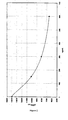
- Calibrators or reference samples prepared according to Example 3 were assayed according to the directions accompanying the OnLine reagent kit using an HITACHI 917 analyzer (Roche Diagnostics) and a cutoff value of 300 ng/ml. Parameters used were 10 ⁇ l sample, 160 ⁇ l antibody reagent and 90 ⁇ l microparticle reagent. The reaction was run monochromatically (505 nm) in the endpoint (read point 19-33). The dose response curve is shown in Figure 2, with the change in absorbance at 505 nm plotted on the y-axis and MDMA concentration plotted on the x-axis.
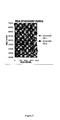
- Calibrators or reference samples prepared as described in Example 3 except using MDA in place of MDMA were assayed according to the directions accompanying the OnLine reagent kit using an HITACHI 717 analyzer (Roche Diagnostics). Parameters used were 15 ⁇ l sample, 170 ⁇ l antibody reagent and 80 ⁇ l microparticle reagent. The reaction was run monochromatically (505 nm) in the endpoint (27-50). The dose response curve obtained is shown in Figure 3, with the change in absorbance at 505 nm plotted on the y-axis and MDA concentration plotted on the x-axis.
- Urine specimens suspected of containing amphetamine, methamphetamine or methylenedioxy designer amphetamines were treated according to the procedure described in Example 4 using MDMA calibrators at levels of 0, 150, 300 and 600 ng/ml. Results were obtained by comparing the change in absorbance at 505 nm for an unknown sample with that obtained with the calibrators of known concentration. Results obtained on 72 urine specimens had 100 % agreement with a reference chromatographic method for the detection of designer amphetamines.
Landscapes
- Health & Medical Sciences (AREA)
- Life Sciences & Earth Sciences (AREA)
- Engineering & Computer Science (AREA)
- Molecular Biology (AREA)
- Urology & Nephrology (AREA)
- Chemical & Material Sciences (AREA)
- Biomedical Technology (AREA)
- Immunology (AREA)
- Hematology (AREA)
- Medicinal Chemistry (AREA)
- General Health & Medical Sciences (AREA)
- Microbiology (AREA)
- Bioinformatics & Cheminformatics (AREA)
- Pharmacology & Pharmacy (AREA)
- Food Science & Technology (AREA)
- Biotechnology (AREA)
- Analytical Chemistry (AREA)
- Cell Biology (AREA)
- Biochemistry (AREA)
- Physics & Mathematics (AREA)
- General Physics & Mathematics (AREA)
- Pathology (AREA)
- Investigating Or Analysing Biological Materials (AREA)
- Organic Low-Molecular-Weight Compounds And Preparation Thereof (AREA)
Abstract
Description
- AMP
- amphetamine
- BDB
- (±)-(3,4-methylenedioxyphenyl)-2-butanamine
- HMMA
- 4-hydroxy-3 -methoxymethamphetamine
- MAMP
- methamphetamine
- MBDB
- (±)-N-methyl-1-(3,4-methylenedioxyphenyl)-2-butanamine
- MDA
- (±)-3,4-methylenedioxyamphetamine
- MDEA
- (±)-3,4-methylenedioxyethylamphetamine
- MDMA
- (±)-3,4 methylenedioxymethamphetamine
- NT
- not tested
- PPA
- phenylpropanolamine
| Compound | | | Abbott TDX AMP/methAMP 1000 ng/ml | CEDIA DAU AMP 1000 ng/ml | Roche Hitachi AMP/ |
| MDMA | 36% | 79% | 97% | 69% | 100.0% |
| MDA | 35.5% | 40% | 148% | 1.9% | 25.0% |
| MDEA | NT | NT | 42.7% | 2.4% | 15.0% |
| MBDB | NT | NT | (+) | NT | 70.0% |
| BDB | NT | NT | (+) | NT | 4.7% |
| d- | 100% | 100% | 100% | 101% | 97.0% |
| 1-AMP | 6% | 4.2% | 56.9% | 3.0% | 3.8% |
| d-MAMP | 82.2% | 12% | 97.8% | 100% | 300.0% |
| 1-MAMP | 0.8% | 12% | 7.2% | 12% | 18% |
| dl-ephedrine | <0.1 % | <0.1 % | NT | 0.4 % | <0.3 % |
| 1-PPA | 1.5% | 1.1% | NT | NT | 0.6% |
| HMMA | NT | NT | NT | NT | <0.3 % |
| Compound | Roche Hitachi AMP/ |
| MDMA | 81.0% |
| MDA | 100.0% |
| d-AMP | 319.0% |
| 1-AMP | 15.2% |
| d-MAMP | 269.0 % |
| 1-MAMP | 24.7% |
| dl-ephedrine | 0.34 % |
| 1-PPA | 6.2% |
Claims (12)
- A method for determining an analyte selected from the group consisting of amphetamine, methamphetamine, and methylenedioxy designer amphetamines in a biological sample comprising the steps of:a. combining a sample suspected of containing said analyte with a first antibody specific for amphetamine and having cross-reactivity with amphetamine analogues of methylenedioxyphenylalkylamine, a second antibody specific for methamphetamine and having cross-reactivity with amphetamine analogues of methylenedioxyphenylalkylamine, and a complex comprising a ligand of said analyte coupled to a labeling moiety,b. measuring the presence or amount of said complex which remains bound or unbound to said antibodies as a result of competitive displacement by said analyte, andc. comparing the presence or amount of said complex measured in step (b) with the presence or amount of a similar complex measured in a reference sample containing a known amount of a substance selected from the group consisting of methylenedioxy designer amphetamines, said reference sample being treated according to steps (a) and (b).
- The method of claim 1, wherein said sample is urine.
- The method of claim 2, wherein said substance is MDMA.
- A method for determining an analyte selected from the group consisting of amphetamine, methamphetamine, and methylenedioxy designer amphetamines in a biological sample comprising the steps of:a. combining a sample suspected of containing said analyte with an antibody selected from the group consisting of antibodies specific for amphetamine and having cross-reactivity with amphetamine analogues of methylenedioxyphenylalkylamine and antibodies specific for methamphetamine and having cross-reactivity with amphetamine analogues of methylenedioxyphenylalkylamine, and further with a complex comprising a ligand of said analyte coupled to a labeling moiety,b. measuring the presence or amount of said complex which remains bound or unbound to said antibody as a result of competitive displacement by said analyte, andc. comparing the presence or amount of said complex measured in step (b) with the presence or amount of a similar complex measured in a reference sample containing a known amount of a substance selected from the group consisting of methylenedioxy designer amphetamines, said reference sample being treated according to steps (a) and (b).
- The method of claim 4, wherein said sample is urine.
- The method of claim 5, wherein said substance is MDMA.
- A kit for conducting an assay for the determination of an analyte selected from the group consisting of amphetamine, methamphetamine, and methylenedioxy designer amphetamines in a biological sample comprising in packaged combination:a. a first antibody specific for amphetamine and having cross-reactivity with amphetamine analogues of methylenedioxyphenylalkylamine,b. a second antibody specific for methamphetamine and having cross-reactivity with amphetamine analogues of methylenedioxyphenylalkylamine,c. a complex comprising a ligand of amphetamine or an amphetamine derivative coupled to a labeling moiety, andd. a calibrator comprising a known amount of a substance selected from the group consisting of methylenedioxy designer amphetamines.
- The kit of claim 7, wherein said sample is urine.
- The method of claim 8, wherein said substance is MDMA.
- A kit for conducting an assay for the determination of an analyte selected from the group consisting of amphetamine, methamphetamine, and methylenedioxy designer amphetamines in a biological sample comprising in packaged combination:a. an antibody selected from the group consisting of antibodies specific for amphetamine and having cross-reactivity with amphetamine analogues of methylenedioxyphenylalkylamine and antibodies specific for methamphetamine and having cross-reactivity with amphetamine analogues of methylenedioxyphenylalkylamine,b. a complex comprising a ligand of amphetamine or an amphetamine derivative coupled to a labeling moiety, andc. a calibrator comprising a known amount of a substance selected from the group consisting of methylenedioxy designer amphetamines.
- The kit of claim 10, wherein said sample is urine.
- The method of claim 11, wherein said substance is MDMA.
Applications Claiming Priority (2)
| Application Number | Priority Date | Filing Date | Title |
|---|---|---|---|
| US608524 | 2000-06-30 | ||
| US09/608,524 US6534325B1 (en) | 2000-06-30 | 2000-06-30 | Immunoassay for the detection of amphetamines, methamphetamines and methylenedioxy designer amphetamines |
Publications (3)
| Publication Number | Publication Date |
|---|---|
| EP1167976A2 true EP1167976A2 (en) | 2002-01-02 |
| EP1167976A3 EP1167976A3 (en) | 2002-08-07 |
| EP1167976B1 EP1167976B1 (en) | 2007-12-05 |
Family
ID=24436885
Family Applications (1)
| Application Number | Title | Priority Date | Filing Date |
|---|---|---|---|
| EP01115342A Expired - Lifetime EP1167976B1 (en) | 2000-06-30 | 2001-06-26 | Immunoassay for the detection of amphetamines and derivatives thereof |
Country Status (5)
| Country | Link |
|---|---|
| US (1) | US6534325B1 (en) |
| EP (1) | EP1167976B1 (en) |
| JP (1) | JP3538164B2 (en) |
| DE (1) | DE60131701T2 (en) |
| ES (1) | ES2296688T3 (en) |
Cited By (6)
| Publication number | Priority date | Publication date | Assignee | Title |
|---|---|---|---|---|
| EP1340980A1 (en) * | 2002-03-01 | 2003-09-03 | Roche Diagnostics GmbH | Derivatives of amphetamine, antibodies against said derivatives, reagent kits, methods of producing said antibodies, and methods of detecting said derivatives |
| EP1498428A1 (en) * | 2003-07-18 | 2005-01-19 | Roche Diagnostics GmbH | Antibodies for detecting ecstasy-class analytes |
| EP1340981A3 (en) * | 2002-03-01 | 2007-06-13 | Roche Diagnostics GmbH | Antibodies for detecting amphetamine derivatives |
| US7569676B2 (en) * | 2003-07-18 | 2009-08-04 | Roche Diagnostics Operations, Inc. | Ecstasy-class derivatives, immunogens, and antibodies and their use in detecting ecstasy-class drugs |
| US7790400B2 (en) | 2004-07-02 | 2010-09-07 | Concateno Uk Limited | Delta-9-tetrahydrocannabinol detection method |
| US7888040B2 (en) | 2004-06-14 | 2011-02-15 | Concateno Uk Limited | Detection of methamphetamine group drugs |
Families Citing this family (1)
| Publication number | Priority date | Publication date | Assignee | Title |
|---|---|---|---|---|
| US7632929B2 (en) * | 2000-04-20 | 2009-12-15 | The Board Of Trustees Of The University Of Arkansas | Methamphetamine-like hapten compounds, linkers, carriers and compositions and uses thereof |
Family Cites Families (5)
| Publication number | Priority date | Publication date | Assignee | Title |
|---|---|---|---|---|
| US5262333A (en) | 1988-10-28 | 1993-11-16 | Abbott Laboratories | Method and reagents for detecting amphetamine and/or D-methamphetamine in biological samples |
| US5135863A (en) | 1988-12-23 | 1992-08-04 | Syntex (U.S.A.) Inc. | Compositions and methods for determining the presence of amphetamines in a sample suspected of containing amphetamine and/or methamphetamine |
| ATE154135T1 (en) | 1989-03-10 | 1997-06-15 | Hoffmann La Roche | REAGENTS FOR DETECTING DRUGS |
| CA2096495C (en) | 1992-06-16 | 2002-07-09 | Kathy Palmer Ordonez | Dual analyte immunoassay |
| DE19630102A1 (en) | 1996-07-25 | 1998-01-29 | Boehringer Mannheim Gmbh | New activated amphetamines |
-
2000
- 2000-06-30 US US09/608,524 patent/US6534325B1/en not_active Expired - Lifetime
-
2001
- 2001-06-26 ES ES01115342T patent/ES2296688T3/en not_active Expired - Lifetime
- 2001-06-26 DE DE60131701T patent/DE60131701T2/en not_active Expired - Lifetime
- 2001-06-26 EP EP01115342A patent/EP1167976B1/en not_active Expired - Lifetime
- 2001-06-29 JP JP2001199694A patent/JP3538164B2/en not_active Expired - Lifetime
Cited By (7)
| Publication number | Priority date | Publication date | Assignee | Title |
|---|---|---|---|---|
| EP1340980A1 (en) * | 2002-03-01 | 2003-09-03 | Roche Diagnostics GmbH | Derivatives of amphetamine, antibodies against said derivatives, reagent kits, methods of producing said antibodies, and methods of detecting said derivatives |
| US7101980B2 (en) | 2002-03-01 | 2006-09-05 | Roche Diagnostics Operations, Inc. | Derivatives, conjugates, and antibodies for detecting ecstasy-class analytes |
| EP1340981A3 (en) * | 2002-03-01 | 2007-06-13 | Roche Diagnostics GmbH | Antibodies for detecting amphetamine derivatives |
| EP1498428A1 (en) * | 2003-07-18 | 2005-01-19 | Roche Diagnostics GmbH | Antibodies for detecting ecstasy-class analytes |
| US7569676B2 (en) * | 2003-07-18 | 2009-08-04 | Roche Diagnostics Operations, Inc. | Ecstasy-class derivatives, immunogens, and antibodies and their use in detecting ecstasy-class drugs |
| US7888040B2 (en) | 2004-06-14 | 2011-02-15 | Concateno Uk Limited | Detection of methamphetamine group drugs |
| US7790400B2 (en) | 2004-07-02 | 2010-09-07 | Concateno Uk Limited | Delta-9-tetrahydrocannabinol detection method |
Also Published As
| Publication number | Publication date |
|---|---|
| DE60131701D1 (en) | 2008-01-17 |
| ES2296688T3 (en) | 2008-05-01 |
| EP1167976B1 (en) | 2007-12-05 |
| JP3538164B2 (en) | 2004-06-14 |
| US6534325B1 (en) | 2003-03-18 |
| JP2002055104A (en) | 2002-02-20 |
| EP1167976A3 (en) | 2002-08-07 |
| DE60131701T2 (en) | 2009-01-29 |
Similar Documents
| Publication | Publication Date | Title |
|---|---|---|
| Swortwood et al. | Cross‐reactivity of designer drugs, including cathinone derivatives, in commercial enzyme‐linked immunosorbent assays | |
| Bürgi et al. | One-step sandwich enzyme immunoassay for insulin using monoclonal antibodies | |
| Schneider et al. | Homogeneous enzyme immunoassay for opiates in urine | |
| EP0809111B1 (en) | Analyzing method utilizing oligomeric receptors | |
| US4604365A (en) | Immunoprecipitation assay | |
| Cho et al. | Semiquantitative, bar code version of immunochromatographic assay system for human serum albumin as model analyte | |
| Spiehler | Hair analysis by immunological methods from the beginning to 2000 | |
| EP0203238A1 (en) | Apparatus for use in detecting ligands in solution | |
| Armbruster et al. | Cloned enzyme donor immunoassay (CEDIA) for drugs-of-abuse screening | |
| US7888040B2 (en) | Detection of methamphetamine group drugs | |
| Poklis | Evaluation of TDx cocaine metabolite assay | |
| US6534325B1 (en) | Immunoassay for the detection of amphetamines, methamphetamines and methylenedioxy designer amphetamines | |
| US5919642A (en) | Competitive binding assays having improved linearity | |
| Sweeney et al. | Amphetamines in hair by enzyme-linked immunosorbent assay | |
| Beck et al. | Frontline® immunochromatographic device for on-site urine testing of amphetamines: laboratory validation using authentic specimens | |
| US5573955A (en) | Reducing tyramine interference in immunoassays for amphetamine and methamphetamine | |
| Lekskulchai et al. | Evaluation of Roche Abuscreen ONLINE amphetamine immunoassay for screening of new amphetamine analogues | |
| EP2606352B1 (en) | Assay for analytes using multiple receptors | |
| Kimura et al. | Highly sensitive quantitation of methamphetamine by time-resolved fluoroimmunoassay using a new europium chelate as a label | |
| Sidki et al. | Direct determination of phenobarbital in serum or plasma by polarization fluoroimmunoassay | |
| Caplan et al. | Abbott phencyclidine and barbiturates abused drug assays: evaluation and comparison of ADx FPIA, TDx FPIA, EMIT, and GC/MS methods | |
| McNally et al. | An OnLine immunoassay for LSD: Comparison with GC-MS and the Abuscreen® RIA | |
| Eremin et al. | Polarization fluoroimmunoassays for the specific determination of amphetamine and methamphetamine in urine with the Abbott TDx-analyzer | |
| Brown et al. | Evaluation of Bionike one-step tests for the detection of drugs of abuse in urine | |
| Foley | Enzyme immunoassays |
Legal Events
| Date | Code | Title | Description |
|---|---|---|---|
| PUAI | Public reference made under article 153(3) epc to a published international application that has entered the european phase |
Free format text: ORIGINAL CODE: 0009012 |
|
| AK | Designated contracting states |
Kind code of ref document: A2 Designated state(s): AT BE CH CY DE DK ES FI FR GB GR IE IT LI LU MC NL PT SE TR |
|
| AX | Request for extension of the european patent |
Free format text: AL;LT;LV;MK;RO;SI |
|
| PUAL | Search report despatched |
Free format text: ORIGINAL CODE: 0009013 |
|
| AK | Designated contracting states |
Kind code of ref document: A3 Designated state(s): AT BE CH CY DE DK ES FI FR GB GR IE IT LI LU MC NL PT SE TR |
|
| AX | Request for extension of the european patent |
Free format text: AL;LT;LV;MK;RO;SI |
|
| 17P | Request for examination filed |
Effective date: 20030207 |
|
| AKX | Designation fees paid |
Designated state(s): DE ES FR IT |
|
| 17Q | First examination report despatched |
Effective date: 20050524 |
|
| GRAP | Despatch of communication of intention to grant a patent |
Free format text: ORIGINAL CODE: EPIDOSNIGR1 |
|
| GRAS | Grant fee paid |
Free format text: ORIGINAL CODE: EPIDOSNIGR3 |
|
| GRAA | (expected) grant |
Free format text: ORIGINAL CODE: 0009210 |
|
| AK | Designated contracting states |
Kind code of ref document: B1 Designated state(s): DE ES FR IT |
|
| REF | Corresponds to: |
Ref document number: 60131701 Country of ref document: DE Date of ref document: 20080117 Kind code of ref document: P |
|
| REG | Reference to a national code |
Ref country code: ES Ref legal event code: FG2A Ref document number: 2296688 Country of ref document: ES Kind code of ref document: T3 |
|
| ET | Fr: translation filed | ||
| PLBE | No opposition filed within time limit |
Free format text: ORIGINAL CODE: 0009261 |
|
| STAA | Information on the status of an ep patent application or granted ep patent |
Free format text: STATUS: NO OPPOSITION FILED WITHIN TIME LIMIT |
|
| 26N | No opposition filed |
Effective date: 20080908 |
|
| PGFP | Annual fee paid to national office [announced via postgrant information from national office to epo] |
Ref country code: ES Payment date: 20110613 Year of fee payment: 11 Ref country code: FR Payment date: 20110603 Year of fee payment: 11 |
|
| PGFP | Annual fee paid to national office [announced via postgrant information from national office to epo] |
Ref country code: IT Payment date: 20110620 Year of fee payment: 11 |
|
| PGFP | Annual fee paid to national office [announced via postgrant information from national office to epo] |
Ref country code: DE Payment date: 20110630 Year of fee payment: 11 |
|
| PG25 | Lapsed in a contracting state [announced via postgrant information from national office to epo] |
Ref country code: IT Free format text: LAPSE BECAUSE OF NON-PAYMENT OF DUE FEES Effective date: 20120626 |
|
| REG | Reference to a national code |
Ref country code: FR Ref legal event code: ST Effective date: 20130228 |
|
| REG | Reference to a national code |
Ref country code: DE Ref legal event code: R119 Ref document number: 60131701 Country of ref document: DE Effective date: 20130101 |
|
| PG25 | Lapsed in a contracting state [announced via postgrant information from national office to epo] |
Ref country code: DE Free format text: LAPSE BECAUSE OF NON-PAYMENT OF DUE FEES Effective date: 20130101 Ref country code: FR Free format text: LAPSE BECAUSE OF NON-PAYMENT OF DUE FEES Effective date: 20120702 |
|
| REG | Reference to a national code |
Ref country code: ES Ref legal event code: FD2A Effective date: 20131021 |
|
| PG25 | Lapsed in a contracting state [announced via postgrant information from national office to epo] |
Ref country code: ES Free format text: LAPSE BECAUSE OF NON-PAYMENT OF DUE FEES Effective date: 20120627 |