EP1167615A2 - Fuzzy logic control for an electric clothes dryer - Google Patents
Fuzzy logic control for an electric clothes dryer Download PDFInfo
- Publication number
- EP1167615A2 EP1167615A2 EP01115567A EP01115567A EP1167615A2 EP 1167615 A2 EP1167615 A2 EP 1167615A2 EP 01115567 A EP01115567 A EP 01115567A EP 01115567 A EP01115567 A EP 01115567A EP 1167615 A2 EP1167615 A2 EP 1167615A2
- Authority
- EP
- European Patent Office
- Prior art keywords
- time
- moisture
- fuzzy logic
- load
- cycle
- Prior art date
- Legal status (The legal status is an assumption and is not a legal conclusion. Google has not performed a legal analysis and makes no representation as to the accuracy of the status listed.)
- Withdrawn
Links
- 238000001035 drying Methods 0.000 claims abstract description 88
- 238000000034 method Methods 0.000 claims abstract description 22
- 238000012544 monitoring process Methods 0.000 claims abstract 5
- 230000004048 modification Effects 0.000 claims description 10
- 238000012986 modification Methods 0.000 claims description 10
- 229920000742 Cotton Polymers 0.000 claims description 7
- 230000036962 time dependent Effects 0.000 claims description 3
- 238000010438 heat treatment Methods 0.000 description 13
- 239000004744 fabric Substances 0.000 description 5
- 238000005070 sampling Methods 0.000 description 4
- 238000001816 cooling Methods 0.000 description 2
- 230000007423 decrease Effects 0.000 description 2
- 230000001419 dependent effect Effects 0.000 description 2
- 238000013480 data collection Methods 0.000 description 1
- 230000003247 decreasing effect Effects 0.000 description 1
- 238000001514 detection method Methods 0.000 description 1
- 238000010586 diagram Methods 0.000 description 1
- 230000014759 maintenance of location Effects 0.000 description 1
- 238000005259 measurement Methods 0.000 description 1
- 239000000203 mixture Substances 0.000 description 1
Images




Classifications
-
- D—TEXTILES; PAPER
- D06—TREATMENT OF TEXTILES OR THE LIKE; LAUNDERING; FLEXIBLE MATERIALS NOT OTHERWISE PROVIDED FOR
- D06F—LAUNDERING, DRYING, IRONING, PRESSING OR FOLDING TEXTILE ARTICLES
- D06F58/00—Domestic laundry dryers
- D06F58/32—Control of operations performed in domestic laundry dryers
- D06F58/34—Control of operations performed in domestic laundry dryers characterised by the purpose or target of the control
- D06F58/36—Control of operational steps, e.g. for optimisation or improvement of operational steps depending on the condition of the laundry
- D06F58/38—Control of operational steps, e.g. for optimisation or improvement of operational steps depending on the condition of the laundry of drying, e.g. to achieve the target humidity
-
- D—TEXTILES; PAPER
- D06—TREATMENT OF TEXTILES OR THE LIKE; LAUNDERING; FLEXIBLE MATERIALS NOT OTHERWISE PROVIDED FOR
- D06F—LAUNDERING, DRYING, IRONING, PRESSING OR FOLDING TEXTILE ARTICLES
- D06F2101/00—User input for the control of domestic laundry washing machines, washer-dryers or laundry dryers
- D06F2101/20—Operation modes, e.g. delicate laundry washing programs, service modes or refreshment cycles
-
- D—TEXTILES; PAPER
- D06—TREATMENT OF TEXTILES OR THE LIKE; LAUNDERING; FLEXIBLE MATERIALS NOT OTHERWISE PROVIDED FOR
- D06F—LAUNDERING, DRYING, IRONING, PRESSING OR FOLDING TEXTILE ARTICLES
- D06F2103/00—Parameters monitored or detected for the control of domestic laundry washing machines, washer-dryers or laundry dryers
- D06F2103/02—Characteristics of laundry or load
-
- D—TEXTILES; PAPER
- D06—TREATMENT OF TEXTILES OR THE LIKE; LAUNDERING; FLEXIBLE MATERIALS NOT OTHERWISE PROVIDED FOR
- D06F—LAUNDERING, DRYING, IRONING, PRESSING OR FOLDING TEXTILE ARTICLES
- D06F2103/00—Parameters monitored or detected for the control of domestic laundry washing machines, washer-dryers or laundry dryers
- D06F2103/02—Characteristics of laundry or load
- D06F2103/08—Humidity
-
- D—TEXTILES; PAPER
- D06—TREATMENT OF TEXTILES OR THE LIKE; LAUNDERING; FLEXIBLE MATERIALS NOT OTHERWISE PROVIDED FOR
- D06F—LAUNDERING, DRYING, IRONING, PRESSING OR FOLDING TEXTILE ARTICLES
- D06F2103/00—Parameters monitored or detected for the control of domestic laundry washing machines, washer-dryers or laundry dryers
- D06F2103/02—Characteristics of laundry or load
- D06F2103/08—Humidity
- D06F2103/10—Humidity expressed as capacitance or resistance
-
- D—TEXTILES; PAPER
- D06—TREATMENT OF TEXTILES OR THE LIKE; LAUNDERING; FLEXIBLE MATERIALS NOT OTHERWISE PROVIDED FOR
- D06F—LAUNDERING, DRYING, IRONING, PRESSING OR FOLDING TEXTILE ARTICLES
- D06F2103/00—Parameters monitored or detected for the control of domestic laundry washing machines, washer-dryers or laundry dryers
- D06F2103/28—Air properties
- D06F2103/32—Temperature
-
- D—TEXTILES; PAPER
- D06—TREATMENT OF TEXTILES OR THE LIKE; LAUNDERING; FLEXIBLE MATERIALS NOT OTHERWISE PROVIDED FOR
- D06F—LAUNDERING, DRYING, IRONING, PRESSING OR FOLDING TEXTILE ARTICLES
- D06F2103/00—Parameters monitored or detected for the control of domestic laundry washing machines, washer-dryers or laundry dryers
- D06F2103/38—Time, e.g. duration
-
- D—TEXTILES; PAPER
- D06—TREATMENT OF TEXTILES OR THE LIKE; LAUNDERING; FLEXIBLE MATERIALS NOT OTHERWISE PROVIDED FOR
- D06F—LAUNDERING, DRYING, IRONING, PRESSING OR FOLDING TEXTILE ARTICLES
- D06F2105/00—Systems or parameters controlled or affected by the control systems of washing machines, washer-dryers or laundry dryers
- D06F2105/28—Electric heating
-
- D—TEXTILES; PAPER
- D06—TREATMENT OF TEXTILES OR THE LIKE; LAUNDERING; FLEXIBLE MATERIALS NOT OTHERWISE PROVIDED FOR
- D06F—LAUNDERING, DRYING, IRONING, PRESSING OR FOLDING TEXTILE ARTICLES
- D06F58/00—Domestic laundry dryers
- D06F58/32—Control of operations performed in domestic laundry dryers
- D06F58/34—Control of operations performed in domestic laundry dryers characterised by the purpose or target of the control
- D06F58/46—Control of the operating time
Definitions
- the present invention relates to a method and apparatus for controlling parameters of a drying cycle for a clothes dryer using sensor-based fuzzy logic.
- full heating energy is applied to a clothes treatment chamber throughout a drying cycle up to a point in time when a sensed moisture content of the clothes is reduced below a threshold level. At this point or a predetermined time period thereafter, the drying energy is terminated and the drum of the dryer continues to rotate for a predetermined amount of time to allow cooling of the clothes treatment chamber. When a sufficient time to allow cooling or a cool down temperature has been reached, the dryer is then shut-off. Alternatively, it is also known in the art to simply maintain an exhaust temperature of the dryer at a set temperature level after an initial period of heating from the start of the drying cycle for a predetermined time period.
- conventional dryers do not estimate remaining time in a drying cycle taking into account differing load sizes and types.
- the estimated time can be the same whether a 3 pound load or a 15 pound load is being dried, for example.
- the present invention provides a method and apparatus for controlling a dryer employing a fuzzy logic scheme that utilizes multiple sensor inputs to better determine the drying state of a clothes load and predict an appropriate drying time.
- a method and apparatus are provided to detect when a clothes load is in an acceptable range of dampness and alert a user of the dampness state.
- the method and apparatus may utilize a user's cycle selections to provide further information on a clothes load, thus further assisting to determine an appropriate drying time for the load.
- a methodology for controlling dryer by first selecting a first prescribed drying cycle setting prior to a start of a drying cycle. Next, moisture information within the dryer is monitored over a predetermined period of time. At least a portion of a time of the drying cycle is then set using predetermined fuzzy logic functions and rules based on the selected first prescribed drying cycle setting and at least the monitored moisture information.
- fuzzy logic the dryer cycle can be more accurately controlled by accommodating for degrees of variables present in differing clothes loads.
- an apparatus for controlling a dryer for a dryer utilizing fuzzy logic for a controlling a dryer includes a user interface for receiving a drying cycle selection from a user. At least one moisture sensor is provided for sensing moisture level of a clothes load in the dryer.
- a controller receives inputs from the user interface and the at least one moisture sensor and includes a fuzzy logic control portion. The controller is configured to determine one or more time dependent parameters based on information input from the at least one moisture sensor and input the one or more parameters to the fuzzy logic control portion.
- the fuzzy logic control portion within the controller is configured to calculate fuzzy logic rules that determine drying cycle modification information based on predetermined fuzzy logic functions within the fuzzy logic portion. Also, the fuzzy logic control portion determines clothes load characteristics based on the one or more parameters.
- the fuzzy logic control portion is further configured to output the drying cycle modification information to the controller, which modifies the drying cycle in accordance with the drying cycle modification information.
- FIG. 1 of the drawings an exemplary automatic clothes dryer 10 is illustrated that is controlled with the control apparatus shown in Figure 2.
- the clothes dryer 10 has a cabinet 12 including a control console 14. Within the cabinet 12 is rotatably mounted a drum 16 that is rotatably driven about a horizontal axis by a motor 18 through a drive system 20, typically including a belt 21.
- a front door 22 formed in the front of the cabinet 12 provides selective access to the clothes treatment chamber 24 defined by the interior of the drum 16.
- the drum 16 is provided with an inlet aperture 26 in an outlet exhaust aperture 28 having a removable lint screen 30.
- a supply of air is circulated by a fan 32 driven by the motor 18.
- a heating element 34 is selectively energized by a heater variable power supply 50, shown in Figure 2, that is controlled by a controller 35 within the control console 14, for example.
- supply of temperature control air is circulated by the fan 32 past the heating element 34 through the inlet aperture 26 into the clothes treatment chamber 24 within the drum 16 and subsequently output through the outlet exhaust aperture 28 including the lint screen 30.
- the control console 14 includes a user interface 37 having, for example, a start button 38 and a cycle selector 40 to permit the user to start a drying cycle, as well as select the parameters of the drying cycle.
- the cycle selector 40 permits selections such as "Cotton/Towels”, “Jeans”, “Bulky Items”, “Normal Load”, “Delicate/Casual” and "Ultra-Delicate”.
- the user interface 37 may also include means to allow a user to set time settings (not shown) such as the period of time in which the dryer is allowed to operate.
- Figure 1 also illustrates that a controller 35 for controlling the drying cycle operation may be located within the control console 14.
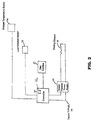
- the controller 35 receives inputs from an exhaust temperature sensor 54 and a load moisture sensor 52 as shown in Figure 2.
- the exhaust temperature sensor 54 may be comprised of a thermistor or any other temperature sensing device known in the art.
- the load moisture sensor 52 may be comprised of resistance strips or any other moisture measuring devices known in the art. When moisture is present on the load moisture 52, the resistance of the resistance strip, for example, decreases and the decreased resistance is monitored as an indication of moisture presence.
- the controller 35 receives inputs from the user interface 37 to set and change variables used in the control operation.
- the controller 35 also outputs a signal to a heater variable power supply 50 that varies the output of the power supply 50 delivered to the heating element 34.
- the heater power supply 50 is supplied with power from a 208 V.A.C. or 240 V.A.C. power source by means of a three wire pigtail 36.
- the controller 35 also includes a fuzzy logic control portion 56 that receives two inputs based on information from the load moisture sensor 52 and the exhaust temperature sensor 54.
- the inputs to the fuzzy logic control portion 56 are designated as TIME0 and NUM25_27.
- the fuzzy logic control portion 56 also outputs information to control the variable power supply 50, which controls the heating element 34.
- Outputs from the fuzzy logic control portion 56 include signals to add additional time required to reach a dry state or additional time required to reach a damp dry state.
- the outputs are labeled ADDDAMPTIME and ADDDRYTIME.
- the output signals from the fuzzy logic control portion 56 are capable of modification based on a user cycle selection from the user interface 37. Additionally, temperature information from the exhaust temperature sensor 54 is also further used to modify the outputs of the fuzzy logic control portion 56, as will be described later.
- the controller 35 samples the load moisture sensor 52 during the first 5 minutes of an automatic drying cycle according to a preferred embodiment.
- the controller 35 samples the load moisture sensor 52 using 2000 sequential 150 millisecond time windows as shown in Figure 3.
- Each 150 millisecond time window is further divided into a 135 millisecond sensing period and a 15 millisecond nosense period.
- the controller 35 samples input from the moisture sensor 52 every 5 milliseconds for a maximum count of 27 indications of moisture in the clothes load (also referred to as "wet hits").
- the controller 35 assigns a digital value of 1 to a "wet hit” measurement and a value of 0 when a wet hit is not registered during a sample time.
- the load moisture sensor 52 is preferably comprised of a conductivity strip
- a wet hit is produced when moisture causes a change in the conductivity of the load moisture sensor 52.
- the number of wet hits corresponding to a digital value of 1 are summed.
- a sum of 24 or fewer wet hits over the 135 millisecond sense period (corresponding to total wet hit time of 0-124 milliseconds) is defined by the controller 35 as an invalid wet hit or logic value "0". If 25 to 27 wet hits are sampled during the 135 millisecond sampling period (corresponding to 125-135 milliseconds of total wet time), the controller 35 assigns a value of "1" for this sampling, which is considered a valid wet hit.
- the controller 35 then further summarizes the number of valid wet hits over the five minute period.
- the input TIME0 is determined as the total time from the beginning of a dryer cycle to a point in time when the load moisture sensor 52 has not registered 25 to 27 wet hits (i.e., valid wet hits) over each 150 millisecond sampling period for 120 consecutive seconds according to a preferred embodiment. It will be appreciated by those skilled in the art, however, that other time periods may be prescribed dependent on particular drying loads or criteria. According to a preferred embodiment, the value NUM25_27 is determined by the sum of total of valid wet hits (i.e., 25 to 27 moisture indication per 150 millisecond period) occurring during the five minute period divided by the number 8.
- the clothes load size, type and moisture content influence the inputs TIME0 and NUM25_27.
- the NUM25_27 increases with larger and more flexible clothes loads.
- a 9 pound jeans load will have a smaller NUM25_27 value than a 9 pound mixed clothes load since jeans are stiffer and thicker and, thus, the jeans will make fewer contacts with the load moisture sensor 52 than the more flexible loads.
- the TIME0 value is larger for a jeans load than for a mixed load since the jeans load takes considerably longer to dry than a mixed load.
- the drying cycle parameters can be adjusted according to predetermined sets of membership functions representing different fabric types, blends and weights. As the dryer operates, conclusions are made within the fuzzy logic control portion 56 as degrees of fulfillment of each term in the membership functions are obtained. Based on the degree of fulfillment, the fuzzy logic control portion 56 then utilizes predetermined rule bases to assign additional damp time or drying time (i.e., ADDDAMPTIME and ADDDRYTIME).
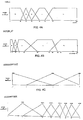
- the membership functions include designation of very small through very large drying terms.
- a term's degree of fulfillment is determined by load size, load type and moisture content, for example.
- the membership functions according to the present embodiment are abbreviated as VS for very small, S for small, M for medium, L for large and VL for very large.
- the particular values of the input TIME0 determine which term the fuzzy logic control portion 56 uses to decide membership of the particular drying term within the term size categories. For example, for values of TIME0 from 0 to 16 minutes, the fuzzy logic controller will accord full degree of membership of the particular load in the very small VS category.
- the degree of membership of the particular term in the very small category falls within a degree of membership less than full membership.
- the possibility that the membership term could be categorized as small S arises after a TIME0 value of 16 minutes.
- the degree of membership of the term is more likely to be small S instead of very small VS.
- the membership within the other load size categories is determined as the TIME0 values increase. It will be appreciated by those having skill in the art that other membership functions could be set based on the particular applications and types of loads.
- Figure 4B similarly shows the membership functions for values of NUM25_27 used by the fuzzy logic control portion 56 to determine the classification of a load within the load size categories for various values of NUM25_27.
- a particular rule basis is determined by the fuzzy logic control portion 56 for each particular cycle selection.
- cycle selections are Cotton/towels (heavy), normal, delicate/casual and ultra-delicate. Further cycle selections can include jeans and bulky items.
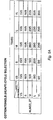
- rule bases calculated for Cotton/towels and normal cycle selections are illustrated in table form in Figures 5A and 5B, respectively. These tables illustrate values for ADDDRYTIME and ADDDAMPTIME based on the load type determined from the membership functions of TIME0 and NUM25_27.
- the format for the outputs of ADDDRYTIME and ADDDAMPTIME, which are output from the fuzzy logic control portion 56, is X/Y, where X is ADDDRYTIME and Y is ADDDAMPTIME.
- TIME0 determines a load type of small S
- Y is ADDDAMPTIME.
- Figures 4C and 4D further respectively illustrate exemplary membership functions for ADDDAMPTIME and ADDDRYTIME that were used to determine the rule bases such as those shown in Figures 5A and 5B.
- the rule basis can be modified for more particular types of clothes being dried.
- jeans and bulky items may take longer to dry than other types of items using the heavy cycle selection rule table shown in Figure 5A.
- the rule base can be modified for jeans and bulky item cycles by further adding additional time to the ADDDRYTIME prescribed by the rule base. For example, for a jeans cycle, 15 additional minutes could be added to the ADDDRYTIME to ensure dryness of the load.
- the temperature can be reduced throughout the drying cycle while utilizing the TIME0, NUM25_27, ADDDAMPTIME and ADDDRYTIME membership functions and prescribed rule bases.
- the fuzzy logic control portion 56 can control the energy delivered to the heating element 34 via the power supply 50.
- the temperature of the heating element 34 is reduced after an indication of damp drying of the load.
- the indication of damp drying occurs at about 20 percent humidity level. Humidity levels below this amount typically fail to register wet hits on the load moisture sensor 52.
- Figures 6A and 6B An exemplary rule base that can be utilized is shown in Figures 6A and 6B. As shown in Figure 6A, dependent on the drying cycle selected via the user interface 37, different rules apply for applying heating power levels to the heating element 34.
- Figure 6B provides definitions of the temperature ranges utilized by the rule shown in Figure 6A.
- the cotton/towels cycle when the cotton/towels cycle is selected, high heat, which corresponds to a sensed temperature range between 143EF and 155EF, is applied until a damp signal corresponding to approximately 20 percent humidity is registered in the controller 35.
- the damp signal which corresponds to a damp dry condition, can be determined when no wet hits occur on the load moisture sensor 52 for a prescribed period of time.
- the temperature is reduced to medium high heat, which corresponds to a range between 138EF and 150EF, until the cool down portion of the drying cycle.
- the cool down portion of the cycle is that portion which power to the heating element 34 is terminated but the drum 16 is still rotated for a predetermined period of time, such as 5 minutes.
- the damp dry signal timing is determined by the ADDDAMPTIME. Specifically, the point at which the load moisture sensor 52 fails to provide any further wet hits, the additional damp drying time (i.e., ADDDAMPTIME) is initiated. At the end of the additional damp drying period, as has been determined by the fuzzy logic control portion 56, a damp dry signal is issued by the controller 35.
- the particular paradigm programmed into the fuzzy logic control portion 56 calculates an additional damp dry time (i.e., ADDDAMPTIME) to approximate 20 percent humidity of the clothes load at the end of the additional damp dry time.
- ADDDAMPTIME additional damp dry time
- different paradigms can be programmed into the fuzzy logic control portion 56 to achieve either higher or lower damp dry humidity percentages.
- the application of further heating after the damp dry signal issuance shown in Figure 6A for cycles such as cotton/towels, jeans, bulky items, normal, delicate/casual and ultra-delicate is applied for the additional drying time determined by the fuzzy logic control portion 56 (i.e., ADDDRYTIME).
- the additional drying time ADDDRYTIME is the time from the damp dry condition until the cool down period of the drying cycle.
- the normal drying cycle shown in Figure 6A automatically applies high heat for the first 5 minutes of the drying cycle, during which time period the data collection for determining the values TIME0 and NUM25_27 are determined. After this time period, the heat is reduced to medium high level until such time when no further moisture information can be registered by the load moisture sensor 52.
- the fuzzy logic rule bases were illustrated in tabular form.
- This table may comprise a predetermined lookup table within the fuzzy logic portion 56 for simply looking up the ADDDRYTIME and ADDDAMPTIME values based on the values TIME0 and NUM25_27 that are determined during the initial period of the drying cycle.
- the fuzzy logic control portion 56 may also feature using the fuzzy logic engine contained in this portion to calculate the rule basis with each dryer operation.
- the additional dry and damp times are calculated.
- multiple rule bases can be utilized to calculate the additional dry and damp times. For example, in the heavy cycle selection rule basis illustrated in Figure 5, each of the 25 possible dry and damp time determinations could each be calculated using a corresponding rule.
- each of these rules can be programmed to have various exceptions based on other inputs such as temperature input.
- the fuzzy logic control portion 56 can be programmed to calculate only additional drying time without the additional damp time or, conversely, calculate only additional damp time without calculating additional drying time.
- the fuzzy logic control portion 56 calculates a ADDDRYTIME value for each of the possible combinations of load sizes determined for each of the TIME0 and NUM25_27 values further based on the type of cycle selected (e.g., heavy, normal, permanent press and delicate).
Landscapes
- Engineering & Computer Science (AREA)
- Textile Engineering (AREA)
- Control Of Washing Machine And Dryer (AREA)
Abstract
Description
Claims (32)
- A method for controlling a dryer comprising the steps of:selecting a first prescribed drying cycle setting prior to a start of a drying cycle;monitoring moisture information within the dryer over a predetermined period of time; andsetting at least a portion of a time of the drying cycle using predetermined fuzzy logic functions and rules based on the selected first prescribed drying cycle setting and at least the monitored moisture information.
- The method according to claim 1, wherein the first prescribed drying cycle is selected from the group which includes at least one of cotton/towels load cycle, jeans load cycle, normal load cycle, delicate/casual load cycle, bulky load cycle and ultra-delicate clothing load cycle.
- The method according to claim 1, wherein the step of monitoring the moisture information further comprises the steps of:counting a first number of moisture indications occurring in a moisture sensor within a prescribed time interval and determining whether the first number of moisture indications exceeds a predetermined threshold during the prescribed time interval; andsumming a number of determinations that the first number of moisture indications has exceeded the predetermined threshold during the predetermined period of time.
- The method according to claim 3, wherein the prescribed time interval is 135 milliseconds.
- The method according to claim 4, wherein the predetermined threshold is 25 moisture indications.
- The method according to claim 3, wherein the predetermined period of time is 5 minutes.
- The method according to claim 3, further comprising:determining at least one characteristic of a clothes load using a fuzzy logic function based on the sum of the number of determinations that the first number of moisture indications has exceeded the predetermined threshold during the predetermined period of time; andcalculating a fuzzy logic rule using the predetermined fuzzy logic that establishes control of at least one characteristic of the drying cycle based on one or more of the determined at least one characteristic of the clothes load and the first prescribed drying cycle setting.
- The method according to claim 7, wherein the at least one characteristic of the clothes load includes a size of the clothes load.
- The method according to claim 7, wherein the at least one characteristic of the drying cycle includes at least one of additional drying time and additional damp time.
- The method according to claim 3, wherein the step of monitoring the moisture information further comprises the steps of:starting a time count from the start of the drying cycle;determining moisture indications occurring in a moisture sensor in relation to a predetermined moisture level; andstopping the time count when moisture indications occurring in the moisture sensor do not exceed the predetermined moisture level for a prescribed time period and storing the time count when stopped.
- The method according to claim 10, wherein the prescribed time period is 120 seconds.
- The method according to claim 10, wherein the predetermined moisture level threshold is 25 moisture indications occurring during a 135 millisecond time period.
- The method according to claim 10, further comprising the steps of:determining at least one characteristic of a clothes load using a fuzzy logic function based on the stored time; andcalculating a fuzzy logic rule using the predetermined fuzzy logic that establishes control of at least one characteristic of the drying cycle based on one or more of the determined at least one characteristic of the clothes load and the first prescribed drying cycle setting.
- The method according to claim 13, wherein the at least one characteristic of the clothes load includes a size of the clothes load.
- The method according to claim 13, wherein the at least one characteristic of the drying cycle includes at least one of additional drying time and additional damp time.
- The method according to claim 1, further comprising the steps of:monitoring exhaust temperature of the dryer;varying at least one of the drying cycle time and dryer input temperature based on the monitored exhaust temperature using the predetermined fuzzy logic.
- A control apparatus utilizing fuzzy logic for a controlling a dryer comprising:a user interface for receiving a drying cycle selection from a user;at least one moisture sensor for sensing moisture level of a clothes load in the dryer; anda controller receiving inputs from the user interface and the at least one moisture sensor, the controller including a fuzzy logic control portion and configured to determine one or more time dependent parameters based on information input from the at least one moisture sensor and input the one or more parameters to the fuzzy logic control portion, and the fuzzy logic control portion configured to calculate fuzzy logic rules that determine drying cycle modification information based on predetermined fuzzy logic functions within the fuzzy logic portion, which determines clothes load characteristics based on the one or more parameters, and to output the drying cycle modification information to controller, which modifies the drying cycle in accordance with the drying cycle modification information.
- The apparatus according to claim 17, wherein the drying cycle selection includes drying cycles selected from the group which includes at least one of cotton/towels load cycle, jeans load cycle, normal load cycle, delicate/casual load cycle, bulky load cycle and ultra-delicate clothing load cycle.
- The apparatus according to claim 17, wherein the controller is configured to determine at least one of the time dependent parameters by counting a first number of moisture indications occurring in a moisture sensor within a prescribed time interval and determining whether the first number of moisture indications exceeds a predetermined threshold during the prescribed time interval, and sum a number of determinations that the first number of moisture indications has exceeded the predetermined threshold during the predetermined period of time.
- The apparatus according to claim 19, wherein the prescribed time interval is 135 milliseconds.
- The apparatus according to claim 20, wherein the predetermined threshold is 25 moisture indications.
- The apparatus according to claim 19, wherein the predetermined period of time is 5 minutes.
- The apparatus according to claim 19, wherein the fuzzy logic control portion is configured to determine the at least one characteristic of the clothes load using a predetermined fuzzy logic function based on the sum of the number of determinations that the first number of moisture indications has exceeded the predetermined threshold during the predetermined period of time.
- The apparatus according to claim 17, wherein the at least one clothes load characteristic includes a size of the clothes load.
- The apparatus according to claim 17, wherein the drying cycle modification information includes at least one of additional drying time and additional damp time.
- The apparatus according to claim 17, wherein the controller is configured to start a time count from a start of the drying cycle, determine moisture indications occurring in the at least one moisture sensor in relation to a predetermined moisture level, and stop the time count when moisture indications occurring in the moisture sensor do not exceed the predetermined moisture level for a prescribed time period and storing the time count when stopped.
- The apparatus according to claim 26, wherein the prescribed time period is 120 seconds.
- The apparatus according to claim 26, wherein the predetermined moisture level threshold is 25 moisture indications occurring during a 135 millisecond time period.
- The apparatus according to claim 26, wherein the fuzzy logic control portion is configured to determine at least one of the clothes load characteristics using a fuzzy logic function based on the stored time, and calculate a fuzzy logic rule using the predetermined fuzzy logic that establishes control of at least one characteristic of the drying cycle based on one or more of the determined at least one clothes load characteristic and the drying cycle selection.
- The apparatus according to claim 29, wherein the at least one clothes load characteristic includes a size of the clothes load.
- The apparatus according to claim 29, wherein the drying cycle modification information includes at least one of additional drying time and additional damp time.
- The apparatus according to claim 17, further comprising:a dryer exhaust temperature monitor inputting a signal to the controller; andwherein the controller is configured to vary at least one of the drying cycle time and dryer input temperature based on the monitored exhaust temperature using the fuzzy logic control portion.
Applications Claiming Priority (2)
| Application Number | Priority Date | Filing Date | Title |
|---|---|---|---|
| US21542900P | 2000-06-30 | 2000-06-30 | |
| US215429P | 2000-06-30 |
Publications (2)
| Publication Number | Publication Date |
|---|---|
| EP1167615A2 true EP1167615A2 (en) | 2002-01-02 |
| EP1167615A3 EP1167615A3 (en) | 2004-01-02 |
Family
ID=22802950
Family Applications (1)
| Application Number | Title | Priority Date | Filing Date |
|---|---|---|---|
| EP01115567A Withdrawn EP1167615A3 (en) | 2000-06-30 | 2001-06-28 | Fuzzy logic control for an electric clothes dryer |
Country Status (3)
| Country | Link |
|---|---|
| US (1) | US6446357B2 (en) |
| EP (1) | EP1167615A3 (en) |
| BR (1) | BR0102621A (en) |
Cited By (3)
| Publication number | Priority date | Publication date | Assignee | Title |
|---|---|---|---|---|
| EP1508637A2 (en) | 2003-08-12 | 2005-02-23 | Lg Electronics Inc. | Method for controlling clothes dryer |
| WO2005064071A3 (en) * | 2003-12-23 | 2006-02-23 | Bsh Bosch Siemens Hausgeraete | Method and device for drying clothes |
| EP1457594A3 (en) * | 2003-03-10 | 2006-05-10 | Lg Electronics Inc. | Drying device and method |
Families Citing this family (34)
| Publication number | Priority date | Publication date | Assignee | Title |
|---|---|---|---|---|
| US6845290B1 (en) * | 2000-05-02 | 2005-01-18 | General Electric Company | System and method for controlling a dryer appliance |
| KR20020062446A (en) * | 2001-01-20 | 2002-07-26 | 엘지전자주식회사 | The apparatus and the method for sensing drying degree for exhaust type dryer |
| US20050144989A1 (en) * | 2002-04-22 | 2005-07-07 | General Electric Company | Method and system for controlling a drying process |
| US6775924B2 (en) * | 2002-05-22 | 2004-08-17 | Maytag Corporation | Heater control system for a clothes dryer |
| KR100556503B1 (en) * | 2002-11-26 | 2006-03-03 | 엘지전자 주식회사 | Drying Time Control Method |
| US7243174B2 (en) * | 2003-06-24 | 2007-07-10 | Emerson Electric Co. | System and method for communicating with an appliance through an optical interface using a control panel indicator |
| KR100480930B1 (en) * | 2003-08-12 | 2005-04-07 | 엘지전자 주식회사 | Method for detecting remaining time for dring in tumble drier |
| US7310893B2 (en) * | 2004-05-19 | 2007-12-25 | Whirlpool Corporation | Household appliance with user selected default settings |
| US7900374B2 (en) * | 2004-08-18 | 2011-03-08 | Lg Electronics Inc. | Apparatus for automatically drying and method for controlling the same |
| US7080464B1 (en) * | 2005-01-10 | 2006-07-25 | Whirlpool Corporation | Detection of synthetic fabric loads in an automatic dryer |
| ES2279674B1 (en) * | 2005-03-23 | 2008-08-01 | Ibai, S. Coop. | CLOTHING AND DRYING CLOTHING CLOTHING. |
| CA2505565C (en) | 2005-04-28 | 2008-09-16 | Camco Inc. | Apparatus and method for controlling a clothes dryer |
| US7594343B2 (en) * | 2006-02-14 | 2009-09-29 | Whirlpool Corporation | Drying mode for automatic clothes dryer |
| KR101253624B1 (en) * | 2006-03-14 | 2013-04-10 | 엘지전자 주식회사 | A dryer and control method of drying time for the same |
| KR100747589B1 (en) * | 2006-04-14 | 2007-08-08 | 엘지전자 주식회사 | Drying Control Circuit and Stroke Control Method |
| US9249539B2 (en) | 2006-09-25 | 2016-02-02 | Ecolab Inc. | Determination of dryness of textiles in a dryer |
| DE102006053274A1 (en) * | 2006-11-06 | 2008-05-08 | E.G.O. Elektro-Gerätebau GmbH | Method for determining the amount of charge in a tumble dryer and tumble dryer |
| JP5639764B2 (en) * | 2007-03-08 | 2014-12-10 | シンク−アールエックス,リミティド | Imaging and tools for use with moving organs |
| US20100000112A1 (en) | 2008-07-02 | 2010-01-07 | Whirlpool Corporation | Dispensing dryer dosing sensing |
| US8299409B2 (en) * | 2008-10-31 | 2012-10-30 | Corning Incorporated | Fuzzy logic-based control of microwave dryers |
| US8533881B2 (en) | 2009-12-15 | 2013-09-17 | Whirpool Corporation | Method for dispensing an enzyme in a laundry treating appliance |
| KR101704421B1 (en) * | 2010-04-30 | 2017-02-09 | 삼성전자주식회사 | Clothing dryer and control method thereof |
| US8387274B2 (en) | 2010-07-16 | 2013-03-05 | Whirlpool Corporation | Variable airflow in laundry dryer having variable air inlet |
| MX2010008115A (en) * | 2010-07-23 | 2012-01-23 | Mabe Sa De Cv | Drying method with energy savings. |
| US8578627B2 (en) * | 2010-10-21 | 2013-11-12 | Whirlpool Corporation | Method and apparatus for moisture sensor noise immunity |
| US9027258B2 (en) | 2010-10-21 | 2015-05-12 | Whirlpool Corporation | Laundry treating appliance with controlled cycle time |
| US8782922B2 (en) | 2010-11-24 | 2014-07-22 | Ecolab Usa Inc. | Dryer monitoring |
| US20120277968A1 (en) * | 2011-04-28 | 2012-11-01 | Edris Raji | Moisture monitoring system for gas turbine engines |
| US9206543B2 (en) * | 2011-10-14 | 2015-12-08 | Ecolab Usa Inc. | Dryer monitoring |
| US9799201B2 (en) | 2015-03-05 | 2017-10-24 | Honeywell International Inc. | Water heater leak detection system |
| KR20180045323A (en) * | 2016-10-25 | 2018-05-04 | 엘지전자 주식회사 | Control Method for Laundry Treating Apparatus |
| CN109355862B (en) * | 2018-10-29 | 2023-01-06 | 青岛海尔洗衣机有限公司 | Control method for washing equipment and washing equipment |
| US11028527B2 (en) | 2019-09-27 | 2021-06-08 | Whirlpool Corporation | Laundry treating appliance for drying laundry |
| CA3182024A1 (en) | 2020-06-19 | 2021-12-23 | Peter J. MCGRANE | Embedded temperature sensors for monitoring temperature of articles and status of drying or cleaning cycles |
Family Cites Families (19)
| Publication number | Priority date | Publication date | Assignee | Title |
|---|---|---|---|---|
| US3762064A (en) * | 1971-11-12 | 1973-10-02 | Whirlpool Co | Timer with cycle and time dependent runout for dryer |
| US4139953A (en) * | 1977-03-18 | 1979-02-20 | Pako Corporation | Method and apparatus for drying photographic strip material |
| US4385452A (en) * | 1981-06-03 | 1983-05-31 | Whirlpool Corporation | Low voltage sensor for dryer |
| DE69002494T2 (en) | 1989-03-24 | 1993-11-25 | Sanyo Electric Co | Method and device for controlling a clothes dryer. |
| US5291667A (en) | 1990-04-26 | 1994-03-08 | White Consolidated Industries, Inc. | Electronic control of clothes dryer |
| JP2797640B2 (en) | 1990-04-27 | 1998-09-17 | 凸版印刷株式会社 | Carriage moving device and automatic processing device |
| JPH0439000A (en) * | 1990-06-04 | 1992-02-10 | Omron Corp | Fuzzy controller of laundry drying volume |
| JP3057790B2 (en) * | 1991-04-12 | 2000-07-04 | 松下電器産業株式会社 | Clothes dryer |
| JPH05137896A (en) | 1991-11-20 | 1993-06-01 | Matsushita Electric Ind Co Ltd | Controller for clothes drying machine |
| KR940006250B1 (en) | 1991-12-23 | 1994-07-13 | 주식회사 금성사 | Drying control method and circuit of complex sensor type |
| IL107409A (en) * | 1992-10-30 | 1999-03-12 | Gen Electric | Appliance electronic control system with programmable parameters including programmable and reconfigurable fuzzy logic controller |
| DE4447270A1 (en) * | 1994-12-30 | 1996-07-04 | Bosch Siemens Hausgeraete | Method for controlling drying processes in household clothes dryers |
| US5649372A (en) | 1996-03-14 | 1997-07-22 | American Dryer Corporation | Drying cycle controller for controlling drying as a function of humidity and temperature |
| US5905648A (en) * | 1996-11-12 | 1999-05-18 | General Electric Company | Appliance performance control apparatus and method |
| US5899005A (en) | 1997-03-13 | 1999-05-04 | General Electric Company | System and method for predicting the dryness of clothing articles |
| US6141887A (en) * | 1997-03-13 | 2000-11-07 | General Electric Company | System and method for sensing the dryness of clothing articles |
| US5893218A (en) * | 1997-04-15 | 1999-04-13 | Pioneer Hi-Bred International, Inc. | Seed dryer with automatic control of temperature air flow direction and rate |
| US6047486A (en) * | 1998-09-03 | 2000-04-11 | Whirlpool Corporation | Control system for a dryer |
| US6122840A (en) * | 1998-11-18 | 2000-09-26 | General Electric Company | Systems and methods for determining drying time for a clothes dryer |
-
2001
- 2001-06-21 US US09/886,717 patent/US6446357B2/en not_active Expired - Lifetime
- 2001-06-28 EP EP01115567A patent/EP1167615A3/en not_active Withdrawn
- 2001-07-02 BR BR0102621-6A patent/BR0102621A/en not_active Application Discontinuation
Cited By (4)
| Publication number | Priority date | Publication date | Assignee | Title |
|---|---|---|---|---|
| EP1457594A3 (en) * | 2003-03-10 | 2006-05-10 | Lg Electronics Inc. | Drying device and method |
| EP1508637A2 (en) | 2003-08-12 | 2005-02-23 | Lg Electronics Inc. | Method for controlling clothes dryer |
| EP1508637A3 (en) * | 2003-08-12 | 2009-09-09 | Lg Electronics Inc. | Method for controlling clothes dryer |
| WO2005064071A3 (en) * | 2003-12-23 | 2006-02-23 | Bsh Bosch Siemens Hausgeraete | Method and device for drying clothes |
Also Published As
| Publication number | Publication date |
|---|---|
| EP1167615A3 (en) | 2004-01-02 |
| US20020000049A1 (en) | 2002-01-03 |
| US6446357B2 (en) | 2002-09-10 |
| BR0102621A (en) | 2002-02-13 |
Similar Documents
| Publication | Publication Date | Title |
|---|---|---|
| US6446357B2 (en) | Fuzzy logic control for an electric clothes dryer | |
| US4397101A (en) | Automatic dryer control | |
| US6199300B1 (en) | Method for energy efficient control of a dryer of clothes | |
| US7594343B2 (en) | Drying mode for automatic clothes dryer | |
| CA2505565C (en) | Apparatus and method for controlling a clothes dryer | |
| US7478486B2 (en) | System and method for controlling a dryer appliance | |
| US6158148A (en) | Method for detecting impermissible operating states in a hot-air clothes dryer, and a dryer with such a detection method | |
| EP1790769B1 (en) | Clothes tumble dryer and method for controlling the same | |
| US7080464B1 (en) | Detection of synthetic fabric loads in an automatic dryer | |
| EP2336419B1 (en) | Clothes dryer | |
| US4733479A (en) | Method of controlling an electric clothes dryer including automatic load detection | |
| US8468717B2 (en) | Method to detect an end of cycle in a clothes dryer | |
| CA2229934A1 (en) | System and method for sensing the dryness of clothing articles | |
| KR20210130662A (en) | Dryer and method for controlling the same | |
| EP3919671B1 (en) | A method for operating a laundry drying machine equipped with a heat pump system and a laundry drying machine implementing said method | |
| US12378717B2 (en) | Dryer and method for controlling the same | |
| CA2507965C (en) | Clothes dryer sensor compensation system and method | |
| EP0060698B1 (en) | Improvements in or relating to tumble dryers | |
| US8474152B2 (en) | Method to detect an empty load in a clothes dryer | |
| EP2034086B1 (en) | Household tumble dryer with an improved cycle termination | |
| JP2819843B2 (en) | Clothes dryer | |
| CA2588011C (en) | A system and method for controlling a dryer appliance | |
| EP4212664A1 (en) | Dryer with a heat pump and a water container comprising an electrode and process for its operation | |
| KR101199365B1 (en) | Method for controlling dryness of automatically dryer | |
| JPH04312500A (en) | Clothing drier |
Legal Events
| Date | Code | Title | Description |
|---|---|---|---|
| PUAI | Public reference made under article 153(3) epc to a published international application that has entered the european phase |
Free format text: ORIGINAL CODE: 0009012 |
|
| AK | Designated contracting states |
Kind code of ref document: A2 Designated state(s): AT BE CH CY DE DK ES FI FR GB GR IE IT LI LU MC NL PT SE TR |
|
| AX | Request for extension of the european patent |
Free format text: AL;LT;LV;MK;RO;SI |
|
| PUAL | Search report despatched |
Free format text: ORIGINAL CODE: 0009013 |
|
| AK | Designated contracting states |
Kind code of ref document: A3 Designated state(s): AT BE CH CY DE DK ES FI FR GB GR IE IT LI LU MC NL PT SE TR |
|
| AX | Request for extension of the european patent |
Extension state: AL LT LV MK RO SI |
|
| 17P | Request for examination filed |
Effective date: 20040628 |
|
| AKX | Designation fees paid |
Designated state(s): DE FR GB IT |
|
| 17Q | First examination report despatched |
Effective date: 20050315 |
|
| STAA | Information on the status of an ep patent application or granted ep patent |
Free format text: STATUS: THE APPLICATION IS DEEMED TO BE WITHDRAWN |
|
| 18D | Application deemed to be withdrawn |
Effective date: 20050927 |