EP1167363A2 - Novel crystalline forms of (3S-trans)-2-(3,4-dihydro-4-hydroxy-3-(phenylmethyl)-2H-1-benzopyran-7-yl)-4-(trifluoromethyl)-benzoic acid - Google Patents
Novel crystalline forms of (3S-trans)-2-(3,4-dihydro-4-hydroxy-3-(phenylmethyl)-2H-1-benzopyran-7-yl)-4-(trifluoromethyl)-benzoic acid Download PDFInfo
- Publication number
- EP1167363A2 EP1167363A2 EP01304862A EP01304862A EP1167363A2 EP 1167363 A2 EP1167363 A2 EP 1167363A2 EP 01304862 A EP01304862 A EP 01304862A EP 01304862 A EP01304862 A EP 01304862A EP 1167363 A2 EP1167363 A2 EP 1167363A2
- Authority
- EP
- European Patent Office
- Prior art keywords
- compound
- disease
- benzopyran
- trifluoromethyl
- phenylmethyl
- Prior art date
- Legal status (The legal status is an assumption and is not a legal conclusion. Google has not performed a legal analysis and makes no representation as to the accuracy of the status listed.)
- Withdrawn
Links
- ZKYHJZJGOSPIDJ-DFBJGRDBSA-N C[C@]([C@@H](Cc1ccccc1)COc1c2)(c1ccc2-c1cc(C(F)(F)F)ccc1C(O)=O)[O]=C Chemical compound C[C@]([C@@H](Cc1ccccc1)COc1c2)(c1ccc2-c1cc(C(F)(F)F)ccc1C(O)=O)[O]=C ZKYHJZJGOSPIDJ-DFBJGRDBSA-N 0.000 description 1
Images




Classifications
-
- C—CHEMISTRY; METALLURGY
- C07—ORGANIC CHEMISTRY
- C07D—HETEROCYCLIC COMPOUNDS
- C07D311/00—Heterocyclic compounds containing six-membered rings having one oxygen atom as the only hetero atom, condensed with other rings
- C07D311/02—Heterocyclic compounds containing six-membered rings having one oxygen atom as the only hetero atom, condensed with other rings ortho- or peri-condensed with carbocyclic rings or ring systems
- C07D311/04—Benzo[b]pyrans, not hydrogenated in the carbocyclic ring
- C07D311/22—Benzo[b]pyrans, not hydrogenated in the carbocyclic ring with oxygen or sulfur atoms directly attached in position 4
-
- A—HUMAN NECESSITIES
- A61—MEDICAL OR VETERINARY SCIENCE; HYGIENE
- A61P—SPECIFIC THERAPEUTIC ACTIVITY OF CHEMICAL COMPOUNDS OR MEDICINAL PREPARATIONS
- A61P11/00—Drugs for disorders of the respiratory system
- A61P11/06—Antiasthmatics
-
- A—HUMAN NECESSITIES
- A61—MEDICAL OR VETERINARY SCIENCE; HYGIENE
- A61P—SPECIFIC THERAPEUTIC ACTIVITY OF CHEMICAL COMPOUNDS OR MEDICINAL PREPARATIONS
- A61P17/00—Drugs for dermatological disorders
-
- A—HUMAN NECESSITIES
- A61—MEDICAL OR VETERINARY SCIENCE; HYGIENE
- A61P—SPECIFIC THERAPEUTIC ACTIVITY OF CHEMICAL COMPOUNDS OR MEDICINAL PREPARATIONS
- A61P17/00—Drugs for dermatological disorders
- A61P17/04—Antipruritics
-
- A—HUMAN NECESSITIES
- A61—MEDICAL OR VETERINARY SCIENCE; HYGIENE
- A61P—SPECIFIC THERAPEUTIC ACTIVITY OF CHEMICAL COMPOUNDS OR MEDICINAL PREPARATIONS
- A61P17/00—Drugs for dermatological disorders
- A61P17/06—Antipsoriatics
-
- A—HUMAN NECESSITIES
- A61—MEDICAL OR VETERINARY SCIENCE; HYGIENE
- A61P—SPECIFIC THERAPEUTIC ACTIVITY OF CHEMICAL COMPOUNDS OR MEDICINAL PREPARATIONS
- A61P19/00—Drugs for skeletal disorders
- A61P19/02—Drugs for skeletal disorders for joint disorders, e.g. arthritis, arthrosis
-
- A—HUMAN NECESSITIES
- A61—MEDICAL OR VETERINARY SCIENCE; HYGIENE
- A61P—SPECIFIC THERAPEUTIC ACTIVITY OF CHEMICAL COMPOUNDS OR MEDICINAL PREPARATIONS
- A61P29/00—Non-central analgesic, antipyretic or antiinflammatory agents, e.g. antirheumatic agents; Non-steroidal antiinflammatory drugs [NSAID]
-
- A—HUMAN NECESSITIES
- A61—MEDICAL OR VETERINARY SCIENCE; HYGIENE
- A61P—SPECIFIC THERAPEUTIC ACTIVITY OF CHEMICAL COMPOUNDS OR MEDICINAL PREPARATIONS
- A61P37/00—Drugs for immunological or allergic disorders
-
- A—HUMAN NECESSITIES
- A61—MEDICAL OR VETERINARY SCIENCE; HYGIENE
- A61P—SPECIFIC THERAPEUTIC ACTIVITY OF CHEMICAL COMPOUNDS OR MEDICINAL PREPARATIONS
- A61P37/00—Drugs for immunological or allergic disorders
- A61P37/08—Antiallergic agents
-
- A—HUMAN NECESSITIES
- A61—MEDICAL OR VETERINARY SCIENCE; HYGIENE
- A61P—SPECIFIC THERAPEUTIC ACTIVITY OF CHEMICAL COMPOUNDS OR MEDICINAL PREPARATIONS
- A61P43/00—Drugs for specific purposes, not provided for in groups A61P1/00-A61P41/00
Definitions
- the present invention relates to novel polymorphic crystalline forms of anhydrous (3 S-trans )-2-[3,4-dihydro-4-hydroxy-3-(phenylmethyl)-2 H -1-benzopyran-7-yl]-4-(trifluoromethyl)-benzoic acid, and to methods for the preparation thereof.
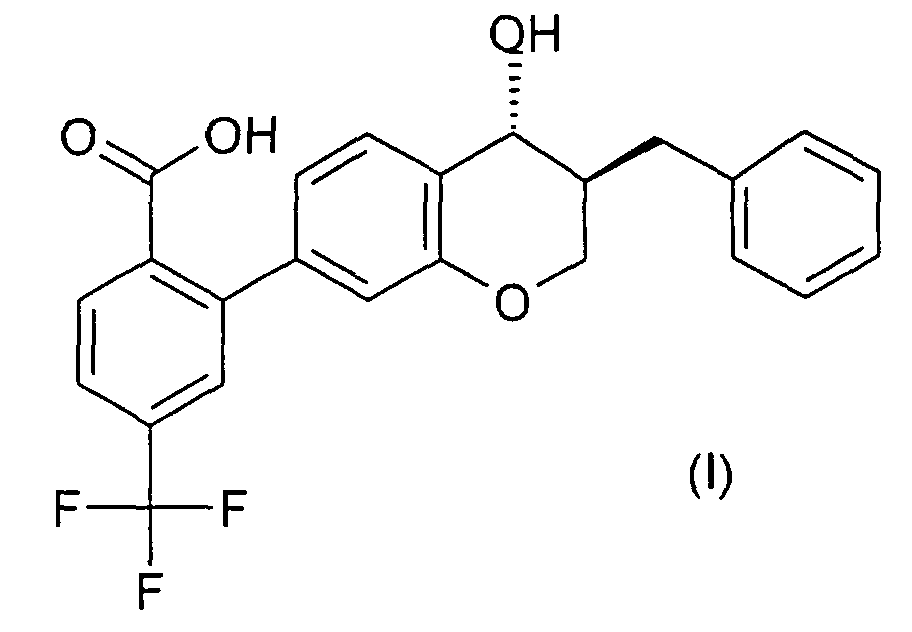
- (3 S-trans )-2-[3,4-dihydro-4-hydroxy-3-(phenylmethyl)-2H-1-benzopyran-7-yl]-4-(trifluoromethyl)-benzoic acid, hereinafter compound(I), is a benzopyran-derived antagonist of leukotriene B 4 (hereinafter, "LTB 4 "), and is therefore useful in the treatment of numerous diseases including inflammatory diseases.
- Compound (I) has the chemical formula C 24 H 17 O 4 F 3 , is also appropriately named as [(+)-2-(3-benzyl-4-hydroxy-chroman-7-yl)-4-trifluoromethyl-benzoic acid], and has the following stereospecific structure.
- the invention also relates to a novel crystalline salt and a novel crystalline hydrate of compound (I).
- novel crystalline forms of the invention possess one or more characteristics selected from enhanced thermal stability, improved solubility in aqueous solvents, improved bioavailability, ready isolation from water-wet solvents, and capacity to be formulated as a pharmaceutical composition using wet granulation techniques, that surprisingly facilitate the use of compound (I) in medical applications.
- Leukotrienes are a class of compounds derived from the 20-carbon fatty acid skeleton of arachidonic acid which function as locally acting hormone-like chemical mediators. Leukotrienes define one major division of the eicosanoids, a large family of chemical mediators, derived from 20 carbon-polyunstaturated fatty acids, and which also includes the lipoxins, thromboxanes, hydroperoxy fatty acids, and prostaglandins.
- eicosanoids In general, synthesis of eicosanoids is stimulated by local tissue damage, hormonal stimuli, or via cellular activation pathways (such as binding of IgE immunoglobins to cell surface receptors). Unlike stored, pre-formed chemical mediators, eicosanoid lipid mediators typically appear in cells only after activation events. Eicosanoids, in turn, bind to specific cell surface receptors thereby mediating a wide variety of effects in numerous tissues. Antagonist compounds have been developed for various classes of eicosanoids that act to prevent the normal effects of eicosanoid-receptor binding.
- arachidonic acid is produced in activated cells from cell membrane phospholipids by the action of one or more lipase enzymes.
- Arachindonic acid is first transformed into an unstable epoxide, known as leukotriene A4 (LTA 4 ) which can be enzymatically hydrated (via 5- lipoxygenase) to leuokotriene B4 (LTB 4 ).
- LTA 4 may be covalently coupled to glutathione to form leuoktriene C 4 (LTC 4 ), from which leuoktriene D4 (LTD 4 ), and leuoktriene E4 (LTE 4 ), may be subsequently formed by elimination of ⁇ -glutamyl and then glycinyl residues, respectively.
- cysteinyl leukotrienes (C 4 , D 4 and E 4 ) are likely the principal mediators of acute attacks of IgE-mediated bronchial asthma, and are more that 100-fold more potent than histamine, on a molar basis, at effecting bronchiole constriction. Accordingly, there is considerable interest in developing pharmaceuticals that interfere with leukotriene-mediated processes by acting as antagonists of leukotriene-receptor interactions.
- leukotriene B4 The biological role of leukotriene B4 was first appreciated in the 1980s when addition of LTB 4 to isolated neutrophils ( a type of white blood cell) induced chemotactic, chemokinetic and aggregation responses, and increased adhesion of neutrophils to endothelial cell monolayers. Because of their capacity to engulf and destroy bacteria, for example, neutrophils play a key role in responding to sites of infection in the body. Neutrophils were also originally identified as a major source of LTB 4 . Subsequently it has been determined that other types of cells that particpate in immune and inflammation-related pathways (i.e.
- LTB 4 monocytes, macrophages, keratinocytes, lymphocytes and mast cells
- monocytes, macrophages, keratinocytes, lymphocytes and mast cells also produce LTB 4 under circumstances likely associated with pathophysiologic stimulation.
- LTB 4 has also been shown to participate in gene transcription and translation for various cytokines and their receptors in various T and B cells of the immune system. Taken together, these and other results indicate that LTB 4 plays a broad role in inflammatory processes. That neutrophils both secrete and chemotactically respond to LTB 4 strongly suggests a feedback mechanism to regulate the inflammatory response.
- the inflammatory response is a protective mechanism that facilitates response to local injury. For example, leakage of tissue fluids into the affected area facilitates contact with antibodies, and also permits the migration of white blood cells to directly combat any injurious agent.
- an inflammatory response may be inappropriate, that is, it may continue for an excessive period of time or involve participation by inflammatory system components that, unfortunately, act to damage to the body, thereby contributing to, or even defining, a disease state. Accordingly, there are numerous circumstances where it is medically appropriate to interefere with inflammatory processes.
- LTB 4 Since inflammatory pathways are involved in the pathology of numerous disease states, compounds that act as antagonists to leukotriene B4-mediated effects define a class of important pharmaceutical agents.
- LTB 4 The involvement of LTB 4 in a variety of human inflammatory diseases, and other diseases, is also suggested by the effectiveness of potent LTB 4 receptor antagonists in preclinical animal disease models (for a review, see H.J. Showell, et al., Journal of Pharmacology and Experimental Therapeutics, 285 (3), pp. 946-954, 1998, and original citations therein).
- LTB 4 Pharmaceutical agents that inhibit the action of LTB 4 are useful in the treatment of diseases induced by LTB4, or to which LTB 4 contributes, including, without limitation, inflammatory disorders such as rheumatoid arthritis, osteoarthritis, inflammatory bowel disease; disorders of the skin including psoriasis, eczema, erythema, pruritis, and acne; stroke, and any disease marked by reperfusion injury; graft rejection; autoimmune diseases; allergy and asthma; and, for example, any other condition where marked neutrophil infiltration occurs. It will be recognized that more than one such state may occur simultaneously, or that an individual disease state may have more than one cause, nonetheless being treatable according to the practice of the present invention.
- inflammatory disorders such as rheumatoid arthritis, osteoarthritis, inflammatory bowel disease
- disorders of the skin including psoriasis, eczema, erythema, pruritis, and acne
- stroke and any disease marked by reperfusion
- LTB 4 antagonists are also disclosed in European patent publications 276 064 and 292 977 which refer respectively to (a) diphenyl ethers, benzophenones, and other compounds containing two phenyl groups, and (b) derivatives of 7-(3-alkoxy-4-alkanoyl-phenoxy)alkoxybenzopyran. Additional classes of LTB 4 antagonists, and original citations thereto, are mentioned in H. J. Showell et al., "Inhibitors and Antagonists of Cyclooxygenase, 5- Lipoxygenase, and Platelet Activating Factor", in Inflammation: Basic Principals and Clinical Correlates, 3rd ed., J.I. Gallin et al., chapter 74, pp. 1177-1193, Lippincott, Philadelphia, PA, 1999.
- anhydrous compound (I) can exist in crystalline, polymorphic forms, which differ from each other in their stability, physical properties, spectral data, and methods of preparation. It has also been discovered that particular salts and hydrates of compound (I) have properties that contribute to their usefulness as pharmaceuticals.
- each novel polymorphic crystalline form of compound (I) or salt or hydrate of compound (I), as herein described possesses one or more characteristics (selected from enhanced thermal stability, improved solubility in aqueous solvents, improved bioavailability, ready isolation from water-wet solvents, and capacity to be formulated as a pharmaceutical composition using wet granulation techniques) that surprisingly facilitate the use of compound (I) in medical applications.
- U.S. Patent 5,552,435 does not refer to the specific polymorphic crystalline forms of anhydrous compound (I), or the specific salt or hydrate, as herein described.
- the ethylene diamine (mono) salt of (3 S-trans )-2-[3,4-dihydro-4-hydroxy-3-(phenylmethyl)-2 H -1-benzopyran-7-yl]-4-(trifluoromethyl)-benzoic acid exhibits an X-ray powder diffraction pattern having characteristic peaks, expressed in degrees 2 ⁇ , at approximately 6.829; 9.751; 12.270; 14.638; 15.776; 16.345; 16.554; 17.354; 19.468; 19.760; and 22.342.
- the particular novel polymorphs, salt and hydrate of the present invention each exhibit one or more characteristics that enhance the preparation, storage, and use of compound (I) as a pharmaceutical composition.
- these characteristics are selected from enhanced thermal stability, improved solubility in aqueous solvents, improved bioavailability, ready isolation from water-wet solvents, and capacity to be formulated as a pharmaceutical composition using wet granulation techniques.
- the polymorph A form of anhydrous compound (I) exhibits greater thermal stability, which facilitates storage and formulation of pharmaceutical preparations.
- the polymorph B form of anhydrous compound (I) exhibits greater solubility in aqeuous solvents, and is expected to demonstrate better bioavailability.
- the monohydrate of compound (I) is advantageously isolated from water wet solvents and can be formulated, for example tableted, using wet granulation techniques.
- the ethylene diamine (mono) salt of compound (I) exhibits greater solubility in aqeuous solvents and is expected to demonstrate superior bioavailability.
- the present invention also relates to pharmaceutical compositions for the treatment of diseases induced by LTB 4 , or to which LTB 4 contributes, that comprise, or are derived from, one of the aforementioned salt, hydrate, or polymorphic anhydrous crystalline forms of compound (I), in an amount effective to treat said disease, and a pharmaceutically effective carrier.
- the present invention further relates to pharmaceutical compositions for the treatment of a disease state selected from inflammatory disorders such as rheumatoid arthritis, oseoarthritis, inflammatory bowel disease; disorders of the skin including psoriasis, eczema, erythma, pruritis, and acne; stroke, and any disease marked by reperfusion injury; graft rejection; autoimmune diseases; allergy and asthma; and any other condition where marked neutrophil infiltration occurs, wherein said pharmaceutical compositions comprise, or are derived from, one of the aforementioned salt, hydrate, or polymorphic anhydrous crystalline forms of compound (I), in an amount effective to treat said disease, and a pharmaceutically effective carrier.
- a disease state selected from inflammatory disorders such as rheumatoid arthritis, oseoarthritis, inflammatory bowel disease; disorders of the skin including psoriasis, eczema, erythma, pruritis, and acne; stroke, and any
- compositions that comprise compound (I), or any polymorph, salt, covalent derivative, solvate or hydrate thereof, where said compound is prepared in a process wherein a novel composition of the present invention is an intermediate or starting material therein.
- the present invention also relates to a method for the treatment of diseases induced by LTB 4 , or to which LTB 4 contributes.
- the present invention further relates to methods for the treatment of disease states selected from inflammatory disorders such as rheumatoid arthritis, osteoarthritis, and inflammatory bowel disease; disorders of the skin including psoriasis, eczema, erythma, pruritis, and acne; stroke, and any disease marked by reperfusion injury; graft rejection; autoimmune diseases; allergy and asthma; and any other condition where marked neutrophil infiltration occurs.
- a phamaceutical composition of the invention itself comprising a novel salt, hydrate or polymorphic anhydrous crystalline form of compound (I) in an amount effective for treament, and a pharmceutical carrier.
- the invention also relates to the administration of a pharmaceutical composition
- a pharmaceutical composition comprising compound (I), or a any polymorph, salt, covalent derivative, solvate or hydrate thereof, where said compound is prepared in a process wherein a novel composition of the present invention is an intermediate or starting material.
- the invention further relates to a method for inhibiting the binding of LTB 4 to a receptor therefor in a patient in need of said inhibition, said method comprising administering a pharmaceutical composition as aforementioned.
- the invention further relates to a process for the preparation of a novel polymorphic forms of anhydrous crystalline compound (I), and to a novel salt and a hydrate of compound (I).
- compositions of the particular polymorphs, monohydrate, or salt of compound (I), as herein described can be produced.
- pure compositions of the particular polymorphs, monohydrate, or salt of compound (I), as herein described, can be produced.
- pharmaceutical compositions that comprise a polymorph, monohydrate, or salt of compound (I) as herein described be at least 95% pure with respect to contamination by other crystal forms of compound (I), its salts, solvates and hydrates.
- polyporph A is the lower energy form. Also as measured by equilibration under ambient conditions, the monohydrate was determined to be higher in energy than polymorph A. Polymorph A was the lowest energy form determined.
- a sample of crystals of the B polymorph or of the monohydrate of compound (I) will convert to polymorph A if stirred for a sufficient period of time (no more than 96 hours is needed) in a dry solvent in which polymorph B or the monohydrate has some solubility.
- Polymorph A is prepared by dissolving anhydrous compound (I) in a solvent in which it is soluble, such as ethyl acetate, acetonitrile, acetone, tetrahydrofuran, cyclohexane and (sparingly) in n-hexanes. Upon evaporation (and or evaporation and slow cooling) of the solvent) to achieve supersaturation, polymorph A is recovered.
- a solvent in which it is soluble such as ethyl acetate, acetonitrile, acetone, tetrahydrofuran, cyclohexane and (sparingly) in n-hexanes.
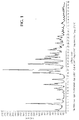
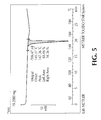
- Polymorph A has an X-ray powder diffraction pattern that is unique to the form as previously described ( Figure 1). Upon microscopic examination, crystals appear as small needles and aggregates thereof, but which are not reliably distinguished from those of polymorph B ( Figure 2). By fusion microscopy, polymorph A is determined to commence melting at about 144°C with no recrystallization noted upon further temperautre increases. Melting measured by differential scanning calorimetry shows onset at 145.4°C ( Figure 5). Polymorph A is substantially non-hygroscopic showing a 0.2% weight gain after 72 hours hours at 87% RH (at ambient temperature), and 0.36% weight gain after 72 hours hours at 87% RH (again at ambient temperature).
- Polymorph B is prepared by first dissolving anhydrous compound (I) in a dry sample of a solvent in which it is soluble, for example, ethyl acetate, acetone, acetonitrile, n-propanol, isopropanol, ethanol, methanol, dichloromethane, dioxane, or diethylether.
- a solvent in which it is soluble for example, ethyl acetate, acetone, acetonitrile, n-propanol, isopropanol, ethanol, methanol, dichloromethane, dioxane, or diethylether.
- the anhydrous compound (I) may be provided as polymorph A, or as a mixture of A and B. It is highly preferred that the solvent be anhydrous to avoid formation of compound (I) monohydrate.
- the dissolved compound (I) is then subjected to rapid cooling and the B polymorph results.
- the sample is plunged into a dry ice/acetone bath (or dry ice/methanol bath and the like) to rapidily achieve a temperature of between +5°C and -70°C.
- Polymorph B crystals may also be converted back to polymorph A crystals by placement in a solvent in which the B form is very slightly soluble, such as n-hexanes. Over a period of time (for example, no more than 18 hours) crystals of polymorph A will develop. Prolonged granulation (for example 18 hours) even when conducted at 5°C will also effect conversion to polymorph A..
- polymorph B may be stably stored in solid form. If placed in a sealed dark colored glass bottle, under nitrogen gas, polymorph B crystals are stable for at least 6 weeks.
- polymorph B crystals appear mostly as acicular aggregates.
- a heating profile monitored by fusion microscopy shows that melting begins at about 100°C, between 115-120°C recrystallization to polmorph A occurs, and at about 140°C the material melts again. Confirmation that the second crystallization invovling polymorph A is supported by spiking with known polymorph A, wherein the melt profiles at 140°C match.
- differential scanning calorimetry yields a similar profile. As the sample is heated, there is first encountered an endothermic event (onset 103°C) as polymorph B melts, an exothermic (up) event beginning at 116°C as the material recrystallizes as polymorph A, followed by final melting of polymorph A beginning at 140°C.
- endothermic event onset 103°C
- exothermic (up) event beginning at 116°C as the material recrystallizes as polymorph A, followed by final melting of polymorph A beginning at 140°C.
- the heating mechanism was turned off, with a mantle in place (describe) and slow cooling to 20-25°C was effected.
- the resultant composition was granulated at 20-25°C for 1 hour, and then filitered and washed with 50 ML water, after which the crystals were dried in a hood with good airflow.
- the X-ray powder diffraction pattern of the monohydrate of compound (I) is provided in Figure 3. Under microscopic examination, the crystals appear as irregular needles and aggregates. When examined by fusion microscopy, water loss and melt are observed between 83 and 93°C. When examined by differential scanning calorimetry, a single melting event is seen with onset at 80°C (see Figure 7).
- the monohydrate readily bridges to polymorph A in solvents in which the monohydrate has some minimal solubility.
- suitable solvent include ethyl acetate: hexanes 1:5. In hexanes alone, no bridging occurs owing to lack of solubility of the monohydrate.
- the monohydrate may be stably stored, under nitrogen, in a tightly sealed darkened glass bottle for at least six weeks.
- the monohydrate of compound (I) is advantageously isolated from water wet solvents and can be formulated, and for example tableted, using wet granulation techniques.
- the compounds of the invention can be administered to humans for the treatment of LTB 4 induced illnesses by various routes including orally, parenterally and topically, and through the use of suppositories and enemas.
- dosage levels of about 0.5 to 1000 mg/day, advantageously about 5-500 mg/day may be given in a single dose or up to three divided doses.
- dosage levels are about 0.1-500 mg/day, advantageously about 1.0-100 mg/day.
- Intravenous administration can include a continuous drip. Variations will necessarily occur depending on the age, weight and condition of the subject being treated and the particular route of administration chosen as will be known to those skilled in the art. In this regard, U.S. Patent No. 5,552,435 may be consulted.
- sufficient doses are administered each day in order to maintain, as best as practicable, a steady level of antagonist activity with respect to LTB 4 -receptor interaction.
- four oral doses per day may be preferred. It is however recognized that patients sometimes inadvertently skip doses, and various technologies exist to provide continuous dosing via the digestive tract including, for example, osmotic systems.
- the pharmaceutical compositons of the invention are preferably administered according to the technology disclosed in U.S. Patent 4,612,008, which is incorporated herein by reference.
- the compounds of the invention may be administered alone, but will generally be administered in admixture with a pharmaceutical carrier selected with regard to the intended route of administration and standard pharmaceutical practice.
- a pharmaceutical carrier selected with regard to the intended route of administration and standard pharmaceutical practice.
- they can be administered orally in the form of tablets containing such excipients as starch or lactose, or in capsules either alone or in admixture with excipients, or in the form of elixirs or suspensions containing flavoring or coloring agents.
- They can be injected parenterally, for example, intramuscularly, intravenously or subcutaneously.
- parenteral administration they are best used in the form of a sterile aqueous solution which can contain other solutes, for example, enough salt or glucose to make the solution isotonic.
- the LTB 4 activity of the compounds of the invention may be determined by comparing the ability of the compounds of the invention to compete with radiolabelled LTB 4 for specific LTB 4 receptor sites on guinea pig spleen membranes.
- Guinea pig spleen membranes were prepared as described by Cheng et al. (J. Pharmacology and Experimental Therapeutics 232:80,1985).
- the 3 H-LTB 4 binding assay was performed in 150 ⁇ l containing 50 mM Tris pH 7.3, 10 mM MgCl2, 9% Methanol, 0.7 nM 3 H-LTB 4 (NEN, approximately 200 Ci/mmol) and 0.33 mg/ml guinea pig spleen membranes.
- Unlabeled LTB 4 was added at a concentration of 5 of ⁇ M to determine non-specific binding.
- Experimental compounds were added at varying concentrations to evaluate their effects on 3 H-LTB 4 binding. The reactions were incubated at 4°C for 30 minutes. Membrane bound 3 H-LTB 4 was collected by filtration through glass fiber filters and the amount bound was determined by scintillation counting. The IC50 value for an experimental compound is the concentration at which 50% of specific 3 H-LTB 4 binding is inhibited.
- composition that comprises multiple forms of compound (I), that is, two or more forms selected from salts, hydrates, solvates, and anhydrous forms, or polymorphs of any of the above, wherein said composition is formed by the addition of at least one or more of:
Landscapes
- Health & Medical Sciences (AREA)
- Chemical & Material Sciences (AREA)
- Organic Chemistry (AREA)
- General Health & Medical Sciences (AREA)
- Veterinary Medicine (AREA)
- General Chemical & Material Sciences (AREA)
- Medicinal Chemistry (AREA)
- Nuclear Medicine, Radiotherapy & Molecular Imaging (AREA)
- Chemical Kinetics & Catalysis (AREA)
- Pharmacology & Pharmacy (AREA)
- Life Sciences & Earth Sciences (AREA)
- Animal Behavior & Ethology (AREA)
- Public Health (AREA)
- Engineering & Computer Science (AREA)
- Bioinformatics & Cheminformatics (AREA)
- Immunology (AREA)
- Pulmonology (AREA)
- Dermatology (AREA)
- Rheumatology (AREA)
- Pain & Pain Management (AREA)
- Orthopedic Medicine & Surgery (AREA)
- Physical Education & Sports Medicine (AREA)
- Pharmaceuticals Containing Other Organic And Inorganic Compounds (AREA)
- Pyrane Compounds (AREA)
- Medicinal Preparation (AREA)
Abstract

Description

In crystalline form, as generally observed, the monohydrate of (3S-trans)-2-[3,4-dihydro-4-hydroxy-3-(phenylmethyl)-2H-1-benzopyran-7-yl]-4-(trifluoromethyl)-benzoic acid exhibits an X-ray powder diffraction pattern having characteristic peaks, expressed in

Claims (16)
- A crystalline polymorph of anhydrous (3S-trans)-2-[3,4-dihydro-4-hydroxy-3-(phenylmethyl)-2H-1-benzopyran-7-yl]-4-(trifluoromethyl)-benzoic acid that exhibits an X-ray powder diffraction pattern having characteristic peaks, expressed in degrees 2 at approximately 5.490; 10.242; 10.791; 12.060; 12.460; 13.811; 16.033; 16.360; 17.054; 19.045; 19.647; 20.679; 21.053; and 21.663.
- A crystalline polymorph of anhydrous (3S-trans)-2-[3,4-dihydro-4-hydroxy-3-(phenylmethyl)-2H-1-benzopyran-7-yl]-4-(trifluoromethyl)-benzoic acid that exhibits an x ray powder diffraction pattern as exemplified in Figure 1.
- A crystalline polymorph of anhydrous (3S-trans)-2-[3,4-dihydro-4-hydroxy-3-(phenylmethyl)-2H-1-benzopyran-7-yl]-4-(trifluoromethyl)-benzoic acid that exhibits an X-ray powder diffraction pattern having characteristic peaks, expressed in degrees 2 at approximately 4.881; 13.585; 14.498; 14.720; 16.623 and 19.222.
- A crystalline polymorph of anhydrous (3S-trans)-2-[3,4-dihydro-4-hydroxy-3-(phenylmethyl)-2H-1-benzopyran-7-yl]-4-(trifluoromethyl)-benzoic acid that exhibits an x ray powder diffraction pattern as exemplified in Figure 2.
- A crystalline monohydrate of (3S-trans)-2-[3,4-dihydro-4-hydroxy-3-(phenylmethyl)-2H-1-benzopyran-7-yl]-4-(trifluoromethyl)-benzoic acid.
- The crystalline monohydrate according to claim 5 that exhibits an X-ray powder diffraction pattern having characteristic peaks, expressed in degrees 2 at approximately 4.464; 6.310; 7.827; 9.158; 13.218; 16.831; 18.315; 20.176; and 21.558.
- The crystalline monohydrate according to claim 5 that exhibits an X-ray powder diffraction pattern as exemplified in Figure 3.
- An ethylene diamine (mono) salt of (3S-trans)-2-[3,4-dihydro-4-hydroxy-3-(phenylmethyl)-2H-1-benzopyran-7-yl]-4-(trifluoromethyl)-benzoic acid.
- The ethylene diamine (mono) salt according to claim 8 in crystalline form.
- The ethylene diamine (mono) salt according to claim 9 that exhibits an X-ray powder diffraction pattern having characteristic peaks, expressed in degrees 2 at approximately 6.829; 9.751; 12.270; 14.638; 15.776; 16.345; 16.554; 17.354; 19.468; 19.760; and 22.342.
- The ethylene diamine (mono) salt according to claim 9 that exhibits an X-ray powder diffraction pattern as exemplified in Figure 4.
- A pharmaceutical composition for the treatment of a disease that is induced by LTB4, or to which LTB4 contributes, that comprises a form of compound (I) according to claim 1, 2, 3, 4, 5, 6, 7, 8, 9, 10 or 11, in an amount effective to treat said disease, and a pharmaceutically effective carrier.
- A pharmaceutical composition for the treatment of a disease state selected from inflammatory disorders such as rheumatoid arthritis, osteoarthritis, inflammatory bowel disease; disorders of the skin including psoriasis, eczema, erythma, pruritis, and acne; stroke, and any disease marked by reperfusion injury; graft rejection; autoimmune diseases; allergy and asthma; and any other condition where marked neutrophil infiltration occurs, wherein said pharmaceutical composition comprises a form of compound (I) according to claim 1, 2, 3, 4, 5, 6, 7, 8, 9, 10 or 11 in an amount effective to treat said disease, and a pharmaceutically effective carrier.
- A method for the treatment of a disease state that is induced by LTB4, or to which LTB4 contributes, said method comprising the step of administering a pharmaceutical composition that comprises a form of compound (I) according to claim 1, 2, 3, 4, 5, 6, 7, 8, 9, 10 or 11 in an amount effective to treat said disease, and a pharmaceutically effective carrier.
- A method for the treatment of a disease state selected from inflammatory disorders such as rheumatoid arthritis, oseoarthritis, and inflammatory bowel disease; disorders of the skin including psoriasis, eczema, erythma, pruritis, and acne; stroke, and any disease marked by reperfusion injury; graft rejection; autoimmune diseases; allergy and asthma; and any other condition where marked neutrophil infiltration occurs, said method comprising the step of administering a pharmaceutical composition that comprises a form of compound (I) according to claim 1, 2, 3, 4, 5, 6, 7, 8, 9, 10 or 11 in an amount effective to treat said disease, and a pharmaceutically effective carrier.
- A method for inhibiting the binding of LTB4 to a receptor therefor in a patient in need of said inhibition, said method comprising the step of administering a pharmaceutical composition that comprises a form of compound (I) according to claim 1, 2, 3, 4, 5, 6, 7, 8, 9, 10 or 11 in an amount effective to achieve said inhibition and a pharmaceutically effective carrier.
Applications Claiming Priority (2)
| Application Number | Priority Date | Filing Date | Title |
|---|---|---|---|
| US21053800P | 2000-06-08 | 2000-06-08 | |
| US210538P | 2000-06-08 |
Publications (2)
| Publication Number | Publication Date |
|---|---|
| EP1167363A2 true EP1167363A2 (en) | 2002-01-02 |
| EP1167363A3 EP1167363A3 (en) | 2002-02-06 |
Family
ID=22783290
Family Applications (1)
| Application Number | Title | Priority Date | Filing Date |
|---|---|---|---|
| EP01304862A Withdrawn EP1167363A3 (en) | 2000-06-08 | 2001-06-04 | Novel crystalline forms of (3S-trans)-2-(3,4-dihydro-4-hydroxy-3-(phenylmethyl)-2H-1-benzopyran-7-yl)-4-(trifluoromethyl)-benzoic acid |
Country Status (6)
| Country | Link |
|---|---|
| US (1) | US6436987B1 (en) |
| EP (1) | EP1167363A3 (en) |
| JP (1) | JP2002030080A (en) |
| BR (1) | BR0102300A (en) |
| CA (1) | CA2349776A1 (en) |
| MX (1) | MXPA01005769A (en) |
Cited By (2)
| Publication number | Priority date | Publication date | Assignee | Title |
|---|---|---|---|---|
| WO2006011048A1 (en) * | 2004-07-22 | 2006-02-02 | Pharmacia Corporation | Compositions for treatment of inflammation and pain using a combination of a cox-2 selective inhibitor and a ltb4 receptor antagonist |
| US8673889B2 (en) | 2004-04-26 | 2014-03-18 | Ono Pharmaceutical Co., Ltd. | BLT2-mediated disease, BLT2 binding agent and the compound |
Families Citing this family (1)
| Publication number | Priority date | Publication date | Assignee | Title |
|---|---|---|---|---|
| MY192644A (en) | 2009-11-27 | 2022-08-29 | Genzyme Corp | An amorphous and a crystalline form of genz 112638 hemitartrate as inhibitor of glucosylceramide synthase |
Family Cites Families (6)
| Publication number | Priority date | Publication date | Assignee | Title |
|---|---|---|---|---|
| DE2745305A1 (en) | 1977-10-07 | 1979-04-19 | Bayer Ag | INSECTICIDES AND ACARICIDAL AGENTS |
| US4565882A (en) | 1984-01-06 | 1986-01-21 | G. D. Searle & Co. | Substituted dihydrobenzopyran-2-carboxylates |
| CA1320490C (en) | 1987-01-12 | 1993-07-20 | Darrel M. Gapinski | Anti-inflammatory agents |
| US4889871A (en) | 1987-05-29 | 1989-12-26 | G. D. Searle & Co. | Alkoxy-substituted dihydrobenzopyran-2-carboxylate derivatives |
| MX9300312A (en) * | 1992-01-23 | 1993-07-31 | Pfizer | BENZOPYRANIC AND RELATED ANTAGONISTS OF LTB. |
| SK31399A3 (en) * | 1996-09-16 | 2000-05-16 | Pfizer | Processes and intermediates for preparing substituted chromanol derivatives |
-
2001
- 2001-03-13 US US09/805,089 patent/US6436987B1/en not_active Expired - Fee Related
- 2001-06-04 EP EP01304862A patent/EP1167363A3/en not_active Withdrawn
- 2001-06-06 CA CA002349776A patent/CA2349776A1/en not_active Abandoned
- 2001-06-07 BR BR0102300-4A patent/BR0102300A/en not_active IP Right Cessation
- 2001-06-07 MX MXPA01005769A patent/MXPA01005769A/en unknown
- 2001-06-08 JP JP2001174171A patent/JP2002030080A/en active Pending
Cited By (2)
| Publication number | Priority date | Publication date | Assignee | Title |
|---|---|---|---|---|
| US8673889B2 (en) | 2004-04-26 | 2014-03-18 | Ono Pharmaceutical Co., Ltd. | BLT2-mediated disease, BLT2 binding agent and the compound |
| WO2006011048A1 (en) * | 2004-07-22 | 2006-02-02 | Pharmacia Corporation | Compositions for treatment of inflammation and pain using a combination of a cox-2 selective inhibitor and a ltb4 receptor antagonist |
Also Published As
| Publication number | Publication date |
|---|---|
| US20020035144A1 (en) | 2002-03-21 |
| EP1167363A3 (en) | 2002-02-06 |
| US6436987B1 (en) | 2002-08-20 |
| CA2349776A1 (en) | 2001-12-08 |
| BR0102300A (en) | 2002-02-13 |
| JP2002030080A (en) | 2002-01-29 |
| MXPA01005769A (en) | 2003-08-20 |
Similar Documents
| Publication | Publication Date | Title |
|---|---|---|
| RU2146520C1 (en) | Use of nonpeptide antagonists of tachykinin receptors | |
| RU2075478C1 (en) | 2-(4-ethyl-1-piperazinyl)-4-(4-fluorophenyl)-5,6,7,8,9,10-hex- -ahydrocycloocta[b]pyridine or its acid-additive salt | |
| RU2137759C1 (en) | Indole derivative | |
| JP2942630B2 (en) | Leukotriene B (bottom 4) antagonist | |
| CN108395452A (en) | The prodrug of pyridine keto-amide as sodium channel modulators | |
| JP2000500786A (en) | Ether muscarinic antagonist | |
| SK282674B6 (en) | 5-(2-(4-(1,2-Benzisothiazol-3-yl)-1-piperazinyl)ethyl)-6-chloro-1 ,3-dihydro-2H-indol-2-one methanesulphonate trihydrate, pharmaceu tical composition and medicament based on it | |
| JPH04230681A (en) | 1,4-benzothiazepine derivatives | |
| JPS63107970A (en) | Thiolactam-N-acetic acid derivative | |
| JPH01503233A (en) | pharmaceutical active compound | |
| KR0150649B1 (en) | Sulfonanilide derivative and medicine | |
| HUT76136A (en) | Benzopyran compounds and their use as therapeutic agents | |
| CS404891A3 (en) | Quinoline derivatives, process of their preparation and pharmaceutical compositions containing said compounds | |
| CZ51694A3 (en) | Benzoxazine derivatives, process of their preparation and pharmaceutical composition in which said derivatives are comprised | |
| JPWO1996030367A1 (en) | Piperidine derivatives | |
| US6436987B1 (en) | Crystalline forms of (3S-trans)-2-[3,4-dihydro-4-hydroxy-3-(phenylmethyl)-2H-1-benzopyran-7-yl]-4-(trifluoromethyl)-benzoic acid | |
| JPH037257A (en) | Pyridine derivative and psychotropic agent containing the derivative as active ingredient | |
| JPS60149576A (en) | Substituted 5-hydroxy-2,3-dihydrobenzofuran and analogue useful as antiinflammatory | |
| CZ199992A3 (en) | 2-(piperidin-1-yl)ethanol derivatives, process of their preparation and pharmaceutical compositions containing said derivatives | |
| JPH07215973A (en) | Substituted quinoline derivative | |
| RU2281945C2 (en) | 8-{4-[3-(5-fluoro-1h-indol-3-yl)propyl]piperazin-1-yl}-2-methyl-4h-benzo[1,4]oxazine-3-one mesylate with high affinity to dopamine receptor d2 and serotonin reuptake site | |
| FR2536398A1 (en) | NEW HETEROCYCLIC COMPOUNDS | |
| EP1828125B1 (en) | Arylpiperazine derivatives and their use as ligangs selective of the dopamine d3 receptor | |
| JPH08283219A (en) | Aralkylaminoalkylamide derivative | |
| US4914092A (en) | Benzothiazepin-4-one derivatives, their preparation and their application in therapy |
Legal Events
| Date | Code | Title | Description |
|---|---|---|---|
| PUAI | Public reference made under article 153(3) epc to a published international application that has entered the european phase |
Free format text: ORIGINAL CODE: 0009012 |
|
| PUAL | Search report despatched |
Free format text: ORIGINAL CODE: 0009013 |
|
| 17P | Request for examination filed |
Effective date: 20010615 |
|
| AK | Designated contracting states |
Kind code of ref document: A2 Designated state(s): AT BE CH CY DE DK ES FI FR GB GR IE IT LI LU MC NL PT SE TR |
|
| AX | Request for extension of the european patent |
Free format text: AL;LT;LV;MK;RO;SI |
|
| AK | Designated contracting states |
Kind code of ref document: A3 Designated state(s): AT BE CH CY DE DK ES FI FR GB GR IE IT LI LU MC NL PT SE TR |
|
| AX | Request for extension of the european patent |
Free format text: AL;LT;LV;MK;RO;SI |
|
| AKX | Designation fees paid |
Free format text: AT BE CH CY DE DK ES FI FR GB GR IE IT LI LU MC NL PT SE TR |
|
| 17Q | First examination report despatched |
Effective date: 20021218 |
|
| STAA | Information on the status of an ep patent application or granted ep patent |
Free format text: STATUS: THE APPLICATION IS DEEMED TO BE WITHDRAWN |
|
| 18D | Application deemed to be withdrawn |
Effective date: 20030701 |