EP1167329A2 - Oxidation of carbon-boron bonds - Google Patents
Oxidation of carbon-boron bonds Download PDFInfo
- Publication number
- EP1167329A2 EP1167329A2 EP01305272A EP01305272A EP1167329A2 EP 1167329 A2 EP1167329 A2 EP 1167329A2 EP 01305272 A EP01305272 A EP 01305272A EP 01305272 A EP01305272 A EP 01305272A EP 1167329 A2 EP1167329 A2 EP 1167329A2
- Authority
- EP
- European Patent Office
- Prior art keywords
- alkyl
- amino
- alkoxy
- alkylamino
- acyl
- Prior art date
- Legal status (The legal status is an assumption and is not a legal conclusion. Google has not performed a legal analysis and makes no representation as to the accuracy of the status listed.)
- Withdrawn
Links
- 230000003647 oxidation Effects 0.000 title abstract description 8
- 238000007254 oxidation reaction Methods 0.000 title abstract description 8
- 238000000034 method Methods 0.000 claims abstract description 47
- 125000004169 (C1-C6) alkyl group Chemical group 0.000 claims description 204
- 125000004191 (C1-C6) alkoxy group Chemical group 0.000 claims description 40
- 125000002252 acyl group Chemical group 0.000 claims description 36
- 125000004890 (C1-C6) alkylamino group Chemical group 0.000 claims description 34
- 125000000592 heterocycloalkyl group Chemical group 0.000 claims description 31
- -1 nitro, carboxy Chemical group 0.000 claims description 29
- 125000002023 trifluoromethyl group Chemical group FC(F)(F)* 0.000 claims description 29
- 125000002915 carbonyl group Chemical group [*:2]C([*:1])=O 0.000 claims description 28
- 125000004442 acylamino group Chemical group 0.000 claims description 26
- UORVGPXVDQYIDP-UHFFFAOYSA-N borane Chemical compound B UORVGPXVDQYIDP-UHFFFAOYSA-N 0.000 claims description 26
- GOJUJUVQIVIZAV-UHFFFAOYSA-N 2-amino-4,6-dichloropyrimidine-5-carbaldehyde Chemical group NC1=NC(Cl)=C(C=O)C(Cl)=N1 GOJUJUVQIVIZAV-UHFFFAOYSA-N 0.000 claims description 24
- 125000004356 hydroxy functional group Chemical group O* 0.000 claims description 22
- 125000001072 heteroaryl group Chemical group 0.000 claims description 21
- 125000003178 carboxy group Chemical group [H]OC(*)=O 0.000 claims description 20
- 125000004093 cyano group Chemical group *C#N 0.000 claims description 20
- 229910052739 hydrogen Inorganic materials 0.000 claims description 20
- 239000001257 hydrogen Substances 0.000 claims description 20
- 125000000449 nitro group Chemical group [O-][N+](*)=O 0.000 claims description 20
- 125000000041 C6-C10 aryl group Chemical group 0.000 claims description 19
- YZCKVEUIGOORGS-OUBTZVSYSA-N Deuterium Chemical compound [2H] YZCKVEUIGOORGS-OUBTZVSYSA-N 0.000 claims description 19
- 229910052805 deuterium Inorganic materials 0.000 claims description 19
- 125000002924 primary amino group Chemical group [H]N([H])* 0.000 claims description 18
- 125000004845 (C1-C6) alkylsulfonylamino group Chemical group 0.000 claims description 16
- 125000006376 (C3-C10) cycloalkyl group Chemical group 0.000 claims description 16
- UFHFLCQGNIYNRP-UHFFFAOYSA-N Hydrogen Chemical compound [H][H] UFHFLCQGNIYNRP-UHFFFAOYSA-N 0.000 claims description 14
- 125000006620 amino-(C1-C6) alkyl group Chemical group 0.000 claims description 14
- 229910000085 borane Inorganic materials 0.000 claims description 14
- 125000004454 (C1-C6) alkoxycarbonyl group Chemical group 0.000 claims description 12
- 125000004423 acyloxy group Chemical group 0.000 claims description 10
- 125000006624 (C1-C6) alkoxycarbonylamino group Chemical group 0.000 claims description 8
- 125000004739 (C1-C6) alkylsulfonyl group Chemical group 0.000 claims description 8
- 125000004657 aryl sulfonyl amino group Chemical group 0.000 claims description 8
- 125000004391 aryl sulfonyl group Chemical group 0.000 claims description 8
- QVGXLLKOCUKJST-UHFFFAOYSA-N atomic oxygen Chemical compound [O] QVGXLLKOCUKJST-UHFFFAOYSA-N 0.000 claims description 8
- 150000001875 compounds Chemical class 0.000 claims description 8
- 239000001301 oxygen Substances 0.000 claims description 8
- 229910052760 oxygen Inorganic materials 0.000 claims description 8
- 125000000217 alkyl group Chemical group 0.000 claims description 6
- 125000003118 aryl group Chemical group 0.000 claims description 6
- 229910052799 carbon Inorganic materials 0.000 claims description 6
- 150000002431 hydrogen Chemical class 0.000 claims description 6
- OKTJSMMVPCPJKN-UHFFFAOYSA-N Carbon Chemical group [C] OKTJSMMVPCPJKN-UHFFFAOYSA-N 0.000 claims description 5
- 125000000882 C2-C6 alkenyl group Chemical group 0.000 claims description 4
- 125000003601 C2-C6 alkynyl group Chemical group 0.000 claims description 4
- 125000003545 alkoxy group Chemical group 0.000 claims description 4
- 125000001584 benzyloxycarbonyl group Chemical group C(=O)(OCC1=CC=CC=C1)* 0.000 claims description 4
- 125000000000 cycloalkoxy group Chemical group 0.000 claims description 4
- 125000000753 cycloalkyl group Chemical group 0.000 claims description 4
- UYWQUFXKFGHYNT-UHFFFAOYSA-N phenylmethyl ester of formic acid Natural products O=COCC1=CC=CC=C1 UYWQUFXKFGHYNT-UHFFFAOYSA-N 0.000 claims description 4
- 125000004738 (C1-C6) alkyl sulfinyl group Chemical group 0.000 claims description 2
- 125000006763 (C3-C9) cycloalkyl group Chemical group 0.000 claims description 2
- 125000001769 aryl amino group Chemical group 0.000 claims description 2
- 125000005135 aryl sulfinyl group Chemical group 0.000 claims description 2
- UORVGPXVDQYIDP-BJUDXGSMSA-N borane Chemical group [10BH3] UORVGPXVDQYIDP-BJUDXGSMSA-N 0.000 claims description 2
- 238000004519 manufacturing process Methods 0.000 claims description 2
- 125000004043 oxo group Chemical group O=* 0.000 claims description 2
- 125000000876 trifluoromethoxy group Chemical group FC(F)(F)O* 0.000 claims description 2
- 125000001475 halogen functional group Chemical group 0.000 claims 12
- WYURNTSHIVDZCO-UHFFFAOYSA-N Tetrahydrofuran Chemical compound C1CCOC1 WYURNTSHIVDZCO-UHFFFAOYSA-N 0.000 description 30
- 238000006243 chemical reaction Methods 0.000 description 25
- 239000011541 reaction mixture Substances 0.000 description 25
- XEKOWRVHYACXOJ-UHFFFAOYSA-N Ethyl acetate Chemical compound CCOC(C)=O XEKOWRVHYACXOJ-UHFFFAOYSA-N 0.000 description 24
- HEMHJVSKTPXQMS-UHFFFAOYSA-M Sodium hydroxide Chemical compound [OH-].[Na+] HEMHJVSKTPXQMS-UHFFFAOYSA-M 0.000 description 18
- YLQBMQCUIZJEEH-UHFFFAOYSA-N tetrahydrofuran Natural products C=1C=COC=1 YLQBMQCUIZJEEH-UHFFFAOYSA-N 0.000 description 15
- 125000005843 halogen group Chemical group 0.000 description 13
- IJGRMHOSHXDMSA-UHFFFAOYSA-N Atomic nitrogen Chemical compound N#N IJGRMHOSHXDMSA-UHFFFAOYSA-N 0.000 description 12
- XLYOFNOQVPJJNP-UHFFFAOYSA-N water Substances O XLYOFNOQVPJJNP-UHFFFAOYSA-N 0.000 description 12
- RTZKZFJDLAIYFH-UHFFFAOYSA-N Diethyl ether Chemical compound CCOCC RTZKZFJDLAIYFH-UHFFFAOYSA-N 0.000 description 9
- LFQSCWFLJHTTHZ-UHFFFAOYSA-N Ethanol Chemical compound CCO LFQSCWFLJHTTHZ-UHFFFAOYSA-N 0.000 description 9
- 235000019441 ethanol Nutrition 0.000 description 8
- 239000007800 oxidant agent Substances 0.000 description 7
- 239000007787 solid Substances 0.000 description 7
- 239000000243 solution Substances 0.000 description 7
- DWAQJAXMDSEUJJ-UHFFFAOYSA-M Sodium bisulfite Chemical compound [Na+].OS([O-])=O DWAQJAXMDSEUJJ-UHFFFAOYSA-M 0.000 description 6
- 229920002472 Starch Polymers 0.000 description 6
- 239000012267 brine Substances 0.000 description 6
- VLKZOEOYAKHREP-UHFFFAOYSA-N n-Hexane Chemical compound CCCCCC VLKZOEOYAKHREP-UHFFFAOYSA-N 0.000 description 6
- 229910052757 nitrogen Inorganic materials 0.000 description 6
- 239000012044 organic layer Substances 0.000 description 6
- 230000001590 oxidative effect Effects 0.000 description 6
- 239000002002 slurry Substances 0.000 description 6
- 229910000033 sodium borohydride Inorganic materials 0.000 description 6
- 239000012279 sodium borohydride Substances 0.000 description 6
- HPALAKNZSZLMCH-UHFFFAOYSA-M sodium;chloride;hydrate Chemical compound O.[Na+].[Cl-] HPALAKNZSZLMCH-UHFFFAOYSA-M 0.000 description 6
- 235000019698 starch Nutrition 0.000 description 6
- 239000008107 starch Substances 0.000 description 6
- CLFDIFDNDWRHJF-UHFFFAOYSA-N 2-(4-methylphenyl)-1-propanol Chemical compound OCC(C)C1=CC=C(C)C=C1 CLFDIFDNDWRHJF-UHFFFAOYSA-N 0.000 description 4
- MHAJPDPJQMAIIY-UHFFFAOYSA-N Hydrogen peroxide Chemical compound OO MHAJPDPJQMAIIY-UHFFFAOYSA-N 0.000 description 4
- 239000003153 chemical reaction reagent Substances 0.000 description 4
- YMWUJEATGCHHMB-UHFFFAOYSA-N Dichloromethane Chemical compound ClCCl YMWUJEATGCHHMB-UHFFFAOYSA-N 0.000 description 3
- NLKNQRATVPKPDG-UHFFFAOYSA-M potassium iodide Chemical compound [K+].[I-] NLKNQRATVPKPDG-UHFFFAOYSA-M 0.000 description 3
- NDVWOBYBJYUSMF-RNFRBKRXSA-N (1r,2r)-2-methylcyclohexan-1-ol Chemical compound C[C@@H]1CCCC[C@H]1O NDVWOBYBJYUSMF-RNFRBKRXSA-N 0.000 description 2
- QRGQXVUZVXXWAG-DGCLKSJQSA-N (3s,4r)-1-benzyl-4-methylpiperidin-3-ol Chemical compound C1[C@@H](O)[C@H](C)CCN1CC1=CC=CC=C1 QRGQXVUZVXXWAG-DGCLKSJQSA-N 0.000 description 2
- CTMHWPIWNRWQEG-UHFFFAOYSA-N 1-methylcyclohexene Chemical compound CC1=CCCCC1 CTMHWPIWNRWQEG-UHFFFAOYSA-N 0.000 description 2
- YMWMXZXXVIICRR-UHFFFAOYSA-N 2,3,4,5,6,7,8,8a-octahydro-1h-naphthalen-4a-ol Chemical compound C1CCCC2CCCCC21O YMWMXZXXVIICRR-UHFFFAOYSA-N 0.000 description 2
- PMOSJSPFNDUAFY-UHFFFAOYSA-N 2-(4-bromophenyl)ethanol Chemical compound OCCC1=CC=C(Br)C=C1 PMOSJSPFNDUAFY-UHFFFAOYSA-N 0.000 description 2
- 125000004122 cyclic group Chemical group 0.000 description 2
- QJGQUHMNIGDVPM-UHFFFAOYSA-N nitrogen group Chemical group [N] QJGQUHMNIGDVPM-UHFFFAOYSA-N 0.000 description 2
- MMSLOZQEMPDGPI-UHFFFAOYSA-N p-Mentha-1,3,5,8-tetraene Chemical compound CC(=C)C1=CC=C(C)C=C1 MMSLOZQEMPDGPI-UHFFFAOYSA-N 0.000 description 2
- 239000003444 phase transfer catalyst Substances 0.000 description 2
- 239000003880 polar aprotic solvent Substances 0.000 description 2
- 238000002360 preparation method Methods 0.000 description 2
- 239000002904 solvent Substances 0.000 description 2
- UYPYRKYUKCHHIB-UHFFFAOYSA-N trimethylamine N-oxide Chemical compound C[N+](C)(C)[O-] UYPYRKYUKCHHIB-UHFFFAOYSA-N 0.000 description 2
- GRWFGVWFFZKLTI-IUCAKERBSA-N (-)-α-pinene Chemical compound CC1=CC[C@@H]2C(C)(C)[C@H]1C2 GRWFGVWFFZKLTI-IUCAKERBSA-N 0.000 description 1
- SCYULBFZEHDVBN-UHFFFAOYSA-N 1,1-Dichloroethane Chemical compound CC(Cl)Cl SCYULBFZEHDVBN-UHFFFAOYSA-N 0.000 description 1
- ZKZCHOVDCNLSKG-UHFFFAOYSA-N 1,2,3,4,5,6,7,8-octahydronaphthalene Chemical compound C1CCCC2=C1CCCC2 ZKZCHOVDCNLSKG-UHFFFAOYSA-N 0.000 description 1
- 125000004502 1,2,3-oxadiazolyl group Chemical group 0.000 description 1
- 125000004511 1,2,3-thiadiazolyl group Chemical group 0.000 description 1
- 125000004529 1,2,3-triazinyl group Chemical group N1=NN=C(C=C1)* 0.000 description 1
- 125000004504 1,2,4-oxadiazolyl group Chemical group 0.000 description 1
- 125000004514 1,2,4-thiadiazolyl group Chemical group 0.000 description 1
- 125000004530 1,2,4-triazinyl group Chemical group N1=NC(=NC=C1)* 0.000 description 1
- 125000003363 1,3,5-triazinyl group Chemical group N1=C(N=CN=C1)* 0.000 description 1
- RYHBNJHYFVUHQT-UHFFFAOYSA-N 1,4-Dioxane Chemical compound C1COCCO1 RYHBNJHYFVUHQT-UHFFFAOYSA-N 0.000 description 1
- XTDTYSBVMBQIBT-UHFFFAOYSA-N 1-(4-bromophenyl)ethanol Chemical compound CC(O)C1=CC=C(Br)C=C1 XTDTYSBVMBQIBT-UHFFFAOYSA-N 0.000 description 1
- MKIZSVUTUWPHMD-UHFFFAOYSA-N 1-benzyl-4-methyl-3,6-dihydro-2h-pyridine Chemical compound C1CC(C)=CCN1CC1=CC=CC=C1 MKIZSVUTUWPHMD-UHFFFAOYSA-N 0.000 description 1
- WGGLDBIZIQMEGH-UHFFFAOYSA-N 1-bromo-4-ethenylbenzene Chemical compound BrC1=CC=C(C=C)C=C1 WGGLDBIZIQMEGH-UHFFFAOYSA-N 0.000 description 1
- ZCYVEMRRCGMTRW-UHFFFAOYSA-N 7553-56-2 Chemical compound [I] ZCYVEMRRCGMTRW-UHFFFAOYSA-N 0.000 description 1
- WKBOTKDWSSQWDR-UHFFFAOYSA-N Bromine atom Chemical compound [Br] WKBOTKDWSSQWDR-UHFFFAOYSA-N 0.000 description 1
- 239000004215 Carbon black (E152) Substances 0.000 description 1
- ZAMOUSCENKQFHK-UHFFFAOYSA-N Chlorine atom Chemical compound [Cl] ZAMOUSCENKQFHK-UHFFFAOYSA-N 0.000 description 1
- VYZAMTAEIAYCRO-UHFFFAOYSA-N Chromium Chemical compound [Cr] VYZAMTAEIAYCRO-UHFFFAOYSA-N 0.000 description 1
- PXGOKWXKJXAPGV-UHFFFAOYSA-N Fluorine Chemical compound FF PXGOKWXKJXAPGV-UHFFFAOYSA-N 0.000 description 1
- HEDRZPFGACZZDS-MICDWDOJSA-N Trichloro(2H)methane Chemical compound [2H]C(Cl)(Cl)Cl HEDRZPFGACZZDS-MICDWDOJSA-N 0.000 description 1
- 150000001336 alkenes Chemical class 0.000 description 1
- MVNCAPSFBDBCGF-UHFFFAOYSA-N alpha-pinene Natural products CC1=CCC23C1CC2C3(C)C MVNCAPSFBDBCGF-UHFFFAOYSA-N 0.000 description 1
- 125000004069 aziridinyl group Chemical group 0.000 description 1
- 125000003785 benzimidazolyl group Chemical group N1=C(NC2=C1C=CC=C2)* 0.000 description 1
- 125000004604 benzisothiazolyl group Chemical group S1N=C(C2=C1C=CC=C2)* 0.000 description 1
- 125000004603 benzisoxazolyl group Chemical group O1N=C(C2=C1C=CC=C2)* 0.000 description 1
- 125000000499 benzofuranyl group Chemical group O1C(=CC2=C1C=CC=C2)* 0.000 description 1
- 125000001164 benzothiazolyl group Chemical group S1C(=NC2=C1C=CC=C2)* 0.000 description 1
- 125000004622 benzoxazinyl group Chemical group O1NC(=CC2=C1C=CC=C2)* 0.000 description 1
- 125000004541 benzoxazolyl group Chemical group O1C(=NC2=C1C=CC=C2)* 0.000 description 1
- GDTBXPJZTBHREO-UHFFFAOYSA-N bromine Substances BrBr GDTBXPJZTBHREO-UHFFFAOYSA-N 0.000 description 1
- 229910052794 bromium Inorganic materials 0.000 description 1
- 125000001246 bromo group Chemical group Br* 0.000 description 1
- 150000001721 carbon Chemical group 0.000 description 1
- 229910052801 chlorine Inorganic materials 0.000 description 1
- 239000000460 chlorine Substances 0.000 description 1
- 125000001309 chloro group Chemical group Cl* 0.000 description 1
- 125000003016 chromanyl group Chemical group O1C(CCC2=CC=CC=C12)* 0.000 description 1
- 238000004587 chromatography analysis Methods 0.000 description 1
- 125000004230 chromenyl group Chemical group O1C(C=CC2=CC=CC=C12)* 0.000 description 1
- 229910052804 chromium Inorganic materials 0.000 description 1
- 239000011651 chromium Substances 0.000 description 1
- 125000000259 cinnolinyl group Chemical group N1=NC(=CC2=CC=CC=C12)* 0.000 description 1
- 125000001995 cyclobutyl group Chemical group [H]C1([H])C([H])([H])C([H])(*)C1([H])[H] 0.000 description 1
- 125000000582 cycloheptyl group Chemical group [H]C1([H])C([H])([H])C([H])([H])C([H])([H])C([H])(*)C([H])([H])C1([H])[H] 0.000 description 1
- 125000000113 cyclohexyl group Chemical group [H]C1([H])C([H])([H])C([H])([H])C([H])(*)C([H])([H])C1([H])[H] 0.000 description 1
- 125000001511 cyclopentyl group Chemical group [H]C1([H])C([H])([H])C([H])([H])C([H])(*)C1([H])[H] 0.000 description 1
- 125000001559 cyclopropyl group Chemical group [H]C1([H])C([H])([H])C1([H])* 0.000 description 1
- 238000000354 decomposition reaction Methods 0.000 description 1
- 229960004132 diethyl ether Drugs 0.000 description 1
- 125000004852 dihydrofuranyl group Chemical group O1C(CC=C1)* 0.000 description 1
- VTIIJXUACCWYHX-UHFFFAOYSA-L disodium;carboxylatooxy carbonate Chemical compound [Na+].[Na+].[O-]C(=O)OOC([O-])=O VTIIJXUACCWYHX-UHFFFAOYSA-L 0.000 description 1
- 238000003818 flash chromatography Methods 0.000 description 1
- 229910052731 fluorine Inorganic materials 0.000 description 1
- 239000011737 fluorine Substances 0.000 description 1
- 125000001153 fluoro group Chemical group F* 0.000 description 1
- 125000002541 furyl group Chemical group 0.000 description 1
- 229910052736 halogen Inorganic materials 0.000 description 1
- 150000002367 halogens Chemical class 0.000 description 1
- 238000006197 hydroboration reaction Methods 0.000 description 1
- 229930195733 hydrocarbon Natural products 0.000 description 1
- 125000002883 imidazolyl group Chemical group 0.000 description 1
- 125000003453 indazolyl group Chemical group N1N=C(C2=C1C=CC=C2)* 0.000 description 1
- 125000003406 indolizinyl group Chemical group C=1(C=CN2C=CC=CC12)* 0.000 description 1
- 125000001041 indolyl group Chemical group 0.000 description 1
- 239000011630 iodine Substances 0.000 description 1
- 229910052740 iodine Inorganic materials 0.000 description 1
- 125000002346 iodo group Chemical group I* 0.000 description 1
- 125000001977 isobenzofuranyl group Chemical group C=1(OC=C2C=CC=CC12)* 0.000 description 1
- 125000000904 isoindolyl group Chemical group C=1(NC=C2C=CC=CC12)* 0.000 description 1
- 125000005956 isoquinolyl group Chemical group 0.000 description 1
- 125000004628 isothiazolidinyl group Chemical group S1N(CCC1)* 0.000 description 1
- 125000001786 isothiazolyl group Chemical group 0.000 description 1
- 125000003965 isoxazolidinyl group Chemical group 0.000 description 1
- 125000000842 isoxazolyl group Chemical group 0.000 description 1
- 239000010410 layer Substances 0.000 description 1
- 239000000203 mixture Substances 0.000 description 1
- 125000002757 morpholinyl group Chemical group 0.000 description 1
- 125000001624 naphthyl group Chemical group 0.000 description 1
- 125000002971 oxazolyl group Chemical group 0.000 description 1
- 125000000466 oxiranyl group Chemical group 0.000 description 1
- 150000004965 peroxy acids Chemical class 0.000 description 1
- 125000001997 phenyl group Chemical group [H]C1=C([H])C([H])=C(*)C([H])=C1[H] 0.000 description 1
- 125000004592 phthalazinyl group Chemical group C1(=NN=CC2=CC=CC=C12)* 0.000 description 1
- 125000004193 piperazinyl group Chemical group 0.000 description 1
- 125000003386 piperidinyl group Chemical group 0.000 description 1
- CHKVPAROMQMJNQ-UHFFFAOYSA-M potassium bisulfate Chemical compound [K+].OS([O-])(=O)=O CHKVPAROMQMJNQ-UHFFFAOYSA-M 0.000 description 1
- 229910000343 potassium bisulfate Inorganic materials 0.000 description 1
- 229910052939 potassium sulfate Inorganic materials 0.000 description 1
- OTYBMLCTZGSZBG-UHFFFAOYSA-L potassium sulfate Chemical compound [K+].[K+].[O-]S([O-])(=O)=O OTYBMLCTZGSZBG-UHFFFAOYSA-L 0.000 description 1
- FJWLWIRHZOHPIY-UHFFFAOYSA-N potassium;hydroiodide Chemical compound [K].I FJWLWIRHZOHPIY-UHFFFAOYSA-N 0.000 description 1
- 125000001042 pteridinyl group Chemical group N1=C(N=CC2=NC=CN=C12)* 0.000 description 1
- 238000000746 purification Methods 0.000 description 1
- 125000000561 purinyl group Chemical group N1=C(N=C2N=CNC2=C1)* 0.000 description 1
- 125000004309 pyranyl group Chemical group O1C(C=CC=C1)* 0.000 description 1
- 125000003373 pyrazinyl group Chemical group 0.000 description 1
- 125000003226 pyrazolyl group Chemical group 0.000 description 1
- 125000002098 pyridazinyl group Chemical group 0.000 description 1
- 125000004076 pyridyl group Chemical group 0.000 description 1
- 125000000714 pyrimidinyl group Chemical group 0.000 description 1
- 125000000719 pyrrolidinyl group Chemical group 0.000 description 1
- 125000000168 pyrrolyl group Chemical group 0.000 description 1
- 125000002294 quinazolinyl group Chemical group N1=C(N=CC2=CC=CC=C12)* 0.000 description 1
- 125000005493 quinolyl group Chemical group 0.000 description 1
- 125000001567 quinoxalinyl group Chemical group N1=C(C=NC2=CC=CC=C12)* 0.000 description 1
- GRWFGVWFFZKLTI-UHFFFAOYSA-N rac-alpha-Pinene Natural products CC1=CCC2C(C)(C)C1C2 GRWFGVWFFZKLTI-UHFFFAOYSA-N 0.000 description 1
- 229920006395 saturated elastomer Polymers 0.000 description 1
- 229960001922 sodium perborate Drugs 0.000 description 1
- 229940045872 sodium percarbonate Drugs 0.000 description 1
- YKLJGMBLPUQQOI-UHFFFAOYSA-M sodium;oxidooxy(oxo)borane Chemical compound [Na+].[O-]OB=O YKLJGMBLPUQQOI-UHFFFAOYSA-M 0.000 description 1
- 239000000126 substance Substances 0.000 description 1
- LMBFAGIMSUYTBN-MPZNNTNKSA-N teixobactin Chemical compound C([C@H](C(=O)N[C@@H]([C@@H](C)CC)C(=O)N[C@@H](CO)C(=O)N[C@H](CCC(N)=O)C(=O)N[C@H]([C@@H](C)CC)C(=O)N[C@@H]([C@@H](C)CC)C(=O)N[C@@H](CO)C(=O)N[C@H]1C(N[C@@H](C)C(=O)N[C@@H](C[C@@H]2NC(=N)NC2)C(=O)N[C@H](C(=O)O[C@H]1C)[C@@H](C)CC)=O)NC)C1=CC=CC=C1 LMBFAGIMSUYTBN-MPZNNTNKSA-N 0.000 description 1
- JRMUNVKIHCOMHV-UHFFFAOYSA-M tetrabutylammonium bromide Chemical compound [Br-].CCCC[N+](CCCC)(CCCC)CCCC JRMUNVKIHCOMHV-UHFFFAOYSA-M 0.000 description 1
- 125000003718 tetrahydrofuranyl group Chemical group 0.000 description 1
- 125000001412 tetrahydropyranyl group Chemical group 0.000 description 1
- 125000003831 tetrazolyl group Chemical group 0.000 description 1
- 125000005306 thianaphthenyl group Chemical group 0.000 description 1
- 125000000335 thiazolyl group Chemical group 0.000 description 1
- 125000001544 thienyl group Chemical group 0.000 description 1
- 125000004568 thiomorpholinyl group Chemical group 0.000 description 1
- 125000001425 triazolyl group Chemical group 0.000 description 1
- 239000002699 waste material Substances 0.000 description 1
Classifications
-
- C—CHEMISTRY; METALLURGY
- C07—ORGANIC CHEMISTRY
- C07D—HETEROCYCLIC COMPOUNDS
- C07D211/00—Heterocyclic compounds containing hydrogenated pyridine rings, not condensed with other rings
- C07D211/04—Heterocyclic compounds containing hydrogenated pyridine rings, not condensed with other rings with only hydrogen or carbon atoms directly attached to the ring nitrogen atom
- C07D211/06—Heterocyclic compounds containing hydrogenated pyridine rings, not condensed with other rings with only hydrogen or carbon atoms directly attached to the ring nitrogen atom having no double bonds between ring members or between ring members and non-ring members
- C07D211/08—Heterocyclic compounds containing hydrogenated pyridine rings, not condensed with other rings with only hydrogen or carbon atoms directly attached to the ring nitrogen atom having no double bonds between ring members or between ring members and non-ring members with hydrocarbon or substituted hydrocarbon radicals directly attached to ring carbon atoms
- C07D211/18—Heterocyclic compounds containing hydrogenated pyridine rings, not condensed with other rings with only hydrogen or carbon atoms directly attached to the ring nitrogen atom having no double bonds between ring members or between ring members and non-ring members with hydrocarbon or substituted hydrocarbon radicals directly attached to ring carbon atoms with substituted hydrocarbon radicals attached to ring carbon atoms
-
- C—CHEMISTRY; METALLURGY
- C07—ORGANIC CHEMISTRY
- C07C—ACYCLIC OR CARBOCYCLIC COMPOUNDS
- C07C29/00—Preparation of compounds having hydroxy or O-metal groups bound to a carbon atom not belonging to a six-membered aromatic ring
- C07C29/03—Preparation of compounds having hydroxy or O-metal groups bound to a carbon atom not belonging to a six-membered aromatic ring by addition of hydroxy groups to unsaturated carbon-to-carbon bonds, e.g. with the aid of H2O2
- C07C29/04—Preparation of compounds having hydroxy or O-metal groups bound to a carbon atom not belonging to a six-membered aromatic ring by addition of hydroxy groups to unsaturated carbon-to-carbon bonds, e.g. with the aid of H2O2 by hydration of carbon-to-carbon double bonds
-
- C—CHEMISTRY; METALLURGY
- C07—ORGANIC CHEMISTRY
- C07C—ACYCLIC OR CARBOCYCLIC COMPOUNDS
- C07C29/00—Preparation of compounds having hydroxy or O-metal groups bound to a carbon atom not belonging to a six-membered aromatic ring
- C07C29/09—Preparation of compounds having hydroxy or O-metal groups bound to a carbon atom not belonging to a six-membered aromatic ring by hydrolysis
- C07C29/12—Preparation of compounds having hydroxy or O-metal groups bound to a carbon atom not belonging to a six-membered aromatic ring by hydrolysis of esters of mineral acids
-
- C—CHEMISTRY; METALLURGY
- C07—ORGANIC CHEMISTRY
- C07D—HETEROCYCLIC COMPOUNDS
- C07D211/00—Heterocyclic compounds containing hydrogenated pyridine rings, not condensed with other rings
- C07D211/04—Heterocyclic compounds containing hydrogenated pyridine rings, not condensed with other rings with only hydrogen or carbon atoms directly attached to the ring nitrogen atom
- C07D211/06—Heterocyclic compounds containing hydrogenated pyridine rings, not condensed with other rings with only hydrogen or carbon atoms directly attached to the ring nitrogen atom having no double bonds between ring members or between ring members and non-ring members
- C07D211/36—Heterocyclic compounds containing hydrogenated pyridine rings, not condensed with other rings with only hydrogen or carbon atoms directly attached to the ring nitrogen atom having no double bonds between ring members or between ring members and non-ring members with hetero atoms or with carbon atoms having three bonds to hetero atoms with at the most one bond to halogen, e.g. ester or nitrile radicals, directly attached to ring carbon atoms
- C07D211/40—Oxygen atoms
- C07D211/42—Oxygen atoms attached in position 3 or 5
-
- C—CHEMISTRY; METALLURGY
- C07—ORGANIC CHEMISTRY
- C07B—GENERAL METHODS OF ORGANIC CHEMISTRY; APPARATUS THEREFOR
- C07B2200/00—Indexing scheme relating to specific properties of organic compounds
- C07B2200/09—Geometrical isomers
-
- C—CHEMISTRY; METALLURGY
- C07—ORGANIC CHEMISTRY
- C07C—ACYCLIC OR CARBOCYCLIC COMPOUNDS
- C07C2601/00—Systems containing only non-condensed rings
- C07C2601/12—Systems containing only non-condensed rings with a six-membered ring
- C07C2601/14—The ring being saturated
-
- C—CHEMISTRY; METALLURGY
- C07—ORGANIC CHEMISTRY
- C07C—ACYCLIC OR CARBOCYCLIC COMPOUNDS
- C07C2602/00—Systems containing two condensed rings
- C07C2602/02—Systems containing two condensed rings the rings having only two atoms in common
- C07C2602/14—All rings being cycloaliphatic
- C07C2602/26—All rings being cycloaliphatic the ring system containing ten carbon atoms
- C07C2602/28—Hydrogenated naphthalenes
-
- C—CHEMISTRY; METALLURGY
- C07—ORGANIC CHEMISTRY
- C07C—ACYCLIC OR CARBOCYCLIC COMPOUNDS
- C07C2602/00—Systems containing two condensed rings
- C07C2602/36—Systems containing two condensed rings the rings having more than two atoms in common
- C07C2602/42—Systems containing two condensed rings the rings having more than two atoms in common the bicyclo ring system containing seven carbon atoms
Definitions
- the present invention relates to a scaleable process for the oxidation of carbon-boron bonds with Oxone® .
- oxidation of carbon-boron bonds to the corresponding alcohol can be achieved with a wide range of oxidants.
- the most common method used is hydrogen peroxide in a basic medium, although trimethylamine N-oxide (TMANO), peracids, chromium reagents, sodium perborate, sodium percarbonate, and many others can be used. Most of these methods are of limited utility on large scale due to safety, reproducibility, or reagent waste concerns.
- Oxone® in the oxidation of carbon-boron bonds provides higher yields and purity than any of the other procedures investigated.
- Oxone® in direct comparison, has a higher onset of decomposition than 30% hydrogen peroxide and liberates less energy. This reaction is performed at lower temperature, which provides a larger margin of safety, and is dose-rate controlled by addition of Oxone® solution, providing a better overall safety profile for the oxidation. Additionally, Oxone® is a solid, allowing for the addition of precisely weighed amounts of reagent to be used in the reaction.
- the present invention relates to a process for preparing a compound of the formula wherein V and W are each independently selected from hydrogen or hydroxy;
- Oxone® is a name of a monopersulfate compound used in this invention, having the formula 2KHSO 5 ⁇ KHSO 4 ⁇ K 2 SO 4 , and sold by Aldrich Chemical Company, P.O. Box 2060, Milwaukee, WI 53201, USA.
- alkyl as used herein, unless otherwise indicated, includes saturated monovalent hydrocarbon radicals having straight or branched moieties or combinations thereof.
- alkoxy includes O-alkyl groups wherein “alkyl” is defined above.
- halo as used herein, unless otherwise indicated, includes fluoro, chloro, bromo or iodo.
- alkyl groups referred to herein, as well as the alkyl moieties of other groups referred to herein (e.g., alkoxy), may be linear or branched, and they may also be cyclic (e.g., cyclopropyl, cyclobutyl, cyclopentyl, cyclohexyl or cycloheptyl) or be linear or branched and contain cyclic moieties.
- halogen includes fluorine, chlorine, bromine, and iodine.
- Heterocycloalkyl when used herein refers to pyrrolidinyl, tetrahydrofuranyl, dihydrofuranyl, tetrahydropyranyl, pyranyl, thiopyranyl, aziridinyl, oxiranyl, methylenedioxyl, chromenyl, isoxazolidinyl, 1,3-oxazolidin-3-yl, isothiazolidinyl, 1,3-thiazolidin-3-yl, 1,2-pyrazolidin-2-yl, 1,3-pyrazolidin-1-yl, piperidinyl, thiomorpholinyl, 1,2-tetrahydrothiazin-2-yl, 1,3-tetrahydrothiazin-3-yl, tetrahydrothiadiazinyl, morpholinyl, 1,2-tetrahydrodiazin-2-yl, 1,3-tetrahydrodiazin-1-yl, tetra
- Heteroaryl when used herein refers to furyl, thienyl, thiazolyl, pyrazolyl, isothiazolyl, oxazolyl, isoxazolyl, pyrrolyl, triazolyl, tetrazolyl, imidazolyl, 1,3,5-oxadiazolyl, 1,2,4-oxadiazolyl, 1,2,3-oxadiazolyl, 1,3,5-thiadiazolyl, 1,2,3-thiadiazolyl, 1,2,4-thiadiazolyl, pyridyl, pyrimidyl, pyrazinyl, pyridazinyl, 1,2,4-triazinyl, 1,2,3-triazinyl, 1,3,5-triazinyl, pyrazolo[3,4-b]pyridinyl, cinnolinyl, pteridinyl, purinyl, 6,7-dihydr
- (C 6 -C 10 )aryl when used herein refers to phenyl or naphthyl. ediate so formed with Oxone®.
- the present invention relates to a process wherein the borane is borane, diborane, or (C 1 -C 12 )alkylborane.
- the present invention further relates to a process wherein R 1 , R 2 , R 3 and R 4 are each independently selected from hydrogen, deuterium, (C 3 -C 10 )cycloalkyl, (C 3 -C 10 )cycloalkoxy, (C 1 -C 6 )alkylsulfonyl, (C 6 -C 10 )arylsulfonyl, (C 1 -C 6 )acyl, (C 3 -C 10 )cycloalkyl, (C 5 -C 9 )heteroaryl, (C 2 -C 9 )heterocycloalkyl, (C 6 -C 10 )aryl, wherein heteroaryl, heterocycloalkyl, aryl groups are optionally substituted by one to three halo, (C 1 -C 6 )alkyl or (C 1 -C 6 )alkoxy.
- the present invention further relates to a process, wherein R 1 and R 2 , or R 3 and R 4 , R 1 and R 3 , or R 2 and R 4 are taken together with the carbon to which they are attached to form a (C 3 -C 10 )cycloalkyl or (C 2 -C 9 )heterocycloalkyl group optionally substituted by one to five groups consisting of carboxy, cyano, amino, deuterium, hydroxy, (C 1 -C 6 )alkyl, (C 1 -C 6 )alkoxy, halo, (C 1 -C 6 )acyl, (C 1 -C 6 )alkylamino, amino(C 1 -C 6 )alkyl, (C 1 -C 6 )alkoxy-CO-NH, (C 1 -C 6 )alkylamino-CO-, (C 2 -C 6 )alkenyl, (C 2 -C 6 ) alkynyl, (C
- the present invention further relates to a process wherein a is 0; b is 1; X is carbonyl; c is 0; d is 0; e is 0; f is 0; and g is 0.
- the present invention further relates to a process wherein a is 0; b is 1; X is carbonyl; c is 0; d is 1; e is 0; f is 0, and g is 0.
- the present invention further relates to a process wherein a is 0; b is 1; X is carbonyl; c is 1; d is 0; e is 0; f is 0; and g is 0.
- the present invention further relates to a process wherein a is 0; b is 0; c is 0; d is 0; e is 0; f is 0; g is 1; and Z is -C(O)-O-.
- the present invention further relates to a process wherein a is 0; b is 1; X is S(O) n ; n is 2; c is 0; d is 0; e is 0; f is 0; and g is 0.
- the present invention further relates to a process wherein a is 0; b is 1; X is S(O) n ; n is 2; c is 0; d is 2; e is 0; f is 1; g is 1; and Z is carbonyl.
- the present invention further relates to a process wherein a is 0; b is 1; X is S(O) n ; n is 2; c is 0; d is 2; e is 0; f is 1; and g is 0.
- the present invention further relates to a process wherein a is 0; b is 1; X is carbonyl; c is 1; d is 0; e is 1; Y is S(O) n ; n is 2; f is 0; and g is 0.
- the present invention further relates to a process wherein a is 0; b is 1; X is S(O) n ; n is 2; c is 1; d is 0; e is 0; f is 0; and g is 0.
- the present invention further relates to a process wherein a is 1; b is 1; X is carbonyl; c is 1; d is 0; e is 0; f is 0; and g is 0.
- the present invention further relates to a process wherein a is 0; b is 1; X is S(O) n ; c is 0; d is 1; e is 1; Y is S(O) n ; n is 2; f is 0; and g is 0.
- the present invention further relates to a process wherein a is 0; b is 1; X is S(O) n ; c is 0; d is 2, 3 or 4; e is 1; Y is S(O) n ; n is 2; f is 1; and g is 0.
- the present invention further relates to a process wherein a is 0; b is 1; X is oxygen; c is 0; d is 2, 3 or 4; e is 1; Y is S(O) n ; n is 2; f is 1; and g is 0.
- the present invention further relates to a process wherein a is 0; b is 1; X is oxygen; c is 0; d is 2, 3 or 4; e is 1; Y is S(O) n ; n is 2; f is 0; and g is 0.
- the present invention further relates to a process wherein a is 0; b is 1; X is carbonyl; c is 1; d is 2, 3 or 4; e is 1; Y is S(O) n ; f is 0; and g is 0.
- the present invention further relates to a process wherein a is 0; b is 1; X is carbonyl; c is 1; d is 2, 3 or 4; e is 1; Y is S(O) n ; n is 2; f is 1; and g is 0.
- the present invention further relates to a process wherein R 12 is cyano, deuterium, hydroxy, trifluoromethyl, (C 1 -C 6 )alkyl, triflouromethyl(C 1 -C 6 )alkyl, (C 1 -C 6 )alkoxy, halo, (C 1 -C 6 )acyl, (C 6 -C 10 )aryl, (C 2 -C 9 )heteroaryl, (C 3 -C 10 )cycloalkyl, or (C 2 -C 9 )heterocycloalkyl.
- the compound of formula II is converted to the corresponding compound of formula I by first reacting II with a borane, such as borane, diborane or an alkylborane, in the presence of a polar aprotic solvent, such as tetrahydrofuran, dioxane, diethylether, dichloromethane or dichloroethane, preferably tetrahydrofuran.
- a polar aprotic solvent such as tetrahydrofuran, dioxane, diethylether, dichloromethane or dichloroethane, preferably tetrahydrofuran.
- the Oxone® oxidation is usually carried out using the same polar aprotic solvent used in the hydroboration reaction, however, in those cases where a different solvent is used a phase transfer catalyst, such as tetrabutyl ammonium bromide, is added to speed the reaction. Preferably, the entire reaction is done in tetrahydrofuran and no phase transfer catalyst is needed.
- the Oxone® oxidation is carried out at a temperature between about -15°C to about 100°C, preferably about 0°C to about 35°C, for a time period between about 5 minutes to about 72 hours, preferably about 8 to 12 hours.
- NMR data are reported in parts per million ( ⁇ ) and are referenced to the deuterium lock signal from the sample solvent (deuteriochloroform unless otherwise specified). Commercial reagents were utilized without further purification. Room or ambient temperature refers to 20-25°C.
- the reaction was re-cooled to 0°C and water (10.0 mL) was added slowly to destroy the excess borane.
- the reaction was stirred at room temperature for 2 hours, followed by the addition of Oxone® (21.2 grams, 34.8 mmol) in water (40 mL) at 0°C.
- the reaction mixture was allowed to warm to room temperature and stirred overnight.
- the reaction was quenched by adding NaHSO 3 (solid) until all excess oxidant was destroyed (potassium iodine/starch test paper).
- the pH of the reaction mixture was 1-2 and was adjusted to pH of 7 with 2N sodium hydroxide and extracted with ethyl acetate (4 times with 25 mL).
- the reaction was re-cooled to 0°C and water (10.0 mL) was added slowly to destroy the excess borane.
- the reaction was stirred at room temperature for 2 hours, followed by the addition of Oxone® (21.6 grams, 34.8 mmol) in water (40 mL) at 0°C.
- the reaction mixture was allowed to warm to room temperature and stirred overnight.
- the reaction was quenched by adding NaHSO 3 (solid) until all excess oxidant was destroyed (Kl/starch test paper).
- the pH of the reaction mixture was 1-2. and was neutralized with 2N sodium hydroxide and extracted with ethyl acetate (4 times with 25 mL). The organic layer was washed with brine, dried over NaSO 4 , and concentrated in vacuo .
- the reaction was re-cooled to 0°C and water (50 mL) was added slowly to destroy the excess borane.
- the reaction was stirred at room temperature for 2 hours, followed by the addition of Oxone® (110 grams, 342.8 mmol) in water (500 mL) at 0°C.
- the reaction mixture was allowed to warm to room temperature and stirred overnight.
- the reaction was quenched by adding NaHSO 3 (solid) until all excess oxidant was destroyed (Kl/starch test paper).
- the pH of the reaction mixture was 1-2.
- the reaction mixture was extracted with ethyl acetate (3 times with 50 mL), and the aqueous layer was adjusted to pH of 12 with 6N sodium hydroxide and extracted with ethyl acetate (4 times with 100 mL). The organic layer was washed with brine, dried over NaSO 4 , and concentrated in vacuo. The residue obtained is pure alcohol trans -4-methyl-1-(phenylmethyl)-3-Piperidinol (19.0 grams, 92%). (M+1:206.3) .
- reaction mixture was re-cooled to 0°C and water (8.0 mL) was added slowly to destroy the excess borane.
- the reaction was stirred at room temperature for 2hours, followed by the addition of Oxone® (11.86 grams, 19.3 mmol) in water (20 mL) at 0°C.
- the reaction mixture was allowed to warm to room temperature and stirred overnight.
- the reaction was quenched by adding NaHSO 3 (solid) until all excess oxidant was destroyed (Kl/starch test paper).
- reaction mixture was extracted with ethyl acetate (3 times with 10 mL), and was adjusted to pH 7 with 2N sodium hydroxide and extracted with ethyl acetate (4 times with 20 mL).
- the reaction was re-cooled to 0°C and water (10.0 mL) was added slowly to destroy the excess borane.
- the reaction was stirred at room temperature for 2 hours, followed by the addition of Oxone® (21.6 grams, 34.8 mmol) in water (40 mL) at 0°C.
- the reaction mixture was allowed to warm to room temperature and stirred overnight.
- the reaction was quenched by adding NaHSO 3 (solid) until all excess oxidant was destroyed (potassium iodide/starch test paper).
- the pH of the reaction mixture was 1-2 and was adjusted to pH of 7 with 2N sodium hydroxide and extracted with ethyl acetate (4 times with 30 mL).
Landscapes
- Chemical & Material Sciences (AREA)
- Organic Chemistry (AREA)
- Pharmaceuticals Containing Other Organic And Inorganic Compounds (AREA)
- Organic Low-Molecular-Weight Compounds And Preparation Thereof (AREA)
- Addition Polymer Or Copolymer, Post-Treatments, Or Chemical Modifications (AREA)
- Hydrogenated Pyridines (AREA)
Abstract
Description
- The present invention relates to a scaleable process for the oxidation of carbon-boron bonds with Oxone® .
- The oxidation of carbon-boron bonds to the corresponding alcohol can be achieved with a wide range of oxidants. The most common method used is hydrogen peroxide in a basic medium, although trimethylamine N-oxide (TMANO), peracids, chromium reagents, sodium perborate, sodium percarbonate, and many others can be used. Most of these methods are of limited utility on large scale due to safety, reproducibility, or reagent waste concerns.
- The use of Oxone® in the oxidation of carbon-boron bonds provides higher yields and purity than any of the other procedures investigated. Oxone®, in direct comparison, has a higher onset of decomposition than 30% hydrogen peroxide and liberates less energy. This reaction is performed at lower temperature, which provides a larger margin of safety, and is dose-rate controlled by addition of Oxone® solution, providing a better overall safety profile for the oxidation. Additionally, Oxone® is a solid, allowing for the addition of precisely weighed amounts of reagent to be used in the reaction.
- The present invention relates to a process for preparing a compound of the formulawherein V and W are each independently selected from hydrogen or hydroxy;

- R1, R2, R3 and R4 are each independently selected from the group consisting of hydrogen, deuterium, amino, halo, hydoxy, nitro, carboxy, trifluoromethyl, trifluoromethoxy, (C1-C6)alkyl, (C1-C6)alkoxy, (C3-C10)cycloalkyl wherein the alkyl, alkoxy or cycloalkyl groups are optionally substituted by one to three groups selected from halo, hydroxy, carboxy, amino, (C1-C6)alkylamino, ((C1-C6)alkyl)2amino, (C5-C9)heteroaryl, (C2-C9)heterocycloalkyl, (C3-C9)cycloalkyl or (C6-C10)aryl; or R1, R2, R3 and R4 are each independently (C3-C10)cycloalkyl, (C3-C10)cycloalkoxy, (C1-C6)alkylamino, ((C1-C6)alkyl)2amino, (C6-C10)arylamino, (C1-C6)alkylsulfinyl, (C6-C10)arylsulfinyl, (C1-C6)alkylsulfonyl, (C6-C10)arylsulfonyl, (C1-C6)acyl, (C1-C6)alkoxy-CO-NH-, (C1-C6)alkyamino-CO-, (C5-C9)heteroaryl, (C2-C9)heterocycloalkyl or (C6-C10)aryl wherein the heteroaryl, heterocycloalkyl and aryl groups are optionally substituted by one to three halo, (C1-C6)alkyl, (C1-C6)alkyl-CO-NH-, (C1-C6)alkoxy-CO-NH-, (C1-C6)alkyl-CO-NH-(C1-C6)alkyl, (C1-C6)alkoxy-CO-NH-(C1-C6)alkyl, (C1-C6)alkoxy-CO-NH-(C1-C6)alkoxy, carboxy, carboxy(C1-C6)alkyl, carboxy(C1-C6)alkoxy, benzyloxycarbonyl(C1-C6)alkoxy, (C1-C6)alkoxycarbonyl(C1-C6)alkoxy, (C6-C10)aryl, amino, amino(C1-C6)alkyl, (C1-C6)alkoxycarbonylamino, (C6-C10)aryl(C1-C6)alkoxycarbonylamino, (C1-C6)alkylamino, ((C1-C6)alkyl)2amino, (C1-C6)alkylamino(C1-C6)alkyl, ((C1-C6)alkyl)2amino(C1-C6)alkyl, hydroxy, (C1-C6)alkoxy, carboxy, carboxy(C1-C6)alkyl, (C1-C6)alkoxycarbonyl, (C1-C6)alkoxycarbonyl(C1-C6)alkyl, (C1-C6)alkoxy-CO-NH-, (C1-C6)alkyl-CO-NH-, cyano, (C5-C9)heterocycloalkyl, amino-CO-NH-, (C1-C6)alkylamino-CO-NH-, ((C1-C6)alkyl)2amino-CO-NH-, (C6-C10)arylamino-CO-NH-, (C5-C9)heteroarylamino-CO-NH-, (C1-C6)alkylamino-CO-NH-(C1-C6)alkyl, ((C1-C6)alkyl)2amino-CO-NH-(C1-C6)alkyl, (C6-C10)arylamino-CO-NH-(C1-C6)alkyl, (C5-C9)heteroarylamino-CO-NH-(C1-C6)alkyl, (C1-C6)alkylsulfonyl, (C1-C6)alkylsulfonylamino, (C1-C6)alkylsulfonylamino(C1-C6)alkyl, (C6-C10)arylsulfonyl, (C6-C10)arylsulfonylamino, (C6-C10)arylsulfonylamino(C1-C6)alkyl, (C1-C6)alkylsulfonylamino, (C1-C6)alkylsulfonylamino(C1-C6)alkyl, (C5-C9)heteroaryl or (C2-C9)heterocycloalkyl;
- or R1 and R2, and/or R3 and R4, and/or R1 and R3, and/or R2 and R4 are
taken together with the carbon to which they are attached to form a (C3-C10)cycloalkyl
or (C2-C9)heterocycloalkyl group optionally substituted by one to five
groups consisting of carboxy, cyano, amino, deuterium, hydroxy, (C1-C6)alkyl, (C1-C6)alkoxy,
halo, (C1-C6)acyl, (C1-C6)alkylamino, amino(C1-C6)alkyl, (C1-C6)alkoxy-CO-NH,
(C1-C6)alkylamino-CO-, (C2-C6)alkenyl, (C2-C6) alkynyl, (C1-C6)alkylamino,
amino(C1-C6)alkyl, hydroxy(C1-C6)alkyl, (C1-C6)alkoxy(C1-C6)alkyl, (C1-C6)acyloxy(C1-C6)alkyl,
nitro, cyano(C1-C6)alkyl, halo(C1-C6)alkyl, nitro(C1-C6)alkyl,
trifluoromethyl, trifluoromethyl(C1-C6)alkyl, (C1-C6)acylamino, (C1-C6)acylamino(C1-C6)alkyl,
(C1-C6)alkoxy(C1-C6)acylamino, amino(C1-C6)acyl, amino(C1-C6)acyl(C1-C6)alkyl,
(C1-C6)alkylamino(C1-C6)acyl, ((C1-C6)alkyl)2amino(C1-C6)acyl, R15R16N-CO-O-,
R15R16N-CO-(C1-C6)alkyl, (C1-C6)alkyl-S(O)m, R15R16NS(O)m, R15R16NS(O)m
(C1-C6)alkyl, R15S(O)m R16N, R15S(O)mR16N(C1-C6)alkyl wherein m is 1 or 2 and R15
and R16 are each independently selected from hydrogen or (C1-C6)alkyl; and a
group of the formula
wherein a is 0, 1, 2, 3 or 4;
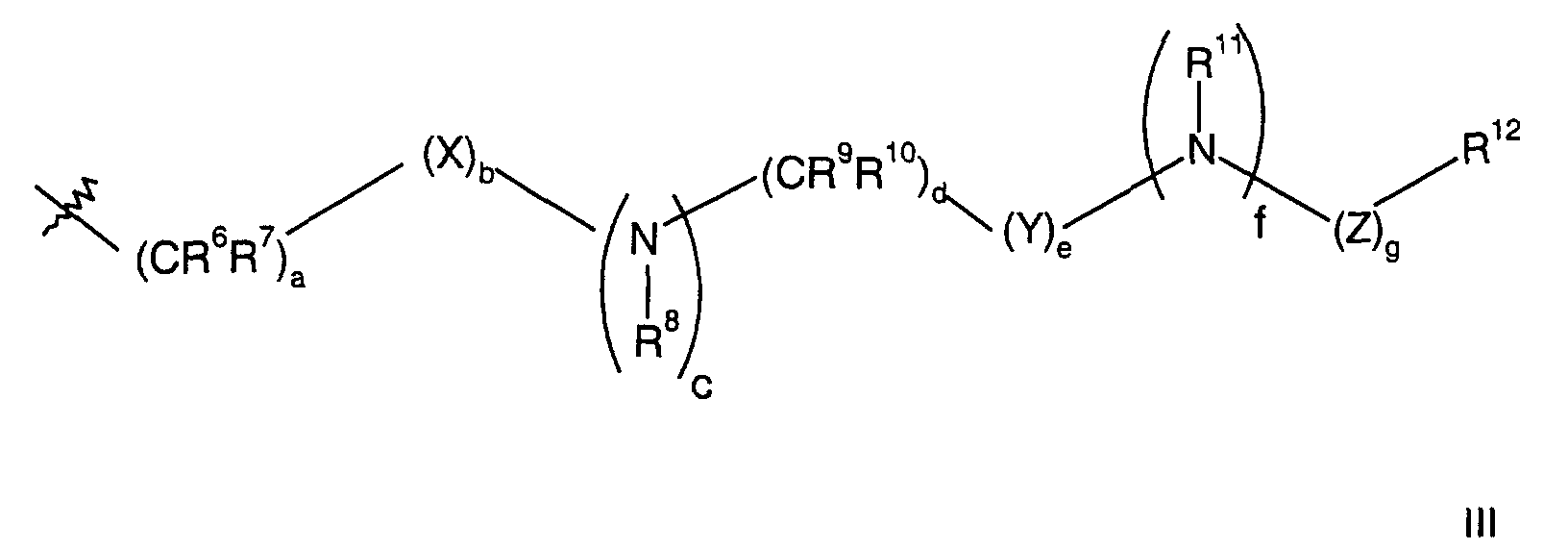
- b, c, e, f and g are each independently 0 or 1;
- d is 0,1, 2, or 3;
- X is S(O)n wherein n is 1 or 2; oxygen, carbonyl or -C(=N-cyano)-;
- Y is S(O)n wherein n is 1 or 2; or carbonyl; and
- Z is carbonyl, C(O)O-, C(O)NR- or S(O)n wherein n is 1 or 2;
- R6, R7, R8, R9, R10 and R11 are each independently selected from the group consisting of hydrogen or (C1-C6)alkyl optionally substituted by deuterium, hydroxy, amino, trifluoromethyl, (C1-C6)acyloxy, (C1-C6)acylamino, (C1-C6)alkylamino, ((C1-C6)alkyl)2amino, cyano, cyano(C1-C6)alkyl, trifluoromethyl(C1-C6)alkyl, nitro, nitro(C1-C6)alkyl or (C1-C6)acylamino;
- R12 is carboxy, cyano, amino, oxo, deuterium, hydroxy, trifluoromethyl, (C1-C6)alkyl, trifluoromethyl(C1-C6)alkyl, (C1-C6)alkoxy, halo, (C1-C6)acyl, (C1-C6)alkylamino, ((C1-C6)alkyl)2 amino, amino(C1-C6)alkyl, (C1-C6)alkoxy-CO-NH, (C1-C6)alkylamino-CO-, (C1-C6)alkylamino, hydroxy(C1-C6)alkyl, (C1-C6)alkoxy(C1-C6)alkyl, (C1-C6)acyloxy(C1-C6)alkyl, nitro, cyano(C1-C6)alkyl, halo(C1-C6)alkyl, nitro(C1-C6)alkyl, trifluoromethyl, trifluoromethyl(C1-C6)alkyl, (C1-C6)acylamino, (C1-C6)acylamino(C1-C6)alkyl, (C1-C6)alkoxy(C1-C6)acylamino, amino(C1-C6)acyl, amino(C1-C6)acyl(C1-C6)alkyl, (C1-C6)alkylamino(C1-C6)acyl, ((C1-C6)alkyl)2amino(C1-C6)acyl, R15R16N-CO-O-, R15R16N-CO-(C1-C6)alkyl, R15C(O)NH, R15OC(O)NH, R15NHC(O)NH, (C1-C6)alkyl-S(O)m, (C1-C6)alkyl-S(O)m-(C1-C6)alkyl, R15R16NS(O)m, R15R16NS(O)m (C1-C6)alkyl, R15S(O)m R16N, R15S(O)mR16N(C1-C6)alkyl wherein m is 1 or 2 and R15 and R16 are each independently selected from hydrogen or (C1-C6)alkyl; or R12 is (C6-C10)aryl, (C2-C9)heteroaryl, (C3-C10)cycloalkyl, (C2-C9)heterocycloalkyl, wherein the aryl, heteroaryl, cycloalkyl and heterocycloalkyl groups are optionally substituted by one to four groups consisting of hydrogen, deuterium, halo, (C1-C6)alkyl, (C1-C6)alkyl-CO-NH-, (C1-C6)alkoxy-CO-NH-, (C1-C6)alkyl-CO-NH-(C1-C6)alkyl, (C1-C6)alkoxy-CO-NH-(C1-C6)alkyl, (C1-C6)alkoxy-CO-NH-(C1-C6)alkoxy, carboxy, carboxy(C1-C6)alkyl, carboxy(C1-C6)alkoxy, benzyloxycarbonyl(C1-C6)alkoxy, (C1-C6)alkoxycarbonyl(C1-C6)alkoxy, (C6-C10)aryl, amino, amino(C1-C6)alkyl, (C1-C6)alkoxycarbonylamino, (C6-C10)aryl(C1-C6)alkoxycarbonylamino, (C1-C6)alkylamino, ((C1-C6)alkyl)2amino, (C1-C6)alkylamino(C1-C6)alkyl, ((C1-C6)alkyl)2amino(C1-C6)alkyl, hydroxy, (C1-C6)alkoxy, carboxy, carboxy(C1-C6)alkyl, (C1-C6)alkoxycarbonyl, (C1-C6)alkoxycarbonyl(C1-C6)alkyl, (C1-C6)alkoxy-CO-NH-, (C1-C6)alkyl-CO-NH-, cyano, (C5-C9)heterocycloalkyl, amino-CO-NH-, (C1-C6)alkylamino-CO-NH-, ((C1-C6)alkyl)2amino-CO-NH-, (C6-C10)arylamino-CO-NH-, (C5-C9)heteroarylamino-CO-NH-, (C1-C6)alkylamino-CO-NH-(C1-C6)alkyl, ((C1-C6)alkyl)2amino-CO-NH-(C1-C6)alkyl, (C6-C10)arylamino-CO-NH-(C1-C6)alkyl, (C5-C9)heteroarylamino-CO-NH-(C1-C6)alkyl, (C1-C6)alkylsulfonyl, (C1-C6)alkylsulfonylamino, (C1-C6)alkylsulfonylamino(C1-C6)alkyl, (C6-C10)arylsulfonyl, (C6-C10)arylsulfonylamino, (C6-C10)arylsulfonylamino(C1-C6)alkyl, (C1-C6)alkylsulfonylamino, (C1-C6)alkylsulfonylamino(C1-C6)alkyl, (C5-C9)heteroaryl or (C2-C9)heterocycloalkyl;
- with the proviso that X and Y cannot both be hydrogen or hydroxy;
comprising reacting a compound of the formulawherein R1, R2, R3 and R4 are as defined above, with a borane, followed by reacting the intermediate so formed with Oxone®.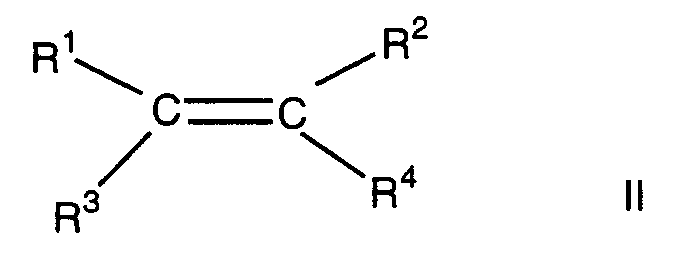
-
- The term "Oxone®" is a name of a monopersulfate compound used in this invention, having the formula 2KHSO5·KHSO4·K2SO4, and sold by Aldrich Chemical Company, P.O. Box 2060, Milwaukee, WI 53201, USA.
- The term "alkyl", as used herein, unless otherwise indicated, includes saturated monovalent hydrocarbon radicals having straight or branched moieties or combinations thereof.
- The term "alkoxy", as used herein, includes O-alkyl groups wherein "alkyl" is defined above.
- The term "halo", as used herein, unless otherwise indicated, includes fluoro, chloro, bromo or iodo.
- Unless otherwise indicated, the alkyl groups referred to herein, as well as the alkyl moieties of other groups referred to herein (e.g., alkoxy), may be linear or branched, and they may also be cyclic (e.g., cyclopropyl, cyclobutyl, cyclopentyl, cyclohexyl or cycloheptyl) or be linear or branched and contain cyclic moieties. Unless otherwise indicated, halogen includes fluorine, chlorine, bromine, and iodine.
- (C2-C9)Heterocycloalkyl when used herein refers to pyrrolidinyl, tetrahydrofuranyl, dihydrofuranyl, tetrahydropyranyl, pyranyl, thiopyranyl, aziridinyl, oxiranyl, methylenedioxyl, chromenyl, isoxazolidinyl, 1,3-oxazolidin-3-yl, isothiazolidinyl, 1,3-thiazolidin-3-yl, 1,2-pyrazolidin-2-yl, 1,3-pyrazolidin-1-yl, piperidinyl, thiomorpholinyl, 1,2-tetrahydrothiazin-2-yl, 1,3-tetrahydrothiazin-3-yl, tetrahydrothiadiazinyl, morpholinyl, 1,2-tetrahydrodiazin-2-yl, 1,3-tetrahydrodiazin-1-yl, tetrahydroazepinyl, piperazinyl, chromanyl, etc. One of ordinary skill in the art will understand that the connection of said (C2-C9)heterocycloalkyl rings is through a carbon or a sp3 hybridized nitrogen heteroatom.
- (C2-C9)Heteroaryl when used herein refers to furyl, thienyl, thiazolyl, pyrazolyl, isothiazolyl, oxazolyl, isoxazolyl, pyrrolyl, triazolyl, tetrazolyl, imidazolyl, 1,3,5-oxadiazolyl, 1,2,4-oxadiazolyl, 1,2,3-oxadiazolyl, 1,3,5-thiadiazolyl, 1,2,3-thiadiazolyl, 1,2,4-thiadiazolyl, pyridyl, pyrimidyl, pyrazinyl, pyridazinyl, 1,2,4-triazinyl, 1,2,3-triazinyl, 1,3,5-triazinyl, pyrazolo[3,4-b]pyridinyl, cinnolinyl, pteridinyl, purinyl, 6,7-dihydro-5H-[1]pyrindinyl, benzo[b]thiophenyl, 5, 6, 7, 8-tetrahydro-quinolin-3-yl, benzoxazolyl, benzothiazolyl, benzisothiazolyl, benzisoxazolyl, benzimidazolyl, thianaphthenyl, isothianaphthenyl, benzofuranyl, isobenzofuranyl, isoindolyl, indolyl, indolizinyl, indazolyl, isoquinolyl, quinolyl, phthalazinyl, quinoxalinyl, quinazolinyl, benzoxazinyl; etc. One of ordinary skill in the art will understand that the connection of said (C2-C9)heterocycloalkyl rings is through a carbon atom or a sp3 hybridized nitrogen heteroatom.
- (C6-C10)aryl when used herein refers to phenyl or naphthyl.
ediate so formed with Oxone®.
The present invention relates to a process wherein the borane is borane,
diborane, or (C1-C12)alkylborane.
The present invention further relates to a process wherein R1, R2, R3 and R4 are each independently selected from hydrogen, deuterium, (C3-C10)cycloalkyl, (C3-C10)cycloalkoxy, (C1-C6)alkylsulfonyl, (C6-C10)arylsulfonyl, (C1-C6)acyl, (C3-C10)cycloalkyl, (C5-C9)heteroaryl, (C2-C9)heterocycloalkyl, (C6-C10)aryl, wherein heteroaryl, heterocycloalkyl, aryl groups are optionally substituted by one to three halo, (C1-C6)alkyl or (C1-C6)alkoxy. - The present invention further relates to a process, wherein R1 and R2, or R3 and R4, R1 and R3, or R2 and R4 are taken together with the carbon to which they are attached to form a (C3-C10)cycloalkyl or (C2-C9)heterocycloalkyl group optionally substituted by one to five groups consisting of carboxy, cyano, amino, deuterium, hydroxy, (C1-C6)alkyl, (C1-C6)alkoxy, halo, (C1-C6)acyl, (C1-C6)alkylamino, amino(C1-C6)alkyl, (C1-C6)alkoxy-CO-NH, (C1-C6)alkylamino-CO-, (C2-C6)alkenyl, (C2-C6) alkynyl, (C1-C6)alkylamino, amino(C1-C6)alkyl, hydroxy(C1-C6)alkyl, (C1-C6)alkoxy(C1-C6)alkyl, (C1-C6)acyloxy(C1-C6)alkyl, nitro, cyano(C1-C6)alkyl, halo(C1-C6)alkyl, nitro(C1-C6)alkyl, trifluoromethyl, trifluoromethyl(C1-C6)alkyl, (C1-C6)acylamino, (C1-C6)acylamino(C1-C6)alkyl, (C1-C6)alkoxy(C1-C6)acylamino, amino(C1-C6)acyl, amino(C1-C6)acyl(C1-C6)alkyl, (C1-C6)alkylamino(C1-C6)acyl, ((C1-C6)alkyl)2amino(C1-C6)acyl, R15R16N-CO-O-, R15R16N-CO-(C1-C6)alkyl, (C1-C6)alkyl-S(O)m, R15R16NS(O)m, R15R16NS(O)m (C1-C6)alkyl, R15S(O)m R16N, R15S(O)mR16N(C1-C6)alkyl wherein m is 1 or 2 and R15 and R16 are each independently selected from hydrogen or (C1-C6)alkyl; and a group of the formulawherein a is 0, 1, 2, 3 or 4;

- b, c, e, f and g are each independently 0 or 1;
- d is 0, 1, 2, or 3;
- X is S(O)n wherein n is 1 or 2; oxygen, carbonyl or -C(=N-cyano)-;
- Y is S(O)n wherein n is 1 or 2; or carbonyl; and
- Z is carbonyl, C(O)O-, C(O)NR- or S(O)n wherein n is 1 or 2;
- R6, R7, R8, R9, R10 and R11 are each independently selected from the group consisting of hydrogen or (C1-C6)alkyl optionally substituted by deuterium, hydroxy, amino, trifluoromethyl, (C1-C6)acyloxy, (C1-C6)acylamino, (C1-C6)alkylamino, ((C1-C6)alkyl)2amino, cyano, cyano(C1-C6)alkyl, trifluoromethyl(C1-C6)alkyl, nitro, nitro(C1-C6)alkyl or (C1-C6)acylamino.
-
- The present invention further relates to a process wherein a is 0; b is 1; X is carbonyl; c is 0; d is 0; e is 0; f is 0; and g is 0.
- The present invention further relates to a process wherein a is 0; b is 1; X is carbonyl; c is 0; d is 1; e is 0; f is 0, and g is 0.
- The present invention further relates to a process wherein a is 0; b is 1; X is carbonyl; c is 1; d is 0; e is 0; f is 0; and g is 0.
- The present invention further relates to a process wherein a is 0; b is 1; X is-C(=N=cyano)-; c is 1; d is 0; e is 0; f is 0; and g is 0.
- The present invention further relates to a process wherein a is 0; b is 0; c is 0; d is 0; e is 0; f is 0; g is 1; and Z is -C(O)-O-.
- The present invention further relates to a process wherein a is 0; b is 1; X is S(O)n; n is 2; c is 0; d is 0; e is 0; f is 0; and g is 0.
- The present invention further relates to a process wherein a is 0; b is 1; X is S(O)n; n is 2; c is 0; d is 2; e is 0; f is 1; g is 1; and Z is carbonyl.
- The present invention further relates to a process wherein a is 0; b is 1; X is S(O)n; n is 2; c is 0; d is 2; e is 0; f is 1; and g is 0.
- The present invention further relates to a process wherein a is 0; b is 1; X is carbonyl; c is 1; d is 0; e is 1; Y is S(O)n; n is 2; f is 0; and g is 0.
- The present invention further relates to a process wherein a is 0; b is 1; X is S(O)n; n is 2; c is 1; d is 0; e is 0; f is 0; and g is 0.
- The present invention further relates to a process wherein a is 1; b is 1; X is carbonyl; c is 1; d is 0; e is 0; f is 0; and g is 0.
- The present invention further relates to a process wherein a is 0; b is 1; X is S(O)n; c is 0; d is 1; e is 1; Y is S(O)n; n is 2; f is 0; and g is 0.
- The present invention further relates to a process wherein a is 0; b is 1; X is S(O)n; c is 0; d is 2, 3 or 4; e is 1; Y is S(O)n; n is 2; f is 1; and g is 0.
- The present invention further relates to a process wherein a is 0; b is 1; X is oxygen; c is 0; d is 2, 3 or 4; e is 1; Y is S(O)n; n is 2; f is 1; and g is 0.
- The present invention further relates to a process wherein a is 0; b is 1; X is oxygen; c is 0; d is 2, 3 or 4; e is 1; Y is S(O)n; n is 2; f is 0; and g is 0.
- The present invention further relates to a process wherein a is 0; b is 1; X is carbonyl; c is 1; d is 2, 3 or 4; e is 1; Y is S(O)n; f is 0; and g is 0.
- The present invention further relates to a process wherein a is 0; b is 1; X is carbonyl; c is 1; d is 2, 3 or 4; e is 1; Y is S(O)n; n is 2; f is 1; and g is 0.
- The present invention further relates to a process wherein R12 is cyano, deuterium, hydroxy, trifluoromethyl, (C1-C6)alkyl, triflouromethyl(C1-C6)alkyl, (C1-C6)alkoxy, halo, (C1-C6)acyl, (C6-C10)aryl, (C2-C9)heteroaryl, (C3-C10)cycloalkyl, or (C2-C9)heterocycloalkyl.
- The following reaction Scheme illustrates the preparation of the compounds of the present invention. Unless otherwise indicated V, W, R1, R2, R3 and R4 in the reaction Scheme and the discussion that follow are defined as above.
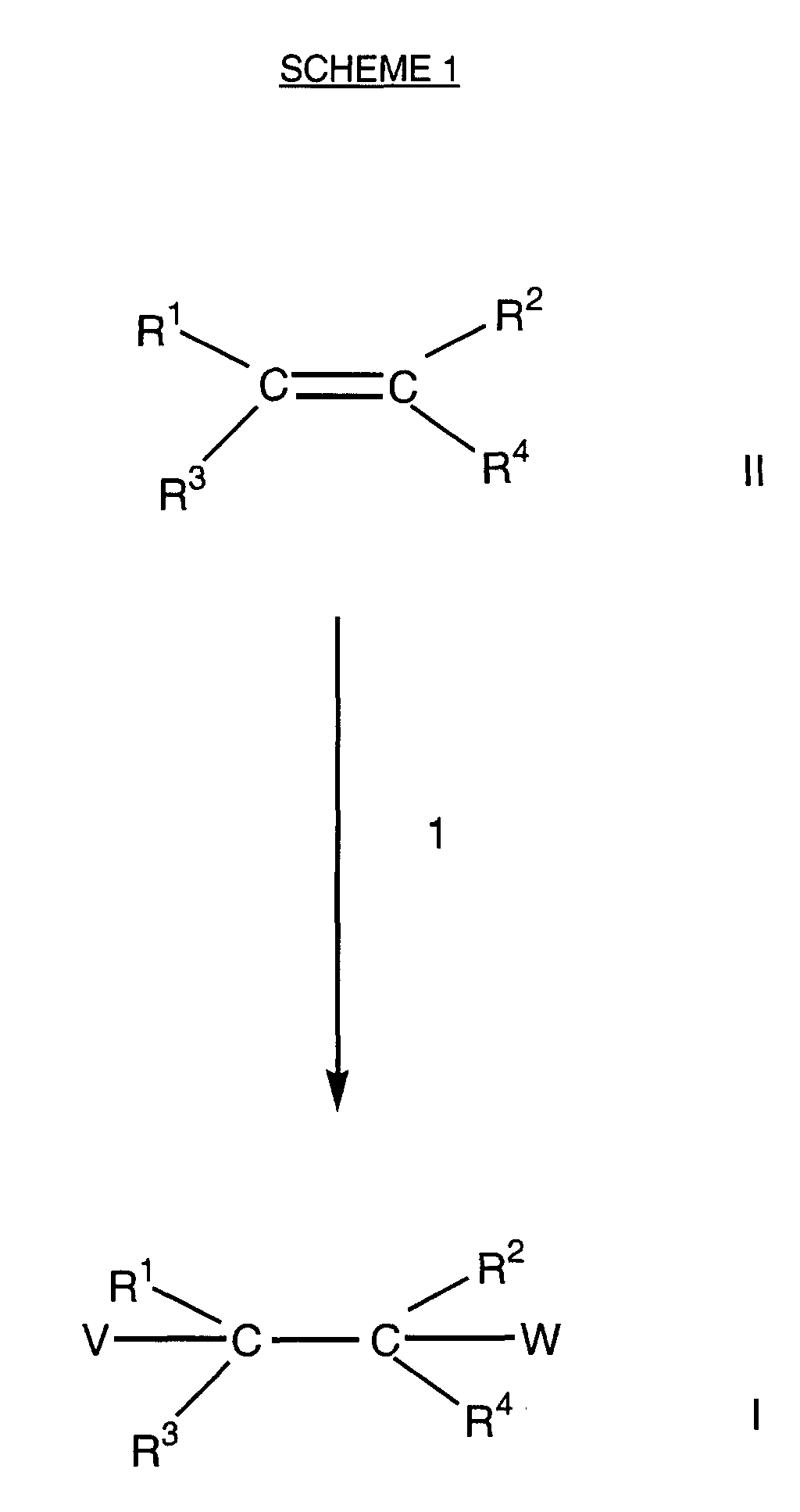
- In reaction 1 of Scheme 1, the compound of formula II is converted to the corresponding compound of formula I by first reacting II with a borane, such as borane, diborane or an alkylborane, in the presence of a polar aprotic solvent, such as tetrahydrofuran, dioxane, diethylether, dichloromethane or dichloroethane, preferably tetrahydrofuran. The carbon-boron bond of the intermediate so formed is then oxidized by treating the intermediate with Oxone® . The Oxone® oxidation is usually carried out using the same polar aprotic solvent used in the hydroboration reaction, however, in those cases where a different solvent is used a phase transfer catalyst, such as tetrabutyl ammonium bromide, is added to speed the reaction. Preferably, the entire reaction is done in tetrahydrofuran and no phase transfer catalyst is needed. The Oxone® oxidation is carried out at a temperature between about -15°C to about 100°C, preferably about 0°C to about 35°C, for a time period between about 5 minutes to about 72 hours, preferably about 8 to 12 hours.
- The following example illustrates the preparation of a compound of the present invention but it is not limited to the details thereof. NMR data are reported in parts per million (δ) and are referenced to the deuterium lock signal from the sample solvent (deuteriochloroform unless otherwise specified). Commercial reagents were utilized without further purification. Room or ambient temperature refers to 20-25°C.
- To a solution of 1-methylcyclohexene (1.03 grams, 10.7 mmol) in tetrahydrofuran (15 mL) was added sodium borohydride (0.64 grams, 17.0 mmol) at room temperature under nitrogen. The slurry was cooled to 0°C, and BF3·OEt2 (1.5 mL, 1.70 grams, 12.0 mmol) in tetrahydrofuran (2.5 mL) was slowly added through an addition funnel. The addition was kept slow enough to keep the temperature of the reaction mixture below 0°C. After the addition; the reaction mixture was stirred at 0°C for 1 hour and room temperature for 1.5 hours. The reaction was re-cooled to 0°C and water (10.0 mL) was added slowly to destroy the excess borane. The reaction was stirred at room temperature for 2 hours, followed by the addition of Oxone® (21.2 grams, 34.8 mmol) in water (40 mL) at 0°C. The reaction mixture was allowed to warm to room temperature and stirred overnight. The reaction was quenched by adding NaHSO3 (solid) until all excess oxidant was destroyed (potassium iodine/starch test paper). The pH of the reaction mixture was 1-2 and was adjusted to pH of 7 with 2N sodium hydroxide and extracted with ethyl acetate (4 times with 25 mL). The organic layer was washed with brine, dried over NaSO4, and concentrated in vacuo. The residue obtained was subjected for a flash chromatography column eluting with ethyl alcohol/hexane (1:5) to give the pure alcohol trans-1-hydroxy-2-methylcyclohexane (0.62 grams, 50%) NMR: 3.1(m,1H), 2.1(s,br,1H), 1.9(m,1H), 1.6(m, 4H), 1.2(m, 4H), 0.9(d,3H).
- To a solution of 2,6,6-trimethylbicyclo[3.1.1]hept-2-ene (1.36 grams, 10.0 mmol) in tetrahydrofuran (15 mL) was added sodium borohydride (0.64 grams, 17.0 mmol) at room temperature under nitrogen. The slurry was cooled to 0°C, and BF3·OEt2 (1.5 mL, 1.70 grams, 12.0 mmol) in tetrahydrofuran (2.5 mL) was slowly added through an addition funnel. The addition was kept slow enough to keep the temperature of the reaction mixture below 0°C. After the addition; the reaction mixture was stirred at 0°C for 1 hour and room temperature for 1.5 hour. The reaction was re-cooled to 0°C and water (10.0 mL) was added slowly to destroy the excess borane. The reaction was stirred at room temperature for 2 hours, followed by the addition of Oxone® (21.6 grams, 34.8 mmol) in water (40 mL) at 0°C. The reaction mixture was allowed to warm to room temperature and stirred overnight. The reaction was quenched by adding NaHSO3 (solid) until all excess oxidant was destroyed (Kl/starch test paper). The pH of the reaction mixture was 1-2. and was neutralized with 2N sodium hydroxide and extracted with ethyl acetate (4 times with 25 mL). The organic layer was washed with brine, dried over NaSO4, and concentrated in vacuo. The residue obtained was the pure alcohol ((1α,2β,3α,5α)]-2,6,6-trimethyl-Bicyclo[3.1.1]heptan-3-ol (1.50 grams, 95%).NMR: 4.1(m,3H), 2.5(m,1H), 2.3(m,1H), 2.0(s,br,1H), 1.9(m,1H), 1.8(m, 1H), 1.7(m,1H), 1.2(s,3H), 1,1(d,3H), 1.0(d,1H), 0.9(s, 3H).
- To a solution of 9,10-Dehydrodecalin (1.46 grams, 10.7 mmol) in tetrahydrofuran (15 mL) was added sodium borohydride (0.70 grams, 18.5 mmol) at room temperature under nitrogen. The slurry was cooled to 0°C, and BF3·OEt2 (1.8 mL, 2.01 grams, 14.2 mmol) in tetrahydrofuran (3.0 mL) was slowly added through an addition funnel. The addition was kept slow enough to keep the temperature of the reaction mixture below 0°C. After the addition; the reaction mixture was stirred at 0°C for 1 hour and room temperature for 1.5 hours. The reaction was re-cooled to 0°C and water (10.0 mL) was added slowly to destroy the excess borane. The reaction was stirred at room temperature for 2 hours, followed by the addition of Oxone® (21.6 grams, 34.8 mmol) in water (40 mL) at 0°C. The reaction mixture was allowed to warm to room temperature and stirred overnight. The reaction was quenched by adding NaHSO3 (solid) until all excess oxidant was destroyed (Kl/starch test paper). The pH of the reaction mixture was 1-2 and was neutralized with 2N sodium hydroxide and extracted with ethyl acetate (4 times with 30 mL). The organic layer was washed with brine, dried over NaSO4, and concentrated in vacuo. The residue obtained was the pure alcohol cis-Bicyclo[4.4.0]decan-1-ol (1.50 gams, 90%). (M-1: 153.1)
- To a solution of alkene 1-Benzyl-4-methyl-1,2,3,6-tetrahydropyridine (18.7 grams, 100 mmol) in tetrahydrofuran (150 mL) was added sodium borohydride (6.5 grams, 170 mmol) at room temperature under nitrogen. The slurry was cooled to 0°C, and BF3·OEt2 (15 mL, 16.8 grams, 118.3 mmol) in tetrahydrofuran (25 mL) was slowly added through an addition funnel. The addition was kept slow enough to keep the temperature of the reaction mixture below 0°C. After the addition; the reaction mixture was stirred at 0°C for 1hour and room temperature for 1.5 hours. The reaction was re-cooled to 0°C and water (50 mL) was added slowly to destroy the excess borane. The reaction was stirred at room temperature for 2 hours, followed by the addition of Oxone® (110 grams, 342.8 mmol) in water (500 mL) at 0°C. The reaction mixture was allowed to warm to room temperature and stirred overnight. The reaction was quenched by adding NaHSO3 (solid) until all excess oxidant was destroyed (Kl/starch test paper). The pH of the reaction mixture was 1-2. The reaction mixture was extracted with ethyl acetate (3 times with 50 mL), and the aqueous layer was adjusted to pH of 12 with 6N sodium hydroxide and extracted with ethyl acetate (4 times with 100 mL). The organic layer was washed with brine, dried over NaSO4, and concentrated in vacuo. The residue obtained is pure alcohol trans-4-methyl-1-(phenylmethyl)-3-Piperidinol (19.0 grams, 92%). (M+1:206.3).
- To a solution of 1-bromo-4-ethenylbenzene (1.0 grams, 5.46 mmol) in tetrahydrofuran (10 mL) was added sodium borohydride (0.35 grams, 9.28 mmol) at room temperature under nitrogen. The slurry was cooled to 0°C, and BF3·OEt2 (1.2 mL, 1.32 grams, 9.3 mmol) in tetrahydrofuran (1.50 mL) was slowly added through an addition funnel. The addition was kept slow enough to keep the temperature of the reaction mixture below 0°C. After the addition; the reaction mixture was stirred at 0°C for 1hour and room temperature for 1.5 hours. The reaction was re-cooled to 0°C and water (8.0 mL) was added slowly to destroy the excess borane. The reaction was stirred at room temperature for 2hours, followed by the addition of Oxone® (11.86 grams, 19.3 mmol) in water (20 mL) at 0°C. The reaction mixture was allowed to warm to room temperature and stirred overnight. The reaction was quenched by adding NaHSO3 (solid) until all excess oxidant was destroyed (Kl/starch test paper). reaction mixture was extracted with ethyl acetate (3 times with 10 mL), and was adjusted to pH 7 with 2N sodium hydroxide and extracted with ethyl acetate (4 times with 20 mL). The organic layer was washed with brine, dried over NaSO4, and concentrated in vacuo. The residue obtained was the purified by chromatography column eluting with ea/hexane(1:5) to give a mixture of alcohol 2-(4-Bromophenyl)ethanol and 1-(4-Bromophenyl)ethanol (4.6:1) (1.50 grams, 90%). (M+1: 202.1)
- To a solution of 1-methyl-4-(1-methylethenyl)benzene (1.36 grams, 10.3 mmol) in tetrahydrofuran (15 mL) was added sodium borohydride (0.640 grams, 16.9 mmol) at room temperature under nitrogen. The slurry was cooled to 0°C, and BF3·OEt2 (1.5 mL, 1.68 grams, 11.8 mmol) in tetrahydrofuran (2.0 mL) was slowly added through an addition funnel. The addition was kept slow enough to keep the temperature of the reaction mixture below 0°C. After the addition; the reaction mixture was stirred at 0°C for 1 hour and room temperature for 1.5 hours. The reaction was re-cooled to 0°C and water (10.0 mL) was added slowly to destroy the excess borane. The reaction was stirred at room temperature for 2 hours, followed by the addition of Oxone® (21.6 grams, 34.8 mmol) in water (40 mL) at 0°C. The reaction mixture was allowed to warm to room temperature and stirred overnight. The reaction was quenched by adding NaHSO3 (solid) until all excess oxidant was destroyed (potassium iodide/starch test paper). The pH of the reaction mixture was 1-2 and was adjusted to pH of 7 with 2N sodium hydroxide and extracted with ethyl acetate (4 times with 30 mL). The organic layer was washed with brine, dried over NaSO4, and concentrated in vacuo. The residue obtained was the pure alcohol β,4-dimethyl-Benzeneethanol (1.20 grams, 85%). NMR: 7.1(m,4H), 3.7(d,2H), 2.9(m,1), 2.3(s, 3H), 1.5(s,br,1H), 1.3(d, 3H), compared with J.Org. Chem. 1982, 47,4692.
Claims (22)
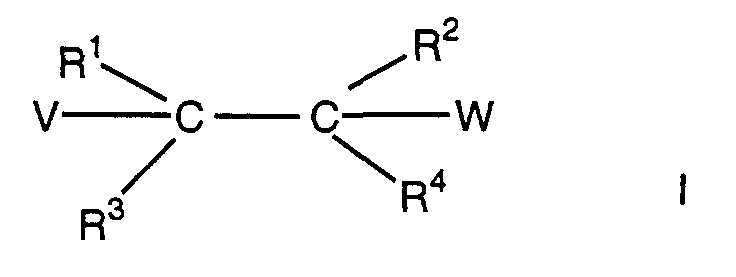
- A process for preparing a compound of the formulawherein V and W are each independently selected from hydrogen or hydroxy;
 R1, R2, R3 and R4 are each independently selected from the group consisting of hydrogen, deuterium, amino, halo, hydoxy, nitro, carboxy, trifluoromethyl, trifluoromethoxy, (C1-C6)alkyl, (C1-C6)alkoxy, (C3-C10)cycloalkyl wherein the alkyl, alkoxy or cycloalkyl groups are optionally substituted by one to three groups selected from halo, hydroxy, carboxy, amino, (C1-C6)alkylamino, ((C1-C6)alkyl)2amino, (C5-C9)heteroaryl, (C2-C9)heterocycloalkyl, (C3-C9)cycloalkyl or (C6-C10)aryl; or R1, R2, R3 and R4 are each independently (C3-C10)cycloalkyl, (C3-C10)cycloalkoxy, (C1-C6)alkylamino, ((C1-C6)alkyl)2amino, (C6-C10)arylamino, (C1-C6)alkylsulfinyl, (C6-C10)arylsulfinyl, (C1-C6)alkylsulfonyl, (C6-C10)arylsulfonyl, (C1-C6)acyl, (C1-C6)alkoxy-CO-NH-, (C1-C6)alkyamino-CO-, (C5-C9)heteroaryl, (C2-C9)heterocycloalkyl or (C6-C10)aryl wherein the heteroaryl, heterocycloalkyl and aryl groups are optionally substituted by one to three halo, (C1-C6)alkyl, (C1-C6)alkyl-CO-NH-, (C1-C6)alkoxy-CO-NH-, (C1-C6)alkyl-CO-NH-(C1-C6)alkyl, (C1-C6)alkoxy-CO-NH-(C1-C6)alkyl, (C1-C6)alkoxy-CO-NH-(C1-C6)alkoxy, carboxy, carboxy(C1-C6)alkyl, carboxy(C1-C6)alkoxy, benzyloxycarbonyl(C1-C6)alkoxy, (C1-C6)alkoxycarbonyl(C1-C6)alkoxy, (C6-C10)aryl, amino, amino(C1-C6)alkyl, (C1-C6)alkoxycarbonylamino, (C6-C10)aryl(C1-C6)alkoxycarbonylamino, (C1-C6)alkylamino, ((C1-C6)alkyl)2amino, (C1-C6)alkylamino(C1-C6)alkyl, ((C1-C6)alkyl)2amino(C1-C6)alkyl, hydroxy, (C1-C6)alkoxy, carboxy, carboxy(C1-C6)alkyl, (C1-C6)alkoxycarbonyl, (C1-C6)alkoxycarbonyl(C1-C6)alkyl, (C1-C6)alkoxy-CO-NH-, (C1-C6)alkyl-CO-NH-, cyano, (C5-C9)heterocycloalkyl, amino-CO-NH-, (C1-C6)alkylamino-CO-NH-, ((C1-C6)alkyl)2amino-CO-NH-, (C6-C10)arylamino-CO-NH-, (C5-C9)heteroarylamino-CO-NH-, (C1-C6)alkylamino-CO-NH-(C1-C6)alkyl,((C1-C6)alkyl)2amino-CO-NH-(C1-C6)alkyl, (C6-C10)arylamino-CO-NH-(C1-C6)alkyl, (C5-C9)heteroarylamino-CO-NH-(C1-C6)alkyl, (C1-C6)alkylsulfonyl, (C1-C6)alkylsulfonylamino, (C1-C6)alkylsulfonylamino(C1-C6)alkyl, (C6-C10)arylsulfonyl, (C6-C10)arylsulfonylamino, (C6-C10)arylsulfonylamino(C1-C6)alkyl, (C1-C6)alkylsulfonylamino, (C1-C6)alkylsulfonylamino(C1-C6)alkyl, (C5-C9)heteroaryl or (C2-C9)heterocycloalkyl;or R1 and R2, and/or R3 and R4, and/or R1 and R3, and/or R2 and R4 are taken together with the carbon to which they are attached to form a (C3-C10)cycloalkyl or (C2-C9)heterocycloalkyl group optionally substituted by one to five groups consisting of carboxy, cyano, amino, deuterium, hydroxy, (C1-C6)alkyl, (C1-C6)alkoxy, halo, (C1-C6)acyl, (C1-C6)alkylamino, amino(C1-C6)alkyl, (C1-C6)alkoxy-CO-NH, (C1-C6)alkylamino-CO-, (C2-C6)alkenyl, (C2-C6) alkynyl, (C1-C6)alkylamino, amino(C1-C6)alkyl, hydroxy(C1-C6)alkyl, (C1-C6)alkoxy(C1-C6)alkyl, (C1-C6)acyloxy(C1-C6)alkyl, nitro, cyano(C1-C6)alkyl, halo(C1-C6)alkyl, nitro(C1-C6)alkyl, trifluoromethyl, trifluoromethyl(C1-C6)alkyl, (C1-C6)acylamino, (C1-C6)acylamino(C1-C6)alkyl, (C1-C6)alkoxy(C1-C6)acylamino, amino(C1-C6)acyl, amino(C1-C6)acyl(C1-C6)alkyl, (C1-C6)alkylamino(C1-C6)acyl, ((C1-C6)alkyl)2amino(C1-C6)acyl, R15R16N-CO-O-, R15R16N-CO-(C1-C6)alkyl, (C1-C6)alkyl-S(O)m, R15R16NS(O)m, R15R16NS(O)m (C1-C6)alkyl, R15S(O)m R16N, R15S(O)mR16N(C1-C6)alkyl wherein m is 1 or 2 and R15 and R16 are each independently selected from hydrogen or (C1-C6)alkyl; or a group of the formulawherein a is 0, 1, 2, 3 or 4;
 b, c, e, f and g are each independently 0 or 1;d is 0, 1, 2, or 3;X is S(O)n wherein n is 1 or 2; oxygen, carbonyl or -C(=N-cyano)-;Y is S(O)n wherein n is 1 or 2; or carbonyl; andZ is carbonyl, C(O)O-, C(O)NR- or S(O)n wherein n is 1 or 2;R6, R7, R8, R9, R10 and R11 are each independently selected from the group consisting of hydrogen or (C1-C6)alkyl optionally substituted by deuterium, hydroxy, amino, trifluoromethyl, (C1-C6)acyloxy, (C1-C6)acylamino, (C1-C6)alkylamino, ((C1-C6)alkyl)2amino, cyano, cyano(C1-C6)alkyl, trifluoromethyl(C1-C6)alkyl, nitro, nitro(C1-C6)alkyl or (C1-C6)acylamino;R12 is carboxy, cyano, amino, oxo, deuterium, hydroxy, trifluoromethyl, (C1-C6)alkyl, trifluoromethyl(C1-C6)alkyl, (C1-C6)alkoxy, halo, (C1-C6)acyl, (C1-C6)alkylamino, ((C1-C6)alkyl)2 amino, amino(C1-C6)alkyl, (C1-C6)alkoxy-CO-NH, (C1-C6)alkylamino-CO-, (C1-C6)alkylamino, hydroxy(C1-C6)alkyl, (C1-C6)alkoxy(C1-C6)alkyl, (C1-C6)acyloxy(C1-C6)alkyl, nitro, cyano(C1-C6)alkyl, halo(C1-C6)alkyl, nitro(C1-C6)alkyl, trifluoromethyl, trifluoromethyl(C1-C6)alkyl, (C1-C6)acylamino, (C1-C6)acylamino(C1-C6)alkyl, (C1-C6)alkoxy(C1-C6)acylamino, amino(C1-C6)acyl, amino(C1-C6)acyl(C1-C6)alkyl, (C1-C6)alkylamino(C1-C6)acyl, ((C1-C6)alkyl)2amino(C1-C6)acyl, R15R16N-CO-O-, R15R16N-CO-(C1-C6)alkyl, R15C(O)NH, R15OC(O)NH, R15NHC(O)NH, (C1-C6)alkyl-S(O)m, (C1-C6)alkyl-S(O)m-(C1-C6)alkyl, R15R16NS(O)m, R15R16NS(O)m (C1-C6)alkyl, R15S(O)m R16N, R15S(O)mR16N(C1-C6)alkyl wherein m is 1 or 2 and R15 and R16 are each independently selected from hydrogen or (C1-C6)alkyl; or R12 is (C6-C10)aryl, (C2-C9)heteroaryl, (C3-C10)cycloalkyl, (C2-C9)heterocycloalkyl, wherein the aryl, heteroaryl, cycloalkyl and heterocycloalkyl groups are optionally substituted by one to four groups consisting of hydrogen, deuterium, halo, (C1-C6)alkyl, (C1-C6)alkyl-CO-NH-, (C1-C6)alkoxy-CO-NH-, (C1-C6)alkyl-CO-NH-(C1-C6)alkyl, (C1-C6)alkoxy-CO-NH-(C1-C6)alkyl, (C1-C6)alkoxy-CO-NH-(C1-C6)alkoxy, carboxy, carboxy(C1-C6)alkyl, carboxy(C1-C6)alkoxy, benzyloxycarbonyl(C1-C6)alkoxy, (C1-C6)alkoxycarbonyl(C1-C6)alkoxy, (C6-C10)aryl, amino, amino(C1-C6)alkyl, (C1-C6)alkoxycarbonylamino, (C6-C10)aryl(C1-C6)alkoxycarbonylamino, (C1-C6)alkylamino, ((C1-C6)alkyl)2amino, (C1-C6)alkylamino(C1-C6)alkyl, ((C1-C6)alkyl)2amino(C1-C6)alkyl, hydroxy, (C1-C6)alkoxy, carboxy, carboxy(C1-C6)alkyl, (C1-C6)alkoxycarbonyl, (C1-C6)alkoxycarbonyl(C1-C6)alkyl, (C1-C6)alkoxy-CO-NH-, (C1-C6)alkyl-CO-NH-, cyano, (C5-C9)heterocycloalkyl, amino-CO-NH-, (C1-C6)alkylamino-CO-NH-, ((C1-C6)alkyl)2amino-CO-NH-, (C6-C10)arylamino-CO-NH-, (C5-C9)heteroarylamino-CO-NH-, (C1-C6)alkylamino-CO-NH-(C1-C6)alkyl, ((C1-C6)alkyl)2amino-CO-NH-(C1-C6)alkyl, (C6-C10)arylamino-CO-NH-(C1-C6)alkyl, (C5-C9)heteroarylamino-CO-NH-(C1-C6)alkyl, (C1-C6)alkylsulfonyl, (C1-C6)alkylsulfonylamino, (C1-C6)alkylsulfonylamino(C1-C6)alkyl, (C6-C10)arylsulfonyl, (C6-C10)arylsulfonylamino, (C6-C10)arylsulfonylamino(C1-C6)alkyl, (C1-C6)alkylsulfonylamino, (C1-C6)alkylsulfonylamino(C1-C6)alkyl, (C5-C9)heteroaryl or (C2-C9)heterocycloalkyl;with the proviso that X and Y cannot both be hydrogen or hydroxy;
comprising reacting a compound of the formulawherein R1, R2, R3 and R4 are as defined as above, with a borane, followed by reacting the intermediate so formed with Oxone® .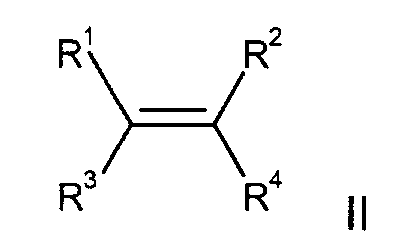
- A process according to claim 1, wherein the borane is borane, diborane, or (C1-C12)alkylborane.
- A process according to claim 1 or claim 2, wherein R1, R2, R3 and R4 are each independently selected from hydrogen, deuterium, (C3-C10)cycloalkyl, (C3-C10)cycloalkoxy, (C1-C6)alkylsulfonyl, (C6-C10)arylsulfonyl, (C1-C6)acyl, (C3-C10)cycloalkyl, (C5-C9)heteroaryl, (C2-C9)heterocycloalkyl, (C6-C10)aryl, wherein heteroaryl, heterocycloalkyl, aryl groups are optionally substituted by one to three halo, (C1-C6)alkyl or (C1-C6)alkoxy.
- A process according to claim 1 or claim 2, wherein R1 and R2, or R3 and R4, R1 and R3, or R2 and R4 are taken together with the carbon to which they are attached to form a (C3-C10)cycloalkyl or (C2-C9)heterocycloalkyl group optionally substituted by one of five groups consisting of carboxy, cyano, amino, deuterium, hydroxy, (C1-C6)alkyl, (C1-C6)alkoxy, halo, (C1-C6)acyl, (C1-C6)alkylamino, amino(C1-C6)alkyl, (C1-C6)alkoxy-CO-NH, (C1-C6)alkylamino-CO-, (C2-C6)alkenyl, (C2-C6)alkynyl, (C1-C6)alkylamino, amino(C1-C6)alkyl, hydroxy(C1-C6)alkyl, (C1-C6)alkoxy(C1-C6)alkyl, (C1-C6)acyloxy(C1-C6)alkyl, nitro, cyano(C1-C6)alkyl, halo(C1-C6)alkyl, nitro(C1-C6)alkyl, trifluoromethyl, trifluoromethyl(C1-C6)alkyl, (C1-C6)acylamino, (C1-C6)acylamino(C1-C6)alkyl, (C1-C6)alkoxy(C1-C6)acylamino, amino(C1-C6)acyl, amino(C1-C6)acyl(C1-C6)alkyl, (C1-C6)alkylamino(C1-C6)acyl, ((C1-C6)alkyl)2amino(C1-C6)acyl, R15R16N-CO-O-, R15R16N-CO-(C1-C6)alkyl, (C1-C6)alkyl-S(O)m, R15R16NS(O)m, R15R16NS(O)m(C1-C6)alkyl, R15S(O)mR16N, R15S(O)mR16N(C1-C6)alkyl wherein m is 1 or 2 and R15 and R16 are each independently selected from hydrogen or (C1-C6)alkyl; and a group of the formulawherein a is 0, 1, 2, 3 or 4;
 b, c, e, f and g are each independently 0 or 1;d is 0, 1, 2, or 3;X is S(O)n wherein n is 1 or 2; oxygen, carbonyl or -C(=N-cyano)-;Y is S(O)n wherein n is 1 or 2; or carbonyl; andZ is carbonyl, C(O)O-, C(O)NR- or S(O)n wherein n is 1 or 2;R6, R7, R8, R9, R10 and R11 are each independently selected from the group consisting of hydrogen or (C1-C6)alkyl optionally substituted by deuterium, hydroxy, amino, trifluoromethyl, (C1-C6)acyloxy, (C1-C6)acylamino, (C1-C6)alkylamino, ((C1-C6)alkyl)2amino, cyano, cyano(C1-C6)alkyl, trifluoromethyl(C1-C6)alkyl, nitro, nitro(C1-C6)alkyl or (C1-C6)acylamino.
 - A process according to any one of claims 1 to 4, wherein a is 0; b is 1; X is carbonyl; c is 0; d is 0; e is 0; f is 0; and g is 0.
- A process according to any one of claims 1 to 4, wherein a is 0; b is 1; X is carbonyl; c is 0; d is 1; e is 0; f is 0; and g is 0.
- A process according to any one of claims 1 to 4, wherein a is 0; b is 1; X is carbonyl; c is 1; d is 0; e is 0; f is 0; and g is 0.
- A process according to any one of claims 1 to 4, wherein a is 0; b is 1; X is ― C(=N=cyano)-; c is 1; d is 0; e is 0; f is 0; and g is 0.
- A process according to any one of claims 1 to 4, wherein a is 0; b is 0; c is 0; d is 0; e is 0; f is 0; and g is 1; and Z is -C(O)-O-.
- A process according to any one of claims 1 to 4, wherein a is 0; b is 1; X is S(O)n; n is 2; c is 0; d is 0; e is 0; f is 0; and g is 0.
- A process according to any one of claims 1 to 4, wherein a is 0; b is 1; X is S(O)n; n is 2; c is 0; d is 2; e is 0; f is 1; g is 1; and Z is carbonyl.
- A process according to any one of claims 1 to 4, wherein a is 0; b is 1; X is S(O)n; n is 2; c is 0; d is 2; e is 0; f is 1; and g is 0.
- A process according to any one of claims 1 to 4, wherein a is 0; b is 1; X is carbonyl; c is 1; d is 0; e is 1; Y is S(O)n ; n is 2; f is 0; and g is 0.
- A process according to any one of claims 1 to 4, wherein a is 0; b is 1; X is S(O)n; n is 2; c is 1; d is 0; e is 0; f is 0; and g is 0.
- A process according to any one of claims 1 to 4, wherein a is 1; b is 1; X is carbonyl; c is 1; d is 0; e is 0; f is 0; and g is 0.
- A process according to any one of claims 1 to 4, wherein a is 0; b is 1; X is S(O)n; c is 0; d is 1; e is 1; Y is S(O)n; n is 2; f is 0; and g is 0.
- A process according to any one of claims 1 to 4, wherein a is 0; b is 1; X is S(O)n; c is 0; d is 2, 3 or 4; e is 1; Y is S(O)n; n is 2; f is 1; and g is 0.
- A process according to any one of claims 1 to 4, wherein a is 0; b is 1; X is oxygen; c is 0; d is 2,3 or 4; e is 1; Y is S(O)n; n is 2; f is 1; and g is 0.
- A process according to any one of claims 1 to 4, wherein a is 0; b is 1; X is oxygen; c is 0; d is 2, 3 or 4; e is 1; Y is S(O)n; n is 2; f is 0; and g is 0.
- A process according to any one of claims 1 to 4, wherein a is 0; b is 1; X is carbonyl; c is 1; d is 2, 3 or 4; e is 1; Y is S(O)n; f is 0; and g is 0.
- A process according to any one of claims 1 to 4, wherein a is 0; b is 1; X is carbonyl; c is 1; d is 2, 3 or 4; e is 1; Y is S(O)n; n is 2; f is 1; and g is 0.
- A process according to any of claims 1 to 22, wherein R12 is cyano, deuterium, hydroxy, trifluoromethyl, (C1-C6)alkyl, trifluoromethyl(C1-C6)alkyl, (C1-C6)alkoxy, halo, (C1-C6)acyl, (C6-C10)aryl, (C2-C9)heteroaryl, (C3-C10)cycloalkyl, or (C2-C9)heterocycloalkyl.
Applications Claiming Priority (2)
| Application Number | Priority Date | Filing Date | Title |
|---|---|---|---|
| US21410900P | 2000-06-26 | 2000-06-26 | |
| US214109P | 2000-06-26 |
Publications (2)
| Publication Number | Publication Date |
|---|---|
| EP1167329A2 true EP1167329A2 (en) | 2002-01-02 |
| EP1167329A3 EP1167329A3 (en) | 2003-10-22 |
Family
ID=22797804
Family Applications (1)
| Application Number | Title | Priority Date | Filing Date |
|---|---|---|---|
| EP01305272A Withdrawn EP1167329A3 (en) | 2000-06-26 | 2001-06-18 | Oxidation of carbon-boron bonds |
Country Status (16)
| Country | Link |
|---|---|
| US (2) | US20020049352A1 (en) |
| EP (1) | EP1167329A3 (en) |
| JP (1) | JP2002154998A (en) |
| KR (1) | KR20020001578A (en) |
| CN (1) | CN1330060A (en) |
| AU (1) | AU5403501A (en) |
| BR (1) | BR0102577A (en) |
| CA (1) | CA2351256A1 (en) |
| CZ (1) | CZ20012364A3 (en) |
| HK (1) | HK1039481A1 (en) |
| HU (1) | HUP0102590A2 (en) |
| ID (1) | ID30572A (en) |
| IL (1) | IL143826A0 (en) |
| MX (1) | MXPA01006610A (en) |
| PL (1) | PL348290A1 (en) |
| ZA (1) | ZA200105171B (en) |
Families Citing this family (1)
| Publication number | Priority date | Publication date | Assignee | Title |
|---|---|---|---|---|
| CN103113174B (en) * | 2013-01-31 | 2015-02-04 | 中国科学院上海微系统与信息技术研究所 | Preparation method of phenolic compounds |
-
2001
- 2001-06-18 EP EP01305272A patent/EP1167329A3/en not_active Withdrawn
- 2001-06-18 IL IL14382601A patent/IL143826A0/en unknown
- 2001-06-22 ZA ZA200105171A patent/ZA200105171B/en unknown
- 2001-06-22 CN CN01121914A patent/CN1330060A/en active Pending
- 2001-06-22 CA CA002351256A patent/CA2351256A1/en not_active Abandoned
- 2001-06-25 ID IDP00200100486D patent/ID30572A/en unknown
- 2001-06-25 US US09/888,867 patent/US20020049352A1/en not_active Abandoned
- 2001-06-25 HU HU0102590A patent/HUP0102590A2/en unknown
- 2001-06-25 MX MXPA01006610A patent/MXPA01006610A/en unknown
- 2001-06-25 AU AU54035/01A patent/AU5403501A/en not_active Abandoned
- 2001-06-25 KR KR1020010036144A patent/KR20020001578A/en not_active Ceased
- 2001-06-25 CZ CZ20012364A patent/CZ20012364A3/en unknown
- 2001-06-26 JP JP2001192868A patent/JP2002154998A/en active Pending
- 2001-06-26 BR BR0102577-5A patent/BR0102577A/en not_active IP Right Cessation
- 2001-06-26 PL PL01348290A patent/PL348290A1/en not_active Application Discontinuation
-
2002
- 2002-02-16 HK HK02101135.2A patent/HK1039481A1/en unknown
- 2002-09-12 US US10/243,139 patent/US20030032806A1/en not_active Abandoned
Non-Patent Citations (3)
| Title |
|---|
| PAQUETTE, L. A.: "Encyclopaedia of Reagents for Organic Synthesis" 1995 , WILEY XP002250434 * page 4265 - page 4269 * * |
| RIPIN D H B ET AL: "A safe, scaleable method for the oxidation of carbon-boron bonds with oxoneR)" TETRAHEDRON LETTERS, ELSEVIER SCIENCE PUBLISHERS, AMSTERDAM, NL, vol. 41, no. 31, 29 July 2000 (2000-07-29), pages 5817-5819, XP004209566 ISSN: 0040-4039 * |
| WEBB K S ET AL: "A Facile Oxidation of Boronic Acids and Boronic Esters" TETRAHEDRON LETTERS, ELSEVIER SCIENCE PUBLISHERS, AMSTERDAM, NL, vol. 36, no. 29, 17 July 1995 (1995-07-17), pages 5117-5118, XP004027619 ISSN: 0040-4039 * |
Also Published As
| Publication number | Publication date |
|---|---|
| US20030032806A1 (en) | 2003-02-13 |
| CN1330060A (en) | 2002-01-09 |
| HUP0102590A2 (en) | 2002-01-28 |
| HU0102590D0 (en) | 2001-08-28 |
| CZ20012364A3 (en) | 2002-02-13 |
| CA2351256A1 (en) | 2001-12-26 |
| US20020049352A1 (en) | 2002-04-25 |
| BR0102577A (en) | 2002-03-05 |
| EP1167329A3 (en) | 2003-10-22 |
| IL143826A0 (en) | 2002-04-21 |
| JP2002154998A (en) | 2002-05-28 |
| PL348290A1 (en) | 2002-01-02 |
| HK1039481A1 (en) | 2002-04-26 |
| ZA200105171B (en) | 2002-12-23 |
| ID30572A (en) | 2001-12-27 |
| KR20020001578A (en) | 2002-01-09 |
| MXPA01006610A (en) | 2002-03-20 |
| AU5403501A (en) | 2002-01-03 |
Similar Documents
| Publication | Publication Date | Title |
|---|---|---|
| Lee et al. | Synthesis of saccharides and related polyhydroxylated natural products. 3. Efficient conversion of 2, 3-erythro-aldoses to 2, 3-threo-aldoses | |
| Cicala et al. | Stereo-and regioselectivities in the epoxidation of some allylic alcohols by the dioxirane intermediate generated in the reaction of potassium caroate with acetone | |
| Suzuki et al. | The enantioselective Michael addition of thiols to cycloalkenones by using (2S, 4S)-2-anilinomethyl-1-ethyl-4-hydroxypyrrolidine as chiral catalyst. | |
| Amaoka et al. | Photochemically induced radical alkenylation of C (sp3)–H bonds | |
| Cohen et al. | Two-flask preparation of. alpha.-lithio cyclic ethers from. gamma.-and. delta.-lactones. Reductive lithiation as a route, via radical intermediates, to axial 2-lithiotetrahydropyrans and their equilibration to the equatorial isomers | |
| Ireland et al. | A chiral primary alcohol equivalent: silyl-assisted asymmetric induction in the ester enolate Claisen rearrangement | |
| TW201514159A (en) | 3-((2S,5S)-4-methylene-5-(3-oxopropyl)tetrahydro furan-2-yl)propanol derivatives, their preparation and intermediates useful thereof | |
| Ohnishi et al. | Evaluation of a non-prime site substituent and warheads combined with a decahydroisoquinolin scaffold as a SARS 3CL protease inhibitor | |
| Ramalingam et al. | Synthesis of stereospecific deuterium-labeled homoserines and homoserine lactones | |
| JP2011140494A (en) | New vinca-alkaloid derivative and method for preparing the same | |
| KR20010080380A (en) | Industrial process for the production of L-carnitine | |
| US20030032806A1 (en) | Oxidation of carbon-boron bonds | |
| Coldham et al. | Intramolecular carbolithiation reactions for the preparation of 3-alkenylpyrrolidines | |
| Willmore et al. | A short synthesis of (.+-.)-. beta.-isocomene | |
| RU2430087C1 (en) | Method of producing cyclic geminal bis-hydroperoxides | |
| Terent'Ev et al. | Synthesis of 1, 1′-bishydroperoxydi (cycloalkyl) peroxides by homocoupling of 11–15-membered gem-bis (hydroperoxy) cycloalkanes in the presence of boron trifluoride | |
| EP1452520B1 (en) | A process for the synthesis of sphingosine | |
| Pawar et al. | Intramolecular reductive cyclization strategy to the synthesis of (−)-6-methyl-3-hydroxy-piperidine-2-carboxylic acid,(+)-6-methyl-(2-hydroxymethyl)-piperidine-3-ol and their glycosidase inhibitory activity | |
| JP3213395B2 (en) | Optically active diphosphines, their intermediates, their production methods and uses | |
| AU2004234350A1 (en) | Process for preparation of (+)-p-mentha-2,8-diene-1-ol | |
| WO2005097741A1 (en) | Process for the recrystallisation of proline derivates | |
| Ishmuratov et al. | A new method for the direct reduction of products of ozonolysis of 1-alkylcycloalkenes to ketols | |
| CN117263801A (en) | A method for preparing difluoromethyl compounds using photocatalytic LMCT | |
| JPS5842174B2 (en) | 6,10-dimethyl-6,9-undecadien-2-one | |
| Wu | Iodide-Catalyzed Alkene Oxyamination Reactions for the Synthesis of Nitrogen-Containing Heterocycles |
Legal Events
| Date | Code | Title | Description |
|---|---|---|---|
| PUAI | Public reference made under article 153(3) epc to a published international application that has entered the european phase |
Free format text: ORIGINAL CODE: 0009012 |
|
| 17P | Request for examination filed |
Effective date: 20010630 |
|
| AK | Designated contracting states |
Kind code of ref document: A2 Designated state(s): AT BE CH CY DE DK ES FI FR GB GR IE IT LI LU MC NL PT SE TR |
|
| AX | Request for extension of the european patent |
Free format text: AL PAYMENT 20010630;LT PAYMENT 20010630;LV PAYMENT 20010630;MK PAYMENT 20010630;RO PAYMENT 20010630;SI PAYMENT 20010630 |
|
| PUAL | Search report despatched |
Free format text: ORIGINAL CODE: 0009013 |
|
| RIC1 | Information provided on ipc code assigned before grant |
Ipc: 7C 07C 33/20 B Ipc: 7C 07C 33/46 B Ipc: 7C 07C 35/36 B Ipc: 7C 07C 35/28 B Ipc: 7C 07C 35/08 B Ipc: 7C 07D 211/42 B Ipc: 7C 07F 5/02 B Ipc: 7C 07C 29/12 B Ipc: 7C 07C 29/04 A |
|
| AK | Designated contracting states |
Kind code of ref document: A3 Designated state(s): AT BE CH CY DE DK ES FI FR GB GR IE IT LI LU MC NL PT SE TR |
|
| AX | Request for extension of the european patent |
Extension state: AL LT LV MK RO SI |
|
| AKX | Designation fees paid |
Designated state(s): AT BE CH CY DE DK ES FI FR GB GR IE IT LI LU MC NL PT SE TR |
|
| AXX | Extension fees paid |
Extension state: SI Payment date: 20010630 Extension state: RO Payment date: 20010630 Extension state: MK Payment date: 20010630 Extension state: LV Payment date: 20010630 Extension state: LT Payment date: 20010630 Extension state: AL Payment date: 20010630 |
|
| STAA | Information on the status of an ep patent application or granted ep patent |
Free format text: STATUS: THE APPLICATION IS DEEMED TO BE WITHDRAWN |
|
| 18D | Application deemed to be withdrawn |
Effective date: 20040423 |