EP1166723A2 - Laser treatment apparatus - Google Patents
Laser treatment apparatus Download PDFInfo
- Publication number
- EP1166723A2 EP1166723A2 EP01115514A EP01115514A EP1166723A2 EP 1166723 A2 EP1166723 A2 EP 1166723A2 EP 01115514 A EP01115514 A EP 01115514A EP 01115514 A EP01115514 A EP 01115514A EP 1166723 A2 EP1166723 A2 EP 1166723A2
- Authority
- EP
- European Patent Office
- Prior art keywords
- irradiation
- data
- skin
- treatment
- laser
- Prior art date
- Legal status (The legal status is an assumption and is not a legal conclusion. Google has not performed a legal analysis and makes no representation as to the accuracy of the status listed.)
- Granted
Links
- 238000013532 laser treatment Methods 0.000 title claims abstract description 19
- 238000011282 treatment Methods 0.000 claims abstract description 80
- 238000001514 detection method Methods 0.000 claims abstract description 13
- 230000003287 optical effect Effects 0.000 claims abstract description 13
- 238000003384 imaging method Methods 0.000 claims abstract description 7
- 230000001678 irradiating effect Effects 0.000 claims abstract description 5
- 210000004209 hair Anatomy 0.000 claims description 33
- 239000003086 colorant Substances 0.000 claims description 14
- 238000007493 shaping process Methods 0.000 claims description 2
- 230000035617 depilation Effects 0.000 description 11
- XUMBMVFBXHLACL-UHFFFAOYSA-N Melanin Chemical compound O=C1C(=O)C(C2=CNC3=C(C(C(=O)C4=C32)=O)C)=C2C4=CNC2=C1C XUMBMVFBXHLACL-UHFFFAOYSA-N 0.000 description 8
- 239000002826 coolant Substances 0.000 description 5
- 238000001816 cooling Methods 0.000 description 5
- 239000000835 fiber Substances 0.000 description 5
- 238000012986 modification Methods 0.000 description 2
- 230000004048 modification Effects 0.000 description 2
- 206010004950 Birth mark Diseases 0.000 description 1
- 239000011521 glass Substances 0.000 description 1
- 238000005286 illumination Methods 0.000 description 1
- 239000004973 liquid crystal related substance Substances 0.000 description 1
- 230000000644 propagated effect Effects 0.000 description 1
- 230000003813 thin hair Effects 0.000 description 1
Images



Classifications
-
- A—HUMAN NECESSITIES
- A61—MEDICAL OR VETERINARY SCIENCE; HYGIENE
- A61B—DIAGNOSIS; SURGERY; IDENTIFICATION
- A61B18/00—Surgical instruments, devices or methods for transferring non-mechanical forms of energy to or from the body
- A61B18/18—Surgical instruments, devices or methods for transferring non-mechanical forms of energy to or from the body by applying electromagnetic radiation, e.g. microwaves
- A61B18/20—Surgical instruments, devices or methods for transferring non-mechanical forms of energy to or from the body by applying electromagnetic radiation, e.g. microwaves using laser
- A61B18/203—Surgical instruments, devices or methods for transferring non-mechanical forms of energy to or from the body by applying electromagnetic radiation, e.g. microwaves using laser applying laser energy to the outside of the body
-
- A—HUMAN NECESSITIES
- A61—MEDICAL OR VETERINARY SCIENCE; HYGIENE
- A61B—DIAGNOSIS; SURGERY; IDENTIFICATION
- A61B18/00—Surgical instruments, devices or methods for transferring non-mechanical forms of energy to or from the body
- A61B18/18—Surgical instruments, devices or methods for transferring non-mechanical forms of energy to or from the body by applying electromagnetic radiation, e.g. microwaves
- A61B18/20—Surgical instruments, devices or methods for transferring non-mechanical forms of energy to or from the body by applying electromagnetic radiation, e.g. microwaves using laser
-
- A—HUMAN NECESSITIES
- A61—MEDICAL OR VETERINARY SCIENCE; HYGIENE
- A61B—DIAGNOSIS; SURGERY; IDENTIFICATION
- A61B18/00—Surgical instruments, devices or methods for transferring non-mechanical forms of energy to or from the body
- A61B18/18—Surgical instruments, devices or methods for transferring non-mechanical forms of energy to or from the body by applying electromagnetic radiation, e.g. microwaves
- A61B18/20—Surgical instruments, devices or methods for transferring non-mechanical forms of energy to or from the body by applying electromagnetic radiation, e.g. microwaves using laser
- A61B18/201—Surgical instruments, devices or methods for transferring non-mechanical forms of energy to or from the body by applying electromagnetic radiation, e.g. microwaves using laser with beam delivery through a hollow tube, e.g. forming an articulated arm ; Hand-pieces therefor
-
- A—HUMAN NECESSITIES
- A61—MEDICAL OR VETERINARY SCIENCE; HYGIENE
- A61B—DIAGNOSIS; SURGERY; IDENTIFICATION
- A61B17/00—Surgical instruments, devices or methods
- A61B2017/00017—Electrical control of surgical instruments
- A61B2017/00132—Setting operation time of a device
-
- A—HUMAN NECESSITIES
- A61—MEDICAL OR VETERINARY SCIENCE; HYGIENE
- A61B—DIAGNOSIS; SURGERY; IDENTIFICATION
- A61B17/00—Surgical instruments, devices or methods
- A61B2017/00017—Electrical control of surgical instruments
- A61B2017/00199—Electrical control of surgical instruments with a console, e.g. a control panel with a display
-
- A—HUMAN NECESSITIES
- A61—MEDICAL OR VETERINARY SCIENCE; HYGIENE
- A61B—DIAGNOSIS; SURGERY; IDENTIFICATION
- A61B17/00—Surgical instruments, devices or methods
- A61B2017/00973—Surgical instruments, devices or methods pedal-operated
-
- A—HUMAN NECESSITIES
- A61—MEDICAL OR VETERINARY SCIENCE; HYGIENE
- A61B—DIAGNOSIS; SURGERY; IDENTIFICATION
- A61B18/00—Surgical instruments, devices or methods for transferring non-mechanical forms of energy to or from the body
- A61B2018/00315—Surgical instruments, devices or methods for transferring non-mechanical forms of energy to or from the body for treatment of particular body parts
- A61B2018/00452—Skin
-
- A—HUMAN NECESSITIES
- A61—MEDICAL OR VETERINARY SCIENCE; HYGIENE
- A61B—DIAGNOSIS; SURGERY; IDENTIFICATION
- A61B18/00—Surgical instruments, devices or methods for transferring non-mechanical forms of energy to or from the body
- A61B2018/00315—Surgical instruments, devices or methods for transferring non-mechanical forms of energy to or from the body for treatment of particular body parts
- A61B2018/00452—Skin
- A61B2018/00476—Hair follicles
-
- A—HUMAN NECESSITIES
- A61—MEDICAL OR VETERINARY SCIENCE; HYGIENE
- A61B—DIAGNOSIS; SURGERY; IDENTIFICATION
- A61B18/00—Surgical instruments, devices or methods for transferring non-mechanical forms of energy to or from the body
- A61B2018/00636—Sensing and controlling the application of energy
-
- A—HUMAN NECESSITIES
- A61—MEDICAL OR VETERINARY SCIENCE; HYGIENE
- A61B—DIAGNOSIS; SURGERY; IDENTIFICATION
- A61B18/00—Surgical instruments, devices or methods for transferring non-mechanical forms of energy to or from the body
- A61B2018/00636—Sensing and controlling the application of energy
- A61B2018/00904—Automatic detection of target tissue
-
- A—HUMAN NECESSITIES
- A61—MEDICAL OR VETERINARY SCIENCE; HYGIENE
- A61B—DIAGNOSIS; SURGERY; IDENTIFICATION
- A61B18/00—Surgical instruments, devices or methods for transferring non-mechanical forms of energy to or from the body
- A61B18/18—Surgical instruments, devices or methods for transferring non-mechanical forms of energy to or from the body by applying electromagnetic radiation, e.g. microwaves
- A61B18/20—Surgical instruments, devices or methods for transferring non-mechanical forms of energy to or from the body by applying electromagnetic radiation, e.g. microwaves using laser
- A61B2018/2015—Miscellaneous features
- A61B2018/2025—Miscellaneous features with a pilot laser
-
- A—HUMAN NECESSITIES
- A61—MEDICAL OR VETERINARY SCIENCE; HYGIENE
- A61B—DIAGNOSIS; SURGERY; IDENTIFICATION
- A61B18/00—Surgical instruments, devices or methods for transferring non-mechanical forms of energy to or from the body
- A61B18/18—Surgical instruments, devices or methods for transferring non-mechanical forms of energy to or from the body by applying electromagnetic radiation, e.g. microwaves
- A61B18/20—Surgical instruments, devices or methods for transferring non-mechanical forms of energy to or from the body by applying electromagnetic radiation, e.g. microwaves using laser
- A61B2018/2035—Beam shaping or redirecting; Optical components therefor
- A61B2018/20351—Scanning mechanisms
- A61B2018/20359—Scanning mechanisms by movable mirrors, e.g. galvanometric
-
- A—HUMAN NECESSITIES
- A61—MEDICAL OR VETERINARY SCIENCE; HYGIENE
- A61B—DIAGNOSIS; SURGERY; IDENTIFICATION
- A61B18/00—Surgical instruments, devices or methods for transferring non-mechanical forms of energy to or from the body
- A61B18/18—Surgical instruments, devices or methods for transferring non-mechanical forms of energy to or from the body by applying electromagnetic radiation, e.g. microwaves
- A61B18/20—Surgical instruments, devices or methods for transferring non-mechanical forms of energy to or from the body by applying electromagnetic radiation, e.g. microwaves using laser
- A61B18/22—Surgical instruments, devices or methods for transferring non-mechanical forms of energy to or from the body by applying electromagnetic radiation, e.g. microwaves using laser the beam being directed along or through a flexible conduit, e.g. an optical fibre; Couplings or hand-pieces therefor
- A61B2018/2255—Optical elements at the distal end of probe tips
- A61B2018/2261—Optical elements at the distal end of probe tips with scattering, diffusion or dispersion of light
-
- A—HUMAN NECESSITIES
- A61—MEDICAL OR VETERINARY SCIENCE; HYGIENE
- A61B—DIAGNOSIS; SURGERY; IDENTIFICATION
- A61B90/00—Instruments, implements or accessories specially adapted for surgery or diagnosis and not covered by any of the groups A61B1/00 - A61B50/00, e.g. for luxation treatment or for protecting wound edges
- A61B90/36—Image-producing devices or illumination devices not otherwise provided for
- A61B90/37—Surgical systems with images on a monitor during operation
- A61B2090/373—Surgical systems with images on a monitor during operation using light, e.g. by using optical scanners
-
- A—HUMAN NECESSITIES
- A61—MEDICAL OR VETERINARY SCIENCE; HYGIENE
- A61B—DIAGNOSIS; SURGERY; IDENTIFICATION
- A61B90/00—Instruments, implements or accessories specially adapted for surgery or diagnosis and not covered by any of the groups A61B1/00 - A61B50/00, e.g. for luxation treatment or for protecting wound edges
- A61B90/36—Image-producing devices or illumination devices not otherwise provided for
- A61B90/361—Image-producing devices, e.g. surgical cameras
Definitions
- the present invention relates to a laser treatment apparatus for performing treatment by irradiating a skin of a patient with a laser beam for treatment.
- a laser treatment apparatus for irradiating a skin of a patient with a laser beam for treatment (hereinafter referred to as a treatment beam) to remove birthmarks, stains, tattoos being on the skin or to cause depilation.
- a type of this apparatus needs that irradiation conditions such as output power, irradiation time, irradiation density, and irradiation energy of the treatment beam are appropriately determined in consideration of a state of a treatment part of the patient's skin.
- irradiation conditions such as output power, irradiation time, irradiation density, and irradiation energy of the treatment beam are appropriately determined in consideration of a state of a treatment part of the patient's skin.
- an optimum value of the output power of the treatment beam with respect to the skin of a patient to be treated is determined by a test-irradiation of the treatment beam to the skin.
- the intensity of the treatment beam is gradually increased until the patient feels a pain on the skin, and then the power is set to a value slightly lower than the value at which the patient feels a pain.
- the power is set to a value slightly lower than the value at which the patient feels a pain.
- an operator observes the thickness of a hair in advance and sets the irradiation condition based on his own experience.
- the state of the skin and the treatment part is different from patient to patient. Determining the optimum irradiation condition with the treatment beam test-irradiated would give troublesomeness to the operator and impose a large burden on the patient. Setting the irradiation conditions in consideration of the thickness of a hair for the laser depilation treatment largely depends on the operator's experience. When the output power of the treatment beam is too strong or the irradiation time thereof is too long, the possibility that the treatment beam damages the skin would increase. When the output power is too low or the irradiation time is too short, to the contrary, the treatment (depilation) could not surely, efficiently be achieved.
- the present invention has been made in view of the above circumstances and has an object to overcome the above problems and to provide a laser treatment apparatus capable of easily determining optimum irradiation conditions according to the color of a skin (and further the thickness of a hair for depilation) to perform efficient treatment (depilation) with less damage to the skin.
- a laser treatment apparatus for performing treatment by irradiating a skin of a patient with a laser beam for treatment, characterized by including: irradiation means including a laser source for emitting a treatment laser beam and an irradiation optical system for delivering the treatment laser beam from the laser source to a treatment part of the skin to irradiate the part; skin color detection means including imaging means for taking a picture image of the skin to be irradiated and image processing means for detecting a color of the imaged skin; determination means for determining an irradiation condition including at least one of output power of the treatment laser beam, irradiation time, irradiation density, and irradiation energy; memory means for storing data on the skin color detected by the detection means and, in association therewith, data on the irradiation condition determined by the determination means; and control means for automatically determining an irradiation condition based on data on a skin color that is newly detected and the data having
- control means determines an irradiation condition based on data on a skin color the most similar to the newly detected skin color when no data on a skin color substantially the same as the newly detected is stored in the memory means.
- the memory means stores data on a plurality of skin colors classified into plural kinds by a predetermined reference and data on irradiation conditions associated with the kinds of skin colors individually.
- the memory means stores, in a table form, data on a plurality of skin colors classified into plural kinds by a predetermined reference and data on irradiation conditions associated with the kinds of the skin colors individually, and the control means, when data on an irradiation condition associated with data on a skin color included in the table is adjusted by the determination means, adjusts the data on irradiation conditions associated with data on different skin colors included in the table by an amount equal to a changed amount of the data adjusted by the determination means.
- the laser treatment apparatus preferably further includes hair detection means for detecting a thickness of a hair, wherein the memory means stores data on the hair thickness detected by the hair detection means in association with the data on the skin color and the data on the irradiation condition, and the control means automatically determines an irradiation condition based on data on a skin color and hair thickness that are newly detected and the data having been stored in the memory means.
- the irradiation means includes a handpiece provided with a part of the irradiation optical system, and the imaging means is provided in the handpiece.
- the irradiation optical system includes an optical member for shaping the treatment laser beam into a small spot on the treatment part and a scanning optical system for scanning the treatment laser beam within a predetermined first area, and the imaging means takes an image of a predetermined second area including the first area.
- Fig. 1 is a schematic perspective view of a laser treatment apparatus to be used for treatment such as depilation.
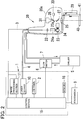
- Fig. 2 is a schematic view of an optical system and a control system in the apparatus in the present embodiment.
- a main unit 1 of the apparatus is provided with a large-sized liquid crystal display (LCD) panel 2 on the front side.
- This LCD panel 2 is a touch panel on which various determined irradiation conditions and plural operation keys or buttons are displayed as shown in Fig. 3. Those keys or buttons on a display screen of the LCD panel 2 are selectively touched to alter the irradiation conditions (which will be mentioned later in detail).
- a signal cable 3 and a fiber cable 4 are provided extending from the top of the main unit 1 to a handpiece 20 which projects the treatment beam.
- Numeral 5 is a chiller for cooling a coolant circulating therein to supply the cooled coolant to the handpiece 20.
- Two tubes 7 extending from the chiller 5 are bundled with the cable 3 and the fiber 4 into one concentration cable 8.
- Numeral 9 is a footswitch for issuing a trigger signal to start laser irradiation (irradiation of the treatment beam) when pressed.
- numeral 10 is a laser source section including a laser diode which emits a laser beam for treatment (a near infrared laser beam of wavelengths of 800 to 820 nm) and another laser diode which emits a visible laser beam for aiming (a red visible laser beam of wavelengths of 620 to 650 nm).
- the laser beams; the treatment beam and the aiming beam emitted from the laser source section 10 become incident on the fiber 4.
- This fiber 4 is connected to the handpiece 20, delivering the laser beams to the handpiece 20.
- a scanner head 20a of the handpiece 20 there are provided a first mirror 23 and a second mirror 24.
- these mirrors 23 and 24 are rotated (swung) by means of a first galvanometer 23a and a second galvanometer 24a respectively, an irradiation site (position) of the treatment beam (and the aiming beam) is shifted in X- and Y-directions, thus scanning a wide region.
- the treatment beam (and the aiming beam) having entered the scanner head 20a through the fiber 4 is collimated by a collimator lens 22 and deflected by the swinging mirrors 23 and 24 in the X- and Y-directions.
- the beam is reflected by a dichroic mirror 27 toward the treatment part and then focused (concentrated) by a focusing lens 25 into a circular spot of about 5mm in diameter on the treatment part (near the underside of the window 40).
- the dichroic mirror 27 has properties of reflecting the treatment beam and a part of the aiming beam, while transmitting a large part of visible light.
- an observation camera 31 is disposed to take a picture image of the treatment part.
- the light from the illumination light source 30 is reflected by a half mirror 28, allowed to pass through the dichroic mirror 27 and the lens 25, illuminating the treatment part.
- the quantity of light from the light source 30 is determined larger than that of extraneous light to thereby prevent the skin color from being influenced by the extraneous light.
- the reflection light from the treatment part is allowed to pass through the lens 25, the dichroic mirror 27, and the half mirror 28, and becomes incident on the camera 31.
- a signal from the camera 31 is then transmitted to the main unit 1 where an image processing section 11 analyzes the skin color of the treatment part and the thickness of the hair therein.
- the scanner head 20a is provided, in the lower portion, with a window 40 including a glass board which transmits the laser beams and visible light.
- This window 40 is pressed against the skin to flatten the surface of the treatment part and cool it as below.
- a cooling plate 29 is fixed to the window 40.
- This plate 29 is internally provided with a passage for circulating coolant.
- the coolant cooled in the chiller 5 is delivered through the tube 7 to the cooling plate 29 and circulated therein, which absorbs the heat of the window 40 through the cooling plate 29, absorbing in turn the heat of the skin. Through this series of heat transfer, the window 40 cools the treatment part.
- the window 40 is also provided with a touch sensor 41 on the underside.
- a control section 15 in the main unit 1 is connected to the LCD panel 2, a flow switch 6, a memory 16, a footswitch 9, and others.
- the flow switch 6 is used to check whether the coolant normally circulates from the chiller 5 to the cooling plate 29.
- the first and second galvanometers 23a and 24a, the light source 30, the camera 31, the touch sensor 41 are connected to the control section 15 through the cable 3.
- the operator holds the handpiece 20 by hand and brings the window 40 in contact with on the treatment part (skin) of the patient.
- the touch sensor 41 detects that the window 40 is in contact with the treatment part
- the light source 30 is turned on and the camera 31 takes a picture image of the treatment part illuminated by the light from the light source 30.
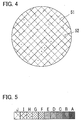
- the image signal from the camera 31 is input in the image processing section 11, which averages and detects the darkness (light and dark) 51 of the skin color as shown in Fig. 4.
- the handpiece 20 projects the aiming beam.
- This aiming beam is repeatedly scanned by operation of the first and second mirrors 23 and 24 in accordance with the shape of a scanning pattern previously selected with a key (button) 43.
- the operator observes the aiming beam which is being projected on the skin through the window 40, and makes alignment of the aiming beam to the treatment part.
- the treatment beam is irradiated as follows: a key (button) 42a on the LCD panel 2 is pressed, which brings the apparatus into a READY state where the treatment beam can be irradiated; and the footswitch 9 is then pressed, entering a trigger signal to start the laser irradiation.
- the control section 15 causes the laser source section 10 to emit the treatment beam.
- the treatment beam is scanned as with the aiming beam to irradiate the treatment part.
- a display part 40a for energy density On the LCD panel 2 there are provided a display part 40a for energy density, a display part 40b for output power, a display part 40c for pulse irradiation time, and a display part 40d for spot size.
- Each set value indicated on the display parts can be changed with push of the target display part and then an UP/DOWN key (button) 46.
- a spot diameter of the laser beam can be changed by replacement of the lens 25 with an appropriate one for a desired spot diameter.
- the output power (or the pulse irradiation time) is initially adjusted to the low side. Sequentially, the treatment beam is test-irradiated to the patient's skin, while the output power is raised to gradually increase the laser energy up to the level at which the patient will not complain of a skin pain.
- the laser depilation is executed thus: a treatment beam is absorbed into melanin present around hair roots; and accumulated heat energy is propagated to the hair roots and thus cauterizes the hair roots.
- energy whose amount is so moderate as not to destroy melanin of the skin but large enough to cauterize hair roots must be provided.
- the amount of melanin is proportional to the darkness of the skin color; a darker skin contains a larger amount of melanin therein and around hair roots than a fairer skin. Accordingly, the energy of the treatment beam to be irradiated to the darker skin is adjusted lower, while the beam energy to the fairer skin is set higher.
- the operator pressed a key (button) 44.
- the memory 16 stores the data on the irradiation condition currently set in correspondence with the data on the skin color of the patient detected as above in the image processing section 11.
- the irradiation condition data adjusted by the operator as above and the skin color data are stored in the memory 16 every time treatment is conducted in the form of a table presenting their correspondence. In the next treatment, an irradiation condition is automatically set based on the stored data.
- an irradiation condition is automatically set based on the stored data.
- the control section 15 calls the irradiation condition associated with the detected color from the table providing skin colors and irradiation conditions, automatically setting it as an initial condition (initial values). This could reduce troublesomeness for an operator in setting the irradiation condition.
- the key 44 is pressed, causing the memory 16 to store the irradiation condition as the latest information corresponding to the detected skin color.
- the control section 15 automatically determines the irradiation condition based on the result of detection of the skin color. If there is no data on an irradiation condition corresponding to the newly detected skin color, an irradiation condition associated with the most similar color among the color data stored in the memory 16 is selected. In this case, an irradiation condition including a lower energy value may be selected from among several conditions associated with the similar colors. Alternatively, the irradiation condition to be determined may be calculated according to a ratio of color similarity.
- the table providing the skin color data and the irradiation condition data may be produced by ranking the detected color to be stored in the memory 16 by darkness. As shown in Fig. 5, for example, skin colors are classified in advance into ten ranks, A to J. If data on plural irradiation conditions are stored in association with the same rank, the data on an irradiation condition including an average or middle value or the lowest energy value is automatically determined as the initial condition.
- Such the table with color ranking may be produced in advance based on standard irradiation conditions and stored in the memory 16 so that an irradiation condition is automatically in accordance with the table at the time of treatment.
- the changed data is stored in the table in the memory 16 at the push of the key 44.
- the values of the table are made offset by an amount equal to the changed amount of data adjusted for the color rank F, and the irradiation condition with the offset values is automatically determined as an initial condition.
- the changed amount is averaged every time the data is accumulated.
- the previously stored table is rewritten every time the operator presses the key 44 to store the irradiation condition after adjustment.
- a key 45 on the LCD panel 2 is pressed to open a setting change screen, where a table rewriting mode can be selected.
- the condition adjusted by the operator is sequentially stored in every treatment on plural patients.
- the way of determining conditions comes close to the concept of the operator.
- the data determined empirically by the operator is accumulated in the apparatus, which enables instantaneous selection of an optimum irradiation condition even for a first-time patient. If the irradiation condition has to be adjusted, on the other hand, it does not need to be largely changed, which would reduce troublesomeness for the operator.
- the automatic determination of an irradiation condition is based on the detected skin color.
- the following explanation is made on the determination based on the thickness of a hair in addition to the skin color.
- the image processing section 11 first judges from the picture image taken by the camera 31 (Fig. 4) that portions 52 are hairs in consideration of their color and shape.
- the cross-sectional area of each of the hairs is calculated, and the calculated values are averaged to determine a hair thickness.
- the hair thickness thus determined by average is numerically classified into ten ranks (1 to 10).
- the following manner is adopted.
- a treatment beam of lower output power is diffusely irradiated, which is used for detection.
- the distribution of temperatures in the irradiated region is recorded by a thermograph. Points indicating high temperatures are distinguished based on the record, whereby the positions of hair roots can be specified.
- the thickness of each hair root can be detected by measuring the area of the center of each of the points indicating the high temperatures. In this case, similarly, the thickness values are averaged and numerically classified into ten ranks (1 to 10).
- a table is produced to provide the irradiation conditions which are associated with both the darkness of a skin color and the thickness of a hair as parameters, as shown in Fig. 6.
- an irradiation condition is automatically determined from the table in correspondence with the detection result about the skin color and the hair thickness.
- an irradiation condition is determined with reference to other data on the most similar color and thickness in the table as with the above-mentioned case.
- an optimum irradiation condition can readily be determined according to the color of a patient's skin, which enables efficient treatment with less damage to the skin. Furthermore, in the laser depilation, an irradiation condition can easily be determined in consideration of the thickness of a hair in addition to the skin color.
Landscapes
- Physics & Mathematics (AREA)
- Health & Medical Sciences (AREA)
- Surgery (AREA)
- Optics & Photonics (AREA)
- Life Sciences & Earth Sciences (AREA)
- Heart & Thoracic Surgery (AREA)
- Molecular Biology (AREA)
- Nuclear Medicine, Radiotherapy & Molecular Imaging (AREA)
- Engineering & Computer Science (AREA)
- Biomedical Technology (AREA)
- Electromagnetism (AREA)
- Medical Informatics (AREA)
- Otolaryngology (AREA)
- Animal Behavior & Ethology (AREA)
- General Health & Medical Sciences (AREA)
- Public Health (AREA)
- Veterinary Medicine (AREA)
- Radiation-Therapy Devices (AREA)
- Laser Surgery Devices (AREA)
- Surgical Instruments (AREA)
Abstract
Description
Claims (7)
- A laser treatment apparatus for performing treatment by irradiating a skin of a patient with a laser beam for treatment,
characterized by including:irradiation means including a laser source (10) for emitting a treatment laser beam and an irradiation optical system (4,22,23,24,27,25) for delivering the treatment laser beam from the laser source to a treatment part of the skin to irradiate the part;skin color detection means including imaging means (32) for taking a picture image of the skin to be irradiated and image processing means (11) for detecting a color of the imaged skin;determination means (2) for determining an irradiation condition including at least one of output power of the treatment laser beam, irradiation time, irradiation density, and irradiation energy;memory means (16) for storing data on the skin color detected by the detection means and, in association therewith, data on the irradiation condition determined by the determination means; andcontrol means (15) for automatically determining an irradiation condition based on data on a skin color that is newly detected and the data having been stored in the memory means (16), and controlling the irradiation means based on the determined irradiation condition. - The laser treatment apparatus according to claim 1,
wherein the control means determines an irradiation condition based on data on a skin color the most similar to the newly detected skin color when no data on a skin color substantially the same as the newly detected is stored in the memory means. - The laser treatment apparatus according to claim 1 or 2, wherein the memory means stores data on a plurality of skin colors classified into plural kinds by a predetermined reference and data on irradiation conditions associated with the kinds of skin colors individually.
- The laser treatment apparatus according to one of claims 1 to 3, wherein the memory means stores, in a table form, data on a plurality of skin colors classified into plural kinds by a predetermined reference and data on irradiation conditions associated with the kinds of the skin colors individually, and when data on an irradiation condition associated with data on a skin color included in the table is adjusted by the determination means, the control means adjusts the data on irradiation conditions associated with data on different skin colors included in the table by an amount equal to a changed amount of the data adjusted by the determination means.
- The laser treatment apparatus according to one of claims 1 to 4 further including hair detection means (32, 11, 15) for detecting a thickness of a hair,
wherein the memory means stores data on the hair thickness detected by the hair detection means in association with the data on the skin color and the data on the irradiation condition, and
the control means automatically determines an irradiation condition based on data on a skin color and hair thickness that are newly detected and the data having been stored in the memory means. - The laser treatment apparatus according to one of claims 1 to 5, wherein the irradiation means includes a handpiece (20) provided with a part of the irradiation optical system, and the imaging means is provided in the handpiece.
- The laser treatment apparatus according to one of claims 1 to 6, wherein the irradiation optical system includes an optical member (25) for shaping the treatment laser beam into a small spot on the treatment part and a scanning optical system (23, 24) for scanning the treatment laser beam within a predetermined first area, and the imaging means takes an image of a predetermined second area including the first area.
Applications Claiming Priority (2)
| Application Number | Priority Date | Filing Date | Title |
|---|---|---|---|
| JP2000200060A JP2002011106A (en) | 2000-06-28 | 2000-06-28 | Laser therapeutic apparatus |
| JP2000200060 | 2000-06-28 |
Publications (3)
| Publication Number | Publication Date |
|---|---|
| EP1166723A2 true EP1166723A2 (en) | 2002-01-02 |
| EP1166723A3 EP1166723A3 (en) | 2002-01-30 |
| EP1166723B1 EP1166723B1 (en) | 2006-06-07 |
Family
ID=18697979
Family Applications (1)
| Application Number | Title | Priority Date | Filing Date |
|---|---|---|---|
| EP01115514A Expired - Lifetime EP1166723B1 (en) | 2000-06-28 | 2001-06-27 | Laser treatment apparatus |
Country Status (4)
| Country | Link |
|---|---|
| US (1) | US6641578B2 (en) |
| EP (1) | EP1166723B1 (en) |
| JP (1) | JP2002011106A (en) |
| DE (1) | DE60120276T2 (en) |
Cited By (8)
| Publication number | Priority date | Publication date | Assignee | Title |
|---|---|---|---|---|
| GB2381752A (en) * | 2001-11-06 | 2003-05-14 | Ezio Panzeri | Laser skin treatment device with control means dependent on a sensed property of the skin to be treated |
| WO2005102153A1 (en) * | 2004-04-20 | 2005-11-03 | Koninklijke Philips Electronics N.V. | A hair-detection device |
| DE10310913B4 (en) * | 2003-03-13 | 2009-10-22 | Ockenfels, Hans Michael, Priv.-Doz. Dr. med. | Laser therapy system for the treatment of skin diseases |
| ES2333924A1 (en) * | 2007-01-12 | 2010-03-02 | Nita 54 S.L. | System for obtaining parameters of depilation laser adjustments. (Machine-translation by Google Translate, not legally binding) |
| GB2465425B (en) * | 2008-11-21 | 2013-03-27 | Dezac Group Ltd | Light treatment apparatus |
| WO2013076508A1 (en) * | 2011-11-25 | 2013-05-30 | Cyden Limited | Skin treatment apparatus |
| EP1414361B1 (en) * | 2001-07-27 | 2014-04-30 | Koninklijke Philips N.V. | Skin treating device comprising a processor for determination of the radiation pulse dose |
| CN105338888A (en) * | 2013-06-25 | 2016-02-17 | 皇家飞利浦有限公司 | Measuring devices and non-invasive treatment devices for skin properties |
Families Citing this family (99)
| Publication number | Priority date | Publication date | Assignee | Title |
|---|---|---|---|---|
| US20070208328A1 (en) * | 1995-08-31 | 2007-09-06 | Dmitri Boutoussov | Contra-angel rotating handpiece having tactile-feedback tip ferrule |
| US20090143775A1 (en) * | 1995-08-31 | 2009-06-04 | Rizoiu Ioana M | Medical laser having controlled-temperature and sterilized fluid output |
| US20060240381A1 (en) * | 1995-08-31 | 2006-10-26 | Biolase Technology, Inc. | Fluid conditioning system |
| US8182473B2 (en) | 1999-01-08 | 2012-05-22 | Palomar Medical Technologies | Cooling system for a photocosmetic device |
| US6517532B1 (en) | 1997-05-15 | 2003-02-11 | Palomar Medical Technologies, Inc. | Light energy delivery head |
| EP0991372B1 (en) | 1997-05-15 | 2004-08-04 | Palomar Medical Technologies, Inc. | Apparatus for dermatology treatment |
| DE69926348T2 (en) | 1998-03-12 | 2006-06-01 | Palomar Medical Technologies, Inc., Burlington | SYSTEM FOR THE ELECTROMAGNETIC IRRADIATION OF THE SKIN |
| US7041094B2 (en) * | 1999-03-15 | 2006-05-09 | Cutera, Inc. | Tissue treatment device and method |
| EP1358907A4 (en) * | 2001-01-29 | 2005-03-23 | Ya Man Ltd | Laser depilating method and laser depilating apparatus |
| JP4027049B2 (en) * | 2001-02-28 | 2007-12-26 | 株式会社ニデック | Laser therapy device |
| US6888319B2 (en) | 2001-03-01 | 2005-05-03 | Palomar Medical Technologies, Inc. | Flashlamp drive circuit |
| US7947067B2 (en) * | 2004-02-04 | 2011-05-24 | Erchonia Corporation | Scanning treatment laser with sweep beam spot and universal carriage |
| US7922751B2 (en) * | 2004-02-04 | 2011-04-12 | Erchonia Corporation | Stand-alone scanning laser device |
| US7118588B2 (en) * | 2001-03-02 | 2006-10-10 | Kevin Tucek | Scanning treatment laser |
| AU2002251428A1 (en) * | 2001-04-20 | 2002-11-05 | Koninklijke Philips Electronics N.V. | Skin treating device with protection against radiation pulse overdose |
| HU224941B1 (en) * | 2001-08-10 | 2006-04-28 | Bgi Innovacios Kft | Phototerapy apparatus |
| JP2005500108A (en) * | 2001-08-15 | 2005-01-06 | リライアント テクノロジーズ,インコーポレイティド | Apparatus and method for thermal excision of biological tissue |
| US7738032B2 (en) * | 2001-11-08 | 2010-06-15 | Johnson & Johnson Consumer Companies, Inc. | Apparatus for and method of taking and viewing images of the skin |
| US6811565B2 (en) * | 2001-11-14 | 2004-11-02 | Healing Machines, Inc. | System and method for light activation of healing mechanisms |
| JP3807728B2 (en) * | 2002-02-18 | 2006-08-09 | 三協エンジニアリング株式会社 | Crack width measurement aid |
| WO2004037287A2 (en) | 2002-05-23 | 2004-05-06 | Palomar Medical Technologies, Inc. | Phototreatment device for use with coolants and topical substances |
| US7479137B2 (en) * | 2002-05-31 | 2009-01-20 | Ya-Man Ltd. | Laser depilator |
| US20040034388A1 (en) * | 2002-06-14 | 2004-02-19 | Healing Machines, Inc. | Apparatus and method for physiological treatment with electromagnetic energy |
| KR20050026404A (en) | 2002-06-19 | 2005-03-15 | 팔로마 메디칼 테크놀로지스, 인코포레이티드 | Method and apparatus for photothermal treatment of tissue at depth |
| US7001413B2 (en) * | 2002-07-03 | 2006-02-21 | Life Support Technologies, Inc. | Methods and apparatus for light therapy |
| US7201766B2 (en) | 2002-07-03 | 2007-04-10 | Life Support Technologies, Inc. | Methods and apparatus for light therapy |
| US8251057B2 (en) | 2003-06-30 | 2012-08-28 | Life Support Technologies, Inc. | Hyperbaric chamber control and/or monitoring system and methods for using the same |
| CN100577236C (en) | 2003-08-18 | 2010-01-06 | 皇家飞利浦电子股份有限公司 | Devices and methods for low intensity optical hair growth control |
| WO2005065565A1 (en) * | 2003-12-31 | 2005-07-21 | Palomar Medical Technologies, Inc. | Dermatological treatment with vusualization |
| US20100151406A1 (en) | 2004-01-08 | 2010-06-17 | Dmitri Boutoussov | Fluid conditioning system |
| US20080125837A1 (en) * | 2004-02-06 | 2008-05-29 | Therapy Products, Inc. | Noninvasive method for site-specific fat reduction with catalyst |
| FR2865940B1 (en) * | 2004-02-11 | 2006-04-28 | Yves Loones | PHOTOTHERAPY APPARATUS |
| WO2005107848A2 (en) | 2004-04-01 | 2005-11-17 | The General Hospital Corporation | Method for dermatological treatment using chromophores |
| ATE481937T1 (en) * | 2004-04-15 | 2010-10-15 | Koninkl Philips Electronics Nv | DEVICE FOR SKIN TREATMENT USING RADIATION |
| US7761945B2 (en) | 2004-05-28 | 2010-07-27 | Life Support Technologies, Inc. | Apparatus and methods for preventing pressure ulcers in bedfast patients |
| US7413572B2 (en) | 2004-06-14 | 2008-08-19 | Reliant Technologies, Inc. | Adaptive control of optical pulses for laser medicine |
| US9161815B2 (en) * | 2004-06-21 | 2015-10-20 | Kilolambda Technologies Ltd. | Dermatological laser system and Method for Skin Resurfacing |
| EP1788967B1 (en) * | 2004-08-13 | 2013-06-12 | Biolase, Inc. | Laser handpiece architecture and methods |
| US20080154251A1 (en) * | 2004-09-09 | 2008-06-26 | Reliant Technologies, Inc. | Interchangeable Tips for Medical Laser Treatments and Methods for Using Same |
| US20060095096A1 (en) * | 2004-09-09 | 2006-05-04 | Debenedictis Leonard C | Interchangeable tips for medical laser treatments and methods for using same |
| US8026942B2 (en) * | 2004-10-29 | 2011-09-27 | Johnson & Johnson Consumer Companies, Inc. | Skin imaging system with probe |
| JP4419817B2 (en) * | 2004-11-25 | 2010-02-24 | パナソニック電工株式会社 | Optical hair removal device |
| US8109981B2 (en) | 2005-01-25 | 2012-02-07 | Valam Corporation | Optical therapies and devices |
| US7856985B2 (en) | 2005-04-22 | 2010-12-28 | Cynosure, Inc. | Method of treatment body tissue using a non-uniform laser beam |
| DE102005022608B3 (en) * | 2005-05-11 | 2007-01-11 | Karl Storz Gmbh & Co. Kg | Light system for photodynamic diagnosis and / or therapy |
| US20090067189A1 (en) * | 2005-06-07 | 2009-03-12 | Dmitri Boutoussov | Contra-angle rotating handpiece having tactile-feedback tip ferrule |
| US12161880B2 (en) * | 2005-06-24 | 2024-12-10 | Koninklijke Philips N.V. | Device and method for low intensity optical hair growth control |
| RU2367577C1 (en) | 2005-08-12 | 2009-09-20 | Рик Б. ЙЕГЕР | System and method for application of substance that varies its reflecting property in order to improve visual attractiveness of human skin |
| US20070093798A1 (en) * | 2005-08-29 | 2007-04-26 | Reliant Technologies, Inc. | Method and Apparatus for Monitoring and Controlling Thermally Induced Tissue Treatment |
| WO2007035444A2 (en) | 2005-09-15 | 2007-03-29 | Palomar Medical Technologies, Inc. | Skin optical characterization device |
| US20070239145A1 (en) * | 2006-04-11 | 2007-10-11 | Raphael Laderman | System and method to assist in the treatment of skin conditions |
| US7586957B2 (en) | 2006-08-02 | 2009-09-08 | Cynosure, Inc | Picosecond laser apparatus and methods for its operation and use |
| US8942775B2 (en) * | 2006-08-14 | 2015-01-27 | Tcms Transparent Beauty Llc | Handheld apparatus and method for the automated application of cosmetics and other substances |
| US8184901B2 (en) | 2007-02-12 | 2012-05-22 | Tcms Transparent Beauty Llc | System and method for applying a reflectance modifying agent to change a person's appearance based on a digital image |
| US20080058782A1 (en) * | 2006-08-29 | 2008-03-06 | Reliant Technologies, Inc. | Method and apparatus for monitoring and controlling density of fractional tissue treatments |
| US20080140164A1 (en) * | 2006-12-06 | 2008-06-12 | Clrs Technology Corporation | Light emitting therapeutic devices and methods |
| KR100853655B1 (en) * | 2006-12-15 | 2008-08-25 | 한국전기연구원 | Device, light source system and method of use for optical diagnosis and treatment of skin diseases |
| US20080154247A1 (en) * | 2006-12-20 | 2008-06-26 | Reliant Technologies, Inc. | Apparatus and method for hair removal and follicle devitalization |
| JP2010519185A (en) * | 2007-02-12 | 2010-06-03 | リック ビー. イェーガー, | System and method for electrostatically applying agents to human skin |
| US10092082B2 (en) * | 2007-05-29 | 2018-10-09 | Tcms Transparent Beauty Llc | Apparatus and method for the precision application of cosmetics |
| US20080312952A1 (en) * | 2007-06-12 | 2008-12-18 | Gulfo Joseph V | Regulating Use Of A Device To Perform A Procedure On A Subject |
| KR100818123B1 (en) | 2007-10-04 | 2008-03-31 | 주식회사 루트로닉 | Hair regrowth laser device that can selectively irradiate the laser beam to the scalp depending on the hair |
| US9474576B2 (en) * | 2007-10-05 | 2016-10-25 | The Research Foundation For The State University Of New York | Coherent imaging fiber based hair removal device |
| KR100818124B1 (en) | 2007-10-10 | 2008-03-31 | 주식회사 루트로닉 | Laser device for hair growth treatment |
| US20090132012A1 (en) * | 2007-11-16 | 2009-05-21 | Therapy Products, Inc. | Method for pretreating patient before surgery |
| PL2471481T5 (en) | 2008-03-07 | 2023-09-18 | Koninklijke Philips N.V. | Photo-epilation device |
| DE102008014016A1 (en) | 2008-03-13 | 2009-09-24 | Braun Gmbh | Hair removal device |
| US20100196497A1 (en) * | 2009-02-02 | 2010-08-05 | Therapy Products, Inc. | Method of Treating Tissue Using Platelet-Rich Plasma in Combination with Low-Level Laser Therapy |
| US9919168B2 (en) | 2009-07-23 | 2018-03-20 | Palomar Medical Technologies, Inc. | Method for improvement of cellulite appearance |
| US8452063B2 (en) | 2009-11-03 | 2013-05-28 | Mela Sciences, Inc. | Showing skin lesion information |
| US8433116B2 (en) | 2009-11-03 | 2013-04-30 | Mela Sciences, Inc. | Showing skin lesion information |
| US8518094B2 (en) * | 2010-03-02 | 2013-08-27 | Bwt Property, Inc. | Precisely guided phototherapy apparatus |
| JP5083399B2 (en) * | 2010-10-25 | 2012-11-28 | セイコーエプソン株式会社 | Fluid ejecting apparatus and surgical instrument |
| US9498289B2 (en) | 2010-12-21 | 2016-11-22 | Restoration Robotics, Inc. | Methods and systems for directing movement of a tool in hair transplantation procedures |
| US20120277659A1 (en) * | 2011-04-29 | 2012-11-01 | Palomar Medical Technologies, Inc. | Sensor-lotion system for use with body treatment devices |
| AU2012285369B2 (en) * | 2011-06-22 | 2015-09-03 | Radiancy Inc. | Hair removal and re-growth suppression apparatus |
| EP2570094A1 (en) | 2011-09-14 | 2013-03-20 | Braun GmbH | Light emitting device |
| KR102342629B1 (en) | 2012-04-18 | 2021-12-22 | 싸이노슈어, 엘엘씨 | Picosecond laser apparatus and methods for treating target tissues with same |
| US11433254B2 (en) * | 2013-03-15 | 2022-09-06 | Pavel V. Efremkin | Apparatus and method for treatment of wounds and skin medical conditions at a predetermined skin area |
| WO2014145707A2 (en) | 2013-03-15 | 2014-09-18 | Cynosure, Inc. | Picosecond optical radiation systems and methods of use |
| JP6099817B2 (en) | 2013-10-08 | 2017-03-22 | コーニンクレッカ フィリップス エヌ ヴェKoninklijke Philips N.V. | Device for cutting hair |
| US10420608B2 (en) | 2014-05-20 | 2019-09-24 | Verily Life Sciences Llc | System for laser ablation surgery |
| KR101558948B1 (en) * | 2015-08-11 | 2015-10-08 | 김유인 | A medical improving skin wrinkles using a laser pulse peak |
| KR101649959B1 (en) * | 2016-03-21 | 2016-08-22 | 주식회사 제이티에스인더스트리 | Galvano Scanner control and epilation Treatment Handpiece using Pore recognition |
| WO2018017811A1 (en) * | 2016-07-21 | 2018-01-25 | Restoration Robotics, Inc. | Automated system and method for hair removal |
| JP7108875B2 (en) * | 2017-11-22 | 2022-07-29 | パナソニックIpマネジメント株式会社 | Light irradiation type beauty device |
| DE102017222747B4 (en) * | 2017-12-14 | 2026-04-30 | Henkel Ag & Co. Kgaa | Non-destructive determination of scalp hair thickness |
| CN112042066A (en) | 2018-02-26 | 2020-12-04 | 赛诺秀股份有限公司 | Q-switched cavity-tilting subnanosecond laser |
| US12207867B2 (en) * | 2018-06-01 | 2025-01-28 | Ya-Man Ltd. | Light irradiation beauty device |
| EP3795107A1 (en) * | 2019-09-20 | 2021-03-24 | Koninklijke Philips N.V. | Determining whether hairs on an area of skin have been treated with a light pulse |
| JP2023505019A (en) * | 2019-11-08 | 2023-02-08 | エピレディー 2000 エルエルシー | Devices, systems and methods for hair removal |
| CA3165861A1 (en) * | 2019-12-23 | 2021-07-01 | Avava, Inc. | Systems, methods and computer-accessible medium for a feedback analysis and/or treatment of at least one patient using an electromagnetic radiation treatment device |
| JP6860946B1 (en) * | 2020-07-21 | 2021-04-21 | 株式会社Eidea | Hair removal device and hair removal method |
| CN112221021B (en) * | 2020-11-02 | 2023-02-07 | 中南大学湘雅三医院 | A dermatology intelligent laser freckle removal control system |
| JP7126275B2 (en) * | 2020-12-28 | 2022-08-26 | 株式会社美ガーデン | Control system for beauty treatment equipment |
| CN116313025B (en) * | 2023-03-14 | 2023-12-12 | 上海光声制药有限公司 | Intelligent management system for operation data of laser photodynamic therapeutic instrument |
| CN116919615B (en) * | 2023-09-15 | 2023-11-21 | 深圳市美莱雅科技有限公司 | Unhairing instrument rack convenient to disassemble and assemble |
| CN119184837A (en) * | 2024-09-10 | 2024-12-27 | 深圳市神牛摄影器材有限公司 | Light modulation method of beauty instrument and beauty instrument |
| USD1118604S1 (en) * | 2024-11-29 | 2026-03-17 | Shenzhen Qi Wu Qu You Tech Limited | Monitor for computer |
Family Cites Families (15)
| Publication number | Priority date | Publication date | Assignee | Title |
|---|---|---|---|---|
| EP0129607A4 (en) * | 1982-12-28 | 1986-11-27 | Ya Man Ltd | System for automating beauty treatment. |
| US5016173A (en) | 1989-04-13 | 1991-05-14 | Vanguard Imaging Ltd. | Apparatus and method for monitoring visually accessible surfaces of the body |
| JPH05146517A (en) | 1991-11-29 | 1993-06-15 | Matsushita Electric Ind Co Ltd | Semiconductor laser treatment device |
| US5501680A (en) * | 1992-01-15 | 1996-03-26 | The University Of Pittsburgh | Boundary and proximity sensor apparatus for a laser |
| US5630811A (en) | 1996-03-25 | 1997-05-20 | Miller; Iain D. | Method and apparatus for hair removal |
| IL126475A0 (en) * | 1996-04-09 | 1999-08-17 | Cynosure Inc | Alexandrite laser system for treatment of dermatological specimens |
| US6162211A (en) * | 1996-12-05 | 2000-12-19 | Thermolase Corporation | Skin enhancement using laser light |
| EP0880941B1 (en) | 1997-05-30 | 2001-12-19 | Nidek Co., Ltd. | Laser treatment apparatus |
| US6074382A (en) | 1997-08-29 | 2000-06-13 | Asah Medico A/S | Apparatus for tissue treatment |
| CA2305721C (en) * | 1997-10-08 | 2009-02-24 | The General Hospital Corporation | Phototherapy methods and systems |
| US6165170A (en) * | 1998-01-29 | 2000-12-26 | International Business Machines Corporation | Laser dermablator and dermablation |
| EP1279374A1 (en) | 1999-02-26 | 2003-01-29 | Nidek Co., Ltd | Laser depilation apparatus |
| JP3872226B2 (en) * | 1999-02-26 | 2007-01-24 | 株式会社ニデック | Laser therapy device |
| US6162212A (en) * | 1999-04-19 | 2000-12-19 | Esc Medical Systems, Ltd. | Optimal procedure for performing a hair removal |
| EP1057454A3 (en) | 1999-05-31 | 2003-11-12 | Nidek Co., Ltd. | Laser skin treatment apparatus |
-
2000
- 2000-06-28 JP JP2000200060A patent/JP2002011106A/en active Pending
-
2001
- 2001-06-25 US US09/887,018 patent/US6641578B2/en not_active Expired - Fee Related
- 2001-06-27 DE DE60120276T patent/DE60120276T2/en not_active Expired - Fee Related
- 2001-06-27 EP EP01115514A patent/EP1166723B1/en not_active Expired - Lifetime
Cited By (12)
| Publication number | Priority date | Publication date | Assignee | Title |
|---|---|---|---|---|
| EP1414361B1 (en) * | 2001-07-27 | 2014-04-30 | Koninklijke Philips N.V. | Skin treating device comprising a processor for determination of the radiation pulse dose |
| GB2381752A (en) * | 2001-11-06 | 2003-05-14 | Ezio Panzeri | Laser skin treatment device with control means dependent on a sensed property of the skin to be treated |
| DE10310913B4 (en) * | 2003-03-13 | 2009-10-22 | Ockenfels, Hans Michael, Priv.-Doz. Dr. med. | Laser therapy system for the treatment of skin diseases |
| WO2005102153A1 (en) * | 2004-04-20 | 2005-11-03 | Koninklijke Philips Electronics N.V. | A hair-detection device |
| ES2333924A1 (en) * | 2007-01-12 | 2010-03-02 | Nita 54 S.L. | System for obtaining parameters of depilation laser adjustments. (Machine-translation by Google Translate, not legally binding) |
| ES2333924B1 (en) * | 2007-01-12 | 2010-12-03 | Nita 54 S.L. | SYSTEM OF OBTAINING THE PARAMETERS OF ADJUSTMENTS FOR LASER DEPILATION. |
| GB2465425B (en) * | 2008-11-21 | 2013-03-27 | Dezac Group Ltd | Light treatment apparatus |
| WO2013076508A1 (en) * | 2011-11-25 | 2013-05-30 | Cyden Limited | Skin treatment apparatus |
| CN104125812A (en) * | 2011-11-25 | 2014-10-29 | Cyden有限公司 | skin treatment device |
| CN104125812B (en) * | 2011-11-25 | 2017-04-26 | Cyden有限公司 | skin treatment device |
| US9814904B2 (en) | 2011-11-25 | 2017-11-14 | Cyden Limited | Skin treatment apparatus |
| CN105338888A (en) * | 2013-06-25 | 2016-02-17 | 皇家飞利浦有限公司 | Measuring devices and non-invasive treatment devices for skin properties |
Also Published As
| Publication number | Publication date |
|---|---|
| US20020049432A1 (en) | 2002-04-25 |
| EP1166723B1 (en) | 2006-06-07 |
| DE60120276T2 (en) | 2007-05-24 |
| JP2002011106A (en) | 2002-01-15 |
| US6641578B2 (en) | 2003-11-04 |
| EP1166723A3 (en) | 2002-01-30 |
| DE60120276D1 (en) | 2006-07-20 |
Similar Documents
| Publication | Publication Date | Title |
|---|---|---|
| US6641578B2 (en) | Laser treatment apparatus | |
| US6676654B1 (en) | Apparatus for tissue treatment and having a monitor for display of tissue features | |
| US6533774B1 (en) | Laser depilation apparatus | |
| US5860967A (en) | Dermatological laser treatment system with electronic visualization of the area being treated | |
| US6668186B1 (en) | Cellular surgery utilizing confocal microscopy | |
| EP0850614B1 (en) | Ophthalmic operating apparatus | |
| EP1210915B1 (en) | Laser treatment apparatus | |
| US7766903B2 (en) | Patterned laser treatment of the retina | |
| US6383177B1 (en) | Apparatus for tissue treatment | |
| US6491715B1 (en) | Device for treating growing, dilated or malformed blood vessels and method for treating biological material | |
| EP1168973B1 (en) | An apparatus for tissue treatment | |
| JPH11332905A (en) | Laser treatment device and laser treatment information display device | |
| JP4080174B2 (en) | Laser therapy device | |
| US6587482B1 (en) | Laser apparatus | |
| JP2003000613A (en) | Laser therapeutic device | |
| JP3986256B2 (en) | Laser therapy device | |
| JP4546062B2 (en) | Laser therapy device | |
| JP2001087280A (en) | Laser treatment device |
Legal Events
| Date | Code | Title | Description |
|---|---|---|---|
| PUAI | Public reference made under article 153(3) epc to a published international application that has entered the european phase |
Free format text: ORIGINAL CODE: 0009012 |
|
| PUAL | Search report despatched |
Free format text: ORIGINAL CODE: 0009013 |
|
| AK | Designated contracting states |
Kind code of ref document: A2 Designated state(s): AT BE CH CY DE DK ES FI FR GB GR IE IT LI LU MC NL PT SE TR Kind code of ref document: A2 Designated state(s): DE FR GB |
|
| AX | Request for extension of the european patent |
Free format text: AL;LT;LV;MK;RO;SI |
|
| AK | Designated contracting states |
Kind code of ref document: A3 Designated state(s): AT BE CH CY DE DK ES FI FR GB GR IE IT LI LU MC NL PT SE TR |
|
| AX | Request for extension of the european patent |
Free format text: AL;LT;LV;MK;RO;SI |
|
| 17P | Request for examination filed |
Effective date: 20020709 |
|
| AKX | Designation fees paid |
Free format text: DE FR GB |
|
| 17Q | First examination report despatched |
Effective date: 20040302 |
|
| GRAP | Despatch of communication of intention to grant a patent |
Free format text: ORIGINAL CODE: EPIDOSNIGR1 |
|
| GRAS | Grant fee paid |
Free format text: ORIGINAL CODE: EPIDOSNIGR3 |
|
| GRAA | (expected) grant |
Free format text: ORIGINAL CODE: 0009210 |
|
| AK | Designated contracting states |
Kind code of ref document: B1 Designated state(s): DE FR GB |
|
| REG | Reference to a national code |
Ref country code: GB Ref legal event code: FG4D |
|
| REF | Corresponds to: |
Ref document number: 60120276 Country of ref document: DE Date of ref document: 20060720 Kind code of ref document: P |
|
| ET | Fr: translation filed | ||
| PLBE | No opposition filed within time limit |
Free format text: ORIGINAL CODE: 0009261 |
|
| STAA | Information on the status of an ep patent application or granted ep patent |
Free format text: STATUS: NO OPPOSITION FILED WITHIN TIME LIMIT |
|
| 26N | No opposition filed |
Effective date: 20070308 |
|
| PGFP | Annual fee paid to national office [announced via postgrant information from national office to epo] |
Ref country code: DE Payment date: 20080703 Year of fee payment: 8 |
|
| PGFP | Annual fee paid to national office [announced via postgrant information from national office to epo] |
Ref country code: FR Payment date: 20080617 Year of fee payment: 8 |
|
| PGFP | Annual fee paid to national office [announced via postgrant information from national office to epo] |
Ref country code: GB Payment date: 20080702 Year of fee payment: 8 |
|
| GBPC | Gb: european patent ceased through non-payment of renewal fee |
Effective date: 20090627 |
|
| REG | Reference to a national code |
Ref country code: FR Ref legal event code: ST Effective date: 20100226 |
|
| PG25 | Lapsed in a contracting state [announced via postgrant information from national office to epo] |
Ref country code: FR Free format text: LAPSE BECAUSE OF NON-PAYMENT OF DUE FEES Effective date: 20090630 |
|
| PG25 | Lapsed in a contracting state [announced via postgrant information from national office to epo] |
Ref country code: GB Free format text: LAPSE BECAUSE OF NON-PAYMENT OF DUE FEES Effective date: 20090627 |
|
| PG25 | Lapsed in a contracting state [announced via postgrant information from national office to epo] |
Ref country code: DE Free format text: LAPSE BECAUSE OF NON-PAYMENT OF DUE FEES Effective date: 20100101 |