EP1164543A2 - Digital information embedding/extracting - Google Patents
Digital information embedding/extracting Download PDFInfo
- Publication number
- EP1164543A2 EP1164543A2 EP01113522A EP01113522A EP1164543A2 EP 1164543 A2 EP1164543 A2 EP 1164543A2 EP 01113522 A EP01113522 A EP 01113522A EP 01113522 A EP01113522 A EP 01113522A EP 1164543 A2 EP1164543 A2 EP 1164543A2
- Authority
- EP
- European Patent Office
- Prior art keywords
- sequence
- transform coefficients
- digital information
- pseudo
- random number
- Prior art date
- Legal status (The legal status is an assumption and is not a legal conclusion. Google has not performed a legal analysis and makes no representation as to the accuracy of the status listed.)
- Granted
Links
Images



Classifications
-
- G—PHYSICS
- G06—COMPUTING OR CALCULATING; COUNTING
- G06T—IMAGE DATA PROCESSING OR GENERATION, IN GENERAL
- G06T1/00—General purpose image data processing
- G06T1/0021—Image watermarking
- G06T1/0028—Adaptive watermarking, e.g. Human Visual System [HVS]-based watermarking
-
- H—ELECTRICITY
- H04—ELECTRIC COMMUNICATION TECHNIQUE
- H04N—PICTORIAL COMMUNICATION, e.g. TELEVISION
- H04N1/00—Scanning, transmission or reproduction of documents or the like, e.g. facsimile transmission; Details thereof
- H04N1/32—Circuits or arrangements for control or supervision between transmitter and receiver or between image input and image output device, e.g. between a still-image camera and its memory or between a still-image camera and a printer device
- H04N1/32101—Display, printing, storage or transmission of additional information, e.g. ID code, date and time or title
- H04N1/32144—Display, printing, storage or transmission of additional information, e.g. ID code, date and time or title embedded in the image data, i.e. enclosed or integrated in the image, e.g. watermark, super-imposed logo or stamp
- H04N1/32149—Methods relating to embedding, encoding, decoding, detection or retrieval operations
- H04N1/32154—Transform domain methods
-
- H—ELECTRICITY
- H04—ELECTRIC COMMUNICATION TECHNIQUE
- H04N—PICTORIAL COMMUNICATION, e.g. TELEVISION
- H04N1/00—Scanning, transmission or reproduction of documents or the like, e.g. facsimile transmission; Details thereof
- H04N1/32—Circuits or arrangements for control or supervision between transmitter and receiver or between image input and image output device, e.g. between a still-image camera and its memory or between a still-image camera and a printer device
- H04N1/32101—Display, printing, storage or transmission of additional information, e.g. ID code, date and time or title
- H04N1/32144—Display, printing, storage or transmission of additional information, e.g. ID code, date and time or title embedded in the image data, i.e. enclosed or integrated in the image, e.g. watermark, super-imposed logo or stamp
- H04N1/32149—Methods relating to embedding, encoding, decoding, detection or retrieval operations
- H04N1/32154—Transform domain methods
- H04N1/3216—Transform domain methods using Fourier transforms
-
- H—ELECTRICITY
- H04—ELECTRIC COMMUNICATION TECHNIQUE
- H04N—PICTORIAL COMMUNICATION, e.g. TELEVISION
- H04N1/00—Scanning, transmission or reproduction of documents or the like, e.g. facsimile transmission; Details thereof
- H04N1/32—Circuits or arrangements for control or supervision between transmitter and receiver or between image input and image output device, e.g. between a still-image camera and its memory or between a still-image camera and a printer device
- H04N1/32101—Display, printing, storage or transmission of additional information, e.g. ID code, date and time or title
- H04N1/32144—Display, printing, storage or transmission of additional information, e.g. ID code, date and time or title embedded in the image data, i.e. enclosed or integrated in the image, e.g. watermark, super-imposed logo or stamp
- H04N1/32149—Methods relating to embedding, encoding, decoding, detection or retrieval operations
- H04N1/32154—Transform domain methods
- H04N1/32165—Transform domain methods using cosine transforms
-
- H—ELECTRICITY
- H04—ELECTRIC COMMUNICATION TECHNIQUE
- H04N—PICTORIAL COMMUNICATION, e.g. TELEVISION
- H04N1/00—Scanning, transmission or reproduction of documents or the like, e.g. facsimile transmission; Details thereof
- H04N1/32—Circuits or arrangements for control or supervision between transmitter and receiver or between image input and image output device, e.g. between a still-image camera and its memory or between a still-image camera and a printer device
- H04N1/32101—Display, printing, storage or transmission of additional information, e.g. ID code, date and time or title
- H04N1/32144—Display, printing, storage or transmission of additional information, e.g. ID code, date and time or title embedded in the image data, i.e. enclosed or integrated in the image, e.g. watermark, super-imposed logo or stamp
- H04N1/32149—Methods relating to embedding, encoding, decoding, detection or retrieval operations
- H04N1/32154—Transform domain methods
- H04N1/3217—Transform domain methods using wavelet transforms
-
- H—ELECTRICITY
- H04—ELECTRIC COMMUNICATION TECHNIQUE
- H04N—PICTORIAL COMMUNICATION, e.g. TELEVISION
- H04N1/00—Scanning, transmission or reproduction of documents or the like, e.g. facsimile transmission; Details thereof
- H04N1/32—Circuits or arrangements for control or supervision between transmitter and receiver or between image input and image output device, e.g. between a still-image camera and its memory or between a still-image camera and a printer device
- H04N1/32101—Display, printing, storage or transmission of additional information, e.g. ID code, date and time or title
- H04N1/32144—Display, printing, storage or transmission of additional information, e.g. ID code, date and time or title embedded in the image data, i.e. enclosed or integrated in the image, e.g. watermark, super-imposed logo or stamp
- H04N1/32149—Methods relating to embedding, encoding, decoding, detection or retrieval operations
- H04N1/32154—Transform domain methods
- H04N1/32176—Transform domain methods using Walsh, Hadamard or Walsh-Hadamard transforms
-
- H—ELECTRICITY
- H04—ELECTRIC COMMUNICATION TECHNIQUE
- H04N—PICTORIAL COMMUNICATION, e.g. TELEVISION
- H04N1/00—Scanning, transmission or reproduction of documents or the like, e.g. facsimile transmission; Details thereof
- H04N1/32—Circuits or arrangements for control or supervision between transmitter and receiver or between image input and image output device, e.g. between a still-image camera and its memory or between a still-image camera and a printer device
- H04N1/32101—Display, printing, storage or transmission of additional information, e.g. ID code, date and time or title
- H04N1/32144—Display, printing, storage or transmission of additional information, e.g. ID code, date and time or title embedded in the image data, i.e. enclosed or integrated in the image, e.g. watermark, super-imposed logo or stamp
- H04N1/32149—Methods relating to embedding, encoding, decoding, detection or retrieval operations
- H04N1/32267—Methods relating to embedding, encoding, decoding, detection or retrieval operations combined with processing of the image
- H04N1/32277—Compression
-
- G—PHYSICS
- G06—COMPUTING OR CALCULATING; COUNTING
- G06T—IMAGE DATA PROCESSING OR GENERATION, IN GENERAL
- G06T2201/00—General purpose image data processing
- G06T2201/005—Image watermarking
- G06T2201/0052—Embedding of the watermark in the frequency domain
-
- G—PHYSICS
- G06—COMPUTING OR CALCULATING; COUNTING
- G06T—IMAGE DATA PROCESSING OR GENERATION, IN GENERAL
- G06T2201/00—General purpose image data processing
- G06T2201/005—Image watermarking
- G06T2201/0061—Embedding of the watermark in each block of the image, e.g. segmented watermarking
Definitions
- the present invention relates to a digital information embedding/extracting apparatus and method, and a medium including a program for executing the method recorded thereon. More particularly, the present invention relates to an apparatus and method for embedding digital data such as copyright information (hereinafter, generically called digital information) in a digital image signal and extracting the digital information from the digital image signal, and a medium including a program for executing the method recorded thereon.
- digital information copyright information
- WWW World-Wide Web
- Illegal copying is also a problem for the deployment of business on the Internet using image-base contents. To take measures against illegal copying, it is demanded to establish technology for protecting copyrights of image signals.
- a digital watermark technique in which digital information is embedded in image data in a form unperceivable to humans.
- the copyright holder can claim the copyright by extracting embedded digital information and verifying the right.
- Data of an original image 1101 is picked up every block 1102 of 8 ⁇ 8 pixels based on normal JPEG or MPEG compression.
- a discrete cosine transform (DCT) operator 1103 performs DCT operation for the retrieved data to transform the data into frequency components.
- a quantizer 1104 quantizes the data from the DCT operator 1103 by referring to a quantization table 1105.
- a watermark data embedding unit 1107 embeds watermark data 1106 in the data outputted from the quantizer 1104. Specifically, the watermark data embedding unit 1107 performs processing represented by expression (1) below to obtain a new frequency component F(i) including the watermark data 1106 embedded therein.
- F(i) f(i) + avg(f(i)) ⁇ w(i) ⁇ constant
- i denotes the element number of a frequency component of the 8 ⁇ 8 pixel block 1002
- w(i) denotes the value of each element of the watermark data 1106,
- the watermark data embedding unit 1107 includes: a partial average calculator 1108 for calculating the average avg(f(i)) of the absolutes of neighboring three points of the data outputted from the quantizer 1104; a multiplier 1110 for multiplying the output of the partial average calculator 1108 by the watermark data 1106 for each element; a multiplier 1111 for multiplying the output of the multiplier 1110 by a constant ⁇ (scaling parameter) 1109 that is used for changing the size of the watermark data 1106 to be embedded for each element; and an adder 1112 for adding the output of the multiplier 1111 to the output of the quantizer 1104 for each element.
- ⁇ scaling parameter
- An encoder 1113 encodes the frequency component F(i) outputted from the watermark data embedding unit 1107 based on JPEG or MPEG to generate compressed data 1114 including the watermark data embedded therein.
- Compressed data 1201 is decoded by a decoder 1202.
- the decoded data is subjected to inverse-quantization by an inverse-quantizer 1203 and then inverse-DCT operation by an inverse-DCT operator 1204 according to normal JPEG or MPEG decoding, to provide reproduced image data 1205.
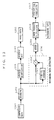
- the watermark data extractor 1206 includes: a partial average calculator 1207 for calculating the partial average avg(F(i)) of neighboring three points of the data; and a divider 1208 for dividing the frequency component F(i) outputted from the decoder 1202 by the partial average avg(F(i)) outputted from the partial average calculator 1207.
- An adder 1209 accumulates the extracted data for each 8 ⁇ 8 pixel block outputted from the watermark data extractor 1206 to obtain the sum of extracted data of one screen. Once the sum of extracted data of one screen is obtained, an inner product calculator 1210 calculates an inner product between watermark data 1211 expected to be detected and the sum of extracted data, and outputs a statistical similarity 1212.
- the statistical similarity 1212 exceeds a predetermined value, it is determined that watermark data equivalent to the watermark data 1211 has been embedded in the compressed data 1201. In this case, if the watermark data 1211 is data indicating "duplication prohibited", for example, a reproduction machine that incorporates this watermark data extracting scheme can take some measures against duplication of the reproduced image data 1205, for example.
- the above conventional technique has the following problems. During the extraction of watermark data, the frequency component F(i) must be divided by the partial average avg(F(i)) for each element of an 8 ⁇ 8 pixel block. This complicates the operation.
- a main object of the present invention is to provide a digital information embedding/extracting apparatus and method where the construction and operation are simpler, the calculation cost is lower, and moreover deterioration in image quality is less observable, compared with conventional ones, by using a frequency component-dependent weight sequence for each element of a transform coefficient during embedding of watermark data and calculating an inner product between a transform coefficients sequence and a pseudo-random number sequence during extraction of watermark data, and a medium including a program for executing the method recorded thereon.
- Another object of the present invention is to provide a digital information embedding/extracting apparatus and method capable of removing only desired digital information from compressed data including a plurality of digital information embedded therein, and a medium including a program for executing the method recorded thereon.
- the present invention has the following features to attain the object above.
- a first aspect of the present invention is directed to a digital information embedding apparatus for embedding inherent digital information in a digital image signal, comprising:
- a second aspect of the present invention is directed to a digital information embedding apparatus for embedding inherent digital information in a digital image signal, comprising:
- the weight sequence used in the above aspects is preferably set so that as a frequency component of a transform coefficient outputted from the transform coefficient calculation section shifts in frequency from low to high, a value of the corresponding element of the weight sequence is greater.
- a quantization table used for encoding of the digital image signal is used for the weight sequence.
- the weight sequence may be set dynamically depending on a value of a DC component, or an average of specific AC components, of the transform coefficient outputted from the transform coefficient calculation section for each of the blocks.
- the information embedding section comprises:
- the transform coefficient calculation section in the above aspects may perform any of discrete cosine transform, Fourier transform, Hadamard transform, discrete wavelet transform, and sub-band division.
- an original image is transformed into frequency components for each block of a predetermined size, and a pseudo-random number sequence associated with inherent digital information is embedded in the resultant transform coefficients sequence using a weight sequence of which each element corresponds to each element of the transform coefficients sequence. Therefore, embedding of inherent digital information can be realized with simple construction and operation. In addition, it is substantially difficult for the third party who is informed of neither the order and length of the transform coefficients sequence for which embedding is made nor the pseudo-random number sequence to be embedded to decipher the inherent digital information.
- a third aspect of the present invention is directed to a digital information extracting apparatus for extracting inherent digital information embedded in a specific transform coefficients sequence among transform coefficients calculated by decomposing a digital image signal into frequency components by a specific apparatus, comprising:
- a fourth aspect of the present invention is directed to a digital information extracting apparatus for extracting inherent digital information embedded in a specific quantized transform coefficients sequence among transform coefficients calculated by decomposing a digital image signal into frequency components by a specific apparatus, comprising:
- compressed data including a pseudo-random number sequence embedded therein is decoded, and a correlation value is obtained by calculating an inner product between the transform coefficients sequence and the pseudo-random number sequence.
- the correlation value is compared with a predetermined threshold value, to specify the embedded pseudo-random number sequence and thus generate the inherent digital information. Therefore, extraction of the inherent digital information can be realized with simple construction and operation.
- the pseudo-random number sequence associated with the inherent digital information not the inherent digital information itself, has been embedded, the rate of detection of watermark data can be improved.
- a fifth aspect of the present invention is directed to a digital information embedding apparatus for removing only desired digital information among a plurality of digital information embedded in a specific transform coefficients sequence calculated by decomposing a digital image signal into frequency components by a specific apparatus based on a weight sequence, comprising:
- a sixth aspect of the present invention is directed to a digital information embedding apparatus for removing only desired digital information among a plurality of digital information embedded in a specific quantized transform coefficients sequence calculated by decomposing a digital image signal into frequency components by a specific apparatus based on a weight sequence, comprising:
- the information embedding section comprises:
- the information embedding section comprises:
- only a given pseudo-random number sequence is subtracted from a plurality of pseudo-random number sequences embedded.
- this processing is useful when it is desired to remove unnecessary author information among a plurality of author information embedded in compressed data.
- a seventh aspect of the present invention is directed to a digital information embedding method for embedding inherent digital information in a digital image signal, comprising the steps of:
- An eighth aspect of the present invention is directed to a digital information embedding method for embedding inherent digital information in a digital image signal, comprising the steps of:
- a ninth aspect of the present invention is directed to a digital information extracting method for extracting inherent digital information embedded in a specific transform coefficients sequence among transform coefficients calculated by decomposing a digital image signal into frequency components by a specific apparatus, the method comprising the steps of:
- a tenth aspect of the present invention is directed to a digital information extracting method for extracting inherent digital information embedded in a specific quantized transform coefficients sequence among transform coefficients calculated by decomposing a digital image signal into frequency components by a specific apparatus, the method comprising the steps of:
- the step of determining a pseudo-random number sequence in the ninth and tenth aspects preferably includes determining a pseudo-random number sequence providing an inner product greater than a predetermined threshold value as the embedded pseudo-random number sequence.
- An eleventh aspect of the present invention is directed to a digital information embedding method for removing only desired digital information among a plurality of digital information embedded in a specific transform coefficients sequence calculated by decomposing a digital image signal into frequency components by a specific apparatus, the method comprising the steps of:
- a twelfth aspect of the present invention is directed to a digital information embedding method for removing only desired digital information among a plurality of digital information embedded in a specific quantized transform coefficients sequence calculated by decomposing a digital image signal into frequency components by a specific apparatus, the method comprising the steps of:
- the digital information embedding/extracting methods described in the seventh to twelfth aspects are implemented by a computer including a memory that stores predetermined program data programmed to realize the steps described above and a CPU executing the program data.
- the predetermined program data programmed to realize the steps described in the seventh to twelfth aspects may be installed on the computer via a recording medium that can write the program data.
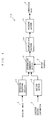
- FIG. 1 is a block diagram of a digital information embedding apparatus 1A of a first embodiment of the present invention.
- FIG. 2 is a block diagram of a digital information extracting apparatus 2A of the first embodiment of the present invention.
- FIG. 3 is a flowchart of processing performed by the digital information embedding apparatus 1A of FIG. 1.
- FIG. 4 is a view showing an example of an association table of inherent digital information with pseudo-random number sequences held in a mapping section 12 in FIG. 1.
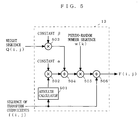
- FIG. 5 is a block diagram illustrating in detail an example of an information embedding section 13 in FIG. 1.
- FIG. 6 is a view showing element numbers of frequency components of an 8 ⁇ 8 pixel block.
- FIGS. 7A and 7B are views showing quantization tables used in MPEG.
- FIG. 8 is a flowchart of processing performed by the digital information extracting apparatus 2A of FIG. 2.
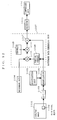
- FIG. 9 is a block diagram of a digital information embedding apparatus 1B of a second embodiment of the present invention.
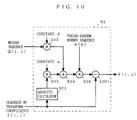
- FIG. 10 is a block diagram illustrating in detail an example of an information embedding section 91 in FIG. 9.
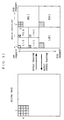
- FIG. 11 is a view for description of discrete wavelet transform usable as an orthogonal transform scheme.
- FIG. 12 is a block diagram illustrating an example of the conventional watermark embedding method.
- FIG. 13 is a block diagram illustrating an example of the conventional watermark extracting method.
- FIGS. 1 and 2 are block diagrams of a digital information embedding apparatus 1A and a digital information extracting apparatus 2A, respectively, of the first embodiment of the present invention.
- the digital information embedding apparatus 1A of this embodiment includes an orthogonal transform section 11, a mapping section 12, an information embedding section 13, a quantization section 14, and an encoding section 15.
- the digital information extracting apparatus 2A of this embodiment includes a decoding section 21, an inverse-quantization section 22, a correlation value calculation section 23, a pseudo-random number sequence determination section 24, and an information generation section 25.
- FIG. 3 is a flowchart of processing performed by the digital information embedding apparatus 1A of FIG. 1.
- the orthogonal transform section 11 receives an original image 1 and divides the original image 1 into a plurality of blocks each composed of a predetermined number of pixels (step S301).
- the orthogonal transform section 11 performs orthogonal transform for each block to decompose the original image 1 into frequency components and calculate transform coefficients (step S302).
- the original image 1 is divided into M blocks each composed of 8 ⁇ 8 pixels, and discrete cosine transform (DCT) is performed for each block as the orthogonal transform.
- DCT discrete cosine transform
- the mapping section 12 determines a given pseudo-random number sequence, which is associated with inherent digital information 2 that is to be embedded in the original image 1, by referring to an association table (step S303).
- FIG. 4 illustrates an example of the association table that associates digital information with pseudo-random number sequences, which is held in advance in the mapping section 12.
- the inherent digital information 2 is author information composed of the author's name and the date of preparation
- the author information and a pseudo-random number sequence are entered as one set in the association table where any pseudo-random number sequence appears only once.
- the pseudo-random number sequence is generated by random selection from a population constructed of a normal (Gaussian) distribution having an average value of 0 and a variance value of 1 or a maximumlength shift register sequence (M sequence).
- M sequence maximumlength shift register sequence
- the length of the pseudo-random number sequence can be determined arbitrarily depending on the original image to be processed, the desired embedding level, and the like.
- the mapping section 12 Upon receipt of the inherent digital information 2 to be embedded in the original image 1, such as author information A 1 , for example, the mapping section 12 refers to the association table and outputs a pseudo-random number sequence W 1 to the information embedding section 13.
- FIG. 5 is a detailed block diagram of the information embedding section 13.
- the information embedding section 13 selects transform coefficients of specific frequency components among the transform coefficients calculated in the orthogonal transform section 11 as a transform coefficients sequence f(i,j) for each of M blocks (step S304).
- the information embedding section 13 then calculates a sequence of transform coefficient F(i,j) by embedding a pseudo-random number sequence w(k) associated with the inherent digital information 2 in each transform coefficients sequence f(i,j) using a given weight sequence Q(i,j) (step S305).
- the information embedding section 13 includes: an absolute calculator 501 for calculating the absolute of each element of the selected transform coefficients sequence f(i,j); a multiplier 502 for multiplying the output of the absolute calculator 501 by a constant ⁇ (scaling parameter used for changing the size of the data to be embedded) for each element; a multiplier 503 for multiplying each element of the weight sequence Q(i,j) by a constant ⁇ (scaling parameter used for changing the weight of the pseudo-random number sequence to be embedded); an adder 504 for adding the output of the multiplier 503 to the output of the multiplier 502 for each element; a multiplier 505 for multiplying the output of the adder 504 by the pseudo-random number sequence w(k) for each element; and an adder 506 for adding the output of the multiplier 505 to the transform coefficients sequence f(i,j) for each element.
- ⁇ scaling parameter used for changing the size of the data to be embedded
- a multiplier 503 for multiplying each element
- the transform coefficients selected as the transform coefficients sequence f(i,j) are not limited to those in the positions shown in FIG. 6 (positions in which the added value of i and j is constant), but may be selected arbitrarily within the 8X8 pixel size. In this case, however, the selected positions, the order of processing, and the like must be agreed in advance between the digital information embedding apparatus 1A and the digital information extracting apparatus 2A.
- the respective elements of the pseudo-random number sequence w(k) are embedded in the sequences of transform coefficients f(i,j) in a predetermined order.
- w(1) is used for f(0,2) of the first block
- w(2) for f(1,1) of the first block
- w(3) for f(0,2) of the first block
- w(4) for f(0,2) of the second block
- w(5) for f(1,1) of the second block
- w(k) for f(0, 2) of the M-th block.
- the order is not necessarily ascending as in this example, as long as agreement is established between the embedding side and the extracting side.
- the pseudo-random number sequence may be repeated or contracted to complete the embedding.
- the weight sequence Q(i,j) is constructed of elements each corresponding to the transform coefficient for each frequency component of a block.
- Each element of the weight sequence Q(i,j) is preferably set so that the value is greater as the value of i or j is greater, as shown in FIG. 7A, for example.
- the value of the corresponding element of the weight sequence is greater. This setting of a greater value for the transform coefficient of a higher-frequency component is based on a nature of the vision of humans that "a change of an image is less observable in a high-frequency component than in a low-frequency component.”
- the method for embedding and extracting digital information of the present invention is applicable, not only to still image signals, but also to moving image signals.
- values in a quantization table used in MPEG image coding for example, may be used as the weight sequence Q(i,j) (FIG. 7B). This serves to reduce the image deterioration due to the embedding.
- the weight sequence Q(i,j) used for each block may be dynamically changed depending on the value of a DC component (f(0,0)) of the transform coefficient calculated in the orthogonal transform section 11.
- This change of the weight sequence Q(i,j) may be done by adding the DC component value to the weight sequence Q(i,j) or multiplying the weight sequence Q(i,j) by the DC component value, or by selecting one among a plurality of weight sequences Q(i,j) having different values prepared in advance depending on the DC component value.
- the weight sequence Q(i,j) used for each block may be dynamically changed depending on the value of an AC component of the transform coefficient (any transform coefficient other than the DC component) calculated in the orthogonal transform section 11.
- change of the weight sequence Q(i,j) can be realized by adding or multiplying the AC component value or by selecting a weight sequence.
- the AC component value an average of all the transform coefficients other than f(0,0), an average of only the transform coefficients to be embedded, and the like may be used.
- the quantization section 14 quantizes the information-embedded transform coefficients (step S306).
- the encoding section 15 encodes the quantized transform coefficients, to generate the compressed data 4 including the pseudo-random number sequence associated with the inherent digital information embedded therein (step S307).
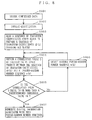
- FIG. 8 is a flowchart of processing performed by the digital information extracting apparatus 2A of FIG. 2.
- the decoding section 21 receives the compressed data 4 outputted from the encoding section 15 of the digital information embedding apparatus 1A described above, and decodes the data (step S801).
- the inverse-quantization section 22 performs inverse quantization for the data decoded by the decoding section 21 (step S802).
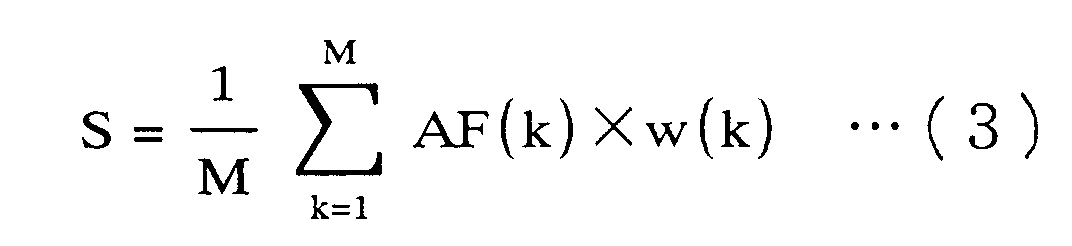
- the correlation value calculation section 23 reads the transform coefficients sequence F(i,j) selected in the information embedding section 13 of the digital information embedding apparatus 1A among the data outputted from the inverse-quantization section 22 from the respective blocks sequentially in a predetermined order, to prepare a transform coefficients sequence AF(k) composed of the transform coefficients of all the blocks used for the embedding (step S803).
- the predetermined order has been agreed in advance with the digital information embedding apparatus 1A.
- the correlation value calculation section 23 then calculates an inner product between a pseudo-random number sequence w(k), one of candidates presumed to have been embedded in the compressed data 4, and the transform coefficients sequence AF(k) according to expression (3) below, to obtain a correlation value S (step S804).
- the correlation value calculation section 23 is provided with the same association table (FIG. 4) as that held in the mapping section 12 of the digital information embedding apparatus 1A.
- the pseudo-random number sequence determination section 24 compares the correlation value S calculated in the correlation value calculation section 23 with a predetermined threshold value TH (step S805). If the correlation value S is equal to or greater than the threshold value TH, the pseudo-random number sequence determination section 24 determines that the candidate pseudo-random number sequence w(k) has been embedded in the compressed data 4. If the correlation value S is less than the threshold value TH, the pseudo-random number sequence determination section 24 determines that the candidate pseudo-random number sequence w(k) has not been embedded in the compressed data 4.
- the pseudo-random number sequence determination section 24 repeats the same processing for another candidate pseudo-random number sequence (step S806), until the embedded pseudo-random number sequence is specified (steps S804 and S805).
- the threshold value TH may be set at a level at which the embedded pseudo-random number sequence can be optimally specified in consideration of disturbance (distortion during transmission, intentional tampering, and the like) that may occur for the compressed data 4 on the transmission path.
- the correlation value S greatly changes with the contents of an image. Therefore, the threshold value TH is preferably set dynamically based on the transform coefficients of the image obtained by the decoding (that is, the feature of the image), rather than being fixed.
- the threshold value TH can be set dynamically according to expression (4) below. wherein Q(k) denotes the entire sequence of Q(i,j) corresponding to the transform coefficients sequence F(i,j) read in the predetermined order.
- the information generation section 25 generates the inherent digital information mapped with the pseudo-random number sequence w(k) in the mapping section 12 of the digital information embedding apparatus 1A (step S807). This generation can be easily done by referring to the same association table as the association table (FIG. 4) held in the mapping section 12 of the digital information embedding apparatus 1A.
- the digital information embedding apparatus of the first embodiment of the present invention performs orthogonal transform for an original image every 8 ⁇ 8 pixel block, and embeds each element of a pseudo-random number sequence associated with inherent digital information in each element of the resultant transform coefficients sequence using a weight sequence of which each element corresponds to each element of the transform coefficients sequence.
- the digital information extracting apparatus of the first embodiment of the present invention decodes the compressed data including the pseudo-random number sequence embedded therein, calculates a correlation value by calculating an inner product between the transform coefficients sequence and the pseudo-random number sequence, and compares the correlation value with a predetermined threshold value to thereby specify the embedded pseudo-random number sequence and thus generate the inherent digital information.
- the positions of the information embedding section 13 and the quantization section 14 may be changed with each other, to perform embedding for the quantized transform coefficients sequence.
- the processing of the inverse-quantization section 22 may be omitted, and the inner product may be calculated between the quantized transform coefficients sequence decoded by the decoding section 21 and the pseudo-random number sequence.
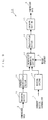
- FIG. 9 is a block diagram of a digital information embedding apparatus 1B of the second embodiment of the present invention.
- the digital information embedding apparatus 1B of this embodiment includes a decoding section 21, an inverse-quantization section 22, a mapping section 12, an information embedding section 91, a quantization section 14, and an encoding section 15.
- the decoding section 21 and the inverse-quantization section 22 are substantially the same in construction as those of the digital information extracting apparatus 2A of the first embodiment described above.
- the mapping section 12, the quantization section 14, and the encoding section 15 are substantially the same in construction as those of the digital information embedding apparatus 1A of the first embodiment described above. These components are therefore denoted by the same reference numerals, and the description thereof is partly omitted in this embodiment.
- the decoding section 21 receives compressed data 5 and decodes the data. It is assumed herein that a plurality of inherent digital information have been embedded in the compressed data 5 by the digital information embedding apparatus 1A of the first embodiment or the like. Herein, described as an example is the case where a first pseudo-random number sequence mapped with first inherent digital information and a second pseudo-random number sequence mapped with second inherent digital information have been embedded in the compressed data 5.
- the inverse-quantization section 22 performs inverse-quantization for the data decoded in the decoding section 21.
- the mapping section 12 outputs a pseudo-random number sequence associated with desired digital information (author information) to the information embedding section 91 by referring to the association table shown in FIG. 4. Assume in this example that the second pseudo-random number sequence is outputted.
- FIG. 10 is a detailed block diagram of an example of the information embedding section 91.
- the information embedding section 91 reads a transform coefficients sequence f(i,j) among the data outputted from the inverse-quantization section 22 in a predetermined order, and calculates a transform coefficients sequence F(i,j) by embedding a specific pseudo-random number sequence w(k) in a negative value in the transform coefficients sequence f(i,j) using a predetermined weight sequence Q(i,j). That is, the information embedding section 91 calculates a transform coefficients sequence F(i,j) by removing the already-embedded specific pseudo-random number sequence w(k) from the transform coefficients sequence f(i,j).
- the information embedding section 91 includes: an absolute calculator 501 for calculating the absolute of each element of the transform coefficients sequence f(i,j) read; a multiplier 502 for multiplying the output of the absolute calculator 501 by a constant ⁇ (scaling parameter used for changing the size of the data to be embedded) for each element; a multiplier 503 for multiplying each element of the weight sequence Q(i,j) by a constant ⁇ (scaling parameter used for changing the weight of the pseudo-random number sequence to be embedded); an adder 504 for adding the output of the multiplier 503 to the output of the multiplier 502 for each element; a multiplier 505 for multiplying the output of the adder 504 by the second pseudo-random number sequence w(k) outputted from the mapping section 12 for each element; and a subtracter 1001 for subtracting the output of the multiplier 505 from the transform coefficients sequence f(i,j) for each element.
- ⁇ scaling parameter used for changing the size of the data to be embedded
- the components of the information embedding section 91 shown in FIG. 10 are the same in construction as those of the information embedding section 13 shown in FIG. 5, except for the subtracter 1001.
- the quantization section 14 quantizes the transform coefficients of each block after the information embedding, that is, the transform coefficients from which the second pseudo-random number sequence w(k) has been removed, in this case.
- the encoding section 15 encodes the transform coefficients quantized in the quantization section 14 to generate compressed data 6 including only the first pseudo-random number sequence embedded therein.
- the digital information embedding apparatus 1B of the second embodiment of the present invention performs processing (expression (5)) inverse to the embedding (expression (2)) performed by the digital information embedding apparatus 1A of the first embodiment.
- processing expression (5)
- expression (2) the embedding
- This processing therefore makes it possible to remove only desired digital information from compressed data including a plurality of digital information embedded therein without causing quality deterioration.
- the embedding processing in the second embodiment described above is useful when it is desired to remove unnecessary author information among a plurality of author information embedded in compressed data.
- the following processing is possible if the embedded digital information indicates limitation of a use duration and the like. That is, during the embedding, the embedded digital information is removed from the compressed data of which the use duration has expired, so that the correlation value obtained by the inner product calculation is made smaller than the predetermined threshold value during the extraction. In this way, use of the compressed data, for example, can be prohibited. In addition, when used in this manner, it is not necessary to newly embed inherent digital information, and thus deterioration in image quality is prevented.
- Expression (5) above represents processing corresponding to expression (2) that represents the embedding performed by the digital information embedding apparatus 1A of the first embodiment. Therefore, if expression (2) is changed, expression (5) may be changed so that the corresponding inverse processing is possible.
- the discrete cosine transform was used as the orthogonal transform scheme for calculating a transform coefficient corresponding to an original image.
- other transform schemes such as Fourier transform, Hadamard transform, discrete wavelet transform, and sub-band division may be used as long as an original image can be decomposed into frequency components.
- the weight sequence is made greater as the frequency band is higher (that is, greater in HL1, LH1, and HH1 than in HL2, LH2, and HH2).
- the weight sequence may be dynamically changed depending on the value of the wavelet coefficient of LL2 (MRA), or may be dynamically changed depending on the value of MRR excluding MRA (in this case, HL2, LH2, HH2, HL1, LH1, and HH1).
- the constants ⁇ and ⁇ described in the first and second embodiments may not be the same for each element of the transform coefficients sequence.
- the functions of the digital information embedding/extracting apparatus of the first and second embodiments are implemented by a memory (a ROM, a RAM, a hard disk, and the like) that stores predetermined program data and a central processing unit (CPU) executing the program data.
- the program data may be installed via a recording medium such as a CD-ROM and a floppy disk.
Landscapes
- Engineering & Computer Science (AREA)
- Multimedia (AREA)
- Signal Processing (AREA)
- Physics & Mathematics (AREA)
- Mathematical Physics (AREA)
- General Physics & Mathematics (AREA)
- Theoretical Computer Science (AREA)
- Editing Of Facsimile Originals (AREA)
- Compression Or Coding Systems Of Tv Signals (AREA)
- Image Processing (AREA)
Abstract
Description

wherein Q(k) denotes the entire sequence of Q(i,j) corresponding to the transform coefficients sequence F(i,j) read in the predetermined order.
Claims (33)
- A digital information embedding apparatus for embedding inherent digital information in a digital image signal, comprising:a transform coefficient calculation section (11) for decomposing said digital image signal into frequency components and calculating transform coefficients for a plurality of blocks each composed of a predetermined number of pixels;a mapping section (12) for mapping the inherent digital information with a pseudo-random number sequence;an information embedding section (13) for selecting a specific transform coefficients sequence from the transform coefficients calculated in said transform coefficient calculation section (11) and embedding said pseudo-random number sequence in the specific transform coefficients sequence based on a predetermined weight sequence corresponding to elements of the transform coefficients, for each of said blocks;a quantization section (14) for quantizing said embedding-processed transform coefficients; andan encoding section (15) for encoding said quantized transform coefficients.
- A digital information embedding apparatus for embedding inherent digital information in a digital image signal, comprising:a transform coefficient calculation section (11) for decomposing said digital image signal into frequency components and calculating transform coefficients for a plurality of blocks each composed of a predetermined number of pixels;a quantization section (14) for quantizing the transform coefficients outputted from said transform coefficient calculation section (11);a mapping section (12) for mapping the inherent digital information with a pseudo-random number sequence;an information embedding section (13) for selecting a specific transform coefficients sequence from said quantized transform coefficients and embedding said pseudo-random number sequence in the specific transform coefficients sequence based on a predetermined weight sequence corresponding to elements of the transform coefficients, for each of said blocks; andan encoding section (15) for encoding said embedding-processed transform coefficients.
- The digital information embedding apparatus according to claim 1, wherein said weight sequence is set so that as a frequency component of a transform coefficient outputted from the transform coefficient calculation section (11) shifts in frequency from low to high, a value of the corresponding element of the weight sequence is greater.
- The digital information embedding apparatus according to claim 2, wherein said weight sequence is set so that as a frequency component of a transform coefficient outputted from the transform coefficient calculation section (11) shifts in frequency from low to high, a value of the corresponding element of the weight sequence is greater.
- The digital information embedding apparatus according to claim 1, wherein a quantization table used for encoding of said digital image signal is used for said weight sequence.
- The digital information embedding apparatus according to claim 2, wherein a quantization table used for encoding of said digital image signal is used for said weight sequence.
- The digital information embedding apparatus according to claim 1, wherein said weight sequence is set dynamically depending on a value of a DC component of the transform coefficient outputted from said transform coefficient calculation section (11) for each of said blocks.
- The digital information embedding apparatus according to claim 2, wherein said weight sequence is set dynamically depending on a value of a DC component of the transform coefficient outputted from said transform coefficient calculation section (11) for each of said blocks.
- The digital information embedding apparatus according to claim 1, wherein said weight sequence is set dynamically depending on an average of specific AC components of a transform coefficient outputted from said transform coefficient calculation section (11) for each of said blocks.
- The digital information embedding apparatus according to claim 2, wherein said weight sequence is set dynamically depending on an average of specific AC components of a transform coefficient outputted from said transform coefficient calculation section (11) for each of said blocks.
- The digital information embedding apparatus according to claim 1, wherein said information embedding section (13) comprises:an absolute calculator (501) for calculating an absolute of each element of the specific transform coefficients sequence selected from the transform coefficients outputted from said transform coefficient calculation section (11);a first multiplier (502) for multiplying the absolute of each element outputted from said absolute calculator (501) by a first set value;a second multiplier (503) for multiplying each element of said weight sequence by a second set value;a first adder (504) for adding an output of said second multiplier (503) to an output of said first multiplier (502) for each element;a third multiplier (505) for multiplying an output of said first adder (504) by said pseudo-random number sequence for each element; anda second adder (506) for adding an output of said third multiplier (505) to the output of said transform coefficient calculation section (11) for each element.
- The digital information embedding apparatus according to claim 2, wherein said information embedding section (13) comprises:an absolute calculator (501) for calculating an absolute of each element of the specific transform coefficients sequence selected from the transform coefficients outputted from said quantization section (14);a first multiplier (502) for multiplying the absolute of each element outputted from said absolute calculator (501) by a first set value;a second multiplier (503) for multiplying each element of said weight sequence by a second set value;a first adder (504) for adding an output of said second multiplier (503) to an output of said first multiplier (502) for each element;a third multiplier (505) for multiplying an output of said first adder (504) by said pseudo-random number sequence for each element; anda second adder (506) for adding an output of said third multiplier (505) to the output of said quantization section (14) for each element.
- The digital information embedding apparatus according to claim 1, wherein said transform coefficient calculation section (11) performs any of discrete cosine transform, Fourier transform, and Hadamard transform.
- The digital information embedding apparatus according to claim 1, wherein said transform coefficient calculation section (11) performs any of discrete wavelet transform and sub-band division.
- A digital information extracting apparatus for extracting inherent digital information embedded in a specific transform coefficients sequence among transform coefficients calculated by decomposing a digital image signal into frequency components by a specific apparatus, comprising:a decoding section (21) for receiving compressed data encoded and outputted by said specific apparatus and decoding the compressed data;an inverse-quantization section (22) for performing inverse quantization for data outputted from the decoding section (21);a correlation value calculation section (23) for calculating an inner product between said specific transform coefficients sequence among data outputted from said inverse-quantization section (22) and each of a plurality of pseudo-random number sequences including a pseudo-random number sequence associated with said inherent digital information embedded by said specific apparatus;a pseudo-random number sequence determination section (24) for determining a pseudo-random number sequence embedded in the data based on a value of the inner product outputted from said correlation value calculation section (23); andan information generation section (25) for generating inherent digital information mapped with said determined pseudo-random number sequence.
- A digital information extracting apparatus for extracting inherent digital information embedded in a specific quantized transform coefficients sequence among transform coefficients calculated by decomposing a digital image signal into frequency components by a specific apparatus, comprising:a decoding section (21) for receiving compressed data encoded and outputted by said specific apparatus and decoding the compressed data;a correlation value calculation section (23) for calculating an inner product between said specific quantized transform coefficients sequence among data outputted from said decoding section (21) and each of a plurality of pseudo-random number sequences including a pseudo-random number sequence associated with said inherent digital information embedded by said specific apparatus;a pseudo-random number sequence determination section (24) for determining a pseudo-random number sequence embedded in the data based on a value of the inner product outputted from said correlation value calculation section (23); andan information generation section (25) for generating inherent digital information mapped with said determined pseudo-random number sequence.
- A digital information embedding apparatus for removing only desired digital information among a plurality of digital information embedded in a specific transform coefficients sequence calculated by decomposing a digital image signal into frequency components by a specific apparatus based on a weight sequence, comprising:a decoding section (21) for receiving compressed data encoded and outputted by said specific apparatus and decoding the compressed data;an inverse-quantization section (22) for performing inverse quantization for data outputted from said decoding section (21);a mapping section (12) for mapping said desired digital information with a pseudo-random number sequence;an information embedding section (91) for selecting a specific transform coefficients sequence in which said desired digital information has been embedded from data outputted from said inverse-quantization section (22), and embedding said pseudo-random number sequence in the specific transform coefficients sequence;a quantization section (14) for quantizing said embedding-processed transform coefficients; andan encoding section (15) for encoding said quantized transform coefficients.
- A digital information embedding apparatus for removing only desired digital information among a plurality of digital information embedded in a specific quantized transform coefficients sequence calculated by decomposing a digital image signal into frequency components by a specific apparatus based on a weight sequence, comprising:a decoding section (21) for receiving compressed data encoded and outputted by said specific apparatus and decoding the compressed data;a mapping section (12) for mapping said desired digital information with a pseudo-random number sequence;an information embedding section (91) for selecting a specific quantized transform coefficients sequence in which said desired digital information has been embedded from data outputted from said decoding section (21), and embedding said pseudo-random number sequence in the specific transform coefficients sequence; andan encoding section (15) for encoding said embedding-performed transform coefficients.
- The digital information embedding apparatus according to claim 17, wherein said information embedding section (91) comprises:an absolute calculator (501) for calculating an absolute of each element of said specific transform coefficients sequence selected from data outputted from said inverse-quantization section (22);a first multiplier (502) for multiplying the absolute of each element outputted from said absolute calculator (501) by a first set value;a second multiplier (503) for multiplying each element of said weight sequence used by said specific apparatus by a second set value;an adder (504) for adding an output of said second multiplier (503) to an output of said first multiplier (502) for each element;a third multiplier (505) for multiplying an output of said adder (504) by said pseudo-random number sequence for each element; anda subtracter (1001) for subtracting an output of said third multiplier (505) from the output of said inverse-quantization section (22).
- The digital information embedding apparatus according to claim 18, wherein said information embedding section (91) comprises:an absolute calculator (501) for calculating an absolute of each element of said specified transform coefficients sequence selected from data outputted from said decoding section (21);a first multiplier (502) for multiplying the absolute of each element outputted from said absolute calculator (501) by a first set value;a second multiplier (503) for multiplying each element of said weight sequence used by said specific apparatus by a second set value;an adder (504) for adding an output of said second multiplier (503) to an output of the first multiplier (502) for each element;a third multiplier (505) for multiplying an output of said adder (504) by said pseudo-random number sequence for each element; anda subtracter (1001) for subtracting an output of said third multiplier (505) from the output of said decoding section (21).
- The digital information embedding apparatus according to claim 17, wherein said information embedding section (91) comprises:an absolute calculator (501) for calculating an absolute of each element of said specified transform coefficients sequence selected from data outputted from said inverse-quantization section (22);a first multiplier (502) for multiplying the absolute of each element outputted from said absolute calculator (501) by a first set value;a second multiplier (505) for multiplying an output of said first multiplier (502) by said pseudo-random number sequence for each element; anda subtracter (1001) for subtracting an output of said second multiplier (505) from the output of said inverse-quantization section (22).
- The digital information embedding apparatus according to claim 18, wherein said information embedding section (91) comprises:an absolute calculator (501) for calculating an absolute of each element of said specified transform coefficients sequence selected from data outputted from said decoding section (21);a first multiplier (502) for multiplying the absolute of each element outputted from said absolute calculator (501) by a first set value;a second multiplier (505) for multiplying an output of said first multiplier (502) by said pseudo-random number sequence for each element; anda subtracter (1001) for subtracting an output of said second multiplier (505) from the output of said decoding section (21).
- A digital information embedding method for embedding inherent digital information in a digital image signal, comprising the steps of:decomposing said digital image signal into frequency components and calculating transform coefficients for a plurality of blocks each composed of a predetermined number of pixels;mapping the inherent digital information with a pseudo-random number sequence;selecting a specific transform coefficients sequence from said calculated transform coefficients, and embedding said pseudo-random number sequence in the specific transform coefficients sequence based on a predetermined weight sequence corresponding to elements of the transform coefficients, for each of said blocks;quantizing said embedding-processed transform coefficients; andencoding said quantized transform coefficients.
- A digital information embedding method for embedding inherent digital information in a digital image signal, comprising the steps of:decomposing said digital image signal into frequency components and calculating transform coefficients for a plurality of blocks each composed of a predetermined number of pixels;quantizing said calculated transform coefficients;mapping the inherent digital information with a pseudo-random number sequence;selecting a specific transform coefficients sequence from the quantized transform coefficients, and embedding said pseudo-random number sequence in the specific transform coefficients sequence based on a predetermined weight sequence corresponding to elements of the transform coefficients, for each of said blocks; andencoding said embedding-processed transform coefficients.
- A digital information extracting method for extracting inherent digital information embedded in a specific transform coefficients sequence among transform coefficients calculated by decomposing a digital image signal into frequency components by a specific apparatus, said method comprising the steps of:receiving compressed data encoded and outputted by said specific apparatus and decoding the compressed data;performing inverse quantization for said decoded data;calculating an inner product between said specific transform coefficients sequence among said inverse-quantized data and each of a plurality of pseudo-random number sequences including a pseudo-random number sequence associated with said inherent digital information embedded by said specific apparatus;determining a pseudo-random number sequence embedded in the data based on a calculated value of said inner product; andgenerating inherent digital information mapped with said determined pseudo-random number sequence.
- A digital information extracting method for extracting inherent digital information embedded in a specific quantized transform coefficients sequence among transform coefficients calculated by decomposing a digital image signal into frequency components by a specific apparatus, said method comprising the steps of:receiving compressed data encoded and outputted by said specific apparatus and decoding the compressed data;calculating an inner product between said specific quantized transform coefficients sequence among said decoded data and each of a plurality of pseudo-random number sequences including a pseudo-random number sequence associated with said inherent digital information embedded by said specific apparatus;determining a pseudo-random number sequence embedded in the data based on a calculated value of said inner product; andgenerating inherent digital information mapped with said determined pseudo-random number sequence.
- The digital information extracting method according to claim 25, wherein said step of determining a pseudo-random number sequence includes determining a pseudo-random number sequence providing said inner product greater than a predetermined threshold value as the embedded pseudo-random number sequence.
- The digital information extracting method according to claim 26, wherein said step of determining a pseudo-random number sequence includes determining a pseudo-random number sequence providing said inner product greater than a predetermined threshold value as the embedded pseudo-random number sequence.
- A digital information embedding method for removing only desired digital information among a plurality of digital information embedded in a specific transform coefficients sequence calculated by decomposing a digital image signal into frequency components by a specific apparatus, said method comprising the steps of:receiving compressed data encoded and outputted by said specific apparatus and decoding the compressed data;performing inverse quantization for said decoded data;mapping said desired digital information with a pseudo-random number sequence;selecting a specific transform coefficients sequence in which said desired digital information has been embedded from said inverse-quantized data, and embedding said pseudo-random number sequence in the specific transform coefficients sequence;quantizing said embedding-processed transform coefficients; andencoding said quantized transform coefficients.
- A digital information embedding method for removing only desired digital information among a plurality of digital information embedded in a specific quantized transform coefficients sequence calculated by decomposing a digital image signal into frequency components by a specific apparatus, said method comprising the steps of:receiving compressed data encoded and outputted by said specific apparatus and decoding the compressed data;mapping said desired digital information with a pseudo-random number sequence;selecting a specific quantized transform coefficients sequence in which said desired digital information has been embedded from said decoded data, and embedding said pseudo-random number sequence in the specific transform coefficients sequence; andencoding said embedding-processed transform coefficients.
- A recording medium including a program to be executed by a computer recorded thereon, the program at least executing the steps of:decomposing said digital image signal into frequency components and calculating transform coefficients for a plurality of blocks each composed of a predetermined number of pixels;mapping the inherent digital information with a pseudo-random number sequence;selecting a specific transform coefficients sequence from said calculated transform coefficients, and embedding said pseudo-random number sequence in the specific transform coefficients sequence based on a predetermined weight sequence corresponding to elements of the transform coefficients, for each of said blocks;quantizing said embedding-processed transform coefficients; andencoding said quantized transform coefficients.
- A recording medium including a program to be executed by a computer recorded thereon, the program at least executing the steps of:receiving encoded compressed data including inherent digital information embedded in a specific transform coefficients sequence calculated by decomposing a digital image signal into frequency components, and decoding the compressed data;performing inverse quantization for said decoded data;calculating an inner product between said specific transform coefficients sequence among said inverse-quantized data and each of a plurality of pseudo-random number sequences including a pseudo-random number sequence associated with said inherent digital information embedded by said specific apparatus;determining a pseudo-random number sequence embedded in the data based on a calculated value of said inner product; andgenerating inherent digital information mapped with said determined pseudo-random number sequence.
- A recording medium including a program to be executed by a computer recorded thereon, the program at least executing the steps of:receiving encoded compressed data including a plurality of inherent digital information embedded in a specific transform coefficients sequence calculated by decomposing a digital image signal into frequency components, and decoding the compressed data;performing inverse quantization for said decoded data;mapping said desired digital information with a pseudo-random number sequence;selecting a specific transform coefficients sequence in which said desired digital information has been embedded from said inverse-quantized data, and embedding said pseudo-random number sequence in the specific transform coefficients sequence;quantizing said embedding-processed transform coefficients; andencoding said quantized transform coefficients.
Applications Claiming Priority (2)
| Application Number | Priority Date | Filing Date | Title |
|---|---|---|---|
| JP2000177942 | 2000-06-14 | ||
| JP2000177942 | 2000-06-14 |
Publications (3)
| Publication Number | Publication Date |
|---|---|
| EP1164543A2 true EP1164543A2 (en) | 2001-12-19 |
| EP1164543A3 EP1164543A3 (en) | 2004-09-01 |
| EP1164543B1 EP1164543B1 (en) | 2017-08-09 |
Family
ID=18679461
Family Applications (1)
| Application Number | Title | Priority Date | Filing Date |
|---|---|---|---|
| EP01113522.5A Expired - Lifetime EP1164543B1 (en) | 2000-06-14 | 2001-06-12 | Digital information embedding/extracting |
Country Status (2)
| Country | Link |
|---|---|
| US (1) | US6788821B2 (en) |
| EP (1) | EP1164543B1 (en) |
Cited By (2)
| Publication number | Priority date | Publication date | Assignee | Title |
|---|---|---|---|---|
| WO2006017848A1 (en) * | 2004-08-11 | 2006-02-16 | Stevens Institute Of Technology | Robust hidden data extraction method for scaling attacks |
| WO2007042350A3 (en) * | 2005-10-14 | 2008-11-06 | Thomson Licensing | Method and apparatus for watermarking a bit stream using identification data, and for regaining identification data from a watermarked bit stream |
Families Citing this family (39)
| Publication number | Priority date | Publication date | Assignee | Title |
|---|---|---|---|---|
| US6993152B2 (en) * | 1994-03-17 | 2006-01-31 | Digimarc Corporation | Hiding geo-location data through arrangement of objects |
| US20020136429A1 (en) * | 1994-03-17 | 2002-09-26 | John Stach | Data hiding through arrangement of objects |
| KR100359506B1 (en) * | 2000-09-09 | 2002-11-04 | 주식회사 마크애니 | Digital image watermarking apparatus and method |
| US7095870B2 (en) * | 2000-12-21 | 2006-08-22 | Hitachi, Ltd. | Electronic watermark embedding apparatus and method and a format conversion device having a watermark embedding function |
| US6950519B2 (en) * | 2001-03-05 | 2005-09-27 | Digimarc Corporation | Geographically watermarked imagery and methods |
| US7042470B2 (en) | 2001-03-05 | 2006-05-09 | Digimarc Corporation | Using embedded steganographic identifiers in segmented areas of geographic images and characteristics corresponding to imagery data derived from aerial platforms |
| US7249257B2 (en) * | 2001-03-05 | 2007-07-24 | Digimarc Corporation | Digitally watermarked maps and signs and related navigational tools |
| US7098931B2 (en) * | 2001-03-05 | 2006-08-29 | Digimarc Corporation | Image management system and methods using digital watermarks |
| US7061510B2 (en) * | 2001-03-05 | 2006-06-13 | Digimarc Corporation | Geo-referencing of aerial imagery using embedded image identifiers and cross-referenced data sets |
| US6664976B2 (en) | 2001-04-18 | 2003-12-16 | Digimarc Corporation | Image management system and methods using digital watermarks |
| US7254249B2 (en) * | 2001-03-05 | 2007-08-07 | Digimarc Corporation | Embedding location data in video |
| US9363409B2 (en) * | 2001-03-05 | 2016-06-07 | Digimarc Corporation | Image management system and methods using digital watermarks |
| US7197160B2 (en) * | 2001-03-05 | 2007-03-27 | Digimarc Corporation | Geographic information systems using digital watermarks |
| JP2004532548A (en) | 2001-03-19 | 2004-10-21 | サウンドピックス・インク | System and method for storing data in a JPEG file |
| US7321667B2 (en) | 2002-01-18 | 2008-01-22 | Digimarc Corporation | Data hiding through arrangement of objects |
| US7519819B2 (en) * | 2002-05-29 | 2009-04-14 | Digimarc Corporatino | Layered security in digital watermarking |
| JP2004221950A (en) * | 2003-01-15 | 2004-08-05 | Ricoh Co Ltd | Image processing apparatus, program, and storage medium |
| KR100987748B1 (en) * | 2003-12-05 | 2010-10-18 | 뉴저지 인스티튜트 오브 테크놀로지 | How to perform robust data hiding and recovery without loss from integer wavelet representation |
| US20050144456A1 (en) * | 2003-12-11 | 2005-06-30 | Tinku Acharya | Robust digital image watermarking utilizing a Walsh transform algorithm |
| WO2005076985A2 (en) * | 2004-02-04 | 2005-08-25 | Digimarc Corporation | Digital watermarking image signals on-chip and photographic travel logs through digital watermarking |
| JP4197307B2 (en) * | 2004-03-30 | 2008-12-17 | インターナショナル・ビジネス・マシーンズ・コーポレーション | Digital watermark detection apparatus, detection method thereof, and program |
| CN101061725B (en) | 2004-11-19 | 2010-08-11 | 松下电器产业株式会社 | Moving image encoding method and moving image decoding method |
| JP4645948B2 (en) | 2005-03-18 | 2011-03-09 | 富士ゼロックス株式会社 | Decoding device and program |
| US7778468B2 (en) * | 2005-03-23 | 2010-08-17 | Fuji Xerox Co., Ltd. | Decoding apparatus, dequantizing method, and program thereof |
| JP4737711B2 (en) * | 2005-03-23 | 2011-08-03 | 富士ゼロックス株式会社 | Decoding device, inverse quantization method, distribution determination method, and program thereof |
| JP4784281B2 (en) * | 2005-11-18 | 2011-10-05 | 富士ゼロックス株式会社 | Decoding device, inverse quantization method, and program thereof |
| US8565472B2 (en) * | 2007-10-30 | 2013-10-22 | General Instrument Corporation | Method, device and system for dynamically embedding watermark information into multimedia content |
| US20090110059A1 (en) * | 2007-10-31 | 2009-04-30 | General Instrument Corporation | Method and system for transmitting end-user access information for multimedia content |
| US10020839B2 (en) * | 2016-11-14 | 2018-07-10 | Rampart Communications, LLC | Reliable orthogonal spreading codes in wireless communications |
| US10873361B2 (en) | 2019-05-17 | 2020-12-22 | Rampart Communications, Inc. | Communication system and methods using multiple-in-multiple-out (MIMO) antennas within unitary braid divisional multiplexing (UBDM) |
| US10917148B2 (en) | 2019-07-01 | 2021-02-09 | Rampart Communications, Inc. | Systems, methods and apparatus for secure and efficient wireless communication of signals using a generalized approach within unitary braid division multiplexing |
| US10833749B1 (en) | 2019-07-01 | 2020-11-10 | Rampart Communications, Inc. | Communication system and method using layered construction of arbitrary unitary matrices |
| US11641269B2 (en) | 2020-06-30 | 2023-05-02 | Rampart Communications, Inc. | Modulation-agnostic transformations using unitary braid divisional multiplexing (UBDM) |
| US11025470B2 (en) | 2019-07-01 | 2021-06-01 | Rampart Communications, Inc. | Communication system and method using orthogonal frequency division multiplexing (OFDM) with non-linear transformation |
| US11050604B2 (en) | 2019-07-01 | 2021-06-29 | Rampart Communications, Inc. | Systems, methods and apparatuses for modulation-agnostic unitary braid division multiplexing signal transformation |
| US10951442B2 (en) | 2019-07-31 | 2021-03-16 | Rampart Communications, Inc. | Communication system and method using unitary braid divisional multiplexing (UBDM) with physical layer security |
| US10735062B1 (en) | 2019-09-04 | 2020-08-04 | Rampart Communications, Inc. | Communication system and method for achieving high data rates using modified nearly-equiangular tight frame (NETF) matrices |
| US10965352B1 (en) | 2019-09-24 | 2021-03-30 | Rampart Communications, Inc. | Communication system and methods using very large multiple-in multiple-out (MIMO) antenna systems with extremely large class of fast unitary transformations |
| US11159220B2 (en) | 2020-02-11 | 2021-10-26 | Rampart Communications, Inc. | Single input single output (SISO) physical layer key exchange |
Family Cites Families (13)
| Publication number | Priority date | Publication date | Assignee | Title |
|---|---|---|---|---|
| US5748763A (en) * | 1993-11-18 | 1998-05-05 | Digimarc Corporation | Image steganography system featuring perceptually adaptive and globally scalable signal embedding |
| US5768426A (en) * | 1993-11-18 | 1998-06-16 | Digimarc Corporation | Graphics processing system employing embedded code signals |
| US5778102A (en) * | 1995-05-17 | 1998-07-07 | The Regents Of The University Of California, Office Of Technology Transfer | Compression embedding |
| US6282299B1 (en) * | 1996-08-30 | 2001-08-28 | Regents Of The University Of Minnesota | Method and apparatus for video watermarking using perceptual masks |
| JP3262159B2 (en) | 1996-09-04 | 2002-03-04 | 日本電気株式会社 | Spread spectrum watermark processing method |
| US5848155A (en) | 1996-09-04 | 1998-12-08 | Nec Research Institute, Inc. | Spread spectrum watermark for embedded signalling |
| US5809139A (en) * | 1996-09-13 | 1998-09-15 | Vivo Software, Inc. | Watermarking method and apparatus for compressed digital video |
| US5915027A (en) * | 1996-11-05 | 1999-06-22 | Nec Research Institute | Digital watermarking |
| JP3106985B2 (en) | 1996-12-25 | 2000-11-06 | 日本電気株式会社 | Electronic watermark insertion device and detection device |
| JPH1132200A (en) * | 1997-07-09 | 1999-02-02 | Matsushita Electric Ind Co Ltd | Watermark data insertion method and watermark data detection method |
| US6037984A (en) * | 1997-12-24 | 2000-03-14 | Sarnoff Corporation | Method and apparatus for embedding a watermark into a digital image or image sequence |
| US6694040B2 (en) * | 1998-07-28 | 2004-02-17 | Canon Kabushiki Kaisha | Data processing apparatus and method, and memory medium |
| JP2000050048A (en) | 1998-07-29 | 2000-02-18 | Konica Corp | Image processing device |
-
2001
- 2001-06-12 EP EP01113522.5A patent/EP1164543B1/en not_active Expired - Lifetime
- 2001-06-13 US US09/879,136 patent/US6788821B2/en not_active Expired - Lifetime
Cited By (3)
| Publication number | Priority date | Publication date | Assignee | Title |
|---|---|---|---|---|
| WO2006017848A1 (en) * | 2004-08-11 | 2006-02-16 | Stevens Institute Of Technology | Robust hidden data extraction method for scaling attacks |
| US7529384B2 (en) | 2004-08-11 | 2009-05-05 | The Trustees Of Stevens Institute Of Technology | Robust hidden data extraction method for scaling attacks |
| WO2007042350A3 (en) * | 2005-10-14 | 2008-11-06 | Thomson Licensing | Method and apparatus for watermarking a bit stream using identification data, and for regaining identification data from a watermarked bit stream |
Also Published As
| Publication number | Publication date |
|---|---|
| EP1164543A3 (en) | 2004-09-01 |
| US6788821B2 (en) | 2004-09-07 |
| EP1164543B1 (en) | 2017-08-09 |
| US20020009209A1 (en) | 2002-01-24 |
Similar Documents
| Publication | Publication Date | Title |
|---|---|---|
| EP1164543B1 (en) | Digital information embedding/extracting | |
| KR100290330B1 (en) | Identification Data Insertion and Detection System for Digital Data | |
| Busch et al. | Digital watermarking: From concepts to real-time video applications | |
| Hsu et al. | DCT-based watermarking for video | |
| US6724911B1 (en) | Robust digital watermarking | |
| US7548633B2 (en) | Data processing apparatus and method, data processing program, and storage medium | |
| Barni et al. | Watermarking of MPEG-4 video objects | |
| US7502488B2 (en) | Image processing apparatus, program, and storage medium that can selectively vary embedding specification of digital watermark data | |
| JP2004163855A (en) | Electronic watermark embedding method, and encoder and decoder capable of utilizing such method | |
| US7092545B2 (en) | Apparatus and method for embedding and extracting a digital watermark based on a wavelet | |
| Su et al. | An integrated approach to image watermarking and JPEG-2000 compression | |
| JPH10145757A (en) | Insertion method and extraction method for electronic watermark | |
| US7451317B2 (en) | Apparatus for and method of embedding watermark into original information, transmitting watermarked information, and reconstructing the watermark | |
| JP2005341525A (en) | Video watermarking method and apparatus, and video content protection method and apparatus using video watermarking | |
| Wong et al. | Data hiding technique in JPEG compressed domain | |
| JP3580544B2 (en) | Digital information embedding / extracting apparatus and method | |
| Kelkoul et al. | Digital cinema watermarking state of art and comparison | |
| Kundur et al. | Digital video watermarking: Techniques, technology and trends | |
| Luo et al. | JPEG domain watermarking | |
| Shojanazeri et al. | Analysis of watermarking techniques in video | |
| Su | Information hiding in digital images: watermarking and steganography | |
| Lee et al. | Multi-bit video watermarking based on 3D DFT using perceptual models | |
| Tsang et al. | Robust and high-quality video watermarking with the use of temporal redundancy | |
| Altun et al. | Multiple watermarking: A vector space projections approach | |
| Altun et al. | Optimum watermark design by vector space projections |
Legal Events
| Date | Code | Title | Description |
|---|---|---|---|
| PUAI | Public reference made under article 153(3) epc to a published international application that has entered the european phase |
Free format text: ORIGINAL CODE: 0009012 |
|
| AK | Designated contracting states |
Kind code of ref document: A2 Designated state(s): AT BE CH CY DE DK ES FI FR GB GR IE IT LI LU MC NL PT SE TR |
|
| AX | Request for extension of the european patent |
Free format text: AL;LT;LV;MK;RO;SI |
|
| PUAL | Search report despatched |
Free format text: ORIGINAL CODE: 0009013 |
|
| AK | Designated contracting states |
Kind code of ref document: A3 Designated state(s): AT BE CH CY DE DK ES FI FR GB GR IE IT LI LU MC NL PT SE TR |
|
| AX | Request for extension of the european patent |
Extension state: AL LT LV MK RO SI |
|
| 17P | Request for examination filed |
Effective date: 20041210 |
|
| 17Q | First examination report despatched |
Effective date: 20050315 |
|
| AKX | Designation fees paid |
Designated state(s): DE FR GB |
|
| RBV | Designated contracting states (corrected) |
Designated state(s): DE FR GB |
|
| 17Q | First examination report despatched |
Effective date: 20050315 |
|
| RAP1 | Party data changed (applicant data changed or rights of an application transferred) |
Owner name: PANASONIC CORPORATION |
|
| RAP1 | Party data changed (applicant data changed or rights of an application transferred) |
Owner name: PANASONIC INTELLECTUAL PROPERTY CORPORATION OF AME |
|
| GRAP | Despatch of communication of intention to grant a patent |
Free format text: ORIGINAL CODE: EPIDOSNIGR1 |
|
| STAA | Information on the status of an ep patent application or granted ep patent |
Free format text: STATUS: GRANT OF PATENT IS INTENDED |
|
| INTG | Intention to grant announced |
Effective date: 20170125 |
|
| GRAS | Grant fee paid |
Free format text: ORIGINAL CODE: EPIDOSNIGR3 |
|
| GRAA | (expected) grant |
Free format text: ORIGINAL CODE: 0009210 |
|
| STAA | Information on the status of an ep patent application or granted ep patent |
Free format text: STATUS: THE PATENT HAS BEEN GRANTED |
|
| AK | Designated contracting states |
Kind code of ref document: B1 Designated state(s): DE FR GB |
|
| REG | Reference to a national code |
Ref country code: GB Ref legal event code: FG4D |
|
| REG | Reference to a national code |
Ref country code: DE Ref legal event code: R096 Ref document number: 60150546 Country of ref document: DE |
|
| REG | Reference to a national code |
Ref country code: DE Ref legal event code: R097 Ref document number: 60150546 Country of ref document: DE |
|
| PLBE | No opposition filed within time limit |
Free format text: ORIGINAL CODE: 0009261 |
|
| STAA | Information on the status of an ep patent application or granted ep patent |
Free format text: STATUS: NO OPPOSITION FILED WITHIN TIME LIMIT |
|
| 26N | No opposition filed |
Effective date: 20180511 |
|
| PGFP | Annual fee paid to national office [announced via postgrant information from national office to epo] |
Ref country code: DE Payment date: 20180625 Year of fee payment: 18 |
|
| GBPC | Gb: european patent ceased through non-payment of renewal fee |
Effective date: 20180612 |
|
| PG25 | Lapsed in a contracting state [announced via postgrant information from national office to epo] |
Ref country code: FR Free format text: LAPSE BECAUSE OF NON-PAYMENT OF DUE FEES Effective date: 20180630 Ref country code: GB Free format text: LAPSE BECAUSE OF NON-PAYMENT OF DUE FEES Effective date: 20180612 |
|
| REG | Reference to a national code |
Ref country code: DE Ref legal event code: R119 Ref document number: 60150546 Country of ref document: DE |
|
| PG25 | Lapsed in a contracting state [announced via postgrant information from national office to epo] |
Ref country code: DE Free format text: LAPSE BECAUSE OF NON-PAYMENT OF DUE FEES Effective date: 20200101 |