EP1164425A1 - Apparatus for providing a photochemical reaction - Google Patents
Apparatus for providing a photochemical reaction Download PDFInfo
- Publication number
- EP1164425A1 EP1164425A1 EP01202087A EP01202087A EP1164425A1 EP 1164425 A1 EP1164425 A1 EP 1164425A1 EP 01202087 A EP01202087 A EP 01202087A EP 01202087 A EP01202087 A EP 01202087A EP 1164425 A1 EP1164425 A1 EP 1164425A1
- Authority
- EP
- European Patent Office
- Prior art keywords
- photochemical
- silver halide
- delivery article
- imagewise exposed
- exposed photographic
- Prior art date
- Legal status (The legal status is an assumption and is not a legal conclusion. Google has not performed a legal analysis and makes no representation as to the accuracy of the status listed.)
- Withdrawn
Links
- 238000006552 photochemical reaction Methods 0.000 title claims abstract description 38
- 239000000463 material Substances 0.000 claims abstract description 177
- -1 silver halide Chemical class 0.000 claims abstract description 106
- 229910052709 silver Inorganic materials 0.000 claims abstract description 82
- 239000004332 silver Substances 0.000 claims abstract description 82
- 239000000839 emulsion Substances 0.000 claims abstract description 29
- 238000010438 heat treatment Methods 0.000 claims abstract description 8
- 239000000017 hydrogel Substances 0.000 claims description 71
- 238000012545 processing Methods 0.000 claims description 60
- 239000000758 substrate Substances 0.000 claims description 59
- 239000007864 aqueous solution Substances 0.000 claims description 22
- 229920000642 polymer Polymers 0.000 claims description 11
- 108010010803 Gelatin Proteins 0.000 claims description 5
- 239000004743 Polypropylene Substances 0.000 claims description 5
- 239000008273 gelatin Substances 0.000 claims description 5
- 229920000159 gelatin Polymers 0.000 claims description 5
- 235000019322 gelatine Nutrition 0.000 claims description 5
- 235000011852 gelatine desserts Nutrition 0.000 claims description 5
- 229920001155 polypropylene Polymers 0.000 claims description 5
- 239000011347 resin Substances 0.000 claims description 5
- 229920005989 resin Polymers 0.000 claims description 5
- 239000004698 Polyethylene Substances 0.000 claims description 4
- 229920000573 polyethylene Polymers 0.000 claims description 4
- 229920001577 copolymer Polymers 0.000 claims description 3
- 150000002148 esters Chemical class 0.000 claims description 3
- 125000006353 oxyethylene group Chemical group 0.000 claims description 3
- 238000003825 pressing Methods 0.000 claims description 3
- 229920002554 vinyl polymer Polymers 0.000 claims description 3
- 239000004952 Polyamide Substances 0.000 claims description 2
- 239000004793 Polystyrene Substances 0.000 claims description 2
- 239000004372 Polyvinyl alcohol Substances 0.000 claims description 2
- 229920001328 Polyvinylidene chloride Polymers 0.000 claims description 2
- 229920002401 polyacrylamide Polymers 0.000 claims description 2
- 229920002647 polyamide Polymers 0.000 claims description 2
- 229920000728 polyester Polymers 0.000 claims description 2
- 229920002223 polystyrene Polymers 0.000 claims description 2
- 229920002635 polyurethane Polymers 0.000 claims description 2
- 239000004814 polyurethane Substances 0.000 claims description 2
- 229920002451 polyvinyl alcohol Polymers 0.000 claims description 2
- 239000004800 polyvinyl chloride Substances 0.000 claims description 2
- 229920000915 polyvinyl chloride Polymers 0.000 claims description 2
- 239000005033 polyvinylidene chloride Substances 0.000 claims description 2
- 229920002379 silicone rubber Polymers 0.000 claims description 2
- 238000010030 laminating Methods 0.000 claims 2
- NIXOWILDQLNWCW-UHFFFAOYSA-M Acrylate Chemical compound [O-]C(=O)C=C NIXOWILDQLNWCW-UHFFFAOYSA-M 0.000 claims 1
- 229920001427 mPEG Polymers 0.000 claims 1
- 239000004945 silicone rubber Substances 0.000 claims 1
- 238000000034 method Methods 0.000 abstract description 44
- 230000008569 process Effects 0.000 abstract description 25
- 239000000126 substance Substances 0.000 abstract description 20
- 230000015572 biosynthetic process Effects 0.000 abstract description 6
- 238000006243 chemical reaction Methods 0.000 abstract description 6
- 239000000203 mixture Substances 0.000 description 75
- 239000003795 chemical substances by application Substances 0.000 description 48
- 239000000243 solution Substances 0.000 description 39
- 239000000123 paper Substances 0.000 description 33
- 239000010410 layer Substances 0.000 description 23
- 238000004061 bleaching Methods 0.000 description 22
- 238000011161 development Methods 0.000 description 21
- 230000018109 developmental process Effects 0.000 description 21
- 150000001875 compounds Chemical class 0.000 description 20
- CIWBSHSKHKDKBQ-JLAZNSOCSA-N Ascorbic acid Chemical compound OC[C@H](O)[C@H]1OC(=O)C(O)=C1O CIWBSHSKHKDKBQ-JLAZNSOCSA-N 0.000 description 19
- 239000002253 acid Substances 0.000 description 17
- 238000011160 research Methods 0.000 description 17
- 230000000087 stabilizing effect Effects 0.000 description 16
- 239000002585 base Substances 0.000 description 14
- XLYOFNOQVPJJNP-UHFFFAOYSA-N water Substances O XLYOFNOQVPJJNP-UHFFFAOYSA-N 0.000 description 13
- 239000003963 antioxidant agent Substances 0.000 description 12
- 235000006708 antioxidants Nutrition 0.000 description 12
- 239000012190 activator Substances 0.000 description 9
- 229960005070 ascorbic acid Drugs 0.000 description 9
- 230000009977 dual effect Effects 0.000 description 9
- 230000008961 swelling Effects 0.000 description 9
- 230000009466 transformation Effects 0.000 description 9
- BQCADISMDOOEFD-UHFFFAOYSA-N Silver Chemical compound [Ag] BQCADISMDOOEFD-UHFFFAOYSA-N 0.000 description 8
- 235000010323 ascorbic acid Nutrition 0.000 description 8
- 239000011668 ascorbic acid Substances 0.000 description 8
- 239000012530 fluid Substances 0.000 description 8
- 238000003860 storage Methods 0.000 description 8
- LSNNMFCWUKXFEE-UHFFFAOYSA-L sulfite Chemical class [O-]S([O-])=O LSNNMFCWUKXFEE-UHFFFAOYSA-L 0.000 description 8
- 239000000872 buffer Substances 0.000 description 7
- 230000002829 reductive effect Effects 0.000 description 7
- 239000003352 sequestering agent Substances 0.000 description 7
- 229920003171 Poly (ethylene oxide) Polymers 0.000 description 6
- HEMHJVSKTPXQMS-UHFFFAOYSA-M Sodium hydroxide Chemical compound [OH-].[Na+] HEMHJVSKTPXQMS-UHFFFAOYSA-M 0.000 description 6
- 235000010724 Wisteria floribunda Nutrition 0.000 description 6
- 239000007844 bleaching agent Substances 0.000 description 6
- 239000011159 matrix material Substances 0.000 description 6
- 238000003672 processing method Methods 0.000 description 6
- 239000006172 buffering agent Substances 0.000 description 5
- 238000003384 imaging method Methods 0.000 description 5
- 238000003475 lamination Methods 0.000 description 5
- 239000003446 ligand Substances 0.000 description 5
- 230000033001 locomotion Effects 0.000 description 5
- 239000003755 preservative agent Substances 0.000 description 5
- 238000003892 spreading Methods 0.000 description 5
- 230000007480 spreading Effects 0.000 description 5
- 239000004094 surface-active agent Substances 0.000 description 5
- MHAJPDPJQMAIIY-UHFFFAOYSA-N Hydrogen peroxide Chemical compound OO MHAJPDPJQMAIIY-UHFFFAOYSA-N 0.000 description 4
- 150000007513 acids Chemical class 0.000 description 4
- 230000003044 adaptive effect Effects 0.000 description 4
- 230000004888 barrier function Effects 0.000 description 4
- 230000008901 benefit Effects 0.000 description 4
- 230000000875 corresponding effect Effects 0.000 description 4
- 239000012779 reinforcing material Substances 0.000 description 4
- UMGDCJDMYOKAJW-UHFFFAOYSA-N thiourea Chemical compound NC(N)=S UMGDCJDMYOKAJW-UHFFFAOYSA-N 0.000 description 4
- 238000000844 transformation Methods 0.000 description 4
- WSFSSNUMVMOOMR-UHFFFAOYSA-N Formaldehyde Chemical compound O=C WSFSSNUMVMOOMR-UHFFFAOYSA-N 0.000 description 3
- QIGBRXMKCJKVMJ-UHFFFAOYSA-N Hydroquinone Chemical compound OC1=CC=C(O)C=C1 QIGBRXMKCJKVMJ-UHFFFAOYSA-N 0.000 description 3
- AVXURJPOCDRRFD-UHFFFAOYSA-N Hydroxylamine Chemical compound ON AVXURJPOCDRRFD-UHFFFAOYSA-N 0.000 description 3
- KWYUFKZDYYNOTN-UHFFFAOYSA-M Potassium hydroxide Chemical compound [OH-].[K+] KWYUFKZDYYNOTN-UHFFFAOYSA-M 0.000 description 3
- XSQUKJJJFZCRTK-UHFFFAOYSA-N Urea Chemical class NC(N)=O XSQUKJJJFZCRTK-UHFFFAOYSA-N 0.000 description 3
- 150000001252 acrylic acid derivatives Chemical class 0.000 description 3
- 229910052783 alkali metal Inorganic materials 0.000 description 3
- 230000003078 antioxidant effect Effects 0.000 description 3
- 239000013078 crystal Substances 0.000 description 3
- 238000009792 diffusion process Methods 0.000 description 3
- 238000001125 extrusion Methods 0.000 description 3
- 229910052751 metal Inorganic materials 0.000 description 3
- 239000002184 metal Substances 0.000 description 3
- 230000003287 optical effect Effects 0.000 description 3
- CMCWWLVWPDLCRM-UHFFFAOYSA-N phenidone Chemical compound N1C(=O)CCN1C1=CC=CC=C1 CMCWWLVWPDLCRM-UHFFFAOYSA-N 0.000 description 3
- 238000007639 printing Methods 0.000 description 3
- NDGRWYRVNANFNB-UHFFFAOYSA-N pyrazolidin-3-one Chemical compound O=C1CCNN1 NDGRWYRVNANFNB-UHFFFAOYSA-N 0.000 description 3
- 230000021148 sequestering of metal ion Effects 0.000 description 3
- FVAUCKIRQBBSSJ-UHFFFAOYSA-M sodium iodide Chemical compound [Na+].[I-] FVAUCKIRQBBSSJ-UHFFFAOYSA-M 0.000 description 3
- 238000001228 spectrum Methods 0.000 description 3
- 239000003381 stabilizer Substances 0.000 description 3
- 150000003568 thioethers Chemical class 0.000 description 3
- 150000004764 thiosulfuric acid derivatives Chemical class 0.000 description 3
- 238000012546 transfer Methods 0.000 description 3
- 150000005208 1,4-dihydroxybenzenes Chemical class 0.000 description 2
- XNCSCQSQSGDGES-UHFFFAOYSA-N 2-[2-[bis(carboxymethyl)amino]propyl-(carboxymethyl)amino]acetic acid Chemical compound OC(=O)CN(CC(O)=O)C(C)CN(CC(O)=O)CC(O)=O XNCSCQSQSGDGES-UHFFFAOYSA-N 0.000 description 2
- VEXZGXHMUGYJMC-UHFFFAOYSA-M Chloride anion Chemical compound [Cl-] VEXZGXHMUGYJMC-UHFFFAOYSA-M 0.000 description 2
- KCXVZYZYPLLWCC-UHFFFAOYSA-N EDTA Chemical compound OC(=O)CN(CC(O)=O)CCN(CC(O)=O)CC(O)=O KCXVZYZYPLLWCC-UHFFFAOYSA-N 0.000 description 2
- ZRALSGWEFCBTJO-UHFFFAOYSA-N Guanidine Chemical compound NC(N)=N ZRALSGWEFCBTJO-UHFFFAOYSA-N 0.000 description 2
- XEEYBQQBJWHFJM-UHFFFAOYSA-N Iron Chemical compound [Fe] XEEYBQQBJWHFJM-UHFFFAOYSA-N 0.000 description 2
- 229910019142 PO4 Inorganic materials 0.000 description 2
- WCUXLLCKKVVCTQ-UHFFFAOYSA-M Potassium chloride Chemical compound [Cl-].[K+] WCUXLLCKKVVCTQ-UHFFFAOYSA-M 0.000 description 2
- CDBYLPFSWZWCQE-UHFFFAOYSA-L Sodium Carbonate Chemical compound [Na+].[Na+].[O-]C([O-])=O CDBYLPFSWZWCQE-UHFFFAOYSA-L 0.000 description 2
- UIIMBOGNXHQVGW-UHFFFAOYSA-M Sodium bicarbonate Chemical compound [Na+].OC([O-])=O UIIMBOGNXHQVGW-UHFFFAOYSA-M 0.000 description 2
- LSNNMFCWUKXFEE-UHFFFAOYSA-N Sulfurous acid Chemical compound OS(O)=O LSNNMFCWUKXFEE-UHFFFAOYSA-N 0.000 description 2
- GSEJCLTVZPLZKY-UHFFFAOYSA-N Triethanolamine Chemical compound OCCN(CCO)CCO GSEJCLTVZPLZKY-UHFFFAOYSA-N 0.000 description 2
- 239000000654 additive Substances 0.000 description 2
- 150000001340 alkali metals Chemical class 0.000 description 2
- 125000000217 alkyl group Chemical group 0.000 description 2
- 150000001412 amines Chemical class 0.000 description 2
- SOIFLUNRINLCBN-UHFFFAOYSA-N ammonium thiocyanate Chemical compound [NH4+].[S-]C#N SOIFLUNRINLCBN-UHFFFAOYSA-N 0.000 description 2
- XYXNTHIYBIDHGM-UHFFFAOYSA-N ammonium thiosulfate Chemical compound [NH4+].[NH4+].[O-]S([O-])(=O)=S XYXNTHIYBIDHGM-UHFFFAOYSA-N 0.000 description 2
- 230000005540 biological transmission Effects 0.000 description 2
- 150000001642 boronic acid derivatives Chemical class 0.000 description 2
- 150000004649 carbonic acid derivatives Chemical class 0.000 description 2
- 238000012993 chemical processing Methods 0.000 description 2
- 239000003153 chemical reaction reagent Substances 0.000 description 2
- 239000012141 concentrate Substances 0.000 description 2
- 230000003750 conditioning effect Effects 0.000 description 2
- 238000001816 cooling Methods 0.000 description 2
- 238000004132 cross linking Methods 0.000 description 2
- ZBCBWPMODOFKDW-UHFFFAOYSA-N diethanolamine Chemical compound OCCNCCO ZBCBWPMODOFKDW-UHFFFAOYSA-N 0.000 description 2
- FGRVOLIFQGXPCT-UHFFFAOYSA-L dipotassium;dioxido-oxo-sulfanylidene-$l^{6}-sulfane Chemical compound [K+].[K+].[O-]S([O-])(=O)=S FGRVOLIFQGXPCT-UHFFFAOYSA-L 0.000 description 2
- 150000004820 halides Chemical class 0.000 description 2
- VKYKSIONXSXAKP-UHFFFAOYSA-N hexamethylenetetramine Chemical compound C1N(C2)CN3CN1CN2C3 VKYKSIONXSXAKP-UHFFFAOYSA-N 0.000 description 2
- 150000002443 hydroxylamines Chemical class 0.000 description 2
- 150000007529 inorganic bases Chemical class 0.000 description 2
- 239000007788 liquid Substances 0.000 description 2
- 238000004519 manufacturing process Methods 0.000 description 2
- 235000021317 phosphate Nutrition 0.000 description 2
- 150000003013 phosphoric acid derivatives Chemical class 0.000 description 2
- 238000006116 polymerization reaction Methods 0.000 description 2
- IOLCXVTUBQKXJR-UHFFFAOYSA-M potassium bromide Chemical compound [K+].[Br-] IOLCXVTUBQKXJR-UHFFFAOYSA-M 0.000 description 2
- BWHMMNNQKKPAPP-UHFFFAOYSA-L potassium carbonate Chemical compound [K+].[K+].[O-]C([O-])=O BWHMMNNQKKPAPP-UHFFFAOYSA-L 0.000 description 2
- ZNNZYHKDIALBAK-UHFFFAOYSA-M potassium thiocyanate Chemical compound [K+].[S-]C#N ZNNZYHKDIALBAK-UHFFFAOYSA-M 0.000 description 2
- 229940116357 potassium thiocyanate Drugs 0.000 description 2
- 150000003242 quaternary ammonium salts Chemical class 0.000 description 2
- 230000035484 reaction time Effects 0.000 description 2
- 230000009467 reduction Effects 0.000 description 2
- JHJLBTNAGRQEKS-UHFFFAOYSA-M sodium bromide Chemical compound [Na+].[Br-] JHJLBTNAGRQEKS-UHFFFAOYSA-M 0.000 description 2
- GEHJYWRUCIMESM-UHFFFAOYSA-L sodium sulfite Chemical compound [Na+].[Na+].[O-]S([O-])=O GEHJYWRUCIMESM-UHFFFAOYSA-L 0.000 description 2
- VGTPCRGMBIAPIM-UHFFFAOYSA-M sodium thiocyanate Chemical compound [Na+].[S-]C#N VGTPCRGMBIAPIM-UHFFFAOYSA-M 0.000 description 2
- AKHNMLFCWUSKQB-UHFFFAOYSA-L sodium thiosulfate Chemical compound [Na+].[Na+].[O-]S([O-])(=O)=S AKHNMLFCWUSKQB-UHFFFAOYSA-L 0.000 description 2
- 235000019345 sodium thiosulphate Nutrition 0.000 description 2
- 239000002904 solvent Substances 0.000 description 2
- 230000006641 stabilisation Effects 0.000 description 2
- 238000011105 stabilization Methods 0.000 description 2
- 125000001424 substituent group Chemical group 0.000 description 2
- 230000000153 supplemental effect Effects 0.000 description 2
- 150000003567 thiocyanates Chemical class 0.000 description 2
- 150000003573 thiols Chemical class 0.000 description 2
- 239000000080 wetting agent Substances 0.000 description 2
- ZMMZCADSCOTBGA-SFCRRXBPSA-N (2r)-2-[(1s,2s)-1,2-dihydroxypropyl]-3,4-dihydroxy-2h-furan-5-one Chemical compound C[C@H](O)[C@H](O)[C@H]1OC(=O)C(O)=C1O ZMMZCADSCOTBGA-SFCRRXBPSA-N 0.000 description 1
- LGBPWIAXPVUTMY-JLAZNSOCSA-N (2r)-3,4-dihydroxy-2-[(1s)-1-hydroxyethyl]-2h-furan-5-one Chemical compound C[C@H](O)[C@H]1OC(=O)C(O)=C1O LGBPWIAXPVUTMY-JLAZNSOCSA-N 0.000 description 1
- VKZRWSNIWNFCIQ-WDSKDSINSA-N (2s)-2-[2-[[(1s)-1,2-dicarboxyethyl]amino]ethylamino]butanedioic acid Chemical compound OC(=O)C[C@@H](C(O)=O)NCCN[C@H](C(O)=O)CC(O)=O VKZRWSNIWNFCIQ-WDSKDSINSA-N 0.000 description 1
- ILBBPBRROBHKQL-SAMGZKJBSA-N (2s)-3,4-dihydroxy-2-[(1r,2r)-1,2,3-trihydroxypropyl]-2h-furan-5-one Chemical compound OC[C@@H](O)[C@@H](O)[C@@H]1OC(=O)C(O)=C1O ILBBPBRROBHKQL-SAMGZKJBSA-N 0.000 description 1
- IWPGKPWCKGMJMG-UHFFFAOYSA-N 1-(4-aminophenyl)-4,4-dimethylpyrazolidin-3-one Chemical compound N1C(=O)C(C)(C)CN1C1=CC=C(N)C=C1 IWPGKPWCKGMJMG-UHFFFAOYSA-N 0.000 description 1
- JAAIPIWKKXCNOC-UHFFFAOYSA-N 1h-tetrazol-1-ium-5-thiolate Chemical class SC1=NN=NN1 JAAIPIWKKXCNOC-UHFFFAOYSA-N 0.000 description 1
- SUVZGLSQFGNBQI-UHFFFAOYSA-N 2,5-bis(sulfanyl)hexanedioic acid Chemical compound OC(=O)C(S)CCC(S)C(O)=O SUVZGLSQFGNBQI-UHFFFAOYSA-N 0.000 description 1
- PDHFSBXFZGYBIP-UHFFFAOYSA-N 2-[2-(2-hydroxyethylsulfanyl)ethylsulfanyl]ethanol Chemical compound OCCSCCSCCO PDHFSBXFZGYBIP-UHFFFAOYSA-N 0.000 description 1
- XWSGEVNYFYKXCP-UHFFFAOYSA-N 2-[carboxymethyl(methyl)amino]acetic acid Chemical compound OC(=O)CN(C)CC(O)=O XWSGEVNYFYKXCP-UHFFFAOYSA-N 0.000 description 1
- CDAWCLOXVUBKRW-UHFFFAOYSA-N 2-aminophenol Chemical class NC1=CC=CC=C1O CDAWCLOXVUBKRW-UHFFFAOYSA-N 0.000 description 1
- NEAQRZUHTPSBBM-UHFFFAOYSA-N 2-hydroxy-3,3-dimethyl-7-nitro-4h-isoquinolin-1-one Chemical class C1=C([N+]([O-])=O)C=C2C(=O)N(O)C(C)(C)CC2=C1 NEAQRZUHTPSBBM-UHFFFAOYSA-N 0.000 description 1
- AJKLCDRWGVLVSH-UHFFFAOYSA-N 4,4-bis(hydroxymethyl)-1-phenylpyrazolidin-3-one Chemical compound N1C(=O)C(CO)(CO)CN1C1=CC=CC=C1 AJKLCDRWGVLVSH-UHFFFAOYSA-N 0.000 description 1
- IONPWNMJZIUKJZ-UHFFFAOYSA-N 4,4-dimethyl-1-(4-methylphenyl)pyrazolidin-3-one Chemical compound C1=CC(C)=CC=C1N1NC(=O)C(C)(C)C1 IONPWNMJZIUKJZ-UHFFFAOYSA-N 0.000 description 1
- SJSJAWHHGDPBOC-UHFFFAOYSA-N 4,4-dimethyl-1-phenylpyrazolidin-3-one Chemical compound N1C(=O)C(C)(C)CN1C1=CC=CC=C1 SJSJAWHHGDPBOC-UHFFFAOYSA-N 0.000 description 1
- UWOZQBARAREECT-UHFFFAOYSA-N 4-(hydroxymethyl)-4-methyl-1-(4-methylphenyl)pyrazolidin-3-one Chemical compound C1=CC(C)=CC=C1N1NC(=O)C(C)(CO)C1 UWOZQBARAREECT-UHFFFAOYSA-N 0.000 description 1
- DSVIHYOAKPVFEH-UHFFFAOYSA-N 4-(hydroxymethyl)-4-methyl-1-phenylpyrazolidin-3-one Chemical compound N1C(=O)C(C)(CO)CN1C1=CC=CC=C1 DSVIHYOAKPVFEH-UHFFFAOYSA-N 0.000 description 1
- QSCDISPKCBTNDK-UHFFFAOYSA-N 5-phenylpyrazolidin-3-one Chemical compound N1NC(=O)CC1C1=CC=CC=C1 QSCDISPKCBTNDK-UHFFFAOYSA-N 0.000 description 1
- QGZKDVFQNNGYKY-UHFFFAOYSA-O Ammonium Chemical compound [NH4+] QGZKDVFQNNGYKY-UHFFFAOYSA-O 0.000 description 1
- VHUUQVKOLVNVRT-UHFFFAOYSA-N Ammonium hydroxide Chemical class [NH4+].[OH-] VHUUQVKOLVNVRT-UHFFFAOYSA-N 0.000 description 1
- 241000212384 Bifora Species 0.000 description 1
- 229920002284 Cellulose triacetate Polymers 0.000 description 1
- 206010010071 Coma Diseases 0.000 description 1
- RYGMFSIKBFXOCR-UHFFFAOYSA-N Copper Chemical compound [Cu] RYGMFSIKBFXOCR-UHFFFAOYSA-N 0.000 description 1
- CIWBSHSKHKDKBQ-DUZGATOHSA-N D-isoascorbic acid Chemical compound OC[C@@H](O)[C@H]1OC(=O)C(O)=C1O CIWBSHSKHKDKBQ-DUZGATOHSA-N 0.000 description 1
- 229920001174 Diethylhydroxylamine Polymers 0.000 description 1
- LYCAIKOWRPUZTN-UHFFFAOYSA-N Ethylene glycol Chemical class OCCO LYCAIKOWRPUZTN-UHFFFAOYSA-N 0.000 description 1
- PIICEJLVQHRZGT-UHFFFAOYSA-N Ethylenediamine Chemical compound NCCN PIICEJLVQHRZGT-UHFFFAOYSA-N 0.000 description 1
- VTLYFUHAOXGGBS-UHFFFAOYSA-N Fe3+ Chemical class [Fe+3] VTLYFUHAOXGGBS-UHFFFAOYSA-N 0.000 description 1
- 241000087799 Koma Species 0.000 description 1
- 239000002211 L-ascorbic acid Substances 0.000 description 1
- 235000000069 L-ascorbic acid Nutrition 0.000 description 1
- 150000000996 L-ascorbic acids Chemical class 0.000 description 1
- WAEMQWOKJMHJLA-UHFFFAOYSA-N Manganese(2+) Chemical compound [Mn+2] WAEMQWOKJMHJLA-UHFFFAOYSA-N 0.000 description 1
- WHNWPMSKXPGLAX-UHFFFAOYSA-N N-Vinyl-2-pyrrolidone Chemical compound C=CN1CCCC1=O WHNWPMSKXPGLAX-UHFFFAOYSA-N 0.000 description 1
- CHJJGSNFBQVOTG-UHFFFAOYSA-N N-methyl-guanidine Natural products CNC(N)=N CHJJGSNFBQVOTG-UHFFFAOYSA-N 0.000 description 1
- ABLZXFCXXLZCGV-UHFFFAOYSA-N Phosphorous acid Chemical compound OP(O)=O ABLZXFCXXLZCGV-UHFFFAOYSA-N 0.000 description 1
- 239000004260 Potassium ascorbate Substances 0.000 description 1
- 229920001247 Reticulated foam Polymers 0.000 description 1
- 241000593989 Scardinius erythrophthalmus Species 0.000 description 1
- FOIXSVOLVBLSDH-UHFFFAOYSA-N Silver ion Chemical compound [Ag+] FOIXSVOLVBLSDH-UHFFFAOYSA-N 0.000 description 1
- DWAQJAXMDSEUJJ-UHFFFAOYSA-M Sodium bisulfite Chemical compound [Na+].OS([O-])=O DWAQJAXMDSEUJJ-UHFFFAOYSA-M 0.000 description 1
- 241001080024 Telles Species 0.000 description 1
- ZMZDMBWJUHKJPS-UHFFFAOYSA-M Thiocyanate anion Chemical compound [S-]C#N ZMZDMBWJUHKJPS-UHFFFAOYSA-M 0.000 description 1
- NNLVGZFZQQXQNW-ADJNRHBOSA-N [(2r,3r,4s,5r,6s)-4,5-diacetyloxy-3-[(2s,3r,4s,5r,6r)-3,4,5-triacetyloxy-6-(acetyloxymethyl)oxan-2-yl]oxy-6-[(2r,3r,4s,5r,6s)-4,5,6-triacetyloxy-2-(acetyloxymethyl)oxan-3-yl]oxyoxan-2-yl]methyl acetate Chemical compound O([C@@H]1O[C@@H]([C@H]([C@H](OC(C)=O)[C@H]1OC(C)=O)O[C@H]1[C@@H]([C@@H](OC(C)=O)[C@H](OC(C)=O)[C@@H](COC(C)=O)O1)OC(C)=O)COC(=O)C)[C@@H]1[C@@H](COC(C)=O)O[C@@H](OC(C)=O)[C@H](OC(C)=O)[C@H]1OC(C)=O NNLVGZFZQQXQNW-ADJNRHBOSA-N 0.000 description 1
- 230000002378 acidificating effect Effects 0.000 description 1
- 230000009471 action Effects 0.000 description 1
- 239000000853 adhesive Substances 0.000 description 1
- 230000001070 adhesive effect Effects 0.000 description 1
- 239000012790 adhesive layer Substances 0.000 description 1
- 238000013019 agitation Methods 0.000 description 1
- 150000001298 alcohols Chemical class 0.000 description 1
- 150000001299 aldehydes Chemical class 0.000 description 1
- 229910000288 alkali metal carbonate Inorganic materials 0.000 description 1
- 150000008041 alkali metal carbonates Chemical class 0.000 description 1
- 229910001508 alkali metal halide Inorganic materials 0.000 description 1
- 150000008045 alkali metal halides Chemical class 0.000 description 1
- 150000008044 alkali metal hydroxides Chemical class 0.000 description 1
- 239000012670 alkaline solution Substances 0.000 description 1
- DETXZQGDWUJKMO-UHFFFAOYSA-N alpha-hydroxymethanesulfonic acid Natural products OCS(O)(=O)=O DETXZQGDWUJKMO-UHFFFAOYSA-N 0.000 description 1
- 235000001014 amino acid Nutrition 0.000 description 1
- 229940024606 amino acid Drugs 0.000 description 1
- 150000001413 amino acids Chemical class 0.000 description 1
- 235000011114 ammonium hydroxide Nutrition 0.000 description 1
- 150000003863 ammonium salts Chemical class 0.000 description 1
- 239000002280 amphoteric surfactant Substances 0.000 description 1
- 125000000129 anionic group Chemical group 0.000 description 1
- 239000003945 anionic surfactant Substances 0.000 description 1
- 239000002518 antifoaming agent Substances 0.000 description 1
- 150000003935 benzaldehydes Chemical class 0.000 description 1
- 150000001556 benzimidazoles Chemical class 0.000 description 1
- 150000001565 benzotriazoles Chemical class 0.000 description 1
- 239000003139 biocide Substances 0.000 description 1
- 229920001400 block copolymer Polymers 0.000 description 1
- QQIRJGBXQREIFL-UHFFFAOYSA-N butanedioic acid;ethane-1,2-diamine Chemical compound NCCN.OC(=O)CCC(O)=O QQIRJGBXQREIFL-UHFFFAOYSA-N 0.000 description 1
- 238000005266 casting Methods 0.000 description 1
- 125000002091 cationic group Chemical group 0.000 description 1
- 239000003093 cationic surfactant Substances 0.000 description 1
- 239000000919 ceramic Substances 0.000 description 1
- 230000008859 change Effects 0.000 description 1
- 239000003638 chemical reducing agent Substances 0.000 description 1
- 239000011248 coating agent Substances 0.000 description 1
- 238000000576 coating method Methods 0.000 description 1
- 239000000084 colloidal system Substances 0.000 description 1
- 239000003086 colorant Substances 0.000 description 1
- 230000000536 complexating effect Effects 0.000 description 1
- 238000002591 computed tomography Methods 0.000 description 1
- 238000010276 construction Methods 0.000 description 1
- 238000007796 conventional method Methods 0.000 description 1
- 239000010949 copper Substances 0.000 description 1
- 229910001431 copper ion Inorganic materials 0.000 description 1
- 238000012937 correction Methods 0.000 description 1
- 230000002596 correlated effect Effects 0.000 description 1
- 238000005260 corrosion Methods 0.000 description 1
- 230000007797 corrosion Effects 0.000 description 1
- 235000018417 cysteine Nutrition 0.000 description 1
- XUJNEKJLAYXESH-UHFFFAOYSA-N cysteine Natural products SCC(N)C(O)=O XUJNEKJLAYXESH-UHFFFAOYSA-N 0.000 description 1
- 230000018044 dehydration Effects 0.000 description 1
- 238000006297 dehydration reaction Methods 0.000 description 1
- 230000032798 delamination Effects 0.000 description 1
- FVCOIAYSJZGECG-UHFFFAOYSA-N diethylhydroxylamine Chemical group CCN(O)CC FVCOIAYSJZGECG-UHFFFAOYSA-N 0.000 description 1
- SWSQBOPZIKWTGO-UHFFFAOYSA-N dimethylaminoamidine Natural products CN(C)C(N)=N SWSQBOPZIKWTGO-UHFFFAOYSA-N 0.000 description 1
- 238000007598 dipping method Methods 0.000 description 1
- 238000004090 dissolution Methods 0.000 description 1
- UODXSCCNACAPCE-UHFFFAOYSA-N draft:flumetramide Chemical compound C1=CC(C(F)(F)F)=CC=C1C1OCC(=O)NC1 UODXSCCNACAPCE-UHFFFAOYSA-N 0.000 description 1
- 238000012377 drug delivery Methods 0.000 description 1
- 238000001035 drying Methods 0.000 description 1
- 230000000694 effects Effects 0.000 description 1
- 238000002565 electrocardiography Methods 0.000 description 1
- 230000005670 electromagnetic radiation Effects 0.000 description 1
- 238000005516 engineering process Methods 0.000 description 1
- 235000010350 erythorbic acid Nutrition 0.000 description 1
- 239000000835 fiber Substances 0.000 description 1
- 239000000945 filler Substances 0.000 description 1
- PTCGDEVVHUXTMP-UHFFFAOYSA-N flutolanil Chemical compound CC(C)OC1=CC=CC(NC(=O)C=2C(=CC=CC=2)C(F)(F)F)=C1 PTCGDEVVHUXTMP-UHFFFAOYSA-N 0.000 description 1
- 239000011888 foil Substances 0.000 description 1
- 239000003205 fragrance Substances 0.000 description 1
- 239000007789 gas Substances 0.000 description 1
- 239000000499 gel Substances 0.000 description 1
- 150000004676 glycans Chemical class 0.000 description 1
- 150000002332 glycine derivatives Chemical class 0.000 description 1
- 239000003966 growth inhibitor Substances 0.000 description 1
- 235000010299 hexamethylene tetramine Nutrition 0.000 description 1
- 239000004312 hexamethylene tetramine Substances 0.000 description 1
- 229920001519 homopolymer Polymers 0.000 description 1
- 229940042795 hydrazides for tuberculosis treatment Drugs 0.000 description 1
- 150000002429 hydrazines Chemical class 0.000 description 1
- ZMZDMBWJUHKJPS-UHFFFAOYSA-N hydrogen thiocyanate Natural products SC#N ZMZDMBWJUHKJPS-UHFFFAOYSA-N 0.000 description 1
- 230000002209 hydrophobic effect Effects 0.000 description 1
- XLYOFNOQVPJJNP-UHFFFAOYSA-M hydroxide Chemical compound [OH-] XLYOFNOQVPJJNP-UHFFFAOYSA-M 0.000 description 1
- 125000004356 hydroxy functional group Chemical group O* 0.000 description 1
- 150000003949 imides Chemical class 0.000 description 1
- NBZBKCUXIYYUSX-UHFFFAOYSA-N iminodiacetic acid Chemical compound OC(=O)CNCC(O)=O NBZBKCUXIYYUSX-UHFFFAOYSA-N 0.000 description 1
- 238000007654 immersion Methods 0.000 description 1
- 238000005470 impregnation Methods 0.000 description 1
- 150000002473 indoazoles Chemical class 0.000 description 1
- 230000002401 inhibitory effect Effects 0.000 description 1
- 239000011229 interlayer Substances 0.000 description 1
- 150000002500 ions Chemical class 0.000 description 1
- 229910052742 iron Inorganic materials 0.000 description 1
- 229940026239 isoascorbic acid Drugs 0.000 description 1
- 238000004898 kneading Methods 0.000 description 1
- 239000000314 lubricant Substances 0.000 description 1
- 238000007726 management method Methods 0.000 description 1
- 229910001437 manganese ion Inorganic materials 0.000 description 1
- 230000000873 masking effect Effects 0.000 description 1
- 238000003913 materials processing Methods 0.000 description 1
- 229940127554 medical product Drugs 0.000 description 1
- 229910021645 metal ion Inorganic materials 0.000 description 1
- 239000000178 monomer Substances 0.000 description 1
- 150000002772 monosaccharides Chemical class 0.000 description 1
- PJUIMOJAAPLTRJ-UHFFFAOYSA-N monothioglycerol Chemical compound OCC(O)CS PJUIMOJAAPLTRJ-UHFFFAOYSA-N 0.000 description 1
- 239000002736 nonionic surfactant Substances 0.000 description 1
- 201000005111 ocular hyperemia Diseases 0.000 description 1
- 230000003204 osmotic effect Effects 0.000 description 1
- 230000003647 oxidation Effects 0.000 description 1
- 238000007254 oxidation reaction Methods 0.000 description 1
- 150000002923 oximes Chemical class 0.000 description 1
- 150000004989 p-phenylenediamines Chemical class 0.000 description 1
- 230000036961 partial effect Effects 0.000 description 1
- 230000035515 penetration Effects 0.000 description 1
- KHIWWQKSHDUIBK-UHFFFAOYSA-N periodic acid Chemical class OI(=O)(=O)=O KHIWWQKSHDUIBK-UHFFFAOYSA-N 0.000 description 1
- JRKICGRDRMAZLK-UHFFFAOYSA-L persulfate group Chemical group S(=O)(=O)([O-])OOS(=O)(=O)[O-] JRKICGRDRMAZLK-UHFFFAOYSA-L 0.000 description 1
- 229920003207 poly(ethylene-2,6-naphthalate) Polymers 0.000 description 1
- 229920000768 polyamine Polymers 0.000 description 1
- 229920005646 polycarboxylate Polymers 0.000 description 1
- 239000011112 polyethylene naphthalate Substances 0.000 description 1
- 229920000139 polyethylene terephthalate Polymers 0.000 description 1
- 239000005020 polyethylene terephthalate Substances 0.000 description 1
- 229920001451 polypropylene glycol Polymers 0.000 description 1
- 229920001282 polysaccharide Polymers 0.000 description 1
- 239000005017 polysaccharide Substances 0.000 description 1
- 235000019275 potassium ascorbate Nutrition 0.000 description 1
- 229940017794 potassium ascorbate Drugs 0.000 description 1
- 229910000027 potassium carbonate Inorganic materials 0.000 description 1
- 239000001103 potassium chloride Substances 0.000 description 1
- 235000011164 potassium chloride Nutrition 0.000 description 1
- RWPGFSMJFRPDDP-UHFFFAOYSA-L potassium metabisulfite Chemical compound [K+].[K+].[O-]S(=O)S([O-])(=O)=O RWPGFSMJFRPDDP-UHFFFAOYSA-L 0.000 description 1
- 229940043349 potassium metabisulfite Drugs 0.000 description 1
- 235000010263 potassium metabisulphite Nutrition 0.000 description 1
- BHZRJJOHZFYXTO-UHFFFAOYSA-L potassium sulfite Chemical compound [K+].[K+].[O-]S([O-])=O BHZRJJOHZFYXTO-UHFFFAOYSA-L 0.000 description 1
- 235000019252 potassium sulphite Nutrition 0.000 description 1
- CONVKSGEGAVTMB-RXSVEWSESA-M potassium-L-ascorbate Chemical compound [K+].OC[C@H](O)[C@H]1OC(=O)C(O)=C1[O-] CONVKSGEGAVTMB-RXSVEWSESA-M 0.000 description 1
- 238000002360 preparation method Methods 0.000 description 1
- 230000002335 preservative effect Effects 0.000 description 1
- 230000001737 promoting effect Effects 0.000 description 1
- 238000005086 pumping Methods 0.000 description 1
- JEXVQSWXXUJEMA-UHFFFAOYSA-N pyrazol-3-one Chemical compound O=C1C=CN=N1 JEXVQSWXXUJEMA-UHFFFAOYSA-N 0.000 description 1
- MCSKRVKAXABJLX-UHFFFAOYSA-N pyrazolo[3,4-d]triazole Chemical compound N1=NN=C2N=NC=C21 MCSKRVKAXABJLX-UHFFFAOYSA-N 0.000 description 1
- 230000005855 radiation Effects 0.000 description 1
- 239000000376 reactant Substances 0.000 description 1
- 230000008929 regeneration Effects 0.000 description 1
- 238000011069 regeneration method Methods 0.000 description 1
- 238000009877 rendering Methods 0.000 description 1
- 239000000837 restrainer Substances 0.000 description 1
- 230000002441 reversible effect Effects 0.000 description 1
- 238000005096 rolling process Methods 0.000 description 1
- YGSDEFSMJLZEOE-UHFFFAOYSA-N salicylic acid Chemical class OC(=O)C1=CC=CC=C1O YGSDEFSMJLZEOE-UHFFFAOYSA-N 0.000 description 1
- 150000003839 salts Chemical class 0.000 description 1
- 238000006748 scratching Methods 0.000 description 1
- 230000002393 scratching effect Effects 0.000 description 1
- 150000003335 secondary amines Chemical class 0.000 description 1
- 238000000926 separation method Methods 0.000 description 1
- 230000009919 sequestration Effects 0.000 description 1
- 150000003378 silver Chemical class 0.000 description 1
- 239000010802 sludge Substances 0.000 description 1
- 235000010378 sodium ascorbate Nutrition 0.000 description 1
- PPASLZSBLFJQEF-RKJRWTFHSA-M sodium ascorbate Substances [Na+].OC[C@@H](O)[C@H]1OC(=O)C(O)=C1[O-] PPASLZSBLFJQEF-RKJRWTFHSA-M 0.000 description 1
- 229960005055 sodium ascorbate Drugs 0.000 description 1
- 229910000030 sodium bicarbonate Inorganic materials 0.000 description 1
- 235000017557 sodium bicarbonate Nutrition 0.000 description 1
- 229910000029 sodium carbonate Inorganic materials 0.000 description 1
- 235000010267 sodium hydrogen sulphite Nutrition 0.000 description 1
- 235000009518 sodium iodide Nutrition 0.000 description 1
- 235000010265 sodium sulphite Nutrition 0.000 description 1
- PPASLZSBLFJQEF-RXSVEWSESA-M sodium-L-ascorbate Chemical compound [Na+].OC[C@H](O)[C@H]1OC(=O)C(O)=C1[O-] PPASLZSBLFJQEF-RXSVEWSESA-M 0.000 description 1
- GGCZERPQGJTIQP-UHFFFAOYSA-N sodium;9,10-dioxoanthracene-2-sulfonic acid Chemical compound [Na+].C1=CC=C2C(=O)C3=CC(S(=O)(=O)O)=CC=C3C(=O)C2=C1 GGCZERPQGJTIQP-UHFFFAOYSA-N 0.000 description 1
- UOULCEYHQNCFFH-UHFFFAOYSA-M sodium;hydroxymethanesulfonate Chemical compound [Na+].OCS([O-])(=O)=O UOULCEYHQNCFFH-UHFFFAOYSA-M 0.000 description 1
- 239000007787 solid Substances 0.000 description 1
- 230000003381 solubilizing effect Effects 0.000 description 1
- 125000000020 sulfo group Chemical group O=S(=O)([*])O[H] 0.000 description 1
- 150000003464 sulfur compounds Chemical class 0.000 description 1
- 230000002459 sustained effect Effects 0.000 description 1
- JJJPTTANZGDADF-UHFFFAOYSA-N thiadiazole-4-thiol Chemical class SC1=CSN=N1 JJJPTTANZGDADF-UHFFFAOYSA-N 0.000 description 1
- 229940035024 thioglycerol Drugs 0.000 description 1
- 150000007944 thiolates Chemical class 0.000 description 1
- DHCDFWKWKRSZHF-UHFFFAOYSA-L thiosulfate(2-) Chemical compound [O-]S([S-])(=O)=O DHCDFWKWKRSZHF-UHFFFAOYSA-L 0.000 description 1
- 230000001131 transforming effect Effects 0.000 description 1
- 238000001429 visible spectrum Methods 0.000 description 1
- 238000005406 washing Methods 0.000 description 1
- 238000009736 wetting Methods 0.000 description 1
Images
Classifications
-
- G—PHYSICS
- G03—PHOTOGRAPHY; CINEMATOGRAPHY; ANALOGOUS TECHNIQUES USING WAVES OTHER THAN OPTICAL WAVES; ELECTROGRAPHY; HOLOGRAPHY
- G03D—APPARATUS FOR PROCESSING EXPOSED PHOTOGRAPHIC MATERIALS; ACCESSORIES THEREFOR
- G03D5/00—Liquid processing apparatus in which no immersion is effected; Washing apparatus in which no immersion is effected
- G03D5/06—Applicator pads, rollers or strips
- G03D5/062—Strips
Definitions
- This invention relates to an apparatus for providing one or more photochemical reactions in imaging materials.
- this apparatus is useful to provide photochemical reactions in color or black-and-white photographic imaging materials using a novel photochemical delivery article comprising a hydrogel.
- the basic image-forming process of photography comprises the exposure of a silver halide photographic recording material, such as a color film, to electromagnetic radiation, and the chemical processing of the exposed material to provide a useful image.
- Chemical processing involves one fundamental step and one or more ancillary steps.
- the fundamental step is treatment of the exposed silver halide material with a developing agent wherein some or all silver ion is reduced to metallic silver, and in the case of color materials, a dye image is formed (because of a color developing agent).
- ancillary steps include the removal of silver metal and silver salts by one or more steps of bleaching and fixing so that only a dye image remains in the processed material. These steps are commonly used to enable optical printing and can make scanning easier.
- bleaching the developed silver is oxidized to a silver salt by a suitable bleaching agent.
- the oxidized silver is then dissolved and removed from the material using a "fixing" agent or silver solvent in a fixing step. Black-and-white materials are desilvered using only the fixing step.
- Additional photoprocessing steps may be needed including rinsing or dye stabilization that requires even more photoprocessing chemicals.
- additional photoprocessing steps include black-and-white development, a reversal step, pre-bleaching or conditioning step and one or more rinsing steps.
- US-A-5,453,804 (Norris et al) describes a hydrogel, rolled flexible carried material that comprises an aqueous, alkaline processing composition that is used in an image transfer processing method. This material does not include a backing sheet or non-porous supporting substrate.
- Photoprocessing webs comprised of gelatin or other hydrophilic colloids are also known as described for example in US-A-3,179,517 (Tregillus et al).
- an apparatus for providing a photochemical reaction characterized as comprising:
- Another apparatus for providing a photochemical reaction that is characterized as comprising:
- an apparatus for providing a photochemical reaction is characterized as comprising:
- the present invention avoids the need for high precision fluid spreading required for extrusion hopper metering. It also avoids the traditional processing baths and equipment used in conventional photoprocessing and all the problems they entail.
- the photochemical delivery article is a permeable matrix composed of a hydrogel that, in most embodiments, has been impregnated or swollen with one or more photochemicals prior to use.
- the article can be used to deliver the photochemicals in a controlled fashion to the same or different materials without additional fluid extrusion, pumping or dipping the materials into processing baths.
- Different delivery articles can be used in sequence to deliver the different photochemicals necessary for the various sequential photochemical reactions required for providing a color or black-and-white image.
- one photochemical delivery article could be used to deliver a color developing agent and one or more other photochemical delivery articles can be used thereafter to desilver the material.
- the processed material either can have a viewable image or be used to provide a viewable image in any suitable fashion.
- the photochemical delivery article is substantially free of photochemicals when it is laminated to the processed photographic material.
- photochemicals can be delivered to the article while it is in the web laminate.
- the hydrogel containing delivery articles are advantageous because they readily absorb solvents (containing needed diffusible photochemicals), undergo rapid swelling without discernable dissolution and maintain three-dimensional networks capable of reversible deformation while maintaining their physical and mechanical integrity.
- solvents containing needed diffusible photochemicals
- photochemicals can be imbibed into the matrices with minimal effort, and they can be readily absorbed into the imaged materials in the same manner.
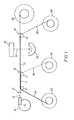
- FIGS. 1-3 illustrate several representative embodiments of this invention. It is to be understood however, that these embodiments are not the only ones within the present invention. Additional embodiments and details of the various apparatus would be readily apparent to one skilled in the art.
- an apparatus of this invention comprises:
- Imagewise exposed photographic silver halide material 12 (“photographic material") containing at least one silver halide emulsion layer is supplied as a web from camera spool 10 and taken up by accumulator 20.
- Optional dual guides 14, 16 and 18 serve to guide and constrain the material to the desired path through the apparatus.
- this photographic silver halide material has been imagewise exposed using any suitable means for that purpose (for example, a camera).
- Photochemical delivery article 34 is supplied as a web from supply reel 22 in roll form and applied to photographic material 12 at roller 15 to form web laminate 11.
- Photochemical delivery article 34 comprises nonporous substrate 36 that is peeled or otherwise removed from web laminate 11 at roller 17 to form substrate-free web laminate 13.
- the removed nonporous substrate 36 is taken up or collected on reel 24.
- the remaining hydrogel 38 is pulled away from substrate-free web laminate 13 at roller 19 and taken up or collected on reel 26.
- Optional blades can be positioned between roller 17 and dual guides 16 and between roller 19 and dual guides 18 as a means for removing nonporous substrate 36 and hydrogel 38, respectively, from the various web laminates.
- Imagewise exposed photographic silver halide film 12 is processed to form a useful photographic image by contact with photochemical delivery article 34 as the laminates travel between rollers 15 and 19.
- Optional heating stations can be located so as to heat web laminate 11 and/or substrate-free web laminate 13 if desired to quicken photochemical reaction.
- An optional cooling station can also be position after any heating station to cool the film.
- An electronic scanning station or means includes light source 28 that emits a beam of light 30 and sensor 32 that senses light passing through substrate-free web laminate 13 as it passes between roller 17 and accumulator 20.
- the scanning means provides density representative signals from the image in the photographic material, which signals can be used in various ways.
- photochemical delivery article 34 is contacted with water or an aqueous solution (such as a buffer, photochemical activator solution, photographic color or black-and-white developing solution or chemical base) before it is wound or collected on supply reel 22.
- aqueous solutions serve to promote processing (such as development) of imagewise exposed photographic material 12 while it is in contact with photochemical delivery article 34 .
- camera spool 10 is a thrust cartridge and the drive for the thrust cartridge is coordinated with the drives for supply reel 22 and take-up reels 24, and 26.
- accumulator 20 serves to store photographic material 12 until it is rewound into the thrust cartridge.
- camera spool 10 is a standard film spool and accumulator 20 actively collects photographic material 12.
- dual guides 14, 16 and 18 can be dual nib rollers that drive photographic material 12 through the apparatus.
- the web drives can be coordinated with the supply reel 22 and take-up reels 24 and 26 . It is useful to coordinate the advance of a photographic material and the photochemical delivery article advance so as to minimize scratching of the photographic material surface while it is processed.
- an apparatus for providing a photochemical reaction comprises:
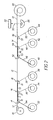
- FIG. 2 This apparatus for using multiple photochemical delivery articles in sequence is illustrated for example in FIG. 2. While this drawing illustrates the use of only two such articles, it would be readily apparent to a skilled artisan that an apparatus could be designed to utilize three or more such articles where photoprocessing requires a multiplicity of individual photoprocessing reactions.
- Dual guides 52, 54 and 56 also serve to constrain photographic silver halide material 12 in the desired path through the apparatus.
- a second photochemical delivery article 46 is supplied in roll form from supply reel 40 and applied to photographic material 12 at roller 53 to form web laminate 49.
- Nonporous substrate 48 is peeled from web laminate 49 at roller 55 leaving substrate-free web laminate 51 and substrate 48 is taken up or stored on reel 42.
- the remaining hydrogel 50 is separated from material 12 in substrate-free web laminate 51 at roller 57 and taken up on reel 44.
- Optional peeling blades (not shown) can be positioned between roller 53 and dual guides 52 and between roller 57 and dual guides 56 .
- the photographic material 12 is processed by contact with the two distinct photochemical delivery articles 34 and 46 between rollers 15 and 19, and 53 and 57, respectively.
- the two photochemical delivery articles can include the same or different photochemicals.
- either or both delivery articles can be substantially free of photochemicals before being laminated.
- Photochemicals can be supplied to the hydrogel wile it is in one of the web laminates.
- Optional heating stations can be located in the apparatus so as to heat the any or all of the web laminates between rollers 15 and 57.
- Optional cooling stations can also be used to cool the processed photographic material at any position or station in the apparatus.
- an electronic scanning station or means includes light source 28 that emits a beam of light 30 and sensor 32 that senses light passing through photographic material 12 between roller 57 and accumulator 20.
- a scanning means can be positioned anywhere in the apparatus, and multiple scanning means can be positioned at various stations in the apparatus, for example to scan any of the web laminates 11, 13, 49 or 51 as well as photographic material 12.
- photochemical delivery article 34 and/or 46 can be contacted with water or an aqueous solution (such as a buffer, photochemical activator solution, photographic color or black-and-white developing solution, chemical base, photographic bleaching solution, or photographic fixing solution) before it is wound onto supply reel 22 or 40, respectively.
- aqueous solutions serve to promote processing (such as development, bleaching or fixing) of photographic material 12 while it is in contact with the various photochemical delivery articles.
- photochemical delivery article 34 can be contacted with a developing composition, and photochemical delivery article 46 can be contacted with a bleaching and/or fixing solution to provide the sequential photochemical reactions used in many photoprocessing methods.
- photochemical delivery articles 34 and 46 can be supplied free of photochemicals, but after lamination, they can be contacted with appropriate photochemicals.
- Still another embodiment of this invention includes an apparatus comprising:
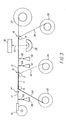
- FIG. 3 This embodiment is illustrated for example in FIG. 3 and is similar to the apparatus illustrated in FIG. 1 except for some additional components or stations.
- an aqueous solution such as a chemical base activator solution
- Photographic material 12 is treated similar as shown in FIG. 1 until nonporous substrate 36 is removed at roller 17.
- a second aqueous solution (such as a color or black-and-white developing solution) is applied from applicator 62 at arrow 64 .
- Still another aqueous solution (for example an acidic "stop" solution) can be applied using applicator 66 at arrow 68 .
- the remaining stations and features are the same as those described in FIG. 1.
- the various "applicators" in FIG. 3 can be any suitable source of aqueous solutions including drip applicators, processing tanks or containers, lines from processing tanks or containers, "bubble-jet” or ink-jet type applicators.
- Photochemical delivery article 34 serves to distribute the applied aqueous solution thereby suppressing drip and flow marks on the processed photographic material 12.
- additional applicators are arranged to apply desilvering solutions (bleaching, fixing or bleach-fixing solutions) to the same or different photochemical delivery article prior to its use.
- desilvering solutions bleaching, fixing or bleach-fixing solutions
- heating means heatable platen, heated rollers, infrared heaters or gas heaters (in the apparatus to increase photochemical reaction time in the web laminates.
- heating means can be located in various stations of the apparatus. For example, in reference to FIGS. 1-3, a heating means can be located between rollers 15 and 17, or between rollers 17 and 19 or between roller 19 and accumulator 20.
- the apparatus can include a means for applying pressure to the various web laminates.
- pressure applying means can include pressure rollers (for example rollers 15 and 53 in FIGS. 1-3) or the nib rollers can be configured to apply pressure across the reactive surface of the web laminates.
- the apparatus of this invention can be arranged as a system of individual components or stations that can be assembled or disassembled when desired. Alternatively, it can be a single piece of equipment with the desired stations and components integrated into a self-contained unit.
- an apparatus in still another embodiment, includes a supply of one or more photochemical delivery articles that contain substantially no photochemicals.
- the photochemicals can be applied to the processed photographic material using other means, such as applicators like those shown in FIG. 3 above. While laminated to the processed photographic material, the photochemical delivery article is then used to spread or evenly distribute to the applied solutions of photochemicals.
- the photochemical delivery articles useful in this invention contain only two essential structural components: a nonporous substrate and a hydrogel disposed thereon.
- the diffusible photochemicals (described below) are preferably incorporated within the hydrogel.
- the nonporous substrate serves to provide some physical and mechanical integrity to the delivery article, and can be also considered a "backing sheet", support or release liner. It is preferred that the nonporous substrate be dimensionally stable, but remain flexible and deformable, allowing easy storage in roll form.
- Conventional photographic film supports and hydrogel wound dressing backing sheets are examples of useful support materials that have a desirable blend of plasticity and dimensional stability.
- the nonoporous substrate is bonded to the hydrogel and is not releasable from it without force.
- This arrangement allows easy separation of the hydrogel from a laminate with a processed photographic material following the processing step.
- a removable substrate can be separated from the hydrogel to provide access to the top surface of the hydrogel-photographic material web laminate to allow application of additional fluids, processing solutions or activator solutions.
- the substrate should be as thin as possible, for example, generally less than 500 ⁇ m and preferably less than 200 ⁇ m. The minimum thickness would depend upon the type of material composing the substrate but generally it is at least 75 ⁇ m.
- the substrate is nonporous so the photochemicals more readily diffuse into the photographic material. In other words, the substrate acts as a fluid barrier and is therefore substantially fluid impermeable.
- the substrate further serves to prevent the hydrogel from adhering to itself.
- the photochemical delivery article can be stored and used as sheets or strips. Preferably, it can be stored and used in roll form for use in the apparatus of this invention, and it is even more important that the hydrogel not adhere to itself in that form.
- the substrate would provide additional advantages of a barrier material to reduce air permeation or dehydration.
- the substrate can be transparent and colorless, tinted or opaque to light depending upon the particular use of the photochemical delivery article.
- the substrates can be homogeneous (same composition throughout) or heterogeneous (varying composition) and can be composed of synthetic or naturally-occurring polymeric materials, metal foils or flexible ceramics.
- useful substrate materials include, but are not limited to, resin-coated papers, polyethylenes, polypropylenes, polyethylenepolypropylenes, polyvinylidene chloride, polyamides, polyesters (such as polyethylene terephthalate and polyethylene naphthalate), polyvinyl chloride, cellulosic polymers (such as cellulose triacetate), polyurethanes, polyvinyl alcohol, silicone rubbers, polyvinyl (meth)acrylates, polystyrenes and others too numerous to mention.
- Preferred substrate materials are polyvinyl (meth)acrylates, polyethylene and polypropylene films and resin-coated papers.
- polymers it is intended to include homopolymers as well as copolymers containing recurring units from two or more different polymerizable monomers or segments (in the case of block copolymers).
- hydrogels are porous matrices of polymers characterized by hydrophilicity and insolubility in water. In water, they swell to an equilibrium volume but maintain their shape. The hydrophilicity is usually due to the presence of water-solubilizing groups such as hydroxy, carboxy, carbonamido, sulfo and others readily apparent to one skilled in the art attached to the hydrogel polymers. Hydrogel water-insolubility and stability of shape are due to the presence of a three-dimensional network. The swollen state results from a balance between the fluid dispersing forces acting on hydrated chains and cohesive forces that do not prevent the penetration of water into the network. Cohesive forces can be provided by crosslinking.
- Hydrogels are well known in the medical literature as wound and burn dressings, articles for chemical or drug delivery, conductive articles for electrocardiography, electrophoretic devices and tissue-compatible surgical fillers. We have discovered that some commercial articles used for wound or burn dressings are useful for making rudimentary photochemical delivery articles.
- Hydrogels known in the art are described for example in US-A-3,419,006 (King), US-A-3,664,343 (Assarsson), US-A-3,993,551 (Assarsson et al), US-A-5,714,159 (Shalaby), US-A-5,792,471 (Curatolo), US-A-4,909,244 (Quarfoot et al) and US-A-5,115,801 (Cartmell et al), for their teaching of hydrogels and methods of manufacture. Some of the details of hydrogels are presented herein for illustrative purposes, but it should be understood that the invention is not so limited.
- useful hydrogels can be composed of polymethacrylic esters or polyacrylic esters, polymers derived from hydroxyalkyl methacrylates or acrylates, polyacrylamides or polymethacrylamides with ionic comonomer units, N-vinyl-2-pyrrolidinone copolymers containing less hydrophilic comonomer units or ionizable groups, polymers containing oxyethylene or oxypropylene units (for example polyoxyethylenes, polyoxypropylenes and polyoxyethylene-polypropylenes as described for example in US-A-3,419,006 and US-A-3,664,343) and crosslinked methoxypoly(ethylene glycols).
- Preferred hydrogels are composed of polymers comprising oxyethylene or polyoxypropylene units or both, and the most preferred hydrogels are composed of polyoxyethylenes.
- one useful hydrogel material is derived from the polymerization of poly(ethylene oxide) resin to provide a final weight of 4% PEO resin and 96% water.
- a material is commercially available as 2nd SkinTM Moist Burn Pad burn dressing from Spenco Medical Products. This material has both a backing sheet (substrate) and a cover sheet (on the opposite side of the hydrogel).
- Another commercially available hydrogel is VigilonTM wound dressing that is marketed by Bard Medical Division of C.R. Bard Inc. This material appears to be composed of 4% PEO also and has a polyethylene backing sheet on both sides. Of course, at least one of the backing sheets must be removed so the resulting delivery article can imbibe photochemicals and be applied to a processable photographic material.
- the hydrogel matrix is substantially free of gelatin, gelatin derivatives or other hydrophilic colloidal materials that are commonly used in photographic emulsion layers.
- the delivery articles of this invention are different in composition from the processing web described in US-A-3,179,517 (noted above).
- the delivery articles of this invention are not "image-donating” or “image-receiving” webs that are generally used in diffusion transfer materials.
- the hydrogels can be disposed on the substrates in any suitable fashion. For example, they can be polymerized and cast onto the substrate from the polymerization solution. Alternatively, the hydrogel can be impregnated onto a suitable absorbing, reinforcing material such as a reticulated foam, scrim, or non-woven material and then laminated to the substrate.
- the substrate is preferably a dimensionally stable backing support.
- the reinforcing material may be bonded to the dimensionally stable support by means of an adhesive layer or other means prior to impregnation with the hydrogel, or the hydrogel itself may be directly bonded to the support during the casting process or by means of an adhesive.
- the various photochemicals necessary to provide a photographic image can be imbibed into or contacted with the hydrogels.
- the hydrogel matrix can be dried to remove non-chemically bound water to accelerate the uptake of photochemical processing composition upon immersion or direct application.
- One skilled in the art would readily understand how long the hydrogel needs to be soaked with the photochemical solutions to imbibe the necessary amount of photochemicals. It may vary with the type and amount of photochemicals desired for a given photochemical reaction.
- the various photochemical solutions are prepared or purchased as described below using the various photochemicals known in the art or from several commercial sources.
- a photochemical released from the photochemical delivery article is a chemical acid or a base.
- Blocked forms of various photographic reagents can be contained in the photographic material itself, such as a blocked developer that is released upon contact with a chemical base.
- the chemical base Upon bringing a chemical base-containing delivery article into reactive association with a silver halide emulsion of such an imagewise exposed photographic material, the chemical base causes the blocked developer to be released and development to occur.
- a useful chemical base in this instance would be an aqueous inorganic base, such as an alkali metal hydroxide (for example sodium hydroxide). It is preferred to deliver smaller molecules or ions with the photochemical delivery article in order to increase the rate of diffusion and thereby accelerate photochemical delivery and reaction.
- the hydrogel moisture content, polymer content, crosslinking density, thickness and structural strength can be modified to advantage to suit the processing method for a given photographic material to be processed.
- the photochemical delivery article should have a hydrogel layer thickness of at least 0.01 mm in order to contain adequate quantities of deliverable photochemical(s) and a thickness of greater than 0.5 mm is preferred. There is no upper limit on the thickness of the hydrogel layer of the photochemical delivery article, but it is preferred that it be less than 5 mm.
- a reinforcing material, if used, can have a matrix or honeycomb structure, random fibers or a fine netting to minimize barriers to solution flow or to make processing more uniform. It is preferred to avoid the use of a reinforcing material in order to minimize barriers to diffusion of photochemical(s).
- Lubricants, surfactants, wetting agents or other surface active agents may be included in the hydrogel to improve wetting or swelling of the image photographic materials, photochemical delivery, and lamination and delamination during processing.
- a black-and-white image can be obtained using the basic photoprocessing steps of black-and-white development and fixing wherein each processing step is carried out using a separate delivery article.
- one photochemical delivery article would be used for black-and-white development and a photochemical second delivery article for fixing, each delivery article containing a black-and-white photochemical (for example, a black-and-white developing agent).
- black-and-white developing agents and fixing agents are black-and-white developing agents and fixing agents. These and other photochemicals commonly used in black-and-white processing are described below in some detail.
- Imaged black-and-white photographic silver halide materials that can be processed can include black-and-white silver halide radiographic films, aerial films, black-and-white motion picture films, duplicating and copy films, and amateur and professional continuous tone black-and-white films and papers.
- the general composition of such materials is well known in the art.
- a black-and-white developing composition can be prepared and imbibed into a hydrogel.
- This composition can contain one or more black-and-white dihydroxybenzene developing agents, including hydroquinone and derivatives thereof that would be readily apparent to those skilled in the art (see for example, US-A-4,269,929 of Nothnagle and US-A-5,457,011 of Lehr et al). Mixtures of these developing agents can be used if desired.
- useful developing agents include ascorbic acid and its derivatives are described in a considerable number of publications relating to photographic processes, including US-A-5,236,816 (Purol et al) and references cited therein.
- Useful ascorbic acid developing agents include ascorbic acid and the analogues, isomers and derivatives thereof.
- Such compounds include, but are not limited to, D- or L-ascorbic acid, sugar-type derivatives thereof (such as sorboascorbic acid, ⁇ -lactoascorbic acid, 6-desoxy-L-ascorbic acid, L-rhamnoascorbic acid, imino-6-desoxy-L-ascorbic acid, glucoascorbic acid, fucoascorbic acid, glucoheptoascorbic acid, maltoascorbic acid, L-arabosascorbic acid), sodium ascorbate, potassium ascorbate, isoascorbic acid (or L-erythroascorbic acid), and salts thereof (such as alkali metal, ammonium or others known in the art), endiol type ascorbic acid, an enaminol type ascorbic acid, a thioenol type ascorbic acid, and an enamin-thiol type ascorbic acid, as described for example in US-A-5,
- the black-and-white developing composition also can include one or more auxiliary co-developing agents that are also well known (for example, Mason, Photographic Processing Chemistry, Focal Press, London, 1975). Any auxiliary developing agent can be used, but the 3-pyrazolidone developing agents are preferred (also known as "phenidone” type developing agents). Such compounds are described, for example, in US-A-5,236,816 (noted above).
- the most commonly used compounds of this class are 1-phenyl-3-pyrazolidone, 1-phenyl-4,4-dimethyl-3-pyrazolidone, 4-hydroxymethyl-4-methyl-1-phenyl-3-pyrazolidone, 5-phenyl-3-pyrazolidone, 1- p -aminophenyl-4,4-dimethyl-3-pyrazolidone, 1- p -tolyl-4,4-dimethyl-3-pyrazolidone, 1- p -tolyl-4-hydroxymethyl-4-methyl-3-pyrazolidone, and 1-phenyl-4,4-dihydroxymethyl-3-pyrazolidone.
- An organic antifoggant is preferably present in the black-and-white developing composition, either singly or in admixture. Such compounds control the gross fog appearance in the processed elements.
- Suitable antifoggants include, but are not limited to, benzimidazoles, benzotriazoles, mercaptotetrazoles, indazoles and mercaptothiadiazoles.
- the developing composition can also include one or more preservatives or antioxidants.
- Various conventional black-and-white preservatives can be used including sulfites.
- a "sulfite" preservative is used herein to mean any sulfur compound that is capable of forming or providing sulfite ions in aqueous alkaline solution.
- Various known buffers such as borates, carbonates and phosphates, can be included in the composition to maintain the desired pH.
- the pH can be adjusted with a suitable base (such as a hydroxide) or acid.
- the pH of the developing/fixing composition is generally from 9 to 12, and more preferably from 10 to 11.
- the black-and-white developing composition can contain one or more sequestering agents that typically function to form stable complexes with free metal ions (such as silver ions) in solution, in conventional amounts.
- the black-and-white developing composition can also contain other additives including various development restrainers, development accelerators, swelling control agents and stabilizing agents, each in conventional amounts. Examples of such components are described in US-A-5,236,816 (noted above), US-A-5,474,879 (Fitterman et al), Japanese Kokai 7-56286 and EP-A-0 585 792.
- a fixing composition containing a photographic fixing agent is used to remove silver. While sulfite ions are present and sometimes acts as a fixing agent, the primary photographic fixing agents used in the fixing composition are not sulfites.
- the useful photographic fixing agents are chosen from thiosulfates (including sodium thiosulfate, ammonium thiosulfate, potassium thiosulfate and others readily known in the art), cysteine (and similar thiol-containing compounds), mercapto-substituted compounds (such as those described by Haist, Modern Photographic Processing , John Wiley & Sons, N.Y., 1979), thiocyanates (such as sodium thiocyanate, potassium thiocyanate, ammonium thiocyanate and others readily known in the art), amines and halides. Mixtures of one or more of these classes of fixing agents can be used if desired.
- the fixing composition can also include various addenda commonly employed therein, such as buffers, fixing accelerators, sequestering agents, swelling control agents, and stabilizing agents, each in conventional amounts.
- the fixing composition In its aqueous form, the fixing composition generally has a pH of at least 4, preferably at least 4.5, and generally less than 6, and preferably less than 5.5.
- Color image formation in various color photographic silver halide materials require certain essential photochemicals including a color developing agent, a photographic bleaching agent and a photographic fixing agent (or both a photographic bleaching and fixing agents).
- Other useful photochemicals may be needed for various processing methods including, but are not limited to, black-and-white developing agents, co-developing agents, dye stabilizing agents, fixing accelerators, bleaching accelerators, antifoggants, fogging agents and development accelerators.
- the photochemicals may provide a physical benefit such as reduced scumming, reduced crystal growth on processing equipment, reduced sludge, reduced film residue or spotting, storage stability and reduced biogrowth.
- photochemicals include, but are not limited to, surfactants, antioxidants, crystal growth inhibitors and biocides.
- delivery articles can be designed and used for color development, bleaching, fixing (or bleach-fixing), and optionally a dye stabilizing step.
- This is generally understood from the conventional Process C-41 processing method for color negative films.
- Obtaining color positive images in color reversal materials require another unique set of processing steps that are well known in the art (for example, using the conventional Process E-6 or K-25 processing).
- obtaining color images in color papers can be achieved using the conventional Process RA steps of color development and bleach-fixing.
- Motion picture films and prints may include still other processing steps.
- all of these steps and the conventional components of the processing compositions are well known, as described for example, in Research Disclosure publication 308119, December 1989, publication 17643, December 1978, and publication 38957, September, 1996.
- Color developing compositions include one or more color developing agents that are well known in the art that, in oxidized form, will react with dye forming color couplers in the processed materials.
- color developing agents include, but are not limited to, aminophenols, p -phenylenediamines (especially N,N-dialkyl- p -phenylenediamines) and others which are well known in the art, such as EP 0 434 097A1 (published June 26, 1991) and EP 0 530 921A1 (published March 10, 1993). It may be useful for the color developing agents to have one or more water-solubilizing groups as are known in the art. Further details of such materials are provided in Research Disclosure , publication 38957 (noted above).
- antioxidants are generally included. Either inorganic or organic antioxidants can be used. Many classes of useful antioxidants are known, including but not limited to, sulfites (such as sodium sulfite, potassium sulfite, sodium bisulfite and potassium metabisulfite), hydroxylamine (and derivatives thereof), hydrazines, hydrazides, amino acids, ascorbic acid (and derivatives thereof), hydroxamic acids, aminoketones, mono- and polysaccharides, mono-and polyamines, quaternary ammonium salts, nitroxy radicals, alcohols, and oximes. Mixtures of compounds from the same or different classes of antioxidants can also be used if desired.
- antioxidants are hydroxylamine derivatives as described for example, in US-A-4,892,804 (Vincent et al), US-A-4,876,174 (Ishikawa et al), US-A-5,354,646 (Kobayashi et al) and US-A-5,660,974 (Marrese et al), and US-A-5,646,327 (Burns et al), with respect to antioxidants. Many of these antioxidants are mono- and dialkylhydroxylamines having one or more substituents on one or both alkyl groups.
- Particularly useful alkyl substituents include sulfo, carboxy, amino, sulfonamido, carbonamido, hydroxy and other solubilizing substituents.
- One useful hydroxylamine antioxidant is N,N-diethylhydroxylamine.
- the noted hydroxylamine derivatives can be mono- or dialkylhydroxylamines having one or more hydroxy substituents on the one or more alkyl groups.
- Representative compounds of this type are described for example in US-A-5,709,982 (Marrese et al).
- a chemical base in the color developing composition.
- Particularly useful chemical bases include inorganic bases such as alkali metal or ammonium hydroxides (for example sodium hydroxide or potassium hydroxide).
- Other useful chemical bases are alcoholamines (such as triethanolamine, and diethanolamine).
- buffering agents are generally present in the color developing compositions to provide or maintain desired alkaline pH. These buffering agents generally have a pKa of from 9 to 13. Such useful buffering agents include, but are not limited to carbonates, borates, tetraborates, glycine salts, triethanolamine, diethanolamine, phosphates and hydroxybenzoates. Alkali metal carbonates (such as sodium carbonate, sodium bicarbonate and potassium carbonate) are preferred. Mixtures of buffering agents can be used if desired.
- Polycarboxylic acid or phosphonic acid metal ion sequestering agents are useful in the color developing composition. Such materials are well known in the art, and are described for example in US-A-4,596,765 (Kurematsu et al) and Research Disclosure publications 13410 (June, 1975), 18837 (December, 1979) and 20405 (April, 1981).
- the composition can also include one or more of a variety of other addenda that are commonly used in photographic color developing compositions, including alkali metal halides (such as potassium chloride, potassium bromide, sodium bromide and sodium iodide), auxiliary co-developing agents (such as phenidone type compounds particularly for black and white developing compositions), antifoggants, development accelerators, wetting agents, fragrances, stain reducing agents, surfactants, defoaming agents, and water-soluble or water-dispersible color dye forming couplers, as would be readily understood by one skilled in the art [see for example, the Research Disclosure publications noted above]. The amounts of such additives would be well known to a skilled artisan.
- a photochemical delivery article consists essentially of a nonporous, dimensionally stable substrate having disposed thereon a poly(ethyleneoxide) hydrogel containing one or more diffusible color development photochemicals.
- Color development is generally followed by desilvering using separate bleaching and fixing steps, or a combined bleach/fixing step using suitable silver bleaching and fixing agents.
- bleaching agents are known in the art, including hydrogen peroxide and other peracid compounds, persulfates, periodates and ferric ion salts or complexes with polycarboxylic acid chelating ligands.
- Particularly useful chelating ligands include conventional polyaminopolycarboxylic acids including ethylenediaminetetraacetic acid (EDTA), propylenediaminetetraacetic acid (PDTA) and others described in Research Disclosure publication 38957 (noted above), US-A-5,582,958 (Buchanan et al) and US-A-5,753,423 (Buongiorne et al). Biodegradable chelating ligands are also desirable because the impact on the environment is reduced.
- EDTA ethylenediaminetetraacetic acid
- PDTA propylenediaminetetraacetic acid
- Biodegradable chelating ligands are also desirable because the impact on the environment is reduced.
- Useful biodegradable chelating ligands include, but are not limited to, iminodiacetic acid or an alkyliminodiacetic acid (such as methyliminodiacetic acid), ethylenediaminedisuccinic acid and similar compounds as described in EP-A-0 532,003, and ethylenediamine monosuccinic acid and similar compounds as described in US-A-5,691,120 (Wilson et al).
- the pH of the bleaching composition is generally from 4 to 6.5.
- photographic fixing agents include, but are not limited to, thiosulfates (for example sodium thiosulfate, potassium thiosulfate and ammonium thiosulfate), thiocyanates (for example sodium thiocyanate, potassium thiocyanate and ammonium thiocyanate), thioethers (such as ethylenebisthioglycolic acid and 3,6-dithia-1,8-octanediol), imides and thiourea.
- thiosulfates for example sodium thiosulfate, potassium thiosulfate and ammonium thiosulfate
- thiocyanates for example sodium thiocyanate, potassium thiocyanate and ammonium thiocyanate
- thioethers such as ethylenebisthioglycolic acid and 3,6-dithia-1,8-octanediol
- fixing accelerators include, but are not limited to, ammonium salts, guanidine, ethylenediamine and other amines, quaternary ammonium salts and other amine salts, thiourea, thioethers, thiols and thiolates. Examples of useful thioether fixing accelerators are described in US-A-5,633,124 (Schmittou et al), for the teaching of fixing compositions. The use of thiocyanate as a fixer accelerator for promoting rapid silver removal is disclosed in US-A-6,022,676 (Schmittou et al).
- the fixing compositions can also include one or more of various addenda optionally but commonly used in such compositions for various purposes, including hardening agents, preservatives (such as sulfites or bisulfites), metal sequestering agents (such as polycarboxylic acids and organophosphonic acids), buffers, and fixing accelerators.
- hardening agents such as sulfites or bisulfites
- metal sequestering agents such as polycarboxylic acids and organophosphonic acids
- the desired pH of the fixing compositions is 8 or less, and can be achieved and maintained using any useful combination of acids and bases, as well as various buffers.
- Such compositions can be used at the end of the processing sequence (such as for color negative films and color papers), or in another part of the processing sequence (such as between color development and bleaching as a pre-bleaching composition).
- Such dye stabilizing compositions generally have a pH of from 5.5 to 8, and include a dye stabilization compound (such as an alkali metal formaldehyde bisulfite, hexamethylenetetramine, various benzaldehyde compounds, and various other formaldehyde releasing compounds), buffering agents, bleach-accelerating compounds, secondary amines, preservatives, and metal sequestering agents.
- a dye stabilization compound such as an alkali metal formaldehyde bisulfite, hexamethylenetetramine, various benzaldehyde compounds, and various other formaldehyde releasing compounds
- a preferred dye-stabilizing composition includes sodium formaldehyde bisulfite as a dye stabilizing compound, and thioglycerol as a bleach-accelerating compound. This composition can also be used as a pre-bleaching composition during the processing of color reversal photographic materials.
- a dye stabilizing composition or final rinsing composition is used to clean the processed photographic material as well as to stabilize the color image.
- Either type of composition generally includes one or more anionic, nonionic, cationic or amphoteric surfactants, and in the case of dye stabilizing compositions, one or more dye stabilizing compounds as described above.
- Particularly useful dye stabilizing compounds useful in these dye stabilizing compositions are described for example in EP-A-0 530 832 ( Koma et al) and US-A-5,968,716 (McGuckin et al).
- compositions described above can be present in photochemical delivery articles and used to process black-and-white or color photographic silver halide materials, including but not limited to, black-and-white films and papers, color negative photographic films, color reversal photographic films, and color photographic papers.
- the general sequence of steps and conditions (times and temperatures) for color photographic processing are well known as Process C-41 (for example, using KODAK FLEXICOLOR photochemicals) and Process ECN-2 for color negative motion films, Process E-6 and Process K-14 for color reversal films, Process ECP for color prints, and Process RA-4 for color papers.
- Black-and-white photographic processing methods and conditions are also well known (Process RP X-OMAT for radiographic materials processing, Process VERSAMAT 641 or 885 for black-and-white aerial film processing, and Process PROSTAR PLUS for graphic arts film processing).
- the photographic materials can be single or multilayer color elements.
- Multilayer color materials typically contain dye image-forming units sensitive to each of the three primary regions of the visible spectrum. Each unit can be comprised of a single emulsion layer or multiple emulsion layers sensitive to a given region of the spectrum.
- the layers of the material can be arranged in any of the various orders known in the art.
- the emulsions sensitive to each of the three primary regions of the spectrum can be disposed as a single segmented layer.
- the materials can also contain other conventional layers such as filter layers, interlayers, subbing layers, overcoats and other layers readily apparent to one skilled in the art.
- a magnetic backing can be included on the backside of conventional supports.
- Representative commercial black-and-white films and papers that are useful in the practice of this invention include, but are not limited to, KODAK T-MAX 400 Film, KODAK TRI-X Pan Film, KODAK VERICHROME PAN Film, KODAK POLYMAX II RC Black and White Papers, KODAK KODABROME II RC F Black and White Paper, KODAK PMAX Art RC V Black and White Paper, KODAK POLYCONTRAST III RC Black and White Paper, KODAK PANALURE Select RC Black and White Paper, KODAK POLYMAX FINE ART Black and White Papers, KODAK AZO Black and White Papers, ILFORD MULTIGRADE IV RC and FB Black and White Papers, ILFORD ILFOBROME GALARIE Black and White Papers, and AGFA MULTICONTRAST CLASSIC and PREMIUM Black and White Papers.
- Representative commercial color papers that are useful in the practice of this invention include, but are not limited to, KODAK EKTACOLOR EDGE V, VII and VIII Color Papers (Eastman Kodak Company), KODAK ROYAL VII Color Papers (Eastman Kodak Company), KODAK PORTRA III, IIIM Color Papers (Eastman Kodak Company), KODAK SUPRA III and IIIM Color Papers (Eastman Kodak Company), KODAK ULTRA III Color Papers (Eastman Kodak Company), FUJI SUPER Color Papers (Fuji Photo Co., FA5, FA7 and FA9), FUJI CRYSTAL ARCHIVE and Type C Color Papers (Fuji Photo Co.), KONICA COLOR QA Color Papers (Konica, Type QA6E and QA7), and AGFA TYPE II and PRESTIGE Color Papers (AGFA).
- the compositions and constructions of such commercial color photographic materials would be readily determined by one skilled in the art.
- KODAK DURATRANS KODAK DURACLEAR
- KODAK EKTAMAX KODAK EKTAMAX
- KODAK DURAFLEX photographic materials KODAK Digital Paper Type 2976 can also be processed using the present invention.
- Representative color negative films that can be processed using the delivery articles of this invention include, but are not limited to, KODAK ROYAL GOLDTM films, KODAK GOLDTM films, KODAK PRO GOLDTM films, KODAK FUNTIMETM, KODAK EKTAPRESS PLUSTM films, EASTMAN EXRTM films, KODAK ADVANTiXTM films, FUJI SUPER G Plus films, FUJI SMARTFILMTM products, FUJICOLOR NEXIATM films, KONICA VX films, KONICA SRG3200 film, 3M SCOTCHTM ATG films, and AGFA HDC and XRS films. Films suitable for processing according to this invention can also be those incorporated into what are known as "one time use cameras".
- More preferred color negative films for processing using the apparatus of the present invention are films intended for scanning and electronic image processing rather than optical printing, as described for example in US-A-6,021,277 (Sowinski et al).
- the present invention can be used to process a color photographic silver halide material comprised of a blocked but releasable photochemical (such as a blocked but releasable color developing agent).
- the photochemical(s) provided by lamination of the photochemical delivery article to a photographic material containing such a releasable, photographically useful chemical can be an chemical acid or a base that releases the blocked photochemical.
- the present invention can also be used to process positive color images in color reversal photographic films.
- the typical sequence of steps includes first development (black-and-white development), reversal processing step, color developing, bleaching, fixing, and stabilizing. There may be various washing steps between other steps, as well as a pre-bleach step or conditioning step before bleaching. Alternatively, dye stabilizing can occur between color developing and bleaching. Many details of such processes are provided in US-A-5,552,264 (noted above). Other details are provided in Research Disclosure, publication 38957 (noted above), and references noted therein.
- the photochemical delivery articles can be provided in any suitable shape or size. They can be used right after photochemical compositions are imbibed therein, or they can be wound into roll form and stored into a magazine or cartridge in sealed and protected condition to preserve moisture context and photochemical integrity and activity.
- the photochemical delivery articles can be dehydrated for storage and re-swollen with water or an "activator" solution (such as a basic aqueous solution) at the time of use.
- an "activator” solution such as a basic aqueous solution
- Use of the apparatus of this invention can be achieved by contacting an imagewise exposed photographic material (for example a roll of imaged color negative film, or strips of a certain number of "frames") with the appropriate photochemical delivery articles in their swollen state to form a web laminate.
- the delivery article is generally brought into reactive association with the silver halide emulsion layer side of the photographic material, not the support side so photochemicals can readily enter the emulsion layer(s) and cause the desired photochemical reactions.
- Applying liquids such as water, an activator solution, a photochemical processing solution (or its concentrate), or a surfactant or spreading agent solution, or applying pressure may improve the contact and the rate of photochemical delivery and chemical reaction.
- Such liquids can be added to the delivery article prior to or during contact with the photographic silver halide material. Agitation is not required in the practice of the invention, but sustained pressure, variable kneading, or rolling motions applied to the laminated photographic material and hydrogel can aid the transfer of reagent from the photochemical delivery article.
- the backing substrate that supports the hydrogel is not permanently bonded to the hydrogel and is removed, providing access to the web laminate from the backside of the photochemical delivery article.
- water, activator solution, a photoprocessing solution or other aqueous solution can be added to the web laminate at any time during the contact to increase swelling and reaction time.
- Subsequent capillary action or osmotic pressure at the interface will drive the swelling of the imaged photographic material with the photochemical processing solution in the hydrogel.
- Concentration gradients of soluble photochemicals will drive exchange between the hydrogel matrix and the contacted photographic material until equilibrium is achieved.
- contact of the delivery article must be to the silver halide emulsion side of the imagewise exposed photographic material.
- the silver halide emulsion(s) are in direct contact with the delivery article or in reactive association meaning that the photochemicals can diffuse from the delivery article into the photographic material.
- the rate of photochemical delivery and processing can be accelerated by pre-swelling the photographic material with water or an aqueous solution such as a photochemical processing solution or concentrate, or activator solution.
- the subsequent application of the delivery article by lamination can reduce or eliminate the requirement of a high-precision spreading apparatus for metering a pre-delivered solution for swelling the photographic material.
- the delivery article can perform as the spreading apparatus when supplemental processing solution is added from the support-side of the hydrogel after removal of the substrate.
- photothermographic materials providing either color or black-and-white images
- photothermographic emulsion layer is considered a "silver halide emulsion layer”.
- the contact of photochemical delivery article and imagewise exposed photographic material is for at least 15 seconds, and preferably for from 30 to 120 seconds.
- Processing temperature is at least 25°C, and preferably from 40 to 60°C.
- water, activator solution or photoprocessing solution is supplied to the web laminate of photochemical delivery article and imaged photographic material to increase the rate of swelling and photochemical reaction (for example color development). This is preferably done somewhat higher than room temperature, for example at from 40 to 50°C. After adequate photochemical reaction(s) have occurred, the hydrogel can be pulled away from the processed photographic material and disposed of in a suitable fashion (for example wound into a magazine) or recycled for future reuse (used again to imbibe photochemicals).
- the hydrogel may then be delaminated subsequently with a scraper, blade, or other suitable abrader to mechanically separate them. If the hydrogel was impregnated onto a suitable support mesh or scrim, the hydrogel can still be pulled away from the processed photographic material for storage or disposal as before. The processed photographic material can then be dried and used to provide an image for viewing using conventional procedures or digitization.
- the photographic silver halide materials can be scanned immediately after processing with one or more delivery articles or after partial or complete fixing. Preferably, both development and fixing are carried out before scanning.
- this electronic signal is further manipulated to form a useful electronic record of the image.
- the electrical signal can be passed through an analog-to-digital converter and sent to a digital computer together with location information required for pixel (point) location within the image.
- this electronic signal is encoded with colorimetric or tonal information to form an electronic record that is suitable to allow reconstruction of the image into viewable forms such as computer monitor displayed images, television images, printed images, and so forth.
- An image scanner is used to scan an imagewise exposed and photographically processed color negative material delivered from a developing station.
- an array detector such as an array charge-coupled device (CCD)
- a linear array detector such as a linear array CCD
- Signal intensity and location information can be fed to Digital Image Processor, and the information transformed into an electronic form which can be stored in any convenient storage device or otherwise delivered to the customer by any convenient method.
- the signals corresponding to the imperfection can be employed to provide a software correction so as to render the imperfections less noticeable or totally non-noticeable in soft or hard copy form.
- the developed image can be scanned multiple times by a combination of transmission and reflection scans, optionally in the infrared and the resultant files combined to produce a single file representative of the initial image.
- a procedure is described by US-A-5,465,155 (Edgar), US-A-5,519,510 (Edgar), US-A-5,790,277 (Edgar),US-A-5,988,896 (Edgar), EP-A-0 944,998, WO 99/43148, WO 99/43149 and WO 99/42954.
- Elements having calibration patches derived from one or more patch areas exposed onto a portion of unexposed photographic material as described in US-A-5,649,260 (Wheeler et al), US-A-5,563,717 (Koeng et al) and US-A-5,644,647 (Cosgrove et al) can be usefully employed.
- categorization of the element by an identifying encodement is useful for ensuring that the correct processing parameters are used, as described in EP 00204163.0 by Szajewski et al.
- Additional illustrative systems for manipulation of digital signals include techniques for maximizing the quality of image records, are disclosed by US-A-4,553,156 (Bayer), US-A-4,591,923 (Urabe et al), US-A-4,631,578 (Sisaki et al), 4,654,722 (Alkofer), US-A-4,670,793 (Yamada et al), US-A-4,694,342 (Klees) and US-A-4,962,542 (Klees), US-A-4,805,031 (Powell), US-A-4,829,370 (Mayne et al), US-A-4,839,721 (Abdulwahab), US-A-4,841,361 (Matsunawa et al), US-A-4,937,662 (Matsunawa et al), US-A-4,891,713 (Mizukoshi et al), US-A-4,912,
- the digital color records can be in most instances adjusted to produce a pleasingly color balanced image for viewing and to preserve the color fidelity of the image bearing signals through various transformations or renderings for outputting, either on a monitor or when provided as a color print.
- a suitable method for color balancing and image processing of electronic image-bearing signals in digital form is taught in EP-A-0 961 482.
- Matrices and look-up tables can provide useful image transformation.
- three 1-dimensional look-up tables can be employed, one for each of a red, green, and blue color record. Due to the complexity of these transformations, it should be noted that the transformation can often be better accomplished by a 3-dimensional LUT.
- a multi-dimensional look-up table can be employed, all as described in US-A-4,941,039 (D'Errico).
- the R, G, and B image-bearing signals from a transmission scanner are converted to an image metric which corresponds to that from a single reference image-recording device or medium and in which the metric values for all input media correspond to the trichromatic values which would have been formed by the reference device or medium had it captured the original scene under the same conditions under which the input media captured that scene.
- the reference image recording medium was chosen to be a specific color negative film, and the intermediary image data metric was chosen to be the measured RGB densities of that reference film, then for an input color negative film, the R, G, and B image-bearing signals from a scanner would be transformed to the R', G', and B' density values corresponding to those of an image which would have been formed by the reference color negative film had it been exposed under the same conditions under which the actual color negative material was exposed.
- the reference image recording medium was chosen to be a specific color negative film
- the intermediary image data metric was chosen to be the predetermined R', G', and B' intermediary densities of that reference film
- the R, G, and B image-bearing signals from a scanner would be transformed to the R', G', and B' intermediary density values corresponding to those of an image which would have been formed by the reference color negative film had it been exposed under the same conditions under which the actual color negative recording material was exposed.
- each input film calibrated to be compatible with the present method would yield, insofar as possible, identical intermediary data values corresponding to the R', G', and B' code values required to appropriately reproduce the color image which would have been formed by the reference color negative film on a reference output device.
- Uncalibrated photographic films may also be used with transformations derived for similar types of films, and the results would be similar to those described.
- additional image manipulation may be used including, but not limited to, scene balance algorithms (to determine corrections for density and color balance based on the densities of one or more areas within the processed film), tone scale manipulations to amplify film underexposure gamma as described in US-A-5,134,573 (Goodwin et al), non-adaptive or adaptive sharpening via convolution or unsharp masking, red-eye reduction, and non-adaptive or adaptive grain-suppression.
- the image may be artistically manipulated, zoomed, cropped, and combined with additional images or other manipulations as known in the art.
- the image may be electronically transmitted to a remote location or locally written to a variety of output devices including, but not limited to, silver halide film or paper writers, thermal printers, electrophotographic printers, ink-jet printers, display monitors, CD disks, optical and magnetic electronic signal storage devices, and other types of storage and display devices as known in the art.
- output devices including, but not limited to, silver halide film or paper writers, thermal printers, electrophotographic printers, ink-jet printers, display monitors, CD disks, optical and magnetic electronic signal storage devices, and other types of storage and display devices as known in the art.
- the output image-bearing signals can be for a reference output device, can be in the form of device-specific code values or can require further adjustment to become device specific code values. Such adjustment may be accomplished by further matrix transformation or 1-dimensional look-up table transformation, or a combination of such transformations to properly prepare the output image-bearing signals for any of the steps of transmitting, storing, printing, or displaying them using the specified device.
- the manipulated digital signals can also be forwarded to a suitable output device to provide a display image or stored for future use.
- the output device may take a number of forms such as a CRT display, CD disk, magnetic devices or other type of storage or output device readily apparent to one skilled in the art.
- the digital images can be used to change physical characteristics of the image, such as “windowing” and “leveling” (used in computed tomography scanning) or other manipulations known in the art.
- the apparatus of this invention can be used to process photographic materials in a free-standing, customer accessible kiosk as described for example in EP-A-0 234,833 (Sabbagh), US-A-5,113,351 (Bostic), US-A-5,627,016 (Manico) and US-A-5,664,253 (Meyers).
Landscapes
- Physics & Mathematics (AREA)
- General Physics & Mathematics (AREA)
- Silver Salt Photography Or Processing Solution Therefor (AREA)
- Photographic Developing Apparatuses (AREA)
Abstract
Description
- This invention relates to an apparatus for providing one or more photochemical reactions in imaging materials. In particular, this apparatus is useful to provide photochemical reactions in color or black-and-white photographic imaging materials using a novel photochemical delivery article comprising a hydrogel.
- The basic image-forming process of photography comprises the exposure of a silver halide photographic recording material, such as a color film, to electromagnetic radiation, and the chemical processing of the exposed material to provide a useful image. Chemical processing involves one fundamental step and one or more ancillary steps. The fundamental step is treatment of the exposed silver halide material with a developing agent wherein some or all silver ion is reduced to metallic silver, and in the case of color materials, a dye image is formed (because of a color developing agent).
- For color materials, ancillary steps include the removal of silver metal and silver salts by one or more steps of bleaching and fixing so that only a dye image remains in the processed material. These steps are commonly used to enable optical printing and can make scanning easier. During bleaching, the developed silver is oxidized to a silver salt by a suitable bleaching agent. The oxidized silver is then dissolved and removed from the material using a "fixing" agent or silver solvent in a fixing step. Black-and-white materials are desilvered using only the fixing step.
- Additional photoprocessing steps may be needed including rinsing or dye stabilization that requires even more photoprocessing chemicals. In the case of color reversal materials, additional photoprocessing steps include black-and-white development, a reversal step, pre-bleaching or conditioning step and one or more rinsing steps.
- All of these photoprocessing steps require preparation of the photoprocessing compositions (whether in aqueous or solid form), large or small photoprocessing tanks or reservoirs to hold the compositions, and disposal or regeneration of the "spent" compositions once a predetermined amount of exposed material has been processed. All of these operations require considerable manufacturing effort, shipping and handling of chemicals and aqueous solutions, replenishment of the solutions, and disposal of solutions into the environment. These characteristics of conventional photoprocessing are labor intensive, tedious, costly and potentially harmful to the environment (although much work has been accomplished in the industry to make the compositions more environmentally "friendly").
- New business opportunities are thought to exist if ways can be found to minimize or obviate the problems described above. Providing photographic images (often known as "photofinishing") is a growing business and yet there is a need to provide those images in ways that do not require some or all of the traditional photoprocessing solutions, equipment and replenishment systems.
- Various research efforts have been carried out in the industry to provide new methods of imaging. For example, research has been carried out directed at putting photoprocessing chemicals directly into the imageable materials. Coated donor/receivers systems on flexible supports have been developed in recent decades for output media (such as color prints). The conventional "instant" photographic materials are examples of imaging materials that include coated and/or delivered photoprocessing chemicals. See for example, US-A-4,605,608 (Bullitt).
- US-A-5,453,804 (Norris et al) describes a hydrogel, rolled flexible carried material that comprises an aqueous, alkaline processing composition that is used in an image transfer processing method. This material does not include a backing sheet or non-porous supporting substrate.
- All of the ongoing research efforts still have some unattractive features pertaining to the delivery of the photoprocessing chemicals (identified as "photochemicals" hereinafter). To date, the need for enabling technology remains unsatisfied.
- Photoprocessing webs comprised of gelatin or other hydrophilic colloids are also known as described for example in US-A-3,179,517 (Tregillus et al).
- In order to simplify the mechanical requirements of photoprocessing, it would be desirable to avoid high precision fluid spreading that may be required in extrusion hopper metering or a fluid bath for coating materials to be laminated. Thus, there continues to be a need for unique equipment or apparatus useful for photoprocessing that is not accompanied by the problems noted above with traditional methods or known research methods. It would also be useful to have such an apparatus that is adapted to process the images in an efficient and simple manner, but that also enables digitization of those images.
- An advance in the photographic art is provided with an apparatus for providing a photochemical reaction, the apparatus characterized as comprising:
- a) a means for supplying an imagewise exposed photographic silver halide material comprising at least one silver halide emulsion layer,
- b) a means for supplying a photochemical delivery article consisting essentially of a nonporous substrate having disposed thereon a hydrogel containing one or more diffusible photochemicals,
- c) a means for bringing the imagewise exposed photographic silver halide material and the photochemical delivery article into reactive association to form a web laminate so that a photochemical reaction can occur, and
- d) a downstream web laminate treating means that is either
- i) a means for removing said nonporous substrate from the photochemical delivery article in the web laminate, or
- ii) a means for delaminating the photochemical delivery article from the imagewise exposed photographic silver halide material, and a means for collecting the delaminated photochemical delivery article.
-
- Another apparatus for providing a photochemical reaction that is characterized as comprising:
- a) a means for supplying an imagewise exposed photographic silver halide material comprising at least one silver halide emulsion layer,
- b) a means for supplying a photochemical delivery article consisting essentially of a nonporous substrate having disposed thereon a hydrogel containing one or more diffusible photochemicals, and
- c) a means for bringing the imagewise exposed photographic silver halide material and the photochemical delivery article into reactive association to form a web laminate so that a photochemical reaction can occur.
-
- Further, an apparatus for providing a photochemical reaction is characterized as comprising:
- a) a means for supplying an imagewise exposed photographic silver halide material comprising at least one silver halide emulsion layer,
- b) a means for supplying a photochemical delivery article consisting essentially of a nonporous substrate having disposed thereon a hydrogel that is substantially free of diffusible photochemicals,
- c) a means for bringing the imagewise exposed photographic silver halide material and the photochemical delivery article into reactive association to form a web laminate,
- d) a means for removing the nonporous substrate from the photochemical delivery article in the web laminate, and
- e) a means for supplying one or more diffusible photochemicals to the photochemical delivery article in the web laminate.
-
- The present invention avoids the need for high precision fluid spreading required for extrusion hopper metering. It also avoids the traditional processing baths and equipment used in conventional photoprocessing and all the problems they entail.
- These advantages are provided with the use of an apparatus in conjunction with a novel photochemical delivery article that can be laminated to imagewise exposed photographic silver halide materials to deliver photochemicals for image formation. This lamination operation allows diffusible photochemicals to move into and out of the imagewise exposed photographic materials for a period of time sufficient for desired photochemical reactions to occur. Once the method is finished, the contacted material needs little or no further handling
- The photochemical delivery article is a permeable matrix composed of a hydrogel that, in most embodiments, has been impregnated or swollen with one or more photochemicals prior to use. The article can be used to deliver the photochemicals in a controlled fashion to the same or different materials without additional fluid extrusion, pumping or dipping the materials into processing baths. Different delivery articles can be used in sequence to deliver the different photochemicals necessary for the various sequential photochemical reactions required for providing a color or black-and-white image. For example, in providing color negative images, one photochemical delivery article could be used to deliver a color developing agent and one or more other photochemical delivery articles can be used thereafter to desilver the material. Following all necessary processing steps and drying, the processed material either can have a viewable image or be used to provide a viewable image in any suitable fashion.
- In some embodiments, the photochemical delivery article is substantially free of photochemicals when it is laminated to the processed photographic material. However, photochemicals can be delivered to the article while it is in the web laminate.
- The hydrogel containing delivery articles are advantageous because they readily absorb solvents (containing needed diffusible photochemicals), undergo rapid swelling without discernable dissolution and maintain three-dimensional networks capable of reversible deformation while maintaining their physical and mechanical integrity. Thus, photochemicals can be imbibed into the matrices with minimal effort, and they can be readily absorbed into the imaged materials in the same manner.
-
- FIG. 1 shows an apparatus of this invention that uses a single photochemical delivery article to process a photographic material in a web laminate.
- FIG. 2 shows an apparatus of this invention that uses two different photochemical delivery articles to process a photographic material.
- FIG. 3 shows an apparatus of this invention that uses a single photochemical delivery article and several delivery stations for supplying an aqueous solution to a photographic material.
-
- The present invention is better understood by making reference to FIGS. 1-3 that illustrate several representative embodiments of this invention. It is to be understood however, that these embodiments are not the only ones within the present invention. Additional embodiments and details of the various apparatus would be readily apparent to one skilled in the art.
- For example, an apparatus of this invention comprises:
- a) a means for supplying an imagewise exposed photographic silver halide material comprising at least one silver halide emulsion layer,
- b) a means for supplying a photochemical delivery article consisting essentially of a nonporous substrate having disposed thereon a hydrogel containing one or more diffusible photochemicals,
- c) a means for bringing the imagewise exposed photographic silver halide material and the photochemical delivery article into reactive association to form a web laminate so that a photochemical reaction can occur,
- d) a means for removing the nonporous substrate from the photochemical delivery article in the laminate,
- e) a means for scanning the web laminate to provide density representative signals, and
- f) a means for delaminating the photochemical delivery article from the imagewise exposed photographic silver halide material.
-
- This embodiment of this invention is illustrated for example in FIG. 1. Imagewise exposed photographic silver halide material 12 ("photographic material") containing at least one silver halide emulsion layer is supplied as a web from
camera spool 10 and taken up byaccumulator 20. Optionaldual guides Photochemical delivery article 34 is supplied as a web fromsupply reel 22 in roll form and applied tophotographic material 12 atroller 15 to form web laminate 11.Photochemical delivery article 34 comprisesnonporous substrate 36 that is peeled or otherwise removed from web laminate 11 atroller 17 to form substrate-free web laminate 13. The removednonporous substrate 36 is taken up or collected onreel 24. The remaininghydrogel 38 is pulled away from substrate-free web laminate 13 atroller 19 and taken up or collected onreel 26. - Optional blades (not shown) can be positioned between
roller 17 anddual guides 16 and betweenroller 19 anddual guides 18 as a means for removingnonporous substrate 36 andhydrogel 38, respectively, from the various web laminates. - Imagewise exposed photographic
silver halide film 12 is processed to form a useful photographic image by contact withphotochemical delivery article 34 as the laminates travel betweenrollers free web laminate 13 if desired to quicken photochemical reaction. An optional cooling station (not shown) can also be position after any heating station to cool the film. - An electronic scanning station or means includes
light source 28 that emits a beam oflight 30 andsensor 32 that senses light passing through substrate-free web laminate 13 as it passes betweenroller 17 andaccumulator 20. As described in more detail below, the scanning means provides density representative signals from the image in the photographic material, which signals can be used in various ways. - In one embodiment,
photochemical delivery article 34 is contacted with water or an aqueous solution (such as a buffer, photochemical activator solution, photographic color or black-and-white developing solution or chemical base) before it is wound or collected onsupply reel 22. For example, such aqueous solutions serve to promote processing (such as development) of imagewise exposedphotographic material 12 while it is in contact withphotochemical delivery article 34. - In another embodiment,
camera spool 10 is a thrust cartridge and the drive for the thrust cartridge is coordinated with the drives forsupply reel 22 and take-upreels accumulator 20 serves to storephotographic material 12 until it is rewound into the thrust cartridge. - In still another embodiment,
camera spool 10 is a standard film spool andaccumulator 20 actively collectsphotographic material 12. In this instance,dual guides photographic material 12 through the apparatus. The web drives can be coordinated with thesupply reel 22 and take-upreels - In still another embodiment, an apparatus for providing a photochemical reaction comprises:
- a) a means for supplying an imagewise exposed photographic silver halide material comprising at least one silver halide emulsion layer,
- b) a means for supplying a first photochemical delivery article consisting essentially of a nonporous substrate having disposed thereon a hydrogel containing a first diffusible photochemical,
- c) a means for bringing the imagewise exposed photographic silver halide material and the first photochemical delivery article into reactive association to form a first web laminate so that a first photochemical reaction can occur,
- d) a means for delaminating the first photochemical delivery article from the imagewise exposed photographic silver halide material,
- e) a means for supplying a second photochemical delivery article consisting essentially of a nonporous substrate having disposed thereon a hydrogel containing a second diffusible photochemical, and
- f) a means for bringing the imagewise exposed photographic silver halide material and the second photochemical delivery article into reactive association to form a second web laminate so that a second photochemical reaction can occur.
-
- This apparatus for using multiple photochemical delivery articles in sequence is illustrated for example in FIG. 2. While this drawing illustrates the use of only two such articles, it would be readily apparent to a skilled artisan that an apparatus could be designed to utilize three or more such articles where photoprocessing requires a multiplicity of individual photoprocessing reactions.
- The basic arrangement of components and stations on the left side of FIG. 2 (prior to dual guides 18) is similar to that shown in FIG. 1. Dual guides 52, 54 and 56 also serve to constrain photographic
silver halide material 12 in the desired path through the apparatus. A secondphotochemical delivery article 46 is supplied in roll form fromsupply reel 40 and applied tophotographic material 12 atroller 53 to formweb laminate 49.Nonporous substrate 48 is peeled fromweb laminate 49 atroller 55 leaving substrate-free web laminate 51 andsubstrate 48 is taken up or stored onreel 42. The remaininghydrogel 50 is separated frommaterial 12 in substrate-free web laminate 51 atroller 57 and taken up onreel 44. Optional peeling blades (not shown) can be positioned betweenroller 53 anddual guides 52 and betweenroller 57 anddual guides 56. Thephotographic material 12 is processed by contact with the two distinctphotochemical delivery articles rollers - Alternatively, either or both delivery articles can be substantially free of photochemicals before being laminated. Photochemicals can be supplied to the hydrogel wile it is in one of the web laminates.
- Optional heating stations (not shown) can be located in the apparatus so as to heat the any or all of the web laminates between
rollers light source 28 that emits a beam oflight 30 andsensor 32 that senses light passing throughphotographic material 12 betweenroller 57 andaccumulator 20. However, such a scanning means can be positioned anywhere in the apparatus, and multiple scanning means can be positioned at various stations in the apparatus, for example to scan any of the web laminates 11, 13, 49 or 51 as well asphotographic material 12. - In other embodiments,
photochemical delivery article 34 and/or 46 can be contacted with water or an aqueous solution (such as a buffer, photochemical activator solution, photographic color or black-and-white developing solution, chemical base, photographic bleaching solution, or photographic fixing solution) before it is wound ontosupply reel photographic material 12 while it is in contact with the various photochemical delivery articles. - For example,
photochemical delivery article 34 can be contacted with a developing composition, andphotochemical delivery article 46 can be contacted with a bleaching and/or fixing solution to provide the sequential photochemical reactions used in many photoprocessing methods. - Still again, either or both of
photochemical delivery articles - Still another embodiment of this invention includes an apparatus comprising:
- a) a means for supplying an imagewise exposed photographic silver halide material comprising at least one silver halide emulsion layer,
- b) a means for supplying a photochemical delivery article consisting essentially of a nonporous substrate having disposed thereon a hydrogel containing one or more diffusible photochemicals,
- c) a means for bringing the imagewise exposed photographic silver halide material and the photochemical delivery article into reactive association to form a web laminate so that a photochemical reaction can occur,
- c') a means for contacting the imagewise exposed photographic silver halide material with an aqueous solution prior to its being laminated,
- d) a means for removing the nonporous substrate from the photochemical delivery article in the web laminate to form a substrate-free web laminate,
- d') a means for contacting the substrate-free web laminate after removal of the nonporous substrate with one or more aqueous solutions,
- e) a means for scanning the substrate-free web laminate to provide density representative signals, and
- f) a means for delaminating the photochemical delivery article from said imagewise exposed photographic silver halide material.
-
- This embodiment is illustrated for example in FIG. 3 and is similar to the apparatus illustrated in FIG. 1 except for some additional components or stations. As shown in FIG. 3, an aqueous solution (such as a chemical base activator solution) can be applied to
photographic material 12 fromapplicator 58 as shown byarrow 60.Photographic material 12 is treated similar as shown in FIG. 1 untilnonporous substrate 36 is removed atroller 17. A second aqueous solution (such as a color or black-and-white developing solution) is applied fromapplicator 62 atarrow 64. Still another aqueous solution (for example an acidic "stop" solution) can be applied usingapplicator 66 atarrow 68. The remaining stations and features are the same as those described in FIG. 1. - The various "applicators" in FIG. 3 can be any suitable source of aqueous solutions including drip applicators, processing tanks or containers, lines from processing tanks or containers, "bubble-jet" or ink-jet type applicators.
-
Photochemical delivery article 34 serves to distribute the applied aqueous solution thereby suppressing drip and flow marks on the processedphotographic material 12. In another embodiment, additional applicators are arranged to apply desilvering solutions (bleaching, fixing or bleach-fixing solutions) to the same or different photochemical delivery article prior to its use. When such desilvering solutions are employed, however, it can be advantageous to locate the scanning means so as to scan the processedphotographic material 12 betweenroller 19 andaccumulator 20. - In some embodiments, it may be desirable to include one or more heating means (heated platen, heated rollers, infrared heaters or gas heaters (in the apparatus to increase photochemical reaction time in the web laminates. Such heating means can be located in various stations of the apparatus. For example, in reference to FIGS. 1-3, a heating means can be located between
rollers rollers roller 19 andaccumulator 20. - In addition, the apparatus can include a means for applying pressure to the various web laminates. Such pressure applying means can include pressure rollers (for
example rollers - The apparatus of this invention can be arranged as a system of individual components or stations that can be assembled or disassembled when desired. Alternatively, it can be a single piece of equipment with the desired stations and components integrated into a self-contained unit.
- In still another embodiment of this invention, an apparatus includes a supply of one or more photochemical delivery articles that contain substantially no photochemicals. However, the photochemicals can be applied to the processed photographic material using other means, such as applicators like those shown in FIG. 3 above. While laminated to the processed photographic material, the photochemical delivery article is then used to spread or evenly distribute to the applied solutions of photochemicals.
- The photochemical delivery articles useful in this invention contain only two essential structural components: a nonporous substrate and a hydrogel disposed thereon. The diffusible photochemicals (described below) are preferably incorporated within the hydrogel. Thus, there is no image-receiving or image-donating material or layer as described in US-A-4,605,608 (noted above).
- The nonporous substrate serves to provide some physical and mechanical integrity to the delivery article, and can be also considered a "backing sheet", support or release liner. It is preferred that the nonporous substrate be dimensionally stable, but remain flexible and deformable, allowing easy storage in roll form. Conventional photographic film supports and hydrogel wound dressing backing sheets are examples of useful support materials that have a desirable blend of plasticity and dimensional stability.
- In one contemplated embodiment, the nonoporous substrate is bonded to the hydrogel and is not releasable from it without force. This arrangement allows easy separation of the hydrogel from a laminate with a processed photographic material following the processing step. Alternatively and preferably, a removable substrate can be separated from the hydrogel to provide access to the top surface of the hydrogel-photographic material web laminate to allow application of additional fluids, processing solutions or activator solutions.
- The substrate should be as thin as possible, for example, generally less than 500 µm and preferably less than 200 µm. The minimum thickness would depend upon the type of material composing the substrate but generally it is at least 75 µm. The substrate is nonporous so the photochemicals more readily diffuse into the photographic material. In other words, the substrate acts as a fluid barrier and is therefore substantially fluid impermeable.
- The substrate further serves to prevent the hydrogel from adhering to itself. The photochemical delivery article can be stored and used as sheets or strips. Preferably, it can be stored and used in roll form for use in the apparatus of this invention, and it is even more important that the hydrogel not adhere to itself in that form. In addition, the substrate would provide additional advantages of a barrier material to reduce air permeation or dehydration.
- The substrate can be transparent and colorless, tinted or opaque to light depending upon the particular use of the photochemical delivery article.
- The substrates can be homogeneous (same composition throughout) or heterogeneous (varying composition) and can be composed of synthetic or naturally-occurring polymeric materials, metal foils or flexible ceramics. Examples of useful substrate materials include, but are not limited to, resin-coated papers, polyethylenes, polypropylenes, polyethylenepolypropylenes, polyvinylidene chloride, polyamides, polyesters (such as polyethylene terephthalate and polyethylene naphthalate), polyvinyl chloride, cellulosic polymers (such as cellulose triacetate), polyurethanes, polyvinyl alcohol, silicone rubbers, polyvinyl (meth)acrylates, polystyrenes and others too numerous to mention. Other useful substrate materials are those used in conventional photographic materials as described for example in Research Disclosure, publication 38957, pages 592-639 (September 1996) Section XV Supports. Research Disclosure is a publication of Kenneth Mason Publications Ltd., Dudley House, 12 North Street, Emsworth, Hampshire PO10 7DQ England.
- Preferred substrate materials are polyvinyl (meth)acrylates, polyethylene and polypropylene films and resin-coated papers. In reference to polymers herein, it is intended to include homopolymers as well as copolymers containing recurring units from two or more different polymerizable monomers or segments (in the case of block copolymers).
- In general, hydrogels, or water-containing gels, are porous matrices of polymers characterized by hydrophilicity and insolubility in water. In water, they swell to an equilibrium volume but maintain their shape. The hydrophilicity is usually due to the presence of water-solubilizing groups such as hydroxy, carboxy, carbonamido, sulfo and others readily apparent to one skilled in the art attached to the hydrogel polymers. Hydrogel water-insolubility and stability of shape are due to the presence of a three-dimensional network. The swollen state results from a balance between the fluid dispersing forces acting on hydrated chains and cohesive forces that do not prevent the penetration of water into the network. Cohesive forces can be provided by crosslinking. Other forces are electrostatic, hydrophobic or dipole-dipole forces. Further details of hydrogels and their classifications are provided by Kudela in Encyclopedia of Polymer Science and Engineering, Volume 7, John Wiley & Sons (New York, 1987), pp. 783-807.
- Hydrogels are well known in the medical literature as wound and burn dressings, articles for chemical or drug delivery, conductive articles for electrocardiography, electrophoretic devices and tissue-compatible surgical fillers. We have discovered that some commercial articles used for wound or burn dressings are useful for making rudimentary photochemical delivery articles. Hydrogels known in the art are described for example in US-A-3,419,006 (King), US-A-3,664,343 (Assarsson), US-A-3,993,551 (Assarsson et al), US-A-5,714,159 (Shalaby), US-A-5,792,471 (Curatolo), US-A-4,909,244 (Quarfoot et al) and US-A-5,115,801 (Cartmell et al), for their teaching of hydrogels and methods of manufacture. Some of the details of hydrogels are presented herein for illustrative purposes, but it should be understood that the invention is not so limited.
- Thus, useful hydrogels can be composed of polymethacrylic esters or polyacrylic esters, polymers derived from hydroxyalkyl methacrylates or acrylates, polyacrylamides or polymethacrylamides with ionic comonomer units, N-vinyl-2-pyrrolidinone copolymers containing less hydrophilic comonomer units or ionizable groups, polymers containing oxyethylene or oxypropylene units (for example polyoxyethylenes, polyoxypropylenes and polyoxyethylene-polypropylenes as described for example in US-A-3,419,006 and US-A-3,664,343) and crosslinked methoxypoly(ethylene glycols). Preferred hydrogels are composed of polymers comprising oxyethylene or polyoxypropylene units or both, and the most preferred hydrogels are composed of polyoxyethylenes.
- For example, one useful hydrogel material is derived from the polymerization of poly(ethylene oxide) resin to provide a final weight of 4% PEO resin and 96% water. Such a material is commercially available as 2nd Skin™ Moist Burn Pad burn dressing from Spenco Medical Products. This material has both a backing sheet (substrate) and a cover sheet (on the opposite side of the hydrogel). Another commercially available hydrogel is Vigilon™ wound dressing that is marketed by Bard Medical Division of C.R. Bard Inc. This material appears to be composed of 4% PEO also and has a polyethylene backing sheet on both sides. Of course, at least one of the backing sheets must be removed so the resulting delivery article can imbibe photochemicals and be applied to a processable photographic material.
- Preferably, the hydrogel matrix is substantially free of gelatin, gelatin derivatives or other hydrophilic colloidal materials that are commonly used in photographic emulsion layers. Thus, the delivery articles of this invention are different in composition from the processing web described in US-A-3,179,517 (noted above). In addition, at noted above, the delivery articles of this invention are not "image-donating" or "image-receiving" webs that are generally used in diffusion transfer materials.
- The hydrogels can be disposed on the substrates in any suitable fashion. For example, they can be polymerized and cast onto the substrate from the polymerization solution. Alternatively, the hydrogel can be impregnated onto a suitable absorbing, reinforcing material such as a reticulated foam, scrim, or non-woven material and then laminated to the substrate. The substrate is preferably a dimensionally stable backing support. The reinforcing material may be bonded to the dimensionally stable support by means of an adhesive layer or other means prior to impregnation with the hydrogel, or the hydrogel itself may be directly bonded to the support during the casting process or by means of an adhesive.
- The various photochemicals necessary to provide a photographic image can be imbibed into or contacted with the hydrogels. Alternatively, the hydrogel matrix can be dried to remove non-chemically bound water to accelerate the uptake of photochemical processing composition upon immersion or direct application. One skilled in the art would readily understand how long the hydrogel needs to be soaked with the photochemical solutions to imbibe the necessary amount of photochemicals. It may vary with the type and amount of photochemicals desired for a given photochemical reaction. The various photochemical solutions are prepared or purchased as described below using the various photochemicals known in the art or from several commercial sources.
- In one embodiment, a photochemical released from the photochemical delivery article is a chemical acid or a base. Blocked forms of various photographic reagents can be contained in the photographic material itself, such as a blocked developer that is released upon contact with a chemical base. Upon bringing a chemical base-containing delivery article into reactive association with a silver halide emulsion of such an imagewise exposed photographic material, the chemical base causes the blocked developer to be released and development to occur. A useful chemical base in this instance would be an aqueous inorganic base, such as an alkali metal hydroxide (for example sodium hydroxide). It is preferred to deliver smaller molecules or ions with the photochemical delivery article in order to increase the rate of diffusion and thereby accelerate photochemical delivery and reaction.
- It is appreciated that the hydrogel moisture content, polymer content, crosslinking density, thickness and structural strength can be modified to advantage to suit the processing method for a given photographic material to be processed. The photochemical delivery article should have a hydrogel layer thickness of at least 0.01 mm in order to contain adequate quantities of deliverable photochemical(s) and a thickness of greater than 0.5 mm is preferred. There is no upper limit on the thickness of the hydrogel layer of the photochemical delivery article, but it is preferred that it be less than 5 mm. A reinforcing material, if used, can have a matrix or honeycomb structure, random fibers or a fine netting to minimize barriers to solution flow or to make processing more uniform. It is preferred to avoid the use of a reinforcing material in order to minimize barriers to diffusion of photochemical(s).
- Lubricants, surfactants, wetting agents or other surface active agents may be included in the hydrogel to improve wetting or swelling of the image photographic materials, photochemical delivery, and lamination and delamination during processing.
- A black-and-white image can be obtained using the basic photoprocessing steps of black-and-white development and fixing wherein each processing step is carried out using a separate delivery article. Thus, one photochemical delivery article would be used for black-and-white development and a photochemical second delivery article for fixing, each delivery article containing a black-and-white photochemical (for example, a black-and-white developing agent).
- For black-and-white image formation, the essential photochemicals that are needed to cause the necessary photochemical reactions are black-and-white developing agents and fixing agents. These and other photochemicals commonly used in black-and-white processing are described below in some detail.
- Imaged black-and-white photographic silver halide materials that can be processed can include black-and-white silver halide radiographic films, aerial films, black-and-white motion picture films, duplicating and copy films, and amateur and professional continuous tone black-and-white films and papers. The general composition of such materials is well known in the art.
- For example, a black-and-white developing composition can be prepared and imbibed into a hydrogel. This composition can contain one or more black-and-white dihydroxybenzene developing agents, including hydroquinone and derivatives thereof that would be readily apparent to those skilled in the art (see for example, US-A-4,269,929 of Nothnagle and US-A-5,457,011 of Lehr et al). Mixtures of these developing agents can be used if desired.
- Other useful developing agents include ascorbic acid and its derivatives are described in a considerable number of publications relating to photographic processes, including US-A-5,236,816 (Purol et al) and references cited therein. Useful ascorbic acid developing agents include ascorbic acid and the analogues, isomers and derivatives thereof. Such compounds include, but are not limited to, D- or L-ascorbic acid, sugar-type derivatives thereof (such as sorboascorbic acid, γ-lactoascorbic acid, 6-desoxy-L-ascorbic acid, L-rhamnoascorbic acid, imino-6-desoxy-L-ascorbic acid, glucoascorbic acid, fucoascorbic acid, glucoheptoascorbic acid, maltoascorbic acid, L-arabosascorbic acid), sodium ascorbate, potassium ascorbate, isoascorbic acid (or L-erythroascorbic acid), and salts thereof (such as alkali metal, ammonium or others known in the art), endiol type ascorbic acid, an enaminol type ascorbic acid, a thioenol type ascorbic acid, and an enamin-thiol type ascorbic acid, as described for example in US-A-5,498,511 (Yamashita et al), EP-A-0 585,792 (published March 9, 1994), EP-A-0 573 700 (published December 15, 1993), EP-A-0 588 408 (published March 23, 1994), WO 95/00881 (published January 5, 1995), US-A-5,089,819 and US-A-5,278,035 (both of Knapp), US-A-5,384,232 (Bishop et al), US-A-5,376,510 (Parker et al), Japanese Kokai 7-56286 (published March 3, 1995), US-A-2,688,549 (James et al), US-A-5,236,816 (noted above) and Research Disclosure, publication 37152, March 1995. Mixtures of these developing agents can be used if desired.
- The black-and-white developing composition also can include one or more auxiliary co-developing agents that are also well known (for example, Mason, Photographic Processing Chemistry, Focal Press, London, 1975). Any auxiliary developing agent can be used, but the 3-pyrazolidone developing agents are preferred (also known as "phenidone" type developing agents). Such compounds are described, for example, in US-A-5,236,816 (noted above). The most commonly used compounds of this class are 1-phenyl-3-pyrazolidone, 1-phenyl-4,4-dimethyl-3-pyrazolidone, 4-hydroxymethyl-4-methyl-1-phenyl-3-pyrazolidone, 5-phenyl-3-pyrazolidone, 1-p-aminophenyl-4,4-dimethyl-3-pyrazolidone, 1-p-tolyl-4,4-dimethyl-3-pyrazolidone, 1-p-tolyl-4-hydroxymethyl-4-methyl-3-pyrazolidone, and 1-phenyl-4,4-dihydroxymethyl-3-pyrazolidone.
- An organic antifoggant is preferably present in the black-and-white developing composition, either singly or in admixture. Such compounds control the gross fog appearance in the processed elements. Suitable antifoggants include, but are not limited to, benzimidazoles, benzotriazoles, mercaptotetrazoles, indazoles and mercaptothiadiazoles.
- The developing composition can also include one or more preservatives or antioxidants. Various conventional black-and-white preservatives can be used including sulfites. A "sulfite" preservative is used herein to mean any sulfur compound that is capable of forming or providing sulfite ions in aqueous alkaline solution.
- Various known buffers, such as borates, carbonates and phosphates, can be included in the composition to maintain the desired pH. The pH can be adjusted with a suitable base (such as a hydroxide) or acid. The pH of the developing/fixing composition is generally from 9 to 12, and more preferably from 10 to 11.
- The black-and-white developing composition can contain one or more sequestering agents that typically function to form stable complexes with free metal ions (such as silver ions) in solution, in conventional amounts.
- The black-and-white developing composition can also contain other additives including various development restrainers, development accelerators, swelling control agents and stabilizing agents, each in conventional amounts. Examples of such components are described in US-A-5,236,816 (noted above), US-A-5,474,879 (Fitterman et al), Japanese Kokai 7-56286 and EP-A-0 585 792.
- In the second step of black-and-white processing, a fixing composition containing a photographic fixing agent is used to remove silver. While sulfite ions are present and sometimes acts as a fixing agent, the primary photographic fixing agents used in the fixing composition are not sulfites. Rather, the useful photographic fixing agents are chosen from thiosulfates (including sodium thiosulfate, ammonium thiosulfate, potassium thiosulfate and others readily known in the art), cysteine (and similar thiol-containing compounds), mercapto-substituted compounds (such as those described by Haist, Modern Photographic Processing, John Wiley & Sons, N.Y., 1979), thiocyanates (such as sodium thiocyanate, potassium thiocyanate, ammonium thiocyanate and others readily known in the art), amines and halides. Mixtures of one or more of these classes of fixing agents can be used if desired.
- The fixing composition can also include various addenda commonly employed therein, such as buffers, fixing accelerators, sequestering agents, swelling control agents, and stabilizing agents, each in conventional amounts. In its aqueous form, the fixing composition generally has a pH of at least 4, preferably at least 4.5, and generally less than 6, and preferably less than 5.5.
- Other details for carrying out black-and-white processing using the delivery articles of this invention would be readily apparent from the teaching provided herein as well as the skill of one experienced in the photographic processing art.
- The following TABLE I shows suggested general and preferred (in parentheses) concentrations for essential components of black-and-white processing compositions that would be used to process photographic materials using photochemical delivery articles of this invention. Other components of the processing compositions would be readily apparent to one skilled in the art.
Processing Step Essential Photochemical Concentration (mol/l) Contact Time (sec) Contact Temperature (°C) Development Developing agent(s): hydroquinones or ascorbic acid derivatives 0.02 - 0.5 20- 480 25 - 60 (0.03 - 0.4) (30 - 180) (35 - 45) Co-developing agent(s): substituted pyrazolidinones 0 - 0.05 Same Same (0 005 - 0.015) Antioxidant(s): various sulfites 0.1 - 0.5 Same Same (0.3 - 0.4) Fixing Fixing agent(s): 0.3 - 2 15 - 600 20 - 60 thiosulfates (1 - 1.5) (20 - 60) - Color image formation in various color photographic silver halide materials require certain essential photochemicals including a color developing agent, a photographic bleaching agent and a photographic fixing agent (or both a photographic bleaching and fixing agents). Other useful photochemicals may be needed for various processing methods including, but are not limited to, black-and-white developing agents, co-developing agents, dye stabilizing agents, fixing accelerators, bleaching accelerators, antifoggants, fogging agents and development accelerators. In other instances, the photochemicals may provide a physical benefit such as reduced scumming, reduced crystal growth on processing equipment, reduced sludge, reduced film residue or spotting, storage stability and reduced biogrowth. Examples of such photochemicals include, but are not limited to, surfactants, antioxidants, crystal growth inhibitors and biocides.
- Thus, delivery articles can be designed and used for color development, bleaching, fixing (or bleach-fixing), and optionally a dye stabilizing step. This is generally understood from the conventional Process C-41 processing method for color negative films. Obtaining color positive images in color reversal materials require another unique set of processing steps that are well known in the art (for example, using the conventional Process E-6 or K-25 processing). In addition, obtaining color images in color papers can be achieved using the conventional Process RA steps of color development and bleach-fixing. Motion picture films and prints may include still other processing steps. However, all of these steps and the conventional components of the processing compositions are well known, as described for example, in Research Disclosure publication 308119, December 1989, publication 17643, December 1978, and publication 38957, September, 1996. Some additional details are provided below in describing such compositions, but additional details can be supplied from the many publications listed in the noted Research Disclosure publications.
- Color developing compositions include one or more color developing agents that are well known in the art that, in oxidized form, will react with dye forming color couplers in the processed materials. Such color developing agents include, but are not limited to, aminophenols, p-phenylenediamines (especially N,N-dialkyl-p-phenylenediamines) and others which are well known in the art, such as EP 0 434 097A1 (published June 26, 1991) and EP 0 530 921A1 (published March 10, 1993). It may be useful for the color developing agents to have one or more water-solubilizing groups as are known in the art. Further details of such materials are provided in Research Disclosure, publication 38957 (noted above).
- In order to protect color developing agents from oxidation, one or more antioxidants are generally included. Either inorganic or organic antioxidants can be used. Many classes of useful antioxidants are known, including but not limited to, sulfites (such as sodium sulfite, potassium sulfite, sodium bisulfite and potassium metabisulfite), hydroxylamine (and derivatives thereof), hydrazines, hydrazides, amino acids, ascorbic acid (and derivatives thereof), hydroxamic acids, aminoketones, mono- and polysaccharides, mono-and polyamines, quaternary ammonium salts, nitroxy radicals, alcohols, and oximes. Mixtures of compounds from the same or different classes of antioxidants can also be used if desired.
- Especially useful antioxidants are hydroxylamine derivatives as described for example, in US-A-4,892,804 (Vincent et al), US-A-4,876,174 (Ishikawa et al), US-A-5,354,646 (Kobayashi et al) and US-A-5,660,974 (Marrese et al), and US-A-5,646,327 (Burns et al), with respect to antioxidants. Many of these antioxidants are mono- and dialkylhydroxylamines having one or more substituents on one or both alkyl groups. Particularly useful alkyl substituents include sulfo, carboxy, amino, sulfonamido, carbonamido, hydroxy and other solubilizing substituents. One useful hydroxylamine antioxidant is N,N-diethylhydroxylamine.
- In other embodiments, the noted hydroxylamine derivatives can be mono- or dialkylhydroxylamines having one or more hydroxy substituents on the one or more alkyl groups. Representative compounds of this type are described for example in US-A-5,709,982 (Marrese et al).
- It may be desirable to include a chemical base in the color developing composition. Particularly useful chemical bases include inorganic bases such as alkali metal or ammonium hydroxides (for example sodium hydroxide or potassium hydroxide). Other useful chemical bases are alcoholamines (such as triethanolamine, and diethanolamine).
- One or more buffering agents are generally present in the color developing compositions to provide or maintain desired alkaline pH. These buffering agents generally have a pKa of from 9 to 13. Such useful buffering agents include, but are not limited to carbonates, borates, tetraborates, glycine salts, triethanolamine, diethanolamine, phosphates and hydroxybenzoates. Alkali metal carbonates (such as sodium carbonate, sodium bicarbonate and potassium carbonate) are preferred. Mixtures of buffering agents can be used if desired.
- Polycarboxylic acid or phosphonic acid metal ion sequestering agents are useful in the color developing composition. Such materials are well known in the art, and are described for example in US-A-4,596,765 (Kurematsu et al) and Research Disclosure publications 13410 (June, 1975), 18837 (December, 1979) and 20405 (April, 1981).
- It is also possible to include other metal ion sequestering agents (for example, for iron, copper or manganese ion sequestration) in the color developing composition. The composition can also include one or more of a variety of other addenda that are commonly used in photographic color developing compositions, including alkali metal halides (such as potassium chloride, potassium bromide, sodium bromide and sodium iodide), auxiliary co-developing agents (such as phenidone type compounds particularly for black and white developing compositions), antifoggants, development accelerators, wetting agents, fragrances, stain reducing agents, surfactants, defoaming agents, and water-soluble or water-dispersible color dye forming couplers, as would be readily understood by one skilled in the art [see for example, the Research Disclosure publications noted above]. The amounts of such additives would be well known to a skilled artisan.
- In one embodiment of this invention, a photochemical delivery article consists essentially of a nonporous, dimensionally stable substrate having disposed thereon a poly(ethyleneoxide) hydrogel containing one or more diffusible color development photochemicals.
- Color development is generally followed by desilvering using separate bleaching and fixing steps, or a combined bleach/fixing step using suitable silver bleaching and fixing agents. Numerous bleaching agents are known in the art, including hydrogen peroxide and other peracid compounds, persulfates, periodates and ferric ion salts or complexes with polycarboxylic acid chelating ligands. Particularly useful chelating ligands include conventional polyaminopolycarboxylic acids including ethylenediaminetetraacetic acid (EDTA), propylenediaminetetraacetic acid (PDTA) and others described in Research Disclosure publication 38957 (noted above), US-A-5,582,958 (Buchanan et al) and US-A-5,753,423 (Buongiorne et al). Biodegradable chelating ligands are also desirable because the impact on the environment is reduced. Useful biodegradable chelating ligands include, but are not limited to, iminodiacetic acid or an alkyliminodiacetic acid (such as methyliminodiacetic acid), ethylenediaminedisuccinic acid and similar compounds as described in EP-A-0 532,003, and ethylenediamine monosuccinic acid and similar compounds as described in US-A-5,691,120 (Wilson et al).
- These and many other such complexing ligands known in the art including those described in US-A-4,839,262 (Schwartz), US-A-4,921,779 (Cullinan et al), US-A-5,037,725 (noted above), US-A-5,061,608 (Foster et al), US-A-5,334,491 (Foster et al), US-A-5,523,195 (Darmon et al), US-A-5,582,958 (Buchanan et al), US-A-5,552,264 (noted above), US-A-5,652,087 (Craver et al), US-A-5,928,844 (Feeney et al) US-A-5,652,085 (Wilson et al), US-A-5,693,456 (Foster et al), US-A-5,834,170 (Craver et al), and US-A-5,585,226 (Strickland et al), for their teaching of bleaching compositions.
- Other components of the bleaching solution include buffers, halides, corrosion inhibiting agents, and metal ion sequestering agents. These and other components and conventional amounts are described in the references in the preceding paragraph. The pH of the bleaching composition is generally from 4 to 6.5.
- Useful fixing agents for photographic fixing compositions are well known. Examples of photographic fixing agents include, but are not limited to, thiosulfates (for example sodium thiosulfate, potassium thiosulfate and ammonium thiosulfate), thiocyanates (for example sodium thiocyanate, potassium thiocyanate and ammonium thiocyanate), thioethers (such as ethylenebisthioglycolic acid and 3,6-dithia-1,8-octanediol), imides and thiourea.
- It is also known to use fixing accelerators in fixing compositions. Representative fixing accelerators include, but are not limited to, ammonium salts, guanidine, ethylenediamine and other amines, quaternary ammonium salts and other amine salts, thiourea, thioethers, thiols and thiolates. Examples of useful thioether fixing accelerators are described in US-A-5,633,124 (Schmittou et al), for the teaching of fixing compositions. The use of thiocyanate as a fixer accelerator for promoting rapid silver removal is disclosed in US-A-6,022,676 (Schmittou et al).
- The fixing compositions can also include one or more of various addenda optionally but commonly used in such compositions for various purposes, including hardening agents, preservatives (such as sulfites or bisulfites), metal sequestering agents (such as polycarboxylic acids and organophosphonic acids), buffers, and fixing accelerators. The amounts of such addenda in the working strength compositions would be readily known to one skilled in the art.
- The desired pH of the fixing compositions is 8 or less, and can be achieved and maintained using any useful combination of acids and bases, as well as various buffers.
- Other details of fixing compositions not explicitly described herein are considered well known in the art, and are described for example, in Research Disclosure publication 38957 (noted below), and publications noted therein in paragraph XX(B), US-A-5,424,176 (Schmittou et al), US-A-4,839,262 (noted above), US-A-4,921,779 (noted above), US-A-5,037,725 (noted above), US-A-5,523,195 (noted above), US-A-5,552,264 (noted above), for their teaching of fixing compositions.
- Another photographic processing composition that may be useful is a dye stabilizing composition containing one or more photographic imaging dye stabilizing compounds. Such compositions can be used at the end of the processing sequence (such as for color negative films and color papers), or in another part of the processing sequence (such as between color development and bleaching as a pre-bleaching composition).
- Such dye stabilizing compositions generally have a pH of from 5.5 to 8, and include a dye stabilization compound (such as an alkali metal formaldehyde bisulfite, hexamethylenetetramine, various benzaldehyde compounds, and various other formaldehyde releasing compounds), buffering agents, bleach-accelerating compounds, secondary amines, preservatives, and metal sequestering agents. All of these compounds and useful amounts are well known in the art, including US-A-4,839,262 (Schwartz), US-A-4,921,779 (noted above), US-A-5,037,725 (noted above), US-A-5,523,195 (noted above) and US-A-5,552,264 (noted above), for their teaching of dye stabilizing compositions.
- A preferred dye-stabilizing composition includes sodium formaldehyde bisulfite as a dye stabilizing compound, and thioglycerol as a bleach-accelerating compound. This composition can also be used as a pre-bleaching composition during the processing of color reversal photographic materials.
- In some processing methods, a dye stabilizing composition or final rinsing composition is used to clean the processed photographic material as well as to stabilize the color image. Either type of composition generally includes one or more anionic, nonionic, cationic or amphoteric surfactants, and in the case of dye stabilizing compositions, one or more dye stabilizing compounds as described above. Particularly useful dye stabilizing compounds useful in these dye stabilizing compositions are described for example in EP-A-0 530 832 (Koma et al) and US-A-5,968,716 (McGuckin et al). Other components and their amounts for both dye stabilizing and final rinsing compositions are described in US-A-5,952,158 (McGuckin et al), US-A-3,545,970 (Giorgianni et al), US-A-3,676,136 (Mowrey), US-A-4,786,583 (Schwartz), US-A-5,529,890 (McGuckin et al), US-A-5,578,432 (McGuckin et al), US-A-5,534,396 (noted above), US-A-5,645,980 (McGuckin et al), US-A-5,667,948 (McGuckin et al), US-A-5,750,322 (McGuckin et al) and US-A-5,716,765 (McGuckin et al for their teaching of such compositions.
- TABLE II below shows suggested general and preferred (in parentheses) concentrations for essential components of color processing compositions. Other components of the processing compositions would be readily apparent to one skilled in the art.
Processing Step Essential Photochemical Concentration (mol/l) Contact Time (sec) Contact Temperature (°C) Color Development Color developing agent(s) 0.005 - 0.065 30 - 300 30 - 60 (0.015 - 0.06) (50 - 180) (35 - 50) Antioxidant(s): sulfites or hydroxylamine and derivatives 0.01 - 0.1 Same Same (0.01 - 0.05) Bleaching or Bleach-fixing Bleaching agent: ferric polycarboxylates 0.005 - 1 10 - 240 25 - 60 (0.1 - 0.5) (20 - 180) Fixing or Bleach-Fixing Fixing agent(s): thiosulfate(s) 0.5 - 2 20 - 300 25 - 60 (0.8 - 1.5) (30 - 180) Dye Stabilizing Dye Stabilizing compound: aldehyde(s) 0 - 0.05 0 - 180 25 - 60 (0 - 0.02) (0 - 30) B & W Developing (for color reversal) B & W Developing agent: hydroquinones 0.1 - 0.5 180 - 500 30 - 60 (0 15 - 0.4) (300 - 400) (35 - 55) Co-developing agent: substituted pyrazolidinone 0.001 - 0.5 Same Same (0.005 - 0.15) - As noted above, the compositions described above can be present in photochemical delivery articles and used to process black-and-white or color photographic silver halide materials, including but not limited to, black-and-white films and papers, color negative photographic films, color reversal photographic films, and color photographic papers. The general sequence of steps and conditions (times and temperatures) for color photographic processing are well known as Process C-41 (for example, using KODAK FLEXICOLOR photochemicals) and Process ECN-2 for color negative motion films, Process E-6 and Process K-14 for color reversal films, Process ECP for color prints, and Process RA-4 for color papers. Black-and-white photographic processing methods and conditions are also well known (Process RP X-OMAT for radiographic materials processing, Process VERSAMAT 641 or 885 for black-and-white aerial film processing, and Process PROSTAR PLUS for graphic arts film processing).
- The photographic materials can be single or multilayer color elements. Multilayer color materials typically contain dye image-forming units sensitive to each of the three primary regions of the visible spectrum. Each unit can be comprised of a single emulsion layer or multiple emulsion layers sensitive to a given region of the spectrum. The layers of the material can be arranged in any of the various orders known in the art. In an alternative format, the emulsions sensitive to each of the three primary regions of the spectrum can be disposed as a single segmented layer. The materials can also contain other conventional layers such as filter layers, interlayers, subbing layers, overcoats and other layers readily apparent to one skilled in the art. A magnetic backing can be included on the backside of conventional supports.
- More details of the photographic material structure and components, and suitable methods of processing various types of color elements are described in Research Disclosure publication 38957 (noted above). Included within such teachings in the art is the use of various classes of cyan, yellow and magenta color couplers that can be used with the present invention (including pyrazolone and pyrazolotriazole type magenta dye forming couplers).
- Thus, a wide variety of types of photographic materials (both black-and-white and color negative and color reversal films and papers, and color motion picture films and prints) containing various types of emulsions can be processed using the present invention, the types of materials being well known in the art (see Research Disclosure publication 38957 noted above). The invention can be used to process color photographic papers of all types of emulsions including so-called "high chloride" and "low chloride" type emulsions, and so-called tabular grain emulsions as well.
- Representative commercial black-and-white films and papers that are useful in the practice of this invention include, but are not limited to, KODAK T-MAX 400 Film, KODAK TRI-X Pan Film, KODAK VERICHROME PAN Film, KODAK POLYMAX II RC Black and White Papers, KODAK KODABROME II RC F Black and White Paper, KODAK PMAX Art RC V Black and White Paper, KODAK POLYCONTRAST III RC Black and White Paper, KODAK PANALURE Select RC Black and White Paper, KODAK POLYMAX FINE ART Black and White Papers, KODAK AZO Black and White Papers, ILFORD MULTIGRADE IV RC and FB Black and White Papers, ILFORD ILFOBROME GALARIE Black and White Papers, and AGFA MULTICONTRAST CLASSIC and PREMIUM Black and White Papers.
- Representative commercial color papers that are useful in the practice of this invention include, but are not limited to, KODAK EKTACOLOR EDGE V, VII and VIII Color Papers (Eastman Kodak Company), KODAK ROYAL VII Color Papers (Eastman Kodak Company), KODAK PORTRA III, IIIM Color Papers (Eastman Kodak Company), KODAK SUPRA III and IIIM Color Papers (Eastman Kodak Company), KODAK ULTRA III Color Papers (Eastman Kodak Company), FUJI SUPER Color Papers (Fuji Photo Co., FA5, FA7 and FA9), FUJI CRYSTAL ARCHIVE and Type C Color Papers (Fuji Photo Co.), KONICA COLOR QA Color Papers (Konica, Type QA6E and QA7), and AGFA TYPE II and PRESTIGE Color Papers (AGFA). The compositions and constructions of such commercial color photographic materials would be readily determined by one skilled in the art.
- KODAK DURATRANS, KODAK DURACLEAR, KODAK EKTAMAX and KODAK DURAFLEX photographic materials and KODAK Digital Paper Type 2976 can also be processed using the present invention.
- Representative color negative films that can be processed using the delivery articles of this invention include, but are not limited to, KODAK ROYAL GOLD™ films, KODAK GOLD™ films, KODAK PRO GOLD™ films, KODAK FUNTIME™, KODAK EKTAPRESS PLUS™ films, EASTMAN EXR™ films, KODAK ADVANTiX™ films, FUJI SUPER G Plus films, FUJI SMARTFILM™ products, FUJICOLOR NEXIA™ films, KONICA VX films, KONICA SRG3200 film, 3M SCOTCH™ ATG films, and AGFA HDC and XRS films. Films suitable for processing according to this invention can also be those incorporated into what are known as "one time use cameras".
- More preferred color negative films for processing using the apparatus of the present invention are films intended for scanning and electronic image processing rather than optical printing, as described for example in US-A-6,021,277 (Sowinski et al). The present invention can be used to process a color photographic silver halide material comprised of a blocked but releasable photochemical (such as a blocked but releasable color developing agent). The photochemical(s) provided by lamination of the photochemical delivery article to a photographic material containing such a releasable, photographically useful chemical can be an chemical acid or a base that releases the blocked photochemical.
- The present invention can also be used to process positive color images in color reversal photographic films. The typical sequence of steps includes first development (black-and-white development), reversal processing step, color developing, bleaching, fixing, and stabilizing. There may be various washing steps between other steps, as well as a pre-bleach step or conditioning step before bleaching. Alternatively, dye stabilizing can occur between color developing and bleaching. Many details of such processes are provided in US-A-5,552,264 (noted above). Other details are provided in Research Disclosure, publication 38957 (noted above), and references noted therein. Useful reversal compositions are described, for example, in US-A-3,617,282 (Bard et al), US-A-5,736,302 (Buongiorne et al) and US-A-5,811,225 (McGuckin et al).
- The photochemical delivery articles can be provided in any suitable shape or size. They can be used right after photochemical compositions are imbibed therein, or they can be wound into roll form and stored into a magazine or cartridge in sealed and protected condition to preserve moisture context and photochemical integrity and activity.
- In another embodiment, the photochemical delivery articles can be dehydrated for storage and re-swollen with water or an "activator" solution (such as a basic aqueous solution) at the time of use.
- Use of the apparatus of this invention can be achieved by contacting an imagewise exposed photographic material (for example a roll of imaged color negative film, or strips of a certain number of "frames") with the appropriate photochemical delivery articles in their swollen state to form a web laminate. The delivery article is generally brought into reactive association with the silver halide emulsion layer side of the photographic material, not the support side so photochemicals can readily enter the emulsion layer(s) and cause the desired photochemical reactions. Applying liquids such as water, an activator solution, a photochemical processing solution (or its concentrate), or a surfactant or spreading agent solution, or applying pressure may improve the contact and the rate of photochemical delivery and chemical reaction. Such liquids can be added to the delivery article prior to or during contact with the photographic silver halide material. Agitation is not required in the practice of the invention, but sustained pressure, variable kneading, or rolling motions applied to the laminated photographic material and hydrogel can aid the transfer of reagent from the photochemical delivery article.
- In one embodiment, the backing substrate that supports the hydrogel is not permanently bonded to the hydrogel and is removed, providing access to the web laminate from the backside of the photochemical delivery article. Thus, water, activator solution, a photoprocessing solution or other aqueous solution can be added to the web laminate at any time during the contact to increase swelling and reaction time. Subsequent capillary action or osmotic pressure at the interface will drive the swelling of the imaged photographic material with the photochemical processing solution in the hydrogel. Concentration gradients of soluble photochemicals will drive exchange between the hydrogel matrix and the contacted photographic material until equilibrium is achieved. Obviously, contact of the delivery article must be to the silver halide emulsion side of the imagewise exposed photographic material. Thus, the silver halide emulsion(s) are in direct contact with the delivery article or in reactive association meaning that the photochemicals can diffuse from the delivery article into the photographic material.
- The rate of photochemical delivery and processing can be accelerated by pre-swelling the photographic material with water or an aqueous solution such as a photochemical processing solution or concentrate, or activator solution. The subsequent application of the delivery article by lamination can reduce or eliminate the requirement of a high-precision spreading apparatus for metering a pre-delivered solution for swelling the photographic material. Alternatively, the delivery article can perform as the spreading apparatus when supplemental processing solution is added from the support-side of the hydrogel after removal of the substrate.
- In some instances, it may be desirable to heat the imagewise exposed photographic material prior to and/or during contact with the photochemical delivery article in order to quicken photochemical reactions or release reactants within the photographic material. This may be especially desirable for processing color photothermographic materials. For the purposes of this invention, photothermographic materials (providing either color or black-and-white images) are considered to be within the definition of "photographic materials" and the photothermographic emulsion layer is considered a "silver halide emulsion layer".
- Specific contacting and reaction conditions for various black-and-white and color photoprocessing conditions are provided in TABLES I and II above. However, generally, the contact of photochemical delivery article and imagewise exposed photographic material is for at least 15 seconds, and preferably for from 30 to 120 seconds. Processing temperature is at least 25°C, and preferably from 40 to 60°C.
- In a preferred processing embodiment, water, activator solution or photoprocessing solution is supplied to the web laminate of photochemical delivery article and imaged photographic material to increase the rate of swelling and photochemical reaction (for example color development). This is preferably done somewhat higher than room temperature, for example at from 40 to 50°C. After adequate photochemical reaction(s) have occurred, the hydrogel can be pulled away from the processed photographic material and disposed of in a suitable fashion (for example wound into a magazine) or recycled for future reuse (used again to imbibe photochemicals). When a removable supporting substrate is stripped from the photographic material-hydrogel web laminate prior to the completion of the photographic processing (for example in order to add supplemental processing solution), the hydrogel may then be delaminated subsequently with a scraper, blade, or other suitable abrader to mechanically separate them. If the hydrogel was impregnated onto a suitable support mesh or scrim, the hydrogel can still be pulled away from the processed photographic material for storage or disposal as before. The processed photographic material can then be dried and used to provide an image for viewing using conventional procedures or digitization.
- The photographic silver halide materials can be scanned immediately after processing with one or more delivery articles or after partial or complete fixing. Preferably, both development and fixing are carried out before scanning.
- Once distinguishable images or one or more color records have been formed in the processed photographic materials, conventional techniques can be employed for retrieving the image information for each color record and manipulating the record for subsequent creation of a color balanced viewable image. For example, it is possible to scan a color photographic material successively within the blue, green, and red regions of the spectrum or to incorporate blue, green, and red light within a single scanning beam that is divided and passed through blue, green, and red filters to form separate scanning beams for each color record. If other colors are imagewise present in the material, then appropriately colored light beams are employed. A simple technique is to scan the photographic material point-by-point along a series of laterally offset parallel scan paths. A sensor that converts radiation received into an electrical signal notes the intensity of light passing through the material at a scanning point. Most generally this electronic signal is further manipulated to form a useful electronic record of the image. For example, the electrical signal can be passed through an analog-to-digital converter and sent to a digital computer together with location information required for pixel (point) location within the image. In another embodiment, this electronic signal is encoded with colorimetric or tonal information to form an electronic record that is suitable to allow reconstruction of the image into viewable forms such as computer monitor displayed images, television images, printed images, and so forth.
- An image scanner is used to scan an imagewise exposed and photographically processed color negative material delivered from a developing station. As the element is scanned pixel-by-pixel using an array detector, such as an array charge-coupled device (CCD), or line-by-line using a linear array detector, such as a linear array CCD, a sequence of R, G, and B picture element signals are generated that can be correlated with spatial location information provided from the scanner. Signal intensity and location information can be fed to Digital Image Processor, and the information transformed into an electronic form which can be stored in any convenient storage device or otherwise delivered to the customer by any convenient method.
- In one embodiment, it is specifically contemplated to scan a developed image to red, green and blue light to retrieve imagewise recorded information and to scan the same image to infrared light for the purpose of recording the location of non-image imperfections. When such an imperfection or "noise" scan is employed, the signals corresponding to the imperfection can be employed to provide a software correction so as to render the imperfections less noticeable or totally non-noticeable in soft or hard copy form. The hardware, software and technique for achieving this type of imperfection reduction is described by US-A-5,266,805 (Edgar) and WO 98/31142 (Edgar et al), WO 98/34397 (Edgar et al), WO 99/40729 (Edgar et al) and WO 99/42954 (Edgar et al).
- In another embodiment, the developed image can be scanned multiple times by a combination of transmission and reflection scans, optionally in the infrared and the resultant files combined to produce a single file representative of the initial image. Such a procedure is described by US-A-5,465,155 (Edgar), US-A-5,519,510 (Edgar), US-A-5,790,277 (Edgar),US-A-5,988,896 (Edgar), EP-A-0 944,998, WO 99/43148, WO 99/43149 and WO 99/42954.
- Elements having calibration patches derived from one or more patch areas exposed onto a portion of unexposed photographic material as described in US-A-5,649,260 (Wheeler et al), US-A-5,563,717 (Koeng et al) and US-A-5,644,647 (Cosgrove et al) can be usefully employed.
- In addition, categorization of the element by an identifying encodement is useful for ensuring that the correct processing parameters are used, as described in EP 00204163.0 by Szajewski et al.
- Additional illustrative systems for manipulation of digital signals include techniques for maximizing the quality of image records, are disclosed by US-A-4,553,156 (Bayer), US-A-4,591,923 (Urabe et al), US-A-4,631,578 (Sisaki et al), 4,654,722 (Alkofer), US-A-4,670,793 (Yamada et al), US-A-4,694,342 (Klees) and US-A-4,962,542 (Klees), US-A-4,805,031 (Powell), US-A-4,829,370 (Mayne et al), US-A-4,839,721 (Abdulwahab), US-A-4,841,361 (Matsunawa et al), US-A-4,937,662 (Matsunawa et al), US-A-4,891,713 (Mizukoshi et al), US-A-4,912,569 (Petilli), US-A-4,920,501 (Sullivan et al), US-A-5,070,413 (Sullivan et al), US-A-4,929,979 (Kimoto et al), US-A-4,972,256 (Hirosawa et al), US-A-4,977,521 (Kaplan et al), US-A-4,979,027 (Sakai et al), US-A-5,003,494 (Ng), US-A-5,008,950 (Katayama et al), US-A-5,065,255 (Kimura et al), US-A-5,051,842 (Osamu et al), US-A-5,012,333 (Lee et al), US-A-5,107,346 (Bowers et al), US-A-5,105,266 (Telle), US-A-5,105,469 (MacDonald et al), and US-A-5,081,692 (Kwon et al). Techniques for color balance adjustments during scanning are disclosed in US-A-5,049,984 (Moore et al) and US-A-5,541,645 (Davis).
- Once acquired, the digital color records can be in most instances adjusted to produce a pleasingly color balanced image for viewing and to preserve the color fidelity of the image bearing signals through various transformations or renderings for outputting, either on a monitor or when provided as a color print. A suitable method for color balancing and image processing of electronic image-bearing signals in digital form (density representative electronic signals) is taught in EP-A-0 961 482.
- Further techniques for transforming image-bearing signals after scanning are disclosed in US-A-5,267,030 (Giorgianni et al), US-A-5,528,339 (Buhr et al), US-A-5,835,627 (Higgins et al), US-A-5,694,484 (Cottrell et al) and US-A-5,962,205 (Arakawa et al). Further illustrations of these procedures are provided by Giorgianni and Madden Digital Color Management, Addison-Wesley, 1998. The signal transformation techniques disclosed can be further modified so as to deliver an image that incorporates the look selected by a customer.
- Matrices and look-up tables (LUTs) can provide useful image transformation. In one embodiment, three 1-dimensional look-up tables can be employed, one for each of a red, green, and blue color record. Due to the complexity of these transformations, it should be noted that the transformation can often be better accomplished by a 3-dimensional LUT. In another embodiment, a multi-dimensional look-up table can be employed, all as described in US-A-4,941,039 (D'Errico).
- In one variation, the R, G, and B image-bearing signals from a transmission scanner are converted to an image metric which corresponds to that from a single reference image-recording device or medium and in which the metric values for all input media correspond to the trichromatic values which would have been formed by the reference device or medium had it captured the original scene under the same conditions under which the input media captured that scene. For example, if the reference image recording medium was chosen to be a specific color negative film, and the intermediary image data metric was chosen to be the measured RGB densities of that reference film, then for an input color negative film, the R, G, and B image-bearing signals from a scanner would be transformed to the R', G', and B' density values corresponding to those of an image which would have been formed by the reference color negative film had it been exposed under the same conditions under which the actual color negative material was exposed.
- In another variation, if the reference image recording medium was chosen to be a specific color negative film, and the intermediary image data metric was chosen to be the predetermined R', G', and B' intermediary densities of that reference film, then for an input color negative film according to the invention, the R, G, and B image-bearing signals from a scanner would be transformed to the R', G', and B' intermediary density values corresponding to those of an image which would have been formed by the reference color negative film had it been exposed under the same conditions under which the actual color negative recording material was exposed.
- Thus each input film calibrated to be compatible with the present method would yield, insofar as possible, identical intermediary data values corresponding to the R', G', and B' code values required to appropriately reproduce the color image which would have been formed by the reference color negative film on a reference output device. Uncalibrated photographic films may also be used with transformations derived for similar types of films, and the results would be similar to those described.
- It is to be appreciated that while the images are in electronic or digital form, the image processing is not limited to the specific manipulations described above. Other useful image manipulation sequences are described by EP-A-0 961,482 (Buhr et al), EP-A-0 961,483 (Buhr et al), EP-A-0 961,484 (Buhr et al), EP-A-0 961,485 (Buhr et al) and EP-A-0 961,486 (Buhr et al). While the images are in digital form, additional image manipulation may be used including, but not limited to, scene balance algorithms (to determine corrections for density and color balance based on the densities of one or more areas within the processed film), tone scale manipulations to amplify film underexposure gamma as described in US-A-5,134,573 (Goodwin et al), non-adaptive or adaptive sharpening via convolution or unsharp masking, red-eye reduction, and non-adaptive or adaptive grain-suppression. Moreover, the image may be artistically manipulated, zoomed, cropped, and combined with additional images or other manipulations as known in the art. Once the image has been corrected and any additional image processing and manipulation has occurred, the image may be electronically transmitted to a remote location or locally written to a variety of output devices including, but not limited to, silver halide film or paper writers, thermal printers, electrophotographic printers, ink-jet printers, display monitors, CD disks, optical and magnetic electronic signal storage devices, and other types of storage and display devices as known in the art.
- It will be appreciated that the output image-bearing signals can be for a reference output device, can be in the form of device-specific code values or can require further adjustment to become device specific code values. Such adjustment may be accomplished by further matrix transformation or 1-dimensional look-up table transformation, or a combination of such transformations to properly prepare the output image-bearing signals for any of the steps of transmitting, storing, printing, or displaying them using the specified device.
- The manipulated digital signals (that is, the digital records) can also be forwarded to a suitable output device to provide a display image or stored for future use. The output device may take a number of forms such as a CRT display, CD disk, magnetic devices or other type of storage or output device readily apparent to one skilled in the art.
- Besides digital manipulation, the digital images can be used to change physical characteristics of the image, such as "windowing" and "leveling" (used in computed tomography scanning) or other manipulations known in the art.
- The apparatus of this invention can be used to process photographic materials in a free-standing, customer accessible kiosk as described for example in EP-A-0 234,833 (Sabbagh), US-A-5,113,351 (Bostic), US-A-5,627,016 (Manico) and US-A-5,664,253 (Meyers).
Claims (20)
- An apparatus for providing a photochemical reaction characterized as comprising:a) a means for supplying an imagewise exposed photographic silver halide material comprising at least one silver halide emulsion layer,b) a means for supplying a photochemical delivery article consisting essentially of a nonporous substrate having disposed thereon a hydrogel containing one or more diffusible photochemicals,c) a means for bringing the imagewise exposed photographic silver halide material and the photochemical delivery article into reactive association to form a web laminate so that a photochemical reaction can occur, andd) a downstream web laminate treating means that is eitheri) a means for removing the nonporous substrate from the photochemical delivery article in the web laminate, orii) a means for delaminating the photochemical delivery article from the imagewise exposed photographic silver halide material, and a means for collecting the delaminated photochemical delivery article.
- The apparatus as claimed in claim 1 wherein the nonporous substrate is from 75 to 500 µm in thickness and is composed of a resin-coated paper, polyester, cellulosic polymer, polyethylene, polypropylene, polyethylene-polypropylene, polyvinyl chloride, polyvinylidene chloride, polyamide, polyurethane, polyvinyl alcohol, silicone rubber, polyvinyl (meth)acrylate or polystyrene.
- The apparatus of claim 1 or 2 wherein the hydrogel is formed from a polymethacrylic or polyacrylic ester, polyacrylamide or polymethacrylamide, N-vinyl-2-pyrrolidinone copolymer, a polymer containing oxyethylene or oxypropylene units, or a crosslinked methoxypoly(ethylene glycol).
- The apparatus of any of claims 1 to 3 wherein the hydrogel is free of gelatin, gelatin derivatives or other hydrophilic colloidal materials.
- The apparatus of any of claims 1 to 4 further comprising a means for scanning the web laminate to provide density representative signals.
- The apparatus of any of claims 1 to 5 further comprising a means for heating the web laminate.
- The apparatus of any of claims 1 to 6 further comprising a means for applying pressure to the web laminate.
- The apparatus of any of claims 1 to 7 further comprising a means for applying an aqueous solution to the photochemical delivery article before being carried into the laminating means.
- The apparatus of claim 8 wherein the applying means is a photochemical processing tank from or through which the photochemical delivery article is supplied.
- The apparatus of any of claims 1 to 9 further comprising a means for applying an aqueous solution to the imagewise exposed photographic silver halide material prior to being carried into the laminating means.
- The apparatus of any of claims 1 to 10 comprising the nonporous substrate removing means and a means for applying an aqueous solution to the laminate after the nonporous substrate has been removed.
- The apparatus of any of claims 1 to 11 that is self-contained.
- An apparatus for providing a photochemical reaction that is characterized as comprising:a) a means for supplying an imagewise exposed photographic silver halide material comprising at least one silver halide emulsion layer,b) a means for supplying a photochemical delivery article consisting essentially of a nonporous substrate having disposed thereon a hydrogel containing one or more diffusible photochemicals,c) a means for bringing the imagewise exposed photographic silver halide material and the photochemical delivery article into reactive association to form a web laminate so that a photochemical reaction can occur,d) a means for removing the nonporous substrate from the photochemical delivery article in the web laminate,e) a means for scanning the web laminate to provide density representative signals, andf) a means for delaminating the photochemical delivery article from the imagewise exposed photographic silver halide material.
- An apparatus for providing a photochemical reaction that is characterized as comprising:a) a means for supplying an imagewise exposed photographic silver halide material comprising at least one silver halide emulsion layer,b) a means for supplying a photochemical delivery article consisting essentially of a nonporous substrate having disposed thereon a hydrogel containing one or more diffusible photochemicals,c) a means for bringing the imagewise exposed photographic silver halide material and the photochemical delivery article into reactive association to form a web laminate so that a photochemical reaction can occur,c') a means for contacting the imagewise exposed photographic silver halide material with an aqueous solution prior to its being laminated,d) a means for removing the nonporous substrate from the photochemical delivery article in the web laminate,d') a means for contacting the web laminate after removal of the nonporous substrate with one or more aqueous solutions,e) a means for scanning the laminate to provide density representative signals, andf) a means for delaminating the photochemical delivery article from the imagewise exposed photographic silver halide material.
- An apparatus for providing a photochemical reaction that is characterized as comprising:a) a means for supplying an imagewise exposed photographic silver halide material comprising at least one silver halide emulsion layer,b) a means for supplying a first photochemical delivery article consisting essentially of a nonporous substrate having disposed thereon a hydrogel containing a first diffusible photochemical,c) a means for bringing the imagewise exposed photographic silver halide material and the first photochemical delivery article into reactive association to form a first web laminate so that a first photochemical reaction can occur, andd) a means for delaminating the first photochemical delivery article from the imagewise exposed photographic silver halide material,e) a means for supplying a second photochemical delivery article consisting essentially of a nonporous substrate having disposed thereon a hydrogel containing a second diffusible photochemical,f) a means for bringing the imagewise exposed photographic silver halide material and the second photochemical delivery article into reactive association to form a second web laminate so that a second photochemical reaction can occur.
- The apparatus of claim 15 further comprising:
g) a means for delaminating the second photochemical delivery article from the imagewise exposed photographic silver halide material. - The apparatus of claim 15 or 16 wherein the first and second photochemicals are different.
- The apparatus of any of claims 15 to 17 further comprising a means for contacting either the imagewise exposed photographic silver halide material, the first photochemical delivery article or the second photochemical delivery article with an aqueous solution.
- An apparatus for providing a photochemical reaction that is characterized as comprising:a) a means for supplying an imagewise exposed photographic silver halide material comprising at least one silver halide emulsion layer,b) a means for supplying a photochemical delivery article consisting essentially of a nonporous substrate having disposed thereon a hydrogel that is substantially free of diffusible photochemicals,c) a means for bringing the imagewise exposed photographic silver halide material and the photochemical delivery article into reactive association to form a web laminate, andd) a means for removing the nonporous substrate from the photochemical delivery article in the web laminate, ande) a means for supplying one or more diffusible photochemicals to the photochemical delivery article in the web laminate.
- An apparatus for providing a photochemical reaction that is characterized as comprising:a) a means for supplying an imagewise exposed photographic silver halide material comprising at least one silver halide emulsion layer,b) a means for supplying a photochemical delivery article consisting essentially of a nonporous substrate having disposed thereon a hydrogel containing one or more diffusible photochemicals, andc) a means for bringing the imagewise exposed photographic silver halide material and the photochemical delivery article into reactive association to form a web laminate so that a photochemical reaction can occur.
Applications Claiming Priority (2)
| Application Number | Priority Date | Filing Date | Title |
|---|---|---|---|
| US592815 | 2000-06-13 | ||
| US09/592,815 US6361225B1 (en) | 2000-06-13 | 2000-06-13 | Apparatus for providing a photochemical reaction |
Publications (1)
| Publication Number | Publication Date |
|---|---|
| EP1164425A1 true EP1164425A1 (en) | 2001-12-19 |
Family
ID=24372174
Family Applications (1)
| Application Number | Title | Priority Date | Filing Date |
|---|---|---|---|
| EP01202087A Withdrawn EP1164425A1 (en) | 2000-06-13 | 2001-06-01 | Apparatus for providing a photochemical reaction |
Country Status (3)
| Country | Link |
|---|---|
| US (1) | US6361225B1 (en) |
| EP (1) | EP1164425A1 (en) |
| JP (1) | JP2002055427A (en) |
Families Citing this family (4)
| Publication number | Priority date | Publication date | Assignee | Title |
|---|---|---|---|---|
| US6778696B1 (en) * | 2000-10-12 | 2004-08-17 | Eastman Kodak Company | Integrated traditional and digital photographic processing system with exchanged feedback control |
| US6912040B2 (en) * | 2003-04-30 | 2005-06-28 | Hewlett-Packard Development Company, Lp. | Photofinishers |
| FR2901888B1 (en) * | 2006-05-30 | 2008-08-22 | Alessandro Manneschi | PORTE DETECTOR OF METALS HAVING PERFECTED INDICATOR MEANS |
| US10969341B2 (en) * | 2017-11-28 | 2021-04-06 | International Business Machines Corporation | Colorimetric detection of airborne sulfur |
Citations (5)
| Publication number | Priority date | Publication date | Assignee | Title |
|---|---|---|---|---|
| US2848931A (en) * | 1955-07-26 | 1958-08-26 | Robert A Troidl | Film developing apparatus |
| US3282695A (en) * | 1964-01-29 | 1966-11-01 | Leo H Narodny | Photographic method and apparatus |
| GB1121277A (en) * | 1964-09-29 | 1968-07-24 | Bell & Howell Co | Improvements in or relating to photographic processing |
| US3573912A (en) * | 1964-08-03 | 1971-04-06 | Bell & Howell Co | Stabilization of silver halide printout recording papers |
| JPH0213947A (en) * | 1988-07-01 | 1990-01-18 | Konica Corp | Method and device for processing of photographic sensitive material |
Family Cites Families (19)
| Publication number | Priority date | Publication date | Assignee | Title |
|---|---|---|---|---|
| FR965191A (en) | 1947-02-08 | 1950-09-05 | ||
| US2880657A (en) * | 1957-01-29 | 1959-04-07 | Polaroid Corp | Photographic apparatus |
| US2930302A (en) * | 1957-01-31 | 1960-03-29 | Specialties Inc | Processing of photographic film |
| BE594237A (en) | 1959-08-24 | |||
| US3419006A (en) | 1966-08-08 | 1968-12-31 | Union Carbide Corp | Novel dressing and use thereof |
| US3664343A (en) | 1969-10-06 | 1972-05-23 | Union Carbide Corp | Disposable articles |
| US3615482A (en) | 1969-12-17 | 1971-10-26 | Itek Corp | Gelable photoprocessing solutions |
| US3680462A (en) * | 1970-12-10 | 1972-08-01 | Itek Corp | Gel photo processing apparatus |
| US3993551A (en) | 1973-09-10 | 1976-11-23 | Union Carbide Corporation | Process for cocrosslinking water soluble polymers and products thereof |
| US3907563A (en) | 1973-12-13 | 1975-09-23 | Polaroid Corp | Diffusion transfer process using processing composition impregnated image-receiving element |
| US4605608A (en) | 1985-09-23 | 1986-08-12 | Polaroid Corporation | Image-receiving element with crosslinked hydrophilic polymer containing processing composition |
| IL92966A (en) | 1989-01-12 | 1995-07-31 | Pfizer | Dispensing devices powered by hydrogel |
| US5028339A (en) | 1989-01-23 | 1991-07-02 | Clark Iii William T | Polymer matrix and method for retaining reactants in a polymer matrix |
| US5115801A (en) | 1990-05-02 | 1992-05-26 | Ndm Acquisition Corp. | Hydrogel burn dressing product |
| US5340613A (en) | 1993-03-12 | 1994-08-23 | Minnesota Mining And Manufacturing Company | Process for simultaneously coating multiple layers of thermoreversible organogels and coated articles produced thereby |
| US5440366A (en) * | 1994-07-22 | 1995-08-08 | Polaroid Corporation | Multi-pad film processing |
| US5453804A (en) | 1994-08-31 | 1995-09-26 | Polaroid Corporation | Camera with film processing means |
| US5612052A (en) | 1995-04-13 | 1997-03-18 | Poly-Med, Inc. | Hydrogel-forming, self-solvating absorbable polyester copolymers, and methods for use thereof |
| US5840471A (en) | 1996-10-02 | 1998-11-24 | Konica Corporation | Method for processing silver halide photographic light-sensitive material |
-
2000
- 2000-06-13 US US09/592,815 patent/US6361225B1/en not_active Expired - Fee Related
-
2001
- 2001-06-01 EP EP01202087A patent/EP1164425A1/en not_active Withdrawn
- 2001-06-13 JP JP2001178636A patent/JP2002055427A/en active Pending
Patent Citations (5)
| Publication number | Priority date | Publication date | Assignee | Title |
|---|---|---|---|---|
| US2848931A (en) * | 1955-07-26 | 1958-08-26 | Robert A Troidl | Film developing apparatus |
| US3282695A (en) * | 1964-01-29 | 1966-11-01 | Leo H Narodny | Photographic method and apparatus |
| US3573912A (en) * | 1964-08-03 | 1971-04-06 | Bell & Howell Co | Stabilization of silver halide printout recording papers |
| GB1121277A (en) * | 1964-09-29 | 1968-07-24 | Bell & Howell Co | Improvements in or relating to photographic processing |
| JPH0213947A (en) * | 1988-07-01 | 1990-01-18 | Konica Corp | Method and device for processing of photographic sensitive material |
Non-Patent Citations (1)
| Title |
|---|
| PATENT ABSTRACTS OF JAPAN vol. 014, no. 158 (P - 1027) 27 March 1990 (1990-03-27) * |
Also Published As
| Publication number | Publication date |
|---|---|
| US6361225B1 (en) | 2002-03-26 |
| JP2002055427A (en) | 2002-02-20 |
Similar Documents
| Publication | Publication Date | Title |
|---|---|---|
| EP0515454A1 (en) | Method and apparatus for photographic processing. | |
| US6361225B1 (en) | Apparatus for providing a photochemical reaction | |
| US6296993B1 (en) | Method of providing digitized photographic image | |
| US4030924A (en) | Method of producing photographic images | |
| JP2002182330A (en) | Silver halide radiographic film | |
| US6309810B1 (en) | Photochemical delivery article and method of use | |
| EP0802452B1 (en) | Method for developing a photographic product with incorporated developer | |
| US4161406A (en) | Solution and method for processing high speed video news film | |
| US5928845A (en) | Method of fixing a photographic product | |
| US6455235B1 (en) | Photographic processing element and image forming method by the use thereof | |
| US6555300B2 (en) | Image formation process | |
| JPH02132435A (en) | Method for processing silver halide photographic sensitive material | |
| US6513995B1 (en) | Method of processing photographic material | |
| US5718994A (en) | Material and method for printing radiological images | |
| US20010038966A1 (en) | Rapid processing of high contrast aerial color negative film | |
| US20040126716A1 (en) | Developer composition and method of development for photographic color negative films | |
| JP2003107662A (en) | Image forming method and image information generating method | |
| US6733960B2 (en) | Digital film processing solutions and method of digital film processing | |
| US6605419B2 (en) | Method and material for photographic processing | |
| JP2715007B2 (en) | Processing method of silver halide photographic material | |
| US20020191077A1 (en) | Image forming apparatus | |
| JP2002341505A (en) | Image forming method and development processing apparatus for silver halide color photographic light-sensitive material | |
| JPH03200145A (en) | Processing method for silver halide color photographic sensitive material | |
| JP2002031879A (en) | Method and material for photographic processing | |
| JPS62109048A (en) | Control strip for treating silver halide photographic sensitive material and process for monitoring treatment |
Legal Events
| Date | Code | Title | Description |
|---|---|---|---|
| PUAI | Public reference made under article 153(3) epc to a published international application that has entered the european phase |
Free format text: ORIGINAL CODE: 0009012 |
|
| AK | Designated contracting states |
Kind code of ref document: A1 Designated state(s): AT BE CH CY DE DK ES FI FR GB GR IE IT LI LU MC NL PT SE TR Kind code of ref document: A1 Designated state(s): DE FR GB |
|
| AX | Request for extension of the european patent |
Free format text: AL;LT;LV;MK;RO;SI |
|
| 17P | Request for examination filed |
Effective date: 20020514 |
|
| AKX | Designation fees paid |
Free format text: DE FR GB |
|
| 17Q | First examination report despatched |
Effective date: 20040318 |
|
| STAA | Information on the status of an ep patent application or granted ep patent |
Free format text: STATUS: THE APPLICATION IS DEEMED TO BE WITHDRAWN |
|
| 18D | Application deemed to be withdrawn |
Effective date: 20040729 |