EP1163333B1 - Inhibitors of endothelin-1 synthesis - Google Patents
Inhibitors of endothelin-1 synthesis Download PDFInfo
- Publication number
- EP1163333B1 EP1163333B1 EP00918545A EP00918545A EP1163333B1 EP 1163333 B1 EP1163333 B1 EP 1163333B1 EP 00918545 A EP00918545 A EP 00918545A EP 00918545 A EP00918545 A EP 00918545A EP 1163333 B1 EP1163333 B1 EP 1163333B1
- Authority
- EP
- European Patent Office
- Prior art keywords
- artificial sequence
- ason
- derivative
- antisense oligonucleotide
- endothelin
- Prior art date
- Legal status (The legal status is an assumption and is not a legal conclusion. Google has not performed a legal analysis and makes no representation as to the accuracy of the status listed.)
- Expired - Lifetime
Links
Images


Classifications
-
- C—CHEMISTRY; METALLURGY
- C12—BIOCHEMISTRY; BEER; SPIRITS; WINE; VINEGAR; MICROBIOLOGY; ENZYMOLOGY; MUTATION OR GENETIC ENGINEERING
- C12N—MICROORGANISMS OR ENZYMES; COMPOSITIONS THEREOF; PROPAGATING, PRESERVING, OR MAINTAINING MICROORGANISMS; MUTATION OR GENETIC ENGINEERING; CULTURE MEDIA
- C12N15/00—Mutation or genetic engineering; DNA or RNA concerning genetic engineering, vectors, e.g. plasmids, or their isolation, preparation or purification; Use of hosts therefor
- C12N15/09—Recombinant DNA-technology
- C12N15/11—DNA or RNA fragments; Modified forms thereof; Non-coding nucleic acids having a biological activity
- C12N15/113—Non-coding nucleic acids modulating the expression of genes, e.g. antisense oligonucleotides; Antisense DNA or RNA; Triplex- forming oligonucleotides; Catalytic nucleic acids, e.g. ribozymes; Nucleic acids used in co-suppression or gene silencing
- C12N15/1136—Non-coding nucleic acids modulating the expression of genes, e.g. antisense oligonucleotides; Antisense DNA or RNA; Triplex- forming oligonucleotides; Catalytic nucleic acids, e.g. ribozymes; Nucleic acids used in co-suppression or gene silencing against growth factors, growth regulators, cytokines, lymphokines or hormones
-
- A—HUMAN NECESSITIES
- A61—MEDICAL OR VETERINARY SCIENCE; HYGIENE
- A61P—SPECIFIC THERAPEUTIC ACTIVITY OF CHEMICAL COMPOUNDS OR MEDICINAL PREPARATIONS
- A61P11/00—Drugs for disorders of the respiratory system
-
- A—HUMAN NECESSITIES
- A61—MEDICAL OR VETERINARY SCIENCE; HYGIENE
- A61P—SPECIFIC THERAPEUTIC ACTIVITY OF CHEMICAL COMPOUNDS OR MEDICINAL PREPARATIONS
- A61P11/00—Drugs for disorders of the respiratory system
- A61P11/06—Antiasthmatics
-
- A—HUMAN NECESSITIES
- A61—MEDICAL OR VETERINARY SCIENCE; HYGIENE
- A61K—PREPARATIONS FOR MEDICAL, DENTAL OR TOILETRY PURPOSES
- A61K38/00—Medicinal preparations containing peptides
-
- C—CHEMISTRY; METALLURGY
- C12—BIOCHEMISTRY; BEER; SPIRITS; WINE; VINEGAR; MICROBIOLOGY; ENZYMOLOGY; MUTATION OR GENETIC ENGINEERING
- C12N—MICROORGANISMS OR ENZYMES; COMPOSITIONS THEREOF; PROPAGATING, PRESERVING, OR MAINTAINING MICROORGANISMS; MUTATION OR GENETIC ENGINEERING; CULTURE MEDIA
- C12N2310/00—Structure or type of the nucleic acid
- C12N2310/30—Chemical structure
- C12N2310/31—Chemical structure of the backbone
- C12N2310/315—Phosphorothioates
Definitions
- the invention relates to sequences in human preproendothelin-1 mRNA against which antisense oligonucleotides can be used to inhibit the synthesis of endothelin-1.
- the invention also relates to the treatment for diseases where an excess production of endothelin-1 is an underlying cause of the symptoms.
- Endothelin-1 (ET-1) is a 21 amino acid peptide isolated from the conditioned medium of cultured endothelial cells. Subsequent studies have shown it to be synthesised in endothelial cells, epithelial cells, and both vascular and non-vascular smooth muscle cells. It is the most potent vasoconstrictor agent ever identified, and causes vasoconstriction in most if not all vascular beds. Endothelin-1 has a number of other actions, including promoting smooth muscle mitogenesis, which may be of equal or greater importance in the underlying pathological processes of a variety of diseases (Hayes and Webb, 1998).
- endothelin-1 in the airways and in the pulmonary vasculature include pulmonary arterial and venous vasoconstriction, extravasation and oedema formation, and bronchoconstriction.
- endothelin-1 when expression of endothelin-1 is unregulated, its involvement in chronic changes may be just as important as any acute vasoconstrictor effect. This is particularly true for the pulmonary vasculature and airways where endothelin-1 may have a long-term role in remodeling by promoting vascular and tracheal smooth muscle mitogenesis, and stimulating collagen synthesis by pulmonary fibroblasts.
- ET-1 e.g. endothelin-A subtype
- ETB endothelin-B
- endothelin-B subtype is also a clearance receptor so agents blocking it increase circulating ET-1 levels (Loffler et al., 1993, and Fukuroda et al., 1994) and may reduce the effectiveness of the antagonism.
- WO-A-99/11778 discloses antisense oligonucleotides directed against ET-1 in the treatment of pulmonary hypertension.
- an antisense oligonucleotide complementary to human preproendothelin-1 mRNA selected from the group consisting of WH11 and WH11A which have nucleic acid sequences as follows:
- a pharmaceutically effective amount of a composition comprising at least one antisense oligonucleotide according to claim 1 for use in reducing endothelin-1 synthesis.
- the at least one antisense oligonucleotide may be for administration into the lungs.
- composition comprising the antisense oligonucleotide may further comprise at least one drug that inhibits vasoconstriction.
- the drug may be a prostaglandin, a prostaglandin analogue, a calcium channel blocker, adenosine, or an adenosine analogue.
- the drug may be 9-deoxy-2',9-alpha-methano-3-oxa-4,5,6-trinor-3,7-(1',3'-interphenylene)-13,14-dihydro-prostaglandin F 1 or a prodrug analogue of 9-deoxy-2',9-alpha-methano-3-oxa-4,5,6-trinor-3,7-(1',3'-interphenylene)-13,14-dihydro-prostaglandin F 1 .
- an antisense oligonucleotide according to the first aspect of the invention in the preparation of a medicament for the treatment of a lung disease selected from the group consisting of obliterative bronchiolitis, asthma, and chronic obstructive pulmonary disease.
- an antisense oligonucleotide according to the first aspect in the preparation of a medicament for the treatment of pulmonary hypertension.
- a pharmaceutical composition comprising a pharmaceutically effective amount of at least one antisense oligonucleotide selected from the group consisting of WH11 and WH11A, which have nucleic acid sequences as follows:
- oligonucleotide As used in the herein specification and appended claims, unless otherwise indicated, the terms “oligonucleotide”, “antisense oligonucleotide” or “ASON” (meaning antisense oligonucleotide) include both oligomers of ribonucleotide, i.e., oligoribonucleotides, and oligomers of deoxyribonucleotide, i.e. oligodeoxyribonucleotides (also referred to herein as “oligodeoxynucleotides”). Oligodeoxynucleotides are preferred.
- oligonucleotide also includes oligomers which may be large enough to be termed “polynucleotides”.
- RNA includes not only the coding region which carries the information to encode a protein using the three letter genetic code, but also associated ribonucleotides which form a region known as the translated region, the 3'-untranslated region, the 5'-cap region, intron regions and intron/exon or splice junction ribonucleotides.
- messenger RNA to be interfered with include all vital functions such as translocation of the RNA to the site for protein translation, actual translation of protein from the RNA, splicing or maturation of the RNA and possibly even independent catalytic activity which may be engaged in by the RNA.
- the overall effect of such interference with the RNA function is to cause interference with preproendothelin-1 protein expression, and thereby inhibiting the synthesis of endothelin-1.
- correlate means that the given compound has base pairing characteristics comparable to the nucleic acid sequence referred to, that is, comparable hybridization characteristics.
- Hybridization in the context of this invention, means hydrogen bonding, also known as Watson-Crick base-pairing, between complementary bases, usually on opposite nucleic acid strands or two regions of a nucleic acid strand. Guanine and cytosine are examples of complementary bases which are known to form three hydrogen bonds between them. Adenine and thymine or adenine and uracil are examples of complementary bases which form two hydrogen bonds between them. "Specifically hybridizable” and “complementary” are terms used to indicate a sufficient degree of complementarity such that stable and specific binding occurs between the DNA and RNA target and the oligonucleotide.
- an oligonucleotide need not be 100% complementary to its target nucleic acid sequence to be specifically hybridizable.
- An oligonucleotide is specifically hybridizable when binding of the oligonucleotide to the target interferes with the previously uninfluenced function of the target molecule to cause a loss of its effectiveness, and there is a sufficient degree of being complementary to avoid non-specific binding of the oligonucleotide to non-target sequences under conditions in which specific binding is desired, i.e. under physiological conditions in the case of in vivo application or therapeutic treatment (or, in the case of in vitro assays, under conditions in which the assays are conducted).
- oligonucleotide include not only oligomers and polymers of the common biologically significant nucleotides, i.e., the nucleotides adenine ("A"), deoxyadenine ("dA”), guanine (“G”), deoxyguanine (“dG”), cytosine ("C”), deoxycytosine (“dC”), thymine (“T”) and uracil ("U”), but also include oligomers and polymers hybridizable to the preproendothelin-1 mRNA transcript, which may contain other nucleotides such as 5-propynyluracil, 5-methylcytosine, 5-propynylcytosine, adenine, and 2-aminoadenine.
- phosphorothioate oligonucleotide means an oligonucleotide wherein one or more of the internucleotide linkages is a phosphorothioate group, as opposed to the phosphodiester group which is characteristic of unmodified oligonucleotides.
- Phosphorothioate and in a broader sense includes other species such as phosphorodithioate, sulfate, sulfonate, sulfonamide, sulfone, sulfite, sulfoxide, sulfide, formacetal, 3'-thioformacetal, 5'-thioether, hydroxylamine (with CH.sub.2 -NH-O-CH.sub.2 instead of the phosphodiester bond O-,(HO-)P(.dbd.O)!-CH.sub.2), methylene(methylimino) (with CH.sub.2 -N(CH.sub.3)-O-CH.sub.3 instead of the phosphodiester bond); methyleneoxy(methylimino) (with CH.sub.2 -O-N(CH.sub.3)-CH.sub.2 instead of the phosphodiester bond), methylene-((methylimino)-methylimino) (with CH.sub.2
- At least one of the phosphodiester bonds of the oligonucleotide has been substituted with a structure which functions to enhance the ability of the compositions to penetrate into the region of cells where the RNA or DNA whose activity to be modulated is located and in order to avoid extensive degradation of the oligonucleotide derivative due to nucleases that would result in ineffective cleavage products.
- substitutions comprise phosphorothioate bonds, phosphorodithioate bonds, methyl phosphonate bonds, phosphoramidate bonds, amide bonds, boranophosphate bonds, and phosphotriester bonds.
- alkylphosphonate oligonucleoside is meant to be an oligonucleotide wherein one or more of the internucleotide linkages is an alkylphosphonate group, where R is methyl.
- nucleosides in reference to nucleosides includes synthetic nucleosides having modified base moieties and/or modified sugar moieties, e.g., described generally by Scheit, Nucleotide Analogs (John Wiley, New York, 1980 ). Such analogs include synthetic nucleosides designed to enhance binding properties, e.g., duplex or triplex stability, specificity, or the like.
- the amino acid and cDNA sequence of human preproendothelin-1 mRNA is illustrated in Figure 8, as disclosed in FEBS Lett. 231 (2), 440-444 (1988) . All number of the human preproendothelin-1 mRNA is based on the sequence numbering of the Genbank accession number Y00749.
- the "5' untranslated region” or “5' untranslated region of human preproendothelin-1 mRNA" defines the bases of 1-253 of preproendothelin-1 mRNA.
- inhibitor means to reduce preproendothelin-1 synthesis, and therefore also to reduce the secretion or release of endothelin-1.
- EA.hy 926 cell line means the cell line described by Edgell and colleagues [ Edgell C-J. S., McDonald CC and Graham JP. Permanent cell line expressing human factor VIII-related antigen established by hybridization Pro. Natl. Acad. Sci. USA 1983, 80: 3734-3737 ]. This cell line was prepared by fusing human umbilical vein endothelial cells with A549 cells. A number of studies have shown that the resultant EA.hy 926 cell line retains characteristics of endothelial cells including synthesis of endothelin-1 [ Corder R., Khan N. & Harrison V.J. A simple method for isolating human endothelin converting enzyme (ECE-1) free from contamination by neutral endopeptidase 24.11. Biochem. Biophys. Res. Comm. 1995, 207: 355-362 ].
- A549 cell line means the cell line from the American Type Culture Collection (ATCC CCL-185). Originally derived from a human ling carcinoma, morphologically it displays epithelial-like characteristics.
- transfectant means the reagent use to deliver the antisense oligonucleotides to cells. Generally composed of cationic lipid and neutral lipid, the transfectant forms liposomes with the oligonucleotides in aqueous solution. The resultant liposomes are the vehicle for transferring oligonucleotides into cells.
- modeling means a change in the structure of the airways or blood vessels, generally associated with an increase in smooth muscle cells either alone or combined with an increased level of the extracellular matrix.
- obstructive airways disease may also mean “chronic obstructive pulmonary disease”.
- Dosage amounts of the present invention as defined in the claims include, but are not limited to from .01 to 50 mg/kg of vehicle with a pharmaceutically effective amount of antisense administered to the lungs as a dry powder or aerosol. Another embodiment of this include range is from 1 to 10 mg/kg.
- the antisense oligonucleotides of the present invention as defined in the claims may be applied to the lungs with varying frequency and for varying duration. In this regard, the skilled artisan will appreciate how to alter the frequency and duration of application to achieve the desired effect.
- the antisense oligonucleotides of the instant invention can be taken at varying frequencies including on a daily basis, or 1 or more times daily.
- the instant invention When being applied on a daily basis, the instant invention can be taken 1, 2, 3 or more times a day.
- the duration of treatment with the compositions of the instant invention can also vary.
- the compositions may be applied for 1, 2, 3, 4, 5, 6 or more weeks; or for 1, 2, 3, 4, 5, 6 or more months.
- the duration of treatment may also be continuous. Again, the skilled artisan will appreciate the interaction between frequency and duration of use in order to achieve and/or maintain the desired effect.
- the skilled artisan will appreciate how to vary concentrations of the instant invention in conjunction with the frequency and duration of use to achieve the desired effect.
- concentrations of the instant invention in conjunction with the frequency and duration of use to achieve the desired effect.
- the antisense oligonucleotides in a composition of higher concentration might be applied with less frequency or for a shorter duration.
- antisense oligonucleotides of a lower concentration might be applied more frequently or for a longer duration.
- the skilled artisan will appreciate how to vary the duration of the effective of the antisense oligonucleotides.
- the effective duration can be varied for the oligonucleotides so that they are effective for durations, such as, but not limited to, 1-48 hours, 4-24 hours, 6-18 hours, 4-18 hours or 6-12 hours.
- ASONs were custom synthesised using standard methods on an automatic oligonucleotide synthesiser and then purified by high-performance liquid chromatography.
- the conditioned medium was collected for subsequent ET-1 assay.
- an MTT assay an estimate of living cells based on mitochondrial dehydrogenase activity
- ET-1 synthesis was measured by sensitive sandwich immunoassay and then for each well normalised to the MTT value.
- Statistical comparison was made with the effects of a control oligonucleotide by ANOVA with Fisher's LSD test. All studies have continued to compare the effects of the ASON on human endothelial (EA.hy 926 cell line) and epithelial (A549) cell lines following treatment of sub-confluent cultures with ASON in the presence of transfectant (Transfast, Promega).
- a sensitive double-recognition site "sandwich" immunoassay for adrenomedullin has been developed so that it can be measured as a control gene in these studies.
- the assay is performed in a 96-well plate format using plates which are pre-coated with rabbit IgG specific for the N-terminal of adrenomedullin.
- the assay involves overnight incubation of sample or standard with biotinylated sheep IgG specific for the C-terminal of adrenomedullin.
- Bound C-terminal IgG is detected by performing a further incubation with 125 I-streptavidin followed by counting.
- Bound 125 I is proportional to the adrenomedullin concentration for which the assay range is 1 to 1000 fmol/ml.
- WH34, WH35, WH36, WH37, WH38, WH39 and WH41 showed significant inhibition of ET-1 synthesis without significantly reducing adrenomedullin synthesis.
- RNA transcripts prior to processing to mRNA, as well as the mRNA itself.
- the active ASONs S1, WH10 and WH11 are all complementary to sequences in the 5' untranslated region of human preproET-1 mRNA. To test whether combination of different active ASONs could increase the degree of inhibition of ET-1 synthesis, the effects of combining of these ASONs were tested. The combinations tested were [S1+WH10], [WH10+WH11] and [S1+WH10+WH11]. EA.hy 926 and A549 cells were transfected for 1 h with ASONs in the combinations indicated and then grown for 24 h in complete medium. ET-1 release was then studied from 24-48 h. The results suggest that combination of ASONs may be able to achieve a greater effect on ET-1 synthesis than use of individual ASONs (Figure 10).
- WH11A was more effective in earlier experiments than WH11B, therefore WH11A was selected for use in the comparison studies of combinations.
- These experiments compared combinations of 6 ASONs (25 nM of each) with 150 nM WH11A, or 150 nM of three different 18 mer control ASONs. Comparison of the effectiveness of the different combinations on the release of ET-1 and the control gene (adrenomedullin) are shown in Figures 13 to 16. All combinations significantly inhibited ET-1 release. Although there was no combination which was significantly better on both cell types, statistical analysis showed on both cell lines that combinations with S1B and WH29B were significantly more effective than those with S1A and WH29A respectively.
- WH10B containing combinations were more effective on EA.hy 926 cells than WH10A, and WH20A was less effective than either WH20C or WH21A. Based on this analysis the most effective inhibition should be obtained with the following combinations: [WH20C or WH21A + WH10B + WH11A + S1B + WH29B + WH31A or WH31B]; which corresponds to combinations 31, 32, 47 and 48.
- Lung and airways diseases can be treated with the antisense oligonucleotide inhibition of preproendothelin-1 as defined in the claims.
- diseases include pulmonary hypertension obliterative bronchiolitis, chronic obstructive pulmonary disease, and asthma.
- pulmonary hypertension has only a limited success, such that the associated cardiac changes and progressive vascular remodelling rapidly become life-threatening. Survival after diagnosis is generally less than 5 years. In recent years endothelial dysfunction and remodelling of the arterial vasculature have emerged as new targets for treatment in a variety of cardiovascular diseases. This is particularly true for pulmonary hypertension (PH), which, because of its refractoriness to current treatment, is in need of novel therapeutic approaches to control such changes (Marshall and Marshall, 1991, and Riley, 1991).
- Chronic pulmonary hypertension results in varying degrees of arterial remodeling with increased pulmonary vascular resistance and progressive right heart failure.
- increases in vascular resistance may initially be due to vasoconstriction but with time structural changes start to obstruct the pulmonary arteries causing further increases in vascular resistance and increasing the likelihood of right heart failure (Marshall and Marshall, 1991, and Riley, 1991).
- Remodeling involves both smooth muscle proliferation and the formation of extracellular matrix proteins (Marshall and Marshall, 1991 , and Riley, 1991) .
- Endothelin-1 has been implicated as a mediator of the vassoconstriction and it may also precipitate the remodelling (Hayes and Webb, 1998, Di Carlo et al., 1995, Underwood et al., 1998, Underwood et al., 1997, and Chen et .al. , 1997). Because vassoconstrictor responses involve more than one endothelin receptor subtype a strategy to inhibit endothelin-1 synthesis may confer greater benefits than trying to find the ideal antagonist to block the effects of endothelin-1 in the pulmonary vasculature. In addition, antagonists of endothelin may have harmful effects by causing hypotension in the peripheral vasculature.
- a treatment such as antisense oligonucleotides to preproendothelin-1 administered by inhalation may have get over the problems associated with specificity of antagonists, and their adverse effects. Inhalation may restrict their action to the airways and pulmonary vasculature.
- ET-1 Endothelin-1
- MAPK mitogen-activated protein kinases
- endothelin receptor antagonists reduce both pulmonary vascular resistance and the medial thickening associated with PH induced by chronic hypoxia in rats (Di Carlo et al., 1995, Underwood et al., 1998, Underwood et al., 1997, and Chen et al., 1997) .
- Studies have shown an inverse relationship between the expression of endothelial nitric oxide synthase and the level of ET-1 immunoreactivity in PH, showing that increases in ET-1 are a useful indicator of localized endothelial dysfunction (Giaid and Saleh, 1995).
- cytokine stimulated ET-1 synthesis may play a key role in the processes associated with PH, and may be common to both primary PH, and PH occurring in other conditions.
- obliterative bronchiolitis, asthma, and chronic obstructive pulmonary disease have distinct origins all these conditions display varying degrees of airways remodeling suggesting that there may be a common underlying cause. These conditions are characterized by inflammation with smooth muscle cell proliferation and fibrosis leading to airways obstruction. The precise location of the remodeling may be upper or lower airways depending on the disease. Generally the more advanced the disease the greater the remodeling. Increased endothelin-1 expression has been identified in these conditions, and this may be linked to the remodeling because endothelin-1 stimulates mitogenesis of airways smooth muscle and fibroblasts and induces extracellular matrix production. In addition, endothelin-1 induces bronchoconstriction which may further exacerbate these diseases.
- antisense oligonucleotides to preproendothelin-1 may also be used in combination with other drugs, such as vasodilators (e.g. prostaglandins, prostaglandin analogues, calcium channel blockers, adenosine or an adenosine analogues) to maximize the benefit and the duration of the period over which these other treatments can be used.
- vasodilators e.g. prostaglandins, prostaglandin analogues, calcium channel blockers, adenosine or an adenosine analogues
- the strategy of using antisense oligonucleotides to preproendothelin-1 for treating primary pulmonary hypertension and these other conditions is a powerful alternative to conventional drug design. It has a number of advantages.
- the use of aerosolised antisense oligonucleotides will provide a controlled administration to the lungs, thus avoiding the systemic actions that antagonists might have on peripheral cardiovascular function.
- identification of the specific endothelin receptor subtype(s) involved in mediating the pathological processes in these conditions is no longer a concern.
- antisense oligonucleotides to preproendothelin-1 may also be used in combination with other drugs, such as bronchodilators (e.g., beta-adrenergic agonists, methylxanthines, leukotriene antagonists, muscarinic cholinergic antagonists, glucocorticoids) to maximize the benefit and the duration of the period over which these other treatments can be used.
- bronchodilators e.g., beta-adrenergic agonists, methylxanthines, leukotriene antagonists, muscarinic cholinergic antagonists, glucocorticoids
- 9-deoxy-2',9-alpha-methano-3-oxa-4,5,6-txinor-3,7-(1',3'-intetphenylene)-13,14-dihydro-prostaglandin F 1 , (UT-15) is used as a prostaglandin analogue.
- the structure of UT-15 is shown below:
Landscapes
- Health & Medical Sciences (AREA)
- Life Sciences & Earth Sciences (AREA)
- Engineering & Computer Science (AREA)
- Genetics & Genomics (AREA)
- Organic Chemistry (AREA)
- Biomedical Technology (AREA)
- Chemical & Material Sciences (AREA)
- Bioinformatics & Cheminformatics (AREA)
- Zoology (AREA)
- Wood Science & Technology (AREA)
- General Engineering & Computer Science (AREA)
- Biotechnology (AREA)
- Molecular Biology (AREA)
- General Health & Medical Sciences (AREA)
- Pulmonology (AREA)
- Public Health (AREA)
- Nuclear Medicine, Radiotherapy & Molecular Imaging (AREA)
- Veterinary Medicine (AREA)
- Animal Behavior & Ethology (AREA)
- Pharmacology & Pharmacy (AREA)
- Physics & Mathematics (AREA)
- Biophysics (AREA)
- Endocrinology (AREA)
- Medicinal Chemistry (AREA)
- Plant Pathology (AREA)
- Microbiology (AREA)
- General Chemical & Material Sciences (AREA)
- Chemical Kinetics & Catalysis (AREA)
- Biochemistry (AREA)
- Pharmaceuticals Containing Other Organic And Inorganic Compounds (AREA)
- Medicines That Contain Protein Lipid Enzymes And Other Medicines (AREA)
Abstract
Description
- The invention relates to sequences in human preproendothelin-1 mRNA against which antisense oligonucleotides can be used to inhibit the synthesis of endothelin-1. The invention also relates to the treatment for diseases where an excess production of endothelin-1 is an underlying cause of the symptoms.
- Endothelin-1 (ET-1) is a 21 amino acid peptide isolated from the conditioned medium of cultured endothelial cells. Subsequent studies have shown it to be synthesised in endothelial cells, epithelial cells, and both vascular and non-vascular smooth muscle cells. It is the most potent vasoconstrictor agent ever identified, and causes vasoconstriction in most if not all vascular beds. Endothelin-1 has a number of other actions, including promoting smooth muscle mitogenesis, which may be of equal or greater importance in the underlying pathological processes of a variety of diseases (Hayes and Webb, 1998).
- The acute actions of endothelin-1 in the airways and in the pulmonary vasculature include pulmonary arterial and venous vasoconstriction, extravasation and oedema formation, and bronchoconstriction. However, current evidence suggests that when expression of endothelin-1 is unregulated, its involvement in chronic changes may be just as important as any acute vasoconstrictor effect. This is particularly true for the pulmonary vasculature and airways where endothelin-1 may have a long-term role in remodeling by promoting vascular and tracheal smooth muscle mitogenesis, and stimulating collagen synthesis by pulmonary fibroblasts.
- Current approaches to ihibiting ET-1 have focused mainly on development of antagonists but these may have systemic effects that are detrimental to the pulmonary circulation (e.g. peripheral hypotension). In addition there are at least two endothelin receptor subtypes - namely, endothelin-A (ETA) subtype and endothelin-B (ETB) subtype. Both appear to be involved in mediating the vasoconstrictor responses to endothelin in the pulmonary vasculature (McCulloch et al., 1998). But the endothelin-B subtype is also a clearance receptor so agents blocking it increase circulating ET-1 levels (Loffler et al., 1993, and Fukuroda et al., 1994) and may reduce the effectiveness of the antagonism.
-
WO-A-99/11778 - According to a first aspect of the invention, there is provided an antisense oligonucleotide complementary to human preproendothelin-1 mRNA, selected from the group consisting of WH11 and WH11A which have nucleic acid sequences as follows:
- WH11 - 5'-aaggcagcgagcggagcgtc-3'
- WH11A - 5'-ggcagcgagcggagcgtc-3'
- According to a second aspect of the invention, there is provided a pharmaceutically effective amount of a composition comprising at least one antisense oligonucleotide according to
claim 1 for use in reducing endothelin-1 synthesis. In this embodiment of the invention, the at least one antisense oligonucleotide may be for administration into the lungs. - The composition comprising the antisense oligonucleotide may further comprise at least one drug that inhibits vasoconstriction. The drug may be a prostaglandin, a prostaglandin analogue, a calcium channel blocker, adenosine, or an adenosine analogue. Suitably, the drug may be 9-deoxy-2',9-alpha-methano-3-oxa-4,5,6-trinor-3,7-(1',3'-interphenylene)-13,14-dihydro-prostaglandin F1 or a prodrug analogue of 9-deoxy-2',9-alpha-methano-3-oxa-4,5,6-trinor-3,7-(1',3'-interphenylene)-13,14-dihydro-prostaglandin F1.
- According to a third aspect of the invention, there is provided the use of an antisense oligonucleotide according to the first aspect of the invention, in the preparation of a medicament for the treatment of a lung disease selected from the group consisting of obliterative bronchiolitis, asthma, and chronic obstructive pulmonary disease.
- According to a fourth aspect of the invention, there is provided the use of an antisense oligonucleotide according to the first aspect in the preparation of a medicament for the treatment of pulmonary hypertension.
- According to a fifth aspect of the invention, there is provided a pharmaceutical composition comprising a pharmaceutically effective amount of at least one antisense oligonucleotide selected from the group consisting of WH11 and WH11A, which have nucleic acid sequences as follows:
- WH11 - 5'-aaggcagcgagcggagcgtc-3'
- WH11A - 5'-ggcagcgagcggagcgtc-3'
-
- Figures 1(a)-1(c) illustrate the effect of (a) 200 nM, (b) 300 nM, and (c) 400 nM antisense oligonucleotide on ET-1 synthesis in the endothelial cell
line EA.hy 926. Results are from two experiments with n = 6 for each treatment. * indicates significantly reduced ET-1 synthesis p < 0.001 compared to the values for the control antisense oligonucleotide. The x-axes of Figures 1(a) and 1(b) are identical to the x-axis of Figure 1(c). - Figures 2(a)-2(c) illustrate the effect of (a) 200 nM, (b) 300 nM, and (c) 400 nM antisense oligonucleotide on ET-1 synthesis in the epithelial cell line A549. Results are from two experiments with n = 6 for each treatment, except for (c) where n = 9-11. * indicates significantly reduced ET-1 synthesis p < 0.01 compared to the values for the control antisense oligonucleotide. The x-axes of Figures 2(a) and 2(b) are identical to the x-axis of Figure 2(c).
- Figures 3(a)-3(b) illustrate the effect of 300 nM antisense oligonucleotide on ET-1 synthesis from 24 - 48 h after transfection in (a) A549 cells and (b) EA.hy 926 cells. After transfection with ASON cells were grown in complete medium containing 10% foetal bovine serum for 24h prior to the study period. Results are from two experiments for A549 (n = 8 for each) and from three experiments for EA.hy 926 (n = 12 for each). * indicates significantly reduced ET-1 synthesis p <0.001 compared to the values for the control antisense oligonucleotide. The x-axis of Figure 3(a) is identical to the x-axis of Figure 3(b).
- Figures 4(a)-4(b) illustrate the effect of combination of other antisense oligonucleotides with S1. The combined concentration of S1 with other oligonucleotides was 300 nM in each case. ET-1 synthesis was studied from 24 - 48 h after transfection in (a) A549 cells and (b) EA.hy 926 cells. Results are from two experiments for A549 and EA.hy 926 (n = 8 for each). * indicates significantly reduced ET-1 synthesis p <0.001 compared to the values for the control antisense oligonucleotide alone. The x-axis of Figure 4(a) is identical to the x-axis of Figure 4(b).
- Figures 5(a)-5(b) illustrate the effect on ET-1 synthesis of new antisense oligonucleotides at 300 nM and 400 nM. Study period was first 24 h after transfection for (a) A549 cells and (b) EA.hy 926 cells. Results are from two experiments at each concentration for A549 and EA.hy 926 (n = 6/7 for each treatment), * indicates significantly reduced ET-1 synthesis p <0.001, + = p <0.05 compared to the values for the control antisense oligonucleotide. The x-axis of Figure 5(a) is identical to the x-axis of Figure 5(b).
- Figure 6 shows effect of 400 nM antisense oligonucleotide on ET-1 synthesis measured over first 24 h after transfection in (a) A549 cells and (b) EA.hy 926 cells. Right hand panels show relative mRNA for preproendothelin-1/GAPDH from cells harvested at the end of the 24 h incubation period. Results are from one experiment for. A549 and EA.hy (n = 3 for each treatment), * indicates significant reductions p <0.05 compared to the values for the control oligonucleotide.
- Figure 7 is a comparison of the effect of 400 nM preproendothelin antisense oligonucleotides on ET-1 synthesis and adrenomedullin synthesis in (a) A549 cells and (b) EA.hy 926 cells. Values are expressed as a % of the release in the presence of a control antisense oligonucleotide.
- Figures 8(a)-8(b) show effect of modifying the length of the active phosphorothioate antisense oligonucleotides WH10, WH11 and S1 (20 mers). Comparison of ET-1 and adrenomedullin synthesis by A549 and
EA.hy 926 cells. After transfection for 1 h, and 4 h recovery in complete medium, effects on ET-1 synthesis were determined over the following 24 h. Results are from two experiments (n = 6 for each). A and B are 18 mers; C, D and E are 16 mers (see Figure 17), all were tested at 300nM.. - Figures. 9(a)-9(b) show effect of phosphorothioate antisense oligonucleotides (300 nM) targeting the 5'-non-coding region of preproendothelin-1 mRNA. Significant reductions in ET-1 synthesis were obtained with both A549 and
EA.hy 926 cells without altering adrenomedullin production. After transfection for 1 h, and 4 h recovery in complete medium, effects on ET-1 synthesis were determined over the following 24 h. Results are from two experiments (n = 6 for each). - Figures 10(a)-10(b) show effect of phosphorothioate antisense oligonucleotides (300 nM) targeting exon-intron splice sites of the primary RNA transcript of preproendothelin-1. Comparison of ET-1 and adrenomedullin synthesis by A549 and EA.
Hy 926 cells. After transfection for 1 h, and 4 h recovery in complete medium, effects on ET-1 synthesis were determined over the following 24 h. Results are from two experiments (n = 6 for each). * indicates P<0.01 compared to control oligonucleotide. - Figures 11(a)-11(b) show comparison of 18-mer phosphorothioate ASONs (WH20A, WH20B, WH20C, WH21A, WH21B, WH29A, WH29B, WH31A and WH31B) with corresponding 20-mer phospohrothioate ASONs (WH20, WH21, WH29 and WH31) on (a) ET-1 release and (b) adrenomedullin release from EA.hy 926 cells and A549 cells. The ASON concentration was 200 nM for each.
- Figures 12(a)-12(b) show effect of ASONs alone or in combination on ET-1 synthesis by EA.hy 926 and A549 24-48 h after transfection with oligonucleotide. After transfection with ASON, cells were grown in complete medium containing 10% foetal bovine serum for 24 h prior to the study period. For each condition the final concentration is 300 nM phosphorothioate oligonucleotide, paired combinations are 150 nM of each, the triple combination is 100 nM of each. Results are n = 6 for each. * indicates significantly reduced ET-1 synthesis compared to control ASON. The x-axis of Figure 12(a) is identical to the x-axis of Figure 12(b).
- Figure 13 shows effect of different ASON combinations (25 nM of eash ASON, total 150 nM) on ET-1 release from EA.hy 926 cells. Comparison with 150 nM WH11A or 150 nM control ASONs.
- Figure 14 shows effect of different ASON combinations (25 nM of eash ASON, total 150 nM) on adrenomedullin release from EA.hy 926 cells. Comparison with 150 nM WH11A or 150 nM control ASONs.
- Figure 15 shows effect of different ASON combinations (25 nM of eash ASON, total 150 nM) on ET-1 release from A549 cells. Comparison with 150 nM WH11A or 150 nM control ASONs.
- Figure 16 shows effect of different ASON combinations (25 nM of eash ASON, total 150 nM) on adrenomedullin release from A549 cells. Comparison with 150 nM WH11A or 150 nM control ASONs.
- Figs. 17-19 illustrate sequences of various ASONs including sequences WH11 and WH11A according to the invention.
- Figure 17 shows location of antisense oligonucleotide sequences in 5'-sequence of preproendothelin-1 mRNA. Underlined sequences represent ASON showing >35% inhibition of ET-1 synthesis on A549 and EA.hy526 cells when tested at 300nm.
- Figure 18 shows (a) amino acid and (b) cDNA sequence of preproendothelin-1 mRNA. All numbering is based on the sequence reported in Genbank accession number Y00749.
- Figure 19 shows antisense oligonucleotide sequences.
- As used in the herein specification and appended claims, unless otherwise indicated, the terms "oligonucleotide", "antisense oligonucleotide" or "ASON" (meaning antisense oligonucleotide) include both oligomers of ribonucleotide, i.e., oligoribonucleotides, and oligomers of deoxyribonucleotide, i.e. oligodeoxyribonucleotides (also referred to herein as "oligodeoxynucleotides"). Oligodeoxynucleotides are preferred.
- As used herein, unless otherwise indicated, the term "oligonucleotide" also includes oligomers which may be large enough to be termed "polynucleotides".
- An antisense oligonucleotide as defined in the claims is employed which is targeted to 5' untranslated region of human mRNA associated with preproendothelin-1. Persons of ordinary skill in the art will be aware that mRNA includes not only the coding region which carries the information to encode a protein using the three letter genetic code, but also associated ribonucleotides which form a region known as the translated region, the 3'-untranslated region, the 5'-cap region, intron regions and intron/exon or splice junction ribonucleotides. The functions of messenger RNA to be interfered with include all vital functions such as translocation of the RNA to the site for protein translation, actual translation of protein from the RNA, splicing or maturation of the RNA and possibly even independent catalytic activity which may be engaged in by the RNA. The overall effect of such interference with the RNA function is to cause interference with preproendothelin-1 protein expression, and thereby inhibiting the synthesis of endothelin-1.
- The term "correspond" means that the given compound has base pairing characteristics comparable to the nucleic acid sequence referred to, that is, comparable hybridization characteristics.
- "Hybridization", in the context of this invention, means hydrogen bonding, also known as Watson-Crick base-pairing, between complementary bases, usually on opposite nucleic acid strands or two regions of a nucleic acid strand. Guanine and cytosine are examples of complementary bases which are known to form three hydrogen bonds between them. Adenine and thymine or adenine and uracil are examples of complementary bases which form two hydrogen bonds between them. "Specifically hybridizable" and "complementary" are terms used to indicate a sufficient degree of complementarity such that stable and specific binding occurs between the DNA and RNA target and the oligonucleotide. It is understood that an oligonucleotide need not be 100% complementary to its target nucleic acid sequence to be specifically hybridizable. An oligonucleotide is specifically hybridizable when binding of the oligonucleotide to the target interferes with the previously uninfluenced function of the target molecule to cause a loss of its effectiveness, and there is a sufficient degree of being complementary to avoid non-specific binding of the oligonucleotide to non-target sequences under conditions in which specific binding is desired, i.e. under physiological conditions in the case of in vivo application or therapeutic treatment (or, in the case of in vitro assays, under conditions in which the assays are conducted).
- The terms "oligonucleotide", "oligodeoxynucleotide", "antisense oligonucleotide" and "antisense oligodeoxynucleotide" include not only oligomers and polymers of the common biologically significant nucleotides, i.e., the nucleotides adenine ("A"), deoxyadenine ("dA"), guanine ("G"), deoxyguanine ("dG"), cytosine ("C"), deoxycytosine ("dC"), thymine ("T") and uracil ("U"), but also include oligomers and polymers hybridizable to the preproendothelin-1 mRNA transcript, which may contain other nucleotides such as 5-propynyluracil, 5-methylcytosine, 5-propynylcytosine, adenine, and 2-aminoadenine.
- The term "phosphorothioate oligonucleotide" means an oligonucleotide wherein one or more of the internucleotide linkages is a phosphorothioate group,


- Phosphorothioate and in a broader sense includes other species such as phosphorodithioate, sulfate, sulfonate, sulfonamide, sulfone, sulfite, sulfoxide, sulfide, formacetal, 3'-thioformacetal, 5'-thioether, hydroxylamine (with CH.sub.2 -NH-O-CH.sub.2 instead of the phosphodiester bond O-,(HO-)P(.dbd.O)!-CH.sub.2), methylene(methylimino) (with CH.sub.2 -N(CH.sub.3)-O-CH.sub.3 instead of the phosphodiester bond); methyleneoxy(methylimino) (with CH.sub.2 -O-N(CH.sub.3)-CH.sub.2 instead of the phosphodiester bond), methylene-((methylimino)-methylimino) (with CH.sub.2 -N(CH.sub.3)-N(CH.sub.3)-CH.sub.2 instead of the phosphodiester bond), carbonate, 5'-N-carbamate, amide (with CH.sub.2 -(C.dbd.O)-NH-CH.sub.2 instead of the phosphodiester bond, see
International Application WO 92/20823 Summerton, J. E. and Weller, D. D., U.S. Pat. No: 5,034,506 ) or peptide nucleic acid (see P. E. Nielsen, M. Egholm, R. H. Berg, O. Buchardt, Science 254, 1497 (1991)) which are known for use in the art (for reviews with references concerning these modified nucleotides, see Milligan et al., J. Med. Chem. 36(14), 1923-37 (1993), and Uhlmann et al., Chemical Reviews 90(4), 543-84 (1990)). In accordance with some preferred embodiments, at least one of the phosphodiester bonds of the oligonucleotide has been substituted with a structure which functions to enhance the ability of the compositions to penetrate into the region of cells where the RNA or DNA whose activity to be modulated is located and in order to avoid extensive degradation of the oligonucleotide derivative due to nucleases that would result in ineffective cleavage products. Such substitutions comprise phosphorothioate bonds, phosphorodithioate bonds, methyl phosphonate bonds, phosphoramidate bonds, amide bonds, boranophosphate bonds, and phosphotriester bonds. - By "alkylphosphonate oligonucleoside" is meant to be an oligonucleotide wherein one or more of the internucleotide linkages is an alkylphosphonate group,
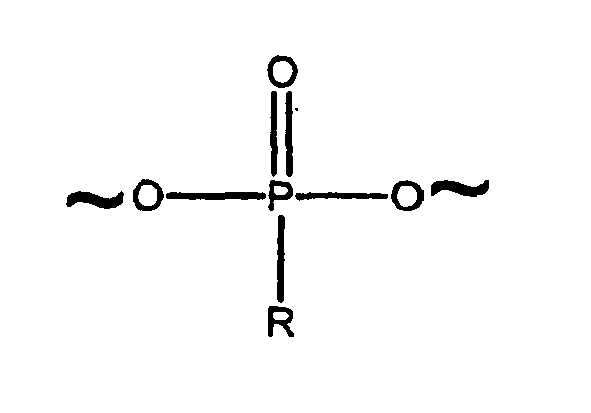
- "Analogs" in reference to nucleosides includes synthetic nucleosides having modified base moieties and/or modified sugar moieties, e.g., described generally by Scheit, Nucleotide Analogs (John Wiley, New York, 1980). Such analogs include synthetic nucleosides designed to enhance binding properties, e.g., duplex or triplex stability, specificity, or the like.
- The amino acid and cDNA sequence of human preproendothelin-1 mRNA is illustrated in Figure 8, as disclosed in FEBS Lett. 231 (2), 440-444 (1988). All number of the human preproendothelin-1 mRNA is based on the sequence numbering of the Genbank accession number Y00749. The "5' untranslated region" or "5' untranslated region of human preproendothelin-1 mRNA" defines the bases of 1-253 of preproendothelin-1 mRNA.
- The term "inhibit" means to reduce preproendothelin-1 synthesis, and therefore also to reduce the secretion or release of endothelin-1.
- "
EA.hy 926 cell line" means the cell line described by Edgell and colleagues [Edgell C-J. S., McDonald CC and Graham JP. Permanent cell line expressing human factor VIII-related antigen established by hybridization Pro. Natl. Acad. Sci. USA 1983, 80: 3734-3737]. This cell line was prepared by fusing human umbilical vein endothelial cells with A549 cells. A number of studies have shown that theresultant EA.hy 926 cell line retains characteristics of endothelial cells including synthesis of endothelin-1 [Corder R., Khan N. & Harrison V.J. A simple method for isolating human endothelin converting enzyme (ECE-1) free from contamination by neutral endopeptidase 24.11. Biochem. Biophys. Res. Comm. 1995, 207: 355-362]. - "A549 cell line" means the cell line from the American Type Culture Collection (ATCC CCL-185). Originally derived from a human ling carcinoma, morphologically it displays epithelial-like characteristics.
- The term "transfectant" means the reagent use to deliver the antisense oligonucleotides to cells. Generally composed of cationic lipid and neutral lipid, the transfectant forms liposomes with the oligonucleotides in aqueous solution. The resultant liposomes are the vehicle for transferring oligonucleotides into cells.
The term "remodeling" means a change in the structure of the airways or blood vessels, generally associated with an increase in smooth muscle cells either alone or combined with an increased level of the extracellular matrix. The term "obstructive airways disease" may also mean "chronic obstructive pulmonary disease". - Dosage amounts of the present invention as defined in the claims include, but are not limited to from .01 to 50 mg/kg of vehicle with a pharmaceutically effective amount of antisense administered to the lungs as a dry powder or aerosol. Another embodiment of this include range is from 1 to 10 mg/kg.
The antisense oligonucleotides of the present invention as defined in the claims may be applied to the lungs with varying frequency and for varying duration. In this regard, the skilled artisan will appreciate how to alter the frequency and duration of application to achieve the desired effect. For example, the antisense oligonucleotides of the instant invention can be taken at varying frequencies including on a daily basis, or 1 or more times daily. When being applied on a daily basis, the instant invention can be taken 1, 2, 3 or more times a day. The duration of treatment with the compositions of the instant invention can also vary. For example, the compositions may be applied for 1, 2, 3, 4, 5, 6 or more weeks; or for 1, 2, 3, 4, 5, 6 or more months. The duration of treatment may also be continuous. Again, the skilled artisan will appreciate the interaction between frequency and duration of use in order to achieve and/or maintain the desired effect. - In addition, the skilled artisan will appreciate how to vary concentrations of the instant invention in conjunction with the frequency and duration of use to achieve the desired effect. For example, the antisense oligonucleotides in a composition of higher concentration might be applied with less frequency or for a shorter duration. In contrast, antisense oligonucleotides of a lower concentration might be applied more frequently or for a longer duration.
- In addition, the skilled artisan will appreciate how to vary the duration of the effective of the antisense oligonucleotides. The effective duration can be varied for the oligonucleotides so that they are effective for durations, such as, but not limited to, 1-48 hours, 4-24 hours, 6-18 hours, 4-18 hours or 6-12 hours. Synthesis of Antisense Oligonucleotides
- These ASONs were custom synthesised using standard methods on an automatic oligonucleotide synthesiser and then purified by high-performance liquid chromatography.
- Testing of ASONs on cultured cells has been carried out using human endothelial (EA.hy 926 cell line) and epithelial (A549) cell lines. Cells were grown until they were 50 to 70 % confluent, and then treated the for 1 h in serum free medium containing the ASON at the concentrations indicated, optionally with an appropriate concentration of transfectant (Transfast, Promega). The cells were then returned to complete medium containing 10% fetal bovine serum for 4 h. At this point, the medium was replaced with serum free medium and the cells were incubated for 24 h to study ET-1 synthesis. In some studies the period with 10% fetal bovine serum was increased to 24 h and endothelin-1 synthesis was studied from 24 h - 48 h. At the end of the incubation period, the conditioned medium was collected for subsequent ET-1 assay. To measure cell viability and non-specific cytotoxicity an MTT assay (an estimate of living cells based on mitochondrial dehydrogenase activity) was performed. ET-1 synthesis was measured by sensitive sandwich immunoassay and then for each well normalised to the MTT value. Statistical comparison was made with the effects of a control oligonucleotide by ANOVA with Fisher's LSD test. All studies have continued to compare the effects of the ASON on human endothelial (EA.hy 926 cell line) and epithelial (A549) cell lines following treatment of sub-confluent cultures with ASON in the presence of transfectant (Transfast, Promega).
- After the initial evaluations (Figures 1-4), in order to design other active ASONs, the secondary structure of human preproET-1 mRNA was re-evaluated using "MFOLD" (the energy minimization program algorithm of Zuker). Based on this analysis, S1 was the only sequence where the 5' sequence was accessible for 3' binding of the ASON, Therefore, a number of new ASON were designed that also met this criteria (WH7 to WH14). S8 is homologous to S1 moved one base 5' to see if this altered its activity as the secondary structure prediction indicated this might restrict its binding. From studies to identify target sequences to direct ASON against for inhibition of ET-1 synthesis, six regions of the 5'-non-coding sequence of preproendothelin-1 mRNA without any overlap (i.e. WH20/21, WH10, WH11, S1, WH29 and WH31) have been defined. Evaluation of human genome database has so far not indicated these sequences are particularly homologous with other gene sequences suggesting they should be relatively free of non-specific effects.
- A sensitive double-recognition site "sandwich" immunoassay for adrenomedullin has been developed so that it can be measured as a control gene in these studies. The assay is performed in a 96-well plate format using plates which are pre-coated with rabbit IgG specific for the N-terminal of adrenomedullin. The assay involves overnight incubation of sample or standard with biotinylated sheep IgG specific for the C-terminal of adrenomedullin. Bound C-terminal IgG is detected by performing a further incubation with 125I-streptavidin followed by counting. Bound 125I is proportional to the adrenomedullin concentration for which the assay range is 1 to 1000 fmol/ml.
- The effect of ASONs targeting exon-intron splice sites in the primary transcript of the preproendothelin-1 gene have been evaluated and compared with S1 (Figure 4). The antisense oligonucleotides tested were WH34 (= 3'-splice site of exon-1);
(WH35 = 5'-splice site of exon-2); WH36 (= 3'-splice site of exon-2);
WH37 (= 5'-splice site of exon-3); WH38 (= 3'-splice site of exon-3);
WH39 (= 5'-splice site of exon-4); WH40 (= 3' splice site of exon-4) and
WH41 (= 5'-splice site of exon-5). After transfection for 1 h, and 4 h recovery in complete medium, effects on ET-1 synthesis were determined over the following 24 h. - WH34, WH35, WH36, WH37, WH38, WH39 and WH41 showed significant inhibition of ET-1 synthesis without significantly reducing adrenomedullin synthesis.
- These results suggest that the target for ASON molecules includes primary RNA transcripts prior to processing to mRNA, as well as the mRNA itself.
- The active ASONs S1, WH10 and WH11 are all complementary to sequences in the 5' untranslated region of human preproET-1 mRNA. To test whether combination of different active ASONs could increase the degree of inhibition of ET-1 synthesis, the effects of combining of these ASONs were tested. The combinations tested were [S1+WH10], [WH10+WH11] and [S1+WH10+WH11].
EA.hy 926 and A549 cells were transfected for 1 h with ASONs in the combinations indicated and then grown for 24 h in complete medium. ET-1 release was then studied from 24-48 h. The results suggest that combination of ASONs may be able to achieve a greater effect on ET-1 synthesis than use of individual ASONs (Figure 10). - To evaluate whether the various ASON could be used as combinations, tests were performed on
EA.hy 926 and A549 cells using the most effective 18-mer phosphorothioate ASONs which targeted six sequences of the 5'-nontranslated region of preproendothelin-1 mRNA. The simultaneous comparisons that were undertaken included assessing whether there were major differences in the inhibition of ET-1 synthesis for: WH20A v. WH20C v. WH21A; WH10A v. WH10B; S1A v. S1B; WH29A v. WH29B; or WH31A v. WH31B. WH11A was more effective in earlier experiments than WH11B, therefore WH11A was selected for use in the comparison studies of combinations. These experiments compared combinations of 6 ASONs (25 nM of each) with 150 nM WH11A, or 150 nM of three different 18 mer control ASONs. Comparison of the effectiveness of the different combinations on the release of ET-1 and the control gene (adrenomedullin) are shown in Figures 13 to 16. All combinations significantly inhibited ET-1 release. Although there was no combination which was significantly better on both cell types, statistical analysis showed on both cell lines that combinations with S1B and WH29B were significantly more effective than those with S1A and WH29A respectively. In addition WH10B containing combinations were more effective onEA.hy 926 cells than WH10A, and WH20A was less effective than either WH20C or WH21A. Based on this analysis the most effective inhibition should be obtained with the following combinations:
[WH20C or WH21A + WH10B + WH11A + S1B + WH29B + WH31A or WH31B]; which corresponds tocombinations - Lung and airways diseases can be treated with the antisense oligonucleotide inhibition of preproendothelin-1 as defined in the claims. These diseases include pulmonary hypertension obliterative bronchiolitis, chronic obstructive pulmonary disease, and asthma.
- Medical management of pulmonary hypertension (PH) has only a limited success, such that the associated cardiac changes and progressive vascular remodelling rapidly become life-threatening. Survival after diagnosis is generally less than 5 years. In recent years endothelial dysfunction and remodelling of the arterial vasculature have emerged as new targets for treatment in a variety of cardiovascular diseases. This is particularly true for pulmonary hypertension (PH), which, because of its refractoriness to current treatment, is in need of novel therapeutic approaches to control such changes (Marshall and Marshall, 1991, and Riley, 1991).
- Irrespective of the cause, chronic pulmonary hypertension results in varying degrees of arterial remodeling with increased pulmonary vascular resistance and progressive right heart failure. In primary pulmonary hypertension increases in vascular resistance may initially be due to vasoconstriction but with time structural changes start to obstruct the pulmonary arteries causing further increases in vascular resistance and increasing the likelihood of right heart failure (Marshall and Marshall, 1991, and Riley, 1991). Remodeling involves both smooth muscle proliferation and the formation of extracellular matrix proteins (Marshall and Marshall, 1991, and Riley, 1991). Endothelin-1 has been implicated as a mediator of the vassoconstriction and it may also precipitate the remodelling (Hayes and Webb, 1998, Di Carlo et al., 1995, Underwood et al., 1998, Underwood et al., 1997, and Chen et .al. , 1997). Because vassoconstrictor responses involve more than one endothelin receptor subtype a strategy to inhibit endothelin-1 synthesis may confer greater benefits than trying to find the ideal antagonist to block the effects of endothelin-1 in the pulmonary vasculature. In addition, antagonists of endothelin may have harmful effects by causing hypotension in the peripheral vasculature. Hence, a treatment such as antisense oligonucleotides to preproendothelin-1 administered by inhalation may have get over the problems associated with specificity of antagonists, and their adverse effects. Inhalation may restrict their action to the airways and pulmonary vasculature.
- Endothelin-1 (ET-1) produces potent vasoconstrictor effects in all vascular beds including the pulmonary circulation. In addition, ET-1 stimulates mitogen-activated protein kinases (MAPK) and can increase smooth muscle mitogenesis (Malarkey et al., 1995). Clinical and experimental studies of PH have shown raised levels of expression and release of ET-1 (Giaid and Saleh, 1995, and Nootens et al., 1995). Administration of the endothelin receptor antagonists reduce both pulmonary vascular resistance and the medial thickening associated with PH induced by chronic hypoxia in rats (Di Carlo et al., 1995, Underwood et al., 1998, Underwood et al., 1997, and Chen et al., 1997) . Studies have shown an inverse relationship between the expression of endothelial nitric oxide synthase and the level of ET-1 immunoreactivity in PH, showing that increases in ET-1 are a useful indicator of localized endothelial dysfunction (Giaid and Saleh, 1995).
- Despite intense research the factors regulating ET-1 synthesis in vivo have yet to be fully elucidated. However, most evidence suggests an association with endothelial dysfunction and inflammation. Cytokines, including TNFa, stimulate the synthesis and secretion of ET-1 both in vivo and in vitro (Klemm et al., 1995, and Corder et al., 1995). Indeed, TNFa stimulates sufficient ET-1 release to cause vasoconstriction (Klemm et al., 1995). Hence, cytokine stimulated ET-1 synthesis may play a key role in the processes associated with PH, and may be common to both primary PH, and PH occurring in other conditions.
- Although obliterative bronchiolitis, asthma, and chronic obstructive pulmonary disease have distinct origins all these conditions display varying degrees of airways remodeling suggesting that there may be a common underlying cause. These conditions are characterized by inflammation with smooth muscle cell proliferation and fibrosis leading to airways obstruction. The precise location of the remodeling may be upper or lower airways depending on the disease. Generally the more advanced the disease the greater the remodeling. Increased endothelin-1 expression has been identified in these conditions, and this may be linked to the remodeling because endothelin-1 stimulates mitogenesis of airways smooth muscle and fibroblasts and induces extracellular matrix production. In addition, endothelin-1 induces bronchoconstriction which may further exacerbate these diseases. Studies characterizing the receptor subtypes mediating these effects have demonstrated roles for endothelin-A, endothelin-B and a putative novel subtype of endothelin receptor. Hence, inhibition of endothelin-1 synthesis using antisense oligonucleotides for preproendothelin-1 may have therapeutic benefits that cannot be obtained using current therapies. In the treatment of obliterative bronchiolitis, asthma, and chronic obstructive pulmonary disease, antisense oligonucleotides to preproendothelin-1 may also be used in combination with other drugs, such as vasodilators (e.g. prostaglandins, prostaglandin analogues, calcium channel blockers, adenosine or an adenosine analogues) to maximize the benefit and the duration of the period over which these other treatments can be used.
- The strategy of using antisense oligonucleotides to preproendothelin-1 for treating primary pulmonary hypertension and these other conditions is a powerful alternative to conventional drug design. It has a number of advantages. The use of aerosolised antisense oligonucleotides will provide a controlled administration to the lungs, thus avoiding the systemic actions that antagonists might have on peripheral cardiovascular function. In addition, by targeting ET-1 synthesis with antisense oligonucleotides, identification of the specific endothelin receptor subtype(s) involved in mediating the pathological processes in these conditions is no longer a concern. Similarly, by providing a treatment which inhibits ET-1 synthesis, the underlying vasoconstrictor response can be abrogated and ET-1 dependent remodeling of the vasculature and airways can be prevented, irrespective of whether the same ET-1 receptor subtypes are involved. In the treatment of PH, antisense oligonucleotides to preproendothelin-1 may also be used in combination with other drugs, such as bronchodilators (e.g., beta-adrenergic agonists, methylxanthines, leukotriene antagonists, muscarinic cholinergic antagonists, glucocorticoids) to maximize the benefit and the duration of the period over which these other treatments can be used.
- In a preferred embodiment, 9-deoxy-2',9-alpha-methano-3-oxa-4,5,6-txinor-3,7-(1',3'-intetphenylene)-13,14-dihydro-prostaglandin F1, (UT-15) is used as a prostaglandin analogue. The structure of UT-15 is shown below:

-
- Barnes PJ (1996) Pathophysiology of asthma. Brit J Clin Pharmacol. 42: 3-10.
- Barnes JP (1994) Endothelins and pulmonary disease. J Appl Physiol 77: 1051-9.
- Carr MJ, Spalding LJ, Goldie RG and Henry PJ (1998) Distribution of immunoreactive endothelin in the lungs of mice during respiratory viral infection. European Respiratory Journal 11: 79-85.
- Chapman KR (1996) Therapeutic approaches to chronic obstructive pulmonary disease: an emerging concensus. Am J. Med. 100 (1A): 5S-10S.
- Chen SJ, Chen YF, Opgenorth TJ, Wessale JL, Meng QC, Durand J, DiCarlo VS and Oparil S (1997) The orally active nonpeptide endothelin A-receptor antagonist A-127722 prevents and reverses hypoxia-induced pulmonary hypertension and pulmonary vascular remodeling in Sprague-Dawley rats. J Cardiovasc Pharmacol 29: 713-25.
- Corder R, Carrier M, Khan N, Klemm P and Vane JR. (1995) Cytokine regulation of endothelin-1 release from bovine aortic endothelial cells. J. Cardiovasc. Pharmacol. 26 (suppl. 3): S56-S58.
- Di Carlo V S, Chen S-J, Meng Q C, Durand J, Yano M, Chen Y-F & Oparil S (1995) ETA-receptor antagonist prevents and reverses chronic hypoxia-induced pulmonary hypertension in rat. Am. J. Physiol. 269: L690-697.
- Fukuroda T, Fujikawa T, Ozaki S, Ishikawa K, Yano M and Nishikibe M (1994) Clearance of circulating endothelin-1 by ETB receptors in rats. Biochem. Biophys Res. Commun 199: 1461-1465.
- Giaid A and Saleh D (1995) Reduced expression of endothelial nitric oxide synthase in the lungs of patients with pulmonary hypertension. N. Engl. J. Med. 333: 4; 214-221
- Hay DW, Luttmann MA, Pullen MA and Nambi P (1998) Functional and binding characterization of endothelin receptors in human bronchus: evidence for a novel endothelin B receptor subtype?. J Pharmacol Exp Ther 284: 669-77
- Haynes WG and Webb DJ (1998) Endothelin as a regulator of cardiovascular function in health and disease. J. Hypertension 16: 1081-98.
- Hoshino M, Nakamura Y and Sim JJ (1998) Expression of growth factors and remodelling of the air way wall in bronchial asthma. Thorax. 53: 31-7.
- Jeffery PK (1998) Structural and inflammatory changes in COPD: a comparison with asthma. Thorax 53: 129-36.
- Jeppsson A, Tazelaar HD, Miller VM and McGregor CG (1998) Distribution of endothelin-1 in transplanted human lungs. Transplantation. 66: 806-9.
- Klemm P, Warner TD, Hohlfeld T, Corder R and Vane JR. (1995) Endothelin-1 mediates ex vivo coronary vasoconstriction caused by exogenous and endogenous cytokines. Proc. Natl. Acad. Sci. USA 92: 2691-95
- Loffler BM, Breu V and Clozel M (1993) Effect of endothelin receptor antagonists and of the novel non-peptide antagonist Ro 46-2005 on endothelin levels in rat plasma. FEBS Lett 333: 108-110.
- Malarkey K, Chilvers ER, Lawson MF and Plevin R (1995) Stimulation by endothelin-1 of mitogen-activated protein kinases and DNA synthesis in bovine tracheal smooth muscle cells. Br. J. Pharmacol. 116: 2267-2273.
- Marini M, Carpi S, Bellini A, Patalano F and Mattoli S (1996) Endothelin-1 induces increased fibronectin expression in human bronchial epithelial cells. Biochem Biophys Res Commun 220: 896-9.
- Marshall BE and Marshall C (1991) Chap 5.2.6 The Lung: scientific foundations. Eds RG Crystal et al.,Raven Press.
- McCulloch KM, Docherty C and MacLean MR (1998) Endothelin receptors mediating contraction of rat and human pulmonary resistance arteries: effect of chronic hypoxia in the rat. Brit J Pharmacol 123: 1621-30.
- McDermott CD, Shennib H and Giaid A (1998) Immunohistochemical localization of endothelin-1 and endothelin-converting enzyme-1 in rat lung allografts. J Cardiovasc Pharmacol 31 (suppl 1): S27-30.
- Nyce JW and Metzer WJ (1997) DNA Antisense Therapy for Asthma in an Animal Model. Nature 385: 721-725.
- Nootens M, Kaufmann E, Rector T, et al., (1995) Neurohormonal activation in patients with right ventricular failure from pulmonary hypertension: relation to hemodynamic variables and endothelin levels. JAAC 26: 1581-5.
- Panettieri RA Jr, Goldie RG, Rigby PJ, Eszterhas AJ and Hay DW (1996) Endothelin- 1-induced potentiation of human airway smooth muscle proliferation: an ETA receptor-mediated phenomenon. Brit J Pharmacol 118: 191-7.
- Riley DJ (1991) Chap 5.2.7 The Lung: scientific foundations. Eds RG Crystal et al.,Raven Press.
- Redington AE, Springall DR, Meng QH, Tuck AB, Holgate ST, Polak JM and Howarth PH (1997) Immunoreactive endothelin in bronchial biopsy specimens: increased expression in asthma and modulation by corticosteroid therapy. Journal of Allergy & Clinical Immunology. 100: 544-52.
- Roberts CR (1995) Is ashthma a fibrotic disease? Chest 107 (3) Suppl 111S-117S.
- Sun G, Stacey MA, Bellini A, Marini M and Mattoli S (1997) Endothelin-1 induces bronchial myofibroblast differentiation. Peptides 18: 1449-51.
- Takeda S, Sawa Y, Minami M, Kaneda Y, Fujii Y, Shirakura R, Yanagisawa M and Matsuda H (1997) Experimental bronchiolitis obliterans induced by in vivo HVJ-liposome-mediated endothelin-1 gene transfer Annals of Thoracic Surgery 63: 1562-7.
- Underwood DC, Bochnowicz S, Osborn RR, Louden CS, Hart TK, Ohlstein EH and Hay DW (1998) Chronic hypoxia-induced cardiopulmonary changes in three rat strains: inhibition by the endothelin receptor antagonist SB 217242. J Cardiovasc Pharmacol 31 (Suppl 1): S453-5.
- Underwood DC, Bochnowicz S, Osborn RR, Luttmann MA and Hay DW (1997) Nonpeptide endothelin receptor antagonists. X. Inhibition of endothelin-1- and hypoxia-induced pulmonary pressor responses in the guinea pig by the endothelin receptor antagonist, SB 217242. J Pharmac Exp Ther 283: 1130-7.
- Wiggs BR, Hrousis CA, Drazen JM and Kamm RD (1997) On the mechanism of mucosal folding in normal and asthmatic airways. J Appl Physiol 83: 1814-21.
-
- <110> UNITED THERAPEUTICS CORPORATION
- <120> INHIBITORS OF ENDOTHELIN-1 SYNTHESIS
- <130>
080618/0140 - <140>
PCT/US00/40074
<141> 2000-03-17 - <160> 61
- <170> PatentIn Ver. 2.1
- <210> 1
<211> 1166
<212> DNA
<213> Homo sapiens - <400> 1

- <210> 2
<211> 212
<212> PRT
<213> Homo sapiens - <400> 2


- <210> 3
<211> 20
<212> DNA
<213> Artificial Sequence - <220>
<223> Description of Artificial Sequence: Synthetic ASON - <400> 3
cagcccaagt gccctttaac 20 - <210> 4
<211> 20
<212> DNA
<213> Artificial Sequence - <220>
<223> Description of Artificial Sequence: Synthetic ASON - <400> 4
ctcaaagcga tccttcagcc 20 - <210> 5
<211> 20
<212> DNA
<213> Artificial Sequence - <220>
<223> Description of Artificial Sequence: Synthetic ASON - <400> 5
agctcagcgc ctaagactgc 20 - <210> 6
<211> 20
<212> DNA
<213> Artificial Sequence - <220>
<223> Description of Artificial Sequence: Synthetic ASON - <400> 6
tggcagaagt agacacactc 20 - <210> 7
<211> 20
<212> DNA
<213> Artificial Sequence - <220>
<223> Description of Artificial Sequence: Synthetic ASON - <400> 7
ccaaatgatg tccaggtggc 20 - <210> 8
<211> 20
<212> DNA
<213> Artificial Sequence - <220>
<223> Description of Artificial Sequence: Synthetic ASON - <400> 8
tggtctccga cctggtttgt 20 - <210> 9
<211> 20
<212> DNA
<213> Artificial Sequence - <220>
<223> Description of Artificial Sequence: Synthetic ASON - <400> 9
atgtgctcgg ttgtgggtca 20 - <210> 10
<211> 20
<212> DNA
<213> Artificial Sequence - <220>
<223> Description of Artificial Sequence: Synthetic ASON - <400> 10
agcccaagtg ccctttaacg 20 - <210> 11
<211> 22
<212> DNA
<213> Artificial Sequence - <220>
<223> Description of Artificial Sequence: Synthetic ASON - <400> 11
tgatgtccag gtggcagaag ta 22 - <210> 12
<211> 22
<212> DNA
<213> Artificial Sequence - <220>
<223> Description of Artificial Sequence: Synthetic ASON - <400> 12
caagtccata cggaacaacg tg 22 - <210> 13
<211> 22
<212> DNA
<213> Artificial Sequence - <220>
<223> Description of Artificial Sequence: Synthetic ASON - <400> 13
catctattct cacggtctgt tg 22 - <210> 14
<211> 22
<212> DNA
<213> Artificial Sequence - <220>
<223> Description of Artificial Sequence: Synthetic ASON - <400> 14
tctcatggtc tccgacctggtt 22 - <210> 15
<211> 22
<212> DNA
<213> Artificial Sequence - <220>
<223> Description of Artificial Sequence: Synthetic ASON - <400> 15
ggtcacataa cgctctctggag 22 - <210> 16
<211> 22
<212> DNA
<213> Artificial Sequence - <220>
<223> Description of Artificial Sequence: Synthetic ASON - <400> 16
gtggagagtg cagagtcggcca 22 - <210> 17
<211> 20
<212> DNA
<213> Artificial Sequence - <220>
<223> Description of Artificial Sequence: Synthetic ASON - <400> 17
tgatgtccag gtggcagaag 20 - <210> 18
<211> 20
<212> DNA
<213> Artificial Sequence - <220>
<223> Description of Artificial Sequence: Synthetic ASON - <400> 18
gacctggttt gtcttaggtg 20 - <210> 19
<211> 20
<212> DNA
<213> Artificial Sequence - <220>
<223> Description of Artificial Sequence: Synthetic ASON - <400> 19
ggtggagagt gcagagtcgg 20 - <210> 20
<211> 20
<212> DNA
<213> Artificial Sequence - <220>
<223> Description of Artificial Sequence: Synthetic ASON - <400> 20
cgcacgcggc ggtggagagc 20 - <210> 21
<211> 20
<212> DNA
<213> Artificial Sequence - <220>
<223> Description of Artificial Sequence: Synthetic ASON - <400> 21
aaggcagcga gcggagcgtc 20 - <210> 22
<211> 20
<212> DNA
<213> Artificial Sequence - <220>
<223> Description of Artificial Sequence: Synthetic ASON - <400> 22
gcatctattc tcacggtctg 20 - <210> 23
<211> 19
<212> DNA
<213> Artificial Sequence - <220:>
<223> Description of Artificial Sequence: Synthetic ASON - <400> 23
catctattct cacggtctg 19 - <210> 24
<211> 17
<212> DNA
<213> Artificial Sequence - <220>
<223> Description of Artificial Sequence: Synthetic ASON - <400> 24
tctattctca cggtctg 17 - <210> 25
<211> 86
<212> RNA
<213> Artificial Sequence - <220>
<223> Description of Artificial Sequence: Synthetic ASON - <400> 25

- <210> 26
<211> 20
<212> DNA
<213> Artificial Sequence - <220>
<223> Description of Artificial Sequence: Synthetic ASON - <400> 26
cgagaggtgg cggcgcacgc 20 - <210> 27
<211> 20
<212> DNA
<213> Artificial Sequence - <220>
<223> Description of Artificial Sequence: Synthetic ASON - <400> 27
ctgcgaggcg agcgacggaa 20 - <210> 28
<211> 18
<212> DNA
<213> Artificial Sequence - <220>
<223> Description of Artificial Sequence: Synthetic ASON - <400> 28
cgagaggtgg cggcgcac 18 - <210> 29
<211> 18
<212> DNA
<213> Artificial Sequence - <220>
<223> Description of Artificial Sequence: Synthetic ASON - <400> 29
ctgcgaggcg agcgacgg 18 - <210> 30
<211> 18
<212> DNA
<213> Artificial Sequence - <220>
<223> Description of Artificial Sequence: Synthetic ASON - <400> 30
agaggtggcg gcgcacgc 18 - <210> 31
<211> 18
<212> DNA
<213> Artificial Sequence - <220>
<223> Description of Artificial Sequence: Synthetic ASON - <400> 31
gcgaggcgag cgacggaa 18 - <210> 32
<211> 16
<212> DNA
<213> Artificial Sequence - <220>
<223> Description of Artificial Sequence: Synthetic ASON - <400> 32
cgagaggtgg cggcgc 16 - <210> 33
<211> 16
<212> DNA
<213> Artificial Sequence - <220>
<223> Description of Artificial Sequence: Synthetic ASON - <400> 33
ctgcgaggcg agcgac 16 - <210> 34
<211> 16
<212> DNA
<213> Artificial Sequence - <220>
<223> Description of Artificial Sequence: Synthetic ASON - <400> 34
aggtggcggc gcacgc 16 - <210> 35
<211> 16
<212> DNA
<213> Artificial Sequence - <220>
<223> Description of Artificial Sequence: Synthetic ASON - <400> 35
gaggcgagcg acggaa 16 - <210> 36
<211> 16
<212> DNA
<213> Artificial Sequence - <220>
<223> Description of Artificial Sequence: Synthetic ASON - <400> 36
agaggtggcg gcgcac 16 - <210> 37
<211> 16
<212> DNA
<213> Artificial Sequence - <220>
<223> Description of Artificial Sequence: Synthetic ASON - <400> 37
gcgaggcgag cgacgg 16 - <210> 38
<211> 20
<212> DNA
<213> Artificial Sequence - <220>
<223> Description of Artificial Sequence: Synthetic ASON - <400> 38
gacgcggtcc gcttgcccag 20 - <210> 39
<211> 20
<212> DNA
<213> Artificial Sequence - <220>
<223> Description of Artificial Sequence: Synthetic ASON - <400> 39
gcttgcccag gacgcggagg 20 - <210> 40
<211> 20
<212> DNA
<213> Artificial Sequence - <220>
<223> Description of Artificial Sequence: Synthetic ASON - <400> 40
gacgcggagg acgtcagggt 20 - <210> 41
<211> 20
<212> DNA
<213> Artificial Sequence - <220>
<223> Description of Artificial Sequence: Synthetic ASON - <400> 41
ggaggacgtc agggtcgaga 20 - <210> 42
<211> 20
<212> DNA
<213> Artificial Sequence - <220>
<223> Description of Artificial Sequence: Synthetic ASON - <400> 42
gtggcggcgc acgcggacgt 20 - <210> 43
<211> 20
<212> DNA
<213> Artificial Sequence - <220>
<223> Description of Artificial Sequence: Synthetic ASON - <400> 43
ggacgtctgc gaggcgagcg 20 - <210> 44
<211> 104
<212> RNA
<213> Artificial Sequence - <220>
<223> Description of Artificial Sequence: Synthetic ASON - <400> 44

- <210> 45
<211> 20
<212> DNA
<213> Artificial Sequence - <220>
<223> Description of Artificial Sequence: Synthetic ASON - <400> 45
caatttcccg tgaacccgac 20 - <210> 46
<211> 18
<212> DNA
<213> Artificial Sequence - <220>
<223> Description of Artificial Sequence: Synthetic ASON - <400> 46
caatttcccg tgaacccg 18 - <210> 47
<211> 18
<212> DNA
<213> Artificial Sequence - <220>
<223> Description of Artificial Sequence: Synthetic ASON - <400> 47
atttcccgtg aacccgac 18 - <210> 48
<211> 16
<212> DNA
<213> Artificial Sequence - <220>
<223> Description of Artificial Sequence: Synthetic ASON - <400> 48
caatttcccg tgaacc 16 - <210> 49
<211> 16
<212> DNA
<213> Artificial Sequence - <220>
<223> Description of Artificial Sequence: Synthetic ASON - <400> 49
ttcccgtgaa cccgac 16 - <210> 50
<211> 16
<212> DNA
<213> Artificial Sequence - <220>
<223> Description of Artificial Sequence: Synthetic ASON - <400> 50
atttcccgtg aacccg 16 - <210> 51
<211> 20
<212> DNA
<213> Artificial Sequence - <220>
<223> Description of Artificial Sequence: Synthetic ASON - <400> 51
gcaatttccc gtgaacccga 20 - <210> 52
<211> 20
<212> DNA
<213> Artificial Sequence - <220>
<223> Description of Artificial Sequence: Synthetic ASON - <400> 52
gagaggaccg tccgcgacgg 20 - <210> 53
<211> 20
<212> DNA
<213> Artificial Sequence - <220>
<223> Description of Artificial Sequence: Synthetic ASON - <400> 53
ccgacttcct agcgaaactc 20 - <210> 54
<211> 20
<212> DNA
<213> Artificial Sequence - <220>
<223> Description of Artificial Sequence: Synthetic ASON - <400> 54
gggcaatttc ccgtgaaccc 20 - <210> 55
<211> 20
<212> DNA
<213> Artificial Sequence - <220>
<223> Description of Artificial Sequence: Synthetic ASON - <400> 55
gaaactctag actccttggg 20 - <210> 56
<211> 20
<212> DNA
<213> Artificial Sequence - <220>
<223> Description of Artificial Sequence: Synthetic ASON - <400> 56
tgggcgtcgc gaaactccct 20 - <210> 57
<211> 20
<212> DNA
<213> Artificial Sequence - <220>
<223> Description of Artificial Sequence: Synthetic ASON - <400> 57
gaaactccct ggacttcgac 20 - <210> 58
<211> 80
<212> RNA
<213> Artificial Sequence - <220>
<223> Description of Artificial Sequence: Synthetic ASON - <400> 58

- <210> 59
<211> 20
<212> DNA
<213> Artificial Sequence - <220>
<223> Description of Artificial Sequence: Synthetic ASON - <400> 59
cccaagtcaa acttgccctc 20 - <210> 60
<211> 20
<212> DNA
<213> Artificial Sequence - <220>
<223> Description of Artificial Sequence: Synthetic ASON - <400> 60
gtcttaccta ataaacgagt 20 - <210> 61
<211> 20
<212> DNA
<213> Artificial Sequence - <220>
<223> Description of Artificial Sequence: Synthetic ASON - <400> 61
cttacctaat aaacgagtac 20
Claims (13)
- An antisense oligonucleotide complementary to human preproendothelin-1 mRNA, selected from the group consisting of WH11 and WH11A which have nucleic acid sequences as follows:WH11 - 5'-aaggcagcgagcggagcgtc-3'WH11A - 5'-ggcagcgagcggagcgtc-3'or a phosphorothioate derivative, a methyl phosphonate derivative, a phosphoramidate derivative, an amide derivative or a boranophosphate derivative thereof.
- A pharmaceutically effective amount of a composition comprising at least one antisense oligonucleotide according to claim 1 for use in reducing endothelin-1 synthesis.
- A composition for use according to claim 2, wherein the at least one antisense oligonucleotide is for administration into the lungs.
- The use of an antisense oligonucleotide according to claim 1, in the preparation of a medicament for the treatment of a lung disease selected from the group consisting of obliterative bronchiolitis, asthma, and chronic obstructive pulmonary disease.
- A composition for use according to claim 2, wherein composition comprising the antisense oligonucleotide further comprises at least one drug that inhibits vasoconstriction.
- A composition for use according to claim 5, wherein said drug is a prostaglandin, a prostaglandin analogue, a calcium channel blocker, adenosine, or an adenosine analogue.
- A composition for use according to claim 5, wherein said drug is 9-deoxy-2',9-alpha-methano-3-oxa-4,5,6-trinor-3,7-(1',3'-interphenylene)-13,14-dihydro-prostaglandin F1 or a prodrug analogue of 9-deoxy-2',9-alpha-methano-3-oxa-4,5,6-trinor-3,7-(1',3'-interphenylene)-13,14-dihydro-prostaglandin F1.
- The use of an antisense oligonucleotide according to claim 1 in the preparation of a medicament for the treatment of pulmonary hypertension.
- A pharmaceutical composition comprising a pharmaceutically effective amount of at least one antisense oligonucleotide selected from the group consisting of WH11 and WH11A, which have nucleic acid sequences as follows:WH11 - 5'-aaggcagcgagcggagcgtc-3'WH11A - 5'-ggcagcgagcggagcgtc-3'or a phosphorothioate derivative, a methyl phosphonate derivative, a phosphoramidate derivative, an amide derivative or a boranophosphate derivative thereof and a pharmaceutically acceptable vehicle that can deliver said at least one antisense oligonucleotide to the lungs.
- The composition according to claim 9, wherein said vehicle is selected from the group consisting of an aerosol or a powder.
- The composition according to claim 10, further comprising at least one drug that inhibits vasoconstriction.
- The composition according to claim 11, wherein the drug is prostaglandin, a prostaglandin analogue, a calcium channel blocker, adenosine or an adenosine analogue.
- The composition according to claim 11, wherein the drug is 9-deoxy-2',9-alpha-methano-3-oxa-4,5,6-trinor-3,7-(1',3'-interphenylene)-13,14-dihydro-prostaglandin F1 or a prodrug analogue of 9-deoxy-2',9-alpha-methano-3-oxa-4,5,6-trinor-3,7-(1',3'-interphenylene)-13,14-dihydro-prostaglandin F1.
Applications Claiming Priority (3)
| Application Number | Priority Date | Filing Date | Title |
|---|---|---|---|
| US12500099P | 1999-03-18 | 1999-03-18 | |
| US125000P | 1999-03-18 | ||
| PCT/US2000/040074 WO2000055314A2 (en) | 1999-03-18 | 2000-03-17 | Inhibitors of endothelin-1 synthesis |
Publications (2)
| Publication Number | Publication Date |
|---|---|
| EP1163333A2 EP1163333A2 (en) | 2001-12-19 |
| EP1163333B1 true EP1163333B1 (en) | 2007-11-07 |
Family
ID=22417780
Family Applications (1)
| Application Number | Title | Priority Date | Filing Date |
|---|---|---|---|
| EP00918545A Expired - Lifetime EP1163333B1 (en) | 1999-03-18 | 2000-03-17 | Inhibitors of endothelin-1 synthesis |
Country Status (8)
| Country | Link |
|---|---|
| US (1) | US7423141B2 (en) |
| EP (1) | EP1163333B1 (en) |
| AT (1) | ATE377645T1 (en) |
| AU (1) | AU3934000A (en) |
| DE (1) | DE60037012T2 (en) |
| ES (1) | ES2296613T3 (en) |
| PT (1) | PT1163333E (en) |
| WO (1) | WO2000055314A2 (en) |
Families Citing this family (8)
| Publication number | Priority date | Publication date | Assignee | Title |
|---|---|---|---|---|
| CN102697790A (en) | 2003-05-22 | 2012-10-03 | 联合治疗公司 | Compounds and methods for delivery of prostacyclin analogs |
| US7838250B1 (en) | 2006-04-04 | 2010-11-23 | Singulex, Inc. | Highly sensitive system and methods for analysis of troponin |
| AU2007233320B2 (en) | 2006-04-04 | 2013-12-12 | Singulex, Inc. | Highly sensitive system and methods for analysis of troponin |
| CA2678258A1 (en) * | 2007-02-09 | 2008-08-14 | United Therapeutics Corporation | Treprostinil treatment for interstitial lung disease and asthma |
| WO2010144358A1 (en) | 2009-06-08 | 2010-12-16 | Singulex, Inc. | Highly sensitive biomarker panels |
| WO2016083624A1 (en) * | 2014-11-28 | 2016-06-02 | Silence Therapeutics Gmbh | Means for inhibiting the expression of edn1 |
| US10883084B2 (en) | 2018-10-05 | 2021-01-05 | Xenotherapeutics, Inc. | Personalized cells, tissues, and organs for transplantation from a humanized, bespoke, designated-pathogen free, (non-human) donor and methods and products relating to same |
| MX2021003866A (en) | 2018-10-05 | 2021-09-08 | Xenotherapeutics Inc | Xenotransplantation products and methods. |
Family Cites Families (12)
| Publication number | Priority date | Publication date | Assignee | Title |
|---|---|---|---|---|
| US4306075A (en) * | 1980-03-28 | 1981-12-15 | The Upjohn Company | Composition and process |
| US5034506A (en) * | 1985-03-15 | 1991-07-23 | Anti-Gene Development Group | Uncharged morpholino-based polymers having achiral intersubunit linkages |
| JP2632167B2 (en) * | 1987-11-30 | 1997-07-23 | 鐘淵化学工業株式会社 | Thermosetting composition |
| DK299089A (en) * | 1988-06-17 | 1989-12-18 | Wellcome Found | APPLICATION OF PROSTAGLANDINES FOR THE PREPARATION OF MEDICINAL PRODUCTS |
| US5378825A (en) | 1990-07-27 | 1995-01-03 | Isis Pharmaceuticals, Inc. | Backbone modified oligonucleotide analogs |
| US5747340A (en) * | 1994-06-03 | 1998-05-05 | Syntex (U.S.A.) Inc. | Targeted gene expression using preproendothelin-1 promoters |
| CA2199939A1 (en) * | 1994-09-14 | 1996-03-21 | Mohamed Sayegh | Inhibition of endothelin-1 to reduce inflammatory processes |
| US5688499A (en) * | 1996-03-13 | 1997-11-18 | Queen's University At Kingston | Antagonism of endothelin actions |
| US5994076A (en) * | 1997-05-21 | 1999-11-30 | Clontech Laboratories, Inc. | Methods of assaying differential expression |
| GB9718487D0 (en) * | 1997-09-02 | 1997-11-05 | Univ Sheffield | Pulmonary hypertension |
| ES2214753T3 (en) * | 1997-11-14 | 2004-09-16 | United Therapeutics Corporation | USE OF 9-DESOXI-2 ', 9-ALFA-METHANE-3-OXA-4,5,6-TRINOR-3,7- (1', 3'-INTERFENILEN) -13,14-DIHYDRO-PROSTAGLANDIN F1 FOR TREAT PERIPHERAL VASCULAR DISEASE. |
| US6551795B1 (en) * | 1998-02-18 | 2003-04-22 | Genome Therapeutics Corporation | Nucleic acid and amino acid sequences relating to pseudomonas aeruginosa for diagnostics and therapeutics |
-
2000
- 2000-03-17 DE DE60037012T patent/DE60037012T2/en not_active Expired - Fee Related
- 2000-03-17 EP EP00918545A patent/EP1163333B1/en not_active Expired - Lifetime
- 2000-03-17 AU AU39340/00A patent/AU3934000A/en not_active Abandoned
- 2000-03-17 ES ES00918545T patent/ES2296613T3/en not_active Expired - Lifetime
- 2000-03-17 WO PCT/US2000/040074 patent/WO2000055314A2/en not_active Ceased
- 2000-03-17 AT AT00918545T patent/ATE377645T1/en not_active IP Right Cessation
- 2000-03-17 PT PT00918545T patent/PT1163333E/en unknown
-
2002
- 2002-11-18 US US10/295,942 patent/US7423141B2/en not_active Expired - Fee Related
Non-Patent Citations (1)
| Title |
|---|
| None * |
Also Published As
| Publication number | Publication date |
|---|---|
| WO2000055314A9 (en) | 2002-08-08 |
| DE60037012T2 (en) | 2008-10-30 |
| EP1163333A2 (en) | 2001-12-19 |
| DE60037012D1 (en) | 2007-12-20 |
| WO2000055314A2 (en) | 2000-09-21 |
| WO2000055314A3 (en) | 2001-02-22 |
| ES2296613T3 (en) | 2008-05-01 |
| ATE377645T1 (en) | 2007-11-15 |
| PT1163333E (en) | 2008-02-19 |
| AU3934000A (en) | 2000-10-04 |
| US20030109480A1 (en) | 2003-06-12 |
| US7423141B2 (en) | 2008-09-09 |
Similar Documents
| Publication | Publication Date | Title |
|---|---|---|
| CN101883777B (en) | Antisense modulation of fibroblast growth factor receptor 4 expression | |
| KR101835386B1 (en) | Modulation of transthyretin expression | |
| JP3054745B2 (en) | Antisense oligonucleotide regulation of raf gene expression | |
| US7235534B2 (en) | Antisense strategy to modulate estrogen receptor response (ER α and/or ER β ) | |
| Liu et al. | Overexpression of miR-142-3p improves mitochondrial function in cardiac hypertrophy | |
| KR101840512B1 (en) | Antisense modulation of gcgr expression | |
| KR20090103894A (en) | Methods for treating hypercholesterolemia | |
| KR20240111010A (en) | Compositions for modulating sod-1 expression | |
| US20130150431A1 (en) | Mir-33 inhibitors and uses thereof | |
| TW200930382A (en) | LNA antagonists targeting the androgen receptor | |
| CN109481455A (en) | The organic composite for treating KRAS related disease | |
| AU2011237426A1 (en) | Modulation of CETP expression | |
| KR101839177B1 (en) | Antisense modulation of ptpib expression | |
| BRPI0616158A2 (en) | glucagon receptor expression modulation | |
| US7423141B2 (en) | Inhibitors of endothelin-1 synthesis | |
| US20070149469A1 (en) | Medical use of tbk-1 or of inhibitors thereof | |
| JPH10502820A (en) | Oligonucleoside compounds and methods for inhibiting tumor growth, invasion and metastasis | |
| US9885043B2 (en) | Methods for inducing cardiomyocyte proliferation | |
| KR101890874B1 (en) | A composition for repression of muscle-aging and regeneration of old muscle | |
| US20230287427A1 (en) | Inhibition of lncExACT1 to Treat Heart Disease | |
| EP1888083B1 (en) | Compositions and their uses directed to lmw-ptpase | |
| CN112206324A (en) | Application of FHL2 in the preparation of drugs for the treatment of ovulation disorders in polycystic ovary syndrome | |
| US20110123998A1 (en) | Materials and Methods for Treatment of Cancer | |
| EP0950709A1 (en) | Antisense oligonucleotides for the inhibition of integrin alphaV-subunit expression | |
| WO2005035746A2 (en) | Medical use of tbk-1 or of inhibitors thereof |
Legal Events
| Date | Code | Title | Description |
|---|---|---|---|
| PUAI | Public reference made under article 153(3) epc to a published international application that has entered the european phase |
Free format text: ORIGINAL CODE: 0009012 |
|
| 17P | Request for examination filed |
Effective date: 20011015 |
|
| AK | Designated contracting states |
Kind code of ref document: A2 Designated state(s): AT BE CH CY DE DK ES FI FR GB GR IE IT LI LU MC NL PT SE |
|
| AX | Request for extension of the european patent |
Free format text: AL;LT;LV;MK;RO;SI |
|
| 17Q | First examination report despatched |
Effective date: 20041220 |
|
| RAP1 | Party data changed (applicant data changed or rights of an application transferred) |
Owner name: WILLIAM HARVEY RESEARCH LIMITED |
|
| GRAP | Despatch of communication of intention to grant a patent |
Free format text: ORIGINAL CODE: EPIDOSNIGR1 |
|
| RIC1 | Information provided on ipc code assigned before grant |
Ipc: A61P 11/06 20060101ALI20061211BHEP Ipc: A61P 11/00 20060101ALI20061211BHEP Ipc: C07H 21/00 20060101ALI20061211BHEP Ipc: A61K 31/7125 20060101ALI20061211BHEP Ipc: C12N 15/11 20060101AFI20061211BHEP |
|
| GRAS | Grant fee paid |
Free format text: ORIGINAL CODE: EPIDOSNIGR3 |
|
| GRAA | (expected) grant |
Free format text: ORIGINAL CODE: 0009210 |
|
| RAP1 | Party data changed (applicant data changed or rights of an application transferred) |
Owner name: QUEEN MARY AND WESTFIELD COLLEGE |
|
| AK | Designated contracting states |
Kind code of ref document: B1 Designated state(s): AT BE CH CY DE DK ES FI FR GB GR IE IT LI LU MC NL PT SE |
|
| REG | Reference to a national code |
Ref country code: GB Ref legal event code: FG4D |
|
| REG | Reference to a national code |
Ref country code: IE Ref legal event code: FG4D |
|
| REG | Reference to a national code |
Ref country code: CH Ref legal event code: EP |
|
| REF | Corresponds to: |
Ref document number: 60037012 Country of ref document: DE Date of ref document: 20071220 Kind code of ref document: P |
|
| REG | Reference to a national code |
Ref country code: PT Ref legal event code: SC4A Free format text: AVAILABILITY OF NATIONAL TRANSLATION Effective date: 20080207 |
|
| REG | Reference to a national code |
Ref country code: CH Ref legal event code: NV Representative=s name: KIRKER & CIE S.A. |
|
| PG25 | Lapsed in a contracting state [announced via postgrant information from national office to epo] |
Ref country code: SE Free format text: LAPSE BECAUSE OF FAILURE TO SUBMIT A TRANSLATION OF THE DESCRIPTION OR TO PAY THE FEE WITHIN THE PRESCRIBED TIME-LIMIT Effective date: 20080207 |
|
| REG | Reference to a national code |
Ref country code: ES Ref legal event code: FG2A Ref document number: 2296613 Country of ref document: ES Kind code of ref document: T3 |
|
| PGFP | Annual fee paid to national office [announced via postgrant information from national office to epo] |
Ref country code: PT Payment date: 20080307 Year of fee payment: 9 |
|
| PG25 | Lapsed in a contracting state [announced via postgrant information from national office to epo] |
Ref country code: AT Free format text: LAPSE BECAUSE OF FAILURE TO SUBMIT A TRANSLATION OF THE DESCRIPTION OR TO PAY THE FEE WITHIN THE PRESCRIBED TIME-LIMIT Effective date: 20071107 |
|
| PG25 | Lapsed in a contracting state [announced via postgrant information from national office to epo] |
Ref country code: DK Free format text: LAPSE BECAUSE OF FAILURE TO SUBMIT A TRANSLATION OF THE DESCRIPTION OR TO PAY THE FEE WITHIN THE PRESCRIBED TIME-LIMIT Effective date: 20071107 |
|
| PGFP | Annual fee paid to national office [announced via postgrant information from national office to epo] |
Ref country code: FR Payment date: 20080311 Year of fee payment: 9 |
|
| ET | Fr: translation filed | ||
| PG25 | Lapsed in a contracting state [announced via postgrant information from national office to epo] |
Ref country code: BE Free format text: LAPSE BECAUSE OF FAILURE TO SUBMIT A TRANSLATION OF THE DESCRIPTION OR TO PAY THE FEE WITHIN THE PRESCRIBED TIME-LIMIT Effective date: 20071107 |
|
| PLBE | No opposition filed within time limit |
Free format text: ORIGINAL CODE: 0009261 |
|
| STAA | Information on the status of an ep patent application or granted ep patent |
Free format text: STATUS: NO OPPOSITION FILED WITHIN TIME LIMIT |
|
| 26N | No opposition filed |
Effective date: 20080808 |
|
| PG25 | Lapsed in a contracting state [announced via postgrant information from national office to epo] |
Ref country code: MC Free format text: LAPSE BECAUSE OF NON-PAYMENT OF DUE FEES Effective date: 20080331 |
|
| PG25 | Lapsed in a contracting state [announced via postgrant information from national office to epo] |
Ref country code: GR Free format text: LAPSE BECAUSE OF FAILURE TO SUBMIT A TRANSLATION OF THE DESCRIPTION OR TO PAY THE FEE WITHIN THE PRESCRIBED TIME-LIMIT Effective date: 20080208 |
|
| PG25 | Lapsed in a contracting state [announced via postgrant information from national office to epo] |
Ref country code: FI Free format text: LAPSE BECAUSE OF FAILURE TO SUBMIT A TRANSLATION OF THE DESCRIPTION OR TO PAY THE FEE WITHIN THE PRESCRIBED TIME-LIMIT Effective date: 20071107 |
|
| PGFP | Annual fee paid to national office [announced via postgrant information from national office to epo] |
Ref country code: IE Payment date: 20090328 Year of fee payment: 10 |
|
| PGFP | Annual fee paid to national office [announced via postgrant information from national office to epo] |
Ref country code: NL Payment date: 20090330 Year of fee payment: 10 |
|
| PGFP | Annual fee paid to national office [announced via postgrant information from national office to epo] |
Ref country code: CH Payment date: 20090331 Year of fee payment: 10 Ref country code: GB Payment date: 20090330 Year of fee payment: 10 |
|
| PG25 | Lapsed in a contracting state [announced via postgrant information from national office to epo] |
Ref country code: CY Free format text: LAPSE BECAUSE OF FAILURE TO SUBMIT A TRANSLATION OF THE DESCRIPTION OR TO PAY THE FEE WITHIN THE PRESCRIBED TIME-LIMIT Effective date: 20071107 |
|
| PGFP | Annual fee paid to national office [announced via postgrant information from national office to epo] |
Ref country code: ES Payment date: 20090330 Year of fee payment: 10 |
|
| PGFP | Annual fee paid to national office [announced via postgrant information from national office to epo] |
Ref country code: DE Payment date: 20090330 Year of fee payment: 10 Ref country code: IT Payment date: 20090429 Year of fee payment: 10 |
|
| REG | Reference to a national code |
Ref country code: PT Ref legal event code: MM4A Free format text: LAPSE DUE TO NON-PAYMENT OF FEES Effective date: 20090917 |
|
| PG25 | Lapsed in a contracting state [announced via postgrant information from national office to epo] |
Ref country code: PT Free format text: LAPSE BECAUSE OF NON-PAYMENT OF DUE FEES Effective date: 20090917 |
|
| REG | Reference to a national code |
Ref country code: FR Ref legal event code: ST Effective date: 20091130 |
|
| PG25 | Lapsed in a contracting state [announced via postgrant information from national office to epo] |
Ref country code: FR Free format text: LAPSE BECAUSE OF NON-PAYMENT OF DUE FEES Effective date: 20091123 |
|
| PG25 | Lapsed in a contracting state [announced via postgrant information from national office to epo] |
Ref country code: LU Free format text: LAPSE BECAUSE OF NON-PAYMENT OF DUE FEES Effective date: 20080317 |
|
| REG | Reference to a national code |
Ref country code: NL Ref legal event code: V1 Effective date: 20101001 |
|
| REG | Reference to a national code |
Ref country code: CH Ref legal event code: PL |
|
| GBPC | Gb: european patent ceased through non-payment of renewal fee |
Effective date: 20100317 |
|
| PG25 | Lapsed in a contracting state [announced via postgrant information from national office to epo] |
Ref country code: IE Free format text: LAPSE BECAUSE OF NON-PAYMENT OF DUE FEES Effective date: 20100317 Ref country code: NL Free format text: LAPSE BECAUSE OF NON-PAYMENT OF DUE FEES Effective date: 20101001 |
|
| PG25 | Lapsed in a contracting state [announced via postgrant information from national office to epo] |
Ref country code: LI Free format text: LAPSE BECAUSE OF NON-PAYMENT OF DUE FEES Effective date: 20100331 Ref country code: CH Free format text: LAPSE BECAUSE OF NON-PAYMENT OF DUE FEES Effective date: 20100331 Ref country code: DE Free format text: LAPSE BECAUSE OF NON-PAYMENT OF DUE FEES Effective date: 20101001 |
|
| PG25 | Lapsed in a contracting state [announced via postgrant information from national office to epo] |
Ref country code: GB Free format text: LAPSE BECAUSE OF NON-PAYMENT OF DUE FEES Effective date: 20100317 Ref country code: IT Free format text: LAPSE BECAUSE OF NON-PAYMENT OF DUE FEES Effective date: 20100317 |
|
| REG | Reference to a national code |
Ref country code: ES Ref legal event code: FD2A Effective date: 20110415 |
|
| PG25 | Lapsed in a contracting state [announced via postgrant information from national office to epo] |
Ref country code: ES Free format text: LAPSE BECAUSE OF NON-PAYMENT OF DUE FEES Effective date: 20110404 |
|
| PG25 | Lapsed in a contracting state [announced via postgrant information from national office to epo] |
Ref country code: ES Free format text: LAPSE BECAUSE OF NON-PAYMENT OF DUE FEES Effective date: 20100318 |