EP1162804A2 - Method and apparatus for monitoring information transmitted on network by using meta-information - Google Patents
Method and apparatus for monitoring information transmitted on network by using meta-information Download PDFInfo
- Publication number
- EP1162804A2 EP1162804A2 EP00118536A EP00118536A EP1162804A2 EP 1162804 A2 EP1162804 A2 EP 1162804A2 EP 00118536 A EP00118536 A EP 00118536A EP 00118536 A EP00118536 A EP 00118536A EP 1162804 A2 EP1162804 A2 EP 1162804A2
- Authority
- EP
- European Patent Office
- Prior art keywords
- information
- communication
- meta
- relay apparatus
- public
- Prior art date
- Legal status (The legal status is an assumption and is not a legal conclusion. Google has not performed a legal analysis and makes no representation as to the accuracy of the status listed.)
- Withdrawn
Links
- 238000000034 method Methods 0.000 title claims description 42
- 238000012544 monitoring process Methods 0.000 title claims description 16
- 238000004891 communication Methods 0.000 claims abstract description 240
- 230000005540 biological transmission Effects 0.000 claims description 51
- 238000012546 transfer Methods 0.000 claims description 13
- 238000012795 verification Methods 0.000 claims description 10
- 238000007689 inspection Methods 0.000 claims description 6
- 230000015572 biosynthetic process Effects 0.000 claims 1
- 238000012545 processing Methods 0.000 description 29
- 238000010586 diagram Methods 0.000 description 18
- 230000008569 process Effects 0.000 description 9
- 230000010365 information processing Effects 0.000 description 5
- 230000007246 mechanism Effects 0.000 description 5
- 230000006870 function Effects 0.000 description 3
- 238000013459 approach Methods 0.000 description 1
- 230000004888 barrier function Effects 0.000 description 1
- 238000007796 conventional method Methods 0.000 description 1
- 239000002184 metal Substances 0.000 description 1
- 238000012986 modification Methods 0.000 description 1
- 230000004048 modification Effects 0.000 description 1
Images





Classifications
-
- H—ELECTRICITY
- H04—ELECTRIC COMMUNICATION TECHNIQUE
- H04L—TRANSMISSION OF DIGITAL INFORMATION, e.g. TELEGRAPHIC COMMUNICATION
- H04L63/00—Network architectures or network communication protocols for network security
- H04L63/08—Network architectures or network communication protocols for network security for authentication of entities
-
- H—ELECTRICITY
- H04—ELECTRIC COMMUNICATION TECHNIQUE
- H04L—TRANSMISSION OF DIGITAL INFORMATION, e.g. TELEGRAPHIC COMMUNICATION
- H04L63/00—Network architectures or network communication protocols for network security
- H04L63/12—Applying verification of the received information
-
- H—ELECTRICITY
- H04—ELECTRIC COMMUNICATION TECHNIQUE
- H04L—TRANSMISSION OF DIGITAL INFORMATION, e.g. TELEGRAPHIC COMMUNICATION
- H04L67/00—Network arrangements or protocols for supporting network services or applications
- H04L67/2866—Architectures; Arrangements
- H04L67/2876—Pairs of inter-processing entities at each side of the network, e.g. split proxies
-
- H—ELECTRICITY
- H04—ELECTRIC COMMUNICATION TECHNIQUE
- H04L—TRANSMISSION OF DIGITAL INFORMATION, e.g. TELEGRAPHIC COMMUNICATION
- H04L67/00—Network arrangements or protocols for supporting network services or applications
- H04L67/50—Network services
- H04L67/56—Provisioning of proxy services
- H04L67/561—Adding application-functional data or data for application control, e.g. adding metadata
-
- H—ELECTRICITY
- H04—ELECTRIC COMMUNICATION TECHNIQUE
- H04L—TRANSMISSION OF DIGITAL INFORMATION, e.g. TELEGRAPHIC COMMUNICATION
- H04L67/00—Network arrangements or protocols for supporting network services or applications
- H04L67/01—Protocols
- H04L67/02—Protocols based on web technology, e.g. hypertext transfer protocol [HTTP]
Definitions
- the present invention generally relates to guarantee of the contents (communication contents) of information to be communicated and predetermined attributes (communication attributes) of communication possessed by the information, while digital information is transferred via a communication network such as the Internet. More specifically, the present invention relates to a monitor and inspection system for monitoring and inspecting the communication contents and communication attributes over the network, to a monitoring and inspecting method, and to a storage medium storing program codes realizing such a monitoring and inspecting method.
- Information is distributed and supplied over the Internet by using various communication protocols and communication applications. For example, information is supplied by using a Web page of the World Wide Web (WWW) and information is supplied and shared by using a bulletin board, a mailing list or a news on a Web page. Digital contents are also distributed by using a communication protocol.
- WWW World Wide Web
- HTTP HyperText Transfer Protocol
- RRC Request For Comments
- HTTP/1.0 is defined in RFC1945 (http://www.ietf.org/rfc/rfc1945.txt)
- HTTP/1.1 is defined in RFC2068 (http://www.ietf.org/rfc/rfc2068.txt).
- communication protocols now in use define only the procedure of data communication and do not provide a mechanism for guaranteeing information on the communication contents and attributes by a third party. Therefore, such communication protocols also do not provide a mechanism for efficiently inspecting the communication contents and attributes by a third party. According to currently available techniques, there is only a method which manually inspects and analyzes one message after another transmitted over the network.
- the invention has been made in consideration of the above-described circumstances. It is an object of the present invention to provide a method and system capable of guaranteeing the contents of information communicated between two points on the network and the communication attributes possessed by the information.
- a relay apparatus at an intermediary of a communication path for managing a communication apparatus of a transmitter generates meta-information (transmitter public meta-information) describing information capable of being publicized among the statements of communication contents and attributes, adds the meta-information to transmission information and stores the meta-information in a database of the transmission relay apparatus.
- Secret information not capable of being publicized among the statements of communication contents and attributes and the transmitter public meta-information related to each other are stored in the database of the transmission relay apparatus.
- a relay apparatus (called reception relay apparatus) at an intermediary of the communication path for managing a communication apparatus of a receiver side stores and verifies the meta-information added to the transmission information.
- Each relay apparatus or a combination of a plurality of relay apparatuses can therefore guarantee that the transmission information has the communication contents or attributes.
- Meta-information is data about data, i.e., information for describing information to be actually transmitted and received.
- the "communication attributes" are intended to have the following two meanings. (1) One is communication attributes defined by an ordinary communication protocol, such as a transmission address, reception address, transmission date and time, relay nodes, and transmission contents format, in the case of HTTP. (2) The other is communication attributes independent from and not defined by the ordinary communication protocol, such as information on a transmitter, copyright information if the transmission information is digital contents, in the case of HTTP.
- the transmission relay apparatus in transmitting information, (1) the transmission relay apparatus generates the meta-information describing transmission contents and attribute, transmitter detailed information (transmitter secret meta-information) is kept in secret and related to the transmitter public meta-information to be stored in the database. (2) The receiver side verifies and stores the public meta-information. (3) If there is a possibility of communication having improper contents, the transmitter transmitted the information having improper contents can be identified in cooperation with the transmission relay apparatus.
- the transmission relay apparatus In distributing digital contents, (1) the transmission relay apparatus generates and guarantees copyright information or circulation information of the digital contents to be transmitted and the public meta-information describing information capable of being publicized among the circulation attribute information such as a distributer and receivers, and stores the circulation attribute information such as copyright information and circulation information to be kept in secret and the public meta-information related each other. (2) The reception relay apparatus verifies and stores the public meta-information. (3) The secret information regarding the circulation having a possibility of violating the copyright or circulation condition can be identified in cooperation with the transmission relay apparatus.
- the meta-information or public meta-information may contain information for detecting that the communication message was edited or falsificated and information (e.g., digital signature) for identifying a person or apparatus generated the communication message.
- the storage medium may be a CD-ROM, DVD or FD which stores computer readable program codes realizing each process step of the communication monitoring and inspecting method of the invention.
- the statements that the transmission contents are reliable and the attribute information can be added to a message to be transmitted, while the information desired by the transmitter is kept in secret. Therefore, the transmission contents can be efficiently inspected at an intermediary of the communication path. Further, since the meta-information is stored in the database, communication having improper contents can be found at a later inspection. Still further, only the transmission meta-information management apparatus can relate the public meta-information and secret meta-information (secret information) each other, without publicizing information which the transmitter desires to be kept in secret (transmitter secret meta-information). In this manner, it is possible to acquire the communication attributes and contents kept in secret in the transmission meta-information management apparatus.
- the transmission relay apparatus guarantees the meta-information describing communication attribute information independent from the communication protocol and the reception relay apparatus verifies the meta-information.
- the virtual communication path guaranteed by the transmission and reception relay apparatuses and having features determined by the meta-information can be established and only the communication having the communication attributes matching the features can be transmitted over the virtual communication path.
- the relay apparatuses guarantee, verify and store the communication attributes independent from the communication protocol and communications are monitored without publicizing secret information such as transmitter detailed information. Therefore, secret information such as communication contents and communication attributes can be identified via the transmission relay apparatus. It is therefore possible to provide a communication monitor and inspection system capable of identifying a transmitter which transmitted improper communication contents and illegal information, a communication monitoring and inspecting method, and a computer readable storage medium storing program codes realizing such a communication monitoring and inspecting method.
- Fig. 1 is a schematic diagram illustrating the outline of an improper information transmitter identifying system according to an embodiment of the invention.
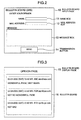
- Fig. 2 is a diagram showing an example of a Web page screen of a bulletin board system to be browsed on a WWW browser when a user wishes to state any opinion.
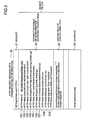
- Fig. 3 is a diagram showing an example of a Web page screen to be browsed on a WWW browser when a user browses a bulletin board.
- Fig. 4 is a diagram illustrating an operation to be executed when a WWW browser 1 transmits information to a WWW server 2 via meta-information management gateways 3 and 4.
- Fig. 5 is a diagram showing an example of the structure of an HTTP request message inserted into transmitter public meta-information.
- Fig. 6 is a diagram showing an example of the structure of transmitter public meta-information 22.
- Fig. 7 is a diagram showing an example of the structure of transmitter secret meta-information 150.
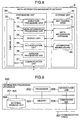
- Fig. 8 is a schematic diagram showing the structure of a meta-information management gateway.
- Fig. 9 is a diagram showing the structure of a general information processing apparatus on which a meta-information management gateway is configured.
- Fig. 10 is a flow chart illustrating the operation to be executed by a meta-information management gateway when the gateway relays an HTTP message from an internal network to the Internet.
- Fig. 11 is a flow chart illustrating the operation to be executed by a meta-information management gateway when the gateway relays an HTTP message from the Internet to an internal network.
- Fig. 12 is a flow chart illustrating the operation to be executed by meta-information management gateways 3 and 4 when the gateway 4 finds information having improper contents and notifies this to the gateway 3 and the gateway 3 identifiers the transmitter of this information.
- Fig. 13 is a diagram illustrating the embodiment of the invention from the viewpoint of a communication protocol.
- meta-information contains, for example, information on a relay terminal which generated the meta-information and information of contents.
- Secret meta-information contains, for example, information identifying the name of a transmitter and a transmitter terminal.
- Fig. 1 is a diagram illustrating the outline of the improper information transmitter identifying system according to the embodiment of the invention.
- a WWW browser 1 and a meta-information management gateway 3 are interconnected by an internal network 6.
- a WWW server 2 and a meta-information management gateway 4 are interconnected by an internal network 7.
- the meta-information management gateways 3 and 4 are interconnected via the Internet 5.
- Fig. 1 although only one WWW browser 1 and one WWW server 2 are shown in the internal networks 6 and 7, a plurality of WWW browsers and servers are practically used in the internal networks.
- An HTTP message realizing a WWW communication protocol is transferred between communication terminals connected to the Internet 5 and internal networks 6 and 7.
- the meta-information management gateway 3 relays an HTTP message to be transferred between the internal network 6 and the Internet 5, and the meta-information management gateway 4 relays an HTTP message to be transferred between the internal network 7 and the Internet 5.
- the internal networks 6 and 7 are logical networks managed by the meta-information management gateways 3 and 4.
- the "meta-information management gateway” monitors and controls, when necessary, HTTP communications with the external network via the meta-information management gateway to be executed by HTTP communication apparatuses connected to the internal network managed by the gateway.
- the meta-information management gateway provides functions, particularly a function of approving, when necessary, the attributes and contents of HTTP communications from the internal network, and providing a third party with the attributes and contents as reliable information.
- the meta-information management gateway has a function of supplying a kind of certification of information to be transmitted to an external network from the internal network managed by the gateway.
- a bulletin board system which is one of WWW applications having a possibility that improper contents are transmitted to the Internet.
- the bulletin board system is widely used as a means for stating a free opinion over the WWW and as a useful application as an active information sharing site.
- a transmitter is not necessarily required to publicize its identification and an opinion can be transmitted anonymously. Therefore, the bulletin board system is widely used as a site for anonymously collecting opinions on a certain subject from a number of users.
- Fig. 2 is a diagram showing an example of a Web page screen to be used when a user wishes to state an opinion in the bulletin board system by using the WWW browser 1.
- This Web page corresponds to a bulletin board input page 10.
- the bulletin board input page 10 is a Web page downloaded from the WWW server 2 by accessing it from the WWW browser 1.
- the bulletin board input page 10 includes a name box 11, a mail address box 12, a message box 13 and a transmission button 14.
- a user name or a user anonymous name called a handle name is entered in the name box 11.
- a user mail address is entered in the mail address box 12.
- the contents the user wishes to supply are written in the message box 13.
- the transmission button 14 Upon depression of the transmission button 14, the contents are transmitted to the WWW server 2 via the meta-information management gateway 3, the Internet 5 and meta-information gateway 4 to reflect the contents on a bulletin board of the WWW server 2.
- Fig. 3 is a diagram showing a Web page screen of the bulletin board to be browsed by a user from the WWW browser 1.
- the Web page corresponds to a bulletin board display page 15.
- the bulletin board display page 15 is downloaded from the WWW server 2 to the WWW browser 1 and displayed on the WWW browser 1.
- the bulletin board display page 15 has a bulletin board 16 on which contents to be publicized are displayed.
- displayed on the bulletin board are a user name, mail address, message respectively input to the name box 11, mail address box 12, message box 13 of the bulletin board input page 10 (Fig. 2) of the WWW browser 1, as well as the date and others.
- the problems associated with a bulletin board system are, as described earlier, possible slanders and crimes because of easy statement of opinions with anonymous names or posed names.
- the WWW server 2 if it is of a conventional type, is not provided with a mechanism for verifying whether the name and mail address entered in the name box 11 and mail address box 12 are authentic or not. In a conventional bulletin board system, if improper information is written, a system administrator can delete this information. However, a reliable and efficient method of checking the person who wrote such information is not still known.
- an HTTP message received at the WWW server 2 is analyzed to locate a proxy server as a relay terminal at the intermediary.
- An inquiry is sent to the administrator of the proxy server by using an e-mail or the like to eventually identify the transmitter.
- a proxy server in a foreign country is used, it is not easy for everyone to send an inquiry because of language barriers. If the contents of an HTTP message itself are edited or falsificated to make it impossible to identify the transmitter, the transmitter cannot be identified.
- Fig. 4 is a diagram illustrating a process of transmitting information from the WWW browser 1 to the WWW server 4 via the meta-information management gateways 3 and 4 as the relay terminals.
- the gateway 3 registers user names and passwords of users of the WWW browser 1 as authentication information of the WWW browser 1 in order to effect an access control such as access permission of only authenticate users (2001).
- the WWW server 2 sets user names and passwords to effect an access control permitting a write operation from the gateway 4 into the bulletin board.
- the gateway 4 registers the user names and passwords of users of the WWW server 2 as authentication information of the WWW server 2 (2002).
- the WWW browser 1 When a user enters necessary items into the bulletin board input page 10 shown in Fig. 2 and depresses the transmission button 14, the WWW browser 1 transmits as an HTTP request an HTTP message to the WWW server 2, the HTTP message containing the contents to be written in the bulletin board (2003).
- the gateways 3 and 4 at intermediary paths transfer the HTTP request without processing it.
- the WWW server 2 Upon reception of the HTTP message, the WWW server 2 verifies and confirms that the HTTP request is a request for a page under the access control (2004).
- the WWW server 2 transmits an HTTP message requesting for HTTP authentication to the WWW browser 1 (2005).
- the gateway 3 When the gateway 3 receives the HTTP message requesting for HTTP authentication transmitted to the WWW browser in the internal network managed by the gateway 3, the gateway 3 does not transfer the received HTTP message but transfers an HTTP message requesting for user authentication relative to the gateway 3 to the WWW browser 1 (2006).
- the WWW browser 1 Upon reception of the HTTP message requesting for user authentication relative to the gateway 3, the WWW browser 1 displays a panel urging the user to enter the user name and password registered in the gateway 3, and the user enters the user name and password (2007).
- the WWW browser 1 adds transmitter authentication information (or encrypted transmitter authentication information) relative to the gateway 3 to the same HTTP message as the previously transmitted HTTP message containing the bulletin board writing contents, and transmits it to the WWW server 2 (2008).
- the gateway 3 Upon reception of the HTTP message added with the transmitter information, the gateway 3 verifies the added authentication information by comparing it with the already registered user authentication information (refer to 2001).
- the gateway 3 If this verification succeeds, in accordance with transmitter information acquired from the added authentication information, the gateway 3 generates transmitter public meta-information and transmitter secret meta-information. Next, the gateway 3 deletes the authentication information from the HTTP message supplied from the transmitter and adds the transmitter public meta-information to the HTTP message, and then stores the secret and public meta-information both related to each other, e.g., by using a meta-information ID as a key, in its database (2009).
- the gateway 3 transmits the HTTP message added with the transmitter public meta-information to the WWW server 2 (2010).
- the gateway 4 verifies whether the transmitter public meta-information was really transmitted from the gateway 3, e.g., by checking a digital signature of the gateway 3 added to the public meta-information (2011). If this verification fails, the gateway 4 transmits an HTTP message to the WWW browser 1, the HTTP message containing an error message to the effect that the transmitter meta-information is illegal (2012). If the verification succeeds, the gateway 4 stores the transmitter public meta information in its database and adds the authentication information, previously supplied from the WWW server 2 and registered in the database and including the user name and password for writing the contents in the bulletin board of the WWW server 2, to the HTTP message (2013). The gateway 4 then transmits the HTTP message to the WWW server 2 (2014). In this case, since the verified authentication information exists, the contents are permitted to be written in the bulletin board (2015).
- Fig. 5 is a diagram showing an example of the structure of an HTTP request message added with transmitter public meta-information.
- An HTTP request message with transmitter public meta-information 20 is a message to be transmitted from the gateway 3 to the gateway 4 (2010 in Fig. 4).
- the message 20 is constituted of a request 21 describing the contents of the request, transmitter public meta-information 22 describing the transmitter, a conventional type header field 23 describing attributes of the HTTP message, and contents 24 describing the contents to be transmitted.
- the transmitter public meta-information 22 is described in accordance with the same description method as of the conventional type header field 23, and written in the HTTP message as an extended field (extended header field) of the conventional type header field 23. Namely, the conventional type header field 23 and transmitter public meta-information 22 (extended header field) constitute a new header field H. In this way, even a WWW application which cannot understand transmitter public meta-information can process the HTTP message with transmitter public meta-information without any practical problem.
- Fig. 6 is a diagram showing an example of the structure of the transmitter public meta-information 22.
- the transmitter public meta-information 22 is added to an HTTP message and stored in a database of the meta-information management gateway.
- the transmitter public meta-information 22 contains: a meta-information ID 101; a session ID 102; a meta-information generation date 103 describing a date when the meta-information was generated; request contents 104 describing the request contents of the HTTP request message; an anonymous level 105; a request type 106 describing the type of the request; contents information 107 describing information of the contents contained in the message; meta-information management gateway information 108 describing the meta-information management gateway which formed the meta-information; and a digital signature 109 entered by the meta-information management gateway for certifying all items described above.
- the meta-information ID 101 is used by the meta-information management gateway to identify the transmitter meta-information generated by the gateway. If the same identifier is used for both the transmitter public meta-information and transmitter secret meta-information, this identifier may be used as a key for searching a pair of the transmitter public meta-information and transmitter secret meta-information. The detailed information about a transmitter is not written directly to the transmitter public meta-information 22.
- the session ID 102 is used for identifying a group the HTTP message belongs to, the HTTP message containing meta-information which supplies the anonymous level 105, request type 106 and meta-information management gateway information 108.
- the meta-information determines the features of a virtual communication path between the meta-information management gateways 3 and 4.
- the anonymous level 105 indicates that at what precision the meta-information management gateway 3 identifies a transmitter, e.g., that the gateway 3 identifies a transmitter up to the handle name or up to the transmitter name.
- the request type 106 indicates the type of a Web page requested to be accessed by the HTTP request message. For example, this request type designates an access to an HTML capable of being edited or to a CGI program having a possibility to vary the contents.
- the message contents information 107 contains, if the HTTP request message contains contents, the contents themselves, a hash value of the contents, or the summary (abstract) of the contents.
- the meta-information management gateway information 108 is information of the meta-information management gateway which generated the transmitter meta-information, e.g., an address and name of the gateway on the network.
- Fig. 5 shows examples of specific contents of each field of the transmitter public meta-information 22.
- Fig. 7 shows an example of the structure of the transmitter secret meta-information 150.
- the transmitter secret meta-information 150 contains the meta-information ID 101, a user name 151 for identifying the transmitter, and a transmission IP address 152 for designating an IP address used by the transmitter as the transmission source.
- the transmitter secret meta-information 150 is secret information for identifying the transmitter, and stored in the database of the gateway 3 in correspondence with the transmitter public meta information 22 by using the meta information ID 101 as a key.
- Fig. 8 is a schematic diagram showing the structure of a meta-information management gateway 3.
- the gate way 3 is constituted of a processing unit 30 and a storage unit 40.
- the meta-information management gate way 4 has the structure similar to the gateway 3.
- the processing unit 30 includes: a control unit 31 for wholly controlling each part of the meta-information management gateway 3 (or 4); a signature processing unit 32 for generating and verifying a signature of meta-information; a meta-information processing unit 33 for generating and verifying meta-information; a search unit 34 for searching information on meta-information; an authentication unit 35 for authenticating a transmitter of an HTTP message; a message processing unit 36 for processing an HTTP message; and a communication unit 37 for communication with another apparatus via the Internet 5 or internal network 6 (or 7).
- the memory unit 40 includes: a key holding area 41 for holding a signature key and an authentication key to be used by the signature processing unit 32 for generation and authentication of a signature; a meta-information database 42 for storing the transmitter public meta-information 22 received via the communication unit 37 and meta-information (transmitter public meta-information 22 and transmitter secret meta-information 150) generated by the meta-information processing unit 33; and an authentication information area 43 for storing authentication information to be used by the authentication unit 35 for authentication.
- the meta-information processing unit 33 issues the meta-information ID 101 to be inserted into the transmitter public meta-information 22, refers to the transmitter information supplied from the authentication information area 43 and authentication unit 35, and generates the transmitter public meta-information 22 in cooperation with the message processing unit 36 and signature processing unit 32.
- the transmitter secret meta-information 150 is generated in a similar manner, related to the transmitter public meta-information 22 by the metal information ID 101, and stored in the meta-information database 42.
- the meta-information management gateway 3 can be configured on an information processing apparatus 200 of a general structure including a bus 201, a processor 202, a memory 203, an external storage unit 204, an input/output unit 205, a communication unit 206 and a communication cable 207.
- the processing unit 30 (Fig. 8) of the meta-information management gateway is realized as a process running on the information processing apparatus after the processor 202 executes a program loaded in the memory 203.
- the memory 203 and external storage unit 204 are used as the storage unit 40.
- Fig. 10 is a flow chart illustrating the operation to be executed by the meta-information management gateway 3 (or 4) when the gateway 3 (or 4) relays an HTTP message from the internal network 6 (or 7) to the Internet 5.
- any one of the meta-information management gateways 3 and 4 or any one of the internal networks 6 and 7 is collectively called a meta-information management gateway or an internal network, respectively.
- the flow illustrated in Fig. 10 starts when the meta-information management gateway receives an HTTP message.
- the communication unit 37 of the meta-information management gateway receives an HTTP message from a WWW communication apparatus connected to the internal network (Step S3001).
- the message processing unit 36 analyzes the header field H of the received HTTP message to check whether there is authentication information of the meta-information management gateway (Step S3002). If there is no authentication information for the gateway (corresponding to 2003 or 2005 in Fig. 4), the HTTP message is transmitted to the destination via the Internet 5 connected to the communication unit 37 (S3003).
- the authentication unit 35 compares the authentication information with the user authentication information already stored in the authentication information area 43 at 2001 or 2002 shown in Fig. 4 to verify the authentication (Step S3004). If the authentication fails, an error is sent back to the transmitter (Step S3005) to terminate the flow.
- the message processing unit 36 deletes the authentication information from the HTTP message, and asks the meta-information processing unit 33 to generate transmitter meta-information.
- the meta-information processing unit 33 generates the meta-information ID 101 for identifying the transmitter meta-information and generates the items other than the digital signature 109 of the transmitter public meta-information 22 and the transmitter secret meta-information 150.
- the signature processing unit 32 reads the signature key of the meta-information management gateway from the key holding area 41, and generates a signature of the meta-information management gateway for the attribute information of the transmitter public meta-information 22, to thereby complete the transmitter public meta-information 22 (Step S3006).
- the meta-information processing unit 33 relates the generated transmitter public meta-information 22 to the transmitter secret meta-information 150 and stores the transmitter public and secret meta-information in the meta-information database 42 (Step S3007).
- the message processing unit 36 adds the transmitter public meta-information 22 to the HTTP message (Step S3008) and transmits it to the destination via the Internet 5 connected to the communication unit 37 (Step S3003).
- Fig. 11 is a flow chart illustrating the operation to be executed by the meta-information management gateway 3 (or 4) when the gateway 3 (or 4) relays an HTTP message from the Internet 5 to the internal network 6 (or 7).
- the flow illustrated in Fig. 11 starts when the meta-information management gateway receives an HTTP message.
- the communication unit 37 of the gateway receives an HTTP message from a WWW communication apparatus connected to the Internet 5 (Step S4001).
- the message processing unit 36 analyzes the HTTP message to check whether there is the transmitter public meta-information 22 (Step S4002). If there is the transmitter public meta-information 22 (YES at Step S4002, corresponding to 2010 in Fig. 4), the message processing unit 36 asks the signature processing unit 32 to verify the digital signature 106.
- the signature processing unit 32 reads the authentication key of the transmission source meta-information management gateway which generated the transmitter public meta-information 22, from the key holding area 41 to thereby verify whether the digital signature 106 was really made by the transmission source gateway.
- the meta-information processing unit 33 verifies each item of the transmitter public meta information 22, and by referring to the verification result of the digital signature 106, verifies the transmitter public meta-information 22 (Step S4003). If the verification fails (NO at Step S4004), an error is sent back to the transmitter via the Internet 5 connected to the communication unit 37 (Step S4005) to thereafter terminate the flow. If verification of the transmitter public meta-information 22 succeeds (YES at Step S4004), the meta-information processing unit 33 stores the transmitter public meta-information 22 in the meta-information database 42 (Step S4006). Next, the authentication unit 35 acquires the destination authentication information from the authentication information area 43, the message processing unit adds this authentication information to the HTTP message (Step S4007) which is then transmitted to the destination via the internal network connected to the communication unit 37 (Step S4008).
- the message processing unit 36 checks whether the HTTP message is the meta-information request message (Step S4009). If not (NO at Step S4009, corresponding to 2003, 2012 in Fig. 4), then the HTTP message is transmitted to the destination via the internal network connected to the communication unit 37 (Step S4008). If the HTTP message is the meta-information request message (YES at Step S4009, corresponding to 2005 in Fig. 4), an HTTP message requesting the destination to authenticate the meta-information management gateway is transmitted (Step S4010).
- Fig. 12 is a flow chart illustrating the operation to be executed by meta-information management gateways 3 and 4 when the gateway 4 finds information having improper contents and notifies this to the gateway 3 and the gateway 3 identifiers the transmitter of this information.
- the flow shown in Fig. 12 starts when a search request for checking whether information relayed by the meta-information management gateway contains improper contents, is issued, the search request being issued voluntarily by the gateway itself or when the third party informs that the gateway relayed information having improper contents.
- the search unit 34 of the meta-information management gateway 4 searches the meta-information database 42 to check whether it stores the information having improper contents (Step S5001). The check is performed in accordance with the contents information 107 in the message of the transmitter meta-information stored in the meta-information database 42.
- the search unit 34 finds the information having improper contents (YES at Step S5002), the meta information management gateway information 108 is read from the associated transmitter public meta-information 22, and if the meta-information was generated by the gateway 4 itself (YES at Step S5003), the user name 151 in the corresponding transmitter secret meta-information 150 is checked to identify the transmitter (Step S5004).
- Step S5009 After the transmitter is identified, warning is given to the transmitter or the user ID is deprived according to the management policy (Step S5009) to thereafter terminate the process.
- the search request including the transmitter public meta-information 22 is transmitted to the meta-information management gateway 3 generated the transmitter public meta-information (Step S5005).
- the search unit 34 of the gateway 3 searches its meta-information database 42 by using the meta-information ID 101 in the received transmitter public meta-information 22 (Step S5007). If the transmitter secret meta-information 150 corresponding to the meta-information ID is found, the user name 151 is checked to identifier the transmitter (Step S5008).
- Step S5009 After the transmitter is identified, warning is given to the transmitter or the user ID is deprived according to the management policy (Step S5009) to thereafter terminate the process.
- Fig. 13 is a diagram illustrating the embodiment from the viewpoint of a communication protocol.
- Fig. 13 In addition to the system shown in Fig. 1 constituted of the WWW browser 1, WWW server 2, meta-information management gateways 3 and 4, the Internet 5, and internal networks 6 and 7, two proxy servers 506 are inserted between the gateways 3 and 4 as shown in Fig. 13, the proxy server transferring an HTTP message.
- the communication protocol for the WWW browser 1, WWW server 2, proxy servers 506 and gateways 3 and 4 is constituted of a data link layer and physical layer 500, a TCP/IP 501, and an HTTP 502.
- Each of the meta-information management gateways 3 and 4 has also a meta-information processing layer 503 on HTTP 502.
- An HTTP message 504 transferred to and from the WWW browser 1 is transferred between the meta-information management gateways 3 and 4 as an HTTP message 505 added with meta-information.
- the transmitter public meta-information 22 is guaranteed by the meta-information management gateway 3 and verified by the meta-information management gateway 4.
- the HTTP message whose verification failed at the meta-information management gateway 4 will not be transmitted to the WWW server 2.
- the WWW browser 1 transmits information to the WWW server 2 via the meta-information management gateways 3 and 4.
- the meta-information management gateway 3 generates the transmitter public meta-information 22 which does not contain directly the detailed user information and the transmitter secret meta-information 150 which contains directly the detailed user information.
- the meta-information management gateway 3 stores the information 22 and 150 related each other in the database, adds only the transmitter public meta-information 22 to the HTTP message, and transmits it to the meta-information management gateway 4.
- the meta-information management gateway 4 derives the transmitter public meta-information 22 from the received HTTP message, verifies it and stores it in the database, and transmits the HTTP message to the WWW browser 2.
- an HTTP message to be transmitted via the Internet is inserted with transmitter indirect information (transmitter public meta-information). It is therefore possible to provide a third party an approach to identifying a reliable transmitter, while transmitter detailed information (transmitter secret meta-information) is prevented from being tapped by other terminals connected to the Internet. If the transmitter public meta-information 22 is edited or falsificated at intermediaries, such edition or falsification can be detected through signature verification at the reception meta-information management gateway 4.
- an administrator checks the stored transmitted public meta-information 22 and requests the meta-information management gateway which generated the meta-information to investigate.
- the requested meta-information management gateway searches the transmitter secret meta-information 150 from the database and identifies the transmitter or transmitter terminal to inform the requester of the identified transmitter or transmitter terminal.
- the invention is not limited only to the above-described embodiment, but various modifications are possible without departing from the scope and spirit of the invention.
- the WWW server 2 and meta-information management gateway 4 may be configured on the same information processing apparatus.
- the WWW browser 1 can be assumed widely and in general public to be trustworthy, the WWW browser 1 and meta-information management gateway 3 may be configured on the same information processing apparatus.
- the embodiment aims to identify a transmitter or transmitter terminal. If digital contents are to be transmitted and received by using the same configuration of the embodiment, the invention may aim to monitor and manage transmission/reception of digital contents as to whether the contents are in conformity with copyright and circulation conditions.
- the meta-information management gateway in addition to the above-described authentication to be performed by the WWW browser 1 and meta-information gateway 3 and by the WWW server 2 and meta-information gateway 4, agreement is made on copyright information and circulation information of digital contents to be transmitted, and in accordance with the agreement contents, the meta-information management gateway generates the transmitter public meta-information 22. In this case, copyright information and circulation information are written as the message contents information 107 of the transmitter meta-information 22.
- the communication monitor and inspection system and method has been described in which communication contents and communication attributes are monitored and inspected by using meta-information management gateways in order to guarantee the communication contents and attributes.
- Program codes of each process of the communication monitoring and inspecting method may be stored in a storage medium such as a CD-ROM, DVD, and FD to be commercially sold or program codes may be supplied via a communication line such as the Internet.
- a user installs the program codes acquired from the storage medium or the communication line to easily realize the communication monitor and inspection system of the invention.
- the communication monitoring and inspecting method can therefore be made widely available.
Landscapes
- Engineering & Computer Science (AREA)
- Computer Networks & Wireless Communication (AREA)
- Signal Processing (AREA)
- Computer Security & Cryptography (AREA)
- Computer Hardware Design (AREA)
- Computing Systems (AREA)
- General Engineering & Computer Science (AREA)
- Library & Information Science (AREA)
- Data Exchanges In Wide-Area Networks (AREA)
- Computer And Data Communications (AREA)
- Monitoring And Testing Of Transmission In General (AREA)
Abstract
When a WWW browser (1) transmits an HTTP message to a meta-information management gateway (3), secret and public information on communication contents and communication attributes is transmitted. The meta-information management gateway (3) generates meta-information from the received secret and public information, and stores the secret and public meta-information related to each other in a database. The meta-information management gateway (3) adds the public meta-information to the HTTP message and transmits it to a meta-information management gate way (4). The meta-information management gateway (4) verifies the public meta-information, stores it in a database, deletes the public meta-information from the HTTP message, and transmits the HTTP message to a WWW server (2). If there is any problem in the communication contents or attributes, the meta-information management gateway (3) is inquired by using the public meta-information, and the transmitter is identified by using the corresponding secret meta-information. <IMAGE>
Description
The present invention generally relates to
guarantee of the contents (communication contents) of
information to be communicated and predetermined
attributes (communication attributes) of communication
possessed by the information, while digital information
is transferred via a communication network such as the
Internet. More specifically, the present invention
relates to a monitor and inspection system for
monitoring and inspecting the communication contents
and communication attributes over the network, to a
monitoring and inspecting method, and to a storage
medium storing program codes realizing such a
monitoring and inspecting method.
Information is distributed and supplied over
the Internet by using various communication protocols
and communication applications. For example,
information is supplied by using a Web page of the
World Wide Web (WWW) and information is supplied and
shared by using a bulletin board, a mailing list or a
news on a Web page. Digital contents are also
distributed by using a communication protocol.
The specification of such a communication
protocol, for example, the HyperText Transfer Protocol
(HTTP) used by WWW, is described in the Request For
Comments (RFC) published from the Internet Engineering
Task Force (IETF).
More specifically, the specification of
HTTP/1.0 is defined in RFC1945
(http://www.ietf.org/rfc/rfc1945.txt), and the specification of HTTP/1.1 is defined in RFC2068
(http://www.ietf.org/rfc/rfc2068.txt).
HTTP/1.0 is defined in RFC1945
(http://www.ietf.org/rfc/rfc1945.txt), and the specification of HTTP/1.1 is defined in RFC2068
(http://www.ietf.org/rfc/rfc2068.txt).
Exchange of information having illegal or
improper contents over the Internet using communication
techniques constitutes a social problem nowadays. For
example, by utilizing the network communication with an
anonymous name, some people distribute contents harmful
to society such as slander and vilification. By
utilizing the nature of relative difficulty in
inspecting communication contents and grasping the
communication state of communication contents, some
people illegally distribute digital contents and
exchange improper information without obeying copyright
or circulation conditions. In order to solve such
problems, it is essential to provide a mechanism for
analyzing the communication contents and attributes.
However, communication protocols now in use
define only the procedure of data communication and do
not provide a mechanism for guaranteeing information on
the communication contents and attributes by a third
party. Therefore, such communication protocols also do
not provide a mechanism for efficiently inspecting the
communication contents and attributes by a third party.
According to currently available techniques, there is
only a method which manually inspects and analyzes one
message after another transmitted over the network.
What communication contents are considered
improper or what communication state is considered
problematic depends on the objective of monitoring and
inspecting applications and communications. Therefore,
it is impossible to directly incorporate such
mechanisms into communication protocols. On the other
hand, if all communication contents and attributes are
flowed over the Internet, secret information and
private information are made open. It is not realistic
to provide a third party with all such essential
information.
The invention has been made in consideration
of the above-described circumstances. It is an object
of the present invention to provide a method and system
capable of guaranteeing the contents of information
communicated between two points on the network and the
communication attributes possessed by the information.
In order to achieve the above object,
according to an embodiment of the invention, when
information is transmitted to the Internet, (1) a relay
apparatus (called transmission relay apparatus) at an
intermediary of a communication path for managing a
communication apparatus of a transmitter generates
meta-information (transmitter public meta-information)
describing information capable of being publicized
among the statements of communication contents and
attributes, adds the meta-information to transmission
information and stores the meta-information in a
database of the transmission relay apparatus. Secret
information not capable of being publicized among the
statements of communication contents and attributes and
the transmitter public meta-information related to each
other are stored in the database of the transmission
relay apparatus. (2) A relay apparatus (called
reception relay apparatus) at an intermediary of the
communication path for managing a communication
apparatus of a receiver side stores and verifies the
meta-information added to the transmission information.
(3) Each relay apparatus or a combination of a
plurality of relay apparatuses can therefore guarantee
that the transmission information has the communication
contents or attributes.
In this specification, "meta-information" is
data about data, i.e., information for describing
information to be actually transmitted and received.
Also in this specification, the
"communication attributes" are intended to have the
following two meanings. (1) One is communication
attributes defined by an ordinary communication
protocol, such as a transmission address, reception
address, transmission date and time, relay nodes, and
transmission contents format, in the case of HTTP. (2)
The other is communication attributes independent from
and not defined by the ordinary communication protocol,
such as information on a transmitter, copyright
information if the transmission information is digital
contents, in the case of HTTP.
Furthermore, in transmitting information, (1)
the transmission relay apparatus generates the meta-information
describing transmission contents and
attribute, transmitter detailed information
(transmitter secret meta-information) is kept in secret
and related to the transmitter public meta-information
to be stored in the database. (2) The receiver side
verifies and stores the public meta-information. (3)
If there is a possibility of communication having
improper contents, the transmitter transmitted the
information having improper contents can be identified
in cooperation with the transmission relay apparatus.
In distributing digital contents, (1) the
transmission relay apparatus generates and guarantees
copyright information or circulation information of the
digital contents to be transmitted and the public meta-information
describing information capable of being
publicized among the circulation attribute information
such as a distributer and receivers, and stores the
circulation attribute information such as copyright
information and circulation information to be kept in
secret and the public meta-information related each
other. (2) The reception relay apparatus verifies and
stores the public meta-information. (3) The secret
information regarding the circulation having a
possibility of violating the copyright or circulation
condition can be identified in cooperation with the
transmission relay apparatus.
The meta-information or public meta-information
may contain information for detecting that
the communication message was edited or falsificated
and information (e.g., digital signature) for
identifying a person or apparatus generated the
communication message.
The storage medium may be a CD-ROM, DVD or FD
which stores computer readable program codes realizing
each process step of the communication monitoring and
inspecting method of the invention.
According to the present invention, the
statements that the transmission contents are reliable
and the attribute information, can be added to a
message to be transmitted, while the information
desired by the transmitter is kept in secret.
Therefore, the transmission contents can be efficiently
inspected at an intermediary of the communication path.
Further, since the meta-information is stored in the
database, communication having improper contents can be
found at a later inspection. Still further, only the
transmission meta-information management apparatus can
relate the public meta-information and secret meta-information
(secret information) each other, without
publicizing information which the transmitter desires
to be kept in secret (transmitter secret meta-information).
In this manner, it is possible to
acquire the communication attributes and contents kept
in secret in the transmission meta-information
management apparatus.
Also according to the invention, of the relay
apparatuses, the transmission relay apparatus
guarantees the meta-information describing
communication attribute information independent from
the communication protocol and the reception relay
apparatus verifies the meta-information. The virtual
communication path guaranteed by the transmission and
reception relay apparatuses and having features
determined by the meta-information can be established
and only the communication having the communication
attributes matching the features can be transmitted
over the virtual communication path.
According to the present invention, the relay
apparatuses guarantee, verify and store the
communication attributes independent from the
communication protocol and communications are monitored
without publicizing secret information such as
transmitter detailed information. Therefore, secret
information such as communication contents and
communication attributes can be identified via the
transmission relay apparatus. It is therefore possible
to provide a communication monitor and inspection
system capable of identifying a transmitter which
transmitted improper communication contents and illegal
information, a communication monitoring and inspecting
method, and a computer readable storage medium storing
program codes realizing such a communication monitoring
and inspecting method.
Fig. 1 is a schematic diagram illustrating
the outline of an improper information transmitter
identifying system according to an embodiment of the
invention.
Fig. 2 is a diagram showing an example of a
Web page screen of a bulletin board system to be
browsed on a WWW browser when a user wishes to state
any opinion.
Fig. 3 is a diagram showing an example of a
Web page screen to be browsed on a WWW browser when a
user browses a bulletin board.
Fig. 4 is a diagram illustrating an operation
to be executed when a WWW browser 1 transmits
information to a WWW server 2 via meta- information
management gateways 3 and 4.
Fig. 5 is a diagram showing an example of the
structure of an HTTP request message inserted into
transmitter public meta-information.
Fig. 6 is a diagram showing an example of the
structure of transmitter public meta-information 22.
Fig. 7 is a diagram showing an example of the
structure of transmitter secret meta-information 150.
Fig. 8 is a schematic diagram showing the
structure of a meta-information management gateway.
Fig. 9 is a diagram showing the structure of
a general information processing apparatus on which a
meta-information management gateway is configured.
Fig. 10 is a flow chart illustrating the
operation to be executed by a meta-information
management gateway when the gateway relays an HTTP
message from an internal network to the Internet.
Fig. 11 is a flow chart illustrating the
operation to be executed by a meta-information
management gateway when the gateway relays an HTTP
message from the Internet to an internal network.
Fig. 12 is a flow chart illustrating the
operation to be executed by meta- information management
gateways 3 and 4 when the gateway 4 finds information
having improper contents and notifies this to the
gateway 3 and the gateway 3 identifiers the transmitter
of this information.
Fig. 13 is a diagram illustrating the
embodiment of the invention from the viewpoint of a
communication protocol.
In an embodiment, meta-information contains,
for example, information on a relay terminal which
generated the meta-information and information of
contents. Secret meta-information contains, for
example, information identifying the name of a
transmitter and a transmitter terminal.
An improper information transmitter
identifying system for the WWW according to an
embodiment of the invention will be described with
reference to the accompanying drawings.
Fig. 1 is a diagram illustrating the outline
of the improper information transmitter identifying
system according to the embodiment of the invention.
As shown in Fig. 1, in the improper
information transmitter identifying system of this
embodiment, a WWW browser 1 and a meta-information
management gateway 3 are interconnected by an internal
network 6. Similarly, a WWW server 2 and a meta-information
management gateway 4 are interconnected by
an internal network 7. The meta- information management
gateways 3 and 4 are interconnected via the Internet 5.
For simplicity sake, in Fig. 1 although only one WWW
browser 1 and one WWW server 2 are shown in the
internal networks 6 and 7, a plurality of WWW browsers
and servers are practically used in the internal
networks.
An HTTP message realizing a WWW communication
protocol is transferred between communication terminals
connected to the Internet 5 and internal networks 6 and
7. The meta-information management gateway 3 relays an
HTTP message to be transferred between the internal
network 6 and the Internet 5, and the meta-information
management gateway 4 relays an HTTP message to be
transferred between the internal network 7 and the
Internet 5.
The internal networks 6 and 7 are logical
networks managed by the meta- information management
gateways 3 and 4. The "meta-information management
gateway" monitors and controls, when necessary, HTTP
communications with the external network via the meta-information
management gateway to be executed by HTTP
communication apparatuses connected to the internal
network managed by the gateway. The meta-information
management gateway provides functions, particularly a
function of approving, when necessary, the attributes
and contents of HTTP communications from the internal
network, and providing a third party with the
attributes and contents as reliable information. In
other words, the meta-information management gateway
has a function of supplying a kind of certification of
information to be transmitted to an external network
from the internal network managed by the gateway.
In this embodiment, a bulletin board system
will be specifically described which is one of WWW
applications having a possibility that improper
contents are transmitted to the Internet. The bulletin
board system is widely used as a means for stating a
free opinion over the WWW and as a useful application
as an active information sharing site. In the bulletin
board system, a transmitter is not necessarily required
to publicize its identification and an opinion can be
transmitted anonymously. Therefore, the bulletin board
system is widely used as a site for anonymously
collecting opinions on a certain subject from a number
of users.
Fig. 2 is a diagram showing an example of a
Web page screen to be used when a user wishes to state
an opinion in the bulletin board system by using the
WWW browser 1. This Web page corresponds to a bulletin
board input page 10.
The bulletin board input page 10 is a Web
page downloaded from the WWW server 2 by accessing it
from the WWW browser 1. The bulletin board input page
10 includes a name box 11, a mail address box 12, a
message box 13 and a transmission button 14.
A user name or a user anonymous name called a
handle name is entered in the name box 11. A user mail
address is entered in the mail address box 12. The
contents the user wishes to supply are written in the
message box 13. Upon depression of the transmission
button 14, the contents are transmitted to the WWW
server 2 via the meta-information management gateway 3,
the Internet 5 and meta-information gateway 4 to
reflect the contents on a bulletin board of the WWW
server 2.
Fig. 3 is a diagram showing a Web page screen
of the bulletin board to be browsed by a user from the
WWW browser 1. The Web page corresponds to a bulletin
board display page 15.
The bulletin board display page 15 is
downloaded from the WWW server 2 to the WWW browser 1
and displayed on the WWW browser 1. The bulletin board
display page 15 has a bulletin board 16 on which
contents to be publicized are displayed. For example,
as shown in Fig. 3, displayed on the bulletin board are
a user name, mail address, message respectively input
to the name box 11, mail address box 12, message box 13
of the bulletin board input page 10 (Fig. 2) of the WWW
browser 1, as well as the date and others.
The problems associated with a bulletin board
system are, as described earlier, possible slanders and
crimes because of easy statement of opinions with
anonymous names or posed names. The WWW server 2 if it
is of a conventional type, is not provided with a
mechanism for verifying whether the name and mail
address entered in the name box 11 and mail address box
12 are authentic or not. In a conventional bulletin
board system, if improper information is written, a
system administrator can delete this information.
However, a reliable and efficient method of checking
the person who wrote such information is not still
known.
With a conventional method, an HTTP message
received at the WWW server 2 is analyzed to locate a
proxy server as a relay terminal at the intermediary.
An inquiry is sent to the administrator of the proxy
server by using an e-mail or the like to eventually
identify the transmitter. With this method, however,
if a plurality of proxy servers are used for
information transmission, it is necessary to
sequentially route these proxy servers at respective
stages. Therefore, identifying the transmitter becomes
complicated. If a proxy server in a foreign country is
used, it is not easy for everyone to send an inquiry
because of language barriers. If the contents of an
HTTP message itself are edited or falsificated to make
it impossible to identify the transmitter, the
transmitter cannot be identified.
A method of identifying a transmitter who
transmitted information having improper contents by
using a WWW bulletin board application, will be
described with reference to the improper information
transmitter identification system shown in Fig. 1.
In the improper information transmitter
identification system shown in Fig. 1, it is assumed
that a user of the WWW browser 1 enters improper
contents in the bulletin board input page 10 and
transmits the contents to the bulletin board of the WWW
server 2. Upon depression of the transmission button
14, an HTTP message is transmitted from the WWW browser
1 to the WWW server 2. The meta- information management
gateways 3 and 4 as intermediaries on the network
process meta-information describing transmitter
information.
Fig. 4 is a diagram illustrating a process of
transmitting information from the WWW browser 1 to the
WWW server 4 via the meta- information management
gateways 3 and 4 as the relay terminals.
As a pre-process, the gateway 3 registers
user names and passwords of users of the WWW browser 1
as authentication information of the WWW browser 1 in
order to effect an access control such as access
permission of only authenticate users (2001). As the
pre-process, the WWW server 2 sets user names and
passwords to effect an access control permitting a
write operation from the gateway 4 into the bulletin
board. At the same time, the gateway 4 registers the
user names and passwords of users of the WWW server 2
as authentication information of the WWW server 2
(2002).
When a user enters necessary items into the
bulletin board input page 10 shown in Fig. 2 and
depresses the transmission button 14, the WWW browser 1
transmits as an HTTP request an HTTP message to the WWW
server 2, the HTTP message containing the contents to
be written in the bulletin board (2003). In this case,
the gateways 3 and 4 at intermediary paths transfer the
HTTP request without processing it. Upon reception of
the HTTP message, the WWW server 2 verifies and
confirms that the HTTP request is a request for a page
under the access control (2004).
The WWW server 2 transmits an HTTP message
requesting for HTTP authentication to the WWW browser 1
(2005).
When the gateway 3 receives the HTTP message
requesting for HTTP authentication transmitted to the
WWW browser in the internal network managed by the
gateway 3, the gateway 3 does not transfer the received
HTTP message but transfers an HTTP message requesting
for user authentication relative to the gateway 3 to
the WWW browser 1 (2006). Upon reception of the HTTP
message requesting for user authentication relative to
the gateway 3, the WWW browser 1 displays a panel
urging the user to enter the user name and password
registered in the gateway 3, and the user enters the
user name and password (2007).
In accordance with the entered user name and
password, the WWW browser 1 adds transmitter
authentication information (or encrypted transmitter
authentication information) relative to the gateway 3
to the same HTTP message as the previously transmitted
HTTP message containing the bulletin board writing
contents, and transmits it to the WWW server 2 (2008).
Upon reception of the HTTP message added with
the transmitter information, the gateway 3 verifies the
added authentication information by comparing it with
the already registered user authentication information
(refer to 2001).
If this verification succeeds, in accordance
with transmitter information acquired from the added
authentication information, the gateway 3 generates
transmitter public meta-information and transmitter
secret meta-information. Next, the gateway 3 deletes
the authentication information from the HTTP message
supplied from the transmitter and adds the transmitter
public meta-information to the HTTP message, and then
stores the secret and public meta-information both
related to each other, e.g., by using a meta-information
ID as a key, in its database (2009).
The gateway 3 transmits the HTTP message
added with the transmitter public meta-information to
the WWW server 2 (2010). Upon reception of the HTTP
message added with the transmitter public meta-information,
the gateway 4 verifies whether the
transmitter public meta-information was really
transmitted from the gateway 3, e.g., by checking a
digital signature of the gateway 3 added to the public
meta-information (2011). If this verification fails,
the gateway 4 transmits an HTTP message to the WWW
browser 1, the HTTP message containing an error message
to the effect that the transmitter meta-information is
illegal (2012). If the verification succeeds, the
gateway 4 stores the transmitter public meta
information in its database and adds the authentication
information, previously supplied from the WWW server 2
and registered in the database and including the user
name and password for writing the contents in the
bulletin board of the WWW server 2, to the HTTP message
(2013). The gateway 4 then transmits the HTTP message
to the WWW server 2 (2014). In this case, since the
verified authentication information exists, the
contents are permitted to be written in the bulletin
board (2015).
Fig. 5 is a diagram showing an example of the
structure of an HTTP request message added with
transmitter public meta-information.
An HTTP request message with transmitter
public meta-information 20 is a message to be
transmitted from the gateway 3 to the gateway 4 (2010
in Fig. 4). The message 20 is constituted of a request
21 describing the contents of the request, transmitter
public meta-information 22 describing the transmitter,
a conventional type header field 23 describing
attributes of the HTTP message, and contents 24
describing the contents to be transmitted. The
transmitter public meta-information 22 is described in
accordance with the same description method as of the
conventional type header field 23, and written in the
HTTP message as an extended field (extended header
field) of the conventional type header field 23.
Namely, the conventional type header field 23 and
transmitter public meta-information 22 (extended header
field) constitute a new header field H. In this way,
even a WWW application which cannot understand
transmitter public meta-information can process the
HTTP message with transmitter public meta-information
without any practical problem.
Fig. 6 is a diagram showing an example of the
structure of the transmitter public meta-information 22.
The transmitter public meta-information 22 is added to
an HTTP message and stored in a database of the meta-information
management gateway.
As shown in Fig. 6, the transmitter public
meta-information 22 contains: a meta-information ID
101; a session ID 102; a meta-information generation
date 103 describing a date when the meta-information
was generated; request contents 104 describing the
request contents of the HTTP request message; an
anonymous level 105; a request type 106 describing the
type of the request; contents information 107
describing information of the contents contained in the
message; meta-information management gateway
information 108 describing the meta-information
management gateway which formed the meta-information;
and a digital signature 109 entered by the meta-information
management gateway for certifying all items
described above.
The meta-information ID 101 is used by the
meta-information management gateway to identify the
transmitter meta-information generated by the gateway.
If the same identifier is used for both the transmitter
public meta-information and transmitter secret meta-information,
this identifier may be used as a key for
searching a pair of the transmitter public meta-information
and transmitter secret meta-information.
The detailed information about a transmitter is not written directly to the transmitter public meta-information
22.
The detailed information about a transmitter is not written directly to the transmitter public meta-
The session ID 102 is used for identifying a
group the HTTP message belongs to, the HTTP message
containing meta-information which supplies the
anonymous level 105, request type 106 and meta-information
management gateway information 108. The
meta-information determines the features of a virtual
communication path between the meta- information
management gateways 3 and 4.
The anonymous level 105 indicates that at
what precision the meta-information management gateway
3 identifies a transmitter, e.g., that the gateway 3
identifies a transmitter up to the handle name or up to
the transmitter name.
The request type 106 indicates the type of a
Web page requested to be accessed by the HTTP request
message. For example, this request type designates an
access to an HTML capable of being edited or to a CGI
program having a possibility to vary the contents.
The message contents information 107 contains,
if the HTTP request message contains contents, the
contents themselves, a hash value of the contents, or
the summary (abstract) of the contents.
The meta-information management gateway
information 108 is information of the meta-information
management gateway which generated the transmitter
meta-information, e.g., an address and name of the
gateway on the network. Fig. 5 shows examples of
specific contents of each field of the transmitter
public meta-information 22.
Fig. 7 shows an example of the structure of
the transmitter secret meta-information 150.
The transmitter secret meta-information 150
contains the meta-information ID 101, a user name 151
for identifying the transmitter, and a transmission IP
address 152 for designating an IP address used by the
transmitter as the transmission source.
The transmitter secret meta-information 150
is secret information for identifying the transmitter,
and stored in the database of the gateway 3 in
correspondence with the transmitter public meta
information 22 by using the meta information ID 101 as
a key.
Fig. 8 is a schematic diagram showing the
structure of a meta-information management gateway 3.
As shown in Fig. 8, the gate way 3 is constituted of a
processing unit 30 and a storage unit 40. The meta-information
management gate way 4 has the structure
similar to the gateway 3.
The processing unit 30 includes: a control
unit 31 for wholly controlling each part of the meta-information
management gateway 3 (or 4); a signature
processing unit 32 for generating and verifying a
signature of meta-information; a meta-information
processing unit 33 for generating and verifying meta-information;
a search unit 34 for searching information
on meta-information; an authentication unit 35 for
authenticating a transmitter of an HTTP message; a
message processing unit 36 for processing an HTTP
message; and a communication unit 37 for communication
with another apparatus via the Internet 5 or internal
network 6 (or 7).
The memory unit 40 includes: a key holding
area 41 for holding a signature key and an
authentication key to be used by the signature
processing unit 32 for generation and authentication of
a signature; a meta-information database 42 for storing
the transmitter public meta-information 22 received via
the communication unit 37 and meta-information
(transmitter public meta-information 22 and transmitter
secret meta-information 150) generated by the meta-information
processing unit 33; and an authentication
information area 43 for storing authentication
information to be used by the authentication unit 35
for authentication.
The meta-information processing unit 33
issues the meta-information ID 101 to be inserted into
the transmitter public meta-information 22, refers to
the transmitter information supplied from the
authentication information area 43 and authentication
unit 35, and generates the transmitter public meta-information
22 in cooperation with the message
processing unit 36 and signature processing unit 32.
The transmitter secret meta-information 150 is
generated in a similar manner, related to the
transmitter public meta-information 22 by the metal
information ID 101, and stored in the meta-information
database 42.
As shown in Fig. 9, the meta-information
management gateway 3 (or 4) can be configured on an
information processing apparatus 200 of a general
structure including a bus 201, a processor 202, a
memory 203, an external storage unit 204, an
input/output unit 205, a communication unit 206 and a
communication cable 207. The processing unit 30 (Fig.
8) of the meta-information management gateway is
realized as a process running on the information
processing apparatus after the processor 202 executes a
program loaded in the memory 203. The memory 203 and
external storage unit 204 are used as the storage unit
40.
Next, the operation will be described which
operation is executed by the meta- information
management gateways 3 and 4 while a message is
transmitted from the WWW browser 1 to the WWW server 2
via the meta- information management gateways 3 and 4.
Fig. 10 is a flow chart illustrating the
operation to be executed by the meta-information
management gateway 3 (or 4) when the gateway 3 (or 4)
relays an HTTP message from the internal network 6 (or
7) to the Internet 5.
In the description with reference to Fig. 10
and Fig. 11, any one of the meta- information management
gateways 3 and 4 or any one of the internal networks 6
and 7 is collectively called a meta-information
management gateway or an internal network, respectively.
The flow illustrated in Fig. 10 starts when
the meta-information management gateway receives an
HTTP message.
First, the communication unit 37 of the meta-information
management gateway receives an HTTP message
from a WWW communication apparatus connected to the
internal network (Step S3001).
The message processing unit 36 analyzes the
header field H of the received HTTP message to check
whether there is authentication information of the
meta-information management gateway (Step S3002). If
there is no authentication information for the gateway
(corresponding to 2003 or 2005 in Fig. 4), the HTTP
message is transmitted to the destination via the
Internet 5 connected to the communication unit 37
(S3003).
If the HTTP message contains the
authentication information (or encrypted authentication
information) for the gateway (Step S3002)
(corresponding to 2008 in Fig. 4), the authentication
unit 35 compares the authentication information with
the user authentication information already stored in
the authentication information area 43 at 2001 or 2002
shown in Fig. 4 to verify the authentication (Step
S3004). If the authentication fails, an error is sent
back to the transmitter (Step S3005) to terminate the
flow.
If the authentication succeeds (Step S3004),
the message processing unit 36 deletes the
authentication information from the HTTP message, and
asks the meta-information processing unit 33 to
generate transmitter meta-information. The meta-information
processing unit 33 generates the meta-information
ID 101 for identifying the transmitter
meta-information and generates the items other than the
digital signature 109 of the transmitter public meta-information
22 and the transmitter secret meta-information
150.
Next, the signature processing unit 32 reads
the signature key of the meta-information management
gateway from the key holding area 41, and generates a
signature of the meta-information management gateway
for the attribute information of the transmitter public
meta-information 22, to thereby complete the
transmitter public meta-information 22 (Step S3006).
The meta-information processing unit 33
relates the generated transmitter public meta-information
22 to the transmitter secret meta-information
150 and stores the transmitter public and
secret meta-information in the meta-information
database 42 (Step S3007).
The message processing unit 36 adds the
transmitter public meta-information 22 to the HTTP
message (Step S3008) and transmits it to the
destination via the Internet 5 connected to the
communication unit 37 (Step S3003).
Fig. 11 is a flow chart illustrating the
operation to be executed by the meta-information
management gateway 3 (or 4) when the gateway 3 (or 4)
relays an HTTP message from the Internet 5 to the
internal network 6 (or 7).
The flow illustrated in Fig. 11 starts when
the meta-information management gateway receives an
HTTP message.
First, the communication unit 37 of the
gateway receives an HTTP message from a WWW
communication apparatus connected to the Internet 5
(Step S4001).
The message processing unit 36 analyzes the
HTTP message to check whether there is the transmitter
public meta-information 22 (Step S4002). If there is
the transmitter public meta-information 22 (YES at Step
S4002, corresponding to 2010 in Fig. 4), the message
processing unit 36 asks the signature processing unit
32 to verify the digital signature 106. The signature
processing unit 32 reads the authentication key of the
transmission source meta-information management gateway
which generated the transmitter public meta-information
22, from the key holding area 41 to thereby verify
whether the digital signature 106 was really made by
the transmission source gateway.
The meta-information processing unit 33
verifies each item of the transmitter public meta
information 22, and by referring to the verification
result of the digital signature 106, verifies the
transmitter public meta-information 22 (Step S4003).
If the verification fails (NO at Step S4004), an error
is sent back to the transmitter via the Internet 5
connected to the communication unit 37 (Step S4005) to
thereafter terminate the flow. If verification of the
transmitter public meta-information 22 succeeds (YES at
Step S4004), the meta-information processing unit 33
stores the transmitter public meta-information 22 in
the meta-information database 42 (Step S4006). Next,
the authentication unit 35 acquires the destination
authentication information from the authentication
information area 43, the message processing unit adds
this authentication information to the HTTP message
(Step S4007) which is then transmitted to the
destination via the internal network connected to the
communication unit 37 (Step S4008).
If the HTTP message does not contain the
transmitter public meta-information 22 (NO at Step
S4002), the message processing unit 36 checks whether
the HTTP message is the meta-information request
message (Step S4009). If not (NO at Step S4009,
corresponding to 2003, 2012 in Fig. 4), then the HTTP
message is transmitted to the destination via the
internal network connected to the communication unit 37
(Step S4008). If the HTTP message is the meta-information
request message (YES at Step S4009,
corresponding to 2005 in Fig. 4), an HTTP message
requesting the destination to authenticate the meta-information
management gateway is transmitted (Step
S4010).
Next, a method of identifying a transmitter
which transmitted improper contents, through
cooperation of the meta- information management gateways
3 and 4, will be described.
Fig. 12 is a flow chart illustrating the
operation to be executed by meta- information management
gateways 3 and 4 when the gateway 4 finds information
having improper contents and notifies this to the
gateway 3 and the gateway 3 identifiers the transmitter
of this information.
The flow shown in Fig. 12 starts when a
search request for checking whether information relayed
by the meta-information management gateway contains
improper contents, is issued, the search request being
issued voluntarily by the gateway itself or when the
third party informs that the gateway relayed
information having improper contents.
The search unit 34 of the meta-information
management gateway 4 searches the meta-information
database 42 to check whether it stores the information
having improper contents (Step S5001). The check is
performed in accordance with the contents information
107 in the message of the transmitter meta-information
stored in the meta-information database 42.
If the search unit 34 cannot find the
transmitter meta-information regarding the information
having improper contents in the meta-information
database 42 (NO at Step S5002), the flow terminates.
If the search unit 34 finds the information
having improper contents (YES at Step S5002), the meta
information management gateway information 108 is read
from the associated transmitter public meta-information
22, and if the meta-information was generated by the
gateway 4 itself (YES at Step S5003), the user name 151
in the corresponding transmitter secret meta-information
150 is checked to identify the transmitter
(Step S5004).
After the transmitter is identified, warning
is given to the transmitter or the user ID is deprived
according to the management policy (Step S5009) to
thereafter terminate the process.
If the meta-information management gateway 4
did not generate the transmitter public meta-information
22 (NO at Step S5003), the search request
including the transmitter public meta-information 22 is
transmitted to the meta-information management gateway
3 generated the transmitter public meta-information
(Step S5005).
When the meta-information management gateway
3 receives the search request including the transmitter
public meta-information 22 transmitted from the meta-information
management gateway 4 (Step S5006), the
search unit 34 of the gateway 3 searches its meta-information
database 42 by using the meta-information
ID 101 in the received transmitter public meta-information
22 (Step S5007). If the transmitter secret
meta-information 150 corresponding to the meta-information
ID is found, the user name 151 is checked
to identifier the transmitter (Step S5008).
After the transmitter is identified, warning
is given to the transmitter or the user ID is deprived
according to the management policy (Step S5009) to
thereafter terminate the process.
Fig. 13 is a diagram illustrating the
embodiment from the viewpoint of a communication
protocol.
In addition to the system shown in Fig. 1
constituted of the WWW browser 1, WWW server 2, meta- information
management gateways 3 and 4, the Internet 5,
and internal networks 6 and 7, two proxy servers 506
are inserted between the gateways 3 and 4 as shown in
Fig. 13, the proxy server transferring an HTTP message.
The communication protocol for the WWW
browser 1, WWW server 2, proxy servers 506 and gateways
3 and 4 is constituted of a data link layer and
physical layer 500, a TCP/IP 501, and an HTTP 502.
Each of the meta- information management gateways 3 and
4 has also a meta-information processing layer 503 on
HTTP 502.
Each of the meta-
An HTTP message 504 transferred to and from
the WWW browser 1 is transferred between the meta- information
management gateways 3 and 4 as an HTTP
message 505 added with meta-information. The
transmitter public meta-information 22 is guaranteed by
the meta-information management gateway 3 and verified
by the meta-information management gateway 4. The HTTP
message whose verification failed at the meta-information
management gateway 4 will not be
transmitted to the WWW server 2.
With this structure, only communication
information in conformity with meta-information agreed
between the meta- information management gateways 3 and
4 is transmitted and received. As a result, a virtual
communication path 510 whose features are determined by
the meta-information is established between the meta- information
management gateways 3 and 4. Namely, the
virtual communication path 510 having guaranteed
communication attributes independent from HTTP is
established between the meta-information management
gateways.
The embodiment of the invention has been
described above.
In this embodiment, the WWW browser 1
transmits information to the WWW server 2 via the meta- information
management gateways 3 and 4. The meta-information
management gateway 3 generates the
transmitter public meta-information 22 which does not
contain directly the detailed user information and the
transmitter secret meta-information 150 which contains
directly the detailed user information. The meta-information
management gateway 3 stores the information
22 and 150 related each other in the database, adds
only the transmitter public meta-information 22 to the
HTTP message, and transmits it to the meta-information
management gateway 4. The meta-information management
gateway 4 derives the transmitter public meta-information
22 from the received HTTP message, verifies
it and stores it in the database, and transmits the
HTTP message to the WWW browser 2.
As above, according to the embodiment, an
HTTP message to be transmitted via the Internet is
inserted with transmitter indirect information
(transmitter public meta-information). It is therefore
possible to provide a third party an approach to
identifying a reliable transmitter, while transmitter
detailed information (transmitter secret meta-information)
is prevented from being tapped by other
terminals connected to the Internet. If the
transmitter public meta-information 22 is edited or
falsificated at intermediaries, such edition or
falsification can be detected through signature
verification at the reception meta-information
management gateway 4.
If there is a fear that information having
improper contents was relayed by the meta-information
management gateway, an administrator checks the stored
transmitted public meta-information 22 and requests the
meta-information management gateway which generated the
meta-information to investigate. The requested meta-information
management gateway searches the transmitter
secret meta-information 150 from the database and
identifies the transmitter or transmitter terminal to
inform the requester of the identified transmitter or
transmitter terminal.
The invention is not limited only to the
above-described embodiment, but various modifications
are possible without departing from the scope and
spirit of the invention. For example, if the WWW
server 2 can be assumed widely and in general public to
be trustworthy, the WWW server 2 and meta-information
management gateway 4 may be configured on the same
information processing apparatus. If the WWW browser 1
can be assumed widely and in general public to be
trustworthy, the WWW browser 1 and meta-information
management gateway 3 may be configured on the same
information processing apparatus.
The embodiment aims to identify a transmitter
or transmitter terminal. If digital contents are to be
transmitted and received by using the same
configuration of the embodiment, the invention may aim
to monitor and manage transmission/reception of digital
contents as to whether the contents are in conformity
with copyright and circulation conditions.
In this case, in addition to the above-described
authentication to be performed by the WWW
browser 1 and meta-information gateway 3 and by the WWW
server 2 and meta-information gateway 4, agreement is
made on copyright information and circulation
information of digital contents to be transmitted, and
in accordance with the agreement contents, the meta-information
management gateway generates the
transmitter public meta-information 22. In this case,
copyright information and circulation information are
written as the message contents information 107 of the
transmitter meta-information 22.
The communication monitor and inspection
system and method has been described in which
communication contents and communication attributes are
monitored and inspected by using meta-information
management gateways in order to guarantee the
communication contents and attributes. Program codes
of each process of the communication monitoring and
inspecting method may be stored in a storage medium
such as a CD-ROM, DVD, and FD to be commercially sold
or program codes may be supplied via a communication
line such as the Internet. In this case, a user
installs the program codes acquired from the storage
medium or the communication line to easily realize the
communication monitor and inspection system of the
invention. The communication monitoring and inspecting
method can therefore be made widely available.
Claims (13)
- A communication monitor system having two relay apparatus (3, 4) installed at intermediaries of a communication path between two communication apparatus (1, 2) which execute communications by using a communication protocol, the two relay apparatus managing the two communication apparatus, respectively, wherein each of the relay apparatus comprises:means for, before a communication message transmitted from the communication apparatus managed by the own relay apparatus is relayed, generating meta-information describing communication attributes independent from the communication protocol (2008);means for, before a communication message added with the meta-information and transmitted from the communication apparatus other than the communication apparatus managed by the own relay apparatus ix relayed, checking the meta-information and verifying whether the communication message having communication attributes described in the meta-information is transferred or not (2011); andmeans for preventing transfer of the communication message if the verification of the meta-information failed (2012),wherein each of the relay apparatus guarantees and verifies the meta information describing the communication attributes independent from the communication protocol to form a virtual communication path having features determined by information of the communication attributes between the relay apparatus.
- The system of claim 1, wherein the relay apparatus comprises:means for, before a communication message transmitted from the communication apparatus managed by the own relay apparatus is relayed, generating public meta-information and secret meta-information describing communication attributes independent from the communication protocol (2008);means for adding the public meta-information to the communication message;means for storing the public meta-information and secret meta-information related each other in an own database;means for, before a communication message added with the public meta-information and transmitted from the communication apparatus other than the communication apparatus managed by the own relay apparatus is relayed, checking the public meta-information and verifying whether the communication message having communication attributes described in the public meta-information is transferred or not, on the assumption that the relay apparatus generated the public meta-information has the non-public meta-information (2011); andmeans for preventing transfer of the communication message if the verification of the public meta-information failed.
- A communication inspection system having two relay apparatus (3, 4) installed at intermediaries of a communication path between two communication apparatus (1, 2) which execute communications by using a communication protocol, the two relay apparatus managing the two communication apparatus, respectively, wherein each of the relay apparatus comprises:means for, before a communication message transmitted from the communication apparatus managed by the own relay apparatus is relayed, generating meta-information describing communication attributes independent from the communication protocol (2008);means for adding the meta-information to the communication message;means for storing the meta-information in an own database;means for, before a communication message added with the meta-information and transmitted from the communication apparatus other than the communication apparatus managed by the own relay apparatus is relayed, storing the meta-information in the own database; andmeans, responsive to a search request under a search condition of some communication attributes, the search request issued to the own relay apparatus after communication, for searching the own database and identifying the meta-information matching the search condition (S5011∼S5003),wherein the communication attributes are inspected by the own relay apparatus after communication.
- The system of claim 3, wherein the relay apparatus comprises:means for, before a communication message transmitted from the communication apparatus managed by the own relay apparatus is relayed, generating public meta-information and secret meta-information describing communication attributes independent from the communication protocol (2008);means for adding the public meta-information to the communication message;means for storing the public meta-information and secret meta-information related each other in an own database;means for, before a communication message added with the public meta-information and transmitted from the communication apparatus other than the communication apparatus managed by the own relay apparatus is relayed, storing the public meta-information in the own database;means, responsive to a search request under a search condition of some communication attribute, the search request issued to the own relay apparatus after communication, for searching the own database and identifying the public meta-information or secret meta-information matching the search condition (S5001∼S5003); andmeans for, if the identified meta-information was generated by the relay apparatus other than the own relay apparatus, supplying the search condition to the first mentioned relay apparatus to request for a further search (S5006).
- A communication monitoring method of monitoring communication between communication apparatus (3, 4) by two relay apparatus at intermediaries of a communication path, the communication being performed by using a communication protocol, the two relay apparatus including a transmission relay apparatus for managing transmission communication apparatus and a reception relay apparatus for managing reception communication apparatus, the method comprising:a transmission relay apparatus monitoring step of adding meta-information describing communication attributes independent from the communication protocol to a communication message to another communication apparatus, before the transmission relay apparatus transfers the communication message (2008); anda reception relay apparatus monitoring step of verifying attribute information described in the meta-information to judge whether the communication message is to be transferred, and verifying that the communication message is related to the meta-information (2010),wherein a virtual communication path having features determined by the communication attributes independent from the communication protocol is established between the relay apparatus under agreement by the relay apparatus, only a communication message having the communication attributes matching the features is allowed to be transmitted or received via the virtual communication path.
- The method of claim 5, whereinsaid transmission relay apparatus monitoring step includes the step of, before the transmission relay apparatus transfers the communication message, guaranteeing the meta-information describing the communication attributes independent from the communication protocol relative to another communication apparatus, separating the meta-information into public meta-information and secret meta-information, storing the public meta-information and secret meta-information related to each other in an own database, and adding the public meta-information to the communication message (2008); andsaid reception relay apparatus monitoring step includes the step of, before the reception relay apparatus transfers the communication message with the meta-information, checking information of the communication attributes described in the public meta-information to judge whether the communication message is transferred or not, and verifying whether the communication message is related to the public meta-information, on the assumption that the secret meta-information has been guaranteed by the transmission relay apparatus (2001).
- A communication inspecting method of inspecting communication matching some condition by relay apparatus (34) at intermediaries of a communication path between communication apparatus (1, 2), the communication being executed by using a communication protocol, and the relay apparatus including a transmission relay apparatus for managing transmission communication apparatus and a reception relay apparatus for managing reception communication apparatus, the method comprising:a transmission relay apparatus inspecting step of adding meta-information describing communication attributes independent from the communication protocol to a communication message to another communication apparatus, and storing the meta-information in an own database, before the transmission relay apparatus transfers the communication message (2008);a reception relay apparatus inspecting step of, before the reception relay apparatus transfers the communication message with the meta-information, storing the meta-information in an own database; anda relay apparatus inspecting step of, in inspecting communication matching some condition after the communication, identifying the meta-information matching the condition by the relay apparatus by searching the meta-information stored in the own database or in cooperation with the other relay apparatus, to thereby inspect the communication attributes (2011).
- The method of claim 7, wherein:said transmission relay apparatus inspecting step includes a step of, before the transmission relay apparatus transfers the communication message, separating the meta-information describing the communication attributes into secret meta-information and public meta-information for another communication apparatus, storing the secret meta-information and public meta-information related to each other in the own database, and adding the public meta-information to the communication message (2008);a reception relay apparatus inspecting step of, before the reception relay apparatus transfers the communication message with the meta-information, storing the meta-information in an own database; andsaid relay apparatus inspecting step includes a step of, in inspecting communication matching some condition after the communication, identifying the public meta-information matching the condition by the relay apparatus by searching the public meta-information stored in the own database or in cooperation with the other relay apparatus, and identifying the secret meta-information via the relay apparatus generated the public meta information, to thereby inspect the communication attributes independent from the communication protocol (2011).
- The invention of any preceding claim, wherein the meta-information or public meta-information contains information for detecting that the communication message was edited or falsificated and information for identifying a person or apparatus generated the communication message.
- A computer readable storage medium storing program codes of each of said steps realizing the method of any one of claims 5 to 9.
- A method of authenticating communication information transferred over a communication network (5 - 7) by a relay apparatus (3 or 4) connected to the communication network, the method comprising the steps of:receiving from a transmitter apparatus (1) communication information and authentication information for authenticating a transmitter of the communication information (2008);verifying the authentication information (2009); andif said verifying step indicates that the authentication information is correct, adding authentication information of the relay apparatus to the communication information and transferring the communication information to the communication network (2010).
- A method of adding information of a transmitter of communication information to the communication information transferred over a communication network (5 - 7) by a relay apparatus (3 or 4) connected to the communication network, the method comprising the steps of:receiving from a transmitter apparatus (1) communication information and authentication information for authenticating a transmitter of the communication information (2008);verifying the authentication information (2009); andif said verifying step indicates that the authentication information is correct, adding authentication information of the transmitter to the communication information and transferring the communication information to the communication network (2010).
- A method of establishing a virtual communication path (510) between two relay apparatus (3 - 4) connected to a communication network (5 - 7), the virtual communication path guaranteeing predetermined communication contents or communication attributes agreed between the two relay apparatus, the method comprising the steps of:receiving communication information at a transmission side relay apparatus (2008);verifying at the transmission side relay apparatus whether predetermined communication contents or communication attributes can be guaranteed for the communication information (2009);if said verifying step indicates that the guarantee is possible, adding authentication formation (first authentication information) of the transmission side relay apparatus to the communication information, and transferring the communication information from the transmission side relay apparatus to a transmission destination over the communication network (2010);receiving at a reception side relay apparatus the communication information and the first authentication information from the transmission side relay apparatus (2010);verifying the first authentication information at the reception side relay apparatus (2011); andif said verifying step indicates that the first authentication information is correct, adding authentication information (second authentication information) of the reception side relay apparatus to the communication information, in place of the first authentication information (2013), and transferring the communication information from the reception side relay apparatus to a communication destination (2014).
Applications Claiming Priority (2)
| Application Number | Priority Date | Filing Date | Title |
|---|---|---|---|
| JP2000168797 | 2000-06-06 | ||
| JP2000168797A JP2001350677A (en) | 2000-06-06 | 2000-06-06 | Communication monitoring and inspection system using meta information, communication monitoring and inspection method, and recording medium recording these methods |
Publications (1)
| Publication Number | Publication Date |
|---|---|
| EP1162804A2 true EP1162804A2 (en) | 2001-12-12 |
Family
ID=18671750
Family Applications (1)
| Application Number | Title | Priority Date | Filing Date |
|---|---|---|---|
| EP00118536A Withdrawn EP1162804A2 (en) | 2000-06-06 | 2000-08-25 | Method and apparatus for monitoring information transmitted on network by using meta-information |
Country Status (2)
| Country | Link |
|---|---|
| EP (1) | EP1162804A2 (en) |
| JP (1) | JP2001350677A (en) |
Cited By (1)
| Publication number | Priority date | Publication date | Assignee | Title |
|---|---|---|---|---|
| US9584535B2 (en) | 2011-03-11 | 2017-02-28 | Cisco Technology, Inc. | System and method for real time data awareness |
Families Citing this family (4)
| Publication number | Priority date | Publication date | Assignee | Title |
|---|---|---|---|---|
| US7162450B2 (en) * | 2000-06-30 | 2007-01-09 | Ponzio Jr Frank J | Business method for determining quality and integrity of data content |
| JP2003248737A (en) * | 2002-02-22 | 2003-09-05 | Ntt Comware Corp | System and method for giving reliability to meta information |
| JP2009514050A (en) * | 2003-07-11 | 2009-04-02 | インターナショナル・ビジネス・マシーンズ・コーポレーション | System and method for authenticating a client in a client-server environment |
| JP5396974B2 (en) * | 2009-03-31 | 2014-01-22 | 富士通株式会社 | COMMUNICATION SYSTEM, COMMUNICATION DEVICE, AND COMMUNICATION MANAGEMENT METHOD |
-
2000
- 2000-06-06 JP JP2000168797A patent/JP2001350677A/en active Pending
- 2000-08-25 EP EP00118536A patent/EP1162804A2/en not_active Withdrawn
Cited By (1)
| Publication number | Priority date | Publication date | Assignee | Title |
|---|---|---|---|---|
| US9584535B2 (en) | 2011-03-11 | 2017-02-28 | Cisco Technology, Inc. | System and method for real time data awareness |
Also Published As
| Publication number | Publication date |
|---|---|
| JP2001350677A (en) | 2001-12-21 |
Similar Documents
| Publication | Publication Date | Title |
|---|---|---|
| US7827318B2 (en) | User enrollment in an e-community | |
| US7444666B2 (en) | Multi-domain authorization and authentication | |
| US6092196A (en) | HTTP distributed remote user authentication system | |
| EP1645971B1 (en) | Database access control method, database access controller, agent processing server, database access control program, and medium recording the program | |
| CN1605181B (en) | Method and system for providing secure access to resources on a private network | |
| KR100856674B1 (en) | System and method for authenticating clients in a client-server environment | |
| US8683565B2 (en) | Authentication | |
| US8132239B2 (en) | System and method for validating requests in an identity metasystem | |
| US20040049587A1 (en) | Method for controlling access to internet sites | |
| CN101090319B (en) | Computer readable recording medium storing control program, communication system and computer data signal embedded in carrier wave | |
| CN113411324B (en) | Method and system for realizing login authentication based on CAS and third-party server | |
| US20070204168A1 (en) | Identity providers in digital identity system | |
| JP2005538434A (en) | Method and system for user-based authentication in a federated environment | |
| US20230328071A1 (en) | Method and device for securely accessing intranet application | |
| US20080270571A1 (en) | Method and system of verifying permission for a remote computer system to access a web page | |
| US20090165124A1 (en) | Reducing cross-site scripting attacks by segregating http resources by subdomain | |
| KR20030016073A (en) | Method and system for user authertication using cookie in web | |
| EP1162804A2 (en) | Method and apparatus for monitoring information transmitted on network by using meta-information | |
| US20100250607A1 (en) | Personal information management apparatus and personal information management method | |
| JP2004171524A (en) | Service providing apparatus, service providing method, service providing program, and recording medium | |
| CN112260991B (en) | Authentication management method and device | |
| Geihs et al. | Single sign-on in service-oriented computing | |
| Gantner et al. | A single sign-on protocol for distributed web applications based on standard internet mechanisms | |
| CA2222259C (en) | Http distributed remote user authentication system | |
| CN117978523A (en) | Method, device, equipment and medium for realizing cross-domain acquisition of authentication information by cross-page reference iframe of browser |
Legal Events
| Date | Code | Title | Description |
|---|---|---|---|
| PUAI | Public reference made under article 153(3) epc to a published international application that has entered the european phase |
Free format text: ORIGINAL CODE: 0009012 |
|
| AK | Designated contracting states |
Kind code of ref document: A2 Designated state(s): AT BE CH CY DE DK ES FI FR GB GR IE IT LI LU MC NL PT SE |
|
| AX | Request for extension of the european patent |
Free format text: AL;LT;LV;MK;RO;SI |
|
| STAA | Information on the status of an ep patent application or granted ep patent |
Free format text: STATUS: THE APPLICATION HAS BEEN WITHDRAWN |
|
| 18W | Application withdrawn |
Effective date: 20040204 |