The present invention relates to a method of post-development
hardening of aqueous swellable binders underlying a relatively nonswellable
protective overcoat of a photographic element. The invention also relates to a
photographic element providing both water-resistance and improved wet-abrasion
resistance.
Silver halide photographic elements contain light sensitive silver
halide in a hydrophilic emulsion. An image is formed in the element by exposing
the silver halide to light, or to other actinic radiation, and developing the exposed
silver halide to reduce it to elemental silver.
In color photographic elements, a dye image is formed as a
consequence of silver halide development by one of several different processes.
The most common is to allow a by-product of silver halide development, oxidized
silver halide developing agent, to react with a dye forming compound called a
coupler. The silver and unreacted silver halide are then removed from the
photographic element, leaving a dye image.
In either case, formation of the image commonly involves liquid
processing with aqueous solutions that must penetrate the surface of the element
to come into contact with silver halide and coupler. Thus, gelatin, and similar
natural or synthetic hydrophilic polymers, have proven to be the binders of choice
for silver halide photographic elements. Unfortunately, when gelatin, and similar
polymers, are formulated so as to facilitate contact between the silver halide
crystal and aqueous processing solutions, they are not as tough and mar-resistant
as would be desired for something that is handled in the way that an imaged
photographic element may be handled. Thus, fingerprints can easily mark the
imaged element, it can be scratched or torn and it can swell or otherwise deform
when it is contacted with liquids.
There have been attempts over the years to provide protective
layers for gelatin based photographic systems that will protect the images from
damages by water or aqueous solutions. US Patent No. 2,173,480 describes a
method of applying a colloidal suspension to moist film as the last step of
photographic processing before drying. A series of patents describes methods of
solvent coating a protective layer on the image after photographic processing is
completed and are described in US Patent Nos. 2,259,009, 2,331,746, 2,798,004,
3,113,867, 3,190,197, 3,415,670 and 3,733,293. US patent No. 5,376,434
describes a protective layer formed on a photographic print by coating and drying
a latex on a gelatin-containing layer bearing an image. The latex is a resin having
a glass transition temperature of from 30 °C to 70 °C. The application of UV-polymerizable
monomers and oligomers on processed image followed by
radiation exposure to form crosslinked protective layer is described in US Patent
Nos. 4,092,173, 4,171,979, 4,333,998 and 4,426,431. One drawback for the
solvent coating method and the radiation cure method is the health and
environmental concern of those chemicals to the coating operator. The other
drawback is that these materials need to be coated after the processing step. Thus,
the processing equipment needs to be modified as well as the personnel running
the processing operation need to be trained. In addition, several lamination
techniques are known and practiced in the trade.
US Patent Nos. 3,397,980, 3,697,277 and 4,999,266 describe
methods of laminating polymeric sheet film on the processed image as the
protective layer. US Patent No. 5,447,832 describes the use of a protective layer
containing a mixture of high and low Tg latices as the water-resistant layer to
preserve the antistat property of the V2O5 layer through photographic processing.
This protective layer is not applicable to the image formation layers since it will
detrimentally inhibit the photographic processing. US Patent No. 3,443,946
provides a roughened (matte) scratch-protective layer, but not a water-impermeable
one. US Patent No. 3,502,501 provides protection against
mechanical damage only; the layer in question contains a majority of hydrophilic
polymeric materials, and must be permeable to water in order to maintain
processability. US Patent No. 5,179,147 likewise provides a layer that is not
water-protective. However, all these techniques need to be carried out after the
image has been formed, which adds a large cost to the final imaged product.
Protective coatings that need to be applied to the image after it is
formed, several of which were mentioned above, adds a significant cost to the
final imaged product. A number of patents have been directed to water-resistant
protective coatings that can be applied to a photographic element prior to
development. For example, US Patent No. 2,706,686 describes the formation of a
lacquer finish for photographic emulsions, with the aim of providing water- and
fingerprint-resistance by coating the light-sensitive layer, prior to exposure, with a
porous layer that has a high degree of water permeability to the processing
solutions. After processing, the lacquer layer is fused and coalesced into a
continuous, impervious coating. The porous layer is achieved by coating a
mixture of a lacquer and a solid removable extender (ammonium carbonate), and
removing the extender by sublimation or dissolution during processing. The
overcoat as described is coated as a suspension in an organic solvent, and thus is
not desirable for large-scale application. More recently, US Patent No. 5,853,926
to Bohan et al. discloses a protective coating for a photographic element,
involving the application of an aqueous coating comprising polymer particles and
a soft polymer latex binder. This coating allows for appropriate diffusion of
photographic processing solutions, and does not require a coating operation after
exposure and processing. Again, however, the hydrophobic polymer particles
must be fused to form a protective coating that is continuous and water-impermeable.
U.S. Pat. No. 5,856,051 describes the use of hydrophobic particles
with gelatin as the binder in an overcoat formulation. This invention
demonstrated an aqueous coatable, water-resistant protective overcoat that can be
incorporated into the photographic product, allows for appropriate diffusion of
photographic processing solutions, and does not require a coating operation after
exposure and processing. The hydrophobic polymers exemplified in U.S. Pat.
No. 5,856,051 include polyethylene having a melting temperature (Tm) of 55 to
200°C, and therefore capable of forming a water-resistant layer by fusing the
layer at a temperature higher than the Tm of the polymer after the sample has
been processed to generate the image. The coating solution is aqueous and can be
incorporated in the manufacturing coating operation without any equipment
modification. The fusing step is simple and environmentally friendly to
photofinishing laboratories. Since the particles are incorporated entirely within
the uppermost layer, this approach does not suffer from a lack of mechanical
strength and integrity during transport and handling prior to image formation and
fusing. However, the scratch resistance of such an overcoat after fusing is a
serious concern, since polyethylene is a very soft material.
A problem with these photographic elements, which have
overcoats provided at the point of manufacture (and hence must be permeable to
aqueous solutions during the processing step) is that the post-process
photographic element with a water/stain resistant overcoat may exhibit
unsatisfactory abrasion resistance in the wet state. In particular, if allowed to
come into contact with aqueous solutions for a sufficient length of time such that
the underlying hydrophilic layers can swell, the photographic element becomes
prone to abrasion when wiped with a dry cloth or paper towel. Therefore, there is
a need to improve the wet abrasion resistance of the imaged element bearing the
aforementioned water resistant protective overcoat.
The present invention is directed to a method of processing a
photographic element containing a processing-solution permeable overcoat
overlying an aqueous swellable photographic layer comprising at least one
hydrophilic binder, which method includes treating the photographic element,
during or after development, with at least one hardening agent for the swellable
binder, so that the swellability of the photographic layer relative to the overcoat is
lowered. The photographic element, after processing, comprises a water resistant
protective overcoat that exhibits very good wet abrasion resistance.
The present invention is also directed to a processed photographic element
containing the final image, comprising a water-resistant protective overcoat
overlying the imaged layers, wherein the photographic element has been hardened
during or after development such that the Swell Ratio of the photographic element
is less that 0.9, wherein the Swell Ratio is defined as the Equilibrium Swell of the
photographic element after the hardening of step (d) divided by the Equilibrium
Swell of an identical photographic element without the hardening in step (d).
Preferably, the Swell Ratio is less than 0.8, more preferably 0.1 to 0.8. Thus, the
swellability of the photographic element is decreased by at least 10%, preferably
at least 20% after development is completed compared to prior to development.
The present invention provides an improved imaged photographic
element (processed photographic element), such as a photographic print
comprising a water-resistant overcoat, which imaged photographic element
exhibits improved wet abrasion resistance. The present invention is also directed
to a method of making the imaged photographic element by the use of a post-development
hardener for treating the one or more image layers underlying the
overcoat layer of an imaged photographic element. In accordance with the
invention, the aqueous swellable binder in the image layers underlying the
relatively nonswellable overcoat of the imaged element is hardened after exposure
but during or after development of the image (not before development).
In one particular embodiment, a photographic element having at
least one silver halide light-sensitive emulsion layer and a protective overcoat is
treated after processing with a hardener for gelatin, and the overcoat layer
comprises a pH switchable polymer, a crosslinker for the polymer, and a second
polymer that is water soluble. This particular overcoat allows excellent
permeability of the developer solution at pH greater than 7 during development of
the silver halide light sensitive emulsion layer to provide an imaged photographic
element.
In another embodiment of the invention, the overcoat may
comprise a hydrophobic porous matrix containing a hydrophilic dispersed phase
or hydrophobic polymeric particles in a soluble (or solubilizable) hydrophilc
matrix. The polymer overcoat may be further coalesced into a continuous
hydrophobic material by fusing (heat and/or pressure) if needed after processing
to form a water-resistant or water impermeable protective overcoat with excellent
gloss characteristics. Fusing, which depending on the overcoat, may be optional
is preferably done at a temperature from 25 to 200 °C.
Various hardening agents may be employed in the practice of this
invention to obtain the necessary Swell Ratios. Many conventional hardeners are
known, for example, to crosslink gelatin. Representative gelatin crosslinking
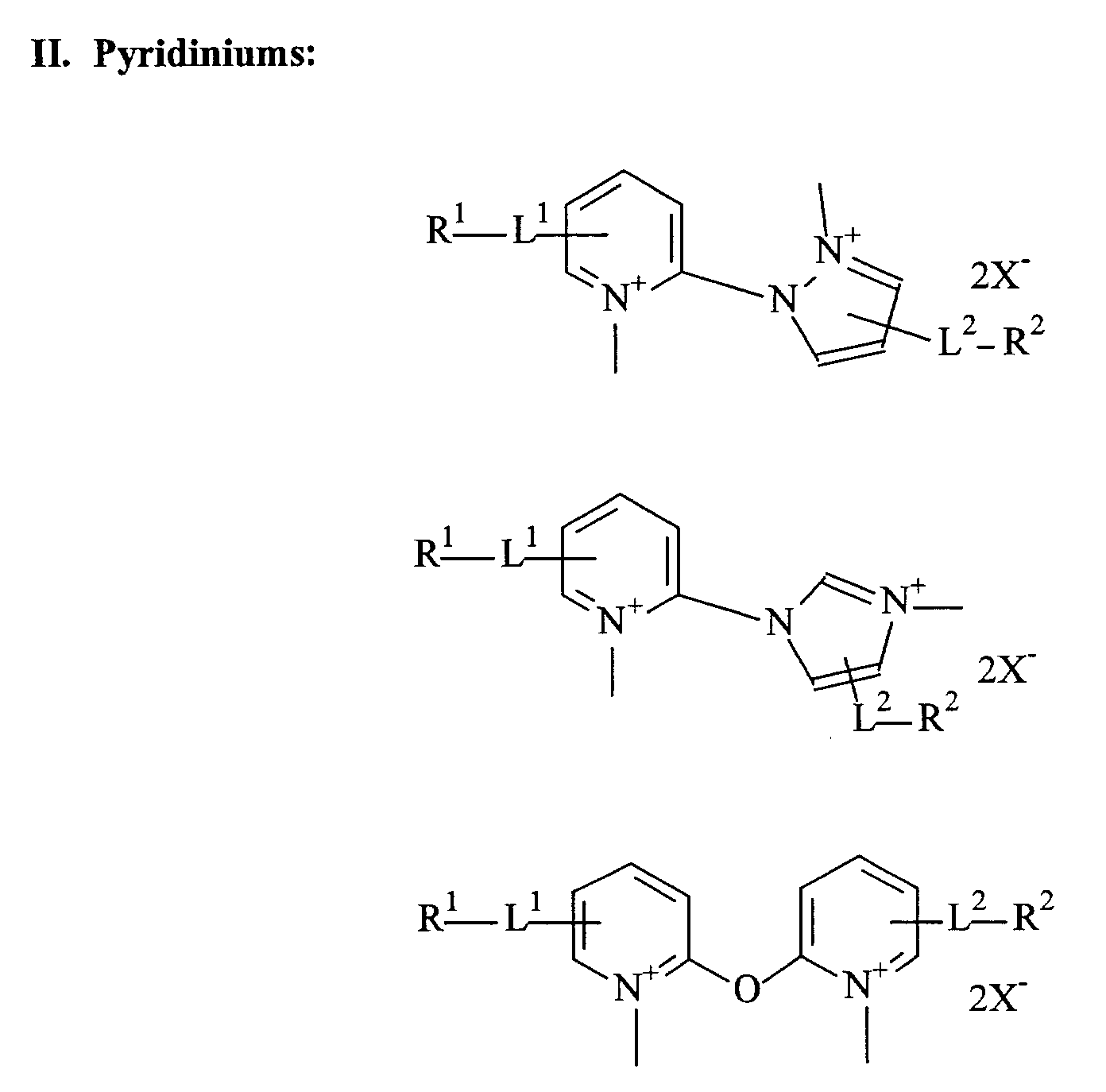
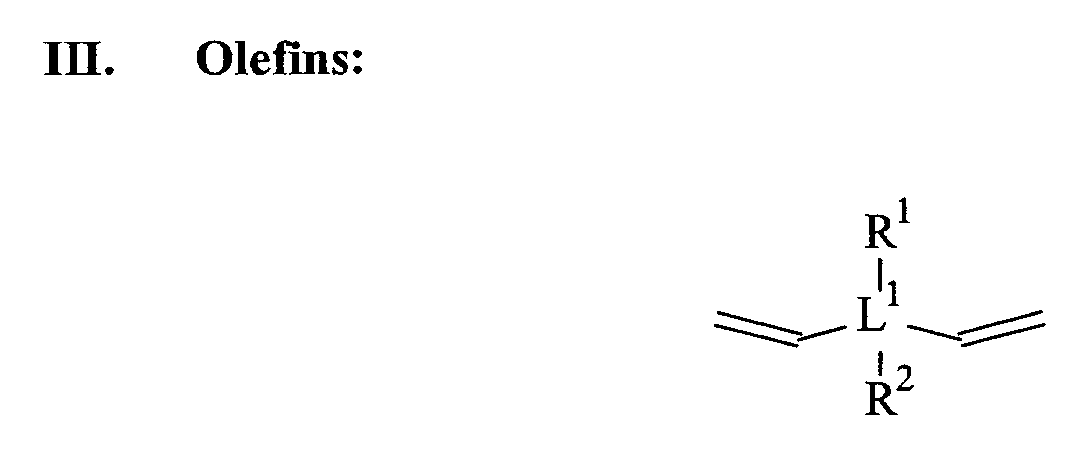
agents useful in the present invention are illustrated, but not limited, by the
following structures:
wherein X = BF
4 -, CF
3SO
3 -, PF
6 -, Halide.
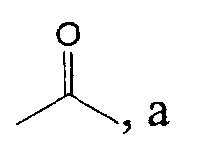
wherein linking groups L
1 and L
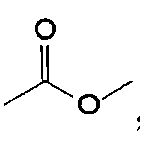
2 are each independently a single
bond, a carbon atom, an oxygen atom, a sulfur atom, a carbonyl group
carboxylic ester group
a carboxylic amide group
a sulfonyl group
a sulfonamide group
an ethyleneoxy group, a polyethyleneoxy
group, or an amino group
wherein substituents X, Y, and Z are each independently a
hydrogen atom or an alkyl group of 1-4 carbon atoms; and
wherein R
1 and R
2 are each independently a hydrogen atom, a
substituted or unsubstituted, linear or branched, saturated or unsaturated alkyl
group of 1 to 10 carbon atoms (such as methyl, ethyl, n-propyl, isopropyl, t-butyl,
hexyl, decyl, benzyl, methoxymethyl, hydroxyethyl, iso-butyl, and n-butyl), a
substituted or unsubstituted aryl group of 6 to 14 carbon atoms (such as phenyl,
naphthyl, anthryl, tolyl, xylyl, 3-methoxyphenyl, 4-chlorophenyl, 4-carbomethoxyphenyl
and 4-cyanophenyl), a substituted or unsubstituted
cycloalkyl group of 5 to 14 carbon atoms such as cyclopentyl, cyclohexyl, and
cyclooctyl), a substituted or unsubstituted, saturated or unsaturated heterocyclic
group (such as pyridyl, primidyl, morpholino, and furanyl), a cyano group, or a
solubilizing group such as a carboxylic acid group, a sulfonic acid group, a
phosphonic acid group, a hydroxamic acid group, a sulfonamide group, and a
hydroxy group (and their corresponding salts). Examples of suitable substituents
for R
1 and R
2 include one or more sulfonate groups, sulfate groups, carboxy
groups, hydroxy groups, phosphonic acid groups, hydroxamic acid groups, amine
groups, amide groups, ester groups, sulfonamide groups, nitro groups, cyano
groups, oxo groups, and halogen atoms. Preferably, at least one of R
1 and R
2 is or
contains a solubilizing group that-becomes negatively charged when ionized, such
as an acidic group. Examples of these solubilizing groups include, but are not
limited to, carboxylic acid, sulfonic acid, phosphonic acid, hydroxamic acid,
sulfonamide, and hydroxy groups (and their corresponding salts). One or more of
R
1 and R
2 also may be, or may contain, a polyethylenoxy group. R
1 and R
2 may
be joined by sufficient numbers of carbon, nitrogen, and sulfur atoms to form,
independently, a five- or six-membered ring. When L is linked to a ring structure,
it could be single or multiple substitutions.
More specific representative examples of hardening agents are represented
by the following structures:
These compounds can be readily prepared using the published
synthetic procedure or routine modifications that would be readily apparent to one
skilled in the art of synthetic organic chemistry.
Other examples of hardening agents can be found in standard
references such as The Theory of the Photographic Process, T.H.James,
Macmillan Publishing Co., Inc. (New York 1977) or in Research Disclosure,
September 1996, Number 389, Part IIB (hardeners). Research Disclosure is
published by Kenneth Mason Publications, Ltd., Dudley House, 12 North St.,
Emsworth, Hampshire P010 7DQ, England. Organic hardening agents are
preferred over inorganic hardeners.
The imaged photographic element contains at least one imaged
layer containing image dye (derived from the reaction of the original silver-halide
with dye-forming coupler in the emulsion) and comprises at least one binder or
vehicle that can be hardened according to the present invention. Useful binders
include naturally occurring substances such as proteins, protein derivatives,
gelatin (e.g., alkali-treated gelatin such as cattle bone or hide gelatin, or acid
treated gelatin such as pigskin gelatin), and gelatin derivatives (e.g., acetylated
gelatin, phthalated gelatin, and the like). Also useful as vehicle extenders are
hydrophilic water-permeable colloids. These include synthetic polymeric
peptizers, carriers, and/or binders such as poly(vinyl alcohol), poly(vinyl
lactams), acrylamide polymers, polyvinyl acetals, polymers of alkyl and
sulfoalkyl acrylates and methacrylates, hydrolyzed polyvinyl acetates,
polyamides, polyvinyl pyridine, methacrylamide copolymers, and the like.
In the case of gelatin as the vehicle, gelatin crosslinking agents (as
the hardener) are included in a processing solution in an amount of at least
0.01wt.% and preferably from 0.1 to 10 wt.%. More than one gelatin crosslinking
agent can be used in the rinse solution if desired.
In one embodiment of the invention, the hardening agent may be
included in a rinse solution following the developing solution. Alternatively, it is
also possible to have the hardening agent in the developing solution, so long as
the hardening is less rapid than the development or is completed after the
development is substantially or essentially completed.
In still other embodiments of the invention, the hardening agent
can be contained in a blocked form in the photographic layer, which blocked form
is released during development or later, for example, by high alkalinity.
Examples of blocking groups for hardeners can be found in the prior art.
Alternatively, one or more hardening agents may be contained in a separate layer
from the imaging layer, whereby the hardening agents are released and/or migrate
to the photographic layer during or after development of the image.
In one preferred embodiment of the invention, in which the
primary binder is gelatin, the hardening agent is applied to the imaged element in
the form of a rinse solution. The pH of the rinse solution is generally not adjusted
after the addition of gelatin crosslinking agent and it could be either acidic or
alkaline depending on the choice of the crosslinking agent. However, certain
buffer solution can be used, if desired, to control the pH of the rinse solution.
Particularly useful buffers include, but are not limited to, carbonates, borates,
tetraborates, phosphates, glycine salts, leucine salts, valine salts, proline salts,
alanine salts, aminobutyric acid salts, lycine salts, guanine salts and
hydroxybenzoates.
The support material used with this invention can comprise various
polymeric films, papers, glass, and the like. The thickness of the support is not
critical. Support thicknesses of 2 to 15 mils (0.002 to 0.015 inches) can be used.
One type of coating composition that can be employed for forming
a protective overcoat layer in accordance with the present invention comprises a
continuous aqueous phase having therein a film forming binder, wherein the
binder comprises hybrid urethane-vinyl copolymer having an acid number of
greater than or equal to 5 and less than or equal to 30. Acid number is in general
determined by titration and is defined as the number of milligrams of potassium
hydroxide (KOH) required to neutralize 1 gram of the polymer. Other types of
overcoats that are designed to be process-permeable during development and
water-resistant after development comprise a hydrophobic porous matrix or
membrane or comprise hydrophobic particles contained in a gelatin matrix. Still
other such overcoats comprise polymeric particles that employ fusing after
development to close pores in the overcoat that exist during development. Still
other types of overcoats are contemplated. However such overcoats all have in
common the fact that they are permeable to the water and developing solutions
during development and become water resistant (but not completely water
impermeable) in the final product. The use of the hardening agent to harden the
underlying layers prevents any water that manages to soak through the overcoat
from swelling. This can happen, even if the overcoat is water-resistant, if an
aqueous solution such as punch or other such household commodity, is allowed to
remain in contact with the imaged element for an extended period of time. For
example, a print may be inadvertently laid on a wet spot on a table. It has been
found that abrasion can potentially occur when the wet print is discovered and an
attempt is made to dry the print, for example, by using a paper towel. In such
circumstances, scratches can occur on the overcoat due to swelling of the
underlying material and the resultant stress on the relatively non-swellable and
non-healing overcoat. This phenomenon can be significantly reduced by means
of the present invention. In contrast, if the imaged element did not have the
water-resistant overcoat, such wet abrasion is not such a problem since the
swollen layer could then heal. Merely drying the non-water-resistant print may
suffice to return the print to its original state without damage.
The polymer overcoat should be clear, i.e., transparent, and
preferably colorless. But it is contemplated that the polymer overcoat can have
some color for the purposes of color correction, or for special effects, so long as it
does not detrimentally affect the formation or viewing of the image through the
overcoat. Thus, there can be incorporated into the polymer, dye that will impart
color. In addition, additives can be incorporated into the polymer that will give
the overcoat, desired properties. For example, a UV absorber can be incorporated
into the polymer to make the overcoat UV absorptive, thus protecting the image
from UV induced fading. Other additional compounds may be added to the
coating composition, depending on the functions of the particular layer, including
surfactants, emulsifiers, coating aids, lubricants, matte particles, rheology
modifiers, crosslinking agents, antifoggants, inorganic fillers such as conductive
and nonconductive metal oxide particles, pigments, magnetic particles, biocide,
and the like. The coating composition may also include a small amount of
organic solvent, preferably the concentration of organic solvent is less than 1
percent by weight of the total coating composition. The invention does not
preclude coating the desired polymeric material from a volatile organic solution
or from a melt of the polymer.
The surface characteristics of the protective overcoat in the
photographic element are in large part dependent upon the physical characteristics
of the polymers which form the more or less continuous phase and the presence or
absence of solid, nonfusible particles. However, the surface characteristics of the
overcoat also can be modified by the conditions under which the surface is fused.
For example, in contact fusing the surface characteristics of the fusing element
that is used to fuse the polymers to form the continuous overcoat layer can be
selected to impart a desired degree of smoothness, texture or pattern to the surface
of the element. Thus, a highly smooth fusing element will give a glossy surface
to the imaged element, a textured fusing element will give a matte or otherwise
textured surface to the element, a patterned fusing element will apply a pattern to
the surface of the element, etc.
Examples of coating aids include surfactants, viscosity modifiers
and the like. Surfactants include any surface-active material that will lower the
surface tension of the coating preparation sufficiently to prevent edge-withdrawal,
repellencies, and other coating defects. These include alkyloxy- or
alkylphenoxypolyether or polyglycidol derivatives and their sulfates, such as
nonylphenoxypoly(glycidol) available from Olin Matheson Corporation or
sodium octylphenoxypoly(ethyleneoxide) sulfate, organic sulfates or sulfonates,
such as sodium dodecyl sulfate, sodium dodecyl sulfonate, sodium bis(2-ethylhexyl)sulfosuccinate
(Aerosol™ OT), and alkylcarboxylate salts such as
sodium decanoate.
Matte particles well known in the art may also be used in an
overcoat composition. Matting agents have been described in Research
Disclosure No. 308119, published Dec. 1989, pages 1008 to 1009. When
polymer matte particles are employed, the polymer may contain reactive
functional groups capable of forming covalent bonds with the binder polymer by
intermolecular crosslinking or by reaction with a crosslinking agent in order to
promote improved adhesion of the matte particles to the coated layers. Suitable
reactive functional groups include hydroxyl, carboxyl, carbodiimide, epoxide,
aziridine, vinyl sulfone, sulfinic acid, active methylene, amino, amide, allyl, and
the like.
In order to reduce the sliding friction of the photographic elements
in accordance with this invention, the overcoat may contain fluorinated or
siloxane-based components and/or the coating composition may also include
lubricants or combinations of lubricants. Typical lubricants include (1) silicone
based materials disclosed, for example, in U.S. Patent Nos. 3,489,567, 3,080,317,
3,042,522, 4,004,927, and 4,047,958, and in British Patent Nos. 955,061 and
1,143,118; (2) higher fatty acids and derivatives, higher alcohols and derivatives,
metal salts of higher fatty acids, higher fatty acid esters, higher fatty acid amides,
polyhydric alcohol esters of higher fatty acids, etc., disclosed in U.S. Patent Nos.
2,454,043; 2,732,305; 2,976,148; 3,206,311; 3,933,516; 2,588,765; 3,121,060;
3,502,473; 3,042,222; and 4,427,964, in British Patent Nos. 1,263,722; 1,198,387;
1,430,997; 1,466,304; 1,320,757; 1,320,565; and 1,320,756; and in German
Patent Nos. 1,284,295 and 1,284,294; (3) liquid paraffin and paraffin or wax like
materials such as carnauba wax, natural and synthetic waxes, petroleum waxes,
mineral waxes, silicone-wax copolymers and the like; (4) perfluoro- or fluoro- or
fluorochloro-containing materials, which include poly(tetrafluoroethylene),
poly(trifluorochloroethylene), poly(vinylidene fluoride,
poly(trifluorochloroethylene-co-vinyl chloride), poly(meth)acrylates or
poly(meth)acrylamides containing perfluoroalkyl side groups, and the like.
Lubricants useful in the present invention are described in further detail in
Research Disclosure No.308119, published Dec. 1989, page 1006.
An overcoat composition can be applied by any of a number of
well known techniques, such as dip coating, rod coating, blade coating, air knife
coating, gravure coating and reverse roll coating, extrusion coating, slide coating,
curtain coating, and the like. After coating, the layer is generally dried by simple
evaporation, which may be accelerated by known techniques such as convection
heating. Known coating and drying methods are described in further detail in
Research Disclosure No. 308119, Published Dec. 1989, pages 1007 to 1008.
The photographic elements in which the images to be protected can
contain conductive layers. Conductive layers can be incorporated into multilayer
photographic elements in any of various configurations depending upon the
requirements of the specific photographic element. Preferably, the conductive
layer is present as a subbing or tie layer underlying a magnetic recording layer on
the side of the support opposite the imaging layer(s). However, conductive layers
can be overcoated with layers other than a transparent magnetic recording layer
(e.g., abrasion-resistant backing layer, curl control layer, pelloid, etc.) in order to
minimize the increase in the resistivity of the conductive layer after overcoating.
Further, additional conductive layers also can be provided on the same side of the
support as the imaging layer(s) or on both sides of the support. An optional
conductive subbing layer can be applied either underlying or overlying a gelatin
subbing layer containing an antihalation dye or pigment. Alternatively, both
antihalation and antistatic functions can be combined in a single layer containing
conductive particles, antihalation dye, and a binder. Such a hybrid layer is
typically coated on the same side of the support as the sensitized emulsion layer.
Additional optional layers can be present as well. An additional conductive layer
can be used as an outermost layer of a photographic element, for example, as a
protective layer overlying an image-forming layer. When a conductive layer is
applied over a sensitized emulsion layer, it is not necessary to apply any
intermediate layers such as barrier or adhesion-promoting layers between the
conductive overcoat layer and the imaging layer(s), although they can optionally
be present. Other addenda, such as polymer lattices to improve dimensional
stability, hardeners or cross-linking agents, surfactants, matting agents, lubricants,
and various other well-known additives can be present in any or all of the above
mentioned layers.
Conductive layers underlying a transparent magnetic recording
layer typically exhibit an internal resistivity of less than 1x10¹⁰ ohms/square,
preferably less than 1x10⁹ ohms/square, and more preferably, less than 1x10⁸
ohms/square.
Photographic elements of the invention differ widely in structure
and composition. For example, the photographic elements vary greatly with
regard to the type of support, the number and composition of the image-forming
layers, and the number and types of auxiliary layers that are included in the
elements. In particular, photographic elements can be still films, motion picture
films, x-ray films, graphic arts films, paper prints microfiche, or small format
films as described in Research Disclosure, Item 36230 (June 1994). Photographic
elements can be either simple black-and-white or monochrome elements or
multilayer and/or multicolor elements adapted for use in a negative-positive
process or a reversal process. Generally, the photographic element is prepared by
coating one side of the film support with one or more layers comprising a
dispersion of silver halide crystals in an aqueous solution of gelatin and optionally
one or more subbing layers. The coating process can be carried out on a
continuously operating coating machine wherein a single layer or a plurality of
layers are applied to the support. For multicolor elements, layers can be coated
simultaneously on the composite film support as described in U.S. Patent Nos.
2,761,791 and 3,508,947. Additional useful coating and drying procedures are
described in Research Disclosure, Vol. 176, Item 17643 (Dec., 1978).
The photographic elements claimed in accordance with this
invention are derived from silver halide photographic elements that can be black
and white elements (for example, those which yield a silver image or those which
yield a neutral tone image from a mixture of dye forming couplers), single color
elements or multicolor elements. Multicolor elements typically contain dye
image-forming units sensitive to each of the three primary regions of the
spectrum. The imaged elements can be imaged elements which are viewed by
transmission, such a negative film images, reversal film images and motion
picture prints or they can be imaged elements that are viewed by reflection, such a
paper prints. Because of the amount of handling that can occur with paper prints
and motion picture prints, they are the preferred imaged photographic elements
for use in this invention.
While a primary purpose of applying an overcoat to imaged
photographic elements in accordance with this invention is to protect the element
from reticulation and other physical damage, application of the overcoat may also
protect the image from fading or yellowing. This is particularly true with
elements that contain images that are susceptible to fading or yellowing due to the
action of oxygen. For example, the fading of dyes derived from pyrazolone and
pyrazoloazole couplers is believed to be caused, at least in part, by the presence of
oxygen, so that the application of an overcoat which acts as a barrier to the
passage of oxygen into the element will reduce such fading.
The photographic elements in which the images to be protected are
formed can have the structures and components shown in Research Disclosures
37038 and 38957. Specific photographic elements can be those shown on pages
96-98 of Research Disclosure 37038 as Color Paper Elements 1 and 2. A typical
multicolor photographic element comprises a support bearing a cyan dye image-forming
unit comprised of at least one red-sensitive silver halide emulsion layer
having associated therewith at least one cyan dye-forming coupler, a magenta dye
image-forming unit comprising at least one green-sensitive silver halide emulsion
layer having associated therewith at least one magenta dye-forming coupler, and a
yellow dye image-forming unit comprising at least one blue-sensitive silver halide
emulsion layer having associated therewith at least one yellow dye-forming
coupler.
As an example of a preferred dye-forming coupler, an "NB
coupler" is capable of coupling with the developer 4-amino-3-methyl-N-ethyl-N-(2-methanesulfonamidoethyl)
aniline sesquisulfate hydrate to form a dye for
which the left bandwidth (LBW) of its absorption spectra upon "spin coating" of
a 3% w/v solution of the dye in di-n-butyl sebacate solvent is at least 5 nm. less
than the LBW for a 3% w/v solution of the same dye in acetonitrile. The LBW of
the spectral curve for a dye is the distance between the left side of the spectral
curve and the wavelength of maximum absorption measured at a density of half
the maximum.
The element can contain additional layers, such as filter layers,
interlayers, overcoat layers, subbing layers, and the like. All of these can be
coated on a support that can be transparent (for example, a film support) or
reflective (for example, a paper support). Photographic elements claimed in
accordance with the present invention may also include a magnetic recording
material as described in Research Disclosure, Item 34390, November 1992, or a
transparent magnetic recording layer such as a layer containing magnetic particles
on the underside of a transparent support as described in US 4,279,945 and US
4,302,523.
Suitable silver halide emulsions and their preparation, as well as
methods of chemical and spectral sensitization, are described in Sections I through
V of Research Disclosures 37038 and 38957. Color materials and development
modifiers are described in Sections V through XX of Research Disclosures 37038
and 38957. Vehicles are described in Section II of Research Disclosures 37038
and 38957, and various additives such as brighteners, antifoggants, stabilizers,
light absorbing and scattering materials, hardeners, coating aids, plasticizers,
lubricants and matting agents are described in Sections VI through X and XI
through XIV of Research Disclosures 37038 and 38957. Processing methods and
agents are described in Sections XIX and XX of Research Disclosures 37038 and
38957, and methods of exposure are described in Section XVI of Research
Disclosures 37038 and 38957.
Photographic elements can be imagewise exposed using a variety of
techniques. Typically exposure is to light in the visible region of the spectrum, and
typically is of a live image through a lens. Exposure can also be to a stored image
(such as a computer stored image) by means of light emitting devices (such as
LEDs, CRTs, etc.).
Images can be developed in photographic elements in any of a
number of well known photographic processes utilizing any of a number of well
known processing compositions, described, for example, in T.H. James, editor,
The Theory of the Photographic Process, 4th Edition, Macmillan, New York,
1977. In the case of processing a color negative element, the element is treated
with a color developer (that is one which will form the colored image dyes with
the color couplers), and then usually with an oxidizer and a solvent to remove
silver and silver halide. In the case of processing a color reversal element, the
element is first treated with a black and white developer (that is, a developer
which does not form colored dyes with the coupler compounds) followed by a
treatment to render developable unexposed silver halide (usually chemical or light
fogging), followed by treatment with a color developer. Development may be
followed by bleach-fixing, to remove silver or silver halide, washing and drying.
Newer types of film may eliminate some of the processing steps for the film, for
example, if scanning is used to obtain the image information in electronic form
prior to printing.
EXAMPLES
A urethane-acrylic "copolymer" (an interpenetrating network of
two polymers) designated P1 was synthesized as described below. The polymer
has an acid number of 11. The polyvinyl alcohols (PVA) used was (Airvol®
203), obtained from Air Products which was 87 to 89% hydrolyzed (by
hydrolyzed is meant that the acetate groups in the monomeric units are converted
to hydroxy groups). A crosslinker for the acid containing urethane-vinyl
copolymer, CX 100 (a polyfunctional aziridine), was obtained from Neo Resins (a
division of Avecia).
Synthesis of polymer P1
Into a dry reactor was charged 96 grams of a diol (Millester® 9-55,
MW2000 from Polyurethane Corporation of America), 87 grams of the methylene
bis(4-cyclohexyl) isocyanate (Desmodur®W) and 0.02 grams of dibutyltin
dilaurate (Aldrich). The mixture was held with stirring for 90 minutes at 94°C
under a blanket of argon after which 14 grams of dimethylol propionic acid was
added to the reactor and the mixture stirred for 1.5 hours at 94°C. At this point,
24 grams of methyl methacrylate were added and stirred for 1 hour at the same
temperature. The resultant prepolymer was cooled to below 40°C, dissolved in a
vinyl monomer mixture consisting of 113 grams of n-butyl acrylate, 183 grams of
methyl methacrylate, and 5 grams of acetoacetoxyethyl methacrylate, and then
treated with 11 grams of triethylamine and 2.5 grams of initator (AIBN). To this
mixture was added 1000 ml deoxygenated water followed by 10 grams of
ethylene diamine in 20 grams of water. The dispersion was heated to 65°C, held
there with stirring for 2 hours and heated further to 80°C for 10 hours. The
resulting dispersion of the urethane acrylic copolymer was used as polymer P1
having an acid number of 11.
The protective polymer overcoat was coated over the UV layer of
paper that was previously coated with light sensitive emulsions in a formulation
described in Tables 1 and 2 below. The gelatin containing layers were hardened
with bis(vinylsulfonyl methyl) ether at 1.95 % of the total gelatin weight. The
check coating included the overcoat as described in Table 1.
| Layer | Laydown (g/m2) |
| Overcoat | 0.557 Gelatin |
| | 0.002 SURF-1 |
| | 0.002 SURF-2 |
| | 0.204 Silica |
| | 0.17 Polydimethylsiloxane |
| UV | 0.111 UV-1 |
| | 0.019 UV-2 |
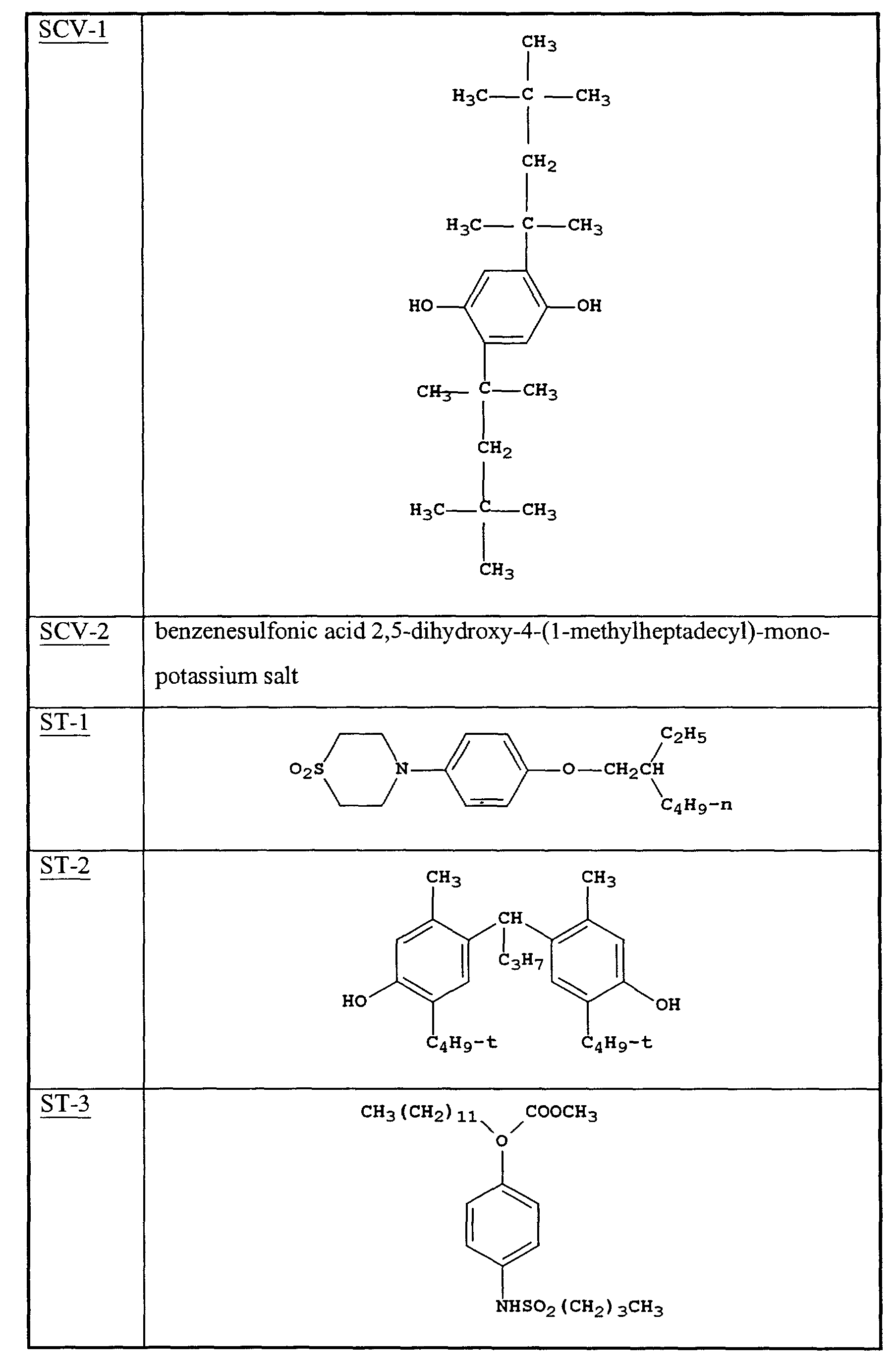
| | 0.033 SCV-1 |
| | 0.022 S-1 |
| | 0.022 S-2 |
| | 0.446 Gelatin |
| Cyan | 0.16 Red light sensitive AgX |
| | 0.365 C-1 |
| | 0.362 S-2 |
| | 0.028 S-3 |
| | 0.230 UV-1 |
| | 1.170 Gelatin |
| UV | 0.158 UV-1 |
| | 0.28 UV-2 |
| | 0.046 SCV-1 |
| | 0.032S-1 |
| | 0.032 S-2 |
| | 0.630 Gelatin |
| Magenta | 0.067 Green-light sensitive AgX |
| | 0.280 C-2 |
| | 0.076 S-2 |
| | 0.033 S-4 |
| | 0.167 ST-1 |
| | 0.019 ST-2 |
| | 0.530 ST-3 |
| | 1.087 Gelatin |
| IL | 0.056 SCV-1 |
| | 0.163 S-2 |
| | 0.650 Gelatin |
| Yellow | 0.186 Blue-light sensitive AgX |
| | 0.42 C-3 |
| | 0.42 P-1 |
| | 0.186 S-2 |
| | 0.10 SCV-2 |
| | 1.133 Gelatin |
- sublayer 1:
- resin coat (Titanox and optic brightener in polyethylene)
- sublayer 2:
- paper
- sublayer 3:
- resin coat (polyethylene)
The urethane-vinyl copolymer P1 was coated over the UV layer of
the sensitized paper support described above to obtain a nominal coverage of 2.15
g/m2 for P1, to show the effect of in-process hardener treatment on wet scratch
resistance. The coating had 35% PVA and one percent by weight CX100
crosslinker with respect to the polymer P1. For comparison, a check paper as
described previously, without the polymer overcoat was used.
For the following examples, a color-paper developer solution was
made following the formula given in Table 3 below. Similarly, a color-paper
bleach/fix solution was made following the formula given in Table 4 below.
| Developer Component | Concentration (g/L) |
| Lithium Sulfate (anhydrous) | 2.500 |
| Lithium polystyrene sulfonate (30% w/w solution) | 0.284 |
| KODAK EKTAPRINT® 2 Stain Reducing Agent | 0.644 |
| Diethylhydroxylamine (85% w/w solution) | 2.357 |
| Potassium Sulfite (45%) | 0.786 |
| Potassium Chloride | 5.796 |
| Potassium Bromide | 0.034 |
| 4-amino-3-methyl-N-ethyl-N-(β-methanesulfonamidoethyl)aniline sesquisulfate monohydrate (CD3) | 3.883 |
| Potassium Carbonate (47%) | 52.63 |
| 1-Hydroxyethylidene-1,1-diphosphonic acid (60% w/w solution) | 1.147 |
| Water to make (pH adjusted to 10.12 with KOH or H2SO4) | 1 L |
| Component | Tank |
| Water at 80 - 90 F | 500 mL |
| KODAK Bleaching Agent, BL-1 | 85 mL |
| Total Iron | 7.5 g |
| Ammonium Thiosulfate, 58% | 105 mL |
| Sodium Sulfite | 10 g |
| pH at 25.0 C | 6.20 |
Color paper was processed according to the sequence given in
Table 5.
Using the above solutions, the color paper processing sequence
used in the following Examples was as described in Table 5 below.
| Step | Time (sec) |
| Developer | 45 |
| Bleach/fix | 45 |
| Wash | 90 |
| Rinse | Vary |
Table 6 lists the various gelatin crosslinking agents that were used
to harden the photographic element with and without the protective polymer
overcoat. These agents were added to the rinse solution, in the processing
sequence described earlier.
| Crosslinking Agent | Chemical Composition |
| CA1 | Formaldehyde |
| CA2 | 1-[3-dimethylamino)propyl]-3-ethyl carbodiimide |
| CA3 | mucochloric acid |
| CA4 | Bis(N-methyl-2-pyridylium tetrafluoroborate) |
| CA5 | 1-methyl-2-(2-methyl-1H-pyrazolium-1-yl)bis[tetrafluororate(1-)] Pyridinium, |
| CA6 | 1,4-Dioxane-2,3-diol |
| CA7 | Bis(vinylsulfonyl) methane |
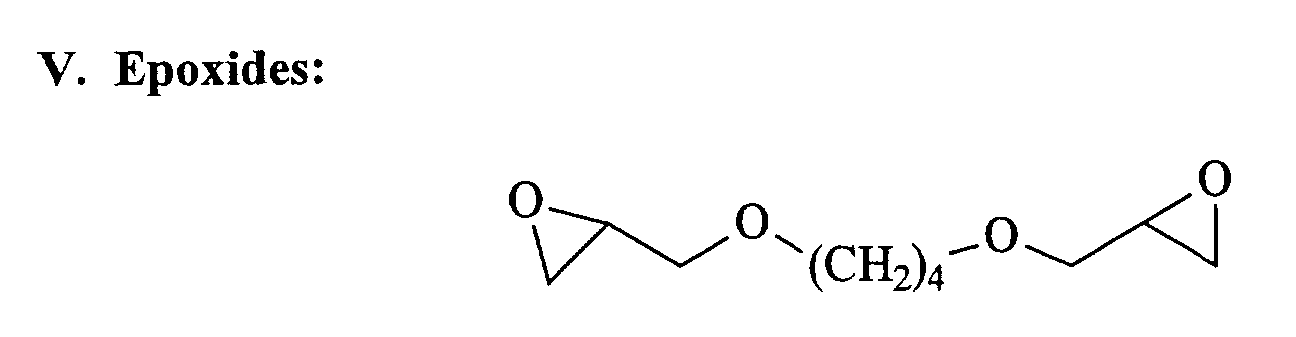
| CA8 | 1,4-Butanediol diglycidyl ether |
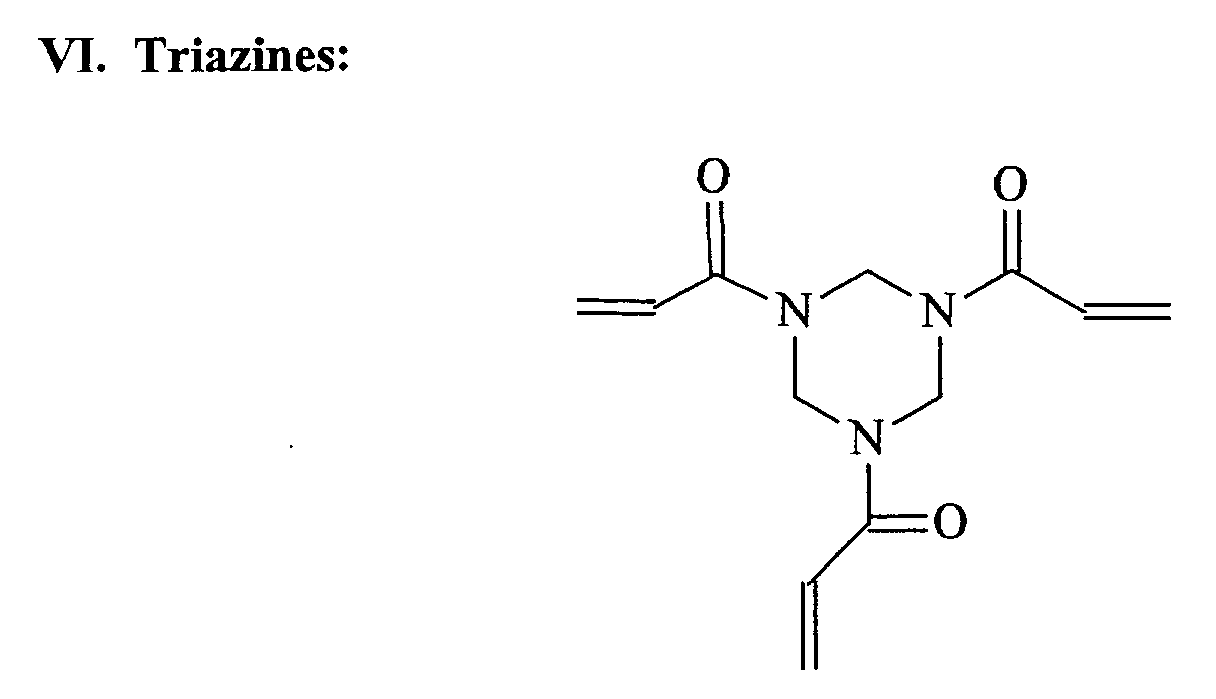
| CA9 | 1,3,5-Triacryloylhexahydro-S-triazine |
Each of the crosslinking agents in Table 6 was added to the rinse
solution to achieve a final concentration range from 0.1% to 10%. After RA-4
processing, the color paper with protective overcoat was air dried and the wet
abrasion resistance tested by allowing a drop of coffee at room temperature, to sit
on the surface for 1, 5, and 10 minutes. The liquid was then absorbed with a dry
paper towel followed by further immediate wiping of the soaked area with a dry
part of the towel. The resulting scratches if any were visually examined and
ranked on a scale of 1 to 10 according to severity of the scratches with 1 = a large
number of visible scratches and 10 = no visible scratches. The relative rating for
wet scratch resistance after post-development hardening is given in Table 7
below.
The swell measurements were done on processed samples as follows. To
measure the swell of each sample, the sample was allowed to swell in a pH 10
carbonate buffer solution for 5 minutes at room temperature, and the resulting
total thickness of fully swelled sample was recorded as the equilibrium swell at
that time. The term "Swell Ratio" as used herein refers to these measurements
according to the following equation:
Swell Ratio = Equilibrium Swell of hardener-treated processed
Sample/Equilibrium Swell of hardener-untreated processed Sample
With respect to the claims, Swell Ratio is defined as follows:
Swell Ratio = Equilibrium Swell of hardener-treated processed
photographic print/ (divided by)
Equilibrium Swell of unprocessed photographic paper
The calculated Swell Ratio of the samples are listed in Table 7 below.
| Hardener | Swell Ratio | Scuff Resistance Time (minutes) 1 5 10 |
| None (check) | | 3 | 2 | 1 |
| CA1 | 0.17 | 10 | 10 | 10 |
| CA2 | 0.43 | 9 | 10 | 10 |
| CA3 | 0.28 | 10 | 8 | 7 |
| CA4 | 0.33 | 10 | 9 | 9 |
| CA5 | 0.28 | 10 | 8 | 7 |
| CA6 | 0.77 | 10 | 10 | 8 |
| CA7 | 0.83 | 10 | 4 | 3 |
| CA8 | 0.4 | 10 | 9 | 7 |
| CA9 | 0.56 | 10 | 9 | 7 |
These results show that a color paper with a protective water-resistant
overcoat according to the present invention exhibits improved wet
abrasion resistance after the during-process hardener treatment. The results show
that the swell of the hardener-treated samples are decreased with respect to the
untreated sample