EP1162261A1 - Continuous monolayer of primary hepatocytes - Google Patents
Continuous monolayer of primary hepatocytes Download PDFInfo
- Publication number
- EP1162261A1 EP1162261A1 EP00128369A EP00128369A EP1162261A1 EP 1162261 A1 EP1162261 A1 EP 1162261A1 EP 00128369 A EP00128369 A EP 00128369A EP 00128369 A EP00128369 A EP 00128369A EP 1162261 A1 EP1162261 A1 EP 1162261A1
- Authority
- EP
- European Patent Office
- Prior art keywords
- monolayer
- hepatocytes
- sheet structure
- primary hepatocytes
- monolayer sheet
- Prior art date
- Legal status (The legal status is an assumption and is not a legal conclusion. Google has not performed a legal analysis and makes no representation as to the accuracy of the status listed.)
- Granted
Links
Images

Classifications
-
- C—CHEMISTRY; METALLURGY
- C12—BIOCHEMISTRY; BEER; SPIRITS; WINE; VINEGAR; MICROBIOLOGY; ENZYMOLOGY; MUTATION OR GENETIC ENGINEERING
- C12N—MICROORGANISMS OR ENZYMES; COMPOSITIONS THEREOF; PROPAGATING, PRESERVING, OR MAINTAINING MICROORGANISMS; MUTATION OR GENETIC ENGINEERING; CULTURE MEDIA
- C12N5/00—Undifferentiated human, animal or plant cells, e.g. cell lines; Tissues; Cultivation or maintenance thereof; Culture media therefor
- C12N5/06—Animal cells or tissues; Human cells or tissues
- C12N5/0602—Vertebrate cells
- C12N5/067—Hepatocytes
- C12N5/0671—Three-dimensional culture, tissue culture or organ culture; Encapsulated cells
-
- C—CHEMISTRY; METALLURGY
- C12—BIOCHEMISTRY; BEER; SPIRITS; WINE; VINEGAR; MICROBIOLOGY; ENZYMOLOGY; MUTATION OR GENETIC ENGINEERING
- C12N—MICROORGANISMS OR ENZYMES; COMPOSITIONS THEREOF; PROPAGATING, PRESERVING, OR MAINTAINING MICROORGANISMS; MUTATION OR GENETIC ENGINEERING; CULTURE MEDIA
- C12N2501/00—Active agents used in cell culture processes, e.g. differentation
- C12N2501/70—Enzymes
-
- C—CHEMISTRY; METALLURGY
- C12—BIOCHEMISTRY; BEER; SPIRITS; WINE; VINEGAR; MICROBIOLOGY; ENZYMOLOGY; MUTATION OR GENETIC ENGINEERING
- C12N—MICROORGANISMS OR ENZYMES; COMPOSITIONS THEREOF; PROPAGATING, PRESERVING, OR MAINTAINING MICROORGANISMS; MUTATION OR GENETIC ENGINEERING; CULTURE MEDIA
- C12N2501/00—Active agents used in cell culture processes, e.g. differentation
- C12N2501/999—Small molecules not provided for elsewhere
Definitions
- This invention relates to a monolayer sheet structure of primary hepatocytes, and a method of manufacturing it, and more particularly, to a method of forming a confluent monolayer sheet structure of primary hepatocytes so as to allow a dramatic improvement in the adhesion (attachment) and extension (spreading) of primary hepatocytes on to the culture substrate, and to the monolayer sheet structure formed by such a method.
- This invention falls into the category of elemental technology for the systems engineering needed to construct artificial internal organs and bioreactors using cells, and is particularly useful as a technique for forming cell aggregates.
- the most widely used conventional technique for forming monolayers of primary hepatocytes is the simple method which consisting of suspending isolated primary hepatocytes in animal cell culture medium containing various bioactive hormones (such as dexamethasone) or serum, and spreading them on a culture substrate (such as a plastic laboratory dish coated with collagen, etc.) , after which they are subjected to standing culture for a few hours to 24 hours.
- a culture substrate such as a plastic laboratory dish coated with collagen, etc.
- the present inventors discovered as a result of exhaustive research that the adhesion and extension of primary hepatocytes on to a culture substrate could be dramatically enhanced by treatment thereof with a suitable amount of a protein-phosphorylation inhibitor having an indolo [2,3-a] carbazole skeleton (typical example: staurosporine) during formation of the primary hepatocytes monolayers according to prior art, and achieved this effect.
- a protein-phosphorylation inhibitor having an indolo [2,3-a] carbazole skeleton (typical example: staurosporine) during formation of the primary hepatocytes monolayers according to prior art, and achieved this invention by exploiting this effect.
- the present invention provides a monolayer sheet structure of primary hepatocytes that could not be formed by conventional cell layer formation technology, along with a simple method of forming such a monolayer sheet structure.
- This invention is a monolayer sheet structure formed as a confluent monolayer of primary hepatocytes cultured on a culture substrate, said monolayer sheet structure is formed by treating the hepatocytes with a protein-phosphorylation inhibitor having an indolo [2,3-a] carbazole or other similar structure in the monolayer formation stage.
- This invention is aimed at providing a confluent monolayer sheet structure of primary hepatocytes, that could not be formed with conventional cell monolayer formation technology, and also providing a simple method of forming such a structure.
- this invention is also aimed at providing a method of manufacturing a monolayer sheet structure of primary hepatocytes using a protein-phosphorylation inhibitor (compound) with an indolo [2,3-a] carbazole or other similar skeleton, and also providing a monolayer sheet structure manufactured according to said method.
- This invention which is to solve the subjects described above, comprises the following technological means.
- a representative method is that 1) isolating primary hepatocytes from livers or liver sections by a method such as collagenase perfusion method, 2) suspending them in an animal cell culture medium (such as Williams' E medium, Dulbecco's modified eagle's medium and the like) containing various physiological active hormones (such as dexamethasone and the like) or a few percent to about 10% serum, 3) seeding them on a culture substrate (such as a plastic laboratory dish coated with collagen, etc.) and subjecting them to standing culture for a few to 24 hours, and 4) in many cases, inserting a medium exchange operation after several hours of the seeding of the cells in the step of the standing culture.
- an animal cell culture medium such as Williams' E medium, Dulbecco's modified eagle's medium and the like
- physiological active hormones such as dexamethasone and the like
- these methods can be used for monolayer formation of primary hepatocytes in addition to treatment of the cells with a protein-phosphorylation inhibitor having an indolo [2,3-a] carbazole or other similar skeleton.
- Biochemically it is known to exhibit inhibitory action against the activity of various protein kinases such as protein kinase C by competitive inhibition of ATP binding. Its effects on cells are known to include inducing differentiation, inducing apoptosis and inhibiting platelet aggregation and the like (Biochemical Dictionary, 3 rd Ed., Tokyo Kagaku Dojin, 1998; Omura, S. et al., J Antibiot (Tokyo) , 48, 535-548, (1995)).
- the staurosporine described above is used, but it is also possible to use another protein-phosphorylation inhibitor (compound) having an indolo [2,3-a] carbazole or other similar skeleton.
- another protein-phosphorylation inhibitor compound having an indolo [2,3-a] carbazole or other similar skeleton.
- K252a, K252b, KT5720 and KT5823 are published substances that K252a, K252b, KT5720 and KT5823 (these described for example in the Journal of Cellular Physiology, 179:179-192 (1999), No. 180, Page 182) or KT5926, GF109203X, Ro31-8425, UCN-01, UCN-01-Me, RK-286C, CGP41251 (these described for example in The Journal of Antibiotics, Vol. 48, No. 7, p535-548, No. 536, Fig. 1).
- the protein-phosphorylation inhibitor having an indolo [2,3-a] carbazole or other similar skeleton is defined as meaning a substance that exhibits protein inhibition activity, and which is a compound having an indolo [2,3-a] carbazole (IC) skeleton, a derivatives of such a compound, or a compound having a skeleton similar to an IC skeleton.
- a confluent monolayer sheet structure of primary hepatocytes within 24 hours by the simple operation of adding a protein-phosphorylation inhibitor (staurosporine) having an indolo [2,3-a] carbazole or other similar skeleton to the medium in the appropriate stages of the method of primary hepatocytes monolayer formation which are described in the above as the stages of 2) the stage of suspending primary hepatocytes in medium in the method of forming monolyer of primary hepatocytes, 3) the stage of subjecting them to standing culture after seeding the cells on a culture substrate, and 4) the stage of exchanging of the medium.
- a protein-phosphorylation inhibitor staurosporine having an indolo [2,3-a] carbazole or other similar skeleton
- the protein-phosphorylation inhibitor staurosporine having an indolo [2,3-a] carbazole or other similar skeleton can be dissolved directly in a medium to be used, or else a prepared stock solution of the inhibitor in an organic solvent such as dimethylsulfoxide and the like can be diluted in a medium to be used.
- the protein-phosphorylation inhibitor (staurosporine) having an indolo [2,3-a] carbazole or other similar skeleton is usually used at a final concentration of about 10nM-100nM, but is not limited to this range.
- primary hepatocytes refers to hepatocytes or liver parenchymal cells isolated from livers, and while those derived from mammals such as rats or humans can be used, they are not limited to these examples.
- rat livers were used and primary hepatocytes were isolated from the rat livers by ordinary methods, that was, by collagenase perfusion followed method and four subsequent low-speed centrifuge isolation.
- the hepatocytes were suspended in an animal cell culture medium (Williams' E medium) containing 10nM Dexamethasone and 10% fetal bovine serum, and seeded at a cell concentration of 10 x 10 4 cell/cm 2 on 6-well cell culture plastic plates coated with type I collagen.
- staurosporine was added to the medium to a final concentration of 50nM.
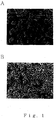
- FIG. 1 A shows a phase contrast microscope image (magnification: X 200) of primary cultured hepatocytes monolayer made by conventional methods (without staurosporine), while B shows an image of the primary cultured hepatocytes monolayer of this invention (with 50nM staurosporine).
- Fig. 1 show clearly that in the case of the hepatocytes not treated with staurosporine, cell aggregates are formed, which comprises intermittently linked patch-like discontinuous monolayers of one to tens of cells.
- adhesion (attachment) and extension (spreading) thereof is improved, and cell aggregates are formed, which comprises a confluent continuous monolayer sheet of closely adjoining cells.
- Fig. 2A shows a schematic explanatory drawing of a dye permeation assay using transwell filters
- Fig. 2,B shows results of the assay.
- the effects achieved by this invention are that 1) a close, confluent continuous monolayer sheet structure of primary hepatocytes is provided, 2) the aforementioned monolayer sheet structure can be formed within 24 hours through simple operations, and 3) the monolayer sheet structure of this invention can be used preferably for construction of artificial internal organs and bioreactors to which confluent monolayer sheet structure of hepatocytes are suitable, and for cell polarity tests by using transwells.
Landscapes
- Health & Medical Sciences (AREA)
- Engineering & Computer Science (AREA)
- Life Sciences & Earth Sciences (AREA)
- Biomedical Technology (AREA)
- Biotechnology (AREA)
- Genetics & Genomics (AREA)
- Zoology (AREA)
- Bioinformatics & Cheminformatics (AREA)
- Organic Chemistry (AREA)
- Chemical & Material Sciences (AREA)
- Wood Science & Technology (AREA)
- Microbiology (AREA)
- Cell Biology (AREA)
- Biochemistry (AREA)
- General Engineering & Computer Science (AREA)
- General Health & Medical Sciences (AREA)
- Gastroenterology & Hepatology (AREA)
- Micro-Organisms Or Cultivation Processes Thereof (AREA)
- External Artificial Organs (AREA)
Abstract
Description
- This invention relates to a monolayer sheet structure of primary hepatocytes, and a method of manufacturing it, and more particularly, to a method of forming a confluent monolayer sheet structure of primary hepatocytes so as to allow a dramatic improvement in the adhesion (attachment) and extension (spreading) of primary hepatocytes on to the culture substrate, and to the monolayer sheet structure formed by such a method.
- This invention falls into the category of elemental technology for the systems engineering needed to construct artificial internal organs and bioreactors using cells, and is particularly useful as a technique for forming cell aggregates.
- The most widely used conventional technique for forming monolayers of primary hepatocytes is the simple method which consisting of suspending isolated primary hepatocytes in animal cell culture medium containing various bioactive hormones (such as dexamethasone) or serum, and spreading them on a culture substrate (such as a plastic laboratory dish coated with collagen, etc.) , after which they are subjected to standing culture for a few hours to 24 hours. However, the monolayer structure of hepatocytes formed by this method becomes intermittently linked patch-like discontinuous monolayers of one to tens of cells, rather than a so-called confluent monolayer sheet structure, which is continuous and without gaps. Even from this state, a confluent state might be achieved through cell proliferation in the case of other cells, but primary hepatocytes do not proliferate easily, making it impossible to subsequently form a confluent sheet structure from the monolayer sheet structure formed during the first 24 hours.
- Under these circumstances, and reflecting on prior art as described above, the present inventors discovered as a result of exhaustive research that the adhesion and extension of primary hepatocytes on to a culture substrate could be dramatically enhanced by treatment thereof with a suitable amount of a protein-phosphorylation inhibitor having an indolo [2,3-a] carbazole skeleton (typical example: staurosporine) during formation of the primary hepatocytes monolayers according to prior art, and achieved this invention by exploiting this effect.
- The present invention provides a monolayer sheet structure of primary hepatocytes that could not be formed by conventional cell layer formation technology, along with a simple method of forming such a monolayer sheet structure.
- This invention is a monolayer sheet structure formed as a confluent monolayer of primary hepatocytes cultured on a culture substrate, said monolayer sheet structure is formed by treating the hepatocytes with a protein-phosphorylation inhibitor having an indolo [2,3-a] carbazole or other similar structure in the monolayer formation stage.
- This invention is aimed at providing a confluent monolayer sheet structure of primary hepatocytes, that could not be formed with conventional cell monolayer formation technology, and also providing a simple method of forming such a structure.
- Furthermore, this invention is also aimed at providing a method of manufacturing a monolayer sheet structure of primary hepatocytes using a protein-phosphorylation inhibitor (compound) with an indolo [2,3-a] carbazole or other similar skeleton, and also providing a monolayer sheet structure manufactured according to said method.
- This invention, which is to solve the subjects described above, comprises the following technological means.
- (1) A monolayer sheet structure consisting of a
confluent monolayer formed from primary hepatocytes
cultured on a culture substrate,
said monolayer sheet structure of primary hepatocytes is produced by treating the hepatocytes with a protein-phosphorylation inhibitor having an indolo [2,3-a] carbazole or similar skeleton in the step of formation of the monolayer. - (2) The monolayer sheet structure of primary hepatocytes according to (1) above, wherein the monolayer sheet structure is produced by treating the hepatocytes with staurosporine.
- (3) A method of manufacturing a monolayer sheet structure by culturing primary hepatocytes on a culture substrate to produce a confluent monolayer, which comprises treating the hepatocytes with a protein-prosphorylation inhibitor having an indolo [2,3-a] carbazole or similar skeleton in the step of formation of the monolayer to form the monolayer sheet structure of primary hepatocytes.
- (4) The method of manufacturing a monolayer sheet structure of primary hepatocytes according to (3) above, wherein the hepatocytes are treated with staurosporine to form the monolayer sheet structure of primary hepatocytes.
-
-
- Fig. 1 shows a phase contrast microscope image of monolayer of primary cultured hepatocytes of prior art (A) and monolayer of primary cultured hepatocytes of this invention (B); and
- Fig. 2 shows a schematic explanatory drawing (A) of a dye permeation assay using transwell filters, and (B) of the results of the assay.
-
- Next, this invention is explained further in more detail.
- Conventional techniques for forming monolayers of primary hepatocytes as well as partial variations on such techniques have been described in detail, for example in "Test Methods for Primary Cultured Hepatocytes" by Toshikazu Nakamura, Gakkai Shuppan Center, 1987, and "Isolated hepatocytes preparation, properties and applications" by M. N. Berry, A. M. Edwards and G. J. Barritt, eds. in Elsevior, 1991.
- A representative method is that 1) isolating primary hepatocytes from livers or liver sections by a method such as collagenase perfusion method, 2) suspending them in an animal cell culture medium (such as Williams' E medium, Dulbecco's modified eagle's medium and the like) containing various physiological active hormones (such as dexamethasone and the like) or a few percent to about 10% serum, 3) seeding them on a culture substrate (such as a plastic laboratory dish coated with collagen, etc.) and subjecting them to standing culture for a few to 24 hours, and 4) in many cases, inserting a medium exchange operation after several hours of the seeding of the cells in the step of the standing culture.
- In this invention, these methods can be used for monolayer formation of primary hepatocytes in addition to treatment of the cells with a protein-phosphorylation inhibitor having an indolo [2,3-a] carbazole or other similar skeleton.
- One compound that typifies the protein-phosphorylation inhibitor having an indolo [2,3-a] carbazole or other similar skeleton used in this invention is staurosporine, the structural formula of which is given here: Standard nomenclature [9S-(9a,10b,11b,13a)]-9,13-epoxy-2,3,10,11,12,13-hexahydro-10-methoxy-9-methyl-11-(methylamino)-1H,9H-diindolo[1,2,3-gh:3',2',1'-1m]pyrrolo[3,4-j[1,7]benzodiazonin-1-one; chemical formula C28H26 N4O3, molecular weight 466. Biochemically, it is known to exhibit inhibitory action against the activity of various protein kinases such as protein kinase C by competitive inhibition of ATP binding. Its effects on cells are known to include inducing differentiation, inducing apoptosis and inhibiting platelet aggregation and the like (Biochemical Dictionary, 3rd Ed., Tokyo Kagaku Dojin, 1998; Omura, S. et al., J Antibiot (Tokyo) , 48, 535-548, (1995)).
- In this invention, preferably the staurosporine described above is used, but it is also possible to use another protein-phosphorylation inhibitor (compound) having an indolo [2,3-a] carbazole or other similar skeleton. Examples are the published substances K252a, K252b, KT5720 and KT5823 (these described for example in the Journal of Cellular Physiology, 179:179-192 (1999), No. 180, Page 182) or KT5926, GF109203X, Ro31-8425, UCN-01, UCN-01-Me, RK-286C, CGP41251 (these described for example in The Journal of Antibiotics, Vol. 48, No. 7, p535-548, No. 536, Fig. 1).
- In this invention, the protein-phosphorylation inhibitor having an indolo [2,3-a] carbazole or other similar skeleton is defined as meaning a substance that exhibits protein inhibition activity, and which is a compound having an indolo [2,3-a] carbazole (IC) skeleton, a derivatives of such a compound, or a compound having a skeleton similar to an IC skeleton.

- In this invention, it is possible to form a confluent monolayer sheet structure of primary hepatocytes within 24 hours by the simple operation of adding a protein-phosphorylation inhibitor (staurosporine) having an indolo [2,3-a] carbazole or other similar skeleton to the medium in the appropriate stages of the method of primary hepatocytes monolayer formation which are described in the above as the stages of 2) the stage of suspending primary hepatocytes in medium in the method of forming monolyer of primary hepatocytes, 3) the stage of subjecting them to standing culture after seeding the cells on a culture substrate, and 4) the stage of exchanging of the medium.
- In the embodiment described above, the protein-phosphorylation inhibitor (staurosporine) having an indolo [2,3-a] carbazole or other similar skeleton can be dissolved directly in a medium to be used, or else a prepared stock solution of the inhibitor in an organic solvent such as dimethylsulfoxide and the like can be diluted in a medium to be used.
- In the embodiment described above, the protein-phosphorylation inhibitor (staurosporine) having an indolo [2,3-a] carbazole or other similar skeleton is usually used at a final concentration of about 10nM-100nM, but is not limited to this range.
- In the embodiment described above, "primary hepatocytes" refers to hepatocytes or liver parenchymal cells isolated from livers, and while those derived from mammals such as rats or humans can be used, they are not limited to these examples.
- The present invention is described below through examples, but this invention is not limited in any way by the following examples.
- In order to isolate primary hepatocytes, rat livers were used and primary hepatocytes were isolated from the rat livers by ordinary methods, that was, by collagenase perfusion followed method and four subsequent low-speed centrifuge isolation. The hepatocytes were suspended in an animal cell culture medium (Williams' E medium) containing 10nM Dexamethasone and 10% fetal bovine serum, and seeded at a cell concentration of 10 x 104 cell/cm2 on 6-well cell culture plastic plates coated with type I collagen. For the samples to be treated, staurosporine was added to the medium to a final concentration of 50nM. Next, they were subjected to standing culture for 4 hours at 37 °C in a CO2 incubator in the presence of 5% (v/v) CO2, and the medium was replaced with Williams' E medium containing 10nM insulin, 10nM dexamethasone and 0.7µ g/ml aprotinin. For the samples to be treated, staurosporine was again added to the medium to a final concentration of 50nM. Finally, after the standing culture for 20 hours, the condition of the cells was observed through a phase contrast microscope. The results are shown in Fig. 1.
- In Fig. 1, A shows a phase contrast microscope image (magnification: X 200) of primary cultured hepatocytes monolayer made by conventional methods (without staurosporine), while B shows an image of the primary cultured hepatocytes monolayer of this invention (with 50nM staurosporine).
- The results in Fig. 1 show clearly that in the case of the hepatocytes not treated with staurosporine, cell aggregates are formed, which comprises intermittently linked patch-like discontinuous monolayers of one to tens of cells. On the other hand, in the case of the hepatocytes treated with staurosporine, adhesion (attachment) and extension (spreading) thereof is improved, and cell aggregates are formed, which comprises a confluent continuous monolayer sheet of closely adjoining cells.
- In parallel with Example 1 above, primary rat hepatocytes were seeded on transwell filters (3-micron pore polytetrafluoroethylene coated with type I collagen) suitable to 24-well cell culture plates, and differences in the tightness of the cell monolayer structure produced by staurosporine treatment were measured by a dye permeation assay. In Fig. 2,A shows a schematic explanatory drawing of a dye permeation assay using transwell filters, while in Fig. 2,B shows results of the assay.
- In the dye permeation assay using transwell filters shown in A of Fig. 2, primary hepatocytes were seeded on transwell filters installed in wells on 24-well cell culture plates, and after the monolayer thereof was formed, 20 µ l of dye (0.25% bromphenol-blue dye) was added to the upper liquid layer (medium) on the filter. 50 µ 1 samples were then taken with the passage of time from the lower liquid layer (medium) on the filter at a constant temperature of 37 °C, and absorbancy thereof (OD 655 nm) was measured.
- In the results of B of Fig. 2, courses with the passage of time of dye permeation through hepatocytes layers formed by conventional methods on transwell filters are indicated by the white circles ○, while courses of dye permeation through hepatocytes layers formed by the methods of this invention are indicated by black circles . All measurements were repeated three times, and measured values were converted to relative values in which the value of a control sample after 30 minutes was counted as 1, and a mean ± a standard deviation were calculated and plotted on the graph.
- It is clear from the results in Fig. 2 above that the hepatocytes monolayers treated with staurosporine showed much less permeation of dye than that of the untreated cell layers. This shows that tightness between cells is greatly enhanced by treatment thereof with staurosporine.
- The effects achieved by this invention are that 1) a close, confluent continuous monolayer sheet structure of primary hepatocytes is provided, 2) the aforementioned monolayer sheet structure can be formed within 24 hours through simple operations, and 3) the monolayer sheet structure of this invention can be used preferably for construction of artificial internal organs and bioreactors to which confluent monolayer sheet structure of hepatocytes are suitable, and for cell polarity tests by using transwells.
Claims (4)
- A monolayer sheet structure consisting of a confluent monolayer formed from primary hepatocytes cultured on a culture substrate,
said monolayer sheet structure of primary hepatocytes is produced by treating the hepatocytes with a protein-phosphorylation inhibitor having an indolo [2,3-a] carbazole or similar skeleton in the step of formation of the monolayer. - The monolayer sheet structure of primary hepatocytes according to Claims 1, wherein the monolayer sheet structure is produced by treating the hepatocytes with staurosporine.
- A method of manufacturing a monolayer sheet structure by culturing primary hepatocytes on a culture substrate to produce a confluent monolayer, which comprises treating the hepatocytes with a protein-prosphorylation inhibitor having an indolo [2,3-a] carbazole or similar skeleton in the step of formation of the monolayer to form the monolayer sheet structure of primary hepatocytes.
- The method of manufacturing a monolayer sheet structure of primary hepatocytes according to Claims 3, wherein the hepatocytes are treated with staurosporine to form the monolayer sheet structure of primary hepatocytes.
Applications Claiming Priority (2)
| Application Number | Priority Date | Filing Date | Title |
|---|---|---|---|
| JP2000170040 | 2000-06-07 | ||
| JP2000170040A JP3435458B2 (en) | 2000-06-07 | 2000-06-07 | Monolayer sheet structure of primary hepatocytes and method for forming the same |
Publications (2)
| Publication Number | Publication Date |
|---|---|
| EP1162261A1 true EP1162261A1 (en) | 2001-12-12 |
| EP1162261B1 EP1162261B1 (en) | 2005-02-16 |
Family
ID=18672809
Family Applications (1)
| Application Number | Title | Priority Date | Filing Date |
|---|---|---|---|
| EP00128369A Expired - Lifetime EP1162261B1 (en) | 2000-06-07 | 2000-12-22 | A method of forming a continuous monolayer of primary hepatocytes |
Country Status (4)
| Country | Link |
|---|---|
| US (1) | US6632668B2 (en) |
| EP (1) | EP1162261B1 (en) |
| JP (1) | JP3435458B2 (en) |
| DE (1) | DE60018172T2 (en) |
Families Citing this family (3)
| Publication number | Priority date | Publication date | Assignee | Title |
|---|---|---|---|---|
| US20060110826A1 (en) * | 2002-07-30 | 2006-05-25 | Massachusetts Institute Of Technology | Methods for perfusion and plating of primary hepatocytes and a medium therefore |
| CN102409024A (en) * | 2010-09-25 | 2012-04-11 | 上海市计划生育科学研究所 | Construction of prostate cancer cell invasion model in vitro |
| CN108489941B (en) * | 2018-01-31 | 2021-07-27 | 吉林大学 | Application of bromophenol blue as a probe for the detection of bovine insulin amyloid fibrils and as an inhibitor of bovine insulin amyloid fibrils |
Citations (1)
| Publication number | Priority date | Publication date | Assignee | Title |
|---|---|---|---|---|
| WO1997028252A1 (en) * | 1996-01-31 | 1997-08-07 | Vivorx Pharmaceuticals, Inc. | Process for aggregating cells and forming sheets of mammalian tissue in a horizontally rotating bioreactor |
-
2000
- 2000-06-07 JP JP2000170040A patent/JP3435458B2/en not_active Expired - Lifetime
- 2000-12-22 EP EP00128369A patent/EP1162261B1/en not_active Expired - Lifetime
- 2000-12-22 DE DE60018172T patent/DE60018172T2/en not_active Expired - Lifetime
- 2000-12-27 US US09/748,186 patent/US6632668B2/en not_active Expired - Fee Related
Patent Citations (1)
| Publication number | Priority date | Publication date | Assignee | Title |
|---|---|---|---|---|
| WO1997028252A1 (en) * | 1996-01-31 | 1997-08-07 | Vivorx Pharmaceuticals, Inc. | Process for aggregating cells and forming sheets of mammalian tissue in a horizontally rotating bioreactor |
Non-Patent Citations (3)
| Title |
|---|
| MAEDA S ET AL: "Staurosporine promotion of formation of continuous monolayers of primary rat hepatocytes by improving attachment and spreading.", BIOSCIENCE BIOTECHNOLOGY AND BIOCHEMISTRY, vol. 64, no. 9, September 2000 (2000-09-01), pages 1985 - 1987, XP001010656 * |
| NABESHIMA K ET AL: "A two-dimensional model of cell movement: Well differentiated human rectal adenocarcinoma cells move as coherent sheets upon TPA stimulation.", PATHOLOGY RESEARCH AND PRACTICE, vol. 191, no. 1, 1995, pages 76 - 83, XP001010658 * |
| OHASHI M ET AL: "An inhibitory effect of a protein kinase inhibitors, staurosporine, on delivery of endocytosed asialglycoprotein to lysosome in monolayer culture of rat hepatocytes", EXPERIMENTAL CELL RESEARCH, vol. 197, no. 2, 1991, pages 168 - 175, XP001010657 * |
Also Published As
| Publication number | Publication date |
|---|---|
| DE60018172D1 (en) | 2005-03-24 |
| US6632668B2 (en) | 2003-10-14 |
| US20010055806A1 (en) | 2001-12-27 |
| EP1162261B1 (en) | 2005-02-16 |
| JP2001346574A (en) | 2001-12-18 |
| DE60018172T2 (en) | 2005-12-29 |
| JP3435458B2 (en) | 2003-08-11 |
Similar Documents
| Publication | Publication Date | Title |
|---|---|---|
| Offenhäusser et al. | Microcontact printing of proteins for neuronal cell guidance | |
| Nelson et al. | Microstructured extracellular matrices in tissue engineering and development | |
| Moghe et al. | Culture matrix configuration and composition in the maintenance of hepatocyte polarity and function | |
| Ruiz et al. | Micro-stamped surfaces for the patterned growth of neural stem cells | |
| Han et al. | In vitro bone metastasis dwelling in a 3D bioengineered niche | |
| US12195706B2 (en) | Formation of arrays of planar intestinal crypts possessing a stem/proliferative cell compartment and differentiated cell zone | |
| Cheng et al. | Three-dimensional polymer scaffolds for high throughput cell-based assay systems | |
| US20190136169A1 (en) | Engineered Lumenized Vascular Networks and Support Matrix | |
| Turcu et al. | Ink-jet printing for micropattern generation of laminin for neuronal adhesion | |
| Chua et al. | The strategic uses of collagen in adherent cell cultures | |
| Deng et al. | Hollow fiber culture accelerates differentiation of Caco-2 cells | |
| Ricoult et al. | Tuning cell–surface affinity to direct cell specific responses to patterned proteins | |
| Matsuzawa et al. | Construction of three‐dimensional liver tissue models by cell accumulation technique and maintaining their metabolic functions for long‐term culture without medium change | |
| Wood et al. | Altered morphology in cultured rat intestinal epithelial IEC-6 cells is associated with alkaline phosphatase expression | |
| EP1162261B1 (en) | A method of forming a continuous monolayer of primary hepatocytes | |
| EP2902496B1 (en) | Method for evaluating effect of cytokine on metabolic activity of cytochrome p450, and drug screening method | |
| Blau et al. | Promotion of neural cell adhesion by electrochemically generated and functionalized polymer films | |
| Seidemann et al. | Optimization of extracellular matrix for primary human hepatocyte cultures using mixed collagen-Matrigel matrices | |
| Liu et al. | Gradient micropattern immobilization of a thermo‐responsive polymer to investigate its effect on cell behavior | |
| Greenbaum et al. | One-to-one neuron–electrode interfacing | |
| Chou et al. | Effects of biomaterial-derived fibroblast conditioned medium on the α-amylase expression of parotid gland acinar cells | |
| Marusich et al. | The development of an identified subpopulation of avian sensory neurons is regulated by interaction with the periphery | |
| Bianchi et al. | Endothelial cell function on 2D and 3D micro-fabricated polymer scaffolds: applications in cardiovascular tissue engineering | |
| Fang et al. | In VitroDifferentiation Potential of the Periosteal Cells from a Membrane Bone, the Quadratojugal of the Embryonic Chick | |
| Webster | Regulation of post-translationally modified microtubule populations during neonatal cardiac development |
Legal Events
| Date | Code | Title | Description |
|---|---|---|---|
| PUAI | Public reference made under article 153(3) epc to a published international application that has entered the european phase |
Free format text: ORIGINAL CODE: 0009012 |
|
| AK | Designated contracting states |
Kind code of ref document: A1 Designated state(s): DE FR GB Kind code of ref document: A1 Designated state(s): AT BE CH CY DE DK ES FI FR GB GR IE IT LI LU MC NL PT SE TR |
|
| AX | Request for extension of the european patent |
Free format text: AL;LT;LV;MK;RO;SI |
|
| 17P | Request for examination filed |
Effective date: 20020128 |
|
| AKX | Designation fees paid |
Free format text: DE FR GB |
|
| 17Q | First examination report despatched |
Effective date: 20021017 |
|
| RTI1 | Title (correction) |
Free format text: A METHOD OF FORMING A CONTINUOUS MONOLAYER OF PRIMARY HEPATOCYTES |
|
| GRAP | Despatch of communication of intention to grant a patent |
Free format text: ORIGINAL CODE: EPIDOSNIGR1 |
|
| RAP1 | Party data changed (applicant data changed or rights of an application transferred) |
Owner name: NATIONAL INSTITUTE OF ADVANCED INDUSTRIAL SCIENCE |
|
| GRAS | Grant fee paid |
Free format text: ORIGINAL CODE: EPIDOSNIGR3 |
|
| GRAA | (expected) grant |
Free format text: ORIGINAL CODE: 0009210 |
|
| AK | Designated contracting states |
Kind code of ref document: B1 Designated state(s): DE FR GB |
|
| REG | Reference to a national code |
Ref country code: GB Ref legal event code: FG4D |
|
| REG | Reference to a national code |
Ref country code: IE Ref legal event code: FG4D |
|
| REF | Corresponds to: |
Ref document number: 60018172 Country of ref document: DE Date of ref document: 20050324 Kind code of ref document: P |
|
| PLBE | No opposition filed within time limit |
Free format text: ORIGINAL CODE: 0009261 |
|
| STAA | Information on the status of an ep patent application or granted ep patent |
Free format text: STATUS: NO OPPOSITION FILED WITHIN TIME LIMIT |
|
| ET | Fr: translation filed | ||
| 26N | No opposition filed |
Effective date: 20051117 |
|
| PGFP | Annual fee paid to national office [announced via postgrant information from national office to epo] |
Ref country code: GB Payment date: 20091218 Year of fee payment: 10 Ref country code: FR Payment date: 20100108 Year of fee payment: 10 |
|
| PGFP | Annual fee paid to national office [announced via postgrant information from national office to epo] |
Ref country code: DE Payment date: 20091222 Year of fee payment: 10 |
|
| GBPC | Gb: european patent ceased through non-payment of renewal fee |
Effective date: 20101222 |
|
| REG | Reference to a national code |
Ref country code: FR Ref legal event code: ST Effective date: 20110831 |
|
| PG25 | Lapsed in a contracting state [announced via postgrant information from national office to epo] |
Ref country code: FR Free format text: LAPSE BECAUSE OF NON-PAYMENT OF DUE FEES Effective date: 20110103 |
|
| REG | Reference to a national code |
Ref country code: DE Ref legal event code: R119 Ref document number: 60018172 Country of ref document: DE Effective date: 20110701 |
|
| PG25 | Lapsed in a contracting state [announced via postgrant information from national office to epo] |
Ref country code: GB Free format text: LAPSE BECAUSE OF NON-PAYMENT OF DUE FEES Effective date: 20101222 Ref country code: DE Free format text: LAPSE BECAUSE OF NON-PAYMENT OF DUE FEES Effective date: 20110701 |