EP1160571B1 - Interference-eliminating membranes, test strips, kits and methods for use in uric acid assay - Google Patents
Interference-eliminating membranes, test strips, kits and methods for use in uric acid assay Download PDFInfo
- Publication number
- EP1160571B1 EP1160571B1 EP00304650A EP00304650A EP1160571B1 EP 1160571 B1 EP1160571 B1 EP 1160571B1 EP 00304650 A EP00304650 A EP 00304650A EP 00304650 A EP00304650 A EP 00304650A EP 1160571 B1 EP1160571 B1 EP 1160571B1
- Authority
- EP
- European Patent Office
- Prior art keywords
- uric acid
- test
- sample
- test strip
- reagents
- Prior art date
- Legal status (The legal status is an assumption and is not a legal conclusion. Google has not performed a legal analysis and makes no representation as to the accuracy of the status listed.)
- Expired - Lifetime
Links
- 238000012360 testing method Methods 0.000 title claims description 106
- 239000012528 membrane Substances 0.000 title claims description 52
- 238000000034 method Methods 0.000 title claims description 19
- 238000008114 Uric Acid Assay Methods 0.000 title description 16
- LEHOTFFKMJEONL-UHFFFAOYSA-N Uric Acid Chemical compound N1C(=O)NC(=O)C2=C1NC(=O)N2 LEHOTFFKMJEONL-UHFFFAOYSA-N 0.000 claims description 110
- TVWHNULVHGKJHS-UHFFFAOYSA-N Uric acid Natural products N1C(=O)NC(=O)C2NC(=O)NC21 TVWHNULVHGKJHS-UHFFFAOYSA-N 0.000 claims description 110
- 229940116269 uric acid Drugs 0.000 claims description 110
- CIWBSHSKHKDKBQ-JLAZNSOCSA-N Ascorbic acid Chemical compound OC[C@H](O)[C@H]1OC(=O)C(O)=C1O CIWBSHSKHKDKBQ-JLAZNSOCSA-N 0.000 claims description 80
- 239000003153 chemical reaction reagent Substances 0.000 claims description 61
- 235000010323 ascorbic acid Nutrition 0.000 claims description 40
- 239000011668 ascorbic acid Substances 0.000 claims description 40
- 229960005070 ascorbic acid Drugs 0.000 claims description 39
- 238000006243 chemical reaction Methods 0.000 claims description 37
- 239000000126 substance Substances 0.000 claims description 29
- JLKDVMWYMMLWTI-UHFFFAOYSA-M potassium iodate Chemical compound [K+].[O-]I(=O)=O JLKDVMWYMMLWTI-UHFFFAOYSA-M 0.000 claims description 23
- 239000001230 potassium iodate Substances 0.000 claims description 23
- 235000006666 potassium iodate Nutrition 0.000 claims description 23
- 229940093930 potassium iodate Drugs 0.000 claims description 23
- 150000001875 compounds Chemical class 0.000 claims description 22
- HEMHJVSKTPXQMS-UHFFFAOYSA-M Sodium hydroxide Chemical compound [OH-].[Na+] HEMHJVSKTPXQMS-UHFFFAOYSA-M 0.000 claims description 18
- 235000018417 cysteine Nutrition 0.000 claims description 16
- XUJNEKJLAYXESH-UHFFFAOYSA-N cysteine Natural products SCC(N)C(O)=O XUJNEKJLAYXESH-UHFFFAOYSA-N 0.000 claims description 16
- 230000002452 interceptive effect Effects 0.000 claims description 16
- 239000000463 material Substances 0.000 claims description 16
- XUJNEKJLAYXESH-REOHCLBHSA-N L-Cysteine Chemical compound SC[C@H](N)C(O)=O XUJNEKJLAYXESH-REOHCLBHSA-N 0.000 claims description 15
- 230000008859 change Effects 0.000 claims description 13
- 230000002401 inhibitory effect Effects 0.000 claims description 11
- QGZKDVFQNNGYKY-UHFFFAOYSA-O Ammonium Chemical compound [NH4+] QGZKDVFQNNGYKY-UHFFFAOYSA-O 0.000 claims description 8
- ICIWUVCWSCSTAQ-UHFFFAOYSA-M iodate Chemical compound [O-]I(=O)=O ICIWUVCWSCSTAQ-UHFFFAOYSA-M 0.000 claims description 8
- 238000011161 development Methods 0.000 claims description 7
- DHMQDGOQFOQNFH-UHFFFAOYSA-N Glycine Chemical compound NCC(O)=O DHMQDGOQFOQNFH-UHFFFAOYSA-N 0.000 claims description 6
- BVKZGUZCCUSVTD-UHFFFAOYSA-L Carbonate Chemical compound [O-]C([O-])=O BVKZGUZCCUSVTD-UHFFFAOYSA-L 0.000 claims description 5
- 238000010521 absorption reaction Methods 0.000 claims description 5
- 150000003839 salts Chemical class 0.000 claims description 5
- 125000003396 thiol group Chemical group [H]S* 0.000 claims description 4
- XIAXYWHSXZMHTQ-UHFFFAOYSA-N (2-amino-1-hydroxyethyl)urea;carbonic acid Chemical compound OC(O)=O.NCC(O)NC(N)=O XIAXYWHSXZMHTQ-UHFFFAOYSA-N 0.000 claims description 3
- 239000004471 Glycine Substances 0.000 claims description 3
- 230000035699 permeability Effects 0.000 claims description 3
- 229910000355 cerium(IV) sulfate Inorganic materials 0.000 claims description 2
- RWSXRVCMGQZWBV-WDSKDSINSA-N glutathione Chemical compound OC(=O)[C@@H](N)CCC(=O)N[C@@H](CS)C(=O)NCC(O)=O RWSXRVCMGQZWBV-WDSKDSINSA-N 0.000 claims description 2
- 229960003180 glutathione Drugs 0.000 claims description 2
- 235000003969 glutathione Nutrition 0.000 claims description 2
- KMUONIBRACKNSN-UHFFFAOYSA-N potassium dichromate Chemical compound [K+].[K+].[O-][Cr](=O)(=O)O[Cr]([O-])(=O)=O KMUONIBRACKNSN-UHFFFAOYSA-N 0.000 claims description 2
- 239000012286 potassium permanganate Substances 0.000 claims description 2
- 239000000243 solution Substances 0.000 description 31
- IYDGMDWEHDFVQI-UHFFFAOYSA-N phosphoric acid;trioxotungsten Chemical compound O=[W](=O)=O.O=[W](=O)=O.O=[W](=O)=O.O=[W](=O)=O.O=[W](=O)=O.O=[W](=O)=O.O=[W](=O)=O.O=[W](=O)=O.O=[W](=O)=O.O=[W](=O)=O.O=[W](=O)=O.O=[W](=O)=O.OP(O)(O)=O IYDGMDWEHDFVQI-UHFFFAOYSA-N 0.000 description 24
- VEXZGXHMUGYJMC-UHFFFAOYSA-N Hydrochloric acid Chemical compound Cl VEXZGXHMUGYJMC-UHFFFAOYSA-N 0.000 description 19
- 238000003556 assay Methods 0.000 description 19
- 210000003296 saliva Anatomy 0.000 description 12
- 230000000694 effects Effects 0.000 description 11
- 239000000203 mixture Substances 0.000 description 11
- 239000000123 paper Substances 0.000 description 11
- CDBYLPFSWZWCQE-UHFFFAOYSA-L Sodium Carbonate Chemical compound [Na+].[Na+].[O-]C([O-])=O CDBYLPFSWZWCQE-UHFFFAOYSA-L 0.000 description 10
- -1 Cu2+ ion Chemical class 0.000 description 9
- 238000002156 mixing Methods 0.000 description 9
- NBIIXXVUZAFLBC-UHFFFAOYSA-N Phosphoric acid Chemical compound OP(O)(O)=O NBIIXXVUZAFLBC-UHFFFAOYSA-N 0.000 description 8
- 238000002835 absorbance Methods 0.000 description 8
- 238000002360 preparation method Methods 0.000 description 8
- 238000001228 spectrum Methods 0.000 description 8
- 210000002700 urine Anatomy 0.000 description 8
- CIWBSHSKHKDKBQ-UHFFFAOYSA-N 2-(1,2-dihydroxyethyl)-3,4-dihydroxy-2h-furan-5-one Chemical compound OCC(O)C1OC(=O)C(O)=C1O CIWBSHSKHKDKBQ-UHFFFAOYSA-N 0.000 description 7
- 238000006911 enzymatic reaction Methods 0.000 description 7
- 210000002966 serum Anatomy 0.000 description 7
- 238000011088 calibration curve Methods 0.000 description 6
- 238000001514 detection method Methods 0.000 description 6
- 239000012530 fluid Substances 0.000 description 6
- 239000004745 nonwoven fabric Substances 0.000 description 6
- XLYOFNOQVPJJNP-UHFFFAOYSA-N water Substances O XLYOFNOQVPJJNP-UHFFFAOYSA-N 0.000 description 6
- 210000004369 blood Anatomy 0.000 description 5
- 239000008280 blood Substances 0.000 description 5
- 239000007788 liquid Substances 0.000 description 5
- 238000012986 modification Methods 0.000 description 5
- 230000004048 modification Effects 0.000 description 5
- 239000004033 plastic Substances 0.000 description 5
- WBHQBSYUUJJSRZ-UHFFFAOYSA-M sodium bisulfate Chemical compound [Na+].OS([O-])(=O)=O WBHQBSYUUJJSRZ-UHFFFAOYSA-M 0.000 description 5
- 229910000342 sodium bisulfate Inorganic materials 0.000 description 5
- 229910000029 sodium carbonate Inorganic materials 0.000 description 5
- NLXLAEXVIDQMFP-UHFFFAOYSA-N Ammonia chloride Chemical compound [NH4+].[Cl-] NLXLAEXVIDQMFP-UHFFFAOYSA-N 0.000 description 4
- 239000004677 Nylon Substances 0.000 description 4
- 229910000147 aluminium phosphate Inorganic materials 0.000 description 4
- 230000015572 biosynthetic process Effects 0.000 description 4
- 229940078469 dl- cysteine Drugs 0.000 description 4
- 238000006386 neutralization reaction Methods 0.000 description 4
- 229920001778 nylon Polymers 0.000 description 4
- 235000018102 proteins Nutrition 0.000 description 4
- 108090000623 proteins and genes Proteins 0.000 description 4
- 102000004169 proteins and genes Human genes 0.000 description 4
- 238000004445 quantitative analysis Methods 0.000 description 4
- 239000012086 standard solution Substances 0.000 description 4
- 239000000020 Nitrocellulose Substances 0.000 description 3
- 108010092464 Urate Oxidase Proteins 0.000 description 3
- 239000012445 acidic reagent Substances 0.000 description 3
- 239000000872 buffer Substances 0.000 description 3
- 229960002433 cysteine Drugs 0.000 description 3
- 238000009795 derivation Methods 0.000 description 3
- 239000003365 glass fiber Substances 0.000 description 3
- RAXXELZNTBOGNW-UHFFFAOYSA-N imidazole Natural products C1=CNC=N1 RAXXELZNTBOGNW-UHFFFAOYSA-N 0.000 description 3
- 229920001220 nitrocellulos Polymers 0.000 description 3
- 239000002244 precipitate Substances 0.000 description 3
- 230000009467 reduction Effects 0.000 description 3
- 239000000654 additive Substances 0.000 description 2
- 150000003863 ammonium salts Chemical class 0.000 description 2
- 239000012491 analyte Substances 0.000 description 2
- 239000000969 carrier Substances 0.000 description 2
- 239000002738 chelating agent Substances 0.000 description 2
- 238000001311 chemical methods and process Methods 0.000 description 2
- 239000000470 constituent Substances 0.000 description 2
- 150000002500 ions Chemical class 0.000 description 2
- 238000005259 measurement Methods 0.000 description 2
- 150000001455 metallic ions Chemical class 0.000 description 2
- 239000012982 microporous membrane Substances 0.000 description 2
- 238000001556 precipitation Methods 0.000 description 2
- 230000008569 process Effects 0.000 description 2
- 238000000746 purification Methods 0.000 description 2
- 238000004451 qualitative analysis Methods 0.000 description 2
- 230000035484 reaction time Effects 0.000 description 2
- 238000003786 synthesis reaction Methods 0.000 description 2
- 208000037157 Azotemia Diseases 0.000 description 1
- KRKNYBCHXYNGOX-UHFFFAOYSA-K Citrate Chemical compound [O-]C(=O)CC(O)(CC([O-])=O)C([O-])=O KRKNYBCHXYNGOX-UHFFFAOYSA-K 0.000 description 1
- 201000005569 Gout Diseases 0.000 description 1
- DGAQECJNVWCQMB-PUAWFVPOSA-M Ilexoside XXIX Chemical compound C[C@@H]1CC[C@@]2(CC[C@@]3(C(=CC[C@H]4[C@]3(CC[C@@H]5[C@@]4(CC[C@@H](C5(C)C)OS(=O)(=O)[O-])C)C)[C@@H]2[C@]1(C)O)C)C(=O)O[C@H]6[C@@H]([C@H]([C@@H]([C@H](O6)CO)O)O)O.[Na+] DGAQECJNVWCQMB-PUAWFVPOSA-M 0.000 description 1
- 229910020341 Na2WO4.2H2O Inorganic materials 0.000 description 1
- 229910019142 PO4 Inorganic materials 0.000 description 1
- 206010035664 Pneumonia Diseases 0.000 description 1
- 239000004480 active ingredient Substances 0.000 description 1
- 150000001370 alpha-amino acid derivatives Chemical class 0.000 description 1
- 235000008206 alpha-amino acids Nutrition 0.000 description 1
- 235000019270 ammonium chloride Nutrition 0.000 description 1
- 238000004458 analytical method Methods 0.000 description 1
- 239000007864 aqueous solution Substances 0.000 description 1
- 229940072107 ascorbate Drugs 0.000 description 1
- 239000013060 biological fluid Substances 0.000 description 1
- 239000012490 blank solution Substances 0.000 description 1
- 230000036765 blood level Effects 0.000 description 1
- 210000001124 body fluid Anatomy 0.000 description 1
- 239000010839 body fluid Substances 0.000 description 1
- 238000009835 boiling Methods 0.000 description 1
- 239000007853 buffer solution Substances 0.000 description 1
- 230000003139 buffering effect Effects 0.000 description 1
- 239000001913 cellulose Substances 0.000 description 1
- 229920002678 cellulose Polymers 0.000 description 1
- 239000013522 chelant Substances 0.000 description 1
- 239000007795 chemical reaction product Substances 0.000 description 1
- 238000004737 colorimetric analysis Methods 0.000 description 1
- 230000000536 complexating effect Effects 0.000 description 1
- 238000010276 construction Methods 0.000 description 1
- 238000001816 cooling Methods 0.000 description 1
- 239000010949 copper Substances 0.000 description 1
- 229910000365 copper sulfate Inorganic materials 0.000 description 1
- ARUVKPQLZAKDPS-UHFFFAOYSA-L copper(II) sulfate Chemical compound [Cu+2].[O-][S+2]([O-])([O-])[O-] ARUVKPQLZAKDPS-UHFFFAOYSA-L 0.000 description 1
- 125000000151 cysteine group Chemical group N[C@@H](CS)C(=O)* 0.000 description 1
- 230000006378 damage Effects 0.000 description 1
- 238000002405 diagnostic procedure Methods 0.000 description 1
- 239000003623 enhancer Substances 0.000 description 1
- 239000004744 fabric Substances 0.000 description 1
- 238000010438 heat treatment Methods 0.000 description 1
- JGJLWPGRMCADHB-UHFFFAOYSA-N hypobromite Inorganic materials Br[O-] JGJLWPGRMCADHB-UHFFFAOYSA-N 0.000 description 1
- 238000011065 in-situ storage Methods 0.000 description 1
- 238000011534 incubation Methods 0.000 description 1
- 230000004968 inflammatory condition Effects 0.000 description 1
- 208000032839 leukemia Diseases 0.000 description 1
- 210000000265 leukocyte Anatomy 0.000 description 1
- 229910021645 metal ion Inorganic materials 0.000 description 1
- 238000012544 monitoring process Methods 0.000 description 1
- 230000003472 neutralizing effect Effects 0.000 description 1
- 210000004940 nucleus Anatomy 0.000 description 1
- 230000001575 pathological effect Effects 0.000 description 1
- 239000012466 permeate Substances 0.000 description 1
- NBIIXXVUZAFLBC-UHFFFAOYSA-K phosphate Chemical compound [O-]P([O-])([O-])=O NBIIXXVUZAFLBC-UHFFFAOYSA-K 0.000 description 1
- 239000010452 phosphate Substances 0.000 description 1
- 239000000843 powder Substances 0.000 description 1
- 125000002924 primary amino group Chemical group [H]N([H])* 0.000 description 1
- 238000012545 processing Methods 0.000 description 1
- 238000000926 separation method Methods 0.000 description 1
- 239000003352 sequestering agent Substances 0.000 description 1
- 239000011734 sodium Substances 0.000 description 1
- 229910052708 sodium Inorganic materials 0.000 description 1
- 239000011780 sodium chloride Substances 0.000 description 1
- 239000001509 sodium citrate Substances 0.000 description 1
- NLJMYIDDQXHKNR-UHFFFAOYSA-K sodium citrate Chemical compound O.O.[Na+].[Na+].[Na+].[O-]C(=O)CC(O)(CC([O-])=O)C([O-])=O NLJMYIDDQXHKNR-UHFFFAOYSA-K 0.000 description 1
- AJPJDKMHJJGVTQ-UHFFFAOYSA-M sodium dihydrogen phosphate Chemical compound [Na+].OP(O)([O-])=O AJPJDKMHJJGVTQ-UHFFFAOYSA-M 0.000 description 1
- 229910000162 sodium phosphate Inorganic materials 0.000 description 1
- WPZFLQRLSGVIAA-UHFFFAOYSA-N sodium tungstate dihydrate Chemical compound O.O.[Na+].[Na+].[O-][W]([O-])(=O)=O WPZFLQRLSGVIAA-UHFFFAOYSA-N 0.000 description 1
- 239000007787 solid Substances 0.000 description 1
- 239000002904 solvent Substances 0.000 description 1
- 238000003756 stirring Methods 0.000 description 1
- PXQLVRUNWNTZOS-UHFFFAOYSA-N sulfanyl Chemical class [SH] PXQLVRUNWNTZOS-UHFFFAOYSA-N 0.000 description 1
- ZNOKGRXACCSDPY-UHFFFAOYSA-N tungsten trioxide Chemical compound O=[W](=O)=O ZNOKGRXACCSDPY-UHFFFAOYSA-N 0.000 description 1
- 208000009852 uremia Diseases 0.000 description 1
- 238000007704 wet chemistry method Methods 0.000 description 1
Images




Classifications
-
- G—PHYSICS
- G01—MEASURING; TESTING
- G01N—INVESTIGATING OR ANALYSING MATERIALS BY DETERMINING THEIR CHEMICAL OR PHYSICAL PROPERTIES
- G01N33/00—Investigating or analysing materials by specific methods not covered by groups G01N1/00 - G01N31/00
- G01N33/48—Biological material, e.g. blood, urine; Haemocytometers
- G01N33/50—Chemical analysis of biological material, e.g. blood, urine; Testing involving biospecific ligand binding methods; Immunological testing
- G01N33/52—Use of compounds or compositions for colorimetric, spectrophotometric or fluorometric investigation, e.g. use of reagent paper and including single- and multilayer analytical elements
-
- Y—GENERAL TAGGING OF NEW TECHNOLOGICAL DEVELOPMENTS; GENERAL TAGGING OF CROSS-SECTIONAL TECHNOLOGIES SPANNING OVER SEVERAL SECTIONS OF THE IPC; TECHNICAL SUBJECTS COVERED BY FORMER USPC CROSS-REFERENCE ART COLLECTIONS [XRACs] AND DIGESTS
- Y10—TECHNICAL SUBJECTS COVERED BY FORMER USPC
- Y10T—TECHNICAL SUBJECTS COVERED BY FORMER US CLASSIFICATION
- Y10T436/00—Chemistry: analytical and immunological testing
- Y10T436/14—Heterocyclic carbon compound [i.e., O, S, N, Se, Te, as only ring hetero atom]
-
- Y—GENERAL TAGGING OF NEW TECHNOLOGICAL DEVELOPMENTS; GENERAL TAGGING OF CROSS-SECTIONAL TECHNOLOGIES SPANNING OVER SEVERAL SECTIONS OF THE IPC; TECHNICAL SUBJECTS COVERED BY FORMER USPC CROSS-REFERENCE ART COLLECTIONS [XRACs] AND DIGESTS
- Y10—TECHNICAL SUBJECTS COVERED BY FORMER USPC
- Y10T—TECHNICAL SUBJECTS COVERED BY FORMER US CLASSIFICATION
- Y10T436/00—Chemistry: analytical and immunological testing
- Y10T436/14—Heterocyclic carbon compound [i.e., O, S, N, Se, Te, as only ring hetero atom]
- Y10T436/145555—Hetero-N
- Y10T436/147777—Plural nitrogen in the same ring [e.g., barbituates, creatinine, etc.]
- Y10T436/148888—Uric acid
-
- Y—GENERAL TAGGING OF NEW TECHNOLOGICAL DEVELOPMENTS; GENERAL TAGGING OF CROSS-SECTIONAL TECHNOLOGIES SPANNING OVER SEVERAL SECTIONS OF THE IPC; TECHNICAL SUBJECTS COVERED BY FORMER USPC CROSS-REFERENCE ART COLLECTIONS [XRACs] AND DIGESTS
- Y10—TECHNICAL SUBJECTS COVERED BY FORMER USPC
- Y10T—TECHNICAL SUBJECTS COVERED BY FORMER US CLASSIFICATION
- Y10T436/00—Chemistry: analytical and immunological testing
- Y10T436/25—Chemistry: analytical and immunological testing including sample preparation
-
- Y—GENERAL TAGGING OF NEW TECHNOLOGICAL DEVELOPMENTS; GENERAL TAGGING OF CROSS-SECTIONAL TECHNOLOGIES SPANNING OVER SEVERAL SECTIONS OF THE IPC; TECHNICAL SUBJECTS COVERED BY FORMER USPC CROSS-REFERENCE ART COLLECTIONS [XRACs] AND DIGESTS
- Y10—TECHNICAL SUBJECTS COVERED BY FORMER USPC
- Y10T—TECHNICAL SUBJECTS COVERED BY FORMER US CLASSIFICATION
- Y10T436/00—Chemistry: analytical and immunological testing
- Y10T436/25—Chemistry: analytical and immunological testing including sample preparation
- Y10T436/25125—Digestion or removing interfering materials
Definitions
- the present invention relates to test strips, kits and methods for use in detecting uric acid in a sample.
- uric acid in blood serum or other body fluids is a very useful and valuable tool for diagnosing and monitoring the course of a variety of pathological conditions.
- uric acid when uric acid is present at an abnormally high concentration in the blood, it tends to be crystallized in the body joints, which causes a very painful inflammatory condition, known as gout.
- High uric acid blood levels are also known to be associated with such conditions as uremia, which is characterized by an excessive destruction of white blood cell nuclei, e.g., leukemia and pneumonia.
- the enzymatic methods are characterized by the measurement of the absorbance of uric acid at a wavelength ranging from 290 to 293 nm. No absorbance of the reaction products of uricase will be detected at this wavelength. The absorbance decrease of uric acid after incubation with uricase is proportional to the initial value.
- specificity of the enzymatic methods is relatively high, persons who conduct the detection of uric acid always have to pay more attention to maintain stability.
- enzymatic methods are more expensive than chemical methods. It is not convenient to store uricase as a protein. Therefore, enzymatic methods still practiced in specific places, such as hospitals or laboratories, and cannot be applied in counters or dispensaries.
- U.S. Patent No. 4,348,208 discloses that compounds containing mercapto are added into the mixture of an alkaline phosphotungstate reagent and a sample to detect uric acid in the sample.
- the assay protocol disclosed in the patent still requires reagent preparation and mixture before the assay begins. This method is not convenient for common users.
- phosphotungstate in an alkaline solvent can detect uric acid
- the phosphotungstate, together with base produces an acid-basic neutralization.
- phosphotungstate may change to specific forms of the phosphotungstate under different conditions, which cannot be used in the detection of uric acid.
- a dry chemistry method such as test strip is more convenient in performing an assay than a wet chemistry method. Furthermore a dry chemistry method is cheaper than an enzymatic method.
- EP-A-456098 describes a diagnostic test device which comprises a fluid permeable structural support member having a macroporous membrane on one side thereof and a microporous membrane on the other side.
- the device is structured so as to allow the fluid applied to the macroporous membrane through to the microporous membrane.
- the device is designed to facilitate the inclusion of incompatible reagents in a single test device.
- US-A-3536448 describes an alkaline phosphotungstate process and a composition for detecting uric acid in which a composition comprising a colour enhancer and an amino carboxylic sequestering agent is used in combination with a phosphotungstate reagent.
- US-A-411079 describes an analytical element for use in the clinical assay of an analyte contained in a biological liquid sample which is applied from an external source to a substantially planar sample receiving surface of the element.
- the analytical element comprises a porous layer, at least one dry reagent material for use in the assay and one or more associated rupturable pod-like members containing a liquid reagent for the assay, the liquid reagent, upon rupture of the pod-like member, being released into the element.
- US-A-4072627 relates to the determination of uric acid in biologic fluids and to avoiding protein interference in such a determination.
- the assay uses an aqueous solution containing either a multivalent metallic ion reducible to a lower valance state by uric acid, a water soluble chelating compound capable of complexing with a metallic ion after reduction by uric acid to yield, in complexed form, a coloured complex, or a combination of said ion and said chelating compound.
- the solution also contains, as an added constituent, imidazole, an alpha-amino acid or a combination thereof.
- This constituent is present in an amount such that, when the solution contains a biological fluid containing protein and uric acid, a buffer system such that the pH of the solution is 6 to 12, and a multivalent metal ion, the protein in the fluid does not significantly reduce the multivalent ions present in the solution.
- uric acid test strips and/or kits having high specificity and stability to conveniently detect uric acid in over the counter pharmacies or dispensaries, and allow non-professional persons, such as patients to determine uric acid levels according to the color change of the test reagent with uric acid in a sample.
- the present invention may use an interference-eliminating membrane in detecting uric acid in a sample.
- Another object of the present invention is to provide a process for use in detecting uric acid in a sample.
- An interference-eliminating membrane may be used in detecting uric acid in a sample. It comprises a compound for inhibiting or shading uric acid interfering substances, or derivatives thereof, and a carrier having an absorption property and permeability of the sample wherein said compounds can selectively oxidize a substance having a reducing ability higher than that of uric acid in a sample or carry one or more mercapto groups to shade a substance interfering uric acid assay in a sample.
- a compound for inhibiting uric acid interfering substances or derivatives thereof' refers to the compounds useful in inhibiting uric acid interfering substances or derivatives thereof.
- the compounds, or derivatives thereof can quickly oxidize a substance having a reducing ability higher than that of uric acid. such as ascorbic acid, under a specific pH (preferably less than 5, most preferably less than 1).
- the preferred embodiments are selected from the group consisting of iodate, ferrate, KMnO 4 , K 2 Cr 2 O 7 , K 2 Cr 2 O 4 and Ce(SO 4 ) 2 .
- the most preferred embodiment is potassium iodate.
- a compound for shading uric acid interfering substances or derivatives thereof refers to the compounds useful in shading uric acid interfering substances or derivatives thereof.
- the compound carries one or more mercapto groups, which are preferably selected from the group consisting of cysteine and glutathion. The most preferred embodiment is cysteine.
- the compounds are not essential components of the active ingredient in the test strips , but enhance the specificity of uric acid assay. To date, compounds containing mercapto group have not been used in the uric acid assay based on Cu 2+ ion and bicinchoninate.
- a carrier having an absorption property and permeability of the sample refers to a material which loads a sample and allows the sample to flow into the reagent reaction layer for reaction.
- the material is preferably selected from a group consisting of nonwoven fabrics, filter paper, nitrocellulose membranes, nylon membrances or glass fibers. Nonwoven fabrics are the most preferable.
- the color of the carrier is not specified but cannot affect the color resulted from the reaction of the reagents with samples.
- the color of the carrier is preferably a light one or white, most preferably white.
- the reagents do not have substantive reactions each other before the addition of a sample, the disadvantages of the reagents can be removed. More specifically, the reagents can be coated with different positions or surfaces in the same reaction layer or different reaction layers to avoid causing the the neutralization and precipitation of the reagents. The users only have to apply samples into the test strip to easily accomplish uric acid assay.
- the present invention further provides a test strip for use in detecting uric acid in a sample, comprising one or more reaction layers including test reagents and a carrier, wherein the test reagents are ammonium phosphotungstate at a pH value of from 2 to 5 and a basic material, these reagents being coated at different positions or surfaces in the same reaction layer, or different reaction layers such that the phosphotungstate cannot react with the basic material before the addition of the sample; said test strip further comprising an interference-eliminating membrane for inhibiting or shading uric acid interefering substances, which is situated above the test reagent layers, incorporated into the test reagent layers or positioned between the different test reagent layers.
- reaction layer refers to a carrier which loads the reagents and can be selected from a group of nonwoven fabrics, filter paper, glass fibers, nitrocellulose membranes or nylon membranes.
- the test strip of the invention comprises an interference-eliminating membrane.
- the membrane is situated above the reagent reaction layers or is incorporated into the reagent reaction layers or positioned between the different test reagent layers.
- a compound for inhibiting uric acid interfering substances or derivatives thereof does not affect the reaction of the test reagents with uric acid.
- the phosphotungstic acid reagent may be of a grade for use in a clinical laboratory. Before synthesis, the reagents were added with excess phosphoric acid. The reagent can be directly used in the uric acid assay without the purifying or processing of phosphotungstic acid to become such as a salt. However, if the phosphotungstic acid reagent is directly used in the preparation of the test strip for a uric acid assay, sodium carbonate and excess phosphoric acid result in a neutralization reaction, and thus produce a CO 2 bubble, which cannot thoroughly or slowly allow further sample fluids to permeate into the position in situ. Surprisingly, the synthesized phosphotungstic acid solution can be modified to an appropriate pH value, such as pH 2-5, to reduce the difference between the test strips and elevate the reaction rate of the reagent.
- an appropriate pH value such as pH 2-5
- ammonium phosphotungstate salts in a uric acid assay can significantly improve the effects of the test strips without purification or pH modification.
- the ammonium salts without pH modification can be directly used in a uric acid assay to reduce the standard deviations in assays and exclude the excess buffer effects obtained from the other salts.
- ammonium phosphotungstate is, used in the test strips of the invention at pH 2-5, more preferably 3.8.
- a basic material used in the test strips of the invention refers to a compound or its derivatives providing a base.
- the basic material is preferably selected from a group consisting of carbonate, glycine, carbonate-ureidoethanolamine or sodium hydroxide. The most preferred basic material is carbonate.
- the carriers used in the test strips of the invention consist of a substance for absorbing fluid.
- the substance is preferably selected from a group consisting of nonwoven fabrics, filter paper, nitrocellulose membranes, nylon membrances or glass fibers.
- the most preferred carrier is filter paper.
- test strips of the invention further comprise a support (such as plastic plate) and/or a net membrane which are located at the top of the test strips.
- the net membrane can uniformly diffuse the sample to facilitate the assay,
- the support is used in supporting carriers and/or the net membrane.
- samples used for the test strips of the invention include, but does not limit, blood, serum, saliva or urine. If the sample is saliva or urine, the assay for uric acid detection can be conveniently conducted in over the counter pharmacies or dispensaries.
- the invention further provides a kit for use in detecting uric acid in a sample, comprising the test strips of the invention.
- the kit further comprises a color card or a handy photometer comparing the test results for the determination of the assay results.
- the sample used for the kits includes, but does not limit. blood, serum, saliva or urine. If the sample is saliva or urine, the assay for uric acid detection can be conveniently conducted in over the counter pharmacies or dispensaries.
- the assay results can be compared with the color card or a handy photometer to facilitate quantitative and qualitative analysis.
- the color development may be strored as digital or analog data under the reaction of different uric acid concentrations with reagents.
- the invention further provides a method for use in detecting uric acid in a sample, comprising the steps as follows:
- the test reagents for the uric acid assay in step (b) may be ammonium phosphotunstate at pH 2-5, most preferably 3.8.
- a basic material used in the test strips of the invention refers to a compound or its derivatives provides a basic property.
- the basic material is preferably selected from a group consisting of carbonate, glycine, carbonate-ureidoethanolamine or sodium hydroxide. The most preferred basic material is carbonate.
- the color change of the reagent in step (c) is from almost white to deep blue or violet, under different concentrations of uric acid.
- the sample used for the methods of the invention includes, but does not limit, blood, serum, saliva or urine, If the sample is saliva or urine, the assay for uric acid detection can be conveniently conducted in over the counter pharmacies or dispensaries.
- the assay results can be determined by a handy photometer or conveniently compared with the color card in the kits to facilitate quantitative and qualitative analysis. Therefore, the method of the invention further comprises a step of colorimetric analysis to compare the resulting color of the reagents with a color card. The resulting data is compared with the photometric data of the reagents under different uric acid concentrations.
- Example 1 The preparation of the test strips
- the filter paper containing cellulose such as Toyo 7 filter paper, was immersed in a solution of ammonium phosphotungstate overnight. Then, the filter paper was removed from the solution, dripped dry of excess liquid and dried at 55°C in aoven.
- the nonwoven fabrics were immersed in a solution of 25% sodium carbonate overnight. Then, the filter paper was removed from the solution, dripped dry of excess liquid and dried at 55°C in an oven.
- test strips of phosphotungstic acid and sodium carbonate were respectively cut into a round disk, 5 mm in diameter.
- the former was represented as membrane A and the latter was represented as membrane B.
- the former was represented as membrane B and the latter was represented as membrane A.
- membrane A was adhered to membrane B to form a reaction layer.
- Nylon membrane of 150 mesh was immersed in a solution of KIO 3 (1000 mg/dl) in water for 60 minutes. Then, the filter paper was removed from the solution, dripped dry of excess water and dried at 55°C in an oven overnight to form an interference-eliminating membrane. The membrane was cut into a round disk, 5 mm in diameter.
- a transparent support layer (10) was adhered to membrane A (25) and membrane B (20).
- the plastic plates (40, 60) have a round hole of 0.5 cm in diameter. The hole of the plate (40) was firstly-positioned above membrane B and adhered to the membrane. Then, the net membrane (50) and the other plate (60) were sequentially adhered to the plate (40) to form a test strip without an interference-eliminating membrane.
- a transparent support layer (10) was adhered to the round shaped membrane A (25) and membrane B (20). Then, the interference-eliminating membrane (30), 5 mm in diameter, was adhered to the membrane B.
- the plastic plates (40, 60) have a round hole of 0.5 cm in diameter. The hole of the plate (40) was firstly positioned above the interference-eliminating membrane (30) and adhered to the membrane. Then, the net membrane (50) and the other plate (60) were sequentially adhered to the plate (40) to form a test strip with an interference-eliminating membrane.
- Figure 3c In particular, Figure 3a represented the spectra of reacting ascorbic acid with potassium iodate under 1.0 x 10 -4 N hydrochloric acid. After mixing, ascorbic acid was quickly oxidized by potassium iodate. The absorption peak disappeared within one minute.
- Figure 3b represented the spectra of reacting ascorbic acid with potassium iodate under 1.0 x 10 -5 N hydrochloric acid. After mixing, ascorbic acid was gradually oxidized by potassium iodate.
- Figure 3c represented the spectra of mixing uric acid with potassium iodate. After mixing, the absorption characteristics almost completely maintained within 7 minutes and was consistent with the original spectra of uric acid. It indicated that uric acid was not oxidized by potassium iodate.
- test strips with IEM containing NaHSO 4 . with concentrations higher than 0.3M did not show a significant blue color 2 minutes after the addition of ascorbic acid and their L values were close to those of the blank solution.
- the test strips without IEM or with the IEM containing NaHSO 4 , less than 0.1M showed significant blue color 2 minutes after the addition of ascorbic acid and their L values were not higher than 66.39.
- the test strips comprised IEM and the pH value of the material therein was modified to appropriate levels the interference of ascorbic acid could be inhibited within two minutes after the sample was added. Further, the example demonstrated that the IEM did not significantly affect the uric acid assay, except that the strips developed a light blue color under 1M NaHSO 4 .
- PTA reagent used in the clinical assay was the same as that of PTA ammonium salt.
- the former did not add ammonium chloride to conduct precipitates for separation. Therefore, the former included higher concentrations of phosphoric acid and the untreated PTA.
- the rate of sodium carbonate neutralizing PTA tended to be slow and further reduced the reaction of PTA and uric acid.
- Example 6 The determination on quantity of the sample to be tested
- Saliva was randomly collected from 11 individuals, and 20 ⁇ l saliva per person was added to the PTA test strips. After two minutes, the brightness of the color appearing on the reagent layer of test strips was determined with a reflector. The results were illustrated in Figure 7a.
- the vertical axis represented a brightness L value of the reagent reaction layer determined by a reflector, and the horizontal axis represented uric acid levels in the same sample determined by enzymatically quantitative analysis. L value of each sample was the average of the reflectness showed on three test strips.
- the determination method was the same as that of the quantity of uric acid in saliva, except that the samples were replaced with 20 sera. The results were showed in Figure 7b.
- the solution containing 0.08%(w/v) copper sulfate and 0.02M sodium citrate was prepared. After stirring the solution, 1.28%(w/v) sodium bicinchoninate was added to the solution to form a mixture. Then, filter paper was immersed in the mixture. The immersed paper was dried and cut to produce a test reagent reaction layer. The nonwoven fabrics were immersed in the solution of 2 g/dl cysteine in NaH 2 PO 4 . The immersed fabrics were dried and cut to produce an interference-eliminating membrane.
- the test strip was constructed according to the similar method of Example 1.
- test results were determined with a reflectmeter (Nippon, NR-3000) at a wave length of 557 nm or were compared with a color card in the kit.
- test groups were divided to (a) standard solutions of cysteine, uric acid and ascorbic acid, respectively, (b) uric acid standards containing 0, 2 and 10 mg/dl ascorbic acid, respectively, and (C) uric acid standards containing 0, 15 and 150 mg/dl cysteine, respectively,
- the tests were accomplished by a photometric method, The deeper the color developed, the smaller the reflection value (Y value) obtained.
- the test strip consisting of an interference-eliminating membrane (2% of KlO 3 in 0.3M NaHSO 4 ), a reaction layer (6 ml of mixture of Cu 2+ , bicinchoninate and citrate) and pH modifying layer (1.875% NaOH) was similarly prepared based on the previous examples.
- the test strip was tested by 20 mM PBS (phosphate-buffer-saline), 10 mg/dl uric acid solution and 10 mg/dl ascorbic acid solution, respectively. The results were read after adding the sample for 2,5 hours.
- the data are as follows: Sample Y value 20 mM PBS 40.00 10 mg/dl uric acid solution 32.99 10 mg/dl ascorbic acid 39.77
Landscapes
- Health & Medical Sciences (AREA)
- Life Sciences & Earth Sciences (AREA)
- Hematology (AREA)
- Immunology (AREA)
- Engineering & Computer Science (AREA)
- Molecular Biology (AREA)
- Biomedical Technology (AREA)
- Chemical & Material Sciences (AREA)
- Urology & Nephrology (AREA)
- Food Science & Technology (AREA)
- Biochemistry (AREA)
- Cell Biology (AREA)
- Biotechnology (AREA)
- Medicinal Chemistry (AREA)
- Physics & Mathematics (AREA)
- Analytical Chemistry (AREA)
- Microbiology (AREA)
- General Health & Medical Sciences (AREA)
- General Physics & Mathematics (AREA)
- Pathology (AREA)
- Investigating Or Analysing Biological Materials (AREA)
- Measuring Or Testing Involving Enzymes Or Micro-Organisms (AREA)
- Investigating Or Analyzing Non-Biological Materials By The Use Of Chemical Means (AREA)
- Investigating Or Analysing Materials By The Use Of Chemical Reactions (AREA)
Description
- The present invention relates to test strips, kits and methods for use in detecting uric acid in a sample.
- The measurement of uric acid in blood serum or other body fluids is a very useful and valuable tool for diagnosing and monitoring the course of a variety of pathological conditions. For example, when uric acid is present at an abnormally high concentration in the blood, it tends to be crystallized in the body joints, which causes a very painful inflammatory condition, known as gout. High uric acid blood levels are also known to be associated with such conditions as uremia, which is characterized by an excessive destruction of white blood cell nuclei, e.g., leukemia and pneumonia.
- There are many substances, such as ascorbic acid, in blood serum and urine, which may be mistaken for uric acid in conventional assays. If a patient is mistakenly diagnosized as having a high level of uric acid, the patient may be erroneously subjected to a dangerous, expensive, uncomfortable, and unnecessary treatment. Therefore, the accurate determination of uric acid is not easily achieved but is essential.
- There are some methods, such as a chemical or enzymatic method, for the determination of uric acid. Regarding the chemical methods for use in detecting uric acid, U.S. Patent No. 4,348,208 taught that the reduction of alkaline phosphotungstate to tungsten blue may be used. Gindle E. M., Clin. Chem 1970; 16:536 disclosed the reduction formation of deep violet chelate of Cu(I)-2,2'-bicinchoninate (BCA). However, the chemical methods would be affected by interfering substances (such as ascorbic acid) in the samples, and thus the specificity is poor. Therefore, the enzymatic methods for detecting uric acid were gradually replaced between 1980-1990.
- The enzymatic methods are characterized by the measurement of the absorbance of uric acid at a wavelength ranging from 290 to 293 nm. No absorbance of the reaction products of uricase will be detected at this wavelength. The absorbance decrease of uric acid after incubation with uricase is proportional to the initial value. Although the specificity of the enzymatic methods is relatively high, persons who conduct the detection of uric acid always have to pay more attention to maintain stability. In addition, enzymatic methods are more expensive than chemical methods. It is not convenient to store uricase as a protein. Therefore, enzymatic methods still practiced in specific places, such as hospitals or laboratories, and cannot be applied in counters or dispensaries.
- U.S. Patent No. 4,348,208 discloses that compounds containing mercapto are added into the mixture of an alkaline phosphotungstate reagent and a sample to detect uric acid in the sample. However, the assay protocol disclosed in the patent still requires reagent preparation and mixture before the assay begins. This method is not convenient for common users.
- Although it is known that phosphotungstate in an alkaline solvent can detect uric acid, the phosphotungstate, together with base, produces an acid-basic neutralization. In addition, phosphotungstate may change to specific forms of the phosphotungstate under different conditions, which cannot be used in the detection of uric acid.
- Persons skilled in the art understand that a dry chemistry method, such as test strip is more convenient in performing an assay than a wet chemistry method. Furthermore a dry chemistry method is cheaper than an enzymatic method.
- EP-A-456098 describes a diagnostic test device which comprises a fluid permeable structural support member having a macroporous membrane on one side thereof and a microporous membrane on the other side. The device is structured so as to allow the fluid applied to the macroporous membrane through to the microporous membrane. The device is designed to facilitate the inclusion of incompatible reagents in a single test device.
- US-A-3536448 describes an alkaline phosphotungstate process and a composition for detecting uric acid in which a composition comprising a colour enhancer and an amino carboxylic sequestering agent is used in combination with a phosphotungstate reagent.
- US-A-411079 describes an analytical element for use in the clinical assay of an analyte contained in a biological liquid sample which is applied from an external source to a substantially planar sample receiving surface of the element. The analytical element comprises a porous layer, at least one dry reagent material for use in the assay and one or more associated rupturable pod-like members containing a liquid reagent for the assay, the liquid reagent, upon rupture of the pod-like member, being released into the element.
- US-A-4072627 relates to the determination of uric acid in biologic fluids and to avoiding protein interference in such a determination. The assay uses an aqueous solution containing either a multivalent metallic ion reducible to a lower valance state by uric acid, a water soluble chelating compound capable of complexing with a metallic ion after reduction by uric acid to yield, in complexed form, a coloured complex, or a combination of said ion and said chelating compound. The solution also contains, as an added constituent, imidazole, an alpha-amino acid or a combination thereof. This constituent is present in an amount such that, when the solution contains a biological fluid containing protein and uric acid, a buffer system such that the pH of the solution is 6 to 12, and a multivalent metal ion, the protein in the fluid does not significantly reduce the multivalent ions present in the solution.
- There is a need in the art for uric acid test strips and/or kits having high specificity and stability to conveniently detect uric acid in over the counter pharmacies or dispensaries, and allow non-professional persons, such as patients to determine uric acid levels according to the color change of the test reagent with uric acid in a sample.
- The present invention may use an interference-eliminating membrane in detecting uric acid in a sample.
- It is an object of the present invention to provide a test strip for use in detecting uric acid in a sample.
- It is a further object of the present invention to provide a kit for use in detecting uric acid in a sample.
- Another object of the present invention is to provide a process for use in detecting uric acid in a sample.
- In the accompanying drawings:
- Fig. 1 represents a test strip without an interference-eliminating membrane.
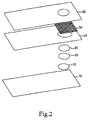
- Fig. 2 represents a test strip with an interference-eliminating membrane.
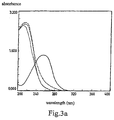
- Fig. 3 represents (a) the spectra of reacting ascorbic acid with potassium iodate under 1.0 × 10⁻⁴ N hydrochloric acid, (b) the spectra of reacting ascorbic acid with potassium iodate under 1.0 × 10⁻⁵ N hydrochloric acid, and (c) the spectra of mixing uric acid and potassium iodate. In (a), -· represents the curve after mixing ascorbic acid with potassium iodate for 0 second. ― ― represents the curve after mixing ascorbic acid with potassium iodate for 45 seconds (in the mixture, the concentration of ascorbic acid is 3 mg/dL, the ratio of potassium iodate is 0.035% and the concentration of HC1 is 1.0×10⁻⁴N). ― represents the curve of 3mg/dL ascorbic acid. ••••• represents the curve of 0.035% potassium iodate containing 1.0×10⁻⁴N HCl. In (b), ―, ― ― and ―• represent the curves after mixing ascorbic acid with potassium iodate for 0, 2 and 10 minutes, respectively. -•• represents the curve after mixing ascorbic acid with potassium iodate for 30 minutes (in the mixture, the concentration of ascorbic acid is 3 mg/dL, the ratio of potassium iodate is 0.035% and the concentration of HCl is 1.0×10⁻⁵N). ― represents the curve of 3 mg/dL ascorbic acid. ••••• represents the curve of 0.0035% potassium iodate containing 1.0×10⁻⁵N HCl. In (c), ―•― represents the curve after ascorbic acid with potassium iodate for 0 second (the spectra does not change within 7 minutes) (in the mixture, the concentration of ascorbic acid is 3 mg/dL, the ratio of potassium iodate is 0.035% and the concentration of HCl is 1.0×10⁻⁴N). ― represents the curve of 3 mg/dL uric acid. ••••• represents the curve of 0.035% potassium iodate containing 1.0×10⁻⁴N HCl.
- Fig. 4 represents the determination results on the reaction of untreated clinical phosphotungstic acid with uric acid. In the figure, the vertical axis represents a brightness, L value, of the test reaction layer determined by a reflectmeter, and the horizontal axis represents uric acid levels in the same sample, determined by enzymatically quantitative analysis.
- Fig. 5 represents the determination results using the test strips based on the reaction of uric acid with a phosphotungstic acid reagent of which the pH value was modified to 3.8 by IN NaOH. In the figure, the meanings of the vertical and horizontal axes are the same as Figure 4.
- Fig. 6 represents the determination results using the test strips on the reaction of uric acid with an ammonium phosphotungstate reagent. In the figure, the meanings of the vertical and horizontal axes are the same as Figure 4.
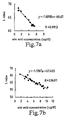
- Fig. 7 represents the determination results using the test strips on uric acid in (a) saliva and (b) serum. In the figure, the meanings of the vertical and horizontal axes are the same as Figure 4.
- Fig. 8 represents the uric acid determination results using the test strips without an interference-eliminating membrane in the presence of ascorbic acid (AA) and cysteine, wherein the vertical axis represents a reflection value at a wave length of 557 nm, Y value, and the horizontal axis represents the concentration of additives or uric acid. In (a), the lines ···, --- and ― respectively represent the calibration curves of cysteine, uric acid and ascorbic acid. In (b) the lines, ---, ― and ··· respectively represent the calibration curves of uric acid containing 0, 2 and 10 mg/dl ascorbic acid. In (c) the lines, ---, ― and ··· respectively represent the calibration curves of uric acid containing 0, 15 and 150 mg/dl cysteine.
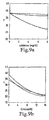
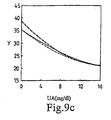
- Fig. 9 represents the uric acid determination results using the test strips with an interference-eliminating membrane in the presence of ascorbic acid (AA) and cysteine, wherein the vertical axis represents a reflection value at a wave length of 557 nm, Y value, and the horizontal axis represents the concentration of additives or uric acid. In (a), the lines ···, --- and ― respectively represent the calibration curves of cysteine, uric acid and ascorbic acid. In (b) the lines, ---, ― and ··· respectively represent the calibration curves of uric acid containing 0, 2 and 10 mg/dl ascorbic acid. In (c) the lines, ---, ― and ··· respectively represent the calibration curves of uric acid containing 0, 15 and 150 mg/dl cysteine.
-
- The meanings of each symbol in Figures 1 and 2 are as follows:
- 10 represents a support layer.
- 20 represents a reagent reaction layer.
- 25 represents a reagent reaction layer.
- 30 represents an interference-eliminating membrane.
- 40 represents a plastic plate.
- 50 represents a net membrane.
- 60 represents a plastic plate.
-
- An interference-eliminating membrane may be used in detecting uric acid in a sample. It comprises a compound for inhibiting or shading uric acid interfering substances, or derivatives thereof, and a carrier having an absorption property and permeability of the sample wherein said compounds can selectively oxidize a substance having a reducing ability higher than that of uric acid in a sample or carry one or more mercapto groups to shade a substance interfering uric acid assay in a sample.
- The term "a compound for inhibiting uric acid interfering substances or derivatives thereof', as used herein, refers to the compounds useful in inhibiting uric acid interfering substances or derivatives thereof. In particular, the compounds, or derivatives thereof, can quickly oxidize a substance having a reducing ability higher than that of uric acid. such as ascorbic acid, under a specific pH (preferably less than 5, most preferably less than 1). The preferred embodiments are selected from the group consisting of iodate, ferrate, KMnO4, K2Cr2O7, K2Cr2O4 and Ce(SO4)2. The most preferred embodiment is potassium iodate.
- The term "a compound for shading uric acid interfering substances or derivatives thereof", as used herein refers to the compounds useful in shading uric acid interfering substances or derivatives thereof. The compound carries one or more mercapto groups, which are preferably selected from the group consisting of cysteine and glutathion. The most preferred embodiment is cysteine. The compounds are not essential components of the active ingredient in the test strips , but enhance the specificity of uric acid assay. To date, compounds containing mercapto group have not been used in the uric acid assay based on Cu2+ ion and bicinchoninate.
- The term "a carrier having an absorption property and permeability of the sample," as used herein, refers to a material which loads a sample and allows the sample to flow into the reagent reaction layer for reaction. The material is preferably selected from a group consisting of nonwoven fabrics, filter paper, nitrocellulose membranes, nylon membrances or glass fibers. Nonwoven fabrics are the most preferable. The color of the carrier is not specified but cannot affect the color resulted from the reaction of the reagents with samples. The color of the carrier is preferably a light one or white, most preferably white.
- It has been reported that the reaction between phosphotungstic acid with a basic material forms an acid-basic neutralization and the reaction between Cu2+ ion and bicinchoninate produces precipitation. In addition, phosphotungstate under different conditions may change to specific forms of phosphotungstate, which cannot be used for in the detection of uric acid. Therefore, in general diagnostic analysis, operators have to add phosphotungstic acid, the specimen and base in a correct order and correct volumes. Given the above, if the above disadvantages cannot be removed, it is impossible to develop a test strip containing the reagents for use in a uric acid assay. Surprisingly, if the reagents do not have substantive reactions each other before the addition of a sample, the disadvantages of the reagents can be removed. More specifically, the reagents can be coated with different positions or surfaces in the same reaction layer or different reaction layers to avoid causing the the neutralization and precipitation of the reagents. The users only have to apply samples into the test strip to easily accomplish uric acid assay.
- Accordingly, the present invention further provides a test strip for use in detecting uric acid in a sample, comprising one or more reaction layers including test reagents and a carrier, wherein the test reagents are ammonium phosphotungstate at a pH value of from 2 to 5 and a basic material, these reagents being coated at different positions or surfaces in the same reaction layer, or different reaction layers such that the phosphotungstate cannot react with the basic material before the addition of the sample; said test strip further comprising an interference-eliminating membrane for inhibiting or shading uric acid interefering substances, which is situated above the test reagent layers, incorporated into the test reagent layers or positioned between the different test reagent layers.
- The term "reaction layer," as used herein, refers to a carrier which loads the reagents and can be selected from a group of nonwoven fabrics, filter paper, glass fibers, nitrocellulose membranes or nylon membranes.
- Further, some samples (such as saliva) have little or no uric acid interfering substances. However, there are a few samples, such as blood, having a reducing ability higher than that of uric acid, such as ascorbic acid, to interfere in a uric acid assay. The test strip of the invention comprises an interference-eliminating membrane. The membrane is situated above the reagent reaction layers or is incorporated into the reagent reaction layers or positioned between the different test reagent layers. In the membrane, a compound for inhibiting uric acid interfering substances or derivatives thereof does not affect the reaction of the test reagents with uric acid.
- The phosphotungstic acid reagent, as used herein, may be of a grade for use in a clinical laboratory. Before synthesis, the reagents were added with excess phosphoric acid. The reagent can be directly used in the uric acid assay without the purifying or processing of phosphotungstic acid to become such as a salt. However, if the phosphotungstic acid reagent is directly used in the preparation of the test strip for a uric acid assay, sodium carbonate and excess phosphoric acid result in a neutralization reaction, and thus produce a CO2 bubble, which cannot thoroughly or slowly allow further sample fluids to permeate into the position in situ. Surprisingly, the synthesized phosphotungstic acid solution can be modified to an appropriate pH value, such as pH 2-5, to reduce the difference between the test strips and elevate the reaction rate of the reagent.
- According to the invention, the use of ammonium phosphotungstate salts in a uric acid assay can significantly improve the effects of the test strips without purification or pH modification. The ammonium salts without pH modification can be directly used in a uric acid assay to reduce the standard deviations in assays and exclude the excess buffer effects obtained from the other salts.
- Accordingly, ammonium phosphotungstate is, used in the test strips of the invention at pH 2-5, more preferably 3.8.
- A basic material used in the test strips of the invention refers to a compound or its derivatives providing a base. The basic material is preferably selected from a group consisting of carbonate, glycine, carbonate-ureidoethanolamine or sodium hydroxide. The most preferred basic material is carbonate.
- The carriers used in the test strips of the invention consist of a substance for absorbing fluid. The substance is preferably selected from a group consisting of nonwoven fabrics, filter paper, nitrocellulose membranes, nylon membrances or glass fibers. The most preferred carrier is filter paper.
- The test strips of the invention further comprise a support (such as plastic plate) and/or a net membrane which are located at the top of the test strips. The net membrane can uniformly diffuse the sample to facilitate the assay, The support is used in supporting carriers and/or the net membrane.
- The samples used for the test strips of the invention include, but does not limit, blood, serum, saliva or urine. If the sample is saliva or urine, the assay for uric acid detection can be conveniently conducted in over the counter pharmacies or dispensaries.
- The invention further provides a kit for use in detecting uric acid in a sample, comprising the test strips of the invention. The kit further comprises a color card or a handy photometer comparing the test results for the determination of the assay results.
- The sample used for the kits includes, but does not limit. blood, serum, saliva or urine. If the sample is saliva or urine, the assay for uric acid detection can be conveniently conducted in over the counter pharmacies or dispensaries.
- As the different concentrations of uric acid in a sample affect the color change of the reagent from almost white to deep blue or violet, the assay results can be compared with the color card or a handy photometer to facilitate quantitative and qualitative analysis. The color development may be strored as digital or analog data under the reaction of different uric acid concentrations with reagents.
- The invention further provides a method for use in detecting uric acid in a sample, comprising the steps as follows:
- (a) providing a test strip of the invention;
- (b) contacting the test reagents with the sample; and
- (c) observing the color of the test reagents.
-
- The test reagents for the uric acid assay in step (b) may be ammonium phosphotunstate at pH 2-5, most preferably 3.8. A basic material used in the test strips of the invention refers to a compound or its derivatives provides a basic property. The basic material is preferably selected from a group consisting of carbonate, glycine, carbonate-ureidoethanolamine or sodium hydroxide. The most preferred basic material is carbonate.
- The color change of the reagent in step (c) is from almost white to deep blue or violet, under different concentrations of uric acid.
- The sample used for the methods of the invention includes, but does not limit, blood, serum, saliva or urine, If the sample is saliva or urine, the assay for uric acid detection can be conveniently conducted in over the counter pharmacies or dispensaries.
- The assay results can be determined by a handy photometer or conveniently compared with the color card in the kits to facilitate quantitative and qualitative analysis. Therefore, the method of the invention further comprises a step of colorimetric analysis to compare the resulting color of the reagents with a color card. The resulting data is compared with the photometric data of the reagents under different uric acid concentrations.
- To facilitate the further understanding of purpose, methods, characteristics and principles of the invention, the following examples illustrate various aspects of the present invention, but do not limit the claims in any manner whatsoever.
- To a solution of Na2WO4.2H2O (200g) in water (1L) was added 85% phosphoric acid (280g). The mixture was heated for 8 hours at its boiling point under return condenser. When the heating period was almost completed, the solution was concentrated to about a 1 L volume. A few drops of bromine water was added to the solution to change the color of the solution to pure yellow. If no further treatment should be made, the solution was a reagent of phosphotungstic acid, for use in a clinical assay. After cooling, the solution was admixed with powder, NH4Cl (200g). The crystalline precipitate was sucked and filtered, and then was re-dissolved in water and re-precipitated with solid NH4Cl. The step was repeated twice. After this, the resulting precipitate was dissolved in about 600 c.c. water.
- The filter paper containing cellulose, such as Toyo 7 filter paper, was immersed in a solution of ammonium phosphotungstate overnight. Then, the filter paper was removed from the solution, dripped dry of excess liquid and dried at 55°C in aoven.
- The nonwoven fabrics were immersed in a solution of 25% sodium carbonate overnight. Then, the filter paper was removed from the solution, dripped dry of excess liquid and dried at 55°C in an oven.
- 4. The test strips of phosphotungstic acid and sodium carbonate were respectively cut into a round disk, 5 mm in diameter. The former was represented as membrane A and the latter was represented as membrane B. Alternatively, the former was represented as membrane B and the latter was represented as membrane A. Then, membrane A was adhered to membrane B to form a reaction layer.
- Nylon membrane of 150 mesh was immersed in a solution of KIO3 (1000 mg/dl) in water for 60 minutes. Then, the filter paper was removed from the solution, dripped dry of excess water and dried at 55°C in an oven overnight to form an interference-eliminating membrane. The membrane was cut into a round disk, 5 mm in diameter.
- As illustrated in Figure 1, a transparent support layer (10) was adhered to membrane A (25) and membrane B (20). The plastic plates (40, 60) have a round hole of 0.5 cm in diameter. The hole of the plate (40) was firstly-positioned above membrane B and adhered to the membrane. Then, the net membrane (50) and the other plate (60) were sequentially adhered to the plate (40) to form a test strip without an interference-eliminating membrane.
- As illustrated in Figure 2, a transparent support layer (10) was adhered to the round shaped membrane A (25) and membrane B (20). Then, the interference-eliminating membrane (30), 5 mm in diameter, was adhered to the membrane B. The plastic plates (40, 60) have a round hole of 0.5 cm in diameter. The hole of the plate (40) was firstly positioned above the interference-eliminating membrane (30) and adhered to the membrane. Then, the net membrane (50) and the other plate (60) were sequentially adhered to the plate (40) to form a test strip with an interference-eliminating membrane.
- In different cuvettes, to 30 µl ascorbic acid standard solution, an iodate solution of 10 mg/dl under a different quantity of hydrochloric acid was added dropwise. The absorbance of the solution was determined by a spectrophotometer (Becham DU-70). The results are shown in Figure 3. The absorbance peak of ascorbic acid around 260 nm was flattened by the addition of iodate. The higher the concentration of hydrochloric acid was present in the iodate solution, the quicker the reaction between ascorbate and iodate was occurred. The lower the concentration of hydrochloric acid was present in the solution, the slower the reaction progressed (Figure 3b). However, iodate, in the same tests, did not inhibit the absorbance of uric acid (Figure 3c). In particular, Figure 3a represented the spectra of reacting ascorbic acid with potassium iodate under 1.0 x 10⁻⁴ N hydrochloric acid. After mixing, ascorbic acid was quickly oxidized by potassium iodate. The absorption peak disappeared within one minute. Figure 3b represented the spectra of reacting ascorbic acid with potassium iodate under 1.0 x 10⁻⁵ N hydrochloric acid. After mixing, ascorbic acid was gradually oxidized by potassium iodate. Figure 3c represented the spectra of mixing uric acid with potassium iodate. After mixing, the absorption characteristics almost completely maintained within 7 minutes and was consistent with the original spectra of uric acid. It indicated that uric acid was not oxidized by potassium iodate.
- In IEM containing KlO3. the effect of NaHSO4 concentrations on the test results

- In the above table, the test strips with IEM containing NaHSO4. with concentrations higher than 0.3M, did not show a significant
blue color 2 minutes after the addition of ascorbic acid and their L values were close to those of the blank solution. To the contrary, the test strips without IEM or with the IEM containing NaHSO4, less than 0.1M, showed significantblue color 2 minutes after the addition of ascorbic acid and their L values were not higher than 66.39. On the other hand, if the test strips comprised IEM and the pH value of the material therein was modified to appropriate levels, the interference of ascorbic acid could be inhibited within two minutes after the sample was added. Further, the example demonstrated that the IEM did not significantly affect the uric acid assay, except that the strips developed a light blue color under 1M NaHSO4. -
- 1. Six test strips using untreated PTA were applied to a uric acid
standard solution (10 mg/dl). As illustrated in Figure 4, the standard
derivation at 2' was up to 4.51 (L value). The PTA was untreated under
pH 1.8. The data was shown as follows
Stability of color development: 10 mg/dl UA strip # 2' 5' 10' 1 62.86 58.17 55.24 2 65.12 64.39 61.31 3 64.66 57.65 52.24 4 63.50 56.54 52.62 5 57.39 55.46 52.92 6 71.41 68.30 66.24 Average 64.16 60.09 56.76 SD 4.51 5.09 5.75 Linearship: UA(mg/dl) 2' 5' 10' 0 73.44 70.45 67.41 2 68.37 62.36 62.29 4 68.65 61.14 61.89 6 66.64 59.13 55.13 8 63.49 57.21 54.53 10 61.07 53.20 49.21 R2 0.9398 0.9101 0.9574 - 2. Six test strips, wherein the pH of PTA was modified to 3.8 by the
treatment of IN NaOH, were applied to a uric acid standard solution (10
mg/dl). As illustrated in Figure 5, the standard derivation was lowered to
0.79. The pH of PTA was adjusted to 3.8. The data was shown as
follows:
Stability of color development: 10 mg/dl UA strip # 2' 5' 10' 1 54.22 54.02 50.76 2 55.74 55.28 54.28 3 56.14 54.93 53.59 4 55.20 54.79 52.52 5 55.17 53.17 50.60 6 54.20 53.91 52.76 Average 55.11 54.35 52.42 SD 0.79 0.79 1.48 Linearship: UA(mg/dl) 2' 5' 10' 0 65.20 67.05 68.06 2 63.99 64.60 62.65 4 62.21 62.64 60.71 6 58.82 59.17 56.83 8 58.28 57.64 55.89 10 53.58 53.74 51.78 R2 0.9527 0.9888 0.9693 -
- The solution of PTA ammonium salt, as prepared according to Example 1 for use in uric acid assay significantly improved the effects of the test strips without the need for purification or pH modification. The PTA ammonium salts needed no pH modifications and could be directly used in an assay. As illustrated in Figure 6, the standard derivation at 2' was lowered to 0.86. The data was shown as follows
Stability of color development: 10 mg/dl UA strip # 2' 5' 10' 1 57.26 56.56 54.51 2 55.82 55.45 56.10 3 57.41 56.77 55.97 4 58.05 57.23 54.29 5 57.96 57.85 56.50 6 58.06 57.59 56.43 Average 57.43 56.91 55.63 SD 0.86 0.86 0.98 Linearship: UA(mg/dl) 2' 5' 10' 0 70.68 70.46 69.85 2 67.50 66.28 64.98 4 63.58 63.19 61.90 6 60.17 58.85 57.24 8 59.14 57.04 55.54 10 57.03 55.44 54.18 R2 0.9680 0.9720 0.9595 - In addition, the blue color was not significantly deepened along with extension of reaction time. Given the above, the preparation of PTA ammonium salt with higher purity did not require complex procedures. In addition, PTA ammonium salt removed excess buffering effects obtained from other salts.
- The synthesis of PTA reagent used in the clinical assay was the same as that of PTA ammonium salt. However, the former did not add ammonium chloride to conduct precipitates for separation. Therefore, the former included higher concentrations of phosphoric acid and the untreated PTA. As the compounds other than PTA were relatively high in concentration resulting in buffer effects, the rate of sodium carbonate neutralizing PTA tended to be slow and further reduced the reaction of PTA and uric acid.
- Saliva was randomly collected from 11 individuals, and 20 µl saliva per person was added to the PTA test strips. After two minutes, the brightness of the color appearing on the reagent layer of test strips was determined with a reflector. The results were illustrated in Figure 7a. The vertical axis represented a brightness L value of the reagent reaction layer determined by a reflector, and the horizontal axis represented uric acid levels in the same sample determined by enzymatically quantitative analysis. L value of each sample was the average of the reflectness showed on three test strips.
- The determination method was the same as that of the quantity of uric acid in saliva, except that the samples were replaced with 20 sera. The results were showed in Figure 7b.
- The solution containing 0.08%(w/v) copper sulfate and 0.02M sodium citrate was prepared. After stirring the solution, 1.28%(w/v) sodium bicinchoninate was added to the solution to form a mixture. Then, filter paper was immersed in the mixture. The immersed paper was dried and cut to produce a test reagent reaction layer. The nonwoven fabrics were immersed in the solution of 2 g/dl cysteine in NaH2PO4. The immersed fabrics were dried and cut to produce an interference-eliminating membrane. The test strip was constructed according to the similar method of Example 1.
- 20 µl urine was added to the test strip. After 20 seconds, a violet color appeared on test strips if uric acid was present in the sample. The test results were determined with a reflectmeter (Nippon, NR-3000) at a wave length of 557 nm or were compared with a color card in the kit.
- The test groups were divided to (a) standard solutions of cysteine, uric acid and ascorbic acid, respectively, (b) uric acid standards containing 0, 2 and 10 mg/dl ascorbic acid, respectively, and (C) uric acid standards containing 0, 15 and 150 mg/dl cysteine, respectively, The tests were accomplished by a photometric method, The deeper the color developed, the smaller the reflection value (Y value) obtained.
- As illustrated in Figures 8(A)-8(C), the Y values of ascorbic acid and cysteine was smaller than those of uric acid when a cysteine EIM were not assembled into the test strips. It is clearly showed in Figure 8(A) that the color change of ascorbic acid was more obvious than that of uric acid. Therefore, the test strip without a cysteine EIM colud not specifically detect uric acid in a sample. To the contrary, as illustrated in Figures 9(A)-9(C), ascorbic acid and cysteine did not substantially affect the color development of uric acid. It is clearly showed in Figure 9(A) that the color change due to uric acid was prior to the color development of ascorbic acid and cysteine on the test strip including a cysteine EIM. Therefore, the test results demonstrated that the test strip with cysteine specifically detected uric acid in a sample.
- The test strip consisting of an interference-eliminating membrane (2% of KlO3 in 0.3M NaHSO4), a reaction layer (6 ml of mixture of Cu2+, bicinchoninate and citrate) and pH modifying layer (1.875% NaOH) was similarly prepared based on the previous examples. The test strip was tested by 20 mM PBS (phosphate-buffer-saline), 10 mg/dl uric acid solution and 10 mg/dl ascorbic acid solution, respectively. The results were read after adding the sample for 2,5 hours. The data are as follows:
Sample Y value 20 mM PBS 40.00 10 mg/dl uric acid solution 32.99 10 mg/dl ascorbic acid 39.77 - As shown in the data, the PBS buffer and ascorbic acid have little change in color. However, uric acid presents the color purple. The results demonstrated that the interference-eliminating membrane of KIO3 can remove the interference due to ascorbic acid in the uric acid assay.
Claims (13)
- A test strip for use in detecting uric acid in a sample, comprising one or more reaction layers including test reagents and a carrier, wherein the test reagents are ammonium phosphotungstate at a pH value of from 2 to 5 and a basic material, these reagents being coated at different positions or surfaces in the same reaction layer, or different reaction layers such that the phosphotungstate cannot react with the basic material before the addition of the sample; said test strip further comprising an interference-eliminating membrane for inhibiting or shading uric acid interfering substances, which is situated above the test reagent layers, incorporated into the test reagent layers or positioned between the different test reagent layers.
- The test strip according to claim 1, wherein the interference-eliminating membrane comprises:wherein the said compound for inhibiting uric acid interfering substances can selectively oxidize a substance having a reducing ability higher than that of the uric acid in a sample and the said compound for shading uric acid interfering substances carries one or more mercapto groups.(a) a compound for inhibiting or shading the uric acid interfering substances, or a derivative thereof; and(b) a carrier having an absorption property and permeability of the sample, that allows the sample to be loaded onto the carrier and, after loading, to flow out of the carrier,
- The test strip according to claim 2, wherein the said compound for inhibiting uric acid interfering substances is an iodate, a ferric salt, KMnO4, K2Cr2O7, K2CrO4 or Ce(SO4)2.
- The test strip according to claim 2, wherein the said compound for shading uric acid interefering substances is cysteine or glutathion.
- The test strip according to claim 3, wherein the said compound for inhibiting uric acid interfering substances is potassium iodate.
- The test strip according to any one of claims 2 to 5, wherein the said compound for inhibiting uric acid interfering substances is at a pH value smaller than 5.
- The test strip according to any one of claims 2 to 5, wherein the said substance having a reducing ability higher than that of uric acid is ascorbic acid.
- The test strip according to any one of the preceding claims, wherein the said basic material is carbonate, glycine, carbonate-ureidoethanolamine or sodium hydroxide.
- A kit for use in detecting uric acid in a sample, comprising the test strip of any one of claims 1 to 8 and means for determining the color change of the test reagents.
- The kit according to claim 9, wherein the means for determining the color change of the test reagents is a color card to be compared with the test results, wherein the color card presents color changing to deep blue or violet obtained from the reaction of different uric acid concentrations with the test reagents.
- The kit according to claim 10, wherein the means for determining the color change of the test reagents is a photometer for comparing with the test results, wherein the color development has been stored as digital or analog data obtained from the reaction of different uric acid concentrations with the test reagents.
- A method for detecting uric acid in a sample, comprising:(i) providing the test strip according to any one of claims 1 to 8;(ii) contacting the test reagents with the sample; and(iii) observing color of the test reagents.
- The method according to claim 12, wherein the color of the test reagents in step (iii) changes to deep blue or violet depending on the concentration of uric acid.
Priority Applications (4)
| Application Number | Priority Date | Filing Date | Title |
|---|---|---|---|
| US09/579,430 US6699720B1 (en) | 2000-05-26 | 2000-05-26 | Interference-eliminating membranes, test strips, kits and methods for use in uric acid assay |
| DE2000612707 DE60012707T2 (en) | 2000-05-31 | 2000-05-31 | Anti-interference membranes, test strips, kits and methods for uric acid assay |
| JP2000166466A JP2001337087A (en) | 2000-05-26 | 2000-05-31 | Interference-removing membranes, test strips, kits and methods for use in uric acid assays |
| EP00304650A EP1160571B1 (en) | 2000-05-26 | 2000-05-31 | Interference-eliminating membranes, test strips, kits and methods for use in uric acid assay |
Applications Claiming Priority (3)
| Application Number | Priority Date | Filing Date | Title |
|---|---|---|---|
| US09/579,430 US6699720B1 (en) | 2000-05-26 | 2000-05-26 | Interference-eliminating membranes, test strips, kits and methods for use in uric acid assay |
| JP2000166466A JP2001337087A (en) | 2000-05-26 | 2000-05-31 | Interference-removing membranes, test strips, kits and methods for use in uric acid assays |
| EP00304650A EP1160571B1 (en) | 2000-05-26 | 2000-05-31 | Interference-eliminating membranes, test strips, kits and methods for use in uric acid assay |
Publications (2)
| Publication Number | Publication Date |
|---|---|
| EP1160571A1 EP1160571A1 (en) | 2001-12-05 |
| EP1160571B1 true EP1160571B1 (en) | 2004-08-04 |
Family
ID=32474895
Family Applications (1)
| Application Number | Title | Priority Date | Filing Date |
|---|---|---|---|
| EP00304650A Expired - Lifetime EP1160571B1 (en) | 2000-05-26 | 2000-05-31 | Interference-eliminating membranes, test strips, kits and methods for use in uric acid assay |
Country Status (3)
| Country | Link |
|---|---|
| US (1) | US6699720B1 (en) |
| EP (1) | EP1160571B1 (en) |
| JP (1) | JP2001337087A (en) |
Families Citing this family (15)
| Publication number | Priority date | Publication date | Assignee | Title |
|---|---|---|---|---|
| EP1483577B1 (en) | 2002-03-05 | 2015-01-07 | Siemens Healthcare Diagnostics Inc. | Absorbing organic reagents into diagnostic test devices by formation of amine salt complexes |
| US7625721B2 (en) | 2004-02-03 | 2009-12-01 | Polymer Technology Systems, Inc. | Non-precipitating bodily fluid analysis system |
| US8465696B2 (en) * | 2004-02-03 | 2013-06-18 | Polymer Technology Systems, Inc. | Dry test strip with controlled flow and method of manufacturing same |
| US20060062690A1 (en) * | 2004-08-17 | 2006-03-23 | Polymer Technology Systems, Inc. | Apparatus and method of manufacturing bodily fluid test strip |
| AU2007207242B2 (en) * | 2006-01-19 | 2012-08-02 | Lattec I/S | Dry stick device and method for determining an analyte in a sample |
| US8180574B2 (en) | 2009-07-07 | 2012-05-15 | Baxter International | Simplified peritoneal equilibration test for peritoneal dialysis |
| WO2017178621A2 (en) | 2016-04-14 | 2017-10-19 | Morgan Innovation & Technology Ltd | Methods and devices for measuring the levels of analytes in body fluids |
| US12566174B2 (en) | 2017-05-11 | 2026-03-03 | The Research Foundation For The State University Of New York | Method and kit for determining the presence of monosodium urate crystals in joint synovial fluid |
| CN107462531B (en) * | 2017-07-25 | 2019-12-31 | 江苏大学 | A kind of enzyme-free colorimetric detection method of uric acid |
| JP6803640B2 (en) * | 2018-02-23 | 2020-12-23 | 栄研化学株式会社 | Test piece for detecting ketone bodies in urine |
| US10605741B2 (en) * | 2018-06-28 | 2020-03-31 | International Business Machines Corporation | Accurate colorimetric based test strip reader system |
| CN110672593A (en) * | 2019-08-19 | 2020-01-10 | 杭州爱光医疗器械有限公司 | Sulfhydryl compound detection reagent, preparation method and kit thereof |
| CN111077143A (en) * | 2019-12-24 | 2020-04-28 | 杭州启棣生物技术有限公司 | Uric acid detection method and device |
| US20230384293A1 (en) * | 2022-05-28 | 2023-11-30 | Lactation Lab Inc. | Color-Based Breast Milk Analyses Using Test Strips |
| CN115290904A (en) * | 2022-10-09 | 2022-11-04 | 山东三医生物技术有限公司 | In-situ hybridization HPV detection test strip, kit and preparation method thereof |
Citations (1)
| Publication number | Priority date | Publication date | Assignee | Title |
|---|---|---|---|---|
| US4072627A (en) * | 1976-08-02 | 1978-02-07 | Pierce Chemical Company | Uric acid determination |
Family Cites Families (11)
| Publication number | Priority date | Publication date | Assignee | Title |
|---|---|---|---|---|
| US3536448A (en) | 1967-07-28 | 1970-10-27 | Miles Lab | Uric acid detection |
| US3649198A (en) | 1970-05-19 | 1972-03-14 | Pfizer & Co C | Diagnostic method for the determination of uric acid in blood |
| AT347600B (en) * | 1974-11-11 | 1979-01-10 | Wellcome Found | TEST EQUIPMENT |
| NO770196L (en) | 1976-01-22 | 1977-07-25 | Wellcome Found | CHEMICAL TEST SYSTEMS. |
| US4110079A (en) | 1977-06-09 | 1978-08-29 | Eastman Kodak Company | Analytical element for clinical analysis |
| JPS55142249A (en) | 1979-04-24 | 1980-11-06 | Shionogi & Co Ltd | Reduction type ascorbic acid detecting composition and test piece |
| DE3012368C2 (en) * | 1980-03-29 | 1982-04-15 | Boehringer Mannheim Gmbh, 6800 Mannheim | Methods and diagnostic means for the detection of redox reactions |
| US4348208A (en) * | 1981-10-26 | 1982-09-07 | American Monitor Corporation | Uric acid assay and reagent system therefor |
| DE4015157A1 (en) | 1990-05-11 | 1991-11-14 | Miles Inc | ASYMETRIC SANDWICH MEMBRANES FOR DIAGNOSTIC TEST STRIPS |
| US5212066A (en) * | 1991-11-14 | 1993-05-18 | Miles Inc. | Use of inhibitors of color generation in chromogenic assays |
| US5710372A (en) * | 1996-12-17 | 1998-01-20 | Cincinnati Milacron Inc. | Method of analysis for aqueous fluids |
-
2000
- 2000-05-26 US US09/579,430 patent/US6699720B1/en not_active Expired - Lifetime
- 2000-05-31 EP EP00304650A patent/EP1160571B1/en not_active Expired - Lifetime
- 2000-05-31 JP JP2000166466A patent/JP2001337087A/en active Pending
Patent Citations (1)
| Publication number | Priority date | Publication date | Assignee | Title |
|---|---|---|---|---|
| US4072627A (en) * | 1976-08-02 | 1978-02-07 | Pierce Chemical Company | Uric acid determination |
Also Published As
| Publication number | Publication date |
|---|---|
| US6699720B1 (en) | 2004-03-02 |
| EP1160571A1 (en) | 2001-12-05 |
| JP2001337087A (en) | 2001-12-07 |
Similar Documents
| Publication | Publication Date | Title |
|---|---|---|
| JP4515786B2 (en) | Method for reducing the influence of hematocrit on the measurement of an analyte in whole blood, and a test kit and a test article useful in the method | |
| CA2088652C (en) | Improved oxidative coupling dye for spectrophotometric quantitative analysis of analytes | |
| EP1160571A1 (en) | Interference-eliminating membranes, test strips, kits and methods for use in uric acid assay | |
| US5989845A (en) | Diagnostic compositions and devices utilizing same | |
| CN1421700A (en) | Method and apparatus for measuring concentration of analyte | |
| JPH04237500A (en) | Composition and method for assay of ketone body | |
| US5002893A (en) | Single color reading method for determining fructosamine | |
| Garčic | A highly sensitive, simple determination of serum iron using chromazurol B | |
| CN1705883A (en) | Test strip for creatinine determination | |
| WO1992011524A2 (en) | Reagent and methods for calcium determination | |
| CN111234246A (en) | Dual emission ratiometric fluorescent probe and detection method based on rare earth ion framework materials | |
| JPH04157365A (en) | Dry analysis element for analyzing iron ion | |
| EP0099923A1 (en) | TEST PROCEDURE AND REAGENT FOR DETERMINING A CHLORIDE. | |
| CN101477059A (en) | Method for rapidly detecting inorganic phosphorus in water solution | |
| JPH11337547A (en) | Dry type analysis element for measuring protein, and protein measuring method | |
| US3282649A (en) | Determination of oxidizing and reducing substances | |
| ES2237763T3 (en) | PROCEDURE AND MEANS FOR THE DETERMINATION OF IODURE. | |
| EP0826677A1 (en) | Calcium specific diaza-18-crown-6-ether chromoionophores | |
| EP0811844B1 (en) | Reagent composition, testing piece and assay kit | |
| Isoe et al. | A new spectrophotometric method for determination of urinary protein using erythrosin B | |
| JP3090503B2 (en) | Method for measuring protein | |
| JPH0334591B2 (en) | ||
| EP0243125A2 (en) | Method of measuring phenol and alpha-naphthol, and method of measuring the activity of enzymes | |
| DE60012707T2 (en) | Anti-interference membranes, test strips, kits and methods for uric acid assay | |
| JPH0584099A (en) | Tester for detecting ascorbic acid resisting composition and component of liquid reagent solution |
Legal Events
| Date | Code | Title | Description |
|---|---|---|---|
| PUAI | Public reference made under article 153(3) epc to a published international application that has entered the european phase |
Free format text: ORIGINAL CODE: 0009012 |
|
| AK | Designated contracting states |
Kind code of ref document: A1 Designated state(s): AT BE CH CY DE DK ES FI FR GB GR IE IT LI LU MC NL PT SE Kind code of ref document: A1 Designated state(s): DE FR GB |
|
| AX | Request for extension of the european patent |
Free format text: AL;LT;LV;MK;RO;SI |
|
| 17P | Request for examination filed |
Effective date: 20020409 |
|
| AKX | Designation fees paid |
Free format text: DE FR GB |
|
| 17Q | First examination report despatched |
Effective date: 20021217 |
|
| GRAP | Despatch of communication of intention to grant a patent |
Free format text: ORIGINAL CODE: EPIDOSNIGR1 |
|
| GRAS | Grant fee paid |
Free format text: ORIGINAL CODE: EPIDOSNIGR3 |
|
| GRAA | (expected) grant |
Free format text: ORIGINAL CODE: 0009210 |
|
| AK | Designated contracting states |
Kind code of ref document: B1 Designated state(s): DE FR GB |
|
| REG | Reference to a national code |
Ref country code: GB Ref legal event code: FG4D |
|
| REG | Reference to a national code |
Ref country code: IE Ref legal event code: FG4D |
|
| REF | Corresponds to: |
Ref document number: 60012707 Country of ref document: DE Date of ref document: 20040909 Kind code of ref document: P |
|
| ET | Fr: translation filed | ||
| PLBE | No opposition filed within time limit |
Free format text: ORIGINAL CODE: 0009261 |
|
| STAA | Information on the status of an ep patent application or granted ep patent |
Free format text: STATUS: NO OPPOSITION FILED WITHIN TIME LIMIT |
|
| 26N | No opposition filed |
Effective date: 20050506 |
|
| REG | Reference to a national code |
Ref country code: FR Ref legal event code: PLFP Year of fee payment: 17 |
|
| REG | Reference to a national code |
Ref country code: FR Ref legal event code: PLFP Year of fee payment: 18 |
|
| REG | Reference to a national code |
Ref country code: FR Ref legal event code: PLFP Year of fee payment: 19 |
|
| PGFP | Annual fee paid to national office [announced via postgrant information from national office to epo] |
Ref country code: GB Payment date: 20190327 Year of fee payment: 20 Ref country code: FR Payment date: 20190118 Year of fee payment: 20 |
|
| PGFP | Annual fee paid to national office [announced via postgrant information from national office to epo] |
Ref country code: DE Payment date: 20190127 Year of fee payment: 20 |
|
| REG | Reference to a national code |
Ref country code: DE Ref legal event code: R071 Ref document number: 60012707 Country of ref document: DE |
|
| REG | Reference to a national code |
Ref country code: GB Ref legal event code: PE20 Expiry date: 20200530 |
|
| PG25 | Lapsed in a contracting state [announced via postgrant information from national office to epo] |
Ref country code: GB Free format text: LAPSE BECAUSE OF EXPIRATION OF PROTECTION Effective date: 20200530 |