EP1160320A1 - Use of hTAFII80 and isoforms thereof for inducing apoptosis - Google Patents
Use of hTAFII80 and isoforms thereof for inducing apoptosis Download PDFInfo
- Publication number
- EP1160320A1 EP1160320A1 EP00401235A EP00401235A EP1160320A1 EP 1160320 A1 EP1160320 A1 EP 1160320A1 EP 00401235 A EP00401235 A EP 00401235A EP 00401235 A EP00401235 A EP 00401235A EP 1160320 A1 EP1160320 A1 EP 1160320A1
- Authority
- EP
- European Patent Office
- Prior art keywords
- htafii80
- htaf
- expression
- isoforms
- notably
- Prior art date
- Legal status (The legal status is an assumption and is not a legal conclusion. Google has not performed a legal analysis and makes no representation as to the accuracy of the status listed.)
- Withdrawn
Links
Images





Classifications
-
- C—CHEMISTRY; METALLURGY
- C07—ORGANIC CHEMISTRY
- C07K—PEPTIDES
- C07K14/00—Peptides having more than 20 amino acids; Gastrins; Somatostatins; Melanotropins; Derivatives thereof
- C07K14/435—Peptides having more than 20 amino acids; Gastrins; Somatostatins; Melanotropins; Derivatives thereof from animals; from humans
- C07K14/46—Peptides having more than 20 amino acids; Gastrins; Somatostatins; Melanotropins; Derivatives thereof from animals; from humans from vertebrates
- C07K14/47—Peptides having more than 20 amino acids; Gastrins; Somatostatins; Melanotropins; Derivatives thereof from animals; from humans from vertebrates from mammals
- C07K14/4701—Peptides having more than 20 amino acids; Gastrins; Somatostatins; Melanotropins; Derivatives thereof from animals; from humans from vertebrates from mammals not used
- C07K14/4747—Apoptosis related proteins
-
- A—HUMAN NECESSITIES
- A61—MEDICAL OR VETERINARY SCIENCE; HYGIENE
- A61P—SPECIFIC THERAPEUTIC ACTIVITY OF CHEMICAL COMPOUNDS OR MEDICINAL PREPARATIONS
- A61P25/00—Drugs for disorders of the nervous system
- A61P25/14—Drugs for disorders of the nervous system for treating abnormal movements, e.g. chorea, dyskinesia
- A61P25/16—Anti-Parkinson drugs
-
- A—HUMAN NECESSITIES
- A61—MEDICAL OR VETERINARY SCIENCE; HYGIENE
- A61P—SPECIFIC THERAPEUTIC ACTIVITY OF CHEMICAL COMPOUNDS OR MEDICINAL PREPARATIONS
- A61P25/00—Drugs for disorders of the nervous system
- A61P25/28—Drugs for disorders of the nervous system for treating neurodegenerative disorders of the central nervous system, e.g. nootropic agents, cognition enhancers, drugs for treating Alzheimer's disease or other forms of dementia
-
- A—HUMAN NECESSITIES
- A61—MEDICAL OR VETERINARY SCIENCE; HYGIENE
- A61P—SPECIFIC THERAPEUTIC ACTIVITY OF CHEMICAL COMPOUNDS OR MEDICINAL PREPARATIONS
- A61P31/00—Antiinfectives, i.e. antibiotics, antiseptics, chemotherapeutics
- A61P31/12—Antivirals
- A61P31/14—Antivirals for RNA viruses
- A61P31/18—Antivirals for RNA viruses for HIV
-
- A—HUMAN NECESSITIES
- A61—MEDICAL OR VETERINARY SCIENCE; HYGIENE
- A61P—SPECIFIC THERAPEUTIC ACTIVITY OF CHEMICAL COMPOUNDS OR MEDICINAL PREPARATIONS
- A61P35/00—Antineoplastic agents
-
- A—HUMAN NECESSITIES
- A01—AGRICULTURE; FORESTRY; ANIMAL HUSBANDRY; HUNTING; TRAPPING; FISHING
- A01K—ANIMAL HUSBANDRY; AVICULTURE; APICULTURE; PISCICULTURE; FISHING; REARING OR BREEDING ANIMALS, NOT OTHERWISE PROVIDED FOR; NEW BREEDS OF ANIMALS
- A01K2217/00—Genetically modified animals
- A01K2217/05—Animals comprising random inserted nucleic acids (transgenic)
-
- A—HUMAN NECESSITIES
- A61—MEDICAL OR VETERINARY SCIENCE; HYGIENE
- A61K—PREPARATIONS FOR MEDICAL, DENTAL OR TOILETRY PURPOSES
- A61K38/00—Medicinal preparations containing peptides
-
- A—HUMAN NECESSITIES
- A61—MEDICAL OR VETERINARY SCIENCE; HYGIENE
- A61K—PREPARATIONS FOR MEDICAL, DENTAL OR TOILETRY PURPOSES
- A61K48/00—Medicinal preparations containing genetic material which is inserted into cells of the living body to treat genetic diseases; Gene therapy
Definitions
- the present invention relates to a hTAF II 80 isoform, namely hTAF II 80 ⁇ , which comprises a 10 amino acid deletion, said isoform being capable of inducing apoptosis in mammalian cells. It also concerns the use of a compound for inhibiting or activating the expression or activity of hTAF II 80 protein or isoforms thereof for treating diseases involving cell apoptosis, notably nerve cell degeneration, such as Alzheimer disease and Parkinson disease, cancer and AIDS.
- Apoptosis or active cell suicide, plays an essential role in normal tissue homeostasis and development of multicellular organisms (White E. et al, 1996). The initiation of apoptosis is associated with changes in gene expression (Jehn et al, 1997), but the connections between death inducing signals and the regulation of gene transcription remain largely obscure. It is therefore of a great interest to identify proteins involved in the regulation that triggers cell suicide, which could ultimately lead to the development of new treatments for diseases such as cancer, retrovirus infection and neurodegenerative syndromes.
- hTAF II 80 also named hTAF II 70 (Weinzierl et al, 1993 and Hisatake et al, 1995) is a subunit of TF II D, a multiprotein complex composed of TATA-binding protein (TBP) and more than 12 TBP-associated factors (TAFs) (Green et al, 2000 and Albright et al, 2000).
- TBP TATA-binding protein
- TAFs TBP-associated factors
- TF II D plays a key role in the initiation of RNA polymerase II (Pol II) transcription by nucleating the formation of the pre-initiation complex (PIC) at core promoter elements (Burley et al, 1996 and Bell et al, 1999) and it has been suggested that it could be involved in apoptosis regulation (Sekiguchi et al, 1995 and Metzger et al, 1999).
- hTAF II 80 contains a histone H4-like histone fold that interacts with its histone H3-like partner hTAF II 31 (Hisatake et al, 1995, Xie et al, 1996 and Bando et al, 1997).
- hTAF II 80 ⁇ a novel isoform of hTAF II 80.
- This isoform will be hereinafter referred to as hTAF II 80 ⁇ to distinguish it from previously described isoforms of hTAF II 80 (hTAF II 80 ⁇ , ⁇ , and ⁇ ) Weinzierl et al, 1993.
- hTAF II 80 ⁇ has the remarkable feature of a 10 amino acid deletion in the centre of ⁇ -helix 2 of its histone fold motif (Fig. 1 and 5).
- the amino acids removed by this deletion include many of the residues implicated in dimerization contacts with hTAF II 31 by crystallographic studies of hTAF II 80's Drosophila homolog, dTAF II 60/62 (Wie et al, 1996).
- the hTAF II 80 ⁇ cDNA encodes a predicted unique 49 amino acid tail at the N-terminus of the open reading frame (Fig. 1a).
- hTAF II 80 ⁇ overexpression induces apoptosis in different cell lines. Accumulating biochemical and genetic evidence supports the existence of functionally distinct TFIIDs within cells (Bell et al, 1999).
- the present findings provide the first evidence implying that TFIID composition in living cells is dynamic, and suggest that cells can employ changes in the subunit composition of TFIID to alter cell metabolism in response to changing growth conditions.
- Our results also identify hTAF II 80 ⁇ as an important part of a novel signalling pathway that acts as an interface between apoptotic signals and the Pol II transcriptional machinery.
- Cell death-inducing signals induce the novel TFIID ⁇ complex, which in turn reprogrammes Pol II transcription so that the balance between transcription of pro- and anti-apoptotic genes favors cell death.
- the present invention is aimed at a polypeptide comprising a sequence having at least 80%, 90%, 95% or 99% identity with hTAF II 80 ⁇ of the sequence SEQ ID N°1 characterized in that it has a 10 amino acids deletion at position 43 to 52 of SEQ ID N°3 (hTAF II 80), said polypeptide being capable of inducing apoptosis when expressed in mammalian cells.
- said polypeptide comprises the sequence SEQ ID N°1 corresponding to the hTAF II 80 ⁇ , which is also depicted at figure 5.
- Nucleic sequence or nucleic acid is understood to mean an isolated natural, or a synthetic, DNA and/or RNA fragment comprising, or otherwise, non natural nucleotides, designating a precise succession of nucleotides, modified or otherwise, allowing a fragment, a segment or a region of a nucleic acid to be defined.
- percent identity means the percentage of identical nucleotides between two sequences when compared according to the best alignments, this percentage being statistical and the differences between the two sequences being at random and on the total length of the sequences.
- Optimal alignments of sequences can be achieved by means of the algorithm of Smith Waterman (1981) [Ad. App. Math.
- the invention also relates to an isolated nucleic acid sequence coding for a polypeptide mentioned above and more particularly to an isolated nucleic acid sequence coding for hTAF II 80 ⁇ having the sequence SEQ ID No. 1, said hTAF II 80 ⁇ protein being an isoform of hTAF II 80 comprising a deletion of the 10 amino acids at position 43 to 52 of hTAF II 80 and being capable of inducing apoptosis when expressed in mammal cells.
- said nucleic acid sequence described above has a sequence comprising the sequence SEQ ID N°2.
- Complementary sequences of the nucleic sequence according to the invention is another embodiment as well as an isolated nucleic acid sequence, characterized in that it is selected from the group consisting of:
- Another aspect of the invention relates to a cloning and/or expression vector comprising a nucleic acid sequence described above.
- This vector can further comprise the elements allowing the expression and/or secretion of the said sequences in a host cell.
- Said host cell transformed by this vector is an eukaryotic or a prokaryotic cell.
- the present invention also concerns a mammal, except human, characterized in that it comprises said cell.
- the said vectors will preferably comprise a promoter, signals for initiation and termination of translation, as well as appropriate regions for regulation of transcription. They must be able to be stably maintained in the cell and may optionally possess particular signals specifying the secretion of the translated protein. These different control signals are chosen according to the cellular host used.
- the nucleic acid sequences according to the invention may be inserted into autonomously replicating vectors inside the chosen host, or integrative vectors of the chosen host.
- autonomously replicating systems there will be preferably used according to the host cell, systems of the plasmid or viral type, it being possible for the viral vectors to be in particular adenoviruses, retroviruses, pox viruses or herpes viruses.
- the technologies which can be used for each of these systems are known.
- the integration of the sequence into the chromosomes of the host cell it will be possible to use, for example, systems of the plasmid or viral type; such viruses will be, for example, retroviruses.
- Such vectors will be prepared according to the methods commonly used by the man skilled in the art, and the clones resulting therefrom may be introduced into an appropriate host by standard methods such as, for example, lipofection, electroporation or heat shock.
- the cells which can be transformed there may of course be mentioned bacterial cells but also yeast cells, animal cells, in particular mammalian cell cultures, and in particular Chinese hamster ovary cells (CHO), but also insect cells in which it is possible to use methods using baculoviruses.
- bacterial cells but also yeast cells
- animal cells in particular mammalian cell cultures, and in particular Chinese hamster ovary cells (CHO), but also insect cells in which it is possible to use methods using baculoviruses.
- CHO Chinese hamster ovary cells
- insect cells in which it is possible to use methods using baculoviruses.
- animal models more particularly of interest here, there are:
- hTAF II 80 isoforms means hTAF II 80 ⁇ , ⁇ , ⁇ and ⁇ .
- Another aspect of the invention deals with Mono- or polyclonal antibodies or fragments thereof, chimeric or immunoconjugated antibodies, characterized in that they are capable of specifically recognizing a polypeptide as mentioned above. It also deals with a method for the diagnosis of a pathology associated with the expression or the lack of expression of hTAF II 80, hTAF II 80 isoforms, notably hTAF II 80 ⁇ or correlated with an abnormal expression of a polypeptide having the sequence SEQ ID N°1 and/or SEQ ID N°3, characterized in that one or more antibodies according to claim 14 is(are) brought into contact with the biological material to be tested, under conditions allowing the possible formation of specific immunological complexes between the said polypeptide and the said antibody or antibodies, and in that the immunological complexes that may be formed are detected.
- the specific monoclonal antibodies may be obtained according to the conventional hybridoma culture method.
- the antibodies according to the invention are, for example, chimeric antibodies, humanized antibodies, Fab or F(ab')2 fragments. They may also be in the form of immunoconjugates or of labeled antibodies so as to obtain a detectable and/or quantifiable signal.
- the invention in another embodiment, concerns a method for the determination of an allelic variability or a loss of heterozygosity, characterized in that it uses a nucleic acid sequence as depicted above.
- Allele or allelic variant will be understood to mean the natural mutated sequences corresponding to polymorphisms present in human beings and, in particular, to polymorphisms which can lead to the onset and/or to the development of the risks of pathology or pathogenesis associated with apoptosis.
- Another embodiment deals with a method for determining if a subject is at increased risk of developing a pathology associated with the expression or the lack of expression of hTAF II 80, hTAF II 80 isoforms, notably hTAF II 80 ⁇ , said method comprising the steps consisting of:
- Another aspect of the invention relates to the use of a cell, mammal or vector described above for assessing the expression and/or the activity of the protein hTAF II 80, hTAF II 80 isoforms, notably hTAF II 80 ⁇ , for studying the direct or indirect interactions between said proteins with other TAF proteins, more particularly with hTAF II 31, and for selecting compounds that modulate the activity and/or expression of said protein.
- Such cell, mammal or vector are preferably used for screening compounds capable of interacting directly or indirectly with hTAF II 80 or hTAF II 80 isoforms, notably with hTAF II 80 ⁇ , and/or capable of modulating the expression or the activity of said proteins.
- the invention is aimed at a process for selecting compounds capable of modulating the activity of hTAF II 80 and/or hTAF II 80 isoforms, notably hTAF II 80 ⁇ characterized in that it comprises the step consisting of:
- a preferred aspect of the invention is aimed at the use of a compound mentioned above for preparing a drug, and more particularly for preparing a drug for treating diseases involving cell apoptosis, notably nerve cell degeneration, such as Alzheimer disease and Parkinson disease, for treating cancer or AIDS.
- diseases involving cell apoptosis notably nerve cell degeneration, such as Alzheimer disease and Parkinson disease, for treating cancer or AIDS.
- the present invention also concerns the use of a nucleic acid sequence coding for a hTAF II 80 protein or isoforms thereof, such as hTAF II 80 ⁇ and ⁇ , for inducing apoptosis, the use of a vector expressing a hTAF II 80 protein or isoforms thereof, such as hTAF II 80 ⁇ and ⁇ , for inducing apoptosis.
- the invention is also directed to the use of a compound capable of inhibiting or activating the expression or activity of hTAF II 80 protein or isoforms thereof, such as hTAF II 80 ⁇ and ⁇ , for preparing a drug as well as to the use of a compound capable of interfering directly or indirectly with the hTAF II 80 protein or isoforms thereof interaction with other transcription associated factor proteins, preferably with other hTAFII proteins, such as hTAF II 31, for preparing a drug.
- Said drug is particularly useful for treating diseases involving cell apoptosis, notably nerve cellss degeneration, such as Alzheimer disease and Parkinson disease; cancer and AIDS.
- Figure 1 Isolation of a cDNA encoding a novel isoform of hTAF II 80.
- hTAF II 80 ⁇ and hTAF II 80 ⁇ Schematic representation of the cDNAs of two putative splice variants of hTAF II 80, and the open reading frames of the two isoforms they encode, hTAF II 80 ⁇ and hTAF II 80 ⁇ .
- Narrow rectangles represent cDNA and thick rectangles indicate protein sequences.
- An inverted Alu cassette inserted into hTAF II 80 ⁇ is indicated by black shading, as are the ⁇ -helices of the histone fold motif. Start codons (ATG) are indicated with arrows and the epitopes used for antibody production are indicated by their names.
- b A magnified view of the histone fold region shown in panel a , showing the primary structure of the histone homology regions of hTAF II 80 ⁇ and hTAF II 80 ⁇ , respectively.
- aa amino acid.
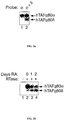
- Figure 2 Apoptotic induction of hTAF II 80 ⁇ expression.
- RT-PCR was used to detect the mRNAs encoding either hTAF II 80 ⁇ or hTAF II 80 ⁇ in HeLa cells.
- RT-PCR products were transferred to nylon membranes and revealed by hybridization with radiolabelled oligonucleotide probes specific for all hTAF II 80 isoforms except hTAF II 80 ⁇ (lane 1) or probes for all known hTAF II 80 isoforms including hTAF II 80 ⁇ (lane 2) b ,
- the ratio of hTAF II 80 ⁇ mRNA with respect to that of hTAF II 80 ⁇ increases in HL-60 undergoing all-trans retinoic acid (RA) induced apoptosis.
- RA retinoic acid
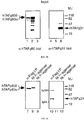
- hTAF II 80 ⁇ is present in a TFIID-like complex lacking hTAF II 31 in HeLa cells.
- I.P. Immunoprecipitation of hTAF II 80 ⁇ and TBP-containing complexes from HeLa cells treated with etoposide VP-16 for 12 hours. Eluted complexes were concentrated 10-fold by trichloroacetic acid precipitation, fractionated by SDS-PAGE and electrophoretically transferred to nitrocellulose membranes. hTAF II composition was determined by immunoblotting with appropriate antibodies. As a negative control, protein-G beads alone were incubated with HeLa extract and processed in the same manner as I.P.s (mock I.P.).
- hTAF II 80 ⁇ The presence of two distinct epitopes of hTAF II 80 ⁇ were tested using mAb 24TA against the N-terminal Alu repeat derived sequence, and mAbs 37TA-1 and -3 both against the modified histone homology region.
- hTAF II 80 ⁇ is not present in TFTC and is not found complexed with GCN5. I.P.s and immunoblots were performed as in a , lane 3 contains purified TFTC (Wieczoreck et al, 1998).
- hTAF II 31 interacts in vitro with recombinant hTAF II 80 ⁇ but not with hTAF II 80 ⁇ .
- Flag-hTAF II 80 ⁇ or His-hTAF II 80 ⁇ -containing extracts were mixed with hTAF II 31-containing extracts, followed by incubation with anti-Flag-agarose or Ni 2+ -agarose beads, respectively. After washing the beads, the amount of hTAF II 31 bound to immobilized Flag-hTAF II 80 ⁇ (lane 4) or His-hTAF II 80 ⁇ (lane 5) was analyzed by immunoblotting.
- d A summary of protein-protein interactions observed between hTAF II 80 ⁇ and hTAF II 80 ⁇ and other TAF II s using co-expression in SF9 cells followed by co-immunoprecipitation.
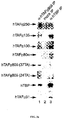
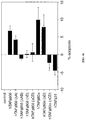
- FIG. 4 Overexpression of hTAF II 80 ⁇ in HeLa cells causes apoptosis.
- hTAF II 80 ⁇ and hTAF II 80 ⁇ derivatives used in transient transfection assays For simplicity, domains have been given letter codes.
- the hTAF II s reported to interact with various portions of hTAF II 80 in vitro (Hisatake et al, 1995) are indicated.
- the amino acids expressed by each of the deletion variants are given at the left and right of the schema.
- the unique N-terminal tail of hTAF II 80 ⁇ is indicated by black shading, as are the ⁇ -helices of the histone fold motif.
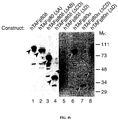
- b Immunoblot analysis of transfected deletion variants. Arrow heads indicate overexpressed proteins.
- c Percentage apoptosis induced by transfection of hTAF II s. The standard deviation of three independent transfections is given by error bars. Positive values indicate increased apoptosis and negative values decreased apoptosis.
- Figure 5 Alignment between hTAF II 80 ⁇ and the corresponding encoded amino acid sequence.
- the ATG initiation codon and the first amino acid are in bold ; the locus of the deletion is in bold as well as the region surrounding it, which is useful for detecting specifically hTAF II 80 ⁇ .
- Example 1 Identification of a new hTAF II 80 isoform.
- oligo-dT primed HeLa cell cDNA ⁇ ZAP-II phage library was screened with a random labelled cDNA fragment encoding the 340 C-terminal amino acids of the hTAF II 80 ⁇ .
- Two positive phage clones were independently picked and subjected to sequence analysis. These two clones were identical and encoded the ⁇ isoform of hTAF II 80 (figure 1).
- the gene and protein sequences are presented at figure 5.
- the ATG initiation codon and the first amino acid are in bold; the locus of the deletion is in bold as well as the region surrounding it which is particularly useful for detecting specifically hTAF II 80 ⁇ .
- Example 2 hTAF II 80 ⁇ protein expression is induced in apoptotic cells.
- Antibodies were produced as previously described (Wieczorek et al, 1998) using the peptides: CSPSLHRGLHPSREEKRDSRM (SEQ ID N° 6) for mAb 24TA against the unique N-terminal tail of hTAF II 80 ⁇ ; QLLTDEDALKFMHMGC (SEQ ID N° 7) for mAbs 37TA-1 and -3 against the unique altered H4 homolog region of hTAF II 80 ⁇ ; and LTDEVSYRIKEIAQDALKC (SEQ ID N° 8) for polyclonal mouse Abs 25TA specific for ⁇ -helix 2 of the histone fold motif of hTAF II 80 ⁇ .
- Anti-hTAF II 31 antibodies were described by Martinez et al, 1998 (Fig. 3a) or Sant Cruz Biotechnology (Fig. 3b).
- polyclonal rabbit anti-hTAF II 80 antibodies from Transduction Laboratories were used. All other antibodies against hTAF II s have been previously described (Wieczorek et al, 1998 and Dantonel et al, 1997).
- HeLa cells grown on cover slips were treated with 100 ⁇ M etoposide VP-16 (BIOMOL) for 4 hours and then washed twice with phosphate buffered saline (PBS).
- PBS phosphate buffered saline
- Cells were fixed in a solution of 2% paraformaldehyde for 4 minutes.
- Cells were permeabilized by treatment with PBS- 0.1% Triton X-100 (PBS-T) twice for 5 minutes.
- PBS-T Triton X-100
- Cells were then incubated with anti-hTAF II 80 ⁇ mAb 24TA diluted 1/500 in PBS-T for 2 hours at room temperature before washing three times with PBS-T.
- a CY3-labelled goat anti-mouse IgG secondary antibody (Jackson Laboratories) was added for 1 hour at room temperature followed by three washes in PBS-T. Fluorescein conjugated M30-CytoDEATH antibody (Roche) was then added at 1/250 in PBS-T and incubated further for 1 hour at room temperature. Cells were washed twice in PBS-T and once in PBS before the addition of Hoechst and visualization by immunofluorescent microscopy.
- hTAF II 80 ⁇ expression was analyzed by RT-PCR, using oligonucleotide primers that flank the region coding for the altered ⁇ -helix 2 of hTAF II 80 ⁇ which amplify products of distinct lengths from either hTAF II 80 ⁇ mRNA or mRNAs coding for its other histone-fold motif-containing isoforms (see Methods).
- Our initial experiments revealed low levels of hTAF II 80 ⁇ mRNA in logarithmically growing HeLa cells (Fig. 2a, lane 2) and HL-60 promeylocytic leukemia cells (Fig. 2b, lane 2). These results provided evidence that hTAF II 80 ⁇ mRNA is expressed.
- hTAF II 80 ⁇ /hTAF II 80 ⁇ mRNA ratio was also observed in Jurkat T cells when apoptosis was induced by cycloheximide treatment, indicating that induction of hTAF II 80 ⁇ mRNA during apoptosis occurs in different cell lines exposed to distinct apoptotic stimuli.
- hTAF II 80 ⁇ mRNA levels increase in populations of cells which are given apoptotic stimuli
- Monoclonal antibodies were generated against two unique epitopes of hTAF II 80 ⁇ and a unique epitope of hTAF II 80 ⁇ corresponding to the intact ⁇ -helix 2 of its histone fold (see Fig. 1a and Methods). These antibodies were then used in immunocytochemistry experiments on HeLa cells treated with the apoptosis-inducing etoposide VP-16.
- Example 3 hTAF II 80 ⁇ interaction with other TAFII proteins forms a new TFIID complex leading to apoptosis.
- Immunoprecipitations were performed as previously described (Wieczorek et al, 1998 and Jacq et al, 1994) with the exception that all antibodies were used directly as ascites fluids.
- hTAF II 80 ⁇ three anti-hTAF II 80 ⁇ were pooled (24TA, 37TA-1, 37TA-3).
- hTAF II 80 ⁇ -containing complexes were eluted by the addition of the corresponding peptides at 2.5 mg/ml.
- the 2C1 mAb was used (Jacq et al, 1994).
- hTAF II 80 ⁇ , hTAF II 80 ⁇ , and hTAF II 31 were subcloned into pVL1392 (Pharmingen) by PCR for baculovirus production. Plasmids expressing hTAF II 80 ⁇ and hTAF II 80 ⁇ derivatives were constructed in the expression vector pXJ42 (Xiao et al, 1991) using a PCR-based approach. Constructions were verified by DNA sequence analysis.
- hTAF II 80 ⁇ We probed for unique biochemical properties of hTAF II 80 ⁇ that could underlie its specific induction in apoptotic cells.
- hTAF II 80 ⁇ -specific antibodies to immunoprecipitate endogenous hTAF II 80 ⁇ from HeLa cells. Immunoprecipitated protein complexes were eluted by the addition of excess cognate epitope peptides and analysed by immunoblotting experiments for TFIID components.
- hTAF II 80 ⁇ is found in a TFIID-like complex containing hTAF II 250, hTAF II 135, hTAF II 100 and hTBP in HeLa cells (Fig. 3a).
- hTAF II 80 ⁇ does not co-immunoprecipitate with hTAF II 31 (Fig. 3a, lane 1). Moreover, hTAF II 80 ⁇ immunoprecipitates do not contain hTAF II 80 ⁇ (Fig. 3a, lane 1), suggesting that incorporation of these two isoforms into distinct TFIID-like complexes is mutually exclusive. hTAF II 80 ⁇ can be found in TFIID as well as other TAF II -containing complexes lacking TBP including TFTC (Wieczorek et al, 1998) and STAGA (Martinez et al, 1998).
- hTAF II 80 ⁇ could be found associated with TFTC or STAGA we tested hTAF II 80 ⁇ immunoprecipitates for the presence of the TFTC and STAGA specific subunit, GCN5 (Wieczorek et al, 1998 and Martinez et al, 1998). GCN5 does not co-immunoprecipitate with hTAF II 80 ⁇ (Fig. 3b, lane 1). Morevover, purified TFTC does not contain hTAF II 80 ⁇ (Fig 3b, lane 3). Thus, it appears that hTAF II 80 ⁇ functions as part of TFIID-like complexes but not in TFTC or STAGA.
- hTAF II 250, hTAF II 100, hTBP, and hTAF II 20 were all able to interact with hTAF II 80 ⁇ (Fig. 3d).
- the hTAF II 80-hTAF II 20 interaction has been reported to depend on the histone fold region of hTAF II 80 (Bando et al, 1997) yet hTAF II 20 can efficiently interact with hTAF II 80 ⁇ , suggesting the modified histone homology region of hTAF II 80 ⁇ retains a surface that can interact with hTAF II 20.
- hTAF II 80 ⁇ is present in a novel complex resembling TFIID in cells, but due to the deletion in its histone fold motif, lacks the histone H3-like hTAF II 31.
- Example 4 hTAF II 80 ⁇ overexpression is sufficient to trigger apoptosis.
- HeLa cells were co-transfected by the calcium phosphate precipitation method using 1-2 ⁇ g of pBB14 (expressing Us9-GFP) (Kaleijta et al, 1999) together with a ten fold excess of each hTAF II expression vector. 41 hours after transfection adherent and floating cells were pooled, washed in PBS and fixed in 70% ethanol. Fixed cells were treated with RNAse A at Img/ml and propidium iodide at 50 ⁇ g/ml in PBS were then added for at least 1 hour at room temperature. The DNA content of transfected cells was then analyzed by flow cytometry, gating for GFP-expressing cells as previously described (Kaleijta et al, 1999).
- the percentage apoptosis specifically induced by hTAF II expression is given as the percentage of sub-G1 cells observed when the cells were co-transfected with a given TAF II -expression vector minus that observed with co-transfection of the empty expression vector alone.
- TFIID ⁇ in apoptotic cells, we reasoned that artificial elevation of hTAF II 80 ⁇ levels in cells should compete with endogenous hTAF II 80 ⁇ for incorporation into cellular TFIID, and thus drive the formation of TFIID ⁇ .
- TFIID ⁇ is an important part of a death-inducing genetic program, the overexpression of hTAF II 80 ⁇ might be sufficient to trigger apoptosis.
- Transient transfection of HeLa cells was used to assay the effect of overexpression of different TFIID subunits.
- Various TAF II -expressing plasmids Fig.
- Example 5 hTAF II 80 ⁇ overexpression is also sufficient to trigger apoptosis.
- Example 6 the altered histone fold region is crucial for hTAF II 80 ⁇ 's apoptotic function.
- hTAF II 80 ⁇ and hTAF II 80 ⁇ overexpression contributes to apoptosis
- plasmids expressing truncated variants of these proteins were transfected into HeLa cells.
- the removal of the unique N-terminal 49 amino acids causes a small but reproducible decrease in its ability to induce apoptosis [Fig. 4c, hTAF II 80 ⁇ ( ⁇ A)], suggesting that although this portion of hTAF II 80 ⁇ contributes to its apoptotic function, it is not absolutely required. Removal of the entire histone fold region of hTAF II 80 ⁇ abolished its ability to induce apoptosis [Fig.
- hTAF II 80 ⁇ ( ⁇ AB)]
- hTAF II 80 ⁇ ( ⁇ AB)
- C-terminal deletions of hTAF II 80 ⁇ that removed domains which are required to bind TBP or hTAF II 250 in vitro do not induce apoptosis [Fig. 4c, hTAF II 80 ⁇ ( ⁇ D and ⁇ CD)].
- hTAF II 80 ⁇ was still able to induce apoptosis when the TBP binding domain was removed from hTAF II 80 ⁇ [Fig. 4c, compare hTAF II 80 ⁇ ( ⁇ D) with hTAF II 80 ⁇ ( ⁇ D)].
Landscapes
- Health & Medical Sciences (AREA)
- Life Sciences & Earth Sciences (AREA)
- Chemical & Material Sciences (AREA)
- Organic Chemistry (AREA)
- General Health & Medical Sciences (AREA)
- Medicinal Chemistry (AREA)
- Bioinformatics & Cheminformatics (AREA)
- Neurosurgery (AREA)
- Nuclear Medicine, Radiotherapy & Molecular Imaging (AREA)
- Animal Behavior & Ethology (AREA)
- General Chemical & Material Sciences (AREA)
- Public Health (AREA)
- Veterinary Medicine (AREA)
- Engineering & Computer Science (AREA)
- Pharmacology & Pharmacy (AREA)
- Chemical Kinetics & Catalysis (AREA)
- Biomedical Technology (AREA)
- Neurology (AREA)
- Virology (AREA)
- Molecular Biology (AREA)
- Tropical Medicine & Parasitology (AREA)
- Communicable Diseases (AREA)
- Biochemistry (AREA)
- Biophysics (AREA)
- Genetics & Genomics (AREA)
- Proteomics, Peptides & Aminoacids (AREA)
- Zoology (AREA)
- Toxicology (AREA)
- Oncology (AREA)
- Gastroenterology & Hepatology (AREA)
- AIDS & HIV (AREA)
- Psychology (AREA)
- Hospice & Palliative Care (AREA)
- Psychiatry (AREA)
- Medicines That Contain Protein Lipid Enzymes And Other Medicines (AREA)
- Peptides Or Proteins (AREA)
- Pharmaceuticals Containing Other Organic And Inorganic Compounds (AREA)
Abstract
The present invention relates to a hTAFII80 isoform, namely hTAFII80δ, which
comprises a 10 amino acid deletion, said isoform being capable of inducing apoptosis
in mammalian cells. It also concerns the use of a compound for inhibiting or activating
the expression or activity of hTAFII80 protein or isoforms thereof for treating diseases
involving cell apoptosis, notably nerve cell degeneration, such as Alzheimer disease
and Parkinson disease, cancer and AIDS.
Description
The present invention relates to a hTAFII80 isoform, namely hTAFII80δ, which
comprises a 10 amino acid deletion, said isoform being capable of inducing apoptosis
in mammalian cells. It also concerns the use of a compound for inhibiting or activating
the expression or activity of hTAFII80 protein or isoforms thereof for treating diseases
involving cell apoptosis, notably nerve cell degeneration, such as Alzheimer disease
and Parkinson disease, cancer and AIDS.
Apoptosis, or active cell suicide, plays an essential role in normal tissue homeostasis
and development of multicellular organisms (White E. et al, 1996). The initiation of
apoptosis is associated with changes in gene expression (Jehn et al, 1997), but the
connections between death inducing signals and the regulation of gene transcription
remain largely obscure. It is therefore of a great interest to identify proteins involved
in the regulation that triggers cell suicide, which could ultimately lead to the
development of new treatments for diseases such as cancer, retrovirus infection and
neurodegenerative syndromes.
hTAFII80 also named hTAFII70 (Weinzierl et al, 1993 and Hisatake et al, 1995) is a
subunit of TFIID, a multiprotein complex composed of TATA-binding protein (TBP)
and more than 12 TBP-associated factors (TAFs) (Green et al, 2000 and Albright et al,
2000). TFIID plays a key role in the initiation of RNA polymerase II (Pol II)
transcription by nucleating the formation of the pre-initiation complex (PIC) at core
promoter elements (Burley et al, 1996 and Bell et al, 1999) and it has been suggested
that it could be involved in apoptosis regulation (Sekiguchi et al, 1995 and Metzger et
al, 1999). hTAFII80 contains a histone H4-like histone fold that interacts with its
histone H3-like partner hTAFII31 (Hisatake et al, 1995, Xie et al, 1996 and Bando et
al, 1997).
In connection with the present invention, we cloned a cDNA coding for a novel
isoform of hTAFII80. This isoform will be hereinafter referred to as hTAFII80δ to
distinguish it from previously described isoforms of hTAFII80 (hTAFII80α, β, and γ)
Weinzierl et al, 1993.
hTAFII80δ has the remarkable feature of a 10 amino acid deletion in the centre of α-helix
2 of its histone fold motif (Fig. 1 and 5). The amino acids removed by this
deletion include many of the residues implicated in dimerization contacts with
hTAF II31 by crystallographic studies of hTAFII80's Drosophila homolog,
dTAFII60/62 (Wie et al, 1996). In addition, the hTAFII80δ cDNA encodes a predicted
unique 49 amino acid tail at the N-terminus of the open reading frame (Fig. 1a).
Surprisingly, we found that hTAFII80δ overexpression induces apoptosis in different
cell lines.
Accumulating biochemical and genetic evidence supports the existence of functionally distinct TFIIDs within cells (Bell et al, 1999). The present findings provide the first evidence implying that TFIID composition in living cells is dynamic, and suggest that cells can employ changes in the subunit composition of TFIID to alter cell metabolism in response to changing growth conditions. Our results also identify hTAFII80δ as an important part of a novel signalling pathway that acts as an interface between apoptotic signals and the Pol II transcriptional machinery. Cell death-inducing signals induce the novel TFIIDπ complex, which in turn reprogrammes Pol II transcription so that the balance between transcription of pro- and anti-apoptotic genes favors cell death.
Accumulating biochemical and genetic evidence supports the existence of functionally distinct TFIIDs within cells (Bell et al, 1999). The present findings provide the first evidence implying that TFIID composition in living cells is dynamic, and suggest that cells can employ changes in the subunit composition of TFIID to alter cell metabolism in response to changing growth conditions. Our results also identify hTAFII80δ as an important part of a novel signalling pathway that acts as an interface between apoptotic signals and the Pol II transcriptional machinery. Cell death-inducing signals induce the novel TFIIDπ complex, which in turn reprogrammes Pol II transcription so that the balance between transcription of pro- and anti-apoptotic genes favors cell death.
In a first embodiment, the present invention is aimed at a polypeptide comprising a
sequence having at least 80%, 90%, 95% or 99% identity with hTAFII80δ of the
sequence SEQ ID N°1 characterized in that it has a 10 amino acids deletion at position
43 to 52 of SEQ ID N°3 (hTAFII80), said polypeptide being capable of inducing
apoptosis when expressed in mammalian cells.
Preferably, said polypeptide comprises the sequence SEQ ID N°1 corresponding to the hTAFII80δ, which is also depicted at figure 5.
Preferably, said polypeptide comprises the sequence SEQ ID N°1 corresponding to the hTAFII80δ, which is also depicted at figure 5.
Nucleic sequence or nucleic acid is understood to mean an isolated natural, or a synthetic,
DNA and/or RNA fragment comprising, or otherwise, non natural nucleotides,
designating a precise succession of nucleotides, modified or otherwise, allowing a
fragment, a segment or a region of a nucleic acid to be defined.
In frame with the invention, "percent identity" means the percentage of identical nucleotides between two sequences when compared according to the best alignments, this percentage being statistical and the differences between the two sequences being at random and on the total length of the sequences. Optimal alignments of sequences can be achieved by means of the algorithm of Smith Waterman (1981) [Ad. App. Math. 2 : 482], with the algorithm for local homology described in Neddleman and Wunsch (1970) [J. Mol. Biol. 48 : 443], with the similarity search method described by Lipman (1988) [Proc. Natl. Acad. Sci. USA 85 : 2444], with softwares using GAP, BESTFIT, FASTA and TFASTA algorithms available in Wisconsin Genetics Software Package, Genetics Computer Group, 575 Science Dr., Madison, WI and DNASIS,Version 2.5 for Windows; Hitachi Software Engineering Co., Ltd, South San Francisco, CA, by using the standard parameters described in the manufacturer brochure.
Another possibility is to use the BLAST or FASTDB programs available at WWW.ncbi.nlm.nih.gov with the following parameters "Mismatch penalty 1.00; Gap Penalty 1.00; Gap Size Penalty 0.33; joining penalty 30.0. These algorithms are displayed in Current Methods in Sequencing and synthesis Methods and Applications, pages 127-149, 1988, Ala R. Liss, Inc".
In frame with the invention, "percent identity" means the percentage of identical nucleotides between two sequences when compared according to the best alignments, this percentage being statistical and the differences between the two sequences being at random and on the total length of the sequences. Optimal alignments of sequences can be achieved by means of the algorithm of Smith Waterman (1981) [Ad. App. Math. 2 : 482], with the algorithm for local homology described in Neddleman and Wunsch (1970) [J. Mol. Biol. 48 : 443], with the similarity search method described by Lipman (1988) [Proc. Natl. Acad. Sci. USA 85 : 2444], with softwares using GAP, BESTFIT, FASTA and TFASTA algorithms available in Wisconsin Genetics Software Package, Genetics Computer Group, 575 Science Dr., Madison, WI and DNASIS,Version 2.5 for Windows; Hitachi Software Engineering Co., Ltd, South San Francisco, CA, by using the standard parameters described in the manufacturer brochure.
Another possibility is to use the BLAST or FASTDB programs available at WWW.ncbi.nlm.nih.gov with the following parameters "Mismatch penalty 1.00; Gap Penalty 1.00; Gap Size Penalty 0.33; joining penalty 30.0. These algorithms are displayed in Current Methods in Sequencing and synthesis Methods and Applications, pages 127-149, 1988, Ala R. Liss, Inc".
The invention also relates to an isolated nucleic acid sequence coding for a polypeptide
mentioned above and more particularly to an isolated nucleic acid sequence coding for
hTAFII80δ having the sequence SEQ ID No. 1, said hTAFII80δ protein being an
isoform of hTAFII80 comprising a deletion of the 10 amino acids at position 43 to 52
of hTAFII80 and being capable of inducing apoptosis when expressed in mammal
cells. Preferably, said nucleic acid sequence described above has a sequence
comprising the sequence SEQ ID N°2.
Complementary sequences of the nucleic sequence according to the invention is another embodiment as well as an isolated nucleic acid sequence, characterized in that it is selected from the group consisting of:
Complementary sequences of the nucleic sequence according to the invention is another embodiment as well as an isolated nucleic acid sequence, characterized in that it is selected from the group consisting of:
Preferably, said sequences are characterized in that they comprise a sequence selected from the group consisting of sequences SEQ ID No. 4 (TGAGGATG) and SEQ ID No 5 (CATCCTCA).
Another aspect of the invention relates to a cloning and/or expression vector
comprising a nucleic acid sequence described above. This vector can further comprise
the elements allowing the expression and/or secretion of the said sequences in a host
cell. Said host cell transformed by this vector is an eukaryotic or a prokaryotic cell.
The present invention also concerns a mammal, except human, characterized in that it comprises said cell.
The said vectors will preferably comprise a promoter, signals for initiation and termination of translation, as well as appropriate regions for regulation of transcription. They must be able to be stably maintained in the cell and may optionally possess particular signals specifying the secretion of the translated protein.
These different control signals are chosen according to the cellular host used. To this end, the nucleic acid sequences according to the invention may be inserted into autonomously replicating vectors inside the chosen host, or integrative vectors of the chosen host. Among the autonomously replicating systems, there will be preferably used according to the host cell, systems of the plasmid or viral type, it being possible for the viral vectors to be in particular adenoviruses, retroviruses, pox viruses or herpes viruses. One skilled in the art knows the technologies which can be used for each of these systems.
When the integration of the sequence into the chromosomes of the host cell is desired, it will be possible to use, for example, systems of the plasmid or viral type; such viruses will be, for example, retroviruses.
Such vectors will be prepared according to the methods commonly used by the man skilled in the art, and the clones resulting therefrom may be introduced into an appropriate host by standard methods such as, for example, lipofection, electroporation or heat shock.
Among the cells which can be transformed, there may of course be mentioned bacterial cells but also yeast cells, animal cells, in particular mammalian cell cultures, and in particular Chinese hamster ovary cells (CHO), but also insect cells in which it is possible to use methods using baculoviruses.
Among the animal models more particularly of interest here, there are:
The present invention also concerns a mammal, except human, characterized in that it comprises said cell.
The said vectors will preferably comprise a promoter, signals for initiation and termination of translation, as well as appropriate regions for regulation of transcription. They must be able to be stably maintained in the cell and may optionally possess particular signals specifying the secretion of the translated protein.
These different control signals are chosen according to the cellular host used. To this end, the nucleic acid sequences according to the invention may be inserted into autonomously replicating vectors inside the chosen host, or integrative vectors of the chosen host. Among the autonomously replicating systems, there will be preferably used according to the host cell, systems of the plasmid or viral type, it being possible for the viral vectors to be in particular adenoviruses, retroviruses, pox viruses or herpes viruses. One skilled in the art knows the technologies which can be used for each of these systems.
When the integration of the sequence into the chromosomes of the host cell is desired, it will be possible to use, for example, systems of the plasmid or viral type; such viruses will be, for example, retroviruses.
Such vectors will be prepared according to the methods commonly used by the man skilled in the art, and the clones resulting therefrom may be introduced into an appropriate host by standard methods such as, for example, lipofection, electroporation or heat shock.
Among the cells which can be transformed, there may of course be mentioned bacterial cells but also yeast cells, animal cells, in particular mammalian cell cultures, and in particular Chinese hamster ovary cells (CHO), but also insect cells in which it is possible to use methods using baculoviruses.
Among the animal models more particularly of interest here, there are:
- transgenic animals, preferably mice, overexpressing hTAFII80δ. The mice can be obtained by transfection of multiple copies of the hTAFII80δ gene under the control of a strong promoter of an ubiquitous nature, or selective for a type of tissue.
- animals (preferably rats, rabbits, mice) over-expressing hTAFII80δ gene, after viral transcription or gene therapy.
- transgenic animals made deficient in TAFII80δ gene by inactivation with the aid of the LOXP/CRE recombinase system or any other system for inactivating the expression of a gene of the animal.
Unless stated otherwise in the description below, the expression "hTAFII80 isoforms"
means hTAFII80α, β, γ and δ.
Another aspect of the invention deals with Mono- or polyclonal antibodies or
fragments thereof, chimeric or immunoconjugated antibodies, characterized in that
they are capable of specifically recognizing a polypeptide as mentioned above. It also
deals with a method for the diagnosis of a pathology associated with the expression or
the lack of expression of hTAFII80, hTAFII80 isoforms, notably hTAFII80δ or
correlated with an abnormal expression of a polypeptide having the sequence SEQ ID
N°1 and/or SEQ ID N°3, characterized in that one or more antibodies according to
claim 14 is(are) brought into contact with the biological material to be tested, under
conditions allowing the possible formation of specific immunological complexes
between the said polypeptide and the said antibody or antibodies, and in that the
immunological complexes that may be formed are detected.
The specific monoclonal antibodies may be obtained according to the conventional hybridoma culture method.
The antibodies according to the invention are, for example, chimeric antibodies, humanized antibodies, Fab or F(ab')2 fragments. They may also be in the form of immunoconjugates or of labeled antibodies so as to obtain a detectable and/or quantifiable signal.
The specific monoclonal antibodies may be obtained according to the conventional hybridoma culture method.
The antibodies according to the invention are, for example, chimeric antibodies, humanized antibodies, Fab or F(ab')2 fragments. They may also be in the form of immunoconjugates or of labeled antibodies so as to obtain a detectable and/or quantifiable signal.
In another embodiment, the invention concerns a method for the determination of an
allelic variability or a loss of heterozygosity, characterized in that it uses a nucleic acid
sequence as depicted above.
Allele or allelic variant will be understood to mean the natural mutated sequences corresponding to polymorphisms present in human beings and, in particular, to polymorphisms which can lead to the onset and/or to the development of the risks of pathology or pathogenesis associated with apoptosis.
Allele or allelic variant will be understood to mean the natural mutated sequences corresponding to polymorphisms present in human beings and, in particular, to polymorphisms which can lead to the onset and/or to the development of the risks of pathology or pathogenesis associated with apoptosis.
Another embodiment deals with a method for determining if a subject is at increased
risk of developing a pathology associated with the expression or the lack of expression
of hTAFII80, hTAFII80 isoforms, notably hTAFII80δ, said method comprising the
steps consisting of:
Among the methods for the determination of an allelic variability, a mutation, a deletion, a loss of heterozygocity or a genetic abnormality, the methods comprising at least one stage for the so-called PCR (polymerase chain reaction) or PCR-like amplification of the target sequence according to the invention likely to exhibit an abnormality with the aid of a pair of primers of nucleotide sequences according to the invention are preferred. The amplified products may be treated with the aid of an appropriate restriction enzyme before carrying out the detection or assay of the targeted product.
PCR-like will be understood to mean all methods using direct or indirect reproductions of nucleic acid sequences, or alternatively in which the labeling systems have been amplified, these techniques are of course known, in general they involve the amplification of DNA by a polymerase; when the original sample is an RNA, it is advisable to carry out a reverse transcription beforehand. There are currently a great number of methods allowing this amplification, for example the so-called NASBA "Nucleic Acid Sequence Based Amplification", TAS "Transcription based Amplification System", LCR "Ligase Chain Reaction", "Endo Run Amplification" (ERA), "Cycling Probe Reaction" (CPR), and SDA "Strand Displacement Amplification", methods well known to persons skilled in the art.
In another embodiment, the invention is aimed at a kit for diagnostic or for determining if a subject is at increased risk of developing cancer and/or a pathology associated with the expression or the lack of expression of hTAFII80, hTAFII80 isoforms, notably hTAFII80δ, comprising at least one pair of primers capable of amplifying a fragment of genomic DNA or RNA encoding the protein hTAFII80, hTAFII80 isoforms, notably hTAFII80δ, preferably primers being chosen among primers derived from SEQ ID N°1 such as a fragment of nucleic acid sequence according to the invention comprising at least 12, 15, 20, or 25 consecutive bases specific to hTAFII80δ present for example at the junction of the deletion, more particularly a sequence encompassing G789 and G790 of the sequence depicted at figure 5.
A kit according to the invention may alternatively comprise at least one monoclonal antibody specifically recognizing hTAFII80δ. With a kit comprising a specific hTAFII80δ antibody and a general hTAFII80 antibody, it is possible to calculate the hTAFII80δ / total hTAFII80 ratio and assess the ability of a cell to respond to apoptosis stimuli. Such kits can be used in a RIA or ELISA test.
Another aspect of the invention relates to the use of a cell, mammal or vector described
above for assessing the expression and/or the activity of the protein hTAFII80,
hTAFII80 isoforms, notably hTAFII80δ, for studying the direct or indirect interactions
between said proteins with other TAF proteins, more particularly with hTAF II31, and
for selecting compounds that modulate the activity and/or expression of said protein.
Such cell, mammal or vector are preferably used for screening compounds capable of
interacting directly or indirectly with hTAFII80 or hTAFII80 isoforms, notably with
hTAFII80δ, and/or capable of modulating the expression or the activity of said
proteins.
So, the invention is aimed at a process for selecting compounds capable of modulating the activity of hTAFII80 and/or hTAFII80 isoforms, notably hTAFII80δ characterized in that it comprises the step consisting of:
So, the invention is aimed at a process for selecting compounds capable of modulating the activity of hTAFII80 and/or hTAFII80 isoforms, notably hTAFII80δ characterized in that it comprises the step consisting of:
Yet, another aspect of the invention relates to compounds obtainable by said process.
Said compounds are preferably characterized in that:
- they decrease significantly the level of expression of hTAFII80 or hTAFII80 isoforms, notably hTAFII80δ protein expression;
- they increase by at least 50% the rate of apoptosis induced by the expression of said proteins; or
- they decrease by at least 50% the rate of apoptosis induced by the expression of said proteins.
Compound according to one of claims 23 and 24, characterized in that it is chosen
from:
A preferred aspect of the invention is aimed at the use of a compound mentioned above
for preparing a drug, and more particularly for preparing a drug for treating diseases
involving cell apoptosis, notably nerve cell degeneration, such as Alzheimer disease
and Parkinson disease, for treating cancer or AIDS.
The present invention also concerns the use of a nucleic acid sequence coding for a
hTAFII80 protein or isoforms thereof, such as hTAFII80α and δ, for inducing
apoptosis, the use of a vector expressing a hTAFII80 protein or isoforms thereof, such
as hTAFII80α and δ, for inducing apoptosis.
In this regard, it deals with the use of a fragment of at least 12, 15, 20 or 25 bases of a sequence derived from a nucleic acid sequence coding for a hTAFII80 protein or isoforms thereof, such as hTAFII80α and δ, as an anti-sense oligonucleotide for inhibiting apoptosis in a cell and with the use of said fragment as a probe or a primer for the diagnostic of cell apoptosis, notably nerve cells degeneration, such as the Alzheimer disease and Parkinson disease; cancer and AIDS or for determining if a subject is at increased risk of developing such diseases.
In this regard, it deals with the use of a fragment of at least 12, 15, 20 or 25 bases of a sequence derived from a nucleic acid sequence coding for a hTAFII80 protein or isoforms thereof, such as hTAFII80α and δ, as an anti-sense oligonucleotide for inhibiting apoptosis in a cell and with the use of said fragment as a probe or a primer for the diagnostic of cell apoptosis, notably nerve cells degeneration, such as the Alzheimer disease and Parkinson disease; cancer and AIDS or for determining if a subject is at increased risk of developing such diseases.
The invention is also directed to the use of a compound capable of inhibiting or
activating the expression or activity of hTAFII80 protein or isoforms thereof, such as
hTAFII80α and δ, for preparing a drug as well as to the use of a compound capable of
interfering directly or indirectly with the hTAFII80 protein or isoforms thereof
interaction with other transcription associated factor proteins, preferably with other
hTAFII proteins, such as hTAF II31, for preparing a drug.
Said drug is particularly useful for treating diseases involving cell apoptosis, notably nerve cellss degeneration, such as Alzheimer disease and Parkinson disease; cancer and AIDS.
Said drug is particularly useful for treating diseases involving cell apoptosis, notably nerve cellss degeneration, such as Alzheimer disease and Parkinson disease; cancer and AIDS.
a, Schematic representation of the cDNAs of two putative splice variants of hTAFII80,
and the open reading frames of the two isoforms they encode, hTAFII80α and
hTAFII80δ. Narrow rectangles represent cDNA and thick rectangles indicate protein
sequences. An inverted Alu cassette inserted into hTAFII80δ is indicated by black
shading, as are the α-helices of the histone fold motif. Start codons (ATG) are
indicated with arrows and the epitopes used for antibody production are indicated by
their names. b, A magnified view of the histone fold region shown in panel a, showing
the primary structure of the histone homology regions of hTAFII80α and hTAFII80δ,
respectively. aa: amino acid.
a, RT-PCR was used to detect the mRNAs encoding either hTAFII80δ or hTAFII80α
in HeLa cells. RT-PCR products were transferred to nylon membranes and revealed by
hybridization with radiolabelled oligonucleotide probes specific for all hTAFII80
isoforms except hTAFII80δ (lane 1) or probes for all known hTAFII80 isoforms
including hTAFII80δ (lane 2) b, The ratio of hTAFII80δ mRNA with respect to that of
hTAFII80α increases in HL-60 undergoing all-trans retinoic acid (RA) induced
apoptosis. RT-PCR products were obtained as in panel a, lane 2.
a, Immunoprecipitation (I.P.) of hTAFII80δ and TBP-containing complexes from
HeLa cells treated with etoposide VP-16 for 12 hours. Eluted complexes were
concentrated 10-fold by trichloroacetic acid precipitation, fractionated by SDS-PAGE
and electrophoretically transferred to nitrocellulose membranes. hTAFII composition
was determined by immunoblotting with appropriate antibodies. As a negative control,
protein-G beads alone were incubated with HeLa extract and processed in the same
manner as I.P.s (mock I.P.). The presence of two distinct epitopes of hTAFII80δ were
tested using mAb 24TA against the N-terminal Alu repeat derived sequence, and
mAbs 37TA-1 and -3 both against the modified histone homology region. b,
hTAFII80δ is not present in TFTC and is not found complexed with GCN5. I.P.s and
immunoblots were performed as in a, lane 3 contains purified TFTC (Wieczoreck et
al, 1998). c, hTAF II31 interacts in vitro with recombinant hTAFII80α but not with
hTAFII80δ. Detection of recombinant TAFIIs from SF9 cells expressing Flag-hTAFII80α
(lane 1), His-hTAFII80δ (lane 2) or (lane 3) by immuno-blotting with
anti-TAFII80 mAb and anti-TAFII31 Abs. Flag-hTAFII80α or His-hTAFII80δ-containing
extracts were mixed with hTAFII31-containing extracts, followed by
incubation with anti-Flag-agarose or Ni2+-agarose beads, respectively. After washing
the beads, the amount of hTAF II31 bound to immobilized Flag-hTAFII80δ (lane 4) or
His-hTAFII80δ (lane 5) was analyzed by immunoblotting. d, A summary of protein-protein
interactions observed between hTAFII80δ and hTAFII80α and other TAFIIs
using co-expression in SF9 cells followed by co-immunoprecipitation.
a, Schematic representation of the hTAFII80α and hTAFII80δ derivatives used in
transient transfection assays. For simplicity, domains have been given letter codes.
The hTAFIIs reported to interact with various portions of hTAFII80 in vitro (Hisatake
et al, 1995) are indicated. The amino acids expressed by each of the deletion variants
are given at the left and right of the schema. The unique N-terminal tail of hTAFII80δ
is indicated by black shading, as are the α-helices of the histone fold motif. b,
Immunoblot analysis of transfected deletion variants. Arrow heads indicate
overexpressed proteins. c, Percentage apoptosis induced by transfection of hTAFIIs.
The standard deviation of three independent transfections is given by error bars.
Positive values indicate increased apoptosis and negative values decreased apoptosis.
The ATG initiation codon and the first amino acid are in bold ; the locus of the
deletion is in bold as well as the region surrounding it, which is useful for detecting
specifically hTAFII80δ.
An oligo-dT primed HeLa cell cDNA λ ZAP-II phage library was screened with a
random labelled cDNA fragment encoding the 340 C-terminal amino acids of the
hTAFII80α. Two positive phage clones were independently picked and subjected to
sequence analysis. These two clones were identical and encoded the δ isoform of
hTAFII80 (figure 1). The gene and protein sequences are presented at figure 5. The
ATG initiation codon and the first amino acid are in bold; the locus of the deletion is
in bold as well as the region surrounding it which is particularly useful for detecting
specifically hTAFII80δ.
Total RNA was isolated from cells using Trizol (GibcoBRL) according to the
manufacturer's recommendations. RT-PCR reactions were performed as described
(Metzger et al, 1999) for 20-30 cycles. The sequences of all oligonucleotides used in
this study are available upon request.
Antibodies were produced as previously described (Wieczorek et al, 1998) using the
peptides: CSPSLHRGLHPSREEKRDSRM (SEQ ID N° 6) for mAb 24TA against the
unique N-terminal tail of hTAFII80δ; QLLTDEDALKFMHMGC (SEQ ID N° 7) for
mAbs 37TA-1 and -3 against the unique altered H4 homolog region of hTAFII80δ;
and LTDEVSYRIKEIAQDALKC (SEQ ID N° 8) for polyclonal mouse Abs 25TA
specific for α-helix 2 of the histone fold motif of hTAFII80δ. Anti-hTAFII31
antibodies were described by Martinez et al, 1998 (Fig. 3a) or Sant Cruz
Biotechnology (Fig. 3b). In Fig. 4b, polyclonal rabbit anti-hTAFII80 antibodies from
Transduction Laboratories were used. All other antibodies against hTAFIIs have been
previously described (Wieczorek et al, 1998 and Dantonel et al, 1997).
HeLa cells grown on cover slips were treated with 100 µM etoposide VP-16
(BIOMOL) for 4 hours and then washed twice with phosphate buffered saline (PBS).
Cells were fixed in a solution of 2% paraformaldehyde for 4 minutes. Cells were
permeabilized by treatment with PBS- 0.1% Triton X-100 (PBS-T) twice for 5
minutes. Cells were then incubated with anti-hTAFII80δ mAb 24TA diluted 1/500 in
PBS-T for 2 hours at room temperature before washing three times with PBS-T. A
CY3-labelled goat anti-mouse IgG secondary antibody (Jackson Laboratories) was
added for 1 hour at room temperature followed by three washes in PBS-T. Fluorescein
conjugated M30-CytoDEATH antibody (Roche) was then added at 1/250 in PBS-T
and incubated further for 1 hour at room temperature. Cells were washed twice in
PBS-T and once in PBS before the addition of Hoechst and visualization by
immunofluorescent microscopy.
We first analyzed hTAFII80δ expression by RT-PCR, using oligonucleotide primers
that flank the region coding for the altered α-helix 2 of hTAFII80δ which amplify
products of distinct lengths from either hTAFII80δ mRNA or mRNAs coding for its
other histone-fold motif-containing isoforms (see Methods). Our initial experiments
revealed low levels of hTAFII80δ mRNA in logarithmically growing HeLa cells (Fig.
2a, lane 2) and HL-60 promeylocytic leukemia cells (Fig. 2b, lane 2). These results
provided evidence that hTAFII80δ mRNA is expressed.
When apoptosis is induced in human HL-60 cells by treatment with all-trans retinoic
acid (Barnett et al, 1993) we observed an increase in the ratio of hTAFII80δ with
respect to total hTAFII80 mRNA (Fig. 2b, lanes 3 and 4 versus 2). Thus, increased
hTAFII80δ mRNA levels correlated with cell death by apoptosis. An increased
hTAFII80δ/hTAFII80α mRNA ratio was also observed in Jurkat T cells when
apoptosis was induced by cycloheximide treatment, indicating that induction of
hTAFII80δ mRNA during apoptosis occurs in different cell lines exposed to distinct
apoptotic stimuli.
Since hTAFII80δ mRNA levels increase in populations of cells which are given
apoptotic stimuli, we next determined whether the increased hTAFII80δ mRNA levels
resulted in a corresponding increase in hTAFII80δ protein levels, and whether
hTAFII80δ expression correlated with apoptosis at the single cell level. Monoclonal
antibodies were generated against two unique epitopes of hTAFII80δ and a unique
epitope of hTAFII80δ corresponding to the intact α-helix 2 of its histone fold (see Fig.
1a and Methods). These antibodies were then used in immunocytochemistry
experiments on HeLa cells treated with the apoptosis-inducing etoposide VP-16. To
score for cells undergoing apoptosis, we co-stained cells with monoclonal antibodies
that recognize a caspase cleavage product of cytokeratin 18 (Leers et al, 1999) As
expected, apoptotic cells that stained positively for cleaved cytokeratin 18 were found
to have a condensed nuclear morphogy by Hoechst staining. More importantly, all
cells that stained positively for caspase activation also stained positively for
hTAFII80δ. In control experiments, all cells stained positively with antibodies that
recognize all hTAFII80 isoforms. These results show that hTAFII80δ protein
expression is indeed specifically induced in apoptotic cells.
Immunoprecipitations (I.P.s) were performed as previously described (Wieczorek et
al, 1998 and Jacq et al, 1994) with the exception that all antibodies were used directly
as ascites fluids. For the immunoprecipitation of hTAFII80δ, three anti-hTAFII80δ
were pooled (24TA, 37TA-1, 37TA-3). hTAFII80δ-containing complexes were eluted
by the addition of the corresponding peptides at 2.5 mg/ml. For the anti-TBP I.P. the
2C1 mAb was used (Jacq et al, 1994).
The cDNAs for hTAFII80δ, hTAFII80α, and hTAF II31 were subcloned into pVL1392
(Pharmingen) by PCR for baculovirus production. Plasmids expressing hTAFII80δ
and hTAFII80α derivatives were constructed in the expression vector pXJ42 (Xiao et
al, 1991) using a PCR-based approach. Constructions were verified by DNA sequence
analysis.
In vitro protein-protein interactions between FLAG-tagged hTAFII80α and 6XHistagged
hTAFII80δ produced by Baculovirus overexpression were performed using
either anti-FLAG M2 affinity gel (Sigma) or Ni-NTA resin (Qiagen), respectively.
Whole cell extracts from infected SF9 cells overexpressing FLAG-tagged hTAFII80α
and 6XHis-tagged hTAFII80δ were mixed with extracts containing hTAF II31 and
gently mixed for two hours at 4 °C. Resulting protein-protein complexes were washed
and analyzed as previously described (Jacq et al, 1994). Pairwise interactions between
hTAFIIs were studied using co-infection of SF9 insect cells followed by coimmunoprecipitations
as in ref. (Dantonel et al, 1997).
We probed for unique biochemical properties of hTAFII80δ that could underlie its
specific induction in apoptotic cells. We used hTAFII80δ-specific antibodies to
immunoprecipitate endogenous hTAFII80δ from HeLa cells. Immunoprecipitated
protein complexes were eluted by the addition of excess cognate epitope peptides and
analysed by immunoblotting experiments for TFIID components. Like the
ubiquitously expressed hTAFII80α, hTAFII80δ is found in a TFIID-like complex
containing hTAF II250, hTAF II135, hTAF II100 and hTBP in HeLa cells (Fig. 3a). In
contrast to hTAFII80α, however, hTAFII80δ does not co-immunoprecipitate with
hTAFII31 (Fig. 3a, lane 1). Moreover, hTAFII80δ immunoprecipitates do not contain
hTAFII80α (Fig. 3a, lane 1), suggesting that incorporation of these two isoforms into
distinct TFIID-like complexes is mutually exclusive. hTAFII80δ can be found in
TFIID as well as other TAFII-containing complexes lacking TBP including TFTC
(Wieczorek et al, 1998) and STAGA (Martinez et al, 1998). To determine if
hTAFII80δ could be found associated with TFTC or STAGA we tested hTAFII80δ
immunoprecipitates for the presence of the TFTC and STAGA specific subunit, GCN5
(Wieczorek et al, 1998 and Martinez et al, 1998). GCN5 does not co-immunoprecipitate
with hTAFII80δ (Fig. 3b, lane 1). Morevover, purified TFTC does
not contain hTAFII80δ (Fig 3b, lane 3). Thus, it appears that hTAFII80δ functions as
part of TFIID-like complexes but not in TFTC or STAGA. Since the histone fold
region of hTAFII80δ is disrupted, a simple explanation for the absence of hTAF II31 in
hTAFII80δ-containing TFIID-like complexes would be a direct inability of
hTAFII80δ to contact hTAF II31.
We tested this hypothesis directly using Baculovirus produced recombinant proteins (Fig. 3c). Recombinant hTAFII80δ immobilized on agarose beads retained recombinant hTAFII31 (Fig. 3c, lane 10), whereas hTAFII80δ was severely impaired for interaction with hTAFII31 (Fig. 3c, lane 10). Finally, we tested all of the known hTAFII80 targets within TFIID for interactions with hTAFII80δ using co-expression in SF9 cells followed by co-immunoprecipitation.hTAF II250, hTAF II100, hTBP, and
hTAF II20 were all able to interact with hTAFII80δ (Fig. 3d). The hTAFII80-hTAF II20
interaction has been reported to depend on the histone fold region of
hTAFII80 (Bando et al, 1997) yet hTAF II20 can efficiently interact with hTAFII80δ,
suggesting the modified histone homology region of hTAFII80δ retains a surface that
can interact with hTAF II20. The above biochemical studies indicate that hTAFII80δ is
present in a novel complex resembling TFIID in cells, but due to the deletion in its
histone fold motif, lacks the histone H3-like hTAF II31. We term this hTAFII80δ-containing
TFIID-like complex TFIID π.
We tested this hypothesis directly using Baculovirus produced recombinant proteins (Fig. 3c). Recombinant hTAFII80δ immobilized on agarose beads retained recombinant hTAFII31 (Fig. 3c, lane 10), whereas hTAFII80δ was severely impaired for interaction with hTAFII31 (Fig. 3c, lane 10). Finally, we tested all of the known hTAFII80 targets within TFIID for interactions with hTAFII80δ using co-expression in SF9 cells followed by co-immunoprecipitation.
HeLa cells were co-transfected by the calcium phosphate precipitation method using
1-2 µg of pBB14 (expressing Us9-GFP) (Kaleijta et al, 1999) together with a ten fold
excess of each hTAFII expression vector. 41 hours after transfection adherent and
floating cells were pooled, washed in PBS and fixed in 70% ethanol. Fixed cells were
treated with RNAse A at Img/ml and propidium iodide at 50 µg/ml in PBS were then
added for at least 1 hour at room temperature. The DNA content of transfected cells
was then analyzed by flow cytometry, gating for GFP-expressing cells as previously
described (Kaleijta et al, 1999). The percentage apoptosis specifically induced by
hTAFII expression is given as the percentage of sub-G1 cells observed when the cells
were co-transfected with a given TAFII-expression vector minus that observed with
co-transfection of the empty expression vector alone.
To address the function of TFIIDπ in apoptotic cells, we reasoned that artificial
elevation of hTAFII80δ levels in cells should compete with endogenous hTAFII80α
for incorporation into cellular TFIID, and thus drive the formation of TFIIDπ. We
further hypothesized that if TFIIDπ is an important part of a death-inducing genetic
program, the overexpression of hTAFII80δ might be sufficient to trigger apoptosis.
Transient transfection of HeLa cells was used to assay the effect of overexpression of
different TFIID subunits. Various TAFII-expressing plasmids (Fig. 4a) were co-transfected
into HeLa cells together with a plasmid expressing membrane bound green
fluorescent protein (GFP), which provides a convenient marker for transfected cells
(Kaleijta et al, 1999). To measure apoptosis, the sub-G1 DNA content of cells was
quantified by propidium iodide staining followed by flow cytometry (Ryan et al,
1998). In parallel, the expression of transfected TAFIIs was monitored by Western
blotting of cell extracts (Fig. 4b). The transfection of hTAFII80δ resulted in a
significant increase in apoptosis (Fig. 4c). This increased apoptosis was specific to
hTAFII80δ, since the transfection of 10 other TFIID subunits under the same
conditions showed no increase in apoptosis over a vector control.
Surprisingly, however, the only other TFIID subunit whose overexpression triggered
apoptosis was hTAFII80α (Fig. 4c). One explanation for this observation is that
hTAFII80α overexpression might also drive the formation of a TFIID-like complex
lacking hTAF II31, by titrating hTAF II31 away from the functional cellular pool of
TFIID. To directly test whether apoptosis is sensitive to the intracellular level of
hTAF II31, we transfected hTAF II31 into HeLa cells. hTAF II31 overexpression
repressed the background apoptosis resulting from the transfection protocol (Fig. 4c),
suggesting that apoptosis is induced by elevated hTAFII80δ or hTAFII80α levels but
antagonized by increased hTAF II31 levels. These results together support the view
that apoptosis can be induced by the exclusion of hTAF II31 from TFIID.
To further understand how hTAFII80δ and hTAFII80α overexpression contributes to
apoptosis, plasmids expressing truncated variants of these proteins were transfected
into HeLa cells. In the case of hTAFII80δ, the removal of the unique N-terminal 49
amino acids causes a small but reproducible decrease in its ability to induce apoptosis
[Fig. 4c, hTAFII80δ (ΔA)], suggesting that although this portion of hTAFII80δ
contributes to its apoptotic function, it is not absolutely required. Removal of the
entire histone fold region of hTAFII80δ abolished its ability to induce apoptosis [Fig.
4c, hTAFII80δ (ΔAB)], underlining the fact that the altered histone fold region is
crucial for hTAFII80δ's apoptotic function. C-terminal deletions of hTAFII80δ that
removed domains which are required to bind TBP or hTAF II250 in vitro, do not
induce apoptosis [Fig. 4c, hTAFII80δ (ΔD and ΔCD)]. In contrast to hTAFII80δ,
hTAFII80α was still able to induce apoptosis when the TBP binding domain was
removed from hTAFII80δ [Fig. 4c, compare hTAFII80δ (ΔD) with hTAFII80α (ΔD)].
Another difference between these two isoforms was that the expression of the histone
fold of hTAFII80α alone inhibited apoptosis while the corresponding region of
hTAFII80δ was essentially inert [Fig. 4c, compare hTAFII80α (ΔCD) and hTAFII80δ
(ΔCD)]. The fact that the TBP binding domain of hTAFII80α is dispensable for its
pro-apoptotic activity further substantiates the hypothesis that hTAFII80α
overexpression triggers cell death by titrating hTAF II31 away from active TFIID. The
above deletion studies establish the altered histone fold region and the C-terminal
TBP-binding domain of hTAFII80δ as crucial for its pro-apoptotic function, and
provide further support for a mechanism where hTAFII80δ induces apoptosis by
incorporation into a TFIID-like complex that lacks hTAFII31 (TFIIDπ).
- Albright, S. & Tjian, R. TAFs revisited: more data reveal new twists and confirm old ideas. Gene 242, 1-13 (2000).
- Aoki, T. et al. Rat TAFII31 gene is induced upon programmed cell death in differentiated PC12 cells deprived of NGF. Biochem Biophys Res Commun 234, 230-234 (1997).
- Apone, L. M. et al. Broad, but not universal, transcriptional requirement for
yTAFII17, a histone H3-like TAFII present in TFIID and SAGA.
Mol Cell 2, 653-661 (1998). - Bando, M., Ijuin, S., Hasegawa, S. & Horikoshi, M. The involvement of the histone fold motifs in the mutual interaction between human TAF(II)80 and TAF(II)22. J Biochem (Tokyo) 121, 591-597 (1997).
- Barnett, T. R., Drake, L. & Pickle, W. d. Human biliary glycoprotein gene:
characterization of a family of novel alternatively spliced RNAs and their expressed proteins. Mol Cell Biol 13, 1273-1282 (1993). - Bell, B. & Tora, L. Regulation of gene expression by multiple forms of TFIID and other novel TAFII-containing complexes. Exp Cell Res 246, 11-19 (1999).
- Birck, C. et al. Human TAF(II)28 and TAF(II)18 interact through a histone fold
encoded by atypical evolutionary conserved motifs also found in the SPT3 family.
Cell 94, 239-249 (1998). - Burley, S. K. & Roeder, R. G. Biochemistry and structural biology of transcription factor IID (TFIID). Annu Rev Biochem 65, 769-799 (1996).
- Dantonel, J. C., Murthy, K. G., Manley, J. L. & Tora, L. Transcription factor TFIID recruits factor CPSF for formation of 3' end of mRNA. Nature 389, 399-402 (1997).
- Gangloff, Y. G. et al. The human TFIID components TAF(II)135 and TAF(II)20
and the yeast SAGA components ADA1 and TAF(II)68 heterodimerize to form
histone-like pairs.
Mol Cell Biol 20, 340-351 (2000). - Green, M. R. TBP-associated factors (TAFIIs): multiple, selective transcriptional mediators in common complexes. Trends Biochem Sci 25, 59-63 (2000).
- Hisatake, K. et al. Evolutionary conservation of human TATA-binding-polypeptide-associated factors TAFII31 and TAFII80 and interactions of TAFII80 with other TAFs and with general transcription factors. Proc Natl Acad Sci U S A 92, 8195-8199 (1995).
- Hoffmann, A. et al. A histone octamer-like structure within TFIID. Nature 380, 356-359 (1996).
- Jacq, X. et al. Human TAFII30 is present in a distinct TFIID complex and is required for transcriptional activation by the estrogen receptor. Cell 79, 107-117 (1994).
- Jehn, B. M. & Osborne, B. A. Gene regulation associated with apoptosis. Crit Rev
Eukaryot Gene Expr 7, 179-193 (1997). - Kalejta, R. F., Brideau, A. D., Banfield, B. W. & Beavis, A. J. An integral membrane green fluorescent protein marker, Us9-GFP, is quantitatively retained in cells during propidium iodide-based cell cycle analysis by flow cytometry. Exp Cell Res 248, 322-328 (1999).
- Leers, M. P. et al. Immunocytochemical detection and mapping of a cytokeratin 18 neo- epitope exposed during early apoptosis [In Process Citation]. J Pathol 187, 567-572 (1999).
- Martinez, E., Kundu, T. K., Fu, J. & Roeder, R. G. A human SPT3-TAFII31-GCN5-L acetylase complex distinct from transcription factor IID [published erratum appears in J Biol Chem 1998 Oct 16;273(42):27755]. J Biol Chem 273, 23781-23785 (1998).
- Metzger, D., Scheer, E., Soldatov, A. & Tora, L. Mammalian TAF(II)30 is required for cell cycle progression and specific cellular differentiation programmes. Embo J 18, 4823-4834 (1999).
- Michel, B., Komarnitsky, P. & Buratowski, S. Histone-like TAFs are essential for
transcription in vivo.
Mol Cell 2, 663-673 (1998). - Moqtaderi, Z., Keaveney, M. & Struhl, K. The histone H3-like TAF is broadly
required for transcription in yeast.
Mol Cell 2, 675-682 (1998). - Ryan, K. M. & Vousden, K. H. Characterization of structural p53 mutants which show selective defects in apoptosis but not cell cycle arrest. Mol Cell Biol 18, 3692-3698 (1998).
- Sekiguchi, T. et al. Apoptosis is induced in BHK cells by the tsBN462/13 mutation in the CCG1/TAFII250 subunit of the TFIID basal transcription factor. Exp Cell Res 218, 490-498 (1995).
- Wang, S., Dibenedetto, A. J. & Pittman, R. N. Genes induced in programmed cell death of neuronal PC12 cells and developing sympathetic neurons in vivo. Dev Biol 188, 322-336 (1997).
- Weinzierl, R. O., Ruppert, S., Dynlacht, B. D., Tanese, N. & Tjian, R. Cloning and
expression of Drosophila TAFII60 and human TAFII70 reveal conserved
interactions with other subunits of TFIID.
EMBO J 12, 5303-5309 (1993). - White, E. Life, death, and the pursuit of apoptosis.
Genes Dev 10, 1-15 (1996). - Wieczorek, E., Brand, M., Jacq, X. & Tora, L. Function of TAF(II)-containing complex without TBP in transcription by RNA polymerase II. Nature 393, 187-191 (1998).
- Xiao, J. H., Davidson, I., Matthes, H., Gamier, J. M. & Chambon, P. Cloning,
expression, and transcriptional properties of the human enhancer factor TEF-1.
Cell 65, 551-568 (1991). - Xie, X. et al. Structural similarity between TAFs and the heterotetrameric core of the histone octamer. Nature 380, 316-322 (1996).
- Yamit-Hezi, A. & Dikstein, R. TAFII105 mediates activation of anti-apoptotic
genes by NF-kappaB. EMBO J 17, 5161-5169 (1998).
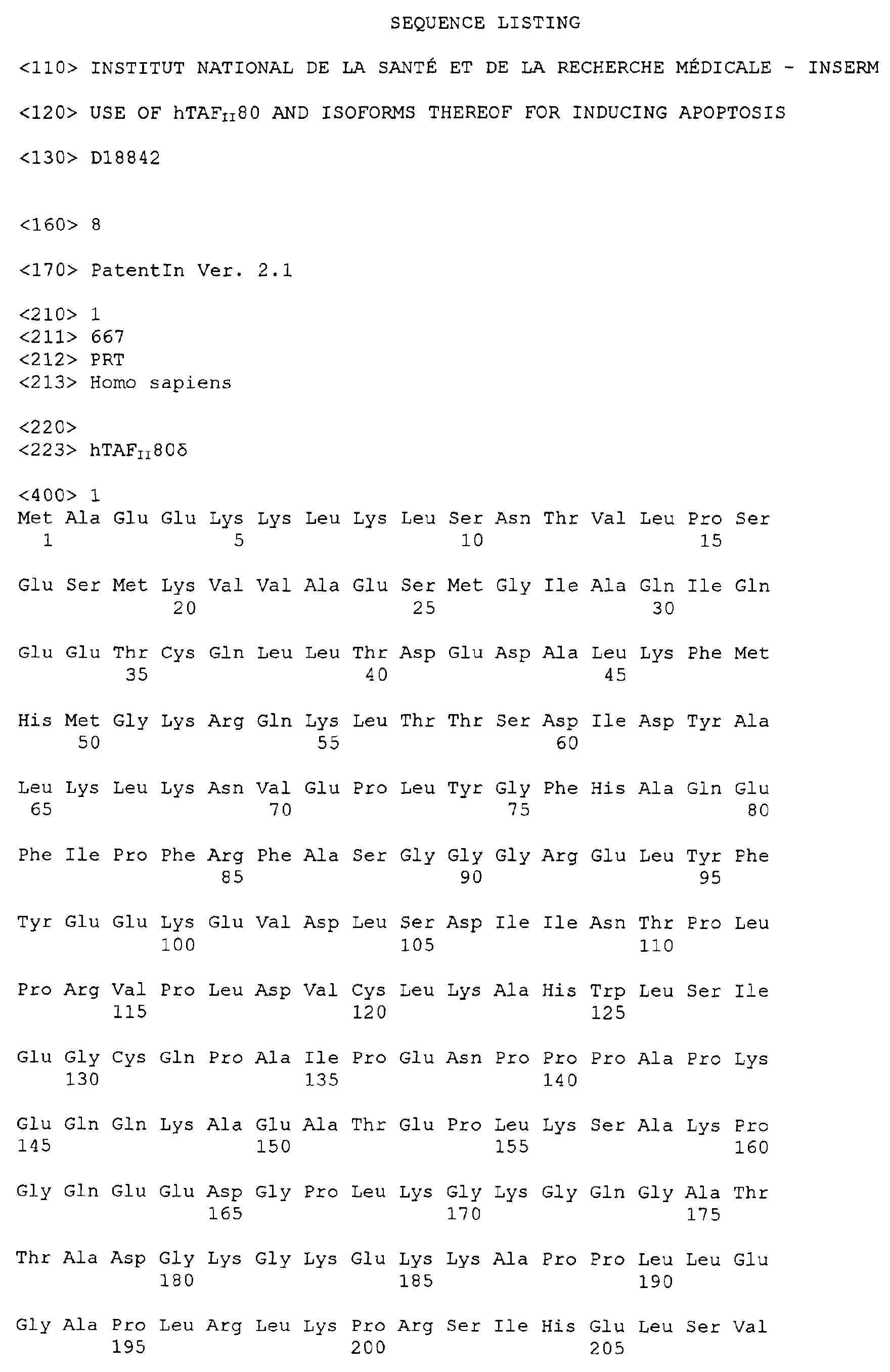

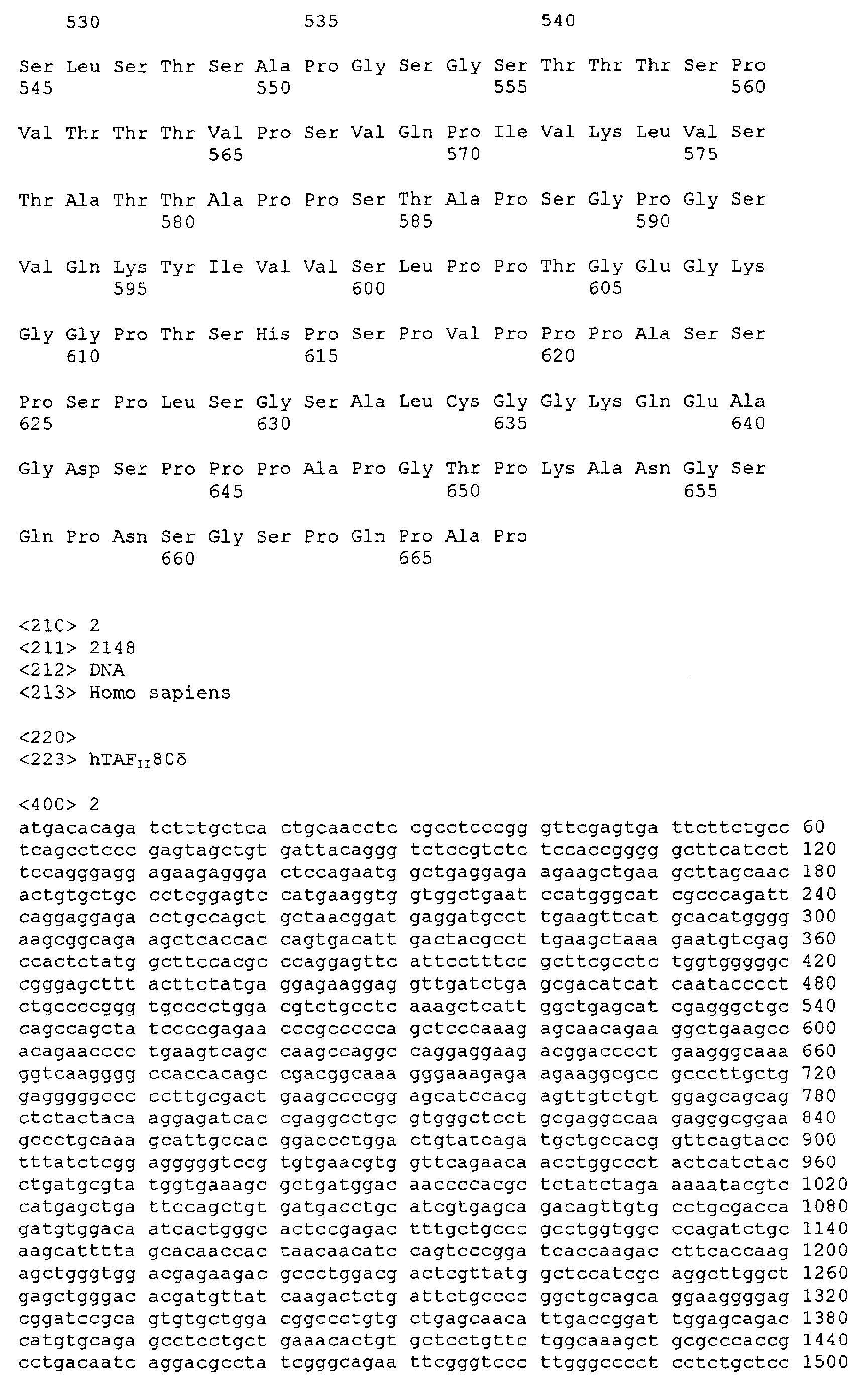


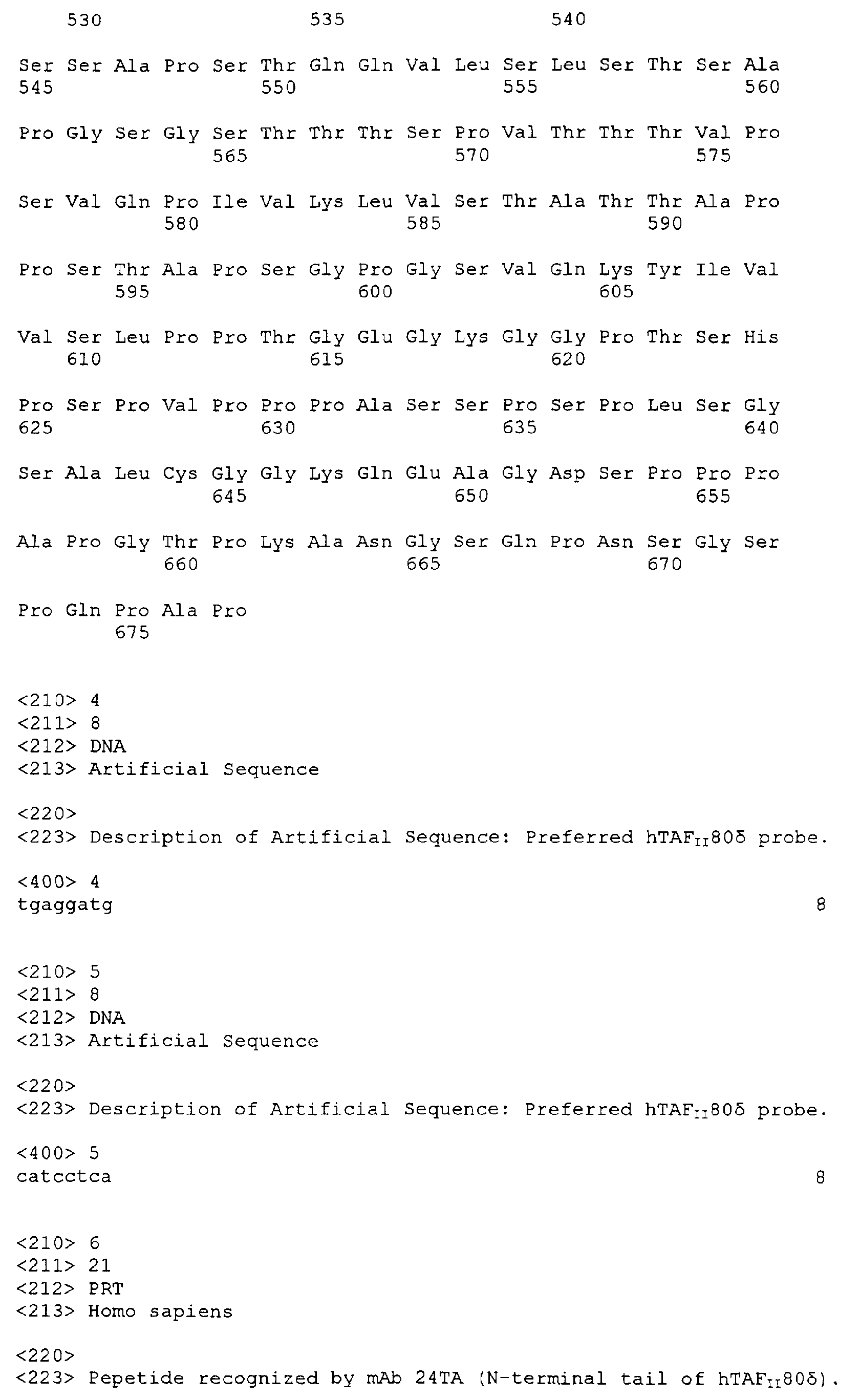

Claims (37)
- Polypeptide comprising a sequence having at least 80% identity with hTAFII80δ of the sequence SEQ ID N°1 characterized in that it has a 10 amino acids deletion at position 43 to 52 of SEQ ID N°3 (hTAFII80), said polypeptide being capable of inducing apoptosis when expressed in mammalian cells.
- Polypeptide comprising the sequence SEQ ID N° corresponding to the hTAFII80δ.
- Isolated nucleic acid sequence coding for a polypeptide according to one of claim 1 and 2.
- Isolated nucleic acid sequence coding for hTAFII80δ having the sequence SEQ ID No. 1, said hTAFII80δ protein being an isoform of hTAFII80 comprising a deletion of the 10 amino acids at position 43 to 52 of hTAFII80 and being capable of inducing apoptosis when expressed in mammal cells.
- Isolated nucleic acid sequence according to claim 4 having a sequence comprising the sequence SEQ ID N°2.
- Complementary sequence of the nucleic sequence according to claims 3 to 5.
- Isolated nucleic acid sequence, characterized in that it is selected from the group consisting of:a) a fragment of a nucleic acid comprising at least 12 consecutive bases preferably of a sequence according to one of claims 3 to 6 present at the junction of the deletion, more particularly a sequence encompassing G789 and G790 of the sequence depicted at figure 5,b) a nucleic acid sequence capable of hybridizing specifically with the nucleic acid sequence as defined in a) and comprising at least 12 bases.
- Nucleic acid sequence according to claim 7 as a primer or a probe.
- Nucleic acid sequence according to claims 7 and 8, characterized in that it comprises a sequence selected from the group consisting of sequences SEQ ID No. 4 and SEQ ID No 5.
- Cloning and/or expression vector comprising a nucleic acid sequence according to one of claims 3 to 6.
- Vector according to claim 10 further comprising the elements allowing the expression and/or secretion of the said sequences in a host cell.
- Host cell transformed by a vector according to one of claims 10 and 11 which is an eukaryotic or a prokaryotic cell.
- Mammal, except human, characterized in that it comprises a cell according to claim 12.
- Mono- or polyclonal antibodies or fragments thereof, chimeric or immunoconjugated antibodies, characterized in that they are capable of specifically recognizing a polypeptide according to one of claims 1 to 2.
- Method for the diagnosis of a pathology associated with the expression or the lack of expression of hTAFII80, hTAFII80 isoforms, notably hTAFII80δ characterized in that one or more antibodies according to claim 14 is(are) brought into contact with the biological material to be tested, under conditions allowing the possible formation of specific immunological complexes between the said polypeptide and the said antibody or antibodies, and in that the immunological complexes possibly formed are detected.
- Method for the determination of an allelic variability or a loss of heterozygosity, characterized in that it uses a nucleic acid sequence according to one of claims 7 to 9.
- Method for determining if a subject is at increased risk of developing a pathology associated with the expression or the lack of expression of hTAFII80, hTAFII80 isoforms, notably hTAFII808, comprising the steps consisting of:a) collecting a biological sample containing genomic DNA or RNA from the subject;b) testing for the presence of mutations, polymorphism, or determining the sequence, or length thereof, of a fragment of said DNA or RNA susceptible of containing a mutation or a polymorphism associated with the risk of developing cancer and/or a pathology associated with the expression of hTAFII80, hTAFII80 isoforms, notably hTAFII80δ, said fragment being amplified by polymerase chain reaction with a set of primers that hybridizes to a hTAFII80 or isoforms thereof sequence, notably primers derived from SEQ ID N°1 and/or SEQ ID N°3, such as the nucleic acid according to one of the claims 7 to 9;c) determining whether or not the subject is at increased risk developing cancer and/or a pathology associated with the expression or the lack of expression of hTAFII80, hTAFII80 isoforms, notably hTAFII80δ by observing if the sequence of said fragment of DNA or RNA contains a mutation or polymorphism, the presence of said mutation or polymorphism being an indication that said subject is at increased risk of developing cancer and/or said pathology.
- A method according to anyone of claims 15 to 17, wherein the pathology associated with the expression or the lack of expression of hTAFII80, hTAFII80 isoforms, notably hTAFII80δ is selected from the group consisting of cell apoptosis, notably nerve cell degeneration, such as Alzheimer disease and Parkinson disease; cancer and AIDS.
- Kit for diagnostic or for determining if a subject is at increased risk of developing cancer and/or a pathology associated with the expression or the lack of expression of hTAFII80, hTAFII80 isoforms, notably hTAFII80δ, comprising at least one pair of primers capable of amplifying a fragment of genomic DNA or RNA encoding the protein hTAFII80, hTAFII80 isoforms, notably hTAFII80δ, preferably said primers being chosen among primers derived from SEQ ID N°1, such as the nucleic acid according to one of the claims 7 to 9.
- Use of a cell according to claim 12, of a mammal according to claim 13, or of a vector according to one of claims 10 and 11, for assessing the expression and/or the activity of the protein hTAFII80, hTAFII80 isoforms, notably hTAFII80δ, for studying the direct or indirect interactions between said proteins with other TAF proteins, more particularly with hTAFII31, and for selecting compounds that modulate the activity and/or expression of said protein.
- Use according to claim 20 for screening compounds capable of interacting directly or indirectly with hTAFII80 or hTAFII80 isoforms, notably with hTAFII80δ, and/or capable of modulating the expression or the activity of said proteins.
- Process for selecting compounds capable of modulating the activity of hTAFII80 and/or hTAFII80 isoforms, notably hTAFII80δ characterized in that it comprises the step consisting of:a) overexpressing hTAFII80 or hTAFII80 isoforms, notably hTAFII80δ in host cells,b) growing said cells in a medium containing at least one compound to be tested,c) measuring the rate of apoptosis compared to cells grown in compound-free medium,d) selecting compounds that reduce or increase significantly the rate of apoptosis.
- Compound obtainable by the process according to claim 22.
- Compound according to claim 23, characterized in that:a) it decreases significantly the level of hTAFII80 or hTAFII80 isoforms, notably hTAFII80δ protein expression;b) it increases by at least 50% the rate of apoptosis induced by the expression of said proteins; orc) it decreases by at least 50% the rate of apoptosis induced by the expression of said proteins.
- Compound according to one of claims 23 and 24, characterized in that it is chosen from:a) an antibody according to claim 14;b) a peptide or a peptide like molecule;c) a vector according to one of claims 10 and 11;d) a sense or anti-sense nucleic comprising a sequence able to hybridize to a nucleic acid according to claim 1 to 3 or to SEQ ID N°3; ore) a chemical.
- Use of a compound according to one of claims 23 to 25, for preparing a drug.
- Use according to claim 26 for preparing a drug for treating diseases involving cell apoptosis, notably nerve cell degeneration, such as Alzheimer disease and Parkinson disease.
- Use according to claim 26 for preparing a drug for treating cancer.
- Use according to claim 26 for preparing a drug for treating AIDS.
- Use of a nucleic acid sequence coding for a hTAFII80 protein or isoforms thereof for inducing apoptosis.
- Use of a vector expressing a hTAFII80 protein or isoforms thereof for inducing apoptosis.
- Use of a fragment of at least 12 bases of a sequence derived from a nucleic acid sequence coding for a hTAFII80 protein or isoforms thereof as an anti-sense oligonucleotide for inhibiting apoptosis in a cell.
- Use of a fragment of at least 12 bases of a sequence derived from a nucleic acid sequence coding for a hTAFII80 protein or isoforms thereof as a probe or a primer for the diagnostic of cell apoptosis, notably nerve cells degeneration, such as Alzheimer disease and Parkinson disease; cancer and AIDS or for determining if a subject is at increased risk of developing such diseases.
- Use of a compound capable of inhibiting the expression or activity of hTAFII80 protein or isoforms thereof for preparing a drug.
- Use of a compound capable of activating the expression or activity of hTAFII80 protein or isoforms thereof for preparing a drug.
- Use of a compound capable of interfering directly or indirectly with the hTAFII80 protein or isoforms thereof interaction with other transcription associated factor proteins, preferably with other hTAFII proteins such as hTAFII31, for preparing a drug.
- Use according to claim 34 or 36 for preparing a drug for treating diseases involving cell apoptosis, notably nerve cells degeneration, such as Alzheimer disease and Parkinson disease, cancer and AIDS.
Priority Applications (2)
| Application Number | Priority Date | Filing Date | Title |
|---|---|---|---|
| EP00401235A EP1160320A1 (en) | 2000-05-05 | 2000-05-05 | Use of hTAFII80 and isoforms thereof for inducing apoptosis |
| PCT/IB2001/000951 WO2001085940A2 (en) | 2000-05-05 | 2001-05-04 | USE OF hTAFII80 AND ISOFORMS THEREOF FOR INDUCING APOPTOSIS |
Applications Claiming Priority (1)
| Application Number | Priority Date | Filing Date | Title |
|---|---|---|---|
| EP00401235A EP1160320A1 (en) | 2000-05-05 | 2000-05-05 | Use of hTAFII80 and isoforms thereof for inducing apoptosis |
Publications (1)
| Publication Number | Publication Date |
|---|---|
| EP1160320A1 true EP1160320A1 (en) | 2001-12-05 |
Family
ID=8173669
Family Applications (1)
| Application Number | Title | Priority Date | Filing Date |
|---|---|---|---|
| EP00401235A Withdrawn EP1160320A1 (en) | 2000-05-05 | 2000-05-05 | Use of hTAFII80 and isoforms thereof for inducing apoptosis |
Country Status (2)
| Country | Link |
|---|---|
| EP (1) | EP1160320A1 (en) |
| WO (1) | WO2001085940A2 (en) |
Citations (1)
| Publication number | Priority date | Publication date | Assignee | Title |
|---|---|---|---|---|
| WO1994017087A1 (en) * | 1993-01-28 | 1994-08-04 | The Regents Of The University Of California | Tata-binding protein associated factors, nucleic acids encoding tafs, and methods of use |
-
2000
- 2000-05-05 EP EP00401235A patent/EP1160320A1/en not_active Withdrawn
-
2001
- 2001-05-04 WO PCT/IB2001/000951 patent/WO2001085940A2/en not_active Ceased
Patent Citations (3)
| Publication number | Priority date | Publication date | Assignee | Title |
|---|---|---|---|---|
| WO1994017087A1 (en) * | 1993-01-28 | 1994-08-04 | The Regents Of The University Of California | Tata-binding protein associated factors, nucleic acids encoding tafs, and methods of use |
| US5534410A (en) * | 1993-01-28 | 1996-07-09 | The Regents Of The University Of California | TATA-binding protein associated factors drug screens |
| US5637686A (en) * | 1993-01-28 | 1997-06-10 | The Regents Of The University Of California | Tata-binding protein associated factor, nucleic acids |
Non-Patent Citations (3)
| Title |
|---|
| HISATAKE KOJI ET AL: "Evolutionary conservation of human TATA-binding-polypeptide-associated factors TAF-II31 and TAF-II80 and interactions of TAF-II80 with other TAFs and with general transcription factors.", PROCEEDINGS OF THE NATIONAL ACADEMY OF SCIENCES OF THE UNITED STATES, vol. 92, no. 18, 1995, 1995, pages 8195 - 8199, XP002151528, ISSN: 0027-8424 * |
| THUT CJ ET AL: "p53 transcriptional activation mediated by coactivators TAFII40 and TAFII60.", SCIENCE, JAN 6 1995, 267 (5194) P100-4, UNITED STATES, XP002151529 * |
| WEINZIERL ROBERT O J ET AL: "Cloning and expression of Drosophila TAF-II60 and human TAF-II70 reveal conserved interactions with other subunits of TFIID.", EMBO (EUROPEAN MOLECULAR BIOLOGY ORGANIZATION) JOURNAL, vol. 12, no. 13, 1993, pages 5303 - 5309, XP002151527, ISSN: 0261-4189 * |
Also Published As
| Publication number | Publication date |
|---|---|
| WO2001085940A2 (en) | 2001-11-15 |
| WO2001085940A3 (en) | 2002-07-25 |
Similar Documents
| Publication | Publication Date | Title |
|---|---|---|
| Taniguchi et al. | LIM protein KyoT2 negatively regulates transcription by association with the RBP-J DNA-binding protein | |
| Donaldson et al. | Crk-associated substrate p130Cas interacts with nephrocystin and both proteins localize to cell–cell contacts of polarized epithelial cells | |
| Lee et al. | Cloning of p57KIP2, a cyclin-dependent kinase inhibitor with unique domain structure and tissue distribution. | |
| Yanagawa et al. | The dishevelled protein is modified by wingless signaling in Drosophila. | |
| Matsuoka et al. | p57KIP2, a structurally distinct member of the p21CIP1 Cdk inhibitor family, is a candidate tumor suppressor gene. | |
| Arao et al. | A nuclear matrix-associated factor, SAF-B, interacts with specific isoforms of AUF1/hnRNP D | |
| Dubrovskaya et al. | Distinct domains of hTAFII100 are required for functional interaction with transcription factor TFIIF beta (RAP30) and incorporation into the TFIID complex. | |
| Pardigon et al. | Mosquito homolog of the La autoantigen binds to Sindbis virus RNA | |
| Kumagai et al. | Regulation and function of Gα protein subunits in Dictyostelium | |
| US6150116A (en) | Transcription factor DP-1 antibody | |
| Courtois et al. | New Otx2 mRNA isoforms expressed in the mouse brain | |
| EP1235934B1 (en) | Screening method for candidate drugs | |
| CA2370098C (en) | Human beta-trcp protein | |
| US5905146A (en) | DNA binding protein S1-3 | |
| Qin et al. | BNIPL-2, a novel homologue of BNIP-2, interacts with Bcl-2 and Cdc42GAP in apoptosis | |
| US7070940B2 (en) | Method for determining the ability of a compound to modify the interaction between parkin and the p38 protein | |
| US6987004B1 (en) | Genes integrating signal transduction pathways | |
| US7135320B2 (en) | Adaptor protein FRS2 and related products and methods | |
| Furuta et al. | Identification and functional characterization of nadrin variants, a novel family of GTPase activating protein for rho GTPases | |
| JP4508872B2 (en) | Gene transcription regulator | |
| JP3811733B2 (en) | Protein having DNase activity | |
| WO2001085940A2 (en) | USE OF hTAFII80 AND ISOFORMS THEREOF FOR INDUCING APOPTOSIS | |
| Machon et al. | Yeast two-hybrid system identifies the ubiquitin-conjugating enzyme mUbc9 as a potential partner of mouse Dac | |
| US6294384B1 (en) | Compositions and methods based upon an isoform of p53 | |
| TWI291991B (en) | Isolated dna encoding a gpbp polypeptide, vectors comprising such dna, isolated gpbp polypeptides, and isolated antibodies that bind to gpbp polypeptides |
Legal Events
| Date | Code | Title | Description |
|---|---|---|---|
| PUAI | Public reference made under article 153(3) epc to a published international application that has entered the european phase |
Free format text: ORIGINAL CODE: 0009012 |
|
| AK | Designated contracting states |
Kind code of ref document: A1 Designated state(s): AT BE CH CY DE DK ES FI FR GB GR IE IT LI LU MC NL PT SE |
|
| AX | Request for extension of the european patent |
Free format text: AL;LT;LV;MK;RO;SI |
|
| AKX | Designation fees paid | ||
| REG | Reference to a national code |
Ref country code: DE Ref legal event code: 8566 |
|
| STAA | Information on the status of an ep patent application or granted ep patent |
Free format text: STATUS: THE APPLICATION IS DEEMED TO BE WITHDRAWN |
|
| 18D | Application deemed to be withdrawn |
Effective date: 20020606 |