EP1156334A2 - Method for screening a substance having promoting activity on hair growth - Google Patents
Method for screening a substance having promoting activity on hair growth Download PDFInfo
- Publication number
- EP1156334A2 EP1156334A2 EP01304178A EP01304178A EP1156334A2 EP 1156334 A2 EP1156334 A2 EP 1156334A2 EP 01304178 A EP01304178 A EP 01304178A EP 01304178 A EP01304178 A EP 01304178A EP 1156334 A2 EP1156334 A2 EP 1156334A2
- Authority
- EP
- European Patent Office
- Prior art keywords
- hacl
- substance
- telogen
- hair
- hair follicles
- Prior art date
- Legal status (The legal status is an assumption and is not a legal conclusion. Google has not performed a legal analysis and makes no representation as to the accuracy of the status listed.)
- Withdrawn
Links
- 238000000034 method Methods 0.000 title claims abstract description 43
- 239000000126 substance Substances 0.000 title claims abstract description 38
- 230000003779 hair growth Effects 0.000 title claims abstract description 20
- 230000001737 promoting effect Effects 0.000 title claims abstract description 18
- 238000012216 screening Methods 0.000 title claims abstract description 11
- 210000003780 hair follicle Anatomy 0.000 claims abstract description 53
- 230000003797 telogen phase Effects 0.000 claims abstract description 39
- 230000003698 anagen phase Effects 0.000 claims abstract description 38
- 238000012360 testing method Methods 0.000 claims abstract description 15
- 238000001514 detection method Methods 0.000 claims description 5
- 108090000623 proteins and genes Proteins 0.000 description 14
- 210000003491 skin Anatomy 0.000 description 14
- 239000000243 solution Substances 0.000 description 14
- 102000015636 Oligopeptides Human genes 0.000 description 13
- 108010038807 Oligopeptides Proteins 0.000 description 13
- 241000699666 Mus <mouse, genus> Species 0.000 description 10
- 235000018102 proteins Nutrition 0.000 description 8
- 102000004169 proteins and genes Human genes 0.000 description 8
- 241001465754 Metazoa Species 0.000 description 7
- 229920001184 polypeptide Polymers 0.000 description 7
- 102000004196 processed proteins & peptides Human genes 0.000 description 7
- 108090000765 processed proteins & peptides Proteins 0.000 description 7
- 241000588724 Escherichia coli Species 0.000 description 6
- LFQSCWFLJHTTHZ-UHFFFAOYSA-N Ethanol Chemical compound CCO LFQSCWFLJHTTHZ-UHFFFAOYSA-N 0.000 description 6
- 230000031774 hair cycle Effects 0.000 description 6
- 239000002904 solvent Substances 0.000 description 6
- 150000001413 amino acids Chemical class 0.000 description 5
- 230000003778 catagen phase Effects 0.000 description 5
- 230000006698 induction Effects 0.000 description 5
- 239000012071 phase Substances 0.000 description 5
- DTQVDTLACAAQTR-UHFFFAOYSA-N Trifluoroacetic acid Chemical compound OC(=O)C(F)(F)F DTQVDTLACAAQTR-UHFFFAOYSA-N 0.000 description 4
- XSQUKJJJFZCRTK-UHFFFAOYSA-N Urea Chemical compound NC(N)=O XSQUKJJJFZCRTK-UHFFFAOYSA-N 0.000 description 4
- 239000004202 carbamide Substances 0.000 description 4
- 238000011161 development Methods 0.000 description 4
- 230000018109 developmental process Effects 0.000 description 4
- 238000001962 electrophoresis Methods 0.000 description 4
- 239000000499 gel Substances 0.000 description 4
- 210000004209 hair Anatomy 0.000 description 4
- 238000004128 high performance liquid chromatography Methods 0.000 description 4
- 238000002415 sodium dodecyl sulfate polyacrylamide gel electrophoresis Methods 0.000 description 4
- 210000001519 tissue Anatomy 0.000 description 4
- WEVYAHXRMPXWCK-UHFFFAOYSA-N Acetonitrile Chemical compound CC#N WEVYAHXRMPXWCK-UHFFFAOYSA-N 0.000 description 3
- 241000700159 Rattus Species 0.000 description 3
- 102000007056 Recombinant Fusion Proteins Human genes 0.000 description 3
- 108010008281 Recombinant Fusion Proteins Proteins 0.000 description 3
- NKLPQNGYXWVELD-UHFFFAOYSA-M coomassie brilliant blue Chemical compound [Na+].C1=CC(OCC)=CC=C1NC1=CC=C(C(=C2C=CC(C=C2)=[N+](CC)CC=2C=C(C=CC=2)S([O-])(=O)=O)C=2C=CC(=CC=2)N(CC)CC=2C=C(C=CC=2)S([O-])(=O)=O)C=C1 NKLPQNGYXWVELD-UHFFFAOYSA-M 0.000 description 3
- 230000014759 maintenance of location Effects 0.000 description 3
- 238000002360 preparation method Methods 0.000 description 3
- 239000006228 supernatant Substances 0.000 description 3
- 238000001262 western blot Methods 0.000 description 3
- YBJHBAHKTGYVGT-ZKWXMUAHSA-N (+)-Biotin Chemical compound N1C(=O)N[C@@H]2[C@H](CCCCC(=O)O)SC[C@@H]21 YBJHBAHKTGYVGT-ZKWXMUAHSA-N 0.000 description 2
- 238000011740 C57BL/6 mouse Methods 0.000 description 2
- 208000019300 CLIPPERS Diseases 0.000 description 2
- IAZDPXIOMUYVGZ-UHFFFAOYSA-N Dimethylsulphoxide Chemical compound CS(C)=O IAZDPXIOMUYVGZ-UHFFFAOYSA-N 0.000 description 2
- PEDCQBHIVMGVHV-UHFFFAOYSA-N Glycerine Chemical compound OCC(O)CO PEDCQBHIVMGVHV-UHFFFAOYSA-N 0.000 description 2
- 238000010521 absorption reaction Methods 0.000 description 2
- 235000001014 amino acid Nutrition 0.000 description 2
- 229940024606 amino acid Drugs 0.000 description 2
- 210000004027 cell Anatomy 0.000 description 2
- 238000006243 chemical reaction Methods 0.000 description 2
- 208000021930 chronic lymphocytic inflammation with pontine perivascular enhancement responsive to steroids Diseases 0.000 description 2
- 239000002299 complementary DNA Substances 0.000 description 2
- 230000004069 differentiation Effects 0.000 description 2
- 235000014304 histidine Nutrition 0.000 description 2
- 150000002411 histidines Chemical class 0.000 description 2
- 238000002372 labelling Methods 0.000 description 2
- 238000005259 measurement Methods 0.000 description 2
- 238000007911 parenteral administration Methods 0.000 description 2
- 239000000047 product Substances 0.000 description 2
- 238000010186 staining Methods 0.000 description 2
- 239000013598 vector Substances 0.000 description 2
- XLYOFNOQVPJJNP-UHFFFAOYSA-N water Substances O XLYOFNOQVPJJNP-UHFFFAOYSA-N 0.000 description 2
- QIJRTFXNRTXDIP-UHFFFAOYSA-N (1-carboxy-2-sulfanylethyl)azanium;chloride;hydrate Chemical compound O.Cl.SCC(N)C(O)=O QIJRTFXNRTXDIP-UHFFFAOYSA-N 0.000 description 1
- 125000003088 (fluoren-9-ylmethoxy)carbonyl group Chemical group 0.000 description 1
- 238000011735 C3H mouse Methods 0.000 description 1
- 230000006820 DNA synthesis Effects 0.000 description 1
- 102000016911 Deoxyribonucleases Human genes 0.000 description 1
- 108010053770 Deoxyribonucleases Proteins 0.000 description 1
- 241000672609 Escherichia coli BL21 Species 0.000 description 1
- 241000699670 Mus sp. Species 0.000 description 1
- 241000700157 Rattus norvegicus Species 0.000 description 1
- 101710120037 Toxin CcdB Proteins 0.000 description 1
- 239000004480 active ingredient Substances 0.000 description 1
- 239000002671 adjuvant Substances 0.000 description 1
- 239000011543 agarose gel Substances 0.000 description 1
- 230000019552 anatomical structure morphogenesis Effects 0.000 description 1
- 238000010171 animal model Methods 0.000 description 1
- 239000007864 aqueous solution Substances 0.000 description 1
- 239000011616 biotin Substances 0.000 description 1
- 229960002685 biotin Drugs 0.000 description 1
- 235000020958 biotin Nutrition 0.000 description 1
- 239000008280 blood Substances 0.000 description 1
- 210000004369 blood Anatomy 0.000 description 1
- 230000017531 blood circulation Effects 0.000 description 1
- 239000003153 chemical reaction reagent Substances 0.000 description 1
- 239000003795 chemical substances by application Substances 0.000 description 1
- 239000003086 colorant Substances 0.000 description 1
- 230000002596 correlated effect Effects 0.000 description 1
- 239000006071 cream Substances 0.000 description 1
- 229960001305 cysteine hydrochloride Drugs 0.000 description 1
- 230000009089 cytolysis Effects 0.000 description 1
- 239000000539 dimer Substances 0.000 description 1
- 239000003814 drug Substances 0.000 description 1
- 239000003480 eluent Substances 0.000 description 1
- 210000002919 epithelial cell Anatomy 0.000 description 1
- 239000013604 expression vector Substances 0.000 description 1
- 239000007850 fluorescent dye Substances 0.000 description 1
- 235000011187 glycerol Nutrition 0.000 description 1
- 239000007952 growth promoter Substances 0.000 description 1
- 230000003053 immunization Effects 0.000 description 1
- 238000001802 infusion Methods 0.000 description 1
- 238000002347 injection Methods 0.000 description 1
- 239000007924 injection Substances 0.000 description 1
- 239000007927 intramuscular injection Substances 0.000 description 1
- 238000010255 intramuscular injection Methods 0.000 description 1
- 238000001990 intravenous administration Methods 0.000 description 1
- 238000010253 intravenous injection Methods 0.000 description 1
- BPHPUYQFMNQIOC-NXRLNHOXSA-N isopropyl beta-D-thiogalactopyranoside Chemical compound CC(C)S[C@@H]1O[C@H](CO)[C@H](O)[C@H](O)[C@H]1O BPHPUYQFMNQIOC-NXRLNHOXSA-N 0.000 description 1
- 239000011159 matrix material Substances 0.000 description 1
- 108020004999 messenger RNA Proteins 0.000 description 1
- 244000005700 microbiome Species 0.000 description 1
- 239000000203 mixture Substances 0.000 description 1
- 239000000178 monomer Substances 0.000 description 1
- 239000002674 ointment Substances 0.000 description 1
- 239000003960 organic solvent Substances 0.000 description 1
- 230000008929 regeneration Effects 0.000 description 1
- 238000011069 regeneration method Methods 0.000 description 1
- 238000005070 sampling Methods 0.000 description 1
- 210000004761 scalp Anatomy 0.000 description 1
- 238000010532 solid phase synthesis reaction Methods 0.000 description 1
- 238000003756 stirring Methods 0.000 description 1
- 239000007929 subcutaneous injection Substances 0.000 description 1
- 238000010254 subcutaneous injection Methods 0.000 description 1
- 239000000829 suppository Substances 0.000 description 1
- 230000002459 sustained effect Effects 0.000 description 1
- 238000007910 systemic administration Methods 0.000 description 1
- 230000000699 topical effect Effects 0.000 description 1
- 210000003135 vibrissae Anatomy 0.000 description 1
Images

Classifications
-
- G—PHYSICS
- G01—MEASURING; TESTING
- G01N—INVESTIGATING OR ANALYSING MATERIALS BY DETERMINING THEIR CHEMICAL OR PHYSICAL PROPERTIES
- G01N33/00—Investigating or analysing materials by specific methods not covered by groups G01N1/00 - G01N31/00
- G01N33/48—Biological material, e.g. blood, urine; Haemocytometers
- G01N33/50—Chemical analysis of biological material, e.g. blood, urine; Testing involving biospecific ligand binding methods; Immunological testing
- G01N33/5005—Chemical analysis of biological material, e.g. blood, urine; Testing involving biospecific ligand binding methods; Immunological testing involving human or animal cells
- G01N33/5008—Chemical analysis of biological material, e.g. blood, urine; Testing involving biospecific ligand binding methods; Immunological testing involving human or animal cells for testing or evaluating the effect of chemical or biological compounds, e.g. drugs, cosmetics
- G01N33/5082—Supracellular entities, e.g. tissue, organisms
-
- A—HUMAN NECESSITIES
- A61—MEDICAL OR VETERINARY SCIENCE; HYGIENE
- A61P—SPECIFIC THERAPEUTIC ACTIVITY OF CHEMICAL COMPOUNDS OR MEDICINAL PREPARATIONS
- A61P17/00—Drugs for dermatological disorders
- A61P17/14—Drugs for dermatological disorders for baldness or alopecia
Definitions
- the present invention relates to a method for screening a substance having promoting activity on hair growth.
- a method for development of trichogenous agents and hair care products, a method is required which enables precise and simple judgment of promoting activity of a substance tested on hair growth.
- a method has been known so far which comprises the step of determining hair growth, based on DNA synthesis and the like as a criterion, by using a skin cultured in the presence of a test substance.
- this method has a problem in that the culture of cells is practically difficult, which results in low reproducibility of the method.
- Another method is available in which experimental animals are used and their skin area in anagen and hair growth are examined for respective animals, however, the method is very troublesome. Accordingly, development of a method has been desired that enables precise and simple screening of a substance having promoting activity on hair growth.
- a protein expressed in differentiation from hair matrix into hair is known (Hacl-1: Huh, N. et al., The Journal of Investigative Dermatology, 102(5), pp. 716-720, 1994).
- the aforementioned publication suggests that a mRNA level of the protein is correlated with an activated state of follicles in hair differentiation and regeneration processes, and Fig. 5A of the publication discloses that the protein is expressed only in a certain phase.
- the publication neither suggests nor teaches as to when the protein is expressed, i.e., which of phases of anagen or telogen of hair follicles.
- the inventors of the present invention conducted intensive studies to achieve the foregoing objects. As a result, they found that Hacl-1 was expressed only specifically in anagen of hair follicles, and that precise judgment as to growth phases of hair follicles, i.e., which of anagen or telogen, was achievable by determining Hacl-1 using an antibody against Hacl-1. They also found that promoting activity of a test substance on hair growth was precisely judged by observing whether or not hair follicles are led from telogen to anagen in the presence of the substance tested. The present invention was achieved on the basis of these findings.
- the present invention thus provides a method for judging whether or not hair follicles are in anagen, which comprises the step of determining presence or absence of expression of Hacl-1 in the hair follicles.
- the step of determining the expression of Hacl-1 in the hair follicles can be carried out by using an antibody against Hacl-1.
- the aforementioned judging method can be used for screening a substance having promoting activity on hair growth.
- the present invention thus provides a method for screening a substance having promoting activity on hair growth, which comprises the steps of bringing hair follicles in telogen into contact with a test substance, and judging that the substance tested is positive when the hair follicles in telogen are led to in anagen by the substance tested, wherein the judgment is carried out by detecting expression of Hacl-1 in the hair follicles.
- the expression of Hacl-1 in the hair follicles can be detected preferably by using an antibody against Hacl-1.
- the present invention further provides a substance having promoting activity on hair growth, which is screened by the aforementioned screening method.
- a substance having promoting activity on hair growth can be screened extremely simply and precisely, and development of active ingredients of medicaments such as hair growth promoters can efficiently be made.
- Fig. 1 depicts the criterion for judging the distinction between telogen and anagen of hair follicles by observing the tissue section under a microscope.
- anagen represents a growth phase
- telogen represents a rest phase
- (A) illustrates the mouse beard
- (B) illustrates the mouse skin on the back.
- Fig. 2 depicts the result of the supernatant of hair follicles analyzed by SDS-polyacrylamide gel electrophoresis.
- A shows the result of the mouse beard
- B shows the result of the skin on the back.
- “coomassie” shows the result of staining the gel after the electrophoresis with coomassie brilliant blue
- Hacl-1 shows the result of the Western Blotting of the gel after the electrophoresis by using the antiserum against Hacl-1.
- Anagen represents a growth phase
- catagen represents a regression phase
- telogen represents a rest phase
- the arrow of Hacl-1 indicates the position of Hacl-1.
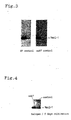
- Fig. 3 depicts the results of induction of expression of Hacl-1 in hair follicles of the mouse skin and induction of anagen of the hair follicles in the presence of polypeptide H1 consisting of 104 amino acids represented by the amino acid sequence (II) described in International Publication WO 98/22506 or in the presence of oligopeptide ssb7.
- Fig. 4 depicts the results of induction of expression of Hacl-1 by cultivation of the mouse beard in the presence of oligopeptide ssb7, and induction of anagen of the hair follicles.
- the method of the present invention is for judgment as to whether or not hair follicles are in anagen, and characterized to comprise the step of detecting expression of Hacl-1 in the hair follicles.
- Hacl-1 is expressed only in anagen in hair follicles, and the expression is not observed in telogen. Accordingly, by detecting the expression of Hacl-1 in hair follicles, it can be judged very precisely and simply that the hair follicles are in which of the phases, telogen or anagen.
- hair follicles in which the expression of Hacl-1 is observed are judged to be in anagen, whilst hair follicles in which the expression of Hacl-1 is not observed are judged to be in telogen.
- a short period of time after the end of anagen and before the start of telogen may sometimes be referred to as catagen.
- the term "anagen” may be used to encompass early catagen
- the term "telogen” may be used to encompass late catagen.
- Hacl-1 As for Hacl-1, detailed and specific disclosures are given in Huh, N. et al., The Journal of Investigative Dermatology, 102(5), pp. 716-720, 1994, and persons skilled in the art can easily detect the protein.
- Hacl-1 can be expressed in a microorganism as a recombinant protein by using a gene encoding Hacl-1 which is disclosed in the aforementioned publication, and by immunizing an animal such as a rat with the resulting recombinant protein in a conventional manner, an antiserum can be obtained. By using the antiserum thus obtained, the expression of Hacl-1 can be detected in a well-known manner.
- a monoclonal antibody can be prepared in a conventional manner by obtaining immunocytes from an immunized animal. By labeling the monoclonal antibody with a fluorescent dye, biotin or the like, Hacl-1 can be detected with extremely high precision in a convenient way. Techniques for preparing and labeling monoclonal antibodies are well-known in persons skilled in the art. For the detection of Hacl-1, chimera antibodies may also be used. However, it should be understood that methods for detecting the expression of Hacl-1 are not limited to those using antibodies, and persons skilled in the art can appropriately choose means for detection. The hair follicles may be derived from a human, or those derived from an animal other than a human. For the detection of the expression of Hacl-1, cells from scalp or skin, whiskers and the like can be used.
- the method for screening a substance having promoting activity on hair growth is characterized to comprise the steps of bringing hair follicles in telogen into contact with a test substance, and judging that the substance tested is positive when the hair follicles in telogen are led to be in anagen by the substance tested, wherein the judgment is carried out by detecting expression of Hacl-1 in the hair follicles.
- judgment as to a growth phase of hair follicles to be brought into contact with the test substance i.e., which of telogen or anagen, can be conducted by observing a tissue section under a microscope.
- the phase of hair follicles, telogen or anagen may also be judged on the basis of days from birth, because, in a C57BL mouse, for example, relationship between daily age from birth and the hair cycle has been investigated in detail.
- the hair follicles may be brought into contact with a test substance in any manner.
- An example of the method includes application or injection of a solution containing a dissolved test substance to skin involving hair follicles and the like.
- the solution containing a dissolved test substance may be prepared as an aqueous solution, or alternatively, may be prepared as a solution containing water and a water miscible organic solvent such as glycerin and ethanol.
- a test substance may be brought into contact with hair follicles through blood flow by oral or parenteral administration of the test substance to a human or an animal.
- parenteral administration examples include administration by intravenous, intramuscular or subcutaneous injections, intravenous drip infusions, local administration by topical preparations such as creams and ointments, systemic administration by preparations for transdermal or transmucosal absorption, rectal administration by suppositories and the like.
- routes of administration are not limited to these examples.
- Hacl-1 can be detected by the aforementioned method.
- hair follicles in telogen are led to in anagen (i.e., the expression of Hacl-1 is detected) by bringing the hair follicles in telogen into contact with a test substance, it can be judged that the substance tested has promoting activity on hair growth.
- a control group prepared as a reference a period until when hair follicles in telogen start expressing Hacl-1 is measured. Then measurement under the same conditions is carried out in the presence of a test substance.
- the judging methods are not limited to the aforementioned method.
- a DNA containing a gene encoding Hacl-1 (Huh, N. et al., The Journal of Investigative Dermatology, 102(5), pp. 716-720, 1994) was amplified by the PCR method, and by using the amplified product, Hacl-1 was expressed as a recombinant protein in Escherichia coli in a conventional manner.
- a rat was immunized with the recombinant Hacl-1 in a conventional manner to prepare an antiserum against Hacl-1.
- Preparation of a antiserum was carried out as follows.
- the PCR method was carried out by using the cDNA library prepared from the beard tissue of a C3H mouse as the template to isolate a cDNA containing the entire reading frame of Hacl-1 (Huh, N. et al., J. Invest. Dermatol., 102, pp. 716-720, 1994).
- a Hacl-1 gene added with 6 histidines at the N-terminal was isolated.
- the Hacl-1 gene added with 6 histidines at the N-terminal was integrated into an Escherichia coli expression vector, Pet3c (Novogen), and the vector was introduced into E. coli BL-21.
- the Escherichia coli was sufficiently proliferated at 22°C, and then treated by addition of IPTG at the final concentration of 1 mM to express Hacl-1 protein.
- the E. coli was homogenized, and then treated with DNase and washed three times with a 2 M urea solution (pH 8.0). The resulting fraction was dissolved in 8 M urea (pH 8.0) and subjected to affinity absorption on N 1 + -agarose gel (Quagen), and then Hacl-1 was eluted with 8 M urea (pH 3.0). The purified Hacl-1/8 M urea solution (pH 3.0) was dialyzed against PBS. Wistar rats (male, 8 weeks old) were immunized with the Hacl-1 protein which was sufficiently mixed with the adjuvant (once a month, 3 times). Blood was collected from the heart of each immunized rat, and the IgG fraction was recovered by a protein G column to obtain an antiserum.
- a C57BL mouse (14 weeks old) was shaved on the back with clippers to confirm that the mouse had both skin areas in anagen and telogen as to the hair cycle based on colors of the skin.
- Each 200 mg of the skin areas in anagen and telogen was collected from the mouse and homogenized on ice for 2 minutes, and then suspended in a buffer (PBS). The supernatant was collected and subjected to SDS-polyacrylamide gel electrophoresis (SDS-PAGE).
- SDS-PAGE SDS-polyacrylamide gel electrophoresis
- the respective hair follicles in telogen and anagen were distinguished by observing the tissue section under a microscope, and the criterion shown in Fig. 1 was applied for judgment.
- Fig. 2 shows the result of SDS-PAGE.
- Polypeptide H1 having morphogenesis promoting activity on epithelial cells which is described in International Publication WO 98/22506 (a polypeptide consisting of 104 amino acids represented by amino acid sequence (II) disclosed in the aforementioned international publication) was expressed in Escherichia coli according to the method described in International Publication WO 98/22505.
- a supernatant obtained by lysis of the Escherichia coli was used which was not transformed with the recombinant vector encoding the aforementioned polypeptide.
- oligopeptides having the amino acid sequence (I): Ser-Ile-Glu-Gln-Ser-Cys-Asp-Gln-Asp-Glu were synthesized by the solid phase method using Fmoc (referred to as "pep7" in the examples). Each oligopeptide synthesized was purified by high-performance liquid chromatography (HPLC), and their purities were found to be 90% or higher by HPLC and Mass. The conditions and retention time of HPLC were as follows:
- the oligopeptide was crosslinked as follows. To a solution (5 ml) of oligopeptide pep7 dissolved in PBS at the concentration of 1 mg/ml, BMH dissolved in dimethylsulfoxide (65 ⁇ l) was gradually added with stirring to the final concentration of 33 ⁇ g/ul, and the reaction was carried out at 4°C overnight. The mixture was further added with 6.6 ml of PBS and with a solution of cysteine hydrochloride dissolved in PBS at the concentration of 5 mg/ml (5 ml) and mixed.
- a solution of the S-S bridged oligopeptide at the final concentration of 0.3 mg/ml was prepared (sometimes referred to as "ssb7" in the examples, which had the retention time of 33.01 minutes by HPLC under the aforementioned conditions).
- a control solution was prepared by carrying out the reaction by adding the reagents in the same manner but using PBS instead of the oligopeptide solution.
- a solution of the bridged oligopeptide ssb7 was added with the same volume of ethanol to prepare a 50% ethanol/PBS solution at the final concentration of 0.15 mg/ml.
- C57BL/6 mice are known to have sustained telogen for about 50 days from the 45-day after birth to around the 95-day, and the hair cycle of the animal is easily judged based on the skin color changes, i.e., from pink in telogen to gray or black in anagen.
- telogen of the hair cycle started, C57BL/6 mice were carefully shaved on the back (about 3 ⁇ 2.5 cm 2 ) with electric clippers for animals so as not to injure the skin, and it was confirmed that the hair cycle was in telogen based on the color and thickness of the skin.
- the polypeptide H1 solution (0.8 mg/ml) or the oligopeptide ssb7 solution (0.8 mg/ml) prepared above was subcutaneously injected 5 times in the amount of 0.1 ml at intervals of 24 hours, and Hacl-1 in the hair follicles was measured with time according to the method of Example 1.
- the beard on the both sides of the mice used in Example 2 was collected and cultured by the method described in Development, 105, pp. 271-277, 1989.
- the beard from one side was used as a control, and that from the other side was treated with the aforementioned oligopeptide ssb7 (50 ⁇ g/ml).
- Hacl-1 in the cultures was determined according to the method of Example 1. As a result, expression of Hacl-1 was observed in the beard treated with the oligopeptide ssb7, but only slight expression of Hacl-1 was observed in the control. The results are shown in Fig. 4.
Landscapes
- Health & Medical Sciences (AREA)
- Life Sciences & Earth Sciences (AREA)
- Engineering & Computer Science (AREA)
- Biomedical Technology (AREA)
- Immunology (AREA)
- Chemical & Material Sciences (AREA)
- Hematology (AREA)
- Cell Biology (AREA)
- Molecular Biology (AREA)
- Urology & Nephrology (AREA)
- General Health & Medical Sciences (AREA)
- Medicinal Chemistry (AREA)
- Bioinformatics & Cheminformatics (AREA)
- Analytical Chemistry (AREA)
- Microbiology (AREA)
- Food Science & Technology (AREA)
- Biotechnology (AREA)
- Physics & Mathematics (AREA)
- Tropical Medicine & Parasitology (AREA)
- Biochemistry (AREA)
- Toxicology (AREA)
- General Physics & Mathematics (AREA)
- Pathology (AREA)
- Nuclear Medicine, Radiotherapy & Molecular Imaging (AREA)
- Public Health (AREA)
- General Chemical & Material Sciences (AREA)
- Dermatology (AREA)
- Organic Chemistry (AREA)
- Pharmacology & Pharmacy (AREA)
- Animal Behavior & Ethology (AREA)
- Chemical Kinetics & Catalysis (AREA)
- Veterinary Medicine (AREA)
- Investigating Or Analysing Biological Materials (AREA)
- Peptides Or Proteins (AREA)
- Medicines Containing Antibodies Or Antigens For Use As Internal Diagnostic Agents (AREA)
- Preparation Of Compounds By Using Micro-Organisms (AREA)
- Medicines That Contain Protein Lipid Enzymes And Other Medicines (AREA)
- Cosmetics (AREA)
Abstract
Description

Claims (5)
- A method for judging whether or not a hair follicle is in anagen or not, which comprises the step of determining presence or absence of expression of Hacl-1 in the hair follicle.
- The method according to claim 1, wherein the step of determining expression of Hacl-1 in the hair follicle is carried out by using an antibody against Hacl-1.
- A method for screening a substance having promoting activity on hair growth, which comprises the step of:bringing a hair follicle in telogen into contact with a test substance, andjudging that the substance tested is positive when the hair follicle in telogen is led to in anagen by the substance tested,and wherein the judgment is carried out by detecting expression of Hacl-1 in the hair follicle.
- The method according to claim 3, wherein the detection of the expression of Hacl-1 in the hair follicle is carried out by using an antibody against Hacl-1.
- A substance having promoting activity on hair growth, which is screened by the method according to claim 3 or claim 4.
Applications Claiming Priority (2)
| Application Number | Priority Date | Filing Date | Title |
|---|---|---|---|
| JP2000137052A JP2001318096A (en) | 2000-05-10 | 2000-05-10 | Method for screening substance having hair growth promoting action |
| JP2000137052 | 2000-05-10 |
Publications (2)
| Publication Number | Publication Date |
|---|---|
| EP1156334A2 true EP1156334A2 (en) | 2001-11-21 |
| EP1156334A3 EP1156334A3 (en) | 2002-07-03 |
Family
ID=18644895
Family Applications (1)
| Application Number | Title | Priority Date | Filing Date |
|---|---|---|---|
| EP01304178A Withdrawn EP1156334A3 (en) | 2000-05-10 | 2001-05-09 | Method for screening a substance having promoting activity on hair growth |
Country Status (4)
| Country | Link |
|---|---|
| US (1) | US20020051760A1 (en) |
| EP (1) | EP1156334A3 (en) |
| JP (1) | JP2001318096A (en) |
| CA (1) | CA2347151A1 (en) |
Cited By (3)
| Publication number | Priority date | Publication date | Assignee | Title |
|---|---|---|---|---|
| EP1491890A4 (en) * | 2003-01-08 | 2006-03-15 | Sumitomo Electric Industries | METHOD FOR EVALUATING ACTIVITY TO PROMOTE HAIR GROWTH |
| US7241731B2 (en) | 2000-06-05 | 2007-07-10 | Sumitomo Electric Industries, Ltd. | Oligopeptides for promoting hair growth |
| EP1288221A4 (en) * | 2000-06-05 | 2009-09-09 | Sumitomo Electric Industries | Oligopeptides |
Families Citing this family (2)
| Publication number | Priority date | Publication date | Assignee | Title |
|---|---|---|---|---|
| US20050008602A1 (en) * | 2000-06-05 | 2005-01-13 | Sumitomo Electric Industries, Ltd. | Oligopeptides for promoting hair growth |
| US20110281256A1 (en) | 2010-05-17 | 2011-11-17 | Michael Glenn Davis | Systems and Methods of Detecting and Demonstrating Hair Damage Via Evaluation of Protein Fragments |
Family Cites Families (3)
| Publication number | Priority date | Publication date | Assignee | Title |
|---|---|---|---|---|
| US5616471A (en) * | 1987-05-06 | 1997-04-01 | The United States Of America As Represented By The Department Of Health And Human Services | Effects of growth factors on hair follicle cell proliferation and release of collagenolytic factors |
| GB8928634D0 (en) * | 1989-12-19 | 1990-02-21 | Unilever Plc | Method of testing |
| JPH07132083A (en) * | 1993-11-12 | 1995-05-23 | Res Dev Corp Of Japan | Monoclonal antibody to hair follicle tissue, hybridoma producing this antibody, and method for producing this hybridoma |
-
2000
- 2000-05-10 JP JP2000137052A patent/JP2001318096A/en active Pending
-
2001
- 2001-05-09 EP EP01304178A patent/EP1156334A3/en not_active Withdrawn
- 2001-05-09 US US09/851,389 patent/US20020051760A1/en not_active Abandoned
- 2001-05-09 CA CA002347151A patent/CA2347151A1/en not_active Abandoned
Cited By (4)
| Publication number | Priority date | Publication date | Assignee | Title |
|---|---|---|---|---|
| US7241731B2 (en) | 2000-06-05 | 2007-07-10 | Sumitomo Electric Industries, Ltd. | Oligopeptides for promoting hair growth |
| EP1288221A4 (en) * | 2000-06-05 | 2009-09-09 | Sumitomo Electric Industries | Oligopeptides |
| EP1491890A4 (en) * | 2003-01-08 | 2006-03-15 | Sumitomo Electric Industries | METHOD FOR EVALUATING ACTIVITY TO PROMOTE HAIR GROWTH |
| CN100381820C (en) * | 2003-01-08 | 2008-04-16 | 住友电气工业株式会社 | Method and kit for evaluating the hair growth promoting activity of a test substance |
Also Published As
| Publication number | Publication date |
|---|---|
| US20020051760A1 (en) | 2002-05-02 |
| CA2347151A1 (en) | 2001-11-10 |
| JP2001318096A (en) | 2001-11-16 |
| EP1156334A3 (en) | 2002-07-03 |
Similar Documents
| Publication | Publication Date | Title |
|---|---|---|
| Chance et al. | Chemical, physical, and biologic properties of biosynthetic human insulin | |
| Langbein et al. | A novel epithelial keratin, hK6irs1, is expressed differentially in all layers of the inner root sheath, including specialized huxley cells (Flügelzellen) of the human hair follicle | |
| Rosa et al. | A cellular basis for the differences in regulation of synthesis and secretion of ACTH/endorphin peptides in anterior and intermediate lobes of the pituitary | |
| Epifano et al. | Coordinate expression of the three zona pellucida genes during mouse oogenesis | |
| Day et al. | Molecular cloning of cDNA coding for human PGP 9.5 protein: a novel cytoplasmic marker for neurones and neuroendocrine cells | |
| JPH09133679A (en) | Peptides | |
| JP2002155100A (en) | Stem cell growth factor | |
| CA2079218A1 (en) | Epithelins: novel cysteine-rich growth modulating proteins | |
| CA2290944A1 (en) | Pgc-1, a novel brown fat ppar.gamma. coactivator | |
| US7094569B2 (en) | Hair follicle growth factor proteins | |
| Van Eldik et al. | Characterization of a calcium-modulated protein from transformed chicken fibroblasts. | |
| CA2209990A1 (en) | P15 and tyrosinase melanoma antigens and their use in diagnostic and therapeutic methods | |
| US20020051760A1 (en) | Method for screening a substance having promoting activity on hair growth | |
| US20030027300A1 (en) | Human hairless gene and protein | |
| Nichols et al. | A novel splice variant of Pmel17 expressed by human melanocytes and melanoma cells lacking some of the internal repeats | |
| WO2025148865A1 (en) | Engineered exosomes for treatment of alopecia and/or canities | |
| US20100183733A1 (en) | Hair growth-inhibiting agent | |
| Rentrop et al. | An unusual type-II 70-kilodalton keratin protein of mouse epidermis exhibiting postnatal body-site specificity and sensitivity to hyperproliferation | |
| Tanaka et al. | Expression of a dystrophin-like protein on the surface membrane of muscle cells in mdx mice | |
| US7241731B2 (en) | Oligopeptides for promoting hair growth | |
| EA025129B1 (en) | Variants of human glial cell-derived neurotrophic factor (gdnf) | |
| EP0763111B1 (en) | Epil/placentine | |
| Calnek et al. | Changes in keratin expression during fetal and postnatal development of intestinal epithelial cells | |
| Allen et al. | Synthesis and cloning of a gene coding for a fusion protein containing mouse epidermal growth factor.: Isolation from transformed Escherichia coli and some physical, chemical and biological characteristics of the growth factor | |
| Leung et al. | Colonic tumor membrane-associated glycoprotein: Isolation of antigenically-active peptides after chemical cleavage |
Legal Events
| Date | Code | Title | Description |
|---|---|---|---|
| PUAI | Public reference made under article 153(3) epc to a published international application that has entered the european phase |
Free format text: ORIGINAL CODE: 0009012 |
|
| AK | Designated contracting states |
Kind code of ref document: A2 Designated state(s): AT BE CH CY DE DK ES FI FR GB GR IE IT LI LU MC NL PT SE TR |
|
| AX | Request for extension of the european patent |
Free format text: AL;LT;LV;MK;RO;SI |
|
| PUAL | Search report despatched |
Free format text: ORIGINAL CODE: 0009013 |
|
| AK | Designated contracting states |
Kind code of ref document: A3 Designated state(s): AT BE CH CY DE DK ES FI FR GB GR IE IT LI LU MC NL PT SE TR |
|
| AX | Request for extension of the european patent |
Free format text: AL;LT;LV;MK;RO;SI |
|
| 17P | Request for examination filed |
Effective date: 20020927 |
|
| AKX | Designation fees paid |
Designated state(s): AT BE CH CY DE DK ES FI FR GB GR IE IT LI LU MC NL PT SE TR |
|
| AXX | Extension fees paid |
Extension state: SI Payment date: 20020927 Extension state: LV Payment date: 20020927 Extension state: AL Payment date: 20020927 Extension state: LT Payment date: 20020927 Extension state: RO Payment date: 20020927 Extension state: MK Payment date: 20020927 |
|
| 17Q | First examination report despatched |
Effective date: 20030630 |
|
| STAA | Information on the status of an ep patent application or granted ep patent |
Free format text: STATUS: THE APPLICATION IS DEEMED TO BE WITHDRAWN |
|
| 18D | Application deemed to be withdrawn |
Effective date: 20040518 |