EP1152833B1 - Method and production plant for the manufacture of fibrous material - Google Patents
Method and production plant for the manufacture of fibrous material Download PDFInfo
- Publication number
- EP1152833B1 EP1152833B1 EP99963624A EP99963624A EP1152833B1 EP 1152833 B1 EP1152833 B1 EP 1152833B1 EP 99963624 A EP99963624 A EP 99963624A EP 99963624 A EP99963624 A EP 99963624A EP 1152833 B1 EP1152833 B1 EP 1152833B1
- Authority
- EP
- European Patent Office
- Prior art keywords
- waste
- paper
- board
- production
- plant
- Prior art date
- Legal status (The legal status is an assumption and is not a legal conclusion. Google has not performed a legal analysis and makes no representation as to the accuracy of the status listed.)
- Expired - Lifetime
Links
Images
Classifications
-
- B—PERFORMING OPERATIONS; TRANSPORTING
- B03—SEPARATION OF SOLID MATERIALS USING LIQUIDS OR USING PNEUMATIC TABLES OR JIGS; MAGNETIC OR ELECTROSTATIC SEPARATION OF SOLID MATERIALS FROM SOLID MATERIALS OR FLUIDS; SEPARATION BY HIGH-VOLTAGE ELECTRIC FIELDS
- B03B—SEPARATING SOLID MATERIALS USING LIQUIDS OR USING PNEUMATIC TABLES OR JIGS
- B03B9/00—General arrangement of separating plant, e.g. flow sheets
- B03B9/06—General arrangement of separating plant, e.g. flow sheets specially adapted for refuse
- B03B9/061—General arrangement of separating plant, e.g. flow sheets specially adapted for refuse the refuse being industrial
-
- C—CHEMISTRY; METALLURGY
- C10—PETROLEUM, GAS OR COKE INDUSTRIES; TECHNICAL GASES CONTAINING CARBON MONOXIDE; FUELS; LUBRICANTS; PEAT
- C10L—FUELS NOT OTHERWISE PROVIDED FOR; NATURAL GAS; SYNTHETIC NATURAL GAS OBTAINED BY PROCESSES NOT COVERED BY SUBCLASSES C10G OR C10K; LIQUIFIED PETROLEUM GAS; USE OF ADDITIVES TO FUELS OR FIRES; FIRE-LIGHTERS
- C10L5/00—Solid fuels
- C10L5/40—Solid fuels essentially based on materials of non-mineral origin
- C10L5/46—Solid fuels essentially based on materials of non-mineral origin on sewage, house, or town refuse
-
- D—TEXTILES; PAPER
- D21—PAPER-MAKING; PRODUCTION OF CELLULOSE
- D21B—FIBROUS RAW MATERIALS OR THEIR MECHANICAL TREATMENT
- D21B1/00—Fibrous raw materials or their mechanical treatment
- D21B1/02—Pretreatment of the raw materials by chemical or physical means
- D21B1/026—Separating fibrous materials from waste
-
- D—TEXTILES; PAPER
- D21—PAPER-MAKING; PRODUCTION OF CELLULOSE
- D21B—FIBROUS RAW MATERIALS OR THEIR MECHANICAL TREATMENT
- D21B1/00—Fibrous raw materials or their mechanical treatment
- D21B1/04—Fibrous raw materials or their mechanical treatment by dividing raw materials into small particles, e.g. fibres
- D21B1/12—Fibrous raw materials or their mechanical treatment by dividing raw materials into small particles, e.g. fibres by wet methods, by the use of steam
- D21B1/30—Defibrating by other means
- D21B1/32—Defibrating by other means of waste paper
-
- Y—GENERAL TAGGING OF NEW TECHNOLOGICAL DEVELOPMENTS; GENERAL TAGGING OF CROSS-SECTIONAL TECHNOLOGIES SPANNING OVER SEVERAL SECTIONS OF THE IPC; TECHNICAL SUBJECTS COVERED BY FORMER USPC CROSS-REFERENCE ART COLLECTIONS [XRACs] AND DIGESTS
- Y02—TECHNOLOGIES OR APPLICATIONS FOR MITIGATION OR ADAPTATION AGAINST CLIMATE CHANGE
- Y02E—REDUCTION OF GREENHOUSE GAS [GHG] EMISSIONS, RELATED TO ENERGY GENERATION, TRANSMISSION OR DISTRIBUTION
- Y02E50/00—Technologies for the production of fuel of non-fossil origin
- Y02E50/10—Biofuels, e.g. bio-diesel
-
- Y—GENERAL TAGGING OF NEW TECHNOLOGICAL DEVELOPMENTS; GENERAL TAGGING OF CROSS-SECTIONAL TECHNOLOGIES SPANNING OVER SEVERAL SECTIONS OF THE IPC; TECHNICAL SUBJECTS COVERED BY FORMER USPC CROSS-REFERENCE ART COLLECTIONS [XRACs] AND DIGESTS
- Y02—TECHNOLOGIES OR APPLICATIONS FOR MITIGATION OR ADAPTATION AGAINST CLIMATE CHANGE
- Y02E—REDUCTION OF GREENHOUSE GAS [GHG] EMISSIONS, RELATED TO ENERGY GENERATION, TRANSMISSION OR DISTRIBUTION
- Y02E50/00—Technologies for the production of fuel of non-fossil origin
- Y02E50/30—Fuel from waste, e.g. synthetic alcohol or diesel
-
- Y—GENERAL TAGGING OF NEW TECHNOLOGICAL DEVELOPMENTS; GENERAL TAGGING OF CROSS-SECTIONAL TECHNOLOGIES SPANNING OVER SEVERAL SECTIONS OF THE IPC; TECHNICAL SUBJECTS COVERED BY FORMER USPC CROSS-REFERENCE ART COLLECTIONS [XRACs] AND DIGESTS
- Y02—TECHNOLOGIES OR APPLICATIONS FOR MITIGATION OR ADAPTATION AGAINST CLIMATE CHANGE
- Y02W—CLIMATE CHANGE MITIGATION TECHNOLOGIES RELATED TO WASTEWATER TREATMENT OR WASTE MANAGEMENT
- Y02W30/00—Technologies for solid waste management
- Y02W30/50—Reuse, recycling or recovery technologies
- Y02W30/64—Paper recycling
Definitions
- the invention relates to a method of arranging the raw material, energy and waste management of a production plant manufacturing pulp and/or paper and/or board from recycled fibres, which method uses waste paper and/or board produced by a residential community as fibre raw material of the production plant to a considerable extent.
- the invention also relates to a production plant manufacturing pulp and/or paper and/or board, which plant is arranged to use as fibre raw material waste paper and/or board obtained from an adjacent residential community, and which plant comprises equipment needed in the manufacture of pulp and/or paper and/or board and an energy production unit for producing energy for at least the production plant's own requirements.
- the invention relates to a method and a production plant which seek to utilize simultaneously in compliance with sustainable development different fractions of community wastes in an economical manner, whereby the net load caused by the whole to the environment is reduced.
- the mode of operation that will be described further on in the application is an example of a new trend, Industrial Ecology, in which the object described above can be achieved by optimizing the whole.
- Waste incineration plants have almost invariably been designed to burn so-called mixed waste in mass incineration plants. Incineration of unsorted mixed waste is profitable only when the distance of transport of wastes is short and when the charge for waste treatment or processing is high (often about 100 USD/tonne). Since the amount of combustible waste available in the near distance is often limited, the size of incineration plants is small and the significance of waste in the production of electricity is slight. The investment and operation costs of incineration plants specialized exclusively in waste incineration are higher and the efficiency of energy production is in them poorer than in conventional power plants. The efficiency of electricity production in incineration plants is usually 10 to 20 % of the energy content of fuel, which is about half of the efficiency of a coal-fired power plant.
- the Nordic consumer produces an average amount of 600 kg of waste per annum, of which 40 kg is newsprint, 140 kg other types of paper and board, 120 kg plastics and wood, and 300 kg metal, glass, compostable waste, etc.
- the sorting of waste on the site of its formation, in which glass, different metals, compostable waste as well as paper and board waste, plastics and other energy-containing fractions are already separated at the place of their formation in industry, commerce and households, would allow the different components of the waste stream to be utilized more efficiently than today.
- the problem has been the small number of economically profitable modes of use.
- Certain waste fractions, such as waste paper have been partly reclaimed, but the bulk of the waste has been transported to landfills or incineration plants.
- GB-A-2 026 019 discloses a process for utilising refuse for the production of a fibrous starting material for making paper.
- the refuse is sorted into a paper fraction and undesirable foreign constituents, wherein this fraction is used as an energy source and the paper fraction is used for paper-making purposes
- GB-A-1 364 474 discloses a system for the treatment of waste and a paper reclamation system wherein the recovery of paper fibres from refuse is described.
- US-A-3 765 921 is directed to the production of calcined clay pigment from paper wastes.
- An object of the present invention is to utilize the fibre- and energy-containing fractions of wastes from a community in an economically profitable manner, in which connection a production plant will obtain recycled raw material the amount of which is larger, which is of better quality and the price of which is more favourable than in the present situation.
- urban energy and fibre resources i.e. "Urban Forest”
- Urban Forest urban energy and fibre resources
- a further object of the invention is to provide a production plant which is capable of utilizing in its production not only a significant proportion of the waste from the community but also a substantial proportion of the waste fractions produced as by-products in its own processes.
- the general objectives of the invention also include enhancing the recycling of paper fibres, reducing different transport costs associated with the waste management of the community and with the operation of the production plant as well as the synergy benefits that can be achieved by integrating the operations of a power plant and a paper mill.
- waste fractions are utilized, on the one hand, as fibre raw material in the manufacture of pulp and/or paper and/or board and, on the other hand, as fuel when producing energy for at least the requirements of the manufacture of pulp, paper and/or board.
- the fibre fraction of value is separated from the material streams transported to the production plant and containing, on the one hand, waste paper and waste board and, on the other hand, combustible waste for use in the manufacture of pulp, board and/or paper.
- the remainder of the material streams containing wood, plastics and a fibre fraction of poor quality is used as fuel in the production of energy.
- Sorted combustible waste contains, among other things, wood, plastics, board and paper either as such or included in packaging materials. Depending on the level of separation, the proportion of paper and board of the combustible waste may be as high as 40 %.
- the value of paper and board as fuel is lower than their value as fibre raw material, wherefore part of the fibre-containing material contained in the combustible waste is separated from the fraction passing to combustion and used as fibre raw material in the production of pulp and/or paper and/or board. Since a certain amount of wood and plastics also always gets among the fibre material separated from recovered fuel, the amount of a reject separated from pulp in connection with the pulping of waste paper increases. This reject is circulated to the production of energy for use as fuel.
- the capacity of the production plant is designed such that it is possible to obtain substantially all the recycled fibres needed for production from the residential community, which means that transport distances remain short and, as a result of it, the price of raw material is favourable.
- output is thus brought into agreement with the availability of fibre raw materials, it is generally also in proportion to the paper consumption of the community such that a substantial part of the paper or board produced by the production plant is consumed in the near distance at short transport distances from the production plant, which lowers the transport costs of products.
- waste fractions containing raw material and energy are generated as by-products in production processes, which waste fractions are utilized in the method according to the invention within the production plant either as raw material or as energy to a considerable extent.
- said fractions are separated such that they can at least principally be used in further processes or another type of useful use outside the production plant.
- the energy production of the production plant may be designed such that energy is produced in excess of the production plant's own need, which means that there is enough electricity and heat to be also supplied for the requirements of the adjacent residential community.
- the waste paper and the waste board used as fibre raw material are already sorted in connection with collection into different fractions, such as, newsprint, white office paper and brown packing paper and packing board.
- fractions such as, newsprint, white office paper and brown packing paper and packing board.
- those fractions can be used as fuel which, for example, because of contamination or poor quality are not suitable for being recycled.
- Source separation enhances the recycling of paper, improves the quality of recycled fibres and reduces the costs of collection.
- Source separation also substantially improves the profitability of waste combustion.
- combustible waste is further processed into recovered fuel in special plants for the manufacture of recovered fuel before it is used as fuel.
- the efficiency of energy production is substantially higher and the residues of combustion are less harmful than in the case where the waste to be burnt is mixed waste.
- the greatest benefit is obtained from the considerably increased proceeds from the sale of electricity and/or heat as compared with a conventional mass incineration plant.
- the production plant utilizes as an energy source combustible dry waste generated in the surrounding community, its need for fossil fuels is reduced.
- Waste may be burned, for example, in a fluidized bed boiler, but other modern combustion boilers, such as grate boilers are also a possible choice.
- One alternative which is particularly advantageous in the utilization of waste-derived fuel is a gasification reactor, which produces combustible gases from wastes in order to be burnt as secondary fuel in a coal-, gas- or oil-fired boiler or in a gas turbine.
- Gasified waste-derived fuel may typically be substituted for 5 to 40 % of the primary fuel.
- gas produced from waste-derived fuel by means of a gasification reactor is used for producing drying air for the hot-air drying of pulp, paper or board.
- the single biggest steam consumer is the drying of paper (or pulp or board) by means of steam-heated drying cylinders.
- steam-heated drying cylinders When cylinder-drying is replaced, for example, with impingement drying, through-flow drying or airborne web-drying, steam generation is not necessarily needed at all.
- the hot drying air required in drying devices may be produced either by burning gases generated in the gasification of waste or by using, for example, hot exhaust gases from a gas turbine as such.
- the conventional production plant uses steam for raising temperature at the dispersion stage of deinking as well as in steam boxes of a press section for regulating the profile of a web. Deinking may be accomplished without any dispersion stage, especially as the yield requirement in pulp production may be compromised because of the inexpensive raw material.
- the steam boxes in the press section may also be dispensed with by transferring the regulation of the profile of the web so as to be performed in a dryer section in connection with impingement dryers.
- waste fractions containing raw material and energy, produced as by-products in the processes of the production plant, which waste fractions have previously generally been transported to landfills, are utilized as far as possible in the method according to the invention by passing them either to other stages of the process or to profitable use outside the production plant.
- a fluidized bed boiler and in a gasification reactor in addition to solid fuel, it is also possible to burn fuels in the form of sludge, the proportion of which fuels may typically be from 5 to 40 % of the fuel.
- the waste sludge produced in deinking and the poor quality fibre fraction no longer suitable for the manufacture of paper are used in the production of energy as fuel.
- ash produced in the combustion or gasification of waste is utilized as far as possible as filler in the manufacture of paper and/or board.
- the use of ash as paper filler is discussed in the document B. Krogerus, A. Moilanen, K. Sipilä, A. Johansson, "Use of Waste Paper Ash as Paper Filler", Das Textil 6A, 1997, V86 ⁇ 90.
- the most critical property of ash is its brightness.
- the composition of the ash obtained from the combustion of combustible waste varies and it may also contain substances which are harmful from the standpoint of papermaking, wherefore ash obtained from the combustion or gasification of a sorted waste paper fraction is most preferably used as paper filler.
- ash is produced in a combustion boiler or a gasification reactor separated from the other types of waste combustion, in which case the other wastes used in the production of energy do not impair the quality of ash.
- the ash used as a filler can be purified by means of after-incineration or bleached in another suitable manner.
- Alkaline ash may also be used for other purposes, such as on flue gas scrubbers of power plants in the purification of flue gases to bind, for instance, chlorine or sulphur.
- the ash may also be used in the manufacture of cement and in earthwork. The recycling of ash reduces considerably the volume of the landfill waste produced at the production plant. This is particularly significant when for fibre raw material is used magazine paper which contains a high proportion of ash and which may contain as much as 50 % by weight of filler and coating pigments.
- Paper machine arrangements known in themselves can be used in the manufacture of paper or board. It would be appropriate to use methods by which low water consumption is achieved.
- the advantageous arrangements include the use of a higher forming consistency than usual as well as foam forming, which is described, among other things, in EP patent 0 150 777.
- the paper mill uses as its fresh water purified waste water taken from a waste water treatment plant of the residential community, whereby the need for raw water taken from water bodies is substantially reduced.
- the requirement for fresh water may also be diminished by distilling waste waters by means of waste heat from the power plant.
- the heat content of the waste waters generated in the mill can be utilized in the purification of waste waters from the residential community.
- Waste paper can be used, among other things, as raw material for newsprint, soft tissue, writing and printing papers as well as for board.
- One advantageous method of utilizing efficiently different types of fibre materials is to employ multi-layer web forming in the paper machine, in which connection the different layers of paper or board may be made from different fibre compositions. The arrangement may be accomplished either by means of a multi-layer headbox or as a multi-wire solution.
- a second alternative is a paper mill which comprises two or more paper manufacturing lines on which different paper grades may be manufactured from the available fibre raw material.
- synergy benefit can be achieved not only by efficient utilization of the fibre raw material resources but also by combining water circulations of different lines, in which connection the fibre waste from one line can be used as raw material on another line.
- a third alternative for efficient utilization of the fibre resources is a papermaking line on which different paper grades can be flexibly manufactured from different raw materials.
- One advantageous embodiment of a paper mill with several production lines comprises crosswise integrated pulp and water systems.
- the aim is to improve the overall efficiency of the use of the fibre material and to reduce the water consumption of the mill.
- broke and exhaust waters from a deinking line intended for the manufacture of newsprint can be used on a board machine.
- the synergy of spare parts in the production lines can also be utilized in respect of similar constructions, whereby the value of the capital tied up in the stock of spare parts will not increase to an unreasonably high level even at a small scale production plant.
- the machine may comprise a closed draw at least in significant machine segments for control of the web and for elimination or controlled limitation or allowance of its curl/shrinkage in some direction of the machine.
- the production plant has automated monitoring and an automated control system for the operation of the machine.
- waste management, energy production and papermaking reduces the waste management costs of both the community and the paper mill and makes it possible for the paper mill to obtain inexpensive energy and raw material.
- the solution is advantageous from the standpoint of transport and storage operations of the paper mill.
- the waste from the community can be utilized as an energy source and it may replace non-renewable energy sources.
- the recycling of fibre raw material is made more efficient. Synergy benefits can also be achieved by combining the waste water management of the community and that of the paper mill.
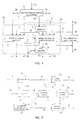
- Figure 1 shows generally the progress of material and energy streams within a production plant manufacturing paper or board as well as between the production plant and a community.
- Figure 2 is an example of material and energy streams in a one-line production plant.
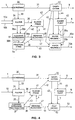
- Figure 3 is an example of material and energy streams in a two-line production plant.
- Figure 4 is an example of material and energy streams in a production plant manufacturing market pulp.
- Fig. 1 schematically depicts synergic cooperation between a production plant 50 and a residential community surrounding it in the field of raw material, energy and waste management.
- the figure shows an energy production unit 2, a deinking plant 3, a paper or board manufacturing unit 5, and a paper or board converting unit 19.
- Source separation 24 and a waste water treatment plant 15 of the residential community are depicted of the operations of the community surrounding the production plant 50.
- paper and board waste 10 suitable for recycling and combustible waste 1 which is suitable for the production of energy and which contains wood, combustible plastics as well as some paper and board are already separated at the places where the waste is produced.
- These said recyclable waste fractions 1 and 10 are transported to the production plant 50 situated nearby for use, on the one hand, as fuel in the production 2 of energy and, on the other, as fibre raw material in the manufacture 5 of paper or board.
- the production plant 50 is capable of utilizing as much as half of the waste volume generated by the community, complete separation of the waste on the site of its formation becomes profitable and sensible.
- the waste fraction 1 suitable for combustion is transported, sorted when needed into quality classes and fractions required by combustion processes, to the energy production unit 2 of the production plant where it is pre-processed.
- the pre-processing of fuel may include metal separation and/or identification of non-desirable pieces based on machine vision. Even though the waste can be supplied in relatively large pieces into a combustion boiler operating by a fluidized bed technique, some kind of crushing is also generally required.
- the quality of the fuel to be passed into the boiler is assured by means of the source separation and the manufacture of recovered fuel (REF) in connection with it.
- REF recovered fuel
- the energy production unit 2 includes either a combustion boiler directly utilizing the waste-derived fuel 1 or a gasification reactor which produces combustible gases from the waste-derived fuel 1 in order to be burnt in a power plant boiler proper or in a gas turbine plant.
- a gasification reactor which produces combustible gases from the waste-derived fuel 1 in order to be burnt in a power plant boiler proper or in a gas turbine plant.
- the gasification reactor it is possible to produce combustion gas for use in production processes for the drying of paper or board, for example, in infrared dryers or in other drying devices, such as in impingement or airborne web-dryers.
- Rejects and fibre- and filler-containing sludges 4 produced in the pulping and deinking 3 of the fibre raw material 10 are passed to the energy production plant 2 in order to be burnt or gasified together with solid waste 1.
- Fibre wastes 6 from the papermaking process 5 may also be burnt at the power plant 2.
- the dry solids content of the sludge may be raised by removing water from it either mechanically or by evaporation by means of waste heats from the process.
- Waste sludges 29 generated in the waste water treatment plant 15 of the community can also be disposed of by burning them in the energy production unit 2 of the production plant 50.
- the energy production unit 2 of the production plant supplies the production processes of recycled pulp and paper with energy 7 required by them in the form of electricity and steam or alternatively as combustible gases, which may be used for the production of drying air for air-drying devices.
- the energy production 2 of the production plant 50 may be designed to generate energy in excess of its own need and the plant is thus capable of delivering electricity and heat 8 for the requirements of the surrounding community, too.
- the ash produced in the combustion of waste is utilized as far as possible in the paper manufacture 5 as filler 9.
- the most suitable filler is the ash produced in the combustion of a sorted waste paper fraction or of a deinking sludge of waste paper, which ash may be further refined, when needed, by after-incineration or by other bleaching methods (not shown).
- calciferous ash generated in the combustion of waste can be used on a flue gas scrubber of the power plant for the cleaning of flue gases. Ash may also be delivered outside (9b) the production plant for use in the manufacture of cement as a raw material, in earthwork or for other equivalent uses.
- the production plant 50 uses as its principal fibre raw material waste paper 10 collected from the surrounding residential community. Since both the raw material source and consumers are near, transport distances will be short and the production plant does not require large intermediate stocks.
- the production capacity of the production plant has been designed such that the adjacent residential community is able to generate substantially all the fibre raw material 10 required in the production of paper or board and, similarly, the community is able to consume substantially all the paper or board 20 produced in the production plant. Any excess waste paper and waste board unfit for the process can be used as fuel in the production 2 of energy.
- the waste paper 10 is pulped and deinked.
- a reject is separated in the pulping process and a fibre-, chemical- and filler-containing waste sludge 4 is produced in the deinking process, said reject and sludge being thickened to a dry solids content of about 50 % and passed to the production 2 of energy to serve as fuel.
- the deinked recycled pulp 11 is passed to the manufacture 5 of paper or board.
- the paper mill can also operate without a deinking plant or the deinking plant may be passed (arrow 12), for example, when brown paper and board grades or so-called gray paper are manufactured in which printing ink residues are accepted.
- the proportion of the reinforcement pulp may be, depending on the paper grade, 5 to 20 % of the fibre raw material of paper.
- the production plant 50 shown in Fig. 1 takes at least part of its fresh water need from the waste water treatment plant 15 of the residential community as purified waste water 14.
- Waste water 16 discharged from the modern treatment plant 15 applying mechanical, chemical and biological processing and treatment methods is relatively clean as compared with raw water taken from water bodies.
- this purified waste water 14 is further circulated through the mill's own fresh water treatment, in which it is purified so as to be suitable for the process requirements.
- reverse osmosis may be used as a purification method in the treatment of fresh water.
- the fresh water need of the production plant 50 may be further diminished by cleaning part of the water required in the processes by distillation of waste water utilizing waste heat from the power plant.
- the water to be distilled may be purified waste water 14 from the community or circulation water from the production processes.
- Waste waters 17 generated in the production plant 50 can be advantageously passed to the waste water treatment plant 15 of the residential community in order to be cleaned together with waste waters 18 from the residential community.
- the warm waste waters 17 coming from the paper mill raise the temperature of water at the treatment plant 15, which is beneficial in several stages of the biological and chemical water treatment.
- the purification result of the waste water treatment plant 15 of the community improves, which allows the purified waste water 16 to be passed again to the paper mill processes.
- the waste waters from the mill can be distilled by the waste heat from the power plant, thereby allowing the amount of discharge waters to be passed from the process to the surrounding system and, on the other hand, the amount of make-up water, or fresh water, of the mill to be limited.
- More synergy advantage is achieved by placing in connection with the production plant or in its immediate vicinity a paper or board converting plant 19, which converts a significant part of the output 20 of the mill into finished products 21 for consumers.
- the plant in question may be, for example, a printing plant or a plant manufacturing packages.
- the converting plant 19 receives energy 22 required by it in production from the energy production unit 2 of the production plant.
- Fig. 2 shows a production arrangement which produces about 100,000 t/a of board 20 used as raw material for corrugated board boxes as well as a considerable amount of energy 8 intended for sale, i.e. about 80 GWh/a of electricity and 280 GWh/a of district heat.
- the production plant uses about 50,000 t/a of used corrugated board boxes and 30,000 t/a of mixed waste paper 10 as well as about 200,000 t/a of REF, or sorted combustible waste 1.
- the waste typically comes from commerce and industry but may also contain sorted combustible waste derived from households.
- the waste is mainly dry and it has been crushed in separate REF stations into a size in which the pieces have a maximum diameter less than 50 mm.
- the composition of REF is, for example, about 40 % of wood, 40 % of paper or board and 20 % of plastics. In practice, the proportion of the fibre fraction varies between 30 and 55 % depending on the origin and the mode of sorting of the waste
- the REF fraction 1 is separated as dry into two components, i.e. a fraction 31, which is rich in wood and which is passed directly to a gasifier 32, and a plastic-and paper-containing fraction 33.
- Screening 30 may be based, for example, on the size of pieces or on the utilization of an air flow and gravity, and it may be carried out, for example, by means of a device known as a wind sieve.
- the plastic- and paper-containing fraction 33 is pulped together with the waste paper and waste board fractions 10. In connection with pulping 34, plastics and other impurities are separated as a reject 36 from a fibre-containing fraction 35.
- the material stream 31 passing from the dry screening process 30 to the gasifier 32 may also contain a lot of plastics, in which case the fraction 33 to be passed to a pulper 34 will be particularly rich in paper.
- the accept 35 is passed further to cleaning stages 37, which may include removal of sand, fine screening and, when needed, fractionation.
- cleaning stages 37 are to separate fibre fractions 38 of the highest quality for use in the manufacture 39 of board.
- the potential of the fractionated raw material can best be utilized if the board product is manufactured so as to have a layered structure.
- Fractions 40 of poorer quality separated from pulp in fine screening and fractionating are passed together with the reject 36 from the pulping station 34 to a sludge press 41, in which the dry matter content of this water-containing material is increased, preferably over 50 %.
- a material stream 42 as thus processed is passed further to the gasifier 32.
- the gasifier unit 32 is provided with a cleaning technology according to the quality of the waste to be gasified and the desired purity level of product gas.
- cyclones, bag filters or ceramic filters are used as solids separators.
- the chlorine contained in the REF may be mainly removed by means of a solids filter after chlorine has reacted to form a solid salt.
- Part of product gas 43 obtained from the gasifier 32 is passed directly to the paper machine 39 for use in the drying of board, which may be accomplished, for example, as impingement drying.
- a dryer section suitable for this purpose is described, for example, in Finnish patent application FI 971187.
- the bulk of product gas 44 obtained from the gasifier 32 is passed to a power plant 45, which is thereby capable of producing in a profitable manner all electrical energy 7 needed in the production plant and, in addition, a considerable amount of energy 8 for sale.
- the amount of ash 9 generated in the process is about 30,000 t/a.
- the sensible applications of this fraction may include, for example, the use as a road-bed, in the cement industry or even as a paper filler after a certain further processing.
- the gasification reactor is supplied with only paper-based fuels, its ash is particularly suitable for recycling.
- Fig. 3 depicts a two-line production plant which produces about 100,000 t/a of board 20b used as raw material for corrugated board boxes, 100,000 t/a of newsprint 20a as well as a considerable amount of energy 8 for sale, i.e. about 160 GWh/a of electricity and 560 GWh/a of district heat.
- the production plant uses about 80,000 t/a of used newsprint and magazine paper 10a, about 50,000 t/a of used corrugated board boxes and 30,000 t/a mixed waste paper 10b as well as about 400,000 t/a of REF, i.e. sorted combustible waste 1.
- the treatment of the REF fraction 1 largely corresponds to the above description in connection with Fig. 2.
- the REF fraction 1 is separated as dry into two components, i.e. a fraction 31 which is rich in wood and which is passed directly to a gasifier 32, and a plastic- and paper-containing fraction 33 which is pulped together with the mixed waste paper and board fractions 10b.
- plastics and other impurities are separated as a reject 36, which is passed through a sludge press 41 to the gasifier 32.
- the accepts from the pulping stations 34 i. e. pulped newsprint and magazine paper 35a as well as pulped mixed waste paper, board and a REF-derived fraction 35b are passed further to cleaning stages 37, which include sand removal and fine screening.
- pulp 38b pulped from board, mixed waste paper and the REF-containing fraction is passed further to fractionation 54.
- Fractions 38a and 46 suitable for the manufacture of newsprint are passed from the fine screening 37 and from the fractionation 54 to deinking and bleaching stages 47, from which they are passed further to a newsprint machine 39a to serve as fibre raw material 48.
- a waste sludge 4 is produced at the deinking stage 47, which sludge is passed through the sludge press 41 to the gasification 32.
- Fractions 49 suitable for the manufacture of board are passed from the fractionation 54 to a board machine 39b.
- the purpose of the cleaning, screening and fractionating stages 37,54 is to separate suitable fibre fractions 38a,46,49 for use in the manufacture of board 20b and newsprint 20a in an optimal manner.
- the potential of the raw material of fractions suitable for board can best be utilized if the board product is manufactured so as to have a layered structure.
- Fractions 40 of poorer quality separated from pulp in the fine screening 37 and in the fractionation 54 are passed together with the reject 36 from the pulping station and a deinking sludge 4 to the sludge press 41, in which attempts are made to increase the dry matter of this material to as high a level as possible, preferably over 50 %.
- a material stream 42 thickened by means of the sludge press 41 is passed further to the gasifier 32.
- Part of the gas 43 which is produced by the gasifier 32 and appropriately cleaned is passed directly to the paper machines 39a and 39b for use in the drying of newsprint and board, which may be accomplished, for example, as impingement drying.
- the bulk of the gas 44 obtained from the gasifier 32 is passed to a power plant 45, which is thereby capable of generating in a profitable manner all the electrical energy 7 required by the system as well as a considerable amount of energy 8 for sale.
- Fig. 4 shows a production arrangement by means of which about 100,000 t/a of deinked market pulp 50 manufactured from waste paper and a considerable amount of energy 8 for sale, i.e. about 80 GWh/a of electricity and 280 GWh/a of district heat, are produced.
- the production plant uses as raw material about 80,000 t/a of office waste paper 10 and about 200,000 t/a of REF, i.e. sorted combustible waste.
- the REF fraction is sorted as dry into two components, i.e. a fraction 31, which is rich in wood and which is passed directly to a gasifier 32, and a plastic- and paper-containing fraction 33, which is passed to a pulping station 34 in order to be processed together with the waste paper fraction 10.
- a fraction 31 which is rich in wood and which is passed directly to a gasifier 32
- a plastic- and paper-containing fraction 33 which is passed to a pulping station 34 in order to be processed together with the waste paper fraction 10.
- plastics and other impurities 36 are separated from the pulp.
- An accept 35 from the pulping station is passed further to cleaning stages 37, which include sand removal, fine screening and, when needed, fractionation.
- the purpose of these process stages is to separate fibre fractions 38 of the highest quality so as to be passed further to deinking and bleaching stages 47, from which pulp 51 is passed onwards to a drying machine 52.
- Fractions 40 of poorer quality separated from pulp in fine screening and fractionating 37 are passed together with a reject 36 generated in the pulping 34 and a deinking sludge 4 to a sludge press 41 in order to be thickened and from there a pulp stream 42 is passed further to the gasifier 32.
- Part of the product gas 43 which is obtained from the gasifier 32 and appropriately cleaned is passed directly for use in the drying 52 of pulp, which is advantageously accomplished as air drying.
- the remainder of the gas 44 produced by the gasifier 32 is passed to a power plant 45, which is thereby capable of producing all the electrical energy 7 required in the system in a profitable manner as well as a considerable amount of energy 8 for sale.
- the concepts described in connection with Figs. 2 ⁇ 4 provide significant benefits as compared with conventional mass incineration of mixed waste and with conventional papermaking.
- the concept utilizes efficiently the material in the recycling stream, on the one hand, as recycled products and, on the other, as fuel. This results in a higher paper recycling degree, a higher production of electricity and a less expensive overall investment.
- the material recycling of wastes is made more efficient and the profitability of energy production is improved as compared with conventional systems.
- the power output from the energy production utilizing source-separated recovered fuel (REF) is about 210 MW, from which about 80 MW of electric power and 115 MW of heat power are obtained. If the same amount of waste were burnt as unsorted in a conventional incineration plant intended only for burning of waste, only 30 MW of electricity would be obtained.
- the arrangement according to the invention would reduce the amount of waste ending up in a landfill or in mass incineration by about 440,000 tonnes, or by about 25 %. This is based on enhanced recycling of paper (the degree of recycling today is about 60 %) and on the use of source-separated wood and plastics waste as REF. When the waste processing costs are assumed to amount to about 100 USD per tonne, the saving potential of the community in respect of the waste processing costs will be about 44 million USD per annum.
- the production plant in accordance with the example may be assumed to achieve considerable economic benefits, such as:
Landscapes
- Engineering & Computer Science (AREA)
- Mechanical Engineering (AREA)
- Chemical & Material Sciences (AREA)
- Life Sciences & Earth Sciences (AREA)
- Wood Science & Technology (AREA)
- Oil, Petroleum & Natural Gas (AREA)
- Organic Chemistry (AREA)
- Paper (AREA)
- Processing Of Solid Wastes (AREA)
- Preliminary Treatment Of Fibers (AREA)
- Organic Low-Molecular-Weight Compounds And Preparation Thereof (AREA)
- Heat Treatment Of Water, Waste Water Or Sewage (AREA)
Abstract
Description
- inexpensive raw material both in the manufacture of paper and in the production of energy;
- sales proceeds from the electrical energy and heat in excess of the consumption of the paper mill;
- savings in storage and transport costs;
- savings in waste management costs when part of the process waste is used at the mill;
- other process synergies.
Claims (33)
- A method of arranging the raw material, energy and waste management of a production plant manufacturing pulp and/or paper and/or board from recycled fibres, which plant receives and processes two separate streams (1,10) of waste material produced by a residential community, both of which are presorted and/or separately collected so that the first stream (1) of waste material mainly contains combustible waste to be used as fuel in the production of energy required by the production plant and the second stream (10) of waste material mainly contains waste paper and/or board to be used as fibre raw material of the production plant to a considerable extent, said second stream (10) being passed to a pulping stage (34), to a cleaning and screening stage (37) and to a fibre processing line comprising one or more of the stages of fractionating (54), deinking, bleaching (47), pulp drying (52) and papermaking (39), and rejects (36,40,4) from at least one of the fibre processing stages (34,37,47) are used as fuel in the production of energy, characterized in that the first stream (1) of waste material is first passed to a screening stage (30) in which a residual paper- and board-rich fraction (33) is separated from it to be passed to the pulping stage (34) where it is processed either together with the second stream (10) of waste material or separately from it to be used as fibre raw material in the manufacture of pulp, paper or board and a residual fraction (31) from the screening stage is used as fuel in the production of energy.
- A method as claimed in claim 1, characterized in that waste fractions containing raw material and energy and produced as by-products in the production processes of the production plant, such as rejects and sludges (4,6,36,40) produced in the fibre processing stages pulping(34), cleaning and screening (37), deinking, bleaching (47), ash (9,9b) produced in the combustion of waste, and warm waste waters (17)are utilized within the production plant either as raw material or as energy to a considerable extent, or said fractions are separated such that they can at least principally be used in a further process or another type of useful use outside the production plant.
- A method as claimed in claim 1 or 2, characterized in that wastes generated in the manufacture of pulp, paper and/or board, such as, a reject (36) separated in pulping (34), a fibre fraction (40) of poor quality and a waste sludge (4) generated in deinking (47), are passed to the production of energy to serve as fuel.
- A method as claimed in any one of claims 1 to 3, characterized in that the waste fractions (31,42) used as fuel are gasified and the thus obtained gas (44) is used in a coal, natural gas or oil fired power plant as secondary fuel.
- A method as claimed in any one of claims 1 to 3, characterized in that the waste fractions (31,42) used as fuel are gasified and the thus obtained gas (44) is used as fuel in a gas turbine.
- A method as claimed in claim 4 or 5, characterized in that combustible gas (43) produced by gasifying the waste fractions (31,42) is used for producing hot drying air for the hot-air drying of pulp, paper or board.
- A method as claimed in claim 6, characterized in that the drying of pulp, paper or board is accomplished solely as hot-air drying without any drying stages that require the use of steam.
- A method as claimed in any one of the preceding claims, characterized in that ash (9) produced in the production (2) of energy is used as filler in the manufacture (5) of paper or board.
- A method as claimed in claim 8, characterized in that the ash (9) used as filler in the manufacture of paper or board is produced by burning or by gasifying a sorted waste paper fraction in a separate combustion boiler or gasification reactor intended for this use.
- A method as claimed in claim 8, characterized in that the ash (9) used as filler in the manufacture of paper or board is produced from ash from a combustion boiler or a gasification reactor by means of after-incineration or another bleaching process.
- A method as claimed in claim 8, characterized in that the best quality fraction (9) of the ash produced in the production (2) of energy is used in the manufacture of paper or board and other ash fractions (9b) are utilized in other ways, for example, in connection with the manufacture of cement, earthwork, and the like.
- A method as claimed in any one of the preceding claims, characterized in that ash produced in the production of energy is used on flue gas scrubbers of power plants for cleaning flue gases.
- A method as claimed in any one of the preceding claims, characterized in that paper or board is manufactured by means of multi-layer web forming, in which connection pulp produced from different waste paper fractions is used for different layers of paper or board.
- A method as claimed in any one of the preceding claims, characterized in that paper and/or board is/are manufactured on two or more manufacturing lines, using different types of waste paper fractions as fibre raw material.
- A method as claimed in claim 14, characterized in that fibre waste and/or circulation water from one manufacturing line is/are passed to another manufacturing line.
- A method as claimed in any one of the preceding claims, characterized in that at least part of the fresh water need of the production plant is taken from a waste water treatment plant (15) of the residential community as purified waste water (14), which is passed for use through a fresh water treatment system of the produc-tion plant.
- A method as claimed in claim 16, characterized in that the waste waters are purified by distillation utilizing waste heats generated in the production of energy and the thus distilled water is used in the production processes to replace some of fresh water.
- A method as claimed in claim 17, characterized in that distillation is used for purifying the production plant's own waste waters for recycling or for reducing the waste water load of the residential community.
- A method as claimed in any one of the preceding claims, characterized in that waste waters (17) generated in the production plant are passed to the waste water treatment plant (15) of the residential community for purification.
- A production plant for manufacturing of pulp and/or paper and/or board, which plant is arranged to use waste materials (1,10) as fibre raw material and as fuel and which plant comprises equipment for processing two presorted and/or separately collected streams (1,10) of waste material obtained from an adjacent residential community, the first stream (1) mainly containing combustible waste and the second stream (10) mainly containing waste paper and/or board, which equipment comprise devices (32,45) for utilizing the first stream (1) of waste material as fuel in the production of energy for the production plant's own requirements, devices (34,37) for pulping, cleaning and screening the second stream (10) of waste material as well as a fibre processing line comprising one or more devices for fractionating (54), deinking, bleaching (47), pulp drying (52) and papermaking (39), characterized in that the devices for processing the first stream (1) of waste material further comprise a separating device (30) to which the first stream (1) of waste material is first passed for separating a paper- and board-rich fraction (33) from the combustible waste, said paper- and board-rich fraction (33) being passed to the pulping, cleaning and screening devices (34, 37) provided for processing the second stream (10) of waste material.
- A production plant as claimed in claim 20, characterized in that it comprises provisions for utilizing waste fractions (4,6,9,36,40) produced as by-products and containing raw material and energy or, alternatively, for passing such waste fractions (9b,17) to useful use outside the production plant, said waste fractions including e.g. rejects and sludges (4,6,36,40) from pulping, cleaning, screening, fractionating, papermaking and/or deinking devices, ash (9,9b) produced in the production of energy, and warm waste waters (17).
- A production plant as claimed in claim 20, characterized in that the production plant comprises at least two paper or board manufacturing lines which are arranged to manufacture paper or board grades which are different from each other, in which connection different waste paper fractions can be utilized efficiently.
- A production plant as claimed in any one of claims 20 to 22, characterized in that the equipment for the manufacture of paper and/or board include a paper or board machine provided with a multi-layer web former, owing to which different waste paper fractions can be efficiently utilized as raw materials in different layers of paper and/or board.
- A production plant as claimed in any one of claims 20 to 22, characterized in that the energy production unit includes a gasification reactor (32), which is arranged to gasify combustible waste fractions (31,42) into product gases (44), which are arranged to be burnt in a combustion boiler or a gas turbine (45).
- A production plant as claimed in claim 24, characterized in that the equipment for the manufacture of pulp and/or paper and/or board include hot-air drying devices, such as, infrared dryers, impingement dryers, airborne web-dryers or other equivalent devices, and they are arranged to use purified product gas (43) produced by the gasification reactor (32) for the generation of hot drying air.
- A production plant as claimed in claim 25, characterized in that the drying of pulp, paper or board is accomplished solely by means of hot-air drying devices without any drying stages based on the use of steam.
- A production plant as claimed in claim 20, characterized in that part of the ash produced as a by-product in the production (2) of energy is arranged to be used as filler (9) in paper or board in the papermaking process (5).
- A production plant as claimed in claim 27, characterized in that the energy production unit includes a separate combustion boiler or gasification reactor, which is arranged to burn only a sorted waste paper fraction, the ash produced from said fraction being arranged to be passed to the papermaking process to serve as filler (9) in paper or board.
- A production plant as claimed in claim 27 or 28, characterized in that it comprises devices for after-incineration of the ash generated as a by-product in the production (2) of energy or for bleaching it in another way before it is used as filler (9) in paper or board.
- A production plant as claimed in claim 20, characterized in that it comprises devices for using purified waste water (14) derived from a waste water treatment plant (15) of the residential community as fresh water in the production processes.
- A production plant as claimed in claim 30, characterized in that it comprises devices for purifying waste or circulation waters by distillation utilizing the waste heat produced by the processes.
- A production plant as claimed in any one of claims 20 to 31, characterized in that waste waters (17) from the production plant (50) are passed to the waste water treatment plant (15) of the residential community.
- A production plant as claimed in claim 20, characterized in that a paper or board converting plant (19) is integrated into its immediate vicinity, which plant is capable of converting a considerable part of the paper and/or board output of the production plant (50).
Applications Claiming Priority (3)
| Application Number | Priority Date | Filing Date | Title |
|---|---|---|---|
| FI982737A FI982737A7 (en) | 1998-12-17 | 1998-12-17 | A method for the production of paper and/or cardboard and the production of energy, as well as a production method and industrial plant that complies with the method |
| FI982737 | 1998-12-17 | ||
| PCT/FI1999/001056 WO2000035588A1 (en) | 1998-12-17 | 1999-12-17 | Method and production plant for the manufacture of fibrous material |
Publications (2)
| Publication Number | Publication Date |
|---|---|
| EP1152833A1 EP1152833A1 (en) | 2001-11-14 |
| EP1152833B1 true EP1152833B1 (en) | 2004-02-18 |
Family
ID=8553141
Family Applications (1)
| Application Number | Title | Priority Date | Filing Date |
|---|---|---|---|
| EP99963624A Expired - Lifetime EP1152833B1 (en) | 1998-12-17 | 1999-12-17 | Method and production plant for the manufacture of fibrous material |
Country Status (10)
| Country | Link |
|---|---|
| US (1) | US20020060014A1 (en) |
| EP (1) | EP1152833B1 (en) |
| JP (1) | JP2002532229A (en) |
| AT (1) | ATE259679T1 (en) |
| AU (1) | AU760530B2 (en) |
| CA (1) | CA2355656A1 (en) |
| DE (1) | DE69914950T2 (en) |
| ES (1) | ES2216620T3 (en) |
| FI (1) | FI982737A7 (en) |
| WO (1) | WO2000035588A1 (en) |
Families Citing this family (17)
| Publication number | Priority date | Publication date | Assignee | Title |
|---|---|---|---|---|
| FI108779B (en) * | 1999-11-24 | 2002-03-28 | Megatrex Oy | Process for processing filler-containing reject flows at a paper or cardboard factory and using a device |
| FI121060B (en) * | 2000-05-22 | 2010-06-30 | Metso Paper Inc | Waste treatment method and waste treatment plant |
| SI1877619T1 (en) * | 2005-03-10 | 2013-12-31 | Applied Cleantech Inc. | Method of recycling fibers from sewage and means thereof |
| JP2007160205A (en) * | 2005-12-13 | 2007-06-28 | Mie Chuo Kaihatsu Kk | Equipment for using treated water in waste treatment facilities |
| EP1801284A1 (en) * | 2005-12-21 | 2007-06-27 | Voith Patent GmbH | Method for producing pulp for a papermaking machine |
| US8454795B1 (en) | 2006-12-05 | 2013-06-04 | Mark J. Henderson | System and method for producing bonded fiber/cellulose products |
| US8617281B2 (en) * | 2007-08-13 | 2013-12-31 | Applied Cleantech, Inc | Methods and systems for feedstock production from sewage and product manufacturing therefrom |
| CN102557077B (en) * | 2011-12-22 | 2014-06-18 | 河南金丹乳酸科技股份有限公司 | Method for producing ammonium sulfate by using calcium sulfate waste residues produced in lactic acid production |
| GB201308438D0 (en) * | 2013-05-10 | 2013-06-19 | Univ Aston | Process for treating waste products |
| US9353476B2 (en) | 2014-04-18 | 2016-05-31 | Georgia-Pacific Containerboard Llc | Method for recycling waste material with reduced odor emission |
| EP3145880B1 (en) * | 2014-05-21 | 2022-05-18 | Georgia-Pacific LLC | Integrated recycling system and methods for use of sludge |
| CN104690066B (en) * | 2015-02-06 | 2016-09-07 | 福建农林大学 | A kind of method of comprehensive utilization of energy grass |
| CN105386351B (en) * | 2015-10-09 | 2018-08-10 | 中林联盟(北京)科技发展有限公司 | A kind of fast-growing willow pulping process |
| CN106223087A (en) * | 2016-09-14 | 2016-12-14 | 黑龙江秀泉科技有限公司 | A kind of dry method pulping process and equipment |
| NL2018699B1 (en) * | 2017-04-12 | 2018-10-19 | Huhtamaki Molded Fiber Tech Bv | Method for manufacturing a packaging or holding unit from a recycled paper fraction, and such unit |
| CN107587369B (en) * | 2017-09-20 | 2023-08-01 | 玖龙纸业(太仓)有限公司 | Office waste paper grading pulping production method and production system |
| CN107641537B (en) * | 2017-09-28 | 2018-09-21 | 陕西融泰能源控股有限公司 | A kind of slag of coal gasification purifying process and the system for realizing its technique |
Family Cites Families (4)
| Publication number | Priority date | Publication date | Assignee | Title |
|---|---|---|---|---|
| FR2080786B1 (en) * | 1970-02-26 | 1976-07-23 | Black Clawson Fibreclaim Inc | |
| US3765921A (en) * | 1972-03-13 | 1973-10-16 | Engelhard Min & Chem | Production of calcined clay pigment from paper wastes |
| DE2823505C2 (en) * | 1978-05-30 | 1983-11-24 | BKMI Industrieanlagen GmbH, 8000 München | Process for recycling waste |
| SE502916C2 (en) * | 1993-11-05 | 1996-02-19 | Sunds Defibrator Ind Ab | Ways to purify and recycle wastewater from a fiberboard production process |
-
1998
- 1998-12-17 FI FI982737A patent/FI982737A7/en unknown
-
1999
- 1999-12-17 EP EP99963624A patent/EP1152833B1/en not_active Expired - Lifetime
- 1999-12-17 ES ES99963624T patent/ES2216620T3/en not_active Expired - Lifetime
- 1999-12-17 AT AT99963624T patent/ATE259679T1/en active
- 1999-12-17 CA CA 2355656 patent/CA2355656A1/en not_active Abandoned
- 1999-12-17 WO PCT/FI1999/001056 patent/WO2000035588A1/en not_active Ceased
- 1999-12-17 DE DE1999614950 patent/DE69914950T2/en not_active Expired - Lifetime
- 1999-12-17 JP JP2000587891A patent/JP2002532229A/en not_active Withdrawn
- 1999-12-17 AU AU19865/00A patent/AU760530B2/en not_active Ceased
-
2001
- 2001-06-14 US US09/881,608 patent/US20020060014A1/en not_active Abandoned
Also Published As
| Publication number | Publication date |
|---|---|
| ES2216620T3 (en) | 2004-10-16 |
| EP1152833A1 (en) | 2001-11-14 |
| FI982737A0 (en) | 1998-12-17 |
| US20020060014A1 (en) | 2002-05-23 |
| ATE259679T1 (en) | 2004-03-15 |
| FI982737A7 (en) | 2000-06-18 |
| JP2002532229A (en) | 2002-10-02 |
| WO2000035588B1 (en) | 2000-09-14 |
| DE69914950T2 (en) | 2004-12-23 |
| WO2000035588A1 (en) | 2000-06-22 |
| AU1986500A (en) | 2000-07-03 |
| AU760530B2 (en) | 2003-05-15 |
| CA2355656A1 (en) | 2000-06-22 |
| DE69914950D1 (en) | 2004-03-25 |
Similar Documents
| Publication | Publication Date | Title |
|---|---|---|
| AU760530B2 (en) | Method and production plant for the manufacture of fibrous material | |
| Suhr et al. | Best available techniques (BAT) reference document for the production of pulp, paper and board | |
| EP1370631B1 (en) | Conversion of municipal solid waste to high fuel value | |
| EP0868226B1 (en) | Apparatus and method for waste recycling and conversion | |
| FI121060B (en) | Waste treatment method and waste treatment plant | |
| AU2001262381A1 (en) | Method for processing waste and waste processing plant | |
| Sonsale et al. | Renewable & alternative energy sources for strategic energy management in recycled paper & pulp industry | |
| NL2003920C2 (en) | Process for the production of paper. | |
| US6988682B2 (en) | Method and system for utilizing waste | |
| Rogers | Paper making in a low carbon economy | |
| Dahlbo et al. | Life cycle inventory analyses for five waste management options for discarded newspaper | |
| Puiţel et al. | SUSTAINABLE USE OF RECOVERED PAPER IN THE ROMANIAN PAPER INDUSTRY. PART II--ENVIRONMENTAL IMPACT. | |
| Perugini et al. | The Environmental Performance of Alternative Management Options of Paper and Board Packaging Waste | |
| Budzyń et al. | Biomass fuel based on wastes from the paper industry | |
| Thacker | Management of by-product solids generated in the pulp and paper industry | |
| Menke et al. | The Integrated Recycled Paper Mill (IRPM) | |
| Mozaffari et al. | Introducing sludge incineration to the paper recycling industry in Iran | |
| Budzyń et al. | Energetic recovery of celulose wastes | |
| AGREEMENT-TASK | REVIEW OF WASTE PROCESSING TECHNOLOGY FOR SRF | |
| JRC | Integrated Pollution Prevention and Control (IPPC) Draft Reference Document on Best Available Techniques in the Pulp and Paper Industry | |
| Rita et al. | Incineration-An option for sludge disposal in recycled fiber (RCF) mills | |
| Myllymaa | LCIS FOR NEWSPAPER WITH DIFFERENT WASTE MANAGEMENT OPTIONS–CASE HELSINKI METROPOLITAN AREA | |
| Midwest Research Institute (Kansas City et al. | Resource recovery: the state of technology | |
| Morris et al. | Comparative lifecycle energy analysis: theory and practice | |
| Vokes | Municipal Solid Waste: Process Technology |
Legal Events
| Date | Code | Title | Description |
|---|---|---|---|
| PUAI | Public reference made under article 153(3) epc to a published international application that has entered the european phase |
Free format text: ORIGINAL CODE: 0009012 |
|
| 17P | Request for examination filed |
Effective date: 20010613 |
|
| AK | Designated contracting states |
Kind code of ref document: A1 Designated state(s): AT BE CH CY DE DK ES FI FR GB GR IE IT LI LU MC NL PT SE |
|
| AX | Request for extension of the european patent |
Free format text: AL;LT;LV;MK;RO;SI |
|
| 17Q | First examination report despatched |
Effective date: 20020220 |
|
| GRAH | Despatch of communication of intention to grant a patent |
Free format text: ORIGINAL CODE: EPIDOS IGRA |
|
| GRAS | Grant fee paid |
Free format text: ORIGINAL CODE: EPIDOSNIGR3 |
|
| GRAA | (expected) grant |
Free format text: ORIGINAL CODE: 0009210 |
|
| AK | Designated contracting states |
Kind code of ref document: B1 Designated state(s): AT BE CH CY DE DK ES FI FR GB GR IE IT LI LU MC NL PT SE |
|
| PG25 | Lapsed in a contracting state [announced via postgrant information from national office to epo] |
Ref country code: LI Free format text: LAPSE BECAUSE OF FAILURE TO SUBMIT A TRANSLATION OF THE DESCRIPTION OR TO PAY THE FEE WITHIN THE PRESCRIBED TIME-LIMIT Effective date: 20040218 Ref country code: CY Free format text: LAPSE BECAUSE OF FAILURE TO SUBMIT A TRANSLATION OF THE DESCRIPTION OR TO PAY THE FEE WITHIN THE PRESCRIBED TIME-LIMIT Effective date: 20040218 Ref country code: CH Free format text: LAPSE BECAUSE OF FAILURE TO SUBMIT A TRANSLATION OF THE DESCRIPTION OR TO PAY THE FEE WITHIN THE PRESCRIBED TIME-LIMIT Effective date: 20040218 |
|
| REG | Reference to a national code |
Ref country code: GB Ref legal event code: FG4D |
|
| REG | Reference to a national code |
Ref country code: CH Ref legal event code: EP |
|
| REG | Reference to a national code |
Ref country code: IE Ref legal event code: FG4D |
|
| REF | Corresponds to: |
Ref document number: 69914950 Country of ref document: DE Date of ref document: 20040325 Kind code of ref document: P |
|
| PG25 | Lapsed in a contracting state [announced via postgrant information from national office to epo] |
Ref country code: SE Free format text: LAPSE BECAUSE OF FAILURE TO SUBMIT A TRANSLATION OF THE DESCRIPTION OR TO PAY THE FEE WITHIN THE PRESCRIBED TIME-LIMIT Effective date: 20040518 Ref country code: GR Free format text: LAPSE BECAUSE OF FAILURE TO SUBMIT A TRANSLATION OF THE DESCRIPTION OR TO PAY THE FEE WITHIN THE PRESCRIBED TIME-LIMIT Effective date: 20040518 Ref country code: DK Free format text: LAPSE BECAUSE OF FAILURE TO SUBMIT A TRANSLATION OF THE DESCRIPTION OR TO PAY THE FEE WITHIN THE PRESCRIBED TIME-LIMIT Effective date: 20040518 |
|
| LTIE | Lt: invalidation of european patent or patent extension |
Effective date: 20040218 |
|
| REG | Reference to a national code |
Ref country code: CH Ref legal event code: PL |
|
| REG | Reference to a national code |
Ref country code: ES Ref legal event code: FG2A Ref document number: 2216620 Country of ref document: ES Kind code of ref document: T3 |
|
| ET | Fr: translation filed | ||
| PG25 | Lapsed in a contracting state [announced via postgrant information from national office to epo] |
Ref country code: LU Free format text: LAPSE BECAUSE OF NON-PAYMENT OF DUE FEES Effective date: 20041217 Ref country code: IE Free format text: LAPSE BECAUSE OF NON-PAYMENT OF DUE FEES Effective date: 20041217 |
|
| PLBE | No opposition filed within time limit |
Free format text: ORIGINAL CODE: 0009261 |
|
| STAA | Information on the status of an ep patent application or granted ep patent |
Free format text: STATUS: NO OPPOSITION FILED WITHIN TIME LIMIT |
|
| PG25 | Lapsed in a contracting state [announced via postgrant information from national office to epo] |
Ref country code: MC Free format text: LAPSE BECAUSE OF NON-PAYMENT OF DUE FEES Effective date: 20041231 |
|
| 26N | No opposition filed |
Effective date: 20041119 |
|
| REG | Reference to a national code |
Ref country code: IE Ref legal event code: MM4A |
|
| PG25 | Lapsed in a contracting state [announced via postgrant information from national office to epo] |
Ref country code: PT Free format text: LAPSE BECAUSE OF NON-PAYMENT OF DUE FEES Effective date: 20040718 |
|
| PGFP | Annual fee paid to national office [announced via postgrant information from national office to epo] |
Ref country code: GB Payment date: 20071218 Year of fee payment: 9 |
|
| PGFP | Annual fee paid to national office [announced via postgrant information from national office to epo] |
Ref country code: NL Payment date: 20081216 Year of fee payment: 10 |
|
| PGFP | Annual fee paid to national office [announced via postgrant information from national office to epo] |
Ref country code: ES Payment date: 20081217 Year of fee payment: 10 |
|
| PGFP | Annual fee paid to national office [announced via postgrant information from national office to epo] |
Ref country code: BE Payment date: 20090130 Year of fee payment: 10 |
|
| GBPC | Gb: european patent ceased through non-payment of renewal fee |
Effective date: 20081217 |
|
| PGFP | Annual fee paid to national office [announced via postgrant information from national office to epo] |
Ref country code: IT Payment date: 20081227 Year of fee payment: 10 |
|
| PG25 | Lapsed in a contracting state [announced via postgrant information from national office to epo] |
Ref country code: GB Free format text: LAPSE BECAUSE OF NON-PAYMENT OF DUE FEES Effective date: 20081217 |
|
| BERE | Be: lapsed |
Owner name: *METSO PAPER INC. Effective date: 20091231 |
|
| REG | Reference to a national code |
Ref country code: NL Ref legal event code: V1 Effective date: 20100701 |
|
| PG25 | Lapsed in a contracting state [announced via postgrant information from national office to epo] |
Ref country code: NL Free format text: LAPSE BECAUSE OF NON-PAYMENT OF DUE FEES Effective date: 20100701 Ref country code: BE Free format text: LAPSE BECAUSE OF NON-PAYMENT OF DUE FEES Effective date: 20091231 |
|
| PG25 | Lapsed in a contracting state [announced via postgrant information from national office to epo] |
Ref country code: IT Free format text: LAPSE BECAUSE OF NON-PAYMENT OF DUE FEES Effective date: 20091217 |
|
| REG | Reference to a national code |
Ref country code: ES Ref legal event code: FD2A Effective date: 20110411 |
|
| PG25 | Lapsed in a contracting state [announced via postgrant information from national office to epo] |
Ref country code: ES Free format text: LAPSE BECAUSE OF NON-PAYMENT OF DUE FEES Effective date: 20110330 |
|
| PG25 | Lapsed in a contracting state [announced via postgrant information from national office to epo] |
Ref country code: ES Free format text: LAPSE BECAUSE OF NON-PAYMENT OF DUE FEES Effective date: 20091218 |
|
| PGFP | Annual fee paid to national office [announced via postgrant information from national office to epo] |
Ref country code: FI Payment date: 20131211 Year of fee payment: 15 |
|
| PGFP | Annual fee paid to national office [announced via postgrant information from national office to epo] |
Ref country code: FR Payment date: 20131220 Year of fee payment: 15 |
|
| PGFP | Annual fee paid to national office [announced via postgrant information from national office to epo] |
Ref country code: DE Payment date: 20141211 Year of fee payment: 16 |
|
| PGFP | Annual fee paid to national office [announced via postgrant information from national office to epo] |
Ref country code: AT Payment date: 20141222 Year of fee payment: 16 |
|
| PG25 | Lapsed in a contracting state [announced via postgrant information from national office to epo] |
Ref country code: FI Free format text: LAPSE BECAUSE OF NON-PAYMENT OF DUE FEES Effective date: 20141217 |
|
| REG | Reference to a national code |
Ref country code: FR Ref legal event code: ST Effective date: 20150831 |
|
| PG25 | Lapsed in a contracting state [announced via postgrant information from national office to epo] |
Ref country code: FR Free format text: LAPSE BECAUSE OF NON-PAYMENT OF DUE FEES Effective date: 20141231 |
|
| REG | Reference to a national code |
Ref country code: DE Ref legal event code: R119 Ref document number: 69914950 Country of ref document: DE |
|
| REG | Reference to a national code |
Ref country code: AT Ref legal event code: MM01 Ref document number: 259679 Country of ref document: AT Kind code of ref document: T Effective date: 20151217 |
|
| PG25 | Lapsed in a contracting state [announced via postgrant information from national office to epo] |
Ref country code: DE Free format text: LAPSE BECAUSE OF NON-PAYMENT OF DUE FEES Effective date: 20160701 |
|
| PG25 | Lapsed in a contracting state [announced via postgrant information from national office to epo] |
Ref country code: AT Free format text: LAPSE BECAUSE OF NON-PAYMENT OF DUE FEES Effective date: 20151217 |