EP1150120A2 - High-throughput screening method for identifying drug candidates producing reactive metabolites - Google Patents
High-throughput screening method for identifying drug candidates producing reactive metabolites Download PDFInfo
- Publication number
- EP1150120A2 EP1150120A2 EP01303546A EP01303546A EP1150120A2 EP 1150120 A2 EP1150120 A2 EP 1150120A2 EP 01303546 A EP01303546 A EP 01303546A EP 01303546 A EP01303546 A EP 01303546A EP 1150120 A2 EP1150120 A2 EP 1150120A2
- Authority
- EP
- European Patent Office
- Prior art keywords
- reactive metabolites
- glutathione
- reactive
- drug
- drug candidates
- Prior art date
- Legal status (The legal status is an assumption and is not a legal conclusion. Google has not performed a legal analysis and makes no representation as to the accuracy of the status listed.)
- Withdrawn
Links
- 239000002207 metabolite Substances 0.000 title claims abstract description 28
- 238000000034 method Methods 0.000 title claims abstract description 21
- 229940000406 drug candidate Drugs 0.000 title claims abstract description 11
- 238000013537 high throughput screening Methods 0.000 title 1
- RWSXRVCMGQZWBV-WDSKDSINSA-N glutathione Chemical compound OC(=O)[C@@H](N)CCC(=O)N[C@@H](CS)C(=O)NCC(O)=O RWSXRVCMGQZWBV-WDSKDSINSA-N 0.000 claims description 41
- 229960003180 glutathione Drugs 0.000 claims description 19
- 108010024636 Glutathione Proteins 0.000 claims description 15
- 239000003814 drug Substances 0.000 claims description 12
- 229940079593 drug Drugs 0.000 claims description 10
- 230000003228 microsomal effect Effects 0.000 claims description 9
- 102000004190 Enzymes Human genes 0.000 claims description 7
- 108090000790 Enzymes Proteins 0.000 claims description 7
- 210000004185 liver Anatomy 0.000 claims description 4
- 238000004885 tandem mass spectrometry Methods 0.000 claims description 2
- 231100000419 toxicity Toxicity 0.000 abstract description 6
- 230000001988 toxicity Effects 0.000 abstract description 6
- 229940126534 drug product Drugs 0.000 abstract 1
- 239000000825 pharmaceutical preparation Substances 0.000 abstract 1
- 150000001875 compounds Chemical class 0.000 description 11
- AZQWKYJCGOJGHM-UHFFFAOYSA-N 1,4-benzoquinone Chemical compound O=C1C=CC(=O)C=C1 AZQWKYJCGOJGHM-UHFFFAOYSA-N 0.000 description 8
- 238000011534 incubation Methods 0.000 description 8
- 230000004044 response Effects 0.000 description 7
- WEVYAHXRMPXWCK-UHFFFAOYSA-N Acetonitrile Chemical compound CC#N WEVYAHXRMPXWCK-UHFFFAOYSA-N 0.000 description 6
- 230000015572 biosynthetic process Effects 0.000 description 6
- 150000002500 ions Chemical class 0.000 description 6
- NIJJYAXOARWZEE-UHFFFAOYSA-N Valproic acid Chemical compound CCCC(C(O)=O)CCC NIJJYAXOARWZEE-UHFFFAOYSA-N 0.000 description 5
- IJGRMHOSHXDMSA-UHFFFAOYSA-N Atomic nitrogen Chemical compound N#N IJGRMHOSHXDMSA-UHFFFAOYSA-N 0.000 description 4
- CXOFVDLJLONNDW-UHFFFAOYSA-N Phenytoin Chemical compound N1C(=O)NC(=O)C1(C=1C=CC=CC=1)C1=CC=CC=C1 CXOFVDLJLONNDW-UHFFFAOYSA-N 0.000 description 4
- 238000004458 analytical method Methods 0.000 description 4
- CGIGDMFJXJATDK-UHFFFAOYSA-N indomethacin Chemical compound CC1=C(CC(O)=O)C2=CC(OC)=CC=C2N1C(=O)C1=CC=C(Cl)C=C1 CGIGDMFJXJATDK-UHFFFAOYSA-N 0.000 description 4
- RLSSMJSEOOYNOY-UHFFFAOYSA-N m-cresol Chemical compound CC1=CC=CC(O)=C1 RLSSMJSEOOYNOY-UHFFFAOYSA-N 0.000 description 4
- 238000007254 oxidation reaction Methods 0.000 description 4
- IWDCLRJOBJJRNH-UHFFFAOYSA-N p-cresol Chemical compound CC1=CC=C(O)C=C1 IWDCLRJOBJJRNH-UHFFFAOYSA-N 0.000 description 4
- 229960002036 phenytoin Drugs 0.000 description 4
- RZVAJINKPMORJF-UHFFFAOYSA-N Acetaminophen Chemical compound CC(=O)NC1=CC=C(O)C=C1 RZVAJINKPMORJF-UHFFFAOYSA-N 0.000 description 3
- 101150053185 P450 gene Proteins 0.000 description 3
- XJLXINKUBYWONI-DQQFMEOOSA-N [[(2r,3r,4r,5r)-5-(6-aminopurin-9-yl)-3-hydroxy-4-phosphonooxyoxolan-2-yl]methoxy-hydroxyphosphoryl] [(2s,3r,4s,5s)-5-(3-carbamoylpyridin-1-ium-1-yl)-3,4-dihydroxyoxolan-2-yl]methyl phosphate Chemical compound NC(=O)C1=CC=C[N+]([C@@H]2[C@H]([C@@H](O)[C@H](COP([O-])(=O)OP(O)(=O)OC[C@@H]3[C@H]([C@@H](OP(O)(O)=O)[C@@H](O3)N3C4=NC=NC(N)=C4N=C3)O)O2)O)=C1 XJLXINKUBYWONI-DQQFMEOOSA-N 0.000 description 3
- 239000007789 gas Substances 0.000 description 3
- 238000004128 high performance liquid chromatography Methods 0.000 description 3
- LGRLWUINFJPLSH-UHFFFAOYSA-N methanide Chemical compound [CH3-] LGRLWUINFJPLSH-UHFFFAOYSA-N 0.000 description 3
- 230000007935 neutral effect Effects 0.000 description 3
- 150000003254 radicals Chemical class 0.000 description 3
- 239000000758 substrate Substances 0.000 description 3
- UUILWXIBBZVJDU-FNORWQNLSA-N 2-Propyl-2,4-pentadienoic acid Chemical compound CCC\C(C(O)=O)=C/C=C UUILWXIBBZVJDU-FNORWQNLSA-N 0.000 description 2
- YQUQWHNMBPIWGK-UHFFFAOYSA-N 4-isopropylphenol Chemical compound CC(C)C1=CC=C(O)C=C1 YQUQWHNMBPIWGK-UHFFFAOYSA-N 0.000 description 2
- RGJOEKWQDUBAIZ-IBOSZNHHSA-N CoASH Chemical compound O[C@@H]1[C@H](OP(O)(O)=O)[C@@H](COP(O)(=O)OP(O)(=O)OCC(C)(C)[C@@H](O)C(=O)NCCC(=O)NCCS)O[C@H]1N1C2=NC=NC(N)=C2N=C1 RGJOEKWQDUBAIZ-IBOSZNHHSA-N 0.000 description 2
- TWRXJAOTZQYOKJ-UHFFFAOYSA-L Magnesium chloride Chemical compound [Mg+2].[Cl-].[Cl-] TWRXJAOTZQYOKJ-UHFFFAOYSA-L 0.000 description 2
- 238000003556 assay Methods 0.000 description 2
- 230000001413 cellular effect Effects 0.000 description 2
- QZUDBNBUXVUHMW-UHFFFAOYSA-N clozapine Chemical compound C1CN(C)CCN1C1=NC2=CC(Cl)=CC=C2NC2=CC=CC=C12 QZUDBNBUXVUHMW-UHFFFAOYSA-N 0.000 description 2
- 229960004170 clozapine Drugs 0.000 description 2
- RGJOEKWQDUBAIZ-UHFFFAOYSA-N coenzime A Natural products OC1C(OP(O)(O)=O)C(COP(O)(=O)OP(O)(=O)OCC(C)(C)C(O)C(=O)NCCC(=O)NCCS)OC1N1C2=NC=NC(N)=C2N=C1 RGJOEKWQDUBAIZ-UHFFFAOYSA-N 0.000 description 2
- 239000005516 coenzyme A Substances 0.000 description 2
- 229940093530 coenzyme a Drugs 0.000 description 2
- 230000002860 competitive effect Effects 0.000 description 2
- 230000021615 conjugation Effects 0.000 description 2
- 230000001419 dependent effect Effects 0.000 description 2
- KDTSHFARGAKYJN-UHFFFAOYSA-N dephosphocoenzyme A Natural products OC1C(O)C(COP(O)(=O)OP(O)(=O)OCC(C)(C)C(O)C(=O)NCCC(=O)NCCS)OC1N1C2=NC=NC(N)=C2N=C1 KDTSHFARGAKYJN-UHFFFAOYSA-N 0.000 description 2
- 238000001784 detoxification Methods 0.000 description 2
- 150000002118 epoxides Chemical class 0.000 description 2
- 238000000338 in vitro Methods 0.000 description 2
- 229960000905 indomethacin Drugs 0.000 description 2
- 239000011159 matrix material Substances 0.000 description 2
- 230000001404 mediated effect Effects 0.000 description 2
- 239000000203 mixture Substances 0.000 description 2
- 239000013642 negative control Substances 0.000 description 2
- 210000000440 neutrophil Anatomy 0.000 description 2
- 229930027945 nicotinamide-adenine dinucleotide Natural products 0.000 description 2
- 229910052757 nitrogen Inorganic materials 0.000 description 2
- 230000000269 nucleophilic effect Effects 0.000 description 2
- 230000003647 oxidation Effects 0.000 description 2
- 239000012071 phase Substances 0.000 description 2
- 238000002360 preparation method Methods 0.000 description 2
- 230000008569 process Effects 0.000 description 2
- 102000004169 proteins and genes Human genes 0.000 description 2
- 108090000623 proteins and genes Proteins 0.000 description 2
- 239000012048 reactive intermediate Substances 0.000 description 2
- 229940124597 therapeutic agent Drugs 0.000 description 2
- 231100000440 toxicity profile Toxicity 0.000 description 2
- 229960000604 valproic acid Drugs 0.000 description 2
- ODHCTXKNWHHXJC-VKHMYHEASA-N 5-oxo-L-proline Chemical group OC(=O)[C@@H]1CCC(=O)N1 ODHCTXKNWHHXJC-VKHMYHEASA-N 0.000 description 1
- 206010067484 Adverse reaction Diseases 0.000 description 1
- 201000010000 Agranulocytosis Diseases 0.000 description 1
- USFZMSVCRYTOJT-UHFFFAOYSA-N Ammonium acetate Chemical compound N.CC(O)=O USFZMSVCRYTOJT-UHFFFAOYSA-N 0.000 description 1
- 239000005695 Ammonium acetate Substances 0.000 description 1
- 206010007269 Carcinogenicity Diseases 0.000 description 1
- 101710088105 Isocitrate dehydrogenase [NAD] subunit 1, mitochondrial Proteins 0.000 description 1
- 101710086399 Isocitrate dehydrogenase [NAD] subunit 2, mitochondrial Proteins 0.000 description 1
- 102100021332 Isocitrate dehydrogenase [NAD] subunit alpha, mitochondrial Human genes 0.000 description 1
- 206010043275 Teratogenicity Diseases 0.000 description 1
- 230000004913 activation Effects 0.000 description 1
- 239000008186 active pharmaceutical agent Substances 0.000 description 1
- 230000006838 adverse reaction Effects 0.000 description 1
- 229940043376 ammonium acetate Drugs 0.000 description 1
- 235000019257 ammonium acetate Nutrition 0.000 description 1
- 230000008901 benefit Effects 0.000 description 1
- FFGPTBGBLSHEPO-UHFFFAOYSA-N carbamazepine Chemical compound C1=CC2=CC=CC=C2N(C(=O)N)C2=CC=CC=C21 FFGPTBGBLSHEPO-UHFFFAOYSA-N 0.000 description 1
- 229960000623 carbamazepine Drugs 0.000 description 1
- 231100000260 carcinogenicity Toxicity 0.000 description 1
- 230000007670 carcinogenicity Effects 0.000 description 1
- 238000006243 chemical reaction Methods 0.000 description 1
- 238000013375 chromatographic separation Methods 0.000 description 1
- 238000004587 chromatography analysis Methods 0.000 description 1
- 238000001360 collision-induced dissociation Methods 0.000 description 1
- 239000000470 constituent Substances 0.000 description 1
- 230000002596 correlated effect Effects 0.000 description 1
- 231100000135 cytotoxicity Toxicity 0.000 description 1
- 238000001035 drying Methods 0.000 description 1
- 230000009977 dual effect Effects 0.000 description 1
- 230000001747 exhibiting effect Effects 0.000 description 1
- 238000000605 extraction Methods 0.000 description 1
- 230000002349 favourable effect Effects 0.000 description 1
- 238000002347 injection Methods 0.000 description 1
- 239000007924 injection Substances 0.000 description 1
- ODBLHEXUDAPZAU-UHFFFAOYSA-N isocitric acid Chemical compound OC(=O)C(O)C(C(O)=O)CC(O)=O ODBLHEXUDAPZAU-UHFFFAOYSA-N 0.000 description 1
- 229910001629 magnesium chloride Inorganic materials 0.000 description 1
- 230000007246 mechanism Effects 0.000 description 1
- 230000002503 metabolic effect Effects 0.000 description 1
- 230000004060 metabolic process Effects 0.000 description 1
- 230000002438 mitochondrial effect Effects 0.000 description 1
- 239000006199 nebulizer Substances 0.000 description 1
- 230000017074 necrotic cell death Effects 0.000 description 1
- 238000002545 neutral loss scan Methods 0.000 description 1
- 238000002414 normal-phase solid-phase extraction Methods 0.000 description 1
- 102000039446 nucleic acids Human genes 0.000 description 1
- 108020004707 nucleic acids Proteins 0.000 description 1
- 150000007523 nucleic acids Chemical class 0.000 description 1
- 238000005457 optimization Methods 0.000 description 1
- 230000001590 oxidative effect Effects 0.000 description 1
- NWVVVBRKAWDGAB-UHFFFAOYSA-N p-methoxyphenol Chemical compound COC1=CC=C(O)C=C1 NWVVVBRKAWDGAB-UHFFFAOYSA-N 0.000 description 1
- 229960005489 paracetamol Drugs 0.000 description 1
- 239000002245 particle Substances 0.000 description 1
- 230000003950 pathogenic mechanism Effects 0.000 description 1
- 239000013641 positive control Substances 0.000 description 1
- 231100000683 possible toxicity Toxicity 0.000 description 1
- 239000008057 potassium phosphate buffer Substances 0.000 description 1
- 150000004060 quinone imines Chemical class 0.000 description 1
- 238000000935 solvent evaporation Methods 0.000 description 1
- 238000011895 specific detection Methods 0.000 description 1
- 239000000126 substance Substances 0.000 description 1
- 239000006228 supernatant Substances 0.000 description 1
- 230000004083 survival effect Effects 0.000 description 1
- 231100000211 teratogenicity Toxicity 0.000 description 1
- 231100001274 therapeutic index Toxicity 0.000 description 1
- 125000003396 thiol group Chemical group [H]S* 0.000 description 1
- 231100000167 toxic agent Toxicity 0.000 description 1
- 230000002110 toxicologic effect Effects 0.000 description 1
- 231100000027 toxicology Toxicity 0.000 description 1
- 238000010200 validation analysis Methods 0.000 description 1
- 238000005406 washing Methods 0.000 description 1
- XLYOFNOQVPJJNP-UHFFFAOYSA-N water Substances O XLYOFNOQVPJJNP-UHFFFAOYSA-N 0.000 description 1
Classifications
-
- C—CHEMISTRY; METALLURGY
- C12—BIOCHEMISTRY; BEER; SPIRITS; WINE; VINEGAR; MICROBIOLOGY; ENZYMOLOGY; MUTATION OR GENETIC ENGINEERING
- C12Q—MEASURING OR TESTING PROCESSES INVOLVING ENZYMES, NUCLEIC ACIDS OR MICROORGANISMS; COMPOSITIONS OR TEST PAPERS THEREFOR; PROCESSES OF PREPARING SUCH COMPOSITIONS; CONDITION-RESPONSIVE CONTROL IN MICROBIOLOGICAL OR ENZYMOLOGICAL PROCESSES
- C12Q1/00—Measuring or testing processes involving enzymes, nucleic acids or microorganisms; Compositions therefor; Processes of preparing such compositions
- C12Q1/26—Measuring or testing processes involving enzymes, nucleic acids or microorganisms; Compositions therefor; Processes of preparing such compositions involving oxidoreductase
-
- G—PHYSICS
- G01—MEASURING; TESTING
- G01N—INVESTIGATING OR ANALYSING MATERIALS BY DETERMINING THEIR CHEMICAL OR PHYSICAL PROPERTIES
- G01N33/00—Investigating or analysing materials by specific methods not covered by groups G01N1/00 - G01N31/00
- G01N33/48—Biological material, e.g. blood, urine; Haemocytometers
- G01N33/50—Chemical analysis of biological material, e.g. blood, urine; Testing involving biospecific ligand binding methods; Immunological testing
- G01N33/5005—Chemical analysis of biological material, e.g. blood, urine; Testing involving biospecific ligand binding methods; Immunological testing involving human or animal cells
- G01N33/5008—Chemical analysis of biological material, e.g. blood, urine; Testing involving biospecific ligand binding methods; Immunological testing involving human or animal cells for testing or evaluating the effect of chemical or biological compounds, e.g. drugs, cosmetics
- G01N33/5076—Chemical analysis of biological material, e.g. blood, urine; Testing involving biospecific ligand binding methods; Immunological testing involving human or animal cells for testing or evaluating the effect of chemical or biological compounds, e.g. drugs, cosmetics involving cell organelles, e.g. Golgi complex, endoplasmic reticulum
-
- Y—GENERAL TAGGING OF NEW TECHNOLOGICAL DEVELOPMENTS; GENERAL TAGGING OF CROSS-SECTIONAL TECHNOLOGIES SPANNING OVER SEVERAL SECTIONS OF THE IPC; TECHNICAL SUBJECTS COVERED BY FORMER USPC CROSS-REFERENCE ART COLLECTIONS [XRACs] AND DIGESTS
- Y10—TECHNICAL SUBJECTS COVERED BY FORMER USPC
- Y10S—TECHNICAL SUBJECTS COVERED BY FORMER USPC CROSS-REFERENCE ART COLLECTIONS [XRACs] AND DIGESTS
- Y10S435/00—Chemistry: molecular biology and microbiology
- Y10S435/964—Chemistry: molecular biology and microbiology including enzyme-ligand conjugate production, e.g. reducing rate of nonproductive linkage
Definitions
- Toxicity of drug candidates accounts for a significant portion of attrition during exploratory development. Following development and commercialization, therapeutic agents exhibiting adverse reactions are less competitive and may ultimately fail in the market place. Implementing a Discovery screen to weed out compounds with potential toxicity early would enable all Discovery candidates entering development to achieve a higher survival rate. Following development, the selected drugs would be more likely to enjoy a competitive advantage and a more favorable therapeutic index.
- This invention provides a method for identifying drug candidates which produce reactive metabolites which comprises:
- This invention further provides a method for identifying drug candidates which produce reactive metabolites which is a high throughput method.
- This invention further provides a method for identifying drug candidates which produce reactive metabolites wherein said drug metabolizing enzyme system is a human liver system.
- This invention also provides a method for identifying drug candidates which produce reactive metabolites which comprises: incubating said drug candidates with a microsomal drug metabolizing enzyme system in the presence of glutathione and detecting glutathione conjugates by tandem mass spectometry.
- This invention provides a high throughput method of identifying candidates with the potential to produce reactive metabolites. It exploits one of the natural mechanisms for eliminating reactive intermediates: conjugation with glutathione. Through its nucleophilic sulfhydryl group, glutathione protects vital cellular constituents against chemically reactive species which bind to the reactive electrophilic moiety, to form stable S -substituted adducts ( 8 ). The detoxification of the acetaminophen electrophilic metabolite by glutathione is one of the classic examples of that protection.
- a universal analytical method for detecting glutathione conjugates which are generated by in vitro incubation with human liver microsomal drug metabolizing enzyme systems and with glutathione, will identify compounds that undergo bioactiviation to reactive metabolites.
- This analytical method utilizes tandem mass spectrometry. During collision induced dissociation, all glutathione adducts undergo the neutral loss of the pyroglutamic acid moiety (129 Da). The diagnostic neutral loss of 129 Da allows the specific detection of any glutathione conjugates that have been generated via metabolic activation followed by conjugation ( 9 ).
- the method of this invention is reliable, rapid, simple and amenable to high throughput automation.
- the incubation step can easily be automated following the heated block 96 well incubation method developed by J. Janiszewski.
- the sample preparation and extraction step is automated using Quadra 96 SPE (10).
- the analytical step is particularly simple requiring no compound specific optimization. Although we have utilized chromatography with 7-minute runtime, the specificity of the assay suggests that a runtime of 1 minute per sample is feasible. Consequently, throughput of more than 1000 compounds a day can be attained by utilizing the dual column switching system.
- the method will detect most toxic compounds whose toxicity is mediated by reactive metabolites generated by bioactivation with drug metabolizing oxidative P450 systems. It will not detect reactive metabolites that do not form stable adducts with glutathione (such as free radicals) or those formed by non-microsomal enzymes.
- the incubation mixture was centrifuged at 3,500 rpm for 10 minutes.
- the supernatant was prepared by automated 96-well solid phase extraction (10). This included removing proteins, washing 3 times with 100 ⁇ l of water and eluting with 100 ⁇ l of acetonitrile. Following solvent evaporation, the residues were dissolved in 100 ⁇ l of starting mobile phase.
- Chromatographic separations utilized an HP 1100 quaternary HPLC pump after injection by a CTC PAL autosampler. Aliquots (20 ⁇ l) of prepared samples were injected onto a 2x30 C18 column packed with 3 ⁇ m particles. The analyses were performed using a mobile phase flow rate of 0.2 ml/min and a fast gradient of from 5/95 acetonitrile/10 mM ammonium acetate to 80/20 over a 5 minute period after an initial hold of 1 minute. The HPLC column eluant was introduced into the Turbolonspray source of a SCIEX API 3000 triple quadrupole mass spectrometer.
- the ion source utilized 6 L/sec nitrogen drying gas and was operated in the positive ion mode at 5200V, 450°C and a nebulizer setting of 7. Nitrogen was used as a curtain gas, at a setting of 9, and, as collision gas, at a setting of 5. Positive ions formed in the ion source were sampled into the vacuum chamber through an orifice held at 10V and collisionally activated in the second quadrupole at laboratory frame energy of 19.4eV. The mass spectrometer was operated in the neutral loss mode, scanning over a range of m/z 320 to 800 in about 2.4 seconds.
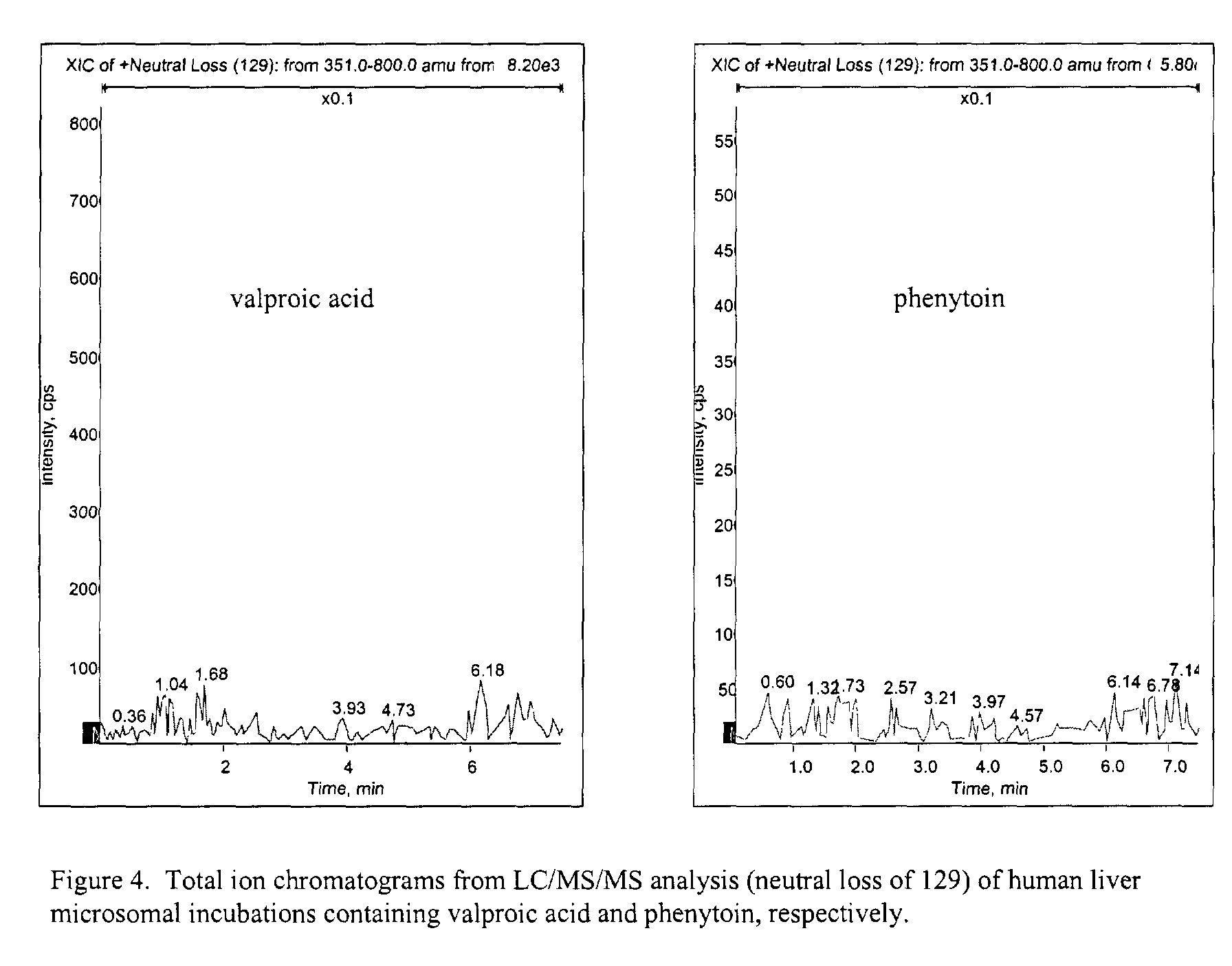
- valproic acid and phenytoin The two compounds that are known to generate reactive metabolites but did not produce positive responses in the current assay are valproic acid and phenytoin ( Figure 4).
- the formation of the valproic acid reactive metabolite (2,4-diene-VPA) requires not only microsomal P450-oxidation to form 40ene VPA but also ⁇ -oxidation catalyzed by a mitochondrial Coenzyme A dependent process to form 2,4-diene-VPA ( 19 ).
- the reactive metabolite is a free radical instead of an epoxide ( 20 ).
- GSH can reduce the free radical and reduce covalent binding of phenytoin, but GSH can not form a stable adduct with it.
- the current screen detects only those reactive metabolites formed by bioactivation via microsomal P450 systems and specifically those forming stable adducts with glutathione.
Landscapes
- Health & Medical Sciences (AREA)
- Life Sciences & Earth Sciences (AREA)
- Chemical & Material Sciences (AREA)
- Engineering & Computer Science (AREA)
- Immunology (AREA)
- Biomedical Technology (AREA)
- Organic Chemistry (AREA)
- Molecular Biology (AREA)
- Bioinformatics & Cheminformatics (AREA)
- Analytical Chemistry (AREA)
- Microbiology (AREA)
- Proteomics, Peptides & Aminoacids (AREA)
- Urology & Nephrology (AREA)
- Wood Science & Technology (AREA)
- Zoology (AREA)
- Biochemistry (AREA)
- Physics & Mathematics (AREA)
- Hematology (AREA)
- General Health & Medical Sciences (AREA)
- Biotechnology (AREA)
- Toxicology (AREA)
- Genetics & Genomics (AREA)
- Tropical Medicine & Parasitology (AREA)
- Cell Biology (AREA)
- General Engineering & Computer Science (AREA)
- Biophysics (AREA)
- Food Science & Technology (AREA)
- Medicinal Chemistry (AREA)
- General Physics & Mathematics (AREA)
- Pathology (AREA)
- Other Investigation Or Analysis Of Materials By Electrical Means (AREA)
- Investigating Or Analysing Biological Materials (AREA)
- Measuring Or Testing Involving Enzymes Or Micro-Organisms (AREA)
Abstract
Description
- Toxicity of drug candidates accounts for a significant portion of attrition during exploratory development. Following development and commercialization, therapeutic agents exhibiting adverse reactions are less competitive and may ultimately fail in the market place. Implementing a Discovery screen to weed out compounds with potential toxicity early would enable all Discovery candidates entering development to achieve a higher survival rate. Following development, the selected drugs would be more likely to enjoy a competitive advantage and a more favorable therapeutic index.
- One common mode of toxicity is the formation of electrophilic reactive metabolites, which manifest their toxicity by covalent binding to nucleophilic groups present in vital cellular proteins and nucleic acids (1-2). Although not all toxicological manifestations are attributable to reactive metabolites, a significant body of literature suggests that inadequate detoxification of chemically reactive metabolites formed as a result of drug bioactivation is a pathogenic mechanism for tissue necrosis (3-4), carcinogenicity (5), teratogenicity (6) and immune mediated toxicity (7).
-
- 1. Nelson, S. D. (1982) Metabolic activation and drug toxicity. J. Med. Chem. 25, 753-65.
- 2. Jollow, D. J., Kocsis, J., Snyder, R., Vainio H. (1977): Biological Reactive Intermediates. New York, Plenum Press.
- 3. Pirmohamed, M., Madden, S. and Park, B. K. (1996) Idiosyncratic drug reactions. Clin. Pharmacokinet. 31, 215-230.
- 4. Prescott, L. F. (1983) Reactive metabolites as a cause of hepatotoxicity. Int. J. Clin. Pharm. 3, 437-441.
- 5. Guengerich, F. P. (1992) Metabolic activation of carcinogens. Pharmacol. Ther. 54, 17-61.
- 6. Juchau, M. R., Lee, Q. P., Fantel, A. G. (1992) Xenobiotic biotransformation/bioactivation in organogenesis-stage conceptal issues: implications for embryotoxicity and teratogenesis. Drug Metab. Rev. 24, 195-238.
- 7. Hess, D. A. and Rieder, M. J. (1997) The role of reactive drug metabolites in immune-mediated adverse drug reactions. Ann Pharmacother. 31, 1378-1387.
- 8. Chasseaud, L. F. (1977): In Arias, I. M., Jakoby, W. B. (eds), Glutathione: Metabolism and Function, p. 77. New York, Raven Press.
- 9. Baillie, T. A., Davis, M. R. (1993) Mass spectrometry in the analysis of glutathione conjugates. Biol. Mass Spectrom. 22, 319-325.
- 10. Janiszewski, J, Schneider, R. P., Hoffmaster, K., Swyden, M., Wells, D., Fouda, H. G. (1997) Automated Sample Preparation Using Membrane Microtiter Extraction For Bioanalytical Mass Spectrometry. Rapid Comm. Mass Spectrom. 11, 9.
- 11. Dahlin, D. C., Miwa, G. T., Lu, A. Y. H. and Nelson, S. D. (1984) N-acetyl-p-benzoquinone imine: a cytochrome P450-mediated oxidation product of acetaminophen. Proc. Natl. Acad. Sci. U. S. A. 81, 1327-1331.
- 12. Williams, D. P., Pirmahamed, M., Naisbitt, D. J., Maggs, J. L. and Park, B. K. (1997) Neutrophil cytoxicity of the chemically reactive metabolite(s) of clozapine: possible role in agranulocytosis. J. Pharmacol. Exp. Ther. 283, 1375-1382.
- 13. Madden, Stephen; Maggs, James L.; Park, B. Kevin. (1996) Bioactivation of carbamazepine in the rat in vivo. Evidence for the formation of reactive arene oxide(s). Drug Metab. Dispos. 24(4), 469-79.
- 14. Ju, C,; Uetrecht, J. P. (1998) Oxidation of a metabolite of indomethacin (desmethyldeschlorobenzoylindomethacin) to reactive intermediates by activated neutrophils, hypochlorous acid, and the myeloperoxidase system. Drug Metab. Dispos. 26(7), 676-680.
- 15. Schiller, Claus Dieter; Gescher, Andreas; Jheeta, Parmjit. (1991) Mechanism of toxicity of the antimelanoma drug 4-hydroxyanisole in mouse hepatocytes. Eur. J. Cancer 27(8), 1017-22.
- 16. Thompson, David C.; Perera, Kumar; London, Robert. (1995) Quinone Methide Formation from Para Isomers of Methylphenol (Cresol), Ethylphenol, and Isopropylphenol: Relationship to Toxicity. Chem. Res. Toxicol. 8(1), 55-60.
- 17. Tang, Wei; Abbot, Frank S. (1996) Characterization of thiol-conjugate metabolites of 2-propylpent-4-enoic acid (4-ene VPA), a toxic metabolite of valproic acid, by electrospray tandem mass spectrometry. J. Mass Spectrom. 31(8), 926-936.
- 18. Roy, Deodutta; Snodgrass, Wayne R. (1990) Covalent binding of phenytoin to protein and modulation of phenytoin metabolism by thiols in A/J mouse liver microsomes. J. Pharmacol. Exp. Ther. 252(3), 895-900.
- 19. Kassahun, Kelem; Hu, Pei; Grillo, Mark P.; Davis, Margaret R.; Jin, Lixia; Baillie, Thomas A. (1994) Metabolic activation of unsaturated derivatives of valproic acid. Identification of novel glutathione adducts formed through coenzyme A-dependent and independent processes. Chem.-Biol. Interact. 90(3), 253-75.
- 20. Mays, Dennis C.; Pawluck, Lew J.; Apseloff, Glen; Davis, W. Bruce; She, Zhi-Wu; Sagone, Arthur L.; Gerber, Nicholas. (1995) Metabolism of phenytoin and covalent binding of reactive intermediates in activated human neutrophils. Biochem. Pharmacol. 50(3), 367-80.
-
- This invention provides a method for identifying drug candidates which produce reactive metabolites which comprises:
- (a) incubating said drug candidates with a microsomal drug metabolizing enzyme system in the presence of glutathione and;
- (b) detecting glutathione conjugates formed in step (a).
-
- This invention further provides a method for identifying drug candidates which produce reactive metabolites which is a high throughput method.
- This invention further provides a method for identifying drug candidates which produce reactive metabolites wherein said drug metabolizing enzyme system is a human liver system.
- This invention also provides a method for identifying drug candidates which produce reactive metabolites which comprises: incubating said drug candidates with a microsomal drug metabolizing enzyme system in the presence of glutathione and detecting glutathione conjugates by tandem mass spectometry.
- This invention provides a high throughput method of identifying candidates with the potential to produce reactive metabolites. It exploits one of the natural mechanisms for eliminating reactive intermediates: conjugation with glutathione. Through its nucleophilic sulfhydryl group, glutathione protects vital cellular constituents against chemically reactive species which bind to the reactive electrophilic moiety, to form stable S-substituted adducts (8). The detoxification of the acetaminophen electrophilic metabolite by glutathione is one of the classic examples of that protection.
- A universal analytical method for detecting glutathione conjugates, which are generated by in vitro incubation with human liver microsomal drug metabolizing enzyme systems and with glutathione, will identify compounds that undergo bioactiviation to reactive metabolites. This analytical method utilizes tandem mass spectrometry. During collision induced dissociation, all glutathione adducts undergo the neutral loss of the pyroglutamic acid moiety (129 Da). The diagnostic neutral loss of 129 Da allows the specific detection of any glutathione conjugates that have been generated via metabolic activation followed by conjugation (9).
- The method of this invention is reliable, rapid, simple and amenable to high throughput automation. The incubation step can easily be automated following the heated block 96 well incubation method developed by J. Janiszewski. The sample preparation and extraction step is automated using Quadra 96 SPE (10). The analytical step is particularly simple requiring no compound specific optimization. Although we have utilized chromatography with 7-minute runtime, the specificity of the assay suggests that a runtime of 1 minute per sample is feasible. Consequently, throughput of more than 1000 compounds a day can be attained by utilizing the dual column switching system.
- The method will detect most toxic compounds whose toxicity is mediated by reactive metabolites generated by bioactivation with drug metabolizing oxidative P450 systems. It will not detect reactive metabolites that do not form stable adducts with glutathione (such as free radicals) or those formed by non-microsomal enzymes.
- Human liver microsomal (HL-mix-11) incubation mixture containing 500 µM substrate, 1 mM glutathione (GSH), 1 µM P450 and 100 mM potassium phosphate buffer (pH 7.4) was pre-incubated for 3 minutes at 37°C. The reaction was initiated by the addition of an NADPH-generating system (0.54 mM NADP+, 10 mM MgCl2, 6.2 mM DL-isocitric acid and 0.5 U/ml isocitric dehydrogenase). The final incubation volume was 1 mL. Samples without NADPH or substrates are used as negative controls. After 30 minutes incubation at 37°C, the incubation mixture was centrifuged at 3,500 rpm for 10 minutes. The supernatant was prepared by automated 96-well solid phase extraction (10). This included removing proteins, washing 3 times with 100 µl of water and eluting with 100 µl of acetonitrile. Following solvent evaporation, the residues were dissolved in 100 µl of starting mobile phase.
- Chromatographic separations utilized an HP 1100 quaternary HPLC pump after injection by a CTC PAL autosampler. Aliquots (20 µl) of prepared samples were injected onto a 2x30 C18 column packed with 3µm particles. The analyses were performed using a mobile phase flow rate of 0.2 ml/min and a fast gradient of from 5/95 acetonitrile/10 mM ammonium acetate to 80/20 over a 5 minute period after an initial hold of 1 minute. The HPLC column eluant was introduced into the Turbolonspray source of a SCIEX API 3000 triple quadrupole mass spectrometer. The ion source utilized 6 L/sec nitrogen drying gas and was operated in the positive ion mode at 5200V, 450°C and a nebulizer setting of 7. Nitrogen was used as a curtain gas, at a setting of 9, and, as collision gas, at a setting of 5. Positive ions formed in the ion source were sampled into the vacuum chamber through an orifice held at 10V and collisionally activated in the second quadrupole at laboratory frame energy of 19.4eV. The mass spectrometer was operated in the neutral loss mode, scanning over a range of m/z 320 to 800 in about 2.4 seconds.
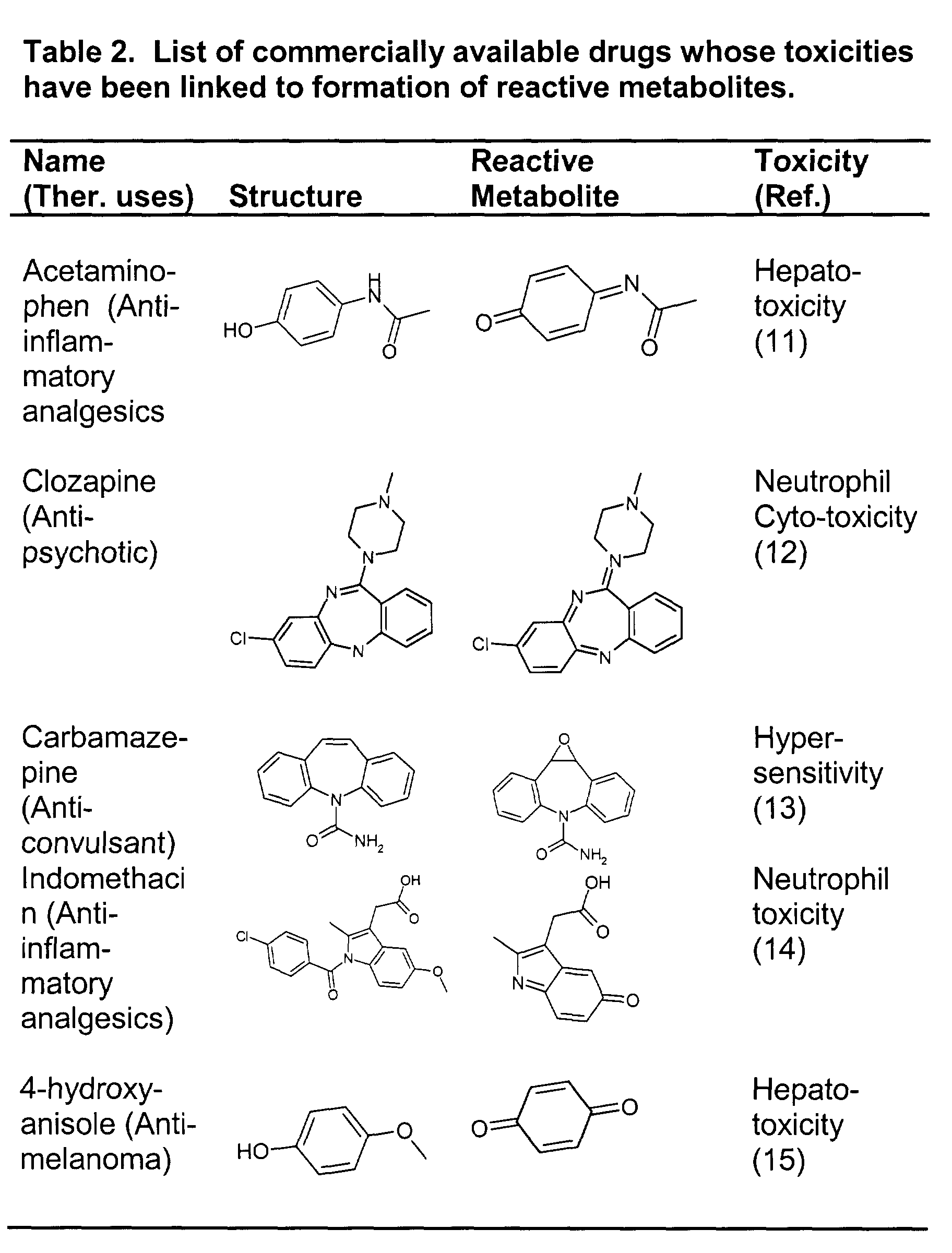
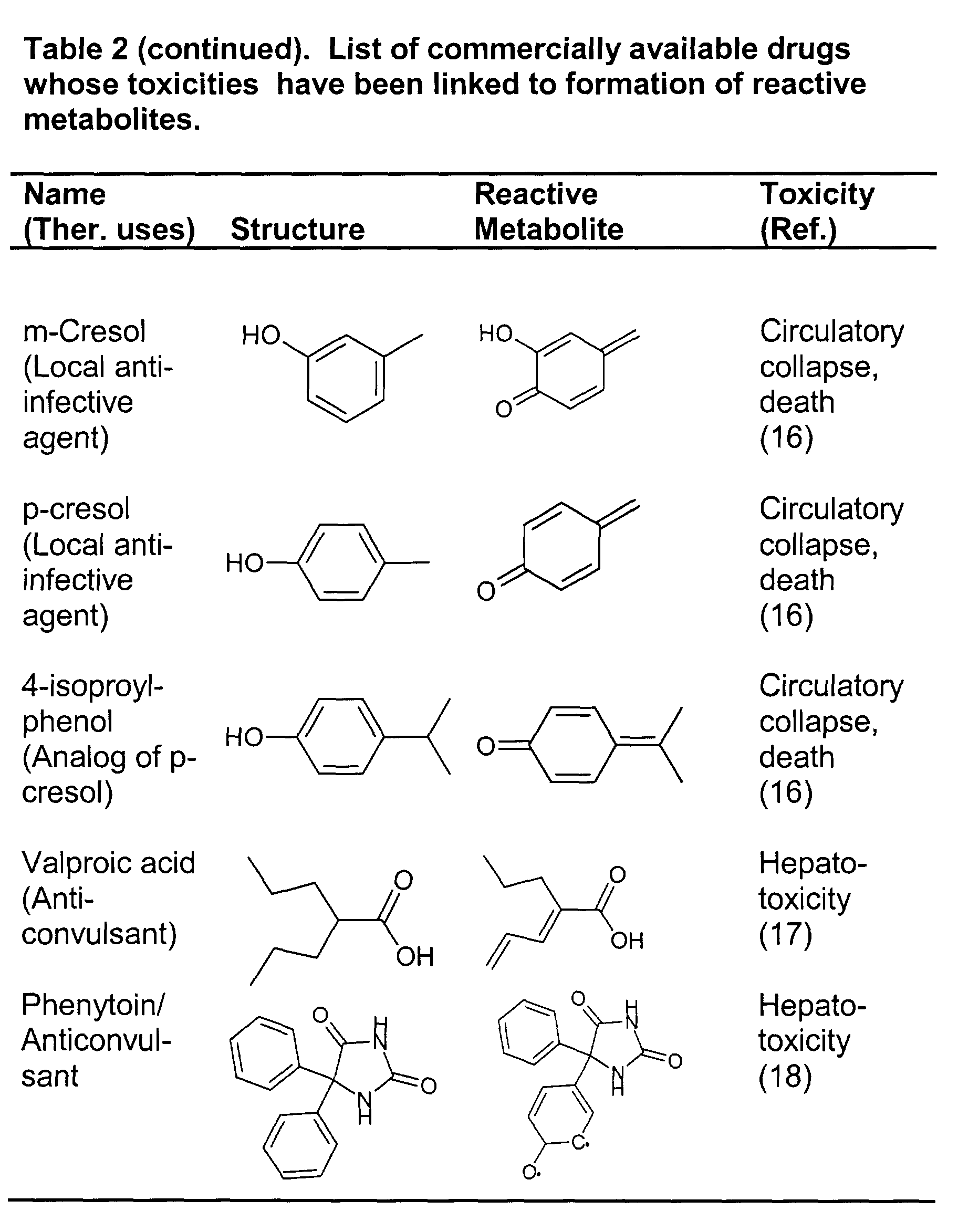
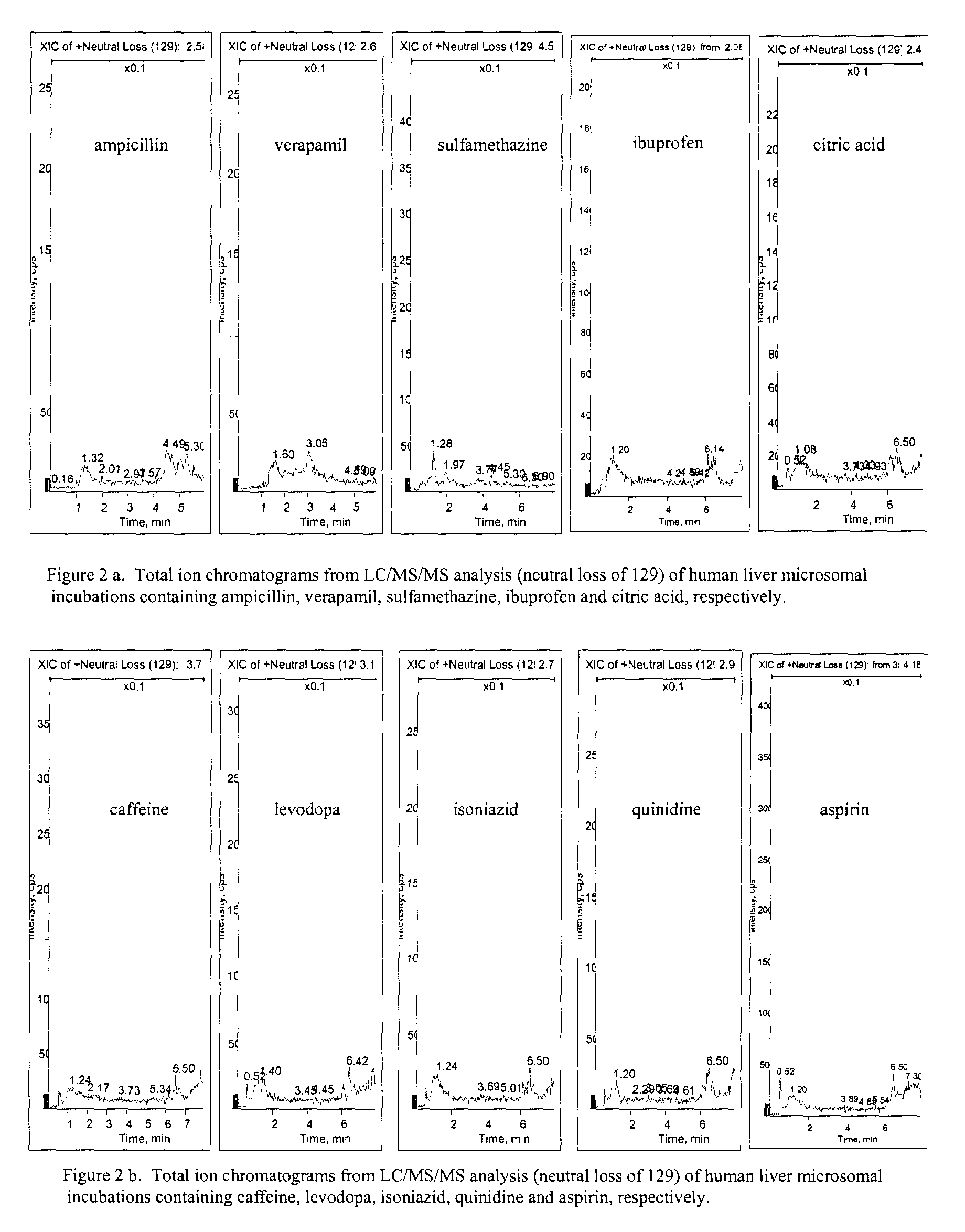
- The current method was validated by application to 20 commercially available therapeutic agents representing diverse chemical structures and toxicity profiles. Half of the compounds (Table 1) are known to posses desirable safety profiles. The other half (Table 2) are known to produce reactive metabolites.
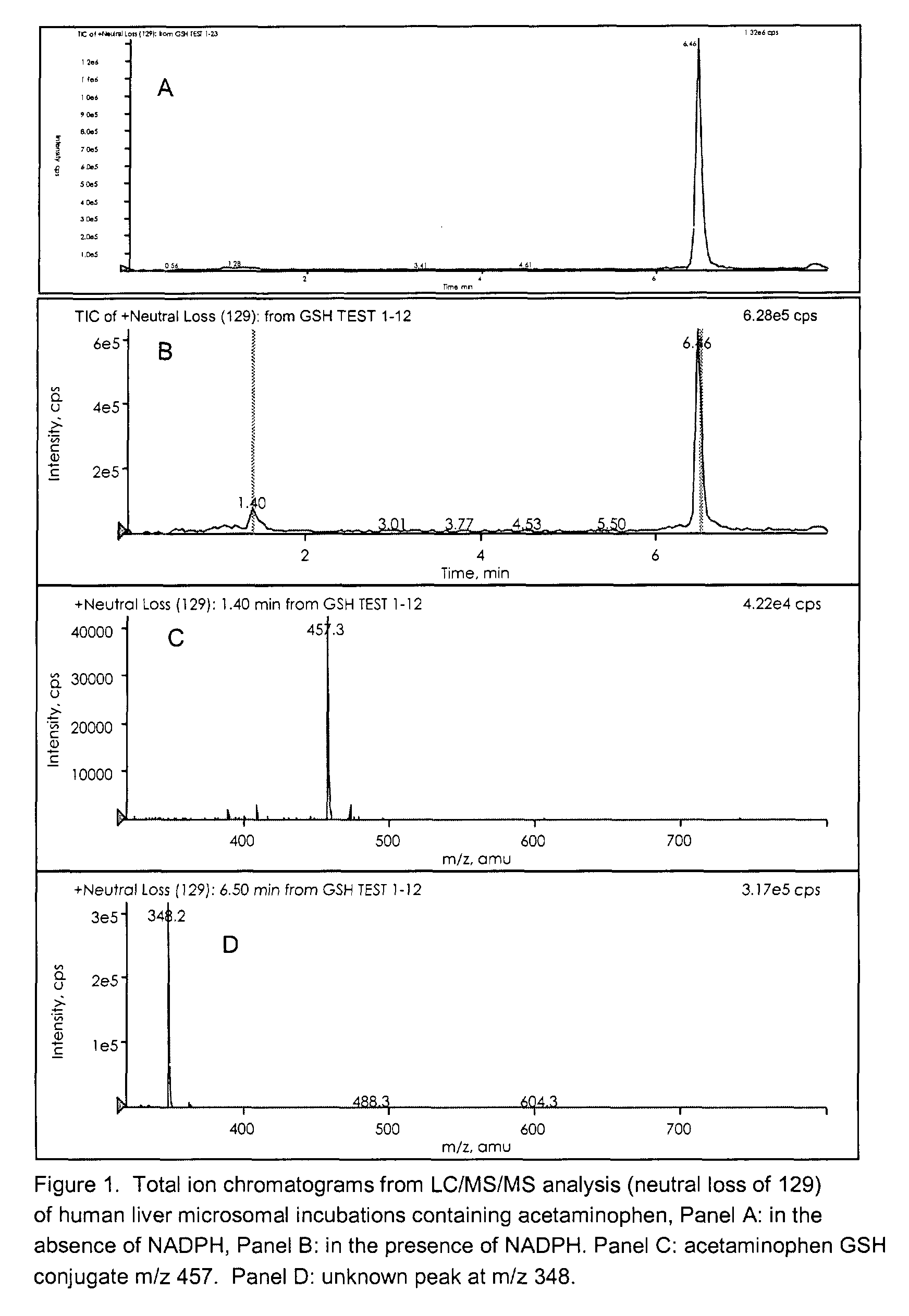
- Control samples without NADPH or substrate showed the appearance of a late eluting matrix peak representing a response at m/z 348 (Figure 1). Since the mass to charge ratio of a GSH molecule ion is 308, this matrix peak can be eliminated by starting the scan range slightly higher (350 instead 320 m/z). The chromatograms shown in Figures 2 - 4 were obtained by reconstructing the ion current from m/z 350 to 800. It is recommended that for every set of samples negative and positive control samples be included.
- Results from the validation with 20 commercially available compounds (Figures 2 - 4) demonstrated that the current method reliably detects the formation of reactive metabolites. Each of the 10 compounds that possess desirable safety profile produced negative responses (Figure 2). This suggests that the method is not likely to produce false positive responses.
- Eight out of the 10 compounds that are known to generate reactive metabolites produced positive responses (Figure 3). These positive responses cover a broad range of reactive metabolites (Table 1), including quinone imine (acetominophen and indomethacin), nitrenium (clozapine), epoxide (carbamazepine), quinone (4-hydroxyanisole) and quinone methide (m-cresol, p-cresol and 4-isopropylphenol). The formation of the reactive metabolite from indomethacin requires several sequential oxidation steps (13). These results suggest that the current method detects most reactive metabolites including those resulting from multiple oxidation steps.
- The two compounds that are known to generate reactive metabolites but did not produce positive responses in the current assay are valproic acid and phenytoin (Figure 4). However, it is well documented that the formation of the valproic acid reactive metabolite (2,4-diene-VPA) requires not only microsomal P450-oxidation to form 40ene VPA but also β-oxidation catalyzed by a mitochondrial Coenzyme A dependent process to form 2,4-diene-VPA (19). For phenytoin, the reactive metabolite is a free radical instead of an epoxide (20). GSH can reduce the free radical and reduce covalent binding of phenytoin, but GSH can not form a stable adduct with it. Clearly the current screen detects only those reactive metabolites formed by bioactivation via microsomal P450 systems and specifically those forming stable adducts with glutathione.
- Three of the compounds tested produce quinone methide reactive metabolites. The peak responses of the neutral loss scan of 129 correlated very well to the previously documented (6) relative quinone methide formation rates, i.e., m-cresol<p-cresol<4-isoproylphenol (Figure 2). This suggests that the proposed screen can potentially be used to compare the extent of reactive metabolite formation for several compounds in the same series.



Claims (4)
- A method for identifying a drug candidate which produces reactive metabolites which comprises:a) incubating said drug candidate with a microsomal drug metabolizing enzyme system in the presence of glutathione; andb) detecting a glutathione conjugate if formed in step a).
- The method of claim 1 which is a high throughput method.
- The method of claim 1 wherein said microsomal drug metabolizing enzyme system is a human liver system.
- The method of claim 1 wherein said glutathione conjugates are identified by tandem mass spectrometry.
Applications Claiming Priority (2)
| Application Number | Priority Date | Filing Date | Title |
|---|---|---|---|
| US19969800P | 2000-04-26 | 2000-04-26 | |
| US199698P | 2000-04-26 |
Publications (2)
| Publication Number | Publication Date |
|---|---|
| EP1150120A2 true EP1150120A2 (en) | 2001-10-31 |
| EP1150120A3 EP1150120A3 (en) | 2001-11-07 |
Family
ID=22738644
Family Applications (1)
| Application Number | Title | Priority Date | Filing Date |
|---|---|---|---|
| EP01303546A Withdrawn EP1150120A3 (en) | 2000-04-26 | 2001-04-19 | High-throughput screening method for identifying drug candidates producing reactive metabolites |
Country Status (3)
| Country | Link |
|---|---|
| US (1) | US6830897B2 (en) |
| EP (1) | EP1150120A3 (en) |
| JP (1) | JP2002238597A (en) |
Cited By (5)
| Publication number | Priority date | Publication date | Assignee | Title |
|---|---|---|---|---|
| EP1164200A3 (en) * | 2000-05-31 | 2004-02-18 | Pfizer Products Inc. | Method and device for drug-drug interaction testing sample preparation |
| WO2006012154A1 (en) * | 2004-06-28 | 2006-02-02 | Janssen Pharmaceutica, N.V. | A method for detecting reactive metabolites using stable-isotope trapping and mass spectroscopy |
| WO2010123085A1 (en) * | 2009-04-23 | 2010-10-28 | Eisai R & D Management Co., Ltd. | Trapping compounds and method for identifying reactive metabolites |
| US7884186B2 (en) | 2006-09-29 | 2011-02-08 | Janssen Pharmaceutica Nv | Isotopically labeled trapping agent and method for identifying reactive metabolites |
| CN102445512A (en) * | 2010-10-09 | 2012-05-09 | 中国人民解放军第二军医大学 | Small molecule metabolite map for differentiating liver cancer, hepatitis or liver cirrhosis and its preparation method |
Families Citing this family (6)
| Publication number | Priority date | Publication date | Assignee | Title |
|---|---|---|---|---|
| WO2004109279A2 (en) * | 2003-06-09 | 2004-12-16 | Pfizer Products Inc. | Sensitive and selective in vitro assay for the detection of reactive drug intermediates |
| US7169576B2 (en) * | 2004-01-08 | 2007-01-30 | Bristol-Myers Squibb Company | Method for identifying drug metabolites with dansylated glutathione |
| US20090075319A1 (en) * | 2005-09-14 | 2009-03-19 | Hiroyuki Takahashi | Method of Detecting Reactive Metabolite |
| WO2012160798A1 (en) | 2011-05-20 | 2012-11-29 | 杏林製薬株式会社 | Glutathione alkylester isotopologue and method for detecting reactive metabolite |
| WO2013177293A1 (en) | 2012-05-22 | 2013-11-28 | Biogen Idec Ma Inc. | Trapping reagents for reactive metabolites screening |
| CN117110497A (en) * | 2023-08-15 | 2023-11-24 | 南京药明康德新药开发有限公司 | A high-throughput LC-UV-HRMS method for the detection of reactive metabolites |
Family Cites Families (4)
| Publication number | Priority date | Publication date | Assignee | Title |
|---|---|---|---|---|
| US5478723A (en) * | 1993-09-27 | 1995-12-26 | Parkinson; Andrew | Method and apparatus for determining the role of cytochrome P450 and related enzymes in the metabolism of drugs and other chemicals |
| US5567592A (en) * | 1994-02-02 | 1996-10-22 | Regents Of The University Of California | Screening method for the identification of bioenhancers through the inhibition of P-glycoprotein transport in the gut of a mammal |
| US5891696A (en) * | 1996-08-02 | 1999-04-06 | Panvera Corporation | Compositions for cytochrome P450 biotransformation reactions |
| JPH10207105A (en) | 1997-01-20 | 1998-08-07 | Toyo Ink Mfg Co Ltd | Magnetic developer |
-
2001
- 2001-04-18 US US09/837,674 patent/US6830897B2/en not_active Expired - Fee Related
- 2001-04-19 EP EP01303546A patent/EP1150120A3/en not_active Withdrawn
- 2001-04-24 JP JP2001125758A patent/JP2002238597A/en active Pending
Non-Patent Citations (8)
| Title |
|---|
| BAILLIE THOMAS A ET AL: "Mass spectrometry in the analysis of glutathione conjugates." BIOLOGICAL MASS SPECTROMETRY, vol. 22, no. 6, 1993, pages 319-325, XP001016370 ISSN: 1052-9306 * |
| EYANAGI R ET AL: "STUDIES OF PARACETAMOL PHENACETIN TOXICITY ISOLATION AND CHARACTERIZATION OF P AMINOPHENOL GLUTATHIONE CONJUGATE" XENOBIOTICA, vol. 21, no. 6, 1991, pages 793-804, XP001016359 ISSN: 0049-8254 * |
| JIN LIXIA ET AL: "Identification in rat bile of glutathione conjugates of fluoromethyl 2,2-difluoro-1-(trifluoromethyl)vinyl ether, a nephrotoxic degradate of the anesthetic agent sevoflurane." CHEMICAL RESEARCH IN TOXICOLOGY, vol. 9, no. 2, 1996, pages 555-561, XP001016392 ISSN: 0893-228X * |
| KASSAHUN KELEM ET AL: "Studies on the metabolism of troglitazone to reactive intermediates in vitro and in vivo. Evidence for novel biotransformation pathways involving quinone methide formation and thiazolidinedione ring scission." CHEMICAL RESEARCH IN TOXICOLOGY, vol. 14, no. 1, January 2001 (2001-01), pages 62-70, XP001016371 ISSN: 0893-228X * |
| MAYNARD MICHAEL S ET AL: "Metabolism of (14C)prometryn in rats." JOURNAL OF AGRICULTURAL AND FOOD CHEMISTRY, vol. 47, no. 9, 1999, pages 3858-3865, XP002177097 ISSN: 0021-8561 * |
| STEVENS GREGORY J ET AL: "In vitro metabolism of N-(5-chloro-2-methylphenyl)-N'-(2-methylpr opyl )thiourea: Species comparison and identification of a novel thiocarbamide-glutathione adduct." CHEMICAL RESEARCH IN TOXICOLOGY, vol. 10, no. 7, 1997, pages 733-741, XP001016357 ISSN: 0893-228X * |
| TANG WEI ET AL: "Studies on cytochrome P-450-mediated bioactivation of diclofenac in rats and in human hepatocytes: Identification of glutathione conjugated metabolites." DRUG METABOLISM AND DISPOSITION, vol. 27, no. 3, March 1999 (1999-03), pages 365-372, XP001016369 ISSN: 0090-9556 * |
| WOLF D E ET AL: "THE IDENTIFICATION OF A GLUTATHIONE CONJUGATE OF CAMBENDAZOLE FORMED BY LIVER MICROSOMES" FEDERATION PROCEEDINGS, vol. 33, no. 3 PART 1, 1974, page 574 XP001024070 ISSN: 0014-9446 * |
Cited By (6)
| Publication number | Priority date | Publication date | Assignee | Title |
|---|---|---|---|---|
| EP1164200A3 (en) * | 2000-05-31 | 2004-02-18 | Pfizer Products Inc. | Method and device for drug-drug interaction testing sample preparation |
| WO2006012154A1 (en) * | 2004-06-28 | 2006-02-02 | Janssen Pharmaceutica, N.V. | A method for detecting reactive metabolites using stable-isotope trapping and mass spectroscopy |
| US7445909B2 (en) * | 2004-06-28 | 2008-11-04 | Janssen Phamaceutica N.V. | Method for detecting reactive metabolites using a combination of glutathione and a stable isotopic derivative of glutathione and mass spectroscopy-based pattern recognition |
| US7884186B2 (en) | 2006-09-29 | 2011-02-08 | Janssen Pharmaceutica Nv | Isotopically labeled trapping agent and method for identifying reactive metabolites |
| WO2010123085A1 (en) * | 2009-04-23 | 2010-10-28 | Eisai R & D Management Co., Ltd. | Trapping compounds and method for identifying reactive metabolites |
| CN102445512A (en) * | 2010-10-09 | 2012-05-09 | 中国人民解放军第二军医大学 | Small molecule metabolite map for differentiating liver cancer, hepatitis or liver cirrhosis and its preparation method |
Also Published As
| Publication number | Publication date |
|---|---|
| US6830897B2 (en) | 2004-12-14 |
| EP1150120A3 (en) | 2001-11-07 |
| US20020034729A1 (en) | 2002-03-21 |
| JP2002238597A (en) | 2002-08-27 |
Similar Documents
| Publication | Publication Date | Title |
|---|---|---|
| Chen et al. | Reactive metabolite screen for reducing candidate attrition in drug discovery | |
| Soglia et al. | The development of a higher throughput reactive intermediate screening assay incorporating micro-bore liquid chromatography–micro-electrospray ionization–tandem mass spectrometry and glutathione ethyl ester as an in vitro conjugating agent | |
| Faber et al. | Simulation of the oxidative metabolism of diclofenac by electrochemistry/(liquid chromatography/) mass spectrometry | |
| Black et al. | The interaction of sarin and soman with plasma proteins: the identification of a novel phosphonylation site | |
| Roškar et al. | Analytical methods for quantification of drug metabolites in biological samples | |
| Rindgen et al. | Determination of in vitro formed DNA adducts of 2-amino-1-methyl-6-phenylimidazo [4, 5-b] pyridine using capillary liquid chromatography/electrospray ionization/tandem mass spectrometry | |
| Oak et al. | Synthetically prepared Amadori‐glycated phosphatidylethanolamine can trigger lipid peroxidation via free radical reactions | |
| Lin et al. | Characterization of rat liver microsomal metabolites of clivorine, an hepatotoxic otonecine-type pyrrolizidine alkaloid | |
| Shen et al. | Determination of in vivo adducts of disulfiram with mitochondrial aldehyde dehydrogenase | |
| Gates et al. | Trapping of cis-2-butene-1, 4-dial to measure furan metabolism in human liver microsomes by cytochrome P450 enzymes | |
| US6830897B2 (en) | High throughput screen for reducing drug candidate attrition | |
| Vredenburg et al. | Activation of the anticancer drugs cyclophosphamide and ifosfamide by cytochrome P450 BM3 mutants | |
| Mroczek | Highly efficient, selective and sensitive molecular screening of acetylcholinesterase inhibitors of natural origin by solid-phase extraction-liquid chromatography/electrospray ionisation-octopole-orthogonal acceleration time-of-flight-mass spectrometry and novel thin-layer chromatography-based bioautography | |
| Wen et al. | Screening and characterization of reactive metabolites using glutathione ethyl ester in combination with Q‐trap mass spectrometry | |
| Carol-Visser et al. | Development of an automated on-line pepsin digestion–liquid chromatography–tandem mass spectrometry configuration for the rapid analysis of protein adducts of chemical warfare agents | |
| Neal et al. | Some high-performance liquid-chromatographic studies of the metabolism of aflatoxins by rat liver microsomal preparations | |
| Stiborová et al. | Mechanism of peroxidase-mediated oxidation of carcinogenic o-anisidine and its binding to DNA | |
| Göldner et al. | Development of an electrochemical flow‐through cell for the fast and easy generation of isotopically labeled metabolite standards | |
| Potęga et al. | Electrochemical simulation of metabolism for antitumor-active imidazoacridinone C-1311 and in silico prediction of drug metabolic reactions | |
| Castro et al. | Rat liver microsomal and nuclear activation of methanol to hydroxymethyl free radicals | |
| Kawasaki et al. | Immobilized 3α-hydroxysteroid dehydrogenase and dansyl hydrazine as a pre-labeling reagent for high-performance liquid chromatography with fluorescence detection of bile acids | |
| Stock et al. | The formation of styrene glutathione adducts catalyzed by prostaglandin H synthase. A possible new mechanism for the formation of glutathione conjugates. | |
| Yukinaga et al. | Glutathione S-transferase pi trapping method for generation and characterization of drug–protein adducts in human liver microsomes using liquid chromatography–tandem mass spectrometry | |
| Wang et al. | Rapid screening and characterization of glutathione-trapped reactive metabolites using a polarity switch-based approach on a high-resolution quadrupole orbitrap mass spectrometer: Wang Z. et al. | |
| WO2006012154A1 (en) | A method for detecting reactive metabolites using stable-isotope trapping and mass spectroscopy |
Legal Events
| Date | Code | Title | Description |
|---|---|---|---|
| PUAI | Public reference made under article 153(3) epc to a published international application that has entered the european phase |
Free format text: ORIGINAL CODE: 0009012 |
|
| PUAL | Search report despatched |
Free format text: ORIGINAL CODE: 0009013 |
|
| 17P | Request for examination filed |
Effective date: 20010430 |
|
| AK | Designated contracting states |
Kind code of ref document: A2 Designated state(s): AT BE CH CY DE DK ES FI FR GB GR IE IT LI LU MC NL PT SE TR |
|
| AX | Request for extension of the european patent |
Free format text: AL;LT;LV;MK;RO;SI |
|
| AK | Designated contracting states |
Kind code of ref document: A3 Designated state(s): AT BE CH CY DE DK ES FI FR GB GR IE IT LI LU MC NL PT SE TR |
|
| AX | Request for extension of the european patent |
Free format text: AL;LT;LV;MK;RO;SI |
|
| RIN1 | Information on inventor provided before grant (corrected) |
Inventor name: CHEN, WEICHAO GEORGE, PFIZER GLOBAL RES. & DEV. Inventor name: AVERY, MICHAEL JOHN, C/O PFIZER GLOBAL RES. & DEV. Inventor name: FOUDA, HASSAN GOUDA, PFIZER GLOBAL RES. & DEV. |
|
| AKX | Designation fees paid |
Free format text: AT BE CH CY DE DK ES FI FR GB GR IE IT LI LU MC NL PT SE TR |
|
| STAA | Information on the status of an ep patent application or granted ep patent |
Free format text: STATUS: THE APPLICATION IS DEEMED TO BE WITHDRAWN |
|
| 18D | Application deemed to be withdrawn |
Effective date: 20051118 |