EP1146389A1 - Hydrolyzed water-resistant protective overcoat for an imaging element - Google Patents
Hydrolyzed water-resistant protective overcoat for an imaging element Download PDFInfo
- Publication number
- EP1146389A1 EP1146389A1 EP01201193A EP01201193A EP1146389A1 EP 1146389 A1 EP1146389 A1 EP 1146389A1 EP 01201193 A EP01201193 A EP 01201193A EP 01201193 A EP01201193 A EP 01201193A EP 1146389 A1 EP1146389 A1 EP 1146389A1
- Authority
- EP
- European Patent Office
- Prior art keywords
- overcoat
- gelatin
- solution
- photographic
- layer
- Prior art date
- Legal status (The legal status is an assumption and is not a legal conclusion. Google has not performed a legal analysis and makes no representation as to the accuracy of the status listed.)
- Withdrawn
Links
- 230000001681 protective effect Effects 0.000 title claims abstract description 24
- 238000003384 imaging method Methods 0.000 title claims abstract description 19
- XLYOFNOQVPJJNP-UHFFFAOYSA-N water Substances O XLYOFNOQVPJJNP-UHFFFAOYSA-N 0.000 title abstract description 74
- 108010010803 Gelatin Proteins 0.000 claims abstract description 89
- 239000008273 gelatin Substances 0.000 claims abstract description 89
- 229920000159 gelatin Polymers 0.000 claims abstract description 89
- 235000019322 gelatine Nutrition 0.000 claims abstract description 89
- 235000011852 gelatine desserts Nutrition 0.000 claims abstract description 89
- 239000002245 particle Substances 0.000 claims abstract description 42
- 230000002209 hydrophobic effect Effects 0.000 claims abstract description 33
- 238000000034 method Methods 0.000 claims description 51
- 238000012545 processing Methods 0.000 claims description 51
- 239000000203 mixture Substances 0.000 claims description 43
- -1 silver halide Chemical class 0.000 claims description 42
- 229910052709 silver Inorganic materials 0.000 claims description 30
- 239000004332 silver Substances 0.000 claims description 30
- 229920000642 polymer Polymers 0.000 claims description 29
- 239000000839 emulsion Substances 0.000 claims description 28
- 108091005804 Peptidases Proteins 0.000 claims description 23
- 102000035195 Peptidases Human genes 0.000 claims description 17
- BQCADISMDOOEFD-UHFFFAOYSA-N Silver Chemical compound [Ag] BQCADISMDOOEFD-UHFFFAOYSA-N 0.000 claims description 11
- 239000003795 chemical substances by application Substances 0.000 claims description 9
- 238000011161 development Methods 0.000 claims description 9
- 238000004519 manufacturing process Methods 0.000 claims description 7
- 239000007844 bleaching agent Substances 0.000 claims description 6
- 238000010438 heat treatment Methods 0.000 claims description 6
- KXDHJXZQYSOELW-UHFFFAOYSA-N Carbamic acid Chemical compound NC(O)=O KXDHJXZQYSOELW-UHFFFAOYSA-N 0.000 claims description 2
- 238000004061 bleaching Methods 0.000 claims 1
- ZMZDMBWJUHKJPS-UHFFFAOYSA-N hydrogen thiocyanate Natural products SC#N ZMZDMBWJUHKJPS-UHFFFAOYSA-N 0.000 claims 1
- DHCDFWKWKRSZHF-UHFFFAOYSA-N sulfurothioic S-acid Chemical compound OS(O)(=O)=S DHCDFWKWKRSZHF-UHFFFAOYSA-N 0.000 claims 1
- 230000015572 biosynthetic process Effects 0.000 abstract description 18
- 238000004581 coalescence Methods 0.000 abstract description 2
- 239000011159 matrix material Substances 0.000 abstract description 2
- 239000010410 layer Substances 0.000 description 93
- 239000000243 solution Substances 0.000 description 65
- 102000004190 Enzymes Human genes 0.000 description 58
- 108090000790 Enzymes Proteins 0.000 description 58
- 229940088598 enzyme Drugs 0.000 description 58
- 238000000576 coating method Methods 0.000 description 39
- 239000011248 coating agent Substances 0.000 description 32
- 230000008569 process Effects 0.000 description 28
- 239000000463 material Substances 0.000 description 18
- 238000001035 drying Methods 0.000 description 16
- 239000000975 dye Substances 0.000 description 14
- 238000011160 research Methods 0.000 description 14
- DOIRQSBPFJWKBE-UHFFFAOYSA-N dibutyl phthalate Chemical compound CCCCOC(=O)C1=CC=CC=C1C(=O)OCCCC DOIRQSBPFJWKBE-UHFFFAOYSA-N 0.000 description 12
- 239000000047 product Substances 0.000 description 11
- WYURNTSHIVDZCO-UHFFFAOYSA-N Tetrahydrofuran Chemical compound C1CCOC1 WYURNTSHIVDZCO-UHFFFAOYSA-N 0.000 description 10
- 238000006243 chemical reaction Methods 0.000 description 10
- 239000004816 latex Substances 0.000 description 10
- 229920000126 latex Polymers 0.000 description 10
- 239000000178 monomer Substances 0.000 description 10
- 238000002360 preparation method Methods 0.000 description 10
- 238000004132 cross linking Methods 0.000 description 8
- 239000006185 dispersion Substances 0.000 description 8
- 230000000694 effects Effects 0.000 description 8
- 230000009477 glass transition Effects 0.000 description 8
- 229920001600 hydrophobic polymer Polymers 0.000 description 8
- 239000003381 stabilizer Substances 0.000 description 8
- ZLMJMSJWJFRBEC-UHFFFAOYSA-N Potassium Chemical class [K] ZLMJMSJWJFRBEC-UHFFFAOYSA-N 0.000 description 7
- 239000008199 coating composition Substances 0.000 description 7
- 229920001577 copolymer Polymers 0.000 description 7
- 239000007788 liquid Substances 0.000 description 7
- 239000000314 lubricant Substances 0.000 description 7
- 239000011253 protective coating Substances 0.000 description 7
- 239000011241 protective layer Substances 0.000 description 7
- 239000007787 solid Substances 0.000 description 7
- 238000012360 testing method Methods 0.000 description 7
- 239000001993 wax Substances 0.000 description 7
- 229940100555 2-methyl-4-isothiazolin-3-one Drugs 0.000 description 6
- 229940100484 5-chloro-2-methyl-4-isothiazolin-3-one Drugs 0.000 description 6
- XEKOWRVHYACXOJ-UHFFFAOYSA-N Ethyl acetate Chemical compound CCOC(C)=O XEKOWRVHYACXOJ-UHFFFAOYSA-N 0.000 description 6
- 239000004698 Polyethylene Substances 0.000 description 6
- KWYUFKZDYYNOTN-UHFFFAOYSA-M Potassium hydroxide Chemical compound [OH-].[K+] KWYUFKZDYYNOTN-UHFFFAOYSA-M 0.000 description 6
- 102100037486 Reverse transcriptase/ribonuclease H Human genes 0.000 description 6
- FAPWRFPIFSIZLT-UHFFFAOYSA-M Sodium chloride Chemical compound [Na+].[Cl-] FAPWRFPIFSIZLT-UHFFFAOYSA-M 0.000 description 6
- HEMHJVSKTPXQMS-UHFFFAOYSA-M Sodium hydroxide Chemical compound [OH-].[Na+] HEMHJVSKTPXQMS-UHFFFAOYSA-M 0.000 description 6
- 239000011230 binding agent Substances 0.000 description 6
- DHNRXBZYEKSXIM-UHFFFAOYSA-N chloromethylisothiazolinone Chemical compound CN1SC(Cl)=CC1=O DHNRXBZYEKSXIM-UHFFFAOYSA-N 0.000 description 6
- 239000011229 interlayer Substances 0.000 description 6
- BEGLCMHJXHIJLR-UHFFFAOYSA-N methylisothiazolinone Chemical compound CN1SC=CC1=O BEGLCMHJXHIJLR-UHFFFAOYSA-N 0.000 description 6
- 230000004048 modification Effects 0.000 description 6
- 238000012986 modification Methods 0.000 description 6
- 229920000573 polyethylene Polymers 0.000 description 6
- 229910052700 potassium Inorganic materials 0.000 description 6
- 239000011591 potassium Substances 0.000 description 6
- SQGYOTSLMSWVJD-UHFFFAOYSA-N silver(1+) nitrate Chemical compound [Ag+].[O-]N(=O)=O SQGYOTSLMSWVJD-UHFFFAOYSA-N 0.000 description 6
- 239000000126 substance Substances 0.000 description 6
- 150000001875 compounds Chemical class 0.000 description 5
- 235000014113 dietary fatty acids Nutrition 0.000 description 5
- 238000000113 differential scanning calorimetry Methods 0.000 description 5
- 239000000194 fatty acid Substances 0.000 description 5
- 229930195729 fatty acid Natural products 0.000 description 5
- 238000002844 melting Methods 0.000 description 5
- 230000008018 melting Effects 0.000 description 5
- 229940024999 proteolytic enzymes for treatment of wounds and ulcers Drugs 0.000 description 5
- 239000011347 resin Substances 0.000 description 5
- 229920005989 resin Polymers 0.000 description 5
- 239000000725 suspension Substances 0.000 description 5
- YLQBMQCUIZJEEH-UHFFFAOYSA-N tetrahydrofuran Natural products C=1C=COC=1 YLQBMQCUIZJEEH-UHFFFAOYSA-N 0.000 description 5
- PTBDIHRZYDMNKB-UHFFFAOYSA-N 2,2-Bis(hydroxymethyl)propionic acid Chemical compound OCC(C)(CO)C(O)=O PTBDIHRZYDMNKB-UHFFFAOYSA-N 0.000 description 4
- WCUXLLCKKVVCTQ-UHFFFAOYSA-M Potassium chloride Chemical compound [Cl-].[K+] WCUXLLCKKVVCTQ-UHFFFAOYSA-M 0.000 description 4
- CDBYLPFSWZWCQE-UHFFFAOYSA-L Sodium Carbonate Chemical compound [Na+].[Na+].[O-]C([O-])=O CDBYLPFSWZWCQE-UHFFFAOYSA-L 0.000 description 4
- UIIMBOGNXHQVGW-UHFFFAOYSA-M Sodium bicarbonate Chemical compound [Na+].OC([O-])=O UIIMBOGNXHQVGW-UHFFFAOYSA-M 0.000 description 4
- 239000007864 aqueous solution Substances 0.000 description 4
- WERYXYBDKMZEQL-UHFFFAOYSA-N butane-1,4-diol Chemical compound OCCCCO WERYXYBDKMZEQL-UHFFFAOYSA-N 0.000 description 4
- 239000003054 catalyst Substances 0.000 description 4
- 239000003599 detergent Substances 0.000 description 4
- QQVHEQUEHCEAKS-UHFFFAOYSA-N diundecyl benzene-1,2-dicarboxylate Chemical compound CCCCCCCCCCCOC(=O)C1=CC=CC=C1C(=O)OCCCCCCCCCCC QQVHEQUEHCEAKS-UHFFFAOYSA-N 0.000 description 4
- 150000004665 fatty acids Chemical class 0.000 description 4
- 238000009472 formulation Methods 0.000 description 4
- 235000018102 proteins Nutrition 0.000 description 4
- 102000004169 proteins and genes Human genes 0.000 description 4
- 108090000623 proteins and genes Proteins 0.000 description 4
- 229920002554 vinyl polymer Polymers 0.000 description 4
- IJHIIHORMWQZRQ-UHFFFAOYSA-N 1-(ethenylsulfonylmethylsulfonyl)ethene Chemical compound C=CS(=O)(=O)CS(=O)(=O)C=C IJHIIHORMWQZRQ-UHFFFAOYSA-N 0.000 description 3
- RLYUNPNLXMSXAX-UHFFFAOYSA-N 5-methylthiazole Chemical compound CC1=CN=CS1 RLYUNPNLXMSXAX-UHFFFAOYSA-N 0.000 description 3
- RBUOZVGOBCRNCU-UHFFFAOYSA-N 5-phenylsulfanyl-2h-tetrazole;sodium Chemical compound [Na].C=1C=CC=CC=1SC=1N=NNN=1 RBUOZVGOBCRNCU-UHFFFAOYSA-N 0.000 description 3
- QTBSBXVTEAMEQO-UHFFFAOYSA-N Acetic acid Chemical compound CC(O)=O QTBSBXVTEAMEQO-UHFFFAOYSA-N 0.000 description 3
- 239000004606 Fillers/Extenders Substances 0.000 description 3
- DNIAPMSPPWPWGF-UHFFFAOYSA-N Propylene glycol Chemical compound CC(O)CO DNIAPMSPPWPWGF-UHFFFAOYSA-N 0.000 description 3
- 238000013459 approach Methods 0.000 description 3
- 239000002585 base Substances 0.000 description 3
- KRKNYBCHXYNGOX-UHFFFAOYSA-N citric acid Chemical compound OC(=O)CC(O)(C(O)=O)CC(O)=O KRKNYBCHXYNGOX-UHFFFAOYSA-N 0.000 description 3
- 239000008367 deionised water Substances 0.000 description 3
- 229910021641 deionized water Inorganic materials 0.000 description 3
- 230000001419 dependent effect Effects 0.000 description 3
- MTHSVFCYNBDYFN-UHFFFAOYSA-N diethylene glycol Chemical compound OCCOCCO MTHSVFCYNBDYFN-UHFFFAOYSA-N 0.000 description 3
- 238000009792 diffusion process Methods 0.000 description 3
- 239000012153 distilled water Substances 0.000 description 3
- 239000002019 doping agent Substances 0.000 description 3
- 229920001519 homopolymer Polymers 0.000 description 3
- 239000004922 lacquer Substances 0.000 description 3
- SCWKACOBHZIKDI-UHFFFAOYSA-N n-[3-(5-sulfanylidene-2h-tetrazol-1-yl)phenyl]acetamide Chemical compound CC(=O)NC1=CC=CC(N2C(N=NN2)=S)=C1 SCWKACOBHZIKDI-UHFFFAOYSA-N 0.000 description 3
- 239000003960 organic solvent Substances 0.000 description 3
- 238000006116 polymerization reaction Methods 0.000 description 3
- 229920003009 polyurethane dispersion Polymers 0.000 description 3
- USHAGKDGDHPEEY-UHFFFAOYSA-L potassium persulfate Chemical compound [K+].[K+].[O-]S(=O)(=O)OOS([O-])(=O)=O USHAGKDGDHPEEY-UHFFFAOYSA-L 0.000 description 3
- 230000001235 sensitizing effect Effects 0.000 description 3
- 229910001961 silver nitrate Inorganic materials 0.000 description 3
- 239000011780 sodium chloride Substances 0.000 description 3
- 239000002904 solvent Substances 0.000 description 3
- 239000004094 surface-active agent Substances 0.000 description 3
- 239000008399 tap water Substances 0.000 description 3
- 235000020679 tap water Nutrition 0.000 description 3
- 150000003568 thioethers Chemical class 0.000 description 3
- GGZHVNZHFYCSEV-UHFFFAOYSA-N 1-Phenyl-5-mercaptotetrazole Chemical compound SC1=NN=NN1C1=CC=CC=C1 GGZHVNZHFYCSEV-UHFFFAOYSA-N 0.000 description 2
- OEPOKWHJYJXUGD-UHFFFAOYSA-N 2-(3-phenylmethoxyphenyl)-1,3-thiazole-4-carbaldehyde Chemical compound O=CC1=CSC(C=2C=C(OCC=3C=CC=CC=3)C=CC=2)=N1 OEPOKWHJYJXUGD-UHFFFAOYSA-N 0.000 description 2
- OBETXYAYXDNJHR-UHFFFAOYSA-N 2-Ethylhexanoic acid Chemical compound CCCCC(CC)C(O)=O OBETXYAYXDNJHR-UHFFFAOYSA-N 0.000 description 2
- OMIGHNLMNHATMP-UHFFFAOYSA-N 2-hydroxyethyl prop-2-enoate Chemical compound OCCOC(=O)C=C OMIGHNLMNHATMP-UHFFFAOYSA-N 0.000 description 2
- 125000003903 2-propenyl group Chemical group [H]C([*])([H])C([H])=C([H])[H] 0.000 description 2
- CJAZCKUGLFWINJ-UHFFFAOYSA-N 3,4-dihydroxybenzene-1,2-disulfonic acid Chemical compound OC1=CC=C(S(O)(=O)=O)C(S(O)(=O)=O)=C1O CJAZCKUGLFWINJ-UHFFFAOYSA-N 0.000 description 2
- IJGRMHOSHXDMSA-UHFFFAOYSA-N Atomic nitrogen Chemical compound N#N IJGRMHOSHXDMSA-UHFFFAOYSA-N 0.000 description 2
- CPELXLSAUQHCOX-UHFFFAOYSA-M Bromide Chemical compound [Br-] CPELXLSAUQHCOX-UHFFFAOYSA-M 0.000 description 2
- JIGUQPWFLRLWPJ-UHFFFAOYSA-N Ethyl acrylate Chemical compound CCOC(=O)C=C JIGUQPWFLRLWPJ-UHFFFAOYSA-N 0.000 description 2
- 239000005058 Isophorone diisocyanate Substances 0.000 description 2
- VVQNEPGJFQJSBK-UHFFFAOYSA-N Methyl methacrylate Chemical compound COC(=O)C(C)=C VVQNEPGJFQJSBK-UHFFFAOYSA-N 0.000 description 2
- 239000004952 Polyamide Substances 0.000 description 2
- ZFOZVQLOBQUTQQ-UHFFFAOYSA-N Tributyl citrate Chemical compound CCCCOC(=O)CC(O)(C(=O)OCCCC)CC(=O)OCCCC ZFOZVQLOBQUTQQ-UHFFFAOYSA-N 0.000 description 2
- GTVWRXDRKAHEAD-UHFFFAOYSA-N Tris(2-ethylhexyl) phosphate Chemical compound CCCCC(CC)COP(=O)(OCC(CC)CCCC)OCC(CC)CCCC GTVWRXDRKAHEAD-UHFFFAOYSA-N 0.000 description 2
- UKLDJPRMSDWDSL-UHFFFAOYSA-L [dibutyl(dodecanoyloxy)stannyl] dodecanoate Chemical compound CCCCCCCCCCCC(=O)O[Sn](CCCC)(CCCC)OC(=O)CCCCCCCCCCC UKLDJPRMSDWDSL-UHFFFAOYSA-L 0.000 description 2
- 239000002253 acid Substances 0.000 description 2
- 150000003926 acrylamides Chemical class 0.000 description 2
- 239000000654 additive Substances 0.000 description 2
- 150000001336 alkenes Chemical class 0.000 description 2
- 238000004458 analytical method Methods 0.000 description 2
- 230000008901 benefit Effects 0.000 description 2
- CQEYYJKEWSMYFG-UHFFFAOYSA-N butyl acrylate Chemical compound CCCCOC(=O)C=C CQEYYJKEWSMYFG-UHFFFAOYSA-N 0.000 description 2
- CZBZUDVBLSSABA-UHFFFAOYSA-N butylated hydroxyanisole Chemical compound COC1=CC=C(O)C(C(C)(C)C)=C1.COC1=CC=C(O)C=C1C(C)(C)C CZBZUDVBLSSABA-UHFFFAOYSA-N 0.000 description 2
- 229910052792 caesium Inorganic materials 0.000 description 2
- TVFDJXOCXUVLDH-UHFFFAOYSA-N caesium atom Chemical compound [Cs] TVFDJXOCXUVLDH-UHFFFAOYSA-N 0.000 description 2
- SHZIWNPUGXLXDT-UHFFFAOYSA-N caproic acid ethyl ester Natural products CCCCCC(=O)OCC SHZIWNPUGXLXDT-UHFFFAOYSA-N 0.000 description 2
- 229920002678 cellulose Polymers 0.000 description 2
- 230000008859 change Effects 0.000 description 2
- 238000001246 colloidal dispersion Methods 0.000 description 2
- 238000009833 condensation Methods 0.000 description 2
- 230000005494 condensation Effects 0.000 description 2
- 239000003431 cross linking reagent Substances 0.000 description 2
- 239000012975 dibutyltin dilaurate Substances 0.000 description 2
- 150000002148 esters Chemical class 0.000 description 2
- 238000005562 fading Methods 0.000 description 2
- 230000006870 function Effects 0.000 description 2
- 125000000524 functional group Chemical group 0.000 description 2
- YVIYNOINIIHOCG-UHFFFAOYSA-N gold(1+);sulfide Chemical compound [S-2].[Au+].[Au+] YVIYNOINIIHOCG-UHFFFAOYSA-N 0.000 description 2
- 239000012456 homogeneous solution Substances 0.000 description 2
- NIMLQBUJDJZYEJ-UHFFFAOYSA-N isophorone diisocyanate Chemical compound CC1(C)CC(N=C=O)CC(C)(CN=C=O)C1 NIMLQBUJDJZYEJ-UHFFFAOYSA-N 0.000 description 2
- 239000006249 magnetic particle Substances 0.000 description 2
- 239000006224 matting agent Substances 0.000 description 2
- PNJWIWWMYCMZRO-UHFFFAOYSA-N pent‐4‐en‐2‐one Natural products CC(=O)CC=C PNJWIWWMYCMZRO-UHFFFAOYSA-N 0.000 description 2
- 230000035699 permeability Effects 0.000 description 2
- 230000000704 physical effect Effects 0.000 description 2
- 229920002647 polyamide Polymers 0.000 description 2
- 229920000515 polycarbonate Polymers 0.000 description 2
- 239000004417 polycarbonate Substances 0.000 description 2
- 239000004848 polyfunctional curative Substances 0.000 description 2
- 229920005862 polyol Polymers 0.000 description 2
- 150000003077 polyols Chemical class 0.000 description 2
- 229920002635 polyurethane Polymers 0.000 description 2
- 239000004814 polyurethane Substances 0.000 description 2
- IOLCXVTUBQKXJR-UHFFFAOYSA-M potassium bromide Chemical compound [K+].[Br-] IOLCXVTUBQKXJR-UHFFFAOYSA-M 0.000 description 2
- 239000001103 potassium chloride Substances 0.000 description 2
- 235000011164 potassium chloride Nutrition 0.000 description 2
- RUDNWZFWWJFUSF-UHFFFAOYSA-M potassium;(4-methylphenyl)-oxido-oxo-sulfanylidene-$l^{6}-sulfane Chemical compound [K+].CC1=CC=C(S([O-])(=O)=S)C=C1 RUDNWZFWWJFUSF-UHFFFAOYSA-M 0.000 description 2
- 239000000843 powder Substances 0.000 description 2
- 238000001556 precipitation Methods 0.000 description 2
- 230000005855 radiation Effects 0.000 description 2
- 239000001044 red dye Substances 0.000 description 2
- 150000003839 salts Chemical class 0.000 description 2
- 235000017557 sodium bicarbonate Nutrition 0.000 description 2
- 229910000030 sodium bicarbonate Inorganic materials 0.000 description 2
- 229910000029 sodium carbonate Inorganic materials 0.000 description 2
- 238000001228 spectrum Methods 0.000 description 2
- 230000000087 stabilizing effect Effects 0.000 description 2
- 238000003756 stirring Methods 0.000 description 2
- FRCBOHAGKUJBHE-UHFFFAOYSA-N tetrapotassium;ruthenium(2+);hexacyanide Chemical compound [K+].[K+].[K+].[K+].[Ru+2].N#[C-].N#[C-].N#[C-].N#[C-].N#[C-].N#[C-] FRCBOHAGKUJBHE-UHFFFAOYSA-N 0.000 description 2
- 230000007704 transition Effects 0.000 description 2
- 238000005406 washing Methods 0.000 description 2
- ALSTYHKOOCGGFT-KTKRTIGZSA-N (9Z)-octadecen-1-ol Chemical compound CCCCCCCC\C=C/CCCCCCCCO ALSTYHKOOCGGFT-KTKRTIGZSA-N 0.000 description 1
- ZKEGGSPWBGCPNF-UHFFFAOYSA-N 2,5-dihydroxy-5-methyl-3-(piperidin-1-ylamino)cyclopent-2-en-1-one Chemical compound O=C1C(C)(O)CC(NN2CCCCC2)=C1O ZKEGGSPWBGCPNF-UHFFFAOYSA-N 0.000 description 1
- VXQBJTKSVGFQOL-UHFFFAOYSA-N 2-(2-butoxyethoxy)ethyl acetate Chemical compound CCCCOCCOCCOC(C)=O VXQBJTKSVGFQOL-UHFFFAOYSA-N 0.000 description 1
- XKZQKPRCPNGNFR-UHFFFAOYSA-N 2-(3-hydroxyphenyl)phenol Chemical compound OC1=CC=CC(C=2C(=CC=CC=2)O)=C1 XKZQKPRCPNGNFR-UHFFFAOYSA-N 0.000 description 1
- XHZPRMZZQOIPDS-UHFFFAOYSA-N 2-Methyl-2-[(1-oxo-2-propenyl)amino]-1-propanesulfonic acid Chemical compound OS(=O)(=O)CC(C)(C)NC(=O)C=C XHZPRMZZQOIPDS-UHFFFAOYSA-N 0.000 description 1
- ZAWQXWZJKKICSZ-UHFFFAOYSA-N 3,3-dimethyl-2-methylidenebutanamide Chemical compound CC(C)(C)C(=C)C(N)=O ZAWQXWZJKKICSZ-UHFFFAOYSA-N 0.000 description 1
- VYWYYJYRVSBHJQ-UHFFFAOYSA-N 3,5-dinitrobenzoic acid Chemical compound OC(=O)C1=CC([N+]([O-])=O)=CC([N+]([O-])=O)=C1 VYWYYJYRVSBHJQ-UHFFFAOYSA-N 0.000 description 1
- OGKFKDXDIFNDLR-UHFFFAOYSA-N 5-phenylsulfanyl-2h-tetrazole;silver Chemical compound [Ag].C=1C=CC=CC=1SC=1N=NNN=1 OGKFKDXDIFNDLR-UHFFFAOYSA-N 0.000 description 1
- HRPVXLWXLXDGHG-UHFFFAOYSA-N Acrylamide Chemical compound NC(=O)C=C HRPVXLWXLXDGHG-UHFFFAOYSA-N 0.000 description 1
- ATRRKUHOCOJYRX-UHFFFAOYSA-N Ammonium bicarbonate Chemical compound [NH4+].OC([O-])=O ATRRKUHOCOJYRX-UHFFFAOYSA-N 0.000 description 1
- NOWKCMXCCJGMRR-UHFFFAOYSA-N Aziridine Chemical compound C1CN1 NOWKCMXCCJGMRR-UHFFFAOYSA-N 0.000 description 1
- 241000283690 Bos taurus Species 0.000 description 1
- BHPQYMZQTOCNFJ-UHFFFAOYSA-N Calcium cation Chemical compound [Ca+2] BHPQYMZQTOCNFJ-UHFFFAOYSA-N 0.000 description 1
- 229920001747 Cellulose diacetate Polymers 0.000 description 1
- 229920002284 Cellulose triacetate Polymers 0.000 description 1
- 239000004970 Chain extender Substances 0.000 description 1
- 239000004971 Cross linker Substances 0.000 description 1
- PYGXAGIECVVIOZ-UHFFFAOYSA-N Dibutyl decanedioate Chemical compound CCCCOC(=O)CCCCCCCCC(=O)OCCCC PYGXAGIECVVIOZ-UHFFFAOYSA-N 0.000 description 1
- LFQSCWFLJHTTHZ-UHFFFAOYSA-N Ethanol Chemical compound CCO LFQSCWFLJHTTHZ-UHFFFAOYSA-N 0.000 description 1
- IAYPIBMASNFSPL-UHFFFAOYSA-N Ethylene oxide Chemical compound C1CO1 IAYPIBMASNFSPL-UHFFFAOYSA-N 0.000 description 1
- CTKINSOISVBQLD-UHFFFAOYSA-N Glycidol Chemical compound OCC1CO1 CTKINSOISVBQLD-UHFFFAOYSA-N 0.000 description 1
- DGAQECJNVWCQMB-PUAWFVPOSA-M Ilexoside XXIX Chemical compound C[C@@H]1CC[C@@]2(CC[C@@]3(C(=CC[C@H]4[C@]3(CC[C@@H]5[C@@]4(CC[C@@H](C5(C)C)OS(=O)(=O)[O-])C)C)[C@@H]2[C@]1(C)O)C)C(=O)O[C@H]6[C@@H]([C@H]([C@@H]([C@H](O6)CO)O)O)O.[Na+] DGAQECJNVWCQMB-PUAWFVPOSA-M 0.000 description 1
- OFOBLEOULBTSOW-UHFFFAOYSA-N Malonic acid Chemical compound OC(=O)CC(O)=O OFOBLEOULBTSOW-UHFFFAOYSA-N 0.000 description 1
- GRYLNZFGIOXLOG-UHFFFAOYSA-N Nitric acid Chemical compound O[N+]([O-])=O GRYLNZFGIOXLOG-UHFFFAOYSA-N 0.000 description 1
- 229920002176 Pluracol® Polymers 0.000 description 1
- 239000004793 Polystyrene Substances 0.000 description 1
- 229920002396 Polyurea Polymers 0.000 description 1
- RRSCOAINCRVDBI-UHFFFAOYSA-N S(=O)(=O)(O)C=1C(=C(C(O)=CC1)O)S(=O)(=O)O.[Na].[Na] Chemical compound S(=O)(=O)(O)C=1C(=C(C(O)=CC1)O)S(=O)(=O)O.[Na].[Na] RRSCOAINCRVDBI-UHFFFAOYSA-N 0.000 description 1
- 206010070834 Sensitisation Diseases 0.000 description 1
- DBMJMQXJHONAFJ-UHFFFAOYSA-M Sodium laurylsulphate Chemical compound [Na+].CCCCCCCCCCCCOS([O-])(=O)=O DBMJMQXJHONAFJ-UHFFFAOYSA-M 0.000 description 1
- 102000005158 Subtilisins Human genes 0.000 description 1
- 108010056079 Subtilisins Proteins 0.000 description 1
- QAOWNCQODCNURD-UHFFFAOYSA-L Sulfate Chemical compound [O-]S([O-])(=O)=O QAOWNCQODCNURD-UHFFFAOYSA-L 0.000 description 1
- GWEVSGVZZGPLCZ-UHFFFAOYSA-N Titan oxide Chemical compound O=[Ti]=O GWEVSGVZZGPLCZ-UHFFFAOYSA-N 0.000 description 1
- QYKIQEUNHZKYBP-UHFFFAOYSA-N Vinyl ether Chemical class C=COC=C QYKIQEUNHZKYBP-UHFFFAOYSA-N 0.000 description 1
- NNLVGZFZQQXQNW-ADJNRHBOSA-N [(2r,3r,4s,5r,6s)-4,5-diacetyloxy-3-[(2s,3r,4s,5r,6r)-3,4,5-triacetyloxy-6-(acetyloxymethyl)oxan-2-yl]oxy-6-[(2r,3r,4s,5r,6s)-4,5,6-triacetyloxy-2-(acetyloxymethyl)oxan-3-yl]oxyoxan-2-yl]methyl acetate Chemical compound O([C@@H]1O[C@@H]([C@H]([C@H](OC(C)=O)[C@H]1OC(C)=O)O[C@H]1[C@@H]([C@@H](OC(C)=O)[C@H](OC(C)=O)[C@@H](COC(C)=O)O1)OC(C)=O)COC(=O)C)[C@@H]1[C@@H](COC(C)=O)O[C@@H](OC(C)=O)[C@H](OC(C)=O)[C@H]1OC(C)=O NNLVGZFZQQXQNW-ADJNRHBOSA-N 0.000 description 1
- WCFAILQXAJSJST-UHFFFAOYSA-L [O-]S(C(C=CC=C1)=C1C(NC1=CC=CC(N2N=NC(S)=N2)=C1)=O)(=O)=O.[O-]S(C(C=CC=C1)=C1C(NC1=CC=CC(N2N=NC(S)=N2)=C1)=O)(=O)=O.[K+].[K+].[K+].[Au+] Chemical compound [O-]S(C(C=CC=C1)=C1C(NC1=CC=CC(N2N=NC(S)=N2)=C1)=O)(=O)=O.[O-]S(C(C=CC=C1)=C1C(NC1=CC=CC(N2N=NC(S)=N2)=C1)=O)(=O)=O.[K+].[K+].[K+].[Au+] WCFAILQXAJSJST-UHFFFAOYSA-L 0.000 description 1
- 238000005299 abrasion Methods 0.000 description 1
- 239000006096 absorbing agent Substances 0.000 description 1
- 150000001241 acetals Chemical class 0.000 description 1
- YJVBLROMQZEFPA-UHFFFAOYSA-L acid red 26 Chemical compound [Na+].[Na+].CC1=CC(C)=CC=C1N=NC1=C(O)C(S([O-])(=O)=O)=CC2=CC(S([O-])(=O)=O)=CC=C12 YJVBLROMQZEFPA-UHFFFAOYSA-L 0.000 description 1
- 150000007513 acids Chemical class 0.000 description 1
- 229920006243 acrylic copolymer Polymers 0.000 description 1
- 230000004913 activation Effects 0.000 description 1
- 239000011149 active material Substances 0.000 description 1
- 238000007754 air knife coating Methods 0.000 description 1
- 150000001298 alcohols Chemical class 0.000 description 1
- 239000003513 alkali Substances 0.000 description 1
- 125000005599 alkyl carboxylate group Chemical group 0.000 description 1
- 125000000217 alkyl group Chemical group 0.000 description 1
- 239000001099 ammonium carbonate Substances 0.000 description 1
- 235000012501 ammonium carbonate Nutrition 0.000 description 1
- 150000008064 anhydrides Chemical class 0.000 description 1
- 125000000129 anionic group Chemical group 0.000 description 1
- 239000003963 antioxidant agent Substances 0.000 description 1
- 230000003078 antioxidant effect Effects 0.000 description 1
- 239000012736 aqueous medium Substances 0.000 description 1
- 230000004888 barrier function Effects 0.000 description 1
- SRSXLGNVWSONIS-UHFFFAOYSA-N benzenesulfonic acid Chemical compound OS(=O)(=O)C1=CC=CC=C1 SRSXLGNVWSONIS-UHFFFAOYSA-N 0.000 description 1
- 229940092714 benzenesulfonic acid Drugs 0.000 description 1
- 230000003115 biocidal effect Effects 0.000 description 1
- 239000003139 biocide Substances 0.000 description 1
- 230000005540 biological transmission Effects 0.000 description 1
- 230000000903 blocking effect Effects 0.000 description 1
- 210000000988 bone and bone Anatomy 0.000 description 1
- UYANAUSDHIFLFQ-UHFFFAOYSA-N borinic acid Chemical class OB UYANAUSDHIFLFQ-UHFFFAOYSA-N 0.000 description 1
- 150000001639 boron compounds Chemical class 0.000 description 1
- ZADPBFCGQRWHPN-UHFFFAOYSA-N boronic acid Chemical compound OBO ZADPBFCGQRWHPN-UHFFFAOYSA-N 0.000 description 1
- 229910001424 calcium ion Inorganic materials 0.000 description 1
- 239000002775 capsule Substances 0.000 description 1
- 150000001718 carbodiimides Chemical class 0.000 description 1
- 125000003178 carboxy group Chemical group [H]OC(*)=O 0.000 description 1
- 150000001734 carboxylic acid salts Chemical class 0.000 description 1
- 238000009125 cardiac resynchronization therapy Methods 0.000 description 1
- 239000004203 carnauba wax Substances 0.000 description 1
- 235000013869 carnauba wax Nutrition 0.000 description 1
- 239000000969 carrier Substances 0.000 description 1
- 239000005018 casein Substances 0.000 description 1
- BECPQYXYKAMYBN-UHFFFAOYSA-N casein, tech. Chemical compound NCCCCC(C(O)=O)N=C(O)C(CC(O)=O)N=C(O)C(CCC(O)=N)N=C(O)C(CC(C)C)N=C(O)C(CCC(O)=O)N=C(O)C(CC(O)=O)N=C(O)C(CCC(O)=O)N=C(O)C(C(C)O)N=C(O)C(CCC(O)=N)N=C(O)C(CCC(O)=N)N=C(O)C(CCC(O)=N)N=C(O)C(CCC(O)=O)N=C(O)C(CCC(O)=O)N=C(O)C(COP(O)(O)=O)N=C(O)C(CCC(O)=N)N=C(O)C(N)CC1=CC=CC=C1 BECPQYXYKAMYBN-UHFFFAOYSA-N 0.000 description 1
- 235000021240 caseins Nutrition 0.000 description 1
- 125000002091 cationic group Chemical group 0.000 description 1
- 239000001913 cellulose Substances 0.000 description 1
- 229920002301 cellulose acetate Polymers 0.000 description 1
- 238000012512 characterization method Methods 0.000 description 1
- 239000002738 chelating agent Substances 0.000 description 1
- 239000000084 colloidal system Substances 0.000 description 1
- 239000002131 composite material Substances 0.000 description 1
- 238000001816 cooling Methods 0.000 description 1
- 239000013078 crystal Substances 0.000 description 1
- 238000007766 curtain coating Methods 0.000 description 1
- 230000007547 defect Effects 0.000 description 1
- 235000019329 dioctyl sodium sulphosuccinate Nutrition 0.000 description 1
- 238000003618 dip coating Methods 0.000 description 1
- KPUWHANPEXNPJT-UHFFFAOYSA-N disiloxane Chemical class [SiH3]O[SiH3] KPUWHANPEXNPJT-UHFFFAOYSA-N 0.000 description 1
- FBELJLCOAHMRJK-UHFFFAOYSA-L disodium;2,2-bis(2-ethylhexyl)-3-sulfobutanedioate Chemical compound [Na+].[Na+].CCCCC(CC)CC(C([O-])=O)(C(C([O-])=O)S(O)(=O)=O)CC(CC)CCCC FBELJLCOAHMRJK-UHFFFAOYSA-L 0.000 description 1
- YHAIUSTWZPMYGG-UHFFFAOYSA-L disodium;2,2-dioctyl-3-sulfobutanedioate Chemical compound [Na+].[Na+].CCCCCCCCC(C([O-])=O)(C(C([O-])=O)S(O)(=O)=O)CCCCCCCC YHAIUSTWZPMYGG-UHFFFAOYSA-L 0.000 description 1
- 238000012674 dispersion polymerization Methods 0.000 description 1
- 238000004090 dissolution Methods 0.000 description 1
- 238000009826 distribution Methods 0.000 description 1
- AFOSIXZFDONLBT-UHFFFAOYSA-N divinyl sulfone Chemical compound C=CS(=O)(=O)C=C AFOSIXZFDONLBT-UHFFFAOYSA-N 0.000 description 1
- 238000002296 dynamic light scattering Methods 0.000 description 1
- 239000003995 emulsifying agent Substances 0.000 description 1
- 238000010556 emulsion polymerization method Methods 0.000 description 1
- 238000007720 emulsion polymerization reaction Methods 0.000 description 1
- 230000007613 environmental effect Effects 0.000 description 1
- 238000001976 enzyme digestion Methods 0.000 description 1
- 229940117927 ethylene oxide Drugs 0.000 description 1
- 238000001704 evaporation Methods 0.000 description 1
- 230000008020 evaporation Effects 0.000 description 1
- 238000001125 extrusion Methods 0.000 description 1
- 238000007765 extrusion coating Methods 0.000 description 1
- 239000012467 final product Substances 0.000 description 1
- 238000010528 free radical solution polymerization reaction Methods 0.000 description 1
- 239000000499 gel Substances 0.000 description 1
- 238000007756 gravure coating Methods 0.000 description 1
- 230000036541 health Effects 0.000 description 1
- 229920001903 high density polyethylene Polymers 0.000 description 1
- 239000004700 high-density polyethylene Substances 0.000 description 1
- 230000003301 hydrolyzing effect Effects 0.000 description 1
- 125000002887 hydroxy group Chemical group [H]O* 0.000 description 1
- 239000011256 inorganic filler Substances 0.000 description 1
- 229910003475 inorganic filler Inorganic materials 0.000 description 1
- 230000003993 interaction Effects 0.000 description 1
- 238000012690 ionic polymerization Methods 0.000 description 1
- 239000012948 isocyanate Substances 0.000 description 1
- 150000002513 isocyanates Chemical class 0.000 description 1
- 238000010030 laminating Methods 0.000 description 1
- 238000003475 lamination Methods 0.000 description 1
- 229940057995 liquid paraffin Drugs 0.000 description 1
- 238000005259 measurement Methods 0.000 description 1
- 239000002609 medium Substances 0.000 description 1
- 150000002734 metacrylic acid derivatives Chemical class 0.000 description 1
- 229910052751 metal Inorganic materials 0.000 description 1
- 239000002184 metal Substances 0.000 description 1
- 229910044991 metal oxide Inorganic materials 0.000 description 1
- 150000004706 metal oxides Chemical class 0.000 description 1
- FQPSGWSUVKBHSU-UHFFFAOYSA-N methacrylamide Chemical class CC(=C)C(N)=O FQPSGWSUVKBHSU-UHFFFAOYSA-N 0.000 description 1
- IDBOAVAEGRJRIZ-UHFFFAOYSA-N methylidenehydrazine Chemical compound NN=C IDBOAVAEGRJRIZ-UHFFFAOYSA-N 0.000 description 1
- 239000012184 mineral wax Substances 0.000 description 1
- 150000007522 mineralic acids Chemical class 0.000 description 1
- 239000003607 modifier Substances 0.000 description 1
- AJDUTMFFZHIJEM-UHFFFAOYSA-N n-(9,10-dioxoanthracen-1-yl)-4-[4-[[4-[4-[(9,10-dioxoanthracen-1-yl)carbamoyl]phenyl]phenyl]diazenyl]phenyl]benzamide Chemical compound O=C1C2=CC=CC=C2C(=O)C2=C1C=CC=C2NC(=O)C(C=C1)=CC=C1C(C=C1)=CC=C1N=NC(C=C1)=CC=C1C(C=C1)=CC=C1C(=O)NC1=CC=CC2=C1C(=O)C1=CC=CC=C1C2=O AJDUTMFFZHIJEM-UHFFFAOYSA-N 0.000 description 1
- 230000007935 neutral effect Effects 0.000 description 1
- 229910017604 nitric acid Inorganic materials 0.000 description 1
- 150000002825 nitriles Chemical class 0.000 description 1
- 229910052757 nitrogen Inorganic materials 0.000 description 1
- 239000002736 nonionic surfactant Substances 0.000 description 1
- 229940055577 oleyl alcohol Drugs 0.000 description 1
- XMLQWXUVTXCDDL-UHFFFAOYSA-N oleyl alcohol Natural products CCCCCCC=CCCCCCCCCCCO XMLQWXUVTXCDDL-UHFFFAOYSA-N 0.000 description 1
- 230000003287 optical effect Effects 0.000 description 1
- 150000007524 organic acids Chemical class 0.000 description 1
- 150000004028 organic sulfates Chemical class 0.000 description 1
- 239000007800 oxidant agent Substances 0.000 description 1
- 150000002924 oxiranes Chemical class 0.000 description 1
- 239000006174 pH buffer Substances 0.000 description 1
- 239000012188 paraffin wax Substances 0.000 description 1
- UCUUFSAXZMGPGH-UHFFFAOYSA-N penta-1,4-dien-3-one Chemical class C=CC(=O)C=C UCUUFSAXZMGPGH-UHFFFAOYSA-N 0.000 description 1
- 125000005010 perfluoroalkyl group Chemical group 0.000 description 1
- JRKICGRDRMAZLK-UHFFFAOYSA-L peroxydisulfate Chemical class [O-]S(=O)(=O)OOS([O-])(=O)=O JRKICGRDRMAZLK-UHFFFAOYSA-L 0.000 description 1
- 239000012169 petroleum derived wax Substances 0.000 description 1
- 235000019381 petroleum wax Nutrition 0.000 description 1
- 239000003116 photochemical stabilizer Substances 0.000 description 1
- 239000000049 pigment Substances 0.000 description 1
- 239000004014 plasticizer Substances 0.000 description 1
- 229920003207 poly(ethylene-2,6-naphthalate) Polymers 0.000 description 1
- 229920002401 polyacrylamide Polymers 0.000 description 1
- 229920000728 polyester Polymers 0.000 description 1
- 229920000570 polyether Polymers 0.000 description 1
- 239000011112 polyethylene naphthalate Substances 0.000 description 1
- 229920000139 polyethylene terephthalate Polymers 0.000 description 1
- 239000005020 polyethylene terephthalate Substances 0.000 description 1
- 229920002557 polyglycidol polymer Polymers 0.000 description 1
- 239000002861 polymer material Substances 0.000 description 1
- 229920000193 polymethacrylate Polymers 0.000 description 1
- 229920002223 polystyrene Polymers 0.000 description 1
- 229920001343 polytetrafluoroethylene Polymers 0.000 description 1
- 229920002689 polyvinyl acetate Polymers 0.000 description 1
- 229920002451 polyvinyl alcohol Polymers 0.000 description 1
- 229920002981 polyvinylidene fluoride Polymers 0.000 description 1
- 229920002717 polyvinylpyridine Polymers 0.000 description 1
- RWPGFSMJFRPDDP-UHFFFAOYSA-L potassium metabisulfite Chemical compound [K+].[K+].[O-]S(=O)S([O-])(=O)=O RWPGFSMJFRPDDP-UHFFFAOYSA-L 0.000 description 1
- 229940043349 potassium metabisulfite Drugs 0.000 description 1
- 235000010263 potassium metabisulphite Nutrition 0.000 description 1
- 238000003672 processing method Methods 0.000 description 1
- 230000002797 proteolythic effect Effects 0.000 description 1
- 238000010526 radical polymerization reaction Methods 0.000 description 1
- 150000003254 radicals Chemical class 0.000 description 1
- 230000000717 retained effect Effects 0.000 description 1
- 238000007763 reverse roll coating Methods 0.000 description 1
- 239000006254 rheological additive Substances 0.000 description 1
- 230000008313 sensitization Effects 0.000 description 1
- 239000002210 silicon-based material Substances 0.000 description 1
- 239000002356 single layer Substances 0.000 description 1
- 238000001542 size-exclusion chromatography Methods 0.000 description 1
- 238000007767 slide coating Methods 0.000 description 1
- 229910052708 sodium Inorganic materials 0.000 description 1
- 239000011734 sodium Substances 0.000 description 1
- HRZFUMHJMZEROT-UHFFFAOYSA-L sodium disulfite Chemical compound [Na+].[Na+].[O-]S(=O)S([O-])(=O)=O HRZFUMHJMZEROT-UHFFFAOYSA-L 0.000 description 1
- 229940001584 sodium metabisulfite Drugs 0.000 description 1
- 235000010262 sodium metabisulphite Nutrition 0.000 description 1
- 159000000000 sodium salts Chemical class 0.000 description 1
- AKHNMLFCWUSKQB-UHFFFAOYSA-L sodium thiosulfate Chemical compound [Na+].[Na+].[O-]S([O-])(=O)=S AKHNMLFCWUSKQB-UHFFFAOYSA-L 0.000 description 1
- 235000019345 sodium thiosulphate Nutrition 0.000 description 1
- FIWQZURFGYXCEO-UHFFFAOYSA-M sodium;decanoate Chemical compound [Na+].CCCCCCCCCC([O-])=O FIWQZURFGYXCEO-UHFFFAOYSA-M 0.000 description 1
- DAJSVUQLFFJUSX-UHFFFAOYSA-M sodium;dodecane-1-sulfonate Chemical compound [Na+].CCCCCCCCCCCCS([O-])(=O)=O DAJSVUQLFFJUSX-UHFFFAOYSA-M 0.000 description 1
- 239000007779 soft material Substances 0.000 description 1
- 230000003595 spectral effect Effects 0.000 description 1
- 230000007480 spreading Effects 0.000 description 1
- 238000003892 spreading Methods 0.000 description 1
- 230000006641 stabilisation Effects 0.000 description 1
- 238000011105 stabilization Methods 0.000 description 1
- 150000003440 styrenes Chemical class 0.000 description 1
- 238000000859 sublimation Methods 0.000 description 1
- 230000008022 sublimation Effects 0.000 description 1
- 150000005846 sugar alcohols Polymers 0.000 description 1
- BUUPQKDIAURBJP-UHFFFAOYSA-N sulfinic acid Chemical compound OS=O BUUPQKDIAURBJP-UHFFFAOYSA-N 0.000 description 1
- 150000003871 sulfonates Chemical class 0.000 description 1
- 150000003467 sulfuric acid derivatives Chemical class 0.000 description 1
- 238000010557 suspension polymerization reaction Methods 0.000 description 1
- 238000010189 synthetic method Methods 0.000 description 1
- 239000003826 tablet Substances 0.000 description 1
- 150000003567 thiocyanates Chemical class 0.000 description 1
- DHCDFWKWKRSZHF-UHFFFAOYSA-L thiosulfate(2-) Chemical compound [O-]S([S-])(=O)=O DHCDFWKWKRSZHF-UHFFFAOYSA-L 0.000 description 1
- 238000012546 transfer Methods 0.000 description 1
- 125000000391 vinyl group Chemical group [H]C([*])=C([H])[H] 0.000 description 1
- 239000004034 viscosity adjusting agent Substances 0.000 description 1
- 239000001043 yellow dye Substances 0.000 description 1
- 238000004383 yellowing Methods 0.000 description 1
Classifications
-
- G—PHYSICS
- G03—PHOTOGRAPHY; CINEMATOGRAPHY; ANALOGOUS TECHNIQUES USING WAVES OTHER THAN OPTICAL WAVES; ELECTROGRAPHY; HOLOGRAPHY
- G03C—PHOTOSENSITIVE MATERIALS FOR PHOTOGRAPHIC PURPOSES; PHOTOGRAPHIC PROCESSES, e.g. CINE, X-RAY, COLOUR, STEREO-PHOTOGRAPHIC PROCESSES; AUXILIARY PROCESSES IN PHOTOGRAPHY
- G03C1/00—Photosensitive materials
- G03C1/76—Photosensitive materials characterised by the base or auxiliary layers
- G03C1/7614—Cover layers; Backing layers; Base or auxiliary layers characterised by means for lubricating, for rendering anti-abrasive or for preventing adhesion
-
- G—PHYSICS
- G03—PHOTOGRAPHY; CINEMATOGRAPHY; ANALOGOUS TECHNIQUES USING WAVES OTHER THAN OPTICAL WAVES; ELECTROGRAPHY; HOLOGRAPHY
- G03C—PHOTOSENSITIVE MATERIALS FOR PHOTOGRAPHIC PURPOSES; PHOTOGRAPHIC PROCESSES, e.g. CINE, X-RAY, COLOUR, STEREO-PHOTOGRAPHIC PROCESSES; AUXILIARY PROCESSES IN PHOTOGRAPHY
- G03C1/00—Photosensitive materials
- G03C1/76—Photosensitive materials characterised by the base or auxiliary layers
- G03C1/95—Photosensitive materials characterised by the base or auxiliary layers rendered opaque or writable, e.g. with inert particulate additives
-
- G—PHYSICS
- G03—PHOTOGRAPHY; CINEMATOGRAPHY; ANALOGOUS TECHNIQUES USING WAVES OTHER THAN OPTICAL WAVES; ELECTROGRAPHY; HOLOGRAPHY
- G03C—PHOTOSENSITIVE MATERIALS FOR PHOTOGRAPHIC PURPOSES; PHOTOGRAPHIC PROCESSES, e.g. CINE, X-RAY, COLOUR, STEREO-PHOTOGRAPHIC PROCESSES; AUXILIARY PROCESSES IN PHOTOGRAPHY
- G03C11/00—Auxiliary processes in photography
- G03C11/08—Varnishing, e.g. application of protective layers on finished photographic prints
-
- G—PHYSICS
- G03—PHOTOGRAPHY; CINEMATOGRAPHY; ANALOGOUS TECHNIQUES USING WAVES OTHER THAN OPTICAL WAVES; ELECTROGRAPHY; HOLOGRAPHY
- G03C—PHOTOSENSITIVE MATERIALS FOR PHOTOGRAPHIC PURPOSES; PHOTOGRAPHIC PROCESSES, e.g. CINE, X-RAY, COLOUR, STEREO-PHOTOGRAPHIC PROCESSES; AUXILIARY PROCESSES IN PHOTOGRAPHY
- G03C5/00—Photographic processes or agents therefor; Regeneration of such processing agents
- G03C5/26—Processes using silver-salt-containing photosensitive materials or agents therefor
-
- G—PHYSICS
- G03—PHOTOGRAPHY; CINEMATOGRAPHY; ANALOGOUS TECHNIQUES USING WAVES OTHER THAN OPTICAL WAVES; ELECTROGRAPHY; HOLOGRAPHY
- G03C—PHOTOSENSITIVE MATERIALS FOR PHOTOGRAPHIC PURPOSES; PHOTOGRAPHIC PROCESSES, e.g. CINE, X-RAY, COLOUR, STEREO-PHOTOGRAPHIC PROCESSES; AUXILIARY PROCESSES IN PHOTOGRAPHY
- G03C7/00—Multicolour photographic processes or agents therefor; Regeneration of such processing agents; Photosensitive materials for multicolour processes
- G03C7/30—Colour processes using colour-coupling substances; Materials therefor; Preparing or processing such materials
- G03C7/407—Development processes or agents therefor
-
- G—PHYSICS
- G03—PHOTOGRAPHY; CINEMATOGRAPHY; ANALOGOUS TECHNIQUES USING WAVES OTHER THAN OPTICAL WAVES; ELECTROGRAPHY; HOLOGRAPHY
- G03C—PHOTOSENSITIVE MATERIALS FOR PHOTOGRAPHIC PURPOSES; PHOTOGRAPHIC PROCESSES, e.g. CINE, X-RAY, COLOUR, STEREO-PHOTOGRAPHIC PROCESSES; AUXILIARY PROCESSES IN PHOTOGRAPHY
- G03C1/00—Photosensitive materials
- G03C1/76—Photosensitive materials characterised by the base or auxiliary layers
- G03C1/7614—Cover layers; Backing layers; Base or auxiliary layers characterised by means for lubricating, for rendering anti-abrasive or for preventing adhesion
- G03C2001/7635—Protective layer
-
- G—PHYSICS
- G03—PHOTOGRAPHY; CINEMATOGRAPHY; ANALOGOUS TECHNIQUES USING WAVES OTHER THAN OPTICAL WAVES; ELECTROGRAPHY; HOLOGRAPHY
- G03C—PHOTOSENSITIVE MATERIALS FOR PHOTOGRAPHIC PURPOSES; PHOTOGRAPHIC PROCESSES, e.g. CINE, X-RAY, COLOUR, STEREO-PHOTOGRAPHIC PROCESSES; AUXILIARY PROCESSES IN PHOTOGRAPHY
- G03C2200/00—Details
- G03C2200/27—Gelatine content
-
- Y—GENERAL TAGGING OF NEW TECHNOLOGICAL DEVELOPMENTS; GENERAL TAGGING OF CROSS-SECTIONAL TECHNOLOGIES SPANNING OVER SEVERAL SECTIONS OF THE IPC; TECHNICAL SUBJECTS COVERED BY FORMER USPC CROSS-REFERENCE ART COLLECTIONS [XRACs] AND DIGESTS
- Y10—TECHNICAL SUBJECTS COVERED BY FORMER USPC
- Y10S—TECHNICAL SUBJECTS COVERED BY FORMER USPC CROSS-REFERENCE ART COLLECTIONS [XRACs] AND DIGESTS
- Y10S430/00—Radiation imagery chemistry: process, composition, or product thereof
- Y10S430/162—Protective or antiabrasion layer
Definitions
- the present invention relates to photographic elements having a protective overcoat that resists fingerprints, common stains, and spills. More particularly, the present invention provides a processing-solution-permeable protective overcoat that is water resistant in the final processed product.
- the overcoat before formation of the image, comprises hydrophobic polymeric particles in a gelatin matrix. Subsequent treatment of the overcoat, after formation of the image, to remove the gelatin, causes coalescence of the hydrophobic particles, resulting in the formation of a water-resistant continuous protective overcoat.
- Gelatin has been used extensively in a variety of imaging elements as the binder because of its many unique and advantageous properties. For example, its property of water swellability allows processing chemistry to be carried out to form silver halide-based photographic images, and its hydrophilic nature allows gelatin to function as an ink-receiver in ink-jet recording media.
- imaging elements with exposed gelatin-containing materials no matter if they are formed on transparent or reflective media, have to be handled with extreme care so as not to be in contact with any aqueous solutions that may damage the images.
- Accidental spillage of common household solutions such as coffee, punch, or even plain water can damage imaging elements such as photographic prints.
- US Patent No. 2,173,480 describes a method of applying a colloidal suspension to moist film as the last step of photographic processing before drying.
- a number of patents describe methods of solvent coating a protective layer on the image after photographic processing is completed and are described, for example, in US Patent Nos. 2,259,009, 2,331,746, 2,798,004, 3,113,867, 3,190,197, 3,415,670 and 3,733,293. More recently, US Patent No. 5,376,434 describes a protective layer formed on a photographic print by coating and drying a latex on a gelatin-containing layer bearing an image.
- the latex is a resin having a glass transition temperature of from 30 °C to 70 °C.
- Another type of protective coating involves the application of UV-polymerizable monomers and oligomers on a processed image followed by radiation exposure to form crosslinked protective layer, which is described in US Patent Nos. 4,092,173, 4,171,979, 4,333,998 and 4,426,431.
- a drawback for both the solvent coating method and for the radiation cure method is the health and environmental concern of those chemicals or radiation to the coating operator.
- Another drawback is that the photographic materials need to be coated after the processing step. Thus, the processing equipment needs to be modified and the personnel running the processing operation need to be trained to apply the protective coating.
- 2,706,686 describes the formation of a lacquer finish for photographic emulsions, with the aim of providing water- and fingerprint-resistance by coating the light-sensitive layer, prior to exposure, with a porous layer that has a high degree of water permeability to the processing solutions. After processing, the lacquer layer is fused and coalesced into a continuous, impervious coating.
- the porous layer is achieved by coating a mixture of a lacquer and a solid removable extender (ammonium carbonate), and removing the extender by sublimation or dissolution during processing.
- the overcoat as described is coated as a suspension in an organic solvent, and thus is not desirable for large-scale application. More recently, US Patent No. 5,853,926 to Bohan et al.
- a protective coating for a photographic element involving the application of an aqueous coating comprising polymer particles and a soft polymer latex binder.
- This coating allows for appropriate diffusion of photographic processing solutions, and does not require a coating operation after exposure and processing. Again, however, the hydrophobic polymer particles must be fused to form a protective coating that is continuous and water-impermeable.
- the ability to provide the desired property of post-process water/stain resistance of an imaged photographic element, at the point of manufacture of the photographic element, is a highly desired feature.
- the desired photographic element should be permeable to aqueous solutions during the processing step, but after processing achieve water resistance and even water impermeability for at least some time after contact with water.
- U.S. Pat. No. 5,856,051 describes the use of hydrophobic particles with gelatin as the binder in an overcoat formulation.
- This invention demonstrated an aqueous coatable, water-resistant protective overcoat that can be incorporated into the photographic product, allows for appropriate diffusion of photographic processing solutions, and does not require a coating operation after exposure and processing.
- the hydrophobic polymers exemplified in U.S. Pat. No. 5,856,051 include polyethylene having a melting temperature (Tm) of 55 to 200°C, and therefore capable of forming a water-resistant layer by fusing the layer at a temperature higher than the Tm of the polymer after the sample has been processed to generate the image.
- the coating solution is aqueous and can be incorporated in the manufacturing coating operation without any equipment modification.
- the fusing step is simple and environmentally friendly to photofinishing laboratories. Since the particles are incorporated entirely within the uppermost layer, this approach does not suffer from a lack of mechanical strength and integrity during transport and handling prior to image formation and fusing. However, the scratch resistance of such an overcoat after fusing is a serious concern, since polyethylene is a very soft material.
- the present invention provides a gelatin-based aqueous-coatable protective overcoat that can be coated onto the imaging element and allows for appropriate diffusion of photographic processing solutions.
- the overcoat is applied to the imaging element as a composition comprising 10 to 50% by weight gelatin and 50 to 90% by weight of hydrophobic particles (by weight of dry laydown of the entire overcoat) having an average diameter of 10 to 500 nm.
- the gelatin in the overcoat layer is subsequently digested or hydrolyzed by one or more proteolytic enzymes, leading to a gelatin-free water-resistant protective overcoat with good scratch resistance, whereby the hydrophobic particles have coalesced or otherwise forms a film that provides water resistance.
- This method is applicable to a wide selection of materials chosen for their performance as protective overcoat.
- the hydrophobic particles may or may not require fusing depending on its composition.
- the hydrophobic particles comprise a polymer selected to have a T g less than 55°C, preferably less than 50°C and a molecular weight less than 100,000, preferably less 50,000, such that the particles are capable of forming an impermeable film without heat or pressure fusing.
- the overcoat may require fusing or extensive heating.
- a tradeoff for the fusing is that the hydrophobic particles may be selected to provide properties in the protective overcoat not otherwise obtainable, for example, better barrier properties to a wider selection of spill types.
- gelatin in the present overcoat provides manufacturing coatability and allows photographic processing.
- the hydrophobic material can be introduced to the overcoat coating melt in a latex form or as a conventional colloidal dispersion in gelatin, the particle size of particles preferred to be from 10 nm to 500 nm, more preferable to be from 30 nm to 250 nm.
- the gelatin in the overcoat can be removed by one of the following methods, leading to a relatively gelatin-free hydrophobic layer.
- the term “fusing” herein is meant the combination of pressure and heat wherein the heat is applied at a temperature of from 35 to 175°C, typically with a pressure roller or belt.
- the enzyme concentration is dependent on the type of enzyme used, solution properties such as pH, ionic strength, temperature, and other factors that affect enzyme activity and the time allowed for the emulsion to be immersed in the enzyme solution.
- stabilizers are used to maintain constant enzyme activity in solution for extended period of time.
- the present invention provides an imaging element comprising a protective overcoat composition over the imaging layer, as well as methods of converting this overcoat from water-permeable to water-resistant by the application of proteolytic enzymes.
- the invention is also directed to enzyme-containing photochemical processing solutions that can be used to make imaging elements according to the present invention.
- the present invention provides a novel overcoat formulation for the image side of imaging elements, for example photographic prints, which encounter frequent handling and abuse by end-users.
- the overcoat formulation of this invention comprises 50% to 90% by weight (based on the dry laydown of the overcoat) of hydrophobic polymer particles of 10 nm to 500 nm in average size and 10% to 50% by weight (based on the dry laydown of the overcoat) of gelatin as binder.
- Other common addenda such as hardeners (crosslinkers for the gelatin), speed control dyes, matte particles, spreading agents, charge control agents, dry scratch resistance compounds and lubricants can also be included in the formulation as needed.
- the colloidal dispersions of hydrophobic polymers used in this invention are generally latexes or hydrophobic polymers of any composition that can be stabilized in an water-based medium.
- Such hydrophobic polymers are generally classified as either condensation polymer or addition polymers.
- Condensation polymers include, for example, polyesters, polyamides, polyurethanes, polyureas, polyethers, polycarbonates, polyacid anhydrides, and polymers comprising combinations of the above-mentioned types.
- Addition polymers are polymers formed from polymerization of vinyl-type monomers including, for example, allyl compounds, vinyl ethers, vinyl heterocylic compounds, styrenes, olefins and halogenated olefins, unsaturated acids and esters derived form them, unsaturated nitriles, vinyl alcohols, acrylamides and methacrylamides, vinyl ketones, multifunctional monomers, or copolymers formed from various combinations of these monomers.
- vinyl-type monomers including, for example, allyl compounds, vinyl ethers, vinyl heterocylic compounds, styrenes, olefins and halogenated olefins, unsaturated acids and esters derived form them, unsaturated nitriles, vinyl alcohols, acrylamides and methacrylamides, vinyl ketones, multifunctional monomers, or copolymers formed from various combinations of these monomers.
- Such latex polymers can be prepared in aqueous media using well-known free radical emulsion polymerization methods and may consist of homopolymers made from one type of the above-mentioned monomers or copolymers made from more than one type of the above-mentioned monomers. Polymers comprising monomers which form water-insoluble homopolymers are preferred, as are copolymers of such monomers. Preferred polymers may also comprise monomers which give watersoluble homopolymers, if the overall polymer composition is sufficiently water-insoluble to form a latex. Further listings of suitable monomers for addition type polymers are found in US patent No. 5,594,047 incorporated herein by reference.
- the polymer can be prepared by emulsion polymerization, solution polymerization, suspension polymerization, dispersion polymerization, ionic polymerization (cationic, anionic), Atomic Transfer Radical Polymerization, and other polymerization methods known in the art of polymerization.
- the hydrophobic polymer can be selected so that fusing is not required, a potentially significant advantage compared to the prior art, for example US Pat. 5,856,051, mentioned above. It has been found that once the gelatin is hydrolyzed and degraded by proteolytic enzyme and removed during photographic processing or addition washing, selected hydrophobic particles can coalesce without fusing (which they would not do in the absence of the enzyme treatment of the gelatin). Thus, the selection of hydrophobic particles to be used in the overcoat is based on the material properties one wishes to have as the protective overcoat.
- the coating solution for the overcoat of this invention is water-based and gels on cooling, which means that the invention can thus be incorporated in the manufacturing coating operation without any equipment modification and simultaneously with other coatings.
- the presence of 10-50% by weight of gelatin is sufficient to allow proper permeability for processing solution to diffuse in and out for image development.
- a water-resistant layer can be subsequently formed by application of proteolytic enzyme to the overcoat by one of the following methods:
- the enzyme concentration is dependent on the type of enzyme used, solution properties such as pH, ionic strength, osmolality, temperature, and other factors that affect enzyme activity and the time allowed for the emulsion to be immersed in the enzyme solution.
- stabilizers are used to maintain constant enzyme activity in solution for extended period of time. It will be understood that variations and modifications of these methods leading to a water resistant overcoat layer may also be employed.
- one aspect of the present invention is directed to photochemical processing compositions that contain enzyme for hydrolyzing the gelatin in the overcoat.
- the composition may be in solid form, for example tablets, capsules, powders and the like, which can be added to a conventional photoprocessing solution or form a novel photoprocessing solution.
- the photochemical processing composition may be in water-based liquid form, either a concentrated or unconcentrated solution.
- Such compositions, for treating a silver-halide light sensitive photographic element comprises (1) the proteolytic enzyme, (2) a photochemical selected from the group consisting of a developing agent for the imaging element, a fixing agent for removing insoluble silver halide salts, a bleaching agent for reoxidizing the silver to ionic silver state, photochemical stabilizers, or combinations thereof.
- common bleaching agent are persulfate compounds or ferric complexes of an aminocarboxylic acid.
- Typical fixing agents are thiosulfate or thiocyanate compounds.
- Enzymes are biological catalysts. Similar to traditional chemical catalysts, enzymes speed the rate of biological reactions by producing a transition state with a lower energy of activation than the uncatalyzed reaction. In other words, enzymes are proteins specialized for the reactions they catalyze.
- the preferred enzymes employed in this invention are proteolytic enzymes, which catalytically hydrolyze the peptide bonds of proteins. Examples of commercially available proteolytic enzymes are HT Proteolytic 200 and Protex 6L available from Genencor International Inc., and Alcalase,TM SavinaseTM and EsperaseTM available from Novo Nordisk. Other proteolytic enzymes should also be suitable for this application. Combinations of more than one enzyme can also be used.
- US patent 4,532,064 discloses a mixture of boron compounds, reducing salt and dicarboxylic acid to stabilize enzyme in liquid detergent.
- US patent 4,842,767 describes the use of casein to stabilize the enzyme in liquid detergent.
- US patent 5,840,677 describes the use of boronic acid or borinic acid derivatives as enzyme stabilizers.
- US patent 5,612,306 describes the combination of at least one chelating agent and at least one nonionic surfactant as the enzyme stabilizing system.
- Other means of enzyme stabilization can be found in US patents No. 5,877,141, No. 5,904,161, No. US 5,269,960, No. 5,221,495, No. 5,178,789, No. 5,039,446, No. 4,900,475, and the like.
- the overcoat composition there can be incorporated into the overcoat composition a dye that will impart color or tint.
- additives can be incorporated into the composition that will give the overcoat various desired properties.
- a UV absorber may be incorporated into the polymer to make the overcoat UV absorptive, thus protecting the image from UV induced fading.
- Other compounds may be added to the coating composition, depending on the functions of the particular layer, including surfactants, emulsifiers, coating aids, lubricants, matte particles, rheology modifiers, crosslinking agents, antifoggants, inorganic fillers such as conductive and nonconductive metal oxide particles, pigments, magnetic particles, biocide, and the like.
- the coating composition may also include a small amount of organic solvent, preferably the concentration of organic solvent is less than 5 percent by weight of the total coating composition.
- coating aids include surfactants, viscosity modifiers and the like.
- Surfactants include any surface-active material that will lower the surface tension of the coating preparation sufficiently to prevent edge-withdrawal, repellencies, and other coating defects.
- These include alkyloxy- or alkylphenoxypolyether or polyglycidol derivatives and their sulfates, for example a nonylphenoxypoly(glycidol) such as Olin 10GTM available from Olin Matheson Corporation or sodium octylphenoxypoly(ethyleneoxide) sulfate, organic sulfates or sulfonates, such as sodium dodecyl sulfate, sodium dodecyl sulfonate, sodium bis(2-ethylhexyl)sulfosuccinate, and alkylcarboxylate salts such as sodium decanoate.
- the surface characteristics of the overcoat are in large part dependent upon the physical characteristics of the polymers. However, the surface characteristics of the overcoat also can be modified by the conditions under which the surface is optionally fused. For example, in contact fusing, the surface characteristics of the fusing element that is used to fuse the polymers to form the continuous overcoat layer can be selected to impart a desired degree of smoothness, texture or pattern to the surface of the element. Thus, a highly smooth fusing element will give a glossy surface to the imaged element, a textured fusing element will give a matte or otherwise textured surface to the element, a patterned fusing element will apply a pattern to the surface of the element, etc.
- Matte particles well known in the art may also be used in the coating composition of the invention, such matting agents have been described in Research Disclosure No. 308119, published Dec. 1989, pages 1008 to 1009.
- the polymer may contain reactive functional groups capable of forming covalent bonds with the binder polymer by intermolecular crosslinking or by reaction with a crosslinking agent in order to promote improved adhesion of the matte particles to the coated layers.
- Suitable reactive functional groups include hydroxyl, carboxyl, carbodiimide, epoxide, aziridine, vinyl sulfone, sulfinic acid, active methylene, amino, amide, allyl, and the like.
- the overcoat composition may contain fluorinated or siloxane-based components and/or the coating composition may also include lubricants or combinations of lubricants.
- Typical lubricants include (1) silicone based materials disclosed, for example, in U.S. Patent Nos. 3,489,567, 3,080,317, 3,042,522, 4,004,927, and 4,047,958, and in British Patent Nos.
- liquid paraffin and paraffin or wax like materials such as carnauba wax, natural and synthetic waxes, petroleum waxes, mineral waxes, silicone-wax copolymers and the like;
- perfluoro- or fluoro- or fluorochloro-containing materials which include poly(tetrafluoroethylene), poly(trifluorochloroethylene), poly(vinylidene fluoride, poly(trifluorochloroethylene-co-vinyl chloride), poly(meth)acrylates or poly(meth)acrylamides containing perfluoroalkyl side groups, (5) polyethylene, and the like.
- Lubricants useful in the present invention are described in further detail in Research Disclosure No.308119, published Dec. 1989, page 1006.
- the coating composition of the invention is advantageously applied simultaneously with the underlying layers of the imaging element for ease of manufacture.
- the layer is generally dried by simple evaporation, which may be accelerated by known techniques such as convection heating.
- known coating and drying methods are described in further detail in Research Disclosure No. 308119, Published Dec. 1989, pages 1007 to 1008.
- the laydown of the overcoat will depend on its field of application.
- the total dry laydown is suitably 50 to 600 mg/ft 2 , most preferably 100 to 300 mg/ft 2 . It may be advantageous to increase the amount of gelatin in the overcoat as the laydown increases in order to improve the developability.
- increasing the laydown of hydrophobic particles, at some point, may tend to slow down the photographic development.
- the coating composition After applying the coating composition to the support, it may be dried over a suitable period of time, for example 2 to 4 minutes.
- Photographic elements of this invention can differ widely in structure and composition.
- the photographic elements can vary greatly with regard to the type of support, the number and composition of the image-forming layers, and the number and types of auxiliary layers that are included in the elements.
- photographic elements can be still films, motion picture films, x-ray films, graphic arts films, paper prints or microfiche. It is also specifically contemplated to use the conductive layer of the present invention in small format films as described in Research Disclosure, Item 36230 (June 1994).
- Photographic elements can be either simple black-and-white or monochrome elements or multilayer and/or multicolor elements adapted for use in a negative-positive process or a reversal process.
- the photographic element is prepared by coating one side of the film or paper support with one or more layers comprising a dispersion of silver halide crystals in an aqueous solution of gelatin and optionally one or more subbing layers.
- the coating process can be carried out on a continuously operating coating machine wherein a single layer or a plurality of layers are applied to the support.
- layers can be coated simultaneously on the composite film support as described in U.S. Patent Nos. 2,761,791 and 3,508,947. Additional useful coating and drying procedures are described in Research Disclosure, Vol. 176, Item 17643 (Dec. 1978).
- Imaging elements protected in accordance with this invention can be derived from silver halide photographic elements that can be black and white elements (for example, those which yield a silver image or those which yield a neutral tone image from a mixture of dye forming couplers), single color elements or multicolor elements.
- Multicolor elements typically contain dye image-forming units sensitive to each of the three primary regions of the spectrum.
- the imaged elements can be imaged elements which are viewed by transmission, such a negative film images, reversal film images and motion picture prints or they can be imaged elements that are viewed by reflection, such as paper prints. Because of the amount of handling that can occur with paper prints and motion picture prints, they are the preferred photographic imaging elements according to the present invention.
- a typical multicolor photographic element comprises a support bearing a cyan dye image-forming unit comprised of at least one red-sensitive silver halide emulsion layer having associated therewith at least one cyan dye-forming coupler, a magenta dye image-forming unit comprising at least one green-sensitive silver halide emulsion layer having associated therewith at least one magenta dye-forming coupler, and a yellow dye image-forming unit comprising at least one blue-sensitive silver halide emulsion layer having associated therewith at least one yellow dye-forming coupler.
- the element can contain additional layers, such as filter layers, interlayers, overcoat layers, subbing layers, and the like. All of these can be coated on a support which can be transparent (for example, a film support) or reflective (for example, a paper support).
- Support bases that can be used include both transparent bases, such as those prepared from polyethylene terephthalate, polyethylene naphthalate, cellulosics, such as cellulose acetate, cellulose diacetate, cellulose triacetate, and reflective bases such as paper, coated papers, melt-extrusion-coated paper, and laminated papers, such as those described in U.S. Pat. Nos.
- Photographic elements protected in accordance with the present invention may also include a magnetic recording material as described in Research Disclosure, Item 34390, November 1992, or a transparent magnetic recording layer such as a layer containing magnetic particles on the underside of a transparent support as described in U.S. Pat. Nos. 4,279,945 and US 4,302,523.
- Suitable silver halide emulsions and their preparation, as well as methods of chemical and spectral sensitization, are described in Sections I through V of Research Disclosure 37038 (or 38957). Color materials and development modifiers are described in Sections V through XX of Research Disclosure 37038. Vehicles are described in Section II of Research Disclosure 37038, and various additives such as brighteners, antifoggants, stabilizers, light absorbing and scattering materials, hardeners, coating aids, plasticizers, lubricants and matting agents are described in Sections VI through X and XI through XIV of Research Disclosure 37038. Processing methods and agents are described in Sections XIX and XX of Research Disclosure 37038, and methods of exposure are described in Section XVI of Research Disclosure 37038.
- Photographic elements typically provide the silver halide in the form of an emulsion.
- Photographic emulsions generally include a vehicle for coating the emulsion as a layer of a photographic element.
- Useful vehicles include both naturally occurring substances such as proteins, protein derivatives, cellulose derivatives (e.g., cellulose esters), gelatin (e.g., alkali-treated gelatin such as cattle bone or hide gelatin, or acid treated gelatin such as pigskin gelatin), gelatin derivatives (e.g., acetylated gelatin, phthalated gelatin, and the like).
- Also useful as vehicles or vehicle extenders are hydrophilic water-permeable colloids.
- polystyrene resin examples include synthetic polymeric peptizers, carriers, and/or binders such as poly(vinyl alcohol), poly(vinyl lactams), acrylamide polymers, polyvinyl acetals, polymers of alkyl and sulfoalkyl acrylates and methacrylates, hydrolyzed polyvinyl acetates, polyamides, polyvinyl pyridine, methacrylamide copolymers, and the like.
- synthetic polymeric peptizers, carriers, and/or binders such as poly(vinyl alcohol), poly(vinyl lactams), acrylamide polymers, polyvinyl acetals, polymers of alkyl and sulfoalkyl acrylates and methacrylates, hydrolyzed polyvinyl acetates, polyamides, polyvinyl pyridine, methacrylamide copolymers, and the like.
- Photographic elements can be imagewise exposed using a variety of techniques. Typically exposure is to light in the visible region of the spectrum, and typically is of a live image through a lens. Exposure can also be to a stored image (such as a computer stored image) by means of light emitting devices (such as LEDs, CRTs, etc.).
- Exposure can also be to a stored image (such as a computer stored image) by means of light emitting devices (such as LEDs, CRTs, etc.).
- Images can be developed in photographic elements in any of a number of well known photographic processes utilizing any of a number of well known processing compositions, described, for example, in T.H. James, editor, The Theory of the Photographic Process, 4th Edition, Macmillan, New York, 1977.
- a color developer that is one which will form the colored image dyes with the color couplers
- an oxidizer and a solvent to remove silver and silver halide.
- the element In the case of processing a color reversal element or color paper element, the element is first treated with a black and white developer (that is, a developer which does not form colored dyes with the coupler compounds) followed by a treatment to render developable unexposed silver halide (usually chemical or light fogging), followed by treatment with a color developer. Development is followed by bleach-fixing, to remove silver or silver halide, washing and drying.
- a black and white developer that is, a developer which does not form colored dyes with the coupler compounds
- a treatment to render developable unexposed silver halide usually chemical or light fogging
- development is followed by bleach-fixing, to remove silver or silver halide, washing and drying.
- a photographic element may be provided with a processing-solution-permeable overcoat having the above described composition overlying the silver halide emulsion layer superposed on a support.
- the photographic element is developed in an alkaline developer solution having a pH greater than 7, preferably greater than 8, more preferably greater than 9. This allows the developer to penetrate the protective coating.
- the overcoat layer in accordance with this invention is particularly advantageous for use with photographic prints due to superior physical properties including excellent resistance to water-based spills, fingerprinting, fading and yellowing, while providing exceptional transparency and toughness necessary for providing resistance to scratches, abrasion, blocking, and ferrotyping.
- the polymer overcoat may be further coalesced by fusing (heat and/or pressure) if needed after processing without substantial change or addition of chemicals in the processing step to form a fully water impermeable protective overcoat with excellent gloss characteristics.
- fusing heat and/or pressure
- Optional fusing may be carried out at a temperature of from 35 to 175 °C.
- the present invention is illustrated by the following Examples.
- Tg glass transition temperature
- Tm melting temperature
- the samples were analyzed by size-exclusion chromatography in tetrahydrofuran using three Polymer Laboratories PlgelTMmixed-C columns.
- Number average molecular weight and polydispersity (defined as the ratio of weight average molecular weight and number average molecular weight) were reported.
- the reaction flask was stirred at 80 C for 1 hour and 0.25 g of potassium persulfate was added and the contents stirred at 80 C for additional 90 minutes.
- the flask was cooled and the pH of the latex was adjusted to 5.5 using 10% sodium hydroxide to give a latex containing 20% solids.
- the Tg of the polymer was 35C.
- P5 was prepared identically to P1 above, except using methyl methacrylate instead of butyl acrylate.
- the Tg of the polymer was 120 C.
- P6 is prepared the same as polymer P4 above except 10g (0.094 mole) of diethylene glycol is substituted for an equal amount of 1,4-butanediol as a chain extender. Tetrahydrofuran was removed by heating under vacuum to give an aqueous dispersion at 16.91% solids.
- the glass transition temperature was 47.1 C as measured by DSC, and the weight average molecular weight was 23,900.
- JonwaxTM26 wax an aqueous dispersion of high density polyethylene wax particles, was purchased from SC Johnson at 25 % solids and used as received. The melting point of this wax was 130°C and the average particle size was 58 nm.
- Protex 6LTM enzyme was purchased from Genenco, liquid, and used as received.
- EsperaseTM enzyme 8.0L was purchased from Novo Nordisk, Inc., liquid, and used as received.
- HT-Proteolytic 200TM enzyme was purchased from Genencor International, Inc., powder, and used as received.
- Enzyme Solution #1 consisted of 0.8% ProtexTM 6L (purchased from Genenco) in deionized water, pH of the solution was adjusted to 10 by Sodium carbonate and sodium bicarbonate.
- Enzyme Solution #2 consisted of 0.2% EsperaseTM 8.0L (purchased from Novo Nordisk, Inc.) in deionized water, pH of the solution was adjusted to 10 by sodium carbonate and sodium bicarbonate.
- Enzyme Solution #3 consisted of 2% HT-ProteolyticTM 200 (purchased from Genencor International, Inc.) in deionized water, pH of the solution was adjusted to 7.5 by sodium hydroxide.
- Sample 1 (the check for Sample 2, 3, and 4 in Examplel) was prepared by coating in sequence a blue-light sensitive layer, an interlayer, a green-light sensitive layer, a UV layer, a red-light sensitive layer, a UV layer and an overcoat on photographic paper support. The components in each individual layer are described below.
- the Photographic paper support is a photographic paper support
- Sample 5 (the check for Sample 6 to 10 in was prepared by coating in sequence a blue-light sensitive layer, an interlayer, a green-light sensitive layer, a UV layer, a red-light sensitive layer, a UV layer and an overcoat on photographic paper support. The components in each individual layer are described below.
- Blue Sensitive Emulsion (Blue EM-1). A high chloride silver halide emulsion is precipitated by adding approximately equimolar silver nitrate and sodium chloride solutions into a well stirred reactor containing glutaryldiaminophenyldisulfide, gelatin peptizer and thioether ripener.
- Cesium pentachloronitrosylosmate(II) dopant is added during the silver halide grain formation for most of the precipitation, followed by the addition of potassium hexacyanoruthenate(II), potassium (5-methylthiazole)-pentachloroiridate, a small amount of KI solution, and shelling without any dopant.
- the resultant emulsion contains cubic shaped grains having edge length of 0.6 ⁇ m.
- the emulsion is optimally sensitized by the addition of a colloidal suspension of aurous sulfide and heat ramped to 60°C during which time blue sensitizing dye BSD-4, potassium hexchloroiridate, Lippmann bromide and 1-(3-acetamidophenyl)-5-mercaptotetrazole were added.
- Green Sensitive Emulsion Green EM-1: A high chloride silver halide emulsion is precipitated by adding approximately equimolar silver nitrate and sodium chloride solutions into a well stirred reactor containing, gelatin peptizer and thioether ripener.
- Cesium pentachloronitrosylosmate(II) dopant is added during the silver halide grain formation for most of the precipitation, followed by the addition of potassium (5-methylthiazole)-pentachloroiridate.
- the resultant emulsion contains cubic shaped grains of 0.3 ⁇ m in edgelength size.
- the emulsion is optimally sensitized by the addition of glutaryldiaminophenyldisulfide, a colloidal suspension of aurous sulfide and heat ramped to 55°C during which time potassium hexachloroiridate doped Lippmann bromide, a liquid crystalline suspension of green sensitizing dye GSD-1, and 1-(3-acetamidophenyl)-5-mercaptotetrazole were added.
- Red Sensitive Emulsion (Red EM-1) A high chloride silver halide emulsion is precipitated by adding approximately equimolar silver nitrate and sodium chloride solutions into a well stirred reactor containing gelatin peptizer and thioether ripener.
- potassium hexacyanoruthenate(II) and potassium (5-methylthiazole)-pentachloroiridate are added.
- the resultant emulsion contains cubic shaped grains of 0.4 ⁇ m in edgelength size.
- the emulsion is optimally sensitized by the addition of glutaryldiaminophenyldisulfide, sodium thiosulfate, tripotassium bis ⁇ 2-[3-(2-sulfobenzamido)phenyl]-mercaptotetrazole ⁇ gold(I) and heat ramped to 64°C during which time 1-(3-acetamidophenyl)-5-mercaptotetrazole, potassium hexachloroiridate, and potassium bromide are added.
- the emulsion is then cooled to 40°C, pH adjusted to 6.0 and red sensitizing dye RSD-1 is added. Coupler dispersions were emulsified by methods well known in the art.
- Samples as indicated below, were passed through a set of heated pressurized rollers at the preset temperature, pressure and speed.
- Ponceau Red dye is known to stain gelatin through ionic interaction.
- Ponceau red dye solution was prepared by dissolving 1 gram of dye in 1000 grams mixture of acetic acid and water (5 parts: 95 parts). Samples were soaked in the dye solution for 5 minutes followed by a 30-second water rinse to removed excess dye solution on the coating surface, then air dried. A sample with a good water-resistant protective layer does not change in appearance by this test. Samples showed very dense red color if there was no protective overcoat formed on the surface or the formation of the protective overcoat layer is imperfect.
- Sample 1 (the check) was prepared in the dark as described in the previous section.
- Samples 2 to 4 according to the invention were prepared identically to Sample 1, except with the difference in overcoat composition as indicated in Table 1. All samples were incubated in 90 F/50%RH (relative humidity) condition for 1 day to accelerate crosslinking of gelatin prior to photographic process. Each sample was processed by the standard Kodak RA-4 process (see Experimental section for details) to form a white image. Immediately following standard RA-4, samples were soaked in an Enzyme Solution #1 for 30 seconds at 37 C, then rinsed with tap water for 3 minutes, and then dried at 60 C for 15 minutes. Only Sample 3 was fused (at 300 F) prior to the water resistance test. Fusing was preferred for the convenience of short operation time, but can also be substituted by drying at 60 C for 45 minutes.
- Sample 6 was prepared in the dark identically to Sample 5 (the Check), except with the difference in overcoat composition according to the present invention as described in Table 2 below.
- Sample 5 along with Sample 1 were incubated in 90 F/50%RH condition for 1 day to accelerate crosslinking of gelatin prior to photographic process.
- Both samples were processed by Kodak RA-4 processor HOPETM 3026 using Kodak RA-4 process solutions, except with the modification of 0.4% ProtexTM 6L added to the Kodak EktacolorTM Prime Stabiliser solution (8 grams ProtexTM 6L added to 2 liters Kodak EktacolorTM Prime Stabiliser solution). Both coatings were tested for water resistance after processing and drying.
- Sample ID Overcoat Composition (in mg/sq.ft.) Type Water resistance when processed by standard RA-4 Water resistance when RA-4 processed with enzyme in Kodak Prime Stabiliser solution 5 60 gelatin Comparison No No 6 40 gelatin + 160 P4 Invention No Yes
- the protease enzyme can be easily added to the last step of RA-4 process and convert overcoat of this invention to a water-resistant protective overcoat layer after processing and drying.
- Samples 6 to 10 were prepared in the dark identically to Sample 5 (the Check), except with the difference in overcoat composition as described in Table 3 below. All samples were incubated in 90 F/50%RH condition for 1 day to accelerate crosslinking of gelatin prior to photographic process. All samples were processed by the standard Kodak RA-4 process (see Experimental section for details) to form white image. Immediately following standard RA-4 processing, samples were soaked in Enzyme Solution #1 for 30 seconds at 37 C, then rinsed with tap water for 3 minutes, and then dried at 60 C for 15 minutes. Coatings were tested for water resistance after processing and drying.
- Sample ID Overcoat Composition (in mg/sq.ft.) Type Water resistance when processed by standard RA-4 Water resistance after processed with enzyme as described above 5 60 gelatin Comparison No No 6 40 gelatin + 160 P4 Invention No Yes 7 40 gelatin + 130 P4 +30 P5 Invention No Yes 8 40 gelatin + 150 P4 + 10 Wax-1 Invention No Yes 9 60 gelatin + 160 P4 Invention No Yes 10 30 gelatin + 120 P4 Invention No Yes
- the hydrophobic particles used in the overcoat can a combination of more than one type of particles (such as Sample 7), in combination with wax particles (such as Sample 8), at a different ratio to gelatin (such as Sample 9), or at a different laydown (such as Sample 10), to modify the physical properties of the layer prior to processing, during processing, or after processing.
- the water-resistance property after enzyme treatment is still retained in all cases.
- Sample 11 was prepared in the dark identically to Sample 5 (the Check), except with the difference in overcoat composition as described in Table 4 below. Samples 5 and 11 were incubated at 90 F and 50%RH for 1 day to accelerate crosslinking of gelatin prior to the photographic process. Both samples were processed by the standard Kodak RA-4 process (see Experimental section for details) to form white image, except with the modification of 1.5% ProtexTM 6L added to the Kodak EktacolorTM Prime Bleach-fix solution (30 grams ProtexTM 6L added to 2 liters Kodak EktacolorTM Prime Bleach-Fix solution). Both coatings were tested for water resistance after processing and drying. Sample ID Overcoat Composition (in mg/sq.ft.) Type Water resistance when processed by standard RA-4 Water resistance after RA-4 processed with enzyme in Bleachfix solution as described above 5 60 gelatin Comparison No No 11 40 gelatin + 160 P6 Invention No Yes
- protease enzyme can be incorporated in the bleach-fix solution of the RA-4 process to convert the overcoat of this invention to a water-resistant protective overcoat.
- Sample 5 (the Check) and Sample 6 (according to the present invention) were incubated at 90 F and 50% RH for 1 day to accelerate crosslinking of gelatin prior to photographic processing. Both samples were processed by the standard Kodak RA-4 process (see Experimental section for details) to form a white image, except with the modification of 0.8% ProtexTM 6L added to the Kodak EktacolorTM Prime Developer solution (16 grams ProtexTM 6L added to 2 liters Kodak EktacolorTM Prime Developer solution). Both coatings were tested for water resistance after processing and drying. Sample ID Overcoat Composition (in mg/sq.ft.) Note Water resistance when processed by standard RA-4 Water resistance after RA-4 processed with enzyme in Developer solution as described above 5 60 gelatin comparison No No 6 40 gelatin + 160 P4 Invention No Yes
- protease enzyme can be incorporated in the developer solution of the RA-4 process to convert the overcoat of this invention to a water-resistant protective overcoat.
- Sample 1 (the Check) and Sample 3 (according to the present invention) were incubated at 90 F and 50%RH condition for 1 day to accelerate crosslinking of gelatin prior to the photographic process. Both samples were processed by the standard Kodak RA-4 process (see Experimental section for details) to form white image. Immediately following standard RA-4, samples were treated with a variety of protease enzyme solutions (Enzyme Solution #1, Enzyme Solution #2, and Enzyme Solution #3) described above, then rinsed with tap water for 3 minutes, and then dried at 60 C for 15 minutes. After drying, Sample 3 was fused at 300 F prior to water resistance test. The overcoat compositions, enzyme treatment and the results from water-resistance test on the treated samples are compiled in Table 6 below .
- Sample ID Overcoat Composition (in mg/sq.ft.) Type Enzyme treatment after RA-4 process Water resistance 1 60 gelatin comparison No No 1 60 gelatin comparison Enzyme Solution #1, 37 C, 30 seconds No 3 40 gelatin + 160 P2 comparison No No 3 40 gelatin + 160 P2 Invention Enzyme Solution #1, 37 C, 30 seconds Yes 3 40 gelatin + 160 P2 invention Enzyme Solution #2, 37 C, 60 seconds Yes 3 40 gelatin + 160 P2 invention Enzyme Solution #3, 47 C, 30 seconds Yes
Landscapes
- Physics & Mathematics (AREA)
- General Physics & Mathematics (AREA)
- Chemical & Material Sciences (AREA)
- Engineering & Computer Science (AREA)
- Materials Engineering (AREA)
- Silver Salt Photography Or Processing Solution Therefor (AREA)
Abstract
Description
- The present invention relates to photographic elements having a protective overcoat that resists fingerprints, common stains, and spills. More particularly, the present invention provides a processing-solution-permeable protective overcoat that is water resistant in the final processed product. The overcoat, before formation of the image, comprises hydrophobic polymeric particles in a gelatin matrix. Subsequent treatment of the overcoat, after formation of the image, to remove the gelatin, causes coalescence of the hydrophobic particles, resulting in the formation of a water-resistant continuous protective overcoat.
- Gelatin has been used extensively in a variety of imaging elements as the binder because of its many unique and advantageous properties. For example, its property of water swellability allows processing chemistry to be carried out to form silver halide-based photographic images, and its hydrophilic nature allows gelatin to function as an ink-receiver in ink-jet recording media. However, due to this same property, imaging elements with exposed gelatin-containing materials, no matter if they are formed on transparent or reflective media, have to be handled with extreme care so as not to be in contact with any aqueous solutions that may damage the images. Accidental spillage of common household solutions such as coffee, punch, or even plain water can damage imaging elements such as photographic prints.
- There have been attempts over the years to provide protective layers for gelatin-based photographic systems that will protect the images from damage by water or aqueous solutions. US Patent No. 2,173,480 describes a method of applying a colloidal suspension to moist film as the last step of photographic processing before drying. A number of patents describe methods of solvent coating a protective layer on the image after photographic processing is completed and are described, for example, in US Patent Nos. 2,259,009, 2,331,746, 2,798,004, 3,113,867, 3,190,197, 3,415,670 and 3,733,293. More recently, US Patent No. 5,376,434 describes a protective layer formed on a photographic print by coating and drying a latex on a gelatin-containing layer bearing an image. The latex is a resin having a glass transition temperature of from 30 °C to 70 °C. Another type of protective coating involves the application of UV-polymerizable monomers and oligomers on a processed image followed by radiation exposure to form crosslinked protective layer, which is described in US Patent Nos. 4,092,173, 4,171,979, 4,333,998 and 4,426,431. A drawback for both the solvent coating method and for the radiation cure method is the health and environmental concern of those chemicals or radiation to the coating operator. Another drawback is that the photographic materials need to be coated after the processing step. Thus, the processing equipment needs to be modified and the personnel running the processing operation need to be trained to apply the protective coating.
- Various lamination techniques are known and practiced in the trade. US Patent Nos. 3,397,980, 3,697,277 and 4,999,266 describe methods of laminating a polymeric sheet film, as a protective layer, on a processed image. Protective coatings that need to be applied to the image after it is formed, several of which were mentioned above, add a significant cost to the final imaged product. A number of patents have been directed to water-resistant protective coatings that can be applied to a photographic element prior to development. For example, US Patent No. 2,706,686 describes the formation of a lacquer finish for photographic emulsions, with the aim of providing water- and fingerprint-resistance by coating the light-sensitive layer, prior to exposure, with a porous layer that has a high degree of water permeability to the processing solutions. After processing, the lacquer layer is fused and coalesced into a continuous, impervious coating. The porous layer is achieved by coating a mixture of a lacquer and a solid removable extender (ammonium carbonate), and removing the extender by sublimation or dissolution during processing. The overcoat as described is coated as a suspension in an organic solvent, and thus is not desirable for large-scale application. More recently, US Patent No. 5,853,926 to Bohan et al. discloses a protective coating for a photographic element, involving the application of an aqueous coating comprising polymer particles and a soft polymer latex binder. This coating allows for appropriate diffusion of photographic processing solutions, and does not require a coating operation after exposure and processing. Again, however, the hydrophobic polymer particles must be fused to form a protective coating that is continuous and water-impermeable.
- The ability to provide the desired property of post-process water/stain resistance of an imaged photographic element, at the point of manufacture of the photographic element, is a highly desired feature. However, in order to accomplish this feature, the desired photographic element should be permeable to aqueous solutions during the processing step, but after processing achieve water resistance and even water impermeability for at least some time after contact with water.
- U.S. Pat. No. 5,856,051 describes the use of hydrophobic particles with gelatin as the binder in an overcoat formulation. This invention demonstrated an aqueous coatable, water-resistant protective overcoat that can be incorporated into the photographic product, allows for appropriate diffusion of photographic processing solutions, and does not require a coating operation after exposure and processing. The hydrophobic polymers exemplified in U.S. Pat. No. 5,856,051 include polyethylene having a melting temperature (Tm) of 55 to 200°C, and therefore capable of forming a water-resistant layer by fusing the layer at a temperature higher than the Tm of the polymer after the sample has been processed to generate the image. The coating solution is aqueous and can be incorporated in the manufacturing coating operation without any equipment modification. The fusing step is simple and environmentally friendly to photofinishing laboratories. Since the particles are incorporated entirely within the uppermost layer, this approach does not suffer from a lack of mechanical strength and integrity during transport and handling prior to image formation and fusing. However, the scratch resistance of such an overcoat after fusing is a serious concern, since polyethylene is a very soft material.
- Therefore, there remains a need for, and it would be highly desirable to obtain, an overcoat applied to a photographic element before development that would not significantly reduce the rate of reaction of the developer with the underlying emulsions, but which would ultimately provide a water resistant and durable overcoat after the processing or developing step. Furthermore, there is a need for a commercially viable water-resistant coating that can be applied to an photographic element prior to exposure and which is permeable to water during development and which becomes relatively impermeable to water in the final product without necessitating a fusing step.
- The present invention provides a gelatin-based aqueous-coatable protective overcoat that can be coated onto the imaging element and allows for appropriate diffusion of photographic processing solutions. The overcoat is applied to the imaging element as a composition comprising 10 to 50% by weight gelatin and 50 to 90% by weight of hydrophobic particles (by weight of dry laydown of the entire overcoat) having an average diameter of 10 to 500 nm. The gelatin in the overcoat layer is subsequently digested or hydrolyzed by one or more proteolytic enzymes, leading to a gelatin-free water-resistant protective overcoat with good scratch resistance, whereby the hydrophobic particles have coalesced or otherwise forms a film that provides water resistance. This method is applicable to a wide selection of materials chosen for their performance as protective overcoat.
- Following enzyme digestion of gelatin the overcoat, the hydrophobic particles may or may not require fusing depending on its composition. In one embodiment, the hydrophobic particles comprise a polymer selected to have a Tg less than 55°C, preferably less than 50°C and a molecular weight less than 100,000, preferably less 50,000, such that the particles are capable of forming an impermeable film without heat or pressure fusing. In other embodiments, the overcoat may require fusing or extensive heating. However, a tradeoff for the fusing is that the hydrophobic particles may be selected to provide properties in the protective overcoat not otherwise obtainable, for example, better barrier properties to a wider selection of spill types.
- The use of gelatin in the present overcoat provides manufacturing coatability and allows photographic processing. The hydrophobic material can be introduced to the overcoat coating melt in a latex form or as a conventional colloidal dispersion in gelatin, the particle size of particles preferred to be from 10 nm to 500 nm, more preferable to be from 30 nm to 250 nm.
- In the context of a photographic element, the gelatin in the overcoat can be removed by one of the following methods, leading to a relatively gelatin-free hydrophobic layer.
- (1) A proteolytic enzyme is added in any one of the photographic processing solutions (e.g. developer, bleach, fix or blix) or in the wash tank at a concentration to by hydrolyze the gelatin in the overcoat layer sufficiently to solubilize in the processing solution. A hydrophobic layer is formed when the photographic product of this invention is dried by the dryer at the end of the photographic processing. Optionally, a high efficiency dryer or fuser can be used to speed, promote, or further complete the film formation process, depending on the hydrophobic material of choice used in the overcoat layer.
- (2) An additional tank is added to the processor, which contains a solution of proteolytic enzyme, separate and different from the existing process solutions. The location of this tank can be either prior to developer or after any of the existing tanks. A hydrophobic layer is formed when the photographic product of this invention is dried by the dryer attached to the end of the photographic processing. Optionally, a high efficiency dryer or fuser can be used to promote/further complete film formation process, depending on the hydrophobic material of choice used in the overcoat layer.
- (3) Photographic products, after processing to develop images and drying, is immersed in a proteolytic enzyme solution to remove the gelatin in the overcoat layer, followed by appropriate drying to convert the gelatin-free overcoat layer to a water-resistant protective overcoat layer. Optionally, a fuser can be used subsequently to promote/further complete film formation process by the combination of heat and pressure, depending on the hydrophobic material of choice used in the overcoat layer.
-
- By the term "fusing" herein is meant the combination of pressure and heat wherein the heat is applied at a temperature of from 35 to 175°C, typically with a pressure roller or belt. In each of the three approaches above, the enzyme concentration is dependent on the type of enzyme used, solution properties such as pH, ionic strength, temperature, and other factors that affect enzyme activity and the time allowed for the emulsion to be immersed in the enzyme solution. Optionally, stabilizers are used to maintain constant enzyme activity in solution for extended period of time.
- Hence, the present invention provides an imaging element comprising a protective overcoat composition over the imaging layer, as well as methods of converting this overcoat from water-permeable to water-resistant by the application of proteolytic enzymes. Finally, the invention is also directed to enzyme-containing photochemical processing solutions that can be used to make imaging elements according to the present invention.
- As mentioned above, the present invention provides a novel overcoat formulation for the image side of imaging elements, for example photographic prints, which encounter frequent handling and abuse by end-users. The overcoat formulation of this invention comprises 50% to 90% by weight (based on the dry laydown of the overcoat) of hydrophobic polymer particles of 10 nm to 500 nm in average size and 10% to 50% by weight (based on the dry laydown of the overcoat) of gelatin as binder. Other common addenda, such as hardeners (crosslinkers for the gelatin), speed control dyes, matte particles, spreading agents, charge control agents, dry scratch resistance compounds and lubricants can also be included in the formulation as needed.
- The colloidal dispersions of hydrophobic polymers used in this invention are generally latexes or hydrophobic polymers of any composition that can be stabilized in an water-based medium. Such hydrophobic polymers are generally classified as either condensation polymer or addition polymers. Condensation polymers include, for example, polyesters, polyamides, polyurethanes, polyureas, polyethers, polycarbonates, polyacid anhydrides, and polymers comprising combinations of the above-mentioned types. Addition polymers are polymers formed from polymerization of vinyl-type monomers including, for example, allyl compounds, vinyl ethers, vinyl heterocylic compounds, styrenes, olefins and halogenated olefins, unsaturated acids and esters derived form them, unsaturated nitriles, vinyl alcohols, acrylamides and methacrylamides, vinyl ketones, multifunctional monomers, or copolymers formed from various combinations of these monomers. Such latex polymers can be prepared in aqueous media using well-known free radical emulsion polymerization methods and may consist of homopolymers made from one type of the above-mentioned monomers or copolymers made from more than one type of the above-mentioned monomers. Polymers comprising monomers which form water-insoluble homopolymers are preferred, as are copolymers of such monomers. Preferred polymers may also comprise monomers which give watersoluble homopolymers, if the overall polymer composition is sufficiently water-insoluble to form a latex. Further listings of suitable monomers for addition type polymers are found in US patent No. 5,594,047 incorporated herein by reference. The polymer can be prepared by emulsion polymerization, solution polymerization, suspension polymerization, dispersion polymerization, ionic polymerization (cationic, anionic), Atomic Transfer Radical Polymerization, and other polymerization methods known in the art of polymerization.
- In one embodiment of the invention, the hydrophobic polymer can be selected so that fusing is not required, a potentially significant advantage compared to the prior art, for example US Pat. 5,856,051, mentioned above. It has been found that once the gelatin is hydrolyzed and degraded by proteolytic enzyme and removed during photographic processing or addition washing, selected hydrophobic particles can coalesce without fusing (which they would not do in the absence of the enzyme treatment of the gelatin). Thus, the selection of hydrophobic particles to be used in the overcoat is based on the material properties one wishes to have as the protective overcoat.
- Another significant advantage of the present invention is that the coating solution for the overcoat of this invention is water-based and gels on cooling, which means that the invention can thus be incorporated in the manufacturing coating operation without any equipment modification and simultaneously with other coatings. The presence of 10-50% by weight of gelatin is sufficient to allow proper permeability for processing solution to diffuse in and out for image development. A water-resistant layer can be subsequently formed by application of proteolytic enzyme to the overcoat by one of the following methods:
- (1) A proteolytic enzyme is added in any one of the photographic processing solutions (e.g. developer, bleach, fix or blix, stablizer) or in the wash tank at the concentration sufficient to hydrolyze gelatin in the overcoat layer. A hydrophobic layer is formed when the photographic product of this invention is dried by the dryer at the end of the photographic processing. Optionally, a high efficiency dryer or fuser can be used to promote/further complete film formation process, depending on the hydrophobic material of choice used in the overcoat layer.
- (2) An additional tank is included in the processor, which contains a solution of proteolytic enzyme. The location of this tank can be either prior to developer or after any of the existing tank. A hydrophobic layer is formed when the photographic product of this invention is dried by the dryer at the end of the photographic processing. Optionally, a high efficiency dryer or fuser can be used to promote/further complete film formation process, depending on the hydrophobic material of choice used in the overcoat layer.
- (3) Photographic products, after processing to develop images and drying, is immersed in an enzyme solution to remove the gelatin in the overcoat layer, followed by appropriate drying to convert the gelatin-free overcoat layer to a water-resistant protective overcoat layer. Optionally, a fuser can be used subsequently to promote/further complete film formation process by the combination of heat and pressure, depending on the hydrophobic material of choice used in the overcoat layer
-
- In the above approaches, the enzyme concentration is dependent on the type of enzyme used, solution properties such as pH, ionic strength, osmolality, temperature, and other factors that affect enzyme activity and the time allowed for the emulsion to be immersed in the enzyme solution. Optionally, stabilizers are used to maintain constant enzyme activity in solution for extended period of time. It will be understood that variations and modifications of these methods leading to a water resistant overcoat layer may also be employed.
- Thus, one aspect of the present invention is directed to photochemical processing compositions that contain enzyme for hydrolyzing the gelatin in the overcoat. The composition may be in solid form, for example tablets, capsules, powders and the like, which can be added to a conventional photoprocessing solution or form a novel photoprocessing solution. Alternatively, the photochemical processing composition may be in water-based liquid form, either a concentrated or unconcentrated solution. Such compositions, for treating a silver-halide light sensitive photographic element comprises (1) the proteolytic enzyme, (2) a photochemical selected from the group consisting of a developing agent for the imaging element, a fixing agent for removing insoluble silver halide salts, a bleaching agent for reoxidizing the silver to ionic silver state, photochemical stabilizers, or combinations thereof. For example, common bleaching agent are persulfate compounds or ferric complexes of an aminocarboxylic acid. Typical fixing agents are thiosulfate or thiocyanate compounds.
- Enzymes are biological catalysts. Similar to traditional chemical catalysts, enzymes speed the rate of biological reactions by producing a transition state with a lower energy of activation than the uncatalyzed reaction. In other words, enzymes are proteins specialized for the reactions they catalyze. The preferred enzymes employed in this invention are proteolytic enzymes, which catalytically hydrolyze the peptide bonds of proteins. Examples of commercially available proteolytic enzymes are HT Proteolytic 200 and Protex 6L available from Genencor International Inc., and Alcalase,™ Savinase™ and Esperase™ available from Novo Nordisk. Other proteolytic enzymes should also be suitable for this application. Combinations of more than one enzyme can also be used.
- It is desirable to formulate an enzyme solution with acceptable enzyme activity for an extended period of time. Compounds to stabilize enzyme activity of liquid proteolytic enzyme solutions are well known. A few examples are cited here for references. US patent 4,238,345 describes the use of antioxidant, hydrophilic polyols and pH buffer to stabilize proteolytic enzyme used in detergents. US patent 4,243,546 teaches the use of alkanolamine and an organic or inorganic acid to stabilize enzyme activity in an aqueous detergent composition. US patent 4,318,818 describes an enzyme stabilizing system comprising calcium ions and a low molecular weight carboxylic acid salt, preferably with a low molecular weight alcohol and pH between 6.5 to 10. US patent 4,532,064 discloses a mixture of boron compounds, reducing salt and dicarboxylic acid to stabilize enzyme in liquid detergent. US patent 4,842,767 describes the use of casein to stabilize the enzyme in liquid detergent. US patent 5,840,677 describes the use of boronic acid or borinic acid derivatives as enzyme stabilizers. US patent 5,612,306 describes the combination of at least one chelating agent and at least one nonionic surfactant as the enzyme stabilizing system. Other means of enzyme stabilization can be found in US patents No. 5,877,141, No. 5,904,161, No. US 5,269,960, No. 5,221,495, No. 5,178,789, No. 5,039,446, No. 4,900,475, and the like.
- There can be incorporated into the overcoat composition a dye that will impart color or tint. In addition, additives can be incorporated into the composition that will give the overcoat various desired properties. For example, a UV absorber may be incorporated into the polymer to make the overcoat UV absorptive, thus protecting the image from UV induced fading. Other compounds may be added to the coating composition, depending on the functions of the particular layer, including surfactants, emulsifiers, coating aids, lubricants, matte particles, rheology modifiers, crosslinking agents, antifoggants, inorganic fillers such as conductive and nonconductive metal oxide particles, pigments, magnetic particles, biocide, and the like. The coating composition may also include a small amount of organic solvent, preferably the concentration of organic solvent is less than 5 percent by weight of the total coating composition.
- Examples of coating aids include surfactants, viscosity modifiers and the like. Surfactants include any surface-active material that will lower the surface tension of the coating preparation sufficiently to prevent edge-withdrawal, repellencies, and other coating defects. These include alkyloxy- or alkylphenoxypolyether or polyglycidol derivatives and their sulfates, for example a nonylphenoxypoly(glycidol) such as Olin 10G™ available from Olin Matheson Corporation or sodium octylphenoxypoly(ethyleneoxide) sulfate, organic sulfates or sulfonates, such as sodium dodecyl sulfate, sodium dodecyl sulfonate, sodium bis(2-ethylhexyl)sulfosuccinate, and alkylcarboxylate salts such as sodium decanoate.
- The surface characteristics of the overcoat are in large part dependent upon the physical characteristics of the polymers. However, the surface characteristics of the overcoat also can be modified by the conditions under which the surface is optionally fused. For example, in contact fusing, the surface characteristics of the fusing element that is used to fuse the polymers to form the continuous overcoat layer can be selected to impart a desired degree of smoothness, texture or pattern to the surface of the element. Thus, a highly smooth fusing element will give a glossy surface to the imaged element, a textured fusing element will give a matte or otherwise textured surface to the element, a patterned fusing element will apply a pattern to the surface of the element, etc.
- Matte particles well known in the art may also be used in the coating composition of the invention, such matting agents have been described in Research Disclosure No. 308119, published Dec. 1989, pages 1008 to 1009. When polymer matte particles are employed, the polymer may contain reactive functional groups capable of forming covalent bonds with the binder polymer by intermolecular crosslinking or by reaction with a crosslinking agent in order to promote improved adhesion of the matte particles to the coated layers. Suitable reactive functional groups include hydroxyl, carboxyl, carbodiimide, epoxide, aziridine, vinyl sulfone, sulfinic acid, active methylene, amino, amide, allyl, and the like.
- In order to reduce the sliding friction of the photographic elements in accordance with this invention, the overcoat composition may contain fluorinated or siloxane-based components and/or the coating composition may also include lubricants or combinations of lubricants. Typical lubricants include (1) silicone based materials disclosed, for example, in U.S. Patent Nos. 3,489,567, 3,080,317, 3,042,522, 4,004,927, and 4,047,958, and in British Patent Nos. 955,061 and 1,143,118; (2) higher fatty acids and derivatives, higher alcohols and derivatives, metal salts of higher fatty acids, higher fatty acid esters, higher fatty acid amides, polyhydric alcohol esters of higher fatty acids, etc., disclosed in U.S. Patent Nos. 2,454,043; 2,732,305; 2,976,148; 3,206,311; 3,933,516; 2,588,765; 3,121,060; 3,502,473; 3,042,222; and 4,427,964, in British Patent Nos. 1,263,722; 1,198,387; 1,430,997; 1,466,304; 1,320,757; 1,320,565; and 1,320,756; and in German Patent Nos. 1,284,295 and 1,284,294; (3) liquid paraffin and paraffin or wax like materials such as carnauba wax, natural and synthetic waxes, petroleum waxes, mineral waxes, silicone-wax copolymers and the like; (4) perfluoro- or fluoro- or fluorochloro-containing materials, which include poly(tetrafluoroethylene), poly(trifluorochloroethylene), poly(vinylidene fluoride, poly(trifluorochloroethylene-co-vinyl chloride), poly(meth)acrylates or poly(meth)acrylamides containing perfluoroalkyl side groups, (5) polyethylene, and the like. Lubricants useful in the present invention are described in further detail in Research Disclosure No.308119, published Dec. 1989, page 1006.
- The coating composition of the invention is advantageously applied simultaneously with the underlying layers of the imaging element for ease of manufacture. However, it is also possible to apply the overcoat separately by any of a number of well known techniques, such as dip coating, rod coating, blade coating, air knife coating, gravure coating and reverse roll coating, extrusion coating, slide coating, curtain coating, and the like. After coating, the layer is generally dried by simple evaporation, which may be accelerated by known techniques such as convection heating. Known coating and drying methods are described in further detail in Research Disclosure No. 308119, Published Dec. 1989, pages 1007 to 1008.
- The laydown of the overcoat will depend on its field of application. For a photographic element, the total dry laydown is suitably 50 to 600 mg/ft2, most preferably 100 to 300 mg/ft2. It may be advantageous to increase the amount of gelatin in the overcoat as the laydown increases in order to improve the developability. The higher the laydown of the hydrophobic polymer component, the better the water resistance. On the other hand, increasing the laydown of hydrophobic particles, at some point, may tend to slow down the photographic development.
- After applying the coating composition to the support, it may be dried over a suitable period of time, for example 2 to 4 minutes.
- Photographic elements of this invention can differ widely in structure and composition. For example, the photographic elements can vary greatly with regard to the type of support, the number and composition of the image-forming layers, and the number and types of auxiliary layers that are included in the elements. In particular, photographic elements can be still films, motion picture films, x-ray films, graphic arts films, paper prints or microfiche. It is also specifically contemplated to use the conductive layer of the present invention in small format films as described in Research Disclosure, Item 36230 (June 1994). Photographic elements can be either simple black-and-white or monochrome elements or multilayer and/or multicolor elements adapted for use in a negative-positive process or a reversal process. Generally, the photographic element is prepared by coating one side of the film or paper support with one or more layers comprising a dispersion of silver halide crystals in an aqueous solution of gelatin and optionally one or more subbing layers. The coating process can be carried out on a continuously operating coating machine wherein a single layer or a plurality of layers are applied to the support. For multicolor elements, layers can be coated simultaneously on the composite film support as described in U.S. Patent Nos. 2,761,791 and 3,508,947. Additional useful coating and drying procedures are described in Research Disclosure, Vol. 176, Item 17643 (Dec. 1978).
- Imaging elements protected in accordance with this invention can be derived from silver halide photographic elements that can be black and white elements (for example, those which yield a silver image or those which yield a neutral tone image from a mixture of dye forming couplers), single color elements or multicolor elements. Multicolor elements typically contain dye image-forming units sensitive to each of the three primary regions of the spectrum. The imaged elements can be imaged elements which are viewed by transmission, such a negative film images, reversal film images and motion picture prints or they can be imaged elements that are viewed by reflection, such as paper prints. Because of the amount of handling that can occur with paper prints and motion picture prints, they are the preferred photographic imaging elements according to the present invention.
- The photographic elements in which the images to be protected are formed can have the structures and components shown in Research Disclosure 37038 and 38957. Specific photographic elements can be those shown on pages 96-98 of Research Disclosure 37038 as Color Paper Elements 1 and 2. A typical multicolor photographic element comprises a support bearing a cyan dye image-forming unit comprised of at least one red-sensitive silver halide emulsion layer having associated therewith at least one cyan dye-forming coupler, a magenta dye image-forming unit comprising at least one green-sensitive silver halide emulsion layer having associated therewith at least one magenta dye-forming coupler, and a yellow dye image-forming unit comprising at least one blue-sensitive silver halide emulsion layer having associated therewith at least one yellow dye-forming coupler.
- The element can contain additional layers, such as filter layers, interlayers, overcoat layers, subbing layers, and the like. All of these can be coated on a support which can be transparent (for example, a film support) or reflective (for example, a paper support). Support bases that can be used include both transparent bases, such as those prepared from polyethylene terephthalate, polyethylene naphthalate, cellulosics, such as cellulose acetate, cellulose diacetate, cellulose triacetate, and reflective bases such as paper, coated papers, melt-extrusion-coated paper, and laminated papers, such as those described in U.S. Pat. Nos. 5,853,965; 5,866,282; 5,874,205; 5,888,643; 5,888,681; 5,888,683; and 5,888,714. Photographic elements protected in accordance with the present invention may also include a magnetic recording material as described in Research Disclosure, Item 34390, November 1992, or a transparent magnetic recording layer such as a layer containing magnetic particles on the underside of a transparent support as described in U.S. Pat. Nos. 4,279,945 and US 4,302,523.
- Suitable silver halide emulsions and their preparation, as well as methods of chemical and spectral sensitization, are described in Sections I through V of Research Disclosure 37038 (or 38957). Color materials and development modifiers are described in Sections V through XX of Research Disclosure 37038. Vehicles are described in Section II of Research Disclosure 37038, and various additives such as brighteners, antifoggants, stabilizers, light absorbing and scattering materials, hardeners, coating aids, plasticizers, lubricants and matting agents are described in Sections VI through X and XI through XIV of Research Disclosure 37038. Processing methods and agents are described in Sections XIX and XX of Research Disclosure 37038, and methods of exposure are described in Section XVI of Research Disclosure 37038.
- Photographic elements typically provide the silver halide in the form of an emulsion. Photographic emulsions generally include a vehicle for coating the emulsion as a layer of a photographic element. Useful vehicles include both naturally occurring substances such as proteins, protein derivatives, cellulose derivatives (e.g., cellulose esters), gelatin (e.g., alkali-treated gelatin such as cattle bone or hide gelatin, or acid treated gelatin such as pigskin gelatin), gelatin derivatives (e.g., acetylated gelatin, phthalated gelatin, and the like). Also useful as vehicles or vehicle extenders are hydrophilic water-permeable colloids. These include synthetic polymeric peptizers, carriers, and/or binders such as poly(vinyl alcohol), poly(vinyl lactams), acrylamide polymers, polyvinyl acetals, polymers of alkyl and sulfoalkyl acrylates and methacrylates, hydrolyzed polyvinyl acetates, polyamides, polyvinyl pyridine, methacrylamide copolymers, and the like.
- Photographic elements can be imagewise exposed using a variety of techniques. Typically exposure is to light in the visible region of the spectrum, and typically is of a live image through a lens. Exposure can also be to a stored image (such as a computer stored image) by means of light emitting devices (such as LEDs, CRTs, etc.).
- Images can be developed in photographic elements in any of a number of well known photographic processes utilizing any of a number of well known processing compositions, described, for example, in T.H. James, editor, The Theory of the Photographic Process, 4th Edition, Macmillan, New York, 1977. In the case of processing a color negative element, the element is treated with a color developer (that is one which will form the colored image dyes with the color couplers), and then with an oxidizer and a solvent to remove silver and silver halide. In the case of processing a color reversal element or color paper element, the element is first treated with a black and white developer (that is, a developer which does not form colored dyes with the coupler compounds) followed by a treatment to render developable unexposed silver halide (usually chemical or light fogging), followed by treatment with a color developer. Development is followed by bleach-fixing, to remove silver or silver halide, washing and drying.
- In one embodiment of a method of using a composition according to the present invention, a photographic element may be provided with a processing-solution-permeable overcoat having the above described composition overlying the silver halide emulsion layer superposed on a support. The photographic element is developed in an alkaline developer solution having a pH greater than 7, preferably greater than 8, more preferably greater than 9. This allows the developer to penetrate the protective coating.
- The overcoat layer in accordance with this invention is particularly advantageous for use with photographic prints due to superior physical properties including excellent resistance to water-based spills, fingerprinting, fading and yellowing, while providing exceptional transparency and toughness necessary for providing resistance to scratches, abrasion, blocking, and ferrotyping.
- The polymer overcoat may be further coalesced by fusing (heat and/or pressure) if needed after processing without substantial change or addition of chemicals in the processing step to form a fully water impermeable protective overcoat with excellent gloss characteristics. Optional fusing may be carried out at a temperature of from 35 to 175 °C.
- The present invention is illustrated by the following Examples.
- Characterizations of polymeric materials in the following examples were obtained by the following tests or analytical techniques:
- Both glass transition temperature (Tg) and melting temperature (Tm) of the dry polymer material were determined by differential scanning calorimetry (DSC), using a ramping rate of 20C/minute. Tg is defined herein as the inflection point of the glass transition and Tm is defined herein as the peak of the melting transition.
- All particles were characterized by Photon Correlation Spectroscopy using a Zetasizer Model DTS5100 manufactured by Malvern Instruments.
- The samples were analyzed by size-exclusion chromatography in tetrahydrofuran using three Polymer Laboratories Plgel™mixed-C columns. The column set was calibrated with narrow-molecular-weight distribution polystyrene standards between 595 (log M=2.76) and 2170000 (log M=6.34) daltons. Number average molecular weight and polydispersity (defined as the ratio of weight average molecular weight and number average molecular weight) were reported.
- Preparation of polymeric materials in the following examples were obtained by the following synthetic methods.
- To a 1L three-necked reaction flask fitted with a stirrer and condenser were added 300 ml of degassed distilled water, 2 ml of 45% Dowfax™ 2A1, 1.00 g of potassium persulfate, and 0.33 g of sodium metabisulfite. The flask was placed in a 60C bath and the contents of an addition flask containing 100 ml of distilled water, 2 ml of 45% Dowfax™ 2A1, 95 g ofn-butylmethacrylate and 5 g of 2-sulfo-1,1-dimethylethyl acrylamide (sodium salt) was added to the reaction flask over a period of 40 minutes. The reaction flask was stirred at 80 C for 1 hour and 0.25 g of potassium persulfate was added and the contents stirred at 80 C for additional 90 minutes. The flask was cooled and the pH of the latex was adjusted to 5.5 using 10% sodium hydroxide to give a latex containing 20% solids. The Tg of the polymer was 35C.
- To a 20-ounce polyethylene bottle was added 341g of demineralized water. The water was purged for 15-20 minutes with nitrogen. The following were added to the reactor in order: 5.10g 30% Triton™770, 3.06g hydroxyethyl acrylate, 15.29g ethyl acrylate, 134.59g vinylidene chloride, 0.7586g potassium metabisulfite, and 0.3794g potassium persulfate. The bottle was capped and placed in a tumbler bath at 40°C, and held there for 16-20 hours. The product was then removed from the bath, and cooled to 20°C. The product was filtered through cheesecloth. Glass transition temperature was 9°C as measured by DSC, average particle size obtained from PCS was 75 nm.
- In a 1 liter resin flask equipped with thermometer, stirrer, water condenser and a vacuum outlet, was placed 294g (0.28 mole) of dry Pluracol P1010™ poly(propylene glycol, Mw = 1000), 40.20g (0.30 mole) dimethylol propionic acid, 225g (0.67 mole) 4,4'-hexafluoroisoproylidene diphenol, 278g (1.25 mole) isophorone diisocyanate and 1liter of dry ethyl acetate. The temperature was adjusted to 75 C. When a homogeneous solution was obtained, 25g of dibutyltin dilaurate (catalyst) was slowly added while stirring. The mixture was maintained for 20 hours. Then, a stoichometric amount of potassium hydroxide based on dimethylol propionic acid was added, followed by 3% by weight of Aerosol™ OT (sodium dioctyl sulfosuccinate) and maintained for 10 min. This was mixed with 4 liters of distilled water under high shear to form a stable aqueous dispersion. Ethyl acetate was removed by heating under vacuum to give an aqueous dispersion at 20.1% solids. The glass transition temperature was 39.4 C as measured by DSC, and the weight average molecular weight was 22,800.
- In a 1 liter resin flask equipped with thermometer, stirrer, water condenser and a vacuum outlet, 75.68g (0.088mole) polycarbonate polyol KM101733 (Mw = 860) was melted and dewatered under vacuum at 100 C. The vacuum was released and at 40 C was added 10.25g (0.076 mole) of dimethylol propionic acid, 30.28g (0.336 mole) of 1,4-butanediol, 75g of tetrahydrofuran and 15 drops of dibutyltin dilaurate (catalyst) while stirring. The temperature was adjusted to75 C. When a homogeneous solution was obtained, 111.28g (0.50 mole) isophorone diisocyanate was slowly added, followed by 25g tetrahydrofuran. The mixture was maintained for 4 hours to complete the reaction. The NCO (isocyanate determined by IR analysis) was substantially nil. A stoichiometric amount of potassium hydroxide based on dimethylol propionic acid was stirred in and maintained for 5 min. This was mixed with 1300g of water under high shear to form a stable aqueous dispersion. Tetrahydrofuran was removed by heating under vacuum to give an aqueous dispersion at 19.11% solids. The glass transition temperature was 52.6 C as measured by DSC, and the weight average molecular weight was 11,000.
- P5 was prepared identically to P1 above, except using methyl methacrylate instead of butyl acrylate. The Tg of the polymer was 120 C.
- P6 is prepared the same as polymer P4 above except 10g (0.094 mole) of diethylene glycol is substituted for an equal amount of 1,4-butanediol as a chain extender. Tetrahydrofuran was removed by heating under vacuum to give an aqueous dispersion at 16.91% solids. The glass transition temperature was 47.1 C as measured by DSC, and the weight average molecular weight was 23,900.
- Jonwax™26 wax, an aqueous dispersion of high density polyethylene wax particles, was purchased from SC Johnson at 25 % solids and used as received. The melting point of this wax was 130°C and the average particle size was 58 nm.
- Protex 6L™ enzyme was purchased from Genenco, liquid, and used as received. Esperase™ enzyme 8.0L was purchased from Novo Nordisk, Inc., liquid, and used as received. HT-Proteolytic 200™ enzyme was purchased from Genencor International, Inc., powder, and used as received.
- Enzyme Solution #1 consisted of 0.8% Protex™ 6L (purchased from Genenco) in deionized water, pH of the solution was adjusted to 10 by Sodium carbonate and sodium bicarbonate.
- Enzyme Solution #2 consisted of 0.2% Esperase™ 8.0L (purchased from Novo Nordisk, Inc.) in deionized water, pH of the solution was adjusted to 10 by sodium carbonate and sodium bicarbonate.
- Enzyme Solution #3 consisted of 2% HT-Proteolytic™ 200 (purchased from Genencor International, Inc.) in deionized water, pH of the solution was adjusted to 7.5 by sodium hydroxide.
- Sample 1 (the check for Sample 2, 3, and 4 in Examplel) was prepared by coating in sequence a blue-light sensitive layer, an interlayer, a green-light sensitive layer, a UV layer, a red-light sensitive layer, a UV layer and an overcoat on photographic paper support. The components in each individual layer are described below.
Layer Item Laydown (mg/ft2) Layer 1 Blue Sensitive Layer Gelatin 121.90 Blue-light sensitive AgX 21.10 Y-1 38.50 Di-n-butyl phthalate 17.33 ST-23 38.50 ST-16 0.88 Benzenesulfonic acid, 2,5-dihydroxy-4-(1-methylheptadecyl)-, monopotassium salt 0.88 1-Phenyl-5-mercaptotetrazole 0.013 Layer 2 Interlayer Gelatin 70.00 ST-4 6.13 Di-n-butyl phthalate 17.47 Disulfocatechol disodium 6.00 Nitric acid 0.524 SF-1 0.18 Layer 3 Green Sensitive Layer Gelatin 132.00 Green-light sensitive AgX 7.30 M-1 22.10 Di-n-butyl phthalate 7.85 Diundecyl phthalate 3.36 ST-1 16.83 ST-2 5.94 ST-3 56.09 1-Phenyl-5-mercaptotetrazole 0.05 Layer 4 UV Layer Gelatin 66.00 UV-1 15.98 UV-2 2.82 ST-4 5.14 Di-n-butyl phthalate 3.13 1,4-Cyclohexylenedimethylene bis(2-ethylhexanoate) 3.13 Layer 5 Red Sensitive Layer Gelatin 126.0 Red-light sensitive AgX 18.70 C-1 35.40 Di-n-butyl phthalate 34.69 2-(2-Butoxyethoxy)ethyl acetate 2.90 ST-4 0.29 UV-1 22.79 Silver phenyl mercaptotetrazole 0.05 Benzenesulfonothioic acid, 4-methyl-, potassium salt 0.26 Layer 6 UV Layer Gelatin 50.00 UV-1 12.11 UV-2 2.13 ST-4 3.90 Di-n-butyl phthalate 2.37 1,4-Cyclohexylenedimethylene bis(2-ethylhexanoate) 2.37 Layer 7 Overcoat Gelatin 60.0 SF-1 1.00 SF-2 0.39 Bis(vinylsulfonyl)methane 9.14 -
- Sublayer 1:
- resin coat (Titanox and optical brightener in polyethylene)
- Sublayer 2:
- paper
- Sublayer 3:
- resin coat (polyethylene)
- Sample 5 (the check for Sample 6 to 10 in was prepared by coating in sequence a blue-light sensitive layer, an interlayer, a green-light sensitive layer, a UV layer, a red-light sensitive layer, a UV layer and an overcoat on photographic paper support. The components in each individual layer are described below.
Blue Sensitive Emulsion (Blue EM-1). A high chloride silver halide emulsion is precipitated by adding approximately equimolar silver nitrate and sodium chloride solutions into a well stirred reactor containing glutaryldiaminophenyldisulfide, gelatin peptizer and thioether ripener. Cesium pentachloronitrosylosmate(II) dopant is added during the silver halide grain formation for most of the precipitation, followed by the addition of potassium hexacyanoruthenate(II), potassium (5-methylthiazole)-pentachloroiridate, a small amount of KI solution, and shelling without any dopant. The resultant emulsion contains cubic shaped grains having edge length of 0.6µm. The emulsion is optimally sensitized by the addition of a colloidal suspension of aurous sulfide and heat ramped to 60°C during which time blue sensitizing dye BSD-4, potassium hexchloroiridate, Lippmann bromide and 1-(3-acetamidophenyl)-5-mercaptotetrazole were added.
Green Sensitive Emulsion (Green EM-1): A high chloride silver halide emulsion is precipitated by adding approximately equimolar silver nitrate and sodium chloride solutions into a well stirred reactor containing, gelatin peptizer and thioether ripener. Cesium pentachloronitrosylosmate(II) dopant is added during the silver halide grain formation for most of the precipitation, followed by the addition of potassium (5-methylthiazole)-pentachloroiridate. The resultant emulsion contains cubic shaped grains of 0.3µm in edgelength size. The emulsion is optimally sensitized by the addition of glutaryldiaminophenyldisulfide, a colloidal suspension of aurous sulfide and heat ramped to 55°C during which time potassium hexachloroiridate doped Lippmann bromide, a liquid crystalline suspension of green sensitizing dye GSD-1, and 1-(3-acetamidophenyl)-5-mercaptotetrazole were added.
Red Sensitive Emulsion (Red EM-1): A high chloride silver halide emulsion is precipitated by adding approximately equimolar silver nitrate and sodium chloride solutions into a well stirred reactor containing gelatin peptizer and thioether ripener. During the silver halide grain formation, potassium hexacyanoruthenate(II) and potassium (5-methylthiazole)-pentachloroiridate are added. The resultant emulsion contains cubic shaped grains of 0.4µm in edgelength size. The emulsion is optimally sensitized by the addition of glutaryldiaminophenyldisulfide, sodium thiosulfate, tripotassium bis {2-[3-(2-sulfobenzamido)phenyl]-mercaptotetrazole} gold(I) and heat ramped to 64°C during which time 1-(3-acetamidophenyl)-5-mercaptotetrazole, potassium hexachloroiridate, and potassium bromide are added. The emulsion is then cooled to 40°C, pH adjusted to 6.0 and red sensitizing dye RSD-1 is added. Coupler dispersions were emulsified by methods well known in the art. The following imaging layers were coated in sequence on polyethylene-laminated photographic paper.Layer Item Laydown (mg/ft2) Layer 1 Blue Sensitive Layer Gelatin 122.0 Blue sensitive silver (Blue EM-1) 22.29 Y-4 38.49 ST-23 44.98 Tributyl Citrate 20.24 ST-24 11.25 ST-16 0.883 Sodium Phenylmercaptotetrazole 0.009 Piperidino hexose reductone 0.2229 5-chloro-2-methyl-4-isothiazolin-3-one/2-methyl-4-isothiazolin-3-one(3/1) 0.019 SF-1 3.40 Potassium chloride 1.895 Dye-1 1.375 Layer 2 Interlayer Gelatin 69.97 ST-4 9.996 Diundecyl phthalate 18.29 5-chloro-2-methyl-4-isothiazolin-3-one/2-methyl-4-isothiazolin-3-one(3/1) 0.009 Catechol disulfonate 3.001 SF-1 0.753 Layer 3 Green Sensitive Layer Gelatin 110.96 Green sensitive silver (Green EM-1) 9.392 M-4 19.29 Oleyl Alcohol 20.20 Diundecyl phthalate 10.40 ST-1 3.698 ST-3 26.39 Dye-2 0.678 5-chloro-2-methyl-4-isothiazolin-3-one/2-methyl-4-isothiazolin-3-one(3/1) 0.009 SF-1 2.192 Potassium chloride 1.895 Sodium Phenylmercaptotetrazole 0.065 Layer 4 M/C Interlayer Gelatin 69.97 ST-4 9.996 Diundecyl phthalate 18.29 Acrylamide/t-Butylacrylamide sulfonate copolymer 5.026 Bis-vinylsulfonylmethane 12.91 3,5-Dinitrobenzoic acid 0.009 Citric acid 0.065 Catechol disulfonate 3.001 5-chloro-2-methyl-4-isothiazolin-3-one/2-methyl-4-isothiazolin-3-one(3/1) 0.009 Layer 5 Red Sensitive Layer Gelatin 125.96 Red Sensitive silver (Red EM-1) 17.49 IC-35 21.59 IC-36 2.397 UV-1 32.99 Dibutyl sebacate 40.49 Tris(2-ethylhexyl)phosphate 13.50 Dye-3 2.127 Potassium p-toluenethiosulfonate 0.242 5-chloro-2-methyl-4-isothiazolin-3-one/2-methyl-4-isothiazolin-3-one(3/1) 0.009 Sodium Phenylmercaptotetrazole 0.046 SF-1 4.868 Layer 6 UV Overcoat Gelatin 76.47 UV-2 3.298 UV-1 18.896 ST-4 6.085 SF-1 1.162 Tris(2-ethylhexyl)phosphate 7.404 5-chloro-2-methyl-4-isothiazolin-3-one/2-methyl-4-isothiazolin-3-one(3/1) 0.009 Layer 7 SOC Gelatin 60.0 SF-1 1.0 SF-2 0.39 Bis(vinylsulfonyl)methane 9.14 


-
Solution/Step Time (seconds) Temperature (F) (1) Prime SP Developer 45 100 (2) Prime Bleach-Fix 45 86-97 (3) Prime Stabiliser 90 86-99 (4) Dry As needed Not to exceed 205 - Samples, as indicated below, were passed through a set of heated pressurized rollers at the preset temperature, pressure and speed.
- The Testing of the Photographic Samples were conducted as follows:
- Ponceau Red dye is known to stain gelatin through ionic interaction. Ponceau red dye solution was prepared by dissolving 1 gram of dye in 1000 grams mixture of acetic acid and water (5 parts: 95 parts). Samples were soaked in the dye solution for 5 minutes followed by a 30-second water rinse to removed excess dye solution on the coating surface, then air dried. A sample with a good water-resistant protective layer does not change in appearance by this test. Samples showed very dense red color if there was no protective overcoat formed on the surface or the formation of the protective overcoat layer is imperfect.
- Sample 1 (the check) was prepared in the dark as described in the previous section. Samples 2 to 4 according to the invention were prepared identically to Sample 1, except with the difference in overcoat composition as indicated in Table 1. All samples were incubated in 90 F/50%RH (relative humidity) condition for 1 day to accelerate crosslinking of gelatin prior to photographic process. Each sample was processed by the standard Kodak RA-4 process (see Experimental section for details) to form a white image. Immediately following standard RA-4, samples were soaked in an Enzyme Solution #1 for 30 seconds at 37 C, then rinsed with tap water for 3 minutes, and then dried at 60 C for 15 minutes. Only Sample 3 was fused (at 300 F) prior to the water resistance test. Fusing was preferred for the convenience of short operation time, but can also be substituted by drying at 60 C for 45 minutes.
- In Table 1 below, it is shown that samples processed through standard RA-4 process did not exhibit water resistance property regardless of the overcoat composition. However, after they were treated with enzyme, the overcoat that contained hydrophobic particles became water-resistant. The hydrophobic particles used in the examples vary widely from acrylic copolymer (P1), vinylidene chloride copolymer (P2) to polyurethane (P3).
Sample ID Overcoat Composition (in mg/sq.ft.) Type Water resistance when processed by standard RA-4 Water resistance after RA-4 processed with enzyme treatment as described above 1 60 gelatin comparison No No 2 40 gelatin + 160 P1 Invention No Yes 3 40 gelatin + 160 P2 Invention No Yes 4 40 gelatin + 160 P3 invention No Yes - All samples were also exposed to red, green and blue lights and then RA-4 processed to generate cyan, magenta and yellow image. The samples having an overcoat of this invention (Samples 2, 3, and 4) produced satisfactory images as the comparison Sample 1 (the check). It is also worth pointed out that all these samples were not water-resistant if they were processed, dried and fused, without any enzyme treatment. Therefore, enzyme treatment is absolutely critical for the conversion of the water-permeable overcoat to the water-resistant protective overcoat.
- Sample 6 was prepared in the dark identically to Sample 5 (the Check), except with the difference in overcoat composition according to the present invention as described in Table 2 below. Sample 5 along with Sample 1 were incubated in 90 F/50%RH condition for 1 day to accelerate crosslinking of gelatin prior to photographic process. Both samples were processed by Kodak RA-4 processor HOPE™ 3026 using Kodak RA-4 process solutions, except with the modification of 0.4% Protex™ 6L added to the Kodak Ektacolor™ Prime Stabiliser solution (8 grams Protex™ 6L added to 2 liters Kodak Ektacolor™ Prime Stabiliser solution). Both coatings were tested for water resistance after processing and drying.
Sample ID Overcoat Composition (in mg/sq.ft.) Type Water resistance when processed by standard RA-4 Water resistance when RA-4 processed with enzyme in Kodak Prime Stabiliser solution 5 60 gelatin Comparison No No 6 40 gelatin + 160 P4 Invention No Yes - As shown in this example, the protease enzyme can be easily added to the last step of RA-4 process and convert overcoat of this invention to a water-resistant protective overcoat layer after processing and drying.
- Samples 6 to 10 were prepared in the dark identically to Sample 5 (the Check), except with the difference in overcoat composition as described in Table 3 below. All samples were incubated in 90 F/50%RH condition for 1 day to accelerate crosslinking of gelatin prior to photographic process. All samples were processed by the standard Kodak RA-4 process (see Experimental section for details) to form white image. Immediately following standard RA-4 processing, samples were soaked in Enzyme Solution #1 for 30 seconds at 37 C, then rinsed with tap water for 3 minutes, and then dried at 60 C for 15 minutes. Coatings were tested for water resistance after processing and drying.
Sample ID Overcoat Composition (in mg/sq.ft.) Type Water resistance when processed by standard RA-4 Water resistance after processed with enzyme as described above 5 60 gelatin Comparison No No 6 40 gelatin + 160 P4 Invention No Yes 7 40 gelatin + 130 P4 +30 P5 Invention No Yes 8 40 gelatin + 150 P4 + 10 Wax-1 Invention No Yes 9 60 gelatin + 160 P4 Invention No Yes 10 30 gelatin + 120 P4 Invention No Yes - As shown in Table 3, the hydrophobic particles used in the overcoat can a combination of more than one type of particles (such as Sample 7), in combination with wax particles (such as Sample 8), at a different ratio to gelatin (such as Sample 9), or at a different laydown (such as Sample 10), to modify the physical properties of the layer prior to processing, during processing, or after processing. The water-resistance property after enzyme treatment is still retained in all cases.
- Sample 11 was prepared in the dark identically to Sample 5 (the Check), except with the difference in overcoat composition as described in Table 4 below. Samples 5 and 11 were incubated at 90 F and 50%RH for 1 day to accelerate crosslinking of gelatin prior to the photographic process. Both samples were processed by the standard Kodak RA-4 process (see Experimental section for details) to form white image, except with the modification of 1.5% Protex™ 6L added to the Kodak Ektacolor™ Prime Bleach-fix solution (30 grams Protex™ 6L added to 2 liters Kodak Ektacolor™ Prime Bleach-Fix solution). Both coatings were tested for water resistance after processing and drying.
Sample ID Overcoat Composition (in mg/sq.ft.) Type Water resistance when processed by standard RA-4 Water resistance after RA-4 processed with enzyme in Bleachfix solution as described above 5 60 gelatin Comparison No No 11 40 gelatin + 160 P6 Invention No Yes - This example demonstrates that protease enzyme can be incorporated in the bleach-fix solution of the RA-4 process to convert the overcoat of this invention to a water-resistant protective overcoat.
- Sample 5 (the Check) and Sample 6 (according to the present invention) were incubated at 90 F and 50% RH for 1 day to accelerate crosslinking of gelatin prior to photographic processing. Both samples were processed by the standard Kodak RA-4 process (see Experimental section for details) to form a white image, except with the modification of 0.8% Protex™ 6L added to the Kodak Ektacolor™ Prime Developer solution (16 grams Protex™ 6L added to 2 liters Kodak Ektacolor™ Prime Developer solution). Both coatings were tested for water resistance after processing and drying.
Sample ID Overcoat Composition (in mg/sq.ft.) Note Water resistance when processed by standard RA-4 Water resistance after RA-4 processed with enzyme in Developer solution as described above 5 60 gelatin comparison No No 6 40 gelatin + 160 P4 Invention No Yes - This example demonstrates that protease enzyme can be incorporated in the developer solution of the RA-4 process to convert the overcoat of this invention to a water-resistant protective overcoat.
- Sample 1 (the Check) and Sample 3 (according to the present invention) were incubated at 90 F and 50%RH condition for 1 day to accelerate crosslinking of gelatin prior to the photographic process. Both samples were processed by the standard Kodak RA-4 process (see Experimental section for details) to form white image. Immediately following standard RA-4, samples were treated with a variety of protease enzyme solutions (Enzyme Solution #1, Enzyme Solution #2, and Enzyme Solution #3) described above, then rinsed with tap water for 3 minutes, and then dried at 60 C for 15 minutes. After drying, Sample 3 was fused at 300 F prior to water resistance test. The overcoat compositions, enzyme treatment and the results from water-resistance test on the treated samples are compiled in Table 6 below .
Sample ID Overcoat Composition (in mg/sq.ft.) Type Enzyme treatment after RA-4 process Water resistance 1 60 gelatin comparison No No 1 60 gelatin comparison Enzyme Solution #1, 37 C, 30 seconds No 3 40 gelatin + 160 P2 comparison No No 3 40 gelatin + 160 P2 Invention Enzyme Solution #1, 37 C, 30 seconds Yes 3 40 gelatin + 160 P2 invention Enzyme Solution #2, 37 C, 60 seconds Yes 3 40 gelatin + 160 P2 invention Enzyme Solution #3, 47 C, 30 seconds Yes - In Table 6 above, it is shown that samples processed through the standard RA4 process (without enzyme) did not exhibit water resistance regardless of the overcoat composition. The overcoat of this invention requires enzyme treatment to be converted to a water-resistant protective layer. It is also shown in Table 6 that protease enzymes can generally be used in this invention. The treatment condition, such as concentration, time, temperature, pH, etc. depends on the activity of the specific enzyme used, and the extent of crosslinking in gelatin.

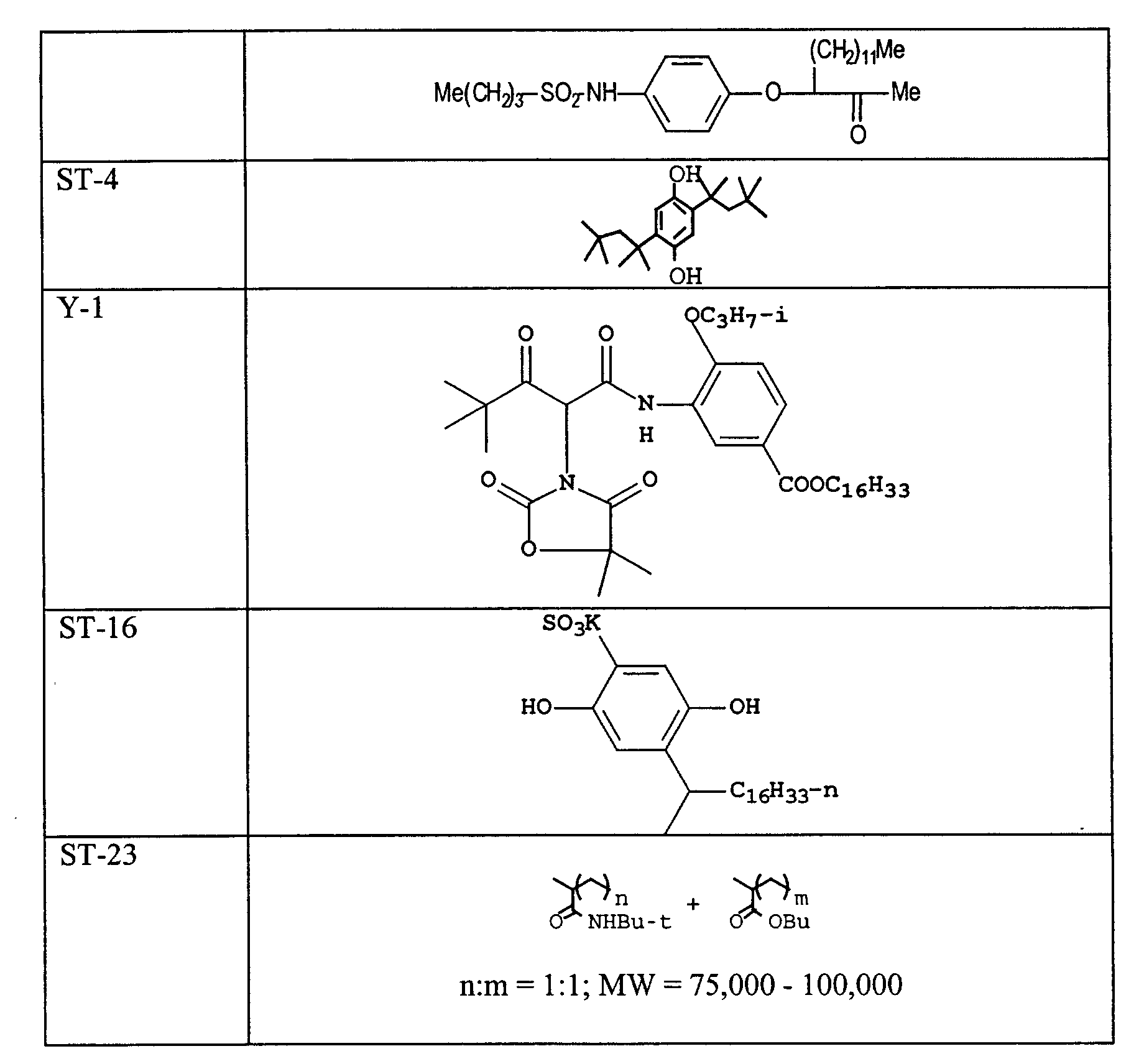
Claims (10)
- A method of making a imaged element comprising:providing a photographic element comprising a support, a silver halide emulsion layer superposed on a side of said support, an overcoat comprising 10 to 50% gelatin and 50 to 90% by weight of hydrophobic particles having an average diameter of 10 to 500 nm;imagewise exposing the photographic element to light; anddeveloping the photographic element in a photoprocessing solution during or after development which solution comprising an effective amount of proteolytic enzyme for digesting the gelatin in the overcoat.
- The method of claim 1 wherein the photoprocessing solution is a developing, bleaching, fixing or bleach-fixing solution.
- The method of claim 1 comprising heat treatment of the overcoat after development.
- The method of claim 1 wherein the manufacture of the photographic element comprises the application of at least one silver-based light sensitive emulsion layer simultaneously with the overcoat composition.
- A photographic element comprising:a support;a silver halide emulsion layer superposed on a side of said support;a processing solution permeable protective overcoat comprising 10 to 50% gelatin and 50 to 90% by weight of hydrophobic water-insoluble particles, at least 50% percent of the particles comprising a polymer having a Tg of less than 55°C and a weight average molecular weight under 100,000, such that the hydrophobic particles coalesce to form a continuous layer without fusing after the gelatin is enzymatically removed.
- The imaging element of claim 5 wherein the hydrophobic particles have a Tg between 0 and 50°C.
- The imaging element of claim 5 wherein the hydrophobic particles have a weight average molecular weight between 5000 and 50,000.
- A photochemical processing composition for treating a silver-halide light sensitive photographic element comprising:(a) proteolytic enzyme;(b) a photochemical selected from the group consisting of a developing agent for the imaging element, a fixing agent for removing insoluble silver halide salts, a bleaching agent for reoxidizing the silver to ionic silver state, and combinations thereof.
- The processing solution of claim 8, wherein the bleaching agent comprises a persulfate compound or a ferric complex of an aminocarboxylic acid.
- The processing solution of claim 8 wherein the fixing agent comprises a thiosulfate or thiocyanate compound.
Applications Claiming Priority (2)
| Application Number | Priority Date | Filing Date | Title |
|---|---|---|---|
| US547374 | 2000-04-11 | ||
| US09/547,374 US6190843B1 (en) | 2000-04-11 | 2000-04-11 | Hydrolyzed water-resistant protective overcoat for an imaging element |
Publications (1)
| Publication Number | Publication Date |
|---|---|
| EP1146389A1 true EP1146389A1 (en) | 2001-10-17 |
Family
ID=24184402
Family Applications (1)
| Application Number | Title | Priority Date | Filing Date |
|---|---|---|---|
| EP01201193A Withdrawn EP1146389A1 (en) | 2000-04-11 | 2001-03-30 | Hydrolyzed water-resistant protective overcoat for an imaging element |
Country Status (3)
| Country | Link |
|---|---|
| US (2) | US6190843B1 (en) |
| EP (1) | EP1146389A1 (en) |
| JP (1) | JP2001305705A (en) |
Cited By (1)
| Publication number | Priority date | Publication date | Assignee | Title |
|---|---|---|---|---|
| EP1217439A1 (en) * | 2000-12-22 | 2002-06-26 | Eastman Kodak Company | A protective polycarbonate-polyurethane overcoat for image recording elements |
Families Citing this family (9)
| Publication number | Priority date | Publication date | Assignee | Title |
|---|---|---|---|---|
| US6268101B1 (en) * | 2000-04-13 | 2001-07-31 | Eastman Kodak Company | Water-resistant polyurethane overcoat for imaging materials |
| US6479222B1 (en) * | 2000-07-21 | 2002-11-12 | Eastman Kodak Company | Protective overcoat for photographic elements |
| US6280912B1 (en) * | 2000-09-19 | 2001-08-28 | Eastman Kodak Company | Protective overcoat for an imaging element comprising an enzyme-treated biopolymer |
| US6436617B1 (en) * | 2000-10-30 | 2002-08-20 | Eastman Kodak Company | Protective epoxy overcoat for imaging elements |
| US6376160B1 (en) * | 2000-10-30 | 2002-04-23 | Eastman Kodak Company | Protective epoxy overcoat for photographic elements |
| US6346353B1 (en) * | 2000-10-30 | 2002-02-12 | Eastman Kodak Company | Protective epoxy overcoat for imaging elements |
| FR2820218B1 (en) * | 2001-01-30 | 2005-01-07 | Eastman Kodak Co | PROCESS FOR PROCESSING A PHOTOGRAPHIC EFFLUENT |
| US6432623B1 (en) * | 2001-04-27 | 2002-08-13 | Eastman Kodak Company | Method for processing a photographic element comprising a simultaneously coated protective overcoat |
| US6399156B1 (en) * | 2001-06-29 | 2002-06-04 | Eastman Kodak Company | Method for preparing an ink jet recording element |
Citations (8)
| Publication number | Priority date | Publication date | Assignee | Title |
|---|---|---|---|---|
| US3832178A (en) * | 1971-05-11 | 1974-08-27 | M Jacobson | Film developing process |
| JPS55138743A (en) * | 1979-04-18 | 1980-10-29 | Canon Inc | Treating solution for fixing |
| US4383028A (en) * | 1981-08-03 | 1983-05-10 | Lorin W. Boots | Photographic chemistry |
| JPH0667369A (en) * | 1992-08-20 | 1994-03-11 | Dainippon Ink & Chem Inc | Image forming method and silver halide photographic light-sensitive material and developer used therefor |
| JPH07219121A (en) * | 1994-01-31 | 1995-08-18 | Fuji Photo Film Co Ltd | Silver halide phtographic sensitive material |
| JPH08278608A (en) * | 1995-04-06 | 1996-10-22 | Konica Corp | Processing method of silver halide photographic sensitive material |
| EP0893733A1 (en) * | 1997-07-23 | 1999-01-27 | Eastman Kodak Company | Water-resistant protective overcoat for AGX photographic systems |
| EP0915372A1 (en) * | 1997-11-06 | 1999-05-12 | Eastman Kodak Company | A novel protecting layer for gelatin based AGX photographic products |
Family Cites Families (6)
| Publication number | Priority date | Publication date | Assignee | Title |
|---|---|---|---|---|
| FR1476797A (en) * | 1966-03-02 | 1967-04-14 | Kodak Pathe | Method for transferring layers of colloid which can be used in particular in photography |
| GB8318686D0 (en) * | 1983-07-11 | 1983-08-10 | Vickers Plc | Lithographic printing plates |
| DE19733725B4 (en) * | 1996-08-07 | 2006-11-16 | Mitsubishi Paper Mills Limited | Process for the preparation of a lithographic printing plate |
| US5866312A (en) * | 1997-06-19 | 1999-02-02 | Eastman Kodak Company | Photographic element having surface protective layer |
| US5958658A (en) * | 1997-06-19 | 1999-09-28 | Eastman Kodak Company | Lubricant for Ag halide photographic elements |
| US5853926A (en) | 1997-07-23 | 1998-12-29 | Eastman Kodak Company | Pre-coated, fused plastic particles as a protective overcoat for color photographic prints |
-
2000
- 2000-04-11 US US09/547,374 patent/US6190843B1/en not_active Expired - Fee Related
- 2000-09-29 US US09/675,833 patent/US6258520B1/en not_active Expired - Fee Related
-
2001
- 2001-03-30 EP EP01201193A patent/EP1146389A1/en not_active Withdrawn
- 2001-04-11 JP JP2001112841A patent/JP2001305705A/en active Pending
Patent Citations (8)
| Publication number | Priority date | Publication date | Assignee | Title |
|---|---|---|---|---|
| US3832178A (en) * | 1971-05-11 | 1974-08-27 | M Jacobson | Film developing process |
| JPS55138743A (en) * | 1979-04-18 | 1980-10-29 | Canon Inc | Treating solution for fixing |
| US4383028A (en) * | 1981-08-03 | 1983-05-10 | Lorin W. Boots | Photographic chemistry |
| JPH0667369A (en) * | 1992-08-20 | 1994-03-11 | Dainippon Ink & Chem Inc | Image forming method and silver halide photographic light-sensitive material and developer used therefor |
| JPH07219121A (en) * | 1994-01-31 | 1995-08-18 | Fuji Photo Film Co Ltd | Silver halide phtographic sensitive material |
| JPH08278608A (en) * | 1995-04-06 | 1996-10-22 | Konica Corp | Processing method of silver halide photographic sensitive material |
| EP0893733A1 (en) * | 1997-07-23 | 1999-01-27 | Eastman Kodak Company | Water-resistant protective overcoat for AGX photographic systems |
| EP0915372A1 (en) * | 1997-11-06 | 1999-05-12 | Eastman Kodak Company | A novel protecting layer for gelatin based AGX photographic products |
Non-Patent Citations (4)
| Title |
|---|
| DATABASE WPI Section Ch Week 198050, Derwent World Patents Index; Class D16, AN 1980-89072C, XP002174308 * |
| DATABASE WPI Section Ch Week 199415, Derwent World Patents Index; Class G06, AN 1994-121471, XP002174309 * |
| DATABASE WPI Section Ch Week 199542, Derwent World Patents Index; Class A89, AN 1995-323734, XP002174310 * |
| DATABASE WPI Section Ch Week 199701, Derwent World Patents Index; Class D16, AN 1997-008578, XP002174307 * |
Cited By (1)
| Publication number | Priority date | Publication date | Assignee | Title |
|---|---|---|---|---|
| EP1217439A1 (en) * | 2000-12-22 | 2002-06-26 | Eastman Kodak Company | A protective polycarbonate-polyurethane overcoat for image recording elements |
Also Published As
| Publication number | Publication date |
|---|---|
| JP2001305705A (en) | 2001-11-02 |
| US6190843B1 (en) | 2001-02-20 |
| US6258520B1 (en) | 2001-07-10 |
Similar Documents
| Publication | Publication Date | Title |
|---|---|---|
| US6586165B2 (en) | Photographic elements coated on transparent support with reflective protective overcoat | |
| US6268101B1 (en) | Water-resistant polyurethane overcoat for imaging materials | |
| US5853926A (en) | Pre-coated, fused plastic particles as a protective overcoat for color photographic prints | |
| US6153363A (en) | Protective overcoat comprising interpenetrating network for photographic elements | |
| US6190843B1 (en) | Hydrolyzed water-resistant protective overcoat for an imaging element | |
| US6194130B1 (en) | Protective overcoat comprising polyvinyl alcohol for photographic elements | |
| US6465165B2 (en) | Scratch resistant-water resistant overcoat for photographic systems | |
| US6428948B2 (en) | Imaged element with improved wet abrasion resistance | |
| US6319658B1 (en) | Photoprocessing photographic elements comprising water soluble hydrophilic polymers | |
| US6506527B1 (en) | Stain-resistant polyester overcoat for a photographic element | |
| US6274298B1 (en) | Protective overcoat comprising polyester ionomers for photographic elements | |
| US6479222B1 (en) | Protective overcoat for photographic elements | |
| EP1162502B1 (en) | Enzyme-activated water-resistant protective overcoat for a photographic element | |
| US6232049B1 (en) | Protective overcoat for photographic elements | |
| US6406838B1 (en) | Protective overcoat for an imaging element comprising an enzyme-treated biopolymer | |
| US6436592B1 (en) | Scratch resistant-water resistant overcoat for photographic systems | |
| US6432623B1 (en) | Method for processing a photographic element comprising a simultaneously coated protective overcoat | |
| US6645705B2 (en) | Protective overcoat for photographic elements | |
| US6153362A (en) | Overcoat for reticulation control in photographic elements | |
| US6455238B1 (en) | Protective overcoat for photographic elements | |
| US6203970B1 (en) | Photographic element with porous membrane overcoat |
Legal Events
| Date | Code | Title | Description |
|---|---|---|---|
| PUAI | Public reference made under article 153(3) epc to a published international application that has entered the european phase |
Free format text: ORIGINAL CODE: 0009012 |
|
| AK | Designated contracting states |
Kind code of ref document: A1 Designated state(s): DE FR GB Kind code of ref document: A1 Designated state(s): AT BE CH CY DE DK ES FI FR GB GR IE IT LI LU MC NL PT SE TR |
|
| AX | Request for extension of the european patent |
Free format text: AL;LT;LV;MK;RO;SI |
|
| 17P | Request for examination filed |
Effective date: 20020318 |
|
| AKX | Designation fees paid |
Free format text: DE FR GB |
|
| STAA | Information on the status of an ep patent application or granted ep patent |
Free format text: STATUS: THE APPLICATION HAS BEEN WITHDRAWN |
|
| 18W | Application withdrawn |
Effective date: 20051024 |