EP1146215A2 - Method and apparatus for controlling an internal combustion engine - Google Patents
Method and apparatus for controlling an internal combustion engine Download PDFInfo
- Publication number
- EP1146215A2 EP1146215A2 EP00117738A EP00117738A EP1146215A2 EP 1146215 A2 EP1146215 A2 EP 1146215A2 EP 00117738 A EP00117738 A EP 00117738A EP 00117738 A EP00117738 A EP 00117738A EP 1146215 A2 EP1146215 A2 EP 1146215A2
- Authority
- EP
- European Patent Office
- Prior art keywords
- rotational speed
- control signal
- combustion engine
- internal combustion
- speed information
- Prior art date
- Legal status (The legal status is an assumption and is not a legal conclusion. Google has not performed a legal analysis and makes no representation as to the accuracy of the status listed.)
- Withdrawn
Links
Images


Classifications
-
- F—MECHANICAL ENGINEERING; LIGHTING; HEATING; WEAPONS; BLASTING
- F02—COMBUSTION ENGINES; HOT-GAS OR COMBUSTION-PRODUCT ENGINE PLANTS
- F02D—CONTROLLING COMBUSTION ENGINES
- F02D41/00—Electrical control of supply of combustible mixture or its constituents
- F02D41/02—Circuit arrangements for generating control signals
- F02D41/04—Introducing corrections for particular operating conditions
- F02D41/08—Introducing corrections for particular operating conditions for idling
-
- F—MECHANICAL ENGINEERING; LIGHTING; HEATING; WEAPONS; BLASTING
- F02—COMBUSTION ENGINES; HOT-GAS OR COMBUSTION-PRODUCT ENGINE PLANTS
- F02P—IGNITION, OTHER THAN COMPRESSION IGNITION, FOR INTERNAL-COMBUSTION ENGINES; TESTING OF IGNITION TIMING IN COMPRESSION-IGNITION ENGINES
- F02P5/00—Advancing or retarding ignition; Control therefor
- F02P5/04—Advancing or retarding ignition; Control therefor automatically, as a function of the working conditions of the engine or vehicle or of the atmospheric conditions
- F02P5/145—Advancing or retarding ignition; Control therefor automatically, as a function of the working conditions of the engine or vehicle or of the atmospheric conditions using electrical means
- F02P5/15—Digital data processing
- F02P5/1502—Digital data processing using one central computing unit
- F02P5/1508—Digital data processing using one central computing unit with particular means during idling
-
- F—MECHANICAL ENGINEERING; LIGHTING; HEATING; WEAPONS; BLASTING
- F02—COMBUSTION ENGINES; HOT-GAS OR COMBUSTION-PRODUCT ENGINE PLANTS
- F02D—CONTROLLING COMBUSTION ENGINES
- F02D2200/00—Input parameters for engine control
- F02D2200/02—Input parameters for engine control the parameters being related to the engine
- F02D2200/10—Parameters related to the engine output, e.g. engine torque or engine speed
- F02D2200/1012—Engine speed gradient
-
- Y—GENERAL TAGGING OF NEW TECHNOLOGICAL DEVELOPMENTS; GENERAL TAGGING OF CROSS-SECTIONAL TECHNOLOGIES SPANNING OVER SEVERAL SECTIONS OF THE IPC; TECHNICAL SUBJECTS COVERED BY FORMER USPC CROSS-REFERENCE ART COLLECTIONS [XRACs] AND DIGESTS
- Y02—TECHNOLOGIES OR APPLICATIONS FOR MITIGATION OR ADAPTATION AGAINST CLIMATE CHANGE
- Y02T—CLIMATE CHANGE MITIGATION TECHNOLOGIES RELATED TO TRANSPORTATION
- Y02T10/00—Road transport of goods or passengers
- Y02T10/10—Internal combustion engine [ICE] based vehicles
- Y02T10/40—Engine management systems
Definitions
- the present invention relates to a method and apparatus for controlling an internal combustion engine; and more particularly, to a method and apparatus for preventing the internal combustion engine from accelerating to be out of control.
- an ignition timing of ignition spark event is critical for best fuel economy and low exhaust emission of environmentally hazardous gases. Correct spark timing is dependent on a rotational speed of the engine and load.
- Some engines with automatic transmission have been equipped with microprocessor-controlled systems, e.g., electronic control units(ECU), which includes sensors for engine rotational speed, intake air temperature and pressure, engine temperature and exhaust gas oxygen content.
- ECU electronice control units
- the microprocessor's determination of proper ignition spark timing does not always provide optimum engine performance. For example, especially, the minute the vehicle starts to move, the malfunctions of the microprocessor-controlled system may cause the rotational speed of the internal combustion engine to increase to be out of control and, therefore, forces the vehicle to dash forward suddenly
- an object of the present invention to provide a method and apparatus for preventing the internal combustion engine from accelerating to be out of control without snubbing quickly.
- a method for controlling an internal combustion engine comprising the steps of:
- FIG. 1 there is illustrated a block diagram of an apparatus for preventing an internal combustion engine from accelerating to be out of control in accordance with the present invention.
- a rotational speed sensor 11 of the internal combustion engine measures a rotational speed of the internal combustion engine.
- the rotational speeds are preferably measured indirectly. In other word, the measurement of the rotational speed should have little effect on the internal combustion engine itself. Since most sudden acceleration of the internal combustion engine results from malfunctions of the electronic control unit(ECU), the rotational speed in accordance with the present invention are preferably measured by techniques different from those of the rotational speed provided to the electronic control unit. If necessary, the rotational speed itself can be replaced with an equivalent value thereto, e.g., a voltage and so like.
- a differential block 12 which defines a derivative, i.e., a differential value, of the rotational speed with respect to time based on the information on the rotational speed.
- the derivative of the rotational speed is provided to a sudden acceleration determination block 13.
- an idling sensor 14 observes whether or not the internal combustion engine is idle.
- an accelerator pedal is arranged at a floor surface of a driver's compartment of a vehicle on which the internal combustion engine is mounted.
- the accelerator pedal is biased to an idling position by a spring and oscillated in response to a pressing of a driver. Therefore, a pressing amount of the accelerator pedal is sensed by the idling sensor 14 comprised of a potentiometer installed at the oscillating shaft of the accelerator pedal.
- the pressing amount of the accelerator pedal is provided to the sudden acceleration determination block 13.
- the sudden acceleration determination block 13 discriminates whether or not the rotational speed is required to be further controlled. Specifically, it is discriminated if the derivative N v of the rotational speed is larger than the predetermined rotational derivative B for idling operation, wherein the predetermined rotational derivative B has been experimentally determined and stored in a memory 15. If the derivative N v of the rotational speed is larger than the predetermined rotational derivative B, the sudden acceleration determination block 13 generates a control signal, wherein the control signal will cause the rotational speed of the internal combustion engine to be decreased. The control signal is delivered to a control block 16.
- the control block 16 generates a plurality of manipulation signals for manipulating a fuel injection valve 17 and a relay 18, wherein the manipulation signals includes an injection reduction signal for the fuel valve 17 and an ignition relay signal for the relay 18.
- the injection reduction signal is delivered to the fuel injection valve 17 to release a smaller fuel for each ignition event.
- the ignition relay signal is delivered to the relay 18 for controlling ignition timing to cause the ignition spark plug to be sparked with a longer timing period.
- the combustion engine continues to make active so a steering wheel, a break pedal and so on can be manipulated.
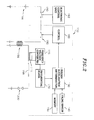
- FIG. 2 there is shown a block diagram of an apparatus for controlling an ignition period of the internal combustion engine in accordance with the present invention.
- a spark ignition transformer 196 is commonly used to generate a high voltage needed to create an arc across the gap of a spark plug 200 for igniting the fuel and air mixture, wherein the spark ignition a primary coil for low voltage excitation and a secondary coil for a high voltage output to be fed to the spark plug 200.
- a high voltage is generated in the secondary coil within a short period of time following excitation thereof.
- One end of the primary coil of the spark ignition transformer 196 is grounded and the other end thereof is connected serially to a power supply 194, a switch 190 and a relay 180.
- the power supply 194 provides electrical energy to all components of the apparatus and the switch 190 controlled by an electronic control unit 192 causes the electrical energy to be provided intermittently to all the components of the apparatus.
- a magnetic flux detection coil 111 is preferably located in the vicinity of a spark plug cable 198 connected to the secondary coil for a high voltage output to be fed to the spark plug 200 in accordance with the present invention.
- the magnetic flux detection coil 111 detects a variation of magnetic flux generated around the spark plug cable 198. If necessary, the magnetic flux detection coil 111 may be located at the primary coil, not the secondary coil. Since the high voltage is fed to the spark plug 200 according to the intermittent operation of the switch 190 as described above, the period of the variation of the magnetic flux around the spark plug cable 198 is equal to that of the switch 190.
- a frequency voltage converter 115 converts the period of the variation of the magnetic flux into a voltage.
- the voltage is preferably proportion to the rotational speed.
- Information on the voltage is provided to a differential block 120, which defines a derivative of the voltage with respect to time.
- the derivative of the voltage is provided to a sudden acceleration determination block 130.
- an idling sensor 140 observes whether or not the internal combustion engine is idle. The above observing result is provided to the sudden acceleration determination block 130.
- the sudden acceleration determination block 130 discriminates whether or not the rotation speed, i.e., the ignition time of the spark plug, is required to be further controlled. Specifically, it is discriminated if the derivative of the voltage is larger than the predetermined voltage derivative for idling operation, wherein the predetermined voltage derivative has been experimentally determined and stored in a memory 150. If the derivative of the voltage is larger than the predetermined voltage derivative, the sudden acceleration determination block 130 generates a control signal. The control signal is delivered to a control block 160.
- the control block 160 generates an ignition relay signal for controlling the relay 180.
- the ignition relay signal causes the relay 180 to be further operated so that the ignition spark plug may be sparked with a longer timing period.
- FIG. 3 there is shown a flow chart for illustrating a procedure for preventing the internal combustion engine from accelerating to be out of control in accordance with the present invention.
- step S31 a variation of magnetic flux is detected around a spark plug cable.
- step S32 the variation of magnetic flux is converted to a voltage, wherein the voltage is proportional to the rotational speed.
- the voltage is differentiated with respect to time to generate a derivative of the voltage.
- step S34 the derivative D v of the voltage is compared with a predetermined differential voltage B. If the derivative D v of the voltage is larger than the predetermined differential voltage B, the procedure goes to step S35 and, if otherwise, the procedure goes to end.
- step S35 it is discriminated whether or not the internal combustion engine is idle by detecting the movement of the acceleration pedal. If the internal combustion engine is idle, the procedure goes to steps S36 and S37. If necessary, either step S36 or step S37 may be performed.
- a fuel injection valve is controlled to release a smaller fuel for each ignition event.
- the relay for controlling an ignition spark time is controlled to cause the ignition spark plug to be sparked with a longer timing period.
Landscapes
- Engineering & Computer Science (AREA)
- Chemical & Material Sciences (AREA)
- Combustion & Propulsion (AREA)
- Mechanical Engineering (AREA)
- General Engineering & Computer Science (AREA)
- Theoretical Computer Science (AREA)
- Signal Processing (AREA)
- Electrical Control Of Air Or Fuel Supplied To Internal-Combustion Engine (AREA)
- Electrical Control Of Ignition Timing (AREA)
Abstract
Description
In accordance with an aspect of the present invention, there is provided a method for controlling an internal combustion engine, comprising the steps of:
Claims (14)
- A method for controlling an internal combustion engine, comprising the steps of:obtaining rotational speed information on a rotational speed of said internal combustion engine;determining whether or not said rotation speed of said internal combustion engine increases to be out of control based on said rotational speed information to generate a control signal, wherein said control signal represents said combustion engine increases to be out of control; andcausing said rotational speed to be decreased based on said control signal.
- The method of claim 1, further comprising the step of:observing whether or not said internal combustion engine is idle to generate an idling signal;modifying the control signal to a modified control signal based on the idling signal; andreplacing the control signal with the modified control signal.
- The method of claim 1, wherein said determining step includes the steps of:generating differential rotational speed information based on said rotational speed information, wherein said differential rotational speed information corresponds to a differential value of said rotational speed; andcomparing said differential rotational speed information with a predetermined value to generate said control signal.
- The method of claim 3, wherein said control signal represents that said differential value of said rotational speed is larger than the predetermined value.
- The method of claim 1, wherein said obtaining step includes the steps of:detecting a variation of magnetic flux in the vicinity of a spark plug cable for a high voltage output to be fed to a spark plug;converting the variation of the magnetic flux to a voltage relevant thereto; andestimating said rotational speed information based on the voltage.
- The method of claim 1, wherein said causing step includes the step of controlling a fuel injection valve, whereby a smaller fuel is provided to said internal combustion engine.
- The method of claim 1, wherein said causing step includes the step of controlling an ignition period of a spark plug, whereby the ignition period becomes larger.
- An apparatus for controlling an internal combustion engine, comprising:rotational speed sensor for obtaining rotational speed information on a rotational speed of said internal combustion engine;means for determining whether or not said rotation speed of said internal combustion engine increases rapidly based on said rotational speed information to generate a control signal, wherein said control signal represents said combustion engine increases rapidly; andmeans for causing said rotational speed to be decreased based on said control signal.
- The apparatus of claim 1, further comprising:means for observing whether or not said internal combustion engine is idle to generate an idling signal;means for modifying the control signal to a modified control signal based on the idling signal; andmeans for replacing the control signal with the modified control signal.
- The apparatus of claim 1, wherein said means for determining includes:differential block for generating differential rotational speed information based on said rotational speed information, wherein said differential rotational speed information corresponds to a differential value of said rotational speed; andcomparator for comparing said differential rotational speed information with a predetermined value to generate said control signal.
- The apparatus of claim 3, wherein said control signal represents that said differential value of said rotational speed is larger than the predetermined value.
- The apparatus of claim 1, wherein said rotational speed sensor includes:magnetic flux detector for detecting a variation of magnetic flux in the vicinity of a spark plug cable for a high voltage output to be fed to a spark plug;converter for converting the variation of the magnetic flux to a voltage relevant thereto; andmeans for estimating said rotational speed information based on the voltage.
- The apparatus of claim 1, wherein said means for causing includes means for controlling a fuel injection valve, whereby a smaller fuel is provided to said internal combustion engine.
- The method of claim 1, wherein said means for causing includes means for controlling an ignition period of a spark plug, whereby the ignition period becomes larger.
Applications Claiming Priority (3)
| Application Number | Priority Date | Filing Date | Title |
|---|---|---|---|
| KR2000018596 | 2000-04-10 | ||
| KR1020000018596A KR100337690B1 (en) | 1999-04-21 | 2000-04-10 | Apparatus for detecting and controlling the sudden departure in auto-transmission automobiles |
| KR0018596 | 2000-04-10 |
Publications (2)
| Publication Number | Publication Date |
|---|---|
| EP1146215A2 true EP1146215A2 (en) | 2001-10-17 |
| EP1146215A3 EP1146215A3 (en) | 2003-06-04 |
Family
ID=19663005
Family Applications (1)
| Application Number | Title | Priority Date | Filing Date |
|---|---|---|---|
| EP00117738A Withdrawn EP1146215A3 (en) | 2000-04-10 | 2000-08-17 | Method and apparatus for controlling an internal combustion engine |
Country Status (1)
| Country | Link |
|---|---|
| EP (1) | EP1146215A3 (en) |
Cited By (2)
| Publication number | Priority date | Publication date | Assignee | Title |
|---|---|---|---|---|
| FR2918116A1 (en) * | 2007-06-29 | 2009-01-02 | Renault Sas | Internal combustion engine racing detection system for motor vehicle, has calculation modules for respectively calculating time derivatives of rotation speed of engine and longitudinal speed of motor vehicle |
| CN110500192A (en) * | 2019-06-27 | 2019-11-26 | 河南美力达汽车有限公司 | It is a kind of for hybrid vehicle for fuel cutting-off system |
Family Cites Families (7)
| Publication number | Priority date | Publication date | Assignee | Title |
|---|---|---|---|---|
| US3233178A (en) * | 1962-12-05 | 1966-02-01 | Motorola Inc | Vehicular radio receiver with speed compensated volume control |
| US4531489A (en) * | 1979-05-04 | 1985-07-30 | Sturdy Truck Equipment, Inc. | Engine governor with reference position for throttle limiter |
| JP2721966B2 (en) * | 1987-07-28 | 1998-03-04 | 富士重工業株式会社 | Fuel cut device for internal combustion engine |
| EP0333900A1 (en) * | 1988-03-23 | 1989-09-27 | Robert Bosch Gmbh | An electronic control device for modulating fuel quantities in an internal combustion engine |
| US5009208A (en) * | 1990-02-15 | 1991-04-23 | Briggs & Stratton Corporation | Engine speed limiter |
| JP3001603B2 (en) * | 1990-03-29 | 2000-01-24 | 富士通テン株式会社 | Idle speed control method for internal combustion engine |
| GB9813453D0 (en) * | 1998-06-22 | 1998-08-19 | Digital Fleet Management Ltd | A vehicle limiting system |
-
2000
- 2000-08-17 EP EP00117738A patent/EP1146215A3/en not_active Withdrawn
Cited By (2)
| Publication number | Priority date | Publication date | Assignee | Title |
|---|---|---|---|---|
| FR2918116A1 (en) * | 2007-06-29 | 2009-01-02 | Renault Sas | Internal combustion engine racing detection system for motor vehicle, has calculation modules for respectively calculating time derivatives of rotation speed of engine and longitudinal speed of motor vehicle |
| CN110500192A (en) * | 2019-06-27 | 2019-11-26 | 河南美力达汽车有限公司 | It is a kind of for hybrid vehicle for fuel cutting-off system |
Also Published As
| Publication number | Publication date |
|---|---|
| EP1146215A3 (en) | 2003-06-04 |
Similar Documents
| Publication | Publication Date | Title |
|---|---|---|
| US8752368B2 (en) | Diagnostic method and diagnostic system for a particle filter of an internal combustion engine, in particular for a soot filter in a diesel motor vehicle | |
| EP0276003B1 (en) | Fail-safe method and system for automotive engines | |
| US5715676A (en) | Method and apparatus for monitoring the starting behavior of a catalytic conversion system in an automotive vehicle | |
| US5542292A (en) | Method and device for monitoring a secondary-air system of a motor vehicle | |
| JPH06173750A (en) | Device and method of interrupting operation of engine utilizing sensing of carbon monoxide in atmospheric air | |
| US5133184A (en) | Method and apparatus for monitoring the conversion ratio of a catalytic converter | |
| JP2005113734A (en) | Accelerator control device | |
| US4776312A (en) | Engine roughness control | |
| US6488005B2 (en) | System and a method for running a diesel engine when starting a vehicle | |
| US6263858B1 (en) | Powertrain output monitor | |
| EP1146215A2 (en) | Method and apparatus for controlling an internal combustion engine | |
| US6295967B1 (en) | Powertrain output monitor | |
| US6263856B1 (en) | Powertrain output monitor | |
| JPH06173749A (en) | Device and method of interrupting operation of engine utilizing sensing of oxygen of atmospheric air | |
| US7093430B2 (en) | Method and device for implementing a method for ascertaining the load condition of a component arranged in an exhaust-gas region of an internal combustion engine | |
| JPH06117322A (en) | System and method of interrupting engine operation using engine operation parameter | |
| EP0962640A2 (en) | Control apparatus for controlling internal combustion engine | |
| JP2007023908A (en) | Fuel supply control method and apparatus for internal combustion engine | |
| US20220003182A1 (en) | Method and system for diagnosing misfire of engine | |
| EP1158147B1 (en) | Device and method of operating an internal combustion engine fed with a first or, alternatively, with a second type of fuel | |
| KR100412687B1 (en) | Exhaust Gas Controlling Method Of Diesel Engine Vehicle | |
| KR100372437B1 (en) | Method for controlling engine for prevent of off-idle knock in a vehicle | |
| JPH1136927A (en) | Vehicle brake system | |
| KR100301398B1 (en) | Method for controlling ignition of vehicle | |
| KR100305819B1 (en) | Flashback prevention device and method of hybrid vehicle |
Legal Events
| Date | Code | Title | Description |
|---|---|---|---|
| PUAI | Public reference made under article 153(3) epc to a published international application that has entered the european phase |
Free format text: ORIGINAL CODE: 0009012 |
|
| AK | Designated contracting states |
Kind code of ref document: A2 Designated state(s): AT BE CH CY DE DK ES FI FR GB GR IE IT LI LU MC NL PT SE |
|
| AX | Request for extension of the european patent |
Free format text: AL;LT;LV;MK;RO;SI |
|
| PUAL | Search report despatched |
Free format text: ORIGINAL CODE: 0009013 |
|
| AK | Designated contracting states |
Designated state(s): AT BE CH CY DE DK ES FI FR GB GR IE IT LI LU MC NL PT SE |
|
| AX | Request for extension of the european patent |
Extension state: AL LT LV MK RO SI |
|
| RIC1 | Information provided on ipc code assigned before grant |
Ipc: 7F 02P 5/15 B Ipc: 7F 02D 41/08 B Ipc: 7F 02D 37/02 B Ipc: 7F 02D 31/00 A |
|
| STAA | Information on the status of an ep patent application or granted ep patent |
Free format text: STATUS: THE APPLICATION IS DEEMED TO BE WITHDRAWN |
|
| 18D | Application deemed to be withdrawn |
Effective date: 20030301 |