EP1142584A1 - Compositions for treating frequent urination and urinary incontinence - Google Patents
Compositions for treating frequent urination and urinary incontinence Download PDFInfo
- Publication number
- EP1142584A1 EP1142584A1 EP00900169A EP00900169A EP1142584A1 EP 1142584 A1 EP1142584 A1 EP 1142584A1 EP 00900169 A EP00900169 A EP 00900169A EP 00900169 A EP00900169 A EP 00900169A EP 1142584 A1 EP1142584 A1 EP 1142584A1
- Authority
- EP
- European Patent Office
- Prior art keywords
- salt
- formula
- acid
- uptake inhibitor
- butenyl
- Prior art date
- Legal status (The legal status is an assumption and is not a legal conclusion. Google has not performed a legal analysis and makes no representation as to the accuracy of the status listed.)
- Withdrawn
Links
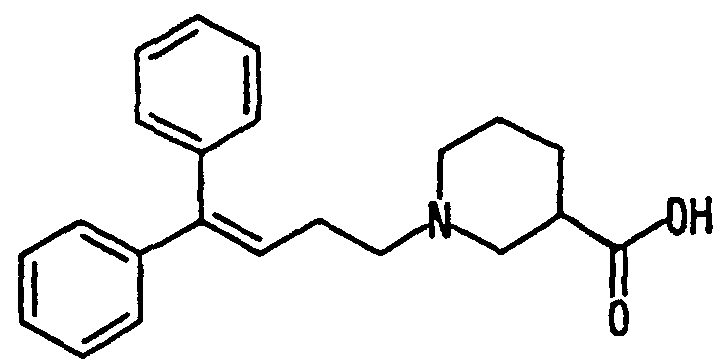
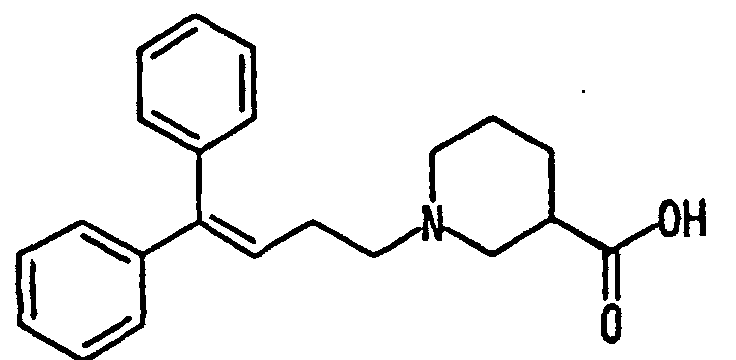
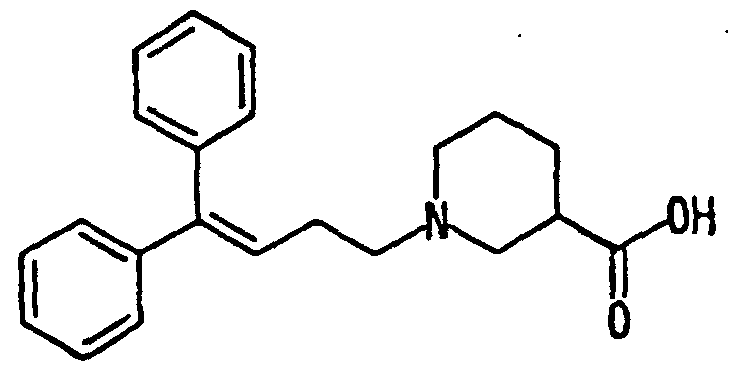
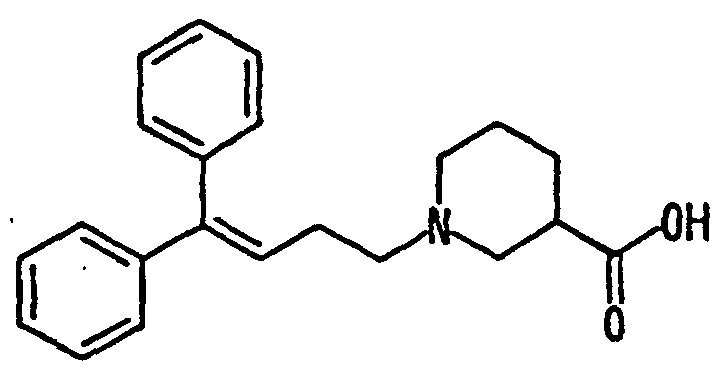
- TXQKSMSLZVKQBI-UHFFFAOYSA-N OC(C1CN(CCC=C(c2ccccc2)c2ccccc2)CCC1)=O Chemical compound OC(C1CN(CCC=C(c2ccccc2)c2ccccc2)CCC1)=O TXQKSMSLZVKQBI-UHFFFAOYSA-N 0.000 description 1
Classifications
-
- A—HUMAN NECESSITIES
- A61—MEDICAL OR VETERINARY SCIENCE; HYGIENE
- A61K—PREPARATIONS FOR MEDICAL, DENTAL OR TOILETRY PURPOSES
- A61K31/00—Medicinal preparations containing organic active ingredients
- A61K31/33—Heterocyclic compounds
- A61K31/395—Heterocyclic compounds having nitrogen as a ring hetero atom, e.g. guanethidine or rifamycins
- A61K31/435—Heterocyclic compounds having nitrogen as a ring hetero atom, e.g. guanethidine or rifamycins having six-membered rings with one nitrogen as the only ring hetero atom
- A61K31/44—Non condensed pyridines; Hydrogenated derivatives thereof
- A61K31/455—Nicotinic acids, e.g. niacin; Derivatives thereof, e.g. esters, amides
-
- A—HUMAN NECESSITIES
- A61—MEDICAL OR VETERINARY SCIENCE; HYGIENE
- A61K—PREPARATIONS FOR MEDICAL, DENTAL OR TOILETRY PURPOSES
- A61K31/00—Medicinal preparations containing organic active ingredients
-
- A—HUMAN NECESSITIES
- A61—MEDICAL OR VETERINARY SCIENCE; HYGIENE
- A61K—PREPARATIONS FOR MEDICAL, DENTAL OR TOILETRY PURPOSES
- A61K31/00—Medicinal preparations containing organic active ingredients
- A61K31/33—Heterocyclic compounds
- A61K31/395—Heterocyclic compounds having nitrogen as a ring hetero atom, e.g. guanethidine or rifamycins
- A61K31/41—Heterocyclic compounds having nitrogen as a ring hetero atom, e.g. guanethidine or rifamycins having five-membered rings with two or more ring hetero atoms, at least one of which being nitrogen, e.g. tetrazole
- A61K31/425—Thiazoles
- A61K31/428—Thiazoles condensed with carbocyclic rings
-
- A—HUMAN NECESSITIES
- A61—MEDICAL OR VETERINARY SCIENCE; HYGIENE
- A61K—PREPARATIONS FOR MEDICAL, DENTAL OR TOILETRY PURPOSES
- A61K31/00—Medicinal preparations containing organic active ingredients
- A61K31/33—Heterocyclic compounds
- A61K31/395—Heterocyclic compounds having nitrogen as a ring hetero atom, e.g. guanethidine or rifamycins
- A61K31/435—Heterocyclic compounds having nitrogen as a ring hetero atom, e.g. guanethidine or rifamycins having six-membered rings with one nitrogen as the only ring hetero atom
- A61K31/44—Non condensed pyridines; Hydrogenated derivatives thereof
-
- A—HUMAN NECESSITIES
- A61—MEDICAL OR VETERINARY SCIENCE; HYGIENE
- A61K—PREPARATIONS FOR MEDICAL, DENTAL OR TOILETRY PURPOSES
- A61K31/00—Medicinal preparations containing organic active ingredients
- A61K31/33—Heterocyclic compounds
- A61K31/395—Heterocyclic compounds having nitrogen as a ring hetero atom, e.g. guanethidine or rifamycins
- A61K31/435—Heterocyclic compounds having nitrogen as a ring hetero atom, e.g. guanethidine or rifamycins having six-membered rings with one nitrogen as the only ring hetero atom
- A61K31/44—Non condensed pyridines; Hydrogenated derivatives thereof
- A61K31/445—Non condensed piperidines, e.g. piperocaine
-
- A—HUMAN NECESSITIES
- A61—MEDICAL OR VETERINARY SCIENCE; HYGIENE
- A61K—PREPARATIONS FOR MEDICAL, DENTAL OR TOILETRY PURPOSES
- A61K31/00—Medicinal preparations containing organic active ingredients
- A61K31/33—Heterocyclic compounds
- A61K31/395—Heterocyclic compounds having nitrogen as a ring hetero atom, e.g. guanethidine or rifamycins
- A61K31/435—Heterocyclic compounds having nitrogen as a ring hetero atom, e.g. guanethidine or rifamycins having six-membered rings with one nitrogen as the only ring hetero atom
- A61K31/44—Non condensed pyridines; Hydrogenated derivatives thereof
- A61K31/445—Non condensed piperidines, e.g. piperocaine
- A61K31/4523—Non condensed piperidines, e.g. piperocaine containing further heterocyclic ring systems
- A61K31/4535—Non condensed piperidines, e.g. piperocaine containing further heterocyclic ring systems containing a heterocyclic ring having sulfur as a ring hetero atom, e.g. pizotifen
-
- A—HUMAN NECESSITIES
- A61—MEDICAL OR VETERINARY SCIENCE; HYGIENE
- A61K—PREPARATIONS FOR MEDICAL, DENTAL OR TOILETRY PURPOSES
- A61K31/00—Medicinal preparations containing organic active ingredients
- A61K31/33—Heterocyclic compounds
- A61K31/395—Heterocyclic compounds having nitrogen as a ring hetero atom, e.g. guanethidine or rifamycins
- A61K31/435—Heterocyclic compounds having nitrogen as a ring hetero atom, e.g. guanethidine or rifamycins having six-membered rings with one nitrogen as the only ring hetero atom
- A61K31/44—Non condensed pyridines; Hydrogenated derivatives thereof
- A61K31/445—Non condensed piperidines, e.g. piperocaine
- A61K31/4523—Non condensed piperidines, e.g. piperocaine containing further heterocyclic ring systems
- A61K31/454—Non condensed piperidines, e.g. piperocaine containing further heterocyclic ring systems containing a five-membered ring with nitrogen as a ring hetero atom, e.g. pimozide, domperidone
-
- A—HUMAN NECESSITIES
- A61—MEDICAL OR VETERINARY SCIENCE; HYGIENE
- A61K—PREPARATIONS FOR MEDICAL, DENTAL OR TOILETRY PURPOSES
- A61K31/00—Medicinal preparations containing organic active ingredients
- A61K31/33—Heterocyclic compounds
- A61K31/395—Heterocyclic compounds having nitrogen as a ring hetero atom, e.g. guanethidine or rifamycins
- A61K31/435—Heterocyclic compounds having nitrogen as a ring hetero atom, e.g. guanethidine or rifamycins having six-membered rings with one nitrogen as the only ring hetero atom
- A61K31/44—Non condensed pyridines; Hydrogenated derivatives thereof
- A61K31/445—Non condensed piperidines, e.g. piperocaine
- A61K31/4523—Non condensed piperidines, e.g. piperocaine containing further heterocyclic ring systems
- A61K31/4545—Non condensed piperidines, e.g. piperocaine containing further heterocyclic ring systems containing a six-membered ring with nitrogen as a ring hetero atom, e.g. pipamperone, anabasine
-
- A—HUMAN NECESSITIES
- A61—MEDICAL OR VETERINARY SCIENCE; HYGIENE
- A61P—SPECIFIC THERAPEUTIC ACTIVITY OF CHEMICAL COMPOUNDS OR MEDICINAL PREPARATIONS
- A61P13/00—Drugs for disorders of the urinary system
- A61P13/02—Drugs for disorders of the urinary system of urine or of the urinary tract, e.g. urine acidifiers
Definitions
- the present invention relates to a composition for preventing or treating urinary frequency and urinary incontinence which comprises a GABA uptake inhibitor.
- GABA ⁇ -Amino butyric acid
- GABA is an inhibitory neurotransmitter which is present in cerebellum, dorsal horn of spinal cord, substantia nigra and hippocampus of a mammal in a large amount, and is biosynthesized mainly from glutamic acid by undergoing the action of glutamate decarboxylase mainly at a nerve ending of an inhibitory neuron in the central nervous system (CNS).
- CNS central nervous system
- GABA is released from a presynaptic part in response to the stimulation, a part thereof is uptaken again into a presynaptic site, and converted into succinic acid by GABA transaminase.
- GABA GABA
- a substance which inhibits this uptake of GABA is known to be useful as a drug for treating anxiety and epilepsy (USP 4,383,999) or an antitussive (WO97/43902).
- tiagabin which is a GABA uptake inhibitor, or a pharmacologically acceptable salt thereof is useful for treating incontinence.
- tiagabin or a pharmacologically acceptable salt thereof has the excellent effect of treating urinary incontinence.
- An object of the present invention is to provide a useful and excellent composition for preventing or treating urinary frequency and urinary incontinence.
- a GABA uptake inhibitor which is known as a drug for treating anxiety and epilepsy or antitussive is unexpectedly effective as a composition for preventing or treating urinary frequency or urinary incontinence, which resulted in the completion of the present invention.
- the present invention provides:
- GABA uptake means uptake of GABA by GABA nerve ending, glial cell or GABA cell surface transporting substance.
- GABA uptake inhibitor may be any substance as long as it has the activity of inhibiting GABA uptake, such as a chemically Synthesized substance, a fermentationproduct and an genetic product, and may be the known substance or a novel substance which will be found out in the future.
- the presence or the absence of the GABA uptake inhibiting activity can be measured by the method known per se, for example, a method described in USP 4,383,999, J. Med. Chem., 36, (1993) 1716-1725, Molecular & Cellular Biochemistry, 31, 105-121(1980) and the like, or a similar method.
- the GABA uptake inhibitor used in the present invention the following compounds A-O, etc. are used.
- compound A, compound B and compound C (in particular, compound C-1), etc. are preferable, and compound C-1 is particularly preferable.
- salts with inorganic acids such as hydrochloric acid, phosphoric acid, hydrobromic acid and sulfuric acid
- salts with organic acids such as acetic acid, formic acid, propionic acid, fumaric acid, maleic acid, succinic acid, tartaric acid, citric acid, malic acid, oxalic acid, methanesulfonic acid and benzenesulfonic acid
- inorganic acids such as hydrochloric acid, phosphoric acid, hydrobromic acid and sulfuric acid
- organic acids such as acetic acid, formic acid, propionic acid, fumaric acid, maleic acid, succinic acid, tartaric acid, citric acid, malic acid, oxalic acid, methanesulfonic acid and benzenesulfonic acid
- these compounds when they have an acidic group such as carboxylic acid as a substituent, they may form a salt with inorganic bases (such as alkali metal and alkaline earth metal such as sodium, potassium, calcium and magnesium, and ammonia) or organic bases (such as tri-C 1-3 alkylamine such as triethylamine).
- inorganic bases such as alkali metal and alkaline earth metal such as sodium, potassium, calcium and magnesium, and ammonia
- organic bases such as tri-C 1-3 alkylamine such as triethylamine
- the effects of a GABA uptake inhibitor of preventing or treating urinary frequency and urinary incontinence can be measured by a method described in, for example, Eur. J. Pharmacol., 103, 41-50 (1984), and Neuroscience, 54, 827-837 (1993) or a similar method. More particularly, the effects of a GABA uptake inhibitor of preventing or treating urinary frequency can be measured according to methods described in Test Examples 1 to 5 described below.
- urinary frequency indicates that there is an intention or function to suppress micturition but the number of micturition is larger as compared with a normal time, or the number of micturition is larger as compared with a normal person. More particularly, urinary frequency indicates that the number of micturition is about 1.5-fold or more the number of micturition at a normal time or that of a normal person and, in the case of severer conditions, about 2 to 3-fold or more.
- urinary incontinence indicates that an intention or function to suppress micturition is lowered or lacked.
- Urinary incontinence includes urge urinary incontinence, stress urinary incontinence, overflow urinary incontinence and reflex urinary incontinence and a GABA uptake inhibitor is particularly effective for urge urinary incontinence.
- urinary frequency and urinary incontinence include nocturnal enuresis of infants or senilities, and abnormal micturition accompanied with diseases such as dementia.
- GABA uptake inhibitors in particular, the aforementioned compounds A to O are low toxic and safe and are useful as a composition for preventing or treating or as a drug for improving abnormal micturition such as urinary frequency and urinary incontinence for a mammal (such as mouse, rat, hamster, rabbit, cat, dog, cattle, sheep, monkey and human being).
- a mammal such as mouse, rat, hamster, rabbit, cat, dog, cattle, sheep, monkey and human being.
- the preventing or treating composition of the present invention may be in the form of any of solid preparations such as powders, fine granules, granules, tablets and capsules, and liquid preparations such as syrups suspensions, emulsions and injectables.
- the preventing or treating composition of the present invention can be prepared by the conventional method such as mixing, kneading, granulating, tabletting, coating, sterile treating and emulsifying preventing upon the form of preparations.
- a preparation for example, respective items of Japanese Pharmacopoeia, general rules for preparations can be referenced.
- the content of a GABA uptake inhibitor in the preventing or treating composition of the present invention is different depending upon the form of preparations and is usually about 0.01 to 100% by weight, preferably about 0.1 to 50% by weight, more preferably about 0.5 to 20% by weight relative to the whole preparation.
- a GABA uptake inhibitor When a GABA uptake inhibitor is used for the aforementioned medicament, it can be administered orally or parenterally, as it is, or in the form of solid preparations such as powders, fine granules, granules, tablets, coating tablets and capsules, or liquid preparations such as syrups, suspensions, emulsions and injectables by mixing with a suitable pharmacologically acceptable carrier, for example, an excipient (such as starch, lactose, scrouse, calcium carbonate and calcium phophate), a binding agent (such as starch, gum arabic, carboxymethylcellulose, hydroxypropylcellulose, crystalline cellulose, alginic acid, gelatin and poly(vinyl pyrrolidone)), a lubricant (such as stearic acid, magnesium stearate, calcium stearate and talc), a disintegrating agent (such as calcium carboxymethylcellulose and talc), a diluent (such as
- a dose is different depending upon a kind of a GABA uptake inhibitor, route of administration, and conditions and an age of a patient and, when orally administered to an adult patient of urinary frequency, about 0.005 to 50 mg, preferably about 0.05 to 10 mg, more preferably about 0.2 to 4 mg of a GABA uptake inhibitor/kg weight/day can be administered once to thrice in a divided manner.
- a GABA uptake inhibitor can be conveniently used together with a suitable amount of other drugs for preventing or treating urinary frequency and urinary incontinence.
- the drug for preventing or treating urinary frequency and urinary incontinence for example, compounds described in JP-A 9-263585 (such as (9R)-7-[3,5-bis(trifluoromethyl)benzyl)-6,7,8,9,10,11-hexahydro-9-methyl-5-(4-methylphenyl)-6,13-dioxo-13H-[1,4]diazosino[2,1-g][1,7]naphthylidine) or salts thereof are used.
- An amount of these other drugs for preventing or treating urinary frequency and urinary incontinence to be used is usually about 0.01 to 90% by weight, preferably about 0.1 to 50% by weight, more preferably about 0.5 to 20% by weight relative to the whole preparation.
- Example 1 Coated tablet (1) NO-711 hydrochloride 10.0 mg (2) Lactose 60.0 mg (3) Corn starch 35.0 mg (4) Hydroxypropylmethylcellulose 3.0 mg (5) Magnesium stearate 2.0 mg
- a mixture of 10.0 mg of NO-711 (compound A) hydrochloride, 60.0 mg of lactose and 35.0 mg of corn starch is granulated using 0.03 ml of a 10% by weight aqueous hydroxypropylmethylcellulose solution (3.0 mg as hydroxypropylmethylcellulose), dried at 40°C and passed through a sieve. The resulting granule is mixed with 2.0 mg of magnesium stearate, and compressed. The resulting crude tablet is coated with a sugar coating of an aqueous suspension of sucrose, titanium dioxide, talc and gum arabic. The coated tablet is polished with beewax to obtain the desired coated tablet.
- Example 3 Capsule (1) NO-711 hydrochloride 25 mg (2) Lactose 55 mg (3) Talc 16 mg (4) Magnesium stearate 4 mg
- the ingredients of the above ratio are filled in a standard 2-piece hard gelatin capsule to obtain the desired capsule.
- NO-711 hydrochloride is dissolved in 10% propylene glycol water at 1.5% by weight to obtain the desired injectable preparation.
- Example 5 Coated tablet (1) Tiagabin hydrochloride 10.0 mg (2) Lactose 60.0 mg (3) Corn starch 35.0 mg (4) Hydroxypropylmethylcellulose 3.0 mg (5) Magnesium stearate 2.0 mg
- a mixture of 10.0 mg of tiagabin hydrochloride (hydrochloride of compound C-1), 60.0 mg of lactose and 35.0 mg of corn starch is granulated using 0.03 ml of a 10% by weight aqueous hydroxypropylmethylcellulose solution (3.0 mg as hydroxypropylmethylcellulose), dried at 40°C and passed through a sieve. The resulting granule is mixed with 2.0 mg of magnesium stearate, and compressed. The resulting crude tablet is coated with a sugar coating of an aqueous suspension containing sucrose, titanium oxide, talc and gum arabic. The coated tablet is polished with beewax to obtain the desired coating tablet.
- tiagabin hydrochloride and 3.0 mg of magnesium stearate are granulated with 0.07 ml of an aqueous soluble starch solution (7.0 mg as soluble starch), dried, and mixed with 70.0 mg of lactose and 50.0 mg of corn starch. The mixture is compressed to obtain the desired tablet.
- Example 7 Capsule (1) Tiagabin hydrochloride 25 mg (2) Lactose 55 mg (3) Talc 16 mg (4) Magnesium stearate 4 mg
- the ingredients of the above ratio are filled into a standard 2-piece hard gelatin capsule to obtain the desired capsule.
- Tiagabin hydrochloride is dissolved in 10% propylene glycol water at 1.5% by weight to obtain the desired injectable.
- the urinary frequency and urinary incontinence suppressing activity of NO-711 hydrochloride was evaluated by the ability to increase an interval between rhythmic bladder contractions in urethane-anesthetized guinea pig as an index.
- an urethra was ligated, a constant volume of a physiological saline (3 to 4.5 ml) warmed at 39°C was injected into the bladder to distend, and the regular rhythmic bladder contractions at a constant interval were observed. After the stable rhythmic bladder contractions were confirmed, a compound dissolved in physiological saline was administered intravenously to investigate the activity.
- rhythmic bladder contraction shutdown time Immediately after administration of a drug, the time of complete suppression of the rhythmic bladder contractions (rhythmic bladder contraction shutdown time, maximum observation period was 30 minutes) was measured. The results are shown in Table 1.
- Administered drug Dose (mg/kg) Number of aminals Rhythmic bladder contraction shutdown time(minutes, mean ⁇ standard error)
- Physiological saline - 7 3.5 ⁇ 1.3 NO-711 hydrochloride 1 6 5.9 ⁇ 1.3 3 7 18.4 ⁇ 5.0* 10 7 16.9 ⁇ 3.6**
- the urinary frequency and urinary incontinence suppressing activity of a GABA uptake inhibitor was measured as the ability to abolish the rhythmic bladder contractions in urethane-anesthetized rats as an index.
- An urethra was ligated, a constant volume of physiological saline warmed at 39°C was injected into the bladder to distend the detrusor muscle, and the regular rhythmic bladder contractions at a constant interval were observed. After the stable bladder contractions were confirmed, a compound was administered intravenously to investigate the activities.
- a time for completely suppressing the rhythmic bladder contractions after the drug administration (reflex shutdown time, a maximum observation period was 30 minutes) and a maximum contractile intravesical pressure at which the bladder contraction appeared again after the administration was measured.
- the urinary frequency and urinary incontinence suppressing activity of a GABA uptake inhibitor was shown by the ability to increase bladder capacity in urethane-anesthetized rats. After a bladder was made empty by drawing out the urine, physiological saline warmed at 39°C was injected into the bladder at a constant rate (0.05 ml/min.) to induce micturition. These procedures were repeated to confirm stable bladder capacity (volume of physiological saline injected until start of micturition) and, thereafter, compounds were administered intravenously to investigate the activities. A change in bladder capacity and micturition pressure after the administration was measured. The results are shown in Table 3. The GABA uptake inhibitor increased bladder capacity.
- Drug Dose (mg/ kg) Change in bladder capacity Change in micturition pressure (Number of animals) (Relative to before administration, %) (Number of animals) (Relative to before administration, %) Distilled water 5 -15.0 ⁇ 18.7 5 -5.0 ⁇ 13.2 Tiagabin hydrochloride 1 7 42.7 ⁇ 35.6 7 15.2 ⁇ 14.6 3 6 236.8 ⁇ 81.2* 6 29.5 ⁇ 15.6 10 6 276.4 ⁇ 29.4** 6 2.5 ⁇ 10.3 0.3 6 -8.4 ⁇ 11.3 6 -18.1 ⁇ 10.5 NO-711 hydrochloride 1 8 180.9 ⁇ 76.8* 8 16.4 ⁇ 8.2 3 8 188.7 ⁇ 45.3** 8 14.6 ⁇ 18.2
- the urinary frequency and urinary incontinence suppressing activity of a GABA uptake inhibitor was measured as the ability to increase the micturition interval in bilateral common carotid artery-ligated rat under consciousness as an index.
- An animal was restricted in a Ballmann cage, and physiological saline was sustained-injected into the bladder at a constant rate (0.1 ml/min.) to induce repeated micturition. After the stable micturition interval was confirmed, common carotid arteries were ligated bilaterally and micturition interval was decreased.
- a compound was administered intravenously to animals with micturition interval decreased 20% or more following ligation, and the activity was investigated.
- the micturition interval and micturition pressure before and after drug administration were measured for 30 minutes, and the averages are expressed as the ratio to the value before bilateral common carotid artery-ligation (Table 4).
- a GABA uptake inhibitor, tiagabin hydrochloride showed an increasing effect on micturition interval which had been decreased by bilateral common carotid artery ligation.
- Tiagabin hydrochloride was dissolved in distilled water and administered intravenously. Crystometograms for 30 minutes before and after drug administration were continuously measured and compared. Data are shown as a ratio to micturition interval and micturition pressure before bilateral common carotid artery-ligation (mean ⁇ standard error). *P ⁇ 0.05, **P ⁇ 0.01 (significance relative to before drug administration, paired t test, two-tailed test)
- the urinary frequency and urinary incontinence activity of a GABA uptake inhibitor was measured as the ability to increase the micturition interval in a unilaterally decerebrated rat under consciousness as an index. Animals were restricted in a Ballmann cage, and physiological saline was sustained-injected into the bladder at a constant rate (0.05 ml/min.) to induce repeated micturition. In a unilaterally decerebrated rat, micturition interval was decreased, and after the stable micturition interval was confirmed, a drug was administered intravenously or orally to investigate the activity (Table 5 and Table 6). The micturition interval and micturition pressure before and after drug administration were measured for 30 minutes, and the mean values were compared.
- Drug Dose (mg/ kg) Number of animals Micturition interval (min.) Micturition pressure (mmHg) Before administration After administration Before administration After administration Normal animal Unilaterally decerebrated animal 5 12.7 ⁇ 2.0 15.3 ⁇ 1.7 Distilled water 5 5.5 ⁇ 1.4 5.3 ⁇ 1.0 13.9 ⁇ 1.4 14.8 ⁇ 1.6 Tiagabin hydrochloride 0.3 4 6.6 ⁇ 1.5 6.8 ⁇ 0.9 13.9 ⁇ 2.3 15.1 ⁇ 2.6 1 5 5.2 ⁇ 0.7 6.5 ⁇ 1.0* 14.4 ⁇ 1.4 14.5 ⁇ 1.5 3 5 5.1 ⁇ 0.5 7.3 ⁇ 0.5** 16.1 ⁇ 1.4 16.5 ⁇ 1.6
- a drug was administered orally.
- a bladder inner pressure curve was continuously measured for 30 minutes starting 60 minutes after drug administration, and it was compared with that for 30 minutes before drug administration. Data are shown as the mean ⁇ standard error. *P ⁇ 0.05 (significance relative to drug administration, paired t test, two-tailed test)
- tiagabin hydrochloride which is a GABA uptake inhibitor increased micturition interval in a unilaterally decerebrated rat in both intravenous and oral administrations.
- a GABA uptake inhibitor is useful as a composition for preventing or treating urinary frequency and urinary incontinence.
Landscapes
- Health & Medical Sciences (AREA)
- Chemical & Material Sciences (AREA)
- Medicinal Chemistry (AREA)
- Pharmacology & Pharmacy (AREA)
- Life Sciences & Earth Sciences (AREA)
- Animal Behavior & Ethology (AREA)
- General Health & Medical Sciences (AREA)
- Public Health (AREA)
- Veterinary Medicine (AREA)
- Epidemiology (AREA)
- Engineering & Computer Science (AREA)
- Bioinformatics & Cheminformatics (AREA)
- Urology & Nephrology (AREA)
- Chemical Kinetics & Catalysis (AREA)
- General Chemical & Material Sciences (AREA)
- Nuclear Medicine, Radiotherapy & Molecular Imaging (AREA)
- Organic Chemistry (AREA)
- Pharmaceuticals Containing Other Organic And Inorganic Compounds (AREA)
- Indole Compounds (AREA)
- Acyclic And Carbocyclic Compounds In Medicinal Compositions (AREA)
Abstract
A GABA uptake inhibitor is useful in composition for treating urinary frequency and urinary incontinence.
Description
The present invention relates to a composition for
preventing or treating urinary frequency and urinary
incontinence which comprises a GABA uptake inhibitor.
γ-Amino butyric acid (GABA) is an inhibitory
neurotransmitter which is present in cerebellum, dorsal
horn of spinal cord, substantia nigra and hippocampus of a
mammal in a large amount, and is biosynthesized mainly from
glutamic acid by undergoing the action of glutamate
decarboxylase mainly at a nerve ending of an inhibitory
neuron in the central nervous system (CNS). GABA is
released from a presynaptic part in response to the
stimulation, a part thereof is uptaken again into a
presynaptic site, and converted into succinic acid by GABA
transaminase. A role of GABA in the nervous system is to
increase the permeability of a postsynaptic membrane to Cl-
or K+, produce hyperpolarization and exert the inhibitory
function (Seikagaku Jiten (Biochemistry Dictionary), 3rd.
edition, 1998, Tokyo Kagaku Dojin).
A substance which inhibits this uptake of GABA is
known to be useful as a drug for treating anxiety and
epilepsy (USP 4,383,999) or an antitussive (WO97/43902).
In DK9800727, there is described that tiagabin which
is a GABA uptake inhibitor, or a pharmacologically
acceptable salt thereof is useful for treating incontinence.
However, it is not described that tiagabin or a
pharmacologically acceptable salt thereof has the excellent
effect of treating urinary incontinence.
An object of the present invention is to provide a
useful and excellent composition for preventing or treating
urinary frequency and urinary incontinence.
In view of the above object, the present inventors
studied intensively and, as a result, found that a GABA
uptake inhibitor which is known as a drug for treating
anxiety and epilepsy or antitussive is unexpectedly
effective as a composition for preventing or treating
urinary frequency or urinary incontinence, which resulted
in the completion of the present invention.
That is, the present invention provides:








As used herein, "GABA uptake" means uptake of GABA by
GABA nerve ending, glial cell or GABA cell surface
transporting substance.
"GABA uptake inhibitor" may be any substance as long
as it has the activity of inhibiting GABA uptake, such as a
chemically Synthesized substance, a fermentationproduct
and an genetic product, and may be the known substance or a
novel substance which will be found out in the future.
The presence or the absence of the GABA uptake
inhibiting activity can be measured by the method known per
se, for example, a method described in USP 4,383,999, J.
Med. Chem., 36, (1993) 1716-1725, Molecular & Cellular
Biochemistry, 31, 105-121(1980) and the like, or a similar
method.
As the GABA uptake inhibitor used in the present
invention, the following compounds A-O, etc. are used.
Inter alia, compound A, compound B and compound C (in
particular, compound C-1), etc. are preferable, and
compound C-1 is particularly preferable.


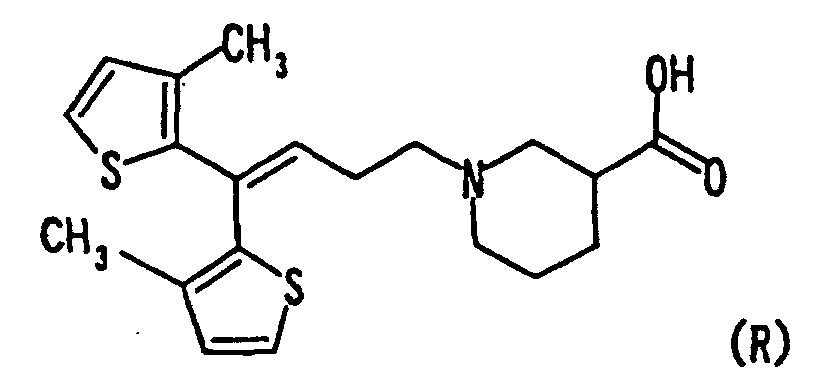
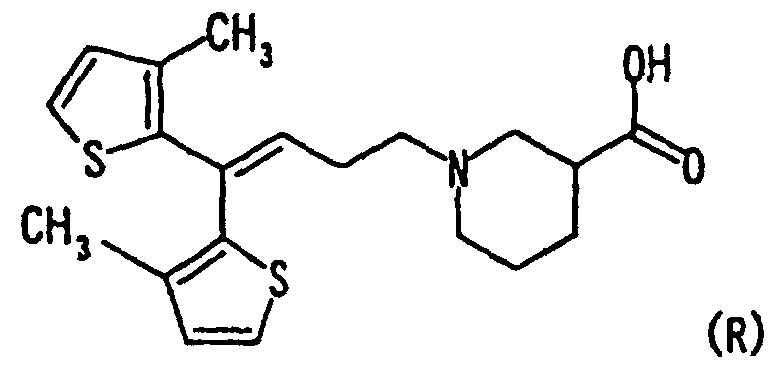
Compound C-1: (R)-1-[4,4-bis(3-methyl-2-thienyl)-3-butenyl]-3-piperidinecarboxylic acid (tiagabin) or a salt thereof (in particular, hydrochloride)(J. Med. Chem., 36, (1993) 1716-1725))


As a salt of these compounds, for example, salts with
inorganic acids (such as hydrochloric acid, phosphoric acid,
hydrobromic acid and sulfuric acid), or salts with organic
acids (such as acetic acid, formic acid, propionic acid,
fumaric acid, maleic acid, succinic acid, tartaric acid,
citric acid, malic acid, oxalic acid, methanesulfonic acid
and benzenesulfonic acid) are used. Further, when these
compounds have an acidic group such as carboxylic acid as a
substituent, they may form a salt with inorganic bases
(such as alkali metal and alkaline earth metal such as
sodium, potassium, calcium and magnesium, and ammonia) or
organic bases (such as tri-C1-3 alkylamine such as
triethylamine).
The effects of a GABA uptake inhibitor of preventing
or treating urinary frequency and urinary incontinence can
be measured by a method described in, for example, Eur. J.
Pharmacol., 103, 41-50 (1984), and Neuroscience, 54, 827-837
(1993) or a similar method. More particularly, the
effects of a GABA uptake inhibitor of preventing or
treating urinary frequency can be measured according to
methods described in Test Examples 1 to 5 described below.
As used herein, urinary frequency indicates that there
is an intention or function to suppress micturition but the
number of micturition is larger as compared with a normal
time, or the number of micturition is larger as compared
with a normal person. More particularly, urinary frequency
indicates that the number of micturition is about 1.5-fold
or more the number of micturition at a normal time or that
of a normal person and, in the case of severer conditions,
about 2 to 3-fold or more.
As used herein, urinary incontinence indicates that an
intention or function to suppress micturition is lowered or
lacked. Urinary incontinence includes urge urinary
incontinence, stress urinary incontinence, overflow urinary
incontinence and reflex urinary incontinence and a GABA
uptake inhibitor is particularly effective for urge urinary
incontinence.
Furthermore, urinary frequency and urinary
incontinence include nocturnal enuresis of infants or
senilities, and abnormal micturition accompanied with
diseases such as dementia.
GABA uptake inhibitors, in particular, the
aforementioned compounds A to O are low toxic and safe and
are useful as a composition for preventing or treating or
as a drug for improving abnormal micturition such as
urinary frequency and urinary incontinence for a mammal
(such as mouse, rat, hamster, rabbit, cat, dog, cattle,
sheep, monkey and human being).
The preventing or treating composition of the present
invention may be in the form of any of solid preparations
such as powders, fine granules, granules, tablets and
capsules, and liquid preparations such as syrups
suspensions, emulsions and injectables.
The preventing or treating composition of the present
invention can be prepared by the conventional method such
as mixing, kneading, granulating, tabletting, coating,
sterile treating and emulsifying preventing upon the form
of preparations. Regarding production of a preparation,
for example, respective items of Japanese Pharmacopoeia,
general rules for preparations can be referenced.
The content of a GABA uptake inhibitor in the
preventing or treating composition of the present invention
is different depending upon the form of preparations and is
usually about 0.01 to 100% by weight, preferably about 0.1
to 50% by weight, more preferably about 0.5 to 20% by
weight relative to the whole preparation.
When a GABA uptake inhibitor is used for the
aforementioned medicament, it can be administered orally or
parenterally, as it is, or in the form of solid
preparations such as powders, fine granules, granules,
tablets, coating tablets and capsules, or liquid
preparations such as syrups, suspensions, emulsions and
injectables by mixing with a suitable pharmacologically
acceptable carrier, for example, an excipient (such as
starch, lactose, scrouse, calcium carbonate and calcium
phophate), a binding agent (such as starch, gum arabic,
carboxymethylcellulose, hydroxypropylcellulose, crystalline
cellulose, alginic acid, gelatin and poly(vinyl
pyrrolidone)), a lubricant (such as stearic acid, magnesium
stearate, calcium stearate and talc), a disintegrating
agent (such as calcium carboxymethylcellulose and talc), a
diluent (such as water for injection, physiological saline
and propylene glycol water) and, if necessary, an additive
(such as stabilizer, preservative, colorant, perfume,
solubilizer, emulsifier, buffer and isotonic) according to
a conventional method.
A dose is different depending upon a kind of a GABA
uptake inhibitor, route of administration, and conditions
and an age of a patient and, when orally administered to an
adult patient of urinary frequency, about 0.005 to 50 mg,
preferably about 0.05 to 10 mg, more preferably about 0.2
to 4 mg of a GABA uptake inhibitor/kg weight/day can be
administered once to thrice in a divided manner.
Also, a GABA uptake inhibitor can be conveniently used
together with a suitable amount of other drugs for
preventing or treating urinary frequency and urinary
incontinence. As such the drug for preventing or treating
urinary frequency and urinary incontinence, for example,
compounds described in JP-A 9-263585 (such as (9R)-7-[3,5-bis(trifluoromethyl)benzyl)-6,7,8,9,10,11-hexahydro-9-methyl-5-(4-methylphenyl)-6,13-dioxo-13H-[1,4]diazosino[2,1-g][1,7]naphthylidine)
or salts thereof
are used.
An amount of these other drugs for preventing or
treating urinary frequency and urinary incontinence to be
used is usually about 0.01 to 90% by weight, preferably
about 0.1 to 50% by weight, more preferably about 0.5 to
20% by weight relative to the whole preparation.
The present invention will be explained in more detail
by way of the following Examples but the present invention
is not limited by the following Examples and a variation is
possible in a range without departing the scope of the
present invention.
| Example 1 Coated tablet | ||
| (1) | NO-711 hydrochloride | 10.0 mg |
| (2) | Lactose | 60.0 mg |
| (3) | Corn starch | 35.0 mg |
| (4) | Hydroxypropylmethylcellulose | 3.0 mg |
| (5) | Magnesium stearate | 2.0 mg |
A mixture of 10.0 mg of NO-711 (compound A)
hydrochloride, 60.0 mg of lactose and 35.0 mg of corn
starch is granulated using 0.03 ml of a 10% by weight
aqueous hydroxypropylmethylcellulose solution (3.0 mg as
hydroxypropylmethylcellulose), dried at 40°C and passed
through a sieve. The resulting granule is mixed with 2.0
mg of magnesium stearate, and compressed. The resulting
crude tablet is coated with a sugar coating of an aqueous
suspension of sucrose, titanium dioxide, talc and gum
arabic. The coated tablet is polished with beewax to
obtain the desired coated tablet.
| Example 2 Tablet | ||
| (1) | NO-711 hydrochloride | 10.0 mg |
| (2) | Lactose | 70.0 mg |
| (3) | Corn starch | 50.0 mg |
| (4) | Soluble starch | 7.0 mg |
| (5) | Magnesium stearate | 3.0 mg |
10.0 mg of NO-711 hydrochloride and 3.0 mg of
magnesium stearate are granulated with 0.07 ml of an
aqueous soluble starch solution (7.0 mg as soluble starch),
dried, and mixed with 70.0 mg of lactose and 50.0 mg of
corn starch. The mixture is compressed to obtain the
desired tablet.
| Example 3 Capsule | ||
| (1) | NO-711 hydrochloride | 25 mg |
| (2) | Lactose | 55 mg |
| (3) | Talc | 16 mg |
| (4) | Magnesium stearate | 4 mg |
The ingredients of the above ratio are filled in a
standard 2-piece hard gelatin capsule to obtain the desired
capsule.
NO-711 hydrochloride is dissolved in 10% propylene
glycol water at 1.5% by weight to obtain the desired
injectable preparation.
| Example 5 Coated tablet | ||
| (1) | Tiagabin hydrochloride | 10.0 mg |
| (2) | Lactose | 60.0 mg |
| (3) | Corn starch | 35.0 mg |
| (4) | Hydroxypropylmethylcellulose | 3.0 mg |
| (5) | Magnesium stearate | 2.0 mg |
A mixture of 10.0 mg of tiagabin hydrochloride
(hydrochloride of compound C-1), 60.0 mg of lactose and
35.0 mg of corn starch is granulated using 0.03 ml of a 10%
by weight aqueous hydroxypropylmethylcellulose solution
(3.0 mg as hydroxypropylmethylcellulose), dried at 40°C and
passed through a sieve. The resulting granule is mixed
with 2.0 mg of magnesium stearate, and compressed. The
resulting crude tablet is coated with a sugar coating of an
aqueous suspension containing sucrose, titanium oxide, talc
and gum arabic. The coated tablet is polished with beewax
to obtain the desired coating tablet.
| Example 6 Tablet | ||
| (1) | Tiagabin hydrochloride | 10.0 mg |
| (2) | Lactose | 70.0 mg |
| (3) | Corn starch | 50.0 mg |
| (4) | Soluble starch | 7.0 mg |
| (5) | Magnesium stearate | 3.0 mg |
10.0 mg of tiagabin hydrochloride and 3.0 mg of
magnesium stearate are granulated with 0.07 ml of an
aqueous soluble starch solution (7.0 mg as soluble starch),
dried, and mixed with 70.0 mg of lactose and 50.0 mg of
corn starch. The mixture is compressed to obtain the
desired tablet.
| Example 7 Capsule | ||
| (1) | Tiagabin hydrochloride | 25 mg |
| (2) | Lactose | 55 mg |
| (3) | Talc | 16 mg |
| (4) | Magnesium stearate | 4 mg |
The ingredients of the above ratio are filled into a
standard 2-piece hard gelatin capsule to obtain the desired
capsule.
Tiagabin hydrochloride is dissolved in 10% propylene
glycol water at 1.5% by weight to obtain the desired
injectable.
According to the same manner as those in Examples 1 to
4, preparations are prepared by using SKF89976A
hydrochloride (hydrochloride of compound B) and compounds D
to O, respectively.
The urinary frequency and urinary incontinence
suppressing activity of NO-711 hydrochloride was evaluated
by the ability to increase an interval between rhythmic
bladder contractions in urethane-anesthetized guinea pig as
an index. In this model, an urethra was ligated, a
constant volume of a physiological saline (3 to 4.5 ml)
warmed at 39°C was injected into the bladder to distend,
and the regular rhythmic bladder contractions at a constant
interval were observed. After the stable rhythmic bladder
contractions were confirmed, a compound dissolved in
physiological saline was administered intravenously to
investigate the activity. Immediately after administration
of a drug, the time of complete suppression of the rhythmic
bladder contractions (rhythmic bladder contraction shutdown
time, maximum observation period was 30 minutes) was
measured. The results are shown in Table 1.
| Administered drug | Dose (mg/kg) | Number of aminals | Rhythmic bladder contraction shutdown time(minutes, mean± standard error) |
| Physiological saline | - | 7 | 3.5±1.3 |
| NO-711 hydrochloride | 1 | 6 | 5.9±1.3 |
| 3 | 7 | 18.4±5.0* | |
| 10 | 7 | 16.9±3.6** |
A drug was administered intravenously.
*P<0.05, **P<0.01 (significance to the physiological saline-administered control group, nonparametric Dunnett multiple comparison test, two-tailed test)
*P<0.05, **P<0.01 (significance to the physiological saline-administered control group, nonparametric Dunnett multiple comparison test, two-tailed test)
The urinary frequency and urinary incontinence
suppressing activity of a GABA uptake inhibitor was
measured as the ability to abolish the rhythmic bladder
contractions in urethane-anesthetized rats as an index. An
urethra was ligated, a constant volume of physiological
saline warmed at 39°C was injected into the bladder to
distend the detrusor muscle, and the regular rhythmic
bladder contractions at a constant interval were observed.
After the stable bladder contractions were confirmed, a
compound was administered intravenously to investigate the
activities. A time for completely suppressing the rhythmic
bladder contractions after the drug administration (reflex
shutdown time, a maximum observation period was 30 minutes)
and a maximum contractile intravesical pressure at which
the bladder contraction appeared again after the
administration was measured. The results are shown in
Table 2. The GABA uptake inhibitor increased a reflex
shutdown time without affecting the maximum contractile
pressure.
| Drug | Dose (mg/ kg) | Reflex shutdown time | Change in maximum contractile intravesical pressure | ||
| (Number of animals) | (min.) | (Number of animals) | (Relative to before administration, %) | ||
| 0 | 6 | 4.1±0.7 | 6 | -5.9±3.4 | |
| 0.3 | 6 | 4.7±1.6 | 6 | -12.6±5.8 | |
| Tiagabin hydrochloride | 1 | 6 | 11.6±3.8 | 5 | 4.5±17.3 |
| 3 | 6 | 18.0±3.5* | 5 | -19.4±11.8 | |
| 10 | 5 | 24.6±3.1** | 4 | -31.6±10.5 | |
| 0 | 6 | 2.0±0.5 | 6 | -6.2±3.4 | |
| NO-711 | 0.3 | 6 | 3.8±1.1 | 6 | -3.3±3.2 |
| hydrochloride | 1 | 6 | 11.4±2.9** | 6 | -19.7±5.6* |
| 3 | 6 | 12.1±2.5** | 6 | -8.4±5.8 | |
| 0 | 6 | 3.5±0.8 | 6 | 11.7±7.1 | |
| SKF89976A | 3 | 6 | 5.0±1.0 | 6 | -7.1±3.1 |
| hydrochloride | 10 | 6 | 15.7±3.3* | 6 | -12.1±11.5 |
| 30 | 5 | 25.1±4.6** | 3 | -8.4±10.6 |
Tiagabin hydrochloride was dissolved in distilled
water, other drugs were dissolved in physiological saline,
and the drugs were administered intravenously, respectively.
Data are shown as mean ± standard error.
*P<0.05, **P<0.01 (significance relative to the vehicle-administered control group, nonparametric Dunnett multiple comparison test, two-tailed test)
#P<0.05 (significance to the values obtained before drug administration, paired t test, two-tailed test). A maximum contractile pressure was calculated from animals from which the bladder constriction was obtained in an observation period.
*P<0.05, **P<0.01 (significance relative to the vehicle-administered control group, nonparametric Dunnett multiple comparison test, two-tailed test)
#P<0.05 (significance to the values obtained before drug administration, paired t test, two-tailed test). A maximum contractile pressure was calculated from animals from which the bladder constriction was obtained in an observation period.
The urinary frequency and urinary incontinence
suppressing activity of a GABA uptake inhibitor was shown
by the ability to increase bladder capacity in urethane-anesthetized
rats. After a bladder was made empty by
drawing out the urine, physiological saline warmed at 39°C
was injected into the bladder at a constant rate (0.05
ml/min.) to induce micturition. These procedures were
repeated to confirm stable bladder capacity (volume of
physiological saline injected until start of micturition)
and, thereafter, compounds were administered intravenously
to investigate the activities. A change in bladder
capacity and micturition pressure after the administration
was measured. The results are shown in Table 3. The GABA
uptake inhibitor increased bladder capacity.
| Drug | Dose (mg/ kg) | Change in bladder capacity | Change in micturition pressure | ||
| (Number of animals) | (Relative to before administration, %) | (Number of animals) | (Relative to before administration, %) | ||
| Distilled water | 5 | -15.0±18.7 | 5 | -5.0±13.2 | |
| Tiagabin hydrochloride | 1 | 7 | 42.7±35.6 | 7 | 15.2±14.6 |
| 3 | 6 | 236.8±81.2* | 6 | 29.5±15.6 | |
| 10 | 6 | 276.4±29.4** | 6 | 2.5±10.3 | |
| 0.3 | 6 | -8.4±11.3 | 6 | -18.1±10.5 | |
| NO-711 hydrochloride | 1 | 8 | 180.9±76.8* | 8 | 16.4±8.2 |
| 3 | 8 | 188.7±45.3** | 8 | 14.6±18.2 |
Tiagabin hydrochloride was dissolved in distilled
water, other drugs were dissolved in physiological saline
and the drugs were administered intravenously, respectively.
Data are shown as the mean ± standard error. After drug
administration, animals showing an overflow urinary
incontinence-like cystometrogram (urine leakage without the
bladder constriction) were excluded from calculation of
micturition pressure.
*P<0.05, **P<0.01 (significance to the values obtained before drug administration, paired t test, two-tailed test)
*P<0.05, **P<0.01 (significance to the values obtained before drug administration, paired t test, two-tailed test)
The urinary frequency and urinary incontinence
suppressing activity of a GABA uptake inhibitor was
measured as the ability to increase the micturition
interval in bilateral common carotid artery-ligated rat
under consciousness as an index. An animal was restricted
in a Ballmann cage, and physiological saline was sustained-injected
into the bladder at a constant rate (0.1 ml/min.)
to induce repeated micturition. After the stable
micturition interval was confirmed, common carotid arteries
were ligated bilaterally and micturition interval was
decreased. A compound was administered intravenously to
animals with micturition interval decreased 20% or more
following ligation, and the activity was investigated. The
micturition interval and micturition pressure before and
after drug administration were measured for 30 minutes, and
the averages are expressed as the ratio to the value before
bilateral common carotid artery-ligation (Table 4). A GABA
uptake inhibitor, tiagabin hydrochloride, showed an
increasing effect on micturition interval which had been
decreased by bilateral common carotid artery ligation.
| Drug | Dose (mg/ kg) | Number of animals | Micturition interval (relative to before ligation, %) | Micturition pressure (relative to before ligation, %) | ||
| Before administration | After administration | Before administration | After administration | |||
| Distilled water | 6 | 56.1±6.9 | 60.7±8.2 | 88.4±4.4 | 89.3±4.4 | |
| Tiagabin hydrochloride | 0.1 | 5 | 58.5±3.1 | 78.8±10.0 | 103.9±1.1 | 100.7±2.3 |
| 0.3 | 6 | 62.5±4.9 | 92.1±12.8* | 91.3±10.6 | 86.3±9.2 | |
| 1 | 4 | 63.2±3.3 | 100.0±6.5** | 111.5±8.3 | 105.0±8.4 | |
| 3 | 4 | 46.5±11.6 | 75.5±15.0* | 105.2±10.8 | 106.2+5.3 | |
| Physiological saline | 4 | 56.2±3.6 | 69.2±10.3 | 103.9±5.9 | 99.6±7.8 |
Tiagabin hydrochloride was dissolved in distilled
water and administered intravenously. Crystometograms for
30 minutes before and after drug administration were
continuously measured and compared. Data are shown as a
ratio to micturition interval and micturition pressure
before bilateral common carotid artery-ligation (mean ±
standard error).
*P<0.05, **P<0.01 (significance relative to before drug administration, paired t test, two-tailed test)
*P<0.05, **P<0.01 (significance relative to before drug administration, paired t test, two-tailed test)
The urinary frequency and urinary incontinence
activity of a GABA uptake inhibitor was measured as the
ability to increase the micturition interval in a
unilaterally decerebrated rat under consciousness as an
index. Animals were restricted in a Ballmann cage, and
physiological saline was sustained-injected into the
bladder at a constant rate (0.05 ml/min.) to induce
repeated micturition. In a unilaterally decerebrated rat,
micturition interval was decreased, and after the stable
micturition interval was confirmed, a drug was administered
intravenously or orally to investigate the activity (Table
5 and Table 6). The micturition interval and micturition
pressure before and after drug administration were measured
for 30 minutes, and the mean values were compared.
| Drug | Dose (mg/ kg) | Number of animals | Micturition interval (min.) | Micturition pressure (mmHg) | ||
| Before administration | After administration | Before administration | After administration | |||
| Normal animal Unilaterally decerebrated animal | 5 | 12.7±2.0 | 15.3±1.7 | |||
| Distilled water | 5 | 5.5±1.4 | 5.3±1.0 | 13.9±1.4 | 14.8±1.6 | |
| Tiagabin hydrochloride | 0.3 | 4 | 6.6±1.5 | 6.8±0.9 | 13.9±2.3 | 15.1±2.6 |
| 1 | 5 | 5.2±0.7 | 6.5±1.0* | 14.4±1.4 | 14.5±1.5 | |
| 3 | 5 | 5.1±0.5 | 7.3±0.5** | 16.1±1.4 | 16.5±1.6 |
A drug was administered intravenously. Cystometogram
was continuously measured for 30 minutes starting 15
minutes after drug administration, and it was compared with
that for 30 minutes before drug administration. Data are
shown as the means ± standard error.
*P<0.05 **P<0.01 (significance to before administration, paired t test, two-tailed test)
*P<0.05 **P<0.01 (significance to before administration, paired t test, two-tailed test)
| Drug | Dose (mg/ kg) | Number of specimens | Micturition interval (min.) | |
| Before administration | After administration | |||
| Distilled water | 7 | 5.1±0.6 | 5.1±0.4 | |
| Tiagabin hydrochloride | 3 | 7 | 4.9±0.8 | 5.6±0.7 |
| 10 | 7 | 4.4±0.5 | 6.1±0.8* |
A drug was administered orally. A bladder inner
pressure curve was continuously measured for 30 minutes
starting 60 minutes after drug administration, and it was
compared with that for 30 minutes before drug
administration. Data are shown as the mean ± standard
error.
*P<0.05 (significance relative to drug administration, paired t test, two-tailed test)
*P<0.05 (significance relative to drug administration, paired t test, two-tailed test)
As apparent in Table 5 and Table 6, tiagabin
hydrochloride which is a GABA uptake inhibitor increased
micturition interval in a unilaterally decerebrated rat in
both intravenous and oral administrations.
A GABA uptake inhibitor is useful as a composition for
preventing or treating urinary frequency and urinary
incontinence.
Claims (13)
- A composition for preventing or treating urinary frequency and urinary incontinence, which comprises a GABA uptake inhibitor.
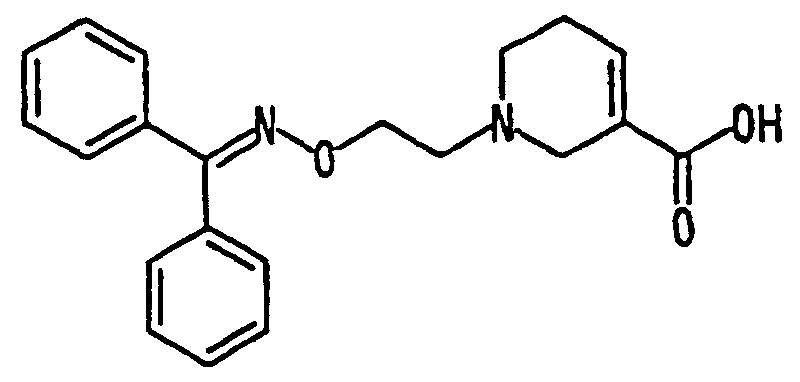
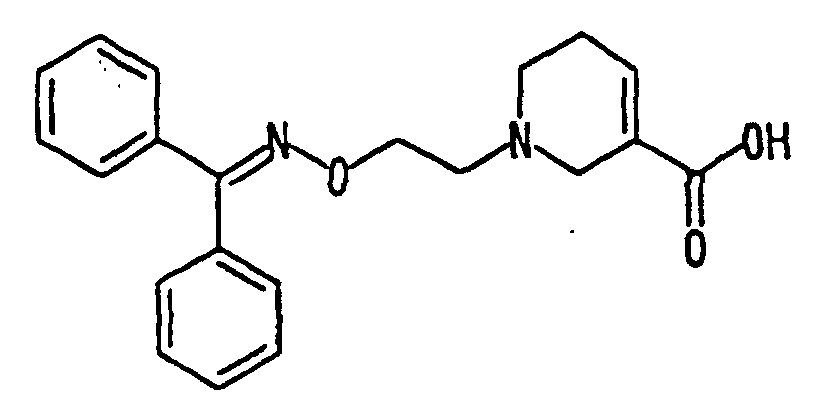
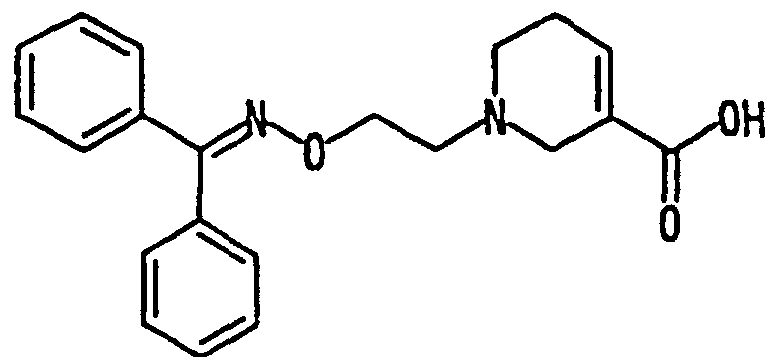
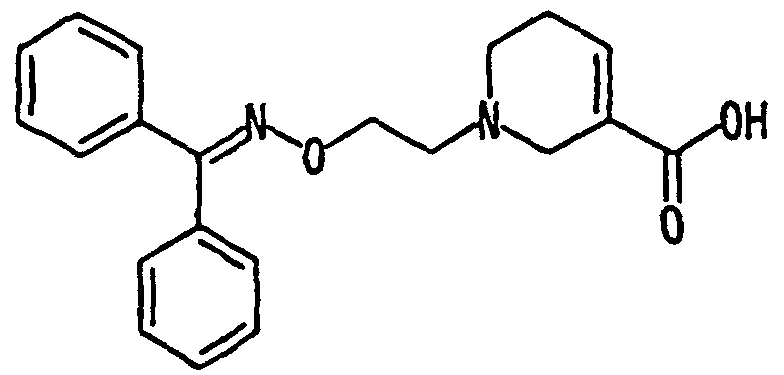
- The composition according to claim 1, wherein the GABA uptake inhibitor is;1) 1-(2-((diphenylmethylene)amino)oxy)ethyl)-1,2,5,6-tetrahydro-3-pyridinecarboxylic acid represented by the formula:or a salt thereof,
 2) (R)-1-(4,4-diphenyl-3-butenyl)-3-piperidinecarboxylic acid represented by the formula:or a salt thereof,
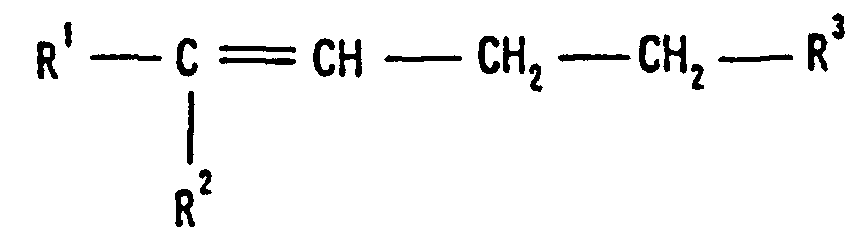
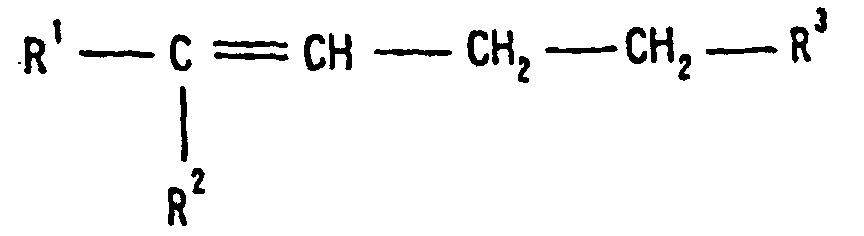
 3) a compound represented by the formula:wherein R1 and R2 are the same or different, and each represents furanyl, thienyl, pyridyl or pyrrolyl, which may be substituted with 1 to 3 halogen or lower alkyl, and R3 represents 3-carboxypiperidin-1-yl, 3-carboxy-1,2,5,6-tetrahydropyrid-1-yl or 3-carboxymethylpyrrolidin-1-yl, or a salt thereof,
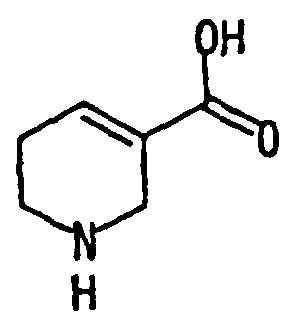
 4) 1,2,5,6-tetrahydronicotinic acid represented by the formula:or a salt thereof,
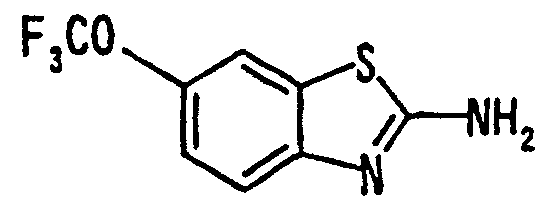
 5) N-(4,4-diphenyl-3-butenyl)-3-pyrroridineacetic acid or a salt thereof,6) 3-piperidinecarboxylic acid or a salt thereof,7) 1,2,5,6-tetrahydro-3-pyridinecarboxylic acid or a salt thereof,8) N-(4,4-diphenyl-3-butenyl)-1,2,5,6-tetrahydro-3-pyridinecarboxylic acid or a salt thereof,9) cis-4-hydroxyl-3-piperidinecarboxylic acid or a salt thereof,10) 6-(trifluoromethoxy)-2-benzothiazole-amine represented by the formula:or a salt thereof, or
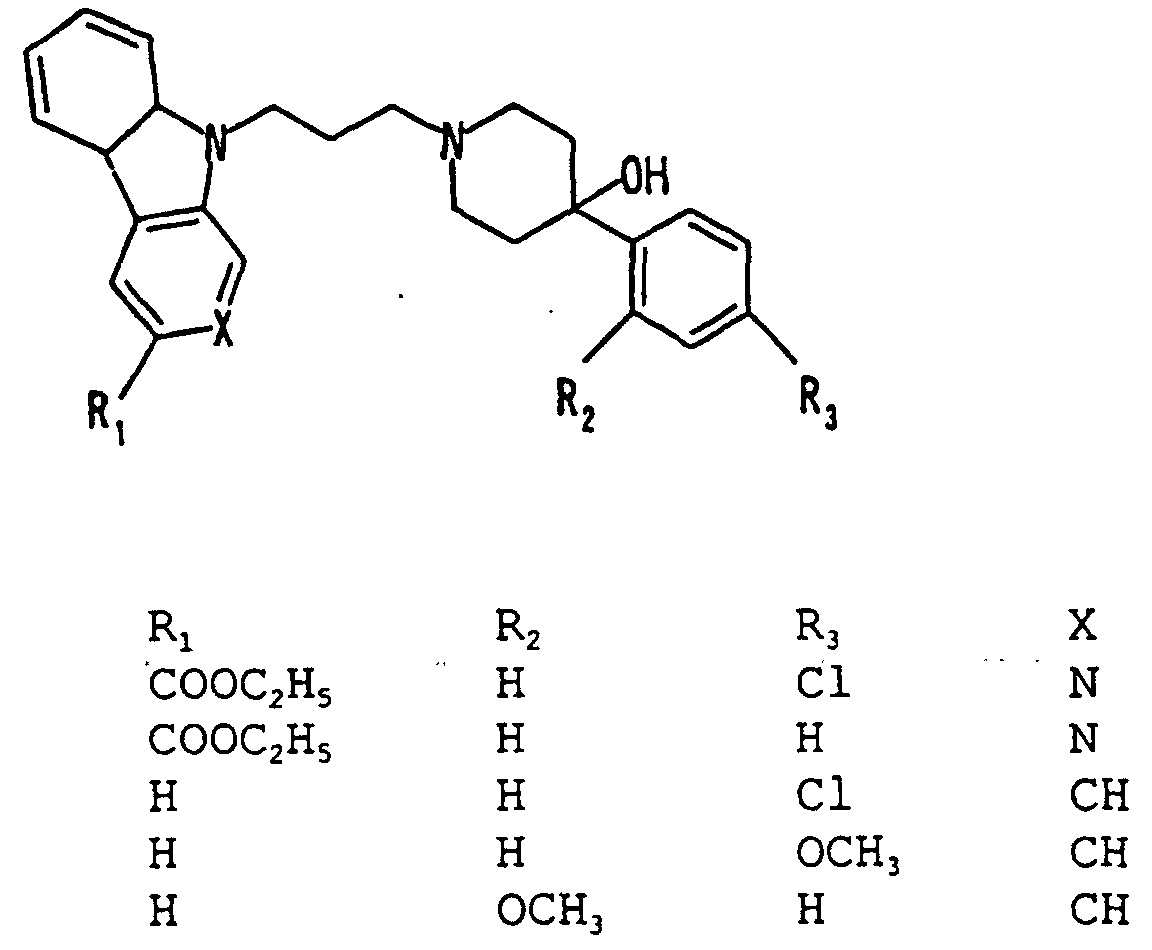
 11) a compound represented by the formula:or a salt thereof.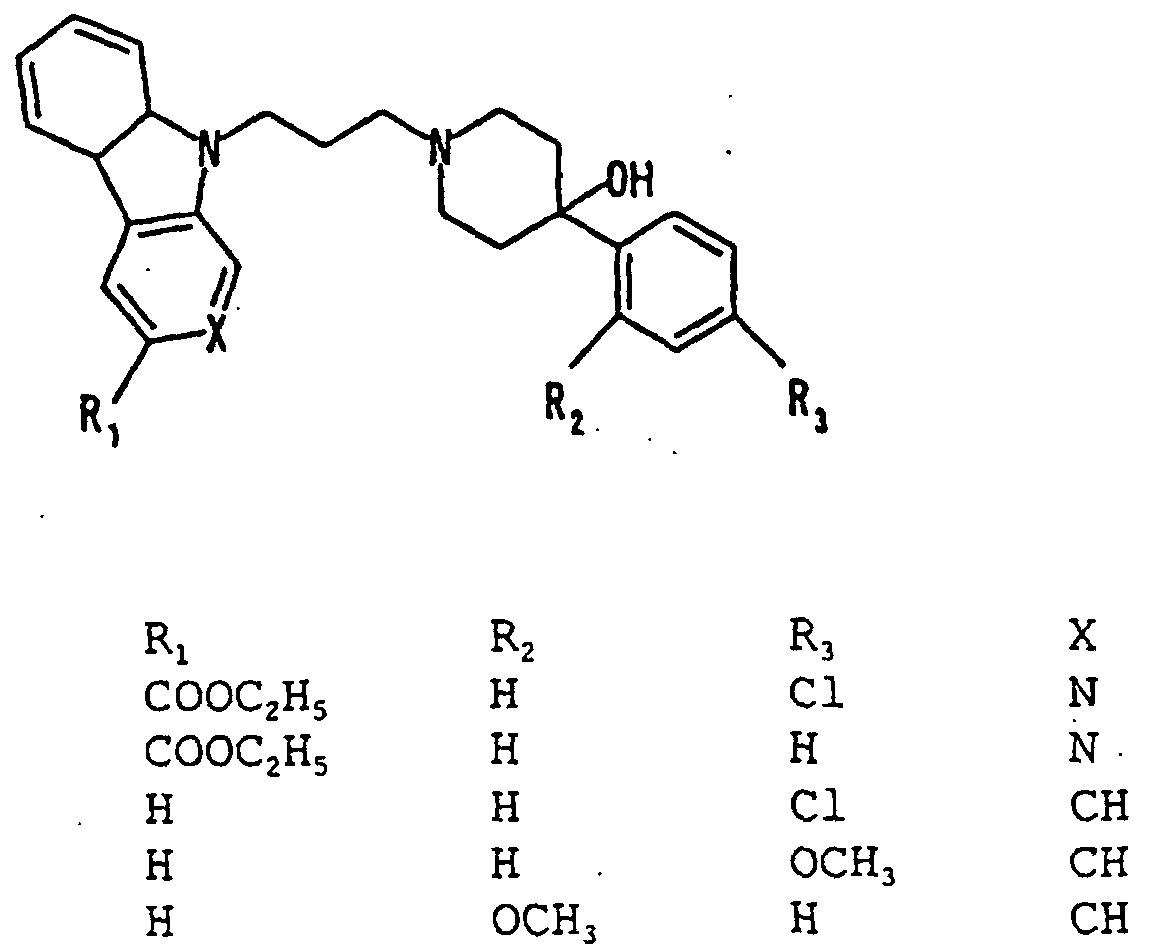
- The composition according to claim 1, which is a composition for preventing or treating urinary frequency.
- The composition according to claim 3, wherein the GABA uptake inhibitor is:1) 1-(2-((diphenylmethylene)amino)oxy)ethyl)-1,2,5,6-tetrahydro-3-pyridinecarboxylic acid represented by the formula:or a hydrochloride thereof,
 2) (R)-1-(4,4-diphenyl-3-butenyl)-3-piperidinecarboxylic acid represented by the formula:or a hydrochloride thereof, or
 3) (R)-1-[4,4-bis(3-methyl-2-thienyl)-3-butenyl]-3-piperidinecarboxylic acid represented by the formula:or a hydrochloride thereof.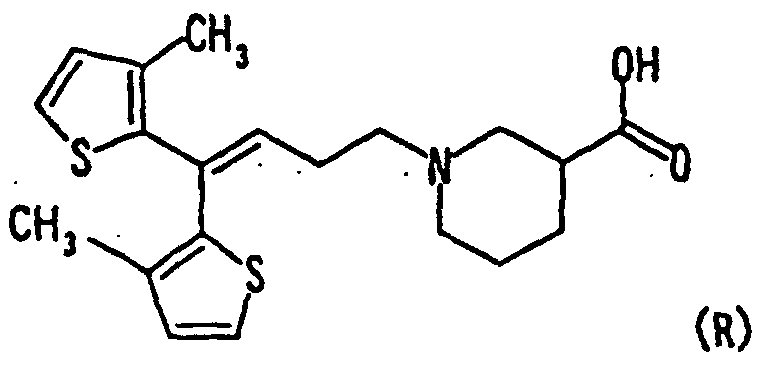
- The composition according to claim 1, which is a composition for preventing or treating urinary incontinence.
- A composition for preventing or treating urinary incontinence, which comprises containing a GABA uptake inhibitor containing no sulfur atom.
- The composition according to claim 5 or 6, wherein the GABA uptake inhibitor is:1) 1-(2-((diphenylmethylene)amino)oxy)ethyl)-1,2,5,6-tetrahydro-3-pyridinecarboxylic acid represented by the formula:or a salt thereof,
 2) (R)-1-(4,4-diphenyl-3-butenyl)-3-piperidinecarboxylic acid represented by the formula:or a salt thereof,
 3) 1,2,5,6-tetrahydronicotinic acid represented by the formula:or a salt thereof,
 4) N-(4,4-diphenyl-3-butenyl)-3-pyrrolidineacetic acid or a salt thereof,5) 3-piperidinecarboxylic acid or a salt thereof,6) 1,2,5,6-tetrahydro-3-pyridinecarboxylic acid or a salt thereof,7) N-(4,4-diphenyl-3-butenyl)-1,2,5,6-tetrahydro-3-pyridinecarboxylic acid or a salt thereof,8) cis-4-hydroxy-3-piperidinecarboxylic acid or a salt thereof,9) 6-(trifluoromethoxy)-2-benzothiazole-amine represented by the formula:or a salt thereof, or
 10) a compound represented by the formula:or a salt thereof.
- The composition according to claim 5 or 6, wherein the GABA uptake inhibitor is:1) 1-(2-((diphenylmethylene)amino)oxy)ethyl)-1,2,5,6-tetrahydro-3-pyridinecarboxylic acid represented by the formula:or a hydrochloride thereof, or
 2) (R)-1-(4,4-diphenyl-3-butenyl)-3-piperidinecarboxylic acid represented by the formula:or a hydrochloride thereof.
- The composition according to claim 5, wherein the GABA uptake inhibitor is a compound represented by the formula:wherein R1 and R2 are the same or different, and each represents furanyl, thienyl, pyridyl or pyrrolyl, which may be substituted with 1 to 3 halogen or lower alkyl, and R3 represents 3-carboxy piperidin-1-yl, 3-carboxy-1,2,5,6-tetrahydropyrid-1-yl or 3-carboxymethylpyrrolidin-1-yl, or a salt thereof.
- The composition according to claim 5, the GABA uptake inhibitor is (R)-1-[4,4-bis(3-methyl-2-thienyl)-3-butenyl]-3-piperidinecarboxylic acid represented by the formula:or a hydrochloride thereof.

- The composition according to any one of claims 5 to 10, wherein urinary incontinence is urgency urinary incontinence.
- A method for preventing or treating urinary frequency and urinary incontinence, which comprises administering an effective amount of a GABA uptake inhibitor to a mammal.
- Use of a GABA uptake inhibitor for preparing an agent for preventing or treating urinary frequency and urinary incontinence.
Applications Claiming Priority (3)
| Application Number | Priority Date | Filing Date | Title |
|---|---|---|---|
| JP555699 | 1999-01-12 | ||
| JP555699 | 1999-01-12 | ||
| PCT/JP2000/000074 WO2000041728A1 (en) | 1999-01-12 | 2000-01-11 | Compositions for treating frequent urination and urinary incontinence |
Publications (2)
| Publication Number | Publication Date |
|---|---|
| EP1142584A1 true EP1142584A1 (en) | 2001-10-10 |
| EP1142584A4 EP1142584A4 (en) | 2003-04-16 |
Family
ID=11614483
Family Applications (1)
| Application Number | Title | Priority Date | Filing Date |
|---|---|---|---|
| EP00900169A Withdrawn EP1142584A4 (en) | 1999-01-12 | 2000-01-11 | Compositions for treating frequent urination and urinary incontinence |
Country Status (4)
| Country | Link |
|---|---|
| EP (1) | EP1142584A4 (en) |
| AU (1) | AU1892800A (en) |
| CA (1) | CA2361924A1 (en) |
| WO (1) | WO2000041728A1 (en) |
Family Cites Families (5)
| Publication number | Priority date | Publication date | Assignee | Title |
|---|---|---|---|---|
| FR2492258A1 (en) * | 1980-10-17 | 1982-04-23 | Pharmindustrie | NEW AMINO-2 TRIFLUOROMETHOXY-6 BENZOTHIAZOLE-BASED MEDICINAL PRODUCT |
| US4383999A (en) * | 1981-05-26 | 1983-05-17 | Smithkline Beckman Corporation | Inhibition of GABA uptake by N-substituted azaheterocyclic carboxylic acids and their esters |
| DK288385D0 (en) * | 1985-06-26 | 1985-06-26 | Novo Industri As | AMINO ACID DERIVATIVES |
| DK270488D0 (en) * | 1988-05-18 | 1988-05-18 | Novo Industri As | Hitherto unknown O-SUBSTITUTED KETOXIMES |
| GB9117716D0 (en) * | 1991-08-16 | 1991-10-02 | Lynxvale Ltd | Gaba derivatives and their therapeutic application |
-
2000
- 2000-01-11 CA CA002361924A patent/CA2361924A1/en not_active Abandoned
- 2000-01-11 WO PCT/JP2000/000074 patent/WO2000041728A1/en not_active Ceased
- 2000-01-11 EP EP00900169A patent/EP1142584A4/en not_active Withdrawn
- 2000-01-11 AU AU18928/00A patent/AU1892800A/en not_active Abandoned
Also Published As
| Publication number | Publication date |
|---|---|
| EP1142584A4 (en) | 2003-04-16 |
| CA2361924A1 (en) | 2000-07-20 |
| AU1892800A (en) | 2000-08-01 |
| WO2000041728A1 (en) | 2000-07-20 |
Similar Documents
| Publication | Publication Date | Title |
|---|---|---|
| CA1261755A (en) | Alfuzosine compositions and use | |
| US6200958B1 (en) | Agent for treating high-risk impaired glucose tolerance | |
| KR100328731B1 (en) | Optically pure (+) Norcysapride, which can be used to treat vomiting and central nervous system disease | |
| JP2002538104A (en) | Methods and compositions using (-) norcisapride in combination with a proton pump inhibitor and an H2 receptor antagonist | |
| JP2002538103A (en) | Methods and compositions using (+) norcisapride in combination with a proton pump inhibitor and an H2 receptor antagonist | |
| JPH11510477A (en) | Optically pure (-) norcisapride for the treatment of gastrointestinal disorders | |
| AU2018200167A1 (en) | Dosage forms of halofuginone and methods of use | |
| KR100633836B1 (en) | Stable Oral Solid Drug Composition | |
| US5180729A (en) | Use of sigma receptor antagonists for treatment of cocaine abuse | |
| US5162341A (en) | Use of sigma receptor antagonists for treatment of amphetamine abuse | |
| EP0750500A1 (en) | Treatment of diabetic nephropathy with valsartan | |
| JP6499634B2 (en) | Combination of solifenacin and salivary stimulant for the treatment of overactive bladder | |
| JP2002521448A (en) | Methods and compositions for treating gastroesophageal reflux disease | |
| JPH11514654A (en) | How to treat brain injury due to trauma | |
| CA2361924A1 (en) | Compositions for treating frequent urination and urinary incontinence | |
| JP2000264848A (en) | Composition for treating pollakiuria and aconurosis | |
| US20100056460A1 (en) | Combination of organic compounds | |
| JPWO2000041728A1 (en) | Composition for treating frequent urination and urinary incontinence | |
| CZ119197A3 (en) | Benzothiophene for preparing a medicament | |
| JP2007512267A (en) | Use of pentadienoic acid derivatives for the treatment of hyperuricemia | |
| US3595960A (en) | Treatment of hypertension with alpha-(substituted - 4 - aminophenyl) - alpha -lower alkylglutarimide | |
| CA2417883A1 (en) | Pharmaceutical composition comprising metformin and a 5-phenoxyalkyl-2,4-thiazolidinedione-type derivative | |
| CA1310908C (en) | Treating agents for renal diseases | |
| Dooley | Antihistamines | |
| KR20110073575A (en) | Drugs for Diabetic Nephropathy |
Legal Events
| Date | Code | Title | Description |
|---|---|---|---|
| PUAI | Public reference made under article 153(3) epc to a published international application that has entered the european phase |
Free format text: ORIGINAL CODE: 0009012 |
|
| 17P | Request for examination filed |
Effective date: 20010709 |
|
| AK | Designated contracting states |
Kind code of ref document: A1 Designated state(s): AT BE CH CY DE DK ES FI FR GB GR IE IT LI LU MC NL PT SE |
|
| AX | Request for extension of the european patent |
Free format text: AL;LT;LV;MK;RO;SI |
|
| A4 | Supplementary search report drawn up and despatched |
Effective date: 20030304 |
|
| 17Q | First examination report despatched |
Effective date: 20030912 |
|
| STAA | Information on the status of an ep patent application or granted ep patent |
Free format text: STATUS: THE APPLICATION IS DEEMED TO BE WITHDRAWN |
|
| 18D | Application deemed to be withdrawn |
Effective date: 20040123 |