Background of the Invention
The present invention relates to a method of removing
off-flavor from foods such as seafood, meat products and
vegetables, a deodorizer, and the like.
Among the factors undesirably influencing the quality of
food are so-called off-flavors, e.g., the fishy smell of seafood,
the fleshy smell of meat, and the grassy smell of soybean. It
is known to use sake, wine, shochu, mirin (a sweet sake used
as seasoning), etc. in processing or cooking food for the purpose
of masking such off-flavors. The deodorizing effect of such
substances is considered to be mostly attributable to ethanol.
In addition to ethanol mentioned above, the following
substances are known to be effective for deodorization: amino
acids and organic acids [J. Jap. Soc. for Food Science and
Technology, 29(6), 340 (1982)], amino-carbonyl reaction
products [J. Fish Sausage, 212, 15 (1982)], saccharides [J. Jap.
Soc. for Food Science and Technology, 46(5), 319 (1999)] and
phenol compounds [J. Jap. Soc. for Food Science and Technology,
29(7), 426 (1982)].
Smoking is known as one of the conventional methods of
deodorization utilizing food processing techniques. It is
reported that the above-mentioned phenol compounds are
concerned in the deodorization by smoking [Bull. of the Jap.
Soc. of Scientific Fisheries, 47(1), 113 (1981); J. Fish Sausage,
212, 15 (1982)].
Vanillin, which is a kind of phenol compound, is well known
as a substance that overcomes the odor of trimethylamine,
off-flavor in seafood. However, the characteristic sweet smell
of vanillin is regarded as an undesirable odor in certain kinds
of foods and thus prevents the utilization of vanillin as a
deodorizer.
4-Vinylguaiacol, which is a kind of phenol compound, is
a precursor of vanillin. In the field of brewing of sake, wine,
etc., 4-vinylguaiacol itself is considered to be one of the
off-flavor components, and studies are made to minimize its
formation in the process for producing such brewage.
On the other hand, certain yeast and mold are known as
enzyme source of ferulic acid decarboxylase having the activity
to form 4-vinylguaiacol from ferulic acid, and the ferulic acid
decarboxylase gene of yeast has been obtained [Gene, 142, 107
(1994); Japanese Published Unexamined Patent Application No.
276788/98].
Summary of the Invention
Some of the off-flavors of foods are inherent in food
materials, and others are developed in the course of processing
or cooking foods. A known example of the latter is the one
developed by oxidation of lipid caused by heating. As the
off-flavor developed by oxidation can be reduced by suppressing
oxidation, it is considered as one of the effective methods for
removing off-flavor to cause a substance having antioxidant
activity to be present in the system.
An object of the present invention is to provide an
effective method of removing off-flavor from foods such as
seafood, meat products and vegetables, and to provide
deodorizers, etc.
Another object of the present invention is to provide
products containing deodorizers of the present invention.
One of other object of the present invention is to provide
a method of producing a deodorizer comprising an oxidation
reaction step for conducting an oxidation reaction of a polymer
of phenol compounds having a styrene structure in the presence
of oxygen, and a deodorizer produced by the method thereof.
One of other object of the present invention is to provide
a method of producing a seasoning comprising an oxidation
reaction step for conducting an oxidation reaction of a polymer
of phenol compounds having a styrene structure in the presence
of oxygen, and a seasoning produced by the method thereof.
One of other object of the present invention is to provide
a method of producing liquor comprising an oxidation reaction
step for conducting an oxidation reaction of the resultant
liquid of the separation step in the presence of oxygen, and
liquor produced by the method thereof.
In one embodiment, the present invention provides a
method of removing off-flavor from a food which comprises
causing a polymer of phenol compounds having a styrene structure
to be present in the food.
In another embodiment, the invention provides a
deodorizer comprising a polymer of phenol compounds having a
styrene structure.
In another embodiment, the invention provides a seasoning
comprising a polymer of phenol compounds having a styrene
structure.
In another embodiment, the invention provides a cosmetic
comprising a polymer of phenol compounds having a styrene
structure.
In another embodiment, the invention provides an
antioxidant comprising a polymer of phenol compounds having a
styrene structure.
In another embodiment, the invention provides a method
of producing a polymer of phenol compounds having a styrene
structure, which comprises converting phenol compounds having
a styrene structure into the polymer in the presence of oxygen.
In another embodiment, the invention provides a method
of producing a seasoning comprising a polymer of phenol
compounds having a styrene structure, which comprises causing
phenol compounds having a styrene structure to be present in
any of the steps in a process for producing a seasoning, and
conducting an oxidation reaction of the phenol compounds in the
presence of oxygen during or after the completion of the process.
In another embodiment, the invention provides a method
of producing a deodorized food, which comprises cooking a food
using the above deodorizer.
In another embodiment, the invention provides a method
of deodorizing a food, which comprises cooking the food using
the above deodorizer.
In another embodiment, the invention provides a method
of producing liquor, which comprises an oxidation reaction step
for conducting an oxidation reaction of the resultant liquid
of the separation step in the presence of oxygen.
Detailed Description of the Invention
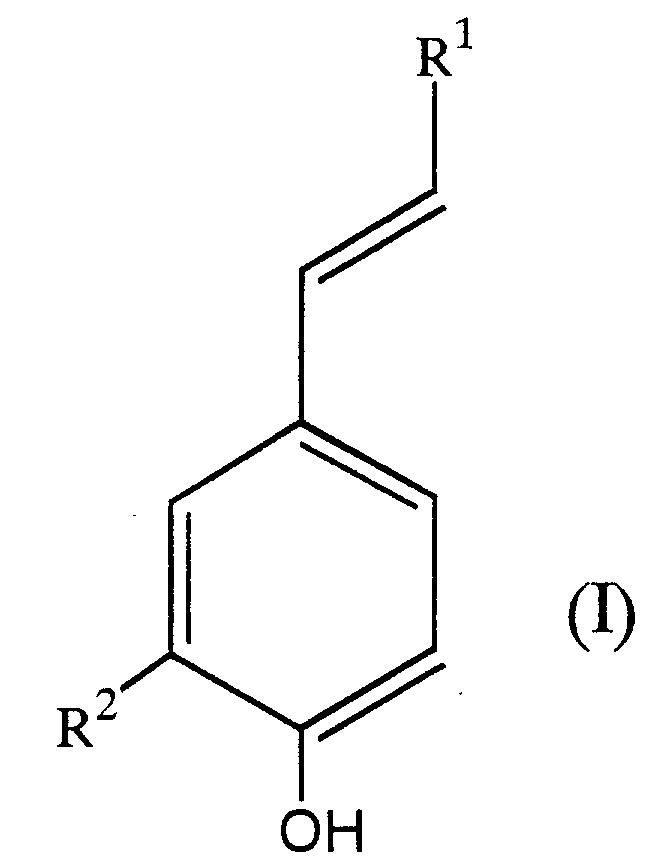
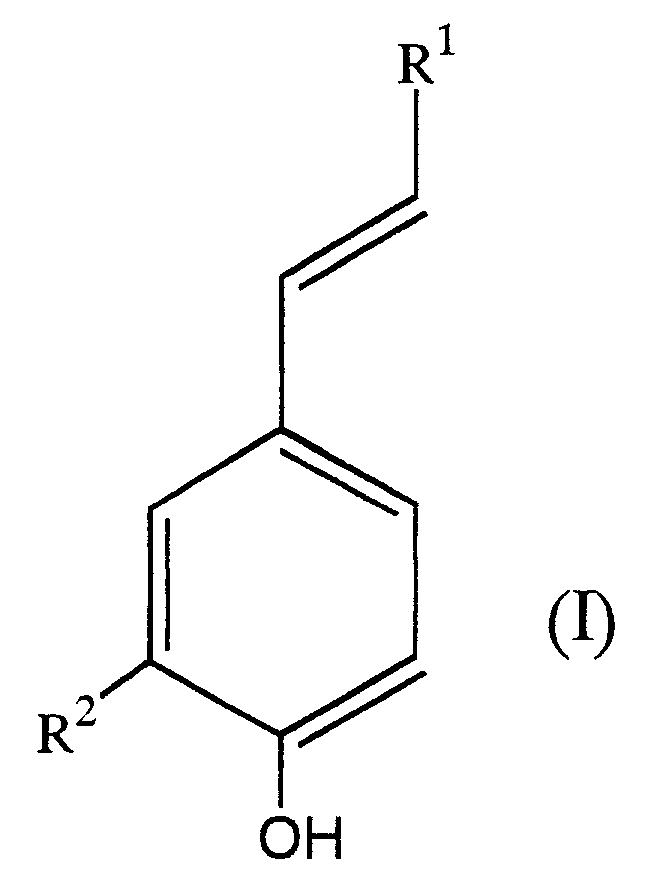
The phenol compounds having a styrene structure may be
any compounds having hydroxy and vinyl on a benzene ring (said
vinyl may be substituted by carboxy or the like). Preferred
are compounds represented by general formula (I):
(wherein R
1 represents hydrogen or carboxy, and R
2 represents
hydrogen or lower alkoxy). The lower alkyl moiety of the above
lower alkoxy includes straight-chain or branched alkyl having
1 to 6 carbon atoms, such as methyl, ethyl, propyl, isopropyl,
butyl, pentyl and hexyl. In the polymer of compounds
represented by general formula (I), the constituent compounds
may be the same or different.
The polymers of phenol compounds having a styrene
structure include dimers, trimers, tetramers and pentamers of
phenol compounds having a styrene structure. Preferred are
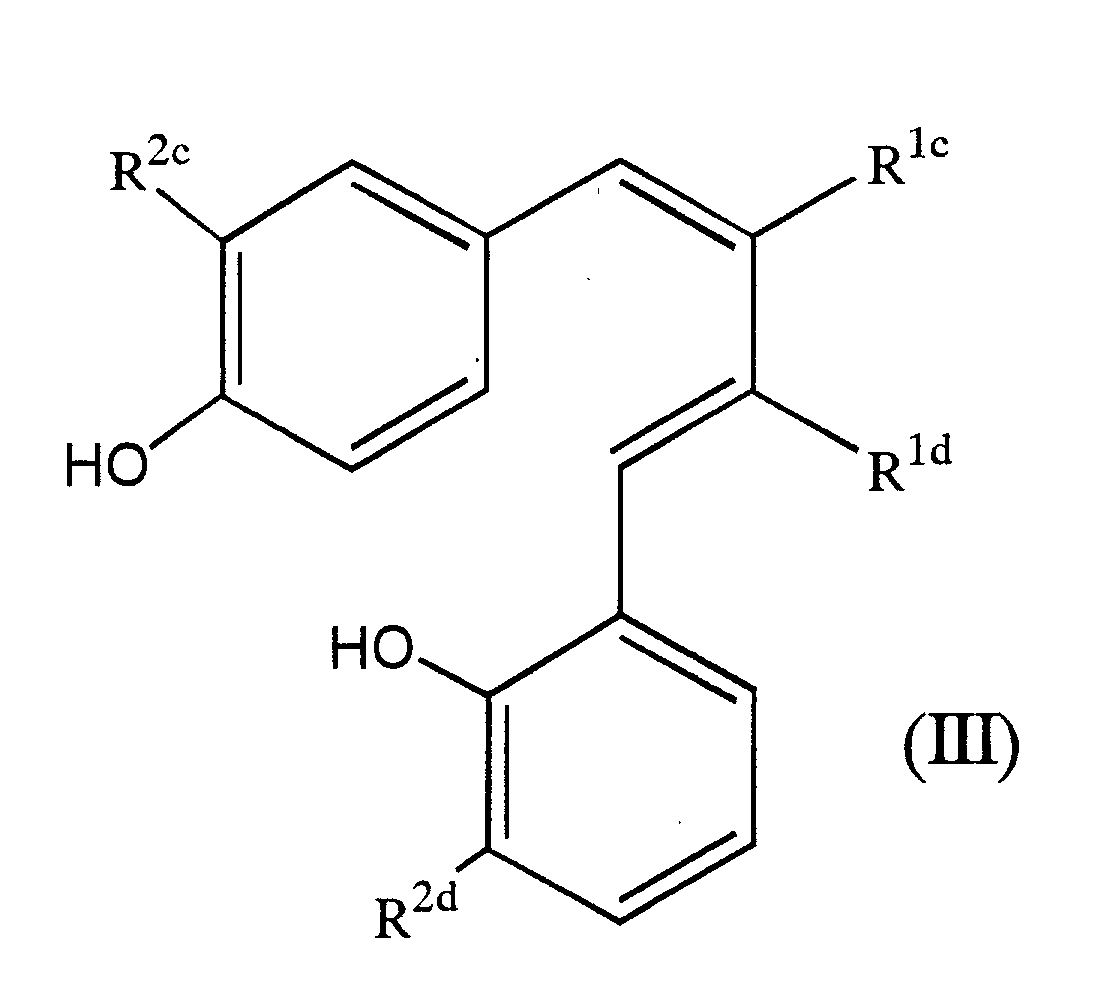
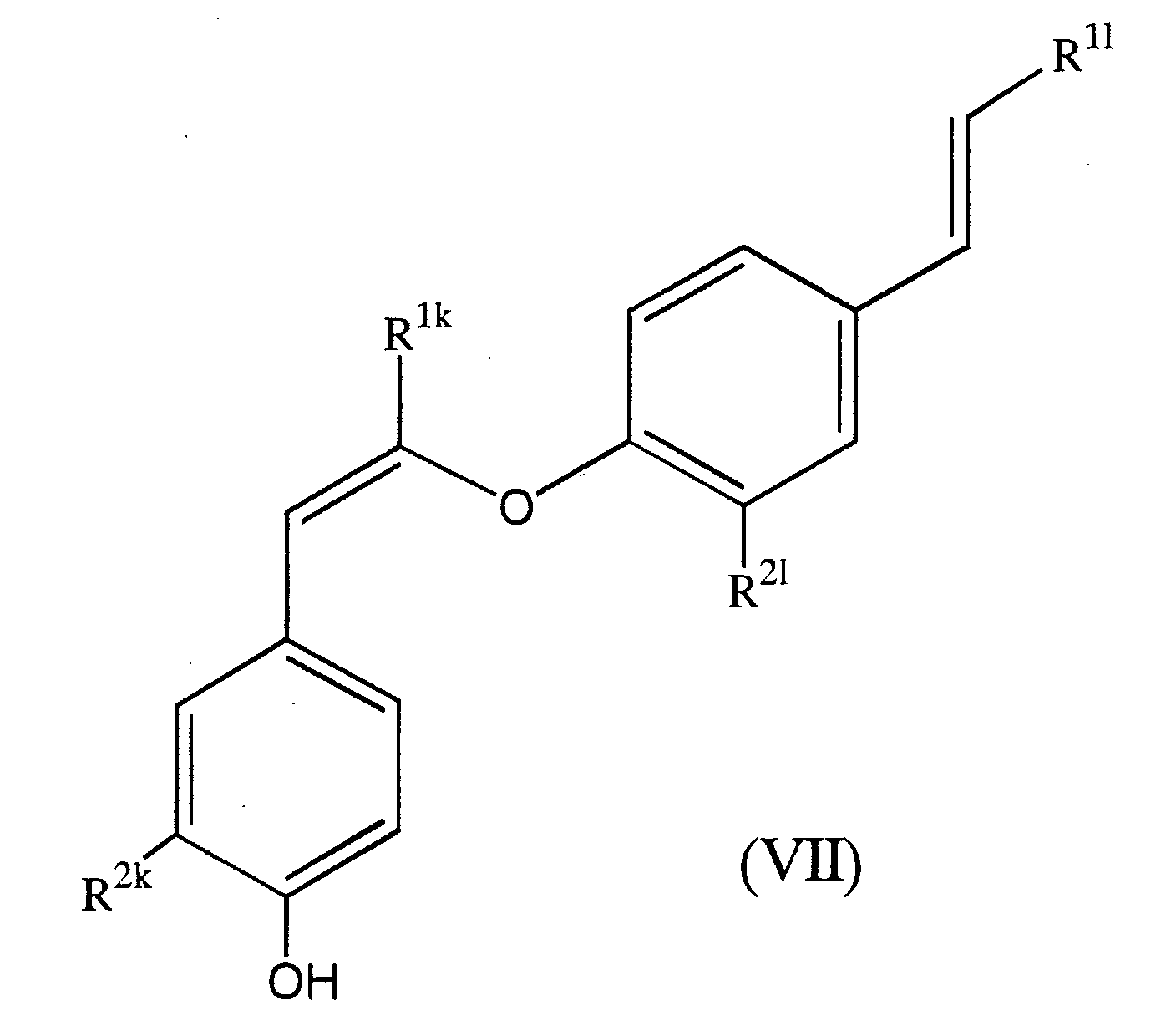
dimers. More preferred are those represented by the following
formulae (II) to (VII):
(wherein R
1a, R
1b, R
1c, R
1d, R
1e, R
1f, R
1g, R
1h, R
1i, R
1j, R
1k and R
1l,
which may be the same or different, each represents hydrogen
or carboxy, and R
2a, R
2b, R
2c, R
2d, R
2e, R
2f, R
2g, R
2h, R
2i, R
2j, R
2k
and R
2l, which may be the same or different, each represents
hydrogen or lower alkoxy). Particularly preferred is 2,3-dihydro-2-(4-hydroxy-3-methoxyphenyl)-7-methoxy-5-vinylbenzofuran
(VGD).
The phenol compounds having a styrene structure can be
synthesized according to known methods. For example, 4-vinylphenol
can be obtained by reduction, dehydration and
hydrolysis of 4-acetoxyacetophenone. Ferulic acid can be
obtained by subjecting 4-hydroxy-3-methoxybenzaldehyde and
malonic acid to condensation decarboxylation in pyridine in the
presence of piperidine. p-Coumaric acid can be obtained from
p-aminocinnamic acid via diazonium salt, or from p-oxybenzaldehyde
by the Perkin reaction. 4-Vinylguaiacol can
be obtained by preparing 4-acetoxy-3-methoxycinnamic acid from
vanillin using acetic anhydride or sodium acetate, followed by
hydrolysis and decarboxylation using quinoline.
Some phenol compounds having a styrene structure, e.g.
ferulic acid, are also commercially available.
4-Vinylguaiacol, ferulic acid, etc. can also be produced
from natural products including food materials.
The methods of producing these phenol compounds from
natural products are described below.
Method of Producing Ferulic Acid
Ferulic acid can be obtained by decomposing ferulic acid
ester existing in fibrous substances such as arabinoxylan and
pectin, which are one of the cell wall components of plants,
in the presence of ferulic acid esterase in the usual way.
Examples of plants known to contain ferulic acid or ferulic acid
ester are cereals (e.g. rice, wheat, barley and buckwheat),
potatoes (e.g. potatoes and sweet potatoes), fruits (e.g.
grapes, apples and citrus fruits) and vegetables.
Ferulic acid can also be obtained by treating the above
plants with fibrous hydrolases such as xylanase, arabinase,
cellulase, pectinase and hemicellulase in the usual way.
Further, ferulic acid can be obtained, for example, by
decomposing lignin in wood by ordinary methods such as thermal
decomposition, ethanol decomposition and use of hydrolases (e.g.
ligninase, manganese peroxidase and laccase).
Method of Producing 4-Vinylguaiacol
4-Vinylguaiacol can be obtained by treating ferulic acid
in the presence of ferulic acid decarboxylase in the usual way.
Useful enzyme sources of ferulic acid decarboxylase
include not only the enzyme itself, but also cells of filamentous
fungi, yeast, etc. having the enzyme activity and crude enzyme
extracted from such cells by appropriate means [Appl. Environ.
Microbiol., 59(7), 2244 (1993)]. Preferred yeast strains are
those having the enzyme activity of 0.5 unit/g (unit is defined
in the explanation of Examples hereinbelow) (wet cell weight)
or more. Examples of such yeast strains are Saccharomyces
cerevisiae IFO 2260, IFO 1953 and IFO 0233 and Dia Yeast
(trademark for pressed yeast produced by Kyowa Hakko Kogyo Co.,
Ltd.).
(1) Method of Producing the Polymer of Phenol Compounds
Having a Styrene Structure
The method of producing the polymer of phenol compounds
having a styrene structure is described below.
The conversion of phenol compounds having styrene
structure into the polymer is carried out, for example, by
maturing at 10 to 80°C in a solvent (e.g. a solvent containing
ethanol) in the presence of oxygen. For instance, the
conversion of 5 ppm 4-vinylguaiacol into VGD is preferably
carried out by maturing at 25°C for 6 months or more, at 37°C
for 4 months or more, or at 60°C for 20 days or more.
It is preferred to make aeration or blow oxygen into the
reaction system in view of reduction in reaction time.
The above conversion reaction can be accelerated under
irradiation with light, and further accelerated in the presence
of a photosensitizer.
When the reaction is carried out under irradiation with
light in the presence of a photosensitizer, the intensity and
time of irradiation suitable for the conversion at 5 to 80°C,
preferably 10 to 30°C, are selected. For instance, the
conversion of 1 liter of a solution containing 5 ppm 4-vinylguaiacol
into VGD is preferably carried out by treatment
at 20°C under a fluorescent light of 20 to 40 W for 1 to 3 days,
or at 30°C under a fluorescent light of 20 to 40 W for 0.5 to
2 days.
Preferred light sources are those mainly emitting light
with wavelengths in the range of 240 to 500 nm. Examples of
such light sources are sunlight, a fluorescent light, an
incandescent lamp, a black light lamp, a sterilization lamp and
an insect-drawing lamp, which may be used alone or in combination.
Particularly, a black light lamp, a sterilization lamp and an
insect-drawing lamp are preferred in respect of energy
efficiency.
Hydroxymethylfurfural and riboflavin are able to shown
as an example of photosensitizer. The conversion rate varies
according to the combination of photosensitizer and light
source. Preferred combinations are ultraviolet light and
hydroxymethylfurfural, riboflavin, etc., and visible light and
riboflavin, etc. If a fermentation liquor to be irradiated with
light contains riboflavin, whether it is contained in raw
materials or formed by fermentation, it is not necessary to add
a photosensitizer. The concentration of the photosensitizer
is preferably 1 ppb or more, more preferably 10 to 5000 ppb.
The above conversion reaction can also be carried out in
the presence of an enzyme capable of converting the phenol
compounds having a styrene structure into the polymer.
Useful enzyme sources of such enzymes (e.g. peroxidase)
include a peroxidase reagent produced by ICN Biomedicals Inc.
and a crude enzyme solution of peroxidase extracted from
horseradish with water.
Recovery of the polymer (hereinafter the polymer of
phenol compounds having a styrene structure is sometimes
referred to merely as the polymer) from the reaction mixture
is carried out, for example, by using a nonionic porous resin
such as Diaion HP 20 (Mitsubishi Chemical Corporation) (the
"nonionic porous resin" as used herein means a resin which does
not have a functional group such as an ion-exchange group and
adsorbs various organic substances with the van der Waals force).
The nonionic porous resin is charged into a column and is
equilibrated with 5 to 30% aqueous ethanol or methanol. The
reaction mixture is passed through the column to adsorb the
polymer on the resin, followed by elution of the polymer with
alcohol. If necessary, the elute is dried under reduced
pressure to obtain the desired product as a powder.
(2) Method of Removing Off-flavor from Foods
In accordance with the present invention, off-flavor in
foods can be reduced or completely removed by causing the polymer
of phenol compounds having a styrene structure and /or the
reaction mixture comprising the polymer of phenol compounds
having a styrene structure obtained by the above method to be
present in the foods, for example, by addition of the polymer
to the foods.
In this method, not only the polymer in a pure form but
also a substance containing the polymer can be employed. For
example, the use of the reaction mixture described above and
also a crude purified form of the reaction mixture can be
employed. For the use of the deodorizer or seasoning of the
present invention described below in removal of off-flavor from
foods is included within the scope of the method of removing
off-flavor from foods.
In the method of removing off-flavor from foods according
to the present invention, it is preferred to cause the polymer
to be present in the foods at a concentration of 0.5 ppb or more.
(3) Deodorizer
The deodorizer of the present invention is effective for
the deodorization of off-flavors in foods such as the fishy smell
of seafood, the fleshy smell of meat and the grassy smell of
soybean, body odors such as odor caused by maturation and the
smell of armpit, etc.
The deodorizer of the present invention can be obtained
by mixing the polymer of phenol compounds having a styrene
structure with an appropriate solvent (e.g. water, ethanol, and
a mixture thereof) or powder (an excipient for the use for foods,
e.g. starch, dextrin and lactose, or an excipient for the use
as cosmetics, e.g. talc). The solution of the polymer in
ethanol or the like, which is obtained in the step of
purification from the reaction mixture in the process for
producing the polymer, and/or the reaction mixture itself, as
such, can also be used as the deodorizer of the present invention.
The polymer of phenol compounds having a styrene structure can
be obtained by the process described in (1) above or processes
similar thereto.
The deodorizer of the present invention may comprise
various ingredients according to the use and purpose, in
addition to the polymer of phenol compounds having a styrene
structure. When the deodorizer is used for the deodorization
of foods, it may be, for example, added to foods in the form
of a mixture with ethanol, or used as the seasoning of the present
invention described below.
When applied to foods, the deodorizer of the present
invention may be added in the form of a solution containing the
polymer in 1 to 80%, preferably 5 to 30% aqueous ethanol,
preferably at a concentration of 10 ppb or more, more preferably
10 ppb to 100 ppm.
For the purpose of removing body odor, the deodorizer of
the present invention can be used, for example, as the cosmetic
of the present invention described below.
(4) Seasoning
The seasonings of the present invention can be obtained
by causing the polymer of phenol compounds having a styrene
structure to be present in known seasonings currently used or
novel seasonings which will be developed in the future
preferably at a concentration of 10 ppb or more, more preferably
10 ppb to 100 ppm. Specifically, the seasonings of the present
invention can be obtained by adding the polymer of phenol
compounds having a styrene structure to a seasoning as a final
product or to materials in any of the steps in a process for
producing a seasoning, or by causing phenol compounds having
a styrene structure to be present in any of the steps in a process
for producing a seasoning, and conducting an oxidation reaction
of the phenol compounds in the presence of oxygen during or after
the completion of the process. The polymer of phenol compounds
having a styrene structure can be obtained by the process
described in (1) above or processes similar thereto. The
process for conducting an oxidation reaction of the phenol
compounds in the presence of oxygen during or after the
completion of the process is described in detail in the
description of fermented seasoning below.
The preferred seasonings according to the present
invention are those containing at least one member of amino acids
(e.g. glutamic acid, aspartic acid, alanine, arginine, leucine,
tyrosine and glycine), organic acids (e.g. succinic acid,
lactic acid, malic acid, citric acid and acetic acid), alcohols
(e.g. ethanol, 1-propanol, 2-methylpropanol and isoamyl
alcohol), saccharides (e.g. glucose, fructose, sucrose and
maltose) and esters (e.g. isoamyl acetate and ethyl caproate).
The seasonings of the present invention may be in the form of
liquors (e.g. sake, shochu, whiskey and brandy), fermented
seasonings, extract seasonings, etc.
Extract Seasoning
The extract seasonings of the present invention are
seasonings containing stocks obtained by boiling or smothering
meat, marine products, vegetables, etc. or concentrates of the
stocks among the seasonings of the present invention described
above. Such seasonings include meat extract seasonings, marine
product extract seasonings and vegetable extract seasonings.
The meat extract seasonings are produced mainly from meat or
bones of cattle, pigs, fowls, etc., the marine product extract
seasonings are produced mainly from marine products (e.g.
bonitos, mackerels, tuna, sardines, croakers, pike congers,
thread sea bream, scallops, short-necked clams, oysters, krills
and crabs) or dried products thereof, and vegetable extract
seasonings are produced mainly from vegetables (e.g. onion,
garlic, carrots, Chinese cabbages, cabbages, shiitake
mushrooms and tangleweed) or dried products thereof, according
to conventional methods.
The extract seasonings of the present invention can be
produced in the following manner. An extract material (e.g.
dried bonito) is subjected to extraction with a solution
containing the polymer of phenol compounds having a styrene
structure in ethanol, water, or a mixture thereof (a preferred
example is the cooking liquor of the present invention described
below) at 5 to 120°C, preferably 20 to 80°C for 1 to 10 hours,
followed by solid-liquid separation to obtain the supernatant
as an extract. The obtained extract is concentrated by heating
or freezing, by use of membrane, or under reduced pressure, as
may be required, whereby the extract seasonings of the present
invention are obtained as concentrates.
Fermented Seasoning
The fermented seasonings of the present invention are
seasonings produced by utilizing the fermentation by
microorganisms or the like among the seasonings of the present
invention described above. These seasonings may take various
forms such as vinegar, cooking liquor, sake, wine, mirin, soy
sauce and miso.
The fermented seasonings of the present invention can be
obtained by adding the polymer of phenol compounds having a
styrene structure to a fermented seasoning as a final product
or to materials in any of the steps in a process for producing
a fermented seasoning. However, they are preferably produced
by conducting an oxidation reaction of the phenol compounds in
the presence of oxygen during or after the completion of the
production process for producing a fermented seasoning.
Production of the fermented seasonings of the present
invention comprising conducting an oxidation reaction of the
phenol compounds in the presence of oxygen during or after the
completion of the process for producing a fermented seasoning
is exemplified by a process which comprises forming 4-vinylguaiacol
during the production process, and after the
completion of the production process, converting 4-vinylguaiacol
in the obtained fermented seasoning into VGD.
This process is explained below referring to the production of
a cooking liquor.
As the first step, cereals such as rice (usually
containing ferulic acid or ester thereof) as a raw material are
liquefied and saccharified using a filamentous fungus such as
rice koji. In this step, liquefying enzyme such as α-amylase
and saccharifying enzyme such as glucoamylase may be added if
necessary. Then, yeast is added to cause fermentation and the
obtained fermentation liquor (moromi) is filtered to obtain a
cooking liquor as the filtrate. The filamentous fungus used
above has also fibrous hydrolase activity and ferulic acid
esterase activity and contributes to decomposition of fibers
in cereals and liberation of ferulic acid.
In the above step, ferulic acid is formed from cereals
in the presence of xylanase together with glucoamylase. The
formed ferulic acid is converted into 4-vinylguaiacol by
ferulic acid decarboxylase contained in specific yeasts such
as those mentioned above in the method of producing 4-vinylguaiacol.
The resultant 4-vinylguaiacol is contained in
the produced cooking liquor. Filamentous fungi is also
utilized in this step in place of yeast fungi in order to use
the same enzyme activity, ferulic acid decarboxylase. When
ferulic acid decarboxylase contained in filamentous fungi is
used, the addition of yeast mentioned above is not necessary.
As the next step, the cooking liquor containing 4-vinylguaiacol
is subjected to reaction for converting 4-vinylguaiacol
into a polymer such as VGD, whereby the cooking
liquor of the present invention containing VGD is obtained. The
reaction for converting 4-vinylguaiacol into the polymer can
be carried out by the process described in (1) above or processes
similar thereto.
The polymer may also be formed during the process for
producing a fermented seasoning by adding or forming the phenol
compounds having a styrene structure at an appropriate time
during the production process and carrying out reaction for
converting the phenol compounds into the polymer in the same
manner as above at an appropriate time during the production
process.
(5) Cosmetic
The cosmetics of the present invention are formulated to
contain the polymer of phenol compounds having a styrene
structure preferably at a concentration of 10 ppb or more, more
preferably 10 ppb to 1 ppm, based on the total weight of the
product. The polymer of phenol compounds having a styrene
structure and/or the reaction mixture containing the polymer
of phenol compounds having a styrene structure can be obtained
by the process for producing the polymer described above or
processes similar thereto.
The cosmetics of the present invention may further
comprise cosmetic bases such as pigments, perfumes,
preservatives, surfactants, antioxidants and ultraviolet
absorbents, as may be required. The cosmetics can be prepared,
for example, according to the methods described in "The
development manual of preparations for percutaneous
application " 1st ed., Mitsuo Matsumoto ed., [Seishi Shoin
(1985)].
Examples of the pigments include tar pigments, iron oxide,
titanium oxide and zinc oxide. Examples of the perfumes include
animal perfumes such as musk, plant perfumes such as peppermint
oil, lemon oil and rose oil, and synthetic perfumes such as
benzyl alcohol and anisole. Examples of the preservatives
include paraben, methylparaben, ethyl p-oxybenzoate and butyl
p-oxybenzoate. Examples of the surfactants include anionic
surfactants such as sodium cetyl sulfate, nonionic surfactants
such as polyoxyethylene alkyl ether, polyoxyethylene fatty acid
ester, polyoxyethylene polyhydric alcohol fatty acid ester,
fatty acid ester hardened castor oil, polyhydric alcohol fatty
acid ester and polyglycerin fatty acid ester, cationic
surfactants such as tetraalkylammonium salt, and amphoteric
surfactants such as betaine surfactants, sulfobetaine
surfactants, sulfoamino acid surfactants and sodium N-stearoyl-L-glutamate.
An example of the antioxidant is
dibutylhydroxytoluene. Examples of the ultraviolet
absorbents include 2-ethylhexyl p-methoxycinnamate and 4-tert-butyl-4'-methoxydibenzoylmethane.
The cosmetics may take various forms such as cream,
emulsion, lotion, essence, enriched lotion and pack. In the
case of emulsion, for example, the cosmetic can be produced by
a conventional method, that is, by emulsifying an oil phase and
a water phase respectively heated and then cooling the resultant
emulsion.
The cosmetics of the present invention are effective for
the removal of body odor, etc.
(6) Antioxidant
The antioxidant of the present invention contains the
polymer of phenol compounds having a styrene structure
preferably at a concentration of 10 ppb or more, more preferably
10 ppb to 100 ppm.
The antioxidant of the present invention can be obtained
by mixing the polymer of phenol compounds having a styrene
structure with an appropriate solvent (e.g. water, ethanol, and
a mixture thereof) or powder [e.g. those mentioned in the
explanation of powder in (3)]. The solution of the polymer in
ethanol or the like which is obtained in the step of purification
from the reaction mixture in the process for producing the
polymer, as such, can also be used as the antioxidant of the
present invention. The polymer of phenol compounds having a
styrene structure can be obtained by the method of producing
the polymer described above or processes similar thereto.
The antioxidant of the present invention can be used, for
example, by adding it to foods, seasonings, cosmetics, etc. as
final products or to materials during the processes for
producing them, or by adding it to foods during cooking.
The antioxidant of the present invention is useful in
preventing oxidation of foods, seasonings, cosmetics, etc. For
example, it is useful in preventing oxidation of linoleic acid
in foods.
(7) Method of Producing a Deodorized Food Which Comprises
Cooking a Food Using the Above Deodorizer and a Food
Obtained by this Method
The method of producing a deodorized food which comprises
cooking a food using the above deodorizer can be carried out,
for example, by using the deodorizer described in (3) above in
cooking seafood, meat or vegetables (e.g. soybean) preferably
in such an amount that the concentration of the polymer of phenol
compounds having a styrene structure in the food becomes 0.5
ppb or more. The foods of the present invention which can be
obtained by this method are desirable in that they are freed
of off-flavor.
(8) Method of Deodorizing a Food Which Comprises Cooking
the Food Using the Above Deodorizer
The method of deodorizing a food which comprises cooking
the food using the above deodorizer can be carried out, for
example, by using the deodorizer described in (3) above in
cooking seafood, meat or vegetables (e.g. soybean) preferably
in such an amount that the concentration of the polymer of phenol
compounds having a styrene structure in the food becomes 0.5
ppb or more.
Certain embodiments of the present invention are
illustrated in the following examples.
In the following examples, high performance liquid
chromatography (HPLC) was carried out under the following
conditions.
Column: Inertsil ODS - 24.6 x 250 mm (GL Sciences)
Detector: OD 280 nm
The definitions of enzyme activities as used in the
following examples are as follows.
Ferulic Acid Decarboxylase Activity
To 0.9 ml of a culture of test yeast obtained by culturing
the yeast in YPD medium at 30°C overnight with shaking was added
0.1 ml of an aqueous solution containing 1 g/liter ferulic acid
(Ichimaru Falcos), and the mixture was allowed to stand at 25°C.
The amount of 4-vinylguaiacol in the supernatant of the
resultant reaction mixture was determined by HPLC. One unit
of the enzyme activity was defined as that amount of the enzyme
which forms 1 ppm of 4-vinylguiaicol per hour.
Xylanase Activity
Xylan derived from oats (100 mg, Nacalai Chemicals) was
dissolved in 9.0 ml of 50 mol/liter acetate buffer (pH 4.5),
followed by addition of 1.0 ml of a test enzyme solution. The
mixture was subjected to reaction at 52°C with stirring, and
the change in reducing sugar equivalent in the reaction mixture
was determined by the dinitrosalicylic acid reaction. One unit
of the enzyme activity was defined as that amount of the enzyme
which liberates 1 µmol of reducing sugar equivalent from xylan
in one minute.
Determination of the Phenol Compounds
In the following examples, analysis of the phenol
compounds having a styrene structure was carried out in the
following manner.
A test substance was analyzed by HPLC in the following
manner. In the analysis of VGD, a sample was concentrated to
make a test solution. The sample (50 ml) was passed through
a C18 cartridge for HPLC pretreatment and eluted with 0.8 ml
of acetonitrile. The eluate was brought to a volume of 1.0 ml
and then analyzed under the above conditions.
Fractionation Conditions in HPLC
- Mobile phase:
- solution A: 20 mmol/liter aqueous solution of
sodium acetate
solution B: acetonitrile
Elution was carried out with linear gradient of
solution B/solution A (volume ratio) of 30 to
80%/25 minutes.
- Column temperature:
- 40°C
- Flow rate:
- 1.0 ml/minute
Seven Points Scoring and Test of Significance
In the following examples, the term "seven points
scoring" refers to a method of evaluating a subject with respect
to the strength of fishy smell by giving the subject scores of
one point (weak) to seven points (strong). Student t-test was
made as to the significance of difference. The symbol n refers
to the number of persons.
Example 1
Eight hundred milliliters of 7.75% aqueous ethanol
containing 50 ppm 4-vinylguaiacol (4-VG) and 41.6 ppm
hydroxymethylfurfural was irradiated with ultraviolet light
for 40 minutes. The resultant reaction mixture was passed
through Diaion HP 20 (trademark, Mitsubishi Chemical
Corporation) equilibrated with 7.75% aqueous ethanol, followed
by washing with 80% aqueous methanol. A fraction eluted with
8 ml of methanol (fraction A) was obtained as a crude product.
Separately, 20 liters of 7.75% aqueous ethanol containing
50 ppm 4-vinylguaiacol and 0.5 ppm riboflavin was kept in a
thermostat with fluorescent illumination at a reaction
temperature of 25°C for 24 hours. The resultant reaction
mixture was passed through Diaion HP 20 (trademark, Mitsubishi
Chemical Corporation) equilibrated with 7.75% aqueous ethanol,
followed by washing with 80% aqueous methanol. A fraction
eluted with 200 ml of methanol (fraction B) was obtained as a
crude product.
The fractions obtained above were concentrated 10-fold
under reduced pressure and then fractionated by C18 HPLC, whereby
a purified VGD fraction (fraction C) was obtained for each of
the above fractions. Identification of the obtained VGD was
carried out.
The fractionation conditions in HPLC and the result of
identification of VGD are shown below.
Fractionation Conditions in HPLC
Mobile phase: 20 mmol/liter aqueous solution of sodium
acetate/acetonitrile = 45/55
Column temperature: 40°C
Flow rate: 1.0 ml/minute
Physical Properties of VGD
FAB mass spectrum:
Positive mode: m/z 299 (M+H)+ Negative mode: m/z 297 (M-H)-
1H-NMR (400 MHz, CD3OD); [δ ppm (integration, multiplicity,
coupling constant J (Hz)]; 6.98 (1H, d, 2.0), 6.92 (1H, br.s),
6.91 (1H, br.s), 6.84 (1H, dd, 8.1, 2.0), 6.78 (1H, d, 8.1),
6.64 (1H, dd, 17.6, 11.0), 5.69 (1H, t, 8.9), 5.60 (1H, dd, 17.6,
1.1), 5.06 (1H, dd, 11.0, 1.1), 3.86 (3H, s), 3.82 (3H, s), 3.55
(1H, dd, 15.6, 9.3), 3.16 (1H, dd, 15.6, 8.5)
13C-NMR (100 MHz, CD3OD) ; δ ppm (multiplicity); 149.1 (s), 149.1
(s), 147.7 (s), 145.4 (s), 138.1 (d), 134.5 (s), 133.2 (s), 129.7
(s), 120.0 (d), 116.4 (d), 116.2 (d), 111.4 (d), 111.4 (t), 110.7
(d), 86.7 (d), 56.7 (q), 56.4 (q), 39.4 (t)
Example 2
Twenty liters of 7.75% aqueous ethanol containing 50 ppm
4-vinylguaiacol and 0.5 ppm riboflavin was kept in a thermostat
with fluorescent illumination at a reaction temperature of 25°C
for 24 hours. The resultant reaction mixture was passed through
Diaion HP 20 (trademark, Mitsubishi Chemical Corporation)
equilibrated with 7.75% aqueous ethanol. After washing with
80% aqueous ethanol, elution was carried out with 200 ml of
ethanol to obtain a deodorizer of the present invention. The
VGD concentration in this deodorizer was 40.4 ppm.
Example 3
Two mixtures were prepared, each consisting of 100 g of
onion, 15 g of carrot, 15 g of Welsh onion, 10 g of parsley,
0.5 g of whole pepper, a laurel leaf, 2.5 g of salt, 700 ml of
water and 250 g of bony parts of sea bream. To one of the mixtures
was added 100 ml of the deodorizer of the present invention
obtained in Example 2 (VGD concentration: 40.4 ppm) and to the
other (control) was added 100 ml of ethanol. Each of the
mixtures was boiled for 20 minutes and then filtered through
cloth. The obtained soup was kept at 60°C and evaluated by seven
points scoring with respect to the strength of fishy smell
perceived when the lid of the vessel was taken off. The results
are shown in Table 1. The soup prepared with addition of VGD
of the present invention had a significantly reduced fishy smell,
compared with the control.
| | VGD-treated soup | Control |
| Average score | 2.75 | 4.00 |
| Standard deviation | 0.46 | 0.76 |
To 2.0 liters of water were added 370 g of rice koji, 1.5
g of yeast (Dia Yeast; trademark, Kyowa Hakko Kogyo Co., Ltd.)
and 7 g of lactic acid, followed by fermentation at 20°C for
2 days to obtain a yeast culture (first stage fermentation).
To 1.3 liter of water were added 660 g of rice and 2 g of Spitase
CP-40G (trademark for α -amylase preparation produced by Nagase
Seikagaku Kogyo Co., Ltd., 400000 units/g), and the mixture was
liquefied by heating at 90°C for 30 minutes and then cooled to
50°C. To the resultant mixture were added 2 g of Sumizyme 3000
(trademark for glucoamylase produced by Shinnihon Kagaku Co.,
Ltd., 3000 units/g) and 2 g of Sumizyme AC (trademark for
hemicellulase produced by Shinnihon Kagaku Co., Ltd., 6400
units/g), followed by reaction at 50°C for 16 hours to obtain
a saccahrified rice liquor. This saccharified rice liquor and
370 g of rice koji were added to the yeast culture, followed
by fermentation at 20°C for 2 days (second stage fermentation).
To 4.4 liters of water were added 1800 g of rice and 7
g of Spitase CP-40G, and the mixture was liquefied by heating
at 90°C for 30 minutes and then cooled to 50°C. To the resultant
mixture were added 7 g of Sumizyme 3000 and 7 g of Sumizyme AC,
followed by reaction at 50°C for 16 hours to obtain a
saccahrified rice liquor. This saccharified rice liquor was
added to the fermentation liquor obtained by the second stage
fermentation, followed by fermentation at 20°C for 7 days (third
stage fermentation). The obtained fermentation product was
filtered and the filtrate (10 liter) was pasteurized
(hereinafter the filtrate prepared in this manner is referred
to as moromi).
The amount of 4-vinylguaiacol formed in the fermentation
process was 2.1 ppm at the start of the third stage fermentation
and 5.1 ppm after 7 days of fermentation.
The moromi obtained above (containing 5 ppm 4-vinylguaiacol)
was kept in a thermostat with fluorescent
illumination at 25°C for 24 hours to obtain a cooking liquor
of the present invention. The cooking liquor contained 0.1 ppm
4-vinylguaiacol and 67 ppb VGD.
Example 5
To 1 liter of the moromi prepared in Example 4 was added
1.2 g of a peroxidase reagent (81.8 units/mg, ICN Biomedicals
Inc.), followed by reaction at 25°C for 48 hours to obtain a
cooking liquor of the present invention. The cooking liquor
contained 0.2 ppm 4-vinylguaiacol and 66 ppb VGD.
Example 6
Commercial materials for
oden (Japanese hotchpotch) with
soup were cooked using the cooking liquor of the present
invention obtained in Example 4 in an amount of 10 wt% based
on the soup. The cooked
oden was evaluated by seven points
scoring with respect to the strength of fishy smell perceived
when the lid of the pot was taken off. As a control, the same
procedure as above was repeated except for the use of a
commercial cooking liquor instead of the cooking liquor of the
present invention. The results are shown in Table 2. The
cooking liquor of the present invention significantly reduced
fishy smell, compared with the commercial one.
| | Cooking liquor of the invention | Commercial cooking liquor |
| Average score | 3.00 | 4.50 |
| Standard deviation | 1.30 | 0.70 |
Two mixtures were prepared, each consisting of 100 g of
onion, 15 g of carrot, 15 g of Welsh onion, 10 g of parsley,
0.5 g of whole pepper, a laurel leaf, 2.5 g of salt, 700 ml of
water and 250 g of bony parts of sea bream. To one of the mixtures
was added 100 ml of the cooking liquor of the present invention
obtained in Example 4 and to the other was added 100 ml of a
commercial cooking liquor. Each of the mixtures was boiled for
20 minutes and then filtered through cloth. The obtained soup
was kept in a vessel at 60°C and evaluated by seven points scoring
with respect to the strength of fishy smell perceived when the
lid of the vessel was taken off. The results are shown in Table
3. The cooking liquor of the present invention significantly
reduced fishy smell, compared with the commercial one.
| | Cooking liquor of the invention | Commercial cooking liquor |
| Average score | 3.47 | 4.93 |
| Standard deviation | 1.06 | 1.16 |
To 350 g of well washed short-necked clams with shells
was added 50 ml of the cooking liquor of the present invention
obtained in Example 4. The short-necked clams were brought to
the boil on a high flame and then heated on a low flame for one
minute. The thus cooked short-necked clams were kept at 60°C
and evaluated by seven points scoring with respect to the
strength of fishy smell perceived when the lid of the vessel
was taken off. The same procedure as above was repeated except
for the use of a commercial cooking liquor instead of the cooking
liquor of the present invention. The results are shown in Table
4. The cooking liquor of the present invention significantly
reduced fishy smell, compared with the commercial one.
| | Cooking liquor of the invention | Commercial cooking liquor |
| Average score | 3.50 | 5.13 |
| Standard deviation | 1.41 | 1.13 |
A mixture of 5 kg of dried bonito, 1 liter of the cooking
liquor of the present invention obtained in Example 4, 1.4 liter
of 59% denatured alcohol and 7.6 liter of water was kept at 40°C
for 2 hours, followed by solid-liquid separation to obtain
bonito extract. The obtained bonito extract was evaluated by
seven points scoring with respect to the strength of fishy smell
while being kept at 60°C. The same procedure as above was
repeated except for the use of a commercial cooking liquor
instead of the cooking liquor of the present invention. The
results are shown in Table 5. The cooking liquor of the present
invention significantly reduced fishy smell, compared with the
commercial one.
| | Cooking liquor of the invention | Commercial cooking liquor |
| Average score | 3.47 | 4.27 |
| Standard deviation | 1.46 | 0.80 |
A mixture was prepared, which consisted of 0.2 g of methyl
p-oxybenzoate, 3.0 g of 1,3-butylene glycol, 0.8 g of sodium
citrate, 0.1 g of ethylenediaminetetraacetic acid (EDTA)
disodium salt, 0.4 g of polyoxyethylene hardened castor oil,
5.0 g of denatured alcohol, 0.05 g of perfume and 0.5 ml of the
deodorizer of the present invention obtained in Example 2. The
mixture was made up to 100 ml with purified water to obtain a
lotion of the present invention. Ten male adults were made the
subjects of this experiment. The obtained lotion (1.0 ml) was
infiltrated into absorbent cotton and applied to the armpit of
each subject, followed by evaluation of the odor of armpit by
seven points scoring. The results are shown in Table 6. The
lotion of the present invention significantly reduced
unpleasant odor of armpit, compared with the control lotion
containing no VGD.
| | Lotion of the invention | Commercial lotion |
| Average score | 3.60 | 4.80 |
| Standard deviation | 1.20 | 1.40 |
Antioxidation test was carried out on an antioxidant of
the present invention (VGD solution) according to the method
of Tsushida, et al. [J. Jap. Soc. for Food Science and Technology,
41(9), 611 (1994)].
The test solutions were examined for the ability to
inhibit autoxidation of linoleic acid based on the inhibition
of fading of
β -carotene color. In 10 ml of chloroform were
respectively dissolved 10 mg of β-carotene, 1 g of linoleic
acid and 2 g of Tween 80, and the solutions (0.5 ml, 0.2 ml and
1.0 ml, respectively) were put into a 200-ml Erlenmeyer flask.
After the air in the system was substituted by nitrogen, the
mixture in the flask was dried and then dissolved in 100 ml of
distilled water. The obtained solution (45 ml) was mixed with
4 ml of 0.2 mol/liter phosphate buffer (pH 6.0) to prepare a
substrate solution. The substrate solution (2.9 ml) was mixed
with 0.1 ml of the cooking liquor of the present invention
obtained in Example 4. The mixture was heated in a thermostat
at 60°C and the change in absorbance (OD) at 470 nm was measured.
Separately, a solution of 790 ppm VGD in acetonitrile and a
commercial
sake were respectively added to the substrate
solution and the change in OD was measured in the same manner.
The rate (%) of OD value measured 24 hours after the start of
oxidation of linoleic acid based on the OD value at the start
of oxidation is shown in Table 7. Oxidation of linoleic acid
was inhibited by the addition of the cooking liquor of the
present invention and VGD.
| | OD (%) |
| Cooking liquor of the invention | 27.3 |
| Commercial sake | 14.8 |
| VGD (790 ppm) | 36.7 |
| Control | 1.1 |
The moromi obtained in Example 4 was kept at 60°C in the
dark for 14 days, whereby a cooking liquor of the present
invention containing 25 ppb VGD was obtained. The 4VG
concentration in this cooking liquor was 0.01 ppm.
Example 13
To 100 ml of water were added 65 g of rice koji, 35 g of
steamed rice, 0.1 g of yeast (Dia Yeast; trademark, Kyowa Hakko
Kogyo Co., Ltd.) and 1 ml of lactic acid, followed by
fermentation at 15°C for 2 days to obtain a yeast culture (first
stage fermentation). To the resultant mixture were added 135
g of steamed rice, 65 g rice koji, 0.8 g of Sumizyme AC (trademark
for hemicellulase produced by Shinnihon Kagaku Co., Ltd., 6400
units/g) and 200 ml of water, followed by initial reaction at
15°C for 2 days. Then, to the resultant mixture were added 235
g of steamed rice, 65 g rice koji and 400 ml of water, followed
by intermediate reaction at 15°C for 2 days. Thereafter, to
the resultant mixture were added 330 g of steamed rice, 70 g
rice koji and 500 ml of water, followed by final reaction at
15°C for 19 days. The obtained fermentation product was
filtered and the filtrate was pasteurized to obtain moromi. The
moromi obtained above was kept in a thermostat with fluorescent
illumination at 25°C for 24 hours to obtain sake. In the above
example, the second stage fermentation is composed of
intermittent reactions. There is no limit to the number of
reactions. It takes three reactions in the above, for example
as initial reaction, intermediate reaction and finial reaction.
It also be able to take two reaction, for example as initial
reaction and final reaction.