EP1141700B1 - Method and material for selective detection of toxins - Google Patents
Method and material for selective detection of toxins Download PDFInfo
- Publication number
- EP1141700B1 EP1141700B1 EP99970848A EP99970848A EP1141700B1 EP 1141700 B1 EP1141700 B1 EP 1141700B1 EP 99970848 A EP99970848 A EP 99970848A EP 99970848 A EP99970848 A EP 99970848A EP 1141700 B1 EP1141700 B1 EP 1141700B1
- Authority
- EP
- European Patent Office
- Prior art keywords
- antibody
- toxic substance
- material according
- detector
- ligand
- Prior art date
- Legal status (The legal status is an assumption and is not a legal conclusion. Google has not performed a legal analysis and makes no representation as to the accuracy of the status listed.)
- Expired - Lifetime
Links
- 239000000463 material Substances 0.000 title claims abstract description 42
- 238000000034 method Methods 0.000 title claims abstract description 29
- 238000001514 detection method Methods 0.000 title abstract description 18
- 239000003053 toxin Substances 0.000 title 1
- 231100000765 toxin Toxicity 0.000 title 1
- 108700012359 toxins Proteins 0.000 title 1
- 239000012620 biological material Substances 0.000 claims abstract description 70
- 239000003440 toxic substance Substances 0.000 claims abstract description 41
- 229920000098 polyolefin Polymers 0.000 claims abstract description 23
- 235000013305 food Nutrition 0.000 claims abstract description 21
- 238000004166 bioassay Methods 0.000 claims abstract description 17
- 238000004806 packaging method and process Methods 0.000 claims abstract description 9
- 231100000614 poison Toxicity 0.000 claims abstract description 4
- 239000003446 ligand Substances 0.000 claims description 39
- 231100000167 toxic agent Toxicity 0.000 claims description 37
- -1 polyethylene Polymers 0.000 claims description 26
- 239000000427 antigen Substances 0.000 claims description 25
- 108091007433 antigens Proteins 0.000 claims description 25
- 102000036639 antigens Human genes 0.000 claims description 25
- 239000004698 Polyethylene Substances 0.000 claims description 19
- 229920000573 polyethylene Polymers 0.000 claims description 19
- 244000005700 microbiome Species 0.000 claims description 15
- 241000894007 species Species 0.000 claims description 14
- 229920000936 Agarose Polymers 0.000 claims description 11
- 108091023037 Aptamer Proteins 0.000 claims description 10
- 230000027455 binding Effects 0.000 claims description 10
- 230000001681 protective effect Effects 0.000 claims description 10
- 108090000623 proteins and genes Proteins 0.000 claims description 10
- 239000002516 radical scavenger Substances 0.000 claims description 8
- 230000000007 visual effect Effects 0.000 claims description 8
- 108020004711 Nucleic Acid Probes Proteins 0.000 claims description 7
- 239000002853 nucleic acid probe Substances 0.000 claims description 7
- 102000004169 proteins and genes Human genes 0.000 claims description 7
- 239000000203 mixture Substances 0.000 claims description 6
- 230000008569 process Effects 0.000 claims description 5
- 108090001090 Lectins Proteins 0.000 claims description 4
- 102000004856 Lectins Human genes 0.000 claims description 4
- 239000004743 Polypropylene Substances 0.000 claims description 4
- 238000005299 abrasion Methods 0.000 claims description 4
- 150000001720 carbohydrates Chemical class 0.000 claims description 4
- 239000004615 ingredient Substances 0.000 claims description 4
- 239000002523 lectin Substances 0.000 claims description 4
- 150000002632 lipids Chemical class 0.000 claims description 4
- 229920001155 polypropylene Polymers 0.000 claims description 4
- 230000002068 genetic effect Effects 0.000 claims description 3
- 230000035772 mutation Effects 0.000 claims description 3
- 108020004707 nucleic acids Proteins 0.000 claims description 3
- 102000039446 nucleic acids Human genes 0.000 claims description 3
- 150000007523 nucleic acids Chemical class 0.000 claims description 3
- 238000012544 monitoring process Methods 0.000 claims 1
- 239000005022 packaging material Substances 0.000 abstract description 12
- 238000004519 manufacturing process Methods 0.000 abstract description 7
- 239000002131 composite material Substances 0.000 abstract description 6
- 230000008859 change Effects 0.000 abstract description 5
- 238000010348 incorporation Methods 0.000 abstract description 3
- 239000005021 flexible packaging material Substances 0.000 abstract description 2
- 239000010408 film Substances 0.000 description 34
- 239000000047 product Substances 0.000 description 19
- 239000000499 gel Substances 0.000 description 17
- 238000007639 printing Methods 0.000 description 14
- LOKCTEFSRHRXRJ-UHFFFAOYSA-I dipotassium trisodium dihydrogen phosphate hydrogen phosphate dichloride Chemical compound P(=O)(O)(O)[O-].[K+].P(=O)(O)([O-])[O-].[Na+].[Na+].[Cl-].[K+].[Cl-].[Na+] LOKCTEFSRHRXRJ-UHFFFAOYSA-I 0.000 description 10
- 239000002953 phosphate buffered saline Substances 0.000 description 10
- 229920006254 polymer film Polymers 0.000 description 9
- 239000011248 coating agent Substances 0.000 description 8
- 238000000576 coating method Methods 0.000 description 8
- 238000003556 assay Methods 0.000 description 7
- 239000003153 chemical reaction reagent Substances 0.000 description 6
- 238000001035 drying Methods 0.000 description 6
- 230000000813 microbial effect Effects 0.000 description 6
- 239000000523 sample Substances 0.000 description 6
- 238000012360 testing method Methods 0.000 description 6
- 241000607142 Salmonella Species 0.000 description 5
- 208000028659 discharge Diseases 0.000 description 5
- 238000003018 immunoassay Methods 0.000 description 5
- 239000000243 solution Substances 0.000 description 5
- 231100000331 toxic Toxicity 0.000 description 5
- 230000002588 toxic effect Effects 0.000 description 5
- 108090000790 Enzymes Proteins 0.000 description 4
- 102000004190 Enzymes Human genes 0.000 description 4
- CDBYLPFSWZWCQE-UHFFFAOYSA-L Sodium Carbonate Chemical compound [Na+].[Na+].[O-]C([O-])=O CDBYLPFSWZWCQE-UHFFFAOYSA-L 0.000 description 4
- UIIMBOGNXHQVGW-UHFFFAOYSA-M Sodium bicarbonate Chemical compound [Na+].OC([O-])=O UIIMBOGNXHQVGW-UHFFFAOYSA-M 0.000 description 4
- 238000010276 construction Methods 0.000 description 4
- 238000011109 contamination Methods 0.000 description 4
- 230000036541 health Effects 0.000 description 4
- 244000000010 microbial pathogen Species 0.000 description 4
- 239000000758 substrate Substances 0.000 description 4
- 241000179197 Cyclospora Species 0.000 description 3
- 241000588724 Escherichia coli Species 0.000 description 3
- 241000186781 Listeria Species 0.000 description 3
- 241000283973 Oryctolagus cuniculus Species 0.000 description 3
- 239000011543 agarose gel Substances 0.000 description 3
- 239000012491 analyte Substances 0.000 description 3
- 239000005018 casein Substances 0.000 description 3
- BECPQYXYKAMYBN-UHFFFAOYSA-N casein, tech. Chemical compound NCCCCC(C(O)=O)N=C(O)C(CC(O)=O)N=C(O)C(CCC(O)=N)N=C(O)C(CC(C)C)N=C(O)C(CCC(O)=O)N=C(O)C(CC(O)=O)N=C(O)C(CCC(O)=O)N=C(O)C(C(C)O)N=C(O)C(CCC(O)=N)N=C(O)C(CCC(O)=N)N=C(O)C(CCC(O)=N)N=C(O)C(CCC(O)=O)N=C(O)C(CCC(O)=O)N=C(O)C(COP(O)(O)=O)N=C(O)C(CCC(O)=N)N=C(O)C(N)CC1=CC=CC=C1 BECPQYXYKAMYBN-UHFFFAOYSA-N 0.000 description 3
- 235000021240 caseins Nutrition 0.000 description 3
- 238000006243 chemical reaction Methods 0.000 description 3
- 238000002967 competitive immunoassay Methods 0.000 description 3
- 239000000356 contaminant Substances 0.000 description 3
- 238000011161 development Methods 0.000 description 3
- 230000006870 function Effects 0.000 description 3
- 238000013508 migration Methods 0.000 description 3
- 230000005012 migration Effects 0.000 description 3
- 244000052769 pathogen Species 0.000 description 3
- 230000001717 pathogenic effect Effects 0.000 description 3
- 229920000642 polymer Polymers 0.000 description 3
- 235000018102 proteins Nutrition 0.000 description 3
- 239000010409 thin film Substances 0.000 description 3
- 239000003656 tris buffered saline Substances 0.000 description 3
- XLYOFNOQVPJJNP-UHFFFAOYSA-N water Substances O XLYOFNOQVPJJNP-UHFFFAOYSA-N 0.000 description 3
- 229920003313 Bynel® Polymers 0.000 description 2
- 241000283707 Capra Species 0.000 description 2
- BVKZGUZCCUSVTD-UHFFFAOYSA-L Carbonate Chemical compound [O-]C([O-])=O BVKZGUZCCUSVTD-UHFFFAOYSA-L 0.000 description 2
- 230000009471 action Effects 0.000 description 2
- 238000004458 analytical method Methods 0.000 description 2
- 239000011324 bead Substances 0.000 description 2
- 239000000872 buffer Substances 0.000 description 2
- 235000014633 carbohydrates Nutrition 0.000 description 2
- 239000003795 chemical substances by application Substances 0.000 description 2
- 230000001276 controlling effect Effects 0.000 description 2
- 239000008367 deionised water Substances 0.000 description 2
- 229910021641 deionized water Inorganic materials 0.000 description 2
- 238000010790 dilution Methods 0.000 description 2
- 239000012895 dilution Substances 0.000 description 2
- 239000000975 dye Substances 0.000 description 2
- 239000011521 glass Substances 0.000 description 2
- 238000011065 in-situ storage Methods 0.000 description 2
- 238000010030 laminating Methods 0.000 description 2
- 239000007788 liquid Substances 0.000 description 2
- 229920002521 macromolecule Polymers 0.000 description 2
- 235000015097 nutrients Nutrition 0.000 description 2
- 235000021485 packed food Nutrition 0.000 description 2
- 239000005365 phosphate glass Substances 0.000 description 2
- 229920003023 plastic Polymers 0.000 description 2
- 239000004033 plastic Substances 0.000 description 2
- 230000001376 precipitating effect Effects 0.000 description 2
- 238000002360 preparation method Methods 0.000 description 2
- 238000012545 processing Methods 0.000 description 2
- 238000011084 recovery Methods 0.000 description 2
- 230000001105 regulatory effect Effects 0.000 description 2
- 230000004044 response Effects 0.000 description 2
- 230000035945 sensitivity Effects 0.000 description 2
- 238000013207 serial dilution Methods 0.000 description 2
- 229910000030 sodium bicarbonate Inorganic materials 0.000 description 2
- 229910000029 sodium carbonate Inorganic materials 0.000 description 2
- 239000007921 spray Substances 0.000 description 2
- 230000007480 spreading Effects 0.000 description 2
- 238000003892 spreading Methods 0.000 description 2
- 239000000126 substance Substances 0.000 description 2
- 239000004094 surface-active agent Substances 0.000 description 2
- ILOHMCCDCAUTQF-JESKXYQHSA-N (2s)-6-amino-2-[[(2r)-2-[[(2s)-2-[[(2s)-2-[[(2r)-2-[[(2r)-2-aminopropanoyl]amino]-3-naphthalen-2-ylpropanoyl]amino]propanoyl]amino]-3-(1h-indol-3-yl)propanoyl]amino]-3-phenylpropanoyl]amino]hexanamide;dihydrochloride Chemical compound Cl.Cl.C([C@@H](NC(=O)[C@H](CC=1C2=CC=CC=C2NC=1)NC(=O)[C@H](C)NC(=O)[C@@H](CC=1C=C2C=CC=CC2=CC=1)NC(=O)[C@H](N)C)C(=O)N[C@@H](CCCCN)C(N)=O)C1=CC=CC=C1 ILOHMCCDCAUTQF-JESKXYQHSA-N 0.000 description 1
- 241000589876 Campylobacter Species 0.000 description 1
- FBPFZTCFMRRESA-FSIIMWSLSA-N D-Glucitol Natural products OC[C@H](O)[C@H](O)[C@@H](O)[C@H](O)CO FBPFZTCFMRRESA-FSIIMWSLSA-N 0.000 description 1
- FBPFZTCFMRRESA-JGWLITMVSA-N D-glucitol Chemical compound OC[C@H](O)[C@@H](O)[C@H](O)[C@H](O)CO FBPFZTCFMRRESA-JGWLITMVSA-N 0.000 description 1
- 241000196324 Embryophyta Species 0.000 description 1
- 241001646719 Escherichia coli O157:H7 Species 0.000 description 1
- 206010016952 Food poisoning Diseases 0.000 description 1
- 208000019331 Foodborne disease Diseases 0.000 description 1
- 239000000020 Nitrocellulose Substances 0.000 description 1
- YJQPYGGHQPGBLI-UHFFFAOYSA-N Novobiocin Natural products O1C(C)(C)C(OC)C(OC(N)=O)C(O)C1OC1=CC=C(C(O)=C(NC(=O)C=2C=C(CC=C(C)C)C(O)=CC=2)C(=O)O2)C2=C1C YJQPYGGHQPGBLI-UHFFFAOYSA-N 0.000 description 1
- 229920002302 Nylon 6,6 Polymers 0.000 description 1
- 108091034117 Oligonucleotide Proteins 0.000 description 1
- 239000004793 Polystyrene Substances 0.000 description 1
- 206010070834 Sensitisation Diseases 0.000 description 1
- 244000299461 Theobroma cacao Species 0.000 description 1
- 238000010521 absorption reaction Methods 0.000 description 1
- 239000012042 active reagent Substances 0.000 description 1
- 239000000654 additive Substances 0.000 description 1
- 239000002313 adhesive film Substances 0.000 description 1
- 238000007605 air drying Methods 0.000 description 1
- 230000009286 beneficial effect Effects 0.000 description 1
- 230000008901 benefit Effects 0.000 description 1
- 210000001124 body fluid Anatomy 0.000 description 1
- 239000010839 body fluid Substances 0.000 description 1
- 238000003490 calendering Methods 0.000 description 1
- OKBVVJOGVLARMR-QSWIMTSFSA-N cefixime Chemical compound S1C(N)=NC(C(=N\OCC(O)=O)\C(=O)N[C@@H]2C(N3C(=C(C=C)CS[C@@H]32)C(O)=O)=O)=C1 OKBVVJOGVLARMR-QSWIMTSFSA-N 0.000 description 1
- 229960002129 cefixime Drugs 0.000 description 1
- 235000019219 chocolate Nutrition 0.000 description 1
- 230000002860 competitive effect Effects 0.000 description 1
- 230000000295 complement effect Effects 0.000 description 1
- 238000010668 complexation reaction Methods 0.000 description 1
- 150000001875 compounds Chemical class 0.000 description 1
- 235000009508 confectionery Nutrition 0.000 description 1
- 238000012790 confirmation Methods 0.000 description 1
- 238000010924 continuous production Methods 0.000 description 1
- 238000003851 corona treatment Methods 0.000 description 1
- 238000013461 design Methods 0.000 description 1
- 238000003745 diagnosis Methods 0.000 description 1
- 238000010586 diagram Methods 0.000 description 1
- 230000000694 effects Effects 0.000 description 1
- 238000005516 engineering process Methods 0.000 description 1
- 239000004744 fabric Substances 0.000 description 1
- 239000000835 fiber Substances 0.000 description 1
- 239000012467 final product Substances 0.000 description 1
- 238000004108 freeze drying Methods 0.000 description 1
- 108010025899 gelatin film Proteins 0.000 description 1
- 239000000383 hazardous chemical Substances 0.000 description 1
- 231100000206 health hazard Toxicity 0.000 description 1
- 238000010438 heat treatment Methods 0.000 description 1
- 229920001477 hydrophilic polymer Polymers 0.000 description 1
- 230000001900 immune effect Effects 0.000 description 1
- 238000002955 isolation Methods 0.000 description 1
- 239000004816 latex Substances 0.000 description 1
- 229920000126 latex Polymers 0.000 description 1
- 239000012035 limiting reagent Substances 0.000 description 1
- 238000005259 measurement Methods 0.000 description 1
- 235000013372 meat Nutrition 0.000 description 1
- 238000002844 melting Methods 0.000 description 1
- 230000008018 melting Effects 0.000 description 1
- 229910052751 metal Inorganic materials 0.000 description 1
- 239000002184 metal Substances 0.000 description 1
- 229940126619 mouse monoclonal antibody Drugs 0.000 description 1
- 229920001220 nitrocellulos Polymers 0.000 description 1
- YJQPYGGHQPGBLI-KGSXXDOSSA-N novobiocin Chemical compound O1C(C)(C)[C@H](OC)[C@@H](OC(N)=O)[C@@H](O)[C@@H]1OC1=CC=C(C(O)=C(NC(=O)C=2C=C(CC=C(C)C)C(O)=CC=2)C(=O)O2)C2=C1C YJQPYGGHQPGBLI-KGSXXDOSSA-N 0.000 description 1
- 229960002950 novobiocin Drugs 0.000 description 1
- 239000002773 nucleotide Substances 0.000 description 1
- 125000003729 nucleotide group Chemical group 0.000 description 1
- 230000003287 optical effect Effects 0.000 description 1
- 239000013307 optical fiber Substances 0.000 description 1
- 230000008520 organization Effects 0.000 description 1
- 229920006280 packaging film Polymers 0.000 description 1
- 239000012785 packaging film Substances 0.000 description 1
- 239000000123 paper Substances 0.000 description 1
- 238000000059 patterning Methods 0.000 description 1
- 229920000728 polyester Polymers 0.000 description 1
- 238000003752 polymerase chain reaction Methods 0.000 description 1
- 229920002223 polystyrene Polymers 0.000 description 1
- 239000011148 porous material Substances 0.000 description 1
- 235000013594 poultry meat Nutrition 0.000 description 1
- 238000011002 quantification Methods 0.000 description 1
- 229920013730 reactive polymer Polymers 0.000 description 1
- 238000011160 research Methods 0.000 description 1
- 238000005070 sampling Methods 0.000 description 1
- 230000008313 sensitization Effects 0.000 description 1
- 210000002966 serum Anatomy 0.000 description 1
- 230000011664 signaling Effects 0.000 description 1
- 239000007787 solid Substances 0.000 description 1
- 239000000600 sorbitol Substances 0.000 description 1
- 229960002920 sorbitol Drugs 0.000 description 1
- 230000009870 specific binding Effects 0.000 description 1
- 238000004381 surface treatment Methods 0.000 description 1
- SITVSCPRJNYAGV-UHFFFAOYSA-L tellurite Chemical compound [O-][Te]([O-])=O SITVSCPRJNYAGV-UHFFFAOYSA-L 0.000 description 1
- 231100000816 toxic dose Toxicity 0.000 description 1
- 230000037303 wrinkles Effects 0.000 description 1
Images



Classifications
-
- G—PHYSICS
- G01—MEASURING; TESTING
- G01N—INVESTIGATING OR ANALYSING MATERIALS BY DETERMINING THEIR CHEMICAL OR PHYSICAL PROPERTIES
- G01N33/00—Investigating or analysing materials by specific methods not covered by groups G01N1/00 - G01N31/00
- G01N33/48—Biological material, e.g. blood, urine; Haemocytometers
- G01N33/50—Chemical analysis of biological material, e.g. blood, urine; Testing involving biospecific ligand binding methods; Immunological testing
- G01N33/53—Immunoassay; Biospecific binding assay; Materials therefor
- G01N33/543—Immunoassay; Biospecific binding assay; Materials therefor with an insoluble carrier for immobilising immunochemicals
- G01N33/544—Immunoassay; Biospecific binding assay; Materials therefor with an insoluble carrier for immobilising immunochemicals the carrier being organic
- G01N33/545—Synthetic resin
-
- G—PHYSICS
- G01—MEASURING; TESTING
- G01N—INVESTIGATING OR ANALYSING MATERIALS BY DETERMINING THEIR CHEMICAL OR PHYSICAL PROPERTIES
- G01N33/00—Investigating or analysing materials by specific methods not covered by groups G01N1/00 - G01N31/00
- G01N33/48—Biological material, e.g. blood, urine; Haemocytometers
- G01N33/50—Chemical analysis of biological material, e.g. blood, urine; Testing involving biospecific ligand binding methods; Immunological testing
- G01N33/53—Immunoassay; Biospecific binding assay; Materials therefor
- G01N33/543—Immunoassay; Biospecific binding assay; Materials therefor with an insoluble carrier for immobilising immunochemicals
- G01N33/54366—Apparatus specially adapted for solid-phase testing
- G01N33/54386—Analytical elements
- G01N33/54387—Immunochromatographic test strips
- G01N33/54391—Immunochromatographic test strips based on vertical flow
-
- G—PHYSICS
- G01—MEASURING; TESTING
- G01N—INVESTIGATING OR ANALYSING MATERIALS BY DETERMINING THEIR CHEMICAL OR PHYSICAL PROPERTIES
- G01N33/00—Investigating or analysing materials by specific methods not covered by groups G01N1/00 - G01N31/00
- G01N33/48—Biological material, e.g. blood, urine; Haemocytometers
- G01N33/50—Chemical analysis of biological material, e.g. blood, urine; Testing involving biospecific ligand binding methods; Immunological testing
- G01N33/53—Immunoassay; Biospecific binding assay; Materials therefor
- G01N33/543—Immunoassay; Biospecific binding assay; Materials therefor with an insoluble carrier for immobilising immunochemicals
- G01N33/54393—Improving reaction conditions or stability, e.g. by coating or irradiation of surface, by reduction of non-specific binding, by promotion of specific binding
-
- G—PHYSICS
- G01—MEASURING; TESTING
- G01N—INVESTIGATING OR ANALYSING MATERIALS BY DETERMINING THEIR CHEMICAL OR PHYSICAL PROPERTIES
- G01N33/00—Investigating or analysing materials by specific methods not covered by groups G01N1/00 - G01N31/00
- G01N33/48—Biological material, e.g. blood, urine; Haemocytometers
- G01N33/50—Chemical analysis of biological material, e.g. blood, urine; Testing involving biospecific ligand binding methods; Immunological testing
- G01N33/53—Immunoassay; Biospecific binding assay; Materials therefor
- G01N33/569—Immunoassay; Biospecific binding assay; Materials therefor for microorganisms, e.g. protozoa, bacteria, viruses
-
- Y—GENERAL TAGGING OF NEW TECHNOLOGICAL DEVELOPMENTS; GENERAL TAGGING OF CROSS-SECTIONAL TECHNOLOGIES SPANNING OVER SEVERAL SECTIONS OF THE IPC; TECHNICAL SUBJECTS COVERED BY FORMER USPC CROSS-REFERENCE ART COLLECTIONS [XRACs] AND DIGESTS
- Y10—TECHNICAL SUBJECTS COVERED BY FORMER USPC
- Y10S—TECHNICAL SUBJECTS COVERED BY FORMER USPC CROSS-REFERENCE ART COLLECTIONS [XRACs] AND DIGESTS
- Y10S436/00—Chemistry: analytical and immunological testing
- Y10S436/805—Optical property
Definitions
- This invention relates to the detection of pathogenic microorganisms, or biological materials, and more particularly relates to a composite bioassay material useful for the detection of particular toxic substances, its method of manufacture and method of use, wherein the composite material is particularly useful for food packaging and the like, and is capable of simultaneously detecting and identifying a multiplicity of such biological materials.
- the Berkeley sensor is inexpensive and may be placed on a variety of materials such as plastic, paper, or glass, e.g. within a bottle cap or container lid. Multiple copies of a single molecule are fabricated into a thin film which has a two part composite structure. The surface binds the biological material while the backbone underlying the surface is the color-changing signaling system.
- the Berkeley researchers do not teach the concept of incorporating a sensor within food packaging, nor do they contemplate the inclusion of multiple sensors capable of both detecting and identifying the source of pathogenic contamination to a technically untrained end user, e.g. the food purchaser or consumer.
- U.S. Patent 5,776,672 discloses a single stranded nucleic acid probe having a base sequence complementary to the gene to be detected which is immobilized onto the surface of an optical fiber and then reacted with the gene sample denatured to a single stranded form.
- the nucleic acid probe, hybridized with the gene is detected by electrochemical or optical detection methodology.
- this reference does not suggest the immobilization of the probe onto a flexible polyolefin film, nor does it suggest the utilization of gelcoats having varying porosities to act as a control or limiting agent with respect to the migration of antibodies or microbial material through the bioassay test material, or to serve as a medium for enhancement of the growth of the microbial material.
- U.S. Patent 5,756,291 discloses a method of identifying oligomer sequences. The method generates aptamers which are capable of binding to serum factors -and all surface molecules. Complexation of the target molecules with a mixture of nucleotides occurs under conditions wherein a complex is formed with the specific binding sequences but not with the other members of the oligonucleotide mixture.
- the reference fails to suggest the immobilization of the aptamers upon a flexible polyolefin base material, nor does it suggest the use of a protective gelcoat layer which acts as a means to selectively control the migration of antibodies and antigens, or to serve as a medium for enhancement of the growth of microbial material.
- US-A-4870005 discloses a dry-type multilayer analysis element for assaying analytes in body fluids, which is based on a competitive immunoassay and comprises (i) a spreading layer (e.g. a fabric covered with a hydrophilic polymer) comprising a releasable labelled (detector) antigen, (ii) a porous medium layer (e.g. polyethylene) have a (capture) antibody immobilized therein, and (iii) a reagent layer (of the same nature than the porous medium layer) permeable to both the labelled antigen and the antigen to be analysed.
- a spreading layer e.g. a fabric covered with a hydrophilic polymer
- a porous medium layer e.g. polyethylene
- a reagent layer of the same nature than the porous medium layer
- EP-A-0347839 discloses a dry-type analytical element, which is based on a competitive enzyme immunoassay and has at least one wafer-permeable layer (e.g. agarose) comprising a water-insoluble macromolecular substrate, a (capture) antibody which is conjugated to an enzyme capable of acting on the water-insoluble macromolecular substrate, and a "detector antigen" that is a conjugate of the antigen to be analysed with a macromolecular substance.
- wafer-permeable layer e.g. agarose
- EP-A-0327918 discloses a dry-type multilayer analysis element, which is based on a homogenous competitive immunoassay and comprises (i) a non-fibrous porous spreading layer (e.g. a polyolefin film), (ii) a fibrous porous reaction layer (e.g. agarose) that comprises a (capture) antibody, and (iii) a non-porous layer comprising a macromolecular substance in which the labelled (detector) antigen is incorporated.
- a non-fibrous porous spreading layer e.g. a polyolefin film
- a fibrous porous reaction layer e.g. agarose
- a non-porous layer comprising a macromolecular substance in which the labelled (detector) antigen is incorporated.
- US-A-4966856 discloses a dry-type multilayer analytical element, which is based on a competitive immunoassay and comprises (i) a reaction layer comprising a (capture) substance (e.g. an antibody) able to bind to the analyte to be detected (e.g. an antigen) and to a conjugate label-analyte, and (ii) an absorption layer containing a second (detector) substance (e.g. a second antibody) which is able to bind to the label portion of the labelled analyte.
- a reaction layer comprising a (capture) substance (e.g. an antibody) able to bind to the analyte to be detected (e.g. an antigen) and to a conjugate label-analyte
- an absorption layer containing a second (detector) substance e.g. a second antibody
- Both layers can be made from a porous material such as polypropylene or
- the present invention relates to packaging materials for food and other products, along with methods for their manufacture and use.
- the presence of undesirable biological materials in the packaged material is readily ascertained by the consumer, merchant, regulator, etc. under ordinary conditions and without the use of special equipment.
- a multiplicity of biological materials threaten our food supply.
- the present invention provides a unique composite material capable of detecting and identifying multiple biological materials within a single package.
- the biological material identification system is designed for incorporation into existing types of flexible packaging material such as polyolefin films, and its introduction into the existing packaging infrastructure will require little or no change to present systems or procedures. Thus, the widespread inclusion of the biological material detecting system of the instant invention will be both efficient and economical.
- a new biological assay material for detecting the presence of a particular toxic substance comprises a base layer which is flexible polyolefin film having a surface which has undergone a treatment step effective to enhance said film's ability to immobilize a ligand applied thereto; a capture antibody which is a biologically active ligand characterised by its ability to recognize an epitope of the particular toxic substance, said ligand being immobilized onto said surface of said polyolefin film;
- a first agarose gelcoat layer overlying the capture antibody said agarose layer being permeable to the toxic substance and containing ingredients to enhance the growth thereof, said layer further containing a detector antibody which is a biologically active ligand characterised by its ability to recognize a different epitope of said particular toxic substance, thereby forming a detector antibody/antigen complex; and a second protective gelcoat layer overlying the detector antibody and having a degree of porosity whereby passage of said toxic substance is permitted and passage of said detector antibody/antigen complex is prevented, said second protective gelcoat layer having a degree of abrasion resistance effective to protect the biological assay material.
- the biological material detecting system prints a pattern containing several antibodies or aptamers onto a packaging material which is usually a type of polymeric film, preferably a polyolefin film and most preferably a polyethylene film which has undergone a surface treatment, e.g. corona discharge to enhance the film's ability to immobilize the antibodies upon its surface.
- the agents are protected by a special abrasion resistant gel coat in which the porosity is tailored to control the ability of certain antibodies, toxic substances, etc. to migrate therethrough.
- Each antibody is specific to a particular biological material and is printed having a distinctive icon shape.
- the detection system may contain any number of antibodies capable of detecting a variety of common toxic food microbes; although any number of microbes may be identified via the inventive concept taught herein, for the purpose of this description, the microbes of interest will be limited to E.Coli, Salmonella, Listeria and Cyclospora.
- biological material detection system An important feature of the biological material detection system is its all-encompassing presence around and upon the product being packaged. Since the biological material detecting system is designed as an integral part of 100% of the packaging material and covers all surfaces as utilized, there is no part of the packaged product which can be exposed to undetected microbes. In the past, the use of single location or in situ detectors have left a majority of the area around and upon the packaged product exposed to undetected microbes. This greatly increased the chance that a spoiled or tainted product might be inadvertently consumed before the toxic agent had spread to the location of the in situ detector.
- the biological material detection system of the present invention avoids this problem by providing a plurality of individual detectors per unit area which are effective to insure positive detection of any pathogenic microorganisms within the product being tested.
- the detecting system In order to be effective a particular degree of sensitivity is required, e.g. the detecting system must be capable of positively identifying one microbial cell in a 25 gram meat sample
- 6.2 x 10 3 or more detectors m -2 (four detectors per square inch) of packaging material surface have been utilized, and in a most preferred embodiment 1.4 x 10 4 or more detectors m -2 (nine or more detectors per square inch) are incorporated upon the film's surface.
- a packager or processor can independently determine the multiplicity and identity of those biological materials against which the packaged product is to be protected. Although it is envisioned that the large majority of biological material detection treated packaging will be generic to approximately four of the most common microbes, the system will nevertheless allow each user to customize the protection offered to the public.
- the biological material detecting system will not merely detect the presence of biological materials, it will also identify the particular biological materials located in a packaged product. This unique feature allows for the immediate identification of each particular biological material present since the antibodies are specific to a detector having a definitive icon shape or other identifying characteristic.
- the ability to detect and identify the particular biological material immediately is of immeasurable value to merchants, processors, regulators and health officials. The ability to immediately identify a toxic material will lead to greatly reduced response times to health threats that might be caused by the biological material and will also enhance the ability for authorities to locate the source of the problem.
- the biological material detecting system of the present invention exhibits an active shelf life in excess of 1 year under normal operating conditions.
- One particularly important feature of the biological material detecting system of the instant invention is its ability to quantitatively sensitize the reagents so as to visually identify only those biological materials which have reached a predetermined concentration or threshold level which is deemed to be harmful to humans.
- the method of production of the biological material detecting system is designed to be easily incorporated within the packaging infrastructure of existing systems without disruption of the systems or the procedures under which they are operating.
- the biological material detecting system can be incorporated onto packaging films which are produced by the packager, or those which are supplied by a film manufacturer.
- the apparatus necessary for applying the biological material detecting system may be easily located at the beginning of any continuous process such as printing or laminating and will operate as an integral part of an existing system.
- the biological material detecting system of the instant invention represents an entirely new packaging material which is designed to inform the consumer of the presence of certain biological materials or pathogens present in food stuffs or other materials packaged within the detecting system.
- the system is designed so that the presence of a biological material is presented to the consumer in a distinct, unmistakable manner which is easily visible to the naked eye. Recent outbreaks of E.Coli and other health hazards have presented serious problems to the general population and have raised concerns regarding the safety of the food supply.
- a still further objective of the present invention is to provide a biological material detecting system which is cost effective when compared to traditional packaging materials.
- capture antibodies are biologically active ligands characterized by their ability to recognize an epitope of the particular toxic substance being tested for.
- capture antibodies are selected from such materials as antibodies, aptamers, single stranded nucleic acid probes, lipids, natural receptors, lectins, carbohydrates and proteins.
- the capture antibodies are arranged with unique icon shapes and in particular patterns.
- the capture antibodies are immobilized to the polymer film.
- An agarose gel coat containing detector antibodies is printed in register above the capture antibodies.
- a protective gel coat completes the construction of the packaging material.
- the gel coat constituting the inner layer is a special type of gel coat or an equivalent thereto which has sufficient porosity to allow toxic molecules, known as antigens, to migrate through it to an antibody "sandwich" laminated between the polymer film and the gel coat.
- the special gel coat has sufficient abrasion resistance to prevent exposure of the reagents to the product.
- the special gel coat useful in the invention is a readily available coating commonly utilized in the food industry to coat candies and the like, e.g. coated chocolates to prevent them from melting on one's hands. Migration of antigens is driven by capillary action and normally reaches a state of equilibrium within a 72 hour time period.
- an initial positive reading can be obtained within 30 minutes, and the test continues to yield results for about 72 hours.
- the antigen Upon migrating through the special gel coat the antigen enters an agarose gel film which has surfactant properties, contains free detector antibodies, and also contains ingredients designed to enhance the growth of microbial materials, e.g. nutrients such as sorbitol, NOVOBIOCIN, CEFIXIME and TELLURITE which increase the growth rate and ease isolation of E. Coli 0157H. If the antigen encounters a species of antibody which is specific to an epitope thereof, it will then bind to it forming a detector/antibody complex.
- the bound antigen/antibody complex becomes too large to migrate back through the special gel coat due to its inherent fine porous structure. This insures that pathogenic material can not migrate back into the product being tested.
- Continuing pressure toward equilibrium from capillarity will tend to move the antigen, with its bound antibody, through a second gel coat layer and into an area of the flexible polyolefin film containing corresponding species of immobilized capture antibodies.
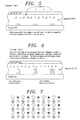
- the layer of immobilized antibodies is attached to the outer polymer film in predetermined patterns of simple icons, as best seen in Figures 7,7A.
- the biological material detecting system as exemplified herein utilizes four separate pairs of antibodies, as set forth in Figures 7 and 7A. This is in no way meant to suggest a limit on the number of antibodies that can be utilized in a single biological material detecting system. As demonstrated in Figures 7 and 7A, the invention is exemplified with reference to detection of the following four microbes:
- the outer polymer film or base layer undergoes a printing process in which a pattern of the four icons, wherein each icon utilizes a specific species of immobilized capture antibody, is applied thereto.
- detector antibodies which are biologically active ligands characterized by their ability to recognize a different epitope of the same particular toxic substance being tested for, and suspended in an agarose gel solution containing a surfactant and a nutrient, are printed in registration with the immobilized antibodies so as to be in overlying and juxtaposed relationship thereto, and are then dried. Lastly, a second gel coat having a degree of porosity sufficient to prevent passage of the detector antibodies is laminated to the preparation.
- the embodiment discussed above is based upon a sandwich immunoassay as depicted in Figure 1, which measures specific microbes, wherein the particular toxic substance is one or more members selected from the group consisting of a particular microorganism, biological materials containing the genetic characteristics of said particular microorganism, and mutations thereof.
- the toxic substance is selected from the group consisting of microorganisms, nucleic acids, proteins, integral components of microorganisms and combinations thereof.
- the invention will function by direct measurement of microbes with certain types of antibodies, selected from the group consisting of an antibody, a single stranded nucleic acid probe, an aptamer, a lipid, a natural receptor, a lectin, a carbohydrate and a protein.
- the biological materials may also be measured by non-immunological methods in particular using labeled molecules, such as aptamers, which have a high affinity for the biological materials.
- the invention utilizes various types of detector antibodies, e.g. those conjugated with dyes to produce a visual cue, or alternatively, photoactive compounds capable of producing a visual cue in response to a particular type of light exposure, for example a scanning system which detects luminescent properties which are visualized upon binding of the antigen and antibody.
- a biologically active ligand e.g. an antibody, aptamer, nucleic acid probe or the like, which induces a conformational change to produce a visual cue.
- a polymer film is provided and a biologically active ligand, preferably a chromogenic ligand, is immobilized to the polymer film.
- a biologically active ligand preferably a chromogenic ligand
- immobilized ligands were attached to rigid solid support matrices such as plastic, polystyrene beads, microtitre plates, latex beads, fibers, metal and glass surfaces and the like.
- the immobilized ligands have also been attached to flexible surfaces such as nitrocellulose or polyester sheets which were not transparent.
- the inventor has discovered that it is possible to attach biologically active ligands to the surface of a polyolefin sheet having appropriate properties of transparency and flexibility and that the composite functions as a biological sensor or assay material.
- the material goes through a drying step; subsequent to which a special gel coat or liquid film is applied as a protectant layer and the final product is then dried.
- films which will function in the present invention is a film containing a structural polymer base having a treated surface and incorporating therein a fluorescing antibody receptor and finally a stabilized gel coat.
- These films are created by first exposing the film to an electron discharge treatment at the surface thereof, then printing with a fluorescing antibody receptor. Subsequently, a drying or heating step treats the film to immobilize the receptor. Next, the film is washed to remove un-immobilized receptor; the film is then coated with a gel and finally dried.
- Examples of the types of commercially available films which might be utilized are a straight polyethylene film with electron discharge treatment marketed under the trademark SCLAIR®. The electron discharge treatment renders the film much more susceptible to immobilization of the antibodies on its surface.
- Additional films which might be utilized are Nylon 66 films, for example DARTEK®, a coextrudable adhesive film such as BYNEL® and a blend of BYNEL® with polyethylene film.
- one of the most important features of the biological material detecting system is its ability to quantitatively sensitize the antibody or aptamer so as to visually identify only those biological materials that have reached a concentration level deemed harmful to humans.
- One means of providing this sensitization is by including a scavenger antibody which is a biologically active ligand characterized as having a higher affinity for the particular toxic substance than the capture antibody.
- the scavenger antibody is provided in a sufficient amount to bind with the particular toxic substance up to and including a specific threshold concentration. In this manner, the capture antibody will be prevented from binding with a detector antibody until the concentration of the particular biological material surpasses the specific threshold concentration. In this manner, the biological material detecting system visually reports only those instances where concentration levels are deemed harmful by health regulatory bodies.
- the biological material detecting system as described herein can maintain its activity over long periods of time, e.g. up to 1 year, it is able to protect against contamination in products which have long shelf lives. Additionally, by reporting only toxic concentrations, it avoids "false positives" and, in some cases, can extend the useful life of the product.
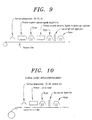
- FIGS. 9 and 10 the apparatus for producing the biological material detecting system is illustrated.
- These embodiments are essentially particular combinations of printers, coaters and dryers which will be used to place biologically active reagents upon a thin polymer film useful for packaging food stuffs and other products.
- These films will be further processed subsequent to application of the biological material detecting system by printing, laminating, or equivalent methods of fabrication.
- the machinery is designed so that it will transport and process very thin films at rather high speeds.
- the machinery is designed so that it can be utilized effectively as an additional processing step when added to continuous processing operations already in use at packaging material fabrication plants.
- the printing machinery is designed so that a minimum of four distinct biological active ligands in a hydrate solution can be printed in patterns in a precise registration on the polymer film.
- the printing may be accomplished by jet spray or roller application, or equivalent printing methods.
- Each print applicator is capable of printing a detailed icon no larger than 6.4 x 6.4 mm (1/4" x 1/4") in a minimum thickness. Patterning may be controlled by computer or roller calendaring. It is important to determine the appropriate viscosity of the solution to be applied so that successful printing, coating, and drying can be accomplished.
- the icons must be protected. This is accomplished by a final application of a thin special gel coat or a thin liquid film. This step is accomplished by a 100% coating of the entire film or alternatively by selectively coating each icon such that a 10% overlap is coated beyond the icon in all directions.
- This coating step may be accomplished with sprays or rollers and the viscosity of the coating material must be optimized so as to provide adequate coverage.
- the biological material detecting system must be dried after printing and once again after coating. The drying is accomplished in a very rapid manner so as to enable high through put for the process. Various means of drying include the use of radiant heat, convected air and freeze drying. Care must be taken to avoid drying temperatures which will inactivate the biological reagents which have been applied.
- the polymer film which has been surface treated in the form of electron discharge, e.g. corona treatment, is most preferred. After preparation, the thin film is transported at relatively high speeds so that a wrinkle free surface is provided for printing, coating and rollup. Additionally, the apparatus provides a complete recovery system for the reagents which allows for total recovery of the agents and the volatile organic contaminants.
- Rabbit polyclonal IgG was diluted to a final concentration of 2.0 ⁇ g/ml in 0.1M carbonate (Na 2 CO 3 )-bicarbonate (NaHCO 3 ) buffer, pH 9.6.
- the antibody treated polyethylene sheet was dried for 1.5 hrs. at a temperature of 37°C.
- the dried sheet was then washed 3 times with a phosphate buffered saline solution at a pH of 7.4.
- HRP conjugated goat anti-rabbit IgG (G ⁇ R HRP ) was diluted to a concentration of 1:7000 in 1% casein, 0.1M potassium ferricyanide K 3 Fe(CN) 6 , 0,1% phosphate glass (Na 15 P 13 O 40 - Na 20 P 18 O 55 ) at pH of 7.4.
- a precision pipette was used to apply 125 ⁇ L of diluted G HRP to the grid backed polyethylene sheet at 2.5 cm (1") intervals coinciding with the area covered by the previously coupled R ⁇ G.
- the sheet was incubated at room temperature for 30 minutes.
- the sheet was then washed 3x with phosphate buffered saline at a pH of 7.4.
- the sheet was incubated at room temperature until color development was complete.
- Rabbit polyclonal IgG was diluted to a final concentration of 2.0 ⁇ g/ml in 0.1M carbonate (Na 2 CO 3 )-bicarbonate (NaHCO 3 ) buffer, pH 9.6.
- a 13 x 9 cm piece of pre-treated thin layered polyethylene sheet available from Dupont was inserted into a BIO-RAD DOT-SPOT apparatus possessing 96 sample wells spaced at 1.0 cm intervals in a 12 x 8 well grid.
- Antibody samples applied to columns 2-12 represented serial dilutions of the antibody ranging from 500 ng - 0.5 ng.
- the antibody treated polyethylene sheet was dried overnight at 37°C.
- the dried sheet was washed 3 times with phosphate buffered saline (PBS), pH 7.4.
- PBS phosphate buffered saline
- Antigen was diluted to a final concentration of 1.0 ⁇ g/ml in tris buffered saline (TBS) with 1% casein, pH 7.4.
- TBS tris buffered saline
- the polyethylene sheet was washed 3 times with phosphate buffered saline (PBS), pH 7.4.
- PBS phosphate buffered saline
- Detector mouse monoclonal antibody was diluted 1:625 with TBS containing 1% casein, 0.1M potassium ferricyanide K 3 Fe(CN) 6 , and 0.1% phosphate glass (Na 15 P 13 O 40 - Na 20 P 18 O 55 ), pH 7.4.
- Detector samples of 100 ⁇ L applied to rows 2-7 represented serial dilutions of the antibody ranging from 1:1,250 to 1:80,000. Dilutions of detector antibody were incubated on the polyethylene sheet for 1 Hr. at room temperature.
- the polyethylene sheet was washed 3 times with phosphate buffered saline (PBS), pH 7.4.
- PBS phosphate buffered saline
- the polyethylene sheet was washed 3 times with phosphate buffered saline (PBS), pH 7.4.
- PBS phosphate buffered saline
- the sheet was incubated at room temperature until color development was complete (see Figure 8).
Landscapes
- Health & Medical Sciences (AREA)
- Life Sciences & Earth Sciences (AREA)
- Immunology (AREA)
- Engineering & Computer Science (AREA)
- Chemical & Material Sciences (AREA)
- Molecular Biology (AREA)
- Biomedical Technology (AREA)
- Hematology (AREA)
- Urology & Nephrology (AREA)
- Food Science & Technology (AREA)
- General Physics & Mathematics (AREA)
- Cell Biology (AREA)
- Biotechnology (AREA)
- Medicinal Chemistry (AREA)
- Physics & Mathematics (AREA)
- Analytical Chemistry (AREA)
- Biochemistry (AREA)
- General Health & Medical Sciences (AREA)
- Microbiology (AREA)
- Pathology (AREA)
- Chemical Kinetics & Catalysis (AREA)
- Tropical Medicine & Parasitology (AREA)
- Virology (AREA)
- Apparatus Associated With Microorganisms And Enzymes (AREA)
- Measuring Or Testing Involving Enzymes Or Micro-Organisms (AREA)
- Investigating Or Analysing Materials By The Use Of Chemical Reactions (AREA)
Abstract
Description
a capture antibody which is a biologically active ligand characterised by its ability to recognize an epitope of the particular toxic substance, said ligand being immobilized onto said surface of said polyolefin film;
a second protective gelcoat layer overlying the detector antibody and having a degree of porosity whereby passage of said toxic substance is permitted and passage of said detector antibody/antigen complex is prevented, said second protective gelcoat layer having a degree of abrasion resistance effective to protect the biological assay material.
As demonstrated in Figures 7 and 7A, the invention is exemplified with reference to detection of the following four microbes:
It should also be understood that the invention will function by direct measurement of microbes with certain types of antibodies, selected from the group consisting of an antibody, a single stranded nucleic acid probe, an aptamer, a lipid, a natural receptor, a lectin, a carbohydrate and a protein. The biological materials may also be measured by non-immunological methods in particular using labeled molecules, such as aptamers, which have a high affinity for the biological materials.
Examples of the types of commercially available films which might be utilized are a straight polyethylene film with electron discharge treatment marketed under the trademark SCLAIR®. The electron discharge treatment renders the film much more susceptible to immobilization of the antibodies on its surface. Additional films which might be utilized are Nylon 66 films, for example DARTEK®, a coextrudable adhesive film such as BYNEL® and a blend of BYNEL® with polyethylene film.
Claims (16)
- A biological assay material for detecting the presence of a particular toxic substance comprising:a base layer which is flexible polyolefin film having a surface which has undergone a treatment step effective to enhance said film's ability to immobilize a ligand applied thereto;a capture antibody which is a biologically active ligand characterized by its ability to recognize an epitope of the particular toxic substance, said ligand being immobilized onto said surface of said polyolefin film;a first agarose gelcoat layer overlying the capture antibody, said agarose layer being permeable to the toxic substance and containing ingredients to enhance the growth thereof, said layer further containing a detector antibody which is a biologically active ligand characterized by its ability to recognize a different epitope of said particular toxic substance, thereby forming a detector antibody/antigen complex; anda second protective gelcoat layer overlying the detector antibody and having a degree of porosity whereby passage of said toxic substance is permitted and passage of said detector antibody/antigen complex is prevented, said second protective gelcoat layer having a degree of abrasion resistance effective to protect the biological assay material.
- The biological assay material according to claim 1 wherein the flexible polyolefin film is selected from the group consisting of polyethylene, polypropylene and mixtures thereof.
- The biological assay material according to claim 1 wherein the polyolefin film is surface treated by a corona discharge process.
- The biological assay material according to claim 1 wherein the particular toxic substance is one or more members selected from the group consisting of a particular microorganism, biological materials containing the genetic characteristics of said particular microorganism, and mutations thereof.
- The biological assay of material according to claim 1 wherein the particular toxic substance is selected from the group consisting of microorganisms, nucleic acids, proteins, integral components of microorganisms and combinations thereof.
- The biological assay material according to claim 1 wherein the ligand is selected from the group consisting of an antibody, a single stranded nucleic acid probe, an aptamer, a lipid, a natural receptor, a lectin, a carbohydrate and a protein.
- The biological assay material according to claim 1 further including a scavenger antibody which is a biologically active ligand characterized as having a higher affinity for the particular toxic substance than the capture antibody, said scavenger antibody being present in a sufficient amount to bind with the particular toxic substance up to and including a specific threshold concentration;
whereby a capture antibody will be prevented from binding with a detector antibody until the concentration of the particular biological material surpasses the specific threshold concentration. - A method to detect the presence or absence of a particular toxic substance, which method comprises:a) providing a base layer which is a flexible polyolefin film having a surface which has undergone a treatment step effective to enhance said film's ability to immobilize a ligand applied thereto;b) providing a capture antibody which is a biologically active ligand characterized by its ability to recognize an epitope of the particular toxic substance, said ligand being immobilized onto said surface of said polyolefin film;c) providing a first agarose gelcoat layer overlying the capture antibody, said agarose layer being permeable to the toxic substance and containing ingredients to enhance the growth of the toxic substance, said layer further containing a detector antibody which is a biologically active ligand characterized by its ability to recognize a different epitope of said particular toxic substance;d) providing a second protective gelcoat layer overlying the detector antibody and having a degree of porosity sufficient to prevent passage of said detector antibody therethrough;e) placing said biological assay material in an environment which may contain a particular toxic substance; andf) monitoring said biological assay material for a period of time sufficient to observe a visual signal which will confirm the presence or absence of the particular toxic substance.
- A material useful for food packaging and characterized by its ability to detect the presence and particularly identify one or more toxic substances comprising:a base layer which is a flexible polyolefin film having a surface which has undergone a treatment step effective to enhance said film's ability to immobilize a ligand applied thereto;a capture antibody which is a biologically active ligand characterized by its ability to recognize an epitope of the particular toxic substance, said ligand being immobilized onto said surface of said polyolefin film;a first protective agarose gelcoat layer overlying the capture antibody, said agarose layer being permeable to the toxic substance;a detector antibody which is a biologically active ligand characterized by its ability to recognize a different epitope of said particular toxic substance, said detector antibody overlying said first protective gelcoat layer; anda second gelcoat layer overlying the detector antibody and having a degree of porosity sufficient to prevent passage of said detector antibody therethrough.
- The material according to claim 9 wherein the flexible polyolefin film is selected from the group consisting of polyethylene, polypropylene and mixtures thereof.
- The material according to claim 9 wherein the polyolefin film is surface treated by a corona discharge process.
- The material according to claim 9 wherein the particular toxic substance is one or more members selected from the group consisting of a particular microorganism, biological materials containing the genetic characteristics of said particular microorganism, and mutations thereof.
- The material according to claim 9 wherein the particular toxic substance is selected from the group consisting of microorganisms, nucleic acids, proteins, integral components of microorganisms and combinations thereof.
- The material according to claim 9 wherein the ligand is selected from the group consisting of an antibody, a single stranded nucleic acid probe, an aptamer, a lipid, a natural receptor, a lectin, a carbohydrate and a protein.
- The material according to claim 9 further including a scavenger antibody which is a biologically active ligand characterized as having a higher affinity for the particular toxic substance than the capture antibody, said scavenger antibody being present in a sufficient amount to bind with the particular toxic substance up to and including a specific threshold concentration;
whereby a capture antibody will be prevented from binding with a detector antibody until the concentration of the particular biological material surpasses the specific threshold concentration. - The material according to claim 9 wherein
one or more species of capture antibody are immobilized onto said surface of said polyolefin film in a particular orientation, each of said one or more species being characterized by a unique shape; and
one or more corresponding species of detector antibody are applied onto the surface of said first protective gelcoat layer in the same particular orientation as said one or more species of capture antibody, each of said one or more species being immobilized giving rise to an icon having a corresponding unique shape;
whereby simultaneous binding of any of the one or more species of capture antibodies and one or more corresponding species of detector antibodies with the particular toxic substance which they recognize results in the appearance of a visual signal having the unique shape assigned to that species;
wherein an observer is alerted to the presence and identity of said particular toxic substance.
Applications Claiming Priority (3)
| Application Number | Priority Date | Filing Date | Title |
|---|---|---|---|
| US218827 | 1998-12-22 | ||
| US09/218,827 US6051388A (en) | 1998-12-22 | 1998-12-22 | Method and apparatus for selective biological material detection |
| PCT/IB1999/002123 WO2000037934A1 (en) | 1998-12-22 | 1999-12-09 | Method and apparatus for selective biological material detection |
Publications (2)
| Publication Number | Publication Date |
|---|---|
| EP1141700A1 EP1141700A1 (en) | 2001-10-10 |
| EP1141700B1 true EP1141700B1 (en) | 2003-09-03 |
Family
ID=22816674
Family Applications (1)
| Application Number | Title | Priority Date | Filing Date |
|---|---|---|---|
| EP99970848A Expired - Lifetime EP1141700B1 (en) | 1998-12-22 | 1999-12-09 | Method and material for selective detection of toxins |
Country Status (11)
| Country | Link |
|---|---|
| US (1) | US6051388A (en) |
| EP (1) | EP1141700B1 (en) |
| JP (1) | JP2002533675A (en) |
| CN (1) | CN1331799A (en) |
| AT (1) | ATE249039T1 (en) |
| AU (1) | AU3448100A (en) |
| CA (1) | CA2356277C (en) |
| DE (1) | DE69911062T2 (en) |
| HK (1) | HK1044189A1 (en) |
| TW (1) | TW530157B (en) |
| WO (1) | WO2000037934A1 (en) |
Families Citing this family (41)
| Publication number | Priority date | Publication date | Assignee | Title |
|---|---|---|---|---|
| US6867052B2 (en) * | 1998-12-22 | 2005-03-15 | Toxin Alert, Inc. | Biological material detecting articles of manufacture |
| US6841392B2 (en) | 1998-12-22 | 2005-01-11 | Toxin Alert, Inc. | Method and apparatus for selective biological material detection |
| US6379908B1 (en) * | 1998-12-22 | 2002-04-30 | Toxin Alert, Inc. | Method and apparatus for selective biological material detection |
| US6696264B2 (en) * | 1998-12-22 | 2004-02-24 | Toxin Alert, Inc. | Method and apparatus for detection of multiple biological materials with a heterogeneous antibody mixture |
| US6376204B1 (en) * | 1998-12-22 | 2002-04-23 | Toxin Alert, Inc. | Method and apparatus for selective biological material detection |
| US6692973B1 (en) | 1998-12-22 | 2004-02-17 | Toxin Alert, Inc. | Surface binding of an immunoglobulin to a flexible polymer using a water soluble varnish matrix |
| US6180335B1 (en) * | 1999-09-30 | 2001-01-30 | University Of New Mexico | Apparatus for detecting contamination in food products |
| EP1309720B1 (en) * | 2000-07-11 | 2009-09-16 | Chesapeake Techlabs, Inc. | Apparatus and method for detecting and classifying chemicals, particles, viruses, and bacteria in fluids with an aptamer |
| EP2351855A1 (en) | 2000-09-26 | 2011-08-03 | Duke University | RNA aptamers and methods for identifying the same |
| GB0025084D0 (en) * | 2000-10-13 | 2000-11-29 | Cambridge Meditech | Improvements in detection |
| WO2002063270A2 (en) * | 2001-02-05 | 2002-08-15 | Board Of Regents, The University Of Texas System | The use of mesoscale self-assembly and recognition to effect delivery of sensing reagent for arrayed sensors |
| EP2070939B1 (en) * | 2001-05-25 | 2014-04-02 | Duke University | Modulators of pharmacological agents |
| US6780602B2 (en) | 2001-11-01 | 2004-08-24 | Microbiosystems, Limited Partnership | Taxonomic identification of pathogenic microorganisms and their toxic proteins |
| US20050221283A1 (en) * | 2001-12-11 | 2005-10-06 | Mahant Vijay K | Biochip |
| US7497623B2 (en) * | 2002-02-27 | 2009-03-03 | Pactiv Corporation | Packages with active agents |
| US20060286356A1 (en) * | 2002-02-27 | 2006-12-21 | Thomas Toby R | Web materials with active agent |
| US20060110080A1 (en) * | 2002-02-27 | 2006-05-25 | Thomas Toby R | Packages and structures with selective dosing of active agent |
| US20050220375A1 (en) * | 2002-02-27 | 2005-10-06 | Thomas Toby R | Pakages with active agents |
| US8048623B1 (en) | 2002-04-24 | 2011-11-01 | The University Of North Carolina At Greensboro | Compositions, products, methods and systems to monitor water and other ecosystems |
| US8383342B2 (en) | 2002-04-24 | 2013-02-26 | The University Of North Carolina At Greensboro | Compositions, products, methods and systems to monitor water and other ecosystems |
| US9126165B1 (en) | 2002-04-24 | 2015-09-08 | The University Of North Carolina At Greensboro | Nucleic acid arrays to monitor water and other ecosystems |
| US7384742B2 (en) * | 2002-08-16 | 2008-06-10 | Decision Biomarkers, Inc. | Substrates for isolating reacting and microscopically analyzing materials |
| US20040265440A1 (en) * | 2002-09-16 | 2004-12-30 | Agcert International, Llc | Food borne pathogen sensor and method |
| US20040115319A1 (en) * | 2002-09-16 | 2004-06-17 | Agcert International, Llc | Food-borne pathogen and spoilage detection device and method |
| US20060121165A1 (en) * | 2002-09-16 | 2006-06-08 | Morris Roger J | Food freshness sensor |
| AU2003302254A1 (en) * | 2002-12-16 | 2004-07-22 | Avery Dennison Corporation | Analyte detecting article and method |
| WO2004097371A2 (en) * | 2003-04-25 | 2004-11-11 | Board Of Regents, The University Of Texas System | System and method for the detection of analytes |
| US7651850B2 (en) * | 2003-05-16 | 2010-01-26 | Board Of Regents, The University Of Texas System | Image and part recognition technology |
| US9317922B2 (en) | 2003-05-16 | 2016-04-19 | Board Of Regents The University Of Texas System | Image and part recognition technology |
| US20060257929A1 (en) * | 2003-11-12 | 2006-11-16 | Microbiosystems, Limited Partnership | Method for the rapid taxonomic identification of pathogenic microorganisms and their toxic proteins |
| US7776531B1 (en) | 2004-03-25 | 2010-08-17 | Illumina, Inc. | Compositions and methods for stabilizing surface bound probes |
| KR101185050B1 (en) | 2004-04-22 | 2012-10-04 | 레가도 바이오사이언스, 인코포레이티드 | Improved modulators of coagulation factors |
| WO2007098555A1 (en) * | 2006-03-03 | 2007-09-07 | Anadis Ltd | Method and apparatus for containment and decontamination |
| EP2197350A2 (en) * | 2007-09-11 | 2010-06-23 | Baxter International Inc. | Infusion therapy sensor system |
| DE102012104688A1 (en) | 2012-05-30 | 2013-12-05 | Hamilton Bonaduz Ag | Optical sensor element |
| DE102012105291A1 (en) * | 2012-06-18 | 2013-12-19 | Fraunhofer-Gesellschaft zur Förderung der angewandten Forschung e.V. | Method, device and portable measuring device for the detection of biological molecules in layers of a layer system |
| DE102012111686A1 (en) | 2012-11-30 | 2014-06-05 | Hamilton Bonaduz Ag | Chemically stable sensor |
| US10563164B1 (en) | 2015-10-08 | 2020-02-18 | Charm Sciences, Inc. | Plate reader |
| US10495563B1 (en) | 2016-04-28 | 2019-12-03 | Charm Sciences, Inc. | Plate reader observation methods and operation |
| DE102017118504A1 (en) * | 2017-08-14 | 2019-02-14 | Endress+Hauser Conducta Gmbh+Co. Kg | Protection device for an optochemical sensor and corresponding optochemical sensor |
| US11879835B1 (en) | 2023-08-11 | 2024-01-23 | King Faisal University | Device for detecting toxic elements in plastic products and determining potential health risks |
Family Cites Families (11)
| Publication number | Priority date | Publication date | Assignee | Title |
|---|---|---|---|---|
| JPS5767860A (en) * | 1980-10-15 | 1982-04-24 | Fuji Photo Film Co Ltd | Material for multilayer analysis |
| US4757002A (en) * | 1983-06-13 | 1988-07-12 | Regents Of The University Of Minnesota | Method and kit for the estimation of serum immunoglobulin |
| US4562147A (en) * | 1983-06-13 | 1985-12-31 | Regents Of The University Of Minnesota | Method and kit for diagnosis of pseudorabies |
| JPH0672883B2 (en) * | 1985-06-19 | 1994-09-14 | コニカ株式会社 | Analytical element |
| GB8612940D0 (en) * | 1986-05-28 | 1986-07-02 | Dow Chemical Co | Derivative esters |
| US5266460A (en) * | 1987-03-17 | 1993-11-30 | Fuji Photo Film Co., Ltd. | Method of preparing immunological analytical element |
| JPH0191795A (en) * | 1987-10-01 | 1989-04-11 | Fuji Photo Film Co Ltd | Analytical element |
| JPH01280253A (en) * | 1988-01-28 | 1989-11-10 | Konica Corp | Immunological multilayered analysis element and method thereof |
| DE68918504T2 (en) * | 1988-06-24 | 1995-03-09 | Fuji Photo Film Co Ltd | Dry type analysis element for an immunoassay. |
| US5156948A (en) * | 1990-07-20 | 1992-10-20 | Christensen Dale A | Method and kit for diagnosis of diseases |
| US5552288A (en) * | 1990-07-20 | 1996-09-03 | Christensen; Dale A. | Chromogen agar color reactive test sheet |
-
1998
- 1998-12-22 US US09/218,827 patent/US6051388A/en not_active Expired - Fee Related
-
1999
- 1999-12-09 AU AU34481/00A patent/AU3448100A/en not_active Abandoned
- 1999-12-09 CA CA2356277A patent/CA2356277C/en not_active Expired - Fee Related
- 1999-12-09 HK HK02105279.9A patent/HK1044189A1/en unknown
- 1999-12-09 EP EP99970848A patent/EP1141700B1/en not_active Expired - Lifetime
- 1999-12-09 DE DE69911062T patent/DE69911062T2/en not_active Expired - Fee Related
- 1999-12-09 CN CN99814936A patent/CN1331799A/en active Pending
- 1999-12-09 AT AT99970848T patent/ATE249039T1/en not_active IP Right Cessation
- 1999-12-09 JP JP2000589942A patent/JP2002533675A/en active Pending
- 1999-12-09 WO PCT/IB1999/002123 patent/WO2000037934A1/en not_active Ceased
- 1999-12-18 TW TW088122333A patent/TW530157B/en not_active IP Right Cessation
Also Published As
| Publication number | Publication date |
|---|---|
| US6051388A (en) | 2000-04-18 |
| AU3448100A (en) | 2000-07-12 |
| DE69911062D1 (en) | 2003-10-09 |
| DE69911062T2 (en) | 2004-07-15 |
| EP1141700A1 (en) | 2001-10-10 |
| CA2356277C (en) | 2012-08-21 |
| CA2356277A1 (en) | 2000-06-29 |
| CN1331799A (en) | 2002-01-16 |
| HK1044189A1 (en) | 2002-10-11 |
| JP2002533675A (en) | 2002-10-08 |
| TW530157B (en) | 2003-05-01 |
| WO2000037934A1 (en) | 2000-06-29 |
| ATE249039T1 (en) | 2003-09-15 |
Similar Documents
| Publication | Publication Date | Title |
|---|---|---|
| CA2356277C (en) | Method and apparatus for selective biological material detection | |
| TWI223068B (en) | Enhanced diffraction-based biosensor devices | |
| EP0462376B1 (en) | Conjugate recovery binding assays | |
| US20040142495A1 (en) | Analyte detecting article and method | |
| US6379908B1 (en) | Method and apparatus for selective biological material detection | |
| AU3439693A (en) | Calibration reagents for semi-quantitative binding assays and devices | |
| US6841392B2 (en) | Method and apparatus for selective biological material detection | |
| US6376204B1 (en) | Method and apparatus for selective biological material detection | |
| EP1879028B1 (en) | Use of albumin, bovine, p-aminophenyl n-acetyl ß-d glucosaminide as a positive control line in an immunoassay device | |
| US6696264B2 (en) | Method and apparatus for detection of multiple biological materials with a heterogeneous antibody mixture | |
| US6867052B2 (en) | Biological material detecting articles of manufacture | |
| EP1565745A2 (en) | Isolation and confirmation of analytes from test devices | |
| US7226753B2 (en) | Displacement assay for selective biological material detection | |
| Sharma et al. | Identification of analyte of interest through lateral flow assay | |
| Wyatt | Antibody‐based detection of microbiological analytes in food: aspects of development | |
| EP1382966A1 (en) | Microvolume detecting method and device | |
| GB2339904A (en) | Membrane carrying assay areas | |
| US6692973B1 (en) | Surface binding of an immunoglobulin to a flexible polymer using a water soluble varnish matrix | |
| CA2392681A1 (en) | Microvolume detecting method and device |
Legal Events
| Date | Code | Title | Description |
|---|---|---|---|
| PUAI | Public reference made under article 153(3) epc to a published international application that has entered the european phase |
Free format text: ORIGINAL CODE: 0009012 |
|
| 17P | Request for examination filed |
Effective date: 20010713 |
|
| AK | Designated contracting states |
Kind code of ref document: A1 Designated state(s): AT BE CH CY DE DK ES FI FR GB GR IE IT LI LU MC NL PT SE |
|
| AX | Request for extension of the european patent |
Free format text: AL;LT;LV;MK;RO;SI |
|
| 17Q | First examination report despatched |
Effective date: 20011228 |
|
| RTI1 | Title (correction) |
Free format text: METHOD AND MATERIAL FOR SELECTIVE DETECTION OF TOXINS |
|
| GRAH | Despatch of communication of intention to grant a patent |
Free format text: ORIGINAL CODE: EPIDOS IGRA |
|
| RTI1 | Title (correction) |
Free format text: METHOD AND MATERIAL FOR SELECTIVE DETECTION OF TOXINS |
|
| GRAH | Despatch of communication of intention to grant a patent |
Free format text: ORIGINAL CODE: EPIDOS IGRA |
|
| RAP1 | Party data changed (applicant data changed or rights of an application transferred) |
Owner name: TOXIN ALERT, INC. |
|
| GRAA | (expected) grant |
Free format text: ORIGINAL CODE: 0009210 |
|
| AK | Designated contracting states |
Kind code of ref document: B1 Designated state(s): AT BE CH CY DE DK ES FI FR GB GR IE IT LI LU MC NL PT SE |
|
| PG25 | Lapsed in a contracting state [announced via postgrant information from national office to epo] |
Ref country code: NL Free format text: LAPSE BECAUSE OF FAILURE TO SUBMIT A TRANSLATION OF THE DESCRIPTION OR TO PAY THE FEE WITHIN THE PRESCRIBED TIME-LIMIT Effective date: 20030903 Ref country code: IT Free format text: LAPSE BECAUSE OF FAILURE TO SUBMIT A TRANSLATION OF THE DESCRIPTION OR TO PAY THE FEE WITHIN THE PRESCRIBED TIME-LIMIT;WARNING: LAPSES OF ITALIAN PATENTS WITH EFFECTIVE DATE BEFORE 2007 MAY HAVE OCCURRED AT ANY TIME BEFORE 2007. THE CORRECT EFFECTIVE DATE MAY BE DIFFERENT FROM THE ONE RECORDED. Effective date: 20030903 Ref country code: FR Free format text: LAPSE BECAUSE OF FAILURE TO SUBMIT A TRANSLATION OF THE DESCRIPTION OR TO PAY THE FEE WITHIN THE PRESCRIBED TIME-LIMIT Effective date: 20030903 Ref country code: FI Free format text: LAPSE BECAUSE OF FAILURE TO SUBMIT A TRANSLATION OF THE DESCRIPTION OR TO PAY THE FEE WITHIN THE PRESCRIBED TIME-LIMIT Effective date: 20030903 Ref country code: BE Free format text: LAPSE BECAUSE OF FAILURE TO SUBMIT A TRANSLATION OF THE DESCRIPTION OR TO PAY THE FEE WITHIN THE PRESCRIBED TIME-LIMIT Effective date: 20030903 Ref country code: AT Free format text: LAPSE BECAUSE OF FAILURE TO SUBMIT A TRANSLATION OF THE DESCRIPTION OR TO PAY THE FEE WITHIN THE PRESCRIBED TIME-LIMIT Effective date: 20030903 |
|
| REG | Reference to a national code |
Ref country code: GB Ref legal event code: FG4D |
|
| REG | Reference to a national code |
Ref country code: CH Ref legal event code: EP |
|
| REF | Corresponds to: |
Ref document number: 69911062 Country of ref document: DE Date of ref document: 20031009 Kind code of ref document: P |
|
| REG | Reference to a national code |
Ref country code: IE Ref legal event code: FG4D |
|
| PG25 | Lapsed in a contracting state [announced via postgrant information from national office to epo] |
Ref country code: GR Free format text: LAPSE BECAUSE OF FAILURE TO SUBMIT A TRANSLATION OF THE DESCRIPTION OR TO PAY THE FEE WITHIN THE PRESCRIBED TIME-LIMIT Effective date: 20031203 Ref country code: DK Free format text: LAPSE BECAUSE OF FAILURE TO SUBMIT A TRANSLATION OF THE DESCRIPTION OR TO PAY THE FEE WITHIN THE PRESCRIBED TIME-LIMIT Effective date: 20031203 |
|
| PG25 | Lapsed in a contracting state [announced via postgrant information from national office to epo] |
Ref country code: LU Free format text: LAPSE BECAUSE OF NON-PAYMENT OF DUE FEES Effective date: 20031209 Ref country code: GB Free format text: LAPSE BECAUSE OF NON-PAYMENT OF DUE FEES Effective date: 20031209 Ref country code: CY Free format text: LAPSE BECAUSE OF FAILURE TO SUBMIT A TRANSLATION OF THE DESCRIPTION OR TO PAY THE FEE WITHIN THE PRESCRIBED TIME-LIMIT Effective date: 20031209 |
|
| PG25 | Lapsed in a contracting state [announced via postgrant information from national office to epo] |
Ref country code: ES Free format text: LAPSE BECAUSE OF FAILURE TO SUBMIT A TRANSLATION OF THE DESCRIPTION OR TO PAY THE FEE WITHIN THE PRESCRIBED TIME-LIMIT Effective date: 20031214 |
|
| PGFP | Annual fee paid to national office [announced via postgrant information from national office to epo] |
Ref country code: DE Payment date: 20031218 Year of fee payment: 5 |
|
| PGFP | Annual fee paid to national office [announced via postgrant information from national office to epo] |
Ref country code: CH Payment date: 20031223 Year of fee payment: 5 |
|
| REG | Reference to a national code |
Ref country code: SE Ref legal event code: TRGR |
|
| PG25 | Lapsed in a contracting state [announced via postgrant information from national office to epo] |
Ref country code: MC Free format text: LAPSE BECAUSE OF NON-PAYMENT OF DUE FEES Effective date: 20031231 |
|
| PGFP | Annual fee paid to national office [announced via postgrant information from national office to epo] |
Ref country code: IE Payment date: 20031231 Year of fee payment: 5 |
|
| REG | Reference to a national code |
Ref country code: CH Ref legal event code: NV Representative=s name: ISLER & PEDRAZZINI AG |
|
| NLV1 | Nl: lapsed or annulled due to failure to fulfill the requirements of art. 29p and 29m of the patents act | ||
| PG25 | Lapsed in a contracting state [announced via postgrant information from national office to epo] |
Ref country code: PT Free format text: LAPSE BECAUSE OF FAILURE TO SUBMIT A TRANSLATION OF THE DESCRIPTION OR TO PAY THE FEE WITHIN THE PRESCRIBED TIME-LIMIT Effective date: 20040203 |
|
| LTIE | Lt: invalidation of european patent or patent extension |
Effective date: 20030903 |
|
| PLBE | No opposition filed within time limit |
Free format text: ORIGINAL CODE: 0009261 |
|
| STAA | Information on the status of an ep patent application or granted ep patent |
Free format text: STATUS: NO OPPOSITION FILED WITHIN TIME LIMIT |
|
| GBPC | Gb: european patent ceased through non-payment of renewal fee |
Effective date: 20031209 |
|
| 26N | No opposition filed |
Effective date: 20040604 |
|
| EN | Fr: translation not filed | ||
| PG25 | Lapsed in a contracting state [announced via postgrant information from national office to epo] |
Ref country code: IE Free format text: LAPSE BECAUSE OF NON-PAYMENT OF DUE FEES Effective date: 20041209 |
|
| PG25 | Lapsed in a contracting state [announced via postgrant information from national office to epo] |
Ref country code: LI Free format text: LAPSE BECAUSE OF NON-PAYMENT OF DUE FEES Effective date: 20041231 Ref country code: CH Free format text: LAPSE BECAUSE OF NON-PAYMENT OF DUE FEES Effective date: 20041231 |
|
| PG25 | Lapsed in a contracting state [announced via postgrant information from national office to epo] |
Ref country code: DE Free format text: LAPSE BECAUSE OF NON-PAYMENT OF DUE FEES Effective date: 20050701 |
|
| REG | Reference to a national code |
Ref country code: CH Ref legal event code: PL |
|
| REG | Reference to a national code |
Ref country code: IE Ref legal event code: MM4A |
|
| PGFP | Annual fee paid to national office [announced via postgrant information from national office to epo] |
Ref country code: SE Payment date: 20110610 Year of fee payment: 12 |
|
| REG | Reference to a national code |
Ref country code: SE Ref legal event code: EUG |
|
| PG25 | Lapsed in a contracting state [announced via postgrant information from national office to epo] |
Ref country code: SE Free format text: LAPSE BECAUSE OF NON-PAYMENT OF DUE FEES Effective date: 20111210 |